

#ritual
ritual
1,833 views
34 Discussing
Hot
Latest

·
--
🔥 NEW CRYPTO PROJECT: RITUAL ($RITUAL)
🤖 AI meets Blockchain!
🚀 Ritual focuses on AI-powered blockchain technology and decentralized applications.
💡 What do you think about the future of AI + Crypto?
⚠️ Always research before investing. Crypto is risky.
#Ritual #AI #Crypto #Blockchain #BinanceSquare
🤖 AI meets Blockchain!
🚀 Ritual focuses on AI-powered blockchain technology and decentralized applications.
💡 What do you think about the future of AI + Crypto?
⚠️ Always research before investing. Crypto is risky.
#Ritual #AI #Crypto #Blockchain #BinanceSquare
47

·
--
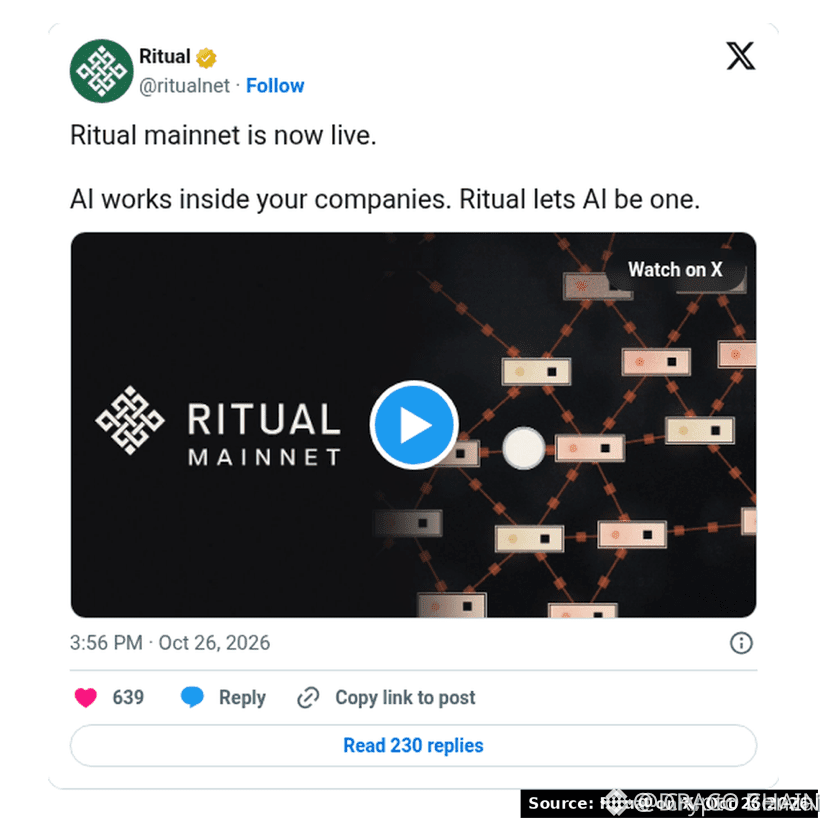
🚀 $RITUAL MAINNET LAUNCH UNLEASHES AI AGENT WALLET REVOLUTION 🟢
🤖 Ritual’s live mainnet delivers an EVM Layer‑1 where autonomous agents own hardware‑secured wallets, paying for models, data, or peer agents on‑chain. The 15 native precompiles streamline LLM inference and scheduling, turning every transaction into a micro‑AI service call. 📊 Over 40 M+ testnet transactions have already proven throughput, and a thorough Zellic audit adds a layer of institutional confidence. 🦈 Smart‑money eyes this as the first true “agent‑as‑account” architecture, primed to capture liquidity from AI‑driven demand spikes.
💬 Would you trust an autonomous agent to manage its own wallet and capital on‑chain? 👇
⚠️ Not financial advice. Always manage your risk. 🛡️
🏷️ #RITUAL #Mainnet #AI #EVM #Crypto
🔥 💎
5

·
--
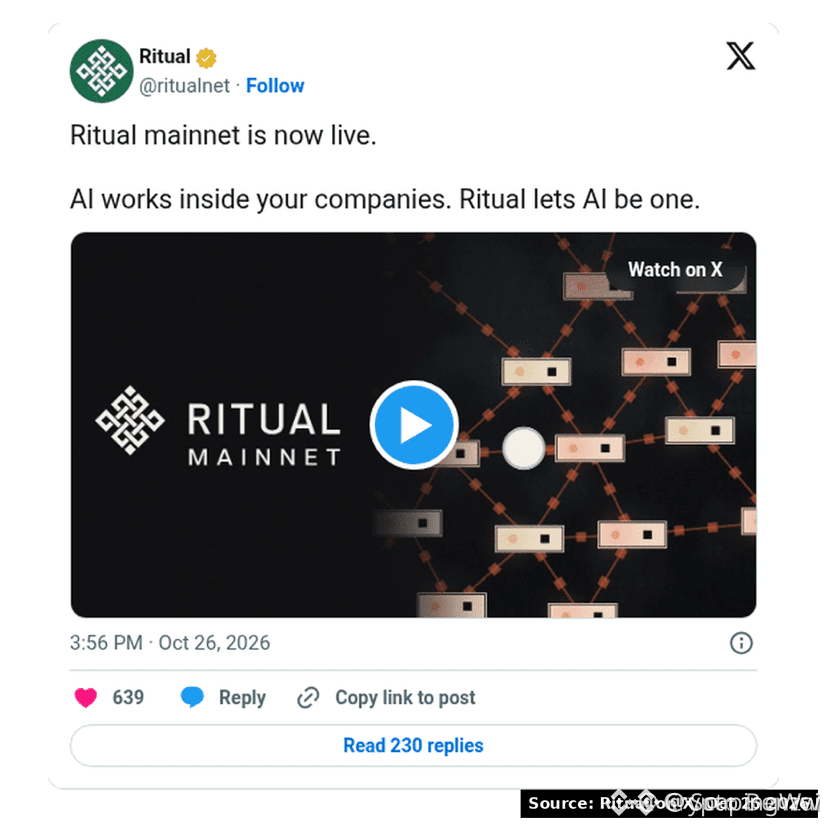
🚀 $RITUAL MAINNET LAUNCH UNLEASHES AI AGENTS WITH SELF‑OWNED WALLETS 🟢
Ritual just turned the lights on for its EVM Layer‑1 mainnet, handing AI agents their own hardware‑secured wallets. With 15 native precompiles handling LLM inference, scheduling and data swaps, the chain is built for autonomous traders and bots. 🤖
The testnet logged over 40 M transactions since June and survived a Zellic audit, proving the plumbing can handle real‑world volume. Smart‑money eyes this as the first truly self‑funded AI playground, a liquidity magnet for whales ready to deploy model‑driven strategies. 📊💡
💬 Are you ready to let an autonomous agent manage its own wallet on $RITUAL ? 👇
⚠️ Not financial advice. Always manage your risk. 🛡️
🏷️ #RITUAL #AI #Layer1 #Mainnet #Crypto
🚀 🔥
5
·
--
Bullish
🚀 RITUAL — a new contender for strong growth?
While many are keeping an eye on BTC and major altcoins, I’ve turned my attention to $RITUAL.
Why the project made it onto my watchlist:
🔥 Ritual Mainnet launched on October 26.
🤖 The project is building blockchain infrastructure for AI agents and decentralized computing.
📈 The token has been listed on MEXC and KuCoin, and trading activity has picked up noticeably.
💎 Its market cap is still around $45 million — small by crypto market standards.
But there’s another side to the story: the price has already fluctuated sharply since launch, and token issuance is putting additional pressure on the market.
My take: if the team can attract developers and real users, RITUAL could have the potential to grow severalfold. But first, I’d like to see sustained demand—not just hype.
❓ What do you think: will we see a 3–5x return from $RITUAL this cycle, or is this just another short-lived hype train?
#RITUAL #Altcoins #CryptoGem #AI #BinanceSquare
36


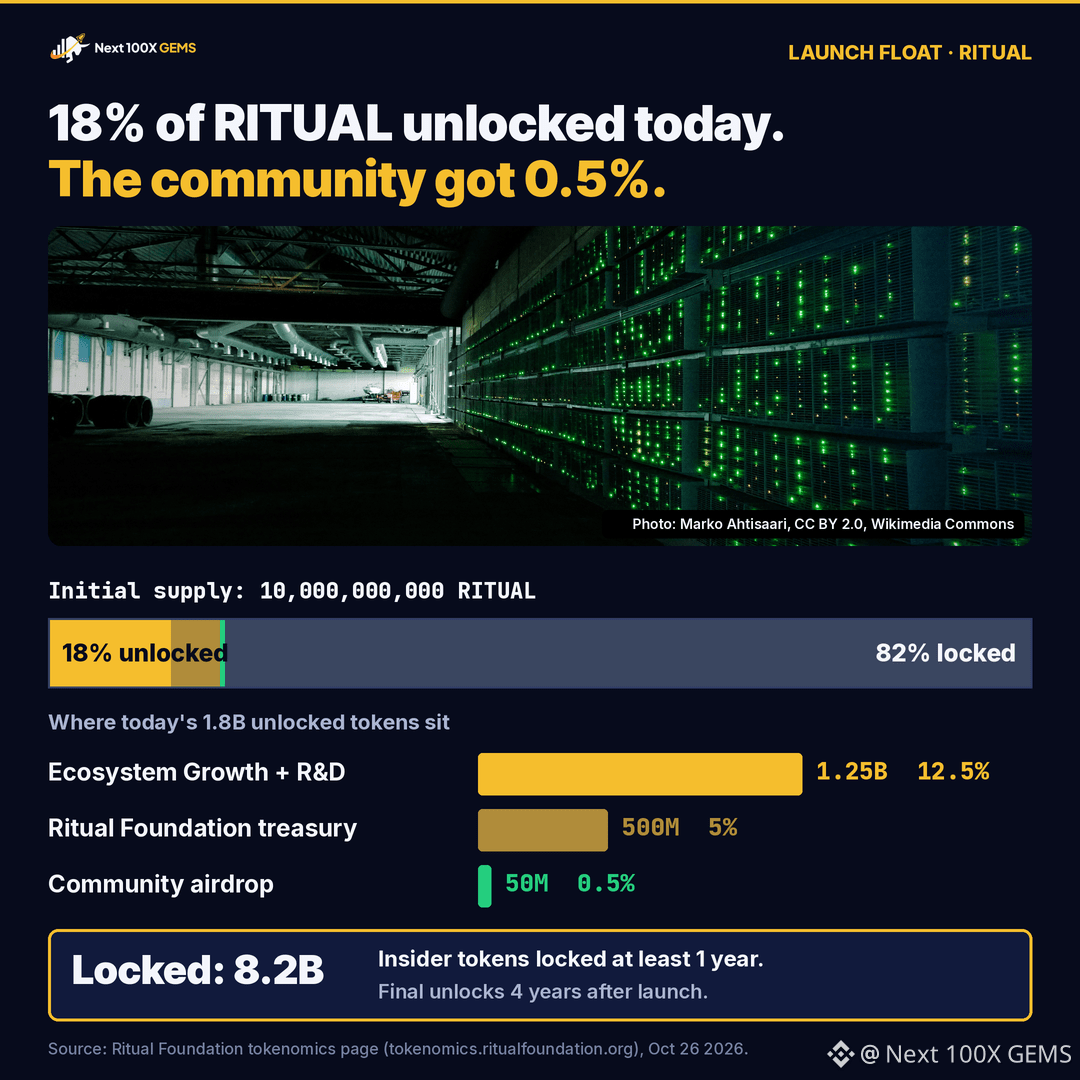
Ritual went live on mainnet today, and the token page says 18% of RITUAL is unlocked at launch. That is 1.8B tokens out of a 10B initial supply. Coinbase listed RITUAL-USD for today too, with trading opening once liquidity conditions are met.
The part worth reading twice is where that 1.8B sits. 1.25B comes from the Ecosystem Growth + R&D bucket and 500M from the Ritual Foundation treasury. The community airdrop to node operators, Frenrug users and long-time members is 50M tokens, 0.5% of supply, fully unlocked.
So 97% of the day-one float is held by the project side, not by airdrop farmers. If you are trying to read sell pressure this week, the airdrop wallets are the small story. Foundation and ecosystem wallets moving to exchanges would be the big one.
The other 8.2B is locked. Core contributors (29%) and Labs investors (11.3%) wait at least a year, and the last tokens unlock four years after launch. Supply has no cap either: about 5% yearly issuance, partly offset by base-fee burns.
Before you trade the listing, check the float math, not just the chart.
$RITUAL
#Ritual #Tokenomics
NFA. DYOR.
76

The math on Ritual’s airdrop had me laughing out loud.
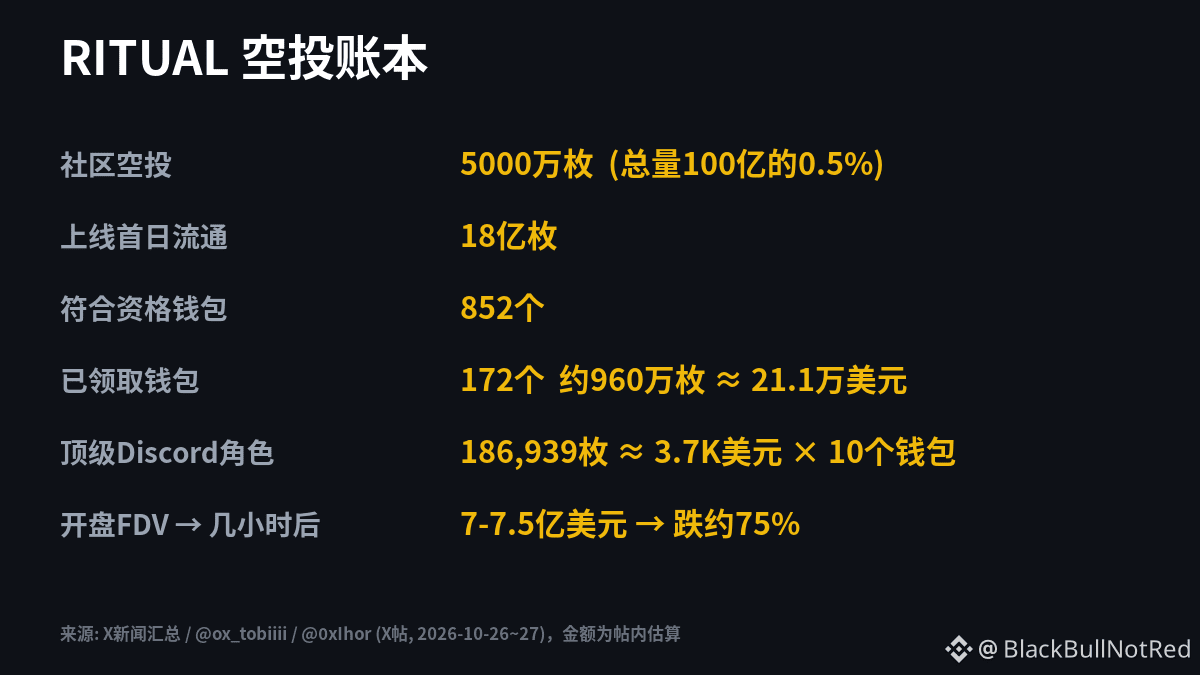
10 billion tokens in total, with 50 million allocated to the community airdrop—that’s 0.5%. 1.8 billion tokens in circulation on day one. Think about it: the airdrop is barely a rounding error compared to the circulating supply. It’s basically just an excuse to say the token launch is “giving back to the community.”
Even more ridiculous was the eligibility list: just 852 wallets qualified. According to data compiled on X, in the top Discord role tier, 10 wallets got about 187,000 tokens each. At the price quoted in the post, that’s only around $3.7K. Plenty of people who’d been grinding on Discord for two years got a straight-up “Not eligible.”
Then it opened at an FDV of over $700 million and dumped about 75% in a few hours. By the time the numbers were tallied, only 172 wallets had claimed, for a total of roughly 9.6 million tokens worth around $210K.
So who made money? The people sitting on 1.8 billion tokens in circulation, with buyers there to absorb the sell pressure right from the open. That 0.5% for the community is a marketing budget, not a dividend.
Discord roles aren’t equity, and points aren’t promises. Next time someone tells you “early community members will be remembered,” ask one thing first: where’s the allocation ratio written down?
#Ritual #Airdrop
6

·
--
Notably, Ritual’s mainnet launch brings AI compute onto the blockchain itself, rather than treating it merely as an external service.
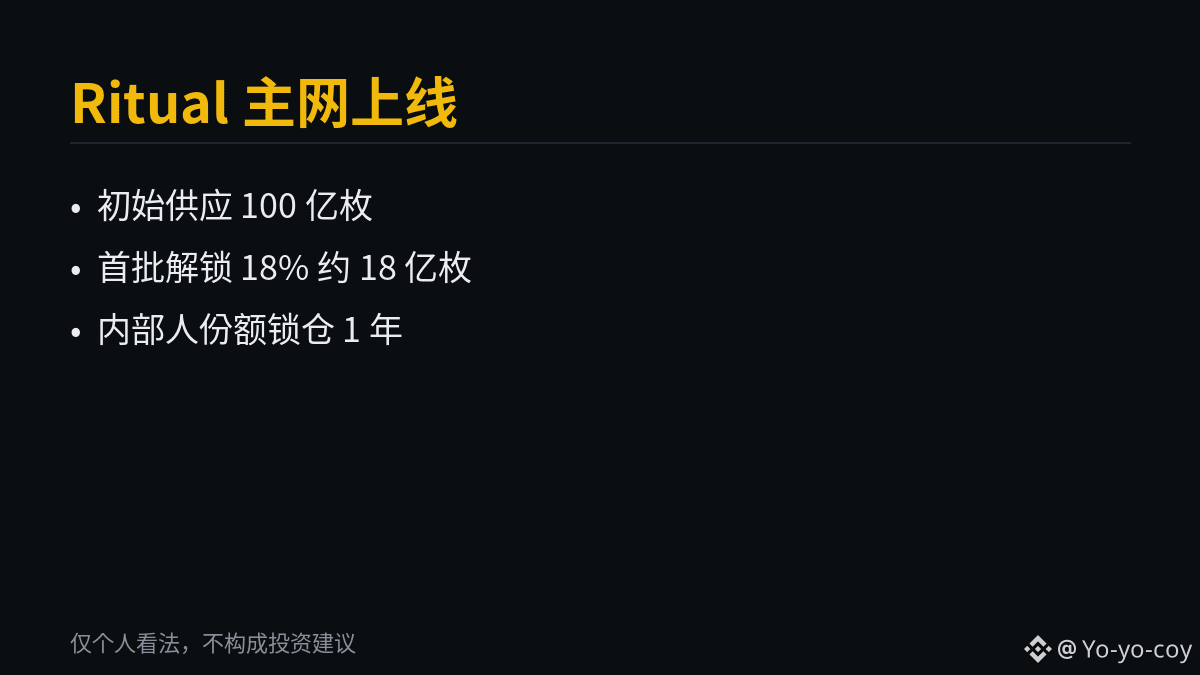
On October 26, the Ritual Foundation announced the official launch of its mainnet, with the $RITUAL token entering circulation at the same time. The initial supply is 10 billion tokens, with no fixed cap; 18%—1.8 billion tokens—was unlocked at launch.
As for the allocation, core contributors receive 29%, ecosystem growth and R&D 25%, network participation and future incentives 14%, and Lab investors 11.3%. The tokens unlocked at launch mainly come from ecosystem growth and R&D, the foundation treasury, and a 0.5% community airdrop (50 million tokens) for early participants such as Infernet node operators.
The key point is the timing gap: allocations for core contributors and Lab investors are locked for one year, and locked tokens currently cannot be staked and carry no voting rights. The full unlock schedule spans four years. In other words, the variable affecting new supply during 2026 is not in insiders’ hands, but depends on ecosystem usage and fee burns.
The token’s utility appears designed around this same logic: paying transaction fees and AI compute fees, staking, and future governance. Annual issuance is approximately 5%, initially used for staking rewards, while base fees are burned under a mechanism similar to EIP-1559. Whether supply gets out of control depends on whether fee burns can offset this new issuance—not on the circulating supply on day one.
For AI-native chains like this, the assessment can be narrowed down to one question: are real model calls and agent transactions consistently generating fees? If call volume fails to take off, the initial 18% circulating supply is just the starting point; if it does, the lockup structure gives the project a longer window for evaluation than an immediate full unlock would.
#Ritual #AI公链 $RITUAL
Just my personal opinion; this is not investment advice
4

·
--
AI agents pay for their own compute: Ritual mainnet and $RITUAL are liveFirst, my take: this is a rare project in the “AI agents on-chain” narrative that has actually launched both its mainnet and token. But its token design isn’t about scarcity, so don’t evaluate it by that logic.
For the facts, here are the announcements from the official accounts @ritualnet and @ritualfnd on October 26:
1. Ritual mainnet is live, with Chain ID 784 and $RITUAL as its gas token. Native $RITUAL has no contract address; versions bridged out are handled by LayerZero, with tokens locked on the source chain and no new supply created.
2. The selling point is that agents can “hold their own keys, earn their own money, and pay for their own compute”: $RITUAL is used to pay for gas, model calls, HTTP requests, and scheduled executions. Executors provide compute and earn tokens, while validators coordinate tasks, settle transactions, and earn tokens.
AI agents pay for their own compute: Ritual mainnet and $RITUAL are live
First, my take: this is a rare project in the “AI agents on-chain” narrative that has actually launched both its mainnet and token. But its token design isn’t about scarcity, so don’t evaluate it by that logic.
For the facts, here are the announcements from the official accounts @ritualnet and @ritualfnd on October 26:
1. Ritual mainnet is live, with Chain ID 784 and $RITUAL as its gas token. Native $RITUAL has no contract address; versions bridged out are handled by LayerZero, with tokens locked on the source chain and no new supply created.
2. The selling point is that agents can “hold their own keys, earn their own money, and pay for their own compute”: $RITUAL is used to pay for gas, model calls, HTTP requests, and scheduled executions. Executors provide compute and earn tokens, while validators coordinate tasks, settle transactions, and earn tokens.
44

·
--
The mainnet of Ritual, a decentralized AI compute network, officially launches today, alongside the issuance of its native token, $RITUAL, which can be used to pay for Gas, model calls, scheduled tasks, and other fees. The initial supply is 10 billion tokens, with approximately 18% unlocked at launch and around 0.5% airdropped to Infernet nodes and the long-term community. Coinbase is also listing RITUAL for spot trading. This integration of AI compute and on-chain settlement, alongside the opening of a liquidity gateway, marks a significant recent development in the decentralized AI sector.
#Ritual #去中心化AI #Coinbase
#Ritual #去中心化AI #Coinbase
20

A New Era of AI: The “New Economic Worker” That Never Clocks Out and Ritual’s Blockchain Revolution
AI can now complete tasks independently without human supervision, but it has no bank account. Ritual embeds AI into the blockchain, turning smart contracts from “dead code” into “living entities” and giving AI the hardware to exist independently. #区块链 #AI #Ritual
AI can now complete tasks independently without human supervision, but it has no bank account. Ritual embeds AI into the blockchain, turning smart contracts from “dead code” into “living entities” and giving AI the hardware to exist independently. #区块链 #AI #Ritual
31
The mainnet of Ritual, a decentralized AI compute network, has officially launched, with its native token RITUAL issued at the same time.
First, the token model: the initial supply is 10 billion tokens, with no hard cap. Annual inflation is approximately 5%, distributed primarily as staking rewards in the early stages. Meanwhile, the base fee for each transaction is burned under the EIP-1559 mechanism. At mainnet launch, 1.8 billion tokens were unlocked, representing 18% of the initial supply.
As for allocations, core contributors receive 29%, ecosystem growth and R&D receive 25%, network participation and future incentives receive 14%, Labs investors receive 11.3%, and the foundation receives 10%. Tokens allocated to core contributors and investors will be locked for one year from mainnet launch. Locked tokens cannot be staked, and all tokens will be unlocked over four years.
The airdrop totals 50 million tokens, or 0.5% of the initial supply, and is aimed at Infernet node operators, Frenrug users, and long-term community members. All airdropped tokens are unlocked at launch. Coinbase has also listed it for spot trading.
$RITUAL can be used to pay fees for gas, model calls, HTTP requests, and scheduled executions. A key factor going forward will be whether real demand for network calls can provide sustained support.
#Ritual #去中心化AI #MainnetLaunch
5

·
--
The Ritual mainnet has officially launched, and $RITUAL has been issued. It can be used to pay fees for gas, model calls, HTTP requests, scheduled execution, and more.
The token has an initial supply of 10 billion, with no hard cap and an annual inflation rate of approximately 5%. Initially, it will primarily serve as staking rewards. Meanwhile, the base fee for each transaction will be burned according to the EIP-1559 mechanism. At mainnet launch, 1.8 billion tokens—18% of the initial supply—will be unlocked.
As for allocation, 29% goes to core contributors, 25% to ecosystem growth and R&D, 14% to network participation and future incentives, and 11.3% to Labs investors. Tokens allocated to core contributors and investors will be locked for one year and fully unlocked over four years.
The airdrop totals 50 million tokens, just 0.5% of the initial supply. It is aimed at Infernet node operators, Frenrug users, and long-term community members, and will be fully unlocked at launch. Coinbase has also launched spot trading for the token.
With a low initial circulating supply, a small airdrop, staking rewards, and a burn mechanism all in play, the key question is whether demand for AI computing will ultimately translate into on-chain activity. #Ritual #DeAI #MainnetLaunch
2

The decentralized AI computing platform Ritual has officially launched its mainnet, and its native token, RITUAL, is now live. It can be used to pay fees for gas, model calls, HTTP requests, scheduled executions, and more.
There are several key points about the tokenomics: the initial supply is 10 billion tokens, with no hard cap and an annual issuance rate of approximately 5%, primarily distributed as staking rewards in the early stages. Meanwhile, the base fee for each transaction is burned under the EIP-1559 mechanism. At mainnet launch, 1.8 billion tokens were unlocked, representing 18% of the initial supply.
The allocation is as follows: 29% to core contributors, 25% to ecosystem growth and R&D, 14% to network participation and future incentives, 11.3% to Labs investors, and 10% to the foundation. Tokens allocated to core contributors and investors are locked for one year after launch, and locked tokens cannot be staked. All tokens will be fully unlocked over four years.
The airdrop comprises 50 million tokens, just 0.5% of the initial supply. It is for eligible Infernet node operators, Frenrug users, and long-term community members, and all tokens were unlocked at launch. Coinbase listed RITUAL for spot trading on October 26.
Overall, an initial circulating supply of 18% is not especially low, while the airdrop accounts for a very small share. What bears watching going forward is whether demand for AI calls and on-chain execution can provide sustained support through fee burns. #Ritual #去中心化AI #Airdrop
3

·
--
The Ritual mainnet is officially live, and its token model is now clear: RITUAL has an initial supply of 10 billion tokens, with no supply cap and annual issuance of about 5%. Initially, most tokens will be released through staking rewards; the base fee for each transaction will be burned under the EIP-1559 mechanism.
At launch, 1.8 billion tokens will be unlocked, representing 18% of the initial supply. This includes an airdrop of 50 million tokens (0.5%) for Infernet node operators, Frenrug users, and long-term community members, all of which will be unlocked at launch.
As for selling pressure, tokens allocated to core contributors and investors will begin a one-year lockup from mainnet launch. Locked tokens cannot be staked, and all tokens will be fully unlocked after four years. Use cases include paying for gas, model calls, HTTP requests, and scheduled execution.
Coinbase listed RITUAL for spot trading on October 26. In the short term, watch exchange flows and early mainnet usage; over the long term, the key question is whether EIP-1559 burns can genuinely offset ongoing issuance.
#Ritual #去中心化AI #MainnetLaunch
3

·
--
The mainnet of Ritual, a decentralized AI computing network, has officially launched, alongside the issuance of its native token, $RITUAL. The token can be used to pay network fees for Gas, model calls, HTTP requests, scheduled execution, and more.
Key token data: The initial supply is 10 billion, with no supply cap. Annual issuance is approximately 5%, primarily serving as staking rewards in the early stages. The base fee for each transaction is burned under the EIP-1559 mechanism. At mainnet launch, 1.8 billion tokens—18% of the initial supply—were unlocked. The airdrop for Infernet node operators, Frenrug users, and long-term community members totals 50 million tokens, or 0.5%, all of which unlocked at launch.
As for allocation, core contributors receive 29%, ecosystem growth and R&D 25%, network participation and future incentives 14%, and Labs investors 11.3%. Contributor and investor tokens are locked for one year from mainnet launch. Locked tokens cannot be staked, and all tokens will be fully unlocked over four years. Coinbase spot trading also opened on October 26.
In the short term, watch the release of tokens into circulation and airdrop sentiment. In the long term, the key question is whether demand for AI calls, the staking rate, and the burn mechanism can establish a sustainable balance.
#Ritual #AI #Web3
4
RITUAL is listing on Coinbase tonight, and my feed is flooded with “Something big is coming.” I checked the numbers, and “big” probably doesn’t mean your airdrop.
The total supply is 10 billion, and it’s uncapped. Based on the tokenomics someone dug up, supply will increase by about 5% a year, with burns from base fees meant to offset that. Burns depend on people actually using it; the inflation is baked in. No need to guess which comes first.
About 1.8 billion tokens unlock at launch. The community airdrop is 50 million, or 0.5% of the total supply—and less than 3% of the circulating supply on day one. The people who’ve been grinding away in Discord for over a year get the scraps; the bulk goes to core contributors, the ecosystem fund, and others.
Even funnier, one big account’s headline reads “Endorsed by the Godfather of ChatGPT,” while the post itself opens with “no hype, both sides.” The headline already did all the hyping, and then the post pretends to be neutral. Seen this routine too many times.
Coinbase will start with at least 10 minutes of an opening auction for price discovery. As for who’s selling and who’s buying on the first-day candlestick, do the math yourself. I’m not saying this project is bad—I believe in the idea of running AI agents on-chain—but a good narrative and a good token price are two different things, especially with 5% annual inflation and 18% of the supply circulating on day one.
If you’re chasing the day-one action, read the unlock schedule before you jump in.
#RITUAL #Coinbase
3

2
110
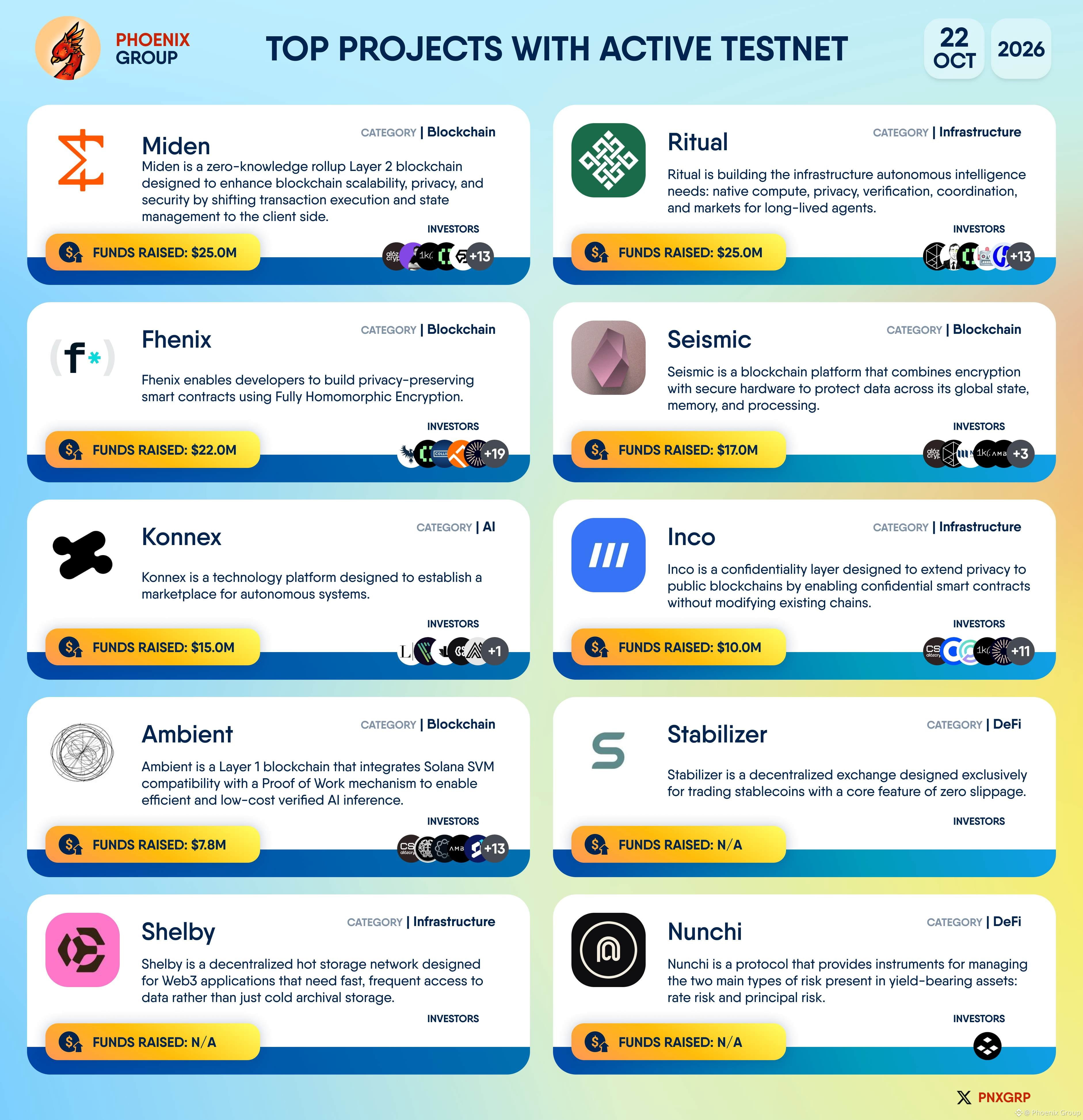
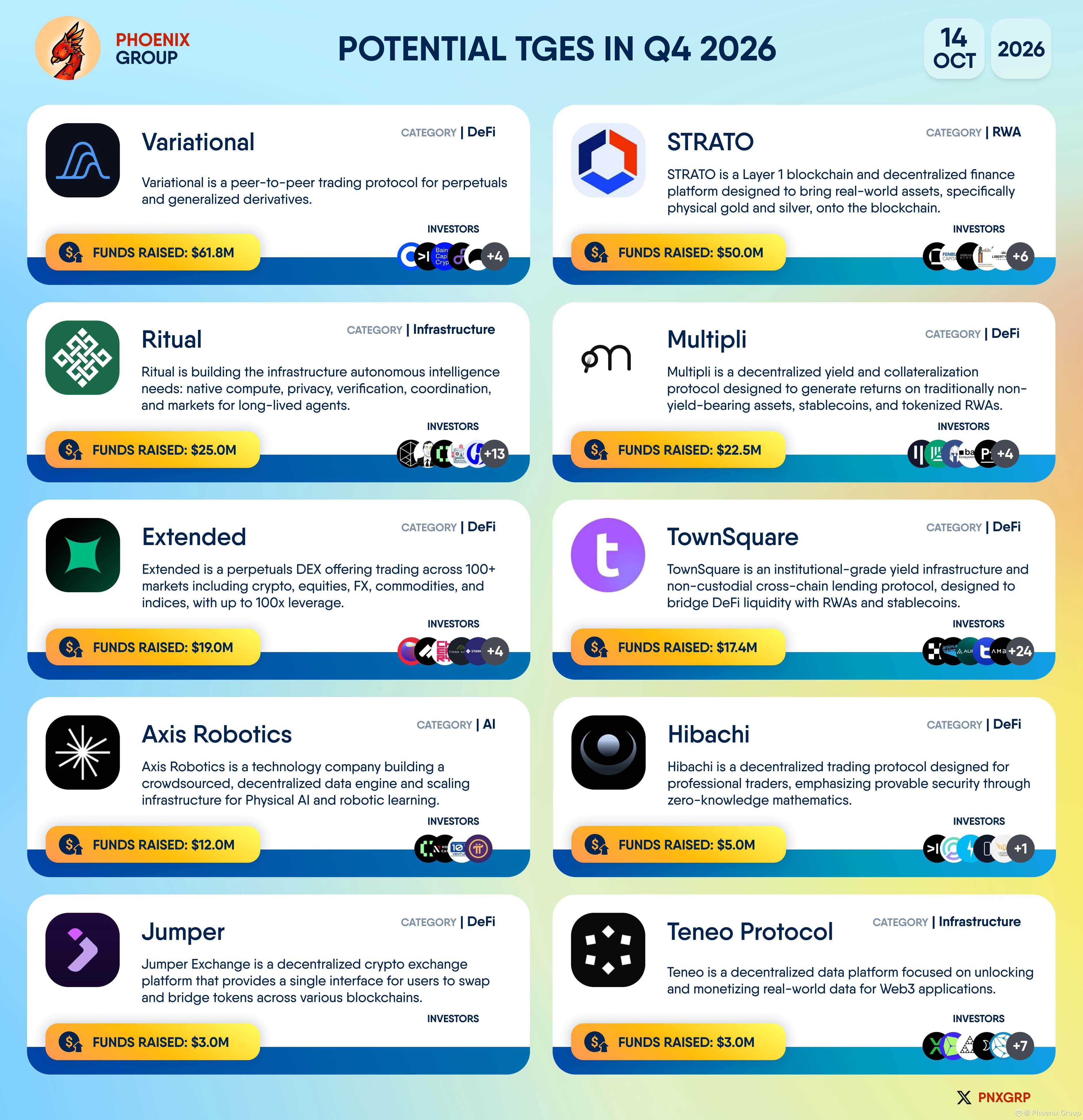
POTENTIAL TGES IN Q4 2026
#Variational #STRATO #Ritual #Multipli #Extended #TownSquare #AxisRobotics #Hibachi #Jumper #TeneoProtocol
POTENTIAL TGES IN Q4 2026
#Variational #STRATO #Ritual #Multipli #Extended #TownSquare #AxisRobotics #Hibachi #Jumper #TeneoProtocol
#Variational #STRATO #Ritual #Multipli #Extended #TownSquare #AxisRobotics #Hibachi #Jumper #TeneoProtocol
115
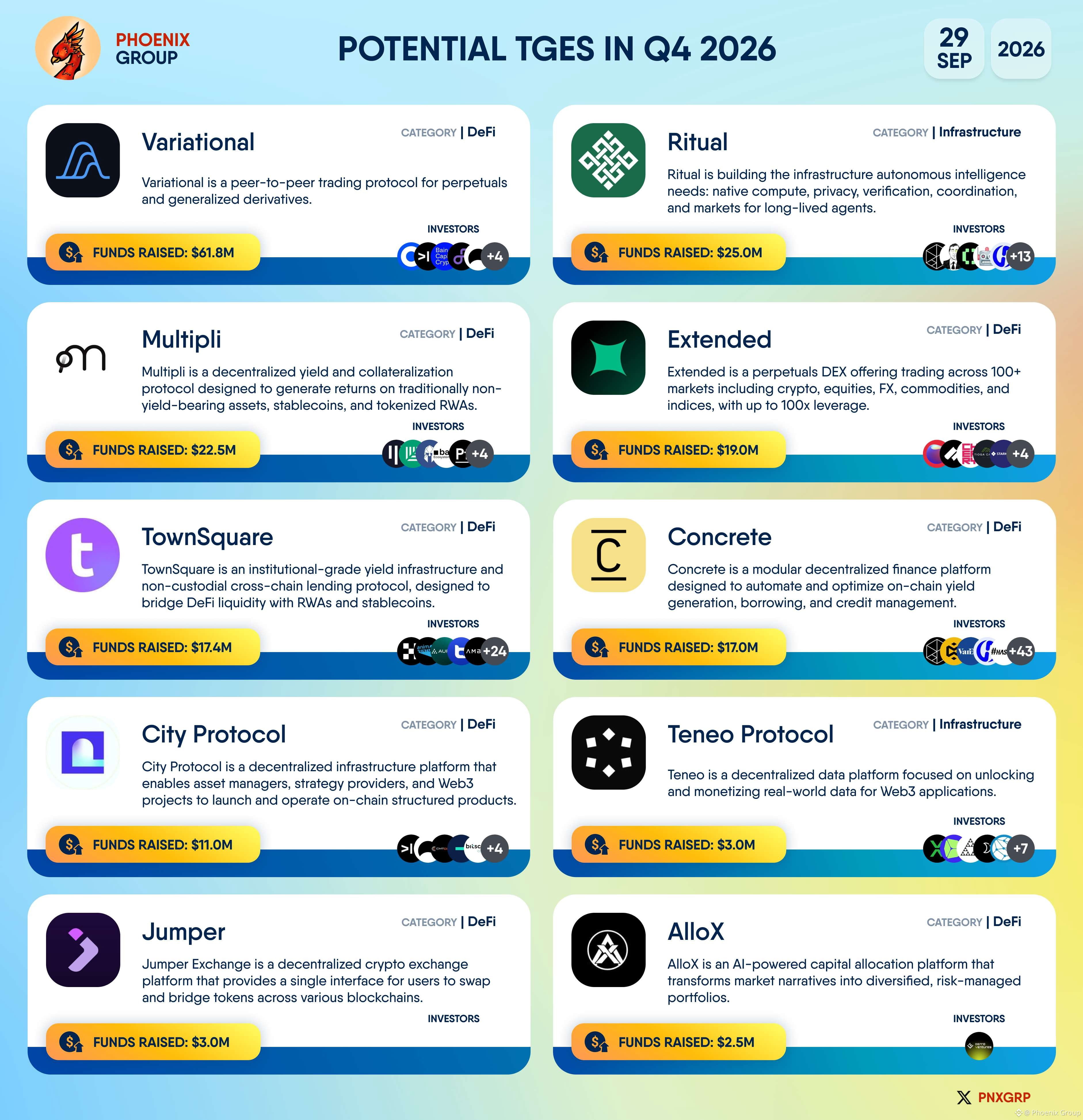
POTENTIAL TGES IN Q4 2026
#Variational #Ritual #Multipli #Extended #TownSquare #Concrete #CityProtocol #TeneoProtocol #Jumper #AlloX
POTENTIAL TGES IN Q4 2026
#Variational #Ritual #Multipli #Extended #TownSquare #Concrete #CityProtocol #TeneoProtocol #Jumper #AlloX
#Variational #Ritual #Multipli #Extended #TownSquare #Concrete #CityProtocol #TeneoProtocol #Jumper #AlloX
167
1
345
Log in to explore more content
Join global crypto users on Binance Square
⚡️ Get latest and useful information about crypto.
💬 Trusted by the world’s largest crypto exchange.
👍 Discover real insights from verified creators.
Email / Phone number
Trending Topics
1
#UniswapA16zSeekDeFiExemptionFromIllinoisCryptoTax
32,439 views
836 Discussing
2
#HKDollarStablecoinHKDAPToLaunchOnSolana
24,029 views
537 Discussing
3
#$1.5BInLeveragedCryptoBetsLiquidated
51,210 views
264 Discussing
4
#TrezorSaysCryptoBilisSoldWalletMayContainMaliciousComponents
4,293 views
81 Discussing
5
#KOSPIFalls3.53%BackBelow6000
68,740 views
1,139 Discussing
6
#AmazonSharesFallAbout7%InPremarketTrading
31,864 views
623 Discussing
7
#USMidtermElections
268,884 views
2,406 Discussing
8
#StrategySTRCReaches$99.95ForFirstTimeIn165Days
34,022 views
96 Discussing
9
#BinanceWillListPredictPREDICT
104,494 views
1,442 Discussing
10
#SwitzerlandFirstSpotBitcoinETFExpectedToTradeInNovember
3,369 views
115 Discussing