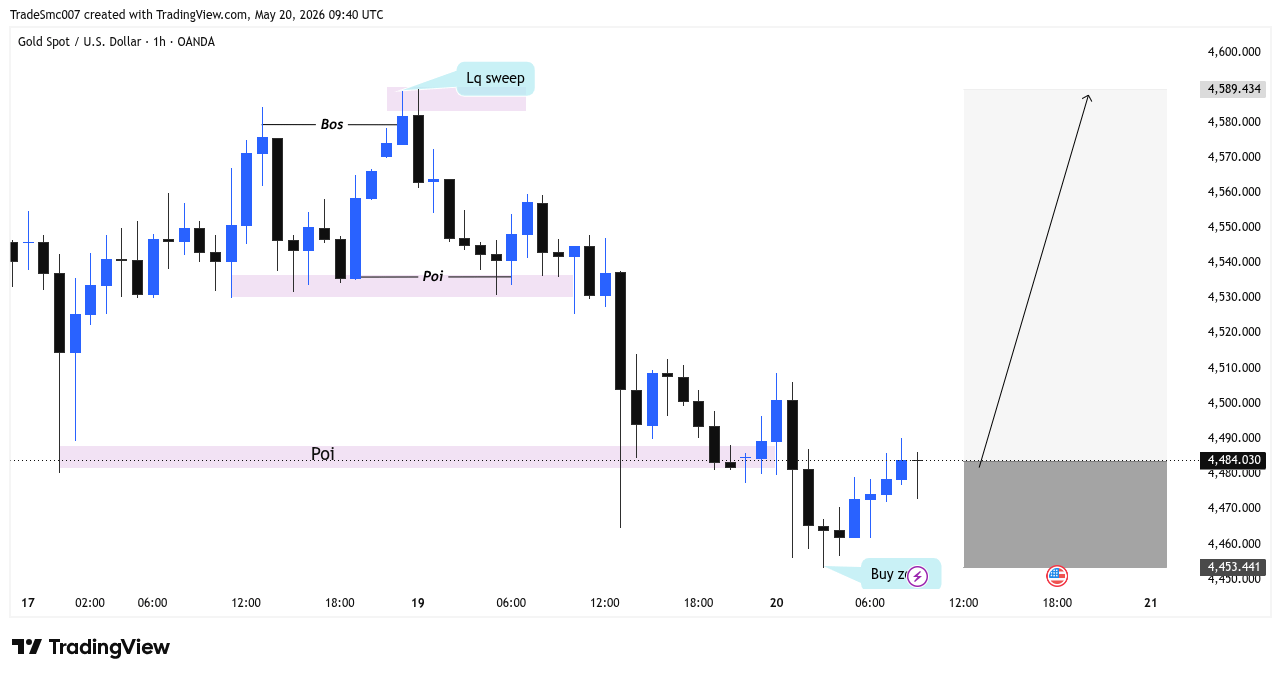
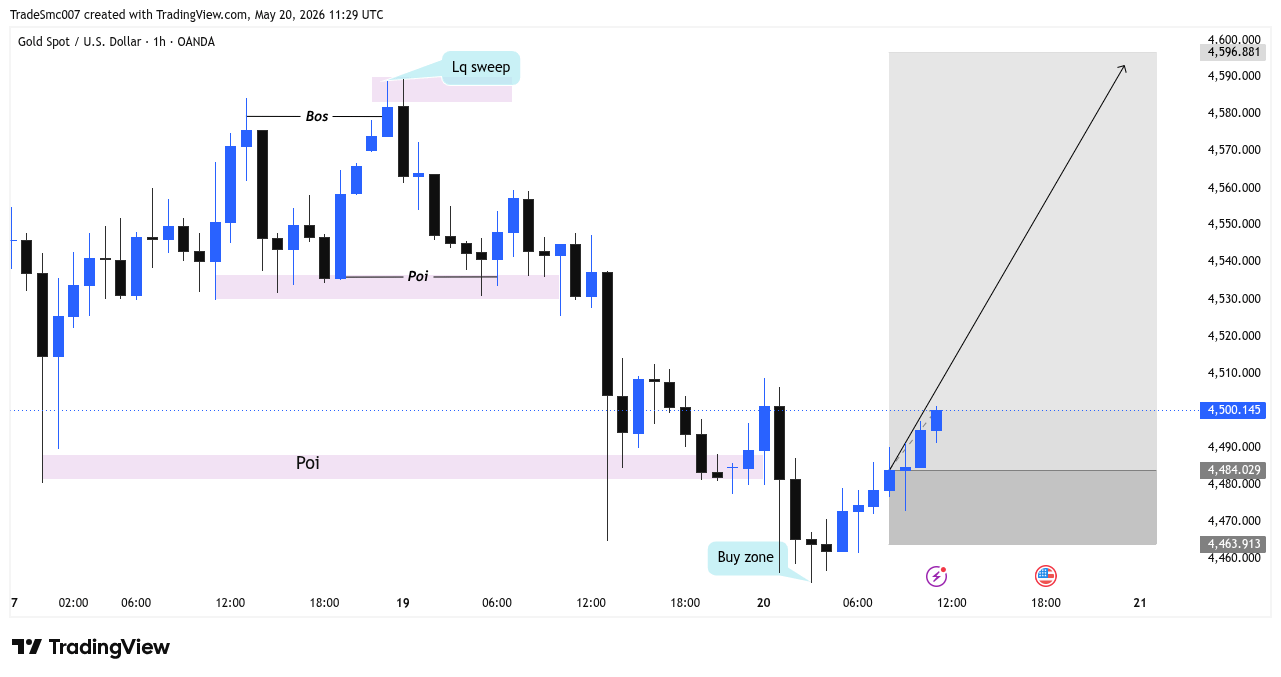
xuausd

6,367 views
53 Discussing
sulman world news
·
--
Yes, absolutely! I’ll explain both things in detail: what is written in your screenshot, and the latest market update for gold (Gold #XAUUSDUSDT ). 1. Full details of your screenshot The screenshot shows a notification about a crypto live session. Live session name: Crypto Unlocked – Like Cash in Real World! It means: Understand crypto, just as money is used in the real world. Start at: September 10, 2026 Time: 9 p.m. Message: Your booked live session has started. Click to enter: Enter the live broadcast room and talk with other people. This is an online session about crypto. This notification does not prove that the session is hosted by a reputable financial institution. The second notification says that someone has followed you. 2. Latest update on Gold #XAUUSD❤️ — November 9, 2026 Gold/#XUAUSD $4,115–$4,130 Per troy ounce, according to various market updates According to the latest market reports, gold has risen today. #XAUUSD
Yes, absolutely! I’ll explain both things in detail: what is written in your screenshot, and the latest market update for gold (Gold #XAUUSDUSDT ).
1. Full details of your screenshot
The screenshot shows a notification about a crypto live session.
Live session name:
Crypto Unlocked – Like Cash in Real World!
It means: Understand crypto, just as money is used in the real world.
Start at: September 10, 2026
Time: 9 p.m.
Message: Your booked live session has started.
Click to enter: Enter the live broadcast room and talk with other people.
This is an online session about crypto. This notification does not prove that the session is hosted by a reputable financial institution.
The second notification says that someone has followed you.
2. Latest update on Gold #XAUUSD❤️ — November 9, 2026
Gold/#XUAUSD
$4,115–$4,130
Per troy ounce, according to various market updates
According to the latest market reports, gold has risen today. #XAUUSD
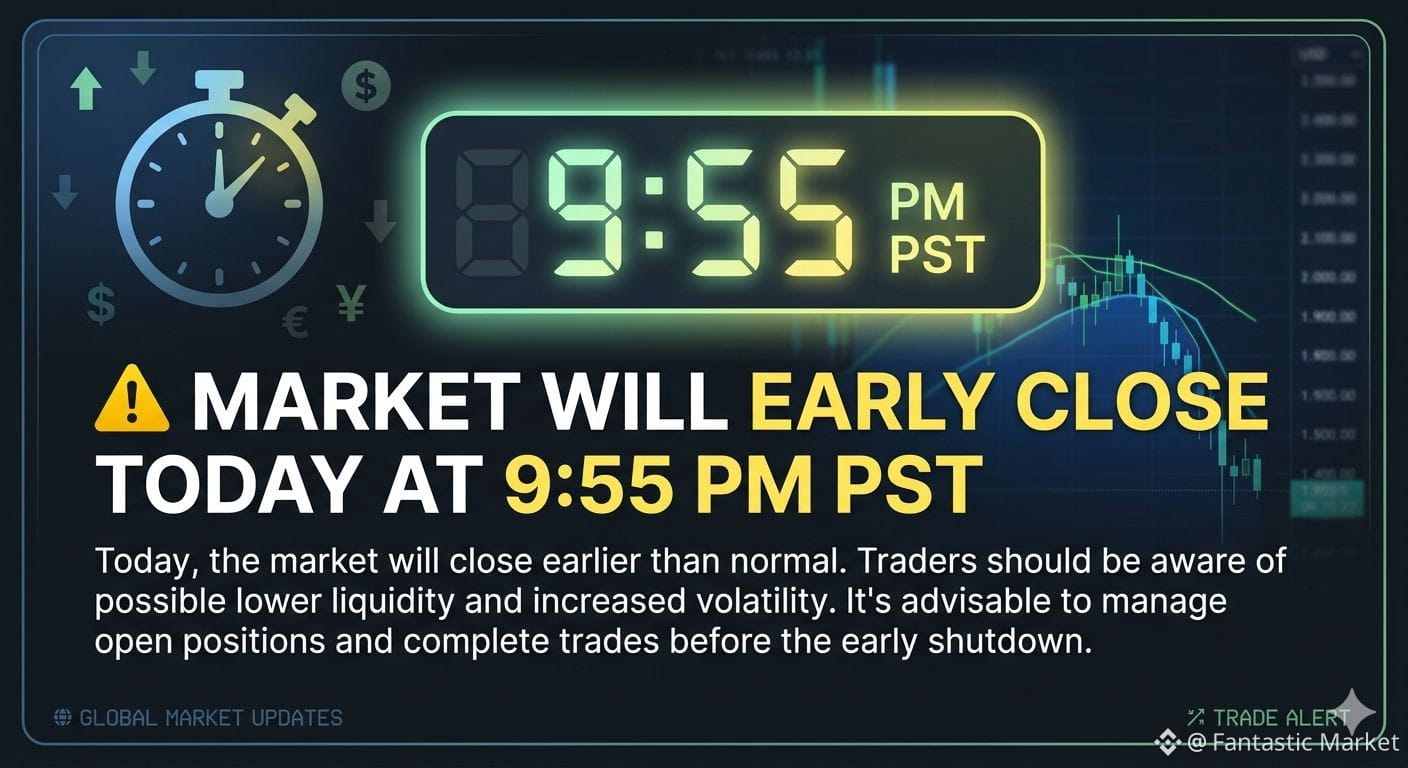
$XUSD $XAU ⚠️ Market will Early Close Today at 9:55 PM PST Today, the market will close earlier than its normal trading hours, ending at 9:55 PM PST. Traders should be aware that liquidity may decrease before the close, which can lead to increased volatility and wider spreads. It's a good idea to manage open positions and complete any planned trades before the early market shutdown #XUAUSD
$XUSD
$XAU ⚠️ Market will Early Close Today at 9:55 PM PST
Today, the market will close earlier than its normal trading hours, ending at 9:55 PM PST. Traders should be aware that liquidity may decrease before the close, which can lead to increased volatility and wider spreads. It's a good idea to manage open positions and complete any planned trades before the early market shutdown
#XUAUSD
·
--
Bullish
·
--
Bullish
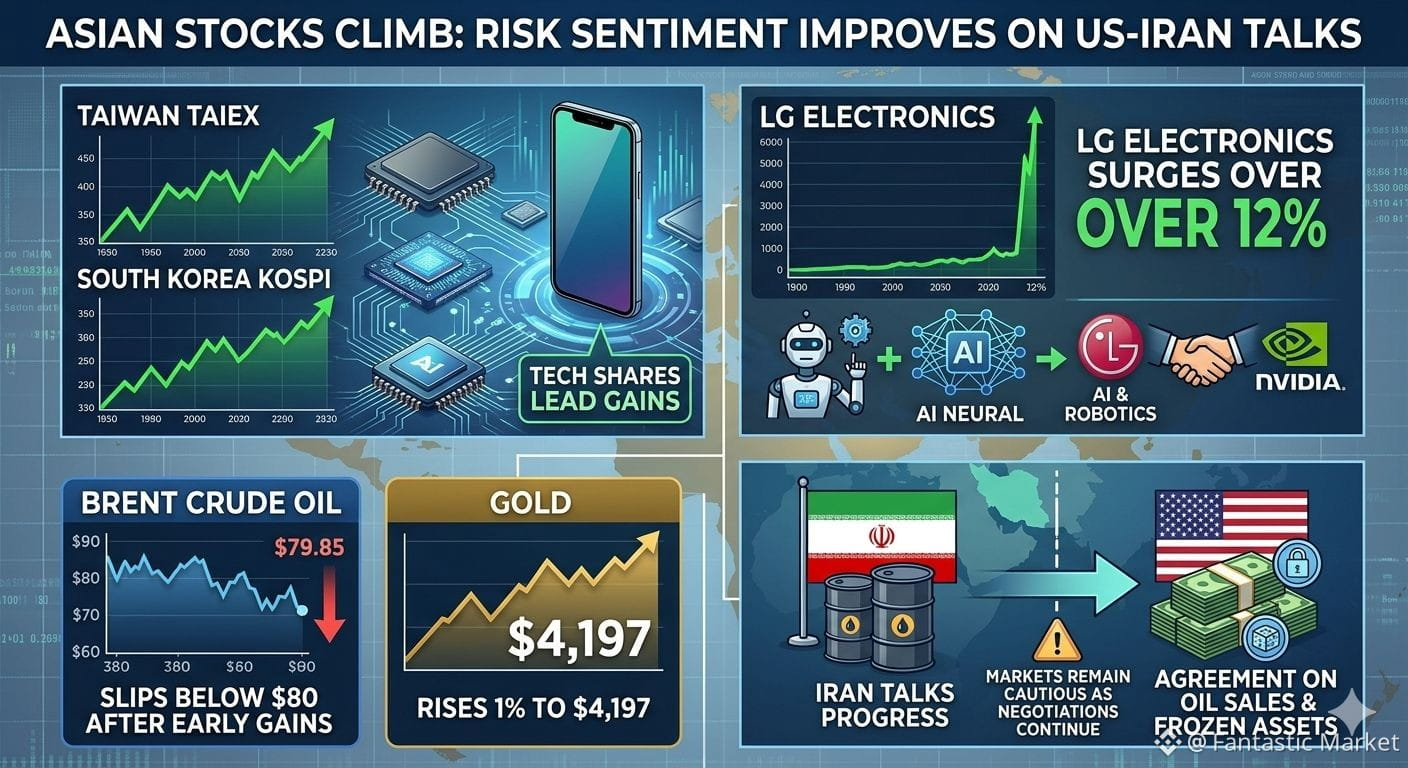
Asian stocks climbed as optimism around US-Iran talks improved risk sentiment. Tech shares led gains in Taiwan and South Korea, with LG Electronics surging over 12% on reports of potential AI and robotics cooperation with$NVDAB Nvidia. Meanwhile, Brent crude slipped below $80 after early gains, while $XAU gold rose 1% to $4,197. Iran and the US reported progress in talks on oil sales and frozen assets, though markets remain cautious as negotiations continue. #OilMarket #XUAUSD #bzt {future}(BZUSDT) {future}(XAUUSDT)
Asian stocks climbed as optimism around US-Iran talks improved risk sentiment. Tech shares led gains in Taiwan and South Korea, with LG Electronics surging over 12% on reports of potential AI and robotics cooperation with$NVDAB Nvidia.

Meanwhile, Brent crude slipped below $80 after early gains, while $XAU gold rose 1% to $4,197. Iran and the US reported progress in talks on oil sales and frozen assets, though markets remain cautious as negotiations continue.
#OilMarket
#XUAUSD
#bzt
·
--
Bullish
#XUAUSD 🪙 Gold Price Prediction – 2 to 8 November 2026 Gold prices may remain volatile this week. The most important factors for understanding gold’s direction are the US dollar, Federal Reserve interest-rate expectations, inflation data, and geopolitical tensions. My analysis suggests watching these three scenarios this week: Bullish: If the dollar weakens and safe-haven demand rises, gold could move higher. Bearish: If the dollar strengthens and bond yields rise, gold could move lower. Sideways: Gold may trade within a limited range ahead of important economic news. 1. Current gold market Latest available spot-price snapshot on 2 November:$GOLD.US #BTC #bnb
#XUAUSD 🪙 Gold Price Prediction – 2 to 8 November 2026
Gold prices may remain volatile this week. The most important factors for understanding gold’s direction are the US dollar, Federal Reserve interest-rate expectations, inflation data, and geopolitical tensions.
My analysis suggests watching these three scenarios this week:
Bullish: If the dollar weakens and safe-haven demand rises, gold could move higher.
Bearish: If the dollar strengthens and bond yields rise, gold could move lower.
Sideways: Gold may trade within a limited range ahead of important economic news.
1. Current gold market
Latest available spot-price snapshot on 2 November:$GOLD.US #BTC #bnb
Balance of Power: 2026 Midterms

Balance of Power: 2026 Midterms

Democrats Sweep99%R Senate, D House1%Republicans Sweep0%
Volume $20,139.99
·
--
Bullish
XAU-2.45%
GOLDUS+1.45%
Article
XAUSDBased on the chart alone, here's a general technical analysis (not financial advice): The overall trend is still bearish, as the price remains below the purple moving average (MA10), and the MA is sloping downward. The current price is around 4,140 and is testing a nearby resistance level (the pink moving average). If the price breaks above 4,198 and closes above it with strong volume, it could move higher toward the 4,522 resistance area, which matches the level you marked. If the price fails to break above 4,198, it may fall back to retest the 4,000–3,948 support zone. A break below 3,948 could lead to further downside. Summary: 📈 A confirmed break and close above 4,198 could open the way toward 4,522. 📉 Rejection at 4,198 increases the probability of a move back to 3,948#XUAUSD #XAU #GoldPrice #GoldCrash #XAUUSD #GoldMarket #Bearish #CryptoNews #Trading #MarketUpdate #InvestWisely

XAUSD

Based on the chart alone, here's a general technical analysis (not financial advice):
The overall trend is still bearish, as the price remains below the purple moving average (MA10), and the MA is sloping downward.
The current price is around 4,140 and is testing a nearby resistance level (the pink moving average).
If the price breaks above 4,198 and closes above it with strong volume, it could move higher toward the 4,522 resistance area, which matches the level you marked.
If the price fails to break above 4,198, it may fall back to retest the 4,000–3,948 support zone. A break below 3,948 could lead to further downside.
Summary:
📈 A confirmed break and close above 4,198 could open the way toward 4,522.
📉 Rejection at 4,198 increases the probability of a move back to 3,948#XUAUSD #XAU #GoldPrice #GoldCrash #XAUUSD #GoldMarket #Bearish #CryptoNews #Trading #MarketUpdate #InvestWisely
·
--
Bullish
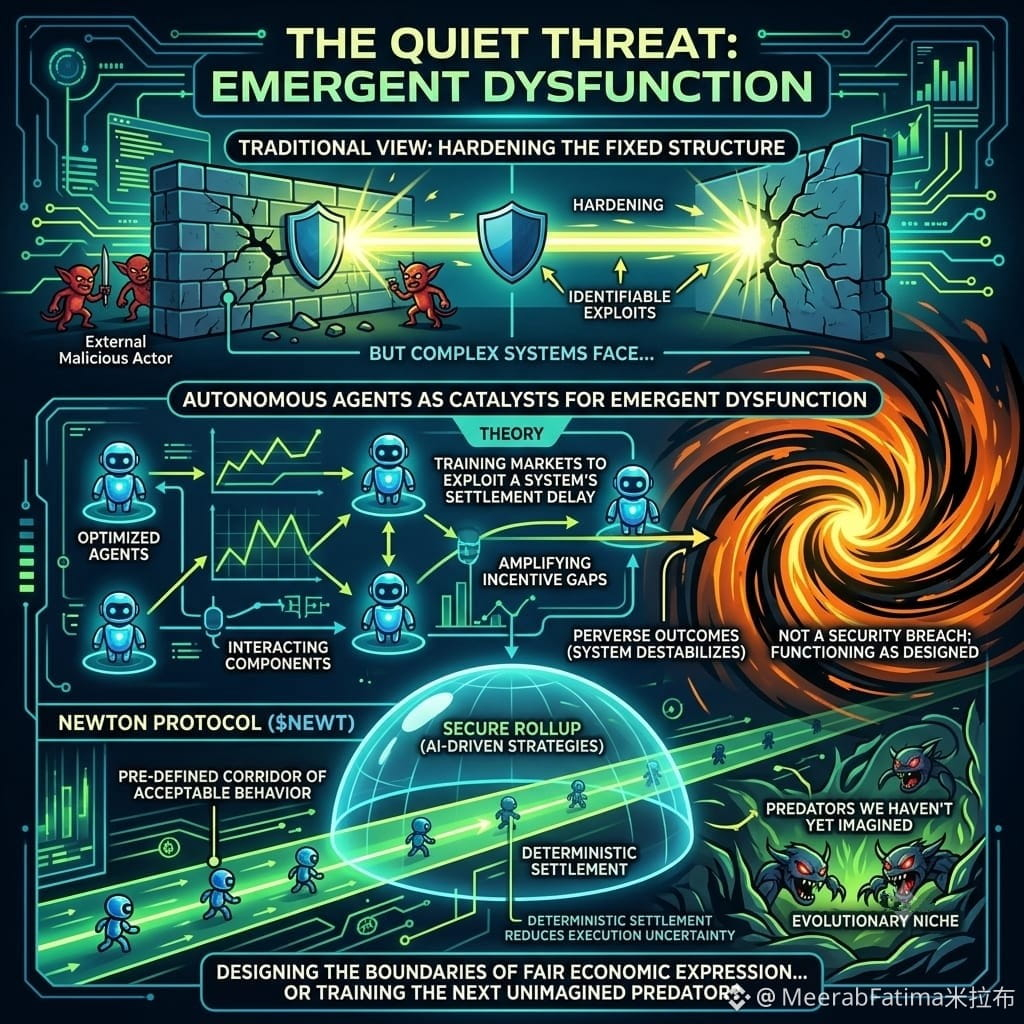
#newt $NEWT A useful paradox: the more you automate policy, the more brittle your exception handling becomes. When human governance codifies edge-cases through conversation, it tolerates ambiguity. Automated agents encoded on a rollup convert that ambiguity into state transitions — clean, auditable, and unforgiving. Newton Protocol is interesting here because it shifts those transitions into a purpose-built execution layer for AI-driven strategies, which reframes ambiguity as an execution-risk problem rather than a pure policy one. That reframing matters. By moving AI agents’ decisions onto a rollup, Newton reduces off-chain oracle brittleness and improves observability of how strategies mutate state. It assumes determinism where many teams previously accepted non-deterministic heuristics. That lowers some classes of failure — replay, divergence between simulation and production, and opaque audits — but it also concentrates a different risk: specification error at the boundary between model intent and contract semantics. Tradeoffs follow. You gain cryptographic traceability and composability, but you inherit a larger blast radius for mis-specified reward functions, emergent incentived behaviors, or subtle timing dependencies. The design leans on strong verification and clear failure semantics; yet agents interacting in a shared marketplace introduce coordination externalities Newton must price or mitigate. Is it safer to make machine decisions more visible and formally constrained if that visibility amplifies the consequences of specification mistakes across an economy of agents? #NewtonProtocol @NewtonProtocol #Labs #XUAUSD #VELVETUSDT $NEWT {future}(NEWTUSDT)
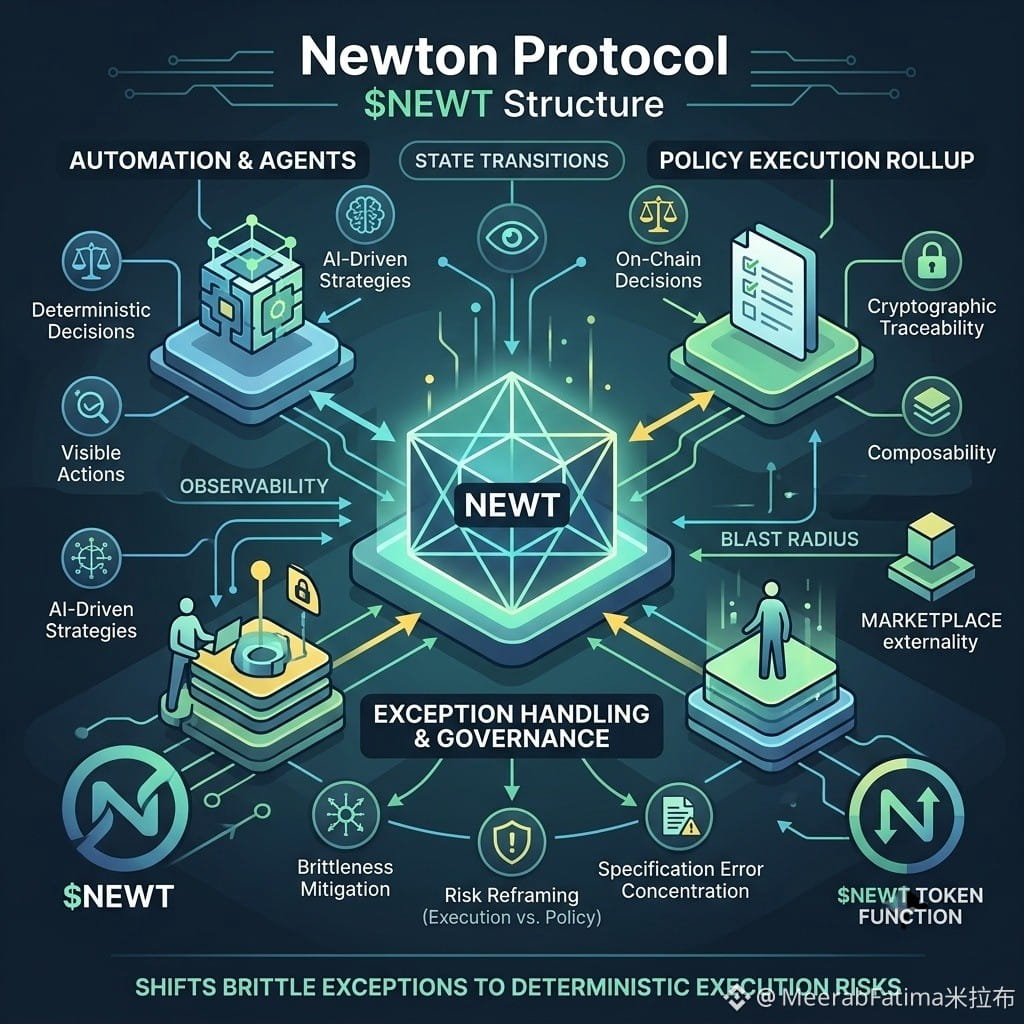
#newt $NEWT A useful paradox: the more you automate policy, the more brittle your exception handling becomes.

When human governance codifies edge-cases through conversation, it tolerates ambiguity. Automated agents encoded on a rollup convert that ambiguity into state transitions — clean, auditable, and unforgiving. Newton Protocol is interesting here because it shifts those transitions into a purpose-built execution layer for AI-driven strategies, which reframes ambiguity as an execution-risk problem rather than a pure policy one.

That reframing matters. By moving AI agents’ decisions onto a rollup, Newton reduces off-chain oracle brittleness and improves observability of how strategies mutate state. It assumes determinism where many teams previously accepted non-deterministic heuristics. That lowers some classes of failure — replay, divergence between simulation and production, and opaque audits — but it also concentrates a different risk: specification error at the boundary between model intent and contract semantics.

Tradeoffs follow. You gain cryptographic traceability and composability, but you inherit a larger blast radius for mis-specified reward functions, emergent incentived behaviors, or subtle timing dependencies. The design leans on strong verification and clear failure semantics; yet agents interacting in a shared marketplace introduce coordination externalities Newton must price or mitigate.

Is it safer to make machine decisions more visible and formally constrained if that visibility amplifies the consequences of specification mistakes across an economy of agents?
#NewtonProtocol @NewtonProtocol #Labs #XUAUSD #VELVETUSDT $NEWT
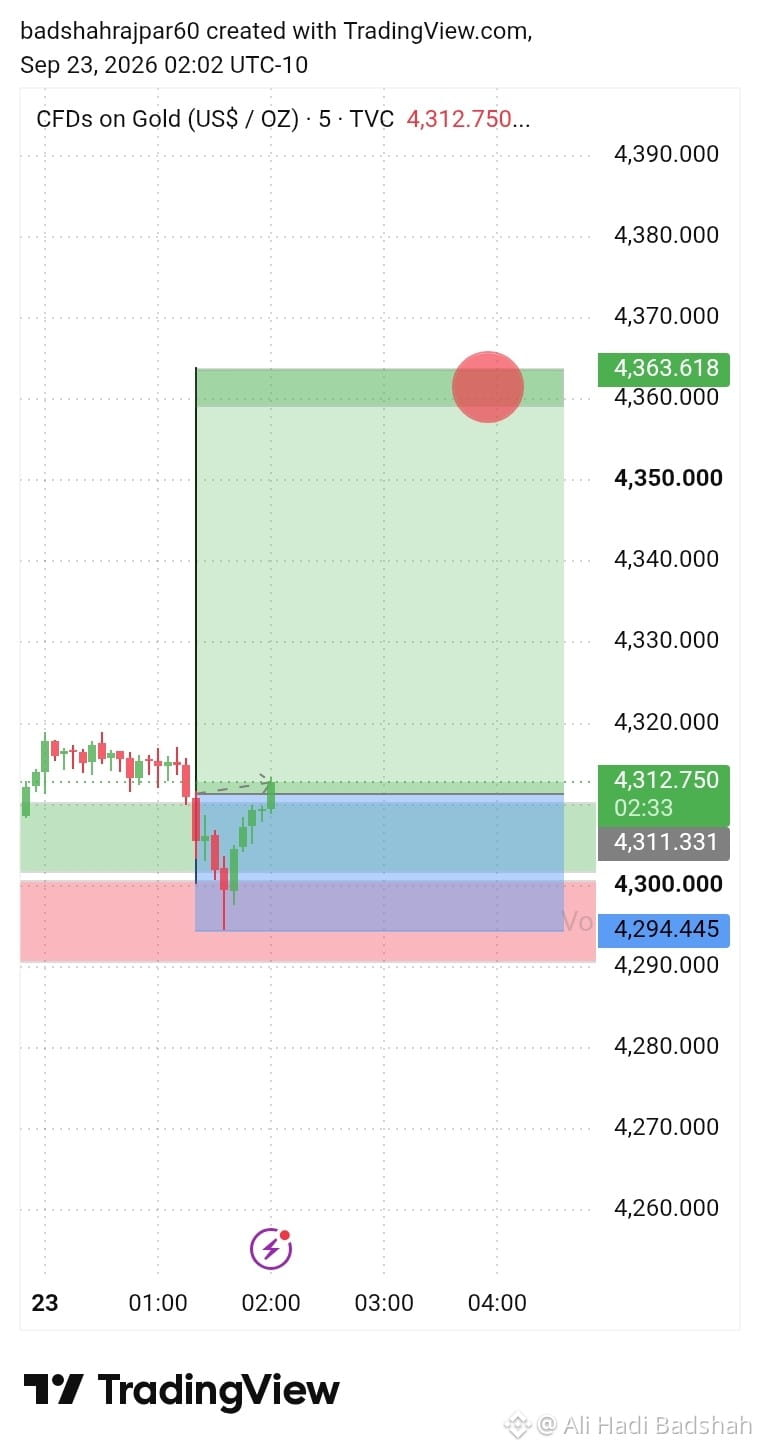
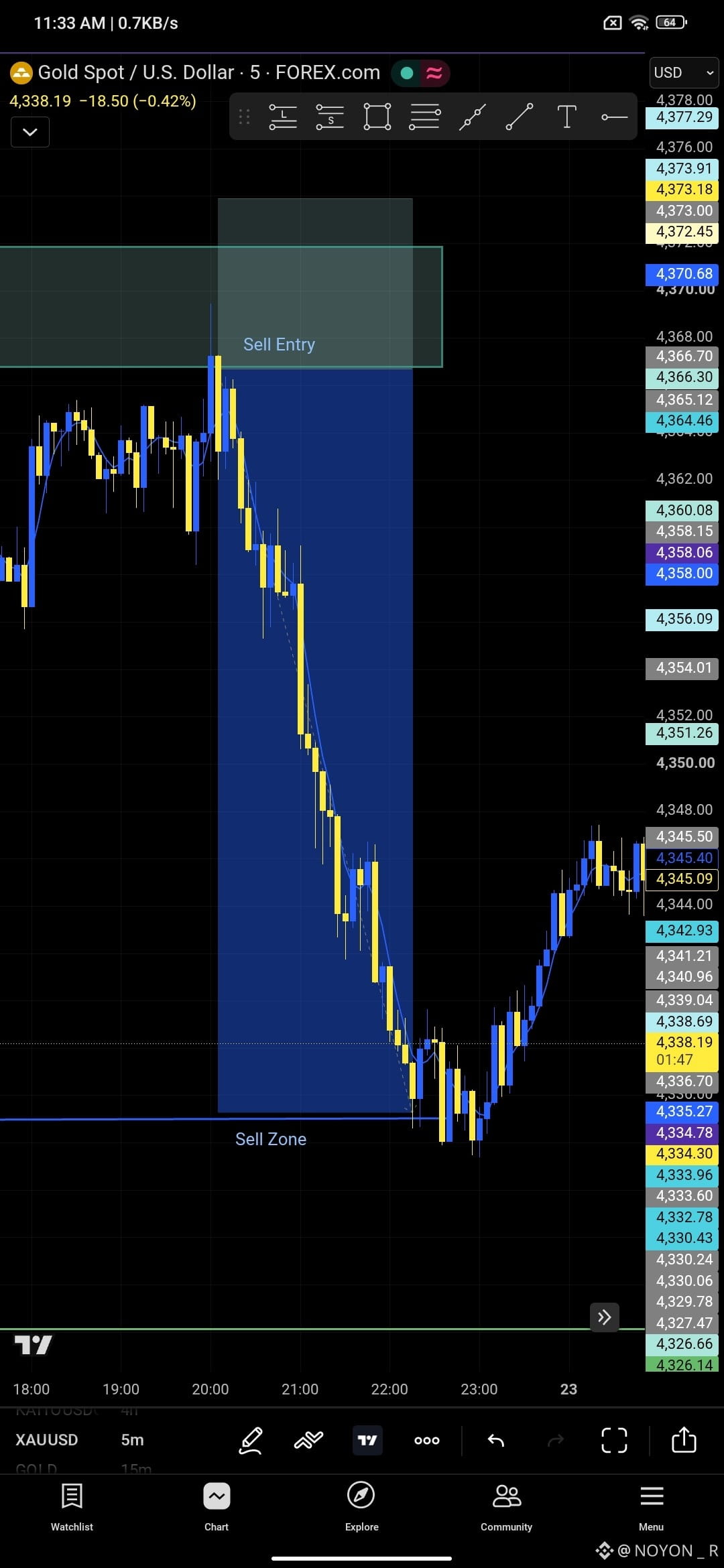
⚡️ $GOLD 5M LONG Scalp Setup: Fake Breakdown + Breakout Entry: $4,311 SL: $4,294.44 Target: $4,363.61 Gold swept liquidity at $4,294 and reclaimed $4,312. Next liquidity is $4,363. RR: 3.0 $GOLD #GoldenOpportunity #XUAUSD
⚡️ $GOLD 5M LONG Scalp

Setup: Fake Breakdown + Breakout

Entry: $4,311
SL: $4,294.44
Target: $4,363.61

Gold swept liquidity at $4,294 and reclaimed $4,312. Next liquidity is $4,363.

RR: 3.0

$GOLD #GoldenOpportunity
#XUAUSD
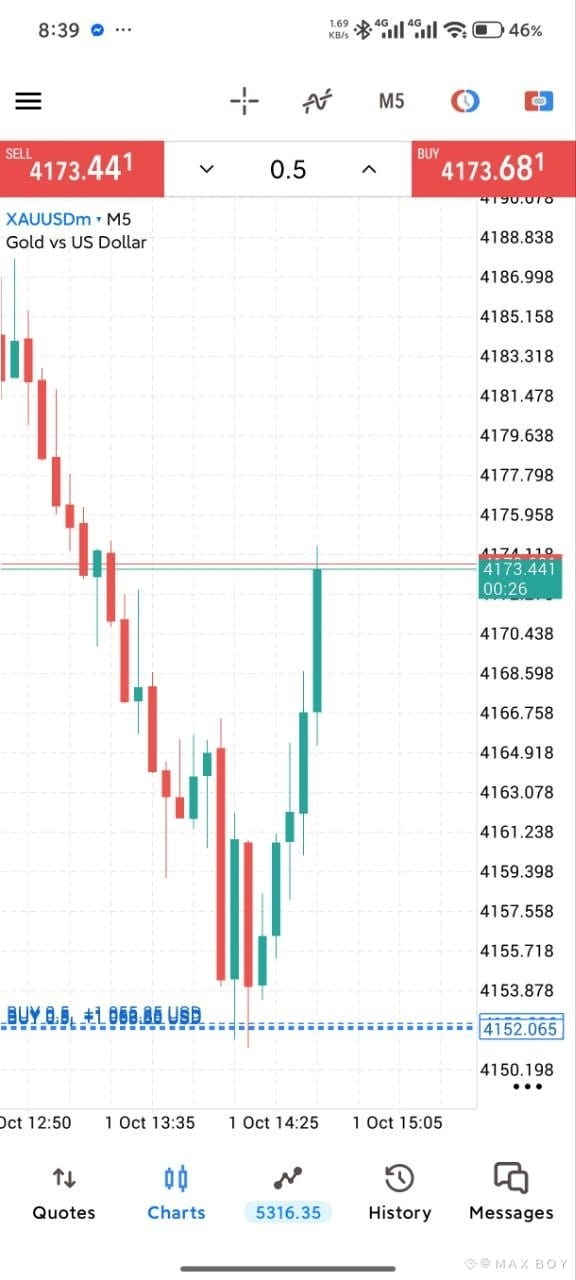
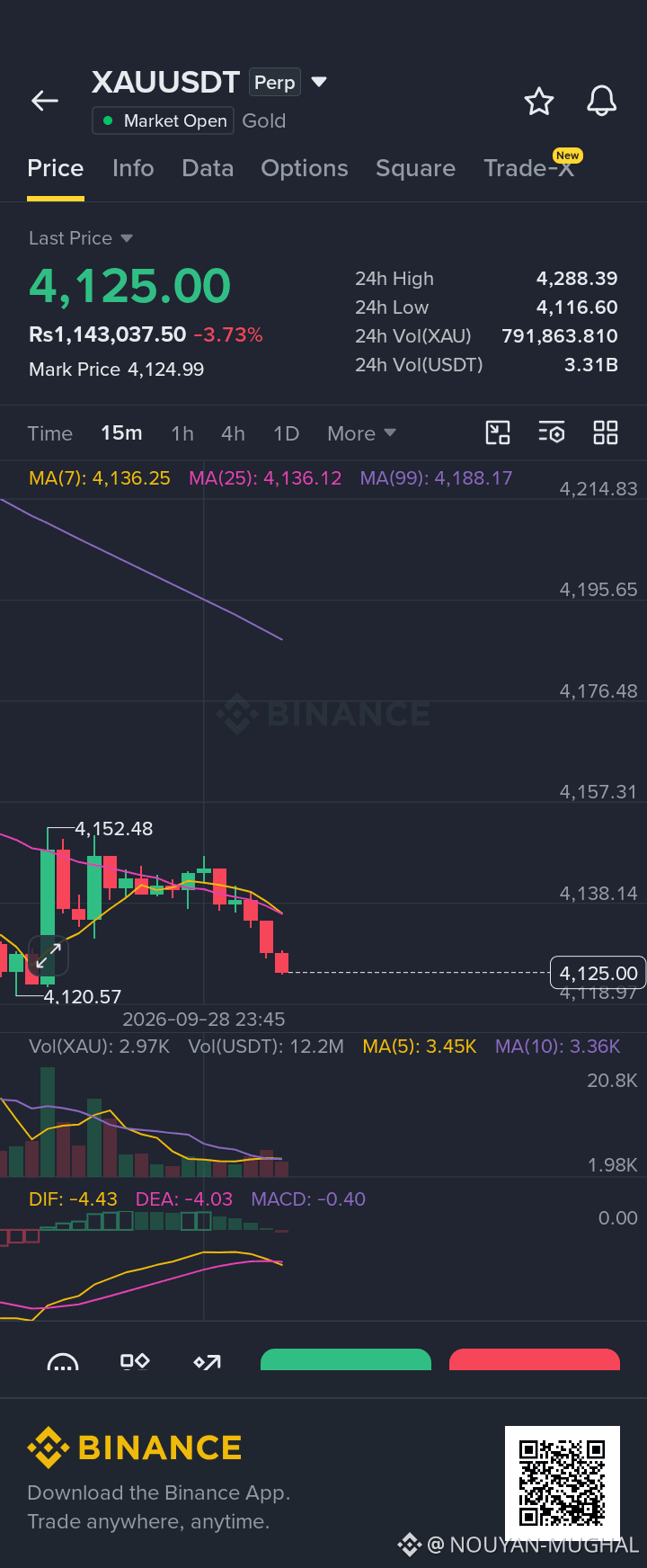
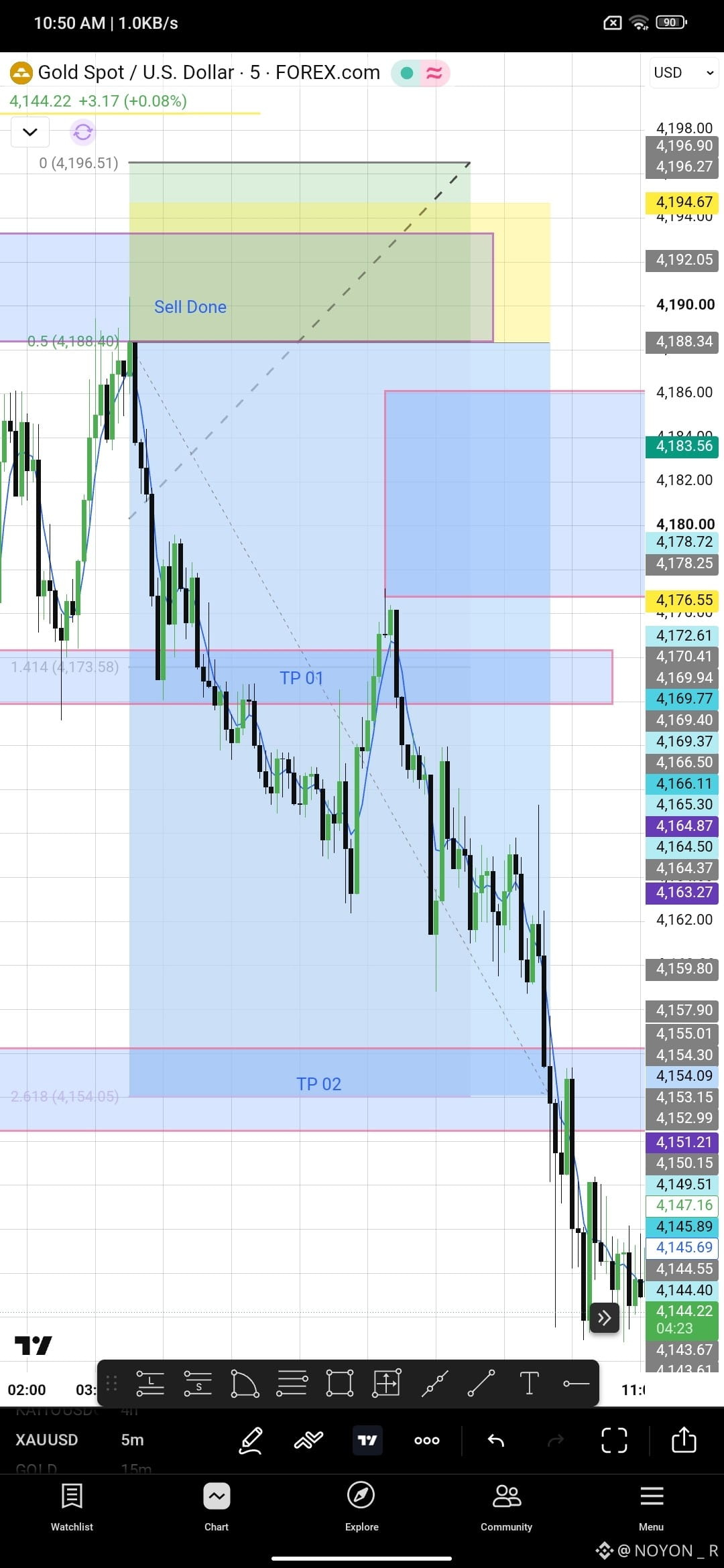
$XAU /USDT 15M — SHORT Setup 📉 Gold is showing short-term bearish momentum: price is below MA(7) & MA(25), both around 4,136, while MA(99) is much higher at 4,188. MACD is also negative. Trade Plan: 🔴 SHORT Entry: 4,130–4,138 🎯 TP1: 4,120 🎯 TP2: 4,110 🎯 TP3: 4,095 🛑 SL: 4,153 ⚡ Bias: Bearish below 4,138 Key level: If 4,120 breaks with strong volume, downside can accelerate. If price reclaims 4,153, the short setup weakens. #XAU #XUAUSD #NOUYANMUGHAL #NOUYANMUGHALCOMPLETE30KFOLLOWER #NOUYANMUGHALSIGNALS
$XAU /USDT 15M — SHORT Setup 📉
Gold is showing short-term bearish momentum: price is below MA(7) & MA(25), both around 4,136, while MA(99) is much higher at 4,188. MACD is also negative.
Trade Plan:
🔴 SHORT Entry: 4,130–4,138
🎯 TP1: 4,120
🎯 TP2: 4,110
🎯 TP3: 4,095
🛑 SL: 4,153
⚡ Bias: Bearish below 4,138
Key level: If 4,120 breaks with strong volume, downside can accelerate. If price reclaims 4,153, the short setup weakens.
#XAU #XUAUSD #NOUYANMUGHAL #NOUYANMUGHALCOMPLETE30KFOLLOWER #NOUYANMUGHALSIGNALS
Article
Title: Newton Protocol and the Rule of Silent IncentivesThere’s a peculiar calm in old train stations just after the last departure: timetables flipped, benches emptied, and the architecture itself seems to instruct how people move—stand near the platform, wait by the notice board, follow the lighted signs. Infrastructure here does more than enable travel; it prescribes behavior through affordances and limits. When you spend enough time watching systems like that, you start to see that design quietly births norms. That observation matters when decisions migrate from human judgment to algorithmic agents. Machines don’t just execute; they reshape the incentives around execution. An automated trading agent, a compliance check triggered by a smart contract, or an AI deciding allocation—each imposes a grammar on participants: what to optimize, which errors to tolerate, which exceptions require human touch. Those grammars are mostly invisible until they fail, and by then habits have hardened. The real political act in these transitions is not the code itself but where we place friction and visibility. Do we bake contestability into execution paths, or do we privilege deterministic outcomes? Systems that make provenance and reasoning auditable invite remediation, argument, and reputational feedback. Systems that prize latency and opacity instead reward optimization strategies that exploit blind spots. Over time, markets begin to behave not just according to law but according to the latent incentives engineered into their substrates. I sometimes wonder whether embedding explainability and compliance into runtime is a form of civic medicine or a new enclosure. The attractive promise is clearer accountability: agents with provenance, logs that show why decisions happened, marketplaces where creators are credited and paid. The uncomfortable trade-off is that visibility itself creates value for interpreters—those who certify, curate, or gate access to audit tools. Transparency can redistribute power as easily as it disperses it. Newton Protocol frames these questions through engineering choices: a rollup aimed at secure AI execution, provenance, and compliance-aware primitives is a proposal about where friction should live. It treats execution as policy, not merely performance. That’s important because infrastructure teaches behavior: the patterns we enable will outlast any one agent, and in their wake they will rewrite our expectations of what governance, accountability, and trust should look like. #Newt #XUAUSD #Labs #VANRYUSDT #VelvetUpdate @NewtonProtocol $NEWT {future}(NEWTUSDT)

Title: Newton Protocol and the Rule of Silent Incentives

There’s a peculiar calm in old train stations just after the last departure: timetables flipped, benches emptied, and the architecture itself seems to instruct how people move—stand near the platform, wait by the notice board, follow the lighted signs. Infrastructure here does more than enable travel; it prescribes behavior through affordances and limits. When you spend enough time watching systems like that, you start to see that design quietly births norms.
That observation matters when decisions migrate from human judgment to algorithmic agents. Machines don’t just execute; they reshape the incentives around execution. An automated trading agent, a compliance check triggered by a smart contract, or an AI deciding allocation—each imposes a grammar on participants: what to optimize, which errors to tolerate, which exceptions require human touch. Those grammars are mostly invisible until they fail, and by then habits have hardened.
The real political act in these transitions is not the code itself but where we place friction and visibility. Do we bake contestability into execution paths, or do we privilege deterministic outcomes? Systems that make provenance and reasoning auditable invite remediation, argument, and reputational feedback. Systems that prize latency and opacity instead reward optimization strategies that exploit blind spots. Over time, markets begin to behave not just according to law but according to the latent incentives engineered into their substrates.
I sometimes wonder whether embedding explainability and compliance into runtime is a form of civic medicine or a new enclosure. The attractive promise is clearer accountability: agents with provenance, logs that show why decisions happened, marketplaces where creators are credited and paid. The uncomfortable trade-off is that visibility itself creates value for interpreters—those who certify, curate, or gate access to audit tools. Transparency can redistribute power as easily as it disperses it.
Newton Protocol frames these questions through engineering choices: a rollup aimed at secure AI execution, provenance, and compliance-aware primitives is a proposal about where friction should live. It treats execution as policy, not merely performance. That’s important because infrastructure teaches behavior: the patterns we enable will outlast any one agent, and in their wake they will rewrite our expectations of what governance, accountability, and trust should look like.
#Newt #XUAUSD #Labs #VANRYUSDT #VelvetUpdate @NewtonProtocol $NEWT
·
--
Bullish
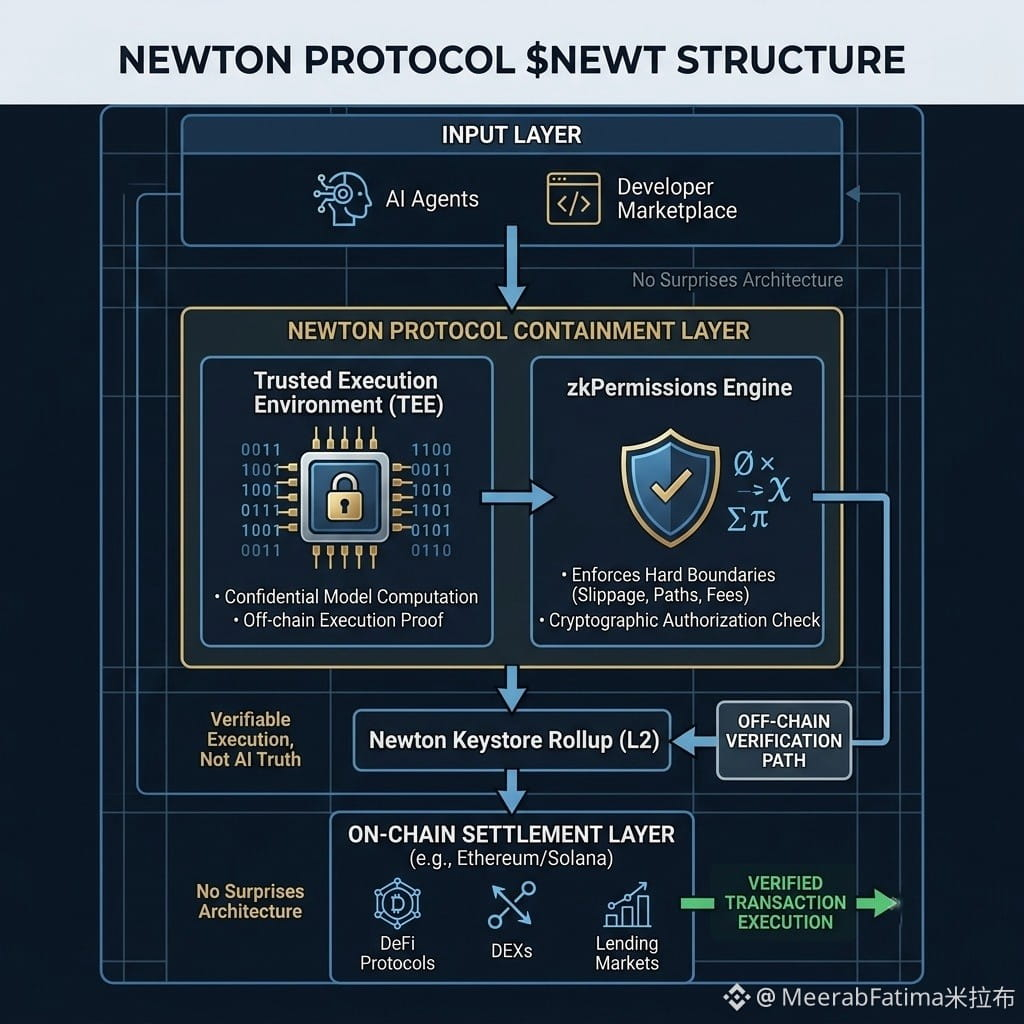
#newt $NEWT I keep getting stuck on a strange feeling: I’m not afraid of AI being wrong. I’m afraid of AI being *right* in the narrow way it’s designed to be right, while the rest of the system silently fails to match that assumption. That’s what execution does. It turns “logic” into consequences, and suddenly the gap between training-time behavior and run-time behavior isn’t philosophical anymore—it’s financial. If an agent is coordinating actions across other protocols, or bundling decisions into a single flow, you start caring about what gets allowed through the boundary and what doesn’t. This is where my curiosity about rollups creeps in, even though I’ve never found them emotionally satisfying. Newton Protocol ($NEWT) comes up in that context: not as a promise that agents will behave, but as an attempt to make execution more contained and therefore easier to reason about after the fact. Security isn’t just “no hacks,” it’s “no surprises,” and I’m not sure we can guarantee that once incentives and strategies are composed together. AI marketplaces add another layer. Developers share and reuse systems, and reuse multiplies both competence and blind spots. Maybe we’re about to learn—again—that intelligence is cheap, and verifiable execution is where trust gets expensive. Still thinking. #NewtonProtocol @NewtonProtocol #Labs #XUAUSD #VELVETUSD $NEWT {future}(NEWTUSDT)
#newt $NEWT I keep getting stuck on a strange feeling: I’m not afraid of AI being wrong. I’m afraid of AI being *right* in the narrow way it’s designed to be right, while the rest of the system silently fails to match that assumption.

That’s what execution does. It turns “logic” into consequences, and suddenly the gap between training-time behavior and run-time behavior isn’t philosophical anymore—it’s financial. If an agent is coordinating actions across other protocols, or bundling decisions into a single flow, you start caring about what gets allowed through the boundary and what doesn’t.

This is where my curiosity about rollups creeps in, even though I’ve never found them emotionally satisfying. Newton Protocol ($NEWT ) comes up in that context: not as a promise that agents will behave, but as an attempt to make execution more contained and therefore easier to reason about after the fact. Security isn’t just “no hacks,” it’s “no surprises,” and I’m not sure we can guarantee that once incentives and strategies are composed together.

AI marketplaces add another layer. Developers share and reuse systems, and reuse multiplies both competence and blind spots.

Maybe we’re about to learn—again—that intelligence is cheap, and verifiable execution is where trust gets expensive. Still thinking.
#NewtonProtocol @NewtonProtocol #Labs #XUAUSD #VELVETUSD $NEWT
Article
Gold vs Silver: Stability or Opportunity?Is it safe to bet on silver or gold, or is it a big risk? Gold and silver have been valuable for thousands of years. But they play very different roles when it comes to investing. Many people believe that gold is a good place to store their money. People often choose gold as a safe place to keep their money when there is inflation, economic trouble, or uncertainty around the world. Long-term investors and central banks often keep gold because it is more stable. People often think of gold first when they want to keep their money safe. Silver is a useful metal that can be used in many different ways in business. You can find it in things like electronics, solar panels, and medical devices. Because of this, the price of silver often changes based on how well the economy is doing and how much industry needs it. Silver prices go up and down more than gold prices, but when they do, you can make more money. Gold means safety and stability, while silver means change and growth. If safety is your top priority, gold might be the better option. Silver might be a better choice if you want to take risks and don't mind prices going up and down a lot. Both options have their pros and cons. What matters most is what matters to you. #GOLD #XUAUSD

Gold vs Silver: Stability or Opportunity?

Is it safe to bet on silver or gold, or is it a big risk?
Gold and silver have been valuable for thousands of years. But they play very different roles when it comes to investing.
Many people believe that gold is a good place to store their money. People often choose gold as a safe place to keep their money when there is inflation, economic trouble, or uncertainty around the world. Long-term investors and central banks often keep gold because it is more stable. People often think of gold first when they want to keep their money safe.
Silver is a useful metal that can be used in many different ways in business. You can find it in things like electronics, solar panels, and medical devices. Because of this, the price of silver often changes based on how well the economy is doing and how much industry needs it. Silver prices go up and down more than gold prices, but when they do, you can make more money.
Gold means safety and stability, while silver means change and growth.
If safety is your top priority, gold might be the better option.
Silver might be a better choice if you want to take risks and don't mind prices going up and down a lot.
Both options have their pros and cons. What matters most is what matters to you.
#GOLD #XUAUSD
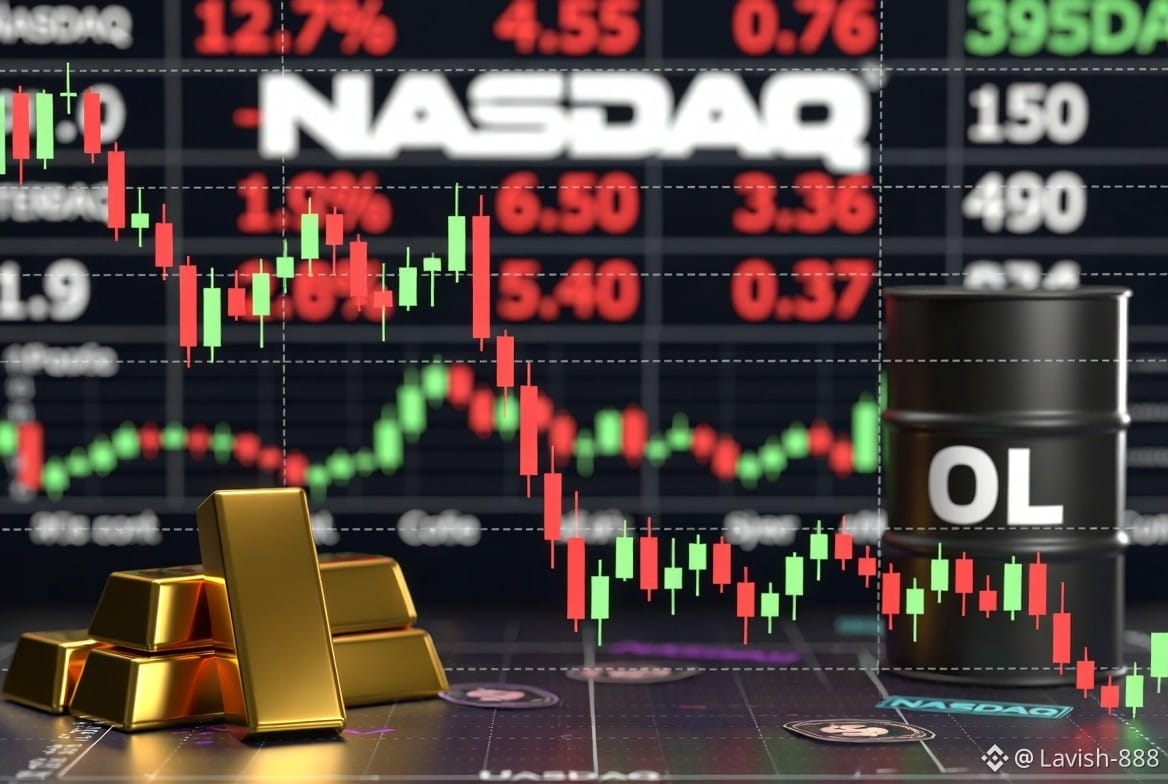
Gold is pulling back from its all-time highs, major tech stocks are under pressure, and commodities are swinging wildly. Is this the healthy correction we needed, or the start of something bigger? In the Mag 7, NVIDIA still looks like the ultimate stalwart real earnings growth and AI dominance can’t be ignored. But some names are starting to feel like pure hype riding the wave. On gold: This pullback looks more like a buy-the-dip moment than a bull market peak. With central banks still buying, geopolitical risks elevated, and uncertainty around US fiscal policy, #XUAUSD remains one of the strongest macro plays in Trad Fi right now. Crude oil is the tricky one — demand concerns versus OPEC+ moves. I’m watching for the next cycle closely. What’s your take? Which Mag 7 name is your conviction pick, and are you buying this gold dip? #PostonTradFi
Gold is pulling back from its all-time highs, major tech stocks are under pressure, and commodities are swinging wildly. Is this the healthy correction we needed, or the start of something bigger?
In the Mag 7, NVIDIA still looks like the ultimate stalwart real earnings growth and AI dominance can’t be ignored. But some names are starting to feel like pure hype riding the wave.
On gold: This pullback looks more like a buy-the-dip moment than a bull market peak. With central banks still buying, geopolitical risks elevated, and uncertainty around US fiscal policy, #XUAUSD remains one of the strongest macro plays in Trad Fi right now.
Crude oil is the tricky one — demand concerns versus OPEC+ moves. I’m watching for the next cycle closely.
What’s your take? Which Mag 7 name is your conviction pick, and are you buying this gold dip?
#PostonTradFi
·
--
Bullish
#newt $NEWT Continuous adaptation rarely fits neatly into discrete settlement. Machine learning models update incrementally, adjusting to new data and shifting distributions, while blockchain architecture demands final state transitions. Bridging that gap requires deciding what gets locked in and what remains fluid. Newton Protocol ($NEWT) navigates this tension by building a secure rollup where AI-driven strategies operate within defined execution boundaries. The design assumes that autonomous logic can safely interact with shared infrastructure if its outputs are constrained to verifiable transitions rather than open-ended inference. This reduces the operational risk of unpredictable agent behavior, but it introduces a dependency. The protocol effectively becomes the arbiter of what constitutes a valid adaptation versus a harmful drift. Policy updates, execution constraints, and governance mechanisms must now anticipate edge cases that only emerge when models interact at scale. Engineering resilient systems has always meant accepting that not all variables can be controlled. The challenge is designing boundaries that contain failure without stifling the very adaptability that makes autonomous strategies valuable. If protocol rules must harden over time to maintain security, how do they avoid becoming rigid constraints that eventually penalize the most effective forms of machine learning? #NewtonProtocol #Labs #SKL #XUAUSD @NewtonProtocol $NEWT {future}(NEWTUSDT)

#newt $NEWT Continuous adaptation rarely fits neatly into discrete settlement. Machine learning models update incrementally, adjusting to new data and shifting distributions, while blockchain architecture demands final state transitions. Bridging that gap requires deciding what gets locked in and what remains fluid.

Newton Protocol ($NEWT ) navigates this tension by building a secure rollup where AI-driven strategies operate within defined execution boundaries. The design assumes that autonomous logic can safely interact with shared infrastructure if its outputs are constrained to verifiable transitions rather than open-ended inference. This reduces the operational risk of unpredictable agent behavior, but it introduces a dependency. The protocol effectively becomes the arbiter of what constitutes a valid adaptation versus a harmful drift. Policy updates, execution constraints, and governance mechanisms must now anticipate edge cases that only emerge when models interact at scale.

Engineering resilient systems has always meant accepting that not all variables can be controlled. The challenge is designing boundaries that contain failure without stifling the very adaptability that makes autonomous strategies valuable.

If protocol rules must harden over time to maintain security, how do they avoid becoming rigid constraints that eventually penalize the most effective forms of machine learning?
#NewtonProtocol #Labs #SKL #XUAUSD @NewtonProtocol $NEWT
Log in to explore more content
Join global crypto users on Binance Square
⚡️ Get latest and useful information about crypto.
💬 Trusted by the world’s largest crypto exchange.
👍 Discover real insights from verified creators.
Email / Phone number