

#signdigitaksovereigninfra
signdigitaksovereigninfra
26,509 views
412 Discussing
Hot
Latest

·
--
#SignDigitakSovereignInfra
Wishing everyone good luck! Grab 1💵 for free.
#SignDigitakSovereignInfra
Wishing everyone good luck! Grab 1💵 for free.
Wishing everyone good luck! Grab 1💵 for free.
23

·
--
Bearish
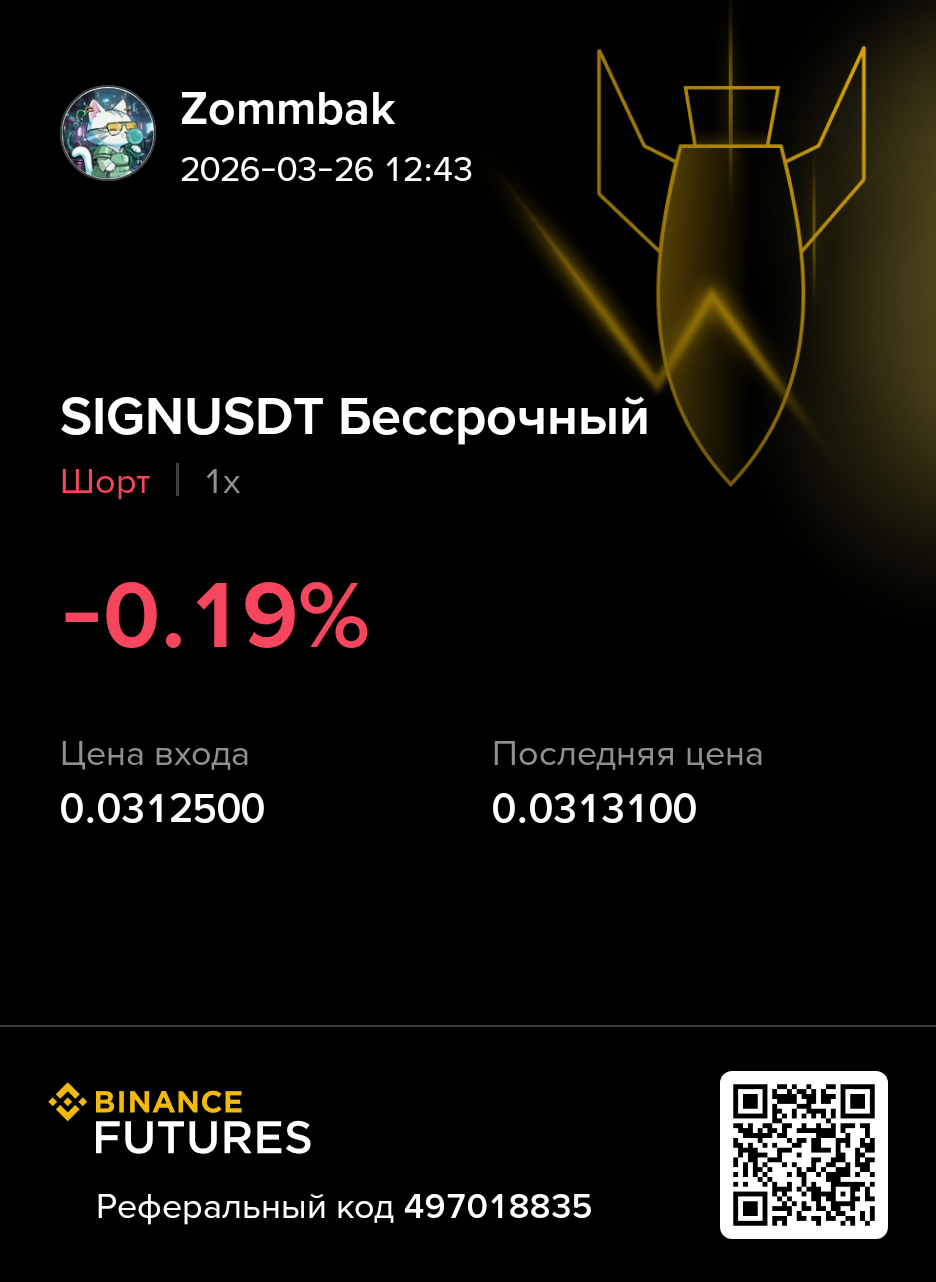
The coin $SIGN is good, but we need to earn, we are waiting for a conservative 10 percent movement down and closing the deal, we will not push too hard on the order book, what do you think? What do you think about $BTC and $ETH in the near future?
@SignOfficial #SignDigitakSovereignInfra
The coin $SIGN is good, but we need to earn, we are waiting for a conservative 10 percent movement down and closing the deal, we will not push too hard on the order book, what do you think? What do you think about $BTC and $ETH in the near future?
@SignOfficial #SignDigitakSovereignInfra
@SignOfficial #SignDigitakSovereignInfra
178


·
--
#signdigitalsovereigninfra $SIGN
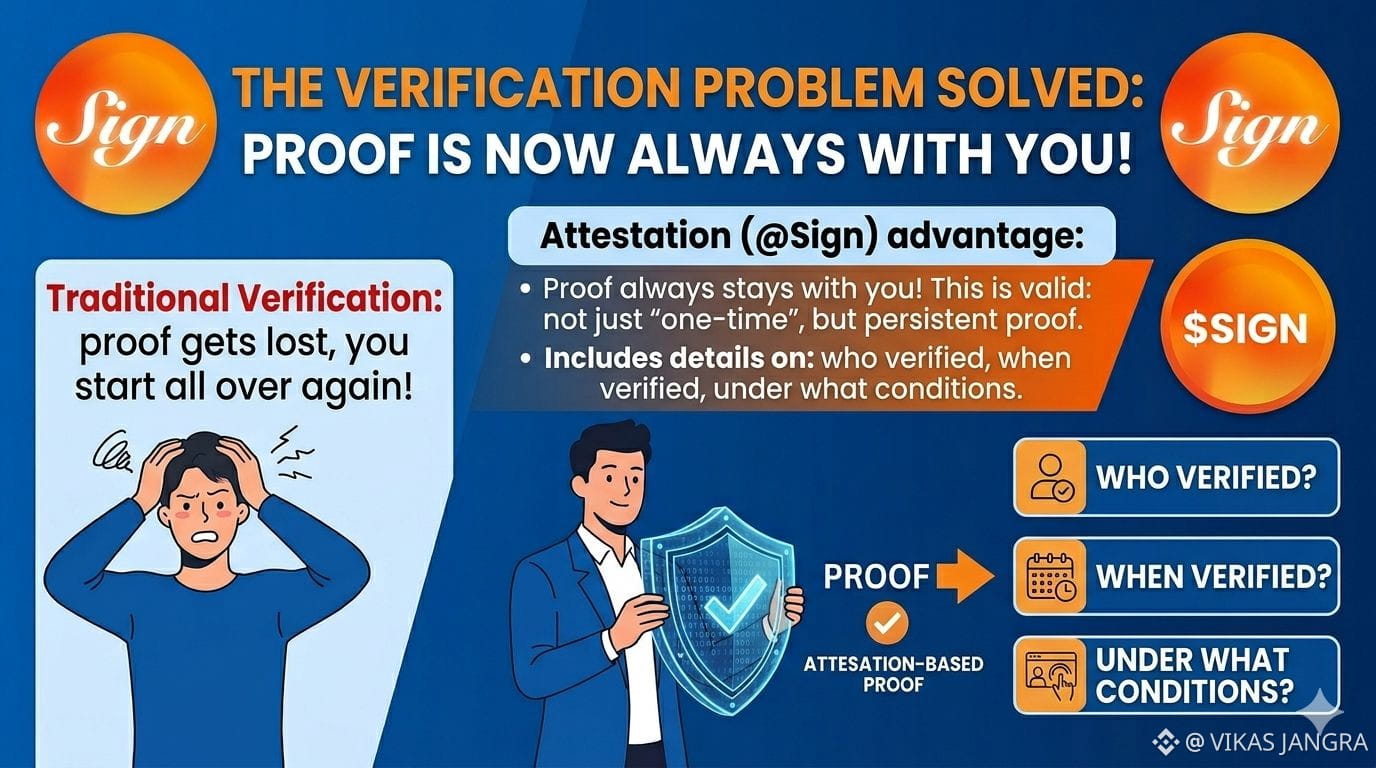
Something about verification never made sense to me.
You prove something once…
and then it just disappears inside the system.
Next time?
You start all over again.
That’s when it clicked.
The problem isn’t just verification…
it’s that proof doesn’t stay with you.
An attestation changes that.
It’s proof that actually stays.
Not just “this is valid”
But:
who verified it
when it was verified
under what conditions
@SignOfficial is building around that idea.
$SIGN #SignDigitakSovereignInfra
#signdigitalsovereigninfra $SIGN
Something about verification never made sense to me.
You prove something once…
and then it just disappears inside the system.
Next time?
You start all over again.
That’s when it clicked.
The problem isn’t just verification…
it’s that proof doesn’t stay with you.
An attestation changes that.
It’s proof that actually stays.
Not just “this is valid”
But:
who verified it
when it was verified
under what conditions
@SignOfficial is building around that idea.
$SIGN #SignDigitakSovereignInfra
Something about verification never made sense to me.
You prove something once…
and then it just disappears inside the system.
Next time?
You start all over again.
That’s when it clicked.
The problem isn’t just verification…
it’s that proof doesn’t stay with you.
An attestation changes that.
It’s proof that actually stays.
Not just “this is valid”
But:
who verified it
when it was verified
under what conditions
@SignOfficial is building around that idea.
$SIGN #SignDigitakSovereignInfra
1
7
1.7k

·
--

Article
SIGN Protocol: Real-World Success in CryptoI have been in the crypto market for quite some time, and over time it has become easier to understand when there is just noise and when something real is actually happening.
Most projects start off looking impressive, but many of them are built more on narrative than substance. However, SIGN Protocol feels different.
At the beginning, SIGN appeared to be a simple and straightforward system, designed to handle attestations without the need for a middle party. At that stage, it looked like just another tool.
But as I explored it more deeply, it became clear that its vision is much larger:
digital sovereignty and reliable infrastructure at a national level.
In early March, the SIGN token experienced a surprising surge in price. While the broader market was moving downward, SIGN increased by more than 100 percent.
This was not a coincidence. The reason behind it was real-world developments, particularly government-level agreements.
SIGN Protocol is now actively contributing to digital infrastructure in meaningful ways.
This infrastructure is being developed for national banks, including a live digital currency program in Kyrgyzstan, along with financial identity and verifiable record initiatives in Abu Dhabi and Sierra Leone.
The purpose of these systems is to ensure that even if traditional banking structures fail, financial data and identity records remain secure and immediately accessible.
So far, SIGN Protocol has served around forty million wallets, with billions of transactions processed and distributed
across its system. These are not just promises; they represent real-world deployment.
Most importantly, this is being done with privacy-focused technology that allows governments to audit systems without monitoring every individual user’s activity.
This is where SIGN Protocol truly stands out: governments can remain transparent while individuals retain their privacy.
I still remain somewhat cautious. Crypto and state systems do not always align easily, and bureaucratic delays or regulatory friction can slow progress.
However, if these initiatives succeed, they could represent a genuine
example of crypto being used effectively in the real world, something that only a few projects can truly claim.
Seeing all of this, it is clear that smart money has already started positioning itself around SIGN. It will be interesting to watch upcoming partnerships and developments, because real traction always matters more than hype or storytelling.
This suggests that the protocol is built on execution rather than promises.
SIGN Protocol is a project that not only speaks about privacy and sovereignty but is actively implementing them.
If it continues on this path, it could establish a new standard in the crypto space
one where digital infrastructure, national collaboration, and real-world utility move forward
If the movement continues.
SIGN Protocol won’t remain just a project it could become the foundation on which future digital infrastructure is built.
@SignOfficial #SignDigitakSovereignInfra
$SIGN
SIGN Protocol: Real-World Success in Crypto
I have been in the crypto market for quite some time, and over time it has become easier to understand when there is just noise and when something real is actually happening.
Most projects start off looking impressive, but many of them are built more on narrative than substance. However, SIGN Protocol feels different.
At the beginning, SIGN appeared to be a simple and straightforward system, designed to handle attestations without the need for a middle party. At that stage, it looked like just another tool.
But as I explored it more deeply, it became clear that its vision is much larger:
digital sovereignty and reliable infrastructure at a national level.
In early March, the SIGN token experienced a surprising surge in price. While the broader market was moving downward, SIGN increased by more than 100 percent.
This was not a coincidence. The reason behind it was real-world developments, particularly government-level agreements.
SIGN Protocol is now actively contributing to digital infrastructure in meaningful ways.
This infrastructure is being developed for national banks, including a live digital currency program in Kyrgyzstan, along with financial identity and verifiable record initiatives in Abu Dhabi and Sierra Leone.
The purpose of these systems is to ensure that even if traditional banking structures fail, financial data and identity records remain secure and immediately accessible.
So far, SIGN Protocol has served around forty million wallets, with billions of transactions processed and distributed
across its system. These are not just promises; they represent real-world deployment.
Most importantly, this is being done with privacy-focused technology that allows governments to audit systems without monitoring every individual user’s activity.
This is where SIGN Protocol truly stands out: governments can remain transparent while individuals retain their privacy.
I still remain somewhat cautious. Crypto and state systems do not always align easily, and bureaucratic delays or regulatory friction can slow progress.
However, if these initiatives succeed, they could represent a genuine
example of crypto being used effectively in the real world, something that only a few projects can truly claim.
Seeing all of this, it is clear that smart money has already started positioning itself around SIGN. It will be interesting to watch upcoming partnerships and developments, because real traction always matters more than hype or storytelling.
This suggests that the protocol is built on execution rather than promises.
SIGN Protocol is a project that not only speaks about privacy and sovereignty but is actively implementing them.
If it continues on this path, it could establish a new standard in the crypto space
one where digital infrastructure, national collaboration, and real-world utility move forward
If the movement continues.
SIGN Protocol won’t remain just a project it could become the foundation on which future digital infrastructure is built.
@SignOfficial #SignDigitakSovereignInfra
$SIGN
Most projects start off looking impressive, but many of them are built more on narrative than substance. However, SIGN Protocol feels different.
At the beginning, SIGN appeared to be a simple and straightforward system, designed to handle attestations without the need for a middle party. At that stage, it looked like just another tool.
But as I explored it more deeply, it became clear that its vision is much larger:
digital sovereignty and reliable infrastructure at a national level.
In early March, the SIGN token experienced a surprising surge in price. While the broader market was moving downward, SIGN increased by more than 100 percent.
This was not a coincidence. The reason behind it was real-world developments, particularly government-level agreements.
SIGN Protocol is now actively contributing to digital infrastructure in meaningful ways.
This infrastructure is being developed for national banks, including a live digital currency program in Kyrgyzstan, along with financial identity and verifiable record initiatives in Abu Dhabi and Sierra Leone.
The purpose of these systems is to ensure that even if traditional banking structures fail, financial data and identity records remain secure and immediately accessible.
So far, SIGN Protocol has served around forty million wallets, with billions of transactions processed and distributed
across its system. These are not just promises; they represent real-world deployment.
Most importantly, this is being done with privacy-focused technology that allows governments to audit systems without monitoring every individual user’s activity.
This is where SIGN Protocol truly stands out: governments can remain transparent while individuals retain their privacy.
I still remain somewhat cautious. Crypto and state systems do not always align easily, and bureaucratic delays or regulatory friction can slow progress.
However, if these initiatives succeed, they could represent a genuine
example of crypto being used effectively in the real world, something that only a few projects can truly claim.
Seeing all of this, it is clear that smart money has already started positioning itself around SIGN. It will be interesting to watch upcoming partnerships and developments, because real traction always matters more than hype or storytelling.
This suggests that the protocol is built on execution rather than promises.
SIGN Protocol is a project that not only speaks about privacy and sovereignty but is actively implementing them.
If it continues on this path, it could establish a new standard in the crypto space
one where digital infrastructure, national collaboration, and real-world utility move forward
If the movement continues.
SIGN Protocol won’t remain just a project it could become the foundation on which future digital infrastructure is built.
@SignOfficial #SignDigitakSovereignInfra
$SIGN
49
1
101
3.4k

#SignDigitakSovereignInfra I think BTC BNB will please again
#SignDigitakSovereignInfra I think BTC BNB will please again
55

·
--
Article
How does Sign Protocol (SIGN) work?@SignOfficial
Sign Protocol allows users to create attestations, which are digital statements that confirm the truth of a claim. These attestations are structured from schemas that define the format and rules applicable to the information. When an attestation is created, it is signed using a digital key, which ensures its authenticity.
1. Attestations
An attestation is simply a signed statement that proves that something has happened or is true. It is somewhat of a digital approval certificate. In Sign Protocol, an attestation includes structured data, such as facts, evidence, or testimonies, and a digital signature that secures it.
How does Sign Protocol (SIGN) work?
@SignOfficial
Sign Protocol allows users to create attestations, which are digital statements that confirm the truth of a claim. These attestations are structured from schemas that define the format and rules applicable to the information. When an attestation is created, it is signed using a digital key, which ensures its authenticity.
1. Attestations
An attestation is simply a signed statement that proves that something has happened or is true. It is somewhat of a digital approval certificate. In Sign Protocol, an attestation includes structured data, such as facts, evidence, or testimonies, and a digital signature that secures it.
Sign Protocol allows users to create attestations, which are digital statements that confirm the truth of a claim. These attestations are structured from schemas that define the format and rules applicable to the information. When an attestation is created, it is signed using a digital key, which ensures its authenticity.
1. Attestations
An attestation is simply a signed statement that proves that something has happened or is true. It is somewhat of a digital approval certificate. In Sign Protocol, an attestation includes structured data, such as facts, evidence, or testimonies, and a digital signature that secures it.
1
8
254
·
--
Article
SIGN cryptoSIGN crypto: a key infrastructure for trust in Web3
@SignOfficial
In the world of cryptocurrencies, many projects aim to solve fundamental issues related to security, transparency, and data management. Among them, SIGN (Sign Protocol) stands out as an innovative solution focused on the verification of information and the distribution of tokens in a decentralized environment.
What is SIGN?
SIGN is a cryptocurrency associated with the Sign Protocol, a blockchain protocol designed to create and verify digital attestations. In other words, it allows reliable proof of certain information, such as identity, a transaction, or access rights, without relying on a central authority.
SIGN crypto
SIGN crypto: a key infrastructure for trust in Web3
@SignOfficial
In the world of cryptocurrencies, many projects aim to solve fundamental issues related to security, transparency, and data management. Among them, SIGN (Sign Protocol) stands out as an innovative solution focused on the verification of information and the distribution of tokens in a decentralized environment.
What is SIGN?
SIGN is a cryptocurrency associated with the Sign Protocol, a blockchain protocol designed to create and verify digital attestations. In other words, it allows reliable proof of certain information, such as identity, a transaction, or access rights, without relying on a central authority.
@SignOfficial
In the world of cryptocurrencies, many projects aim to solve fundamental issues related to security, transparency, and data management. Among them, SIGN (Sign Protocol) stands out as an innovative solution focused on the verification of information and the distribution of tokens in a decentralized environment.
What is SIGN?
SIGN is a cryptocurrency associated with the Sign Protocol, a blockchain protocol designed to create and verify digital attestations. In other words, it allows reliable proof of certain information, such as identity, a transaction, or access rights, without relying on a central authority.
2
9
388

$SIGN is targeting one of Web3’s most ignored problems repeated verification.
Every new platform asks users to prove the same things again.
Sign Protocol is building reusable on-chain credentials so once you’re verified, you don’t need to start from zero everywhere.
If identity + infrastructure narratives gain momentum this cycle,
$SIGN could quietly become a core layer many projects rely on. 🔐📈
#SignDigitakSovereignInfra @SignOfficial $SIGN
{spot}(SIGNUSDT)
$SIGN is targeting one of Web3’s most ignored problems repeated verification.
Every new platform asks users to prove the same things again.
Sign Protocol is building reusable on-chain credentials so once you’re verified, you don’t need to start from zero everywhere.
If identity + infrastructure narratives gain momentum this cycle,
$SIGN could quietly become a core layer many projects rely on. 🔐📈
#SignDigitakSovereignInfra @SignOfficial $SIGN
Every new platform asks users to prove the same things again.
Sign Protocol is building reusable on-chain credentials so once you’re verified, you don’t need to start from zero everywhere.
If identity + infrastructure narratives gain momentum this cycle,
$SIGN could quietly become a core layer many projects rely on. 🔐📈
#SignDigitakSovereignInfra @SignOfficial $SIGN
1
5
268

🔥 $SIGN – Building the Backbone of Digital SovereigntyIn the rapidly evolving Web3 ecosystem, the importance of digital identity and data ownership is growing every day. Traditional systems rely heavily on centralized authorities, which often leads to privacy risks and lack of control for users. This is where @SignOfficial steps in with a powerful solution.
$SIGN is focused on creating a decentralized infrastructure that allows users to own, verify, and manage their digital identities without depending on third parties. Through secure digital signatures and blockchain-based verification, it ensures transparency, security, and trust in every interaction.
The vision behind $SIGN is to empower individuals with full control over their data while enabling seamless and trustless communication across platforms. As Web3 continues to expand, projects like @SignOfficial are laying the foundation for a more secure and user-controlled digital future. 🚀
#SignDigitakSovereignInfra
🔥 $SIGN – Building the Backbone of Digital Sovereignty
In the rapidly evolving Web3 ecosystem, the importance of digital identity and data ownership is growing every day. Traditional systems rely heavily on centralized authorities, which often leads to privacy risks and lack of control for users. This is where @SignOfficial steps in with a powerful solution.
$SIGN is focused on creating a decentralized infrastructure that allows users to own, verify, and manage their digital identities without depending on third parties. Through secure digital signatures and blockchain-based verification, it ensures transparency, security, and trust in every interaction.
The vision behind $SIGN is to empower individuals with full control over their data while enabling seamless and trustless communication across platforms. As Web3 continues to expand, projects like @SignOfficial are laying the foundation for a more secure and user-controlled digital future. 🚀
#SignDigitakSovereignInfra
$SIGN is focused on creating a decentralized infrastructure that allows users to own, verify, and manage their digital identities without depending on third parties. Through secure digital signatures and blockchain-based verification, it ensures transparency, security, and trust in every interaction.
The vision behind $SIGN is to empower individuals with full control over their data while enabling seamless and trustless communication across platforms. As Web3 continues to expand, projects like @SignOfficial are laying the foundation for a more secure and user-controlled digital future. 🚀
#SignDigitakSovereignInfra
2
18
Log in to explore more content
Join global crypto users on Binance Square
⚡️ Get latest and useful information about crypto.
💬 Trusted by the world’s largest crypto exchange.
👍 Discover real insights from verified creators.
Email / Phone number
Trending Topics
1
#CircleMints500MUSDCOnSolana
110,134 views
2,280 Discussing
2
#PolymarketBankFailureBetsDrawFDICConcern
103,807 views
1,973 Discussing
3
#BlackRockBuildsTokenizedPortfoliosForOndo
98,908 views
1,409 Discussing
4
#BitwiseFilesToListNEARETFOnNYSEArca
74,208 views
1,146 Discussing
5
#SECCommissionerPeirceToLeaveOct2
77,959 views
938 Discussing
6
#SECSaysBuybacksUpgradesDontMakeTokenSecurity
60,667 views
665 Discussing
7
#StrategyProposesDailyDividendsForPreferreds
14,854 views
246 Discussing
8
#CircleTetherFreezeBitgetHackerWallet
14,591 views
144 Discussing
9
#CoinMarketCapCompletesCoinglassAcquisition
16,185 views
196 Discussing
10
#QNTRises39%
124,602 views
1,733 Discussing