
#spacex
spacex
6.3M views
9,496 Discussing
Hot
Latest

·
--
🚨 $SPCX KEY LEVELS TO WATCH! 🚀📈
SpaceX is trading around the $152–155 zone, making this a key area for traders to watch. 👀
🔹 Resistance: $155 → $158–160
🔹 Support: $148 → $143–144
🔹 Volume & momentum could be key 🔥
A breakout above resistance could bring more attention, while a rejection may lead to a pullback.
⚠️ DYOR & manage your risk.
#SPCX #SpaceX #Crypto #BİNANCE #Trading
🚨 $SPCX KEY LEVELS TO WATCH! 🚀📈
SpaceX is trading around the $152–155 zone, making this a key area for traders to watch. 👀
🔹 Resistance: $155 → $158–160
🔹 Support: $148 → $143–144
🔹 Volume & momentum could be key 🔥
A breakout above resistance could bring more attention, while a rejection may lead to a pullback.
⚠️ DYOR & manage your risk.
#SPCX #SpaceX #Crypto #BİNANCE #Trading
SpaceX is trading around the $152–155 zone, making this a key area for traders to watch. 👀
🔹 Resistance: $155 → $158–160
🔹 Support: $148 → $143–144
🔹 Volume & momentum could be key 🔥
A breakout above resistance could bring more attention, while a rejection may lead to a pullback.
⚠️ DYOR & manage your risk.
#SPCX #SpaceX #Crypto #BİNANCE #Trading
1
1
62

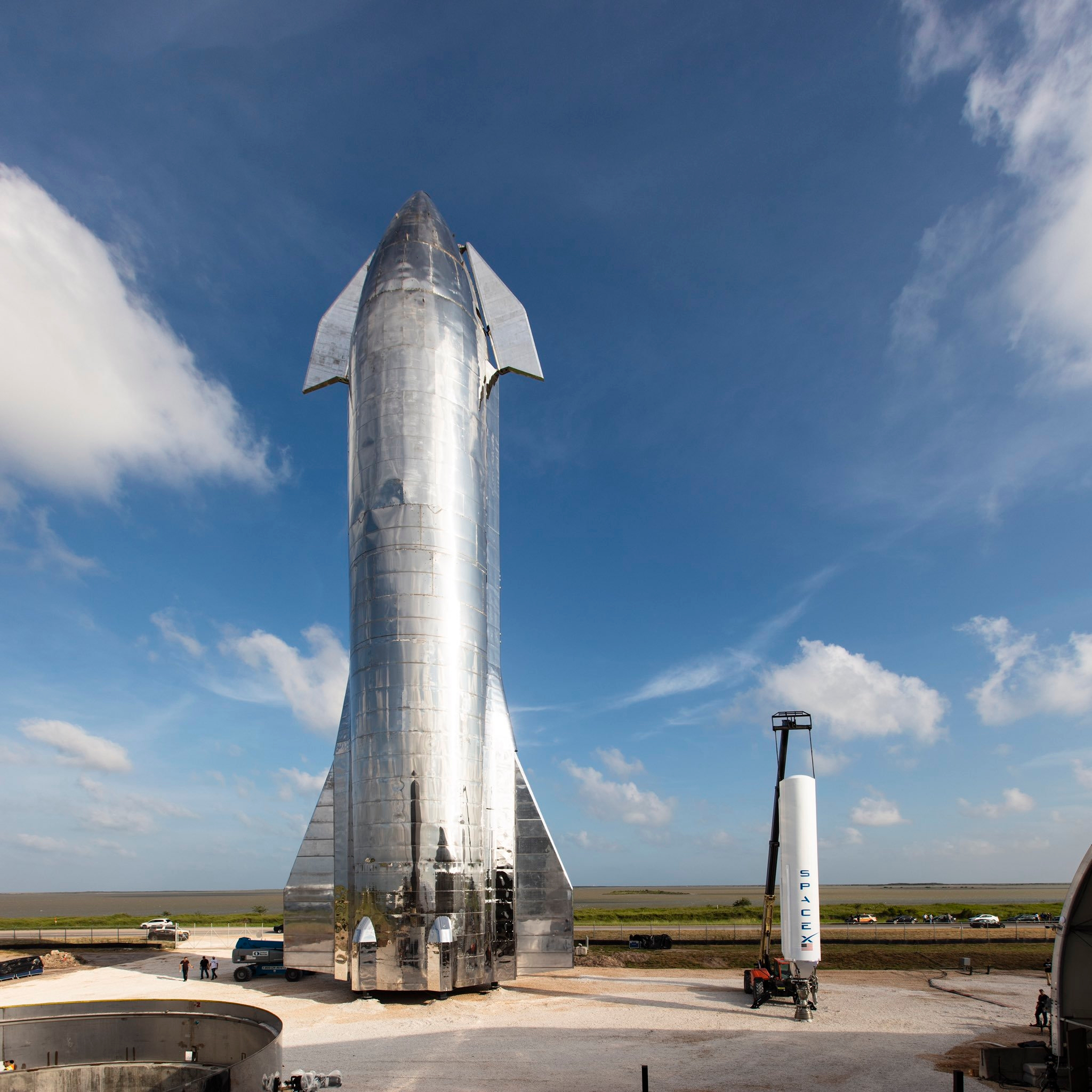
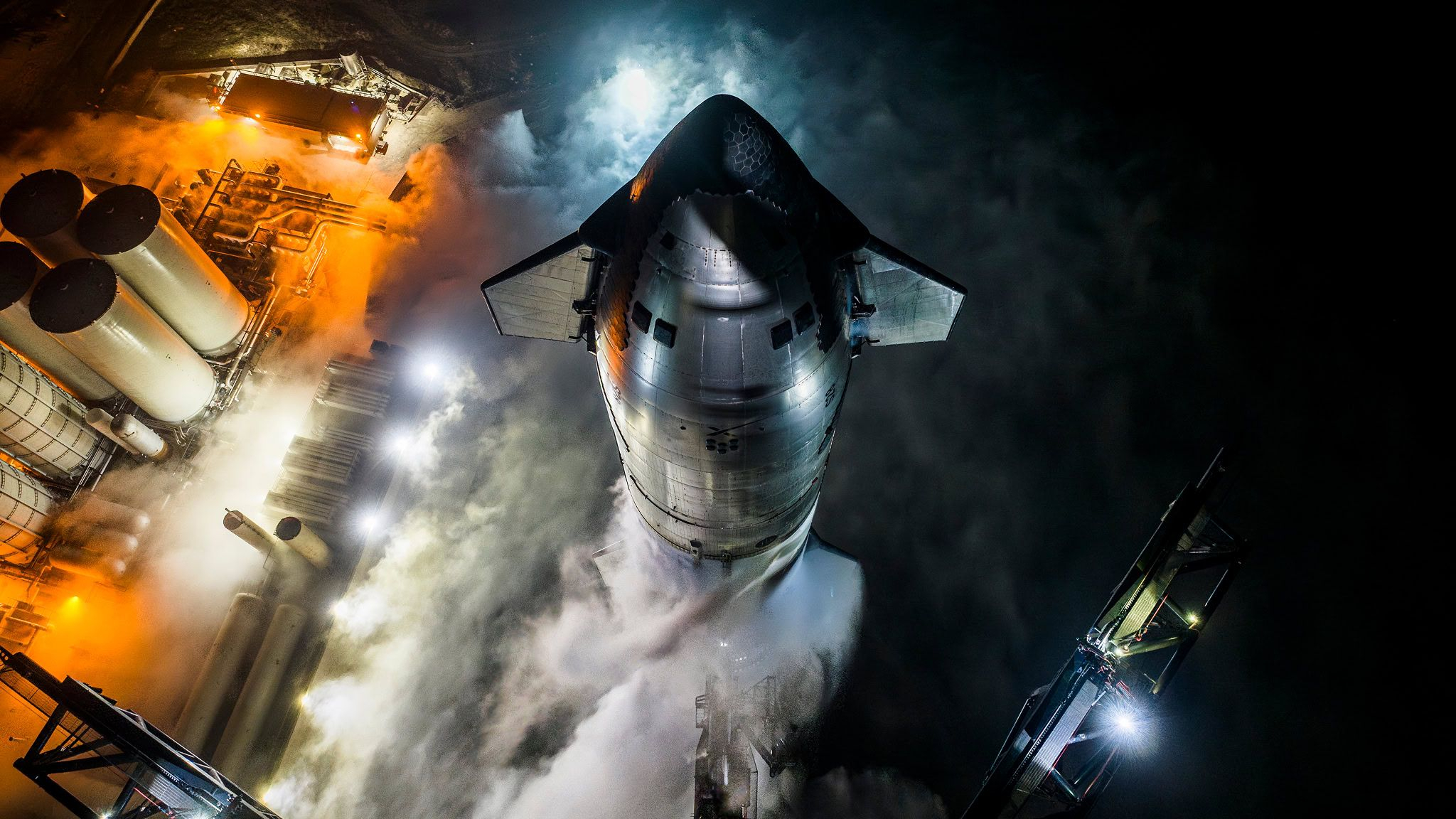
#SpaceX Space Exploration Technologies Corp. (SpaceX)
is a leading American aerospace manufacturer, launch services provider, and satellite communications company founded in 2002 by Elon Musk with the goal of reducing space transportation costs and enabling multiplanetary colonization.
#SpaceX Space Exploration Technologies Corp. (SpaceX)
is a leading American aerospace manufacturer, launch services provider, and satellite communications company founded in 2002 by Elon Musk with the goal of reducing space transportation costs and enabling multiplanetary colonization.
is a leading American aerospace manufacturer, launch services provider, and satellite communications company founded in 2002 by Elon Musk with the goal of reducing space transportation costs and enabling multiplanetary colonization.
1
68
·
--
🚀 ELON MUSK: Earth Is Tiny. The Future Is in Space. 🌎➡️🚀
Humanity currently uses only a tiny fraction of the Sun’s enormous energy. ☀️
Earth has limited resources, but space offers virtually unimaginable room for growth.
If civilization wants to expand on a truly massive scale, becoming a multi-planetary species could be the next major step. 🌌
🚀 Space isn’t just the future — it could be humanity’s next frontier.
#SpaceX #SPCX #ElonMusk #Space #Future #Innovation #Technology
🚀 ELON MUSK: Earth Is Tiny. The Future Is in Space. 🌎➡️🚀
Humanity currently uses only a tiny fraction of the Sun’s enormous energy. ☀️
Earth has limited resources, but space offers virtually unimaginable room for growth.
If civilization wants to expand on a truly massive scale, becoming a multi-planetary species could be the next major step. 🌌
🚀 Space isn’t just the future — it could be humanity’s next frontier.
#SpaceX #SPCX #ElonMusk #Space #Future #Innovation #Technology
Humanity currently uses only a tiny fraction of the Sun’s enormous energy. ☀️
Earth has limited resources, but space offers virtually unimaginable room for growth.
If civilization wants to expand on a truly massive scale, becoming a multi-planetary species could be the next major step. 🌌
🚀 Space isn’t just the future — it could be humanity’s next frontier.
#SpaceX #SPCX #ElonMusk #Space #Future #Innovation #Technology

77
·
--
Verified
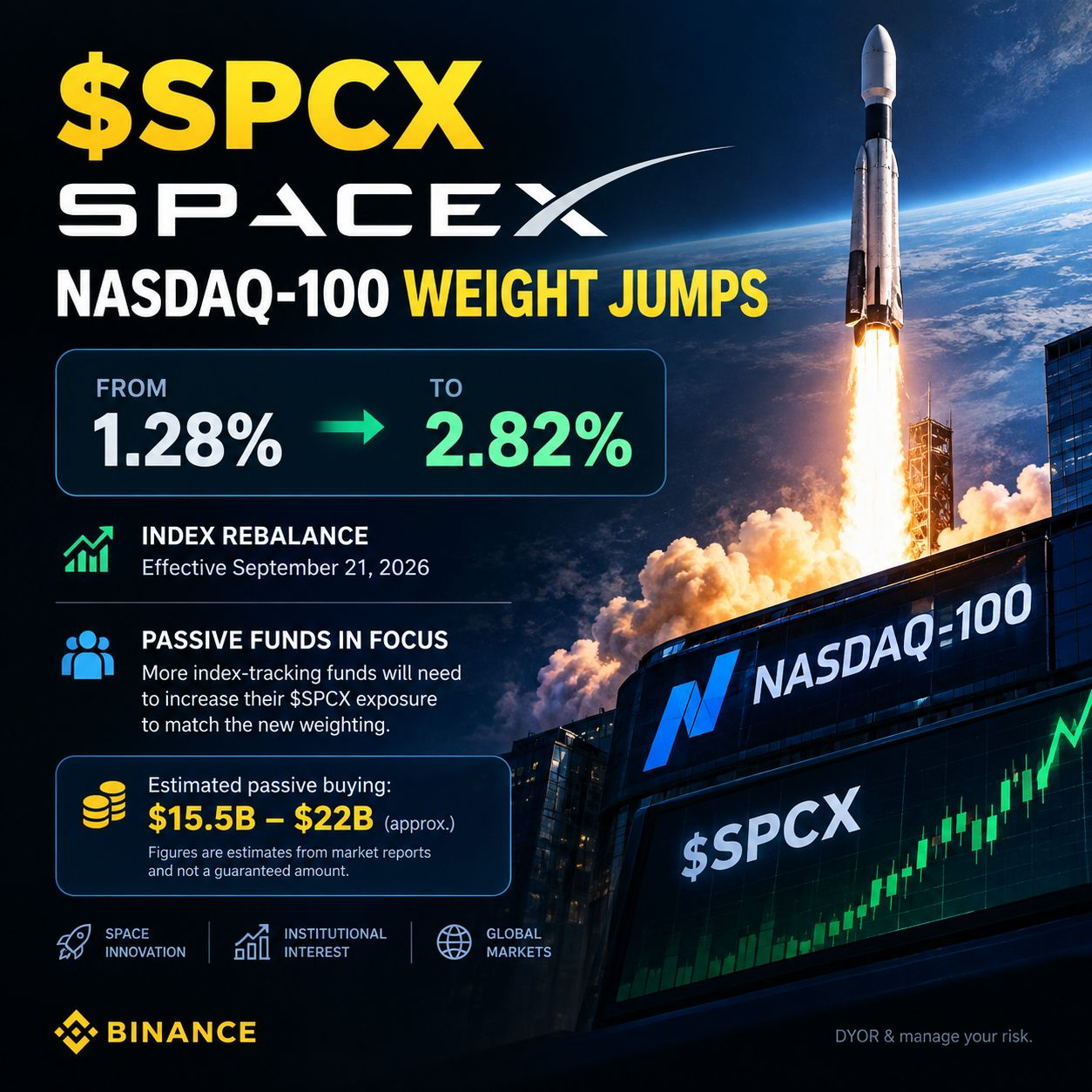
🚨 $SPCX.US Is Getting a Major Nasdaq-100 Boost! 🚀
SpaceX’s Nasdaq-100 weighting has jumped from 1.28% to 2.82%, more than doubling. 📈
The rebalance could require index-tracking funds to increase their $SPCX exposure. Market reports estimate $15.5B–$22B in potential passive buying. 💰
👀 Will this increased institutional exposure put $SPCX in even more focus?
⚠️ DYOR & manage your risk.
#SPCX #SpaceX #Nasdaq100 #Stocks #Investing
🚨 $SPCX.US Is Getting a Major Nasdaq-100 Boost! 🚀
SpaceX’s Nasdaq-100 weighting has jumped from 1.28% to 2.82%, more than doubling. 📈
The rebalance could require index-tracking funds to increase their $SPCX exposure. Market reports estimate $15.5B–$22B in potential passive buying. 💰
👀 Will this increased institutional exposure put $SPCX in even more focus?
⚠️ DYOR & manage your risk.
#SPCX #SpaceX #Nasdaq100 #Stocks #Investing
SpaceX’s Nasdaq-100 weighting has jumped from 1.28% to 2.82%, more than doubling. 📈
The rebalance could require index-tracking funds to increase their $SPCX exposure. Market reports estimate $15.5B–$22B in potential passive buying. 💰
👀 Will this increased institutional exposure put $SPCX in even more focus?
⚠️ DYOR & manage your risk.
#SPCX #SpaceX #Nasdaq100 #Stocks #Investing
SPCXUS-0.17%
1
1k

·
--
$SPCXB
The University of North Carolina’s endowment returned 37.8% in the fiscal year ended June 30, helped by an early investment in SpaceX that has generated substantial gains following the rocket company’s initial public offering, Bloomberg reported
{spot}(SPCXBUSDT)
The return was about double the 18.9% median estimated by the Wilshire Trust Universe Comparison Service for endowment funds managing more than $500 million.
University of North Carolina Management Co. described the period as an "extraordinary year," with global equities contributing to performance and its SpaceX exposure providing a strong boost.
UNC invested in SpaceX more than 15 years ago through a fund that held the Elon Musk-founded company. The original investment amounted to only a few million dollars.
The endowment sold about $1 billion of SpaceX shares ahead of the company’s IPO, people familiar with the matter previously told Bloomberg. UNC still held more than $1 billion of SpaceX stock as of August.
SpaceX shares closed Friday at $152.71, about 13% above the company’s $135 IPO price, giving it a market capitalization of more than $2 trillion.
The gains highlight the potential benefits university endowments can receive from long-term exposure to private technology companies before they reach public markets.
Other large U.S. university endowments could also report stronger returns for the fiscal year, depending on their exposure to SpaceX and private artificial intelligence companies such as OpenAI and Anthropic.
UNC’s investment gains come as universities face financial pressure from federal research funding cuts, a declining pool of prospective students and weaker returns from some private equity investments in previous years.
The endowment recorded annualized returns of 20.1% over three years, 12.5% over five years and 13.5% over 10 years.
University of North Carolina Management Co. managed $17 billion as of June 30, including UNC-Chapel Hill’s $8.2 billion endowment.
#IPOtoTheMoon #SpaceX
$SPCXB
The University of North Carolina’s endowment returned 37.8% in the fiscal year ended June 30, helped by an early investment in SpaceX that has generated substantial gains following the rocket company’s initial public offering, Bloomberg reported
The return was about double the 18.9% median estimated by the Wilshire Trust Universe Comparison Service for endowment funds managing more than $500 million.
University of North Carolina Management Co. described the period as an "extraordinary year," with global equities contributing to performance and its SpaceX exposure providing a strong boost.
UNC invested in SpaceX more than 15 years ago through a fund that held the Elon Musk-founded company. The original investment amounted to only a few million dollars.
The endowment sold about $1 billion of SpaceX shares ahead of the company’s IPO, people familiar with the matter previously told Bloomberg. UNC still held more than $1 billion of SpaceX stock as of August.
SpaceX shares closed Friday at $152.71, about 13% above the company’s $135 IPO price, giving it a market capitalization of more than $2 trillion.
The gains highlight the potential benefits university endowments can receive from long-term exposure to private technology companies before they reach public markets.
Other large U.S. university endowments could also report stronger returns for the fiscal year, depending on their exposure to SpaceX and private artificial intelligence companies such as OpenAI and Anthropic.
UNC’s investment gains come as universities face financial pressure from federal research funding cuts, a declining pool of prospective students and weaker returns from some private equity investments in previous years.
The endowment recorded annualized returns of 20.1% over three years, 12.5% over five years and 13.5% over 10 years.
University of North Carolina Management Co. managed $17 billion as of June 30, including UNC-Chapel Hill’s $8.2 billion endowment.
#IPOtoTheMoon #SpaceX
The University of North Carolina’s endowment returned 37.8% in the fiscal year ended June 30, helped by an early investment in SpaceX that has generated substantial gains following the rocket company’s initial public offering, Bloomberg reported
The return was about double the 18.9% median estimated by the Wilshire Trust Universe Comparison Service for endowment funds managing more than $500 million.
University of North Carolina Management Co. described the period as an "extraordinary year," with global equities contributing to performance and its SpaceX exposure providing a strong boost.
UNC invested in SpaceX more than 15 years ago through a fund that held the Elon Musk-founded company. The original investment amounted to only a few million dollars.
The endowment sold about $1 billion of SpaceX shares ahead of the company’s IPO, people familiar with the matter previously told Bloomberg. UNC still held more than $1 billion of SpaceX stock as of August.
SpaceX shares closed Friday at $152.71, about 13% above the company’s $135 IPO price, giving it a market capitalization of more than $2 trillion.
The gains highlight the potential benefits university endowments can receive from long-term exposure to private technology companies before they reach public markets.
Other large U.S. university endowments could also report stronger returns for the fiscal year, depending on their exposure to SpaceX and private artificial intelligence companies such as OpenAI and Anthropic.
UNC’s investment gains come as universities face financial pressure from federal research funding cuts, a declining pool of prospective students and weaker returns from some private equity investments in previous years.
The endowment recorded annualized returns of 20.1% over three years, 12.5% over five years and 13.5% over 10 years.
University of North Carolina Management Co. managed $17 billion as of June 30, including UNC-Chapel Hill’s $8.2 billion endowment.
#IPOtoTheMoon #SpaceX
84

🚨 $SPACEX NASDAQ 100 WEIGHT LEAPS TO 2.82% AS INSTITUTIONAL REBALANCING FIXES ANOMALY! 📊
The upcoming Nasdaq 100 rebalancing forces passive institutional funds to realign with raw market cap reality. 🦈 SpaceX jumping from a 1.28% weight to 2.82% closes a structural inefficiency where a $2 trillion powerhouse was severely underweighted.
⚡ This forced reweighting triggers systematic buying flow to bridge the gap between index weighting and true market capitalization. 💡 As passive capital shifts into position by Monday, institutional liquidity will absorb the structural rebalancing smoothly. 💬 How will macro index capital flows impact broader market liquidity next week? 👇
⚠️ Not financial advice. Always manage your risk. 🛡️
🏷️ #SPACEX #Nasdaq #Macro #Rebalancing #Crypto
🎯 🦈
🚨 $SPACEX NASDAQ 100 WEIGHT LEAPS TO 2.82% AS INSTITUTIONAL REBALANCING FIXES ANOMALY! 📊
The upcoming Nasdaq 100 rebalancing forces passive institutional funds to realign with raw market cap reality. 🦈 SpaceX jumping from a 1.28% weight to 2.82% closes a structural inefficiency where a $2 trillion powerhouse was severely underweighted.
⚡ This forced reweighting triggers systematic buying flow to bridge the gap between index weighting and true market capitalization. 💡 As passive capital shifts into position by Monday, institutional liquidity will absorb the structural rebalancing smoothly. 💬 How will macro index capital flows impact broader market liquidity next week? 👇
⚠️ Not financial advice. Always manage your risk. 🛡️
🏷️ #SPACEX #Nasdaq #Macro #Rebalancing #Crypto
🎯 🦈
The upcoming Nasdaq 100 rebalancing forces passive institutional funds to realign with raw market cap reality. 🦈 SpaceX jumping from a 1.28% weight to 2.82% closes a structural inefficiency where a $2 trillion powerhouse was severely underweighted.
⚡ This forced reweighting triggers systematic buying flow to bridge the gap between index weighting and true market capitalization. 💡 As passive capital shifts into position by Monday, institutional liquidity will absorb the structural rebalancing smoothly. 💬 How will macro index capital flows impact broader market liquidity next week? 👇
⚠️ Not financial advice. Always manage your risk. 🛡️
🏷️ #SPACEX #Nasdaq #Macro #Rebalancing #Crypto
🎯 🦈
33

·
--
Article
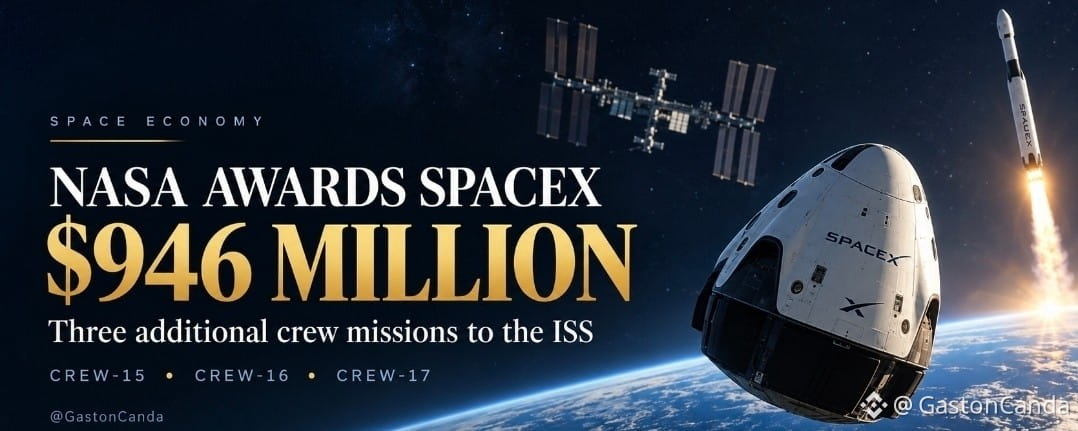
SpaceX Secures $946 Million NASA Contract Expansion for Three New ISS Crew Missions🚀 SpaceX Secures $946 Million NASA Contract Expansion for Three Additional Crew Missions
NASA has awarded SpaceX three additional crewed flights to the International Space Station (ISS), extending the company’s role in maintaining access to the orbital laboratory.
Announced on September 18, the missions—Crew-15, Crew-16 and Crew-17—will use Dragon spacecraft and Falcon 9 rockets. Mission readiness is planned for 2027 and 2028, with contract performance running through 2030. Exact launch dates have not been announced.
The $946 million covers all three missions and associated services, including ground operations, launch, cargo transportation, orbital operations, return and recovery. It also includes emergency evacuation capability while Dragon is docked at the ISS.
The expansion brings SpaceX’s Commercial Crew Transportation Capability (CCtCap) contract to 17 missions and a total value of $5.92 billion. NASA had announced its intention to purchase the additional flights in May.
🔎 Why it matters
The award expands a commercial relationship built around a critical responsibility: transporting astronauts to space and bringing them home safely.
From a business perspective, adding missions to an existing program provides operational continuity and greater visibility into future work. It also carries obligations: delivering the flights, maintaining reliability and managing costs. Contract value is not net profit.
For those following the space economy, the key development is how technological capability translates into services that a customer continues to purchase.
💬 My perspective as an investor
The space economy is part of my long-term investment thesis. This announcement adds a concrete development to track: more contracted work for SpaceX.
I’m interested in how that continuity translates into a sustainable business. Contracts provide evidence; execution and profitability complete the picture.
Source: "NASA — official September 18 announcement" (https://www.nasa.gov/missions/station/commercial-crew/nasa-awards-spacex-three-crew-flights-to-space-station/)
@GastonCanda
#SpaceX #NASA #SpaceEconomy $SPCXB
{spot}(SPCXBUSDT)
SpaceX Secures $946 Million NASA Contract Expansion for Three New ISS Crew Missions
🚀 SpaceX Secures $946 Million NASA Contract Expansion for Three Additional Crew Missions
NASA has awarded SpaceX three additional crewed flights to the International Space Station (ISS), extending the company’s role in maintaining access to the orbital laboratory.
Announced on September 18, the missions—Crew-15, Crew-16 and Crew-17—will use Dragon spacecraft and Falcon 9 rockets. Mission readiness is planned for 2027 and 2028, with contract performance running through 2030. Exact launch dates have not been announced.
The $946 million covers all three missions and associated services, including ground operations, launch, cargo transportation, orbital operations, return and recovery. It also includes emergency evacuation capability while Dragon is docked at the ISS.
The expansion brings SpaceX’s Commercial Crew Transportation Capability (CCtCap) contract to 17 missions and a total value of $5.92 billion. NASA had announced its intention to purchase the additional flights in May.
🔎 Why it matters
The award expands a commercial relationship built around a critical responsibility: transporting astronauts to space and bringing them home safely.
From a business perspective, adding missions to an existing program provides operational continuity and greater visibility into future work. It also carries obligations: delivering the flights, maintaining reliability and managing costs. Contract value is not net profit.
For those following the space economy, the key development is how technological capability translates into services that a customer continues to purchase.
💬 My perspective as an investor
The space economy is part of my long-term investment thesis. This announcement adds a concrete development to track: more contracted work for SpaceX.
I’m interested in how that continuity translates into a sustainable business. Contracts provide evidence; execution and profitability complete the picture.
Source: "NASA — official September 18 announcement" (https://www.nasa.gov/missions/station/commercial-crew/nasa-awards-spacex-three-crew-flights-to-space-station/)
@GastonCanda
#SpaceX #NASA #SpaceEconomy $SPCXB
NASA has awarded SpaceX three additional crewed flights to the International Space Station (ISS), extending the company’s role in maintaining access to the orbital laboratory.
Announced on September 18, the missions—Crew-15, Crew-16 and Crew-17—will use Dragon spacecraft and Falcon 9 rockets. Mission readiness is planned for 2027 and 2028, with contract performance running through 2030. Exact launch dates have not been announced.
The $946 million covers all three missions and associated services, including ground operations, launch, cargo transportation, orbital operations, return and recovery. It also includes emergency evacuation capability while Dragon is docked at the ISS.
The expansion brings SpaceX’s Commercial Crew Transportation Capability (CCtCap) contract to 17 missions and a total value of $5.92 billion. NASA had announced its intention to purchase the additional flights in May.
🔎 Why it matters
The award expands a commercial relationship built around a critical responsibility: transporting astronauts to space and bringing them home safely.
From a business perspective, adding missions to an existing program provides operational continuity and greater visibility into future work. It also carries obligations: delivering the flights, maintaining reliability and managing costs. Contract value is not net profit.
For those following the space economy, the key development is how technological capability translates into services that a customer continues to purchase.
💬 My perspective as an investor
The space economy is part of my long-term investment thesis. This announcement adds a concrete development to track: more contracted work for SpaceX.
I’m interested in how that continuity translates into a sustainable business. Contracts provide evidence; execution and profitability complete the picture.
Source: "NASA — official September 18 announcement" (https://www.nasa.gov/missions/station/commercial-crew/nasa-awards-spacex-three-crew-flights-to-space-station/)
@GastonCanda
#SpaceX #NASA #SpaceEconomy $SPCXB
3
432

·
--
*Title:*
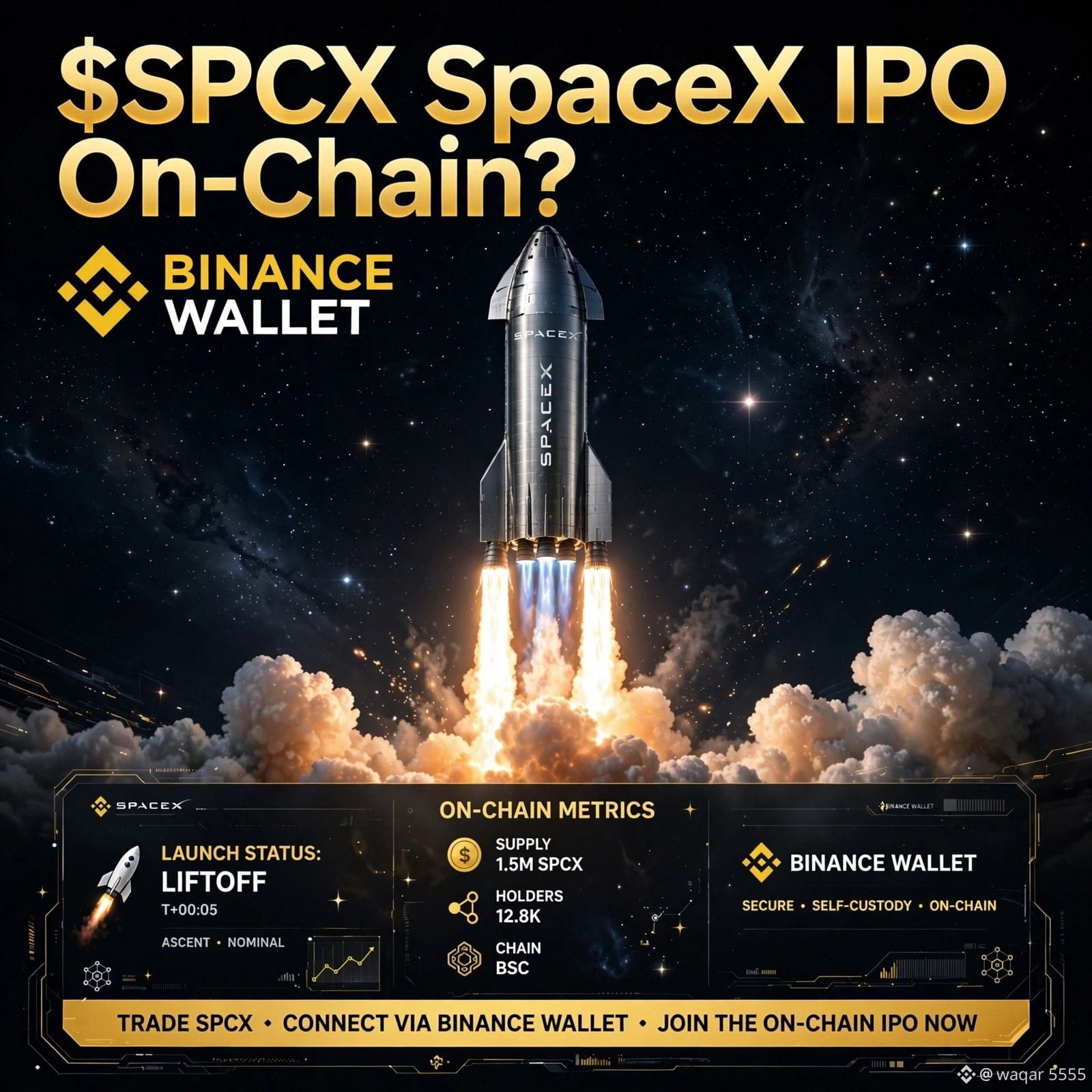
SpaceX IPO On-Chain? $SPCX Just Appeared on Binance Wallet - 3 Things You Must Know 🚀 #SPCX
*Body:*
Binance Wallet just hinted $SPCX - SpaceX IPO On-Chain!
Everyone is sleeping on this, but this could be HUGE.
*What is $SPCX?*
SpaceX is planning IPO, and crypto is trying to tokenize it before it happens. 4,950+ views already on Binance Square in 24 hours!
*Why This is Pumping:*
1. Elon + IPO = Retail FOMO - Every time Elon tweets, meme coins fly. Imagine SpaceX IPO token.
2. Binance Wallet is involved - Whenever Binance Wallet teases a ticker, it usually lists within weeks.
3. Narrative is fresh - No one is talking about it yet. You are early if you read this.
*My Strategy (Not Financial Advice):*
- I am NOT buying huge bag now. Risky.
- I will wait for official Binance announcement.
- I will put small $10-20 just to track.
Remember: $0 capital journey taught me - Don't chase green candles.
*Question: If $SPCX launches at $1, will you buy or wait?*
Comment: BUY or WAIT 👇
#SPCX #SpaceX #BinanceWallet #Trending #BTC #BNB #CryptoNews #ElonMusk
*Title:*
SpaceX IPO On-Chain? $SPCX Just Appeared on Binance Wallet - 3 Things You Must Know 🚀 #SPCX
*Body:*
Binance Wallet just hinted $SPCX - SpaceX IPO On-Chain!
Everyone is sleeping on this, but this could be HUGE.
*What is $SPCX ?*
SpaceX is planning IPO, and crypto is trying to tokenize it before it happens. 4,950+ views already on Binance Square in 24 hours!
*Why This is Pumping:*
1. Elon + IPO = Retail FOMO - Every time Elon tweets, meme coins fly. Imagine SpaceX IPO token.
2. Binance Wallet is involved - Whenever Binance Wallet teases a ticker, it usually lists within weeks.
3. Narrative is fresh - No one is talking about it yet. You are early if you read this.
*My Strategy (Not Financial Advice):*
- I am NOT buying huge bag now. Risky.
- I will wait for official Binance announcement.
- I will put small $10-20 just to track.
Remember: $0 capital journey taught me - Don't chase green candles.
*Question: If $SPCX launches at $1, will you buy or wait?*
Comment: BUY or WAIT 👇
#SPCX #SpaceX #BinanceWallet #Trending #BTC #BNB #CryptoNews #ElonMusk
SpaceX IPO On-Chain? $SPCX Just Appeared on Binance Wallet - 3 Things You Must Know 🚀 #SPCX
*Body:*
Binance Wallet just hinted $SPCX - SpaceX IPO On-Chain!
Everyone is sleeping on this, but this could be HUGE.
*What is $SPCX ?*
SpaceX is planning IPO, and crypto is trying to tokenize it before it happens. 4,950+ views already on Binance Square in 24 hours!
*Why This is Pumping:*
1. Elon + IPO = Retail FOMO - Every time Elon tweets, meme coins fly. Imagine SpaceX IPO token.
2. Binance Wallet is involved - Whenever Binance Wallet teases a ticker, it usually lists within weeks.
3. Narrative is fresh - No one is talking about it yet. You are early if you read this.
*My Strategy (Not Financial Advice):*
- I am NOT buying huge bag now. Risky.
- I will wait for official Binance announcement.
- I will put small $10-20 just to track.
Remember: $0 capital journey taught me - Don't chase green candles.
*Question: If $SPCX launches at $1, will you buy or wait?*
Comment: BUY or WAIT 👇
#SPCX #SpaceX #BinanceWallet #Trending #BTC #BNB #CryptoNews #ElonMusk
3
123

·
--
Bullish
NASA awarded SpaceX $946M for three more ISS crew missions, lifting the contract to $5.92B through 2030. But it still wants Boeing flying too, so one company's failure can't ground everyone. Redundancy is strength. Where else does that apply? #PiNetwork #SpaceX $NVDA.US
NASA awarded SpaceX $946M for three more ISS crew missions, lifting the contract to $5.92B through 2030. But it still wants Boeing flying too, so one company's failure can't ground everyone. Redundancy is strength. Where else does that apply? #PiNetwork #SpaceX $NVDA.US
SPCXB+1.12%
NVDAUS-0.25%
109

·
--
$SPCX is listed on Binance with 153.69 USDT; it only rose 0.59% in 24h, with trading volume of 69.2M. This kind of volume could fit right into a “new stock” narrative—it’s almost unnervingly quiet.
SpaceX’s story has never been short of material: Starlink cash flow, Starship iterations, NASA contracts—pull out any one of them and a traditional brokerage could easily write a ten-page research report. The problem is that it’s now been stuffed into a 7x24 order book, trading side by side with gold, crude oil, and US stocks. The moment space assets become split-up chips, the valuation logic changes—what you’re buying is no longer Musk’s long-term narrative, but a liquidity instrument that can be dumped at any time.
My view is simple: that price level at $SPCX isn’t meant for believers—it’s meant for arbitrageurs. Volatility has been suppressed to just over 1%, which suggests neither bulls nor bears are willing to place heavy bets right now. The direction will only emerge on the day Starship shows real progress, or when the crypto market goes haywire and drags risk appetite along with it.
This sideways consolidation looks calm, but it’s actually building pressure.
#SpaceX
$SPCX is listed on Binance with 153.69 USDT; it only rose 0.59% in 24h, with trading volume of 69.2M. This kind of volume could fit right into a “new stock” narrative—it’s almost unnervingly quiet.
SpaceX’s story has never been short of material: Starlink cash flow, Starship iterations, NASA contracts—pull out any one of them and a traditional brokerage could easily write a ten-page research report. The problem is that it’s now been stuffed into a 7x24 order book, trading side by side with gold, crude oil, and US stocks. The moment space assets become split-up chips, the valuation logic changes—what you’re buying is no longer Musk’s long-term narrative, but a liquidity instrument that can be dumped at any time.
My view is simple: that price level at $SPCX isn’t meant for believers—it’s meant for arbitrageurs. Volatility has been suppressed to just over 1%, which suggests neither bulls nor bears are willing to place heavy bets right now. The direction will only emerge on the day Starship shows real progress, or when the crypto market goes haywire and drags risk appetite along with it.
This sideways consolidation looks calm, but it’s actually building pressure.
#SpaceX
SpaceX’s story has never been short of material: Starlink cash flow, Starship iterations, NASA contracts—pull out any one of them and a traditional brokerage could easily write a ten-page research report. The problem is that it’s now been stuffed into a 7x24 order book, trading side by side with gold, crude oil, and US stocks. The moment space assets become split-up chips, the valuation logic changes—what you’re buying is no longer Musk’s long-term narrative, but a liquidity instrument that can be dumped at any time.
My view is simple: that price level at $SPCX isn’t meant for believers—it’s meant for arbitrageurs. Volatility has been suppressed to just over 1%, which suggests neither bulls nor bears are willing to place heavy bets right now. The direction will only emerge on the day Starship shows real progress, or when the crypto market goes haywire and drags risk appetite along with it.
This sideways consolidation looks calm, but it’s actually building pressure.
#SpaceX
134
·
--
🚀 Could SpaceX benefit from Trump’s Greenland deal?
Potentially—but the investment story needs more than a headline.
A larger U.S. military presence could create demand for communications, surveillance and infrastructure.
SpaceX already has major military launch contracts. That makes it relevant to watch—not a confirmed winner from this agreement.
What I’m watching next: actual budgets, contract awards and who gets paid.
A strategic location doesn’t automatically make every related company a good investment.
Would you invest on the announcement—or wait for the first contract?
#SpaceX #GeopoliticsNow
{spot}(SPCXBUSDT)
🚀 Could SpaceX benefit from Trump’s Greenland deal?
Potentially—but the investment story needs more than a headline.
A larger U.S. military presence could create demand for communications, surveillance and infrastructure.
SpaceX already has major military launch contracts. That makes it relevant to watch—not a confirmed winner from this agreement.
What I’m watching next: actual budgets, contract awards and who gets paid.
A strategic location doesn’t automatically make every related company a good investment.
Would you invest on the announcement—or wait for the first contract?
#SpaceX #GeopoliticsNow
Potentially—but the investment story needs more than a headline.
A larger U.S. military presence could create demand for communications, surveillance and infrastructure.
SpaceX already has major military launch contracts. That makes it relevant to watch—not a confirmed winner from this agreement.
What I’m watching next: actual budgets, contract awards and who gets paid.
A strategic location doesn’t automatically make every related company a good investment.
Would you invest on the announcement—or wait for the first contract?
#SpaceX #GeopoliticsNow

2
1.4k

·
--
Bullish
🚨 SPACEX JUST LANDED ANOTHER $946 MILLION NASA DEAL! 🚀🌎
NASA has awarded SpaceX another $946M contract to fly three additional astronaut missions to the International Space Station. 🛰️
🔥 Why this matters:
• 3 more crewed missions to the ISS
• Nearly $1B in additional contract value
• More flights for SpaceX’s Crew Dragon program
• Another major vote of confidence in commercial spaceflight
SpaceX continues to secure high-value NASA missions while expanding its role in human space transportation. 🚀
🗳️ WHAT DO YOU THINK COMES NEXT?
🚀 More NASA contracts
🌕 Moon missions accelerate
🔥 SpaceX keeps dominating launches
📈 Bigger commercial space market
The space race is getting bigger. 👀
#SpaceX #NASA #crypto
🚨 SPACEX JUST LANDED ANOTHER $946 MILLION NASA DEAL! 🚀🌎
NASA has awarded SpaceX another $946M contract to fly three additional astronaut missions to the International Space Station. 🛰️
🔥 Why this matters:
• 3 more crewed missions to the ISS
• Nearly $1B in additional contract value
• More flights for SpaceX’s Crew Dragon program
• Another major vote of confidence in commercial spaceflight
SpaceX continues to secure high-value NASA missions while expanding its role in human space transportation. 🚀
🗳️ WHAT DO YOU THINK COMES NEXT?
🚀 More NASA contracts
🌕 Moon missions accelerate
🔥 SpaceX keeps dominating launches
📈 Bigger commercial space market
The space race is getting bigger. 👀
#SpaceX #NASA #crypto
NASA has awarded SpaceX another $946M contract to fly three additional astronaut missions to the International Space Station. 🛰️
🔥 Why this matters:
• 3 more crewed missions to the ISS
• Nearly $1B in additional contract value
• More flights for SpaceX’s Crew Dragon program
• Another major vote of confidence in commercial spaceflight
SpaceX continues to secure high-value NASA missions while expanding its role in human space transportation. 🚀
🗳️ WHAT DO YOU THINK COMES NEXT?
🚀 More NASA contracts
🌕 Moon missions accelerate
🔥 SpaceX keeps dominating launches
📈 Bigger commercial space market
The space race is getting bigger. 👀
#SpaceX #NASA #crypto
56

Verified
🚀 SpaceX in the Nasdaq-100: what it means for SPCX and SPCXB?
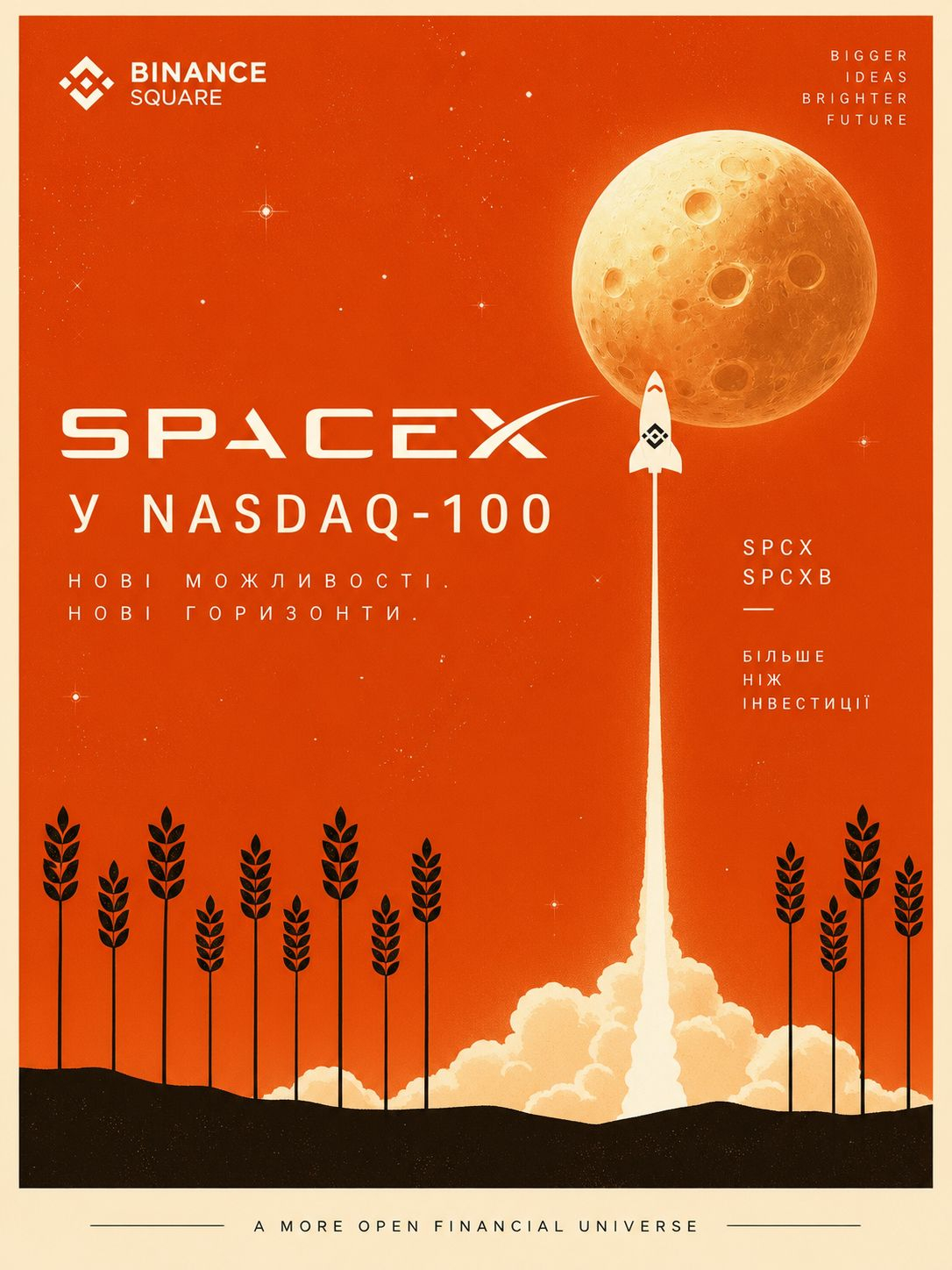
Since September 21, SpaceX’s weight in the Nasdaq-100 has risen from 1.28% to 2.82%. Funds that track the index may need to increase their allocation to SpaceX, which could create additional demand for SPCX. At the same time, part of the expected effect may already be priced in.
⚠️ After rebalancing, a scenario of “buy on expectations — sell on the fact” is possible. Therefore, growth of $SPCX could be accompanied by profit-taking and increased volatility.
🔄 For $SPCXB , additional risks apply: the price may temporarily diverge from SPCX due to demand, spreads, and liquidity on Binance. And further unlocking of SpaceX shares simultaneously increases the free float and potential supply in the market.
👀 After September 21, I’ll watch four signals: SPCX → SPCXB → trading volume → the difference between them.
💡 Conclusion: the Nasdaq-100 rebalancing is an important catalyst for SpaceX, but not a guarantee of growth. For a holder of $SPCXB , the key question is whether the asset will keep its price after the mechanical demand is over—and how closely it will follow SPCX.
#SpaceX #SPCX #spcxb #BStocks #Nasdaq100
{spot}(QQQBUSDT)
{spot}(SPCXBUSDT)
{future}(SPCXUSDT)
🚀 SpaceX in the Nasdaq-100: what it means for SPCX and SPCXB?
Since September 21, SpaceX’s weight in the Nasdaq-100 has risen from 1.28% to 2.82%. Funds that track the index may need to increase their allocation to SpaceX, which could create additional demand for SPCX. At the same time, part of the expected effect may already be priced in.
⚠️ After rebalancing, a scenario of “buy on expectations — sell on the fact” is possible. Therefore, growth of $SPCX could be accompanied by profit-taking and increased volatility.
🔄 For $SPCXB , additional risks apply: the price may temporarily diverge from SPCX due to demand, spreads, and liquidity on Binance. And further unlocking of SpaceX shares simultaneously increases the free float and potential supply in the market.
👀 After September 21, I’ll watch four signals: SPCX → SPCXB → trading volume → the difference between them.
💡 Conclusion: the Nasdaq-100 rebalancing is an important catalyst for SpaceX, but not a guarantee of growth. For a holder of $SPCXB , the key question is whether the asset will keep its price after the mechanical demand is over—and how closely it will follow SPCX.
#SpaceX #SPCX #spcxb #BStocks #Nasdaq100
Since September 21, SpaceX’s weight in the Nasdaq-100 has risen from 1.28% to 2.82%. Funds that track the index may need to increase their allocation to SpaceX, which could create additional demand for SPCX. At the same time, part of the expected effect may already be priced in.
⚠️ After rebalancing, a scenario of “buy on expectations — sell on the fact” is possible. Therefore, growth of $SPCX could be accompanied by profit-taking and increased volatility.
🔄 For $SPCXB , additional risks apply: the price may temporarily diverge from SPCX due to demand, spreads, and liquidity on Binance. And further unlocking of SpaceX shares simultaneously increases the free float and potential supply in the market.
👀 After September 21, I’ll watch four signals: SPCX → SPCXB → trading volume → the difference between them.
💡 Conclusion: the Nasdaq-100 rebalancing is an important catalyst for SpaceX, but not a guarantee of growth. For a holder of $SPCXB , the key question is whether the asset will keep its price after the mechanical demand is over—and how closely it will follow SPCX.
#SpaceX #SPCX #spcxb #BStocks #Nasdaq100
6
431

·
--
Bullish
Tesla × SpaceX | A merger that draws attention
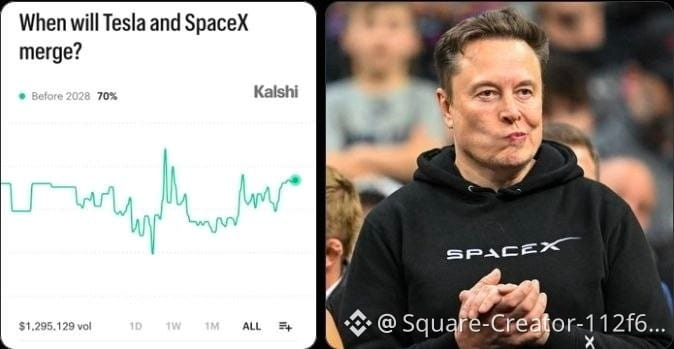
Prediction markets show a probability of around 70% for a merger between Tesla and SpaceX before 2028.
If it happens, a single entity could bring together vehicles, artificial intelligence, robotics, space, and communications.
⚠️ So far, there has been no official announcement confirming completion of the deal.
$TSLA $SPCX
#SpaceX #TSLA #AI #ElonMusk
Tesla × SpaceX | A merger that draws attention
Prediction markets show a probability of around 70% for a merger between Tesla and SpaceX before 2028.
If it happens, a single entity could bring together vehicles, artificial intelligence, robotics, space, and communications.
⚠️ So far, there has been no official announcement confirming completion of the deal.
$TSLA $SPCX
#SpaceX #TSLA #AI #ElonMusk
Prediction markets show a probability of around 70% for a merger between Tesla and SpaceX before 2028.
If it happens, a single entity could bring together vehicles, artificial intelligence, robotics, space, and communications.
⚠️ So far, there has been no official announcement confirming completion of the deal.
$TSLA $SPCX
#SpaceX #TSLA #AI #ElonMusk
2
258

·
--
⚡ SpaceX AI Unit Eyes Acquisition of Dormant Startup Data for Grok Expansion
📌 Key Highlights:
• SpaceX’s AI division has initiated talks to purchase customer records from defunct startups, positioning the data as low-cost training material for its Grok language model.
• The potential acquisition could involve millions of user profiles, offering a significant boost to Grok’s dataset without the need for active user consent.
• This move underscores a broader trend of AI firms leveraging legacy data to accelerate model development, raising questions about data ownership and privacy in the crypto‑AI intersection.
📊 Market Takeaway:
Investors view the data acquisition as a strategic win for SpaceX’s AI ambitions, potentially driving higher valuations for AI‑centric tokens while sparking regulatory scrutiny over data provenance.
#AI #DataPrivacy #SpaceX $BTC $ETH $SOL
⚡ SpaceX AI Unit Eyes Acquisition of Dormant Startup Data for Grok Expansion
📌 Key Highlights:
• SpaceX’s AI division has initiated talks to purchase customer records from defunct startups, positioning the data as low-cost training material for its Grok language model.
• The potential acquisition could involve millions of user profiles, offering a significant boost to Grok’s dataset without the need for active user consent.
• This move underscores a broader trend of AI firms leveraging legacy data to accelerate model development, raising questions about data ownership and privacy in the crypto‑AI intersection.
📊 Market Takeaway:
Investors view the data acquisition as a strategic win for SpaceX’s AI ambitions, potentially driving higher valuations for AI‑centric tokens while sparking regulatory scrutiny over data provenance.
#AI #DataPrivacy #SpaceX $BTC $ETH $SOL
📌 Key Highlights:
• SpaceX’s AI division has initiated talks to purchase customer records from defunct startups, positioning the data as low-cost training material for its Grok language model.
• The potential acquisition could involve millions of user profiles, offering a significant boost to Grok’s dataset without the need for active user consent.
• This move underscores a broader trend of AI firms leveraging legacy data to accelerate model development, raising questions about data ownership and privacy in the crypto‑AI intersection.
📊 Market Takeaway:
Investors view the data acquisition as a strategic win for SpaceX’s AI ambitions, potentially driving higher valuations for AI‑centric tokens while sparking regulatory scrutiny over data provenance.
#AI #DataPrivacy #SpaceX $BTC $ETH $SOL

1
91

Cathie Wood says Starship could generate around $1B per launch.
If $SPCX reaches 10,000 flights a year by 2030, that could imply $10T in annual revenue—making a $1.8T SpaceX IPO valuation look very different.
A huge vision, but it depends on execution, demand, and regulation. 🚀
#SpaceX #Starship #innovation_factory_Funder_Mr
{stock_us}(SPCX.US)
Cathie Wood says Starship could generate around $1B per launch.
If $SPCX reaches 10,000 flights a year by 2030, that could imply $10T in annual revenue—making a $1.8T SpaceX IPO valuation look very different.
A huge vision, but it depends on execution, demand, and regulation. 🚀
#SpaceX #Starship #innovation_factory_Funder_Mr
If $SPCX reaches 10,000 flights a year by 2030, that could imply $10T in annual revenue—making a $1.8T SpaceX IPO valuation look very different.
A huge vision, but it depends on execution, demand, and regulation. 🚀
#SpaceX #Starship #innovation_factory_Funder_Mr
SPCX+1.14%
SPCXUS-0.17%
196

·
--
$SPCX A single 4-hour candlestick on SPCX dropped 8.8%. After rising for two days in a row, this one completely gave everything back.
First, let’s clarify what this is. SPCX is a perpetual contract listing on Binance that maps to SpaceX’s Pre-IPO valuation, pegged to an expected valuation of roughly $1.4 trillion. It’s not equity—it’s a valuation-linked instrument. The volatility moves with news and expectations.
Binance just launched this new contract, and with a relatively small circulating supply, one 4-hour candlestick can consume an entire day’s worth of price swings. That’s its baseline—not some unexpected fluke.
**Order-Book / Chart Signals**
On the 4-hour chart, it touched a high at 156.60 and then straight-up dumped. The low was 150.70, and it closed at 151.22. The real body was 5.3 points, with a long lower wick. In the last 24 hours, it went from 155.32 to 152.90, down 1.56%.
The current resistance zone is very clear: 155.1 to 156.6. The prior top-chasing push was basically trapped positions all the way through. Support is 150.13—also the 24-hour low, and the lowest point of that needle from last night. If 150.13 can’t hold, the next reference is the dense area around 144.5 to 143.
**Market Sentiment**
Funding rate is 0.0000%. This is crucial. A brand-new contract that ran from 144 to 156 within two days—with nearly a 10% swing—yet the rate is zero suggests neither side is aggressively locked in leverage. Longs weren’t疯狂追高 (chasing wildly higher), and shorts weren’t slamming prices while picking up rebounds during the pin. Sentiment isn’t crowded—both sides are watching the news. In this kind of state, it’s neither dangerous nor exciting. It’s suited for trading the structure, not for going all-in betting on direction.
**Whale Activity**
Within the last 30 four-hour candles, the one with the largest volume is the “dumping wick” candle: 4.596 million coins and 706 million U, over 40x the usual average volume.
Pay attention to the buy distribution: the pin-wick candle at 150.70 had 2.13 million coins bought by buyers—twice the amount sold, meaning someone is indeed picking up at the needle bottom. But after that, the rebound bought 3.30 million coins—only about 70% of the wick candle’s volume. Also, most of that rebound volume was passive short covering. Conclusion: the wick dump was an active sell, the needle bottom was mostly passive buying. The bulls still haven’t shown the commitment to fight with $700+ million worth of bids.
**Volume-Price Structure**
Total traded value over 24 hours is 1.365 billion U. Base volume is 8.9 million coins, with a weighted average price of 153.22. The current price is 152.90, trading just below the average line. The weighted average is essentially the short-term bull/bear dividing line.
In the move from 144 to 156, volume concentrated at the two ends: the first run-up candle had 5.48 million coins, and the top-push candle had 6.24 million. The middle was all low-volume consolidation at only 100k–200k coins. Volume was spent on breakouts and the wick dump—there wasn’t much going on during the middle consolidation. That’s a classic new-listing structure: event-driven. When there’s no event, volume dries up.
**Candlestick Details**
Let’s break down the wick candle. It opened at 155.71, topped at 156.60, bottomed at 150.70, and closed at 151.22. The real body accounted for about 90% of the entire range, and the lower wick was only 0.52 points—almost a “head-only” bearish candle. There was basically no resistance when it was dumping.
But the next two candles after the pin are different: the rebound candle pulled back with 3.30 million volume to 152.75. After that, the following two candles shrank to 350k and 44k coins. The final 4-hour candle had only 20k traded. Volume is quickly exhausting, suggesting the dumping momentum has already been used up. Now it’s a standoff where neither side has strength.
**Nini’s Plan**
I’m leaning neutral.
For a new listing, volatility depends entirely on events. Current price: 152.90.
My setup: 150.13 to 150.70 holds steady—buy on pullbacks. Target is 156. If it pushes higher and trades with volume above 156.6, then chase the breakout; above that, I’d look toward 160.
If neither side gives a clear signal, just wait—don’t guess direction. If 150.13 breaks with volume and fails, I leave directly. Below, 144.5 is the key structure level. With this small circulating supply, stop-loss matters more than calling direction.
If you need a strategy tailored to you, you can find Nini.
#$SPCX #SpaceX #PreIPO
$SPCX A single 4-hour candlestick on SPCX dropped 8.8%. After rising for two days in a row, this one completely gave everything back.
First, let’s clarify what this is. SPCX is a perpetual contract listing on Binance that maps to SpaceX’s Pre-IPO valuation, pegged to an expected valuation of roughly $1.4 trillion. It’s not equity—it’s a valuation-linked instrument. The volatility moves with news and expectations.
Binance just launched this new contract, and with a relatively small circulating supply, one 4-hour candlestick can consume an entire day’s worth of price swings. That’s its baseline—not some unexpected fluke.
**Order-Book / Chart Signals**
On the 4-hour chart, it touched a high at 156.60 and then straight-up dumped. The low was 150.70, and it closed at 151.22. The real body was 5.3 points, with a long lower wick. In the last 24 hours, it went from 155.32 to 152.90, down 1.56%.
The current resistance zone is very clear: 155.1 to 156.6. The prior top-chasing push was basically trapped positions all the way through. Support is 150.13—also the 24-hour low, and the lowest point of that needle from last night. If 150.13 can’t hold, the next reference is the dense area around 144.5 to 143.
**Market Sentiment**
Funding rate is 0.0000%. This is crucial. A brand-new contract that ran from 144 to 156 within two days—with nearly a 10% swing—yet the rate is zero suggests neither side is aggressively locked in leverage. Longs weren’t疯狂追高 (chasing wildly higher), and shorts weren’t slamming prices while picking up rebounds during the pin. Sentiment isn’t crowded—both sides are watching the news. In this kind of state, it’s neither dangerous nor exciting. It’s suited for trading the structure, not for going all-in betting on direction.
**Whale Activity**
Within the last 30 four-hour candles, the one with the largest volume is the “dumping wick” candle: 4.596 million coins and 706 million U, over 40x the usual average volume.
Pay attention to the buy distribution: the pin-wick candle at 150.70 had 2.13 million coins bought by buyers—twice the amount sold, meaning someone is indeed picking up at the needle bottom. But after that, the rebound bought 3.30 million coins—only about 70% of the wick candle’s volume. Also, most of that rebound volume was passive short covering. Conclusion: the wick dump was an active sell, the needle bottom was mostly passive buying. The bulls still haven’t shown the commitment to fight with $700+ million worth of bids.
**Volume-Price Structure**
Total traded value over 24 hours is 1.365 billion U. Base volume is 8.9 million coins, with a weighted average price of 153.22. The current price is 152.90, trading just below the average line. The weighted average is essentially the short-term bull/bear dividing line.
In the move from 144 to 156, volume concentrated at the two ends: the first run-up candle had 5.48 million coins, and the top-push candle had 6.24 million. The middle was all low-volume consolidation at only 100k–200k coins. Volume was spent on breakouts and the wick dump—there wasn’t much going on during the middle consolidation. That’s a classic new-listing structure: event-driven. When there’s no event, volume dries up.
**Candlestick Details**
Let’s break down the wick candle. It opened at 155.71, topped at 156.60, bottomed at 150.70, and closed at 151.22. The real body accounted for about 90% of the entire range, and the lower wick was only 0.52 points—almost a “head-only” bearish candle. There was basically no resistance when it was dumping.
But the next two candles after the pin are different: the rebound candle pulled back with 3.30 million volume to 152.75. After that, the following two candles shrank to 350k and 44k coins. The final 4-hour candle had only 20k traded. Volume is quickly exhausting, suggesting the dumping momentum has already been used up. Now it’s a standoff where neither side has strength.
**Nini’s Plan**
I’m leaning neutral.
For a new listing, volatility depends entirely on events. Current price: 152.90.
My setup: 150.13 to 150.70 holds steady—buy on pullbacks. Target is 156. If it pushes higher and trades with volume above 156.6, then chase the breakout; above that, I’d look toward 160.
If neither side gives a clear signal, just wait—don’t guess direction. If 150.13 breaks with volume and fails, I leave directly. Below, 144.5 is the key structure level. With this small circulating supply, stop-loss matters more than calling direction.
If you need a strategy tailored to you, you can find Nini.
#$SPCX #SpaceX #PreIPO
First, let’s clarify what this is. SPCX is a perpetual contract listing on Binance that maps to SpaceX’s Pre-IPO valuation, pegged to an expected valuation of roughly $1.4 trillion. It’s not equity—it’s a valuation-linked instrument. The volatility moves with news and expectations.
Binance just launched this new contract, and with a relatively small circulating supply, one 4-hour candlestick can consume an entire day’s worth of price swings. That’s its baseline—not some unexpected fluke.
**Order-Book / Chart Signals**
On the 4-hour chart, it touched a high at 156.60 and then straight-up dumped. The low was 150.70, and it closed at 151.22. The real body was 5.3 points, with a long lower wick. In the last 24 hours, it went from 155.32 to 152.90, down 1.56%.
The current resistance zone is very clear: 155.1 to 156.6. The prior top-chasing push was basically trapped positions all the way through. Support is 150.13—also the 24-hour low, and the lowest point of that needle from last night. If 150.13 can’t hold, the next reference is the dense area around 144.5 to 143.
**Market Sentiment**
Funding rate is 0.0000%. This is crucial. A brand-new contract that ran from 144 to 156 within two days—with nearly a 10% swing—yet the rate is zero suggests neither side is aggressively locked in leverage. Longs weren’t疯狂追高 (chasing wildly higher), and shorts weren’t slamming prices while picking up rebounds during the pin. Sentiment isn’t crowded—both sides are watching the news. In this kind of state, it’s neither dangerous nor exciting. It’s suited for trading the structure, not for going all-in betting on direction.
**Whale Activity**
Within the last 30 four-hour candles, the one with the largest volume is the “dumping wick” candle: 4.596 million coins and 706 million U, over 40x the usual average volume.
Pay attention to the buy distribution: the pin-wick candle at 150.70 had 2.13 million coins bought by buyers—twice the amount sold, meaning someone is indeed picking up at the needle bottom. But after that, the rebound bought 3.30 million coins—only about 70% of the wick candle’s volume. Also, most of that rebound volume was passive short covering. Conclusion: the wick dump was an active sell, the needle bottom was mostly passive buying. The bulls still haven’t shown the commitment to fight with $700+ million worth of bids.
**Volume-Price Structure**
Total traded value over 24 hours is 1.365 billion U. Base volume is 8.9 million coins, with a weighted average price of 153.22. The current price is 152.90, trading just below the average line. The weighted average is essentially the short-term bull/bear dividing line.
In the move from 144 to 156, volume concentrated at the two ends: the first run-up candle had 5.48 million coins, and the top-push candle had 6.24 million. The middle was all low-volume consolidation at only 100k–200k coins. Volume was spent on breakouts and the wick dump—there wasn’t much going on during the middle consolidation. That’s a classic new-listing structure: event-driven. When there’s no event, volume dries up.
**Candlestick Details**
Let’s break down the wick candle. It opened at 155.71, topped at 156.60, bottomed at 150.70, and closed at 151.22. The real body accounted for about 90% of the entire range, and the lower wick was only 0.52 points—almost a “head-only” bearish candle. There was basically no resistance when it was dumping.
But the next two candles after the pin are different: the rebound candle pulled back with 3.30 million volume to 152.75. After that, the following two candles shrank to 350k and 44k coins. The final 4-hour candle had only 20k traded. Volume is quickly exhausting, suggesting the dumping momentum has already been used up. Now it’s a standoff where neither side has strength.
**Nini’s Plan**
I’m leaning neutral.
For a new listing, volatility depends entirely on events. Current price: 152.90.
My setup: 150.13 to 150.70 holds steady—buy on pullbacks. Target is 156. If it pushes higher and trades with volume above 156.6, then chase the breakout; above that, I’d look toward 160.
If neither side gives a clear signal, just wait—don’t guess direction. If 150.13 breaks with volume and fails, I leave directly. Below, 144.5 is the key structure level. With this small circulating supply, stop-loss matters more than calling direction.
If you need a strategy tailored to you, you can find Nini.
#$SPCX #SpaceX #PreIPO
90

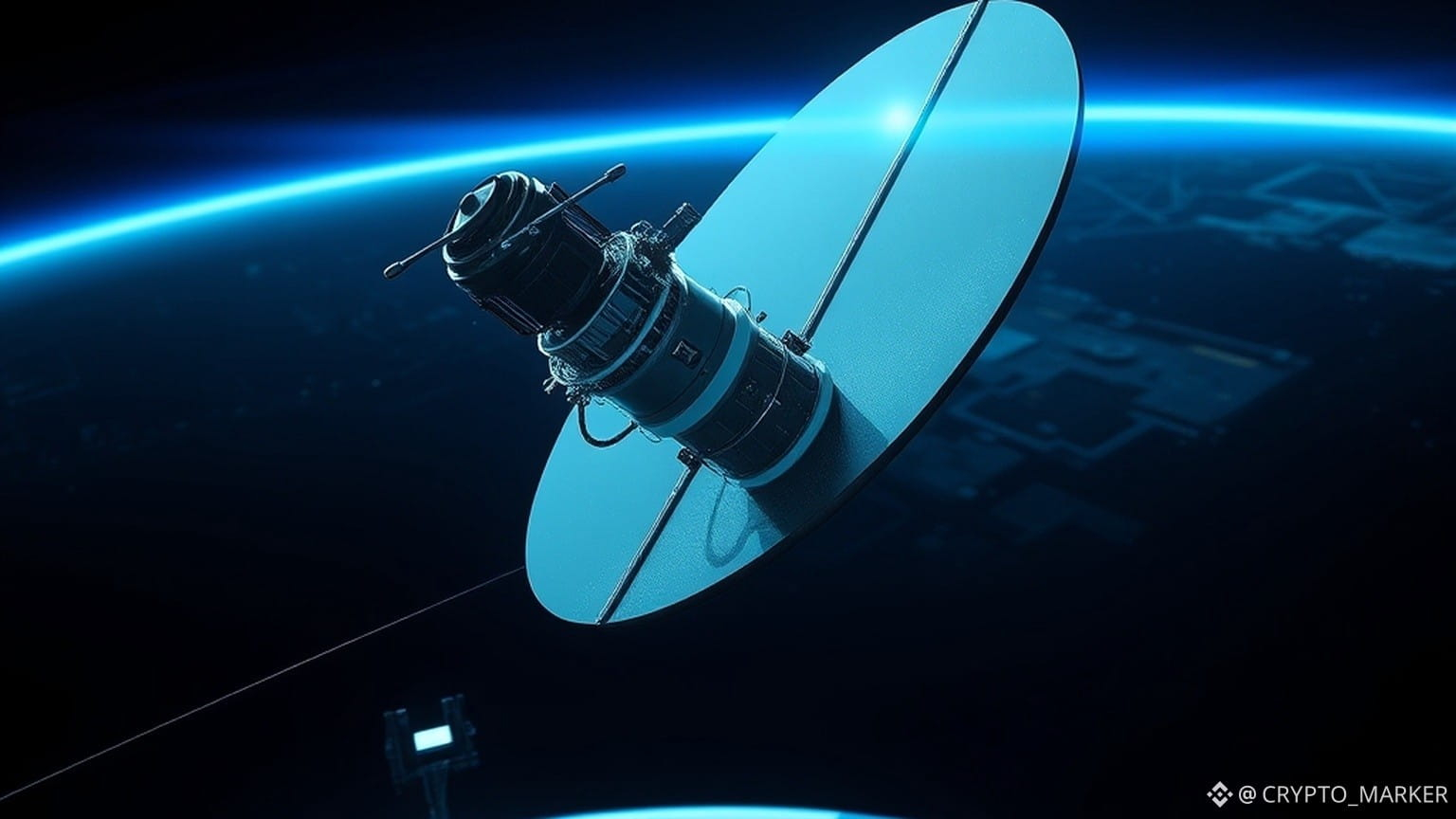
🚨 SPACEX SCORES ANOTHER $950 MILLION FROM NASA FOR 3 MORE CREWED FLIGHTS TO ISS
📰 WHAT HAPPENED?
SpaceX is getting an extension to an existing contract that will allow three additional crewed Dragon flights to the International Space Station.
📊 IMPACT ON TECHNOLOGY
The development shows how satellite connectivity is expanding its applications and increasingly competing with traditional telecommunications infrastructure.
🔎 Source: CNBC
🤔 💬 Could satellite connectivity become an increasingly important alternative to traditional networks?
#SpaceX #Satellite #Crypto_Marker #News
🚨 SPACEX SCORES ANOTHER $950 MILLION FROM NASA FOR 3 MORE CREWED FLIGHTS TO ISS
📰 WHAT HAPPENED?
SpaceX is getting an extension to an existing contract that will allow three additional crewed Dragon flights to the International Space Station.
📊 IMPACT ON TECHNOLOGY
The development shows how satellite connectivity is expanding its applications and increasingly competing with traditional telecommunications infrastructure.
🔎 Source: CNBC
🤔 💬 Could satellite connectivity become an increasingly important alternative to traditional networks?
#SpaceX #Satellite #Crypto_Marker #News
📰 WHAT HAPPENED?
SpaceX is getting an extension to an existing contract that will allow three additional crewed Dragon flights to the International Space Station.
📊 IMPACT ON TECHNOLOGY
The development shows how satellite connectivity is expanding its applications and increasingly competing with traditional telecommunications infrastructure.
🔎 Source: CNBC
🤔 💬 Could satellite connectivity become an increasingly important alternative to traditional networks?
#SpaceX #Satellite #Crypto_Marker #News
344
·
--
Bullish
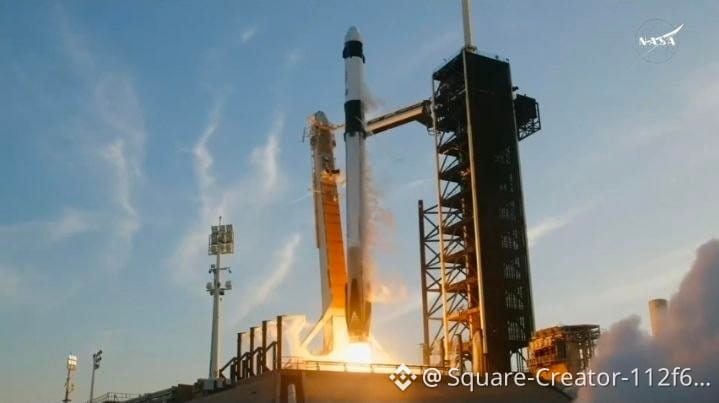
SpaceX expands its partnership with NASA
NASA announced 3 additional crewed missions for the Crew Dragon spacecraft to the International Space Station by 2030.
The value of the additional contracts could reach 946 million dollars upon completion of the missions.
The step reflects the continued expansion of the commercial space sector, with growing reliance on private companies to carry out space missions worth billions of dollars.
Space is no longer just a technical race… it has also become a massive commercial market.
$SPCXB $SPCX
#SpaceX #NASA #TSLA #Technology
SpaceX expands its partnership with NASA
NASA announced 3 additional crewed missions for the Crew Dragon spacecraft to the International Space Station by 2030.
The value of the additional contracts could reach 946 million dollars upon completion of the missions.
The step reflects the continued expansion of the commercial space sector, with growing reliance on private companies to carry out space missions worth billions of dollars.
Space is no longer just a technical race… it has also become a massive commercial market.
$SPCXB $SPCX
#SpaceX #NASA #TSLA #Technology
NASA announced 3 additional crewed missions for the Crew Dragon spacecraft to the International Space Station by 2030.
The value of the additional contracts could reach 946 million dollars upon completion of the missions.
The step reflects the continued expansion of the commercial space sector, with growing reliance on private companies to carry out space missions worth billions of dollars.
Space is no longer just a technical race… it has also become a massive commercial market.
$SPCXB $SPCX
#SpaceX #NASA #TSLA #Technology
2
271

·
--
Bullish
SpaceX Tokenized bStocks ($SPCXB ) like a social media post (Binance Square limits compliant — max 3 coin tags):
🚀 Tokenized Private Equity Spotlight: SpaceX Tokenized bStocks ($SPCXB) 🌐✨
SpaceX valuation expansion, 24/7 private market liquidity, and strong demand for Real-World Asset (RWA) tokenization are helping it hold a consolidation range around $SPCXB key baseline levels! 🔥
📊 Market & Technical Overview:
* Current Price: ~$150 – $155 USD
* Market Cap: ~$65M – $68M
* Immediate Resistance: $165 – $175 (A breakout above $175 opens the route toward the previous ATH $225+)
* Key Support Zone: $140 – $148
* Major Structure Support: $105 – $115
💡 Core Growth Drivers:
* On-Chain Private Equity Exposure: It provides Web3 investors tokenized exposure to SpaceX equity, converting traditional illiquid private markets into 24/7 tradeable crypto liquidity.
* Space & Satellite Network Valuation: Starlink satellite constellation expansion, Starship launch milestones, and government space contracts strengthen the fundamentals of the underlying asset.
* Outlook: If the $140 support floor is defended and a daily close shifts above the $165 resistance barrier, it could trigger a multi-week upward continuation.
⚠️ Disclaimer: Tokenized private equities are influenced by underlying valuation events, private secondary markets, and regulatory dynamics. Practice strict risk management (DYOR).
#spcxb #SpaceX #Crypto
{spot}(SPCXBUSDT)
SpaceX Tokenized bStocks ($SPCXB ) like a social media post (Binance Square limits compliant — max 3 coin tags):
🚀 Tokenized Private Equity Spotlight: SpaceX Tokenized bStocks ($SPCXB ) 🌐✨
SpaceX valuation expansion, 24/7 private market liquidity, and strong demand for Real-World Asset (RWA) tokenization are helping it hold a consolidation range around $SPCXB key baseline levels! 🔥
📊 Market & Technical Overview:
* Current Price: ~$150 – $155 USD
* Market Cap: ~$65M – $68M
* Immediate Resistance: $165 – $175 (A breakout above $175 opens the route toward the previous ATH $225+)
* Key Support Zone: $140 – $148
* Major Structure Support: $105 – $115
💡 Core Growth Drivers:
* On-Chain Private Equity Exposure: It provides Web3 investors tokenized exposure to SpaceX equity, converting traditional illiquid private markets into 24/7 tradeable crypto liquidity.
* Space & Satellite Network Valuation: Starlink satellite constellation expansion, Starship launch milestones, and government space contracts strengthen the fundamentals of the underlying asset.
* Outlook: If the $140 support floor is defended and a daily close shifts above the $165 resistance barrier, it could trigger a multi-week upward continuation.
⚠️ Disclaimer: Tokenized private equities are influenced by underlying valuation events, private secondary markets, and regulatory dynamics. Practice strict risk management (DYOR).
#spcxb #SpaceX #Crypto
🚀 Tokenized Private Equity Spotlight: SpaceX Tokenized bStocks ($SPCXB ) 🌐✨
SpaceX valuation expansion, 24/7 private market liquidity, and strong demand for Real-World Asset (RWA) tokenization are helping it hold a consolidation range around $SPCXB key baseline levels! 🔥
📊 Market & Technical Overview:
* Current Price: ~$150 – $155 USD
* Market Cap: ~$65M – $68M
* Immediate Resistance: $165 – $175 (A breakout above $175 opens the route toward the previous ATH $225+)
* Key Support Zone: $140 – $148
* Major Structure Support: $105 – $115
💡 Core Growth Drivers:
* On-Chain Private Equity Exposure: It provides Web3 investors tokenized exposure to SpaceX equity, converting traditional illiquid private markets into 24/7 tradeable crypto liquidity.
* Space & Satellite Network Valuation: Starlink satellite constellation expansion, Starship launch milestones, and government space contracts strengthen the fundamentals of the underlying asset.
* Outlook: If the $140 support floor is defended and a daily close shifts above the $165 resistance barrier, it could trigger a multi-week upward continuation.
⚠️ Disclaimer: Tokenized private equities are influenced by underlying valuation events, private secondary markets, and regulatory dynamics. Practice strict risk management (DYOR).
#spcxb #SpaceX #Crypto
147
Log in to explore more content
Join global crypto users on Binance Square
⚡️ Get latest and useful information about crypto.
💬 Trusted by the world’s largest crypto exchange.
👍 Discover real insights from verified creators.
Email / Phone number
Trending Topics
1
#AIStocksWhatNext
283,212 views
2,652 Discussing
2
#BitcoinBreaksAboveMayHighNears$86K
10,570 views
158 Discussing
3
#DogecoinRises15%
30,420 views
850 Discussing
4
#$14BBitcoinOptionsExpireFriday
2,329 views
73 Discussing
5
#BNBMarketCapPassesBNYMellon
21,188 views
634 Discussing
6
#CryptoMarketCapReclaims$3Trillion
2,804 views
66 Discussing
7
#MuseOvertakesChatGPTAsTopFreeIOSApp
12,984 views
483 Discussing
8
#TokenizedStockPlatformsCouldLaunchNextQuarter
20,248 views
544 Discussing
9
#StrategyAdds950Bitcoin
26,031 views
609 Discussing
10
#CardanoAddedToX402KitForADAPayments
25,086 views
620 Discussing