

#p2ptradingtips
p2ptradingtips
996,997 views
246 Discussing
Hot
Latest

·
--
Guys, don’t read this;
With a capital of 200 USDT, the daily profit in P2P depends on how many trades you manage to make and the margin you get in each one. There is no fixed percentage
As a reference:
Daily margin
Profit with 200 USDT
0.3% / 0.60 USDT
0.5% / 1.00 USDT
1.0% / 2.00 USDT
1.5% / 3.00 USDT
2.0% / 4.00 USDT
In practice:
* 0.3%–0.8% daily is often a more realistic range for many traders who constantly do P2P arbitrage.
* 1% daily is possible some days, but not in a guaranteed way.
* Keeping 2% daily for long periods is quite difficult due to competition, price changes, and the time it takes to get trades.
If, for example, you managed to average 1% daily and reinvested the profits:
* Initial capital: 200 USDT
* Approx. daily profit: 2 USDT
* In 30 days (not counting fees or bad days): around 269 USDT thanks to the reinvestment effect
Follow me for more p2p info
#p2p #P2PScamAwareness #P2PTradingTips #p2ptransactions
Guys, don’t read this;
With a capital of 200 USDT, the daily profit in P2P depends on how many trades you manage to make and the margin you get in each one. There is no fixed percentage
As a reference:
Daily margin
Profit with 200 USDT
0.3% / 0.60 USDT
0.5% / 1.00 USDT
1.0% / 2.00 USDT
1.5% / 3.00 USDT
2.0% / 4.00 USDT
In practice:
* 0.3%–0.8% daily is often a more realistic range for many traders who constantly do P2P arbitrage.
* 1% daily is possible some days, but not in a guaranteed way.
* Keeping 2% daily for long periods is quite difficult due to competition, price changes, and the time it takes to get trades.
If, for example, you managed to average 1% daily and reinvested the profits:
* Initial capital: 200 USDT
* Approx. daily profit: 2 USDT
* In 30 days (not counting fees or bad days): around 269 USDT thanks to the reinvestment effect
Follow me for more p2p info
#p2p #P2PScamAwareness #P2PTradingTips #p2ptransactions
With a capital of 200 USDT, the daily profit in P2P depends on how many trades you manage to make and the margin you get in each one. There is no fixed percentage
As a reference:
Daily margin
Profit with 200 USDT
0.3% / 0.60 USDT
0.5% / 1.00 USDT
1.0% / 2.00 USDT
1.5% / 3.00 USDT
2.0% / 4.00 USDT
In practice:
* 0.3%–0.8% daily is often a more realistic range for many traders who constantly do P2P arbitrage.
* 1% daily is possible some days, but not in a guaranteed way.
* Keeping 2% daily for long periods is quite difficult due to competition, price changes, and the time it takes to get trades.
If, for example, you managed to average 1% daily and reinvested the profits:
* Initial capital: 200 USDT
* Approx. daily profit: 2 USDT
* In 30 days (not counting fees or bad days): around 269 USDT thanks to the reinvestment effect
Follow me for more p2p info
#p2p #P2PScamAwareness #P2PTradingTips #p2ptransactions
3
4
229

·
--
Verified
Article
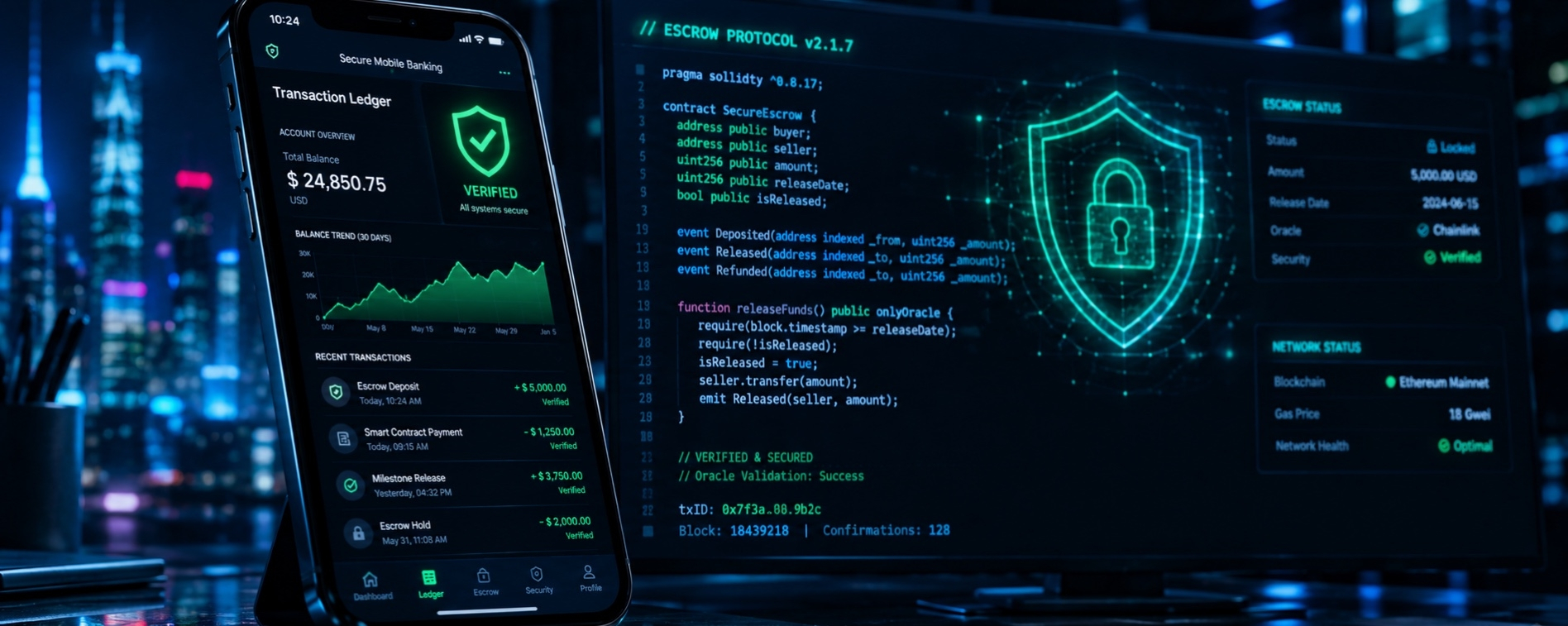
Shielding Your Capital: Personal Lessons from a Coordinated P2P Escrow AttackPeer-to-Peer (P2P) channels offer a direct way to navigate markets, but they also require a high degree of operational vigilance. Recently, I encountered a highly strategic attack vector designed to exploit a seller's attention across multiple parallel transactions.
By maintaining strict emotional discipline, verifying my balances directly through official banking nodes, and allowing the platform's native dispute resolution mechanisms to take their course, I successfully preserved my capital. Below is a factual breakdown of how this specific "Decimal Point" anomaly functions and the verification framework I use to stay secure.
1. The Multi-Account Attention Split
The strategy relies heavily on cognitive overload. The counterparty initiates twin buy orders under completely separate verified platform aliases at the exact same time.
By launching parallel orders for near-identical amounts simultaneously, the bad actor attempts to fracture your focus, create a false sense of urgency, and force a premature confirmation error under operational stress.
2. The Internal "Decimal" Discrepancy
Once the orders are locked into escrow, the counterparty avoids utilizing external fiat banking networks entirely. Instead, they execute an internal platform micro-transfer directly to your account ID.
The Discrepancy: For an open P2P fiat order expecting a full balance of 2,452.89 USDT, the actor will intentionally transfer a microscopic internal balance of exactly 2.452 USDT
They then document the successful confirmation page of this tiny internal transfer, mark the large-scale fiat order as "Paid" on the P2P interface, and submit the image into the transaction log. The tactic relies on the seller glancing strictly at the leading digits ("2-4-5") and misinterpreting the internal micro-crypto transfer as a completed external fiat deposit.
3. High-Pressure Communication Metrics
Immediately after marking the transaction as paid, the counterparty initiates aggressive communication patterns in the order chat. These typically consist of rapid-fire text blocks, manufactured legal threats, or claims of impending regulatory reports.
The objective is psychological: to induce panic or discomfort in the seller, prompting them to click the "Payment Received" or "Release" action loop simply to terminate the hostile interaction. If a seller interacts before validating their actual fiat reserves, assets leave the safety of escrow permanently.
My Protocol for Verifying P2P Transactions
To maintain absolute security over your digital capital during a dispute, consider adopting the following systematic checks:
• Enforce Communication Isolation: Avoid engaging in emotional debates or arguments within the transaction chat. Hostile messages are noise designed to disrupt your analytical processing.
• Isolate the Verification Source: Access your fiat banking or banking wallet application exclusively through independent, secure channels. Rely solely on your cleared, settled balance statement. Never accept third-party transaction screenshots, SMS notifications, or incoming email receipts as proof of deposit.
• Compile Objective Evidence: Document your unedited banking ledger showing the absence of incoming funds, alongside the conflicting image files uploaded by the buyer.
• Leverage the Arbitration Escrow: If an order remains unfulfilled or improperly marked, initiate a formal dispute immediately. This structurally locks the underlying assets safely inside the platform's escrow system, transferring administrative control to a dedicated arbitration agent.
Core Takeaway
No matter how intensely a counterparty attempts to accelerate a timeline or employ pressure tactics—if the fiat currency is not confirmed as a cleared, settled balance inside your primary banking application, the crypto assets must remain in escrow.
Platform mediation mechanisms are designed to evaluate clear transaction records. Providing objective, clean evidence ensures that arbitration agents can safely resolve conflicting claims and keep your digital assets secure.
Disclaimer: This content is for informational and educational purposes only and does not constitute financial advice, investment advice, or instructions on how to trade. Digital asset trading involves significant risk. Always consult the official platform security guidelines and user agreements before engaging in P2P transactions.
#ScamAwareness #P2PScam #P2PTradingTips $USDT
$BTC
{spot}(BTCUSDT)
Shielding Your Capital: Personal Lessons from a Coordinated P2P Escrow Attack
Peer-to-Peer (P2P) channels offer a direct way to navigate markets, but they also require a high degree of operational vigilance. Recently, I encountered a highly strategic attack vector designed to exploit a seller's attention across multiple parallel transactions.
By maintaining strict emotional discipline, verifying my balances directly through official banking nodes, and allowing the platform's native dispute resolution mechanisms to take their course, I successfully preserved my capital. Below is a factual breakdown of how this specific "Decimal Point" anomaly functions and the verification framework I use to stay secure.
1. The Multi-Account Attention Split
The strategy relies heavily on cognitive overload. The counterparty initiates twin buy orders under completely separate verified platform aliases at the exact same time.
By launching parallel orders for near-identical amounts simultaneously, the bad actor attempts to fracture your focus, create a false sense of urgency, and force a premature confirmation error under operational stress.
2. The Internal "Decimal" Discrepancy
Once the orders are locked into escrow, the counterparty avoids utilizing external fiat banking networks entirely. Instead, they execute an internal platform micro-transfer directly to your account ID.
The Discrepancy: For an open P2P fiat order expecting a full balance of 2,452.89 USDT, the actor will intentionally transfer a microscopic internal balance of exactly 2.452 USDT
They then document the successful confirmation page of this tiny internal transfer, mark the large-scale fiat order as "Paid" on the P2P interface, and submit the image into the transaction log. The tactic relies on the seller glancing strictly at the leading digits ("2-4-5") and misinterpreting the internal micro-crypto transfer as a completed external fiat deposit.
3. High-Pressure Communication Metrics
Immediately after marking the transaction as paid, the counterparty initiates aggressive communication patterns in the order chat. These typically consist of rapid-fire text blocks, manufactured legal threats, or claims of impending regulatory reports.
The objective is psychological: to induce panic or discomfort in the seller, prompting them to click the "Payment Received" or "Release" action loop simply to terminate the hostile interaction. If a seller interacts before validating their actual fiat reserves, assets leave the safety of escrow permanently.
My Protocol for Verifying P2P Transactions
To maintain absolute security over your digital capital during a dispute, consider adopting the following systematic checks:
• Enforce Communication Isolation: Avoid engaging in emotional debates or arguments within the transaction chat. Hostile messages are noise designed to disrupt your analytical processing.
• Isolate the Verification Source: Access your fiat banking or banking wallet application exclusively through independent, secure channels. Rely solely on your cleared, settled balance statement. Never accept third-party transaction screenshots, SMS notifications, or incoming email receipts as proof of deposit.
• Compile Objective Evidence: Document your unedited banking ledger showing the absence of incoming funds, alongside the conflicting image files uploaded by the buyer.
• Leverage the Arbitration Escrow: If an order remains unfulfilled or improperly marked, initiate a formal dispute immediately. This structurally locks the underlying assets safely inside the platform's escrow system, transferring administrative control to a dedicated arbitration agent.
Core Takeaway
No matter how intensely a counterparty attempts to accelerate a timeline or employ pressure tactics—if the fiat currency is not confirmed as a cleared, settled balance inside your primary banking application, the crypto assets must remain in escrow.
Platform mediation mechanisms are designed to evaluate clear transaction records. Providing objective, clean evidence ensures that arbitration agents can safely resolve conflicting claims and keep your digital assets secure.
Disclaimer: This content is for informational and educational purposes only and does not constitute financial advice, investment advice, or instructions on how to trade. Digital asset trading involves significant risk. Always consult the official platform security guidelines and user agreements before engaging in P2P transactions.
#ScamAwareness #P2PScam #P2PTradingTips $USDT
$BTC
By maintaining strict emotional discipline, verifying my balances directly through official banking nodes, and allowing the platform's native dispute resolution mechanisms to take their course, I successfully preserved my capital. Below is a factual breakdown of how this specific "Decimal Point" anomaly functions and the verification framework I use to stay secure.
1. The Multi-Account Attention Split
The strategy relies heavily on cognitive overload. The counterparty initiates twin buy orders under completely separate verified platform aliases at the exact same time.
By launching parallel orders for near-identical amounts simultaneously, the bad actor attempts to fracture your focus, create a false sense of urgency, and force a premature confirmation error under operational stress.
2. The Internal "Decimal" Discrepancy
Once the orders are locked into escrow, the counterparty avoids utilizing external fiat banking networks entirely. Instead, they execute an internal platform micro-transfer directly to your account ID.
The Discrepancy: For an open P2P fiat order expecting a full balance of 2,452.89 USDT, the actor will intentionally transfer a microscopic internal balance of exactly 2.452 USDT
They then document the successful confirmation page of this tiny internal transfer, mark the large-scale fiat order as "Paid" on the P2P interface, and submit the image into the transaction log. The tactic relies on the seller glancing strictly at the leading digits ("2-4-5") and misinterpreting the internal micro-crypto transfer as a completed external fiat deposit.
3. High-Pressure Communication Metrics
Immediately after marking the transaction as paid, the counterparty initiates aggressive communication patterns in the order chat. These typically consist of rapid-fire text blocks, manufactured legal threats, or claims of impending regulatory reports.
The objective is psychological: to induce panic or discomfort in the seller, prompting them to click the "Payment Received" or "Release" action loop simply to terminate the hostile interaction. If a seller interacts before validating their actual fiat reserves, assets leave the safety of escrow permanently.
My Protocol for Verifying P2P Transactions
To maintain absolute security over your digital capital during a dispute, consider adopting the following systematic checks:
• Enforce Communication Isolation: Avoid engaging in emotional debates or arguments within the transaction chat. Hostile messages are noise designed to disrupt your analytical processing.
• Isolate the Verification Source: Access your fiat banking or banking wallet application exclusively through independent, secure channels. Rely solely on your cleared, settled balance statement. Never accept third-party transaction screenshots, SMS notifications, or incoming email receipts as proof of deposit.
• Compile Objective Evidence: Document your unedited banking ledger showing the absence of incoming funds, alongside the conflicting image files uploaded by the buyer.
• Leverage the Arbitration Escrow: If an order remains unfulfilled or improperly marked, initiate a formal dispute immediately. This structurally locks the underlying assets safely inside the platform's escrow system, transferring administrative control to a dedicated arbitration agent.
Core Takeaway
No matter how intensely a counterparty attempts to accelerate a timeline or employ pressure tactics—if the fiat currency is not confirmed as a cleared, settled balance inside your primary banking application, the crypto assets must remain in escrow.
Platform mediation mechanisms are designed to evaluate clear transaction records. Providing objective, clean evidence ensures that arbitration agents can safely resolve conflicting claims and keep your digital assets secure.
Disclaimer: This content is for informational and educational purposes only and does not constitute financial advice, investment advice, or instructions on how to trade. Digital asset trading involves significant risk. Always consult the official platform security guidelines and user agreements before engaging in P2P transactions.
#ScamAwareness #P2PScam #P2PTradingTips $USDT
$BTC
124

·
--
The P2P error that could cost you big (And how to avoid it)
A lot of folks think that P2P trading is just about hunting for the cheapest price. That's a huge mistake. In this game, security is worth more than a few bucks.
As a trader, I always stick to these two rules:
1️⃣ Don't just go by the rate: Check the completion percentage (+95%). Always choose older accounts with good rep.
2️⃣ The balance rules: Never release your cryptos just because of a capture in the chat. If the cash isn't sitting in your bank, the coins don't move.
If you're looking to buy cryptos safely on P2P to ride the wave of $BTC or stack up $USDT today, always check the candlestick chart before you make a move.
Protect your capital and trade like a pro!
#P2PTradingTips
{future}(BTCUSDT)
The P2P error that could cost you big (And how to avoid it)
A lot of folks think that P2P trading is just about hunting for the cheapest price. That's a huge mistake. In this game, security is worth more than a few bucks.
As a trader, I always stick to these two rules:
1️⃣ Don't just go by the rate: Check the completion percentage (+95%). Always choose older accounts with good rep.
2️⃣ The balance rules: Never release your cryptos just because of a capture in the chat. If the cash isn't sitting in your bank, the coins don't move.
If you're looking to buy cryptos safely on P2P to ride the wave of $BTC or stack up $USDT today, always check the candlestick chart before you make a move.
Protect your capital and trade like a pro!
#P2PTradingTips
A lot of folks think that P2P trading is just about hunting for the cheapest price. That's a huge mistake. In this game, security is worth more than a few bucks.
As a trader, I always stick to these two rules:
1️⃣ Don't just go by the rate: Check the completion percentage (+95%). Always choose older accounts with good rep.
2️⃣ The balance rules: Never release your cryptos just because of a capture in the chat. If the cash isn't sitting in your bank, the coins don't move.
If you're looking to buy cryptos safely on P2P to ride the wave of $BTC or stack up $USDT today, always check the candlestick chart before you make a move.
Protect your capital and trade like a pro!
#P2PTradingTips
2
3
310

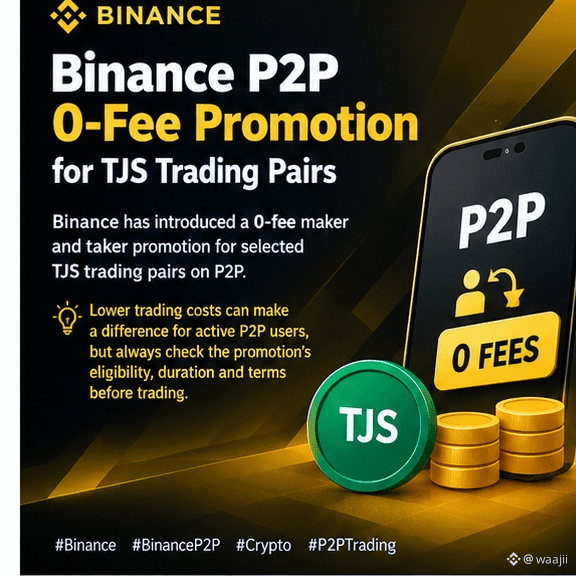
💰 Binance P2P update
Binance has introduced a 0-fee maker and taker promotion for selected TJS trading pairs on P2P.
Lower trading costs can make a difference for active P2P users, but always check the promotion’s eligibility, duration and terms before trading.
#Binance #BinanceP2P #Crypto #P2PTradingTips
💰 Binance P2P update
Binance has introduced a 0-fee maker and taker promotion for selected TJS trading pairs on P2P.
Lower trading costs can make a difference for active P2P users, but always check the promotion’s eligibility, duration and terms before trading.
#Binance #BinanceP2P #Crypto #P2PTradingTips
Binance has introduced a 0-fee maker and taker promotion for selected TJS trading pairs on P2P.
Lower trading costs can make a difference for active P2P users, but always check the promotion’s eligibility, duration and terms before trading.
#Binance #BinanceP2P #Crypto #P2PTradingTips
32

Crypto Trading Basics: Spot Covert Earn & P2P 💡
Spot Trading 📊: The most straightforward method. Buy or sell cryptocurrencies instantly at current market prices to take direct ownership.
Covert Trading 🔄: Simple, one-click token swaps. Swap one crypto directly for another with zero order-book complexity and zero slippage surprise.
Earn 📈: Put your idle crypto to work. Deposit assets into flexible or fixed savings accounts to yield passive interest over time—similar to a traditional bank savings account.
P2P (Peer-to-Peer) 🤝: Buy or sell directly with other users using local currencies and preferred payment methods (bank transfers, digital wallets), backed by platform escrow for safety.
Whether you're looking to swap instantly, trade actively, grow passively, or cash out locally, choosing the right tool makes all the difference! 🚀
also trade here $KOMA $RAYSOL $LSK
#SpotTrading. #EarnFreeCrypto2024 #P2PTradingTips
Crypto Trading Basics: Spot Covert Earn & P2P 💡
Spot Trading 📊: The most straightforward method. Buy or sell cryptocurrencies instantly at current market prices to take direct ownership.
Covert Trading 🔄: Simple, one-click token swaps. Swap one crypto directly for another with zero order-book complexity and zero slippage surprise.
Earn 📈: Put your idle crypto to work. Deposit assets into flexible or fixed savings accounts to yield passive interest over time—similar to a traditional bank savings account.
P2P (Peer-to-Peer) 🤝: Buy or sell directly with other users using local currencies and preferred payment methods (bank transfers, digital wallets), backed by platform escrow for safety.
Whether you're looking to swap instantly, trade actively, grow passively, or cash out locally, choosing the right tool makes all the difference! 🚀
also trade here $KOMA $RAYSOL $LSK
#SpotTrading. #EarnFreeCrypto2024 #P2PTradingTips
Spot Trading 📊: The most straightforward method. Buy or sell cryptocurrencies instantly at current market prices to take direct ownership.
Covert Trading 🔄: Simple, one-click token swaps. Swap one crypto directly for another with zero order-book complexity and zero slippage surprise.
Earn 📈: Put your idle crypto to work. Deposit assets into flexible or fixed savings accounts to yield passive interest over time—similar to a traditional bank savings account.
P2P (Peer-to-Peer) 🤝: Buy or sell directly with other users using local currencies and preferred payment methods (bank transfers, digital wallets), backed by platform escrow for safety.
Whether you're looking to swap instantly, trade actively, grow passively, or cash out locally, choosing the right tool makes all the difference! 🚀
also trade here $KOMA $RAYSOL $LSK
#SpotTrading. #EarnFreeCrypto2024 #P2PTradingTips

1
1
298

DO P2P OPERATORS IN VENEZUELA HAVE TO PAY VAT AND IGTF? vote and reason your answer. This survey will be very helpful for the community. Vote, comment, and share.
#P2PTradingTips #P2PVenezuela $USDT $USDC
DO P2P OPERATORS IN VENEZUELA HAVE TO PAY VAT AND IGTF? vote and reason your answer. This survey will be very helpful for the community. Vote, comment, and share.
#P2PTradingTips #P2PVenezuela $USDT $USDC
#P2PTradingTips #P2PVenezuela $USDT $USDC
IVA SI
0%
IGTF Si
0%
IVA No
0%
IGTF No
0%
0 votes • Voting closed
1
102

·
--
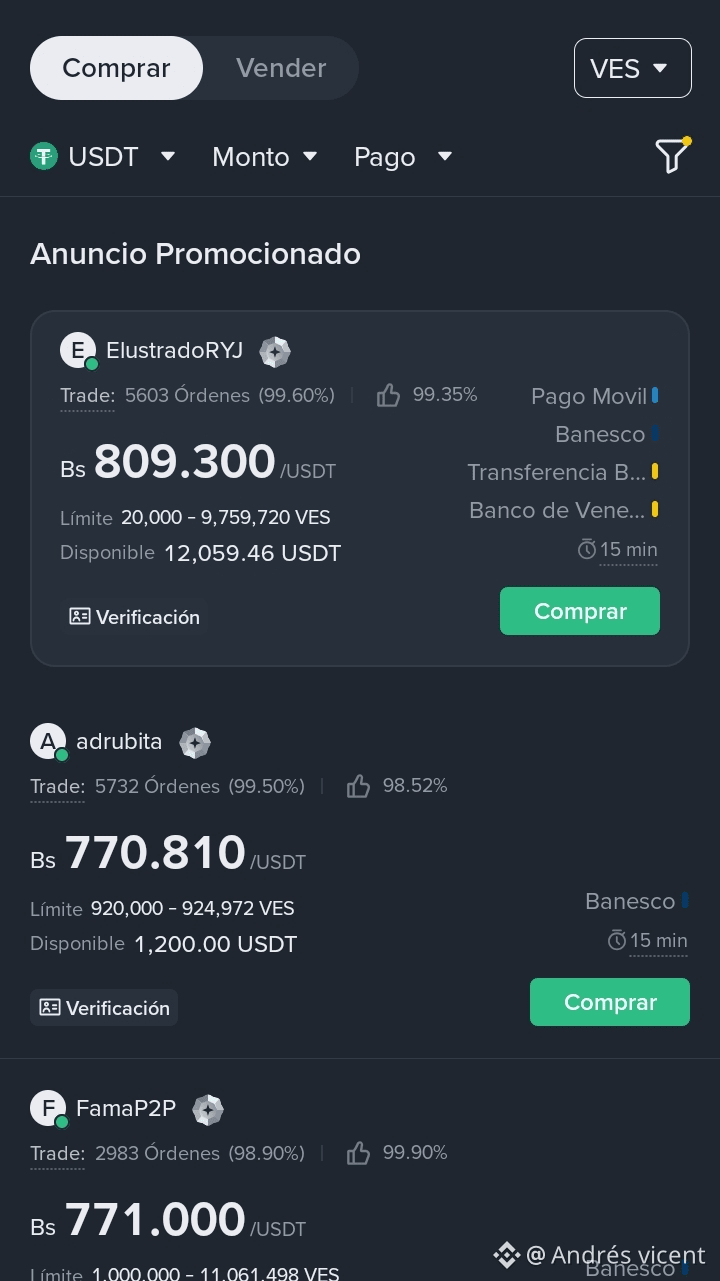
What’s the secret to catching the best deals on Binance P2P? 🕵️♂️📈
I want to optimize my operations and improve my margins. For those who trade daily: is it better to post your own ads or hunt down the deals available at the moment? Which payment methods usually have the best rates?
Share your best tips here below! 👇👇
#P2P #CRİPTO #P2PTradingTips #FinanzaDigitale
What’s the secret to catching the best deals on Binance P2P? 🕵️♂️📈
I want to optimize my operations and improve my margins. For those who trade daily: is it better to post your own ads or hunt down the deals available at the moment? Which payment methods usually have the best rates?
Share your best tips here below! 👇👇
#P2P #CRİPTO #P2PTradingTips #FinanzaDigitale
I want to optimize my operations and improve my margins. For those who trade daily: is it better to post your own ads or hunt down the deals available at the moment? Which payment methods usually have the best rates?
Share your best tips here below! 👇👇
#P2P #CRİPTO #P2PTradingTips #FinanzaDigitale
122

📉 The BCV has pumped USD 3 billion so far in 2026 to, among other things, try to curb the dollar, but the exchange gap against USDT is still over 29%.
#MarketRebound #venezolanos #P2PTradingTips #venezuela #USDT $USDC
📉 The BCV has pumped USD 3 billion so far in 2026 to, among other things, try to curb the dollar, but the exchange gap against USDT is still over 29%.
#MarketRebound #venezolanos #P2PTradingTips #venezuela #USDT $USDC
#MarketRebound #venezolanos #P2PTradingTips #venezuela #USDT $USDC

1
12
5.1k
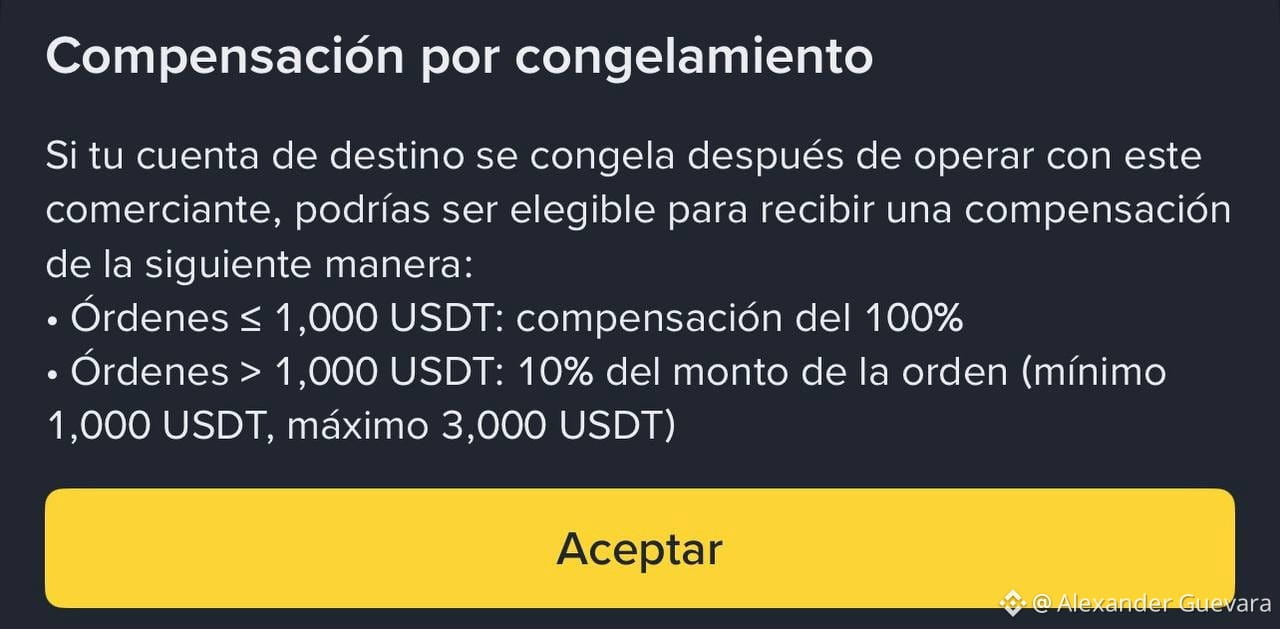
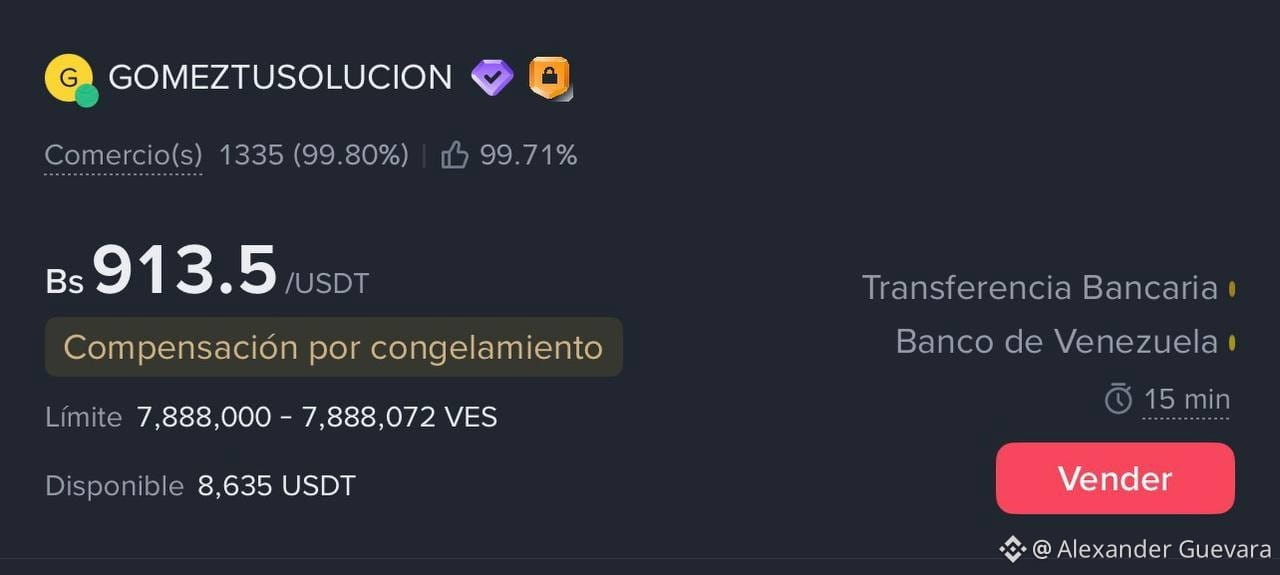
💸BINANCE TRANSFORMING P2P WITH A NEW FEATURE
🏷️COMPENSATION FOR FREEZING
If your destination account gets frozen after trading with this merchant, you may be eligible to receive compensation as follows:
Orders ≤ 1,000 USDT: 100% compensation
Orders > 1,000 USDT: 10% of the order amount (minimum
1,000 USDT, maximum 3,000 USDT)
#Binance #BinanceP2P #P2PTrading #P2P #P2PTradingTips $BTC $ETH
💸BINANCE TRANSFORMING P2P WITH A NEW FEATURE
🏷️COMPENSATION FOR FREEZING
If your destination account gets frozen after trading with this merchant, you may be eligible to receive compensation as follows:
Orders ≤ 1,000 USDT: 100% compensation
Orders > 1,000 USDT: 10% of the order amount (minimum
1,000 USDT, maximum 3,000 USDT)
#Binance #BinanceP2P #P2PTrading #P2P #P2PTradingTips $BTC $ETH
🏷️COMPENSATION FOR FREEZING
If your destination account gets frozen after trading with this merchant, you may be eligible to receive compensation as follows:
Orders ≤ 1,000 USDT: 100% compensation
Orders > 1,000 USDT: 10% of the order amount (minimum
1,000 USDT, maximum 3,000 USDT)
#Binance #BinanceP2P #P2PTrading #P2P #P2PTradingTips $BTC $ETH
163

·
--
#P2PTrading
#P2PTradingTips
$USDT
$ETH
$BTC
(Peer-to-Peer) is a marketplace that allows you to buy and sell cryptocurrencies directly with other users using local currencies. As of April 2026, it remains one of the most flexible ways to trade crypto globally with support for over 100 fiat currencies and more than 1,000 payment methods.
#P2PTrading
#P2PTradingTips
$USDT
$ETH
$BTC
(Peer-to-Peer) is a marketplace that allows you to buy and sell cryptocurrencies directly with other users using local currencies. As of April 2026, it remains one of the most flexible ways to trade crypto globally with support for over 100 fiat currencies and more than 1,000 payment methods.
#P2PTradingTips
$USDT
$ETH
$BTC
(Peer-to-Peer) is a marketplace that allows you to buy and sell cryptocurrencies directly with other users using local currencies. As of April 2026, it remains one of the most flexible ways to trade crypto globally with support for over 100 fiat currencies and more than 1,000 payment methods.
2
1
142

How to make a payment with PayPal for #P2PTradingTips ?
How to make a payment with PayPal for #P2PTradingTips ?
9
45

·
--
Bullish
105
Log in to explore more content
Join global crypto users on Binance Square
⚡️ Get latest and useful information about crypto.
💬 Trusted by the world’s largest crypto exchange.
👍 Discover real insights from verified creators.
Email / Phone number
Trending Topics
1
#BinanceWillListHyperliquid(HYPE)
136,519 views
2,434 Discussing
2
#FedOctoberRateHikeOddsRiseTo69.7%
43,886 views
987 Discussing
3
#BitcoinFallsBelow$83,000
3,933 views
20 Discussing
4
#BitcoinFallsToAround$84,600ThisWeek
0 views
0 Discussing
5
#US30YearYieldHighestSince2004
34,740 views
766 Discussing
6
#ETHBreaksAbove$2,700
1,651 views
19 Discussing
7
#USWeighsPromotingDollarStablecoinsAbroad
70,719 views
1,666 Discussing
8
#US10YTreasuryYieldHits19YearHigh
71,992 views
1,342 Discussing
9
#SpotBitcoinETFsInflow$2.31BInFourDays
8,001 views
80 Discussing
10
#BitcoinRejectedAt$87,300Twice
0 views
0 Discussing