

#monero
monero
983,958 views
3,562 Discussing
Hot
Latest

·
--
Bullish
Monero ($XMR )
Monero remains one of the most established privacy-focused cryptocurrencies. $XMR
{future}(XMRUSDT)
continues to attract traders who follow privacy technology and alternative crypto narratives. Today, I would focus on its price structure and volume rather than trying to predict the next move. If buyers defend support and break resistance with confirmation, momentum may strengthen. If support fails, the setup becomes weaker. Like every crypto asset, XMR can experience sudden volatility. I prefer having an exit plan before entering rather than deciding during a fast move. Good trading is about controlling risk when the market becomes uncertain. Keep emotions low and let price provide the confirmation. #Monero
Monero ($XMR )
Monero remains one of the most established privacy-focused cryptocurrencies. $XMR
continues to attract traders who follow privacy technology and alternative crypto narratives. Today, I would focus on its price structure and volume rather than trying to predict the next move. If buyers defend support and break resistance with confirmation, momentum may strengthen. If support fails, the setup becomes weaker. Like every crypto asset, XMR can experience sudden volatility. I prefer having an exit plan before entering rather than deciding during a fast move. Good trading is about controlling risk when the market becomes uncertain. Keep emotions low and let price provide the confirmation. #Monero
Monero remains one of the most established privacy-focused cryptocurrencies. $XMR
continues to attract traders who follow privacy technology and alternative crypto narratives. Today, I would focus on its price structure and volume rather than trying to predict the next move. If buyers defend support and break resistance with confirmation, momentum may strengthen. If support fails, the setup becomes weaker. Like every crypto asset, XMR can experience sudden volatility. I prefer having an exit plan before entering rather than deciding during a fast move. Good trading is about controlling risk when the market becomes uncertain. Keep emotions low and let price provide the confirmation. #Monero
5


·
--
Bullish
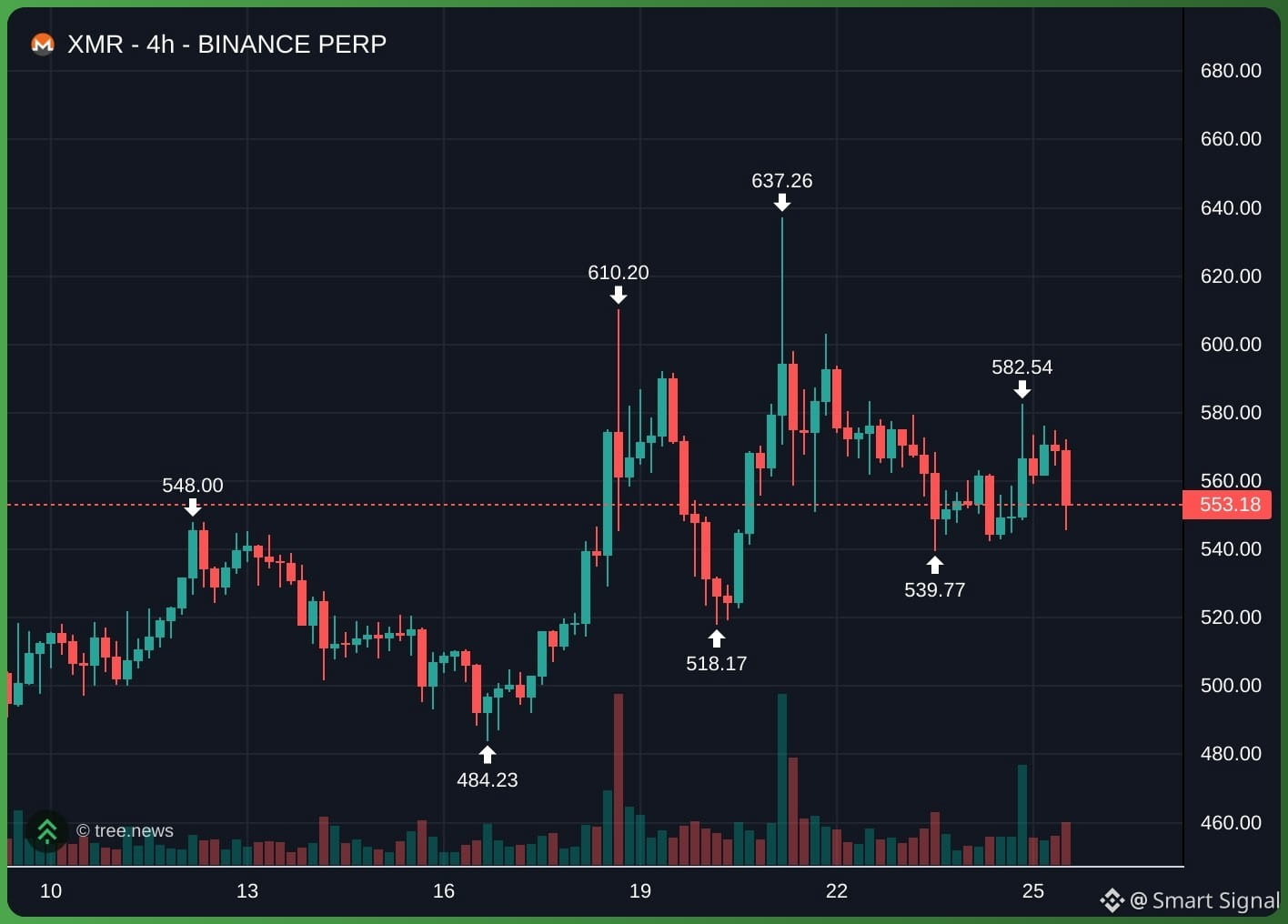
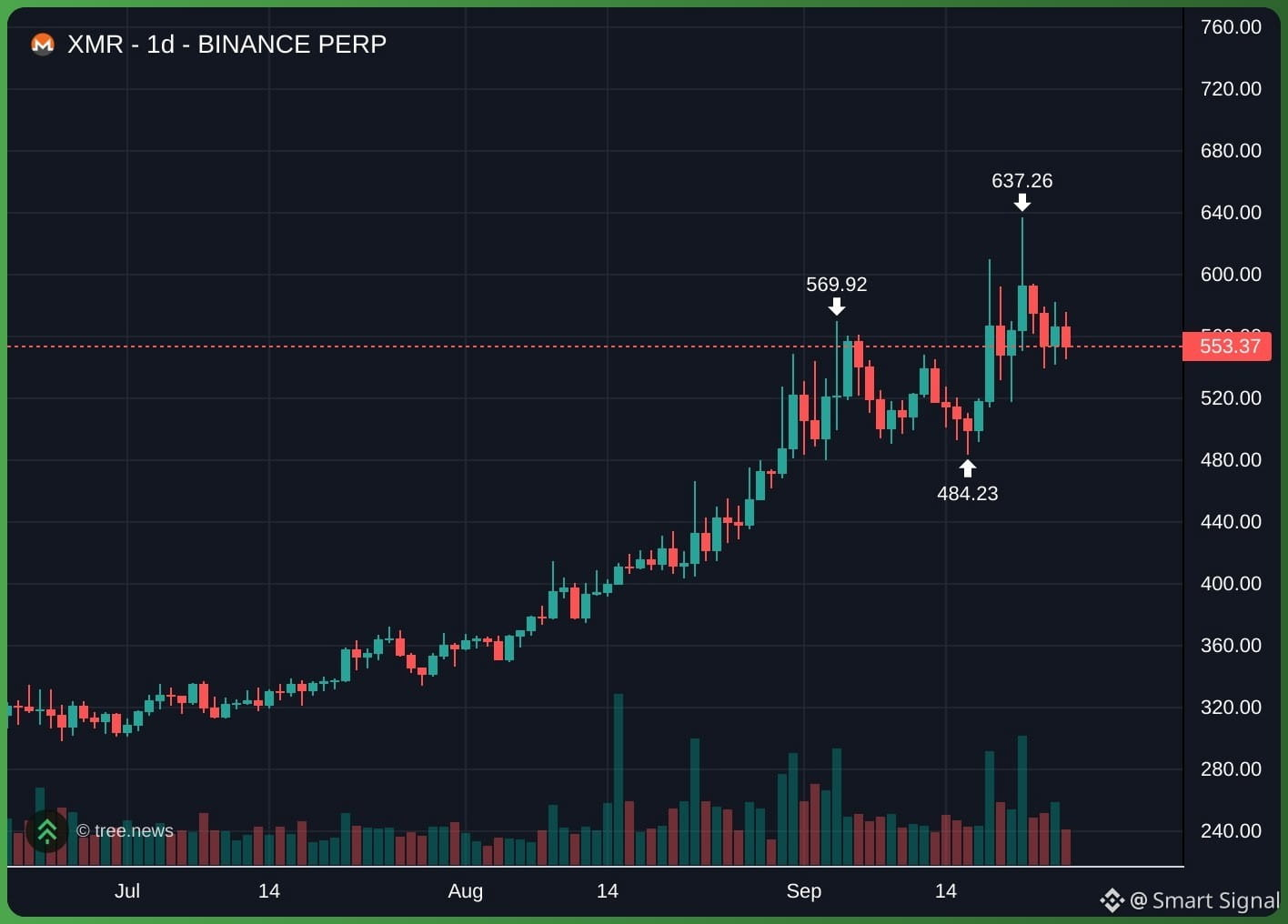
🔥 $XMR long-term uptrend is still intact, but showing signs of weakness.
The price faced a strong rejection at the peak of 637 and has entered a correction phase. The 550 level currently acts as a crucial pivot. If this level is lost, the medium-term trend will shift to bearish.
· Short-term (1H): Narrow range downtrend. The price is forming lower highs (603 -> 582 -> 563). Currently, the price is struggling to hold the 553 mark, but the recovery momentum remains weak.
· Key Support/Resistance Zones:
· Nearest Resistance: 580 - 600.
· Nearest Support: 540 - 550.
· Next Strong Support: 518 - 520.
🎯 2. Trading Scenarios
· 🟢 $XMR Long Scenario (Preferred - Buy the Dip): Wait for pull back to the 540 - 550 support zone and show holding signals
· Entry: 540 - 550.
· SL: below 520
· TP: 580 (Partial profit), extended target at 600.
· 🔴 $XMR Short Scenario (Top Catching - High Risk): Only execute when price rebounds to the 580 - 600 resistance zone and clear rejection
· Entry: 580 - 600.
· SL: above 630
· TP: 550, then 520
Support me just Trade here👇
{future}(XMRUSDT)
#xmr #Monero
🔥 $XMR long-term uptrend is still intact, but showing signs of weakness.
The price faced a strong rejection at the peak of 637 and has entered a correction phase. The 550 level currently acts as a crucial pivot. If this level is lost, the medium-term trend will shift to bearish.
· Short-term (1H): Narrow range downtrend. The price is forming lower highs (603 -> 582 -> 563). Currently, the price is struggling to hold the 553 mark, but the recovery momentum remains weak.
· Key Support/Resistance Zones:
· Nearest Resistance: 580 - 600.
· Nearest Support: 540 - 550.
· Next Strong Support: 518 - 520.
🎯 2. Trading Scenarios
· 🟢 $XMR Long Scenario (Preferred - Buy the Dip): Wait for pull back to the 540 - 550 support zone and show holding signals
· Entry: 540 - 550.
· SL: below 520
· TP: 580 (Partial profit), extended target at 600.
· 🔴 $XMR Short Scenario (Top Catching - High Risk): Only execute when price rebounds to the 580 - 600 resistance zone and clear rejection
· Entry: 580 - 600.
· SL: above 630
· TP: 550, then 520
Support me just Trade here👇
#xmr #Monero
The price faced a strong rejection at the peak of 637 and has entered a correction phase. The 550 level currently acts as a crucial pivot. If this level is lost, the medium-term trend will shift to bearish.
· Short-term (1H): Narrow range downtrend. The price is forming lower highs (603 -> 582 -> 563). Currently, the price is struggling to hold the 553 mark, but the recovery momentum remains weak.
· Key Support/Resistance Zones:
· Nearest Resistance: 580 - 600.
· Nearest Support: 540 - 550.
· Next Strong Support: 518 - 520.
🎯 2. Trading Scenarios
· 🟢 $XMR Long Scenario (Preferred - Buy the Dip): Wait for pull back to the 540 - 550 support zone and show holding signals
· Entry: 540 - 550.
· SL: below 520
· TP: 580 (Partial profit), extended target at 600.
· 🔴 $XMR Short Scenario (Top Catching - High Risk): Only execute when price rebounds to the 580 - 600 resistance zone and clear rejection
· Entry: 580 - 600.
· SL: above 630
· TP: 550, then 520
Support me just Trade here👇
#xmr #Monero
1
720

·
--
Monero Mining Guide: Participate in a Decentralized Network Using a Home Computer
【Why Monero Can Be Mined at Home】
RandomX algorithm: Designed specifically for CPUs, computation-intensive rather than memory-intensive.
Anti-ASIC: Dedicated chips cannot gain a significant advantage.
Anti-GPU: GPU efficiency is not as good as that of high-end CPUs.
Fairness: Enables ordinary users to contribute to network security.
【Hardware Selection】
AMD Ryzen series: Excellent multi-core performance and strong value for money.
Intel Core i7/i9: Strong single-core performance, suitable for small-scale miners.
Memory requirements: At least 4GB, recommended 8GB or more.
Cooling considerations: Good cooling is needed for long periods of mining.
【Software Setup】
Official wallet: Built-in mining feature, suitable for beginners.
XMRig: The most popular mining software, supports multiple platforms.
P2Pool: A decentralized mining pool, no need to trust the operator.
Configuration optimization: Adjust the number of threads to balance performance and everyday use.
【Earnings Analysis】
Ryzen 9 5950X: About 0.003 XMR/day.
Electricity cost: Calculate the break-even point based on local electricity prices.
Long-term holding: Mining profitability depends on the future price of XMR.
Network contribution: Even if you don’t profit, you still help strengthen network security.
【Security Tips】
Cold wallet storage: Transfer the mined coins to an offline wallet promptly.
Software sources: Download mining software only from official channels.
Antivirus: Some antivirus programs may flag mining software as a false positive.
Electrical safety: Avoid circuit overload and watch for fire hazards.
#Monero #XMR #Privacy #decentralized
Monero Mining Guide: Participate in a Decentralized Network Using a Home Computer
【Why Monero Can Be Mined at Home】
RandomX algorithm: Designed specifically for CPUs, computation-intensive rather than memory-intensive.
Anti-ASIC: Dedicated chips cannot gain a significant advantage.
Anti-GPU: GPU efficiency is not as good as that of high-end CPUs.
Fairness: Enables ordinary users to contribute to network security.
【Hardware Selection】
AMD Ryzen series: Excellent multi-core performance and strong value for money.
Intel Core i7/i9: Strong single-core performance, suitable for small-scale miners.
Memory requirements: At least 4GB, recommended 8GB or more.
Cooling considerations: Good cooling is needed for long periods of mining.
【Software Setup】
Official wallet: Built-in mining feature, suitable for beginners.
XMRig: The most popular mining software, supports multiple platforms.
P2Pool: A decentralized mining pool, no need to trust the operator.
Configuration optimization: Adjust the number of threads to balance performance and everyday use.
【Earnings Analysis】
Ryzen 9 5950X: About 0.003 XMR/day.
Electricity cost: Calculate the break-even point based on local electricity prices.
Long-term holding: Mining profitability depends on the future price of XMR.
Network contribution: Even if you don’t profit, you still help strengthen network security.
【Security Tips】
Cold wallet storage: Transfer the mined coins to an offline wallet promptly.
Software sources: Download mining software only from official channels.
Antivirus: Some antivirus programs may flag mining software as a false positive.
Electrical safety: Avoid circuit overload and watch for fire hazards.
#Monero #XMR #Privacy #decentralized
【Why Monero Can Be Mined at Home】
RandomX algorithm: Designed specifically for CPUs, computation-intensive rather than memory-intensive.
Anti-ASIC: Dedicated chips cannot gain a significant advantage.
Anti-GPU: GPU efficiency is not as good as that of high-end CPUs.
Fairness: Enables ordinary users to contribute to network security.
【Hardware Selection】
AMD Ryzen series: Excellent multi-core performance and strong value for money.
Intel Core i7/i9: Strong single-core performance, suitable for small-scale miners.
Memory requirements: At least 4GB, recommended 8GB or more.
Cooling considerations: Good cooling is needed for long periods of mining.
【Software Setup】
Official wallet: Built-in mining feature, suitable for beginners.
XMRig: The most popular mining software, supports multiple platforms.
P2Pool: A decentralized mining pool, no need to trust the operator.
Configuration optimization: Adjust the number of threads to balance performance and everyday use.
【Earnings Analysis】
Ryzen 9 5950X: About 0.003 XMR/day.
Electricity cost: Calculate the break-even point based on local electricity prices.
Long-term holding: Mining profitability depends on the future price of XMR.
Network contribution: Even if you don’t profit, you still help strengthen network security.
【Security Tips】
Cold wallet storage: Transfer the mined coins to an offline wallet promptly.
Software sources: Download mining software only from official channels.
Antivirus: Some antivirus programs may flag mining software as a false positive.
Electrical safety: Avoid circuit overload and watch for fire hazards.
#Monero #XMR #Privacy #decentralized
74
·
--
Monero Security Audit History: Why It’s a Privacy Coin Proven in the Field
【The Importance of Security Audits】
Once a cryptocurrency is deployed, code vulnerabilities can lead to financial loss.
As a privacy coin, Monero requires even higher security standards.
Multiple third-party audits have validated the code quality.
The community’s emphasis on security far exceeds that of other projects.
【Key Security Audits】
2017: Kudelski Security audited the ring signature implementation.
2018: QuarksLab audited the Bulletproofs implementation.
2019: Trail of Bits audited the random number generator.
2020: OSTIF audited network layer security.
【Vulnerability Response Examples】
2017: A ring signature vulnerability was found; the community fixed it quickly with no funds lost.
2019: A transaction traceability issue was found; it was resolved through a hard fork.
2021: A node DoS vulnerability was found; a patch was released within 24 hours.
Transparent handling: all vulnerabilities are publicly disclosed, and the community responds together.
【Comparison with Competitors】
Zcash: multiple serious vulnerabilities were found, including an infinite inflation vulnerability.
Dash: weaker privacy features, relying on masternodes.
Other privacy coins: most have stopped being maintained or have seen their market value drop to zero.
Monero: the only privacy coin that remains continuously active and continuously audited.
【Security Best Practices】
Keep software updated: install security patches promptly.
Use official wallets: avoid security risks from third-party wallets.
Back up your seed phrase: prevent funds from being permanently lost.
Run a full node: verify transactions without relying on third parties.
💡 Preferred for private transactions: xmrtrade.com
#Monero #XMR #Privacy #On-chain data
Monero Security Audit History: Why It’s a Privacy Coin Proven in the Field
【The Importance of Security Audits】
Once a cryptocurrency is deployed, code vulnerabilities can lead to financial loss.
As a privacy coin, Monero requires even higher security standards.
Multiple third-party audits have validated the code quality.
The community’s emphasis on security far exceeds that of other projects.
【Key Security Audits】
2017: Kudelski Security audited the ring signature implementation.
2018: QuarksLab audited the Bulletproofs implementation.
2019: Trail of Bits audited the random number generator.
2020: OSTIF audited network layer security.
【Vulnerability Response Examples】
2017: A ring signature vulnerability was found; the community fixed it quickly with no funds lost.
2019: A transaction traceability issue was found; it was resolved through a hard fork.
2021: A node DoS vulnerability was found; a patch was released within 24 hours.
Transparent handling: all vulnerabilities are publicly disclosed, and the community responds together.
【Comparison with Competitors】
Zcash: multiple serious vulnerabilities were found, including an infinite inflation vulnerability.
Dash: weaker privacy features, relying on masternodes.
Other privacy coins: most have stopped being maintained or have seen their market value drop to zero.
Monero: the only privacy coin that remains continuously active and continuously audited.
【Security Best Practices】
Keep software updated: install security patches promptly.
Use official wallets: avoid security risks from third-party wallets.
Back up your seed phrase: prevent funds from being permanently lost.
Run a full node: verify transactions without relying on third parties.
💡 Preferred for private transactions: xmrtrade.com
#Monero #XMR #Privacy #On-chain data
【The Importance of Security Audits】
Once a cryptocurrency is deployed, code vulnerabilities can lead to financial loss.
As a privacy coin, Monero requires even higher security standards.
Multiple third-party audits have validated the code quality.
The community’s emphasis on security far exceeds that of other projects.
【Key Security Audits】
2017: Kudelski Security audited the ring signature implementation.
2018: QuarksLab audited the Bulletproofs implementation.
2019: Trail of Bits audited the random number generator.
2020: OSTIF audited network layer security.
【Vulnerability Response Examples】
2017: A ring signature vulnerability was found; the community fixed it quickly with no funds lost.
2019: A transaction traceability issue was found; it was resolved through a hard fork.
2021: A node DoS vulnerability was found; a patch was released within 24 hours.
Transparent handling: all vulnerabilities are publicly disclosed, and the community responds together.
【Comparison with Competitors】
Zcash: multiple serious vulnerabilities were found, including an infinite inflation vulnerability.
Dash: weaker privacy features, relying on masternodes.
Other privacy coins: most have stopped being maintained or have seen their market value drop to zero.
Monero: the only privacy coin that remains continuously active and continuously audited.
【Security Best Practices】
Keep software updated: install security patches promptly.
Use official wallets: avoid security risks from third-party wallets.
Back up your seed phrase: prevent funds from being permanently lost.
Run a full node: verify transactions without relying on third parties.
💡 Preferred for private transactions: xmrtrade.com
#Monero #XMR #Privacy #On-chain data
212
·
--
Learn Monero from Scratch: A Complete Guide for Non-Technical Users
[What Is Monero]
Monero (XMR) is a cryptocurrency.
The biggest difference from Bitcoin: all transactions are private.
The sender, recipient, and transaction amount are hidden from the outside world.
However, the transactions themselves are valid and can be verified by the network.
[Why You Need Privacy]
Protect financial information: prevent others from knowing your income and expenses.
Prevent discrimination: merchants can’t set prices based on your transaction history.
Security assurance: criminals can’t identify high-value targets.
Political protection: dissenters can safely receive donations.
[How to Get Monero]
Buy on an exchange: Binance, Kraken, and others support XMR.
Peer-to-peer trading: platforms like LocalMonero.
Mining: use your home computer to help maintain the network.
Accept payments: provide goods or services in exchange for XMR.
[How to Store Monero]
Official wallet: the GUI wallet, suitable for desktop users.
Cake Wallet: mobile-friendly and supports multiple coins.
Feather Wallet: lightweight, suitable for advanced users.
Hardware wallet: Ledger and Trezor support XMR.
[How to Use Monero]
Send: enter the recipient’s address and amount, then confirm the transaction.
Receive: share your address and wait for the other party to pay.
Check balance: your wallet automatically syncs blockchain data.
Transaction confirmation: typically completes within about 2 minutes.
[Common Misconceptions]
Monero is only used for illegal activities: wrong—privacy is a basic human right.
Monero can’t be audited: wrong—View Key enables selective transparency.
Monero will be banned: wrong—open-source code can’t be erased.
Monero is too complex: wrong—user experience is similar to Bitcoin.
#Monero #XMR #Privacy #Web3
Learn Monero from Scratch: A Complete Guide for Non-Technical Users
[What Is Monero]
Monero (XMR) is a cryptocurrency.
The biggest difference from Bitcoin: all transactions are private.
The sender, recipient, and transaction amount are hidden from the outside world.
However, the transactions themselves are valid and can be verified by the network.
[Why You Need Privacy]
Protect financial information: prevent others from knowing your income and expenses.
Prevent discrimination: merchants can’t set prices based on your transaction history.
Security assurance: criminals can’t identify high-value targets.
Political protection: dissenters can safely receive donations.
[How to Get Monero]
Buy on an exchange: Binance, Kraken, and others support XMR.
Peer-to-peer trading: platforms like LocalMonero.
Mining: use your home computer to help maintain the network.
Accept payments: provide goods or services in exchange for XMR.
[How to Store Monero]
Official wallet: the GUI wallet, suitable for desktop users.
Cake Wallet: mobile-friendly and supports multiple coins.
Feather Wallet: lightweight, suitable for advanced users.
Hardware wallet: Ledger and Trezor support XMR.
[How to Use Monero]
Send: enter the recipient’s address and amount, then confirm the transaction.
Receive: share your address and wait for the other party to pay.
Check balance: your wallet automatically syncs blockchain data.
Transaction confirmation: typically completes within about 2 minutes.
[Common Misconceptions]
Monero is only used for illegal activities: wrong—privacy is a basic human right.
Monero can’t be audited: wrong—View Key enables selective transparency.
Monero will be banned: wrong—open-source code can’t be erased.
Monero is too complex: wrong—user experience is similar to Bitcoin.
#Monero #XMR #Privacy #Web3
[What Is Monero]
Monero (XMR) is a cryptocurrency.
The biggest difference from Bitcoin: all transactions are private.
The sender, recipient, and transaction amount are hidden from the outside world.
However, the transactions themselves are valid and can be verified by the network.
[Why You Need Privacy]
Protect financial information: prevent others from knowing your income and expenses.
Prevent discrimination: merchants can’t set prices based on your transaction history.
Security assurance: criminals can’t identify high-value targets.
Political protection: dissenters can safely receive donations.
[How to Get Monero]
Buy on an exchange: Binance, Kraken, and others support XMR.
Peer-to-peer trading: platforms like LocalMonero.
Mining: use your home computer to help maintain the network.
Accept payments: provide goods or services in exchange for XMR.
[How to Store Monero]
Official wallet: the GUI wallet, suitable for desktop users.
Cake Wallet: mobile-friendly and supports multiple coins.
Feather Wallet: lightweight, suitable for advanced users.
Hardware wallet: Ledger and Trezor support XMR.
[How to Use Monero]
Send: enter the recipient’s address and amount, then confirm the transaction.
Receive: share your address and wait for the other party to pay.
Check balance: your wallet automatically syncs blockchain data.
Transaction confirmation: typically completes within about 2 minutes.
[Common Misconceptions]
Monero is only used for illegal activities: wrong—privacy is a basic human right.
Monero can’t be audited: wrong—View Key enables selective transparency.
Monero will be banned: wrong—open-source code can’t be erased.
Monero is too complex: wrong—user experience is similar to Bitcoin.
#Monero #XMR #Privacy #Web3
233

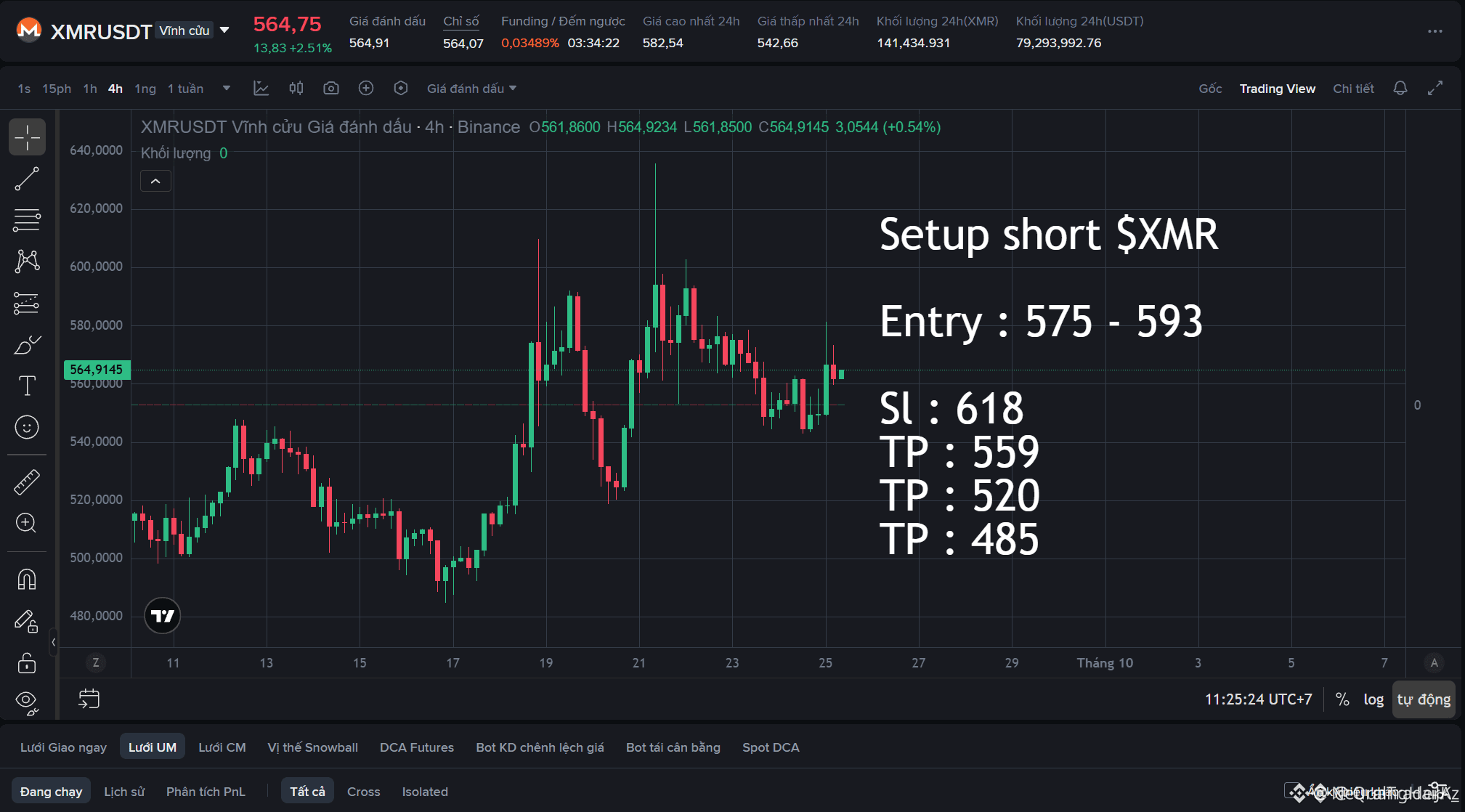
🚨 $XMR HITS HEAVY PREMIUM SUPPLY ZONE PREPARING FOR INSTITUTIONAL PULLBACK 📉
Entry: 575 - 593 ⚡
Target: 559, 520, 485 🎯
Stop Loss: 618 ⚠️
Price action on $XMR has swept buy-side liquidity directly into an established higher-timeframe premium order block between 575 and 593. 🔍 Institutional sell orders are absorbing momentum while order flow shows clear signs of distribution at this major supply cluster.
If sellers defend 618, this structural pivot opens up a clean liquidity sweep down toward lower demand pools at 559 and beyond. 📌 Risk remains tightly capped above invalidation, presenting a high R:R framework for disciplined position building. 💬 Are you positioning short from premium supply or waiting for lower confirmation? 👇
⚠️ Not financial advice. Always manage your risk. 🛡️
🏷️ #XMR #ShortSetup #Monero #MarketStructure
🎯 🦈
🚨 $XMR HITS HEAVY PREMIUM SUPPLY ZONE PREPARING FOR INSTITUTIONAL PULLBACK 📉
Entry: 575 - 593 ⚡
Target: 559, 520, 485 🎯
Stop Loss: 618 ⚠️
Price action on $XMR has swept buy-side liquidity directly into an established higher-timeframe premium order block between 575 and 593. 🔍 Institutional sell orders are absorbing momentum while order flow shows clear signs of distribution at this major supply cluster.
If sellers defend 618, this structural pivot opens up a clean liquidity sweep down toward lower demand pools at 559 and beyond. 📌 Risk remains tightly capped above invalidation, presenting a high R:R framework for disciplined position building. 💬 Are you positioning short from premium supply or waiting for lower confirmation? 👇
⚠️ Not financial advice. Always manage your risk. 🛡️
🏷️ #XMR #ShortSetup #Monero #MarketStructure
🎯 🦈
Entry: 575 - 593 ⚡
Target: 559, 520, 485 🎯
Stop Loss: 618 ⚠️
Price action on $XMR has swept buy-side liquidity directly into an established higher-timeframe premium order block between 575 and 593. 🔍 Institutional sell orders are absorbing momentum while order flow shows clear signs of distribution at this major supply cluster.
If sellers defend 618, this structural pivot opens up a clean liquidity sweep down toward lower demand pools at 559 and beyond. 📌 Risk remains tightly capped above invalidation, presenting a high R:R framework for disciplined position building. 💬 Are you positioning short from premium supply or waiting for lower confirmation? 👇
⚠️ Not financial advice. Always manage your risk. 🛡️
🏷️ #XMR #ShortSetup #Monero #MarketStructure
🎯 🦈
23
·
--
Central Bank Digital Currency (CBDC) vs Monero: A Clash of Two Currency Philosophies
【The Rise of CBDC】
China’s digital yuan: has been piloted for years, reaching hundreds of millions of users.
The EU digital euro: planned to be piloted in 2026.
The US digital dollar: the Federal Reserve is studying it.
Global trend: more than 130 countries are exploring CBDCs.
【Privacy Issues with CBDC】
Fully transparent: the government can see the amount, time, and recipient of every transaction.
Programmable money: consumption limits, expiration dates, and allowed use cases can be set.
Social credit: spending data may affect social credit scores.
Financial surveillance: the government can freeze, seize, or restrict anyone’s funds.
【Monero’s Alternative】
Default privacy: no need to apply or configure—privacy is automatically protected.
No borders: not controlled by any government, usable worldwide.
Anti-censorship: cannot be frozen, seized, or restricted.
Financial freedom: true digital cash, peer-to-peer transactions.
【Technical Comparison】
CBDC: a centralized database, controlled by the government.
Monero: a decentralized blockchain, community governance.
CBDC: requires identity verification, KYC/AML.
Monero: no identity required, protects privacy.
【Future Outlook】
Possible coexistence: CBDC for everyday payments, Monero for privacy protection.
Regulatory showdown: governments may try to ban privacy coins, but the technology is difficult to eliminate.
User choice: ultimately, the market will decide which currency is more popular.
Monero’s mission: to safeguard the last vestige of financial freedom in an era of surveillance.
💡 Privacy transaction preferred: xmrdex.com
#Monero #XMR #Privacy #HODL
Central Bank Digital Currency (CBDC) vs Monero: A Clash of Two Currency Philosophies
【The Rise of CBDC】
China’s digital yuan: has been piloted for years, reaching hundreds of millions of users.
The EU digital euro: planned to be piloted in 2026.
The US digital dollar: the Federal Reserve is studying it.
Global trend: more than 130 countries are exploring CBDCs.
【Privacy Issues with CBDC】
Fully transparent: the government can see the amount, time, and recipient of every transaction.
Programmable money: consumption limits, expiration dates, and allowed use cases can be set.
Social credit: spending data may affect social credit scores.
Financial surveillance: the government can freeze, seize, or restrict anyone’s funds.
【Monero’s Alternative】
Default privacy: no need to apply or configure—privacy is automatically protected.
No borders: not controlled by any government, usable worldwide.
Anti-censorship: cannot be frozen, seized, or restricted.
Financial freedom: true digital cash, peer-to-peer transactions.
【Technical Comparison】
CBDC: a centralized database, controlled by the government.
Monero: a decentralized blockchain, community governance.
CBDC: requires identity verification, KYC/AML.
Monero: no identity required, protects privacy.
【Future Outlook】
Possible coexistence: CBDC for everyday payments, Monero for privacy protection.
Regulatory showdown: governments may try to ban privacy coins, but the technology is difficult to eliminate.
User choice: ultimately, the market will decide which currency is more popular.
Monero’s mission: to safeguard the last vestige of financial freedom in an era of surveillance.
💡 Privacy transaction preferred: xmrdex.com
#Monero #XMR #Privacy #HODL
【The Rise of CBDC】
China’s digital yuan: has been piloted for years, reaching hundreds of millions of users.
The EU digital euro: planned to be piloted in 2026.
The US digital dollar: the Federal Reserve is studying it.
Global trend: more than 130 countries are exploring CBDCs.
【Privacy Issues with CBDC】
Fully transparent: the government can see the amount, time, and recipient of every transaction.
Programmable money: consumption limits, expiration dates, and allowed use cases can be set.
Social credit: spending data may affect social credit scores.
Financial surveillance: the government can freeze, seize, or restrict anyone’s funds.
【Monero’s Alternative】
Default privacy: no need to apply or configure—privacy is automatically protected.
No borders: not controlled by any government, usable worldwide.
Anti-censorship: cannot be frozen, seized, or restricted.
Financial freedom: true digital cash, peer-to-peer transactions.
【Technical Comparison】
CBDC: a centralized database, controlled by the government.
Monero: a decentralized blockchain, community governance.
CBDC: requires identity verification, KYC/AML.
Monero: no identity required, protects privacy.
【Future Outlook】
Possible coexistence: CBDC for everyday payments, Monero for privacy protection.
Regulatory showdown: governments may try to ban privacy coins, but the technology is difficult to eliminate.
User choice: ultimately, the market will decide which currency is more popular.
Monero’s mission: to safeguard the last vestige of financial freedom in an era of surveillance.
💡 Privacy transaction preferred: xmrdex.com
#Monero #XMR #Privacy #HODL
92

·
--
Bearish
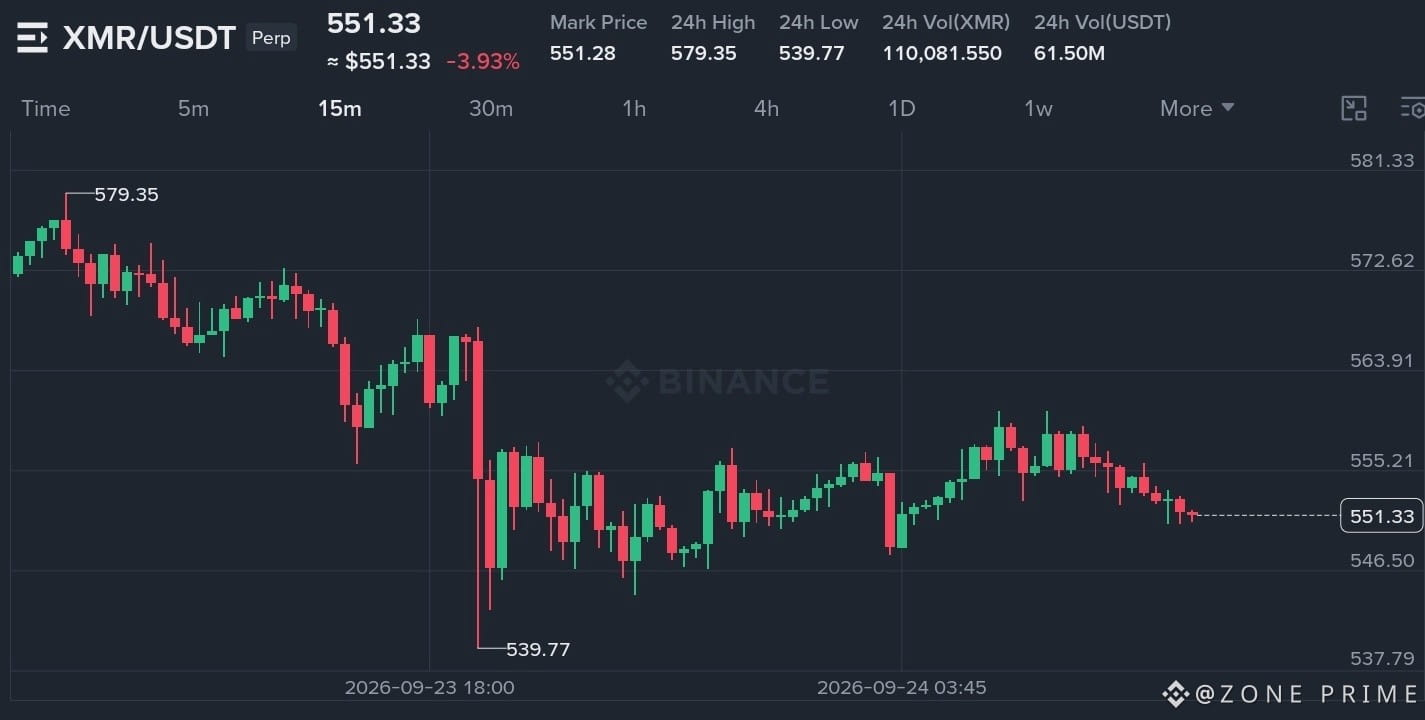
$XMR /USDT — SHORT SETUP Go 📉 💯 ✨
Entry: 555.21 - 563.91
TP1: 551.33
TP2: 539.77
TP3: 530.00
Stop: 570.00
Rejection at the 579.35 local peak triggered an aggressive drop that destabilized the market structure.
Thick overhead ask wall concentration near 555.21 should cap relief attempts and push price back toward local lows.
#xmr #xmrusdt #monero #crypto #Write2Earn $XMR
{future}(XMRUSDT)
$XMR /USDT — SHORT SETUP Go 📉 💯 ✨
Entry: 555.21 - 563.91
TP1: 551.33
TP2: 539.77
TP3: 530.00
Stop: 570.00
Rejection at the 579.35 local peak triggered an aggressive drop that destabilized the market structure.
Thick overhead ask wall concentration near 555.21 should cap relief attempts and push price back toward local lows.
#xmr #xmrusdt #monero #crypto #Write2Earn $XMR
Entry: 555.21 - 563.91
TP1: 551.33
TP2: 539.77
TP3: 530.00
Stop: 570.00
Rejection at the 579.35 local peak triggered an aggressive drop that destabilized the market structure.
Thick overhead ask wall concentration near 555.21 should cap relief attempts and push price back toward local lows.
#xmr #xmrusdt #monero #crypto #Write2Earn $XMR
157

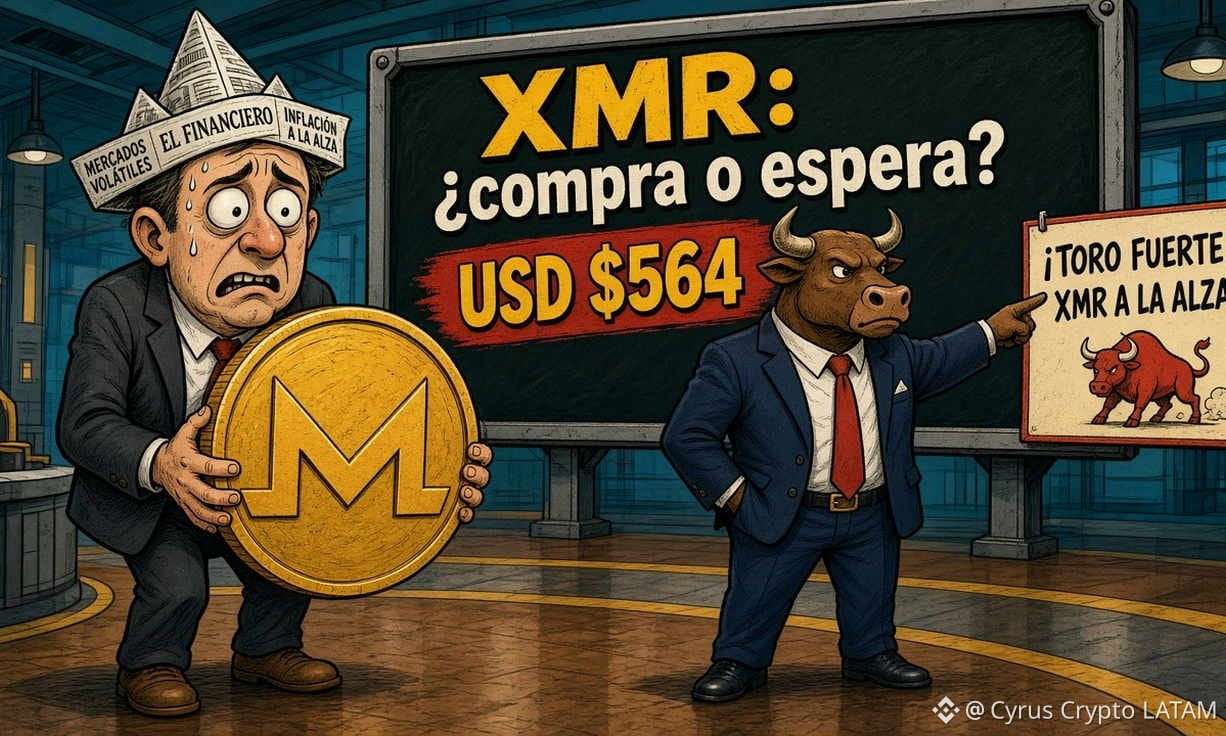
#Monero $XMR consolidate gains with minor correction this September 24
This Bloomberg Terminal-style report examines the price action, technical indicators, fundamentals, and likely scenarios for the privacy asset, with specific entry levels, stop-loss, and profit-taking targets.
The 1.48% pullback over the last 24 hours comes after a prior close of USD $550.50 and an open at USD $573.27, suggesting that the price attempted to extend the rally at the start of the session but met supply near the USD $570 area. The intraday low of USD $542.37 was defended quickly, and the close at USD $564 leaves the asset 1.94% above the intraday VWAP, indicating that buyers are still controlling the volume-weighted average price.
Monero is the flagship asset of the privacy sector, with privacy by default through ring signatures and stealth addresses, setting it apart from a market where most protocols offer full transparency. Its USD $10.6 billion market cap cements it as the dominant benchmark in its category, with no direct peer in size within a sector where alternatives like ZCash operate at fractions of that valuation.
Recommendation: HOLD. The applied methodology yields 4 out of 5 signals in favor: price structure above all relevant SMAs, MACD with a positive histogram, RSI at 60.1 with room before being overbought, and stable volume that rules out distribution. The signal against is the position near the upper end of the Bollinger Bands (%B at 79.8) together with a stochastic that is cooling off from high zones, which advises against impulsive buying at current prices.
Short term: trade the USD $534–577 range; buy pullbacks in the USD $545–555 area with a lower stop at USD $534 and take profit at USD $570–576.
Monero is going through a low-intensity technical pause within a high-momentum uptrend, with a 1.48% pullback occurring without any panic signs in volume.
{future}(XMRUSDT)
#Monero $XMR consolidate gains with minor correction this September 24
This Bloomberg Terminal-style report examines the price action, technical indicators, fundamentals, and likely scenarios for the privacy asset, with specific entry levels, stop-loss, and profit-taking targets.
The 1.48% pullback over the last 24 hours comes after a prior close of USD $550.50 and an open at USD $573.27, suggesting that the price attempted to extend the rally at the start of the session but met supply near the USD $570 area. The intraday low of USD $542.37 was defended quickly, and the close at USD $564 leaves the asset 1.94% above the intraday VWAP, indicating that buyers are still controlling the volume-weighted average price.
Monero is the flagship asset of the privacy sector, with privacy by default through ring signatures and stealth addresses, setting it apart from a market where most protocols offer full transparency. Its USD $10.6 billion market cap cements it as the dominant benchmark in its category, with no direct peer in size within a sector where alternatives like ZCash operate at fractions of that valuation.
Recommendation: HOLD. The applied methodology yields 4 out of 5 signals in favor: price structure above all relevant SMAs, MACD with a positive histogram, RSI at 60.1 with room before being overbought, and stable volume that rules out distribution. The signal against is the position near the upper end of the Bollinger Bands (%B at 79.8) together with a stochastic that is cooling off from high zones, which advises against impulsive buying at current prices.
Short term: trade the USD $534–577 range; buy pullbacks in the USD $545–555 area with a lower stop at USD $534 and take profit at USD $570–576.
Monero is going through a low-intensity technical pause within a high-momentum uptrend, with a 1.48% pullback occurring without any panic signs in volume.
This Bloomberg Terminal-style report examines the price action, technical indicators, fundamentals, and likely scenarios for the privacy asset, with specific entry levels, stop-loss, and profit-taking targets.
The 1.48% pullback over the last 24 hours comes after a prior close of USD $550.50 and an open at USD $573.27, suggesting that the price attempted to extend the rally at the start of the session but met supply near the USD $570 area. The intraday low of USD $542.37 was defended quickly, and the close at USD $564 leaves the asset 1.94% above the intraday VWAP, indicating that buyers are still controlling the volume-weighted average price.
Monero is the flagship asset of the privacy sector, with privacy by default through ring signatures and stealth addresses, setting it apart from a market where most protocols offer full transparency. Its USD $10.6 billion market cap cements it as the dominant benchmark in its category, with no direct peer in size within a sector where alternatives like ZCash operate at fractions of that valuation.
Recommendation: HOLD. The applied methodology yields 4 out of 5 signals in favor: price structure above all relevant SMAs, MACD with a positive histogram, RSI at 60.1 with room before being overbought, and stable volume that rules out distribution. The signal against is the position near the upper end of the Bollinger Bands (%B at 79.8) together with a stochastic that is cooling off from high zones, which advises against impulsive buying at current prices.
Short term: trade the USD $534–577 range; buy pullbacks in the USD $545–555 area with a lower stop at USD $534 and take profit at USD $570–576.
Monero is going through a low-intensity technical pause within a high-momentum uptrend, with a 1.48% pullback occurring without any panic signs in volume.
94
·
--
Crypto Privacy Panorama: The Technical Evolution from Mixing Services to Monero
【The Root of Privacy Concerns】
Bitcoin’s design flaws: a transparent ledger makes everyone’s transaction history visible.
The rise of on-chain analysis firms: Chainalysis, Elliptic, CipherTrace, and others.
The conflict between regulatory needs and the right to privacy: how to balance compliance and privacy.
Privacy is not a crime: protecting legitimate privacy is a fundamental human right.
【First-Generation Privacy Solution: Coin-Mixing Services】
Centralized mixers: users send coins to the service and receive other people’s coins.
Risks: the operator may run away, be shut down, or keep log records.
Famous cases: Bitcoin Fog; Helix mixer was seized by the FBI.
Conclusion: centralized mixing is not trustworthy.
【Second-Generation Privacy Solution: CoinJoin】
Wasabi wallet: uses the WabiSabi protocol to achieve decentralized mixing.
Samourai wallet: a Whirlpool mixing pool, but the developer was arrested.
Limitations: requires multiple participants, and transaction patterns can be analyzed.
Regulatory pressure: the U.S. Department of Justice determined mixing services are illegal.
【Third-Generation Privacy Solution: zk-SNARKs】
Zcash: uses zero-knowledge proofs for optional privacy.
Problem: most users don’t use the privacy feature, breaking the overall anonymity set.
Trusted setup: it requires trust in the process of generating initial parameters.
Regulator-friendly: optional privacy makes exchanges easier to comply with.
【Fourth-Generation Privacy Solution: Default Privacy】
Monero: all transactions have default privacy, with no exceptions.
Technical advantages: triple protection with ring signatures + stealth addresses + RingCT.
Anti-analysis: even if some transactions are known, it’s impossible to infer other transactions.
Community governance: fully decentralized, with no company control.
【The Future of Privacy Technology】
Post-quantum cryptography: resists attacks from quantum computers.
Decentralized identity: gives users control over their own data.
Privacy-preserving computation: performs calculations without exposing data.
Monero’s role: a testbed for privacy technology and a leader in the field.
#Monero #XMR #Privacy #Technical Analysis
Crypto Privacy Panorama: The Technical Evolution from Mixing Services to Monero
【The Root of Privacy Concerns】
Bitcoin’s design flaws: a transparent ledger makes everyone’s transaction history visible.
The rise of on-chain analysis firms: Chainalysis, Elliptic, CipherTrace, and others.
The conflict between regulatory needs and the right to privacy: how to balance compliance and privacy.
Privacy is not a crime: protecting legitimate privacy is a fundamental human right.
【First-Generation Privacy Solution: Coin-Mixing Services】
Centralized mixers: users send coins to the service and receive other people’s coins.
Risks: the operator may run away, be shut down, or keep log records.
Famous cases: Bitcoin Fog; Helix mixer was seized by the FBI.
Conclusion: centralized mixing is not trustworthy.
【Second-Generation Privacy Solution: CoinJoin】
Wasabi wallet: uses the WabiSabi protocol to achieve decentralized mixing.
Samourai wallet: a Whirlpool mixing pool, but the developer was arrested.
Limitations: requires multiple participants, and transaction patterns can be analyzed.
Regulatory pressure: the U.S. Department of Justice determined mixing services are illegal.
【Third-Generation Privacy Solution: zk-SNARKs】
Zcash: uses zero-knowledge proofs for optional privacy.
Problem: most users don’t use the privacy feature, breaking the overall anonymity set.
Trusted setup: it requires trust in the process of generating initial parameters.
Regulator-friendly: optional privacy makes exchanges easier to comply with.
【Fourth-Generation Privacy Solution: Default Privacy】
Monero: all transactions have default privacy, with no exceptions.
Technical advantages: triple protection with ring signatures + stealth addresses + RingCT.
Anti-analysis: even if some transactions are known, it’s impossible to infer other transactions.
Community governance: fully decentralized, with no company control.
【The Future of Privacy Technology】
Post-quantum cryptography: resists attacks from quantum computers.
Decentralized identity: gives users control over their own data.
Privacy-preserving computation: performs calculations without exposing data.
Monero’s role: a testbed for privacy technology and a leader in the field.
#Monero #XMR #Privacy #Technical Analysis
【The Root of Privacy Concerns】
Bitcoin’s design flaws: a transparent ledger makes everyone’s transaction history visible.
The rise of on-chain analysis firms: Chainalysis, Elliptic, CipherTrace, and others.
The conflict between regulatory needs and the right to privacy: how to balance compliance and privacy.
Privacy is not a crime: protecting legitimate privacy is a fundamental human right.
【First-Generation Privacy Solution: Coin-Mixing Services】
Centralized mixers: users send coins to the service and receive other people’s coins.
Risks: the operator may run away, be shut down, or keep log records.
Famous cases: Bitcoin Fog; Helix mixer was seized by the FBI.
Conclusion: centralized mixing is not trustworthy.
【Second-Generation Privacy Solution: CoinJoin】
Wasabi wallet: uses the WabiSabi protocol to achieve decentralized mixing.
Samourai wallet: a Whirlpool mixing pool, but the developer was arrested.
Limitations: requires multiple participants, and transaction patterns can be analyzed.
Regulatory pressure: the U.S. Department of Justice determined mixing services are illegal.
【Third-Generation Privacy Solution: zk-SNARKs】
Zcash: uses zero-knowledge proofs for optional privacy.
Problem: most users don’t use the privacy feature, breaking the overall anonymity set.
Trusted setup: it requires trust in the process of generating initial parameters.
Regulator-friendly: optional privacy makes exchanges easier to comply with.
【Fourth-Generation Privacy Solution: Default Privacy】
Monero: all transactions have default privacy, with no exceptions.
Technical advantages: triple protection with ring signatures + stealth addresses + RingCT.
Anti-analysis: even if some transactions are known, it’s impossible to infer other transactions.
Community governance: fully decentralized, with no company control.
【The Future of Privacy Technology】
Post-quantum cryptography: resists attacks from quantum computers.
Decentralized identity: gives users control over their own data.
Privacy-preserving computation: performs calculations without exposing data.
Monero’s role: a testbed for privacy technology and a leader in the field.
#Monero #XMR #Privacy #Technical Analysis
160

·
--
Bullish
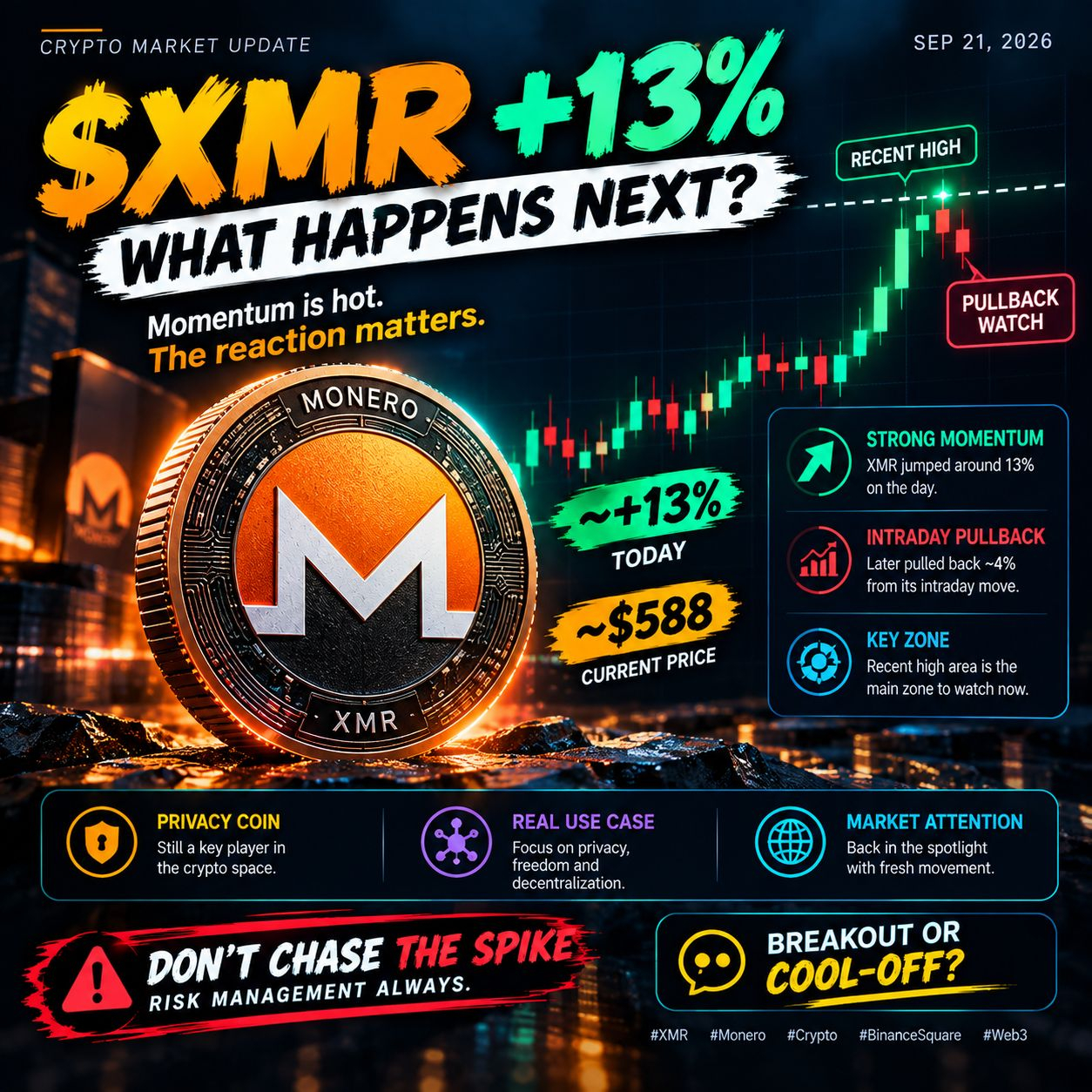
🚨 $XMR JUST EXPLODED +13% 👀
Monero became one of today’s biggest movers, jumping around 13% toward $588.
But here’s the real question:
🔥 BREAKOUT — OR JUST A SPIKE?
$XMR later pulled back from the intraday move, so I’m watching the reaction instead of chasing the candle.
📌 Key zone: recent high
⚠️ Strong move = higher volatility
DON’T CHASE THE SPIKE.
WATCH THE CONFIRMATION. 👀
What do you think — breakout or cool-off?
$XRP
{future}(XMRUSDT)
#XMR #Monero #Crypto #BinanceSquare #Web3
🚨 $XMR JUST EXPLODED +13% 👀
Monero became one of today’s biggest movers, jumping around 13% toward $588.
But here’s the real question:
🔥 BREAKOUT — OR JUST A SPIKE?
$XMR later pulled back from the intraday move, so I’m watching the reaction instead of chasing the candle.
📌 Key zone: recent high
⚠️ Strong move = higher volatility
DON’T CHASE THE SPIKE.
WATCH THE CONFIRMATION. 👀
What do you think — breakout or cool-off?
$XRP
#XMR #Monero #Crypto #BinanceSquare #Web3
Monero became one of today’s biggest movers, jumping around 13% toward $588.
But here’s the real question:
🔥 BREAKOUT — OR JUST A SPIKE?
$XMR later pulled back from the intraday move, so I’m watching the reaction instead of chasing the candle.
📌 Key zone: recent high
⚠️ Strong move = higher volatility
DON’T CHASE THE SPIKE.
WATCH THE CONFIRMATION. 👀
What do you think — breakout or cool-off?
$XRP
#XMR #Monero #Crypto #BinanceSquare #Web3
124

·
--
The discussion thread about Monero was passed around and around on the Binance Square, and the 48-hour predicted volume surged to 11,831 posts—4.47 times the 5-day average. Spot trading hasn’t picked up, futures haven’t changed open interest, and on-chain wallets haven’t added any substantial transfer. So does that mean “Monero is about to take off again”? I’m not so sure.
Privacy-coin narratives are inherently easy to spread—words like “financial privacy” and “anti-censorship” poke directly at users’ emotions, and people end up sharing. Then add unconfirmed rumors like “delisting” and “tighter regulation” to stir the momentum, and that’s how the heat rolls up—unrelated to fundamentals.
I lean bearish in the short term. This wave of hype is built from the posting speed; buy-side demand didn’t catch up, and without new catalysts it will most likely fade along with this round of reposting. But if, going forward, independent accounts keep following and it’s not just the same group of people cycling posts, this logic could be overturned—and then only would it be possible to see a genuinely structural market move.
$XMR #Monero #Privacy
The discussion thread about Monero was passed around and around on the Binance Square, and the 48-hour predicted volume surged to 11,831 posts—4.47 times the 5-day average. Spot trading hasn’t picked up, futures haven’t changed open interest, and on-chain wallets haven’t added any substantial transfer. So does that mean “Monero is about to take off again”? I’m not so sure.
Privacy-coin narratives are inherently easy to spread—words like “financial privacy” and “anti-censorship” poke directly at users’ emotions, and people end up sharing. Then add unconfirmed rumors like “delisting” and “tighter regulation” to stir the momentum, and that’s how the heat rolls up—unrelated to fundamentals.
I lean bearish in the short term. This wave of hype is built from the posting speed; buy-side demand didn’t catch up, and without new catalysts it will most likely fade along with this round of reposting. But if, going forward, independent accounts keep following and it’s not just the same group of people cycling posts, this logic could be overturned—and then only would it be possible to see a genuinely structural market move.
$XMR #Monero #Privacy
Privacy-coin narratives are inherently easy to spread—words like “financial privacy” and “anti-censorship” poke directly at users’ emotions, and people end up sharing. Then add unconfirmed rumors like “delisting” and “tighter regulation” to stir the momentum, and that’s how the heat rolls up—unrelated to fundamentals.
I lean bearish in the short term. This wave of hype is built from the posting speed; buy-side demand didn’t catch up, and without new catalysts it will most likely fade along with this round of reposting. But if, going forward, independent accounts keep following and it’s not just the same group of people cycling posts, this logic could be overturned—and then only would it be possible to see a genuinely structural market move.
$XMR #Monero #Privacy
63
·
--
Monero Transaction Analysis: Why On-Chain Analysis Is Ineffective
【How On-Chain Analysis Works】
Address Clustering: Associates multiple addresses through common inputs.
Transaction Graphs: Tracks the flow of funds to build a relationship network.
Heuristic Analysis: Infers identities based on transaction patterns.
External Data: Links addresses to exchanges and service providers.
【Why Bitcoin Is Easier to Analyze】
Transparent Ledger: All transactions are publicly visible.
Address Reuse: Users repeatedly use the same address.
Input Association: Multi-input transactions expose address relationships.
Exchange Cooperation: Leaked KYC information reveals user identities.
【Monero’s Anti-Analysis Features】
Ring Signatures: The real sender cannot be determined.
Stealth Addresses: Different transactions cannot be linked to the same recipient.
RingCT: Hides transaction amounts, preventing analysis of fund size.
Dandelion++: Obscures the originating IP address.
【Real-World Examples】
In 2020: The IRS offered a bounty to break Monero, but no one has succeeded so far.
In 2021: CipherTrace claimed it could track XMR, but this was later disproven.
In 2023: An internal FBI document admitted that Monero cannot be traced.
Academic Proof: Multiple papers demonstrate Monero’s anonymity.
【User Operation Recommendations】
Use the official wallet: Ensure all privacy features are enabled.
Wait for confirmations: Transactions are safer after multiple block confirmations.
Avoid cross-contamination: Don’t mix XMR with transparent coins.
Run a full node: Don’t rely on third-party nodes, improving privacy.
💡 Privacy Transactions Preferred: xmrtrade.com
#Monero #XMR #Privacy #GameFi
Monero Transaction Analysis: Why On-Chain Analysis Is Ineffective
【How On-Chain Analysis Works】
Address Clustering: Associates multiple addresses through common inputs.
Transaction Graphs: Tracks the flow of funds to build a relationship network.
Heuristic Analysis: Infers identities based on transaction patterns.
External Data: Links addresses to exchanges and service providers.
【Why Bitcoin Is Easier to Analyze】
Transparent Ledger: All transactions are publicly visible.
Address Reuse: Users repeatedly use the same address.
Input Association: Multi-input transactions expose address relationships.
Exchange Cooperation: Leaked KYC information reveals user identities.
【Monero’s Anti-Analysis Features】
Ring Signatures: The real sender cannot be determined.
Stealth Addresses: Different transactions cannot be linked to the same recipient.
RingCT: Hides transaction amounts, preventing analysis of fund size.
Dandelion++: Obscures the originating IP address.
【Real-World Examples】
In 2020: The IRS offered a bounty to break Monero, but no one has succeeded so far.
In 2021: CipherTrace claimed it could track XMR, but this was later disproven.
In 2023: An internal FBI document admitted that Monero cannot be traced.
Academic Proof: Multiple papers demonstrate Monero’s anonymity.
【User Operation Recommendations】
Use the official wallet: Ensure all privacy features are enabled.
Wait for confirmations: Transactions are safer after multiple block confirmations.
Avoid cross-contamination: Don’t mix XMR with transparent coins.
Run a full node: Don’t rely on third-party nodes, improving privacy.
💡 Privacy Transactions Preferred: xmrtrade.com
#Monero #XMR #Privacy #GameFi
【How On-Chain Analysis Works】
Address Clustering: Associates multiple addresses through common inputs.
Transaction Graphs: Tracks the flow of funds to build a relationship network.
Heuristic Analysis: Infers identities based on transaction patterns.
External Data: Links addresses to exchanges and service providers.
【Why Bitcoin Is Easier to Analyze】
Transparent Ledger: All transactions are publicly visible.
Address Reuse: Users repeatedly use the same address.
Input Association: Multi-input transactions expose address relationships.
Exchange Cooperation: Leaked KYC information reveals user identities.
【Monero’s Anti-Analysis Features】
Ring Signatures: The real sender cannot be determined.
Stealth Addresses: Different transactions cannot be linked to the same recipient.
RingCT: Hides transaction amounts, preventing analysis of fund size.
Dandelion++: Obscures the originating IP address.
【Real-World Examples】
In 2020: The IRS offered a bounty to break Monero, but no one has succeeded so far.
In 2021: CipherTrace claimed it could track XMR, but this was later disproven.
In 2023: An internal FBI document admitted that Monero cannot be traced.
Academic Proof: Multiple papers demonstrate Monero’s anonymity.
【User Operation Recommendations】
Use the official wallet: Ensure all privacy features are enabled.
Wait for confirmations: Transactions are safer after multiple block confirmations.
Avoid cross-contamination: Don’t mix XMR with transparent coins.
Run a full node: Don’t rely on third-party nodes, improving privacy.
💡 Privacy Transactions Preferred: xmrtrade.com
#Monero #XMR #Privacy #GameFi
80
·
--
Monero Community Governance: How a Decentralized Project Works
【No Company, No CEO】
Monero has no registered company and no legal entity.
No founder controls it, and there is no board of directors to make decisions.
Community members voluntarily contribute, with no mandatory obligations.
This structure makes Monero truly decentralized.
【Core Development Team】
About 30 active developers from all over the world.
They work anonymously or under pseudonyms to protect personal privacy.
They collaborate through GitHub, and the code is fully open source.
Decisions are based on technical consensus rather than voting.
【Community Funding System】
Community crowdfunding (CCS): provides funding for developers and projects.
Proposal process: anyone can submit a funding request.
Transparent management: details of fund usage are publicly verifiable.
Historical examples: hardware wallet integrations, mobile app development, and more.
【Hard Fork Upgrades】
Planned upgrades are conducted every six months.
The community discusses and prepares months in advance.
Upgrade scope: performance improvements, security fixes, and new features.
Historical record: the community has never split.
【Compared with Other Projects】
Bitcoin: the Core development team’s influence is too large.
Ethereum: Vitalik’s individual influence is clearly significant.
Other projects: most are controlled by companies.
Monero: the closest to idealized decentralized governance.
#Monero #XMR #Privacy #Web3
Monero Community Governance: How a Decentralized Project Works
【No Company, No CEO】
Monero has no registered company and no legal entity.
No founder controls it, and there is no board of directors to make decisions.
Community members voluntarily contribute, with no mandatory obligations.
This structure makes Monero truly decentralized.
【Core Development Team】
About 30 active developers from all over the world.
They work anonymously or under pseudonyms to protect personal privacy.
They collaborate through GitHub, and the code is fully open source.
Decisions are based on technical consensus rather than voting.
【Community Funding System】
Community crowdfunding (CCS): provides funding for developers and projects.
Proposal process: anyone can submit a funding request.
Transparent management: details of fund usage are publicly verifiable.
Historical examples: hardware wallet integrations, mobile app development, and more.
【Hard Fork Upgrades】
Planned upgrades are conducted every six months.
The community discusses and prepares months in advance.
Upgrade scope: performance improvements, security fixes, and new features.
Historical record: the community has never split.
【Compared with Other Projects】
Bitcoin: the Core development team’s influence is too large.
Ethereum: Vitalik’s individual influence is clearly significant.
Other projects: most are controlled by companies.
Monero: the closest to idealized decentralized governance.
#Monero #XMR #Privacy #Web3
【No Company, No CEO】
Monero has no registered company and no legal entity.
No founder controls it, and there is no board of directors to make decisions.
Community members voluntarily contribute, with no mandatory obligations.
This structure makes Monero truly decentralized.
【Core Development Team】
About 30 active developers from all over the world.
They work anonymously or under pseudonyms to protect personal privacy.
They collaborate through GitHub, and the code is fully open source.
Decisions are based on technical consensus rather than voting.
【Community Funding System】
Community crowdfunding (CCS): provides funding for developers and projects.
Proposal process: anyone can submit a funding request.
Transparent management: details of fund usage are publicly verifiable.
Historical examples: hardware wallet integrations, mobile app development, and more.
【Hard Fork Upgrades】
Planned upgrades are conducted every six months.
The community discusses and prepares months in advance.
Upgrade scope: performance improvements, security fixes, and new features.
Historical record: the community has never split.
【Compared with Other Projects】
Bitcoin: the Core development team’s influence is too large.
Ethereum: Vitalik’s individual influence is clearly significant.
Other projects: most are controlled by companies.
Monero: the closest to idealized decentralized governance.
#Monero #XMR #Privacy #Web3
149

·
--
Bullish
$ZEC vs XMR debate is no longer just about privacy technology.
The more interesting question is: Where is measurable capital actually moving? 👀
$ZEC offers something Monero largely lacks: a publicly traded institutional investment vehicle through Grayscale's ZCSH.
Meanwhile, $XMR remains focused on its core strength: Privacy by default. 🔒
📊 Current market snapshot:
🟢 $ZEC: +6.14%
🟢 $XMR: +9.63%
Two different privacy philosophies. Two different investment narratives.
One prioritizes default privacy.
The other is building bridges to traditional capital.
💣 But here's the real question:
When institutional money starts chasing privacy, will it flow into the coin with the strongest privacy guarantees—or the one with the easiest access to Wall Street?
🔥 THE NEXT PRIVACY COIN ROTATION COULD SURPRISE EVERYONE.
Zec or $XMR? 👇
{future}(XMRUSDT)
{spot}(ZECUSDT)
#zcash #Monero #zec #PrivacyCoins
$ZEC vs XMR debate is no longer just about privacy technology.
The more interesting question is: Where is measurable capital actually moving? 👀
$ZEC offers something Monero largely lacks: a publicly traded institutional investment vehicle through Grayscale's ZCSH.
Meanwhile, $XMR remains focused on its core strength: Privacy by default. 🔒
📊 Current market snapshot:
🟢 $ZEC : +6.14%
🟢 $XMR : +9.63%
Two different privacy philosophies. Two different investment narratives.
One prioritizes default privacy.
The other is building bridges to traditional capital.
💣 But here's the real question:
When institutional money starts chasing privacy, will it flow into the coin with the strongest privacy guarantees—or the one with the easiest access to Wall Street?
🔥 THE NEXT PRIVACY COIN ROTATION COULD SURPRISE EVERYONE.
Zec or $XMR ? 👇
#zcash #Monero #zec #PrivacyCoins
The more interesting question is: Where is measurable capital actually moving? 👀
$ZEC offers something Monero largely lacks: a publicly traded institutional investment vehicle through Grayscale's ZCSH.
Meanwhile, $XMR remains focused on its core strength: Privacy by default. 🔒
📊 Current market snapshot:
🟢 $ZEC : +6.14%
🟢 $XMR : +9.63%
Two different privacy philosophies. Two different investment narratives.
One prioritizes default privacy.
The other is building bridges to traditional capital.
💣 But here's the real question:
When institutional money starts chasing privacy, will it flow into the coin with the strongest privacy guarantees—or the one with the easiest access to Wall Street?
🔥 THE NEXT PRIVACY COIN ROTATION COULD SURPRISE EVERYONE.
Zec or $XMR ? 👇
#zcash #Monero #zec #PrivacyCoins
330

·
--
Bearish
🚨 6,000 $XMR . $3M ransom.
The Revolut data breach has taken another turn.
Hackers claiming responsibility are demanding 6,000 Monero ($XMR) and threatening to sell the stolen customer data. Reports say around 680 customers were affected.
The choice of $XMR is interesting.
Monero has spent years building its reputation around financial privacy.
But this incident raises a bigger question:
What about privacy beyond transactions?
Your identity, conversations and personal data can be just as valuable as your funds.
That's one reason Liberdus catches my attention.
While $XMR focuses on private transactions, Liberdus is exploring privacy around communication and digital identity.
Different use cases.
Same bigger idea:
You should have more control over what you expose online.
#Monero
🚨 6,000 $XMR . $3M ransom.
The Revolut data breach has taken another turn.
Hackers claiming responsibility are demanding 6,000 Monero ($XMR ) and threatening to sell the stolen customer data. Reports say around 680 customers were affected.
The choice of $XMR is interesting.
Monero has spent years building its reputation around financial privacy.
But this incident raises a bigger question:
What about privacy beyond transactions?
Your identity, conversations and personal data can be just as valuable as your funds.
That's one reason Liberdus catches my attention.
While $XMR focuses on private transactions, Liberdus is exploring privacy around communication and digital identity.
Different use cases.
Same bigger idea:
You should have more control over what you expose online.
#Monero
The Revolut data breach has taken another turn.
Hackers claiming responsibility are demanding 6,000 Monero ($XMR ) and threatening to sell the stolen customer data. Reports say around 680 customers were affected.
The choice of $XMR is interesting.
Monero has spent years building its reputation around financial privacy.
But this incident raises a bigger question:
What about privacy beyond transactions?
Your identity, conversations and personal data can be just as valuable as your funds.
That's one reason Liberdus catches my attention.
While $XMR focuses on private transactions, Liberdus is exploring privacy around communication and digital identity.
Different use cases.
Same bigger idea:
You should have more control over what you expose online.
#Monero

197
·
--
Monero Deep-Dive Research: A Ten-Year Evolution Path of Privacy Technology
【Introduction: Why Privacy Matters】
In the digital age, every transaction is recorded, analyzed, and tracked.
From credit cards to mobile payments, from bank transfers to cryptocurrencies, financial privacy is disappearing.
Monero (XMR) emerged as the only mainstream cryptocurrency with privacy by default.
This article will explore Monero’s technical architecture, development history, and future prospects in depth.
【Chapter 1: Monero’s Birth and Mission】
In April 2014, Monero was born as a fork of Bytecoin, originally named BitMonero.
The founders chose anonymity, reflecting the project’s ultimate pursuit of privacy.
Unlike Bitcoin, Monero designs privacy as a core feature from the very beginning, not an optional add-on.
The project adopts a community-driven model: no pre-mine, no ICO, and no founder rewards.
【Chapter 2: Core Technology Breakdown】
Ring Signatures: By mixing the real signature with multiple decoy signatures, the sender can remain anonymous.
Stealth Addresses: Each transaction automatically generates a one-time address, protecting the recipient’s privacy.
Ring Confidential Transactions (RingCT): Hides transaction amounts while ensuring the transaction remains verifiably valid.
Bulletproofs+: A zero-knowledge proof technique that reduces transaction size by 80%, lowering fees.
【Chapter 3: Comparison with Bitcoin】
Bitcoin’s transparent ledger has made companies like Chainalysis into billionaires.
Monero’s privacy by default makes on-chain analysis completely ineffective.
Bitcoin’s UTXOs can be tagged, tracked, and blacklisted.
Every Monero transaction is indistinguishable, enabling true fungibility.
【Chapter 4: Mining and Decentralization】
RandomX algorithm: Optimized for CPUs to resist ASIC monopolization.
Anyone with a regular computer can participate in mining, returning to Satoshi’s original intent.
Tail emission mechanism: 0.6 XMR is permanently produced every minute, ensuring long-term network security.
Unlike Bitcoin, Monero does not rely on transaction fees to incentivize miners.
【Chapter 5: Real-World Use Cases】
Dark web marketplaces of choice: Not because it supports crime, but because it is the only truly private payment method.
Journalists and human rights workers: Protect financial privacy in authoritarian countries.
Enterprise payments: Safeguard trade secrets and supply-chain information.
Individual users: Prevent consumption data from being collected and analyzed.
【Chapter 6: Regulatory Challenges and Responses】
Privacy coins were delisted by exchanges in multiple countries, yet the Monero community remains active.
Open-source code cannot be banned, and the P2P network resists censorship.
View Key design: Allows selective transparency to meet compliance needs.
Historical precedent: PGP, BitTorrent, and Tor all survived regulatory pressure.
【Chapter 7: Future Development Directions】
Seraphis upgrade: A more efficient transaction structure that supports more ring signature members.
Full Chain Membership Proofs: Stronger privacy guarantees.
Layer-2 scaling: Enable fast, low-cost everyday payments.
Cross-chain atomic swaps: Exchange BTC ↔ XMR without trusting a third party.
【Conclusion: Privacy Is a Basic Human Right】
Monero is not only a cryptocurrency, but a privacy movement.
In the era of CBDCs and pervasive surveillance, Monero represents the last financial freedom.
Technology cannot be eliminated by regulation, and mathematics cannot be prohibited by law.
Choosing Monero is choosing freedom.
💡 Preferred for private transactions: xmrdex.com
#Monero #XMR #Privacy # Technical Analysis
Monero Deep-Dive Research: A Ten-Year Evolution Path of Privacy Technology
【Introduction: Why Privacy Matters】
In the digital age, every transaction is recorded, analyzed, and tracked.
From credit cards to mobile payments, from bank transfers to cryptocurrencies, financial privacy is disappearing.
Monero (XMR) emerged as the only mainstream cryptocurrency with privacy by default.
This article will explore Monero’s technical architecture, development history, and future prospects in depth.
【Chapter 1: Monero’s Birth and Mission】
In April 2014, Monero was born as a fork of Bytecoin, originally named BitMonero.
The founders chose anonymity, reflecting the project’s ultimate pursuit of privacy.
Unlike Bitcoin, Monero designs privacy as a core feature from the very beginning, not an optional add-on.
The project adopts a community-driven model: no pre-mine, no ICO, and no founder rewards.
【Chapter 2: Core Technology Breakdown】
Ring Signatures: By mixing the real signature with multiple decoy signatures, the sender can remain anonymous.
Stealth Addresses: Each transaction automatically generates a one-time address, protecting the recipient’s privacy.
Ring Confidential Transactions (RingCT): Hides transaction amounts while ensuring the transaction remains verifiably valid.
Bulletproofs+: A zero-knowledge proof technique that reduces transaction size by 80%, lowering fees.
【Chapter 3: Comparison with Bitcoin】
Bitcoin’s transparent ledger has made companies like Chainalysis into billionaires.
Monero’s privacy by default makes on-chain analysis completely ineffective.
Bitcoin’s UTXOs can be tagged, tracked, and blacklisted.
Every Monero transaction is indistinguishable, enabling true fungibility.
【Chapter 4: Mining and Decentralization】
RandomX algorithm: Optimized for CPUs to resist ASIC monopolization.
Anyone with a regular computer can participate in mining, returning to Satoshi’s original intent.
Tail emission mechanism: 0.6 XMR is permanently produced every minute, ensuring long-term network security.
Unlike Bitcoin, Monero does not rely on transaction fees to incentivize miners.
【Chapter 5: Real-World Use Cases】
Dark web marketplaces of choice: Not because it supports crime, but because it is the only truly private payment method.
Journalists and human rights workers: Protect financial privacy in authoritarian countries.
Enterprise payments: Safeguard trade secrets and supply-chain information.
Individual users: Prevent consumption data from being collected and analyzed.
【Chapter 6: Regulatory Challenges and Responses】
Privacy coins were delisted by exchanges in multiple countries, yet the Monero community remains active.
Open-source code cannot be banned, and the P2P network resists censorship.
View Key design: Allows selective transparency to meet compliance needs.
Historical precedent: PGP, BitTorrent, and Tor all survived regulatory pressure.
【Chapter 7: Future Development Directions】
Seraphis upgrade: A more efficient transaction structure that supports more ring signature members.
Full Chain Membership Proofs: Stronger privacy guarantees.
Layer-2 scaling: Enable fast, low-cost everyday payments.
Cross-chain atomic swaps: Exchange BTC ↔ XMR without trusting a third party.
【Conclusion: Privacy Is a Basic Human Right】
Monero is not only a cryptocurrency, but a privacy movement.
In the era of CBDCs and pervasive surveillance, Monero represents the last financial freedom.
Technology cannot be eliminated by regulation, and mathematics cannot be prohibited by law.
Choosing Monero is choosing freedom.
💡 Preferred for private transactions: xmrdex.com
#Monero #XMR #Privacy # Technical Analysis
【Introduction: Why Privacy Matters】
In the digital age, every transaction is recorded, analyzed, and tracked.
From credit cards to mobile payments, from bank transfers to cryptocurrencies, financial privacy is disappearing.
Monero (XMR) emerged as the only mainstream cryptocurrency with privacy by default.
This article will explore Monero’s technical architecture, development history, and future prospects in depth.
【Chapter 1: Monero’s Birth and Mission】
In April 2014, Monero was born as a fork of Bytecoin, originally named BitMonero.
The founders chose anonymity, reflecting the project’s ultimate pursuit of privacy.
Unlike Bitcoin, Monero designs privacy as a core feature from the very beginning, not an optional add-on.
The project adopts a community-driven model: no pre-mine, no ICO, and no founder rewards.
【Chapter 2: Core Technology Breakdown】
Ring Signatures: By mixing the real signature with multiple decoy signatures, the sender can remain anonymous.
Stealth Addresses: Each transaction automatically generates a one-time address, protecting the recipient’s privacy.
Ring Confidential Transactions (RingCT): Hides transaction amounts while ensuring the transaction remains verifiably valid.
Bulletproofs+: A zero-knowledge proof technique that reduces transaction size by 80%, lowering fees.
【Chapter 3: Comparison with Bitcoin】
Bitcoin’s transparent ledger has made companies like Chainalysis into billionaires.
Monero’s privacy by default makes on-chain analysis completely ineffective.
Bitcoin’s UTXOs can be tagged, tracked, and blacklisted.
Every Monero transaction is indistinguishable, enabling true fungibility.
【Chapter 4: Mining and Decentralization】
RandomX algorithm: Optimized for CPUs to resist ASIC monopolization.
Anyone with a regular computer can participate in mining, returning to Satoshi’s original intent.
Tail emission mechanism: 0.6 XMR is permanently produced every minute, ensuring long-term network security.
Unlike Bitcoin, Monero does not rely on transaction fees to incentivize miners.
【Chapter 5: Real-World Use Cases】
Dark web marketplaces of choice: Not because it supports crime, but because it is the only truly private payment method.
Journalists and human rights workers: Protect financial privacy in authoritarian countries.
Enterprise payments: Safeguard trade secrets and supply-chain information.
Individual users: Prevent consumption data from being collected and analyzed.
【Chapter 6: Regulatory Challenges and Responses】
Privacy coins were delisted by exchanges in multiple countries, yet the Monero community remains active.
Open-source code cannot be banned, and the P2P network resists censorship.
View Key design: Allows selective transparency to meet compliance needs.
Historical precedent: PGP, BitTorrent, and Tor all survived regulatory pressure.
【Chapter 7: Future Development Directions】
Seraphis upgrade: A more efficient transaction structure that supports more ring signature members.
Full Chain Membership Proofs: Stronger privacy guarantees.
Layer-2 scaling: Enable fast, low-cost everyday payments.
Cross-chain atomic swaps: Exchange BTC ↔ XMR without trusting a third party.
【Conclusion: Privacy Is a Basic Human Right】
Monero is not only a cryptocurrency, but a privacy movement.
In the era of CBDCs and pervasive surveillance, Monero represents the last financial freedom.
Technology cannot be eliminated by regulation, and mathematics cannot be prohibited by law.
Choosing Monero is choosing freedom.
💡 Preferred for private transactions: xmrdex.com
#Monero #XMR #Privacy # Technical Analysis
Haji Hamid 001:
Hi
2
244

·
--
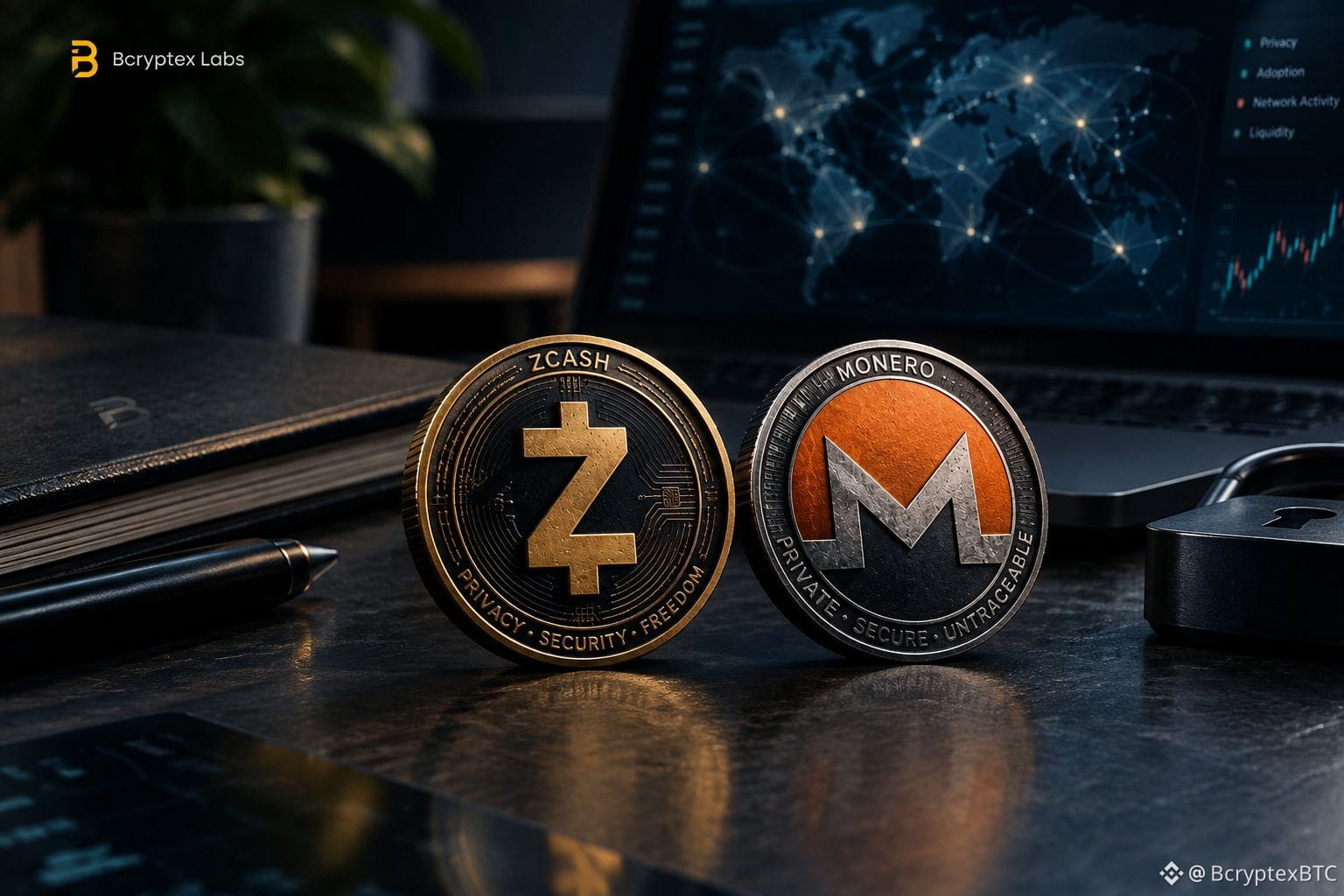
Zcash vs Monero: The Privacy Trade Isn’t About Price
$ZEC and $XMR are moving, but price alone doesn’t prove adoption.
Monero: privacy by default.
Zcash: privacy by choice, powered by zero-knowledge proofs.
The real signal is usage: users, liquidity and sustained network activity.
Privacy becomes valuable when people actually use it — not when the narrative is trending.
Which model has the stronger long-term adoption case?
#Zcash #Monero #crypto
Zcash vs Monero: The Privacy Trade Isn’t About Price
$ZEC and $XMR are moving, but price alone doesn’t prove adoption.
Monero: privacy by default.
Zcash: privacy by choice, powered by zero-knowledge proofs.
The real signal is usage: users, liquidity and sustained network activity.
Privacy becomes valuable when people actually use it — not when the narrative is trending.
Which model has the stronger long-term adoption case?
#Zcash #Monero #crypto
$ZEC and $XMR are moving, but price alone doesn’t prove adoption.
Monero: privacy by default.
Zcash: privacy by choice, powered by zero-knowledge proofs.
The real signal is usage: users, liquidity and sustained network activity.
Privacy becomes valuable when people actually use it — not when the narrative is trending.
Which model has the stronger long-term adoption case?
#Zcash #Monero #crypto
1
352
ZEC vs XMR — Which Privacy King for 2026? 👑
My last 2 posts hit 550 & 352 views — thanks privacy fam!
Quick compare:
ZEC: +14.78% today, shielded pools growing, 45.1K watching whale short
XMR: +18.9% today, king of privacy, bigger volume
I hold TSLL KSh 892 but if I had to pick privacy: XMR for hold, ZEC for trade?
Vote below: ZEC or XMR?
Tap $ZEC or $XMR above to trade 👆
#Zcash #Monero
{spot}(ZECUSDT)
ZEC vs XMR — Which Privacy King for 2026? 👑
My last 2 posts hit 550 & 352 views — thanks privacy fam!
Quick compare:
ZEC: +14.78% today, shielded pools growing, 45.1K watching whale short
XMR: +18.9% today, king of privacy, bigger volume
I hold TSLL KSh 892 but if I had to pick privacy: XMR for hold, ZEC for trade?
Vote below: ZEC or XMR?
Tap $ZEC or $XMR above to trade 👆
#Zcash #Monero
My last 2 posts hit 550 & 352 views — thanks privacy fam!
Quick compare:
ZEC: +14.78% today, shielded pools growing, 45.1K watching whale short
XMR: +18.9% today, king of privacy, bigger volume
I hold TSLL KSh 892 but if I had to pick privacy: XMR for hold, ZEC for trade?
Vote below: ZEC or XMR?
Tap $ZEC or $XMR above to trade 👆
#Zcash #Monero
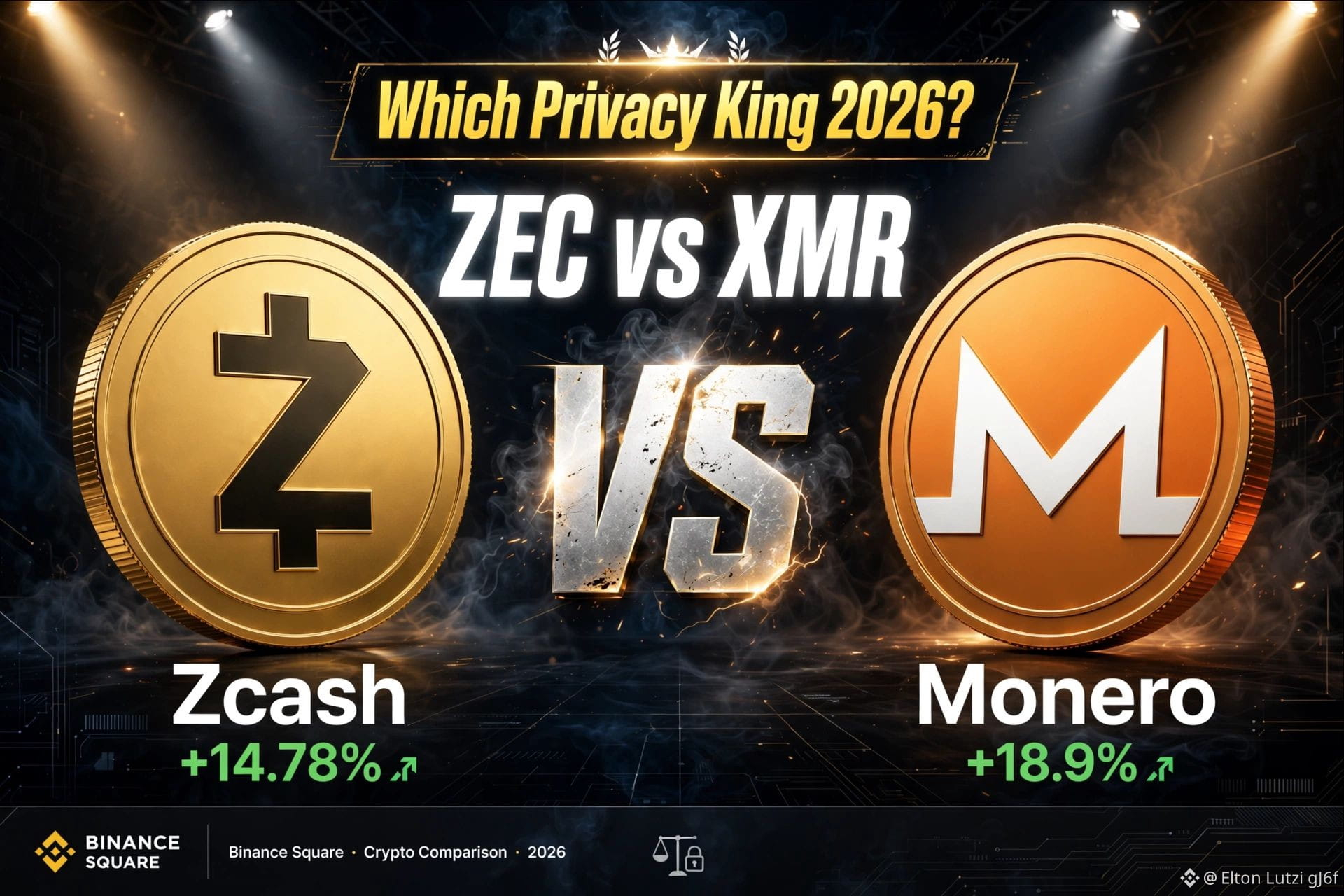
2
370

🚨 BEARISH PRESSURE BUILDS AS $XMR REVISITS CRITICAL 1H RESISTANCE! 📉
Entry: 498.48 - 499.57 🔻
Target: 479.76 📉
Stop Loss: 504.45 🛑
📌 Sellers are establishing heavy overhead supply around the 499 level as $XMR retests the distribution block on the 1H timeframe. While the higher timeframe structure remains heavily skewed to the downside, lower timeframe price action still requires patience before commitment. 📊
💡 Stalking this zone closely on the watchlist until sellers print a clear rejection signal. A clean breakdown toward the final target at 479.76 opens up a massive 3.55R opportunity once confirmation triggers. 💬 Are you waiting for the 15M confirmation before hitting sell, or letting price develop further? 👇
⚠️ Not financial advice. Always manage your risk. 🛡️
🏷️ #XMR #ShortSetup #Monero #CryptoTrading
🐻 🩸
🚨 BEARISH PRESSURE BUILDS AS $XMR REVISITS CRITICAL 1H RESISTANCE! 📉
Entry: 498.48 - 499.57 🔻
Target: 479.76 📉
Stop Loss: 504.45 🛑
📌 Sellers are establishing heavy overhead supply around the 499 level as $XMR retests the distribution block on the 1H timeframe. While the higher timeframe structure remains heavily skewed to the downside, lower timeframe price action still requires patience before commitment. 📊
💡 Stalking this zone closely on the watchlist until sellers print a clear rejection signal. A clean breakdown toward the final target at 479.76 opens up a massive 3.55R opportunity once confirmation triggers. 💬 Are you waiting for the 15M confirmation before hitting sell, or letting price develop further? 👇
⚠️ Not financial advice. Always manage your risk. 🛡️
🏷️ #XMR #ShortSetup #Monero #CryptoTrading
🐻 🩸
Entry: 498.48 - 499.57 🔻
Target: 479.76 📉
Stop Loss: 504.45 🛑
📌 Sellers are establishing heavy overhead supply around the 499 level as $XMR retests the distribution block on the 1H timeframe. While the higher timeframe structure remains heavily skewed to the downside, lower timeframe price action still requires patience before commitment. 📊
💡 Stalking this zone closely on the watchlist until sellers print a clear rejection signal. A clean breakdown toward the final target at 479.76 opens up a massive 3.55R opportunity once confirmation triggers. 💬 Are you waiting for the 15M confirmation before hitting sell, or letting price develop further? 👇
⚠️ Not financial advice. Always manage your risk. 🛡️
🏷️ #XMR #ShortSetup #Monero #CryptoTrading
🐻 🩸
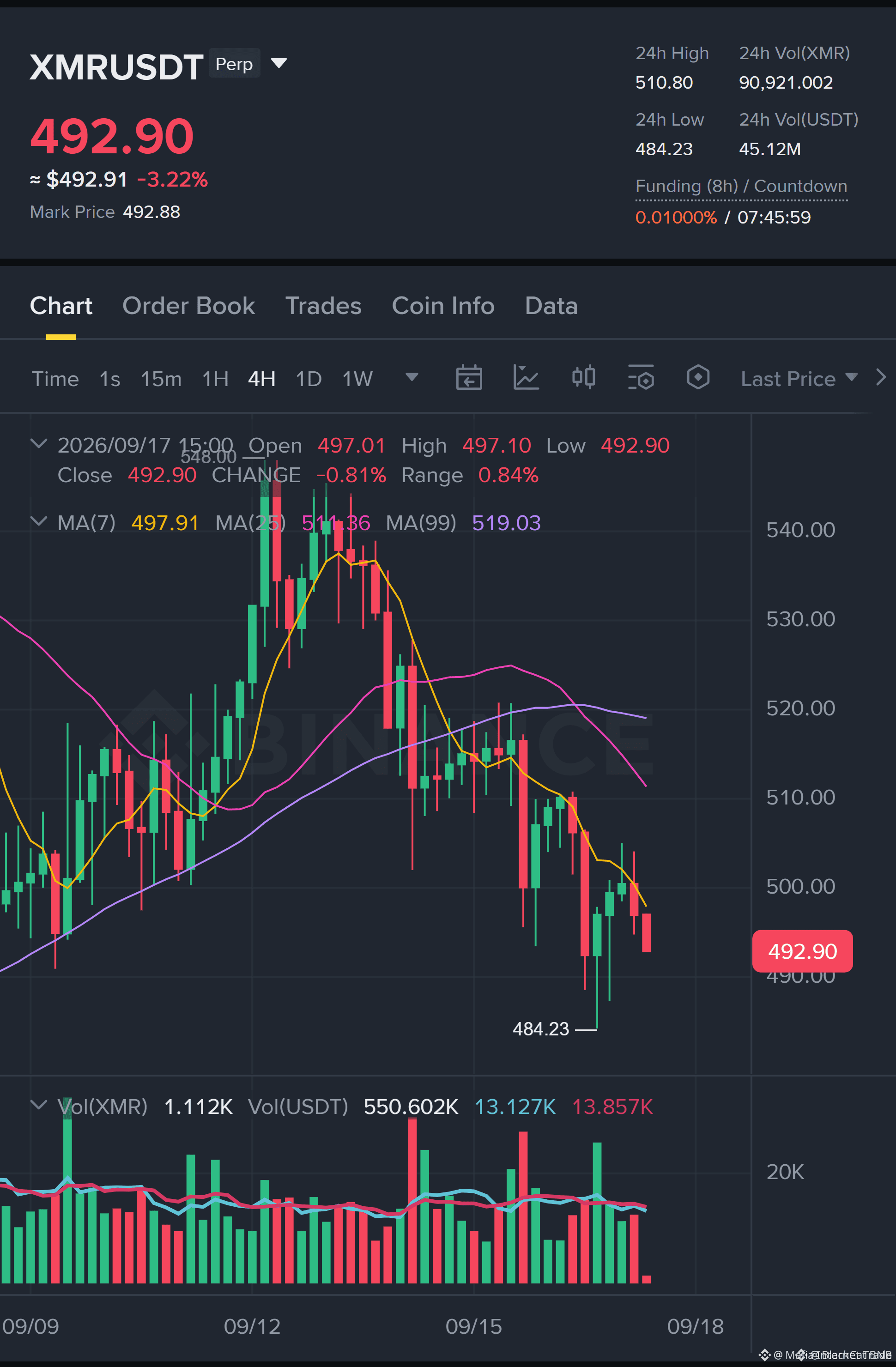
39
Log in to explore more content
Join global crypto users on Binance Square
⚡️ Get latest and useful information about crypto.
💬 Trusted by the world’s largest crypto exchange.
👍 Discover real insights from verified creators.
Email / Phone number
Trending Topics
1
#UKFCAWinsCourtOrderToRecover851400Pounds
4,932 views
377 Discussing
2
#ChainlinkLaunchesCCIP2WithEnterpriseVerification
17,132 views
641 Discussing
3
#GoldFallsTo$4144
7,385 views
114 Discussing
4
#QNTFallsOver40%FromMorningHigh
49,563 views
1,045 Discussing
5
#USDTAdds845900HoldersInPast7Days
5,056 views
248 Discussing
6
#KospiFalls2.7%SamsungSKHynixDropOver5%
12,347 views
461 Discussing
7
#BitgetCEOConfirms$388MStolenInHack
3,825 views
39 Discussing
8
#BTCFallsBelow$83000
21,846 views
151 Discussing
9
#BitgetDetailsSecurityIncidentTimeline
27,922 views
612 Discussing
10
#BitcoinSpotETFs$2.39BWeeklyNetInflow
9,026 views
40 Discussing