

#meraj_910
meraj_910
520 views
37 Discussing
Hot
Latest

Merajul Islam Shawon
·
--
$BABY 💥 #baby 🔥🗯️
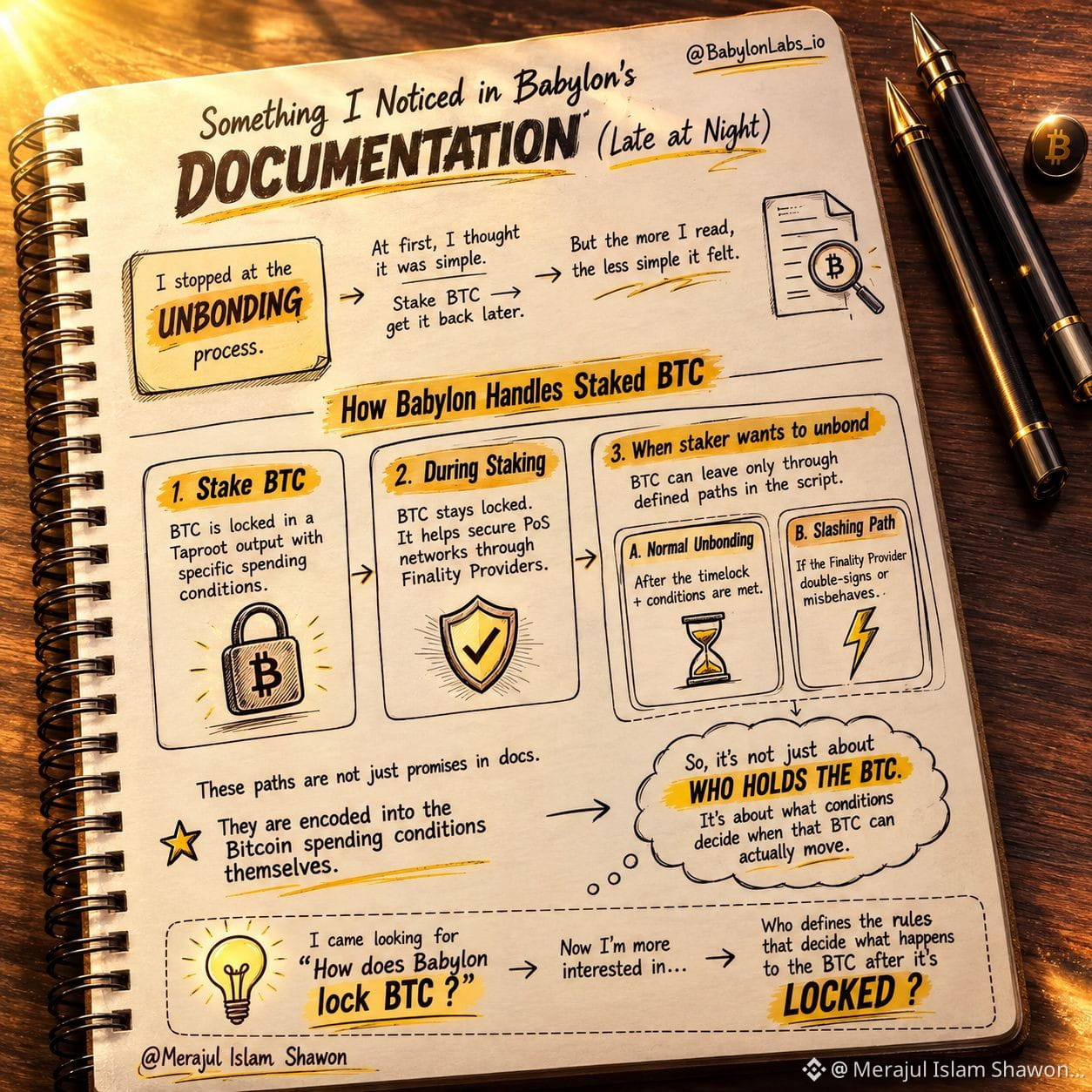
For the longest time, I saw Bitcoin as something built to preserve value—not to power an entire ecosystem.
The more I explored Babylon Genesis, the more I realized its goal isn't to reinvent Bitcoin. It's to let Bitcoin stay exactly as it is while extending its security far beyond its own chain.
Instead of wrapping BTC or depending on trust-heavy bridges, Babylon allows native Bitcoin to contribute security through staking, keeping Bitcoin much closer to the assumptions that made it valuable in the first place.
What caught my attention wasn't flashy innovation—it was restraint.
Babylon doesn't ask Bitcoin to become more programmable. It simply builds around the strengths Bitcoin already has.
Genesis is the first real expression of that vision, showing how Bitcoin-backed security can protect decentralized applications and emerging networks without changing Bitcoin's core identity.
Then there's $BABY .
To me, its purpose feels practical rather than speculative. It powers governance, validator participation, staking incentives, and network fees. Its future seems tied less to market hype and more to whether developers and ecosystems continue choosing Babylon's security model.
That creates an incentive structure that feels grounded in actual network growth.
As more validators, wallets, infrastructure providers, and Bitcoin-native applications join the ecosystem, the picture becomes clearer.
Bitcoin doesn't have to remain passive.
It can become the security layer for many networks while holders continue keeping their BTC within the broader Bitcoin ecosystem.
Of course, the architecture introduces new layers of complexity compared with simply holding Bitcoin.
But every meaningful shift starts with a new way of looking at an old idea.
Babylon Genesis isn't trying to replace Bitcoin.
It's asking a much more interesting question:
What if Bitcoin's greatest contribution isn't changing itself—but protecting everything built around it?
@BabylonLabs_io 🥰
$BABY 🗯️
#baby 🔥
For the longest time, I saw Bitcoin as something built to preserve value—not to power an entire ecosystem.
The more I explored Babylon Genesis, the more I realized its goal isn't to reinvent Bitcoin. It's to let Bitcoin stay exactly as it is while extending its security far beyond its own chain.
Instead of wrapping BTC or depending on trust-heavy bridges, Babylon allows native Bitcoin to contribute security through staking, keeping Bitcoin much closer to the assumptions that made it valuable in the first place.
What caught my attention wasn't flashy innovation—it was restraint.
Babylon doesn't ask Bitcoin to become more programmable. It simply builds around the strengths Bitcoin already has.
Genesis is the first real expression of that vision, showing how Bitcoin-backed security can protect decentralized applications and emerging networks without changing Bitcoin's core identity.
Then there's $BABY .
To me, its purpose feels practical rather than speculative. It powers governance, validator participation, staking incentives, and network fees. Its future seems tied less to market hype and more to whether developers and ecosystems continue choosing Babylon's security model.
That creates an incentive structure that feels grounded in actual network growth.
As more validators, wallets, infrastructure providers, and Bitcoin-native applications join the ecosystem, the picture becomes clearer.
Bitcoin doesn't have to remain passive.
It can become the security layer for many networks while holders continue keeping their BTC within the broader Bitcoin ecosystem.
Of course, the architecture introduces new layers of complexity compared with simply holding Bitcoin.
But every meaningful shift starts with a new way of looking at an old idea.
Babylon Genesis isn't trying to replace Bitcoin.
It's asking a much more interesting question:
What if Bitcoin's greatest contribution isn't changing itself—but protecting everything built around it?
@BabylonLabs_io 🥰
$BABY 🗯️
#baby 🔥


Merajul Islam Shawon
·
--
$DUSK 🗯️🔥 @Dusk 🐘
The interesting thing about Dusk isn’t what’s promised — it’s what’s already happening.
I spent some time looking at how @dusk is actually being used instead of just reading the institutional narrative around it.
The picture is pretty interesting.
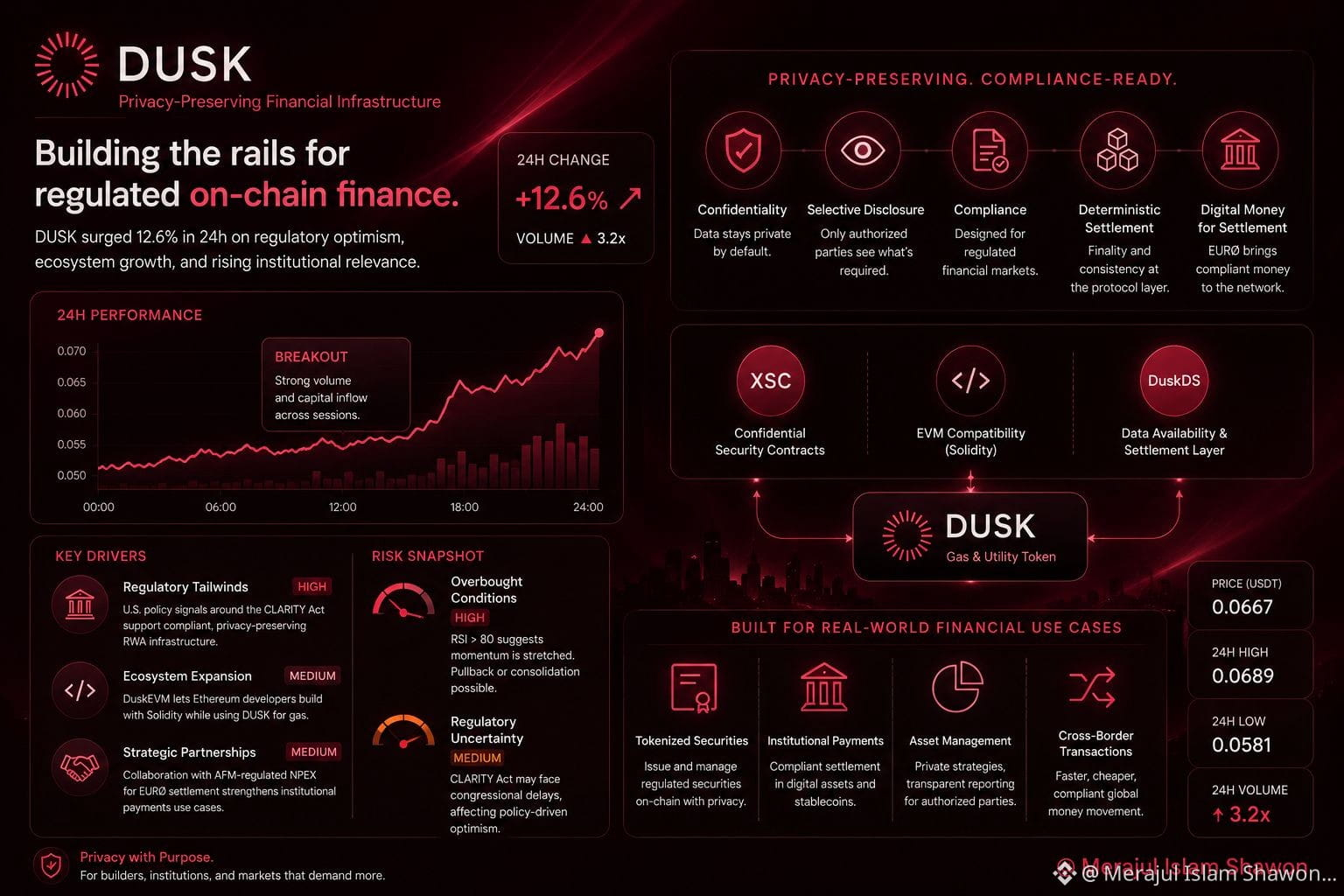
$DUSK currently shows roughly $3.06M in total 24h market volume, while the Binance DUSK/USDT market represents only around $117K. That suggests today’s activity is still distributed across a relatively broad mix of smaller venues rather than concentrated in one major liquidity hub.
Then there’s staking.
Dusk’s Hyperstaking setup makes participation accessible at a relatively small scale, with a 1,000 DUSK minimum and a maturity period of roughly 4,320 blocks (~12 hours). That feels very different from the institutional side of the story.
Because that side is still developing.
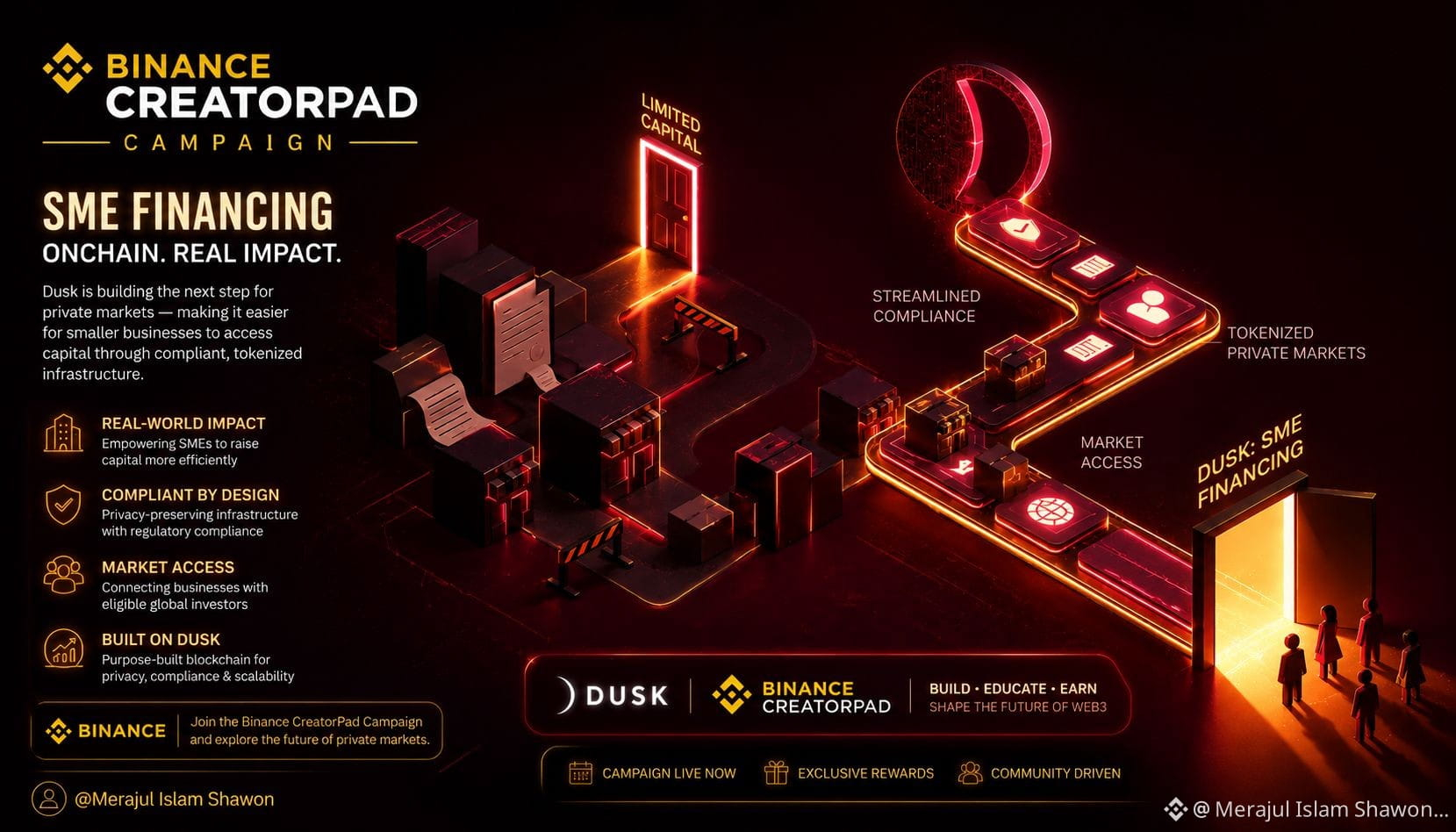
Dusk is positioning itself as infrastructure for regulated financial markets — combining programmable privacy, selective disclosure and deterministic settlement for tokenized assets. Partnerships involving NPEX and Chainlink, alongside the planned €300M+ tokenization pipeline, point toward where the network wants to go.
But there’s an interesting gap between infrastructure being prepared for institutions and institutional activity actually appearing onchain.
Right now, the visible usage looks much more retail and staking-driven.
That isn’t necessarily a weakness. Building regulated financial infrastructure takes time, approvals, integrations and real-world onboarding.
So the question I’m watching isn’t simply how much activity Dusk has today.
It’s who becomes the first major user of the settlement layer when the institutional rails are fully live — the community already staking, or regulated financial markets moving assets onchain?
#dusk $DUSK
The interesting thing about Dusk isn’t what’s promised — it’s what’s already happening.
I spent some time looking at how @dusk is actually being used instead of just reading the institutional narrative around it.
The picture is pretty interesting.
$DUSK currently shows roughly $3.06M in total 24h market volume, while the Binance DUSK/USDT market represents only around $117K. That suggests today’s activity is still distributed across a relatively broad mix of smaller venues rather than concentrated in one major liquidity hub.
Then there’s staking.
Dusk’s Hyperstaking setup makes participation accessible at a relatively small scale, with a 1,000 DUSK minimum and a maturity period of roughly 4,320 blocks (~12 hours). That feels very different from the institutional side of the story.
Because that side is still developing.
Dusk is positioning itself as infrastructure for regulated financial markets — combining programmable privacy, selective disclosure and deterministic settlement for tokenized assets. Partnerships involving NPEX and Chainlink, alongside the planned €300M+ tokenization pipeline, point toward where the network wants to go.
But there’s an interesting gap between infrastructure being prepared for institutions and institutional activity actually appearing onchain.
Right now, the visible usage looks much more retail and staking-driven.
That isn’t necessarily a weakness. Building regulated financial infrastructure takes time, approvals, integrations and real-world onboarding.
So the question I’m watching isn’t simply how much activity Dusk has today.
It’s who becomes the first major user of the settlement layer when the institutional rails are fully live — the community already staking, or regulated financial markets moving assets onchain?
#dusk $DUSK


Merajul Islam Shawon
·
--
#baby $BABY
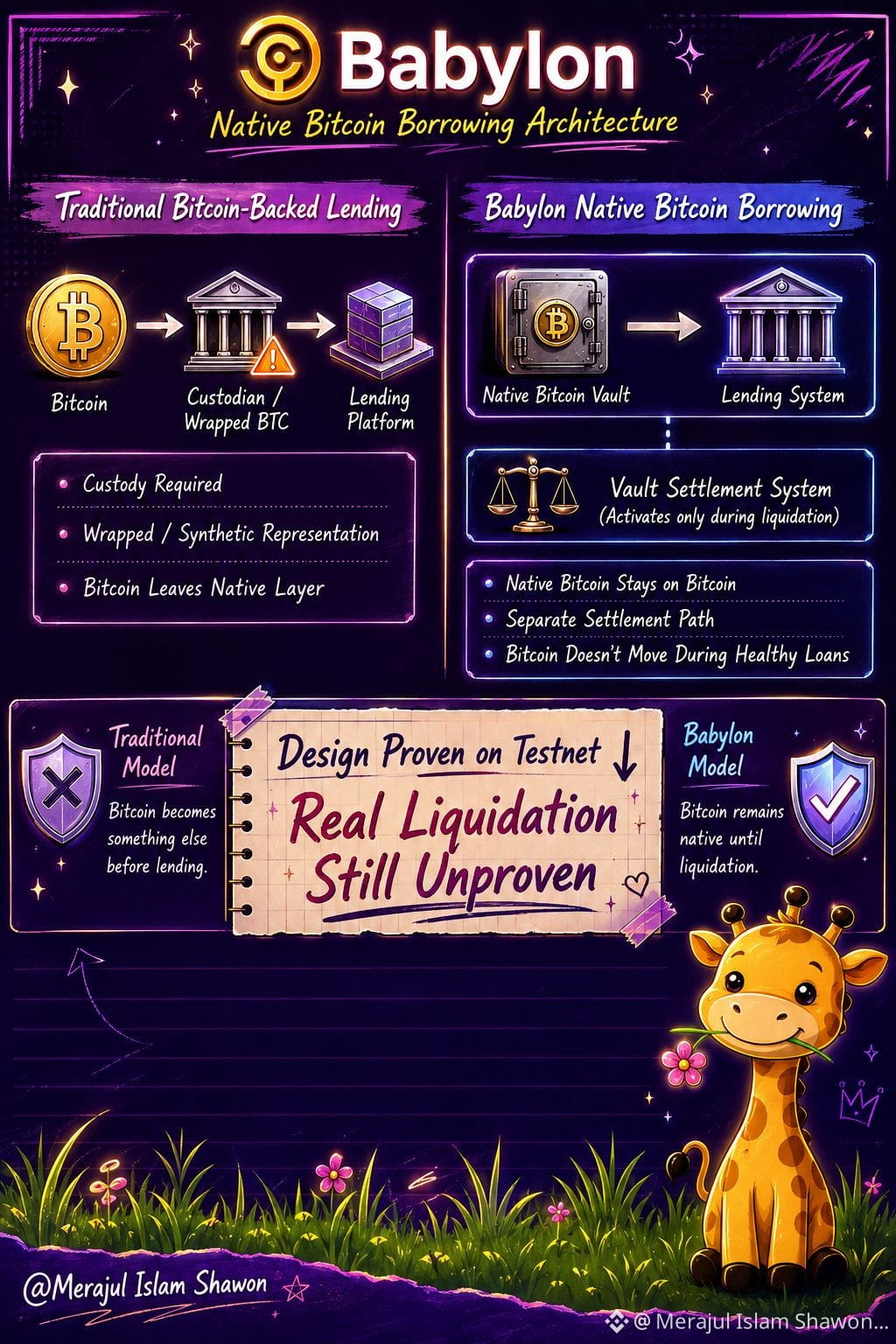
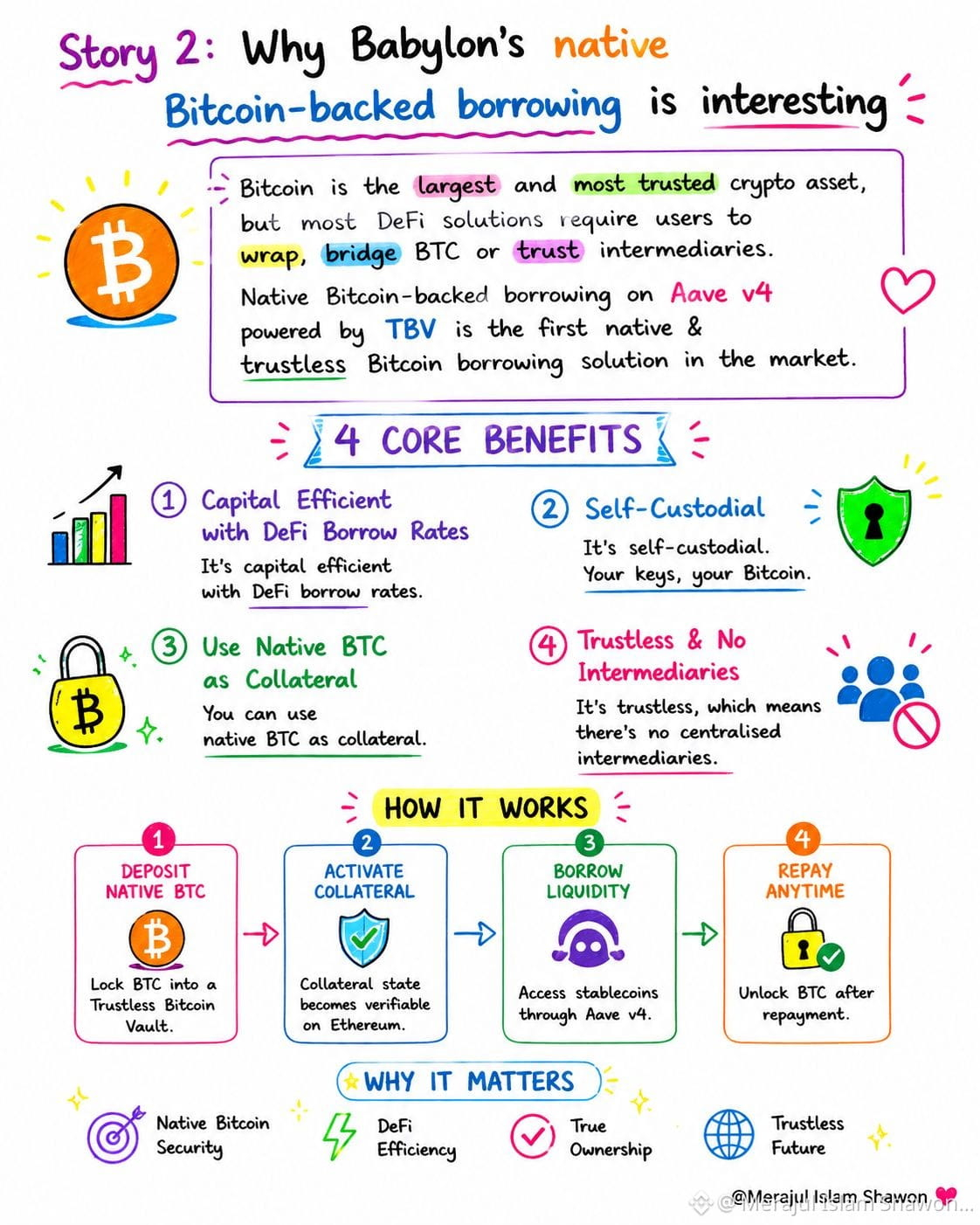
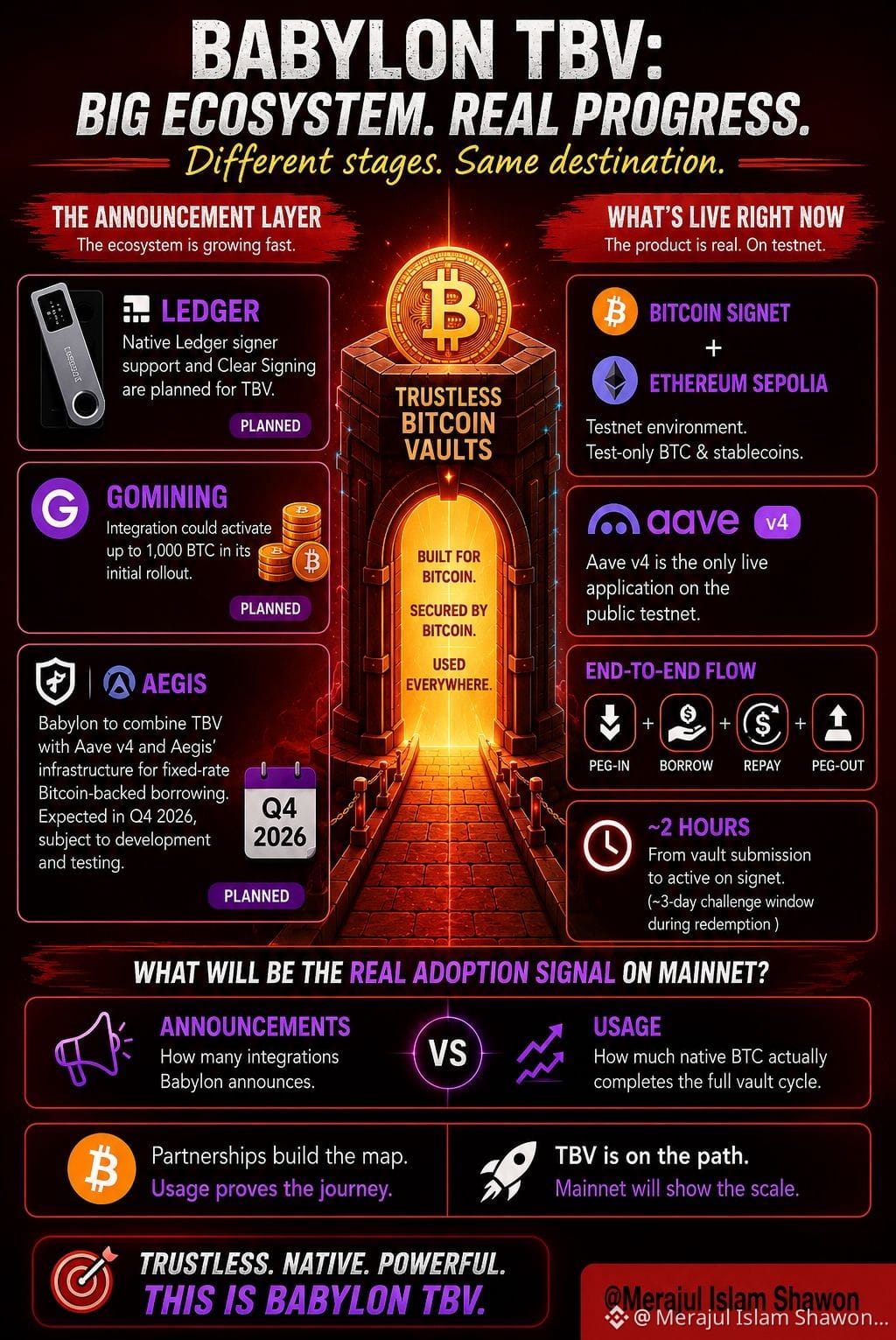
@BabylonLabs_io continues to expand Bitcoin’s real-world utility through Trustless Bitcoin Vaults (TBV), introducing a new way to unlock liquidity while keeping Bitcoin native, secure, and self-custodied. This infographic explains why native Bitcoin-backed borrowing is a major step forward for decentralized finance and highlights how TBV integrates with Aave v4 to create a trustless borrowing experience.
Bitcoin is the world’s largest and most trusted digital asset, yet many DeFi protocols require users to wrap or bridge BTC before using it as collateral. TBV changes this by allowing users to use native Bitcoin directly as collateral, eliminating the need for wrapped assets and reducing reliance on intermediaries. This preserves Bitcoin’s security while expanding its financial utility.
The infographic highlights four core benefits. First, it is capital efficient, giving users access to competitive DeFi borrowing rates. Second, it is self-custodial, meaning users retain full control of their private keys and Bitcoin throughout the process. Third, it enables native BTC collateral, allowing Bitcoin holders to borrow without converting their assets. Finally, the system is trustless, with transparent, code-based execution instead of centralized control.
The borrowing process is simple and efficient: Deposit native BTC into a Trustless Bitcoin Vault, activate collateral so it becomes verifiable on Ethereum, borrow liquidity through Aave v4, and repay anytime to unlock your Bitcoin. This streamlined workflow combines security, efficiency, and decentralization in a single protocol.
With TBV, @BabylonLabs_io is helping transform Bitcoin from a passive store of value into productive collateral for DeFi, unlocking new opportunities while preserving Bitcoin’s core principles.
$BABY #baby #TBV #Meraj_910
$AAVE
#BTC
@BabylonLabs_io continues to expand Bitcoin’s real-world utility through Trustless Bitcoin Vaults (TBV), introducing a new way to unlock liquidity while keeping Bitcoin native, secure, and self-custodied. This infographic explains why native Bitcoin-backed borrowing is a major step forward for decentralized finance and highlights how TBV integrates with Aave v4 to create a trustless borrowing experience.
Bitcoin is the world’s largest and most trusted digital asset, yet many DeFi protocols require users to wrap or bridge BTC before using it as collateral. TBV changes this by allowing users to use native Bitcoin directly as collateral, eliminating the need for wrapped assets and reducing reliance on intermediaries. This preserves Bitcoin’s security while expanding its financial utility.
The infographic highlights four core benefits. First, it is capital efficient, giving users access to competitive DeFi borrowing rates. Second, it is self-custodial, meaning users retain full control of their private keys and Bitcoin throughout the process. Third, it enables native BTC collateral, allowing Bitcoin holders to borrow without converting their assets. Finally, the system is trustless, with transparent, code-based execution instead of centralized control.
The borrowing process is simple and efficient: Deposit native BTC into a Trustless Bitcoin Vault, activate collateral so it becomes verifiable on Ethereum, borrow liquidity through Aave v4, and repay anytime to unlock your Bitcoin. This streamlined workflow combines security, efficiency, and decentralization in a single protocol.
With TBV, @BabylonLabs_io is helping transform Bitcoin from a passive store of value into productive collateral for DeFi, unlocking new opportunities while preserving Bitcoin’s core principles.
$BABY #baby #TBV #Meraj_910
$AAVE
#BTC

Merajul Islam Shawon
·
--
$BABY 📈 #baby 🎉
Here's a more sophisticated paraphrase with stronger vocabulary and a polished analytical tone:
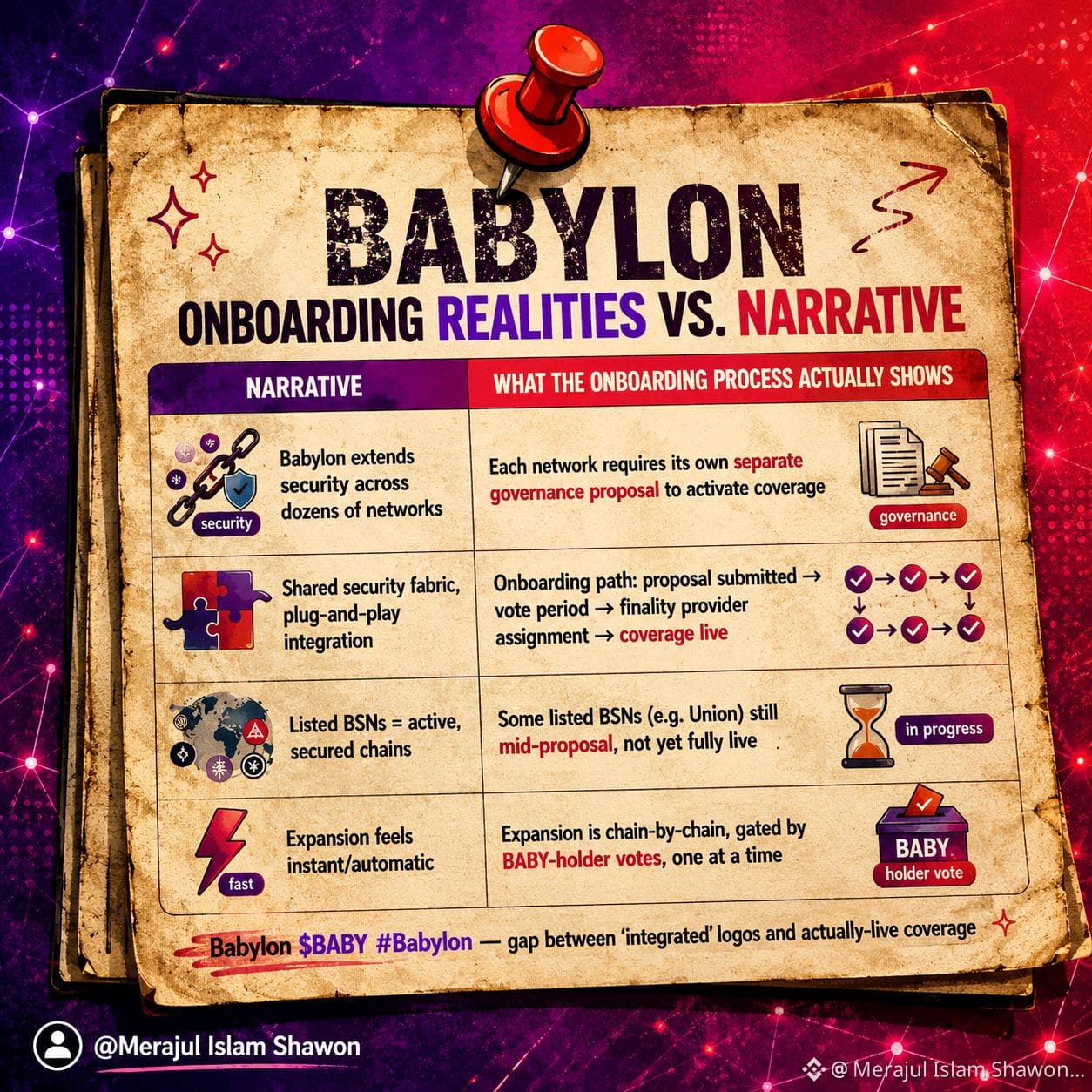
> One observation kept resurfacing as I examined Babylon's BSN ecosystem. While the narrative emphasizes that Babylon already secures dozens of networks, the onboarding mechanics reveal a more incremental reality. Every integration appears to require an independent governance proposal before Babylon's security guarantees become effective.
Union's onboarding journey illustrates this clearly. Rather than a seamless plug-and-play deployment, the process unfolds through multiple governance milestones: proposal submission, community voting, finality provider assignment, and only then the activation of security coverage. In practice, Babylon's security expands network by network, contingent on successful approval from $BABY token holders.
This governance-driven model is not a weakness; if anything, it prioritizes decentralization, transparency, and operational discipline over rapid expansion. However, it also challenges the perception of an instantly deployable "shared security fabric." The rollout is deliberate, permissioned through governance, and progresses one ecosystem at a time.
It also raises an important question: among the many BSNs presented as integrated, how many have completed the full governance lifecycle and are actively protected today, and how many remain somewhere between proposal, voting, and implementation?
The distinction may appear subtle, but it is meaningful. Ecosystem maps showcase ambition, whereas governance records reveal execution. Measuring integration by completed proposals rather than by logos offers a far more accurate picture of Babylon's real security footprint. 😀
@BabylonLabs_io $BABY #baby #Meraj_910
Here's a more sophisticated paraphrase with stronger vocabulary and a polished analytical tone:
> One observation kept resurfacing as I examined Babylon's BSN ecosystem. While the narrative emphasizes that Babylon already secures dozens of networks, the onboarding mechanics reveal a more incremental reality. Every integration appears to require an independent governance proposal before Babylon's security guarantees become effective.
Union's onboarding journey illustrates this clearly. Rather than a seamless plug-and-play deployment, the process unfolds through multiple governance milestones: proposal submission, community voting, finality provider assignment, and only then the activation of security coverage. In practice, Babylon's security expands network by network, contingent on successful approval from $BABY token holders.
This governance-driven model is not a weakness; if anything, it prioritizes decentralization, transparency, and operational discipline over rapid expansion. However, it also challenges the perception of an instantly deployable "shared security fabric." The rollout is deliberate, permissioned through governance, and progresses one ecosystem at a time.
It also raises an important question: among the many BSNs presented as integrated, how many have completed the full governance lifecycle and are actively protected today, and how many remain somewhere between proposal, voting, and implementation?
The distinction may appear subtle, but it is meaningful. Ecosystem maps showcase ambition, whereas governance records reveal execution. Measuring integration by completed proposals rather than by logos offers a far more accurate picture of Babylon's real security footprint. 😀
@BabylonLabs_io $BABY #baby #Meraj_910



BabylonLabs_io
·
--
Quarterly Founders Call is live on our official X. Tune in and share your questions down below!
Merajul Islam Shawon
·
--
#dusk 🗯️ $DUSK 🔥@Dusk 🐘
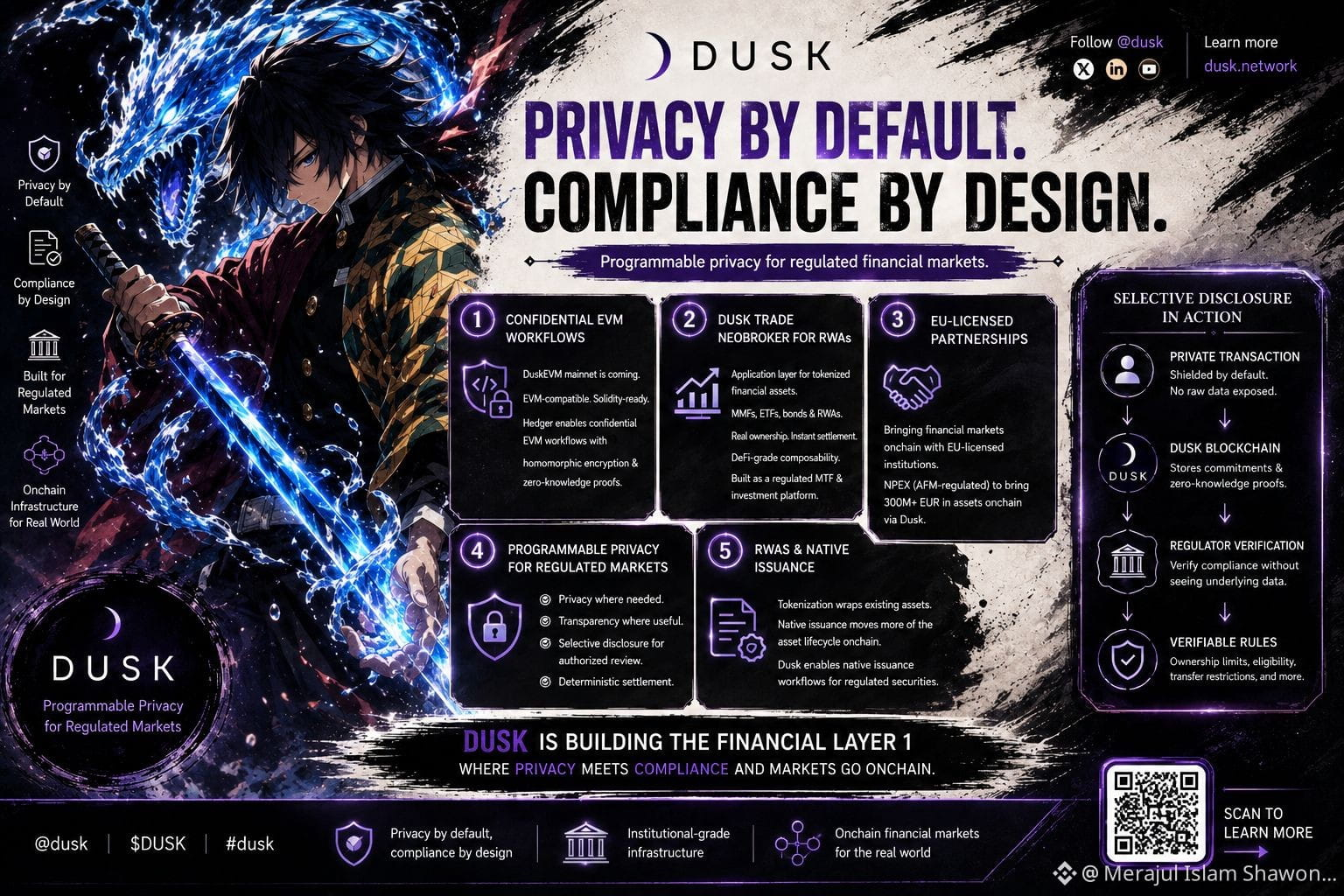
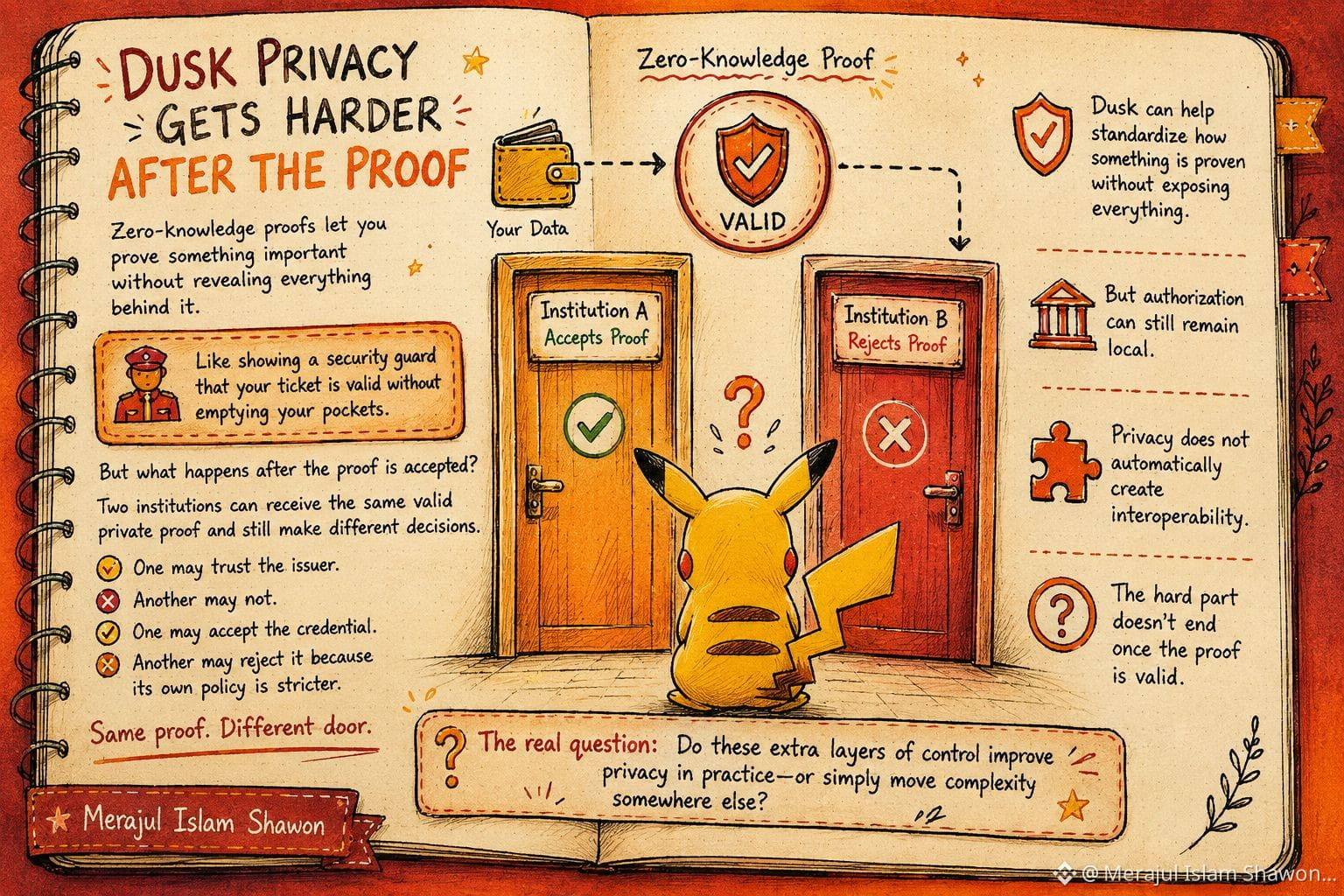
I’ve been looking deeper into @Dusk , and I think there’s more here than simply putting RWAs on a blockchain.
What caught my attention is DuskEVM. It keeps the familiar Solidity/EVM experience while Hedger adds confidential workflows using homomorphic encryption and zero-knowledge proofs.
For regulated finance, that balance matters: privacy when needed, but still verifiable when authorized.
That could make Dusk interesting for tokenized assets and native issuance—not just tokenization itself.
This also ties into Dusk’s ambitions with RWA and native issuance. Tokenizing an asset is just the first step; if the entire process of issuance, transaction, and settlement can run on-chain, then the underlying architecture must handle far more complex requirements.
I haven’t yet concluded that these things are enough to prove Dusk’s model will work. I want to wait for the mainnet and see how real financial processes put these ideas to the test.
I’m still waiting to see how these ideas perform in real financial use cases as mainnet approaches.
$DUSK #dusk #Meraj_910
I’ve been looking deeper into @Dusk , and I think there’s more here than simply putting RWAs on a blockchain.
What caught my attention is DuskEVM. It keeps the familiar Solidity/EVM experience while Hedger adds confidential workflows using homomorphic encryption and zero-knowledge proofs.
For regulated finance, that balance matters: privacy when needed, but still verifiable when authorized.
That could make Dusk interesting for tokenized assets and native issuance—not just tokenization itself.
This also ties into Dusk’s ambitions with RWA and native issuance. Tokenizing an asset is just the first step; if the entire process of issuance, transaction, and settlement can run on-chain, then the underlying architecture must handle far more complex requirements.
I haven’t yet concluded that these things are enough to prove Dusk’s model will work. I want to wait for the mainnet and see how real financial processes put these ideas to the test.
I’m still waiting to see how these ideas perform in real financial use cases as mainnet approaches.
$DUSK #dusk #Meraj_910

Merajul Islam Shawon
·
--
#dusk $DUSK @Dusk
@Dusk isn’t simply trying to make finance private.
What caught my attention is the bigger idea: regulated financial markets need privacy and compliance at the same time.
That’s where Dusk’s architecture becomes interesting. Its programmable privacy approach combines zero-knowledge proofs, selective disclosure and deterministic settlement, giving institutions a way to keep sensitive information protected while still allowing authorized verification.
Then there’s DuskEVM.
An EVM-compatible layer means Solidity developers don’t have to learn an entirely unfamiliar environment before experimenting with regulated financial applications. With confidential EVM workflows through Hedger, the goal is to make privacy programmable rather than treating it as an all-or-nothing feature.
The real test, though, isn’t the technology on paper.
It’s whether actual financial products, institutions and tokenized assets start using it.
That’s why I’m watching the development around tokenized securities, RWAs and Dusk Trade more closely than short-term market noise.
If Dusk can turn its privacy + compliance infrastructure into real financial-market activity, that’s where the network’s thesis becomes much more tangible.
$DUSK #dusk
@Dusk isn’t simply trying to make finance private.
What caught my attention is the bigger idea: regulated financial markets need privacy and compliance at the same time.
That’s where Dusk’s architecture becomes interesting. Its programmable privacy approach combines zero-knowledge proofs, selective disclosure and deterministic settlement, giving institutions a way to keep sensitive information protected while still allowing authorized verification.
Then there’s DuskEVM.
An EVM-compatible layer means Solidity developers don’t have to learn an entirely unfamiliar environment before experimenting with regulated financial applications. With confidential EVM workflows through Hedger, the goal is to make privacy programmable rather than treating it as an all-or-nothing feature.
The real test, though, isn’t the technology on paper.
It’s whether actual financial products, institutions and tokenized assets start using it.
That’s why I’m watching the development around tokenized securities, RWAs and Dusk Trade more closely than short-term market noise.
If Dusk can turn its privacy + compliance infrastructure into real financial-market activity, that’s where the network’s thesis becomes much more tangible.
$DUSK #dusk

Merajul Islam Shawon
·
--
#dusk ❤️ $DUSK 🔥 @Dusk 🐘
I kept coming back to @Dusk ’s own January incident notice instead of focusing on the token chart.
What caught my attention wasn’t simply the exploit itself, but the difference in how the event was described. Dusk’s official January 17, 2026 statement, posted by Georgian Sgura, said monitoring detected unusual activity involving a team-managed wallet. Bridge services were paused, affected addresses were disabled or recycled, and Dusk stated that no user funds were impacted.
The official wording felt controlled and measured.
At the same time, external trackers were already framing the situation differently — describing an unauthorized actor draining DUSK through the Dusk-to-EVM bridge, with losses reportedly reaching the millions.
Same incident, completely different tone.
That gap is what interests me most. I’m less focused on asking whether the incident was serious and more interested in how a privacy-and-compliance-focused chain communicates when something happens around its bridge, which is arguably outside the core DuskDS protocol itself.
Dusk was quick to clarify that this wasn’t a DuskDS protocol issue, but the exact scale appeared less clear at first. From a legal and operational perspective, I can understand that approach. From a user’s perspective, though, the uncertainty is still interesting.
I reread the notice twice and still couldn’t figure out what “small number of transactions” actually meant. Five? Fifty? Five hundred?
So I’m genuinely curious: did anyone independently trace the on-chain activity from that window instead of relying on either side’s framing?
$DUSK 🔅#Meraj_910
Did the different versions of the incident raise questions for you too? @Dusk 💪
I kept coming back to @Dusk ’s own January incident notice instead of focusing on the token chart.
What caught my attention wasn’t simply the exploit itself, but the difference in how the event was described. Dusk’s official January 17, 2026 statement, posted by Georgian Sgura, said monitoring detected unusual activity involving a team-managed wallet. Bridge services were paused, affected addresses were disabled or recycled, and Dusk stated that no user funds were impacted.
The official wording felt controlled and measured.
At the same time, external trackers were already framing the situation differently — describing an unauthorized actor draining DUSK through the Dusk-to-EVM bridge, with losses reportedly reaching the millions.
Same incident, completely different tone.
That gap is what interests me most. I’m less focused on asking whether the incident was serious and more interested in how a privacy-and-compliance-focused chain communicates when something happens around its bridge, which is arguably outside the core DuskDS protocol itself.
Dusk was quick to clarify that this wasn’t a DuskDS protocol issue, but the exact scale appeared less clear at first. From a legal and operational perspective, I can understand that approach. From a user’s perspective, though, the uncertainty is still interesting.
I reread the notice twice and still couldn’t figure out what “small number of transactions” actually meant. Five? Fifty? Five hundred?
So I’m genuinely curious: did anyone independently trace the on-chain activity from that window instead of relying on either side’s framing?
$DUSK 🔅#Meraj_910
Did the different versions of the incident raise questions for you too? @Dusk 💪

Log in to explore more content