
#molecule
molecule
2,669 views
13 Discussing
Hot
Latest


·
--
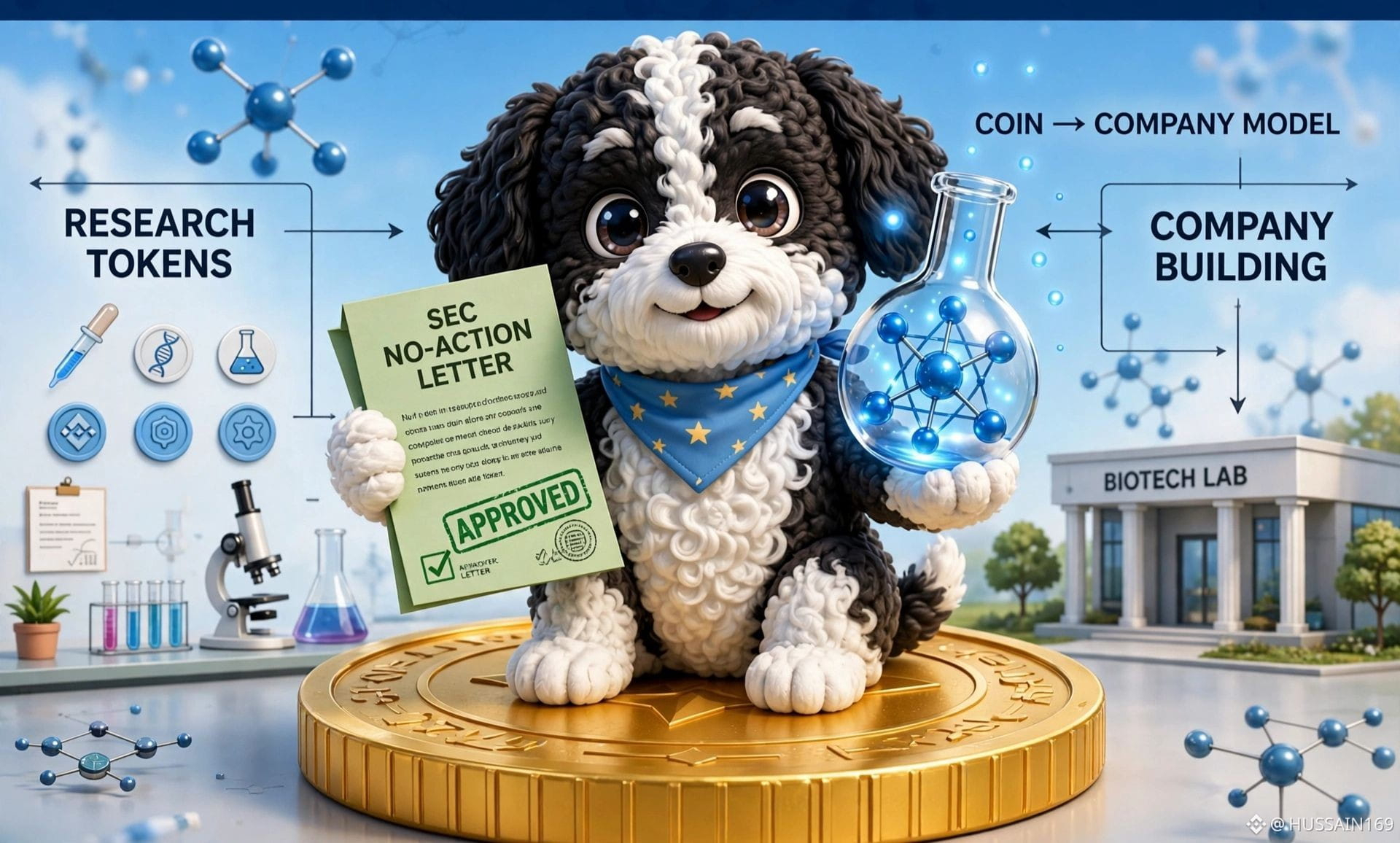
The SEC has given a No Action Letter on the Molecule model. This news has made a positive wave in the crypto and DeSci market. Reports say the US SEC has issued a No Action Letter for the Molecule model. That means the regulator will not take enforcement action against this tokenized science model. This is a moment for crypto regulation and for the future of decentralized science.
A No Action Letter means clarity. It means builders can now work with confidence. They no longer have to fear an enforcement. For Molecule, it means its model for tokenizing research and intellectual property has received important regulatory guidance. For the industry, it means the US is finally moving towards clear rules. It is no longer regulation by enforcement.
The crypto market is now turning more positive. Investors are celebrating this win. The full impact is still expected in the coming months.This sudden burst of confidence signals deep optimism across DeFi DeSci and RWA projects. Clear regulation brings builders. It brings capital.It brings new trust in the whole crypto space.
Is this SEC No Action Letter a green signal before a bigger wave of crypto regulation clarity?. Is it the early start of the US becoming the global leader in tokenized science and real world assets? Share your opinion in the comments below.
#SECIssuesNoActionLetterOnMoleculeModel #SEC #Molecule
$MULL.ETF $BTC $ETH
{web3_wallet_create}(10x42778037d69350508cdd34d9fa17053970591101)
The SEC has given a No Action Letter on the Molecule model. This news has made a positive wave in the crypto and DeSci market. Reports say the US SEC has issued a No Action Letter for the Molecule model. That means the regulator will not take enforcement action against this tokenized science model. This is a moment for crypto regulation and for the future of decentralized science.
A No Action Letter means clarity. It means builders can now work with confidence. They no longer have to fear an enforcement. For Molecule, it means its model for tokenizing research and intellectual property has received important regulatory guidance. For the industry, it means the US is finally moving towards clear rules. It is no longer regulation by enforcement.
The crypto market is now turning more positive. Investors are celebrating this win. The full impact is still expected in the coming months.This sudden burst of confidence signals deep optimism across DeFi DeSci and RWA projects. Clear regulation brings builders. It brings capital.It brings new trust in the whole crypto space.
Is this SEC No Action Letter a green signal before a bigger wave of crypto regulation clarity?. Is it the early start of the US becoming the global leader in tokenized science and real world assets? Share your opinion in the comments below.
#SECIssuesNoActionLetterOnMoleculeModel #SEC #Molecule
$MULL.ETF $BTC $ETH
197

Article
Molecule AG SEC no-action letter: what staff said about LabsCo Project TokensMolecule AG SEC no-action letter: what staff said about LabsCo Project Tokens
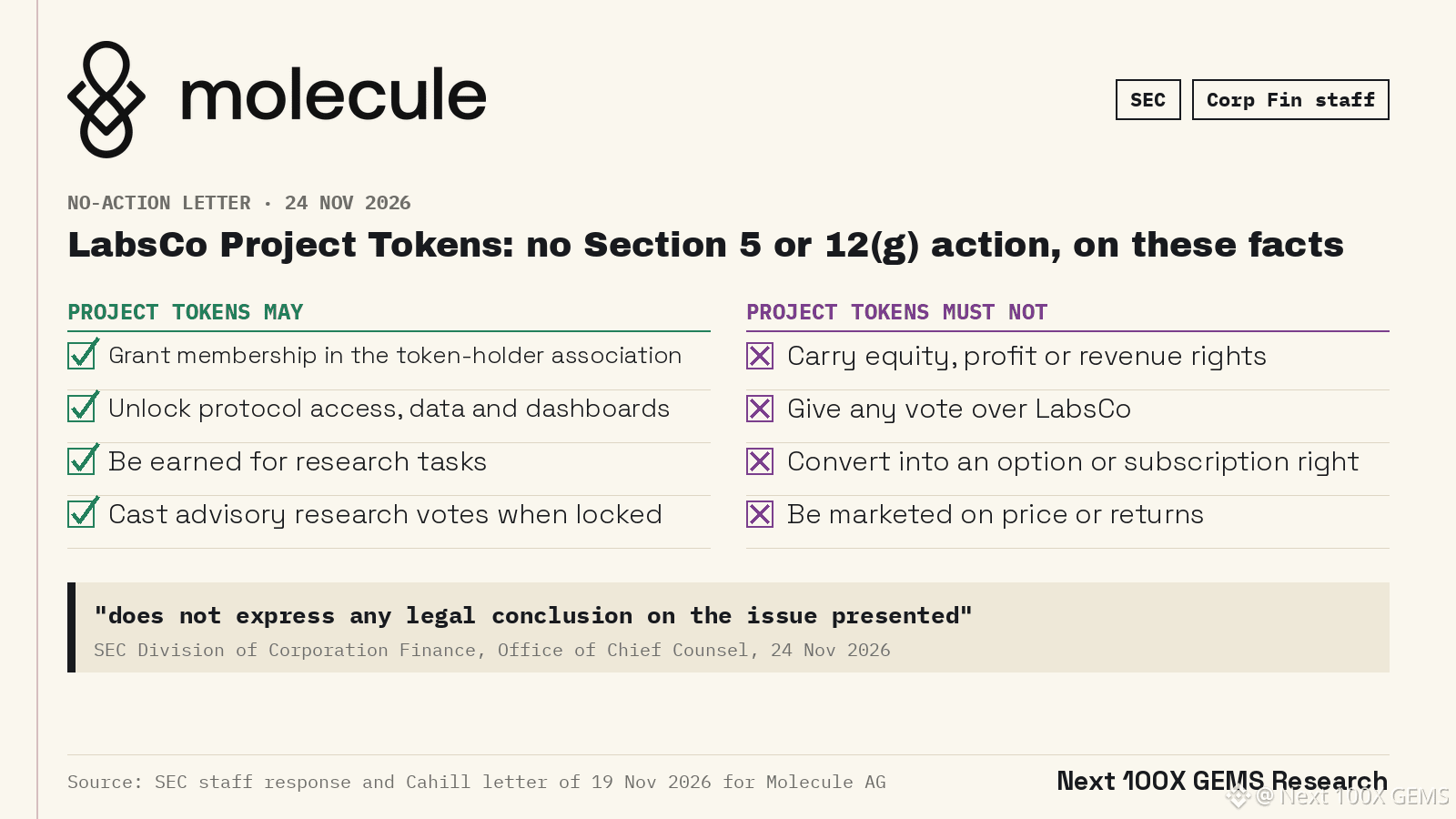
The short answer: SEC staff did not approve anything and did not say the tokens are not securities. In a response dated 24 November 2026, the Office of Chief Counsel in the Division of Corporation Finance said it "will not recommend enforcement action to the Commission" if LabsCo, a Delaware subsidiary of Swiss company Molecule AG, offers and sells Project Tokens "in the manner and under the circumstances described" in Molecule's request, without registering the sale under Section 5 of the Securities Act and without registering the tokens as a class of equity securities under Section 12(g) of the Exchange Act. Deputy Chief Counsel Jonathan A. Ingram signed it.
The response, line by line
The staff reply is three short paragraphs. The first identifies the request: a letter dated 19 November 2026 from Lewis Rinaudo Cohen of Cahill Gordon & Reindel, on Molecule's behalf. The second gives the relief, and it is conditioned twice: "based on the facts presented" and "in reliance on your opinion as counsel." The third sets the limits. The position "is based on the representations made," "any different facts or conditions might require the Division to reach a different conclusion," and the response "expresses the Division's position on enforcement action only and does not express any legal conclusion on the issue presented."
That is the whole of what staff wrote. Everything else in the file is Molecule's counsel describing the plan and arguing the law.
What the relief covers
The request names one entity. Molecule "currently operates one wholly owned U.S. subsidiary ('LabsCo')," and the relief runs to LabsCo's offers and sales of its Project Tokens. The request says Molecule expects to form more subsidiaries on the same model, but the staff response does not extend to them by name. A future project would rely on the letter only to the extent its facts match.
Counsel also conceded a limit in footnote 9: the relief "would not apply to any party that acts in a manner inconsistent with LabsCo's proposed marketing restrictions."
The facts staff relied on
The request describes a two-entity setup Molecule calls Coin-to-Company. LabsCo creates and sells the tokens, owns the intellectual property, and directs the research. A Wyoming unincorporated nonprofit association made up only of token holders receives intellectual property contributed by holders and assigns all of it to LabsCo. The association "will not hold material assets, transmit monetary value, employ personnel, or enter into any material commercial contracts."
The tokens are sold for fiat or crypto and also handed out as airdrops and as rewards for research tasks, such as reviewing proposals or contributing data. What they do, per the request: membership in the association, protocol access, token-gated dashboards, content and events, and access to LabsCo's research publications and data. Larger holdings may unlock higher membership tiers, such as earlier data access.
What they must not carry is listed in the sale terms. Project Tokens do not represent "any ownership rights, stake, equity interests, security, or equivalent rights" in LabsCo or the association. They carry no right to profits, revenue or proceeds, no enforceable contract rights beyond the stated utility, and no conversion into "any option, warrant, subscription right." Governance of the association "confers no governance, control, or voting rights with respect to LabsCo." Supply is not fixed, and LabsCo may mint more.
Marketing is fenced in. No communication may discuss managerial efforts to raise token value, use of proceeds to generate returns, price appreciation, or any LabsCo equity offering. LabsCo will not promise a fixed or maximum supply or adjust supply to lift prices, and will not run a trading venue or act as market maker, though it "expects to facilitate liquidity provisioning."
Votes that bind no one
Holders can lock tokens in LabsCo's smart contract and get non-transferable receipts, while keeping beneficial ownership. Locked holders may vote, one vote per token, on research priorities when LabsCo chooses to ask. Those votes "are advisory only, are not binding on LabsCo under any circumstances."
Why equity sits in a separate offering
The request keeps equity apart. LabsCo may, "in its sole discretion," sell equity in "a separate securities offering," registered or exempt, and only if the research makes substantial progress. No token holder has any right to an allocation, and holding or locking tokens is not a precondition. After equity is issued, an investor must keep at least as many tokens locked as equity interests held, with LabsCo granting any shortfall at no additional cost, "solely as a technical requirement" so the investor's on-chain identity matches LabsCo's off-chain equity records.
The legal argument, which is counsel's
Counsel argues the tokens fail the third prong of Howey because buyers acquire them to use, citing Forman, the 1975 co-op housing case. Counsel also relies on the Commission's interpretive release No. 33-11412 of 17 March 2026, which, in counsel's reading, places "digital tools" among crypto assets that are not themselves securities, and argues that locking creates no option or right to subscribe. Staff endorsed none of this reasoning. It accepted the representations for enforcement purposes only.
Where Molecule's summary goes further than the letter
Molecule's blog post of 24 November describes staff as having "reviewed the model" and declining enforcement "against research projects that sell tokens under it." The response names LabsCo only. The blog also lists KYC screening, Regulation D and Rule 701 as steps toward equity, and says holders of locked tokens can apply. The request itself says an investor may buy equity "without ever having held Project Tokens" and names no specific exemption. Molecule says its first project on the model will launch in the coming weeks.
Sources
SEC, Division of Corporation Finance, Office of Chief Counsel, response re: Molecule AG, 24 Nov 2026
Incoming letter from Cahill Gordon & Reindel on behalf of Molecule AG, 19 Nov 2026
Molecule blog, 24 Nov 2026
The Block, 24 Nov 2026
#SEC #Molecule
NFA. DYOR.
Molecule AG SEC no-action letter: what staff said about LabsCo Project Tokens
Molecule AG SEC no-action letter: what staff said about LabsCo Project Tokens
The short answer: SEC staff did not approve anything and did not say the tokens are not securities. In a response dated 24 November 2026, the Office of Chief Counsel in the Division of Corporation Finance said it "will not recommend enforcement action to the Commission" if LabsCo, a Delaware subsidiary of Swiss company Molecule AG, offers and sells Project Tokens "in the manner and under the circumstances described" in Molecule's request, without registering the sale under Section 5 of the Securities Act and without registering the tokens as a class of equity securities under Section 12(g) of the Exchange Act. Deputy Chief Counsel Jonathan A. Ingram signed it.
The response, line by line
The staff reply is three short paragraphs. The first identifies the request: a letter dated 19 November 2026 from Lewis Rinaudo Cohen of Cahill Gordon & Reindel, on Molecule's behalf. The second gives the relief, and it is conditioned twice: "based on the facts presented" and "in reliance on your opinion as counsel." The third sets the limits. The position "is based on the representations made," "any different facts or conditions might require the Division to reach a different conclusion," and the response "expresses the Division's position on enforcement action only and does not express any legal conclusion on the issue presented."
That is the whole of what staff wrote. Everything else in the file is Molecule's counsel describing the plan and arguing the law.
What the relief covers
The request names one entity. Molecule "currently operates one wholly owned U.S. subsidiary ('LabsCo')," and the relief runs to LabsCo's offers and sales of its Project Tokens. The request says Molecule expects to form more subsidiaries on the same model, but the staff response does not extend to them by name. A future project would rely on the letter only to the extent its facts match.
Counsel also conceded a limit in footnote 9: the relief "would not apply to any party that acts in a manner inconsistent with LabsCo's proposed marketing restrictions."
The facts staff relied on
The request describes a two-entity setup Molecule calls Coin-to-Company. LabsCo creates and sells the tokens, owns the intellectual property, and directs the research. A Wyoming unincorporated nonprofit association made up only of token holders receives intellectual property contributed by holders and assigns all of it to LabsCo. The association "will not hold material assets, transmit monetary value, employ personnel, or enter into any material commercial contracts."
The tokens are sold for fiat or crypto and also handed out as airdrops and as rewards for research tasks, such as reviewing proposals or contributing data. What they do, per the request: membership in the association, protocol access, token-gated dashboards, content and events, and access to LabsCo's research publications and data. Larger holdings may unlock higher membership tiers, such as earlier data access.
What they must not carry is listed in the sale terms. Project Tokens do not represent "any ownership rights, stake, equity interests, security, or equivalent rights" in LabsCo or the association. They carry no right to profits, revenue or proceeds, no enforceable contract rights beyond the stated utility, and no conversion into "any option, warrant, subscription right." Governance of the association "confers no governance, control, or voting rights with respect to LabsCo." Supply is not fixed, and LabsCo may mint more.
Marketing is fenced in. No communication may discuss managerial efforts to raise token value, use of proceeds to generate returns, price appreciation, or any LabsCo equity offering. LabsCo will not promise a fixed or maximum supply or adjust supply to lift prices, and will not run a trading venue or act as market maker, though it "expects to facilitate liquidity provisioning."
Votes that bind no one
Holders can lock tokens in LabsCo's smart contract and get non-transferable receipts, while keeping beneficial ownership. Locked holders may vote, one vote per token, on research priorities when LabsCo chooses to ask. Those votes "are advisory only, are not binding on LabsCo under any circumstances."
Why equity sits in a separate offering
The request keeps equity apart. LabsCo may, "in its sole discretion," sell equity in "a separate securities offering," registered or exempt, and only if the research makes substantial progress. No token holder has any right to an allocation, and holding or locking tokens is not a precondition. After equity is issued, an investor must keep at least as many tokens locked as equity interests held, with LabsCo granting any shortfall at no additional cost, "solely as a technical requirement" so the investor's on-chain identity matches LabsCo's off-chain equity records.
The legal argument, which is counsel's
Counsel argues the tokens fail the third prong of Howey because buyers acquire them to use, citing Forman, the 1975 co-op housing case. Counsel also relies on the Commission's interpretive release No. 33-11412 of 17 March 2026, which, in counsel's reading, places "digital tools" among crypto assets that are not themselves securities, and argues that locking creates no option or right to subscribe. Staff endorsed none of this reasoning. It accepted the representations for enforcement purposes only.
Where Molecule's summary goes further than the letter
Molecule's blog post of 24 November describes staff as having "reviewed the model" and declining enforcement "against research projects that sell tokens under it." The response names LabsCo only. The blog also lists KYC screening, Regulation D and Rule 701 as steps toward equity, and says holders of locked tokens can apply. The request itself says an investor may buy equity "without ever having held Project Tokens" and names no specific exemption. Molecule says its first project on the model will launch in the coming weeks.
Sources
SEC, Division of Corporation Finance, Office of Chief Counsel, response re: Molecule AG, 24 Nov 2026
Incoming letter from Cahill Gordon & Reindel on behalf of Molecule AG, 19 Nov 2026
Molecule blog, 24 Nov 2026
The Block, 24 Nov 2026
#SEC #Molecule
NFA. DYOR.
107

$MOLECULE
#BTC☀ #SolanaUSTD #BNB走势 #Ethereum
Great Time For investment
✅️✅️✅️✅️✅️
Next Week 4000k% 🚀🚀🚀💵🎁🧧🤑
#MOLECULE
$MOLECULE
#BTC☀ #SolanaUSTD #BNB走势 #Ethereum
Great Time For investment
✅️✅️✅️✅️✅️
Next Week 4000k% 🚀🚀🚀💵🎁🧧🤑
#MOLECULE
#BTC☀ #SolanaUSTD #BNB走势 #Ethereum
Great Time For investment
✅️✅️✅️✅️✅️
Next Week 4000k% 🚀🚀🚀💵🎁🧧🤑
#MOLECULE
1
44

·
--
Bullish
#secissuesnoactionletteronmoleculemodel
🚨 SEC ISSUES NO-ACTION LETTER TO MOLECULE — A POTENTIAL MILESTONE FOR DECENTRALIZED SCIENCE!
The U.S. Securities and Exchange Commission (SEC) has issued a no-action letter to Molecule AG, allowing its proposed U.S. token offering to proceed without securities registration under the specific conditions presented to the regulator.
The development brings fresh attention to Decentralized Science (DeSci), an emerging sector that uses blockchain technology to connect communities with scientific research and funding.
📊 Why Does This Matter?
Molecule's Coin-to-Company model aims to let communities participate in research-related projects through blockchain-based tokens.
Importantly, these tokens are designed to provide participation and advisory voting rights rather than traditional company ownership or claims on profits.
🔍 Market Perspective
This could be a meaningful step toward exploring new ways of bringing blockchain technology into real-world industries.
If the model proves successful, other DeSci projects may examine similar approaches to funding research and building decentralized communities.
However, traders should remain realistic. An SEC no-action letter is not blanket regulatory approval for all crypto tokens or DeSci projects. Its conclusions are limited to the specific facts and conditions presented.
Final Thoughts:
The bigger opportunity here is not an immediate price rally but the possibility of expanding blockchain adoption beyond traditional financial applications.
DeSci is still an emerging sector, and its long-term success will depend on real research outcomes, transparency, and sustainable participation.
#SEC #Molecule #DeSci #CryptoNews
$LAB
{future}(LABUSDT)
$ELSA
{future}(ELSAUSDT)
$TAG
{future}(TAGUSDT)
#secissuesnoactionletteronmoleculemodel
🚨 SEC ISSUES NO-ACTION LETTER TO MOLECULE — A POTENTIAL MILESTONE FOR DECENTRALIZED SCIENCE!
The U.S. Securities and Exchange Commission (SEC) has issued a no-action letter to Molecule AG, allowing its proposed U.S. token offering to proceed without securities registration under the specific conditions presented to the regulator.
The development brings fresh attention to Decentralized Science (DeSci), an emerging sector that uses blockchain technology to connect communities with scientific research and funding.
📊 Why Does This Matter?
Molecule's Coin-to-Company model aims to let communities participate in research-related projects through blockchain-based tokens.
Importantly, these tokens are designed to provide participation and advisory voting rights rather than traditional company ownership or claims on profits.
🔍 Market Perspective
This could be a meaningful step toward exploring new ways of bringing blockchain technology into real-world industries.
If the model proves successful, other DeSci projects may examine similar approaches to funding research and building decentralized communities.
However, traders should remain realistic. An SEC no-action letter is not blanket regulatory approval for all crypto tokens or DeSci projects. Its conclusions are limited to the specific facts and conditions presented.
Final Thoughts:
The bigger opportunity here is not an immediate price rally but the possibility of expanding blockchain adoption beyond traditional financial applications.
DeSci is still an emerging sector, and its long-term success will depend on real research outcomes, transparency, and sustainable participation.
#SEC #Molecule #DeSci #CryptoNews
$LAB
$ELSA
$TAG
768

·
--
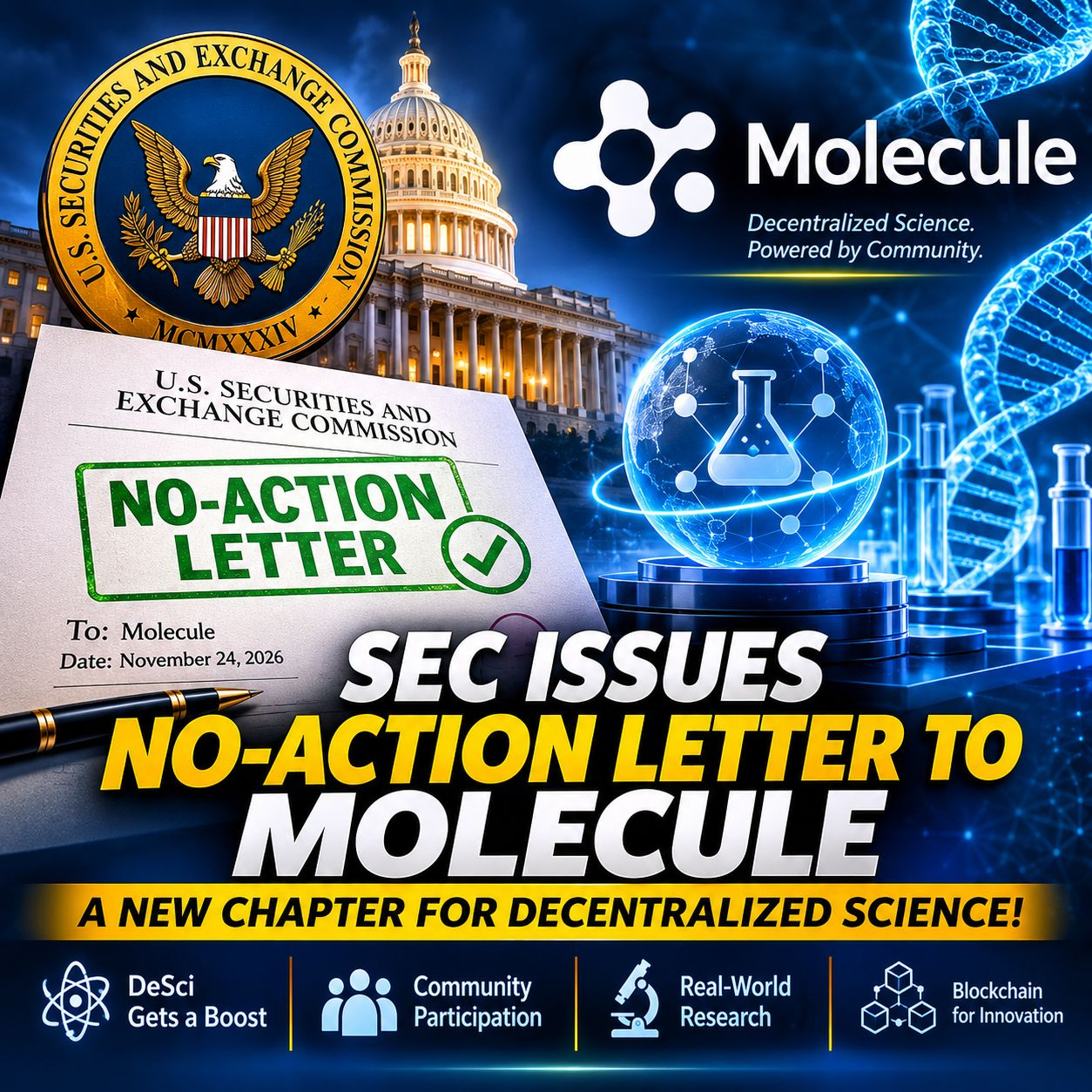
🚀 SEC ISSUES NO-ACTION LETTER TO MOLECULE — A NEW CHAPTER FOR DECENTRALIZED SCIENCE!
The intersection of blockchain, scientific research, and traditional finance just reached an important milestone.
On November 24, 2026, the SEC's Division of Corporation Finance issued a No-Action Letter concerning Molecule and its innovative Coin-to-Company (C2C) model.
This is significant because Molecule is exploring a framework that connects blockchain-based community participation with real-world scientific research and company structures.
Under the proposed model, Project Tokens provide access to research communities and participation features. Holders can voluntarily lock tokens to participate in non-binding advisory votes on research priorities. Any future equity offering would remain a separate process, with its own conditions.
What makes this development particularly interesting is the possibility of creating new pathways for communities to participate in scientific innovation without confusing token ownership with company ownership.
i see this as a meaningful regulatory signal for the DeSci sector. However, this is not blanket SEC approval for all crypto or research tokens. The letter applies to LabsCo under the specific facts and representations submitted to the SEC.
Now the real test begins: project launches, actual research progress, meaningful participation, and execution.
DeSci is pushing blockchain beyond digital assets and into real-world innovation. The next chapter could be fascinating!
#Molecule #DeSci #Crypto #SEC #Blockchain
#SECIssuesNoActionLetterOnMoleculeModel
96

·
--
Bullish
#secissuesnoactionletteronmoleculemodel
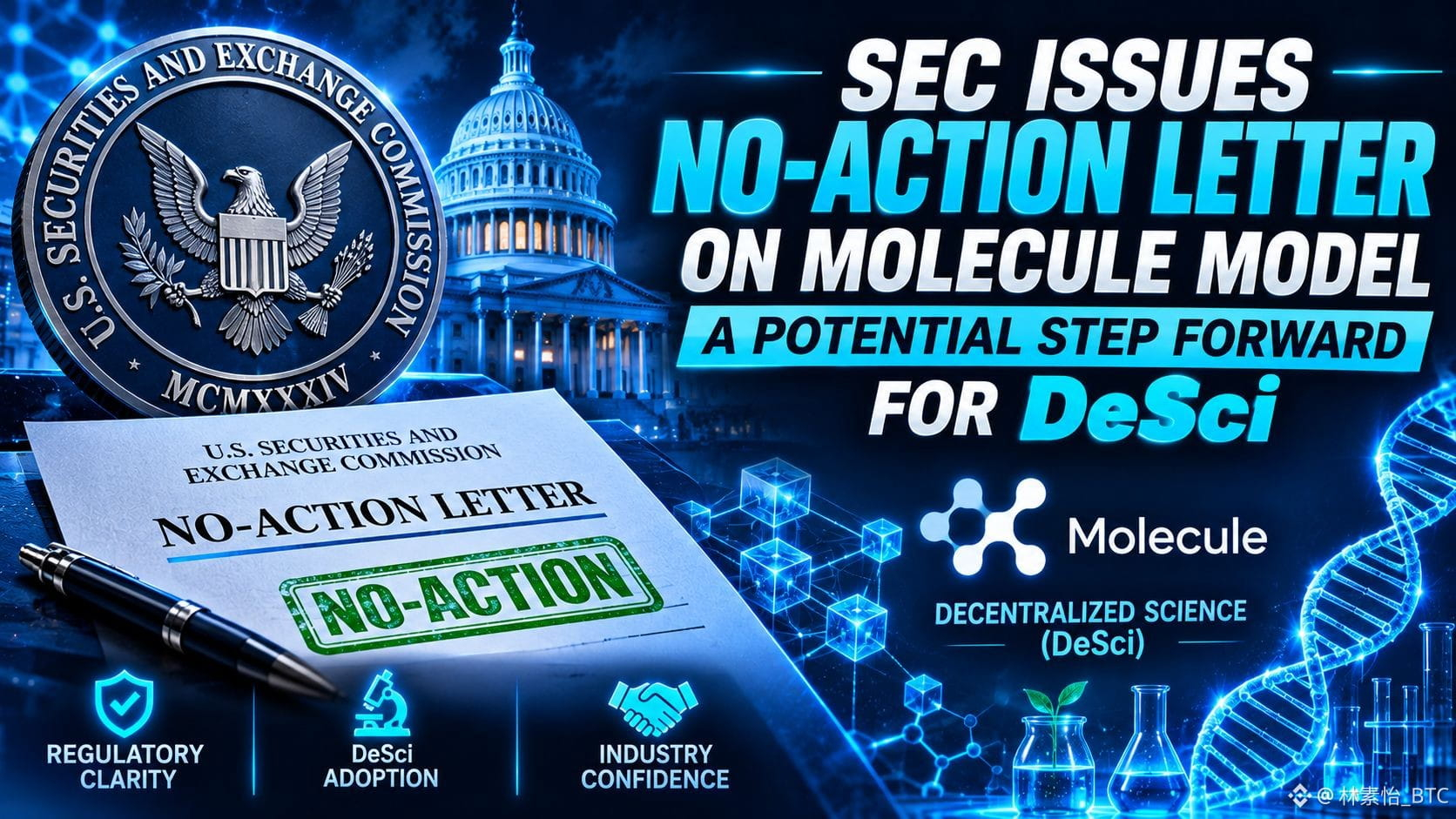
🚨 SEC Issues No-Action Letter on Molecule Model: A Potential Step Forward for DeSci
The U.S. Securities and Exchange Commission (SEC) has issued a no-action letter concerning the Molecule model, bringing fresh attention to the intersection of blockchain technology, decentralized science (DeSci), and financial regulation.
This development is important because regulatory uncertainty has been one of the major challenges facing blockchain-based projects, particularly those exploring tokenization and new funding models.
Why Does It Matter?
🔹 Regulatory Clarity: A no-action letter can provide limited regulatory comfort regarding a specific proposed activity under the facts presented.
🔹 DeSci Adoption: The development could encourage further discussion around blockchain-powered scientific research and decentralized funding.
🔹 Industry Confidence: Clearer regulatory guidance may help legitimate projects evaluate their business models and compliance responsibilities.
What Should Crypto Traders Watch?
This is a potentially positive development for the DeSci narrative. However, traders should understand that an SEC no-action letter is not blanket regulatory approval, nor does it guarantee that similar projects will receive the same treatment.
The broader market impact will depend on how the industry responds and whether this development leads to greater regulatory clarity.
Bottom Line:
The SEC's move is worth watching as decentralized science continues to explore new ways of combining blockchain technology with scientific innovation. For now, this is a meaningful regulatory development rather than an immediate market-wide bullish catalyst.
#Crypto #SEC #Molecule #CryptoNews
$IDOL $LISTA $TAG
{future}(TAGUSDT)
{future}(LISTAUSDT)
{future}(IDOLUSDT)
#secissuesnoactionletteronmoleculemodel
🚨 SEC Issues No-Action Letter on Molecule Model: A Potential Step Forward for DeSci
The U.S. Securities and Exchange Commission (SEC) has issued a no-action letter concerning the Molecule model, bringing fresh attention to the intersection of blockchain technology, decentralized science (DeSci), and financial regulation.
This development is important because regulatory uncertainty has been one of the major challenges facing blockchain-based projects, particularly those exploring tokenization and new funding models.
Why Does It Matter?
🔹 Regulatory Clarity: A no-action letter can provide limited regulatory comfort regarding a specific proposed activity under the facts presented.
🔹 DeSci Adoption: The development could encourage further discussion around blockchain-powered scientific research and decentralized funding.
🔹 Industry Confidence: Clearer regulatory guidance may help legitimate projects evaluate their business models and compliance responsibilities.
What Should Crypto Traders Watch?
This is a potentially positive development for the DeSci narrative. However, traders should understand that an SEC no-action letter is not blanket regulatory approval, nor does it guarantee that similar projects will receive the same treatment.
The broader market impact will depend on how the industry responds and whether this development leads to greater regulatory clarity.
Bottom Line:
The SEC's move is worth watching as decentralized science continues to explore new ways of combining blockchain technology with scientific innovation. For now, this is a meaningful regulatory development rather than an immediate market-wide bullish catalyst.
#Crypto #SEC #Molecule #CryptoNews
$IDOL $LISTA $TAG
3
2.7k

·
--
#secissuesnoactionletteronmoleculemodel
Big week for decentralized science 🧬
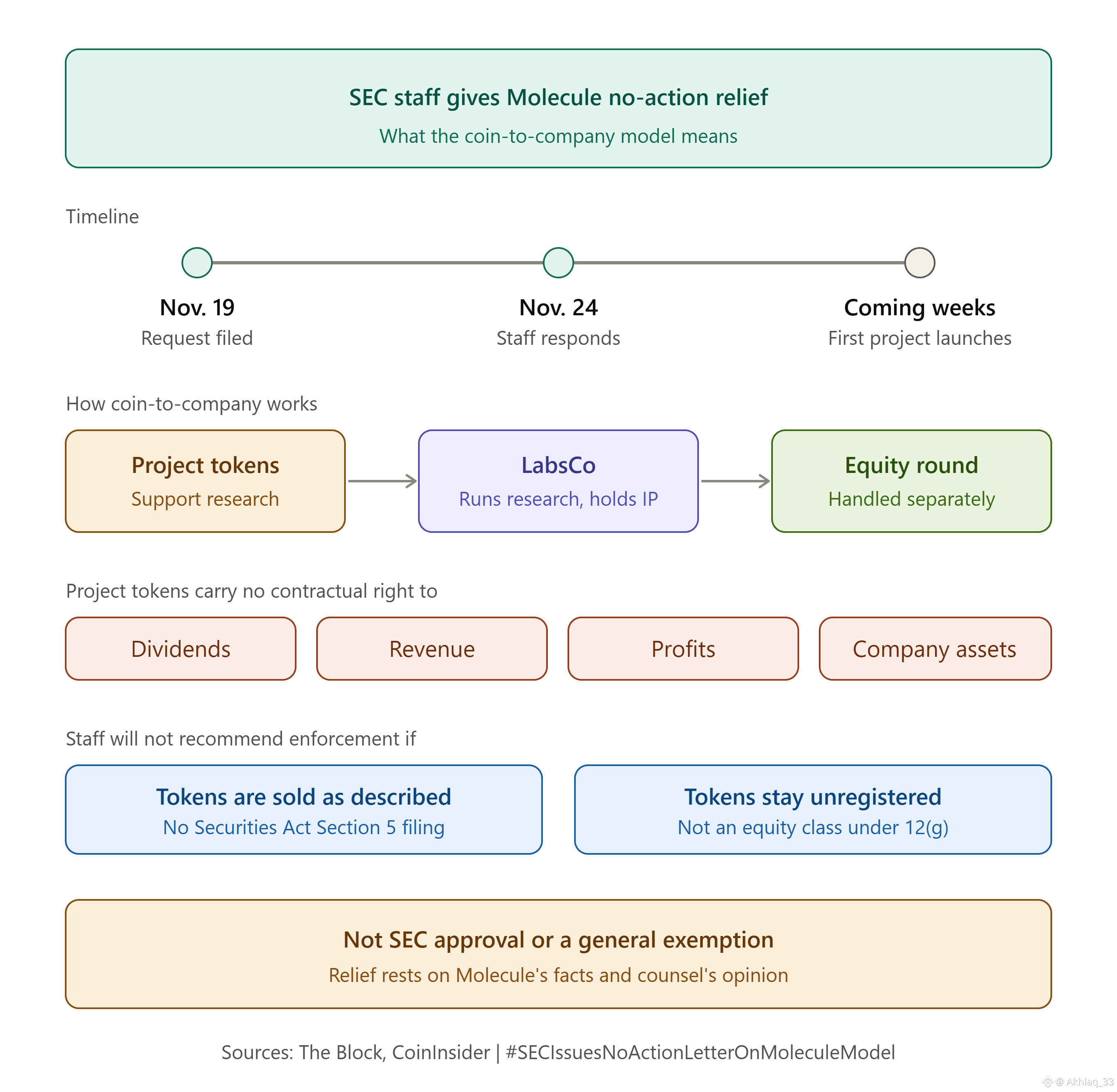
On Nov. 24, SEC staff said they would not recommend enforcement action if Molecule's US subsidiary, LabsCo, sells Project Tokens without registration, as described in its request.
The tokens sit inside Molecule's "coin-to-company" model. Users receive tokens that let them support scientific research and can later gain equity ownership in the projects they back. The structure separates research-related token utility from ownership in an operating business, and the tokens carry no contractual right to dividends, revenue, profits, or company assets.
It also fits a wider pattern. The agency has issued several crypto-related no-action letters over the past year amid a friendlier regulatory stance.
A caveat worth keeping in mind: a no-action position is not SEC approval or a general exemption. It depends on Molecule's specific facts, conditions, and counsel's opinion.
Still, for anyone trying to fund science with new models, this is a meaningful signal. Molecule says its first project using the model will launch in the next few weeks.
#DeSci #Molecule #Crypto #Web3支付
159
·
--
Bullish
Great Time For Buying
Next Week 4000k% Going Up...
#MOLECULE
#MOLECULE
🎁🧧🚀🚀🚀🚀🚀🧧🎁
#BTC☀ #Ethereum #SolanaUSTD
Great Time For Buying
Next Week 4000k% Going Up...
#MOLECULE
#MOLECULE
🎁🧧🚀🚀🚀🚀🚀🧧🎁
#BTC☀ #Ethereum #SolanaUSTD
Next Week 4000k% Going Up...
#MOLECULE
#MOLECULE
🎁🧧🚀🚀🚀🚀🚀🧧🎁
#BTC☀ #Ethereum #SolanaUSTD
1
13
Log in to explore more content
Join global crypto users on Binance Square
⚡️ Get latest and useful information about crypto.
💬 Trusted by the world’s largest crypto exchange.
👍 Discover real insights from verified creators.
Email / Phone number
Trending Topics
1
#EvolveAtBinanceBlockchainWeek
2.4M views
20,513 Discussing
2
#WorldLibertyActsToCutLiquidationRisk
32,088 views
338 Discussing
3
#LiquidHackerMoves598BTC
25,541 views
238 Discussing
4
#TrumpMediaCouldFace883.5MRepaymentDemand
9,960 views
80 Discussing
5
#IBSGovAccountMints1BTokensDrains5.71M
790 views
7 Discussing
6
#BitcoinETFsExtendOutflowStreakToEightDays
96,281 views
799 Discussing
7
#VitalikWantsWalletChipDesignsOpened
133,304 views
731 Discussing
8
#FranklinTempletonPlansToAddHYPEToCryptoIndexETF
23,069 views
271 Discussing
9
#XRPLAmendmentsEnterActivationWindow
0 views
1 Discussing
10
#USDGSupplyOnArbitrumHitsRecord76M
295 views
13 Discussing