

#lorenzo
lorenzo
68,432 views
649 Discussing
Hot
Latest

·
--
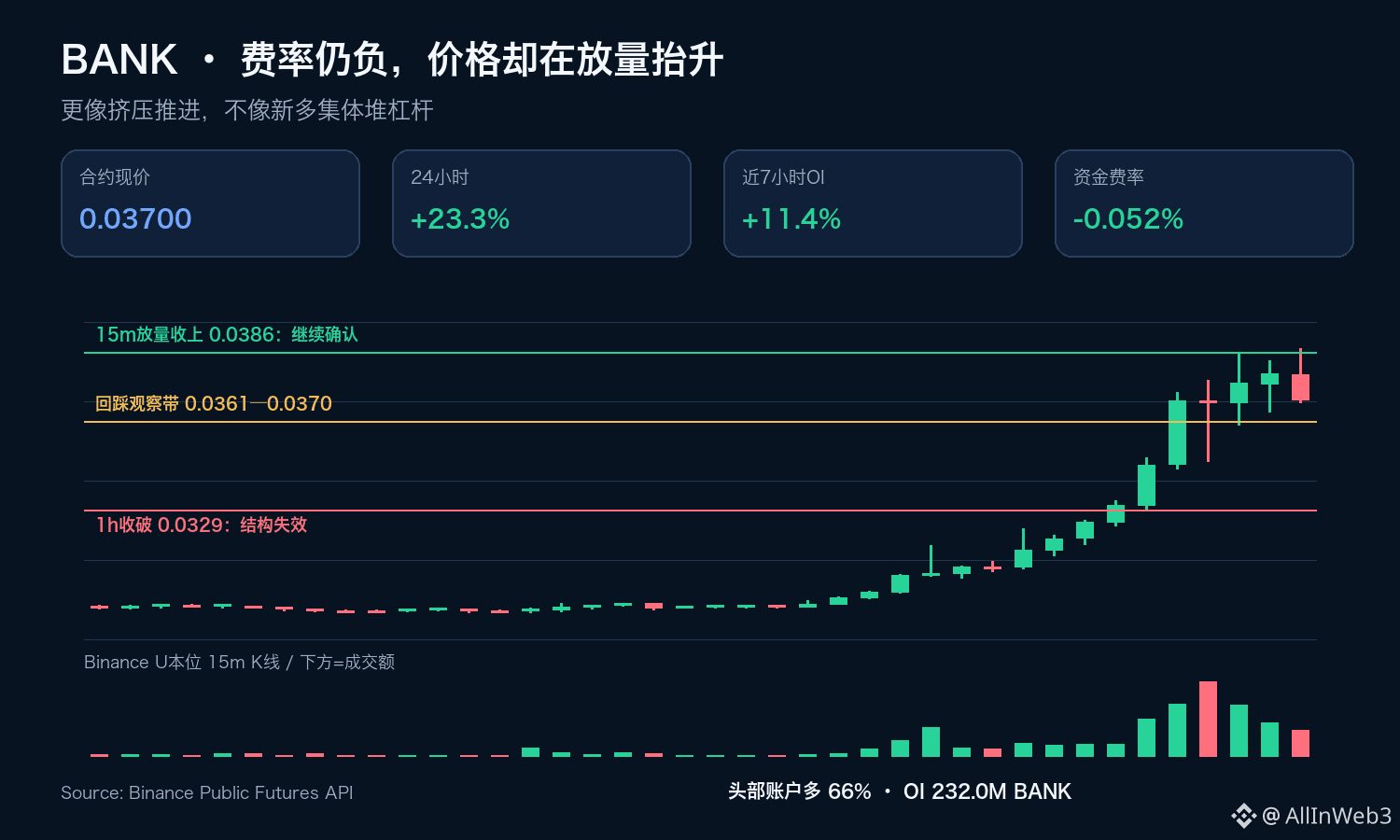
$BANK I’m a bit biased toward this, but I don’t chase a straight line. The last complete hour just passed took it from 0.0331 to 0.0376, about +13.6%. Spot volume is around $7.17M, roughly 3.1x the previous hour; contract volume over the same period is about $18.20M, with spot still slightly higher than contracts by about 0.27%.
The abnormal part is this: the funding rate is still -0.052%. Over the last ~7 hours, OI increased by about 11%, and top accounts have long exposure around 66%. Price is being lifted with volume, while shorts continue paying—this looks more like a squeeze pushing higher, not like brand-new longs have just collectively topped up leverage. Lorenzo is the BANK on Binance spot; high heat doesn’t mean withdrawal risk has disappeared.
I only watch two ways to participate: either a 15-minute volume expansion that closes back above 0.0386, or a pullback to 0.0361—0.0370 with reduced volume that holds. If a 1-hour candle closes below 0.0329, this breakout fails.$BANK #Lorenzo #BANKUSDT #Crypto
$BANK I’m a bit biased toward this, but I don’t chase a straight line. The last complete hour just passed took it from 0.0331 to 0.0376, about +13.6%. Spot volume is around $7.17M, roughly 3.1x the previous hour; contract volume over the same period is about $18.20M, with spot still slightly higher than contracts by about 0.27%.
The abnormal part is this: the funding rate is still -0.052%. Over the last ~7 hours, OI increased by about 11%, and top accounts have long exposure around 66%. Price is being lifted with volume, while shorts continue paying—this looks more like a squeeze pushing higher, not like brand-new longs have just collectively topped up leverage. Lorenzo is the BANK on Binance spot; high heat doesn’t mean withdrawal risk has disappeared.
I only watch two ways to participate: either a 15-minute volume expansion that closes back above 0.0386, or a pullback to 0.0361—0.0370 with reduced volume that holds. If a 1-hour candle closes below 0.0329, this breakout fails.$BANK #Lorenzo #BANKUSDT #Crypto
The abnormal part is this: the funding rate is still -0.052%. Over the last ~7 hours, OI increased by about 11%, and top accounts have long exposure around 66%. Price is being lifted with volume, while shorts continue paying—this looks more like a squeeze pushing higher, not like brand-new longs have just collectively topped up leverage. Lorenzo is the BANK on Binance spot; high heat doesn’t mean withdrawal risk has disappeared.
I only watch two ways to participate: either a 15-minute volume expansion that closes back above 0.0386, or a pullback to 0.0361—0.0370 with reduced volume that holds. If a 1-hour candle closes below 0.0329, this breakout fails.$BANK #Lorenzo #BANKUSDT #Crypto
2
369

·
--
BANK its price right now 0.0324$ rising 7.64% 📈
The highest it reached today is 0.0325$ and the lowest is 0.0292$
The volume is huge: 3.79 billion BANK and $112 million trading!
Quick summary:
✅ The coin is above all the moving averages MA7 and MA25 and MA99, meaning the trend is bullish in the short term
✅ Broke the 0.030$ level and is holding above it with strong buy volume
⚠️ It’s standing now at the resistance 0.0325$ —if it breaks it, it will fly
Where are we going soon?
If it holds above 0.0325$ , we’ll see 0.035$ up to 0.04$ as the first target.
If it drops to our support at 0.0301$ and that breaks, we’ll fall to 0.0288$
Lawrence is still a small project with a low market cap, so watch out—it’s extremely volatile. Keep an eye on the volume.
#بينانس #BANK #Lorenzo
BANK its price right now 0.0324$ rising 7.64% 📈
The highest it reached today is 0.0325$ and the lowest is 0.0292$
The volume is huge: 3.79 billion BANK and $112 million trading!
Quick summary:
✅ The coin is above all the moving averages MA7 and MA25 and MA99, meaning the trend is bullish in the short term
✅ Broke the 0.030$ level and is holding above it with strong buy volume
⚠️ It’s standing now at the resistance 0.0325$ —if it breaks it, it will fly
Where are we going soon?
If it holds above 0.0325$ , we’ll see 0.035$ up to 0.04$ as the first target.
If it drops to our support at 0.0301$ and that breaks, we’ll fall to 0.0288$
Lawrence is still a small project with a low market cap, so watch out—it’s extremely volatile. Keep an eye on the volume.
#بينانس #BANK #Lorenzo
The highest it reached today is 0.0325$ and the lowest is 0.0292$
The volume is huge: 3.79 billion BANK and $112 million trading!
Quick summary:
✅ The coin is above all the moving averages MA7 and MA25 and MA99, meaning the trend is bullish in the short term
✅ Broke the 0.030$ level and is holding above it with strong buy volume
⚠️ It’s standing now at the resistance 0.0325$ —if it breaks it, it will fly
Where are we going soon?
If it holds above 0.0325$ , we’ll see 0.035$ up to 0.04$ as the first target.
If it drops to our support at 0.0301$ and that breaks, we’ll fall to 0.0288$
Lawrence is still a small project with a low market cap, so watch out—it’s extremely volatile. Keep an eye on the volume.
#بينانس #BANK #Lorenzo
2
1
481

·
--
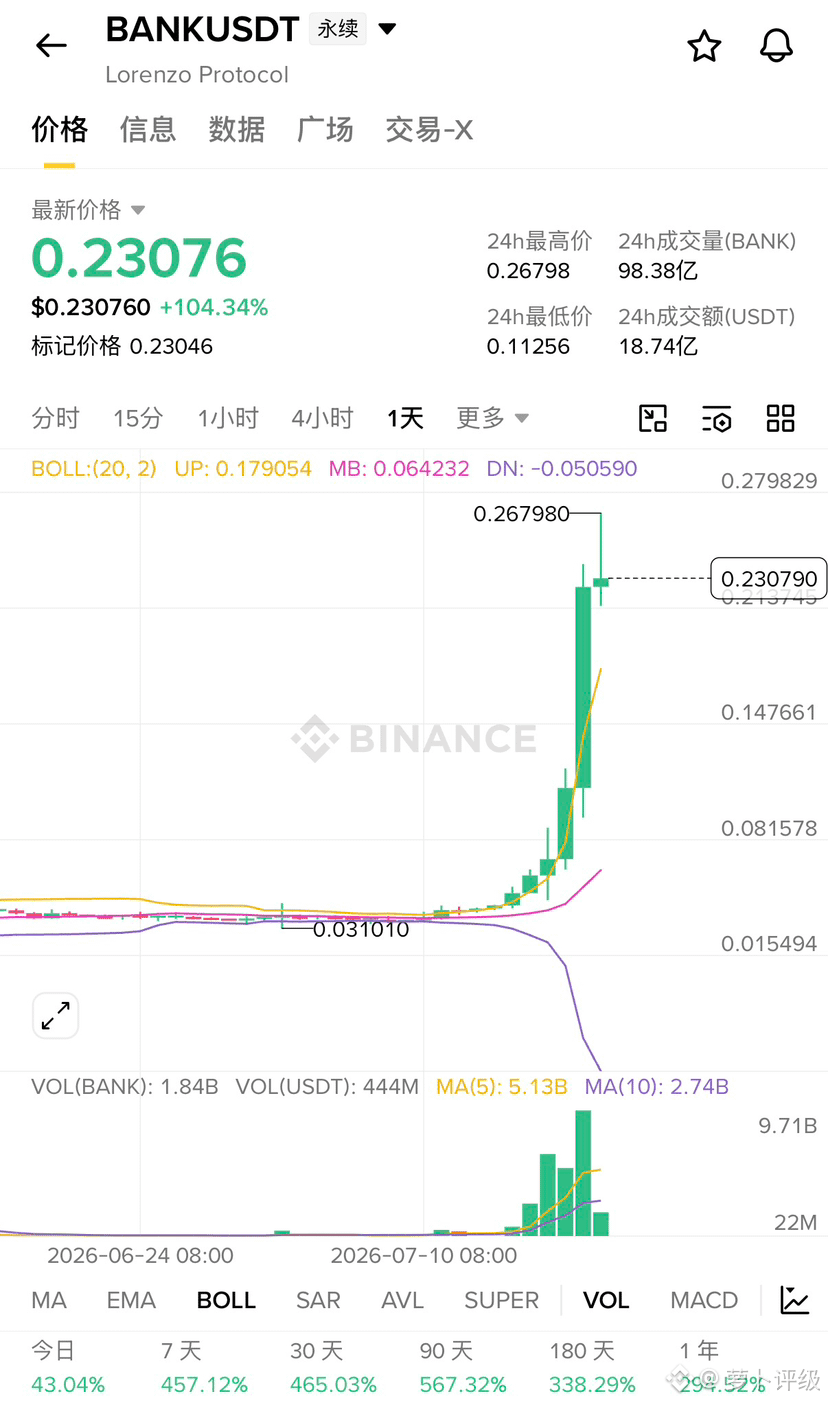
$BANK 24h +104%, but 90% of people didn’t notice this detail behind it—two whale addresses holding 15.09 million of $BANK haven’t moved yet, while the team/VC addresses have just transferred 84 million tokens to Aster DEX. Lorenzo Protocol is designed to generate institutional-grade DeFi yields. Its core product is the on-chain fund OTF, such as sUSD1+ and BNB+.
Previously, it partnered with Binance Wallet for an AMA, and it also ran a $WLFI airdrop event worth 16 million. The OTF TVL for sUSD1+ has already surpassed $128 million. The community’s long-vs-short disagreement is now very clear—some think this move looks like the precursor to the earlier $RAVE pump, while others worry that whales may dump. Keep an eye on large on-chain transfers and TVL changes, and see whether this momentum can last.
#DeFi #BNBChain #Lorenzo
{future}(BANKUSDT)
$BANK 24h +104%, but 90% of people didn’t notice this detail behind it—two whale addresses holding 15.09 million of $BANK haven’t moved yet, while the team/VC addresses have just transferred 84 million tokens to Aster DEX. Lorenzo Protocol is designed to generate institutional-grade DeFi yields. Its core product is the on-chain fund OTF, such as sUSD1+ and BNB+.
Previously, it partnered with Binance Wallet for an AMA, and it also ran a $WLFI airdrop event worth 16 million. The OTF TVL for sUSD1+ has already surpassed $128 million. The community’s long-vs-short disagreement is now very clear—some think this move looks like the precursor to the earlier $RAVE pump, while others worry that whales may dump. Keep an eye on large on-chain transfers and TVL changes, and see whether this momentum can last.
#DeFi #BNBChain #Lorenzo
Previously, it partnered with Binance Wallet for an AMA, and it also ran a $WLFI airdrop event worth 16 million. The OTF TVL for sUSD1+ has already surpassed $128 million. The community’s long-vs-short disagreement is now very clear—some think this move looks like the precursor to the earlier $RAVE pump, while others worry that whales may dump. Keep an eye on large on-chain transfers and TVL changes, and see whether this momentum can last.
#DeFi #BNBChain #Lorenzo
368
·
--
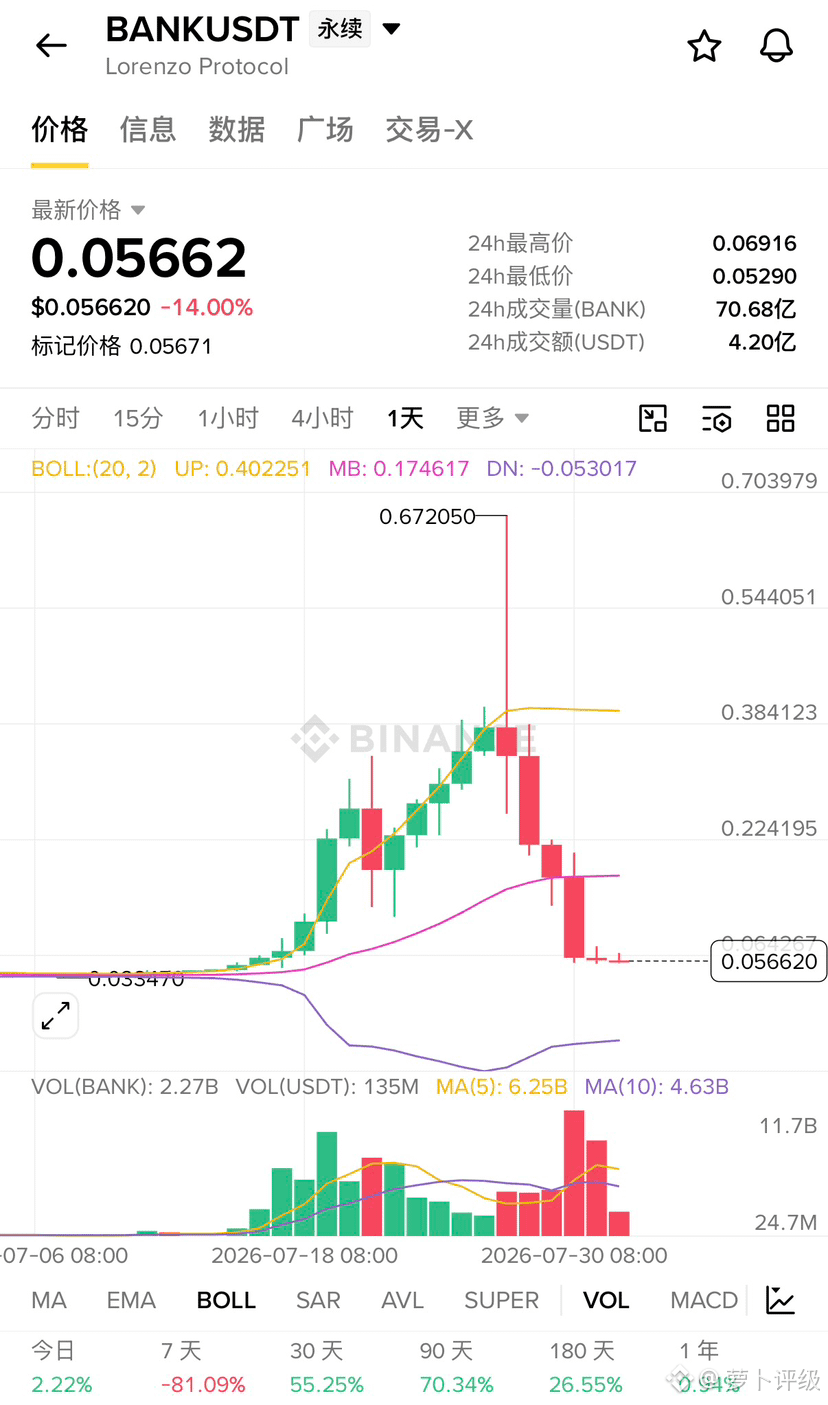
$BANK 24h Falls another 14%—what’s not as alarming isn’t this single candle today, but the fact that in the past few days, most of the prior surge has been nearly fully given back.
In plain terms: $BANK is Lorenzo Protocol’s token. It’s building an institutional-style on-chain asset management setup: packaging yield strategies into OTFs (on-chain tradable funds), and tying them to the “USD yield on-chain” narrative alongside USD1/WLFI. Around the end of July, it ran into a spike that was almost parabola-like, briefly topping out near a historical high of about $0.55 in public market data. Then, over the following days, it retraced on higher volume; on the 7-day scale, it saw roughly an 80%+ pullback. Structurally, it looks like profit-taking after a sharp rally is driving the move.
What’s more commonly discussed is that profit is being taken at high levels, derivatives longs are getting liquidated (short-term long squeezes/trampling), spot demand is weakening, and supply pressure is building due to concentrated holdings/unlock expectations. At the moment, it looks more like a structural correction after momentum has ebbed, rather than a project “blowing up” that’s already been confirmed. Next, you’ll want to see whether the pullback starts to stabilize and whether volume can cool off—not rush to label “giving it all back” as the final outcome.
#BANK #Lorenzo #DeFi #BTCFi
{future}(BANKUSDT)
$BANK 24h Falls another 14%—what’s not as alarming isn’t this single candle today, but the fact that in the past few days, most of the prior surge has been nearly fully given back.
In plain terms: $BANK is Lorenzo Protocol’s token. It’s building an institutional-style on-chain asset management setup: packaging yield strategies into OTFs (on-chain tradable funds), and tying them to the “USD yield on-chain” narrative alongside USD1/WLFI. Around the end of July, it ran into a spike that was almost parabola-like, briefly topping out near a historical high of about $0.55 in public market data. Then, over the following days, it retraced on higher volume; on the 7-day scale, it saw roughly an 80%+ pullback. Structurally, it looks like profit-taking after a sharp rally is driving the move.
What’s more commonly discussed is that profit is being taken at high levels, derivatives longs are getting liquidated (short-term long squeezes/trampling), spot demand is weakening, and supply pressure is building due to concentrated holdings/unlock expectations. At the moment, it looks more like a structural correction after momentum has ebbed, rather than a project “blowing up” that’s already been confirmed. Next, you’ll want to see whether the pullback starts to stabilize and whether volume can cool off—not rush to label “giving it all back” as the final outcome.
#BANK #Lorenzo #DeFi #BTCFi
In plain terms: $BANK is Lorenzo Protocol’s token. It’s building an institutional-style on-chain asset management setup: packaging yield strategies into OTFs (on-chain tradable funds), and tying them to the “USD yield on-chain” narrative alongside USD1/WLFI. Around the end of July, it ran into a spike that was almost parabola-like, briefly topping out near a historical high of about $0.55 in public market data. Then, over the following days, it retraced on higher volume; on the 7-day scale, it saw roughly an 80%+ pullback. Structurally, it looks like profit-taking after a sharp rally is driving the move.
What’s more commonly discussed is that profit is being taken at high levels, derivatives longs are getting liquidated (short-term long squeezes/trampling), spot demand is weakening, and supply pressure is building due to concentrated holdings/unlock expectations. At the moment, it looks more like a structural correction after momentum has ebbed, rather than a project “blowing up” that’s already been confirmed. Next, you’ll want to see whether the pullback starts to stabilize and whether volume can cool off—not rush to label “giving it all back” as the final outcome.
#BANK #Lorenzo #DeFi #BTCFi
177

·
--
$BANK : Accumulation Before a Breakout? 👀
BANK is currently trading around $0.0353, down just 0.56%.
💡 Why is $BANK important?
BANK is connected to the Lorenzo Protocol ecosystem, which focuses on Bitcoin-based DeFi and yield infrastructure. That gives BANK exposure to the growing BTC + DeFi narrative.
{spot}(BANKUSDT)
📊 My prediction:
A move above $0.037–$0.038 could target $0.040–$0.043.
Below $0.033 could increase downside risk.
⚠️ Momentum is currently weaker than HYPE, TRUMP or ZEC, so I would keep BANK on the watchlist.
Will $BANK break out or dip first? 👇
#BANK #Lorenzo #Crypto
$BANK : Accumulation Before a Breakout? 👀
BANK is currently trading around $0.0353, down just 0.56%.
💡 Why is $BANK important?
BANK is connected to the Lorenzo Protocol ecosystem, which focuses on Bitcoin-based DeFi and yield infrastructure. That gives BANK exposure to the growing BTC + DeFi narrative.
📊 My prediction:
A move above $0.037–$0.038 could target $0.040–$0.043.
Below $0.033 could increase downside risk.
⚠️ Momentum is currently weaker than HYPE, TRUMP or ZEC, so I would keep BANK on the watchlist.
Will $BANK break out or dip first? 👇
#BANK #Lorenzo #Crypto
BANK is currently trading around $0.0353, down just 0.56%.
💡 Why is $BANK important?
BANK is connected to the Lorenzo Protocol ecosystem, which focuses on Bitcoin-based DeFi and yield infrastructure. That gives BANK exposure to the growing BTC + DeFi narrative.
📊 My prediction:
A move above $0.037–$0.038 could target $0.040–$0.043.
Below $0.033 could increase downside risk.
⚠️ Momentum is currently weaker than HYPE, TRUMP or ZEC, so I would keep BANK on the watchlist.
Will $BANK break out or dip first? 👇
#BANK #Lorenzo #Crypto
2
222
#Lorenzo Protocol Sees Sharp Recent Volatility: Surges 200% Then Quickly Retraces
Lorenzo Protocol ($BANK) has recently experienced intense price volatility. After a short-term increase of over 200%, it quickly pulled back, with fierce battles between bulls and bears.
Key reasons include:
1️⃣ Market capital concentrated in speculative trading, driving the price up rapidly
2️⃣ Intense engagement between bulls and bears, with frequent shifts between long and short positions
3️⃣ The launch of trading in KRW has triggered excessive market sentiment, causing profit-takers to exit quickly
Current data:
Price: $0.37806
24h Trading Volume: $152 million
Market Cap: $289 million
This kind of extreme volatility reminds us that when participating in trading new projects, we must manage position sizing carefully and remain alert to the pullback risk caused by overheated market sentiment.
$BANK #加密货币 #Blockchain
#Lorenzo Protocol Sees Sharp Recent Volatility: Surges 200% Then Quickly Retraces
Lorenzo Protocol ($BANK ) has recently experienced intense price volatility. After a short-term increase of over 200%, it quickly pulled back, with fierce battles between bulls and bears.
Key reasons include:
1️⃣ Market capital concentrated in speculative trading, driving the price up rapidly
2️⃣ Intense engagement between bulls and bears, with frequent shifts between long and short positions
3️⃣ The launch of trading in KRW has triggered excessive market sentiment, causing profit-takers to exit quickly
Current data:
Price: $0.37806
24h Trading Volume: $152 million
Market Cap: $289 million
This kind of extreme volatility reminds us that when participating in trading new projects, we must manage position sizing carefully and remain alert to the pullback risk caused by overheated market sentiment.
$BANK #加密货币 #Blockchain
Lorenzo Protocol ($BANK ) has recently experienced intense price volatility. After a short-term increase of over 200%, it quickly pulled back, with fierce battles between bulls and bears.
Key reasons include:
1️⃣ Market capital concentrated in speculative trading, driving the price up rapidly
2️⃣ Intense engagement between bulls and bears, with frequent shifts between long and short positions
3️⃣ The launch of trading in KRW has triggered excessive market sentiment, causing profit-takers to exit quickly
Current data:
Price: $0.37806
24h Trading Volume: $152 million
Market Cap: $289 million
This kind of extreme volatility reminds us that when participating in trading new projects, we must manage position sizing carefully and remain alert to the pullback risk caused by overheated market sentiment.
$BANK #加密货币 #Blockchain
15
·
--
Partly True
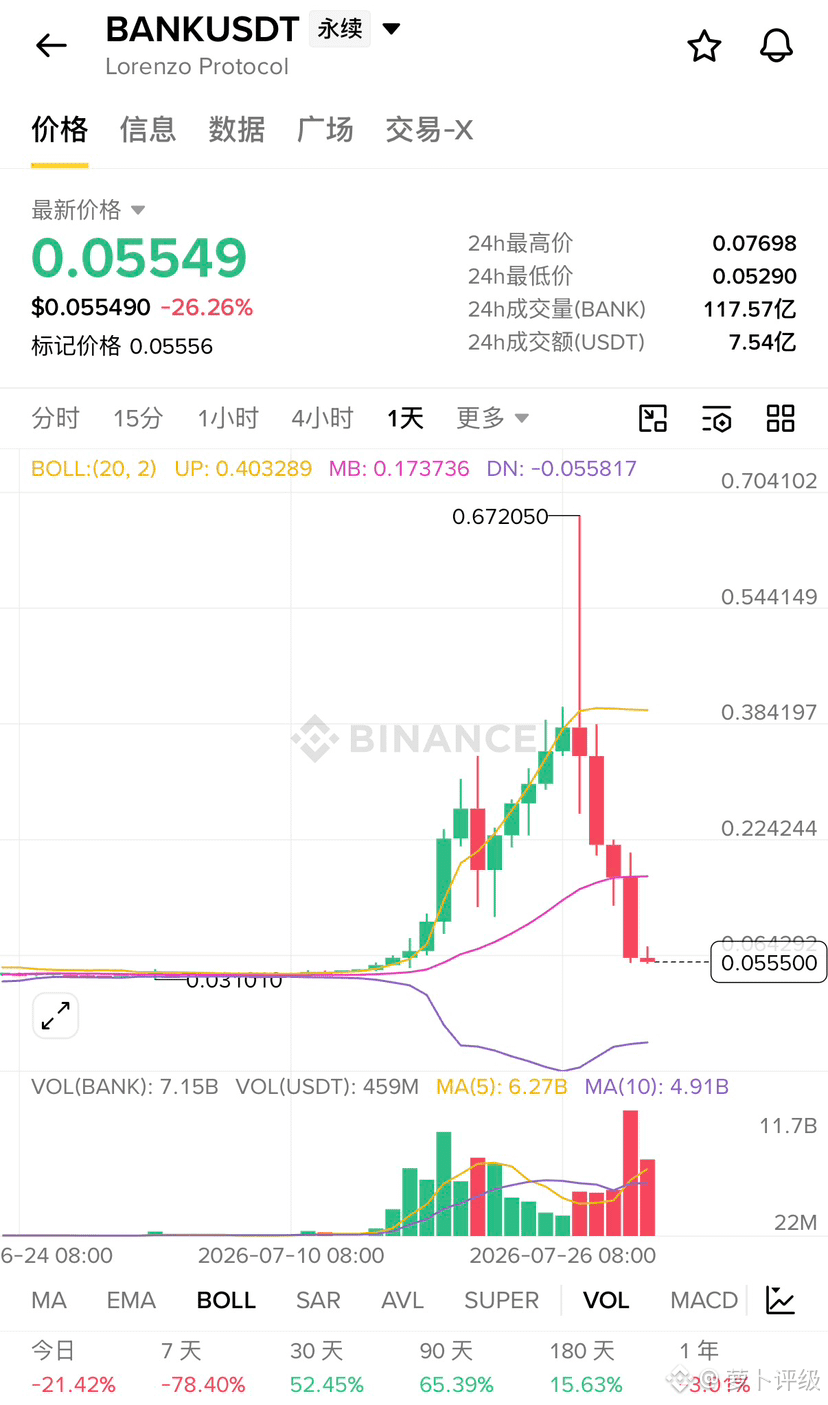
$BANK 24h Fell 26%, yet the community is replaying the “accumulation → pump → distribution → dumping” script frame by frame—what step are you on? What Lorenzo did is actually quite straightforward: bundle assets like USD1 and BNB into an on-chain fund (OTF) to earn institutional-grade returns, and $BANK is the governance and incentive token.
On July 27, it was listed on both KuCoin spot and the Bithumb KRW trading pairs, along with a double reward campaign for 44,000 USDT. Meanwhile, the official account hasn’t issued any new statements in recent days, but the community has been in an uproar. Some people summarize this round of price action with “15 days, 15x, then retraced 80% from the peak,” suspect market makers pumped for distribution, and even question whether there’s an interest connection within the Binance ecosystem—but for now, these are only emotionally driven guesses with no solid proof.
Next, what’s worth watching is whether the official will respond to these doubts, and whether the real liquidity performance of $BANK after the KuCoin listing can hold up the market.
#Lorenzo #DeFi
{future}(BANKUSDT)
$BANK 24h Fell 26%, yet the community is replaying the “accumulation → pump → distribution → dumping” script frame by frame—what step are you on? What Lorenzo did is actually quite straightforward: bundle assets like USD1 and BNB into an on-chain fund (OTF) to earn institutional-grade returns, and $BANK is the governance and incentive token.
On July 27, it was listed on both KuCoin spot and the Bithumb KRW trading pairs, along with a double reward campaign for 44,000 USDT. Meanwhile, the official account hasn’t issued any new statements in recent days, but the community has been in an uproar. Some people summarize this round of price action with “15 days, 15x, then retraced 80% from the peak,” suspect market makers pumped for distribution, and even question whether there’s an interest connection within the Binance ecosystem—but for now, these are only emotionally driven guesses with no solid proof.
Next, what’s worth watching is whether the official will respond to these doubts, and whether the real liquidity performance of $BANK after the KuCoin listing can hold up the market.
#Lorenzo #DeFi
On July 27, it was listed on both KuCoin spot and the Bithumb KRW trading pairs, along with a double reward campaign for 44,000 USDT. Meanwhile, the official account hasn’t issued any new statements in recent days, but the community has been in an uproar. Some people summarize this round of price action with “15 days, 15x, then retraced 80% from the peak,” suspect market makers pumped for distribution, and even question whether there’s an interest connection within the Binance ecosystem—but for now, these are only emotionally driven guesses with no solid proof.
Next, what’s worth watching is whether the official will respond to these doubts, and whether the real liquidity performance of $BANK after the KuCoin listing can hold up the market.
#Lorenzo #DeFi
420

·
--
Banks are losing the plot. They just realized stablecoins are eating their lunch.
JPMorgan, Citi, Bank of America? They're scrambling to tokenize deposits by 2027. But Lorenzo Protocol already did it.
BANK isn't the future of finance—it's what finance looks like right now while the banks are still in meetings.
Wake up. The game changed. ⚡
#CryptoWins #DeFi #Lorenzo #WriteandEarn
Banks are losing the plot. They just realized stablecoins are eating their lunch.
JPMorgan, Citi, Bank of America? They're scrambling to tokenize deposits by 2027. But Lorenzo Protocol already did it.
BANK isn't the future of finance—it's what finance looks like right now while the banks are still in meetings.
Wake up. The game changed. ⚡
#CryptoWins #DeFi #Lorenzo #WriteandEarn
JPMorgan, Citi, Bank of America? They're scrambling to tokenize deposits by 2027. But Lorenzo Protocol already did it.
BANK isn't the future of finance—it's what finance looks like right now while the banks are still in meetings.
Wake up. The game changed. ⚡
#CryptoWins #DeFi #Lorenzo #WriteandEarn
2
222
·
--
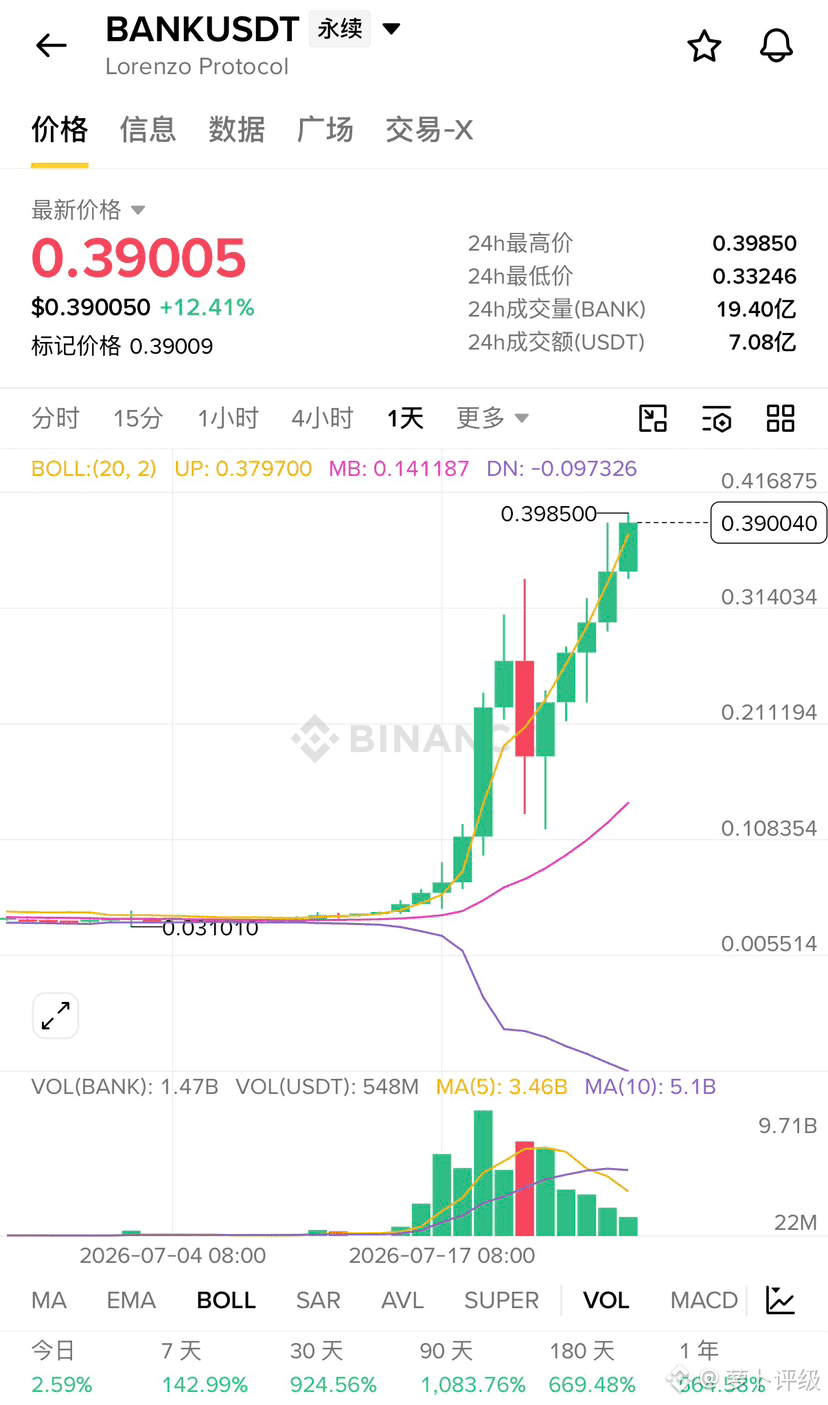
$BANK 24h Another roughly +12%—if you look only at this one day, it’s easy to miss the bigger structure: since mid-July it has repeatedly surged onto the leaderboard. There have also been single-day plunges and pullbacks in between, so it hasn’t been a perfectly clean run of consecutive green days.
Lorenzo Protocol focuses on institutional-grade on-chain asset management. The core is that OTF tokenizes strategy returns, and the narrative centers on the BTCfi side and on-chain yield. Around July 20 it briefly saw volume at a level consistent with a one-day doubling. Overseas media have more often attributed it to the combination of theme hype and leverage, rather than a solid hard announcement on the same day. On July 22, KuCoin officially opened BANK/USDT spot trading and rolled out incentives of about 44,000 USDT to list the token, effectively lifting liquidity expectations another level. The community is caught between “meme coin” narratives and concerns about potential market control risk.
What’s worth watching next is: after the KuCoin event buzz fades, can trading activity hold, and will TVL keep up with the price? Whether this move is just a theme rotation or is being priced off the fundamentals of asset management still needs a few more days.
#BANK #Lorenzo #BTCfi #KuCoin
{future}(BANKUSDT)
$BANK 24h Another roughly +12%—if you look only at this one day, it’s easy to miss the bigger structure: since mid-July it has repeatedly surged onto the leaderboard. There have also been single-day plunges and pullbacks in between, so it hasn’t been a perfectly clean run of consecutive green days.
Lorenzo Protocol focuses on institutional-grade on-chain asset management. The core is that OTF tokenizes strategy returns, and the narrative centers on the BTCfi side and on-chain yield. Around July 20 it briefly saw volume at a level consistent with a one-day doubling. Overseas media have more often attributed it to the combination of theme hype and leverage, rather than a solid hard announcement on the same day. On July 22, KuCoin officially opened BANK/USDT spot trading and rolled out incentives of about 44,000 USDT to list the token, effectively lifting liquidity expectations another level. The community is caught between “meme coin” narratives and concerns about potential market control risk.
What’s worth watching next is: after the KuCoin event buzz fades, can trading activity hold, and will TVL keep up with the price? Whether this move is just a theme rotation or is being priced off the fundamentals of asset management still needs a few more days.
#BANK #Lorenzo #BTCfi #KuCoin
Lorenzo Protocol focuses on institutional-grade on-chain asset management. The core is that OTF tokenizes strategy returns, and the narrative centers on the BTCfi side and on-chain yield. Around July 20 it briefly saw volume at a level consistent with a one-day doubling. Overseas media have more often attributed it to the combination of theme hype and leverage, rather than a solid hard announcement on the same day. On July 22, KuCoin officially opened BANK/USDT spot trading and rolled out incentives of about 44,000 USDT to list the token, effectively lifting liquidity expectations another level. The community is caught between “meme coin” narratives and concerns about potential market control risk.
What’s worth watching next is: after the KuCoin event buzz fades, can trading activity hold, and will TVL keep up with the price? Whether this move is just a theme rotation or is being priced off the fundamentals of asset management still needs a few more days.
#BANK #Lorenzo #BTCfi #KuCoin
230

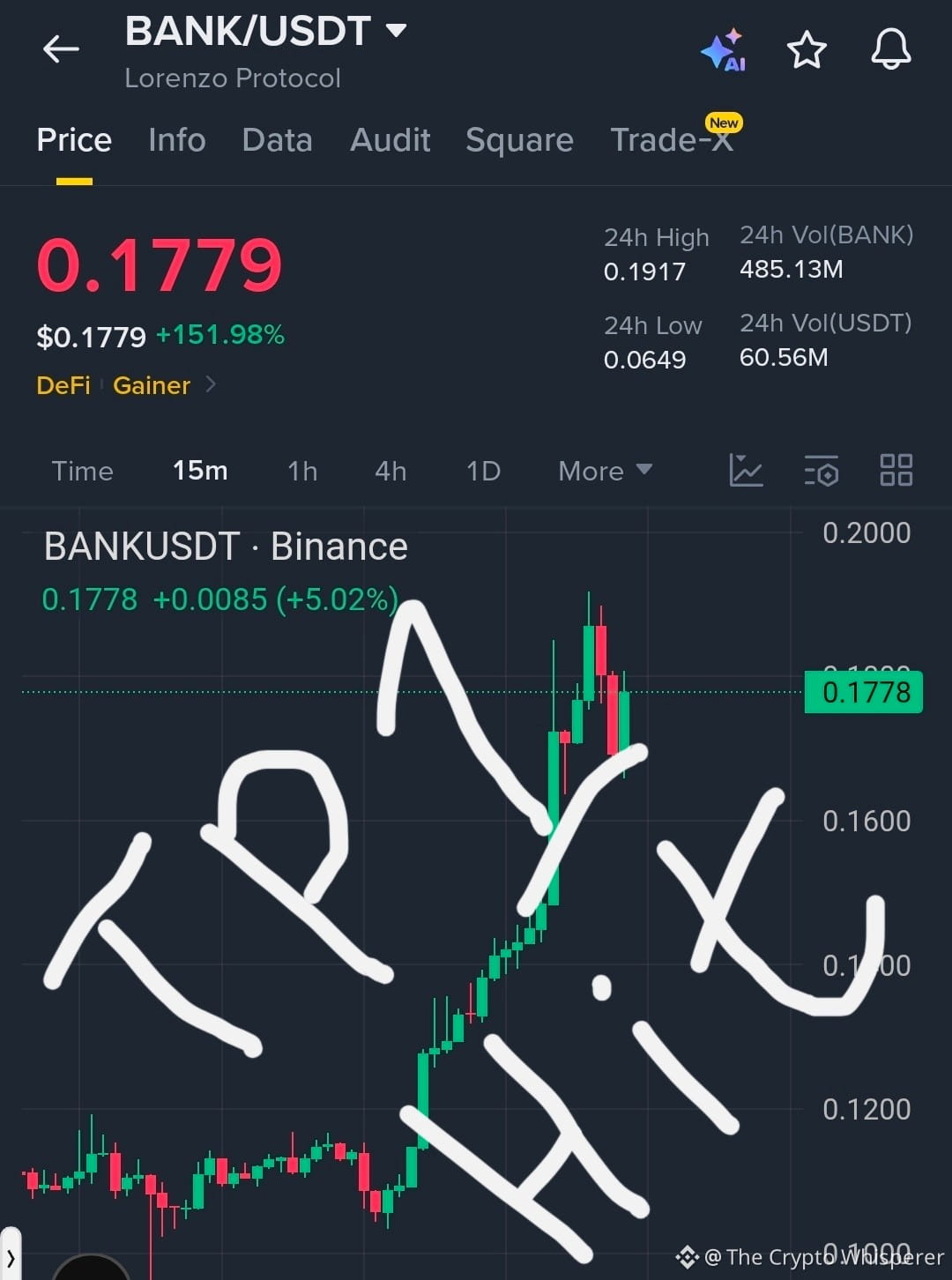
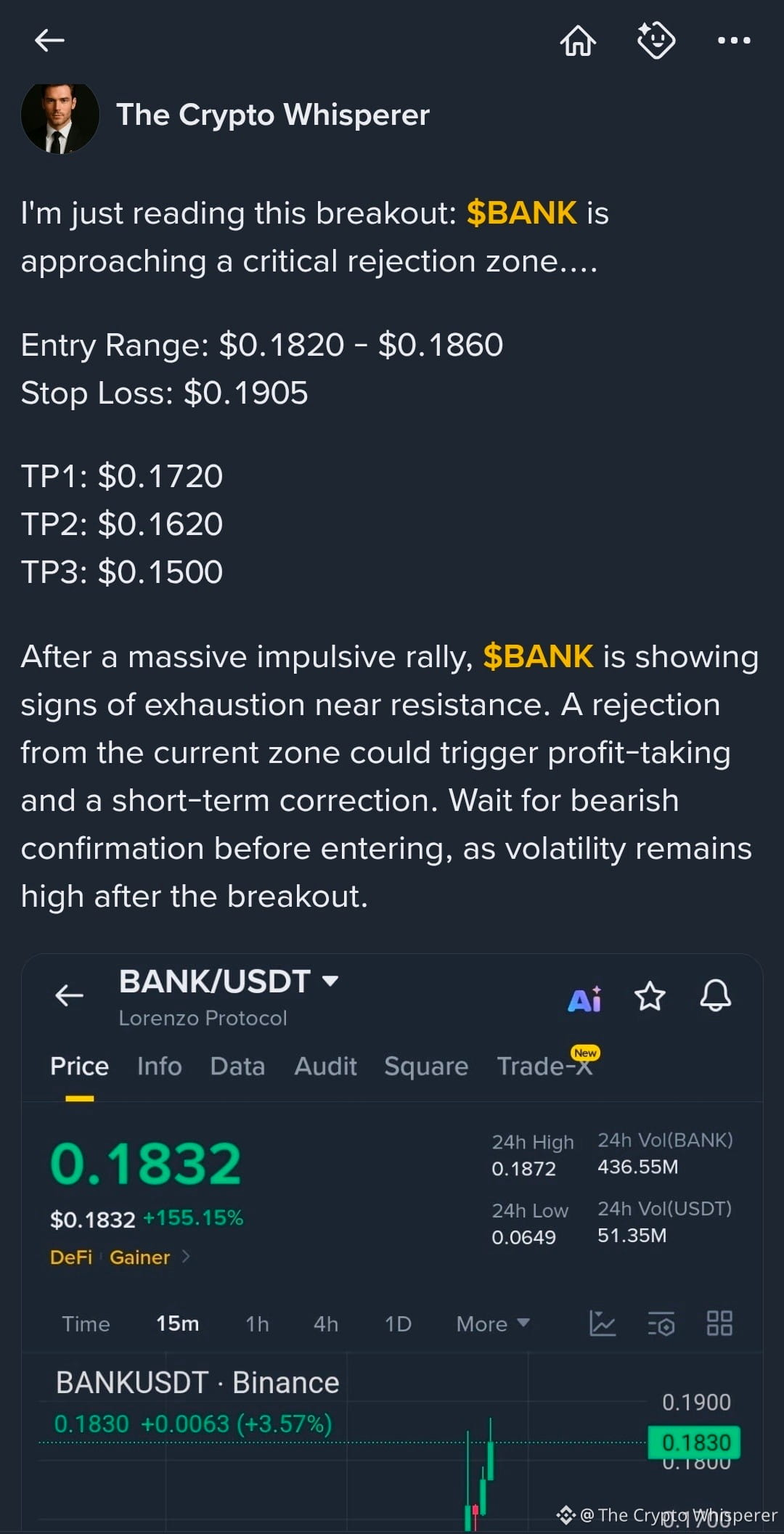
Boooooommmmmm💥💥💥💥TP1 HIT ON $BANK 📈
Called it and we nailed TP1 💥
$BANK /USDT up +151% in 24h
Current: $0.1779
Lorenzo Protocol is on fire 🔥
24h Volume: 485M BANK
TP2 loading... Who's still holding? 👇
$BANK #Lorenzo #DeFi #Altcoins #BinanceSquare
Boooooommmmmm💥💥💥💥TP1 HIT ON $BANK 📈
Called it and we nailed TP1 💥
$BANK /USDT up +151% in 24h
Current: $0.1779
Lorenzo Protocol is on fire 🔥
24h Volume: 485M BANK
TP2 loading... Who's still holding? 👇
$BANK #Lorenzo #DeFi #Altcoins #BinanceSquare
Called it and we nailed TP1 💥
$BANK /USDT up +151% in 24h
Current: $0.1779
Lorenzo Protocol is on fire 🔥
24h Volume: 485M BANK
TP2 loading... Who's still holding? 👇
$BANK #Lorenzo #DeFi #Altcoins #BinanceSquare
1
116
·
--
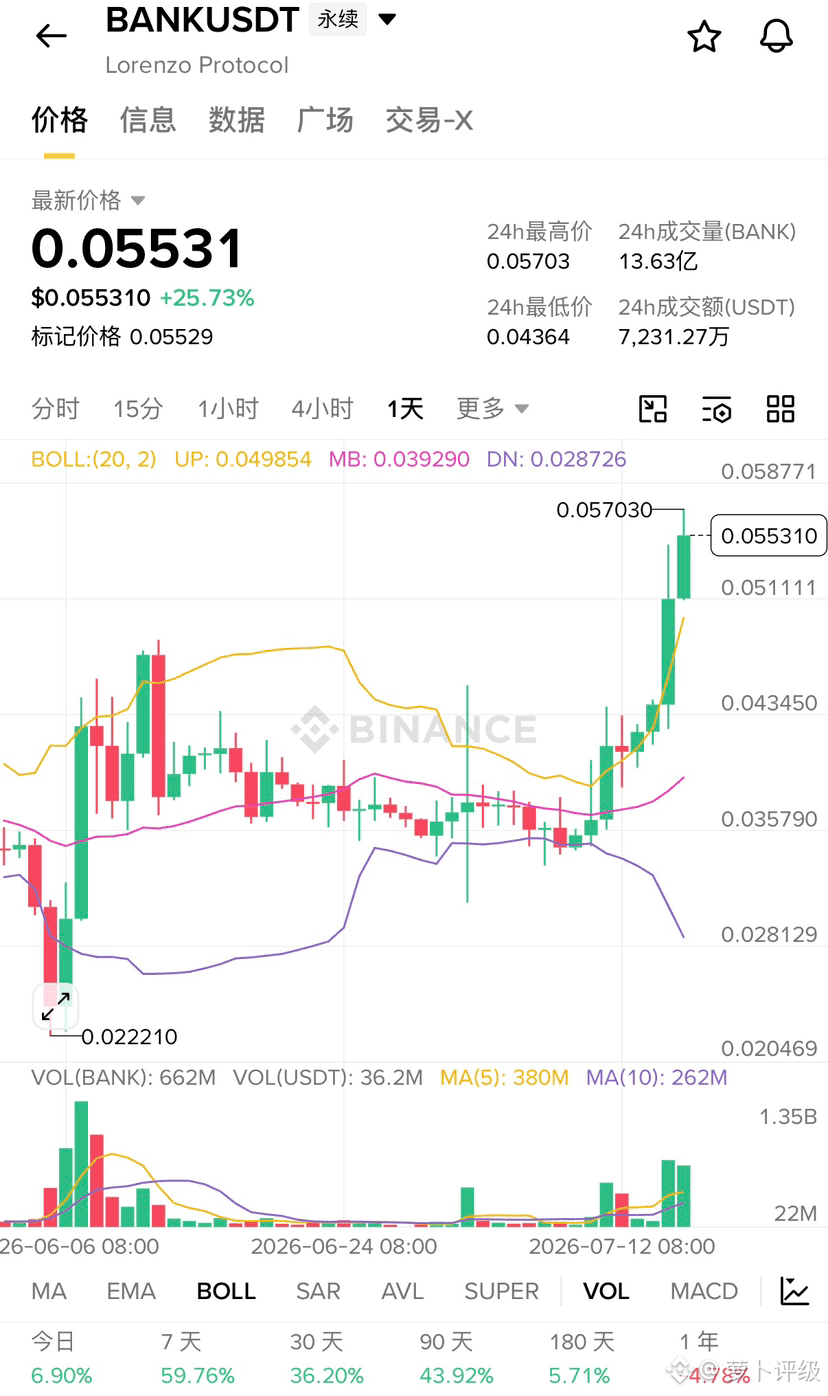
$BANK 24h It surged 25%, but 90% of people may not have noticed the rhythm of the ecosystem subsidies behind it. Lorenzo Protocol packages institutional-grade DeFi strategies into OTF products—such as sUSD1+ and BNB+—so users who stake USD1 or BNB can earn sustainable returns.
Recently, things have moved fast: the TVL for the sUSD1+ OTF just surpassed $128 million, while a $16 million WLFI airdrop campaign has been launched, covering Lorenzo, Lista, and PancakeSwap. In addition, there is also a $50,000 $BANK reward pool—by using a Binance Wallet to hold USD1, users can share it.
On the community side, several KOLs directly called bullish signals: one said daily trading volume jumped 1170%, another said accumulation is complete and a breakout is starting—overall sentiment is optimistic.
Next to watch will be the data after the airdrop campaign ends on July 18: whether TVL can hold steady is the key.
#Lorenzo #DeFi #BANK
{future}(BANKUSDT)
$BANK 24h It surged 25%, but 90% of people may not have noticed the rhythm of the ecosystem subsidies behind it. Lorenzo Protocol packages institutional-grade DeFi strategies into OTF products—such as sUSD1+ and BNB+—so users who stake USD1 or BNB can earn sustainable returns.
Recently, things have moved fast: the TVL for the sUSD1+ OTF just surpassed $128 million, while a $16 million WLFI airdrop campaign has been launched, covering Lorenzo, Lista, and PancakeSwap. In addition, there is also a $50,000 $BANK reward pool—by using a Binance Wallet to hold USD1, users can share it.
On the community side, several KOLs directly called bullish signals: one said daily trading volume jumped 1170%, another said accumulation is complete and a breakout is starting—overall sentiment is optimistic.
Next to watch will be the data after the airdrop campaign ends on July 18: whether TVL can hold steady is the key.
#Lorenzo #DeFi #BANK
Recently, things have moved fast: the TVL for the sUSD1+ OTF just surpassed $128 million, while a $16 million WLFI airdrop campaign has been launched, covering Lorenzo, Lista, and PancakeSwap. In addition, there is also a $50,000 $BANK reward pool—by using a Binance Wallet to hold USD1, users can share it.
On the community side, several KOLs directly called bullish signals: one said daily trading volume jumped 1170%, another said accumulation is complete and a breakout is starting—overall sentiment is optimistic.
Next to watch will be the data after the airdrop campaign ends on July 18: whether TVL can hold steady is the key.
#Lorenzo #DeFi #BANK
246

·
--
$BANK @LorenzoProtocol #lorenzo
{future}(BANKUSDT)
The CEO of Lorenzo Protocol is Matt Ye. He founded Lorenzo Protocol together with Fan Sang (CTO) and Toby Yu (CFO), with a focus on building on-chain asset management infrastructure that connects Bitcoin, DeFi, and institutional financial products.
The mission of Lorenzo Protocol is to become the leading platform for issuing, trading, and settling Bitcoin-based yield-generating assets. They want to make institutional-grade financial products accessible to retail users through blockchain.
Vision of Lorenzo Protocol:
To become the leading on-chain asset management infrastructure.
Unlocking Bitcoin liquidity so it can be utilized across various DeFi ecosystems.
Delivering financial products that are transparent, secure, and easy to use.
Driving institutional adoption into the Web3 world through On-Chain Traded Funds (OTF).
#BinanceSquareTG #BinanceSquareTalks
#white2Earn
$BANK @Lorenzo Protocol #lorenzo
The CEO of Lorenzo Protocol is Matt Ye. He founded Lorenzo Protocol together with Fan Sang (CTO) and Toby Yu (CFO), with a focus on building on-chain asset management infrastructure that connects Bitcoin, DeFi, and institutional financial products.
The mission of Lorenzo Protocol is to become the leading platform for issuing, trading, and settling Bitcoin-based yield-generating assets. They want to make institutional-grade financial products accessible to retail users through blockchain.
Vision of Lorenzo Protocol:
To become the leading on-chain asset management infrastructure.
Unlocking Bitcoin liquidity so it can be utilized across various DeFi ecosystems.
Delivering financial products that are transparent, secure, and easy to use.
Driving institutional adoption into the Web3 world through On-Chain Traded Funds (OTF).
#BinanceSquareTG #BinanceSquareTalks
#white2Earn
The CEO of Lorenzo Protocol is Matt Ye. He founded Lorenzo Protocol together with Fan Sang (CTO) and Toby Yu (CFO), with a focus on building on-chain asset management infrastructure that connects Bitcoin, DeFi, and institutional financial products.
The mission of Lorenzo Protocol is to become the leading platform for issuing, trading, and settling Bitcoin-based yield-generating assets. They want to make institutional-grade financial products accessible to retail users through blockchain.
Vision of Lorenzo Protocol:
To become the leading on-chain asset management infrastructure.
Unlocking Bitcoin liquidity so it can be utilized across various DeFi ecosystems.
Delivering financial products that are transparent, secure, and easy to use.
Driving institutional adoption into the Web3 world through On-Chain Traded Funds (OTF).
#BinanceSquareTG #BinanceSquareTalks
#white2Earn

2
551
·
--
Verified
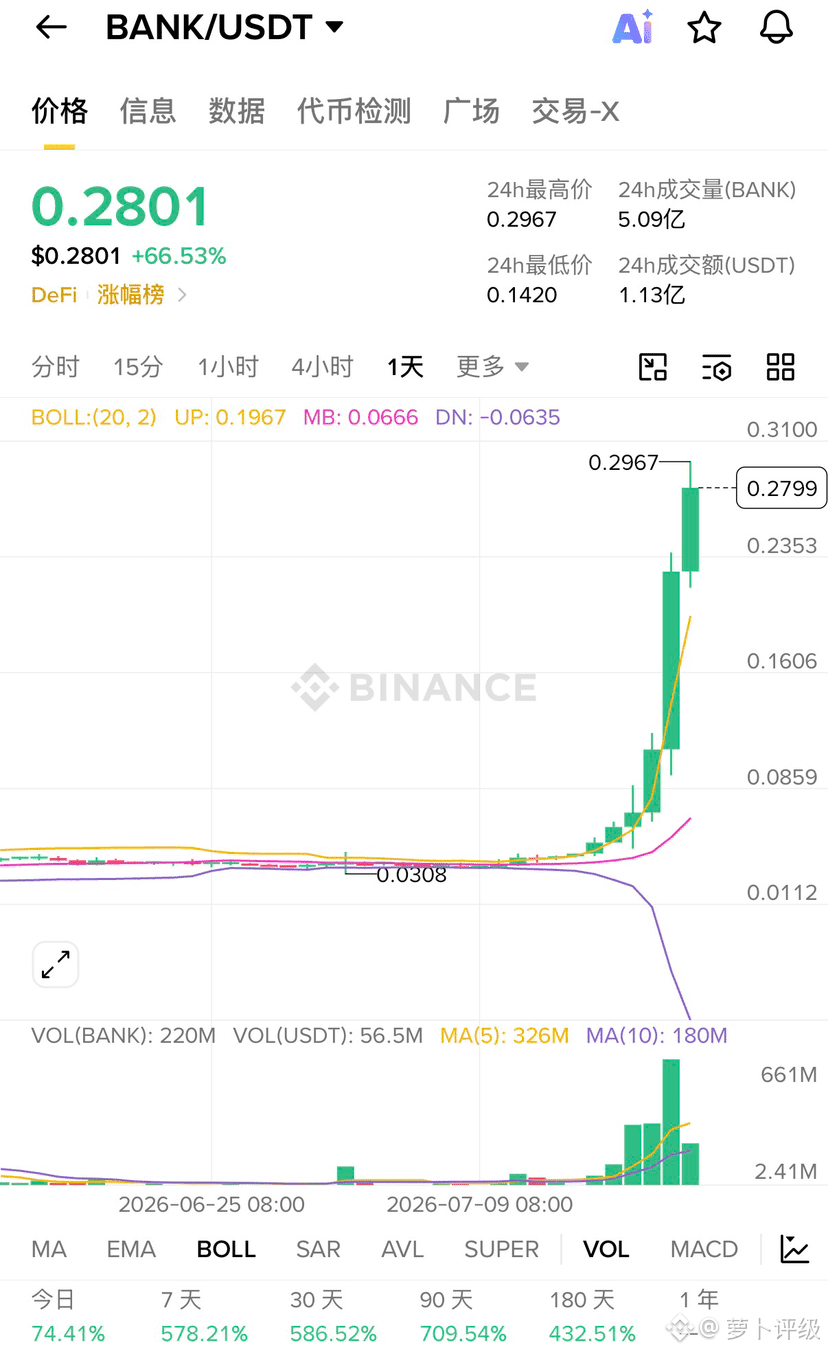
$BANK 24h surged +66%, but don't rush to charge in yet—behind the explosive jump, the real focus in community discussions is not actually on Lorenzo’s products themselves.
Lorenzo Protocol focuses on institutional-grade on-chain asset management. Its core OTF product TVL has already exceeded $128 million. Previously, it also launched an sUSD1+ loop strategy and a $16 million $WLFI airdrop campaign. But in this round of the rally, more KOLs are watching the contract long/short battles and overall capital concentration. Some think the whales haven’t exited and the uptrend may continue, while others believe the high concentration of positions means the pullback risk isn’t small.
On one side are tangible TVL growth and airdrop incentives; on the other are sentiment-driven tug-of-war among short-term funds. Is this $BANK move mainly fundamentals being realized or driven by emotions? Next, can TVL and the distribution of positions hold up the price?
#DeFi #Lorenzo #BNBChain
{future}(BANKUSDT)
$BANK 24h surged +66%, but don't rush to charge in yet—behind the explosive jump, the real focus in community discussions is not actually on Lorenzo’s products themselves.
Lorenzo Protocol focuses on institutional-grade on-chain asset management. Its core OTF product TVL has already exceeded $128 million. Previously, it also launched an sUSD1+ loop strategy and a $16 million $WLFI airdrop campaign. But in this round of the rally, more KOLs are watching the contract long/short battles and overall capital concentration. Some think the whales haven’t exited and the uptrend may continue, while others believe the high concentration of positions means the pullback risk isn’t small.
On one side are tangible TVL growth and airdrop incentives; on the other are sentiment-driven tug-of-war among short-term funds. Is this $BANK move mainly fundamentals being realized or driven by emotions? Next, can TVL and the distribution of positions hold up the price?
#DeFi #Lorenzo #BNBChain
Lorenzo Protocol focuses on institutional-grade on-chain asset management. Its core OTF product TVL has already exceeded $128 million. Previously, it also launched an sUSD1+ loop strategy and a $16 million $WLFI airdrop campaign. But in this round of the rally, more KOLs are watching the contract long/short battles and overall capital concentration. Some think the whales haven’t exited and the uptrend may continue, while others believe the high concentration of positions means the pullback risk isn’t small.
On one side are tangible TVL growth and airdrop incentives; on the other are sentiment-driven tug-of-war among short-term funds. Is this $BANK move mainly fundamentals being realized or driven by emotions? Next, can TVL and the distribution of positions hold up the price?
#DeFi #Lorenzo #BNBChain
621

·
--
Partly True
The devs at Lorenzo have tweaked the game settings not in favor of the average players.
The claim on 196 million $BANK caught the market off guard.
Remember the May vote?
The greed kicked in, and they pushed through an upgrade in tokenomics from V2 to V3, slashing vesting and boosting the total supply by a whopping 21%!
As a result, the balance is wrecked, the circulating supply shot up, and the fat drop went straight into the wallets of the whales.
We’re heading into a serious boss fight in the order book.
{future}(BANKUSDT)
#BANKUSDT #Lorenzo #TokenUnlock
The devs at Lorenzo have tweaked the game settings not in favor of the average players.
The claim on 196 million $BANK caught the market off guard.
Remember the May vote?
The greed kicked in, and they pushed through an upgrade in tokenomics from V2 to V3, slashing vesting and boosting the total supply by a whopping 21%!
As a result, the balance is wrecked, the circulating supply shot up, and the fat drop went straight into the wallets of the whales.
We’re heading into a serious boss fight in the order book.
#BANKUSDT #Lorenzo #TokenUnlock
The claim on 196 million $BANK caught the market off guard.
Remember the May vote?
The greed kicked in, and they pushed through an upgrade in tokenomics from V2 to V3, slashing vesting and boosting the total supply by a whopping 21%!
As a result, the balance is wrecked, the circulating supply shot up, and the fat drop went straight into the wallets of the whales.
We’re heading into a serious boss fight in the order book.
#BANKUSDT #Lorenzo #TokenUnlock

606


·
--
Bullish
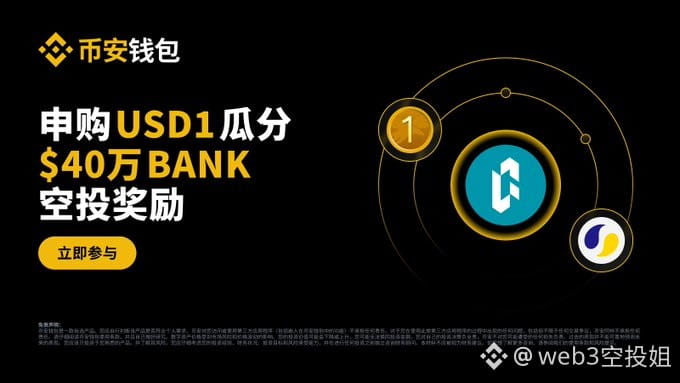
Hey folks, the Lorenzo USD1 pool on Binance Wallet has been blowing up lately!
A lot of people are stuck on whether to move their USD1 from Bybit to grab some sweet mining rewards. The incentives look tempting right now, but I've noticed that the biggest oversight is figuring out when the cash will actually hit your hands.
If your USD1 is idle cash, your position isn’t too small, and you can handle waiting a few days, then this pool is definitely worth a deep dive. But if you’re working with just $100-500, or you need to top up, rotate, or adjust positions at any moment, don’t just chase the hype.
Moving USDT over comes with fixed withdrawal fees from the CEX, BSC Gas fees, and the most critical part: the redemption wait period. The first two are visible costs, but that last one can really catch you off guard at crucial moments.
CEX withdrawal fees are usually fixed; whether you withdraw $100 or $1000, the fee is pretty much the same. This is where small-position traders really feel it—when your already thin capital takes a hit, efficiency drops fast. $100 is the minimum threshold, but just because it's low doesn’t mean every small position is comfortable.
BSC Gas is generally cheap, and this 0 Gas promotion might just hit the last day, so that shouldn’t be a major concern. The actual transaction costs will still depend on what you see on the Binance Wallet page and live on-chain data.
The real thing to weigh carefully is the redemption wait period. A lot of folks in the community say it’s around 3-6 days, and it’s not instant. If your USDT is just sitting around unused, waiting a few days is no big deal. But if you need your funds to be flexible, that waiting period can be a real pain.
I used to love following the trends, always thinking if on-chain yields were high, I should jump in right away. Then one time I needed cash and found it was still stuck in transit—that feeling was really frustrating. In stablecoin investing, while yields matter, liquidity is what really counts.
This isn't just an event; it's actually testing the real experience of moving USD1 from CEX balances to on-chain deployable funds. People are used to fast in-and-out on CEX, but on-chain there are more paths, waiting times, and contract risks, so the perception of efficiency and friction is slowly changing.
Different situations suit different folks entirely. If you've got idle cash and aren't in a rush, toss it on the watch list; for small positions, first calculate if the fixed fees are worth it; and if you need cash on the fly, liquidity has to be your top priority.
#BinanceWallet #Lorenzo #USD1
Hey folks, the Lorenzo USD1 pool on Binance Wallet has been blowing up lately!
A lot of people are stuck on whether to move their USD1 from Bybit to grab some sweet mining rewards. The incentives look tempting right now, but I've noticed that the biggest oversight is figuring out when the cash will actually hit your hands.
If your USD1 is idle cash, your position isn’t too small, and you can handle waiting a few days, then this pool is definitely worth a deep dive. But if you’re working with just $100-500, or you need to top up, rotate, or adjust positions at any moment, don’t just chase the hype.
Moving USDT over comes with fixed withdrawal fees from the CEX, BSC Gas fees, and the most critical part: the redemption wait period. The first two are visible costs, but that last one can really catch you off guard at crucial moments.
CEX withdrawal fees are usually fixed; whether you withdraw $100 or $1000, the fee is pretty much the same. This is where small-position traders really feel it—when your already thin capital takes a hit, efficiency drops fast. $100 is the minimum threshold, but just because it's low doesn’t mean every small position is comfortable.
BSC Gas is generally cheap, and this 0 Gas promotion might just hit the last day, so that shouldn’t be a major concern. The actual transaction costs will still depend on what you see on the Binance Wallet page and live on-chain data.
The real thing to weigh carefully is the redemption wait period. A lot of folks in the community say it’s around 3-6 days, and it’s not instant. If your USDT is just sitting around unused, waiting a few days is no big deal. But if you need your funds to be flexible, that waiting period can be a real pain.
I used to love following the trends, always thinking if on-chain yields were high, I should jump in right away. Then one time I needed cash and found it was still stuck in transit—that feeling was really frustrating. In stablecoin investing, while yields matter, liquidity is what really counts.
This isn't just an event; it's actually testing the real experience of moving USD1 from CEX balances to on-chain deployable funds. People are used to fast in-and-out on CEX, but on-chain there are more paths, waiting times, and contract risks, so the perception of efficiency and friction is slowly changing.
Different situations suit different folks entirely. If you've got idle cash and aren't in a rush, toss it on the watch list; for small positions, first calculate if the fixed fees are worth it; and if you need cash on the fly, liquidity has to be your top priority.
#BinanceWallet #Lorenzo #USD1
A lot of people are stuck on whether to move their USD1 from Bybit to grab some sweet mining rewards. The incentives look tempting right now, but I've noticed that the biggest oversight is figuring out when the cash will actually hit your hands.
If your USD1 is idle cash, your position isn’t too small, and you can handle waiting a few days, then this pool is definitely worth a deep dive. But if you’re working with just $100-500, or you need to top up, rotate, or adjust positions at any moment, don’t just chase the hype.
Moving USDT over comes with fixed withdrawal fees from the CEX, BSC Gas fees, and the most critical part: the redemption wait period. The first two are visible costs, but that last one can really catch you off guard at crucial moments.
CEX withdrawal fees are usually fixed; whether you withdraw $100 or $1000, the fee is pretty much the same. This is where small-position traders really feel it—when your already thin capital takes a hit, efficiency drops fast. $100 is the minimum threshold, but just because it's low doesn’t mean every small position is comfortable.
BSC Gas is generally cheap, and this 0 Gas promotion might just hit the last day, so that shouldn’t be a major concern. The actual transaction costs will still depend on what you see on the Binance Wallet page and live on-chain data.
The real thing to weigh carefully is the redemption wait period. A lot of folks in the community say it’s around 3-6 days, and it’s not instant. If your USDT is just sitting around unused, waiting a few days is no big deal. But if you need your funds to be flexible, that waiting period can be a real pain.
I used to love following the trends, always thinking if on-chain yields were high, I should jump in right away. Then one time I needed cash and found it was still stuck in transit—that feeling was really frustrating. In stablecoin investing, while yields matter, liquidity is what really counts.
This isn't just an event; it's actually testing the real experience of moving USD1 from CEX balances to on-chain deployable funds. People are used to fast in-and-out on CEX, but on-chain there are more paths, waiting times, and contract risks, so the perception of efficiency and friction is slowly changing.
Different situations suit different folks entirely. If you've got idle cash and aren't in a rush, toss it on the watch list; for small positions, first calculate if the fixed fees are worth it; and if you need cash on the fly, liquidity has to be your top priority.
#BinanceWallet #Lorenzo #USD1
3
8
3.4k
·
--
Current situation:
Price is 0.0390$
Volume is on: 117 million dollars
Above all moving averages MA7 - MA25 - MA99, meaning the uptrend is still ongoing
Anyone who joined with us—congratulations. If you’re still outside, don’t chase the price yet; wait for a correction at 0.0353$ (new support)
I’m still expecting 0.04$ and 0.045$ soon if the volume stays like this
Did you send it or are you still holding back? 👇#Lorenzo s#عملات_رقمية #bank
Current situation:
Price is 0.0390$
Volume is on: 117 million dollars
Above all moving averages MA7 - MA25 - MA99, meaning the uptrend is still ongoing
Anyone who joined with us—congratulations. If you’re still outside, don’t chase the price yet; wait for a correction at 0.0353$ (new support)
I’m still expecting 0.04$ and 0.045$ soon if the volume stays like this
Did you send it or are you still holding back? 👇#Lorenzo s#عملات_رقمية #bank
Price is 0.0390$
Volume is on: 117 million dollars
Above all moving averages MA7 - MA25 - MA99, meaning the uptrend is still ongoing
Anyone who joined with us—congratulations. If you’re still outside, don’t chase the price yet; wait for a correction at 0.0353$ (new support)
I’m still expecting 0.04$ and 0.045$ soon if the volume stays like this
Did you send it or are you still holding back? 👇#Lorenzo s#عملات_رقمية #bank
31
#Lorenzo Protocol The recent market trend has been too exciting!
After a rapid 3x surge in a short period, it quickly plunged—prices are putting on a roller-coaster ride. The main reasons behind it are:
1️⃣ Frequent leveraged trading leading to liquidations; both long and short get hit, intensifying volatility
2️⃣ Market makers drive prices up through competition, then collectively offload
3️⃣ Large token transfers from funds trigger expectations of selling pressure
Currently, the quote is 0.24169 at $BANK , with a 24h trading volume of $265 million and a market cap of about $185 million. In this kind of market, are you looking to buy the dip or wait and watch?
#BTC #Crypto $BANK
#Lorenzo Protocol The recent market trend has been too exciting!
After a rapid 3x surge in a short period, it quickly plunged—prices are putting on a roller-coaster ride. The main reasons behind it are:
1️⃣ Frequent leveraged trading leading to liquidations; both long and short get hit, intensifying volatility
2️⃣ Market makers drive prices up through competition, then collectively offload
3️⃣ Large token transfers from funds trigger expectations of selling pressure
Currently, the quote is 0.24169 at $BANK , with a 24h trading volume of $265 million and a market cap of about $185 million. In this kind of market, are you looking to buy the dip or wait and watch?
#BTC #Crypto $BANK
After a rapid 3x surge in a short period, it quickly plunged—prices are putting on a roller-coaster ride. The main reasons behind it are:
1️⃣ Frequent leveraged trading leading to liquidations; both long and short get hit, intensifying volatility
2️⃣ Market makers drive prices up through competition, then collectively offload
3️⃣ Large token transfers from funds trigger expectations of selling pressure
Currently, the quote is 0.24169 at $BANK , with a 24h trading volume of $265 million and a market cap of about $185 million. In this kind of market, are you looking to buy the dip or wait and watch?
#BTC #Crypto $BANK
142

·
--
Bearish
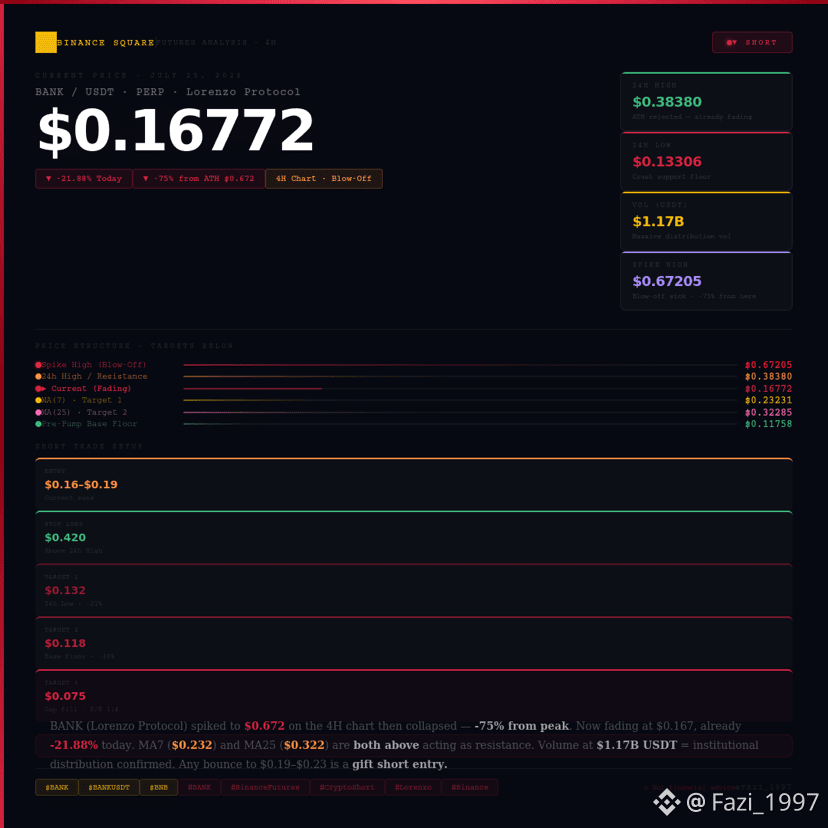
🔴 BANK (Lorenzo Protocol) — Blow-Off Top. Short Time.
Spiked to $0.672 on the 4H chart then crashed -75%. Now at $0.167 and still falling. $1.17B in volume = institutions dumping, not buying.
📉 Short Setup:
• Entry: $0.16 – $0.19
• SL: $0.420 (above 24h high)
• TP1: $0.132 → 24h low (-21%)
• TP2: $0.118 → base floor (-30%)
• TP3: $0.075 → gap fill · R/R 1:4
🔑 MA7 ($0.232) and MA25 ($0.322) are both above current price — massive resistance. Any bounce into those levels = perfect short add. 30-day return is +359% — this must retrace.
Any bounce is a gift. Sell it. 🎯
⚠️ 2–3× max. Not financial advice. DYOR.
$BANK
#BANK #BinanceFutures #CryptoShort #Lorenzo #Binance
🔴 BANK (Lorenzo Protocol) — Blow-Off Top. Short Time.
Spiked to $0.672 on the 4H chart then crashed -75%. Now at $0.167 and still falling. $1.17B in volume = institutions dumping, not buying.
📉 Short Setup:
• Entry: $0.16 – $0.19
• SL: $0.420 (above 24h high)
• TP1: $0.132 → 24h low (-21%)
• TP2: $0.118 → base floor (-30%)
• TP3: $0.075 → gap fill · R/R 1:4
🔑 MA7 ($0.232) and MA25 ($0.322) are both above current price — massive resistance. Any bounce into those levels = perfect short add. 30-day return is +359% — this must retrace.
Any bounce is a gift. Sell it. 🎯
⚠️ 2–3× max. Not financial advice. DYOR.
$BANK
#BANK #BinanceFutures #CryptoShort #Lorenzo #Binance
Spiked to $0.672 on the 4H chart then crashed -75%. Now at $0.167 and still falling. $1.17B in volume = institutions dumping, not buying.
📉 Short Setup:
• Entry: $0.16 – $0.19
• SL: $0.420 (above 24h high)
• TP1: $0.132 → 24h low (-21%)
• TP2: $0.118 → base floor (-30%)
• TP3: $0.075 → gap fill · R/R 1:4
🔑 MA7 ($0.232) and MA25 ($0.322) are both above current price — massive resistance. Any bounce into those levels = perfect short add. 30-day return is +359% — this must retrace.
Any bounce is a gift. Sell it. 🎯
⚠️ 2–3× max. Not financial advice. DYOR.
$BANK
#BANK #BinanceFutures #CryptoShort #Lorenzo #Binance
171

·
--
#Lorenzo Protocol has seen recent extreme volatility—after a 200% surge, it quickly retraced. What happened?
$BANK Within a short time, it pulled out a threefold rally and then fell rapidly; the battle between long and short has been extremely fierce. The main driving factors come from several areas: concentrated capital speculation, plus the launch of new KRW trading that stoked market sentiment to overheating, followed by rapid profit-taking that caused a sharp pullback.
Current data:
Price: $0.37806
24h trading volume: $152 million
Market cap: $289 million
What do you think about the violent swings of these newly launched projects? Are you on the train?
$BANK #加密货币 #Market updates
#Lorenzo Protocol has seen recent extreme volatility—after a 200% surge, it quickly retraced. What happened?
$BANK Within a short time, it pulled out a threefold rally and then fell rapidly; the battle between long and short has been extremely fierce. The main driving factors come from several areas: concentrated capital speculation, plus the launch of new KRW trading that stoked market sentiment to overheating, followed by rapid profit-taking that caused a sharp pullback.
Current data:
Price: $0.37806
24h trading volume: $152 million
Market cap: $289 million
What do you think about the violent swings of these newly launched projects? Are you on the train?
$BANK #加密货币 #Market updates
$BANK Within a short time, it pulled out a threefold rally and then fell rapidly; the battle between long and short has been extremely fierce. The main driving factors come from several areas: concentrated capital speculation, plus the launch of new KRW trading that stoked market sentiment to overheating, followed by rapid profit-taking that caused a sharp pullback.
Current data:
Price: $0.37806
24h trading volume: $152 million
Market cap: $289 million
What do you think about the violent swings of these newly launched projects? Are you on the train?
$BANK #加密货币 #Market updates
211

You must focus on one direction; anything that distracts you should not be done. Do not lose big for small gains.
If the direction is not chosen correctly, you must continue to choose. #btc #lorenzo
You must focus on one direction; anything that distracts you should not be done. Do not lose big for small gains.
If the direction is not chosen correctly, you must continue to choose. #btc #lorenzo
If the direction is not chosen correctly, you must continue to choose. #btc #lorenzo
2
5
177
Log in to explore more content
Join global crypto users on Binance Square
⚡️ Get latest and useful information about crypto.
💬 Trusted by the world’s largest crypto exchange.
👍 Discover real insights from verified creators.
Email / Phone number
Trending Topics
1
#ChainlinkLaunchesCCIP2WithEnterpriseVerification
3,198 views
266 Discussing
2
#GoldFallsTo$4144
2,994 views
80 Discussing
3
#QNTFallsOver40%FromMorningHigh
25,627 views
691 Discussing
4
#USDTAdds845900HoldersInPast7Days
29 views
23 Discussing
5
#KospiFalls2.7%SamsungSKHynixDropOver5%
4,886 views
312 Discussing
6
#BitgetCEOConfirms$388MStolenInHack
2,042 views
32 Discussing
7
#BTCFallsBelow$83000
14,931 views
127 Discussing
8
#BitgetDetailsSecurityIncidentTimeline
15,394 views
457 Discussing
9
#BitcoinSpotETFs$2.39BWeeklyNetInflow
6,176 views
27 Discussing
10
#FedProposesPaymentStablecoinRules
45,474 views
815 Discussing