
#japanfsastudygroupdiscussesdefiregulation
japanfsastudygroupdiscussesdefiregulation
6,221 views
47 Discussing
Hot
Latest

·
--
Japan's FSA is now openly mapping DeFi rules — DEX oversight, stablecoins, plus the ¥1M cap row. $BTC near $73,800, $ETH -2.2%. Clear rules open Japan up; endless study stalls DeFi. Would clear rules bring you back to DeFi? #JapanFSAStudyGroupDiscussesDeFiRegulation #DeFi #CryptoContent
Japan's FSA is now openly mapping DeFi rules — DEX oversight, stablecoins, plus the ¥1M cap row. $BTC near $73,800, $ETH -2.2%. Clear rules open Japan up; endless study stalls DeFi. Would clear rules bring you back to DeFi? #JapanFSAStudyGroupDiscussesDeFiRegulation #DeFi #CryptoContent
6

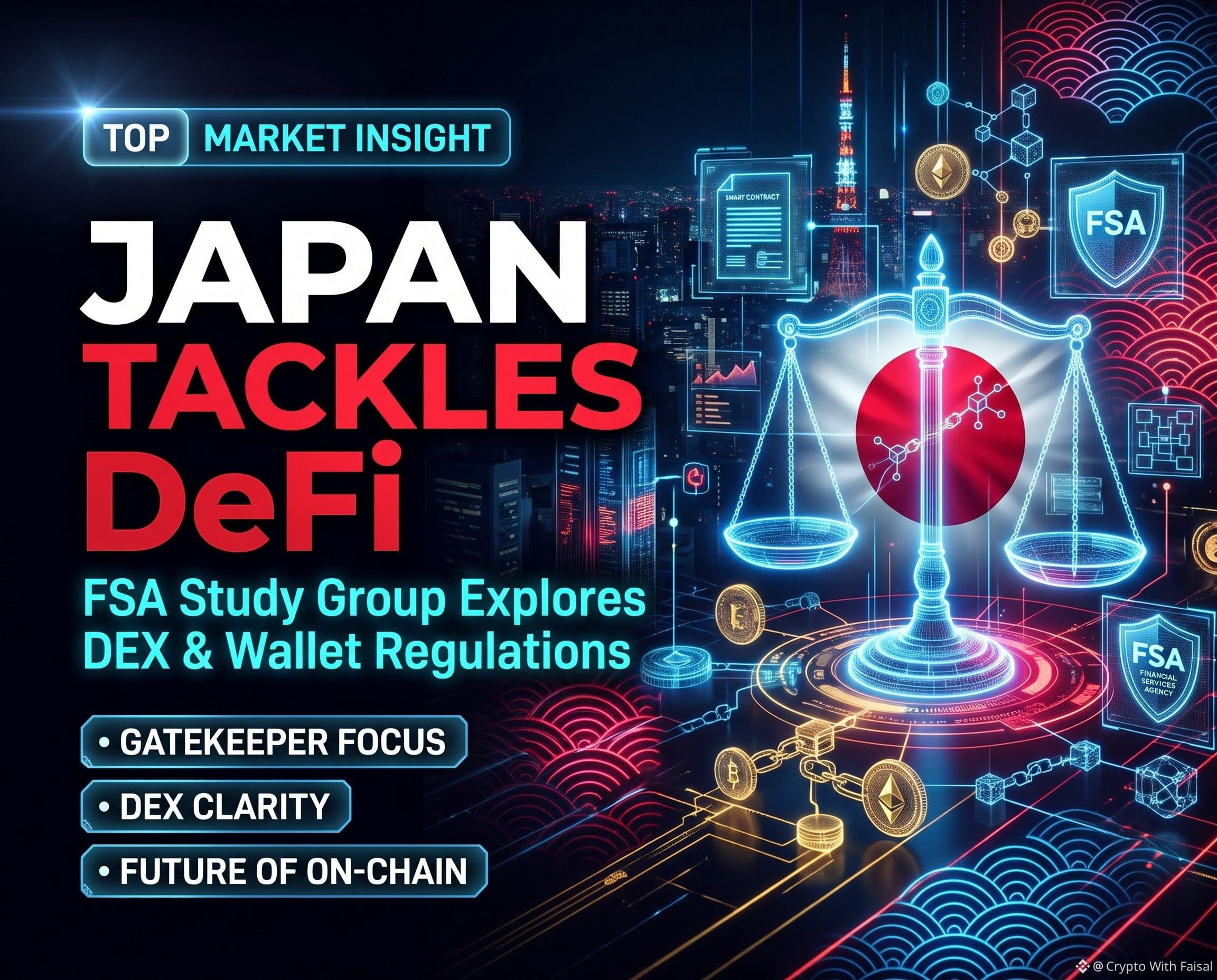
🚨 Japan is tackling one of crypto’s biggest challenges: How do you regulate DeFi without killing innovation?
Japan’s Financial Services Agency (FSA) Study Group recently convened to map out regulatory frameworks covering Decentralized Finance (DeFi), DEXs, and on-chain gatekeepers.
Key Takeaways for Traders & Builders:
Gatekeeper Focus: Regulators are examining where responsibility sits—evaluating front-end operators, developers, and protocol access points while keeping core smart contracts functional.
Closing Regulatory Gaps: Establishing legal clarity around DEXs and digital wallets to pave the way for institutional adoption and tokenized assets.
Global Precedent: Japan’s proactive approach to digital assets could serve as a global benchmark for balancing user protection with decentralized tech.
Historically, regulatory structure brings institutional liquidity. While short-term friction is expected, long-term legal clarity often unlocks the next wave of capital on-chain.
💡 Will structured compliance boost mainstream DeFi adoption, or push liquidity further into privacy-focused protocols?
Drop your thoughts below! 👇
$UNI
{future}(UNIUSDT)
$AAVE
{future}(AAVEUSDT)
$ETH
{future}(ETHUSDT)
#japanfsastudygroupdiscussesdefiregulation
#DeFiRegulation #Japan #BinanceSquare
🚨 Japan is tackling one of crypto’s biggest challenges: How do you regulate DeFi without killing innovation?
Japan’s Financial Services Agency (FSA) Study Group recently convened to map out regulatory frameworks covering Decentralized Finance (DeFi), DEXs, and on-chain gatekeepers.
Key Takeaways for Traders & Builders:
Gatekeeper Focus: Regulators are examining where responsibility sits—evaluating front-end operators, developers, and protocol access points while keeping core smart contracts functional.
Closing Regulatory Gaps: Establishing legal clarity around DEXs and digital wallets to pave the way for institutional adoption and tokenized assets.
Global Precedent: Japan’s proactive approach to digital assets could serve as a global benchmark for balancing user protection with decentralized tech.
Historically, regulatory structure brings institutional liquidity. While short-term friction is expected, long-term legal clarity often unlocks the next wave of capital on-chain.
💡 Will structured compliance boost mainstream DeFi adoption, or push liquidity further into privacy-focused protocols?
Drop your thoughts below! 👇
$UNI
$AAVE
$ETH
#japanfsastudygroupdiscussesdefiregulation
#DeFiRegulation #Japan #BinanceSquare
Hesham12345:
الرجاء المساعده لاني ظروفي صعبه جدا
1
3
2.5k

🔍 Who Should Be Responsible for DeFi Security?
Japan's latest regulatory discussions raise an important question: who should perform the gatekeeper role in decentralized finance? Investor protection, asset custody, and security remain key concerns.
$BTC $ETH $SOL $XRP
#japanfsastudygroupdiscussesdefiregulation
Japan's latest regulatory discussions raise an important question: who should perform the gatekeeper role in decentralized finance? Investor protection, asset custody, and security remain key concerns.
$BTC $ETH $SOL $XRP
#japanfsastudygroupdiscussesdefiregulation
15
⚖️ Japan Wants Clearer Rules for Decentralized Finance!
Regulators are discussing potential risks involving decentralized exchanges, wallets, and DeFi platforms. The goal is to address regulatory gaps without unnecessarily limiting blockchain innovation.
$ETH $BNB $LINK $AVAX
#japanfsastudygroupdiscussesdefiregulation
Regulators are discussing potential risks involving decentralized exchanges, wallets, and DeFi platforms. The goal is to address regulatory gaps without unnecessarily limiting blockchain innovation.
$ETH $BNB $LINK $AVAX
#japanfsastudygroupdiscussesdefiregulation
34
🇯🇵 Japan Takes a Closer Look at DeFi Regulation!
Japan's Financial Services Agency is examining how decentralized finance should fit into the financial system. The discussions focus on innovation, investor protection, and regulatory clarity.
$BTC $ETH $BNB $SOL
#japanfsastudygroupdiscussesdefiregulation
Japan's Financial Services Agency is examining how decentralized finance should fit into the financial system. The discussions focus on innovation, investor protection, and regulatory clarity.
$BTC $ETH $BNB $SOL
#japanfsastudygroupdiscussesdefiregulation
13
🏦 Stablecoins and DeFi Enter Japan's Regulatory Spotlight!
Japan is reviewing the regulatory framework for stablecoins, tokenized assets, and decentralized platforms. These discussions could influence how digital finance develops in the country.
$USDT $USDC $ETH $BNB
#japanfsastudygroupdiscussesdefiregulation
Japan is reviewing the regulatory framework for stablecoins, tokenized assets, and decentralized platforms. These discussions could influence how digital finance develops in the country.
$USDT $USDC $ETH $BNB
#japanfsastudygroupdiscussesdefiregulation
15

·
--
Bearish
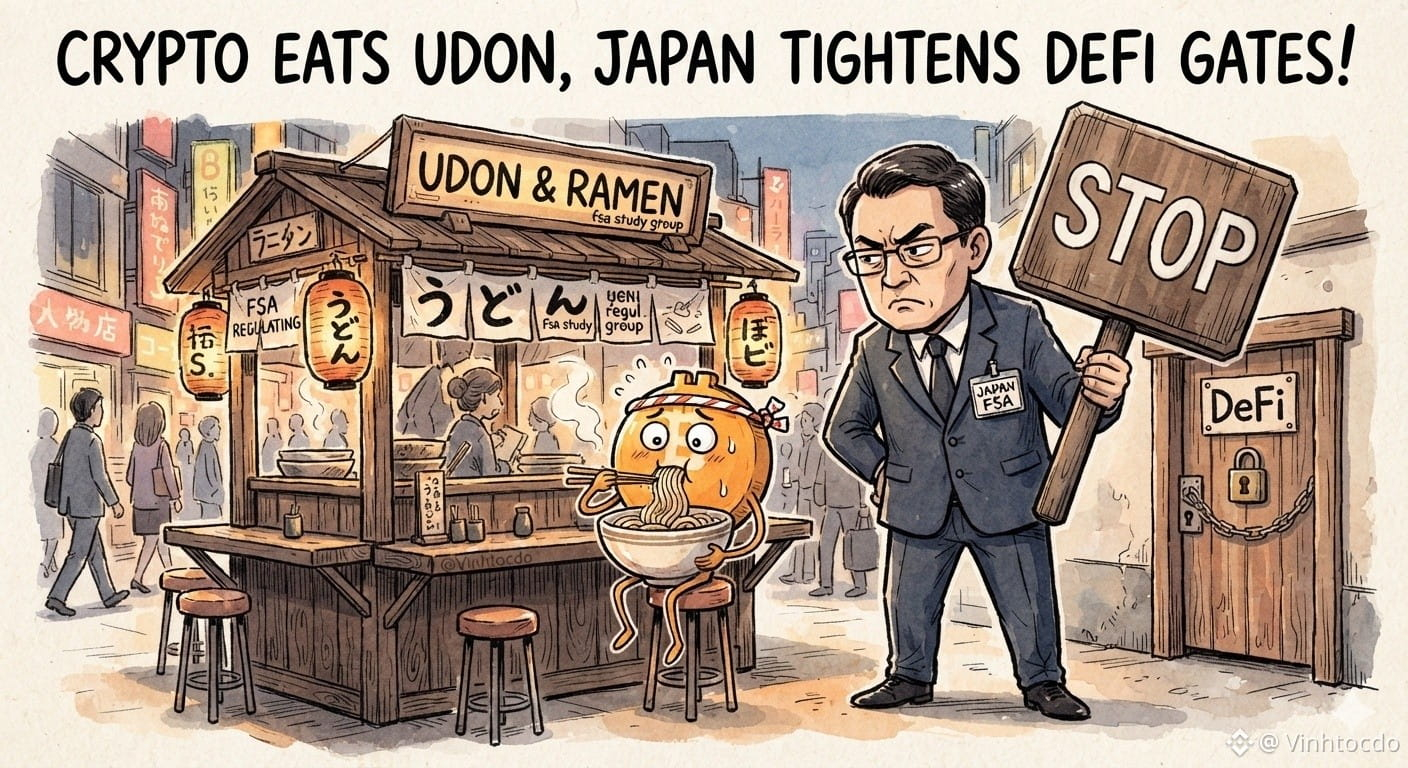
🍜 Crypto heads to Japan for udon and a story about DeFi “gatekeeping”!
Japan’s Financial Services Agency (FSA) has just held discussions on regulations for DeFi and DEXs. The hot topic this time is determining the responsibility of “gatekeepers” such as wallets and user interfaces. Japan wants to get ahead of the curve to avoid becoming a “haven” for projects dodging the law. 🇯🇵
What should traders do? Don’t panic-sell—keep a close eye on KYC regulations and choose transparent platforms to avoid getting stuck with illiquid assets!
This is not financial advice.
Click the trade link below to support me: $UNI
{spot}(UNIUSDT)
$SUSHI
{spot}(SUSHIUSDT)
$INIT
{future}(INITUSDT)
#JapanFSAStudyGroupDiscussesDeFiRegulation #DeFi #DEX #CryptoRegulation #JapanFSA #Web3 #VINHTOCDO
🍜 Crypto heads to Japan for udon and a story about DeFi “gatekeeping”!
Japan’s Financial Services Agency (FSA) has just held discussions on regulations for DeFi and DEXs. The hot topic this time is determining the responsibility of “gatekeepers” such as wallets and user interfaces. Japan wants to get ahead of the curve to avoid becoming a “haven” for projects dodging the law. 🇯🇵
What should traders do? Don’t panic-sell—keep a close eye on KYC regulations and choose transparent platforms to avoid getting stuck with illiquid assets!
This is not financial advice.
Click the trade link below to support me: $UNI
$SUSHI
$INIT
#JapanFSAStudyGroupDiscussesDeFiRegulation #DeFi #DEX #CryptoRegulation #JapanFSA #Web3 #VINHTOCDO
4
616

·
--
ETH Faces Discussion of DeFi Regulation in Japan | Meeting Minutes Are Still Seeking Public Comment | Waiting for Confirmation from Fund Flows and Price
I remain cautiously neutral on ETH. A discussion titled #JapanFSAStudyGroupDiscussesDeFiRegulation is appearing on Binance Square. After checking the Japan Financial Services Agency’s original pages, I think this is worth monitoring, but it must not be presented as “Japan has passed a new DeFi law.” The FSA’s “Study Group on Digital and Decentralized Finance” page lists the minutes of its first meeting on October 20 and materials for its second meeting on November 2. The minutes of the first meeting record hearings with Nomura Holdings and Securitize Japan, and show that stablecoins, tokenized assets, DEXs and DeFi, and wallet service providers were among the topics discussed. Participants noted the need to consider anti-money-laundering measures, investor protection, market integrity, and the authority to respond to incidents. These were discussion points raised by the study group, not formally implemented restrictions; nor was any Ethereum protocol announced as approved or banned.
Why does this matter for ETH? Ethereum is an important settlement layer for DeFi applications, and regulatory boundaries may affect whether Japanese institutions are willing to deploy on-chain assets, wallets, and liquidity services. If future rules enable compliant institutions to connect clearly, that could potentially increase demand for on-chain settlement over the long term. If liability and anti-money-laundering requirements cannot be put into practice, however, project development could be delayed. But there is still a gap between discussion and implementation, involving legislation, licensing, technical audits, and market adoption. Meeting minutes cannot be directly translated into new buying pressure for ETH. My independent view is that, in the short term, we should first monitor policy wording and actual fund flows, while distinguishing among three different signals: public on-chain transaction volume, ETF subscriptions, and spot prices on exchanges.
The market has not yet shown a clear breakout. When I checked, Binance ETHUSDT’s 24-hour statistics were around $2,056.82, down about 1.63% over 24 hours, with a range of $2,006 to $2,109.09. Farside’s tally showed net outflows of about $1.3 million from U.S. spot ETH ETFs on November 10, a sharp narrowing from about $184.6 million on the 9th. But a narrowing in a single day does not mean the institutional trend has reversed, and it would also be inaccurate to say that the Japanese study group caused this price movement. I’m watching the range high near $2,109, the contested area around $2,050, and the range low at $2,006. If ETH breaks above $2,109 but quickly falls back below $2,050, the bullish outlook will not hold. If it loses $2,006 on rising volume, the risk assessment will need to be revisited.
If I were trading myself, I would stay out for now and only consider a leveraged-free spot long. I would wait for ETH to hold above $2,110 on rising volume, then hold the $2,085–$2,110 range on a retest before investing no more than 1.5% of my total capital. I would first take half off at $2,160, reduce further at $2,220, and close the remaining position if the price falls back below $2,110. I would set a hard stop at $2,040 and keep the planned loss on the trade to around 0.05% of my total capital. If the price breaks directly below $2,006, I would not buy the dip on the basis of “regulatory good news.” If the Japan FSA later announces formal rules or a clear timeline, I will check the original text again and adjust my view.
#JapanFSAStudyGroupDiscussesDeFiRegulation #ETH
The above is solely my personal market observation and does not constitute investment advice.

11
🚀 Japan Explores the Future of On-Chain Finance!
Blockchain-based financial services are attracting regulatory attention in Japan. Finding the right balance between innovation, transparency, and financial stability will be important for long-term adoption.
$BTC $ETH $BNB $LINK
#japanfsastudygroupdiscussesdefiregulation
Blockchain-based financial services are attracting regulatory attention in Japan. Finding the right balance between innovation, transparency, and financial stability will be important for long-term adoption.
$BTC $ETH $BNB $LINK
#japanfsastudygroupdiscussesdefiregulation
8

Article
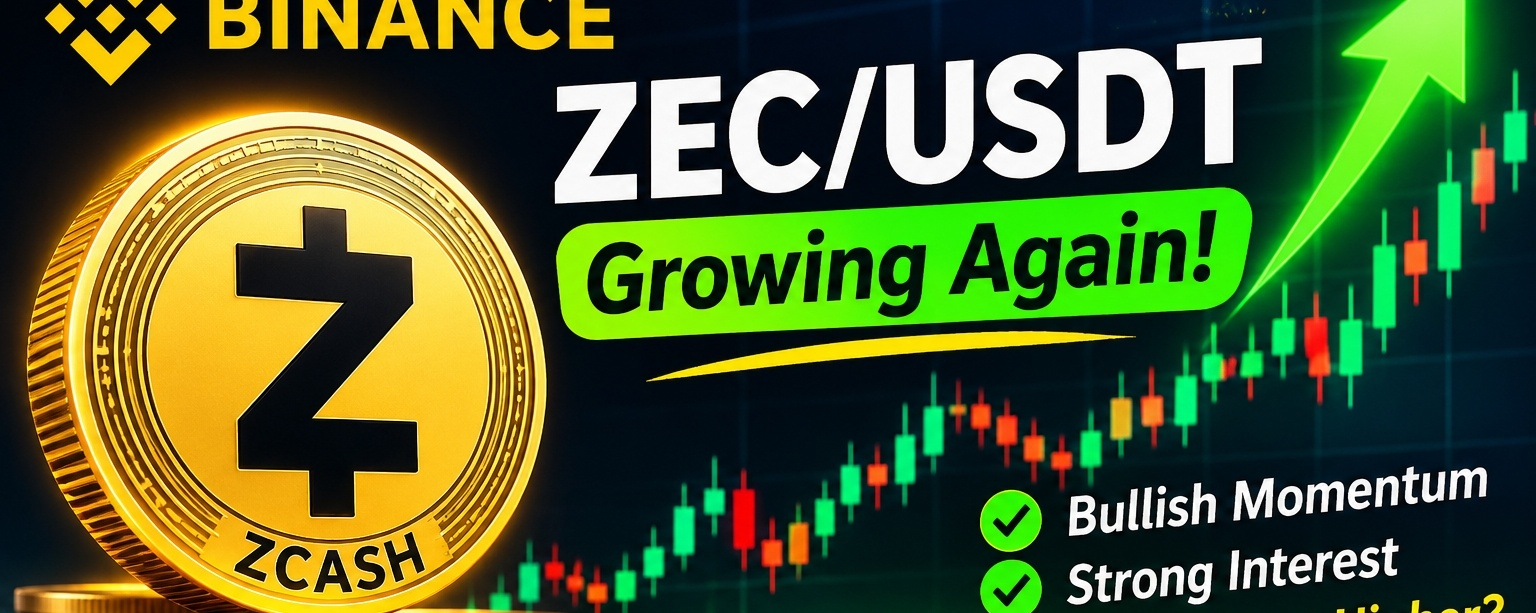
🚀 ZEC/USDT: Is Zcash Preparing for Its Next Bullish Move?#StrategyFaces$2.8BSelloffRiskFromMSCIRemoval #HotCPIDecemberHikePriced #JapanFSAStudyGroupDiscussesDeFiRegulation #DeutscheBankLaunchesDigitalAssetCustodyForBTCETH Zcash (ZEC) is attracting attention in the crypto market as traders watch its latest price movements. Short-term buying activity and sudden price rebounds are creating opportunities for traders looking for the next potential move.
📈 Why ZEC Is Worth Watching
Growing market interest in Zcash.
Strong trading activity and price volatility.
Privacy-focused technology continues to attract attention.
Traders are watching for a possible bullish recovery.
🔥 What's Next for ZEC?
If buying pressure continues and ZEC breaks important resistance levels, another upward move could become possible. However, maintaining support will be important for confirming bullish momentum.
My Market View
ZEC/USDT is a coin worth watching closely. The next major move could bring interesting opportunities, but traders should confirm the trend before entering a position.
Watch ZEC. Watch the breakout. Stay smart! 🚀
#ZEC #Zcash #ZECUSDT #Binance #CryptoMarket #Altcoins #CryptoTrading
Disclaimer: This article is for educational purposes only, not financial advice. Always manage your risk.
🚀 ZEC/USDT: Is Zcash Preparing for Its Next Bullish Move?
#StrategyFaces$2.8BSelloffRiskFromMSCIRemoval #HotCPIDecemberHikePriced #JapanFSAStudyGroupDiscussesDeFiRegulation #DeutscheBankLaunchesDigitalAssetCustodyForBTCETH Zcash (ZEC) is attracting attention in the crypto market as traders watch its latest price movements. Short-term buying activity and sudden price rebounds are creating opportunities for traders looking for the next potential move.
📈 Why ZEC Is Worth Watching
Growing market interest in Zcash.
Strong trading activity and price volatility.
Privacy-focused technology continues to attract attention.
Traders are watching for a possible bullish recovery.
🔥 What's Next for ZEC?
If buying pressure continues and ZEC breaks important resistance levels, another upward move could become possible. However, maintaining support will be important for confirming bullish momentum.
My Market View
ZEC/USDT is a coin worth watching closely. The next major move could bring interesting opportunities, but traders should confirm the trend before entering a position.
Watch ZEC. Watch the breakout. Stay smart! 🚀
#ZEC #Zcash #ZECUSDT #Binance #CryptoMarket #Altcoins #CryptoTrading
Disclaimer: This article is for educational purposes only, not financial advice. Always manage your risk.
1
853


·
--
Bullish
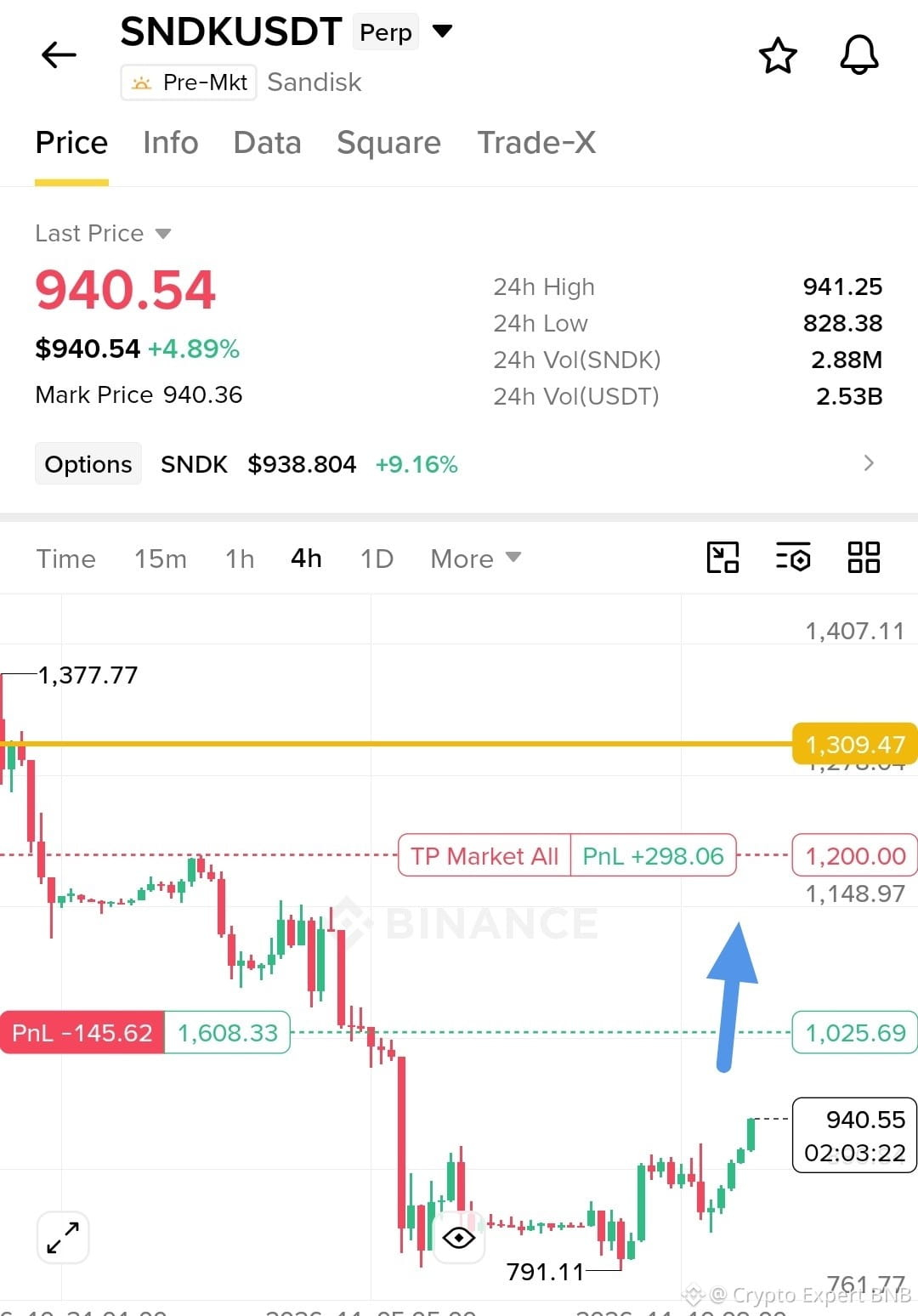
Long $SNDK 1.6K USDT
$SNDK 📈 SNDK Long Trade Signal Confirm long
Entry: $940
Position: 🟢 LONG
Leverage: 20x
🎯 TP1: $970
🎯 TP2: $1,010
🎯 TP3: $1,060
🛑 Stop Loss: $905
$SNDK
Key level: $920. Holding above this zone keeps the bullish setup valid. Take partial profit at TP1 and move SL toward entry.$SNDK #JapanFSAStudyGroupDiscussesDeFiRegulation
Entry: $940
Position: 🟢 LONG
Leverage: 20x
🎯 TP1: $970
🎯 TP2: $1,010
🎯 TP3: $1,060
🛑 Stop Loss: $905
$SNDK
Key level: $920. Holding above this zone keeps the bullish setup valid. Take partial profit at TP1 and move SL toward entry.$SNDK #JapanFSAStudyGroupDiscussesDeFiRegulation
2
1.3k

·
--
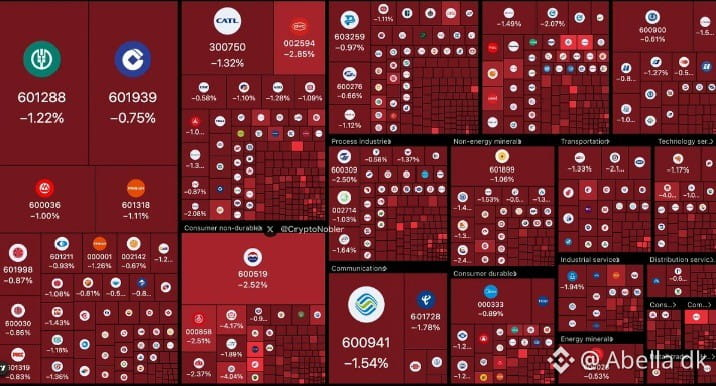
🚨💥 BREAKING: CHINA MARKET BLOODBATH!
🇨🇳 OVER ¥850 BILLION IN MARKET VALUE REPORTEDLY WIPED OUT IN JUST 5 MINUTES!
Panic is spreading across financial markets as Chinese stocks face intense selling pressure.
But that's not all…
🔥 Claims are circulating that the Bank of China is aggressively dumping U.S. Treasury holdings following a massive 45% market collapse.
If large-scale Treasury selling is confirmed, the consequences could extend far beyond China.
$AGT $ARIA $ERA
⚠️ Here's why global markets should pay attention:
1️⃣ Treasury selling could push U.S. bond yields higher.
2️⃣ Rising yields could pressure stocks and risk assets.
3️⃣ Investor panic could trigger further volatility across global markets.
4️⃣ Bitcoin and crypto could also face renewed selling pressure.
But one important distinction: the Treasury-selling claim needs independent confirmation. A reported stock-market collapse does not automatically prove government bond dumping.
🌍 ARE WE WITNESSING THE BEGINNING OF A GLOBAL FINANCIAL SHOCK?
Or is this another panic-driven market reaction?
🔥 WATCH THE MARKETS CLOSELY!
#HotCPIDecemberHikePriced #AnthropicRejectsIPODelayValuationinQuestion
#BitcoinFiveWeeklyLosses #SECEnforcementActionsFall24%InFiscal2026 #JapanFSAStudyGroupDiscussesDeFiRegulation
Binance BiBi:
Working on it. Your reply is on the way.
14
1
2.3k

·
--
Bullish
BLESSUSDT – BULLISH RECOVERY SETUP
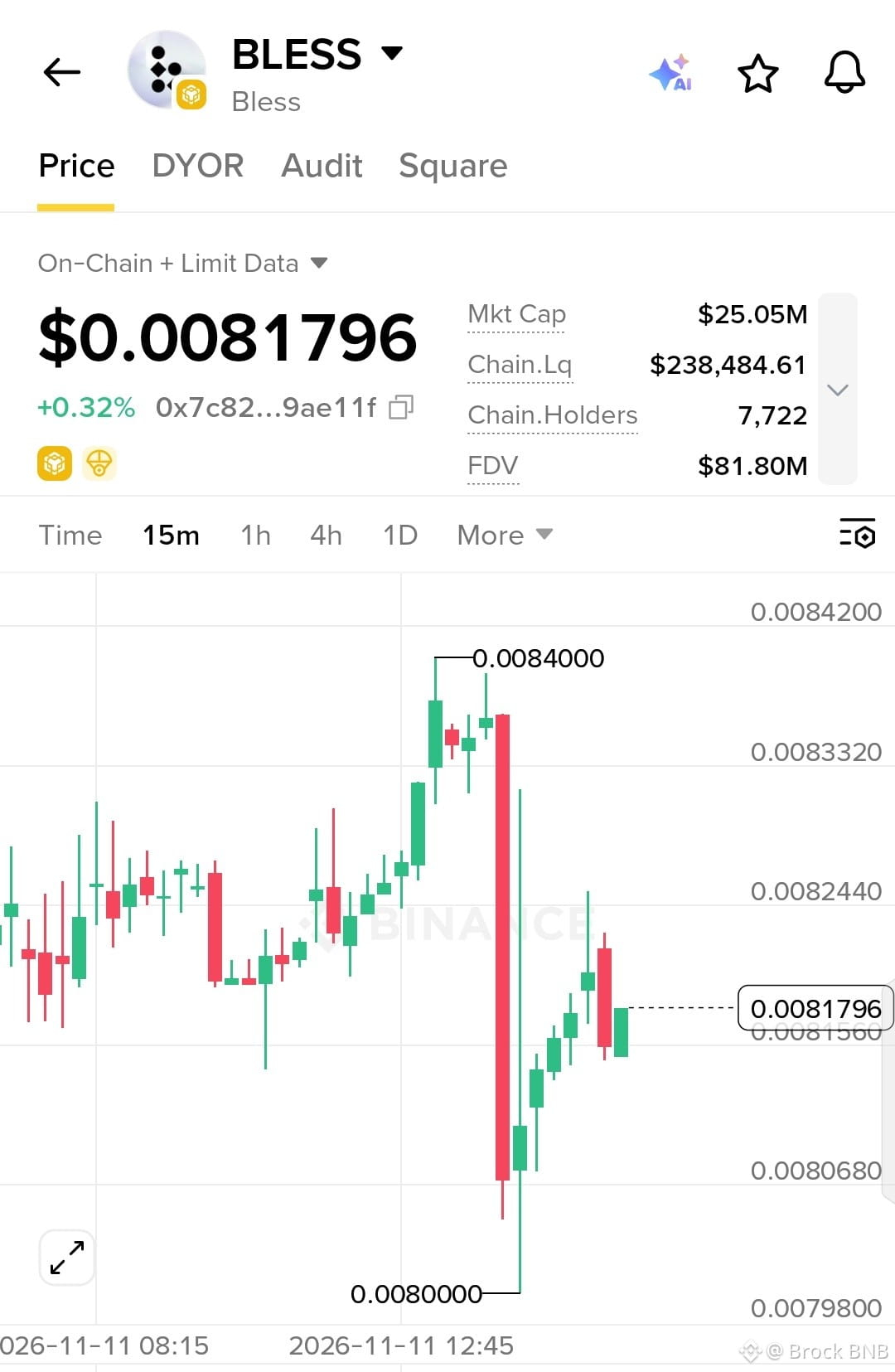
$BLESS USDT: Price trades at $0.0081796 after a sharp rebound from $0.0080000. Short-term momentum is recovering; resistance sits at $0.0082440 and $0.0083332. Support: $0.0081500. Entry above $0.0082440; stop $0.0080680. TG1 $0.0083332, TG2 $0.0084000, TG3 $0.0085000. Long-term confirmation remains pending; manage risk.
$BLESS
{future}(BLESSUSDT)
#HotCPIDecemberHikePriced #FSBUrgesTurkeyToEstablishStablecoinFramework #SECEnforcementActionsFall24%InFiscal2026 #JapanFSAStudyGroupDiscussesDeFiRegulation #BitcoinFiveWeeklyLosses
BLESSUSDT – BULLISH RECOVERY SETUP
$BLESS USDT: Price trades at $0.0081796 after a sharp rebound from $0.0080000. Short-term momentum is recovering; resistance sits at $0.0082440 and $0.0083332. Support: $0.0081500. Entry above $0.0082440; stop $0.0080680. TG1 $0.0083332, TG2 $0.0084000, TG3 $0.0085000. Long-term confirmation remains pending; manage risk.
$BLESS
#HotCPIDecemberHikePriced #FSBUrgesTurkeyToEstablishStablecoinFramework #SECEnforcementActionsFall24%InFiscal2026 #JapanFSAStudyGroupDiscussesDeFiRegulation #BitcoinFiveWeeklyLosses
1
333

·
--
Bullish
🚀 $AGT & me $ARIA Market Update!
Both coins are showing strong bullish momentum, but caution is needed after sharp rallies.
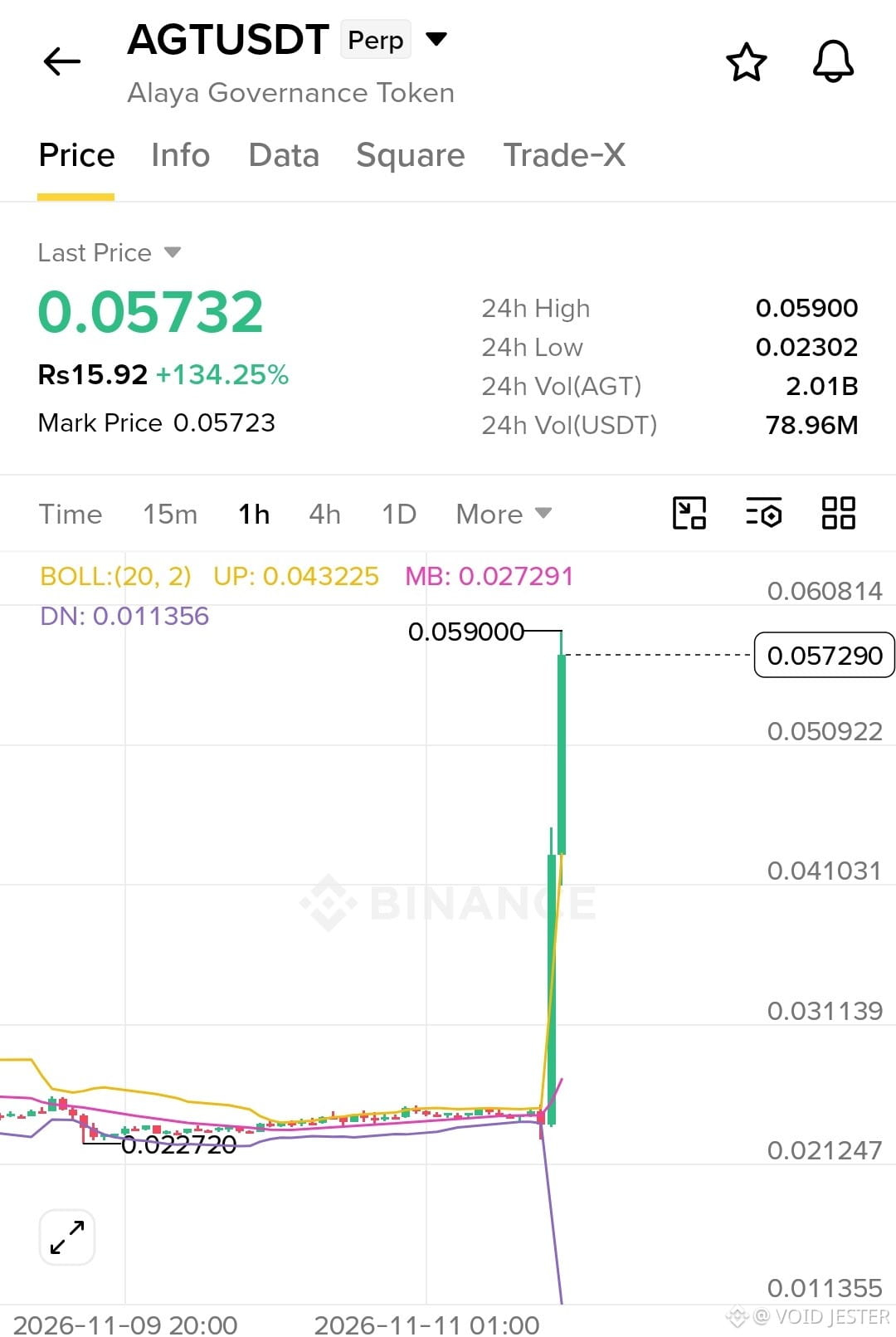
🔥 AGT: $0.05732 (+134.25%), with $78.96M USDT volume. Resistance: $0.059; support: $0.043, then $0.027. A pullback may follow this vertical spike.
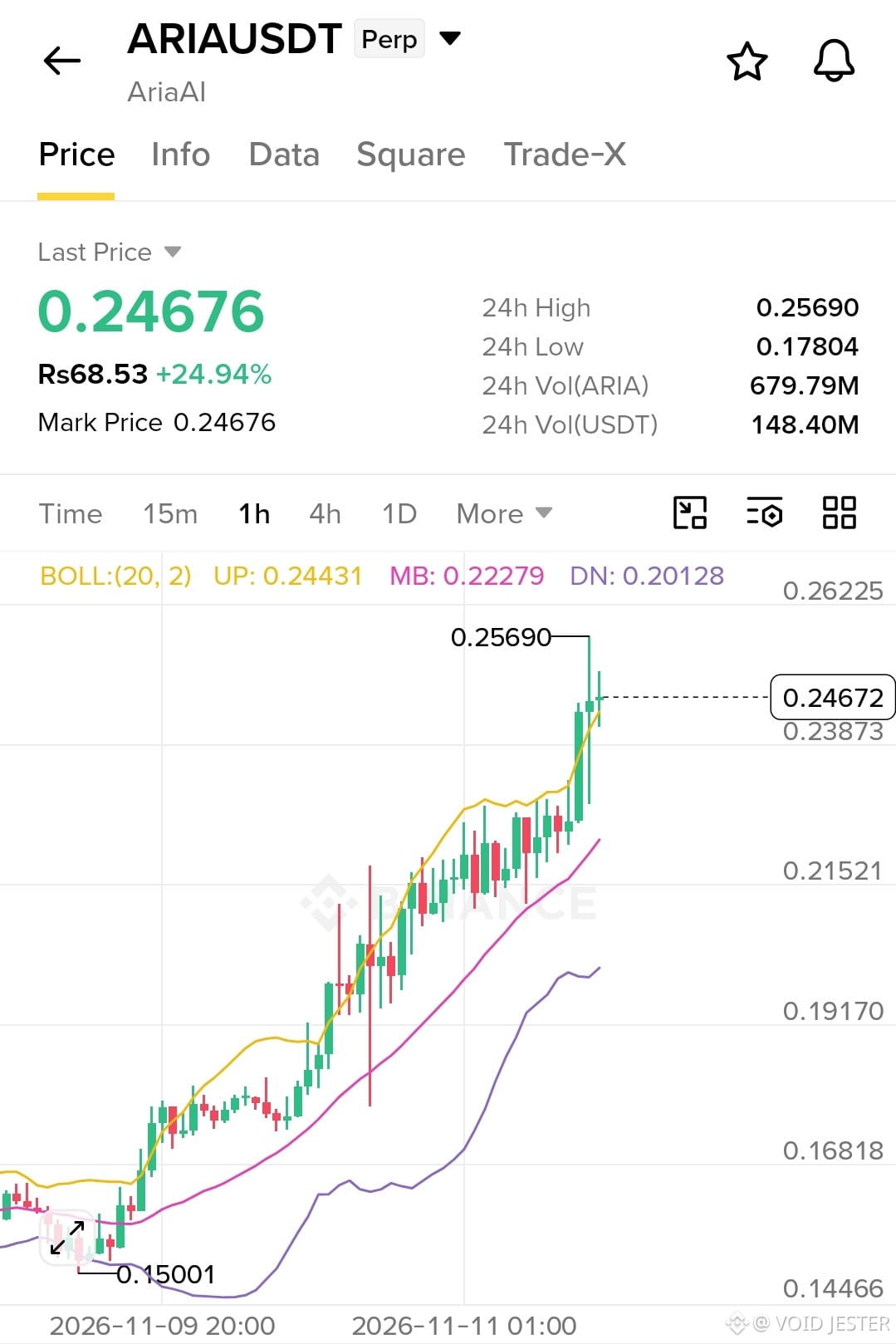
📈 ARIA: $0.24676 (+24.94%), with $148.40M volume. Resistance: $0.2569; support: $0.244, $0.223, then $0.201.
Both screenshots show 1H charts, not 4H. Watch whether buyers defend these key zones. Manage risk! 📊
#TradFiForBeginners #HotCPIDecemberHikePriced #AnthropicRejectsIPODelayValuationinQuestion #CanNvidiaEarningsEaseMarketConcerns? #JapanFSAStudyGroupDiscussesDeFiRegulation
{future}(AGTUSDT)
{future}(ARIAUSDT)
🚀 $AGT & me $ARIA Market Update!
Both coins are showing strong bullish momentum, but caution is needed after sharp rallies.
🔥 AGT: $0.05732 (+134.25%), with $78.96M USDT volume. Resistance: $0.059; support: $0.043, then $0.027. A pullback may follow this vertical spike.
📈 ARIA: $0.24676 (+24.94%), with $148.40M volume. Resistance: $0.2569; support: $0.244, $0.223, then $0.201.
Both screenshots show 1H charts, not 4H. Watch whether buyers defend these key zones. Manage risk! 📊
#TradFiForBeginners #HotCPIDecemberHikePriced #AnthropicRejectsIPODelayValuationinQuestion #CanNvidiaEarningsEaseMarketConcerns? #JapanFSAStudyGroupDiscussesDeFiRegulation
AHMED HUSSEIN GHAFIL AL SULTANI:
هبوط قادم احذر
2
1
557
·
--
Bullish
🚀 FUTURES MARKET: Top 3 Gainers!
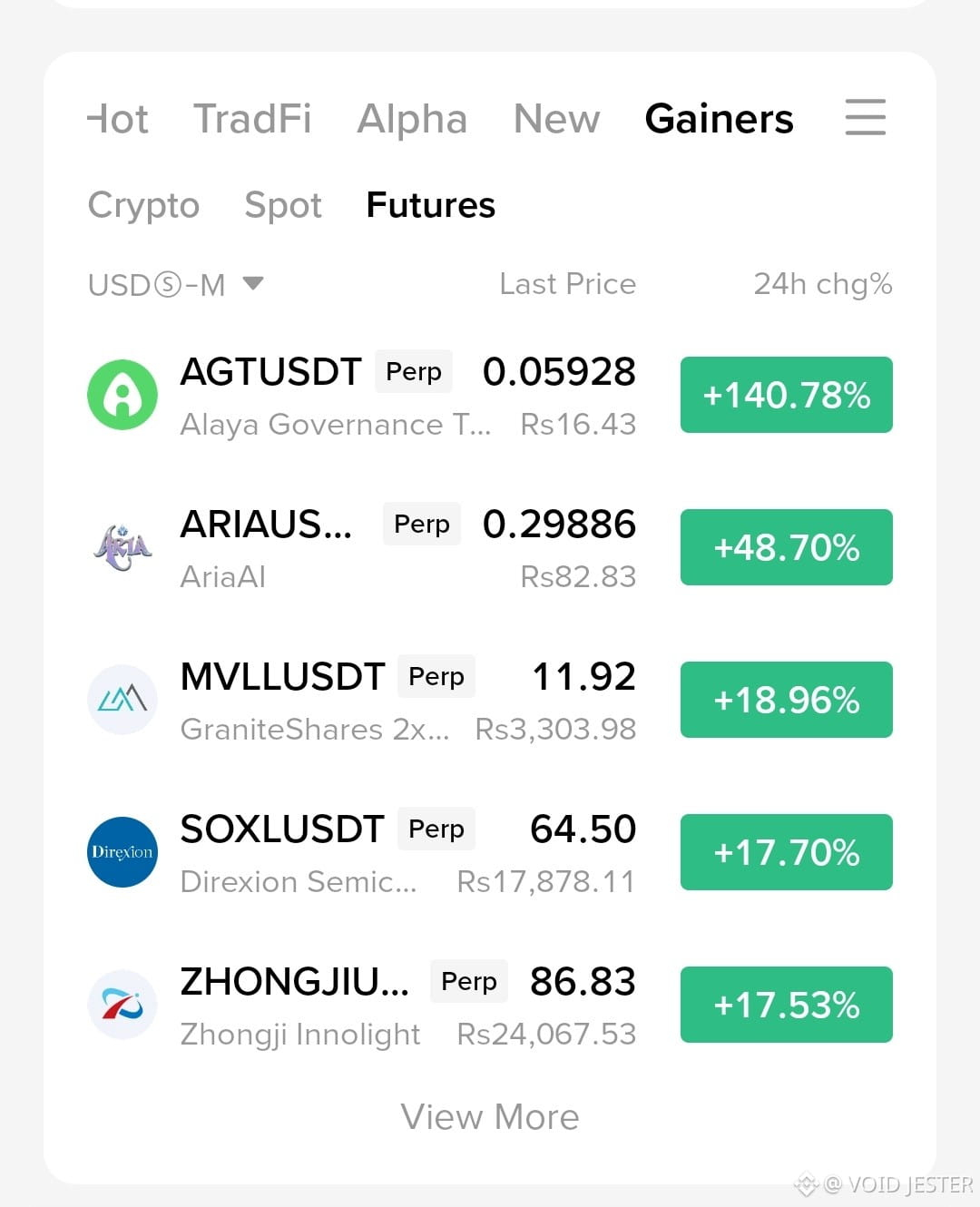
🔥 $AGT USDT leads today at $0.05928 (+140.78%), showing explosive momentum. $ARIA USDT follows at $0.29886 (+48.70%), while $MVLL USDT trades at $11.92 (+18.96%). All three are showing impressive 24H performance.
📊 Traders should watch for profit-taking, price stability, and breakout confirmation. The screenshot lacks volume and 4H chart data, so key support and resistance remain unconfirmed.
⚠️ Avoid chasing pumps and manage risk carefully.
Which coin looks strongest? 💬
#JapanFSAStudyGroupDiscussesDeFiRegulation #SECEnforcementActionsFall24%InFiscal2026 #BitcoinFiveWeeklyLosses #HotCPIDecemberHikePriced #AnthropicRejectsIPODelayValuationinQuestion
{future}(AGTUSDT)
{future}(ARIAUSDT)
{future}(MVLLUSDT)
🚀 FUTURES MARKET: Top 3 Gainers!
🔥 $AGT USDT leads today at $0.05928 (+140.78%), showing explosive momentum. $ARIA USDT follows at $0.29886 (+48.70%), while $MVLL USDT trades at $11.92 (+18.96%). All three are showing impressive 24H performance.
📊 Traders should watch for profit-taking, price stability, and breakout confirmation. The screenshot lacks volume and 4H chart data, so key support and resistance remain unconfirmed.
⚠️ Avoid chasing pumps and manage risk carefully.
Which coin looks strongest? 💬
#JapanFSAStudyGroupDiscussesDeFiRegulation #SECEnforcementActionsFall24%InFiscal2026 #BitcoinFiveWeeklyLosses #HotCPIDecemberHikePriced #AnthropicRejectsIPODelayValuationinQuestion
1
427

·
--
🚀 STARLINK MOBILE – BULLISH NEWS! 📱
SpaceX is moving closer to becoming a major US mobile carrier! The FCC has accepted its application to acquire 546 nationwide 800 MHz spectrum licenses, covering nearly 100% of the US population.
This could be a major step forward for Starlink Mobile and its direct-to-device connectivity ambitions. 📈
Market Outlook: Bullish Long-Term 🚀
Key Catalyst: FCC spectrum approval process
Potential Impact: Positive for SpaceX & Starlink Mobile ecosystem.
Entry (EP): N/A – News-based update
Take Profit (TP): N/A
Stop Loss (SL): N/A
Further regulatory approval is still required. Keep watching for the next major update! 🔥
#SpaceX #Starlink #ElonMusk #BullishNews #Telecom #CryptoNews
#AnthropicRejectsIPODelayValuationinQuestion #JapanFSAStudyGroupDiscussesDeFiRegulation #BitcoinFiveWeeklyLosses #FSBUrgesTurkeyToEstablishStablecoinFramework
51

·
--
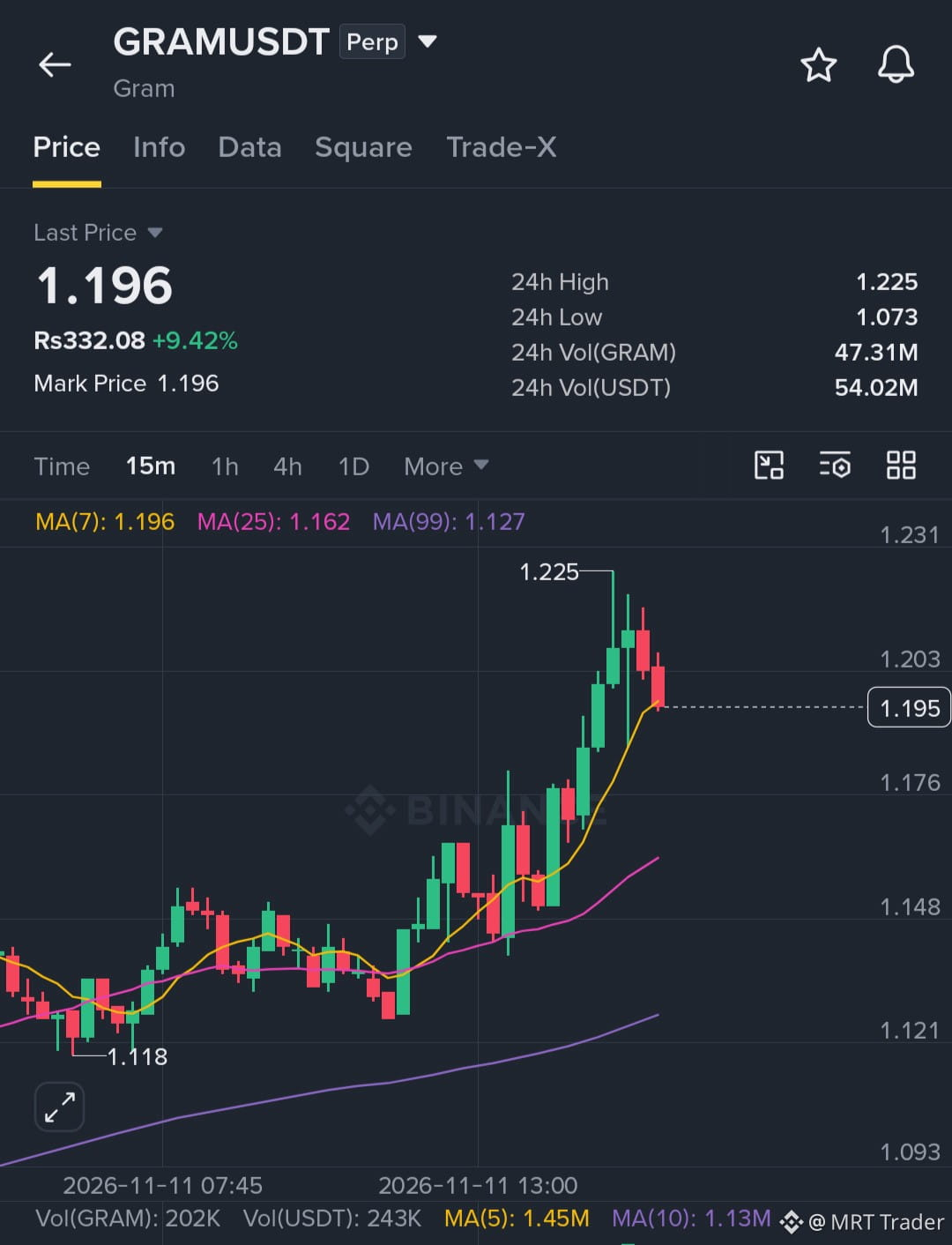
$GRAM is heating up and buyers are stepping in, so the structure favors a push toward higher targets. 🔥
Key Level:
🟢 Bullish above: 1.15
Trade Setup (Long):
🟢 Entry Zone: 1.14 – 1.19
🎯 Targets: 1.23 / 1.26 / 1.31
⛔ Stop Loss: 1.12
Price is holding bullish strength. Enter on pullbacks and manage risk appropriately.
Click here to buy now 👉 $GRAM
{future}(GRAMUSDT)
#GRAM #JapanFSAStudyGroupDiscussesDeFiRegulation
$GRAM is heating up and buyers are stepping in, so the structure favors a push toward higher targets. 🔥
Key Level:
🟢 Bullish above: 1.15
Trade Setup (Long):
🟢 Entry Zone: 1.14 – 1.19
🎯 Targets: 1.23 / 1.26 / 1.31
⛔ Stop Loss: 1.12
Price is holding bullish strength. Enter on pullbacks and manage risk appropriately.
Click here to buy now 👉 $GRAM
#GRAM #JapanFSAStudyGroupDiscussesDeFiRegulation
Key Level:
🟢 Bullish above: 1.15
Trade Setup (Long):
🟢 Entry Zone: 1.14 – 1.19
🎯 Targets: 1.23 / 1.26 / 1.31
⛔ Stop Loss: 1.12
Price is holding bullish strength. Enter on pullbacks and manage risk appropriately.
Click here to buy now 👉 $GRAM
#GRAM #JapanFSAStudyGroupDiscussesDeFiRegulation
41

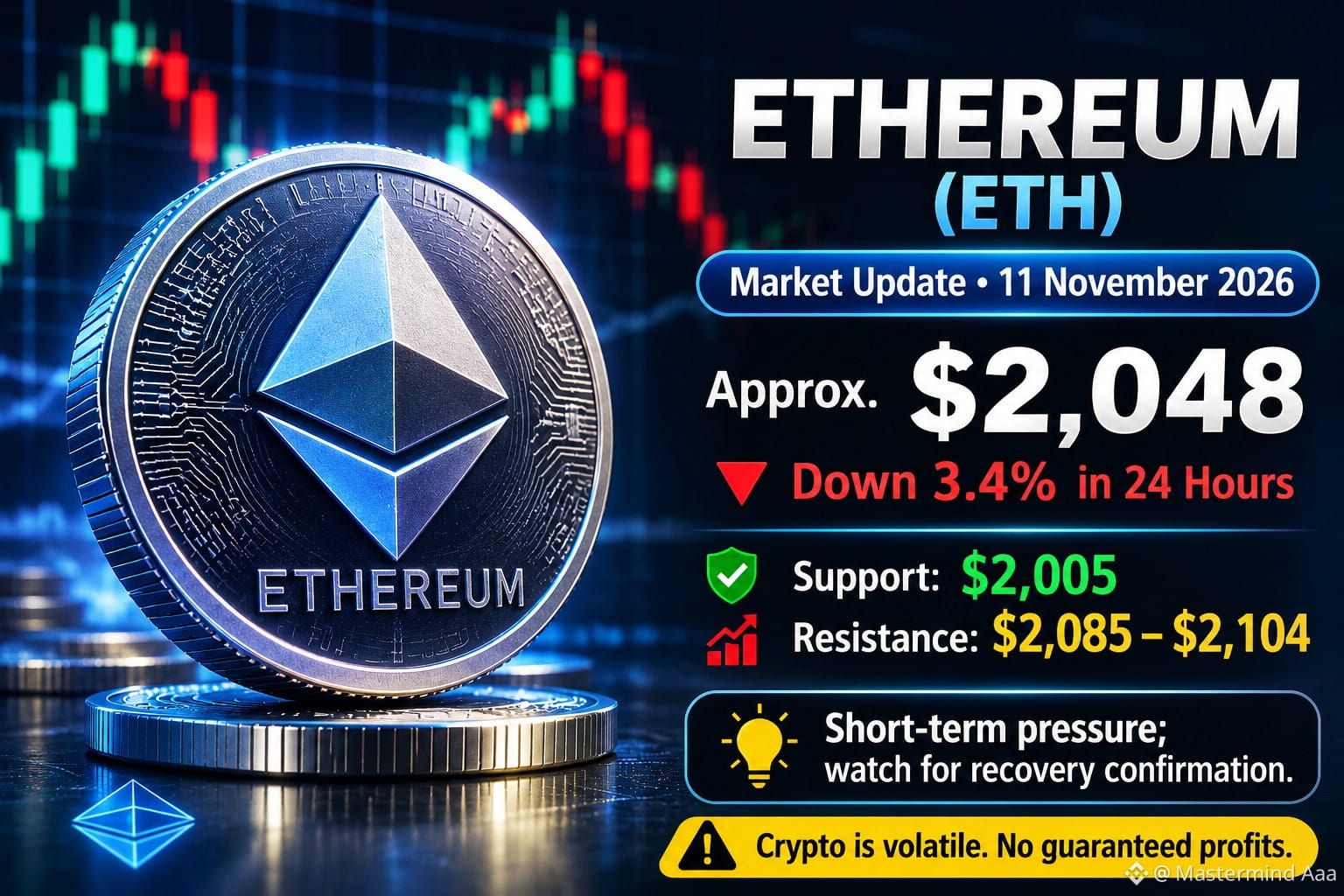
$ETH Ethereum is facing selling pressure amid inflation concerns and institutional ETF outflows. ETH remains one of the leading blockchain assets, with strong smart-contract and DeFi ecosystems.
Support: $2,005
Resistance: $2,085–$2,104
Outlook: Watch for a recovery above resistance before considering a bullish trade.
#JapanFSAStudyGroupDiscussesDeFiRegulation
#CanNvidiaEarningsEaseMarketConcerns?
{spot}(ETHUSDT)
$ETH Ethereum is facing selling pressure amid inflation concerns and institutional ETF outflows. ETH remains one of the leading blockchain assets, with strong smart-contract and DeFi ecosystems.
Support: $2,005
Resistance: $2,085–$2,104
Outlook: Watch for a recovery above resistance before considering a bullish trade.
#JapanFSAStudyGroupDiscussesDeFiRegulation
#CanNvidiaEarningsEaseMarketConcerns?
Support: $2,005
Resistance: $2,085–$2,104
Outlook: Watch for a recovery above resistance before considering a bullish trade.
#JapanFSAStudyGroupDiscussesDeFiRegulation
#CanNvidiaEarningsEaseMarketConcerns?
55
·
--
Article
What are the best cryptocurrencies to invest in right now?Investing in cryptocurrencies requires careful consideration of market trends, technological developments, and individual risk tolerance. As of November 11, 2026, here are some cryptocurrencies that have garnered attention:
1. Bitcoin (BTC)
Overview: Bitcoin remains the first and most widely recognized cryptocurrency, often referred to as "digital gold."Current Price: Approximately $73,985.Considerations: Bitcoin's established network and limited supply make it a staple in many investment portfolios.
2. Ethereum (ETH)
Overview: Ethereum is a leading platform for decentralized applications and smart contracts.Current Price: Around $2,057.76.Considerations: With ongoing upgrades aimed at scalability and reduced transaction fees, Ethereum continues to be a strong contender in the smart contract space.
3. Solana ($SOL )
Overview: Solana is known for its high-speed transactions and low fees, positioning itself as a competitor to Ethereum.Current Price: Approximately $89.54.Considerations: Its growing ecosystem and developer activity suggest potential for future growth.
4. XRP
Overview: XRP is designed for fast and low-cost international money transfers.Current Price: Around $1.062.Considerations: XRP's partnerships with financial institutions highlight its practical use case in the remittance sector.
5. Cardano ($ADA )
Overview: Cardano emphasizes a research-driven approach to blockchain development, focusing on scalability and sustainability.Current Price: Approximately $0.176.Considerations: Its methodical development process appeals to investors seeking long-term stability.
6. Polkadot ($DOT )
Overview: Polkadot aims to enable interoperability between different blockchains, facilitating a more connected ecosystem.Current Price: Around $0.849.Considerations: Its unique approach to scalability and governance positions it as a noteworthy project in the blockchain space.
7. Chainlink (LINK)
Overview: Chainlink provides decentralized oracle services, connecting smart contracts with real-world data.Current Price: Approximately $10.37.Considerations: Its widespread adoption across various blockchain platforms underscores its utility and demand.
8. Uniswap (UNI)
Overview: Uniswap is a decentralized exchange (DEX) that allows users to trade cryptocurrencies directly from their wallets.Current Price: Around $6.45.Considerations: As a leading DEX, Uniswap plays a crucial role in the decentralized finance (DeFi) ecosystem.
9. Litecoin (LTC)
Overview: Litecoin is a peer-to-peer cryptocurrency that offers faster transaction times compared to Bitcoin.Current Price: Approximately $50.88.Considerations: Its long-standing presence and active development community contribute to its credibility.
10. Dogecoin (DOGE)
Overview: Initially created as a meme, Dogecoin has gained popularity due to its active community and celebrity endorsements.Current Price: Around $0.068.Considerations: While it has experienced significant volatility, Dogecoin's community-driven nature continues to drive interest.
Important Considerations:
Market Volatility: Cryptocurrency markets are highly volatile. Prices can fluctuate rapidly, leading to potential gains or losses.Regulatory Environment: Cryptocurrencies face evolving regulatory scrutiny worldwide. It's essential to stay informed about regulations in your jurisdiction.Security Risks: Ensure you use reputable platforms and employ robust security measures to protect your investments.
Before making any investment decisions, it's advisable to conduct thorough research and consider consulting with a financial advisor to align investments with your financial goals and risk tolerance.
#JapanFSAStudyGroupDiscussesDeFiRegulation #SECEnforcementActionsFall24%InFiscal2026 #XRPLedger2027RoadmapProposesQuantumResistantSignatures #BitcoinFiveWeeklyLosses #StrategyExpectsCommonStockExclusionFromMSCIGlobalIndexes
What are the best cryptocurrencies to invest in right now?
Investing in cryptocurrencies requires careful consideration of market trends, technological developments, and individual risk tolerance. As of November 11, 2026, here are some cryptocurrencies that have garnered attention:
1. Bitcoin (BTC)
Overview: Bitcoin remains the first and most widely recognized cryptocurrency, often referred to as "digital gold."Current Price: Approximately $73,985.Considerations: Bitcoin's established network and limited supply make it a staple in many investment portfolios.
2. Ethereum (ETH)
Overview: Ethereum is a leading platform for decentralized applications and smart contracts.Current Price: Around $2,057.76.Considerations: With ongoing upgrades aimed at scalability and reduced transaction fees, Ethereum continues to be a strong contender in the smart contract space.
3. Solana ($SOL )
Overview: Solana is known for its high-speed transactions and low fees, positioning itself as a competitor to Ethereum.Current Price: Approximately $89.54.Considerations: Its growing ecosystem and developer activity suggest potential for future growth.
4. XRP
Overview: XRP is designed for fast and low-cost international money transfers.Current Price: Around $1.062.Considerations: XRP's partnerships with financial institutions highlight its practical use case in the remittance sector.
5. Cardano ($ADA )
Overview: Cardano emphasizes a research-driven approach to blockchain development, focusing on scalability and sustainability.Current Price: Approximately $0.176.Considerations: Its methodical development process appeals to investors seeking long-term stability.
6. Polkadot ($DOT )
Overview: Polkadot aims to enable interoperability between different blockchains, facilitating a more connected ecosystem.Current Price: Around $0.849.Considerations: Its unique approach to scalability and governance positions it as a noteworthy project in the blockchain space.
7. Chainlink (LINK)
Overview: Chainlink provides decentralized oracle services, connecting smart contracts with real-world data.Current Price: Approximately $10.37.Considerations: Its widespread adoption across various blockchain platforms underscores its utility and demand.
8. Uniswap (UNI)
Overview: Uniswap is a decentralized exchange (DEX) that allows users to trade cryptocurrencies directly from their wallets.Current Price: Around $6.45.Considerations: As a leading DEX, Uniswap plays a crucial role in the decentralized finance (DeFi) ecosystem.
9. Litecoin (LTC)
Overview: Litecoin is a peer-to-peer cryptocurrency that offers faster transaction times compared to Bitcoin.Current Price: Approximately $50.88.Considerations: Its long-standing presence and active development community contribute to its credibility.
10. Dogecoin (DOGE)
Overview: Initially created as a meme, Dogecoin has gained popularity due to its active community and celebrity endorsements.Current Price: Around $0.068.Considerations: While it has experienced significant volatility, Dogecoin's community-driven nature continues to drive interest.
Important Considerations:
Market Volatility: Cryptocurrency markets are highly volatile. Prices can fluctuate rapidly, leading to potential gains or losses.Regulatory Environment: Cryptocurrencies face evolving regulatory scrutiny worldwide. It's essential to stay informed about regulations in your jurisdiction.Security Risks: Ensure you use reputable platforms and employ robust security measures to protect your investments.
Before making any investment decisions, it's advisable to conduct thorough research and consider consulting with a financial advisor to align investments with your financial goals and risk tolerance.
#JapanFSAStudyGroupDiscussesDeFiRegulation #SECEnforcementActionsFall24%InFiscal2026 #XRPLedger2027RoadmapProposesQuantumResistantSignatures #BitcoinFiveWeeklyLosses #StrategyExpectsCommonStockExclusionFromMSCIGlobalIndexes
160

Log in to explore more content
Join global crypto users on Binance Square
⚡️ Get latest and useful information about crypto.
💬 Trusted by the world’s largest crypto exchange.
👍 Discover real insights from verified creators.
Email / Phone number
Trending Topics
1
#HuangRisksOusterOverReportedAffairWithSubordinate
52,403 views
769 Discussing
2
#AnthropicRejectsIPODelayValuationinQuestion
505,224 views
4,161 Discussing
3
#CoreWeaveJumps10%On168%RevenueGrowth
85,719 views
1,038 Discussing
4
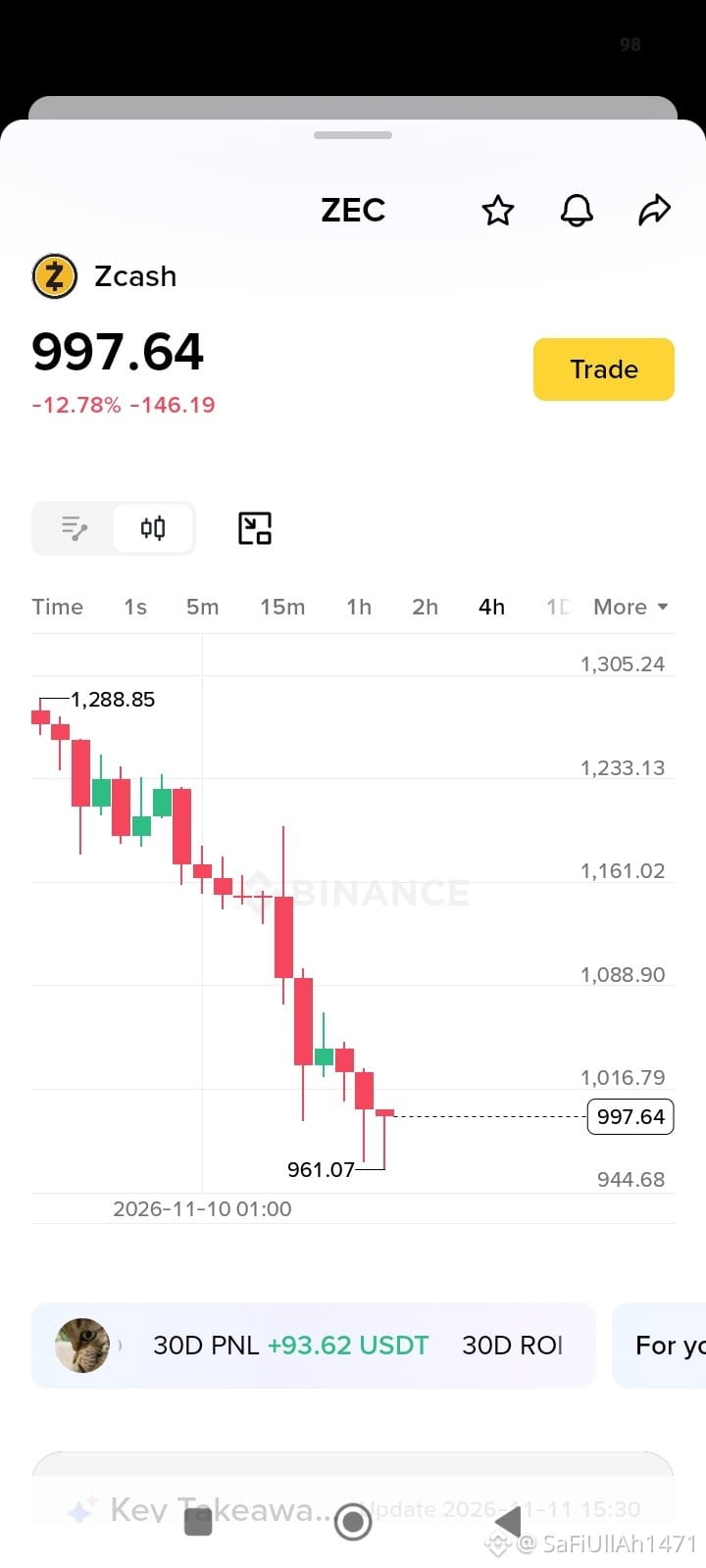
#ZcashFallsBelow$1000ForFirstTimeSinceSeptember
47,340 views
209 Discussing
5
#MSCIRemovalMayCurbStrategy’sBitcoinBuying
9,231 views
160 Discussing
6
#HKSFCSaysTokenizationMovingToCommercialUse
4 views
5 Discussing
7
#CanNvidiaEarningsEaseMarketConcerns?
195,429 views
1,948 Discussing
8
#SouthKoreaToLetExchangesSuspendWithdrawalsOnSuspectedHacks
193 views
11 Discussing
9
#PythAddsNYSERealTimeDataToMarketplace
3,825 views
109 Discussing
10
#SolanaCompanyReports$3.4MQ3Revenue
1,336 views
30 Discussing