
#jpyc
jpyc
23,950 views
170 Discussing
Hot
Latest

·
--
Bullish
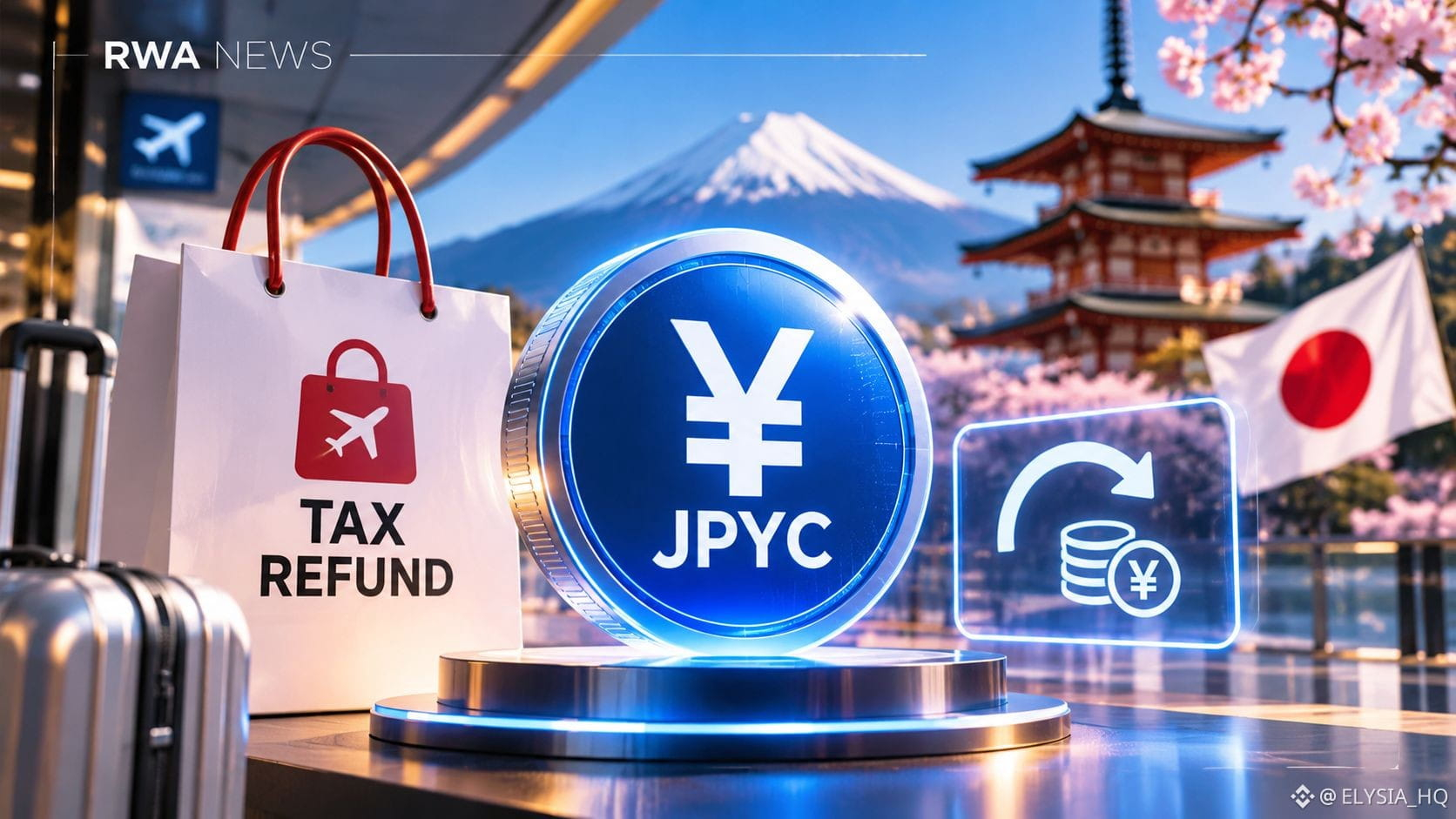
🇯🇵 Japan to Pilot Tax-Free Shopping Refunds Using JPYC Stablecoin
Japan is set to introduce a new stablecoin-powered tax refund experience for international visitors through a partnership between JPYC Inc. and UPBOND.
Starting November 1, the pilot will explore using JPYC, a Japanese yen-backed stablecoin, for duty-free shopping refunds, offering an alternative to conventional refund procedures. The initiative aims to connect tourism, digital payments and blockchain technology in a real-world retail setting.
The bigger picture: Stablecoins are expanding beyond crypto trading into everyday financial services. Japan's experiment highlights how tokenized fiat currencies could modernize cross-border payments, tax refunds and consumer finance.
#JPYC
71

·
--
Reaching 10 billion yen in a year may sound impressive, but JPYC’s CEO admits they achieved only a quarter of their internal target. That figure punctures an illusion: stablecoins don’t automatically find users just because they’re issued.
The list of partners mentioned by Noritaka Okabe is not short: Sony Bank and LINE NEXT have both signed on, and the cumulative issuance has surpassed the 10-billion-yen mark. But compared with internal expectations, actual progress is three-quarters behind. The problem isn’t issuance; it’s circulation—what do holders of yen stablecoins use them for? If they’re merely a temporary tool for cross-border transfers, without taking root in payments, settlements, or on-chain yield-generating use cases, it will be difficult to build scale.
Japan has always been slow to embrace crypto assets, and the arrival of stablecoin legislation has raised the bar further by increasing compliance costs. JPYC isn’t the only player working on a yen stablecoin, but its first-mover advantage hasn’t translated into network effects. An issuance volume of 10 billion yen is almost negligible in the global stablecoin market, several orders of magnitude smaller than the scale of dollar stablecoins.
The next thing to watch is whether the partnerships with Sony Bank and LINE NEXT can get JPYC integrated into real-world consumer or corporate settlement processes. If a year from now it’s still relying on issuance figures to put on a good show, the story of yen stablecoins will need to be told differently.
#稳定币 #JPYC #YenStablecoin
1
14

·
--
Directly funding a yen stablecoin from a bank account? It’s only a PoC for now—don’t assume it’s ready to useDirectly transferring money from a bank account into a stablecoin wallet—Japan is testing this approach again, but let’s be clear: it’s still only a PoC.
On October 20, JPYC, SBJ Bank Japan—a member of the Shinhan Financial Group—and LINE NEXT signed a memorandum of understanding on business collaboration (all three parties issued a joint announcement on October 21). The point isn’t that “you can use it right away”; it’s to test whether this flow can work technically and operationally: bank account → issuance/redemption of a yen stablecoin → transfer into a digital wallet.
The division of responsibilities is clearly spelled out: SBJ will provide the accounts and banking infrastructure; LINE NEXT will provide Web3 capabilities such as the Unifi wallet and Unifi Pay; and JPYC will act as the issuer, providing technical support for issuance and redemption. The three companies will also jointly design the processes for “linking accounts, issuing tokens, and integrating wallets.” There’s also a separate bilateral track: SBJ and LINE NEXT will discuss a strategic partnership, then assess after the PoC whether remittances and payments can be developed into products.
Directly funding a yen stablecoin from a bank account? It’s only a PoC for now—don’t assume it’s ready to use
Directly transferring money from a bank account into a stablecoin wallet—Japan is testing this approach again, but let’s be clear: it’s still only a PoC.
On October 20, JPYC, SBJ Bank Japan—a member of the Shinhan Financial Group—and LINE NEXT signed a memorandum of understanding on business collaboration (all three parties issued a joint announcement on October 21). The point isn’t that “you can use it right away”; it’s to test whether this flow can work technically and operationally: bank account → issuance/redemption of a yen stablecoin → transfer into a digital wallet.
The division of responsibilities is clearly spelled out: SBJ will provide the accounts and banking infrastructure; LINE NEXT will provide Web3 capabilities such as the Unifi wallet and Unifi Pay; and JPYC will act as the issuer, providing technical support for issuance and redemption. The three companies will also jointly design the processes for “linking accounts, issuing tokens, and integrating wallets.” There’s also a separate bilateral track: SBJ and LINE NEXT will discuss a strategic partnership, then assess after the PoC whether remittances and payments can be developed into products.
67

🚀 $JPYC POISED TO POWER TAX REFUNDS FOR TOURISTS IN JAPAN 🟢
📊 Japan’s shift to a post‑checkout tax‑refund model opens a clear lane for yen‑backed stablecoins to slash processing time. ⚡ A four‑hour gap between policy talk and my article shows the market’s ears are already tuned in. 🌊 If JPYC can funnel refunds straight to digital wallets, the same blockchain bridge could later serve transport tickets and logistics fees, turning a niche use‑case into public‑service infrastructure.
💡 The real battle isn’t hype; it’s proving speed, security, and compliance on the ground. Will travelers start seeing instant refunds in their apps, or will legacy systems cling to the old paperwork grind? 👇
⚠️ Not financial advice. Always manage your risk. 🛡️
🏷️ #JPYC #Stablecoin #TaxRefund #Japan #Crypto
🔥 💎
4

·
--
🚨 $JPYC POISED TO REDEFINE TAX REFUNDS IN JAPAN 🌊
Japan’s tax‑free shopping revamp will flip the refund flow from a manual after‑checkout process to an on‑chain settlement. A yen‑backed stablecoin like $JPYC can deliver the refund instantly to a traveler’s digital wallet, cutting latency and fees. 📊🦈
The roadmap still wrestles with KYC, AML and cross‑border conversion, but the policy chatter signals institutional appetite. If CryptoQuant begins streaming JPYC on‑chain metrics, we’ll see the first real liquidity pool form, turning a regulatory idea into actionable market depth. 💡📌
💬 Will you allocate capital ahead of the first on‑chain tax‑refund flow?
⚠️ Not financial advice. Always manage your risk. 🛡️
🏷️ #JPYC #Stablecoin #Japan #Policy #Crypto
🦈 🔥
6

·
--
⚡ JAPANESE YEN GOES ON-CHAIN AS $JPYC LANDS SPOT TRADING DEBUT! 🏦
Japanese fiat capital is officially expanding its on-chain footprint as regulated yen stablecoin $JPYC hits spot and grid trading markets today. Fully backed by bank reserves and government bonds, this deployment creates a direct, compliant liquidity bridge between traditional forex capital and crypto rails across Ethereum and Polygon. 🏦 📊
With grid trading live alongside spot liquidity, market makers are already positioning to capture arbitrage spreads as Asian capital flows deepen across multi-chain ecosystems. 💡 ⚡
💬 Do you see local currency stablecoins like $JPYC taking serious market share from USD-denominated pairs this cycle? 👇
⚠️ Not financial advice. Always manage your risk. 🛡️
🏷️ #JPYC #Stablecoin #DeFi #Crypto
🎯 💎
9
·
--
🚨 $JPYC TAKES ON LEGACY CREDIT GIANTS AS BLOCKCHAIN DISRUPTS ZERO-FEE PAYMENTS! 💥
📌 Japanese yen stablecoin issuer $JPYC is pushing regulatory boundaries by taking zero-fee blockchain payments straight to Japan's antitrust watchdog. Merchants are eager to pass zero-fee savings directly to consumers, but legacy credit card contracts are actively trying to choke off crypto payment adoption.
💡 With zero merchant fees built directly on-chain, stablecoin rails are exposing the massive overhead of traditional financial middlemen. 🔍 If regulators strike down these restrictive merchant clauses, expect a massive liquidity wave toward real-world stablecoin velocity. 💬 Will regulatory momentum finally break the legacy chokehold on merchant crypto adoption? 👇
⚠️ Not financial advice. Always manage your risk. 🛡️
🏷️ #JPYC #Stablecoins #CryptoPayments #Regulation #Adoption
⚡ 🌊
6
·
--
🚨 $JPYC CHALLENGES TRADITIONAL PAYMENT MONOPOLIES IN BREAKTHROUGH JAPANESE ANTITRUST REGULATORY MOVE ⚡
Japanese yen stablecoin issuer $JPYC is taking aim at legacy credit card fee structures, filing market competition data directly with Japan's Fair Trade Commission. 🏦 By executing zero-fee settlement via blockchain infrastructure, merchant friction is effectively eliminated.
Credit card clauses currently restrict stores from offering direct cash incentives to stablecoin users. 🔍 However, regulatory precedents suggest these restrictive legacy agreements may constitute antitrust violations, opening the door for massive institutional displacement of traditional payment rails.
As zero-cost on-chain liquidity challenges legacy transaction fees, are traditional payment networks losing their structural moat? 💬
⚠️ Not financial advice. Always manage your risk. 🛡️
🏷️ #JPYC #Stablecoins #Fintech #Crypto
⚡ 🔍
26

·
--
Japan convenience-store giant Lawson is going to take this seriously.
In early August, the Tokyo Gateway City store will launch a JPYC stablecoin payment pilot, working with digital wallet service provider Hashport to roll it out. This isn’t just about “being able to pay with coins”—the POS system will be directly connected to the wallet, and transaction data such as the number of items and payment time will be seamlessly written into the store’s existing management system.
The key focus is to verify two things: the stability of the stablecoin POS integration and the time required for actual settlement. These data points will determine whether Lawson will roll out JPYC to tens of thousands of stores nationwide.
Getting a yen stablecoin to work in the convenience-store scenario means that on-chain payments have, for the first time, been truly embedded into Japan’s everyday consumer bloodstream. For the broader stablecoin narrative across Asia, this is a signal that can’t be ignored.
#Stablecoin #JPYC #Japan
88

Japanese retail giant is also starting to explore stablecoins.
Rose(n) Convenience Stores officially announced that it will launch a JPYC stablecoin payment pilot at its Tokyo Gateway City store in early August. Partnering with digital wallet provider Hashport, it will connect the POS system and feed data such as item quantities and payment timestamps directly into the store management back end.
The focus for me isn’t the words “pilot,” but the path it validates—first test the stability of POS integration, then measure real payment latency, and only then decide whether to roll it out broadly. This is the right approach for traditional retail to adopt Web3 payments: no slogans, just data.
Once it works, it means a yen-backed stablecoin will truly enter everyday offline consumption for the first time—not just remain at-chain transfers. For the regulated stablecoin race, this is a significant signal. Japan’s “first legislate, then implement” cadence may deliver results faster than people expect.
Will convenience stores become the first batch of “physical entry points” for stablecoins? Worth keeping an eye on.
#稳定币支付 #JPYC #JapanWeb3
85

·
--
🎯 Japanese logistics giant pays wages with stablecoins
📰 Amazon supplier AZ-COM Maruwa will use JPYC to pay 2,300 partner companies, with truck drivers receiving stablecoins directly
💬 Here’s something interesting: after Japanese regulators gave the green light, stablecoin payments started rolling out. This is far more practical than just launching a coin on an exchange
🏷️ #JPYC #稳定币 #日本 #加密货币 # adoption rate
AMZNonAlpha
AMZNUS-0.02%
56

💵 Japanese Logistics Company Eyes JPYC Stablecoin to Pay Drivers: Corporate adoption of Japan's yen-pegged stablecoin gains traction
On July 20, 2026, a major Japanese logistics company is exploring the use of JPYC, a yen-pegged stablecoin, to compensate delivery drivers. This development represents a significant step in the real-world application of digital assets for payroll purposes.
The move could set a precedent for stablecoin adoption in Japan's corporate sector. If successful, other logistics and gig-economy companies may follow suit, potentially driving substantial demand for regulated stablecoins.
Japan's clear regulatory framework for digital assets has positioned it as a leader in stablecoin innovation. The JPYC use case demonstrates how stablecoins can solve real business problems by enabling instant, low-cost payments.
📌 Key Takeaway:
A Japanese logistics firm adopting JPYC for driver pay is a concrete example of stablecoins solving real-world payroll challenges — corporate adoption is accelerating.
#JPYC #Stablecoins #Japan
#BinanceAlphaAlert
19

·
--
While most traders are focused on the impending crypto regulation, smart money is watching the ripple effects on stablecoin adoption.
THE SIGNAL: Japanese logistics company, Nippon Express, is planning to integrate JPYC stablecoin for frequent and quick digital yen payments to thousands of transportation contractors, signaling a significant shift towards DeFi adoption. #JPYC #StablecoinAdoption
THE INTERPRETATION: If this rollout is successful, it could mark the beginning of wider stablecoin use in traditional industries, sparking a new wave of decentralized finance growth. This, in turn, could drive up demand for JPYC and other stablecoins pegged to major fiat currencies.
THE WATCH LIST: Keep a close eye on JPYC/BUSD trading volume, as a surge in adoption and subsequent price action could be imminent. #JPYCvolume
What happens when stablecoins begin to seep into traditional industries, changing the way businesses think about DeFi?
73

🇯🇵 A giant Japanese company adopts the yen-backed stablecoin JPYC to pay suppliers!
AZ-COM Maruwa, the main supplier for Amazon Japan, announced that it will adopt the JPYC yen-backed stablecoin as a payment method for around 2,300 business partners and truck drivers. This move aims to speed up cash flows and address labor shortages in Japan’s logistics sector, boosting the adoption of stablecoins across traditional supply chains.
━━━━━━━━━━━━━━
📊 Impact: 🔥 Very High
🏷️ STABLECOIN
#JPYC #Stablecoin #Japan #Payments #Logistics
🔗 Source: https://www.coindesk.com/business/2026/07/20/amazon-japan-supplier-az-com-maruwa-to-adopt-yen-stablecoin-jpyc-for-payments
AMZN+0.18%
AMZNUS-0.02%
26

·
--
JPYC has cumulatively completed approximately JPY 6 billion in Round B expansion financing. New investors include the logistics group AZ-COM Maru and the holding company. The funds will be used to expand the financial and Web3 ecosystem, and to advance on-chain financial use cases such as JPYC’s implementation in offline payments, logistics, and the integration of capital flows.
The stablecoin market continues to heat up, and JPYC’s introduction of a logistics strategic investor indicates that stablecoins are accelerating beyond exchanges and into real-world offline payment and cross-border trade scenarios. When stablecoins are combined with logistics cash flows, the next incremental growth space for on-chain finance is something to look forward to.
#JPYC #稳定币 #Web3


18

·
--
Most traders are chasing the next pump. Smart money is quietly building infrastructure for stable demand.
This funding round for JPYC, a yen-pegged stablecoin, just closed at $38 million. This isn't just another funding announcement; it’s a clear signal of institutional belief in a diversified stablecoin future beyond just USD. Expanding their financial and Web3 ecosystem means more on-ramps and off-ramps for fiat, specifically the Yen, directly into crypto. Think about the implications for Asian markets and the potential for new trading pairs.
This $38M isn't going into short-term speculation. It's fuel for long-term integration. Expect JPYC to become a more significant player, offering a stable entry and exit point for a major global currency. This builds stability and utility, something we haven't seen enough of. #Stablecoins #Web3Infrastructure #JPYC
Keep an eye on JPYC's partnerships and ecosystem growth in the coming months. Their ability to integrate with more DeFi protocols will be key. #DeFi
What does this tell you about where the smart money sees value in the stablecoin market?
11

South Korea considers crypto market makers after JPYC surges 4x above its peg
- South Korea is reviewing regulations on cryptocurrency market makers.
- Currently, market making activities are restricted under the country’s anti-manipulation law.
- The move comes after JPYC spiked to 4 times its peg on Upbit this month.
- Regulators are reconsidering their approach in light of the new situation.
#BinanceSquare #CryptoNews #JPYC #Upbit #SouthKorea
$jpyc
vlikevn Titanbot
Source: CoinTelegraph
18

·
--
Korea’s financial authorities just got a lesson from being hit by a stablecoin.
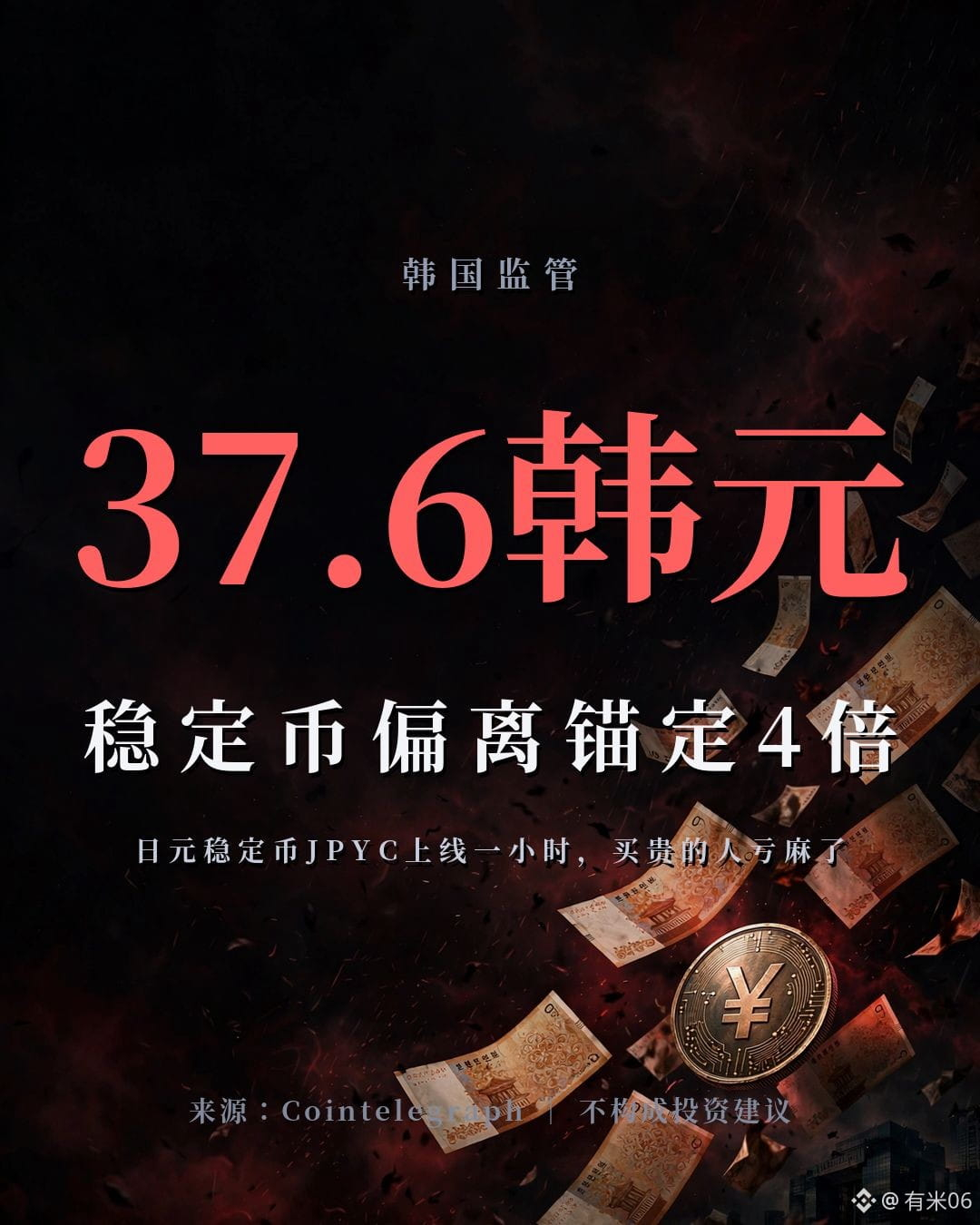
On September 17, the yen stablecoin JPYC was listed on the South Korean exchange Upbit. It opened at 12 won and, in under an hour, surged to 37.6 won—more than four times its “real” value anchored to the underlying asset (about 8.8 won). It wasn’t that JPYC suddenly became more valuable; it was simply that liquidity was too thin. A rush of buy orders piled in and pushed the price sharply higher.
What’s even more painful is Upbit’s data: within five days of listing, 21,219 investors bought in at prices more than 10% above the reference price, totaling 259.9 billion won. The same thing happened to PYUSD and EURC as well, suggesting this isn’t an isolated case, but a systemic liquidity-management problem when new coins are launched.
The matter directly caught the attention of South Korea’s Financial Services Commission. On September 28 in Seoul, the head of the Digital Finance Policy Bureau, Yoo Young-jun, stated that it would study introducing a market-maker system to improve market efficiency and stability. Currently, South Korea’s “Virtual Asset User Protection Act” does not provide exemptions for market makers, and market-making behavior could be deemed market manipulation.
If a stablecoin deviates from its peg by four times, and South Korea truly institutionalizes market makers, it could be another lesson for Asia’s crypto market structure.
Data as of: 2026-09-29 00:00 UTC
Source: Cointelegraph; CryptoRank
For information sharing only and does not constitute investment advice.
#JPYC #stablecoin
16
Korean authorities review the market maker after JPYC’s peg rose 4x
- South Korea’s regulators are limiting market makers due to rules against manipulation.
- JPYC on Upbit has just increased to 4 times the peg price this month.
- The regulator is reviewing its management approach.
#BinanceSquare #CryptoNews #JPYC #SouthKorea #MarketMaking
$jpyc
vlikevn Titanbot
Source: CoinTelegraph
14

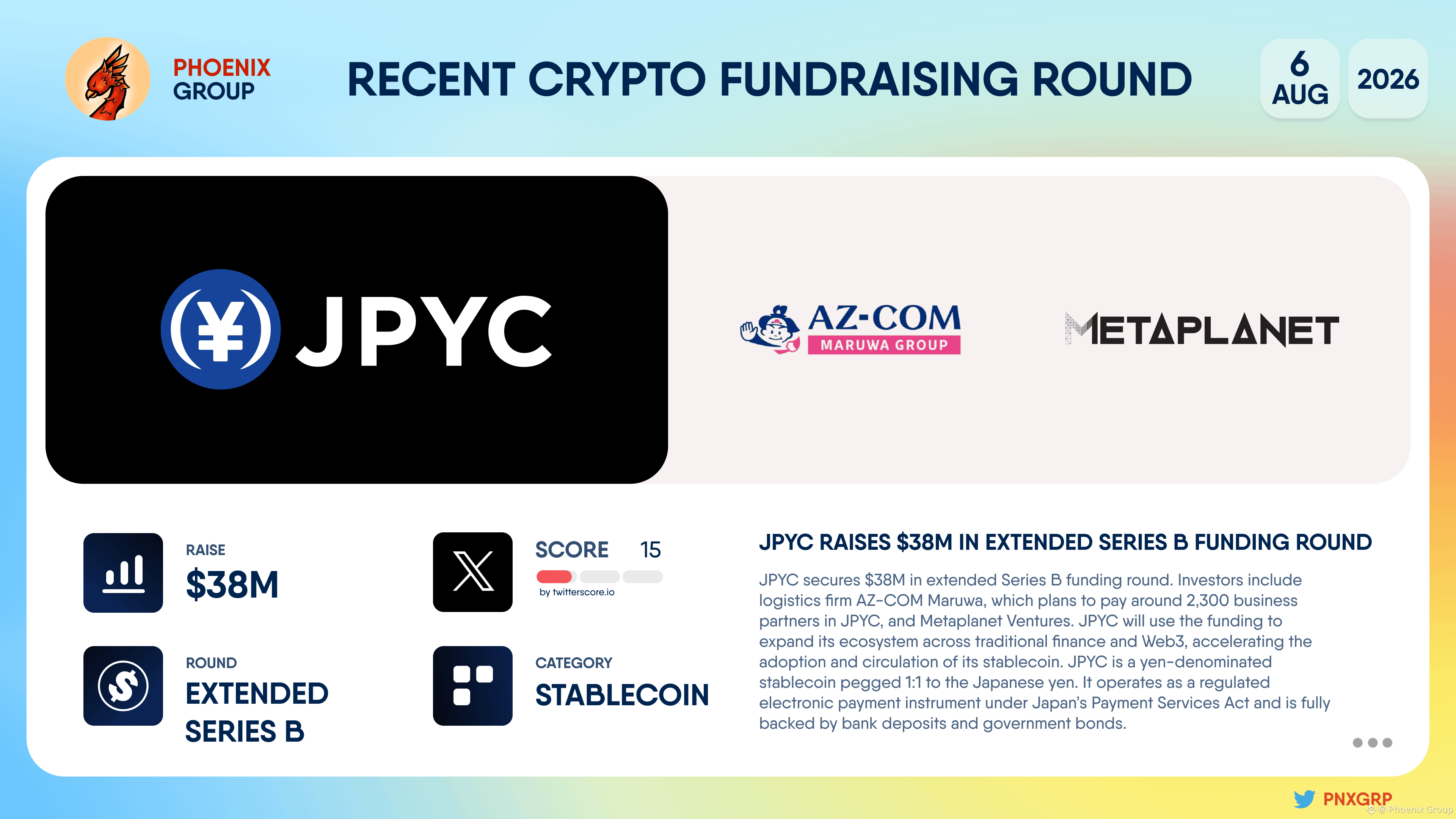
JPYC raises $38M in extended Series B funding round
#JPYC secures $38M in extended Series B funding round. Investors include logistics firm AZ-COM Maruwa, which plans to pay around 2,300 business partners in JPYC, and Metaplanet Ventures. JPYC will use the funding to expand its ecosystem across traditional finance and Web3, accelerating the adoption and circulation of its stablecoin.
JPYC is a yen-denominated stablecoin pegged 1:1 to the Japanese yen. It operates as a regulated electronic payment instrument under Japan’s Payment Services Act and is fully backed by bank deposits and government bonds.
👉 theblock.co/post/410959/jpyc-stablecoin-raises-38-million
204
Log in to explore more content
Join global crypto users on Binance Square
⚡️ Get latest and useful information about crypto.
💬 Trusted by the world’s largest crypto exchange.
👍 Discover real insights from verified creators.
Email / Phone number
Trending Topics
1
#BinanceReopensWithdrawalsForHYPE&APT
4,156 views
138 Discussing
2
#SouthKoreaDraftLawTargets15To20%ShareholderCap
8,286 views
126 Discussing
3
#TradFiForBeginners
118,964 views
1,185 Discussing
4
#KeplrAdvisesSocialLoginUsersToTransferAssets
12,413 views
220 Discussing
5
#TetherPlans€28.8MForJuventusCapitalIncrease
6,759 views
171 Discussing
6
#JobsReportRaisesHikeOdds
693,787 views
4,071 Discussing
7
#CPITestsDecemberRateOutlook
252,002 views
1,627 Discussing
8
#US Data Center Rules May Constrain AI Expansion
100,291 views
251 Discussing
9
#ARKPlans14ThematicETFsCoveringAIAndTokenizedMarkets
6,391 views
84 Discussing
10
#WillAnthropicListOnTime
225,115 views
1,748 Discussing