
#intentarchitecture
intentarchitecture
200 views
4 Discussing
Hot
Latest

·
--
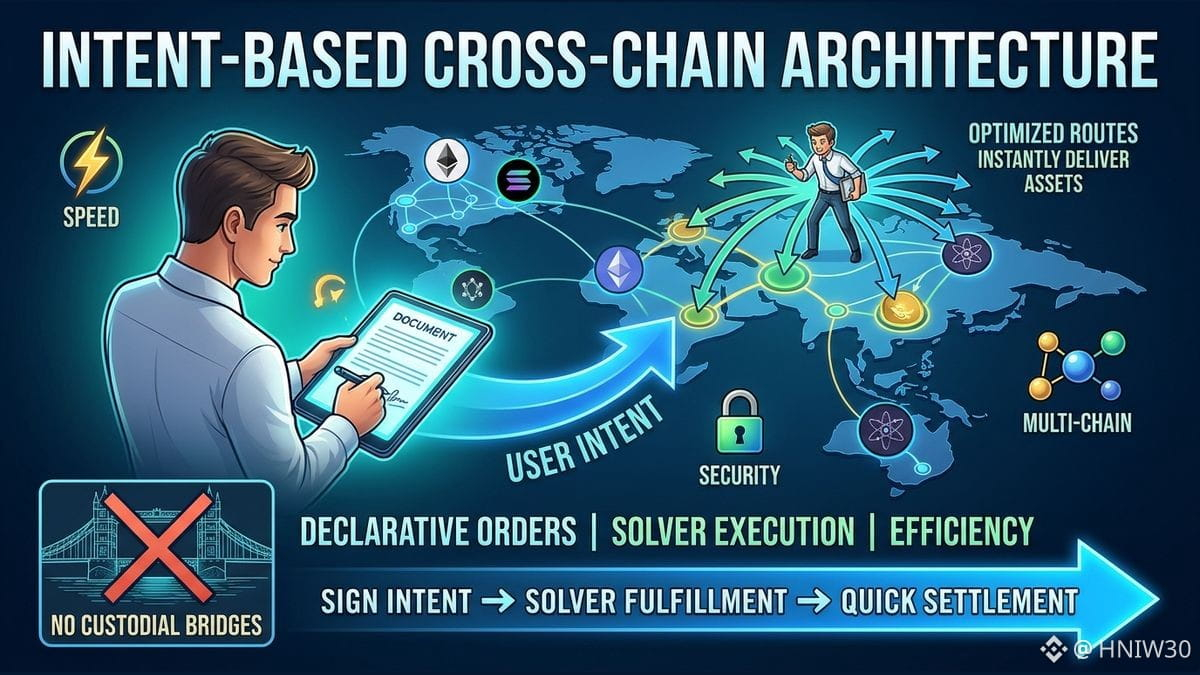
In cross-chain architecture, lock-and-mint bridge models typically rely on contracts or validator committees to lock assets on an originating network and mint synthetic representations on a destination network. This design concentrates pooled liquidity into specific contracts, creating custodial and smart contract attack surfaces alongside capital fragmentation across separate networks. In contrast, intent-based execution frameworks decouple user requests from direct route execution.
Under an intent-driven model, users sign declarative orders specifying a desired end state rather than executing explicit bridging transactions across multiple chains. Independent market makers, commonly referred to as solvers or fillers, assume inventory and settlement risk across networks to fulfill these orders directly. This structure shifts user execution latency from multi-chain block confirmation cycles to local fulfillment, limiting user exposure to intermediate bridge contracts during transit.
Generalized messaging protocols also allow networks to pass arbitrary data, enabling cross-chain interaction between distinct virtual machines. For instance, a protocol can verify state on one network while triggering logic on another without maintaining duplicate reserve pools. However, these architectures present distinct engineering and security tradeoffs. Implementations must account for asynchronous state dependencies, solver centralization risks, variable message verification costs, and divergent consensus finality across heterogeneous environments.
#IntentArchitecture
222

🦈 $200K $DOS PRIZE IS THE LURE — INTENT EXECUTION IS THE REAL PLAY 💥
Everyone fixates on the headline reward number and misses the actual signal. Exchange-native wallets now betting on intent-centric architecture tells you where smart money thinks the friction is: manual cross-chain legwork. 💡
dappOS flips that script — you sign one target outcome, and a node network handles routing, gas swaps, and bridging off-chain. Collateral gets slashed if a node fails you. 🔍 That single-signature flow replaces the old switch-network-approve-bridge grind, and it's the only way decentralized apps go truly mainstream.
Now the uncomfortable part: campaign volume historically tapers the moment incentive pools drain. 📊 The real test is organic retention after the rewards end. Will intent wallets hold sticky usage, or is this just another promotional mirage? 💬 Would you trust a single-signature intent flow over manual bridging? 👇
⚠️ Not financial advice. Always manage your risk. 🛡️
🏷️ #DOS #BinanceAlpha #dappOS #IntentArchitecture #Crypto
🦈 💎
246
Log in to explore more content
Join global crypto users on Binance Square
⚡️ Get latest and useful information about crypto.
💬 Trusted by the world’s largest crypto exchange.
👍 Discover real insights from verified creators.
Email / Phone number
Trending Topics
1
#Bitcoin'sReboundFadesBelow$60K
184 views
22 Discussing
2
#NVIDIAReinstatesJensenHuangasCEO
170,272 views
1,182 Discussing
3
#WillMarketsStageAThanksgivingReliefRally?
266,222 views
2,088 Discussing
4
#WillOctCorePCEShiftFedHikeExpectations?
91,287 views
927 Discussing
5
#USAddsMegaspeedToEntityList
1,773 views
70 Discussing
6
#GrayscaleLaunches2xLeveragedZcashETF
1,623 views
53 Discussing
7
#StrategyValueFallsBelowItsBitcoinHoldings
1,846 views
70 Discussing
8
#CFTCRequiresAtLeast20%HaircutsOnBTCAndETHReserves
760 views
40 Discussing
9
#BitcoinEndsRecord17DayStreakOfLowerHighs
50,232 views
413 Discussing
10
#TradersPriceOut50bpDecemberFedHike
28,253 views
263 Discussing