

#hype
hype
11M views
43,635 Discussing
Hot
Latest

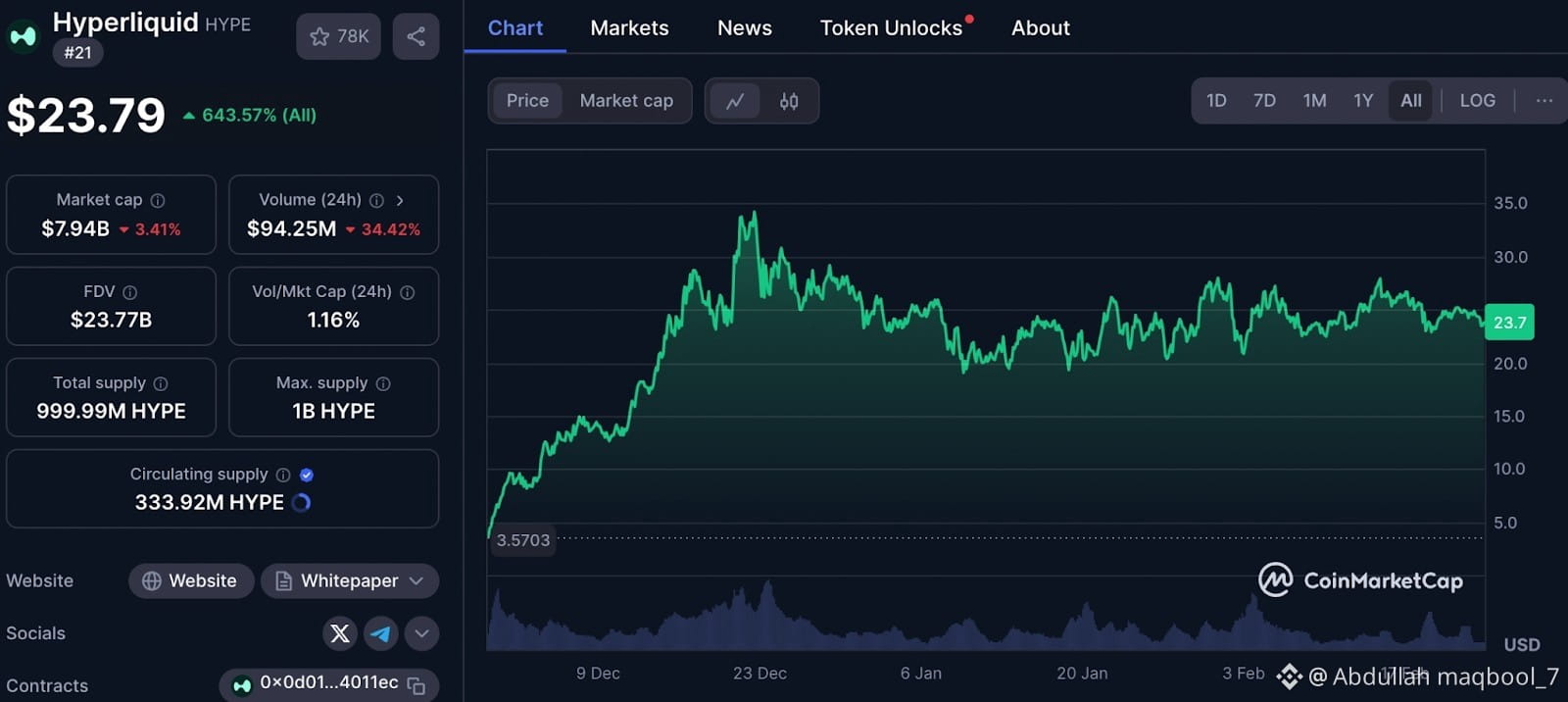
Momentum: Still elevated; price has roughly doubled from mid-September levels.
Catalyst: Binance launched $HYPE spot trading on Sept. 24, expanding access and liquidity.
Flows: A Hyperliquid Strategies-linked wallet reportedly bought about $45.8M of $HYPE , while some large holders have moved tokens toward exchanges—creating competing accumulation and selling signals.
Key levels: The recent $98 area is the obvious nearby resistance; around $90 is being watched as short-term support. These are market-reference levels, not guarantees.
#HYPE #CoinMarketCapCompletesCoinglassAcquisition #QNTRises39% #StrategyProposesDailyDividendsForPreferreds
Momentum: Still elevated; price has roughly doubled from mid-September levels.
Catalyst: Binance launched $HYPE spot trading on Sept. 24, expanding access and liquidity.
Flows: A Hyperliquid Strategies-linked wallet reportedly bought about $45.8M of $HYPE , while some large holders have moved tokens toward exchanges—creating competing accumulation and selling signals.
Key levels: The recent $98 area is the obvious nearby resistance; around $90 is being watched as short-term support. These are market-reference levels, not guarantees.
#HYPE #CoinMarketCapCompletesCoinglassAcquisition #QNTRises39% #StrategyProposesDailyDividendsForPreferreds
Catalyst: Binance launched $HYPE spot trading on Sept. 24, expanding access and liquidity.
Flows: A Hyperliquid Strategies-linked wallet reportedly bought about $45.8M of $HYPE , while some large holders have moved tokens toward exchanges—creating competing accumulation and selling signals.
Key levels: The recent $98 area is the obvious nearby resistance; around $90 is being watched as short-term support. These are market-reference levels, not guarantees.
#HYPE #CoinMarketCapCompletesCoinglassAcquisition #QNTRises39% #StrategyProposesDailyDividendsForPreferreds
206 Atlas:
Price doubling on a spot listing is a classic liquidity trap. I am watching for a rejection at $98 to short, not buying the momentum.
1
248

·
--
🔥 $HYPE — Is the Current Valuation Really Too High?
A lot of people think $HYPE has already peaked because its fully diluted valuation (FDV) is already around $90B. And honestly, when you look at that number alone, it does look huge. 👀
But personally, I think HYPE may still be in an early stage of its growth story.
The real debate isn’t just about today’s FDV — it’s about what HYPE’s fully diluted market cap could look like in the future.
Currently, a large portion of the supply is still unallocated, mainly:
🔹 Team allocation: 24%
🔹 Treasury: 38.8% — including escrowed/pledged emissions and community rewards
So the bigger question is: How and when will these tokens actually enter the market?
That’s where different opinions on HYPE’s future valuation come from. 🤔
What do you think — is the current FDV too high, or are we still early? 👇
#HYPE
🔥 $HYPE — Is the Current Valuation Really Too High?
A lot of people think $HYPE has already peaked because its fully diluted valuation (FDV) is already around $90B. And honestly, when you look at that number alone, it does look huge. 👀
But personally, I think HYPE may still be in an early stage of its growth story.
The real debate isn’t just about today’s FDV — it’s about what HYPE’s fully diluted market cap could look like in the future.
Currently, a large portion of the supply is still unallocated, mainly:
🔹 Team allocation: 24%
🔹 Treasury: 38.8% — including escrowed/pledged emissions and community rewards
So the bigger question is: How and when will these tokens actually enter the market?
That’s where different opinions on HYPE’s future valuation come from. 🤔
What do you think — is the current FDV too high, or are we still early? 👇
#HYPE
A lot of people think $HYPE has already peaked because its fully diluted valuation (FDV) is already around $90B. And honestly, when you look at that number alone, it does look huge. 👀
But personally, I think HYPE may still be in an early stage of its growth story.
The real debate isn’t just about today’s FDV — it’s about what HYPE’s fully diluted market cap could look like in the future.
Currently, a large portion of the supply is still unallocated, mainly:
🔹 Team allocation: 24%
🔹 Treasury: 38.8% — including escrowed/pledged emissions and community rewards
So the bigger question is: How and when will these tokens actually enter the market?
That’s where different opinions on HYPE’s future valuation come from. 🤔
What do you think — is the current FDV too high, or are we still early? 👇
#HYPE
38

·
--
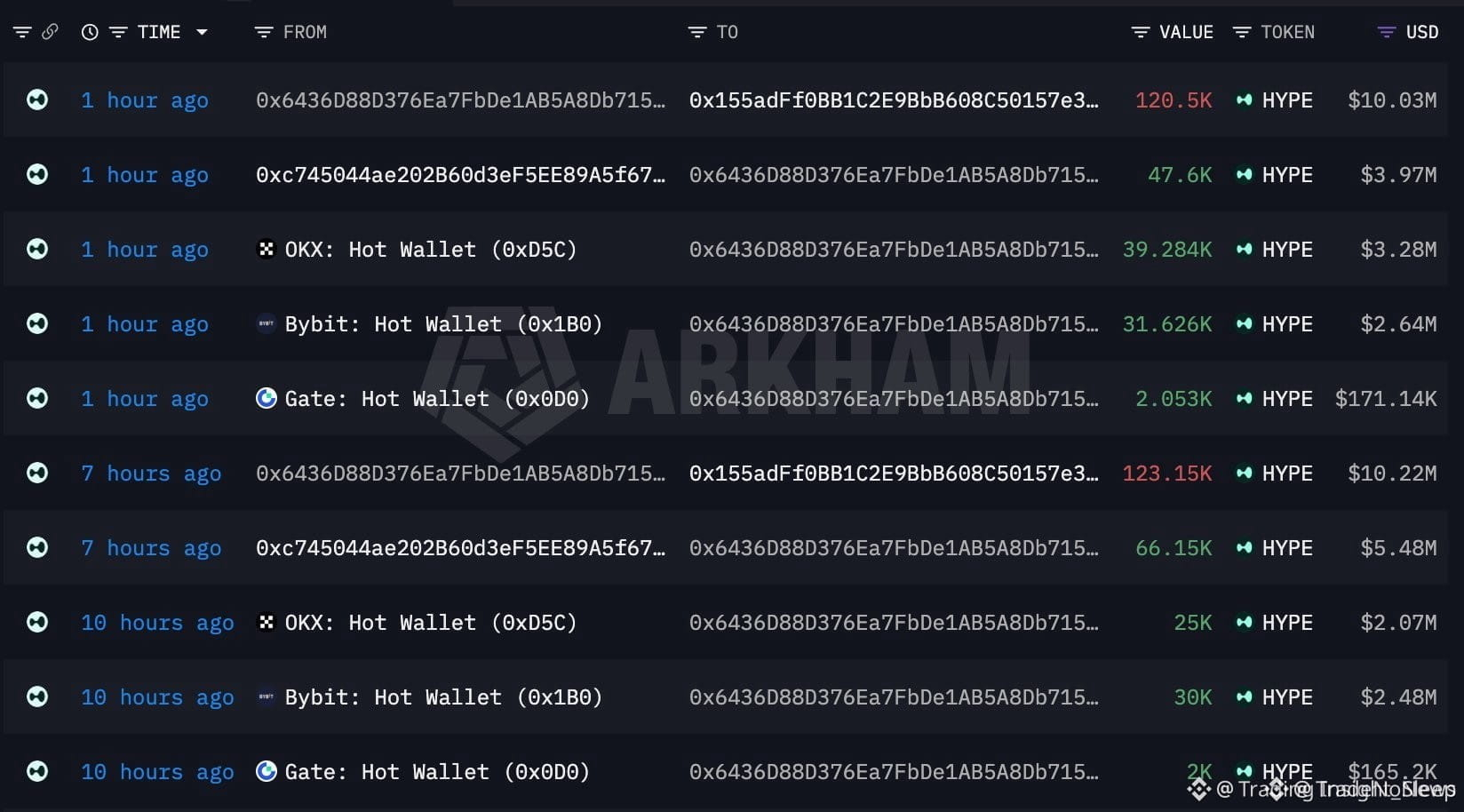
🚨 INSTITUTIONAL HANDS ACCUMULATE $20.2M IN $HYPE AS LIQUIDITY ABSORPTION ACCELERATES! 🦈
Smart money footprints are hard to hide. Over the past 10 hours, a single institutional entity absorbed 243,713 $HYPE worth over $20.2 million off the market, defending local structural demand while pushing spot price up 3.46%. 🦈
With parallel ETF inflows creating a sustained liquidity backstop, this aggressive order block fill signals deep smart money conviction at current levels. 📊 While institutional accumulation often precedes expansion, expect localized volatility as market makers engineer liquidity around this newly reinforced support zone. 🔍
🤔 Are you positioning alongside institutional order flow here, or waiting for a key level retest? 👇
⚠️ Not financial advice. Always manage your risk. 🛡️
🏷️ #HYPE #SmartMoney #Crypto #OrderFlow #Liquidity
🎯 🦈
🚨 INSTITUTIONAL HANDS ACCUMULATE $20.2M IN $HYPE AS LIQUIDITY ABSORPTION ACCELERATES! 🦈
Smart money footprints are hard to hide. Over the past 10 hours, a single institutional entity absorbed 243,713 $HYPE worth over $20.2 million off the market, defending local structural demand while pushing spot price up 3.46%. 🦈
With parallel ETF inflows creating a sustained liquidity backstop, this aggressive order block fill signals deep smart money conviction at current levels. 📊 While institutional accumulation often precedes expansion, expect localized volatility as market makers engineer liquidity around this newly reinforced support zone. 🔍
🤔 Are you positioning alongside institutional order flow here, or waiting for a key level retest? 👇
⚠️ Not financial advice. Always manage your risk. 🛡️
🏷️ #HYPE #SmartMoney #Crypto #OrderFlow #Liquidity
🎯 🦈
Smart money footprints are hard to hide. Over the past 10 hours, a single institutional entity absorbed 243,713 $HYPE worth over $20.2 million off the market, defending local structural demand while pushing spot price up 3.46%. 🦈
With parallel ETF inflows creating a sustained liquidity backstop, this aggressive order block fill signals deep smart money conviction at current levels. 📊 While institutional accumulation often precedes expansion, expect localized volatility as market makers engineer liquidity around this newly reinforced support zone. 🔍
🤔 Are you positioning alongside institutional order flow here, or waiting for a key level retest? 👇
⚠️ Not financial advice. Always manage your risk. 🛡️
🏷️ #HYPE #SmartMoney #Crypto #OrderFlow #Liquidity
🎯 🦈
4

·
--
🔥 MARKET RADAR: HYPE × BTC × XAU
Three different charts. One key question: Where is the money rotating next? 👀
⚡ $HYPE — Watch momentum, volume & breakout confirmation.
₿ $BTC — The market’s main direction still matters; key levels + reaction are the game.
🥇 $XAU — Safe-haven flows can shift sentiment fast, so volatility deserves attention.
📊 Trader Checklist:
• Don’t chase the first pump
• Watch volume before entering
• Wait for breakout + retest confirmation
• Keep invalidation/stop-loss clear
• Protect capital when volatility expands
🎯 HYPE or BTC or XAU — which chart is on your radar right now?
#hype #BTC #XAU #bitcoin #crypto
🔥 MARKET RADAR: HYPE × BTC × XAU
Three different charts. One key question: Where is the money rotating next? 👀
⚡ $HYPE — Watch momentum, volume & breakout confirmation.
₿ $BTC — The market’s main direction still matters; key levels + reaction are the game.
🥇 $XAU — Safe-haven flows can shift sentiment fast, so volatility deserves attention.
📊 Trader Checklist:
• Don’t chase the first pump
• Watch volume before entering
• Wait for breakout + retest confirmation
• Keep invalidation/stop-loss clear
• Protect capital when volatility expands
🎯 HYPE or BTC or XAU — which chart is on your radar right now?
#hype #BTC #XAU #bitcoin #crypto
Three different charts. One key question: Where is the money rotating next? 👀
⚡ $HYPE — Watch momentum, volume & breakout confirmation.
₿ $BTC — The market’s main direction still matters; key levels + reaction are the game.
🥇 $XAU — Safe-haven flows can shift sentiment fast, so volatility deserves attention.
📊 Trader Checklist:
• Don’t chase the first pump
• Watch volume before entering
• Wait for breakout + retest confirmation
• Keep invalidation/stop-loss clear
• Protect capital when volatility expands
🎯 HYPE or BTC or XAU — which chart is on your radar right now?
#hype #BTC #XAU #bitcoin #crypto

Best Wishes!
From Rj shouvo
37

·
--
🚨 $HYPE HIP-4 UPGRADE UNLOCKS PERMISSIONLESS PREDICTION MARKETS FOR BUILDERS! ⚡
Hyperliquid's upcoming HIP-4 upgrade shifts structural dynamics by introducing permissionless prediction markets directly on-chain. 🦈 Smart money is eyeing this institutional primitive, as builder-deployed outcome markets expand native protocol utility and capture untapped settlement volume. 📊
By allowing custom event contracts without governance friction, HIP-4 establishes a continuous liquidity loop for speculative volume. 💡 Early accumulation patterns often precede major protocol upgrades as smart capital positions ahead of ecosystem expansion. 💬 Are you anticipating prediction market volume to drive the next structural expansion for $HYPE ? 👇
⚠️ Not financial advice. Always manage your risk. 🛡️
🏷️ #HYPE #Hyperliquid #DeFi #PredictionMarkets #Crypto
🎯 🦈
🚨 $HYPE HIP-4 UPGRADE UNLOCKS PERMISSIONLESS PREDICTION MARKETS FOR BUILDERS! ⚡
Hyperliquid's upcoming HIP-4 upgrade shifts structural dynamics by introducing permissionless prediction markets directly on-chain. 🦈 Smart money is eyeing this institutional primitive, as builder-deployed outcome markets expand native protocol utility and capture untapped settlement volume. 📊
By allowing custom event contracts without governance friction, HIP-4 establishes a continuous liquidity loop for speculative volume. 💡 Early accumulation patterns often precede major protocol upgrades as smart capital positions ahead of ecosystem expansion. 💬 Are you anticipating prediction market volume to drive the next structural expansion for $HYPE ? 👇
⚠️ Not financial advice. Always manage your risk. 🛡️
🏷️ #HYPE #Hyperliquid #DeFi #PredictionMarkets #Crypto
🎯 🦈
Hyperliquid's upcoming HIP-4 upgrade shifts structural dynamics by introducing permissionless prediction markets directly on-chain. 🦈 Smart money is eyeing this institutional primitive, as builder-deployed outcome markets expand native protocol utility and capture untapped settlement volume. 📊
By allowing custom event contracts without governance friction, HIP-4 establishes a continuous liquidity loop for speculative volume. 💡 Early accumulation patterns often precede major protocol upgrades as smart capital positions ahead of ecosystem expansion. 💬 Are you anticipating prediction market volume to drive the next structural expansion for $HYPE ? 👇
⚠️ Not financial advice. Always manage your risk. 🛡️
🏷️ #HYPE #Hyperliquid #DeFi #PredictionMarkets #Crypto
🎯 🦈


56

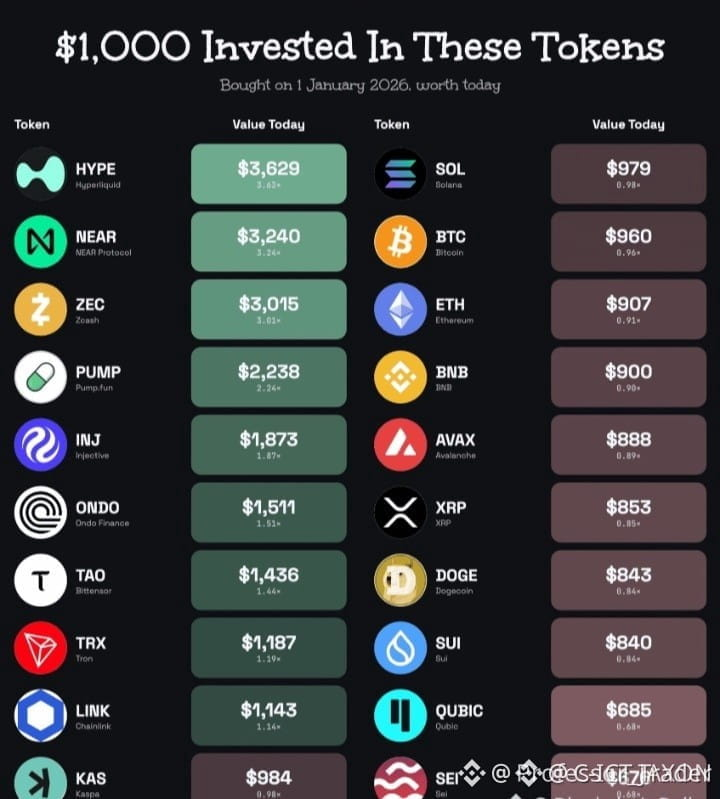
📊 THE ALTCOIN ROTATION DIVIDE: $HYPE AND $NEAR TRIPLE WHILE MAJOR CAPS BLEED CAPITAL! 💥
📌 The capital rotation story is crystal clear in the performance data. While legacy benchmarks like $BTC saw $1,000 allocations dip below initial capital, high-beta performers like $HYPE and $NEAR more than tripled as order flow aggregated into momentum narratives. 📊
💡 Indexing blindly into mega-caps during shifting market regimes leaves massive alpha on the table. The current tape rewards active selection over passive holding as relative strength dictates winner-take-all dynamics. ⚡
💬 Are you holding benchmark assets for safety or pivoting into high-momentum altcoins? 👇
⚠️ Not financial advice. Always manage your risk. 🛡️
🏷️ #HYPE #Altcoins #Crypto #MarketInsight #Trading
🔥 📊
📊 THE ALTCOIN ROTATION DIVIDE: $HYPE AND $NEAR TRIPLE WHILE MAJOR CAPS BLEED CAPITAL! 💥
📌 The capital rotation story is crystal clear in the performance data. While legacy benchmarks like $BTC saw $1,000 allocations dip below initial capital, high-beta performers like $HYPE and $NEAR more than tripled as order flow aggregated into momentum narratives. 📊
💡 Indexing blindly into mega-caps during shifting market regimes leaves massive alpha on the table. The current tape rewards active selection over passive holding as relative strength dictates winner-take-all dynamics. ⚡
💬 Are you holding benchmark assets for safety or pivoting into high-momentum altcoins? 👇
⚠️ Not financial advice. Always manage your risk. 🛡️
🏷️ #HYPE #Altcoins #Crypto #MarketInsight #Trading
🔥 📊
📌 The capital rotation story is crystal clear in the performance data. While legacy benchmarks like $BTC saw $1,000 allocations dip below initial capital, high-beta performers like $HYPE and $NEAR more than tripled as order flow aggregated into momentum narratives. 📊
💡 Indexing blindly into mega-caps during shifting market regimes leaves massive alpha on the table. The current tape rewards active selection over passive holding as relative strength dictates winner-take-all dynamics. ⚡
💬 Are you holding benchmark assets for safety or pivoting into high-momentum altcoins? 👇
⚠️ Not financial advice. Always manage your risk. 🛡️
🏷️ #HYPE #Altcoins #Crypto #MarketInsight #Trading
🔥 📊
125
·
--
🦈 THE CAPITAL EFFICIENCY DIVERGENCE: HOW $HYPE AND $NEAR DOMINATED LIQUIDITY ROTATION 📊
Institutional capital allocation since January reveals a massive performance dispersion across the market spectrum. 📊 While legacy assets like $BTC consolidated near baseline, smart money aggressively targeted high-beta structural expansions, driving $HYPE and $NEAR to over three times initial valuation. 🌊
This rotation proves that structural strength and order flow momentum dictate alpha, not market cap size alone. 💡 Capital is clearly migrating into assets offering clean order block expansions and sustained demand over sluggish legacy range dynamics.
Which segment of your portfolio are you restructuring to catch the next institutional capital rotation? 👇
⚠️ Not financial advice. Always manage your risk. 🛡️
🏷️ #HYPE #Altcoins #MarketStructure #Crypto
🎯 🦈
🦈 THE CAPITAL EFFICIENCY DIVERGENCE: HOW $HYPE AND $NEAR DOMINATED LIQUIDITY ROTATION 📊
Institutional capital allocation since January reveals a massive performance dispersion across the market spectrum. 📊 While legacy assets like $BTC consolidated near baseline, smart money aggressively targeted high-beta structural expansions, driving $HYPE and $NEAR to over three times initial valuation. 🌊
This rotation proves that structural strength and order flow momentum dictate alpha, not market cap size alone. 💡 Capital is clearly migrating into assets offering clean order block expansions and sustained demand over sluggish legacy range dynamics.
Which segment of your portfolio are you restructuring to catch the next institutional capital rotation? 👇
⚠️ Not financial advice. Always manage your risk. 🛡️
🏷️ #HYPE #Altcoins #MarketStructure #Crypto
🎯 🦈
Institutional capital allocation since January reveals a massive performance dispersion across the market spectrum. 📊 While legacy assets like $BTC consolidated near baseline, smart money aggressively targeted high-beta structural expansions, driving $HYPE and $NEAR to over three times initial valuation. 🌊
This rotation proves that structural strength and order flow momentum dictate alpha, not market cap size alone. 💡 Capital is clearly migrating into assets offering clean order block expansions and sustained demand over sluggish legacy range dynamics.
Which segment of your portfolio are you restructuring to catch the next institutional capital rotation? 👇
⚠️ Not financial advice. Always manage your risk. 🛡️
🏷️ #HYPE #Altcoins #MarketStructure #Crypto
🎯 🦈
41

·
--
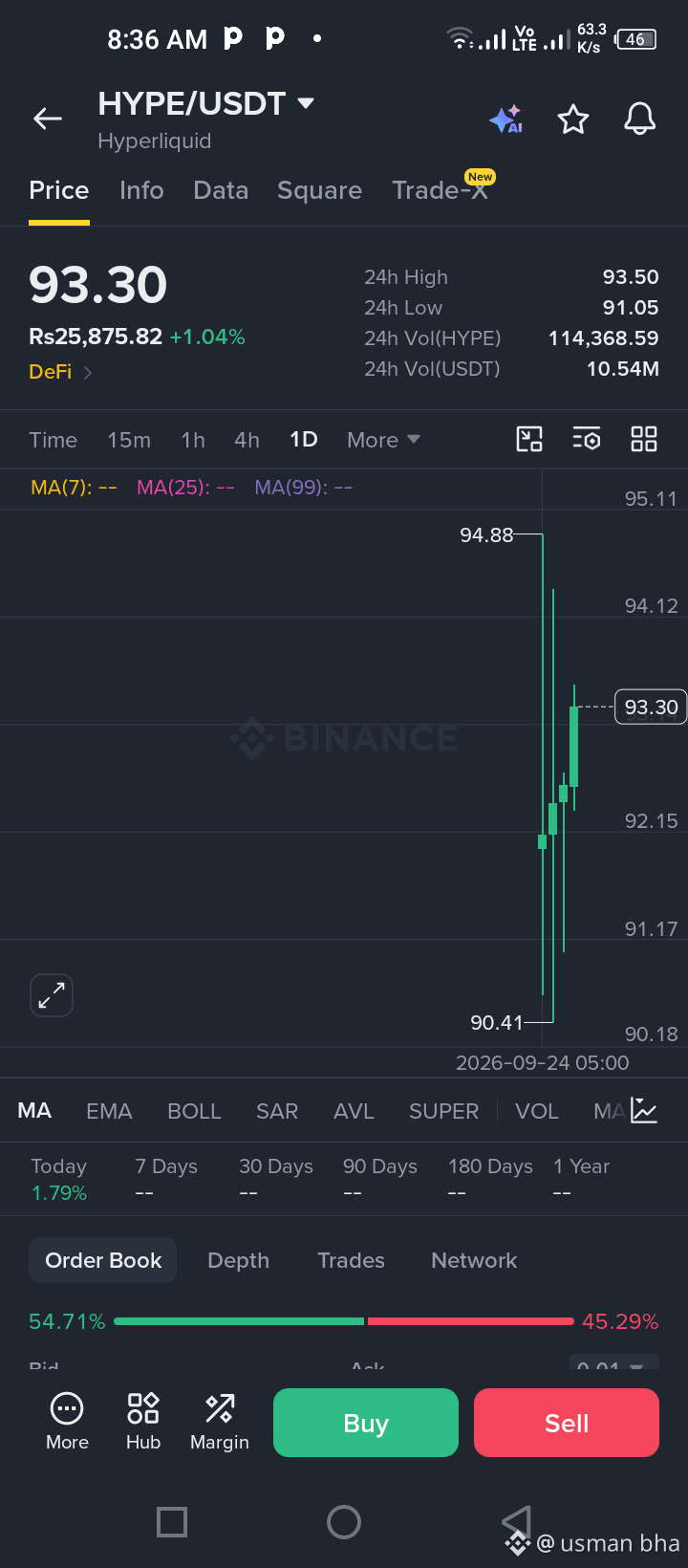
Most traders miss the move because they’re waiting for a confirmation that never comes. I’ve identified a clear opportunity on $HYPE that aligns perfectly with my current risk parameters. I am entering a short position to capitalize on the structure currently unfolding.
⚡ $HYPE — SHORT SETUP
📍 Entry: 93.21 – 93.77
🎯 TP1: 92.1
🎯 TP2: 91.36
🎯 TP3: 90.24
🛑 Stop Loss: 94.33
Trade here 👇
📌 Trade management rules: see pinned post.
How are you positioning yourself for the next leg of this trend? Drop your thoughts below and hit follow for more updates.
#HYPE
Most traders miss the move because they’re waiting for a confirmation that never comes. I’ve identified a clear opportunity on $HYPE that aligns perfectly with my current risk parameters. I am entering a short position to capitalize on the structure currently unfolding.
⚡ $HYPE — SHORT SETUP
📍 Entry: 93.21 – 93.77
🎯 TP1: 92.1
🎯 TP2: 91.36
🎯 TP3: 90.24
🛑 Stop Loss: 94.33
Trade here 👇
📌 Trade management rules: see pinned post.
How are you positioning yourself for the next leg of this trend? Drop your thoughts below and hit follow for more updates.
#HYPE
⚡ $HYPE — SHORT SETUP
📍 Entry: 93.21 – 93.77
🎯 TP1: 92.1
🎯 TP2: 91.36
🎯 TP3: 90.24
🛑 Stop Loss: 94.33
Trade here 👇
📌 Trade management rules: see pinned post.
How are you positioning yourself for the next leg of this trend? Drop your thoughts below and hit follow for more updates.
#HYPE
69
·
--
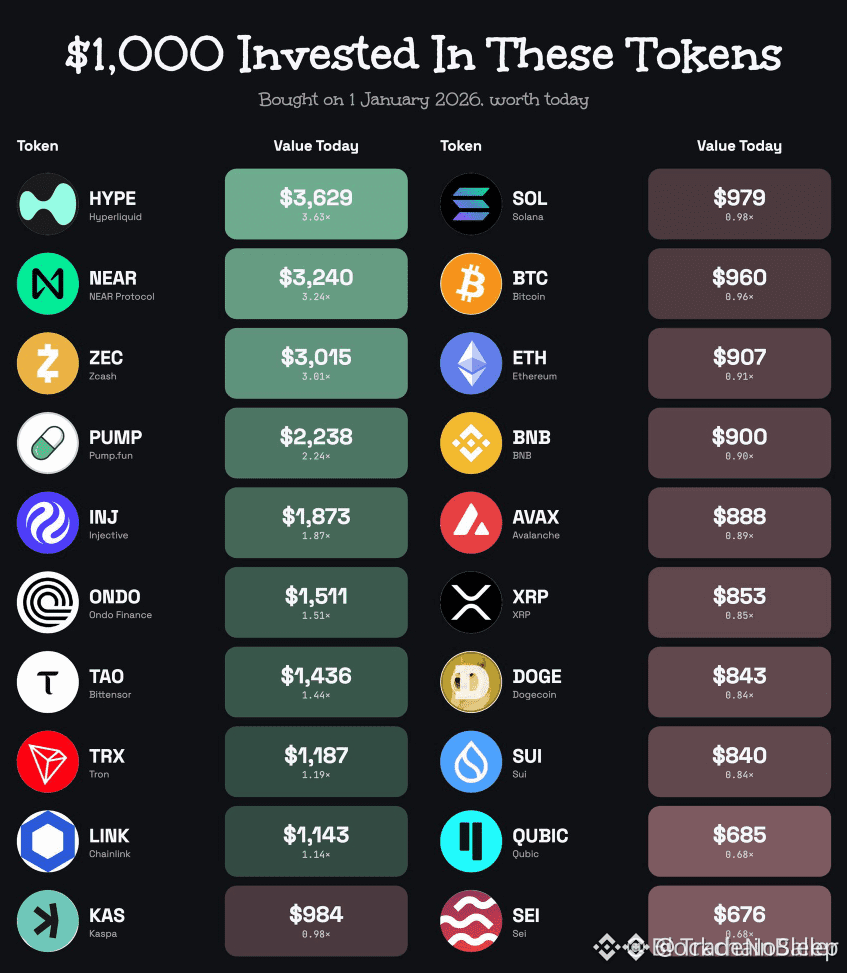
INSTITUTIONAL CAPITAL ROTATION SHOWS $HYPE OUTPERFORMING $NEAR AND $ZEC IN RELATIVE STRENGTH! 📊 ⚡
A standard $1,000 allocation across high-conviction structures yielded vastly different efficiency profiles. While $ZEC and $NEAR delivered strong 3x multiples by reclaiming macro range midpoints, $HYPE showcased superior order flow momentum, turning that initial capital into $3,629. 📊
Smart money positioning favors assets that clear inefficiency gaps without heavy distribution overhead. As structural trends mature into 2026, relative strength during shallow pullbacks remains the key metric separating top performers from standard market beta. 🔍 💡
Which of these structural setups is currently offering the cleanest risk-to-reward ratio for your portfolio? 👇
⚠️ Not financial advice. Always manage your risk. 🛡️
🏷️ #HYPE #NEAR #ZEC #Altcoins #MarketStructure
🎯 🦈
INSTITUTIONAL CAPITAL ROTATION SHOWS $HYPE OUTPERFORMING $NEAR AND $ZEC IN RELATIVE STRENGTH! 📊 ⚡
A standard $1,000 allocation across high-conviction structures yielded vastly different efficiency profiles. While $ZEC and $NEAR delivered strong 3x multiples by reclaiming macro range midpoints, $HYPE showcased superior order flow momentum, turning that initial capital into $3,629. 📊
Smart money positioning favors assets that clear inefficiency gaps without heavy distribution overhead. As structural trends mature into 2026, relative strength during shallow pullbacks remains the key metric separating top performers from standard market beta. 🔍 💡
Which of these structural setups is currently offering the cleanest risk-to-reward ratio for your portfolio? 👇
⚠️ Not financial advice. Always manage your risk. 🛡️
🏷️ #HYPE #NEAR #ZEC #Altcoins #MarketStructure
🎯 🦈
A standard $1,000 allocation across high-conviction structures yielded vastly different efficiency profiles. While $ZEC and $NEAR delivered strong 3x multiples by reclaiming macro range midpoints, $HYPE showcased superior order flow momentum, turning that initial capital into $3,629. 📊
Smart money positioning favors assets that clear inefficiency gaps without heavy distribution overhead. As structural trends mature into 2026, relative strength during shallow pullbacks remains the key metric separating top performers from standard market beta. 🔍 💡
Which of these structural setups is currently offering the cleanest risk-to-reward ratio for your portfolio? 👇
⚠️ Not financial advice. Always manage your risk. 🛡️
🏷️ #HYPE #NEAR #ZEC #Altcoins #MarketStructure
🎯 🦈
185

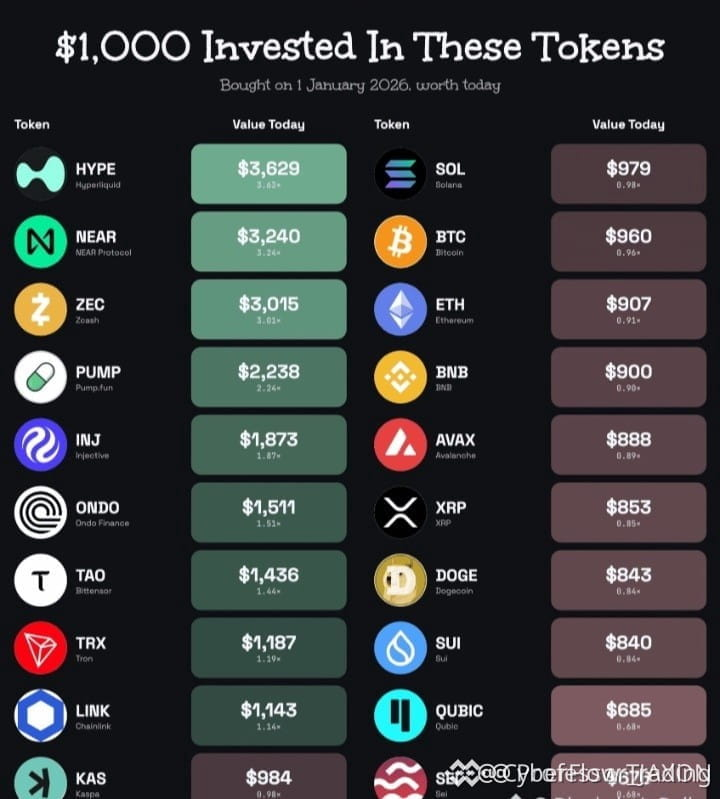
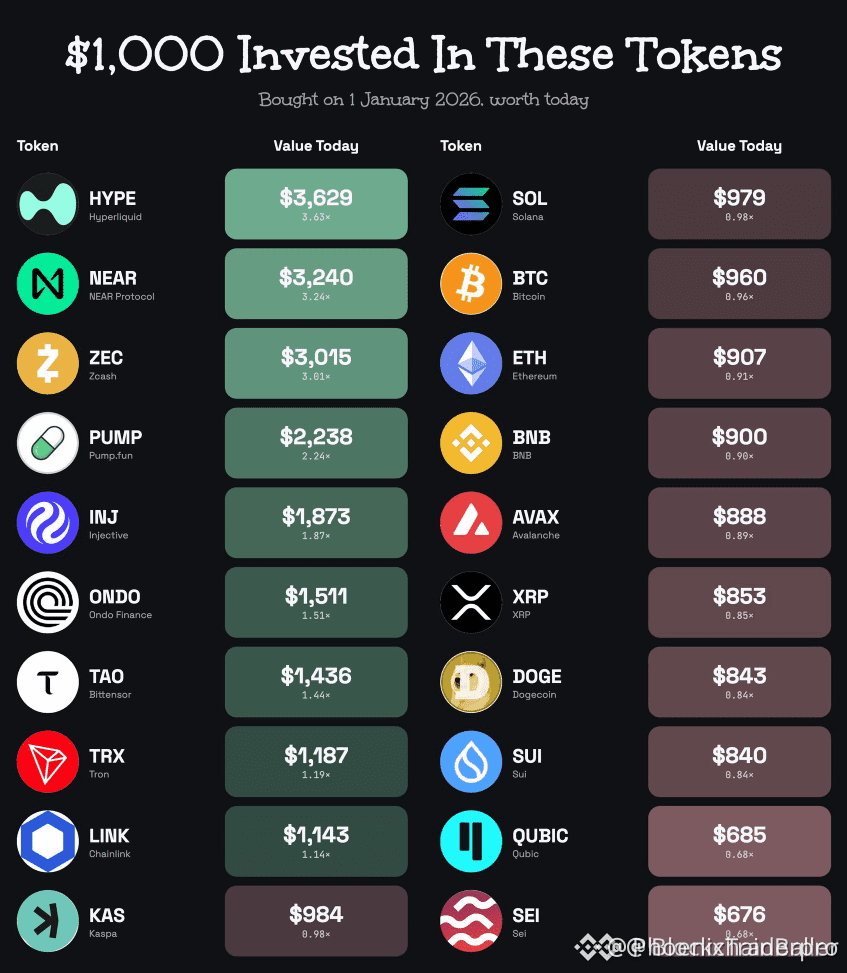
💥 $1,000 MULTIPLES DEEP-DIVE: HOW $HYPE $NEAR AND $ZEC ARE SEPARATING FROM THE PACK! 📈
📊 Allocating a $1,000 stack into the right momentum runners is showing massive variance as we eye 2026 targets. While $ZEC transformed that capital into $3,015 and $NEAR pulled ahead to $3,240, $HYPE stole the show by pushing that exact same capital to $3,629.
⚡ Momentum rotational flows are aggressively rewarding ecosystems with real volume velocity rather than stale legacy plays. Smart money positioning is clearly front-running relative strength across these key market leaders. 💬 Which of these three high-flyers holds the strongest narrative to lead the next leg up? 👇
⚠️ Not financial advice. Always manage your risk. 🛡️
🏷️ #HYPE #NEAR #ZEC #Altcoins #Crypto
🚀 ⚡
💥 $1,000 MULTIPLES DEEP-DIVE: HOW $HYPE $NEAR AND $ZEC ARE SEPARATING FROM THE PACK! 📈
📊 Allocating a $1,000 stack into the right momentum runners is showing massive variance as we eye 2026 targets. While $ZEC transformed that capital into $3,015 and $NEAR pulled ahead to $3,240, $HYPE stole the show by pushing that exact same capital to $3,629.
⚡ Momentum rotational flows are aggressively rewarding ecosystems with real volume velocity rather than stale legacy plays. Smart money positioning is clearly front-running relative strength across these key market leaders. 💬 Which of these three high-flyers holds the strongest narrative to lead the next leg up? 👇
⚠️ Not financial advice. Always manage your risk. 🛡️
🏷️ #HYPE #NEAR #ZEC #Altcoins #Crypto
🚀 ⚡
📊 Allocating a $1,000 stack into the right momentum runners is showing massive variance as we eye 2026 targets. While $ZEC transformed that capital into $3,015 and $NEAR pulled ahead to $3,240, $HYPE stole the show by pushing that exact same capital to $3,629.
⚡ Momentum rotational flows are aggressively rewarding ecosystems with real volume velocity rather than stale legacy plays. Smart money positioning is clearly front-running relative strength across these key market leaders. 💬 Which of these three high-flyers holds the strongest narrative to lead the next leg up? 👇
⚠️ Not financial advice. Always manage your risk. 🛡️
🏷️ #HYPE #NEAR #ZEC #Altcoins #Crypto
🚀 ⚡
153

·
--
$HYPE THE L1 EXECUTION ENGINE
Hyperliquid ($HYPE ) has established itself as a leading structural force in Web3 derivatives. Operating on its custom sub-second HyperBFT consensus, the Rust-native Layer-1 operates with $0 gas for order cancellations and sub-200ms deterministic finality.
🌐 ARCHITECTURE & SPECIFICATIONS
• Engine: Standalone PoS L1 engineered in Rust with HyperBFT consensus.
• Execution: Enshrined Central Limit Order Book (CLOB) running at consensus level.
• Zero-Gas Protocol: $0 base gas to submit, modify, or cancel orders.
• Capitalization: $0 VC funding, zero seed discount rounds, 100% bootstrapped.
👉DATA COMMAND CENTER
• 30-Day Perp Volume: ~$170B+ (#1 Perp DEX globally)
• YTD Protocol Revenue: ~$420M+ (#1 fee-generating protocol)
• Value Accrual: 97%+ daily trading fee buyback & burn engine
🤑 DEFLATIONARY MECHANICS
Fee Capture: Platform volume generates real USDC protocol revenue.
Assistance Fund Injection: Over 97% of fees route to the Assistance Fund.
Open-Market Absorption: Continuous buybacks absorb HYPE supply daily.
👽 KEY RESEARCH TAKEAWAYS
• No VC Dumping Pressure: Zero private seed rounds or insider discount cliffs.
• Real-Yield Driven: Value capture is tied directly to network usage and fee burn.
• Self-Custodial Safety: Assets remain locked in transparent clearinghouse contracts.
Note: This is not financial advice. Always do your own research (DYOR).
#hype #Write2Earn #cryptoxhop #Web3 #defi
$HYPE THE L1 EXECUTION ENGINE
Hyperliquid ($HYPE ) has established itself as a leading structural force in Web3 derivatives. Operating on its custom sub-second HyperBFT consensus, the Rust-native Layer-1 operates with $0 gas for order cancellations and sub-200ms deterministic finality.
🌐 ARCHITECTURE & SPECIFICATIONS
• Engine: Standalone PoS L1 engineered in Rust with HyperBFT consensus.
• Execution: Enshrined Central Limit Order Book (CLOB) running at consensus level.
• Zero-Gas Protocol: $0 base gas to submit, modify, or cancel orders.
• Capitalization: $0 VC funding, zero seed discount rounds, 100% bootstrapped.
👉DATA COMMAND CENTER
• 30-Day Perp Volume: ~$170B+ (#1 Perp DEX globally)
• YTD Protocol Revenue: ~$420M+ (#1 fee-generating protocol)
• Value Accrual: 97%+ daily trading fee buyback & burn engine
🤑 DEFLATIONARY MECHANICS
Fee Capture: Platform volume generates real USDC protocol revenue.
Assistance Fund Injection: Over 97% of fees route to the Assistance Fund.
Open-Market Absorption: Continuous buybacks absorb HYPE supply daily.
👽 KEY RESEARCH TAKEAWAYS
• No VC Dumping Pressure: Zero private seed rounds or insider discount cliffs.
• Real-Yield Driven: Value capture is tied directly to network usage and fee burn.
• Self-Custodial Safety: Assets remain locked in transparent clearinghouse contracts.
Note: This is not financial advice. Always do your own research (DYOR).
#hype #Write2Earn #cryptoxhop #Web3 #defi
Hyperliquid ($HYPE ) has established itself as a leading structural force in Web3 derivatives. Operating on its custom sub-second HyperBFT consensus, the Rust-native Layer-1 operates with $0 gas for order cancellations and sub-200ms deterministic finality.
🌐 ARCHITECTURE & SPECIFICATIONS
• Engine: Standalone PoS L1 engineered in Rust with HyperBFT consensus.
• Execution: Enshrined Central Limit Order Book (CLOB) running at consensus level.
• Zero-Gas Protocol: $0 base gas to submit, modify, or cancel orders.
• Capitalization: $0 VC funding, zero seed discount rounds, 100% bootstrapped.
👉DATA COMMAND CENTER
• 30-Day Perp Volume: ~$170B+ (#1 Perp DEX globally)
• YTD Protocol Revenue: ~$420M+ (#1 fee-generating protocol)
• Value Accrual: 97%+ daily trading fee buyback & burn engine
🤑 DEFLATIONARY MECHANICS
Fee Capture: Platform volume generates real USDC protocol revenue.
Assistance Fund Injection: Over 97% of fees route to the Assistance Fund.
Open-Market Absorption: Continuous buybacks absorb HYPE supply daily.
👽 KEY RESEARCH TAKEAWAYS
• No VC Dumping Pressure: Zero private seed rounds or insider discount cliffs.
• Real-Yield Driven: Value capture is tied directly to network usage and fee burn.
• Self-Custodial Safety: Assets remain locked in transparent clearinghouse contracts.
Note: This is not financial advice. Always do your own research (DYOR).
#hype #Write2Earn #cryptoxhop #Web3 #defi

109
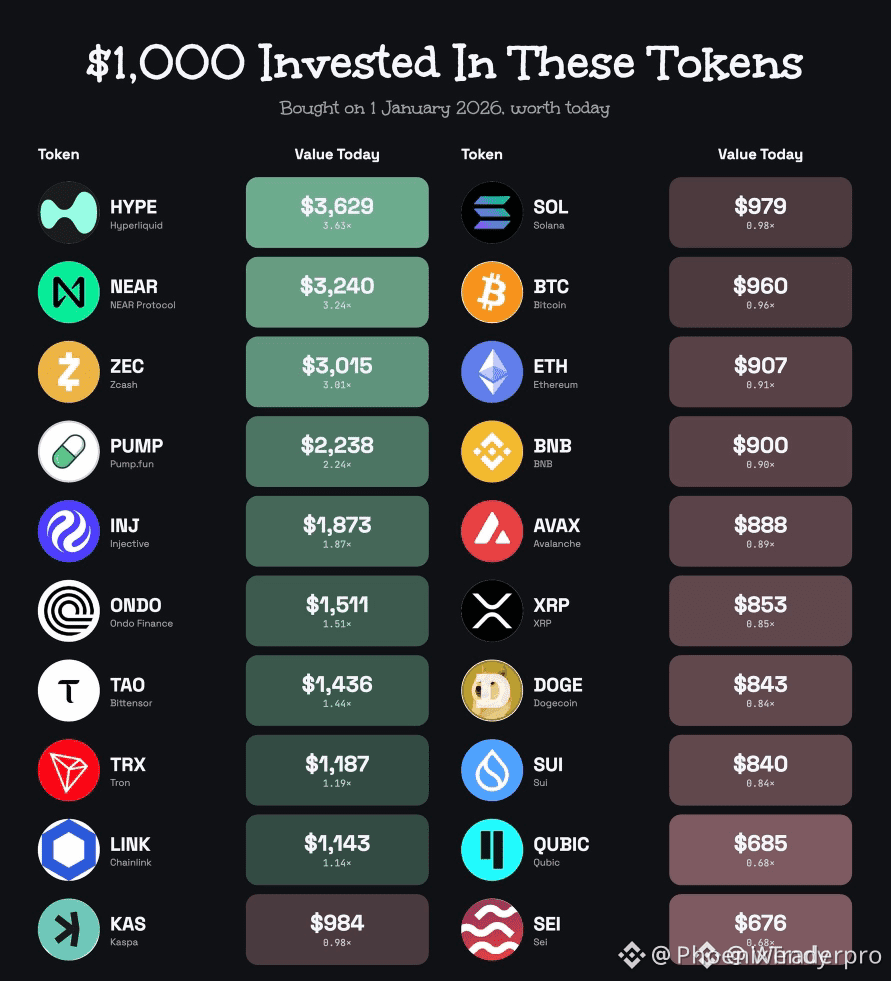
🚀 $HYPE LEADS THE PACK WHILE MAJOR BLUE-CHIPS LAG IN YTD CAPITAL ROTATION! 📊
Capital allocation tells the true market story, with high-beta momentum outperforming heavy caps across every major timeframe. A $1,000 position in $HYPE surged past $3,600, while legacy giants like $BTC are still fighting to reclaim baseline parity. 📌
Smart liquidity isn't sitting passive in traditional majors right now; it is aggressively seeking out velocity and fresh order flow. 🦈 When high-momentum altcoins like $NEAR deliver 3x returns while market anchors consolidate, identifying rotational strength becomes the ultimate edge. 💡
🤔 Did you ride the high-momentum leaders this season or are you waiting for the blue-chip laggards to catch up? 👇
⚠️ Not financial advice. Always manage your risk. 🛡️
🏷️ #HYPE #Altcoins #Crypto #MarketCycles #Trading
🔥 💎
🚀 $HYPE LEADS THE PACK WHILE MAJOR BLUE-CHIPS LAG IN YTD CAPITAL ROTATION! 📊
Capital allocation tells the true market story, with high-beta momentum outperforming heavy caps across every major timeframe. A $1,000 position in $HYPE surged past $3,600, while legacy giants like $BTC are still fighting to reclaim baseline parity. 📌
Smart liquidity isn't sitting passive in traditional majors right now; it is aggressively seeking out velocity and fresh order flow. 🦈 When high-momentum altcoins like $NEAR deliver 3x returns while market anchors consolidate, identifying rotational strength becomes the ultimate edge. 💡
🤔 Did you ride the high-momentum leaders this season or are you waiting for the blue-chip laggards to catch up? 👇
⚠️ Not financial advice. Always manage your risk. 🛡️
🏷️ #HYPE #Altcoins #Crypto #MarketCycles #Trading
🔥 💎
Capital allocation tells the true market story, with high-beta momentum outperforming heavy caps across every major timeframe. A $1,000 position in $HYPE surged past $3,600, while legacy giants like $BTC are still fighting to reclaim baseline parity. 📌
Smart liquidity isn't sitting passive in traditional majors right now; it is aggressively seeking out velocity and fresh order flow. 🦈 When high-momentum altcoins like $NEAR deliver 3x returns while market anchors consolidate, identifying rotational strength becomes the ultimate edge. 💡
🤔 Did you ride the high-momentum leaders this season or are you waiting for the blue-chip laggards to catch up? 👇
⚠️ Not financial advice. Always manage your risk. 🛡️
🏷️ #HYPE #Altcoins #Crypto #MarketCycles #Trading
🔥 💎
45
🦈 INSTITUTIONAL MONEY IS SILENTLY BUILDING THE NEXT MULTI-BILLION FINANCIAL INFRASTRUCTURE FOR $HYPE ⚡
Smart money is laying heavy foundation while retail chases noise. A major institutional platform just poured billions into acquiring futures brokerages, banking rails, and tokenized stock pipelines to bridge TradFi and crypto under one unified ledger. 🏦
With traditional giants funding tokenized equities and enterprise rails already powering ecosystem heavyweights like $HYPE , the landscape is pivoting toward structural dominance. 📊 Half a billion in quarterly revenue proves this expansion is self-funded and relentless. 💬 Will tokenized real-world assets drive the next mega cycle, or are markets underestimating this structural shift? 👇
⚠️ Not financial advice. Always manage your risk. 🛡️
🏷️ #HYPE #Institutional #Crypto #RWA #Trading
🔥 💎
🦈 INSTITUTIONAL MONEY IS SILENTLY BUILDING THE NEXT MULTI-BILLION FINANCIAL INFRASTRUCTURE FOR $HYPE ⚡
Smart money is laying heavy foundation while retail chases noise. A major institutional platform just poured billions into acquiring futures brokerages, banking rails, and tokenized stock pipelines to bridge TradFi and crypto under one unified ledger. 🏦
With traditional giants funding tokenized equities and enterprise rails already powering ecosystem heavyweights like $HYPE , the landscape is pivoting toward structural dominance. 📊 Half a billion in quarterly revenue proves this expansion is self-funded and relentless. 💬 Will tokenized real-world assets drive the next mega cycle, or are markets underestimating this structural shift? 👇
⚠️ Not financial advice. Always manage your risk. 🛡️
🏷️ #HYPE #Institutional #Crypto #RWA #Trading
🔥 💎
Smart money is laying heavy foundation while retail chases noise. A major institutional platform just poured billions into acquiring futures brokerages, banking rails, and tokenized stock pipelines to bridge TradFi and crypto under one unified ledger. 🏦
With traditional giants funding tokenized equities and enterprise rails already powering ecosystem heavyweights like $HYPE , the landscape is pivoting toward structural dominance. 📊 Half a billion in quarterly revenue proves this expansion is self-funded and relentless. 💬 Will tokenized real-world assets drive the next mega cycle, or are markets underestimating this structural shift? 👇
⚠️ Not financial advice. Always manage your risk. 🛡️
🏷️ #HYPE #Institutional #Crypto #RWA #Trading
🔥 💎
57

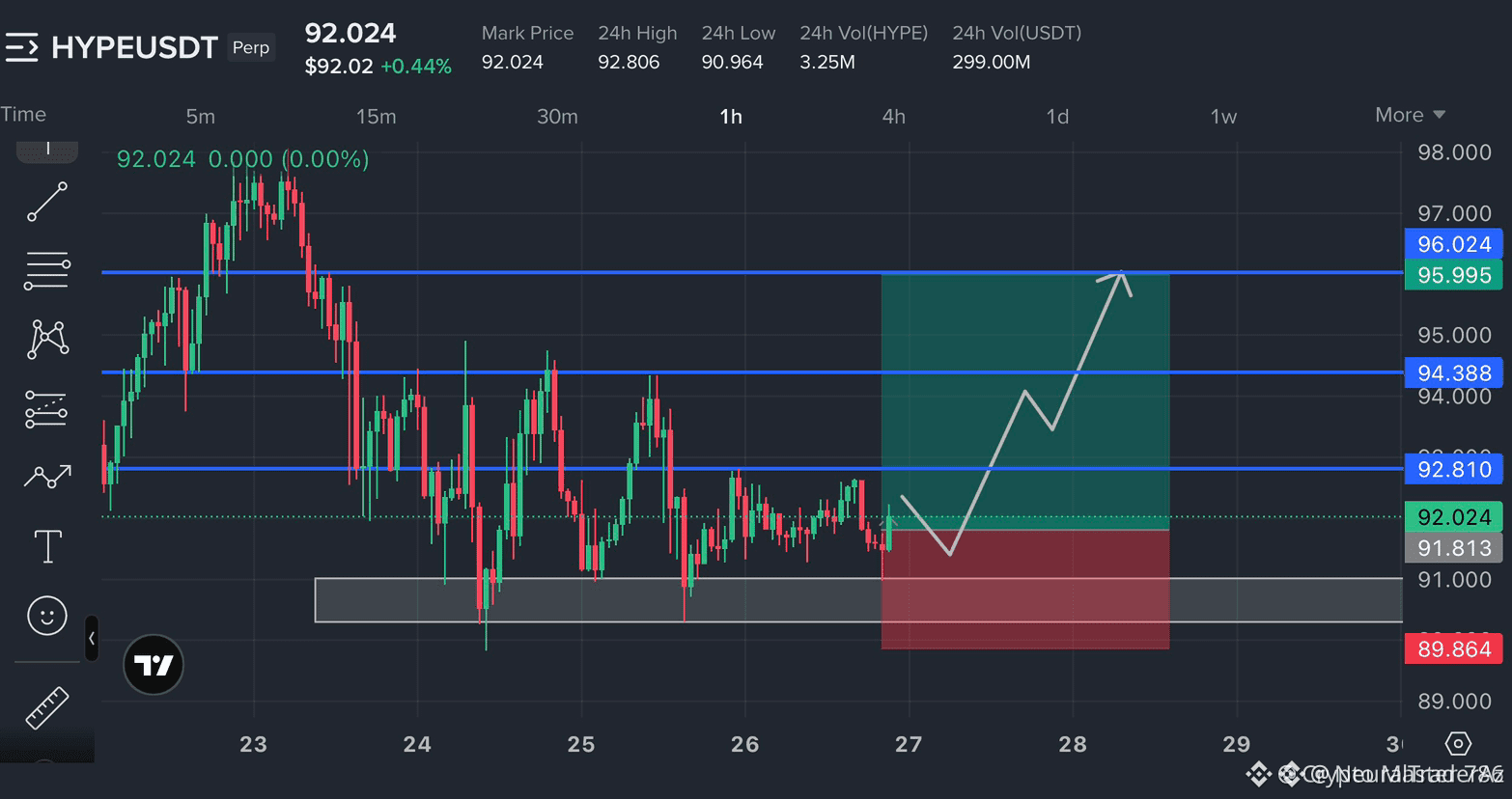
🔍 $HYPE COMPRESSING ABOVE KEY DEMAND AS INSTITUTIONS AWAIT STRUCTURAL CONFIRMATION! ⚡
Entry: 92.81 ⚡
Target: 94.38 - 96.00 🚀
Stop Loss: 89.86 ⚠️
$HYPE is currently holding directly above the $90.5–$91.0 demand zone as smart money waits for market structure to clarify. 📌 Pushing capital early into compressed ranges invites unnecessary drawdowns, whereas waiting for a clean reclaim above $92.81 ensures institutional order flow is backing the move. 📊
A decisive structural flip opens up liquidity pools at $94.38 and $96.00 with high precision. 💡 Conversely, losing $89.86 signals structural breakdown and invalidates the long expansion thesis. 💬 Are you waiting for structural confirmation above resistance or front-running the demand zone? 👇
⚠️ Not financial advice. Always manage your risk. 🛡️
🏷️ #HYPE #Trading #MarketStructure #Crypto
🎯 🦈
🔍 $HYPE COMPRESSING ABOVE KEY DEMAND AS INSTITUTIONS AWAIT STRUCTURAL CONFIRMATION! ⚡
Entry: 92.81 ⚡
Target: 94.38 - 96.00 🚀
Stop Loss: 89.86 ⚠️
$HYPE is currently holding directly above the $90.5–$91.0 demand zone as smart money waits for market structure to clarify. 📌 Pushing capital early into compressed ranges invites unnecessary drawdowns, whereas waiting for a clean reclaim above $92.81 ensures institutional order flow is backing the move. 📊
A decisive structural flip opens up liquidity pools at $94.38 and $96.00 with high precision. 💡 Conversely, losing $89.86 signals structural breakdown and invalidates the long expansion thesis. 💬 Are you waiting for structural confirmation above resistance or front-running the demand zone? 👇
⚠️ Not financial advice. Always manage your risk. 🛡️
🏷️ #HYPE #Trading #MarketStructure #Crypto
🎯 🦈
Entry: 92.81 ⚡
Target: 94.38 - 96.00 🚀
Stop Loss: 89.86 ⚠️
$HYPE is currently holding directly above the $90.5–$91.0 demand zone as smart money waits for market structure to clarify. 📌 Pushing capital early into compressed ranges invites unnecessary drawdowns, whereas waiting for a clean reclaim above $92.81 ensures institutional order flow is backing the move. 📊
A decisive structural flip opens up liquidity pools at $94.38 and $96.00 with high precision. 💡 Conversely, losing $89.86 signals structural breakdown and invalidates the long expansion thesis. 💬 Are you waiting for structural confirmation above resistance or front-running the demand zone? 👇
⚠️ Not financial advice. Always manage your risk. 🛡️
🏷️ #HYPE #Trading #MarketStructure #Crypto
🎯 🦈
18
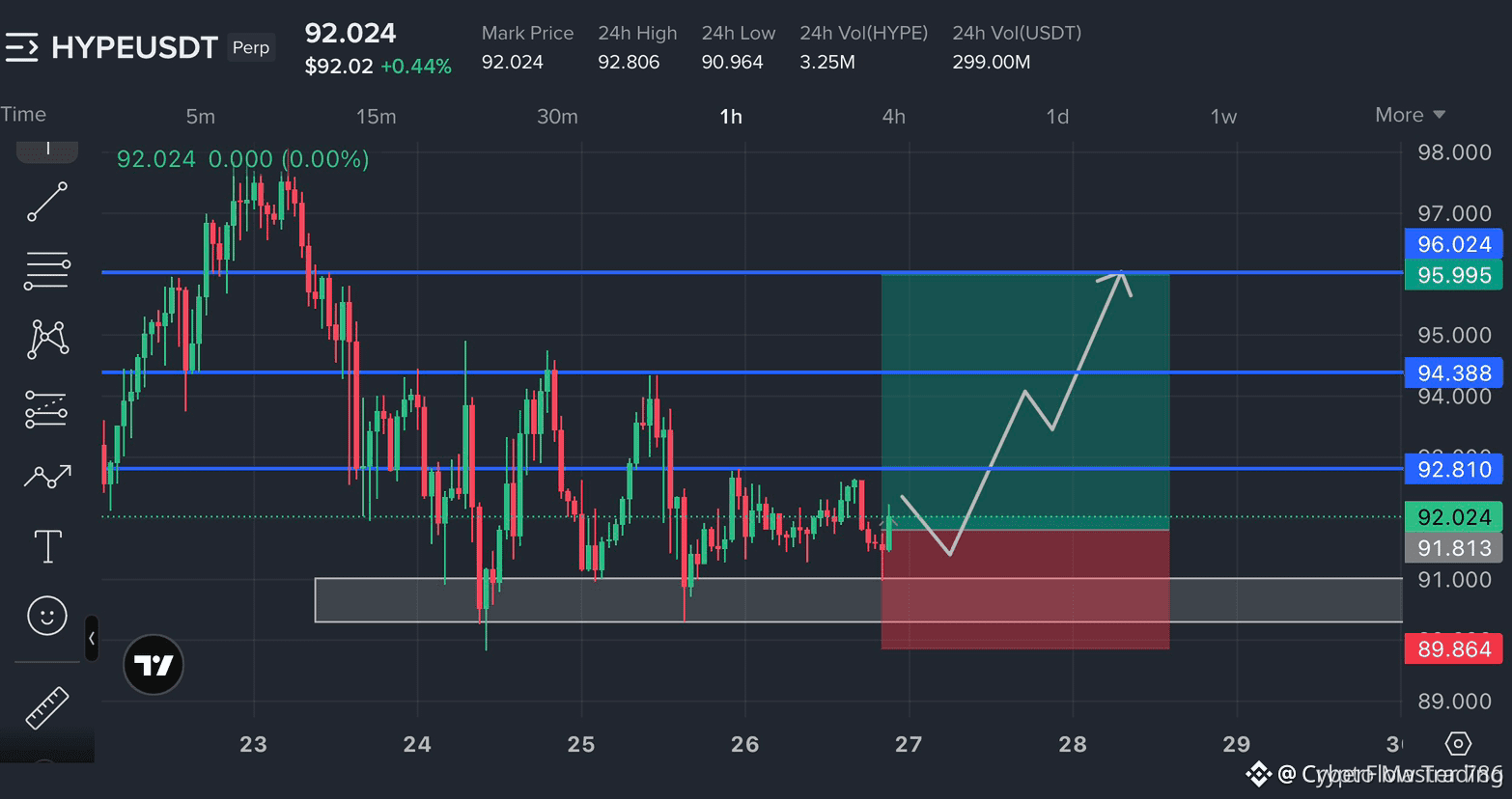
⚡ $HYPE COMPRESSING ABOVE DEMAND AS BUYERS EYE THE 92.81 RECLAIM! 💥
Entry: 92.81 ⚡
Target: 94.38 - 96.00 🚀
Stop Loss: 89.86 ⚠️
$HYPE is coiling tightly right above the 90.50 to 91.00 order block, building energy for its next move. Smart money is watching for execution rather than chasing pre-breakout noise. 📊
A decisive reclaim of 92.81 flips the market structure back to expansion mode, unlocking a clean runway toward upper targets. 💡 Slipping below 89.86 invalidates the setup entirely, making patience your strongest edge here. 🔍
💬 Are you waiting for the 92.81 trigger to confirm, or bidding inside the demand zone early? 👇
⚠️ Not financial advice. Always manage your risk. 🛡️
🏷️ #HYPE #Altcoins #Breakout #Crypto #Trading
🎯 ⚡
⚡ $HYPE COMPRESSING ABOVE DEMAND AS BUYERS EYE THE 92.81 RECLAIM! 💥
Entry: 92.81 ⚡
Target: 94.38 - 96.00 🚀
Stop Loss: 89.86 ⚠️
$HYPE is coiling tightly right above the 90.50 to 91.00 order block, building energy for its next move. Smart money is watching for execution rather than chasing pre-breakout noise. 📊
A decisive reclaim of 92.81 flips the market structure back to expansion mode, unlocking a clean runway toward upper targets. 💡 Slipping below 89.86 invalidates the setup entirely, making patience your strongest edge here. 🔍
💬 Are you waiting for the 92.81 trigger to confirm, or bidding inside the demand zone early? 👇
⚠️ Not financial advice. Always manage your risk. 🛡️
🏷️ #HYPE #Altcoins #Breakout #Crypto #Trading
🎯 ⚡
Entry: 92.81 ⚡
Target: 94.38 - 96.00 🚀
Stop Loss: 89.86 ⚠️
$HYPE is coiling tightly right above the 90.50 to 91.00 order block, building energy for its next move. Smart money is watching for execution rather than chasing pre-breakout noise. 📊
A decisive reclaim of 92.81 flips the market structure back to expansion mode, unlocking a clean runway toward upper targets. 💡 Slipping below 89.86 invalidates the setup entirely, making patience your strongest edge here. 🔍
💬 Are you waiting for the 92.81 trigger to confirm, or bidding inside the demand zone early? 👇
⚠️ Not financial advice. Always manage your risk. 🛡️
🏷️ #HYPE #Altcoins #Breakout #Crypto #Trading
🎯 ⚡
23
·
--

Article
How $HYPE Validators & Core Consensus Engine Secure the EcosystemBinance Square Post (Educational & Insights Edition)
$HYPE
As the Web3 ecosystem moves toward ultra-fast, zero-gas decentralized trading venues, custom Layer-1 infrastructure like Hyperliquid ($HYPE) is setting a new benchmark for on-chain performance.
Unlike general-purpose smart contract platforms, Hyperliquid operates a purpose-built Proof-of-Stake (PoS) chain natively engineered in Rust to support a sub-second, protocol-enshrined Central Limit Order Book (CLOB).
In this institutional deep dive, we break down how the HyperBFT consensus engine functions, how validators shield the network, and how retail participants benefit from its non-custodial execution model.
1. The Core Roles of a Hyperliquid Validator
Unlike standard EVM blockchains where validators process arbitrary smart contract updates sequentially, Hyperliquid validators execute high-throughput, multi-layered financial settlement functions:
Securing Multi-Layer Consensus (HyperBFT): Built on an optimized HotStuff consensus engine, validators process and finalize blocks in sub-200ms cycles with single-block deterministic finality (eliminating chain reorganizations and MEV front-running).
Order Book & Clearinghouse Engine (HyperCore): Instead of executing trade logic through EVM smart contract state, validators match order books, compute margin ratios, and enforce protocol-level liquidations directly at the consensus layer.
Dual-State Synchronization (HyperEVM): Validators simultaneously maintain the state of HyperEVM smart contracts alongside the native CLOB, allowing EVM protocols to source native order book liquidity in real time.
2. The Multi-Server "Sentry" Defense Pattern
Setting up an active validator node on Hyperliquid involves a hardened dual-server configuration designed to withstand high-throughput pressure and distributed denial-of-service (DDoS) attacks:
Sentry Node: Public-facing server layer that handles peer-to-peer gossip communication, absorbs external network traffic, and routes transaction mempools.
Validator Node: Isolated private server layer, connected exclusively to Sentry nodes via allow listed IPs, where encrypted keys sign block proposals and consensus votes without exposure to the public internet.
This architecture ensures that high-frequency transaction propagation never compromises validator uptime or private key integrity.
3. Safety First: The Non-Custodial & Capital Security Model
One of the most important takeaways for students and retail market participants is the structural separation of keys and asset control:
Signer Key: Maintained on the validator server to sign block proposals and vote on consensus rounds.
Self-Custodial Clearinghouse: User collateral (USDC) and trading assets remain locked in transparent on-chain smart contracts. Validators execute matching engine math but never hold access to user private keys or withdrawal authority.
Slashing & Jailing Defense: Validators who suffer high latency or missing proposal rounds are automatically jailed by peer consensus to preserve sub-second network throughput, while double-signing triggers on-chain slashing.
4. How Retail Participants & Civilians Benefit
Hyperliquid’s purpose-built consensus converts infrastructure efficiency directly into tangible retail advantages:
Zero-Gas Order Modifications: Traders pay $0 base gas fees to submit, modify, or cancel orders. Fees are deducted only upon executed trade fills.
Real Cash-Flow Value Accrual: Over 97% of protocol fee revenue routes directly into the protocol Assistance Fund to buy back $HYPE from spot markets daily.
Liquidity Provision (HLP Vaults): Everyday retail users can deposit USDC directly into community market-making vaults to share in platform trading fee revenue and liquidation proceeds.
Looking Ahead
As on-chain derivatives continue migrating away from centralized venues, protocols that combine CEX-grade sub-second execution with transparent, self-custodial PoS validation represent the next phase of Web3 financial infrastructure.
Understanding how consensus mechanisms protect liquidity and preserve non-custodial ownership remains essential for navigating modern decentralized markets.
#hype #Write2Earn #cryptoxhop #InvestSmart #Web3
How $HYPE Validators & Core Consensus Engine Secure the Ecosystem
Binance Square Post (Educational & Insights Edition)
$HYPE
As the Web3 ecosystem moves toward ultra-fast, zero-gas decentralized trading venues, custom Layer-1 infrastructure like Hyperliquid ($HYPE ) is setting a new benchmark for on-chain performance.
Unlike general-purpose smart contract platforms, Hyperliquid operates a purpose-built Proof-of-Stake (PoS) chain natively engineered in Rust to support a sub-second, protocol-enshrined Central Limit Order Book (CLOB).
In this institutional deep dive, we break down how the HyperBFT consensus engine functions, how validators shield the network, and how retail participants benefit from its non-custodial execution model.
1. The Core Roles of a Hyperliquid Validator
Unlike standard EVM blockchains where validators process arbitrary smart contract updates sequentially, Hyperliquid validators execute high-throughput, multi-layered financial settlement functions:
Securing Multi-Layer Consensus (HyperBFT): Built on an optimized HotStuff consensus engine, validators process and finalize blocks in sub-200ms cycles with single-block deterministic finality (eliminating chain reorganizations and MEV front-running).
Order Book & Clearinghouse Engine (HyperCore): Instead of executing trade logic through EVM smart contract state, validators match order books, compute margin ratios, and enforce protocol-level liquidations directly at the consensus layer.
Dual-State Synchronization (HyperEVM): Validators simultaneously maintain the state of HyperEVM smart contracts alongside the native CLOB, allowing EVM protocols to source native order book liquidity in real time.
2. The Multi-Server "Sentry" Defense Pattern
Setting up an active validator node on Hyperliquid involves a hardened dual-server configuration designed to withstand high-throughput pressure and distributed denial-of-service (DDoS) attacks:
Sentry Node: Public-facing server layer that handles peer-to-peer gossip communication, absorbs external network traffic, and routes transaction mempools.
Validator Node: Isolated private server layer, connected exclusively to Sentry nodes via allow listed IPs, where encrypted keys sign block proposals and consensus votes without exposure to the public internet.
This architecture ensures that high-frequency transaction propagation never compromises validator uptime or private key integrity.
3. Safety First: The Non-Custodial & Capital Security Model
One of the most important takeaways for students and retail market participants is the structural separation of keys and asset control:
Signer Key: Maintained on the validator server to sign block proposals and vote on consensus rounds.
Self-Custodial Clearinghouse: User collateral (USDC) and trading assets remain locked in transparent on-chain smart contracts. Validators execute matching engine math but never hold access to user private keys or withdrawal authority.
Slashing & Jailing Defense: Validators who suffer high latency or missing proposal rounds are automatically jailed by peer consensus to preserve sub-second network throughput, while double-signing triggers on-chain slashing.
4. How Retail Participants & Civilians Benefit
Hyperliquid’s purpose-built consensus converts infrastructure efficiency directly into tangible retail advantages:
Zero-Gas Order Modifications: Traders pay $0 base gas fees to submit, modify, or cancel orders. Fees are deducted only upon executed trade fills.
Real Cash-Flow Value Accrual: Over 97% of protocol fee revenue routes directly into the protocol Assistance Fund to buy back $HYPE from spot markets daily.
Liquidity Provision (HLP Vaults): Everyday retail users can deposit USDC directly into community market-making vaults to share in platform trading fee revenue and liquidation proceeds.
Looking Ahead
As on-chain derivatives continue migrating away from centralized venues, protocols that combine CEX-grade sub-second execution with transparent, self-custodial PoS validation represent the next phase of Web3 financial infrastructure.
Understanding how consensus mechanisms protect liquidity and preserve non-custodial ownership remains essential for navigating modern decentralized markets.
#hype #Write2Earn #cryptoxhop #InvestSmart #Web3
$HYPE
As the Web3 ecosystem moves toward ultra-fast, zero-gas decentralized trading venues, custom Layer-1 infrastructure like Hyperliquid ($HYPE ) is setting a new benchmark for on-chain performance.
Unlike general-purpose smart contract platforms, Hyperliquid operates a purpose-built Proof-of-Stake (PoS) chain natively engineered in Rust to support a sub-second, protocol-enshrined Central Limit Order Book (CLOB).
In this institutional deep dive, we break down how the HyperBFT consensus engine functions, how validators shield the network, and how retail participants benefit from its non-custodial execution model.
1. The Core Roles of a Hyperliquid Validator
Unlike standard EVM blockchains where validators process arbitrary smart contract updates sequentially, Hyperliquid validators execute high-throughput, multi-layered financial settlement functions:
Securing Multi-Layer Consensus (HyperBFT): Built on an optimized HotStuff consensus engine, validators process and finalize blocks in sub-200ms cycles with single-block deterministic finality (eliminating chain reorganizations and MEV front-running).
Order Book & Clearinghouse Engine (HyperCore): Instead of executing trade logic through EVM smart contract state, validators match order books, compute margin ratios, and enforce protocol-level liquidations directly at the consensus layer.
Dual-State Synchronization (HyperEVM): Validators simultaneously maintain the state of HyperEVM smart contracts alongside the native CLOB, allowing EVM protocols to source native order book liquidity in real time.
2. The Multi-Server "Sentry" Defense Pattern
Setting up an active validator node on Hyperliquid involves a hardened dual-server configuration designed to withstand high-throughput pressure and distributed denial-of-service (DDoS) attacks:
Sentry Node: Public-facing server layer that handles peer-to-peer gossip communication, absorbs external network traffic, and routes transaction mempools.
Validator Node: Isolated private server layer, connected exclusively to Sentry nodes via allow listed IPs, where encrypted keys sign block proposals and consensus votes without exposure to the public internet.
This architecture ensures that high-frequency transaction propagation never compromises validator uptime or private key integrity.
3. Safety First: The Non-Custodial & Capital Security Model
One of the most important takeaways for students and retail market participants is the structural separation of keys and asset control:
Signer Key: Maintained on the validator server to sign block proposals and vote on consensus rounds.
Self-Custodial Clearinghouse: User collateral (USDC) and trading assets remain locked in transparent on-chain smart contracts. Validators execute matching engine math but never hold access to user private keys or withdrawal authority.
Slashing & Jailing Defense: Validators who suffer high latency or missing proposal rounds are automatically jailed by peer consensus to preserve sub-second network throughput, while double-signing triggers on-chain slashing.
4. How Retail Participants & Civilians Benefit
Hyperliquid’s purpose-built consensus converts infrastructure efficiency directly into tangible retail advantages:
Zero-Gas Order Modifications: Traders pay $0 base gas fees to submit, modify, or cancel orders. Fees are deducted only upon executed trade fills.
Real Cash-Flow Value Accrual: Over 97% of protocol fee revenue routes directly into the protocol Assistance Fund to buy back $HYPE from spot markets daily.
Liquidity Provision (HLP Vaults): Everyday retail users can deposit USDC directly into community market-making vaults to share in platform trading fee revenue and liquidation proceeds.
Looking Ahead
As on-chain derivatives continue migrating away from centralized venues, protocols that combine CEX-grade sub-second execution with transparent, self-custodial PoS validation represent the next phase of Web3 financial infrastructure.
Understanding how consensus mechanisms protect liquidity and preserve non-custodial ownership remains essential for navigating modern decentralized markets.
#hype #Write2Earn #cryptoxhop #InvestSmart #Web3
1
151

·
--
Bullish
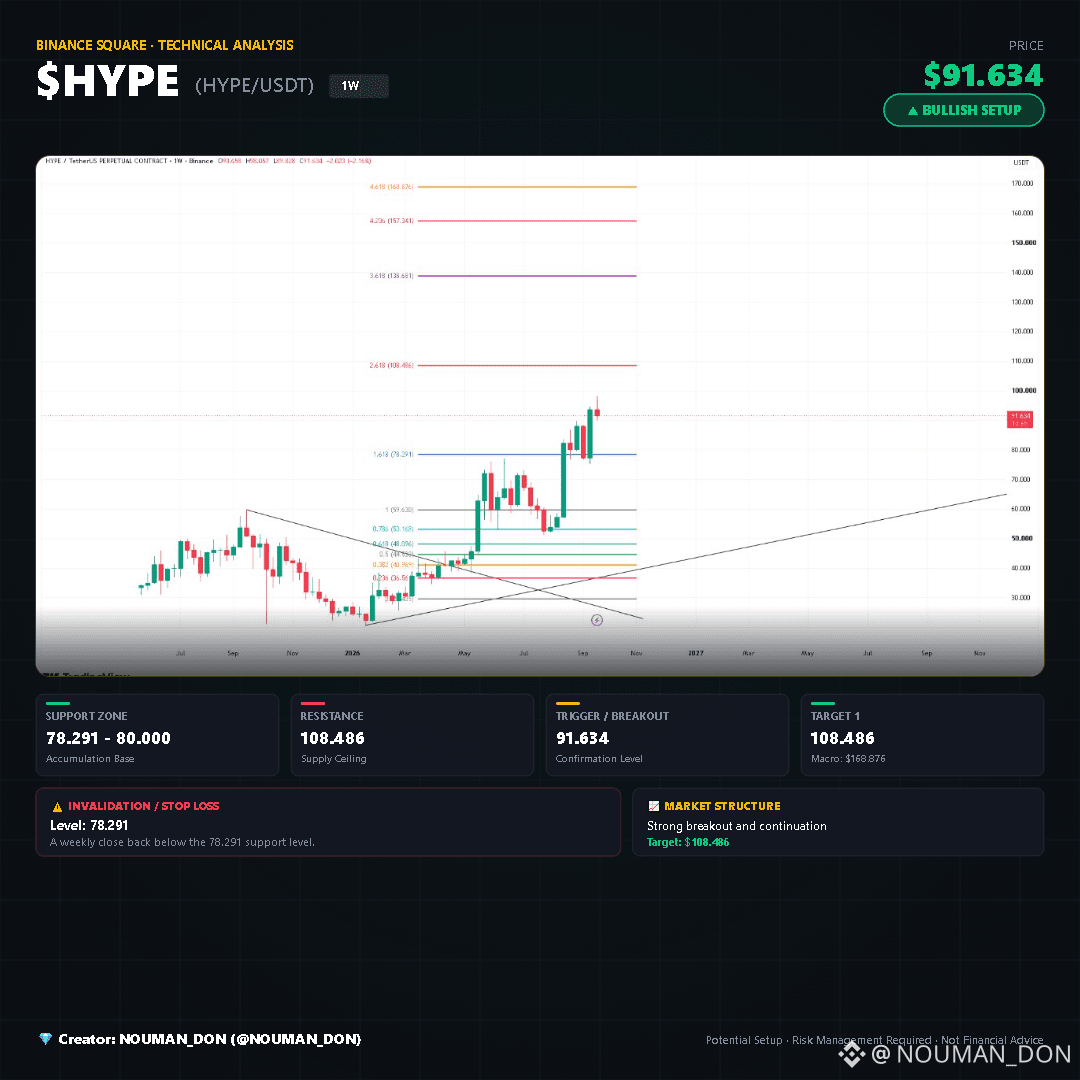
🚀 $HYPE is showing a potential technical setup!
The weekly chart exhibits strong bullish momentum with price expanding past previous structural highs and holding above key Fibonacci extension levels.
📈 The Technical Setup:
• The Pattern: Fibonacci Extension Expansion and Trendline Support
• Short-term Target: 108.486
• Macro Objective: 168.876
• Market Structure: Strong breakout and continuation
🎯 Key Levels to Watch:
• Support / Accumulation Zone: 78.291 - 80.000
• Resistance: 108.486
• Breakout Level: 91.634
• Stop Loss / Invalidation: 78.291
📊 Confirmation:
• Volume: Neutral/standard volume
• Momentum: Strong bullish weekly expansion candles
• Trend: Macro uptrend continuing above key Fibonacci levels
⚠️ Invalidation:
A weekly close back below the 78.291 support level.
Price action suggests continuation towards higher Fibonacci targets unless key support fails.
💎 Creator: NOUMAN_DON (@NOUMAN_DON)
#hype #crypto #BinanceSquare #Binance #bitcoin
{spot}(HYPEUSDT)
{future}(HYPEUSDT)
🚀 $HYPE is showing a potential technical setup!
The weekly chart exhibits strong bullish momentum with price expanding past previous structural highs and holding above key Fibonacci extension levels.
📈 The Technical Setup:
• The Pattern: Fibonacci Extension Expansion and Trendline Support
• Short-term Target: 108.486
• Macro Objective: 168.876
• Market Structure: Strong breakout and continuation
🎯 Key Levels to Watch:
• Support / Accumulation Zone: 78.291 - 80.000
• Resistance: 108.486
• Breakout Level: 91.634
• Stop Loss / Invalidation: 78.291
📊 Confirmation:
• Volume: Neutral/standard volume
• Momentum: Strong bullish weekly expansion candles
• Trend: Macro uptrend continuing above key Fibonacci levels
⚠️ Invalidation:
A weekly close back below the 78.291 support level.
Price action suggests continuation towards higher Fibonacci targets unless key support fails.
💎 Creator: NOUMAN_DON (@NOUMAN_DON)
#hype #crypto #BinanceSquare #Binance #bitcoin
The weekly chart exhibits strong bullish momentum with price expanding past previous structural highs and holding above key Fibonacci extension levels.
📈 The Technical Setup:
• The Pattern: Fibonacci Extension Expansion and Trendline Support
• Short-term Target: 108.486
• Macro Objective: 168.876
• Market Structure: Strong breakout and continuation
🎯 Key Levels to Watch:
• Support / Accumulation Zone: 78.291 - 80.000
• Resistance: 108.486
• Breakout Level: 91.634
• Stop Loss / Invalidation: 78.291
📊 Confirmation:
• Volume: Neutral/standard volume
• Momentum: Strong bullish weekly expansion candles
• Trend: Macro uptrend continuing above key Fibonacci levels
⚠️ Invalidation:
A weekly close back below the 78.291 support level.
Price action suggests continuation towards higher Fibonacci targets unless key support fails.
💎 Creator: NOUMAN_DON (@NOUMAN_DON)
#hype #crypto #BinanceSquare #Binance #bitcoin
1
24

·
--
🔥 HYPE PRINTS A NEW ALL-TIME HIGH — $98 SMASHED, $100 IN SIGHT
Hyperliquid hit a fresh all-time high of $97.99 this week before cooling to around $93. Manual borrowing against HYPE/BTC just launched, institutional 13F filings show 30 firms already hold spot HYPE ETF exposure, and daily trading volume is topping $1.2B. A close above $95.97 could send it straight for the $100 milestone.
$HYPE
{spot}(HYPEUSDT)
#hype
👉 Vote: does HYPE hit triple digits before October? 🚀
🔥 HYPE PRINTS A NEW ALL-TIME HIGH — $98 SMASHED, $100 IN SIGHT
Hyperliquid hit a fresh all-time high of $97.99 this week before cooling to around $93. Manual borrowing against HYPE/BTC just launched, institutional 13F filings show 30 firms already hold spot HYPE ETF exposure, and daily trading volume is topping $1.2B. A close above $95.97 could send it straight for the $100 milestone.
$HYPE
#hype
👉 Vote: does HYPE hit triple digits before October? 🚀
Hyperliquid hit a fresh all-time high of $97.99 this week before cooling to around $93. Manual borrowing against HYPE/BTC just launched, institutional 13F filings show 30 firms already hold spot HYPE ETF exposure, and daily trading volume is topping $1.2B. A close above $95.97 could send it straight for the $100 milestone.
$HYPE
#hype
👉 Vote: does HYPE hit triple digits before October? 🚀
133

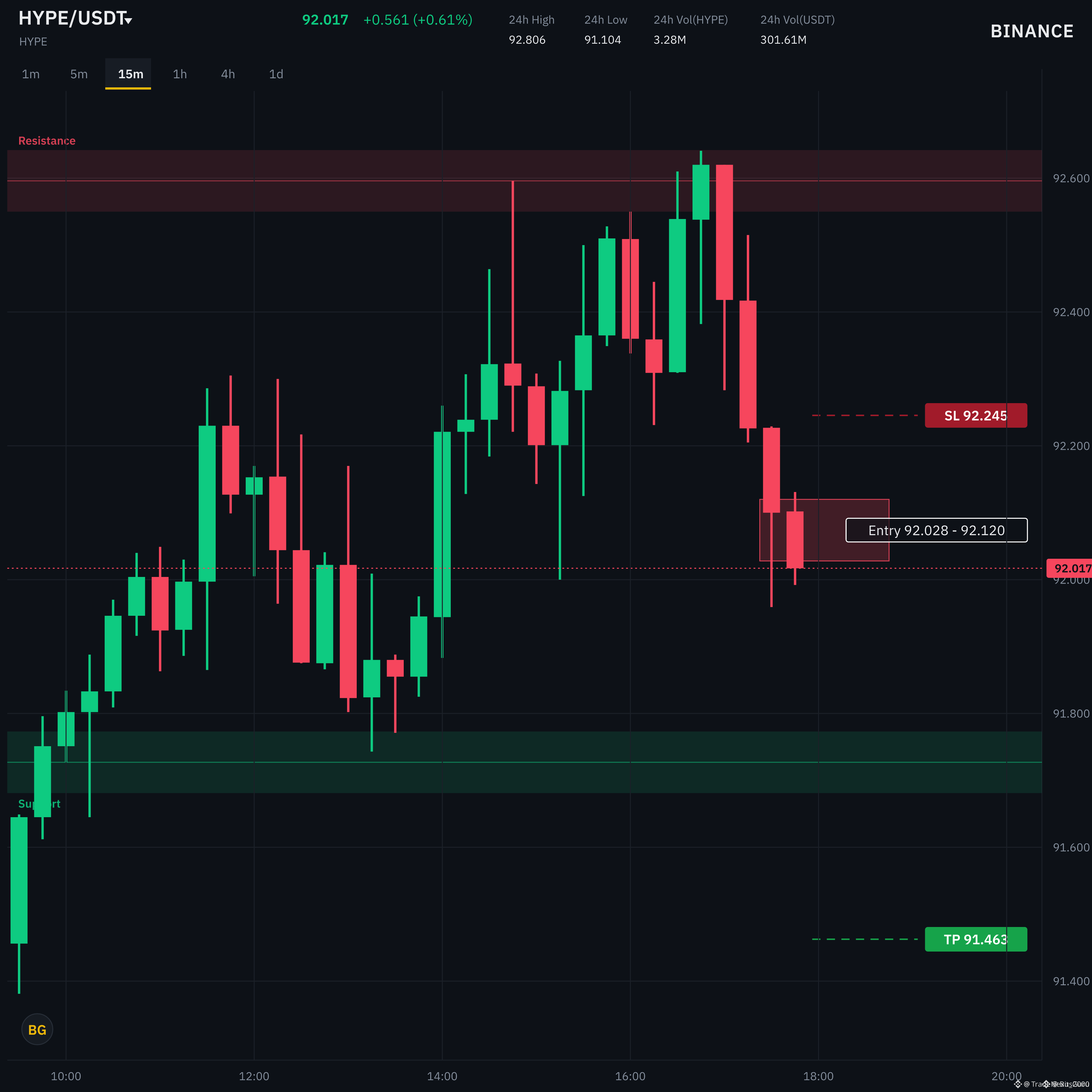
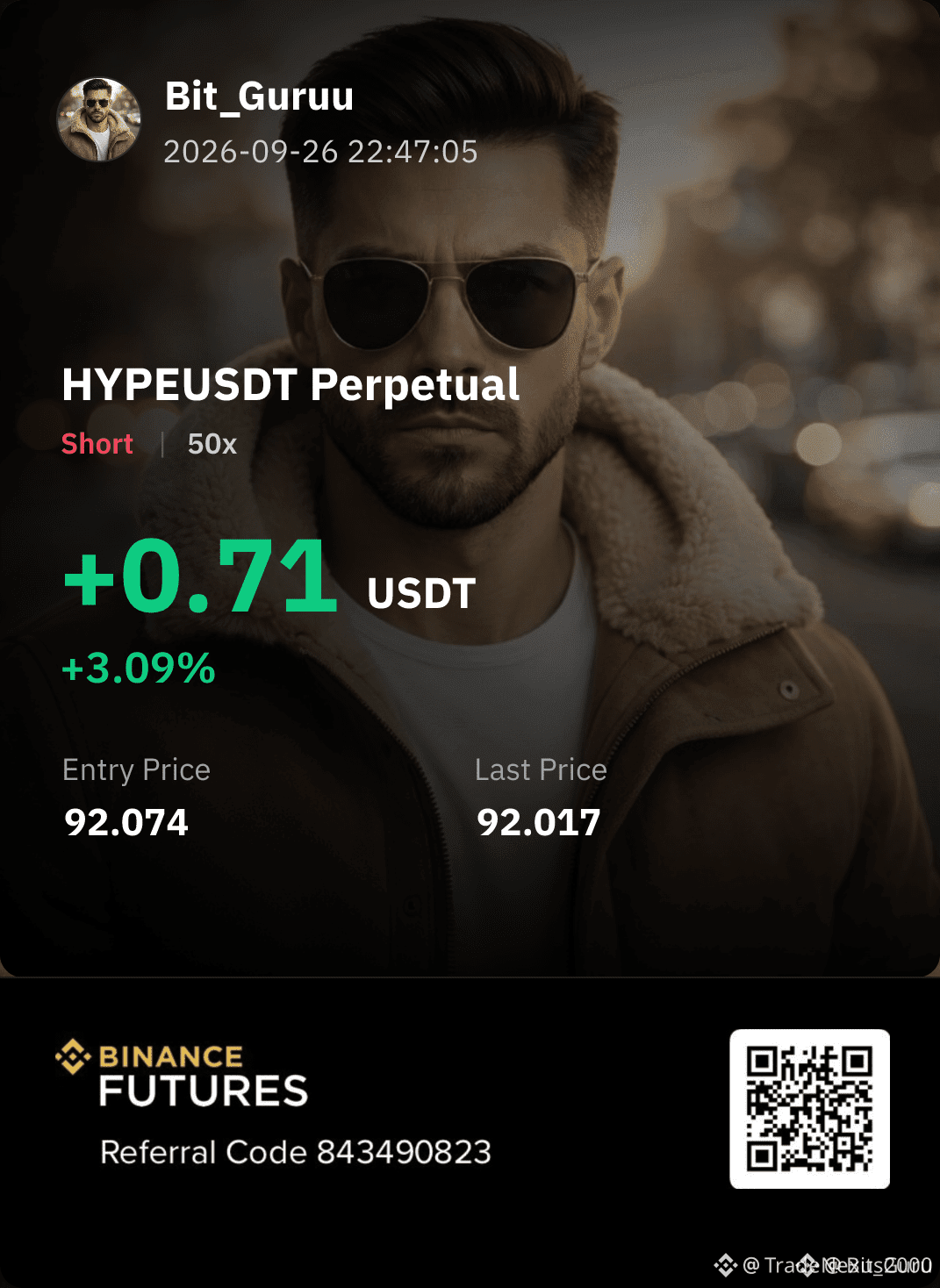
🚨 $HYPE PREMIUM SUPPLY REJECTION SIGNALS INSTITUTIONAL DOWNFLOW CONTINUATION! 🐻
Entry: 92.028 - 92.120 ⚡
Target: 91.463 🎯
Stop Loss: 92.245 ⚠️
$HYPE has swept local buy-side liquidity directly into a key premium supply zone between 92.028 and 92.120. 🔍 Institutional sell orders are stepping in to defend this bearish order block, keeping the broader market structure tilted firmly downward.
📊 With order flow signaling distribution on lower timeframes, price action is primed to seek sell-side liquidity pools below current trading levels. 💬 Will smart money drive $HYPE straight to the downside target at 91.463, or do you see buyers attempting a reclaim? 👇
⚠️ Not financial advice. Always manage your risk. 🛡️
🏷️ #HYPE #ShortSetup #Crypto #Trading #MarketStructure
🔴 🐻
🚨 $HYPE PREMIUM SUPPLY REJECTION SIGNALS INSTITUTIONAL DOWNFLOW CONTINUATION! 🐻
Entry: 92.028 - 92.120 ⚡
Target: 91.463 🎯
Stop Loss: 92.245 ⚠️
$HYPE has swept local buy-side liquidity directly into a key premium supply zone between 92.028 and 92.120. 🔍 Institutional sell orders are stepping in to defend this bearish order block, keeping the broader market structure tilted firmly downward.
📊 With order flow signaling distribution on lower timeframes, price action is primed to seek sell-side liquidity pools below current trading levels. 💬 Will smart money drive $HYPE straight to the downside target at 91.463, or do you see buyers attempting a reclaim? 👇
⚠️ Not financial advice. Always manage your risk. 🛡️
🏷️ #HYPE #ShortSetup #Crypto #Trading #MarketStructure
🔴 🐻
Entry: 92.028 - 92.120 ⚡
Target: 91.463 🎯
Stop Loss: 92.245 ⚠️
$HYPE has swept local buy-side liquidity directly into a key premium supply zone between 92.028 and 92.120. 🔍 Institutional sell orders are stepping in to defend this bearish order block, keeping the broader market structure tilted firmly downward.
📊 With order flow signaling distribution on lower timeframes, price action is primed to seek sell-side liquidity pools below current trading levels. 💬 Will smart money drive $HYPE straight to the downside target at 91.463, or do you see buyers attempting a reclaim? 👇
⚠️ Not financial advice. Always manage your risk. 🛡️
🏷️ #HYPE #ShortSetup #Crypto #Trading #MarketStructure
🔴 🐻
21

·
--
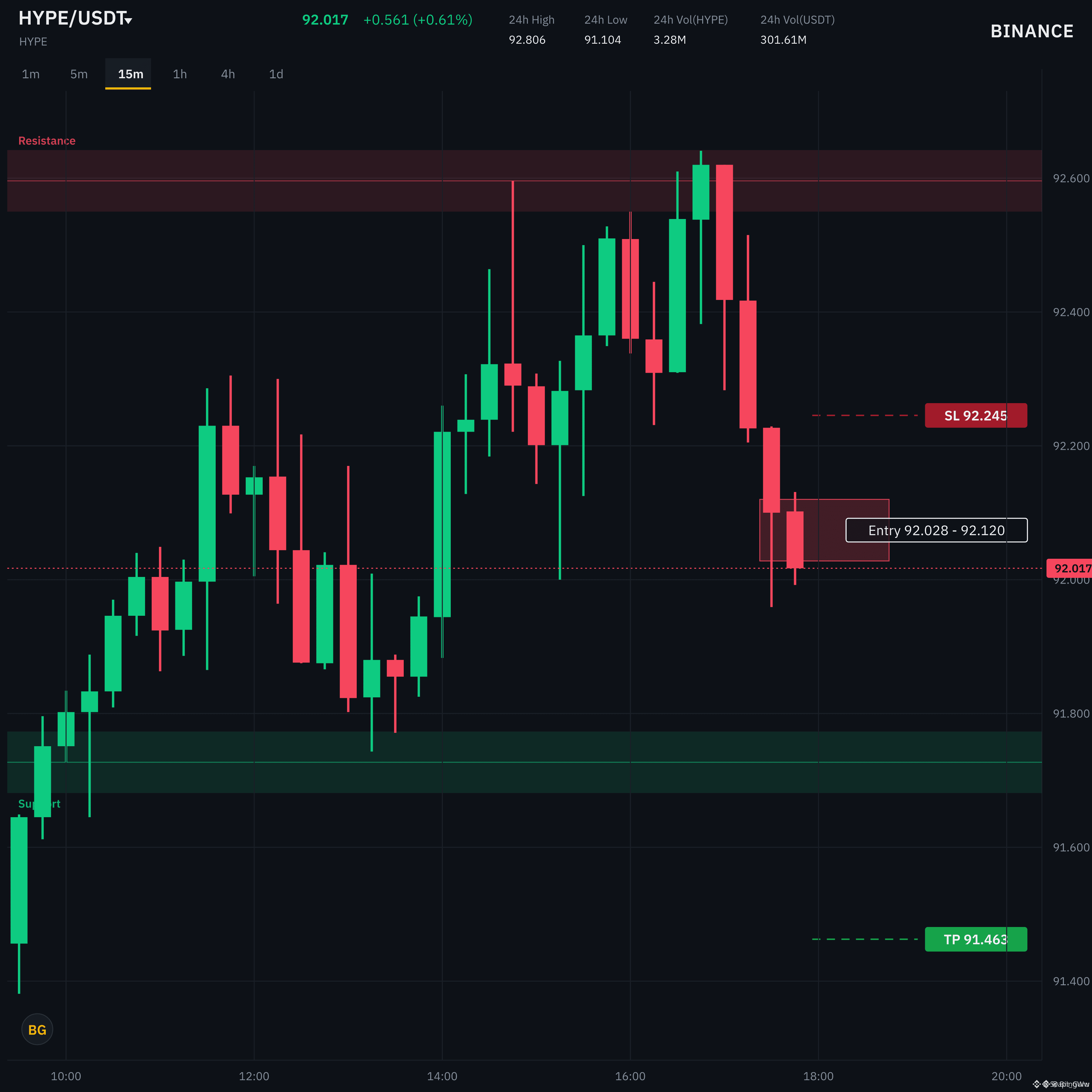
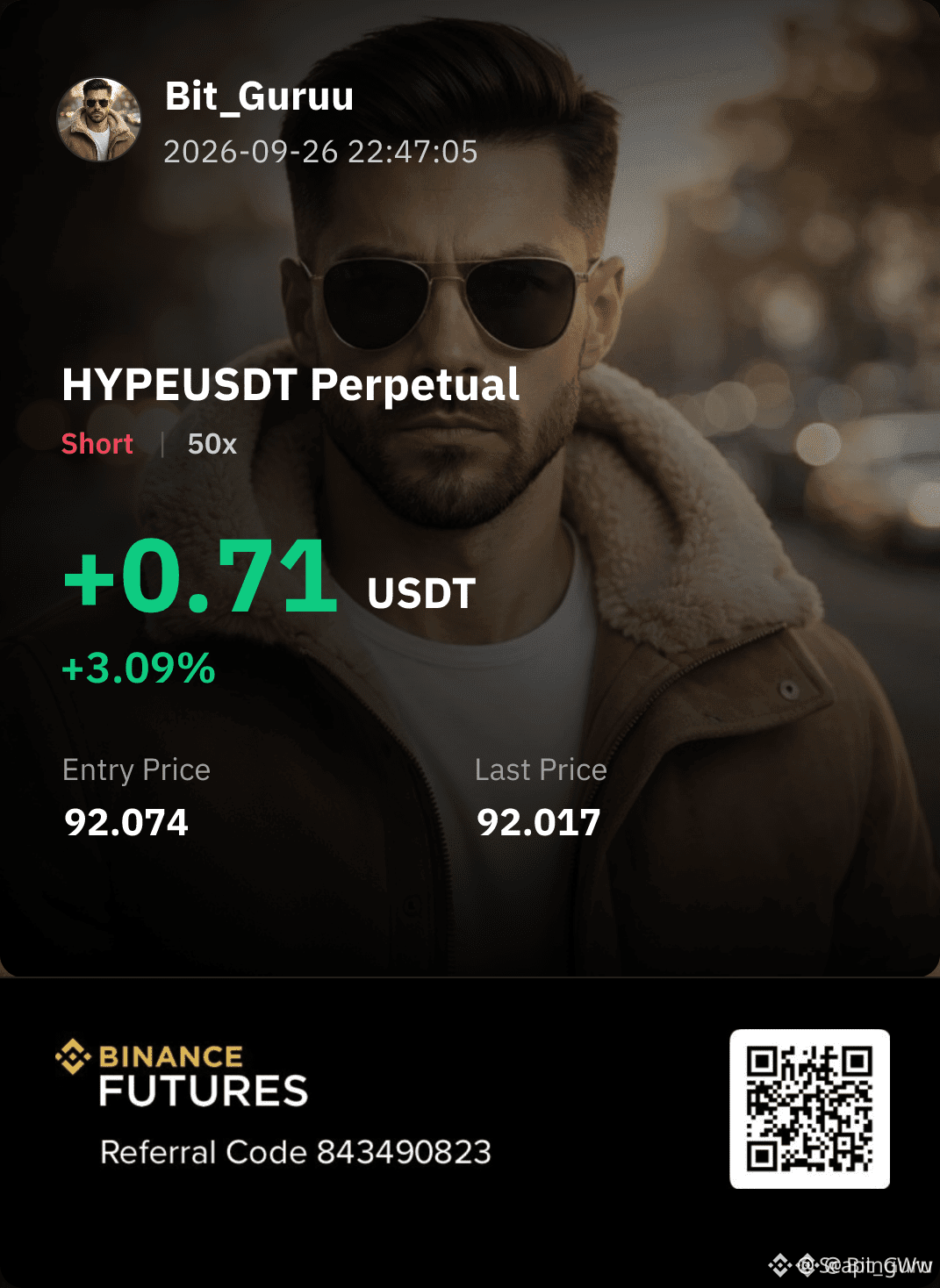
🔴 $HYPE RALLIES INTO TIGHT RESISTANCE — SELLERS PREPARE FOR REJECTION! 🐻
Entry: 92.028 - 92.120 ⚡
Target: 91.463 🎯
Stop Loss: 92.245 ⚠️
📌 $HYPE is pushing straight into a tight overhead resistance block between 92.028 and 92.120 where aggressive sellers previously defended structure. 📉 The downside momentum remains firmly intact as buyer volume fades on this upward retest.
💡 This setup offers a crisp risk-to-reward window for a tactical pullback down to the 91.463 liquidity target. 🌊 Tight invalidation above 92.245 ensures protection if order flow flips. 💬 Are you shorting this retest or waiting to see if buyers push through resistance? 👇
⚠️ Not financial advice. Always manage your risk. 🛡️
🏷️ #HYPE #ShortSetup #Crypto #Trading #Bearish
🐻 📉
🔴 $HYPE RALLIES INTO TIGHT RESISTANCE — SELLERS PREPARE FOR REJECTION! 🐻
Entry: 92.028 - 92.120 ⚡
Target: 91.463 🎯
Stop Loss: 92.245 ⚠️
📌 $HYPE is pushing straight into a tight overhead resistance block between 92.028 and 92.120 where aggressive sellers previously defended structure. 📉 The downside momentum remains firmly intact as buyer volume fades on this upward retest.
💡 This setup offers a crisp risk-to-reward window for a tactical pullback down to the 91.463 liquidity target. 🌊 Tight invalidation above 92.245 ensures protection if order flow flips. 💬 Are you shorting this retest or waiting to see if buyers push through resistance? 👇
⚠️ Not financial advice. Always manage your risk. 🛡️
🏷️ #HYPE #ShortSetup #Crypto #Trading #Bearish
🐻 📉
Entry: 92.028 - 92.120 ⚡
Target: 91.463 🎯
Stop Loss: 92.245 ⚠️
📌 $HYPE is pushing straight into a tight overhead resistance block between 92.028 and 92.120 where aggressive sellers previously defended structure. 📉 The downside momentum remains firmly intact as buyer volume fades on this upward retest.
💡 This setup offers a crisp risk-to-reward window for a tactical pullback down to the 91.463 liquidity target. 🌊 Tight invalidation above 92.245 ensures protection if order flow flips. 💬 Are you shorting this retest or waiting to see if buyers push through resistance? 👇
⚠️ Not financial advice. Always manage your risk. 🛡️
🏷️ #HYPE #ShortSetup #Crypto #Trading #Bearish
🐻 📉
37
Log in to explore more content
Join global crypto users on Binance Square
⚡️ Get latest and useful information about crypto.
💬 Trusted by the world’s largest crypto exchange.
👍 Discover real insights from verified creators.
Email / Phone number
Trending Topics
1
#TrumpRejectsIranHormuzReopening
488 views
55 Discussing
2
#CircleTetherFreezeBitgetHackerWallet
23,038 views
307 Discussing
3
#AerodromeVelodromeToMergeIntoAero
0 views
0 Discussing
4
#SECSaysTokenBuybacksNotAutoSecurities
4,536 views
116 Discussing
5
#ChinaUSAgreeOn$30BTariffCut
256 views
6 Discussing
6
#CoinMarketCapCompletesCoinglassAcquisition
24,512 views
280 Discussing
7
#CircleMints500MUSDCOnSolana
168,719 views
2,797 Discussing
8
#PolymarketBankFailureBetsDrawFDICConcern
148,323 views
2,235 Discussing
9
#BlackRockBuildsTokenizedPortfoliosForOndo
140,865 views
1,619 Discussing
10
#BitwiseFilesToListNEARETFOnNYSEArca
98,850 views
1,275 Discussing