

#goldmanmorganeach$100minspacexipofees
goldmanmorganeach$100minspacexipofees
6,597 views
70 Discussing
Hot
Latest

·
--
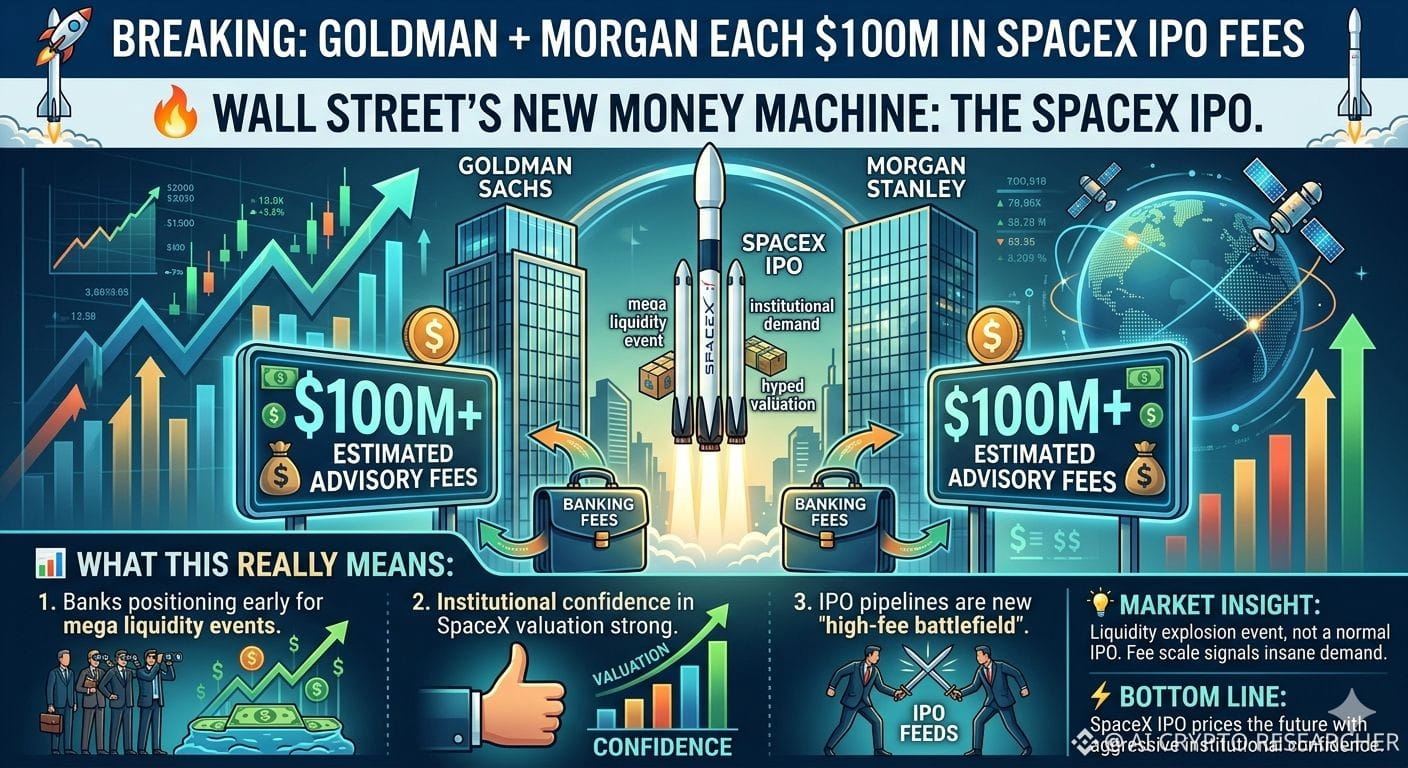
🚀 Goldman + Morgan Each $100M in SpaceX IPO Fees — What the Market Is Really Telling Us
When you see headlines like “$100M fees per bank”, it’s not just about big numbers — it’s about the scale of capital movement happening behind the scenes.
SpaceX IPO is shaping up less like a normal listing and more like a global liquidity event engineered by institutions.
📊 What stands out here:
🔹 Investment banks aren’t just advising — they are pricing the future
When Goldman Sachs and Morgan Stanley earn ~$100M each, it signals that:
Deal size is massive Demand from institutions is aggressive Volatility expectations are high
🔹 High fees = high complexity
This usually happens when:
Valuation models are stretched into future growth cycles Private-to-public transition is heavily oversubscribed Institutional positioning starts long before public listing
🔹 Smart money behavior insight
Big banks don’t earn this much on “safe” IPOs.
They earn this when:
Liquidity expectations are huge Secondary market demand is already building Early positioning matters more than listing day hype
📈 Market implication:
This type of IPO often triggers:
Pre-IPO speculation in tech + space-related assets Post-IPO volatility spikes Narrative rotation into “future economy” sectors (AI, space, infra tech)
⚠️ Key takeaway:
This isn’t just about SpaceX.
It’s about how aggressively institutions are pricing innovation, future cashflows, and long-term dominance in space-tech economy.
💡 In simple terms:
Big fees = big expectations = big volatility ahead.
🔥 Final thought:
When Wall Street pays this much just to “facilitate,” it usually means one thing —
👉 the real move in the market hasn’t even started yet.
$BTC
{spot}(BTCUSDT)
#Binance #BinanceSquare
#GoldmanMorganEach$100MInSpaceXIPOFees
#BitcoinReboundsTo$64K
🚀 Goldman + Morgan Each $100M in SpaceX IPO Fees — What the Market Is Really Telling Us
When you see headlines like “$100M fees per bank”, it’s not just about big numbers — it’s about the scale of capital movement happening behind the scenes.
SpaceX IPO is shaping up less like a normal listing and more like a global liquidity event engineered by institutions.
📊 What stands out here:
🔹 Investment banks aren’t just advising — they are pricing the future
When Goldman Sachs and Morgan Stanley earn ~$100M each, it signals that:
Deal size is massive Demand from institutions is aggressive Volatility expectations are high
🔹 High fees = high complexity
This usually happens when:
Valuation models are stretched into future growth cycles Private-to-public transition is heavily oversubscribed Institutional positioning starts long before public listing
🔹 Smart money behavior insight
Big banks don’t earn this much on “safe” IPOs.
They earn this when:
Liquidity expectations are huge Secondary market demand is already building Early positioning matters more than listing day hype
📈 Market implication:
This type of IPO often triggers:
Pre-IPO speculation in tech + space-related assets Post-IPO volatility spikes Narrative rotation into “future economy” sectors (AI, space, infra tech)
⚠️ Key takeaway:
This isn’t just about SpaceX.
It’s about how aggressively institutions are pricing innovation, future cashflows, and long-term dominance in space-tech economy.
💡 In simple terms:
Big fees = big expectations = big volatility ahead.
🔥 Final thought:
When Wall Street pays this much just to “facilitate,” it usually means one thing —
👉 the real move in the market hasn’t even started yet.
$BTC
#Binance #BinanceSquare
#GoldmanMorganEach$100MInSpaceXIPOFees
#BitcoinReboundsTo$64K
When you see headlines like “$100M fees per bank”, it’s not just about big numbers — it’s about the scale of capital movement happening behind the scenes.
SpaceX IPO is shaping up less like a normal listing and more like a global liquidity event engineered by institutions.
📊 What stands out here:
🔹 Investment banks aren’t just advising — they are pricing the future
When Goldman Sachs and Morgan Stanley earn ~$100M each, it signals that:
Deal size is massive Demand from institutions is aggressive Volatility expectations are high
🔹 High fees = high complexity
This usually happens when:
Valuation models are stretched into future growth cycles Private-to-public transition is heavily oversubscribed Institutional positioning starts long before public listing
🔹 Smart money behavior insight
Big banks don’t earn this much on “safe” IPOs.
They earn this when:
Liquidity expectations are huge Secondary market demand is already building Early positioning matters more than listing day hype
📈 Market implication:
This type of IPO often triggers:
Pre-IPO speculation in tech + space-related assets Post-IPO volatility spikes Narrative rotation into “future economy” sectors (AI, space, infra tech)
⚠️ Key takeaway:
This isn’t just about SpaceX.
It’s about how aggressively institutions are pricing innovation, future cashflows, and long-term dominance in space-tech economy.
💡 In simple terms:
Big fees = big expectations = big volatility ahead.
🔥 Final thought:
When Wall Street pays this much just to “facilitate,” it usually means one thing —
👉 the real move in the market hasn’t even started yet.
$BTC
#Binance #BinanceSquare
#GoldmanMorganEach$100MInSpaceXIPOFees
#BitcoinReboundsTo$64K
119


·
--
Article
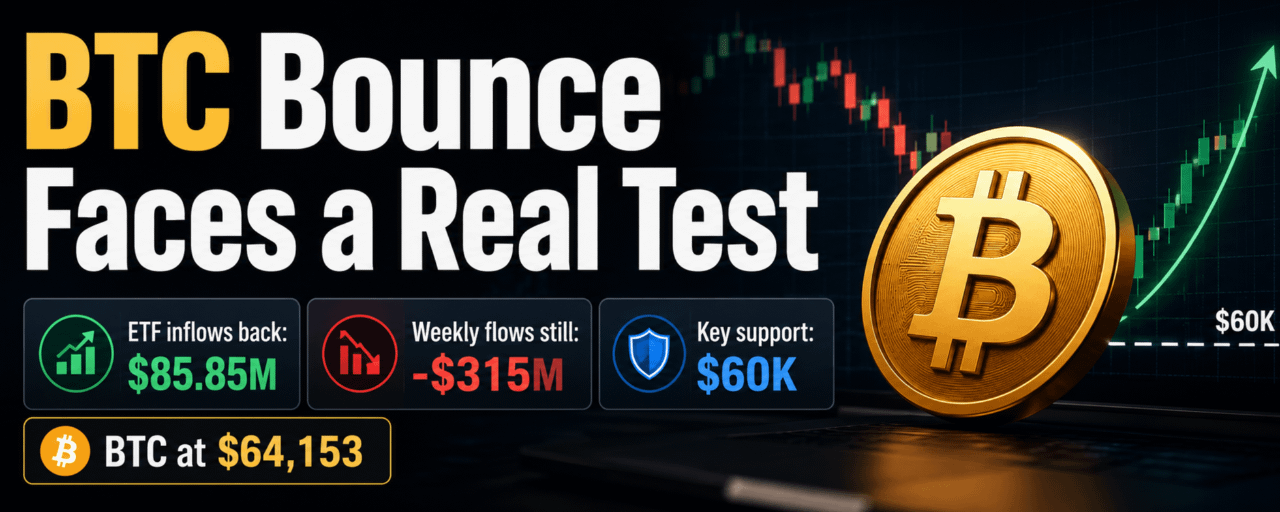
Bitcoin Price Prediction: BTC Chart Signals Bullish Move as ETF Inflows Rebound Following SpaceX IPOWe are still sitting in a $315 million negative ETF hole for the week, so the June 12 inflow print is not some clean reset. It helps, sure. SoSoValue has $85.85 million coming back into spot Bitcoin ETFs on June 12, highest since March 14, all 13 U.S.-traded Bitcoin ETFs positive, IBIT taking $57 million, Fidelity another $18 million, and $BTC lifting from around $62,000 to $64,000 after the SpaceX IPO went live. But that same screen still has the June 8 to June 11 outflow damage sitting there, and BTC only trades at $64,153 on June 13, up 1.12% in 24 hours with $19 billion in volume, after already getting dragged below $59,000 on June 5.
People are already trying to front-run the double bottom because the one-week chart has support around $60,000 and price is no longer falling in a straight line. That is where the desk gets messy. The pattern needs three straight weekly closes above $60,000 before it deserves real respect, and the $83,000 neckline is still far enough away that treating it like a live target feels premature. If BTC gets to $83,000 and then makes three weekly closes above it, yes, the measured move is 38% and the path points toward $115,000. Until then, it is a drawing on a chart while everyone keeps glancing at ETF flow sheets to see if June 12 was real demand or just relief from a bad headline cycle.
The SpaceX IPO explanation still feels too convenient. The IPO launched on June 12, the same day ETF inflows came back, and Standard Chartered had already said Bitcoin could reach $100,00 before 2026 ends while arguing that retail liquidity pressure from the SpaceX IPO had eased. Sygnum Bank is not buying that causal chain. Their read is that the IPO had nothing to do with the BTC drawdown, and exchange balances do not show significant selling that would prove holders dumped Bitcoin to chase something else. That matters because if the selloff was not really SpaceX rotation, then the bounce cannot be priced as “SpaceX pressure solved.” It is just BTC crawling back after a liquidity scare while the market looks for a better excuse.
SOPR is the one on-chain read that keeps the bottom argument alive. It has reached the same level it hit in 2023 before Bitcoin bounced, and CryptoQuant analysts frame this zone as where weak hands usually exit before stronger hands start driving the next move upward. Useful signal, but not enough by itself. SOPR can say the market is washed out while the ETF sheet still says the week is negative and the chart still says $60,000 has to hold through actual weekly closes. OpenAI and Anthropic IPOs are also sitting out in late 2026, with Sygnum saying those deals “will reshape where capital sits,” so the liquidity rotation question does not disappear just because SpaceX is no longer the active panic point.
Stops stay under the $60,000 structure. No chase into $64,153 unless the weekly close does the work.
#BitcoinReboundsTo$64K #GoldmanMorganEach$100MInSpaceXIPOFees #USIranHormusDealDisputed #JPMorganCEOFightsCLARITYAct
Bitcoin Price Prediction: BTC Chart Signals Bullish Move as ETF Inflows Rebound Following SpaceX IPO
We are still sitting in a $315 million negative ETF hole for the week, so the June 12 inflow print is not some clean reset. It helps, sure. SoSoValue has $85.85 million coming back into spot Bitcoin ETFs on June 12, highest since March 14, all 13 U.S.-traded Bitcoin ETFs positive, IBIT taking $57 million, Fidelity another $18 million, and $BTC lifting from around $62,000 to $64,000 after the SpaceX IPO went live. But that same screen still has the June 8 to June 11 outflow damage sitting there, and BTC only trades at $64,153 on June 13, up 1.12% in 24 hours with $19 billion in volume, after already getting dragged below $59,000 on June 5.
People are already trying to front-run the double bottom because the one-week chart has support around $60,000 and price is no longer falling in a straight line. That is where the desk gets messy. The pattern needs three straight weekly closes above $60,000 before it deserves real respect, and the $83,000 neckline is still far enough away that treating it like a live target feels premature. If BTC gets to $83,000 and then makes three weekly closes above it, yes, the measured move is 38% and the path points toward $115,000. Until then, it is a drawing on a chart while everyone keeps glancing at ETF flow sheets to see if June 12 was real demand or just relief from a bad headline cycle.
The SpaceX IPO explanation still feels too convenient. The IPO launched on June 12, the same day ETF inflows came back, and Standard Chartered had already said Bitcoin could reach $100,00 before 2026 ends while arguing that retail liquidity pressure from the SpaceX IPO had eased. Sygnum Bank is not buying that causal chain. Their read is that the IPO had nothing to do with the BTC drawdown, and exchange balances do not show significant selling that would prove holders dumped Bitcoin to chase something else. That matters because if the selloff was not really SpaceX rotation, then the bounce cannot be priced as “SpaceX pressure solved.” It is just BTC crawling back after a liquidity scare while the market looks for a better excuse.
SOPR is the one on-chain read that keeps the bottom argument alive. It has reached the same level it hit in 2023 before Bitcoin bounced, and CryptoQuant analysts frame this zone as where weak hands usually exit before stronger hands start driving the next move upward. Useful signal, but not enough by itself. SOPR can say the market is washed out while the ETF sheet still says the week is negative and the chart still says $60,000 has to hold through actual weekly closes. OpenAI and Anthropic IPOs are also sitting out in late 2026, with Sygnum saying those deals “will reshape where capital sits,” so the liquidity rotation question does not disappear just because SpaceX is no longer the active panic point.
Stops stay under the $60,000 structure. No chase into $64,153 unless the weekly close does the work.
#BitcoinReboundsTo$64K #GoldmanMorganEach$100MInSpaceXIPOFees #USIranHormusDealDisputed #JPMorganCEOFightsCLARITYAct
People are already trying to front-run the double bottom because the one-week chart has support around $60,000 and price is no longer falling in a straight line. That is where the desk gets messy. The pattern needs three straight weekly closes above $60,000 before it deserves real respect, and the $83,000 neckline is still far enough away that treating it like a live target feels premature. If BTC gets to $83,000 and then makes three weekly closes above it, yes, the measured move is 38% and the path points toward $115,000. Until then, it is a drawing on a chart while everyone keeps glancing at ETF flow sheets to see if June 12 was real demand or just relief from a bad headline cycle.
The SpaceX IPO explanation still feels too convenient. The IPO launched on June 12, the same day ETF inflows came back, and Standard Chartered had already said Bitcoin could reach $100,00 before 2026 ends while arguing that retail liquidity pressure from the SpaceX IPO had eased. Sygnum Bank is not buying that causal chain. Their read is that the IPO had nothing to do with the BTC drawdown, and exchange balances do not show significant selling that would prove holders dumped Bitcoin to chase something else. That matters because if the selloff was not really SpaceX rotation, then the bounce cannot be priced as “SpaceX pressure solved.” It is just BTC crawling back after a liquidity scare while the market looks for a better excuse.
SOPR is the one on-chain read that keeps the bottom argument alive. It has reached the same level it hit in 2023 before Bitcoin bounced, and CryptoQuant analysts frame this zone as where weak hands usually exit before stronger hands start driving the next move upward. Useful signal, but not enough by itself. SOPR can say the market is washed out while the ETF sheet still says the week is negative and the chart still says $60,000 has to hold through actual weekly closes. OpenAI and Anthropic IPOs are also sitting out in late 2026, with Sygnum saying those deals “will reshape where capital sits,” so the liquidity rotation question does not disappear just because SpaceX is no longer the active panic point.
Stops stay under the $60,000 structure. No chase into $64,153 unless the weekly close does the work.
#BitcoinReboundsTo$64K #GoldmanMorganEach$100MInSpaceXIPOFees #USIranHormusDealDisputed #JPMorganCEOFightsCLARITYAct
30
22
5.8k
·
--
Bullish
🚀 $BNB BNB/USDT Bullish Outlook
BNB continues to show strong bullish momentum on the 1H timeframe, forming higher highs and higher lows. Buyers remain in control as price trades near recent resistance.
🎯 Key Levels
• Support: $609 - $610
• Resistance: $613 - $615
• Bullish Target: $620+
⚠️ A breakout above $613 could trigger the next upward move. Always use proper risk management and wait for confirmation before entering a trade.
#IndiaFlagsUnreportedCryptoIncome #CryptoTradingInsights #GoldmanMorganEach$100MInSpaceXIPOFees #TechnicalAnalysisn #TradingSignals💹💬
🚀 $BNB BNB/USDT Bullish Outlook
BNB continues to show strong bullish momentum on the 1H timeframe, forming higher highs and higher lows. Buyers remain in control as price trades near recent resistance.
🎯 Key Levels
• Support: $609 - $610
• Resistance: $613 - $615
• Bullish Target: $620+
⚠️ A breakout above $613 could trigger the next upward move. Always use proper risk management and wait for confirmation before entering a trade.
#IndiaFlagsUnreportedCryptoIncome #CryptoTradingInsights #GoldmanMorganEach$100MInSpaceXIPOFees #TechnicalAnalysisn #TradingSignals💹💬
BNB continues to show strong bullish momentum on the 1H timeframe, forming higher highs and higher lows. Buyers remain in control as price trades near recent resistance.
🎯 Key Levels
• Support: $609 - $610
• Resistance: $613 - $615
• Bullish Target: $620+
⚠️ A breakout above $613 could trigger the next upward move. Always use proper risk management and wait for confirmation before entering a trade.
#IndiaFlagsUnreportedCryptoIncome #CryptoTradingInsights #GoldmanMorganEach$100MInSpaceXIPOFees #TechnicalAnalysisn #TradingSignals💹💬
114

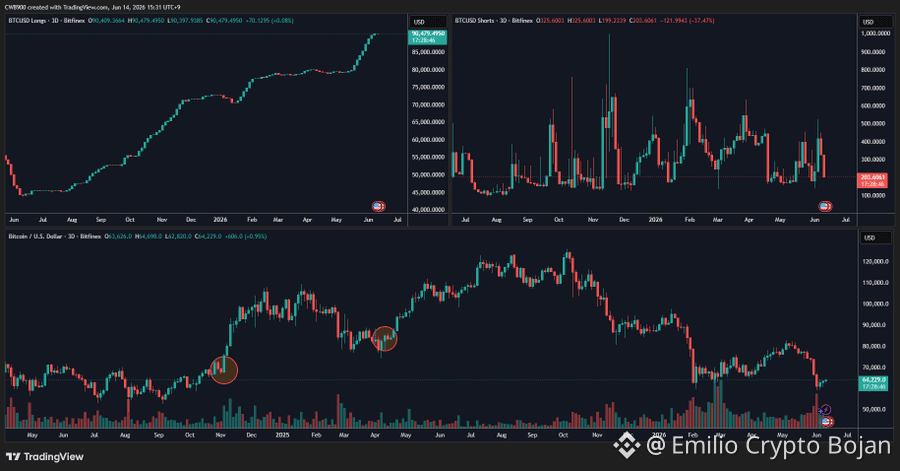
Bitfinex Whales Double Down on $BTC Longs Amid Downtrend Bitfinex whales’ short-term $BTC short positions have returned to baseline, while long positions have increased to 90,479.
Their positioning remains heavily long, with significant accumulation during the recent downtrend.
#BitcoinReboundsTo$64K #ZcashResumesOrchardTransactionsAfterAIAudit #GoldmanMorganEach$100MInSpaceXIPOFees #IndiaFlagsUnreportedCryptoIncome
Bitfinex Whales Double Down on $BTC Longs Amid Downtrend Bitfinex whales’ short-term $BTC short positions have returned to baseline, while long positions have increased to 90,479.
Their positioning remains heavily long, with significant accumulation during the recent downtrend.
#BitcoinReboundsTo$64K #ZcashResumesOrchardTransactionsAfterAIAudit #GoldmanMorganEach$100MInSpaceXIPOFees #IndiaFlagsUnreportedCryptoIncome
Their positioning remains heavily long, with significant accumulation during the recent downtrend.
#BitcoinReboundsTo$64K #ZcashResumesOrchardTransactionsAfterAIAudit #GoldmanMorganEach$100MInSpaceXIPOFees #IndiaFlagsUnreportedCryptoIncome
3
253
·
--
Bullish
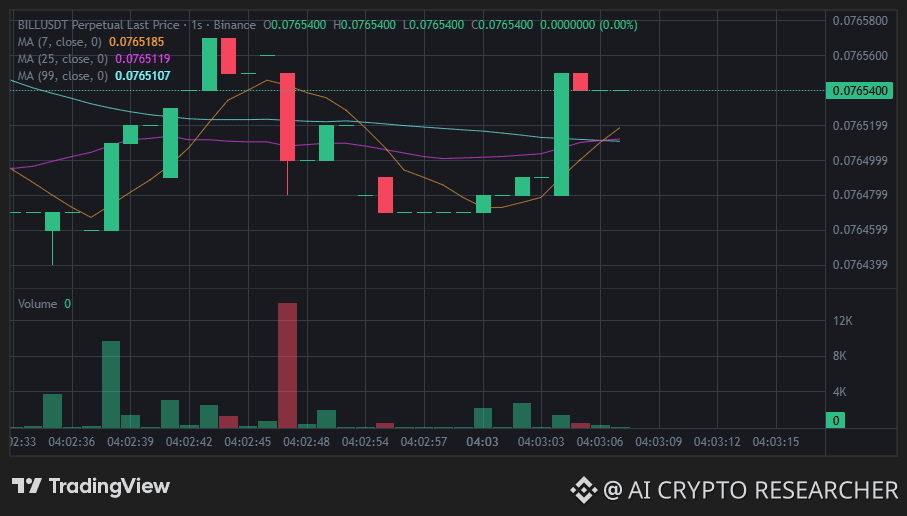
🚀 $BILL
{future}(BILLUSDT)
Quick Long Setup (20x Leverage)
🔥 Entry Range: 0.07604 - 0.0765
🎯 Take Profit 1: 0.0790 (+77% ROI)
🎯 Take Profit 2: 0.0810 (+130% ROI)
🎯 Take Profit 3: 0.0840+ (+209% ROI)
🛑 Stop Loss: 0.0740 (-53% ROI)
⚠️ Note: High leverage trade. Use Isolated Margin and move SL to entry once TP1 hits to lock in a risk-free run.
#BitcoinReboundsTo$64K
#ZcashResumesOrchardTransactionsAfterAIAudit
#RippleLaunchesXRPLAIStarterKit
#GoldmanMorganEach$100MInSpaceXIPOFees #IndiaFlagsUnreportedCryptoIncome
🚀 $BILL
Quick Long Setup (20x Leverage)
🔥 Entry Range: 0.07604 - 0.0765
🎯 Take Profit 1: 0.0790 (+77% ROI)
🎯 Take Profit 2: 0.0810 (+130% ROI)
🎯 Take Profit 3: 0.0840+ (+209% ROI)
🛑 Stop Loss: 0.0740 (-53% ROI)
⚠️ Note: High leverage trade. Use Isolated Margin and move SL to entry once TP1 hits to lock in a risk-free run.
#BitcoinReboundsTo$64K
#ZcashResumesOrchardTransactionsAfterAIAudit
#RippleLaunchesXRPLAIStarterKit
#GoldmanMorganEach$100MInSpaceXIPOFees #IndiaFlagsUnreportedCryptoIncome
Quick Long Setup (20x Leverage)
🔥 Entry Range: 0.07604 - 0.0765
🎯 Take Profit 1: 0.0790 (+77% ROI)
🎯 Take Profit 2: 0.0810 (+130% ROI)
🎯 Take Profit 3: 0.0840+ (+209% ROI)
🛑 Stop Loss: 0.0740 (-53% ROI)
⚠️ Note: High leverage trade. Use Isolated Margin and move SL to entry once TP1 hits to lock in a risk-free run.
#BitcoinReboundsTo$64K
#ZcashResumesOrchardTransactionsAfterAIAudit
#RippleLaunchesXRPLAIStarterKit
#GoldmanMorganEach$100MInSpaceXIPOFees #IndiaFlagsUnreportedCryptoIncome
261

·
--
Article
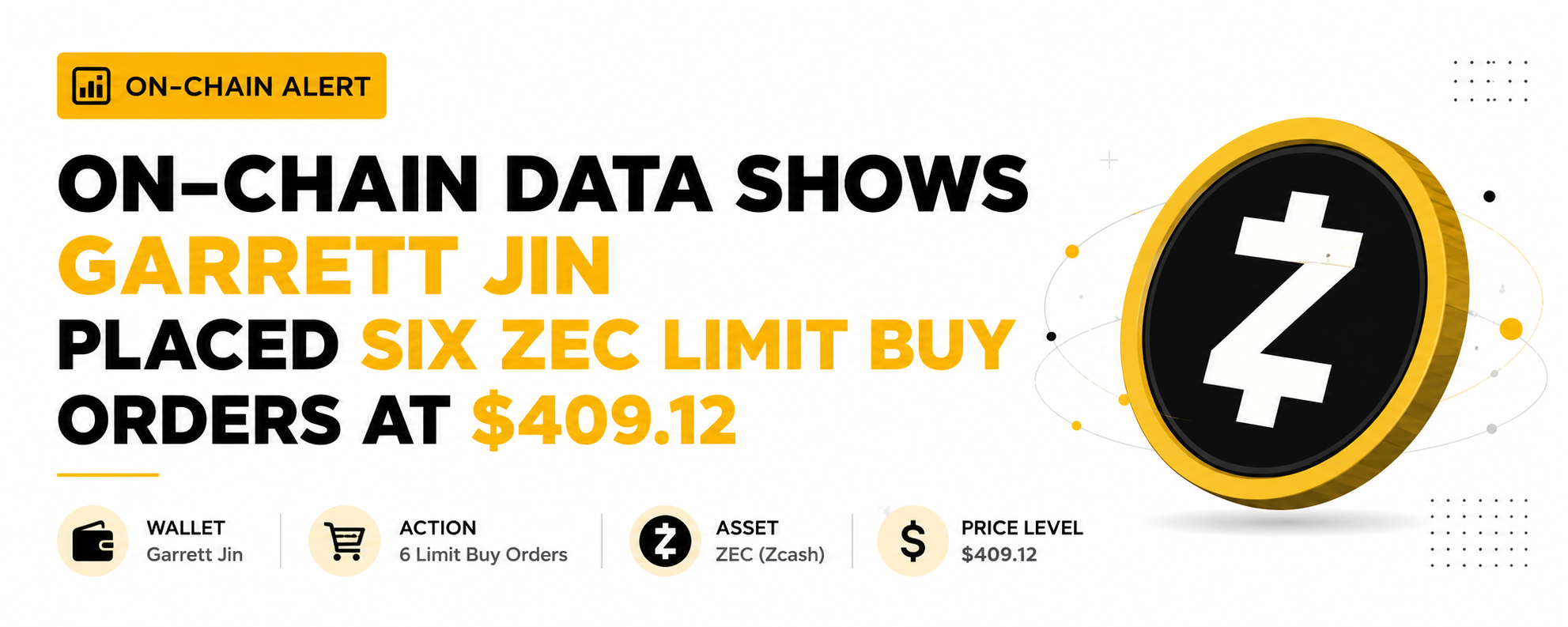
Whale Moves: Garrett Jin Stacks Six ZEC Buy Orders at $409.12🚨 On-Chain Data Shows Garrett Jin Placed Six ZEC Limit Buy Orders at $409.12
Recent on-chain activity has caught the attention of crypto traders after data revealed that Garrett Jin placed six separate limit buy orders for ZEC (Zcash) at the $409.12 price level.
Large limit orders are often closely monitored by market participants because they can provide insight into where influential traders see potential value. The concentration of multiple buy orders at the same price suggests a strong interest in accumulating ZEC around the $409 region.
While the exact motivation behind the orders remains unknown, traders frequently view such activity as a sign of confidence in a specific support zone. If market conditions drive ZEC toward this level, these orders could contribute to increased buying pressure and liquidity.
ZEC has historically attracted attention due to its focus on privacy-focused blockchain technology. As broader market sentiment continues to fluctuate, notable on-chain movements from large market participants remain an important source of information for investors seeking to identify potential opportunities.
However, traders should remember that limit orders do not guarantee execution and can be modified or canceled at any time. On-chain data should be considered alongside technical analysis, market conditions, and risk management strategies.
Key Takeaways
Six ZEC limit buy orders were reportedly placed at $409.12.
• The activity may indicate accumulation interest at that price level.
• Large on-chain orders often attract market attention as potential support signals.
• Investors should conduct their own research before making trading decisions.
$ZEC
{spot}(ZECUSDT)
#ZcashResumesOrchardTransactionsAfterAIAudit #RippleLaunchesXRPLAIStarterKit
#BitcoinReboundsTo$64K
#GoldmanMorganEach$100MInSpaceXIPOFees
Whale Moves: Garrett Jin Stacks Six ZEC Buy Orders at $409.12
🚨 On-Chain Data Shows Garrett Jin Placed Six ZEC Limit Buy Orders at $409.12
Recent on-chain activity has caught the attention of crypto traders after data revealed that Garrett Jin placed six separate limit buy orders for ZEC (Zcash) at the $409.12 price level.
Large limit orders are often closely monitored by market participants because they can provide insight into where influential traders see potential value. The concentration of multiple buy orders at the same price suggests a strong interest in accumulating ZEC around the $409 region.
While the exact motivation behind the orders remains unknown, traders frequently view such activity as a sign of confidence in a specific support zone. If market conditions drive ZEC toward this level, these orders could contribute to increased buying pressure and liquidity.
ZEC has historically attracted attention due to its focus on privacy-focused blockchain technology. As broader market sentiment continues to fluctuate, notable on-chain movements from large market participants remain an important source of information for investors seeking to identify potential opportunities.
However, traders should remember that limit orders do not guarantee execution and can be modified or canceled at any time. On-chain data should be considered alongside technical analysis, market conditions, and risk management strategies.
Key Takeaways
Six ZEC limit buy orders were reportedly placed at $409.12.
• The activity may indicate accumulation interest at that price level.
• Large on-chain orders often attract market attention as potential support signals.
• Investors should conduct their own research before making trading decisions.
$ZEC
#ZcashResumesOrchardTransactionsAfterAIAudit #RippleLaunchesXRPLAIStarterKit
#BitcoinReboundsTo$64K
#GoldmanMorganEach$100MInSpaceXIPOFees
Recent on-chain activity has caught the attention of crypto traders after data revealed that Garrett Jin placed six separate limit buy orders for ZEC (Zcash) at the $409.12 price level.
Large limit orders are often closely monitored by market participants because they can provide insight into where influential traders see potential value. The concentration of multiple buy orders at the same price suggests a strong interest in accumulating ZEC around the $409 region.
While the exact motivation behind the orders remains unknown, traders frequently view such activity as a sign of confidence in a specific support zone. If market conditions drive ZEC toward this level, these orders could contribute to increased buying pressure and liquidity.
ZEC has historically attracted attention due to its focus on privacy-focused blockchain technology. As broader market sentiment continues to fluctuate, notable on-chain movements from large market participants remain an important source of information for investors seeking to identify potential opportunities.
However, traders should remember that limit orders do not guarantee execution and can be modified or canceled at any time. On-chain data should be considered alongside technical analysis, market conditions, and risk management strategies.
Key Takeaways
Six ZEC limit buy orders were reportedly placed at $409.12.
• The activity may indicate accumulation interest at that price level.
• Large on-chain orders often attract market attention as potential support signals.
• Investors should conduct their own research before making trading decisions.
$ZEC
#ZcashResumesOrchardTransactionsAfterAIAudit #RippleLaunchesXRPLAIStarterKit
#BitcoinReboundsTo$64K
#GoldmanMorganEach$100MInSpaceXIPOFees
5
5
605

·
--
Article
Solana (SOL) Network Growth Explained$SOL Network Growth Explained
$SOL has become one of the fastest-growing blockchain ecosystems in the crypto industry. Known for its high transaction speeds and low fees, Solana continues to attract developers, investors, and users across decentralized finance (DeFi), gaming, NFTs, and payments.
Why Solana Is Growing
High-Speed Transactions
One of Solana's biggest advantages is its ability to process thousands of transactions per second. This allows users to transfer assets and interact with applications quickly, even during periods of heavy network activity.
Low Transaction Costs
Compared with many blockchain networks, Solana offers extremely low transaction fees. This makes it attractive for everyday payments, trading, gaming, and decentralized applications.
Expanding DeFi Ecosystem
The Solana ecosystem has seen growth in:
Decentralized exchanges (DEXs) Lending and borrowing platforms Liquid staking protocols Yield-generating applications
As more users participate in DeFi, demand for SOL increases because it is used to pay network fees and interact with applications.
Growing Developer Activity
Developers continue building new projects on Solana due to its performance and scalability. More applications mean more users, creating a positive growth cycle for the ecosystem.
Stablecoin Adoption
Stablecoins play a major role in Solana's growth. Increased usage of stablecoins for payments, transfers, and DeFi activity has boosted network transaction volume and liquidity.
Key Areas Driving Adoption DeFi
Solana has become one of the leading blockchains for decentralized finance, competing with Ethereum (ETH) and other smart-contract platforms.
Gaming
Blockchain gaming projects are increasingly choosing Solana because of its speed and low costs, which improve the user experience.
Payments
Fast settlement times and minimal fees make Solana attractive for payment applications and cross-border transfers.
NFTs
Although NFT market activity has fluctuated, Solana remains an important blockchain for digital collectibles and creator communities.
Challenges to Watch
Despite strong growth, Solana faces several challenges:
⚠️ Competition from Ethereum (ETH), BNB Chain, and other networks. ⚠️ Regulatory uncertainty affecting the broader crypto market. ⚠️ Network reliability remains an area investors continue to monitor.
Long-Term Outlook
If developer activity, DeFi adoption, and stablecoin usage continue to expand, Solana could strengthen its position as one of the leading blockchain ecosystems. Many investors view SOL as a major player in the future of decentralized applications and digital payments.
Conclusion
Solana's growth is being driven by fast transactions, low fees, expanding DeFi activity, increasing developer adoption, and growing stablecoin usage. While challenges remain, the network continues to attract attention as one of the most active ecosystems in crypto.
{spot}(SOLUSDT)
{future}(SOLUSDT)
#SOL #solana #RippleLaunchesXRPLAIStarterKit #GoldmanMorganEach$100MInSpaceXIPOFees
Solana (SOL) Network Growth Explained
$SOL Network Growth Explained
$SOL has become one of the fastest-growing blockchain ecosystems in the crypto industry. Known for its high transaction speeds and low fees, Solana continues to attract developers, investors, and users across decentralized finance (DeFi), gaming, NFTs, and payments.
Why Solana Is Growing
High-Speed Transactions
One of Solana's biggest advantages is its ability to process thousands of transactions per second. This allows users to transfer assets and interact with applications quickly, even during periods of heavy network activity.
Low Transaction Costs
Compared with many blockchain networks, Solana offers extremely low transaction fees. This makes it attractive for everyday payments, trading, gaming, and decentralized applications.
Expanding DeFi Ecosystem
The Solana ecosystem has seen growth in:
Decentralized exchanges (DEXs) Lending and borrowing platforms Liquid staking protocols Yield-generating applications
As more users participate in DeFi, demand for SOL increases because it is used to pay network fees and interact with applications.
Growing Developer Activity
Developers continue building new projects on Solana due to its performance and scalability. More applications mean more users, creating a positive growth cycle for the ecosystem.
Stablecoin Adoption
Stablecoins play a major role in Solana's growth. Increased usage of stablecoins for payments, transfers, and DeFi activity has boosted network transaction volume and liquidity.
Key Areas Driving Adoption DeFi
Solana has become one of the leading blockchains for decentralized finance, competing with Ethereum (ETH) and other smart-contract platforms.
Gaming
Blockchain gaming projects are increasingly choosing Solana because of its speed and low costs, which improve the user experience.
Payments
Fast settlement times and minimal fees make Solana attractive for payment applications and cross-border transfers.
NFTs
Although NFT market activity has fluctuated, Solana remains an important blockchain for digital collectibles and creator communities.
Challenges to Watch
Despite strong growth, Solana faces several challenges:
⚠️ Competition from Ethereum (ETH), BNB Chain, and other networks. ⚠️ Regulatory uncertainty affecting the broader crypto market. ⚠️ Network reliability remains an area investors continue to monitor.
Long-Term Outlook
If developer activity, DeFi adoption, and stablecoin usage continue to expand, Solana could strengthen its position as one of the leading blockchain ecosystems. Many investors view SOL as a major player in the future of decentralized applications and digital payments.
Conclusion
Solana's growth is being driven by fast transactions, low fees, expanding DeFi activity, increasing developer adoption, and growing stablecoin usage. While challenges remain, the network continues to attract attention as one of the most active ecosystems in crypto.
#SOL #solana #RippleLaunchesXRPLAIStarterKit #GoldmanMorganEach$100MInSpaceXIPOFees
$SOL has become one of the fastest-growing blockchain ecosystems in the crypto industry. Known for its high transaction speeds and low fees, Solana continues to attract developers, investors, and users across decentralized finance (DeFi), gaming, NFTs, and payments.
Why Solana Is Growing
High-Speed Transactions
One of Solana's biggest advantages is its ability to process thousands of transactions per second. This allows users to transfer assets and interact with applications quickly, even during periods of heavy network activity.
Low Transaction Costs
Compared with many blockchain networks, Solana offers extremely low transaction fees. This makes it attractive for everyday payments, trading, gaming, and decentralized applications.
Expanding DeFi Ecosystem
The Solana ecosystem has seen growth in:
Decentralized exchanges (DEXs) Lending and borrowing platforms Liquid staking protocols Yield-generating applications
As more users participate in DeFi, demand for SOL increases because it is used to pay network fees and interact with applications.
Growing Developer Activity
Developers continue building new projects on Solana due to its performance and scalability. More applications mean more users, creating a positive growth cycle for the ecosystem.
Stablecoin Adoption
Stablecoins play a major role in Solana's growth. Increased usage of stablecoins for payments, transfers, and DeFi activity has boosted network transaction volume and liquidity.
Key Areas Driving Adoption DeFi
Solana has become one of the leading blockchains for decentralized finance, competing with Ethereum (ETH) and other smart-contract platforms.
Gaming
Blockchain gaming projects are increasingly choosing Solana because of its speed and low costs, which improve the user experience.
Payments
Fast settlement times and minimal fees make Solana attractive for payment applications and cross-border transfers.
NFTs
Although NFT market activity has fluctuated, Solana remains an important blockchain for digital collectibles and creator communities.
Challenges to Watch
Despite strong growth, Solana faces several challenges:
⚠️ Competition from Ethereum (ETH), BNB Chain, and other networks. ⚠️ Regulatory uncertainty affecting the broader crypto market. ⚠️ Network reliability remains an area investors continue to monitor.
Long-Term Outlook
If developer activity, DeFi adoption, and stablecoin usage continue to expand, Solana could strengthen its position as one of the leading blockchain ecosystems. Many investors view SOL as a major player in the future of decentralized applications and digital payments.
Conclusion
Solana's growth is being driven by fast transactions, low fees, expanding DeFi activity, increasing developer adoption, and growing stablecoin usage. While challenges remain, the network continues to attract attention as one of the most active ecosystems in crypto.
#SOL #solana #RippleLaunchesXRPLAIStarterKit #GoldmanMorganEach$100MInSpaceXIPOFees
77

·
--
Bearish
## Ripple Bridges Artificial Intelligence and Web3 Commerce
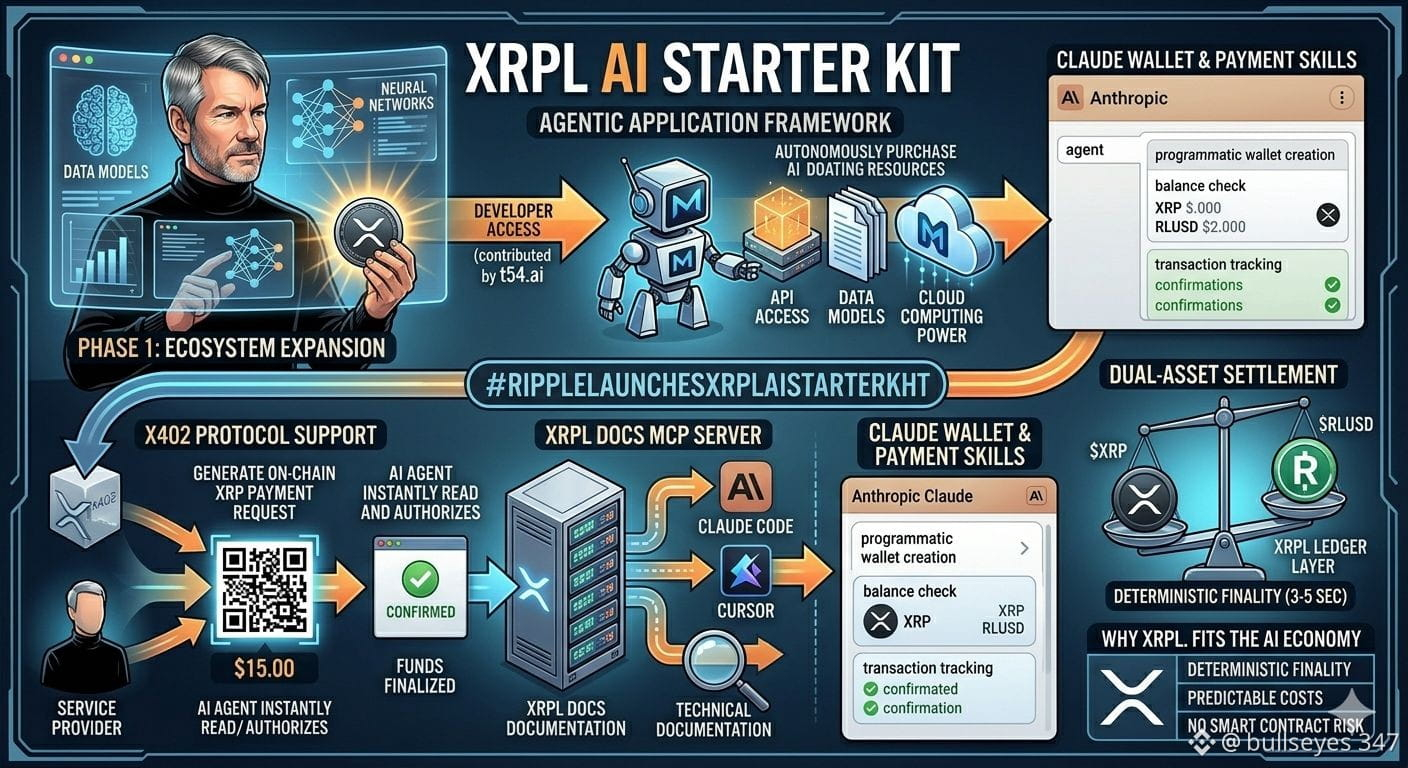
The trending hashtag **#RippleLaunchesXRPLAIStarterKit** highlights Phase 1 of Ripple's ecosystem expansion: a dedicated framework enabling developers to build "agentic" payment applications on the XRP Ledger (XRPL). As autonomous AI agents increasingly require resources—such as API access, data models, or computing power—this toolkit gives them the necessary plumbing to complete transactions seamlessly without a human-in-the-loop.
### Core Technical Architecture
Contributed by developer partner *t54.ai*, the initial kit introduces immediately functional tools to connect large language models (LLMs) to the blockchain:
* **X402 Protocol Support:** Integrates the X402 payment standard, allowing online services to generate real-time billing requests that an AI agent can read, authorize, and settle on-chain.
* **XRPL Docs MCP Server:** A Model Context Protocol server that links AI systems directly to XRPL documentation, enhancing code generation accuracy in platforms like Claude Code or Cursor.
* **Claude Wallet Skills:** Pre-configured skills enabling Anthropic's Claude to independently handle programmatic wallet creation, balance checks, and transaction tracking.
```
┌──► XRP (High-Speed Native Asset)
│
[ XRPL AI STARTER KIT ]
│
└──► RLUSD (Dollar-Backed Stablecoin)
```
### Dual-Asset Settlement
The kit enables dual-asset settlement utilizing high-speed native XRP and the dollar-backed stablecoin RLUSD. Transactions rely on the XRPL's native protocol features, ensuring deterministic finality within 3 to 5 seconds and predictable low fees. This structure eliminates volatile gas fee auctions, giving AI agents clear visibility to perform budget accounting prior to transacting.
$MUB
{spot}(MUBUSDT)
$ADA
{future}(ADAUSDT)
$TAO
{future}(TAOUSDT)
#BitcoinReboundsTo$64K
#ZcashResumesOrchardTransactionsAfterAIAudit
#GoldmanMorganEach$100MInSpaceXIPOFees
## Ripple Bridges Artificial Intelligence and Web3 Commerce
The trending hashtag **#RippleLaunchesXRPLAIStarterKit** highlights Phase 1 of Ripple's ecosystem expansion: a dedicated framework enabling developers to build "agentic" payment applications on the XRP Ledger (XRPL). As autonomous AI agents increasingly require resources—such as API access, data models, or computing power—this toolkit gives them the necessary plumbing to complete transactions seamlessly without a human-in-the-loop.
### Core Technical Architecture
Contributed by developer partner *t54.ai*, the initial kit introduces immediately functional tools to connect large language models (LLMs) to the blockchain:
* **X402 Protocol Support:** Integrates the X402 payment standard, allowing online services to generate real-time billing requests that an AI agent can read, authorize, and settle on-chain.
* **XRPL Docs MCP Server:** A Model Context Protocol server that links AI systems directly to XRPL documentation, enhancing code generation accuracy in platforms like Claude Code or Cursor.
* **Claude Wallet Skills:** Pre-configured skills enabling Anthropic's Claude to independently handle programmatic wallet creation, balance checks, and transaction tracking.
```
┌──► XRP (High-Speed Native Asset)
│
[ XRPL AI STARTER KIT ]
│
└──► RLUSD (Dollar-Backed Stablecoin)
```
### Dual-Asset Settlement
The kit enables dual-asset settlement utilizing high-speed native XRP and the dollar-backed stablecoin RLUSD. Transactions rely on the XRPL's native protocol features, ensuring deterministic finality within 3 to 5 seconds and predictable low fees. This structure eliminates volatile gas fee auctions, giving AI agents clear visibility to perform budget accounting prior to transacting.
$MUB
$ADA
$TAO
#BitcoinReboundsTo$64K
#ZcashResumesOrchardTransactionsAfterAIAudit
#GoldmanMorganEach$100MInSpaceXIPOFees
The trending hashtag **#RippleLaunchesXRPLAIStarterKit** highlights Phase 1 of Ripple's ecosystem expansion: a dedicated framework enabling developers to build "agentic" payment applications on the XRP Ledger (XRPL). As autonomous AI agents increasingly require resources—such as API access, data models, or computing power—this toolkit gives them the necessary plumbing to complete transactions seamlessly without a human-in-the-loop.
### Core Technical Architecture
Contributed by developer partner *t54.ai*, the initial kit introduces immediately functional tools to connect large language models (LLMs) to the blockchain:
* **X402 Protocol Support:** Integrates the X402 payment standard, allowing online services to generate real-time billing requests that an AI agent can read, authorize, and settle on-chain.
* **XRPL Docs MCP Server:** A Model Context Protocol server that links AI systems directly to XRPL documentation, enhancing code generation accuracy in platforms like Claude Code or Cursor.
* **Claude Wallet Skills:** Pre-configured skills enabling Anthropic's Claude to independently handle programmatic wallet creation, balance checks, and transaction tracking.
```
┌──► XRP (High-Speed Native Asset)
│
[ XRPL AI STARTER KIT ]
│
└──► RLUSD (Dollar-Backed Stablecoin)
```
### Dual-Asset Settlement
The kit enables dual-asset settlement utilizing high-speed native XRP and the dollar-backed stablecoin RLUSD. Transactions rely on the XRPL's native protocol features, ensuring deterministic finality within 3 to 5 seconds and predictable low fees. This structure eliminates volatile gas fee auctions, giving AI agents clear visibility to perform budget accounting prior to transacting.
$MUB
$ADA
$TAO
#BitcoinReboundsTo$64K
#ZcashResumesOrchardTransactionsAfterAIAudit
#GoldmanMorganEach$100MInSpaceXIPOFees
144
·
--
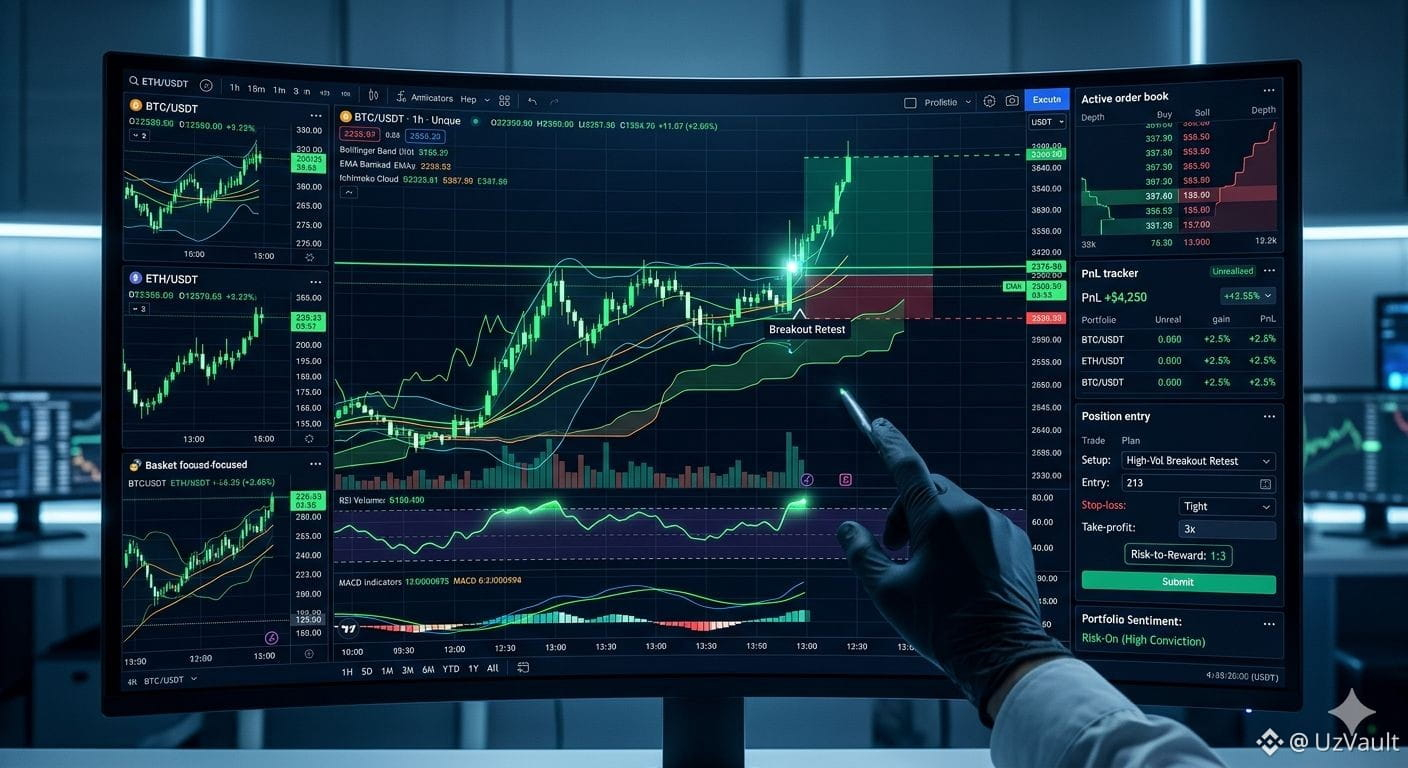
🔥 Want to make money in this market? Stop watching from the sidelines.
Right now, the market is presenting massive opportunities for active traders. Volatility is high, trends are forming fast, and the next big move is already loading on the charts.
How to step up your game today:
⚡ Spot the Trends: Don't chase pumps. Look for high-volume breakouts on top assets and wait for a clean retest.
🛡️ Manage Your Risk: A real trader always protects their capital. Never enter a position without a clear stop-loss and a tight risk-to-reward ratio.
🧠 Master the Psychology: Trade the chart, not your emotions. FOMO loses money; patience makes it.
The charts are moving. Stop guessing, start analyzing, and execute your plan.
#TradingTips" #RiskManagement #BitcoinReboundsTo$64K #ZcashResumesOrchardTransactionsAfterAIAudit #GoldmanMorganEach$100MInSpaceXIPOFees
🔥 Want to make money in this market? Stop watching from the sidelines.
Right now, the market is presenting massive opportunities for active traders. Volatility is high, trends are forming fast, and the next big move is already loading on the charts.
How to step up your game today:
⚡ Spot the Trends: Don't chase pumps. Look for high-volume breakouts on top assets and wait for a clean retest.
🛡️ Manage Your Risk: A real trader always protects their capital. Never enter a position without a clear stop-loss and a tight risk-to-reward ratio.
🧠 Master the Psychology: Trade the chart, not your emotions. FOMO loses money; patience makes it.
The charts are moving. Stop guessing, start analyzing, and execute your plan.
#TradingTips" #RiskManagement #BitcoinReboundsTo$64K #ZcashResumesOrchardTransactionsAfterAIAudit #GoldmanMorganEach$100MInSpaceXIPOFees
Right now, the market is presenting massive opportunities for active traders. Volatility is high, trends are forming fast, and the next big move is already loading on the charts.
How to step up your game today:
⚡ Spot the Trends: Don't chase pumps. Look for high-volume breakouts on top assets and wait for a clean retest.
🛡️ Manage Your Risk: A real trader always protects their capital. Never enter a position without a clear stop-loss and a tight risk-to-reward ratio.
🧠 Master the Psychology: Trade the chart, not your emotions. FOMO loses money; patience makes it.
The charts are moving. Stop guessing, start analyzing, and execute your plan.
#TradingTips" #RiskManagement #BitcoinReboundsTo$64K #ZcashResumesOrchardTransactionsAfterAIAudit #GoldmanMorganEach$100MInSpaceXIPOFees
1
239

·
--
Bullish
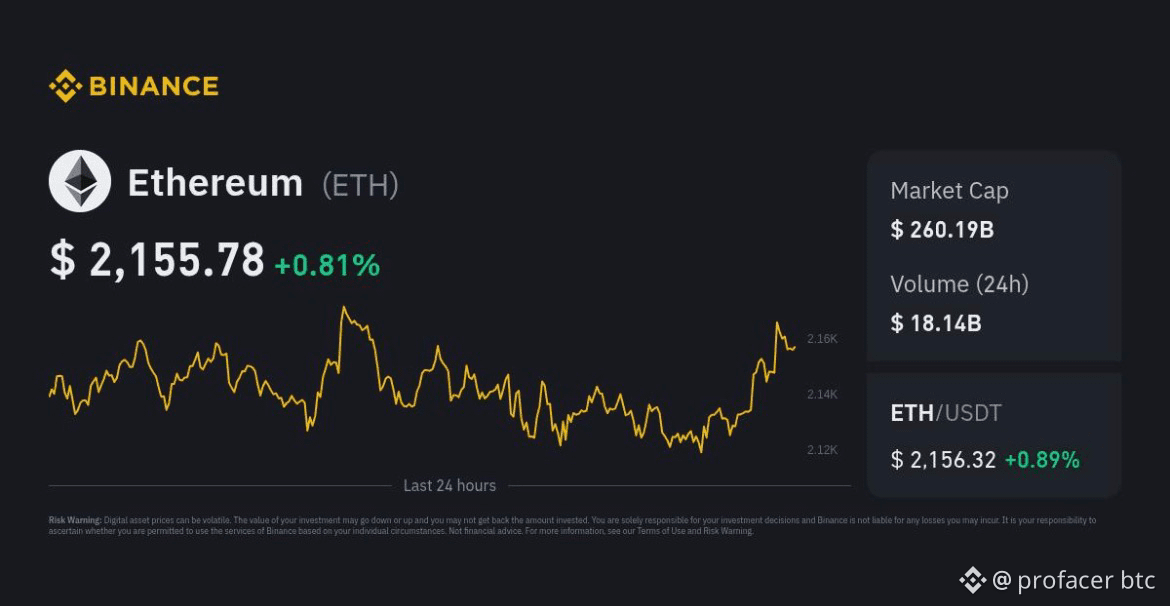
♦ Ethereum ($ETH )
* Price: Around $1,670
* Trend: 🟢 Neutral to Bullish
* Following Bitcoin’s recovery while maintaining strong ecosystem activity.
#BitcoinReboundsTo$64K #RippleLaunchesXRPLAIStarterKit #PhilippinesBansPrivacyCoinsOnLicensedExchanges #RippleLaunchesXRPLAIStarterKit #GoldmanMorganEach$100MInSpaceXIPOFees
{spot}(ETHUSDT)
♦ Ethereum ($ETH )
* Price: Around $1,670
* Trend: 🟢 Neutral to Bullish
* Following Bitcoin’s recovery while maintaining strong ecosystem activity.
#BitcoinReboundsTo$64K #RippleLaunchesXRPLAIStarterKit #PhilippinesBansPrivacyCoinsOnLicensedExchanges #RippleLaunchesXRPLAIStarterKit #GoldmanMorganEach$100MInSpaceXIPOFees
* Price: Around $1,670
* Trend: 🟢 Neutral to Bullish
* Following Bitcoin’s recovery while maintaining strong ecosystem activity.
#BitcoinReboundsTo$64K #RippleLaunchesXRPLAIStarterKit #PhilippinesBansPrivacyCoinsOnLicensedExchanges #RippleLaunchesXRPLAIStarterKit #GoldmanMorganEach$100MInSpaceXIPOFees
64

·
--
Article
June 2026 Crypto Crash Was Actually Four Crashes at Once — Here's the Full Storypeople think they understand what happened to crypto in June 2026. Most people are only seeing one piece of a much bigger picture.
Bitcoin fell from above $80,000 to below $62,000 as four separate pressures converged simultaneously: a hawkish Fed removed expected liquidity support, Iran conflict geopolitical tensions accelerated the selloff, Strategy's 32 BTC sale was small financially but damaged sentiment in an already fragile market, and a record 13-day ETF outflow streak removed institutional demand as leveraged positions were liquidated. Investing News Network
Each of these on its own would have been manageable. All four hitting at exactly the same moment was not.
The spot Bitcoin ETF complex recorded the largest withdrawal event of its existence — $3.4 billion in net outflows during a single week in early June 2026, the biggest weekly exodus since the products launched in January 2024. ETF flows have become the dominant driver of Bitcoin's price this cycle — far more than retail sentiment or on-chain metrics — because the funds became the marginal buyer on the way up and are now the marginal seller on the way down. CoinMarketCap
The important distinction from 2022: the June 2026 crash is primarily a macro-driven event that has affected risk assets across the board. It is not a crisis of confidence in the cryptocurrency ecosystem itself. The collapse of Terra/Luna, the bankruptcy of Three Arrows Capital, and the fraud at FTX all represented failures of crypto-native institutions. June 2026 is different — the technology is fine. The macro is the problem. CoinDesk
Macro problems resolve when macro changes. And macro is starting to change. Iran deal signed. Oil falling. Goldman says no hikes, just a prolonged hold. Standard Chartered says winter is over.
The crash had four causes. The recovery will have its own set of four triggers. We may already be living through two of them.
DYOR#USDraftMemoWouldUnfreeze$25BIranAssets #RippleLaunchesXRPLAIStarterKit #GoldmanMorganEach$100MInSpaceXIPOFees $BTC
{spot}(BTCUSDT)
$SPCXB
{spot}(SPCXBUSDT)
June 2026 Crypto Crash Was Actually Four Crashes at Once — Here's the Full Story
people think they understand what happened to crypto in June 2026. Most people are only seeing one piece of a much bigger picture.
Bitcoin fell from above $80,000 to below $62,000 as four separate pressures converged simultaneously: a hawkish Fed removed expected liquidity support, Iran conflict geopolitical tensions accelerated the selloff, Strategy's 32 BTC sale was small financially but damaged sentiment in an already fragile market, and a record 13-day ETF outflow streak removed institutional demand as leveraged positions were liquidated. Investing News Network
Each of these on its own would have been manageable. All four hitting at exactly the same moment was not.
The spot Bitcoin ETF complex recorded the largest withdrawal event of its existence — $3.4 billion in net outflows during a single week in early June 2026, the biggest weekly exodus since the products launched in January 2024. ETF flows have become the dominant driver of Bitcoin's price this cycle — far more than retail sentiment or on-chain metrics — because the funds became the marginal buyer on the way up and are now the marginal seller on the way down. CoinMarketCap
The important distinction from 2022: the June 2026 crash is primarily a macro-driven event that has affected risk assets across the board. It is not a crisis of confidence in the cryptocurrency ecosystem itself. The collapse of Terra/Luna, the bankruptcy of Three Arrows Capital, and the fraud at FTX all represented failures of crypto-native institutions. June 2026 is different — the technology is fine. The macro is the problem. CoinDesk
Macro problems resolve when macro changes. And macro is starting to change. Iran deal signed. Oil falling. Goldman says no hikes, just a prolonged hold. Standard Chartered says winter is over.
The crash had four causes. The recovery will have its own set of four triggers. We may already be living through two of them.
DYOR#USDraftMemoWouldUnfreeze$25BIranAssets #RippleLaunchesXRPLAIStarterKit #GoldmanMorganEach$100MInSpaceXIPOFees $BTC
$SPCXB
Bitcoin fell from above $80,000 to below $62,000 as four separate pressures converged simultaneously: a hawkish Fed removed expected liquidity support, Iran conflict geopolitical tensions accelerated the selloff, Strategy's 32 BTC sale was small financially but damaged sentiment in an already fragile market, and a record 13-day ETF outflow streak removed institutional demand as leveraged positions were liquidated. Investing News Network
Each of these on its own would have been manageable. All four hitting at exactly the same moment was not.
The spot Bitcoin ETF complex recorded the largest withdrawal event of its existence — $3.4 billion in net outflows during a single week in early June 2026, the biggest weekly exodus since the products launched in January 2024. ETF flows have become the dominant driver of Bitcoin's price this cycle — far more than retail sentiment or on-chain metrics — because the funds became the marginal buyer on the way up and are now the marginal seller on the way down. CoinMarketCap
The important distinction from 2022: the June 2026 crash is primarily a macro-driven event that has affected risk assets across the board. It is not a crisis of confidence in the cryptocurrency ecosystem itself. The collapse of Terra/Luna, the bankruptcy of Three Arrows Capital, and the fraud at FTX all represented failures of crypto-native institutions. June 2026 is different — the technology is fine. The macro is the problem. CoinDesk
Macro problems resolve when macro changes. And macro is starting to change. Iran deal signed. Oil falling. Goldman says no hikes, just a prolonged hold. Standard Chartered says winter is over.
The crash had four causes. The recovery will have its own set of four triggers. We may already be living through two of them.
DYOR#USDraftMemoWouldUnfreeze$25BIranAssets #RippleLaunchesXRPLAIStarterKit #GoldmanMorganEach$100MInSpaceXIPOFees $BTC
$SPCXB
65

Article
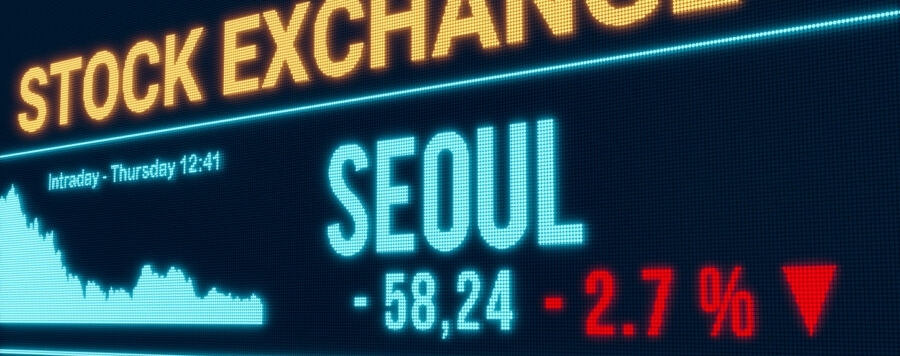
Is South Korea’s Stock Market Becoming a Casino?South Korea’s stock market is experiencing an unprecedented surge in leveraged trading, raising concerns among investors and analysts about the sustainability of the rally.
The total market capitalization of ETFs listed on the Korea Exchange has climbed to a record 514.4 trillion won ($339 billion), marking a gain of more than 70% since the beginning of the year. Much of this growth has been fueled by leveraged products linked to semiconductor giants Samsung and SK Hynix.
One of the most striking examples is the CSOP SK Hynix Leveraged ETF, which reportedly amassed nearly $10 billion in assets under management by late May, making it the largest single-stock leveraged ETF in the world. At the same time, margin debt on the Kospi Index has surged to approximately 27.8 trillion won ($18.3 billion), up more than 60% year-to-date.
The enthusiasm is understandable. Samsung and SK Hynix have been among the strongest performers in global equity markets, benefiting from booming demand for AI infrastructure, memory chips, and data-center expansion. Their shares have skyrocketed this year, pushing both companies into the exclusive trillion-dollar market-cap club.
However, the growing concentration of capital in just a handful of stocks is creating a significant risk. Samsung and SK Hynix now represent nearly half of the Kospi Index, meaning the broader market’s performance is increasingly dependent on the fortunes of only two companies.
This concentration becomes even more dangerous when combined with leverage. Leveraged ETFs and margin positions magnify gains during rallies, but they can also accelerate losses during downturns. If either Samsung or SK Hynix experiences a sharp correction, forced liquidations could cascade through leveraged positions, creating a self-reinforcing selloff that impacts the entire market.
History has shown that markets driven by leverage often appear unstoppable until sentiment shifts. While South Korea’s semiconductor champions continue to benefit from strong fundamentals, the rapid expansion of leveraged exposure suggests that speculation is becoming a major force behind recent gains.
For now, bullish momentum remains intact. But when leverage, concentration, and investor optimism reach extreme levels simultaneously, even a small spark can trigger a much larger market reaction.
The question investors should be asking is not whether leverage can push prices higher—it clearly can. The real question is what happens when the trade starts moving in the opposite direction.
$EWY
$SKHYNIX
{future}(SKHYNIXUSDT)
#BitcoinReboundsTo$64K #ZcashResumesOrchardTransactionsAfterAIAudit #GoldmanMorganEach$100MInSpaceXIPOFees #IndiaFlagsUnreportedCryptoIncome
Is South Korea’s Stock Market Becoming a Casino?
South Korea’s stock market is experiencing an unprecedented surge in leveraged trading, raising concerns among investors and analysts about the sustainability of the rally.
The total market capitalization of ETFs listed on the Korea Exchange has climbed to a record 514.4 trillion won ($339 billion), marking a gain of more than 70% since the beginning of the year. Much of this growth has been fueled by leveraged products linked to semiconductor giants Samsung and SK Hynix.
One of the most striking examples is the CSOP SK Hynix Leveraged ETF, which reportedly amassed nearly $10 billion in assets under management by late May, making it the largest single-stock leveraged ETF in the world. At the same time, margin debt on the Kospi Index has surged to approximately 27.8 trillion won ($18.3 billion), up more than 60% year-to-date.
The enthusiasm is understandable. Samsung and SK Hynix have been among the strongest performers in global equity markets, benefiting from booming demand for AI infrastructure, memory chips, and data-center expansion. Their shares have skyrocketed this year, pushing both companies into the exclusive trillion-dollar market-cap club.
However, the growing concentration of capital in just a handful of stocks is creating a significant risk. Samsung and SK Hynix now represent nearly half of the Kospi Index, meaning the broader market’s performance is increasingly dependent on the fortunes of only two companies.
This concentration becomes even more dangerous when combined with leverage. Leveraged ETFs and margin positions magnify gains during rallies, but they can also accelerate losses during downturns. If either Samsung or SK Hynix experiences a sharp correction, forced liquidations could cascade through leveraged positions, creating a self-reinforcing selloff that impacts the entire market.
History has shown that markets driven by leverage often appear unstoppable until sentiment shifts. While South Korea’s semiconductor champions continue to benefit from strong fundamentals, the rapid expansion of leveraged exposure suggests that speculation is becoming a major force behind recent gains.
For now, bullish momentum remains intact. But when leverage, concentration, and investor optimism reach extreme levels simultaneously, even a small spark can trigger a much larger market reaction.
The question investors should be asking is not whether leverage can push prices higher—it clearly can. The real question is what happens when the trade starts moving in the opposite direction.
$EWY
$SKHYNIX
#BitcoinReboundsTo$64K #ZcashResumesOrchardTransactionsAfterAIAudit #GoldmanMorganEach$100MInSpaceXIPOFees #IndiaFlagsUnreportedCryptoIncome
The total market capitalization of ETFs listed on the Korea Exchange has climbed to a record 514.4 trillion won ($339 billion), marking a gain of more than 70% since the beginning of the year. Much of this growth has been fueled by leveraged products linked to semiconductor giants Samsung and SK Hynix.
One of the most striking examples is the CSOP SK Hynix Leveraged ETF, which reportedly amassed nearly $10 billion in assets under management by late May, making it the largest single-stock leveraged ETF in the world. At the same time, margin debt on the Kospi Index has surged to approximately 27.8 trillion won ($18.3 billion), up more than 60% year-to-date.
The enthusiasm is understandable. Samsung and SK Hynix have been among the strongest performers in global equity markets, benefiting from booming demand for AI infrastructure, memory chips, and data-center expansion. Their shares have skyrocketed this year, pushing both companies into the exclusive trillion-dollar market-cap club.
However, the growing concentration of capital in just a handful of stocks is creating a significant risk. Samsung and SK Hynix now represent nearly half of the Kospi Index, meaning the broader market’s performance is increasingly dependent on the fortunes of only two companies.
This concentration becomes even more dangerous when combined with leverage. Leveraged ETFs and margin positions magnify gains during rallies, but they can also accelerate losses during downturns. If either Samsung or SK Hynix experiences a sharp correction, forced liquidations could cascade through leveraged positions, creating a self-reinforcing selloff that impacts the entire market.
History has shown that markets driven by leverage often appear unstoppable until sentiment shifts. While South Korea’s semiconductor champions continue to benefit from strong fundamentals, the rapid expansion of leveraged exposure suggests that speculation is becoming a major force behind recent gains.
For now, bullish momentum remains intact. But when leverage, concentration, and investor optimism reach extreme levels simultaneously, even a small spark can trigger a much larger market reaction.
The question investors should be asking is not whether leverage can push prices higher—it clearly can. The real question is what happens when the trade starts moving in the opposite direction.
$EWY
$SKHYNIX
#BitcoinReboundsTo$64K #ZcashResumesOrchardTransactionsAfterAIAudit #GoldmanMorganEach$100MInSpaceXIPOFees #IndiaFlagsUnreportedCryptoIncome
1
667

·
--
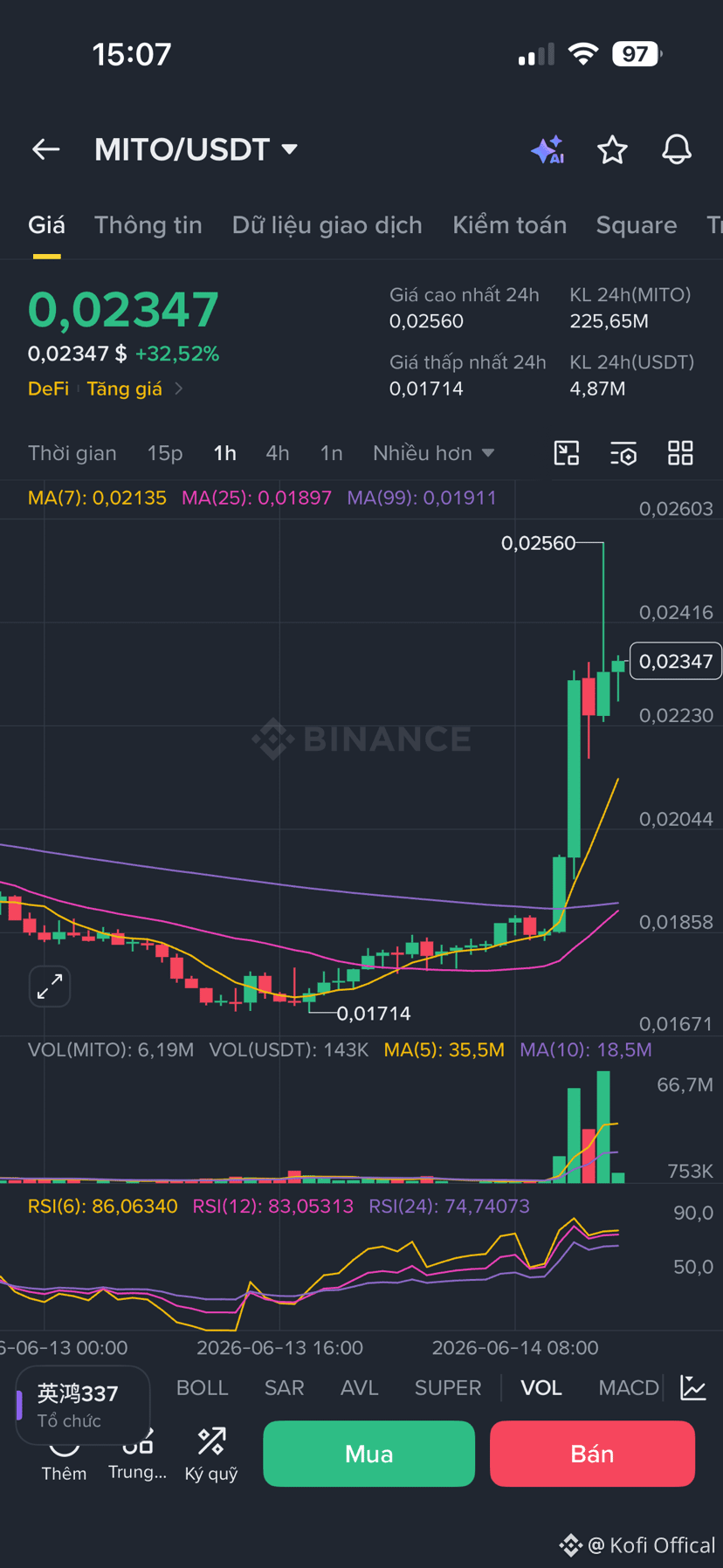
$MITO Trade: LONG 🟢
Entry: 0.0228 - 0.0235
TP1: 0.0256
TP2: 0.0280
TP3: 0.0310
SL: 0.0210
MITO is maintaining a strong bullish trend on the 1H chart after breaking out from the accumulation zone around 0.0185 USD. The price is currently above MA7, MA25, and MA99, confirming that the short-term bullish structure is still intact. The trading volume has surged, indicating that new money is entering the market, supporting the current uptrend. However, the RSI is in the overbought territory above 80, so short-term pullbacks are completely normal. If the price holds the support zone of 0.0228–0.0230, the bullish trend could continue targeting 0.0256 and beyond to 0.0280 USD. Prioritize the Long strategy following the trend, with strict risk management using a stop-loss below 0.0210 USD.
{future}(MITOUSDT)
$SYN
{future}(SYNUSDT)
$MEGA
{future}(MEGAUSDT)
#KOFI #CreatorpadVN #45NgayTuDoTaiChinh #BitcoinReboundsTo$64K #GoldmanMorganEach$100MInSpaceXIPOFees
$MITO Trade: LONG 🟢
Entry: 0.0228 - 0.0235
TP1: 0.0256
TP2: 0.0280
TP3: 0.0310
SL: 0.0210
MITO is maintaining a strong bullish trend on the 1H chart after breaking out from the accumulation zone around 0.0185 USD. The price is currently above MA7, MA25, and MA99, confirming that the short-term bullish structure is still intact. The trading volume has surged, indicating that new money is entering the market, supporting the current uptrend. However, the RSI is in the overbought territory above 80, so short-term pullbacks are completely normal. If the price holds the support zone of 0.0228–0.0230, the bullish trend could continue targeting 0.0256 and beyond to 0.0280 USD. Prioritize the Long strategy following the trend, with strict risk management using a stop-loss below 0.0210 USD.
$SYN
$MEGA
#KOFI #CreatorpadVN #45NgayTuDoTaiChinh #BitcoinReboundsTo$64K #GoldmanMorganEach$100MInSpaceXIPOFees
Entry: 0.0228 - 0.0235
TP1: 0.0256
TP2: 0.0280
TP3: 0.0310
SL: 0.0210
MITO is maintaining a strong bullish trend on the 1H chart after breaking out from the accumulation zone around 0.0185 USD. The price is currently above MA7, MA25, and MA99, confirming that the short-term bullish structure is still intact. The trading volume has surged, indicating that new money is entering the market, supporting the current uptrend. However, the RSI is in the overbought territory above 80, so short-term pullbacks are completely normal. If the price holds the support zone of 0.0228–0.0230, the bullish trend could continue targeting 0.0256 and beyond to 0.0280 USD. Prioritize the Long strategy following the trend, with strict risk management using a stop-loss below 0.0210 USD.
$SYN
$MEGA
#KOFI #CreatorpadVN #45NgayTuDoTaiChinh #BitcoinReboundsTo$64K #GoldmanMorganEach$100MInSpaceXIPOFees
2
1.3k


·
--

Article
UNI: The Long-Term Giant Most Investors Are Still UnderestimatingThe cryptocurrency market has never lacked innovation, but very few projects have managed to maintain relevance through multiple market cycles. While investors often chase the newest narratives, some of the strongest long-term opportunities are hiding in plain sight. One project that continues to stand out is Uniswap (UNI).
Despite being one of the most influential protocols in decentralized finance (DeFi), UNI is often overlooked when discussions shift toward artificial intelligence tokens, meme coins, or emerging blockchain ecosystems. Yet the fundamental role Uniswap plays within the crypto economy suggests that many investors may still be underestimating its long-term potential.
Why Uniswap Matters
Uniswap transformed cryptocurrency trading by introducing an automated market maker (AMM) model that allows users to trade digital assets directly from their wallets without relying on centralized intermediaries.
Before decentralized exchanges became mainstream, most traders depended on centralized platforms to buy and sell crypto assets. Uniswap changed that dynamic by enabling permissionless trading, opening the door for countless new tokens and liquidity providers.
Today, Uniswap remains one of the largest and most recognized decentralized exchanges in the industry. Its protocol has processed billions of dollars in trading volume and has become a core piece of DeFi infrastructure.
The significance of this position cannot be ignored. In traditional finance, infrastructure providers often become some of the most valuable businesses because they facilitate activity rather than compete within a single niche. Uniswap occupies a similar role within decentralized finance.
The Network Effect Advantage
One of the strongest arguments for UNI's long-term value is the network effect.
As more traders use Uniswap, liquidity improves. Better liquidity attracts additional traders, developers, and projects. This creates a cycle that strengthens the ecosystem over time.
Network effects are difficult for competitors to replicate. While new decentralized exchanges appear regularly, attracting liquidity at scale remains a major challenge. Traders naturally gravitate toward platforms where execution is efficient and liquidity is deep.
This competitive moat becomes increasingly important as the cryptocurrency market matures.
DeFi Adoption Is Still Early
Many investors assume decentralized finance has already experienced its peak growth. However, global adoption metrics suggest otherwise.
Traditional financial systems still dominate lending, borrowing, trading, and asset management worldwide. DeFi currently represents only a small fraction of the broader financial industry.
If decentralized financial services continue expanding over the next decade, protocols that already possess strong market positions could benefit significantly. Uniswap is among the most established names in this sector.
The long-term thesis does not necessarily depend on short-term speculation. Instead, it relies on the possibility that blockchain-based financial infrastructure becomes increasingly integrated into global markets.
Revenue Generation Potential
A common criticism of crypto projects is the lack of sustainable economic activity. Uniswap differs because real users generate real trading volume.
Every market cycle introduces new participants, and increased activity often leads to higher protocol usage. As decentralized trading expands, the economic value created by the ecosystem may also grow.
Investors frequently focus on price action while overlooking the importance of usage metrics. Over long periods, protocols that consistently attract users often build stronger foundations than projects driven primarily by hype.
Governance Power Could Become More Valuable
UNI functions as the governance token of the Uniswap ecosystem.
Token holders can participate in decisions regarding protocol upgrades, treasury allocations, and ecosystem development. Governance may become increasingly valuable as decentralized organizations manage larger pools of capital and oversee more critical infrastructure.
While governance tokens are not guaranteed to appreciate in value, influence over major blockchain protocols could become a meaningful asset class as the industry evolves.
Regulatory Clarity May Be a Tailwind
One factor that could benefit established DeFi protocols is increased regulatory clarity.
Periods of uncertainty often discourage institutional participation. As governments and regulators provide clearer frameworks for digital assets, larger investors may become more comfortable engaging with blockchain-based financial systems.
Projects with strong brand recognition, transparent operations, and established communities may be better positioned to navigate evolving regulatory environments than newer or less proven alternatives.
Risks Investors Should Consider
No investment thesis is complete without acknowledging risks.
Key risks include:
Increased competition from other decentralized exchanges.
Regulatory changes affecting DeFi platforms.
Smart contract vulnerabilities or security incidents.
Market-wide crypto downturns.
Reduced trading activity during prolonged bear markets.
Investors should conduct independent research and assess their own risk tolerance before making any investment decisions.
Why Many Investors Still Underestimate UNI
The crypto market often rewards narratives that generate immediate excitement. Artificial intelligence, gaming, meme coins, and emerging blockchain ecosystems frequently dominate headlines.
Infrastructure projects rarely receive the same level of attention despite supporting large portions of the industry.
Uniswap's strength lies in utility rather than hype. It serves as a foundational layer for decentralized trading, and its importance grows as more users enter the ecosystem.
Because of this, UNI may remain underestimated by investors focused primarily on short-term trends rather than long-term network value.
Final Thoughts
Uniswap occupies a unique position within the cryptocurrency industry. It is not simply another token competing for attention—it represents one of the core infrastructures powering decentralized finance.
Its established brand, strong liquidity network, governance framework, and central role in DeFi create a compelling long-term narrative. While risks remain and future performance is never guaranteed, UNI continues to possess characteristics that many investors look for when evaluating durable crypto opportunities.
As the digital asset industry evolves over the coming years, the possibility remains that UNI will be remembered not as a speculative token, but as one of the foundational giants that helped shape the future of decentralized finance.
$UNI
#GoldmanMorganEach$100MInSpaceXIPOFees
UNI: The Long-Term Giant Most Investors Are Still Underestimating
The cryptocurrency market has never lacked innovation, but very few projects have managed to maintain relevance through multiple market cycles. While investors often chase the newest narratives, some of the strongest long-term opportunities are hiding in plain sight. One project that continues to stand out is Uniswap (UNI).
Despite being one of the most influential protocols in decentralized finance (DeFi), UNI is often overlooked when discussions shift toward artificial intelligence tokens, meme coins, or emerging blockchain ecosystems. Yet the fundamental role Uniswap plays within the crypto economy suggests that many investors may still be underestimating its long-term potential.
Why Uniswap Matters
Uniswap transformed cryptocurrency trading by introducing an automated market maker (AMM) model that allows users to trade digital assets directly from their wallets without relying on centralized intermediaries.
Before decentralized exchanges became mainstream, most traders depended on centralized platforms to buy and sell crypto assets. Uniswap changed that dynamic by enabling permissionless trading, opening the door for countless new tokens and liquidity providers.
Today, Uniswap remains one of the largest and most recognized decentralized exchanges in the industry. Its protocol has processed billions of dollars in trading volume and has become a core piece of DeFi infrastructure.
The significance of this position cannot be ignored. In traditional finance, infrastructure providers often become some of the most valuable businesses because they facilitate activity rather than compete within a single niche. Uniswap occupies a similar role within decentralized finance.
The Network Effect Advantage
One of the strongest arguments for UNI's long-term value is the network effect.
As more traders use Uniswap, liquidity improves. Better liquidity attracts additional traders, developers, and projects. This creates a cycle that strengthens the ecosystem over time.
Network effects are difficult for competitors to replicate. While new decentralized exchanges appear regularly, attracting liquidity at scale remains a major challenge. Traders naturally gravitate toward platforms where execution is efficient and liquidity is deep.
This competitive moat becomes increasingly important as the cryptocurrency market matures.
DeFi Adoption Is Still Early
Many investors assume decentralized finance has already experienced its peak growth. However, global adoption metrics suggest otherwise.
Traditional financial systems still dominate lending, borrowing, trading, and asset management worldwide. DeFi currently represents only a small fraction of the broader financial industry.
If decentralized financial services continue expanding over the next decade, protocols that already possess strong market positions could benefit significantly. Uniswap is among the most established names in this sector.
The long-term thesis does not necessarily depend on short-term speculation. Instead, it relies on the possibility that blockchain-based financial infrastructure becomes increasingly integrated into global markets.
Revenue Generation Potential
A common criticism of crypto projects is the lack of sustainable economic activity. Uniswap differs because real users generate real trading volume.
Every market cycle introduces new participants, and increased activity often leads to higher protocol usage. As decentralized trading expands, the economic value created by the ecosystem may also grow.
Investors frequently focus on price action while overlooking the importance of usage metrics. Over long periods, protocols that consistently attract users often build stronger foundations than projects driven primarily by hype.
Governance Power Could Become More Valuable
UNI functions as the governance token of the Uniswap ecosystem.
Token holders can participate in decisions regarding protocol upgrades, treasury allocations, and ecosystem development. Governance may become increasingly valuable as decentralized organizations manage larger pools of capital and oversee more critical infrastructure.
While governance tokens are not guaranteed to appreciate in value, influence over major blockchain protocols could become a meaningful asset class as the industry evolves.
Regulatory Clarity May Be a Tailwind
One factor that could benefit established DeFi protocols is increased regulatory clarity.
Periods of uncertainty often discourage institutional participation. As governments and regulators provide clearer frameworks for digital assets, larger investors may become more comfortable engaging with blockchain-based financial systems.
Projects with strong brand recognition, transparent operations, and established communities may be better positioned to navigate evolving regulatory environments than newer or less proven alternatives.
Risks Investors Should Consider
No investment thesis is complete without acknowledging risks.
Key risks include:
Increased competition from other decentralized exchanges.
Regulatory changes affecting DeFi platforms.
Smart contract vulnerabilities or security incidents.
Market-wide crypto downturns.
Reduced trading activity during prolonged bear markets.
Investors should conduct independent research and assess their own risk tolerance before making any investment decisions.
Why Many Investors Still Underestimate UNI
The crypto market often rewards narratives that generate immediate excitement. Artificial intelligence, gaming, meme coins, and emerging blockchain ecosystems frequently dominate headlines.
Infrastructure projects rarely receive the same level of attention despite supporting large portions of the industry.
Uniswap's strength lies in utility rather than hype. It serves as a foundational layer for decentralized trading, and its importance grows as more users enter the ecosystem.
Because of this, UNI may remain underestimated by investors focused primarily on short-term trends rather than long-term network value.
Final Thoughts
Uniswap occupies a unique position within the cryptocurrency industry. It is not simply another token competing for attention—it represents one of the core infrastructures powering decentralized finance.
Its established brand, strong liquidity network, governance framework, and central role in DeFi create a compelling long-term narrative. While risks remain and future performance is never guaranteed, UNI continues to possess characteristics that many investors look for when evaluating durable crypto opportunities.
As the digital asset industry evolves over the coming years, the possibility remains that UNI will be remembered not as a speculative token, but as one of the foundational giants that helped shape the future of decentralized finance.
$UNI
#GoldmanMorganEach$100MInSpaceXIPOFees
Despite being one of the most influential protocols in decentralized finance (DeFi), UNI is often overlooked when discussions shift toward artificial intelligence tokens, meme coins, or emerging blockchain ecosystems. Yet the fundamental role Uniswap plays within the crypto economy suggests that many investors may still be underestimating its long-term potential.
Why Uniswap Matters
Uniswap transformed cryptocurrency trading by introducing an automated market maker (AMM) model that allows users to trade digital assets directly from their wallets without relying on centralized intermediaries.
Before decentralized exchanges became mainstream, most traders depended on centralized platforms to buy and sell crypto assets. Uniswap changed that dynamic by enabling permissionless trading, opening the door for countless new tokens and liquidity providers.
Today, Uniswap remains one of the largest and most recognized decentralized exchanges in the industry. Its protocol has processed billions of dollars in trading volume and has become a core piece of DeFi infrastructure.
The significance of this position cannot be ignored. In traditional finance, infrastructure providers often become some of the most valuable businesses because they facilitate activity rather than compete within a single niche. Uniswap occupies a similar role within decentralized finance.
The Network Effect Advantage
One of the strongest arguments for UNI's long-term value is the network effect.
As more traders use Uniswap, liquidity improves. Better liquidity attracts additional traders, developers, and projects. This creates a cycle that strengthens the ecosystem over time.
Network effects are difficult for competitors to replicate. While new decentralized exchanges appear regularly, attracting liquidity at scale remains a major challenge. Traders naturally gravitate toward platforms where execution is efficient and liquidity is deep.
This competitive moat becomes increasingly important as the cryptocurrency market matures.
DeFi Adoption Is Still Early
Many investors assume decentralized finance has already experienced its peak growth. However, global adoption metrics suggest otherwise.
Traditional financial systems still dominate lending, borrowing, trading, and asset management worldwide. DeFi currently represents only a small fraction of the broader financial industry.
If decentralized financial services continue expanding over the next decade, protocols that already possess strong market positions could benefit significantly. Uniswap is among the most established names in this sector.
The long-term thesis does not necessarily depend on short-term speculation. Instead, it relies on the possibility that blockchain-based financial infrastructure becomes increasingly integrated into global markets.
Revenue Generation Potential
A common criticism of crypto projects is the lack of sustainable economic activity. Uniswap differs because real users generate real trading volume.
Every market cycle introduces new participants, and increased activity often leads to higher protocol usage. As decentralized trading expands, the economic value created by the ecosystem may also grow.
Investors frequently focus on price action while overlooking the importance of usage metrics. Over long periods, protocols that consistently attract users often build stronger foundations than projects driven primarily by hype.
Governance Power Could Become More Valuable
UNI functions as the governance token of the Uniswap ecosystem.
Token holders can participate in decisions regarding protocol upgrades, treasury allocations, and ecosystem development. Governance may become increasingly valuable as decentralized organizations manage larger pools of capital and oversee more critical infrastructure.
While governance tokens are not guaranteed to appreciate in value, influence over major blockchain protocols could become a meaningful asset class as the industry evolves.
Regulatory Clarity May Be a Tailwind
One factor that could benefit established DeFi protocols is increased regulatory clarity.
Periods of uncertainty often discourage institutional participation. As governments and regulators provide clearer frameworks for digital assets, larger investors may become more comfortable engaging with blockchain-based financial systems.
Projects with strong brand recognition, transparent operations, and established communities may be better positioned to navigate evolving regulatory environments than newer or less proven alternatives.
Risks Investors Should Consider
No investment thesis is complete without acknowledging risks.
Key risks include:
Increased competition from other decentralized exchanges.
Regulatory changes affecting DeFi platforms.
Smart contract vulnerabilities or security incidents.
Market-wide crypto downturns.
Reduced trading activity during prolonged bear markets.
Investors should conduct independent research and assess their own risk tolerance before making any investment decisions.
Why Many Investors Still Underestimate UNI
The crypto market often rewards narratives that generate immediate excitement. Artificial intelligence, gaming, meme coins, and emerging blockchain ecosystems frequently dominate headlines.
Infrastructure projects rarely receive the same level of attention despite supporting large portions of the industry.
Uniswap's strength lies in utility rather than hype. It serves as a foundational layer for decentralized trading, and its importance grows as more users enter the ecosystem.
Because of this, UNI may remain underestimated by investors focused primarily on short-term trends rather than long-term network value.
Final Thoughts
Uniswap occupies a unique position within the cryptocurrency industry. It is not simply another token competing for attention—it represents one of the core infrastructures powering decentralized finance.
Its established brand, strong liquidity network, governance framework, and central role in DeFi create a compelling long-term narrative. While risks remain and future performance is never guaranteed, UNI continues to possess characteristics that many investors look for when evaluating durable crypto opportunities.
As the digital asset industry evolves over the coming years, the possibility remains that UNI will be remembered not as a speculative token, but as one of the foundational giants that helped shape the future of decentralized finance.
$UNI
#GoldmanMorganEach$100MInSpaceXIPOFees
61

·
--
Earn and stay grounded, lose and stay calm, and your account will naturally stabilize.
After a few consecutive wins, do you get cocky? Many people start to over-leverage, hold their positions, or chase the highs, and end up losing all their profits after a pullback. After a few consecutive losses, do you panic? Many switch up their strategies, change indicators, or revenge trade, resulting in worse decisions. #GoldmanMorganEach$100MInSpaceXIPOFees $HYPE
Getting cocky is treating luck as skill; panicking is treating volatility as a disaster.
The ones who really survive don’t think they’re geniuses when they win, nor do they think they’re worthless when they lose. They have rules locked down in their trading: take profit when it’s time, cut losses when it’s time. Winning is because the rules were right once; losing is because the rules were wrong once. No emotions, no doubts about the system. $NVDAB
When your mindset is stable, your hands won’t shake; when your hands don’t shake, your account stays solid. The crypto space is full of smart people, but what’s lacking are those who can stay grounded when they win and calm when they lose. Ask yourself, can you do that? $币安人生
Earn and stay grounded, lose and stay calm, and your account will naturally stabilize.
After a few consecutive wins, do you get cocky? Many people start to over-leverage, hold their positions, or chase the highs, and end up losing all their profits after a pullback. After a few consecutive losses, do you panic? Many switch up their strategies, change indicators, or revenge trade, resulting in worse decisions. #GoldmanMorganEach$100MInSpaceXIPOFees $HYPE
Getting cocky is treating luck as skill; panicking is treating volatility as a disaster.
The ones who really survive don’t think they’re geniuses when they win, nor do they think they’re worthless when they lose. They have rules locked down in their trading: take profit when it’s time, cut losses when it’s time. Winning is because the rules were right once; losing is because the rules were wrong once. No emotions, no doubts about the system. $NVDAB
When your mindset is stable, your hands won’t shake; when your hands don’t shake, your account stays solid. The crypto space is full of smart people, but what’s lacking are those who can stay grounded when they win and calm when they lose. Ask yourself, can you do that? $币安人生
After a few consecutive wins, do you get cocky? Many people start to over-leverage, hold their positions, or chase the highs, and end up losing all their profits after a pullback. After a few consecutive losses, do you panic? Many switch up their strategies, change indicators, or revenge trade, resulting in worse decisions. #GoldmanMorganEach$100MInSpaceXIPOFees $HYPE
Getting cocky is treating luck as skill; panicking is treating volatility as a disaster.
The ones who really survive don’t think they’re geniuses when they win, nor do they think they’re worthless when they lose. They have rules locked down in their trading: take profit when it’s time, cut losses when it’s time. Winning is because the rules were right once; losing is because the rules were wrong once. No emotions, no doubts about the system. $NVDAB
When your mindset is stable, your hands won’t shake; when your hands don’t shake, your account stays solid. The crypto space is full of smart people, but what’s lacking are those who can stay grounded when they win and calm when they lose. Ask yourself, can you do that? $币安人生
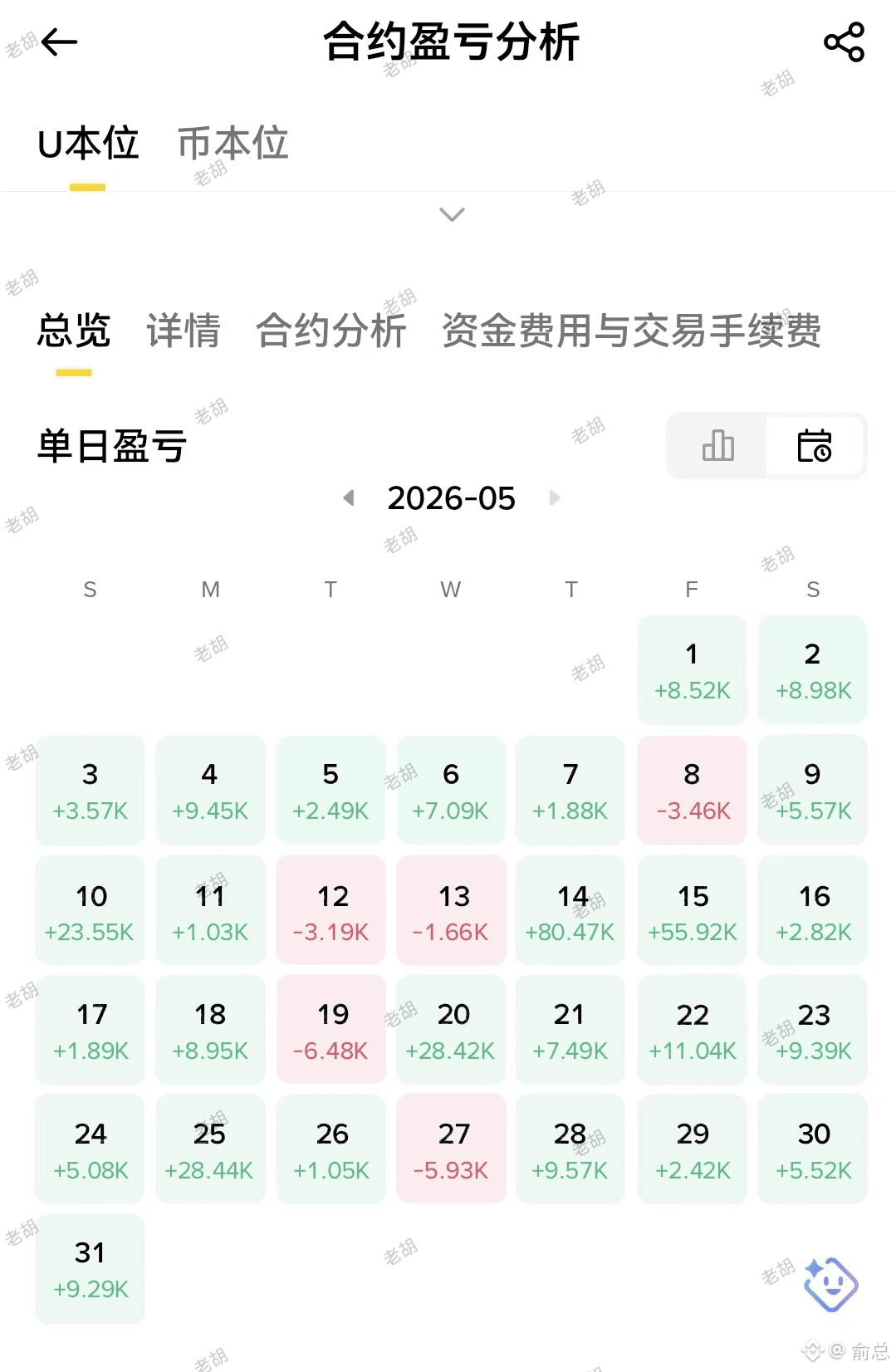
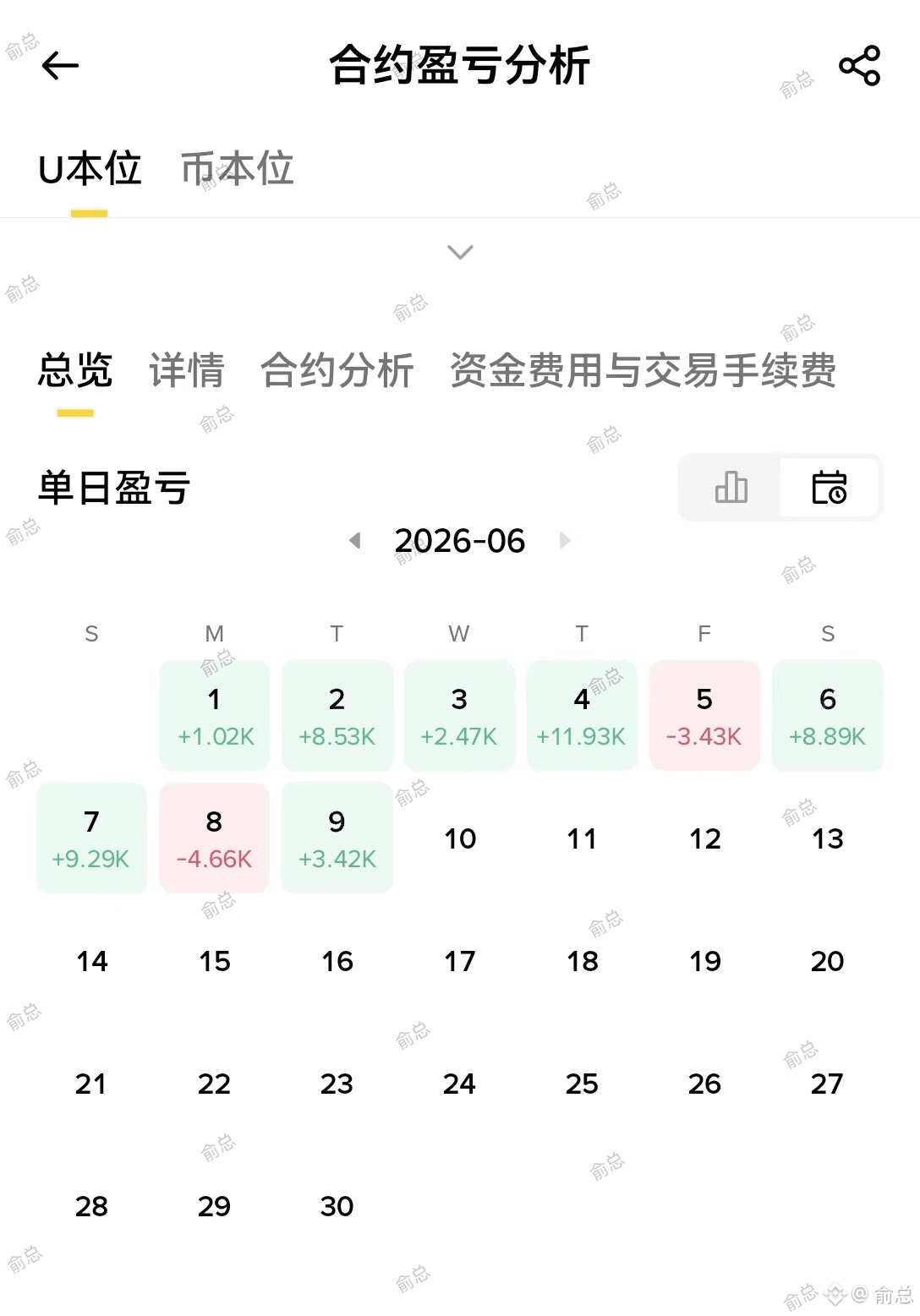


407
·
--
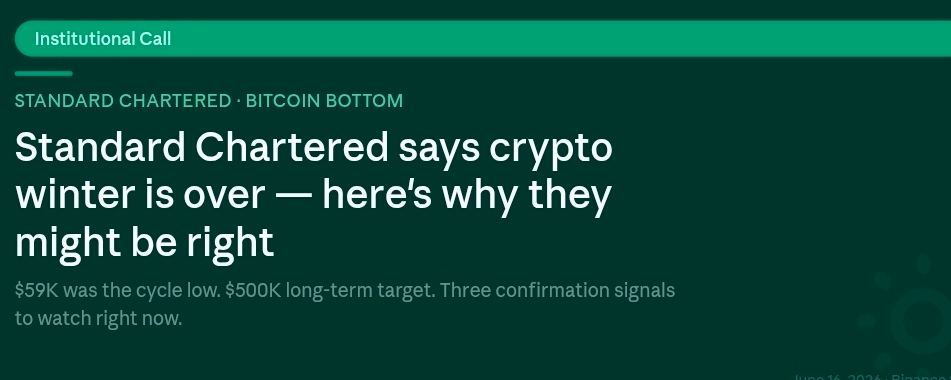
Article
Standard Chartered Just Said Crypto Winter Is Over , Here's Why World's Oldest Banks might be rightWhen a 160-year-old British bank that serves 1.2 billion people calls the bottom of a crypto bear market, the market listens.
Standard Chartered's global head of digital assets research Geoffrey Kendrick declared on June 12: "Winter is over." He stated Bitcoin likely established its cycle low at $59,000 after dropping 53% from its $126,200 all-time high. Yahoo Finance
This is not a crypto-native bull calling the bottom. This is a senior researcher at one of the world's most prestigious institutional banks putting his credibility on the line.
Kendrick cited three confirmation signals to watch: Strategy announcing additional Bitcoin purchases on Monday, a return to positive ETF inflows, and continued declines in oil prices following the Iran peace deal. Yahoo Finance
What makes this call credible? Standard Chartered predicted earlier this year that Bitcoin could fall to $50,000 before recovering. They were bearish when others were bullish. Now they're flipping. That kind of contrarian credibility matters.
Long-term targets remain unchanged: $500,000 for Bitcoin, $40,000 for Ethereum, $2,000 for Solana, and $28 for XRP. The bank also issued revised forecasts through 2027, 2028, and 2029 — suggesting this is not a short-term trade call but a multi-year thesis. Yahoo Finance
Could they be wrong? Absolutely. Galaxy Research simultaneously warns of a $40K–$46K floor still ahead. Two credible institutions. Opposite calls.
But consider this: Standard Chartered has skin in the game. They're building crypto infrastructure, launching digital asset custody, and positioning for institutional adoption. When they say winter is over, they're also saying their own business is about to get busier.
That's a different kind of signal.
DYOR. Not financial advice#BitcoinReboundsTo$64K #ZcashResumesOrchardTransactionsAfterAIAudit #RippleLaunchesXRPLAIStarterKit #GoldmanMorganEach$100MInSpaceXIPOFees #PhilippinesBansPrivacyCoinsOnLicensedExchanges $BTC
{future}(BTCUSDT)
$NVDAB
{spot}(NVDABUSDT)
$SPCXB
{spot}(SPCXBUSDT)
Standard Chartered Just Said Crypto Winter Is Over , Here's Why World's Oldest Banks might be right
When a 160-year-old British bank that serves 1.2 billion people calls the bottom of a crypto bear market, the market listens.
Standard Chartered's global head of digital assets research Geoffrey Kendrick declared on June 12: "Winter is over." He stated Bitcoin likely established its cycle low at $59,000 after dropping 53% from its $126,200 all-time high. Yahoo Finance
This is not a crypto-native bull calling the bottom. This is a senior researcher at one of the world's most prestigious institutional banks putting his credibility on the line.
Kendrick cited three confirmation signals to watch: Strategy announcing additional Bitcoin purchases on Monday, a return to positive ETF inflows, and continued declines in oil prices following the Iran peace deal. Yahoo Finance
What makes this call credible? Standard Chartered predicted earlier this year that Bitcoin could fall to $50,000 before recovering. They were bearish when others were bullish. Now they're flipping. That kind of contrarian credibility matters.
Long-term targets remain unchanged: $500,000 for Bitcoin, $40,000 for Ethereum, $2,000 for Solana, and $28 for XRP. The bank also issued revised forecasts through 2027, 2028, and 2029 — suggesting this is not a short-term trade call but a multi-year thesis. Yahoo Finance
Could they be wrong? Absolutely. Galaxy Research simultaneously warns of a $40K–$46K floor still ahead. Two credible institutions. Opposite calls.
But consider this: Standard Chartered has skin in the game. They're building crypto infrastructure, launching digital asset custody, and positioning for institutional adoption. When they say winter is over, they're also saying their own business is about to get busier.
That's a different kind of signal.
DYOR. Not financial advice#BitcoinReboundsTo$64K #ZcashResumesOrchardTransactionsAfterAIAudit #RippleLaunchesXRPLAIStarterKit #GoldmanMorganEach$100MInSpaceXIPOFees #PhilippinesBansPrivacyCoinsOnLicensedExchanges $BTC
$NVDAB
$SPCXB
Standard Chartered's global head of digital assets research Geoffrey Kendrick declared on June 12: "Winter is over." He stated Bitcoin likely established its cycle low at $59,000 after dropping 53% from its $126,200 all-time high. Yahoo Finance
This is not a crypto-native bull calling the bottom. This is a senior researcher at one of the world's most prestigious institutional banks putting his credibility on the line.
Kendrick cited three confirmation signals to watch: Strategy announcing additional Bitcoin purchases on Monday, a return to positive ETF inflows, and continued declines in oil prices following the Iran peace deal. Yahoo Finance
What makes this call credible? Standard Chartered predicted earlier this year that Bitcoin could fall to $50,000 before recovering. They were bearish when others were bullish. Now they're flipping. That kind of contrarian credibility matters.
Long-term targets remain unchanged: $500,000 for Bitcoin, $40,000 for Ethereum, $2,000 for Solana, and $28 for XRP. The bank also issued revised forecasts through 2027, 2028, and 2029 — suggesting this is not a short-term trade call but a multi-year thesis. Yahoo Finance
Could they be wrong? Absolutely. Galaxy Research simultaneously warns of a $40K–$46K floor still ahead. Two credible institutions. Opposite calls.
But consider this: Standard Chartered has skin in the game. They're building crypto infrastructure, launching digital asset custody, and positioning for institutional adoption. When they say winter is over, they're also saying their own business is about to get busier.
That's a different kind of signal.
DYOR. Not financial advice#BitcoinReboundsTo$64K #ZcashResumesOrchardTransactionsAfterAIAudit #RippleLaunchesXRPLAIStarterKit #GoldmanMorganEach$100MInSpaceXIPOFees #PhilippinesBansPrivacyCoinsOnLicensedExchanges $BTC
$NVDAB
$SPCXB
75

·
--
Don't let emotions make your decisions $HYPE
Every time you're in the green, there's that voice saying: hold on, it can go higher. Every time you're in the red, that same voice says: just hang in there, it’ll bounce back. What’s the outcome? Gains turn to losses, and losses turn to wipeouts. $币安人生
Emotions love to trick you. They make you hesitate when it’s time to exit and daydream when it’s time to cut losses. The more you listen to them, the worse your account gets. #GoldmanMorganEach$100MInSpaceXIPOFees $LAB
How to fix it? Set your rules in stone, tougher than your emotions. Cut losses at 5%, regardless of whether it rallies afterward. Take some profits at 10%, no matter how crazy it goes afterward. Before opening a position, set your stop-loss and take-profit orders; let them execute automatically, and don’t give yourself a chance to hesitate.
At first, it’ll sting; you might sell too soon and kick yourself when it bounces back after a stop-loss. But over time, you’ll see that your account doesn’t swing wildly anymore, and you’ll sleep better at night.
In trading, it’s not about who guesses the best; it’s about who can control themselves. Lock in those rules; don’t let emotions place your orders. When you toughen up, the market will soften.
Don't let emotions make your decisions $HYPE
Every time you're in the green, there's that voice saying: hold on, it can go higher. Every time you're in the red, that same voice says: just hang in there, it’ll bounce back. What’s the outcome? Gains turn to losses, and losses turn to wipeouts. $币安人生
Emotions love to trick you. They make you hesitate when it’s time to exit and daydream when it’s time to cut losses. The more you listen to them, the worse your account gets. #GoldmanMorganEach$100MInSpaceXIPOFees $LAB
How to fix it? Set your rules in stone, tougher than your emotions. Cut losses at 5%, regardless of whether it rallies afterward. Take some profits at 10%, no matter how crazy it goes afterward. Before opening a position, set your stop-loss and take-profit orders; let them execute automatically, and don’t give yourself a chance to hesitate.
At first, it’ll sting; you might sell too soon and kick yourself when it bounces back after a stop-loss. But over time, you’ll see that your account doesn’t swing wildly anymore, and you’ll sleep better at night.
In trading, it’s not about who guesses the best; it’s about who can control themselves. Lock in those rules; don’t let emotions place your orders. When you toughen up, the market will soften.
Every time you're in the green, there's that voice saying: hold on, it can go higher. Every time you're in the red, that same voice says: just hang in there, it’ll bounce back. What’s the outcome? Gains turn to losses, and losses turn to wipeouts. $币安人生
Emotions love to trick you. They make you hesitate when it’s time to exit and daydream when it’s time to cut losses. The more you listen to them, the worse your account gets. #GoldmanMorganEach$100MInSpaceXIPOFees $LAB
How to fix it? Set your rules in stone, tougher than your emotions. Cut losses at 5%, regardless of whether it rallies afterward. Take some profits at 10%, no matter how crazy it goes afterward. Before opening a position, set your stop-loss and take-profit orders; let them execute automatically, and don’t give yourself a chance to hesitate.
At first, it’ll sting; you might sell too soon and kick yourself when it bounces back after a stop-loss. But over time, you’ll see that your account doesn’t swing wildly anymore, and you’ll sleep better at night.
In trading, it’s not about who guesses the best; it’s about who can control themselves. Lock in those rules; don’t let emotions place your orders. When you toughen up, the market will soften.
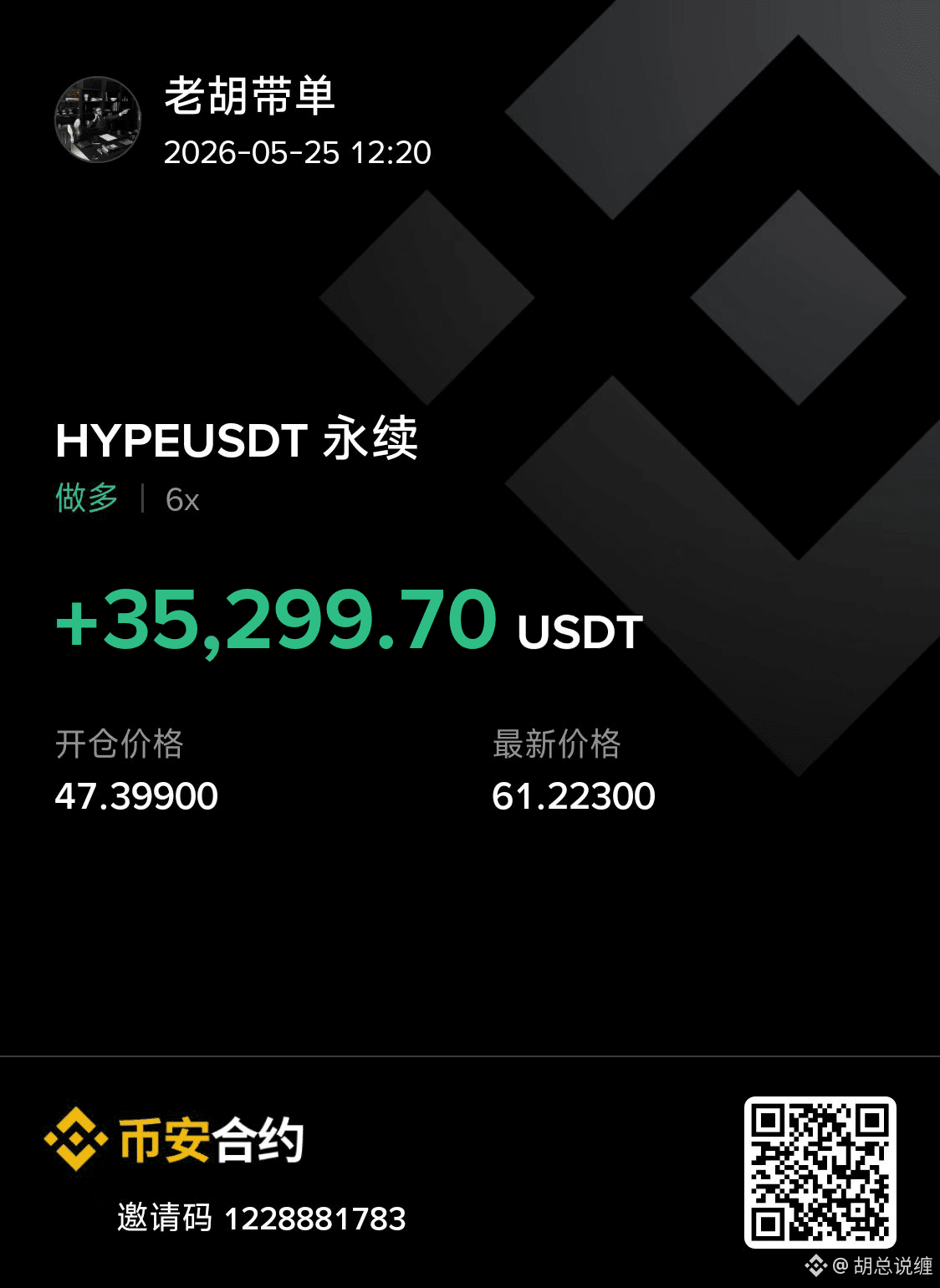

483
OIL UPDATE
Brent crude is currently at $85.765.
Oil prices could see further downside if negotiations between the U.S. and Iran lead to the reopening of the Strait of Hormuz, easing supply risks.
Markets are also eyeing next week’s FOMC meeting
#BitcoinReboundsTo$64K #ZcashResumesOrchardTransactionsAfterAIAudit #RippleLaunchesXRPLAIStarterKit #GoldmanMorganEach$100MInSpaceXIPOFees
OIL UPDATE
Brent crude is currently at $85.765.
Oil prices could see further downside if negotiations between the U.S. and Iran lead to the reopening of the Strait of Hormuz, easing supply risks.
Markets are also eyeing next week’s FOMC meeting
#BitcoinReboundsTo$64K #ZcashResumesOrchardTransactionsAfterAIAudit #RippleLaunchesXRPLAIStarterKit #GoldmanMorganEach$100MInSpaceXIPOFees
Brent crude is currently at $85.765.
Oil prices could see further downside if negotiations between the U.S. and Iran lead to the reopening of the Strait of Hormuz, easing supply risks.
Markets are also eyeing next week’s FOMC meeting
#BitcoinReboundsTo$64K #ZcashResumesOrchardTransactionsAfterAIAudit #RippleLaunchesXRPLAIStarterKit #GoldmanMorganEach$100MInSpaceXIPOFees
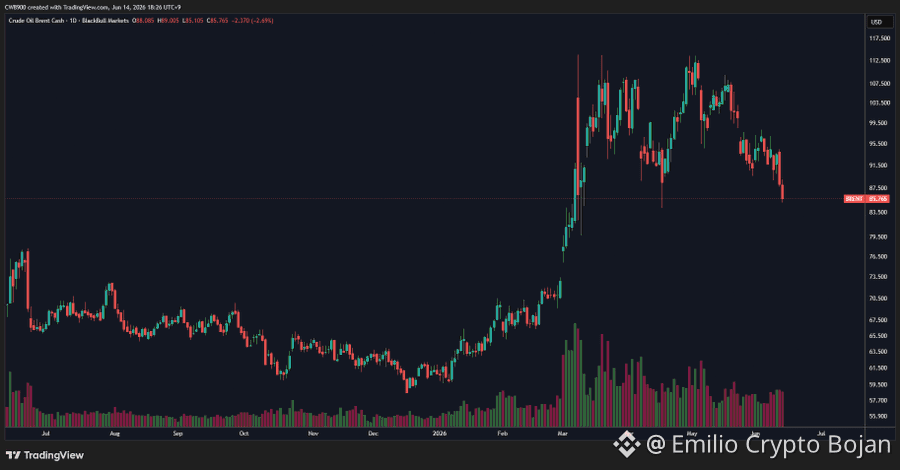
107

·
--
🌍 XRP INVESTORS SHOULD WATCH ADOPTION, NOT NOISE
Social media moves attention.
Utility moves markets.
The future of XRP depends on whether real-world payment infrastructure continues expanding.
The strongest long-term assets usually share one characteristic:
They solve an actual problem.
Short-term volatility will always exist.
Long-term adoption is what matters.
$XRP $XLM
#BitcoinReboundsTo$64K #ZcashResumesOrchardTransactionsAfterAIAudit #GoldmanMorganEach$100MInSpaceXIPOFees #KalshiPolymarketSuesKentuckyPredictionMarketTax #USIranHormusDealDisputed
🌍 XRP INVESTORS SHOULD WATCH ADOPTION, NOT NOISE
Social media moves attention.
Utility moves markets.
The future of XRP depends on whether real-world payment infrastructure continues expanding.
The strongest long-term assets usually share one characteristic:
They solve an actual problem.
Short-term volatility will always exist.
Long-term adoption is what matters.
$XRP $XLM
#BitcoinReboundsTo$64K #ZcashResumesOrchardTransactionsAfterAIAudit #GoldmanMorganEach$100MInSpaceXIPOFees #KalshiPolymarketSuesKentuckyPredictionMarketTax #USIranHormusDealDisputed
Social media moves attention.
Utility moves markets.
The future of XRP depends on whether real-world payment infrastructure continues expanding.
The strongest long-term assets usually share one characteristic:
They solve an actual problem.
Short-term volatility will always exist.
Long-term adoption is what matters.
$XRP $XLM
#BitcoinReboundsTo$64K #ZcashResumesOrchardTransactionsAfterAIAudit #GoldmanMorganEach$100MInSpaceXIPOFees #KalshiPolymarketSuesKentuckyPredictionMarketTax #USIranHormusDealDisputed
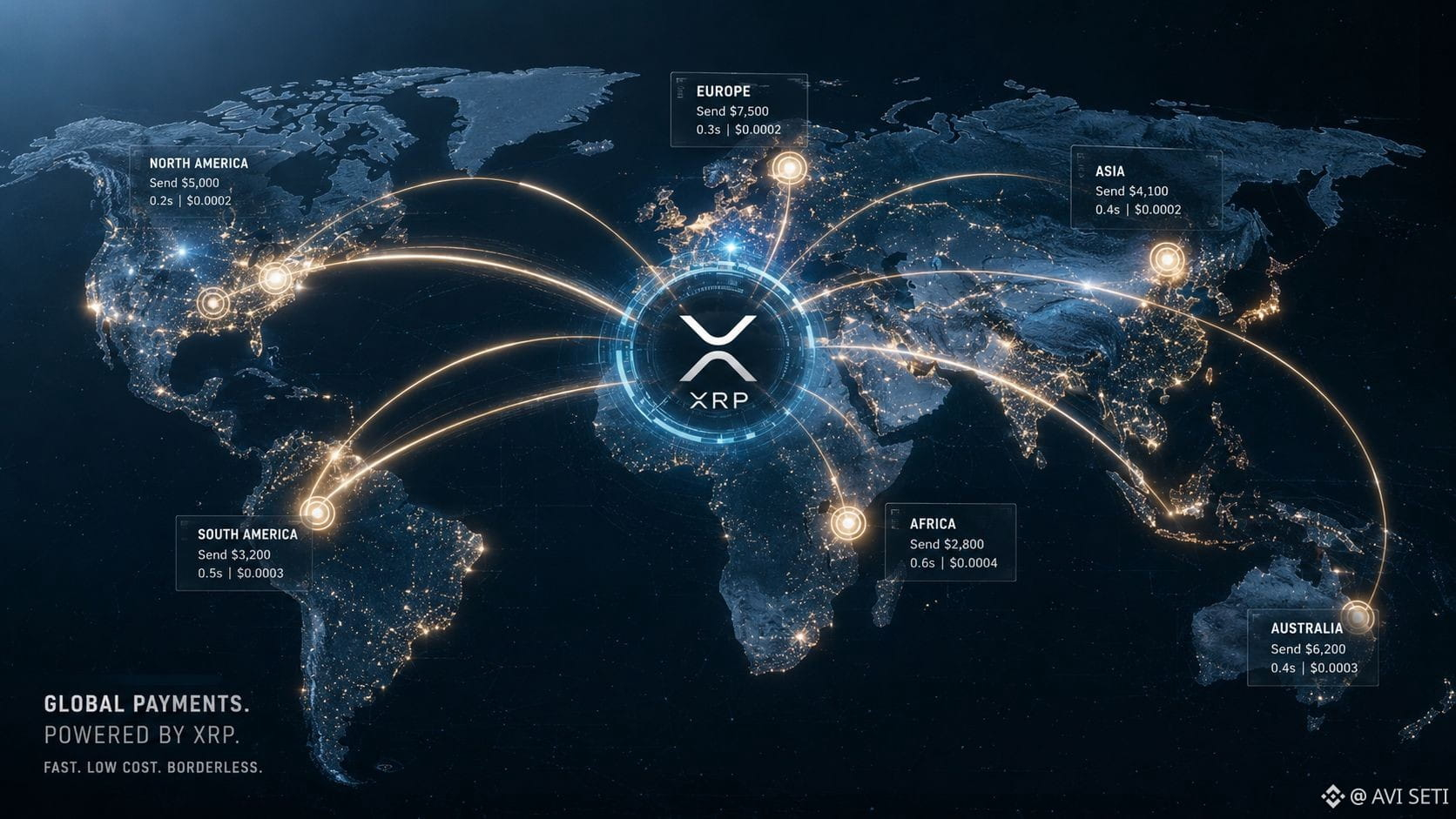
109
Log in to explore more content
Join global crypto users on Binance Square
⚡️ Get latest and useful information about crypto.
💬 Trusted by the world’s largest crypto exchange.
👍 Discover real insights from verified creators.
Email / Phone number
Trending Topics
1
#FedMinutesFocusOnOctoberPause
400,489 views
2,533 Discussing
2
#VitalikWarnsAICouldWeakenCryptographySecurity
4,919 views
211 Discussing
3
#XRPSpotETFsHold$1.7BWeeklyInflowsSlow
762 views
29 Discussing
4
#FrenchHillUrgesCLARITYActPassageInLameDuck
6,415 views
232 Discussing
5
#EthereumSpotETFRecords$161MNetOutflows
239 views
17 Discussing
6
#IMFGrantsWaiverForElSalvadorBitcoinBreach
13,442 views
343 Discussing
7
#BinanceLaunchesBinanceIntelligence
1.3M views
7,287 Discussing
8
#EvernorthDelaysNasdaqDebutToOct12
65,237 views
613 Discussing
9
#RobinhoodAdds$25MInBitcoinToBalanceSheet
19,860 views
110 Discussing
10
#SP500AndNasdaqHitRecordHighs
63,795 views
774 Discussing