

Cavil Zevran
 Square Verified
Blockchain Builder | Independent Crypto Research & Market Insights | Beyond the Hype, Beneath the Headlines.
CMC: @CavilZevran
Open Trade
Frequent Trader
5.8 Years
75 Following
31.1K+ Followers
46.8K+ Liked
Posts
Portfolio
All
Quotes
Videos
Live
Partly True

KITE AI 中文
·
--
Kite Creator Spotlight: Judged Award Winners|评审奖获奖名单
We're announcing the 20 judged award winners and the preliminary Lucky Draw eligibility list for the Kite Creator Spotlight. Thank you to everyone who took part and for your patience during the review.
We apologize for the delay in publishing the lists and holding the draw. The schedule below replaces the original dates in the pinned rules.
1. Judged award winners (20)
Spotlight Award: 10,000 $KITE
1. @Gustav jesus
https://www.binance.com/square/post/380348250451331
Gold: 5,000 $KITE each
2. @POCONGg-erc
https://www.binance.com/square/post/378688606216557
3. @Fatima_Tariq
https://www.binance.com/square/post/381732240388143
4. @sozu-
https://www.binance.com/square/post/378925391116351
5. @TF_bnb
https://www.binance.com/square/post/381640409997399
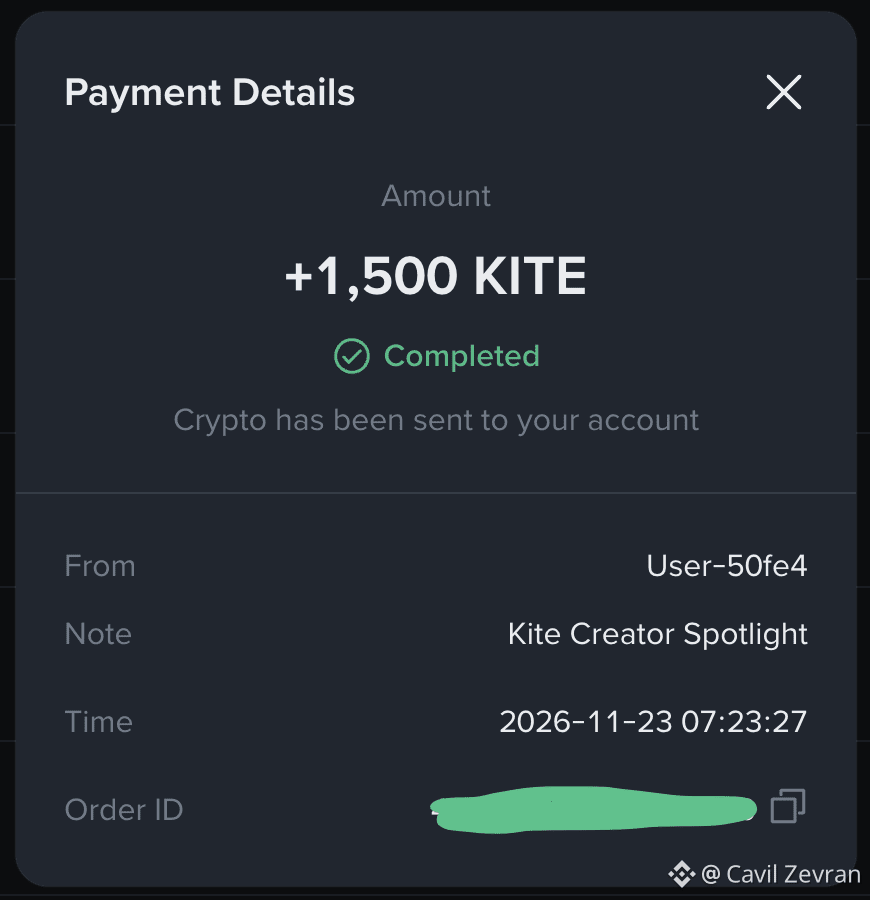
Excellence: 1,500 $KITE each
6. @Ghost Writer
https://www.binance.com/square/post/382107776977559
7. @X mucaN
https://www.binance.com/square/post/381260005040164
8. @0x31adsun
https://www.binance.com/square/post/382826717556145
9. @Jeonlees
https://www.binance.com/square/post/383286568194683
10. @BlueTokenCapital
https://www.binance.com/square/post/378950848350534
11. @Cavil Zevran
https://www.binance.com/square/post/382612628380395
12. @Noël2nd
https://www.binance.com/square/post/382954562688277
13. @MAYA_
https://www.binance.com/square/post/378675782505579
14. @Bruce Lynn
https://www.binance.com/square/post/383653219169693
15. @0xfaseeh
https://www.binance.com/square/post/382869449345789
16. @Ryan Rome
https://www.binance.com/square/post/382898215825213
17. @loki大排骨
https://www.binance.com/square/post/383095961604562
18. @Web3Kalito
https://www.binance.com/square/post/383352130442642
19. @SignalX 💣
https://www.binance.com/square/post/381342568258080
20. @Teletubbies29
https://www.binance.com/square/post/379563106802373
2. Verification for judged award winners
▷ By Nov 17, 20:30 (UTC), add "KITE-[last 6 digits of your UID]" to your Binance Square bio, using the UID you submitted in the form (e.g., UID 123456789 → KITE-456789). You can remove it after verification.
▷ Winners who don't verify in time, or whose details don't match, will be replaced by the next in line. Each replacement winner has 72 hours from the announcement of their selection to verify.
▷ Rewards for the verified winners listed above will be sent by Nov 19, 20:30 (UTC) via Binance internal transfer to the UID you submitted. Replacement winners receive their rewards within 48 hours after they verify.
3. Lucky Draw (55 winners, 500 $KITE each)
▷ Everyone who passed the eligibility checks and did not win a judged award is eligible. The 20 judged award winners listed above are not in the draw, even if they later forfeit their award. Each participant gets 2 tickets, plus 1 extra ticket for a qualifying X post.
▷ The preliminary list and the review result of every entry: https://docs.google.com/spreadsheets/d/1Ay9iJ3Er-ZWBaou90HHi9UY72IVO1OWFKsdFZObr1OU
▷ Draw page (rules, countdown, and later the final list and results): https://gokite.community/draws/b100-2026
▷ If your entry is missing, your username, post link or ticket count is wrong, or you disagree with a "Not eligible" decision, DM @GoKiteAI on Binance Square (or reply to this post) with your submitted post link and a brief explanation by Nov 16, 20:30 (UTC). Do not post your full UID or other account information in public replies.
▷ After corrections are handled, the updated review sheet and the final Lucky Draw list will be republished with their SHA-256 fingerprints before the list is frozen.
▷ At least 61 minutes before the draw, we will publish the frozen CSV download link, its SHA-256 fingerprint, the Kite chain transaction recording it, and the drand quicknet round and scheduled UTC time. The selected round must still be in the future when the commitment is published. Anyone can recompute the results online.
▷ Each participant's highest-ranked ticket determines their single position. The first 55 eligible participants each receive 500 KITE after verification; the rest form the reserve list in order. Each participant may receive only one award across the campaign.
4. Updated schedule (UTC)
▷ Nov 14, 20:30: judged award winners and the preliminary Lucky Draw list published
▷ Nov 16, 20:30: corrections close
▷ Nov 17, 05:00: final Lucky Draw list published and frozen, fingerprint recorded on Kite chain, commitment published
▷ Nov 17, 07:00: Lucky Draw (drand round); the results post follows once the results are verified
▷ Nov 17, 20:30: verification closes for judged award winners
▷ Nov 17, 22:30: judged award replacements announced, if any
▷ Nov 19, 20:30: rewards sent to the verified judged award winners listed above
▷ Lucky Draw winners: 72 hours from the publication of the results post to verify; verified rewards sent within 48 hours after the verification deadline
All deadlines run from the actual publication time of the relevant announcement. Replacement winners in either category get the full 72 hours from the announcement of their selection, and their rewards are sent within 48 hours after they verify. If a judged award replacement is also a Lucky Draw winner, they keep the judged award (any Lucky Draw reward already sent counts toward it) and their Lucky Draw prize passes to the next person on the reserve list; if they are on the reserve list, they are skipped. Further replacements follow the same process.
Kite will never ask for your seed phrase, private key, password, login or one-time verification codes, or payment. The KITE code in your Binance Square bio is a public tag, not a login code. Claiming this reward does not require connecting a wallet, signing a transaction, or paying a fee. Rewards are sent only by Binance internal transfer to the UID you submitted. Check announcements on our official account and avoid claim links in unsolicited messages.
#KiteBBW $KITE
中文版
现公布 Kite Creator Spotlight 的 20 位评审奖获奖者及 Lucky Draw 初步资格名单。感谢各位创作者的参与,也感谢大家耐心等待。
原定的名单公布和开奖时间已延后,对此我们深表歉意。下文的时间安排取代置顶规则帖中的原定日期。
一、评审奖获奖者(20 名,帖子链接见上方英文版)
Spotlight 大奖:10,000 枚 $KITE
1、@Gustav jesus
Gold:每人 5,000 枚 $KITE
2、@POCONGg-erc
3、@Fatima_Tariq
4、@sozu-
5、@TF_bnb
Excellence:每人 1,500 枚 $KITE
6、@Ghost Writer
7、@X mucaN
8、@0x31adsun
9、@Jeonlees
10、@BlueTokenCapital
11、@Cavil Zevran
12、@Noël2nd
13、@MAYA_
14、@Bruce Lynn
15、@0xfaseeh
16、@Ryan Rome
17、@loki大排骨
18、@Web3Kalito
19、@SignalX 💣
20、@Teletubbies29
二、评审奖获奖核验
▷ 请在 11 月 17 日 20:30(UTC)前,在自己的币安广场个人简介中加入「KITE-UID 后 6 位」,UID 以表单中提交的为准(例如 UID 为 123456789,就写 KITE-456789)。核验通过后即可删除。
▷ 逾期未完成或信息不一致的,按候补顺序递补。每位递补者自递补名单公布起,另有 72 小时完成核验。
▷ 以上获奖者核验通过后,奖励将于 11 月 19 日 20:30(UTC)前通过币安站内转账发放至你提交的 UID;递补者的奖励在其核验通过后 48 小时内发放。
三、Lucky Draw(55 名,每人 500 枚 $KITE)
▷ 通过资格审核、且未获得评审奖的投稿者均可参与。以上 20 位评审奖获奖者不参加抽奖,之后即使失去评审奖资格也不再加入。每人 2 张抽奖券,X 同步符合要求的再加 1 张。
▷ 初步资格名单及每篇投稿的审核结果:https://docs.google.com/spreadsheets/d/1Ay9iJ3Er-ZWBaou90HHi9UY72IVO1OWFKsdFZObr1OU
▷ 抽奖页(规则、倒计时,之后公布最终名单和开奖结果):https://gokite.community/draws/b100-2026
▷ 如有遗漏,用户名、帖子链接或抽奖券数量有误,或对「不合格」判定有异议,请于 11 月 16 日 20:30(UTC)前私信币安广场 @GoKiteAI(也可在本帖下回复),附上你的参赛帖子链接并说明问题。公开回复时请勿透露完整 UID 或其他账户信息。
▷ 纠错处理完后,我们会连同 SHA-256 指纹重新公布更新后的审核总表和最终抽奖名单,然后再冻结名单。
▷ 我们将至少提前 61 分钟发布开奖承诺帖,提供冻结名单的 CSV 下载链接、SHA-256 指纹、写入指纹的 Kite 链交易,以及开奖使用的 drand quicknet 轮次和对应 UTC 时间。所选轮次在承诺发布时必须尚未发生。任何人都可以在线复算结果。
▷ 同一参与者仅以排名最靠前的一张抽奖券确定名次。前 55 位符合资格的参与者各获 500 枚 $KITE,核验通过后发放;其余符合资格的参与者按顺序候补。每位参与者在本活动中最多获得一个奖项。
四、更新后的时间安排(UTC)
▷ 11 月 14 日 20:30:公布评审奖获奖者和 Lucky Draw 初步资格名单
▷ 11 月 16 日 20:30:纠错截止
▷ 11 月 17 日 05:00:公布并冻结最终 Lucky Draw 名单,指纹写入 Kite 链,发布开奖承诺
▷ 11 月 17 日 07:00:Lucky Draw 开奖(drand 轮次到点),结果核对无误后发布结果帖
▷ 11 月 17 日 20:30:评审奖获奖者核验截止
▷ 11 月 17 日 22:30:如有空缺,公布评审奖递补名单
▷ 11 月 19 日 20:30:向以上核验通过的评审奖获奖者发放奖励
▷ Lucky Draw 中奖者:自结果帖发布起 72 小时内完成核验,核验截止后 48 小时内发放奖励
所有截止时间均以对应公告的实际发布时间计算。两类奖项的递补者都自递补名单公布起有完整的 72 小时完成核验,核验通过后 48 小时内发放奖励。评审奖递补者如同时在 Lucky Draw 中签,保留评审奖(已发放的 Lucky Draw 奖励计入评审奖),其 Lucky Draw 名额顺延给候补名单的下一位;如在 Lucky Draw 候补名单中,轮到时跳过。如需多轮递补,按同样方式处理。
Kite 不会以任何形式索取你的助记词、私钥、密码、登录验证码或动态验证码,也不会要求你付款。个人简介里的 KITE 核验码是公开标识,不是登录验证码。领取本活动奖励无需连接钱包、签名或支付手续费。奖励仅通过币安站内转账发放至你提交的 UID。请以官方账号发布的公告为准,不要点击陌生私信中的领奖链接。
#KiteBBW $KITE

Log in to explore more content