
#genius
genius
8.1M views
69,166 Discussing
Hot
Latest

·
--
🚨 CZ-BACKED ON-CHAIN PLATFORM UNVEILS UNIQUE 6666 CONTRACT IDENTITY FOR $GENIUS TOKENS! ⚡
💡 On-chain trading platform Genius Terminal just dropped a sharp branding maneuver. Every fresh launch on Genius.fun will now carry a signature "6666" suffix on its smart contract address, establishing instant recognition across block explorers.
🔍 Backed by YZi Labs with industry veteran CZ on the advisory board, this vanity address strategy targets maximum visibility in crowded DEX liquidity pools. 📊 When smart money scans new listings, immediate visual verification can significantly accelerate early volume velocity.
💬 Will iconic contract signatures become the new standard for catching early market momentum? 👇
⚠️ Not financial advice. Always manage your risk. 🛡️
🏷️ #GENIUS #OnChain #DeFi #CryptoNews
🔥 💎
🚨 CZ-BACKED ON-CHAIN PLATFORM UNVEILS UNIQUE 6666 CONTRACT IDENTITY FOR $GENIUS TOKENS! ⚡
💡 On-chain trading platform Genius Terminal just dropped a sharp branding maneuver. Every fresh launch on Genius.fun will now carry a signature "6666" suffix on its smart contract address, establishing instant recognition across block explorers.
🔍 Backed by YZi Labs with industry veteran CZ on the advisory board, this vanity address strategy targets maximum visibility in crowded DEX liquidity pools. 📊 When smart money scans new listings, immediate visual verification can significantly accelerate early volume velocity.
💬 Will iconic contract signatures become the new standard for catching early market momentum? 👇
⚠️ Not financial advice. Always manage your risk. 🛡️
🏷️ #GENIUS #OnChain #DeFi #CryptoNews
🔥 💎
💡 On-chain trading platform Genius Terminal just dropped a sharp branding maneuver. Every fresh launch on Genius.fun will now carry a signature "6666" suffix on its smart contract address, establishing instant recognition across block explorers.
🔍 Backed by YZi Labs with industry veteran CZ on the advisory board, this vanity address strategy targets maximum visibility in crowded DEX liquidity pools. 📊 When smart money scans new listings, immediate visual verification can significantly accelerate early volume velocity.
💬 Will iconic contract signatures become the new standard for catching early market momentum? 👇
⚠️ Not financial advice. Always manage your risk. 🛡️
🏷️ #GENIUS #OnChain #DeFi #CryptoNews
🔥 💎
192

·
--
🚨 ON-CHAIN TERMINAL $GENIUS INTRODUCES SIGNATURE CONTRACT ADDRESSES TO SPOT INSTITUTIONAL FLOWS! 💡
YZi Labs-backed Genius Terminal, with CZ serving as advisor, just upgraded its deployment architecture on Genius.fun. All freshly minted smart contracts will now feature a custom 6666 suffix to establish instant visual liquidity verification across on-chain scanners. 🔍
Smart money thrives on clarity, and standardizing contract footprints reduces execution friction for high-speed DEX traders while enhancing ecosystem brand awareness. 📊 Institutional backing paired with recognizable contract mechanics often marks the groundwork for serious ecosystem volume expansion. 💡
💬 Will these standardized contract signatures give on-chain traders an edge in tracking early smart money accumulation? 👇
⚠️ Not financial advice. Always manage your risk. 🛡️
🏷️ #GENIUS #OnChain #SmartMoney #Crypto #Binance
🦈 🎯
🚨 ON-CHAIN TERMINAL $GENIUS INTRODUCES SIGNATURE CONTRACT ADDRESSES TO SPOT INSTITUTIONAL FLOWS! 💡
YZi Labs-backed Genius Terminal, with CZ serving as advisor, just upgraded its deployment architecture on Genius.fun. All freshly minted smart contracts will now feature a custom 6666 suffix to establish instant visual liquidity verification across on-chain scanners. 🔍
Smart money thrives on clarity, and standardizing contract footprints reduces execution friction for high-speed DEX traders while enhancing ecosystem brand awareness. 📊 Institutional backing paired with recognizable contract mechanics often marks the groundwork for serious ecosystem volume expansion. 💡
💬 Will these standardized contract signatures give on-chain traders an edge in tracking early smart money accumulation? 👇
⚠️ Not financial advice. Always manage your risk. 🛡️
🏷️ #GENIUS #OnChain #SmartMoney #Crypto #Binance
🦈 🎯
YZi Labs-backed Genius Terminal, with CZ serving as advisor, just upgraded its deployment architecture on Genius.fun. All freshly minted smart contracts will now feature a custom 6666 suffix to establish instant visual liquidity verification across on-chain scanners. 🔍
Smart money thrives on clarity, and standardizing contract footprints reduces execution friction for high-speed DEX traders while enhancing ecosystem brand awareness. 📊 Institutional backing paired with recognizable contract mechanics often marks the groundwork for serious ecosystem volume expansion. 💡
💬 Will these standardized contract signatures give on-chain traders an edge in tracking early smart money accumulation? 👇
⚠️ Not financial advice. Always manage your risk. 🛡️
🏷️ #GENIUS #OnChain #SmartMoney #Crypto #Binance
🦈 🎯
257

·
--
🔥 $GENIUS Bullish Setup: Key Pullback into Support
Rating: 76/100 [A] • Strategy: EMATrend
📊 Trade Thesis:
The 4-hour market structure remains firmly bullish above the 200 EMA. Following a healthy retracement into the 50 EMA on the 1-hour chart, buyers printed a strong rejection candle with increasing volume, confirming defense of support.
🎯 Entry: 0.35980
🛑 Stop-Loss: 0.34852 (-3.14%)
✅ Take-Profit: 0.38236 (+6.27%)
⚖️ Risk/Reward: 1:2.0
🚫 Invalidation Rule: If a 1-hour candle closes below $0.34852 (-3.14%), this bullish thesis is invalidated. Exit trade without holding into drawdowns.
💡 Trade Management: Secure 50% profit at Take-Profit target ($0.38236 +6.27%) and move Stop-Loss to Breakeven to eliminate downside risk.
⚖️ Risk Note: Moderate leverage recommended (3x–5x on Futures). Never risk more than 1–2% of total portfolio capital on a single setup.
📈 Binance Market Data:
• Funding: 0.0050% (Neutral) • Next: 3h 19m
• Open Interest (OI): $9.31M
• 24h Volume: $16.19M
• 24h Range: 0.3439 — 0.3972 (-5.4%)
📈 Strategy Track Record: WR 49% over 346 trades
#GENIUS #FuturesTrading #Altcoins #BinanceSquare
⚠️ Not financial advice. Always manage your risk.
🔥 $GENIUS Bullish Setup: Key Pullback into Support
Rating: 76/100 [A] • Strategy: EMATrend
📊 Trade Thesis:
The 4-hour market structure remains firmly bullish above the 200 EMA. Following a healthy retracement into the 50 EMA on the 1-hour chart, buyers printed a strong rejection candle with increasing volume, confirming defense of support.
🎯 Entry: 0.35980
🛑 Stop-Loss: 0.34852 (-3.14%)
✅ Take-Profit: 0.38236 (+6.27%)
⚖️ Risk/Reward: 1:2.0
🚫 Invalidation Rule: If a 1-hour candle closes below $0.34852 (-3.14%), this bullish thesis is invalidated. Exit trade without holding into drawdowns.
💡 Trade Management: Secure 50% profit at Take-Profit target ($0.38236 +6.27%) and move Stop-Loss to Breakeven to eliminate downside risk.
⚖️ Risk Note: Moderate leverage recommended (3x–5x on Futures). Never risk more than 1–2% of total portfolio capital on a single setup.
📈 Binance Market Data:
• Funding: 0.0050% (Neutral) • Next: 3h 19m
• Open Interest (OI): $9.31M
• 24h Volume: $16.19M
• 24h Range: 0.3439 — 0.3972 (-5.4%)
📈 Strategy Track Record: WR 49% over 346 trades
#GENIUS #FuturesTrading #Altcoins #BinanceSquare
⚠️ Not financial advice. Always manage your risk.
Rating: 76/100 [A] • Strategy: EMATrend
📊 Trade Thesis:
The 4-hour market structure remains firmly bullish above the 200 EMA. Following a healthy retracement into the 50 EMA on the 1-hour chart, buyers printed a strong rejection candle with increasing volume, confirming defense of support.
🎯 Entry: 0.35980
🛑 Stop-Loss: 0.34852 (-3.14%)
✅ Take-Profit: 0.38236 (+6.27%)
⚖️ Risk/Reward: 1:2.0
🚫 Invalidation Rule: If a 1-hour candle closes below $0.34852 (-3.14%), this bullish thesis is invalidated. Exit trade without holding into drawdowns.
💡 Trade Management: Secure 50% profit at Take-Profit target ($0.38236 +6.27%) and move Stop-Loss to Breakeven to eliminate downside risk.
⚖️ Risk Note: Moderate leverage recommended (3x–5x on Futures). Never risk more than 1–2% of total portfolio capital on a single setup.
📈 Binance Market Data:
• Funding: 0.0050% (Neutral) • Next: 3h 19m
• Open Interest (OI): $9.31M
• 24h Volume: $16.19M
• 24h Range: 0.3439 — 0.3972 (-5.4%)
📈 Strategy Track Record: WR 49% over 346 trades
#GENIUS #FuturesTrading #Altcoins #BinanceSquare
⚠️ Not financial advice. Always manage your risk.
85

·
--
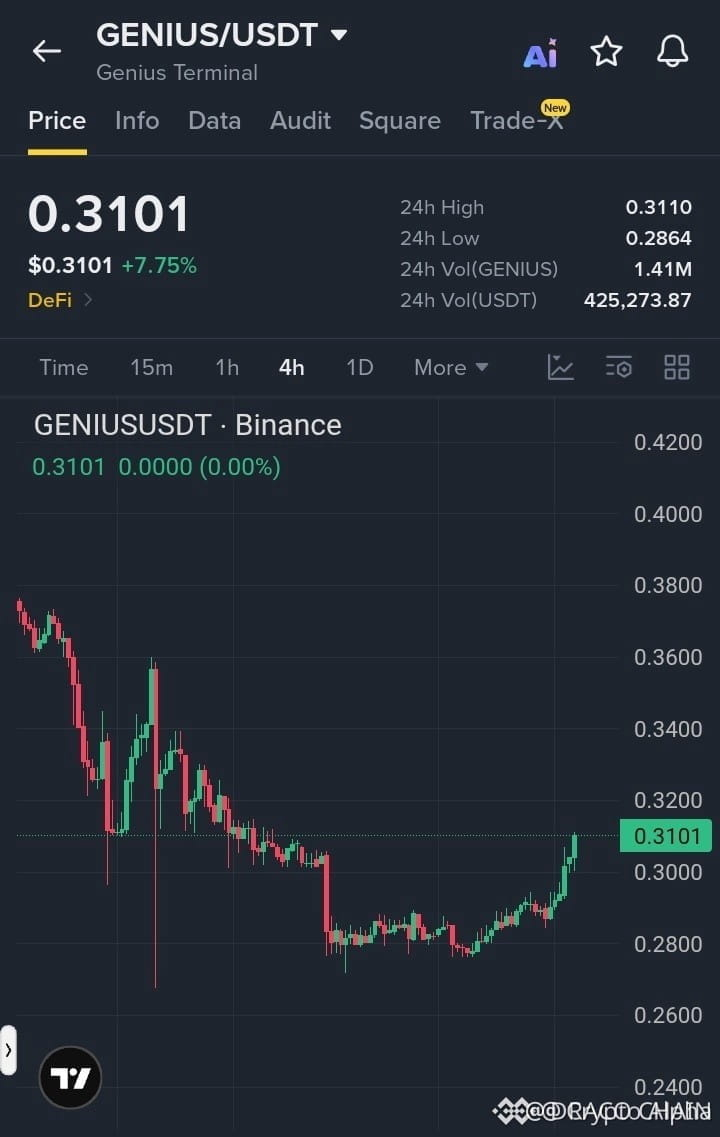
🚨 $GENIUS BREAKS MULTI-WEEK CONSOLIDATION AS INSTITUTIONAL DEMAND RECLAIMS KEY LIQUIDITY! ⚡
Entry: 0.305 - 0.310 ⚡
Target: 0.315 - 0.330 🚀
Stop Loss: 0.296 ⚠️
Smart money has successfully absorbed sell-side liquidity, driving $GENIUS above the crucial 0.30 structural pivot after an extended base-building phase. 📊 The immediate push toward the 0.31 supply block signals strong institutional intent to clear lingering overhead resistance.
A clean hold above this fresh demand zone establishes a clear inefficiency fill runway into higher targets. 🌊 With order flow leaning decisively bullish, structural momentum favors continuation so long as key support remains intact. 💬 Are you front-running this breakout or waiting for structural confirmation above 0.31? 👇
⚠️ Not financial advice. Always manage your risk. 🛡️
🏷️ #GENIUS #Breakout #Crypto #SmartMoney #Trading
⚡ 🎯
🚨 $GENIUS BREAKS MULTI-WEEK CONSOLIDATION AS INSTITUTIONAL DEMAND RECLAIMS KEY LIQUIDITY! ⚡
Entry: 0.305 - 0.310 ⚡
Target: 0.315 - 0.330 🚀
Stop Loss: 0.296 ⚠️
Smart money has successfully absorbed sell-side liquidity, driving $GENIUS above the crucial 0.30 structural pivot after an extended base-building phase. 📊 The immediate push toward the 0.31 supply block signals strong institutional intent to clear lingering overhead resistance.
A clean hold above this fresh demand zone establishes a clear inefficiency fill runway into higher targets. 🌊 With order flow leaning decisively bullish, structural momentum favors continuation so long as key support remains intact. 💬 Are you front-running this breakout or waiting for structural confirmation above 0.31? 👇
⚠️ Not financial advice. Always manage your risk. 🛡️
🏷️ #GENIUS #Breakout #Crypto #SmartMoney #Trading
⚡ 🎯
Entry: 0.305 - 0.310 ⚡
Target: 0.315 - 0.330 🚀
Stop Loss: 0.296 ⚠️
Smart money has successfully absorbed sell-side liquidity, driving $GENIUS above the crucial 0.30 structural pivot after an extended base-building phase. 📊 The immediate push toward the 0.31 supply block signals strong institutional intent to clear lingering overhead resistance.
A clean hold above this fresh demand zone establishes a clear inefficiency fill runway into higher targets. 🌊 With order flow leaning decisively bullish, structural momentum favors continuation so long as key support remains intact. 💬 Are you front-running this breakout or waiting for structural confirmation above 0.31? 👇
⚠️ Not financial advice. Always manage your risk. 🛡️
🏷️ #GENIUS #Breakout #Crypto #SmartMoney #Trading
⚡ 🎯
182

·
--
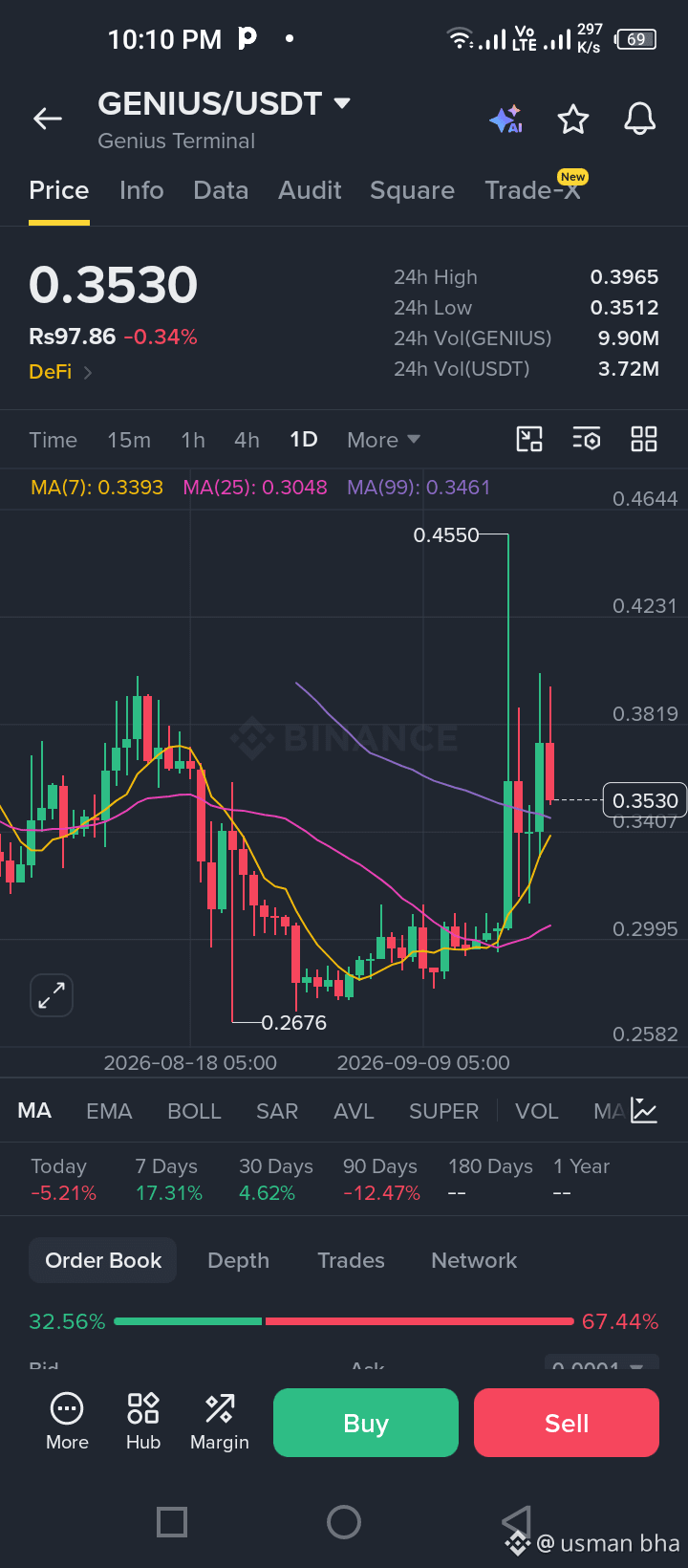
$GENIUS Launchpad is starting to make some noise on the decentralized side!
A few days ago, Genius launched a platform similar to FourMeme and Flap, and it’s definitely worth keeping an eye on. 👀
It’s still early, so there could be some interesting opportunities ahead.
Let’s watch the ecosystem grow and see what $GENIUS brings next. 🔥📈
#GENIUS
$GENIUS Launchpad is starting to make some noise on the decentralized side!
A few days ago, Genius launched a platform similar to FourMeme and Flap, and it’s definitely worth keeping an eye on. 👀
It’s still early, so there could be some interesting opportunities ahead.
Let’s watch the ecosystem grow and see what $GENIUS brings next. 🔥📈
#GENIUS
A few days ago, Genius launched a platform similar to FourMeme and Flap, and it’s definitely worth keeping an eye on. 👀
It’s still early, so there could be some interesting opportunities ahead.
Let’s watch the ecosystem grow and see what $GENIUS brings next. 🔥📈
#GENIUS
174


·
--
Bullish
🚀 $GENIUS is showing strong bullish momentum.
{future}(GENIUSUSDT)
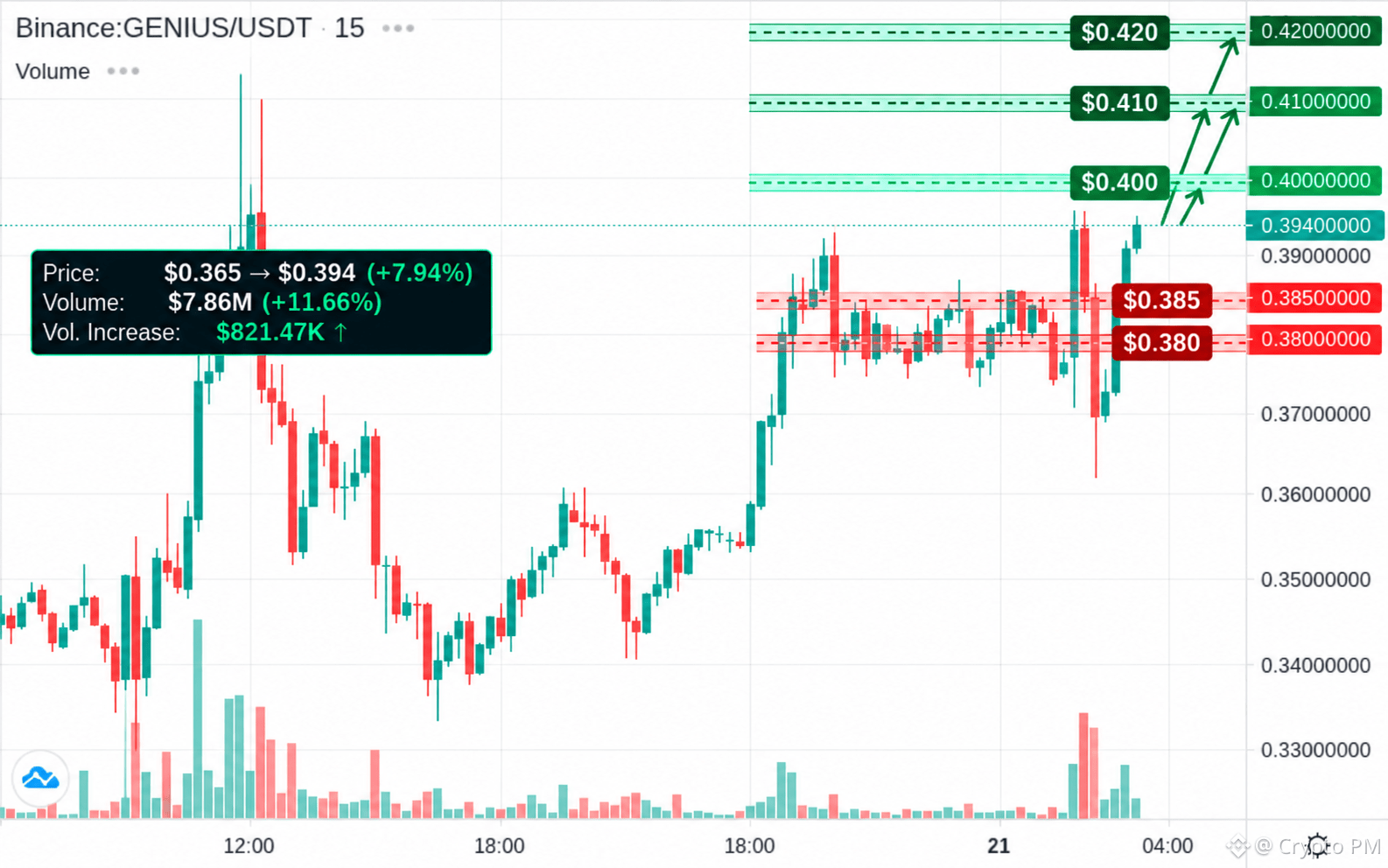
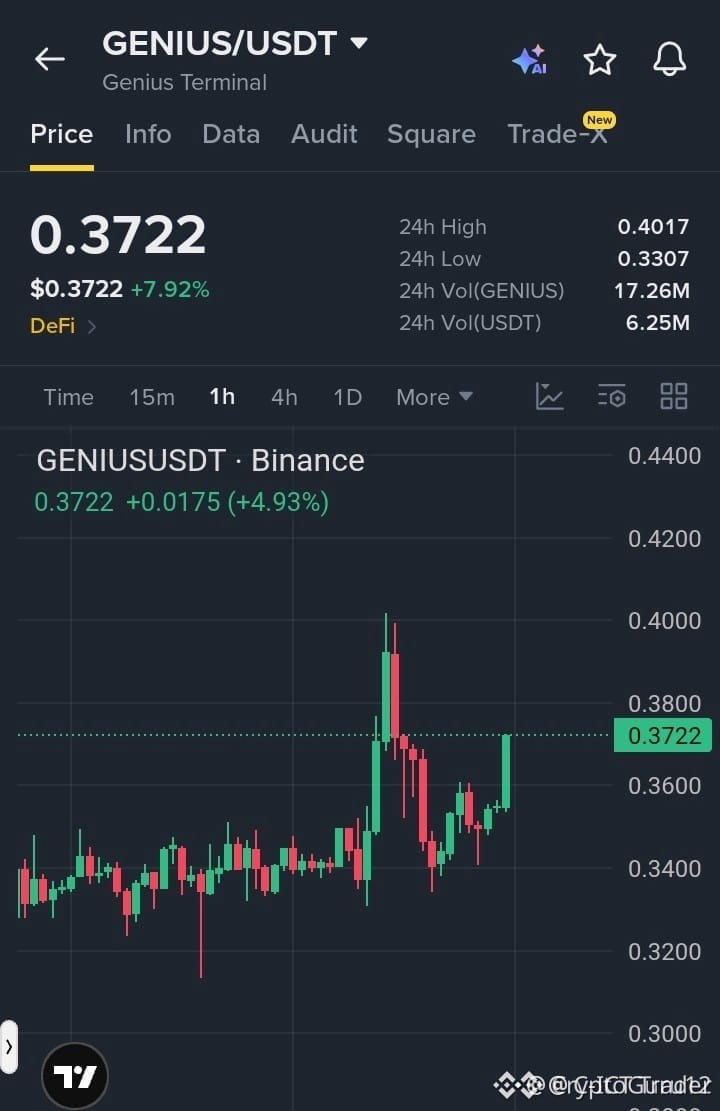
Price has moved from $0.365 to $0.394, marking a +7.94% gain.
📊 Volume has climbed to $7.86M, up 11.66%, with an additional $821.47K in volume , showing increased participation behind the move.
The 15m chart shows a strong recovery from the $0.365 area, followed by a breakout back above $0.390. Price is now testing the recent high around $0.394.
🎯 Levels to watch: • $0.400 • $0.410 • $0.420
Key support: $0.380–$0.385
A sustained breakout above $0.400 with strong volume could extend the move toward $0.410 and potentially $0.420.
⚠️ The move is already extended, so chasing the pump carries higher risk. A pullback and successful retest of the breakout zone would provide a cleaner setup.
#genius
🚀 $GENIUS is showing strong bullish momentum.
Price has moved from $0.365 to $0.394, marking a +7.94% gain.
📊 Volume has climbed to $7.86M, up 11.66%, with an additional $821.47K in volume , showing increased participation behind the move.
The 15m chart shows a strong recovery from the $0.365 area, followed by a breakout back above $0.390. Price is now testing the recent high around $0.394.
🎯 Levels to watch: • $0.400 • $0.410 • $0.420
Key support: $0.380–$0.385
A sustained breakout above $0.400 with strong volume could extend the move toward $0.410 and potentially $0.420.
⚠️ The move is already extended, so chasing the pump carries higher risk. A pullback and successful retest of the breakout zone would provide a cleaner setup.
#genius
Price has moved from $0.365 to $0.394, marking a +7.94% gain.
📊 Volume has climbed to $7.86M, up 11.66%, with an additional $821.47K in volume , showing increased participation behind the move.
The 15m chart shows a strong recovery from the $0.365 area, followed by a breakout back above $0.390. Price is now testing the recent high around $0.394.
🎯 Levels to watch: • $0.400 • $0.410 • $0.420
Key support: $0.380–$0.385
A sustained breakout above $0.400 with strong volume could extend the move toward $0.410 and potentially $0.420.
⚠️ The move is already extended, so chasing the pump carries higher risk. A pullback and successful retest of the breakout zone would provide a cleaner setup.
#genius
3
858

·
--
$GENIUS stalled 4.0% below $0.40170. This isn’t just resistance it’s the only level that matters today.
An hourly close above $0.40170 flips the bias. No pullback, no hesitation just momentum.
A rejection here sends it back to $0.33070. No middle ground.
Open $GENIUS and set an alert at the level.
Break or reject? 👀
Binance data as of 21 Sep 03:10 UTC.
#GENIUS #PriceAction
$GENIUS stalled 4.0% below $0.40170. This isn’t just resistance it’s the only level that matters today.
An hourly close above $0.40170 flips the bias. No pullback, no hesitation just momentum.
A rejection here sends it back to $0.33070. No middle ground.
Open $GENIUS and set an alert at the level.
Break or reject? 👀
Binance data as of 21 Sep 03:10 UTC.
#GENIUS #PriceAction
An hourly close above $0.40170 flips the bias. No pullback, no hesitation just momentum.
A rejection here sends it back to $0.33070. No middle ground.
Open $GENIUS and set an alert at the level.
Break or reject? 👀
Binance data as of 21 Sep 03:10 UTC.
#GENIUS #PriceAction
71

·
--
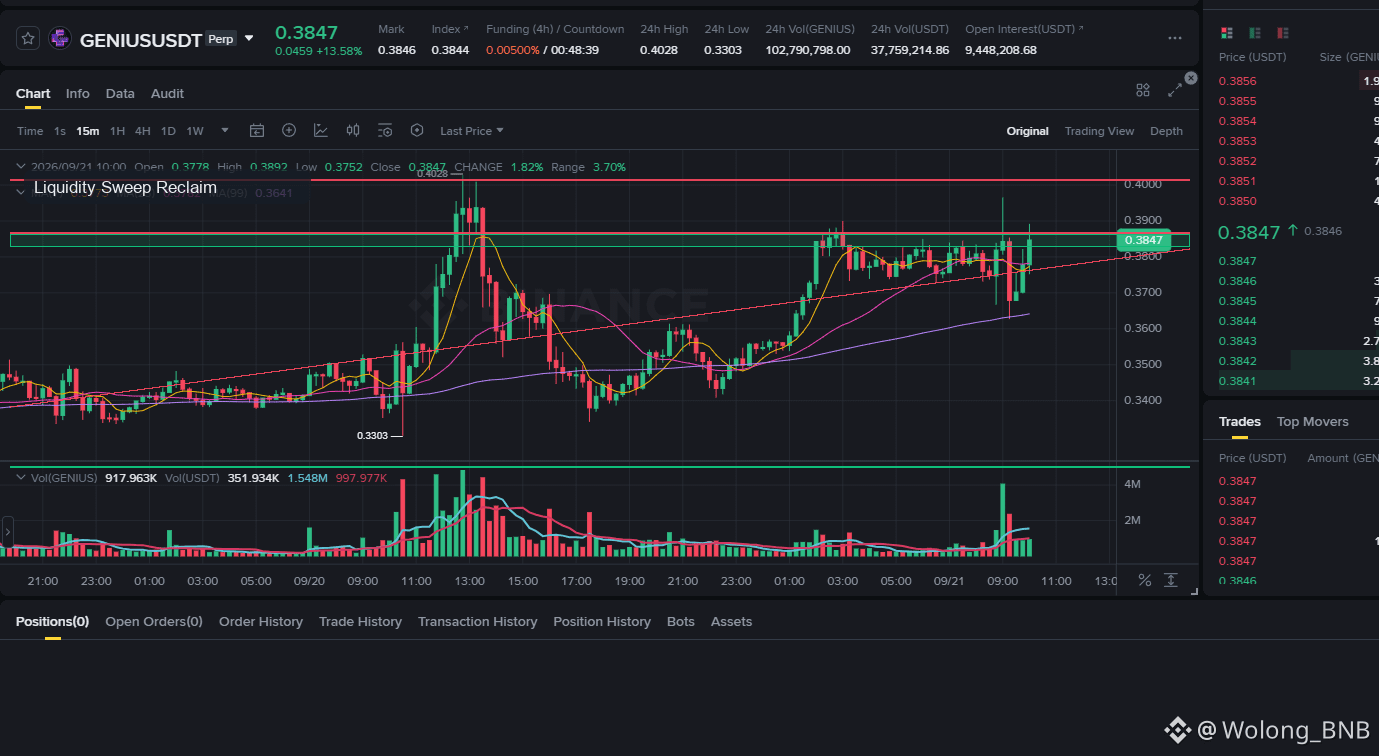
$GENIUS is getting interesting after that liquidity sweep.
The structure is clean enough to watch, but I would still let price confirm the level.
I would rather see price reject around $0.3867–$0.3895 than short after the move is already stretched. The setup is invalid if price cleanly crosses $0.3918.
Is this level enough for you, or do you want another confirmation first?
#GENIUS #Trading
Trade plan: SHORT
Entry: $0.3867 - $0.3895
SL: $0.3918
TP1: $0.3819
TP2: $0.3817
TP3: $0.3804
$GENIUS is getting interesting after that liquidity sweep.
The structure is clean enough to watch, but I would still let price confirm the level.
I would rather see price reject around $0.3867–$0.3895 than short after the move is already stretched. The setup is invalid if price cleanly crosses $0.3918.
Is this level enough for you, or do you want another confirmation first?
#GENIUS #Trading
Trade plan: SHORT
Entry: $0.3867 - $0.3895
SL: $0.3918
TP1: $0.3819
TP2: $0.3817
TP3: $0.3804
The structure is clean enough to watch, but I would still let price confirm the level.
I would rather see price reject around $0.3867–$0.3895 than short after the move is already stretched. The setup is invalid if price cleanly crosses $0.3918.
Is this level enough for you, or do you want another confirmation first?
#GENIUS #Trading
Trade plan: SHORT
Entry: $0.3867 - $0.3895
SL: $0.3918
TP1: $0.3819
TP2: $0.3817
TP3: $0.3804
133

·
--
Bullish
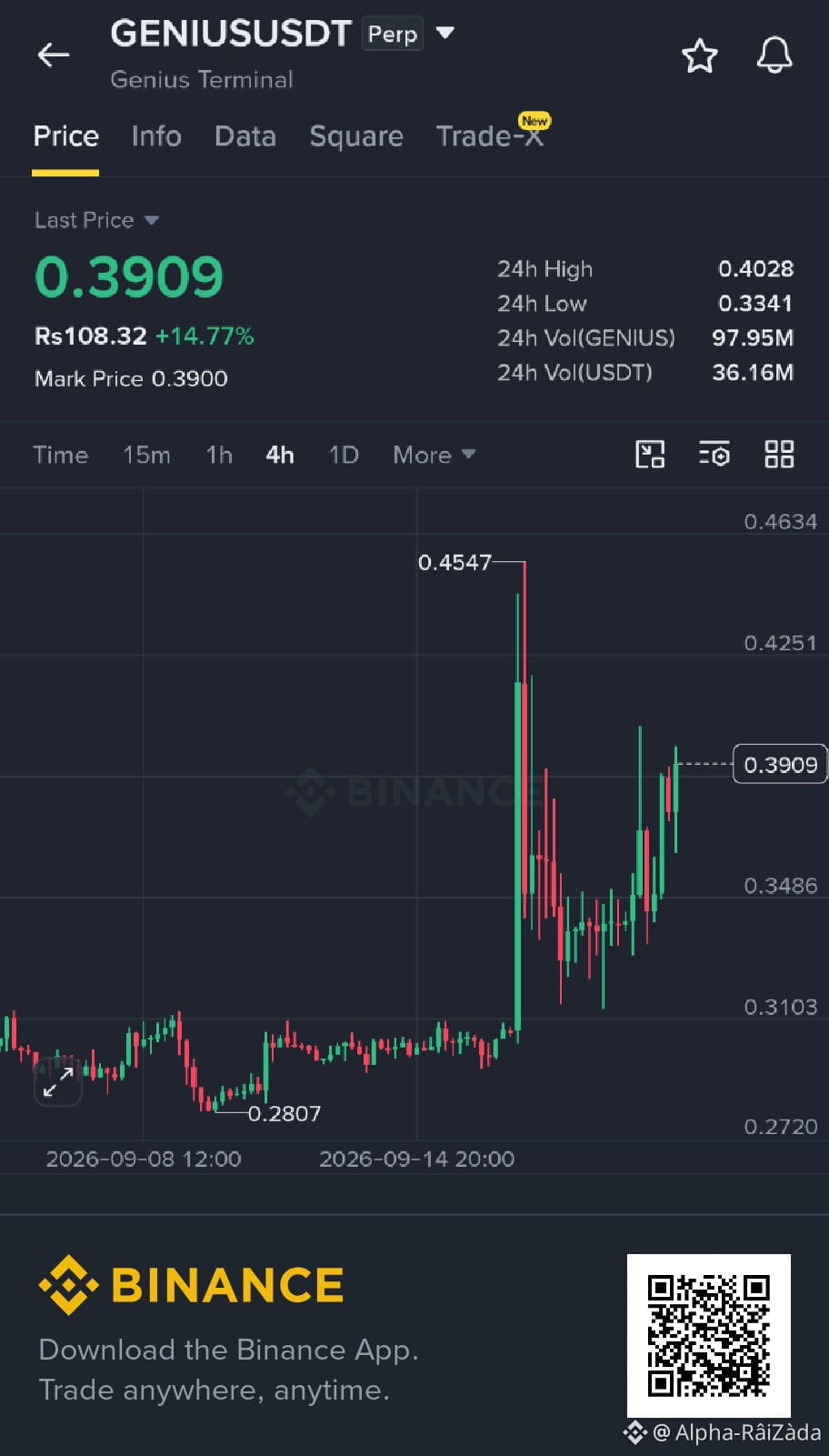
🔥 $GENIUS — BULLISH LONG SETUP
$GENIUS is holding above MA(7), MA(25) & MA(99), while RSI near 65 shows strong momentum. Breakout structure remains intact.
🟢 Entry: $0.384–$0.391
🎯 TP1: $0.397
🎯 TP2: $0.402
🎯 TP3: $0.410
🛑 SL: $0.376
🔑 Hold $0.376 → bullish structure
🚀 Break $0.402 → continuation watch
Wait for confirmation. Manage risk • DYOR • NFA
#GENIUS #CryptoTrading
🔥 $GENIUS — BULLISH LONG SETUP
$GENIUS is holding above MA(7), MA(25) & MA(99), while RSI near 65 shows strong momentum. Breakout structure remains intact.
🟢 Entry: $0.384–$0.391
🎯 TP1: $0.397
🎯 TP2: $0.402
🎯 TP3: $0.410
🛑 SL: $0.376
🔑 Hold $0.376 → bullish structure
🚀 Break $0.402 → continuation watch
Wait for confirmation. Manage risk • DYOR • NFA
#GENIUS #CryptoTrading
$GENIUS is holding above MA(7), MA(25) & MA(99), while RSI near 65 shows strong momentum. Breakout structure remains intact.
🟢 Entry: $0.384–$0.391
🎯 TP1: $0.397
🎯 TP2: $0.402
🎯 TP3: $0.410
🛑 SL: $0.376
🔑 Hold $0.376 → bullish structure
🚀 Break $0.402 → continuation watch
Wait for confirmation. Manage risk • DYOR • NFA
#GENIUS #CryptoTrading
145

·
--
$GENIUS +13.85% | $JOE +12.73% | $SUI +12.63%
#GENIUS is holding at $0.3864, up +13.85% on $7.3 M of trades. Its claim as the first private, final on‑chain terminal adds a niche appeal that may be fueling the rally.
#JOE nudges to $0.0363, climbing +12.73% with $1.3 M changing hands. The modest volume suggests the move is still early‑stage but noteworthy.
#SUI sits at $0.9331, gaining +12.63% on a hefty $138.1 M volume. Backed by former Meta engineers, its Layer 1 momentum could keep the upside pressure alive.
👀 Keep an eye on whether GENIUS can sustain its growth amid relatively low volume compared to SUI’s flood of activity.
#Write2Earn #Binance
$GENIUS +13.85% | $JOE +12.73% | $SUI +12.63%
#GENIUS is holding at $0.3864, up +13.85% on $7.3 M of trades. Its claim as the first private, final on‑chain terminal adds a niche appeal that may be fueling the rally.
#JOE nudges to $0.0363, climbing +12.73% with $1.3 M changing hands. The modest volume suggests the move is still early‑stage but noteworthy.
#SUI sits at $0.9331, gaining +12.63% on a hefty $138.1 M volume. Backed by former Meta engineers, its Layer 1 momentum could keep the upside pressure alive.
👀 Keep an eye on whether GENIUS can sustain its growth amid relatively low volume compared to SUI’s flood of activity.
#Write2Earn #Binance
#GENIUS is holding at $0.3864, up +13.85% on $7.3 M of trades. Its claim as the first private, final on‑chain terminal adds a niche appeal that may be fueling the rally.
#JOE nudges to $0.0363, climbing +12.73% with $1.3 M changing hands. The modest volume suggests the move is still early‑stage but noteworthy.
#SUI sits at $0.9331, gaining +12.63% on a hefty $138.1 M volume. Backed by former Meta engineers, its Layer 1 momentum could keep the upside pressure alive.
👀 Keep an eye on whether GENIUS can sustain its growth amid relatively low volume compared to SUI’s flood of activity.
#Write2Earn #Binance
92

·
--
$GENIUS is holding a live support area, and buyers still have a reason to defend it here.
$GENIUS – Price is trying to stabilize near support, and buyers are watching for continuation from this area.
Trading Plan LONG $GENIUS (max 10x)
🎯 Entry: 0.3699 - 0.3755
🛑 SL: 0.3617
✅ TP1: 0.3833
✅ TP2: 0.3911
✅ TP3: 0.4
• Live range structure is still clean enough to plan around
• Confirmation matters more than chasing this move
Would you take the long on $GENIUS only after confirmation, or start scaling near support?
Trade $GENIUS here 👇
#GENIUS #PriceAction
$GENIUS is holding a live support area, and buyers still have a reason to defend it here.
$GENIUS – Price is trying to stabilize near support, and buyers are watching for continuation from this area.
Trading Plan LONG $GENIUS (max 10x)
🎯 Entry: 0.3699 - 0.3755
🛑 SL: 0.3617
✅ TP1: 0.3833
✅ TP2: 0.3911
✅ TP3: 0.4
• Live range structure is still clean enough to plan around
• Confirmation matters more than chasing this move
Would you take the long on $GENIUS only after confirmation, or start scaling near support?
Trade $GENIUS here 👇
#GENIUS #PriceAction
$GENIUS – Price is trying to stabilize near support, and buyers are watching for continuation from this area.
Trading Plan LONG $GENIUS (max 10x)
🎯 Entry: 0.3699 - 0.3755
🛑 SL: 0.3617
✅ TP1: 0.3833
✅ TP2: 0.3911
✅ TP3: 0.4
• Live range structure is still clean enough to plan around
• Confirmation matters more than chasing this move
Would you take the long on $GENIUS only after confirmation, or start scaling near support?
Trade $GENIUS here 👇
#GENIUS #PriceAction
105
·
--
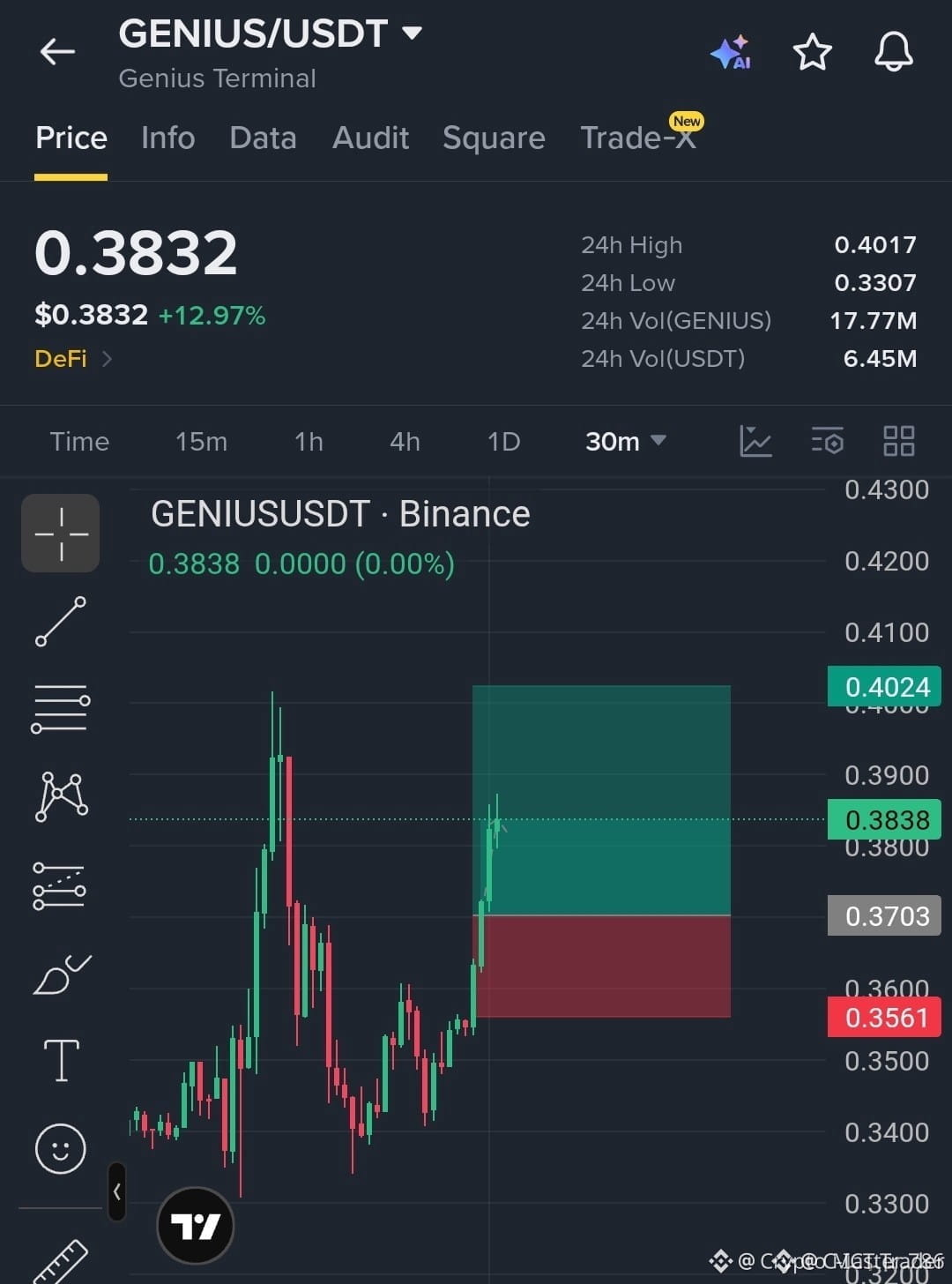
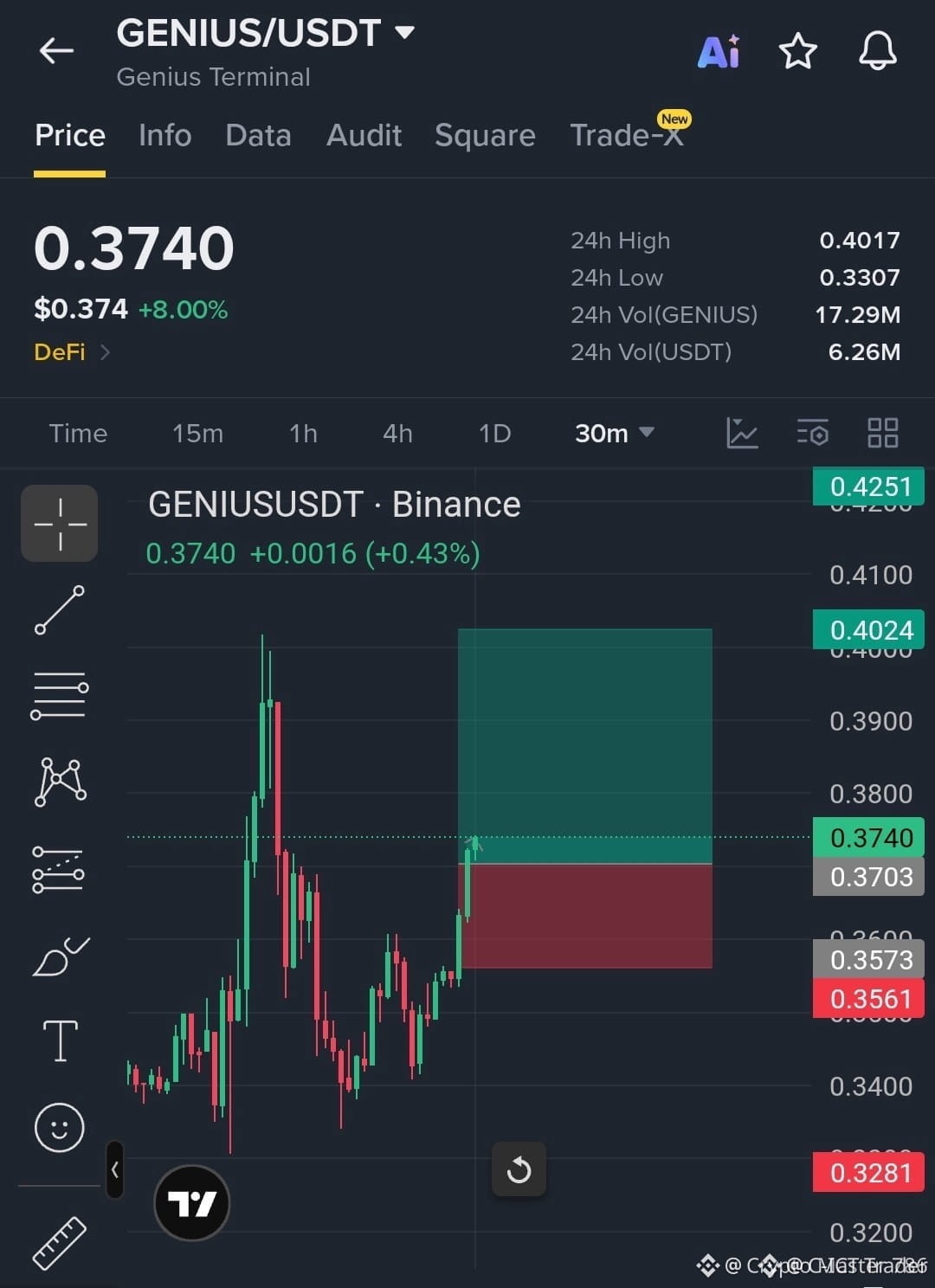
🚨 $GENIUS EXPANDS AS EXPECTED AFTER CLEAN LIQUIDITY SWEEP WITH FIRST TARGET SECURED! ⚡
📌 Institutional order flow on $GENIUS played out cleanly as buyers defended the displacement level, pushing price straight into our first liquidity pool within 45 minutes. 📊 Volume confirmation remains strong as structural momentum continues to expand toward the higher-timeframe imbalance above.
Traders holding runners should let market structure guide the trail, keeping risk parameters locked behind structural higher lows. 💬 Are you securing partials here or riding the full expansion to the final target? 👇
⚠️ Not financial advice. Always manage your risk. 🛡️
🏷️ #GENIUS #Crypto #SmartMoney #TradeUpdate
🎯 🦈
🚨 $GENIUS EXPANDS AS EXPECTED AFTER CLEAN LIQUIDITY SWEEP WITH FIRST TARGET SECURED! ⚡
📌 Institutional order flow on $GENIUS played out cleanly as buyers defended the displacement level, pushing price straight into our first liquidity pool within 45 minutes. 📊 Volume confirmation remains strong as structural momentum continues to expand toward the higher-timeframe imbalance above.
Traders holding runners should let market structure guide the trail, keeping risk parameters locked behind structural higher lows. 💬 Are you securing partials here or riding the full expansion to the final target? 👇
⚠️ Not financial advice. Always manage your risk. 🛡️
🏷️ #GENIUS #Crypto #SmartMoney #TradeUpdate
🎯 🦈
📌 Institutional order flow on $GENIUS played out cleanly as buyers defended the displacement level, pushing price straight into our first liquidity pool within 45 minutes. 📊 Volume confirmation remains strong as structural momentum continues to expand toward the higher-timeframe imbalance above.
Traders holding runners should let market structure guide the trail, keeping risk parameters locked behind structural higher lows. 💬 Are you securing partials here or riding the full expansion to the final target? 👇
⚠️ Not financial advice. Always manage your risk. 🛡️
🏷️ #GENIUS #Crypto #SmartMoney #TradeUpdate
🎯 🦈
93

·
--
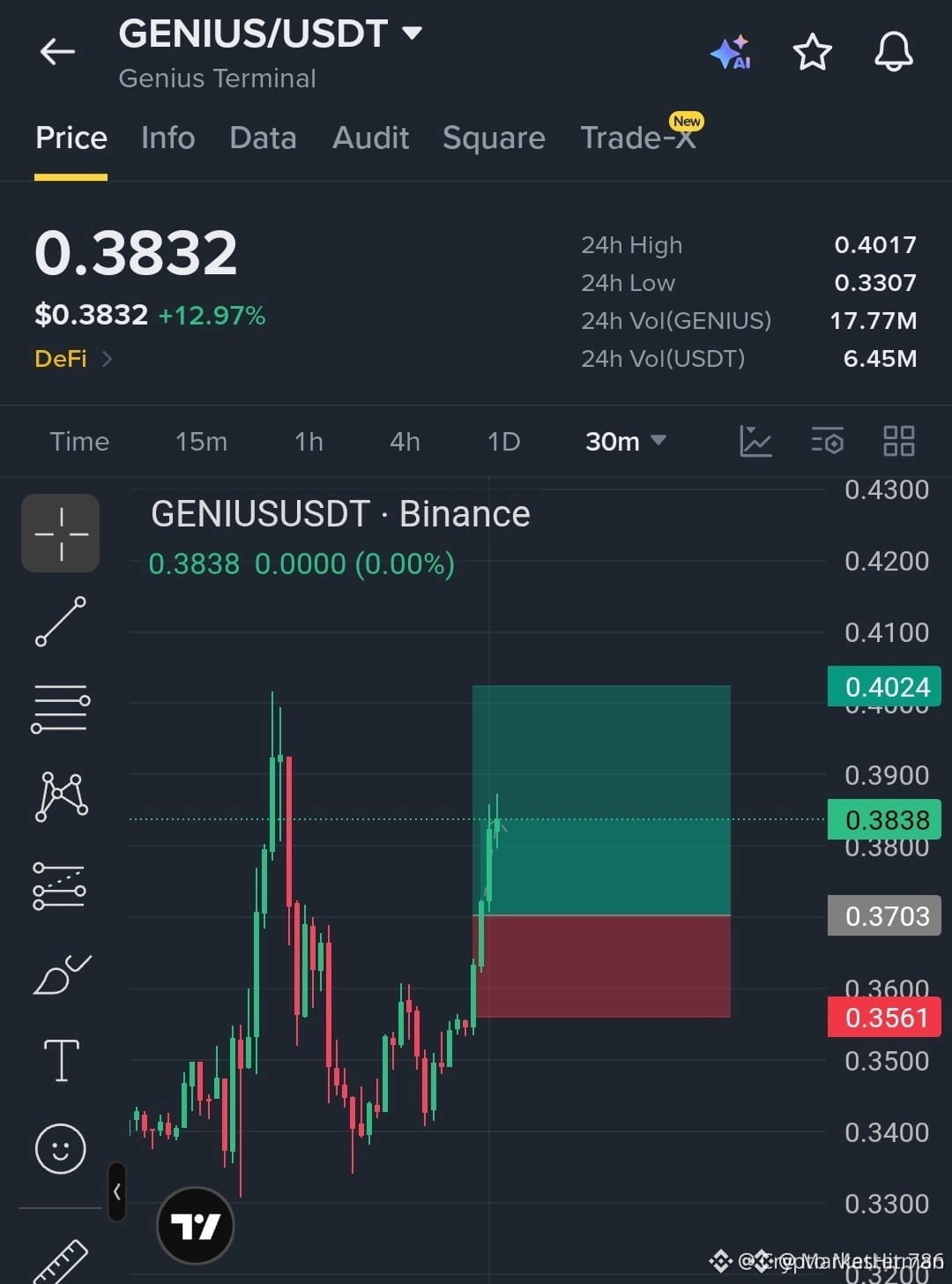
⚡ $GENIUS EXPANDS RIGHT ON SCHEDULE AS FIRST TARGET BLOWS OUT! 💥
Momentum is unfolding cleanly on $GENIUS as aggressive buyers step up and smash through the first resistance zone. 📊 The expansion volume confirmed our breakout thesis, pushing price straight into TP1 while late shorts get squeezed out.
We are locking in gains and trailing stops into profit while letting the remaining position run toward the main target. ⚡ Order flow cleared the lower liquidity pool, leaving a solid foundation for continuation.
💬 Did you lock in gains at the first target or are you letting your full stack ride to the top? 👇
⚠️ Not financial advice. Always manage your risk. 🛡️
🏷️ #GENIUS #Altcoins #Crypto #Breakout
🎯 🚀
⚡ $GENIUS EXPANDS RIGHT ON SCHEDULE AS FIRST TARGET BLOWS OUT! 💥
Momentum is unfolding cleanly on $GENIUS as aggressive buyers step up and smash through the first resistance zone. 📊 The expansion volume confirmed our breakout thesis, pushing price straight into TP1 while late shorts get squeezed out.
We are locking in gains and trailing stops into profit while letting the remaining position run toward the main target. ⚡ Order flow cleared the lower liquidity pool, leaving a solid foundation for continuation.
💬 Did you lock in gains at the first target or are you letting your full stack ride to the top? 👇
⚠️ Not financial advice. Always manage your risk. 🛡️
🏷️ #GENIUS #Altcoins #Crypto #Breakout
🎯 🚀
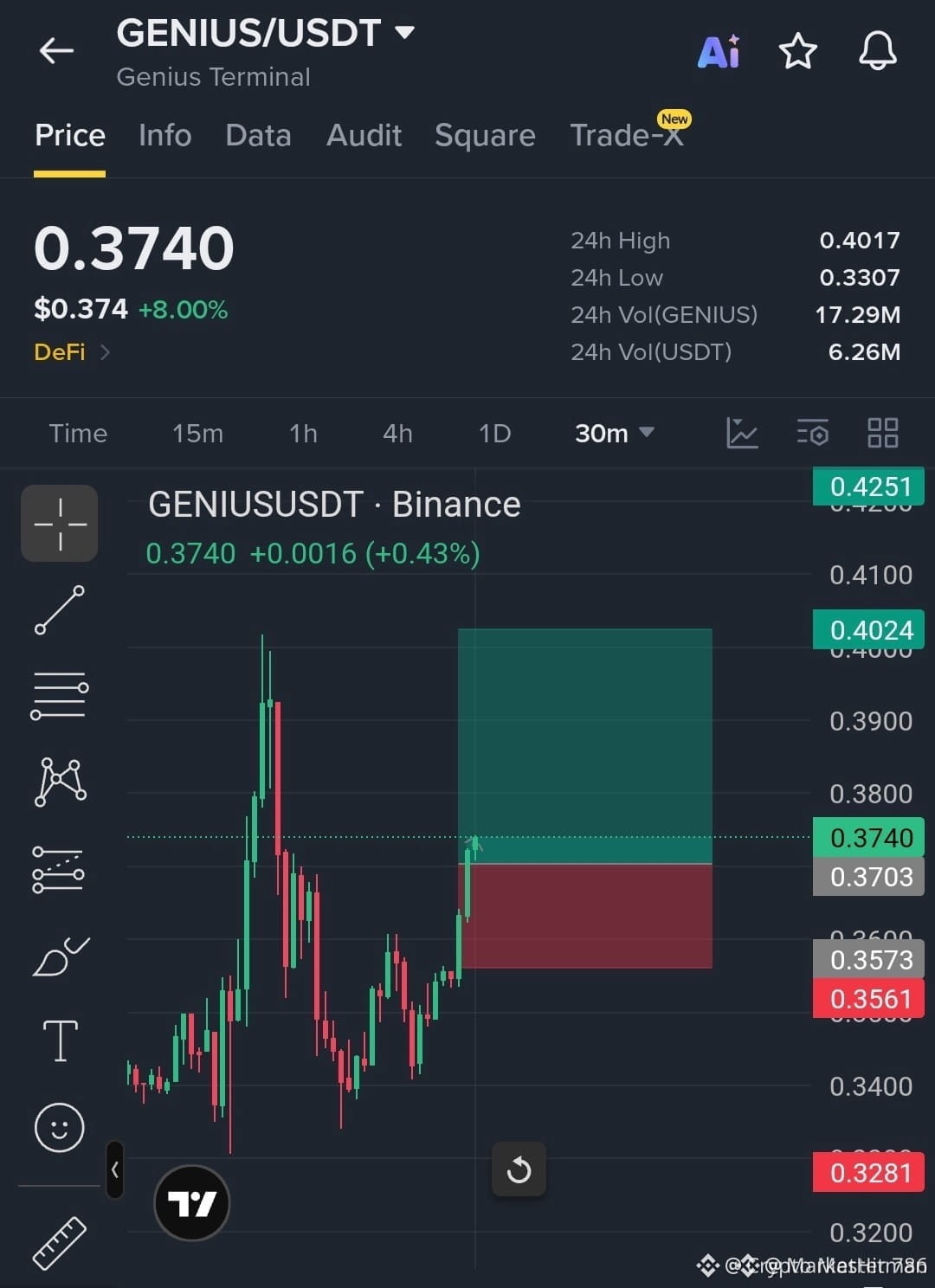
Momentum is unfolding cleanly on $GENIUS as aggressive buyers step up and smash through the first resistance zone. 📊 The expansion volume confirmed our breakout thesis, pushing price straight into TP1 while late shorts get squeezed out.
We are locking in gains and trailing stops into profit while letting the remaining position run toward the main target. ⚡ Order flow cleared the lower liquidity pool, leaving a solid foundation for continuation.
💬 Did you lock in gains at the first target or are you letting your full stack ride to the top? 👇
⚠️ Not financial advice. Always manage your risk. 🛡️
🏷️ #GENIUS #Altcoins #Crypto #Breakout
🎯 🚀
78
·
--
$GENIUS is back at the breakout area.
The 1h/4h context still favors sellers, and aggressive selling is still showing up.
I would rather see price reject around $0.3776–$0.3803 than short after the move is already stretched. The setup is invalid if price cleanly crosses $0.3817.
Is this level enough for you, or do you want another confirmation first?
#GENIUS #Trading
Trade plan: SHORT
Entry: $0.3776 - $0.3803
SL: $0.3817
TP1: $0.371
TP2: $0.3665
TP3: $0.3612
$GENIUS is back at the breakout area.
The 1h/4h context still favors sellers, and aggressive selling is still showing up.
I would rather see price reject around $0.3776–$0.3803 than short after the move is already stretched. The setup is invalid if price cleanly crosses $0.3817.
Is this level enough for you, or do you want another confirmation first?
#GENIUS #Trading
Trade plan: SHORT
Entry: $0.3776 - $0.3803
SL: $0.3817
TP1: $0.371
TP2: $0.3665
TP3: $0.3612
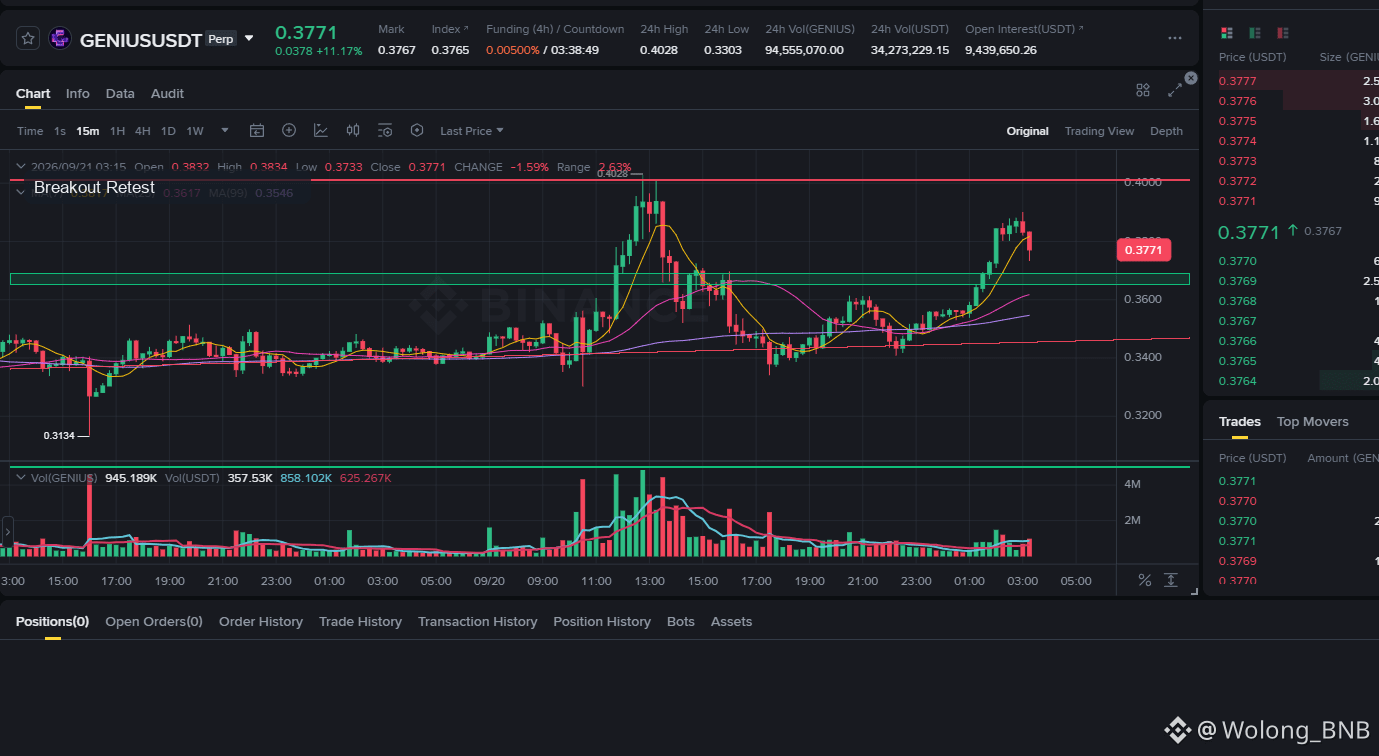
The 1h/4h context still favors sellers, and aggressive selling is still showing up.
I would rather see price reject around $0.3776–$0.3803 than short after the move is already stretched. The setup is invalid if price cleanly crosses $0.3817.
Is this level enough for you, or do you want another confirmation first?
#GENIUS #Trading
Trade plan: SHORT
Entry: $0.3776 - $0.3803
SL: $0.3817
TP1: $0.371
TP2: $0.3665
TP3: $0.3612
66
·
--
💥 $GENIUS STRUCTURAL EXPANSION IN PROGRESS AS INSTITUTIONAL DEMAND HOLDS THE RANGE 🎯
Entry: $0.374 - $0.381 🟢
Target: $0.390 / $0.400 / $0.415 🎯
Stop Loss: $0.365 🛑
The low-timeframe liquidity sweep into the $0.374 demand block delivered an immediate institutional reaction. 🔍 Price action is respecting structural order flow, expanding upward to fill lower-timeframe fair value gaps with momentum. 📊
With sell-side liquidity cleared below local support, smart money positioning favors a disciplined push toward overhead supply pools. 💡 Risk parameters remain neatly defined, offering a sharp risk-to-reward asymmetry for systematic execution. 💬 Are you riding this structural expansion or waiting for a retest of the demand block? 👇
⚠️ Not financial advice. Always manage your risk. 🛡️
🏷️ #GENIUS #Crypto #SmartMoney #TradeSetup
🎯 🦈
💥 $GENIUS STRUCTURAL EXPANSION IN PROGRESS AS INSTITUTIONAL DEMAND HOLDS THE RANGE 🎯
Entry: $0.374 - $0.381 🟢
Target: $0.390 / $0.400 / $0.415 🎯
Stop Loss: $0.365 🛑
The low-timeframe liquidity sweep into the $0.374 demand block delivered an immediate institutional reaction. 🔍 Price action is respecting structural order flow, expanding upward to fill lower-timeframe fair value gaps with momentum. 📊
With sell-side liquidity cleared below local support, smart money positioning favors a disciplined push toward overhead supply pools. 💡 Risk parameters remain neatly defined, offering a sharp risk-to-reward asymmetry for systematic execution. 💬 Are you riding this structural expansion or waiting for a retest of the demand block? 👇
⚠️ Not financial advice. Always manage your risk. 🛡️
🏷️ #GENIUS #Crypto #SmartMoney #TradeSetup
🎯 🦈
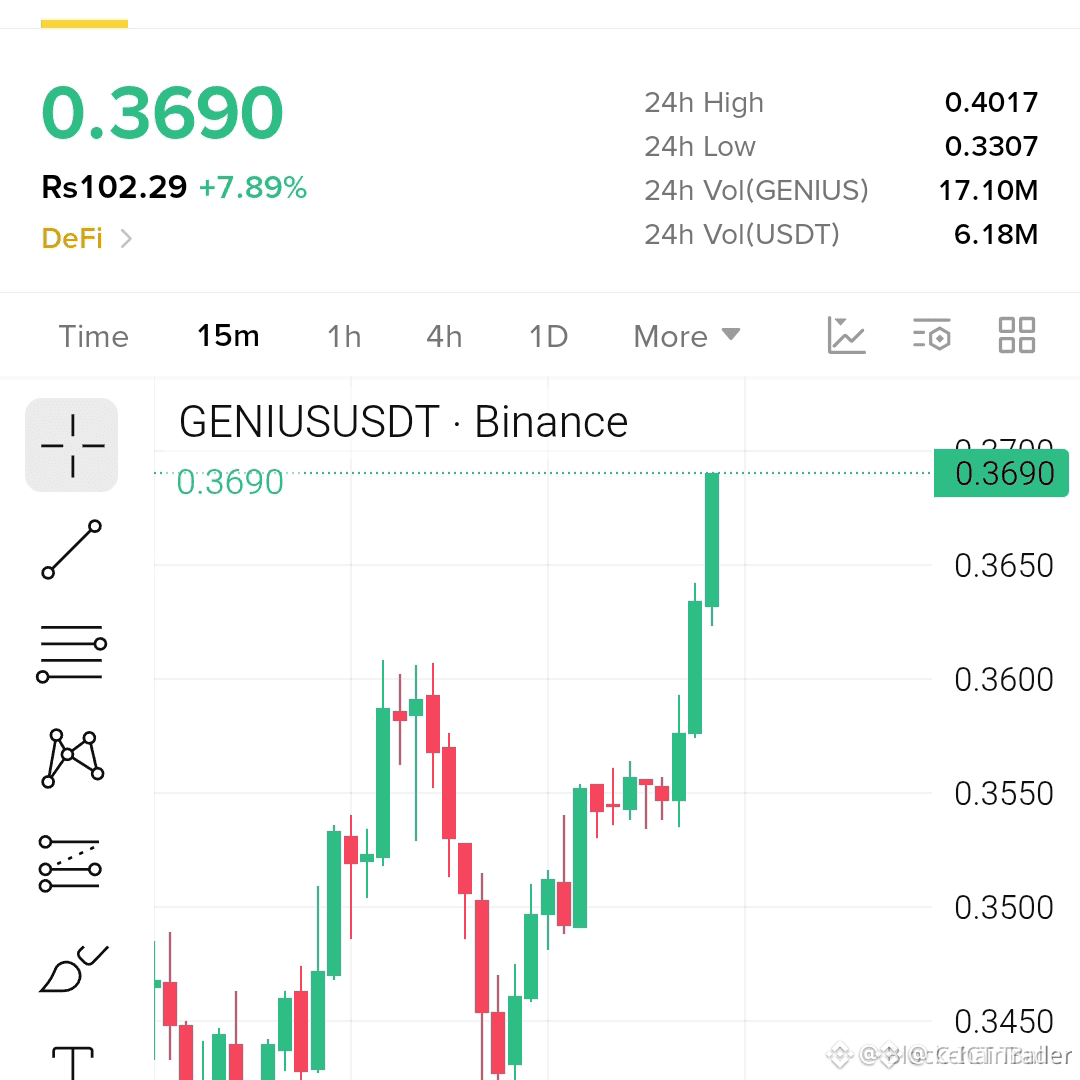
Entry: $0.374 - $0.381 🟢
Target: $0.390 / $0.400 / $0.415 🎯
Stop Loss: $0.365 🛑
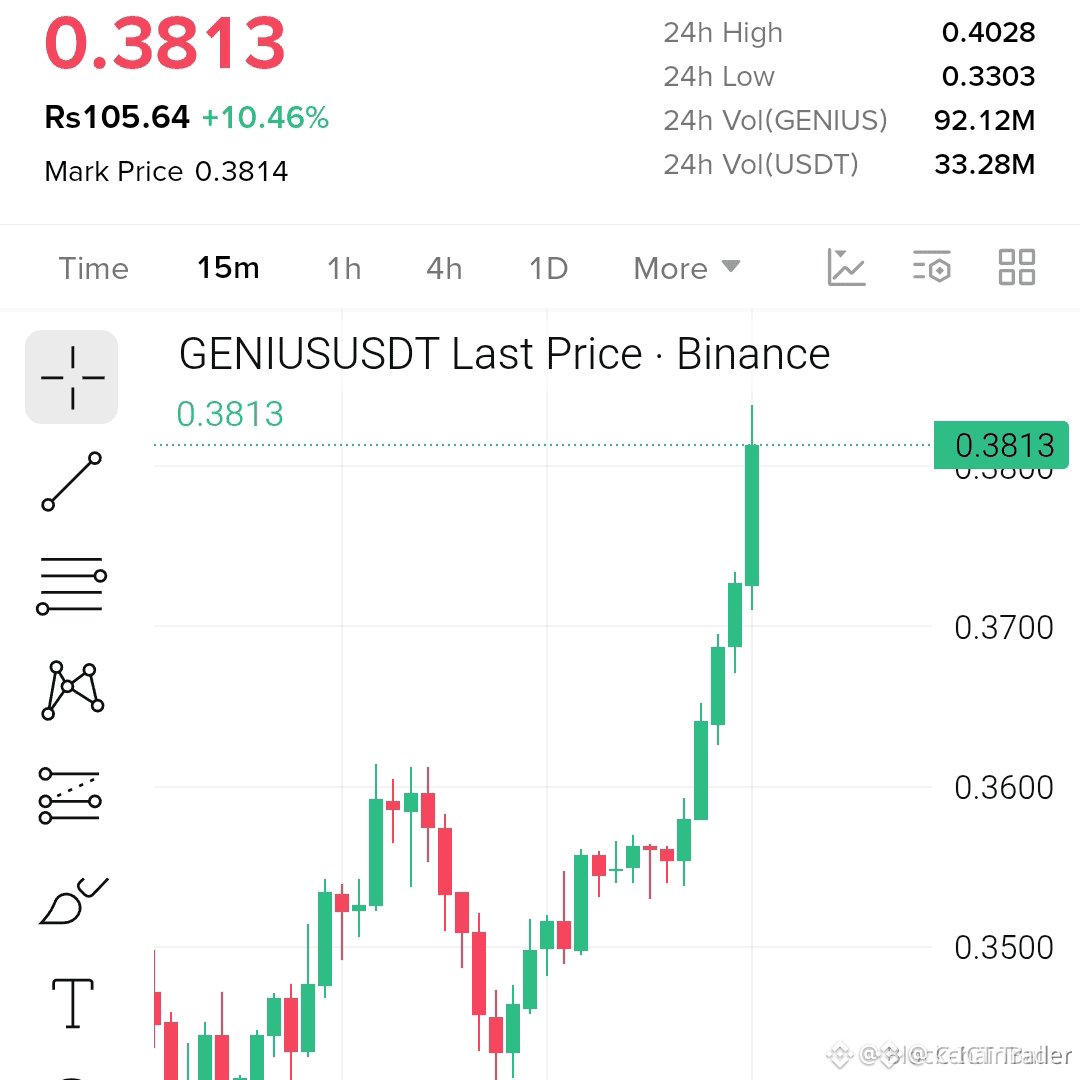
The low-timeframe liquidity sweep into the $0.374 demand block delivered an immediate institutional reaction. 🔍 Price action is respecting structural order flow, expanding upward to fill lower-timeframe fair value gaps with momentum. 📊
With sell-side liquidity cleared below local support, smart money positioning favors a disciplined push toward overhead supply pools. 💡 Risk parameters remain neatly defined, offering a sharp risk-to-reward asymmetry for systematic execution. 💬 Are you riding this structural expansion or waiting for a retest of the demand block? 👇
⚠️ Not financial advice. Always manage your risk. 🛡️
🏷️ #GENIUS #Crypto #SmartMoney #TradeSetup
🎯 🦈
45
·
--
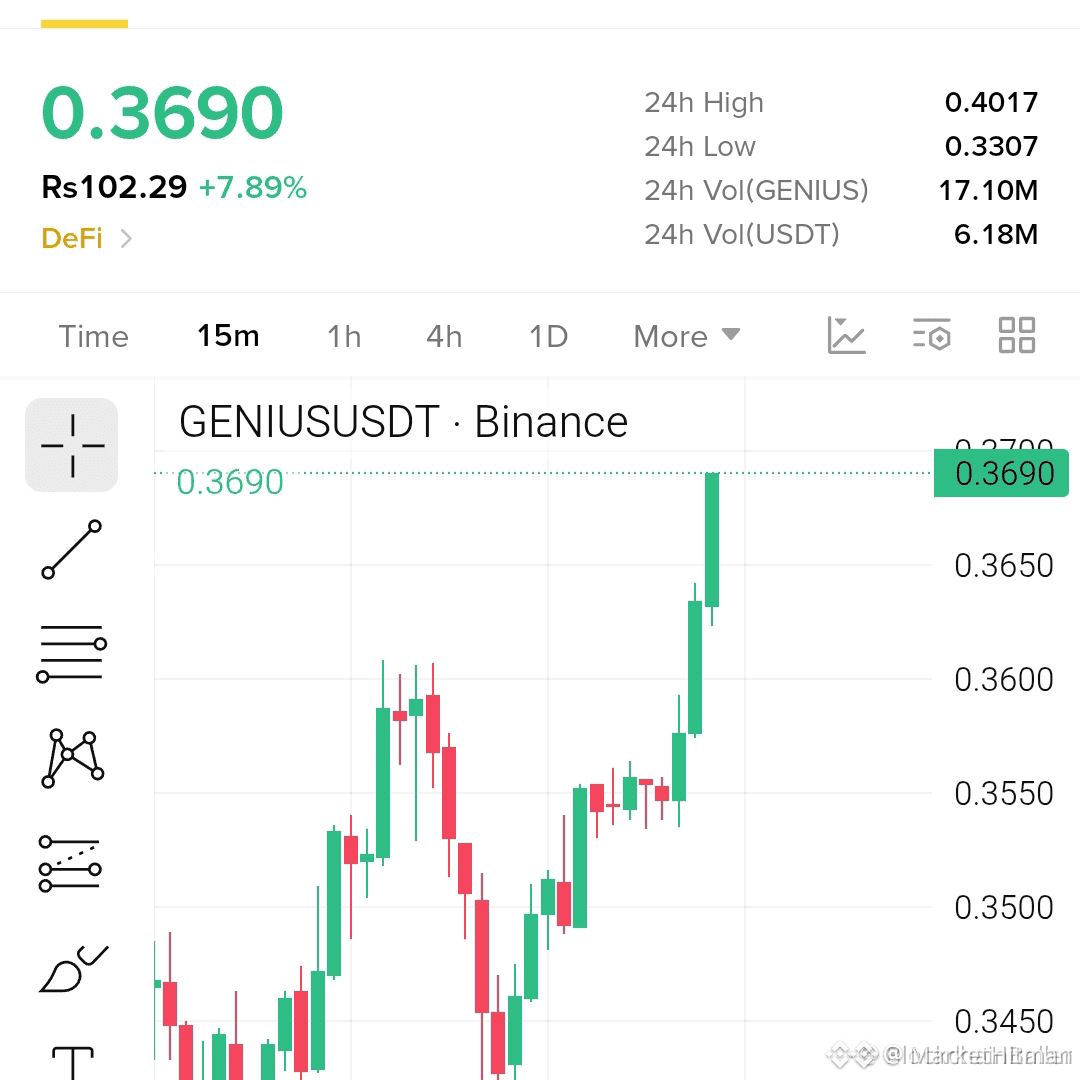
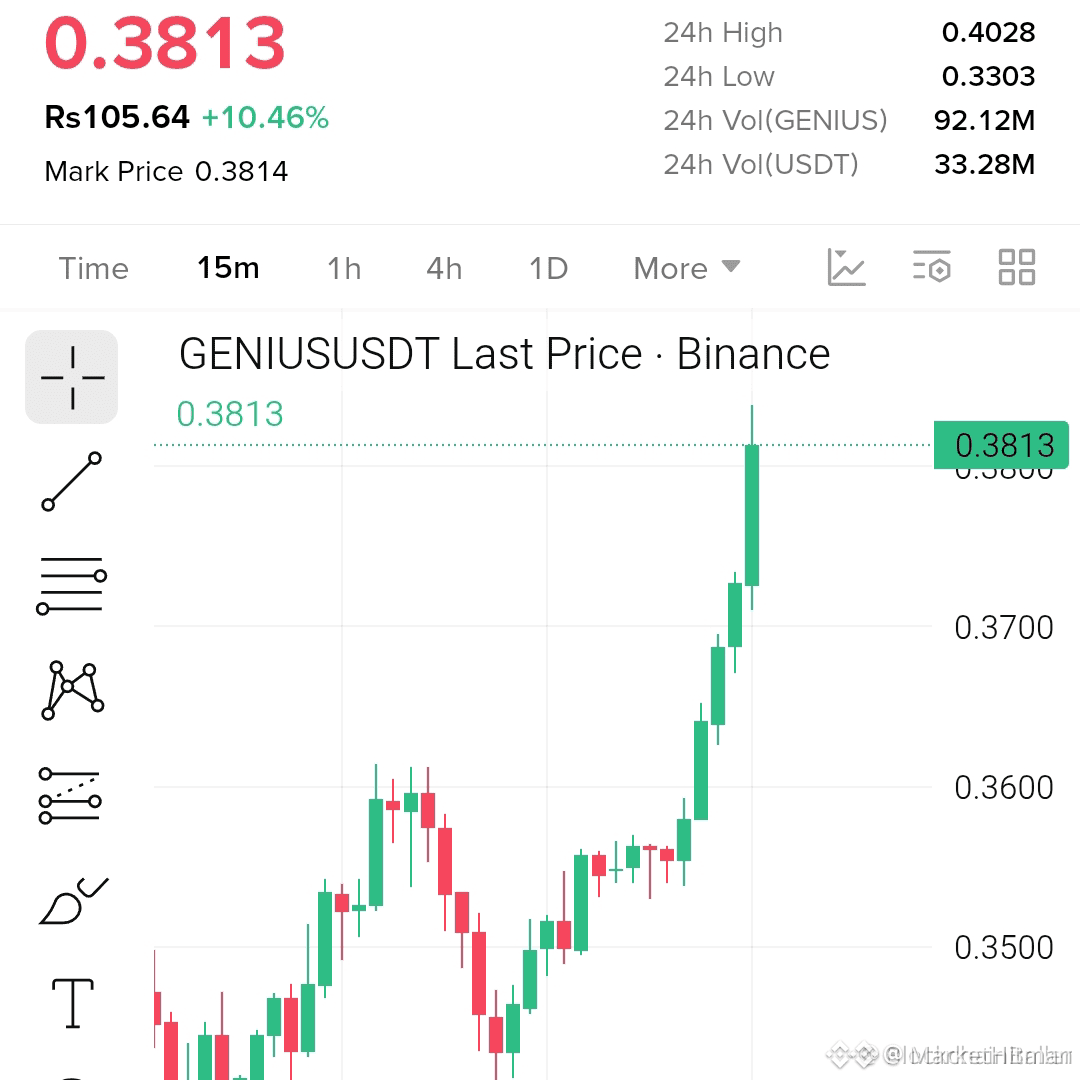
$GENIUS EXPANDING WITH MOMENTUM RIGHT AFTER ABSORBING SELLER LIQUIDITY! ⚡ 🎯
Entry: 0.374 - 0.381 ⚡
Target: 0.390 - 0.415 🎯
Stop Loss: 0.365 ⚠️
Buyers are aggressively defending the local demand pocket, absorbing sell pressure with precision timing. 📊 Order flow shows immediate momentum as bids stack up on lower timeframes, setting up a sharp trajectory toward higher expansion zones.
Momentum indicators are curling sharply upward, confirming solid backing behind this upside surge. 💡 With local structure holding clean above support, path of least resistance points straight toward top targets. 💬 Are you riding this momentum move to the upper targets or waiting for a micro retest? 👇
⚠️ Not financial advice. Always manage your risk. 🛡️
🏷️ #GENIUS #LongSetup #Breakout #Crypto
🔥 ⚡
$GENIUS EXPANDING WITH MOMENTUM RIGHT AFTER ABSORBING SELLER LIQUIDITY! ⚡ 🎯
Entry: 0.374 - 0.381 ⚡
Target: 0.390 - 0.415 🎯
Stop Loss: 0.365 ⚠️
Buyers are aggressively defending the local demand pocket, absorbing sell pressure with precision timing. 📊 Order flow shows immediate momentum as bids stack up on lower timeframes, setting up a sharp trajectory toward higher expansion zones.
Momentum indicators are curling sharply upward, confirming solid backing behind this upside surge. 💡 With local structure holding clean above support, path of least resistance points straight toward top targets. 💬 Are you riding this momentum move to the upper targets or waiting for a micro retest? 👇
⚠️ Not financial advice. Always manage your risk. 🛡️
🏷️ #GENIUS #LongSetup #Breakout #Crypto
🔥 ⚡
Entry: 0.374 - 0.381 ⚡
Target: 0.390 - 0.415 🎯
Stop Loss: 0.365 ⚠️
Buyers are aggressively defending the local demand pocket, absorbing sell pressure with precision timing. 📊 Order flow shows immediate momentum as bids stack up on lower timeframes, setting up a sharp trajectory toward higher expansion zones.
Momentum indicators are curling sharply upward, confirming solid backing behind this upside surge. 💡 With local structure holding clean above support, path of least resistance points straight toward top targets. 💬 Are you riding this momentum move to the upper targets or waiting for a micro retest? 👇
⚠️ Not financial advice. Always manage your risk. 🛡️
🏷️ #GENIUS #LongSetup #Breakout #Crypto
🔥 ⚡
45
·
--
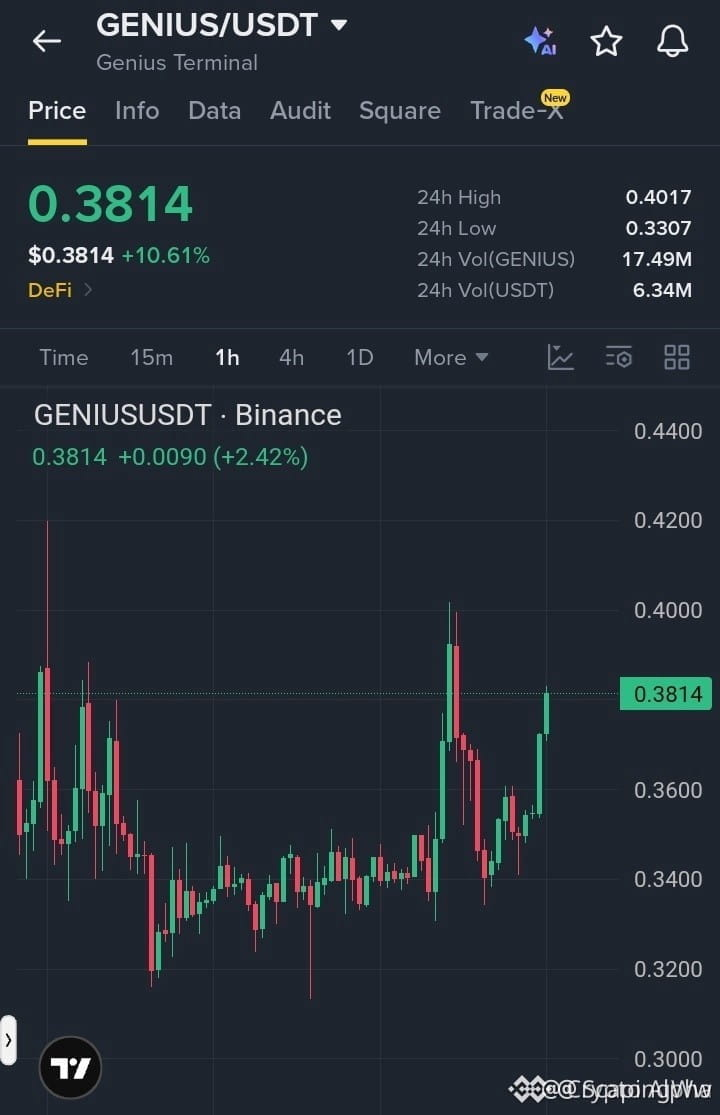
🚨 $GENIUS ABSORBING SELLER LIQUIDITY AS BUYERS RELOAD FOR A MASSIVE BREAKOUT MOVE! 💥
Entry: 0.3780 - 0.3820 🟢
Target: 0.3900 - 0.4100 🚀
Stop Loss: 0.3680 ⚠️
📌 Bids are stacking fast in the 0.3780 demand pocket, showing clear institutional absorption after the recent consolidation. Sellers are running out of leverage fuel while buyers consistently defend this key retest range. 📊
⚡ Momentum indicators are coiling tightly, setting up an aggressive push toward overhead liquidity levels at 0.3900 and beyond. As order flow shifts heavily to the buy side, keeping an eye on $AKE and $ZEC for broader market tailwinds makes total sense. 💡
💬 Are you locking in entries inside this reload zone or waiting for confirmation above resistance? 👇
⚠️ Not financial advice. Always manage your risk. 🛡️
🏷️ #GENIUS #Crypto #Breakout #LongSetup #Trading
🔥 🎯
🚨 $GENIUS ABSORBING SELLER LIQUIDITY AS BUYERS RELOAD FOR A MASSIVE BREAKOUT MOVE! 💥
Entry: 0.3780 - 0.3820 🟢
Target: 0.3900 - 0.4100 🚀
Stop Loss: 0.3680 ⚠️
📌 Bids are stacking fast in the 0.3780 demand pocket, showing clear institutional absorption after the recent consolidation. Sellers are running out of leverage fuel while buyers consistently defend this key retest range. 📊
⚡ Momentum indicators are coiling tightly, setting up an aggressive push toward overhead liquidity levels at 0.3900 and beyond. As order flow shifts heavily to the buy side, keeping an eye on $AKE and $ZEC for broader market tailwinds makes total sense. 💡
💬 Are you locking in entries inside this reload zone or waiting for confirmation above resistance? 👇
⚠️ Not financial advice. Always manage your risk. 🛡️
🏷️ #GENIUS #Crypto #Breakout #LongSetup #Trading
🔥 🎯
Entry: 0.3780 - 0.3820 🟢
Target: 0.3900 - 0.4100 🚀
Stop Loss: 0.3680 ⚠️
📌 Bids are stacking fast in the 0.3780 demand pocket, showing clear institutional absorption after the recent consolidation. Sellers are running out of leverage fuel while buyers consistently defend this key retest range. 📊
⚡ Momentum indicators are coiling tightly, setting up an aggressive push toward overhead liquidity levels at 0.3900 and beyond. As order flow shifts heavily to the buy side, keeping an eye on $AKE and $ZEC for broader market tailwinds makes total sense. 💡
💬 Are you locking in entries inside this reload zone or waiting for confirmation above resistance? 👇
⚠️ Not financial advice. Always manage your risk. 🛡️
🏷️ #GENIUS #Crypto #Breakout #LongSetup #Trading
🔥 🎯
1
60

·
--
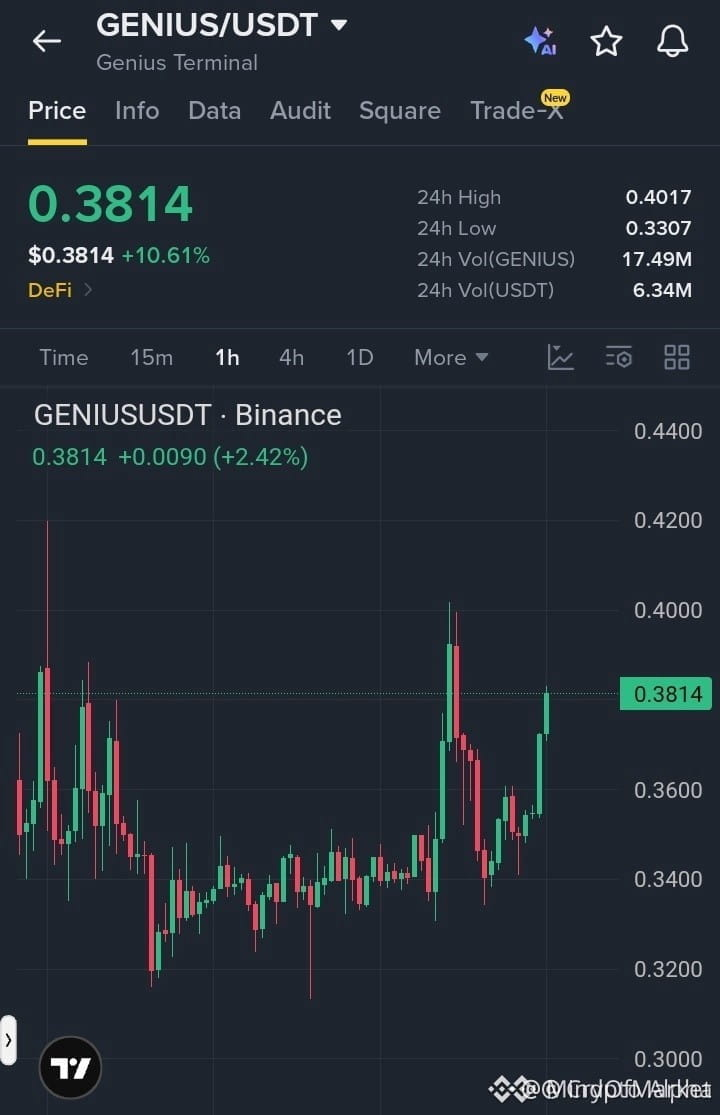
🚨 $GENIUS RECLAIMING KEY DEMAND ZONE AS INSTITUTIONAL ACCUMULATION EXPANDS 🦈
Entry: 0.3780 - 0.3820 ⚡
Target: 0.3900 / 0.4000 / 0.4100 🚀
Stop Loss: 0.3680 ⚠️
$GENIUS is compressing tightly inside a high-conviction order block between 0.3780 and 0.3820 after absorbing local sell-side liquidity. 🔍 Market structure remains intact on lower timeframes as aggressive bid walls signal smart money re-accumulation ahead of an expansion leg.
📌 Retesting this demand inefficiency offers an asymmetric risk-to-reward window up toward the 0.4100 liquidity pool, keeping risk tightly defined under 0.3680. 💡 Broader market momentum in correlated assets like $AKE and $ZEC continues to support upside continuation across the sector.
💬 Are you taking the pullback entry within this order block or waiting for structural confirmation above 0.3900? 👇
⚠️ Not financial advice. Always manage your risk. 🛡️
🏷️ #GENIUS #LongSetup #Crypto #MarketStructure #OrderBlock
🎯 🦈
🚨 $GENIUS RECLAIMING KEY DEMAND ZONE AS INSTITUTIONAL ACCUMULATION EXPANDS 🦈
Entry: 0.3780 - 0.3820 ⚡
Target: 0.3900 / 0.4000 / 0.4100 🚀
Stop Loss: 0.3680 ⚠️
$GENIUS is compressing tightly inside a high-conviction order block between 0.3780 and 0.3820 after absorbing local sell-side liquidity. 🔍 Market structure remains intact on lower timeframes as aggressive bid walls signal smart money re-accumulation ahead of an expansion leg.
📌 Retesting this demand inefficiency offers an asymmetric risk-to-reward window up toward the 0.4100 liquidity pool, keeping risk tightly defined under 0.3680. 💡 Broader market momentum in correlated assets like $AKE and $ZEC continues to support upside continuation across the sector.
💬 Are you taking the pullback entry within this order block or waiting for structural confirmation above 0.3900? 👇
⚠️ Not financial advice. Always manage your risk. 🛡️
🏷️ #GENIUS #LongSetup #Crypto #MarketStructure #OrderBlock
🎯 🦈
Entry: 0.3780 - 0.3820 ⚡
Target: 0.3900 / 0.4000 / 0.4100 🚀
Stop Loss: 0.3680 ⚠️
$GENIUS is compressing tightly inside a high-conviction order block between 0.3780 and 0.3820 after absorbing local sell-side liquidity. 🔍 Market structure remains intact on lower timeframes as aggressive bid walls signal smart money re-accumulation ahead of an expansion leg.
📌 Retesting this demand inefficiency offers an asymmetric risk-to-reward window up toward the 0.4100 liquidity pool, keeping risk tightly defined under 0.3680. 💡 Broader market momentum in correlated assets like $AKE and $ZEC continues to support upside continuation across the sector.
💬 Are you taking the pullback entry within this order block or waiting for structural confirmation above 0.3900? 👇
⚠️ Not financial advice. Always manage your risk. 🛡️
🏷️ #GENIUS #LongSetup #Crypto #MarketStructure #OrderBlock
🎯 🦈
6
·
--
🎯 $GENIUS TARGET 3 FILLED AS INSTITUTIONAL LIQUIDITY CLEARS AT 0.37300! 💥
Target: 0.37300 🎯
📌 Structural precision delivers again as $GENIUS expands 3.2% into our final objective at 0.37300. 🔍 Smart money systematically filled the local overhead inefficiency, allowing order flow momentum to hit TP3 with minimal drawdown.
📊 With the full profit target secured and the trade officially closed, market structure now approaches key higher-timeframe resistance. 💡 Securing capital ahead of potential distribution remains the disciplined institutional play here.
💬 Are you locking in profits on $GENIUS here or watching for a fresh order block retest? 👇
⚠️ Not financial advice. Always manage your risk. 🛡️
🏷️ #GENIUS #TradeExecution #MarketStructure #Altcoins #Crypto
🎯 🦈
🎯 $GENIUS TARGET 3 FILLED AS INSTITUTIONAL LIQUIDITY CLEARS AT 0.37300! 💥
Target: 0.37300 🎯
📌 Structural precision delivers again as $GENIUS expands 3.2% into our final objective at 0.37300. 🔍 Smart money systematically filled the local overhead inefficiency, allowing order flow momentum to hit TP3 with minimal drawdown.
📊 With the full profit target secured and the trade officially closed, market structure now approaches key higher-timeframe resistance. 💡 Securing capital ahead of potential distribution remains the disciplined institutional play here.
💬 Are you locking in profits on $GENIUS here or watching for a fresh order block retest? 👇
⚠️ Not financial advice. Always manage your risk. 🛡️
🏷️ #GENIUS #TradeExecution #MarketStructure #Altcoins #Crypto
🎯 🦈
Target: 0.37300 🎯
📌 Structural precision delivers again as $GENIUS expands 3.2% into our final objective at 0.37300. 🔍 Smart money systematically filled the local overhead inefficiency, allowing order flow momentum to hit TP3 with minimal drawdown.
📊 With the full profit target secured and the trade officially closed, market structure now approaches key higher-timeframe resistance. 💡 Securing capital ahead of potential distribution remains the disciplined institutional play here.
💬 Are you locking in profits on $GENIUS here or watching for a fresh order block retest? 👇
⚠️ Not financial advice. Always manage your risk. 🛡️
🏷️ #GENIUS #TradeExecution #MarketStructure #Altcoins #Crypto
🎯 🦈
36
·
--
🚨 $GENIUS RECLAIMS KEY STRUCTURE AT $0.37 AS INSTITUTIONAL DEMAND EXPANDS! ⚡
Entry: 0.369 - 0.374 ⚡
Target: 0.380 / 0.390 / 0.400 🚀
Stop Loss: 0.355 ⚠️
Smart money defended the 0.350 liquidity floor, sweeping local stops before driving a decisive reclaim of the 0.370 structural pivot. 🔍 This displacement signals active institutional accumulation as buy-side order flow resumes.
With efficiency restored above support, price action is expanding toward liquidity pools overhead. 📌 Volume confirmation points toward an efficient run through upper targets as momentum builds across the market alongside $ZEC and $AKE .
💬 Are you targeting the main target at 0.400 on this expansion or waiting for a mid-range retest? 👇
⚠️ Not financial advice. Always manage your risk. 🛡️
🏷️ #GENIUS #LongSetup #Altcoins #MarketStructure #Crypto
🎯 🦈
🚨 $GENIUS RECLAIMS KEY STRUCTURE AT $0.37 AS INSTITUTIONAL DEMAND EXPANDS! ⚡
Entry: 0.369 - 0.374 ⚡
Target: 0.380 / 0.390 / 0.400 🚀
Stop Loss: 0.355 ⚠️
Smart money defended the 0.350 liquidity floor, sweeping local stops before driving a decisive reclaim of the 0.370 structural pivot. 🔍 This displacement signals active institutional accumulation as buy-side order flow resumes.
With efficiency restored above support, price action is expanding toward liquidity pools overhead. 📌 Volume confirmation points toward an efficient run through upper targets as momentum builds across the market alongside $ZEC and $AKE .
💬 Are you targeting the main target at 0.400 on this expansion or waiting for a mid-range retest? 👇
⚠️ Not financial advice. Always manage your risk. 🛡️
🏷️ #GENIUS #LongSetup #Altcoins #MarketStructure #Crypto
🎯 🦈
Entry: 0.369 - 0.374 ⚡
Target: 0.380 / 0.390 / 0.400 🚀
Stop Loss: 0.355 ⚠️
Smart money defended the 0.350 liquidity floor, sweeping local stops before driving a decisive reclaim of the 0.370 structural pivot. 🔍 This displacement signals active institutional accumulation as buy-side order flow resumes.
With efficiency restored above support, price action is expanding toward liquidity pools overhead. 📌 Volume confirmation points toward an efficient run through upper targets as momentum builds across the market alongside $ZEC and $AKE .
💬 Are you targeting the main target at 0.400 on this expansion or waiting for a mid-range retest? 👇
⚠️ Not financial advice. Always manage your risk. 🛡️
🏷️ #GENIUS #LongSetup #Altcoins #MarketStructure #Crypto
🎯 🦈
64
Log in to explore more content
Join global crypto users on Binance Square
⚡️ Get latest and useful information about crypto.
💬 Trusted by the world’s largest crypto exchange.
👍 Discover real insights from verified creators.
Email / Phone number
Trending Topics
1
#CardanoAddedToX402KitForADAPayments
0 views
8 Discussing
2
#XRPRises8%
5,644 views
361 Discussing
3
#AMDHits$1TrillionMarketCap
4 views
7 Discussing
4
#BitcoinSpotETFs$999MNetInflow
154 views
9 Discussing
5
#AppleGoogleSeekStablecoinTokenizedDepositTalent
4,196 views
271 Discussing
6
#NvidiaToBuyAnother$1.5BSBEnergySharesPreIPO
978 views
26 Discussing
7
#AgoraGetsPreliminaryOCCApprovalForTrustBank
2,234 views
118 Discussing
8
#NEARRisesNearly80%InAWeek
66,253 views
1,246 Discussing
9
#MultiversXPlansHardForkRecovery
52,503 views
935 Discussing
10
#CircleLaunchesInstitutionalBTCBackedBorrowing
46,652 views
930 Discussing