

#ecbholdsratesat2
ecbholdsratesat2
1,132 views
33 Discussing
Hot
Latest

·
--
If you're still trading rate decisions like instant green candles, stop now.
The expensive mistake is assuming “no change” means “no risk.” Traders get chopped up because they buy the headline, then realize the market was actually pricing the next 3 months, not the next 3 minutes.
The ECB holding rates at 2% is basically macro’s version of “we’re not mad, just disappointed.” It doesn’t scream liquidity party like 2020, but it also isn’t the brutal 2022 hiking cycle that turned every dip-buy into a character-building exercise.
For crypto, the comparison that matters is how this stacks against past central bank pauses. When the Fed paused, $BTC and $ETH didn’t automatically moon; they waited for the market to believe cuts, liquidity, and risk appetite were actually coming back. With Fear & Greed sitting in fear territory, stablecoin parking in $USDT makes sense, but too much caution can also mean people are under-positioned if macro starts easing.
So here’s the real debate: is the ECB hold a quiet green light for risk assets, or just another “pause before the pain” setup? #ECBHoldsRatesAt2 #USJoblessClaimsFallTo187KLowestSince1969 #OilTops
If you're still trading rate decisions like instant green candles, stop now.
The expensive mistake is assuming “no change” means “no risk.” Traders get chopped up because they buy the headline, then realize the market was actually pricing the next 3 months, not the next 3 minutes.
The ECB holding rates at 2% is basically macro’s version of “we’re not mad, just disappointed.” It doesn’t scream liquidity party like 2020, but it also isn’t the brutal 2022 hiking cycle that turned every dip-buy into a character-building exercise.
For crypto, the comparison that matters is how this stacks against past central bank pauses. When the Fed paused, $BTC and $ETH didn’t automatically moon; they waited for the market to believe cuts, liquidity, and risk appetite were actually coming back. With Fear & Greed sitting in fear territory, stablecoin parking in $USDT makes sense, but too much caution can also mean people are under-positioned if macro starts easing.
So here’s the real debate: is the ECB hold a quiet green light for risk assets, or just another “pause before the pain” setup? #ECBHoldsRatesAt2 #USJoblessClaimsFallTo187KLowestSince1969 #OilTops
The expensive mistake is assuming “no change” means “no risk.” Traders get chopped up because they buy the headline, then realize the market was actually pricing the next 3 months, not the next 3 minutes.
The ECB holding rates at 2% is basically macro’s version of “we’re not mad, just disappointed.” It doesn’t scream liquidity party like 2020, but it also isn’t the brutal 2022 hiking cycle that turned every dip-buy into a character-building exercise.
For crypto, the comparison that matters is how this stacks against past central bank pauses. When the Fed paused, $BTC and $ETH didn’t automatically moon; they waited for the market to believe cuts, liquidity, and risk appetite were actually coming back. With Fear & Greed sitting in fear territory, stablecoin parking in $USDT makes sense, but too much caution can also mean people are under-positioned if macro starts easing.
So here’s the real debate: is the ECB hold a quiet green light for risk assets, or just another “pause before the pain” setup? #ECBHoldsRatesAt2 #USJoblessClaimsFallTo187KLowestSince1969 #OilTops
25
·
--
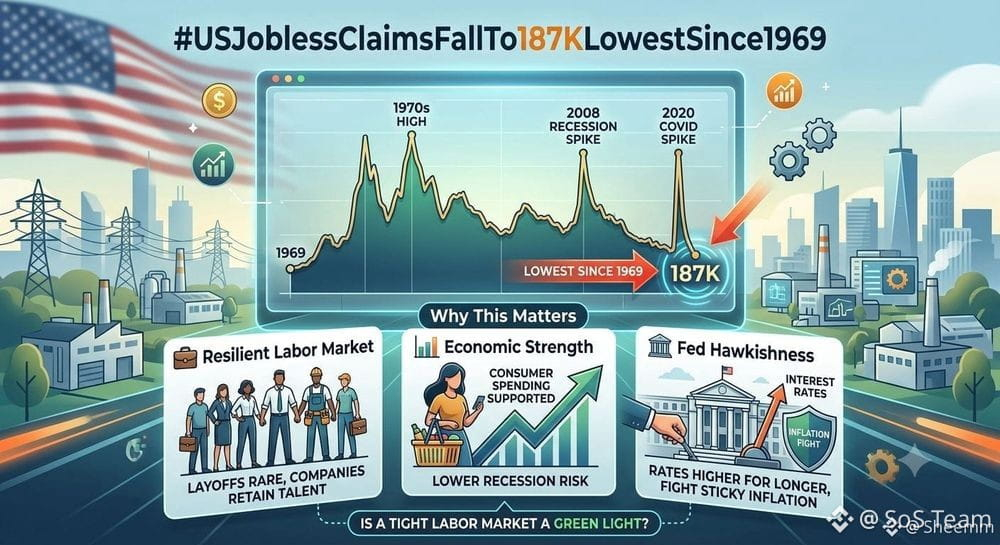
The strange part about the lowest US jobless claims since 1969 is that “good news” can still hit risk assets like bad news.
A lot of traders see a strong labor number and instantly think bullish, then wonder why $BTC or $ETH chops down instead of ripping. I’ve been caught in that trap before: buying the headline, not the liquidity reaction.
Here’s the lesson. When jobless claims fall to 187K, it tells the market the US labor market is still tight. That reduces urgency for rate cuts, supports a stronger dollar, and can keep yields sticky. Crypto doesn’t just trade on hope. It trades on liquidity, and liquidity often cares more about central bank expectations than the headline itself.
Back in past cycles, some of the best entries came when fear was high but positioning was washed out. Today’s Fear & Greed at 37 says people are cautious, and that matters. When everyone hides in $USDT, the market can either be building fuel for a rebound or preparing for one more shakeout.
The veteran move is not to ask, “Is this news bullish or bearish?” Ask, “How will this change liquidity, leverage, and positioning over the next few sessions?” That’s where the edge usually hides. #USJoblessClaimsFallTo187KLowestSince1969 #USJoblessClaims4WeekAvgAt207500 #ECBHoldsRatesAt2
Are you treating this labor data as a warning sign for crypto, or as a setup for the next entry?
The strange part about the lowest US jobless claims since 1969 is that “good news” can still hit risk assets like bad news.
A lot of traders see a strong labor number and instantly think bullish, then wonder why $BTC or $ETH chops down instead of ripping. I’ve been caught in that trap before: buying the headline, not the liquidity reaction.
Here’s the lesson. When jobless claims fall to 187K, it tells the market the US labor market is still tight. That reduces urgency for rate cuts, supports a stronger dollar, and can keep yields sticky. Crypto doesn’t just trade on hope. It trades on liquidity, and liquidity often cares more about central bank expectations than the headline itself.
Back in past cycles, some of the best entries came when fear was high but positioning was washed out. Today’s Fear & Greed at 37 says people are cautious, and that matters. When everyone hides in $USDT, the market can either be building fuel for a rebound or preparing for one more shakeout.
The veteran move is not to ask, “Is this news bullish or bearish?” Ask, “How will this change liquidity, leverage, and positioning over the next few sessions?” That’s where the edge usually hides. #USJoblessClaimsFallTo187KLowestSince1969 #USJoblessClaims4WeekAvgAt207500 #ECBHoldsRatesAt2
Are you treating this labor data as a warning sign for crypto, or as a setup for the next entry?
A lot of traders see a strong labor number and instantly think bullish, then wonder why $BTC or $ETH chops down instead of ripping. I’ve been caught in that trap before: buying the headline, not the liquidity reaction.
Here’s the lesson. When jobless claims fall to 187K, it tells the market the US labor market is still tight. That reduces urgency for rate cuts, supports a stronger dollar, and can keep yields sticky. Crypto doesn’t just trade on hope. It trades on liquidity, and liquidity often cares more about central bank expectations than the headline itself.
Back in past cycles, some of the best entries came when fear was high but positioning was washed out. Today’s Fear & Greed at 37 says people are cautious, and that matters. When everyone hides in $USDT, the market can either be building fuel for a rebound or preparing for one more shakeout.
The veteran move is not to ask, “Is this news bullish or bearish?” Ask, “How will this change liquidity, leverage, and positioning over the next few sessions?” That’s where the edge usually hides. #USJoblessClaimsFallTo187KLowestSince1969 #USJoblessClaims4WeekAvgAt207500 #ECBHoldsRatesAt2
Are you treating this labor data as a warning sign for crypto, or as a setup for the next entry?
78
·
--
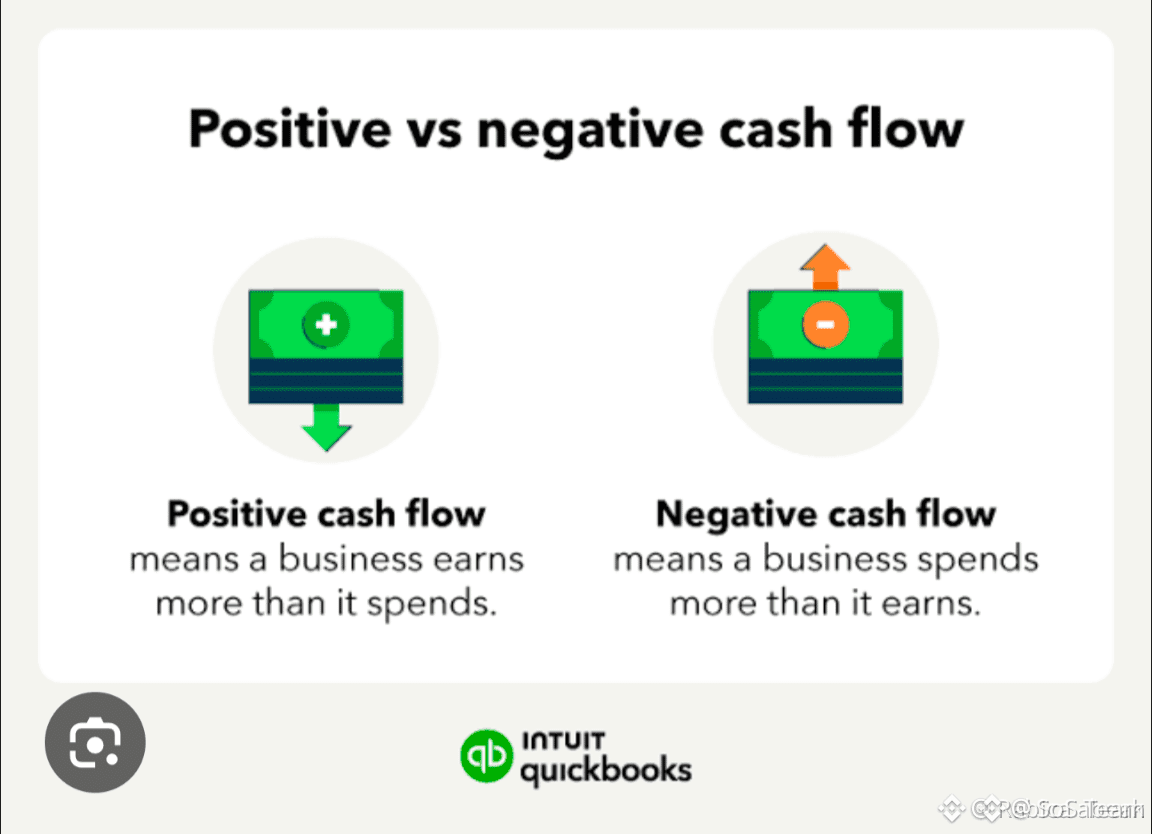
Have you noticed how everyone treats Big Tech as “safe,” but ignores what happens when Alphabet’s free cash flow turns negative?
Crypto traders know this pain too well: you buy the “strong narrative” late, then the market suddenly starts caring about balance sheets, liquidity, and exits. The same thing happens with $BTC and $ETH when sentiment flips from growth to risk control.
Alphabet going cash-flow negative is not just a stock story. It’s a case study in how expensive the AI race has become. The mainstream take is “AI spending is bullish long term,” but that skips the real question: how long can markets reward companies for burning cash before demanding proof of returns?
This matters for crypto because liquidity narratives are connected. When even mega-cap tech starts looking less cash-rich, investors often become more selective across risk assets. In a Fear market, capital does not disappear, but it hides in stronger balance sheets, stable liquidity, and sometimes plain $USDT while waiting for clarity.
My hot take: this is not bearish because Alphabet is “weak.” It’s bearish for lazy investing. The next phase may punish anything priced purely on hype, whether it is AI stocks, altcoins, or overextended narratives with no cash flow equivalent behind them.
Where do you think capital rotates if Big Tech starts looking less untouchable? #AlphabetFreeCashFlowTurnsNegative #ECBHoldsRatesAt2 #USJoblessClaims4WeekAvgAt207500
Have you noticed how everyone treats Big Tech as “safe,” but ignores what happens when Alphabet’s free cash flow turns negative?
Crypto traders know this pain too well: you buy the “strong narrative” late, then the market suddenly starts caring about balance sheets, liquidity, and exits. The same thing happens with $BTC and $ETH when sentiment flips from growth to risk control.
Alphabet going cash-flow negative is not just a stock story. It’s a case study in how expensive the AI race has become. The mainstream take is “AI spending is bullish long term,” but that skips the real question: how long can markets reward companies for burning cash before demanding proof of returns?
This matters for crypto because liquidity narratives are connected. When even mega-cap tech starts looking less cash-rich, investors often become more selective across risk assets. In a Fear market, capital does not disappear, but it hides in stronger balance sheets, stable liquidity, and sometimes plain $USDT while waiting for clarity.
My hot take: this is not bearish because Alphabet is “weak.” It’s bearish for lazy investing. The next phase may punish anything priced purely on hype, whether it is AI stocks, altcoins, or overextended narratives with no cash flow equivalent behind them.
Where do you think capital rotates if Big Tech starts looking less untouchable? #AlphabetFreeCashFlowTurnsNegative #ECBHoldsRatesAt2 #USJoblessClaims4WeekAvgAt207500
Crypto traders know this pain too well: you buy the “strong narrative” late, then the market suddenly starts caring about balance sheets, liquidity, and exits. The same thing happens with $BTC and $ETH when sentiment flips from growth to risk control.
Alphabet going cash-flow negative is not just a stock story. It’s a case study in how expensive the AI race has become. The mainstream take is “AI spending is bullish long term,” but that skips the real question: how long can markets reward companies for burning cash before demanding proof of returns?
This matters for crypto because liquidity narratives are connected. When even mega-cap tech starts looking less cash-rich, investors often become more selective across risk assets. In a Fear market, capital does not disappear, but it hides in stronger balance sheets, stable liquidity, and sometimes plain $USDT while waiting for clarity.
My hot take: this is not bearish because Alphabet is “weak.” It’s bearish for lazy investing. The next phase may punish anything priced purely on hype, whether it is AI stocks, altcoins, or overextended narratives with no cash flow equivalent behind them.
Where do you think capital rotates if Big Tech starts looking less untouchable? #AlphabetFreeCashFlowTurnsNegative #ECBHoldsRatesAt2 #USJoblessClaims4WeekAvgAt207500
84
·
--
Everyone thinks a red Dow day is just tradfi noise, but actually it’s where a lot of crypto traders donate their stack by pretending macro doesn’t exist.
When the Dow drops 500+ points, the mistake isn’t “being bullish” , it’s using the same leverage and entries like liquidity is chill. Fear & Greed at 37 says people are already shaky, so wicks get nastier.
This is the case study: equities puke, stables get attention, and suddenly every small bounce on $ETH looks like “the reversal.” Then the next US session headline hits and late longs get rinsed while $USDT dominance quietly tells the real story.
Not saying crypto has to follow the Dow tick for tick, ser. But when risk-off hits both desks at the same time, correlations tighten fast, especially on majors like $BTC and $ETH. The warning is simple: don’t confuse a relief candle with risk appetite returning.
Anyone else staying mostly in $USDT until macro stops punching risk assets, or is this where you start bidding $ETH? #DowJonesFallsOver500Points #USJoblessClaimsFallTo187KLowestSince1969 #ECBHoldsRatesAt2
Everyone thinks a red Dow day is just tradfi noise, but actually it’s where a lot of crypto traders donate their stack by pretending macro doesn’t exist.
When the Dow drops 500+ points, the mistake isn’t “being bullish” , it’s using the same leverage and entries like liquidity is chill. Fear & Greed at 37 says people are already shaky, so wicks get nastier.
This is the case study: equities puke, stables get attention, and suddenly every small bounce on $ETH looks like “the reversal.” Then the next US session headline hits and late longs get rinsed while $USDT dominance quietly tells the real story.
Not saying crypto has to follow the Dow tick for tick, ser. But when risk-off hits both desks at the same time, correlations tighten fast, especially on majors like $BTC and $ETH . The warning is simple: don’t confuse a relief candle with risk appetite returning.
Anyone else staying mostly in $USDT until macro stops punching risk assets, or is this where you start bidding $ETH ? #DowJonesFallsOver500Points #USJoblessClaimsFallTo187KLowestSince1969 #ECBHoldsRatesAt2
When the Dow drops 500+ points, the mistake isn’t “being bullish” , it’s using the same leverage and entries like liquidity is chill. Fear & Greed at 37 says people are already shaky, so wicks get nastier.
This is the case study: equities puke, stables get attention, and suddenly every small bounce on $ETH looks like “the reversal.” Then the next US session headline hits and late longs get rinsed while $USDT dominance quietly tells the real story.
Not saying crypto has to follow the Dow tick for tick, ser. But when risk-off hits both desks at the same time, correlations tighten fast, especially on majors like $BTC and $ETH . The warning is simple: don’t confuse a relief candle with risk appetite returning.
Anyone else staying mostly in $USDT until macro stops punching risk assets, or is this where you start bidding $ETH ? #DowJonesFallsOver500Points #USJoblessClaimsFallTo187KLowestSince1969 #ECBHoldsRatesAt2
74
·
--
Oil ripping 6% can move your crypto bags more than a random whale candle, even if you never trade a barrel in your life.
The painful part is most traders only notice oil after $BTC or $ETH has already reacted. They chase the candle, panic into $USDT, then wonder why the market “suddenly” changed mood.
Here’s the lesson from old cycles: oil is not just an energy chart, it’s an inflation signal. When WTI jumps hard, markets start pricing higher fuel costs, stickier CPI, and potentially tighter central bank policy. That can pressure risk assets because liquidity expectations matter as much as narratives.
In fear markets, like the current Fear & Greed reading around 37, this effect gets amplified. Traders are already nervous, so a macro shock can make support levels thinner and rallies easier to fade. I’ve seen this before: in uncertain cycles, the best entries often come after the first emotional reaction, not during it.
Watch how $ETH behaves against $BTC, how stablecoin demand in $USDT changes, and whether oil strength is a one-day spike or part of a bigger trend. If oil keeps climbing while equities weaken, crypto may stay defensive longer than the hopeful crowd expects.
Are you treating the WTI move as noise, or as an early macro warning for crypto? #WTIUp6 #OilTops #ECBHoldsRatesAt2
Oil ripping 6% can move your crypto bags more than a random whale candle, even if you never trade a barrel in your life.
The painful part is most traders only notice oil after $BTC or $ETH has already reacted. They chase the candle, panic into $USDT, then wonder why the market “suddenly” changed mood.
Here’s the lesson from old cycles: oil is not just an energy chart, it’s an inflation signal. When WTI jumps hard, markets start pricing higher fuel costs, stickier CPI, and potentially tighter central bank policy. That can pressure risk assets because liquidity expectations matter as much as narratives.
In fear markets, like the current Fear & Greed reading around 37, this effect gets amplified. Traders are already nervous, so a macro shock can make support levels thinner and rallies easier to fade. I’ve seen this before: in uncertain cycles, the best entries often come after the first emotional reaction, not during it.
Watch how $ETH behaves against $BTC , how stablecoin demand in $USDT changes, and whether oil strength is a one-day spike or part of a bigger trend. If oil keeps climbing while equities weaken, crypto may stay defensive longer than the hopeful crowd expects.
Are you treating the WTI move as noise, or as an early macro warning for crypto? #WTIUp6 #OilTops #ECBHoldsRatesAt2
The painful part is most traders only notice oil after $BTC or $ETH has already reacted. They chase the candle, panic into $USDT, then wonder why the market “suddenly” changed mood.
Here’s the lesson from old cycles: oil is not just an energy chart, it’s an inflation signal. When WTI jumps hard, markets start pricing higher fuel costs, stickier CPI, and potentially tighter central bank policy. That can pressure risk assets because liquidity expectations matter as much as narratives.
In fear markets, like the current Fear & Greed reading around 37, this effect gets amplified. Traders are already nervous, so a macro shock can make support levels thinner and rallies easier to fade. I’ve seen this before: in uncertain cycles, the best entries often come after the first emotional reaction, not during it.
Watch how $ETH behaves against $BTC , how stablecoin demand in $USDT changes, and whether oil strength is a one-day spike or part of a bigger trend. If oil keeps climbing while equities weaken, crypto may stay defensive longer than the hopeful crowd expects.
Are you treating the WTI move as noise, or as an early macro warning for crypto? #WTIUp6 #OilTops #ECBHoldsRatesAt2
50
·
--
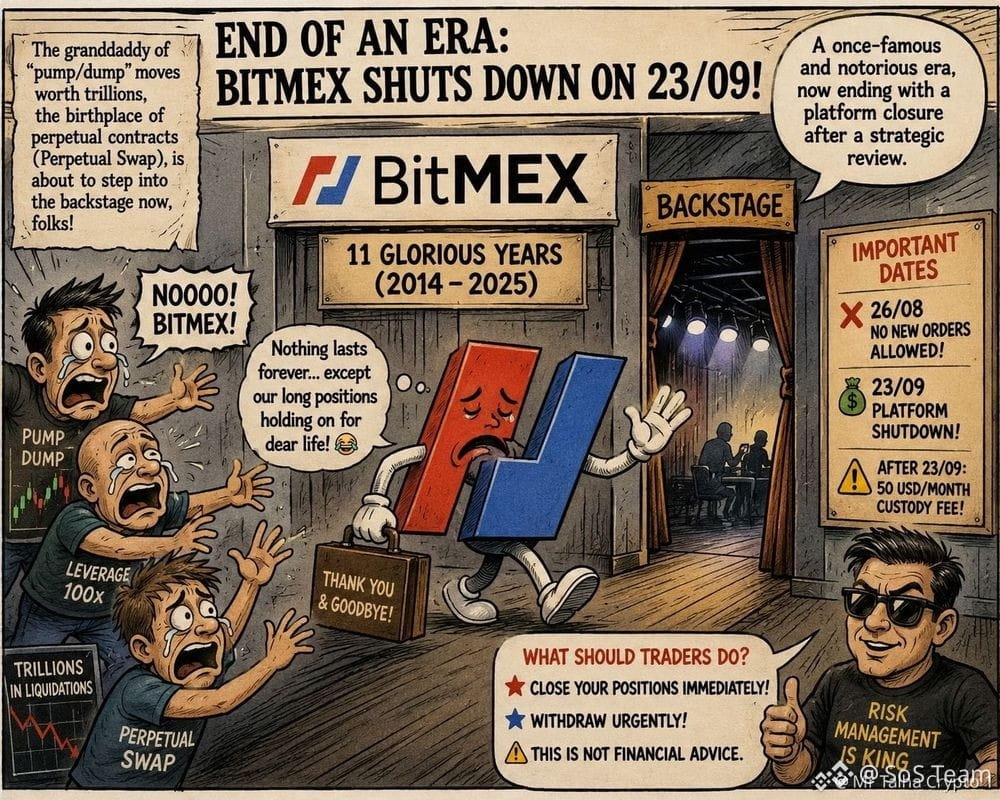
Why is nobody talking about the bigger lesson behind #BitMEXToCloseExchangeSep23?
Most traders only notice exchange risk when withdrawals freeze, liquidity disappears, or their open positions suddenly become harder to manage. In a fear-driven market, even holding $USDT on the wrong venue can feel less “safe” than people assume.
The mainstream take is simple: one old derivatives exchange losing relevance. I think that misses the point. BitMEX was once the symbol of crypto leverage culture, and if its exchange shutdown narrative is now trending, it shows how fast dominance can evaporate when users, liquidity, and trust migrate elsewhere.
This is also a case study in why traders obsess over entries but ignore infrastructure risk. You can be right on $ETH direction and still get hurt if your collateral, margin, or exit route depends on a platform the market no longer trusts. Liquidity is not just volume on a chart. It is confidence.
With Fear & Greed sitting in fear territory, people are rotating attention back to basics: where funds are held, how exchanges manage risk, and whether “too established to fail” is just another crypto myth. $BTC survived many venue collapses. Traders on those venues did not always survive them cleanly.
Is this just one exchange fading, or a warning that crypto traders need to rethink platform risk before the next volatility spike? #BitMEXToCloseExchangeSep23 #ECBHoldsRatesAt2 #USJoblessClaimsFallTo187KLowestSince1969
Why is nobody talking about the bigger lesson behind #BitMEXToCloseExchangeSep23?
Most traders only notice exchange risk when withdrawals freeze, liquidity disappears, or their open positions suddenly become harder to manage. In a fear-driven market, even holding $USDT on the wrong venue can feel less “safe” than people assume.
The mainstream take is simple: one old derivatives exchange losing relevance. I think that misses the point. BitMEX was once the symbol of crypto leverage culture, and if its exchange shutdown narrative is now trending, it shows how fast dominance can evaporate when users, liquidity, and trust migrate elsewhere.
This is also a case study in why traders obsess over entries but ignore infrastructure risk. You can be right on $ETH direction and still get hurt if your collateral, margin, or exit route depends on a platform the market no longer trusts. Liquidity is not just volume on a chart. It is confidence.
With Fear & Greed sitting in fear territory, people are rotating attention back to basics: where funds are held, how exchanges manage risk, and whether “too established to fail” is just another crypto myth. $BTC survived many venue collapses. Traders on those venues did not always survive them cleanly.
Is this just one exchange fading, or a warning that crypto traders need to rethink platform risk before the next volatility spike? #BitMEXToCloseExchangeSep23 #ECBHoldsRatesAt2 #USJoblessClaimsFallTo187KLowestSince1969
Most traders only notice exchange risk when withdrawals freeze, liquidity disappears, or their open positions suddenly become harder to manage. In a fear-driven market, even holding $USDT on the wrong venue can feel less “safe” than people assume.
The mainstream take is simple: one old derivatives exchange losing relevance. I think that misses the point. BitMEX was once the symbol of crypto leverage culture, and if its exchange shutdown narrative is now trending, it shows how fast dominance can evaporate when users, liquidity, and trust migrate elsewhere.
This is also a case study in why traders obsess over entries but ignore infrastructure risk. You can be right on $ETH direction and still get hurt if your collateral, margin, or exit route depends on a platform the market no longer trusts. Liquidity is not just volume on a chart. It is confidence.
With Fear & Greed sitting in fear territory, people are rotating attention back to basics: where funds are held, how exchanges manage risk, and whether “too established to fail” is just another crypto myth. $BTC survived many venue collapses. Traders on those venues did not always survive them cleanly.
Is this just one exchange fading, or a warning that crypto traders need to rethink platform risk before the next volatility spike? #BitMEXToCloseExchangeSep23 #ECBHoldsRatesAt2 #USJoblessClaimsFallTo187KLowestSince1969
63
·
--
everyone thinks low jobless claims automatically means send $BTC, but actually it can be the exact trap that liquidates late longs.
the common mistake is seeing a “strong economy” print, aping $ETH or rotating out of $USDT too fast, then getting chopped when rates expectations shift. ngl, macro candles don’t care about your entry.
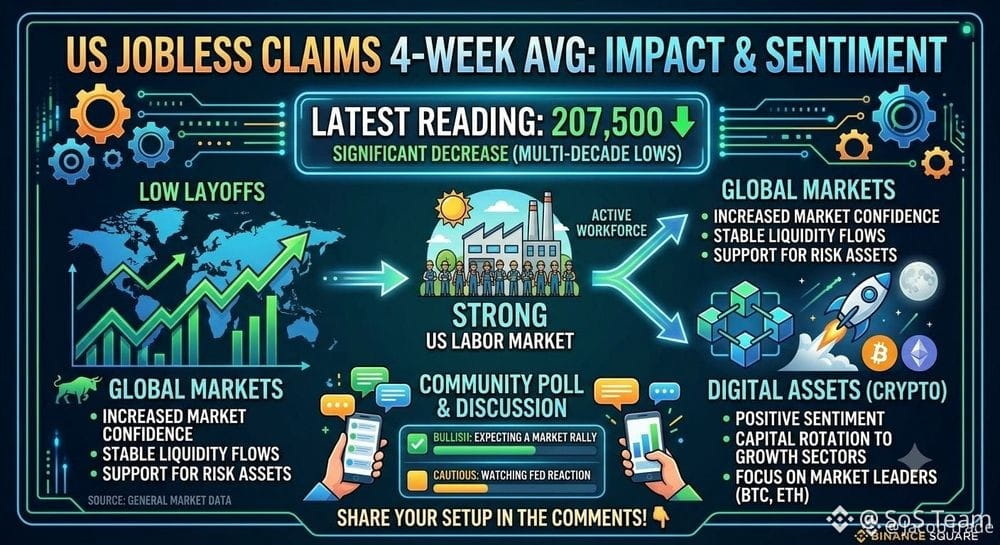
case study: jobless claims are sitting around a historically tight level, with the 4-week average near 207.5k. that sounds bullish at first because fewer layoffs = resilient economy. but for crypto, the second-order effect matters more: if labor stays too strong, the market can price in “higher for longer,” and risk assets can stall even when the headline looks clean.
with fear & greed at 37, traders are already nervous. so when a macro print hits, the move can be fake in both directions: first wick to bait breakout buyers, then reversal once bonds/dollar react. this is where overleveraged degens get cooked, especially if they treat one data point like a full trend.
best alpha here is patience, ser. watch how $BTC and $ETH hold after the first reaction, not during it. are you trading the headline, or waiting for confirmation? #USJoblessClaims4WeekAvgAt207500 #USJoblessClaimsFallTo187KLowestSince1969 #ECBHoldsRatesAt2
everyone thinks low jobless claims automatically means send $BTC , but actually it can be the exact trap that liquidates late longs.
the common mistake is seeing a “strong economy” print, aping $ETH or rotating out of $USDT too fast, then getting chopped when rates expectations shift. ngl, macro candles don’t care about your entry.
case study: jobless claims are sitting around a historically tight level, with the 4-week average near 207.5k. that sounds bullish at first because fewer layoffs = resilient economy. but for crypto, the second-order effect matters more: if labor stays too strong, the market can price in “higher for longer,” and risk assets can stall even when the headline looks clean.
with fear & greed at 37, traders are already nervous. so when a macro print hits, the move can be fake in both directions: first wick to bait breakout buyers, then reversal once bonds/dollar react. this is where overleveraged degens get cooked, especially if they treat one data point like a full trend.
best alpha here is patience, ser. watch how $BTC and $ETH hold after the first reaction, not during it. are you trading the headline, or waiting for confirmation? #USJoblessClaims4WeekAvgAt207500 #USJoblessClaimsFallTo187KLowestSince1969 #ECBHoldsRatesAt2
the common mistake is seeing a “strong economy” print, aping $ETH or rotating out of $USDT too fast, then getting chopped when rates expectations shift. ngl, macro candles don’t care about your entry.
case study: jobless claims are sitting around a historically tight level, with the 4-week average near 207.5k. that sounds bullish at first because fewer layoffs = resilient economy. but for crypto, the second-order effect matters more: if labor stays too strong, the market can price in “higher for longer,” and risk assets can stall even when the headline looks clean.
with fear & greed at 37, traders are already nervous. so when a macro print hits, the move can be fake in both directions: first wick to bait breakout buyers, then reversal once bonds/dollar react. this is where overleveraged degens get cooked, especially if they treat one data point like a full trend.
best alpha here is patience, ser. watch how $BTC and $ETH hold after the first reaction, not during it. are you trading the headline, or waiting for confirmation? #USJoblessClaims4WeekAvgAt207500 #USJoblessClaimsFallTo187KLowestSince1969 #ECBHoldsRatesAt2
67

·
--
Three checks separate a macro shock from a crypto-specific selloff$BTC is down 1.681%, but the composition of the drop matters more than the red candle. My three-check macro filter:
1. Compare majors: $ETH is -3.207% while BTC is -1.681%. That points to broad risk reduction, not isolated Bitcoin weakness.
2. Check the catalyst: oil above $100 can lift inflation expectations, while US jobless claims at 187K keep rate pressure alive.
3. Check relative shelter: $BNB is down only 0.606%, while SOL and XRP are both near -3%. Dispersion means the market is repricing risk, not treating every asset equally.
Rule: classify the shock before judging the candle.
#OilTops$100 #USJoblessClaimsFallTo187KLowestSince1969 #ECBHoldsRatesAt2.25%
Three checks separate a macro shock from a crypto-specific selloff
$BTC is down 1.681%, but the composition of the drop matters more than the red candle. My three-check macro filter:
1. Compare majors: $ETH is -3.207% while BTC is -1.681%. That points to broad risk reduction, not isolated Bitcoin weakness.
2. Check the catalyst: oil above $100 can lift inflation expectations, while US jobless claims at 187K keep rate pressure alive.
3. Check relative shelter: $BNB is down only 0.606%, while SOL and XRP are both near -3%. Dispersion means the market is repricing risk, not treating every asset equally.
Rule: classify the shock before judging the candle.
#OilTops$100 #USJoblessClaimsFallTo187KLowestSince1969 #ECBHoldsRatesAt2.25%
1. Compare majors: $ETH is -3.207% while BTC is -1.681%. That points to broad risk reduction, not isolated Bitcoin weakness.
2. Check the catalyst: oil above $100 can lift inflation expectations, while US jobless claims at 187K keep rate pressure alive.
3. Check relative shelter: $BNB is down only 0.606%, while SOL and XRP are both near -3%. Dispersion means the market is repricing risk, not treating every asset equally.
Rule: classify the shock before judging the candle.
#OilTops$100 #USJoblessClaimsFallTo187KLowestSince1969 #ECBHoldsRatesAt2.25%
97
·
--
If you’re still treating gold strength as “irrelevant to crypto,” stop now.
A lot of traders get chopped up because they only watch $BTC candles and ignore where big capital is hiding. When fund managers are this bullish on gold, it usually says one thing clearly: risk appetite is not as strong as the timeline wants it to be.
The bullish case for crypto is still alive. Fear & Greed sitting in Fear can create good entries, $ETH is still holding attention, and sidelined $USDT can rotate fast when confidence returns. If rates expectations soften, both gold and crypto can benefit from the same liquidity story.
But here’s my take: gold leading the conversation means the market is still defensive. That doesn’t mean dump everything. It means stop buying every pump like it’s a confirmed breakout. Until capital moves from “protection mode” back into “growth mode,” patience probably beats FOMO.
Do you see gold strength as a warning sign for crypto, or the first stage of the next liquidity rotation? #FundManagersMostBullishOnGoldSinceMarch2023 #ECBHoldsRatesAt2 #USJoblessClaimsFallTo187KLowestSince1969
If you’re still treating gold strength as “irrelevant to crypto,” stop now.
A lot of traders get chopped up because they only watch $BTC candles and ignore where big capital is hiding. When fund managers are this bullish on gold, it usually says one thing clearly: risk appetite is not as strong as the timeline wants it to be.
The bullish case for crypto is still alive. Fear & Greed sitting in Fear can create good entries, $ETH is still holding attention, and sidelined $USDT can rotate fast when confidence returns. If rates expectations soften, both gold and crypto can benefit from the same liquidity story.
But here’s my take: gold leading the conversation means the market is still defensive. That doesn’t mean dump everything. It means stop buying every pump like it’s a confirmed breakout. Until capital moves from “protection mode” back into “growth mode,” patience probably beats FOMO.
Do you see gold strength as a warning sign for crypto, or the first stage of the next liquidity rotation? #FundManagersMostBullishOnGoldSinceMarch2023 #ECBHoldsRatesAt2 #USJoblessClaimsFallTo187KLowestSince1969
A lot of traders get chopped up because they only watch $BTC candles and ignore where big capital is hiding. When fund managers are this bullish on gold, it usually says one thing clearly: risk appetite is not as strong as the timeline wants it to be.
The bullish case for crypto is still alive. Fear & Greed sitting in Fear can create good entries, $ETH is still holding attention, and sidelined $USDT can rotate fast when confidence returns. If rates expectations soften, both gold and crypto can benefit from the same liquidity story.
But here’s my take: gold leading the conversation means the market is still defensive. That doesn’t mean dump everything. It means stop buying every pump like it’s a confirmed breakout. Until capital moves from “protection mode” back into “growth mode,” patience probably beats FOMO.
Do you see gold strength as a warning sign for crypto, or the first stage of the next liquidity rotation? #FundManagersMostBullishOnGoldSinceMarch2023 #ECBHoldsRatesAt2 #USJoblessClaimsFallTo187KLowestSince1969

57
·
--
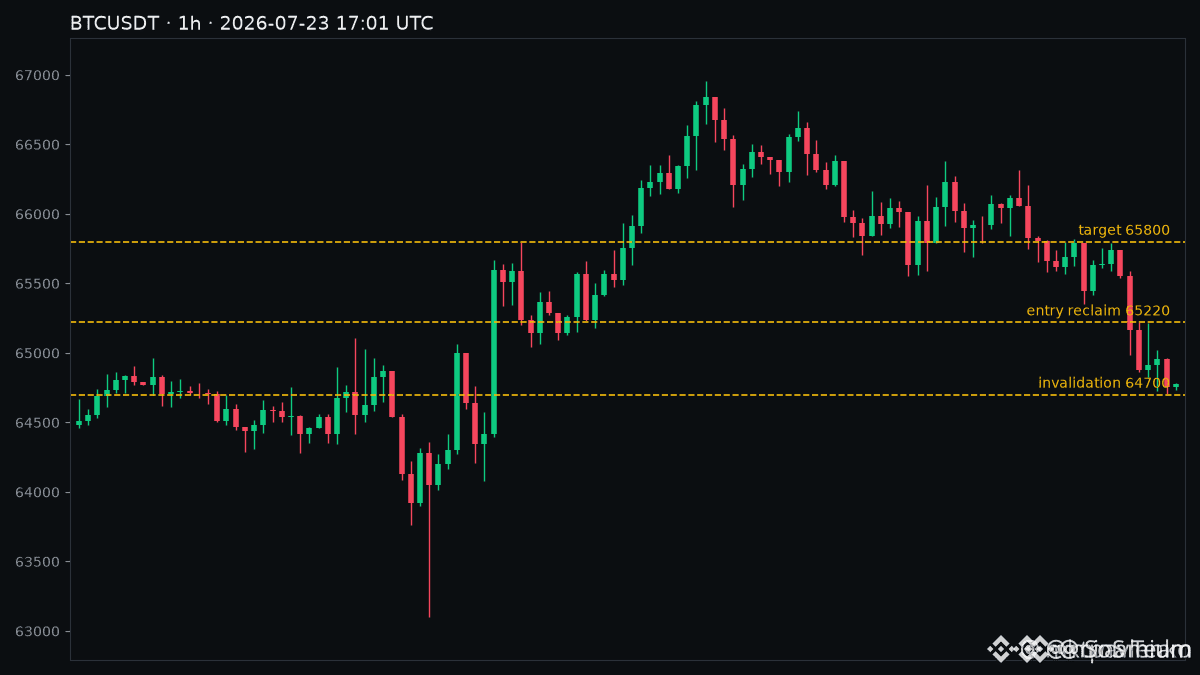
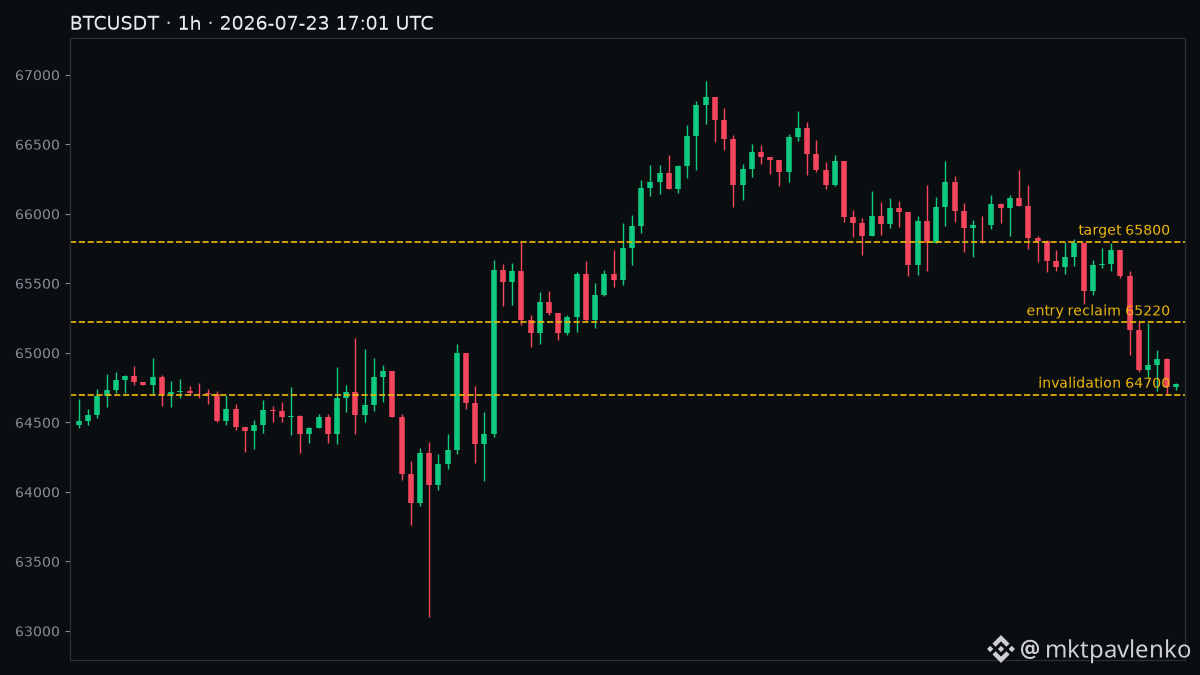
$BTC has lost $65,000 while oil tops $100, so my setup starts with confirmation, not prediction. I am only interested in a long after a completed 1H close back above $65,220, with invalidation below $64,700. My first target is $65,800 over the next 12 hours. Until that reclaim, I stay flat: BTC is -2.211% at $64,764.13 and positive 0.0100% funding does not prove sellers are exhausted.
My rule: reclaim first, risk second.
#OilTops$100 #USJoblessClaimsFallTo187KLowestSince1969 #ECBHoldsRatesAt2.25%
$BTC has lost $65,000 while oil tops $100, so my setup starts with confirmation, not prediction. I am only interested in a long after a completed 1H close back above $65,220, with invalidation below $64,700. My first target is $65,800 over the next 12 hours. Until that reclaim, I stay flat: BTC is -2.211% at $64,764.13 and positive 0.0100% funding does not prove sellers are exhausted.
My rule: reclaim first, risk second.
#OilTops$100 #USJoblessClaimsFallTo187KLowestSince1969 #ECBHoldsRatesAt2.25%
My rule: reclaim first, risk second.
#OilTops$100 #USJoblessClaimsFallTo187KLowestSince1969 #ECBHoldsRatesAt2.25%
44
·
--
Why is nobody talking about oil topping as a crypto trade signal instead of just a macro headline?
Most traders only react after $BTC and $ETH move, then wonder why their entries feel late. When oil spikes, inflation fear comes back, rate-cut confidence gets shaky, and risk assets usually stop behaving “randomly.”
My take: if oil is topping, the crowd is probably reading it backwards. A cooling oil market can remove pressure from inflation expectations, which gives crypto room to breathe. But if traders blindly buy every dip because “lower oil is bullish,” they’ll still get chopped, especially with Fear & Greed sitting in fear territory around 37.
Here’s the practical play: watch whether oil weakness lines up with stable yields and stronger spot demand. If $ETH holds key support while $USDT flows rotate back into majors, that is more useful than chasing whatever is trending for five minutes. If oil drops but yields rise, be careful. That’s not relief, that’s stress.
The mainstream narrative says oil is separate from crypto. I disagree. Oil affects inflation, inflation affects rates, rates affect liquidity, and liquidity is the fuel crypto actually trades on. The edge is not predicting oil perfectly. It’s knowing when macro pressure is fading before everyone starts screaming bullish again.
Are traders underpricing the oil signal here, or is this just another fake relief setup? #OilTops #ECBHoldsRatesAt2 #USJoblessClaimsFallTo187KLowestSince1969
Why is nobody talking about oil topping as a crypto trade signal instead of just a macro headline?
Most traders only react after $BTC and $ETH move, then wonder why their entries feel late. When oil spikes, inflation fear comes back, rate-cut confidence gets shaky, and risk assets usually stop behaving “randomly.”
My take: if oil is topping, the crowd is probably reading it backwards. A cooling oil market can remove pressure from inflation expectations, which gives crypto room to breathe. But if traders blindly buy every dip because “lower oil is bullish,” they’ll still get chopped, especially with Fear & Greed sitting in fear territory around 37.
Here’s the practical play: watch whether oil weakness lines up with stable yields and stronger spot demand. If $ETH holds key support while $USDT flows rotate back into majors, that is more useful than chasing whatever is trending for five minutes. If oil drops but yields rise, be careful. That’s not relief, that’s stress.
The mainstream narrative says oil is separate from crypto. I disagree. Oil affects inflation, inflation affects rates, rates affect liquidity, and liquidity is the fuel crypto actually trades on. The edge is not predicting oil perfectly. It’s knowing when macro pressure is fading before everyone starts screaming bullish again.
Are traders underpricing the oil signal here, or is this just another fake relief setup? #OilTops #ECBHoldsRatesAt2 #USJoblessClaimsFallTo187KLowestSince1969
Most traders only react after $BTC and $ETH move, then wonder why their entries feel late. When oil spikes, inflation fear comes back, rate-cut confidence gets shaky, and risk assets usually stop behaving “randomly.”
My take: if oil is topping, the crowd is probably reading it backwards. A cooling oil market can remove pressure from inflation expectations, which gives crypto room to breathe. But if traders blindly buy every dip because “lower oil is bullish,” they’ll still get chopped, especially with Fear & Greed sitting in fear territory around 37.
Here’s the practical play: watch whether oil weakness lines up with stable yields and stronger spot demand. If $ETH holds key support while $USDT flows rotate back into majors, that is more useful than chasing whatever is trending for five minutes. If oil drops but yields rise, be careful. That’s not relief, that’s stress.
The mainstream narrative says oil is separate from crypto. I disagree. Oil affects inflation, inflation affects rates, rates affect liquidity, and liquidity is the fuel crypto actually trades on. The edge is not predicting oil perfectly. It’s knowing when macro pressure is fading before everyone starts screaming bullish again.
Are traders underpricing the oil signal here, or is this just another fake relief setup? #OilTops #ECBHoldsRatesAt2 #USJoblessClaimsFallTo187KLowestSince1969

108
·
--
$BTC Day 26 grade: hit - the lowest completed 1H close was $64,681.27, below yesterday's $65,500 trigger.
The lesson: confirmation mattered more than the first intrahour wick. BTC later recovered to $65,285.07, but the close proved sellers had control long enough to validate the call.
Today's call: $BTC records at least one completed 1H close above $65,500 before tomorrow's morning grade.
#OilTops$100 #ECBHoldsRatesAt2.25% #KazakhstanApprovesStrategicDigitalMiningProgram
$BTC Day 26 grade: hit - the lowest completed 1H close was $64,681.27, below yesterday's $65,500 trigger.
The lesson: confirmation mattered more than the first intrahour wick. BTC later recovered to $65,285.07, but the close proved sellers had control long enough to validate the call.
Today's call: $BTC records at least one completed 1H close above $65,500 before tomorrow's morning grade.
#OilTops$100 #ECBHoldsRatesAt2.25% #KazakhstanApprovesStrategicDigitalMiningProgram
The lesson: confirmation mattered more than the first intrahour wick. BTC later recovered to $65,285.07, but the close proved sellers had control long enough to validate the call.
Today's call: $BTC records at least one completed 1H close above $65,500 before tomorrow's morning grade.
#OilTops$100 #ECBHoldsRatesAt2.25% #KazakhstanApprovesStrategicDigitalMiningProgram
71
·
--
Bitcoin is not ignoring oil - it is absorbing the shock better than alts$BTC is down 1.167% at $65,158 while oil trades above $100. That does not prove Bitcoin has decoupled from macro risk. It only shows relative resilience today.
The comparison matters: $ETH is down 2.114%, SOL 2.159%, and XRP 2.214%. BTC dominance is 56.70%, while the total crypto market is down 1.164%. Capital is concentrating in the least volatile major, not leaving the macro regime.
Keepable rule: when a shock hits, compare relative losses before declaring decoupling.
#OilTops$100 #USJoblessClaimsFallTo187KLowestSince1969 #ECBHoldsRatesAt2.25%
Bitcoin is not ignoring oil - it is absorbing the shock better than alts
$BTC is down 1.167% at $65,158 while oil trades above $100. That does not prove Bitcoin has decoupled from macro risk. It only shows relative resilience today.
The comparison matters: $ETH is down 2.114%, SOL 2.159%, and XRP 2.214%. BTC dominance is 56.70%, while the total crypto market is down 1.164%. Capital is concentrating in the least volatile major, not leaving the macro regime.
Keepable rule: when a shock hits, compare relative losses before declaring decoupling.
#OilTops$100 #USJoblessClaimsFallTo187KLowestSince1969 #ECBHoldsRatesAt2.25%
The comparison matters: $ETH is down 2.114%, SOL 2.159%, and XRP 2.214%. BTC dominance is 56.70%, while the total crypto market is down 1.164%. Capital is concentrating in the least volatile major, not leaving the macro regime.
Keepable rule: when a shock hits, compare relative losses before declaring decoupling.
#OilTops$100 #USJoblessClaimsFallTo187KLowestSince1969 #ECBHoldsRatesAt2.25%
68
Log in to explore more content
Join global crypto users on Binance Square
⚡️ Get latest and useful information about crypto.
💬 Trusted by the world’s largest crypto exchange.
👍 Discover real insights from verified creators.
Email / Phone number
Trending Topics
1
#SECProposesCryptoCustodyRules
4,579 views
100 Discussing
2
#SECApproves3xLongCryptoCommodityETPs
6,825 views
139 Discussing
3
#G7PlansToReleaseUpTo100MBarrelsOilDiesel
8,150 views
175 Discussing
4
#ICBASuesOCCOverCryptoBankCharters
6,734 views
119 Discussing
5
#USStocksCloseHigherOnWeakJobsData
6,303 views
100 Discussing
6
#AnchorageReportedlyCuts17%Workforce
237 views
34 Discussing
7
#NFPWatch
11M views
19,588 Discussing
8
#NEARIntentsRecovers$3.8MAfterAttack
0 views
0 Discussing
9
#BlastToGraduallyShutDownItsL2Network
531 views
37 Discussing
10
#BitcoinFundingRateTriplesTo10%
220,350 views
1,381 Discussing