

#cmeseptemberhikeoddsfallto30
cmeseptemberhikeoddsfallto30
223 views
18 Discussing
Hot
Latest

·
--
Everyone thinks cme september hike odds falling to 30% means instant green candles, but actually that’s where a lot of late longs get farmed.
the pain is simple: traders see “fed less hawkish” and smash buy $BTC or $ETH without asking why the odds dropped. then one ugly growth headline later, they’re stuck praying in spot while perps bleed.
case study: this setup looks bullish on the surface because lower hike odds usually helps risk assets. cheaper money narrative, softer dollar hopes, liquidity brain turns on. but if the market is pricing lower odds because macro data is weakening, that’s not always bullish ser.
fear & greed sitting in fear territory and $USDT staying heavily searched tells you people are still defensive. that matters. when stablecoins are the comfort trade, a macro pump can turn into exit liquidity fast if volume doesn’t confirm.
my warning: don’t trade the headline, trade the reaction. if $BTC holds key levels after the rate-odds move, fine, momentum has a case. if it pumps into resistance while alts lag, ngl that’s usually where the market teaches patience.
are you treating #CMESeptemberHikeOddsFallTo30 #ChinaJulyOutputRetailInvestmentAllMiss as bid fuel or a trap?
Everyone thinks cme september hike odds falling to 30% means instant green candles, but actually that’s where a lot of late longs get farmed.
the pain is simple: traders see “fed less hawkish” and smash buy $BTC or $ETH without asking why the odds dropped. then one ugly growth headline later, they’re stuck praying in spot while perps bleed.
case study: this setup looks bullish on the surface because lower hike odds usually helps risk assets. cheaper money narrative, softer dollar hopes, liquidity brain turns on. but if the market is pricing lower odds because macro data is weakening, that’s not always bullish ser.
fear & greed sitting in fear territory and $USDT staying heavily searched tells you people are still defensive. that matters. when stablecoins are the comfort trade, a macro pump can turn into exit liquidity fast if volume doesn’t confirm.
my warning: don’t trade the headline, trade the reaction. if $BTC holds key levels after the rate-odds move, fine, momentum has a case. if it pumps into resistance while alts lag, ngl that’s usually where the market teaches patience.
are you treating #CMESeptemberHikeOddsFallTo30 #ChinaJulyOutputRetailInvestmentAllMiss as bid fuel or a trap?
the pain is simple: traders see “fed less hawkish” and smash buy $BTC or $ETH without asking why the odds dropped. then one ugly growth headline later, they’re stuck praying in spot while perps bleed.
case study: this setup looks bullish on the surface because lower hike odds usually helps risk assets. cheaper money narrative, softer dollar hopes, liquidity brain turns on. but if the market is pricing lower odds because macro data is weakening, that’s not always bullish ser.
fear & greed sitting in fear territory and $USDT staying heavily searched tells you people are still defensive. that matters. when stablecoins are the comfort trade, a macro pump can turn into exit liquidity fast if volume doesn’t confirm.
my warning: don’t trade the headline, trade the reaction. if $BTC holds key levels after the rate-odds move, fine, momentum has a case. if it pumps into resistance while alts lag, ngl that’s usually where the market teaches patience.
are you treating #CMESeptemberHikeOddsFallTo30 #ChinaJulyOutputRetailInvestmentAllMiss as bid fuel or a trap?
14

The probability of a rate hike in September by the Fed fell to 30.6%, according to the CME futures market. This is the lowest level in weeks and reflects how recent macro data (flat PPI, weak China data) is cooling expectations for restrictive policy.
Why does this matter for crypto? Because lower rates mean less opportunity cost for non-yielding assets like Bitcoin and ETH. When the market prices in less monetary pressure, speculative capital starts looking back at risk.
But watch out: what the market is pricing in is one thing, and what Powell does is another. The Fed has surprised before. Meanwhile, BTC is trading in a range between 62.6K and 64.3K, with a mixed bias depending on the timeframe (bullish on the 4H, bearish on the daily).
Macro is still the backdrop. If the odds for September keep falling and August employment and inflation data come in soft, crypto has a trail to run. If not, the current technical bounce may fall short.
Do you think the Fed will raise rates in September, or has the market priced it in well already? Leave your take in the comments—I’m interested to see what others are seeing.
#CMESeptemberHikeOddsFallTo30.6%
The probability of a rate hike in September by the Fed fell to 30.6%, according to the CME futures market. This is the lowest level in weeks and reflects how recent macro data (flat PPI, weak China data) is cooling expectations for restrictive policy.
Why does this matter for crypto? Because lower rates mean less opportunity cost for non-yielding assets like Bitcoin and ETH. When the market prices in less monetary pressure, speculative capital starts looking back at risk.
But watch out: what the market is pricing in is one thing, and what Powell does is another. The Fed has surprised before. Meanwhile, BTC is trading in a range between 62.6K and 64.3K, with a mixed bias depending on the timeframe (bullish on the 4H, bearish on the daily).
Macro is still the backdrop. If the odds for September keep falling and August employment and inflation data come in soft, crypto has a trail to run. If not, the current technical bounce may fall short.
Do you think the Fed will raise rates in September, or has the market priced it in well already? Leave your take in the comments—I’m interested to see what others are seeing.
#CMESeptemberHikeOddsFallTo30.6%
Why does this matter for crypto? Because lower rates mean less opportunity cost for non-yielding assets like Bitcoin and ETH. When the market prices in less monetary pressure, speculative capital starts looking back at risk.
But watch out: what the market is pricing in is one thing, and what Powell does is another. The Fed has surprised before. Meanwhile, BTC is trading in a range between 62.6K and 64.3K, with a mixed bias depending on the timeframe (bullish on the 4H, bearish on the daily).
Macro is still the backdrop. If the odds for September keep falling and August employment and inflation data come in soft, crypto has a trail to run. If not, the current technical bounce may fall short.
Do you think the Fed will raise rates in September, or has the market priced it in well already? Leave your take in the comments—I’m interested to see what others are seeing.
#CMESeptemberHikeOddsFallTo30.6%
91
·
--
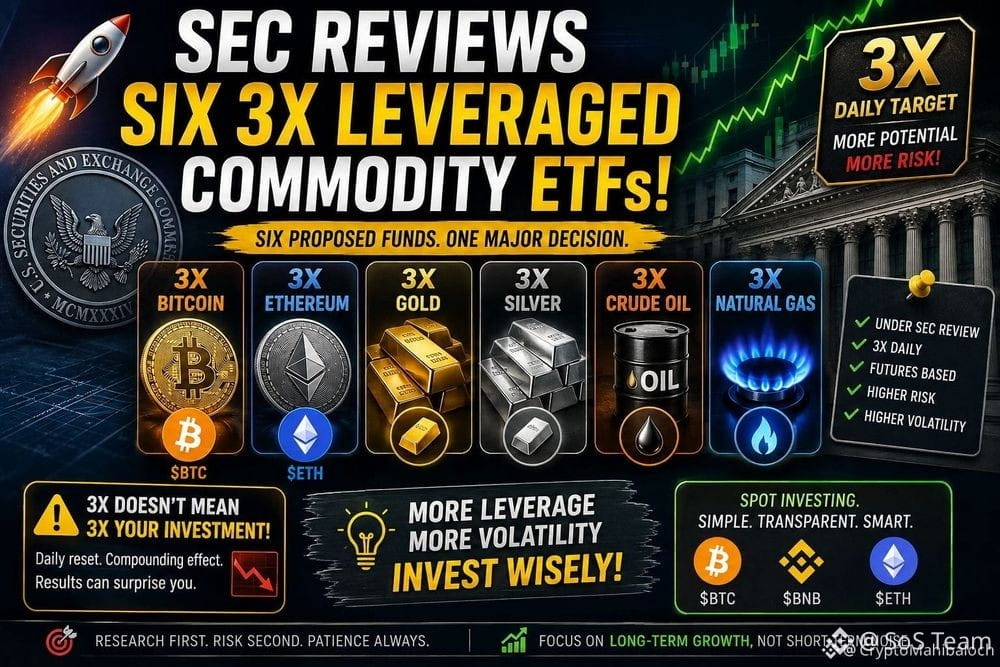
Why is nobody talking about the SEC being more comfortable reviewing 3x leveraged commodity ETFs while crypto products still get treated like radioactive waste?
Traders keep getting trapped by the same illusion: “regulated” does not always mean “safe.” A 3x ETF can wipe out late buyers just as brutally as a bad altcoin entry, especially when fear is already sitting in the market and people are hiding in $USDT.
This SEC review is a perfect case study in how the mainstream narrative gets twisted. Leveraged commodity ETFs are basically volatility machines. They’re designed for short-term exposure, not long-term conviction, yet they often get framed as sophisticated products while crypto leverage gets painted as reckless by default.
Meanwhile, $BTC is still treated like it needs endless extra scrutiny, even though the market has already built deep liquidity, institutional rails, and transparent on-chain settlement around it. I’m not saying every crypto product deserves approval. I’m saying the risk conversation is inconsistent, and that inconsistency matters for capital flows.
If 3x commodity exposure is acceptable for public markets, then the argument against more mature crypto products starts looking less like investor protection and more like selective gatekeeping. That’s the real story here, not just another ETF headline.
Where do you think this goes from here? #SECReviewsSix3xLeveragedCommodityETFs #BitcoinHoldsNear #CMESeptemberHikeOddsFallTo30
Why is nobody talking about the SEC being more comfortable reviewing 3x leveraged commodity ETFs while crypto products still get treated like radioactive waste?
Traders keep getting trapped by the same illusion: “regulated” does not always mean “safe.” A 3x ETF can wipe out late buyers just as brutally as a bad altcoin entry, especially when fear is already sitting in the market and people are hiding in $USDT.
This SEC review is a perfect case study in how the mainstream narrative gets twisted. Leveraged commodity ETFs are basically volatility machines. They’re designed for short-term exposure, not long-term conviction, yet they often get framed as sophisticated products while crypto leverage gets painted as reckless by default.
Meanwhile, $BTC is still treated like it needs endless extra scrutiny, even though the market has already built deep liquidity, institutional rails, and transparent on-chain settlement around it. I’m not saying every crypto product deserves approval. I’m saying the risk conversation is inconsistent, and that inconsistency matters for capital flows.
If 3x commodity exposure is acceptable for public markets, then the argument against more mature crypto products starts looking less like investor protection and more like selective gatekeeping. That’s the real story here, not just another ETF headline.
Where do you think this goes from here? #SECReviewsSix3xLeveragedCommodityETFs #BitcoinHoldsNear #CMESeptemberHikeOddsFallTo30
Traders keep getting trapped by the same illusion: “regulated” does not always mean “safe.” A 3x ETF can wipe out late buyers just as brutally as a bad altcoin entry, especially when fear is already sitting in the market and people are hiding in $USDT.
This SEC review is a perfect case study in how the mainstream narrative gets twisted. Leveraged commodity ETFs are basically volatility machines. They’re designed for short-term exposure, not long-term conviction, yet they often get framed as sophisticated products while crypto leverage gets painted as reckless by default.
Meanwhile, $BTC is still treated like it needs endless extra scrutiny, even though the market has already built deep liquidity, institutional rails, and transparent on-chain settlement around it. I’m not saying every crypto product deserves approval. I’m saying the risk conversation is inconsistent, and that inconsistency matters for capital flows.
If 3x commodity exposure is acceptable for public markets, then the argument against more mature crypto products starts looking less like investor protection and more like selective gatekeeping. That’s the real story here, not just another ETF headline.
Where do you think this goes from here? #SECReviewsSix3xLeveragedCommodityETFs #BitcoinHoldsNear #CMESeptemberHikeOddsFallTo30
1
176
·
--
everyone thinks the sec canceling a crypto rulemaking meeting is bullish by default, but actually this is exactly where traders get trapped.
the mistake is assuming “no meeting” means “less pressure” and aping into $BTC or $ETH before the market confirms. in fear conditions, headlines can pump first and punish late entries fast.
case study: when regulatory news hits, the first move is often narrative-driven, not liquidity-driven. people see #SECCancelsCryptoRulemakingMeeting trending, think enforcement risk just vanished, then forget that canceled rulemaking can also mean uncertainty stays open longer. markets hate unclear timelines, ser.
watch how $USDT liquidity reacts more than the headline itself. if stablecoin flows stay cautious and $BTC only grinds near resistance, that’s not clean strength, it’s chop wearing a fake breakout costume. ngl, the safer alpha is waiting for confirmation instead of buying the headline candle.
fear & greed sitting in fear makes this even more important. when everyone wants one regulatory headline to “save” the chart, exits matter more than entries.
what’s your take here, relief rally or another headline trap? #SECCancelsCryptoRulemakingMeeting #BitcoinHoldsNear #CMESeptemberHikeOddsFallTo30
everyone thinks the sec canceling a crypto rulemaking meeting is bullish by default, but actually this is exactly where traders get trapped.
the mistake is assuming “no meeting” means “less pressure” and aping into $BTC or $ETH before the market confirms. in fear conditions, headlines can pump first and punish late entries fast.
case study: when regulatory news hits, the first move is often narrative-driven, not liquidity-driven. people see #SECCancelsCryptoRulemakingMeeting trending, think enforcement risk just vanished, then forget that canceled rulemaking can also mean uncertainty stays open longer. markets hate unclear timelines, ser.
watch how $USDT liquidity reacts more than the headline itself. if stablecoin flows stay cautious and $BTC only grinds near resistance, that’s not clean strength, it’s chop wearing a fake breakout costume. ngl, the safer alpha is waiting for confirmation instead of buying the headline candle.
fear & greed sitting in fear makes this even more important. when everyone wants one regulatory headline to “save” the chart, exits matter more than entries.
what’s your take here, relief rally or another headline trap? #SECCancelsCryptoRulemakingMeeting #BitcoinHoldsNear #CMESeptemberHikeOddsFallTo30
the mistake is assuming “no meeting” means “less pressure” and aping into $BTC or $ETH before the market confirms. in fear conditions, headlines can pump first and punish late entries fast.
case study: when regulatory news hits, the first move is often narrative-driven, not liquidity-driven. people see #SECCancelsCryptoRulemakingMeeting trending, think enforcement risk just vanished, then forget that canceled rulemaking can also mean uncertainty stays open longer. markets hate unclear timelines, ser.
watch how $USDT liquidity reacts more than the headline itself. if stablecoin flows stay cautious and $BTC only grinds near resistance, that’s not clean strength, it’s chop wearing a fake breakout costume. ngl, the safer alpha is waiting for confirmation instead of buying the headline candle.
fear & greed sitting in fear makes this even more important. when everyone wants one regulatory headline to “save” the chart, exits matter more than entries.
what’s your take here, relief rally or another headline trap? #SECCancelsCryptoRulemakingMeeting #BitcoinHoldsNear #CMESeptemberHikeOddsFallTo30
33
·
--
Picture this: $BTC is hovering near key levels while everyone at the dinner table suddenly becomes a macro analyst.
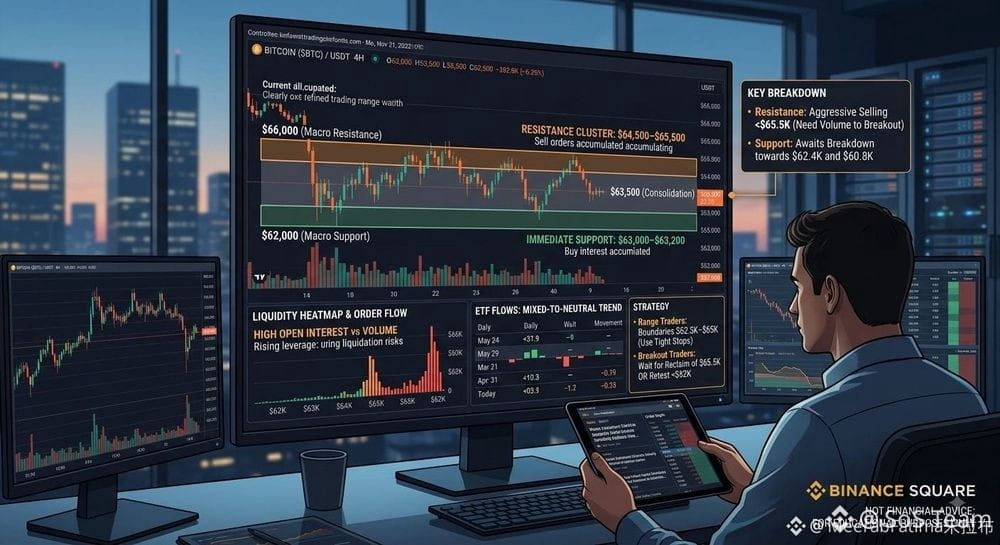
The hard part for traders isn’t seeing Bitcoin move. It’s knowing whether a “hold” is quiet strength or just the market pausing before shaking out late buyers. With Fear & Greed sitting in fear territory, even clean setups feel uncomfortable.
Here’s the case study: when Bitcoin holds near an important zone during weak sentiment, it often becomes a test of conviction. We saw versions of this before, like the post-ETF cooldown when $BTC stopped ripping but didn’t fully break down, and the 2023 accumulation phase when boring sideways action punished impatience before the next leg. The market loves making the obvious trade feel wrong.
Compared with alt-led pumps, Bitcoin holding near support is less flashy but more informative. If liquidity stays parked in $USDT and majors like $ETH don’t confirm strength, traders usually hesitate. But if Bitcoin keeps absorbing sell pressure while macro odds soften and risk assets stabilize, that “boring hold” can become the base everyone notices too late.
The lesson is simple: sideways isn’t always weakness. Sometimes it’s distribution, sometimes it’s accumulation, and the difference shows up in how price reacts when fear is already priced in.
Where do you think $BTC goes from here? #BitcoinHoldsNear #CMESeptemberHikeOddsFallTo30 #SECCancelsCryptoRulemakingMeeting
Picture this: $BTC is hovering near key levels while everyone at the dinner table suddenly becomes a macro analyst.
The hard part for traders isn’t seeing Bitcoin move. It’s knowing whether a “hold” is quiet strength or just the market pausing before shaking out late buyers. With Fear & Greed sitting in fear territory, even clean setups feel uncomfortable.
Here’s the case study: when Bitcoin holds near an important zone during weak sentiment, it often becomes a test of conviction. We saw versions of this before, like the post-ETF cooldown when $BTC stopped ripping but didn’t fully break down, and the 2023 accumulation phase when boring sideways action punished impatience before the next leg. The market loves making the obvious trade feel wrong.
Compared with alt-led pumps, Bitcoin holding near support is less flashy but more informative. If liquidity stays parked in $USDT and majors like $ETH don’t confirm strength, traders usually hesitate. But if Bitcoin keeps absorbing sell pressure while macro odds soften and risk assets stabilize, that “boring hold” can become the base everyone notices too late.
The lesson is simple: sideways isn’t always weakness. Sometimes it’s distribution, sometimes it’s accumulation, and the difference shows up in how price reacts when fear is already priced in.
Where do you think $BTC goes from here? #BitcoinHoldsNear #CMESeptemberHikeOddsFallTo30 #SECCancelsCryptoRulemakingMeeting
The hard part for traders isn’t seeing Bitcoin move. It’s knowing whether a “hold” is quiet strength or just the market pausing before shaking out late buyers. With Fear & Greed sitting in fear territory, even clean setups feel uncomfortable.
Here’s the case study: when Bitcoin holds near an important zone during weak sentiment, it often becomes a test of conviction. We saw versions of this before, like the post-ETF cooldown when $BTC stopped ripping but didn’t fully break down, and the 2023 accumulation phase when boring sideways action punished impatience before the next leg. The market loves making the obvious trade feel wrong.
Compared with alt-led pumps, Bitcoin holding near support is less flashy but more informative. If liquidity stays parked in $USDT and majors like $ETH don’t confirm strength, traders usually hesitate. But if Bitcoin keeps absorbing sell pressure while macro odds soften and risk assets stabilize, that “boring hold” can become the base everyone notices too late.
The lesson is simple: sideways isn’t always weakness. Sometimes it’s distribution, sometimes it’s accumulation, and the difference shows up in how price reacts when fear is already priced in.
Where do you think $BTC goes from here? #BitcoinHoldsNear #CMESeptemberHikeOddsFallTo30 #SECCancelsCryptoRulemakingMeeting
16
·
--
Why is nobody talking about how fast crypto traders turned a real geopolitical escalation into just another candle?
The pain is simple: people either panic-sell $BTC into the first red wick or FOMO into $USDT “safety” after the move already happened. Both are emotional trades, not strategy.
The Israel-Lebanon strike headlines are a clean case study in how crypto reacts to macro shock. First comes the risk-off impulse: liquidity hides, leverage gets flushed, and traders pretend they saw it coming. Then the market starts pricing the second-order question: does this stay regional, or does it spill into oil, rates, and dollar strength?
My hot take: crypto is not ignoring geopolitics, it is filtering it through liquidity. With Fear & Greed sitting in fear territory, $BTC does not need a massive war narrative to move sharply. It just needs thin order books, crowded leverage, and one headline that forces everyone to de-risk at the same time.
That is why the mainstream “bad news equals dump” take is too lazy. The better read is whether buyers defend key levels after the fear spike. If they do, the headline becomes a stress test. If they do not, it becomes the excuse for a deeper reset.
Where do you think risk assets go from here as #IsraelStrikesLebanonKillsHezbollahCommander, #BitcoinHoldsNear, and #CMESeptemberHikeOddsFallTo30 all hit the same market narrative?
Why is nobody talking about how fast crypto traders turned a real geopolitical escalation into just another candle?
The pain is simple: people either panic-sell $BTC into the first red wick or FOMO into $USDT “safety” after the move already happened. Both are emotional trades, not strategy.
The Israel-Lebanon strike headlines are a clean case study in how crypto reacts to macro shock. First comes the risk-off impulse: liquidity hides, leverage gets flushed, and traders pretend they saw it coming. Then the market starts pricing the second-order question: does this stay regional, or does it spill into oil, rates, and dollar strength?
My hot take: crypto is not ignoring geopolitics, it is filtering it through liquidity. With Fear & Greed sitting in fear territory, $BTC does not need a massive war narrative to move sharply. It just needs thin order books, crowded leverage, and one headline that forces everyone to de-risk at the same time.
That is why the mainstream “bad news equals dump” take is too lazy. The better read is whether buyers defend key levels after the fear spike. If they do, the headline becomes a stress test. If they do not, it becomes the excuse for a deeper reset.
Where do you think risk assets go from here as #IsraelStrikesLebanonKillsHezbollahCommander, #BitcoinHoldsNear, and #CMESeptemberHikeOddsFallTo30 all hit the same market narrative?
The pain is simple: people either panic-sell $BTC into the first red wick or FOMO into $USDT “safety” after the move already happened. Both are emotional trades, not strategy.
The Israel-Lebanon strike headlines are a clean case study in how crypto reacts to macro shock. First comes the risk-off impulse: liquidity hides, leverage gets flushed, and traders pretend they saw it coming. Then the market starts pricing the second-order question: does this stay regional, or does it spill into oil, rates, and dollar strength?
My hot take: crypto is not ignoring geopolitics, it is filtering it through liquidity. With Fear & Greed sitting in fear territory, $BTC does not need a massive war narrative to move sharply. It just needs thin order books, crowded leverage, and one headline that forces everyone to de-risk at the same time.
That is why the mainstream “bad news equals dump” take is too lazy. The better read is whether buyers defend key levels after the fear spike. If they do, the headline becomes a stress test. If they do not, it becomes the excuse for a deeper reset.
Where do you think risk assets go from here as #IsraelStrikesLebanonKillsHezbollahCommander, #BitcoinHoldsNear, and #CMESeptemberHikeOddsFallTo30 all hit the same market narrative?

44
Log in to explore more content
Join global crypto users on Binance Square
⚡️ Get latest and useful information about crypto.
💬 Trusted by the world’s largest crypto exchange.
👍 Discover real insights from verified creators.
Email / Phone number
Trending Topics
1
#EarningsSeason
37,752 views
339 Discussing
2
#JapanFSABacksFourthStablecoinTradeSettlementPilot
68 views
17 Discussing
3
#BitgetHackerFailsToMoveStolenFunds
3,727 views
163 Discussing
4
#BitMineETHHoldingsTop6Million
6,775 views
327 Discussing
5
#StrategyAdds1666BTCHoldingsReach847666
6,222 views
252 Discussing
6
#NvidiaApproves$150BBuyback
2,898 views
58 Discussing
7
#OpenAIDelaysGPT6.1OverSafetyIssues
18,706 views
562 Discussing
8
#AMDToAcquireWorldLabsFor$8.2B
1,468 views
50 Discussing
9
#AnthropicIPOProspectusCouldValueItOver$2T
4,908 views
74 Discussing
10
#HackersDrainOver12.4MXRPFromDCENTWallets
34,626 views
653 Discussing