
#cap
cap
634,122 views
7,992 Discussing
Hot
Latest

·
--
Bullish
CAP shorts are getting squeezed again near $0.11035.
Another $2.7K in short positions has been cleared.
$CAP
{future}(CAPUSDT)
$LYN
{future}(LYNUSDT)
$AIN
{future}(AINUSDT)
🟢 LIQUIDITY ZONE HIT 🟢
Short liquidation spotted 🧨
$2.7252K cleared at $0.11035
Upside liquidity swept — watch reaction 👀
🎯 TP Targets:
TP1: ~$0.110902
TP2: ~$0.111454
TP3: ~$0.112005
#CAP
CAP shorts are getting squeezed again near $0.11035.
Another $2.7K in short positions has been cleared.
$CAP
$LYN
$AIN
🟢 LIQUIDITY ZONE HIT 🟢
Short liquidation spotted 🧨
$2.7252K cleared at $0.11035
Upside liquidity swept — watch reaction 👀
🎯 TP Targets:
TP1: ~$0.110902
TP2: ~$0.111454
TP3: ~$0.112005
#CAP
Another $2.7K in short positions has been cleared.
$CAP
$LYN
$AIN
🟢 LIQUIDITY ZONE HIT 🟢
Short liquidation spotted 🧨
$2.7252K cleared at $0.11035
Upside liquidity swept — watch reaction 👀
🎯 TP Targets:
TP1: ~$0.110902
TP2: ~$0.111454
TP3: ~$0.112005
#CAP
21
·
--
Bullish
CAP shorts just took a massive $10K hit.
The squeeze reached $0.10998.
$CAP
{future}(CAPUSDT)
$LYN
{future}(LYNUSDT)
$AIN
{future}(AINUSDT)
🟢 LIQUIDITY ZONE HIT 🟢
Short liquidation spotted 🧨
$10.099K cleared at $0.10998
Upside liquidity swept — watch reaction 👀
🎯 TP Targets:
TP1: ~$0.110530
TP2: ~$0.111080
TP3: ~$0.111630
#CAP
CAP shorts just took a massive $10K hit.
The squeeze reached $0.10998.
$CAP
$LYN
$AIN
🟢 LIQUIDITY ZONE HIT 🟢
Short liquidation spotted 🧨
$10.099K cleared at $0.10998
Upside liquidity swept — watch reaction 👀
🎯 TP Targets:
TP1: ~$0.110530
TP2: ~$0.111080
TP3: ~$0.111630
#CAP
The squeeze reached $0.10998.
$CAP
$LYN
$AIN
🟢 LIQUIDITY ZONE HIT 🟢
Short liquidation spotted 🧨
$10.099K cleared at $0.10998
Upside liquidity swept — watch reaction 👀
🎯 TP Targets:
TP1: ~$0.110530
TP2: ~$0.111080
TP3: ~$0.111630
#CAP
13
·
--
Bullish
CAP shorts just took another $5.4K hit at $0.11064.
The repeated squeezes are worth watching closely.
$CAP
{future}(CAPUSDT)
$LYN
{future}(LYNUSDT)
$AIN
{future}(AINUSDT)
🟢 LIQUIDITY ZONE HIT 🟢
Short liquidation spotted 🧨
$5.4049K cleared at $0.11064
Upside liquidity swept — watch reaction 👀
🎯 TP Targets:
TP1: ~$0.111193
TP2: ~$0.111746
TP3: ~$0.112300
#CAP
CAP shorts just took another $5.4K hit at $0.11064.
The repeated squeezes are worth watching closely.
$CAP
$LYN
$AIN
🟢 LIQUIDITY ZONE HIT 🟢
Short liquidation spotted 🧨
$5.4049K cleared at $0.11064
Upside liquidity swept — watch reaction 👀
🎯 TP Targets:
TP1: ~$0.111193
TP2: ~$0.111746
TP3: ~$0.112300
#CAP
The repeated squeezes are worth watching closely.
$CAP
$LYN
$AIN
🟢 LIQUIDITY ZONE HIT 🟢
Short liquidation spotted 🧨
$5.4049K cleared at $0.11064
Upside liquidity swept — watch reaction 👀
🎯 TP Targets:
TP1: ~$0.111193
TP2: ~$0.111746
TP3: ~$0.112300
#CAP
28
·
--
Bullish
CAP shorts just took a $6.3K hit near $0.10636.
Buyers are forcing more short positions out.
$CAP
{future}(CAPUSDT)
$LYN
{future}(LYNUSDT)
$AIN
{future}(AINUSDT)
🟢 LIQUIDITY ZONE HIT 🟢
Short liquidation spotted 🧨
$6.3816K cleared at $0.10636
Upside liquidity swept — watch reaction 👀
🎯 TP Targets:
TP1: ~$0.106892
TP2: ~$0.107424
TP3: ~$0.107955
#CAP
CAP shorts just took a $6.3K hit near $0.10636.
Buyers are forcing more short positions out.
$CAP
$LYN
$AIN
🟢 LIQUIDITY ZONE HIT 🟢
Short liquidation spotted 🧨
$6.3816K cleared at $0.10636
Upside liquidity swept — watch reaction 👀
🎯 TP Targets:
TP1: ~$0.106892
TP2: ~$0.107424
TP3: ~$0.107955
#CAP
Buyers are forcing more short positions out.
$CAP
$LYN
$AIN
🟢 LIQUIDITY ZONE HIT 🟢
Short liquidation spotted 🧨
$6.3816K cleared at $0.10636
Upside liquidity swept — watch reaction 👀
🎯 TP Targets:
TP1: ~$0.106892
TP2: ~$0.107424
TP3: ~$0.107955
#CAP
16
·
--
Bullish
CAP shorts just lost $1.59K near $0.10741.
Buyers are pushing into short-side liquidity.
$CAP
{future}(CAPUSDT)
$LYN
{future}(LYNUSDT)
$AIN
{future}(AINUSDT)
🟢 LIQUIDITY ZONE HIT 🟢
Short liquidation spotted 🧨
$1.5906K cleared at $0.10741
Upside liquidity swept — watch reaction 👀
🎯 TP Targets:
TP1: ~$0.107947
TP2: ~$0.108484
TP3: ~$0.109021
#CAP
CAP shorts just lost $1.59K near $0.10741.
Buyers are pushing into short-side liquidity.
$CAP
$LYN
$AIN
🟢 LIQUIDITY ZONE HIT 🟢
Short liquidation spotted 🧨
$1.5906K cleared at $0.10741
Upside liquidity swept — watch reaction 👀
🎯 TP Targets:
TP1: ~$0.107947
TP2: ~$0.108484
TP3: ~$0.109021
#CAP
Buyers are pushing into short-side liquidity.
$CAP
$LYN
$AIN
🟢 LIQUIDITY ZONE HIT 🟢
Short liquidation spotted 🧨
$1.5906K cleared at $0.10741
Upside liquidity swept — watch reaction 👀
🎯 TP Targets:
TP1: ~$0.107947
TP2: ~$0.108484
TP3: ~$0.109021
#CAP
26

·
--
Bullish
$CAP Latest Update🚀
CAP had a good run this week, but it's facing some selling pressure today.
💰 Price: Around $0.10
📈 Weekly gain: Around 16%
📉 Today: Down around 5–6%.
🔥 $CAP jumped almost 30% on November 5 during a wider crypto market recovery.
⚠️ But there is one concern: money locked in the project has dropped recently. So, the price is rising faster than actual project activity. CoinMarketCap +2
💭 My opinion
$CAP is still looking interesting, but I wouldn't rush to buy after a big jump.
If buyers return, it could move higher. But if selling continues, the price could drop again.
Overall: Good weekly performance, but be careful in the short term. 👍
#CAP #Market_Update
{future}(CAPUSDT)
$CAP Latest Update🚀
CAP had a good run this week, but it's facing some selling pressure today.
💰 Price: Around $0.10
📈 Weekly gain: Around 16%
📉 Today: Down around 5–6%.
🔥 $CAP jumped almost 30% on November 5 during a wider crypto market recovery.
⚠️ But there is one concern: money locked in the project has dropped recently. So, the price is rising faster than actual project activity. CoinMarketCap +2
💭 My opinion
$CAP is still looking interesting, but I wouldn't rush to buy after a big jump.
If buyers return, it could move higher. But if selling continues, the price could drop again.
Overall: Good weekly performance, but be careful in the short term. 👍
#CAP #Market_Update
CAP had a good run this week, but it's facing some selling pressure today.
💰 Price: Around $0.10
📈 Weekly gain: Around 16%
📉 Today: Down around 5–6%.
🔥 $CAP jumped almost 30% on November 5 during a wider crypto market recovery.
⚠️ But there is one concern: money locked in the project has dropped recently. So, the price is rising faster than actual project activity. CoinMarketCap +2
💭 My opinion
$CAP is still looking interesting, but I wouldn't rush to buy after a big jump.
If buyers return, it could move higher. But if selling continues, the price could drop again.
Overall: Good weekly performance, but be careful in the short term. 👍
#CAP #Market_Update
4


·
--
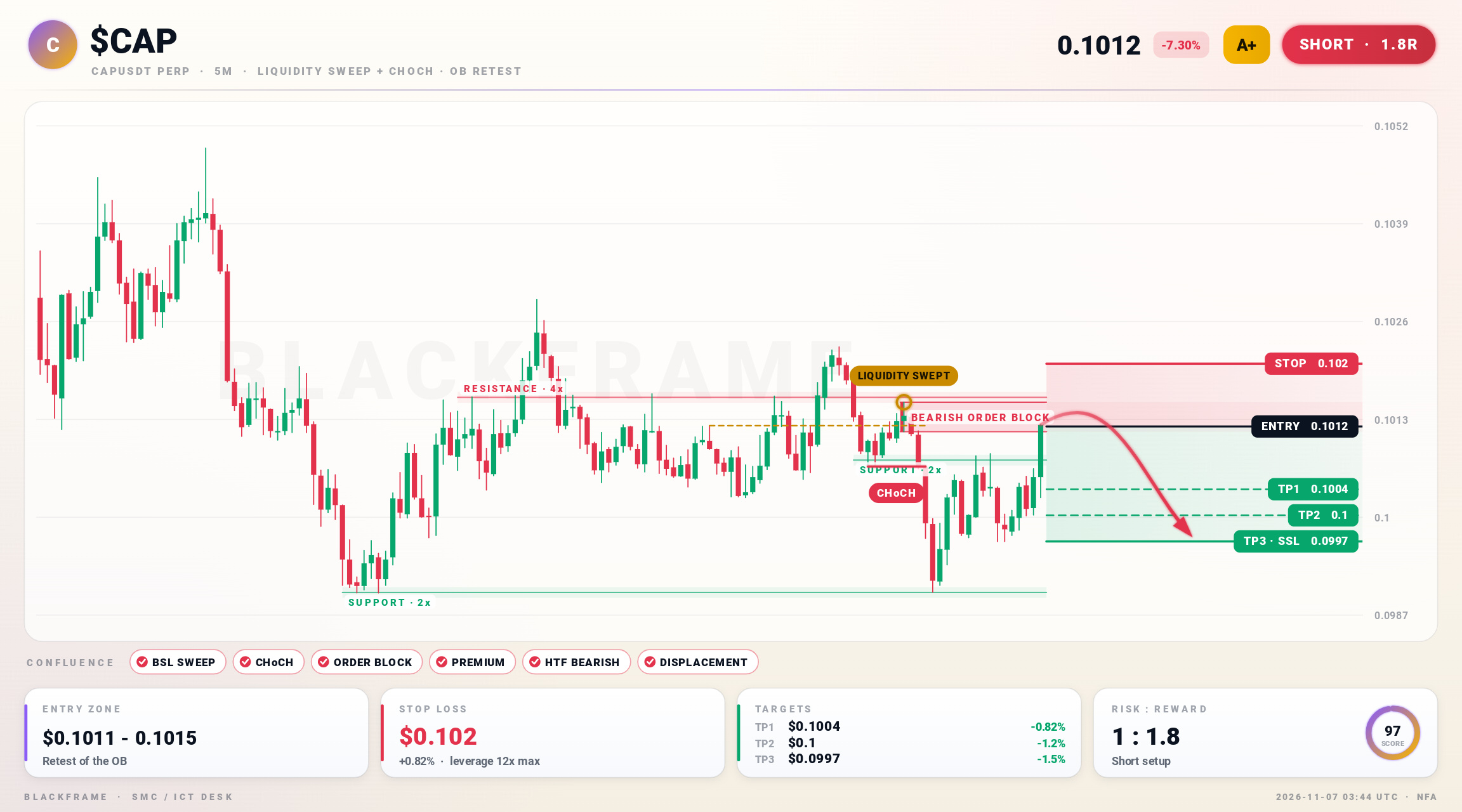
🔻 $CAP executes liquidity sweep, short bias solid
SHORT · 5M
Entry: $0.1011 - $0.1012
TP1: $0.1004
TP2: $0.1
TP3: $0.0997
SL: $0.102
Buy-side liquidity was swept, confirming bearish pressure. CHoCH on 5M and a fresh bearish order block retest at $0.1011-0.1015 give a clean entry at $0.1012 with stop at $0.102. Target is sell-side liquidity at $0.0997; invalid if price re‑enters premium zone.
#CAP #CryptoTrading · NFA
🔻 $CAP executes liquidity sweep, short bias solid
SHORT · 5M
Entry: $0.1011 - $0.1012
TP1: $0.1004
TP2: $0.1
TP3: $0.0997
SL: $0.102
Buy-side liquidity was swept, confirming bearish pressure. CHoCH on 5M and a fresh bearish order block retest at $0.1011-0.1015 give a clean entry at $0.1012 with stop at $0.102. Target is sell-side liquidity at $0.0997; invalid if price re‑enters premium zone.
#CAP #CryptoTrading · NFA
SHORT · 5M
Entry: $0.1011 - $0.1012
TP1: $0.1004
TP2: $0.1
TP3: $0.0997
SL: $0.102
Buy-side liquidity was swept, confirming bearish pressure. CHoCH on 5M and a fresh bearish order block retest at $0.1011-0.1015 give a clean entry at $0.1012 with stop at $0.102. Target is sell-side liquidity at $0.0997; invalid if price re‑enters premium zone.
#CAP #CryptoTrading · NFA
67

💥 $CAP COILING FOR EXPLOSIVE BREAKOUT AS WHALES DEFEND CRITICAL DEMAND BLOCK! ⚡
Entry: 0.07070 - 0.07090 ⚡
Target: 0.07170 - 0.07370 🚀
Stop Loss: 0.06874 ⚠️
Smart money is stepping in to aggressively bid $CAP right off this tight support pocket, absorbing sell pressure with heavy order flow absorption. 🦈 The price action is coiled like a spring, signaling market makers are quietly positioning ahead of the upper resistance sweep.
📌 With volatility contracting and buyers consistently defending this demand zone, the risk-to-reward on this setup favors a rapid expansion higher. 📊 Front-running this breakout before momentum buyers step in offers a textbook high-conviction window. 💬 Are you bidding this accumulation structure with the whales, or waiting for confirmation on the breakout? 👇
⚠️ Not financial advice. Always manage your risk. 🛡️
🏷️ #CAP #LongSetup #Breakout #Crypto
🔥 💎
💥 $CAP COILING FOR EXPLOSIVE BREAKOUT AS WHALES DEFEND CRITICAL DEMAND BLOCK! ⚡
Entry: 0.07070 - 0.07090 ⚡
Target: 0.07170 - 0.07370 🚀
Stop Loss: 0.06874 ⚠️
Smart money is stepping in to aggressively bid $CAP right off this tight support pocket, absorbing sell pressure with heavy order flow absorption. 🦈 The price action is coiled like a spring, signaling market makers are quietly positioning ahead of the upper resistance sweep.
📌 With volatility contracting and buyers consistently defending this demand zone, the risk-to-reward on this setup favors a rapid expansion higher. 📊 Front-running this breakout before momentum buyers step in offers a textbook high-conviction window. 💬 Are you bidding this accumulation structure with the whales, or waiting for confirmation on the breakout? 👇
⚠️ Not financial advice. Always manage your risk. 🛡️
🏷️ #CAP #LongSetup #Breakout #Crypto
🔥 💎
Entry: 0.07070 - 0.07090 ⚡
Target: 0.07170 - 0.07370 🚀
Stop Loss: 0.06874 ⚠️
Smart money is stepping in to aggressively bid $CAP right off this tight support pocket, absorbing sell pressure with heavy order flow absorption. 🦈 The price action is coiled like a spring, signaling market makers are quietly positioning ahead of the upper resistance sweep.
📌 With volatility contracting and buyers consistently defending this demand zone, the risk-to-reward on this setup favors a rapid expansion higher. 📊 Front-running this breakout before momentum buyers step in offers a textbook high-conviction window. 💬 Are you bidding this accumulation structure with the whales, or waiting for confirmation on the breakout? 👇
⚠️ Not financial advice. Always manage your risk. 🛡️
🏷️ #CAP #LongSetup #Breakout #Crypto
🔥 💎
18

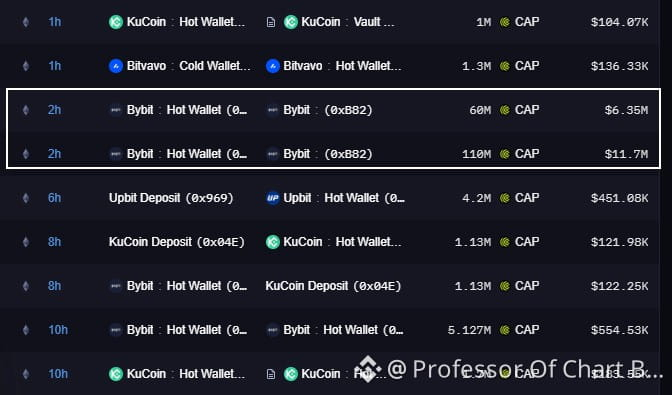
A lot of $CAP activity around Bybit lately.
Two large transfers caught my attention:
• 60M CAP (~$6.35M)
• 110M CAP (~$11.7M)
That's 170M $CAP worth around $18M moving between Bybit-labeled wallets in just 2 hours.
Other exchanges are seeing activity too.
Not calling it selling, but the amount of CAP moving across exchanges is worth watching. Where does it go next?
#CAP
A lot of $CAP activity around Bybit lately.
Two large transfers caught my attention:
• 60M CAP (~$6.35M)
• 110M CAP (~$11.7M)
That's 170M $CAP worth around $18M moving between Bybit-labeled wallets in just 2 hours.
Other exchanges are seeing activity too.
Not calling it selling, but the amount of CAP moving across exchanges is worth watching. Where does it go next?
#CAP
Two large transfers caught my attention:
• 60M CAP (~$6.35M)
• 110M CAP (~$11.7M)
That's 170M $CAP worth around $18M moving between Bybit-labeled wallets in just 2 hours.
Other exchanges are seeing activity too.
Not calling it selling, but the amount of CAP moving across exchanges is worth watching. Where does it go next?
#CAP
2
1.6k


·
--
Bullish
🚨 FAM, TWO MORE TARGETS SMASHED! WHO'S WATCHING THESE MOVES? 🔥
We shared the levels, the market delivered the results!
✅ #ERA — TP1 HIT! $0.075
✅ #CAP — TP1 HIT! $0.110
Both coins have started moving towards their next targets!
🎯 $ERA — $0.078 → $0.082 → $0.086
🎯 $CAP — $0.115 → $0.120 → $0.125
$PIEVERSE— Still on our radar! Next target: $1.45 → $1.50 → $1.55 → $1.60.
FAM, THIS IS WHY YOU NEVER IGNORE HUNTER X UPDATES!
I keep sharing opportunities throughout the day. Stay alert, follow the updates, and never miss the next move.
Your trust is our biggest reward. We rise together, we win together! ❤️
WOLF HUNTER X
{future}(ERAUSDT)
{future}(CAPUSDT)
🚨 FAM, TWO MORE TARGETS SMASHED! WHO'S WATCHING THESE MOVES? 🔥
We shared the levels, the market delivered the results!
✅ #ERA — TP1 HIT! $0.075
✅ #CAP — TP1 HIT! $0.110
Both coins have started moving towards their next targets!
🎯 $ERA — $0.078 → $0.082 → $0.086
🎯 $CAP — $0.115 → $0.120 → $0.125
$PIEVERSE— Still on our radar! Next target: $1.45 → $1.50 → $1.55 → $1.60.
FAM, THIS IS WHY YOU NEVER IGNORE HUNTER X UPDATES!
I keep sharing opportunities throughout the day. Stay alert, follow the updates, and never miss the next move.
Your trust is our biggest reward. We rise together, we win together! ❤️
WOLF HUNTER X
We shared the levels, the market delivered the results!
✅ #ERA — TP1 HIT! $0.075
✅ #CAP — TP1 HIT! $0.110
Both coins have started moving towards their next targets!
🎯 $ERA — $0.078 → $0.082 → $0.086
🎯 $CAP — $0.115 → $0.120 → $0.125
$PIEVERSE— Still on our radar! Next target: $1.45 → $1.50 → $1.55 → $1.60.
FAM, THIS IS WHY YOU NEVER IGNORE HUNTER X UPDATES!
I keep sharing opportunities throughout the day. Stay alert, follow the updates, and never miss the next move.
Your trust is our biggest reward. We rise together, we win together! ❤️
WOLF HUNTER X
WOLF HUNTER X
·
--
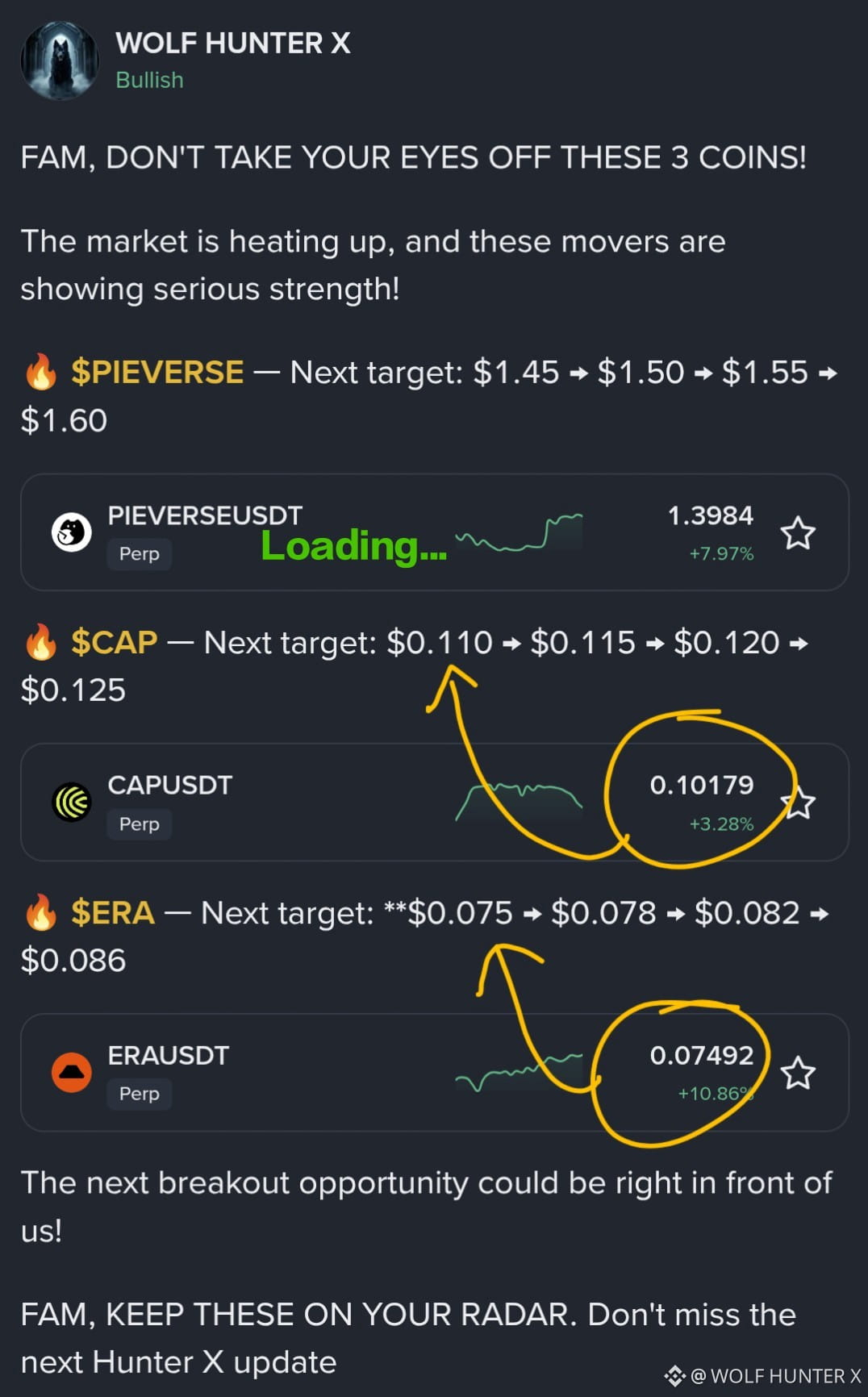
BullishFAM, DON'T TAKE YOUR EYES OFF THESE 3 COINS!
The market is heating up, and these movers are showing serious strength!
🔥 $PIEVERSE — Next target: $1.45 → $1.50 → $1.55 → $1.60
🔥 $CAP — Next target: $0.110 → $0.115 → $0.120 → $0.125
🔥 $ERA — Next target: **$0.075 → $0.078 → $0.082 → $0.086
The next breakout opportunity could be right in front of us!
FAM, KEEP THESE ON YOUR RADAR. Don't miss the next Hunter X update
The market is heating up, and these movers are showing serious strength!
🔥 $PIEVERSE — Next target: $1.45 → $1.50 → $1.55 → $1.60
🔥 $CAP — Next target: $0.110 → $0.115 → $0.120 → $0.125
🔥 $ERA — Next target: **$0.075 → $0.078 → $0.082 → $0.086
The next breakout opportunity could be right in front of us!
FAM, KEEP THESE ON YOUR RADAR. Don't miss the next Hunter X update
506


·
--
Bullish
THESE 3 ARE READY TO GIVE US 3-5X MOVE⁉️
Look at their weeklay charts below🥹‼️
All 3 are holding their crucial supports & bouncing back to their MAIN SUPPLY ZONE on weekly TF.
But what if ⁉️
Any of these 3 gave us an actual BREAKOUT 😱
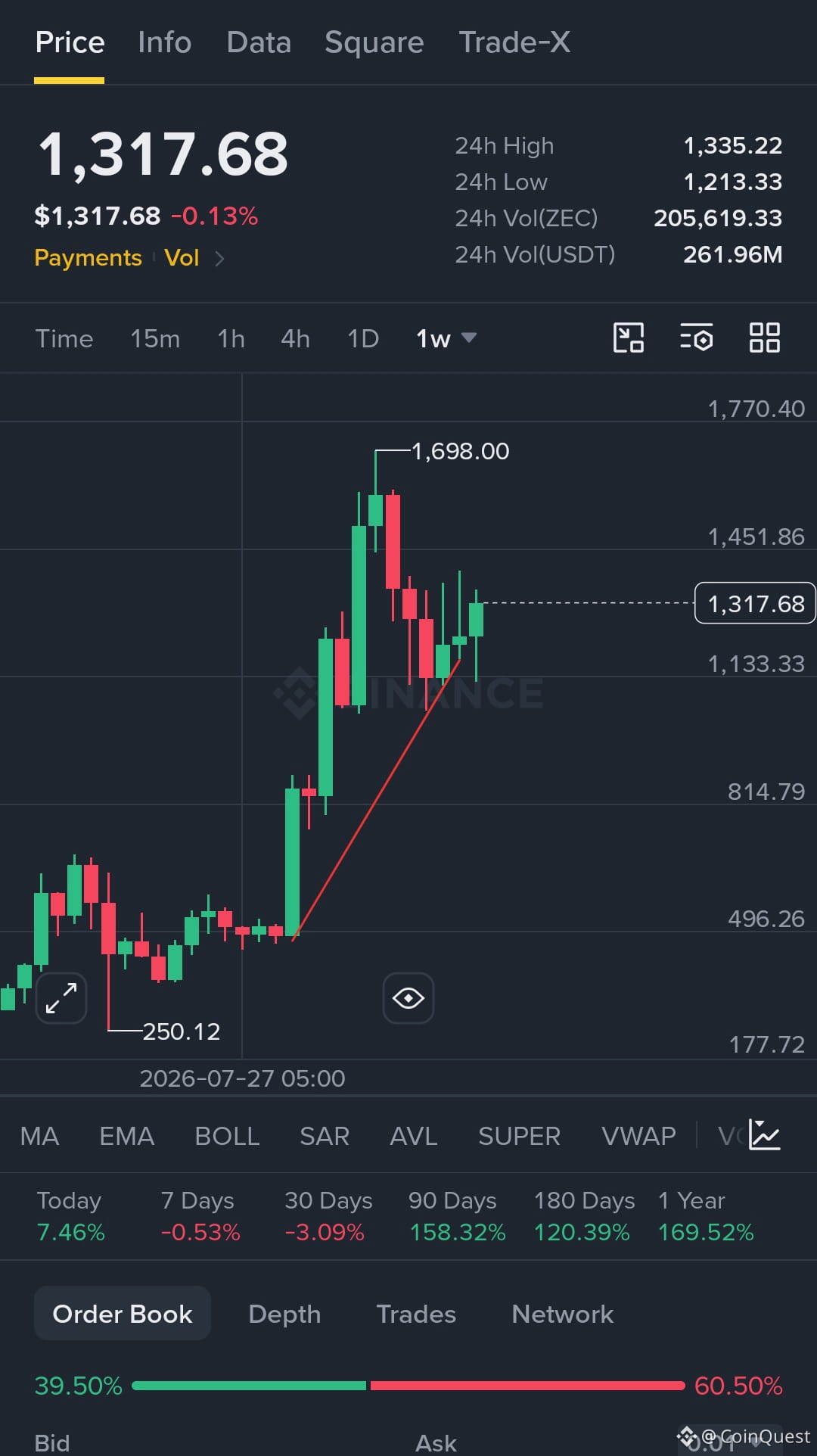
$ZEC is moving around $1300 but it's crucial resistance is around $1350 where sellers are taking control. If buyers manage to break this SUPPLY ZONE ,we can expect another ATH or 2000 plus target.I am betting on the target.
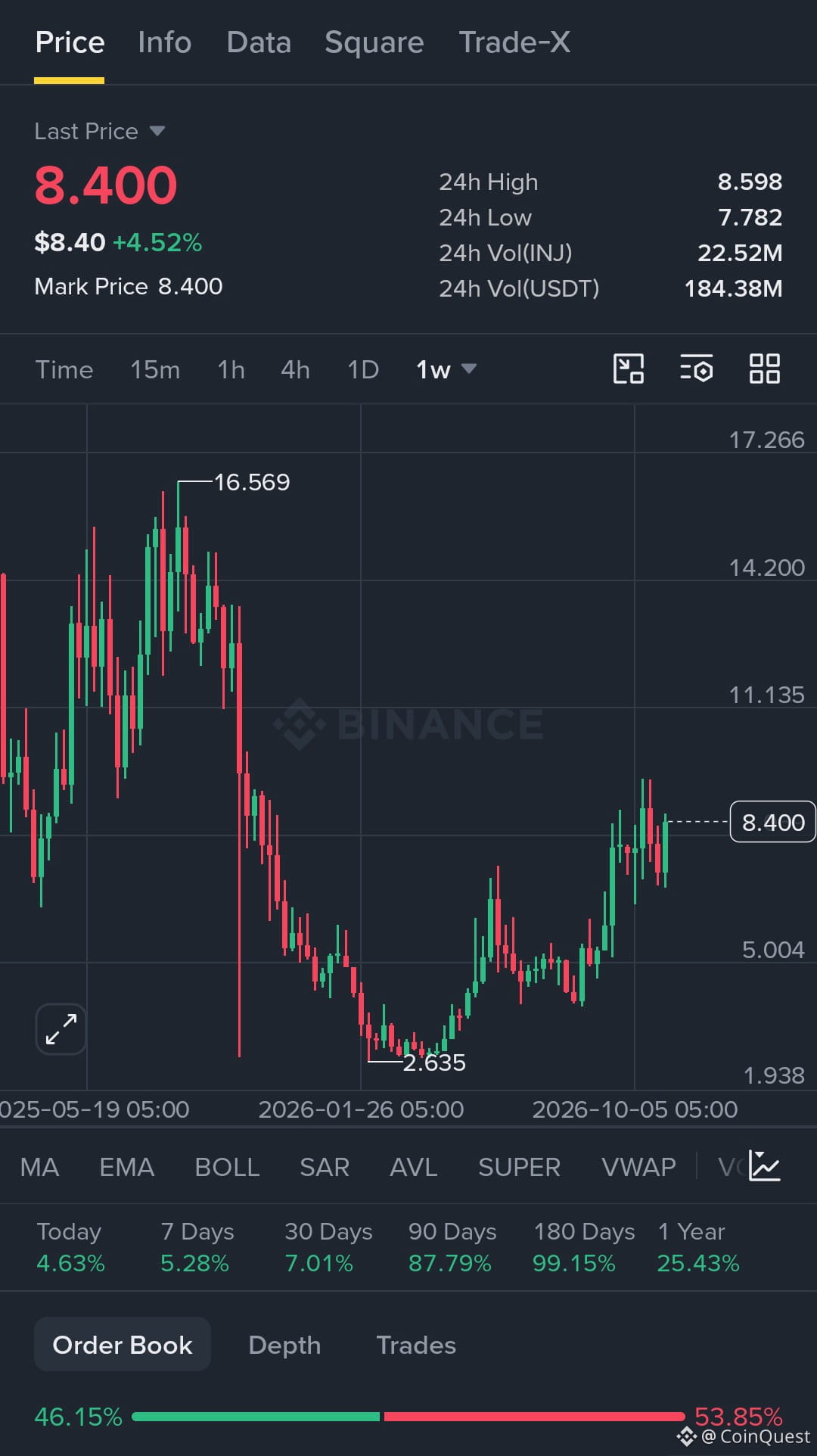
$INJ DROPS from $50+ to $2.63 then after months of accumulation ,it starts to bounce back. the only hurdle is 8.7-8.95 SUPPLY ZONE . There's two TF supply zones . One is monthly & one is Weekly .if Buyers manage to break this SUPPLY ZONE ,we can expect at least $20 target & $50 as the main target That's actually 2-5x move.
Then There's
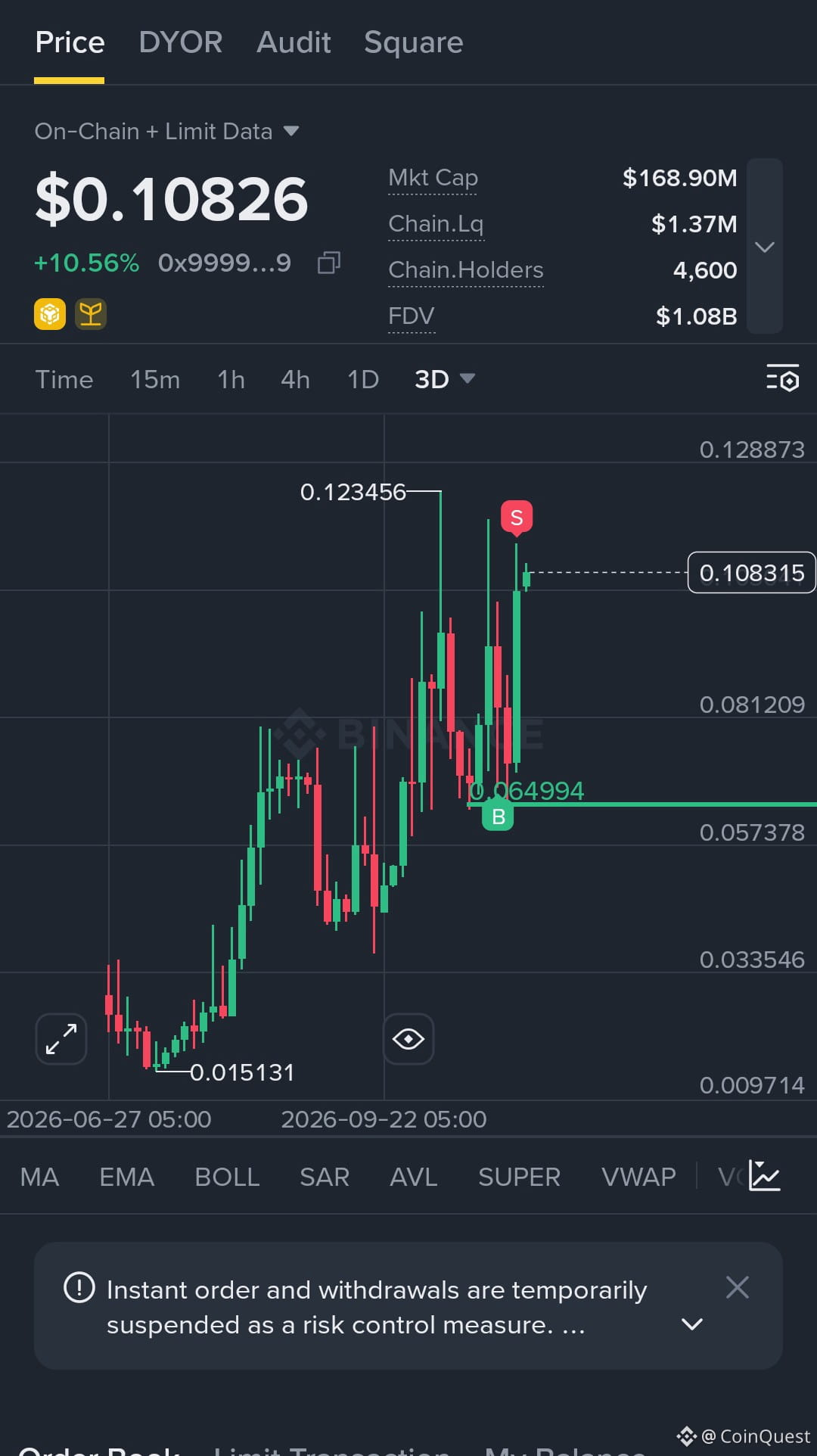
$CAP . Price hits ATH & dropped sharply to $0.068 where 3 day Demand zone was. BUYERS didn't hold back there & take control from there & pushed the prices back above $0.108 . Now The next supply zone is $0.12+ where sellers will again try to hit it. We just have to wait for buyers response this time. If buyers won this time , We can at least expect $0.2-0.3 Target which is also 2-3x Move.
WHICH ONE ARE YOU GUYS WATCHING ⁉️
#CAP #INJ #ZEC
THESE 3 ARE READY TO GIVE US 3-5X MOVE⁉️
Look at their weeklay charts below🥹‼️
All 3 are holding their crucial supports & bouncing back to their MAIN SUPPLY ZONE on weekly TF.
But what if ⁉️
Any of these 3 gave us an actual BREAKOUT 😱
$ZEC is moving around $1300 but it's crucial resistance is around $1350 where sellers are taking control. If buyers manage to break this SUPPLY ZONE ,we can expect another ATH or 2000 plus target.I am betting on the target.
$INJ DROPS from $50+ to $2.63 then after months of accumulation ,it starts to bounce back. the only hurdle is 8.7-8.95 SUPPLY ZONE . There's two TF supply zones . One is monthly & one is Weekly .if Buyers manage to break this SUPPLY ZONE ,we can expect at least $20 target & $50 as the main target That's actually 2-5x move.
Then There's
$CAP . Price hits ATH & dropped sharply to $0.068 where 3 day Demand zone was. BUYERS didn't hold back there & take control from there & pushed the prices back above $0.108 . Now The next supply zone is $0.12+ where sellers will again try to hit it. We just have to wait for buyers response this time. If buyers won this time , We can at least expect $0.2-0.3 Target which is also 2-3x Move.
WHICH ONE ARE YOU GUYS WATCHING ⁉️
#CAP #INJ #ZEC
Look at their weeklay charts below🥹‼️
All 3 are holding their crucial supports & bouncing back to their MAIN SUPPLY ZONE on weekly TF.
But what if ⁉️
Any of these 3 gave us an actual BREAKOUT 😱
$ZEC is moving around $1300 but it's crucial resistance is around $1350 where sellers are taking control. If buyers manage to break this SUPPLY ZONE ,we can expect another ATH or 2000 plus target.I am betting on the target.
$INJ DROPS from $50+ to $2.63 then after months of accumulation ,it starts to bounce back. the only hurdle is 8.7-8.95 SUPPLY ZONE . There's two TF supply zones . One is monthly & one is Weekly .if Buyers manage to break this SUPPLY ZONE ,we can expect at least $20 target & $50 as the main target That's actually 2-5x move.
Then There's
$CAP . Price hits ATH & dropped sharply to $0.068 where 3 day Demand zone was. BUYERS didn't hold back there & take control from there & pushed the prices back above $0.108 . Now The next supply zone is $0.12+ where sellers will again try to hit it. We just have to wait for buyers response this time. If buyers won this time , We can at least expect $0.2-0.3 Target which is also 2-3x Move.
WHICH ONE ARE YOU GUYS WATCHING ⁉️
#CAP #INJ #ZEC
1
1.2k

·
--
🚀 TODAY’S TOP GAINERS! I TALKED ABOUT THESE COINS BEFORE THE MOVE! 👀🔥
$JCT – I mentioned earlier that this coin had the potential to reach a new ATH or become the next big runner. Of course, that was my personal opinion, but the recent move is definitely worth watching! 🚀
$ELSA – This coin has been struggling since launch, but we're finally seeing some momentum. Could the move continue? Possibly! However, it's still unpredictable. It might take another 1–2 months before we see a major breakout, so patience is key.
$CAP – One of the coins that has been quietly performing well over the past few months. It's showing small but consistent gains, which is why some people are considering it a potential new BTW candidate. I still expect a possible pullback at some point, but timing the exact drop is extremely difficult.
🔥 Keep watching the market. Sometimes the biggest opportunities appear when nobody is paying attention!
#JCT #CAP #ELSA
🚀 TODAY’S TOP GAINERS! I TALKED ABOUT THESE COINS BEFORE THE MOVE! 👀🔥
$JCT – I mentioned earlier that this coin had the potential to reach a new ATH or become the next big runner. Of course, that was my personal opinion, but the recent move is definitely worth watching! 🚀
$ELSA – This coin has been struggling since launch, but we're finally seeing some momentum. Could the move continue? Possibly! However, it's still unpredictable. It might take another 1–2 months before we see a major breakout, so patience is key.
$CAP – One of the coins that has been quietly performing well over the past few months. It's showing small but consistent gains, which is why some people are considering it a potential new BTW candidate. I still expect a possible pullback at some point, but timing the exact drop is extremely difficult.
🔥 Keep watching the market. Sometimes the biggest opportunities appear when nobody is paying attention!
#JCT #CAP #ELSA
$JCT – I mentioned earlier that this coin had the potential to reach a new ATH or become the next big runner. Of course, that was my personal opinion, but the recent move is definitely worth watching! 🚀
$ELSA – This coin has been struggling since launch, but we're finally seeing some momentum. Could the move continue? Possibly! However, it's still unpredictable. It might take another 1–2 months before we see a major breakout, so patience is key.
$CAP – One of the coins that has been quietly performing well over the past few months. It's showing small but consistent gains, which is why some people are considering it a potential new BTW candidate. I still expect a possible pullback at some point, but timing the exact drop is extremely difficult.
🔥 Keep watching the market. Sometimes the biggest opportunities appear when nobody is paying attention!
#JCT #CAP #ELSA

48

·
--
$CAP – Crypto Market Analysis
💰 Current Price: $0.1077
📈 24H Change: +11.49%
🔥 7D Performance: +40.07%
Market Outlook:
CAP is showing strong bullish momentum, with impressive gains over the last 24 hours and 7 days.
My View:
CAP is worth watching due to its recent upward momentum. However, after a strong rally, a price correction is also possible.
⚠️ High volatility. Always manage your risk before trading.
#CAP #crypto #Binance #ALTCOİNS #CryptoAnalysis
$CAP – Crypto Market Analysis
💰 Current Price: $0.1077
📈 24H Change: +11.49%
🔥 7D Performance: +40.07%
Market Outlook:
CAP is showing strong bullish momentum, with impressive gains over the last 24 hours and 7 days.
My View:
CAP is worth watching due to its recent upward momentum. However, after a strong rally, a price correction is also possible.
⚠️ High volatility. Always manage your risk before trading.
#CAP #crypto #Binance #ALTCOİNS #CryptoAnalysis
💰 Current Price: $0.1077
📈 24H Change: +11.49%
🔥 7D Performance: +40.07%
Market Outlook:
CAP is showing strong bullish momentum, with impressive gains over the last 24 hours and 7 days.
My View:
CAP is worth watching due to its recent upward momentum. However, after a strong rally, a price correction is also possible.
⚠️ High volatility. Always manage your risk before trading.
#CAP #crypto #Binance #ALTCOİNS #CryptoAnalysis

289

·
--
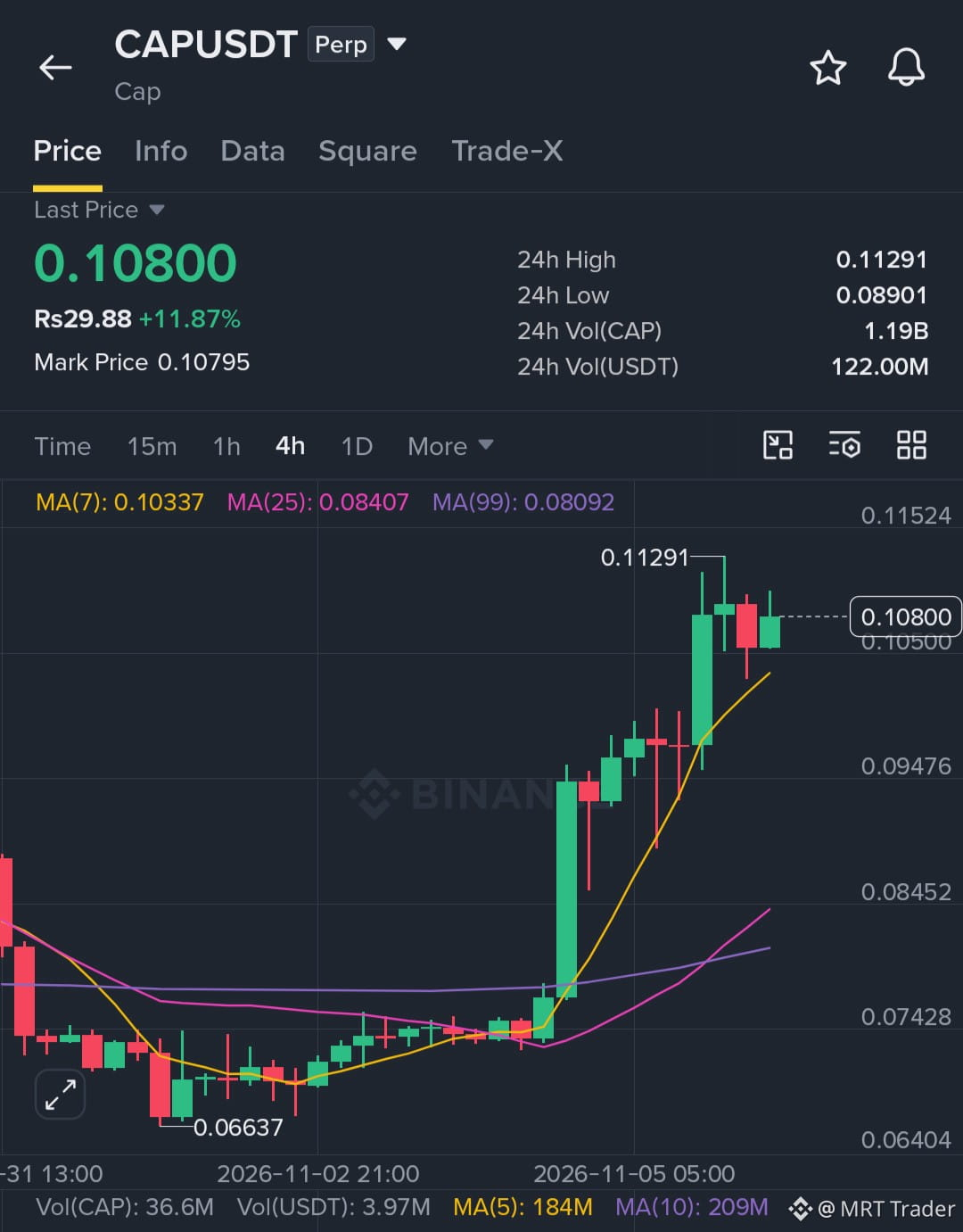
$CAP is holding strong after a powerful breakout, and buyers are defending the pullback zone — structure favors continuation if support stays intact.
Key Level:
🟢 Bullish above: 0.1135
Trade Setup (Long):
🟢 Entry Zone: 0.1045 – 0.1075
🎯 Targets: 0.1165 / 0.1240 / 0.1330
⛔ Stop Loss: 0.0985
Price is holding above the breakout zone. Enter on pullbacks and manage risk appropriately.
Click here to buy now 👉 $CAP
{future}(CAPUSDT)
#CAP #StrategySTRCResumesIssuanceAfterOver170Days
$CAP is holding strong after a powerful breakout, and buyers are defending the pullback zone — structure favors continuation if support stays intact.
Key Level:
🟢 Bullish above: 0.1135
Trade Setup (Long):
🟢 Entry Zone: 0.1045 – 0.1075
🎯 Targets: 0.1165 / 0.1240 / 0.1330
⛔ Stop Loss: 0.0985
Price is holding above the breakout zone. Enter on pullbacks and manage risk appropriately.
Click here to buy now 👉 $CAP
#CAP #StrategySTRCResumesIssuanceAfterOver170Days
Key Level:
🟢 Bullish above: 0.1135
Trade Setup (Long):
🟢 Entry Zone: 0.1045 – 0.1075
🎯 Targets: 0.1165 / 0.1240 / 0.1330
⛔ Stop Loss: 0.0985
Price is holding above the breakout zone. Enter on pullbacks and manage risk appropriately.
Click here to buy now 👉 $CAP
#CAP #StrategySTRCResumesIssuanceAfterOver170Days
2
35

·
--
Bullish
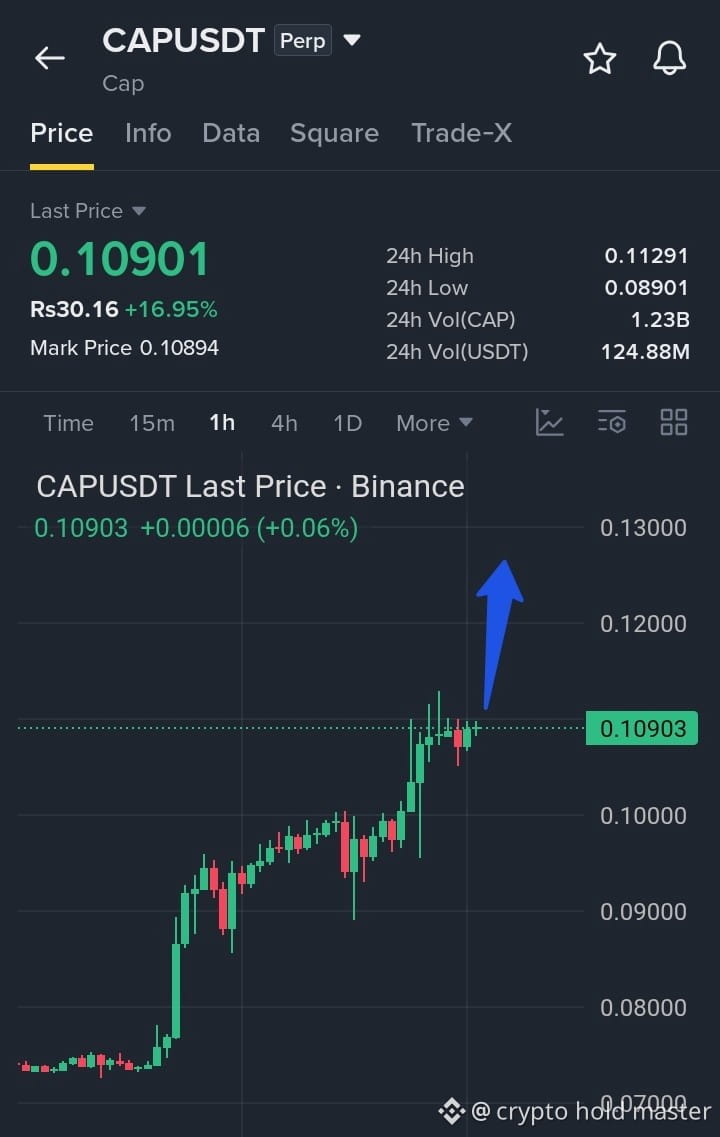
$CAP Ready for Another Leg Up? Bulls Targeting $0.125 Again
Long Setup
Entry: $0.1060 – $0.1090
TP1: $0.1130 TP2: $0.1200 Final Target: $0.1260 SL: $0.1010
$CAP is showing impressive strength after a strong rally, gaining nearly 17% in the last 24 hours. Buyers have pushed the price toward $0.1090, and now it's consolidating near the recent highs.
As long as $0.1010 support holds, I still see potential for another bullish move toward $0.1130 – $0.1260.
A clean break above $0.1130 could give bulls the momentum they're waiting for. However, losing $0.1010 would weaken this setup.
Bulls are still in control for now. Let's see if #CAP can deliver another breakout!
Trade on $CAP 🚀
{future}(CAPUSDT)
$CAP Ready for Another Leg Up? Bulls Targeting $0.125 Again
Long Setup
Entry: $0.1060 – $0.1090
TP1: $0.1130 TP2: $0.1200 Final Target: $0.1260 SL: $0.1010
$CAP is showing impressive strength after a strong rally, gaining nearly 17% in the last 24 hours. Buyers have pushed the price toward $0.1090, and now it's consolidating near the recent highs.
As long as $0.1010 support holds, I still see potential for another bullish move toward $0.1130 – $0.1260.
A clean break above $0.1130 could give bulls the momentum they're waiting for. However, losing $0.1010 would weaken this setup.
Bulls are still in control for now. Let's see if #CAP can deliver another breakout!
Trade on $CAP 🚀
Long Setup
Entry: $0.1060 – $0.1090
TP1: $0.1130 TP2: $0.1200 Final Target: $0.1260 SL: $0.1010
$CAP is showing impressive strength after a strong rally, gaining nearly 17% in the last 24 hours. Buyers have pushed the price toward $0.1090, and now it's consolidating near the recent highs.
As long as $0.1010 support holds, I still see potential for another bullish move toward $0.1130 – $0.1260.
A clean break above $0.1130 could give bulls the momentum they're waiting for. However, losing $0.1010 would weaken this setup.
Bulls are still in control for now. Let's see if #CAP can deliver another breakout!
Trade on $CAP 🚀
3
293

·
--
Verified
Article
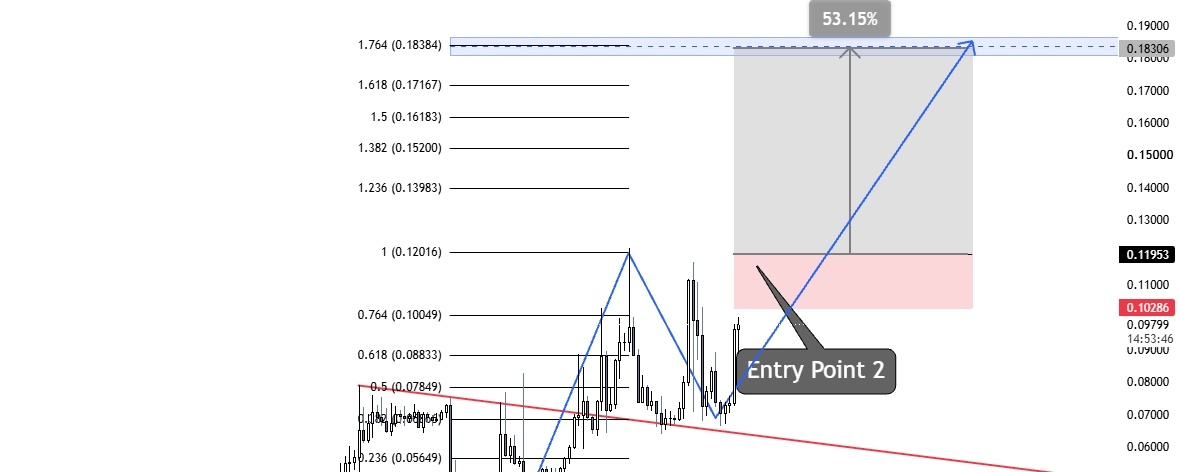
$CAP: $115M Market Cap. $739M FDV. F****g Wide Gap.Cap has a live stablecoin and savings product. At roughly 6.4× its circulating market cap, the fully diluted valuation raises a harder question: how much of that business will actually create demand for CAP?
NO.1 WHAT IS CAP?
Cap is an Ethereum stablecoin protocol. cUSD is its digital dollar, redeemable against available reserve assets. Users can stake cUSD to receive stcUSD, which earns yield from the protocol’s lending system. CAP is the separate ecosystem token.
NO.2 WHY PEOPLE CARE
Cap gives stablecoin holders access to yield generated by professional operators. Operators borrow from the protocol, and delegated collateral can be slashed if they fail to repay. That gives depositors a layer of protection whose value depends on how much collateral can actually be recovered under stress.
NO.3 THE NARRATIVE
Cap is a bet that stablecoin holders will use on-chain credit markets to earn yield. The test is whether operators keep borrowing at rates that can fund competitive savings returns and leave the protocol with a margin.
NO.4 THE EDGE
The strongest design choice is separating the dollar token from the savings product. Users can hold cUSD for liquidity or opt into stcUSD for yield. Cap can serve both use cases while keeping the source of yield visible.
NO.5 KEY METRICS
Approximate November 5 snapshot:
Price: $0.0739
Market cap: $115M
FDV: $739M
Circulating supply: 1.56B CAP, or 15.6%
Total and maximum supply: 10B CAP
Reported TVL: ~$189M.
DefiLlama’s TVL methodology includes delegated collateral alongside supplied assets. Active loans are a better figure to watch when assessing how much credit operators are actually using.
NO.6 TOKENOMICS
The published allocation assigns 47.37% to ecosystem and community, 20% to private investors, and 20% to the team. DefiLlama tracks protocol revenue from a share of borrow fees and a cUSD mint fee. I couldn’t verify a recurring buyback or distribution that routes that revenue to CAP holders.
NO.7 UNLOCKS & RISKS
Tokenomics.com models a 12-month cliff for the team and private investors, followed by a release of 25% of each allocation. On that schedule, those two groups alone would unlock 1B CAP around June 2027, equivalent to about 64% of today’s reported float. That measures the size of the vesting event. Actual selling depends on what recipients do.
The other risk is credit. In a stressed market, collateral value and the speed of recovery matter more than the headline yield.
NO.8 BULL vs BEAR
BULL: Operators borrow repeatedly, Cap retains a healthy margin, and the protocol establishes a measurable link between earnings and CAP demand.
BEAR: cUSD and stcUSD grow while CAP remains mostly a speculative asset facing a much larger float.
NO.9 VERDICT
Product & Adoption 6/10 · Token Economics 4/10 · Growth Potential 7/10 · Risk Profile 3/10
Overall Grade: C+
At $739M FDV, I’d want to see recurring earnings that benefit CAP before the first major insider cliff. If cUSD adoption doubles, what would actually bring new buyers to CAP?
#CAP $CAP
{future}(CAPUSDT)
$CAP: $115M Market Cap. $739M FDV. F****g Wide Gap.
Cap has a live stablecoin and savings product. At roughly 6.4× its circulating market cap, the fully diluted valuation raises a harder question: how much of that business will actually create demand for CAP?
NO.1 WHAT IS CAP?
Cap is an Ethereum stablecoin protocol. cUSD is its digital dollar, redeemable against available reserve assets. Users can stake cUSD to receive stcUSD, which earns yield from the protocol’s lending system. CAP is the separate ecosystem token.
NO.2 WHY PEOPLE CARE
Cap gives stablecoin holders access to yield generated by professional operators. Operators borrow from the protocol, and delegated collateral can be slashed if they fail to repay. That gives depositors a layer of protection whose value depends on how much collateral can actually be recovered under stress.
NO.3 THE NARRATIVE
Cap is a bet that stablecoin holders will use on-chain credit markets to earn yield. The test is whether operators keep borrowing at rates that can fund competitive savings returns and leave the protocol with a margin.
NO.4 THE EDGE
The strongest design choice is separating the dollar token from the savings product. Users can hold cUSD for liquidity or opt into stcUSD for yield. Cap can serve both use cases while keeping the source of yield visible.
NO.5 KEY METRICS
Approximate November 5 snapshot:
Price: $0.0739
Market cap: $115M
FDV: $739M
Circulating supply: 1.56B CAP, or 15.6%
Total and maximum supply: 10B CAP
Reported TVL: ~$189M.
DefiLlama’s TVL methodology includes delegated collateral alongside supplied assets. Active loans are a better figure to watch when assessing how much credit operators are actually using.
NO.6 TOKENOMICS
The published allocation assigns 47.37% to ecosystem and community, 20% to private investors, and 20% to the team. DefiLlama tracks protocol revenue from a share of borrow fees and a cUSD mint fee. I couldn’t verify a recurring buyback or distribution that routes that revenue to CAP holders.
NO.7 UNLOCKS & RISKS
Tokenomics.com models a 12-month cliff for the team and private investors, followed by a release of 25% of each allocation. On that schedule, those two groups alone would unlock 1B CAP around June 2027, equivalent to about 64% of today’s reported float. That measures the size of the vesting event. Actual selling depends on what recipients do.
The other risk is credit. In a stressed market, collateral value and the speed of recovery matter more than the headline yield.
NO.8 BULL vs BEAR
BULL: Operators borrow repeatedly, Cap retains a healthy margin, and the protocol establishes a measurable link between earnings and CAP demand.
BEAR: cUSD and stcUSD grow while CAP remains mostly a speculative asset facing a much larger float.
NO.9 VERDICT
Product & Adoption 6/10 · Token Economics 4/10 · Growth Potential 7/10 · Risk Profile 3/10
Overall Grade: C+
At $739M FDV, I’d want to see recurring earnings that benefit CAP before the first major insider cliff. If cUSD adoption doubles, what would actually bring new buyers to CAP?
#CAP $CAP
NO.1 WHAT IS CAP?
Cap is an Ethereum stablecoin protocol. cUSD is its digital dollar, redeemable against available reserve assets. Users can stake cUSD to receive stcUSD, which earns yield from the protocol’s lending system. CAP is the separate ecosystem token.
NO.2 WHY PEOPLE CARE
Cap gives stablecoin holders access to yield generated by professional operators. Operators borrow from the protocol, and delegated collateral can be slashed if they fail to repay. That gives depositors a layer of protection whose value depends on how much collateral can actually be recovered under stress.
NO.3 THE NARRATIVE
Cap is a bet that stablecoin holders will use on-chain credit markets to earn yield. The test is whether operators keep borrowing at rates that can fund competitive savings returns and leave the protocol with a margin.
NO.4 THE EDGE
The strongest design choice is separating the dollar token from the savings product. Users can hold cUSD for liquidity or opt into stcUSD for yield. Cap can serve both use cases while keeping the source of yield visible.
NO.5 KEY METRICS
Approximate November 5 snapshot:
Price: $0.0739
Market cap: $115M
FDV: $739M
Circulating supply: 1.56B CAP, or 15.6%
Total and maximum supply: 10B CAP
Reported TVL: ~$189M.
DefiLlama’s TVL methodology includes delegated collateral alongside supplied assets. Active loans are a better figure to watch when assessing how much credit operators are actually using.
NO.6 TOKENOMICS
The published allocation assigns 47.37% to ecosystem and community, 20% to private investors, and 20% to the team. DefiLlama tracks protocol revenue from a share of borrow fees and a cUSD mint fee. I couldn’t verify a recurring buyback or distribution that routes that revenue to CAP holders.
NO.7 UNLOCKS & RISKS
Tokenomics.com models a 12-month cliff for the team and private investors, followed by a release of 25% of each allocation. On that schedule, those two groups alone would unlock 1B CAP around June 2027, equivalent to about 64% of today’s reported float. That measures the size of the vesting event. Actual selling depends on what recipients do.
The other risk is credit. In a stressed market, collateral value and the speed of recovery matter more than the headline yield.
NO.8 BULL vs BEAR
BULL: Operators borrow repeatedly, Cap retains a healthy margin, and the protocol establishes a measurable link between earnings and CAP demand.
BEAR: cUSD and stcUSD grow while CAP remains mostly a speculative asset facing a much larger float.
NO.9 VERDICT
Product & Adoption 6/10 · Token Economics 4/10 · Growth Potential 7/10 · Risk Profile 3/10
Overall Grade: C+
At $739M FDV, I’d want to see recurring earnings that benefit CAP before the first major insider cliff. If cUSD adoption doubles, what would actually bring new buyers to CAP?
#CAP $CAP
3
1.1k

·
--
Bullish
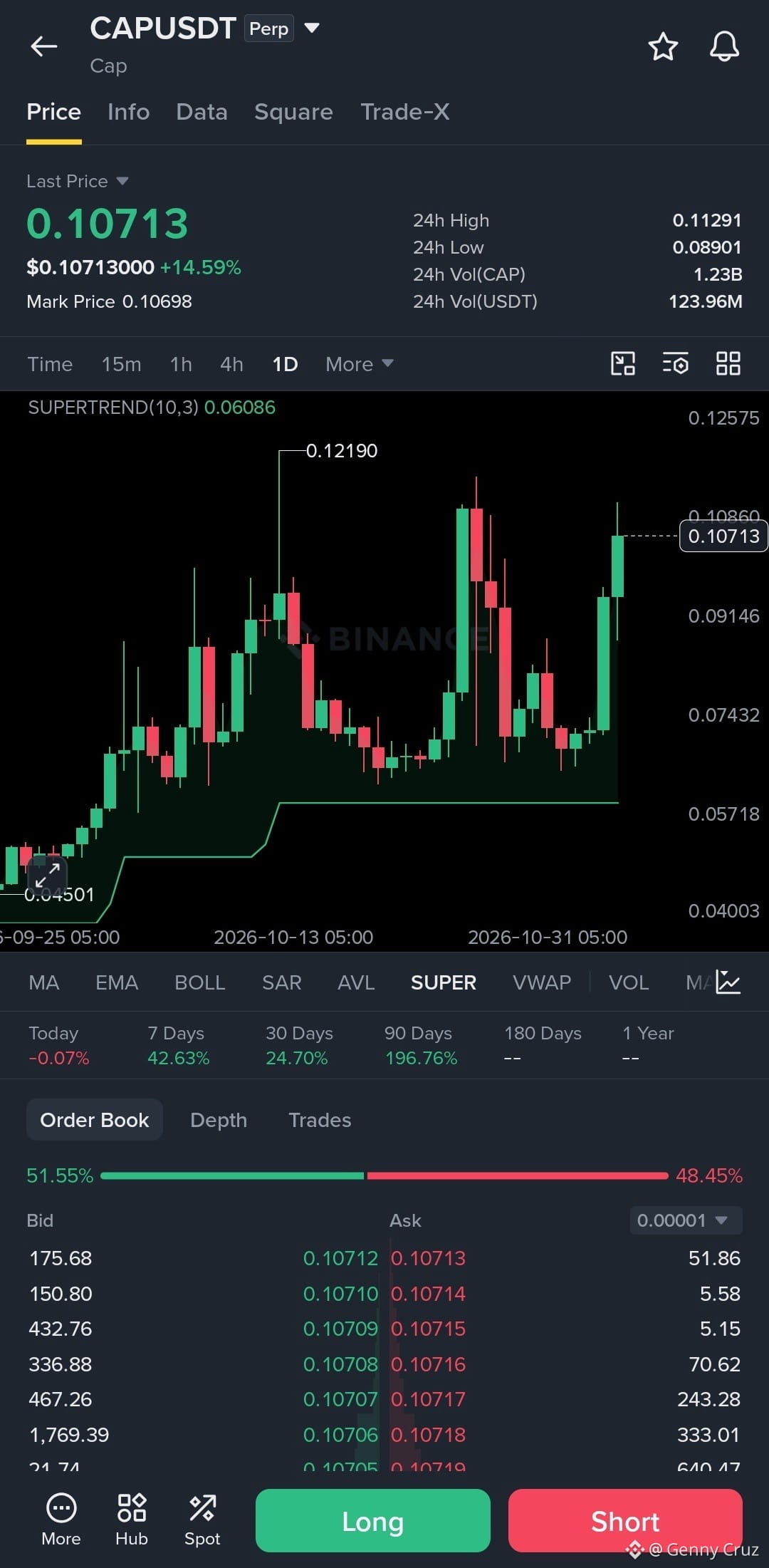
$CAP is building a strong bullish structure, and buyers are clearly back in control.
Price has climbed to $0.1071 after reclaiming the $0.09 area. The daily Supertrend remains bullish at $0.06086, while momentum is now bringing the previous high into focus.
Key levels to watch:
Support: $0.091–$0.089
Near-term resistance: $0.1129
Major resistance: $0.1219
Trend support: $0.0608
A clean break above $0.1129 could set up a retest of $0.1219. If buyers fail to hold $0.089, a deeper pullback becomes possible.
CAP is showing impressive relative strength. The next challenge is turning this momentum into a confirmed breakout.
#Write2Earn #CAP
{future}(CAPUSDT)
$CAP is building a strong bullish structure, and buyers are clearly back in control.
Price has climbed to $0.1071 after reclaiming the $0.09 area. The daily Supertrend remains bullish at $0.06086, while momentum is now bringing the previous high into focus.
Key levels to watch:
Support: $0.091–$0.089
Near-term resistance: $0.1129
Major resistance: $0.1219
Trend support: $0.0608
A clean break above $0.1129 could set up a retest of $0.1219. If buyers fail to hold $0.089, a deeper pullback becomes possible.
CAP is showing impressive relative strength. The next challenge is turning this momentum into a confirmed breakout.
#Write2Earn #CAP
Price has climbed to $0.1071 after reclaiming the $0.09 area. The daily Supertrend remains bullish at $0.06086, while momentum is now bringing the previous high into focus.
Key levels to watch:
Support: $0.091–$0.089
Near-term resistance: $0.1129
Major resistance: $0.1219
Trend support: $0.0608
A clean break above $0.1129 could set up a retest of $0.1219. If buyers fail to hold $0.089, a deeper pullback becomes possible.
CAP is showing impressive relative strength. The next challenge is turning this momentum into a confirmed breakout.
#Write2Earn #CAP
Fizza Ahmad:
Volume confirmation will be important.
21
20
641
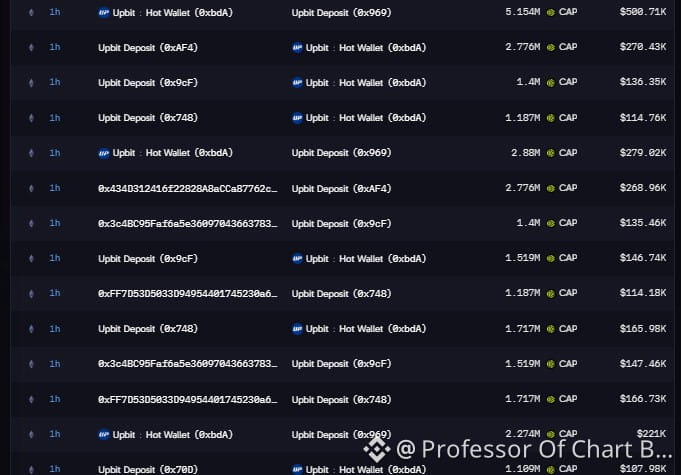
$CAP MILLIONS OF TOKENS ARE MOVING THROUGH UPBIT SOMETHING TO WATCH
I'm tracking a series of large $CAP transfers involving Upbit's hot wallet over the past hour.
Several deposit addresses are sending tokens back to Upbit, while the hot wallet is also distributing tokens to multiple deposit addresses.
Some of the biggest movements include:
5.154M CAP — ~$500.7K
2.776M CAP — ~$270K
2.274M CAP — ~$221K
1.717M CAP — ~$166K
1.519M CAP — ~$146K
What's interesting is that the same addresses appear repeatedly in these transactions.
This could be internal exchange wallet management or deposit consolidation rather than actual buying or selling.
#CAP
$CAP MILLIONS OF TOKENS ARE MOVING THROUGH UPBIT SOMETHING TO WATCH
I'm tracking a series of large $CAP transfers involving Upbit's hot wallet over the past hour.
Several deposit addresses are sending tokens back to Upbit, while the hot wallet is also distributing tokens to multiple deposit addresses.
Some of the biggest movements include:
5.154M CAP — ~$500.7K
2.776M CAP — ~$270K
2.274M CAP — ~$221K
1.717M CAP — ~$166K
1.519M CAP — ~$146K
What's interesting is that the same addresses appear repeatedly in these transactions.
This could be internal exchange wallet management or deposit consolidation rather than actual buying or selling.
#CAP
I'm tracking a series of large $CAP transfers involving Upbit's hot wallet over the past hour.
Several deposit addresses are sending tokens back to Upbit, while the hot wallet is also distributing tokens to multiple deposit addresses.
Some of the biggest movements include:
5.154M CAP — ~$500.7K
2.776M CAP — ~$270K
2.274M CAP — ~$221K
1.717M CAP — ~$166K
1.519M CAP — ~$146K
What's interesting is that the same addresses appear repeatedly in these transactions.
This could be internal exchange wallet management or deposit consolidation rather than actual buying or selling.
#CAP
2
1.1k
Log in to explore more content
Join global crypto users on Binance Square
⚡️ Get latest and useful information about crypto.
💬 Trusted by the world’s largest crypto exchange.
👍 Discover real insights from verified creators.
Email / Phone number
Trending Topics
1
#JobsReportRaisesHikeOdds
384,084 views
2,827 Discussing
2
#CPITestsDecemberRateOutlook
85,801 views
818 Discussing
3
#BitcoinRebounds$75KAsChipsLead
32,866 views
286 Discussing
4
#US Data Center Rules May Constrain AI Expansion
56,301 views
197 Discussing
5
#ARKPlans14ThematicETFsCoveringAIAndTokenizedMarkets
1,982 views
39 Discussing
6
#WillAnthropicListOnTime
107,527 views
1,144 Discussing
7
#WillUS-IranTensionsBoostSafe-HavenDemand?
40,040 views
362 Discussing
8
#BitcoinETFsSee$412MNetOutflows
9,032 views
55 Discussing
9
#HKSFCPlansToRestrictCryptoAndExchangeTerms
35,627 views
414 Discussing
10
#TradFiForBeginners
66,468 views
869 Discussing