

#bitcoinminingdifficultymayfall1
bitcoinminingdifficultymayfall1
883 views
31 Discussing
Hot
Latest

🚨 Big news in the crypto world! A potential drop in Bitcoin mining difficulty by 1.2% could signal a bullish shift for #BTC. This may enhance miner profitability and attract new investments. Are we witnessing the calm before a price storm? 🤔 #BitcoinMiningDifficultyMayFall1.2%
🚨 Big news in the crypto world! A potential drop in Bitcoin mining difficulty by 1.2% could signal a bullish shift for #BTC. This may enhance miner profitability and attract new investments. Are we witnessing the calm before a price storm? 🤔 #BitcoinMiningDifficultyMayFall1.2%
34

·
--
Why is nobody talking about a possible Bitcoin mining difficulty drop as a warning sign, not just a bullish “cheaper mining” headline?
A lot of traders see $BTC dips and instantly look for a bounce entry, but mining data often tells a slower, colder story. When fear is already in the market and liquidity hides in $USDT, forcing trades too early can be expensive.
The case study here is simple: if Bitcoin mining difficulty falls, it usually means some miners are switching off machines because margins are getting squeezed. That can happen from lower BTC price, higher energy costs, or older hardware becoming unprofitable. It is not automatically bearish, but it does show stress in the system.
The mainstream take is “lower difficulty helps miners.” True, but only after the weaker miners have already felt pain. In past cycles, these resets often created better conditions later, yet the short-term market still had to digest miner selling, reduced confidence, and shaky sentiment. That matters when $ETH and other majors are also moving inside a cautious market.
My view: this is less about panic and more about timing. A small difficulty drop could be a healthy reset, but if it comes with weak spot demand and rising miner outflows, the “buy the dip” crowd may be early again.
Where do you think this goes from here? #BitcoinMiningDifficultyMayFall1 #USJoblessClaimsFallToNearly60YearLow #CLARITYActToRewardWhiteHatHackers
Why is nobody talking about a possible Bitcoin mining difficulty drop as a warning sign, not just a bullish “cheaper mining” headline?
A lot of traders see $BTC dips and instantly look for a bounce entry, but mining data often tells a slower, colder story. When fear is already in the market and liquidity hides in $USDT, forcing trades too early can be expensive.
The case study here is simple: if Bitcoin mining difficulty falls, it usually means some miners are switching off machines because margins are getting squeezed. That can happen from lower BTC price, higher energy costs, or older hardware becoming unprofitable. It is not automatically bearish, but it does show stress in the system.
The mainstream take is “lower difficulty helps miners.” True, but only after the weaker miners have already felt pain. In past cycles, these resets often created better conditions later, yet the short-term market still had to digest miner selling, reduced confidence, and shaky sentiment. That matters when $ETH and other majors are also moving inside a cautious market.
My view: this is less about panic and more about timing. A small difficulty drop could be a healthy reset, but if it comes with weak spot demand and rising miner outflows, the “buy the dip” crowd may be early again.
Where do you think this goes from here? #BitcoinMiningDifficultyMayFall1 #USJoblessClaimsFallToNearly60YearLow #CLARITYActToRewardWhiteHatHackers
A lot of traders see $BTC dips and instantly look for a bounce entry, but mining data often tells a slower, colder story. When fear is already in the market and liquidity hides in $USDT, forcing trades too early can be expensive.
The case study here is simple: if Bitcoin mining difficulty falls, it usually means some miners are switching off machines because margins are getting squeezed. That can happen from lower BTC price, higher energy costs, or older hardware becoming unprofitable. It is not automatically bearish, but it does show stress in the system.
The mainstream take is “lower difficulty helps miners.” True, but only after the weaker miners have already felt pain. In past cycles, these resets often created better conditions later, yet the short-term market still had to digest miner selling, reduced confidence, and shaky sentiment. That matters when $ETH and other majors are also moving inside a cautious market.
My view: this is less about panic and more about timing. A small difficulty drop could be a healthy reset, but if it comes with weak spot demand and rising miner outflows, the “buy the dip” crowd may be early again.
Where do you think this goes from here? #BitcoinMiningDifficultyMayFall1 #USJoblessClaimsFallToNearly60YearLow #CLARITYActToRewardWhiteHatHackers
14

·
--
A difficulty cut protects block timing, not miner profits$BTC mining difficulty may fall 1.2%, but that does not automatically make mining 1.2% more profitable.
Difficulty adjusts roughly every 2,016 blocks so the network keeps producing a block near every 10 minutes when hashpower changes. A lower setting means the same machines can find a slightly larger share of blocks. Profit still depends on BTC price, fees, energy cost and fleet efficiency.
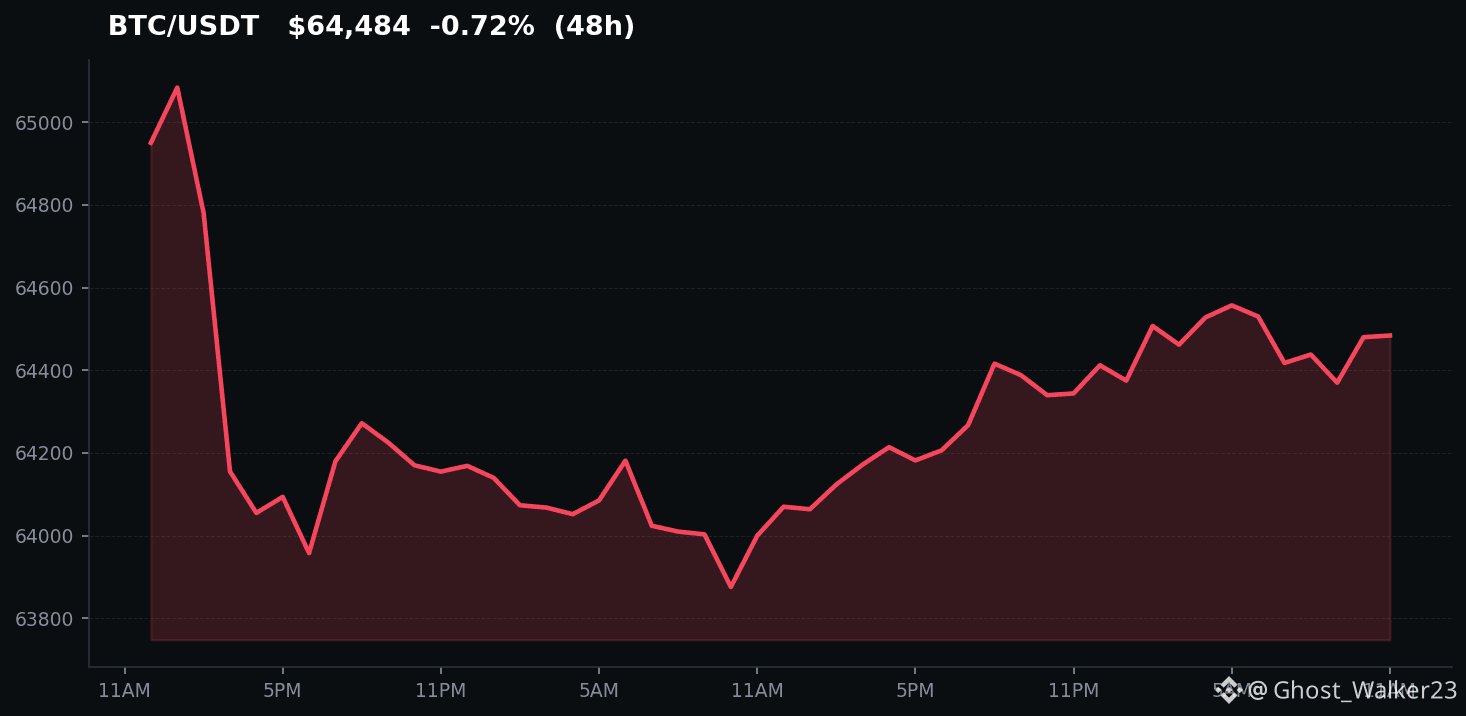
With $BTC at $64,483.96 and 24h volume down 33.85% market-wide, I treat the projected cut as a network calibration signal, not a price catalyst.
Keepable rule: difficulty measures competition for blocks - hashprice measures miner economics.
#BitcoinMiningDifficultyMayFall1.2% #BitcoinMiningElectricityUp38% #CLARITYActToRewardWhiteHatHackers
A difficulty cut protects block timing, not miner profits
$BTC mining difficulty may fall 1.2%, but that does not automatically make mining 1.2% more profitable.
Difficulty adjusts roughly every 2,016 blocks so the network keeps producing a block near every 10 minutes when hashpower changes. A lower setting means the same machines can find a slightly larger share of blocks. Profit still depends on BTC price, fees, energy cost and fleet efficiency.
With $BTC at $64,483.96 and 24h volume down 33.85% market-wide, I treat the projected cut as a network calibration signal, not a price catalyst.
Keepable rule: difficulty measures competition for blocks - hashprice measures miner economics.
#BitcoinMiningDifficultyMayFall1.2% #BitcoinMiningElectricityUp38% #CLARITYActToRewardWhiteHatHackers
Difficulty adjusts roughly every 2,016 blocks so the network keeps producing a block near every 10 minutes when hashpower changes. A lower setting means the same machines can find a slightly larger share of blocks. Profit still depends on BTC price, fees, energy cost and fleet efficiency.
With $BTC at $64,483.96 and 24h volume down 33.85% market-wide, I treat the projected cut as a network calibration signal, not a price catalyst.
Keepable rule: difficulty measures competition for blocks - hashprice measures miner economics.
#BitcoinMiningDifficultyMayFall1.2% #BitcoinMiningElectricityUp38% #CLARITYActToRewardWhiteHatHackers
53
🚀 The buzz is real! With #BitcoinMiningDifficultyMayFall1.2%, $BTC could see increased profitability for miners, impacting its price positively. Meanwhile, $SOL is on the rise, up 1.54%, but can it compete with Bitcoin's established dominance? 📈
Which of these has more potential for your portfolio? 🤔
🚀 The buzz is real! With #BitcoinMiningDifficultyMayFall1.2%, $BTC could see increased profitability for miners, impacting its price positively. Meanwhile, $SOL is on the rise, up 1.54%, but can it compete with Bitcoin's established dominance? 📈
Which of these has more potential for your portfolio? 🤔
Which of these has more potential for your portfolio? 🤔
1
38
·
--
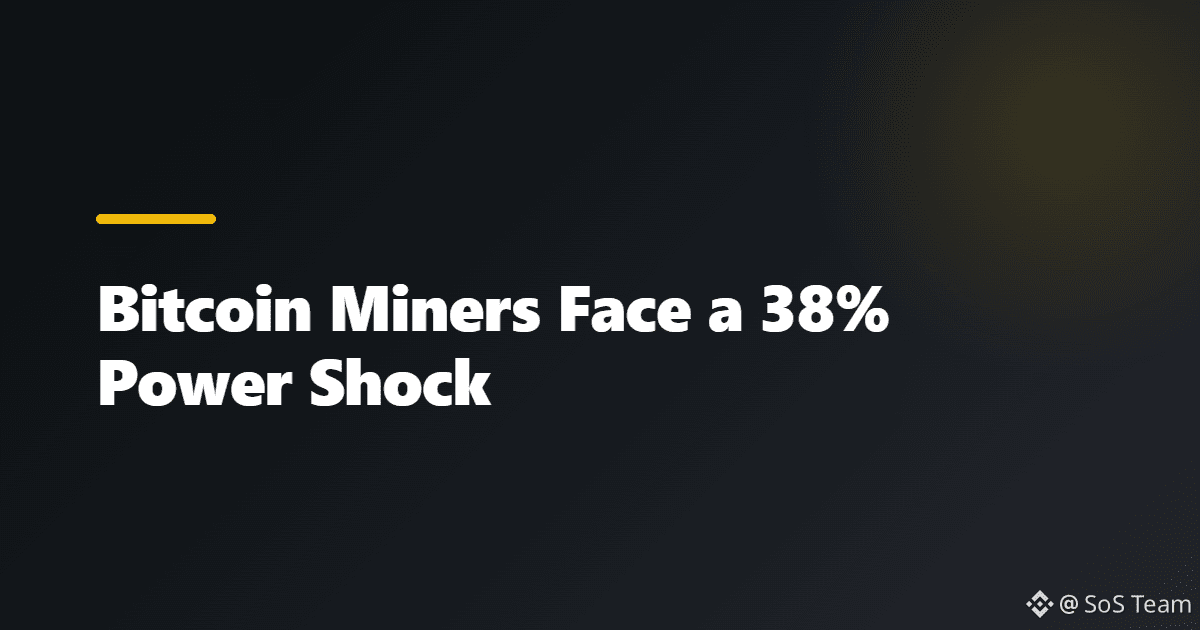
Here’s what happened when Bitcoin miners got hit with the one cost they can’t ignore: electricity rising 38%.
For traders, the pain is simple. You can stare at $BTC charts all day, but if miner margins start cracking, price action can get messy fast, especially when the Fear & Greed Index is sitting in Fear and everyone is already nervous.
The case study here is about pressure. Bitcoin mining is basically a business of converting electricity into $BTC, so when power costs jump while block rewards are lower after the halving, weaker miners get squeezed first. They either sell more Bitcoin, shut down older machines, or hope difficulty adjusts in their favor.
We’ve seen versions of this before. After China’s mining ban in 2021, hash rate dropped, difficulty adjusted, and the network recovered. In 2022, energy prices crushed inefficient miners while stronger players with better power contracts survived. The same pattern keeps repeating: mining stress looks bearish short term, but it often forces the industry to become leaner.
The comparison with $ETH is also interesting. Ethereum escaped this energy debate after moving to proof-of-stake, while Bitcoin doubled down on proof-of-work as its security model. That makes $BTC more exposed to electricity headlines, but also makes miner behavior one of the best signals to watch when everyone is hiding in $USDT.
With mining costs rising, where do you think Bitcoin miners go from here: capitulation, consolidation, or another difficulty reset? #BitcoinMiningElectricityUp38 #BitcoinMiningDifficultyMayFall1
Here’s what happened when Bitcoin miners got hit with the one cost they can’t ignore: electricity rising 38%.
For traders, the pain is simple. You can stare at $BTC charts all day, but if miner margins start cracking, price action can get messy fast, especially when the Fear & Greed Index is sitting in Fear and everyone is already nervous.
The case study here is about pressure. Bitcoin mining is basically a business of converting electricity into $BTC , so when power costs jump while block rewards are lower after the halving, weaker miners get squeezed first. They either sell more Bitcoin, shut down older machines, or hope difficulty adjusts in their favor.
We’ve seen versions of this before. After China’s mining ban in 2021, hash rate dropped, difficulty adjusted, and the network recovered. In 2022, energy prices crushed inefficient miners while stronger players with better power contracts survived. The same pattern keeps repeating: mining stress looks bearish short term, but it often forces the industry to become leaner.
The comparison with $ETH is also interesting. Ethereum escaped this energy debate after moving to proof-of-stake, while Bitcoin doubled down on proof-of-work as its security model. That makes $BTC more exposed to electricity headlines, but also makes miner behavior one of the best signals to watch when everyone is hiding in $USDT.
With mining costs rising, where do you think Bitcoin miners go from here: capitulation, consolidation, or another difficulty reset? #BitcoinMiningElectricityUp38 #BitcoinMiningDifficultyMayFall1
For traders, the pain is simple. You can stare at $BTC charts all day, but if miner margins start cracking, price action can get messy fast, especially when the Fear & Greed Index is sitting in Fear and everyone is already nervous.
The case study here is about pressure. Bitcoin mining is basically a business of converting electricity into $BTC , so when power costs jump while block rewards are lower after the halving, weaker miners get squeezed first. They either sell more Bitcoin, shut down older machines, or hope difficulty adjusts in their favor.
We’ve seen versions of this before. After China’s mining ban in 2021, hash rate dropped, difficulty adjusted, and the network recovered. In 2022, energy prices crushed inefficient miners while stronger players with better power contracts survived. The same pattern keeps repeating: mining stress looks bearish short term, but it often forces the industry to become leaner.
The comparison with $ETH is also interesting. Ethereum escaped this energy debate after moving to proof-of-stake, while Bitcoin doubled down on proof-of-work as its security model. That makes $BTC more exposed to electricity headlines, but also makes miner behavior one of the best signals to watch when everyone is hiding in $USDT.
With mining costs rising, where do you think Bitcoin miners go from here: capitulation, consolidation, or another difficulty reset? #BitcoinMiningElectricityUp38 #BitcoinMiningDifficultyMayFall1
14
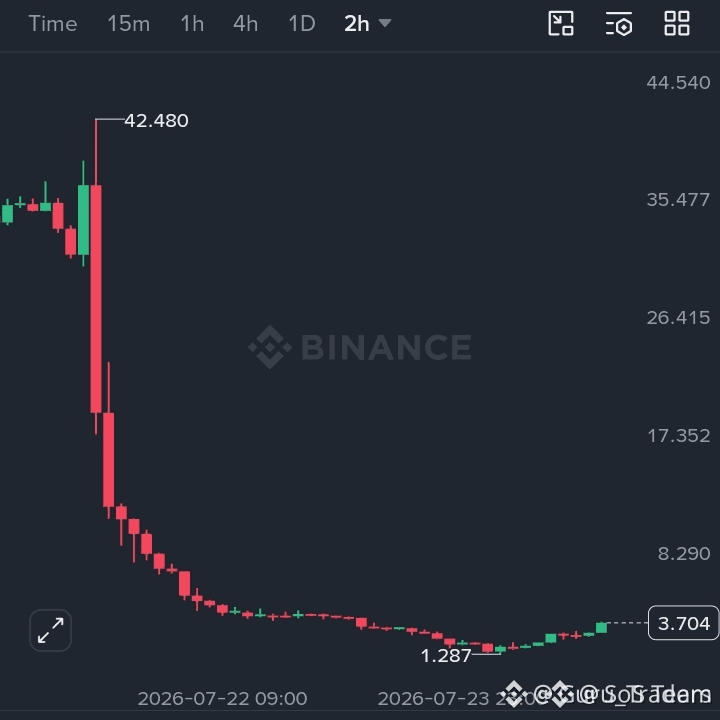
🚨 Urgent Opportunity Alert! 🚨 $EUL is skyrocketing with a staggering +66.4% gain in the last 24 hours! 🌟 With $BTC trading at $64,438.00, many investors are flocking to the DeFi space. Are you ready to join the trend? Don't miss out on this potential profit! #BitcoinMiningDifficultyMayFall1.2% #EUL
What are your thoughts on this rally? 💰
🚨 Urgent Opportunity Alert! 🚨 $EUL is skyrocketing with a staggering +66.4% gain in the last 24 hours! 🌟 With $BTC trading at $64,438.00, many investors are flocking to the DeFi space. Are you ready to join the trend? Don't miss out on this potential profit! #BitcoinMiningDifficultyMayFall1.2% #EUL
What are your thoughts on this rally? 💰
What are your thoughts on this rally? 💰
97
·
--
SHIB's 36% surge is an attention signal, not a market-wide breakout$SHIB is trending on a 36% surge, while $BTC is only up 0.548% at $64,468.59 and remains inside a $64,106.74-$64,662.99 24-hour range. That split matters. My read is that traders are rotating into high-beta names before Bitcoin has confirmed broader risk appetite. BTC dominance is still 56.45%, so one meme-coin spike does not prove capital is spreading across the market. The useful confirmation is simple: SHIB strength becomes broader only if BTC holds above $64,662.99 and participation expands beyond one headline asset. Until then, this is concentrated momentum, not a market regime change.
#SHIBSurges36% #BitcoinMiningDifficultyMayFall1.2% #BitcoinMiningElectricityUp38%
SHIB's 36% surge is an attention signal, not a market-wide breakout
$SHIB is trending on a 36% surge, while $BTC is only up 0.548% at $64,468.59 and remains inside a $64,106.74-$64,662.99 24-hour range. That split matters. My read is that traders are rotating into high-beta names before Bitcoin has confirmed broader risk appetite. BTC dominance is still 56.45%, so one meme-coin spike does not prove capital is spreading across the market. The useful confirmation is simple: SHIB strength becomes broader only if BTC holds above $64,662.99 and participation expands beyond one headline asset. Until then, this is concentrated momentum, not a market regime change.
#SHIBSurges36% #BitcoinMiningDifficultyMayFall1.2% #BitcoinMiningElectricityUp38%
#SHIBSurges36% #BitcoinMiningDifficultyMayFall1.2% #BitcoinMiningElectricityUp38%
63
·
--
The quietest regulatory filings often move markets more than the loudest token pumps.
A lot of traders only notice regulation when candles turn red, but by then the smart money has usually adjusted. In a fear-heavy market, with the index sitting around 36, people rush into $USDT for safety and forget to ask why payment rails and custody rules matter in the first place.
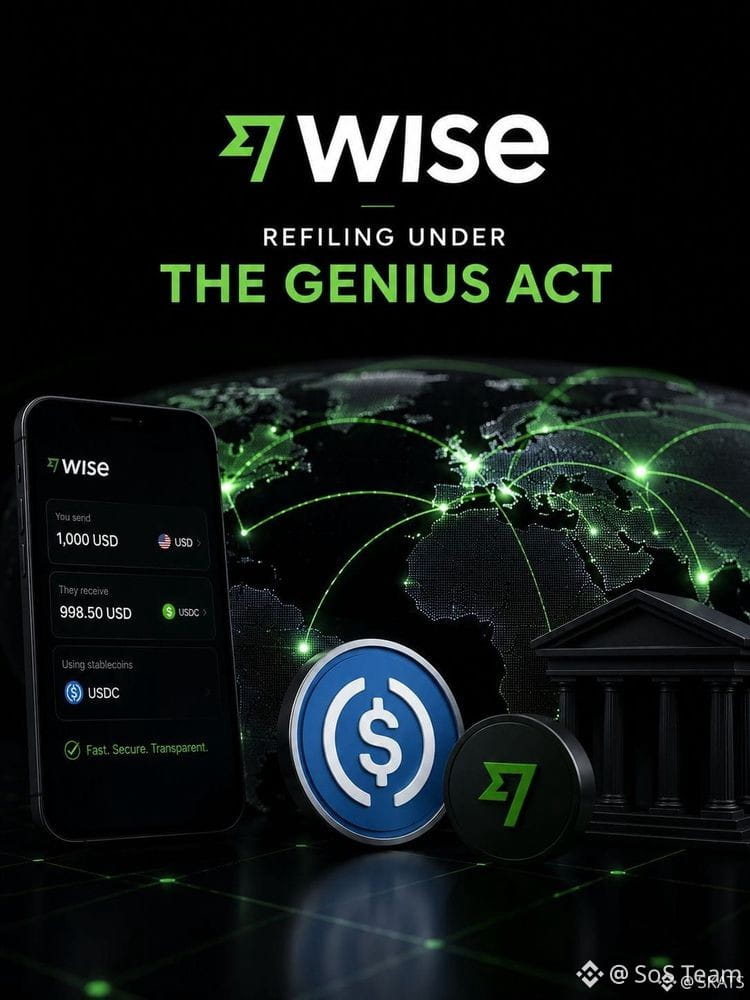
Wise refiling for a trust charter under the GENIUS Act discussion is worth watching because it touches the boring plumbing that crypto actually runs on: stablecoin access, regulated custody, settlement, and institutional confidence. In past cycles, the crowd chased narratives after they were obvious. Veterans watched the rails being built before liquidity arrived.
Think about $ETH in 2020 before DeFi felt “safe,” or stablecoins before they became the default parking spot during volatility. Regulation does not always mean bullish immediately. Sometimes it means delays, compliance costs, and shaken retail sentiment. But when serious payment companies position themselves around trust charters and stablecoin frameworks, it tells you where the next layer of adoption may be forming.
The lesson is simple: fear makes people stare at price, but opportunity often starts in infrastructure. If clearer rules make institutions more comfortable holding, transferring, or settling digital dollars, assets like $USDT and major networks such as $ETH could feel the impact long before the headlines become exciting.
Are you treating this as just legal noise, or as an early signal for the next market structure shift? #WiseToRefileTrustCharterUnderGENIUSAct #CLARITYActToRewardWhiteHatHackers #BitcoinMiningDifficultyMayFall1
The quietest regulatory filings often move markets more than the loudest token pumps.
A lot of traders only notice regulation when candles turn red, but by then the smart money has usually adjusted. In a fear-heavy market, with the index sitting around 36, people rush into $USDT for safety and forget to ask why payment rails and custody rules matter in the first place.
Wise refiling for a trust charter under the GENIUS Act discussion is worth watching because it touches the boring plumbing that crypto actually runs on: stablecoin access, regulated custody, settlement, and institutional confidence. In past cycles, the crowd chased narratives after they were obvious. Veterans watched the rails being built before liquidity arrived.
Think about $ETH in 2020 before DeFi felt “safe,” or stablecoins before they became the default parking spot during volatility. Regulation does not always mean bullish immediately. Sometimes it means delays, compliance costs, and shaken retail sentiment. But when serious payment companies position themselves around trust charters and stablecoin frameworks, it tells you where the next layer of adoption may be forming.
The lesson is simple: fear makes people stare at price, but opportunity often starts in infrastructure. If clearer rules make institutions more comfortable holding, transferring, or settling digital dollars, assets like $USDT and major networks such as $ETH could feel the impact long before the headlines become exciting.
Are you treating this as just legal noise, or as an early signal for the next market structure shift? #WiseToRefileTrustCharterUnderGENIUSAct #CLARITYActToRewardWhiteHatHackers #BitcoinMiningDifficultyMayFall1
A lot of traders only notice regulation when candles turn red, but by then the smart money has usually adjusted. In a fear-heavy market, with the index sitting around 36, people rush into $USDT for safety and forget to ask why payment rails and custody rules matter in the first place.
Wise refiling for a trust charter under the GENIUS Act discussion is worth watching because it touches the boring plumbing that crypto actually runs on: stablecoin access, regulated custody, settlement, and institutional confidence. In past cycles, the crowd chased narratives after they were obvious. Veterans watched the rails being built before liquidity arrived.
Think about $ETH in 2020 before DeFi felt “safe,” or stablecoins before they became the default parking spot during volatility. Regulation does not always mean bullish immediately. Sometimes it means delays, compliance costs, and shaken retail sentiment. But when serious payment companies position themselves around trust charters and stablecoin frameworks, it tells you where the next layer of adoption may be forming.
The lesson is simple: fear makes people stare at price, but opportunity often starts in infrastructure. If clearer rules make institutions more comfortable holding, transferring, or settling digital dollars, assets like $USDT and major networks such as $ETH could feel the impact long before the headlines become exciting.
Are you treating this as just legal noise, or as an early signal for the next market structure shift? #WiseToRefileTrustCharterUnderGENIUSAct #CLARITYActToRewardWhiteHatHackers #BitcoinMiningDifficultyMayFall1
47
·
--
Some of crypto’s sharpest selloffs didn’t start on-chain; they started with oil, inflation, and central bankers changing their tone.
When oil headlines hit, traders often do the same two things: panic into $USDT at the lows or chase a relief candle too late. I’ve done both in past cycles, and the market is very good at punishing emotional timing.
Here’s the lesson: rising oil can feed inflation fears, and inflation fears can make central banks delay rate cuts or sound more hawkish. That usually tightens liquidity, strengthens the dollar, and makes risk assets like $BTC and $ETH more fragile in the short term.
In 2022, many traders kept looking only at crypto charts while macro was screaming from the sidelines. Energy prices, yields, and central bank language mattered more than most altcoin narratives. The chart told the story late; liquidity told it early.
With Fear & Greed sitting in fear territory, this is where discipline matters. I’m not saying sell everything or hide forever, but I am saying respect the chain reaction: oil shock → inflation concern → central bank response → liquidity pressure → crypto volatility.
If oil keeps forcing central banks back into the spotlight, are you moving to safety, buying weakness, or waiting for confirmation? #CentralBanksWeighResponseAsOilNears #USPausesIranStrikesSecondNight #BitcoinMiningDifficultyMayFall1
Some of crypto’s sharpest selloffs didn’t start on-chain; they started with oil, inflation, and central bankers changing their tone.
When oil headlines hit, traders often do the same two things: panic into $USDT at the lows or chase a relief candle too late. I’ve done both in past cycles, and the market is very good at punishing emotional timing.
Here’s the lesson: rising oil can feed inflation fears, and inflation fears can make central banks delay rate cuts or sound more hawkish. That usually tightens liquidity, strengthens the dollar, and makes risk assets like $BTC and $ETH more fragile in the short term.
In 2022, many traders kept looking only at crypto charts while macro was screaming from the sidelines. Energy prices, yields, and central bank language mattered more than most altcoin narratives. The chart told the story late; liquidity told it early.
With Fear & Greed sitting in fear territory, this is where discipline matters. I’m not saying sell everything or hide forever, but I am saying respect the chain reaction: oil shock → inflation concern → central bank response → liquidity pressure → crypto volatility.
If oil keeps forcing central banks back into the spotlight, are you moving to safety, buying weakness, or waiting for confirmation? #CentralBanksWeighResponseAsOilNears #USPausesIranStrikesSecondNight #BitcoinMiningDifficultyMayFall1
When oil headlines hit, traders often do the same two things: panic into $USDT at the lows or chase a relief candle too late. I’ve done both in past cycles, and the market is very good at punishing emotional timing.
Here’s the lesson: rising oil can feed inflation fears, and inflation fears can make central banks delay rate cuts or sound more hawkish. That usually tightens liquidity, strengthens the dollar, and makes risk assets like $BTC and $ETH more fragile in the short term.
In 2022, many traders kept looking only at crypto charts while macro was screaming from the sidelines. Energy prices, yields, and central bank language mattered more than most altcoin narratives. The chart told the story late; liquidity told it early.
With Fear & Greed sitting in fear territory, this is where discipline matters. I’m not saying sell everything or hide forever, but I am saying respect the chain reaction: oil shock → inflation concern → central bank response → liquidity pressure → crypto volatility.
If oil keeps forcing central banks back into the spotlight, are you moving to safety, buying weakness, or waiting for confirmation? #CentralBanksWeighResponseAsOilNears #USPausesIranStrikesSecondNight #BitcoinMiningDifficultyMayFall1

25
·
--
If you're still treating exchange shutdown news like background noise, stop now.
Traders lose money not only from bad entries, but from ignoring counterparty risk until withdrawals, liquidity, or access become the problem. In a fear-driven market, even holding $USDT or $ETH in the wrong place can turn into stress fast.
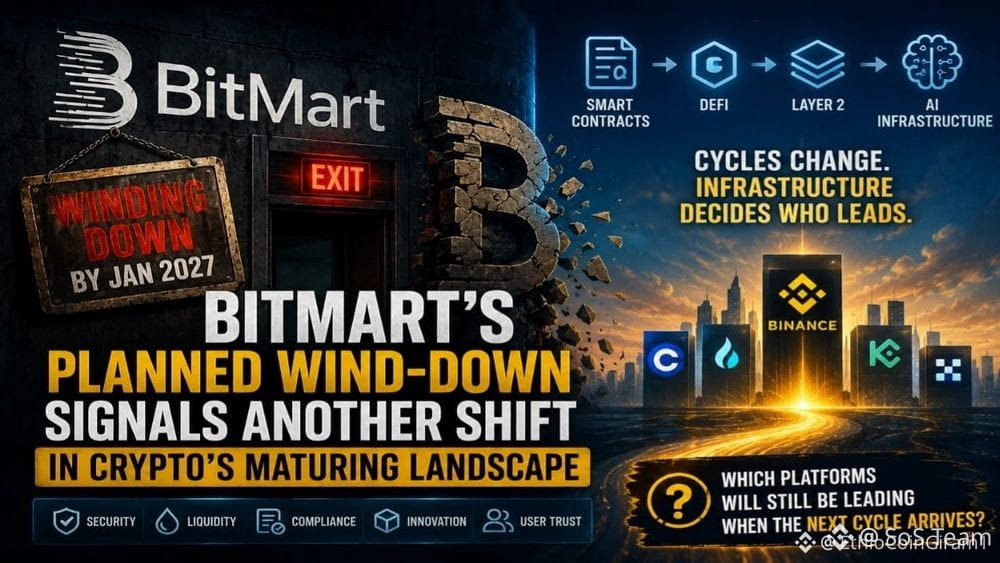
The BitMart wind-down talk hitting Binance Square is a reminder that “my funds are fine until they’re not” is a dangerous mindset. One side says a long runway to Jan 2027 gives users time, reduces panic, and shows an orderly exit rather than a sudden collapse.
I get that argument. But my take is simple: once an exchange’s future is publicly uncertain, the risk-reward of staying there changes immediately. Maybe nothing dramatic happens, but why accept extra platform risk when the market is already sitting in Fear and traders are trying to protect capital?
This doesn’t mean panic-sell $BTC or rotate blindly. It means review where your assets sit, what your exit plan is, and whether convenience has quietly become your biggest risk.
Is this a sign the industry is maturing through consolidation, or another warning that crypto users still trust centralized venues too much? #BitMartToWindDownByJan2027 #BitcoinMiningDifficultyMayFall1 #XRPLedgerDraws
If you're still treating exchange shutdown news like background noise, stop now.
Traders lose money not only from bad entries, but from ignoring counterparty risk until withdrawals, liquidity, or access become the problem. In a fear-driven market, even holding $USDT or $ETH in the wrong place can turn into stress fast.
The BitMart wind-down talk hitting Binance Square is a reminder that “my funds are fine until they’re not” is a dangerous mindset. One side says a long runway to Jan 2027 gives users time, reduces panic, and shows an orderly exit rather than a sudden collapse.
I get that argument. But my take is simple: once an exchange’s future is publicly uncertain, the risk-reward of staying there changes immediately. Maybe nothing dramatic happens, but why accept extra platform risk when the market is already sitting in Fear and traders are trying to protect capital?
This doesn’t mean panic-sell $BTC or rotate blindly. It means review where your assets sit, what your exit plan is, and whether convenience has quietly become your biggest risk.
Is this a sign the industry is maturing through consolidation, or another warning that crypto users still trust centralized venues too much? #BitMartToWindDownByJan2027 #BitcoinMiningDifficultyMayFall1 #XRPLedgerDraws
Traders lose money not only from bad entries, but from ignoring counterparty risk until withdrawals, liquidity, or access become the problem. In a fear-driven market, even holding $USDT or $ETH in the wrong place can turn into stress fast.
The BitMart wind-down talk hitting Binance Square is a reminder that “my funds are fine until they’re not” is a dangerous mindset. One side says a long runway to Jan 2027 gives users time, reduces panic, and shows an orderly exit rather than a sudden collapse.
I get that argument. But my take is simple: once an exchange’s future is publicly uncertain, the risk-reward of staying there changes immediately. Maybe nothing dramatic happens, but why accept extra platform risk when the market is already sitting in Fear and traders are trying to protect capital?
This doesn’t mean panic-sell $BTC or rotate blindly. It means review where your assets sit, what your exit plan is, and whether convenience has quietly become your biggest risk.
Is this a sign the industry is maturing through consolidation, or another warning that crypto users still trust centralized venues too much? #BitMartToWindDownByJan2027 #BitcoinMiningDifficultyMayFall1 #XRPLedgerDraws
34
·
--
If you're still treating pension fund flows like “boomer noise,” stop now.
Traders keep getting chopped up because they only watch candles and ignore who has the balance sheet to move markets slowly. FOMO buying $ETH after a green candle is easy; spotting quiet institutional rotation before the crowd prices it in is the hard part.
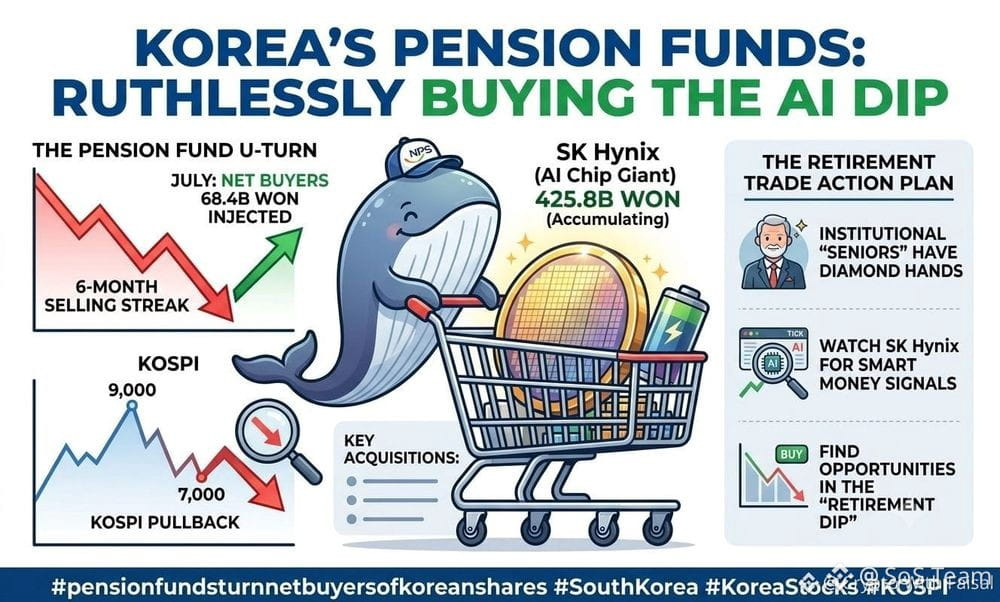
Korean pension funds turning net buyers of local shares hits differently in a Fear market. When the Fear & Greed Index is sitting around 36, retail usually freezes, but long-horizon money often starts shopping. We’ve seen this movie before with Japanese equities, US tech after rate panic, and even $BTC accumulation phases where the smart money looked boring right before the chart stopped being boring.
The comparison with crypto is the fun part. Pension funds don’t ape $USDT pairs at 2 a.m., but their shift in risk appetite can spill into the broader market mood. If Korean equities catch a bid from institutional buyers, it may support regional risk assets and change how traders price “risk-on” narratives across Asia.
So is this just a temporary local rotation, or an early sign that big money is getting comfortable with risk again? #PensionFundsTurnNetBuyersOfKoreanShares #BitcoinMiningDifficultyMayFall1 #XRPLedgerDraws
If you're still treating pension fund flows like “boomer noise,” stop now.
Traders keep getting chopped up because they only watch candles and ignore who has the balance sheet to move markets slowly. FOMO buying $ETH after a green candle is easy; spotting quiet institutional rotation before the crowd prices it in is the hard part.
Korean pension funds turning net buyers of local shares hits differently in a Fear market. When the Fear & Greed Index is sitting around 36, retail usually freezes, but long-horizon money often starts shopping. We’ve seen this movie before with Japanese equities, US tech after rate panic, and even $BTC accumulation phases where the smart money looked boring right before the chart stopped being boring.
The comparison with crypto is the fun part. Pension funds don’t ape $USDT pairs at 2 a.m., but their shift in risk appetite can spill into the broader market mood. If Korean equities catch a bid from institutional buyers, it may support regional risk assets and change how traders price “risk-on” narratives across Asia.
So is this just a temporary local rotation, or an early sign that big money is getting comfortable with risk again? #PensionFundsTurnNetBuyersOfKoreanShares #BitcoinMiningDifficultyMayFall1 #XRPLedgerDraws
Traders keep getting chopped up because they only watch candles and ignore who has the balance sheet to move markets slowly. FOMO buying $ETH after a green candle is easy; spotting quiet institutional rotation before the crowd prices it in is the hard part.
Korean pension funds turning net buyers of local shares hits differently in a Fear market. When the Fear & Greed Index is sitting around 36, retail usually freezes, but long-horizon money often starts shopping. We’ve seen this movie before with Japanese equities, US tech after rate panic, and even $BTC accumulation phases where the smart money looked boring right before the chart stopped being boring.
The comparison with crypto is the fun part. Pension funds don’t ape $USDT pairs at 2 a.m., but their shift in risk appetite can spill into the broader market mood. If Korean equities catch a bid from institutional buyers, it may support regional risk assets and change how traders price “risk-on” narratives across Asia.
So is this just a temporary local rotation, or an early sign that big money is getting comfortable with risk again? #PensionFundsTurnNetBuyersOfKoreanShares #BitcoinMiningDifficultyMayFall1 #XRPLedgerDraws
108
·
--
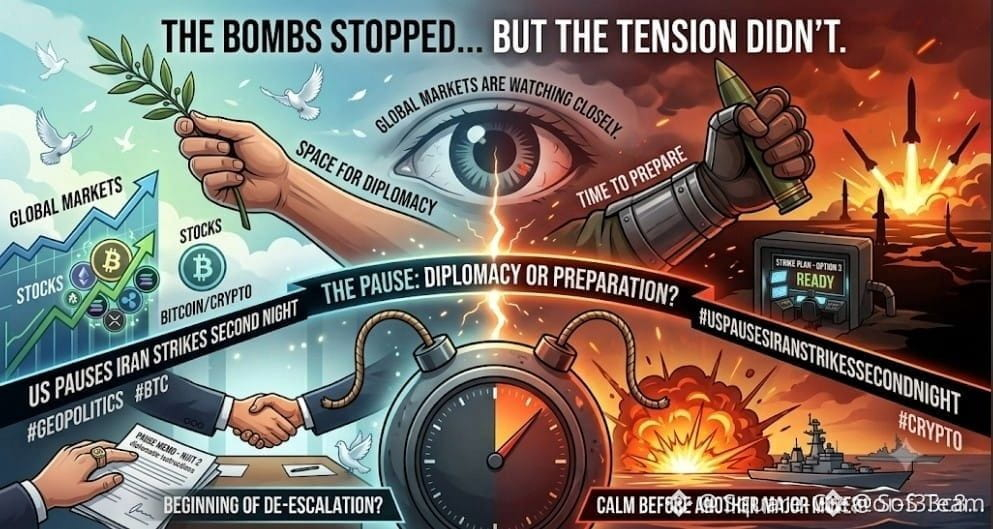
Everyone thinks a second night of paused U.S.-Iran strikes means “risk is over,” but actually markets often get most dangerous when traders relax too early.
The common mistake is buying $BTC or $ETH like the headline has already been fully solved, then getting shaken out when the next update hits. With Fear & Greed sitting in fear territory, even small geopolitical headlines can move liquidity like a crowded hallway during a fire drill.
Here are 3 risks to watch. 1) A pause is not a deal. It is more like traffic lights flashing yellow, not green. Traders who treat it as certainty can end up entering too late after the first relief candle. 2) Stablecoin behavior matters. If people rush into $USDT, it can signal caution hiding under the surface, even while some charts look calm.
3) Volatility can arrive when the market is least prepared. Weekend and overnight sessions are thinner, so one headline can push price faster than usual. The smarter approach is not panic selling or FOMO buying, but knowing your invalidation level before you enter.
If the pause continues, do you expect relief across crypto, or is the market still underpricing headline risk? #USPausesIranStrikesSecondNight #BitcoinMiningDifficultyMayFall1 #XRPLedgerDraws
Everyone thinks a second night of paused U.S.-Iran strikes means “risk is over,” but actually markets often get most dangerous when traders relax too early.
The common mistake is buying $BTC or $ETH like the headline has already been fully solved, then getting shaken out when the next update hits. With Fear & Greed sitting in fear territory, even small geopolitical headlines can move liquidity like a crowded hallway during a fire drill.
Here are 3 risks to watch. 1) A pause is not a deal. It is more like traffic lights flashing yellow, not green. Traders who treat it as certainty can end up entering too late after the first relief candle. 2) Stablecoin behavior matters. If people rush into $USDT, it can signal caution hiding under the surface, even while some charts look calm.
3) Volatility can arrive when the market is least prepared. Weekend and overnight sessions are thinner, so one headline can push price faster than usual. The smarter approach is not panic selling or FOMO buying, but knowing your invalidation level before you enter.
If the pause continues, do you expect relief across crypto, or is the market still underpricing headline risk? #USPausesIranStrikesSecondNight #BitcoinMiningDifficultyMayFall1 #XRPLedgerDraws
The common mistake is buying $BTC or $ETH like the headline has already been fully solved, then getting shaken out when the next update hits. With Fear & Greed sitting in fear territory, even small geopolitical headlines can move liquidity like a crowded hallway during a fire drill.
Here are 3 risks to watch. 1) A pause is not a deal. It is more like traffic lights flashing yellow, not green. Traders who treat it as certainty can end up entering too late after the first relief candle. 2) Stablecoin behavior matters. If people rush into $USDT, it can signal caution hiding under the surface, even while some charts look calm.
3) Volatility can arrive when the market is least prepared. Weekend and overnight sessions are thinner, so one headline can push price faster than usual. The smarter approach is not panic selling or FOMO buying, but knowing your invalidation level before you enter.
If the pause continues, do you expect relief across crypto, or is the market still underpricing headline risk? #USPausesIranStrikesSecondNight #BitcoinMiningDifficultyMayFall1 #XRPLedgerDraws
34
·
--
$BTC Day 28 grade: hit - the highest completed 1H close was $64,557.00, clearing yesterday's $64,500 condition by $57.00.
The lesson is that repeated closes near resistance can resolve higher even when the daily range stays narrow. Price is now $64,511.95, with the 24H high at $64,599.95.
#BitcoinMiningDifficultyMayFall1.2% #USJoblessClaimsFallToNearly60YearLow #FirstNightWithoutUSStrikesOnIranInTwoWeeks
Today's call: $BTC records at least one completed 1H close above $64,600 before tomorrow's morning grade.
$BTC Day 28 grade: hit - the highest completed 1H close was $64,557.00, clearing yesterday's $64,500 condition by $57.00.
The lesson is that repeated closes near resistance can resolve higher even when the daily range stays narrow. Price is now $64,511.95, with the 24H high at $64,599.95.
#BitcoinMiningDifficultyMayFall1.2% #USJoblessClaimsFallToNearly60YearLow #FirstNightWithoutUSStrikesOnIranInTwoWeeks
Today's call: $BTC records at least one completed 1H close above $64,600 before tomorrow's morning grade.
The lesson is that repeated closes near resistance can resolve higher even when the daily range stays narrow. Price is now $64,511.95, with the 24H high at $64,599.95.
#BitcoinMiningDifficultyMayFall1.2% #USJoblessClaimsFallToNearly60YearLow #FirstNightWithoutUSStrikesOnIranInTwoWeeks
Today's call: $BTC records at least one completed 1H close above $64,600 before tomorrow's morning grade.
70
·
--
A meme coin can pump 36% and still be one of the easiest places to lose money if you buy after the crowd notices.
The trap with $SHIB is that green candles feel “safe” because everyone is talking about it, but that’s usually when risk is highest. Late entries get punished fast when liquidity rotates or early buyers start taking profit.
Here’s the simple math: if $SHIB runs from 100 to 136, a move back to 118 is only a 50% retrace of the pump, but it’s already a 13% loss for anyone who bought the top. A full retrace back to where the move started is about a 26% drawdown from the high. That’s why chasing after the headline number can feel brutal.
Also, meme coins don’t move like $ETH or even $DOGE most of the time. They can spike on attention, burn narratives, whale wallets, or pure momentum, then fade when volume dries up. With Fear & Greed sitting in “Fear” territory, traders may be quicker to take profits instead of holding through volatility.
The lesson isn’t “avoid $SHIB forever.” It’s to separate momentum from entry quality. Watch volume, previous resistance, whale inflows/outflows, and whether the move is holding above breakout levels before assuming the trend is real.
Are you treating this $SHIB move as a real breakout or just another liquidity trap? #SHIBSurges36 #BitcoinMiningDifficultyMayFall1 #XRPLedgerDraws
A meme coin can pump 36% and still be one of the easiest places to lose money if you buy after the crowd notices.
The trap with $SHIB is that green candles feel “safe” because everyone is talking about it, but that’s usually when risk is highest. Late entries get punished fast when liquidity rotates or early buyers start taking profit.
Here’s the simple math: if $SHIB runs from 100 to 136, a move back to 118 is only a 50% retrace of the pump, but it’s already a 13% loss for anyone who bought the top. A full retrace back to where the move started is about a 26% drawdown from the high. That’s why chasing after the headline number can feel brutal.
Also, meme coins don’t move like $ETH or even $DOGE most of the time. They can spike on attention, burn narratives, whale wallets, or pure momentum, then fade when volume dries up. With Fear & Greed sitting in “Fear” territory, traders may be quicker to take profits instead of holding through volatility.
The lesson isn’t “avoid $SHIB forever.” It’s to separate momentum from entry quality. Watch volume, previous resistance, whale inflows/outflows, and whether the move is holding above breakout levels before assuming the trend is real.
Are you treating this $SHIB move as a real breakout or just another liquidity trap? #SHIBSurges36 #BitcoinMiningDifficultyMayFall1 #XRPLedgerDraws
The trap with $SHIB is that green candles feel “safe” because everyone is talking about it, but that’s usually when risk is highest. Late entries get punished fast when liquidity rotates or early buyers start taking profit.
Here’s the simple math: if $SHIB runs from 100 to 136, a move back to 118 is only a 50% retrace of the pump, but it’s already a 13% loss for anyone who bought the top. A full retrace back to where the move started is about a 26% drawdown from the high. That’s why chasing after the headline number can feel brutal.
Also, meme coins don’t move like $ETH or even $DOGE most of the time. They can spike on attention, burn narratives, whale wallets, or pure momentum, then fade when volume dries up. With Fear & Greed sitting in “Fear” territory, traders may be quicker to take profits instead of holding through volatility.
The lesson isn’t “avoid $SHIB forever.” It’s to separate momentum from entry quality. Watch volume, previous resistance, whale inflows/outflows, and whether the move is holding above breakout levels before assuming the trend is real.
Are you treating this $SHIB move as a real breakout or just another liquidity trap? #SHIBSurges36 #BitcoinMiningDifficultyMayFall1 #XRPLedgerDraws
110
·
--
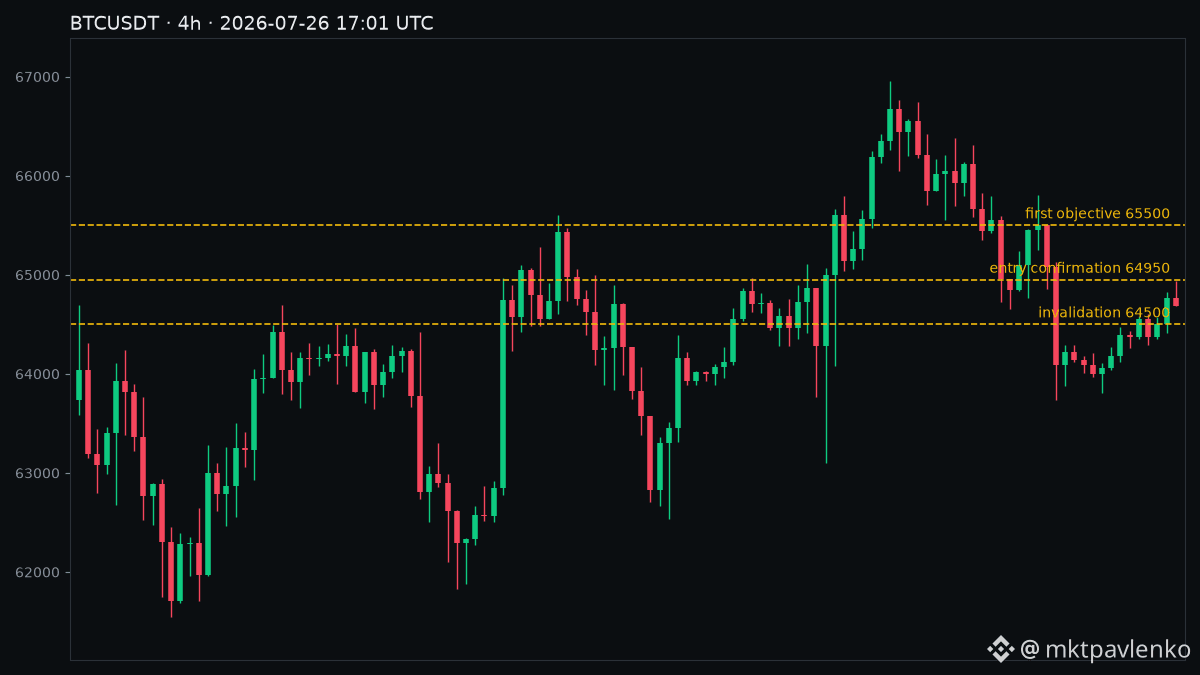
$BTC is 0.35% below its $64,940.51 session high, but I only want the breakout after proof.
My plan: I enter on a completed 1H close above $64,950, invalidate below $64,500, and use $65,500 as the first objective over the next 12 hours. Funding at 0.004797% is positive but not stretched, so leverage is not the main obstacle.
A 1H close below $64,500 changes my mind.
#BitcoinMiningDifficultyMayFall1.2% #CentralBanksWeighResponseAsOilNears$100 #USPausesIranStrikesSecondNight
$BTC is 0.35% below its $64,940.51 session high, but I only want the breakout after proof.
My plan: I enter on a completed 1H close above $64,950, invalidate below $64,500, and use $65,500 as the first objective over the next 12 hours. Funding at 0.004797% is positive but not stretched, so leverage is not the main obstacle.
A 1H close below $64,500 changes my mind.
#BitcoinMiningDifficultyMayFall1.2% #CentralBanksWeighResponseAsOilNears$100 #USPausesIranStrikesSecondNight
My plan: I enter on a completed 1H close above $64,950, invalidate below $64,500, and use $65,500 as the first objective over the next 12 hours. Funding at 0.004797% is positive but not stretched, so leverage is not the main obstacle.
A 1H close below $64,500 changes my mind.
#BitcoinMiningDifficultyMayFall1.2% #CentralBanksWeighResponseAsOilNears$100 #USPausesIranStrikesSecondNight
40
Log in to explore more content
Join global crypto users on Binance Square
⚡️ Get latest and useful information about crypto.
💬 Trusted by the world’s largest crypto exchange.
👍 Discover real insights from verified creators.
Email / Phone number
Trending Topics
1
#CircleMints500MUSDCOnSolana
3,740 views
251 Discussing
2
#PolymarketBankFailureBetsDrawFDICConcern
15,959 views
495 Discussing
3
#BlackRockBuildsTokenizedPortfoliosForOndo
12,209 views
339 Discussing
4
#BitwiseFilesToListNEARETFOnNYSEArca
13,808 views
325 Discussing
5
#SECCommissionerPeirceToLeaveOct2
14,705 views
267 Discussing
6
#SECSaysBuybacksUpgradesDontMakeTokenSecurity
15,184 views
250 Discussing
7
#StrategyProposesDailyDividendsForPreferreds
2,231 views
71 Discussing
8
#CircleTetherFreezeBitgetHackerWallet
1,045 views
42 Discussing
9
#CoinMarketCapCompletesCoinglassAcquisition
4,462 views
70 Discussing
10
#QNTRises39%
79,456 views
1,373 Discussing