

#binancesqureofficial
binancesqureofficial
10,608 views
32 Discussing
Hot
Latest


·
--
Bullish
🎉 50,000 Followers on Binance Square! 🎉
Honestly, it feels unreal.
I still remember making my very first post on Binance Square. I had no idea if anyone would read it, react to it, or even care about what I had to say.
Today, we are a community of 50K amazing people. ❤️
And for me, this is much more than just a number.
It represents thousands of conversations, market discussions, shared ideas, lessons, support, and friendships built along the way.
To everyone who has followed me, liked my posts, shared my updates, dropped a comment, or simply stopped for a moment to read — THANK YOU. 🙏
And a special thank you to my friend @Square-Creator-5b8eea8ea4e06 ❤️
You stood by me, supported me, encouraged me, and believed in me along this journey. Having someone like you in my corner truly means a lot.
We’ve seen big opportunities.
We’ve faced crazy volatility.
We’ve celebrated wins.
We’ve learned from losses.
And through it all, we kept moving forward together.
This community is the real reason behind this milestone. ❤️
50K is not the finish line. It’s just another step.
The journey continues.
The goals are getting bigger.
And I’m just getting started. 🚀
Thank you to everyone who has been part of this journey.
Road to 60K! 🔥
$VTHO
{future}(VTHOUSDT)
$US
{future}(USUSDT)
$ETHFI
{future}(ETHFIUSDT)
#Binancesqureofficial #crypto #US10YTreasuryYieldHitsHighestSinceNov2023
#EUExtendsCentralContactPointToCASPs
#kingbro1
🎉 50,000 Followers on Binance Square! 🎉
Honestly, it feels unreal.
I still remember making my very first post on Binance Square. I had no idea if anyone would read it, react to it, or even care about what I had to say.
Today, we are a community of 50K amazing people. ❤️
And for me, this is much more than just a number.
It represents thousands of conversations, market discussions, shared ideas, lessons, support, and friendships built along the way.
To everyone who has followed me, liked my posts, shared my updates, dropped a comment, or simply stopped for a moment to read — THANK YOU. 🙏
And a special thank you to my friend @Evan_Cheng ❤️
You stood by me, supported me, encouraged me, and believed in me along this journey. Having someone like you in my corner truly means a lot.
We’ve seen big opportunities.
We’ve faced crazy volatility.
We’ve celebrated wins.
We’ve learned from losses.
And through it all, we kept moving forward together.
This community is the real reason behind this milestone. ❤️
50K is not the finish line. It’s just another step.
The journey continues.
The goals are getting bigger.
And I’m just getting started. 🚀
Thank you to everyone who has been part of this journey.
Road to 60K! 🔥
$VTHO
$US
$ETHFI
#Binancesqureofficial #crypto #US10YTreasuryYieldHitsHighestSinceNov2023
#EUExtendsCentralContactPointToCASPs
#kingbro1
Honestly, it feels unreal.
I still remember making my very first post on Binance Square. I had no idea if anyone would read it, react to it, or even care about what I had to say.
Today, we are a community of 50K amazing people. ❤️
And for me, this is much more than just a number.
It represents thousands of conversations, market discussions, shared ideas, lessons, support, and friendships built along the way.
To everyone who has followed me, liked my posts, shared my updates, dropped a comment, or simply stopped for a moment to read — THANK YOU. 🙏
And a special thank you to my friend @Evan_Cheng ❤️
You stood by me, supported me, encouraged me, and believed in me along this journey. Having someone like you in my corner truly means a lot.
We’ve seen big opportunities.
We’ve faced crazy volatility.
We’ve celebrated wins.
We’ve learned from losses.
And through it all, we kept moving forward together.
This community is the real reason behind this milestone. ❤️
50K is not the finish line. It’s just another step.
The journey continues.
The goals are getting bigger.
And I’m just getting started. 🚀
Thank you to everyone who has been part of this journey.
Road to 60K! 🔥
$VTHO
$US
$ETHFI
#Binancesqureofficial #crypto #US10YTreasuryYieldHitsHighestSinceNov2023
#EUExtendsCentralContactPointToCASPs
#kingbro1

107
20
100
17.7k

·
--
Bullish
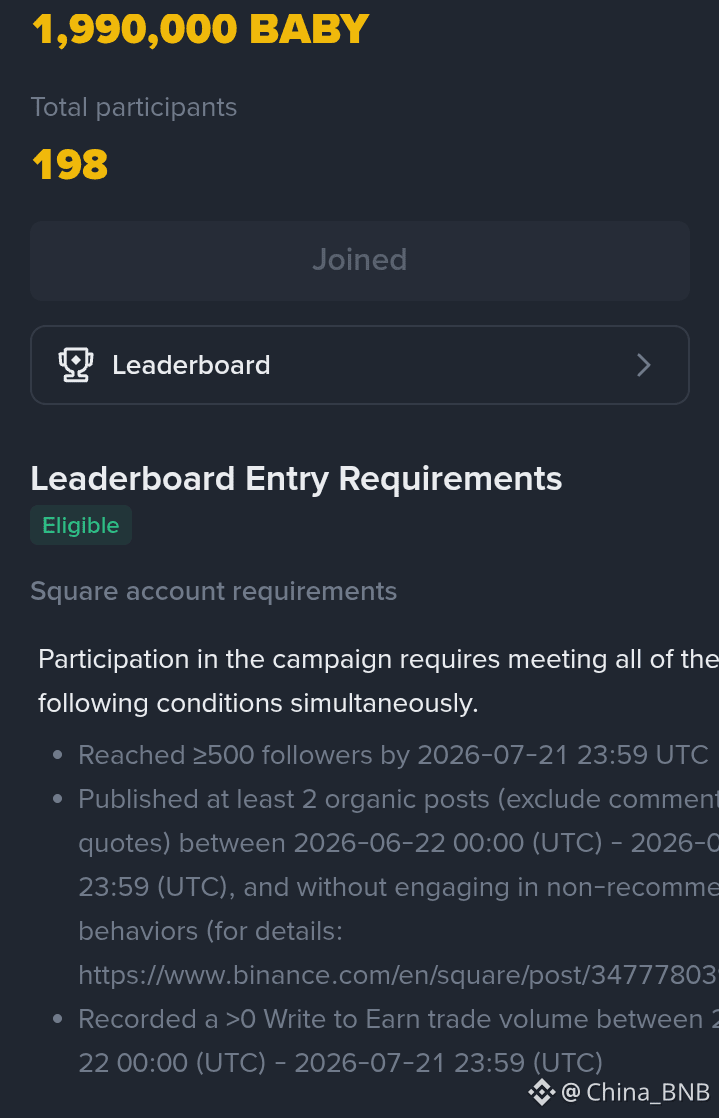
Hi Binance square official Thanks for the sending invite invitation of eligibility creaters.
Thanks you trust me my work not missing my I'd like it. m very happy you invited me Ledarbord entry requirements Thanks more than everything for you. 🤗❤️
#Binancesqureofficial #Binance #Leaderboard #trusdt
Hi Binance square official Thanks for the sending invite invitation of eligibility creaters.
Thanks you trust me my work not missing my I'd like it. m very happy you invited me Ledarbord entry requirements Thanks more than everything for you. 🤗❤️
#Binancesqureofficial #Binance #Leaderboard #trusdt
Thanks you trust me my work not missing my I'd like it. m very happy you invited me Ledarbord entry requirements Thanks more than everything for you. 🤗❤️
#Binancesqureofficial #Binance #Leaderboard #trusdt
7
7
378

·
--
Bullish
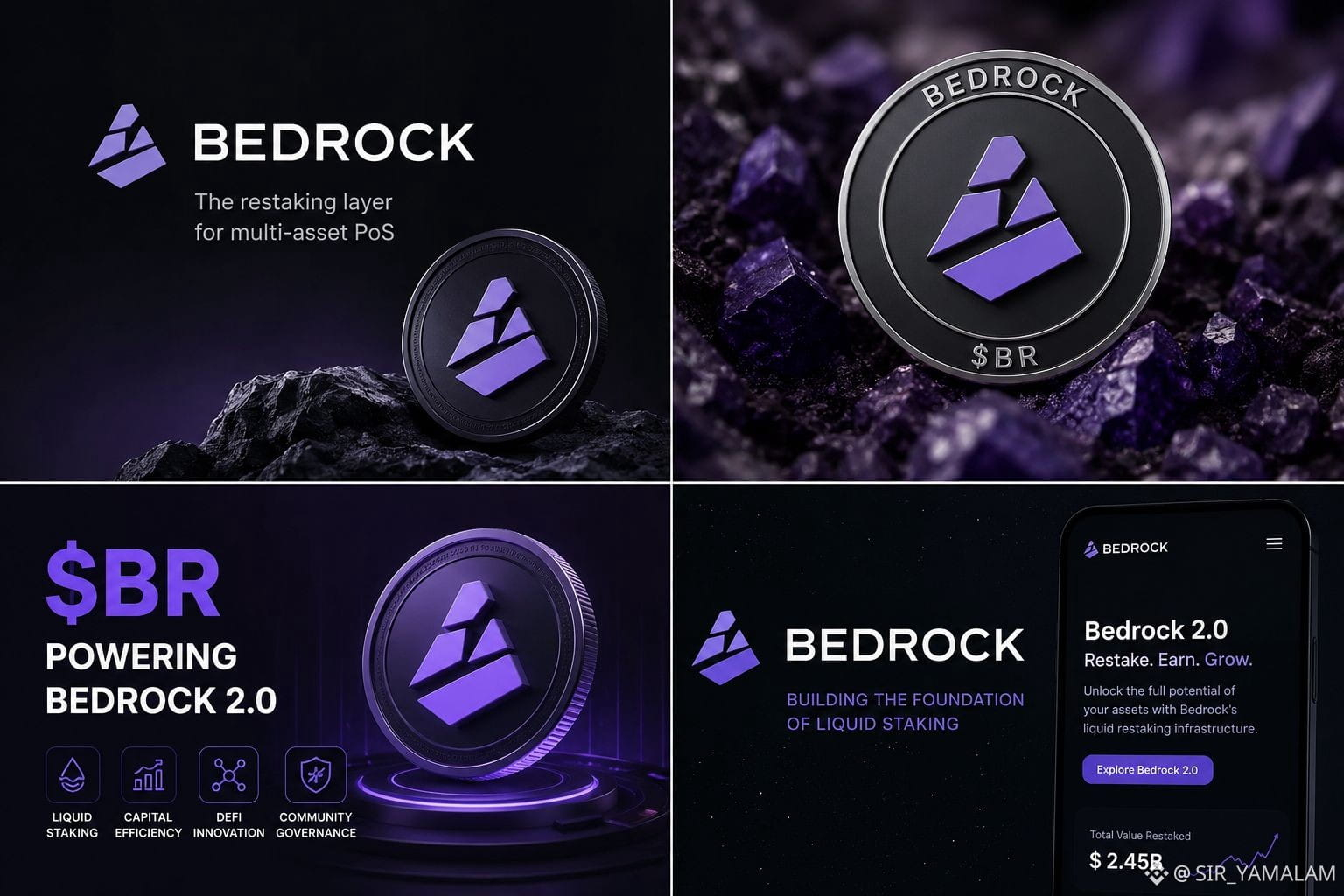
Bedrock 2.0 is redefining liquid staking with universal BTC restaking. $BR holders get exposure to the most secure and decentralized restaking layer in DeFi. The future of Bitcoin utility is here. @Bedrock #Bedrock $BR @Binance_Square_Official #Binancesqureofficial
{future}(BRUSDT)
Bedrock 2.0 is redefining liquid staking with universal BTC restaking. $BR holders get exposure to the most secure and decentralized restaking layer in DeFi. The future of Bitcoin utility is here. @Bedrock #Bedrock $BR @Binance Square Official #Binancesqureofficial
83
·
--
Why OpenLedger ($OPEN) Deserves More Attention in Web3I've been exploring @Openledger and $OPEN lately, and I think this project is flying under the radar for many crypto users.
OpenLedger focuses on decentralized, transparent data infrastructure — something that sounds technical but is actually crucial for Web3 adoption. Right now, many blockchain projects rely on opaque data sources or centralized oracles. OpenLedger aims to change that by giving users and developers verifiable, community-governed data feeds.
What stands out to me is the emphasis on practicality. The team isn't promising unrealistic hype. Instead, they're building tools that developers can actually use today. The roadmap includes expanded data partnerships and better accessibility for non-technical users.
Another plus: the community around is open genuinely engaged. Questions get answered, feedback is considered, and updates are consistent. That matters more than most people realize.
Of course, no project is without risks — adoption takes time, and competition is fierce. But OpenLedger has a clear niche and seems focused on execution rather than empty promises.
I'll be keeping $OPEN on my watchlist. If you care about data transparency in crypto, it's worth a look too.
#OpenLedger $OPEN
{spot}(OPENUSDT)
#Binancesqureofficial @Binance_Square_Official @Openledger
Why OpenLedger ($OPEN) Deserves More Attention in Web3
I've been exploring @OpenLedger and $OPEN lately, and I think this project is flying under the radar for many crypto users.
OpenLedger focuses on decentralized, transparent data infrastructure — something that sounds technical but is actually crucial for Web3 adoption. Right now, many blockchain projects rely on opaque data sources or centralized oracles. OpenLedger aims to change that by giving users and developers verifiable, community-governed data feeds.
What stands out to me is the emphasis on practicality. The team isn't promising unrealistic hype. Instead, they're building tools that developers can actually use today. The roadmap includes expanded data partnerships and better accessibility for non-technical users.
Another plus: the community around is open genuinely engaged. Questions get answered, feedback is considered, and updates are consistent. That matters more than most people realize.
Of course, no project is without risks — adoption takes time, and competition is fierce. But OpenLedger has a clear niche and seems focused on execution rather than empty promises.
I'll be keeping $OPEN on my watchlist. If you care about data transparency in crypto, it's worth a look too.
#OpenLedger $OPEN
#Binancesqureofficial @Binance Square Official @Openledger
OpenLedger focuses on decentralized, transparent data infrastructure — something that sounds technical but is actually crucial for Web3 adoption. Right now, many blockchain projects rely on opaque data sources or centralized oracles. OpenLedger aims to change that by giving users and developers verifiable, community-governed data feeds.
What stands out to me is the emphasis on practicality. The team isn't promising unrealistic hype. Instead, they're building tools that developers can actually use today. The roadmap includes expanded data partnerships and better accessibility for non-technical users.
Another plus: the community around is open genuinely engaged. Questions get answered, feedback is considered, and updates are consistent. That matters more than most people realize.
Of course, no project is without risks — adoption takes time, and competition is fierce. But OpenLedger has a clear niche and seems focused on execution rather than empty promises.
I'll be keeping $OPEN on my watchlist. If you care about data transparency in crypto, it's worth a look too.
#OpenLedger $OPEN
#Binancesqureofficial @Binance Square Official @Openledger
1
118

Article
Bitcoin’s Hidden Governance Battle: What You Need to Know About "DOG Mode"#Crypto #Binancesqureofficial
Bitcoin governance #bitcon debates usually focus on massive, network-altering consensus upgrades. However, a subtle but deeply philosophical battle is quietly playing out over how individual nodes choose to handle transactions.
At the center of this conversation is a new alternative Bitcoin $ETH client called "DOG Mode," introduced by prominent developer Leonidas.
Here is a breakdown of what DOG Mode actually does, why it’s sparking fierce debates, and how it could reshape the Bitcoin network’s economy.
What is DOG Mode?
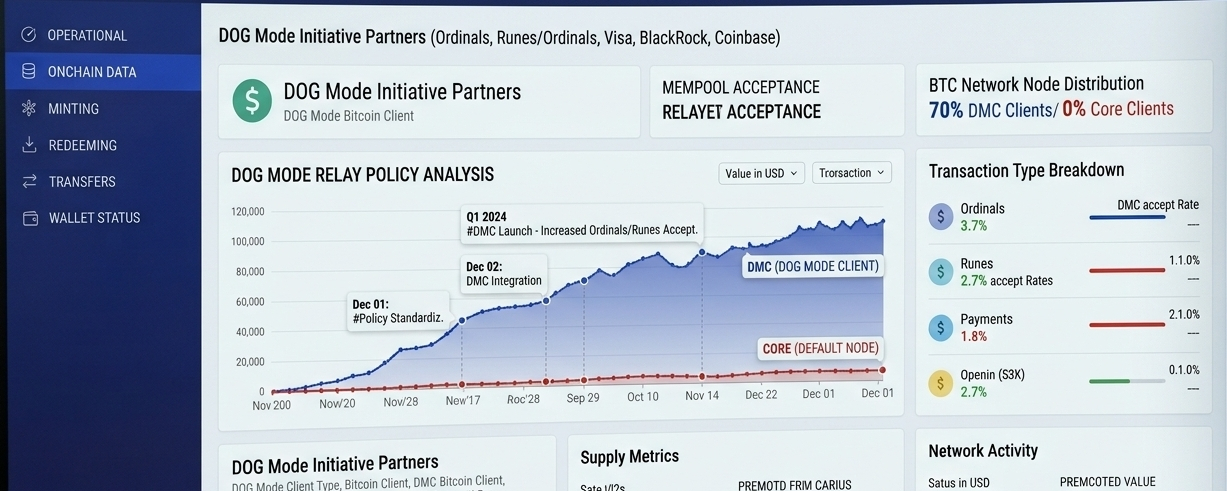
Unlike a traditional hard fork or soft fork, DOG Mode does not touch or rewrite Bitcoin’s fundamental consensus rules. Instead, it alters the software's default relay policies.
Think of relay policies as the filtering settings that standard node software (like Bitcoin Core) uses to decide which pending transactions get passed along the peer-to-peer network before they ever reach a miner. By relaxing these default rules, DOG Mode makes it significantly easier for data-heavy Ordinals and Runes transactions to propagate through the network.
The Philosophical Clash: Public Utility vs. Neutral Marketplace
DOG Mode is the direct ideological opposite of BIP-110 (a Bitcoin Improvement Proposal that critics argued was an attempt at network censorship). The debate splits the Bitcoin community into two distinct camps:
The Restrictive Camp (BIP-110 Supporters): They view Bitcoin primarily as a critical public utility reserved for financial settlement. From this perspective, scarce block space should be guarded, and heavy data inscriptions (like NFTs or text) are an inefficient misuse of network resources that should be restricted—even if it means tightening consensus rules.
The Free-Market Camp (DOG Mode/Leonidas): They believe Bitcoin must operate as an entirely neutral marketplace for block space. If a user pays the required transaction fee, their transaction is valid, regardless of whether it contains a simple payment or an Ordinals inscription. Instead of waiting for permission or a formal protocol upgrade, DOG Mode bypasses restrictions that its creators argue Bitcoin's core protocol never needed in the first place.
The Network Risks: Mempool Fragmentation
While DOG Mode keeps Bitcoin’s core consensus fully intact, wide adoption of the client could introduce structural side effects.
If a large percentage of nodes begin running entirely different relay policies, Bitcoin's mempool (the waiting room for unconfirmed transactions) could become highly fragmented. Different segments of the network would be seeing and forwarding different sets of transactions. While the blockchain would continue to function safely, this fragmentation could complicate fee estimation and alter the speed at which certain transactions actually reach miners.
Disrupting the Private Mining Monopoly
Beyond the cultural war over Ordinals, DOG Mode has a fascinating economic implication for institutional players.
Currently, users who want to broadcast non-standard or unusually large data transactions often have to bypass the public network entirely, relying on direct, private relationships with major mining pools or institutional transaction brokers.
By allowing these transactions to move freely across the standard peer-to-peer network, DOG Mode aims to level the playing field, potentially stripping away the exclusive advantage that private relay channels and institutional brokers currently hold.
The Bottom Line
It remains to be seen whether DOG Mode will see widespread adoption across the network. However, its creation highlights a critical reality: Bitcoin’s future isn't just decided by major consensus upgrades—it is actively shaped by the operational choices of everyday node operators.
What are your thoughts? Should Bitcoin remain a strictly financial settlement layer, or should anyone be allowed to buy block space for any data they want? Let me know in the comments!
{spot}(BTCUSDT)
{spot}(ETHUSDT)
Bitcoin’s Hidden Governance Battle: What You Need to Know About "DOG Mode"
#Crypto #Binancesqureofficial
Bitcoin governance #bitcon debates usually focus on massive, network-altering consensus upgrades. However, a subtle but deeply philosophical battle is quietly playing out over how individual nodes choose to handle transactions.
At the center of this conversation is a new alternative Bitcoin $ETH client called "DOG Mode," introduced by prominent developer Leonidas.
Here is a breakdown of what DOG Mode actually does, why it’s sparking fierce debates, and how it could reshape the Bitcoin network’s economy.
What is DOG Mode?
Unlike a traditional hard fork or soft fork, DOG Mode does not touch or rewrite Bitcoin’s fundamental consensus rules. Instead, it alters the software's default relay policies.
Think of relay policies as the filtering settings that standard node software (like Bitcoin Core) uses to decide which pending transactions get passed along the peer-to-peer network before they ever reach a miner. By relaxing these default rules, DOG Mode makes it significantly easier for data-heavy Ordinals and Runes transactions to propagate through the network.
The Philosophical Clash: Public Utility vs. Neutral Marketplace
DOG Mode is the direct ideological opposite of BIP-110 (a Bitcoin Improvement Proposal that critics argued was an attempt at network censorship). The debate splits the Bitcoin community into two distinct camps:
The Restrictive Camp (BIP-110 Supporters): They view Bitcoin primarily as a critical public utility reserved for financial settlement. From this perspective, scarce block space should be guarded, and heavy data inscriptions (like NFTs or text) are an inefficient misuse of network resources that should be restricted—even if it means tightening consensus rules.
The Free-Market Camp (DOG Mode/Leonidas): They believe Bitcoin must operate as an entirely neutral marketplace for block space. If a user pays the required transaction fee, their transaction is valid, regardless of whether it contains a simple payment or an Ordinals inscription. Instead of waiting for permission or a formal protocol upgrade, DOG Mode bypasses restrictions that its creators argue Bitcoin's core protocol never needed in the first place.
The Network Risks: Mempool Fragmentation
While DOG Mode keeps Bitcoin’s core consensus fully intact, wide adoption of the client could introduce structural side effects.
If a large percentage of nodes begin running entirely different relay policies, Bitcoin's mempool (the waiting room for unconfirmed transactions) could become highly fragmented. Different segments of the network would be seeing and forwarding different sets of transactions. While the blockchain would continue to function safely, this fragmentation could complicate fee estimation and alter the speed at which certain transactions actually reach miners.
Disrupting the Private Mining Monopoly
Beyond the cultural war over Ordinals, DOG Mode has a fascinating economic implication for institutional players.
Currently, users who want to broadcast non-standard or unusually large data transactions often have to bypass the public network entirely, relying on direct, private relationships with major mining pools or institutional transaction brokers.
By allowing these transactions to move freely across the standard peer-to-peer network, DOG Mode aims to level the playing field, potentially stripping away the exclusive advantage that private relay channels and institutional brokers currently hold.
The Bottom Line
It remains to be seen whether DOG Mode will see widespread adoption across the network. However, its creation highlights a critical reality: Bitcoin’s future isn't just decided by major consensus upgrades—it is actively shaped by the operational choices of everyday node operators.
What are your thoughts? Should Bitcoin remain a strictly financial settlement layer, or should anyone be allowed to buy block space for any data they want? Let me know in the comments!
Bitcoin governance #bitcon debates usually focus on massive, network-altering consensus upgrades. However, a subtle but deeply philosophical battle is quietly playing out over how individual nodes choose to handle transactions.
At the center of this conversation is a new alternative Bitcoin $ETH client called "DOG Mode," introduced by prominent developer Leonidas.
Here is a breakdown of what DOG Mode actually does, why it’s sparking fierce debates, and how it could reshape the Bitcoin network’s economy.
What is DOG Mode?
Unlike a traditional hard fork or soft fork, DOG Mode does not touch or rewrite Bitcoin’s fundamental consensus rules. Instead, it alters the software's default relay policies.
Think of relay policies as the filtering settings that standard node software (like Bitcoin Core) uses to decide which pending transactions get passed along the peer-to-peer network before they ever reach a miner. By relaxing these default rules, DOG Mode makes it significantly easier for data-heavy Ordinals and Runes transactions to propagate through the network.
The Philosophical Clash: Public Utility vs. Neutral Marketplace
DOG Mode is the direct ideological opposite of BIP-110 (a Bitcoin Improvement Proposal that critics argued was an attempt at network censorship). The debate splits the Bitcoin community into two distinct camps:
The Restrictive Camp (BIP-110 Supporters): They view Bitcoin primarily as a critical public utility reserved for financial settlement. From this perspective, scarce block space should be guarded, and heavy data inscriptions (like NFTs or text) are an inefficient misuse of network resources that should be restricted—even if it means tightening consensus rules.
The Free-Market Camp (DOG Mode/Leonidas): They believe Bitcoin must operate as an entirely neutral marketplace for block space. If a user pays the required transaction fee, their transaction is valid, regardless of whether it contains a simple payment or an Ordinals inscription. Instead of waiting for permission or a formal protocol upgrade, DOG Mode bypasses restrictions that its creators argue Bitcoin's core protocol never needed in the first place.
The Network Risks: Mempool Fragmentation
While DOG Mode keeps Bitcoin’s core consensus fully intact, wide adoption of the client could introduce structural side effects.
If a large percentage of nodes begin running entirely different relay policies, Bitcoin's mempool (the waiting room for unconfirmed transactions) could become highly fragmented. Different segments of the network would be seeing and forwarding different sets of transactions. While the blockchain would continue to function safely, this fragmentation could complicate fee estimation and alter the speed at which certain transactions actually reach miners.
Disrupting the Private Mining Monopoly
Beyond the cultural war over Ordinals, DOG Mode has a fascinating economic implication for institutional players.
Currently, users who want to broadcast non-standard or unusually large data transactions often have to bypass the public network entirely, relying on direct, private relationships with major mining pools or institutional transaction brokers.
By allowing these transactions to move freely across the standard peer-to-peer network, DOG Mode aims to level the playing field, potentially stripping away the exclusive advantage that private relay channels and institutional brokers currently hold.
The Bottom Line
It remains to be seen whether DOG Mode will see widespread adoption across the network. However, its creation highlights a critical reality: Bitcoin’s future isn't just decided by major consensus upgrades—it is actively shaped by the operational choices of everyday node operators.
What are your thoughts? Should Bitcoin remain a strictly financial settlement layer, or should anyone be allowed to buy block space for any data they want? Let me know in the comments!
1
59
Log in to explore more content
Join global crypto users on Binance Square
⚡️ Get latest and useful information about crypto.
💬 Trusted by the world’s largest crypto exchange.
👍 Discover real insights from verified creators.
Email / Phone number
Trending Topics
1
#ADAGains10%Above$0.27
14,951 views
178 Discussing
2
#ETHUp70%InQ3ButLiquidityFalls
162,360 views
1,056 Discussing
3
#EthStakingExitQueueHits2026High
56,240 views
757 Discussing
4
#FedOctoberHoldOdds82.3%
57,823 views
710 Discussing
5
#Nikkei225Jumps2.5%ToThreeMonthHigh
80,721 views
1,077 Discussing
6
#CircleMints$2.75BUSDCOnSolanaIn7Days
2,132 views
47 Discussing
7
#DriftHackVictimsBeginClaims
176,046 views
1,725 Discussing
8
#SolanaTokenizedStockVolumeTops$4.4BInSeptember
13,590 views
133 Discussing
9
#BitcoinSpotETFsDraw$6.34BInflowsInQ3
54,432 views
263 Discussing
10
#EthereumValidatorExitQueueJumps392%
308,216 views
2,580 Discussing