academy

117,427 views
265 Discussing
Altcoin_Optimist UA
·
--
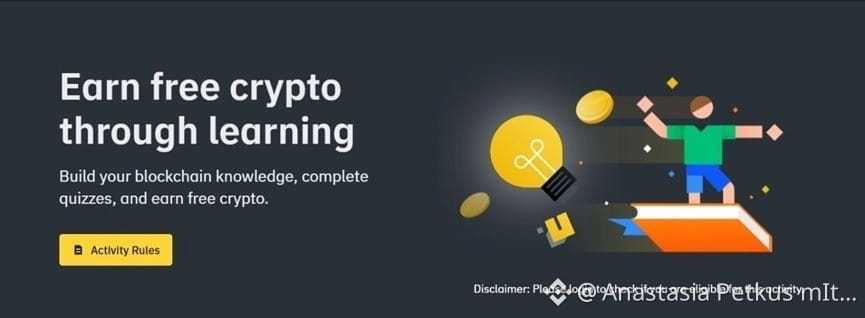
GET PAID FOR LEARNING CRYPTO. YES, THAT'S A REAL THING. Imagine studying crypto and getting crypto in return. No trading strategy, no market predictions, no staring at candles until 3 AM. That's the idea behind Learn & Earn campaigns. Here's how it usually works: 📚 1. Choose a campaign. Find an available Learn & Earn course on Binance Academy. 🎓 2. Learn something useful. Read the educational material or watch the lessons. Topics can cover blockchain projects, tokens, and crypto technology. 🧠 3. Pass the quiz. Answer the questions correctly to qualify for the campaign reward. 🎁 4. Receive your reward. Depending on the campaign, you may get a crypto token voucher or another specified reward. And here's the interesting part: you're not just collecting a few tokens. You're building crypto knowledge while putting together your first trading capital. Binance campaigns have their own rules. Some rewards are limited, and account verification or campaign eligibility may be required. So check the available offers and their conditions before starting. My take: If you're going to spend time scrolling through crypto content anyway, why not get paid to learn something that could actually be useful? Have you ever received crypto through Learn & Earn? How much did you earn? I'll prepare deeper research on the opportunities that get the most interest. If this topic deserves a full investigation, let me know through likes and comments. #learnAndEarn #cryptoeducation 💡🚀 #academy
GET PAID FOR LEARNING CRYPTO. YES, THAT'S A REAL THING.

Imagine studying crypto and getting crypto in return. No trading strategy, no market predictions, no staring at candles until 3 AM.
That's the idea behind Learn & Earn campaigns.
Here's how it usually works:
📚 1. Choose a campaign. Find an available Learn & Earn course on Binance Academy.
🎓 2. Learn something useful. Read the educational material or watch the lessons. Topics can cover blockchain projects, tokens, and crypto technology.
🧠 3. Pass the quiz. Answer the questions correctly to qualify for the campaign reward.
🎁 4. Receive your reward. Depending on the campaign, you may get a crypto token voucher or another specified reward.

And here's the interesting part: you're not just collecting a few tokens. You're building crypto knowledge while putting together your first trading capital.
Binance campaigns have their own rules. Some rewards are limited, and account verification or campaign eligibility may be required. So check the available offers and their conditions before starting.

My take: If you're going to spend time scrolling through crypto content anyway, why not get paid to learn something that could actually be useful?
Have you ever received crypto through Learn & Earn? How much did you earn?

I'll prepare deeper research on the opportunities that get the most interest. If this topic deserves a full investigation, let me know through likes and comments.
#learnAndEarn #cryptoeducation 💡🚀 #academy
#Binance #academy $Dear Binance users, you can access Binance Academy through the official Binance website to acquire professional knowledge about cryptocurrencies. During your studies, you will also have the opportunity to receive free cryptocurrencies. Binance Academy address: https://academy.binance.com/en/learn-and-earn
#Binance #academy $Dear Binance users, you can access Binance Academy through the official Binance website to acquire professional knowledge about cryptocurrencies. During your studies, you will also have the opportunity to receive free cryptocurrencies. Binance Academy address:
https://academy.binance.com/en/learn-and-earn
When I first started getting interested in crypto, a lot of things were unclear. I decided to take a few courses on Binance Academy, and honestly, it helped put everything in order. What I liked most is that the information is presented in simple language, without unnecessary "fluff". The topics that were especially useful for me were about blockchain, wallet security, and how not to fall for scammers. After the training, I feel much more confident when using a crypto exchange or reading news about cryptocurrencies. If you’re just starting out, I can confidently recommend Binance Academy.#Binance $BTC $BTC #academy
Article
Not because I’m sorry about knowledge. The reason is entirely different.From time to time, I’m asked if I can teach people to trade crypto or help them start earning from trading. My answer is almost always the same—no. And there are several solid reasons for that. First of all, trading is an activity with a very high level of risk. Statistics show that most traders ultimately lose their funds. Many beginners only see success stories, but they underestimate possible losses and the psychological pressure.

Not because I’m sorry about knowledge. The reason is entirely different.

From time to time, I’m asked if I can teach people to trade crypto or help them start earning from trading. My answer is almost always the same—no. And there are several solid reasons for that.
First of all, trading is an activity with a very high level of risk. Statistics show that most traders ultimately lose their funds. Many beginners only see success stories, but they underestimate possible losses and the psychological pressure.
Article
Binance Exchange: Why is it ranked as the most reliable crypto company in the world?Binance Exchange: Why is it ranked as the most reliable crypto company in the world? The cryptocurrency market has seen wild fluctuations over the last decade and the emergence of hundreds of platforms, but Binance has not only survived but led the pack as the largest trading platform in terms of volume and liquidity. This success wasn't just luck; it came from a strict strategy focused on building trust and security for users.

Binance Exchange: Why is it ranked as the most reliable crypto company in the world?

Binance Exchange: Why is it ranked as the most reliable crypto company in the world?
The cryptocurrency market has seen wild fluctuations over the last decade and the emergence of hundreds of platforms, but Binance has not only survived but led the pack as the largest trading platform in terms of volume and liquidity. This success wasn't just luck; it came from a strict strategy focused on building trust and security for users.
Article
🔍 THE CONFIRMATION BIAS: WHY YOU ONLY SEE WHAT CONFIRMS WHAT YOU HOPEYou buy a crypto because you believe in its potential. From that exact moment on, something strange happens in your head, without you even realizing it. You start to see reasons to be optimistic everywhere. A positive tweet, a slight price increase, a partnership rumor. Everything seems to confirm that you made the right choice. Meanwhile, the negative signals, for their part, slip almost without leaving a trace. This mechanism has a name in psychology: the confirmation bias. And it affects absolutely everyone, even the most

🔍 THE CONFIRMATION BIAS: WHY YOU ONLY SEE WHAT CONFIRMS WHAT YOU HOPE

You buy a crypto because you believe in its potential. From that exact moment on, something strange happens in your head, without you even realizing it. You start to see reasons
to be optimistic everywhere. A positive tweet, a slight price increase, a partnership rumor. Everything seems to confirm that you made the right choice. Meanwhile, the negative signals, for their part, slip
almost without leaving a trace. This mechanism has a name in psychology: the confirmation bias. And it affects absolutely everyone, even the most
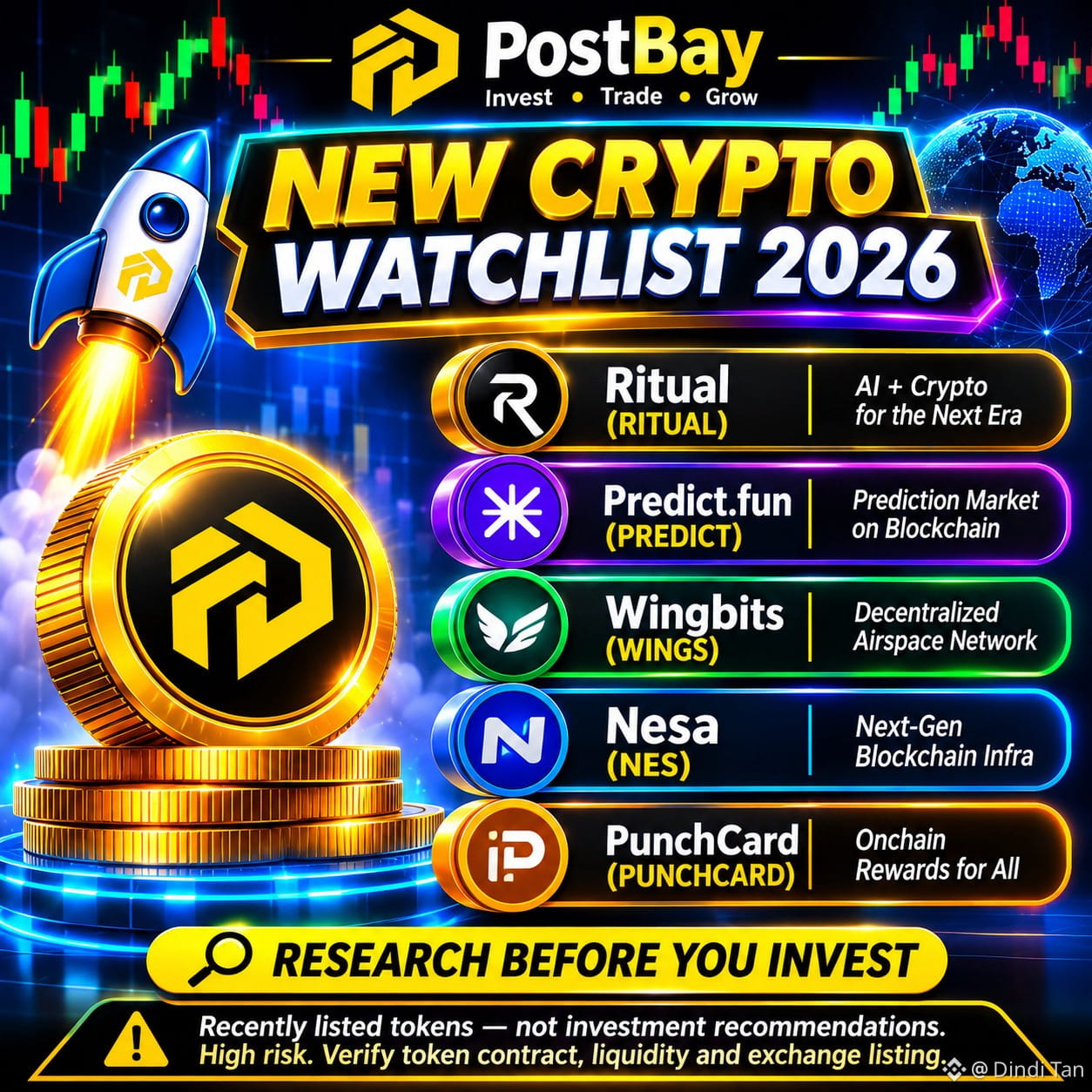
RIVN-2.56%
WINGUS+2.78%
PREDICT-2.16%
✍️👌✍️ there are minds more powerful than others there are minds more daring than others there are minds that read the market better than others there are conservative minds and minds that take the greatest risks✍️👌✍️ #Academy
✍️👌✍️
there are minds more powerful than others
there are minds more daring than others
there are minds that read the market better than others
there are conservative minds and minds that take the greatest risks✍️👌✍️
#Academy
HomeroSPredijoFuturosAislados
·
--
PHENOMENON 90 90 90⚠️🚨

The RSI is high, so it signals overbought conditions,
it’s time to sell. You enter a short position, but the RSI stays high for a while and you lose and lose.
You wonder: what if one EMA crosses another? Does that mean a change, a divergence, a breakout, that the price is exhausted, or that I have a trend reversal signal? But then they cross calmly and nothing changes.
Technical analysis has many tools that contradict one another.
Knowing how to compare them to detect the traps is what keeps you out of ⚠️
PHENOMENON 90 90 90🚨🚨🚨
Good technical analysis takes a long time—not in terms of time spent, but in terms of learning.
We all experience this phenomenon when we’re starting out, and many people never manage to overcome it.

.
90% of people lose 90% of their capital in 90 days.

The theory of perpetual futures, which is about being a good analyst (18%), managing risk (FOMO) and GREED (12%), and exercising self-control (70%)—or creating your own method and preparing your mind to stick to the trading profile you’ve created—doesn’t make you a winner.
🎯It makes you think that maybe you can beat the market.
Some minds are more powerful than others.
Some minds are more risk-taking than others.
Some minds read the market better than others.
Some minds are conservative, while others take on the maximum risk.

But these are minds that have already prepared themselves for their trader profile.
Psychological tools are our best allies, and preparing your mind so you don’t lose money is almost everything.

Everyone, everyone in this world, with dedication (not practicing without knowing what you’re doing), can become a trader who can win trades against the market if they prepare according to their abilities. Someone who learns later may become the best, because they didn’t overlook anything. It often happens that someone more capable during the learning process assumes they’ve understood everything, and their EGO ends up hurting them in the future.

Everyone can do it, friends.
Let’s go for that goal🤗💚🎯✅
@Binance Square Official
@Binance Academy
#BinanceSquare
$BTC

Tried a new methid today, closed my eyes and eherever my finger stopped, this is the one @everyone #bnb #academy #edge
·
--
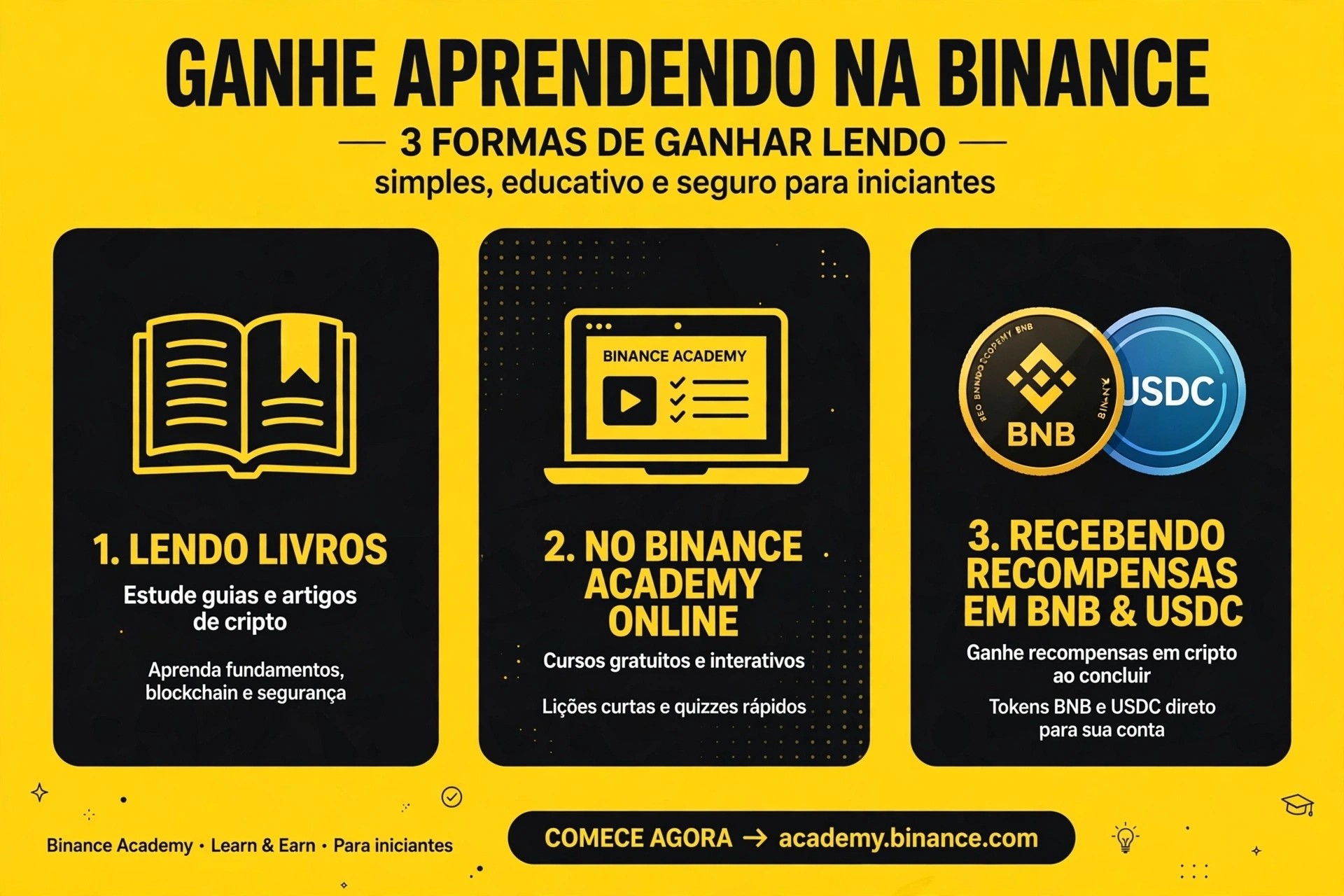
3 ways to earn on Binance just by reading (without investing much) 💰📚 If you're a beginner and think you need a lot of money to get started on Binance, you're missing out on money—trust me. I've already earned some crypto just by completing a few quizzes. These 3 methods really pay: 1. Binance Academy - Learn & Earn Read a 3-minute article, answer a 4-question quiz, and earn crypto right away. I’ve already earned $5 in $BNB just by answering questions about blockchain. Find it under [Academy > Learn & Earn] 2. Word of the Day (WOTD) A new word every day. Get 5 right during the week + make 1 $50 trade = you split $10,000 USDC. This week's theme is AI. It's free to play. 3. Binance Square - Read and interact Just by reading posts and leaving helpful comments, you earn points that turn into bonuses for Pick and Prophet. That's how I started with 0. You don't need to be an expert. You just need to start reading and click where Binance is already paying you to learn. Which of these 3 have you tried? Tell me below and I'll send you the direct link. #BinanceIniciante #learnAndEarn #WOTD #academy #GanharCripto
3 ways to earn on Binance just by reading (without investing much) 💰📚

If you're a beginner and think you need a lot of money to get started on Binance, you're missing out on money—trust me.
I've already earned some crypto just by completing a few quizzes.

These 3 methods really pay:

1. Binance Academy - Learn & Earn
Read a 3-minute article, answer a 4-question quiz, and earn crypto right away. I’ve already earned $5 in $BNB just by answering questions about blockchain. Find it under [Academy > Learn & Earn]

2. Word of the Day (WOTD)
A new word every day. Get 5 right during the week + make 1 $50 trade = you split $10,000 USDC. This week's theme is AI. It's free to play.

3. Binance Square - Read and interact
Just by reading posts and leaving helpful comments, you earn points that turn into bonuses for Pick and Prophet. That's how I started with 0.

You don't need to be an expert. You just need to start reading and click where Binance is already paying you to learn.

Which of these 3 have you tried? Tell me below and I'll send you the direct link.

#BinanceIniciante #learnAndEarn #WOTD #academy #GanharCripto
·
--
📰 What Is a Crypto Token? How Tokens Work, Types, and Examples A crypto token is a digital unit recorded on a blockchain that can represent value, a right, access to a service, an asset, or another... The post What Is a Crypto Token? How Tokens Work, Types, and Examples appeared first on Cryptocurrency News & Trading Tips – Crypto Blog by Changelly. Source : Changelly Time : 2026-10-11 19:18:35 Credit : jana bermanova #academy $PEOPLE $EVER $JST
📰 What Is a Crypto Token? How Tokens Work, Types, and Examples
A crypto token is a digital unit recorded on a blockchain that can represent value, a right, access to a service, an asset, or another... The post What Is a Crypto Token? How Tokens Work, Types, and Examples appeared first on Cryptocurrency News & Trading Tips – Crypto Blog by Changelly.
Source : Changelly
Time : 2026-10-11 19:18:35
Credit : jana bermanova
#academy
$PEOPLE $EVER $JST
Article
Digital Ecosystems, Conway’s Game of Life, and Why Emergent Complexity Matters for Decentralized AINeuraxon Intelligence Academy — Volume 7 By the Qubic Scientific Team In 1970, Martin Gardner published in Scientific American a recreational game invented by John Conway: the Game of Life. The rules fit on a postcard. A two-dimensional grid of cells in which each cell was alive or dead. At every step, a living cell stayed alive if it had two or three living neighbours, otherwise it died. A dead cell with exactly three living neighbours was born. Nothing else, as simple as that. In 1970, Martin Gardner published in Scientific American a recreational game invented by John Conway: the Game of Life. The rules fit on a postcard. A two-dimensional grid of cells in which each cell was alive or dead. At every step, a living cell stayed alive if it had two or three living neighbours, otherwise it died. A dead cell with exactly three living neighbours was born. Nothing else, as simple as that. What no one expected was what emerged from those four lines of rules. Stable structures. Oscillators that pulse forever and gliders that travel across the grid. Cannons that fire gliders periodically. Constructions were complex enough that, eventually, someone would build a Turing machine inside the Game of Life. Inside Conway’s grid you can, in principle, run any computation that exists. of Life to Artificial Life (Alife) In the eighties, Christopher Langton and a group of researchers turned this idea into a discipline of its own: Artificial Life, or Alife. The proposal was simple. Biology has historically studied life as we know it, the carbon-based one, the one that emerged on this particular planet. But life is, perhaps, a more general phenomenon. If we can build artificial systems that show the properties we associate with the living, self-organisation, adaptation, evolution, reproduction, response to the environment, then we are studying life as it could be, not just as it happens to be. Alife is not a search for digital pets. It is a science of fundamental dynamics. Its experimental tools are simulators where simple agents follow local rules, and where the researcher watches what emerges at the global scale. Several findings have stayed as cornerstones. The first, already implicit in Conway, is that simple local rules can generate global complexity without anyone designing it. The second came from Langton himself: there is a critical regime, called the edge of chaos, where systems are neither rigidly ordered nor fully chaotic, and where almost everything interesting happens. Computation, learning, adaptation, all flourish in that thin band. Below it, the system freezes. Above it, it dissolves into noise. A third finding, less famous but more uncomfortable, is that properties we usually associate with intention, like cooperation, specialisation, division of labour, can emerge in systems that have not been programmed to cooperate. They emerge as consequences of the dynamics, not as goals. This one is hard to digest for the self proclaimed superior species, because our intuition tells us that if we want X, we have to optimise for X. Alife shows, again and again, that this is not always true. What Are Digital Ecosystems? From Cellular Automata to Multi-Agent Neural Systems A digital ecosystem is the natural evolution of these artificial life ideas. Instead of a single rule shared by all cells, you have several agents, each with their own rules, sharing a common environment, competing or cooperating for resources, reproducing, and dying. The substrate may be a 2D grid as in Conway, a continuous fluid as in Lenia, a richer world with terrain and food as in Biomaker CA. The details vary. The principle does not. What makes a digital ecosystem interesting is not the underlying technology, but what it lets you observe. Population dynamics. Boundaries that form between species. Niches that open and close. Strategies that appear, dominate for a while, are displaced, and come back. Cycles that look like those of real ecosystems, sometimes surprisingly so. And the question that runs underneath all of it: when can we say that something has emerged, that the system has discovered something we did not put into it. The Digital Ecosystems interactive platform by Sakana AI, showing real-time parameter sliders, population timeline, checkpoint tray, and simulation canvas. Users can steer the ecosystem and branch into alternative futures from any saved state.  There is recent work worth looking at. The team at Sakana AI, for instance, has just released Digital Ecosystems, an interactive platform where five neural cellular automata species compete on a shared grid in real time and where you can move the parameters with sliders, save states, and explore divergent futures from a single checkpoint. It is the latest and most accessible link in a chain that goes back to Conway, and it is worth playing with for an afternoon, just to feel how these dynamics behave when you can actually touch them. Why Artificial Life and Emergent Complexity Matter for Qubic, Aigarth, and Neuraxon The temptation, when reading about Conway, Langton, Lenia, or Sakana, is to file all this away as elegant intellectual entertainment. It is not. It is the conceptual scaffolding our project stands on. Qubic: Self-Organising Decentralized Infrastructure Qubic is, at the infrastructure level, a decentralised network of thousands of nodes competing and cooperating to validate computations and earn rewards. Without the right local rules, that network either centralises or falls apart. With the right rules, it self-organises into a stable, productive ecosystem. The validity of Qubic’s design rests on principles that come, in part, from artificial life research: how do you reach global stability without a central authority, and how do you make competition produce something useful for everyone. Aigarth: Evolutionary AI at the Edge of Chaos Aigarth goes further. It is not just a network, it is an evolving tissue. Networks of artificial neurons that mutate, prune, generate offspring, reorganise their topology under adaptive pressure. There are local rules, fitness criteria, or evolutionary dynamics. This is artificial life applied to AI architectures. And as with everything in Alife, what emerges depends on the regime the system operates in. Too rigid, no exploration. Too chaotic, no stability. The edge of chaos is, here too, where the interesting things happen. Neuraxon: Trinary States and Self-Organized Criticality in Brain-Inspired AI Neuraxon, the basic unit Aigarth is built on, was designed with this in mind. The trinary state (-1, 0, +1) is not a quantisation trick to save bits, even though it does also cut compute cost. It is a structural decision. The neutral state is a buffer that allows smooth transitions, that prevents the system from oscillating violently between extremes, and gives time for slow synapses and neuromodulators to act. As we have discussed in earlier volumes of the Neuraxon Intelligence Academy, this is what lets the system navigate the edge of chaos without collapsing. In our experiments with NxonLife, the simulator we built to watch Neuraxon networks evolve in Game-of-Life-inspired environments, we have measured exactly the properties Alife predicts. A branching ratio close to 1, the classical signature of self-organised criticality. Long-range temporal correlations following 1/f dynamics. Activity that sustains itself for thousands of ticks without external resets, without imposed normalisation, without anyone telling the system what to do. The networks find that regime by themselves, because the architecture has been built for it to be possible. From Artificial Life Simulations to Decentralized AI Infrastructure: An Old Idea, a New Substrate Growth-gate steepness sweep in Sakana AI's Digital Ecosystems. Lowering the gate steepness pushes species from rigid territorial boundaries into an excitable edge-of-chaos regime where emergent complexity and cooperation arise. Source: Sakana AI (2026) What Conway showed in 1970, Langton in 1990, the Lenia team more recently, and Sakana AI a few weeks ago, is that complexity emerges from local rules and well-chosen parameters. What we are doing with Qubic, Aigarth and Neuraxon is taking that insight to its logical conclusion: not just observing simulated ecosystems, but building real distributed infrastructure on its principles. The basic intuition does not change. Live systems live in time. They organise themselves between order and chaos. They cooperate without anyone instructing them to. They emerge, they do not design themselves. Conway’s Game of Life was a postcard. Artificial life is a discipline. Digital ecosystems are a tool. Qubic, Aigarth and Neuraxon are an attempt to take all of this from the simulator and turn it into a working network. The ideas have been there for fifty years. The substrate to make them productive at scale is what we are building now. References Conway, J. H. (in Gardner, M.) (1970). Mathematical games: The fantastic combinations of John Conway’s new solitaire game “Life”. Scientific American, 223, 120–123. [Link]Langton, C. G. (1990). Computation at the edge of chaos: Phase transitions and emergent computation. Physica D: Nonlinear Phenomena, 42, 12–37. [Link]Bedau, M. A. (2003). Artificial life: organization, adaptation and complexity from the bottom up. Trends in Cognitive Sciences, 7(11), 505–512. [Link]Chan, B. W.-C. (2019). Lenia: Biology of artificial life. Complex Systems, 28(3), 251–286. [Link]Mordvintsev, A., Randazzo, E., Niklasson, E., & Levin, M. (2020). Growing neural cellular automata. Distill, 5(2), e23. [Link]Darlow, L. (2026). Digital Ecosystems: Interactive Multi-Agent Neural Cellular Automata. Sakana AI. [Link]Vivancos, D., & Sanchez, J. (2025). From Perceptrons to Neuraxons: A new neural growth and computation blueprint. Qubic Science. [Link]Vivancos, D., & Sanchez, J. (2025). Time-embedded trinary state dynamics learning architecture. Preprint. [Link] Explore the Complete Neuraxon Intelligence Academy Series This is Volume 7 of the Neuraxon Intelligence #academy by the #Qubic Scientific Team. If you are just joining us, explore the complete series to build a full understanding of the science behind #Neuraxon , #aigarth , and Qubic’s approach to brain-inspired, #decentralized artificial intelligence: [NIA Volume 1](https://www.binance.com/en/square/post/295315343732018): Why Intelligence Is Not Computed in Steps, but in Time — Explores why biological intelligence operates in continuous time rather than discrete computational steps like traditional LLMs.[NIA Volume 2](https://www.binance.com/en/square/post/295304276561778): Ternary Dynamics as a Model of Living Intelligence — Explains ternary dynamics and why three-state logic (excitatory, neutral, inhibitory) matters for modeling living systems.[NIA Volume 3](https://www.binance.com/en/square/post/295306656801506): Neuromodulation and Brain-Inspired AI — Covers neuromodulation and how the brain’s chemical signaling (dopamine, serotonin, acetylcholine, norepinephrine) inspires Neuraxon’s architecture.[NIA Volume 4](https://www.binance.com/en/square/post/295302152913618): Neural Networks in AI and Neuroscience — A deep comparison of biological neural networks, artificial neural networks, and Neuraxon’s third-path approach.[NIA Volume 5](https://www.binance.com/en/square/post/302913958960674): Astrocytes and Brain-Inspired AI — How astrocytic gating transforms neural network plasticity through the AGMP framework in Neuraxon.[NIA Volume 6](https://www.binance.com/en/square/post/310198879866145): Conscious Machines vs Intelligent Organisms: AI Consciousness Explained — Explores AI consciousness through the lens of Global Workspace Theory, Integrated Information Theory, and predictive coding. Qubic is a decentralized, open-source network. To learn more, visit qubic.org. Join the discussion on X, Discord, and Telegram.

Digital Ecosystems, Conway’s Game of Life, and Why Emergent Complexity Matters for Decentralized AI

Neuraxon Intelligence Academy — Volume 7
By the Qubic Scientific Team
In 1970, Martin Gardner published in Scientific American a recreational game invented by John Conway: the Game of Life. The rules fit on a postcard. A two-dimensional grid of cells in which each cell was alive or dead. At every step, a living cell stayed alive if it had two or three living neighbours, otherwise it died. A dead cell with exactly three living neighbours was born. Nothing else, as simple as that.
What no one expected was what emerged from those four lines of rules. Stable structures. Oscillators that pulse forever and gliders that travel across the grid. Cannons that fire gliders periodically. Constructions were complex enough that, eventually, someone would build a Turing machine inside the Game of Life. Inside Conway’s grid you can, in principle, run any computation that exists.
of Life to Artificial Life (Alife)
In the eighties, Christopher Langton and a group of researchers turned this idea into a discipline of its own: Artificial Life, or Alife. The proposal was simple. Biology has historically studied life as we know it, the carbon-based one, the one that emerged on this particular planet. But life is, perhaps, a more general phenomenon. If we can build artificial systems that show the properties we associate with the living, self-organisation, adaptation, evolution, reproduction, response to the environment, then we are studying life as it could be, not just as it happens to be.
Alife is not a search for digital pets. It is a science of fundamental dynamics. Its experimental tools are simulators where simple agents follow local rules, and where the researcher watches what emerges at the global scale.
Several findings have stayed as cornerstones. The first, already implicit in Conway, is that simple local rules can generate global complexity without anyone designing it. The second came from Langton himself: there is a critical regime, called the edge of chaos, where systems are neither rigidly ordered nor fully chaotic, and where almost everything interesting happens. Computation, learning, adaptation, all flourish in that thin band. Below it, the system freezes. Above it, it dissolves into noise.
A third finding, less famous but more uncomfortable, is that properties we usually associate with intention, like cooperation, specialisation, division of labour, can emerge in systems that have not been programmed to cooperate. They emerge as consequences of the dynamics, not as goals. This one is hard to digest for the self proclaimed superior species, because our intuition tells us that if we want X, we have to optimise for X. Alife shows, again and again, that this is not always true.
What Are Digital Ecosystems? From Cellular Automata to Multi-Agent Neural Systems
A digital ecosystem is the natural evolution of these artificial life ideas. Instead of a single rule shared by all cells, you have several agents, each with their own rules, sharing a common environment, competing or cooperating for resources, reproducing, and dying. The substrate may be a 2D grid as in Conway, a continuous fluid as in Lenia, a richer world with terrain and food as in Biomaker CA. The details vary. The principle does not.
What makes a digital ecosystem interesting is not the underlying technology, but what it lets you observe. Population dynamics. Boundaries that form between species. Niches that open and close. Strategies that appear, dominate for a while, are displaced, and come back. Cycles that look like those of real ecosystems, sometimes surprisingly so. And the question that runs underneath all of it: when can we say that something has emerged, that the system has discovered something we did not put into it.
The Digital Ecosystems interactive platform by Sakana AI, showing real-time parameter sliders, population timeline, checkpoint tray, and simulation canvas. Users can steer the ecosystem and branch into alternative futures from any saved state.
There is recent work worth looking at. The team at Sakana AI, for instance, has just released Digital Ecosystems, an interactive platform where five neural cellular automata species compete on a shared grid in real time and where you can move the parameters with sliders, save states, and explore divergent futures from a single checkpoint. It is the latest and most accessible link in a chain that goes back to Conway, and it is worth playing with for an afternoon, just to feel how these dynamics behave when you can actually touch them.
Why Artificial Life and Emergent Complexity Matter for Qubic, Aigarth, and Neuraxon
The temptation, when reading about Conway, Langton, Lenia, or Sakana, is to file all this away as elegant intellectual entertainment. It is not. It is the conceptual scaffolding our project stands on.
Qubic: Self-Organising Decentralized Infrastructure
Qubic is, at the infrastructure level, a decentralised network of thousands of nodes competing and cooperating to validate computations and earn rewards. Without the right local rules, that network either centralises or falls apart. With the right rules, it self-organises into a stable, productive ecosystem. The validity of Qubic’s design rests on principles that come, in part, from artificial life research: how do you reach global stability without a central authority, and how do you make competition produce something useful for everyone.
Aigarth: Evolutionary AI at the Edge of Chaos
Aigarth goes further. It is not just a network, it is an evolving tissue. Networks of artificial neurons that mutate, prune, generate offspring, reorganise their topology under adaptive pressure. There are local rules, fitness criteria, or evolutionary dynamics. This is artificial life applied to AI architectures. And as with everything in Alife, what emerges depends on the regime the system operates in. Too rigid, no exploration. Too chaotic, no stability. The edge of chaos is, here too, where the interesting things happen.
Neuraxon: Trinary States and Self-Organized Criticality in Brain-Inspired AI
Neuraxon, the basic unit Aigarth is built on, was designed with this in mind. The trinary state (-1, 0, +1) is not a quantisation trick to save bits, even though it does also cut compute cost. It is a structural decision. The neutral state is a buffer that allows smooth transitions, that prevents the system from oscillating violently between extremes, and gives time for slow synapses and neuromodulators to act. As we have discussed in earlier volumes of the Neuraxon Intelligence Academy, this is what lets the system navigate the edge of chaos without collapsing.
In our experiments with NxonLife, the simulator we built to watch Neuraxon networks evolve in Game-of-Life-inspired environments, we have measured exactly the properties Alife predicts. A branching ratio close to 1, the classical signature of self-organised criticality. Long-range temporal correlations following 1/f dynamics. Activity that sustains itself for thousands of ticks without external resets, without imposed normalisation, without anyone telling the system what to do. The networks find that regime by themselves, because the architecture has been built for it to be possible.
From Artificial Life Simulations to Decentralized AI Infrastructure: An Old Idea, a New Substrate
Growth-gate steepness sweep in Sakana AI's Digital Ecosystems. Lowering the gate steepness pushes species from rigid territorial boundaries into an excitable edge-of-chaos regime where emergent complexity and cooperation arise. Source: Sakana AI (2026)
What Conway showed in 1970, Langton in 1990, the Lenia team more recently, and Sakana AI a few weeks ago, is that complexity emerges from local rules and well-chosen parameters. What we are doing with Qubic, Aigarth and Neuraxon is taking that insight to its logical conclusion: not just observing simulated ecosystems, but building real distributed infrastructure on its principles.
The basic intuition does not change. Live systems live in time. They organise themselves between order and chaos. They cooperate without anyone instructing them to. They emerge, they do not design themselves.
Conway’s Game of Life was a postcard. Artificial life is a discipline. Digital ecosystems are a tool. Qubic, Aigarth and Neuraxon are an attempt to take all of this from the simulator and turn it into a working network. The ideas have been there for fifty years. The substrate to make them productive at scale is what we are building now.
References
Conway, J. H. (in Gardner, M.) (1970). Mathematical games: The fantastic combinations of John Conway’s new solitaire game “Life”. Scientific American, 223, 120–123. [Link]Langton, C. G. (1990). Computation at the edge of chaos: Phase transitions and emergent computation. Physica D: Nonlinear Phenomena, 42, 12–37. [Link]Bedau, M. A. (2003). Artificial life: organization, adaptation and complexity from the bottom up. Trends in Cognitive Sciences, 7(11), 505–512. [Link]Chan, B. W.-C. (2019). Lenia: Biology of artificial life. Complex Systems, 28(3), 251–286. [Link]Mordvintsev, A., Randazzo, E., Niklasson, E., & Levin, M. (2020). Growing neural cellular automata. Distill, 5(2), e23. [Link]Darlow, L. (2026). Digital Ecosystems: Interactive Multi-Agent Neural Cellular Automata. Sakana AI. [Link]Vivancos, D., & Sanchez, J. (2025). From Perceptrons to Neuraxons: A new neural growth and computation blueprint. Qubic Science. [Link]Vivancos, D., & Sanchez, J. (2025). Time-embedded trinary state dynamics learning architecture. Preprint. [Link]
Explore the Complete Neuraxon Intelligence Academy Series
This is Volume 7 of the Neuraxon Intelligence #academy by the #Qubic Scientific Team. If you are just joining us, explore the complete series to build a full understanding of the science behind #Neuraxon , #aigarth , and Qubic’s approach to brain-inspired, #decentralized artificial intelligence:
NIA Volume 1: Why Intelligence Is Not Computed in Steps, but in Time — Explores why biological intelligence operates in continuous time rather than discrete computational steps like traditional LLMs.NIA Volume 2: Ternary Dynamics as a Model of Living Intelligence — Explains ternary dynamics and why three-state logic (excitatory, neutral, inhibitory) matters for modeling living systems.NIA Volume 3: Neuromodulation and Brain-Inspired AI — Covers neuromodulation and how the brain’s chemical signaling (dopamine, serotonin, acetylcholine, norepinephrine) inspires Neuraxon’s architecture.NIA Volume 4: Neural Networks in AI and Neuroscience — A deep comparison of biological neural networks, artificial neural networks, and Neuraxon’s third-path approach.NIA Volume 5: Astrocytes and Brain-Inspired AI — How astrocytic gating transforms neural network plasticity through the AGMP framework in Neuraxon.NIA Volume 6: Conscious Machines vs Intelligent Organisms: AI Consciousness Explained — Explores AI consciousness through the lens of Global Workspace Theory, Integrated Information Theory, and predictive coding.
Qubic is a decentralized, open-source network. To learn more, visit qubic.org. Join the discussion on X, Discord, and Telegram.
#Binance #Academy Binance Academy is an educational platform that provides free resources and information to help individuals learn about blockchain and cryptocurrency. It was created by Binance, one of the largest cryptocurrency exchanges in the world.· Blockchain is a decentr
#Binance #Academy

Binance Academy is an educational platform that provides free resources and information to help individuals learn about blockchain and cryptocurrency. It was created by Binance, one of the largest cryptocurrency exchanges in the world.· Blockchain is a decentr
Article
Bot Farms The Hidden World of CryptoHow Automated Trading Networks Are Reshaping Markets What if a large portion of the activity you see in crypto markets… isn’t human at all? Some of the most active participants today aren’t traders sitting behind screens they’re automated systems operating at speeds no human can match. These so-called “bot farms” are coordinated networks of algorithmic traders controlling multiple wallets, executing strategies designed to influence price, liquidity, and perception. While the technology is new, the tactics behind it are familiar they are simply older forms of market manipulation, now operating at machine speed and global scale. One of the most widely observed behaviors in this space is wash trading, where the same entity repeatedly buys and sells a token to create the illusion of demand. Some blockchain analytics estimates suggest that billions of dollars in trading activity across certain ecosystems may be artificially generated through such methods. Alongside this, classic pump-and-dump schemes have evolved into more organized and faster-moving operations. Groups often coordinated through private channels generate hype around a token, drive prices upward, and exit early, leaving late participants exposed to rapid losses. Beyond these, more technically advanced strategies have become increasingly common. Spoofing involves placing large orders to influence market perception, only to cancel them before execution. Mirror trading coordinates identical trades across multiple wallets to simulate organic activity. And then there are sandwich attacks one of the clearest examples of how automation exploits blockchain mechanics directly. These attacks rely on monitoring pending transactions in the mempool and strategically inserting trades before and after a target transaction to profit from price movement. To understand this in practice, consider a simple scenario on a decentralized exchange like Uniswap. A trader attempts to swap a large amount of stablecoins for ETH. Before the transaction is confirmed, a bot detects it in the mempool. It quickly executes a buy order ahead of the trade, pushing the price upward. The original transaction is then executed at this higher price, after which the bot immediately sells locking in profit from the difference. All of this happens in milliseconds, often without the trader realizing what occurred. Behind these operations is a highly optimized technical infrastructure. These systems rely on low-latency servers positioned close to blockchain nodes, high-speed RPC connections through providers like Infura or Alchemy, and real-time data streams via WebSocket connections. They also operate across dozens or even hundreds of wallets, distributing funds in a way that makes activity appear decentralized and organic. In more advanced setups, new wallet addresses are continuously generated to avoid detection and tracking. Most manipulation systems follow a structured lifecycle. They begin by scanning blockchain data, exchange order books, and even social sentiment. Once a potential opportunity is identified such as a large pending trade or sudden spike in attention they move quickly to execute transactions with priority, often by paying higher fees or using private transaction routes. Profits are then captured through strategic positioning, such as front-running or back-running trades, before being distributed across wallets or converted into more stable assets. Detecting this behavior is possible but far from simple. Basic rule-based methods can flag suspicious patterns, such as rapid buy-sell cycles, identical trade sizes, or frequent order cancellations. However, more advanced approaches rely on network and graph analysis, where wallet interactions are mapped to uncover hidden relationships. Clusters of wallets trading primarily among themselves, synchronized transaction timing, or circular fund flows are all indicators of coordinated activity. Increasingly, machine learning models are also being used, analyzing transaction frequency, behavioral patterns, and statistical anomalies to distinguish bots from human traders. Some studies suggest these models can reach relatively high accuracy, though results depend heavily on data quality. Despite these advancements, detection comes with significant challenges. Not all bots are harmful many provide legitimate services such as arbitrage and market-making, which improve liquidity and efficiency. This creates ambiguity, making it difficult to separate beneficial automation from manipulative behavior. False positives are common, and the lack of verified datasets makes it harder to train reliable detection systems. As a result, identifying malicious activity requires a careful balance between sensitivity and precision. Efforts to mitigate these risks are gradually evolving. Exchanges are increasingly adopting advanced monitoring systems, linking suspicious accounts through behavioral analysis and tracking patterns associated with wash trading or spoofing. DeFi platforms are experimenting with solutions such as MEV protection, private transaction pools, and improved liquidity mechanisms to reduce the effectiveness of front-running strategies. At the same time, regulators are beginning to take notice, signaling that traditional market manipulation laws may extend into the crypto space, along with increased expectations for transparency and reporting. For everyday traders, the implications are significant. Participating in crypto markets today often means competing in an environment where speed, automation, and infrastructure can outweigh traditional analysis or intuition. If a market appears unusually active relative to its size, there is a real possibility that automation not genuine demand is driving the movement. This doesn’t eliminate opportunity, but it does change the nature of the game. Crypto markets were built on transparency but not necessarily fairness. When systems can detect, react, and execute faster than any human participant, the dynamics shift fundamentally. Because in today’s market, you’re not just trading against other people you’re trading against systems designed to outpace you. #bot_trading #academy #BinanceSquareTalks

Bot Farms The Hidden World of Crypto

How Automated Trading Networks Are Reshaping Markets
What if a large portion of the activity you see in crypto markets… isn’t human at all? Some of the most active participants today aren’t traders sitting behind screens they’re automated systems operating at speeds no human can match. These so-called “bot farms” are coordinated networks of algorithmic traders controlling multiple wallets, executing strategies designed to influence price, liquidity, and perception. While the technology is new, the tactics behind it are familiar they are simply older forms of market manipulation, now operating at machine speed and global scale.
One of the most widely observed behaviors in this space is wash trading, where the same entity repeatedly buys and sells a token to create the illusion of demand. Some blockchain analytics estimates suggest that billions of dollars in trading activity across certain ecosystems may be artificially generated through such methods. Alongside this, classic pump-and-dump schemes have evolved into more organized and faster-moving operations. Groups often coordinated through private channels generate hype around a token, drive prices upward, and exit early, leaving late participants exposed to rapid losses.
Beyond these, more technically advanced strategies have become increasingly common. Spoofing involves placing large orders to influence market perception, only to cancel them before execution. Mirror trading coordinates identical trades across multiple wallets to simulate organic activity. And then there are sandwich attacks one of the clearest examples of how automation exploits blockchain mechanics directly. These attacks rely on monitoring pending transactions in the mempool and strategically inserting trades before and after a target transaction to profit from price movement.
To understand this in practice, consider a simple scenario on a decentralized exchange like Uniswap. A trader attempts to swap a large amount of stablecoins for ETH. Before the transaction is confirmed, a bot detects it in the mempool. It quickly executes a buy order ahead of the trade, pushing the price upward. The original transaction is then executed at this higher price, after which the bot immediately sells locking in profit from the difference. All of this happens in milliseconds, often without the trader realizing what occurred.
Behind these operations is a highly optimized technical infrastructure. These systems rely on low-latency servers positioned close to blockchain nodes, high-speed RPC connections through providers like Infura or Alchemy, and real-time data streams via WebSocket connections. They also operate across dozens or even hundreds of wallets, distributing funds in a way that makes activity appear decentralized and organic. In more advanced setups, new wallet addresses are continuously generated to avoid detection and tracking.
Most manipulation systems follow a structured lifecycle. They begin by scanning blockchain data, exchange order books, and even social sentiment. Once a potential opportunity is identified such as a large pending trade or sudden spike in attention they move quickly to execute transactions with priority, often by paying higher fees or using private transaction routes. Profits are then captured through strategic positioning, such as front-running or back-running trades, before being distributed across wallets or converted into more stable assets.
Detecting this behavior is possible but far from simple. Basic rule-based methods can flag suspicious patterns, such as rapid buy-sell cycles, identical trade sizes, or frequent order cancellations. However, more advanced approaches rely on network and graph analysis, where wallet interactions are mapped to uncover hidden relationships. Clusters of wallets trading primarily among themselves, synchronized transaction timing, or circular fund flows are all indicators of coordinated activity. Increasingly, machine learning models are also being used, analyzing transaction frequency, behavioral patterns, and statistical anomalies to distinguish bots from human traders. Some studies suggest these models can reach relatively high accuracy, though results depend heavily on data quality.
Despite these advancements, detection comes with significant challenges. Not all bots are harmful many provide legitimate services such as arbitrage and market-making, which improve liquidity and efficiency. This creates ambiguity, making it difficult to separate beneficial automation from manipulative behavior. False positives are common, and the lack of verified datasets makes it harder to train reliable detection systems. As a result, identifying malicious activity requires a careful balance between sensitivity and precision.
Efforts to mitigate these risks are gradually evolving. Exchanges are increasingly adopting advanced monitoring systems, linking suspicious accounts through behavioral analysis and tracking patterns associated with wash trading or spoofing. DeFi platforms are experimenting with solutions such as MEV protection, private transaction pools, and improved liquidity mechanisms to reduce the effectiveness of front-running strategies. At the same time, regulators are beginning to take notice, signaling that traditional market manipulation laws may extend into the crypto space, along with increased expectations for transparency and reporting.
For everyday traders, the implications are significant. Participating in crypto markets today often means competing in an environment where speed, automation, and infrastructure can outweigh traditional analysis or intuition. If a market appears unusually active relative to its size, there is a real possibility that automation not genuine demand is driving the movement. This doesn’t eliminate opportunity, but it does change the nature of the game.
Crypto markets were built on transparency but not necessarily fairness. When systems can detect, react, and execute faster than any human participant, the dynamics shift fundamentally. Because in today’s market, you’re not just trading against other people you’re trading against systems designed to outpace you.
#bot_trading #academy #BinanceSquareTalks
An endurance race towards knowledge. A complete course, an official level certificate 📊📄 in hand. A big thank you to #BinanceAcademy . $BNB I'm heading off in search of new knowledge. Meet up at 'Binance Academy' #academy . Even if the certificates are not accompanied by a Bonus, it's still worth trying! ! Training designed for beginners,#begginers . It's your turn! $NVDAB #Binance #BinanceSquareFamily
An endurance race towards knowledge. A complete course, an official level certificate 📊📄 in hand. A big thank you to #BinanceAcademy . $BNB I'm heading off in search of new knowledge. Meet up at 'Binance Academy' #academy . Even if the certificates are not accompanied by a Bonus, it's still worth trying! !
Training designed for beginners,#begginers . It's your turn! $NVDAB
#Binance
#BinanceSquareFamily
Binance Academy
·
--
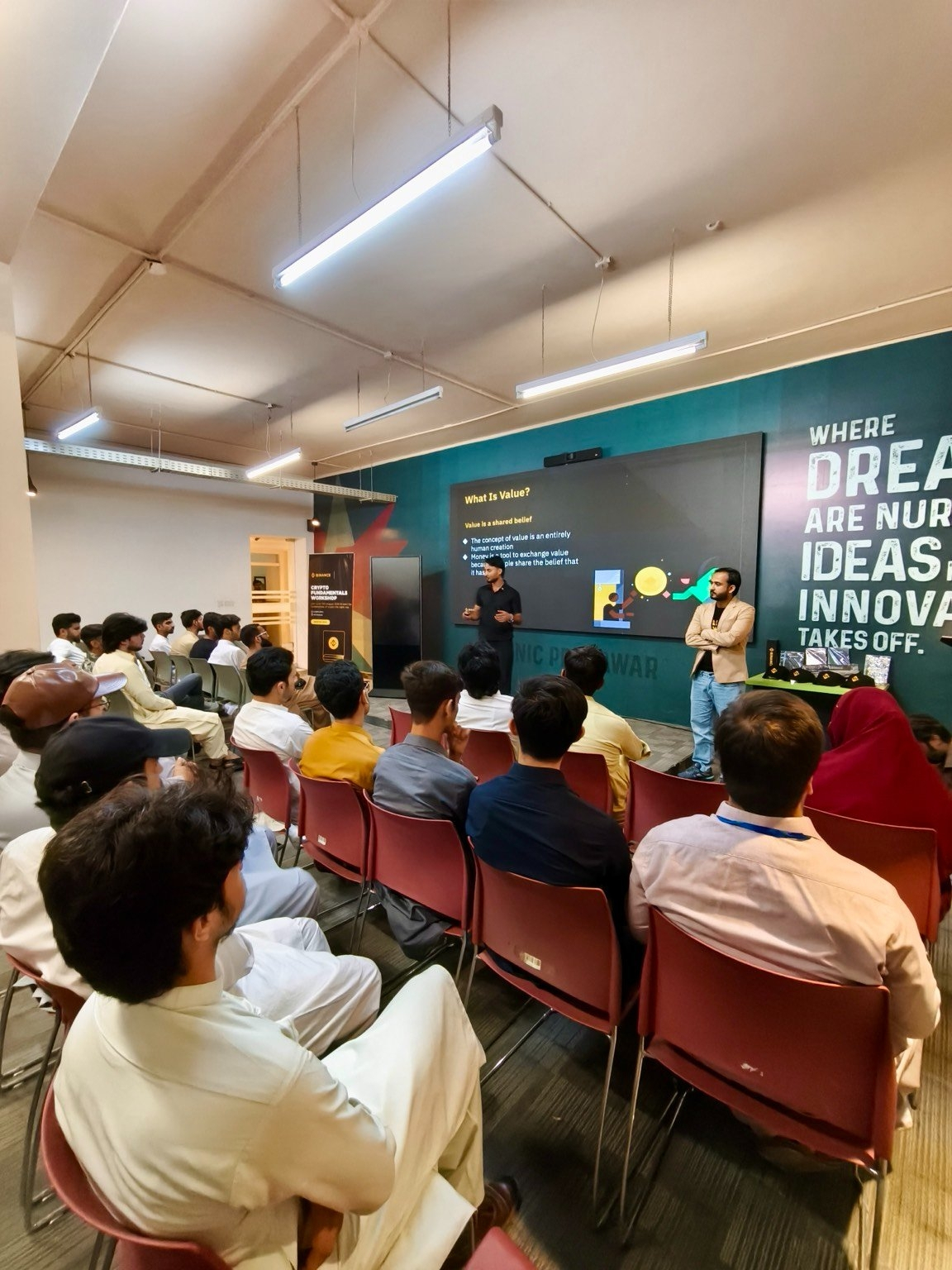
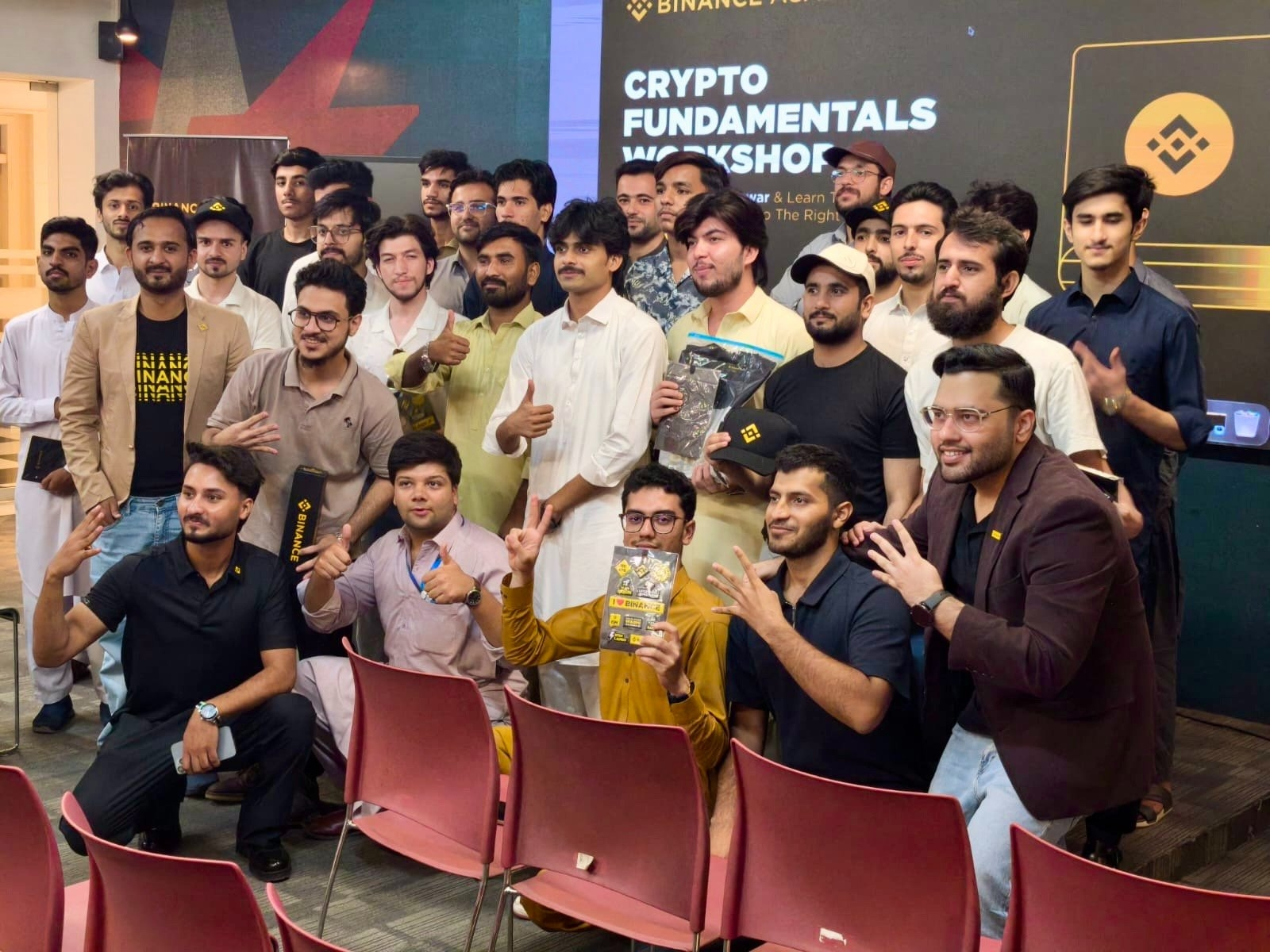
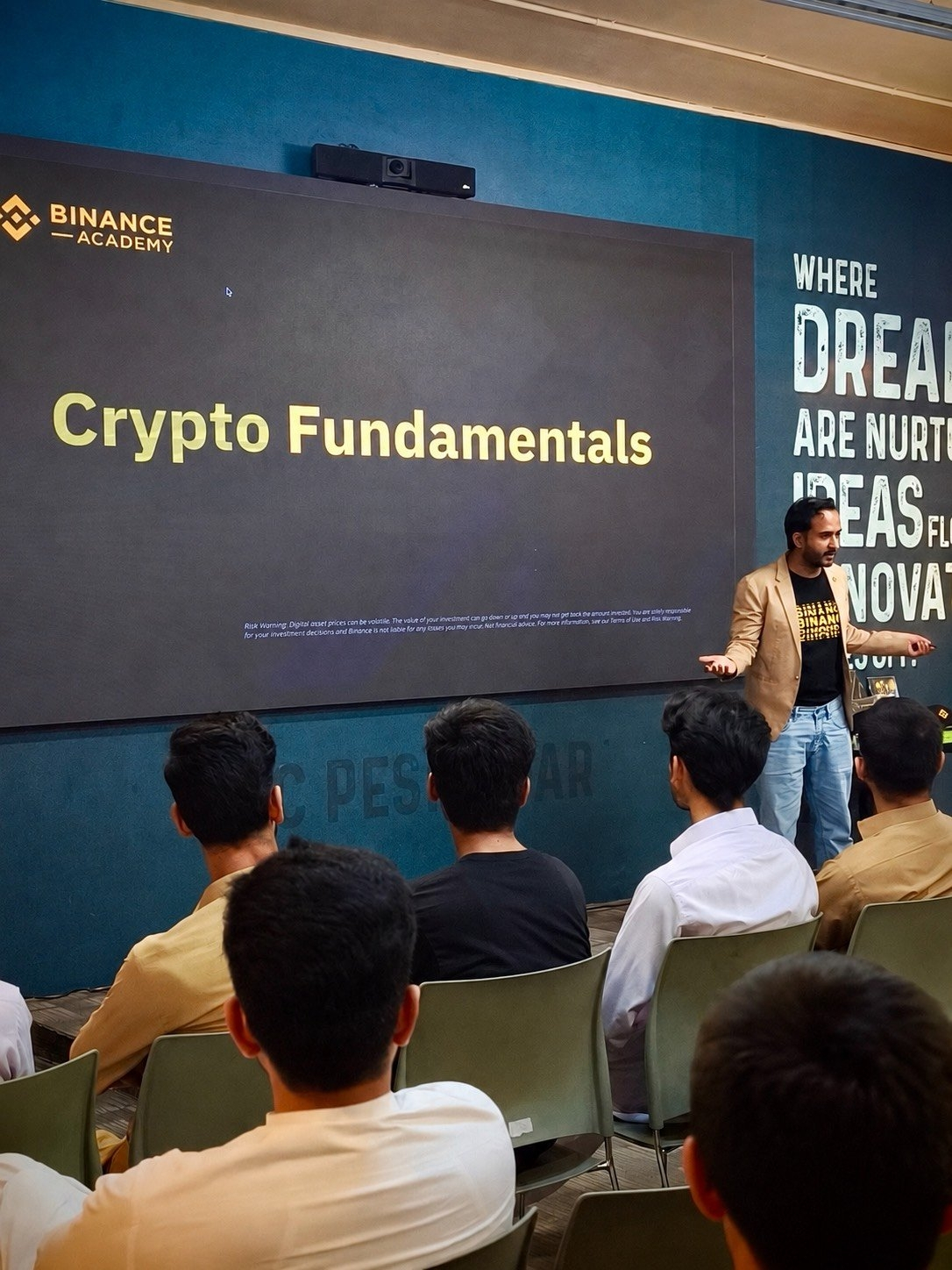
🇵🇰 Binance Academy University Tour: Peshawar, you were incredible!

We had a fantastic session with students at NIC Peshawar, Pakistan, diving into Crypto Fundamentals, from blockchain basics to how the whole ecosystem fits together. Your questions, curiosity, and energy made it unforgettable.

More university tour stops are on the way.
Binance Academy
·
--
What Are bStocks? A Guide to Tokenized Stocks on Binance
Key Takeaways

bStocks are tokenized securities on Binance, each backed 1:1 by a US share held at a regulated custodian.

They can be traded 24/7 on Binance's spot market and usually settle in under a second, with no T+1 settlement windows.

As BEP-20 tokens on BNB Smart Chain, bStocks support self-custody and can be used across decentralized finance (DeFi) protocols, allowing users to use bStocks in staking, lending, and other activities.

Corporate actions like dividends and stock splits are processed automatically through an on-chain mechanism called the Multiplier.

Users can access fractional US stock exposure starting from as little as $5.

Introduction

Traditionally, buying and selling stocks comes with limitations: restricted market hours, multi-day settlement periods, and reliance on centralized brokerages for custody. Tokenization offers a way to address some of these constraints by representing traditional financial instruments as blockchain-based tokens.

bStocks are tokenized securities available on Binance that allow users to gain exposure to US stocks through blockchain technology. Each bStock is backed 1:1 by a corresponding US share held at a regulated custodian.

What Are bStocks?

bStocks are tokenized securities issued by BTech Holdings Limited, a Binance group affiliate. They are classified as Certificates representing certain Financial Instruments (paragraph 92, Schedule 1 to FSMR) and represent an interest in underlying securities held by the issuer.

It's important to note that bStocks are not direct ownership of shares in the underlying company. Rather, they provide exposure to the price performance and economic benefits of the underlying stock, such as dividend reinvestment. Every bStock is fully backed by a real US share held at a regulated custodian. This backing is verifiable at any time through Binance's Proof of Collateral page.

How Do bStocks Work?

24/7 trading and instant settlement

Unlike traditional stock exchanges that operate during set market hours, bStocks can be traded around the clock on Binance's spot market. Transactions settle in under a second, eliminating T+1 settlement windows and the need to wait for the next market session.

1:1 backing and conversion

Each bStock is backed 1:1 by the corresponding US share held at a regulated custodian. Eligible users can convert between stocks and the corresponding bStocks at a 1:1 ratio with no conversion fees. This service is arranged by Nest Trading Limited and is generally available 24/7, though it may be paused temporarily during corporate action processing or maintenance.

Self-custody and DeFi compatibility

bStocks are standard BEP-20 tokens on BNB Smart Chain, meaning you can withdraw them to any compatible crypto wallet for self-custody. You are never locked into a single brokerage.

bStocks also integrate with BEP-677 (Scaled UI Amount), a token standard designed to provide native support for real-world assets (RWAs) on BNB Smart Chain. This allows bStocks to be used across DeFi protocols.

Fractional access

You can start building a bStocks portfolio from as little as $5, making US stock exposure more accessible to a broader range of users.

How Are Dividends and Stock Splits Handled?

Corporate actions are processed automatically via an on-chain rebasing mechanism known as the Multiplier. No action is required on your part.

Dividends

When the underlying company pays a dividend, the net dividend value is automatically reinvested into the underlying stock. Your bStock balance increases proportionally via the Multiplier adjustment.

Dividends are subject to applicable US withholding tax (currently 30%) before reinvestment. No cash is distributed. The benefit is reflected through a proportional increase in your bStock balance via the Multiplier mechanism. The net dividend is typically credited ahead of the traditional pay date and applied to every fraction you hold.

Stock splits

Your bStock balance is automatically adjusted to reflect the new share ratio. For example, in a 2-for-1 split, your token quantity doubles and the price per token halves.

During corporate action processing, deposits, withdrawals, and conversions may be temporarily paused. Users receive advance notice via in-app notification. Spot trading is generally not suspended for dividend processing.

How To Obtain bStocks

There are three ways to obtain bStocks.

1. Buy the underlying stock with conversion enabled

Go to [Trade] > [Stock] and use any supported crypto (e.g., USDC, USD1, USDT, U, or BNB) to place a buy order for the underlying stock.

Toggle on the token conversion option before confirming your order. Once filled, your stock position is automatically converted into the corresponding bStock.

2. Convert existing stocks via token conversion

If you already hold stocks on the platform, you can use the token conversion function to convert them into bStocks at a 1:1 ratio with no fees. To do this:

Go to your Binance wallet.

Select the stock eligible for conversion in the asset tab.

Click or tap [Token Conversion].

Use the pencil icon to edit the amount.

Review the confirmation pop-up and confirm.

The reverse process (converting bStocks back to stocks) follows the same steps.

3. Buy bStocks directly on Binance Spot

Navigate to [Spot] > [bStocks], choose the token you want to buy, and trade it like any other crypto asset. bStocks spot trading is available 24/7.

For more information, please refer to the official announcement page.

Deposits and Withdrawals

Depositing bStocks

Depositing bStocks follows the same flow as a standard crypto deposit:

Search for the tokenized stock you want to deposit (e.g., TSLAB).

Select BNB Smart Chain (BSC) as the network.

Copy your deposit address and send tokens from your external wallet.

Important: Only BNB Smart Chain is currently supported. Sending tokens via any other network may result in loss of funds.

Withdrawing bStocks

You can withdraw bStocks to any compatible BNB Smart Chain wallet for self-custody. A network fee applies to cover BSC transaction costs, and the minimum withdrawal amount varies by token. Withdrawals are subject to transfer restrictions, smart contract controls, sanctions screening, and applicable law.

Precision and Rounding

Equities on the platform are recorded at up to 9 decimal places, while bStocks support up to 8 decimal places. Upon conversion, any residual fractional amount beyond 8 decimal places cannot be tokenized and is retained by the issuer as a rounding difference. This does not represent a fee or charge.

Third-Party Integration

Third-party platforms and DeFi protocols can integrate bStocks but bear responsibility for enforcing geographic restrictions. Binance provides a public REST API with a country eligibility endpoint that integrators can query to verify jurisdiction eligibility. The issuer reserves the right to blacklist wallet addresses that may violate applicable laws or smart contracts controls or sanctions.

Risks and Considerations

Like any financial product, bStocks carry risks that users should carefully evaluate:

Market risk: The value of bStocks can fluctuate based on the underlying stock's price.

Liquidity risk: Trading volumes may vary, potentially affecting your ability to buy or sell.

Issuer and custody risk: bStocks depend on the issuer and regulated custodian maintaining proper backing.

Regulatory risk: The availability of bStocks is subject to regulatory approval and may change.

Technology and operational risk: Smart contract issues, network disruptions, or maintenance could temporarily impact services.

Tax risk: Applicable withholding taxes and other tax obligations may apply.

Geographic restrictions: bStocks are not available in all jurisdictions and are not offered to US persons.

Users should review the applicable Prospectus (accessible only if located in the ADGM), Terms of Use, Exchange Rules (including the Exchange Procedures), Admission to Trading Notice, Minting and Redemption Product Terms, and Risk Warning before trading.

FAQ

What are bStocks?

bStocks are tokenized securities issued by BTech Holdings Limited, a Binance group affiliate. Each bStock is backed 1:1 by a real US share held at a regulated custodian. They are BEP-20 tokens on BNB Smart Chain, so they can be traded on Binance's spot market or withdrawn for self-custody.

Are bStocks the same as owning stocks directly?

No. bStocks are not direct ownership of shares in the underlying company. They provide exposure to price performance and economic benefits such as dividends, but they are structured as Certificates representing certain Financial Instruments rather than direct equity ownership.

How are dividends paid on bStocks?

Dividends are not paid out in cash. Instead, the net dividend value is automatically reinvested into the underlying stock and your bStock balance increases proportionally via the Multiplier mechanism. US withholding tax (currently 30%) applies before reinvestment.

Can I withdraw bStocks to my own wallet?

Yes. bStocks can be withdrawn to any compatible BNB Smart Chain wallet. Only BNB Smart Chain is supported at this time. Sending tokens via another network may result in permanent loss of funds. A network fee applies, and the minimum withdrawal amount varies by token.

Who can access bStocks?

bStocks are not available in all jurisdictions and are not offered to US persons. Users should check current eligibility requirements on Binance before attempting to access or trade bStocks. Binance provides a public REST API with a country eligibility endpoint for third-party integrators.

Closing Thoughts

bStocks bring traditional stock exposure on-chain through tokenization. By combining regulated custodian backing and automatic corporate action processing with blockchain-native features like 24/7 trading, instant settlement, and DeFi composability, bStocks aim to bridge the gap between traditional finance and crypto.

However, they are not without risk. As with any financial product, it's important to understand the product structure, review all applicable terms, and assess your own risk tolerance before getting started.

Further Reading

Introducing bStocks: Tokenized Securities 1:1 Backing with 24/7 Trading

What Are Tokenized Stocks?

What Are Real-World Assets (RWA) in DeFi and Crypto?

An Introduction to BNB Smart Chain (BSC)

What Is Tokenized Gold?

Disclaimer: bStocks Tokenized Securities are classified as Certificates representing certain Financial Instruments (paragraph 92, Schedule 1 to FSMR). bStocks are not stocks or shares and bStocks do not allow holders to directly own a share or stock in the underlying listed company. bStocks do not represent any affiliation with the underlying asset's issuer.  bStocks are offered through an Approved Prospectus in the ADGM and are not offered in any other jurisdiction. No public offer is made outside of the ADGM. Tokenized Securities are available only to eligible users in permitted jurisdictions on a secondary market basis only. It is your sole responsibility to ensure that accessing and trading Tokenized Securities is lawful in your jurisdiction before proceeding. Accessing this product from a jurisdiction in which it is prohibited or restricted does not create any liability or obligation on the part of Binance. We may restrict, suspend, reject, cancel, or unwind access or transactions if we determine, in our sole discretion, that your access or transaction may breach applicable law, product restrictions, eligibility criteria, sanctions requirements, or the relevant offering documents.

No information displayed in connection with Tokenized Securities is intended as an offer, solicitation, promotion, recommendation, or invitation to buy or sell securities in any jurisdiction. Tokenized Securities are not offered, sold, distributed, made available, or accessible in the United States or to, or for the account or benefit of, U.S. persons. The Tokenized Securities have not been and will not be registered under the U.S. Securities Act of 1933 or any U.S. state securities laws and a public offering of bStocks will not be conducted in the United States or any other jurisdiction (other than the ADGM). By accessing this product, you represent and warrant that you are not a U.S. person, are not located in the United States, are not acting for the account or benefit of any U.S. person, and will not access, purchase, sell, transfer, redeem, or otherwise transact in Tokenized Securities from within the United States. 

For more information, see the Terms of Use, Exchange Rules, Exchange Procedures, relevant Prospectus (if applicable to you and understanding that the offer is only made in ADGM, no public offer is being made elsewhere and viewing the prospectus does not constitute an invitation or solicitation outside ADGM), bStocks Minting and Redemption Product Terms, Admission to Trading Notice and Risk Warning.
·
--
Bullish
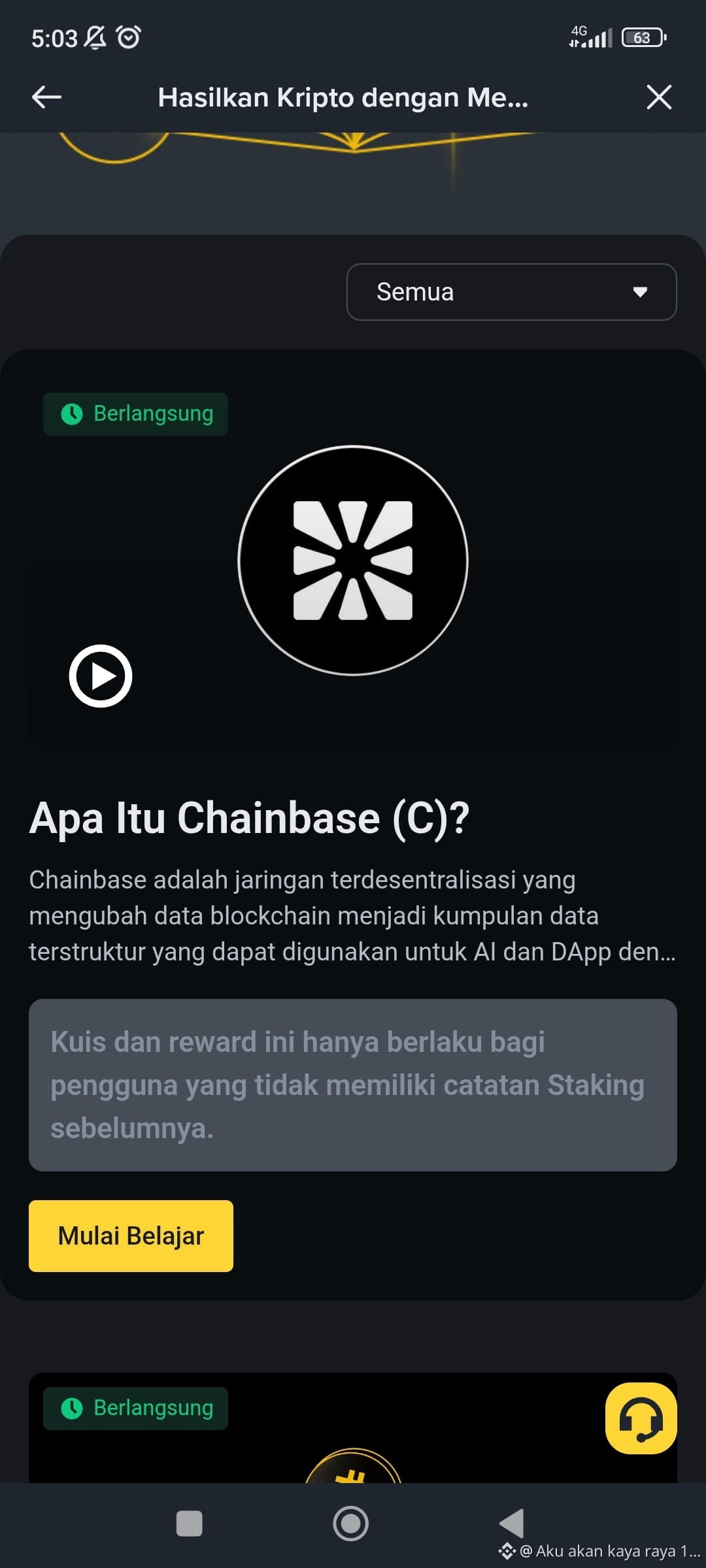
#academy crypto for those who have never staked Potential can earn money .....
Log in to explore more content
Join global crypto users on Binance Square
⚡️ Get latest and useful information about crypto.
💬 Trusted by the world’s largest crypto exchange.
👍 Discover real insights from verified creators.
Email / Phone number