
#2008
2008
5,842 views
15 Discussing
Hot
Latest

🚨 CITI JUST ISSUED A WARNING THAT SHOULD MAKE EVERY INVESTOR PAY ATTENTION.
Citi says global stocks are now at their “frothiest” levels since the 2008 financial crisis.
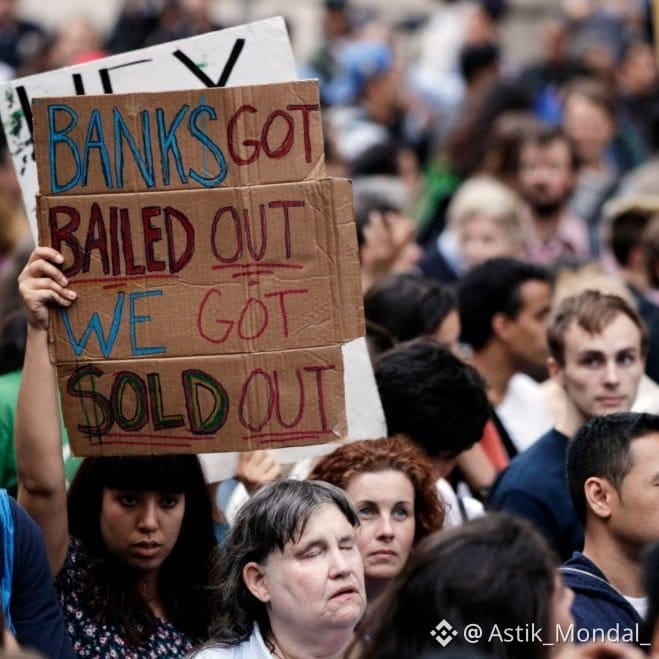
That comparison is not casual. 2008 was the moment leverage, euphoria, and easy money finally collided with reality.
And now Wall Street is hearing the same alarm bells again.
Markets are sitting near record highs. AI hype is everywhere. Retail optimism is surging. Risk appetite is exploding.
But underneath the surface, cracks are getting harder to ignore: soaring debt, weakening consumers, fragile banks, geopolitical chaos, and valuations stretched to extremes.
The dangerous part about bubbles is that they look unstoppable… right before they don’t.
When major banks start comparing today’s market to 2008, smart money listens carefully.
Because the biggest crashes always happen when investors believe crashes are impossible.
#StockMarket #WallStreet #Markets #2008 #BreakingNews
🚨 CITI JUST ISSUED A WARNING THAT SHOULD MAKE EVERY INVESTOR PAY ATTENTION.
Citi says global stocks are now at their “frothiest” levels since the 2008 financial crisis.
That comparison is not casual. 2008 was the moment leverage, euphoria, and easy money finally collided with reality.
And now Wall Street is hearing the same alarm bells again.
Markets are sitting near record highs. AI hype is everywhere. Retail optimism is surging. Risk appetite is exploding.
But underneath the surface, cracks are getting harder to ignore: soaring debt, weakening consumers, fragile banks, geopolitical chaos, and valuations stretched to extremes.
The dangerous part about bubbles is that they look unstoppable… right before they don’t.
When major banks start comparing today’s market to 2008, smart money listens carefully.
Because the biggest crashes always happen when investors believe crashes are impossible.
#StockMarket #WallStreet #Markets #2008 #BreakingNews
Citi says global stocks are now at their “frothiest” levels since the 2008 financial crisis.
That comparison is not casual. 2008 was the moment leverage, euphoria, and easy money finally collided with reality.
And now Wall Street is hearing the same alarm bells again.
Markets are sitting near record highs. AI hype is everywhere. Retail optimism is surging. Risk appetite is exploding.
But underneath the surface, cracks are getting harder to ignore: soaring debt, weakening consumers, fragile banks, geopolitical chaos, and valuations stretched to extremes.
The dangerous part about bubbles is that they look unstoppable… right before they don’t.
When major banks start comparing today’s market to 2008, smart money listens carefully.
Because the biggest crashes always happen when investors believe crashes are impossible.
#StockMarket #WallStreet #Markets #2008 #BreakingNews

133

Verified
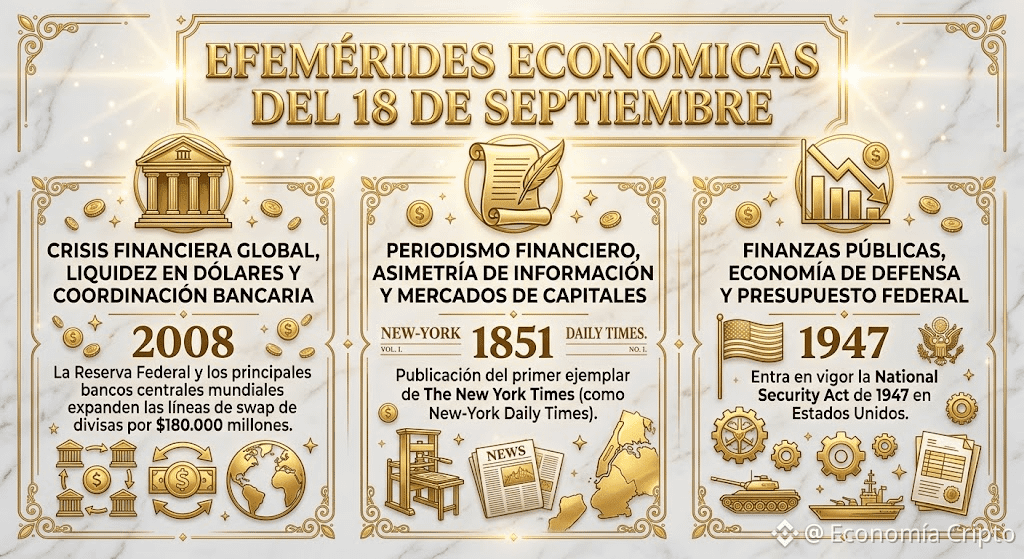
The Fed’s Coordinated Swap Lines in 2008, The New York Times’s Founding in 1851, and the Enactment of the National Security Act in 1947: Economic Anniversaries for September 18 🏛️📜💱
September 18 marks three significant historical events: in 2008, the Federal Reserve expanded currency swap lines to inject global liquidity after the financial crisis, setting a precedent for emergency interbank funding. In 1851, The New York Times’s founding revolutionized financial journalism by democratizing access to market information, improving transparency for investors. Finally, in 1947, the U.S. National Security Act restructured the armed forces and intelligence, shaping the postwar defense budget and the military-industrial complex.
#2008
$BTC
{spot}(BTCUSDT)
{spot}(NVDABUSDT)
{spot}(TSMBUSDT)
The Fed’s Coordinated Swap Lines in 2008, The New York Times’s Founding in 1851, and the Enactment of the National Security Act in 1947: Economic Anniversaries for September 18 🏛️📜💱
September 18 marks three significant historical events: in 2008, the Federal Reserve expanded currency swap lines to inject global liquidity after the financial crisis, setting a precedent for emergency interbank funding. In 1851, The New York Times’s founding revolutionized financial journalism by democratizing access to market information, improving transparency for investors. Finally, in 1947, the U.S. National Security Act restructured the armed forces and intelligence, shaping the postwar defense budget and the military-industrial complex.
#2008
$BTC
September 18 marks three significant historical events: in 2008, the Federal Reserve expanded currency swap lines to inject global liquidity after the financial crisis, setting a precedent for emergency interbank funding. In 1851, The New York Times’s founding revolutionized financial journalism by democratizing access to market information, improving transparency for investors. Finally, in 1947, the U.S. National Security Act restructured the armed forces and intelligence, shaping the postwar defense budget and the military-industrial complex.
#2008
$BTC
1
53
Verified
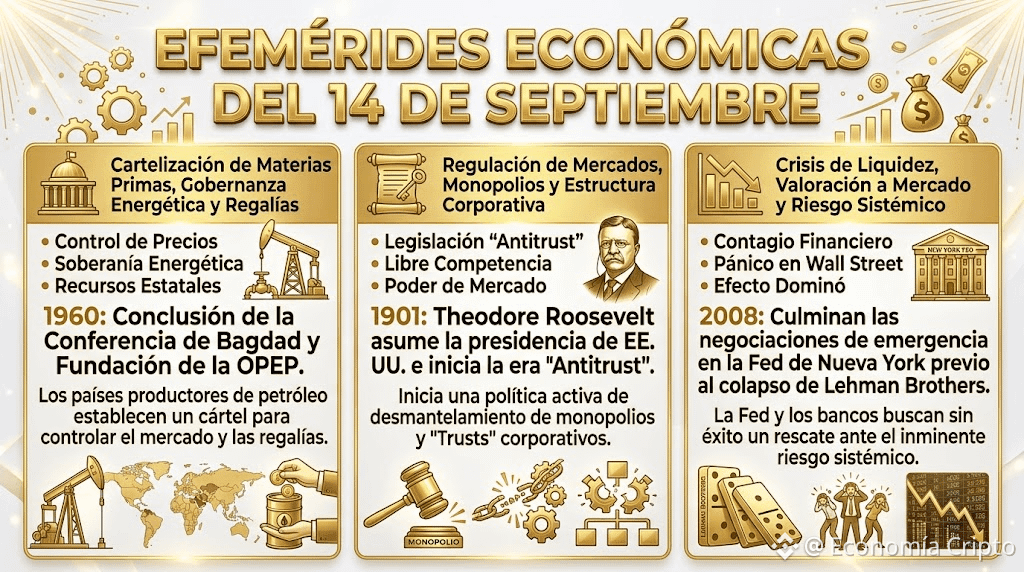
The Official Foundation of OPEC in 1960, the Start of the Antitrust Era in 1901, and Wall Street’s Emergency Negotiations in 2008: Economic Anniversaries for September 14 🏛️📜💱
On September 14, three fundamental economic events are commemorated: in 1960, the founding of OPEC shifted oil pricing from corporations to sovereign states, affecting royalty accounting and the valuation of reserves. In 1901, Theodore Roosevelt began the “Antitrust” era in the U.S., setting precedents for merger regulation and monopolies control. Finally, in 2008, the failed negotiations before the collapse of Lehman Brothers marked a critical turning point in the Global Financial Crisis, challenging asset valuation rules and the management of systemic risk.
#2008 #OPEP
$BNB
{spot}(MUBUSDT)
{spot}(BTCUSDT)
{spot}(BNBUSDT)
The Official Foundation of OPEC in 1960, the Start of the Antitrust Era in 1901, and Wall Street’s Emergency Negotiations in 2008: Economic Anniversaries for September 14 🏛️📜💱
On September 14, three fundamental economic events are commemorated: in 1960, the founding of OPEC shifted oil pricing from corporations to sovereign states, affecting royalty accounting and the valuation of reserves. In 1901, Theodore Roosevelt began the “Antitrust” era in the U.S., setting precedents for merger regulation and monopolies control. Finally, in 2008, the failed negotiations before the collapse of Lehman Brothers marked a critical turning point in the Global Financial Crisis, challenging asset valuation rules and the management of systemic risk.
#2008 #OPEP
$BNB
On September 14, three fundamental economic events are commemorated: in 1960, the founding of OPEC shifted oil pricing from corporations to sovereign states, affecting royalty accounting and the valuation of reserves. In 1901, Theodore Roosevelt began the “Antitrust” era in the U.S., setting precedents for merger regulation and monopolies control. Finally, in 2008, the failed negotiations before the collapse of Lehman Brothers marked a critical turning point in the Global Financial Crisis, challenging asset valuation rules and the management of systemic risk.
#2008 #OPEP
$BNB
1
119
Verified
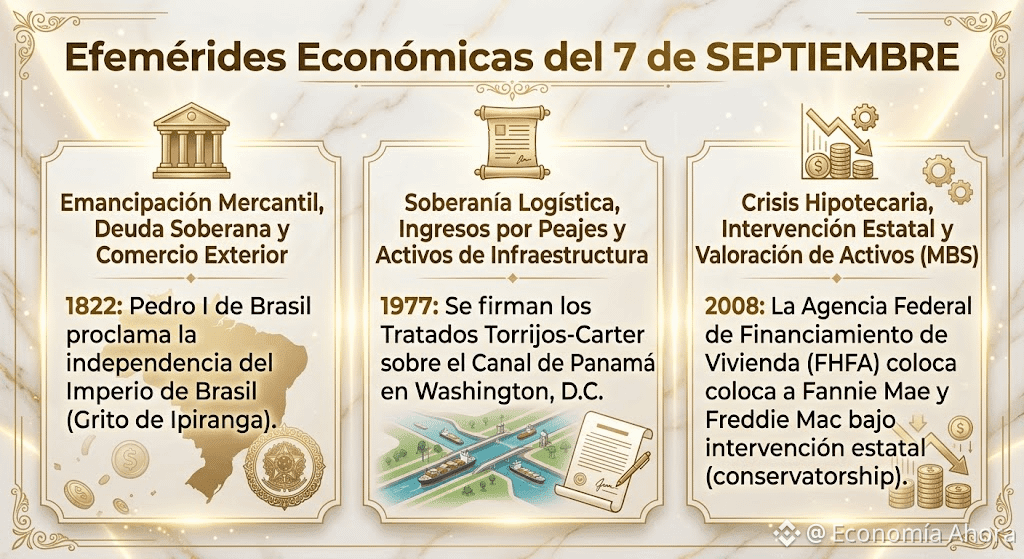
The Declaration of Independence of Brazil in 1822, the Signing of the Torrijos–Carter Treaties of 1977, and the Intervention of Fannie Mae and Freddie Mac in 2008: Economic Anniversaries of September 7 🏛️📜💱
September 7 commemorates three historical events with major economic impact: in 1822, Brazil achieved its independence, breaking the commercial monopoly and issuing its first sovereign bonds; in 1977, the Torrijos–Carter Treaties transferred the Panama Canal to Panamanian sovereignty, revaluing this strategic asset; and in 2008, the state intervention of Fannie Mae and Freddie Mac during the mortgage crisis redefined the accounting and regulation of the mortgage-backed securities market worldwide.
#BRASIL #PANAMA #2008 $BTC
{spot}(AMDBUSDT)
{spot}(BNBUSDT)
{spot}(BTCUSDT)
The Declaration of Independence of Brazil in 1822, the Signing of the Torrijos–Carter Treaties of 1977, and the Intervention of Fannie Mae and Freddie Mac in 2008: Economic Anniversaries of September 7 🏛️📜💱
September 7 commemorates three historical events with major economic impact: in 1822, Brazil achieved its independence, breaking the commercial monopoly and issuing its first sovereign bonds; in 1977, the Torrijos–Carter Treaties transferred the Panama Canal to Panamanian sovereignty, revaluing this strategic asset; and in 2008, the state intervention of Fannie Mae and Freddie Mac during the mortgage crisis redefined the accounting and regulation of the mortgage-backed securities market worldwide.
#BRASIL #PANAMA #2008 $BTC
September 7 commemorates three historical events with major economic impact: in 1822, Brazil achieved its independence, breaking the commercial monopoly and issuing its first sovereign bonds; in 1977, the Torrijos–Carter Treaties transferred the Panama Canal to Panamanian sovereignty, revaluing this strategic asset; and in 2008, the state intervention of Fannie Mae and Freddie Mac during the mortgage crisis redefined the accounting and regulation of the mortgage-backed securities market worldwide.
#BRASIL #PANAMA #2008 $BTC
1
131

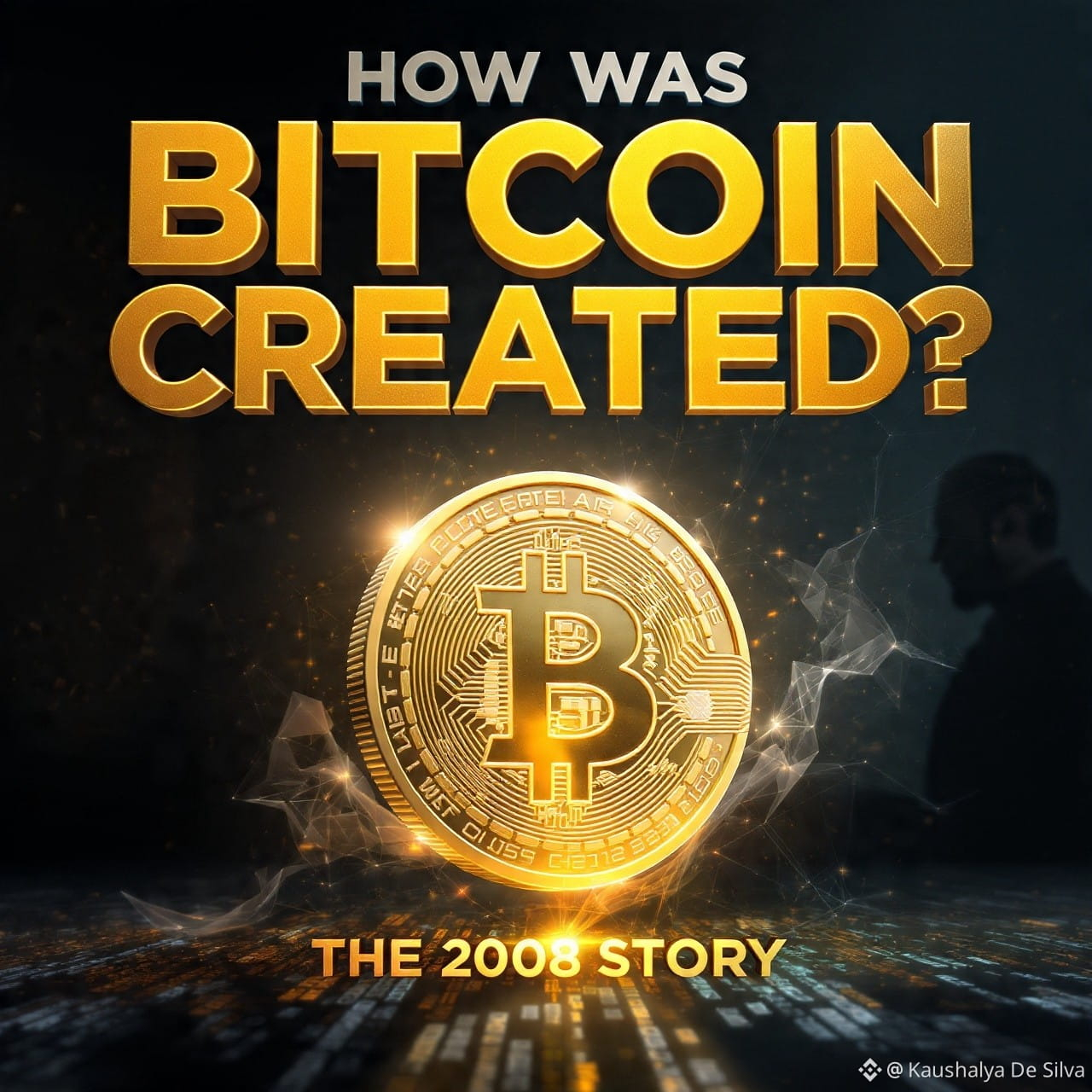
ARTICLE 2: How Was Bitcoin Created? The 2008 Story 🧠
1. What is it?
Bitcoin was created in 2009 by someone named Satoshi Nakamoto.
2. Why should you care?
It was born because people lost trust in banks.
3. Step by Step:
1. 2008 Crisis: Big banks collapsed. People lost savings.
2. Oct 31 2008: Satoshi released a 9-page paper: "Bitcoin: A Peer-to-Peer Electronic Cash System"
3. Jan 3 2009: First Bitcoin was "mined". The message inside: "The Times 03/Jan/2009 Chancellor on brink of second bailout for banks"
4. Idea: Money that no government or bank can control.
4. Risks:
Satoshi disappeared in 2010. No one knows who he is.
5. Pro Tip:
Bitcoin's birthday is Jan 3. That’s why crypto people call it "Genesis Day".
#Bitcoin #Satoshi #CryptoOrigins #2008 #GenesisDay
ARTICLE 2: How Was Bitcoin Created? The 2008 Story 🧠
1. What is it?
Bitcoin was created in 2009 by someone named Satoshi Nakamoto.
2. Why should you care?
It was born because people lost trust in banks.
3. Step by Step:
1. 2008 Crisis: Big banks collapsed. People lost savings.
2. Oct 31 2008: Satoshi released a 9-page paper: "Bitcoin: A Peer-to-Peer Electronic Cash System"
3. Jan 3 2009: First Bitcoin was "mined". The message inside: "The Times 03/Jan/2009 Chancellor on brink of second bailout for banks"
4. Idea: Money that no government or bank can control.
4. Risks:
Satoshi disappeared in 2010. No one knows who he is.
5. Pro Tip:
Bitcoin's birthday is Jan 3. That’s why crypto people call it "Genesis Day".
#Bitcoin #Satoshi #CryptoOrigins #2008 #GenesisDay
1. What is it?
Bitcoin was created in 2009 by someone named Satoshi Nakamoto.
2. Why should you care?
It was born because people lost trust in banks.
3. Step by Step:
1. 2008 Crisis: Big banks collapsed. People lost savings.
2. Oct 31 2008: Satoshi released a 9-page paper: "Bitcoin: A Peer-to-Peer Electronic Cash System"
3. Jan 3 2009: First Bitcoin was "mined". The message inside: "The Times 03/Jan/2009 Chancellor on brink of second bailout for banks"
4. Idea: Money that no government or bank can control.
4. Risks:
Satoshi disappeared in 2010. No one knows who he is.
5. Pro Tip:
Bitcoin's birthday is Jan 3. That’s why crypto people call it "Genesis Day".
#Bitcoin #Satoshi #CryptoOrigins #2008 #GenesisDay
83

·
--
🟢 The Birth of Bitcoin: A Response to the Financial Crisis of 2008 and the Printing of Money by Central Banks
The collapse of the dot-com bubble in 2000 and the attacks of September 11 shattered the markets, forcing the Fed to cut rates and flood the system with cheap credit. This didn’t fix the underlying problems; it only inflated the housing market bubble, which ultimately burst in 2007–2008.
When the financial system was on the brink of collapse, governments and central banks rescued institutions by “printing” electronic money. This devalued the existing currency, benefiting those who received the new money first—banks, shareholders, and asset holders—while simultaneously diluting the value for everyone else.
This era of unchecked central bank intervention and systemic risk created a perfect storm for a radical new idea. Distrust in traditional finance and the obvious consequences of currency devaluation created fertile ground for the emergence of Bitcoin.
Satoshi Nakamoto’s white paper, published in October 2008 amid the chaos, proposed a decentralized peer-to-peer electronic payment system. It was a direct challenge to the established order, offering an alternative free from control and the inflationary tendencies of central authorities.
📊 This historical context strengthens the narrative of Bitcoin as digital gold and a hedge against inflation, which can boost long-term demand and adoption—especially during periods of macroeconomic uncertainty.
Was Bitcoin inevitable, given the crisis of 2008, or was it a fortunate coincidence? 👇
#bitcoin #satoshi #nakamoto #2008 #crisis
🟢 The Birth of Bitcoin: A Response to the Financial Crisis of 2008 and the Printing of Money by Central Banks
The collapse of the dot-com bubble in 2000 and the attacks of September 11 shattered the markets, forcing the Fed to cut rates and flood the system with cheap credit. This didn’t fix the underlying problems; it only inflated the housing market bubble, which ultimately burst in 2007–2008.
When the financial system was on the brink of collapse, governments and central banks rescued institutions by “printing” electronic money. This devalued the existing currency, benefiting those who received the new money first—banks, shareholders, and asset holders—while simultaneously diluting the value for everyone else.
This era of unchecked central bank intervention and systemic risk created a perfect storm for a radical new idea. Distrust in traditional finance and the obvious consequences of currency devaluation created fertile ground for the emergence of Bitcoin.
Satoshi Nakamoto’s white paper, published in October 2008 amid the chaos, proposed a decentralized peer-to-peer electronic payment system. It was a direct challenge to the established order, offering an alternative free from control and the inflationary tendencies of central authorities.
📊 This historical context strengthens the narrative of Bitcoin as digital gold and a hedge against inflation, which can boost long-term demand and adoption—especially during periods of macroeconomic uncertainty.
Was Bitcoin inevitable, given the crisis of 2008, or was it a fortunate coincidence? 👇
#bitcoin #satoshi #nakamoto #2008 #crisis
The collapse of the dot-com bubble in 2000 and the attacks of September 11 shattered the markets, forcing the Fed to cut rates and flood the system with cheap credit. This didn’t fix the underlying problems; it only inflated the housing market bubble, which ultimately burst in 2007–2008.
When the financial system was on the brink of collapse, governments and central banks rescued institutions by “printing” electronic money. This devalued the existing currency, benefiting those who received the new money first—banks, shareholders, and asset holders—while simultaneously diluting the value for everyone else.
This era of unchecked central bank intervention and systemic risk created a perfect storm for a radical new idea. Distrust in traditional finance and the obvious consequences of currency devaluation created fertile ground for the emergence of Bitcoin.
Satoshi Nakamoto’s white paper, published in October 2008 amid the chaos, proposed a decentralized peer-to-peer electronic payment system. It was a direct challenge to the established order, offering an alternative free from control and the inflationary tendencies of central authorities.
📊 This historical context strengthens the narrative of Bitcoin as digital gold and a hedge against inflation, which can boost long-term demand and adoption—especially during periods of macroeconomic uncertainty.
Was Bitcoin inevitable, given the crisis of 2008, or was it a fortunate coincidence? 👇
#bitcoin #satoshi #nakamoto #2008 #crisis
105

·
--
🟢 Birth of Bitcoin: A Response to the 2008 Financial Crisis and Central Bank Money Printing
The dot-com bubble burst in 2000 and the 9/11 attacks plunged markets, forcing the Fed to slash rates and flood the system with cheap credit. This didn't fix the underlying issues; it just inflated a housing bubble that eventually imploded in 2007-2008.
When the financial system teetered on collapse, governments and central banks bailed out institutions by printing electronic money. This debased existing currency, benefiting those who received the new money first – banks, shareholders, and asset holders – while diluting the value for everyone else.
This era of unchecked central bank intervention and systemic risk created the perfect storm for a radical new idea. The inherent distrust in traditional finance and the observable consequences of monetary debasement provided the fertile ground for Bitcoin's emergence.
Satoshi Nakamoto's whitepaper, published in October 2008 amidst this chaos, proposed a decentralized, peer-to-peer electronic cash system. It was a direct challenge to the established order, offering an alternative free from the control and inflationary tendencies of central authorities.
📊 This historical context reinforces Bitcoin's narrative as digital gold and a hedge against inflation, potentially driving long-term demand and adoption, especially during periods of macro uncertainty.
Was Bitcoin inevitable given the 2008 crisis, or a lucky accident? 👇
#bitcoin #satoshi #nakamoto #2008 #crisis
🟢 Birth of Bitcoin: A Response to the 2008 Financial Crisis and Central Bank Money Printing
The dot-com bubble burst in 2000 and the 9/11 attacks plunged markets, forcing the Fed to slash rates and flood the system with cheap credit. This didn't fix the underlying issues; it just inflated a housing bubble that eventually imploded in 2007-2008.
When the financial system teetered on collapse, governments and central banks bailed out institutions by printing electronic money. This debased existing currency, benefiting those who received the new money first – banks, shareholders, and asset holders – while diluting the value for everyone else.
This era of unchecked central bank intervention and systemic risk created the perfect storm for a radical new idea. The inherent distrust in traditional finance and the observable consequences of monetary debasement provided the fertile ground for Bitcoin's emergence.
Satoshi Nakamoto's whitepaper, published in October 2008 amidst this chaos, proposed a decentralized, peer-to-peer electronic cash system. It was a direct challenge to the established order, offering an alternative free from the control and inflationary tendencies of central authorities.
📊 This historical context reinforces Bitcoin's narrative as digital gold and a hedge against inflation, potentially driving long-term demand and adoption, especially during periods of macro uncertainty.
Was Bitcoin inevitable given the 2008 crisis, or a lucky accident? 👇
#bitcoin #satoshi #nakamoto #2008 #crisis
The dot-com bubble burst in 2000 and the 9/11 attacks plunged markets, forcing the Fed to slash rates and flood the system with cheap credit. This didn't fix the underlying issues; it just inflated a housing bubble that eventually imploded in 2007-2008.
When the financial system teetered on collapse, governments and central banks bailed out institutions by printing electronic money. This debased existing currency, benefiting those who received the new money first – banks, shareholders, and asset holders – while diluting the value for everyone else.
This era of unchecked central bank intervention and systemic risk created the perfect storm for a radical new idea. The inherent distrust in traditional finance and the observable consequences of monetary debasement provided the fertile ground for Bitcoin's emergence.
Satoshi Nakamoto's whitepaper, published in October 2008 amidst this chaos, proposed a decentralized, peer-to-peer electronic cash system. It was a direct challenge to the established order, offering an alternative free from the control and inflationary tendencies of central authorities.
📊 This historical context reinforces Bitcoin's narrative as digital gold and a hedge against inflation, potentially driving long-term demand and adoption, especially during periods of macro uncertainty.
Was Bitcoin inevitable given the 2008 crisis, or a lucky accident? 👇
#bitcoin #satoshi #nakamoto #2008 #crisis
77
Log in to explore more content
Join global crypto users on Binance Square
⚡️ Get latest and useful information about crypto.
💬 Trusted by the world’s largest crypto exchange.
👍 Discover real insights from verified creators.
Email / Phone number
Trending Topics
1
#EthereumSurpasses$2700
257 views
29 Discussing
2
#CanaryFilesSecondAmendmentForStakedSEIETF
937 views
51 Discussing
3
#SaylorHintsStrategyBitcoinBuy
2.3M views
12,653 Discussing
4
#BOJRaisesRatesTo31YearHigh
278,177 views
3,407 Discussing
5
#BuffettStepsDownAsBerkshireChairman
136,668 views
1,852 Discussing
6
#XRPExchangeReservesHitSevenYearLow
149,088 views
1,615 Discussing
7
#HKCompletesFirstHKDStablecoinUseCase
164,845 views
1,969 Discussing
8
#VietnamPlansFirstCryptoLicensesIn2026
104,267 views
1,334 Discussing
9
#BTCBreaks80K
559,424 views
5,863 Discussing
10
#BitcoinMarketCapTopsTesla
139,801 views
1,449 Discussing