
Arslan-Crypto
260 Publicaciones

Arslan-Crypto
Denunciar
Bloquear usuario
Abrir operación
Trader de alta frecuencia
7 años
48 Siguiendo
31 Seguidores
23 Me gusta
Publicaciones
Cartera
Todo
Cotizaciones
Ver traducción
Evening update on the biggest story of the day — and the weekend question is now clear.
Bitcoin is still under $69,000 at $67,239. It never got $70,000 back, and the day's low is $66,456.
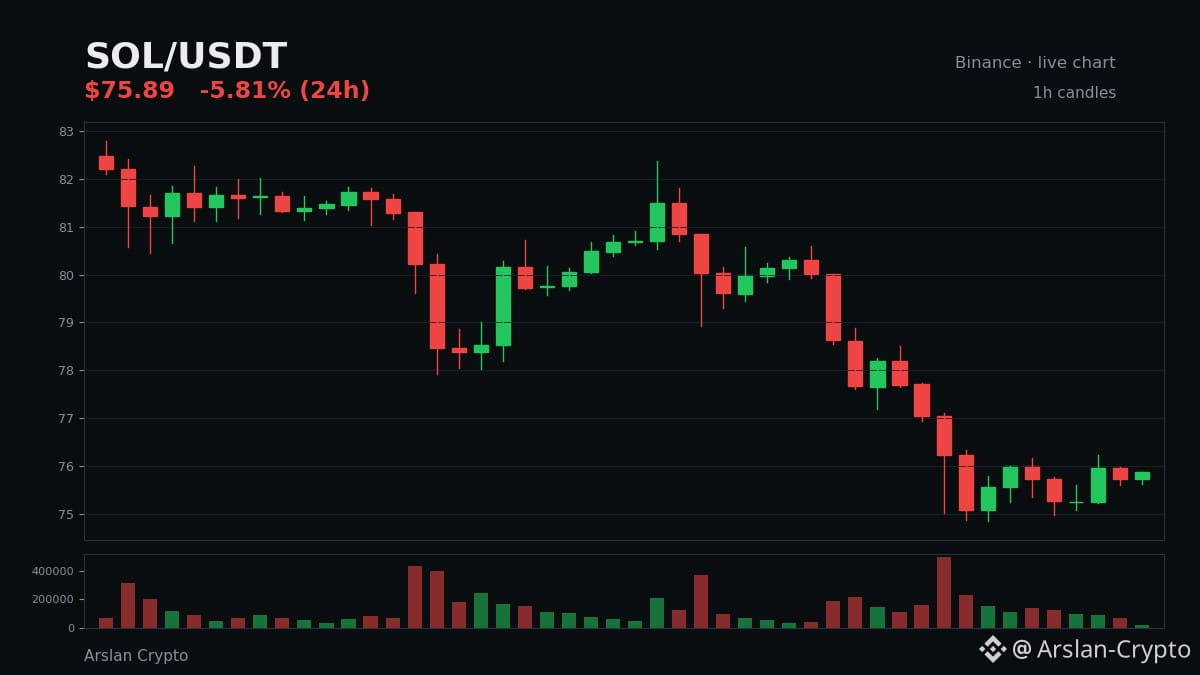
Solana is telling the same story, only worse: $75.80, -5.9%. It lost $80 this morning, then $77, and now it is testing $74.85.
Here is the number that matters into the weekend: the 200-week average is near $69,555. The week closes on Sunday. A weekly close above that line, and this week looks like a scary dip. A weekly close below it, and the market goes into next week with a broken long-term line.
About $1.23B got liquidated in the past 24 hours, and most of it was longs. The leverage is mostly cleared out now. What is left is the real question: does the money come back?
What are you watching this weekend — the price, or the weekly close?
#Solana #Bitcoin $SOL $BTC
Not financial advice.
1
Ver traducción
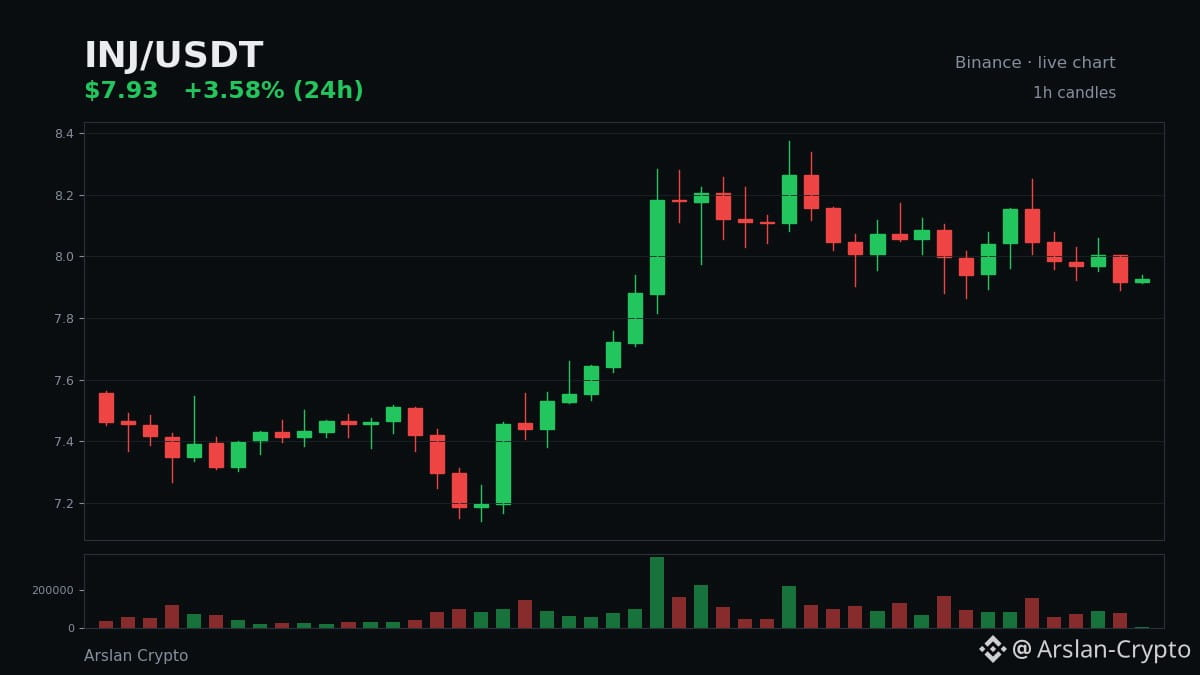
INJ was the day's green story a few hours ago — now it is cooling off, and the chart shows it.
$7.93 now, +3.5% on the day. It hit $8.38 earlier, then slid back. Volume $23.2M. The last hourly closes keep drifting lower: $8.16, $8.05, $7.98, $7.93.
The reason is still the same: the Veyra upgrade vote. About 24.9% of staked INJ has voted so far, and it needs 33.4% quorum. 62% in favour, nothing against. Voting closes Monday, Nov 16.
So the upgrade is still not a done deal, and the price is giving back some of the day's gain while the market waits. The $7.64 low is the line below; $8.38 is the high to watch above.
Would you hold through a vote that still needs quorum, or wait for the result?
#INJ $INJ
Not financial advice.
Ver traducción
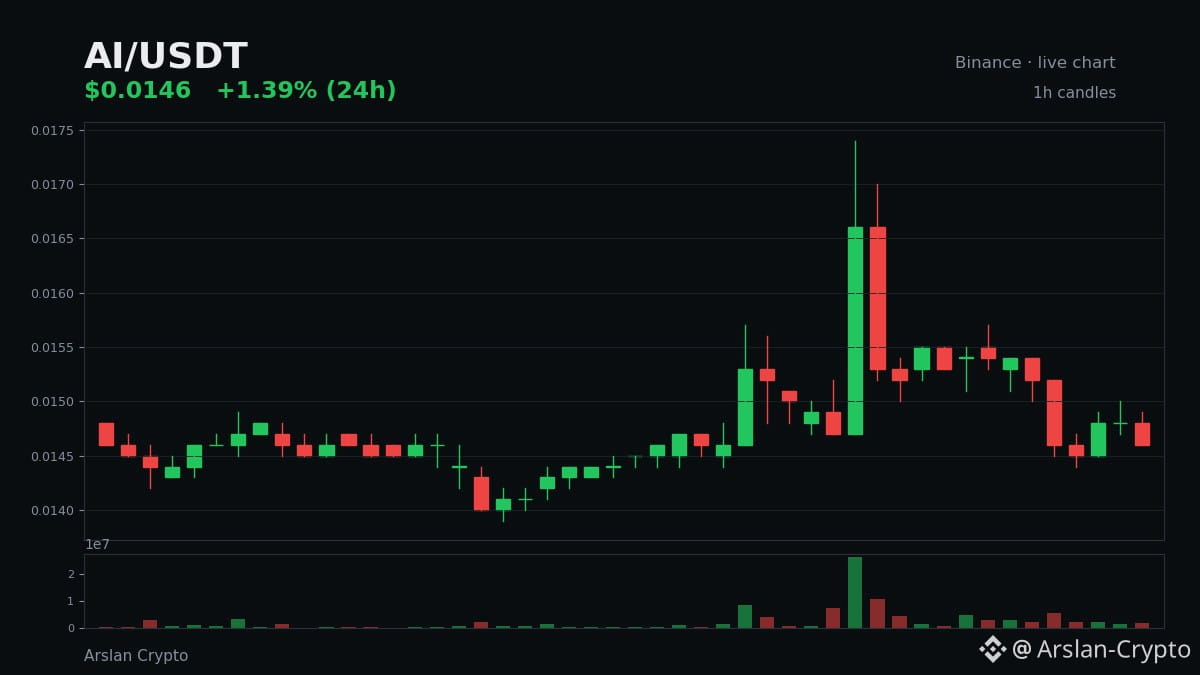
AI spiked, then faded, and the hourly chart caught the whole thing.
+2.1% at $0.0147. The high was $0.0174. One hourly candle touched $0.0174 and closed $0.0166, then the price came straight back down — and it is still drifting: $0.0153, $0.0152, $0.0147, back near where the day started.
My levels:
Support: $0.0144 (today's low)
Resistance: $0.0174 (today's high)
Trigger: an hourly close above $0.0166 would tell me the spike has legs
Invalidation: losing $0.0144
$1.45M volume — small. And this is the token literally called AI, on a week when Nvidia lost its CEO. The AI coins are getting attention, but attention is not the same as buying.
A spike to $0.0174 that fades in one hour — do you call that a breakout, or a trap?
#AI $AI
Not financial advice.
1
Ver traducción
$14.2 billion left crypto in 30 days — the quiet drain behind the crashTITLE: $14.2 billion left crypto in 30 days — the quiet drain behind the crash
Everyone is watching the price of Bitcoin. I think the more important number is $14.2 billion.
That is how much major stablecoin supply shrank in 30 days, according to Glassnode's November 11 report. It is the fastest contraction since June 2022 — the month the last bear market really started. Total stablecoin supply has now fallen below $280 billion, the lowest since September 2025.
Stablecoins are the dollars of crypto. When you sell Bitcoin, you usually get USDT or USDC. When you want to buy, you spend them. So the total supply of stablecoins is a rough measure of how much money is sitting inside crypto, ready to buy.
When that supply shrinks by $14.2 billion in a month, it means money is leaving. Not rotating between coins. Leaving.
Where did it go?
Part of the answer is in the ETF numbers. US spot Bitcoin ETFs have lost $1.6 billion across 20 trading sessions. The outflows stretched to six straight sessions on November 12, with another $47.7 million leaving that day. BlackRock's IBIT alone has seen about $2 billion withdrawn over nine sessions since October 30. Ethereum ETFs are in the same boat, with more than $1.8 billion out over six weeks.
From November 4 to 10, crypto ETFs lost $1.48 billion in five days. In that same window, investors poured $37.5 billion into ten big US stock ETFs. VOO alone took in $16.9 billion.
The money did not vanish. It moved from crypto funds to stock funds. People are still buying risk — they are just buying it somewhere else right now.
The 10-year Treasury yield hit 5.12% this week. When safe bonds pay that much, the case for holding a volatile asset gets harder. That is the background music behind this whole sell-off: inflation worries, higher rates, and a Nvidia leadership crisis all hitting at once.
And today the price caught up with the drain. Bitcoin fell to a new low of $66,456 and is trading around $67,280 tonight, with the Fear and Greed index down to 13 — deep in Extreme Fear. Ethereum is at $1,908, still under $2,000.
Why stablecoins matter more than the price
Prices bounce. A -5% day can turn into a +3% day overnight. But stablecoin supply does not bounce the same way. It is slow money. It takes weeks to build up and weeks to drain.
In June 2022, when stablecoin supply last shrank this fast, Bitcoin was starting a fall that lasted months. That does not mean the same thing happens now — the market is different, the players are different, and $14.2 billion is not the same as 2022's panic. But it is the same kind of signal: the sidelines are getting thinner, not fatter.
USDC itself is fine. It is trading at $1.0008, exactly where it should be. The story is not about USDC the coin. It is about what the shrinking supply says about the money around it.
What I am watching
Three things. First, do the ETF outflows slow down next week, or does the streak reach seven, eight sessions? Second, does stablecoin supply stop shrinking? Third, does the 10-year yield come back down?
If the money starts coming back, the price will follow. If it keeps leaving, every bounce is just a bounce.
The crash is the noise. The $14.2 billion is the signal underneath it.
When do you think the money comes back — next week, next month, or not until next year?
#USDC $USDC
Not financial advice.
$14.2 billion left crypto in 30 days — the quiet drain behind the crash
TITLE: $14.2 billion left crypto in 30 days — the quiet drain behind the crash
Everyone is watching the price of Bitcoin. I think the more important number is $14.2 billion.
That is how much major stablecoin supply shrank in 30 days, according to Glassnode's November 11 report. It is the fastest contraction since June 2022 — the month the last bear market really started. Total stablecoin supply has now fallen below $280 billion, the lowest since September 2025.
Stablecoins are the dollars of crypto. When you sell Bitcoin, you usually get USDT or USDC. When you want to buy, you spend them. So the total supply of stablecoins is a rough measure of how much money is sitting inside crypto, ready to buy.
When that supply shrinks by $14.2 billion in a month, it means money is leaving. Not rotating between coins. Leaving.
Where did it go?
Part of the answer is in the ETF numbers. US spot Bitcoin ETFs have lost $1.6 billion across 20 trading sessions. The outflows stretched to six straight sessions on November 12, with another $47.7 million leaving that day. BlackRock's IBIT alone has seen about $2 billion withdrawn over nine sessions since October 30. Ethereum ETFs are in the same boat, with more than $1.8 billion out over six weeks.
From November 4 to 10, crypto ETFs lost $1.48 billion in five days. In that same window, investors poured $37.5 billion into ten big US stock ETFs. VOO alone took in $16.9 billion.
The money did not vanish. It moved from crypto funds to stock funds. People are still buying risk — they are just buying it somewhere else right now.
The 10-year Treasury yield hit 5.12% this week. When safe bonds pay that much, the case for holding a volatile asset gets harder. That is the background music behind this whole sell-off: inflation worries, higher rates, and a Nvidia leadership crisis all hitting at once.
And today the price caught up with the drain. Bitcoin fell to a new low of $66,456 and is trading around $67,280 tonight, with the Fear and Greed index down to 13 — deep in Extreme Fear. Ethereum is at $1,908, still under $2,000.
Why stablecoins matter more than the price
Prices bounce. A -5% day can turn into a +3% day overnight. But stablecoin supply does not bounce the same way. It is slow money. It takes weeks to build up and weeks to drain.
In June 2022, when stablecoin supply last shrank this fast, Bitcoin was starting a fall that lasted months. That does not mean the same thing happens now — the market is different, the players are different, and $14.2 billion is not the same as 2022's panic. But it is the same kind of signal: the sidelines are getting thinner, not fatter.
USDC itself is fine. It is trading at $1.0008, exactly where it should be. The story is not about USDC the coin. It is about what the shrinking supply says about the money around it.
What I am watching
Three things. First, do the ETF outflows slow down next week, or does the streak reach seven, eight sessions? Second, does stablecoin supply stop shrinking? Third, does the 10-year yield come back down?
If the money starts coming back, the price will follow. If it keeps leaving, every bounce is just a bounce.
The crash is the noise. The $14.2 billion is the signal underneath it.
When do you think the money comes back — next week, next month, or not until next year?
#USDC $USDC
Not financial advice.
4
Ver traducción
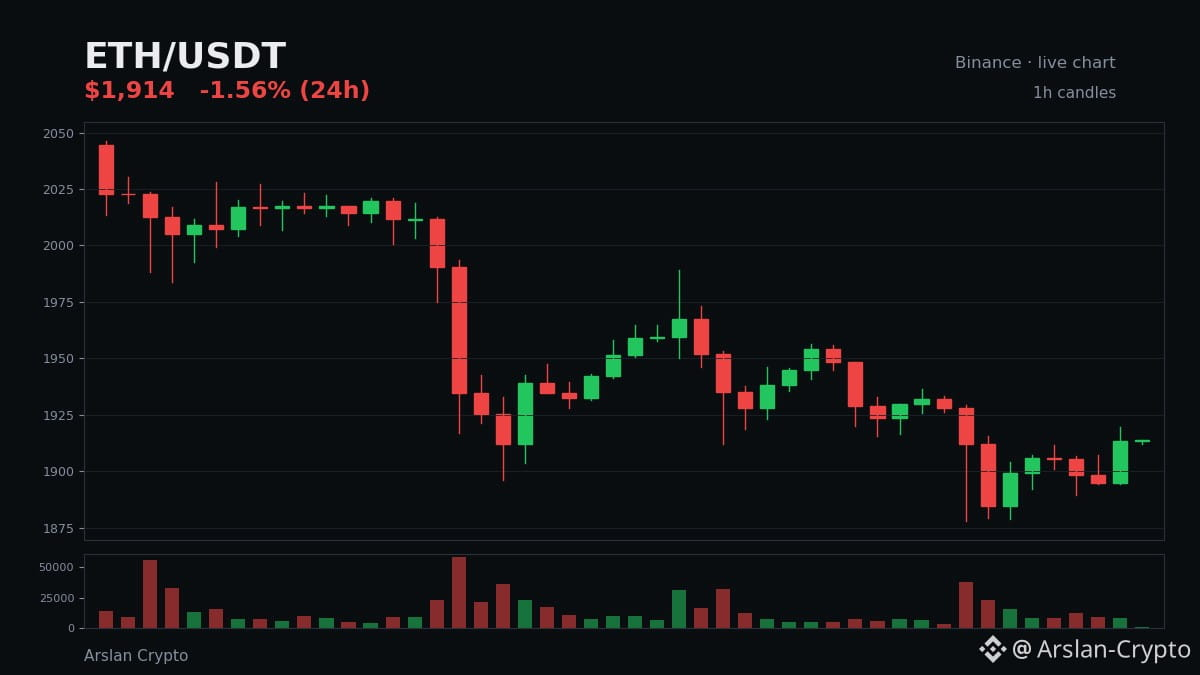
Ethereum evening check. It went lower today, then came back above $1,900 — and that is the story tonight.
$1,912.68, -1.74%. The low was $1,878, a new one — below this morning's $1,895.95. The high was $1,989.11, so ETH nearly touched $2,000 again and got pushed back.
Volume is $558M in 24 hours. Fear and Greed is still 13, Extreme Fear, same as this morning.
The hourly chart shows the dip and the bounce: ETH fell under $1,900 to $1,878, and the last two hourly closes have pulled back above $1,900. Bitcoin is holding its low too, $67,386 with $66,456 still intact.
So $1,900 is the line tonight, and $2,000 is the wall above. Holding $1,900 into the weekend would be something. Losing it again takes us straight back to the low.
Are you watching ETH or BTC more closely tonight?
#Ethereum #ETH $ETH
Not financial advice.
Ver traducción
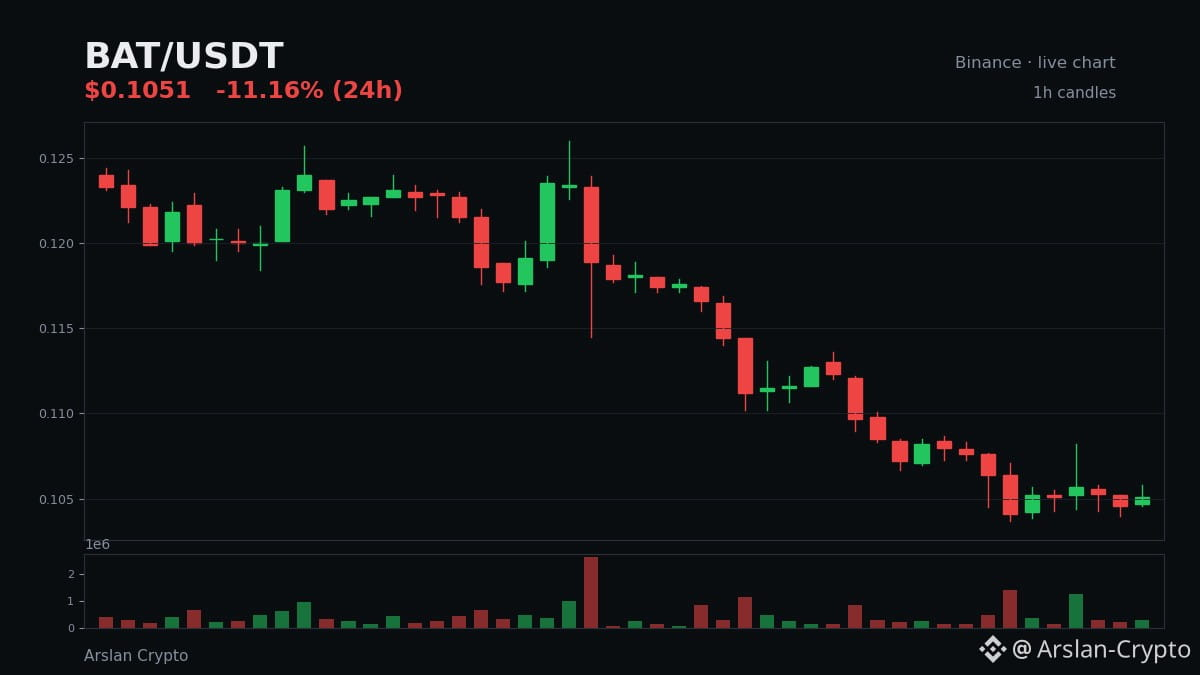
BAT broke down today after holding a tight range yesterday.
-11.2% at $0.1051. It is sitting almost exactly on today's low of $0.1037. High was $0.1189. Volume $1.11M.
Yesterday BAT was my setup post: +4.3%, holding a tight range, testing $0.1257. Today it lost that range completely. The hourly closes: $0.1072, $0.1082, $0.1076, $0.1064, $0.1041, $0.1051. Down, down, down.
No verified news reason for the drop.
A coin that breaks down the day after holding a range is a reminder: a range is only a range until it is not.
Did you have BAT on your watchlist from yesterday?
#BAT $BAT
Not financial advice.
3
Ver traducción
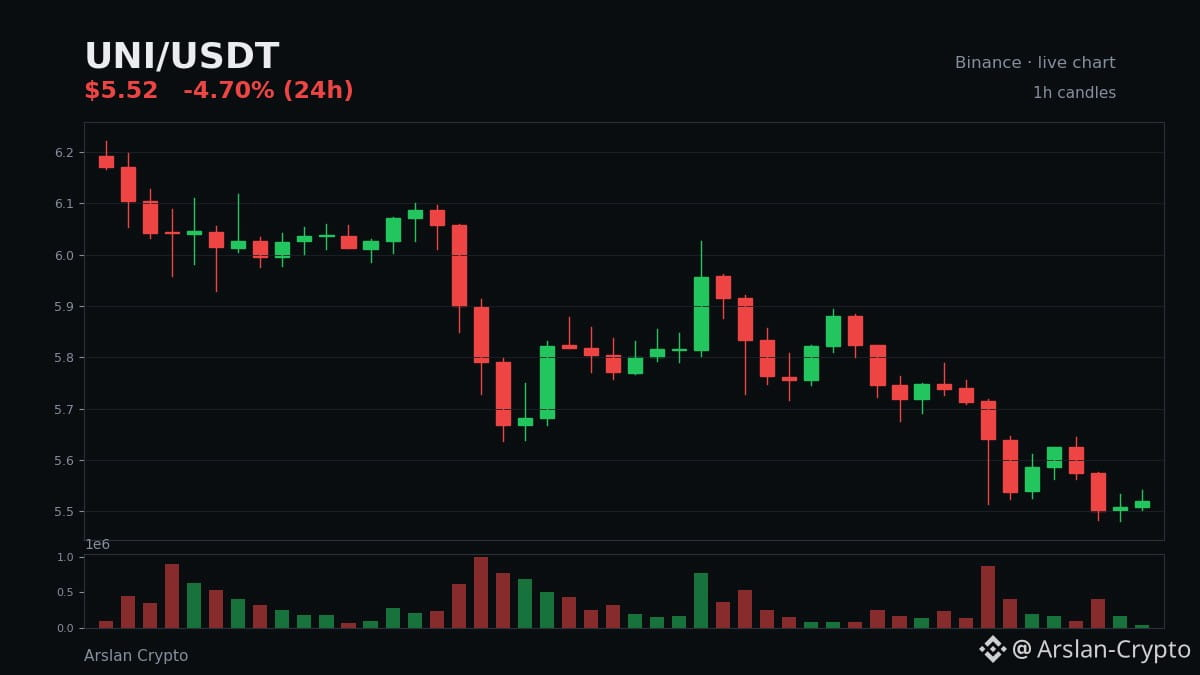
UNI just broke the level it was defending — and it is not looking back.
$5.52 now, -4.6%. The 24h low is $5.481, the high $6.026. Volume $36.1M.
My levels:
Support: $5.481 (today's low)
Resistance: $5.64 (the level it just lost)
Trigger: an hourly close under $5.481 tells me the slide continues
Invalidation: a move back above $5.64 would break the pattern
Earlier today UNI was holding $6.10 from above. Now it is under $5.64, sitting near its low. The level did not move. The price did.
When a coin loses a level it defended before, do you wait for it to win it back, or move on?
#UNI $UNI
Not financial advice.
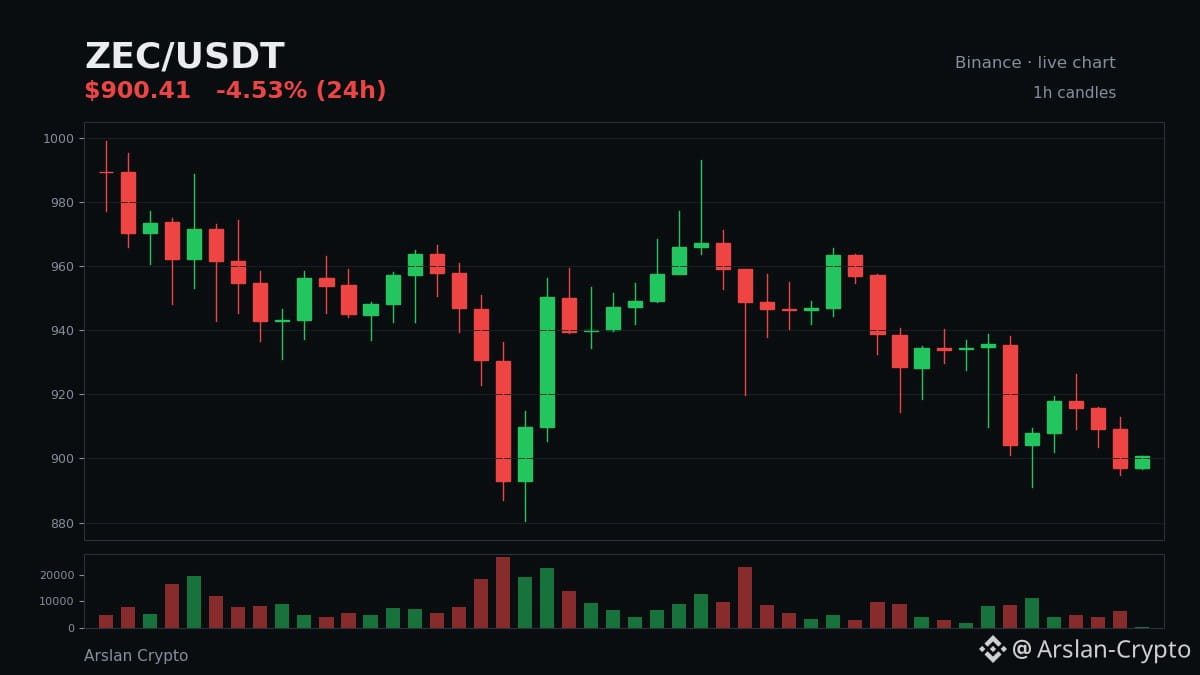
Incluso ZEC está cayendo ahora, y eso te muestra lo generalizada que es esta venta masiva.
Ahora está en $898, un -4,8% en el día. El máximo fue de $993 y el mínimo, de $891. Volumen: $161M; sigue siendo una de las altcoins con más actividad en Binance hoy.
ZEC fue la moneda más resistente de la semana. Luchó por mantenerse por encima de los $1.000 durante días, cayó por debajo y siguió registrando un volumen enorme. Hoy volvió a intentar alcanzar los $993, pero la hicieron retroceder, y ahora está cotizando muy cerca de su mínimo.
Cuando la moneda que mejor resistía empieza a caer junto con las demás, el mercado ya no está eligiendo ganadores y perdedores. Está vendiéndolo todo.
¿Sigue siendo ZEC la altcoin más fuerte de este mercado o esa historia ya terminó?
#ZEC $ZEC
Esto no es asesoramiento financiero.
8
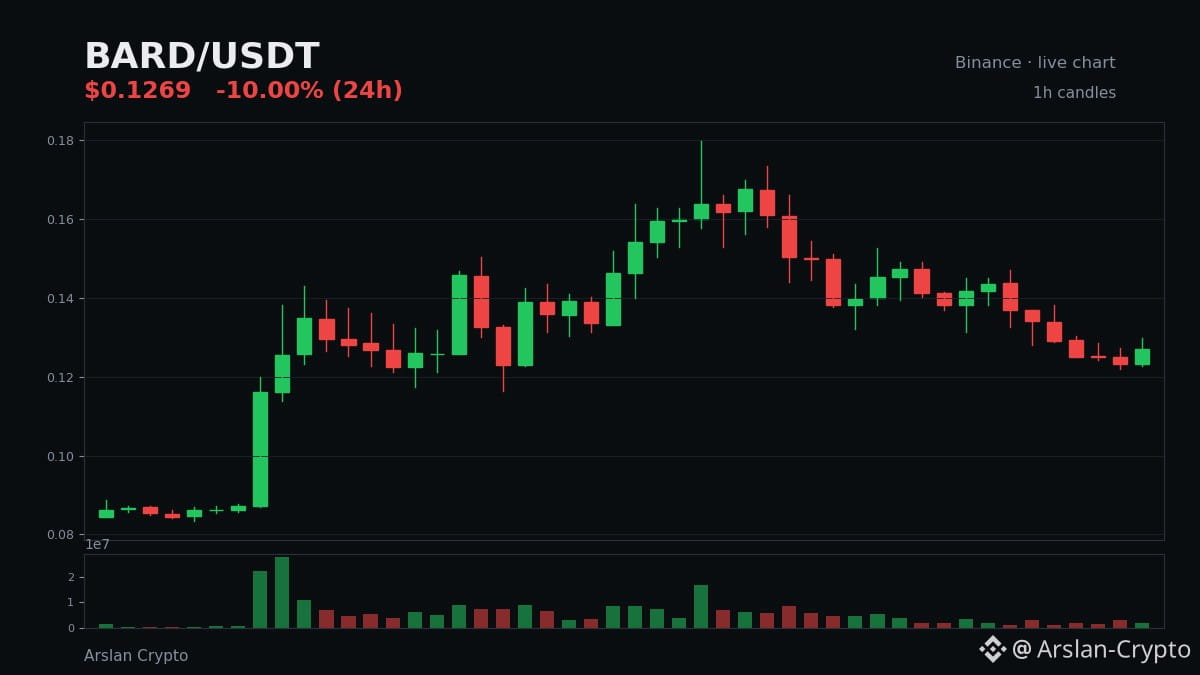
BARD se dio la vuelta. La moneda que ayer subió un +88% ahora está en rojo.
-10,1% a $0.1269. Esta mañana subió hasta $0.1799 y luego perdió un 29% desde ese máximo. El mínimo de hoy fue $0.1219, y los cierres horarios siguieron bajando durante todo el día. Volumen: $17,3M; la gente sigue operando con fuerza.
Ayer no había ningún motivo verificado para el +88%. Hoy sigue sin haber ningún motivo verificado: solo una moneda en plena subida que está perdiendo impulso. La caída que estaba observando esta mañana terminó de hacer su trabajo.
Dos días, dos historias opuestas, la misma moneda. Por eso tengo cuidado con las monedas que se mueven sin motivo.
¿Estás siguiendo BARD ahora o esperas a que haya un motivo real primero?
#BARD $BARD
Esto no es asesoramiento financiero.
2
Ver traducción
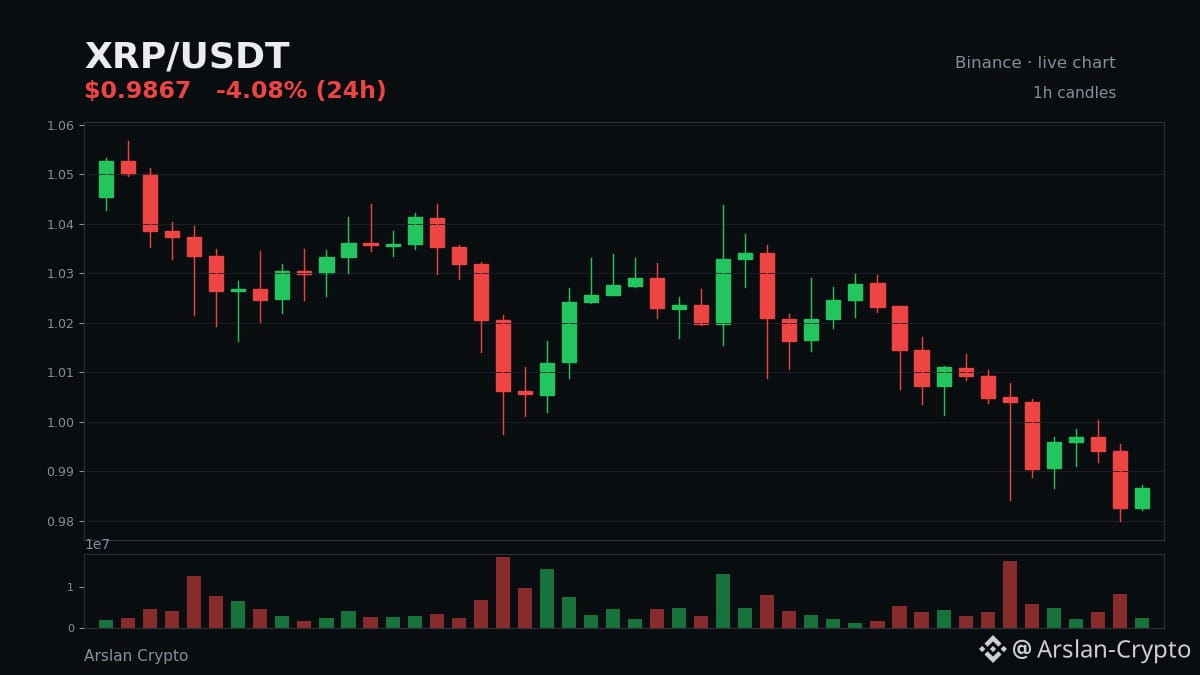
XRP just lost $1.00 — and it was the last major still holding its round number.
$0.9858 now, -4.2% on the day. It dipped under $1.00 this afternoon and kept going, all the way to $0.98. The high was $1.0437. Volume $121.2M, one of the biggest on Binance today.
My levels:
Support: $0.98 (today's low)
Resistance: $1.00 (the level it just lost, now the line to win back)
Trigger: an hourly close back above $1.00 tells me buyers are fighting for it
Invalidation: an hourly close under $0.98 and the slide has room to run
BTC lost $70,000. ETH lost $2,000. SOL lost $80. Now XRP has joined them under its round number. There is no major left standing on one.
Does XRP win $1.00 back tonight, or does it stay under?
#XRP $XRP $BTC
Not financial advice.
3
Ver traducción
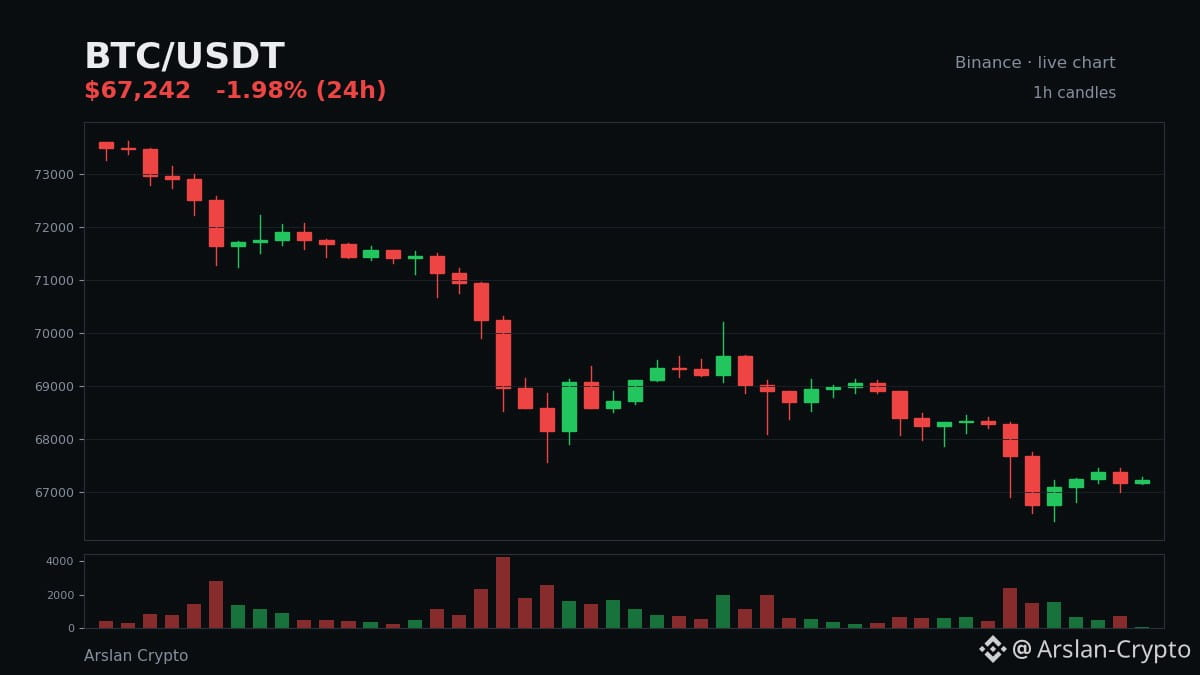
Bitcoin afternoon check — and the morning low did not hold.
$67,230 right now, -1.97% in 24 hours. The new low is $66,456. The $67,568 low from this morning broke in the afternoon, and that is the story.
What I am watching:
- $66,456 is the new low to hold. Under it, $66,000 is the next round number.
- $68,300 is the first level back up — the hourly highs kept failing there.
- $70,000 is still resistance above, and the 200-week average near $69,555 sits between us and it.
- 24h volume $1.51B. Fear and Greed 13 — Extreme Fear.
The week closes Sunday. A weekly close under the 200-week average would be the first real test of this whole move.
Are you watching $66,456, or waiting for $70,000 first?
#Bitcoin #BTC $BTC
Not financial advice.
2
Ver traducción
Binance just launched a trading competition for COLLECT, and the 2.0x boost is still live right now.
Collect on Fanable (COLLECT) is a Binance Alpha token. Round 1 runs Nov 13-20, round 2 runs Nov 20-27.
The prize pool is $200,000 in rewards — 4,000,000 COLLECT split between the top 2,000 traders by buy volume. That is 2,000 COLLECT each.
Early Bird Boost: trades today still count double (2.0x). It drops to 1.8x from Nov 15, then steps down to 1.0x by Day 7.
Rising Trader Boost: newer competition winners get an extra 1.2x on their volume.
Only purchases count — selling does not. Only trades on Binance Wallet (Keyless) or Binance Alpha qualify, and you have to tap Join on the event page first or your volume does not count.
Rewards are claimable before Dec 11, and you have 14 days to claim or they are gone.
Have you ever joined a Binance Alpha competition, or do you skip them?
#COLLECT $COLLECT
Not financial advice.
5
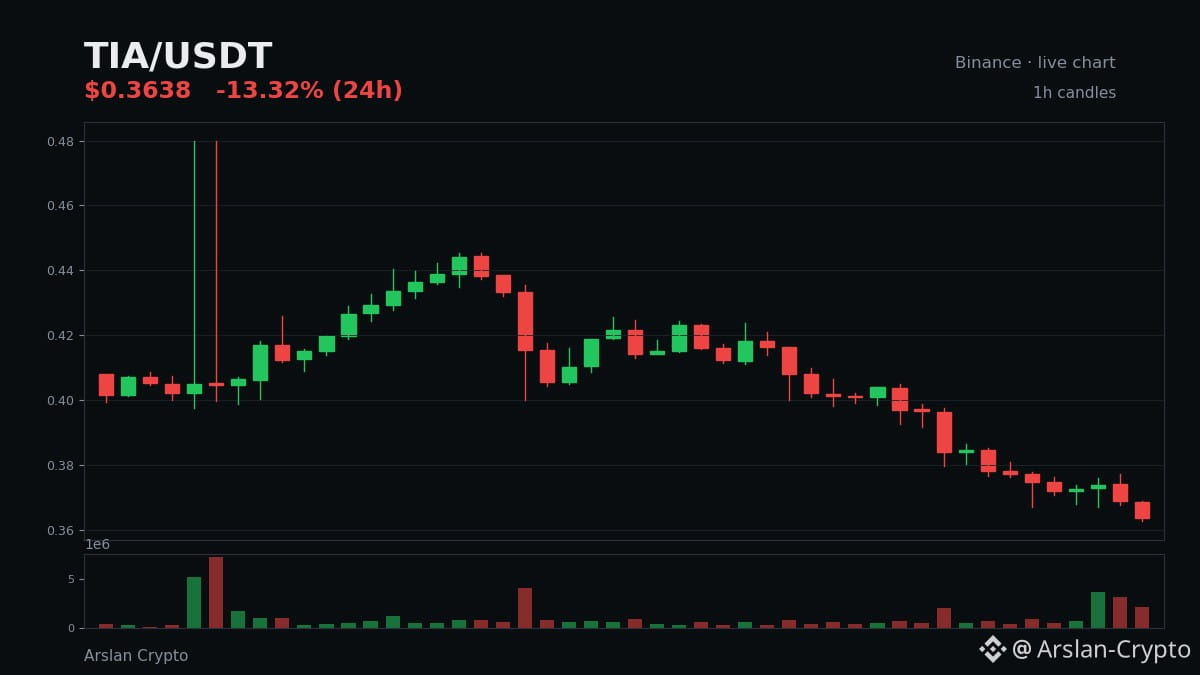
TIA se desplomó hoy. Ayer fue uno de los activos con mayores ganancias. Hoy es el segundo mayor perdedor en Binance.
-13.3% a $0.3635, justo en su mínimo de $0.3633.
Máximo: $0.4255; volumen: $8.51M.
Ayer cerró con una subida del +5.6% a $0.4389.
Cierres por hora durante todo el día: $0.3840, $0.3781, $0.3748, $0.3720, $0.3635: bajó casi cada hora.
Devolvió toda la subida y algo más. No pude encontrar una razón verificada para la caída de hoy. No pude confirmar ningún anuncio.
Por eso tengo cuidado con los activos que subieron ayer. Una moneda puede subir un +6% en un día bajista y caer un -13% al día siguiente en el mismo mercado bajista. El mercado no cambió. La moneda simplemente se quedó sin compradores.
¿Alguna vez compraste el activo que más subió ayer y viste cómo se daba vuelta a la mañana siguiente?
#TIA $TIA
Esto no es asesoramiento financiero.
16
Ver traducción
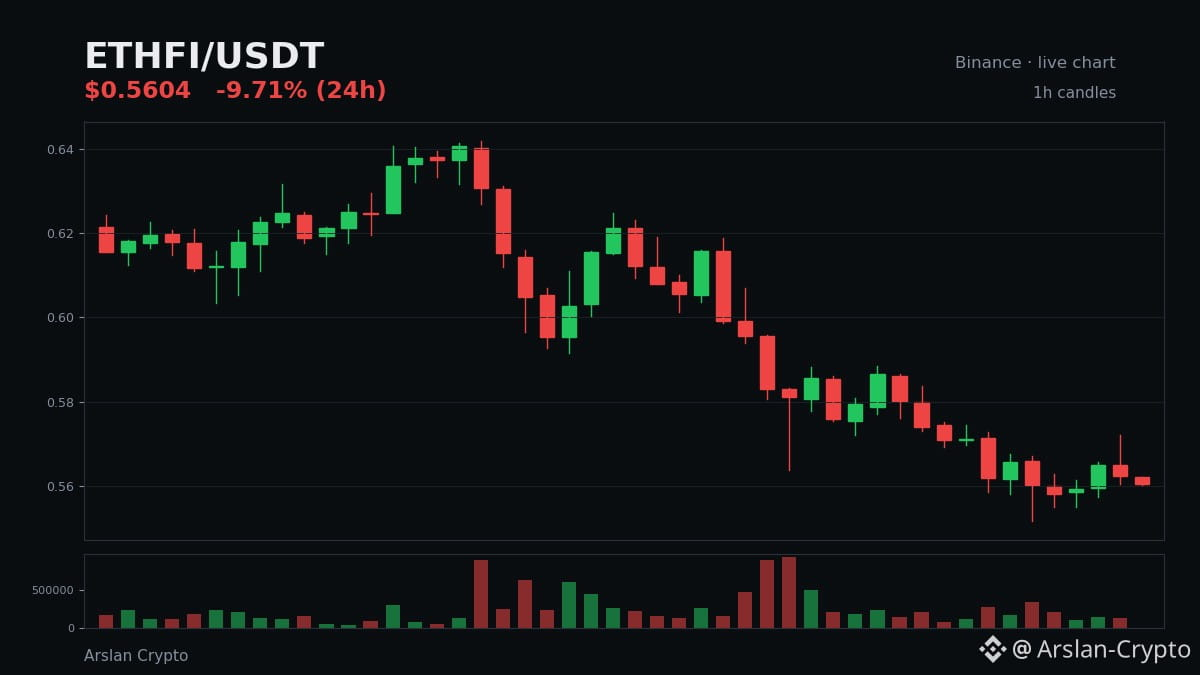
ETHFI broke its low, and that is the kind of move I stop and look at twice.
$0.5609 now. Down -9.45% today. The day's low is $0.5517 now — the morning's $0.5639 level is gone, and the hourly closes have been under it for hours. High was $0.6248, volume $3.82M.
ETHFI is a liquid staking token, so it usually moves with ETH. ETH is down -2.08% today, but ETHFI is down almost five times that. No verified news reason for the gap.
My levels:
Support: $0.5517 (today's low)
Resistance: $0.6248 (today's high)
The hourly close under $0.5639 told me the fall was continuing — and it did. A move back above $0.59 would break the pattern.
What do you watch first when a staking token falls almost five times faster than ETH?
#ETHFI $ETHFI
Not financial advice.
2
Ver traducción
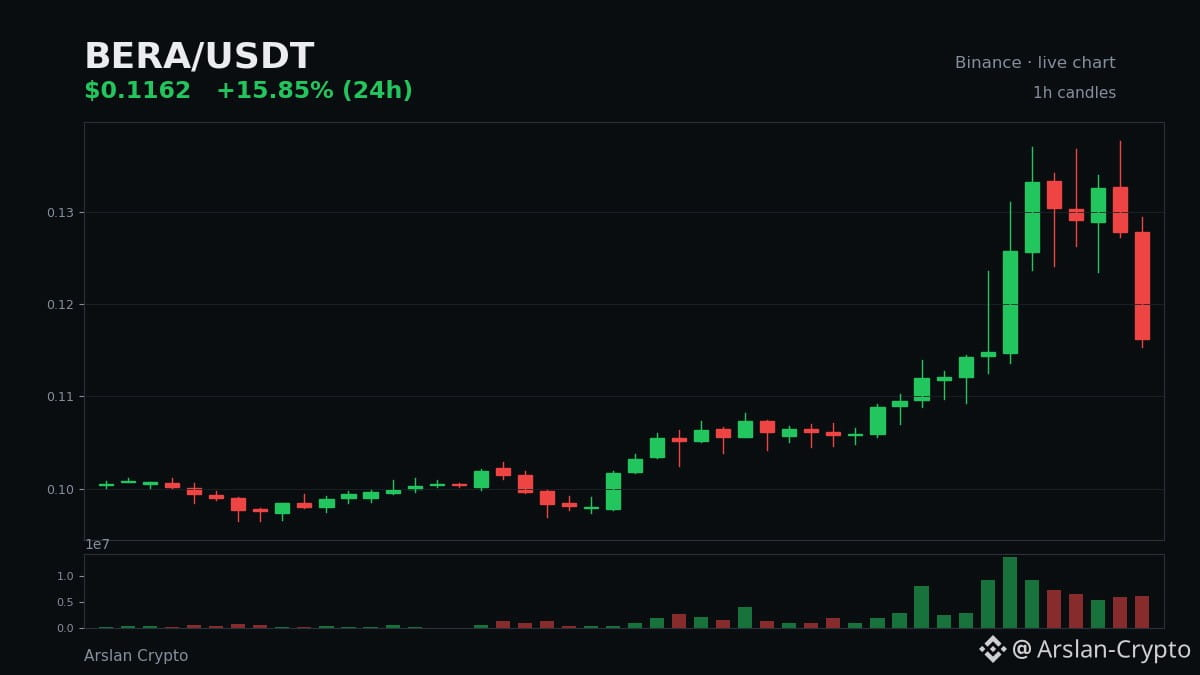
BERA is still one of today's top gainers, but the chart just changed its mind in the last hour.
$0.1157 now, +15.4% on the day. High $0.1377, low $0.1002. Volume $11.9M.
It climbed steadily for hours — hourly closes $0.1121, $0.1143, $0.1257, $0.1332 — then the last hour dropped it from the $0.1377 high to $0.1157, about 16% off the top.
No announcement, no upgrade, no listing that I could verify behind the move. And BTC is still under $68,000, so this green is happening against the market.
The honest context: BERA is down over 90% in the last year. A +15% day is a big move, but it is still a small step back from a very long fall.
Would you chase a +15% gainer right after it gave back 16% from its high, or wait to see if it holds?
#BERA $BERA
Not financial advice.
3
Ver traducción
There is a quiet number behind this crash, and it is not a price.
Glassnode counted a $14.2 billion stablecoin drain in 30 days — the fastest since June 2022. And it kept going. The latest count puts the fall near $14.9 billion, with total stablecoin supply at its lowest since late September.
USDC itself shed $3.2 billion in a month. USDT lost $8.3 billion. Stablecoins are the dollars of crypto — when their supply shrinks, there is less money sitting ready to buy the dip.
Bitcoin is feeling it. BTC is at $67,291 right now, down -1.66% today, and it just printed a new low of $66,456 — below this morning's $67,568.
The ETF side tells the same story. US spot Bitcoin ETFs have lost $1.6 billion across 20 trading sessions. From November 4 to 10 alone, crypto ETFs lost $1.48 billion — while investors poured $37.5 billion into ten big US stock ETFs in the same five days. VOO alone took in $16.9 billion.
So the money did not disappear. It moved — out of crypto funds and into stocks.
USDC itself is steady at $1.0008, as it should be. The story is not the price of USDC. It is how much of it is left sitting on the sidelines.
Do you keep dry powder in stablecoins, or do you stay fully invested?
#USDC $USDC
Not financial advice.
1
Ver traducción
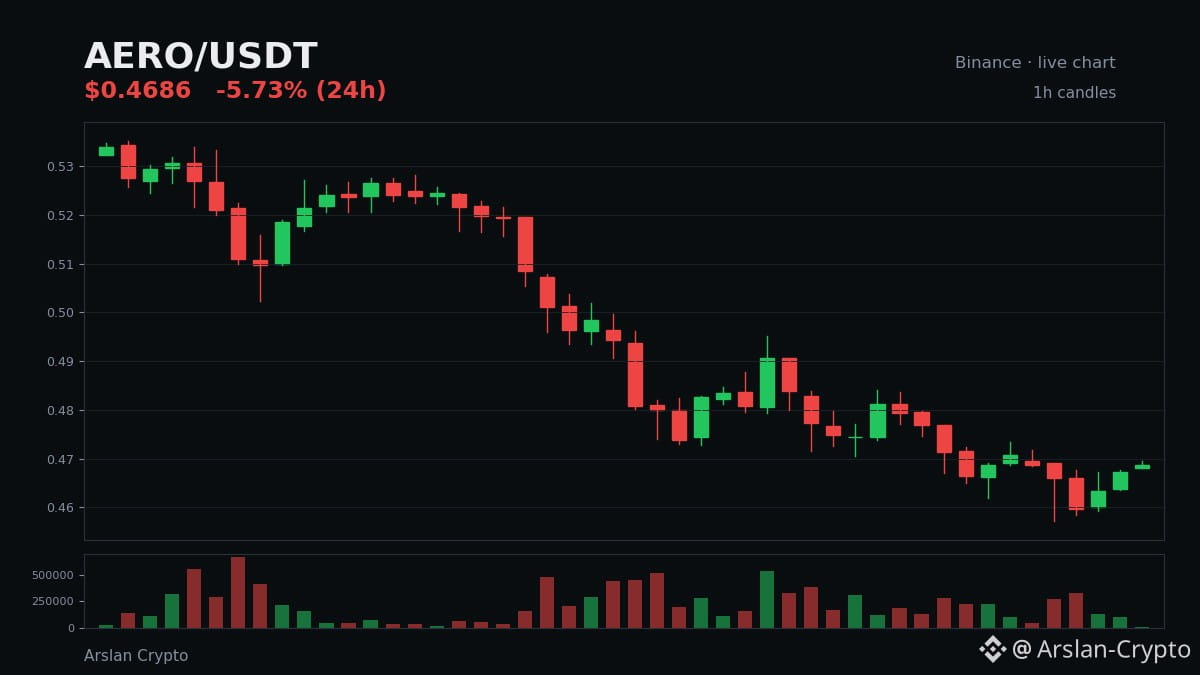
AERO slid straight through the level I was watching this morning, and the hourly chart caught all of it.
-5.6% at $0.4693. The low today is now $0.4572, below the $0.462 I had as support. The hourly closes tell the story: $0.4794, $0.4769, $0.4714, $0.4665, then $0.4596 after the break. But the last two closed hours bounced back: $0.4634, then $0.4673.
My levels:
Support: $0.4572 (today's low)
Resistance: $0.4997 (today's high)
Trigger: an hourly close under $0.4572 tells me the slide is continuing
Invalidation: a move back above $0.48 would break the pattern
$2.89M volume. No verified news reason I could find.
The slide did not stop at support. It went through it, then bounced. That bounce is the interesting part now. Is it the start of a recovery, or just a pause before the next leg down?
Which is harder to watch — a fast crash or a slow slide like this?
#AERO $AERO
Not financial advice.
4
Ver traducción
Injective's Veyra upgrade is 10 days away — and the vote is not over yetTITLE: Injective's Veyra upgrade is 10 days away — and the vote is not over yet
Injective is green on a red day, and this time there is a real reason behind it.
INJ is up 11.0% at $8.01, with $22.9M in volume. It touched $8.38 today after dipping to $7.14. Meanwhile Bitcoin slipped under $67,000 to a fresh low of $66,456, and the Fear and Greed Index sits at 13 — extreme fear. INJ is moving against the whole market. But the price is only half the story. The other half is a vote that is happening right now.
On November 12, Injective opened a governance vote on proposal #717. It is asking token holders to approve software version v1.21.0 — the Veyra mainnet upgrade — with activation targeted for November 24.
What Veyra is supposed to do
Veyra is built for institutional trading. It adds RFQ trading — request-for-quote, the way big traders get prices for large orders — and new cross-chain tools, plus the groundwork for CypherOS, Injective's upcoming privacy platform. The idea is to make Injective a better place for tokenized assets and large trades, not just small retail orders.
That matters because Injective has always pitched itself as the chain for finance. Veyra is the next step in that plan, and the team calls it the final major upgrade of 2026. If it works, it gives institutions a reason to actually use the chain instead of just watching it.
The vote is the interesting part
Here is what caught my eye: participation has climbed to about 24.9%, up from 21.25% this morning — but the quorum is 33.4%, so it is still short. Around 62% of votes are in favour, roughly 38% are abstaining, and nobody has voted against it yet. Voting closes on November 16.
That is normal for governance votes — most holders do not vote. But it means the November 24 date is a target, not a promise. If the vote does not reach quorum, the timeline slips. Abstentions count toward participation, so that large abstaining bloc is actually helping the vote get over the line without adding to the yes tally.
The price action
INJ traded around $7.55 on November 13, up 1.3% that day after falling to $7.14. Today it pushed to $8.38 before settling near $8.01. The move is real, but it has not cleared the levels above it yet. Resistance sits at $8.38 to $8.44, then $8.58. Support is $7.14, the low of the last two days.
One honest note: the upgrade does not guarantee demand. Veyra adds the tools, but whether traders actually come and use them is unproven. An upgrade is a door opening. It is not people walking through it.
What I am watching next
First, does the vote reach quorum before November 16? Second, does INJ hold above $8.00 into the weekend while Bitcoin keeps sliding? Third, what happens on November 24 if the upgrade goes live — a quiet technical event, or the start of real activity?
Upgrades are easy to get excited about. The vote count is the part I am watching, because that is the part that decides whether any of this happens on time.
What do you look at first with an upgrade — the features, or the vote?
#Injective $INJ
Not financial advice.
Injective's Veyra upgrade is 10 days away — and the vote is not over yet
TITLE: Injective's Veyra upgrade is 10 days away — and the vote is not over yet
Injective is green on a red day, and this time there is a real reason behind it.
INJ is up 11.0% at $8.01, with $22.9M in volume. It touched $8.38 today after dipping to $7.14. Meanwhile Bitcoin slipped under $67,000 to a fresh low of $66,456, and the Fear and Greed Index sits at 13 — extreme fear. INJ is moving against the whole market. But the price is only half the story. The other half is a vote that is happening right now.
On November 12, Injective opened a governance vote on proposal #717. It is asking token holders to approve software version v1.21.0 — the Veyra mainnet upgrade — with activation targeted for November 24.
What Veyra is supposed to do
Veyra is built for institutional trading. It adds RFQ trading — request-for-quote, the way big traders get prices for large orders — and new cross-chain tools, plus the groundwork for CypherOS, Injective's upcoming privacy platform. The idea is to make Injective a better place for tokenized assets and large trades, not just small retail orders.
That matters because Injective has always pitched itself as the chain for finance. Veyra is the next step in that plan, and the team calls it the final major upgrade of 2026. If it works, it gives institutions a reason to actually use the chain instead of just watching it.
The vote is the interesting part
Here is what caught my eye: participation has climbed to about 24.9%, up from 21.25% this morning — but the quorum is 33.4%, so it is still short. Around 62% of votes are in favour, roughly 38% are abstaining, and nobody has voted against it yet. Voting closes on November 16.
That is normal for governance votes — most holders do not vote. But it means the November 24 date is a target, not a promise. If the vote does not reach quorum, the timeline slips. Abstentions count toward participation, so that large abstaining bloc is actually helping the vote get over the line without adding to the yes tally.
The price action
INJ traded around $7.55 on November 13, up 1.3% that day after falling to $7.14. Today it pushed to $8.38 before settling near $8.01. The move is real, but it has not cleared the levels above it yet. Resistance sits at $8.38 to $8.44, then $8.58. Support is $7.14, the low of the last two days.
One honest note: the upgrade does not guarantee demand. Veyra adds the tools, but whether traders actually come and use them is unproven. An upgrade is a door opening. It is not people walking through it.
What I am watching next
First, does the vote reach quorum before November 16? Second, does INJ hold above $8.00 into the weekend while Bitcoin keeps sliding? Third, what happens on November 24 if the upgrade goes live — a quiet technical event, or the start of real activity?
Upgrades are easy to get excited about. The vote count is the part I am watching, because that is the part that decides whether any of this happens on time.
What do you look at first with an upgrade — the features, or the vote?
#Injective $INJ
Not financial advice.
2
Ver traducción
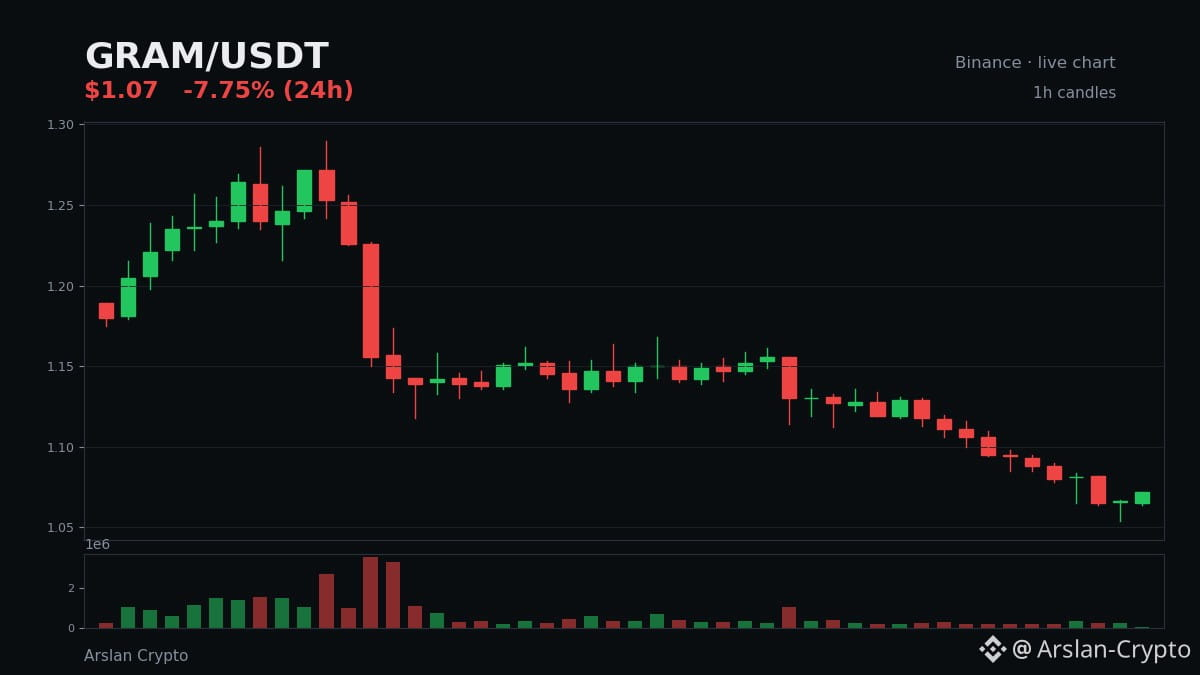
Even Pavel Durov calling GRAM a future top-3 coin could not stop the slide.
$1.072 now, down -7.7% today. High was $1.168, low $1.054 — it is sitting just above that low. Volume $8.6M.
The hourly closes tell the story: $1.095, $1.094, $1.088, $1.08, $1.081, $1.065, $1.066, $1.072. Lower, lower, lower. No real bounce yet.
Yesterday it fell about 6% too, right after Durov said GRAM could become one of the three biggest cryptos and Telegram passed 1 million wallet activations in 48 hours. The good news came, and the price still fell.
BTC is down -2.4% today, so the market is weak — but GRAM is falling about three times faster than that. A $3.1B coin, 87% below its $8.25 high, sliding while its own founder talks it up. That gap between story and price is what I keep an eye on.
What would it take for you to believe the Telegram story again — a bounce off $1.05, or something bigger?
#GRAM $GRAM $BTC
Not financial advice.
1
0G sigue siendo una de las pocas monedas que suben hoy en lugar de dispararse y luego caer.
+6.1% a $0.1580. Subió paso a paso hasta $0.1605, bajó a $0.1561 y volvió a situarse cerca de $0.1580. El máximo es $0.1635.
Mis niveles:
Soporte: $0.1539 (mínimo de la última caída)
Resistencia: $0.1635 (máximo de hoy)
Disparador: un cierre horario por encima de $0.1635 abre el camino al alza
Invalidación: perder $0.1539
Volumen de $1.84M: pequeño, pero la subida es limpia. En un día bajista, una subida lenta y constante destaca más que un repunte brusco.
¿Confías más en una subida lenta que en un repunte rápido?
#0G $0G
Esto no es asesoramiento financiero.
2
Inicia sesión para explorar más contenidos
Únete a usuarios de criptomonedas de todo el mundo en Binance Square
⚡️ Obtén la información más reciente y útil sobre criptomonedas.
💬 Confía en el mayor exchange de criptomonedas del mundo.
👍 Descubre opiniones reales de creadores verificados.
Correo electrónico/número de teléfono
Temas en tendencia
WhoWillSucceedJensenHuangatNvidia?
34,469 visualizaciones
491 participa(n) en el debate
Nvidia afirma que no hay conversaciones para elegir director ejecutivo mientras la petición «Apoyemos a Jensen» supera las 77.900 firmas
Binance News
·14 «Me gusta»
·16.7k visualizaciones
WhatWillDriveCryptoandStocks’NextRebound?
344,061 visualizaciones
2,459 participa(n) en el debate
USPPIMissMayEaseBTCPressure
156,527 visualizaciones
1,719 participa(n) en el debate