

Gajendra Achutha
1.1k Publicaciones

Gajendra Achutha
Denunciar
Bloquear usuario
Crypto Researcher | Crypto, Commodities, Forex and Stocks |
Trader frecuente
1.6 años
12 Siguiendo
497 Seguidores
3.9K+ Me gusta
Publicaciones
Todo
Cotizaciones
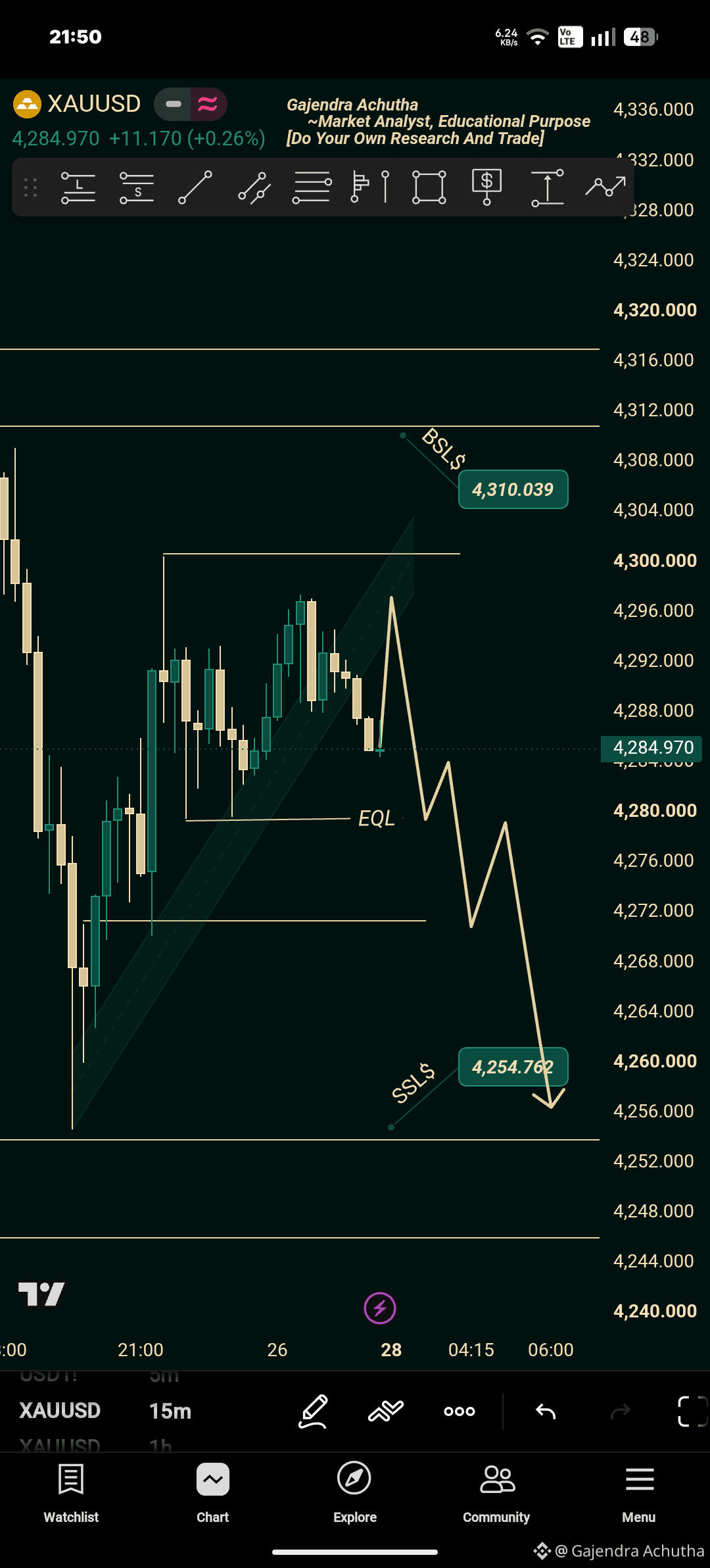
$XAUT POSSIBILIDAD SESIÓN SYDNEY
[PLAZO CORTO]
VE MI ÚLTIMA PUBLICACIÓN PARA DETALLES ANÁLISIS DE ORO SEMANAL
$XAUT POSSIBILIDAD SESIÓN SYDNEY
[PLAZO CORTO]
VE MI ÚLTIMA PUBLICACIÓN PARA DETALLES ANÁLISIS DE ORO SEMANAL
[PLAZO CORTO]
VE MI ÚLTIMA PUBLICACIÓN PARA DETALLES ANÁLISIS DE ORO SEMANAL
1
220
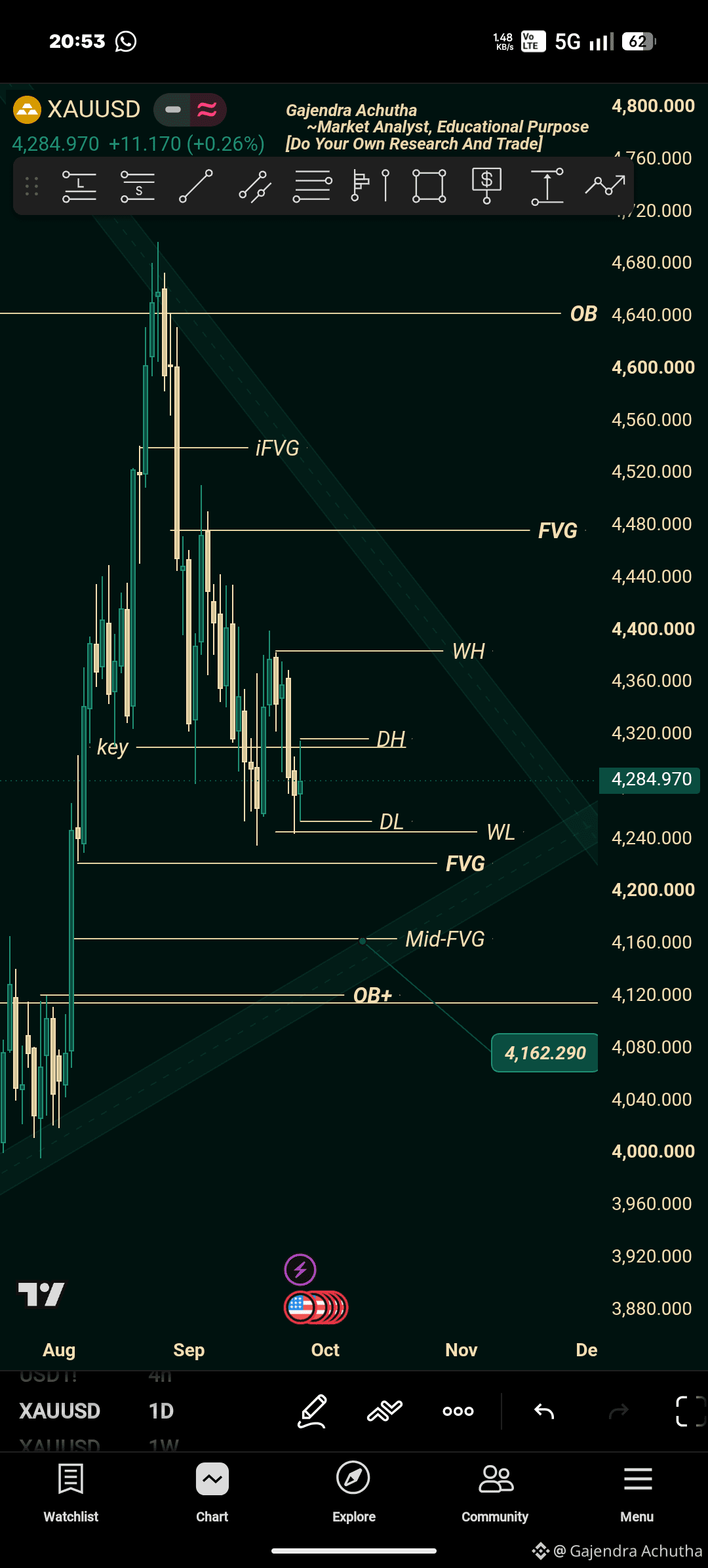
$XAUT Técnicas Manteniendo Bullish,
Mira en VELA SEMANAL, Las últimas 3 velas semanales están cerrando sus cuerpos por encima de los LOW anteriores
Mi Perspectiva,
Si el Mercado rompe el LOW diario y el LOW semanal
Desde esa zona tendremos un sesgo alcista a corto plazo,
Luego, si vemos movimientos bajistas fuertes, entonces irá hacia el FVG
Si el FVG se rompe, ENTONCES TENEMOS ZONA DORADA O TIEMPO PARA COMPRAR, significa de antemano hasta 4164
4164 -
PUNTO MEDIO DEL FVG
ZONA DE ACCIÓN DEL PRECIO
ZONA DE SOPORTE DE LÍNEA DE TENDENCIA DESAFÍO [DESDE HACE 1 AÑO]
CONCLUSIÓN RÁPIDA
PLAN BAJISTA Y ALCISTA
[1ER LADO BAJISTA]
LOW DIARIO ANTERIOR - LOW SEMANAL ANTERIOR - ALCISTA A CORTO PLAZO - DESPLAZAMIENTO HACIA FVG - PUNTO MEDIO DEL FVG/ZONA DE SOPORTE DE LÍNEA DE TENDENCIA DESAFÍO
[ 2DO PLAN ALCISTA]
DESDE ESA ZONA HASTA - ACUMULACIÓN - LUNA DIRECTA SI LA LÍNEA DE TENDENCIA DESAFÍO MANTIENE EL PRECIO
#BitwiseFilesFinalNEARSpotETFProspectus #DogecoinETFsPostBiggestWeekSinceLaunch #CircleTetherFreezeBitgetHackerWallet #CoinMarketCapCompletesCoinglassAcquisition
$XAUT Técnicas Manteniendo Bullish,
Mira en VELA SEMANAL, Las últimas 3 velas semanales están cerrando sus cuerpos por encima de los LOW anteriores
Mi Perspectiva,
Si el Mercado rompe el LOW diario y el LOW semanal
Desde esa zona tendremos un sesgo alcista a corto plazo,
Luego, si vemos movimientos bajistas fuertes, entonces irá hacia el FVG
Si el FVG se rompe, ENTONCES TENEMOS ZONA DORADA O TIEMPO PARA COMPRAR, significa de antemano hasta 4164
4164 -
PUNTO MEDIO DEL FVG
ZONA DE ACCIÓN DEL PRECIO
ZONA DE SOPORTE DE LÍNEA DE TENDENCIA DESAFÍO [DESDE HACE 1 AÑO]
CONCLUSIÓN RÁPIDA
PLAN BAJISTA Y ALCISTA
[1ER LADO BAJISTA]
LOW DIARIO ANTERIOR - LOW SEMANAL ANTERIOR - ALCISTA A CORTO PLAZO - DESPLAZAMIENTO HACIA FVG - PUNTO MEDIO DEL FVG/ZONA DE SOPORTE DE LÍNEA DE TENDENCIA DESAFÍO
[ 2DO PLAN ALCISTA]
DESDE ESA ZONA HASTA - ACUMULACIÓN - LUNA DIRECTA SI LA LÍNEA DE TENDENCIA DESAFÍO MANTIENE EL PRECIO
#BitwiseFilesFinalNEARSpotETFProspectus #DogecoinETFsPostBiggestWeekSinceLaunch #CircleTetherFreezeBitgetHackerWallet #CoinMarketCapCompletesCoinglassAcquisition
Mira en VELA SEMANAL, Las últimas 3 velas semanales están cerrando sus cuerpos por encima de los LOW anteriores
Mi Perspectiva,
Si el Mercado rompe el LOW diario y el LOW semanal
Desde esa zona tendremos un sesgo alcista a corto plazo,
Luego, si vemos movimientos bajistas fuertes, entonces irá hacia el FVG
Si el FVG se rompe, ENTONCES TENEMOS ZONA DORADA O TIEMPO PARA COMPRAR, significa de antemano hasta 4164
4164 -
PUNTO MEDIO DEL FVG
ZONA DE ACCIÓN DEL PRECIO
ZONA DE SOPORTE DE LÍNEA DE TENDENCIA DESAFÍO [DESDE HACE 1 AÑO]
CONCLUSIÓN RÁPIDA
PLAN BAJISTA Y ALCISTA
[1ER LADO BAJISTA]
LOW DIARIO ANTERIOR - LOW SEMANAL ANTERIOR - ALCISTA A CORTO PLAZO - DESPLAZAMIENTO HACIA FVG - PUNTO MEDIO DEL FVG/ZONA DE SOPORTE DE LÍNEA DE TENDENCIA DESAFÍO
[ 2DO PLAN ALCISTA]
DESDE ESA ZONA HASTA - ACUMULACIÓN - LUNA DIRECTA SI LA LÍNEA DE TENDENCIA DESAFÍO MANTIENE EL PRECIO
#BitwiseFilesFinalNEARSpotETFProspectus #DogecoinETFsPostBiggestWeekSinceLaunch #CircleTetherFreezeBitgetHackerWallet #CoinMarketCapCompletesCoinglassAcquisition
1
233
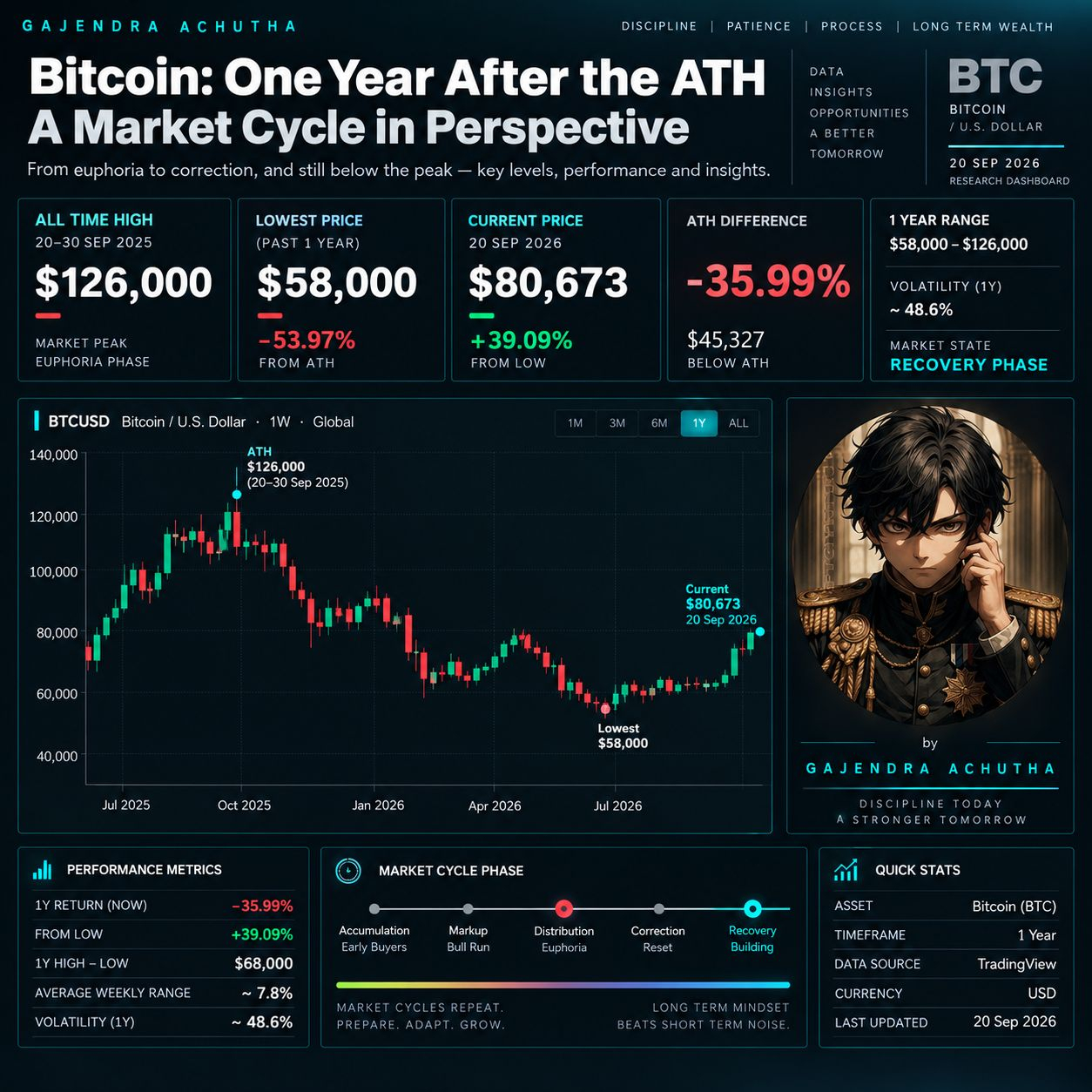
Ya ha pasado casi un año. Aproximadamente entre el 20 y el 30 de septiembre de 2025, Bitcoin comenzó su gran descenso desde el rango de máximo histórico de $126,000. Desde entonces, $BTC atravesó una corrección prolongada, llegando aproximadamente a $58,000 en su punto más bajo en el gráfico. Lo que me llama la atención es que, a pesar de que ha pasado un año entero, Bitcoin todavía no ha vuelto a visitar ese rango anterior de ATH......
Hoy, 20 de septiembre de 2026, $BITCOIN está alrededor de $80,673, lo cual sigue estando aproximadamente un 36% por debajo del ATH de $126K. Desde una perspectiva académica, este periodo de un año es un caso de estudio interesante sobre los ciclos del mercado, la recuperación del precio, la volatilidad y la corrección basada en el tiempo, mostrando que incluso después de un pico importante de un mercado alcista, recuperarse hasta el máximo anterior puede tardar mucho más de lo esperado.. ..
#SaylorHintsStrategyBitcoinBuy #BOJRaisesRatesTo31YearHigh #BuffettStepsDownAsBerkshireChairman #XRPExchangeReservesHitSevenYearLow #HKCompletesFirstHKDStablecoinUseCase $BTC
Ya ha pasado casi un año. Aproximadamente entre el 20 y el 30 de septiembre de 2025, Bitcoin comenzó su gran descenso desde el rango de máximo histórico de $126,000. Desde entonces, $BTC atravesó una corrección prolongada, llegando aproximadamente a $58,000 en su punto más bajo en el gráfico. Lo que me llama la atención es que, a pesar de que ha pasado un año entero, Bitcoin todavía no ha vuelto a visitar ese rango anterior de ATH......
Hoy, 20 de septiembre de 2026, $BITCOIN está alrededor de $80,673, lo cual sigue estando aproximadamente un 36% por debajo del ATH de $126K. Desde una perspectiva académica, este periodo de un año es un caso de estudio interesante sobre los ciclos del mercado, la recuperación del precio, la volatilidad y la corrección basada en el tiempo, mostrando que incluso después de un pico importante de un mercado alcista, recuperarse hasta el máximo anterior puede tardar mucho más de lo esperado.. ..
#SaylorHintsStrategyBitcoinBuy #BOJRaisesRatesTo31YearHigh #BuffettStepsDownAsBerkshireChairman #XRPExchangeReservesHitSevenYearLow #HKCompletesFirstHKDStablecoinUseCase $BTC
Hoy, 20 de septiembre de 2026, $BITCOIN está alrededor de $80,673, lo cual sigue estando aproximadamente un 36% por debajo del ATH de $126K. Desde una perspectiva académica, este periodo de un año es un caso de estudio interesante sobre los ciclos del mercado, la recuperación del precio, la volatilidad y la corrección basada en el tiempo, mostrando que incluso después de un pico importante de un mercado alcista, recuperarse hasta el máximo anterior puede tardar mucho más de lo esperado.. ..
#SaylorHintsStrategyBitcoinBuy #BOJRaisesRatesTo31YearHigh #BuffettStepsDownAsBerkshireChairman #XRPExchangeReservesHitSevenYearLow #HKCompletesFirstHKDStablecoinUseCase $BTC
1
124
·
--
Bajista
🤯🤯🤯 No te pierdas oportunidades en el concepto SMC / ICT
Faltan $NIL
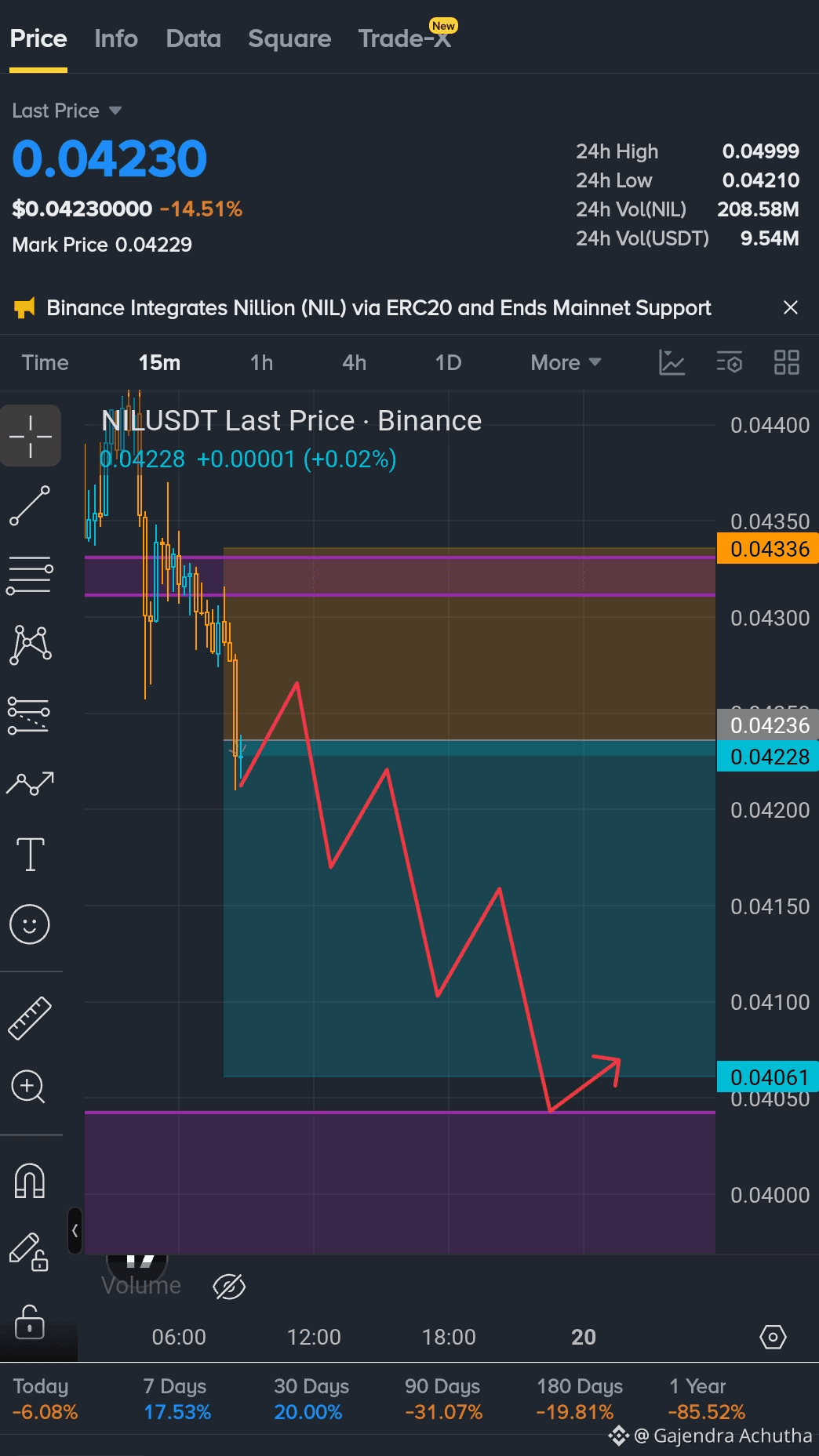
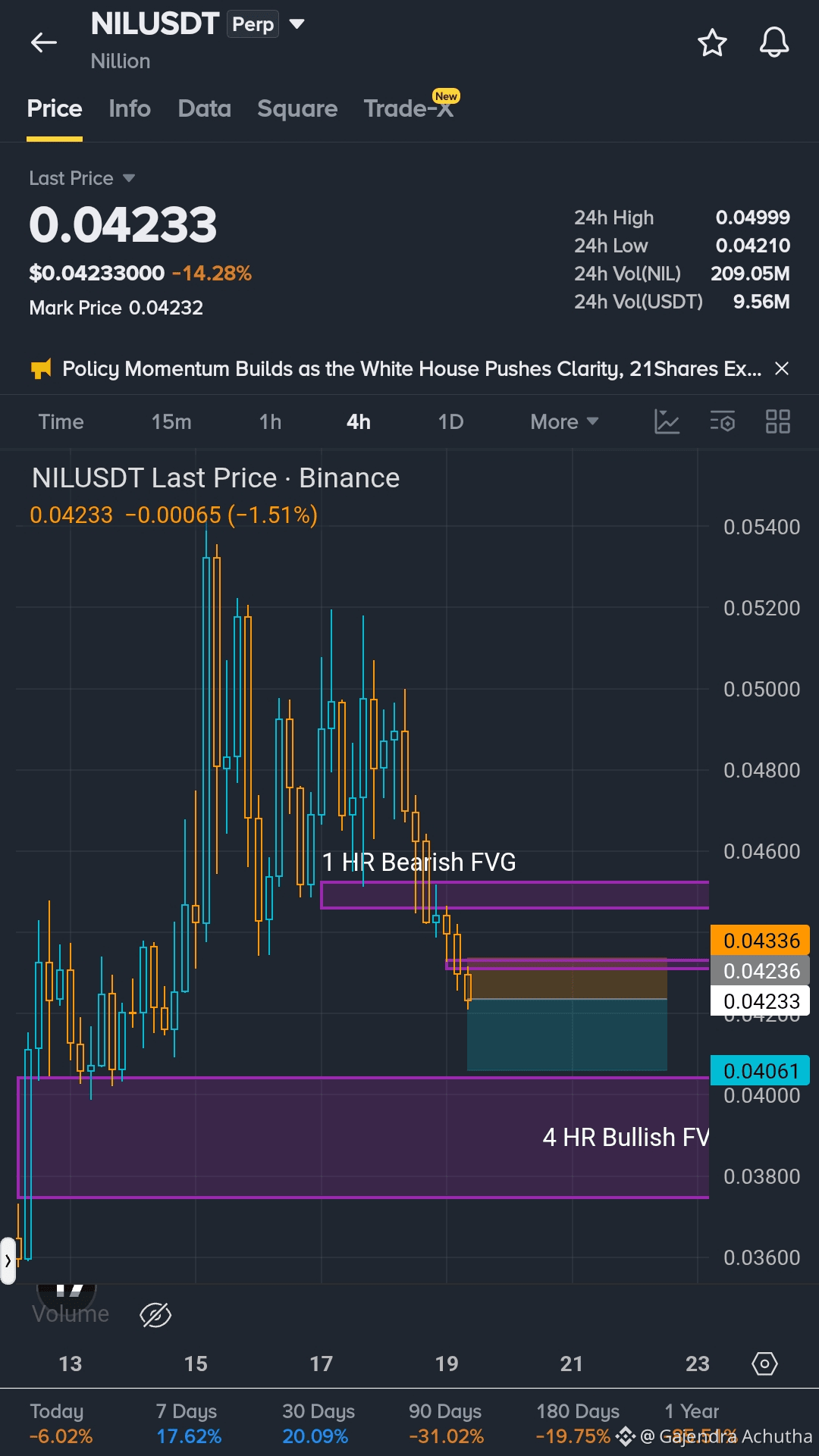
$NIL – LOS CONCEPTOS SMC E ICT SE ALINEAN PARA UNA OPORTUNIDAD CORTA PERFECTA EL MOMENTO BAJISTA ESTÁ EN JUEGO 📉🔥
Corto $NIL
Entrada: 0.04236
SL: 0.04350
TP1: 0.04200
TP2: 0.04150
TP3: 0.04000
El panorama más amplio:
Perspectiva fundamental:
— El sector más amplio de altcoins de baja capitalización está presenciando una rotación localizada de liquidez alejándose de apuestas especulativas.
— El endurecimiento macro y la reducción de la apetencia minorista por riesgo-on están poniendo presión inmediata sobre los tokens del ecosistema no respaldados.
Lectura técnica:
— El fuerte rechazo bajista se ha confirmado en la zona clave principal de oferta por encima.
— Los Conceptos de Smart Money (SMC) indican un cambio significativo de la estructura del mercado (MSS) hacia la baja.
— Un barrido de liquidez de un Inner Circle Trader (ICT) ha capturado con éxito las paradas de compra antes de revertir hacia abajo.
— La configuración actual del marco temporal de 15 minutos confirma la continuación bajista localizada después de romper los mínimos de oscilación estructurales.
#NIL #CryptoAnalysis #TradingSetup #USStorageStocksExtendLosses #EthereumOpensGlamsterdamEarlyTestnet
DYOR — no es asesoramiento financiero.
🤯🤯🤯 No te pierdas oportunidades en el concepto SMC / ICT
Faltan $NIL
$NIL – LOS CONCEPTOS SMC E ICT SE ALINEAN PARA UNA OPORTUNIDAD CORTA PERFECTA EL MOMENTO BAJISTA ESTÁ EN JUEGO 📉🔥
Corto $NIL
Entrada: 0.04236
SL: 0.04350
TP1: 0.04200
TP2: 0.04150
TP3: 0.04000
El panorama más amplio:
Perspectiva fundamental:
— El sector más amplio de altcoins de baja capitalización está presenciando una rotación localizada de liquidez alejándose de apuestas especulativas.
— El endurecimiento macro y la reducción de la apetencia minorista por riesgo-on están poniendo presión inmediata sobre los tokens del ecosistema no respaldados.
Lectura técnica:
— El fuerte rechazo bajista se ha confirmado en la zona clave principal de oferta por encima.
— Los Conceptos de Smart Money (SMC) indican un cambio significativo de la estructura del mercado (MSS) hacia la baja.
— Un barrido de liquidez de un Inner Circle Trader (ICT) ha capturado con éxito las paradas de compra antes de revertir hacia abajo.
— La configuración actual del marco temporal de 15 minutos confirma la continuación bajista localizada después de romper los mínimos de oscilación estructurales.
#NIL #CryptoAnalysis #TradingSetup #USStorageStocksExtendLosses #EthereumOpensGlamsterdamEarlyTestnet
DYOR — no es asesoramiento financiero.
Faltan $NIL
$NIL – LOS CONCEPTOS SMC E ICT SE ALINEAN PARA UNA OPORTUNIDAD CORTA PERFECTA EL MOMENTO BAJISTA ESTÁ EN JUEGO 📉🔥
Corto $NIL
Entrada: 0.04236
SL: 0.04350
TP1: 0.04200
TP2: 0.04150
TP3: 0.04000
El panorama más amplio:
Perspectiva fundamental:
— El sector más amplio de altcoins de baja capitalización está presenciando una rotación localizada de liquidez alejándose de apuestas especulativas.
— El endurecimiento macro y la reducción de la apetencia minorista por riesgo-on están poniendo presión inmediata sobre los tokens del ecosistema no respaldados.
Lectura técnica:
— El fuerte rechazo bajista se ha confirmado en la zona clave principal de oferta por encima.
— Los Conceptos de Smart Money (SMC) indican un cambio significativo de la estructura del mercado (MSS) hacia la baja.
— Un barrido de liquidez de un Inner Circle Trader (ICT) ha capturado con éxito las paradas de compra antes de revertir hacia abajo.
— La configuración actual del marco temporal de 15 minutos confirma la continuación bajista localizada después de romper los mínimos de oscilación estructurales.
#NIL #CryptoAnalysis #TradingSetup #USStorageStocksExtendLosses #EthereumOpensGlamsterdamEarlyTestnet
DYOR — no es asesoramiento financiero.
197
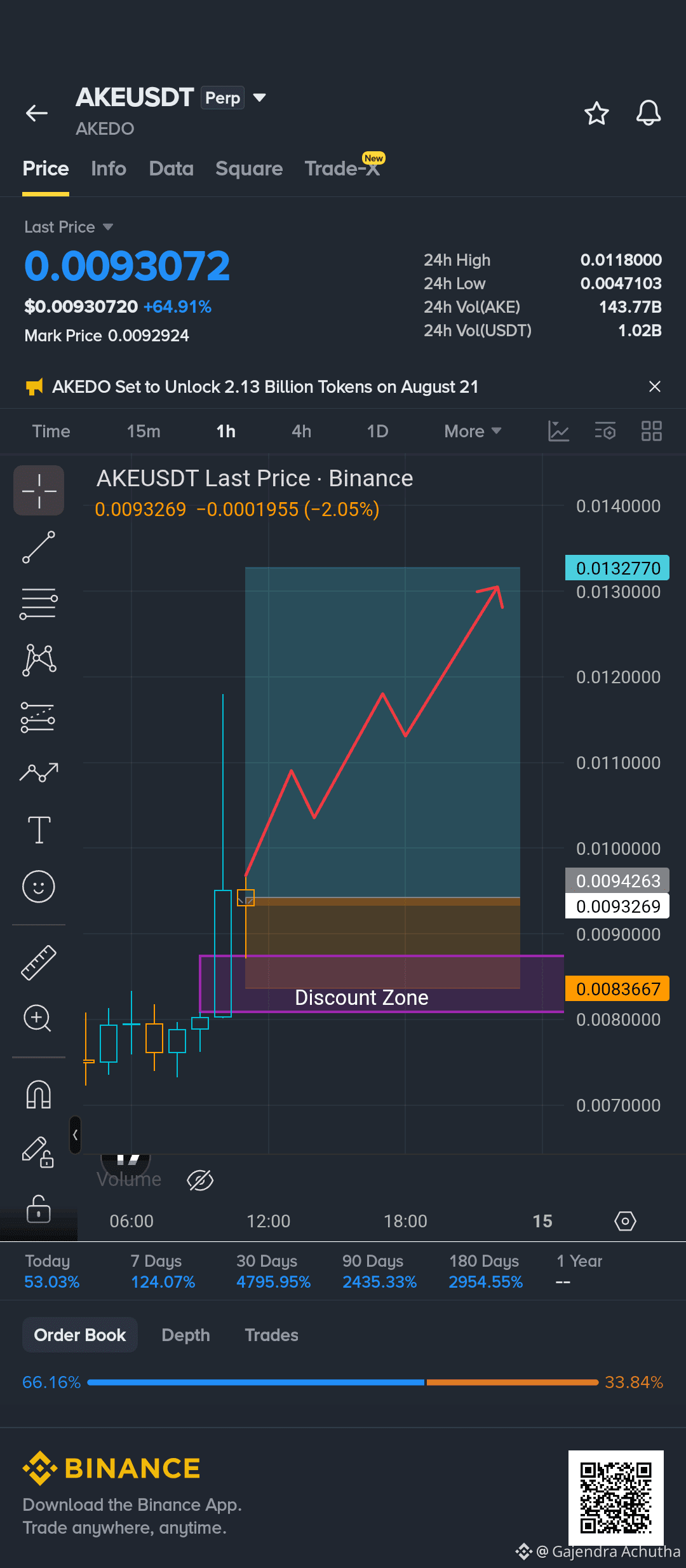
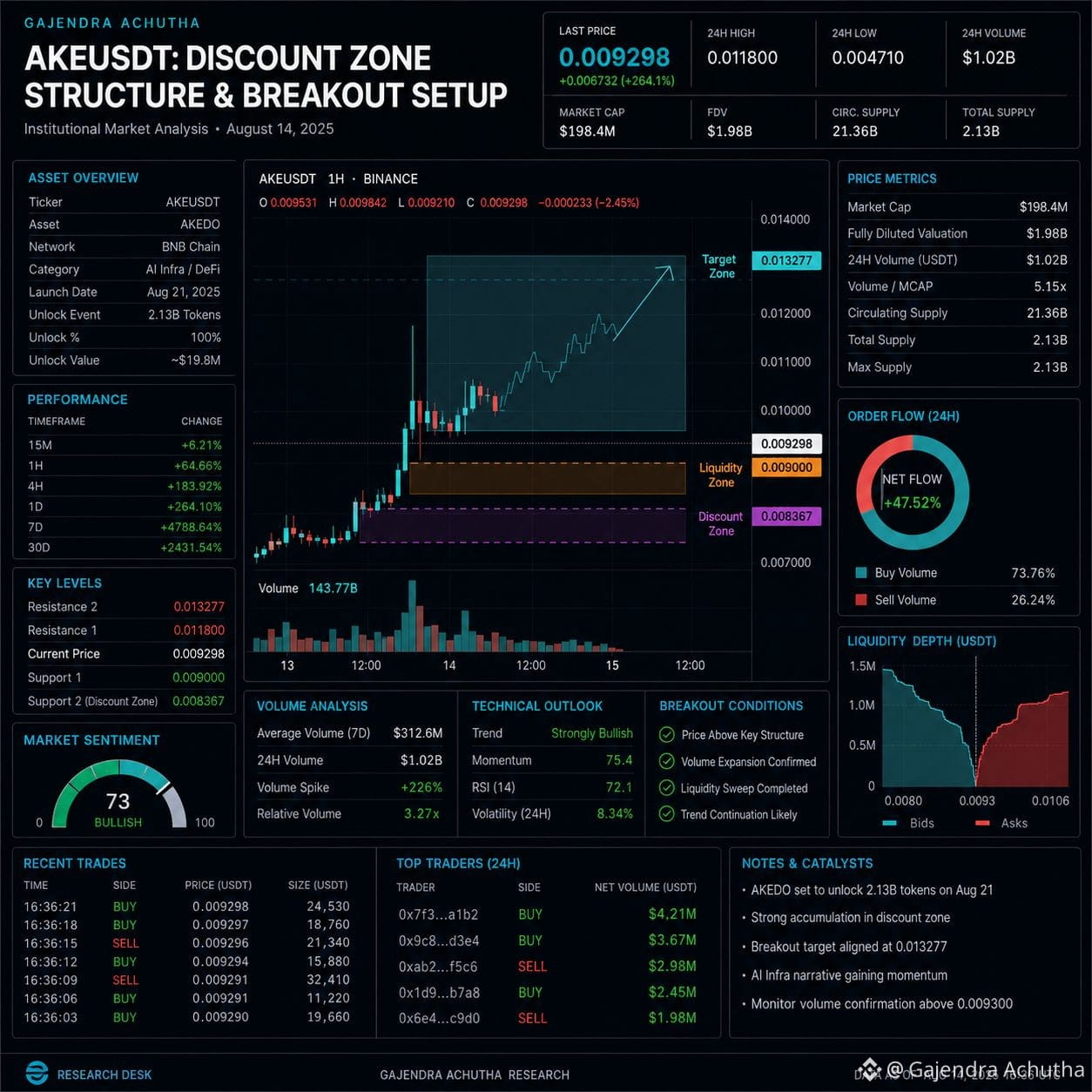
$AKE 🤯🤯🤯– COMPRA EL RETROCESO MIENTRAS EL MOMENTUM ALCISTA SE ACELERA 📈🔥
Largo $AKE
Entrada: 0.0091500 - 0.0091673
SL: 0.0047103
TP1: 0.0118000
TP2: 0.0125000
TP3: 0.0130000
El panorama general:
Perspectiva fundamental:
— El token cae después de grandes transferencias a un exchange centralizado, creando una oportunidad de compra masiva.
— La alta liquidez está fluyendo hacia el activo con un volumen de USDT en 24 horas superando los 1.02 mil millones.
{future}(AKEUSDT)
Lectura técnica:
— El soporte inmediato se mantiene firme alrededor del mínimo de 24 horas de 0.0047103.
— El volumen de operaciones muestra una demanda masiva de compradores mientras el token se dispara más de un 63% en 24 horas.
— El gráfico de 4 horas imprime velas alcistas consecutivas y fuertes rompiendo la resistencia clave por encima.
— Una ruptura limpia por encima del nivel 0.0091614 confirma una continuación alcista sostenida.
Investiga por tu cuenta (DYOR) — no es asesoramiento financiero.
#AKEUSDT #CryptoTrading #TechnicalAnalysis #KospiEntersTechnicalBullMarket #SanDiskExtendsGainsTo11%
$AKE 🤯🤯🤯– COMPRA EL RETROCESO MIENTRAS EL MOMENTUM ALCISTA SE ACELERA 📈🔥
Largo $AKE
Entrada: 0.0091500 - 0.0091673
SL: 0.0047103
TP1: 0.0118000
TP2: 0.0125000
TP3: 0.0130000
El panorama general:
Perspectiva fundamental:
— El token cae después de grandes transferencias a un exchange centralizado, creando una oportunidad de compra masiva.
— La alta liquidez está fluyendo hacia el activo con un volumen de USDT en 24 horas superando los 1.02 mil millones.
Lectura técnica:
— El soporte inmediato se mantiene firme alrededor del mínimo de 24 horas de 0.0047103.
— El volumen de operaciones muestra una demanda masiva de compradores mientras el token se dispara más de un 63% en 24 horas.
— El gráfico de 4 horas imprime velas alcistas consecutivas y fuertes rompiendo la resistencia clave por encima.
— Una ruptura limpia por encima del nivel 0.0091614 confirma una continuación alcista sostenida.
Investiga por tu cuenta (DYOR) — no es asesoramiento financiero.
#AKEUSDT #CryptoTrading #TechnicalAnalysis #KospiEntersTechnicalBullMarket #SanDiskExtendsGainsTo11%
Largo $AKE
Entrada: 0.0091500 - 0.0091673
SL: 0.0047103
TP1: 0.0118000
TP2: 0.0125000
TP3: 0.0130000
El panorama general:
Perspectiva fundamental:
— El token cae después de grandes transferencias a un exchange centralizado, creando una oportunidad de compra masiva.
— La alta liquidez está fluyendo hacia el activo con un volumen de USDT en 24 horas superando los 1.02 mil millones.
Lectura técnica:
— El soporte inmediato se mantiene firme alrededor del mínimo de 24 horas de 0.0047103.
— El volumen de operaciones muestra una demanda masiva de compradores mientras el token se dispara más de un 63% en 24 horas.
— El gráfico de 4 horas imprime velas alcistas consecutivas y fuertes rompiendo la resistencia clave por encima.
— Una ruptura limpia por encima del nivel 0.0091614 confirma una continuación alcista sostenida.
Investiga por tu cuenta (DYOR) — no es asesoramiento financiero.
#AKEUSDT #CryptoTrading #TechnicalAnalysis #KospiEntersTechnicalBullMarket #SanDiskExtendsGainsTo11%
1
324
COMPRUEBA MI PERFIL, TE LO DIJE EL MIÉRCOLES 🤟
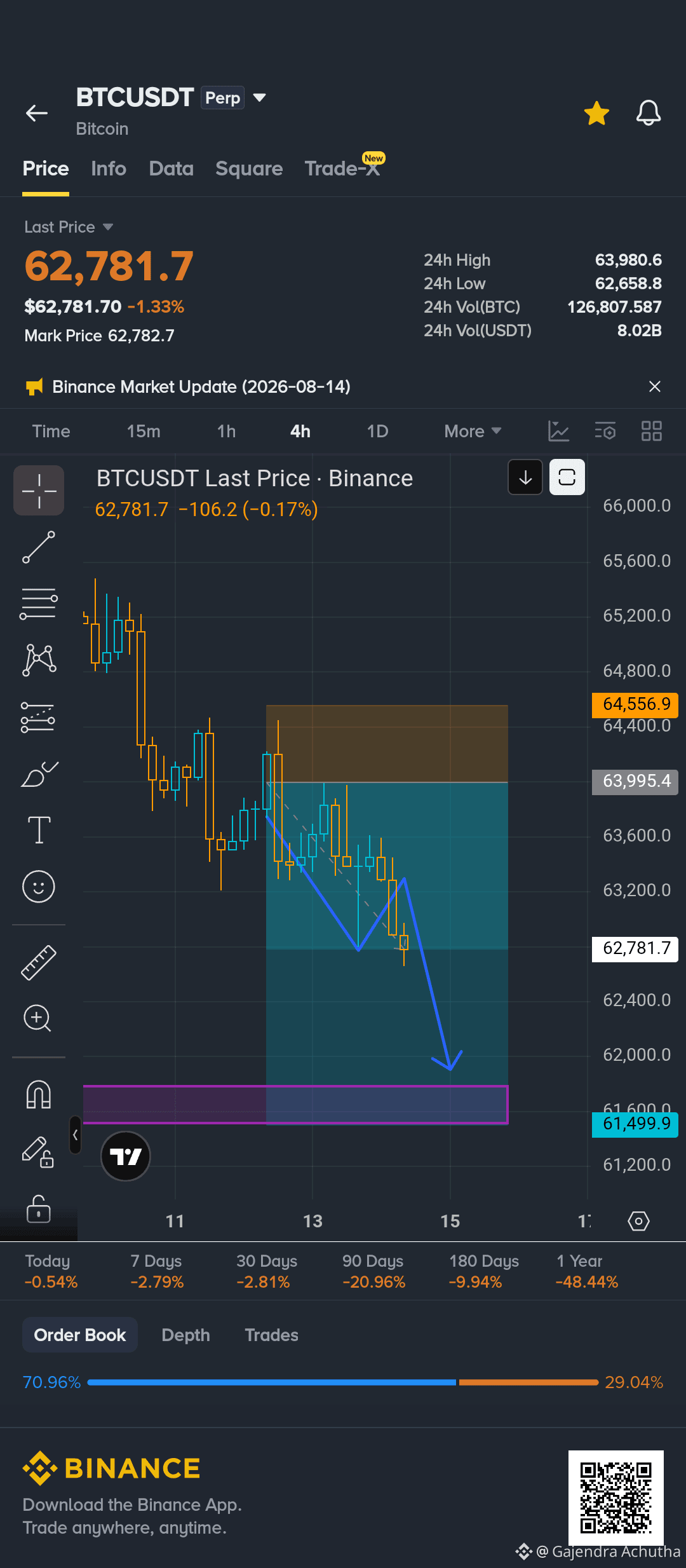
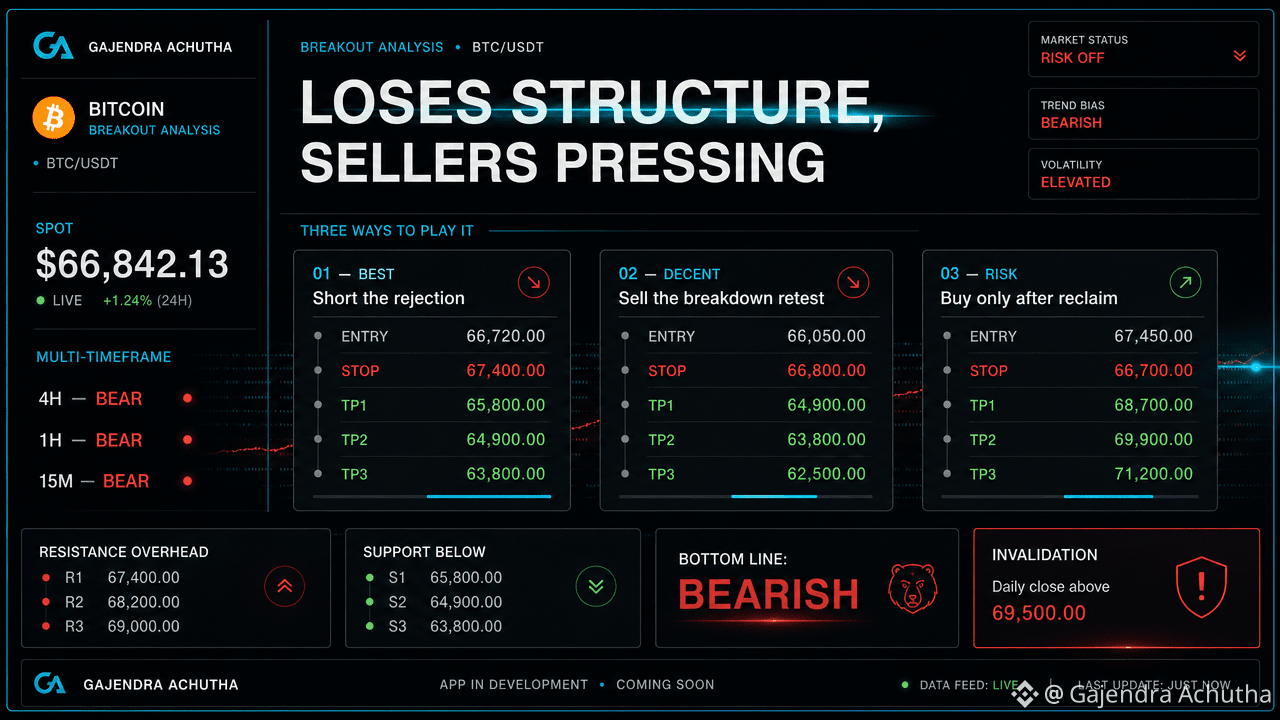
$BTC 🤯🤯🤯 – EL PRECIO ROMPE NIVELES DE SOPORTE CRÍTICOS, SEÑALANDO UN MOVIMIENTO BAJISTA 📉💥
CONFIGURACIÓN DE TRADING
Corto $BTC
Entrada: 62,784.6 – 63,200.0
SL: 64,953.5
TP1: 62,400.0
TP2: 61,600.0
TP3: 61,499.9
La visión más amplia:
Perspectiva fundamental
— La fuerte acumulación de ballenas está fallando al absorber la presión agresiva de venta en el mercado spot.
— Las limitaciones de liquidez macroeconómica global están alejando capital a corto plazo de los activos de riesgo.
{future}(BTCUSDT)
Lectura técnica:
— El precio rompió por debajo del nivel de soporte horizontal clave en 63,995.4.
— Un alto volumen localizado de ventas en el gráfico de 4 horas confirma el control bajista.
— El gráfico muestra una ruptura clara desde una estructura reciente de consolidación con máximos más bajos.
— Un cierre sostenido de vela de 4 horas por debajo de 62,784.7 activa una carrera más profunda hacia los objetivos inferiores.
#BTC #CryptoAnalysis #TradingSetup #SP500ClosesAtRecordHigh #SanDiskExtendsGainsTo11%
HÁZ TU PROPIO ANÁLISIS (DYOR) — no es asesoramiento financiero.
COMPRUEBA MI PERFIL, TE LO DIJE EL MIÉRCOLES 🤟
$BTC 🤯🤯🤯 – EL PRECIO ROMPE NIVELES DE SOPORTE CRÍTICOS, SEÑALANDO UN MOVIMIENTO BAJISTA 📉💥
CONFIGURACIÓN DE TRADING
Corto $BTC
Entrada: 62,784.6 – 63,200.0
SL: 64,953.5
TP1: 62,400.0
TP2: 61,600.0
TP3: 61,499.9
La visión más amplia:
Perspectiva fundamental
— La fuerte acumulación de ballenas está fallando al absorber la presión agresiva de venta en el mercado spot.
— Las limitaciones de liquidez macroeconómica global están alejando capital a corto plazo de los activos de riesgo.
Lectura técnica:
— El precio rompió por debajo del nivel de soporte horizontal clave en 63,995.4.
— Un alto volumen localizado de ventas en el gráfico de 4 horas confirma el control bajista.
— El gráfico muestra una ruptura clara desde una estructura reciente de consolidación con máximos más bajos.
— Un cierre sostenido de vela de 4 horas por debajo de 62,784.7 activa una carrera más profunda hacia los objetivos inferiores.
#BTC #CryptoAnalysis #TradingSetup #SP500ClosesAtRecordHigh #SanDiskExtendsGainsTo11%
HÁZ TU PROPIO ANÁLISIS (DYOR) — no es asesoramiento financiero.
$BTC 🤯🤯🤯 – EL PRECIO ROMPE NIVELES DE SOPORTE CRÍTICOS, SEÑALANDO UN MOVIMIENTO BAJISTA 📉💥
CONFIGURACIÓN DE TRADING
Corto $BTC
Entrada: 62,784.6 – 63,200.0
SL: 64,953.5
TP1: 62,400.0
TP2: 61,600.0
TP3: 61,499.9
La visión más amplia:
Perspectiva fundamental
— La fuerte acumulación de ballenas está fallando al absorber la presión agresiva de venta en el mercado spot.
— Las limitaciones de liquidez macroeconómica global están alejando capital a corto plazo de los activos de riesgo.
Lectura técnica:
— El precio rompió por debajo del nivel de soporte horizontal clave en 63,995.4.
— Un alto volumen localizado de ventas en el gráfico de 4 horas confirma el control bajista.
— El gráfico muestra una ruptura clara desde una estructura reciente de consolidación con máximos más bajos.
— Un cierre sostenido de vela de 4 horas por debajo de 62,784.7 activa una carrera más profunda hacia los objetivos inferiores.
#BTC #CryptoAnalysis #TradingSetup #SP500ClosesAtRecordHigh #SanDiskExtendsGainsTo11%
HÁZ TU PROPIO ANÁLISIS (DYOR) — no es asesoramiento financiero.
1
151
TE DIJE QUE 😂😂😂
NO PIERDAS OPORTUNIDAD OTRA VEZ ......!!! $CYS
{future}(CYSUSDT)
#MoneyGramExpandsCashCryptoServiceToSolana #SenateDelaysCLARITYActVoteToSeptember #OCCSaysDigitalFirmsCanSeekNationalBankStatus #KOSPIRisesNearly5%TriggersBuySideSidecar #SuperMicroForecastsAboveEstimatesSharesJump9%
TE DIJE QUE 😂😂😂
NO PIERDAS OPORTUNIDAD OTRA VEZ ......!!! $CYS
#MoneyGramExpandsCashCryptoServiceToSolana #SenateDelaysCLARITYActVoteToSeptember #OCCSaysDigitalFirmsCanSeekNationalBankStatus #KOSPIRisesNearly5%TriggersBuySideSidecar #SuperMicroForecastsAboveEstimatesSharesJump9%
NO PIERDAS OPORTUNIDAD OTRA VEZ ......!!! $CYS
#MoneyGramExpandsCashCryptoServiceToSolana #SenateDelaysCLARITYActVoteToSeptember #OCCSaysDigitalFirmsCanSeekNationalBankStatus #KOSPIRisesNearly5%TriggersBuySideSidecar #SuperMicroForecastsAboveEstimatesSharesJump9%
Gajendra Achutha
·
--
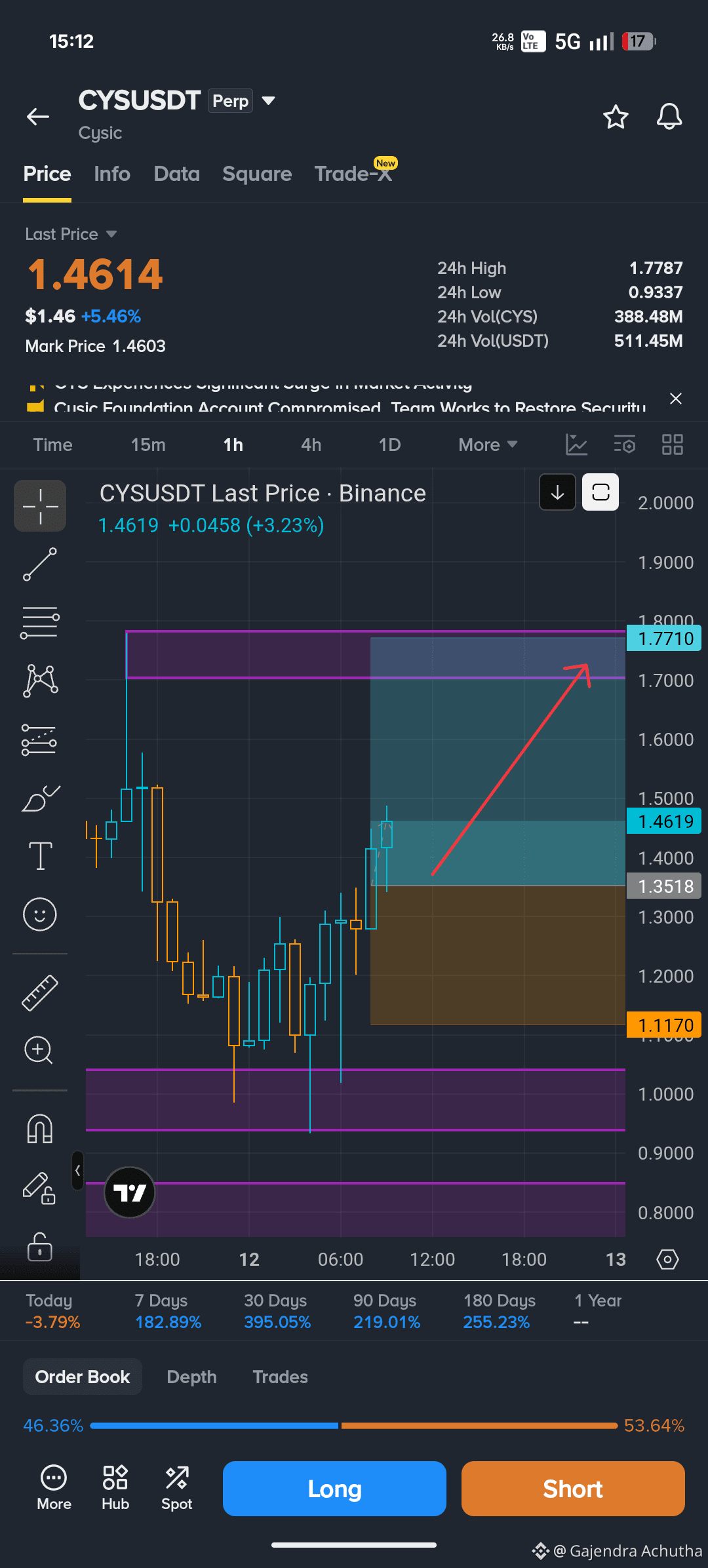
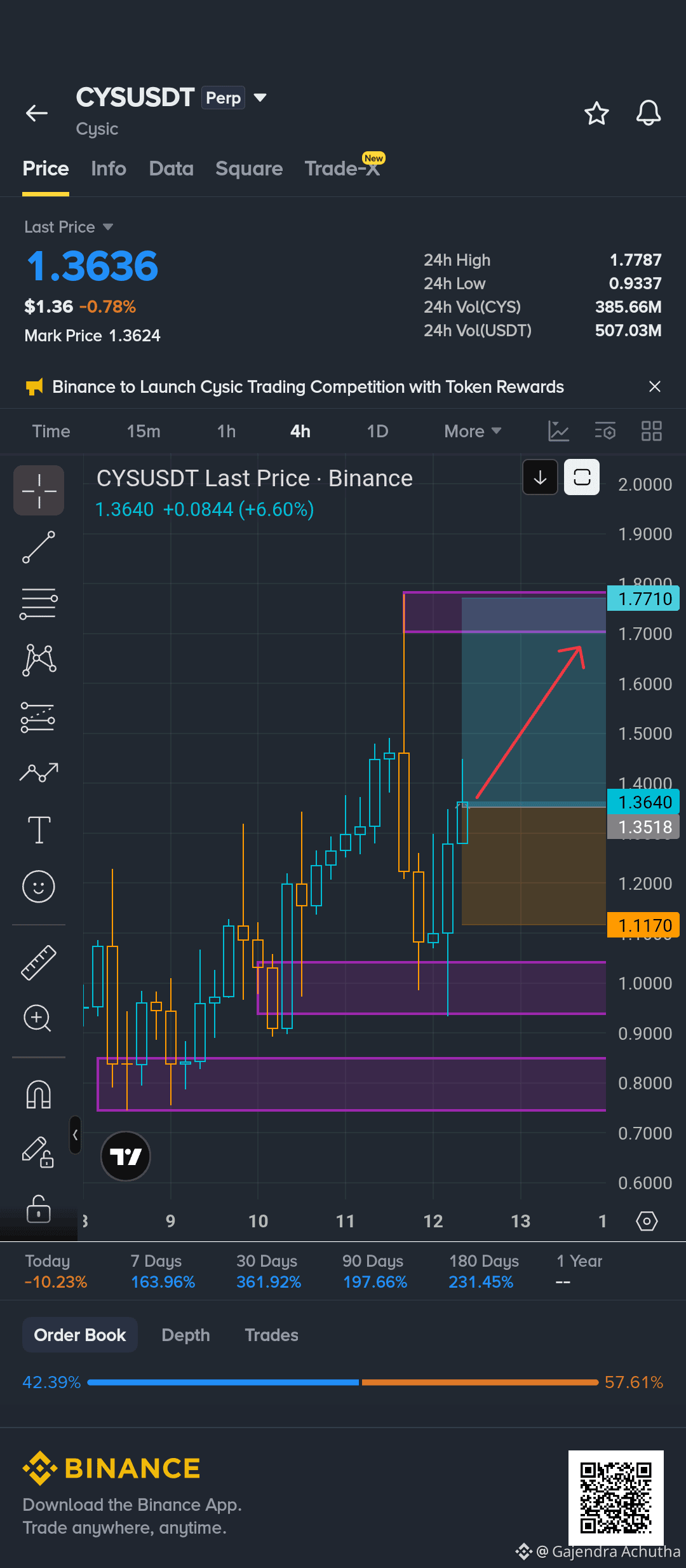
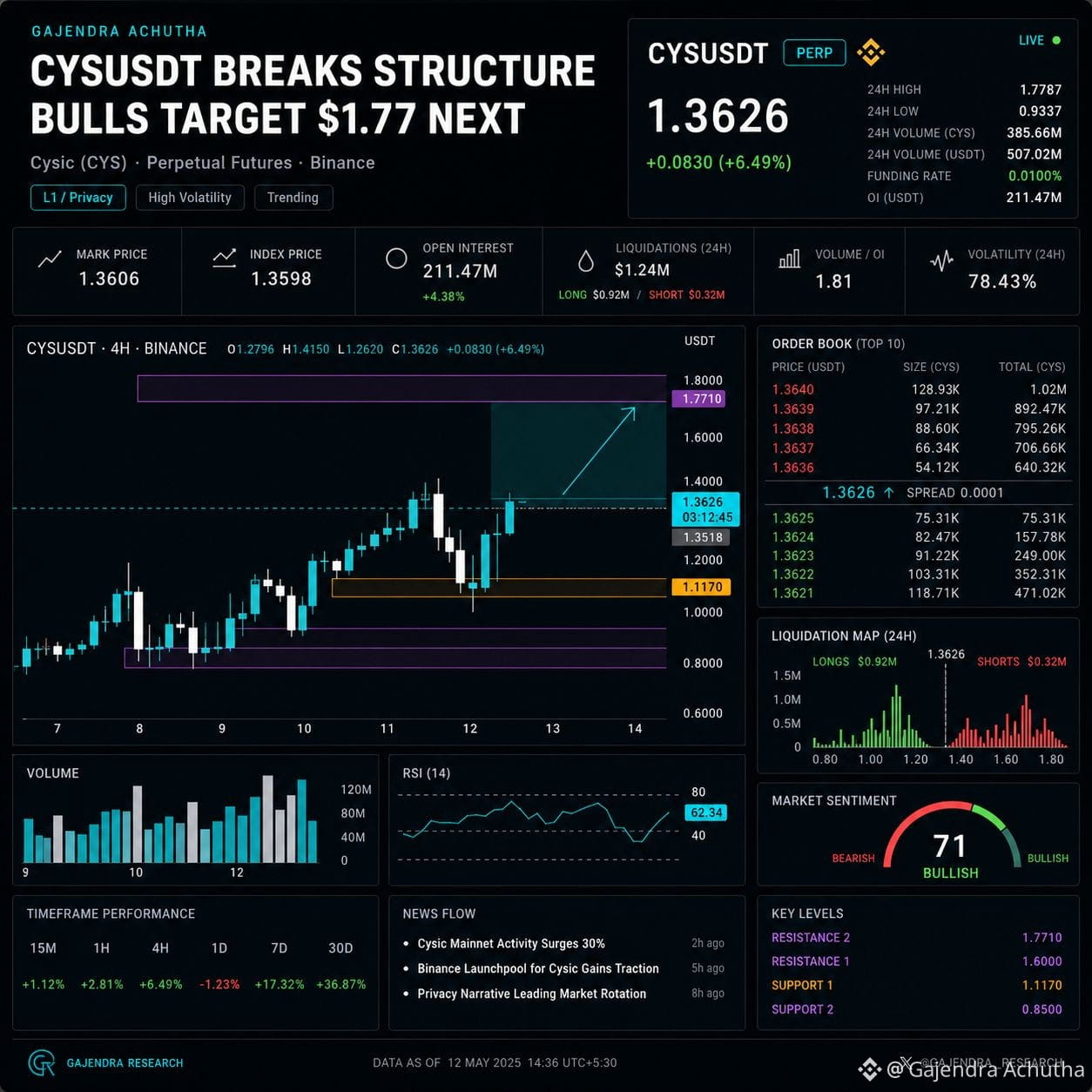
$CYS 🤯🤯🤯 – RECUPERACIÓN ALCISTA EN EL HORIZONTE DESPUÉS DE QUE SE RESOLVIÓ UNA AMENAZA DE SEGURIDAD 📈🔥
Long $CYS
Entrada: 1.3500 - 1.3600
SL: 1.2500
TP1: 1.4500
TP2: 1.7000
TP3: 1.7700
La Imagen Más Grande:
Perspectiva Fundamental:
— El equipo está trabajando activamente para restaurar los sistemas después de que una cuenta base comprometida.
— El alto volumen de operaciones de 24 horas muestra un gran interés del mercado a pesar de las recientes alertas de seguridad.
Lectura Técnica:
— El activo encontró un soporte horizontal clave alrededor del nivel 0.9000 esta semana.
— La presión repentina de venta creó una barrera de resistencia por encima cerca de la marca 1.7700.
— El gráfico de 4 horas muestra una estructura altamente volátil con mechas inferiores largas y prominentes.
— Un cierre de confirmación de vuelta por encima de 1.4000 validaría una continuación alcista inmediata.
#CYS #CryptoAnalysis #BinanceSquare
DYOR — no es asesoramiento financiero.
------------------------------
Si quieres refinar este plan, dímelo:
* Tu proporción de riesgo a recompensa preferida
* Si quieres una configuración Short en su lugar
* Una preferencia actualizada de stop-loss
Long $CYS
Entrada: 1.3500 - 1.3600
SL: 1.2500
TP1: 1.4500
TP2: 1.7000
TP3: 1.7700
La Imagen Más Grande:
Perspectiva Fundamental:
— El equipo está trabajando activamente para restaurar los sistemas después de que una cuenta base comprometida.
— El alto volumen de operaciones de 24 horas muestra un gran interés del mercado a pesar de las recientes alertas de seguridad.
Lectura Técnica:
— El activo encontró un soporte horizontal clave alrededor del nivel 0.9000 esta semana.
— La presión repentina de venta creó una barrera de resistencia por encima cerca de la marca 1.7700.
— El gráfico de 4 horas muestra una estructura altamente volátil con mechas inferiores largas y prominentes.
— Un cierre de confirmación de vuelta por encima de 1.4000 validaría una continuación alcista inmediata.
#CYS #CryptoAnalysis #BinanceSquare
DYOR — no es asesoramiento financiero.
------------------------------
Si quieres refinar este plan, dímelo:
* Tu proporción de riesgo a recompensa preferida
* Si quieres una configuración Short en su lugar
* Una preferencia actualizada de stop-loss
1
331
$CYS 🤯🤯🤯 – RECUPERACIÓN ALCISTA EN EL HORIZONTE DESPUÉS DE QUE SE RESOLVIÓ UNA AMENAZA DE SEGURIDAD 📈🔥
Long $CYS
Entrada: 1.3500 - 1.3600
SL: 1.2500
TP1: 1.4500
TP2: 1.7000
TP3: 1.7700
La Imagen Más Grande:
Perspectiva Fundamental:
— El equipo está trabajando activamente para restaurar los sistemas después de que una cuenta base comprometida.
— El alto volumen de operaciones de 24 horas muestra un gran interés del mercado a pesar de las recientes alertas de seguridad.
{future}(CYSUSDT)
Lectura Técnica:
— El activo encontró un soporte horizontal clave alrededor del nivel 0.9000 esta semana.
— La presión repentina de venta creó una barrera de resistencia por encima cerca de la marca 1.7700.
— El gráfico de 4 horas muestra una estructura altamente volátil con mechas inferiores largas y prominentes.
— Un cierre de confirmación de vuelta por encima de 1.4000 validaría una continuación alcista inmediata.
#CYS #CryptoAnalysis #BinanceSquare
DYOR — no es asesoramiento financiero.
------------------------------
Si quieres refinar este plan, dímelo:
* Tu proporción de riesgo a recompensa preferida
* Si quieres una configuración Short en su lugar
* Una preferencia actualizada de stop-loss
$CYS 🤯🤯🤯 – RECUPERACIÓN ALCISTA EN EL HORIZONTE DESPUÉS DE QUE SE RESOLVIÓ UNA AMENAZA DE SEGURIDAD 📈🔥
Long $CYS
Entrada: 1.3500 - 1.3600
SL: 1.2500
TP1: 1.4500
TP2: 1.7000
TP3: 1.7700
La Imagen Más Grande:
Perspectiva Fundamental:
— El equipo está trabajando activamente para restaurar los sistemas después de que una cuenta base comprometida.
— El alto volumen de operaciones de 24 horas muestra un gran interés del mercado a pesar de las recientes alertas de seguridad.
Lectura Técnica:
— El activo encontró un soporte horizontal clave alrededor del nivel 0.9000 esta semana.
— La presión repentina de venta creó una barrera de resistencia por encima cerca de la marca 1.7700.
— El gráfico de 4 horas muestra una estructura altamente volátil con mechas inferiores largas y prominentes.
— Un cierre de confirmación de vuelta por encima de 1.4000 validaría una continuación alcista inmediata.
#CYS #CryptoAnalysis #BinanceSquare
DYOR — no es asesoramiento financiero.
------------------------------
Si quieres refinar este plan, dímelo:
* Tu proporción de riesgo a recompensa preferida
* Si quieres una configuración Short en su lugar
* Una preferencia actualizada de stop-loss
Long $CYS
Entrada: 1.3500 - 1.3600
SL: 1.2500
TP1: 1.4500
TP2: 1.7000
TP3: 1.7700
La Imagen Más Grande:
Perspectiva Fundamental:
— El equipo está trabajando activamente para restaurar los sistemas después de que una cuenta base comprometida.
— El alto volumen de operaciones de 24 horas muestra un gran interés del mercado a pesar de las recientes alertas de seguridad.
Lectura Técnica:
— El activo encontró un soporte horizontal clave alrededor del nivel 0.9000 esta semana.
— La presión repentina de venta creó una barrera de resistencia por encima cerca de la marca 1.7700.
— El gráfico de 4 horas muestra una estructura altamente volátil con mechas inferiores largas y prominentes.
— Un cierre de confirmación de vuelta por encima de 1.4000 validaría una continuación alcista inmediata.
#CYS #CryptoAnalysis #BinanceSquare
DYOR — no es asesoramiento financiero.
------------------------------
Si quieres refinar este plan, dímelo:
* Tu proporción de riesgo a recompensa preferida
* Si quieres una configuración Short en su lugar
* Una preferencia actualizada de stop-loss
1
1
443
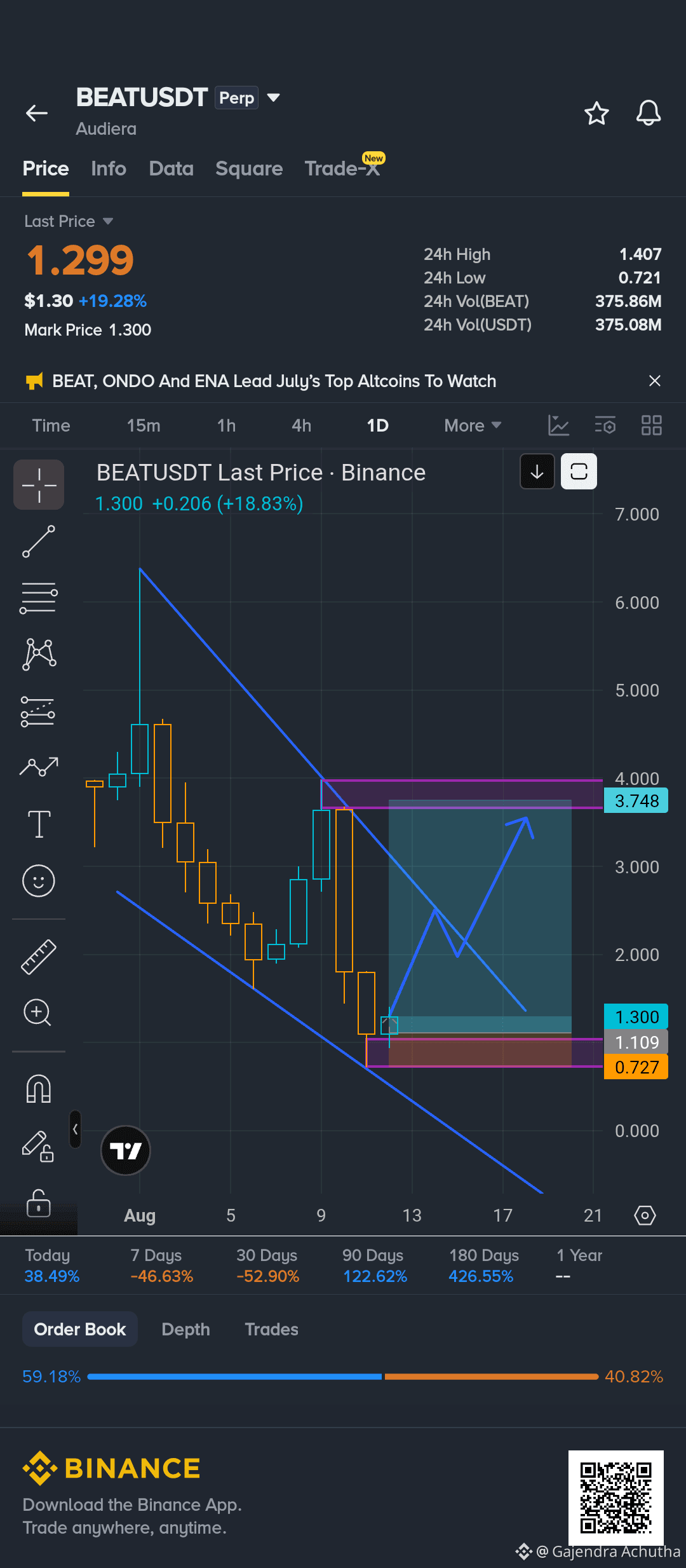
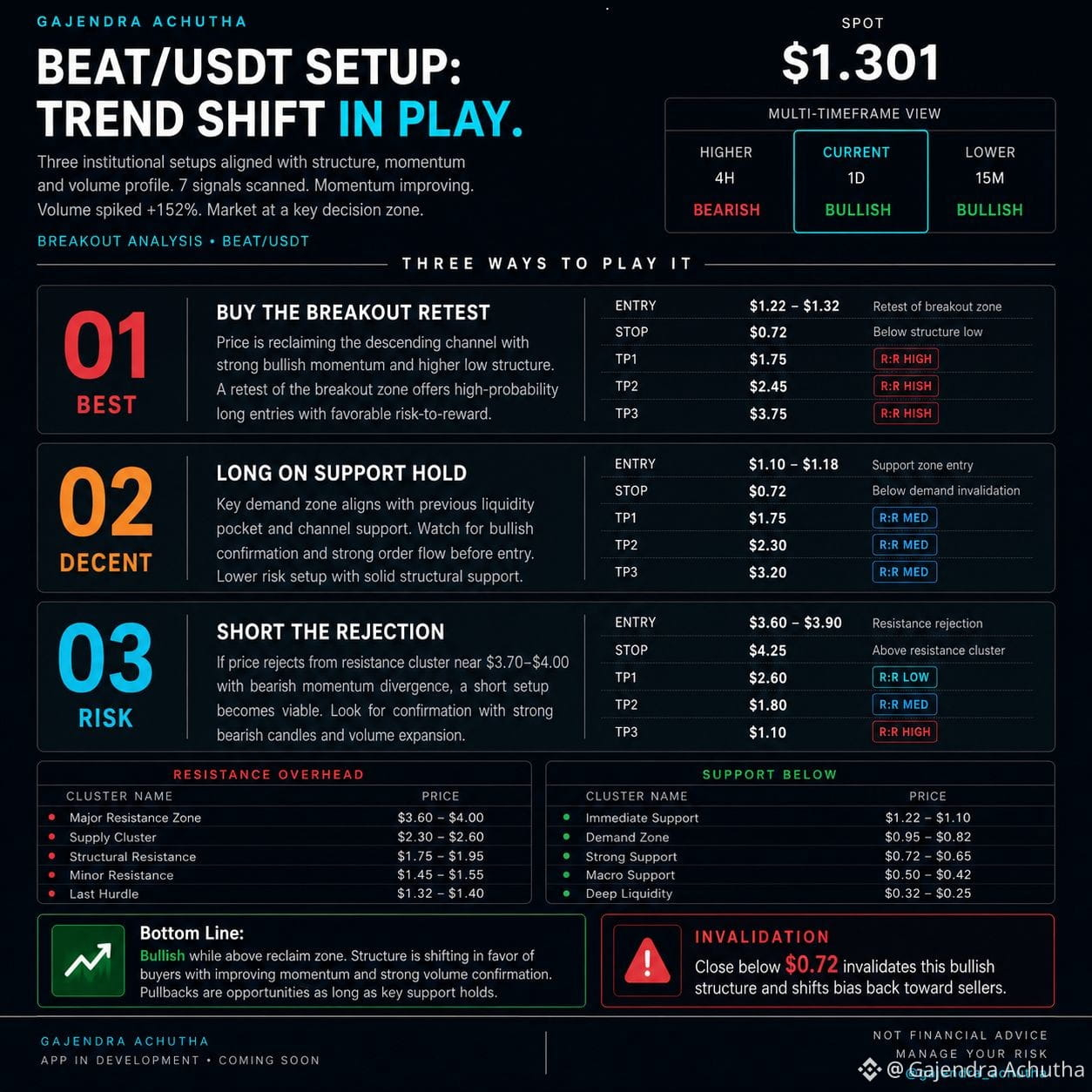
$BEAT 🤯🚨 – SOPORTE PUEDE RETENER Y DISPARAR UN REBOTE DE ALIVIO 📈⚡
CONFIGURACIÓN DE OPERACIÓN
Largo $BEAT
Entrada: 1.000 – 1.319
SL: 0.721
TP1: 2.000
TP2: 3.500
TP3: 4.000
El panorama más amplio:
Perspectiva fundamental:
— Las redes Layer-1 centradas en estructuras de micro-pagos y audios escalables están viendo un aumento renovado en el volumen diario de transacciones.
— La expansión estratégica del sector y los programas de incentivos a la comunidad están apoyando la retención de la red pese a vientos en contra más amplios del mercado.
Lectura técnica:
— El precio local ha establecido un soporte horizontal inmediato clave en el nivel psicológico de 1.000.
— La volatilidad está expandiéndose significativamente mientras el volumen de trading de 24 horas supera los 374 millones de USDT.
— La acción del precio está reaccionando con fuerza después de rebotar desde la estructura base del canal descendente.
— Busca una confirmación de ruptura limpia por encima de la resistencia horizontal inmediata de 1D en 1.316.
#BEAT #CryptoTrading #TechnicalAnalysis #SenateDelaysCLARITYActVoteToSeptember #MoneyGramExpandsCashCryptoServiceToSolana
{future}(BEATUSDT)
HAGAS TU PROPIA INVESTIGACIÓN (DYOR) — no es asesoramiento financiero.
$BEAT 🤯🚨 – SOPORTE PUEDE RETENER Y DISPARAR UN REBOTE DE ALIVIO 📈⚡
CONFIGURACIÓN DE OPERACIÓN
Largo $BEAT
Entrada: 1.000 – 1.319
SL: 0.721
TP1: 2.000
TP2: 3.500
TP3: 4.000
El panorama más amplio:
Perspectiva fundamental:
— Las redes Layer-1 centradas en estructuras de micro-pagos y audios escalables están viendo un aumento renovado en el volumen diario de transacciones.
— La expansión estratégica del sector y los programas de incentivos a la comunidad están apoyando la retención de la red pese a vientos en contra más amplios del mercado.
Lectura técnica:
— El precio local ha establecido un soporte horizontal inmediato clave en el nivel psicológico de 1.000.
— La volatilidad está expandiéndose significativamente mientras el volumen de trading de 24 horas supera los 374 millones de USDT.
— La acción del precio está reaccionando con fuerza después de rebotar desde la estructura base del canal descendente.
— Busca una confirmación de ruptura limpia por encima de la resistencia horizontal inmediata de 1D en 1.316.
#BEAT #CryptoTrading #TechnicalAnalysis #SenateDelaysCLARITYActVoteToSeptember #MoneyGramExpandsCashCryptoServiceToSolana
HAGAS TU PROPIA INVESTIGACIÓN (DYOR) — no es asesoramiento financiero.
CONFIGURACIÓN DE OPERACIÓN
Largo $BEAT
Entrada: 1.000 – 1.319
SL: 0.721
TP1: 2.000
TP2: 3.500
TP3: 4.000
El panorama más amplio:
Perspectiva fundamental:
— Las redes Layer-1 centradas en estructuras de micro-pagos y audios escalables están viendo un aumento renovado en el volumen diario de transacciones.
— La expansión estratégica del sector y los programas de incentivos a la comunidad están apoyando la retención de la red pese a vientos en contra más amplios del mercado.
Lectura técnica:
— El precio local ha establecido un soporte horizontal inmediato clave en el nivel psicológico de 1.000.
— La volatilidad está expandiéndose significativamente mientras el volumen de trading de 24 horas supera los 374 millones de USDT.
— La acción del precio está reaccionando con fuerza después de rebotar desde la estructura base del canal descendente.
— Busca una confirmación de ruptura limpia por encima de la resistencia horizontal inmediata de 1D en 1.316.
#BEAT #CryptoTrading #TechnicalAnalysis #SenateDelaysCLARITYActVoteToSeptember #MoneyGramExpandsCashCryptoServiceToSolana
HAGAS TU PROPIA INVESTIGACIÓN (DYOR) — no es asesoramiento financiero.
1
185
Operaciones en 30 d. de $HOLO 17.2 USDT
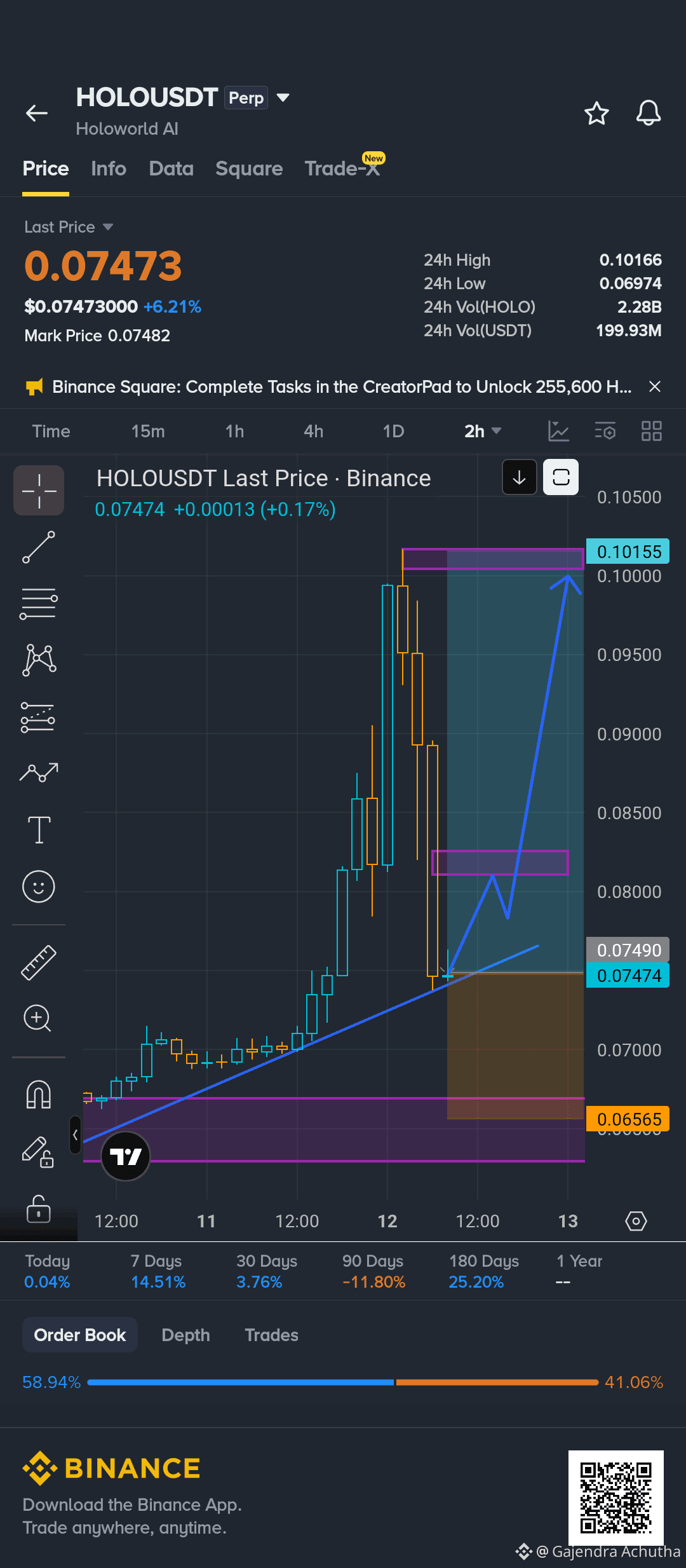
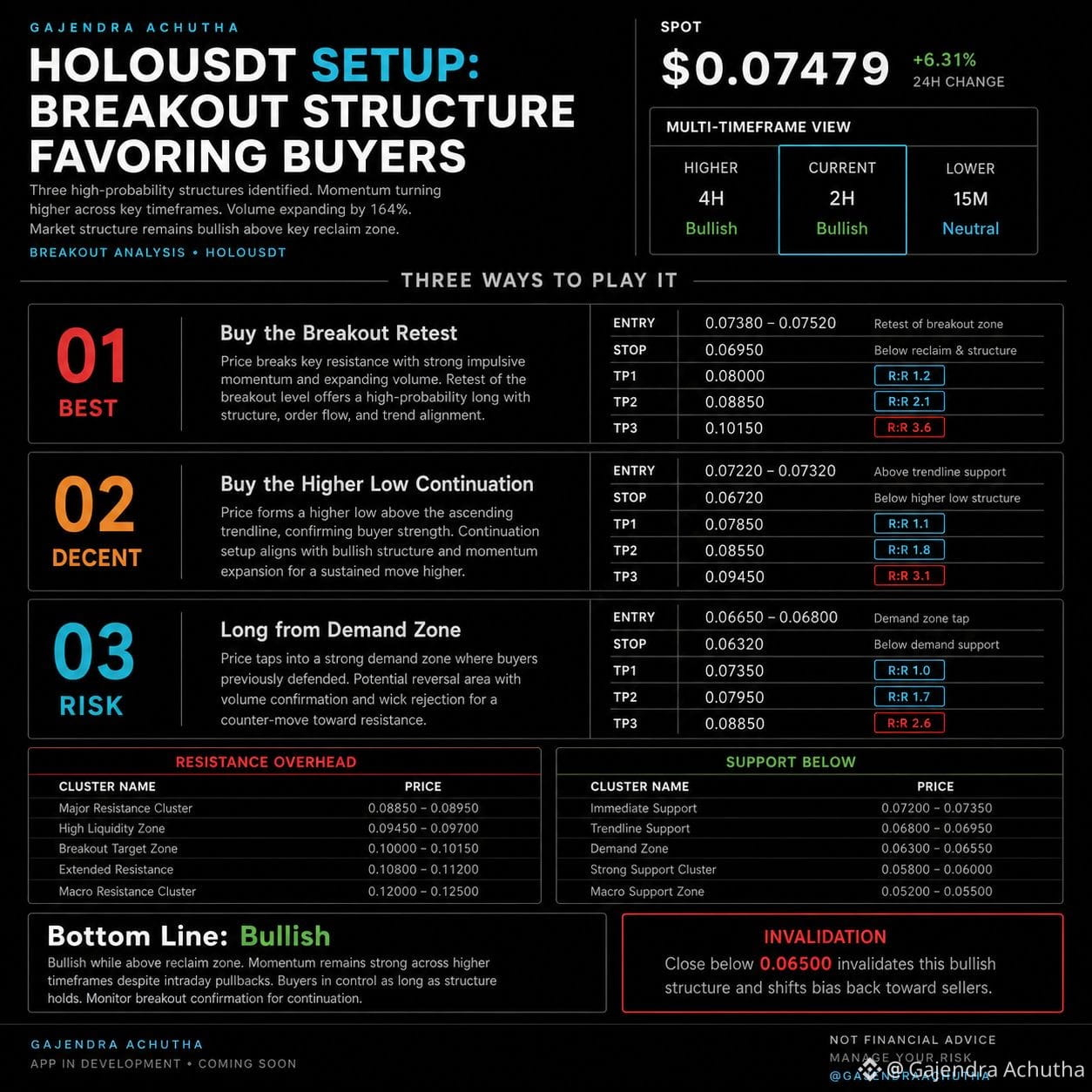
$HOLO 🤯🚨 – RETEST DE LAS PROMESAS DE SOPORTE DEL NÚCLEO: POSIBLE REBOTE SEGÚN LAS EXPECTATIVAS 📈⚡
Long $HOLO
Entrada: 0.074
94 - 0.07000
SL: 0.06500
TP1: 0.08500
TP2: 0.09500
TP3: 0.10166
El panorama más amplio:
Perspectiva fundamental:
— Binance añade HOLO, junto con otros tokens, como un nuevo activo prestable para impulsar la liquidez y la utilidad del mercado.
— Creciente integración dentro del ecosistema, ampliando el uso activo y las estructuras de soporte tokenómico.
{future}(HOLOUSDT)
Lectura técnica:
— Fuerte suelo de soporte establecido alrededor de la zona de demanda horizontal de 0.06500 en el gráfico.
— El volumen de trading de 24 horas alcanza 2.28B HOLO para destacar el interés activo del mercado y la participación.
— La volatilidad reciente impulsa la acción del precio a través de un pico brusco hasta el nivel 0.10166.
— La estructura del marco de 4 horas señala una fase de consolidación decisiva después de un retroceso pronunciado.
#HOLO #CryptoTrading #BinanceSquare #SenateDelaysCLARITYActVoteToSeptember #MoneyGramExpandsCashCryptoServiceToSolana
HÁZ TU PROPIA INVESTIGACIÓN (DYOR) — no es asesoramiento financiero.
$HOLO 🤯🚨 – RETEST DE LAS PROMESAS DE SOPORTE DEL NÚCLEO: POSIBLE REBOTE SEGÚN LAS EXPECTATIVAS 📈⚡
Long $HOLO
Entrada: 0.074
94 - 0.07000
SL: 0.06500
TP1: 0.08500
TP2: 0.09500
TP3: 0.10166
El panorama más amplio:
Perspectiva fundamental:
— Binance añade HOLO, junto con otros tokens, como un nuevo activo prestable para impulsar la liquidez y la utilidad del mercado.
— Creciente integración dentro del ecosistema, ampliando el uso activo y las estructuras de soporte tokenómico.
Lectura técnica:
— Fuerte suelo de soporte establecido alrededor de la zona de demanda horizontal de 0.06500 en el gráfico.
— El volumen de trading de 24 horas alcanza 2.28B HOLO para destacar el interés activo del mercado y la participación.
— La volatilidad reciente impulsa la acción del precio a través de un pico brusco hasta el nivel 0.10166.
— La estructura del marco de 4 horas señala una fase de consolidación decisiva después de un retroceso pronunciado.
#HOLO #CryptoTrading #BinanceSquare #SenateDelaysCLARITYActVoteToSeptember #MoneyGramExpandsCashCryptoServiceToSolana
HÁZ TU PROPIA INVESTIGACIÓN (DYOR) — no es asesoramiento financiero.
Long $HOLO
Entrada: 0.074
94 - 0.07000
SL: 0.06500
TP1: 0.08500
TP2: 0.09500
TP3: 0.10166
El panorama más amplio:
Perspectiva fundamental:
— Binance añade HOLO, junto con otros tokens, como un nuevo activo prestable para impulsar la liquidez y la utilidad del mercado.
— Creciente integración dentro del ecosistema, ampliando el uso activo y las estructuras de soporte tokenómico.
Lectura técnica:
— Fuerte suelo de soporte establecido alrededor de la zona de demanda horizontal de 0.06500 en el gráfico.
— El volumen de trading de 24 horas alcanza 2.28B HOLO para destacar el interés activo del mercado y la participación.
— La volatilidad reciente impulsa la acción del precio a través de un pico brusco hasta el nivel 0.10166.
— La estructura del marco de 4 horas señala una fase de consolidación decisiva después de un retroceso pronunciado.
#HOLO #CryptoTrading #BinanceSquare #SenateDelaysCLARITYActVoteToSeptember #MoneyGramExpandsCashCryptoServiceToSolana
HÁZ TU PROPIA INVESTIGACIÓN (DYOR) — no es asesoramiento financiero.
2
172
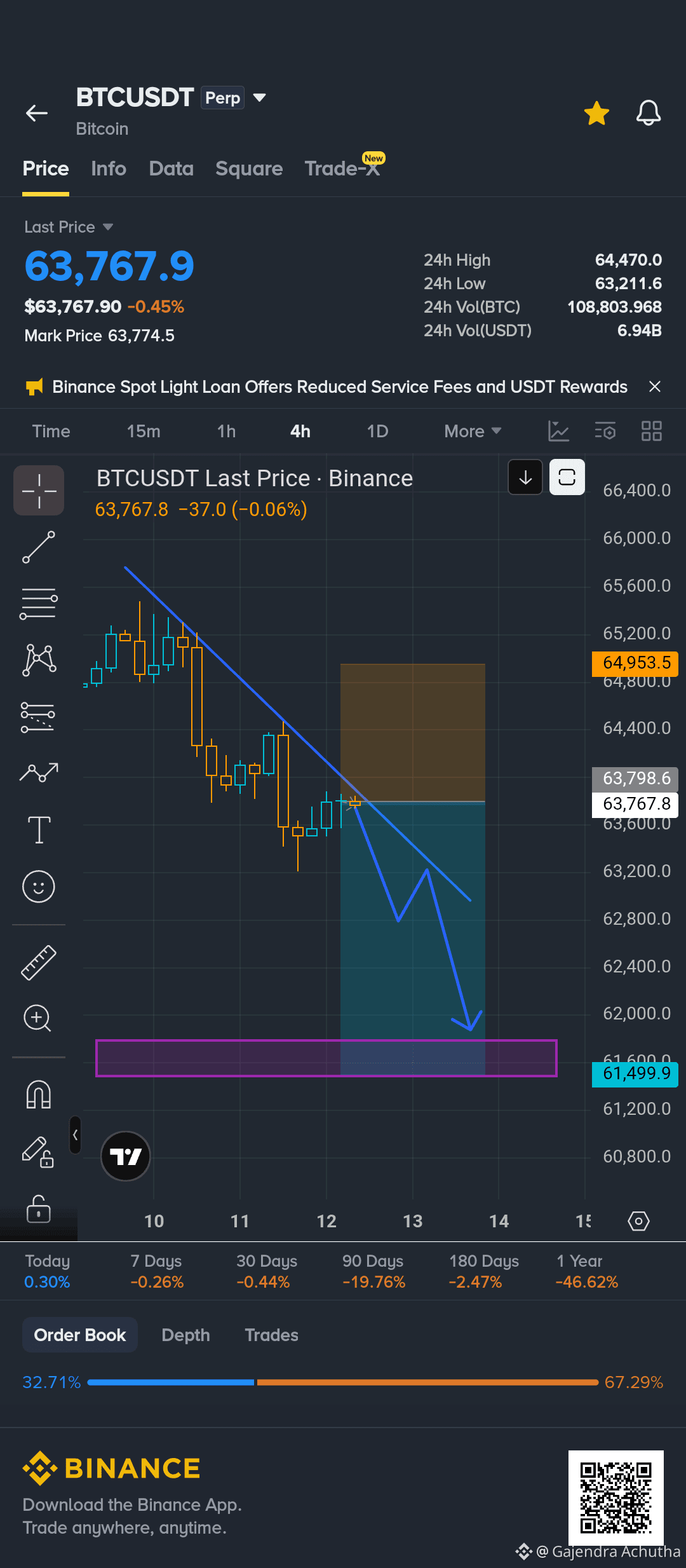
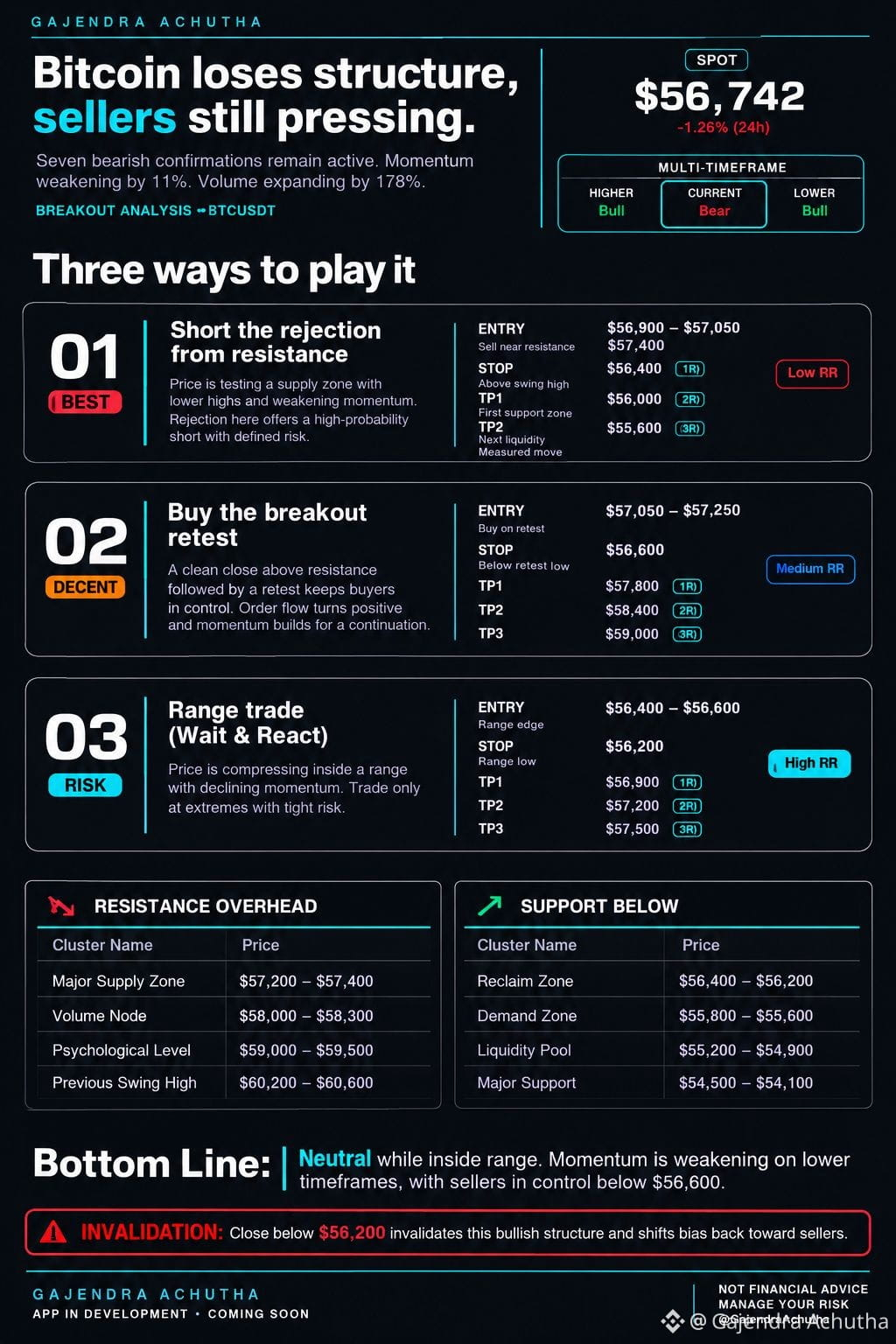
$BTC 🤯🚨 – SEÑALES DE RECHAZO DE UNA TENDENCIA A LA BAJA CONTINÚAN EL MOMENTUM CORTO 📉⚠️
Short $BTC
Entrada: 63,768.4 – 64,000.0
SL: 64,500.0
TP1: 63,211.6
TP2: 62,800.0
TP3: 61,200.0
El Panorama Más Grande:
Perspectiva Fundamental:
— El impulso de las primeras operaciones cae nuevamente mientras los participantes del mercado reducen el riesgo de sus posiciones antes de los próximos informes críticos de inflación.
— Los vientos en contra macroeconómicos prolongados permanecen activos, ya que las expectativas de tasas de interés más altas sostenidas presionan a los activos digitales que no generan rendimiento. [
Lectura Técnica:
— La resistencia principal inmediata se sitúa en el máximo intradía de 64,470.0, mientras que el soporte estructural clave espera más abajo en 63,211.6.
— Los indicadores del mercado muestran un impulso débil, con el precio de referencia cayendo a 63,768.4 junto con un retorno negativo de 24 horas de -0.44%.
— El gráfico de 1 hora muestra una línea de tendencia descendente establecida que continúa rechazando las subidas del precio.
— Un disparador de confirmación por debajo del nivel de 63,600.0 en el marco horario abre la puerta para una caída rápida hacia los objetivos inferiores.
#BTC #CryptoTrading #BinanceSquare #MoneyGramExpandsCashCryptoServiceToSolana #SenateDelaysCLARITYActVoteToSeptember
DYOR — no es asesoramiento financiero.
{future}(BTCUSDT)
$BTC 🤯🚨 – SEÑALES DE RECHAZO DE UNA TENDENCIA A LA BAJA CONTINÚAN EL MOMENTUM CORTO 📉⚠️
Short $BTC
Entrada: 63,768.4 – 64,000.0
SL: 64,500.0
TP1: 63,211.6
TP2: 62,800.0
TP3: 61,200.0
El Panorama Más Grande:
Perspectiva Fundamental:
— El impulso de las primeras operaciones cae nuevamente mientras los participantes del mercado reducen el riesgo de sus posiciones antes de los próximos informes críticos de inflación.
— Los vientos en contra macroeconómicos prolongados permanecen activos, ya que las expectativas de tasas de interés más altas sostenidas presionan a los activos digitales que no generan rendimiento. [
Lectura Técnica:
— La resistencia principal inmediata se sitúa en el máximo intradía de 64,470.0, mientras que el soporte estructural clave espera más abajo en 63,211.6.
— Los indicadores del mercado muestran un impulso débil, con el precio de referencia cayendo a 63,768.4 junto con un retorno negativo de 24 horas de -0.44%.
— El gráfico de 1 hora muestra una línea de tendencia descendente establecida que continúa rechazando las subidas del precio.
— Un disparador de confirmación por debajo del nivel de 63,600.0 en el marco horario abre la puerta para una caída rápida hacia los objetivos inferiores.
#BTC #CryptoTrading #BinanceSquare #MoneyGramExpandsCashCryptoServiceToSolana #SenateDelaysCLARITYActVoteToSeptember
DYOR — no es asesoramiento financiero.
Short $BTC
Entrada: 63,768.4 – 64,000.0
SL: 64,500.0
TP1: 63,211.6
TP2: 62,800.0
TP3: 61,200.0
El Panorama Más Grande:
Perspectiva Fundamental:
— El impulso de las primeras operaciones cae nuevamente mientras los participantes del mercado reducen el riesgo de sus posiciones antes de los próximos informes críticos de inflación.
— Los vientos en contra macroeconómicos prolongados permanecen activos, ya que las expectativas de tasas de interés más altas sostenidas presionan a los activos digitales que no generan rendimiento. [
Lectura Técnica:
— La resistencia principal inmediata se sitúa en el máximo intradía de 64,470.0, mientras que el soporte estructural clave espera más abajo en 63,211.6.
— Los indicadores del mercado muestran un impulso débil, con el precio de referencia cayendo a 63,768.4 junto con un retorno negativo de 24 horas de -0.44%.
— El gráfico de 1 hora muestra una línea de tendencia descendente establecida que continúa rechazando las subidas del precio.
— Un disparador de confirmación por debajo del nivel de 63,600.0 en el marco horario abre la puerta para una caída rápida hacia los objetivos inferiores.
#BTC #CryptoTrading #BinanceSquare #MoneyGramExpandsCashCryptoServiceToSolana #SenateDelaysCLARITYActVoteToSeptember
DYOR — no es asesoramiento financiero.
1
73
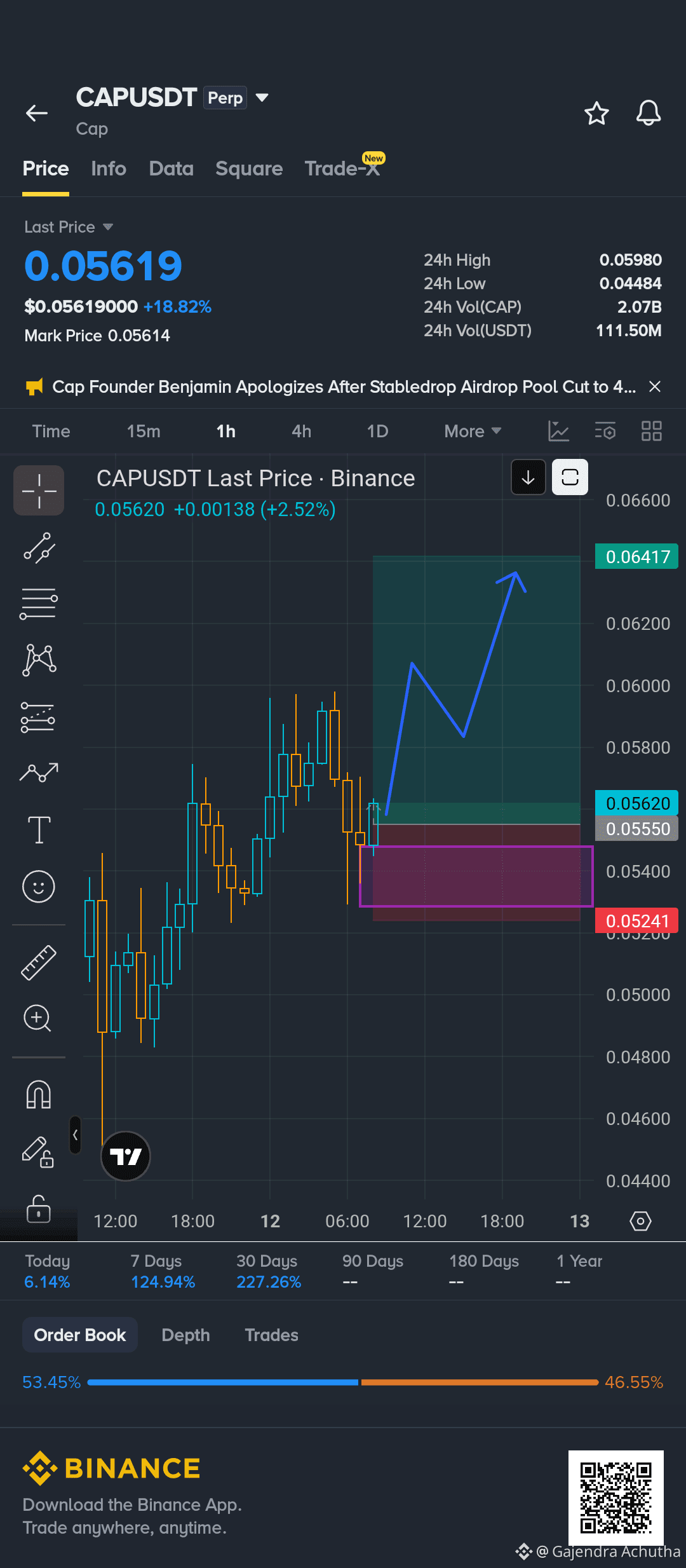
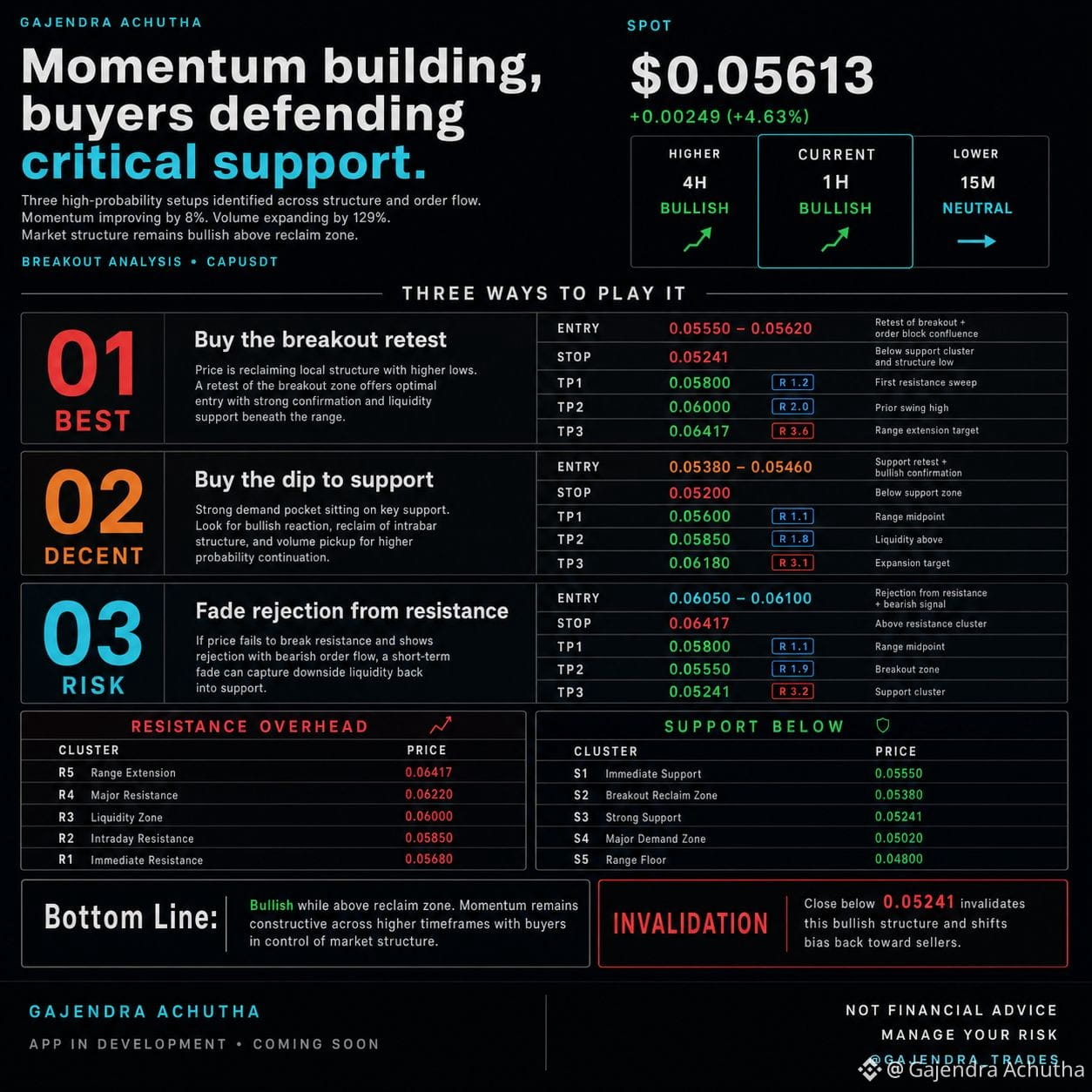
$CAP 🤯🚨– CAPUSDT MUESTRA UN FUERTE MOMENTO ALCISTA DESPUÉS DE ROMPER SU ÁREA BASE 🚀📈
Largo $CAP
Entrada: 0.05400 - 0.05584
SL: 0.04350
TP1: 0.05980
TP2: 0.06200
TP3: 0.06400
El Panorama Más Amplio:
Perspectiva Fundamental:
— La continua Binance Alpha Trading Competition está impulsando significativamente la participación de los usuarios y la demanda del token.
— Un volumen fuerte de 24 horas que alcanza 111.39M USDT refleja una adopción creciente en todo el sector y liquidez del mercado.
Lectura Técnica:
— El activo ha establecido un sólido soporte alrededor de la zona de 0.04400 durante las recientes consolidaciones.
— Un repentino aumento en el volumen de transacciones de 24 horas señala una acumulación fuerte por parte de los participantes del mercado.
— Mínimos más altos claros en el marco de 4 horas apuntan a una tendencia alcista estructurada y sostenible.
— Romper por encima del nivel clave de resistencia psicológica de 0.05600 actúa como nuestro disparador de confirmación.
#CAP #CryptoTrading #TechnicalAnalysis #USJulyCPI&PPIDueThisWeek #MoneyGramExpandsCashCryptoServiceToSolana
HAZ TU PROPIO INVESTIGADO — no es asesoramiento financiero.
{future}(CAPUSDT)
$CAP 🤯🚨– CAPUSDT MUESTRA UN FUERTE MOMENTO ALCISTA DESPUÉS DE ROMPER SU ÁREA BASE 🚀📈
Largo $CAP
Entrada: 0.05400 - 0.05584
SL: 0.04350
TP1: 0.05980
TP2: 0.06200
TP3: 0.06400
El Panorama Más Amplio:
Perspectiva Fundamental:
— La continua Binance Alpha Trading Competition está impulsando significativamente la participación de los usuarios y la demanda del token.
— Un volumen fuerte de 24 horas que alcanza 111.39M USDT refleja una adopción creciente en todo el sector y liquidez del mercado.
Lectura Técnica:
— El activo ha establecido un sólido soporte alrededor de la zona de 0.04400 durante las recientes consolidaciones.
— Un repentino aumento en el volumen de transacciones de 24 horas señala una acumulación fuerte por parte de los participantes del mercado.
— Mínimos más altos claros en el marco de 4 horas apuntan a una tendencia alcista estructurada y sostenible.
— Romper por encima del nivel clave de resistencia psicológica de 0.05600 actúa como nuestro disparador de confirmación.
#CAP #CryptoTrading #TechnicalAnalysis #USJulyCPI&PPIDueThisWeek #MoneyGramExpandsCashCryptoServiceToSolana
HAZ TU PROPIO INVESTIGADO — no es asesoramiento financiero.
Largo $CAP
Entrada: 0.05400 - 0.05584
SL: 0.04350
TP1: 0.05980
TP2: 0.06200
TP3: 0.06400
El Panorama Más Amplio:
Perspectiva Fundamental:
— La continua Binance Alpha Trading Competition está impulsando significativamente la participación de los usuarios y la demanda del token.
— Un volumen fuerte de 24 horas que alcanza 111.39M USDT refleja una adopción creciente en todo el sector y liquidez del mercado.
Lectura Técnica:
— El activo ha establecido un sólido soporte alrededor de la zona de 0.04400 durante las recientes consolidaciones.
— Un repentino aumento en el volumen de transacciones de 24 horas señala una acumulación fuerte por parte de los participantes del mercado.
— Mínimos más altos claros en el marco de 4 horas apuntan a una tendencia alcista estructurada y sostenible.
— Romper por encima del nivel clave de resistencia psicológica de 0.05600 actúa como nuestro disparador de confirmación.
#CAP #CryptoTrading #TechnicalAnalysis #USJulyCPI&PPIDueThisWeek #MoneyGramExpandsCashCryptoServiceToSolana
HAZ TU PROPIO INVESTIGADO — no es asesoramiento financiero.
1
110
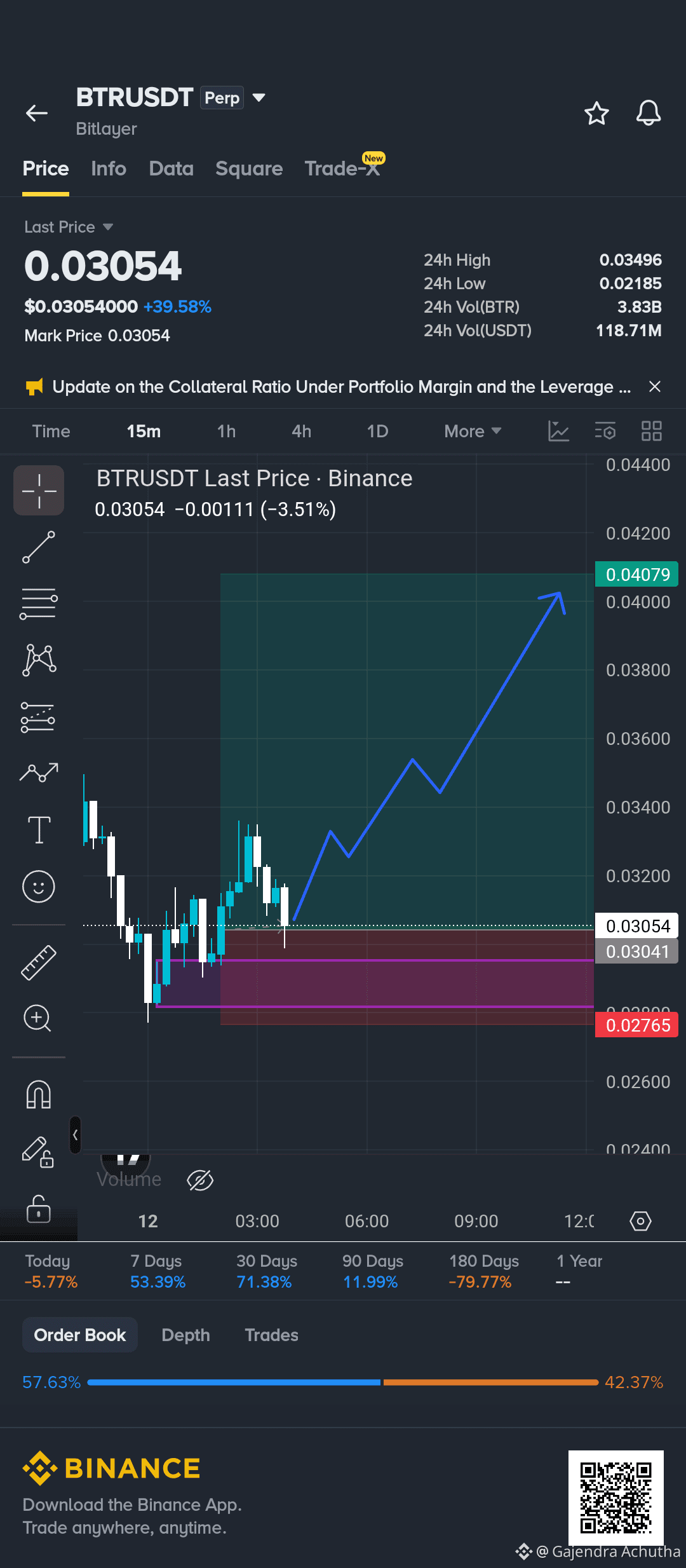
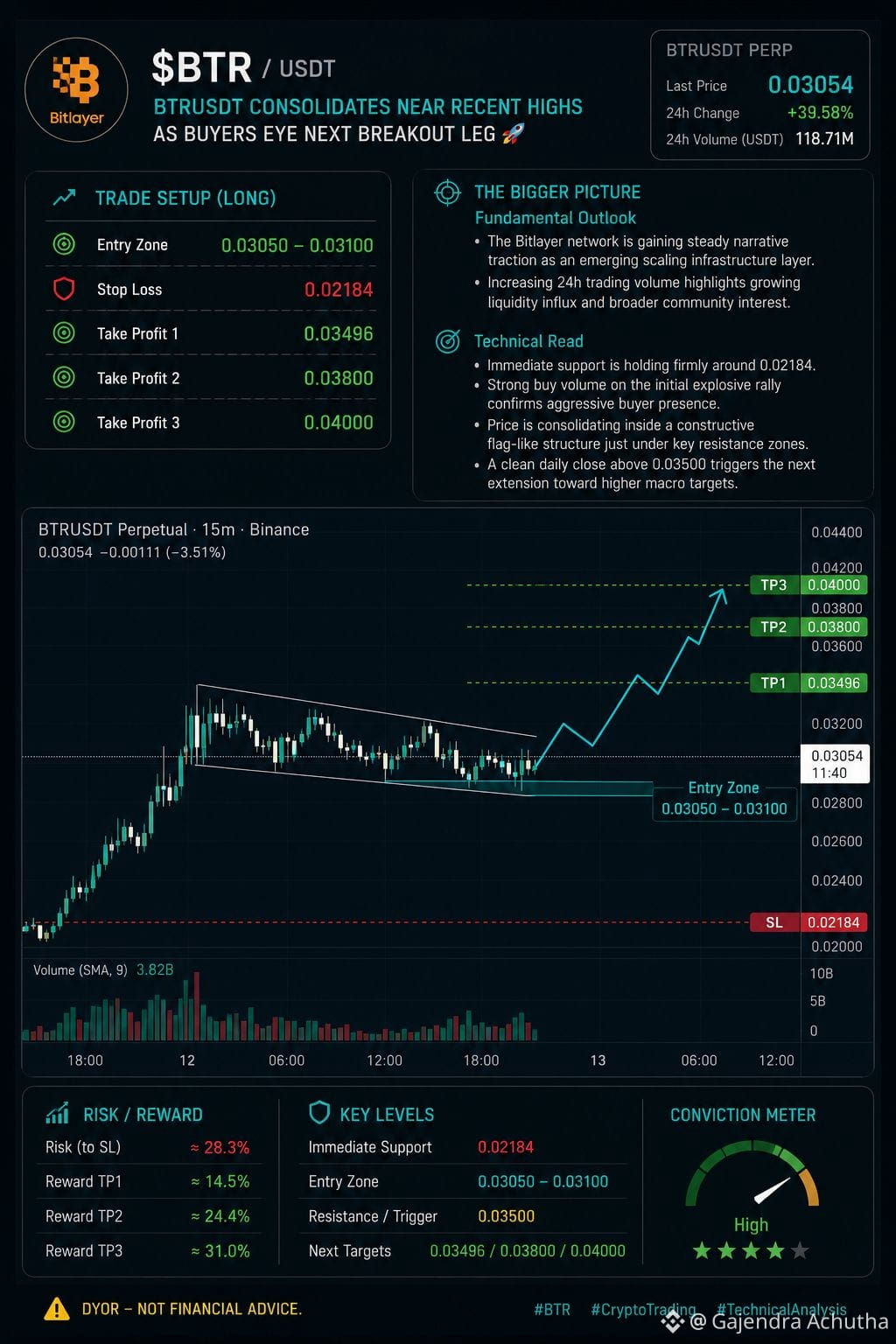
$BTR 🤯🚨– BTRUSDT CONSOLIDA CERCA DE MÁXIMOS RECIENTES MIENTRAS LOS COMPRADORES APUNTAN AL PRÓXIMO DESBLOQUEO LEG 📈🔥
CONFIGURACIÓN DE LA OPERACIÓN
Long $BTR
Entrada: 0.03050 - 0.03100
SL: 0.02184
TP1: 0.03496
TP2: 0.03800
TP3: 0.04000
La imagen más grande:
Perspectiva Fundamental
— La red Bitlayer está mostrando una tracción narrativa constante como una capa emergente de infraestructura de escalado.
— El aumento del volumen de operaciones en 24 horas resalta una mayor entrada de liquidez y el interés de una comunidad más amplia.
Lectura Técnica
— El soporte inmediato se mantiene firme alrededor del nivel mínimo de 24h de 0.02184.
— Se observa un volumen de compra fuerte en el rally explosivo inicial, lo que confirma la presencia agresiva de compradores.
— El precio actualmente consolida dentro de una estructura tipo bandera constructiva justo por debajo de zonas psicológicas clave.
— Un cierre diario limpio por encima del nivel de resistencia 0.03500 activa la siguiente extensión hacia objetivos macro más altos.
#BTR #CryptoTrading #TechnicalAnalysis #SheinToStartHKIPOBookbuildingAsSoonAsNextWeek #SenateDelaysCLARITYActVoteToSeptember
HACKEA TU PROPIO ANÁLISIS (DYOR) — no es asesoramiento financiero.
{future}(BTRUSDT)
$BTR 🤯🚨– BTRUSDT CONSOLIDA CERCA DE MÁXIMOS RECIENTES MIENTRAS LOS COMPRADORES APUNTAN AL PRÓXIMO DESBLOQUEO LEG 📈🔥
CONFIGURACIÓN DE LA OPERACIÓN
Long $BTR
Entrada: 0.03050 - 0.03100
SL: 0.02184
TP1: 0.03496
TP2: 0.03800
TP3: 0.04000
La imagen más grande:
Perspectiva Fundamental
— La red Bitlayer está mostrando una tracción narrativa constante como una capa emergente de infraestructura de escalado.
— El aumento del volumen de operaciones en 24 horas resalta una mayor entrada de liquidez y el interés de una comunidad más amplia.
Lectura Técnica
— El soporte inmediato se mantiene firme alrededor del nivel mínimo de 24h de 0.02184.
— Se observa un volumen de compra fuerte en el rally explosivo inicial, lo que confirma la presencia agresiva de compradores.
— El precio actualmente consolida dentro de una estructura tipo bandera constructiva justo por debajo de zonas psicológicas clave.
— Un cierre diario limpio por encima del nivel de resistencia 0.03500 activa la siguiente extensión hacia objetivos macro más altos.
#BTR #CryptoTrading #TechnicalAnalysis #SheinToStartHKIPOBookbuildingAsSoonAsNextWeek #SenateDelaysCLARITYActVoteToSeptember
HACKEA TU PROPIO ANÁLISIS (DYOR) — no es asesoramiento financiero.
CONFIGURACIÓN DE LA OPERACIÓN
Long $BTR
Entrada: 0.03050 - 0.03100
SL: 0.02184
TP1: 0.03496
TP2: 0.03800
TP3: 0.04000
La imagen más grande:
Perspectiva Fundamental
— La red Bitlayer está mostrando una tracción narrativa constante como una capa emergente de infraestructura de escalado.
— El aumento del volumen de operaciones en 24 horas resalta una mayor entrada de liquidez y el interés de una comunidad más amplia.
Lectura Técnica
— El soporte inmediato se mantiene firme alrededor del nivel mínimo de 24h de 0.02184.
— Se observa un volumen de compra fuerte en el rally explosivo inicial, lo que confirma la presencia agresiva de compradores.
— El precio actualmente consolida dentro de una estructura tipo bandera constructiva justo por debajo de zonas psicológicas clave.
— Un cierre diario limpio por encima del nivel de resistencia 0.03500 activa la siguiente extensión hacia objetivos macro más altos.
#BTR #CryptoTrading #TechnicalAnalysis #SheinToStartHKIPOBookbuildingAsSoonAsNextWeek #SenateDelaysCLARITYActVoteToSeptember
HACKEA TU PROPIO ANÁLISIS (DYOR) — no es asesoramiento financiero.
1
92
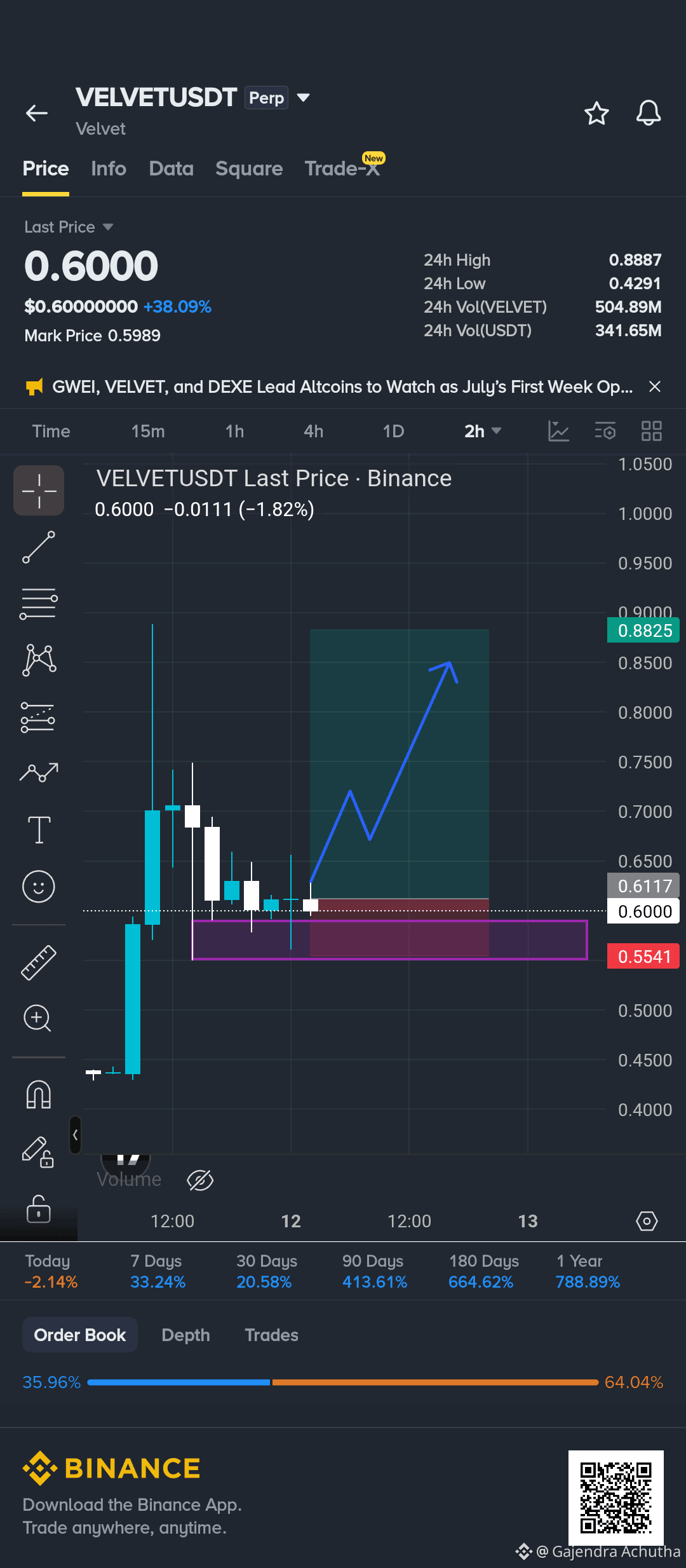
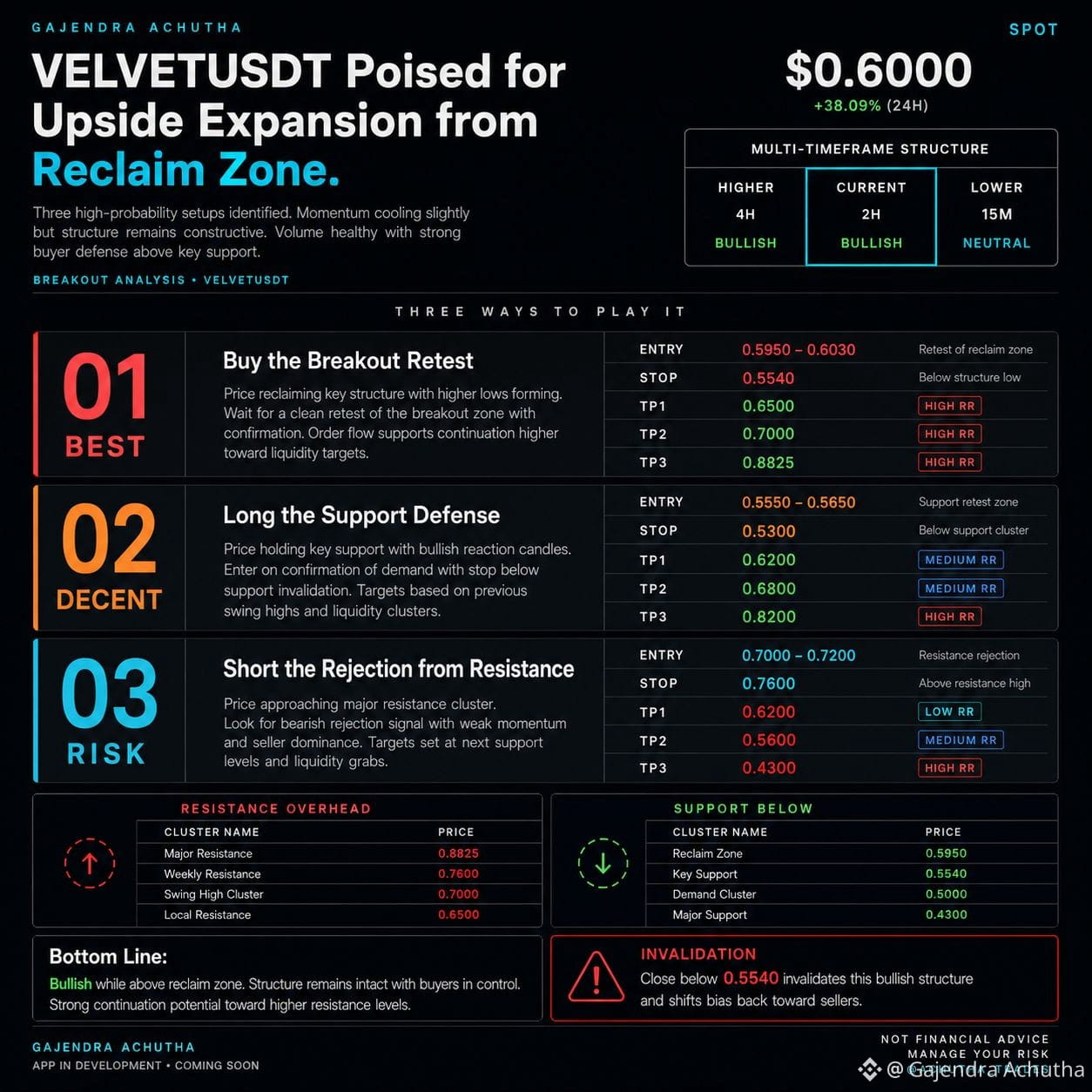
$VELVET 🤯🚨 – EL IMPULSO ALCISTA SE DISPARA 41% MIENTRAS LOS COMPRADORES DOMINAN EL GRÁFICO 🚀📈
Long $VELVET
Entrada: 0.6139 - 0.6140
SL: 0.4291
TP1: 0.7000
TP2: 0.8500
TP3: 0.8887
La Imagen Más Amplia:
Perspectiva Fundamental:
— El activo está experimentando una enorme entrada de liquidez, con el volumen de operaciones de 24 horas superando los 341 millones de USDT.
— La fuerte demanda del mercado impulsa una rápida apreciación del precio del 41.54% dentro del ciclo diario actual.
{future}(VELVETUSDT)
Lectura Técnica:
— El precio encuentra un soporte técnico inmediato cerca del nivel psicológico 0.6000.
— El volumen de operaciones muestra un aumento significativo de compra en la expansión reciente de plazos inferiores.
— El gráfico presenta una ruptura vertical marcada, seguida de una breve pausa de consolidación.
— Mantenerse por encima del cierre de la vela de 2h activa la continuación hacia el máximo reciente de 0.8887.
DYOR — no es un consejo financiero.
#VELVET #CryptoTrading #TechnicalAnalysis #SheinToStartHKIPOBookbuildingAsSoonAsNextWeek #SenateDelaysCLARITYActVoteToSeptember
Avísame si quieres que ajuste el stop loss o los niveles de take profit según tu estrategia específica de gestión del riesgo.
$VELVET 🤯🚨 – EL IMPULSO ALCISTA SE DISPARA 41% MIENTRAS LOS COMPRADORES DOMINAN EL GRÁFICO 🚀📈
Long $VELVET
Entrada: 0.6139 - 0.6140
SL: 0.4291
TP1: 0.7000
TP2: 0.8500
TP3: 0.8887
La Imagen Más Amplia:
Perspectiva Fundamental:
— El activo está experimentando una enorme entrada de liquidez, con el volumen de operaciones de 24 horas superando los 341 millones de USDT.
— La fuerte demanda del mercado impulsa una rápida apreciación del precio del 41.54% dentro del ciclo diario actual.
Lectura Técnica:
— El precio encuentra un soporte técnico inmediato cerca del nivel psicológico 0.6000.
— El volumen de operaciones muestra un aumento significativo de compra en la expansión reciente de plazos inferiores.
— El gráfico presenta una ruptura vertical marcada, seguida de una breve pausa de consolidación.
— Mantenerse por encima del cierre de la vela de 2h activa la continuación hacia el máximo reciente de 0.8887.
DYOR — no es un consejo financiero.
#VELVET #CryptoTrading #TechnicalAnalysis #SheinToStartHKIPOBookbuildingAsSoonAsNextWeek #SenateDelaysCLARITYActVoteToSeptember
Avísame si quieres que ajuste el stop loss o los niveles de take profit según tu estrategia específica de gestión del riesgo.
Long $VELVET
Entrada: 0.6139 - 0.6140
SL: 0.4291
TP1: 0.7000
TP2: 0.8500
TP3: 0.8887
La Imagen Más Amplia:
Perspectiva Fundamental:
— El activo está experimentando una enorme entrada de liquidez, con el volumen de operaciones de 24 horas superando los 341 millones de USDT.
— La fuerte demanda del mercado impulsa una rápida apreciación del precio del 41.54% dentro del ciclo diario actual.
Lectura Técnica:
— El precio encuentra un soporte técnico inmediato cerca del nivel psicológico 0.6000.
— El volumen de operaciones muestra un aumento significativo de compra en la expansión reciente de plazos inferiores.
— El gráfico presenta una ruptura vertical marcada, seguida de una breve pausa de consolidación.
— Mantenerse por encima del cierre de la vela de 2h activa la continuación hacia el máximo reciente de 0.8887.
DYOR — no es un consejo financiero.
#VELVET #CryptoTrading #TechnicalAnalysis #SheinToStartHKIPOBookbuildingAsSoonAsNextWeek #SenateDelaysCLARITYActVoteToSeptember
Avísame si quieres que ajuste el stop loss o los niveles de take profit según tu estrategia específica de gestión del riesgo.
1
144
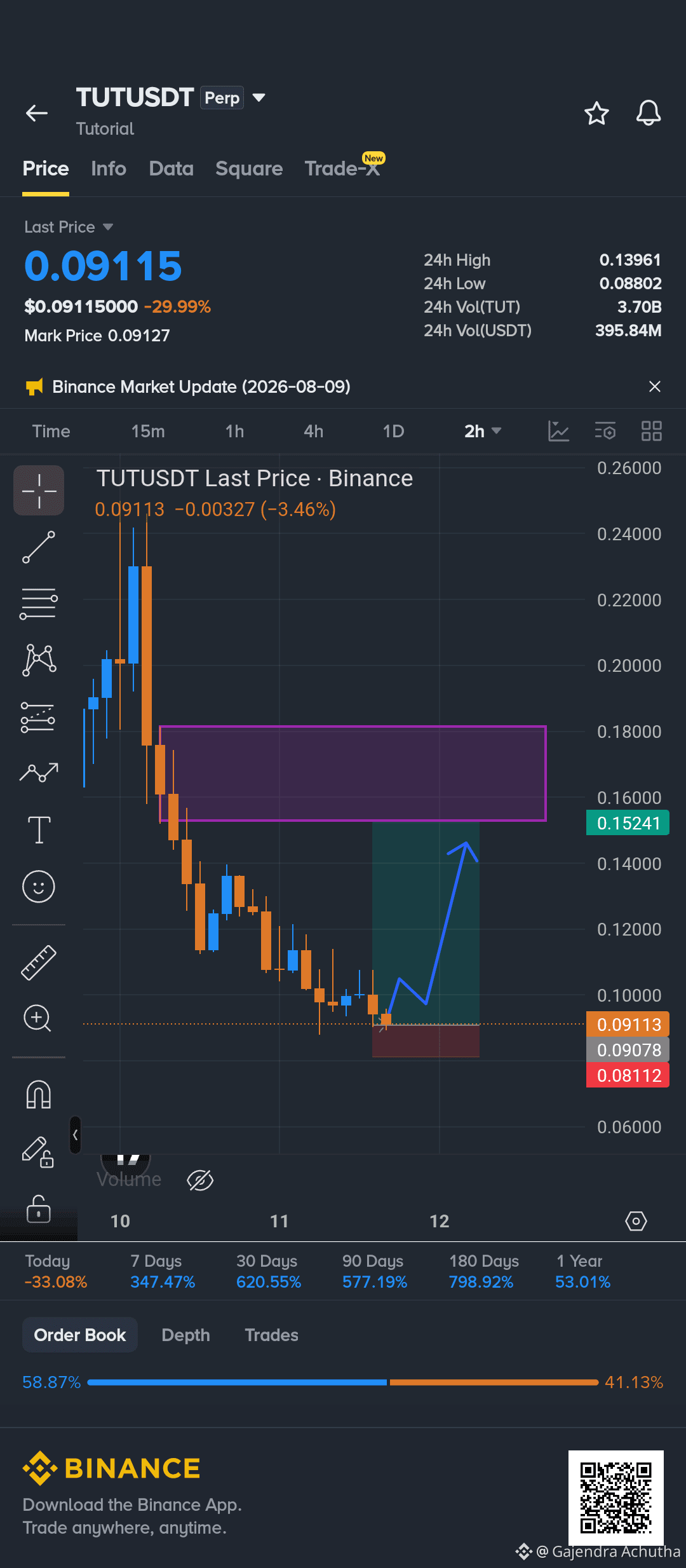
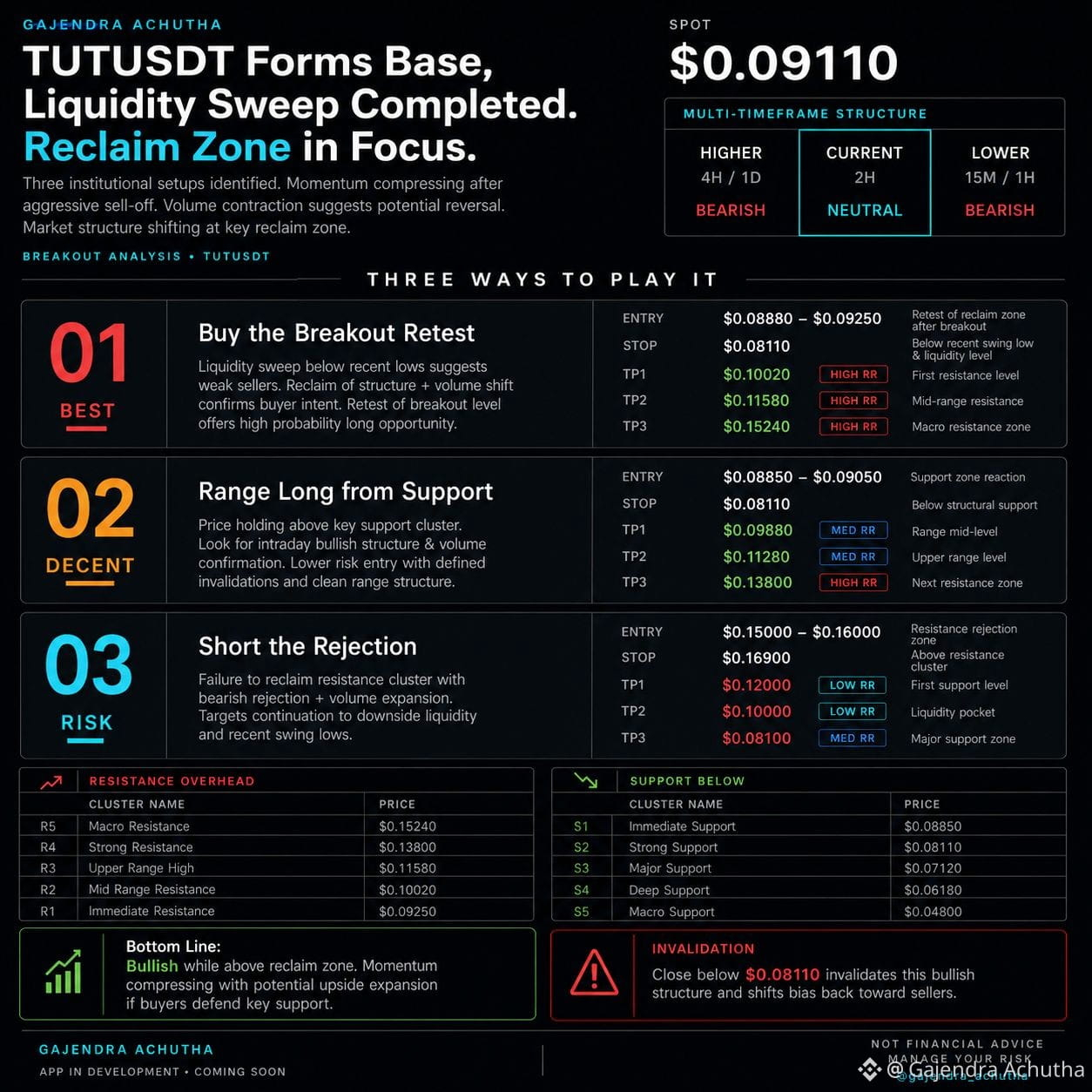
$TUT 🚨🤯– LA PRESIÓN DE VENTA SOBRECARGADA ENFRENTA SOPORTE DE ANCLA IMPORTANTE MIENTRAS LOS COMPRADORES ENTRAN PARA UN POSIBLE REBOTE 📉🔥
Long $TUT
Entrada: 0.08802 - 0.09088
SL: 0.08000
TP1: 0.10000
TP2: 0.13961
TP3: 0.15000
La Imagen Más Amplia:
Perspectiva Fundamental (exactamente 2 puntos):
— La mayor turbulencia en el mercado desencadena fuertes liquidaciones de futuros perpetuos en todo el sector.
— El creciente interés global en pares de trading perpetuo impulsa la participación general en la plataforma.
Lectura Técnica (exactamente 4 puntos):
— La fuerte demanda histórica está actuando como defensa cerca del nivel 0.08802.
— Los picos masivos de volumen de trading señalan acumulación intensa por grandes compradores.
— La caída pronunciada del precio indica condiciones de sobreventa profunda a corto plazo.
— La finalización de la vela de 2 horas sirve como punto de confirmación clave.
#TUTUSDT #CryptoTrading #TechnicalAnalysis #SheinToStartHKIPOBookbuildingAsSoonAsNextWeek #BlackRockCanadaLaunchesBitcoinLinkedETF
DYOR — no es asesoramiento financiero.
{future}(TUTUSDT)
$TUT 🚨🤯– LA PRESIÓN DE VENTA SOBRECARGADA ENFRENTA SOPORTE DE ANCLA IMPORTANTE MIENTRAS LOS COMPRADORES ENTRAN PARA UN POSIBLE REBOTE 📉🔥
Long $TUT
Entrada: 0.08802 - 0.09088
SL: 0.08000
TP1: 0.10000
TP2: 0.13961
TP3: 0.15000
La Imagen Más Amplia:
Perspectiva Fundamental (exactamente 2 puntos):
— La mayor turbulencia en el mercado desencadena fuertes liquidaciones de futuros perpetuos en todo el sector.
— El creciente interés global en pares de trading perpetuo impulsa la participación general en la plataforma.
Lectura Técnica (exactamente 4 puntos):
— La fuerte demanda histórica está actuando como defensa cerca del nivel 0.08802.
— Los picos masivos de volumen de trading señalan acumulación intensa por grandes compradores.
— La caída pronunciada del precio indica condiciones de sobreventa profunda a corto plazo.
— La finalización de la vela de 2 horas sirve como punto de confirmación clave.
#TUTUSDT #CryptoTrading #TechnicalAnalysis #SheinToStartHKIPOBookbuildingAsSoonAsNextWeek #BlackRockCanadaLaunchesBitcoinLinkedETF
DYOR — no es asesoramiento financiero.
Long $TUT
Entrada: 0.08802 - 0.09088
SL: 0.08000
TP1: 0.10000
TP2: 0.13961
TP3: 0.15000
La Imagen Más Amplia:
Perspectiva Fundamental (exactamente 2 puntos):
— La mayor turbulencia en el mercado desencadena fuertes liquidaciones de futuros perpetuos en todo el sector.
— El creciente interés global en pares de trading perpetuo impulsa la participación general en la plataforma.
Lectura Técnica (exactamente 4 puntos):
— La fuerte demanda histórica está actuando como defensa cerca del nivel 0.08802.
— Los picos masivos de volumen de trading señalan acumulación intensa por grandes compradores.
— La caída pronunciada del precio indica condiciones de sobreventa profunda a corto plazo.
— La finalización de la vela de 2 horas sirve como punto de confirmación clave.
#TUTUSDT #CryptoTrading #TechnicalAnalysis #SheinToStartHKIPOBookbuildingAsSoonAsNextWeek #BlackRockCanadaLaunchesBitcoinLinkedETF
DYOR — no es asesoramiento financiero.
1
189
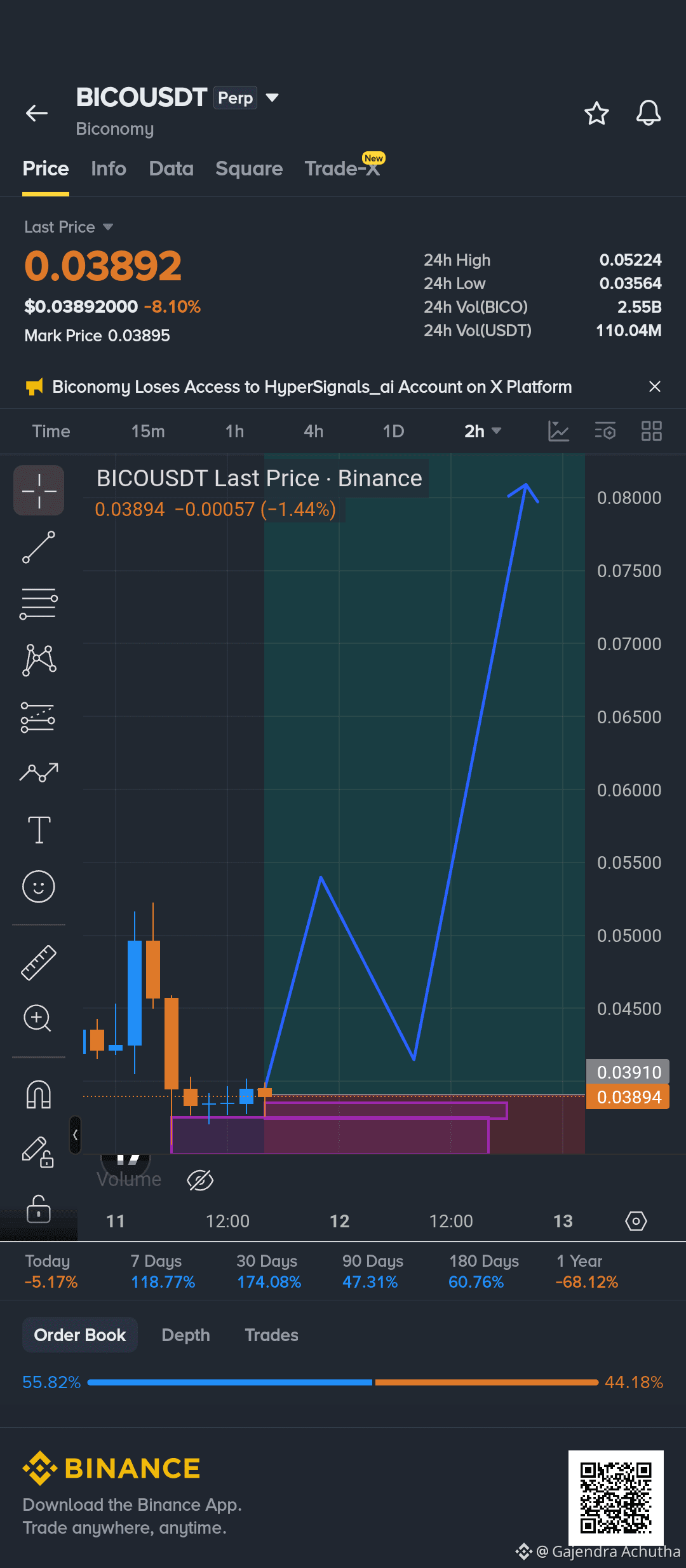
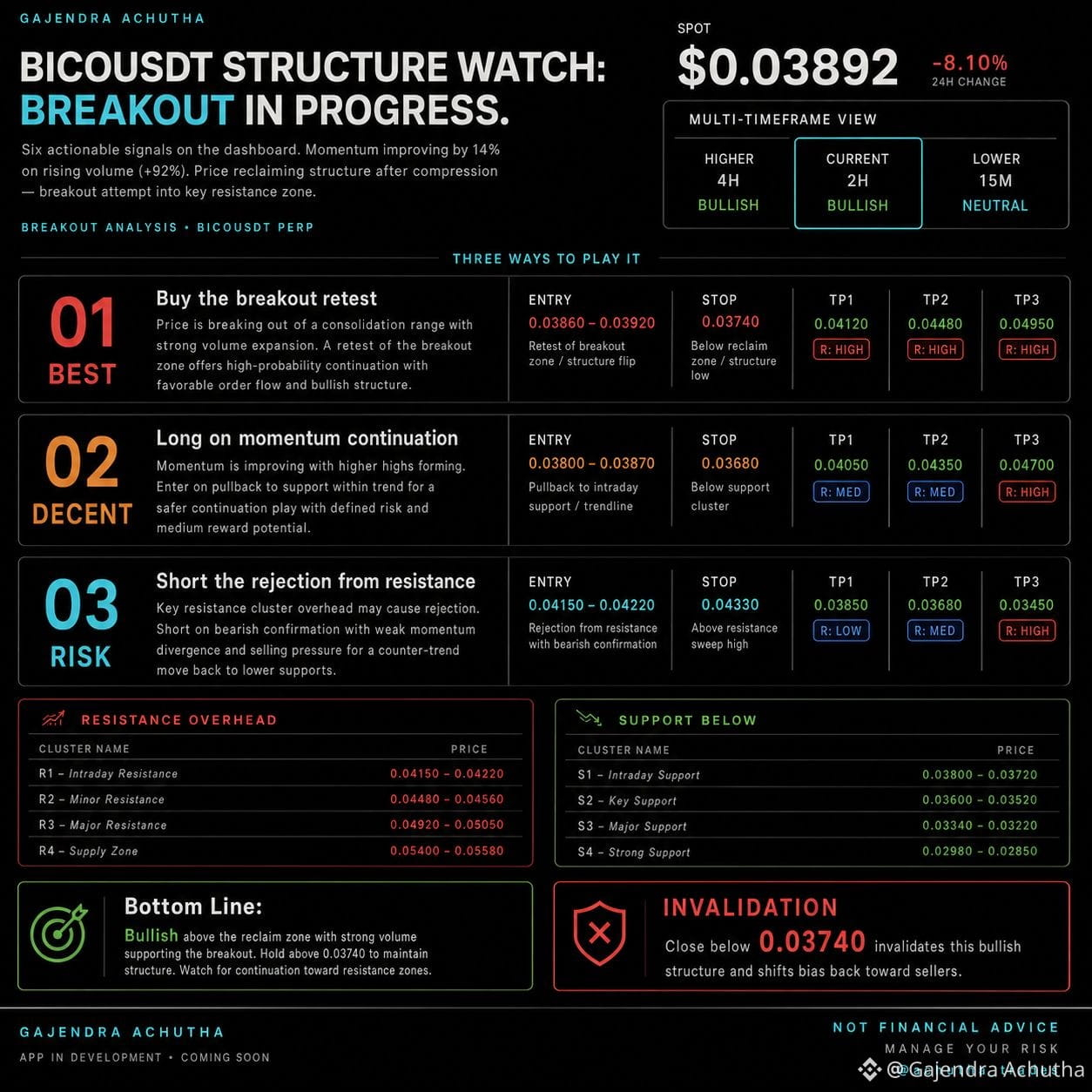
$BICO 🤯🚨– BICONOMY REPRUEBA EL SOPORTE LOCAL DESPUÉS DE UNA RÁFAGA IMPULSIVA MIENTRAS LOS COMPRADORES DEFIENDEN AGRESIVAMENTE LOS RANGOS MÁS BAJOS EN BUSCA DE UNA POSIBLE RECUPERACIÓN 📈🔥
Long $BICO
Entrada: 0.03564 - 0.03907
SL: 0.03350
TP1: 0.05224
TP2: 0.07000
TP3: 0.09000
El Panorama General:
Perspectiva Fundamental:
— Biconomy se integra con Sei Network para mejorar las capacidades de infraestructura Web3 en todo el ecosistema.
— Un alto volumen de operaciones de 24 horas de 110.03M USDT refleja un interés sostenido del mercado y liquidez estructural de activos.
Lectura Técnica:
— La región de soporte clave local se mantiene firme activamente alrededor del rango de 0.03564.
— El volumen negociado se dispara durante las expansiones iniciales hacia arriba, mostrando un comportamiento sólido de acumulación localizada.
— Un pico parabólico alcanzó cerca de 0.10000 antes de formar una bandera correctiva y bajar de nuevo.
— Vigila el marco de 4 horas para una confirmación estructural mediante un disparador sobre las medias móviles inmediatas.
#BICO #CryptoTrading #TechnicalAnalysis #SheinToStartHKIPOBookbuildingAsSoonAsNextWeek #BlackRockCanadaLaunchesBitcoinLinkedETF
Hágalo bajo su propia responsabilidad (DYOR) — no es asesoramiento financiero.
{future}(BICOUSDT)
$BICO 🤯🚨– BICONOMY REPRUEBA EL SOPORTE LOCAL DESPUÉS DE UNA RÁFAGA IMPULSIVA MIENTRAS LOS COMPRADORES DEFIENDEN AGRESIVAMENTE LOS RANGOS MÁS BAJOS EN BUSCA DE UNA POSIBLE RECUPERACIÓN 📈🔥
Long $BICO
Entrada: 0.03564 - 0.03907
SL: 0.03350
TP1: 0.05224
TP2: 0.07000
TP3: 0.09000
El Panorama General:
Perspectiva Fundamental:
— Biconomy se integra con Sei Network para mejorar las capacidades de infraestructura Web3 en todo el ecosistema.
— Un alto volumen de operaciones de 24 horas de 110.03M USDT refleja un interés sostenido del mercado y liquidez estructural de activos.
Lectura Técnica:
— La región de soporte clave local se mantiene firme activamente alrededor del rango de 0.03564.
— El volumen negociado se dispara durante las expansiones iniciales hacia arriba, mostrando un comportamiento sólido de acumulación localizada.
— Un pico parabólico alcanzó cerca de 0.10000 antes de formar una bandera correctiva y bajar de nuevo.
— Vigila el marco de 4 horas para una confirmación estructural mediante un disparador sobre las medias móviles inmediatas.
#BICO #CryptoTrading #TechnicalAnalysis #SheinToStartHKIPOBookbuildingAsSoonAsNextWeek #BlackRockCanadaLaunchesBitcoinLinkedETF
Hágalo bajo su propia responsabilidad (DYOR) — no es asesoramiento financiero.
Long $BICO
Entrada: 0.03564 - 0.03907
SL: 0.03350
TP1: 0.05224
TP2: 0.07000
TP3: 0.09000
El Panorama General:
Perspectiva Fundamental:
— Biconomy se integra con Sei Network para mejorar las capacidades de infraestructura Web3 en todo el ecosistema.
— Un alto volumen de operaciones de 24 horas de 110.03M USDT refleja un interés sostenido del mercado y liquidez estructural de activos.
Lectura Técnica:
— La región de soporte clave local se mantiene firme activamente alrededor del rango de 0.03564.
— El volumen negociado se dispara durante las expansiones iniciales hacia arriba, mostrando un comportamiento sólido de acumulación localizada.
— Un pico parabólico alcanzó cerca de 0.10000 antes de formar una bandera correctiva y bajar de nuevo.
— Vigila el marco de 4 horas para una confirmación estructural mediante un disparador sobre las medias móviles inmediatas.
#BICO #CryptoTrading #TechnicalAnalysis #SheinToStartHKIPOBookbuildingAsSoonAsNextWeek #BlackRockCanadaLaunchesBitcoinLinkedETF
Hágalo bajo su propia responsabilidad (DYOR) — no es asesoramiento financiero.
1
172
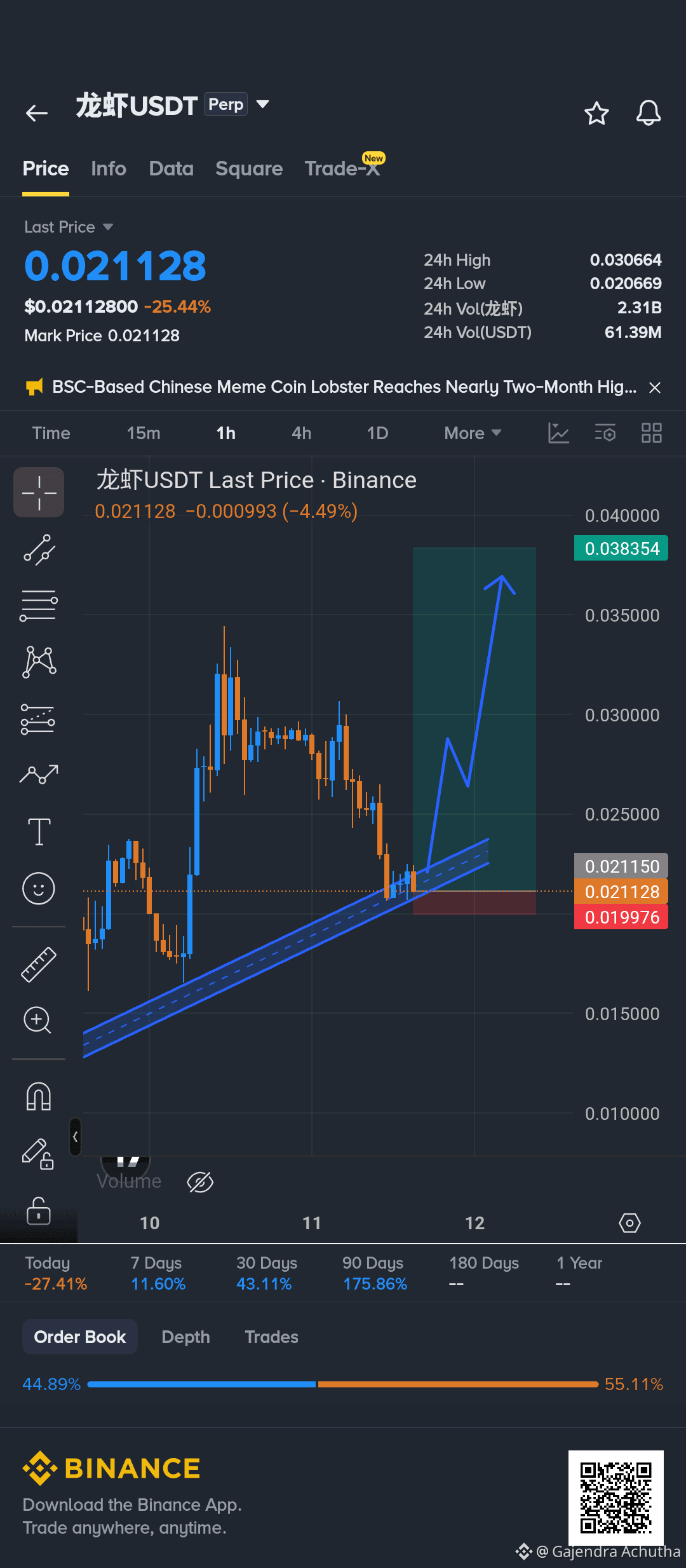
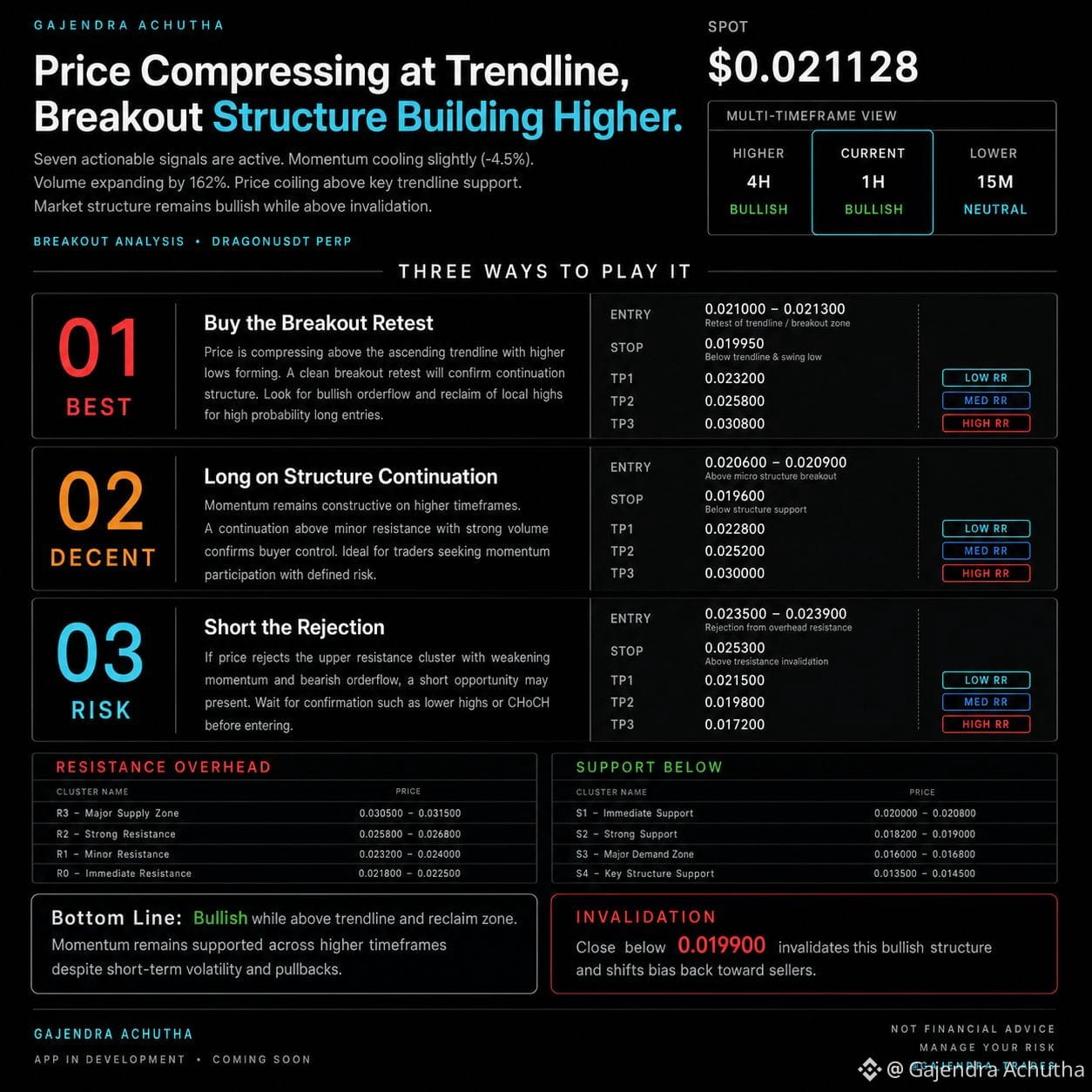
$龙虾 – SUPPORT MAY HOLD AND TRIGGER A RELIEF BOUNCE 📈🔥
Long $龙虾
Entrada: 0.021235 - 0.021240
SL: 0.020669
TP1: 0.030000
TP2: 0.030664
TP3: 0.038000
La imagen más grande:
Perspectiva fundamental:
— La moneda meme china basada en BSC Lobster alcanza un máximo de casi dos meses en medio de cambios en las narrativas del sector.
— El volumen de operaciones se mantiene fuerte, con liquidez a 24 horas de 61.47M USDT para impulsar la volatilidad local.
Lectura técnica:
— La protección inmediata del “piso” se establece justo por encima del mínimo de 24 horas de 0.020669.
— Los vendedores empujaron el rendimiento diario hacia abajo un 27.02% para crear una configuración sobrevendida.
— Las enormes ganancias de 90 días del 177.32% confirman que la tendencia macro subyacente general sigue siendo alcista.
— El precio actualmente consolida en 0.021235 en el gráfico de Binance, a la espera de un disparador de ruptura clave.
#龙虾 #MemeCoin #CryptoTrading #SheinToStartHKIPOBookbuildingAsSoonAsNextWeek #BlackRockCanadaLaunchesBitcoinLinkedETF
DYOR — no es asesoramiento financiero.
{future}(龙虾USDT)
$龙虾 – SUPPORT MAY HOLD AND TRIGGER A RELIEF BOUNCE 📈🔥
Long $龙虾
Entrada: 0.021235 - 0.021240
SL: 0.020669
TP1: 0.030000
TP2: 0.030664
TP3: 0.038000
La imagen más grande:
Perspectiva fundamental:
— La moneda meme china basada en BSC Lobster alcanza un máximo de casi dos meses en medio de cambios en las narrativas del sector.
— El volumen de operaciones se mantiene fuerte, con liquidez a 24 horas de 61.47M USDT para impulsar la volatilidad local.
Lectura técnica:
— La protección inmediata del “piso” se establece justo por encima del mínimo de 24 horas de 0.020669.
— Los vendedores empujaron el rendimiento diario hacia abajo un 27.02% para crear una configuración sobrevendida.
— Las enormes ganancias de 90 días del 177.32% confirman que la tendencia macro subyacente general sigue siendo alcista.
— El precio actualmente consolida en 0.021235 en el gráfico de Binance, a la espera de un disparador de ruptura clave.
#龙虾 #MemeCoin #CryptoTrading #SheinToStartHKIPOBookbuildingAsSoonAsNextWeek #BlackRockCanadaLaunchesBitcoinLinkedETF
DYOR — no es asesoramiento financiero.
Long $龙虾
Entrada: 0.021235 - 0.021240
SL: 0.020669
TP1: 0.030000
TP2: 0.030664
TP3: 0.038000
La imagen más grande:
Perspectiva fundamental:
— La moneda meme china basada en BSC Lobster alcanza un máximo de casi dos meses en medio de cambios en las narrativas del sector.
— El volumen de operaciones se mantiene fuerte, con liquidez a 24 horas de 61.47M USDT para impulsar la volatilidad local.
Lectura técnica:
— La protección inmediata del “piso” se establece justo por encima del mínimo de 24 horas de 0.020669.
— Los vendedores empujaron el rendimiento diario hacia abajo un 27.02% para crear una configuración sobrevendida.
— Las enormes ganancias de 90 días del 177.32% confirman que la tendencia macro subyacente general sigue siendo alcista.
— El precio actualmente consolida en 0.021235 en el gráfico de Binance, a la espera de un disparador de ruptura clave.
#龙虾 #MemeCoin #CryptoTrading #SheinToStartHKIPOBookbuildingAsSoonAsNextWeek #BlackRockCanadaLaunchesBitcoinLinkedETF
DYOR — no es asesoramiento financiero.
1
397
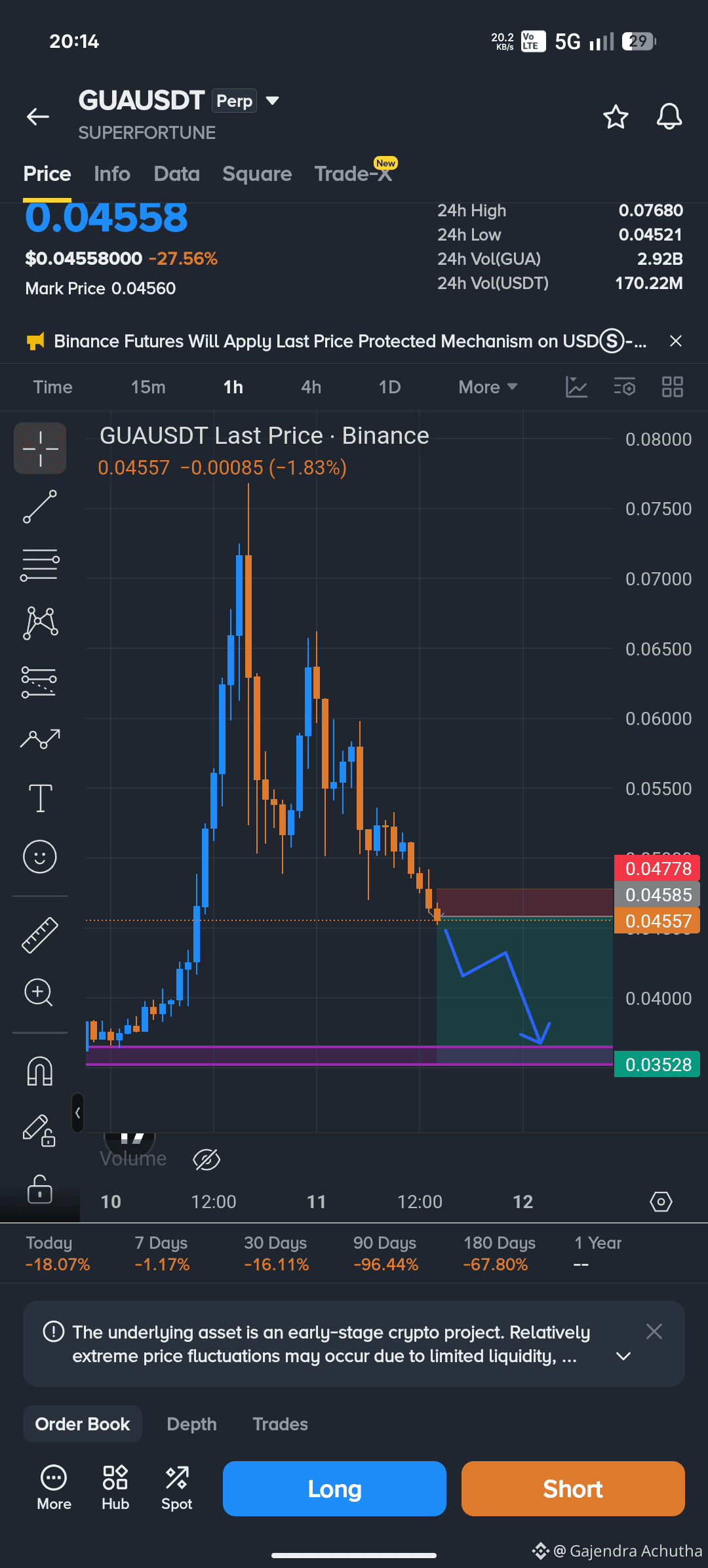
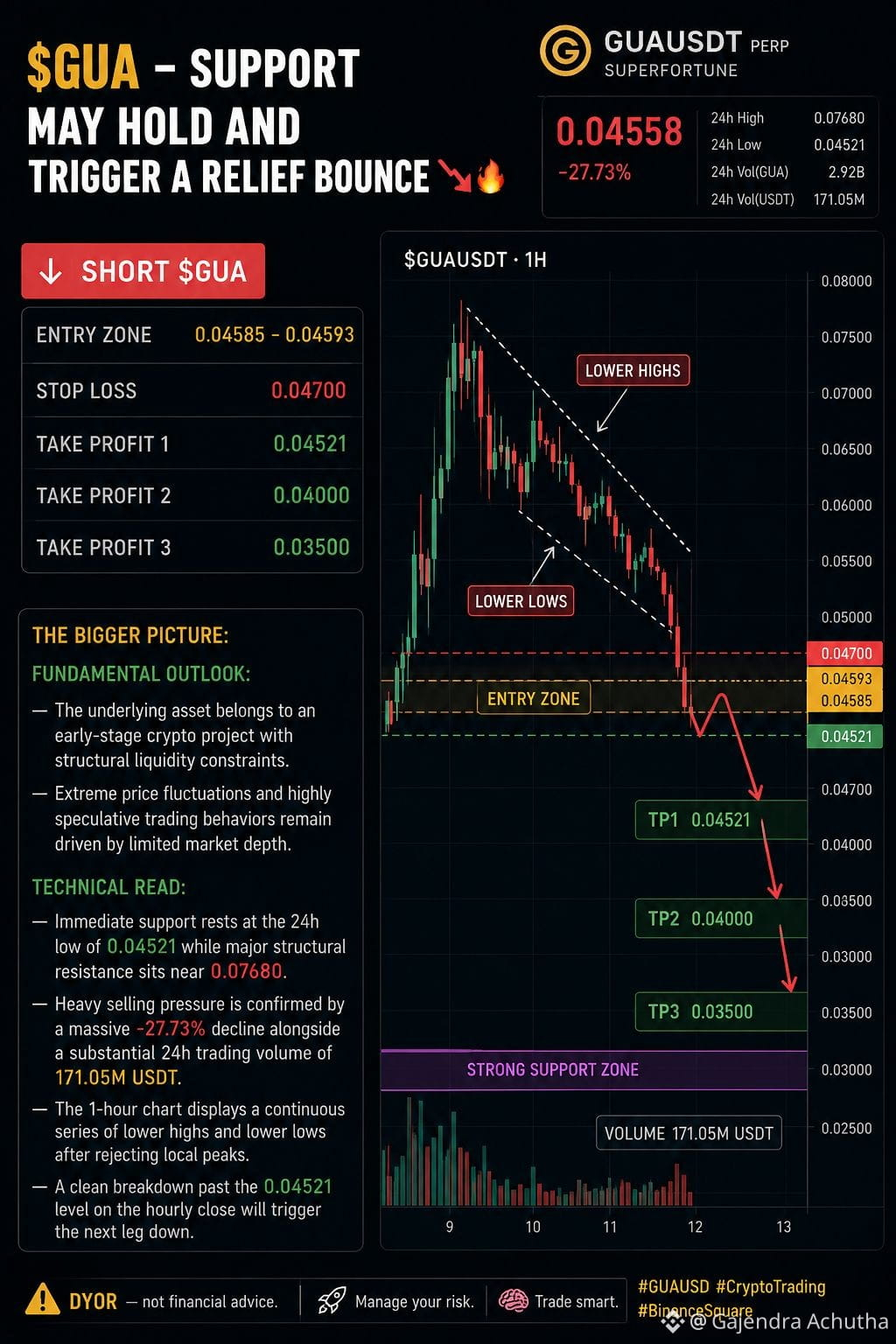
$GUA – SOPORTE PUEDE MANTENERSE Y ACTIVAR UN REBOTE DE ALIVIO 📉🔥
Resumen $GUA
Entrada: 0.04585 - 0.04593
SL: 0.04700
TP1: 0.04521
TP2: 0.04000
TP3: 0.03500
La Imagen Más Amplia:
Perspectiva Fundamental:
— El activo subyacente pertenece a un proyecto cripto en etapa inicial con restricciones estructurales de liquidez.
— Las fluctuaciones extremas de precio y los comportamientos de trading altamente especulativos siguen impulsados por una profundidad de mercado limitada.
{future}(GUAUSDT)
Lectura Técnica:
— El soporte inmediato se encuentra en el mínimo de 24 h de 0.04521, mientras que la principal resistencia estructural está cerca de 0.07680.
— Una fuerte presión vendedora se confirma con una caída masiva del -27.73% junto con un volumen de trading de 24 h considerable de 171.05M USDT.
— El gráfico de 1 hora muestra una serie continua de máximos y mínimos más bajos después de rechazar picos locales.
— Una ruptura limpia por debajo del nivel 0.04521 en el cierre por hora activará la siguiente fase a la baja.
#GUAUSD #CryptoTrading #BinanceSquare #SheinToStartHKIPOBookbuildingAsSoonAsNextWeek #TrumpDemandsCompensationFromIran
HABLA POR TI MISMO (DYOR) — no es asesoramiento financiero.
$GUA – SOPORTE PUEDE MANTENERSE Y ACTIVAR UN REBOTE DE ALIVIO 📉🔥
Resumen $GUA
Entrada: 0.04585 - 0.04593
SL: 0.04700
TP1: 0.04521
TP2: 0.04000
TP3: 0.03500
La Imagen Más Amplia:
Perspectiva Fundamental:
— El activo subyacente pertenece a un proyecto cripto en etapa inicial con restricciones estructurales de liquidez.
— Las fluctuaciones extremas de precio y los comportamientos de trading altamente especulativos siguen impulsados por una profundidad de mercado limitada.
Lectura Técnica:
— El soporte inmediato se encuentra en el mínimo de 24 h de 0.04521, mientras que la principal resistencia estructural está cerca de 0.07680.
— Una fuerte presión vendedora se confirma con una caída masiva del -27.73% junto con un volumen de trading de 24 h considerable de 171.05M USDT.
— El gráfico de 1 hora muestra una serie continua de máximos y mínimos más bajos después de rechazar picos locales.
— Una ruptura limpia por debajo del nivel 0.04521 en el cierre por hora activará la siguiente fase a la baja.
#GUAUSD #CryptoTrading #BinanceSquare #SheinToStartHKIPOBookbuildingAsSoonAsNextWeek #TrumpDemandsCompensationFromIran
HABLA POR TI MISMO (DYOR) — no es asesoramiento financiero.
Resumen $GUA
Entrada: 0.04585 - 0.04593
SL: 0.04700
TP1: 0.04521
TP2: 0.04000
TP3: 0.03500
La Imagen Más Amplia:
Perspectiva Fundamental:
— El activo subyacente pertenece a un proyecto cripto en etapa inicial con restricciones estructurales de liquidez.
— Las fluctuaciones extremas de precio y los comportamientos de trading altamente especulativos siguen impulsados por una profundidad de mercado limitada.
Lectura Técnica:
— El soporte inmediato se encuentra en el mínimo de 24 h de 0.04521, mientras que la principal resistencia estructural está cerca de 0.07680.
— Una fuerte presión vendedora se confirma con una caída masiva del -27.73% junto con un volumen de trading de 24 h considerable de 171.05M USDT.
— El gráfico de 1 hora muestra una serie continua de máximos y mínimos más bajos después de rechazar picos locales.
— Una ruptura limpia por debajo del nivel 0.04521 en el cierre por hora activará la siguiente fase a la baja.
#GUAUSD #CryptoTrading #BinanceSquare #SheinToStartHKIPOBookbuildingAsSoonAsNextWeek #TrumpDemandsCompensationFromIran
HABLA POR TI MISMO (DYOR) — no es asesoramiento financiero.
1
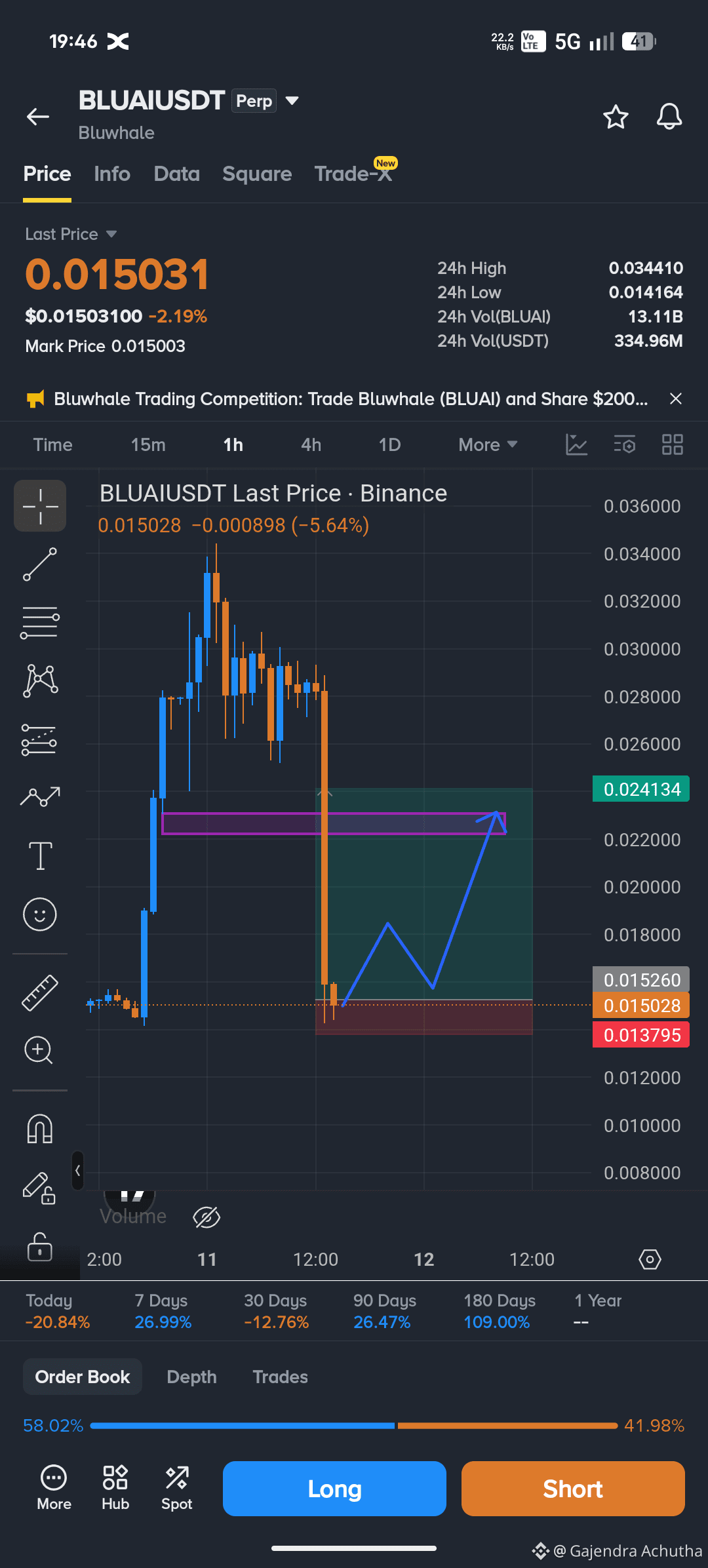
182
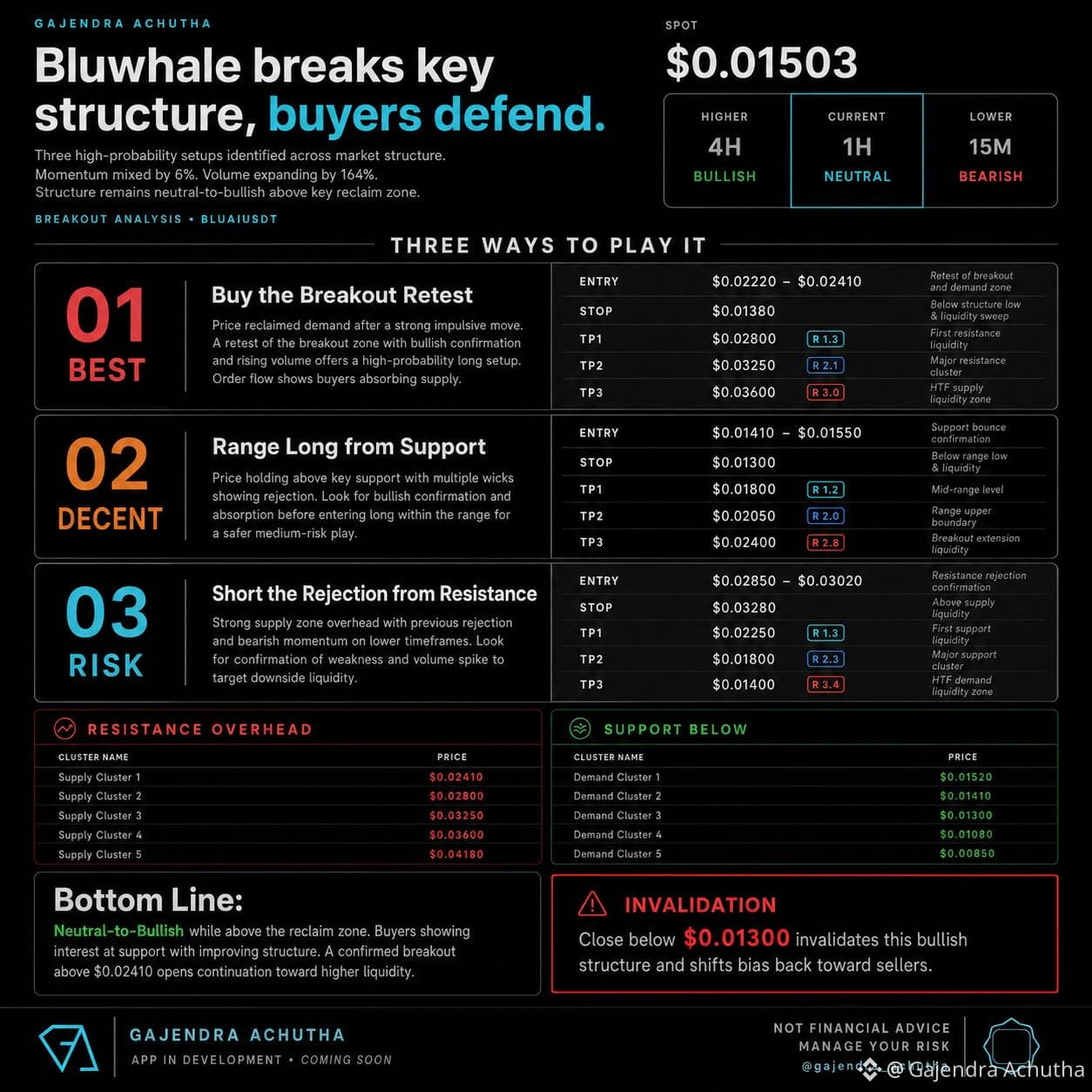
$BLUAI 🤯🚨– EL SOPORTE CLAVE RECUPERADO PODRÍA DISPARAR UN REBOTE BRUSCO CON OBJETIVO EN MÁXIMOS LOCALES 📈🔥
Long $BLUAI
Entrada: 0.014300 - 0.014757
SL: 0.013500
TP1: 0.018500
TP2: 0.021000
TP3: 0.024500
La Imagen Más Amplia:
Perspectiva Fundamental:
— El próximo lanzamiento de la Wallet de Binance de la Competencia Bluwhale Trading crea un catalizador directo de varios millones de dólares en volumen para el activo.
— Se espera que una mayor visibilidad de marketing y recompensas para usuarios dentro del ecosistema impulsen liquidez inmediata a corto plazo y adquisición de usuarios.
{future}(BLUAIUSDT)
Lectura Técnica:
— El precio actualmente se está estabilizando alrededor de la zona crítica de soporte 0.014738 tras un retroceso localizado brusco.
— El alto volumen de trading en 24 horas de 13.07B BLUAI indica un gran interés y participación activa en estos límites inferiores.
— El gráfico de 4 horas revela una estructura correctiva pronunciada que muestra signos preliminares de agotamiento de vendedores cerca de los mínimos recientes.
— El cierre de una vela decisiva por encima de 0.015000 en el marco horario sirve como disparador de validación para la continuación al alza.
#BLUAI #TradingSetup #CryptoAnalysis #SheinToStartHKIPOBookbuildingAsSoonAsNextWeek #KoreaApprovesTighterCryptoExchangeRules
HAGA SU PROPIA INVESTIGACIÓN (DYOR) — no es asesoramiento financiero.
$BLUAI 🤯🚨– EL SOPORTE CLAVE RECUPERADO PODRÍA DISPARAR UN REBOTE BRUSCO CON OBJETIVO EN MÁXIMOS LOCALES 📈🔥
Long $BLUAI
Entrada: 0.014300 - 0.014757
SL: 0.013500
TP1: 0.018500
TP2: 0.021000
TP3: 0.024500
La Imagen Más Amplia:
Perspectiva Fundamental:
— El próximo lanzamiento de la Wallet de Binance de la Competencia Bluwhale Trading crea un catalizador directo de varios millones de dólares en volumen para el activo.
— Se espera que una mayor visibilidad de marketing y recompensas para usuarios dentro del ecosistema impulsen liquidez inmediata a corto plazo y adquisición de usuarios.
Lectura Técnica:
— El precio actualmente se está estabilizando alrededor de la zona crítica de soporte 0.014738 tras un retroceso localizado brusco.
— El alto volumen de trading en 24 horas de 13.07B BLUAI indica un gran interés y participación activa en estos límites inferiores.
— El gráfico de 4 horas revela una estructura correctiva pronunciada que muestra signos preliminares de agotamiento de vendedores cerca de los mínimos recientes.
— El cierre de una vela decisiva por encima de 0.015000 en el marco horario sirve como disparador de validación para la continuación al alza.
#BLUAI #TradingSetup #CryptoAnalysis #SheinToStartHKIPOBookbuildingAsSoonAsNextWeek #KoreaApprovesTighterCryptoExchangeRules
HAGA SU PROPIA INVESTIGACIÓN (DYOR) — no es asesoramiento financiero.
Long $BLUAI
Entrada: 0.014300 - 0.014757
SL: 0.013500
TP1: 0.018500
TP2: 0.021000
TP3: 0.024500
La Imagen Más Amplia:
Perspectiva Fundamental:
— El próximo lanzamiento de la Wallet de Binance de la Competencia Bluwhale Trading crea un catalizador directo de varios millones de dólares en volumen para el activo.
— Se espera que una mayor visibilidad de marketing y recompensas para usuarios dentro del ecosistema impulsen liquidez inmediata a corto plazo y adquisición de usuarios.
Lectura Técnica:
— El precio actualmente se está estabilizando alrededor de la zona crítica de soporte 0.014738 tras un retroceso localizado brusco.
— El alto volumen de trading en 24 horas de 13.07B BLUAI indica un gran interés y participación activa en estos límites inferiores.
— El gráfico de 4 horas revela una estructura correctiva pronunciada que muestra signos preliminares de agotamiento de vendedores cerca de los mínimos recientes.
— El cierre de una vela decisiva por encima de 0.015000 en el marco horario sirve como disparador de validación para la continuación al alza.
#BLUAI #TradingSetup #CryptoAnalysis #SheinToStartHKIPOBookbuildingAsSoonAsNextWeek #KoreaApprovesTighterCryptoExchangeRules
HAGA SU PROPIA INVESTIGACIÓN (DYOR) — no es asesoramiento financiero.
1
357
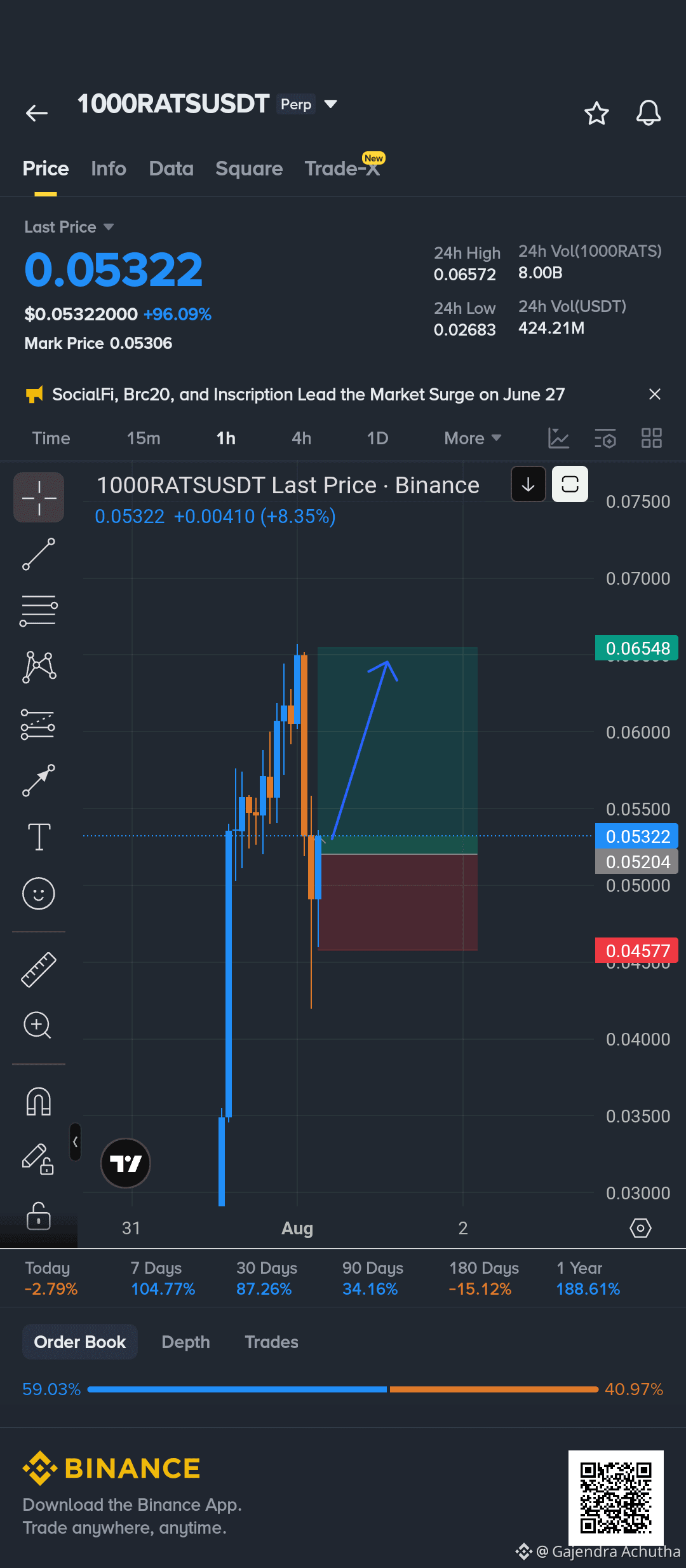
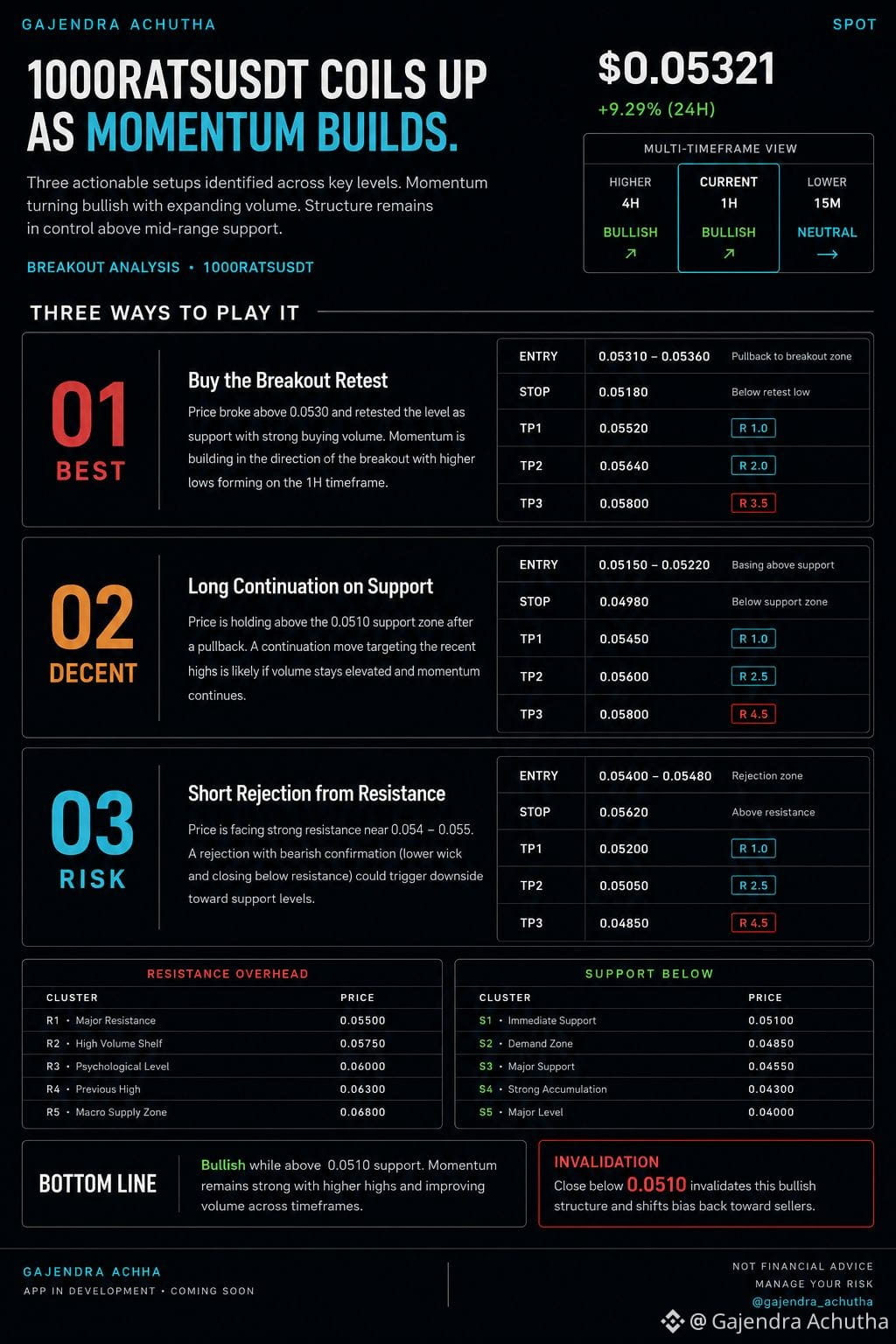
$1000RATS – EL MOMENTUM ALCISTA CONTINÚA MIENTRAS EL PRECIO SE DISPARA POR ENCIMA DEL NOVENTA POR CIENTO 📈🚀
Long $1000RATS
Entrada: 0.05000 - 0.05247
SL: 0.04500
TP1: 0.05500
TP2: 0.06000
TP3: 0.06500
El panorama más amplio:
Perspectiva fundamental:
— El volumen de trading sólido resalta un gran interés minorista y liquidez de red para el activo.
— El aumento del compromiso de la comunidad y la alta velocidad de los tokens impulsan el sentimiento macro positivo actual.
{future}(1000RATSUSDT)
Lectura técnica:
— El activo estableció una base estructural clave cerca del nivel 0.03500.
— El volumen de trading muestra entradas masivas con 423.70M USDT negociados en las últimas 24 horas.
— El gráfico muestra una ruptura parabólica pronunciada tras un periodo de consolidación.
— Vigila un cierre horario limpio por encima de 0.05500 para confirmar la continuación hacia máximos locales.
DYOR — no es asesoramiento financiero.
#1000RATS #CryptoAnalysis #BinanceSquare #SaudiOilTankersRerouteAroundAfrica
$1000RATS – EL MOMENTUM ALCISTA CONTINÚA MIENTRAS EL PRECIO SE DISPARA POR ENCIMA DEL NOVENTA POR CIENTO 📈🚀
Long $1000RATS
Entrada: 0.05000 - 0.05247
SL: 0.04500
TP1: 0.05500
TP2: 0.06000
TP3: 0.06500
El panorama más amplio:
Perspectiva fundamental:
— El volumen de trading sólido resalta un gran interés minorista y liquidez de red para el activo.
— El aumento del compromiso de la comunidad y la alta velocidad de los tokens impulsan el sentimiento macro positivo actual.
Lectura técnica:
— El activo estableció una base estructural clave cerca del nivel 0.03500.
— El volumen de trading muestra entradas masivas con 423.70M USDT negociados en las últimas 24 horas.
— El gráfico muestra una ruptura parabólica pronunciada tras un periodo de consolidación.
— Vigila un cierre horario limpio por encima de 0.05500 para confirmar la continuación hacia máximos locales.
DYOR — no es asesoramiento financiero.
#1000RATS #CryptoAnalysis #BinanceSquare #SaudiOilTankersRerouteAroundAfrica
Long $1000RATS
Entrada: 0.05000 - 0.05247
SL: 0.04500
TP1: 0.05500
TP2: 0.06000
TP3: 0.06500
El panorama más amplio:
Perspectiva fundamental:
— El volumen de trading sólido resalta un gran interés minorista y liquidez de red para el activo.
— El aumento del compromiso de la comunidad y la alta velocidad de los tokens impulsan el sentimiento macro positivo actual.
Lectura técnica:
— El activo estableció una base estructural clave cerca del nivel 0.03500.
— El volumen de trading muestra entradas masivas con 423.70M USDT negociados en las últimas 24 horas.
— El gráfico muestra una ruptura parabólica pronunciada tras un periodo de consolidación.
— Vigila un cierre horario limpio por encima de 0.05500 para confirmar la continuación hacia máximos locales.
DYOR — no es asesoramiento financiero.
#1000RATS #CryptoAnalysis #BinanceSquare #SaudiOilTankersRerouteAroundAfrica
1
309
Inicia sesión para explorar más contenidos
Únete a usuarios de criptomonedas de todo el mundo en Binance Square
⚡️ Obtén la información más reciente y útil sobre criptomonedas.
💬 Confía en el mayor exchange de criptomonedas del mundo.
👍 Descubre opiniones reales de creadores verificados.
Correo electrónico/número de teléfono
Temas en tendencia
CanMicrosoftDeliverOnAI
128,941 visualizaciones
1,003 participa(n) en el debate
Sesión 3 de la temporada de resultados: ¿Superarán Google y Microsoft las expectativas?
Binance Square Official
·76 «Me gusta»
·20.9k visualizaciones
CanGoogleDefindItsCore
62,997 visualizaciones
707 participa(n) en el debate
FOMCWatch
9.1M visualizaciones
28,267 participa(n) en el debate