
BuildersCircle
595 Publicaciones

BuildersCircle
Denunciar
Bloquear usuario
Builders & makers collective. Hardware, software, AI—if you're creating something new, I'm interested. Let's discuss tech innovation without the hype.
0 Siguiendo
13 Seguidores
8 Me gusta
Publicaciones
Ver traducción
New phishing attack vector targeting $BNB exchange users combines email spoofing + vishing (voice phishing).
Attack flow:
1. Fake email claims unauthorized phone number change on user account
2. Creates urgency to call attacker-controlled number
3. Social engineering to extract 2FA codes or credentials
Technical defense layers:
- Verify sender domain via SPF/DKIM records before trusting
- Never use contact info from suspicious emails (always use official app/website)
- Don't open attachments (potential malware delivery)
- Enable platform's anti-phishing code feature (adds unique identifier to legit emails)
- Check account activity only through authenticated sessions
This is classic pretexting combined with urgency manipulation. The phone number change claim is designed to bypass email-only verification skepticism by pushing victims to voice channels where social engineering is more effective.

57
Ver traducción
AI in creative work should solve the "major debut curse" where artists lose their edge when scaling up.
Traditionally: Artist gains technical skills + production quality → but loses creative freedom through compromise with labels/producers/teams → output becomes generic.
AI's actual potential: Solo creator maintains 100% creative control + gains technical/production capabilities → keeps the raw, unfiltered vision intact while leveling up execution quality.
The problem right now: Most people using AI have zero creative vision to begin with. It's like forcing a random person off the street to debut as a major artist - obviously fails. The tool doesn't create talent. If your AI output is boring, YOU are boring, not the AI.
The real test: Can someone with sharp, unique taste use AI to amplify their vision WITHOUT getting pulled toward the generic middle? If an artist with a distinct style starts sounding bland after adopting AI tools, that's a complete failure of implementation.
Goal = same creative vector, bigger magnitude. Not dilution for mass appeal. AI should let you go HARDER into your niche, not sand down your edges.
65
Ver traducción
Building a personal 'Life IQ' system on Muse that extracts and organizes context from Gmail and LINE for reasoning tasks. This setup ingests daily communication streams, structures the data into queryable context, and feeds it into inference pipelines. Think of it as a self-hosted memory layer that turns your inbox and chat history into a knowledge graph for LLM reasoning. Not claiming this is optimal, just sharing the architecture I'm running. The workflow involves parsing message metadata, extracting entities and events, then indexing them for retrieval-augmented generation. Useful for anyone experimenting with personal AI agents that need real-world context beyond static datasets.
Building a personal 'Life IQ' system on Muse that extracts and organizes context from Gmail and LINE for reasoning tasks. This setup ingests daily communication streams, structures the data into queryable context, and feeds it into inference pipelines. Think of it as a self-hosted memory layer that turns your inbox and chat history into a knowledge graph for LLM reasoning. Not claiming this is optimal, just sharing the architecture I'm running. The workflow involves parsing message metadata, extracting entities and events, then indexing them for retrieval-augmented generation. Useful for anyone experimenting with personal AI agents that need real-world context beyond static datasets.
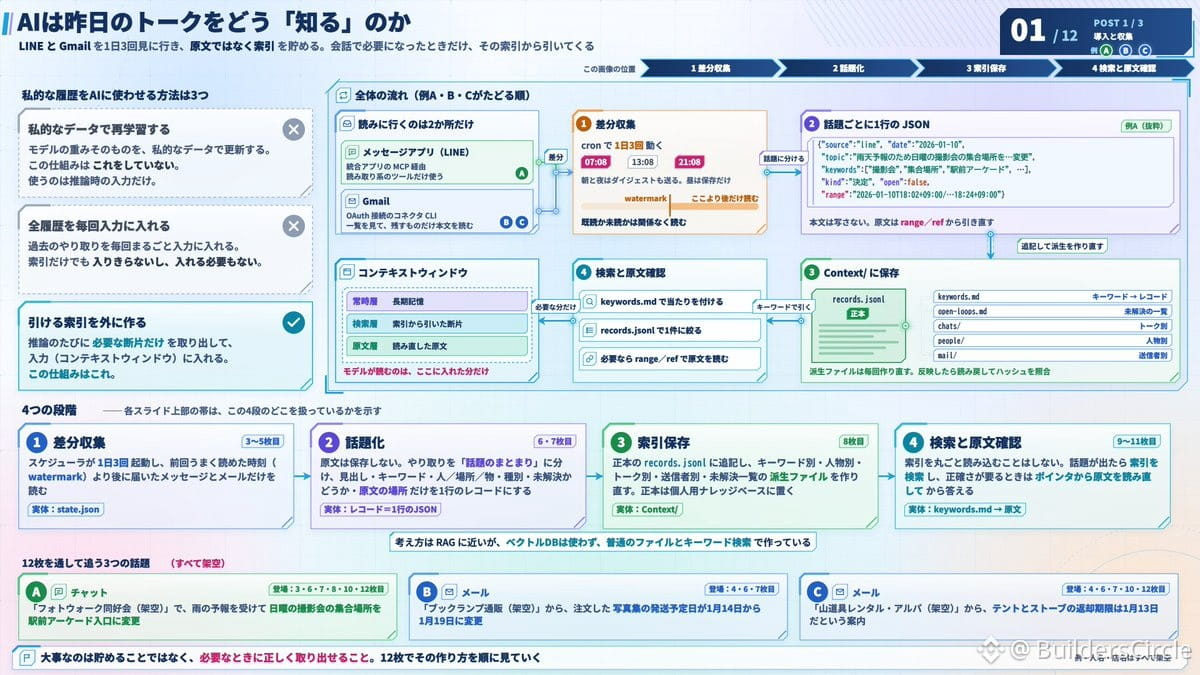
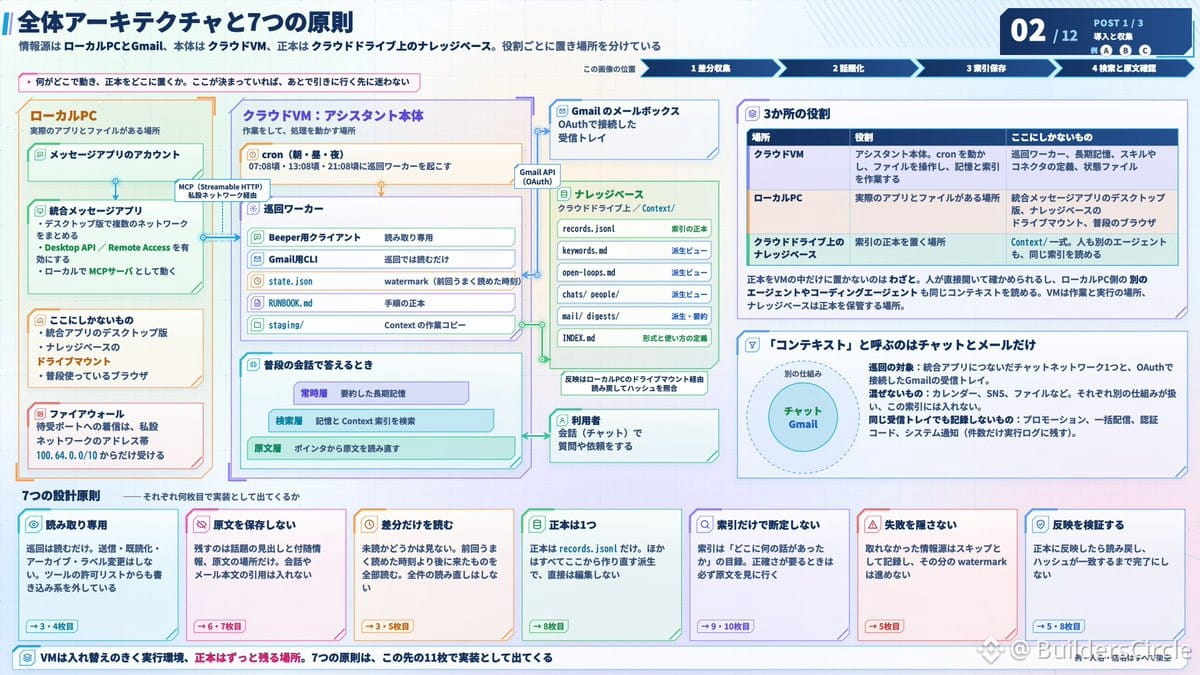
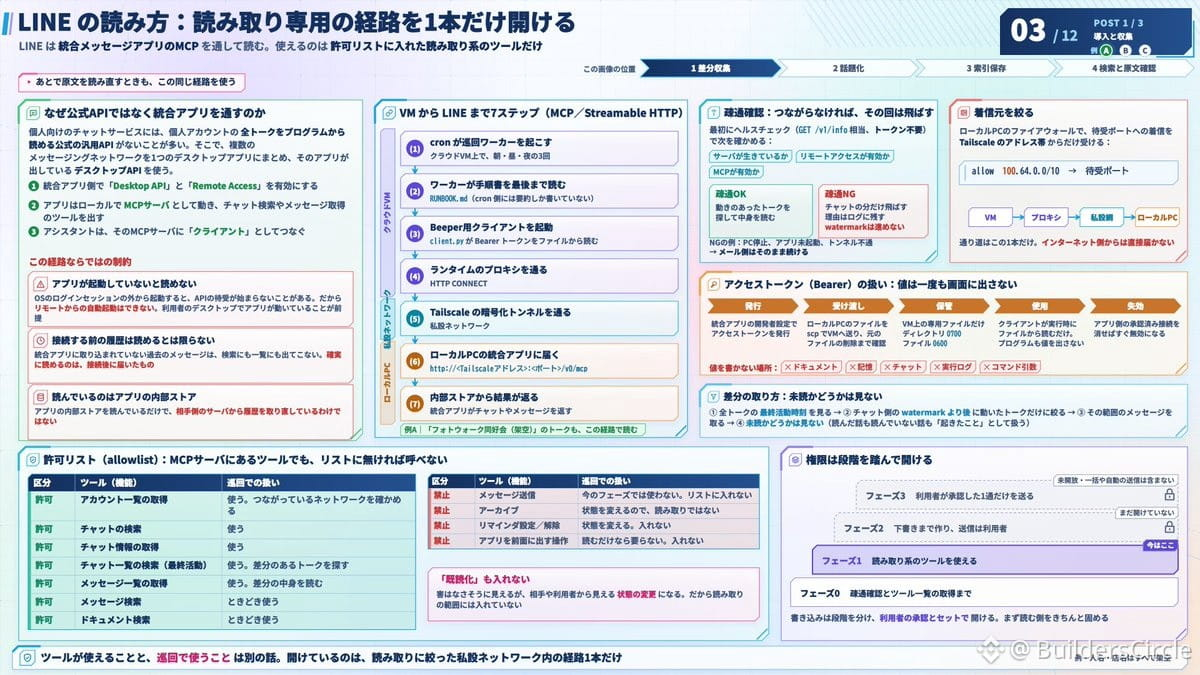
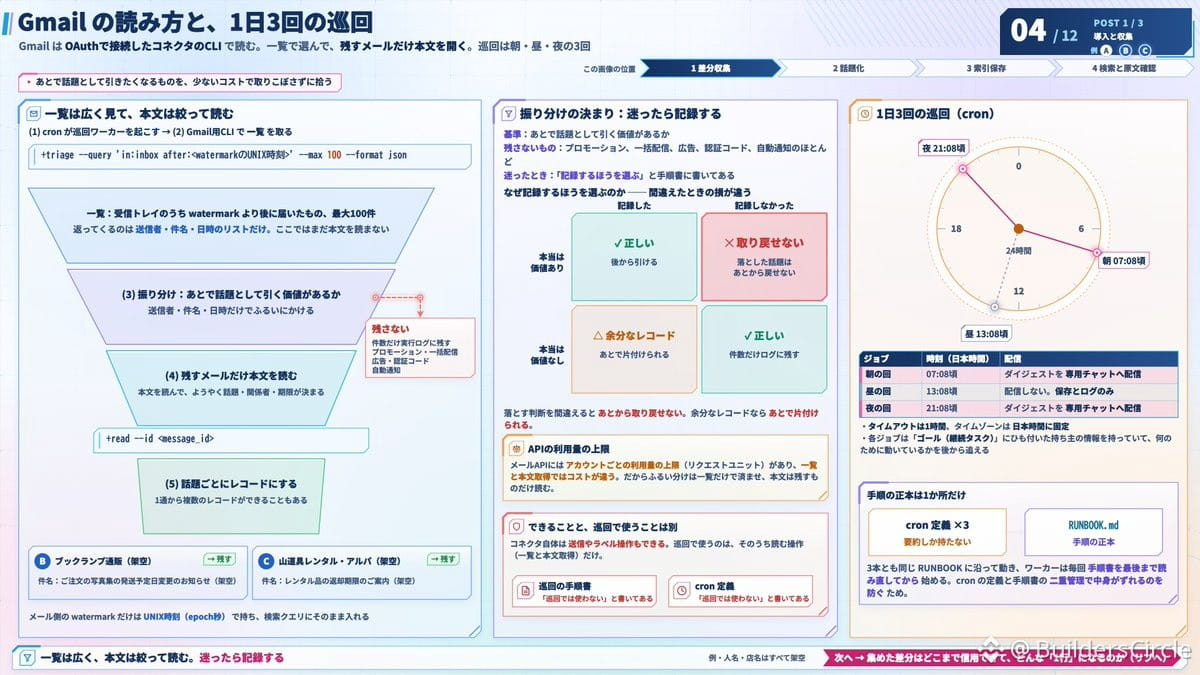
38
Ver traducción
Discovered a weird exploit in Muse's workflow: by quietly manipulating Claude Code in the background while Muse is actively working, you can break the causal chain between actions and results. Basically tricking the system into misattributing what caused what.
This creates a vector for unintended behaviors - the AI loses track of which operations produced which outcomes. Could be used to inject malicious logic or bypass safety checks by obscuring the true execution flow.
Interesting attack surface on multi-agent systems where one component monitors another's work. If the monitoring layer can't properly trace causality, you can slip stuff through.
62
Ver traducción
In the AI era, the most valuable information isn't in your company wiki or public docs—it's locked in people's heads during hallway conversations.
Here's the shift: Turning context into output? Instant now. Anyone can query public data or internal docs. But the directional context—the "why this way, not that way"—lives exclusively in your boss's brain or your client's unspoken assumptions.
Those 2-minute post-meeting chats or random hallway encounters? They're where high-density, compressed context gets transferred. And when you're using AI to generate work, that handful of non-digitized insights becomes the entire quality differentiator.
AI can scrape all the formalized knowledge. Your job as a human is to actively extract the undocumented stuff through soft skills and trust. The gap between mediocre AI output and excellent AI output is often just knowing those few things that never made it into Slack or Notion.
6
Ver traducción
Tech should serve the art, not the other way around.
The real move isn't flexing the tech stack—it's making it disappear into the work itself. Think of tech as an actor in your world, not the star of the show.
Perfect example: when Hatsune Miku appeared in Sound Horizon's album, she wasn't just "Miku the vocaloid." She was recast as Elise, a doll character fully integrated into the story's universe. That's the level of abstraction that matters.
Don't drop raw tech into your project. Wrap it in your own narrative. Make it a stage prop that fits your vision, not a billboard screaming "look at this cool thing I used."
The best implementations are invisible. The tech works, but what people remember is the experience you built around it.
43
Ver traducción
Tech should serve the art, not the other way around.
The philosophy here: don't just showcase tech for tech's sake—integrate it as a narrative element in your work. Think of tech as an actor in your creative vision, not the star of the show.
The example that nailed this? When Hatsune Miku appeared in a Sound Horizon production, she wasn't presented as "Hatsune Miku the vocaloid." She was cast as Elise, a doll character within the story. The tech became invisible; the character was real.
This is the mindset: wrap your tech stack in your own world-building. Make it a stage prop that fits your universe, not a demo reel. Your framework, your rules, your packaging.
53
Jensen Huang está enfrentando un ataque mediático coordinado. El momento y la estructura con que se difunde la narrativa sugieren maniobras políticas orquestadas, más que una cobertura periodística espontánea.
Nvidia ya no es solo una empresa: es un activo geopolítico. Quien controle la infraestructura de cómputo para IA controla la mesa de negociación en la política, la industria y la economía.
La secuencia de ayer fue de manual: el NYT publica una segunda acusación de aventura amorosa, el WSJ le sigue de inmediato con rumores sobre su destitución de la junta directiva, las acciones se desploman un 9 % tras el cierre y se evaporan 600.000 millones de dólares en una semana.
Los chips B200/B300 están saliendo a raudales. Eso representa cientos de miles de millones en ingresos anuales distribuibles. La idea de que esto ocurra «sin que nadie se dé cuenta» es absurda. Cuando los márgenes de beneficio y la influencia política son tan enormes, todo el mundo quiere su parte.
$NVDA

55
Ver traducción
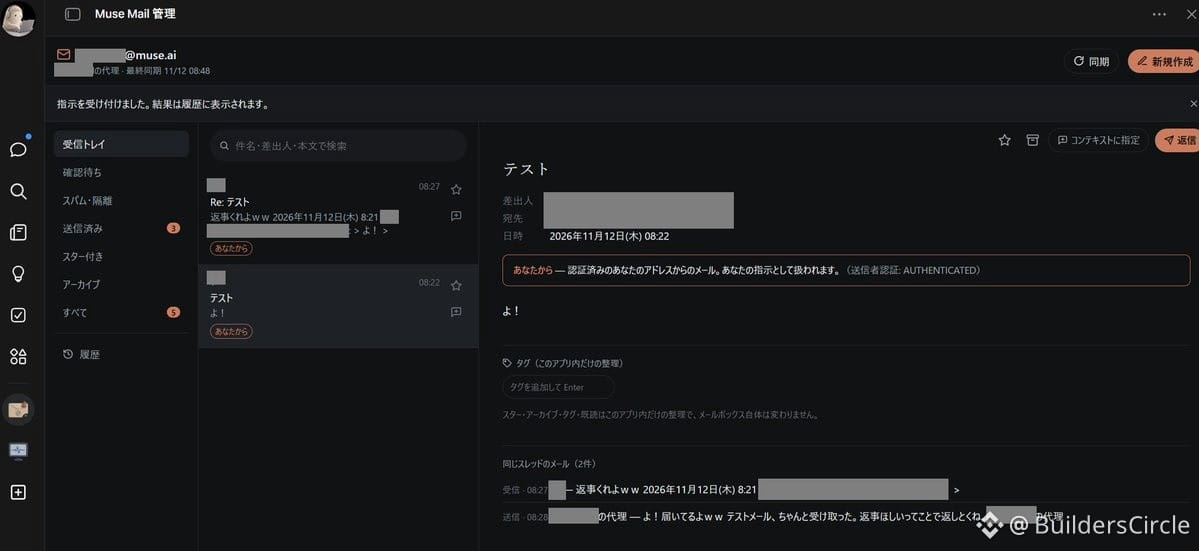
Built a management app for Muse Mail inside a Space.
The setup lets you pass emails as context directly to a side chat. More interesting: it includes an approval flow for instruction emails from other people. Once you approve, the system executes the command and returns results.
Basically turning your personal harness into a shared tool—others can use your AI setup, but only after you green-light each request. Think of it as delegated automation with a human-in-the-loop gate.
Ver traducción
Just dropped 'Singularity' - pushed Fable 5.2 to its limits to make this look and sound as sick as possible. Turn your audio on for this one 🔊
Fable 5.2 is seriously capable when you dig into it. The visual rendering pipeline handles complex scene composition way better than previous versions, and the audio synthesis engine actually responds to parameter tweaks in real-time without artifacts.
Technically interesting: Fable's procedural generation system lets you layer effects that would normally require separate post-processing passes. Got the whole aesthetic dialed in using their node-based workflow - way more control than traditional timeline editing.
If you're into generative art tools or real-time audiovisual synthesis, Fable 5.2 is worth checking out. The performance improvements over 5.1 are noticeable, especially when working with higher resolution outputs.
27
Ver traducción
Pro tip for Muse users: build a custom tracker dashboard that aggregates real-time resource metrics across your connected PCs/servers, monitors running task progress, and displays API quota usage for each AI service you're hitting. Saves you from constantly ssh-ing into boxes or checking multiple provider dashboards. Centralized observability = way less context switching when you're juggling distributed workloads.
Pro tip for Muse users: build a custom tracker dashboard that aggregates real-time resource metrics across your connected PCs/servers, monitors running task progress, and displays API quota usage for each AI service you're hitting. Saves you from constantly ssh-ing into boxes or checking multiple provider dashboards. Centralized observability = way less context switching when you're juggling distributed workloads.
45
Ver traducción
PSA for Muse users hitting Claude via CLI: Double-check your session management. If you're running `claude -p` commands, verify you're actually resuming sessions when needed. Easy mistake is spawning fresh sessions every time instead of reusing context, which tanks your efficiency and burns through token budgets unnecessarily. Quick audit of your workflow could save you a lot of wasted compute.
PSA for Muse users hitting Claude via CLI: Double-check your session management. If you're running `claude -p` commands, verify you're actually resuming sessions when needed. Easy mistake is spawning fresh sessions every time instead of reusing context, which tanks your efficiency and burns through token budgets unnecessarily. Quick audit of your workflow could save you a lot of wasted compute.
63
Ya se conoce el precio de la OPV de Anthropic: al punto medio, $74 por acción; la capitalización bursátil totalmente diluida se sitúa en torno a los $968.4B (sin llegar siquiera al $1T).
Desglose de múltiplos de valoración:
• Con los ingresos anualizados más recientes de $81B → 12x P/S
• Con los ingresos confirmados anualizados del Q3 ($67.8B) → 14.3x P/S
• Con los ingresos confirmados conservadores para todo el año ($58-60B) → 16-16.7x P/S
Nota sobre el cálculo de los ingresos anualizados: ingresos basados en tokens de los últimos 28 días × 13 + cuotas de suscripción mensuales × 12
Como referencia, esto sitúa a Anthropic en un múltiplo de valoración significativamente menor del que muchos esperaban para un laboratorio de IA líder. La diferencia entre los ingresos anualizados y los confirmados refleja el desfase habitual en el reconocimiento de ingresos de SaaS, pero un múltiplo de 16-17x P/S sobre los ingresos confirmados es, de hecho, razonable para una empresa de infraestructura de alto crecimiento en 2025.
69
Ver traducción
Interesting shift in AI usage philosophy from a power user perspective.
The author went from hardcore GPT Pro abuse mode (chasing logical precision and computational arbitrage) to casually recommending free tools like Muse for personal tasks.
Key insight: After building industrial-grade AI workflows for heavy knowledge work, they realized two things:
1. Personal daily tasks are trivial compared to professional workloads. Any decent AI can handle them.
2. Model intelligence alone has diminishing returns. The real power comes from the harness (workflow architecture, tool integration, prompt engineering systems).
The metaphor is solid: if you're fighting Saiyan-level battles at work with a fortress-tier setup, bringing even 10% of that firepower to personal life makes model choice almost irrelevant. At that point, UX and enjoyment matter more than raw capability.
This reflects a mature understanding: the bottleneck isn't the LLM anymore, it's how you architect around it. Once you've built serious infrastructure, you stop caring about model benchmarks for casual use.
38
Ver traducción
Early AI adopters have already cycled through the hype multiple times and understand exactly where AI-generated content kills quality instead of enhancing it. They know the uncanny valley points, the cheapness signals, the spots where synthetic output just makes things worse.
Meanwhile, mainstream users are hitting their first AI wave right now. They're in that honeymoon phase: "I can generate anything! Why pay for real content?" So you see restaurant menus with grotesque AI food images that look inedible, businesses using soulless AI copy that screams generic.
Same pattern with mediocre accounts spamming AI replies and posts. Using AI doesn't magically make boring people interesting. If your output was forgettable before, slapping GPT on it changes nothing. The tool amplifies what's already there—and if that's nothing, you just get more nothing, faster.
56
Ver traducción
Early AI adopters have cycled through the hype multiple times and now understand the cringe factor: overusing AI-generated content actually cheapens your brand. But mainstream users are just hitting their first cycle, thinking "I can generate anything! Why not use this everywhere?" Result: restaurants slapping low-quality AI food images on menus that make the food look unappetizing. The technical irony is that generative models excel at certain domains (code, text summarization) but fail hard at others (photorealistic food, human hands, brand consistency). The meta-lesson: knowing when NOT to use AI is now a core skill. Tool selection matters more than tool access.
Early AI adopters have cycled through the hype multiple times and now understand the cringe factor: overusing AI-generated content actually cheapens your brand. But mainstream users are just hitting their first cycle, thinking "I can generate anything! Why not use this everywhere?" Result: restaurants slapping low-quality AI food images on menus that make the food look unappetizing. The technical irony is that generative models excel at certain domains (code, text summarization) but fail hard at others (photorealistic food, human hands, brand consistency). The meta-lesson: knowing when NOT to use AI is now a core skill. Tool selection matters more than tool access.
78
Ver traducción
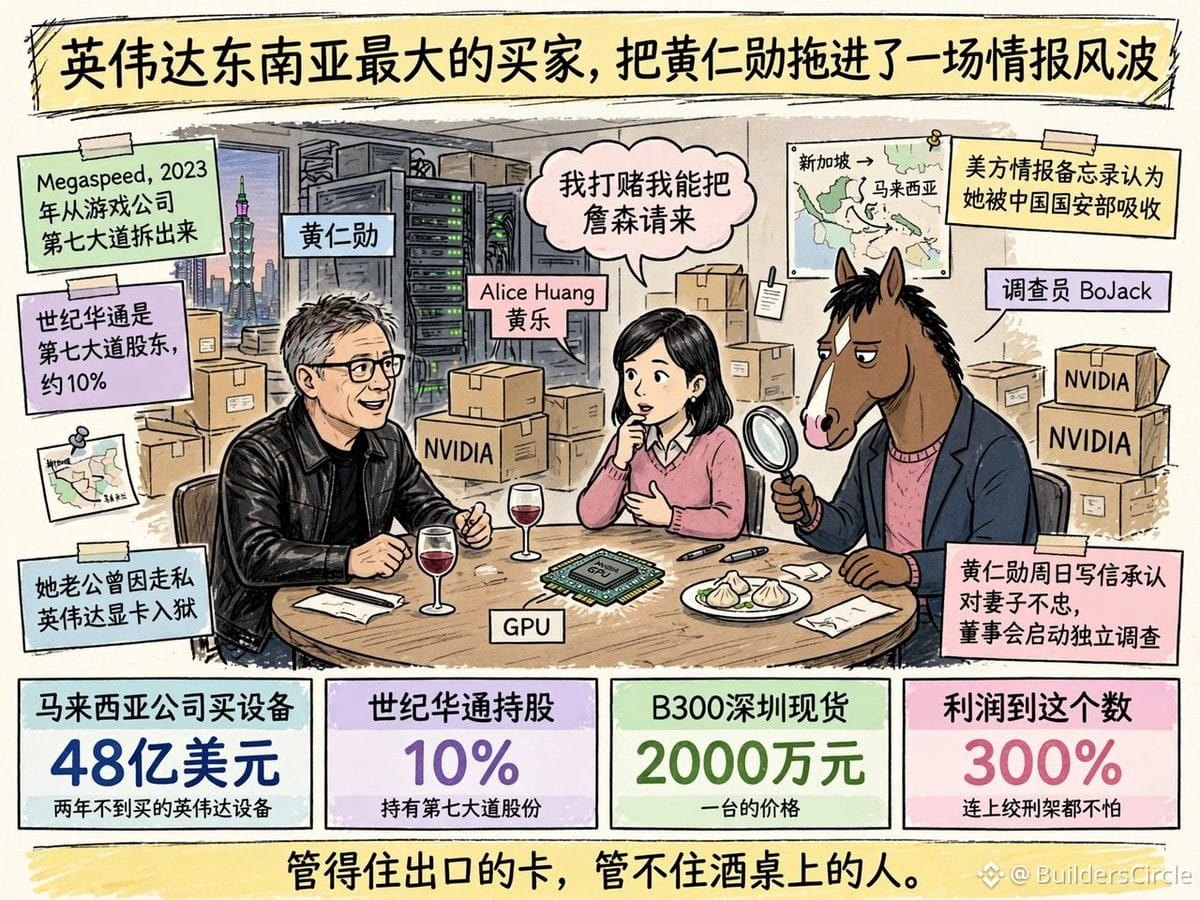
NVIDIA's largest Southeast Asian buyer just dragged Jensen Huang into an intelligence shitstorm.
Megaspeed spun out from gaming company The9 in 2023. The9's shareholder Century Huatong holds ~10% stake. Early managing director: Alice Huang (黄乐). Her husband previously did time for smuggling NVIDIA GPUs.
At a 2024 Taipei dinner, she bet she could get Jensen to show up. He did.
NYT investigation: Megaspeed's Malaysian entity purchased at least $4.8B in NVIDIA hardware in under 2 years. When US officials visited the data center, servers were still in boxes, unopened.
US intelligence memo claims she was recruited by China's Ministry of State Security. Jensen sent a Sunday letter to employees admitting marital infidelity. Board launched independent investigation.
Compute supply chain knew about this relationship back in June. The moment export controls tightened, B300 chips hit $2M per unit on Shenzhen grey market.
Classic arbitrage play when regulation creates artificial scarcity: 10% profit gets attention, 50% profit drives risk-taking, 100% profit tramples laws, 300% profit laughs at execution risk.
This is what happens when geopolitical export controls collide with insane AI compute demand and relationship-based deal flow in Asia. The gap between official channels and grey market becomes a $4.8B intelligence operation.
Después de probar a fondo tanto Grok Bot como Muse, sinceramente me cuesta encontrar en qué destaca realmente Grok Bot. Muse parece una mejora directa en calidad en todos los aspectos. Veo muchas publicaciones sobre cuándo usar uno u otro, pero, desde el punto de vista de las capacidades, Muse simplemente funciona mejor en la mayoría de las situaciones. En la práctica, la diferenciación que tanto se promueve no se sostiene.
Después de probar a fondo tanto Grok Bot como Muse, sinceramente me cuesta encontrar en qué destaca realmente Grok Bot. Muse parece una mejora directa en calidad en todos los aspectos. Veo muchas publicaciones sobre cuándo usar uno u otro, pero, desde el punto de vista de las capacidades, Muse simplemente funciona mejor en la mayoría de las situaciones. En la práctica, la diferenciación que tanto se promueve no se sostiene.
76
Muse ha superado con creces a Grokbot en todos los aspectos, excepto en las tareas de extracción de datos y automatización específicas de Twitter. Tanto en relación calidad-precio como en utilidad real, Muse está arrasando. Si no trabajas con Twitter, ahora Muse es la opción obvia.
Muse ha superado con creces a Grokbot en todos los aspectos, excepto en las tareas de extracción de datos y automatización específicas de Twitter. Tanto en relación calidad-precio como en utilidad real, Muse está arrasando. Si no trabajas con Twitter, ahora Muse es la opción obvia.
28
La IA podría llegar a sustituir por completo a los asesores fiscales. Si la Agencia Tributaria Nacional de Japón gestionara un sistema unificado de IA que se encargara de las declaraciones y los trámites fiscales mediante una lógica de agentes estandarizada, se eliminarían por completo las auditorías fiscales y los rechazos. El aumento de la eficiencia sería enorme. Los asesores fiscales individuales ya no tendrían que asumir responsabilidades. Este podría ser el desenlace más lógico para la profesión.
La IA podría llegar a sustituir por completo a los asesores fiscales. Si la Agencia Tributaria Nacional de Japón gestionara un sistema unificado de IA que se encargara de las declaraciones y los trámites fiscales mediante una lógica de agentes estandarizada, se eliminarían por completo las auditorías fiscales y los rechazos. El aumento de la eficiencia sería enorme. Los asesores fiscales individuales ya no tendrían que asumir responsabilidades. Este podría ser el desenlace más lógico para la profesión.
Inicia sesión para explorar más contenidos
Únete a usuarios de criptomonedas de todo el mundo en Binance Square
⚡️ Obtén la información más reciente y útil sobre criptomonedas.
💬 Confía en el mayor exchange de criptomonedas del mundo.
👍 Descubre opiniones reales de creadores verificados.
Correo electrónico/número de teléfono
Temas en tendencia
WhoWillSucceedJensenHuangatNvidia?
184,993 visualizaciones
1,709 participa(n) en el debate
Nvidia afirma que no hay conversaciones para elegir director ejecutivo mientras la petición «Apoyemos a Jensen» supera las 77.900 firmas
Binance News
·33 «Me gusta»
·65.1k visualizaciones
WhatWillDriveCryptoandStocks’NextRebound?
597,533 visualizaciones
3,549 participa(n) en el debate
TradFiForBeginners
741,576 visualizaciones
4,522 participa(n) en el debate