

GAEL_
3.2k Posts

GAEL_
Report
Block User
Binance KOL | Observes Markets, Shares What Matters | Follow me on X: @Gael_Gallot_
499 Following
20.2K+ Followers
9.4K+ Liked
Posts
All
Quotes
Videos
Live
PINNED
·
--
Article
Bitcoin in January 2026What exactly drove the market and why the dead or bubble chart still applies.
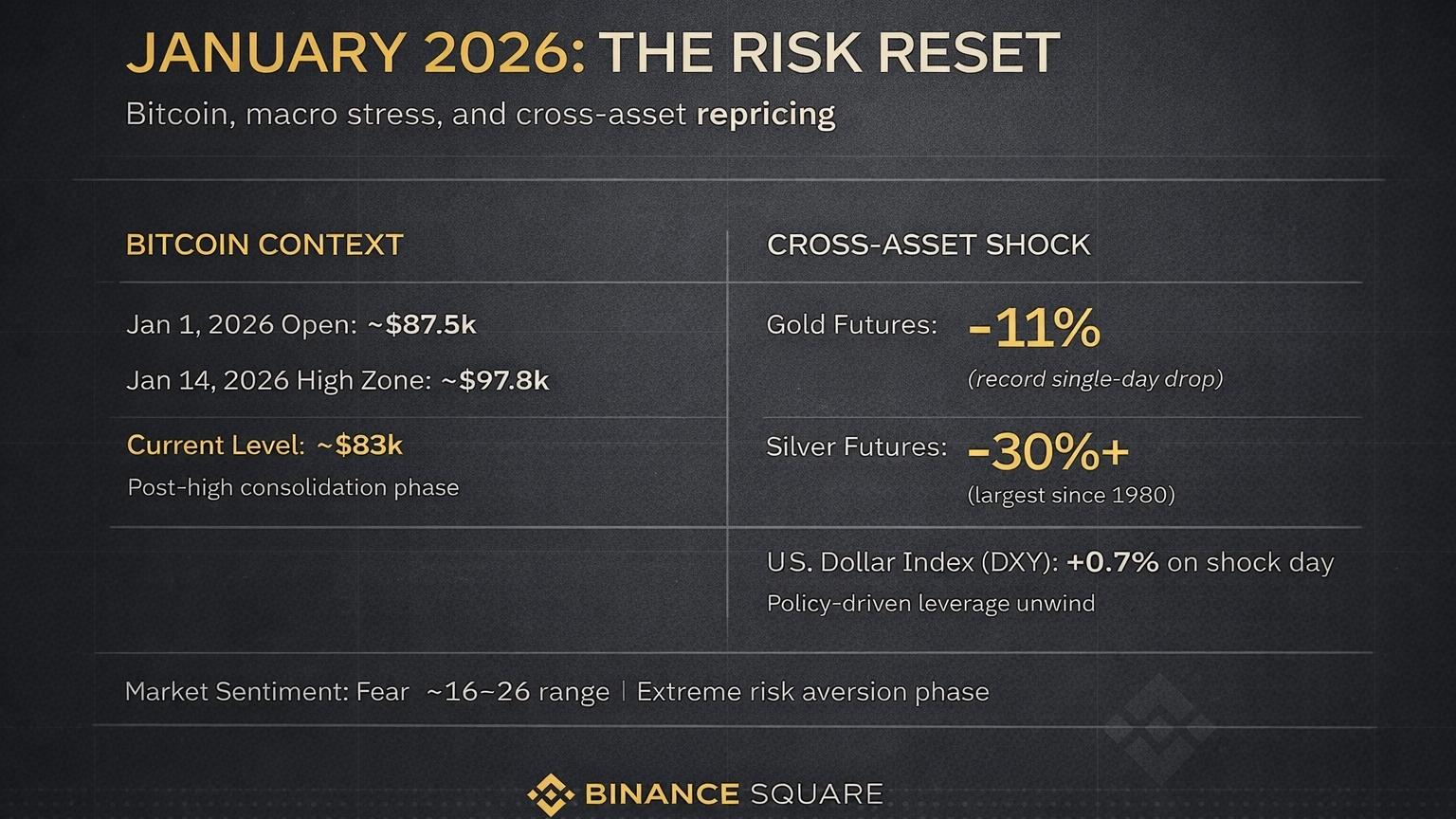
The chart you have provided is doing what it always does; it condenses decades of feeling into an easy pattern. On the one hand, people refer to Bitcoin as a bubble when it is on the rise, and dead when it is falling. January 2026 is enough to explain that.
January 2026 had real catalysts. Bitcoin never just turned into a story. It was responding to policy shock and liquidity and rapid reset of macro expectation in a variety of asset classes.
The month in one line
It was a month that markets were reminded of a dull fact having flown through the thin end of the liquidity tap and leveraged, that in the coming months, even when the safest of holdings gets stressed, the Bitcoin accidentally becomes the victim of the same risk unwind.
The upsurge in the beginning of January was not accidental.
You have mentioned the high early on January 14. That's not a made up number. The historic price volumes of BTC-USD indicate that been published on January 14, 2026, a daily high regarded as around 97,860.60.
As a backgrounder, Forbes also reported that mid month push with Bitcoin hitting its peak in an approximate of two months at the time.
So it was not the dead of the first half of January. It was a risk-on run that had concentrated positions, confidence restored and price was subjected to a liquidity level that is not friendly to crowded trades.
It was not until late month that the policy expectations broke.
The second part of January became another game: it was no longer about crypto stories, but rather about macro direction.
January 30 saw the presidential nomination of Kevin Warsh to the post of Fed chair in place of Jerome Powell in the news of major outlets, which instantly shook rate expectations and created shockwaves in markets.
It was not the politics that were important. It was what traders believed it was: policy might remain tight as desired, the dollar might appreciate, and dovish bets may be liquidated within no time.
That's exactly what happened.
The strongest noise macro signal of the month was the flash crash of metals.
To get a single January event that describes the atmosphere of everything, including Bitcoin, it was the precious metals collapse.
The gold futures that Barron was describing had dropped about 11 per cent and the silver futures had fallen about 31 per cent in one day after the headline on the nomination of Warsh had been published.
That being a metals trader or not, that is a big deal. Stability should be the case with gold and silver. When they gape down so hard that is an indication that the market is not calmly repricing. It's deleveraging.
And deleveraging does not always remain in any section of the market.
The decline of Bitcoin was more logical when you consider it liquidity math.
In the same late January trading window, Bitcoin went to new 2026 lows. On January 29, CoinDesk published a report of Bitcoin conditioned at a range of $85,200 and coinciding to 2026 low.
Your price benchmark of Jan 31 (approximately the low 80s) is more in line with the larger picture: a month that began robustly and finished stressfully.
Although various outlets were slightly different in the final prices at various points, the framework is uniform with the market data and headlines: risk contracted, leverage was punished, and BTC was following the risk unwind.
At this time, (to get a live snapshot) the BTC quote feed is indicating about $79k and an intraday high of about 84k.
Feeling did not melt down, it was jerked.
You mentioned extreme fear. That is pointed in the right direction.
Sentiment indicators indicated an Extreme Fear rating consisted of ratings of about high teens down to low 20s about 31 January based on index source and time of update. A single feed had the reading of 16 and other trackers had 20 or mid 20s.
This is what happens most of the time then a visible high has been corrected and the market begins to suspect every bounce is the beginning of something bad, and every dip is the beginning of something bader.
That's not a price prediction. That is how crowd psychology reacts following a severe shock.
The best crypto specific headline of the end of January was reserves, rather than price.
In January, it was Binance discussing reserve position and SAFU in case it had a single story, however, it was not trading.
In January 30, Binance released an open letter that talked about the expectation of the industry in the area of governance, risk, and responsibility in times of volatility.
And several also reported Binance considering converting some of its $1 billion SAFU reserve to Bitcoin, where rebalancing will maintain the reserve value on a steady level by drawing down.
Whatever anyone may think of the move, it is a key indicator of the month since it puts Bitcoin in the context of infrastructure collateral and not a trade.
A reserve decision is another type of communication in a month when metals were a constant reminder to everyone of what leverage can do.
What that translates to the dead zone of your chart about BTC.
One thing your chart is correct in is that the loudest claims will present themselves at the wrong time.
The bubble talk comes back when Bitcoin is on a boom. During the correcting phase of Bitcoin, the death talk resurfaces.
The month of January 2026 provided us with a pure demonstration of the repetition of the labels.
Bitcoin didn't "die." It was responding to a risk tightening environment, policy uncertainty and a general de-leveraging impulse that struck even the traditional safe havens. The chart is a reflection of the emotional loop and the month itself was caused by macro shocks and liquidity conditions.
And that is what it really was the lesson of January 2026.
Not that Bitcoin is weak.
However, that the contemporary markets are unstable when leverage and expectations collide, and Bitcoin is currently a well-established asset that does not exist outside the system but exists within it.
#Bitcoin #BitcoinETFWatch #MarketCorrection #Liquidations #volatility
$BTC
{spot}(BTCUSDT)
$ETH
{spot}(ETHUSDT)
$BNB
{spot}(BNBUSDT)
Bitcoin in January 2026
What exactly drove the market and why the dead or bubble chart still applies.
The chart you have provided is doing what it always does; it condenses decades of feeling into an easy pattern. On the one hand, people refer to Bitcoin as a bubble when it is on the rise, and dead when it is falling. January 2026 is enough to explain that.
January 2026 had real catalysts. Bitcoin never just turned into a story. It was responding to policy shock and liquidity and rapid reset of macro expectation in a variety of asset classes.
The month in one line
It was a month that markets were reminded of a dull fact having flown through the thin end of the liquidity tap and leveraged, that in the coming months, even when the safest of holdings gets stressed, the Bitcoin accidentally becomes the victim of the same risk unwind.
The upsurge in the beginning of January was not accidental.
You have mentioned the high early on January 14. That's not a made up number. The historic price volumes of BTC-USD indicate that been published on January 14, 2026, a daily high regarded as around 97,860.60.
As a backgrounder, Forbes also reported that mid month push with Bitcoin hitting its peak in an approximate of two months at the time.
So it was not the dead of the first half of January. It was a risk-on run that had concentrated positions, confidence restored and price was subjected to a liquidity level that is not friendly to crowded trades.
It was not until late month that the policy expectations broke.
The second part of January became another game: it was no longer about crypto stories, but rather about macro direction.
January 30 saw the presidential nomination of Kevin Warsh to the post of Fed chair in place of Jerome Powell in the news of major outlets, which instantly shook rate expectations and created shockwaves in markets.
It was not the politics that were important. It was what traders believed it was: policy might remain tight as desired, the dollar might appreciate, and dovish bets may be liquidated within no time.
That's exactly what happened.
The strongest noise macro signal of the month was the flash crash of metals.
To get a single January event that describes the atmosphere of everything, including Bitcoin, it was the precious metals collapse.
The gold futures that Barron was describing had dropped about 11 per cent and the silver futures had fallen about 31 per cent in one day after the headline on the nomination of Warsh had been published.
That being a metals trader or not, that is a big deal. Stability should be the case with gold and silver. When they gape down so hard that is an indication that the market is not calmly repricing. It's deleveraging.
And deleveraging does not always remain in any section of the market.
The decline of Bitcoin was more logical when you consider it liquidity math.
In the same late January trading window, Bitcoin went to new 2026 lows. On January 29, CoinDesk published a report of Bitcoin conditioned at a range of $85,200 and coinciding to 2026 low.
Your price benchmark of Jan 31 (approximately the low 80s) is more in line with the larger picture: a month that began robustly and finished stressfully.
Although various outlets were slightly different in the final prices at various points, the framework is uniform with the market data and headlines: risk contracted, leverage was punished, and BTC was following the risk unwind.
At this time, (to get a live snapshot) the BTC quote feed is indicating about $79k and an intraday high of about 84k.
Feeling did not melt down, it was jerked.
You mentioned extreme fear. That is pointed in the right direction.
Sentiment indicators indicated an Extreme Fear rating consisted of ratings of about high teens down to low 20s about 31 January based on index source and time of update. A single feed had the reading of 16 and other trackers had 20 or mid 20s.
This is what happens most of the time then a visible high has been corrected and the market begins to suspect every bounce is the beginning of something bad, and every dip is the beginning of something bader.
That's not a price prediction. That is how crowd psychology reacts following a severe shock.
The best crypto specific headline of the end of January was reserves, rather than price.
In January, it was Binance discussing reserve position and SAFU in case it had a single story, however, it was not trading.
In January 30, Binance released an open letter that talked about the expectation of the industry in the area of governance, risk, and responsibility in times of volatility.
And several also reported Binance considering converting some of its $1 billion SAFU reserve to Bitcoin, where rebalancing will maintain the reserve value on a steady level by drawing down.
Whatever anyone may think of the move, it is a key indicator of the month since it puts Bitcoin in the context of infrastructure collateral and not a trade.
A reserve decision is another type of communication in a month when metals were a constant reminder to everyone of what leverage can do.
What that translates to the dead zone of your chart about BTC.
One thing your chart is correct in is that the loudest claims will present themselves at the wrong time.
The bubble talk comes back when Bitcoin is on a boom. During the correcting phase of Bitcoin, the death talk resurfaces.
The month of January 2026 provided us with a pure demonstration of the repetition of the labels.
Bitcoin didn't "die." It was responding to a risk tightening environment, policy uncertainty and a general de-leveraging impulse that struck even the traditional safe havens. The chart is a reflection of the emotional loop and the month itself was caused by macro shocks and liquidity conditions.
And that is what it really was the lesson of January 2026.
Not that Bitcoin is weak.
However, that the contemporary markets are unstable when leverage and expectations collide, and Bitcoin is currently a well-established asset that does not exist outside the system but exists within it.
#Bitcoin #BitcoinETFWatch #MarketCorrection #Liquidations #volatility
$BTC
$ETH
$BNB
The chart you have provided is doing what it always does; it condenses decades of feeling into an easy pattern. On the one hand, people refer to Bitcoin as a bubble when it is on the rise, and dead when it is falling. January 2026 is enough to explain that.
January 2026 had real catalysts. Bitcoin never just turned into a story. It was responding to policy shock and liquidity and rapid reset of macro expectation in a variety of asset classes.
The month in one line
It was a month that markets were reminded of a dull fact having flown through the thin end of the liquidity tap and leveraged, that in the coming months, even when the safest of holdings gets stressed, the Bitcoin accidentally becomes the victim of the same risk unwind.
The upsurge in the beginning of January was not accidental.
You have mentioned the high early on January 14. That's not a made up number. The historic price volumes of BTC-USD indicate that been published on January 14, 2026, a daily high regarded as around 97,860.60.
As a backgrounder, Forbes also reported that mid month push with Bitcoin hitting its peak in an approximate of two months at the time.
So it was not the dead of the first half of January. It was a risk-on run that had concentrated positions, confidence restored and price was subjected to a liquidity level that is not friendly to crowded trades.
It was not until late month that the policy expectations broke.
The second part of January became another game: it was no longer about crypto stories, but rather about macro direction.
January 30 saw the presidential nomination of Kevin Warsh to the post of Fed chair in place of Jerome Powell in the news of major outlets, which instantly shook rate expectations and created shockwaves in markets.
It was not the politics that were important. It was what traders believed it was: policy might remain tight as desired, the dollar might appreciate, and dovish bets may be liquidated within no time.
That's exactly what happened.
The strongest noise macro signal of the month was the flash crash of metals.
To get a single January event that describes the atmosphere of everything, including Bitcoin, it was the precious metals collapse.
The gold futures that Barron was describing had dropped about 11 per cent and the silver futures had fallen about 31 per cent in one day after the headline on the nomination of Warsh had been published.
That being a metals trader or not, that is a big deal. Stability should be the case with gold and silver. When they gape down so hard that is an indication that the market is not calmly repricing. It's deleveraging.
And deleveraging does not always remain in any section of the market.
The decline of Bitcoin was more logical when you consider it liquidity math.
In the same late January trading window, Bitcoin went to new 2026 lows. On January 29, CoinDesk published a report of Bitcoin conditioned at a range of $85,200 and coinciding to 2026 low.
Your price benchmark of Jan 31 (approximately the low 80s) is more in line with the larger picture: a month that began robustly and finished stressfully.
Although various outlets were slightly different in the final prices at various points, the framework is uniform with the market data and headlines: risk contracted, leverage was punished, and BTC was following the risk unwind.
At this time, (to get a live snapshot) the BTC quote feed is indicating about $79k and an intraday high of about 84k.
Feeling did not melt down, it was jerked.
You mentioned extreme fear. That is pointed in the right direction.
Sentiment indicators indicated an Extreme Fear rating consisted of ratings of about high teens down to low 20s about 31 January based on index source and time of update. A single feed had the reading of 16 and other trackers had 20 or mid 20s.
This is what happens most of the time then a visible high has been corrected and the market begins to suspect every bounce is the beginning of something bad, and every dip is the beginning of something bader.
That's not a price prediction. That is how crowd psychology reacts following a severe shock.
The best crypto specific headline of the end of January was reserves, rather than price.
In January, it was Binance discussing reserve position and SAFU in case it had a single story, however, it was not trading.
In January 30, Binance released an open letter that talked about the expectation of the industry in the area of governance, risk, and responsibility in times of volatility.
And several also reported Binance considering converting some of its $1 billion SAFU reserve to Bitcoin, where rebalancing will maintain the reserve value on a steady level by drawing down.
Whatever anyone may think of the move, it is a key indicator of the month since it puts Bitcoin in the context of infrastructure collateral and not a trade.
A reserve decision is another type of communication in a month when metals were a constant reminder to everyone of what leverage can do.
What that translates to the dead zone of your chart about BTC.
One thing your chart is correct in is that the loudest claims will present themselves at the wrong time.
The bubble talk comes back when Bitcoin is on a boom. During the correcting phase of Bitcoin, the death talk resurfaces.
The month of January 2026 provided us with a pure demonstration of the repetition of the labels.
Bitcoin didn't "die." It was responding to a risk tightening environment, policy uncertainty and a general de-leveraging impulse that struck even the traditional safe havens. The chart is a reflection of the emotional loop and the month itself was caused by macro shocks and liquidity conditions.
And that is what it really was the lesson of January 2026.
Not that Bitcoin is weak.
However, that the contemporary markets are unstable when leverage and expectations collide, and Bitcoin is currently a well-established asset that does not exist outside the system but exists within it.
#Bitcoin #BitcoinETFWatch #MarketCorrection #Liquidations #volatility
$BTC
$ETH
$BNB
21
5
49
3.5k
PINNED
·
--

Article
Gold and Silver in TurmoilThe recent Precious Metals Shock means to markets, crypto, and the expansion of vision by Binance.
Introduction
Both gold and silver markets are undergoing one of the most volatile period in the recent history. In early 2026, precious metals were swinging wildly, canceling of huge market values in brief periods of time and remaining on an upward trend on a longer timeframe. Such unexpected movements have taken even old fashioned investors by surprise and this has brought back a long held debate; are metals still safe hedges or are they weakening in an ever-accelerating financial environment?
With inflation uncertainty, geopolitical pressure, and changes in monetary policy being digested in the world markets, gold and silver cease to be traded in sluggish predictable loops. They are instead acting like high beta assets. This is significant not only to traders in commodities, but also to crypto actors, constructors and platforms such as Binance that inhabit the space between conventional finance and the digital market.
Latest Market Conditions in the Gold Market.
After a historic 2025, Gold went into 2026. Gold recorded over 50 all-time highs in 2013, according to industry reports and data compiled by the World Gold Council, which was fuelled by accumulation by central banks, geopolitical uncertainty and the inability of the US dollar to recover against other major currencies. By the end of January 2026, the price of gold shot above the new all time high of 5, 500 per ounce.
The rally has however not been smooth. Intraday volatility has gone up drastically. The heavy leveraged positions and the crowding trade has exposed gold to the liquidation at any time. Gold has been subjected to swift drawdowns over the past few sessions in the trillions of market capitalization in a few minutes, a volume of movement previously linked to crypto markets over commodities.
The attitude depicts a structural change. Gold is no more a snail moving store of value. It has already turned into a globally traded financial instrument that is responding instantly to liquidity, macro narratives, and speculative positioning.
Silver's Fragile Position
Silver has suffered even greater pressure. Although gold enjoys the advantages of the demand of central banks and reserves, silver is placed in the middle between industrial applications and speculations. Due to the changing forecasts of economic growth, silver prices have been in exaggerated upward and downward movements.
The recent sell offs have revealed the thin nature of liquidity in silver markets as compared to the gold markets. The swift percentage declines have unravelled months of current gains within days making many investors wonder whether silver is not being handled as a monetary metal but rather as a high risk asset.
It is this dynamic that has led to a poor performance of silver in the times of market strain, even though it has been known to perform well as a hedge in history. Silver now in most respects trades in relation to volatile altcoins more than it does to conservative safe haven assets.
Macro Forces that are causing the Volatility.
The present gold and silver situation is being influenced by a number of macro factors. Continued inflation fears, doubts over the independence of the US Federal Reserve and constant developments in geopolitical tensions are all reasons why people have sought hard assets. Concurrently, the volatility in interest rates and intense flows of speculators have augmented leverage in the futures markets.
The forced unwinds occur very rapidly when there is a tightening of liquidity or a change of heart. This is why such huge stock of values can be lost within a few minutes even though there is no underlying change in the long term demand. Markets are now moving quicker than the policy, regulation or education systems can keep up.
The Crypto Parallel
This practice is not new to the crypto native players. This amount of volatility has been experienced by Bitcoin and altcoins over the years. The new thing is the appearance of traditional assets to act in the same manner.
This convergence matters. It erases the psychological barrier between goods and internet property. As soon as gold begins to behave more like crypto, investors will begin to make more comparisons between them. The speed, transparency, and accessibility begin to be more significant than the legacy-based narratives.
It is at this point where cryptocurrency exchanges such as Binance would be useful in other areas other than crypto trading. Binance offers insights into various asset classes, educational resources, and infrastructure that can allow the user to learn how the market works and not follow a storyline without grasping the dynamics of a market.
Binance, Market Education and Infrastructure.
The role of Binance in this setting is not price discovery. The ecosystem focuses on the study of market structure, liquidity behavior, and long term innovation through Binance Square, research projects and Binance Ventures.
Binance Ventures is still investing in the infrastructure to bridge the traditional finance and blockchain technology. All these areas of so-called tokenized real world assets, on chain commodities, and decentralized settlement layers, are where the lessons of the volatility of gold and silver can be directly applied.
The need to have transparent and programmable financial systems is growing as the traditional markets are growing fast and fragile. It is at this point that blockchain based solutions become more relevant both in theory and in practice.
The Implication of This to Investors.
The recent turmoil in gold and silver cannot be attributed to a failure of these assets. It is a signal. Markets are changing. Once slow moving assets are now instantaneous in response to information flows in the world.
To investors, the issue of risk management is more important than the stories. It is necessary to know much about liquidity, leverage and crowd behavior. This is true regardless of the trading of metals, crypto, or tokenized assets.
In the case of builders and platforms, it understands the significance of learning, equipment, and sensible market design. The ongoing user education and ecosystem building efforts by Binance make it better placed in a world where asset classes are becoming more and more blurred.
Conclusion
Gold and silver are not lost, they are also still valuable, but they are no longer above the forces that are defining modern markets. The recent volatility they have experienced demonstrates the extent to which the world finance is interconnected.
Since the traditional and the digital market are slowly closing in, the future lies in systems that value transparency, flexibility, and informed participation. The future of finance, be it crypto, commodities or hybrids will be in finance that compensates the knowledgeable over the intuitive.
#GoldOnTheRise
#TokenizedSilverSurge
#GOLD
#Silver
#volatility
$XAU
$XAG
$BNB
{future}(XAUUSDT)
{future}(XAGUSDT)
{spot}(BNBUSDT)
Gold and Silver in Turmoil
The recent Precious Metals Shock means to markets, crypto, and the expansion of vision by Binance.
Introduction
Both gold and silver markets are undergoing one of the most volatile period in the recent history. In early 2026, precious metals were swinging wildly, canceling of huge market values in brief periods of time and remaining on an upward trend on a longer timeframe. Such unexpected movements have taken even old fashioned investors by surprise and this has brought back a long held debate; are metals still safe hedges or are they weakening in an ever-accelerating financial environment?
With inflation uncertainty, geopolitical pressure, and changes in monetary policy being digested in the world markets, gold and silver cease to be traded in sluggish predictable loops. They are instead acting like high beta assets. This is significant not only to traders in commodities, but also to crypto actors, constructors and platforms such as Binance that inhabit the space between conventional finance and the digital market.
Latest Market Conditions in the Gold Market.
After a historic 2025, Gold went into 2026. Gold recorded over 50 all-time highs in 2013, according to industry reports and data compiled by the World Gold Council, which was fuelled by accumulation by central banks, geopolitical uncertainty and the inability of the US dollar to recover against other major currencies. By the end of January 2026, the price of gold shot above the new all time high of 5, 500 per ounce.
The rally has however not been smooth. Intraday volatility has gone up drastically. The heavy leveraged positions and the crowding trade has exposed gold to the liquidation at any time. Gold has been subjected to swift drawdowns over the past few sessions in the trillions of market capitalization in a few minutes, a volume of movement previously linked to crypto markets over commodities.
The attitude depicts a structural change. Gold is no more a snail moving store of value. It has already turned into a globally traded financial instrument that is responding instantly to liquidity, macro narratives, and speculative positioning.
Silver's Fragile Position
Silver has suffered even greater pressure. Although gold enjoys the advantages of the demand of central banks and reserves, silver is placed in the middle between industrial applications and speculations. Due to the changing forecasts of economic growth, silver prices have been in exaggerated upward and downward movements.
The recent sell offs have revealed the thin nature of liquidity in silver markets as compared to the gold markets. The swift percentage declines have unravelled months of current gains within days making many investors wonder whether silver is not being handled as a monetary metal but rather as a high risk asset.
It is this dynamic that has led to a poor performance of silver in the times of market strain, even though it has been known to perform well as a hedge in history. Silver now in most respects trades in relation to volatile altcoins more than it does to conservative safe haven assets.
Macro Forces that are causing the Volatility.
The present gold and silver situation is being influenced by a number of macro factors. Continued inflation fears, doubts over the independence of the US Federal Reserve and constant developments in geopolitical tensions are all reasons why people have sought hard assets. Concurrently, the volatility in interest rates and intense flows of speculators have augmented leverage in the futures markets.
The forced unwinds occur very rapidly when there is a tightening of liquidity or a change of heart. This is why such huge stock of values can be lost within a few minutes even though there is no underlying change in the long term demand. Markets are now moving quicker than the policy, regulation or education systems can keep up.
The Crypto Parallel
This practice is not new to the crypto native players. This amount of volatility has been experienced by Bitcoin and altcoins over the years. The new thing is the appearance of traditional assets to act in the same manner.
This convergence matters. It erases the psychological barrier between goods and internet property. As soon as gold begins to behave more like crypto, investors will begin to make more comparisons between them. The speed, transparency, and accessibility begin to be more significant than the legacy-based narratives.
It is at this point where cryptocurrency exchanges such as Binance would be useful in other areas other than crypto trading. Binance offers insights into various asset classes, educational resources, and infrastructure that can allow the user to learn how the market works and not follow a storyline without grasping the dynamics of a market.
Binance, Market Education and Infrastructure.
The role of Binance in this setting is not price discovery. The ecosystem focuses on the study of market structure, liquidity behavior, and long term innovation through Binance Square, research projects and Binance Ventures.
Binance Ventures is still investing in the infrastructure to bridge the traditional finance and blockchain technology. All these areas of so-called tokenized real world assets, on chain commodities, and decentralized settlement layers, are where the lessons of the volatility of gold and silver can be directly applied.
The need to have transparent and programmable financial systems is growing as the traditional markets are growing fast and fragile. It is at this point that blockchain based solutions become more relevant both in theory and in practice.
The Implication of This to Investors.
The recent turmoil in gold and silver cannot be attributed to a failure of these assets. It is a signal. Markets are changing. Once slow moving assets are now instantaneous in response to information flows in the world.
To investors, the issue of risk management is more important than the stories. It is necessary to know much about liquidity, leverage and crowd behavior. This is true regardless of the trading of metals, crypto, or tokenized assets.
In the case of builders and platforms, it understands the significance of learning, equipment, and sensible market design. The ongoing user education and ecosystem building efforts by Binance make it better placed in a world where asset classes are becoming more and more blurred.
Conclusion
Gold and silver are not lost, they are also still valuable, but they are no longer above the forces that are defining modern markets. The recent volatility they have experienced demonstrates the extent to which the world finance is interconnected.
Since the traditional and the digital market are slowly closing in, the future lies in systems that value transparency, flexibility, and informed participation. The future of finance, be it crypto, commodities or hybrids will be in finance that compensates the knowledgeable over the intuitive.
#GoldOnTheRise
#TokenizedSilverSurge
#GOLD
#Silver
#volatility
$XAU
$XAG
$BNB
Introduction
Both gold and silver markets are undergoing one of the most volatile period in the recent history. In early 2026, precious metals were swinging wildly, canceling of huge market values in brief periods of time and remaining on an upward trend on a longer timeframe. Such unexpected movements have taken even old fashioned investors by surprise and this has brought back a long held debate; are metals still safe hedges or are they weakening in an ever-accelerating financial environment?
With inflation uncertainty, geopolitical pressure, and changes in monetary policy being digested in the world markets, gold and silver cease to be traded in sluggish predictable loops. They are instead acting like high beta assets. This is significant not only to traders in commodities, but also to crypto actors, constructors and platforms such as Binance that inhabit the space between conventional finance and the digital market.
Latest Market Conditions in the Gold Market.
After a historic 2025, Gold went into 2026. Gold recorded over 50 all-time highs in 2013, according to industry reports and data compiled by the World Gold Council, which was fuelled by accumulation by central banks, geopolitical uncertainty and the inability of the US dollar to recover against other major currencies. By the end of January 2026, the price of gold shot above the new all time high of 5, 500 per ounce.
The rally has however not been smooth. Intraday volatility has gone up drastically. The heavy leveraged positions and the crowding trade has exposed gold to the liquidation at any time. Gold has been subjected to swift drawdowns over the past few sessions in the trillions of market capitalization in a few minutes, a volume of movement previously linked to crypto markets over commodities.
The attitude depicts a structural change. Gold is no more a snail moving store of value. It has already turned into a globally traded financial instrument that is responding instantly to liquidity, macro narratives, and speculative positioning.
Silver's Fragile Position
Silver has suffered even greater pressure. Although gold enjoys the advantages of the demand of central banks and reserves, silver is placed in the middle between industrial applications and speculations. Due to the changing forecasts of economic growth, silver prices have been in exaggerated upward and downward movements.
The recent sell offs have revealed the thin nature of liquidity in silver markets as compared to the gold markets. The swift percentage declines have unravelled months of current gains within days making many investors wonder whether silver is not being handled as a monetary metal but rather as a high risk asset.
It is this dynamic that has led to a poor performance of silver in the times of market strain, even though it has been known to perform well as a hedge in history. Silver now in most respects trades in relation to volatile altcoins more than it does to conservative safe haven assets.
Macro Forces that are causing the Volatility.
The present gold and silver situation is being influenced by a number of macro factors. Continued inflation fears, doubts over the independence of the US Federal Reserve and constant developments in geopolitical tensions are all reasons why people have sought hard assets. Concurrently, the volatility in interest rates and intense flows of speculators have augmented leverage in the futures markets.
The forced unwinds occur very rapidly when there is a tightening of liquidity or a change of heart. This is why such huge stock of values can be lost within a few minutes even though there is no underlying change in the long term demand. Markets are now moving quicker than the policy, regulation or education systems can keep up.
The Crypto Parallel
This practice is not new to the crypto native players. This amount of volatility has been experienced by Bitcoin and altcoins over the years. The new thing is the appearance of traditional assets to act in the same manner.
This convergence matters. It erases the psychological barrier between goods and internet property. As soon as gold begins to behave more like crypto, investors will begin to make more comparisons between them. The speed, transparency, and accessibility begin to be more significant than the legacy-based narratives.
It is at this point where cryptocurrency exchanges such as Binance would be useful in other areas other than crypto trading. Binance offers insights into various asset classes, educational resources, and infrastructure that can allow the user to learn how the market works and not follow a storyline without grasping the dynamics of a market.
Binance, Market Education and Infrastructure.
The role of Binance in this setting is not price discovery. The ecosystem focuses on the study of market structure, liquidity behavior, and long term innovation through Binance Square, research projects and Binance Ventures.
Binance Ventures is still investing in the infrastructure to bridge the traditional finance and blockchain technology. All these areas of so-called tokenized real world assets, on chain commodities, and decentralized settlement layers, are where the lessons of the volatility of gold and silver can be directly applied.
The need to have transparent and programmable financial systems is growing as the traditional markets are growing fast and fragile. It is at this point that blockchain based solutions become more relevant both in theory and in practice.
The Implication of This to Investors.
The recent turmoil in gold and silver cannot be attributed to a failure of these assets. It is a signal. Markets are changing. Once slow moving assets are now instantaneous in response to information flows in the world.
To investors, the issue of risk management is more important than the stories. It is necessary to know much about liquidity, leverage and crowd behavior. This is true regardless of the trading of metals, crypto, or tokenized assets.
In the case of builders and platforms, it understands the significance of learning, equipment, and sensible market design. The ongoing user education and ecosystem building efforts by Binance make it better placed in a world where asset classes are becoming more and more blurred.
Conclusion
Gold and silver are not lost, they are also still valuable, but they are no longer above the forces that are defining modern markets. The recent volatility they have experienced demonstrates the extent to which the world finance is interconnected.
Since the traditional and the digital market are slowly closing in, the future lies in systems that value transparency, flexibility, and informed participation. The future of finance, be it crypto, commodities or hybrids will be in finance that compensates the knowledgeable over the intuitive.
#GoldOnTheRise
#TokenizedSilverSurge
#GOLD
#Silver
#volatility
$XAU
$XAG
$BNB
19
2
47
3k
·
--
GOOD MORNING 🌅 CLAIM YOUR REWARD $ETH 🔥
{spot}(ETHUSDT)
GOOD MORNING 🌅 CLAIM YOUR REWARD $ETH 🔥

290
135
26
659
·
--
Article
Why Bitcoin Falling Below $70,000 in 2026: Reasons why it will crash and the Future.Introduction
An all-time high rally at which Bitcoin approached 100,000 towards the middle of January, the biggest cryptocurrency by market valuation dropped to less than 70,000 at the end of January 2026. The fall undid weeks of gains and raised discussions as to whether the bull market is finished or is taking a break. The slide was caused by a combination of macroeconomic factors, liquidity shocks, investor psychology and geopolitical tensions. The article breaks down the forces behind the fall, the reaction in the market and evaluates the ability of the Bitcoin to maintain its peaks.
The ETF Boom and Bust
Whether the U.S. spot Bitcoin ETFs would roll out in November 2025 would have been a watershed moment. Due to the attraction of billions of products offered by BlackRock, Fidelity, Bitwise, Ark and others, demand increased. The premature flows spurred Bitcoin to new levels. There was a sharp reversal of flows towards the end of January, however. According to the information provided by Farside Investors, Bitcoin ETFs experienced net outflows of approximately 509.7 million dollars on 30 January 2026, with the majority of funds being withdrawn by BlackRocks iShares Bitcoin Trust (528.3 million dollars). Outflows were one of the sharpest daily declines since the launch and an indicator of declining investor confidence.
When the decline became a trend, panic was compounded. As early as early February, cumulative net outflows since November were of over 6 billion, the longest monthly period outflows in the history of the funds. Highly purchased institutional investors began selling to make losses and short-term traders jumped on the negative. After the fall, analysts observed that over 62 percent of ETF investors were under water, further putting pressure of sale to break even.
One bright spot was that net inflows returned to the tune of $561.8 million a day, according to the table of Farside 2 February daily flow. Large deposits into Fidelity FBTC and BlackRock IBIT indicated that some of the institutions were buying the dip. Nevertheless, such inflows never canceled out the past outflows and the market sentiment was weak.
Macro Headwinds: Rate Policy and Liquidity.
The monetary policy of U.S. again took centre stage. Inflation had moderated to the 2 percent target of the Federal Reserve by the end of 2025, but unemployment was creeping up and economic growth was slowing down. The Fed governors argued that rates should be reduced drastically in 2026 and those argued that the Fed should avoid cutting the rates too early, a step that would trigger inflation again. There was uncertainty on whether rates would remain higher than long prompting markets to be shaken.
Risk assets fell when the Fed maintained its target range of 3.50 -3.75 in January and suggested being cautious up to mid-2026. The correlation between Bitcoin and equities increased to 0.75, which indicates that the performance of S&P 500 or Nasdaq affected crypto more significantly. Increased rates decrease the liquidity on speculative assets, and risk-free returns become fairly appealing. Investors sold volatile positions and went to cash, money market funds or bonds.
Elsewhere, the central banks of Europe and Asia cautioned that financial situations may tighten further, lowering liquidity around the globe. The commodity supply shocks (especially gold and silver which dropped dramatically) were indications of a general unwinding of the speculative trades. The volatility index of the bond market has skyrocketed with the increase in yields of long-term treasury bonds, which damaged leveraged Holdings in crypto.
Geopolitical Tensions and Flight to Safety.
Late in January the situation of geopolitical risks increased. Negotiations between the Chinese and the U.S. on the issue of technology transfer ended. Iran and western powers were threatening each other by use of shipping lanes, and this caused fear of disruption of supply of energy. In the Middle East the situation escalated with proxy groups going on a collision course. In response, markets took a flight towards so-called safe havens, such as the U.S. dollar and short-term treasuries, and risky assets, such as Bitcoin, traded down. Bitcoin has been doublespeaked historically as the digital version of gold, but during the crisis tends to be positive-correlated with stocks, indicating that it is a high-beta asset instead of a safe-haven one.
The other reason was that India had decided to remove the tariffs on American products at the same time that the U.S had removed tariffs on Indian products. This trade deal marked a calming of global tensions at the expense of including provisions in which India had to stop purchasing Russian oil and promised to make half a trillion dollars of imports into the United States. On the one hand, the policy was beneficial to trade, but it put pressure on new currencies of the emerging markets that strengthened the dollar and burdened dollar-denominated assets such as Bitcoin.
Big Players: GameStop, Strategy and Whales.
Volatility was augmented by news surrounding major corporate players. The meme-stock hero GameStop announced that it would acquire a consumer size buyer in a high-impact deal. Other analysts guessed that GameStop could sell its Bitcoin reserves to fund the acquisition, but these rumors were never proved. Nonetheless, market confidence was burdened by the speculation.
Strategy (previously MicroStrategy) owned more than 190,000 bitcoins as of the end of 2025, although the average cost basis was close to $74,000. Another instance is when the company had a negative mark-to-market holding when Bitcoin fell to 74,500. CEO Michael Saylor restated his long-term bullishness and actually purchased more coins, although the market was concerned that additional crashes might compel him to sell more in order to cover leverage. The same happened to other corporates which have large BTC exposure.
Whale positioning data reflected approximately 596 large long positions and 1,245 large short positions and long to short ratio was approximately 0.26. The average entry prices of short sellers were close to 92753, and it implied that they were well into the profit. This disparity increased the downward movement since shorts increased positions. Contrarily, a short squeeze would be a possibility in the event that the price rebounds above the major levels of resistance since underwater shorts would be in a hurry to cover.
Technical Support Levels and Breakdown.
Even before the crash, technical analysts had indicated that there are some signs of warning. Bitcoin had been over its 100-day exponential moving average (EMA) and even close to its upper Bollinger band all of December and January. This stance signified overextensioning. With price holding at around the 98,000 mark, the Relative Strength Index (RSI) dropped to overbought to approximately 15 indicating the state of extreme fear and oversold. Stop-loss orders started to cascade into a liquidation as soon as Bitcoin fell below its major support at 79,000 USD. A bunch of clusters around the 74,000 area drove a large number of traders out of their positions which briefly put the price to test the 68,000 level.
Although the lower, the higher-low pattern of 2025 was still preserved in the long-term graphs. Support areas were found to be at 74000 and 68000, and the resistance is 79000 and 81000. In case the price is able to recover to an amount of an overall of all ETFs realized price to investors: that is, $86,600, sentiment would be significantly enhanced since all holders underwater will be out of the red.
Likelihoods: Backsliding or Increasing Pain?
Bitcoin will either go back above $70,000 or drop even further depending on a number of factors that are subject to change:
ETF Flows: The prices may stabilize with continued institutional inflows such as those experienced on 2 February. More volatility is expected in case outflows start back up.
1 - Macro Policy: The liquidity will be determined by the upcoming Fed decisions, inflation data and rate expectations. Reduction of rates or policy understanding would boost risk appetite.
2 - Geopolitics: The reduction in the risk-off pressure would be due to de-escalation of the world tension and a stable supply of energy. On the other hand, unforeseen wrangles may lead to additional sell-offs.
3 - Whale and Corporate Behavior: In case such large holders as Strategy or GameStop sell, the market might revisit lows. Conversely, conviction by whales may lead to a short squeeze.
4 - Expansive Crypto Trends: Investor sentiment will be impacted by the performance of the Altcoins, the development of DeFi and regulatory transparency (particularly amid the new administration following the 2024 election in the U.S.).
Summary: The Death of Simple Risk.
The decline to below 70,000 was a cold shock that the Bitcoin journey is unstable, especially when it attracts the mainstream financial system in the form of ETFs. There is an ebb and flow of liquidity as institutions either put in or take out capital. All of the macro headwinds, geopolitics, corporate movements and technical dynamics are interconnected.
These episodes are points of entry to long-term believers. To traders, structured risk management in crucial support levels is critical. Most importantly, the crash is a reminder that the age of easy risk in crypto has ended, future rallies are probably going to be more scrutinized, volatility will increase and structural repricing will grow slower. The only way not to lose direction in the future is to understand the motivations of the movements of the market.
$BTC #BTC
{spot}(BTCUSDT)
Why Bitcoin Falling Below $70,000 in 2026: Reasons why it will crash and the Future.
Introduction
An all-time high rally at which Bitcoin approached 100,000 towards the middle of January, the biggest cryptocurrency by market valuation dropped to less than 70,000 at the end of January 2026. The fall undid weeks of gains and raised discussions as to whether the bull market is finished or is taking a break. The slide was caused by a combination of macroeconomic factors, liquidity shocks, investor psychology and geopolitical tensions. The article breaks down the forces behind the fall, the reaction in the market and evaluates the ability of the Bitcoin to maintain its peaks.
The ETF Boom and Bust
Whether the U.S. spot Bitcoin ETFs would roll out in November 2025 would have been a watershed moment. Due to the attraction of billions of products offered by BlackRock, Fidelity, Bitwise, Ark and others, demand increased. The premature flows spurred Bitcoin to new levels. There was a sharp reversal of flows towards the end of January, however. According to the information provided by Farside Investors, Bitcoin ETFs experienced net outflows of approximately 509.7 million dollars on 30 January 2026, with the majority of funds being withdrawn by BlackRocks iShares Bitcoin Trust (528.3 million dollars). Outflows were one of the sharpest daily declines since the launch and an indicator of declining investor confidence.
When the decline became a trend, panic was compounded. As early as early February, cumulative net outflows since November were of over 6 billion, the longest monthly period outflows in the history of the funds. Highly purchased institutional investors began selling to make losses and short-term traders jumped on the negative. After the fall, analysts observed that over 62 percent of ETF investors were under water, further putting pressure of sale to break even.
One bright spot was that net inflows returned to the tune of $561.8 million a day, according to the table of Farside 2 February daily flow. Large deposits into Fidelity FBTC and BlackRock IBIT indicated that some of the institutions were buying the dip. Nevertheless, such inflows never canceled out the past outflows and the market sentiment was weak.
Macro Headwinds: Rate Policy and Liquidity.
The monetary policy of U.S. again took centre stage. Inflation had moderated to the 2 percent target of the Federal Reserve by the end of 2025, but unemployment was creeping up and economic growth was slowing down. The Fed governors argued that rates should be reduced drastically in 2026 and those argued that the Fed should avoid cutting the rates too early, a step that would trigger inflation again. There was uncertainty on whether rates would remain higher than long prompting markets to be shaken.
Risk assets fell when the Fed maintained its target range of 3.50 -3.75 in January and suggested being cautious up to mid-2026. The correlation between Bitcoin and equities increased to 0.75, which indicates that the performance of S&P 500 or Nasdaq affected crypto more significantly. Increased rates decrease the liquidity on speculative assets, and risk-free returns become fairly appealing. Investors sold volatile positions and went to cash, money market funds or bonds.
Elsewhere, the central banks of Europe and Asia cautioned that financial situations may tighten further, lowering liquidity around the globe. The commodity supply shocks (especially gold and silver which dropped dramatically) were indications of a general unwinding of the speculative trades. The volatility index of the bond market has skyrocketed with the increase in yields of long-term treasury bonds, which damaged leveraged Holdings in crypto.
Geopolitical Tensions and Flight to Safety.
Late in January the situation of geopolitical risks increased. Negotiations between the Chinese and the U.S. on the issue of technology transfer ended. Iran and western powers were threatening each other by use of shipping lanes, and this caused fear of disruption of supply of energy. In the Middle East the situation escalated with proxy groups going on a collision course. In response, markets took a flight towards so-called safe havens, such as the U.S. dollar and short-term treasuries, and risky assets, such as Bitcoin, traded down. Bitcoin has been doublespeaked historically as the digital version of gold, but during the crisis tends to be positive-correlated with stocks, indicating that it is a high-beta asset instead of a safe-haven one.
The other reason was that India had decided to remove the tariffs on American products at the same time that the U.S had removed tariffs on Indian products. This trade deal marked a calming of global tensions at the expense of including provisions in which India had to stop purchasing Russian oil and promised to make half a trillion dollars of imports into the United States. On the one hand, the policy was beneficial to trade, but it put pressure on new currencies of the emerging markets that strengthened the dollar and burdened dollar-denominated assets such as Bitcoin.
Big Players: GameStop, Strategy and Whales.
Volatility was augmented by news surrounding major corporate players. The meme-stock hero GameStop announced that it would acquire a consumer size buyer in a high-impact deal. Other analysts guessed that GameStop could sell its Bitcoin reserves to fund the acquisition, but these rumors were never proved. Nonetheless, market confidence was burdened by the speculation.
Strategy (previously MicroStrategy) owned more than 190,000 bitcoins as of the end of 2025, although the average cost basis was close to $74,000. Another instance is when the company had a negative mark-to-market holding when Bitcoin fell to 74,500. CEO Michael Saylor restated his long-term bullishness and actually purchased more coins, although the market was concerned that additional crashes might compel him to sell more in order to cover leverage. The same happened to other corporates which have large BTC exposure.
Whale positioning data reflected approximately 596 large long positions and 1,245 large short positions and long to short ratio was approximately 0.26. The average entry prices of short sellers were close to 92753, and it implied that they were well into the profit. This disparity increased the downward movement since shorts increased positions. Contrarily, a short squeeze would be a possibility in the event that the price rebounds above the major levels of resistance since underwater shorts would be in a hurry to cover.
Technical Support Levels and Breakdown.
Even before the crash, technical analysts had indicated that there are some signs of warning. Bitcoin had been over its 100-day exponential moving average (EMA) and even close to its upper Bollinger band all of December and January. This stance signified overextensioning. With price holding at around the 98,000 mark, the Relative Strength Index (RSI) dropped to overbought to approximately 15 indicating the state of extreme fear and oversold. Stop-loss orders started to cascade into a liquidation as soon as Bitcoin fell below its major support at 79,000 USD. A bunch of clusters around the 74,000 area drove a large number of traders out of their positions which briefly put the price to test the 68,000 level.
Although the lower, the higher-low pattern of 2025 was still preserved in the long-term graphs. Support areas were found to be at 74000 and 68000, and the resistance is 79000 and 81000. In case the price is able to recover to an amount of an overall of all ETFs realized price to investors: that is, $86,600, sentiment would be significantly enhanced since all holders underwater will be out of the red.
Likelihoods: Backsliding or Increasing Pain?
Bitcoin will either go back above $70,000 or drop even further depending on a number of factors that are subject to change:
ETF Flows: The prices may stabilize with continued institutional inflows such as those experienced on 2 February. More volatility is expected in case outflows start back up.
1 - Macro Policy: The liquidity will be determined by the upcoming Fed decisions, inflation data and rate expectations. Reduction of rates or policy understanding would boost risk appetite.
2 - Geopolitics: The reduction in the risk-off pressure would be due to de-escalation of the world tension and a stable supply of energy. On the other hand, unforeseen wrangles may lead to additional sell-offs.
3 - Whale and Corporate Behavior: In case such large holders as Strategy or GameStop sell, the market might revisit lows. Conversely, conviction by whales may lead to a short squeeze.
4 - Expansive Crypto Trends: Investor sentiment will be impacted by the performance of the Altcoins, the development of DeFi and regulatory transparency (particularly amid the new administration following the 2024 election in the U.S.).
Summary: The Death of Simple Risk.
The decline to below 70,000 was a cold shock that the Bitcoin journey is unstable, especially when it attracts the mainstream financial system in the form of ETFs. There is an ebb and flow of liquidity as institutions either put in or take out capital. All of the macro headwinds, geopolitics, corporate movements and technical dynamics are interconnected.
These episodes are points of entry to long-term believers. To traders, structured risk management in crucial support levels is critical. Most importantly, the crash is a reminder that the age of easy risk in crypto has ended, future rallies are probably going to be more scrutinized, volatility will increase and structural repricing will grow slower. The only way not to lose direction in the future is to understand the motivations of the movements of the market.
$BTC #BTC
An all-time high rally at which Bitcoin approached 100,000 towards the middle of January, the biggest cryptocurrency by market valuation dropped to less than 70,000 at the end of January 2026. The fall undid weeks of gains and raised discussions as to whether the bull market is finished or is taking a break. The slide was caused by a combination of macroeconomic factors, liquidity shocks, investor psychology and geopolitical tensions. The article breaks down the forces behind the fall, the reaction in the market and evaluates the ability of the Bitcoin to maintain its peaks.
The ETF Boom and Bust
Whether the U.S. spot Bitcoin ETFs would roll out in November 2025 would have been a watershed moment. Due to the attraction of billions of products offered by BlackRock, Fidelity, Bitwise, Ark and others, demand increased. The premature flows spurred Bitcoin to new levels. There was a sharp reversal of flows towards the end of January, however. According to the information provided by Farside Investors, Bitcoin ETFs experienced net outflows of approximately 509.7 million dollars on 30 January 2026, with the majority of funds being withdrawn by BlackRocks iShares Bitcoin Trust (528.3 million dollars). Outflows were one of the sharpest daily declines since the launch and an indicator of declining investor confidence.
When the decline became a trend, panic was compounded. As early as early February, cumulative net outflows since November were of over 6 billion, the longest monthly period outflows in the history of the funds. Highly purchased institutional investors began selling to make losses and short-term traders jumped on the negative. After the fall, analysts observed that over 62 percent of ETF investors were under water, further putting pressure of sale to break even.
One bright spot was that net inflows returned to the tune of $561.8 million a day, according to the table of Farside 2 February daily flow. Large deposits into Fidelity FBTC and BlackRock IBIT indicated that some of the institutions were buying the dip. Nevertheless, such inflows never canceled out the past outflows and the market sentiment was weak.
Macro Headwinds: Rate Policy and Liquidity.
The monetary policy of U.S. again took centre stage. Inflation had moderated to the 2 percent target of the Federal Reserve by the end of 2025, but unemployment was creeping up and economic growth was slowing down. The Fed governors argued that rates should be reduced drastically in 2026 and those argued that the Fed should avoid cutting the rates too early, a step that would trigger inflation again. There was uncertainty on whether rates would remain higher than long prompting markets to be shaken.
Risk assets fell when the Fed maintained its target range of 3.50 -3.75 in January and suggested being cautious up to mid-2026. The correlation between Bitcoin and equities increased to 0.75, which indicates that the performance of S&P 500 or Nasdaq affected crypto more significantly. Increased rates decrease the liquidity on speculative assets, and risk-free returns become fairly appealing. Investors sold volatile positions and went to cash, money market funds or bonds.
Elsewhere, the central banks of Europe and Asia cautioned that financial situations may tighten further, lowering liquidity around the globe. The commodity supply shocks (especially gold and silver which dropped dramatically) were indications of a general unwinding of the speculative trades. The volatility index of the bond market has skyrocketed with the increase in yields of long-term treasury bonds, which damaged leveraged Holdings in crypto.
Geopolitical Tensions and Flight to Safety.
Late in January the situation of geopolitical risks increased. Negotiations between the Chinese and the U.S. on the issue of technology transfer ended. Iran and western powers were threatening each other by use of shipping lanes, and this caused fear of disruption of supply of energy. In the Middle East the situation escalated with proxy groups going on a collision course. In response, markets took a flight towards so-called safe havens, such as the U.S. dollar and short-term treasuries, and risky assets, such as Bitcoin, traded down. Bitcoin has been doublespeaked historically as the digital version of gold, but during the crisis tends to be positive-correlated with stocks, indicating that it is a high-beta asset instead of a safe-haven one.
The other reason was that India had decided to remove the tariffs on American products at the same time that the U.S had removed tariffs on Indian products. This trade deal marked a calming of global tensions at the expense of including provisions in which India had to stop purchasing Russian oil and promised to make half a trillion dollars of imports into the United States. On the one hand, the policy was beneficial to trade, but it put pressure on new currencies of the emerging markets that strengthened the dollar and burdened dollar-denominated assets such as Bitcoin.
Big Players: GameStop, Strategy and Whales.
Volatility was augmented by news surrounding major corporate players. The meme-stock hero GameStop announced that it would acquire a consumer size buyer in a high-impact deal. Other analysts guessed that GameStop could sell its Bitcoin reserves to fund the acquisition, but these rumors were never proved. Nonetheless, market confidence was burdened by the speculation.
Strategy (previously MicroStrategy) owned more than 190,000 bitcoins as of the end of 2025, although the average cost basis was close to $74,000. Another instance is when the company had a negative mark-to-market holding when Bitcoin fell to 74,500. CEO Michael Saylor restated his long-term bullishness and actually purchased more coins, although the market was concerned that additional crashes might compel him to sell more in order to cover leverage. The same happened to other corporates which have large BTC exposure.
Whale positioning data reflected approximately 596 large long positions and 1,245 large short positions and long to short ratio was approximately 0.26. The average entry prices of short sellers were close to 92753, and it implied that they were well into the profit. This disparity increased the downward movement since shorts increased positions. Contrarily, a short squeeze would be a possibility in the event that the price rebounds above the major levels of resistance since underwater shorts would be in a hurry to cover.
Technical Support Levels and Breakdown.
Even before the crash, technical analysts had indicated that there are some signs of warning. Bitcoin had been over its 100-day exponential moving average (EMA) and even close to its upper Bollinger band all of December and January. This stance signified overextensioning. With price holding at around the 98,000 mark, the Relative Strength Index (RSI) dropped to overbought to approximately 15 indicating the state of extreme fear and oversold. Stop-loss orders started to cascade into a liquidation as soon as Bitcoin fell below its major support at 79,000 USD. A bunch of clusters around the 74,000 area drove a large number of traders out of their positions which briefly put the price to test the 68,000 level.
Although the lower, the higher-low pattern of 2025 was still preserved in the long-term graphs. Support areas were found to be at 74000 and 68000, and the resistance is 79000 and 81000. In case the price is able to recover to an amount of an overall of all ETFs realized price to investors: that is, $86,600, sentiment would be significantly enhanced since all holders underwater will be out of the red.
Likelihoods: Backsliding or Increasing Pain?
Bitcoin will either go back above $70,000 or drop even further depending on a number of factors that are subject to change:
ETF Flows: The prices may stabilize with continued institutional inflows such as those experienced on 2 February. More volatility is expected in case outflows start back up.
1 - Macro Policy: The liquidity will be determined by the upcoming Fed decisions, inflation data and rate expectations. Reduction of rates or policy understanding would boost risk appetite.
2 - Geopolitics: The reduction in the risk-off pressure would be due to de-escalation of the world tension and a stable supply of energy. On the other hand, unforeseen wrangles may lead to additional sell-offs.
3 - Whale and Corporate Behavior: In case such large holders as Strategy or GameStop sell, the market might revisit lows. Conversely, conviction by whales may lead to a short squeeze.
4 - Expansive Crypto Trends: Investor sentiment will be impacted by the performance of the Altcoins, the development of DeFi and regulatory transparency (particularly amid the new administration following the 2024 election in the U.S.).
Summary: The Death of Simple Risk.
The decline to below 70,000 was a cold shock that the Bitcoin journey is unstable, especially when it attracts the mainstream financial system in the form of ETFs. There is an ebb and flow of liquidity as institutions either put in or take out capital. All of the macro headwinds, geopolitics, corporate movements and technical dynamics are interconnected.
These episodes are points of entry to long-term believers. To traders, structured risk management in crucial support levels is critical. Most importantly, the crash is a reminder that the age of easy risk in crypto has ended, future rallies are probably going to be more scrutinized, volatility will increase and structural repricing will grow slower. The only way not to lose direction in the future is to understand the motivations of the movements of the market.
$BTC #BTC
16
25
1.4k
·
--
🎙️ Bitroot Public Chain AI + Gold, the Fighter among the Kings of Volume
End
05 h 59 m 59 s
13.7k
16
9


·
--
🎙️ Alpha is hard to deal with, I'm scared of being caught while earning points
End
04 h 58 m 45 s
18.8k
56
80
·
--
Good Morning 🌞 Claim Your Reward 🍻 $ETH
{spot}(ETHUSDT)
Good Morning 🌞 Claim Your Reward 🍻 $ETH

294
134
31
588
·
--
Article
Bitcoin ETF Inflows Return With $562M Day.How this single print is going to count in a month of outflows and wavering feeling.
Following weeks of risk-off trading, US spot Bitcoin ETFs have just registered a sharp reversal with about 561.8 million net inflows on February 2, 2026. A one-day is not going to fix the market, but it will change the discussion. ETF flows are one of the most sparse (daily) transparent indicators of how big amounts of money are positioning.
What happened in the flows
The inflows were broad-based. Big spot Bitcoin ETFs were very well added, with the largest funds leading the pack, and other middle-sized products significantly adding. This was important since the inflow came right after January which was characterized by recurring outflow sessions and a defensive tone on the risk assets.
It also prevented the rumors that were circulating that big issuers were selling aggressively. Flow data is dichotomous: capital is in or out. In cases where the figures are present, speculation becomes irrelevant.
What is the reason this is the best signal since the beginning of January?
This, market observers said, was the highest single day ETF inflow since early January, coming at a time when Bitcoin was settling in between the high-70,000 range. As well as not paying attention to price, timing is a crucial factor. The flows of weak sentiment tend to represent either of two responses: institutions averaging exposures and retail being risk-averse, or allocators re-investing following a volatility-driven de-risking.
Neither of the two guarantees increase, yet both are quite contrasting to an un-demanded market.
The reason why January flows were weak.
The month of January was crashing in assets. There was volatility in crypto, equities, and precious metals all that was related to macro uncertainty and not crypto events. It is an important environment since ETFs are not the isolated crypto vehicles. They act as intermediary products between the conventional portfolios and the digital assets.
As causes of macro desks narrow exposure, ETF flows tend to reflect that change prior to spot narratives changing.
What inflows of ETFs can and can not tell you.
ETF flows are effective since they can be observed and compared on a daily basis. Nevertheless, they are also limited. The net redemptions and creations they gauge, not conviction. Rebalancing can move the inflow in one day. Flows do not also show holding duration, and are also capable of lagging price waiting until volatility compresses.
It should not be the interpretation that ETFs are coming back and the price needs to go up. The closer reading is more plain, the bid was there, and it was there in a time of reserved feeling.
Why the market responded despite Bitcoin being almost $78K.
The meaning is in the fact that the muted price action is combined with returning inflows. Out inflows that do not have an immediate breakout will tend to be controversial. Accumulation is perceived as an option by optimists during times of uncertainty. One day will not change a trend as argued by skeptics.
Both views are reasonable. The difficult reality is that the capital went into the commodities.
The greater change: subject matter narratives.
The ETF age is slowly displacing the rumour-filled accounts with quantifiable indicators. Rather than responding to commentary or speculation, market participants are able to monitor flows, holdings and exposure changes directly. This transition is healthy. It decreases noise and enhances responsibility in the manner the market conduct is talked about.
What to watch next
It is possible that the following sessions are more important than the headline day. This will be known by persistence of inflows, breadth across funds and sensitivity to macro stress whether this was in a one-off or the start of stabilization.
The main aspect is straightforward: the tune was set afresh this inflow day. It failed to validate a new bull phase, but validated that institutional access channels are still operational, receptive and applicable.
$BTC #USmarket #WhenWillBTCRebound
{spot}(BTCUSDT)
Bitcoin ETF Inflows Return With $562M Day.
How this single print is going to count in a month of outflows and wavering feeling.
Following weeks of risk-off trading, US spot Bitcoin ETFs have just registered a sharp reversal with about 561.8 million net inflows on February 2, 2026. A one-day is not going to fix the market, but it will change the discussion. ETF flows are one of the most sparse (daily) transparent indicators of how big amounts of money are positioning.
What happened in the flows
The inflows were broad-based. Big spot Bitcoin ETFs were very well added, with the largest funds leading the pack, and other middle-sized products significantly adding. This was important since the inflow came right after January which was characterized by recurring outflow sessions and a defensive tone on the risk assets.
It also prevented the rumors that were circulating that big issuers were selling aggressively. Flow data is dichotomous: capital is in or out. In cases where the figures are present, speculation becomes irrelevant.
What is the reason this is the best signal since the beginning of January?
This, market observers said, was the highest single day ETF inflow since early January, coming at a time when Bitcoin was settling in between the high-70,000 range. As well as not paying attention to price, timing is a crucial factor. The flows of weak sentiment tend to represent either of two responses: institutions averaging exposures and retail being risk-averse, or allocators re-investing following a volatility-driven de-risking.
Neither of the two guarantees increase, yet both are quite contrasting to an un-demanded market.
The reason why January flows were weak.
The month of January was crashing in assets. There was volatility in crypto, equities, and precious metals all that was related to macro uncertainty and not crypto events. It is an important environment since ETFs are not the isolated crypto vehicles. They act as intermediary products between the conventional portfolios and the digital assets.
As causes of macro desks narrow exposure, ETF flows tend to reflect that change prior to spot narratives changing.
What inflows of ETFs can and can not tell you.
ETF flows are effective since they can be observed and compared on a daily basis. Nevertheless, they are also limited. The net redemptions and creations they gauge, not conviction. Rebalancing can move the inflow in one day. Flows do not also show holding duration, and are also capable of lagging price waiting until volatility compresses.
It should not be the interpretation that ETFs are coming back and the price needs to go up. The closer reading is more plain, the bid was there, and it was there in a time of reserved feeling.
Why the market responded despite Bitcoin being almost $78K.
The meaning is in the fact that the muted price action is combined with returning inflows. Out inflows that do not have an immediate breakout will tend to be controversial. Accumulation is perceived as an option by optimists during times of uncertainty. One day will not change a trend as argued by skeptics.
Both views are reasonable. The difficult reality is that the capital went into the commodities.
The greater change: subject matter narratives.
The ETF age is slowly displacing the rumour-filled accounts with quantifiable indicators. Rather than responding to commentary or speculation, market participants are able to monitor flows, holdings and exposure changes directly. This transition is healthy. It decreases noise and enhances responsibility in the manner the market conduct is talked about.
What to watch next
It is possible that the following sessions are more important than the headline day. This will be known by persistence of inflows, breadth across funds and sensitivity to macro stress whether this was in a one-off or the start of stabilization.
The main aspect is straightforward: the tune was set afresh this inflow day. It failed to validate a new bull phase, but validated that institutional access channels are still operational, receptive and applicable.
$BTC #USmarket #WhenWillBTCRebound
Following weeks of risk-off trading, US spot Bitcoin ETFs have just registered a sharp reversal with about 561.8 million net inflows on February 2, 2026. A one-day is not going to fix the market, but it will change the discussion. ETF flows are one of the most sparse (daily) transparent indicators of how big amounts of money are positioning.
What happened in the flows
The inflows were broad-based. Big spot Bitcoin ETFs were very well added, with the largest funds leading the pack, and other middle-sized products significantly adding. This was important since the inflow came right after January which was characterized by recurring outflow sessions and a defensive tone on the risk assets.
It also prevented the rumors that were circulating that big issuers were selling aggressively. Flow data is dichotomous: capital is in or out. In cases where the figures are present, speculation becomes irrelevant.
What is the reason this is the best signal since the beginning of January?
This, market observers said, was the highest single day ETF inflow since early January, coming at a time when Bitcoin was settling in between the high-70,000 range. As well as not paying attention to price, timing is a crucial factor. The flows of weak sentiment tend to represent either of two responses: institutions averaging exposures and retail being risk-averse, or allocators re-investing following a volatility-driven de-risking.
Neither of the two guarantees increase, yet both are quite contrasting to an un-demanded market.
The reason why January flows were weak.
The month of January was crashing in assets. There was volatility in crypto, equities, and precious metals all that was related to macro uncertainty and not crypto events. It is an important environment since ETFs are not the isolated crypto vehicles. They act as intermediary products between the conventional portfolios and the digital assets.
As causes of macro desks narrow exposure, ETF flows tend to reflect that change prior to spot narratives changing.
What inflows of ETFs can and can not tell you.
ETF flows are effective since they can be observed and compared on a daily basis. Nevertheless, they are also limited. The net redemptions and creations they gauge, not conviction. Rebalancing can move the inflow in one day. Flows do not also show holding duration, and are also capable of lagging price waiting until volatility compresses.
It should not be the interpretation that ETFs are coming back and the price needs to go up. The closer reading is more plain, the bid was there, and it was there in a time of reserved feeling.
Why the market responded despite Bitcoin being almost $78K.
The meaning is in the fact that the muted price action is combined with returning inflows. Out inflows that do not have an immediate breakout will tend to be controversial. Accumulation is perceived as an option by optimists during times of uncertainty. One day will not change a trend as argued by skeptics.
Both views are reasonable. The difficult reality is that the capital went into the commodities.
The greater change: subject matter narratives.
The ETF age is slowly displacing the rumour-filled accounts with quantifiable indicators. Rather than responding to commentary or speculation, market participants are able to monitor flows, holdings and exposure changes directly. This transition is healthy. It decreases noise and enhances responsibility in the manner the market conduct is talked about.
What to watch next
It is possible that the following sessions are more important than the headline day. This will be known by persistence of inflows, breadth across funds and sensitivity to macro stress whether this was in a one-off or the start of stabilization.
The main aspect is straightforward: the tune was set afresh this inflow day. It failed to validate a new bull phase, but validated that institutional access channels are still operational, receptive and applicable.
$BTC #USmarket #WhenWillBTCRebound
4
935
·
--
Bullish
🇺🇸 FED officials are divided, and the rate cut anticipations are back on the table. $ANKR $STX $FRAX
Fed Governor Miran argues that the inflation is now near target of 2 percent and claims that the current rates are too tight as unemployment nears higher and the growth decreases. To him, this year would see over 100 basic points of rate cuts worth it.
Such an approach is a sharp contrast to other officials who do not see the necessity to reduce in 2026 due to economic resilience. The controversy is escalating with the Fed coming close to changing its leadership.
In case of easing, it would redefine the state of liquidity in the markets. In the meantime, the investors are keeping an eye on policy cues as they understand that a minor change in rate expectations can shift assets in a short amount of time.
#FedRateCut #CryptoResilience #cryptocrash #volatility #TrumpProCrypto
{spot}(FRAXUSDT)
{spot}(STXUSDT)
{spot}(ANKRUSDT)
🇺🇸 FED officials are divided, and the rate cut anticipations are back on the table. $ANKR $STX $FRAX
Fed Governor Miran argues that the inflation is now near target of 2 percent and claims that the current rates are too tight as unemployment nears higher and the growth decreases. To him, this year would see over 100 basic points of rate cuts worth it.
Such an approach is a sharp contrast to other officials who do not see the necessity to reduce in 2026 due to economic resilience. The controversy is escalating with the Fed coming close to changing its leadership.
In case of easing, it would redefine the state of liquidity in the markets. In the meantime, the investors are keeping an eye on policy cues as they understand that a minor change in rate expectations can shift assets in a short amount of time.
#FedRateCut #CryptoResilience #cryptocrash #volatility #TrumpProCrypto
Fed Governor Miran argues that the inflation is now near target of 2 percent and claims that the current rates are too tight as unemployment nears higher and the growth decreases. To him, this year would see over 100 basic points of rate cuts worth it.
Such an approach is a sharp contrast to other officials who do not see the necessity to reduce in 2026 due to economic resilience. The controversy is escalating with the Fed coming close to changing its leadership.
In case of easing, it would redefine the state of liquidity in the markets. In the meantime, the investors are keeping an eye on policy cues as they understand that a minor change in rate expectations can shift assets in a short amount of time.
#FedRateCut #CryptoResilience #cryptocrash #volatility #TrumpProCrypto
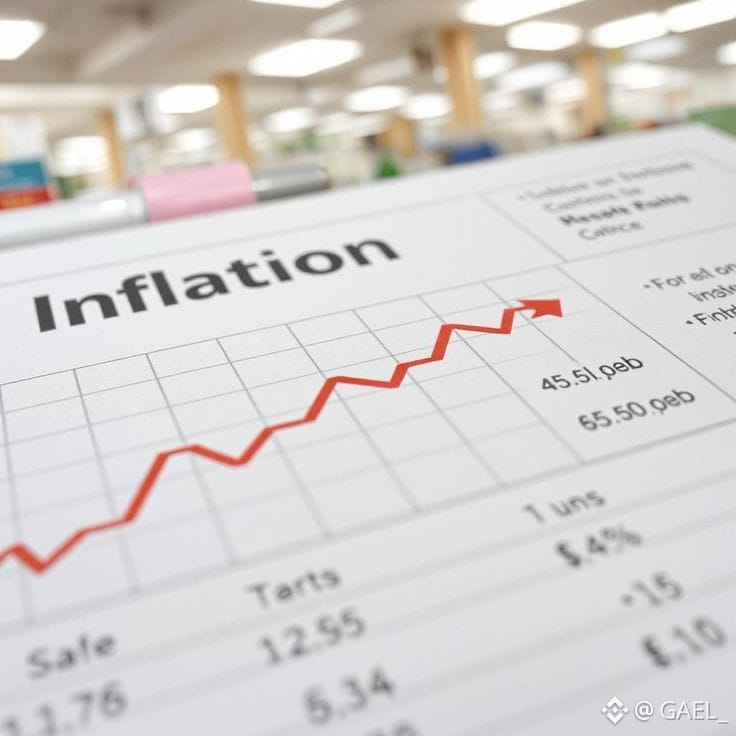
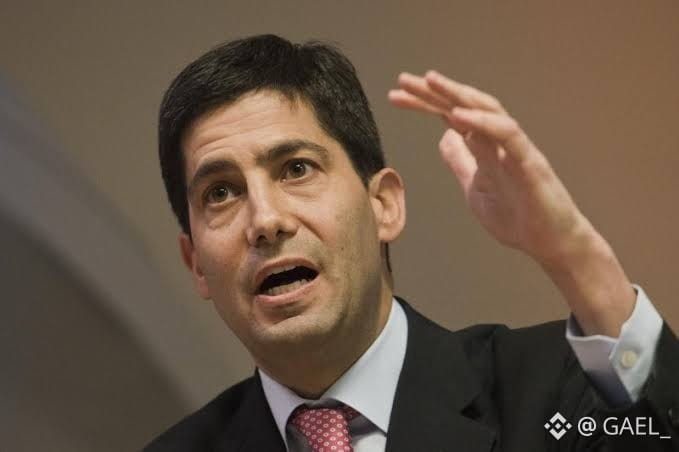
6
829
·
--
Bullish
BITCOIN NEXT BIG MOVE could still be ahead, says BITWISE SAYS. | $CHESS $ZIL $C98
I encountered Ryan Rasmussen of Bitwise stating that Bitcoin might hit its previous highs in 2026 and it was interesting since it was not used as a hype, but as a gradual structural change.
The perception is constructed upon the consistent ETF demand, pressure on the rates decreasing, and a more favorable regulatory approach following the 2024 election. Nothing so gaudy--capital appearing everywhere.
When this happens, then Bitcoin will begin to act to a lesser extent as a speculative trade and instead as a long-term asset competing with proven stores of value such as gold.
My interpretation: making long-term predictions such as: $1M in a decade are not promises, but this is the way institutions are thinking. Such an attitude will gradually transform the behavior in the market.
#Bitwise #TrumpProCrypto #MarketCorrection #BinanceBitcoinSAFUFund #CryptoETFMonth
{spot}(C98USDT)
{spot}(ZILUSDT)
{spot}(CHESSUSDT)
BITCOIN NEXT BIG MOVE could still be ahead, says BITWISE SAYS. | $CHESS $ZIL $C98
I encountered Ryan Rasmussen of Bitwise stating that Bitcoin might hit its previous highs in 2026 and it was interesting since it was not used as a hype, but as a gradual structural change.
The perception is constructed upon the consistent ETF demand, pressure on the rates decreasing, and a more favorable regulatory approach following the 2024 election. Nothing so gaudy--capital appearing everywhere.
When this happens, then Bitcoin will begin to act to a lesser extent as a speculative trade and instead as a long-term asset competing with proven stores of value such as gold.
My interpretation: making long-term predictions such as: $1M in a decade are not promises, but this is the way institutions are thinking. Such an attitude will gradually transform the behavior in the market.
#Bitwise #TrumpProCrypto #MarketCorrection #BinanceBitcoinSAFUFund #CryptoETFMonth
I encountered Ryan Rasmussen of Bitwise stating that Bitcoin might hit its previous highs in 2026 and it was interesting since it was not used as a hype, but as a gradual structural change.
The perception is constructed upon the consistent ETF demand, pressure on the rates decreasing, and a more favorable regulatory approach following the 2024 election. Nothing so gaudy--capital appearing everywhere.
When this happens, then Bitcoin will begin to act to a lesser extent as a speculative trade and instead as a long-term asset competing with proven stores of value such as gold.
My interpretation: making long-term predictions such as: $1M in a decade are not promises, but this is the way institutions are thinking. Such an attitude will gradually transform the behavior in the market.
#Bitwise #TrumpProCrypto #MarketCorrection #BinanceBitcoinSAFUFund #CryptoETFMonth

6
129
Log in to explore more content
Join global crypto users on Binance Square
⚡️ Get latest and useful information about crypto.
💬 Trusted by the world’s largest crypto exchange.
👍 Discover real insights from verified creators.
Email / Phone number
Trending Topics
BitcoinClears$85200
13,691 views
220 Discussing
We got the move, and $BTC is standing exactly where we were before the data. That’s what actual patience for a trade looks like.
The data came in mixed but with some important numbers. ADP Non-Farm Employment Change came at 90K vs 73K forecast, while Core PCE came in at 0.2% vs 0.3% expected. Final GDP was also stronger at 2.2% vs 1.5% forecast, while Personal Spending came in at 0.9% vs 0.8% expected. At the same time, Personal Income missed at 0.2% vs 0.5% forecast.
BTC initially surged to $85,600 and is now back where it needs to be. I’m still looking toward the lower ranges at $82,759 and the $80,000 liquidity, because the overhead liquidity is done and dusted.
We had a live session during the data, and during that session we saw the market at $83,800, then $85,600, and then back toward $83,000 and we still didn’t enter a trade.
That’s what patience is.
We can’t force an entry when the market has no clear direction. The same range is still in focus, and we’ll wait for the market to give us the setup.
Let me know, guys, how was the session? And should we have more regular sessions with our respected members so we can have proper discussions regarding the market?
#BitcoinClears$85200 #AltcoinSeasonIndexHoldsAbove60For5Days #USADPAdds90000JobsInSeptember #BitcoinSlipsBelow$84000 #SECToClarifyOnChainFundraisingRules
Crypto_LUX
·26 Likes
·20.7k views
AltcoinSeasonIndexHoldsAbove60For5Days
67,686 views
1,220 Discussing
USADPAdds90000JobsInSeptember
31,181 views
684 Discussing