

Crypto Market lnsights
2.3k Posts

Crypto Market lnsights
Report
Block User
Daily Market Forecast / Risk Mgt / Execution Advice for US, EU and Asian Traders.
49 Following
6.3K+ Followers
2.8K+ Liked
Posts
All
Quotes
PINNED

Article
$ROBO vs. Other AI/Robotics Tokens: Why Physical DePIN Might Win in the Real WorldAsian traders, listen up — while the West chases chatbot hype and virtual AI models, Asia is already the global factory floor. China installs more industrial robots than any other country, Japan and Korea lead in precision automation, and Southeast Asia’s manufacturing boom is exploding. In this environment, $ROBO (Fabric Protocol) stands out as the only token directly powering physical robots — not just code.Here’s a quick head-to-head comparison tailored for traders who understand real-world adoption over narrative fluff:
ROBO (Fabric Protocol): Physical DePIN + Robot Economy. Robots get on-chain identities, wallets, and can earn/spend $ROBO for machine-to-machine payments, fleet coordination, and Proof-of-Robotic-Work rewards. Market cap still ~$80-90M range post-launch. Backed by serious funding ($20M+), real hardware integration.$TAO (Bittensor): Decentralized AI intelligence network. Focuses on supplying machine learning compute and intelligence — powerful for training models, but purely digital/virtual. No direct tie to physical hardware. Much larger cap, already priced in heavy AI narrative.$FET / ASI (Fetch.ai alliance): AI agents that can act autonomously online (booking, trading, data tasks). Great for digital economies, but still “chatbot-level” agents without real-world physical control or payments. Agents vs. actual workers.Others (e.g. RNDR, etc.): Mostly GPU rendering or compute plays — again, cloud-based, not robots moving boxes in a Shenzhen factory.
Why Physical DePIN ($ROBO) has the edge in Asia’s real world
Industrial robots aren’t sci-fi anymore — they’re welding cars in Guangzhou, picking orders in Amazon-style warehouses across Vietnam and Thailand, and assembling electronics in Foxconn plants. These machines need decentralized infrastructure: verifiable identity, instant cross-robot payments, and staking incentives to coordinate fleets without a single company controlling everything. ROBO delivers exactly that — turning robots into autonomous economic agents that can earn revenue on-chain. This isn’t hype about “AI agents chatting”; it’s hardware in factories generating real productivity and cash flow. Asia’s manufacturing giants (UBTECH, Unitree, Fanuc partners) are already scaling humanoids and warehouse bots — $ROBO’s DePIN layer plugs straight into that infrastructure. Virtual tokens like TAO and FET risk staying in the cloud; physical DePIN captures the trillion-dollar robot labor market that’s happening right now on Asian factory floors.Binance momentum is real and trader-friendly
ROBO launched strong on Binance Alpha (first platform to list it), quickly followed by Bybit and Coinbase. But the real alpha for Asian traders? Binance CreatorPad — 8,600,000 $ROBO reward pool unlocked by simple tasks (content, analysis, sharing). Verified users on Binance Square are stacking rewards right now — perfect low-barrier entry for regional traders already using Binance as their main platform.Low float + physical utility + Binance push = classic setup for a breakout in the 2026 AI/Robotics cycle. While TAO and FET trade at premium valuations on pure narrative, $ROBO is still early with actual robot-economy mechanics.Asian traders have the home-field advantage here. Your factories, your supply chains, your robotics leadership — $ROBO turns that into on-chain value. Don’t sleep on physical DePIN while everyone else chases chatbots.#DePINAsia #robo #SECClarifiesCryptoClassification #AsianRobotEconomy #cryptotradingasia @FabricFND $ROBO
{spot}(ROBOUSDT)
$ROBO vs. Other AI/Robotics Tokens: Why Physical DePIN Might Win in the Real World
Asian traders, listen up — while the West chases chatbot hype and virtual AI models, Asia is already the global factory floor. China installs more industrial robots than any other country, Japan and Korea lead in precision automation, and Southeast Asia’s manufacturing boom is exploding. In this environment, $ROBO (Fabric Protocol) stands out as the only token directly powering physical robots — not just code.Here’s a quick head-to-head comparison tailored for traders who understand real-world adoption over narrative fluff:
ROBO (Fabric Protocol): Physical DePIN + Robot Economy. Robots get on-chain identities, wallets, and can earn/spend $ROBO for machine-to-machine payments, fleet coordination, and Proof-of-Robotic-Work rewards. Market cap still ~$80-90M range post-launch. Backed by serious funding ($20M+), real hardware integration.$TAO (Bittensor): Decentralized AI intelligence network. Focuses on supplying machine learning compute and intelligence — powerful for training models, but purely digital/virtual. No direct tie to physical hardware. Much larger cap, already priced in heavy AI narrative.$FET / ASI (Fetch.ai alliance): AI agents that can act autonomously online (booking, trading, data tasks). Great for digital economies, but still “chatbot-level” agents without real-world physical control or payments. Agents vs. actual workers.Others (e.g. RNDR, etc.): Mostly GPU rendering or compute plays — again, cloud-based, not robots moving boxes in a Shenzhen factory.
Why Physical DePIN ($ROBO ) has the edge in Asia’s real world
Industrial robots aren’t sci-fi anymore — they’re welding cars in Guangzhou, picking orders in Amazon-style warehouses across Vietnam and Thailand, and assembling electronics in Foxconn plants. These machines need decentralized infrastructure: verifiable identity, instant cross-robot payments, and staking incentives to coordinate fleets without a single company controlling everything. ROBO delivers exactly that — turning robots into autonomous economic agents that can earn revenue on-chain. This isn’t hype about “AI agents chatting”; it’s hardware in factories generating real productivity and cash flow. Asia’s manufacturing giants (UBTECH, Unitree, Fanuc partners) are already scaling humanoids and warehouse bots — $ROBO ’s DePIN layer plugs straight into that infrastructure. Virtual tokens like TAO and FET risk staying in the cloud; physical DePIN captures the trillion-dollar robot labor market that’s happening right now on Asian factory floors.Binance momentum is real and trader-friendly
ROBO launched strong on Binance Alpha (first platform to list it), quickly followed by Bybit and Coinbase. But the real alpha for Asian traders? Binance CreatorPad — 8,600,000 $ROBO reward pool unlocked by simple tasks (content, analysis, sharing). Verified users on Binance Square are stacking rewards right now — perfect low-barrier entry for regional traders already using Binance as their main platform.Low float + physical utility + Binance push = classic setup for a breakout in the 2026 AI/Robotics cycle. While TAO and FET trade at premium valuations on pure narrative, $ROBO is still early with actual robot-economy mechanics.Asian traders have the home-field advantage here. Your factories, your supply chains, your robotics leadership — $ROBO turns that into on-chain value. Don’t sleep on physical DePIN while everyone else chases chatbots.#DePINAsia #robo #SECClarifiesCryptoClassification #AsianRobotEconomy #cryptotradingasia @Fabric Foundation $ROBO
ROBO (Fabric Protocol): Physical DePIN + Robot Economy. Robots get on-chain identities, wallets, and can earn/spend $ROBO for machine-to-machine payments, fleet coordination, and Proof-of-Robotic-Work rewards. Market cap still ~$80-90M range post-launch. Backed by serious funding ($20M+), real hardware integration.$TAO (Bittensor): Decentralized AI intelligence network. Focuses on supplying machine learning compute and intelligence — powerful for training models, but purely digital/virtual. No direct tie to physical hardware. Much larger cap, already priced in heavy AI narrative.$FET / ASI (Fetch.ai alliance): AI agents that can act autonomously online (booking, trading, data tasks). Great for digital economies, but still “chatbot-level” agents without real-world physical control or payments. Agents vs. actual workers.Others (e.g. RNDR, etc.): Mostly GPU rendering or compute plays — again, cloud-based, not robots moving boxes in a Shenzhen factory.
Why Physical DePIN ($ROBO ) has the edge in Asia’s real world
Industrial robots aren’t sci-fi anymore — they’re welding cars in Guangzhou, picking orders in Amazon-style warehouses across Vietnam and Thailand, and assembling electronics in Foxconn plants. These machines need decentralized infrastructure: verifiable identity, instant cross-robot payments, and staking incentives to coordinate fleets without a single company controlling everything. ROBO delivers exactly that — turning robots into autonomous economic agents that can earn revenue on-chain. This isn’t hype about “AI agents chatting”; it’s hardware in factories generating real productivity and cash flow. Asia’s manufacturing giants (UBTECH, Unitree, Fanuc partners) are already scaling humanoids and warehouse bots — $ROBO ’s DePIN layer plugs straight into that infrastructure. Virtual tokens like TAO and FET risk staying in the cloud; physical DePIN captures the trillion-dollar robot labor market that’s happening right now on Asian factory floors.Binance momentum is real and trader-friendly
ROBO launched strong on Binance Alpha (first platform to list it), quickly followed by Bybit and Coinbase. But the real alpha for Asian traders? Binance CreatorPad — 8,600,000 $ROBO reward pool unlocked by simple tasks (content, analysis, sharing). Verified users on Binance Square are stacking rewards right now — perfect low-barrier entry for regional traders already using Binance as their main platform.Low float + physical utility + Binance push = classic setup for a breakout in the 2026 AI/Robotics cycle. While TAO and FET trade at premium valuations on pure narrative, $ROBO is still early with actual robot-economy mechanics.Asian traders have the home-field advantage here. Your factories, your supply chains, your robotics leadership — $ROBO turns that into on-chain value. Don’t sleep on physical DePIN while everyone else chases chatbots.#DePINAsia #robo #SECClarifiesCryptoClassification #AsianRobotEconomy #cryptotradingasia @Fabric Foundation $ROBO
3
9
354
PINNED

Article
Privacy Is the Next Narrative: Why Midnight ($NIGHT) Beats Monero & Zcash in 2026Regulatory pressure is exploding—MiCA enforcement across Europe, SEC crackdowns in the US, and delistings hitting full-anonymity coins left and right. Monero’s total privacy got it booted from major exchanges. Zcash’s optional shielding feels clunky and outdated. Enter Midnight ($NIGHT): the ZK-proof revolution delivering “selective disclosure.” The base NIGHT ledger stays public and transparent for governance and compliance, while private dApps and transactions run fully shielded. Prove exactly what regulators or auditors need—nothing more. Rational privacy that actually scales.Built by the same IOG team behind Cardano, Midnight is no outsider experiment. It’s the official privacy partner chain, with Charles Hoskinson personally hyping the upcoming mainnet launch (late March 2026) and real-world use cases like ShieldUSD private stablecoin. Institutions are watching closely: this isn’t dark-pool anonymity—it’s enterprise-grade privacy that satisfies AML rules while protecting user data. Banks, DeFi protocols, and regulated fintechs see the future here.Why now? With global crackdowns intensifying into 2026, selective disclosure is the only privacy model that survives. Buzz is already massive on Binance Square and CreatorPad—right now there’s a live campaign dropping 2,000,000 $NIGHT rewards to verified creators and traders. The narrative shift is happening in real time.Verdict: Monero and Zcash are relics of the old privacy wars. $NIGHT is the compliant, Cardano-powered winner that institutions will actually adopt. Privacy isn’t dead—it just got smarter. Load up before mainnet ignites the next leg.#USCrypto #EUTraders #NIGHT #USFebruaryPPISurgedSurprisingly @MidnightNetwork #ZKCompliance $NIGHT
{spot}(NIGHTUSDT)
Privacy Is the Next Narrative: Why Midnight ($NIGHT) Beats Monero & Zcash in 2026
Regulatory pressure is exploding—MiCA enforcement across Europe, SEC crackdowns in the US, and delistings hitting full-anonymity coins left and right. Monero’s total privacy got it booted from major exchanges. Zcash’s optional shielding feels clunky and outdated. Enter Midnight ($NIGHT ): the ZK-proof revolution delivering “selective disclosure.” The base NIGHT ledger stays public and transparent for governance and compliance, while private dApps and transactions run fully shielded. Prove exactly what regulators or auditors need—nothing more. Rational privacy that actually scales.Built by the same IOG team behind Cardano, Midnight is no outsider experiment. It’s the official privacy partner chain, with Charles Hoskinson personally hyping the upcoming mainnet launch (late March 2026) and real-world use cases like ShieldUSD private stablecoin. Institutions are watching closely: this isn’t dark-pool anonymity—it’s enterprise-grade privacy that satisfies AML rules while protecting user data. Banks, DeFi protocols, and regulated fintechs see the future here.Why now? With global crackdowns intensifying into 2026, selective disclosure is the only privacy model that survives. Buzz is already massive on Binance Square and CreatorPad—right now there’s a live campaign dropping 2,000,000 $NIGHT rewards to verified creators and traders. The narrative shift is happening in real time.Verdict: Monero and Zcash are relics of the old privacy wars. $NIGHT is the compliant, Cardano-powered winner that institutions will actually adopt. Privacy isn’t dead—it just got smarter. Load up before mainnet ignites the next leg.#USCrypto #EUTraders #NIGHT #USFebruaryPPISurgedSurprisingly @MidnightNetwork #ZKCompliance $NIGHT
2
8
228
Article
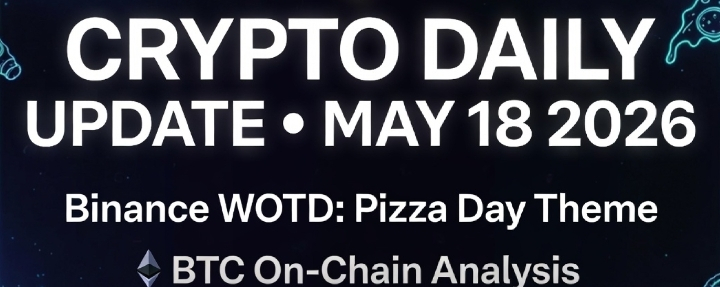
On-chain analysis for May 18, 2026 (as of latest available data):Bitcoin is trading around $76,000–$77,000 after sliding below $77k amid macro pressures like rising oil prices and Treasury yields.
Key Bitcoin On-Chain Highlights
HODLer Strength: Long-term holders remain resilient — nearly 60% of BTC supply hasn't moved in over a year. Exchange balances are near six-year lows, signaling reduced selling pressure from centralized platforms.
Short-Term Holders Underwater: Short-term holder MVRV is below 1, meaning recent buyers are on average in loss. This increases sensitivity to further downside from macro shocks.
Cycle Maturity: MVRV Z-Score is low (near 1) compared to prior cycle peaks, indicating the current bull market hasn't reached euphoric extremes yet. Institutions (via ETFs) have absorbed much of the exchange float.
Network Activity: Metrics like active addresses, transaction counts, and miner flows are stable but not showing explosive growth. Support clusters exist around lower levels (e.g., $65k–$70k in some analyses).
Overall BTC Sentiment: Mixed-to-cautious. Strong long-term conviction and low exchange supply provide a floor, but short-term weakness and macro headwinds (oil, yields) keep the market vulnerable to volatility. No signs of major capitulation yet.Ethereum & Broader Market
ETH is trading lower (~$2,100–$2,200 range recently), with whale accumulation noted earlier in May but facing pressure from broader risk-off moves.
On-chain: Staking remains high (~1/3 of supply locked), DeFi TVL recovering, and L2 activity supportive, but price action lags BTC dominance.
Market Context: Total crypto market cap ~$2.5–2.7T. Volumes are moderate; risk assets broadly under pressure today.
Three core crypto hashtags: #Bitcoin #OnChain #CryptoFor real-time updates, check Glassnode, CryptoQuant, or Binance Research. Markets move fast—DYOR and manage risk!
On-chain analysis for May 18, 2026 (as of latest available data):
Bitcoin is trading around $76,000–$77,000 after sliding below $77k amid macro pressures like rising oil prices and Treasury yields.
Key Bitcoin On-Chain Highlights
HODLer Strength: Long-term holders remain resilient — nearly 60% of BTC supply hasn't moved in over a year. Exchange balances are near six-year lows, signaling reduced selling pressure from centralized platforms.
Short-Term Holders Underwater: Short-term holder MVRV is below 1, meaning recent buyers are on average in loss. This increases sensitivity to further downside from macro shocks.
Cycle Maturity: MVRV Z-Score is low (near 1) compared to prior cycle peaks, indicating the current bull market hasn't reached euphoric extremes yet. Institutions (via ETFs) have absorbed much of the exchange float.
Network Activity: Metrics like active addresses, transaction counts, and miner flows are stable but not showing explosive growth. Support clusters exist around lower levels (e.g., $65k–$70k in some analyses).
Overall BTC Sentiment: Mixed-to-cautious. Strong long-term conviction and low exchange supply provide a floor, but short-term weakness and macro headwinds (oil, yields) keep the market vulnerable to volatility. No signs of major capitulation yet.Ethereum & Broader Market
ETH is trading lower (~$2,100–$2,200 range recently), with whale accumulation noted earlier in May but facing pressure from broader risk-off moves.
On-chain: Staking remains high (~1/3 of supply locked), DeFi TVL recovering, and L2 activity supportive, but price action lags BTC dominance.
Market Context: Total crypto market cap ~$2.5–2.7T. Volumes are moderate; risk assets broadly under pressure today.
Three core crypto hashtags: #Bitcoin #OnChain #CryptoFor real-time updates, check Glassnode, CryptoQuant, or Binance Research. Markets move fast—DYOR and manage risk!
Key Bitcoin On-Chain Highlights
HODLer Strength: Long-term holders remain resilient — nearly 60% of BTC supply hasn't moved in over a year. Exchange balances are near six-year lows, signaling reduced selling pressure from centralized platforms.
Short-Term Holders Underwater: Short-term holder MVRV is below 1, meaning recent buyers are on average in loss. This increases sensitivity to further downside from macro shocks.
Cycle Maturity: MVRV Z-Score is low (near 1) compared to prior cycle peaks, indicating the current bull market hasn't reached euphoric extremes yet. Institutions (via ETFs) have absorbed much of the exchange float.
Network Activity: Metrics like active addresses, transaction counts, and miner flows are stable but not showing explosive growth. Support clusters exist around lower levels (e.g., $65k–$70k in some analyses).
Overall BTC Sentiment: Mixed-to-cautious. Strong long-term conviction and low exchange supply provide a floor, but short-term weakness and macro headwinds (oil, yields) keep the market vulnerable to volatility. No signs of major capitulation yet.Ethereum & Broader Market
ETH is trading lower (~$2,100–$2,200 range recently), with whale accumulation noted earlier in May but facing pressure from broader risk-off moves.
On-chain: Staking remains high (~1/3 of supply locked), DeFi TVL recovering, and L2 activity supportive, but price action lags BTC dominance.
Market Context: Total crypto market cap ~$2.5–2.7T. Volumes are moderate; risk assets broadly under pressure today.
Three core crypto hashtags: #Bitcoin #OnChain #CryptoFor real-time updates, check Glassnode, CryptoQuant, or Binance Research. Markets move fast—DYOR and manage risk!
144
SAGA Just Went Nuclear – The Binance Pump You Can’t Ignore Right NowWhile the broader market moves sideways, Saga (SAGA) exploded over +90–100% in the last 24 hours on Binance, turning heads and squeezing shorts in spectacular fashion. This modular blockchain project, focused on chainlets and decentralized gaming/AI infrastructure, suddenly caught fire with massive volume and liquidity hunts.
What triggered it? Renewed ecosystem momentum after recent SagaEVM relaunch developments, combined with heavy speculative flows into lower-cap narratives. Traders are piling in as the token broke key resistance levels, wiping out shorts and fueling a classic momentum squeeze. Volume is through the roof, making it one of the loudest gainers on the exchange today.
Quick Trade Setup (High-Risk, Short-Term Momentum Play)
Entry: Current levels or on a minor pullback to $0.045–$0.048 (watch for retest of the breakout zone).Target 1: $0.065–$0.07 (quick 30–40% upside from current).Target 2: $0.085+ (if momentum holds and volume sustains).Stop-Loss: Tight — place below $0.042 or recent swing low to protect against violent reversals (this thing is volatile).Risk Management: Use only 1–2% of your portfolio. Take partial profits at first target. Watch BTC correlation — if Bitcoin dumps, SAGA could retrace fast.#saga
Pro Tip: Monitor Binance order book for whale activity and set alerts on volume spikes. This is pure momentum — great for scalps and swing trades, but don’t get greedy.The crypto meta loves these explosive runners. SAGA is delivering exactly that right now.#Crypto #Altseason #saga #Binance $SAGA
{spot}(SAGAUSDT)
SAGA Just Went Nuclear – The Binance Pump You Can’t Ignore Right Now
While the broader market moves sideways, Saga (SAGA) exploded over +90–100% in the last 24 hours on Binance, turning heads and squeezing shorts in spectacular fashion. This modular blockchain project, focused on chainlets and decentralized gaming/AI infrastructure, suddenly caught fire with massive volume and liquidity hunts.
What triggered it? Renewed ecosystem momentum after recent SagaEVM relaunch developments, combined with heavy speculative flows into lower-cap narratives. Traders are piling in as the token broke key resistance levels, wiping out shorts and fueling a classic momentum squeeze. Volume is through the roof, making it one of the loudest gainers on the exchange today.
Quick Trade Setup (High-Risk, Short-Term Momentum Play)
Entry: Current levels or on a minor pullback to $0.045–$0.048 (watch for retest of the breakout zone).Target 1: $0.065–$0.07 (quick 30–40% upside from current).Target 2: $0.085+ (if momentum holds and volume sustains).Stop-Loss: Tight — place below $0.042 or recent swing low to protect against violent reversals (this thing is volatile).Risk Management: Use only 1–2% of your portfolio. Take partial profits at first target. Watch BTC correlation — if Bitcoin dumps, SAGA could retrace fast.#saga
Pro Tip: Monitor Binance order book for whale activity and set alerts on volume spikes. This is pure momentum — great for scalps and swing trades, but don’t get greedy.The crypto meta loves these explosive runners. SAGA is delivering exactly that right now.#Crypto #Altseason #saga #Binance $SAGA
What triggered it? Renewed ecosystem momentum after recent SagaEVM relaunch developments, combined with heavy speculative flows into lower-cap narratives. Traders are piling in as the token broke key resistance levels, wiping out shorts and fueling a classic momentum squeeze. Volume is through the roof, making it one of the loudest gainers on the exchange today.
Quick Trade Setup (High-Risk, Short-Term Momentum Play)
Entry: Current levels or on a minor pullback to $0.045–$0.048 (watch for retest of the breakout zone).Target 1: $0.065–$0.07 (quick 30–40% upside from current).Target 2: $0.085+ (if momentum holds and volume sustains).Stop-Loss: Tight — place below $0.042 or recent swing low to protect against violent reversals (this thing is volatile).Risk Management: Use only 1–2% of your portfolio. Take partial profits at first target. Watch BTC correlation — if Bitcoin dumps, SAGA could retrace fast.#saga
Pro Tip: Monitor Binance order book for whale activity and set alerts on volume spikes. This is pure momentum — great for scalps and swing trades, but don’t get greedy.The crypto meta loves these explosive runners. SAGA is delivering exactly that right now.#Crypto #Altseason #saga #Binance $SAGA
1
2
394
NIL is blasting off on Binance right now.Nillion ($NIL) just surged over 48% in the last 24 hours, smashing through resistance with massive volume. This isn't some random meme pump—it's a privacy-first "blind computation" network that's finally getting the spotlight it deserves. Think decentralized data processing where your info stays encrypted end-to-end. Perfect for secure AI, DeFi, and private analytics in a world drowning in data leaks.
Why NIL is pumping hard:
Blind Compute tech turns Nillion into humanity's first "blind computer"—process sensitive data without ever decrypting it.Strong Binance presence (Launchpool alumni) with huge trading liquidity.AI narrative heat: Privacy-preserving computation is the missing piece for real-world AI adoption.Momentum is real—volume exploding as traders pile in on the breakout.coinmarketcap.com
Quick Trade Setup (Aggressive Scalp/Swing):
Entry: Around current levels (~$0.07) or on a quick retest of $0.065–$0.068 support.Target 1: $0.10 (quick 40%+ upside).Target 2: $0.12–$0.15 if momentum holds (next major resistance zones).Stop Loss: Tight under $0.055 to protect against fakeouts (volatile sector).R:R: Solid 1:3+ on the first leg. Use 5-15m charts for momentum, watch BTC correlation.
Risk management first: This is a high-volatility altcoin play. Size small, take profits on the way up, and never ape more than you can afford to lose. Crypto pumps reverse fast.$NIL
Momentum looks strong—don't sleep on NIL while it's ripping. #Nillion #NIL #Crypto #CathieWoodandCZDiscussAIandStablecoins #blockchain $NIL
{spot}(NILUSDT)
NIL is blasting off on Binance right now.
Nillion ($NIL ) just surged over 48% in the last 24 hours, smashing through resistance with massive volume. This isn't some random meme pump—it's a privacy-first "blind computation" network that's finally getting the spotlight it deserves. Think decentralized data processing where your info stays encrypted end-to-end. Perfect for secure AI, DeFi, and private analytics in a world drowning in data leaks.
Why NIL is pumping hard:
Blind Compute tech turns Nillion into humanity's first "blind computer"—process sensitive data without ever decrypting it.Strong Binance presence (Launchpool alumni) with huge trading liquidity.AI narrative heat: Privacy-preserving computation is the missing piece for real-world AI adoption.Momentum is real—volume exploding as traders pile in on the breakout.coinmarketcap.com
Quick Trade Setup (Aggressive Scalp/Swing):
Entry: Around current levels (~$0.07) or on a quick retest of $0.065–$0.068 support.Target 1: $0.10 (quick 40%+ upside).Target 2: $0.12–$0.15 if momentum holds (next major resistance zones).Stop Loss: Tight under $0.055 to protect against fakeouts (volatile sector).R:R: Solid 1:3+ on the first leg. Use 5-15m charts for momentum, watch BTC correlation.
Risk management first: This is a high-volatility altcoin play. Size small, take profits on the way up, and never ape more than you can afford to lose. Crypto pumps reverse fast.$NIL
Momentum looks strong—don't sleep on NIL while it's ripping. #Nillion #NIL #Crypto #CathieWoodandCZDiscussAIandStablecoins #blockchain $NIL
Why NIL is pumping hard:
Blind Compute tech turns Nillion into humanity's first "blind computer"—process sensitive data without ever decrypting it.Strong Binance presence (Launchpool alumni) with huge trading liquidity.AI narrative heat: Privacy-preserving computation is the missing piece for real-world AI adoption.Momentum is real—volume exploding as traders pile in on the breakout.coinmarketcap.com
Quick Trade Setup (Aggressive Scalp/Swing):
Entry: Around current levels (~$0.07) or on a quick retest of $0.065–$0.068 support.Target 1: $0.10 (quick 40%+ upside).Target 2: $0.12–$0.15 if momentum holds (next major resistance zones).Stop Loss: Tight under $0.055 to protect against fakeouts (volatile sector).R:R: Solid 1:3+ on the first leg. Use 5-15m charts for momentum, watch BTC correlation.
Risk management first: This is a high-volatility altcoin play. Size small, take profits on the way up, and never ape more than you can afford to lose. Crypto pumps reverse fast.$NIL
Momentum looks strong—don't sleep on NIL while it's ripping. #Nillion #NIL #Crypto #CathieWoodandCZDiscussAIandStablecoins #blockchain $NIL
142
DOGS is barking loud on Binance right now — up over 70% in 24 hours and still running!This Telegram-integrated meme coin from the TON ecosystem just exploded past key resistance levels, fueled by massive trading volume spiking into the hundreds of millions. While the broader market moves sideways, DOGS is delivering pure alpha with retail frenzy and viral momentum on socials. It's the kind of chaotic energy that turns small bags into life-changing ones in crypto.
Why DOGS is pumping hard:
TON ecosystem heat: TON itself has been ripping, lifting ecosystem tokens like DOGS.Insane volume: Over $200M+ traded in 24h on major exchanges including Binance — liquidity is flowing.Meme power: Simple dog theme + community hype = classic pump fuel in this cycle.Technical breakout: Cleared recent lows and is printing strong green candles with high conviction.binance.com
Quick Trade Setup (Aggressive Scalp/Swing):
Entry: Current levels or dips toward $0.000085–$0.00009 (watch for retest of breakout).Target 1: $0.00012 (quick 30-40% upside).Target 2: $0.00015–$0.00018 (next liquidity pool, potential 60-100%+).Stop Loss: Tight under $0.000075 to protect capital (volatile meme moves can reverse fast).Leverage: Spot preferred for safety, or low 5-10x on futures if you're experienced. Take profits in stages — don't get greedy.
This is high-risk, high-reward territory. Meme coins like DOGS can 2-5x in days or dump just as fast. Always size small, use proper risk $DOGS management, and never ape more than you can afford to lose.DYOR and trade responsibly. The dogs are loose — will you join the pack?#DOGS #ADPPayrollsSurge #AltcoinSeason #CryptoPumps #CryptoTrading. $DOGS
{spot}(DOGSUSDT)
DOGS is barking loud on Binance right now — up over 70% in 24 hours and still running!
This Telegram-integrated meme coin from the TON ecosystem just exploded past key resistance levels, fueled by massive trading volume spiking into the hundreds of millions. While the broader market moves sideways, DOGS is delivering pure alpha with retail frenzy and viral momentum on socials. It's the kind of chaotic energy that turns small bags into life-changing ones in crypto.
Why DOGS is pumping hard:
TON ecosystem heat: TON itself has been ripping, lifting ecosystem tokens like DOGS.Insane volume: Over $200M+ traded in 24h on major exchanges including Binance — liquidity is flowing.Meme power: Simple dog theme + community hype = classic pump fuel in this cycle.Technical breakout: Cleared recent lows and is printing strong green candles with high conviction.binance.com
Quick Trade Setup (Aggressive Scalp/Swing):
Entry: Current levels or dips toward $0.000085–$0.00009 (watch for retest of breakout).Target 1: $0.00012 (quick 30-40% upside).Target 2: $0.00015–$0.00018 (next liquidity pool, potential 60-100%+).Stop Loss: Tight under $0.000075 to protect capital (volatile meme moves can reverse fast).Leverage: Spot preferred for safety, or low 5-10x on futures if you're experienced. Take profits in stages — don't get greedy.
This is high-risk, high-reward territory. Meme coins like DOGS can 2-5x in days or dump just as fast. Always size small, use proper risk $DOGS management, and never ape more than you can afford to lose.DYOR and trade responsibly. The dogs are loose — will you join the pack?#DOGS #ADPPayrollsSurge #AltcoinSeason #CryptoPumps #CryptoTrading. $DOGS
Why DOGS is pumping hard:
TON ecosystem heat: TON itself has been ripping, lifting ecosystem tokens like DOGS.Insane volume: Over $200M+ traded in 24h on major exchanges including Binance — liquidity is flowing.Meme power: Simple dog theme + community hype = classic pump fuel in this cycle.Technical breakout: Cleared recent lows and is printing strong green candles with high conviction.binance.com
Quick Trade Setup (Aggressive Scalp/Swing):
Entry: Current levels or dips toward $0.000085–$0.00009 (watch for retest of breakout).Target 1: $0.00012 (quick 30-40% upside).Target 2: $0.00015–$0.00018 (next liquidity pool, potential 60-100%+).Stop Loss: Tight under $0.000075 to protect capital (volatile meme moves can reverse fast).Leverage: Spot preferred for safety, or low 5-10x on futures if you're experienced. Take profits in stages — don't get greedy.
This is high-risk, high-reward territory. Meme coins like DOGS can 2-5x in days or dump just as fast. Always size small, use proper risk $DOGS management, and never ape more than you can afford to lose.DYOR and trade responsibly. The dogs are loose — will you join the pack?#DOGS #ADPPayrollsSurge #AltcoinSeason #CryptoPumps #CryptoTrading. $DOGS
225
Article
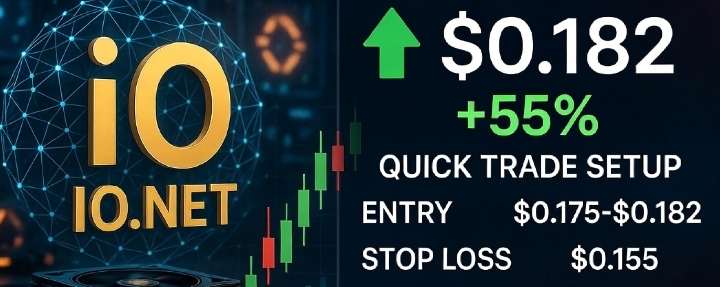
IO.NET (IO) is ABSOLUTELY BLASTING OFF on Binance right now!The decentralized GPU powerhouse just surged over 50-55% in the last 24 hours, smashing through resistance as AI compute demand explodes and traders pile into the DePIN narrative. While Big Tech drowns in data center delays and sky-high costs, io.net is delivering cheap, distributed GPU power from thousands of independent sources — turning idle hardware into a global AI supercluster.
This isn’t just another random pump. Fresh tokenomics upgrades (demand-driven incentives and burn mechanisms), surging network usage, and the red-hot AI/DePIN sector are fueling real conviction. Volume is flooding in, and IO is leading today’s top gainers on Binance.Quick IO Trade Setup (Aggressive Swing – May 6, 2026)Current Price: ~$0.18 – $0.19 (volatile as hell after the move)
Bias: Bullish (momentum play)Entry: $0.175 – $0.182 (pullback to support or breakout retest)Stop Loss: $0.155 (below recent swing low – tight risk)Take Profit 1: $0.22 (quick scalp)Take Profit 2: $0.26 – $0.28 (next major resistance)Risk-Reward: 1:2.5+ on TP1Timeframe: 12–48 hours
Key Levels: Break & hold $0.21 = rocket fuel toward $0.30. Failure under $0.17 flips it bearish fast.Pro Tip: Watch volume and BTC correlation. Use proper position sizing — this thing moves like a rocket.Disclaimer:$IO This is not financial advice. Crypto is extremely volatile. Always DYOR and only risk what you can afford to lose.#IO #BinanceLaunchesGoldvs.BTCTradingCompetition #DePIN #Crypto #blockchain $IO
{spot}(IOUSDT)
IO.NET (IO) is ABSOLUTELY BLASTING OFF on Binance right now!
The decentralized GPU powerhouse just surged over 50-55% in the last 24 hours, smashing through resistance as AI compute demand explodes and traders pile into the DePIN narrative. While Big Tech drowns in data center delays and sky-high costs, io.net is delivering cheap, distributed GPU power from thousands of independent sources — turning idle hardware into a global AI supercluster.
This isn’t just another random pump. Fresh tokenomics upgrades (demand-driven incentives and burn mechanisms), surging network usage, and the red-hot AI/DePIN sector are fueling real conviction. Volume is flooding in, and IO is leading today’s top gainers on Binance.Quick IO Trade Setup (Aggressive Swing – May 6, 2026)Current Price: ~$0.18 – $0.19 (volatile as hell after the move)
Bias: Bullish (momentum play)Entry: $0.175 – $0.182 (pullback to support or breakout retest)Stop Loss: $0.155 (below recent swing low – tight risk)Take Profit 1: $0.22 (quick scalp)Take Profit 2: $0.26 – $0.28 (next major resistance)Risk-Reward: 1:2.5+ on TP1Timeframe: 12–48 hours
Key Levels: Break & hold $0.21 = rocket fuel toward $0.30. Failure under $0.17 flips it bearish fast.Pro Tip: Watch volume and BTC correlation. Use proper position sizing — this thing moves like a rocket.Disclaimer:$IO This is not financial advice. Crypto is extremely volatile. Always DYOR and only risk what you can afford to lose.#IO #BinanceLaunchesGoldvs.BTCTradingCompetition #DePIN #Crypto #blockchain $IO
This isn’t just another random pump. Fresh tokenomics upgrades (demand-driven incentives and burn mechanisms), surging network usage, and the red-hot AI/DePIN sector are fueling real conviction. Volume is flooding in, and IO is leading today’s top gainers on Binance.Quick IO Trade Setup (Aggressive Swing – May 6, 2026)Current Price: ~$0.18 – $0.19 (volatile as hell after the move)
Bias: Bullish (momentum play)Entry: $0.175 – $0.182 (pullback to support or breakout retest)Stop Loss: $0.155 (below recent swing low – tight risk)Take Profit 1: $0.22 (quick scalp)Take Profit 2: $0.26 – $0.28 (next major resistance)Risk-Reward: 1:2.5+ on TP1Timeframe: 12–48 hours
Key Levels: Break & hold $0.21 = rocket fuel toward $0.30. Failure under $0.17 flips it bearish fast.Pro Tip: Watch volume and BTC correlation. Use proper position sizing — this thing moves like a rocket.Disclaimer:$IO This is not financial advice. Crypto is extremely volatile. Always DYOR and only risk what you can afford to lose.#IO #BinanceLaunchesGoldvs.BTCTradingCompetition #DePIN #Crypto #blockchain $IO
178
Article
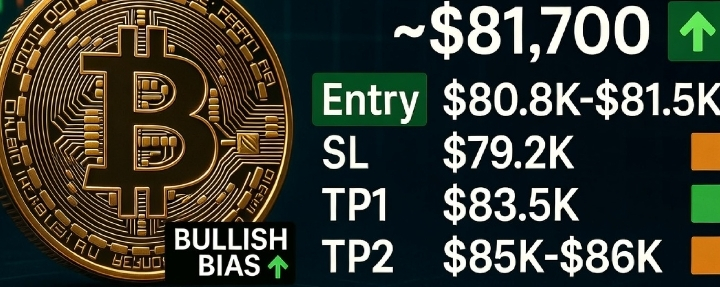
Quick BTC Trade Setup (as of May 6, 2026)Current Price: ~$81,400–$81,900 (bullish momentum, recovering above $80K).
Bias: Cautiously Bullish (short-term)
Entry: $80,800 – $81,500 (dip buy near support / Fib confluence)Stop Loss: $79,200–$79,500 (below recent swing low / key support)Take Profit 1: $83,500 (Fib extension / near-term target)Take Profit 2: $85,000–$86,000 (psychological + next resistance)Risk-Reward: ~1:2+ on TP1Timeframe: 24–72 hours (swing)
Key Levels to Watch:
Break & hold above $82K → stronger upside.Failure below $80K → potential retest of $78K–$76K zone.$BTC
Disclaimer: This is not financial advice. Crypto is highly volatile — always use proper risk management (1–2% account risk max) and do your own analysis. Markets can change fast.#Bitcoin #BinanceLaunchesGoldvs.BTCTradingCompetition #BTC #Crypto #TrumpPauses'ProjectFreedom' $BTC
{spot}(BTCUSDT)
Quick BTC Trade Setup (as of May 6, 2026)
Current Price: ~$81,400–$81,900 (bullish momentum, recovering above $80K).
Bias: Cautiously Bullish (short-term)
Entry: $80,800 – $81,500 (dip buy near support / Fib confluence)Stop Loss: $79,200–$79,500 (below recent swing low / key support)Take Profit 1: $83,500 (Fib extension / near-term target)Take Profit 2: $85,000–$86,000 (psychological + next resistance)Risk-Reward: ~1:2+ on TP1Timeframe: 24–72 hours (swing)
Key Levels to Watch:
Break & hold above $82K → stronger upside.Failure below $80K → potential retest of $78K–$76K zone.$BTC
Disclaimer: This is not financial advice. Crypto is highly volatile — always use proper risk management (1–2% account risk max) and do your own analysis. Markets can change fast.#Bitcoin #BinanceLaunchesGoldvs.BTCTradingCompetition #BTC #Crypto #TrumpPauses'ProjectFreedom' $BTC
Bias: Cautiously Bullish (short-term)
Entry: $80,800 – $81,500 (dip buy near support / Fib confluence)Stop Loss: $79,200–$79,500 (below recent swing low / key support)Take Profit 1: $83,500 (Fib extension / near-term target)Take Profit 2: $85,000–$86,000 (psychological + next resistance)Risk-Reward: ~1:2+ on TP1Timeframe: 24–72 hours (swing)
Key Levels to Watch:
Break & hold above $82K → stronger upside.Failure below $80K → potential retest of $78K–$76K zone.$BTC
Disclaimer: This is not financial advice. Crypto is highly volatile — always use proper risk management (1–2% account risk max) and do your own analysis. Markets can change fast.#Bitcoin #BinanceLaunchesGoldvs.BTCTradingCompetition #BTC #Crypto #TrumpPauses'ProjectFreedom' $BTC
1
1
175

Article
DOGS is Barking loud on Binance right now – up over 80% in 24h and showing no signs of slowing!The Telegram mini-app turned memecoin $DOGS is in full breakout mode today. Trading volume is exploding on Binance as retail frenzy kicks in, with the token ripping from recent lows straight into double-digit green territory. This isn't just noise – it's a classic meme-fueled surge with strong community momentum behind it.
Why DOGS is pumping hard:
Massive volume spike: Billions flowing through Binance pairs as FOMO buyers pile in.Meme power: Built on TON ecosystem with that irresistible dog theme – perfect timing amid broader market rotation into high-conviction memes.Binance liquidity: Deep order books and easy access mean this move has legs for more upside in the short term.
Quick Trade Setup (Aggressive Scalp / Swing):
Entry: Current levels or dips toward $0.000055–$0.000060 (watch for quick retests).Target 1: $0.000085–$0.00010 (quick 40-60% upside from here).Target 2: $0.00012+ if momentum holds (parabolic territory).Stop Loss: Tight below $0.000048 to protect capital – this is volatile meme territory.Risk Management: Max 1-2% portfolio risk. Use trailing stops once +30% in profit. Take partial profits at first target.
Warning: Memecoins move fast both ways. This is high-risk, high-reward – only play with money you can afford to lose. No financial advice, DYOR.The chart is screaming strength. If BTC holds steady, $DOGS could easily double from here in the coming sessions. Eyes on the order flow and Binance volume for confirmation.
#DOGS #blockchain #USAndIranTradeShotInTheStraitOfHormuz #Crypto #Memecoins $DOGS
{spot}(DOGSUSDT)
DOGS is Barking loud on Binance right now – up over 80% in 24h and showing no signs of slowing!
The Telegram mini-app turned memecoin $DOGS is in full breakout mode today. Trading volume is exploding on Binance as retail frenzy kicks in, with the token ripping from recent lows straight into double-digit green territory. This isn't just noise – it's a classic meme-fueled surge with strong community momentum behind it.
Why DOGS is pumping hard:
Massive volume spike: Billions flowing through Binance pairs as FOMO buyers pile in.Meme power: Built on TON ecosystem with that irresistible dog theme – perfect timing amid broader market rotation into high-conviction memes.Binance liquidity: Deep order books and easy access mean this move has legs for more upside in the short term.
Quick Trade Setup (Aggressive Scalp / Swing):
Entry: Current levels or dips toward $0.000055–$0.000060 (watch for quick retests).Target 1: $0.000085–$0.00010 (quick 40-60% upside from here).Target 2: $0.00012+ if momentum holds (parabolic territory).Stop Loss: Tight below $0.000048 to protect capital – this is volatile meme territory.Risk Management: Max 1-2% portfolio risk. Use trailing stops once +30% in profit. Take partial profits at first target.
Warning: Memecoins move fast both ways. This is high-risk, high-reward – only play with money you can afford to lose. No financial advice, DYOR.The chart is screaming strength. If BTC holds steady, $DOGS could easily double from here in the coming sessions. Eyes on the order flow and Binance volume for confirmation.
#DOGS #blockchain #USAndIranTradeShotInTheStraitOfHormuz #Crypto #Memecoins $DOGS
Why DOGS is pumping hard:
Massive volume spike: Billions flowing through Binance pairs as FOMO buyers pile in.Meme power: Built on TON ecosystem with that irresistible dog theme – perfect timing amid broader market rotation into high-conviction memes.Binance liquidity: Deep order books and easy access mean this move has legs for more upside in the short term.
Quick Trade Setup (Aggressive Scalp / Swing):
Entry: Current levels or dips toward $0.000055–$0.000060 (watch for quick retests).Target 1: $0.000085–$0.00010 (quick 40-60% upside from here).Target 2: $0.00012+ if momentum holds (parabolic territory).Stop Loss: Tight below $0.000048 to protect capital – this is volatile meme territory.Risk Management: Max 1-2% portfolio risk. Use trailing stops once +30% in profit. Take partial profits at first target.
Warning: Memecoins move fast both ways. This is high-risk, high-reward – only play with money you can afford to lose. No financial advice, DYOR.The chart is screaming strength. If BTC holds steady, $DOGS could easily double from here in the coming sessions. Eyes on the order flow and Binance volume for confirmation.
#DOGS #blockchain #USAndIranTradeShotInTheStraitOfHormuz #Crypto #Memecoins $DOGS
236
Article
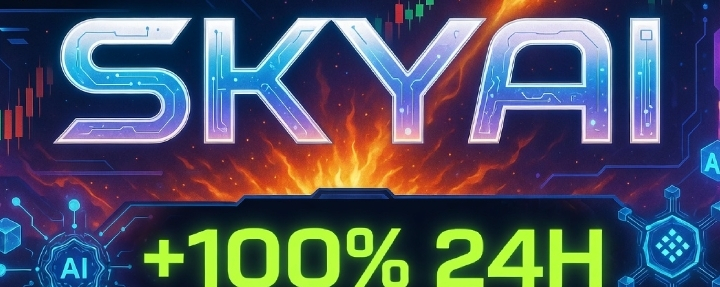
SKYAI Ignites the AI Narrative – Explosive Pump on Binance Right NowThe AI-crypto sector just got a massive jolt. SKYAI (SKYAI), the blockchain-native AI infrastructure token bridging large language models with real-time multichain data via its Model Context Protocol (MCP), is absolutely ripping higher on Binance today. With gains exceeding 90-100%+ in the last 24 hours and volume exploding past $200M, SKYAI has rocketed into the spotlight, breaking into higher market cap tiers and drawing heavy rotation from traders chasing the next AI beta play. This isn’t just noise — it’s fueled by strong on-chain data aggregation (already pulling billions of rows from BNB Chain and Solana), fresh listings momentum, and the broader hype around AI agents and Web3 intelligenc
Why SKYAI Is Pumping
Narrative Tailwinds: AI + Crypto remains one of the strongest meta stories. SKYAI delivers practical utility by feeding structured blockchain data to LLMs and autonomous agents — solving fragmentation that’s held back real adoption.Momentum & Volume: Massive 24h surge with high conviction buying. Whales and retail are piling in as it breaks key resistance levels.Ecosystem Edge: Fixed 1B supply, governance utility, and payments for AI services position it as more than a hype token.
Quick Trade Setup (High-Risk, Short-Term Momentum Play)
Entry: Current levels or on minor dips toward $0.55–0.65 zone (depending on exact price action).Target 1: Quick scalp to +30-50% (previous highs/resistance).Target 2: Stretch to new ATH extension (+80-120% potential if volume sustains).Stop Loss: Tight — 15-20% below entry to protect against sharp crypto reversals. Use trailing stops as it runs.Risk Management: Position size small (1-2% of portfolio max). This is a volatile AI meme-adjacent runner — take profits on strength, don’t get greedy.
DYOR and trade responsibly. Markets can reverse fast — this is not financial advice.The AI supercycle isn’t over. SKYAI is showing exactly why narrative + utility coins can deliver outsized moves on Binance. Keep it on your radar. #Crypto #skyai #BTCSurpasses$80K #Altcoins #Aİ $SKYAI
{future}(SKYAIUSDT)
SKYAI Ignites the AI Narrative – Explosive Pump on Binance Right Now
The AI-crypto sector just got a massive jolt. SKYAI (SKYAI), the blockchain-native AI infrastructure token bridging large language models with real-time multichain data via its Model Context Protocol (MCP), is absolutely ripping higher on Binance today. With gains exceeding 90-100%+ in the last 24 hours and volume exploding past $200M, SKYAI has rocketed into the spotlight, breaking into higher market cap tiers and drawing heavy rotation from traders chasing the next AI beta play. This isn’t just noise — it’s fueled by strong on-chain data aggregation (already pulling billions of rows from BNB Chain and Solana), fresh listings momentum, and the broader hype around AI agents and Web3 intelligenc
Why SKYAI Is Pumping
Narrative Tailwinds: AI + Crypto remains one of the strongest meta stories. SKYAI delivers practical utility by feeding structured blockchain data to LLMs and autonomous agents — solving fragmentation that’s held back real adoption.Momentum & Volume: Massive 24h surge with high conviction buying. Whales and retail are piling in as it breaks key resistance levels.Ecosystem Edge: Fixed 1B supply, governance utility, and payments for AI services position it as more than a hype token.
Quick Trade Setup (High-Risk, Short-Term Momentum Play)
Entry: Current levels or on minor dips toward $0.55–0.65 zone (depending on exact price action).Target 1: Quick scalp to +30-50% (previous highs/resistance).Target 2: Stretch to new ATH extension (+80-120% potential if volume sustains).Stop Loss: Tight — 15-20% below entry to protect against sharp crypto reversals. Use trailing stops as it runs.Risk Management: Position size small (1-2% of portfolio max). This is a volatile AI meme-adjacent runner — take profits on strength, don’t get greedy.
DYOR and trade responsibly. Markets can reverse fast — this is not financial advice.The AI supercycle isn’t over. SKYAI is showing exactly why narrative + utility coins can deliver outsized moves on Binance. Keep it on your radar. #Crypto #skyai #BTCSurpasses$80K #Altcoins #Aİ $SKYAI
Why SKYAI Is Pumping
Narrative Tailwinds: AI + Crypto remains one of the strongest meta stories. SKYAI delivers practical utility by feeding structured blockchain data to LLMs and autonomous agents — solving fragmentation that’s held back real adoption.Momentum & Volume: Massive 24h surge with high conviction buying. Whales and retail are piling in as it breaks key resistance levels.Ecosystem Edge: Fixed 1B supply, governance utility, and payments for AI services position it as more than a hype token.
Quick Trade Setup (High-Risk, Short-Term Momentum Play)
Entry: Current levels or on minor dips toward $0.55–0.65 zone (depending on exact price action).Target 1: Quick scalp to +30-50% (previous highs/resistance).Target 2: Stretch to new ATH extension (+80-120% potential if volume sustains).Stop Loss: Tight — 15-20% below entry to protect against sharp crypto reversals. Use trailing stops as it runs.Risk Management: Position size small (1-2% of portfolio max). This is a volatile AI meme-adjacent runner — take profits on strength, don’t get greedy.
DYOR and trade responsibly. Markets can reverse fast — this is not financial advice.The AI supercycle isn’t over. SKYAI is showing exactly why narrative + utility coins can deliver outsized moves on Binance. Keep it on your radar. #Crypto #skyai #BTCSurpasses$80K #Altcoins #Aİ $SKYAI
349
BABY (Babylon) is Exploding on Binance Right Now!The charts are on fire — Babylon’s BABY token is surging hard today, smashing 40%+ gains in the last 24 hours with massive volume flooding in. This Bitcoin staking powerhouse is delivering the kind of momentum traders live for: self-custodial BTC staking that supercharges PoS chain security while keeping your Bitcoin locked on the original network. No bridges, no nonsense — just raw utility meeting hype.
Why the pump? Renewed Bitcoin narrative strength, fresh ecosystem momentum, and Binance traders piling in as volume spikes. BABY is breaking out of recent consolidation with conviction, turning heads across the altcoin scene.Quick Trade Setup (Aggressive Scalp/Swing)Entry: Current levels or dips toward $0.024–$0.026 (watch for quick retest of breakout).
Target 1: $0.035 (quick 30-40% upside).
Target 2: $0.045+ (if momentum holds and BTC stays bullish).
Stop Loss: Tight under $0.022 to protect against fakeouts — this is a volatile mover.
R:R: Aim for 1:3+ on the first leg. Use Binance spot or futures with low leverage (3-5x max).
Risk Management Reminder: Set alerts, don’t ape your rent money, and trail stops as it rips. Crypto pumps can reverse fast — trade $BABY smart.Momentum is real, volume is confirming, and the story is strong. BABY is living up to its name in this cycle. #Crypto #baby #TrumpThreatensRenewedStrikesIfIran'Misbehaves'DuringCeasefire #Altseason #Binance $BABY
{future}(BABYUSDT)
BABY (Babylon) is Exploding on Binance Right Now!
The charts are on fire — Babylon’s BABY token is surging hard today, smashing 40%+ gains in the last 24 hours with massive volume flooding in. This Bitcoin staking powerhouse is delivering the kind of momentum traders live for: self-custodial BTC staking that supercharges PoS chain security while keeping your Bitcoin locked on the original network. No bridges, no nonsense — just raw utility meeting hype.
Why the pump? Renewed Bitcoin narrative strength, fresh ecosystem momentum, and Binance traders piling in as volume spikes. BABY is breaking out of recent consolidation with conviction, turning heads across the altcoin scene.Quick Trade Setup (Aggressive Scalp/Swing)Entry: Current levels or dips toward $0.024–$0.026 (watch for quick retest of breakout).
Target 1: $0.035 (quick 30-40% upside).
Target 2: $0.045+ (if momentum holds and BTC stays bullish).
Stop Loss: Tight under $0.022 to protect against fakeouts — this is a volatile mover.
R:R: Aim for 1:3+ on the first leg. Use Binance spot or futures with low leverage (3-5x max).
Risk Management Reminder: Set alerts, don’t ape your rent money, and trail stops as it rips. Crypto pumps can reverse fast — trade $BABY smart.Momentum is real, volume is confirming, and the story is strong. BABY is living up to its name in this cycle. #Crypto #baby #TrumpThreatensRenewedStrikesIfIran'Misbehaves'DuringCeasefire #Altseason #Binance $BABY
Why the pump? Renewed Bitcoin narrative strength, fresh ecosystem momentum, and Binance traders piling in as volume spikes. BABY is breaking out of recent consolidation with conviction, turning heads across the altcoin scene.Quick Trade Setup (Aggressive Scalp/Swing)Entry: Current levels or dips toward $0.024–$0.026 (watch for quick retest of breakout).
Target 1: $0.035 (quick 30-40% upside).
Target 2: $0.045+ (if momentum holds and BTC stays bullish).
Stop Loss: Tight under $0.022 to protect against fakeouts — this is a volatile mover.
R:R: Aim for 1:3+ on the first leg. Use Binance spot or futures with low leverage (3-5x max).
Risk Management Reminder: Set alerts, don’t ape your rent money, and trail stops as it rips. Crypto pumps can reverse fast — trade $BABY smart.Momentum is real, volume is confirming, and the story is strong. BABY is living up to its name in this cycle. #Crypto #baby #TrumpThreatensRenewedStrikesIfIran'Misbehaves'DuringCeasefire #Altseason #Binance $BABY
2
1
164
$TOKEN Ignites on Binance: The Pump That's Turning Heads Right Now.Binance is on fire with $TOKEN surging hard as fresh buyers flood in. Volume is spiking, charts are breaking resistance, and the momentum feels electric—this token is grabbing serious attention in a sea of alts.What’s driving it? Strong community momentum, solid tokenomics catching on, and smart capital rotating in fast. The price action is clean: higher lows, explosive green candles, and sellers getting swept on every dip. When a token moves like this on the biggest exchange, you pay attention.
Quick Trade Setup
Entry: On pullbacks to the breakout level or dynamic support (e.g., 20/50 EMA).
Targets: Take partial profits at +35–60%, extend toward +100–150% if volume holds and momentum accelerates.
Stop Loss: Below the recent swing low (risk 6–10% max).$TOKEN
Bias: Strongly bullish above key support. Trail stops as it runs and watch Binance futures flow for extra conviction.This move has legs, but crypto moves fast—get in clean, size smart, and ride the wave.#Crypto #token #EthereumFoundationSellsETHtoBitmineAgain #Altcoins #Binance Not financial advice. DYOR and trade responsibly.$TOKEN
{alpha}(560x4507cef57c46789ef8d1a19ea45f4216bae2b528)
$TOKEN Ignites on Binance: The Pump That's Turning Heads Right Now.
Binance is on fire with $TOKEN surging hard as fresh buyers flood in. Volume is spiking, charts are breaking resistance, and the momentum feels electric—this token is grabbing serious attention in a sea of alts.What’s driving it? Strong community momentum, solid tokenomics catching on, and smart capital rotating in fast. The price action is clean: higher lows, explosive green candles, and sellers getting swept on every dip. When a token moves like this on the biggest exchange, you pay attention.
Quick Trade Setup
Entry: On pullbacks to the breakout level or dynamic support (e.g., 20/50 EMA).
Targets: Take partial profits at +35–60%, extend toward +100–150% if volume holds and momentum accelerates.
Stop Loss: Below the recent swing low (risk 6–10% max).$TOKEN
Bias: Strongly bullish above key support. Trail stops as it runs and watch Binance futures flow for extra conviction.This move has legs, but crypto moves fast—get in clean, size smart, and ride the wave.#Crypto #token #EthereumFoundationSellsETHtoBitmineAgain #Altcoins #Binance Not financial advice. DYOR and trade responsibly.$TOKEN
Quick Trade Setup
Entry: On pullbacks to the breakout level or dynamic support (e.g., 20/50 EMA).
Targets: Take partial profits at +35–60%, extend toward +100–150% if volume holds and momentum accelerates.
Stop Loss: Below the recent swing low (risk 6–10% max).$TOKEN
Bias: Strongly bullish above key support. Trail stops as it runs and watch Binance futures flow for extra conviction.This move has legs, but crypto moves fast—get in clean, size smart, and ride the wave.#Crypto #token #EthereumFoundationSellsETHtoBitmineAgain #Altcoins #Binance Not financial advice. DYOR and trade responsibly.$TOKEN
304
Article
$TOKEN Right Now: The Binance Pump You Can't IgnoreA fresh token is lighting up the Binance charts, delivering that classic sudden surge traders live for. Volume is exploding, liquidity is flowing, and the momentum feels unstoppable as buyers pile in.This isn't just another random listing—smart money is rotating in fast, pushing price action higher with strong conviction. The chart shows clean breakouts, healthy pullbacks finding support, and buyers defending key levels. In this market, speed wins, and $TOKEN is moving at full throttle.
Quick Trade SetupEntry:
Look for dips toward the recent breakout zone or VWAP support for the best risk-reward.
Target: First take-profit at 30-50% upside on continuation strength; scale out toward 80-120% if volume sustains.
Stop: Tight below the swing low or key support (5-8% risk max) to stay protected.
Bias: Bullish while above the key support. Watch for volume spikes and Binance order flow for confirmation. Position size $TOKEN conservatively—ride the wave but don't get greedy.Momentum like this doesn't last forever. Get positioned smart, manage risk, and let the chart do the talking.#Crypto #Altcoins #Binance #token #EthereumFoundationSellsETHtoBitmineAgain DYOR and trade responsibly. This is not financial advice. $TOKEN
{alpha}(560x4507cef57c46789ef8d1a19ea45f4216bae2b528)
$TOKEN Right Now: The Binance Pump You Can't Ignore
A fresh token is lighting up the Binance charts, delivering that classic sudden surge traders live for. Volume is exploding, liquidity is flowing, and the momentum feels unstoppable as buyers pile in.This isn't just another random listing—smart money is rotating in fast, pushing price action higher with strong conviction. The chart shows clean breakouts, healthy pullbacks finding support, and buyers defending key levels. In this market, speed wins, and $TOKEN is moving at full throttle.
Quick Trade SetupEntry:
Look for dips toward the recent breakout zone or VWAP support for the best risk-reward.
Target: First take-profit at 30-50% upside on continuation strength; scale out toward 80-120% if volume sustains.
Stop: Tight below the swing low or key support (5-8% risk max) to stay protected.
Bias: Bullish while above the key support. Watch for volume spikes and Binance order flow for confirmation. Position size $TOKEN conservatively—ride the wave but don't get greedy.Momentum like this doesn't last forever. Get positioned smart, manage risk, and let the chart do the talking.#Crypto #Altcoins #Binance #token #EthereumFoundationSellsETHtoBitmineAgain DYOR and trade responsibly. This is not financial advice. $TOKEN
Quick Trade SetupEntry:
Look for dips toward the recent breakout zone or VWAP support for the best risk-reward.
Target: First take-profit at 30-50% upside on continuation strength; scale out toward 80-120% if volume sustains.
Stop: Tight below the swing low or key support (5-8% risk max) to stay protected.
Bias: Bullish while above the key support. Watch for volume spikes and Binance order flow for confirmation. Position size $TOKEN conservatively—ride the wave but don't get greedy.Momentum like this doesn't last forever. Get positioned smart, manage risk, and let the chart do the talking.#Crypto #Altcoins #Binance #token #EthereumFoundationSellsETHtoBitmineAgain DYOR and trade responsibly. This is not financial advice. $TOKEN
321
Article
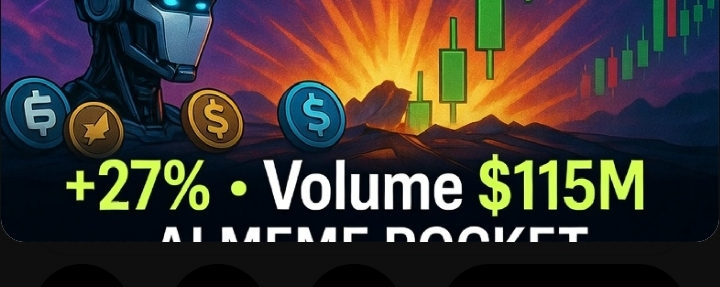
$SKYAI Explodes on Binance – The AI Meme Rocket Lighting Up the Charts Right NowThe crypto streets are buzzing, and SkyAI ($SKYAI) is the token stealing the spotlight on Binance today. This AI-powered meme coin has surged over 27% in the last 24 hours, with volume exploding past $115M as traders pile in. What started as a cheeky fusion of artificial intelligence and viral meme energy has turned into a full-blown momentum play, riding the wave of AI narrative hype and retail FOMO.
In a market where narratives move faster than price, $SKYAI combines the virality of memes with the hot AI sector. Community chatter is electric, charts are breaking key resistance, and whales appear to be accumulating. While many low-cap tokens fizzle, this one is showing real legs with strong buying pressure and Binance liquidity fueling the fire.Quick Trade Setup for $SKYAI
Entry: Current levels around $0.37–$0.38 or on a minor dip to the $0.35 support zone for better risk-reward.Target 1: $0.48 (quick 25–30% upside on continued momentum).Target 2: $0.60+ (if AI rotation strengthens and volume sustains).Stop Loss: Tight below $0.32 to protect against sudden reversals – these pumps can be violent both ways.Risk Management: Never risk more than 1-2% of your portfolio per trade. Use limit orders and watch volume spikes. Take partial profits at first target to lock in gains.
This is high-volatility action – perfect for swing traders who love fast moves but brutal for the undisciplined. Set alerts, stay glued to the Binance chart, and remember: in crypto, speed kills (your bags if you hesitate).The broader market is rotating into AI and meme narratives, and $SKYAI sits at the sweet intersection. Momentum is your friend until it isn’t – trade smart, size properly, and let the chart do the talking.#Crypto #Altcoinseason #skyai #Memecoins Disclaimer: This is not financial advice. Crypto is extremely risky and prices can dump as fast as they pump. DYOR and only trade with money you can afford to lose.$SKYAI
{future}(SKYAIUSDT)
$SKYAI Explodes on Binance – The AI Meme Rocket Lighting Up the Charts Right Now
The crypto streets are buzzing, and SkyAI ($SKYAI ) is the token stealing the spotlight on Binance today. This AI-powered meme coin has surged over 27% in the last 24 hours, with volume exploding past $115M as traders pile in. What started as a cheeky fusion of artificial intelligence and viral meme energy has turned into a full-blown momentum play, riding the wave of AI narrative hype and retail FOMO.
In a market where narratives move faster than price, $SKYAI combines the virality of memes with the hot AI sector. Community chatter is electric, charts are breaking key resistance, and whales appear to be accumulating. While many low-cap tokens fizzle, this one is showing real legs with strong buying pressure and Binance liquidity fueling the fire.Quick Trade Setup for $SKYAI
Entry: Current levels around $0.37–$0.38 or on a minor dip to the $0.35 support zone for better risk-reward.Target 1: $0.48 (quick 25–30% upside on continued momentum).Target 2: $0.60+ (if AI rotation strengthens and volume sustains).Stop Loss: Tight below $0.32 to protect against sudden reversals – these pumps can be violent both ways.Risk Management: Never risk more than 1-2% of your portfolio per trade. Use limit orders and watch volume spikes. Take partial profits at first target to lock in gains.
This is high-volatility action – perfect for swing traders who love fast moves but brutal for the undisciplined. Set alerts, stay glued to the Binance chart, and remember: in crypto, speed kills (your bags if you hesitate).The broader market is rotating into AI and meme narratives, and $SKYAI sits at the sweet intersection. Momentum is your friend until it isn’t – trade smart, size properly, and let the chart do the talking.#Crypto #Altcoinseason #skyai #Memecoins Disclaimer: This is not financial advice. Crypto is extremely risky and prices can dump as fast as they pump. DYOR and only trade with money you can afford to lose.$SKYAI
In a market where narratives move faster than price, $SKYAI combines the virality of memes with the hot AI sector. Community chatter is electric, charts are breaking key resistance, and whales appear to be accumulating. While many low-cap tokens fizzle, this one is showing real legs with strong buying pressure and Binance liquidity fueling the fire.Quick Trade Setup for $SKYAI
Entry: Current levels around $0.37–$0.38 or on a minor dip to the $0.35 support zone for better risk-reward.Target 1: $0.48 (quick 25–30% upside on continued momentum).Target 2: $0.60+ (if AI rotation strengthens and volume sustains).Stop Loss: Tight below $0.32 to protect against sudden reversals – these pumps can be violent both ways.Risk Management: Never risk more than 1-2% of your portfolio per trade. Use limit orders and watch volume spikes. Take partial profits at first target to lock in gains.
This is high-volatility action – perfect for swing traders who love fast moves but brutal for the undisciplined. Set alerts, stay glued to the Binance chart, and remember: in crypto, speed kills (your bags if you hesitate).The broader market is rotating into AI and meme narratives, and $SKYAI sits at the sweet intersection. Momentum is your friend until it isn’t – trade smart, size properly, and let the chart do the talking.#Crypto #Altcoinseason #skyai #Memecoins Disclaimer: This is not financial advice. Crypto is extremely risky and prices can dump as fast as they pump. DYOR and only trade with money you can afford to lose.$SKYAI
1
1
414
Article
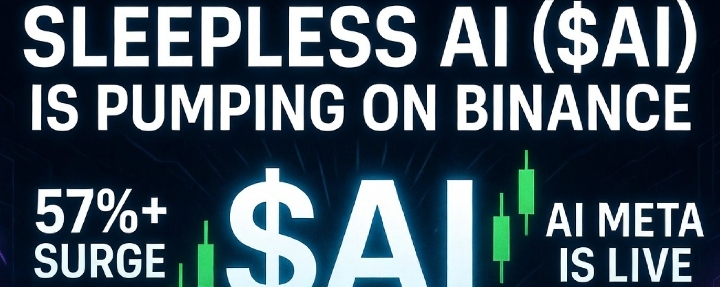
Sleepless AI ($AI) is Exploding on Binance Right Now – Don't Sleep on This Pump!While the broader market chills, one token is wide awake and ripping higher on Binance: Sleepless AI ($AI). This AI-powered gem just surged over 57% in the last 24 hours, turning heads and wallets green across the exchange. Fueled by the unstoppable AI narrative in crypto, Sleepless AI combines decentralized intelligence with real utility in a sector that's captured massive attention. Traders are piling in fast as volume spikes and momentum builds — classic signs of a short-term rocket that's just leaving the launchpad. In a sea of sleepy alts, $AI is the one keeping the lights on and the charts pumping.
Quick Trade Setup for $AI
Entry: Current levels or dips toward $0.025–$0.027 support zone (watch for quick bounce confirmation on 15m/1h charts).Target 1: $0.035 (realistic near-term extension on continued volume).Target 2: $0.042+ if AI hype reignites and breaks recent highs.Stop Loss: Tight below $0.023 to protect against sudden reversals — this is a momentum play, not a HODL forever.Risk Management: Size small (1-2% of portfolio max). Look for rising volume and positive funding rates. Take partial profits at first target to lock in gains.
This setup is for aggressive short-term traders riding the current wave. Crypto moves fast — always DYOR, use proper risk controls, and never ape more than you can afford to lose.The AI meta isn't going away, and Binance-listed tokens with fresh momentum like this often deliver the quickest pops. Eyes on the charts — $AI might just keep you up all night counting gains.#Crypto #ai #FedRatesUnchanged #AltcoinSeason #Binance $AI
{spot}(AIUSDT)
Sleepless AI ($AI) is Exploding on Binance Right Now – Don't Sleep on This Pump!
While the broader market chills, one token is wide awake and ripping higher on Binance: Sleepless AI ($AI ). This AI-powered gem just surged over 57% in the last 24 hours, turning heads and wallets green across the exchange. Fueled by the unstoppable AI narrative in crypto, Sleepless AI combines decentralized intelligence with real utility in a sector that's captured massive attention. Traders are piling in fast as volume spikes and momentum builds — classic signs of a short-term rocket that's just leaving the launchpad. In a sea of sleepy alts, $AI is the one keeping the lights on and the charts pumping.
Quick Trade Setup for $AI
Entry: Current levels or dips toward $0.025–$0.027 support zone (watch for quick bounce confirmation on 15m/1h charts).Target 1: $0.035 (realistic near-term extension on continued volume).Target 2: $0.042+ if AI hype reignites and breaks recent highs.Stop Loss: Tight below $0.023 to protect against sudden reversals — this is a momentum play, not a HODL forever.Risk Management: Size small (1-2% of portfolio max). Look for rising volume and positive funding rates. Take partial profits at first target to lock in gains.
This setup is for aggressive short-term traders riding the current wave. Crypto moves fast — always DYOR, use proper risk controls, and never ape more than you can afford to lose.The AI meta isn't going away, and Binance-listed tokens with fresh momentum like this often deliver the quickest pops. Eyes on the charts — $AI might just keep you up all night counting gains.#Crypto #ai #FedRatesUnchanged #AltcoinSeason #Binance $AI
Quick Trade Setup for $AI
Entry: Current levels or dips toward $0.025–$0.027 support zone (watch for quick bounce confirmation on 15m/1h charts).Target 1: $0.035 (realistic near-term extension on continued volume).Target 2: $0.042+ if AI hype reignites and breaks recent highs.Stop Loss: Tight below $0.023 to protect against sudden reversals — this is a momentum play, not a HODL forever.Risk Management: Size small (1-2% of portfolio max). Look for rising volume and positive funding rates. Take partial profits at first target to lock in gains.
This setup is for aggressive short-term traders riding the current wave. Crypto moves fast — always DYOR, use proper risk controls, and never ape more than you can afford to lose.The AI meta isn't going away, and Binance-listed tokens with fresh momentum like this often deliver the quickest pops. Eyes on the charts — $AI might just keep you up all night counting gains.#Crypto #ai #FedRatesUnchanged #AltcoinSeason #Binance $AI
131
SKYAI ($SKYAI) is blasting off on Binance right now — the AI agent narrative is pumping hard.While the broader market consolidates, SKYAI just ripped +45% in the last 24 hours with volume exploding past $40M. This isn't random noise. AI-themed tokens are catching fresh rotation as traders hunt the next narrative after the last meme wave cooled. SKYAI stands out with real buzz around autonomous agents and on-chain AI utility, turning heads and wallets in the process. Charts show a clean breakout from recent consolidation, with buyers stepping in aggressively on dips.
coingecko.com
Momentum is palpable: high social heat, increasing whale accumulation signals, and Binance spot/futures pairs lighting up with green candles. When a low-to-mid cap AI play moves this fast with sustained volume, it often signals the start of a multi-day leg higher — especially if BTC holds steady.Quick Trade Setup (Aggressive Scalp/Swing — High Risk)
Entry: Current levels or dips toward the 20-30% retrace from today's high (watch for volume-supported bounce).Target 1: +30-50% (next liquidity pocket).Target 2: +80-120% if volume keeps stacking and it breaks key resistance (parabolic territory).Stop Loss: Tight — 12-18% below entry. This move is volatile; invalidation means cut fast.Risk Management: Max 1-2% of portfolio per trade. Use limit orders, trail stops on the way up. Leverage only if experienced (2-5x max).
This is a momentum play, not a long-term hold thesis. Crypto pumps like this can extend or reverse violently — trade with your own plan and never risk what you can't afford to lose.The window is open while the heat is on. DYOR, stay sharp, and size responsibly.#Crypto #skyai #PolymarketDeniesDataBreach #AltcoinSeason #Binance
{future}(SKYAIUSDT)
SKYAI ($SKYAI) is blasting off on Binance right now — the AI agent narrative is pumping hard.
While the broader market consolidates, SKYAI just ripped +45% in the last 24 hours with volume exploding past $40M. This isn't random noise. AI-themed tokens are catching fresh rotation as traders hunt the next narrative after the last meme wave cooled. SKYAI stands out with real buzz around autonomous agents and on-chain AI utility, turning heads and wallets in the process. Charts show a clean breakout from recent consolidation, with buyers stepping in aggressively on dips.
coingecko.com
Momentum is palpable: high social heat, increasing whale accumulation signals, and Binance spot/futures pairs lighting up with green candles. When a low-to-mid cap AI play moves this fast with sustained volume, it often signals the start of a multi-day leg higher — especially if BTC holds steady.Quick Trade Setup (Aggressive Scalp/Swing — High Risk)
Entry: Current levels or dips toward the 20-30% retrace from today's high (watch for volume-supported bounce).Target 1: +30-50% (next liquidity pocket).Target 2: +80-120% if volume keeps stacking and it breaks key resistance (parabolic territory).Stop Loss: Tight — 12-18% below entry. This move is volatile; invalidation means cut fast.Risk Management: Max 1-2% of portfolio per trade. Use limit orders, trail stops on the way up. Leverage only if experienced (2-5x max).
This is a momentum play, not a long-term hold thesis. Crypto pumps like this can extend or reverse violently — trade with your own plan and never risk what you can't afford to lose.The window is open while the heat is on. DYOR, stay sharp, and size responsibly.#Crypto #skyai #PolymarketDeniesDataBreach #AltcoinSeason #Binance
coingecko.com
Momentum is palpable: high social heat, increasing whale accumulation signals, and Binance spot/futures pairs lighting up with green candles. When a low-to-mid cap AI play moves this fast with sustained volume, it often signals the start of a multi-day leg higher — especially if BTC holds steady.Quick Trade Setup (Aggressive Scalp/Swing — High Risk)
Entry: Current levels or dips toward the 20-30% retrace from today's high (watch for volume-supported bounce).Target 1: +30-50% (next liquidity pocket).Target 2: +80-120% if volume keeps stacking and it breaks key resistance (parabolic territory).Stop Loss: Tight — 12-18% below entry. This move is volatile; invalidation means cut fast.Risk Management: Max 1-2% of portfolio per trade. Use limit orders, trail stops on the way up. Leverage only if experienced (2-5x max).
This is a momentum play, not a long-term hold thesis. Crypto pumps like this can extend or reverse violently — trade with your own plan and never risk what you can't afford to lose.The window is open while the heat is on. DYOR, stay sharp, and size responsibly.#Crypto #skyai #PolymarketDeniesDataBreach #AltcoinSeason #Binance
241
ORCA is exploding on Binance right now – up over 30-50% in the last 24 hours.The Solana-based DeFi heavyweight just broke out hard, smashing through resistance with massive volume and liquidity sweeps. Orca (ORCA), the flagship DEX on Solana, is catching fresh rotation as traders hunt the next DeFi narrative. From lows near $1.40 to highs pushing $2.00+, this token is delivering the kind of violent pump that turns heads across the entire market.Why now? Strong Solana ecosystem momentum, surging trading volume on the Orca platform itself, and technicals screaming breakout after a long consolidation. When DeFi rotates, it rotates fast — and ORCA is leading the charge today.
Entry: Around $1.65–1.72 on pullback or fresh breakout above $1.75
Stop Loss: Tight below $1.50 (protect capital — this thing moves fast)
Targets: First target $2.00 (quick scalp), stretch to $2.20–2.50 if momentum holds $ORCA
Risk: Max 1-2% of capital per trade. Use low leverage if trading futures.
#ORCA #Crypto #Binance $ORCA
{spot}(ORCAUSDT)
ORCA is exploding on Binance right now – up over 30-50% in the last 24 hours.
The Solana-based DeFi heavyweight just broke out hard, smashing through resistance with massive volume and liquidity sweeps. Orca (ORCA), the flagship DEX on Solana, is catching fresh rotation as traders hunt the next DeFi narrative. From lows near $1.40 to highs pushing $2.00+, this token is delivering the kind of violent pump that turns heads across the entire market.Why now? Strong Solana ecosystem momentum, surging trading volume on the Orca platform itself, and technicals screaming breakout after a long consolidation. When DeFi rotates, it rotates fast — and ORCA is leading the charge today.
Entry: Around $1.65–1.72 on pullback or fresh breakout above $1.75
Stop Loss: Tight below $1.50 (protect capital — this thing moves fast)
Targets: First target $2.00 (quick scalp), stretch to $2.20–2.50 if momentum holds $ORCA
Risk: Max 1-2% of capital per trade. Use low leverage if trading futures.
#ORCA #Crypto #Binance $ORCA
Entry: Around $1.65–1.72 on pullback or fresh breakout above $1.75
Stop Loss: Tight below $1.50 (protect capital — this thing moves fast)
Targets: First target $2.00 (quick scalp), stretch to $2.20–2.50 if momentum holds $ORCA
Risk: Max 1-2% of capital per trade. Use low leverage if trading futures.
#ORCA #Crypto #Binance $ORCA
188
ORCA is on a Nuclear Run on Binance Right Now!Solana’s favorite DEX just went full beast mode. In the last 24 hours, ORCA has exploded higher with massive double-digit gains, crushing resistance and lighting up the Binance charts as one of the strongest movers in the entire market.This isn’t some random low-cap meme frenzy — it’s backed by real volume. Trading activity on Orca has been scorching as Solana DeFi wakes up, and the token is riding the wave hard. Add in Orca’s recent move joining over 100 organizations pushing for clear crypto market structure rules in the U.S. Senate, and you’ve got a perfect mix of narrative + technical breakout.Right now on Binance, ORCA is showing serious conviction. Whales are rotating in, shorts are getting squeezed, and the momentum feels different. While Bitcoin and the majors consolidate, ORCA is reminding everyone why Solana ecosystem plays can deliver explosive moves when sentiment flips.The chart is screaming higher highs after a brutal correction phase. If this volume holds, we could see ORCA retest previous swing highs fast.Altseason is whispering… and ORCA is currently one of the loudest voices on $ORCA Binance.Stay sharp, manage risk, and watch this one closely — it’s moving.#Bitcoin #ORCA #ArthurHayes’LatestSpeech #Crypto #Altcoins $ORCA
{spot}(ORCAUSDT)
ORCA is on a Nuclear Run on Binance Right Now!
Solana’s favorite DEX just went full beast mode. In the last 24 hours, ORCA has exploded higher with massive double-digit gains, crushing resistance and lighting up the Binance charts as one of the strongest movers in the entire market.This isn’t some random low-cap meme frenzy — it’s backed by real volume. Trading activity on Orca has been scorching as Solana DeFi wakes up, and the token is riding the wave hard. Add in Orca’s recent move joining over 100 organizations pushing for clear crypto market structure rules in the U.S. Senate, and you’ve got a perfect mix of narrative + technical breakout.Right now on Binance, ORCA is showing serious conviction. Whales are rotating in, shorts are getting squeezed, and the momentum feels different. While Bitcoin and the majors consolidate, ORCA is reminding everyone why Solana ecosystem plays can deliver explosive moves when sentiment flips.The chart is screaming higher highs after a brutal correction phase. If this volume holds, we could see ORCA retest previous swing highs fast.Altseason is whispering… and ORCA is currently one of the loudest voices on $ORCA Binance.Stay sharp, manage risk, and watch this one closely — it’s moving.#Bitcoin #ORCA #ArthurHayes’LatestSpeech #Crypto #Altcoins $ORCA
1
129
Quick BTC Trade Setup on Binance (BTC/USDT)
$BTC Current Price (as of Apr 28 2026): ~$76,900Timeframe: 4H / Short-term swingSetup: Bullish Dip Long (Rebound Play)
Entry: $76,400 – $76,800 (buy on dip or limit at current levels)
Stop Loss: $75,700 (tight below recent low — ~1-1.5% risk)
Take Profit 1: $78,500 (first resistance target)
Take Profit 2: $79,800 – $80,000 (partial or full exit)
Risk/Reward: ~1:2.5+
Position size: Max 1% account risk
Rationale: BTC is consolidating after testing higher levels with low volume. Holding above $76k support zone gives room for a rebound toward $78k–$80k if momentum returns. Watch volume and funding rate on Binance Futures.Invalidation: Strong break and close below $75,700 → cancel setup.Always use proper risk management. This is NOT financial advice — crypto is extremely volatile. DYOR and trade $BTC responsibly.#Bitcoin #OpenAIReportedlyWorkingonanAISmartphone #BTC #Crypto #StrategyBTCPurchase $BTC
{spot}(BTCUSDT)
Quick BTC Trade Setup on Binance (BTC/USDT)
$BTC Current Price (as of Apr 28 2026): ~$76,900Timeframe: 4H / Short-term swingSetup: Bullish Dip Long (Rebound Play)
Entry: $76,400 – $76,800 (buy on dip or limit at current levels)
Stop Loss: $75,700 (tight below recent low — ~1-1.5% risk)
Take Profit 1: $78,500 (first resistance target)
Take Profit 2: $79,800 – $80,000 (partial or full exit)
Risk/Reward: ~1:2.5+
Position size: Max 1% account risk
Rationale: BTC is consolidating after testing higher levels with low volume. Holding above $76k support zone gives room for a rebound toward $78k–$80k if momentum returns. Watch volume and funding rate on Binance Futures.Invalidation: Strong break and close below $75,700 → cancel setup.Always use proper risk management. This is NOT financial advice — crypto is extremely volatile. DYOR and trade $BTC responsibly.#Bitcoin #OpenAIReportedlyWorkingonanAISmartphone #BTC #Crypto #StrategyBTCPurchase $BTC
$BTC Current Price (as of Apr 28 2026): ~$76,900Timeframe: 4H / Short-term swingSetup: Bullish Dip Long (Rebound Play)
Entry: $76,400 – $76,800 (buy on dip or limit at current levels)
Stop Loss: $75,700 (tight below recent low — ~1-1.5% risk)
Take Profit 1: $78,500 (first resistance target)
Take Profit 2: $79,800 – $80,000 (partial or full exit)
Risk/Reward: ~1:2.5+
Position size: Max 1% account risk
Rationale: BTC is consolidating after testing higher levels with low volume. Holding above $76k support zone gives room for a rebound toward $78k–$80k if momentum returns. Watch volume and funding rate on Binance Futures.Invalidation: Strong break and close below $75,700 → cancel setup.Always use proper risk management. This is NOT financial advice — crypto is extremely volatile. DYOR and trade $BTC responsibly.#Bitcoin #OpenAIReportedlyWorkingonanAISmartphone #BTC #Crypto #StrategyBTCPurchase $BTC
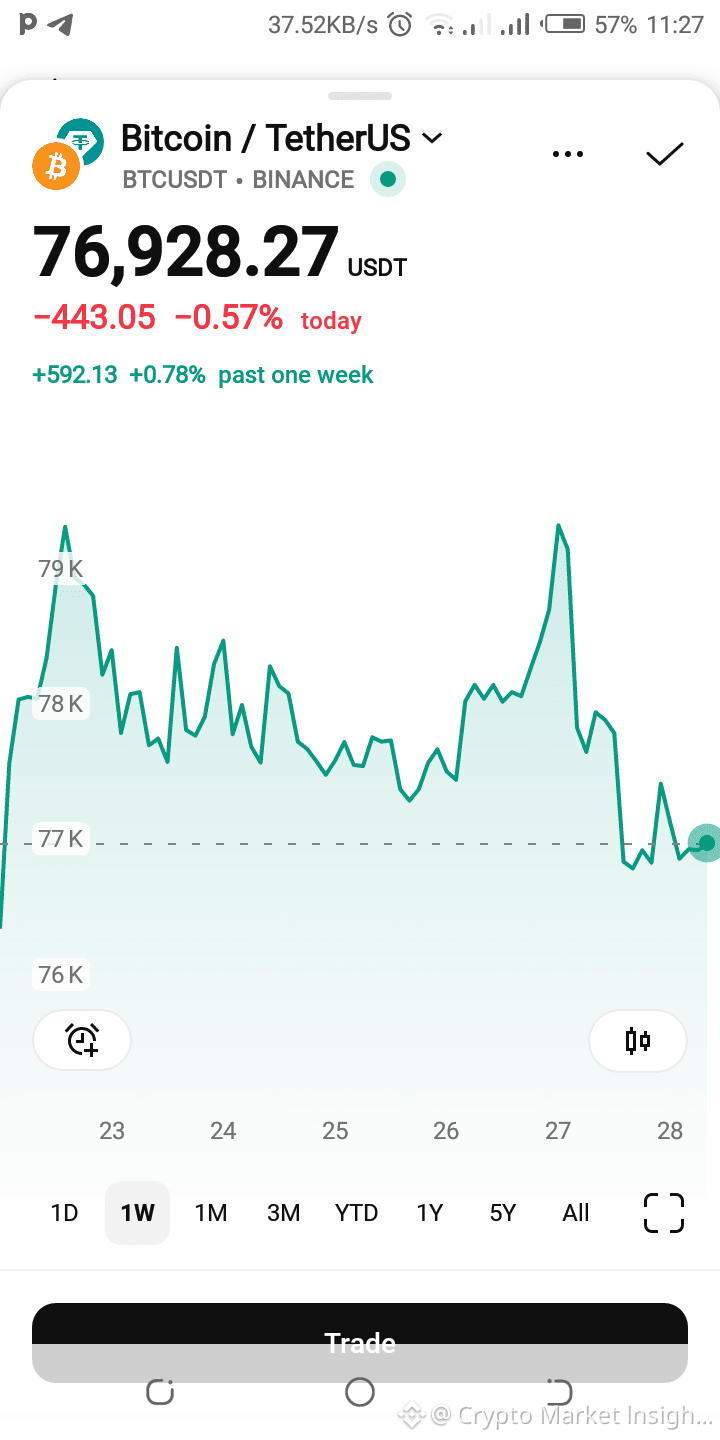
92
Article
Quick Trade Setup for $SANTOS (Santos FC Fan TokenSANTOSUSDT)Bias:Long (bullish reversal potential)
Timeframe: Daily / 4H
Entry Zone: 1.27 – 1.32 (current consolidation around the falling wedge breakout area)
Stop Loss: 1.20 (below recent swing low / key support)
Take Profit 1: 1.36
Take Profit 2: 1.45–1.50
Risk-Reward: ~1:2+ Quick Rationale: Price showing higher lows in a rising structure with a falling wedge breakout forming on the daily chart. Recent monthly performance is strong (+24%+), and fan token rotation flows could add upside momentum. Wait for a confirmed daily close above the wedge for cleaner entry. $SANTOS
Not financial advice – DYOR, manage risk, crypto is volatile.#SANTOS #TradeSetup #MarketRebound #CryptoTrading $SANTOS
{spot}(SANTOSUSDT)
Quick Trade Setup for $SANTOS (Santos FC Fan Token
SANTOSUSDT)Bias:Long (bullish reversal potential)
Timeframe: Daily / 4H
Entry Zone: 1.27 – 1.32 (current consolidation around the falling wedge breakout area)
Stop Loss: 1.20 (below recent swing low / key support)
Take Profit 1: 1.36
Take Profit 2: 1.45–1.50
Risk-Reward: ~1:2+ Quick Rationale: Price showing higher lows in a rising structure with a falling wedge breakout forming on the daily chart. Recent monthly performance is strong (+24%+), and fan token rotation flows could add upside momentum. Wait for a confirmed daily close above the wedge for cleaner entry. $SANTOS
Not financial advice – DYOR, manage risk, crypto is volatile.#SANTOS #TradeSetup #MarketRebound #CryptoTrading $SANTOS
Timeframe: Daily / 4H
Entry Zone: 1.27 – 1.32 (current consolidation around the falling wedge breakout area)
Stop Loss: 1.20 (below recent swing low / key support)
Take Profit 1: 1.36
Take Profit 2: 1.45–1.50
Risk-Reward: ~1:2+ Quick Rationale: Price showing higher lows in a rising structure with a falling wedge breakout forming on the daily chart. Recent monthly performance is strong (+24%+), and fan token rotation flows could add upside momentum. Wait for a confirmed daily close above the wedge for cleaner entry. $SANTOS
Not financial advice – DYOR, manage risk, crypto is volatile.#SANTOS #TradeSetup #MarketRebound #CryptoTrading $SANTOS
257
Log in to explore more content
Join global crypto users on Binance Square
⚡️ Get latest and useful information about crypto.
💬 Trusted by the world’s largest crypto exchange.
👍 Discover real insights from verified creators.
Email / Phone number
Trending Topics
QNTRises39%
52,576 views
1,207 Discussing
🚨 QNT IS SURGING! 📈
$QNT is making a huge move today, climbing nearly 40% as buying pressure accelerates.
The rally has put Quant firmly back in the spotlight, with traders watching to see whether this momentum can continue or if a pullback comes next.
🔥 Key things to watch:
• Strong trading volume
• Momentum above recent highs
• The $100 psychological level
• Whether buyers can maintain control
Big moves bring big volatility. Stay alert and manage risk.
Are you watching $QNT? 👀
#QNT #altcoins #CryptoNews
#qntrises39% $QNT
The07
·4 Likes
·4.1k views
EthereumBreaksAbove$2700
4,559 views
119 Discussing
BitgetBreachForgedRequestsNotStolenKeys
51,810 views
956 Discussing