
ZurabR
27.5k Posts

ZurabR
Report
Block User
Open Trade
Occasional Trader
4.3 Years
15.1K+ Following
2.7K+ Followers
8.6K+ Liked
Posts
Portfolio
All
Quotes
Live
·
--
#BTC
Crypto analyst Benjamin Cowen says it’s too early to say the Bitcoin bear market is over
Crypto analyst Benjamin Cowen stated that despite Bitcoin rising above the $81,280 level, it is still too early to say that the current bear market is over. Cowen noted that the recent increase may not yet represent a definitive change in the market’s long-term trend.
According to Cowen, temporary pullbacks in Bitcoin during a “golden cross” formation have been seen in the past. Therefore, the analyst stated that how the current recovery will unfold is more important than the drop experienced in early September.
Cowen said that Bitcoin surpassing its previous peak and forming a higher peak similar to the price movements seen between 2019 and 2023 could be a positive signal.
In addition, he noted that Bitcoin closing above the 50-week simple moving average (50W SMA) on the weekly chart could signal a weakening of the downtrend.
Conversely, Cowen noted that if Bitcoin encounters resistance at current levels and forms a lower peak below the previous high, the bear market could continue, suggesting a scenario similar to the price movement of 2014-2015.
The analyst’s assessments indicate that it is not yet clear whether the recent recovery in Bitcoin constitutes a lasting trend reversal. In terms of market direction, investors appear to be closely monitoring technical indicators such as previous peaks, the 50-week moving average, and the formation of a new high.#BTC走势分析 #Write2Earn #BTC☀ #Write2Earn! $BTC
#BTC
Crypto analyst Benjamin Cowen says it’s too early to say the Bitcoin bear market is over
Crypto analyst Benjamin Cowen stated that despite Bitcoin rising above the $81,280 level, it is still too early to say that the current bear market is over. Cowen noted that the recent increase may not yet represent a definitive change in the market’s long-term trend.
According to Cowen, temporary pullbacks in Bitcoin during a “golden cross” formation have been seen in the past. Therefore, the analyst stated that how the current recovery will unfold is more important than the drop experienced in early September.
Cowen said that Bitcoin surpassing its previous peak and forming a higher peak similar to the price movements seen between 2019 and 2023 could be a positive signal.
In addition, he noted that Bitcoin closing above the 50-week simple moving average (50W SMA) on the weekly chart could signal a weakening of the downtrend.
Conversely, Cowen noted that if Bitcoin encounters resistance at current levels and forms a lower peak below the previous high, the bear market could continue, suggesting a scenario similar to the price movement of 2014-2015.
The analyst’s assessments indicate that it is not yet clear whether the recent recovery in Bitcoin constitutes a lasting trend reversal. In terms of market direction, investors appear to be closely monitoring technical indicators such as previous peaks, the 50-week moving average, and the formation of a new high.#BTC走势分析 #Write2Earn #BTC☀ #Write2Earn! $BTC
Crypto analyst Benjamin Cowen says it’s too early to say the Bitcoin bear market is over
Crypto analyst Benjamin Cowen stated that despite Bitcoin rising above the $81,280 level, it is still too early to say that the current bear market is over. Cowen noted that the recent increase may not yet represent a definitive change in the market’s long-term trend.
According to Cowen, temporary pullbacks in Bitcoin during a “golden cross” formation have been seen in the past. Therefore, the analyst stated that how the current recovery will unfold is more important than the drop experienced in early September.
Cowen said that Bitcoin surpassing its previous peak and forming a higher peak similar to the price movements seen between 2019 and 2023 could be a positive signal.
In addition, he noted that Bitcoin closing above the 50-week simple moving average (50W SMA) on the weekly chart could signal a weakening of the downtrend.
Conversely, Cowen noted that if Bitcoin encounters resistance at current levels and forms a lower peak below the previous high, the bear market could continue, suggesting a scenario similar to the price movement of 2014-2015.
The analyst’s assessments indicate that it is not yet clear whether the recent recovery in Bitcoin constitutes a lasting trend reversal. In terms of market direction, investors appear to be closely monitoring technical indicators such as previous peaks, the 50-week moving average, and the formation of a new high.#BTC走势分析 #Write2Earn #BTC☀ #Write2Earn! $BTC

3
137
·
--
Bullish
#xrp
XRP Price Prediction For September 21-27
XRP is trading at $1.41, roughly flat on the day but still up 2.9% over the past week, as experts weigh a mix of weakening technical signals and rising geopolitical tension heading into the new week.
A Failed Breakout Attempt
Earlier this week, $XRP rallied toward $1.45, pushing into the top of its recent trading range. But the token failed to break above a key resistance level and has since slipped back below $1.41, an important line within its broader range. That kind of fakeout, rallying just above resistance before falling back below it, is often read as a bearish technical signal.
$XRP Is Losing Ground Against the Broader Market
Looking at how xrp is performing relative to Bitcoin, the picture looks worse. xrp had dipped below its recent trading range, briefly recovered back into it on Friday, but then got rejected and slipped below the range again. One expert following the chart called this a pattern he’s seen many times before, and it’s rarely a good sign.
Order Flow Is Leaning Slightly Bearish Too
Market positioning data shows a wave of new short bets building up since September 18, though those shorts haven’t been forced to close yet since funding rates remain positive. Overall, order flow is being described as neutral to slightly bearish, not screaming danger, but not offering much support either.
Why Geopolitical News Adds to the Caution
Beyond the charts, rising geopolitical tension is adding another layer of uncertainty. The analyst said that the fear in the market isn’t automatically bad for trading opportunities, some of the best trades happen during fearful periods, but that logic works best when prices have already dropped significantly. Right now, xrp has just rallied to the top of its range, meaning fresh bad news landing at these levels is a bigger risk than if it had come after a deeper pullback already.
#Write2Earn $XRP #XRPExchangeReservesHitSevenYearLow
{spot}(XRPUSDT)
#xrp
XRP Price Prediction For September 21-27
XRP is trading at $1.41, roughly flat on the day but still up 2.9% over the past week, as experts weigh a mix of weakening technical signals and rising geopolitical tension heading into the new week.
A Failed Breakout Attempt
Earlier this week, $XRP rallied toward $1.45, pushing into the top of its recent trading range. But the token failed to break above a key resistance level and has since slipped back below $1.41, an important line within its broader range. That kind of fakeout, rallying just above resistance before falling back below it, is often read as a bearish technical signal.
$XRP Is Losing Ground Against the Broader Market
Looking at how xrp is performing relative to Bitcoin, the picture looks worse. xrp had dipped below its recent trading range, briefly recovered back into it on Friday, but then got rejected and slipped below the range again. One expert following the chart called this a pattern he’s seen many times before, and it’s rarely a good sign.
Order Flow Is Leaning Slightly Bearish Too
Market positioning data shows a wave of new short bets building up since September 18, though those shorts haven’t been forced to close yet since funding rates remain positive. Overall, order flow is being described as neutral to slightly bearish, not screaming danger, but not offering much support either.
Why Geopolitical News Adds to the Caution
Beyond the charts, rising geopolitical tension is adding another layer of uncertainty. The analyst said that the fear in the market isn’t automatically bad for trading opportunities, some of the best trades happen during fearful periods, but that logic works best when prices have already dropped significantly. Right now, xrp has just rallied to the top of its range, meaning fresh bad news landing at these levels is a bigger risk than if it had come after a deeper pullback already.
#Write2Earn $XRP #XRPExchangeReservesHitSevenYearLow
XRP Price Prediction For September 21-27
XRP is trading at $1.41, roughly flat on the day but still up 2.9% over the past week, as experts weigh a mix of weakening technical signals and rising geopolitical tension heading into the new week.
A Failed Breakout Attempt
Earlier this week, $XRP rallied toward $1.45, pushing into the top of its recent trading range. But the token failed to break above a key resistance level and has since slipped back below $1.41, an important line within its broader range. That kind of fakeout, rallying just above resistance before falling back below it, is often read as a bearish technical signal.
$XRP Is Losing Ground Against the Broader Market
Looking at how xrp is performing relative to Bitcoin, the picture looks worse. xrp had dipped below its recent trading range, briefly recovered back into it on Friday, but then got rejected and slipped below the range again. One expert following the chart called this a pattern he’s seen many times before, and it’s rarely a good sign.
Order Flow Is Leaning Slightly Bearish Too
Market positioning data shows a wave of new short bets building up since September 18, though those shorts haven’t been forced to close yet since funding rates remain positive. Overall, order flow is being described as neutral to slightly bearish, not screaming danger, but not offering much support either.
Why Geopolitical News Adds to the Caution
Beyond the charts, rising geopolitical tension is adding another layer of uncertainty. The analyst said that the fear in the market isn’t automatically bad for trading opportunities, some of the best trades happen during fearful periods, but that logic works best when prices have already dropped significantly. Right now, xrp has just rallied to the top of its range, meaning fresh bad news landing at these levels is a bigger risk than if it had come after a deeper pullback already.
#Write2Earn $XRP #XRPExchangeReservesHitSevenYearLow
2
54
·
--
Bullish
#SHIB
144 Billion SHIB Netflow Sends Warning Amid 5% Price Rally
Shiba Inu is up by over 5% over the last 24 hours as momentum begins to shift following the broader crypto market resurgence seen in the last day.
While the asset has reclaimed its previous high, trading back above $0.0000055, the positive momentum may not have been backed by increasing demand over the stated period.
144 billion $SHIB in 24 hours
Rather than the usual decrease in exchange netflow that is often noticed on days when the market is seeing a price rally, the Shiba Inu exchange netflow has only increased this time.
According to the latest onchain data provided by crypto analytics platform CryptoQuant, Shiba Inu has witnessed a modest increase in its netflow over the last 24 hours, currently sitting at around 144,869,700,000 shib as of September 19.
Unlike what it may look like, the positive balance in the shib netflow does not provide a bullish outlook for the asset, as it simply indicates that sellers are currently dominating the Shiba Inu market.
This means that the number of shib tokens sent to exchanges for a potential sell-off attempt is substantially higher than the amount of shib outflows targeted for buying by over 144 billion $SHIB.
$SHIB may lose its track to $0.000006
While Shiba Inu has long traded around the $0.000005 mark following the consistent market volatility seen in the previous months, traders have become highly optimistic about its breakout to the next major level.
The sharp price rally has stirred confidence that Shiba Inu might be on track to breaking recent resistance and soar far above $0.000006, especially after it surged by over 5% over the last day.
Nonetheless, analysts predict that the rally may be short-lived following the major divergence in its exchange activity, which suggests that the rally might not be backed by enough demand.#Write2Earn #shiba⚡ $SHIB
{spot}(SHIBUSDT)
#SHIB
144 Billion SHIB Netflow Sends Warning Amid 5% Price Rally
Shiba Inu is up by over 5% over the last 24 hours as momentum begins to shift following the broader crypto market resurgence seen in the last day.
While the asset has reclaimed its previous high, trading back above $0.0000055, the positive momentum may not have been backed by increasing demand over the stated period.
144 billion $SHIB in 24 hours
Rather than the usual decrease in exchange netflow that is often noticed on days when the market is seeing a price rally, the Shiba Inu exchange netflow has only increased this time.
According to the latest onchain data provided by crypto analytics platform CryptoQuant, Shiba Inu has witnessed a modest increase in its netflow over the last 24 hours, currently sitting at around 144,869,700,000 shib as of September 19.
Unlike what it may look like, the positive balance in the shib netflow does not provide a bullish outlook for the asset, as it simply indicates that sellers are currently dominating the Shiba Inu market.
This means that the number of shib tokens sent to exchanges for a potential sell-off attempt is substantially higher than the amount of shib outflows targeted for buying by over 144 billion $SHIB .
$SHIB may lose its track to $0.000006
While Shiba Inu has long traded around the $0.000005 mark following the consistent market volatility seen in the previous months, traders have become highly optimistic about its breakout to the next major level.
The sharp price rally has stirred confidence that Shiba Inu might be on track to breaking recent resistance and soar far above $0.000006, especially after it surged by over 5% over the last day.
Nonetheless, analysts predict that the rally may be short-lived following the major divergence in its exchange activity, which suggests that the rally might not be backed by enough demand.#Write2Earn #shiba⚡ $SHIB
144 Billion SHIB Netflow Sends Warning Amid 5% Price Rally
Shiba Inu is up by over 5% over the last 24 hours as momentum begins to shift following the broader crypto market resurgence seen in the last day.
While the asset has reclaimed its previous high, trading back above $0.0000055, the positive momentum may not have been backed by increasing demand over the stated period.
144 billion $SHIB in 24 hours
Rather than the usual decrease in exchange netflow that is often noticed on days when the market is seeing a price rally, the Shiba Inu exchange netflow has only increased this time.
According to the latest onchain data provided by crypto analytics platform CryptoQuant, Shiba Inu has witnessed a modest increase in its netflow over the last 24 hours, currently sitting at around 144,869,700,000 shib as of September 19.
Unlike what it may look like, the positive balance in the shib netflow does not provide a bullish outlook for the asset, as it simply indicates that sellers are currently dominating the Shiba Inu market.
This means that the number of shib tokens sent to exchanges for a potential sell-off attempt is substantially higher than the amount of shib outflows targeted for buying by over 144 billion $SHIB .
$SHIB may lose its track to $0.000006
While Shiba Inu has long traded around the $0.000005 mark following the consistent market volatility seen in the previous months, traders have become highly optimistic about its breakout to the next major level.
The sharp price rally has stirred confidence that Shiba Inu might be on track to breaking recent resistance and soar far above $0.000006, especially after it surged by over 5% over the last day.
Nonetheless, analysts predict that the rally may be short-lived following the major divergence in its exchange activity, which suggests that the rally might not be backed by enough demand.#Write2Earn #shiba⚡ $SHIB

2
314
·
--
Bullish
#BTC
The Bitcoin treasury effect: How 845,000 BTC pumped MSTR’s stock by 16%
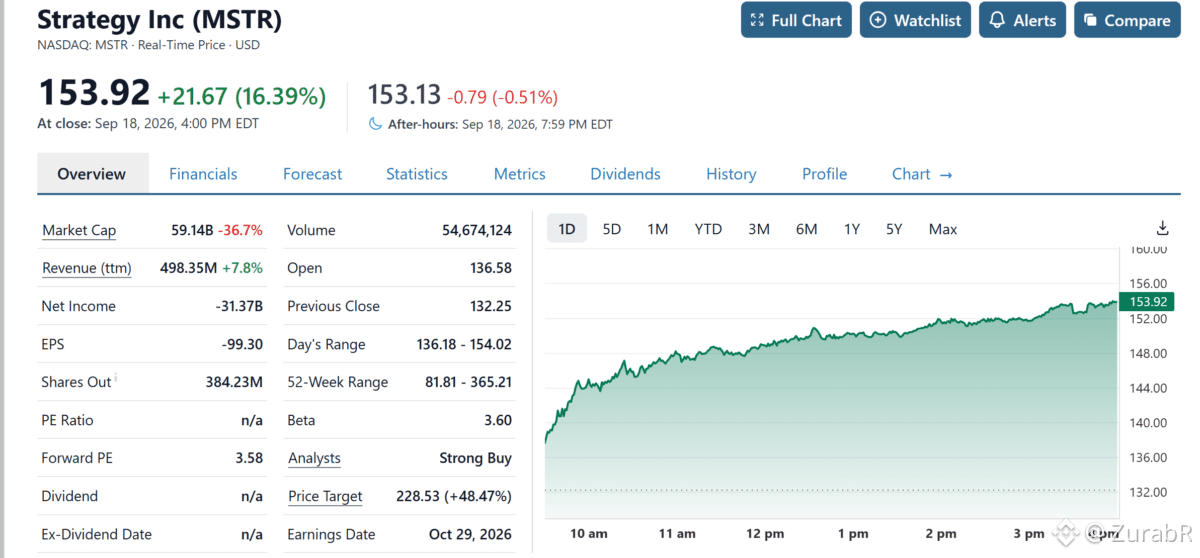
Strategy’s latest surge shows a sharp shift in market activity around the stock. Strategy [MSTR] opened at $136.58 before climbing steadily through the session, eventually closing at $153.92.
This resulted in a 16.39% gain based on the 54.67 million shares that were traded against its average of 20-24 million shares per day.
While both the magnitude of the price movement and the increased number of shares traded are indicative of significant activity relative to normal levels of trade volume. Still, this does not indicate that the price has been driven solely by low volume and thin liquidity.
Further, MSTR retained the majority of those gains until the end of the trading day. This indicated that there was enough purchasing interest present to maintain a tight spread throughout much of the day.
For Strategy to continue to generate further momentum, it would need to demonstrate sustained interest after the excessive volume spike experienced recently.
Bitcoin drives MSTR’s value
Behind MSTR’s rising equity value is a Bitcoin treasury worth roughly $69 billion. Strategy holds around 845,000 $BTC, making Bitcoin’s price a key driver of its valuation.
Therefore, Strategy’s performance is largely driven by the price of Bitcoin [$BTC]. When the price of Bitcoin goes up, so does the value of the Bitcoin treasury, which drives up the price of shares in MSTR.
Yet MSTR’s market value remains around $59 billion, below the estimated value of its Bitcoin holdings. This keeps its mNAV near parity, rather than at the large premiums seen in previous cycles.
Meanwhile, MSTR’s 16.39% daily gain shows how highly correlated MSTR may be to the movements of $BTC. The way in which strategy holds Bitcoin creates an opportunity for increased exposure to $BTC upswings.
However, the same structure makes MSTR more exposed to downswings in the price of Bitcoin.#Write2Earn #BTC走势分析 #BTCBreaks80K #Write2Earn! $BTC
{spot}(BTCUSDT)
#BTC
The Bitcoin treasury effect: How 845,000 BTC pumped MSTR’s stock by 16%
Strategy’s latest surge shows a sharp shift in market activity around the stock. Strategy [MSTR] opened at $136.58 before climbing steadily through the session, eventually closing at $153.92.
This resulted in a 16.39% gain based on the 54.67 million shares that were traded against its average of 20-24 million shares per day.
While both the magnitude of the price movement and the increased number of shares traded are indicative of significant activity relative to normal levels of trade volume. Still, this does not indicate that the price has been driven solely by low volume and thin liquidity.
Further, MSTR retained the majority of those gains until the end of the trading day. This indicated that there was enough purchasing interest present to maintain a tight spread throughout much of the day.
For Strategy to continue to generate further momentum, it would need to demonstrate sustained interest after the excessive volume spike experienced recently.
Bitcoin drives MSTR’s value
Behind MSTR’s rising equity value is a Bitcoin treasury worth roughly $69 billion. Strategy holds around 845,000 $BTC , making Bitcoin’s price a key driver of its valuation.
Therefore, Strategy’s performance is largely driven by the price of Bitcoin [$BTC ]. When the price of Bitcoin goes up, so does the value of the Bitcoin treasury, which drives up the price of shares in MSTR.
Yet MSTR’s market value remains around $59 billion, below the estimated value of its Bitcoin holdings. This keeps its mNAV near parity, rather than at the large premiums seen in previous cycles.
Meanwhile, MSTR’s 16.39% daily gain shows how highly correlated MSTR may be to the movements of $BTC . The way in which strategy holds Bitcoin creates an opportunity for increased exposure to $BTC upswings.
However, the same structure makes MSTR more exposed to downswings in the price of Bitcoin.#Write2Earn #BTC走势分析 #BTCBreaks80K #Write2Earn! $BTC
The Bitcoin treasury effect: How 845,000 BTC pumped MSTR’s stock by 16%
Strategy’s latest surge shows a sharp shift in market activity around the stock. Strategy [MSTR] opened at $136.58 before climbing steadily through the session, eventually closing at $153.92.
This resulted in a 16.39% gain based on the 54.67 million shares that were traded against its average of 20-24 million shares per day.
While both the magnitude of the price movement and the increased number of shares traded are indicative of significant activity relative to normal levels of trade volume. Still, this does not indicate that the price has been driven solely by low volume and thin liquidity.
Further, MSTR retained the majority of those gains until the end of the trading day. This indicated that there was enough purchasing interest present to maintain a tight spread throughout much of the day.
For Strategy to continue to generate further momentum, it would need to demonstrate sustained interest after the excessive volume spike experienced recently.
Bitcoin drives MSTR’s value
Behind MSTR’s rising equity value is a Bitcoin treasury worth roughly $69 billion. Strategy holds around 845,000 $BTC , making Bitcoin’s price a key driver of its valuation.
Therefore, Strategy’s performance is largely driven by the price of Bitcoin [$BTC ]. When the price of Bitcoin goes up, so does the value of the Bitcoin treasury, which drives up the price of shares in MSTR.
Yet MSTR’s market value remains around $59 billion, below the estimated value of its Bitcoin holdings. This keeps its mNAV near parity, rather than at the large premiums seen in previous cycles.
Meanwhile, MSTR’s 16.39% daily gain shows how highly correlated MSTR may be to the movements of $BTC . The way in which strategy holds Bitcoin creates an opportunity for increased exposure to $BTC upswings.
However, the same structure makes MSTR more exposed to downswings in the price of Bitcoin.#Write2Earn #BTC走势分析 #BTCBreaks80K #Write2Earn! $BTC
2
154
·
--
#Write2Earn
Iran’s Strait of Hormuz toll booth ran through a bitcoin exchange, U.S. says
Iran has spent this year charging tankers between $1 million and $2 million to cross the Strait of Hormuz, and the U.S. Treasury said that since June, part of that money has moved through a cryptocurrency exchange in Tehran.
A Thursday release shows The Office of Foreign Assets Control has designated BitBank, a Tehran crypto exchange set up in 2024, alongwith Pishtaz Simorgh Electronic Trade Company, the software firm that built it.
"Today's designations of Iranian digital asset infrastructure make perfectly clear that efforts to finance the Iranian regime using cryptocurrencies are not beyond OFAC's reach," Treasury Secretary Scott Bessent.
The OFAC alleged BitBank moved hundreds of millions of dollars in bitcoin to the Islamic Revolutionary Guard Corps, the branch of Iran's armed forces that controls much of the country's economy and is designated as a terrorist organization by the U.S.
Over the same period, Hormuz Safe Marine Services Authority — the outfit Tehran uses to sell ships "safe passage" insurance, itself sanctioned on July 29 — began using BitBank to pass what it collected on to regime entities.
HormuzSafe was developed by Iran's economy ministry and advertises insurance, traffic control and emergency response to vessels that pay. Shipping lawyers have called the arrangement a violation of transit rights under the Law of the Sea, the OFAC said.
Read More: Iran may be turning the Strait of Hormuz into a bitcoin-based insurance market, local reports say
A designation means BitBank's property in U.S. jurisdiction is frozen and Americans are barred from dealing with it. The heavier clause is the secondary sanctions tag attached to every name in Wednesday's action.
That extends the exposure to foreign firms: an exchange in Dubai or a bank in Istanbul that processes BitBank flows can itself be cut off from the U.S. financial system, without any American ever touching the transaction.#Write2Earn! $BTC #BTC
{spot}(BTCUSDT)
#Write2Earn
Iran’s Strait of Hormuz toll booth ran through a bitcoin exchange, U.S. says
Iran has spent this year charging tankers between $1 million and $2 million to cross the Strait of Hormuz, and the U.S. Treasury said that since June, part of that money has moved through a cryptocurrency exchange in Tehran.
A Thursday release shows The Office of Foreign Assets Control has designated BitBank, a Tehran crypto exchange set up in 2024, alongwith Pishtaz Simorgh Electronic Trade Company, the software firm that built it.
"Today's designations of Iranian digital asset infrastructure make perfectly clear that efforts to finance the Iranian regime using cryptocurrencies are not beyond OFAC's reach," Treasury Secretary Scott Bessent.
The OFAC alleged BitBank moved hundreds of millions of dollars in bitcoin to the Islamic Revolutionary Guard Corps, the branch of Iran's armed forces that controls much of the country's economy and is designated as a terrorist organization by the U.S.
Over the same period, Hormuz Safe Marine Services Authority — the outfit Tehran uses to sell ships "safe passage" insurance, itself sanctioned on July 29 — began using BitBank to pass what it collected on to regime entities.
HormuzSafe was developed by Iran's economy ministry and advertises insurance, traffic control and emergency response to vessels that pay. Shipping lawyers have called the arrangement a violation of transit rights under the Law of the Sea, the OFAC said.
Read More: Iran may be turning the Strait of Hormuz into a bitcoin-based insurance market, local reports say
A designation means BitBank's property in U.S. jurisdiction is frozen and Americans are barred from dealing with it. The heavier clause is the secondary sanctions tag attached to every name in Wednesday's action.
That extends the exposure to foreign firms: an exchange in Dubai or a bank in Istanbul that processes BitBank flows can itself be cut off from the U.S. financial system, without any American ever touching the transaction.#Write2Earn! $BTC #BTC
Iran’s Strait of Hormuz toll booth ran through a bitcoin exchange, U.S. says
Iran has spent this year charging tankers between $1 million and $2 million to cross the Strait of Hormuz, and the U.S. Treasury said that since June, part of that money has moved through a cryptocurrency exchange in Tehran.
A Thursday release shows The Office of Foreign Assets Control has designated BitBank, a Tehran crypto exchange set up in 2024, alongwith Pishtaz Simorgh Electronic Trade Company, the software firm that built it.
"Today's designations of Iranian digital asset infrastructure make perfectly clear that efforts to finance the Iranian regime using cryptocurrencies are not beyond OFAC's reach," Treasury Secretary Scott Bessent.
The OFAC alleged BitBank moved hundreds of millions of dollars in bitcoin to the Islamic Revolutionary Guard Corps, the branch of Iran's armed forces that controls much of the country's economy and is designated as a terrorist organization by the U.S.
Over the same period, Hormuz Safe Marine Services Authority — the outfit Tehran uses to sell ships "safe passage" insurance, itself sanctioned on July 29 — began using BitBank to pass what it collected on to regime entities.
HormuzSafe was developed by Iran's economy ministry and advertises insurance, traffic control and emergency response to vessels that pay. Shipping lawyers have called the arrangement a violation of transit rights under the Law of the Sea, the OFAC said.
Read More: Iran may be turning the Strait of Hormuz into a bitcoin-based insurance market, local reports say
A designation means BitBank's property in U.S. jurisdiction is frozen and Americans are barred from dealing with it. The heavier clause is the secondary sanctions tag attached to every name in Wednesday's action.
That extends the exposure to foreign firms: an exchange in Dubai or a bank in Istanbul that processes BitBank flows can itself be cut off from the U.S. financial system, without any American ever touching the transaction.#Write2Earn! $BTC #BTC

8
30
·
--
Bullish
#ETH
Ethereum Developers Warn Against Potential Attack on Sepolia Testing Process! Here’s Why
Ethereum developers have warned of a potential attack on the Sepolia testnet during testing for the Glamsterdam upgrade that could disrupt block production. While the attack wouldn’t directly affect user funds on the Ethereum mainnet, it could hinder testing of the Glamsterdam infrastructure and the evaluation of related features.
In this scenario, the attacker could potentially gain an advantage over block bids by using testnet ETH, which is available for free on the Sepolia test network. It’s also suggested that the attacker could use a one-time builder ID to win block bids on Sepolia and then refuse to send the actual transaction data to the block.
Such a situation could disrupt the block production process on the test network. Ethereum developers say the primary risk is not that the attack threatens actual assets on the main network, but rather that it could affect the reliability and continuity of the tests being conducted for the Glamsterdam upgrade.
Glamsterdam is considered a crucial stage in the future development process of the Ethereum network. Various tests are being conducted on test networks to verify that the different infrastructure components related to the upgrade are functioning securely and stably.
According to the details of the news, the public testing process on Sepolia is scheduled to begin on October 6th. Tests on Hoodi, another Ethereum test network, are expected to begin temporarily on October 27th.
However, it is not yet certain when the Glamsterdam upgrade will be implemented on the Ethereum mainnet. The results that developers obtain from the testing processes and assessments of the infrastructure’s stability will be influential in determining the mainnet schedule.
The potential attack scenario also highlights the importance of test networks in the technical preparations before an upgrade.#Write2Earn #Ethereum $ETH
{spot}(ETHUSDT)
#ETH
Ethereum Developers Warn Against Potential Attack on Sepolia Testing Process! Here’s Why
Ethereum developers have warned of a potential attack on the Sepolia testnet during testing for the Glamsterdam upgrade that could disrupt block production. While the attack wouldn’t directly affect user funds on the Ethereum mainnet, it could hinder testing of the Glamsterdam infrastructure and the evaluation of related features.
In this scenario, the attacker could potentially gain an advantage over block bids by using testnet ETH, which is available for free on the Sepolia test network. It’s also suggested that the attacker could use a one-time builder ID to win block bids on Sepolia and then refuse to send the actual transaction data to the block.
Such a situation could disrupt the block production process on the test network. Ethereum developers say the primary risk is not that the attack threatens actual assets on the main network, but rather that it could affect the reliability and continuity of the tests being conducted for the Glamsterdam upgrade.
Glamsterdam is considered a crucial stage in the future development process of the Ethereum network. Various tests are being conducted on test networks to verify that the different infrastructure components related to the upgrade are functioning securely and stably.
According to the details of the news, the public testing process on Sepolia is scheduled to begin on October 6th. Tests on Hoodi, another Ethereum test network, are expected to begin temporarily on October 27th.
However, it is not yet certain when the Glamsterdam upgrade will be implemented on the Ethereum mainnet. The results that developers obtain from the testing processes and assessments of the infrastructure’s stability will be influential in determining the mainnet schedule.
The potential attack scenario also highlights the importance of test networks in the technical preparations before an upgrade.#Write2Earn #Ethereum $ETH
Ethereum Developers Warn Against Potential Attack on Sepolia Testing Process! Here’s Why
Ethereum developers have warned of a potential attack on the Sepolia testnet during testing for the Glamsterdam upgrade that could disrupt block production. While the attack wouldn’t directly affect user funds on the Ethereum mainnet, it could hinder testing of the Glamsterdam infrastructure and the evaluation of related features.
In this scenario, the attacker could potentially gain an advantage over block bids by using testnet ETH, which is available for free on the Sepolia test network. It’s also suggested that the attacker could use a one-time builder ID to win block bids on Sepolia and then refuse to send the actual transaction data to the block.
Such a situation could disrupt the block production process on the test network. Ethereum developers say the primary risk is not that the attack threatens actual assets on the main network, but rather that it could affect the reliability and continuity of the tests being conducted for the Glamsterdam upgrade.
Glamsterdam is considered a crucial stage in the future development process of the Ethereum network. Various tests are being conducted on test networks to verify that the different infrastructure components related to the upgrade are functioning securely and stably.
According to the details of the news, the public testing process on Sepolia is scheduled to begin on October 6th. Tests on Hoodi, another Ethereum test network, are expected to begin temporarily on October 27th.
However, it is not yet certain when the Glamsterdam upgrade will be implemented on the Ethereum mainnet. The results that developers obtain from the testing processes and assessments of the infrastructure’s stability will be influential in determining the mainnet schedule.
The potential attack scenario also highlights the importance of test networks in the technical preparations before an upgrade.#Write2Earn #Ethereum $ETH
10
21
·
--
Bullish
#BTC
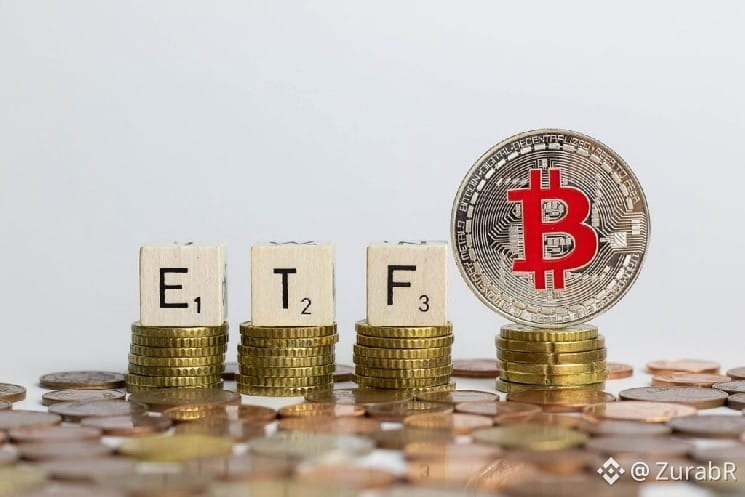
US Bitcoin ETFs See Net Inflows of $159.5 Million, While Ethereum ETFs Continue Their Outflow Series! Here Are the Details
Spot Bitcoin ETFs in the US recorded net inflows again on September 17th. According to SoSoValue data, a total net inflow of approximately $159.45 million was recorded into these investment instruments. Thus, Bitcoin ETFs saw positive fund flows again after a one-day hiatus.
The largest inflow of the day occurred in BlackRock’s IBIT fund, with a net inflow of $183.66 million. Fidelity’s FBTC fund saw a net outflow of $16.64 million, while VanEck’s HODL fund experienced a net outflow of $7.57 million. Taking into account movements in other ETFs, the overall net inflow across the sector was $159.45 million.
In contrast to the positive inflows from Bitcoin ETFs, net outflows continued in US spot Ethereum ETFs. According to data from Farside Investors and SoSoValue, approximately $39.24 million was withdrawn from Ethereum ETFs on September 17th. This marked the third consecutive trading day of net outflows from the portfolio.
The largest outflow in Ethereum ETFs was seen in BlackRock’s ETHA fund, with a net outflow of $42.86 million. In contrast, Fidelity’s FETH fund saw a net inflow of $1.83 million, and VanEck’s ETHV fund experienced a net inflow of $1.79 million.
The data showed that fund flows into Bitcoin and Ethereum investment products diverged on the same day. While Bitcoin ETFs saw positive inflows, the continued outflows from Ethereum ETFs indicate that investors are managing their positions in investment products based on these two major crypto assets differently.
ETF flows are among the indicators closely watched by the market to track the demand for crypto assets from institutional and professional investors.#Write2Earrn #BTC走势分析 #BTC☀ #Write2Earn! $BTC
{spot}(BTCUSDT)
#BTC
US Bitcoin ETFs See Net Inflows of $159.5 Million, While Ethereum ETFs Continue Their Outflow Series! Here Are the Details
Spot Bitcoin ETFs in the US recorded net inflows again on September 17th. According to SoSoValue data, a total net inflow of approximately $159.45 million was recorded into these investment instruments. Thus, Bitcoin ETFs saw positive fund flows again after a one-day hiatus.
The largest inflow of the day occurred in BlackRock’s IBIT fund, with a net inflow of $183.66 million. Fidelity’s FBTC fund saw a net outflow of $16.64 million, while VanEck’s HODL fund experienced a net outflow of $7.57 million. Taking into account movements in other ETFs, the overall net inflow across the sector was $159.45 million.
In contrast to the positive inflows from Bitcoin ETFs, net outflows continued in US spot Ethereum ETFs. According to data from Farside Investors and SoSoValue, approximately $39.24 million was withdrawn from Ethereum ETFs on September 17th. This marked the third consecutive trading day of net outflows from the portfolio.
The largest outflow in Ethereum ETFs was seen in BlackRock’s ETHA fund, with a net outflow of $42.86 million. In contrast, Fidelity’s FETH fund saw a net inflow of $1.83 million, and VanEck’s ETHV fund experienced a net inflow of $1.79 million.
The data showed that fund flows into Bitcoin and Ethereum investment products diverged on the same day. While Bitcoin ETFs saw positive inflows, the continued outflows from Ethereum ETFs indicate that investors are managing their positions in investment products based on these two major crypto assets differently.
ETF flows are among the indicators closely watched by the market to track the demand for crypto assets from institutional and professional investors.#Write2Earrn #BTC走势分析 #BTC☀ #Write2Earn! $BTC
US Bitcoin ETFs See Net Inflows of $159.5 Million, While Ethereum ETFs Continue Their Outflow Series! Here Are the Details
Spot Bitcoin ETFs in the US recorded net inflows again on September 17th. According to SoSoValue data, a total net inflow of approximately $159.45 million was recorded into these investment instruments. Thus, Bitcoin ETFs saw positive fund flows again after a one-day hiatus.
The largest inflow of the day occurred in BlackRock’s IBIT fund, with a net inflow of $183.66 million. Fidelity’s FBTC fund saw a net outflow of $16.64 million, while VanEck’s HODL fund experienced a net outflow of $7.57 million. Taking into account movements in other ETFs, the overall net inflow across the sector was $159.45 million.
In contrast to the positive inflows from Bitcoin ETFs, net outflows continued in US spot Ethereum ETFs. According to data from Farside Investors and SoSoValue, approximately $39.24 million was withdrawn from Ethereum ETFs on September 17th. This marked the third consecutive trading day of net outflows from the portfolio.
The largest outflow in Ethereum ETFs was seen in BlackRock’s ETHA fund, with a net outflow of $42.86 million. In contrast, Fidelity’s FETH fund saw a net inflow of $1.83 million, and VanEck’s ETHV fund experienced a net inflow of $1.79 million.
The data showed that fund flows into Bitcoin and Ethereum investment products diverged on the same day. While Bitcoin ETFs saw positive inflows, the continued outflows from Ethereum ETFs indicate that investors are managing their positions in investment products based on these two major crypto assets differently.
ETF flows are among the indicators closely watched by the market to track the demand for crypto assets from institutional and professional investors.#Write2Earrn #BTC走势分析 #BTC☀ #Write2Earn! $BTC
1
8
18
·
--
Bullish
#solana
Solana speeds up blocks by 17%, but transaction capacity stays the same
Sol cut its target slot time from 300 milliseconds to 250 milliseconds earlier Friday, blockchain data shows, making the network’s clock run nearly 17% faster without producing an equivalent increase in total transaction capacity
A slot is the short window in which a designated validator can add a block. At 250 milliseconds, Solana will target four slots each second, up from about 3.3, giving wallets, exchanges and trading applications a more current view of the network
Validators, or entities that supply computing power to maintain any blockchain network, will remain leaders for four consecutive slots. The faster clock therefore reduces each leader’s control window from 1.2 seconds to one second, handing transaction-ordering power to the next validator sooner
That matters for applications such as oracle-powered markets and automated market makers, where stale prices or a few hundred milliseconds of uncertainty can affect whether a transaction executes as intended
Users should see transaction updates sooner, while swaps have a smaller window in which the market can move before they reach the network. That can mean fewer failed trades and less chance of receiving a materially different price than expected
Read More: Solana to triple transaction size as apps get room for more complex trades
The speed increase does not give Sol 17% more raw capacity. Under SIMD-0525, the amount of computation and data permitted in each slot falls by the same proportion as the slot duration. More slots arrive each second, but each is allowed to carry less work, leaving the network’s wall-clock processing ceiling roughly unchanged
Infrastructure still has more individual blocks to ingest and store. Applications that estimate time by multiplying slot numbers by a hard-coded duration will also drift, while blockhashes expire sooner in real time. That leaves less room for offline signing, delayed approvals and other transaction flows that depend on human action#Write2Earn #sol $SOL
{spot}(SOLUSDT)
#solana
Solana speeds up blocks by 17%, but transaction capacity stays the same
Sol cut its target slot time from 300 milliseconds to 250 milliseconds earlier Friday, blockchain data shows, making the network’s clock run nearly 17% faster without producing an equivalent increase in total transaction capacity
A slot is the short window in which a designated validator can add a block. At 250 milliseconds, Solana will target four slots each second, up from about 3.3, giving wallets, exchanges and trading applications a more current view of the network
Validators, or entities that supply computing power to maintain any blockchain network, will remain leaders for four consecutive slots. The faster clock therefore reduces each leader’s control window from 1.2 seconds to one second, handing transaction-ordering power to the next validator sooner
That matters for applications such as oracle-powered markets and automated market makers, where stale prices or a few hundred milliseconds of uncertainty can affect whether a transaction executes as intended
Users should see transaction updates sooner, while swaps have a smaller window in which the market can move before they reach the network. That can mean fewer failed trades and less chance of receiving a materially different price than expected
Read More: Solana to triple transaction size as apps get room for more complex trades
The speed increase does not give Sol 17% more raw capacity. Under SIMD-0525, the amount of computation and data permitted in each slot falls by the same proportion as the slot duration. More slots arrive each second, but each is allowed to carry less work, leaving the network’s wall-clock processing ceiling roughly unchanged
Infrastructure still has more individual blocks to ingest and store. Applications that estimate time by multiplying slot numbers by a hard-coded duration will also drift, while blockhashes expire sooner in real time. That leaves less room for offline signing, delayed approvals and other transaction flows that depend on human action#Write2Earn #sol $SOL
Solana speeds up blocks by 17%, but transaction capacity stays the same
Sol cut its target slot time from 300 milliseconds to 250 milliseconds earlier Friday, blockchain data shows, making the network’s clock run nearly 17% faster without producing an equivalent increase in total transaction capacity
A slot is the short window in which a designated validator can add a block. At 250 milliseconds, Solana will target four slots each second, up from about 3.3, giving wallets, exchanges and trading applications a more current view of the network
Validators, or entities that supply computing power to maintain any blockchain network, will remain leaders for four consecutive slots. The faster clock therefore reduces each leader’s control window from 1.2 seconds to one second, handing transaction-ordering power to the next validator sooner
That matters for applications such as oracle-powered markets and automated market makers, where stale prices or a few hundred milliseconds of uncertainty can affect whether a transaction executes as intended
Users should see transaction updates sooner, while swaps have a smaller window in which the market can move before they reach the network. That can mean fewer failed trades and less chance of receiving a materially different price than expected
Read More: Solana to triple transaction size as apps get room for more complex trades
The speed increase does not give Sol 17% more raw capacity. Under SIMD-0525, the amount of computation and data permitted in each slot falls by the same proportion as the slot duration. More slots arrive each second, but each is allowed to carry less work, leaving the network’s wall-clock processing ceiling roughly unchanged
Infrastructure still has more individual blocks to ingest and store. Applications that estimate time by multiplying slot numbers by a hard-coded duration will also drift, while blockhashes expire sooner in real time. That leaves less room for offline signing, delayed approvals and other transaction flows that depend on human action#Write2Earn #sol $SOL

6
112
·
--
Bullish
#Cardano
Cardano’s IOG warns users to avoid YouTube channel amid giveaway scam
Input Output Group has urged users to avoid its YouTube channel, with the channel on Friday livestreaming a suspected AI-manipulated video of Cardano founder Charles Hoskinson promoting a crypto giveaway.
The livestream, which has been live for nearly two hours at the time of writing, directs viewers to a QR code with a promise to “double your wealth.”
“Please avoid interacting with the IO Group YouTube channel until further notice,” the company said in a warning on its official X account, advising users against clicking links, sending funds or sharing personal information in response to content on the channel.#Write2Earn #ADA $ADA
{spot}(ADAUSDT)
#Cardano
Cardano’s IOG warns users to avoid YouTube channel amid giveaway scam
Input Output Group has urged users to avoid its YouTube channel, with the channel on Friday livestreaming a suspected AI-manipulated video of Cardano founder Charles Hoskinson promoting a crypto giveaway.
The livestream, which has been live for nearly two hours at the time of writing, directs viewers to a QR code with a promise to “double your wealth.”
“Please avoid interacting with the IO Group YouTube channel until further notice,” the company said in a warning on its official X account, advising users against clicking links, sending funds or sharing personal information in response to content on the channel.#Write2Earn #ADA $ADA
Cardano’s IOG warns users to avoid YouTube channel amid giveaway scam
Input Output Group has urged users to avoid its YouTube channel, with the channel on Friday livestreaming a suspected AI-manipulated video of Cardano founder Charles Hoskinson promoting a crypto giveaway.
The livestream, which has been live for nearly two hours at the time of writing, directs viewers to a QR code with a promise to “double your wealth.”
“Please avoid interacting with the IO Group YouTube channel until further notice,” the company said in a warning on its official X account, advising users against clicking links, sending funds or sharing personal information in response to content on the channel.#Write2Earn #ADA $ADA

5
18
·
--
Bullish
#zcash
Zcash targets November for NU7 mainnet upgrade with 25-second blocks
Zcash developers are targeting Nov. 5 for NU7 mainnet activation after organizations and engineering teams reached “unanimous agreement” on its contents and estimated timeline.
On Thursday, Zcash developer Sean Bowe said the upgrade is scheduled to activate on the testnet on Oct. 6. A final decision on the mainnet upgrade and its activation height is scheduled for Oct. 20, after an assessment of NU7’s testnet performance.
The upgrade would reduce Zcash’s target block spacing from 75 seconds to 25 seconds, disabling version 4 transactions and integrating the Network Sustainability Mechanism (NSM). The chosen NSM configuration would preserve Zcash’s halving schedule, with the reintroduction of previously removed supply beginning in February 2031.
Bowe said NU7 would not introduce new transaction formats and should not significantly affect wallets. He said full nodes, indexers and block explorers may require adjustments.
On Wednesday, zec holders overwhelmingly backed the shorter block interval and preserving the halving schedule. 98.9% supported keeping halvings, while 99.9% of the Zcash ($ZEC)-weighted vote supported the faster-block proposal.
The timeline came amid a recent surge in $ZEC’s price. On Thursday, zec rose about 20% over 24 hours as privacy coins substantially outperformed the wider market. Glassnode data showed that the sector was 213% above its level at Bitcoin’s October 2025 peak, while a basket excluding $ZEC was up about 85% over the past year.#Write2Earn #zec $ZEC
{spot}(ZECUSDT)
#zcash
Zcash targets November for NU7 mainnet upgrade with 25-second blocks
Zcash developers are targeting Nov. 5 for NU7 mainnet activation after organizations and engineering teams reached “unanimous agreement” on its contents and estimated timeline.
On Thursday, Zcash developer Sean Bowe said the upgrade is scheduled to activate on the testnet on Oct. 6. A final decision on the mainnet upgrade and its activation height is scheduled for Oct. 20, after an assessment of NU7’s testnet performance.
The upgrade would reduce Zcash’s target block spacing from 75 seconds to 25 seconds, disabling version 4 transactions and integrating the Network Sustainability Mechanism (NSM). The chosen NSM configuration would preserve Zcash’s halving schedule, with the reintroduction of previously removed supply beginning in February 2031.
Bowe said NU7 would not introduce new transaction formats and should not significantly affect wallets. He said full nodes, indexers and block explorers may require adjustments.
On Wednesday, zec holders overwhelmingly backed the shorter block interval and preserving the halving schedule. 98.9% supported keeping halvings, while 99.9% of the Zcash ($ZEC )-weighted vote supported the faster-block proposal.
The timeline came amid a recent surge in $ZEC ’s price. On Thursday, zec rose about 20% over 24 hours as privacy coins substantially outperformed the wider market. Glassnode data showed that the sector was 213% above its level at Bitcoin’s October 2025 peak, while a basket excluding $ZEC was up about 85% over the past year.#Write2Earn #zec $ZEC
Zcash targets November for NU7 mainnet upgrade with 25-second blocks
Zcash developers are targeting Nov. 5 for NU7 mainnet activation after organizations and engineering teams reached “unanimous agreement” on its contents and estimated timeline.
On Thursday, Zcash developer Sean Bowe said the upgrade is scheduled to activate on the testnet on Oct. 6. A final decision on the mainnet upgrade and its activation height is scheduled for Oct. 20, after an assessment of NU7’s testnet performance.
The upgrade would reduce Zcash’s target block spacing from 75 seconds to 25 seconds, disabling version 4 transactions and integrating the Network Sustainability Mechanism (NSM). The chosen NSM configuration would preserve Zcash’s halving schedule, with the reintroduction of previously removed supply beginning in February 2031.
Bowe said NU7 would not introduce new transaction formats and should not significantly affect wallets. He said full nodes, indexers and block explorers may require adjustments.
On Wednesday, zec holders overwhelmingly backed the shorter block interval and preserving the halving schedule. 98.9% supported keeping halvings, while 99.9% of the Zcash ($ZEC )-weighted vote supported the faster-block proposal.
The timeline came amid a recent surge in $ZEC ’s price. On Thursday, zec rose about 20% over 24 hours as privacy coins substantially outperformed the wider market. Glassnode data showed that the sector was 213% above its level at Bitcoin’s October 2025 peak, while a basket excluding $ZEC was up about 85% over the past year.#Write2Earn #zec $ZEC

5
30
·
--
Bullish
#hype
Hyperliquid revenue hits $1.31B as HYPE burns rise – But there’s ONE risk
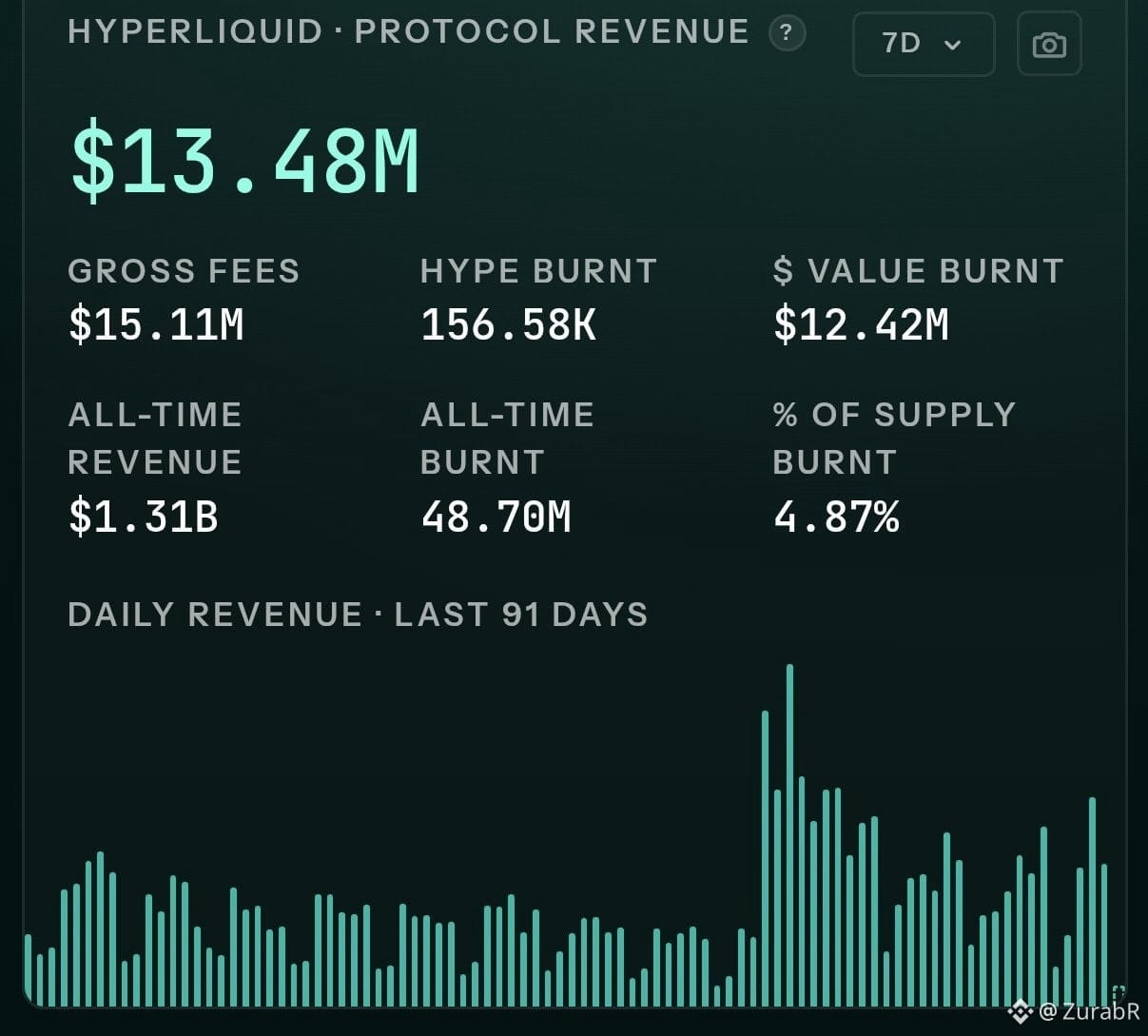
Hyperliquid’s [$HYPE] trading volume continues to drive growth in its $HYPE burn mechanism, linking network usage directly to supply reduction. Weekly protocol revenue reached $13.48 million, while gross fees stood at $15.11 million.
Part of that revenue was used to remove 156.58K $HYPE worth around $12.42 million. The overall trend indicates that there are increasing levels of larger revenue increases occurring over time.
As such, cumulative revenue has now reached $1.31 billion. In addition to that 48.70 million $HYPE, or approximately 4.87% of $HYPE’s total supply, has been removed.
The two metrics create an inverse relationship and show how users’ desire to utilize Hyperliquid’s trading tools relates to the reduction of available $HYPE.
$USDC liquidity supports growth
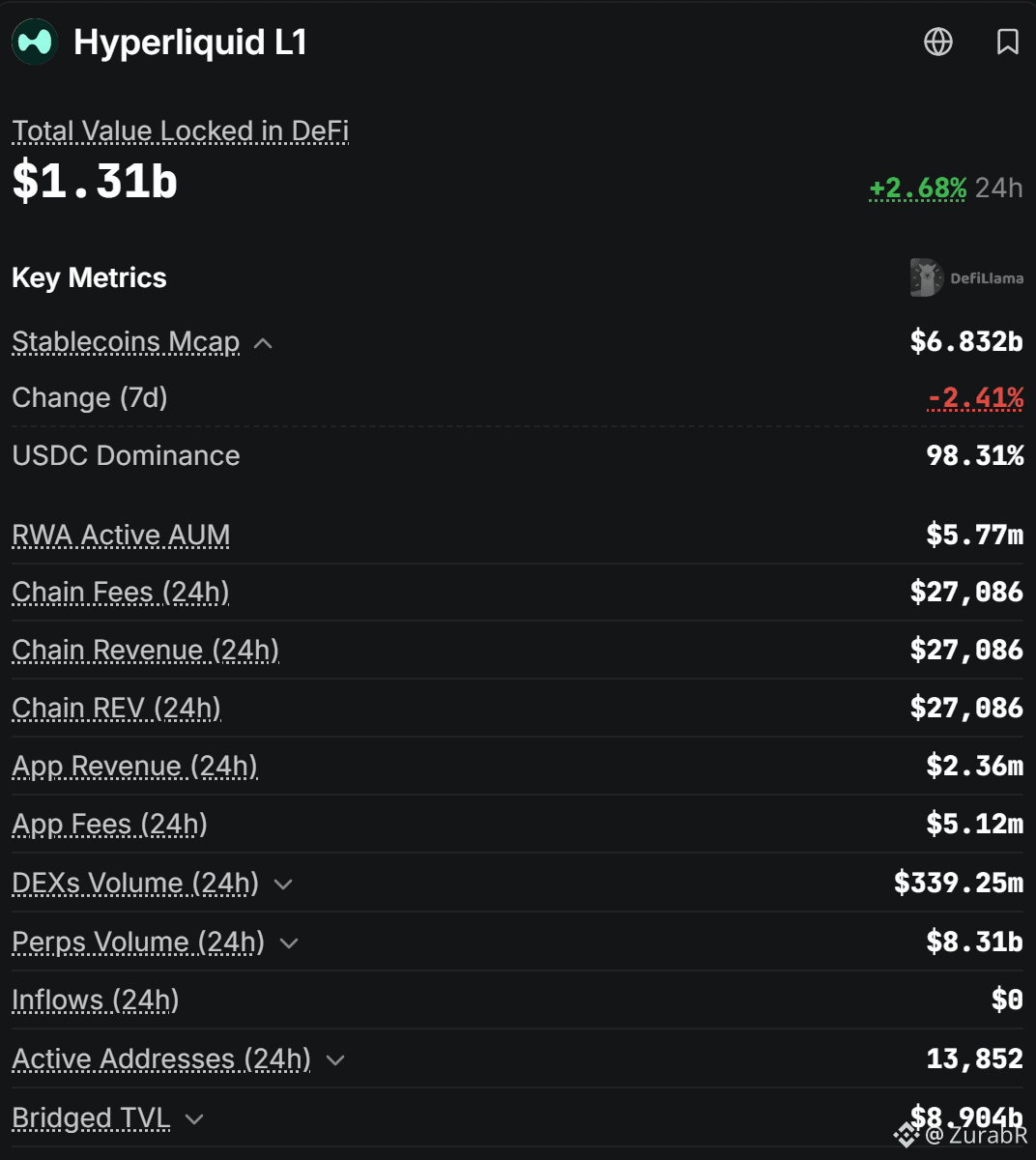
The liquidity picture shows why Hyperliquid can sustain the trading activity behind its fee engine. DeFi TVL has climbed to $1.31 billion, adding 2.68% in 24 hours, while stablecoin liquidity remains much larger at $6.83 billion.
Although that pool fell 2.41% over seven days, USD Coin [$USDC] still accounts for 98.31%, keeping trading liquidity concentrated. Traders are putting that capital to work, with $8.31 billion in daily perpetual volume and $339.25 million on DEXs.
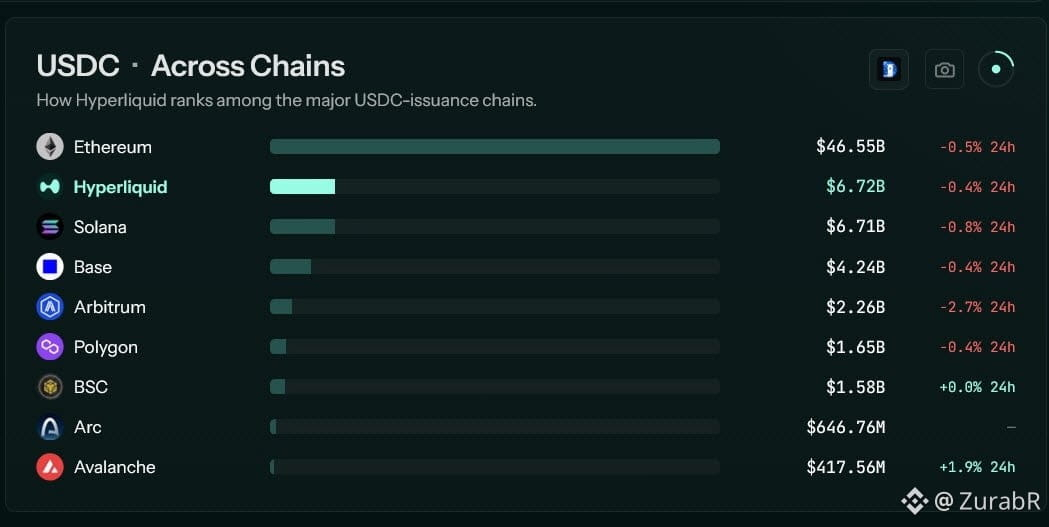
$USDC holdings now stand at approximately $6.72 billion, slightly below the $6.71 billion held in Solana accounts. This marked a notable shift in the stablecoin concentration. More importantly, that capital is not simply sitting idle.
The pool generates roughly $200 million in annual yield. In turn, this creates another potential source for hype buyback. Meanwhile, Hyperliquid records $8.31 billion in perpetual volume, showing how deeply $USDC supports market activity.
#Write2Earn $HYPE
{future}(HYPEUSDT)
#hype
Hyperliquid revenue hits $1.31B as HYPE burns rise – But there’s ONE risk
Hyperliquid’s [$HYPE ] trading volume continues to drive growth in its $HYPE burn mechanism, linking network usage directly to supply reduction. Weekly protocol revenue reached $13.48 million, while gross fees stood at $15.11 million.
Part of that revenue was used to remove 156.58K $HYPE worth around $12.42 million. The overall trend indicates that there are increasing levels of larger revenue increases occurring over time.
As such, cumulative revenue has now reached $1.31 billion. In addition to that 48.70 million $HYPE , or approximately 4.87% of $HYPE ’s total supply, has been removed.
The two metrics create an inverse relationship and show how users’ desire to utilize Hyperliquid’s trading tools relates to the reduction of available $HYPE .
$USDC liquidity supports growth
The liquidity picture shows why Hyperliquid can sustain the trading activity behind its fee engine. DeFi TVL has climbed to $1.31 billion, adding 2.68% in 24 hours, while stablecoin liquidity remains much larger at $6.83 billion.
Although that pool fell 2.41% over seven days, USD Coin [$USDC] still accounts for 98.31%, keeping trading liquidity concentrated. Traders are putting that capital to work, with $8.31 billion in daily perpetual volume and $339.25 million on DEXs.
$USDC holdings now stand at approximately $6.72 billion, slightly below the $6.71 billion held in Solana accounts. This marked a notable shift in the stablecoin concentration. More importantly, that capital is not simply sitting idle.
The pool generates roughly $200 million in annual yield. In turn, this creates another potential source for hype buyback. Meanwhile, Hyperliquid records $8.31 billion in perpetual volume, showing how deeply $USDC supports market activity.
#Write2Earn $HYPE
Hyperliquid revenue hits $1.31B as HYPE burns rise – But there’s ONE risk
Hyperliquid’s [$HYPE ] trading volume continues to drive growth in its $HYPE burn mechanism, linking network usage directly to supply reduction. Weekly protocol revenue reached $13.48 million, while gross fees stood at $15.11 million.
Part of that revenue was used to remove 156.58K $HYPE worth around $12.42 million. The overall trend indicates that there are increasing levels of larger revenue increases occurring over time.
As such, cumulative revenue has now reached $1.31 billion. In addition to that 48.70 million $HYPE , or approximately 4.87% of $HYPE ’s total supply, has been removed.
The two metrics create an inverse relationship and show how users’ desire to utilize Hyperliquid’s trading tools relates to the reduction of available $HYPE .
$USDC liquidity supports growth
The liquidity picture shows why Hyperliquid can sustain the trading activity behind its fee engine. DeFi TVL has climbed to $1.31 billion, adding 2.68% in 24 hours, while stablecoin liquidity remains much larger at $6.83 billion.
Although that pool fell 2.41% over seven days, USD Coin [$USDC] still accounts for 98.31%, keeping trading liquidity concentrated. Traders are putting that capital to work, with $8.31 billion in daily perpetual volume and $339.25 million on DEXs.
$USDC holdings now stand at approximately $6.72 billion, slightly below the $6.71 billion held in Solana accounts. This marked a notable shift in the stablecoin concentration. More importantly, that capital is not simply sitting idle.
The pool generates roughly $200 million in annual yield. In turn, this creates another potential source for hype buyback. Meanwhile, Hyperliquid records $8.31 billion in perpetual volume, showing how deeply $USDC supports market activity.
#Write2Earn $HYPE

5
183
·
--
#Arbitrum
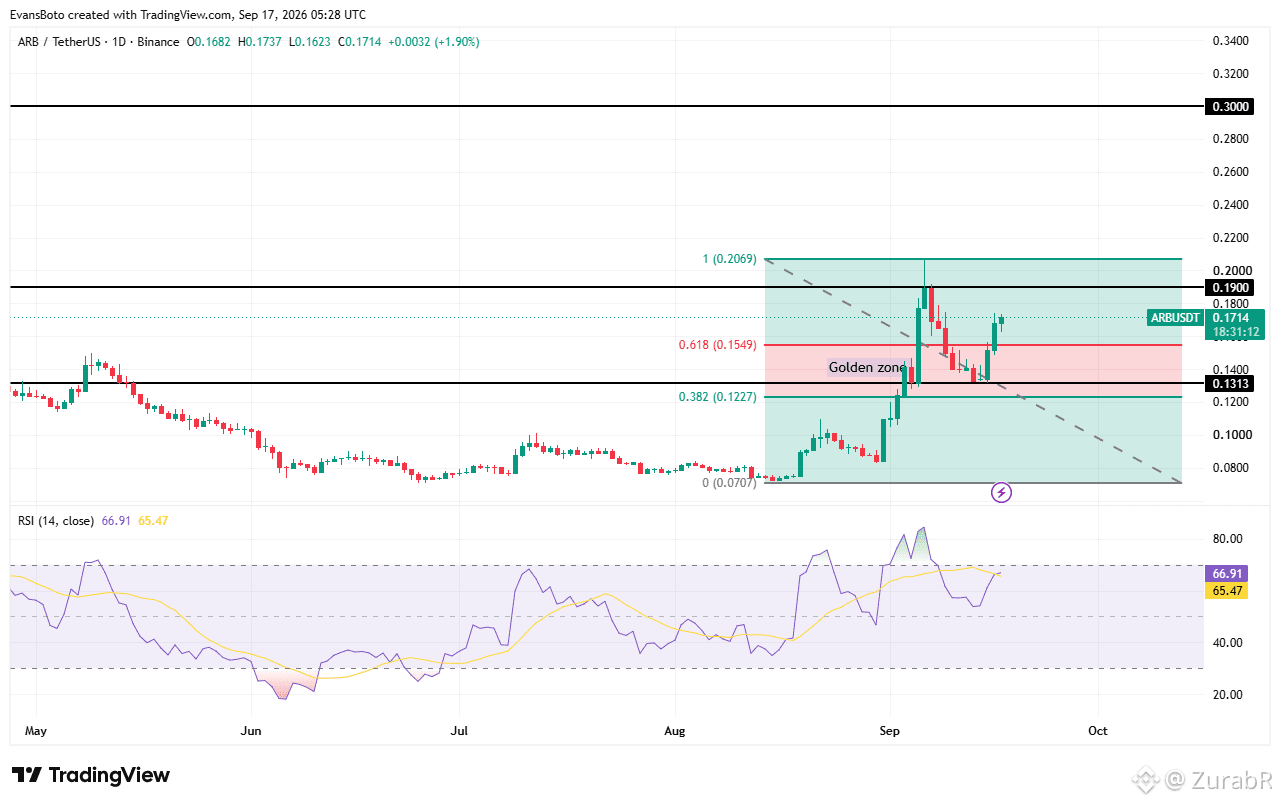
Arbitrum rallies 12% as revenue jumps 5x – Can ARB clear $0.19?
Arbitrum [$ARB] surged 12.18% in 24 hours, as growing institutional interest and expanding network revenues reinforced the rally’s foundation.
Besides the rally, Standard Chartered recently initiated $ARB coverage and set a $10 price target for 2030.
Reportedly, the bank cited Arbitrum’s enterprise-grade infrastructure as a key driver behind its longer-term price outlook.
Elsewhere, Robinhood Chain activity also strengthened the network’s revenue profile significantly. Arbitrum’s monthly revenue run-rate surged to roughly $5 million, reflecting a fivefold increase since the July period.
The rally therefore aligned with the improving network economics rather than relying exclusively on the speculative market demand.
Additionally, $ARB’s 24-hour trading volume also expanded 5.25% to $561.52 million. However, the derivatives positioning suggested traders had not fully embraced the improving network fundamental backdrop.
Short sellers absorb growing pressure
Notably, the price rally increasingly challenged the bearish derivatives positions as price extended its reversal.
As per CoinGlass analytics, the short liquidations had reached $238.64K during the rally, compared to $97.75K in long liquidations.
The shorts therefore suffered nearly 2.4 times the liquidations recorded among the leveraged longs.
Importantly, the imbalance correlated with $ARB’s upward price move, which pressured the traders positioned against the price recovery.
The liquidation profile alone, however, did not reflect a widespread bullish derivatives conviction. The funding conditions around $ARB still carried a bearish tilt, although the latest trajectory showed an important momentum shift.#Write2Earn #ARB $ARB
{spot}(ARBUSDT)
#Arbitrum
Arbitrum rallies 12% as revenue jumps 5x – Can ARB clear $0.19?
Arbitrum [$ARB ] surged 12.18% in 24 hours, as growing institutional interest and expanding network revenues reinforced the rally’s foundation.
Besides the rally, Standard Chartered recently initiated $ARB coverage and set a $10 price target for 2030.
Reportedly, the bank cited Arbitrum’s enterprise-grade infrastructure as a key driver behind its longer-term price outlook.
Elsewhere, Robinhood Chain activity also strengthened the network’s revenue profile significantly. Arbitrum’s monthly revenue run-rate surged to roughly $5 million, reflecting a fivefold increase since the July period.
The rally therefore aligned with the improving network economics rather than relying exclusively on the speculative market demand.
Additionally, $ARB ’s 24-hour trading volume also expanded 5.25% to $561.52 million. However, the derivatives positioning suggested traders had not fully embraced the improving network fundamental backdrop.
Short sellers absorb growing pressure
Notably, the price rally increasingly challenged the bearish derivatives positions as price extended its reversal.
As per CoinGlass analytics, the short liquidations had reached $238.64K during the rally, compared to $97.75K in long liquidations.
The shorts therefore suffered nearly 2.4 times the liquidations recorded among the leveraged longs.
Importantly, the imbalance correlated with $ARB ’s upward price move, which pressured the traders positioned against the price recovery.
The liquidation profile alone, however, did not reflect a widespread bullish derivatives conviction. The funding conditions around $ARB still carried a bearish tilt, although the latest trajectory showed an important momentum shift.#Write2Earn #ARB $ARB
Arbitrum rallies 12% as revenue jumps 5x – Can ARB clear $0.19?
Arbitrum [$ARB ] surged 12.18% in 24 hours, as growing institutional interest and expanding network revenues reinforced the rally’s foundation.
Besides the rally, Standard Chartered recently initiated $ARB coverage and set a $10 price target for 2030.
Reportedly, the bank cited Arbitrum’s enterprise-grade infrastructure as a key driver behind its longer-term price outlook.
Elsewhere, Robinhood Chain activity also strengthened the network’s revenue profile significantly. Arbitrum’s monthly revenue run-rate surged to roughly $5 million, reflecting a fivefold increase since the July period.
The rally therefore aligned with the improving network economics rather than relying exclusively on the speculative market demand.
Additionally, $ARB ’s 24-hour trading volume also expanded 5.25% to $561.52 million. However, the derivatives positioning suggested traders had not fully embraced the improving network fundamental backdrop.
Short sellers absorb growing pressure
Notably, the price rally increasingly challenged the bearish derivatives positions as price extended its reversal.
As per CoinGlass analytics, the short liquidations had reached $238.64K during the rally, compared to $97.75K in long liquidations.
The shorts therefore suffered nearly 2.4 times the liquidations recorded among the leveraged longs.
Importantly, the imbalance correlated with $ARB ’s upward price move, which pressured the traders positioned against the price recovery.
The liquidation profile alone, however, did not reflect a widespread bullish derivatives conviction. The funding conditions around $ARB still carried a bearish tilt, although the latest trajectory showed an important momentum shift.#Write2Earn #ARB $ARB

6
153
·
--
Bullish
#xrp
XRPL’s new lending tool could lock up your XRP from minutes to decades
XRP Ledger's (XRPL) newest server release defines a future lending market in which depositors could commit assets to a vault for a fixed term and wait until a set redemption date to withdraw. For $XRP holders, the design introduces a possible liquidity lock that can last from minutes to years.
The $XRP Ledger Foundation released xrpld 3.4.0 on Sept. 16 with LendingProtocolV1_1 code for closed-ended vaults and cash-basis accounting.
The first feature fixes the period during which deposited capital can fund loans, and the second recognizes interest when a borrower pays it.
Availability still depends on the amendment process and the rest of XRPL's lending stack. A live dashboard snapshot fetched Sept. 17 did not surface LendingProtocolV1_1 in the responding node's feature feed or show a V1.1 activation countdown.
The same snapshot placed the base LendingProtocol amendment at 13 of 35 trusted-validator votes and SingleAssetVault at 16 of 35, below the displayed threshold of 28.
Single-asset vaults can use $XRP, an issued trust-line token, or a Multi-Purpose Token. Any claim that the system will create lasting xrp demand therefore depends on later choices by applications, borrowers and depositors.
A fixed calendar determines when depositors can leave
A closed-ended vault moves through subscription, investment, and redemption. Its SubscriptionDate and RedemptionDate are set when the vault is created and stay fixed, according to the closed-ended-vault implementation.
During subscription, depositors can add assets and redeem their shares. The investment phase starts at the subscription boundary, blocks new deposits and withdrawals, and allows the vault's capital to fund loans.
Redemption begins at the second boundary, when depositors can again withdraw their share of the proceeds.
#Write2Earn $XRP
{spot}(XRPUSDT)
#xrp
XRPL’s new lending tool could lock up your XRP from minutes to decades
XRP Ledger's (XRPL) newest server release defines a future lending market in which depositors could commit assets to a vault for a fixed term and wait until a set redemption date to withdraw. For $XRP holders, the design introduces a possible liquidity lock that can last from minutes to years.
The $XRP Ledger Foundation released xrpld 3.4.0 on Sept. 16 with LendingProtocolV1_1 code for closed-ended vaults and cash-basis accounting.
The first feature fixes the period during which deposited capital can fund loans, and the second recognizes interest when a borrower pays it.
Availability still depends on the amendment process and the rest of XRPL's lending stack. A live dashboard snapshot fetched Sept. 17 did not surface LendingProtocolV1_1 in the responding node's feature feed or show a V1.1 activation countdown.
The same snapshot placed the base LendingProtocol amendment at 13 of 35 trusted-validator votes and SingleAssetVault at 16 of 35, below the displayed threshold of 28.
Single-asset vaults can use $XRP , an issued trust-line token, or a Multi-Purpose Token. Any claim that the system will create lasting xrp demand therefore depends on later choices by applications, borrowers and depositors.
A fixed calendar determines when depositors can leave
A closed-ended vault moves through subscription, investment, and redemption. Its SubscriptionDate and RedemptionDate are set when the vault is created and stay fixed, according to the closed-ended-vault implementation.
During subscription, depositors can add assets and redeem their shares. The investment phase starts at the subscription boundary, blocks new deposits and withdrawals, and allows the vault's capital to fund loans.
Redemption begins at the second boundary, when depositors can again withdraw their share of the proceeds.
#Write2Earn $XRP
XRPL’s new lending tool could lock up your XRP from minutes to decades
XRP Ledger's (XRPL) newest server release defines a future lending market in which depositors could commit assets to a vault for a fixed term and wait until a set redemption date to withdraw. For $XRP holders, the design introduces a possible liquidity lock that can last from minutes to years.
The $XRP Ledger Foundation released xrpld 3.4.0 on Sept. 16 with LendingProtocolV1_1 code for closed-ended vaults and cash-basis accounting.
The first feature fixes the period during which deposited capital can fund loans, and the second recognizes interest when a borrower pays it.
Availability still depends on the amendment process and the rest of XRPL's lending stack. A live dashboard snapshot fetched Sept. 17 did not surface LendingProtocolV1_1 in the responding node's feature feed or show a V1.1 activation countdown.
The same snapshot placed the base LendingProtocol amendment at 13 of 35 trusted-validator votes and SingleAssetVault at 16 of 35, below the displayed threshold of 28.
Single-asset vaults can use $XRP , an issued trust-line token, or a Multi-Purpose Token. Any claim that the system will create lasting xrp demand therefore depends on later choices by applications, borrowers and depositors.
A fixed calendar determines when depositors can leave
A closed-ended vault moves through subscription, investment, and redemption. Its SubscriptionDate and RedemptionDate are set when the vault is created and stay fixed, according to the closed-ended-vault implementation.
During subscription, depositors can add assets and redeem their shares. The investment phase starts at the subscription boundary, blocks new deposits and withdrawals, and allows the vault's capital to fund loans.
Redemption begins at the second boundary, when depositors can again withdraw their share of the proceeds.
#Write2Earn $XRP

6
487
·
--
Bullish
#Write2Earn
FCA targets three London sites in renewed P2P cryptocurrency trading crackdown
UK authorities are taking enforcement around peer-to-peer activity up a notch. Meanwhile, regulators are also establishing better rules for how cryptocurrency trading businesses will be expected to operate.
Is this the end of the country’s leniency? That’s what we’re looking at.
FCA targets three London crypto trading locations
The Financial Conduct Authority recently stated that they took action against three peer-to-peer crypto trading locations in London.
They handled this along with HM Revenue & Customs, and the Metropolitan Police. The businesses were handed cease-and-desist letters.
What are these businesses?
Peer-to-peer trading involves individuals buying and selling crypto directly with each other. However, anyone conducting P2P crypto trading by way of business in the UK must have the appropriate FCA registration. Personal P2P transactions do not require registration.
The FCA said there are currently no registered P2P crypto businesses operating in the UK.
Steve Smart, executive director of enforcement and market oversight, FCA, said,
The added concern is that unregistered operators can stay outside safeguards designed to detect and prevent money laundering.
Sathish Alalasundaram, Metropolitan Police Service, added,
A long time coming
Around six months ago, the FCA was already pushing harder against crypto firms that did not follow the rules. One of the examples was the $HTX case, where major app stores were asked to restrict access for UK consumers.
The latest raids on peer-to-peer trading locations are the next step in that same direction. The focus has evolved, but the message remains.
Final Summary
UK regulators targeted three peer-to-peer locations in London recently.
The FCA’s latest move is in the same line as earlier action against $HTX. #BTC #bnb #ETH #Write2Earn! $BTC $ETH $BNB
{spot}(BNBUSDT)
{spot}(ETHUSDT)
{spot}(BTCUSDT)
#Write2Earn
FCA targets three London sites in renewed P2P cryptocurrency trading crackdown
UK authorities are taking enforcement around peer-to-peer activity up a notch. Meanwhile, regulators are also establishing better rules for how cryptocurrency trading businesses will be expected to operate.
Is this the end of the country’s leniency? That’s what we’re looking at.
FCA targets three London crypto trading locations
The Financial Conduct Authority recently stated that they took action against three peer-to-peer crypto trading locations in London.
They handled this along with HM Revenue & Customs, and the Metropolitan Police. The businesses were handed cease-and-desist letters.
What are these businesses?
Peer-to-peer trading involves individuals buying and selling crypto directly with each other. However, anyone conducting P2P crypto trading by way of business in the UK must have the appropriate FCA registration. Personal P2P transactions do not require registration.
The FCA said there are currently no registered P2P crypto businesses operating in the UK.
Steve Smart, executive director of enforcement and market oversight, FCA, said,
The added concern is that unregistered operators can stay outside safeguards designed to detect and prevent money laundering.
Sathish Alalasundaram, Metropolitan Police Service, added,
A long time coming
Around six months ago, the FCA was already pushing harder against crypto firms that did not follow the rules. One of the examples was the $HTX case, where major app stores were asked to restrict access for UK consumers.
The latest raids on peer-to-peer trading locations are the next step in that same direction. The focus has evolved, but the message remains.
Final Summary
UK regulators targeted three peer-to-peer locations in London recently.
The FCA’s latest move is in the same line as earlier action against $HTX. #BTC #bnb #ETH #Write2Earn! $BTC $ETH $BNB
FCA targets three London sites in renewed P2P cryptocurrency trading crackdown
UK authorities are taking enforcement around peer-to-peer activity up a notch. Meanwhile, regulators are also establishing better rules for how cryptocurrency trading businesses will be expected to operate.
Is this the end of the country’s leniency? That’s what we’re looking at.
FCA targets three London crypto trading locations
The Financial Conduct Authority recently stated that they took action against three peer-to-peer crypto trading locations in London.
They handled this along with HM Revenue & Customs, and the Metropolitan Police. The businesses were handed cease-and-desist letters.
What are these businesses?
Peer-to-peer trading involves individuals buying and selling crypto directly with each other. However, anyone conducting P2P crypto trading by way of business in the UK must have the appropriate FCA registration. Personal P2P transactions do not require registration.
The FCA said there are currently no registered P2P crypto businesses operating in the UK.
Steve Smart, executive director of enforcement and market oversight, FCA, said,
The added concern is that unregistered operators can stay outside safeguards designed to detect and prevent money laundering.
Sathish Alalasundaram, Metropolitan Police Service, added,
A long time coming
Around six months ago, the FCA was already pushing harder against crypto firms that did not follow the rules. One of the examples was the $HTX case, where major app stores were asked to restrict access for UK consumers.
The latest raids on peer-to-peer trading locations are the next step in that same direction. The focus has evolved, but the message remains.
Final Summary
UK regulators targeted three peer-to-peer locations in London recently.
The FCA’s latest move is in the same line as earlier action against $HTX. #BTC #bnb #ETH #Write2Earn! $BTC $ETH $BNB

4
156
·
--
Bullish
#shiba⚡
Shiba Inu Rebounds as 202 Billion SHIB Netflow Points to Renewed Bullish Momentum
Netflow across exchange platforms recorded a balance of -202,237,600,000 $SHIB tokens as of September 17, 2026.
The token’s price surged over 7% in the last 24 hours, stabilizing around $0.000005103 per unit.
Token withdrawals to external wallets outpaced deposits intended for sale on centralized platforms such as Binance.
Over the last 24 hours, the trajectory of Shiba Inu experienced a 180-degree shift following the confirmation of a negative netflow exceeding 202 billion tokens across cryptocurrency exchanges.
On-chain data from CryptoQuant reveals that the centralized exchange netflow balance stood at exactly -202,237,600,000 $SHIB during trading on Thursday, September 17. This drop represents an approximate 5% contraction in the metric compared to the previous reading.
In terms of custodial dynamics, this figure indicates that the volume of assets transferred to private wallets significantly surpassed deposits sent for immediate liquidation. An industry source pointed out that this behavior suggests buying pressure has regained operational control following several days of volatility.
The on-chain movement exerted direct upward pressure on the crypto asset’s price. During the analyzed session, the price gained 7.1% to reach $0.000005103, rebounding from early-week lows.
This recovery stands in contrast to the landscape observed just five days earlier. On September 12, 2026, CryptoQuant data tracked a positive netflow of 241.877 billion shib routed into trading platforms, triggering an immediate 0.45% correction due to selling pressure.#Write2Earn $SHIB
{spot}(SHIBUSDT)
#shiba⚡
Shiba Inu Rebounds as 202 Billion SHIB Netflow Points to Renewed Bullish Momentum
Netflow across exchange platforms recorded a balance of -202,237,600,000 $SHIB tokens as of September 17, 2026.
The token’s price surged over 7% in the last 24 hours, stabilizing around $0.000005103 per unit.
Token withdrawals to external wallets outpaced deposits intended for sale on centralized platforms such as Binance.
Over the last 24 hours, the trajectory of Shiba Inu experienced a 180-degree shift following the confirmation of a negative netflow exceeding 202 billion tokens across cryptocurrency exchanges.
On-chain data from CryptoQuant reveals that the centralized exchange netflow balance stood at exactly -202,237,600,000 $SHIB during trading on Thursday, September 17. This drop represents an approximate 5% contraction in the metric compared to the previous reading.
In terms of custodial dynamics, this figure indicates that the volume of assets transferred to private wallets significantly surpassed deposits sent for immediate liquidation. An industry source pointed out that this behavior suggests buying pressure has regained operational control following several days of volatility.
The on-chain movement exerted direct upward pressure on the crypto asset’s price. During the analyzed session, the price gained 7.1% to reach $0.000005103, rebounding from early-week lows.
This recovery stands in contrast to the landscape observed just five days earlier. On September 12, 2026, CryptoQuant data tracked a positive netflow of 241.877 billion shib routed into trading platforms, triggering an immediate 0.45% correction due to selling pressure.#Write2Earn $SHIB
Shiba Inu Rebounds as 202 Billion SHIB Netflow Points to Renewed Bullish Momentum
Netflow across exchange platforms recorded a balance of -202,237,600,000 $SHIB tokens as of September 17, 2026.
The token’s price surged over 7% in the last 24 hours, stabilizing around $0.000005103 per unit.
Token withdrawals to external wallets outpaced deposits intended for sale on centralized platforms such as Binance.
Over the last 24 hours, the trajectory of Shiba Inu experienced a 180-degree shift following the confirmation of a negative netflow exceeding 202 billion tokens across cryptocurrency exchanges.
On-chain data from CryptoQuant reveals that the centralized exchange netflow balance stood at exactly -202,237,600,000 $SHIB during trading on Thursday, September 17. This drop represents an approximate 5% contraction in the metric compared to the previous reading.
In terms of custodial dynamics, this figure indicates that the volume of assets transferred to private wallets significantly surpassed deposits sent for immediate liquidation. An industry source pointed out that this behavior suggests buying pressure has regained operational control following several days of volatility.
The on-chain movement exerted direct upward pressure on the crypto asset’s price. During the analyzed session, the price gained 7.1% to reach $0.000005103, rebounding from early-week lows.
This recovery stands in contrast to the landscape observed just five days earlier. On September 12, 2026, CryptoQuant data tracked a positive netflow of 241.877 billion shib routed into trading platforms, triggering an immediate 0.45% correction due to selling pressure.#Write2Earn $SHIB


5
55
·
--
Bullish
#BTC
JPMorgan Sees Bitcoin Outpacing Gold if Crypto ETF Hedging Unwinds
Gold exchange-traded funds recouped 100% of their cumulative capital outflows during 2026, whereas spot Bitcoin ETFs recovered approximately 50%.
Short interest on BlackRock’s iShares Bitcoin Trust (IBIT) is trading near its highest levels recorded during 2026.
The put-to-call open interest ratio on IBIT options remains above the historical average of equivalent instruments such as the SPDR Gold Shares (GLD).
Financial firm JPMorgan anticipates that in the coming months Bitcoin will outperform gold in relative performance if institutional investors begin unwinding their defensive hedges in exchange-traded funds, according to a report published on Thursday, September 17, 2026.
Analysts from the entity pointed out that institutional exposure across both assets increased following the Federal Reserve’s July meeting. Nonetheless, the behavior of derivatives positions reflects a marked disparity between both markets.
Net flows into exchange-traded vehicles indicate that gold has led institutional recovery throughout the year. According to the JPMorgan report, recent inflows into ETFs tied to the precious metal erased all prior capital losses from 2026. Meanwhile, Bitcoin-backed instruments have only offset half of the redemptions incurred over the same period.
Despite this gap in net flow figures, JPMorgan analysts argue that the underlying derivatives metrics present a different scenario. According to data from the team led by Nikolaos Panigirtzoglou, crypto market participants maintain elevated levels of downside protection through options contracts.
Short interest registered on BlackRock’s IBIT fund remains near its annual ceiling in September 2026. In contrast, short interest on the SPDR Gold Shares (GLD) ETF currently sits below its historical average. This divergence confirms that institutional traders are assigning a decidedly defensive bias toward the cryptocurrency relative to the yellow metal.#Write2Earn #GOLD #XAU $BTC $XAUT
{spot}(XAUTUSDT)
{spot}(BTCUSDT)
#BTC
JPMorgan Sees Bitcoin Outpacing Gold if Crypto ETF Hedging Unwinds
Gold exchange-traded funds recouped 100% of their cumulative capital outflows during 2026, whereas spot Bitcoin ETFs recovered approximately 50%.
Short interest on BlackRock’s iShares Bitcoin Trust (IBIT) is trading near its highest levels recorded during 2026.
The put-to-call open interest ratio on IBIT options remains above the historical average of equivalent instruments such as the SPDR Gold Shares (GLD).
Financial firm JPMorgan anticipates that in the coming months Bitcoin will outperform gold in relative performance if institutional investors begin unwinding their defensive hedges in exchange-traded funds, according to a report published on Thursday, September 17, 2026.
Analysts from the entity pointed out that institutional exposure across both assets increased following the Federal Reserve’s July meeting. Nonetheless, the behavior of derivatives positions reflects a marked disparity between both markets.
Net flows into exchange-traded vehicles indicate that gold has led institutional recovery throughout the year. According to the JPMorgan report, recent inflows into ETFs tied to the precious metal erased all prior capital losses from 2026. Meanwhile, Bitcoin-backed instruments have only offset half of the redemptions incurred over the same period.
Despite this gap in net flow figures, JPMorgan analysts argue that the underlying derivatives metrics present a different scenario. According to data from the team led by Nikolaos Panigirtzoglou, crypto market participants maintain elevated levels of downside protection through options contracts.
Short interest registered on BlackRock’s IBIT fund remains near its annual ceiling in September 2026. In contrast, short interest on the SPDR Gold Shares (GLD) ETF currently sits below its historical average. This divergence confirms that institutional traders are assigning a decidedly defensive bias toward the cryptocurrency relative to the yellow metal.#Write2Earn #GOLD #XAU $BTC $XAUT
JPMorgan Sees Bitcoin Outpacing Gold if Crypto ETF Hedging Unwinds
Gold exchange-traded funds recouped 100% of their cumulative capital outflows during 2026, whereas spot Bitcoin ETFs recovered approximately 50%.
Short interest on BlackRock’s iShares Bitcoin Trust (IBIT) is trading near its highest levels recorded during 2026.
The put-to-call open interest ratio on IBIT options remains above the historical average of equivalent instruments such as the SPDR Gold Shares (GLD).
Financial firm JPMorgan anticipates that in the coming months Bitcoin will outperform gold in relative performance if institutional investors begin unwinding their defensive hedges in exchange-traded funds, according to a report published on Thursday, September 17, 2026.
Analysts from the entity pointed out that institutional exposure across both assets increased following the Federal Reserve’s July meeting. Nonetheless, the behavior of derivatives positions reflects a marked disparity between both markets.
Net flows into exchange-traded vehicles indicate that gold has led institutional recovery throughout the year. According to the JPMorgan report, recent inflows into ETFs tied to the precious metal erased all prior capital losses from 2026. Meanwhile, Bitcoin-backed instruments have only offset half of the redemptions incurred over the same period.
Despite this gap in net flow figures, JPMorgan analysts argue that the underlying derivatives metrics present a different scenario. According to data from the team led by Nikolaos Panigirtzoglou, crypto market participants maintain elevated levels of downside protection through options contracts.
Short interest registered on BlackRock’s IBIT fund remains near its annual ceiling in September 2026. In contrast, short interest on the SPDR Gold Shares (GLD) ETF currently sits below its historical average. This divergence confirms that institutional traders are assigning a decidedly defensive bias toward the cryptocurrency relative to the yellow metal.#Write2Earn #GOLD #XAU $BTC $XAUT


4
62
·
--
Bullish
Verified
#Near
NEAR Surges 21% as It Launches Historic Confidential Perps Powered by Hyperliquid
Near Protocol ($NEAR) is making waves in the DeFi space after launching the industry’s first “Confidential by Default” perpetuals trading on near.com. The feature completely masks all perpetual positions and their asset types, sizes, entry time, and trading direction.
The perks of Near’s private perpetuals trading
While transparency is a core tenet of blockchain technology, it also vastly disadvantages whales, institutions, and their AI agents in several ways, including:
Front-running: on-chain bots see pending orders and execute ahead of them, degrading execution prices.
Strategy copying: public orders make it easy to mirror profitable trading strategies, reducing the competitive edge.
Forced liquidations: malevolent actors could hunt down public liquidation prices to force a trader out of the market.
Near’s latest development combines the privacy native to centralized exchanges with blockchain’s speed, decentralized and non-custodial nature.
Notably, Near’s Perps trading runs on its multi-chain Confidential Intents pipeline, which recently hit its $70 million TVL milestone. The underlying technology features both high-speed execution and selective disclosure for the purposes of regulatory compliance.
Even more, the network’s integration of USDC enables inter-agentic payments in stablecoins. Hyperliquid comes in as the chief execution and liquidity layer, allowing users to tap into over 50 perpetual markets with up to 40x leverage.
Privacy-focused blockchain infrastructure
The development speaks to the industry’s growing demand for private transactions on blockchain networks, while maintaining regulatory compliance.
Ethereum offers confidential DeFi yield vaults; platforms such as Zama and Fhenix offer optional privacy wrappers, and Cardano’s Midnight chain offers rational privacy.
While monumental, Near’s confidential perps trading remains restricted in the US and Canada due to regulatory reasons.
#Write2Earn $NEAR
{spot}(NEARUSDT)
#Near
NEAR Surges 21% as It Launches Historic Confidential Perps Powered by Hyperliquid
Near Protocol ($NEAR ) is making waves in the DeFi space after launching the industry’s first “Confidential by Default” perpetuals trading on near.com. The feature completely masks all perpetual positions and their asset types, sizes, entry time, and trading direction.
The perks of Near’s private perpetuals trading
While transparency is a core tenet of blockchain technology, it also vastly disadvantages whales, institutions, and their AI agents in several ways, including:
Front-running: on-chain bots see pending orders and execute ahead of them, degrading execution prices.
Strategy copying: public orders make it easy to mirror profitable trading strategies, reducing the competitive edge.
Forced liquidations: malevolent actors could hunt down public liquidation prices to force a trader out of the market.
Near’s latest development combines the privacy native to centralized exchanges with blockchain’s speed, decentralized and non-custodial nature.
Notably, Near’s Perps trading runs on its multi-chain Confidential Intents pipeline, which recently hit its $70 million TVL milestone. The underlying technology features both high-speed execution and selective disclosure for the purposes of regulatory compliance.
Even more, the network’s integration of USDC enables inter-agentic payments in stablecoins. Hyperliquid comes in as the chief execution and liquidity layer, allowing users to tap into over 50 perpetual markets with up to 40x leverage.
Privacy-focused blockchain infrastructure
The development speaks to the industry’s growing demand for private transactions on blockchain networks, while maintaining regulatory compliance.
Ethereum offers confidential DeFi yield vaults; platforms such as Zama and Fhenix offer optional privacy wrappers, and Cardano’s Midnight chain offers rational privacy.
While monumental, Near’s confidential perps trading remains restricted in the US and Canada due to regulatory reasons.
#Write2Earn $NEAR
NEAR Surges 21% as It Launches Historic Confidential Perps Powered by Hyperliquid
Near Protocol ($NEAR ) is making waves in the DeFi space after launching the industry’s first “Confidential by Default” perpetuals trading on near.com. The feature completely masks all perpetual positions and their asset types, sizes, entry time, and trading direction.
The perks of Near’s private perpetuals trading
While transparency is a core tenet of blockchain technology, it also vastly disadvantages whales, institutions, and their AI agents in several ways, including:
Front-running: on-chain bots see pending orders and execute ahead of them, degrading execution prices.
Strategy copying: public orders make it easy to mirror profitable trading strategies, reducing the competitive edge.
Forced liquidations: malevolent actors could hunt down public liquidation prices to force a trader out of the market.
Near’s latest development combines the privacy native to centralized exchanges with blockchain’s speed, decentralized and non-custodial nature.
Notably, Near’s Perps trading runs on its multi-chain Confidential Intents pipeline, which recently hit its $70 million TVL milestone. The underlying technology features both high-speed execution and selective disclosure for the purposes of regulatory compliance.
Even more, the network’s integration of USDC enables inter-agentic payments in stablecoins. Hyperliquid comes in as the chief execution and liquidity layer, allowing users to tap into over 50 perpetual markets with up to 40x leverage.
Privacy-focused blockchain infrastructure
The development speaks to the industry’s growing demand for private transactions on blockchain networks, while maintaining regulatory compliance.
Ethereum offers confidential DeFi yield vaults; platforms such as Zama and Fhenix offer optional privacy wrappers, and Cardano’s Midnight chain offers rational privacy.
While monumental, Near’s confidential perps trading remains restricted in the US and Canada due to regulatory reasons.
#Write2Earn $NEAR
4
1k
·
--
Bullish
#ETH
Ethereum’s upcoming Glamsterdam upgrade clears rehearsal for a big jump in capacity
Ethereum’s latest rehearsal for its Glamsterdam upgrade continued confirming blocks after adopting new block-building rules earlier this week, clearing a key test before a proposed October 6 rollout on the Sepolia public test network.
Nethermind, software used by computers that run Ethereum, followed on Wednesday with a performance test covering one of Glamsterdam’s biggest changes.
Its client completed all 2,302 tests while processing 570.7 billion gas in three minutes and 15 seconds, an average of about 2.9 billion gas per second.
The benchmark measured Nethermind’s execution software rather than the speed of the full network. It tested block-level access lists, which tell Ethereum computers which accounts and stored data a block will use before they begin processing it.
That advance notice lets the computers fetch data and check unrelated transactions at the same time. Ethereum currently processes much of that work in sequence, limiting how much activity it can safely fit into each block.
Glamsterdam raised its block gas limit from 60 million to 200 million about an hour after going live on the testnet. Gas measures the computing work required by transactions, so the higher ceiling creates room for more payments, token swaps and other activity in each block.
How that helps Ethereum
A 200 million limit would let Ethereum absorb more activity before users begin outbidding one another for block space, which could make fee spikes less severe when trading surges or a popular token launch clogs the network.
Larger blocks are also harder to check and could leave smaller operators unable to keep up. Glamsterdam is Ethereum’s attempt to gain that extra capacity without making the chain prohibitively expensive to run.#Write2Earn #Ethereum $ETH
{spot}(ETHUSDT)
#ETH
Ethereum’s upcoming Glamsterdam upgrade clears rehearsal for a big jump in capacity
Ethereum’s latest rehearsal for its Glamsterdam upgrade continued confirming blocks after adopting new block-building rules earlier this week, clearing a key test before a proposed October 6 rollout on the Sepolia public test network.
Nethermind, software used by computers that run Ethereum, followed on Wednesday with a performance test covering one of Glamsterdam’s biggest changes.
Its client completed all 2,302 tests while processing 570.7 billion gas in three minutes and 15 seconds, an average of about 2.9 billion gas per second.
The benchmark measured Nethermind’s execution software rather than the speed of the full network. It tested block-level access lists, which tell Ethereum computers which accounts and stored data a block will use before they begin processing it.
That advance notice lets the computers fetch data and check unrelated transactions at the same time. Ethereum currently processes much of that work in sequence, limiting how much activity it can safely fit into each block.
Glamsterdam raised its block gas limit from 60 million to 200 million about an hour after going live on the testnet. Gas measures the computing work required by transactions, so the higher ceiling creates room for more payments, token swaps and other activity in each block.
How that helps Ethereum
A 200 million limit would let Ethereum absorb more activity before users begin outbidding one another for block space, which could make fee spikes less severe when trading surges or a popular token launch clogs the network.
Larger blocks are also harder to check and could leave smaller operators unable to keep up. Glamsterdam is Ethereum’s attempt to gain that extra capacity without making the chain prohibitively expensive to run.#Write2Earn #Ethereum $ETH
Ethereum’s upcoming Glamsterdam upgrade clears rehearsal for a big jump in capacity
Ethereum’s latest rehearsal for its Glamsterdam upgrade continued confirming blocks after adopting new block-building rules earlier this week, clearing a key test before a proposed October 6 rollout on the Sepolia public test network.
Nethermind, software used by computers that run Ethereum, followed on Wednesday with a performance test covering one of Glamsterdam’s biggest changes.
Its client completed all 2,302 tests while processing 570.7 billion gas in three minutes and 15 seconds, an average of about 2.9 billion gas per second.
The benchmark measured Nethermind’s execution software rather than the speed of the full network. It tested block-level access lists, which tell Ethereum computers which accounts and stored data a block will use before they begin processing it.
That advance notice lets the computers fetch data and check unrelated transactions at the same time. Ethereum currently processes much of that work in sequence, limiting how much activity it can safely fit into each block.
Glamsterdam raised its block gas limit from 60 million to 200 million about an hour after going live on the testnet. Gas measures the computing work required by transactions, so the higher ceiling creates room for more payments, token swaps and other activity in each block.
How that helps Ethereum
A 200 million limit would let Ethereum absorb more activity before users begin outbidding one another for block space, which could make fee spikes less severe when trading surges or a popular token launch clogs the network.
Larger blocks are also harder to check and could leave smaller operators unable to keep up. Glamsterdam is Ethereum’s attempt to gain that extra capacity without making the chain prohibitively expensive to run.#Write2Earn #Ethereum $ETH
5
124
·
--
Bullish
#BTC
Whale Activity in Bitcoin and Altcoins After the FED Decision! Here are the Details and the Altcoins They Traded
In the cryptocurrency market, the actions of major players have been making headlines lately, as much as price movements.
Bitcoin continues to hold above $76,000 despite the negative outcome of the Clarity Act vote and the Fed’s interest rate hike decision. While btc is holding around $76,000, Ethereum moved in the $2,370-$2,430 range, and the initial reaction in major altcoins like XRP and Solana was limited.
While the fact that the Fed’s decision was largely priced in beforehand eased short-term pressure and volatility in altcoins reshaped investors’ risk appetite, transfers made by whale wallets are attracting attention.
According to Lookonchain, a cryptocurrency analysis platform, Chinese whale Garrett Jin withdrew 35,001 Ethereum ($ZEC) worth $85 million from Binance and invested it in Hyperliquid. Garrett Jin currently holds a short position of 37,760 $ZEC, worth approximately $51.5 million. Therefore, it is estimated that he will use this $ETH purchase to sell $ETH and support his zec short position.
Another giant whale traded in $SYN today, which has gained over 100% in value. Accordingly, the whale with address “0x161C” opened a 4x long position with 3.25 million $SYN ($588,000) on the Aster DEX and has currently earned an unrealized profit of $304,000. This represents a 207% return.
According to another on-chain data platform, Onchain Lens, a large hype investor sold $27.45 million worth of spot positions today while maintaining a $30 million short position. While reducing the size of their hype short position, the investor’s current spot position assets are approximately 343,640 $HYPE, valued at around $28.11 million.
Another large whale opened a long position of 3,380 $ZEC, worth approximately $4.56 million, on the Hyperliquid platform using 10x leverage.#Write2Earn #zec #hype #SYN $BTC $ZEC $HYPE
{future}(HYPEUSDT)
{spot}(ZECUSDT)
{spot}(BTCUSDT)
#BTC
Whale Activity in Bitcoin and Altcoins After the FED Decision! Here are the Details and the Altcoins They Traded
In the cryptocurrency market, the actions of major players have been making headlines lately, as much as price movements.
Bitcoin continues to hold above $76,000 despite the negative outcome of the Clarity Act vote and the Fed’s interest rate hike decision. While btc is holding around $76,000, Ethereum moved in the $2,370-$2,430 range, and the initial reaction in major altcoins like XRP and Solana was limited.
While the fact that the Fed’s decision was largely priced in beforehand eased short-term pressure and volatility in altcoins reshaped investors’ risk appetite, transfers made by whale wallets are attracting attention.
According to Lookonchain, a cryptocurrency analysis platform, Chinese whale Garrett Jin withdrew 35,001 Ethereum ($ZEC ) worth $85 million from Binance and invested it in Hyperliquid. Garrett Jin currently holds a short position of 37,760 $ZEC , worth approximately $51.5 million. Therefore, it is estimated that he will use this $ETH purchase to sell $ETH and support his zec short position.
Another giant whale traded in $SYN today, which has gained over 100% in value. Accordingly, the whale with address “0x161C” opened a 4x long position with 3.25 million $SYN ($588,000) on the Aster DEX and has currently earned an unrealized profit of $304,000. This represents a 207% return.
According to another on-chain data platform, Onchain Lens, a large hype investor sold $27.45 million worth of spot positions today while maintaining a $30 million short position. While reducing the size of their hype short position, the investor’s current spot position assets are approximately 343,640 $HYPE , valued at around $28.11 million.
Another large whale opened a long position of 3,380 $ZEC , worth approximately $4.56 million, on the Hyperliquid platform using 10x leverage.#Write2Earn #zec #hype #SYN $BTC $ZEC $HYPE
Whale Activity in Bitcoin and Altcoins After the FED Decision! Here are the Details and the Altcoins They Traded
In the cryptocurrency market, the actions of major players have been making headlines lately, as much as price movements.
Bitcoin continues to hold above $76,000 despite the negative outcome of the Clarity Act vote and the Fed’s interest rate hike decision. While btc is holding around $76,000, Ethereum moved in the $2,370-$2,430 range, and the initial reaction in major altcoins like XRP and Solana was limited.
While the fact that the Fed’s decision was largely priced in beforehand eased short-term pressure and volatility in altcoins reshaped investors’ risk appetite, transfers made by whale wallets are attracting attention.
According to Lookonchain, a cryptocurrency analysis platform, Chinese whale Garrett Jin withdrew 35,001 Ethereum ($ZEC ) worth $85 million from Binance and invested it in Hyperliquid. Garrett Jin currently holds a short position of 37,760 $ZEC , worth approximately $51.5 million. Therefore, it is estimated that he will use this $ETH purchase to sell $ETH and support his zec short position.
Another giant whale traded in $SYN today, which has gained over 100% in value. Accordingly, the whale with address “0x161C” opened a 4x long position with 3.25 million $SYN ($588,000) on the Aster DEX and has currently earned an unrealized profit of $304,000. This represents a 207% return.
According to another on-chain data platform, Onchain Lens, a large hype investor sold $27.45 million worth of spot positions today while maintaining a $30 million short position. While reducing the size of their hype short position, the investor’s current spot position assets are approximately 343,640 $HYPE , valued at around $28.11 million.
Another large whale opened a long position of 3,380 $ZEC , worth approximately $4.56 million, on the Hyperliquid platform using 10x leverage.#Write2Earn #zec #hype #SYN $BTC $ZEC $HYPE
4
902
·
--
Bullish
#solana
Solana’s Tokenized Stock TVL Surges to $87.4M Amid DeFi Boom
Sol is making significant strides in the DeFi sector, with its TVL in tokenized stocks reaching 87.4 million, as noted by CryptoTwitter commentator @tokenterminal. This marks a substantial increase from previous levels and indicates a burgeoning interest in tokenized assets within Solana’s ecosystem. As Solana continues to gain traction, its growing influence in the DeFi landscape could reshape investment strategies in emerging markets
The Story So Far
The surge in Solana’s TVL for tokenized stocks reflects a broader trend in DeFi, where innovative financial products are attracting fresh capital. As of now, Solana accounts for approximately 35.2% of the total TVL in tokenized stocks, signaling its critical role in this segment. This growth is particularly noteworthy as the total value locked across all tokenized stocks in DeFi has skyrocketed by over 1,960% in the past year, reaching 247.8 million. The dominance of chains like Solana, Robinhood, and BNB Chain, which collectively hold 89.5% of this market, highlights the competitive landscape in decentralized finance
Sol is a blockchain platform designed for decentralized applications, facilitating fast and low-cost transactions. Its jurisdiction within the DeFi ecosystem is significant, as its infrastructure supports a variety of tokenized assets, making it a key player in the evolving financial landscape. The ongoing growth in Solana’s stablecoin supply further cements its position as a critical player in emerging markets
Key Levels to Watch
Traders should keep a close eye on Solana’s developments in the DeFi space, especially as it continues to attract significant capital into tokenized stocks. With its TVL rising, analysts may look for potential resistance levels around 90 million as a significant benchmark. The growing interest in Solana’s ecosystem may also lead to increased volatility, making it essential for traders to monitor not only price movements but also broader market sentiment.#Write2Earn #sol $SOL
{spot}(SOLUSDT)
#solana
Solana’s Tokenized Stock TVL Surges to $87.4M Amid DeFi Boom
Sol is making significant strides in the DeFi sector, with its TVL in tokenized stocks reaching 87.4 million, as noted by CryptoTwitter commentator @tokenterminal. This marks a substantial increase from previous levels and indicates a burgeoning interest in tokenized assets within Solana’s ecosystem. As Solana continues to gain traction, its growing influence in the DeFi landscape could reshape investment strategies in emerging markets
The Story So Far
The surge in Solana’s TVL for tokenized stocks reflects a broader trend in DeFi, where innovative financial products are attracting fresh capital. As of now, Solana accounts for approximately 35.2% of the total TVL in tokenized stocks, signaling its critical role in this segment. This growth is particularly noteworthy as the total value locked across all tokenized stocks in DeFi has skyrocketed by over 1,960% in the past year, reaching 247.8 million. The dominance of chains like Solana, Robinhood, and BNB Chain, which collectively hold 89.5% of this market, highlights the competitive landscape in decentralized finance
Sol is a blockchain platform designed for decentralized applications, facilitating fast and low-cost transactions. Its jurisdiction within the DeFi ecosystem is significant, as its infrastructure supports a variety of tokenized assets, making it a key player in the evolving financial landscape. The ongoing growth in Solana’s stablecoin supply further cements its position as a critical player in emerging markets
Key Levels to Watch
Traders should keep a close eye on Solana’s developments in the DeFi space, especially as it continues to attract significant capital into tokenized stocks. With its TVL rising, analysts may look for potential resistance levels around 90 million as a significant benchmark. The growing interest in Solana’s ecosystem may also lead to increased volatility, making it essential for traders to monitor not only price movements but also broader market sentiment.#Write2Earn #sol $SOL
Solana’s Tokenized Stock TVL Surges to $87.4M Amid DeFi Boom
Sol is making significant strides in the DeFi sector, with its TVL in tokenized stocks reaching 87.4 million, as noted by CryptoTwitter commentator @tokenterminal. This marks a substantial increase from previous levels and indicates a burgeoning interest in tokenized assets within Solana’s ecosystem. As Solana continues to gain traction, its growing influence in the DeFi landscape could reshape investment strategies in emerging markets
The Story So Far
The surge in Solana’s TVL for tokenized stocks reflects a broader trend in DeFi, where innovative financial products are attracting fresh capital. As of now, Solana accounts for approximately 35.2% of the total TVL in tokenized stocks, signaling its critical role in this segment. This growth is particularly noteworthy as the total value locked across all tokenized stocks in DeFi has skyrocketed by over 1,960% in the past year, reaching 247.8 million. The dominance of chains like Solana, Robinhood, and BNB Chain, which collectively hold 89.5% of this market, highlights the competitive landscape in decentralized finance
Sol is a blockchain platform designed for decentralized applications, facilitating fast and low-cost transactions. Its jurisdiction within the DeFi ecosystem is significant, as its infrastructure supports a variety of tokenized assets, making it a key player in the evolving financial landscape. The ongoing growth in Solana’s stablecoin supply further cements its position as a critical player in emerging markets
Key Levels to Watch
Traders should keep a close eye on Solana’s developments in the DeFi space, especially as it continues to attract significant capital into tokenized stocks. With its TVL rising, analysts may look for potential resistance levels around 90 million as a significant benchmark. The growing interest in Solana’s ecosystem may also lead to increased volatility, making it essential for traders to monitor not only price movements but also broader market sentiment.#Write2Earn #sol $SOL
4
23
Log in to explore more content
Join global crypto users on Binance Square
⚡️ Get latest and useful information about crypto.
💬 Trusted by the world’s largest crypto exchange.
👍 Discover real insights from verified creators.
Email / Phone number
Trending Topics
NEARRisesNearly80%InAWeek
27,861 views
751 Discussing
#nearrisesnearly80%inaweek
🚨 NEAR RALLIES NEARLY 80% IN ONE WEEK
NEAR Protocol’s native token has delivered a major weekly move, gaining roughly 78% over the past seven days and trading around $4.29 on September 21, according to reported CoinGecko data.
📊 WHAT’S DRIVING THE ATTENTION?
• NEAR climbed from roughly $2.20 to above $4.20 within about a week
• NEAR Intents cumulative volume is approaching $30B
• Recent activity around confidential perpetual-futures trading has added another major narrative around the ecosystem
• NEAR’s weekly performance has significantly outpaced the broader crypto market, which gained around 6% over the same period
🔎 WHY IT MATTERS
The rally puts renewed focus on NEAR’s cross-chain liquidity infrastructure, Intents ecosystem and privacy-focused trading developments.
But after such a rapid move, volatility and profit-taking are also important risks to watch. A strong weekly gain does not guarantee that momentum will continue.
📌 WATCH NEXT
Traders may be watching whether NEAR can maintain the recent breakout and whether network activity continues to support the market narrative.
NEAR’s price move is strong — but the next test is whether ecosystem activity can keep pace with the speculation.
$MUBARAK $PHA $NIL
顾清妍
·2 Likes
·1.6k views
MultiversXPlansHardForkRecovery
24,086 views
568 Discussing
CircleLaunchesInstitutionalBTCBackedBorrowing
24,747 views
686 Discussing