

Tommy_60229
51 Posts

Tommy_60229
Report
Block User
市場環境分析,技術點位分析,專注於讓每個人都可以成為 Smart Money
3 Following
155 Followers
68 Liked
Posts
All
Quotes
PINNED
·
--
Bullish
🚀 The last chance to get rich in this bull market: Babylon x Solv🚀
In this ever-changing crypto market, SolvBTC.BBN is rapidly rising with unstoppable momentum and becoming a must-have for every investor. Are you still waiting and watching? Solv has surpassed all competitors and leads the way with a domineering TVL of 2300+ BTC, not to mention a jaw-dropping user base of 30,000+. This is no overnight miracle, but a reflection of Solv’s continued innovation and deep strength.
✨Why can Solv become the king of the market?
In just two minutes, 500 BTC was sold out instantly. Behind this is the market’s unparalleled trust in Solv. SolvBTC.BBN is not only a technological breakthrough, but also the beginning of a new paradigm. Cross-chain interoperability and multi-chain unified liquidity, these technical terms that sound mysterious, are actually golden opportunities created for investors. Solv has mastered full-chain mining and full-chain liquidity, bringing users unprecedented multi-chain income opportunities.
🎯 Top support, no fear of the market
The favor of top Chinese and Western investors such as Binance Labs, Blockchain Capital, and Nomura Securities is enough to prove the extraordinary nature of Solv. The market’s enthusiastic pursuit of Solv is not without reason – Solv’s Bitcoin reserve concept is opening new doors for hundreds of billions of capital flows. This is not just an ecological protocol, but a direction guide for the future encryption world.
🔥 This bull market is an opportunity you absolutely cannot miss!
As the crypto market continues to evolve, it becomes increasingly difficult to find a project that you can hold for the long term and has the potential for continued growth. And Solv, with its strong technical team, support from top investors, and leading position in the market, is undoubtedly one of the most noteworthy projects currently. I personally have joined the Solv ecosystem without hesitation and look forward to it bringing more surprises in the future.
💥 So, don’t hesitate any longer, come and join Solv and Babylon’s feast!
#solv #SolvBTC #Babylon #Solv #加密市场反弹 $BTC $ETH $SOL
{spot}(BTCUSDT)
🚀 The last chance to get rich in this bull market: Babylon x Solv🚀
In this ever-changing crypto market, SolvBTC.BBN is rapidly rising with unstoppable momentum and becoming a must-have for every investor. Are you still waiting and watching? Solv has surpassed all competitors and leads the way with a domineering TVL of 2300+ BTC, not to mention a jaw-dropping user base of 30,000+. This is no overnight miracle, but a reflection of Solv’s continued innovation and deep strength.
✨Why can Solv become the king of the market?
In just two minutes, 500 BTC was sold out instantly. Behind this is the market’s unparalleled trust in Solv. SolvBTC.BBN is not only a technological breakthrough, but also the beginning of a new paradigm. Cross-chain interoperability and multi-chain unified liquidity, these technical terms that sound mysterious, are actually golden opportunities created for investors. Solv has mastered full-chain mining and full-chain liquidity, bringing users unprecedented multi-chain income opportunities.
🎯 Top support, no fear of the market
The favor of top Chinese and Western investors such as Binance Labs, Blockchain Capital, and Nomura Securities is enough to prove the extraordinary nature of Solv. The market’s enthusiastic pursuit of Solv is not without reason – Solv’s Bitcoin reserve concept is opening new doors for hundreds of billions of capital flows. This is not just an ecological protocol, but a direction guide for the future encryption world.
🔥 This bull market is an opportunity you absolutely cannot miss!
As the crypto market continues to evolve, it becomes increasingly difficult to find a project that you can hold for the long term and has the potential for continued growth. And Solv, with its strong technical team, support from top investors, and leading position in the market, is undoubtedly one of the most noteworthy projects currently. I personally have joined the Solv ecosystem without hesitation and look forward to it bringing more surprises in the future.
💥 So, don’t hesitate any longer, come and join Solv and Babylon’s feast!
#solv #SolvBTC #Babylon #Solv #加密市场反弹 $BTC $ETH $SOL
In this ever-changing crypto market, SolvBTC.BBN is rapidly rising with unstoppable momentum and becoming a must-have for every investor. Are you still waiting and watching? Solv has surpassed all competitors and leads the way with a domineering TVL of 2300+ BTC, not to mention a jaw-dropping user base of 30,000+. This is no overnight miracle, but a reflection of Solv’s continued innovation and deep strength.
✨Why can Solv become the king of the market?
In just two minutes, 500 BTC was sold out instantly. Behind this is the market’s unparalleled trust in Solv. SolvBTC.BBN is not only a technological breakthrough, but also the beginning of a new paradigm. Cross-chain interoperability and multi-chain unified liquidity, these technical terms that sound mysterious, are actually golden opportunities created for investors. Solv has mastered full-chain mining and full-chain liquidity, bringing users unprecedented multi-chain income opportunities.
🎯 Top support, no fear of the market
The favor of top Chinese and Western investors such as Binance Labs, Blockchain Capital, and Nomura Securities is enough to prove the extraordinary nature of Solv. The market’s enthusiastic pursuit of Solv is not without reason – Solv’s Bitcoin reserve concept is opening new doors for hundreds of billions of capital flows. This is not just an ecological protocol, but a direction guide for the future encryption world.
🔥 This bull market is an opportunity you absolutely cannot miss!
As the crypto market continues to evolve, it becomes increasingly difficult to find a project that you can hold for the long term and has the potential for continued growth. And Solv, with its strong technical team, support from top investors, and leading position in the market, is undoubtedly one of the most noteworthy projects currently. I personally have joined the Solv ecosystem without hesitation and look forward to it bringing more surprises in the future.
💥 So, don’t hesitate any longer, come and join Solv and Babylon’s feast!
#solv #SolvBTC #Babylon #Solv #加密市场反弹 $BTC $ETH $SOL

1
4
913
·
--
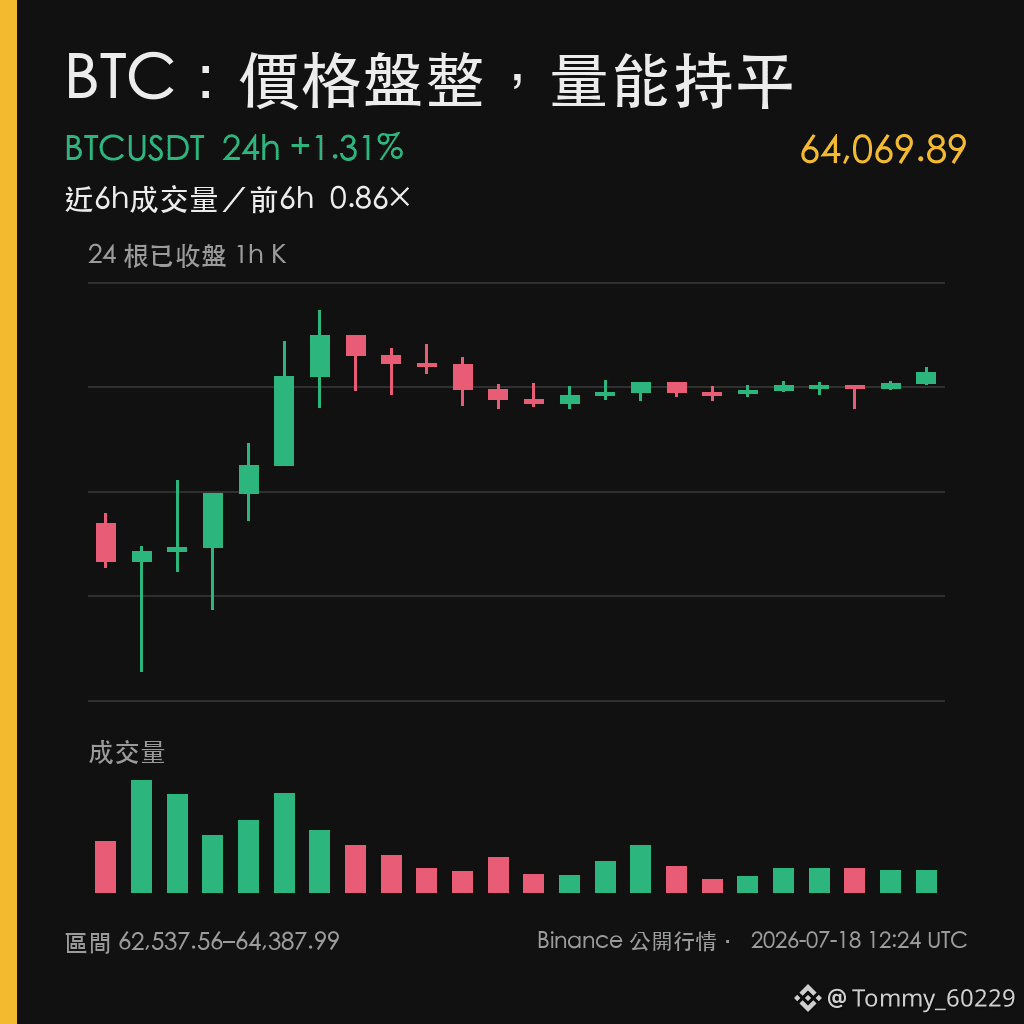
$BTC +1.306%, Volume 0.865x: #btc breakout template—don't rush to believe it yet.
BTCUSDT is rising, but over the last six hours the trading volume is still lower than in the previous six hours. Calling this upswing a “breakout” directly is like treating trading activity that hasn’t happened yet as confirmation.
If the volume of the next closed candle falls back to above the previous six hours, then this assessment is withdrawn.
$BTC +1.306%, Volume 0.865x: #btc breakout template—don't rush to believe it yet.
BTCUSDT is rising, but over the last six hours the trading volume is still lower than in the previous six hours. Calling this upswing a “breakout” directly is like treating trading activity that hasn’t happened yet as confirmation.
If the volume of the next closed candle falls back to above the previous six hours, then this assessment is withdrawn.
BTCUSDT is rising, but over the last six hours the trading volume is still lower than in the previous six hours. Calling this upswing a “breakout” directly is like treating trading activity that hasn’t happened yet as confirmation.
If the volume of the next closed candle falls back to above the previous six hours, then this assessment is withdrawn.
171
·
--
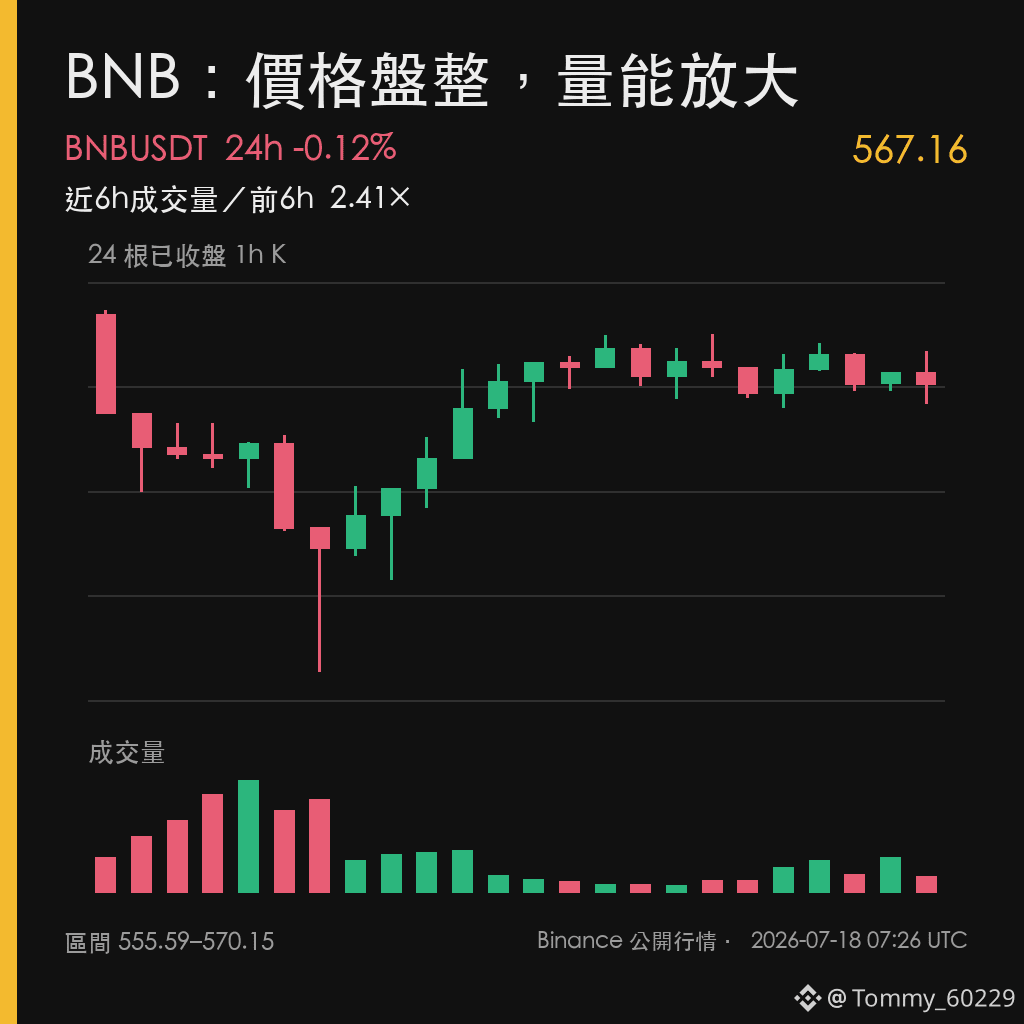
$BNB -0.12%, Volume is 2.41x: #bnb treats a sideways range as cold and quiet—too early.
Price hasn’t moved far, but trading hasn’t cooled down. It’s using “waiting for a breakout” to drag time, only giving reasons to positions that have no direction.
If the next closing candle K has volume returning to below that of the prior six hours, this alert will be lifted.
$BNB -0.12%, Volume is 2.41x: #bnb treats a sideways range as cold and quiet—too early.
Price hasn’t moved far, but trading hasn’t cooled down. It’s using “waiting for a breakout” to drag time, only giving reasons to positions that have no direction.
If the next closing candle K has volume returning to below that of the prior six hours, this alert will be lifted.
Price hasn’t moved far, but trading hasn’t cooled down. It’s using “waiting for a breakout” to drag time, only giving reasons to positions that have no direction.
If the next closing candle K has volume returning to below that of the prior six hours, this alert will be lifted.
170
·
--
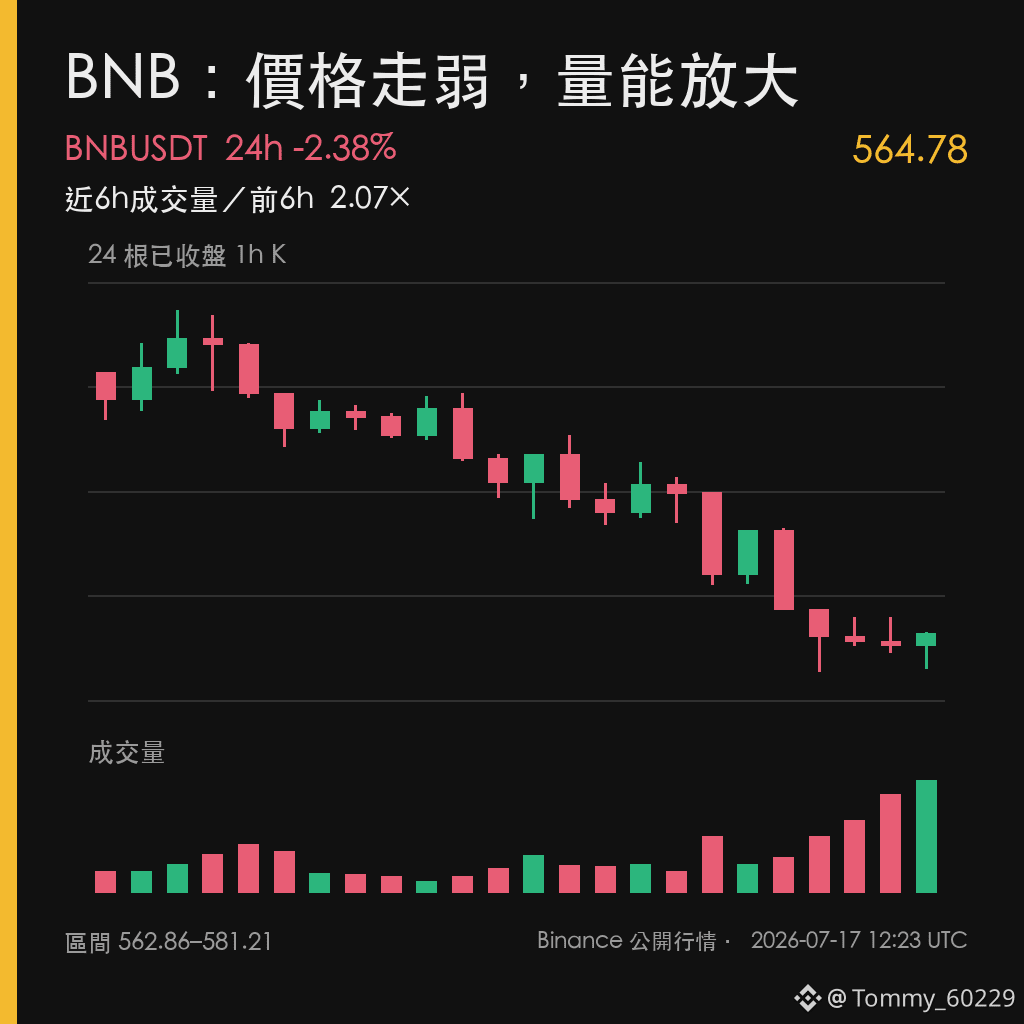
$BNB -2.38%, Volume 2.07x: Breakout template not yet confirmed #bnb
When price drops at 564.78, volume is still increasing. In the public page, some people bet on a breakout while others bet on a pullback—there’s no side with extra, verifiable evidence.
If the next closed candlestick has volume lower than that of the previous six hours, then the interpretation that this volume trend continues becomes invalid.
$BNB -2.38%, Volume 2.07x: Breakout template not yet confirmed #bnb
When price drops at 564.78, volume is still increasing. In the public page, some people bet on a breakout while others bet on a pullback—there’s no side with extra, verifiable evidence.
If the next closed candlestick has volume lower than that of the previous six hours, then the interpretation that this volume trend continues becomes invalid.
When price drops at 564.78, volume is still increasing. In the public page, some people bet on a breakout while others bet on a pullback—there’s no side with extra, verifiable evidence.
If the next closed candlestick has volume lower than that of the previous six hours, then the interpretation that this volume trend continues becomes invalid.
217
·
--
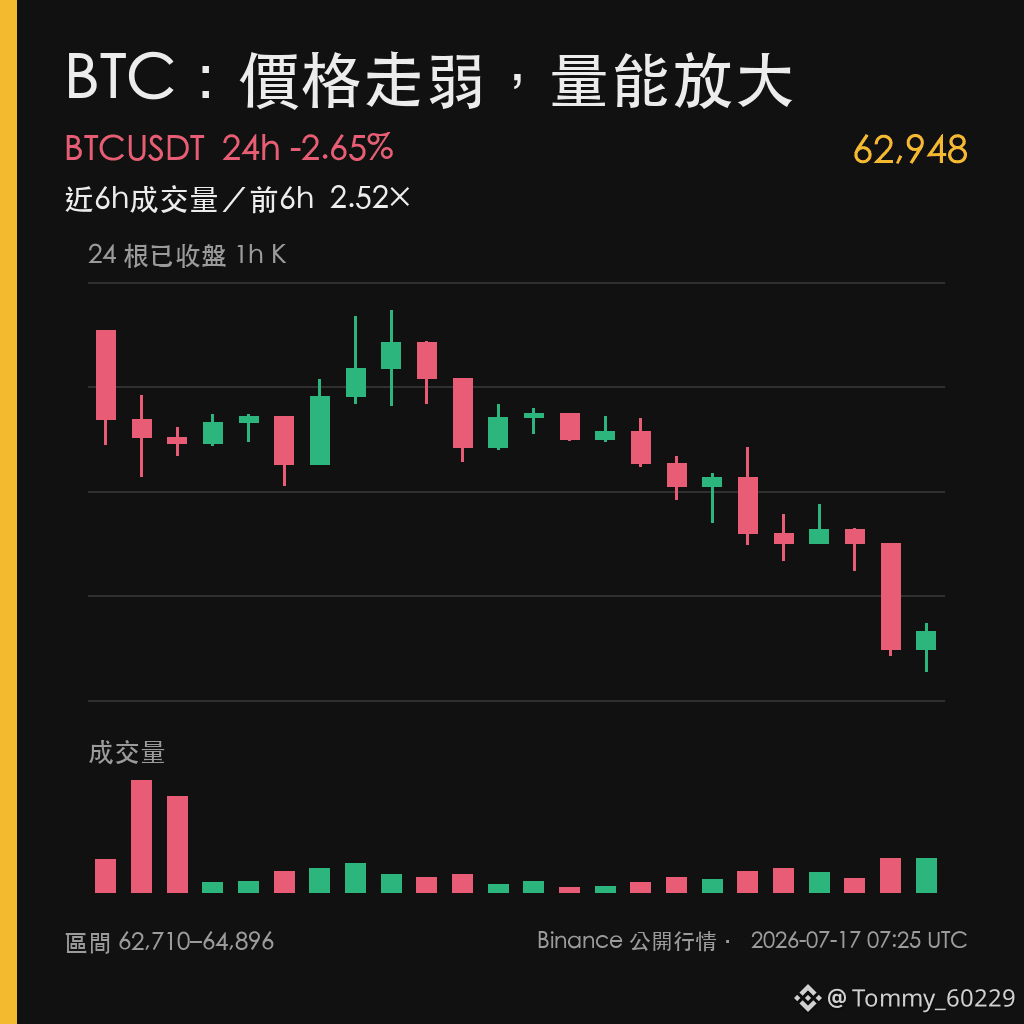
$BTC -2.65%, Volume 2.52x: The rebound of #btcusdt —don’t rush to jump in yet.
When the price fell to 62,948, the volume didn’t contract; before the volume for the next segment—before the next fully closed K-line—pulls back, there’s no new evidence to support the rebound argument.
If the volume in the next segment is lower than the prior six hours, then this bearish interpretation will no longer hold.
$BTC -2.65%, Volume 2.52x: The rebound of #btcusdt —don’t rush to jump in yet.
When the price fell to 62,948, the volume didn’t contract; before the volume for the next segment—before the next fully closed K-line—pulls back, there’s no new evidence to support the rebound argument.
If the volume in the next segment is lower than the prior six hours, then this bearish interpretation will no longer hold.
When the price fell to 62,948, the volume didn’t contract; before the volume for the next segment—before the next fully closed K-line—pulls back, there’s no new evidence to support the rebound argument.
If the volume in the next segment is lower than the prior six hours, then this bearish interpretation will no longer hold.
124
·
--
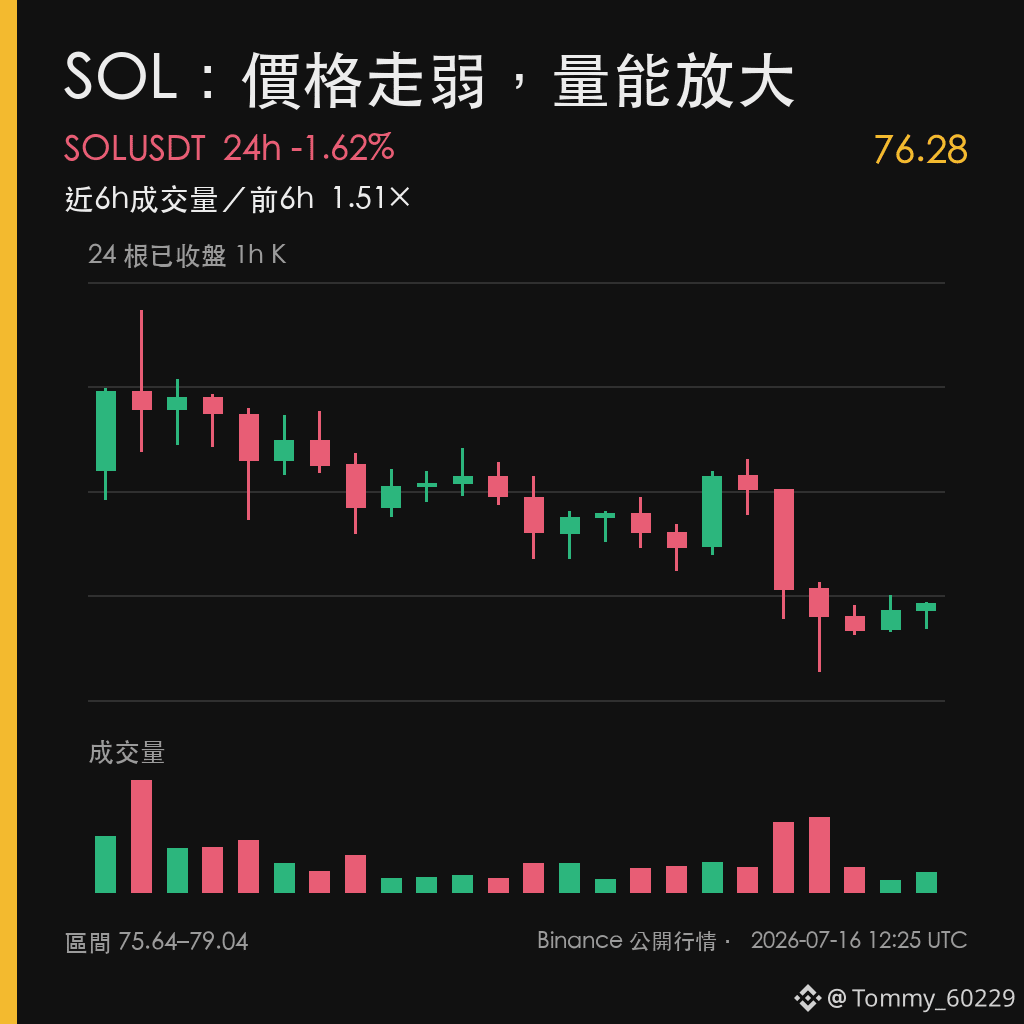
$SOL -1.62%, recently trading volume has increased to 1.51x. The downtrend isn’t just noise #sol
As $76.28 falls, volume expands; in #sol there are still both long and short positions being held at the same time, and this price hasn’t formed a single consistent conclusion yet.
If volume contracts, the downtrend will lose new supporting evidence; if it continues to rise, then there’s reason to treat this drop as an ongoing continuation.
$SOL -1.62%, recently trading volume has increased to 1.51x. The downtrend isn’t just noise #sol
As $76.28 falls, volume expands; in #sol there are still both long and short positions being held at the same time, and this price hasn’t formed a single consistent conclusion yet.
If volume contracts, the downtrend will lose new supporting evidence; if it continues to rise, then there’s reason to treat this drop as an ongoing continuation.
As $76.28 falls, volume expands; in #sol there are still both long and short positions being held at the same time, and this price hasn’t formed a single consistent conclusion yet.
If volume contracts, the downtrend will lose new supporting evidence; if it continues to rise, then there’s reason to treat this drop as an ongoing continuation.
136
·
--
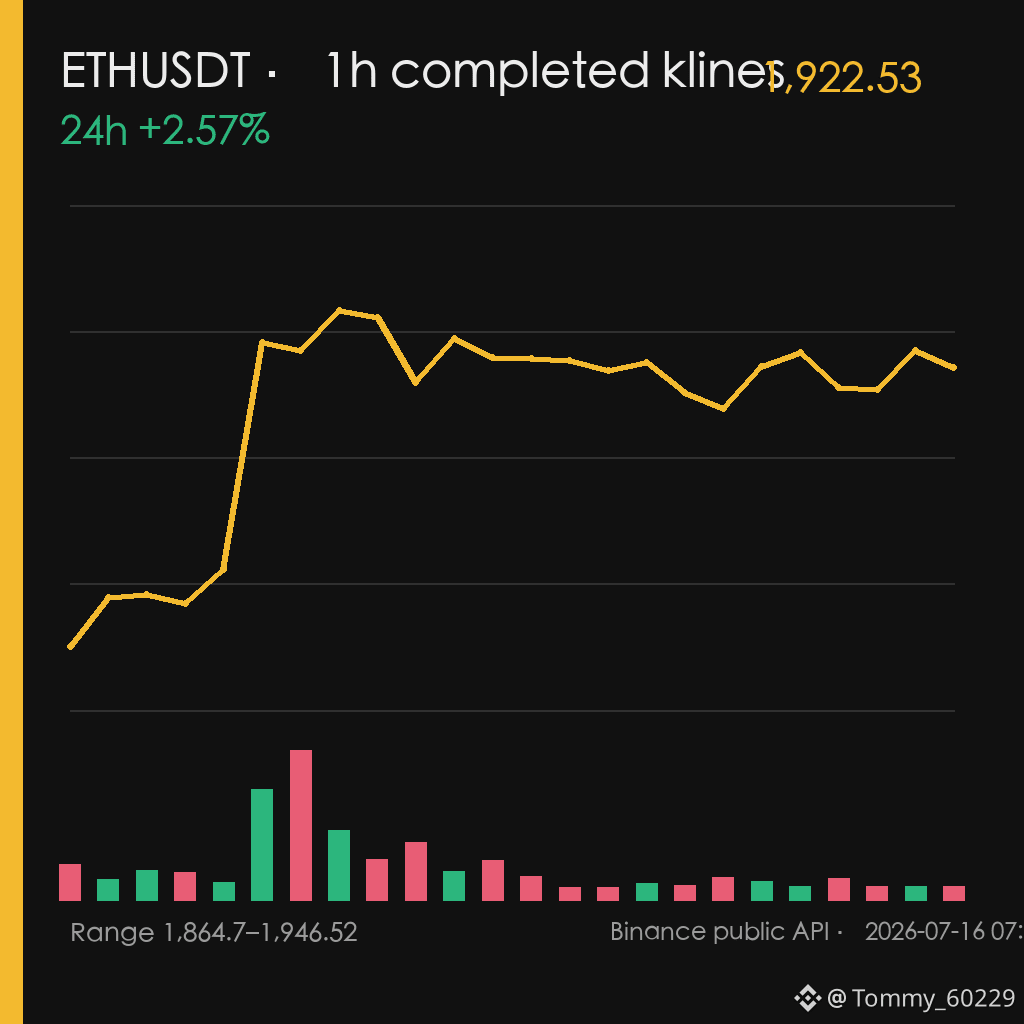
$ETH +2.57% is not a breakout signal #eth
In the same latest topic, both long and short liquidations are used for interpretation. If the price goes up, it only shows that volatility chose a direction—it does not prove that consensus has arrived.
If the next leg of trading volume doesn’t take over, then this relatively strong move is only a more expensive chase order.
$ETH +2.57% is not a breakout signal #eth
In the same latest topic, both long and short liquidations are used for interpretation. If the price goes up, it only shows that volatility chose a direction—it does not prove that consensus has arrived.
If the next leg of trading volume doesn’t take over, then this relatively strong move is only a more expensive chase order.
In the same latest topic, both long and short liquidations are used for interpretation. If the price goes up, it only shows that volatility chose a direction—it does not prove that consensus has arrived.
If the next leg of trading volume doesn’t take over, then this relatively strong move is only a more expensive chase order.
150
·
--
Partly True
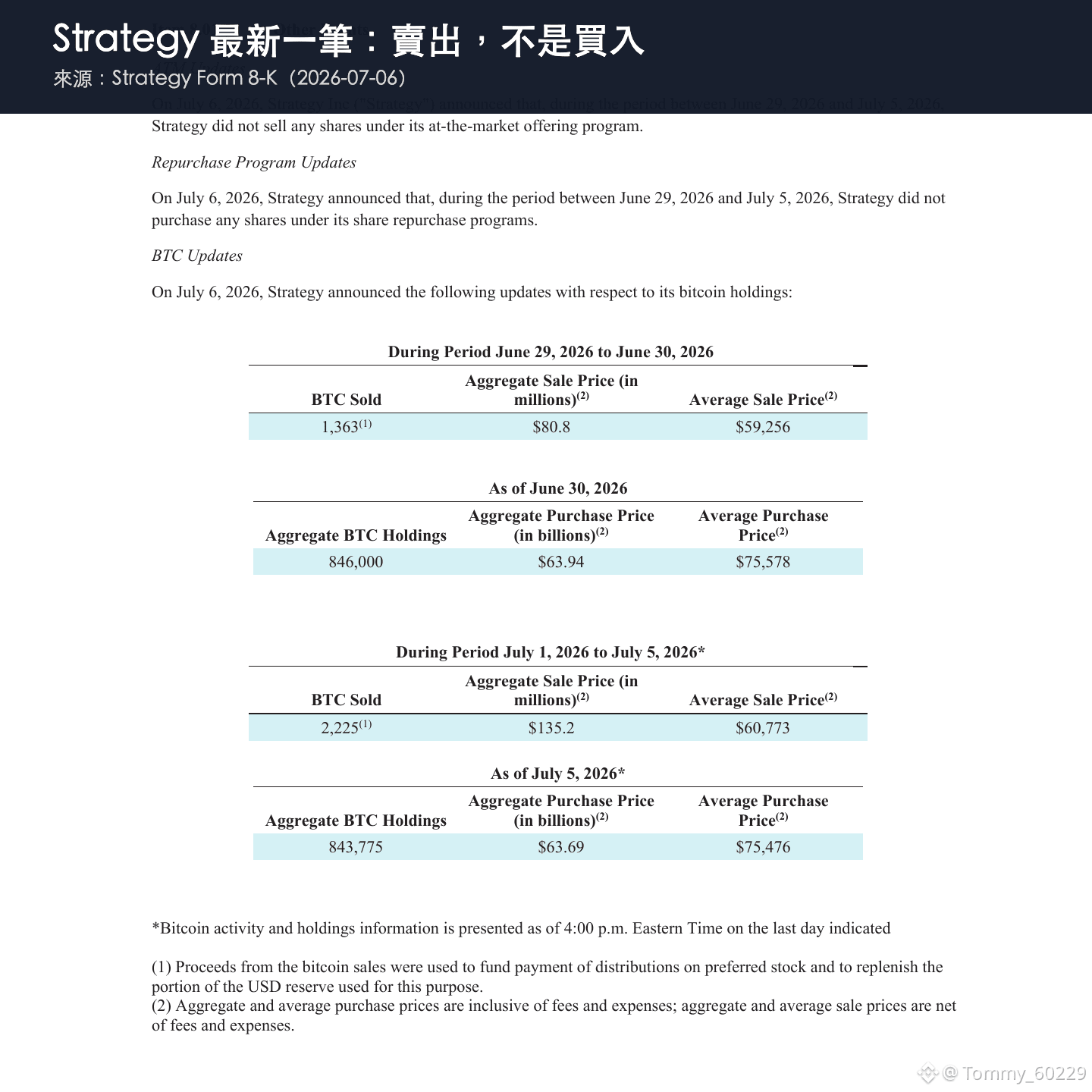
#StrategyBTCPurchase $BTC The latest transaction was a sell, not a buy
The topic page is still circulating the claim “Strategy bought again,” but the official documentation shows: the most recent transaction was a sale of 2,225 shares, and total holdings have dropped to 843,775 shares.
The company says the funds were used for preferred share distributions and to replenish its USD reserves. Bulls call it cash management; bears say the “permanent bid” has been broken. Only the next disclosure will reveal the answer to this dispute.
#StrategyBTCPurchase $BTC The latest transaction was a sell, not a buy
The topic page is still circulating the claim “Strategy bought again,” but the official documentation shows: the most recent transaction was a sale of 2,225 shares, and total holdings have dropped to 843,775 shares.
The company says the funds were used for preferred share distributions and to replenish its USD reserves. Bulls call it cash management; bears say the “permanent bid” has been broken. Only the next disclosure will reveal the answer to this dispute.
The topic page is still circulating the claim “Strategy bought again,” but the official documentation shows: the most recent transaction was a sale of 2,225 shares, and total holdings have dropped to 843,775 shares.
The company says the funds were used for preferred share distributions and to replenish its USD reserves. Bulls call it cash management; bears say the “permanent bid” has been broken. Only the next disclosure will reveal the answer to this dispute.
220
·
--
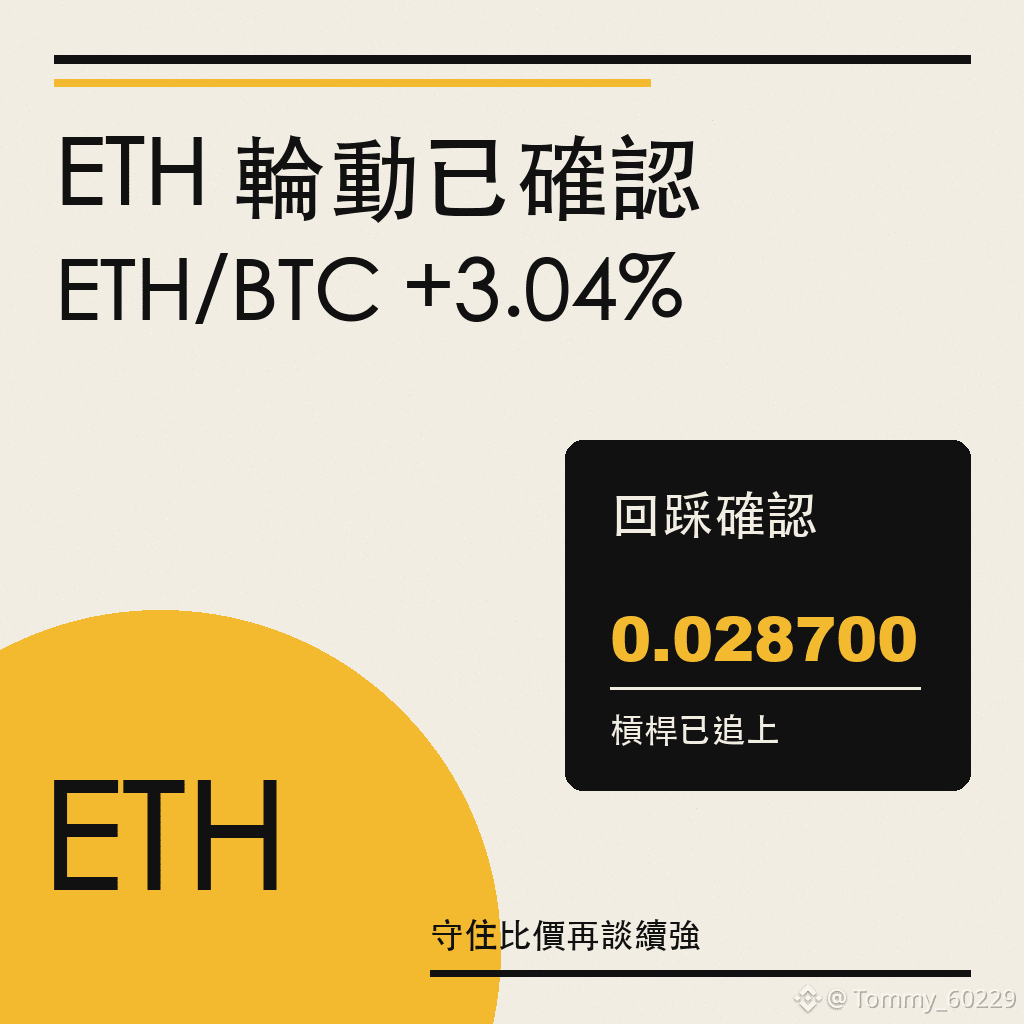
The rotation of $ETH has been confirmed through the price comparison, but leverage is catching up too.
ETH 24h +5.07%, BTC +2.00%, ETH/BTC +3.04%; meanwhile ETH OI is about +9.62%, funding +0.0071%. Price and the comparison are both strengthening, but this is no longer a crowded “chasing-price” entry point.
Next, watch whether ETH/BTC at 0.028700 can turn from resistance into support. Hold the line—if it stays, the rotation still has runway; if it falls back, with OI still elevated, you need to watch for leverage amplifying a downside reversal.
A breakout has already happened—now chasing is harder than waiting for a pullback.
The rotation of $ETH has been confirmed through the price comparison, but leverage is catching up too.
ETH 24h +5.07%, BTC +2.00%, ETH/BTC +3.04%; meanwhile ETH OI is about +9.62%, funding +0.0071%. Price and the comparison are both strengthening, but this is no longer a crowded “chasing-price” entry point.
Next, watch whether ETH/BTC at 0.028700 can turn from resistance into support. Hold the line—if it stays, the rotation still has runway; if it falls back, with OI still elevated, you need to watch for leverage amplifying a downside reversal.
A breakout has already happened—now chasing is harder than waiting for a pullback.
ETH 24h +5.07%, BTC +2.00%, ETH/BTC +3.04%; meanwhile ETH OI is about +9.62%, funding +0.0071%. Price and the comparison are both strengthening, but this is no longer a crowded “chasing-price” entry point.
Next, watch whether ETH/BTC at 0.028700 can turn from resistance into support. Hold the line—if it stays, the rotation still has runway; if it falls back, with OI still elevated, you need to watch for leverage amplifying a downside reversal.
A breakout has already happened—now chasing is harder than waiting for a pullback.
440
·
--
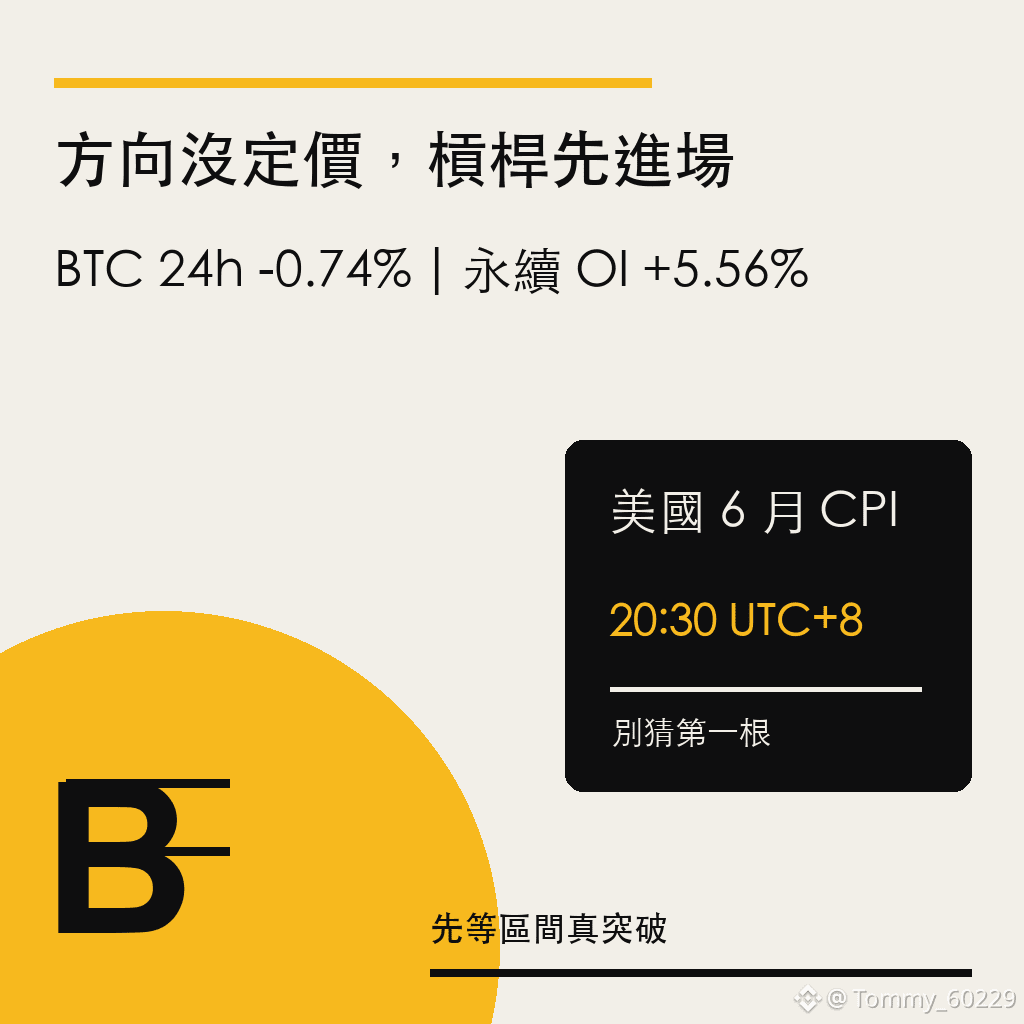
$BTC In the range before CPI, leverage moved in first.
In the past 24 hours, it pulled back about 0.7%, while sustainable OI still increased by about 5.6%, and funding rose about +0.0036%. Price hasn’t left the original range, yet positions crowded in— the first breakout looks more like a stop-hunt alert.
61,825–63,303 should be treated as a noise zone first. After the data, only when it truly leaves the range and spot volume follows through counts as direction; breaking out and then snapping back is still leverage stepping on each other.
Don’t chase the first candle the moment CPI is released.
$BTC In the range before CPI, leverage moved in first.
In the past 24 hours, it pulled back about 0.7%, while sustainable OI still increased by about 5.6%, and funding rose about +0.0036%. Price hasn’t left the original range, yet positions crowded in— the first breakout looks more like a stop-hunt alert.
61,825–63,303 should be treated as a noise zone first. After the data, only when it truly leaves the range and spot volume follows through counts as direction; breaking out and then snapping back is still leverage stepping on each other.
Don’t chase the first candle the moment CPI is released.
In the past 24 hours, it pulled back about 0.7%, while sustainable OI still increased by about 5.6%, and funding rose about +0.0036%. Price hasn’t left the original range, yet positions crowded in— the first breakout looks more like a stop-hunt alert.
61,825–63,303 should be treated as a noise zone first. After the data, only when it truly leaves the range and spot volume follows through counts as direction; breaking out and then snapping back is still leverage stepping on each other.
Don’t chase the first candle the moment CPI is released.
161
·
--
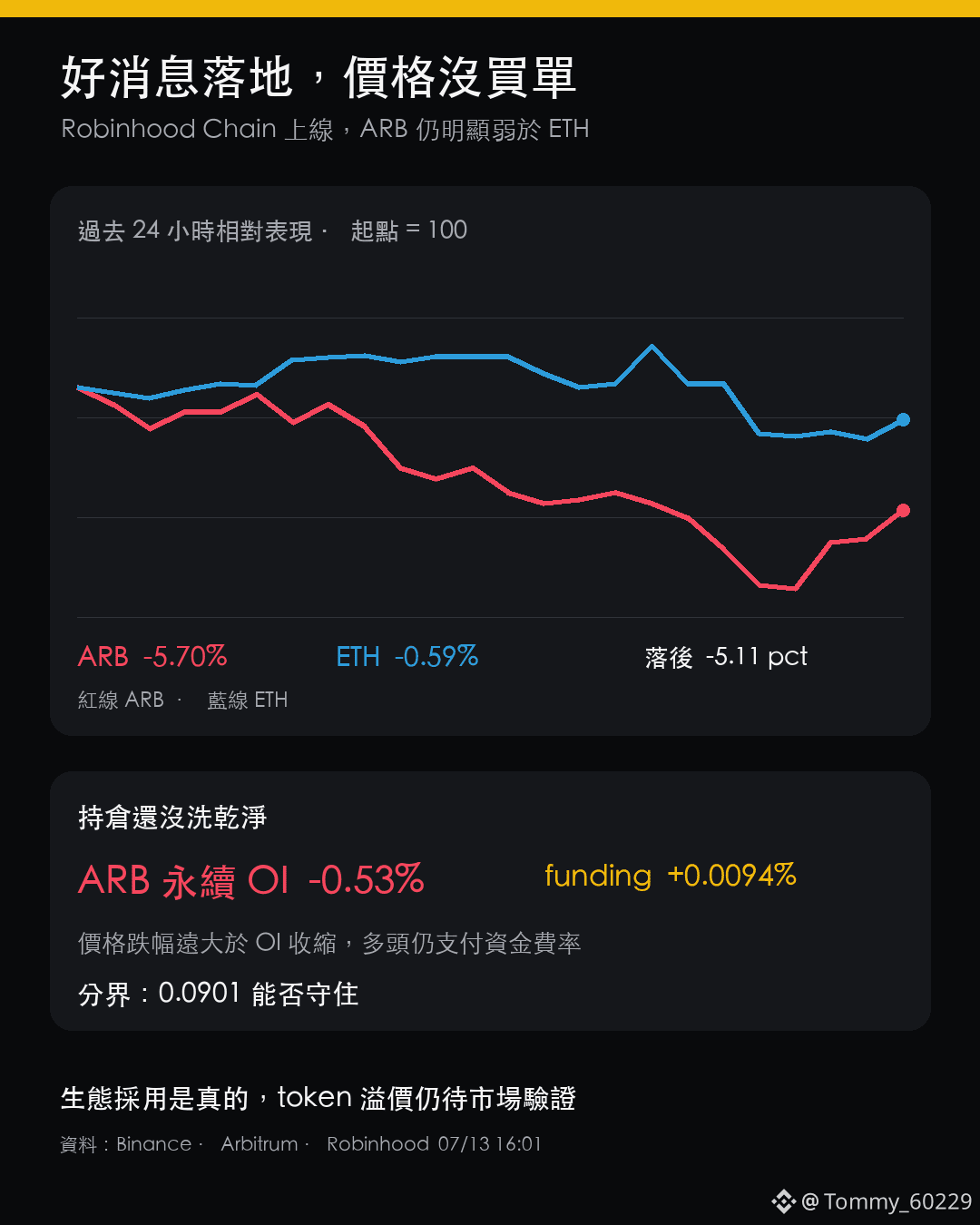
The Robinhood Chain “good news” for $ARB is real, but the price hasn’t actually followed.
A Robinhood mainnet announcement has 300,000 views; at the same time, ARB is down 5.70% over 24 hours, while ETH is only down 0.59%. More importantly, ARB perpetual OI has only decreased by 0.53%, and funding is still positive. This doesn’t look like a fully “washed-out” selloff.
First, look at 0.0901. Holding that level, with OI continuing to retreat and funding returning to neutral, would resemble position clean-up. But if it breaks down on higher volume and OI rebounds, the weakness isn’t finished yet.
The bullish catalyst can prove that Arbitrum is being adopted—it can’t prove that ARB will immediately trade at a premium. Don’t chase longs now, and don’t short just because we’re near a 6% downside move.
The Robinhood Chain “good news” for $ARB is real, but the price hasn’t actually followed.
A Robinhood mainnet announcement has 300,000 views; at the same time, ARB is down 5.70% over 24 hours, while ETH is only down 0.59%. More importantly, ARB perpetual OI has only decreased by 0.53%, and funding is still positive. This doesn’t look like a fully “washed-out” selloff.
First, look at 0.0901. Holding that level, with OI continuing to retreat and funding returning to neutral, would resemble position clean-up. But if it breaks down on higher volume and OI rebounds, the weakness isn’t finished yet.
The bullish catalyst can prove that Arbitrum is being adopted—it can’t prove that ARB will immediately trade at a premium. Don’t chase longs now, and don’t short just because we’re near a 6% downside move.
A Robinhood mainnet announcement has 300,000 views; at the same time, ARB is down 5.70% over 24 hours, while ETH is only down 0.59%. More importantly, ARB perpetual OI has only decreased by 0.53%, and funding is still positive. This doesn’t look like a fully “washed-out” selloff.
First, look at 0.0901. Holding that level, with OI continuing to retreat and funding returning to neutral, would resemble position clean-up. But if it breaks down on higher volume and OI rebounds, the weakness isn’t finished yet.
The bullish catalyst can prove that Arbitrum is being adopted—it can’t prove that ARB will immediately trade at a premium. Don’t chase longs now, and don’t short just because we’re near a 6% downside move.
133
·
--
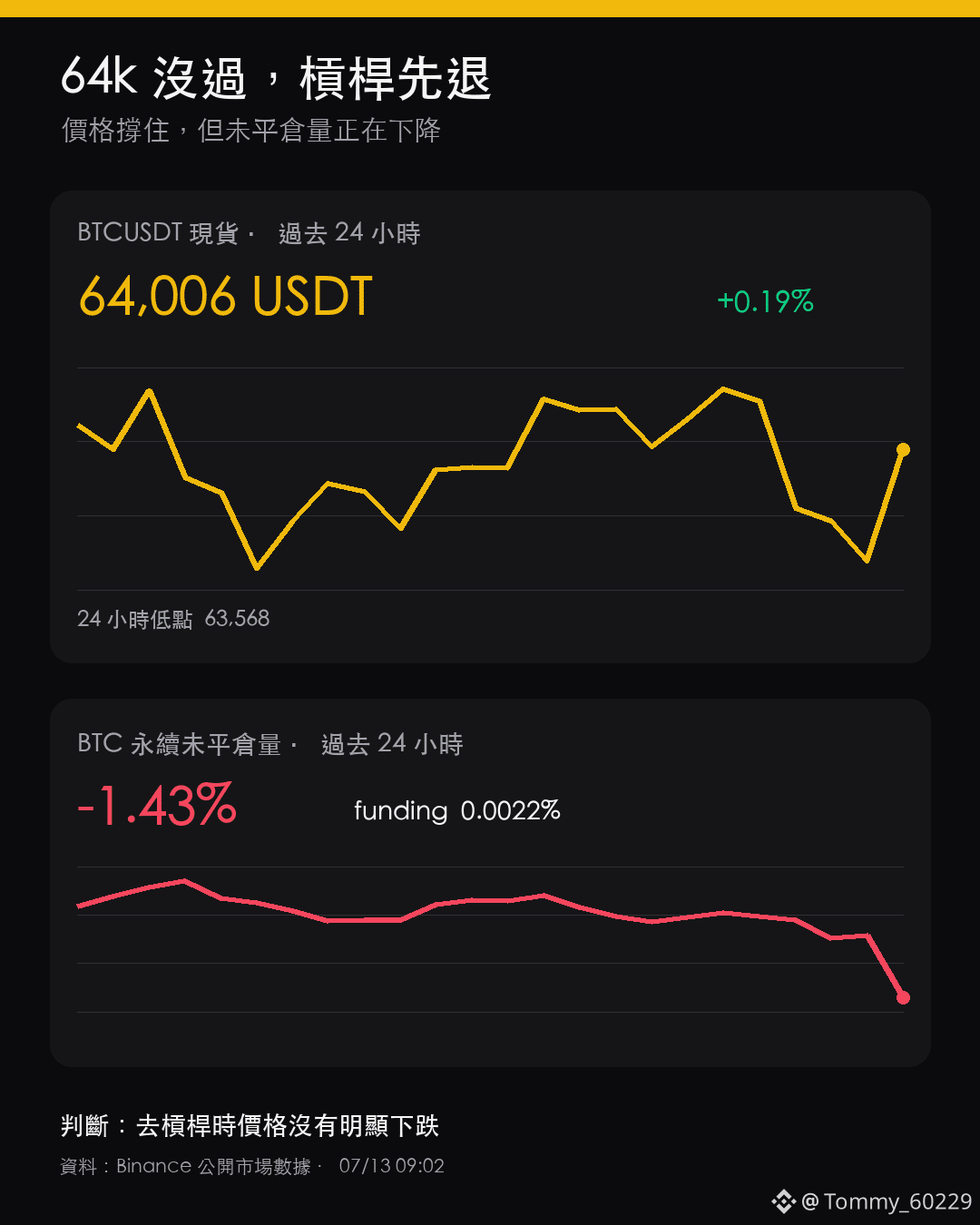
$BTC 64k The market hasn’t stabilized yet, but leverage has already started to unwind.
In the past 24 hours, the price has barely moved, while open interest has fallen by 1.4%, and funding is only 0.0022%. Bulls aren’t crowding at the door; more importantly, during the deleveraging, there hasn’t been a clear drop in price.
First, watch 63,568. If it holds, around 64k can still be considered a range where supply is digested repeatedly. But if it breaks down with volume and OI simultaneously rebounds, then this rebound is truly weakening.
So for now, don’t chase shorts. Failing to break above 64k is just getting stuck; losing 63,568 is what breaks the structure.
$BTC 64k The market hasn’t stabilized yet, but leverage has already started to unwind.
In the past 24 hours, the price has barely moved, while open interest has fallen by 1.4%, and funding is only 0.0022%. Bulls aren’t crowding at the door; more importantly, during the deleveraging, there hasn’t been a clear drop in price.
First, watch 63,568. If it holds, around 64k can still be considered a range where supply is digested repeatedly. But if it breaks down with volume and OI simultaneously rebounds, then this rebound is truly weakening.
So for now, don’t chase shorts. Failing to break above 64k is just getting stuck; losing 63,568 is what breaks the structure.
In the past 24 hours, the price has barely moved, while open interest has fallen by 1.4%, and funding is only 0.0022%. Bulls aren’t crowding at the door; more importantly, during the deleveraging, there hasn’t been a clear drop in price.
First, watch 63,568. If it holds, around 64k can still be considered a range where supply is digested repeatedly. But if it breaks down with volume and OI simultaneously rebounds, then this rebound is truly weakening.
So for now, don’t chase shorts. Failing to break above 64k is just getting stuck; losing 63,568 is what breaks the structure.
295
·
--
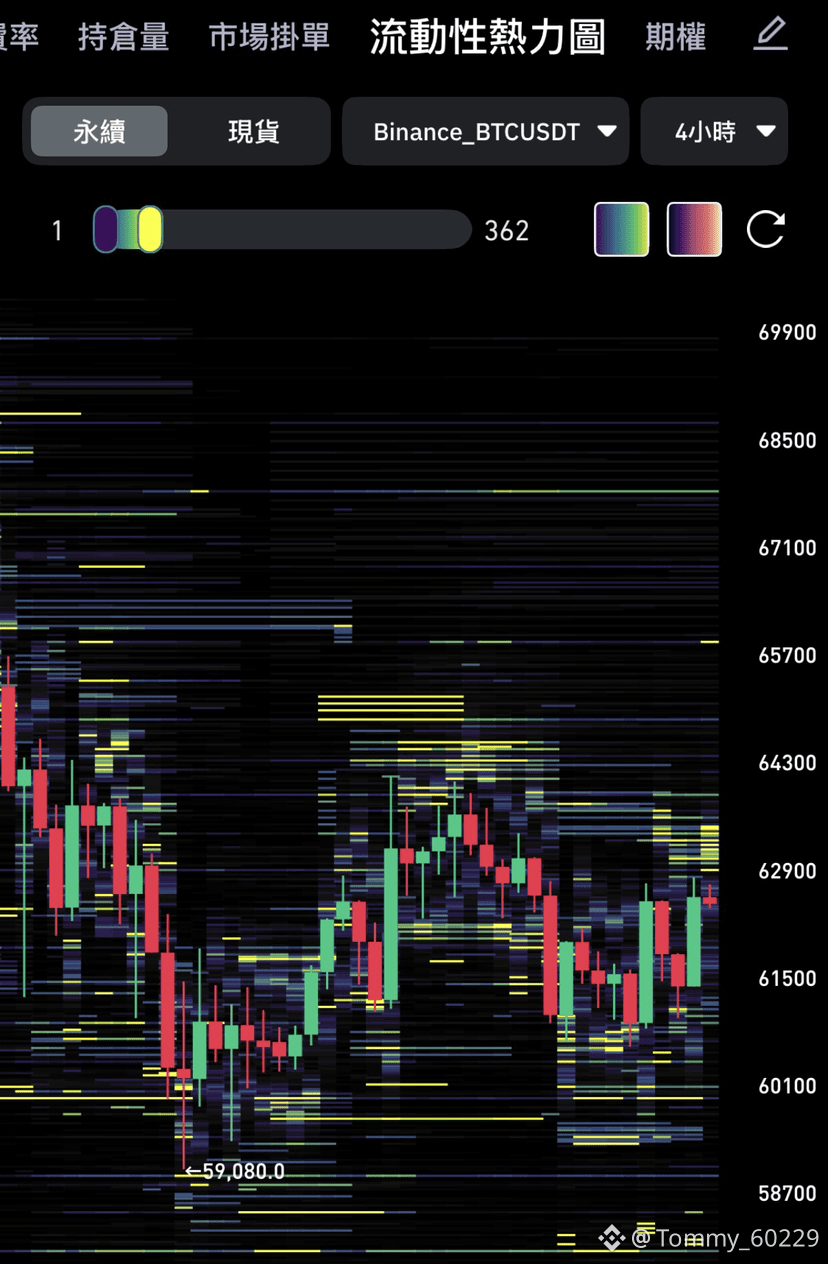
BTC back around 63k, don't rush to call this bounce a reversalData timestamp: 2026-06-13 11:48 Taipei time.
$BTC Back around 63k, but market sentiment hasn't really loosened up. The Binance Square Fear & Greed Index is currently at 19, still in Extreme Fear; yesterday it was 18, last week it was 13. In this kind of position, you typically hear two narratives: one side is eager to declare that 59k is the bottom, while the other side, seeing ETF capital flows and AI/SpaceX stocks grabbing attention, feels that any bounce is fragile.
My take is pretty conservative: 63k isn't the endgame, it's just the first test point. What we really need to watch for isn't just a 'are we done yet?' but three confirmations:
BTC back around 63k, don't rush to call this bounce a reversal
Data timestamp: 2026-06-13 11:48 Taipei time.
$BTC Back around 63k, but market sentiment hasn't really loosened up. The Binance Square Fear & Greed Index is currently at 19, still in Extreme Fear; yesterday it was 18, last week it was 13. In this kind of position, you typically hear two narratives: one side is eager to declare that 59k is the bottom, while the other side, seeing ETF capital flows and AI/SpaceX stocks grabbing attention, feels that any bounce is fragile.
My take is pretty conservative: 63k isn't the endgame, it's just the first test point. What we really need to watch for isn't just a 'are we done yet?' but three confirmations:
$BTC Back around 63k, but market sentiment hasn't really loosened up. The Binance Square Fear & Greed Index is currently at 19, still in Extreme Fear; yesterday it was 18, last week it was 13. In this kind of position, you typically hear two narratives: one side is eager to declare that 59k is the bottom, while the other side, seeing ETF capital flows and AI/SpaceX stocks grabbing attention, feels that any bounce is fragile.
My take is pretty conservative: 63k isn't the endgame, it's just the first test point. What we really need to watch for isn't just a 'are we done yet?' but three confirmations:
242
·
--
A lot of folks are mistaking 'rotation' for 'the start of a new bull run' right now.
If you've been feeling the heat in the market lately, hold your horses before shouting altseason.
What I'm more concerned with today isn't which coin is going to moon first,
but whether 'new money is actually coming into the game'.
Let's check out three signals:
1. The total market cap of stablecoins is currently around $31.6 billion, but over the past 7 days, it's dropped by $2.3 billion.
This suggests that the bullets in the market haven't increased significantly; a lot of the upward movement looks more like old money swapping vehicles, rather than new capital flooding in.
2. The US spot BTC ETF has been bleeding out over the past few trading days.
Like on 6/3, about -$397 million; on 6/5, about -$326 million; and on 6/8, about -$91 million.
Big money isn't consistently coming back in, and that's crucial.
3. However, on the same day, 6/8, the ETH ETF saw a net inflow of +$82.4 million.
This means that the market isn't devoid of risk appetite; it's just that funds are starting to make 'multiple-choice decisions'.
When you layer these three signals together, the conclusion is actually quite practical:
Right now, it feels more like a rotation of existing funds, not a full-blown influx rally.
This is important for trading.
If the supply of stablecoins isn't expanding and the BTC ETF keeps leaking, many altcoin pumps feel more like short-term trading opportunities,
it's not necessarily a safe starting point for a longer-term trend.
Conversely,
when you see stablecoin supply rising consistently + BTC ETF stabilizing back to positive,
that's when it might be more appropriate to amplify your risk budget.
One thing to remember:
First, check if the money is increasing, then look at whether prices are speeding up.
A lot of people get convinced by the candlesticks first, but the pros check the capital structure first.
Which one do you think it resembles more now?
A. Existing fund rotation; be cautious when chasing highs.
B. Pre-influx; dips should actually be bought.
A lot of folks are mistaking 'rotation' for 'the start of a new bull run' right now.
If you've been feeling the heat in the market lately, hold your horses before shouting altseason.
What I'm more concerned with today isn't which coin is going to moon first,
but whether 'new money is actually coming into the game'.
Let's check out three signals:
1. The total market cap of stablecoins is currently around $31.6 billion, but over the past 7 days, it's dropped by $2.3 billion.
This suggests that the bullets in the market haven't increased significantly; a lot of the upward movement looks more like old money swapping vehicles, rather than new capital flooding in.
2. The US spot BTC ETF has been bleeding out over the past few trading days.
Like on 6/3, about -$397 million; on 6/5, about -$326 million; and on 6/8, about -$91 million.
Big money isn't consistently coming back in, and that's crucial.
3. However, on the same day, 6/8, the ETH ETF saw a net inflow of +$82.4 million.
This means that the market isn't devoid of risk appetite; it's just that funds are starting to make 'multiple-choice decisions'.
When you layer these three signals together, the conclusion is actually quite practical:
Right now, it feels more like a rotation of existing funds, not a full-blown influx rally.
This is important for trading.
If the supply of stablecoins isn't expanding and the BTC ETF keeps leaking, many altcoin pumps feel more like short-term trading opportunities,
it's not necessarily a safe starting point for a longer-term trend.
Conversely,
when you see stablecoin supply rising consistently + BTC ETF stabilizing back to positive,
that's when it might be more appropriate to amplify your risk budget.
One thing to remember:
First, check if the money is increasing, then look at whether prices are speeding up.
A lot of people get convinced by the candlesticks first, but the pros check the capital structure first.
Which one do you think it resembles more now?
A. Existing fund rotation; be cautious when chasing highs.
B. Pre-influx; dips should actually be bought.
If you've been feeling the heat in the market lately, hold your horses before shouting altseason.
What I'm more concerned with today isn't which coin is going to moon first,
but whether 'new money is actually coming into the game'.
Let's check out three signals:
1. The total market cap of stablecoins is currently around $31.6 billion, but over the past 7 days, it's dropped by $2.3 billion.
This suggests that the bullets in the market haven't increased significantly; a lot of the upward movement looks more like old money swapping vehicles, rather than new capital flooding in.
2. The US spot BTC ETF has been bleeding out over the past few trading days.
Like on 6/3, about -$397 million; on 6/5, about -$326 million; and on 6/8, about -$91 million.
Big money isn't consistently coming back in, and that's crucial.
3. However, on the same day, 6/8, the ETH ETF saw a net inflow of +$82.4 million.
This means that the market isn't devoid of risk appetite; it's just that funds are starting to make 'multiple-choice decisions'.
When you layer these three signals together, the conclusion is actually quite practical:
Right now, it feels more like a rotation of existing funds, not a full-blown influx rally.
This is important for trading.
If the supply of stablecoins isn't expanding and the BTC ETF keeps leaking, many altcoin pumps feel more like short-term trading opportunities,
it's not necessarily a safe starting point for a longer-term trend.
Conversely,
when you see stablecoin supply rising consistently + BTC ETF stabilizing back to positive,
that's when it might be more appropriate to amplify your risk budget.
One thing to remember:
First, check if the money is increasing, then look at whether prices are speeding up.
A lot of people get convinced by the candlesticks first, but the pros check the capital structure first.
Which one do you think it resembles more now?
A. Existing fund rotation; be cautious when chasing highs.
B. Pre-influx; dips should actually be bought.
283
·
--
Don't be fooled by the bounce; the biggest risk today isn't the drop, it's thinking the bottom has been reached.
My pre-market stance is clear: I'm leaning bearish, not chasing this bounce.
Let's look at three signals.
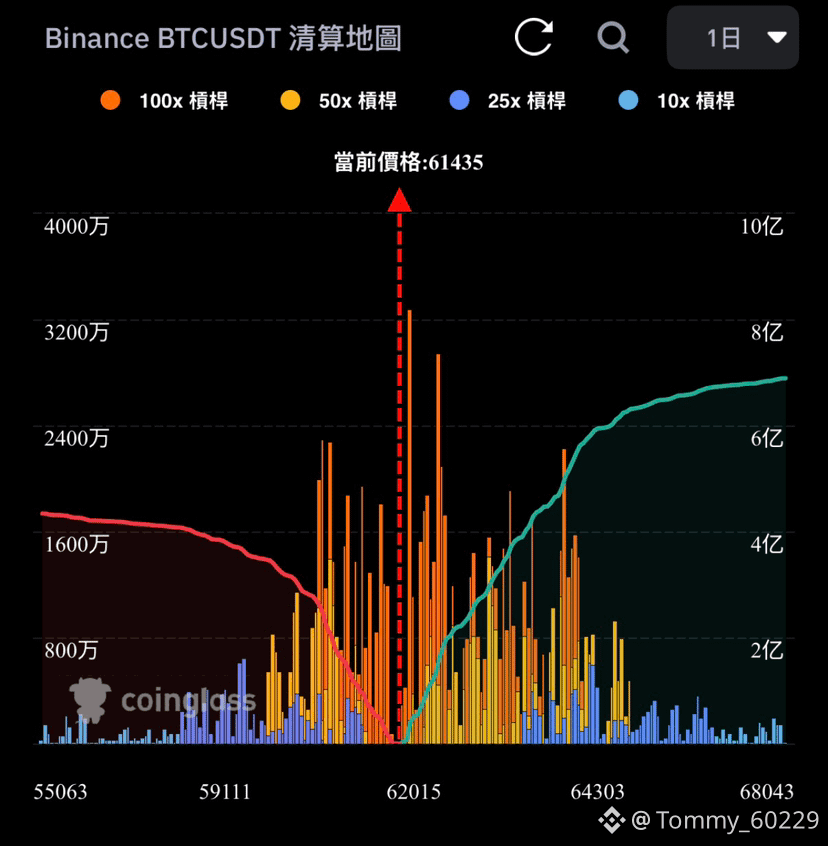
1. BTC is currently around $61,800; yesterday it hit a low of $60,803 during the session. Even though there's been a breather after a deep drop, there's no proof that buyers are back in the game.
2. The latest BTC ETF shows a net outflow of -$91.4 million for the day, with no significant money flowing back in; on the other hand, the most recent ETH ETF recorded an inflow of +$82.4 million, indicating a relative rotation of funds, not a full-on risk-on environment.
3. In derivatives, the overall crypto open interest is about $103.1 billion, down 2.06% in the last 24 hours, which means leverage is still retreating. This market is most prone to situations where it 'looks like it's bottoming out', but really, nobody's willing to open positions.
So, my interpretation is simple:
This isn't strength; it's just quiet after a heavy drop.
As long as BTC doesn't reclaim above $63,400, I'm treating today's bounce as a chance to reduce positions, not as an opportunity to go long.
#美股延续跌势纳斯达克跌逾3%
Don't be fooled by the bounce; the biggest risk today isn't the drop, it's thinking the bottom has been reached.
My pre-market stance is clear: I'm leaning bearish, not chasing this bounce.
Let's look at three signals.
1. BTC is currently around $61,800; yesterday it hit a low of $60,803 during the session. Even though there's been a breather after a deep drop, there's no proof that buyers are back in the game.
2. The latest BTC ETF shows a net outflow of -$91.4 million for the day, with no significant money flowing back in; on the other hand, the most recent ETH ETF recorded an inflow of +$82.4 million, indicating a relative rotation of funds, not a full-on risk-on environment.
3. In derivatives, the overall crypto open interest is about $103.1 billion, down 2.06% in the last 24 hours, which means leverage is still retreating. This market is most prone to situations where it 'looks like it's bottoming out', but really, nobody's willing to open positions.
So, my interpretation is simple:
This isn't strength; it's just quiet after a heavy drop.
As long as BTC doesn't reclaim above $63,400, I'm treating today's bounce as a chance to reduce positions, not as an opportunity to go long.
#美股延续跌势纳斯达克跌逾3%
My pre-market stance is clear: I'm leaning bearish, not chasing this bounce.
Let's look at three signals.
1. BTC is currently around $61,800; yesterday it hit a low of $60,803 during the session. Even though there's been a breather after a deep drop, there's no proof that buyers are back in the game.
2. The latest BTC ETF shows a net outflow of -$91.4 million for the day, with no significant money flowing back in; on the other hand, the most recent ETH ETF recorded an inflow of +$82.4 million, indicating a relative rotation of funds, not a full-on risk-on environment.
3. In derivatives, the overall crypto open interest is about $103.1 billion, down 2.06% in the last 24 hours, which means leverage is still retreating. This market is most prone to situations where it 'looks like it's bottoming out', but really, nobody's willing to open positions.
So, my interpretation is simple:
This isn't strength; it's just quiet after a heavy drop.
As long as BTC doesn't reclaim above $63,400, I'm treating today's bounce as a chance to reduce positions, not as an opportunity to go long.
#美股延续跌势纳斯达克跌逾3%
450
·
--
The ones making bank this round
Are likely not the ones glued to their screens
But those with the patience to wait for mistakes to happen
When the market gets jittery
Opportunities arise
You'll notice that most folks lose money in similar ways
When prices rise, they're worried they didn't buy enough
When prices drop, they're anxious it's not dropping enough
The result? They're always trading at peak emotions
After trading for a while, you realize
The real value in the market isn't in predictions
It's in waiting for others to lose control
When others are FOMOing
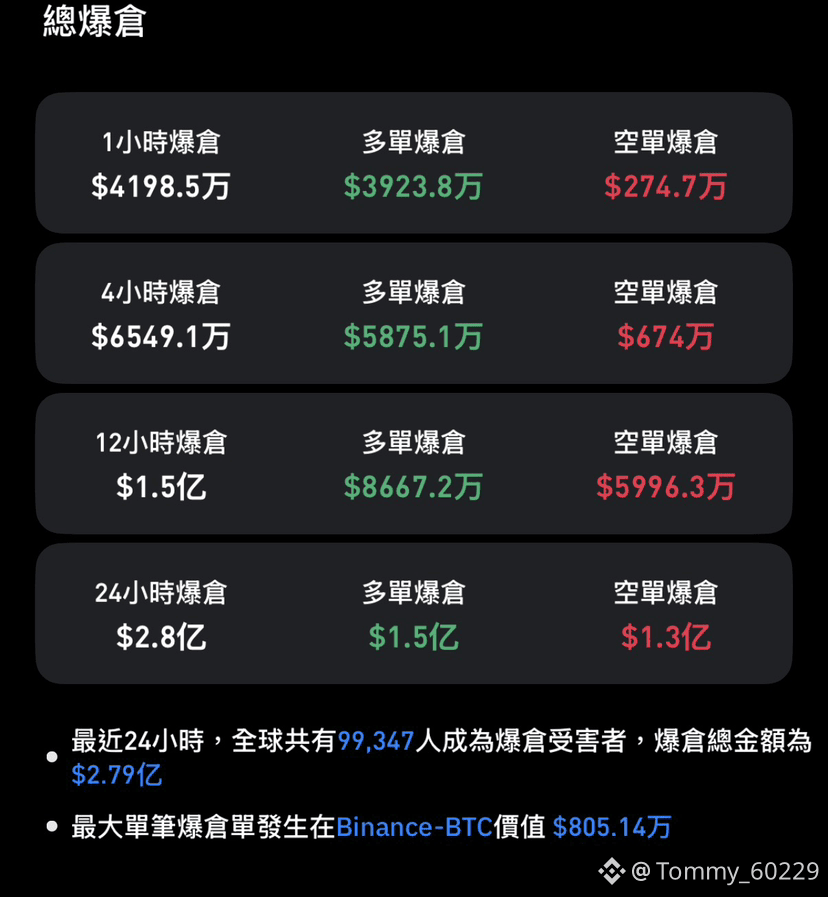
You need to check if this pump has volume support
When others are panicking
You should see if the drop is a trend reversal or just a liquidation washout
Many say they're trading
But in reality, they're just chasing emotions
Seeing a big green candle gets them hyped
Seeing two red candles makes them question everything
In this kind of market, the hardest part isn't reading the trend
It's resisting the urge to click the button
Right now, I’m focusing on three things
First, is the major coin stable?
Second, are the altcoins rotating or just going wild?
Third, how many people are chasing highs?
If the majors are stable and the altcoins start to take the baton
That's an opportunity
If the majors can't hold steady and yet everyone’s shouting for the altcoins to moon
That's usually not the wealth code
More like a prelude to regret the next day
At the end of the day
Trading isn't about who jumps in first
It's about who makes fewer mistakes
#美国2年期国债收益率创15个月新高
The ones making bank this round
Are likely not the ones glued to their screens
But those with the patience to wait for mistakes to happen
When the market gets jittery
Opportunities arise
You'll notice that most folks lose money in similar ways
When prices rise, they're worried they didn't buy enough
When prices drop, they're anxious it's not dropping enough
The result? They're always trading at peak emotions
After trading for a while, you realize
The real value in the market isn't in predictions
It's in waiting for others to lose control
When others are FOMOing
You need to check if this pump has volume support
When others are panicking
You should see if the drop is a trend reversal or just a liquidation washout
Many say they're trading
But in reality, they're just chasing emotions
Seeing a big green candle gets them hyped
Seeing two red candles makes them question everything
In this kind of market, the hardest part isn't reading the trend
It's resisting the urge to click the button
Right now, I’m focusing on three things
First, is the major coin stable?
Second, are the altcoins rotating or just going wild?
Third, how many people are chasing highs?
If the majors are stable and the altcoins start to take the baton
That's an opportunity
If the majors can't hold steady and yet everyone’s shouting for the altcoins to moon
That's usually not the wealth code
More like a prelude to regret the next day
At the end of the day
Trading isn't about who jumps in first
It's about who makes fewer mistakes
#美国2年期国债收益率创15个月新高
Are likely not the ones glued to their screens
But those with the patience to wait for mistakes to happen
When the market gets jittery
Opportunities arise
You'll notice that most folks lose money in similar ways
When prices rise, they're worried they didn't buy enough
When prices drop, they're anxious it's not dropping enough
The result? They're always trading at peak emotions
After trading for a while, you realize
The real value in the market isn't in predictions
It's in waiting for others to lose control
When others are FOMOing
You need to check if this pump has volume support
When others are panicking
You should see if the drop is a trend reversal or just a liquidation washout
Many say they're trading
But in reality, they're just chasing emotions
Seeing a big green candle gets them hyped
Seeing two red candles makes them question everything
In this kind of market, the hardest part isn't reading the trend
It's resisting the urge to click the button
Right now, I’m focusing on three things
First, is the major coin stable?
Second, are the altcoins rotating or just going wild?
Third, how many people are chasing highs?
If the majors are stable and the altcoins start to take the baton
That's an opportunity
If the majors can't hold steady and yet everyone’s shouting for the altcoins to moon
That's usually not the wealth code
More like a prelude to regret the next day
At the end of the day
Trading isn't about who jumps in first
It's about who makes fewer mistakes
#美国2年期国债收益率创15个月新高
350
·
--
Everyone's looking in the wrong place: the real big money entering might not be BTC, but rather the 'cash flow narrative of on-chain exchanges'.
Folks are missing the mark; tonight's biggest risk isn't a drop, but mistaking a short cover for the start of a new bull run.
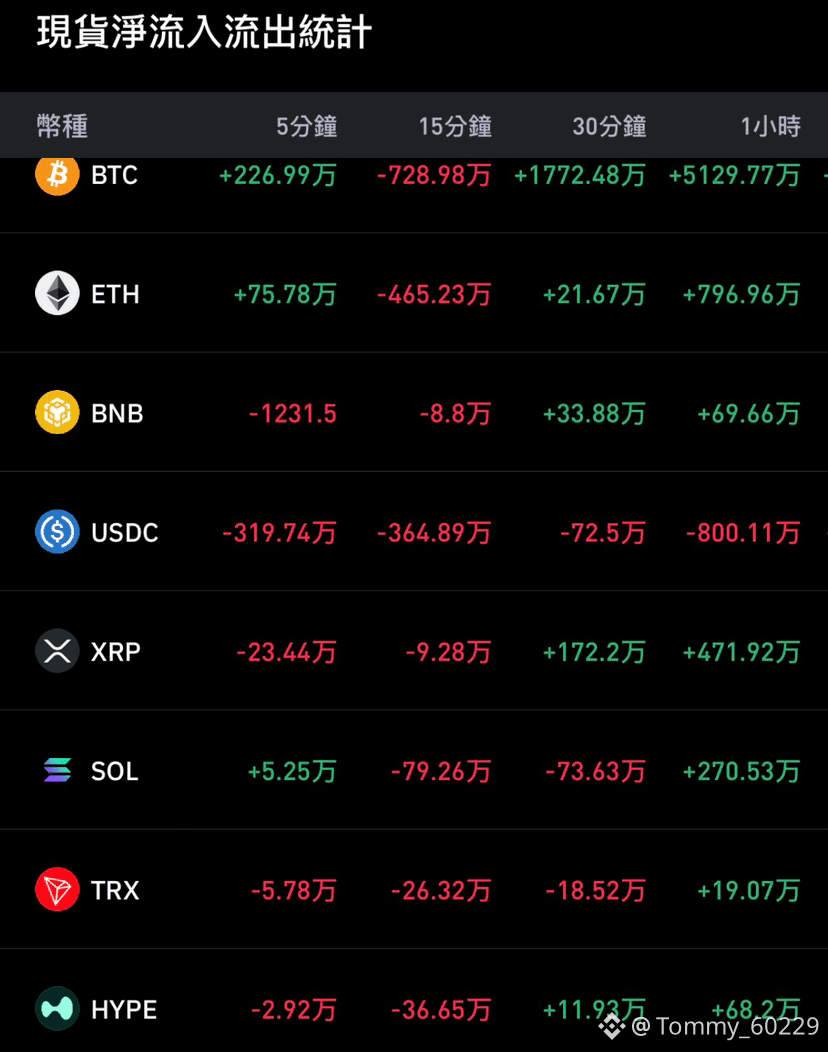
Currently, $BTC is around $63,084, and $ETH # is at $1,663. The charts look like they're stabilizing, but the capital flow hasn't genuinely strengthened yet. On June 5, the U.S. spot BTC ETF saw a net outflow of about $326 million, while the ETH ETF also had a net outflow of around $6 million; more critically, the total holdings of the BTC ETF have decreased by 7.2% compared to the high point in October 2025. This indicates one thing: big money is still picking its spots, not indiscriminately bottom fishing.
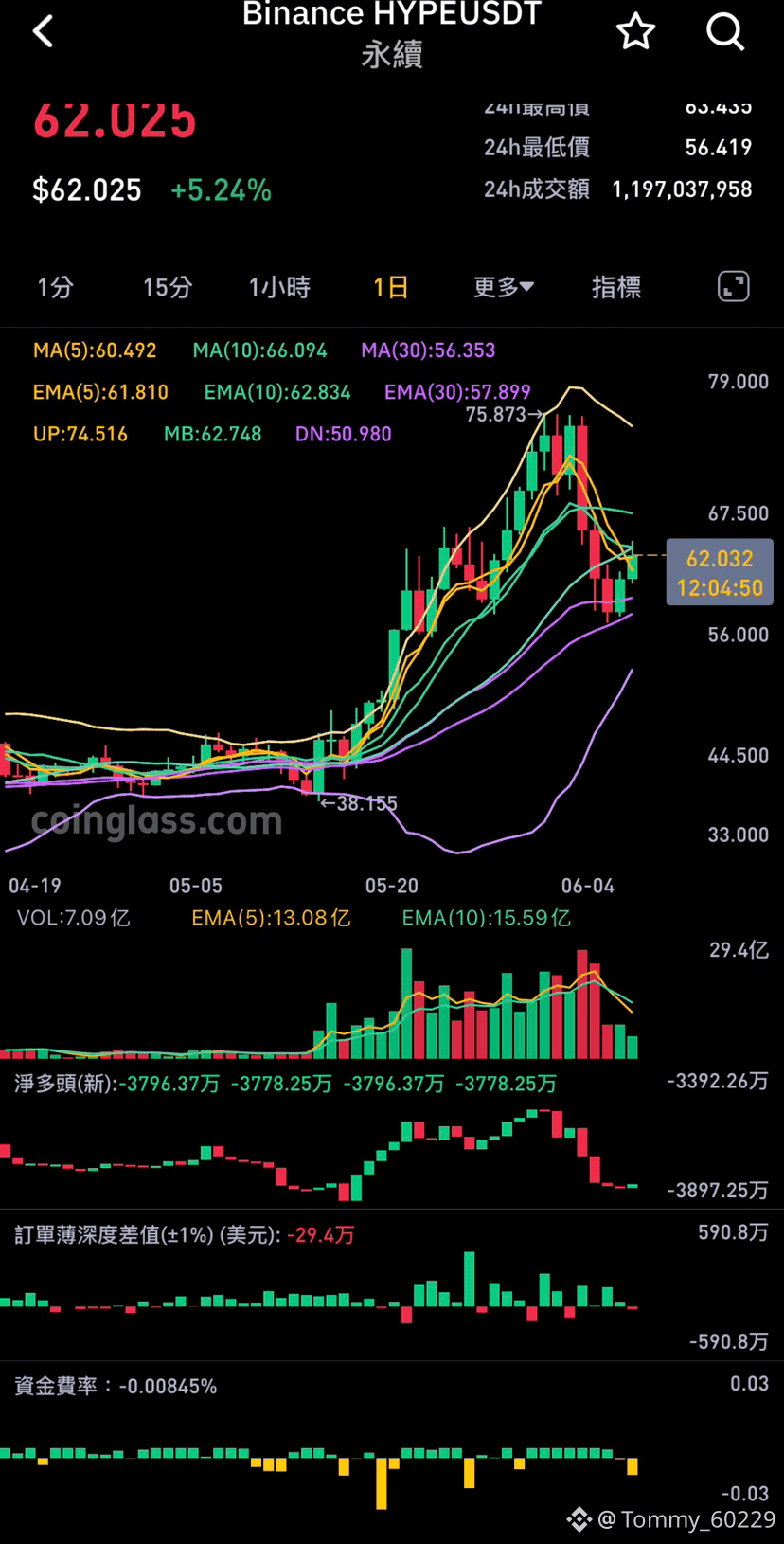
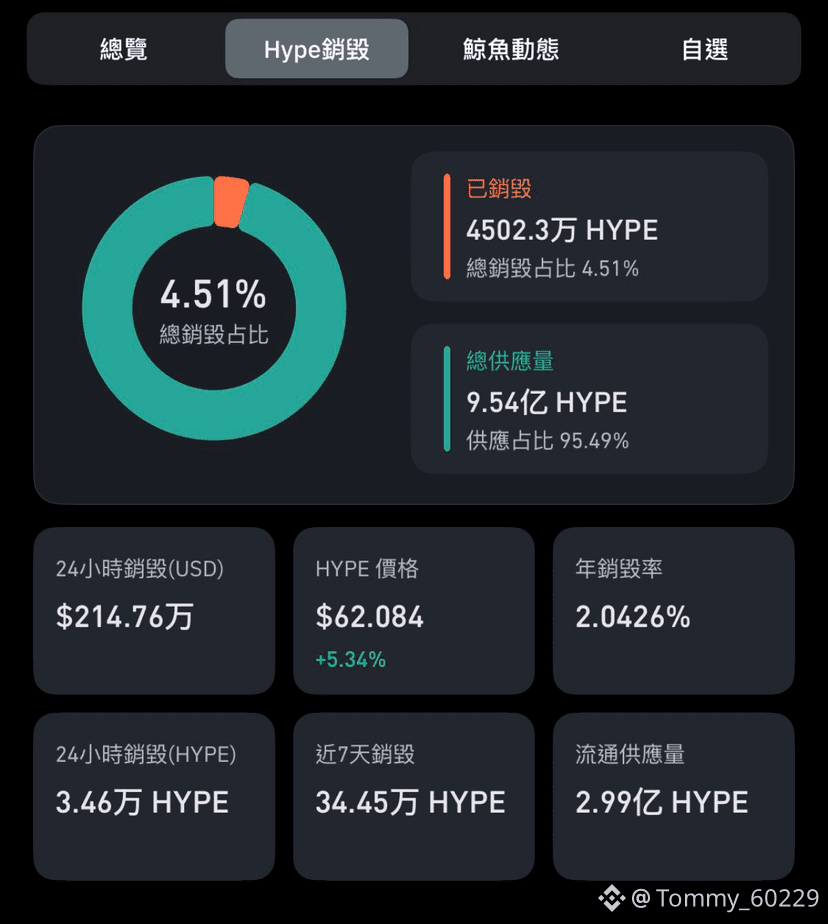
On the flip side, the real cash-absorbing force is the $HYPE line. The HYPE ETF, since its launch on May 12, has seen almost daily net inflows, with the latest asset size reaching $185.68 million. This isn't just a simple hype play; the market is voting with real money: when the broader market capital is conservative, the narrative that can still attract incremental capital is the one with the most explosive potential.
Why is this important? Because if BTC rebounds without a full return of spot capital, many chasing after it aren’t following a trend, but rather someone else’s short position; however, if capital truly starts to concentrate on 'on-chain transaction volume + fee cash flow + ETF packaging' — a story that institutions can understand — then the market's main narrative won’t be a broad rally in established coins, but rather a few narratives grabbing most of the attention and returns.
My stance is straightforward: now isn’t the time to brainlessly watch the market flip bullish across the board; it’s time to focus on 'who's still attracting capital' for your choices. Are you standing with BTC merely for a technical bounce, or is it the HYPE-style capital rotation that will be the next main narrative?
#比特币反弹突破6.3万美元
Everyone's looking in the wrong place: the real big money entering might not be BTC, but rather the 'cash flow narrative of on-chain exchanges'.
Folks are missing the mark; tonight's biggest risk isn't a drop, but mistaking a short cover for the start of a new bull run.
Currently, $BTC is around $63,084, and $ETH # is at $1,663. The charts look like they're stabilizing, but the capital flow hasn't genuinely strengthened yet. On June 5, the U.S. spot BTC ETF saw a net outflow of about $326 million, while the ETH ETF also had a net outflow of around $6 million; more critically, the total holdings of the BTC ETF have decreased by 7.2% compared to the high point in October 2025. This indicates one thing: big money is still picking its spots, not indiscriminately bottom fishing.
On the flip side, the real cash-absorbing force is the $HYPE line. The HYPE ETF, since its launch on May 12, has seen almost daily net inflows, with the latest asset size reaching $185.68 million. This isn't just a simple hype play; the market is voting with real money: when the broader market capital is conservative, the narrative that can still attract incremental capital is the one with the most explosive potential.
Why is this important? Because if BTC rebounds without a full return of spot capital, many chasing after it aren’t following a trend, but rather someone else’s short position; however, if capital truly starts to concentrate on 'on-chain transaction volume + fee cash flow + ETF packaging' — a story that institutions can understand — then the market's main narrative won’t be a broad rally in established coins, but rather a few narratives grabbing most of the attention and returns.
My stance is straightforward: now isn’t the time to brainlessly watch the market flip bullish across the board; it’s time to focus on 'who's still attracting capital' for your choices. Are you standing with BTC merely for a technical bounce, or is it the HYPE-style capital rotation that will be the next main narrative?
#比特币反弹突破6.3万美元
Folks are missing the mark; tonight's biggest risk isn't a drop, but mistaking a short cover for the start of a new bull run.
Currently, $BTC is around $63,084, and $ETH # is at $1,663. The charts look like they're stabilizing, but the capital flow hasn't genuinely strengthened yet. On June 5, the U.S. spot BTC ETF saw a net outflow of about $326 million, while the ETH ETF also had a net outflow of around $6 million; more critically, the total holdings of the BTC ETF have decreased by 7.2% compared to the high point in October 2025. This indicates one thing: big money is still picking its spots, not indiscriminately bottom fishing.
On the flip side, the real cash-absorbing force is the $HYPE line. The HYPE ETF, since its launch on May 12, has seen almost daily net inflows, with the latest asset size reaching $185.68 million. This isn't just a simple hype play; the market is voting with real money: when the broader market capital is conservative, the narrative that can still attract incremental capital is the one with the most explosive potential.
Why is this important? Because if BTC rebounds without a full return of spot capital, many chasing after it aren’t following a trend, but rather someone else’s short position; however, if capital truly starts to concentrate on 'on-chain transaction volume + fee cash flow + ETF packaging' — a story that institutions can understand — then the market's main narrative won’t be a broad rally in established coins, but rather a few narratives grabbing most of the attention and returns.
My stance is straightforward: now isn’t the time to brainlessly watch the market flip bullish across the board; it’s time to focus on 'who's still attracting capital' for your choices. Are you standing with BTC merely for a technical bounce, or is it the HYPE-style capital rotation that will be the next main narrative?
#比特币反弹突破6.3万美元
264
·
--
A lot of folks are missing the mark right now: it's not that alt season hasn't arrived, it's that liquidity has yet to come back.
If you’ve just been watching coin prices these past couple of days, it’s easy to misinterpret it as "the dip is deep, altcoins are about to rotate."
But I’m more focused on three signals stacked together:
1. BTC Dominance is currently hovering around 58.2%
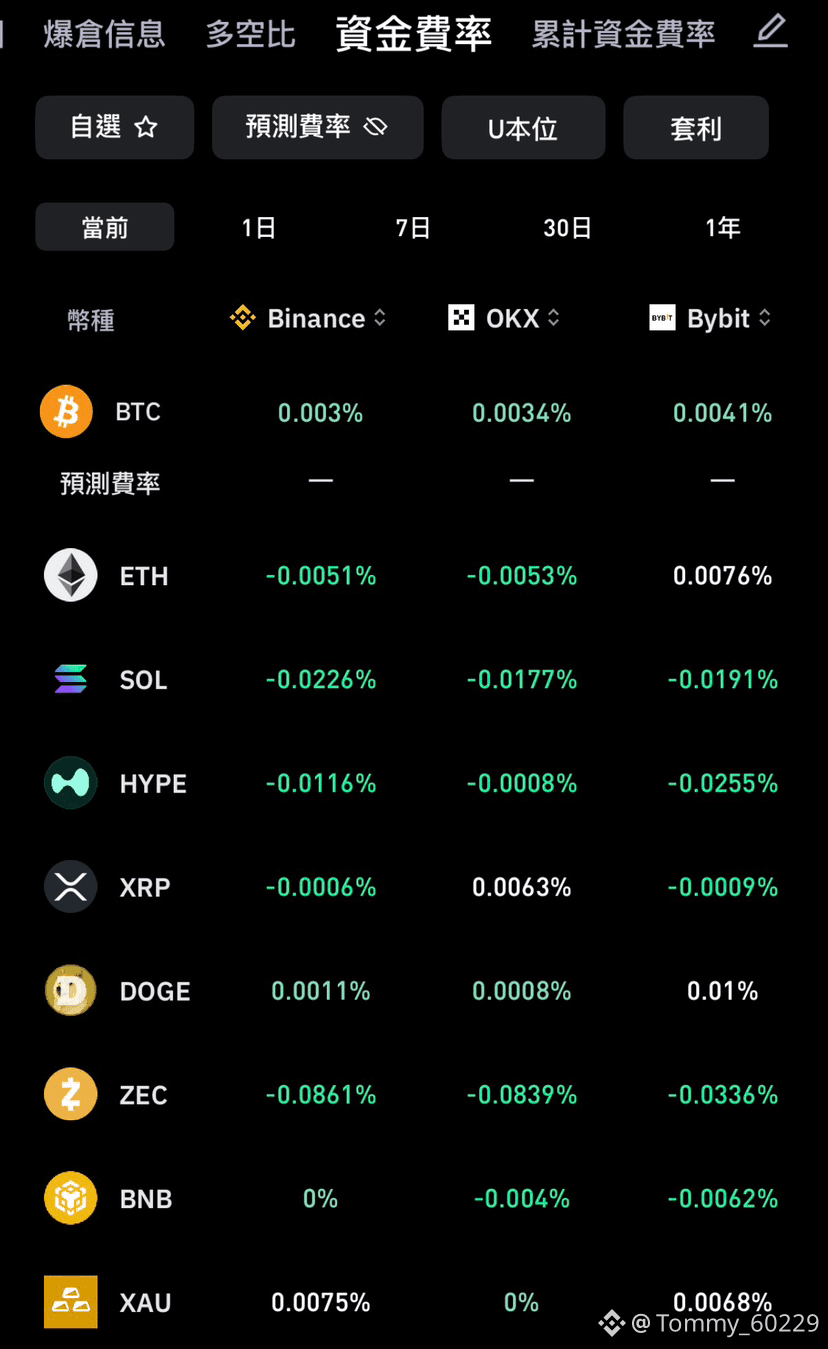
2. The US crypto ETFs have seen a total outflow of -$344.2 million in the last 24 hours, with BTC ETF accounting for -$325.7 million
3. The total market cap of stablecoins is around $312 billion, staying nearly flat in the past 24 hours.
Putting these three numbers together, the message is pretty clear:
Money hasn't visibly returned.
And the money that has come back isn’t taking risks; it’s still leaning towards BTC.
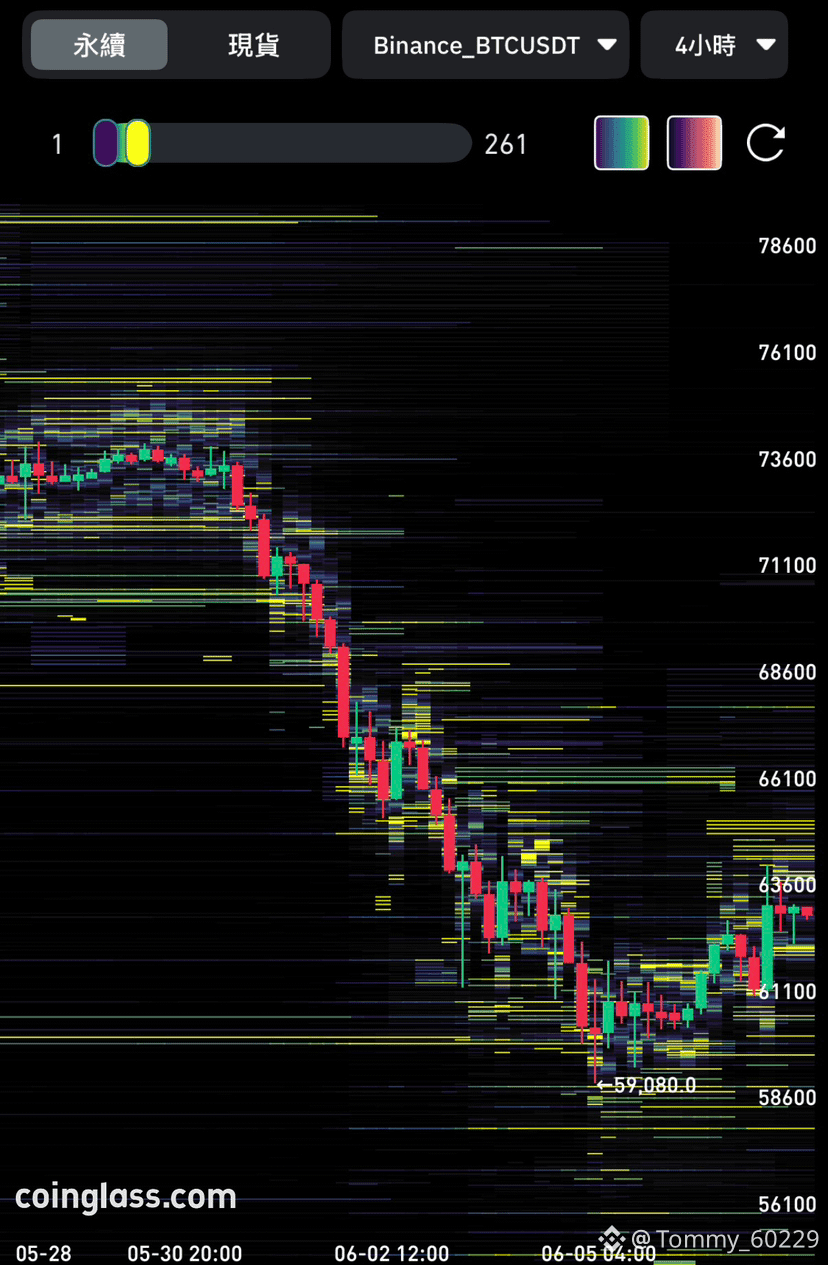
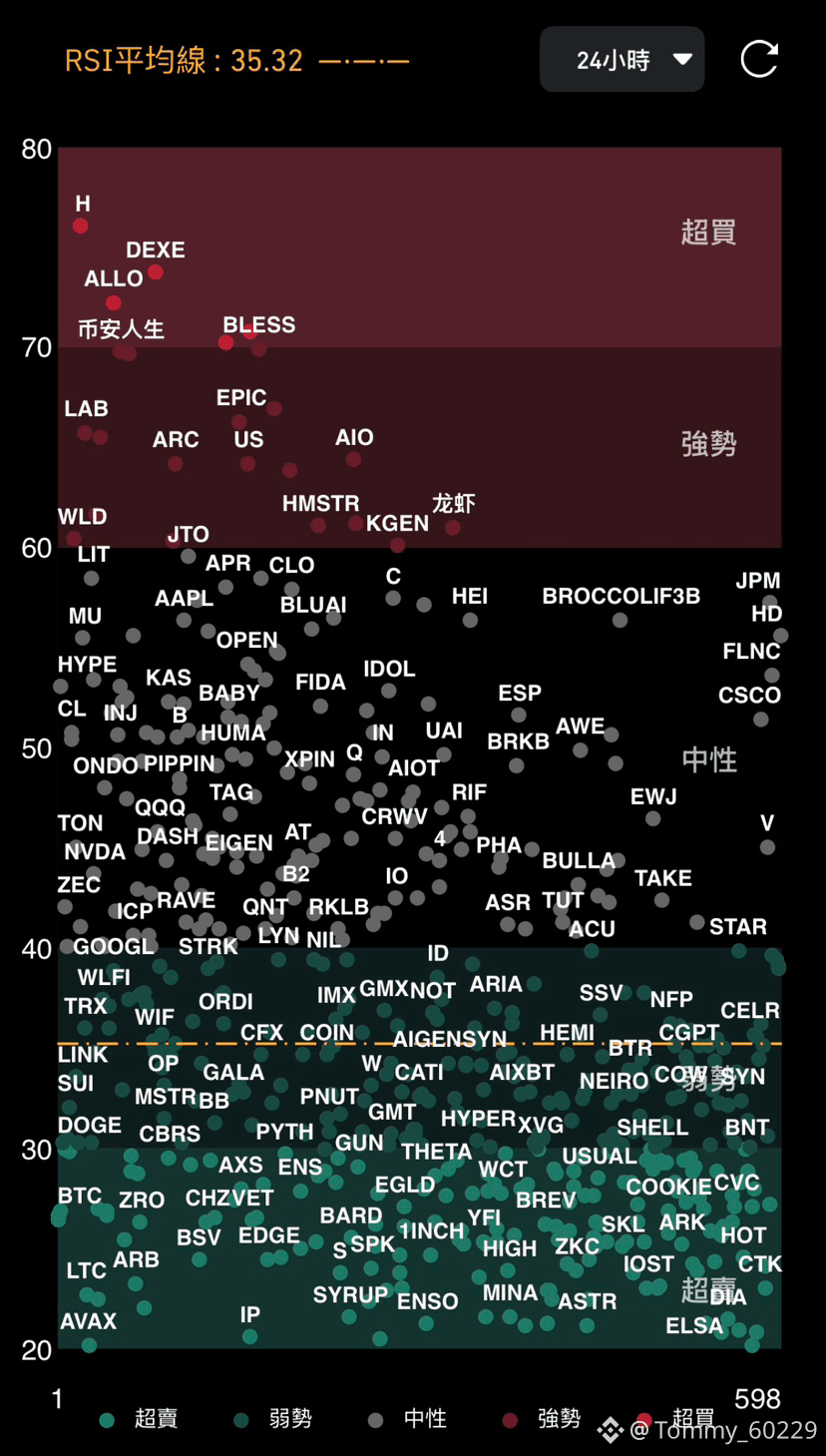
So, right now, many altcoin rebounds look more like "short covering + technical bounces from deep dips,"
not really like "a new wave of risk appetite has truly opened up."
How do I personally gauge this?
If you see the following:
Stablecoin market cap starting to trend upwards continuously
• ETF outflows shrinking, or even flipping to positive
• BTC.D starting to drop
Then it might resemble an environment where altcoins can sustain a run.
One condition missing can still lead to price increases, but they’re usually not durable.
This is actually a great quick market screening method:
Don’t first ask "which coin will pump," ask first "is there incremental capital flowing into the market, and is there a willingness to take on higher risks?"
Right now, it seems the answer is still leaning conservative.
What do you all think we’ll see first?
A. BTC.D breaking below 58%
B. ETF flipping back to net inflows
C. Stablecoin market cap accelerating upwards again
A lot of folks are missing the mark right now: it's not that alt season hasn't arrived, it's that liquidity has yet to come back.
If you’ve just been watching coin prices these past couple of days, it’s easy to misinterpret it as "the dip is deep, altcoins are about to rotate."
But I’m more focused on three signals stacked together:
1. BTC Dominance is currently hovering around 58.2%
2. The US crypto ETFs have seen a total outflow of -$344.2 million in the last 24 hours, with BTC ETF accounting for -$325.7 million
3. The total market cap of stablecoins is around $312 billion, staying nearly flat in the past 24 hours.
Putting these three numbers together, the message is pretty clear:
Money hasn't visibly returned.
And the money that has come back isn’t taking risks; it’s still leaning towards BTC.
So, right now, many altcoin rebounds look more like "short covering + technical bounces from deep dips,"
not really like "a new wave of risk appetite has truly opened up."
How do I personally gauge this?
If you see the following:
Stablecoin market cap starting to trend upwards continuously
• ETF outflows shrinking, or even flipping to positive
• BTC.D starting to drop
Then it might resemble an environment where altcoins can sustain a run.
One condition missing can still lead to price increases, but they’re usually not durable.
This is actually a great quick market screening method:
Don’t first ask "which coin will pump," ask first "is there incremental capital flowing into the market, and is there a willingness to take on higher risks?"
Right now, it seems the answer is still leaning conservative.
What do you all think we’ll see first?
A. BTC.D breaking below 58%
B. ETF flipping back to net inflows
C. Stablecoin market cap accelerating upwards again
If you’ve just been watching coin prices these past couple of days, it’s easy to misinterpret it as "the dip is deep, altcoins are about to rotate."
But I’m more focused on three signals stacked together:
1. BTC Dominance is currently hovering around 58.2%
2. The US crypto ETFs have seen a total outflow of -$344.2 million in the last 24 hours, with BTC ETF accounting for -$325.7 million
3. The total market cap of stablecoins is around $312 billion, staying nearly flat in the past 24 hours.
Putting these three numbers together, the message is pretty clear:
Money hasn't visibly returned.
And the money that has come back isn’t taking risks; it’s still leaning towards BTC.
So, right now, many altcoin rebounds look more like "short covering + technical bounces from deep dips,"
not really like "a new wave of risk appetite has truly opened up."
How do I personally gauge this?
If you see the following:
Stablecoin market cap starting to trend upwards continuously
• ETF outflows shrinking, or even flipping to positive
• BTC.D starting to drop
Then it might resemble an environment where altcoins can sustain a run.
One condition missing can still lead to price increases, but they’re usually not durable.
This is actually a great quick market screening method:
Don’t first ask "which coin will pump," ask first "is there incremental capital flowing into the market, and is there a willingness to take on higher risks?"
Right now, it seems the answer is still leaning conservative.
What do you all think we’ll see first?
A. BTC.D breaking below 58%
B. ETF flipping back to net inflows
C. Stablecoin market cap accelerating upwards again
417

·
--
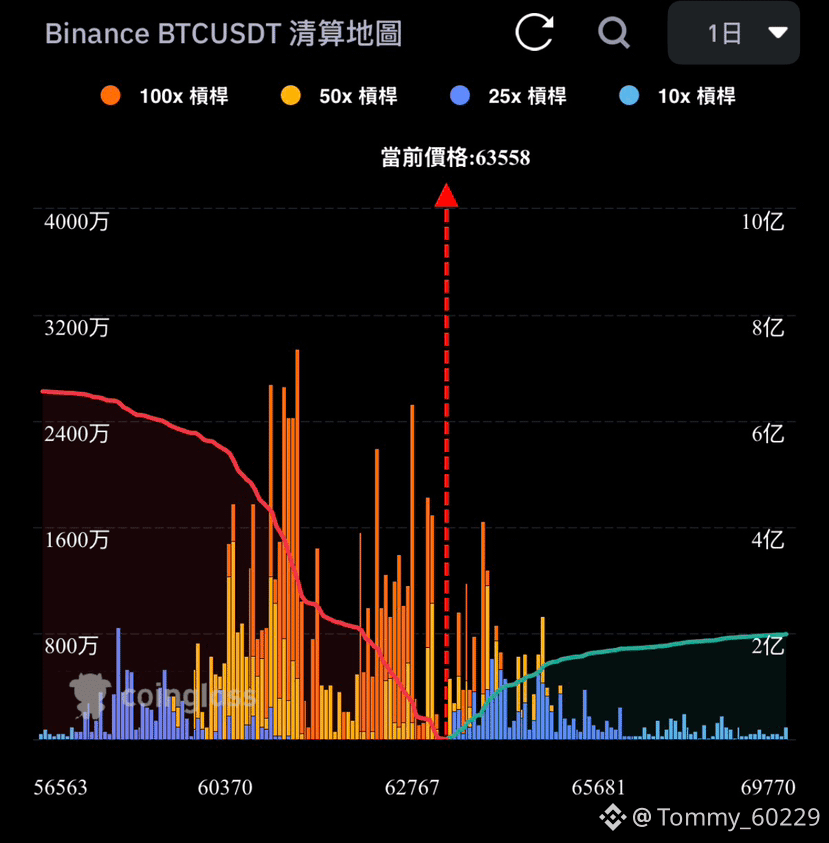
【Right now, I still can't directly call this a reversal】
BTC bounced back from today's low of 60749 to 63585
ETH also rebounded from 1564 to 1695
But I'm leaning towards this being a leverage correction, not real capital returning
The reason is simple
1. This drop wasn't just a minor news event; it was triggered by continuous ETF fund outflows that broke weak structures directly
2. Just a few days ago, the market saw a $1.6 billion liquidation, and long positions were cleaned out pretty well, so this type of bounce is expected to be quick
3. If this is just a retracement without new buying support, then the price bouncing back just serves to relieve some of the trapped positions from before
Right now, I'm only focused on two things:
Can BTC hold above 63K?
Can ETH reclaim the 1700 to 1720 range?
If it can't hold, I'm still treating this as a weak consolidation
Are you chasing this bounce, or are you waiting for the next confirmation?
If you want to put out a short interactive version, I suggest posting this at noon
Today, the biggest risk isn't the drop
It's that many people see a bounce and start thinking everything's fine
The trickiest part of this market is that
It first lets you breathe a sigh of relief
Then decides whether to stab you again
Right now, are you:
1. Waiting and watching
2. Taking a small position to catch the bounce
3. Unable to resist chasing it
【Right now, I still can't directly call this a reversal】
BTC bounced back from today's low of 60749 to 63585
ETH also rebounded from 1564 to 1695
But I'm leaning towards this being a leverage correction, not real capital returning
The reason is simple
1. This drop wasn't just a minor news event; it was triggered by continuous ETF fund outflows that broke weak structures directly
2. Just a few days ago, the market saw a $1.6 billion liquidation, and long positions were cleaned out pretty well, so this type of bounce is expected to be quick
3. If this is just a retracement without new buying support, then the price bouncing back just serves to relieve some of the trapped positions from before
Right now, I'm only focused on two things:
Can BTC hold above 63K?
Can ETH reclaim the 1700 to 1720 range?
If it can't hold, I'm still treating this as a weak consolidation
Are you chasing this bounce, or are you waiting for the next confirmation?
If you want to put out a short interactive version, I suggest posting this at noon
Today, the biggest risk isn't the drop
It's that many people see a bounce and start thinking everything's fine
The trickiest part of this market is that
It first lets you breathe a sigh of relief
Then decides whether to stab you again
Right now, are you:
1. Waiting and watching
2. Taking a small position to catch the bounce
3. Unable to resist chasing it
BTC bounced back from today's low of 60749 to 63585
ETH also rebounded from 1564 to 1695
But I'm leaning towards this being a leverage correction, not real capital returning
The reason is simple
1. This drop wasn't just a minor news event; it was triggered by continuous ETF fund outflows that broke weak structures directly
2. Just a few days ago, the market saw a $1.6 billion liquidation, and long positions were cleaned out pretty well, so this type of bounce is expected to be quick
3. If this is just a retracement without new buying support, then the price bouncing back just serves to relieve some of the trapped positions from before
Right now, I'm only focused on two things:
Can BTC hold above 63K?
Can ETH reclaim the 1700 to 1720 range?
If it can't hold, I'm still treating this as a weak consolidation
Are you chasing this bounce, or are you waiting for the next confirmation?
If you want to put out a short interactive version, I suggest posting this at noon
Today, the biggest risk isn't the drop
It's that many people see a bounce and start thinking everything's fine
The trickiest part of this market is that
It first lets you breathe a sigh of relief
Then decides whether to stab you again
Right now, are you:
1. Waiting and watching
2. Taking a small position to catch the bounce
3. Unable to resist chasing it
1
1
1k
Log in to explore more content
Join global crypto users on Binance Square
⚡️ Get latest and useful information about crypto.
💬 Trusted by the world’s largest crypto exchange.
👍 Discover real insights from verified creators.
Email / Phone number
Trending Topics
US10YearYieldNears5.3%
17 views
14 Discussing
🚨 10-YEAR TREASURY YIELD HITS 24-YEAR HIGH🔥
U.S. 10-year Treasury yield surged to 5.34%, reaching its highest level since 2002, as the global bond sell-off intensifies.
📉 Global bond market under pressure as yields keep climbing.
#US10YearYieldNears5.3%
LTTRADE
·0 Likes
·12 views
BitcoinETFsTake$6.34BillionInQ3
0 views
3 Discussing
KoreaProposesTokenizingStocksAndBonds
19,527 views
304 Discussing