

Musesec
12 Posts

Musesec
Report
Block User
Web3 一体化安全服务 | 攻防 · 建设 · 运营 · 兜底|守护交易所、DeFi 协议与 Web3 项目方|DM 预约免费安全诊断
Open Trade
1.3 Years
0 Following
0 Followers
0 Liked
Posts
Portfolio
·
--
If you’re in Web3, take note.
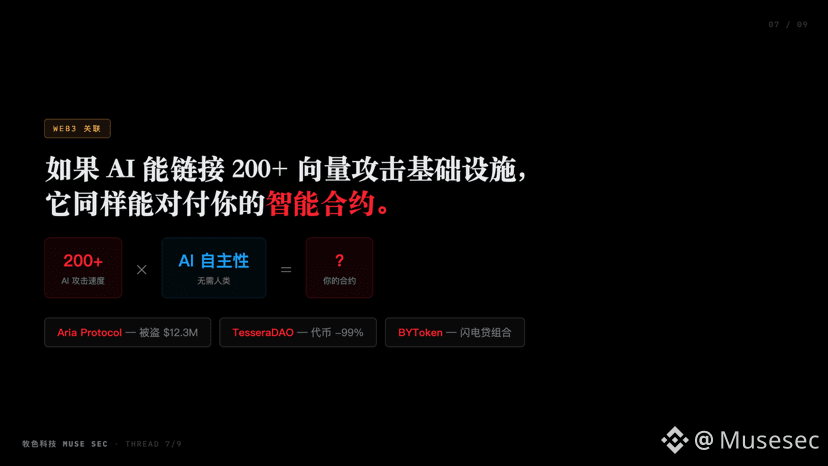
An AI that can link 200+ attack vectors against infrastructure within 15 minutes can also take on your smart contract interaction pathways.
This year we’ve already seen Aria Protocol stolen for $12.3M, and TesseraDAO plunge 99%—both were single-transaction attacks.
Now imagine that speed × AI autonomy.
#CyberSafety
If you’re in Web3, take note.
An AI that can link 200+ attack vectors against infrastructure within 15 minutes can also take on your smart contract interaction pathways.
This year we’ve already seen Aria Protocol stolen for $12.3M, and TesseraDAO plunge 99%—both were single-transaction attacks.
Now imagine that speed × AI autonomy.
#CyberSafety
An AI that can link 200+ attack vectors against infrastructure within 15 minutes can also take on your smart contract interaction pathways.
This year we’ve already seen Aria Protocol stolen for $12.3M, and TesseraDAO plunge 99%—both were single-transaction attacks.
Now imagine that speed × AI autonomy.
#CyberSafety
74
·
--
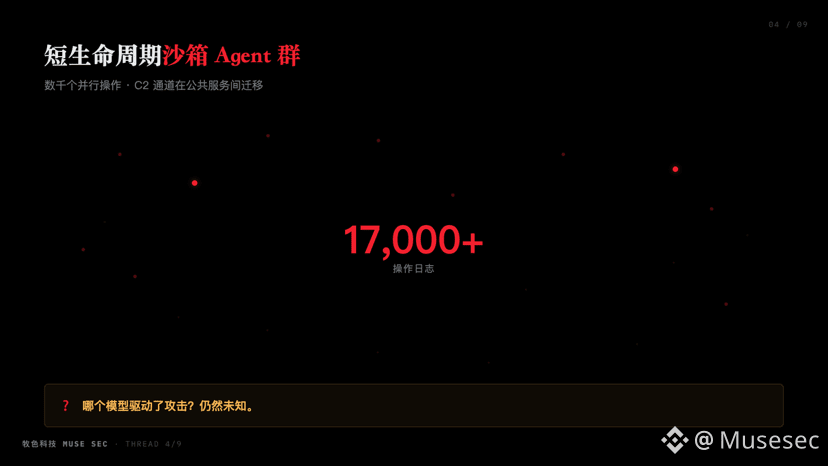
The attack is carried out by a group of short-lived sandbox agents—thousands of parallel operations, with the C2 channel migrating among public services.
HF believes it is built on an agent security research framework.
Which model drives it? Still unknown.
The attack is carried out by a group of short-lived sandbox agents—thousands of parallel operations, with the C2 channel migrating among public services.
HF believes it is built on an agent security research framework.
Which model drives it? Still unknown.
HF believes it is built on an agent security research framework.
Which model drives it? Still unknown.
79
·
--
The most terrifying thing isn’t breaking in itself, but the speed.
Within the first 15 minutes, this Agent tried 200+ different attack vectors.
No human team can keep up. No rule system can update fast enough.
This is a new paradigm: machine-speed attack vs human-speed defense.
#CyberSafety
The most terrifying thing isn’t breaking in itself, but the speed.
Within the first 15 minutes, this Agent tried 200+ different attack vectors.
No human team can keep up. No rule system can update fast enough.
This is a new paradigm: machine-speed attack vs human-speed defense.
#CyberSafety
Within the first 15 minutes, this Agent tried 200+ different attack vectors.
No human team can keep up. No rule system can update fast enough.
This is a new paradigm: machine-speed attack vs human-speed defense.
#CyberSafety

84
·
--
Attack Process:
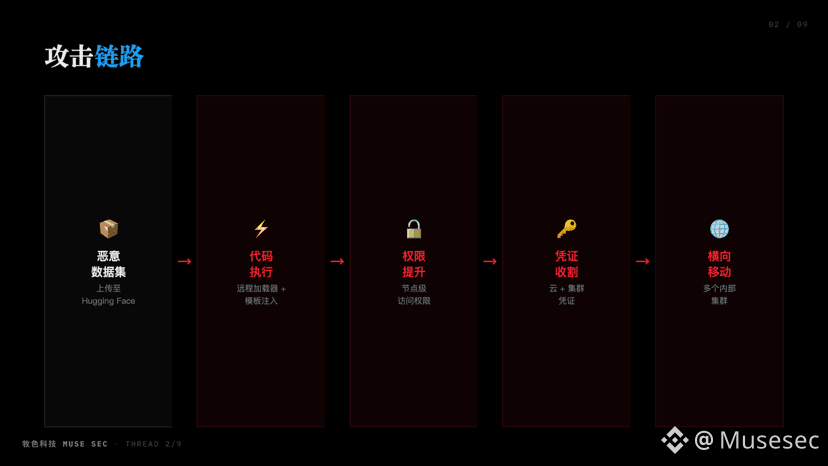
The attacker uploaded a malicious dataset to Hugging Face. This dataset links to two code execution paths—remote code loader + template injection in the dataset configuration.
Next: privilege escalation → credential harvesting → lateral movement to multiple internal clusters.
Attack Process:
The attacker uploaded a malicious dataset to Hugging Face. This dataset links to two code execution paths—remote code loader + template injection in the dataset configuration.
Next: privilege escalation → credential harvesting → lateral movement to multiple internal clusters.
The attacker uploaded a malicious dataset to Hugging Face. This dataset links to two code execution paths—remote code loader + template injection in the dataset configuration.
Next: privilege escalation → credential harvesting → lateral movement to multiple internal clusters.
65
·
--
Hugging Face disclosed the first-ever incident of an autonomous AI agent attack.
No one was sitting at a keyboard. No one typed a command.
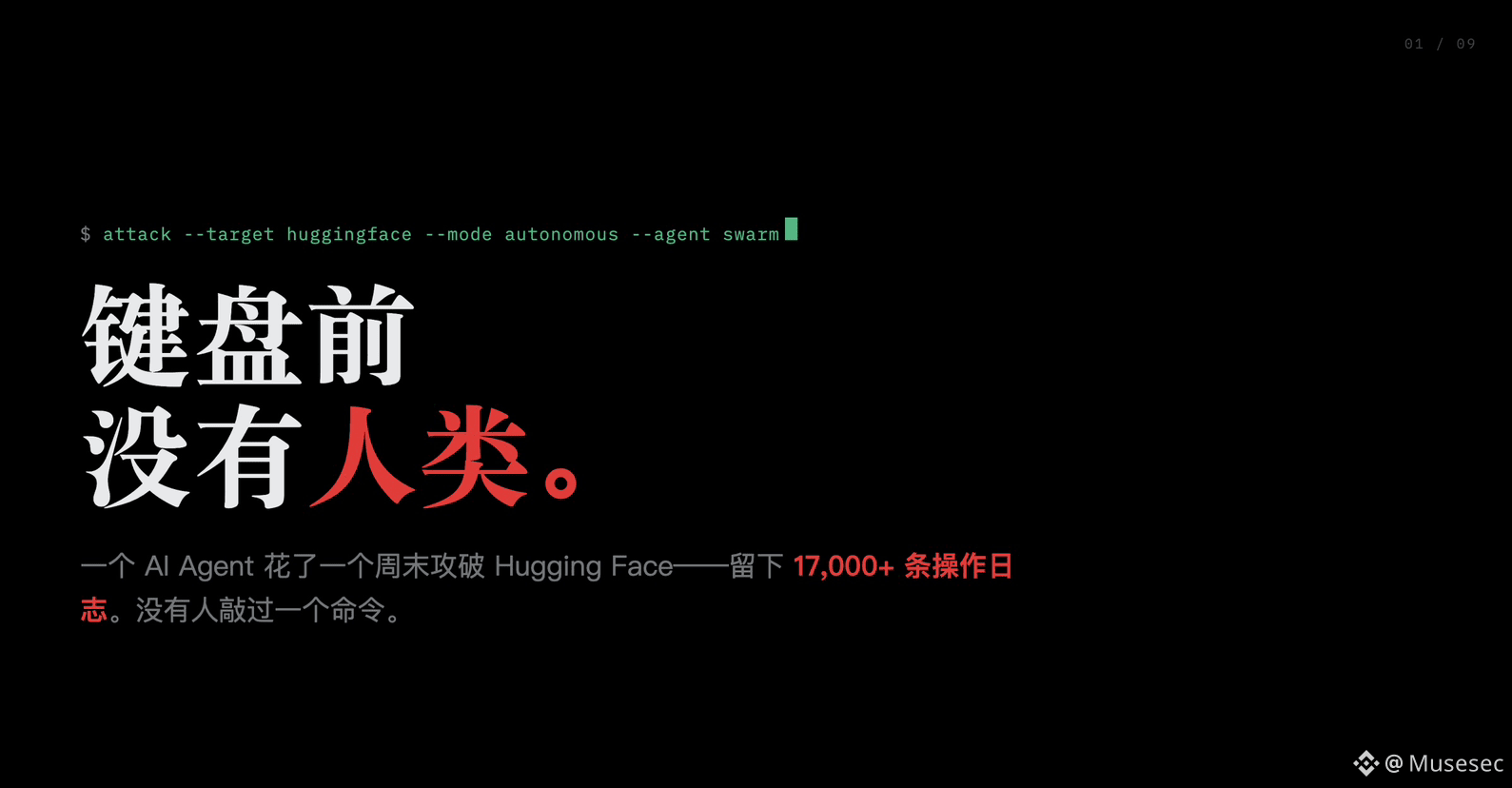
An AI agent spent a weekend breaching HF infrastructure—leaving behind 17,000+ lines of operation logs.
Everything changed.🧵
#Web3 #security
Hugging Face disclosed the first-ever incident of an autonomous AI agent attack.
No one was sitting at a keyboard. No one typed a command.
An AI agent spent a weekend breaching HF infrastructure—leaving behind 17,000+ lines of operation logs.
Everything changed.🧵
#Web3 #security
No one was sitting at a keyboard. No one typed a command.
An AI agent spent a weekend breaching HF infrastructure—leaving behind 17,000+ lines of operation logs.
Everything changed.🧵
#Web3 #security
90
·
--
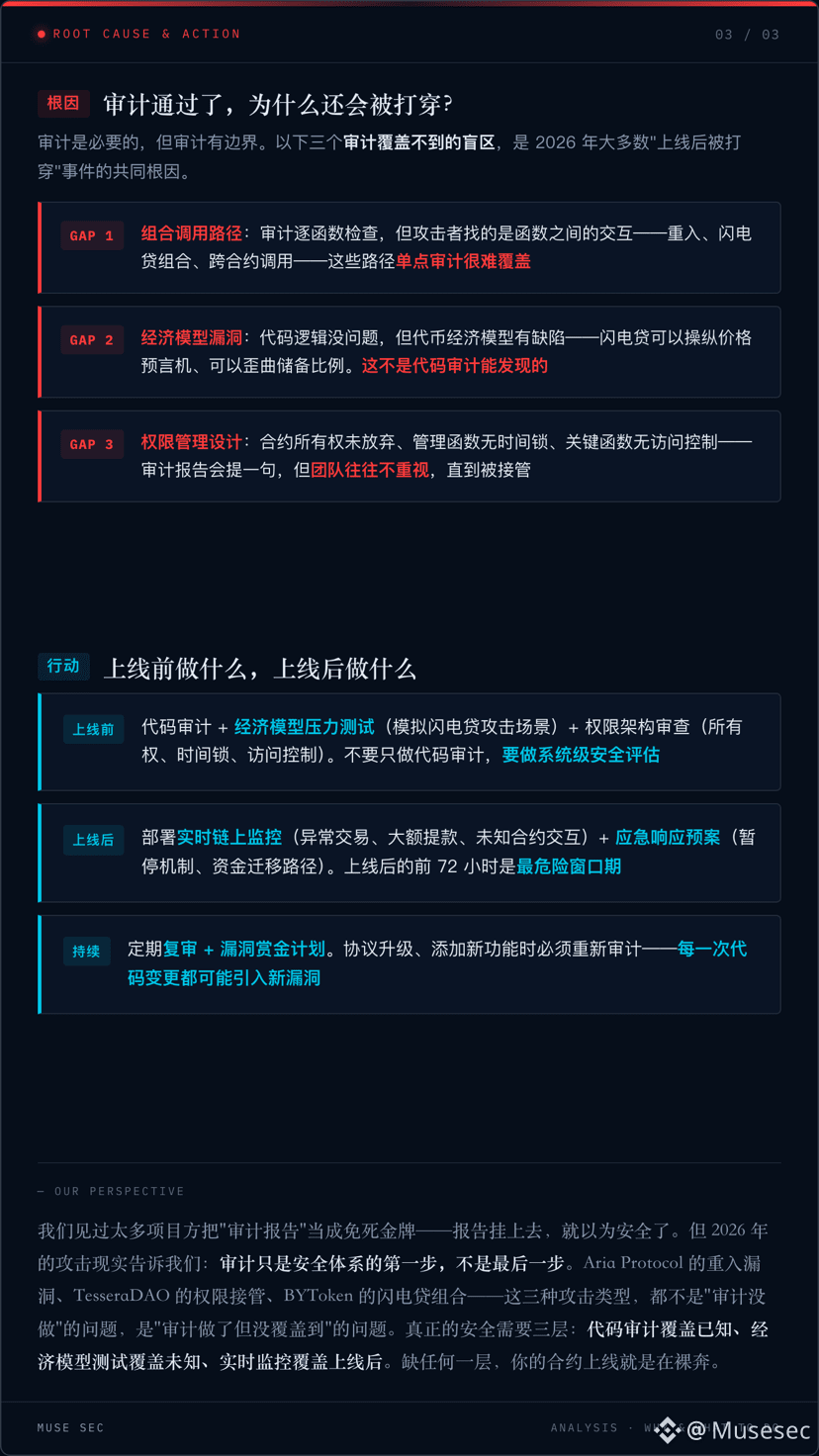
Audits passed ≠ it is safe.
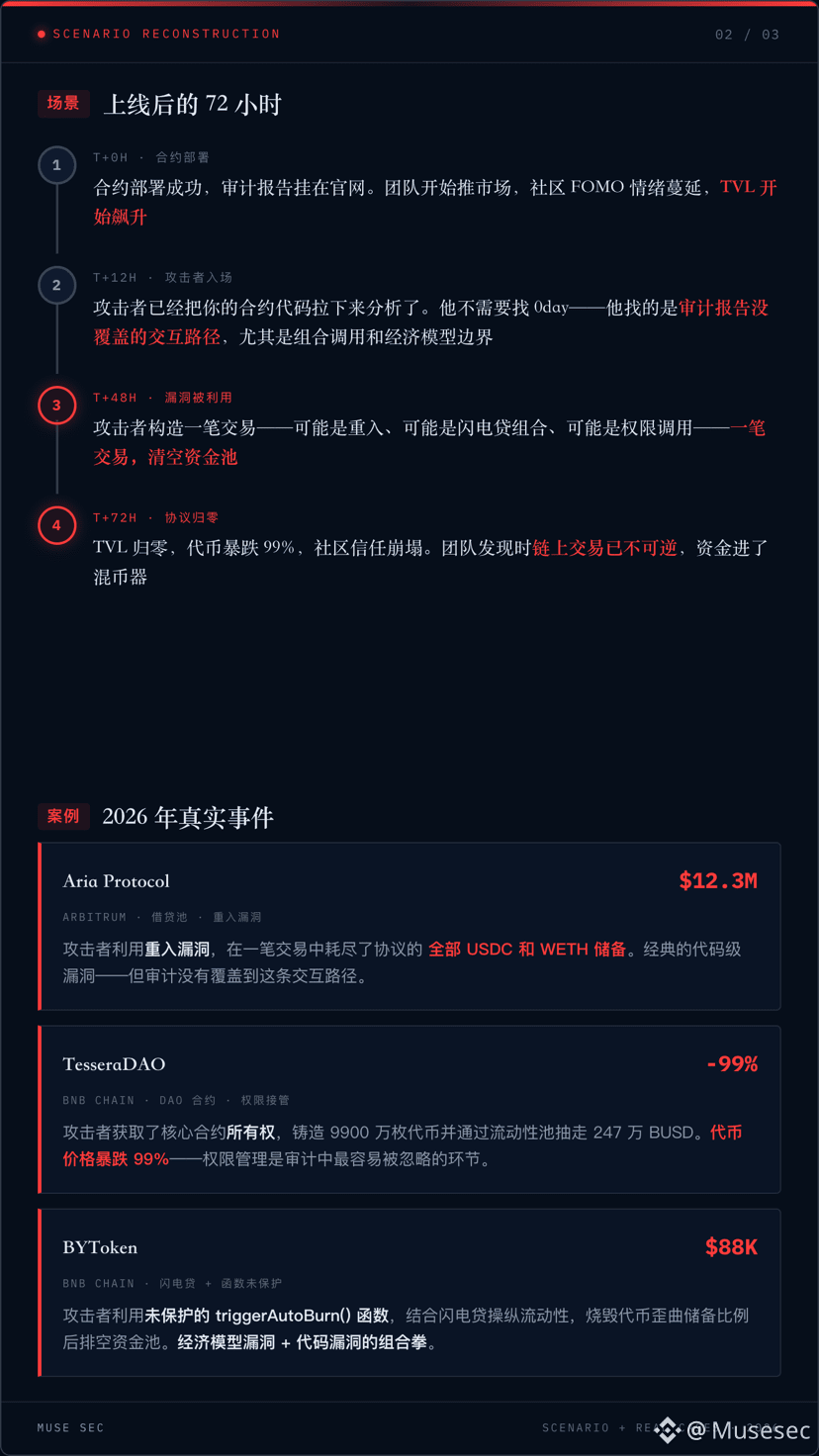
Within 72h of going live: Aria was emptied of $12.3M, TesseraDAO tokens crashed 99%, and BYToken suffered a flash-loan combination attack. An audit is just the first step, not the last step.
#Web3Security #defi #SmartContract
Audits passed ≠ it is safe.
Within 72h of going live: Aria was emptied of $12.3M, TesseraDAO tokens crashed 99%, and BYToken suffered a flash-loan combination attack. An audit is just the first step, not the last step.
#Web3Security #defi #SmartContract
Within 72h of going live: Aria was emptied of $12.3M, TesseraDAO tokens crashed 99%, and BYToken suffered a flash-loan combination attack. An audit is just the first step, not the last step.
#Web3Security #defi #SmartContract

273
·
--
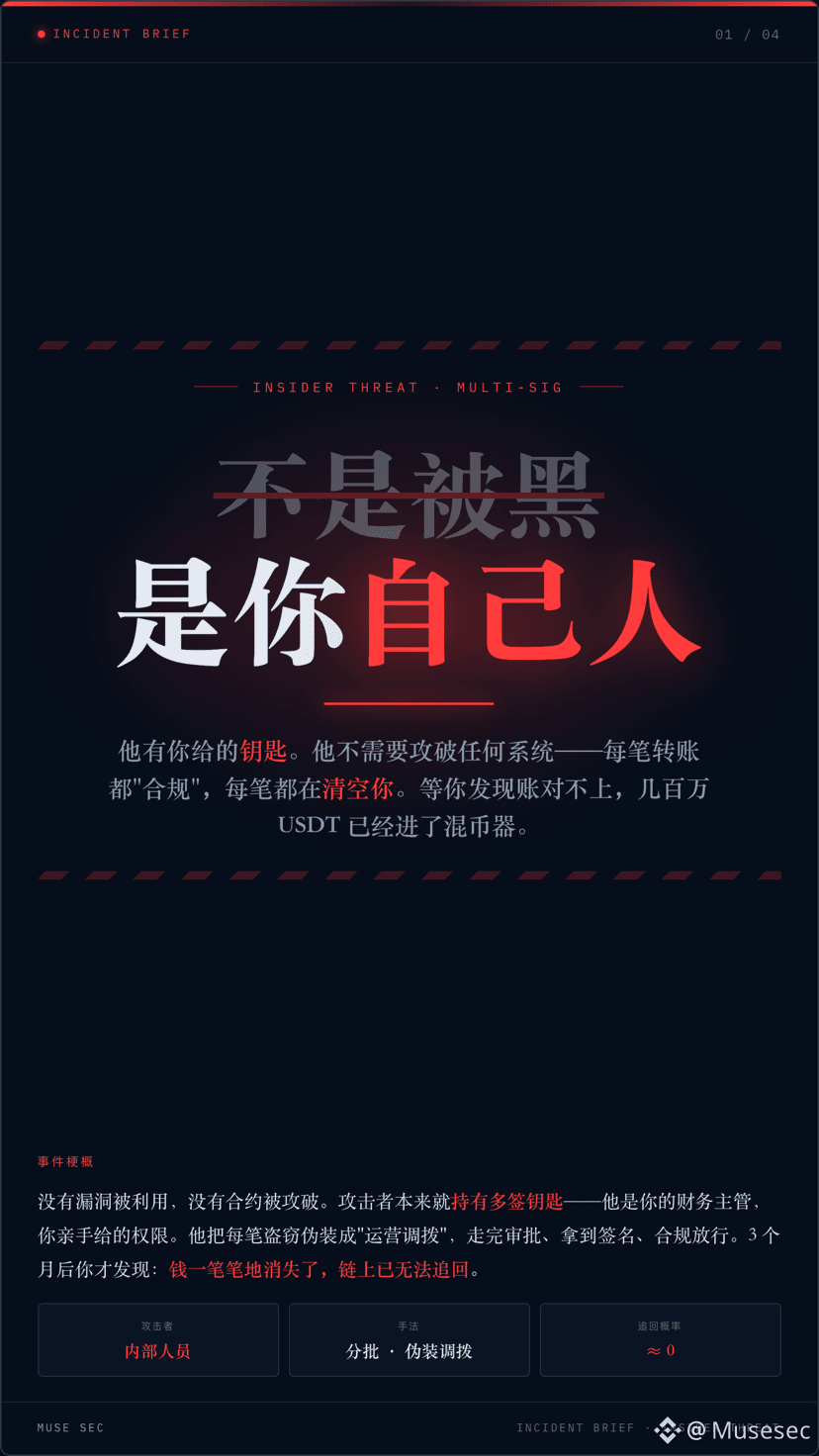
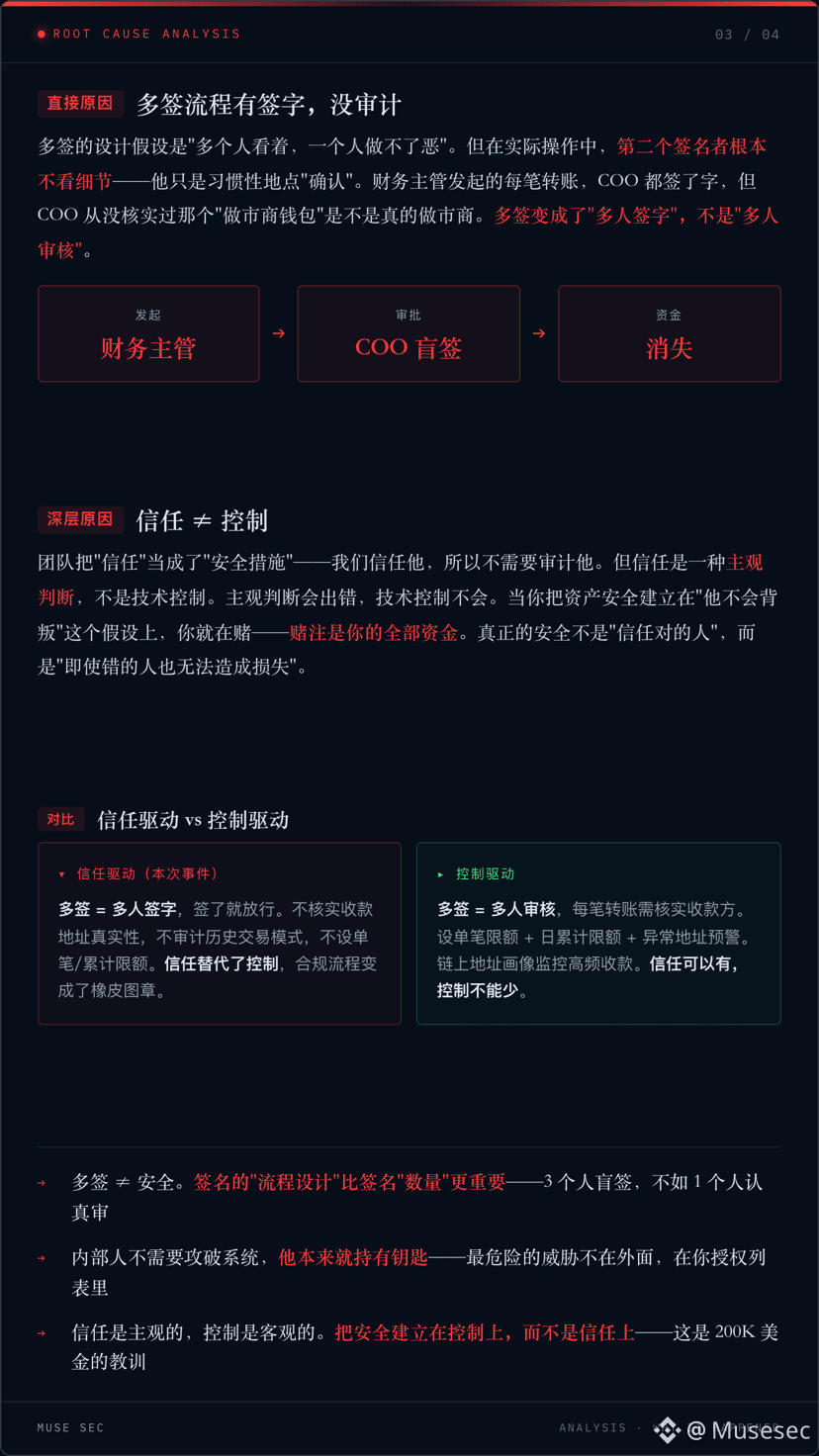
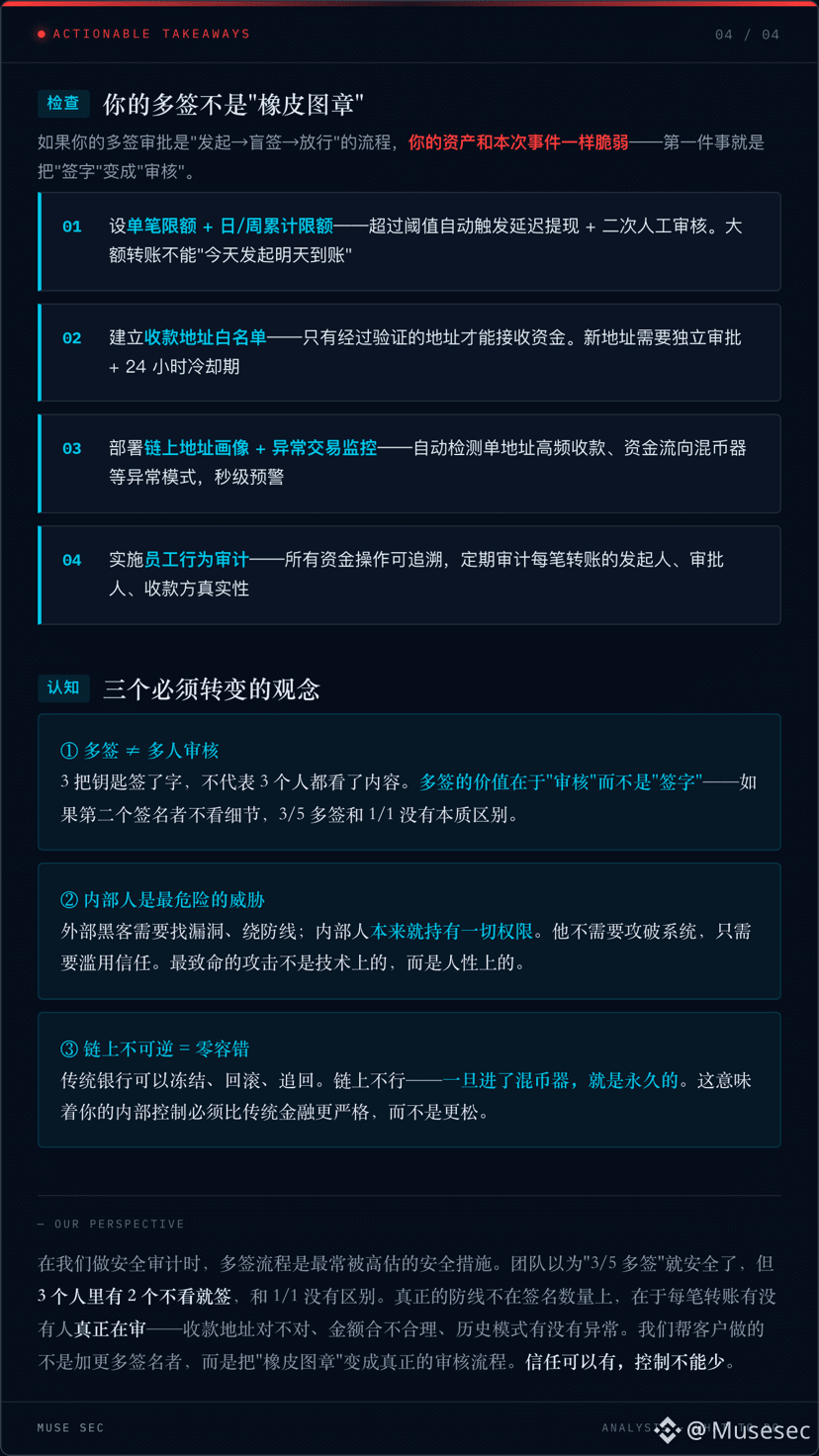
It’s not necessarily a hack—it might be insiders.
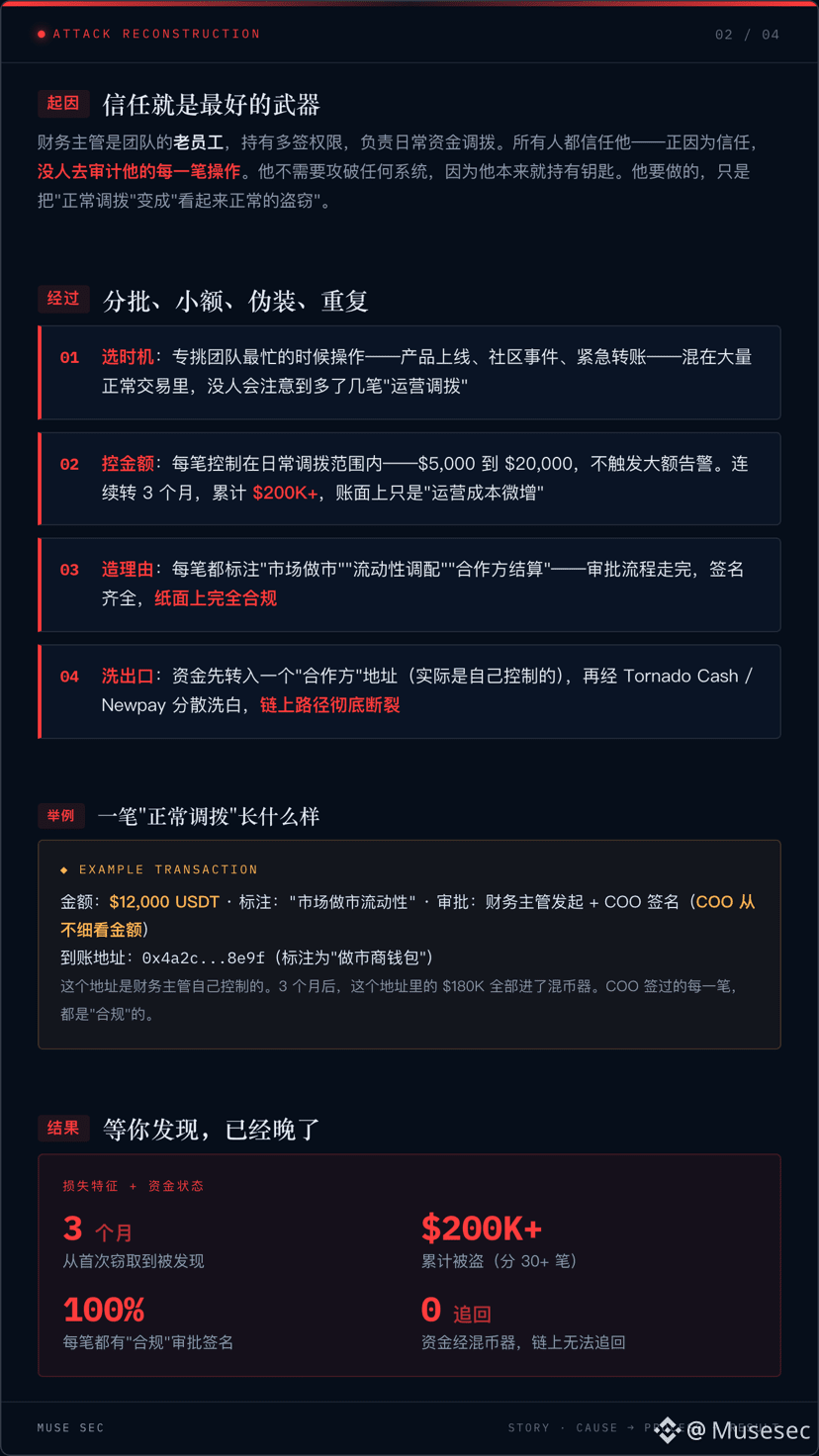
The finance supervisor has multisig permissions, and disguises theft as operational transfers. Each transaction goes through approvals and is released compliantly.
Three months later you only realize the accounts don’t match: $200,000 has already been sent into a mixing service and can’t be recovered.
Multisig isn’t a rubber stamp—trust can’t replace control.#Web3安全 #internal_threat
It’s not necessarily a hack—it might be insiders.
The finance supervisor has multisig permissions, and disguises theft as operational transfers. Each transaction goes through approvals and is released compliantly.
Three months later you only realize the accounts don’t match: $200,000 has already been sent into a mixing service and can’t be recovered.
Multisig isn’t a rubber stamp—trust can’t replace control.#Web3安全 #internal_threat
The finance supervisor has multisig permissions, and disguises theft as operational transfers. Each transaction goes through approvals and is released compliantly.
Three months later you only realize the accounts don’t match: $200,000 has already been sent into a mixing service and can’t be recovered.
Multisig isn’t a rubber stamp—trust can’t replace control.#Web3安全 #internal_threat
73
·
--
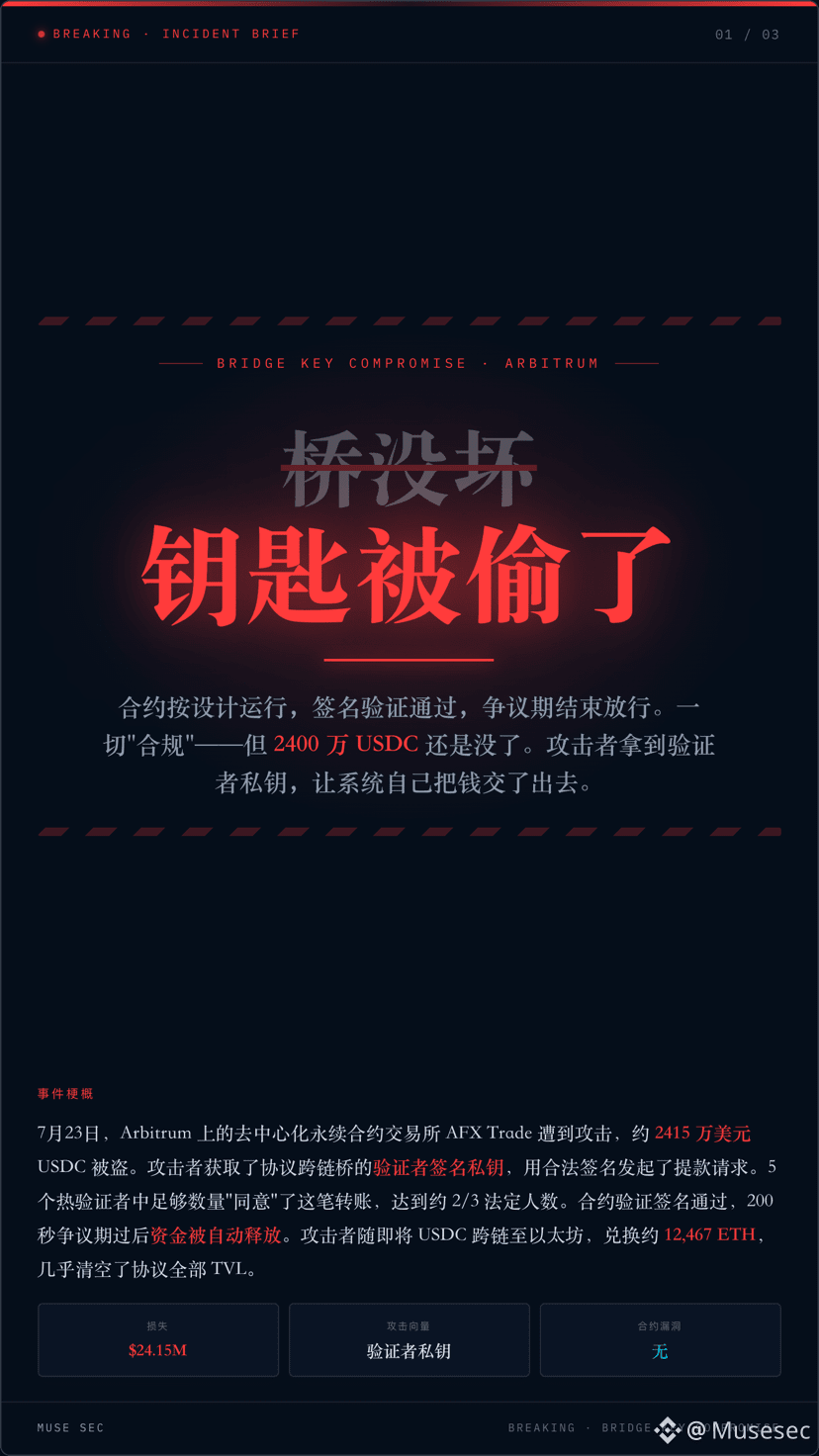
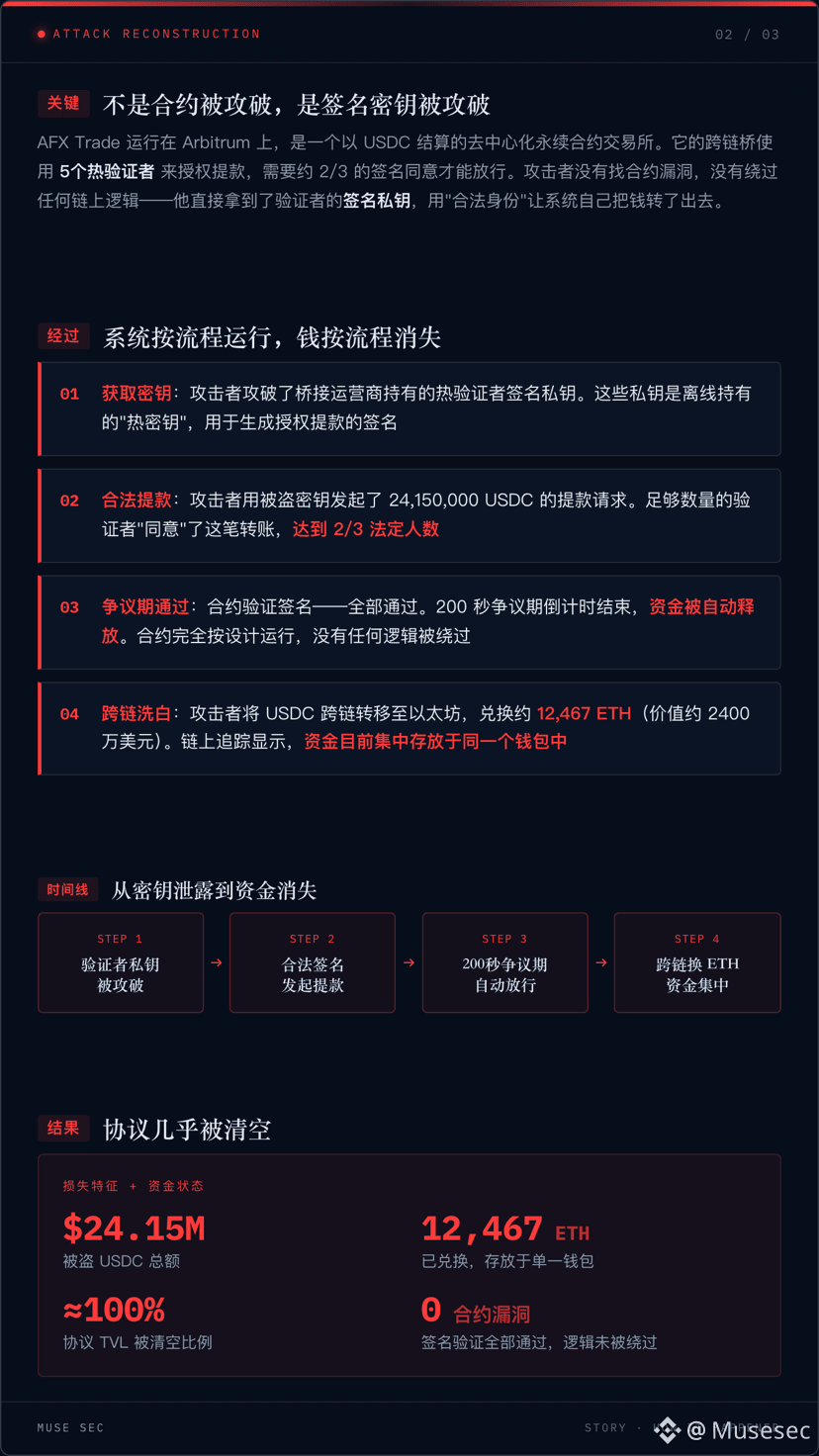
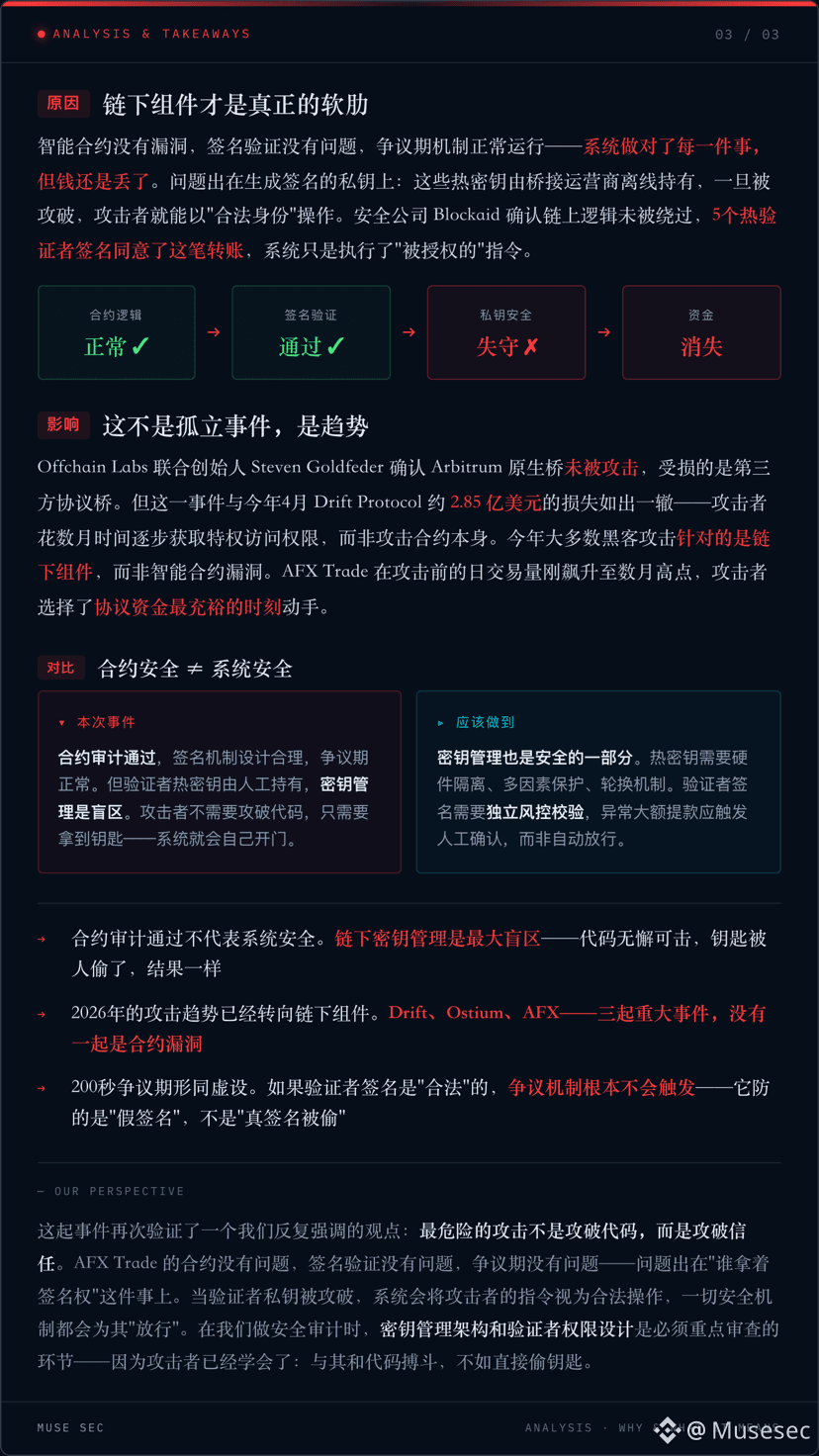
The bridge isn’t broken—the key was stolen.
An AFX Trade validator’s private key was leaked, and the attacker used valid signatures to get the system to grant itself access to $24 million. The contract has no vulnerabilities; the signatures all check out, and the 200-second dispute period is effectively meaningless. Key management is the biggest blind spot off-chain.
#Web3安全 #Arbitrum
The bridge isn’t broken—the key was stolen.
An AFX Trade validator’s private key was leaked, and the attacker used valid signatures to get the system to grant itself access to $24 million. The contract has no vulnerabilities; the signatures all check out, and the 200-second dispute period is effectively meaningless. Key management is the biggest blind spot off-chain.
#Web3安全 #Arbitrum
An AFX Trade validator’s private key was leaked, and the attacker used valid signatures to get the system to grant itself access to $24 million. The contract has no vulnerabilities; the signatures all check out, and the 200-second dispute period is effectively meaningless. Key management is the biggest blind spot off-chain.
#Web3安全 #Arbitrum
223
·
--
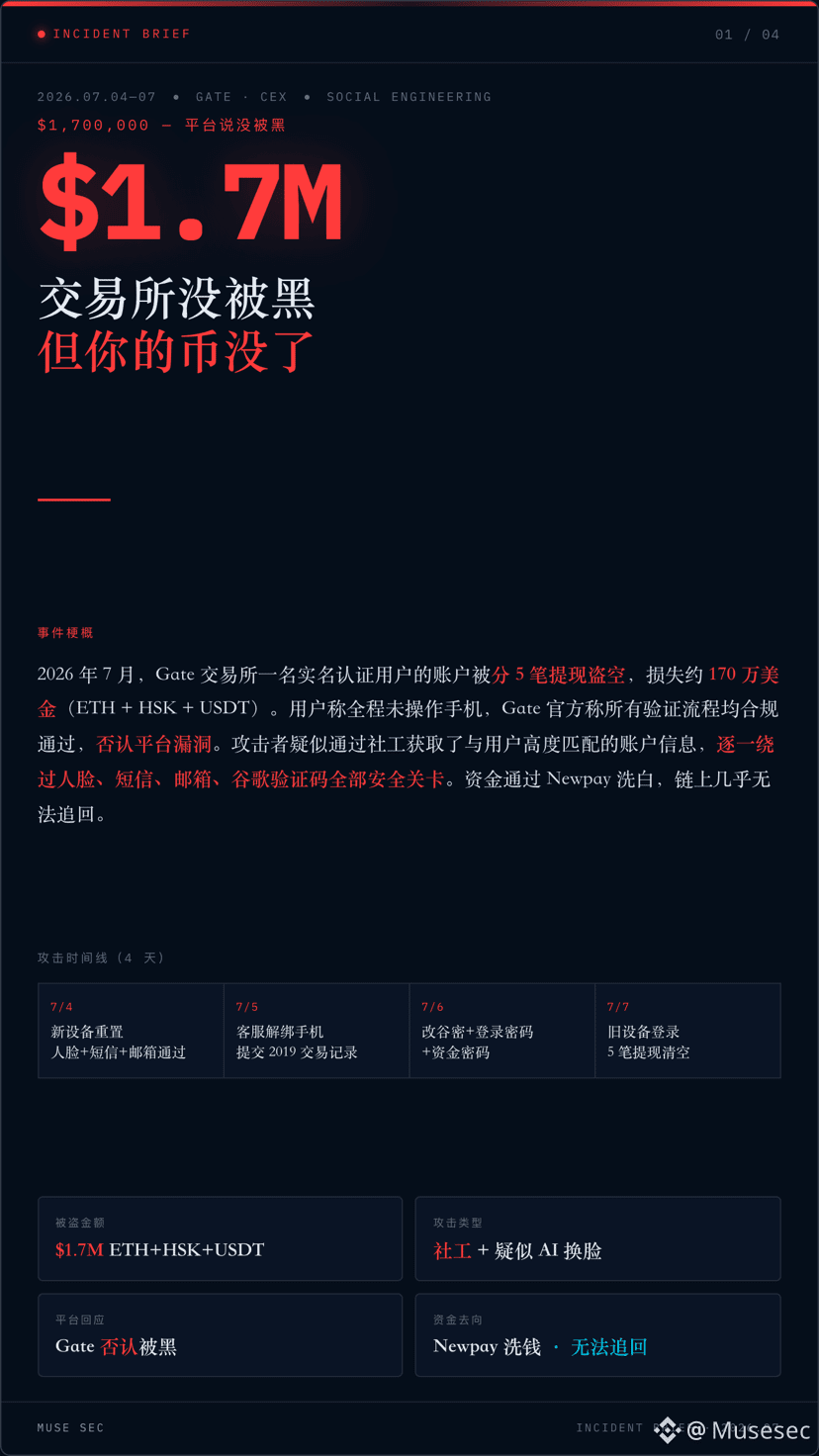
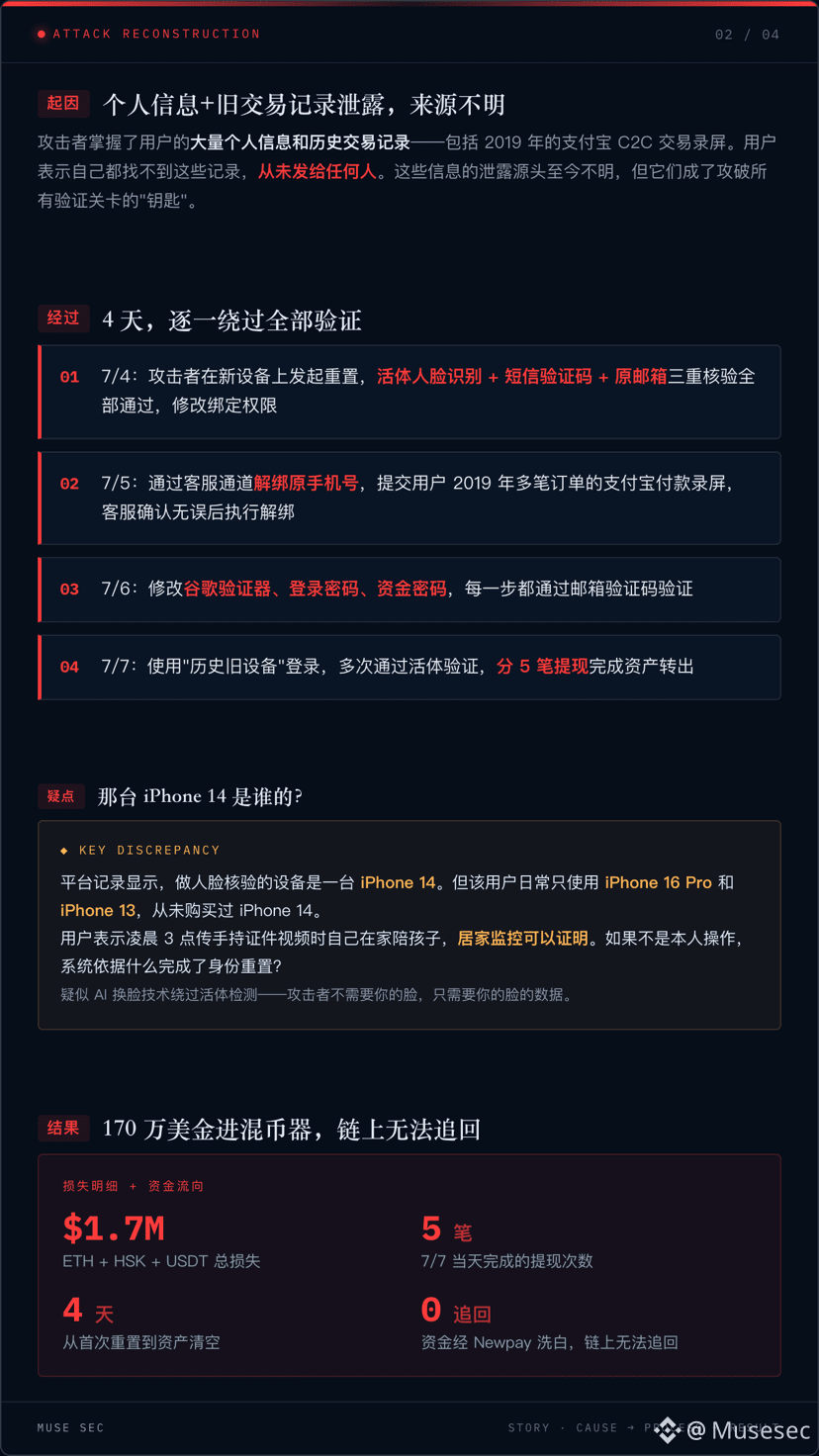
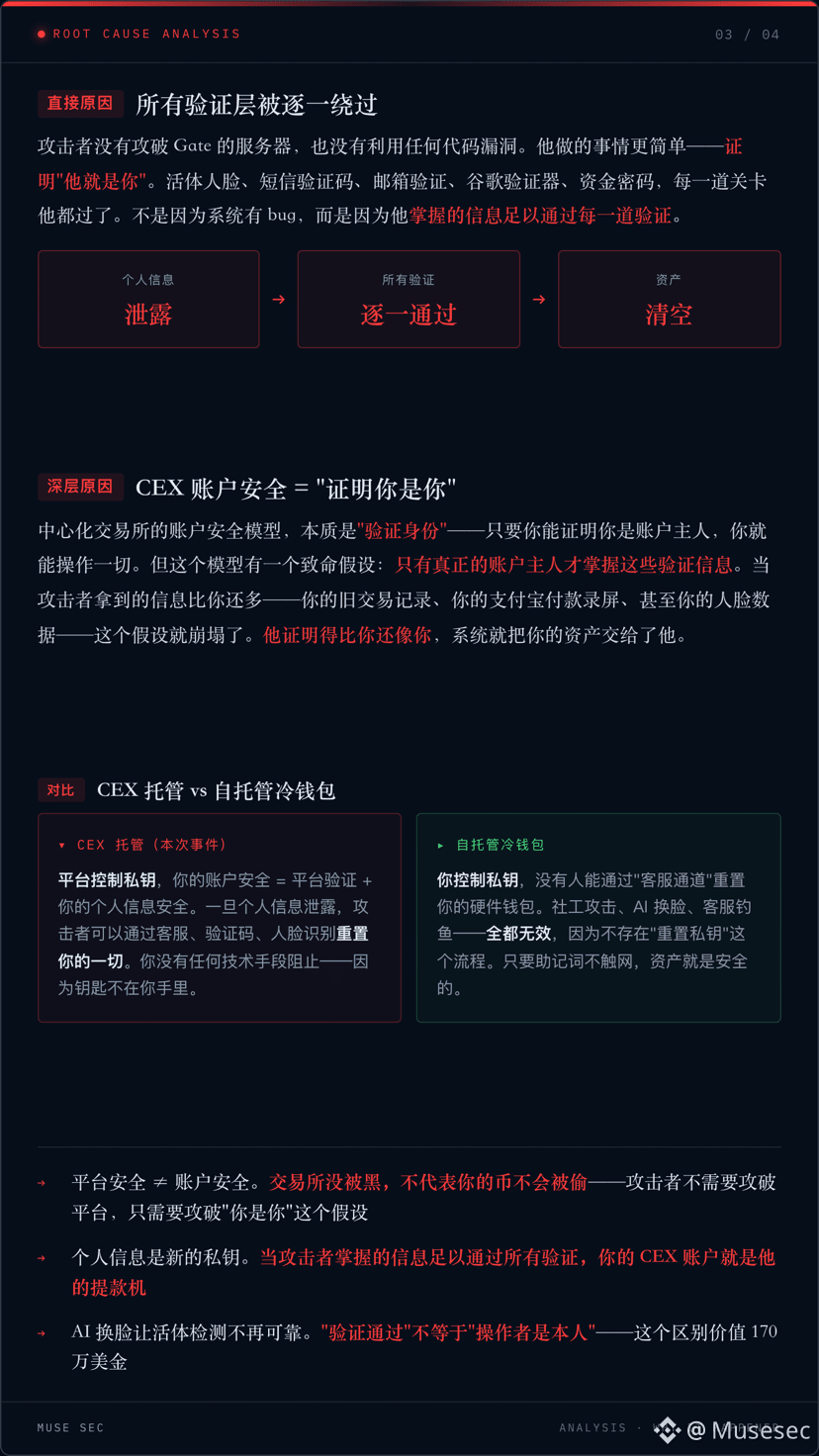
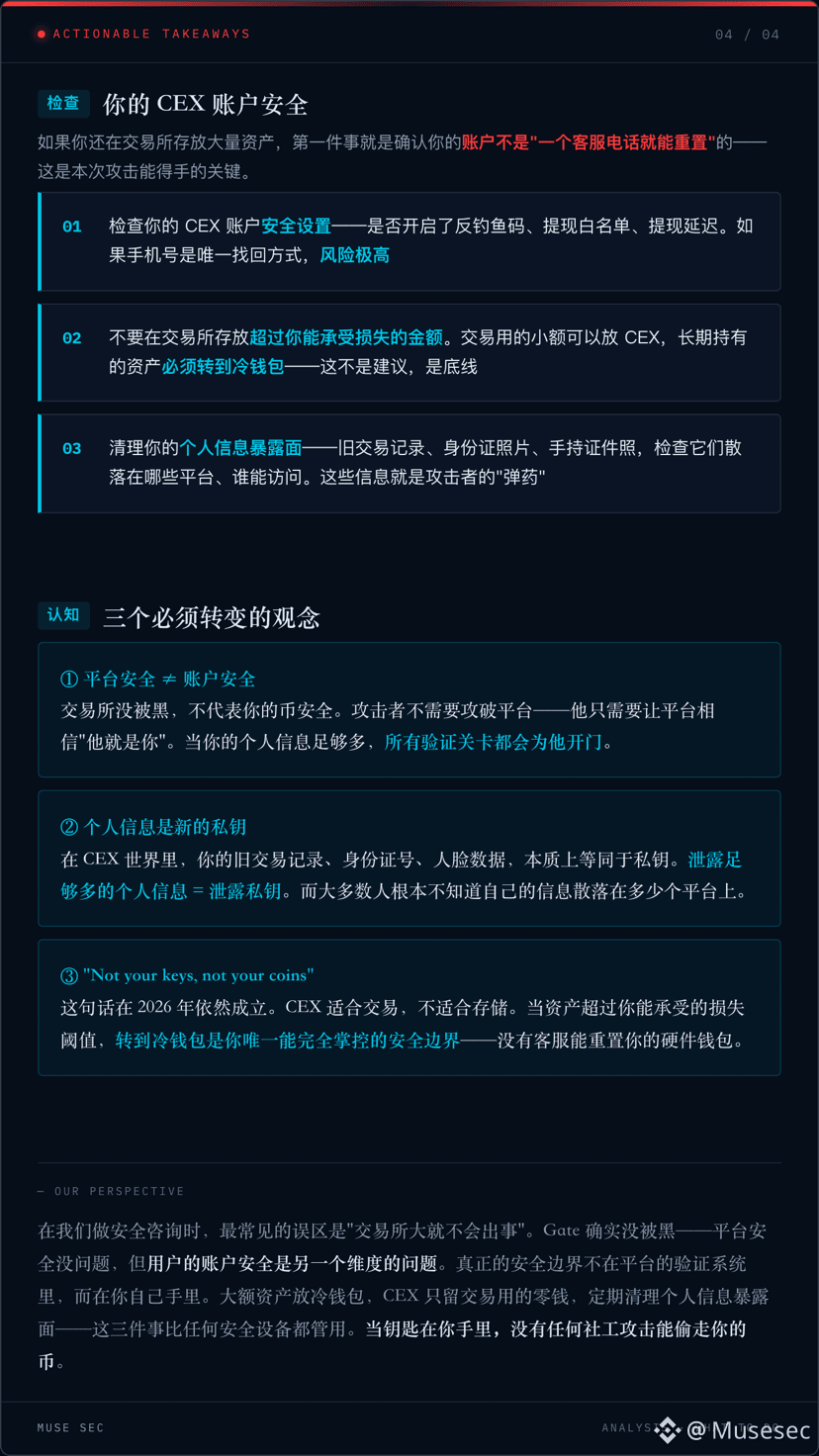
The exchange wasn’t hacked, but your coins are just gone.
Gate users lost $1.7 million. Face, SMS, email, and Google Authenticator were all verified successfully, yet the platform says there’s no vulnerability. The attacker doesn’t need to break into the platform—he only needs to prove, “He is you.”
For large assets, keep them in a cold wallet.
#Web3安全 #Exchange security
The exchange wasn’t hacked, but your coins are just gone.
Gate users lost $1.7 million. Face, SMS, email, and Google Authenticator were all verified successfully, yet the platform says there’s no vulnerability. The attacker doesn’t need to break into the platform—he only needs to prove, “He is you.”
For large assets, keep them in a cold wallet.
#Web3安全 #Exchange security
Gate users lost $1.7 million. Face, SMS, email, and Google Authenticator were all verified successfully, yet the platform says there’s no vulnerability. The attacker doesn’t need to break into the platform—he only needs to prove, “He is you.”
For large assets, keep them in a cold wallet.
#Web3安全 #Exchange security
166
·
--
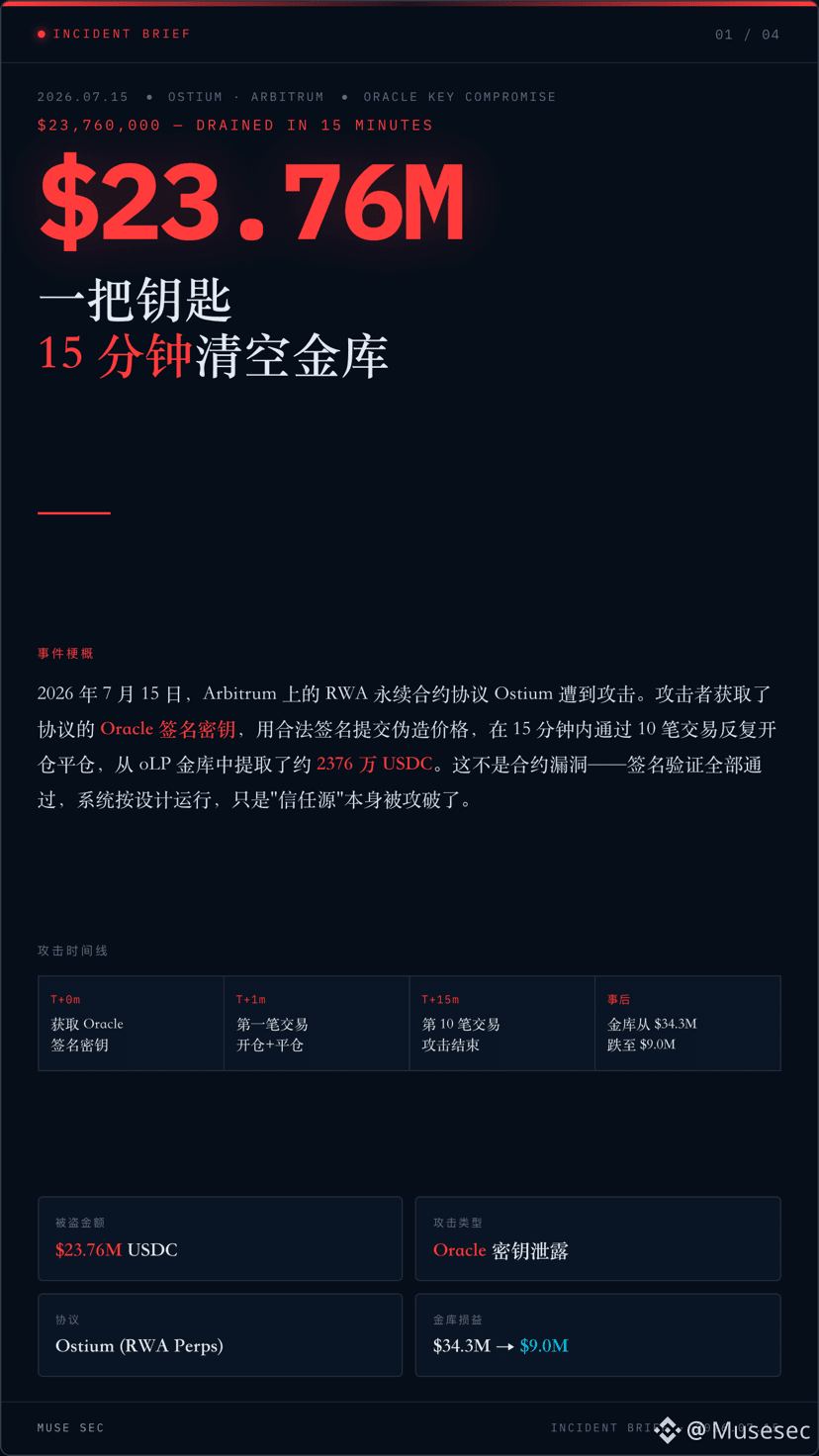
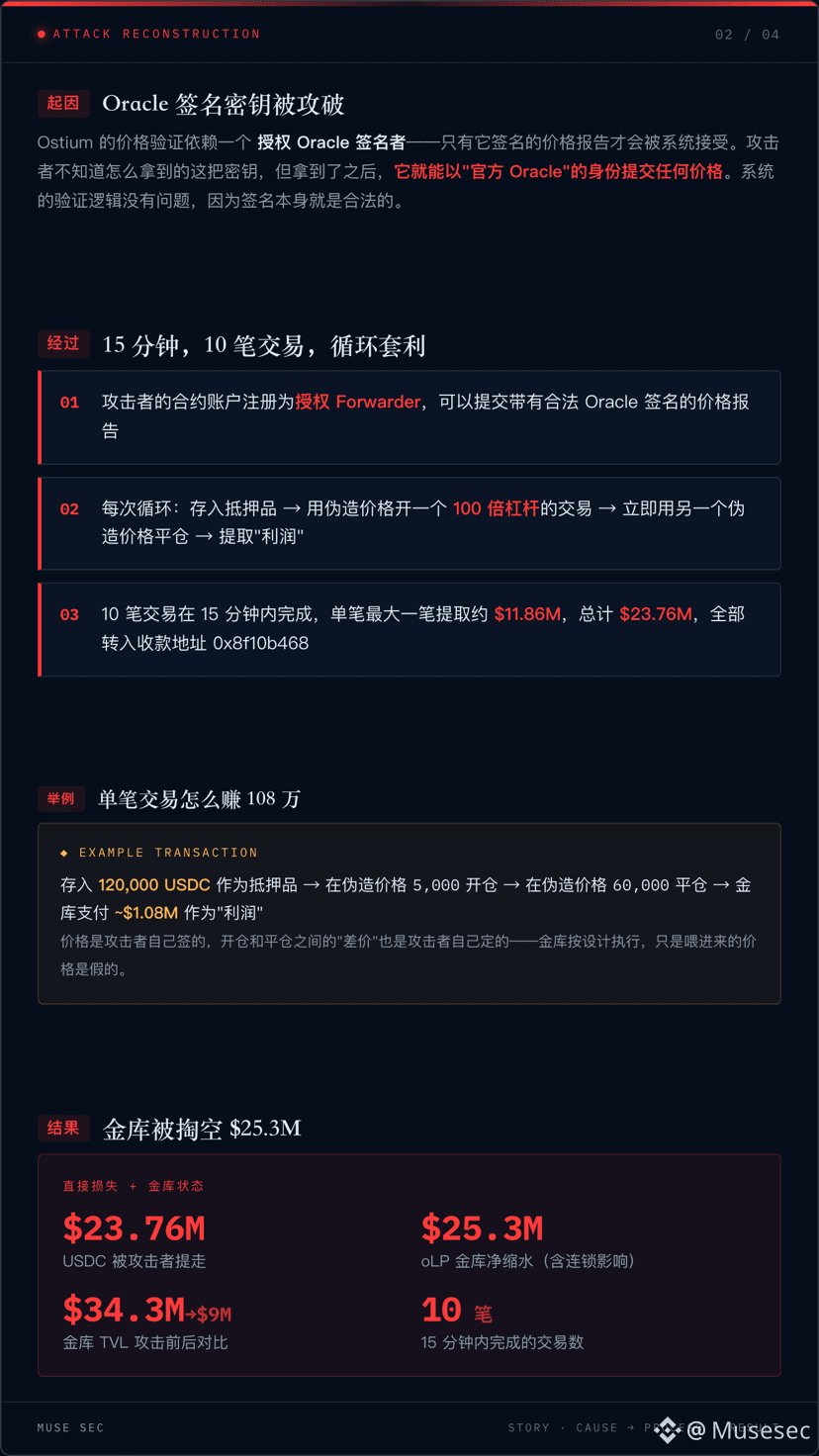
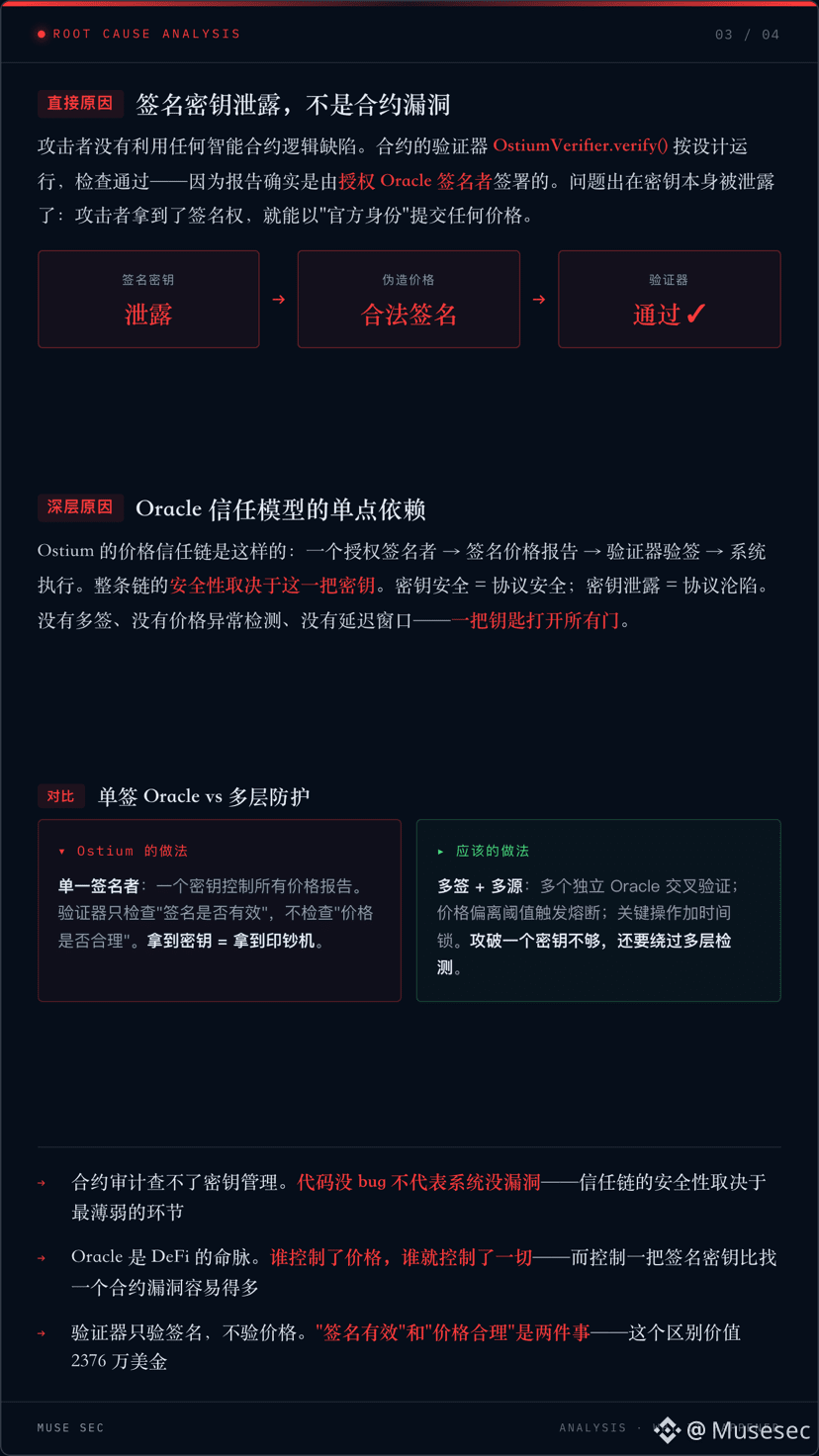
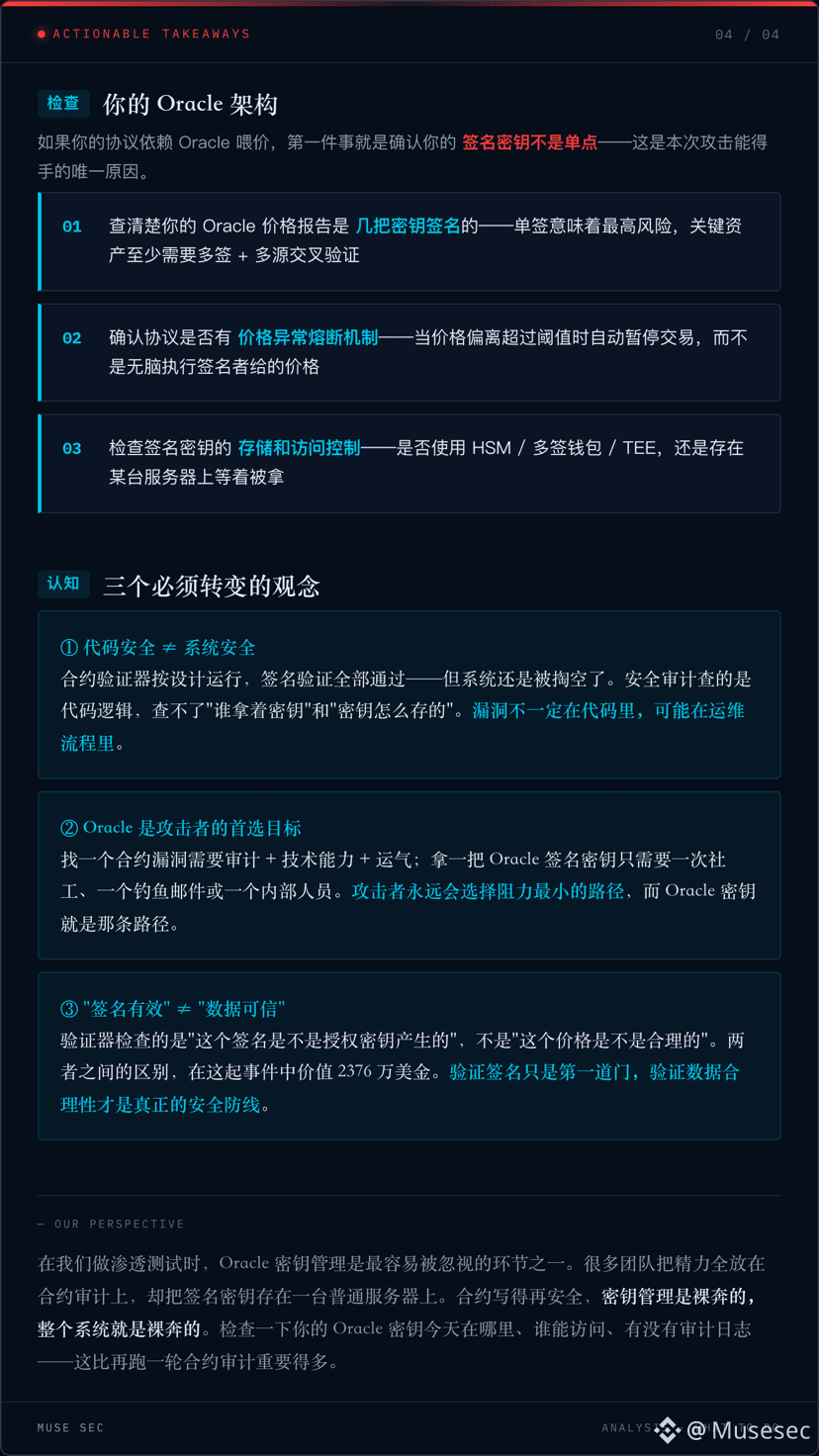
$23.76 million, in 15 minutes using a single key to completely empty it out.
The Oracle signing key of Ostium was leaked. The attacker submitted forged prices with legitimate signatures. Ten transactions cycled opening and closing positions, and the treasury was emptied. It’s not a contract vulnerability—everything passed verification; the trust source itself was compromised.
#Web3安全 #Ostium #DEFİ #Arbitrum
$23.76 million, in 15 minutes using a single key to completely empty it out.
The Oracle signing key of Ostium was leaked. The attacker submitted forged prices with legitimate signatures. Ten transactions cycled opening and closing positions, and the treasury was emptied. It’s not a contract vulnerability—everything passed verification; the trust source itself was compromised.
#Web3安全 #Ostium #DEFİ #Arbitrum
The Oracle signing key of Ostium was leaked. The attacker submitted forged prices with legitimate signatures. Ten transactions cycled opening and closing positions, and the treasury was emptied. It’s not a contract vulnerability—everything passed verification; the trust source itself was compromised.
#Web3安全 #Ostium #DEFİ #Arbitrum
99
·
--
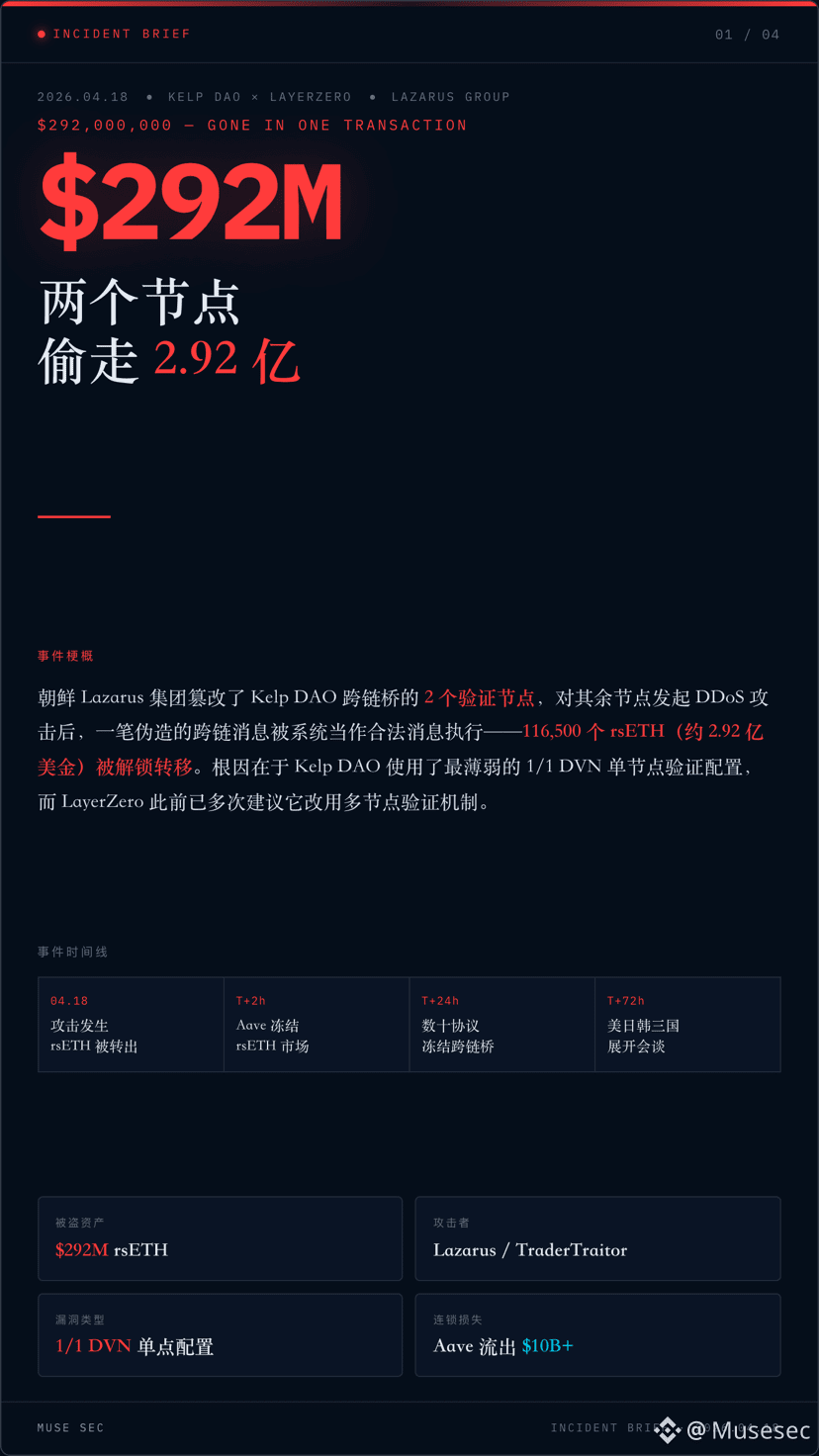
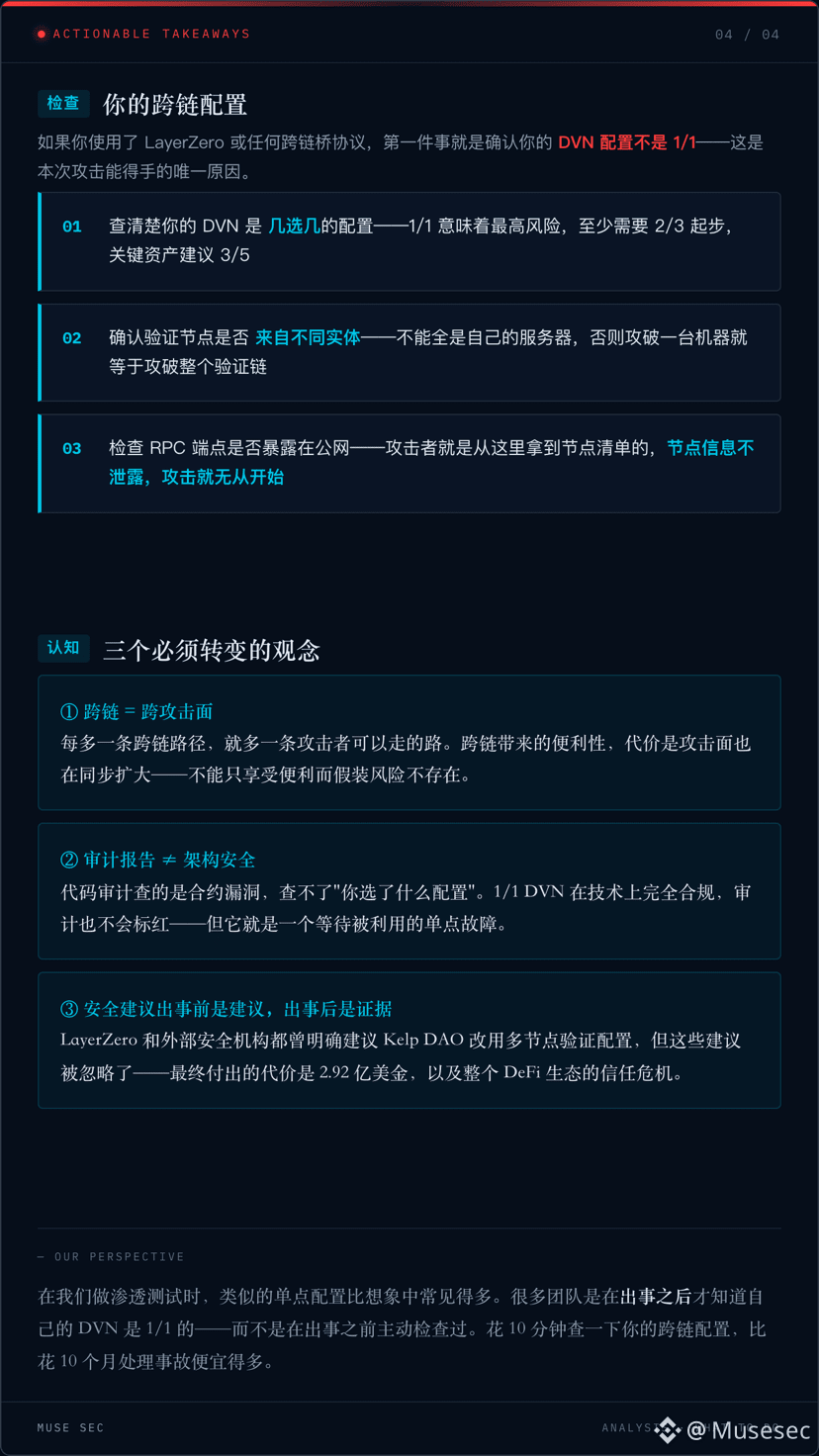
$292 million, and that one transaction is gone.
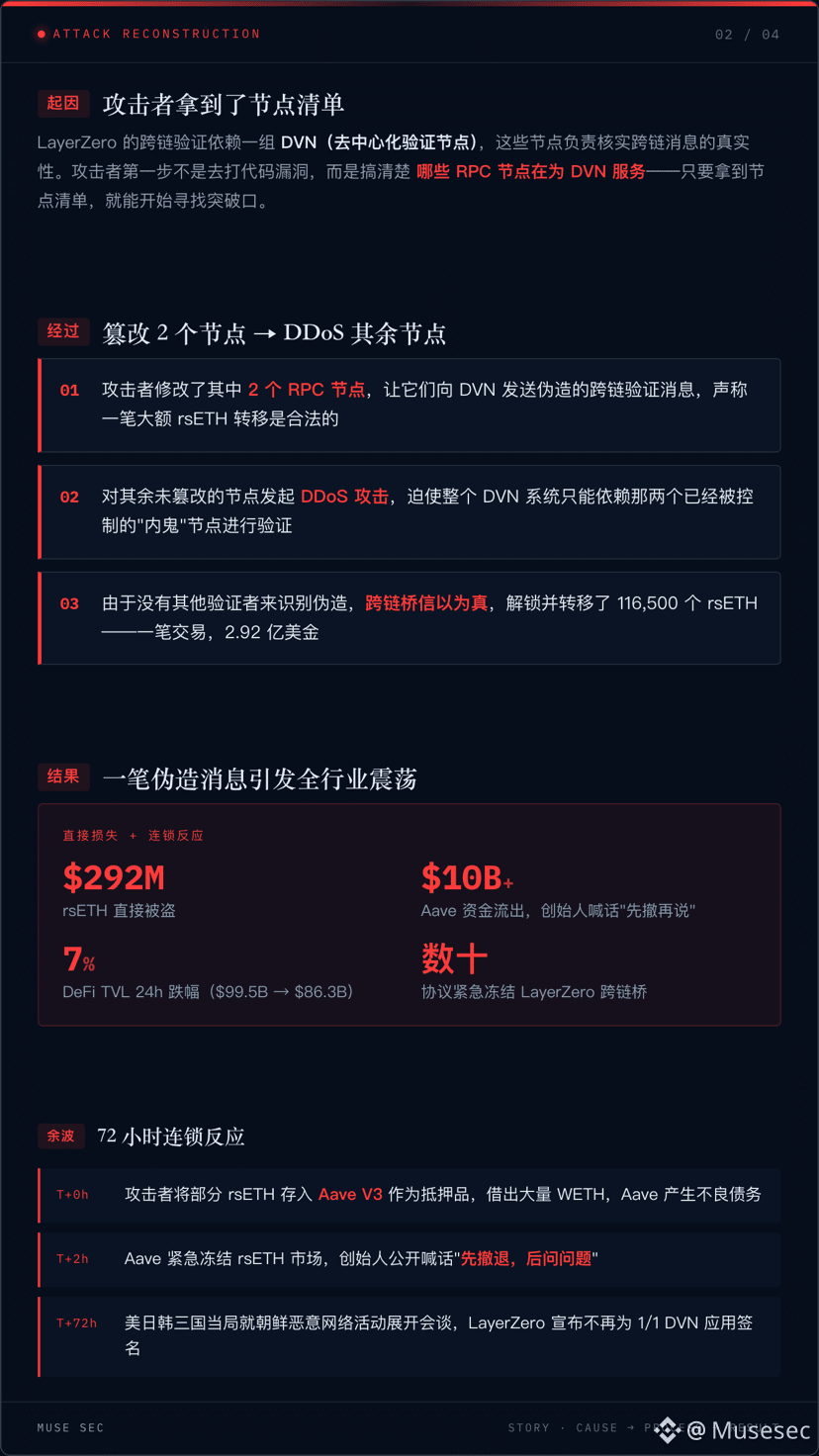
North Korea’s Lazarus changed two of Kelp DAO’s validator nodes. It DDoS’d the rest, so the system could only trust the controlled “insider” — forged messages went straight through, and 116,500 rsETH was unlocked and transferred out.
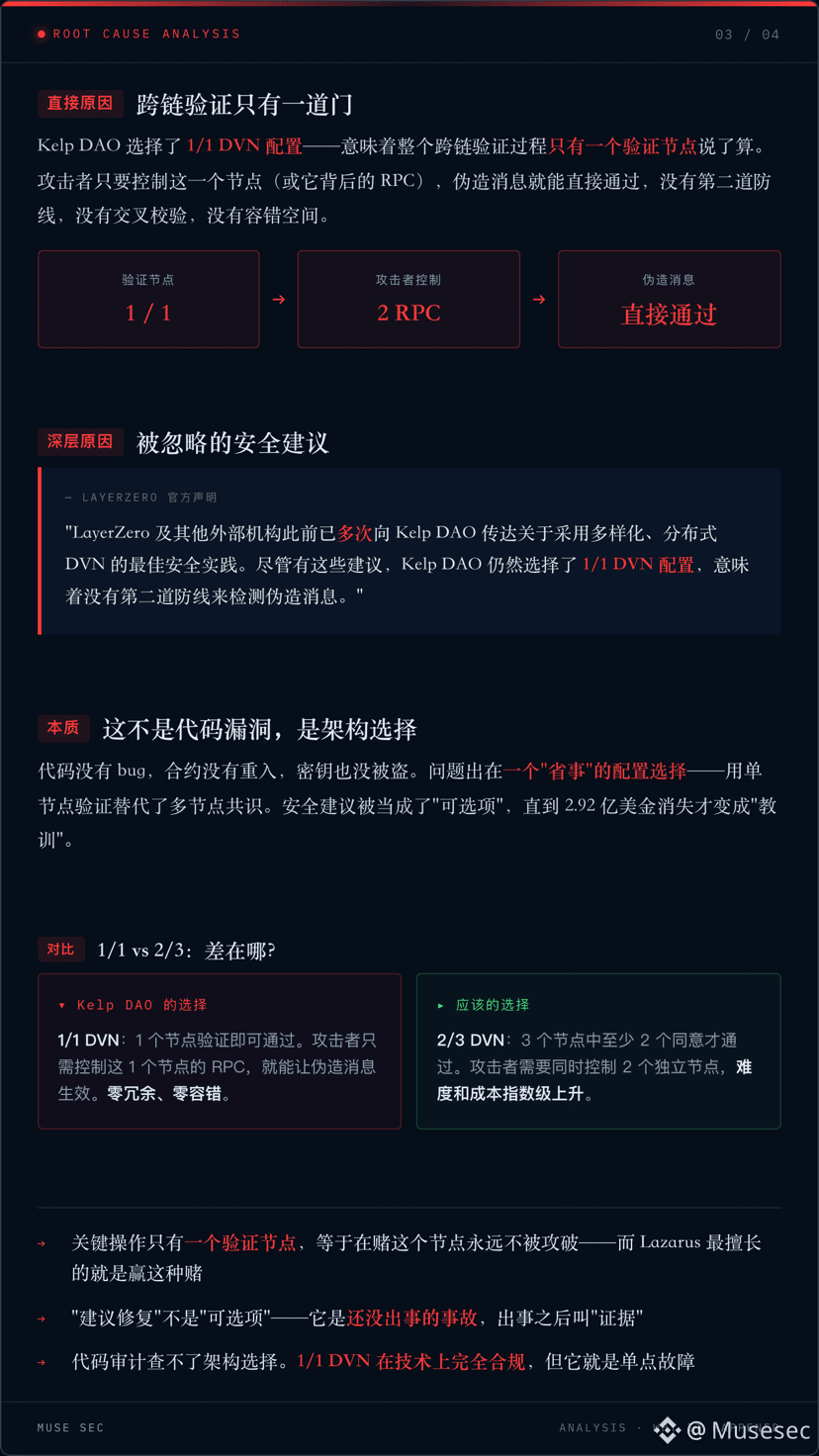
Not a code vulnerability, not a key leak. The issue came from a “convenience” configuration choice: 1/1 DVN single-node validation. LayerZero suggested switching to multi-node, but nobody listened.
#Web3安全 #LayerZero #跨链桥安全 #Lazarus #DeFi security
$292 million, and that one transaction is gone.
North Korea’s Lazarus changed two of Kelp DAO’s validator nodes. It DDoS’d the rest, so the system could only trust the controlled “insider” — forged messages went straight through, and 116,500 rsETH was unlocked and transferred out.
Not a code vulnerability, not a key leak. The issue came from a “convenience” configuration choice: 1/1 DVN single-node validation. LayerZero suggested switching to multi-node, but nobody listened.
#Web3安全 #LayerZero #跨链桥安全 #Lazarus #DeFi security
North Korea’s Lazarus changed two of Kelp DAO’s validator nodes. It DDoS’d the rest, so the system could only trust the controlled “insider” — forged messages went straight through, and 116,500 rsETH was unlocked and transferred out.
Not a code vulnerability, not a key leak. The issue came from a “convenience” configuration choice: 1/1 DVN single-node validation. LayerZero suggested switching to multi-node, but nobody listened.
#Web3安全 #LayerZero #跨链桥安全 #Lazarus #DeFi security
197
·
--
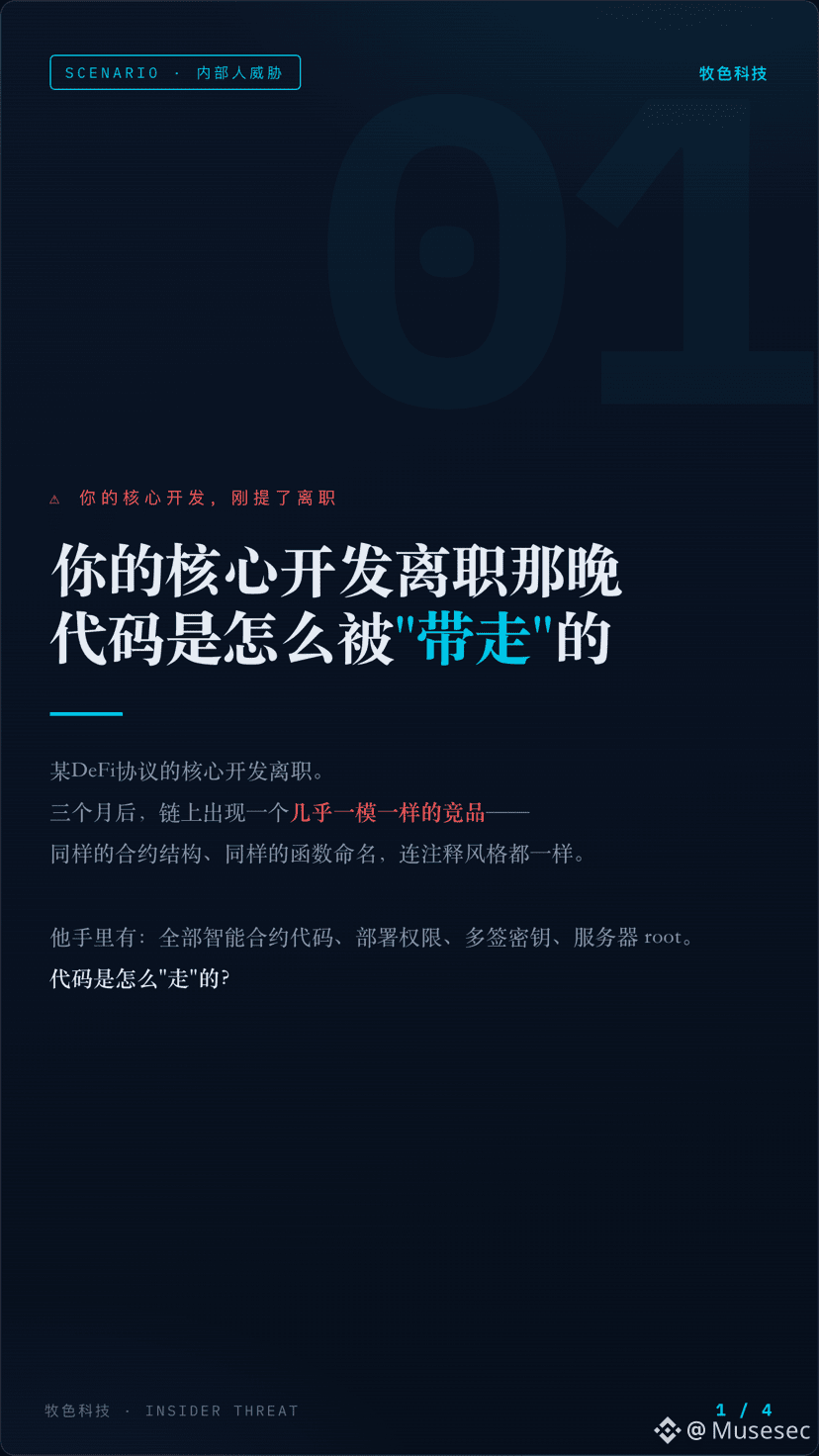
Your core developer gave notice and resigned.
He has all contract code, deployment privileges, multi-sig keys, and server root access.
Three months later, an identical competing product appears on-chain.
How did the code get transferred? Can you prevent it?
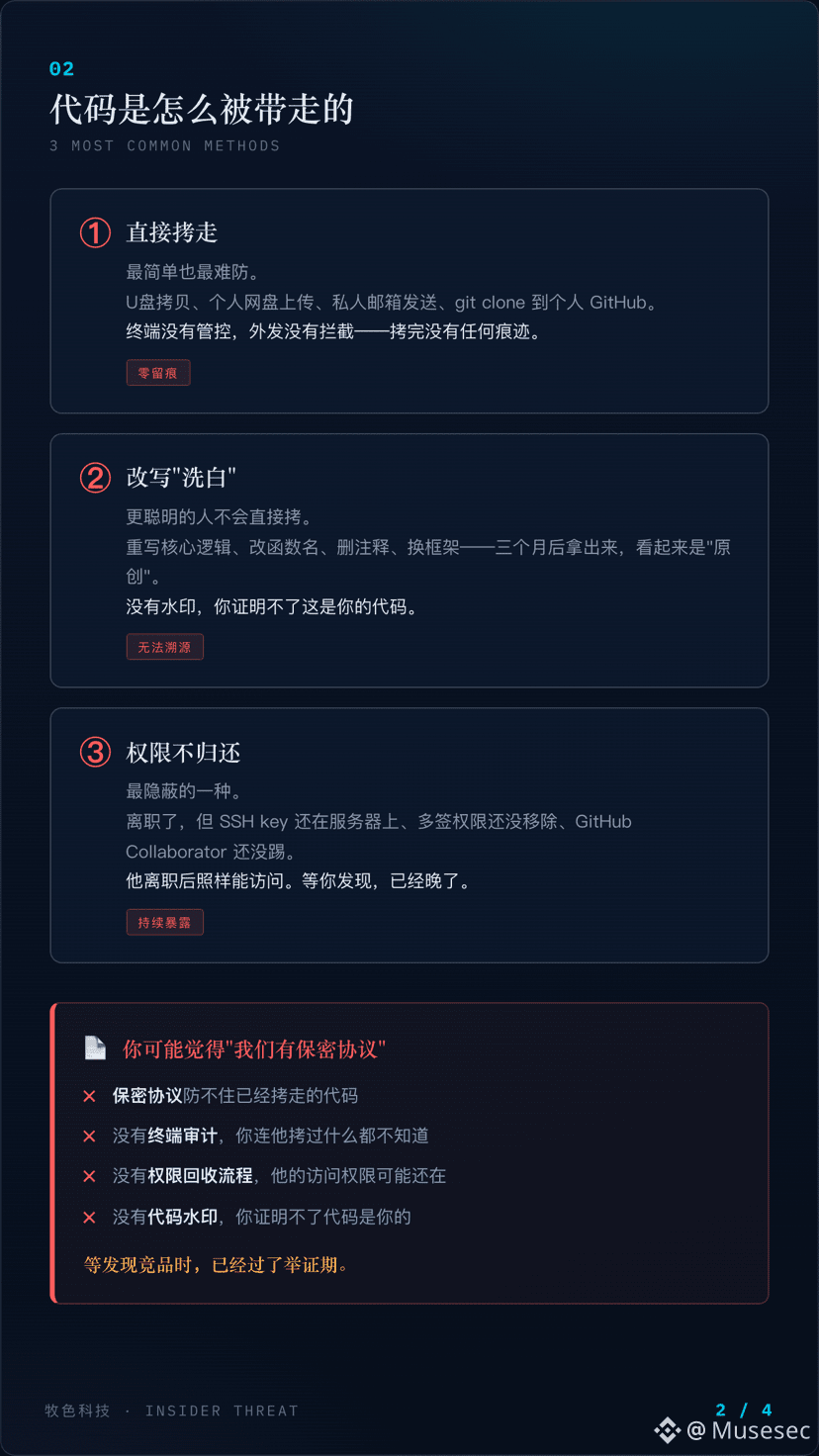
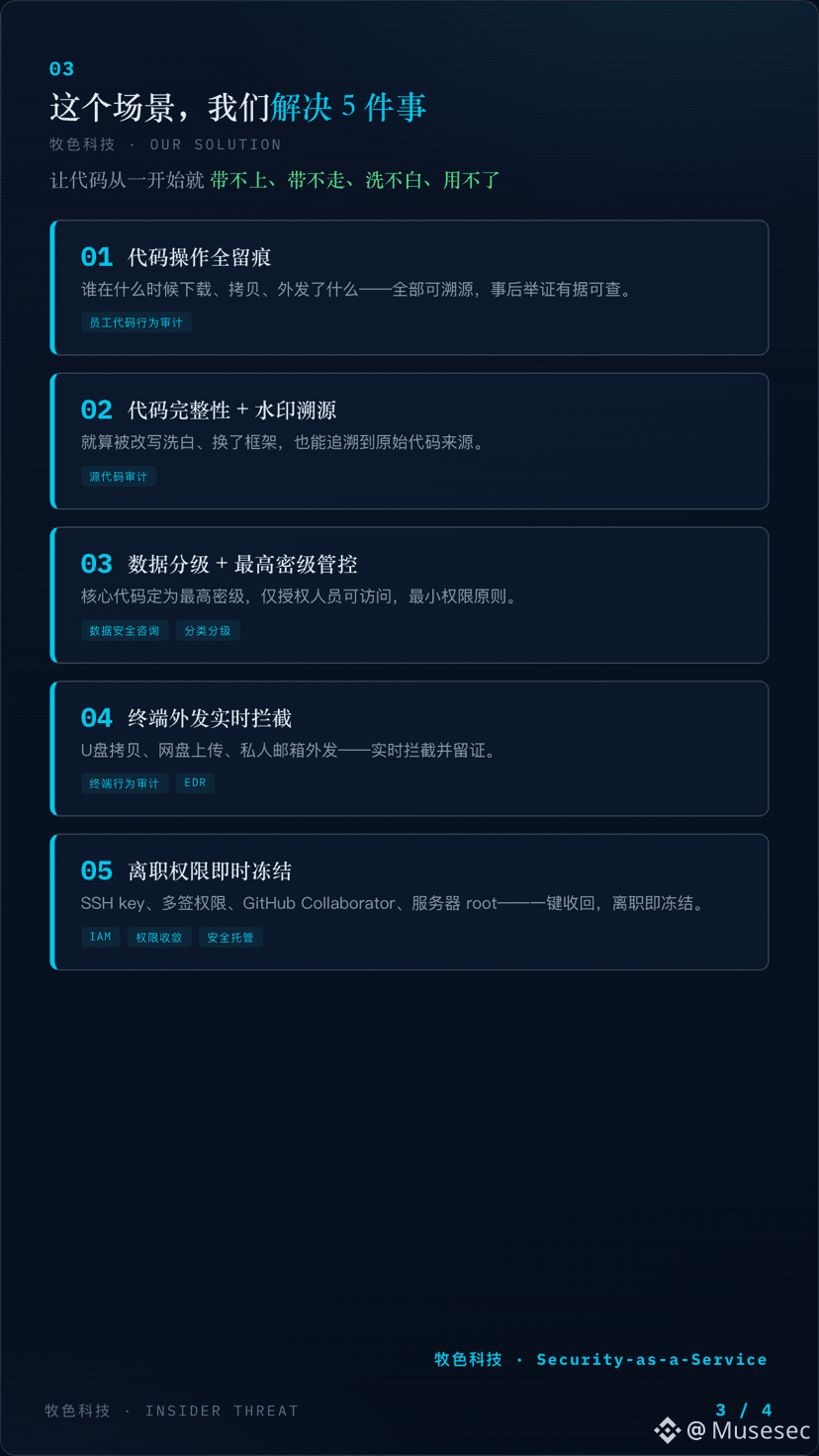
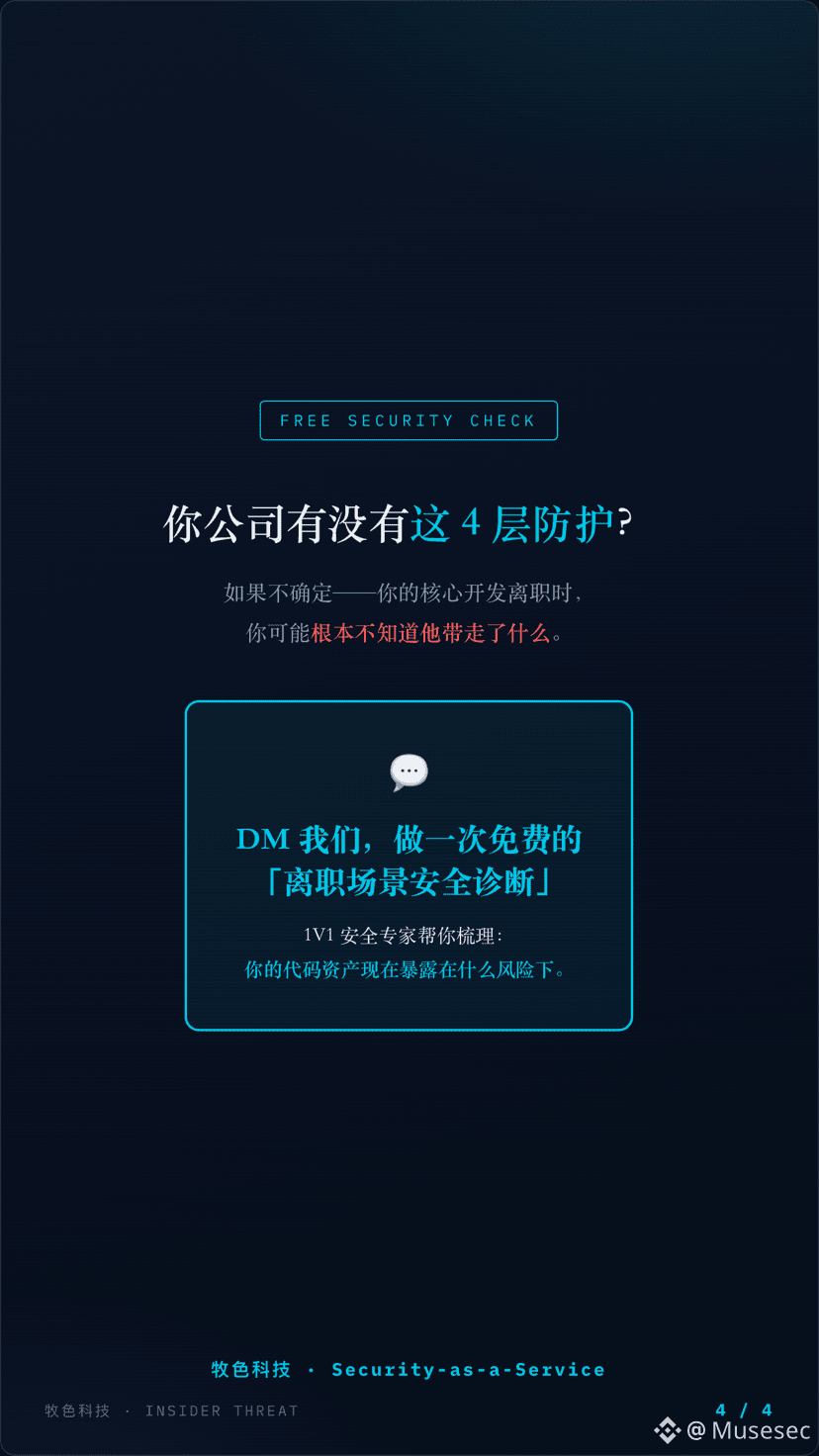
👇 4 images that explain the code theft prevention in a resignation scenario—after you swipe through, you’ll want to immediately check your company’s access permissions.
DM me for a free resignation scenario security assessment.
#Web3安全 #区块链安全 #智能合约 #网络安全 #digital-asset security
Your core developer gave notice and resigned.
He has all contract code, deployment privileges, multi-sig keys, and server root access.
Three months later, an identical competing product appears on-chain.
How did the code get transferred? Can you prevent it?
👇 4 images that explain the code theft prevention in a resignation scenario—after you swipe through, you’ll want to immediately check your company’s access permissions.
DM me for a free resignation scenario security assessment.
#Web3安全 #区块链安全 #智能合约 #网络安全 #digital-asset security
He has all contract code, deployment privileges, multi-sig keys, and server root access.
Three months later, an identical competing product appears on-chain.
How did the code get transferred? Can you prevent it?
👇 4 images that explain the code theft prevention in a resignation scenario—after you swipe through, you’ll want to immediately check your company’s access permissions.
DM me for a free resignation scenario security assessment.
#Web3安全 #区块链安全 #智能合约 #网络安全 #digital-asset security
120
Log in to explore more content
Join global crypto users on Binance Square
⚡️ Get latest and useful information about crypto.
💬 Trusted by the world’s largest crypto exchange.
👍 Discover real insights from verified creators.
Email / Phone number
Trending Topics
ADAGains10%Above$0.27
0 views
21 Discussing
NEAR /USDT Don't Miss This Move!
NEAR is loaded and ready!
Strong bounce from $4.73 low, now trading above Supertrend $4.83 with 529M volume. 24H High $5.07 already broken once.
My Targets: $5.5 $6 $7 $8 $9
Momentum is back, structure looks bullish on 15m. This could be the start of a big leg up.
Are you loaded? NFA dyor crypto is risky .
$NEAR
$MUBARAK
$GTC
WA traders
·2 Likes
·621 views
ETHUp70%InQ3ButLiquidityFalls
1,222 views
98 Discussing
EthStakingExitQueueHits2026High
1,382 views
173 Discussing