

SignOfficial
89 Posts

SignOfficial
 Square Verified+
Sovereign Infrastructure for Global Nations.
Backed by Circle, Sequoia, and YZi Labs.
1 Following
60.0K+ Followers
6.4K+ Liked
Posts
All
Quotes
Videos
Live

Cheryl Speece
·
--
After finishing the list of capital behind SIGN, I directly threw its technical research report into the trash.
The most surreal scene in the crypto world right now: American capital, Chinese capital, Indian capital, and CZ.
These people who would love to strangle each other in real geopolitics oddly reached a consensus on the early investment table of SIGN.
In 2023, Sequoia was forcibly split into three parts by geopolitical factors: Sequoia Capital in the U.S., Sequoia China, and Peak XV in India. Three teams, three interests, and many times not even basic judgments align in the same direction.
Then they simultaneously appeared on the early investment list of SIGN. In today's environment, this is almost impossible.
These people who would love to strangle each other in real geopolitics oddly reached a consensus on the early investment table of SIGN.
In 2023, Sequoia was forcibly split into three parts by geopolitical factors: Sequoia Capital in the U.S., Sequoia China, and Peak XV in India. Three teams, three interests, and many times not even basic judgments align in the same direction.
Then they simultaneously appeared on the early investment list of SIGN. In today's environment, this is almost impossible.


Binance Square Official
·
--
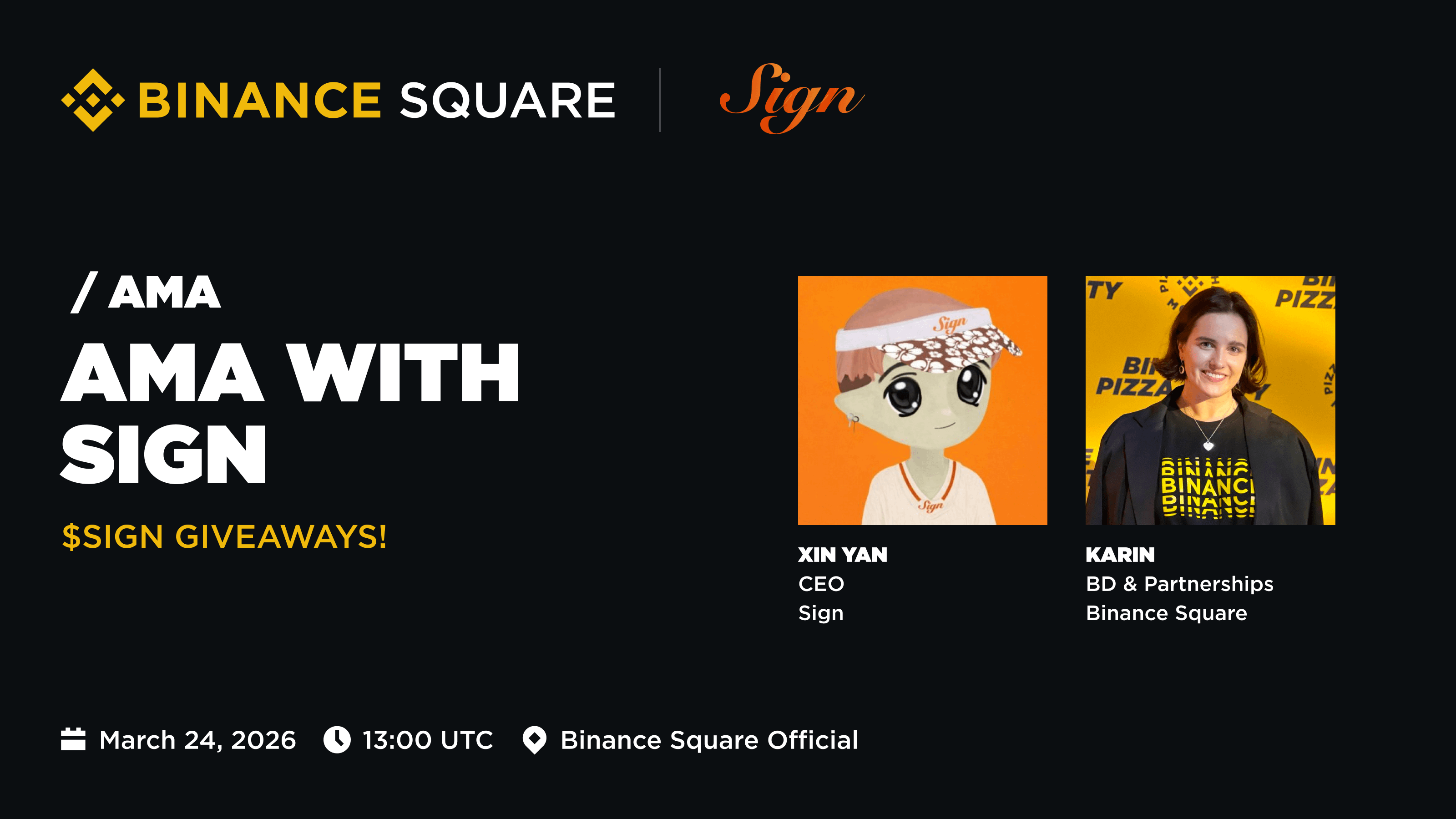
Join us tomorrow for an AMA with Xin Yan, CEO of @SignOfficial 👀
📅 March 24 | ⏰ 13:00 UTC
✨ 22,000 SIGN in total rewards
🎮 Ending with a new community game show "Crypto Showdown"!
Join us live and ask questions. Stay tuned!
📅 March 24 | ⏰ 13:00 UTC
✨ 22,000 SIGN in total rewards
🎮 Ending with a new community game show "Crypto Showdown"!
Join us live and ask questions. Stay tuned!

Xin Yan
·
--
Sign is a B2G Proprietary Technology Company
Crypto and AI are accelerating the digitization of the world.
Governments are evolving with it.
The infrastructure that connects digital systems with sovereign institutions will define the next phase of society.
Sign is building that infrastructure.
Government is the gatekeeper to the real world
Crypto is entering its real world integration phase. Over the past decade, the industry has built fast blockchains and battle-tested smart contract systems. The next step is onboarding real world assets and users. But the real world is not permissionless.
Governments remain the gatekeepers of identity, assets, and public services. They define ownership, issue fiat, enforce regulation, and control access to the systems that people rely on every day.
Fully onchain systems may work in niche communities. But they will remain structurally limited. Most critical resources and institutions are still anchored within sovereign frameworks.
Working with the government is not a betrayal of crypto. It is the key to unlocking billions of users and trillions of dollars in assets. Mass adoption is not a UX problem. It is an institutional integration problem.
Governments cannot innovate alone
Governments are not designed to move fast. Bureaucratic systems prioritize stability and accountability over speed and innovation. As a result, governments rarely build frontier technology inhouse. Instead, they rely on private companies to design, implement, and operate critical systems. In 2025, the US government (including the military) awarded over $800 billion in contracts to private companies such as SpaceX, Anduril, and Palantir. For frontier technology, this model is already the default.
B2G (Business-to-Government) is fundamentally different from B2B. The primary challenge is not building the product, it is earning trust. Governments don’t take risks on unknown vendors. This creates an extremely high barrier to entry. But once that barrier is crossed, the dynamics change:
Long term contractsHigh switching costsDeep integration into government workflows
This is why B2G is rarely a startup game. In most industries, the door is closed. The exception occurs during moments of new technology emerging, when systems are being rewritten and trust can be reallocated.
Crypto is one of those moments.
Proprietary technology compounds in B2G
Proprietary technology is not just about owning code, it is about owning systems that cannot be replicated without operating at the same scale and context.
Government contracts are one of the strongest incubators for proprietary technology. Many systems built for governments are highly specialized and cannot be generalized into consumer products. They require deep domain knowledge, long iteration cycles, and close integration.
Engineering is only perfecting through continuous iteration. Those companies that repeatedly win government contracts will continuously grow and lead.
Working with governments also places us at the frontline of crypto adoption. For example, how do you bridge traditional banking systems with stablecoin infrastructure while maintaining compliance? Many problems are invisible unless you actually operate inside.
The system, the data, and the iteration loop compound into a moat that cannot be replicated.
Sign is building sovereign digital infrastructure
At its foundation are two systems: money and identity.
Digital Money System. A sovereign digital money rail that supports CBDC and regulated stablecoins.
CBDCs digitize central banks by creating a programmable, sovereign accounting ledger for fiat currency. Stablecoins maximize the accessibility and liquidity of fiat currency in overseas markets.
By Q3 2026, Sign’s digital currency system will start to deploy, it operates across national scale, serving over millions of users and forming the core financial infrastructure of an entire economy.
Digital ID System. A national identity and verifiable credentials layer.
Governments can issue cryptographically signed claims (identity, licenses, permissions) that can be verified across agencies and regulated operators. This enables interoperability without requiring centralized data silos, allowing clearing and settlement to occur in real time.
Once these foundational systems are deployed, additional public service modules can be built on top: taxation, welfare distribution, voting. At the same time, new business opportunities also emerge based on the foundation, generating sustainable revenue.
Sign is accelerating the evolution of governance
Governments are evolving as new technologies reshape their capabilities.
Sovereign digital infrastructure establishes standardized data schemas and interfaces across public systems. Through digitization and interoperability, governments begin to generate unified, structured datasets at national scale.
This is the foundation for sovereign AI.
AI does not operate in isolation. It depends on data and APIs, its capabilities are defined by the infrastructure it operates on.
As governments become fully digitized, AI systems gain:
visibility into real-time state datathe ability to act through programmable interfaces
This enables a new model of governance, one that is real-time, data-driven, and automated. Governance is becoming a software problem.
At the same time, the relationship between governments and people is changing. Digital infrastructure allows governments to interact directly with citizens, reducing reliance on intermediaries. Welfare can be distributed directly from the treasury, taxation can be applied in real time during the transaction.
Countries become companies, fiat currency becomes its stock, citizens become shareholders.
New initiatives in 2026
The transition is already underway. We are building several new projects to support it.
Bank–Stablecoin Integration Middleware
Bridging traditional banking systems with stablecoin infrastructure:
Virtual account system, l2 to bank accounts for mapping and off-rampVerifiable KYC systems aligned with banking AML standardsOn/off-ramp system between banks and crypto systems
Regulatory OS
The system integrates three key components: identity, transaction monitoring, and policy enforcement.
It maps real world identities to onchain activity, analyzes fund flows using onchain intelligence, and applies regulatory rules in real time.
Licensed platforms are required to connect to the system, enabling continuous reporting, risk detection and auditability.
This creates a standardized and enforceable compliance layer for the entire digital asset market.
Data Exchange Layer
A blockchain-based ledger for inter-agency data exchange.
Instead of centralizing all data into one server, this layer records interactions between government entities as:
high throughputappend onlyverifiable logs
No raw data is stored, only proof of interaction, enabling secure and responsible interoperability.
The future of governance will be written in code, but enforced through sovereignty.
The world is fragmenting into sovereign systems, with each nation building its own infrastructure, and soon to be interconnected through new networks. Sign is actively participating in this transformation.
#SignDigitalSovereignInfra $SIGN @SignOfficial
This content is a paid partnership:)
Governments are evolving with it.
The infrastructure that connects digital systems with sovereign institutions will define the next phase of society.
Sign is building that infrastructure.
Government is the gatekeeper to the real world
Crypto is entering its real world integration phase. Over the past decade, the industry has built fast blockchains and battle-tested smart contract systems. The next step is onboarding real world assets and users. But the real world is not permissionless.
Governments remain the gatekeepers of identity, assets, and public services. They define ownership, issue fiat, enforce regulation, and control access to the systems that people rely on every day.
Fully onchain systems may work in niche communities. But they will remain structurally limited. Most critical resources and institutions are still anchored within sovereign frameworks.
Working with the government is not a betrayal of crypto. It is the key to unlocking billions of users and trillions of dollars in assets. Mass adoption is not a UX problem. It is an institutional integration problem.
Governments cannot innovate alone
Governments are not designed to move fast. Bureaucratic systems prioritize stability and accountability over speed and innovation. As a result, governments rarely build frontier technology inhouse. Instead, they rely on private companies to design, implement, and operate critical systems. In 2025, the US government (including the military) awarded over $800 billion in contracts to private companies such as SpaceX, Anduril, and Palantir. For frontier technology, this model is already the default.
B2G (Business-to-Government) is fundamentally different from B2B. The primary challenge is not building the product, it is earning trust. Governments don’t take risks on unknown vendors. This creates an extremely high barrier to entry. But once that barrier is crossed, the dynamics change:
Long term contractsHigh switching costsDeep integration into government workflows
This is why B2G is rarely a startup game. In most industries, the door is closed. The exception occurs during moments of new technology emerging, when systems are being rewritten and trust can be reallocated.
Crypto is one of those moments.
Proprietary technology compounds in B2G
Proprietary technology is not just about owning code, it is about owning systems that cannot be replicated without operating at the same scale and context.
Government contracts are one of the strongest incubators for proprietary technology. Many systems built for governments are highly specialized and cannot be generalized into consumer products. They require deep domain knowledge, long iteration cycles, and close integration.
Engineering is only perfecting through continuous iteration. Those companies that repeatedly win government contracts will continuously grow and lead.
Working with governments also places us at the frontline of crypto adoption. For example, how do you bridge traditional banking systems with stablecoin infrastructure while maintaining compliance? Many problems are invisible unless you actually operate inside.
The system, the data, and the iteration loop compound into a moat that cannot be replicated.
Sign is building sovereign digital infrastructure
At its foundation are two systems: money and identity.
Digital Money System. A sovereign digital money rail that supports CBDC and regulated stablecoins.
CBDCs digitize central banks by creating a programmable, sovereign accounting ledger for fiat currency. Stablecoins maximize the accessibility and liquidity of fiat currency in overseas markets.
By Q3 2026, Sign’s digital currency system will start to deploy, it operates across national scale, serving over millions of users and forming the core financial infrastructure of an entire economy.
Digital ID System. A national identity and verifiable credentials layer.
Governments can issue cryptographically signed claims (identity, licenses, permissions) that can be verified across agencies and regulated operators. This enables interoperability without requiring centralized data silos, allowing clearing and settlement to occur in real time.
Once these foundational systems are deployed, additional public service modules can be built on top: taxation, welfare distribution, voting. At the same time, new business opportunities also emerge based on the foundation, generating sustainable revenue.
Sign is accelerating the evolution of governance
Governments are evolving as new technologies reshape their capabilities.
Sovereign digital infrastructure establishes standardized data schemas and interfaces across public systems. Through digitization and interoperability, governments begin to generate unified, structured datasets at national scale.
This is the foundation for sovereign AI.
AI does not operate in isolation. It depends on data and APIs, its capabilities are defined by the infrastructure it operates on.
As governments become fully digitized, AI systems gain:
visibility into real-time state datathe ability to act through programmable interfaces
This enables a new model of governance, one that is real-time, data-driven, and automated. Governance is becoming a software problem.
At the same time, the relationship between governments and people is changing. Digital infrastructure allows governments to interact directly with citizens, reducing reliance on intermediaries. Welfare can be distributed directly from the treasury, taxation can be applied in real time during the transaction.
Countries become companies, fiat currency becomes its stock, citizens become shareholders.
New initiatives in 2026
The transition is already underway. We are building several new projects to support it.
Bank–Stablecoin Integration Middleware
Bridging traditional banking systems with stablecoin infrastructure:
Virtual account system, l2 to bank accounts for mapping and off-rampVerifiable KYC systems aligned with banking AML standardsOn/off-ramp system between banks and crypto systems
Regulatory OS
The system integrates three key components: identity, transaction monitoring, and policy enforcement.
It maps real world identities to onchain activity, analyzes fund flows using onchain intelligence, and applies regulatory rules in real time.
Licensed platforms are required to connect to the system, enabling continuous reporting, risk detection and auditability.
This creates a standardized and enforceable compliance layer for the entire digital asset market.
Data Exchange Layer
A blockchain-based ledger for inter-agency data exchange.
Instead of centralizing all data into one server, this layer records interactions between government entities as:
high throughputappend onlyverifiable logs
No raw data is stored, only proof of interaction, enabling secure and responsible interoperability.
The future of governance will be written in code, but enforced through sovereignty.
The world is fragmenting into sovereign systems, with each nation building its own infrastructure, and soon to be interconnected through new networks. Sign is actively participating in this transformation.
#SignDigitalSovereignInfra $SIGN @SignOfficial
This content is a paid partnership:)


星期天-77
·
--
This week the SEC released a document, and today $SIGN rose 13.5% and entered the top gainers list—I want to talk about the relationship between these two things.
On March 17, the SEC and CFTC jointly released a document explaining the classification of crypto assets. SEC Chairman Atkins stated:
"We are not the Securities and Everything Commission, anymore."
Today, March 22nd, $SIGN rose by +13.50%, entering Binance's top gainers list.
I'm not sure if today's price increase is pricing in this document. But the timing is certainly worth considering.
The most direct benefit of this document to @SignOfficial is not the classification framework itself, but this one point:
"We are not the Securities and Everything Commission, anymore."
Today, March 22nd, $SIGN rose by +13.50%, entering Binance's top gainers list.
I'm not sure if today's price increase is pricing in this document. But the timing is certainly worth considering.
The most direct benefit of this document to @SignOfficial is not the classification framework itself, but this one point:

快乐的大熊猫
·
--
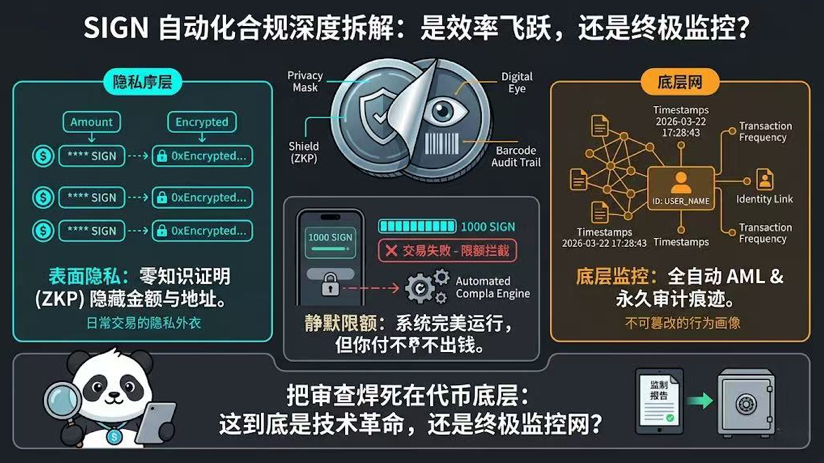
Tearing off the facade of 'absolute privacy': Is SIGN's automated compliance a leap in efficiency or ultimate surveillance?
In the past few days, I have been studying the underlying white paper of SIGN and suddenly discovered a detail that gave me a chilling thought. While everyone is cheering for its shiny 'zero-knowledge proof privacy,' I saw a fully automated anti-money laundering (AML) and compliance monitoring network in the underlying operational logic of the token. This discovery completely changed my narrative judgment of the entire project. 😎
The official white paper packages 'automated compliance' as a killer tool for improving efficiency. There is no friction from manual reviews, no cumbersome paperwork delays, and in the Hyperledger Fabric X CBDC network, every token transfer has compliance checks directly embedded at the protocol level.
The official white paper packages 'automated compliance' as a killer tool for improving efficiency. There is no friction from manual reviews, no cumbersome paperwork delays, and in the Hyperledger Fabric X CBDC network, every token transfer has compliance checks directly embedded at the protocol level.

Powerpei
·
--
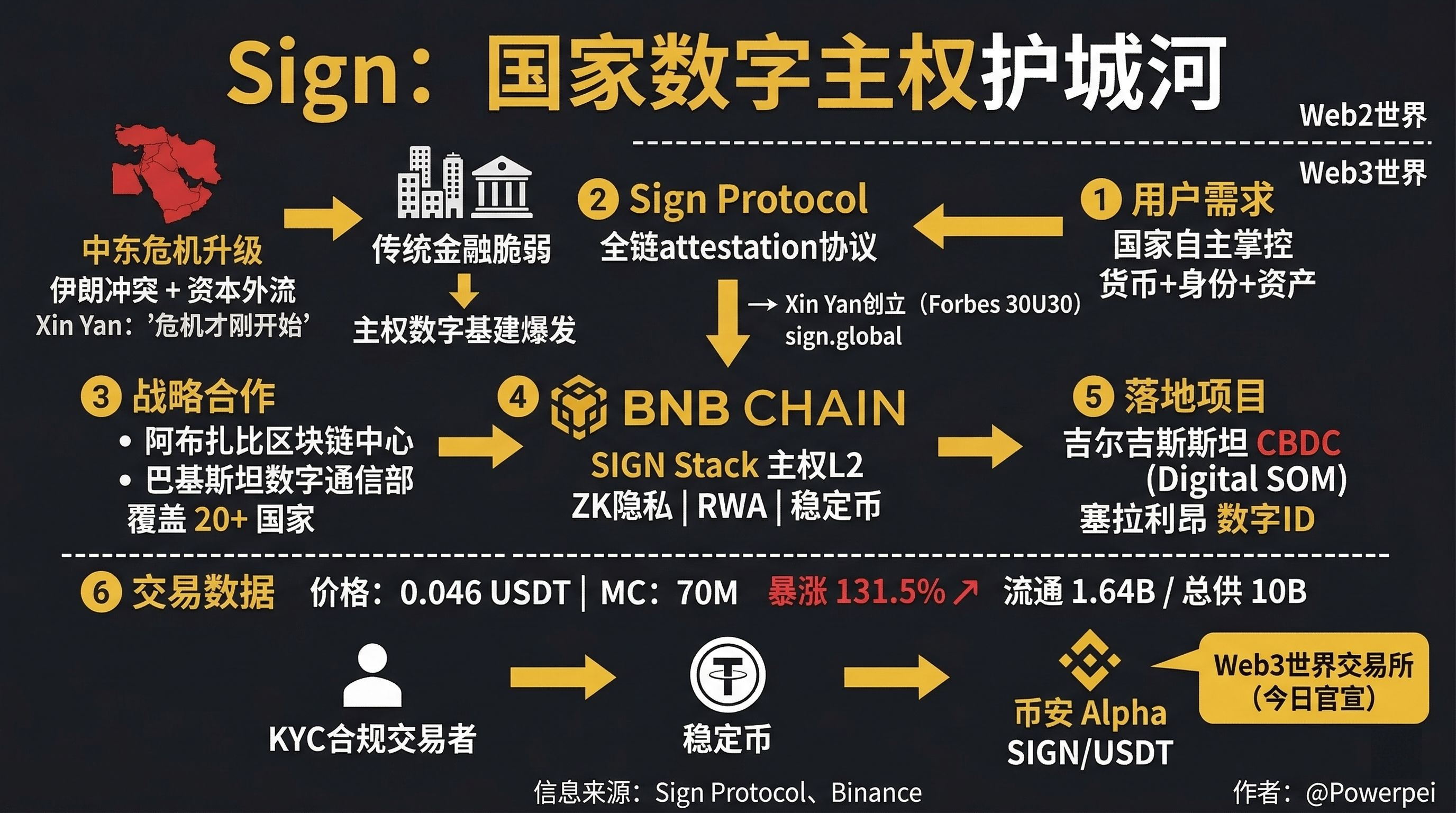
Recently, the situation in the Middle East has become chaotic, and capital is fleeing wildly.
At such a moment of geopolitical turmoil, the fragility of traditional finance is fully exposed.
For those countries at the center of the storm, the absolute necessity right now is a digital sovereign infrastructure that can be completely self-controlled.
This is also the core logic I've been fixated on regarding $SIGN .
This team's approach is extremely wild.
They are not competing with retail investors on platforms; for the past year, they have been quietly doing business with governments in the Middle East and Central Asia, securing strategic cooperation in Abu Dhabi, and helping countries like Pakistan implement CBDC and digital IDs.
With endorsements from Sequoia and CZ, and the agreements themselves already proving profitable, this sets them apart from 99% of PPT projects.
Don't let the panic in the market blind you. Now, simply open Binance and search for SIGN/USDT to trade.
In chaotic times, stocks emerge; in the chaos of the cryptocurrency world, rather than fixating on market panic every day, it’s better to explore hard infrastructure tied to national security anxieties.
I'll throw in some spare money to test the waters. #sign
At such a moment of geopolitical turmoil, the fragility of traditional finance is fully exposed.
For those countries at the center of the storm, the absolute necessity right now is a digital sovereign infrastructure that can be completely self-controlled.
This is also the core logic I've been fixated on regarding $SIGN .
This team's approach is extremely wild.
They are not competing with retail investors on platforms; for the past year, they have been quietly doing business with governments in the Middle East and Central Asia, securing strategic cooperation in Abu Dhabi, and helping countries like Pakistan implement CBDC and digital IDs.
With endorsements from Sequoia and CZ, and the agreements themselves already proving profitable, this sets them apart from 99% of PPT projects.
Don't let the panic in the market blind you. Now, simply open Binance and search for SIGN/USDT to trade.
In chaotic times, stocks emerge; in the chaos of the cryptocurrency world, rather than fixating on market panic every day, it’s better to explore hard infrastructure tied to national security anxieties.
I'll throw in some spare money to test the waters. #sign
星期天-77
·
--
I have a question that I've been holding in for several days: why did the government choose Sign instead of building their own system?
This question has been on my mind for several days, until I saw that report from Chainwire and finally understood.
What Sign sells to the government is not "replace your existing system with ours," but "add a backup layer next to you that won't crash."
These two statements differ greatly in terms of sales difficulty. The former requires the government to acknowledge failure, which faces significant political resistance. The latter is standard logic for IT risk control, and any tech team can approve the budget.
Then there’s the question of why Sign can sell this backup layer—Tiger Research's report provides the answer: TokenTable has executed $3 billion in token distribution and 55 million wallets in Web3. This large-scale distribution combined with identity verification and anti-duplication capabilities addresses the same issues the government faces with issuing CBDCs and social welfare. This is a real delivery record, not just a concept.
Thus, Kyrgyzstan, Sierra Leone, the UAE, and Thailand chose @SignOfficial —because Sign comes with a track record, not just a white paper.
This Wednesday, the Federal Reserve said "nobody knows," oil prices are still high, and there are no signs of easing geopolitical tensions. Every time there’s "uncertain," it helps Sign complete another round of free customer education.
$SIGN today is approximately $0.046, with a market cap of $74M, having dropped -2.50% this week. I don't think this position is a perfect entry point, but I believe the answer to the question of "why choose Sign" will become clearer by 2026.
What do you think?
#sign地缘政治基建 $SIGN
This question has been on my mind for several days, until I saw that report from Chainwire and finally understood.
What Sign sells to the government is not "replace your existing system with ours," but "add a backup layer next to you that won't crash."
These two statements differ greatly in terms of sales difficulty. The former requires the government to acknowledge failure, which faces significant political resistance. The latter is standard logic for IT risk control, and any tech team can approve the budget.
Then there’s the question of why Sign can sell this backup layer—Tiger Research's report provides the answer: TokenTable has executed $3 billion in token distribution and 55 million wallets in Web3. This large-scale distribution combined with identity verification and anti-duplication capabilities addresses the same issues the government faces with issuing CBDCs and social welfare. This is a real delivery record, not just a concept.
Thus, Kyrgyzstan, Sierra Leone, the UAE, and Thailand chose @SignOfficial —because Sign comes with a track record, not just a white paper.
This Wednesday, the Federal Reserve said "nobody knows," oil prices are still high, and there are no signs of easing geopolitical tensions. Every time there’s "uncertain," it helps Sign complete another round of free customer education.
$SIGN today is approximately $0.046, with a market cap of $74M, having dropped -2.50% this week. I don't think this position is a perfect entry point, but I believe the answer to the question of "why choose Sign" will become clearer by 2026.
What do you think?
#sign地缘政治基建 $SIGN


杀破狼 WolfyXBT
·
--
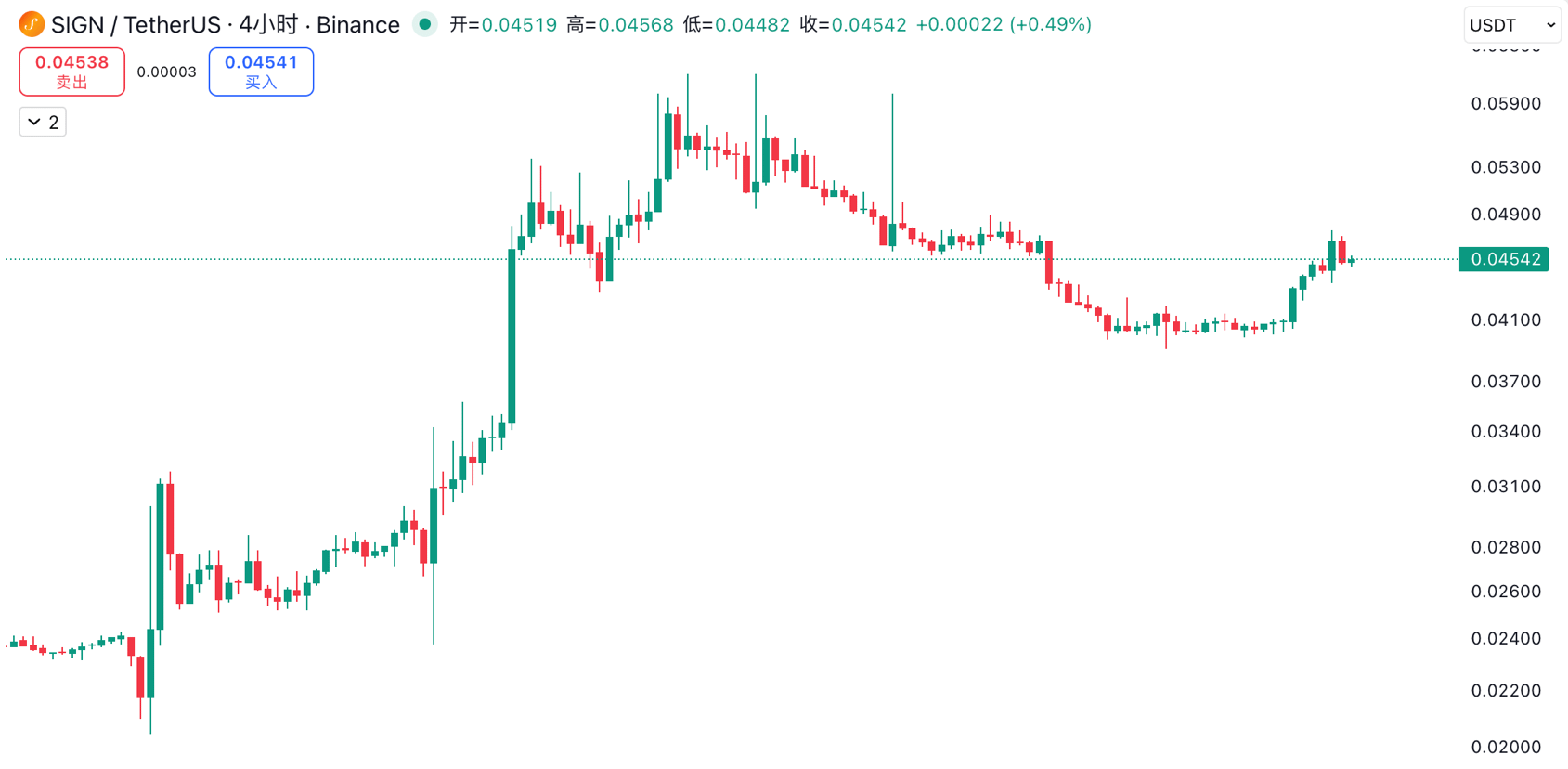
I just saw $SIGN on the Binance gainers list
I found that $SIGN has performed quite well over the past month. Just a few days ago, I listened to the Sign team on Binance Square's Space live broadcast, with the theme "How Sign Reshapes Digital Sovereignty and Builds Value Growth Poles in Complex Geopolitics".
The Sign project has always focused on the direction of "sovereign/national-level digital infrastructure". Currently, in the Middle East situation, the more chaotic the political situation, the more countries want to hold their money and rules tightly. In this environment, there may be a demand for infrastructure that can help countries manage digital identities, digital assets, cross-border settlements, and audit records, and Sign is a very good service provider.
I found that $SIGN has performed quite well over the past month. Just a few days ago, I listened to the Sign team on Binance Square's Space live broadcast, with the theme "How Sign Reshapes Digital Sovereignty and Builds Value Growth Poles in Complex Geopolitics".
The Sign project has always focused on the direction of "sovereign/national-level digital infrastructure". Currently, in the Middle East situation, the more chaotic the political situation, the more countries want to hold their money and rules tightly. In this environment, there may be a demand for infrastructure that can help countries manage digital identities, digital assets, cross-border settlements, and audit records, and Sign is a very good service provider.

Ai 姨
·
--
Even in a bear market, some projects are still getting things done.
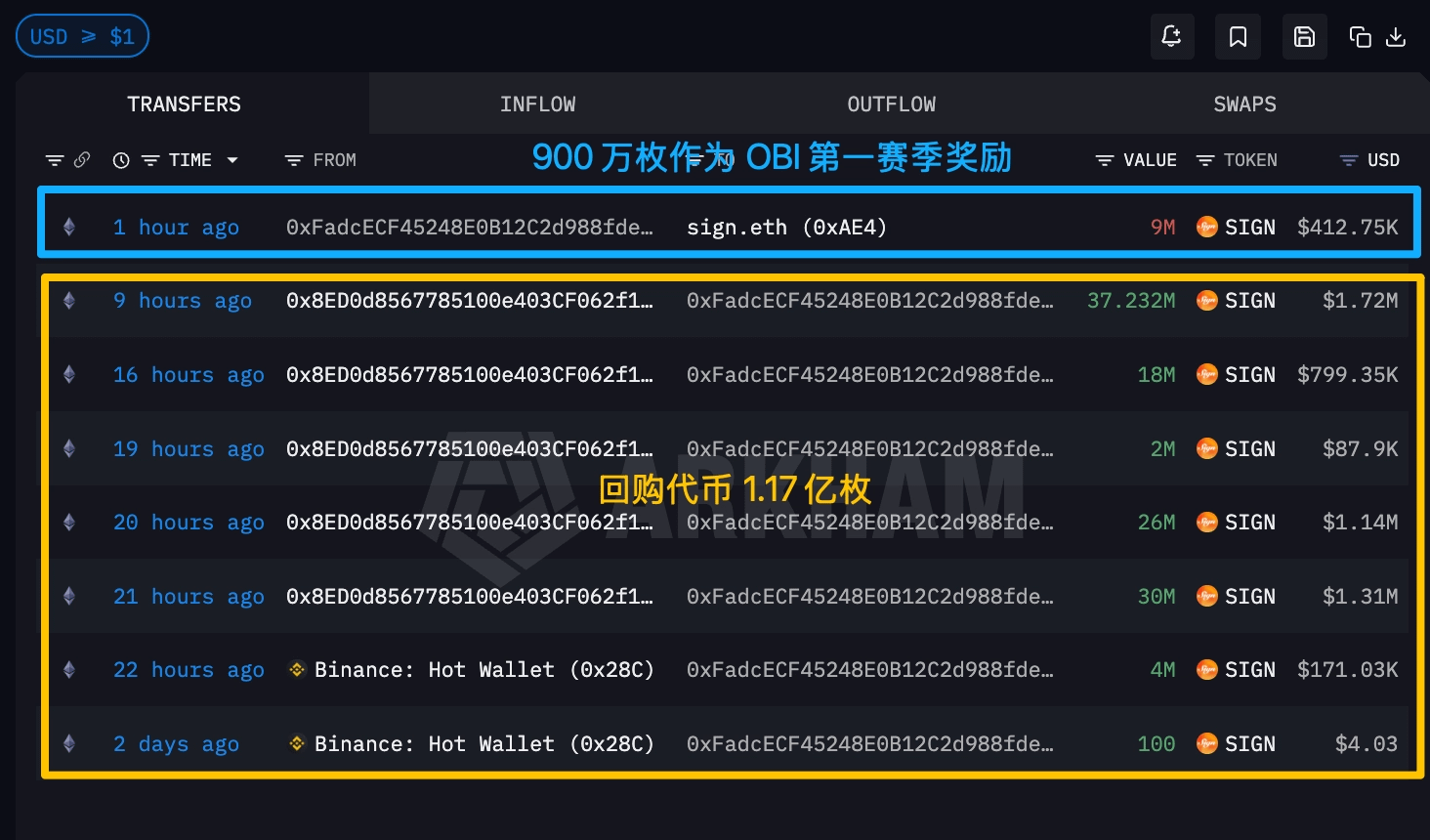
Yzi led the investment in the on-chain infrastructure Sign, which withdrew 117 million tokens $SIGN (approximately 5.21 million USD) from Binance in the past 24 hours, fulfilling the team's buyback commitment set for 2028.08. The on-chain custody address is 👉 0xFadcECF45248E0B12C2d988fdeDb48d34D5CE4a7
At the same time, they announced the launch of the OBI incentive program; as long as you transfer SIGN to the on-chain address, you will be considered a participant. The 9 million SIGN for the first season has been transferred to sign.eth one hour ago, and the quantity matches up. Those who hold tokens can pay attention to this activity.
BTW, just in case you are not familiar with this project: Sign is the successor to EthSign, but has now developed into an infrastructure company that provides digital infrastructure for sovereign nations — two implemented examples are that Sign received compliance endorsement in Abu Dhabi and is working with the central bank in Kyrgyzstan on digital currency.
Yzi led the investment in the on-chain infrastructure Sign, which withdrew 117 million tokens $SIGN (approximately 5.21 million USD) from Binance in the past 24 hours, fulfilling the team's buyback commitment set for 2028.08. The on-chain custody address is 👉 0xFadcECF45248E0B12C2d988fdeDb48d34D5CE4a7
At the same time, they announced the launch of the OBI incentive program; as long as you transfer SIGN to the on-chain address, you will be considered a participant. The 9 million SIGN for the first season has been transferred to sign.eth one hour ago, and the quantity matches up. Those who hold tokens can pay attention to this activity.
BTW, just in case you are not familiar with this project: Sign is the successor to EthSign, but has now developed into an infrastructure company that provides digital infrastructure for sovereign nations — two implemented examples are that Sign received compliance endorsement in Abu Dhabi and is working with the central bank in Kyrgyzstan on digital currency.

加密韋馱Crypto Skanda
·
--
Gold, silver, crude oil, U.S. stocks, Hong Kong stocks, A-shares, every market is falling. Why?
Because the prices of these assets rely on the existing international order. And against the backdrop of the fact that the Third World War has already broken out, trust between countries outside their borders has long since disappeared.
The closure of the Strait of Hormuz benefits faraway Norway's oil and Australia's gas on the surface, but the truth is: every country is in the process of reconstructing self-control in reality, with independent nuclear weapons, independent energy, and independent information.
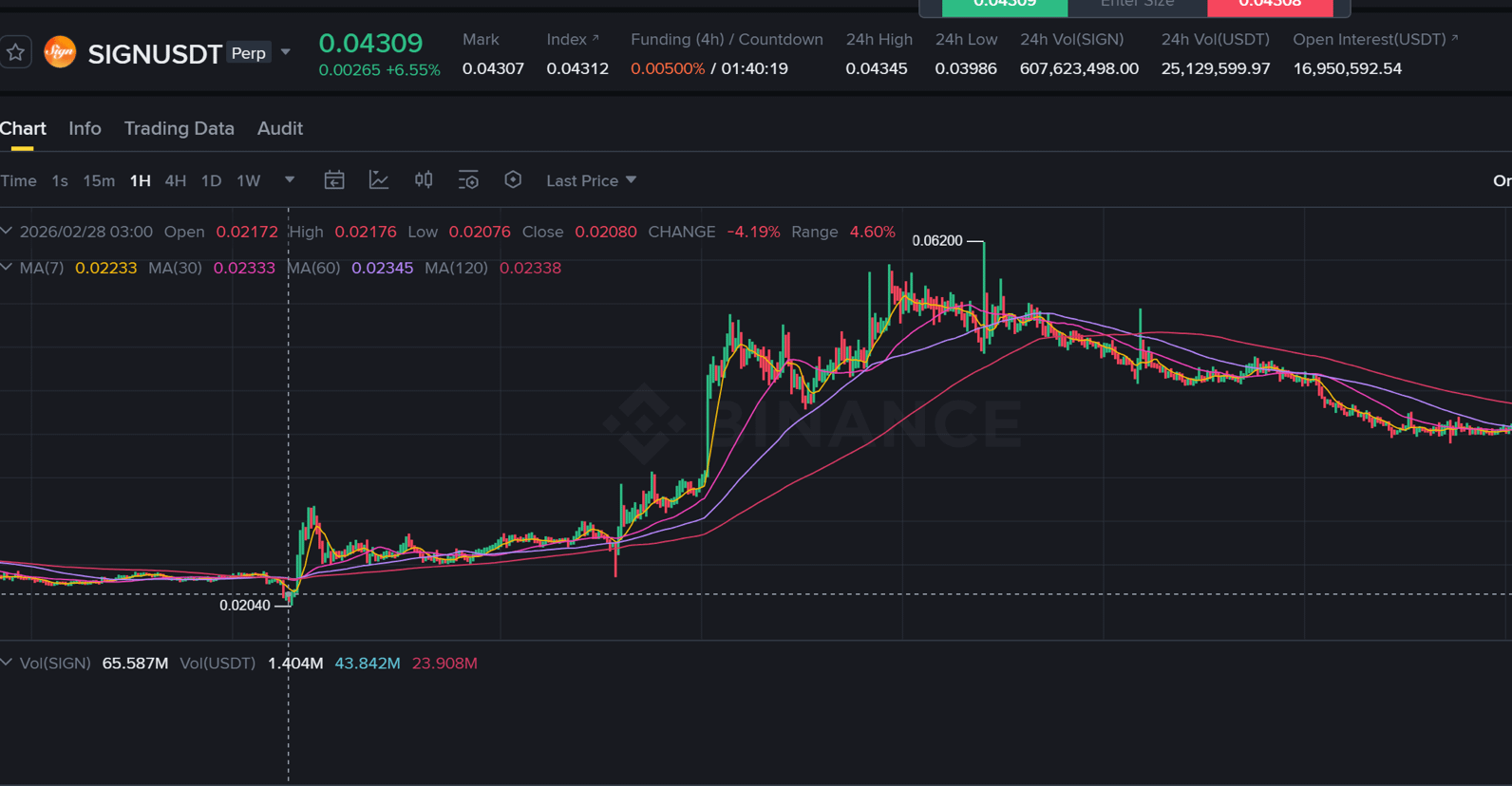
One type of currency with this concept is privacy coins, and the other is products like $SIGN , which are 'CZ-certified national gifts' aimed at small and medium-sized countries. Thematically, the more chaotic the world is, the more precious the 'neutral' free ports outside the conflicting parties become. In terms of concentration of chips, since the listing last year, Sign has been in a very low trading volume and high concentration state.
The previous wave of rises happened to start from the beginning of the U.S.-Iran war at 228, and this contrarian approach attracted a wave of skeptical opponents before. As Iran bombed the Qatari gas field, and with the U.S. landing war imminent, this was also an excellent opportunity for thematic stocks to counter cognitive biases.
Because the prices of these assets rely on the existing international order. And against the backdrop of the fact that the Third World War has already broken out, trust between countries outside their borders has long since disappeared.
The closure of the Strait of Hormuz benefits faraway Norway's oil and Australia's gas on the surface, but the truth is: every country is in the process of reconstructing self-control in reality, with independent nuclear weapons, independent energy, and independent information.
One type of currency with this concept is privacy coins, and the other is products like $SIGN , which are 'CZ-certified national gifts' aimed at small and medium-sized countries. Thematically, the more chaotic the world is, the more precious the 'neutral' free ports outside the conflicting parties become. In terms of concentration of chips, since the listing last year, Sign has been in a very low trading volume and high concentration state.
The previous wave of rises happened to start from the beginning of the U.S.-Iran war at 228, and this contrarian approach attracted a wave of skeptical opponents before. As Iran bombed the Qatari gas field, and with the U.S. landing war imminent, this was also an excellent opportunity for thematic stocks to counter cognitive biases.
·
--
🎙️ Released 3 days and already broke 100k registrations, what exactly is the Orange Dynasty App? Special guest -- Claire (SIGN Co-founder)
End
01 h 00 m 52 s
7.3k
36


Log in to explore more content