
影子小鼹鼠
751 Posts

影子小鼹鼠
Report
Block User
币,股还有ai,陪伴我的小伙伴们一起成长。关注我,提供的不仅有最前沿的思考,还有很强的情绪价值!活着就要快乐!
10 Following
520 Followers
1.4K+ Liked
Posts
All
Quotes
Videos
·
--
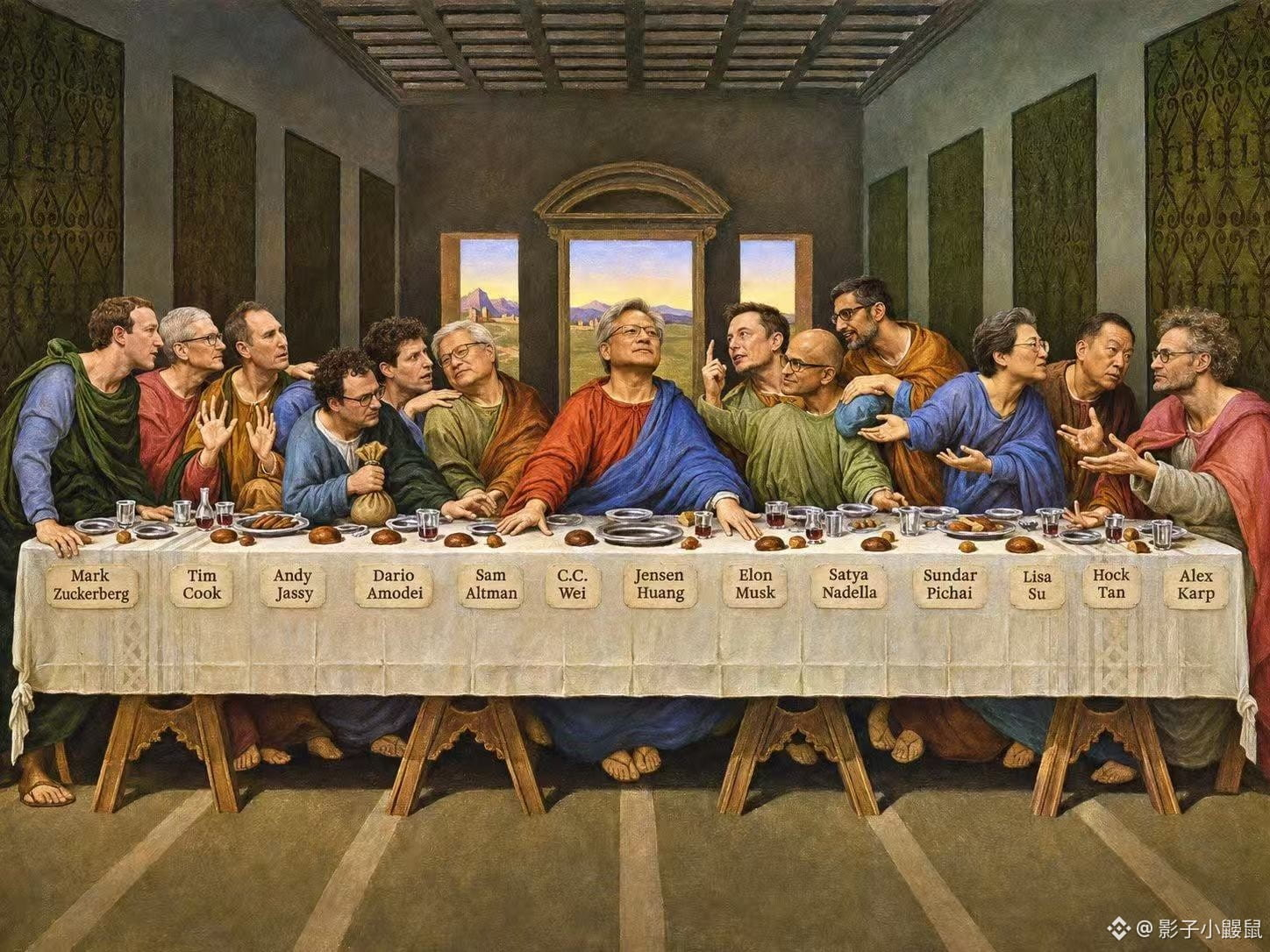
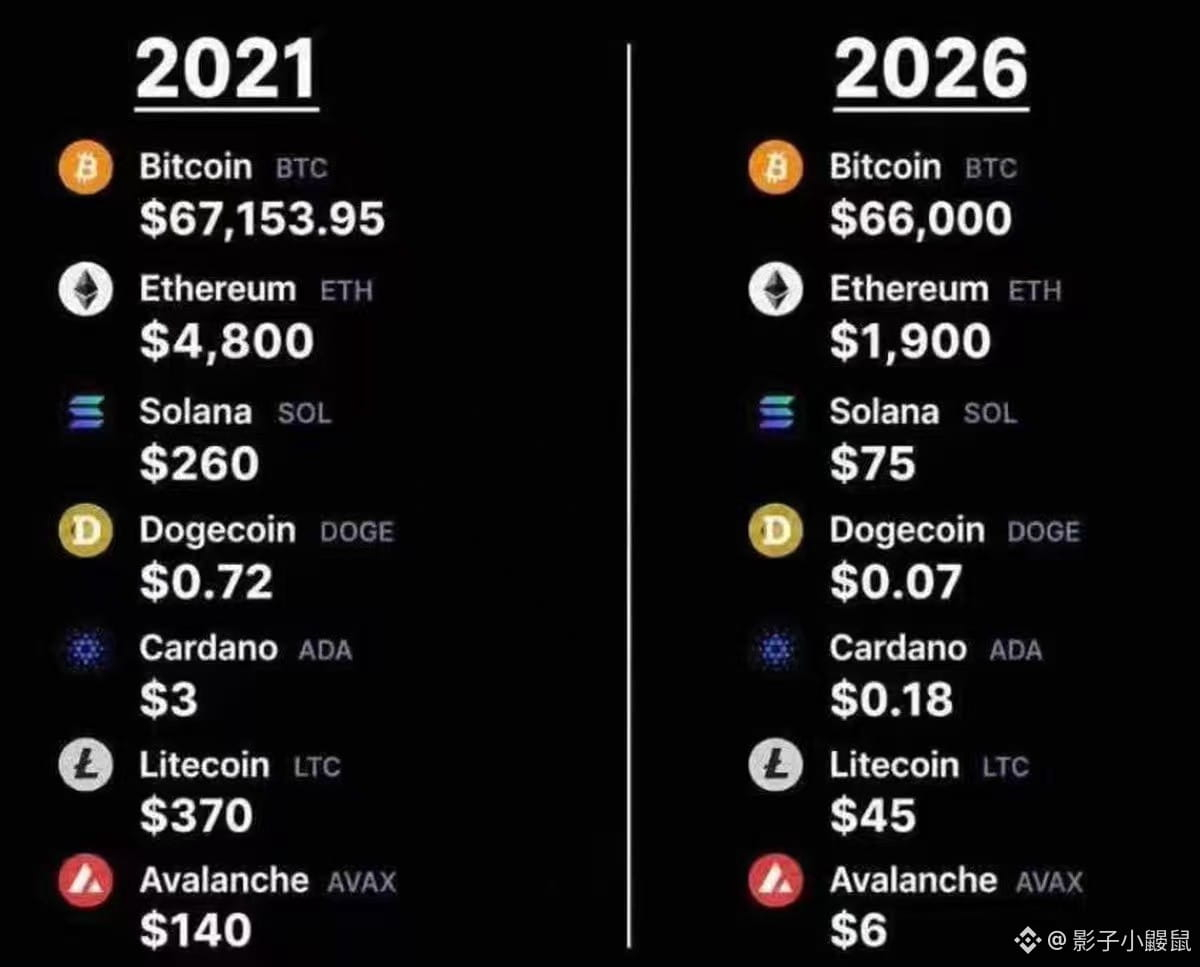
After five years, it seems the only thing that hasn’t changed is the big pancake—it’s still the same as ever.
After five years, it seems the only thing that hasn’t changed is the big pancake—it’s still the same as ever.
2
2
3.2k
·
--
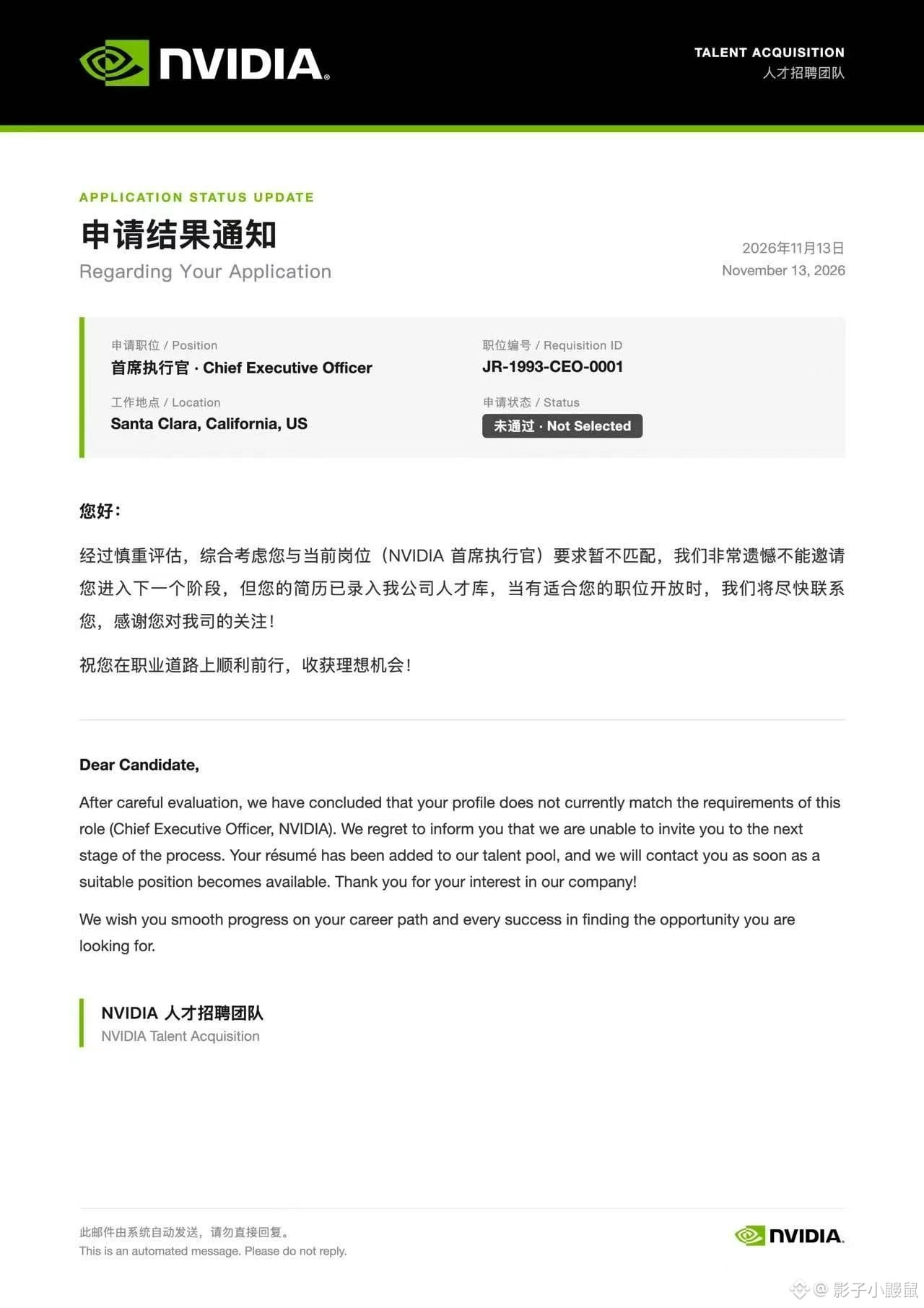
Nvidia is openly hiring a CEO. I submitted my résumé, but unfortunately, I didn't make it! Everyone should give it a try—who knows, maybe you'll get the job 🤪
Nvidia is openly hiring a CEO. I submitted my résumé, but unfortunately, I didn't make it! Everyone should give it a try—who knows, maybe you'll get the job 🤪
3
1
719
·
--
Was Satoshi Nakamoto also found to have been unfaithful to his spouse?
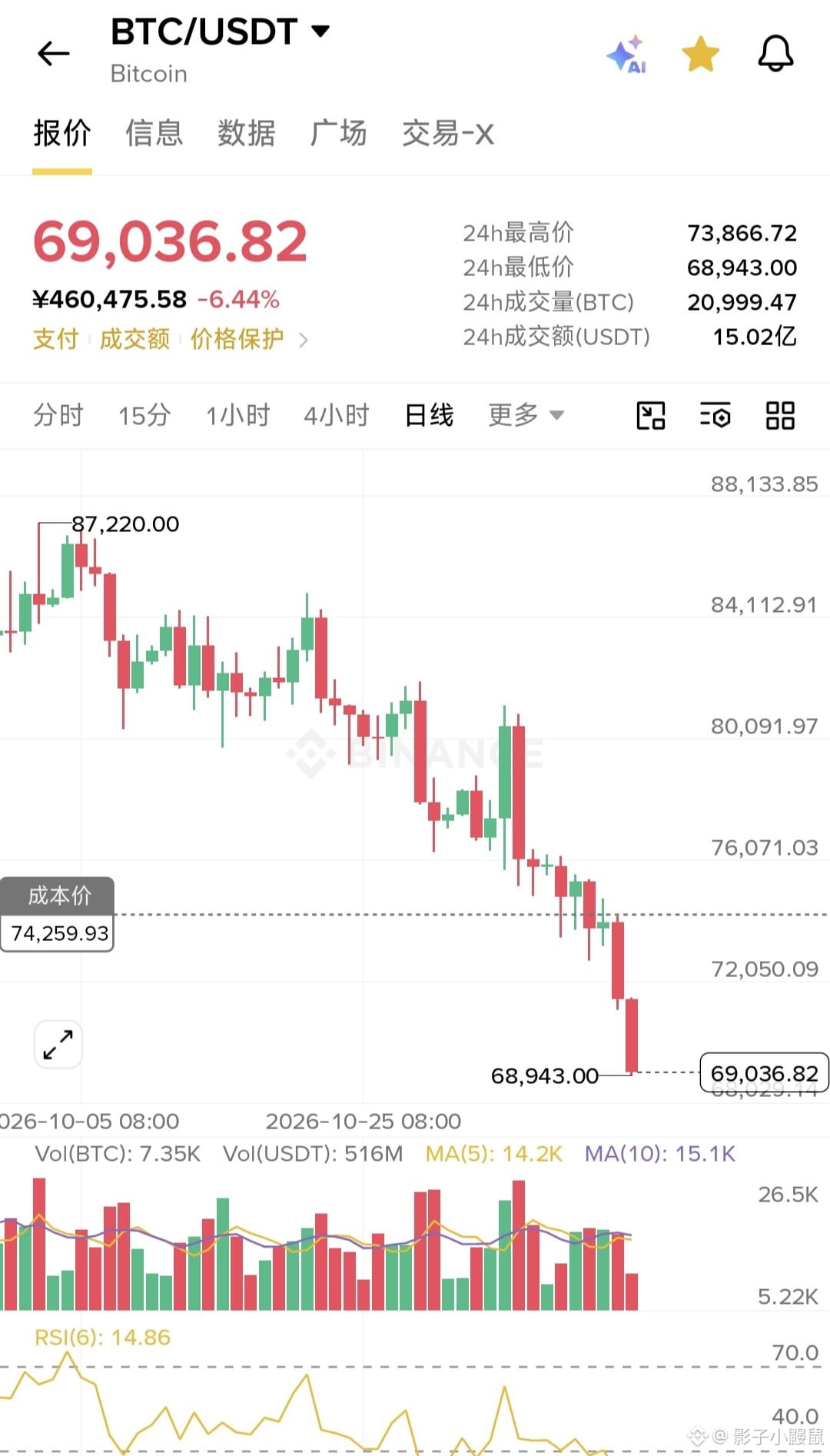
$BTC has fallen even harder than Nvidia.
Was Satoshi Nakamoto also found to have been unfaithful to his spouse?
$BTC has fallen even harder than Nvidia.
$BTC has fallen even harder than Nvidia.
1
411
·
--
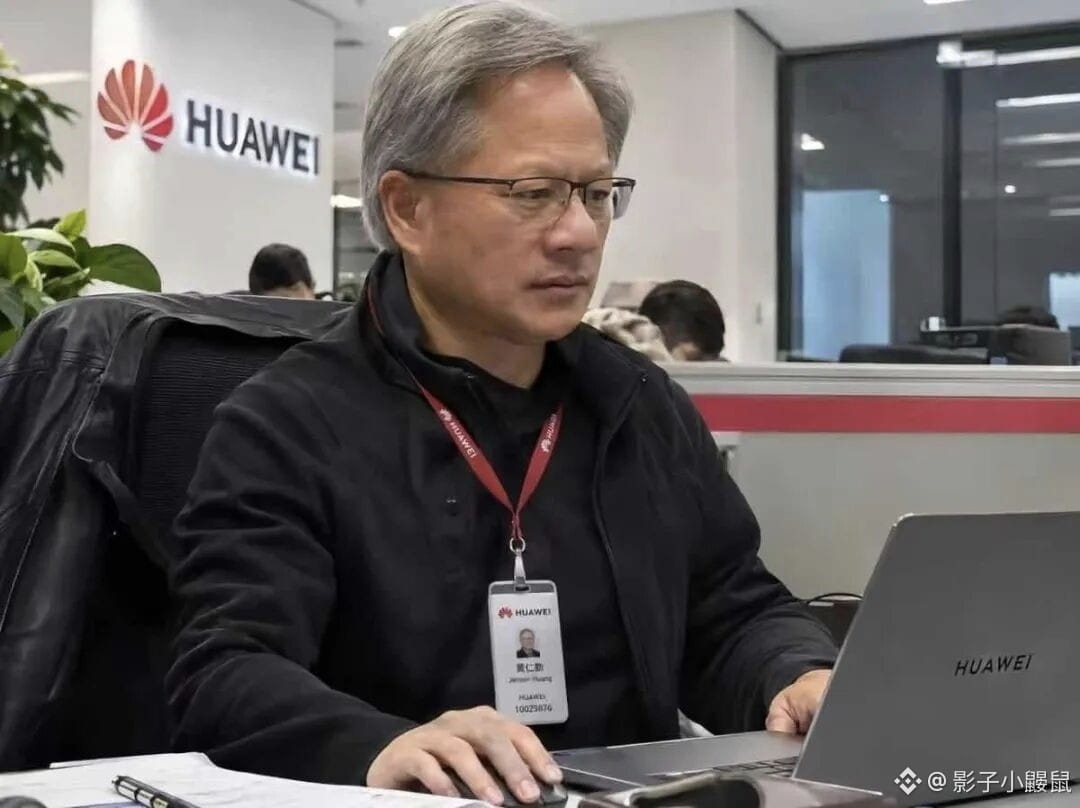
According to speculation by a low-tier media outlet, Jensen Huang has completed his onboarding and is already at work. Old Ma’s chip factory is moving a bit slowly 😂
According to speculation by a low-tier media outlet, Jensen Huang has completed his onboarding and is already at work. Old Ma’s chip factory is moving a bit slowly 😂
148
·
--
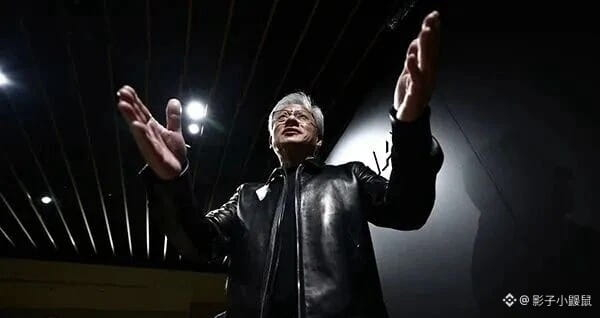
On November 12 local time, Reuters cited people familiar with the matter in reporting that Nvidia’s former CEO, Jensen Huang, had again been exposed as having a third extramarital affair, this time with an Nvidia employee whose identity has not been disclosed.
With one story after another about Old Huang, the global peanut gallery just can’t get enough.
With one story after another about Old Huang, the global peanut gallery just can’t get enough.
149
·
--
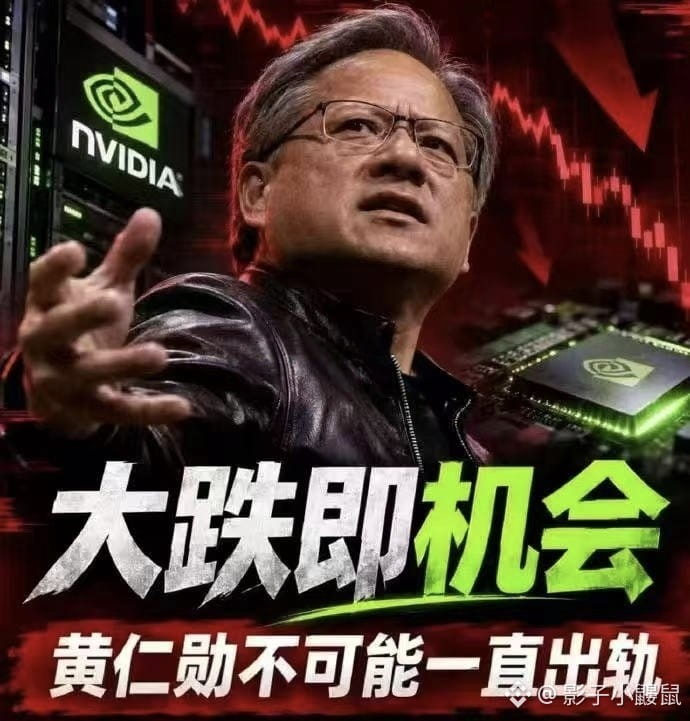
The odds that Jensen Huang will step down as Nvidia CEO before the end of December have already reached 90%. One intriguing suggestion is that Cook could succeed him.
Jeffrey Sonnenfeld of the Yale School of Management and others floated the idea in a TIME op-ed, and Polymarket subsequently posted the same information.
Could this be a choice made on the grounds that Cook is out of the closet, so there’s no chance he’ll “cheat”?
Jeffrey Sonnenfeld of the Yale School of Management and others floated the idea in a TIME op-ed, and Polymarket subsequently posted the same information.
Could this be a choice made on the grounds that Cook is out of the closet, so there’s no chance he’ll “cheat”?

3
2
836
·
--
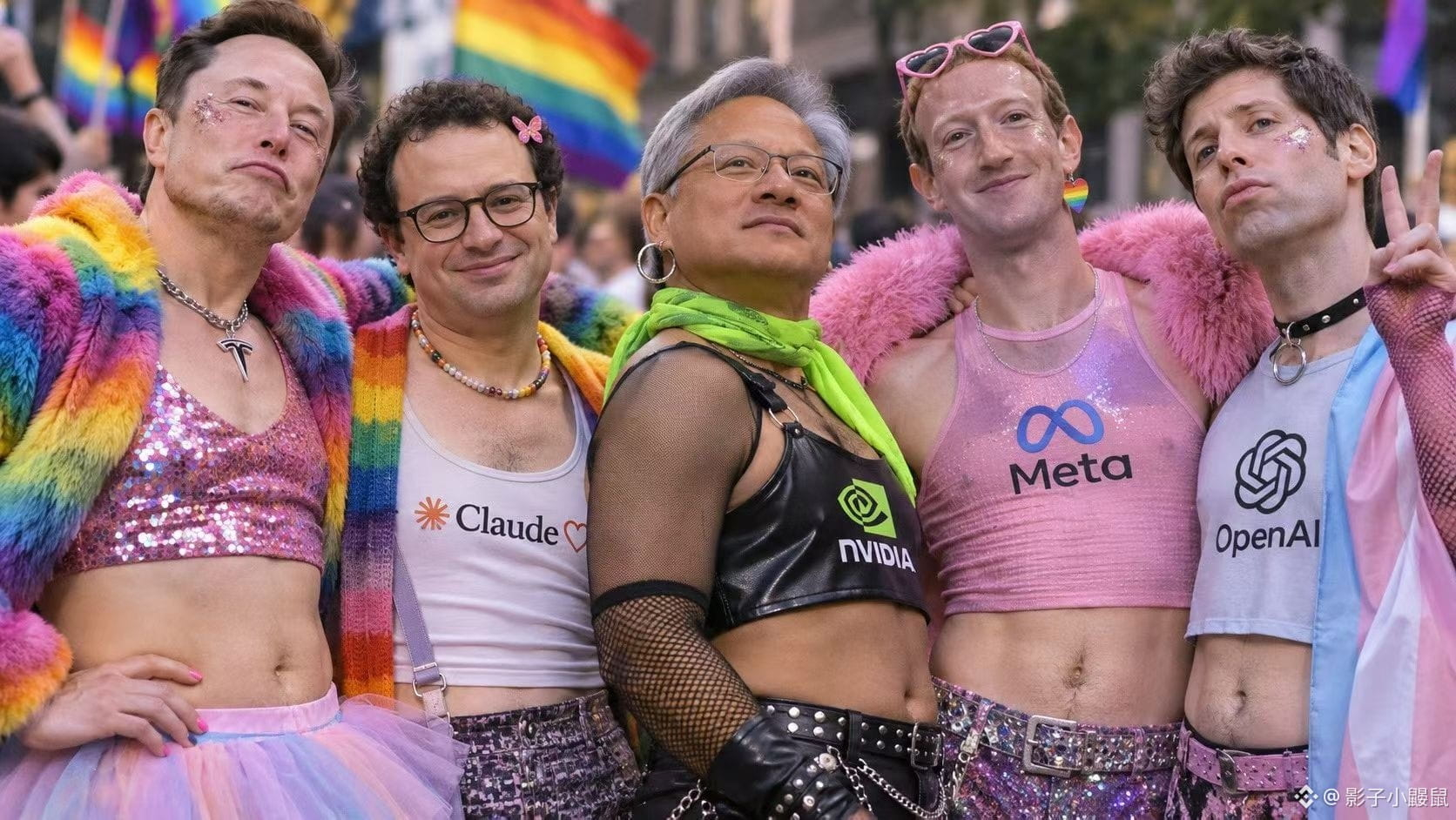
I wonder if more people will be drawn into this picture. Clues and accusations are being revealed step by step, and the investigation has been going on for quite a while!
I hope AI and crypto won’t fluctuate too much as more people are added to the photo, with global capital footing the bill.
I wonder if more people will be drawn into this picture. Clues and accusations are being revealed step by step, and the investigation has been going on for quite a while!
I hope AI and crypto won’t fluctuate too much as more people are added to the photo, with global capital footing the bill.
I hope AI and crypto won’t fluctuate too much as more people are added to the photo, with global capital footing the bill.

1
132
·
--
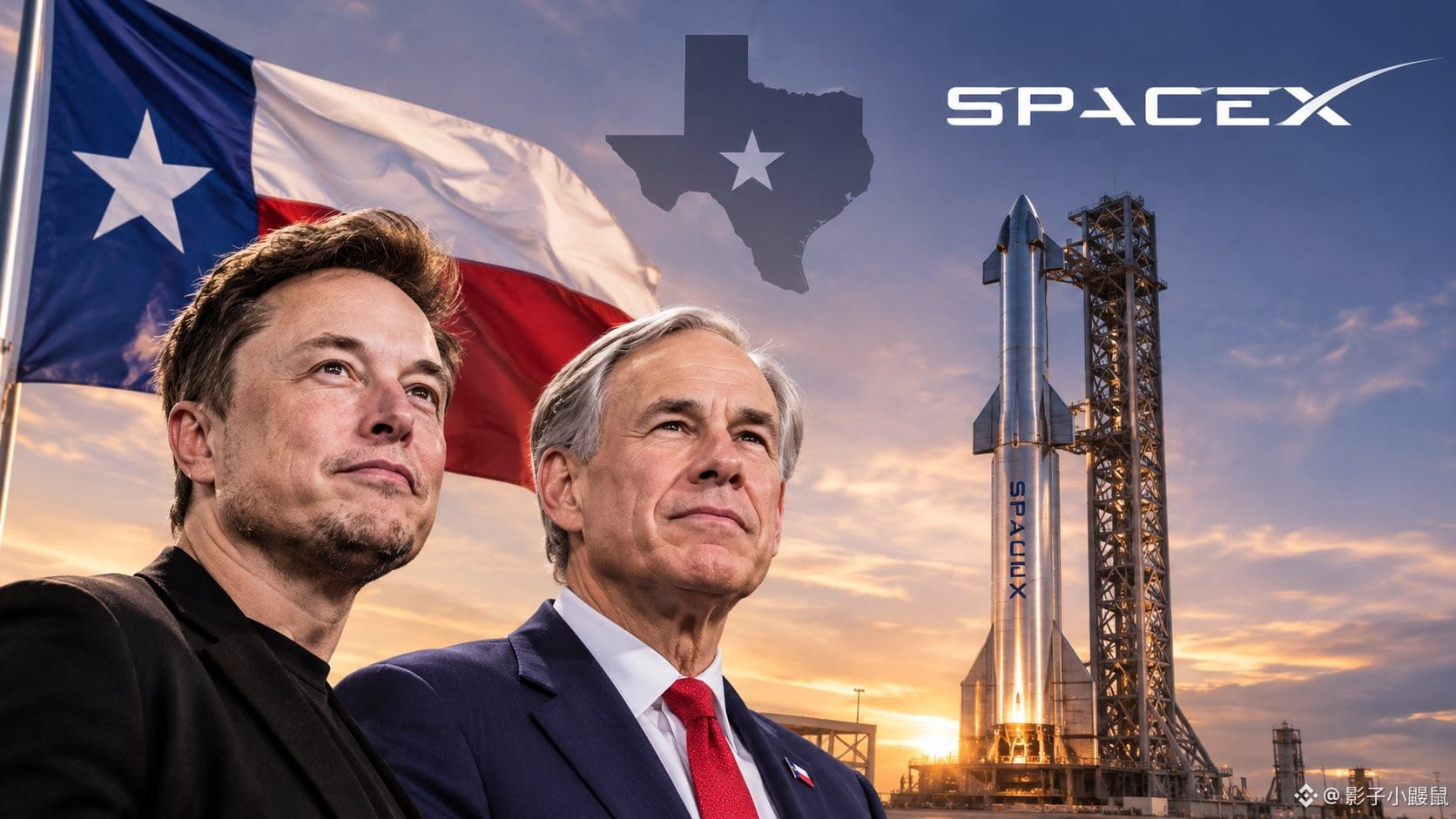
The Texas Governor Is Frantically Signing Off on Musk’s Projects Before Leaving Office
Just 70 days to go, and this Texas governor—and good buddy of Musk—is about to leave office.
His job now: stamp approvals at lightning speed! Sign off on all of Musk’s applications...
Take SpaceX’s “Starbase” in Texas, for example. Getting rockets off the ground smoothly takes unwavering support from the powers that be. Musk needs to use his connections to quickly get the following matters sorted:
First, the “big splash” permit.
When Starship launches, hundreds or even thousands of tons of pressurized water gush out beneath the launch pad in an instant to cool things down and reduce noise, keeping the giant rocket’s exhaust from shredding the pad.
Once all that water sprays out, the Texas Commission on Environmental Quality comes knocking with questions: Where does the water go? Does it contain heavy metals? Could it pollute the nearby wetlands or harm sea turtles?
SpaceX has already spent a long time tussling with regulators over approval to discharge this industrial wastewater. Without this water and environmental permit, even a static fire test on the launch pad would be a nail-biting affair for Starship.
Second, applications to “close roads and beaches.”
Starbase sits right next to Texas State Highway 4 and a public beach.
Whenever Starship needs to be transported, undergo a static fire test, or launch, the entire area has to be closed off and cleared.
If local road authorities and coastal regulators won’t sign off, the factory’s thousands of engineers and its huge fleet of transport vehicles can only sit around waiting, burning through millions of dollars a day.
Third, additional permits for an extremely high launch frequency.
SpaceX has already submitted a proposal to raise Starbase’s annual launch limit in Texas from the current 25 launches to as many as 456 a year. That means launching and recovering a rocket at least once a day, on average.
From noise control and air quality assessments to rights to use the coastline, every step needs the green light from local regulators.
More to the point, while Abbott—who is extremely friendly to commercial spaceflight and strongly supports the local economy—is still in office, getting every compliance requirement wrapped up and secured is SpaceX’s most important “legal line of defense.”
Musk’s grand vision is to take humanity to Mars and colonize it. But back on Earth, what he still fears most is dealing with local officials.
8
6.5k
·
--
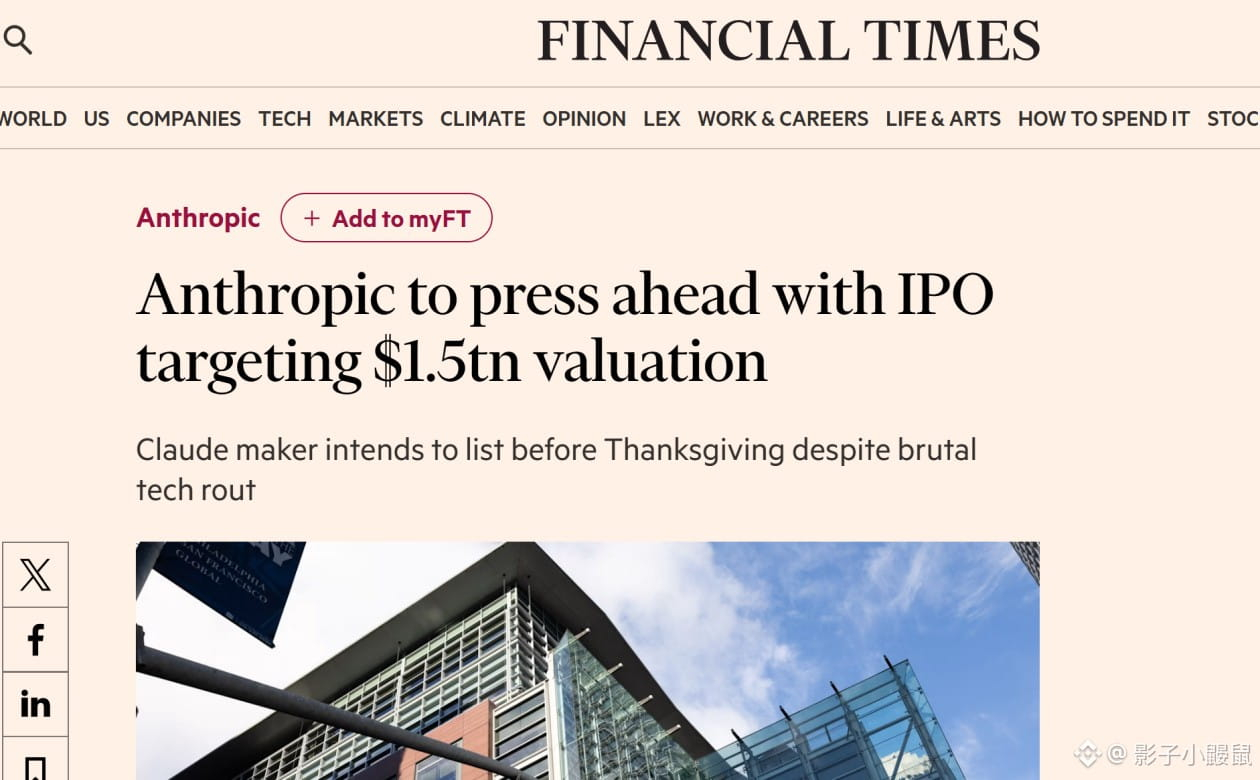
Anthropic’s $26 billion cornerstone investment is actually the most direct way for Google, Nvidia, and the others to “prop themselves up” and get paid for their supply-chain services.
Anthropic kicked off its roadshow today, with seven supply-chain giants committing $26 billion in private placements at the IPO price as cornerstone investors.
Among them are Google (TPU cloud), Microsoft (Azure), Nvidia/AMD/Broadcom (chips), Micron (HBM), and TSMC (foundry services)—not one is a purely financial investor; they are all compute suppliers to Anthropic.
Anthropic’s biggest expense is buying compute from these companies. The money it pays becomes their revenue, and they then use it to buy equity in Anthropic. This isn’t outside capital voting with its feet; it’s a circular injection of funds within the industry chain.
Even more striking: these seven companies will sell about 23.33 million existing shares in the IPO at the same IPO price, cashing out, while simultaneously investing $26 billion in new money through private placements to support the stock—selling old shares and buying new ones at the same price.
The lockups are asymmetric, too: under the S-1 framework, major shareholders are locked up for about a year, but the compute contracts aren’t. Anthropic is locked into roughly $200 billion in purchases from Google TPU over five years and more than $100 billion from Amazon AWS over ten years.
The money flows one way to suppliers first; equity only comes back at the IPO, and remains locked up. Suppliers get years of guaranteed revenue and a supported position, while the public gets locked-price shares pegged at the top.
The supply-chain bills these giants are preparing to cash in will be paid by young masters around the world.
1
488
·
--
Verified
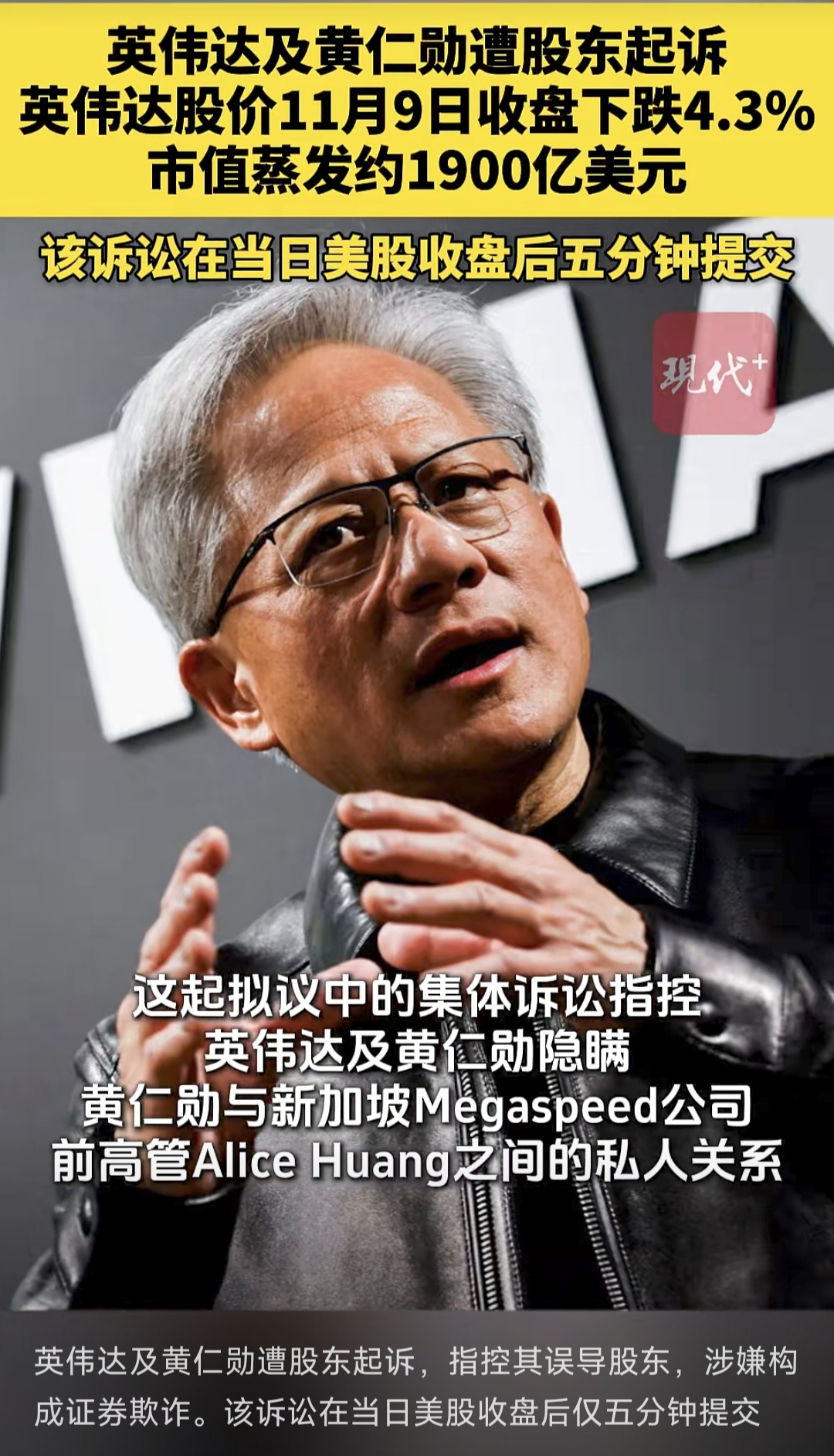
Nvidia’s “honey trap,” from scandal to subpoena: Jensen Huang has become AI’s biggest single-point risk
Nvidia shareholders sued the company and Jensen Huang today in federal court in San Jose, alleging that he concealed his relationship with Alice Huang, a former Megaspeed executive suspected of having ties to China, as well as the national security risks involved. NVDA fell 4.3% yesterday, wiping out about $190 billion in market value, and is down nearly 20% over the past month.
The board launched an investigation on 11/8 → three congressional committee chairs asked Huang to attend a closed-door briefing on 11/9 → today, the matter turned into an actual lawsuit.
The deeper thread comes from the NYT: the U.S. Commerce Department had investigated Megaspeed for illegally diverting Nvidia chips to China, but after Nvidia executives contacted Commerce Department officials, the case was “referred to the Justice Department”—a move several officials considered unusual. In other words, this “honey trap” has spilled over from questions of personal conduct into a trifecta of a chip-smuggling investigation, a securities-disclosure lawsuit, and CEO governance concerns.
The most iconic figure in this AI boom has now become its biggest single-point risk—and Nvidia’s earnings report is due on 11/17, making it a key event in determining whether the next risk materializes.
1
593
·
--
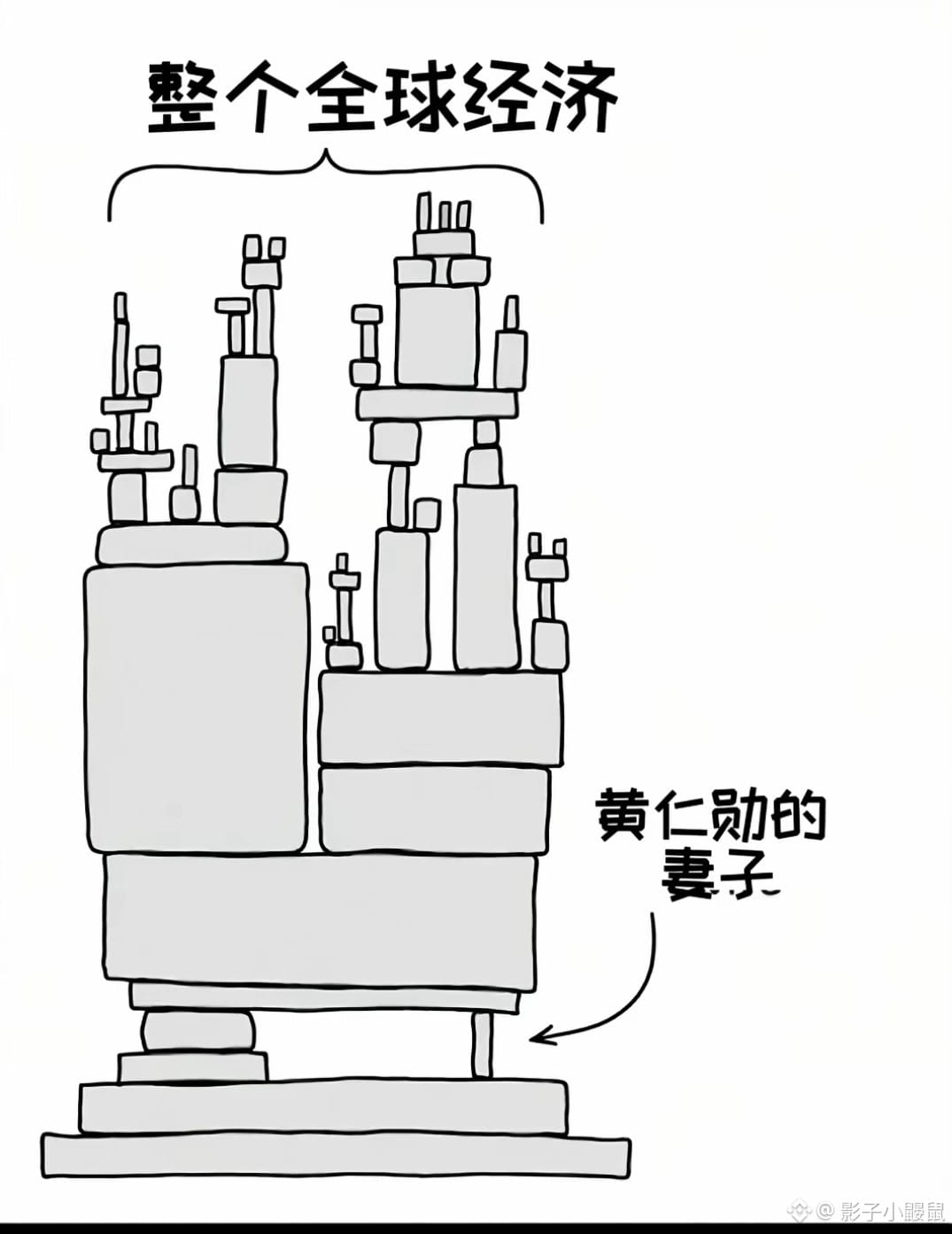
The pressure is now on Huang's wife: whether she dumps her shares could determine whether the bubble in the global AI capital market bursts.
The pressure is now on Huang's wife: whether she dumps her shares could determine whether the bubble in the global AI capital market bursts.
2
216
·
--
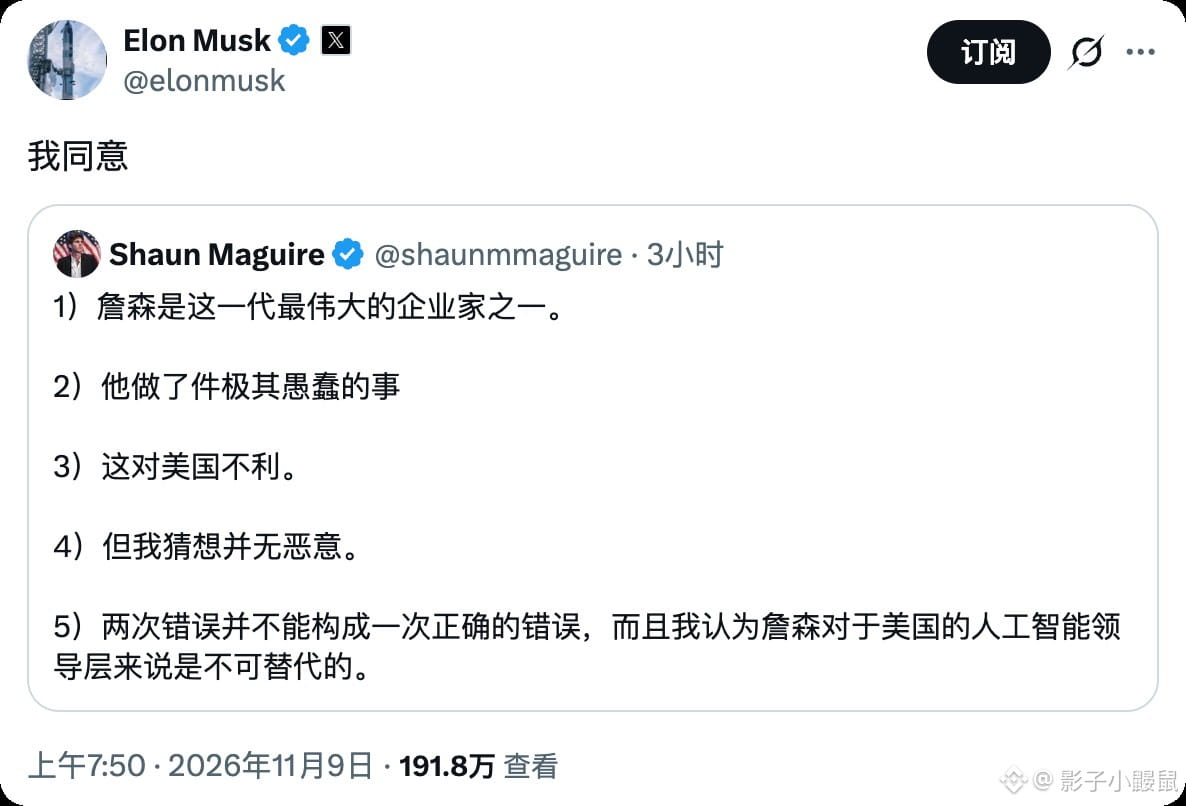
Musk backs Jensen Huang
After Huang publicly admitted to having an affair, Musk also weighed in on the social platform X, agreeing with the view that although Huang made a serious mistake, he remains irreplaceable to the U.S. AI industry, and simply replied, “I agree.”
Musk backs Jensen Huang
After Huang publicly admitted to having an affair, Musk also weighed in on the social platform X, agreeing with the view that although Huang made a serious mistake, he remains irreplaceable to the U.S. AI industry, and simply replied, “I agree.”
After Huang publicly admitted to having an affair, Musk also weighed in on the social platform X, agreeing with the view that although Huang made a serious mistake, he remains irreplaceable to the U.S. AI industry, and simply replied, “I agree.”
120
·
--
Successful entrepreneurs tend to have pretty similar tastes.
Successful entrepreneurs tend to have pretty similar tastes.

2
63
·
--
Article
Weekend Market Recap, Weekly Wrap: The Election-Night Rally Was a False Move; BTC Retreats to the $75K Defense Line—Is This a Pause in the Downtrend or a Near-Term Bottom? Tuesday’s CPI Will DecideLooking at the charts, this was a week when “hope was ripped apart to our faces.” On Tuesday, Democrats swept both chambers in the midterm elections (a blue wave), and the market gave us a one-day gift: on Wednesday, BTC touched $81,155 and ETH surged to $2,421, making it look as though the “post-election rally” was about to repeat itself. Then Thursday’s AI/tech stock crash (the Nasdaq fell 3.9%–4.2% in a single day) dragged crypto straight into the ditch. BTC fell back to $75,463 in a day, ETH dropped below $2,300, and liquidations across the market soared to $1.1B, with longs accounting for nearly 90%.
Trading was quiet over the weekend on thin volume, with BTC holding firm around $75,800 (weekly high: $81,155 / weekly low: around $74,900; down about 3% for the week). Most importantly, the psychological $80,000 level has been lost, and the $74,800–$75,000 support zone is now the key line of defense. ETH is stuck in the $2,200–$2,450 range, at around $2,231 over the weekend, firmly below $2,400 and still nowhere near its 50-day moving average at $2,506.
Weekend Market Recap, Weekly Wrap: The Election-Night Rally Was a False Move; BTC Retreats to the $75K Defense Line—Is This a Pause in the Downtrend or a Near-Term Bottom? Tuesday’s CPI Will Decide
Looking at the charts, this was a week when “hope was ripped apart to our faces.” On Tuesday, Democrats swept both chambers in the midterm elections (a blue wave), and the market gave us a one-day gift: on Wednesday, BTC touched $81,155 and ETH surged to $2,421, making it look as though the “post-election rally” was about to repeat itself. Then Thursday’s AI/tech stock crash (the Nasdaq fell 3.9%–4.2% in a single day) dragged crypto straight into the ditch. BTC fell back to $75,463 in a day, ETH dropped below $2,300, and liquidations across the market soared to $1.1B, with longs accounting for nearly 90%.
Trading was quiet over the weekend on thin volume, with BTC holding firm around $75,800 (weekly high: $81,155 / weekly low: around $74,900; down about 3% for the week). Most importantly, the psychological $80,000 level has been lost, and the $74,800–$75,000 support zone is now the key line of defense. ETH is stuck in the $2,200–$2,450 range, at around $2,231 over the weekend, firmly below $2,400 and still nowhere near its 50-day moving average at $2,506.
Trading was quiet over the weekend on thin volume, with BTC holding firm around $75,800 (weekly high: $81,155 / weekly low: around $74,900; down about 3% for the week). Most importantly, the psychological $80,000 level has been lost, and the $74,800–$75,000 support zone is now the key line of defense. ETH is stuck in the $2,200–$2,450 range, at around $2,231 over the weekend, firmly below $2,400 and still nowhere near its 50-day moving average at $2,506.
1
787
·
--
According to Reuters, AFP, and several other international media outlets, on November 8, 2026, Saudi Arabia’s capital, Riyadh, was hit by a new wave of intense missile attacks.
The Saudi Aramco building in the King Abdullah Financial District (KAFD) was struck by a projectile and damaged in the attack.
Several floors of the building sustained visible structural damage, with large areas of exterior glass shattered and parts of the façade damaged. Shortly before the attack, Riyadh’s Civil Defense Department had issued an early warning alert to residents. Several loud explosions were then heard in succession over central Riyadh.
Yahya Saree, the military spokesperson for Yemen’s Houthi movement, later publicly acknowledged on social media that they had launched a new large-scale wave of missile and drone attacks inside Saudi Arabia. The targets included Saudi Aramco oil facilities, Riyadh Airport, and several military positions along the Saudi border.
The landmark had never been attacked before.

103
·
--
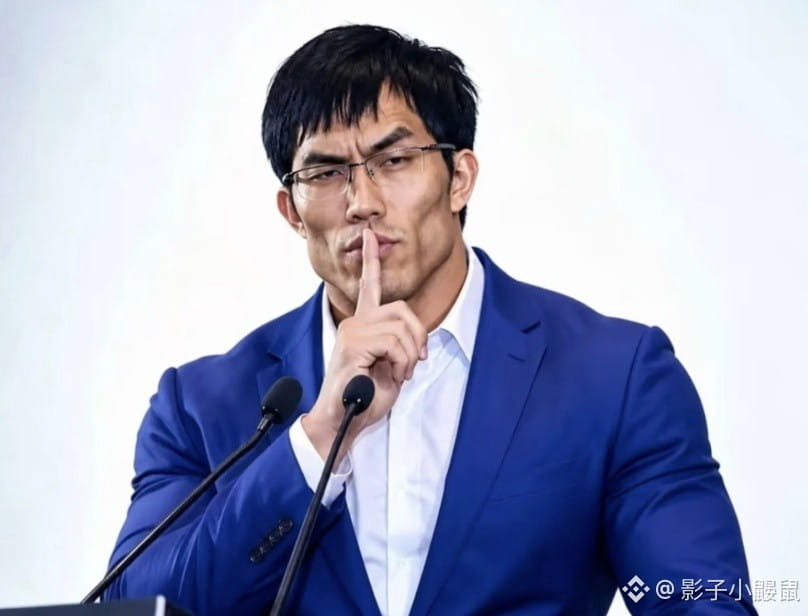
Anthropic plans to go public via an IPO before Thanksgiving—specifically, on November 26—seeking to raise $80–100 billion at a valuation of $1.25–1.75 trillion, nearly half below the most optimistic estimate of $2 trillion.
JPMorgan will host a roadshow for the company on November 13.
OpenAI has also cut its fundraising target from $1.4 trillion to $1.25 trillion, and has secured only about a third of what it originally planned.
The situation right now is: AI stocks fall → an Anthropic IPO becomes harder → less money available to pour into computing power → upstream suppliers receive fewer new orders and may even see their businesses shrink → triggering more selling across the entire supply chain.
For crypto, AI has been the strongest beta trade of the past two years, and its retreat is draining marginal liquidity. BTC is now in the F&G fear zone at 25, partly due to the spillover from that outflow of capital.
1
659
·
--
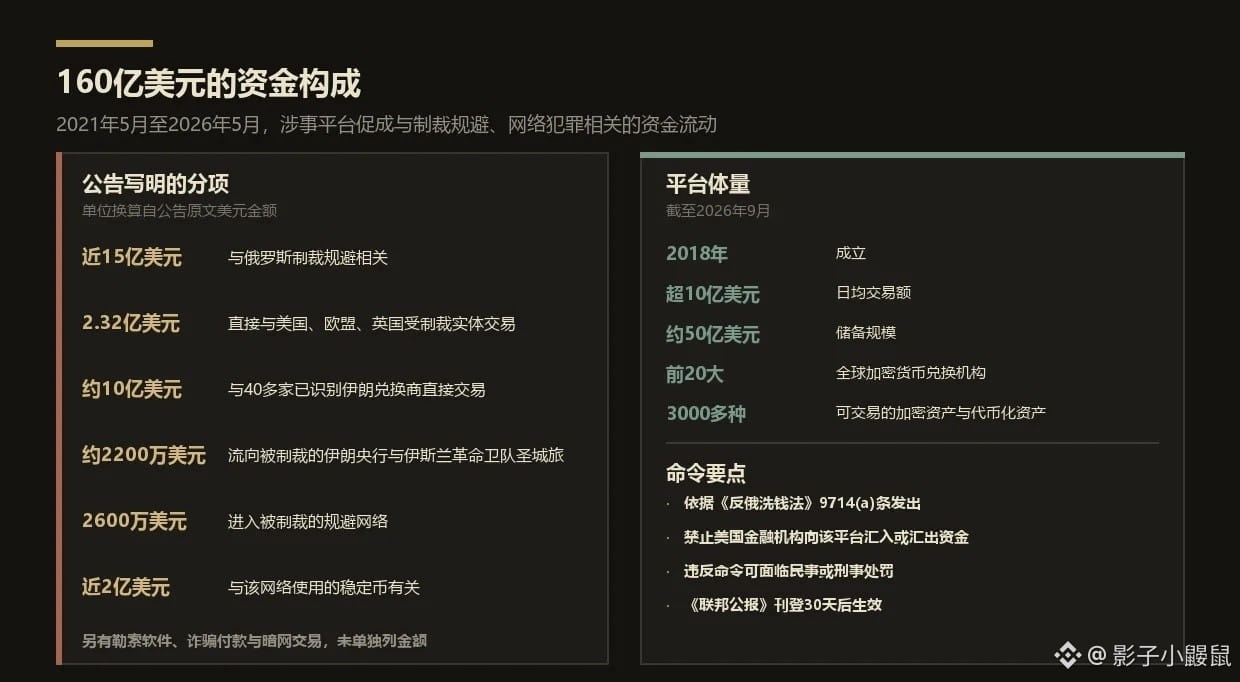
After MEXC was flagged for money-laundering concerns, OKX was the first to freeze transfers. Retail users are advised to route funds through a wallet before transferring them to a CEX, rather than using C2C directly.
OKX founder Star Xu publicly urged users to “avoid transferring funds directly from MEXC to OKX for now”—regulatory penalties against one exchange have frozen deposits belonging to users of another.
It started on November 6, when FinCEN designated MEXC an institution of “primary money laundering concern,” alleging that it was involved in about $16.7 billion in suspicious transactions from May 2021 to May 2026. The ban takes effect in 30 days.
Xu then posted on X that OKX had rolled out near-sanctions-level risk controls early, without waiting for the 30-day window. Users report that their USDT transfers over TRC20/ERC20 have been flagged and frozen.
MEXC users’ funds are now caught in the middle. The next question is whether other exchanges will follow suit.
The crypto world’s long-standing calls for “decentralization” look fragile in the face of sanctions. The real switch is the stablecoin freeze mechanism (Tether/Circle).
For ordinary users, the advice is: don’t insist on transferring directly from MEXC to OKX. Withdraw your coins to a self-custody wallet first, or use another route.
1
1.5k
·
--
120
·
--
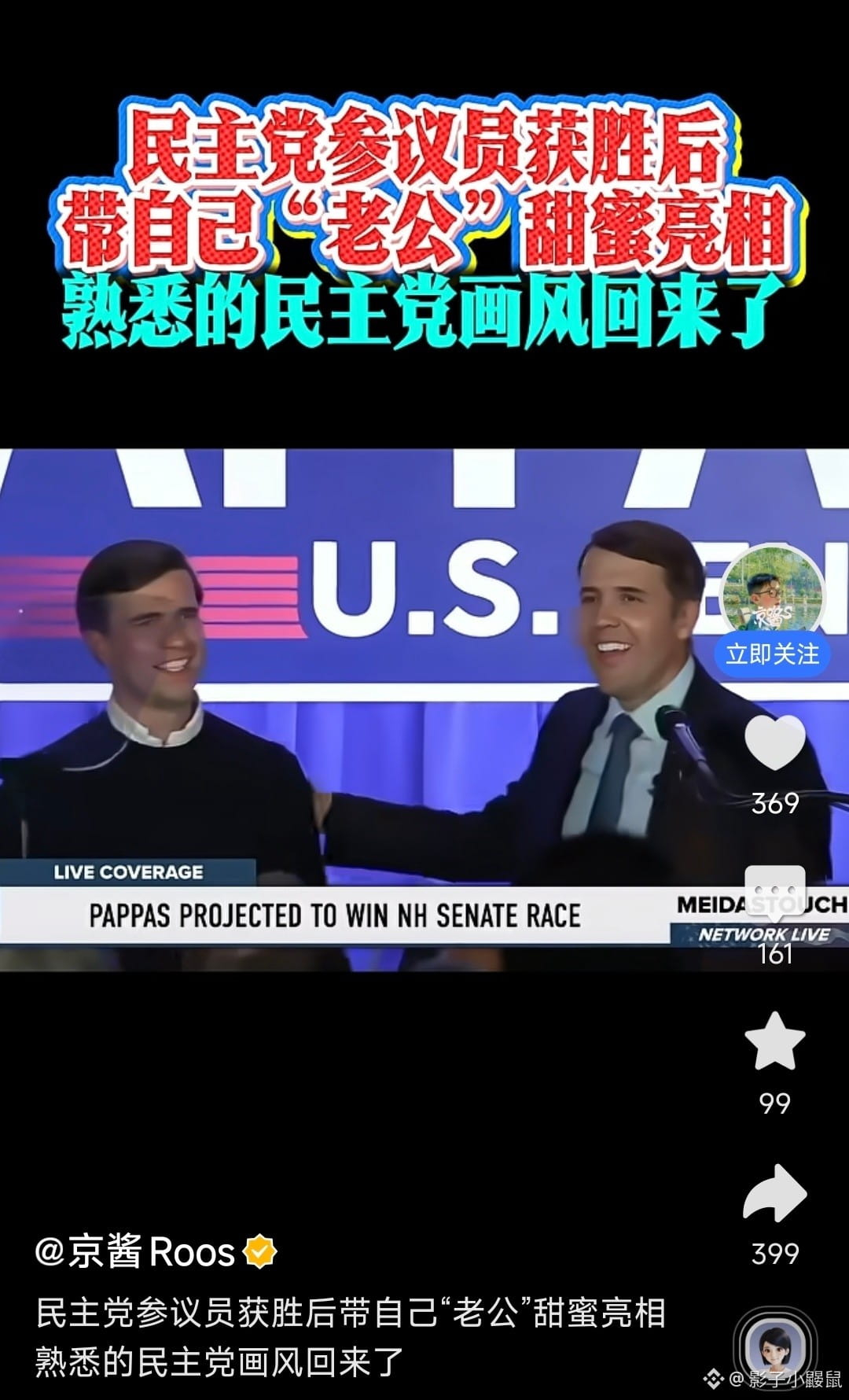
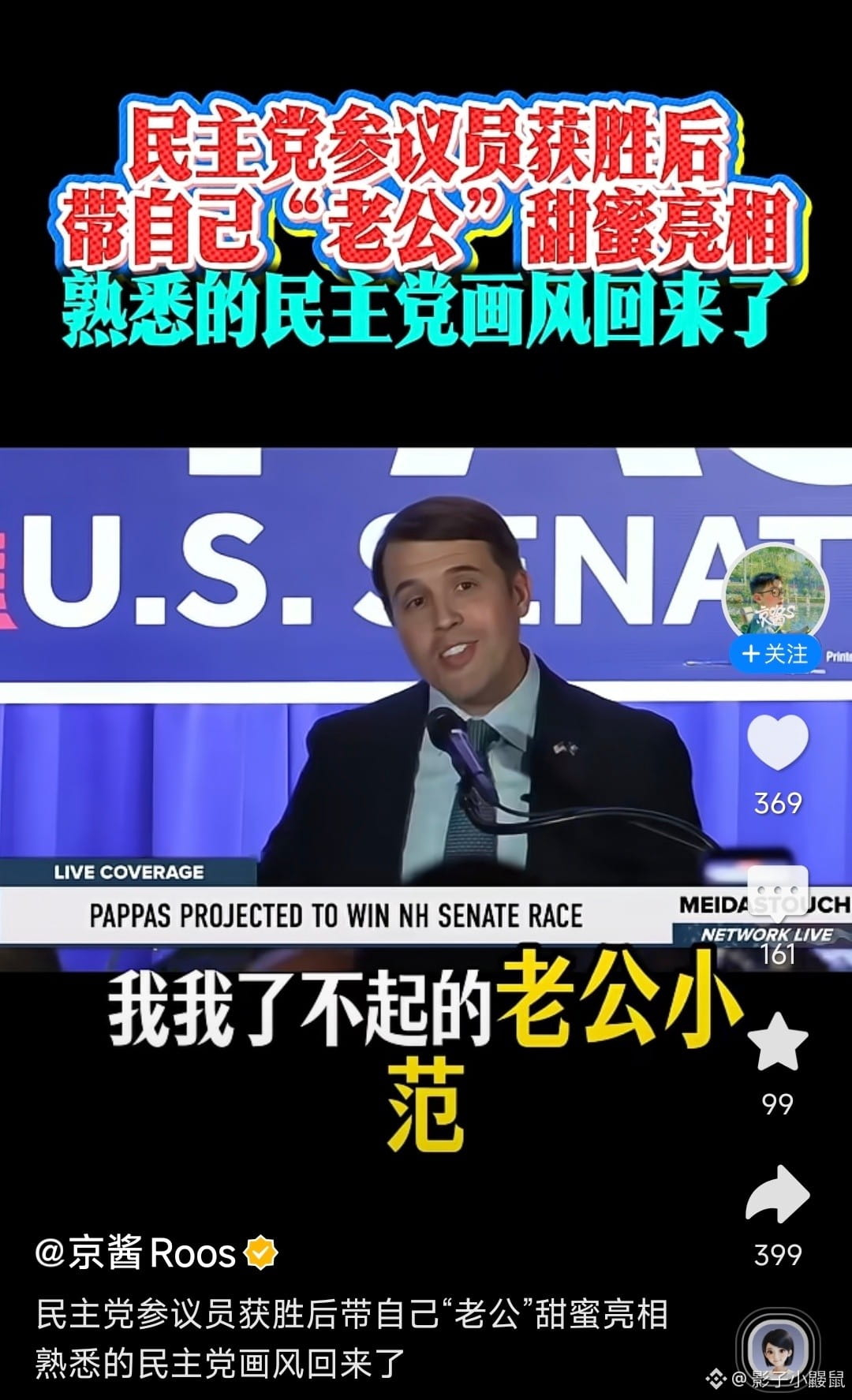
Chris Pappas, a Democrat, won New Hampshire’s U.S. Senate seat, becoming the first openly gay man elected to the U.S. Senate in American history.
- At his victory speech, he made a point of introducing and thanking his husband, Vann Bentley.
New Hampshire is a swing state, and this open seat was crucial to determining whether Democrats could regain a Senate majority. His opponent was John Sununu, from a prominent Republican political dynasty. If Democrats lost this seat, it would be difficult for them to gain control of the Senate; holding onto it would make it easier for them to block judicial nominations and legislation backed by the Trump camp. The seat carries considerable power.
During the campaign, Republicans repeatedly attacked him over his same-sex marriage. But he focused not on identity politics, but on everyday concerns such as prices, health care, anti-corruption measures, and veterans’ benefits.
1
1.5k
Log in to explore more content
Join global crypto users on Binance Square
⚡️ Get latest and useful information about crypto.
💬 Trusted by the world’s largest crypto exchange.
👍 Discover real insights from verified creators.
Email / Phone number
Trending Topics
A Packed Week of Earnings and Data Tests Markets
1,290 views
35 Discussing
🚨🇺🇸 BIG WEEK AHEAD FOR THE MARKETS!
Markets are pricing in a Fed rate hike in December and $BTC could see some big moves next week.
Here's what's coming:
• Monday: Fed Chair Warsh speaks
• Tuesday: US Retail Sales + $NVDA earnings
• Wednesday: FOMC Minutes
• Thursday: Jobless Claims + Philly Fed Index
• Friday: Consumer Sentiment + Fed speeches
All eyes on $BTC as another important week begins.
#bitcoin
Mookie
·6 Likes
·2.2k views
HuangReportedlyConsidersReturnToNvidia
10,351 views
181 Discussing
CryptoSelloffTriggersMultipleWhaleLiquidations
262,822 views
2,227 Discussing