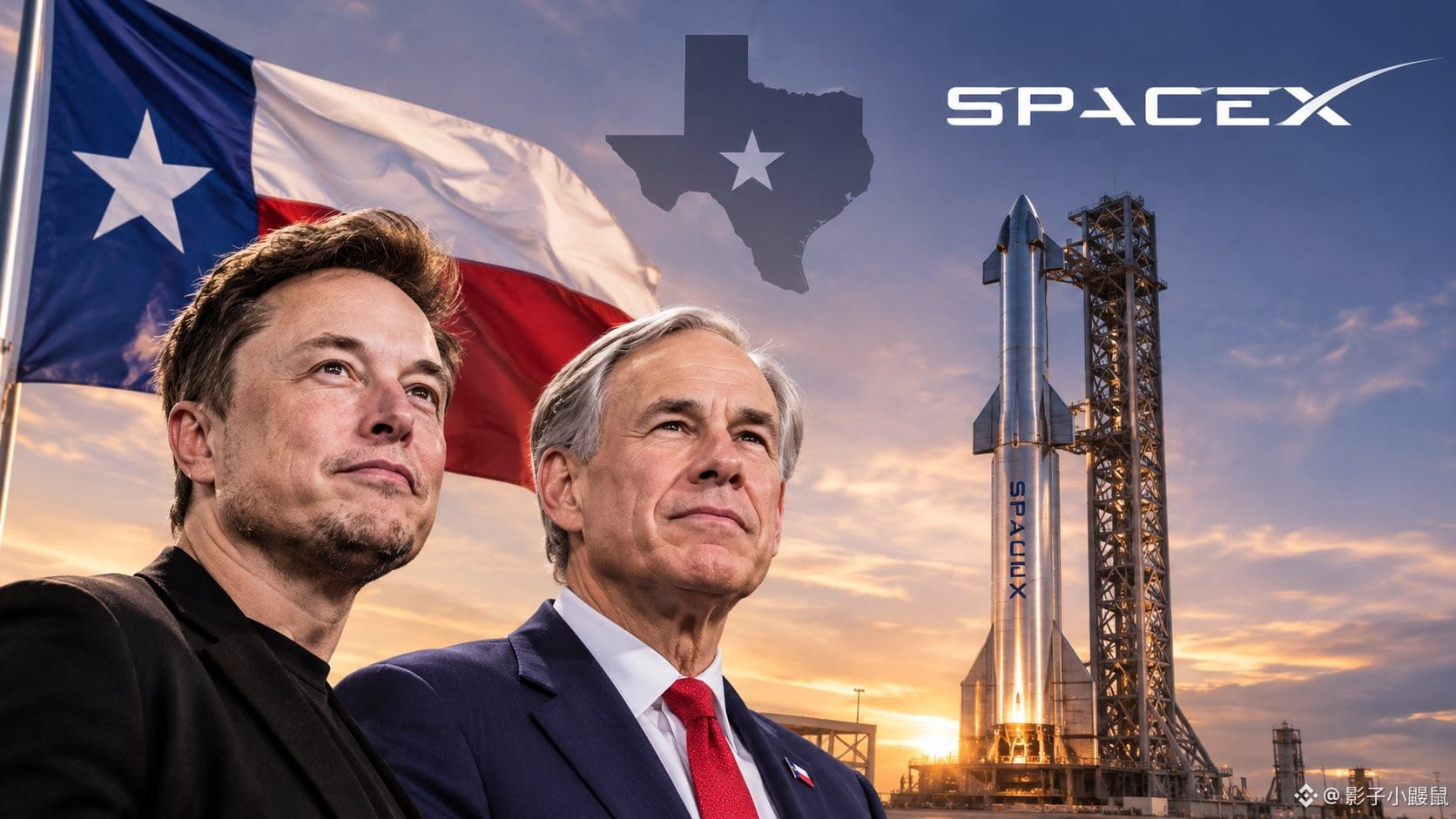
The Texas Governor Is Frantically Signing Off on Musk’s Projects Before Leaving Office
Just 70 days to go, and this Texas governor—and good buddy of Musk—is about to leave office.
His job now: stamp approvals at lightning speed! Sign off on all of Musk’s applications...
Take SpaceX’s “Starbase” in Texas, for example. Getting rockets off the ground smoothly takes unwavering support from the powers that be. Musk needs to use his connections to quickly get the following matters sorted:
First, the “big splash” permit.
When Starship launches, hundreds or even thousands of tons of pressurized water gush out beneath the launch pad in an instant to cool things down and reduce noise, keeping the giant rocket’s exhaust from shredding the pad.
Once all that water sprays out, the Texas Commission on Environmental Quality comes knocking with questions: Where does the water go? Does it contain heavy metals? Could it pollute the nearby wetlands or harm sea turtles?
SpaceX has already spent a long time tussling with regulators over approval to discharge this industrial wastewater. Without this water and environmental permit, even a static fire test on the launch pad would be a nail-biting affair for Starship.
Second, applications to “close roads and beaches.”
Starbase sits right next to Texas State Highway 4 and a public beach.
Whenever Starship needs to be transported, undergo a static fire test, or launch, the entire area has to be closed off and cleared.
If local road authorities and coastal regulators won’t sign off, the factory’s thousands of engineers and its huge fleet of transport vehicles can only sit around waiting, burning through millions of dollars a day.
Third, additional permits for an extremely high launch frequency.
SpaceX has already submitted a proposal to raise Starbase’s annual launch limit in Texas from the current 25 launches to as many as 456 a year. That means launching and recovering a rocket at least once a day, on average.
From noise control and air quality assessments to rights to use the coastline, every step needs the green light from local regulators.
More to the point, while Abbott—who is extremely friendly to commercial spaceflight and strongly supports the local economy—is still in office, getting every compliance requirement wrapped up and secured is SpaceX’s most important “legal line of defense.”
Musk’s grand vision is to take humanity to Mars and colonize it. But back on Earth, what he still fears most is dealing with local officials.