

BELIEVE_
11.5k Posts

BELIEVE_
 Square Verified+
Report
Block User
🌟Exploring 🌟 🇮🇳 X🍷@The_Believe_21 🍷
High-Frequency Trader
1.7 Years
627 Following
30.5K+ Followers
39.9K+ Liked
Posts
All
Quotes
Videos
·
--
Bearish
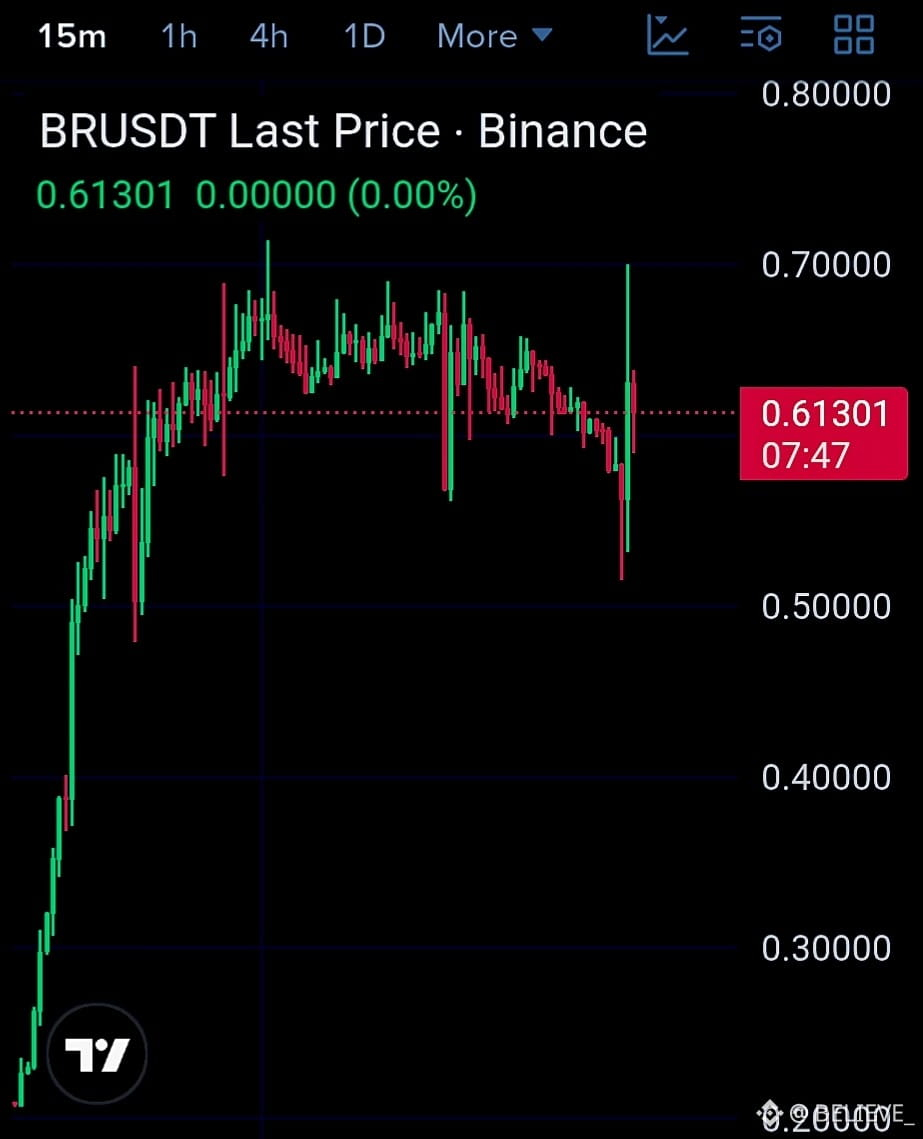
$$BR SHORT 🔻
Entry: 0.61–0.63
SL: 0.68
TP1: 0.58
TP2: 0.54
TP3: 0.50
Sharp pump + rejection near 0.70, followed by weakness and lower highs.
Trigger: 15M rejection / breakdown below 0.60.
Invalidation: 15M reclaim above 0.68.
Bias: SHORT 🔴 | High volatility — confirmation first.
$ONE $BULLA
#TradingCommunity #signaladvisor #signalsfutures #MemeLaunchpads82%OfArcDayOneVolume #OstiumLoanDisputeHearingSetInNYFederalCourt
$$BR SHORT 🔻
Entry: 0.61–0.63
SL: 0.68
TP1: 0.58
TP2: 0.54
TP3: 0.50
Sharp pump + rejection near 0.70, followed by weakness and lower highs.
Trigger: 15M rejection / breakdown below 0.60.
Invalidation: 15M reclaim above 0.68.
Bias: SHORT 🔴 | High volatility — confirmation first.
$ONE $BULLA
#TradingCommunity #signaladvisor #signalsfutures #MemeLaunchpads82%OfArcDayOneVolume #OstiumLoanDisputeHearingSetInNYFederalCourt
Entry: 0.61–0.63
SL: 0.68
TP1: 0.58
TP2: 0.54
TP3: 0.50
Sharp pump + rejection near 0.70, followed by weakness and lower highs.
Trigger: 15M rejection / breakdown below 0.60.
Invalidation: 15M reclaim above 0.68.
Bias: SHORT 🔴 | High volatility — confirmation first.
$ONE $BULLA
#TradingCommunity #signaladvisor #signalsfutures #MemeLaunchpads82%OfArcDayOneVolume #OstiumLoanDisputeHearingSetInNYFederalCourt
2
2.3k
·
--
Bearish
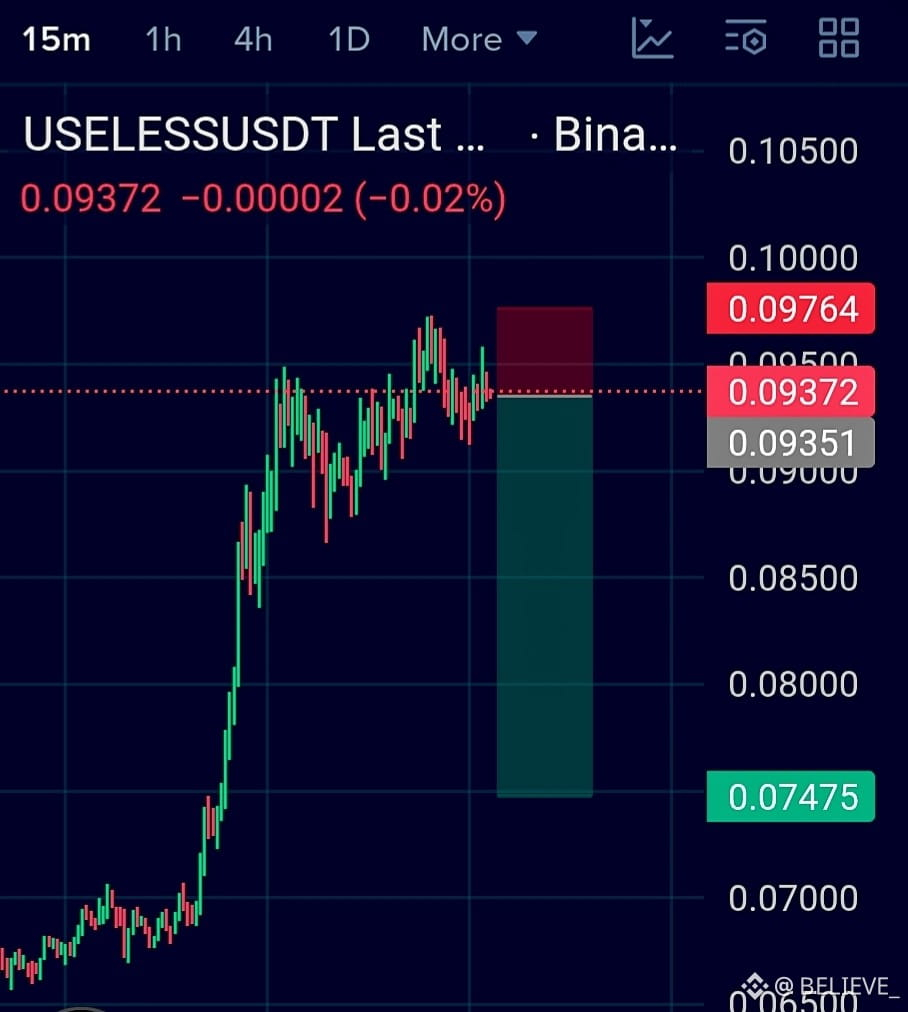
$USELESS SHORT SETUP 🔻
Entry: 0.0935–0.0955
SL: 0.0977
TP1: 0.0900
TP2: 0.0850
TP3: 0.0800
TP4: 0.0748
Price has made a sharp vertical move and is now consolidating near the highs. Short only on rejection from 0.095–0.0975 or a confirmed 15M breakdown.
Invalidation: 15M close above 0.0977.
Bias: SHORT 🔴 — don't chase.
$0G $SKR
#TradingCommunity #signaladvisor #HangSengFalls1% #USFundsAlcoaGalliumPlantInAustralia #FutureTarding
$USELESS SHORT SETUP 🔻
Entry: 0.0935–0.0955
SL: 0.0977
TP1: 0.0900
TP2: 0.0850
TP3: 0.0800
TP4: 0.0748
Price has made a sharp vertical move and is now consolidating near the highs. Short only on rejection from 0.095–0.0975 or a confirmed 15M breakdown.
Invalidation: 15M close above 0.0977.
Bias: SHORT 🔴 — don't chase.
$0G $SKR
#TradingCommunity #signaladvisor #HangSengFalls1% #USFundsAlcoaGalliumPlantInAustralia #FutureTarding
Entry: 0.0935–0.0955
SL: 0.0977
TP1: 0.0900
TP2: 0.0850
TP3: 0.0800
TP4: 0.0748
Price has made a sharp vertical move and is now consolidating near the highs. Short only on rejection from 0.095–0.0975 or a confirmed 15M breakdown.
Invalidation: 15M close above 0.0977.
Bias: SHORT 🔴 — don't chase.
$0G $SKR
#TradingCommunity #signaladvisor #HangSengFalls1% #USFundsAlcoaGalliumPlantInAustralia #FutureTarding
6
171
·
--
Bearish
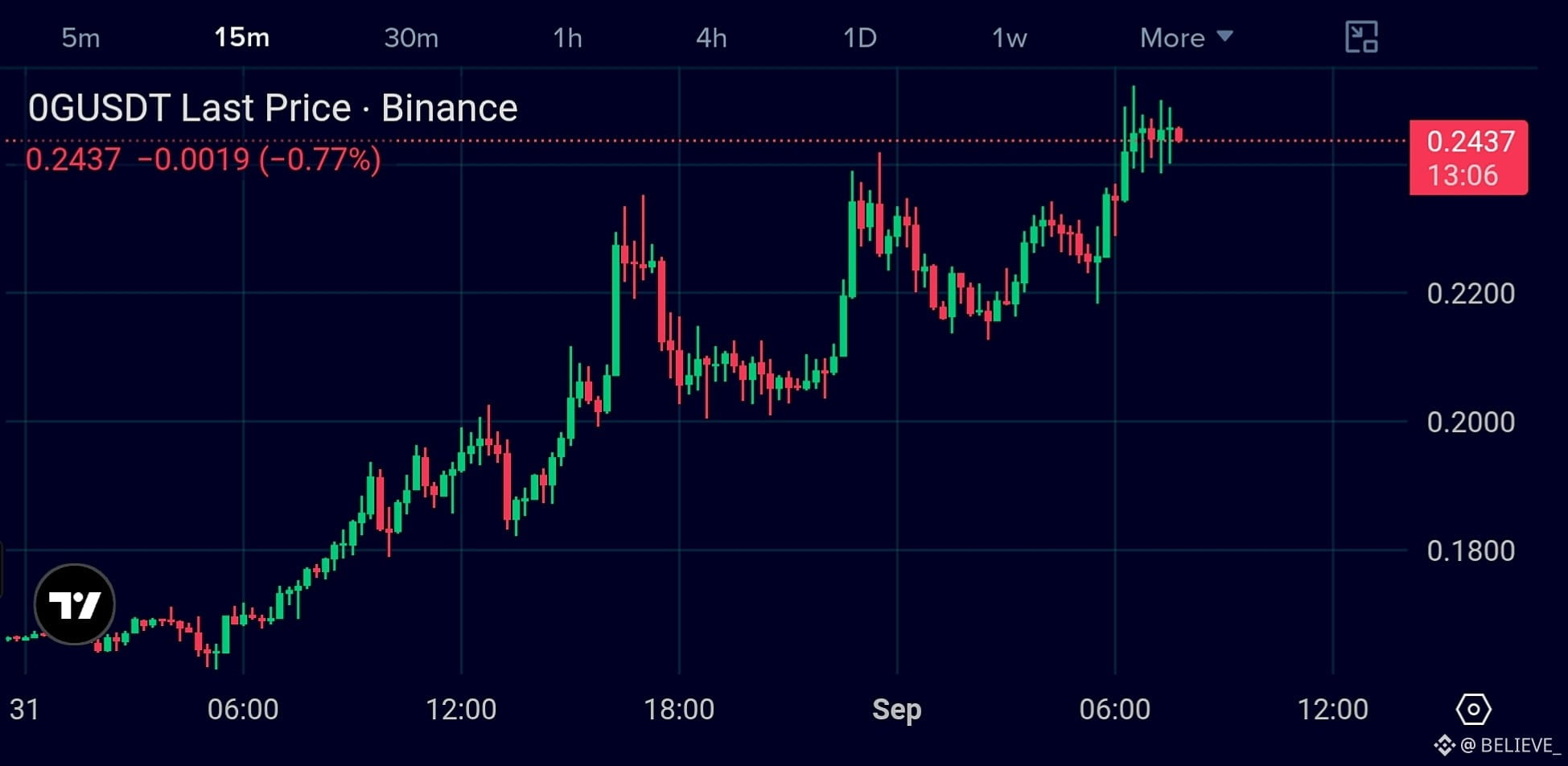
$0G Strong uptrend, but price is now consolidating near the highs after a sharp move.
Short Entry: $0.244–$0.248
SL: $0.253
TP1: $0.238
TP2: $0.230
TP3: $0.220
Trigger: 15M rejection + loss of $0.240.
Invalidation: Clean breakout and hold above $0.253.
Bias: SHORT 🔴
$USELESS $HEMI
#USIranMilitaryClashesResume #TradingCommunity #IranStrikesUSBasesInJordan #signaladvisor #FutureTradingSignals
$0G Strong uptrend, but price is now consolidating near the highs after a sharp move.
Short Entry: $0.244–$0.248
SL: $0.253
TP1: $0.238
TP2: $0.230
TP3: $0.220
Trigger: 15M rejection + loss of $0.240.
Invalidation: Clean breakout and hold above $0.253.
Bias: SHORT 🔴
$USELESS $HEMI
#USIranMilitaryClashesResume #TradingCommunity #IranStrikesUSBasesInJordan #signaladvisor #FutureTradingSignals
Short Entry: $0.244–$0.248
SL: $0.253
TP1: $0.238
TP2: $0.230
TP3: $0.220
Trigger: 15M rejection + loss of $0.240.
Invalidation: Clean breakout and hold above $0.253.
Bias: SHORT 🔴
$USELESS $HEMI
#USIranMilitaryClashesResume #TradingCommunity #IranStrikesUSBasesInJordan #signaladvisor #FutureTradingSignals
6
184
·
--
Bearish
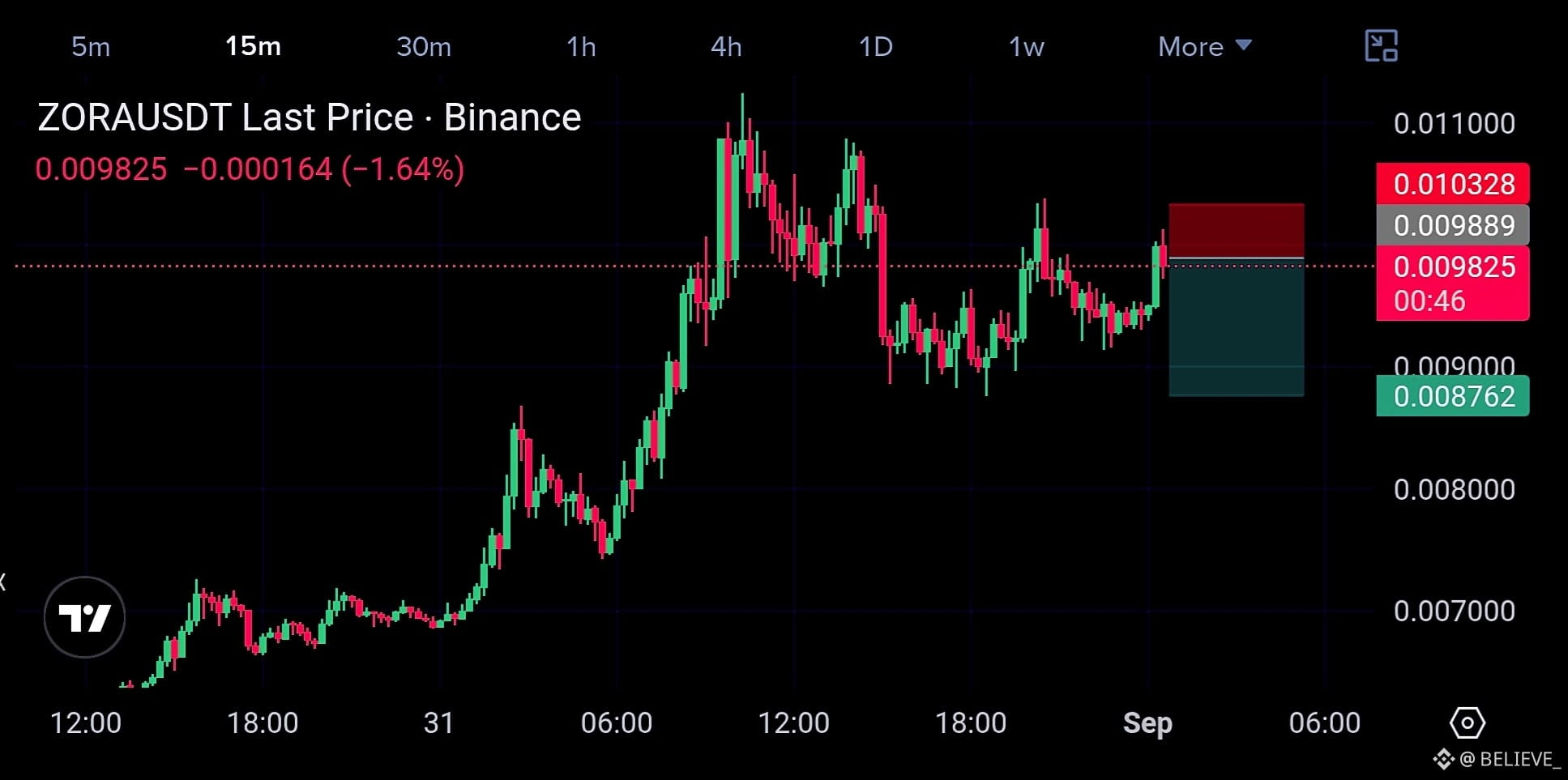
AGAIN $ZORA SHORT SETUP 🔻
Entry: $0.00985–$0.00995
SL: $0.01033
TP1: $0.00940
TP2: $0.00900
TP3: $0.00876
Price is testing the $0.0099 resistance/retest zone after the earlier rejection. The short thesis is valid only while price remains below $0.01033.
Trigger: rejection/close back below $0.00985.
Invalidation: 15M reclaim above $0.01033.
Bias: SHORT 🔴
$SKR $HEMI
#TradingCommunity #RussiaStartsLargeScaleDigitalRubleRolloutSep1 #signaladvisor #signalsfutures #TankerHitsMinesInStraitOfHormuz
AGAIN $ZORA SHORT SETUP 🔻
Entry: $0.00985–$0.00995
SL: $0.01033
TP1: $0.00940
TP2: $0.00900
TP3: $0.00876
Price is testing the $0.0099 resistance/retest zone after the earlier rejection. The short thesis is valid only while price remains below $0.01033.
Trigger: rejection/close back below $0.00985.
Invalidation: 15M reclaim above $0.01033.
Bias: SHORT 🔴
$SKR $HEMI
#TradingCommunity #RussiaStartsLargeScaleDigitalRubleRolloutSep1 #signaladvisor #signalsfutures #TankerHitsMinesInStraitOfHormuz
Entry: $0.00985–$0.00995
SL: $0.01033
TP1: $0.00940
TP2: $0.00900
TP3: $0.00876
Price is testing the $0.0099 resistance/retest zone after the earlier rejection. The short thesis is valid only while price remains below $0.01033.
Trigger: rejection/close back below $0.00985.
Invalidation: 15M reclaim above $0.01033.
Bias: SHORT 🔴
$SKR $HEMI
#TradingCommunity #RussiaStartsLargeScaleDigitalRubleRolloutSep1 #signaladvisor #signalsfutures #TankerHitsMinesInStraitOfHormuz
3
4
726
·
--
Bearish
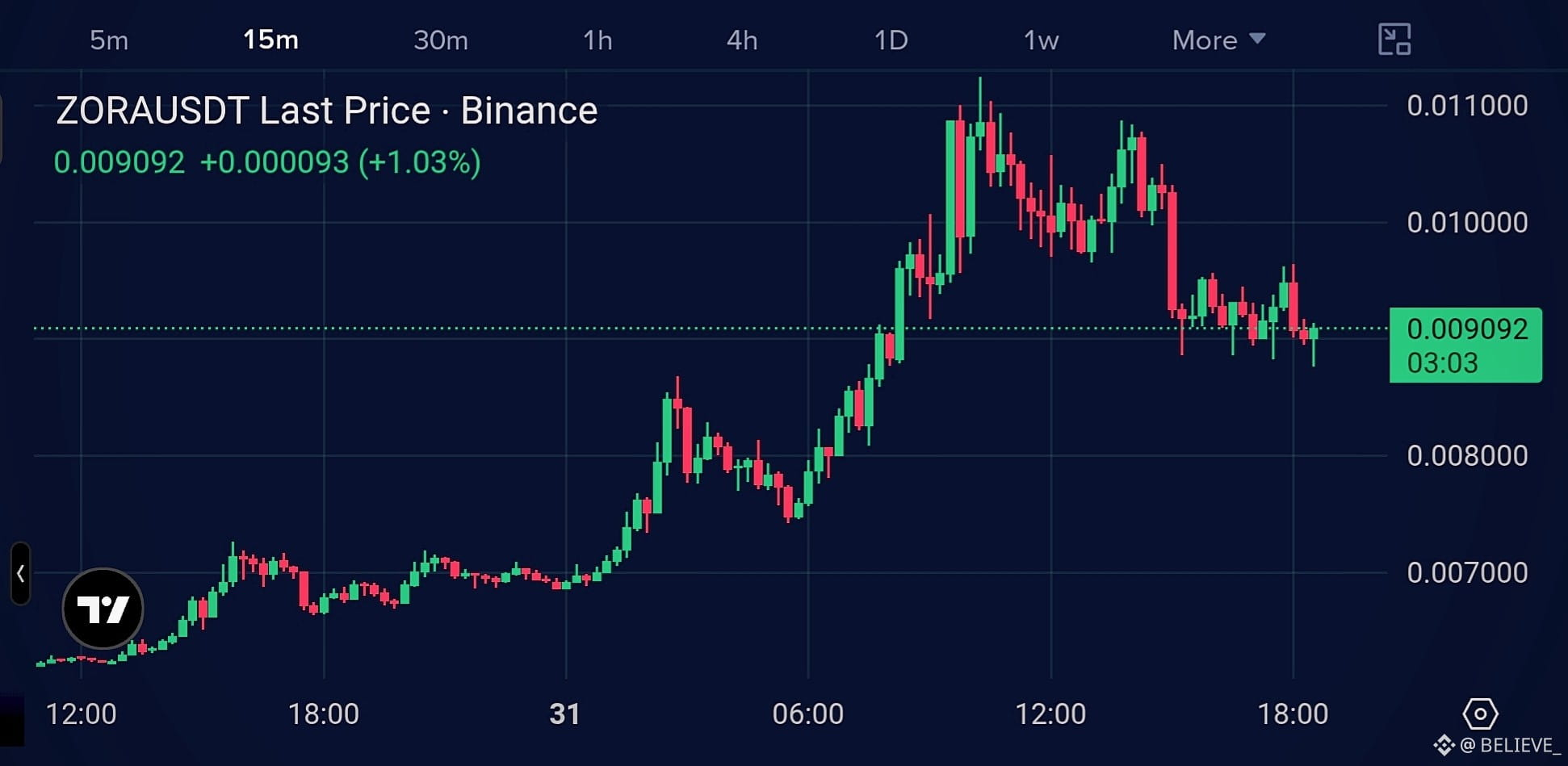
After the sharp pump, $ZORA rejected the $0.0112 area and is now forming lower highs on the 15M chart.
Short Entry: $0.0092–$0.0095
SL: $0.0099
TP1: $0.0087
TP2: $0.0082
TP3: $0.0076
Confirmation: Prefer a failed retest of $0.0092–$0.0095.
Invalidation: 15M reclaim above $0.0099.
Bias: SHORT 🔴 — don't chase; wait for confirmation.
$SKR Short Was Successful 🔻
$HEMI Short🔻
#BitcoinUp23%InAugustOutperformingGoldAndStocks #TradingSignals #signalsfutures #LNGTankersStayOutOfHormuz #USCanadaTradeWarDeepens
After the sharp pump, $ZORA rejected the $0.0112 area and is now forming lower highs on the 15M chart.
Short Entry: $0.0092–$0.0095
SL: $0.0099
TP1: $0.0087
TP2: $0.0082
TP3: $0.0076
Confirmation: Prefer a failed retest of $0.0092–$0.0095.
Invalidation: 15M reclaim above $0.0099.
Bias: SHORT 🔴 — don't chase; wait for confirmation.
$SKR Short Was Successful 🔻
$HEMI Short🔻
#BitcoinUp23%InAugustOutperformingGoldAndStocks #TradingSignals #signalsfutures #LNGTankersStayOutOfHormuz #USCanadaTradeWarDeepens
Short Entry: $0.0092–$0.0095
SL: $0.0099
TP1: $0.0087
TP2: $0.0082
TP3: $0.0076
Confirmation: Prefer a failed retest of $0.0092–$0.0095.
Invalidation: 15M reclaim above $0.0099.
Bias: SHORT 🔴 — don't chase; wait for confirmation.
$SKR Short Was Successful 🔻
$HEMI Short🔻
#BitcoinUp23%InAugustOutperformingGoldAndStocks #TradingSignals #signalsfutures #LNGTankersStayOutOfHormuz #USCanadaTradeWarDeepens
1
4
143
·
--
Bearish
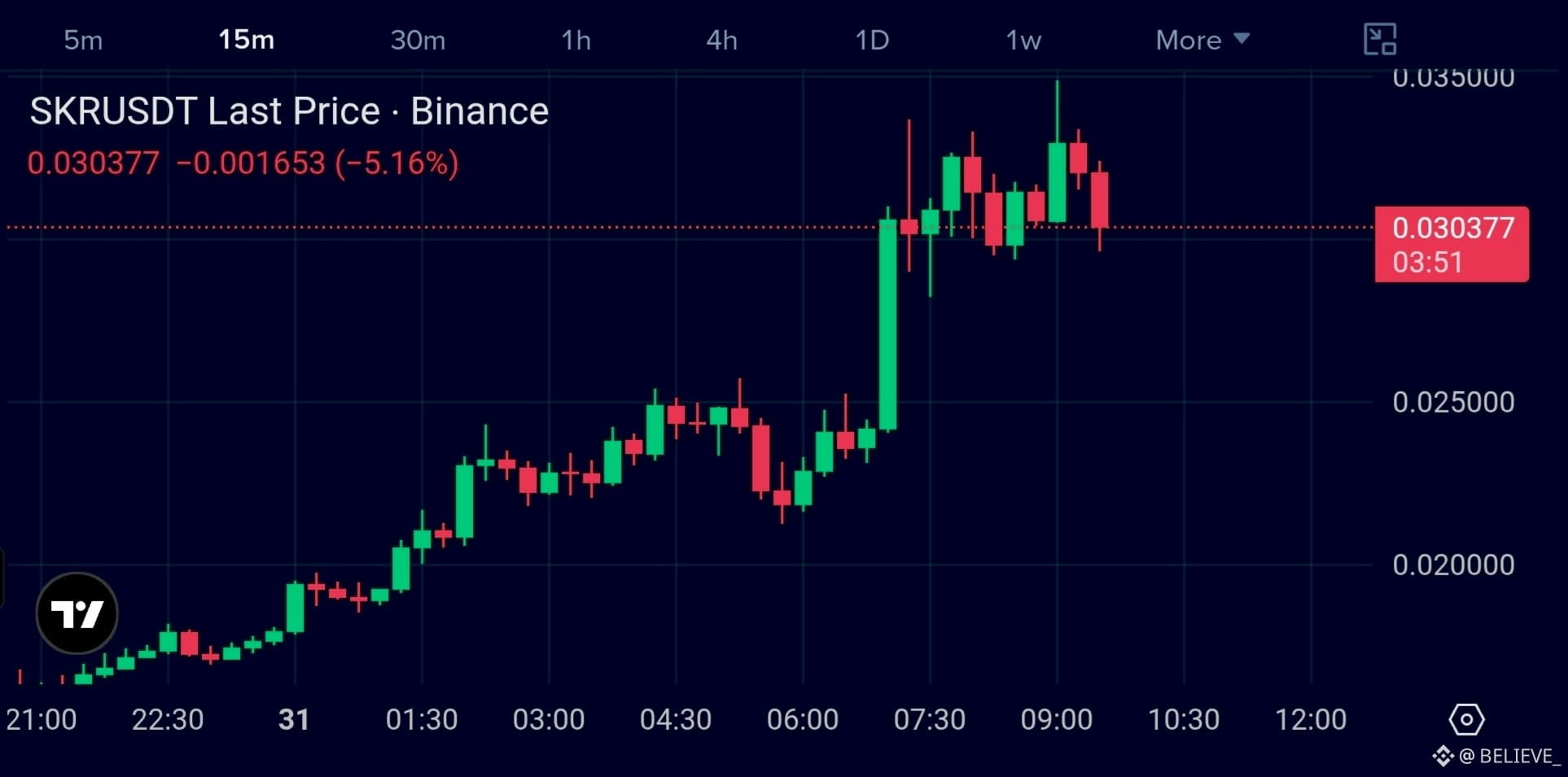
$SKR SHORT SETUP 🔻
Zone : $0.0305–$0.03
SL: $0.0340
TP1: $0.0285
TP2: $0.0260
TP3: $0.0245
+153% in 24H and now showing rejection from the $0.0348–$0.0350 area.
15M structure is becoming bearish after the failed push higher.
Invalidation: Strong 15M reclaim above $0.0340.
Bias: SHORT 🔴
$4 Short was Successful 🔻
$HEMI is bullish 💹
#YenBreaks160AgainstDollar #USStrikesIranianRocketLaunchers #About67MAmericansHoldCrypto #TradingSignals #TradingCommunity
$SKR SHORT SETUP 🔻
Zone : $0.0305–$0.03
SL: $0.0340
TP1: $0.0285
TP2: $0.0260
TP3: $0.0245
+153% in 24H and now showing rejection from the $0.0348–$0.0350 area.
15M structure is becoming bearish after the failed push higher.
Invalidation: Strong 15M reclaim above $0.0340.
Bias: SHORT 🔴
$4 Short was Successful 🔻
$HEMI is bullish 💹
#YenBreaks160AgainstDollar #USStrikesIranianRocketLaunchers #About67MAmericansHoldCrypto #TradingSignals #TradingCommunity
Zone : $0.0305–$0.03
SL: $0.0340
TP1: $0.0285
TP2: $0.0260
TP3: $0.0245
+153% in 24H and now showing rejection from the $0.0348–$0.0350 area.
15M structure is becoming bearish after the failed push higher.
Invalidation: Strong 15M reclaim above $0.0340.
Bias: SHORT 🔴
$4 Short was Successful 🔻
$HEMI is bullish 💹
#YenBreaks160AgainstDollar #USStrikesIranianRocketLaunchers #About67MAmericansHoldCrypto #TradingSignals #TradingCommunity
4
328
·
--
Bearish
$4 SHORT BIAS 🔻
The momentum has shifted bearish on the 15m chart.
Short zone: $0.0182–$0.0187
SL: $0.0195
TP1: $0.0172
TP2: $0.0164
TP3: $0.0155
{future}(4USDT)
⚠️ Invalidation: Strong reclaim above $0.0195.
Don't chase the short after the drop. The cleaner setup is a weak retest of $0.0182–$0.0187 followed by rejection.
Bias: SHORT 🔴
$CYS
{future}(CYSUSDT)
$PROM
{future}(PROMUSDT)
#TradingSignal
#4usdt #Crypto #Trading #Binance
$4 SHORT BIAS 🔻
The momentum has shifted bearish on the 15m chart.
Short zone: $0.0182–$0.0187
SL: $0.0195
TP1: $0.0172
TP2: $0.0164
TP3: $0.0155
⚠️ Invalidation: Strong reclaim above $0.0195.
Don't chase the short after the drop. The cleaner setup is a weak retest of $0.0182–$0.0187 followed by rejection.
Bias: SHORT 🔴
$CYS
$PROM
#TradingSignal
#4usdt #Crypto #Trading #Binance
The momentum has shifted bearish on the 15m chart.
Short zone: $0.0182–$0.0187
SL: $0.0195
TP1: $0.0172
TP2: $0.0164
TP3: $0.0155
⚠️ Invalidation: Strong reclaim above $0.0195.
Don't chase the short after the drop. The cleaner setup is a weak retest of $0.0182–$0.0187 followed by rejection.
Bias: SHORT 🔴
$CYS
$PROM
#TradingSignal
#4usdt #Crypto #Trading #Binance
Going Short 🔻
54%
Going Long 💹
46%
24 votes • Voting closed
5
1.1k
·
--
Bearish
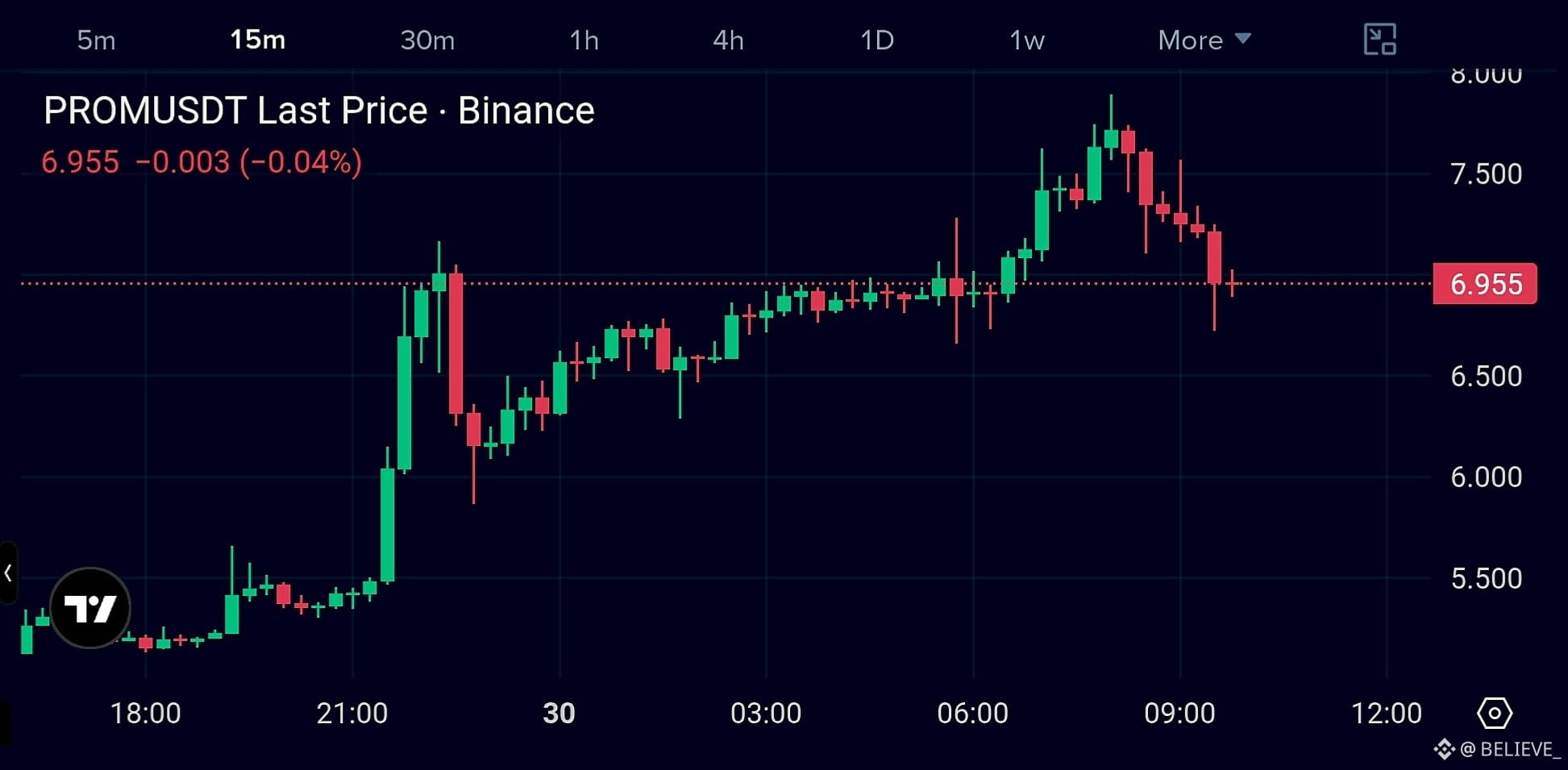
$PROM Short Setup 🔻below $7.0
🎯 TP1: $6.70
🎯 TP2: $6.45
🎯 TP3: $6.15
🛑 Invalidation: $7.30+
{future}(PROMUSDT)
PROM is showing a clear rejection from the $7.7–$7.9 zone after a strong rally.
Price is now around $6.95, and momentum is weakening.
Best entry: retest/rejection around $7.0–$7.2, rather than chasing the move down.
Setup: SHORT 🔴
$4
{future}(4USDT)
$ZKP
{future}(ZKPUSDT)
#TradingSignals #signalsfutures #Trading #altcoins #AfghanistanTalibanReportedlyBansCryptoNationwide
$PROM Short Setup 🔻below $7.0
🎯 TP1: $6.70
🎯 TP2: $6.45
🎯 TP3: $6.15
🛑 Invalidation: $7.30+
PROM is showing a clear rejection from the $7.7–$7.9 zone after a strong rally.
Price is now around $6.95, and momentum is weakening.
Best entry: retest/rejection around $7.0–$7.2, rather than chasing the move down.
Setup: SHORT 🔴
$4
$ZKP
#TradingSignals #signalsfutures #Trading #altcoins #AfghanistanTalibanReportedlyBansCryptoNationwide
🎯 TP1: $6.70
🎯 TP2: $6.45
🎯 TP3: $6.15
🛑 Invalidation: $7.30+
PROM is showing a clear rejection from the $7.7–$7.9 zone after a strong rally.
Price is now around $6.95, and momentum is weakening.
Best entry: retest/rejection around $7.0–$7.2, rather than chasing the move down.
Setup: SHORT 🔴
$4
$ZKP
#TradingSignals #signalsfutures #Trading #altcoins #AfghanistanTalibanReportedlyBansCryptoNationwide
4
429
·
--
Bullish
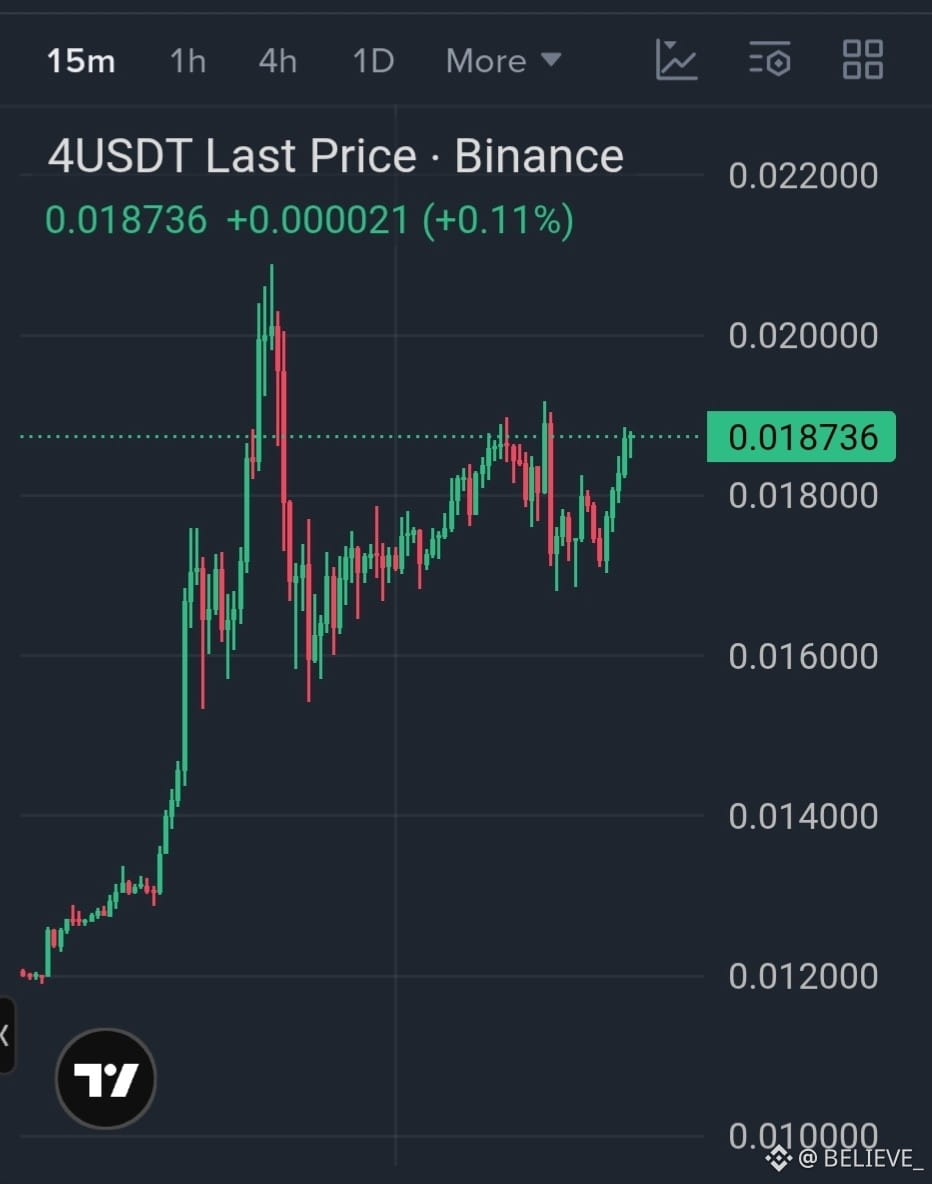
$4 is showing strong bullish momentum. 🚀
After a sharp breakout from the $0.012 area, price has been consolidating higher and is now back near $0.0187.
A clean break above $0.019–$0.020 could trigger another expansion, while $0.017–$0.018 is the key area to hold on a pullback.
With price already up 55%+ in 24h, chasing the move is risky. Better to wait for confirmation or a healthy retest.
Bias: Bullish 📈
{future}(4USDT)
$PROM
{future}(PROMUSDT)
$BTC
{future}(BTCUSDT)
#4usdt #crypto #Trading #Binance #altcoins
$4 is showing strong bullish momentum. 🚀
After a sharp breakout from the $0.012 area, price has been consolidating higher and is now back near $0.0187.
A clean break above $0.019–$0.020 could trigger another expansion, while $0.017–$0.018 is the key area to hold on a pullback.
With price already up 55%+ in 24h, chasing the move is risky. Better to wait for confirmation or a healthy retest.
Bias: Bullish 📈
$PROM
$BTC
#4usdt #crypto #Trading #Binance #altcoins
After a sharp breakout from the $0.012 area, price has been consolidating higher and is now back near $0.0187.
A clean break above $0.019–$0.020 could trigger another expansion, while $0.017–$0.018 is the key area to hold on a pullback.
With price already up 55%+ in 24h, chasing the move is risky. Better to wait for confirmation or a healthy retest.
Bias: Bullish 📈
$PROM
$BTC
#4usdt #crypto #Trading #Binance #altcoins
4
413
·
--
Bearish
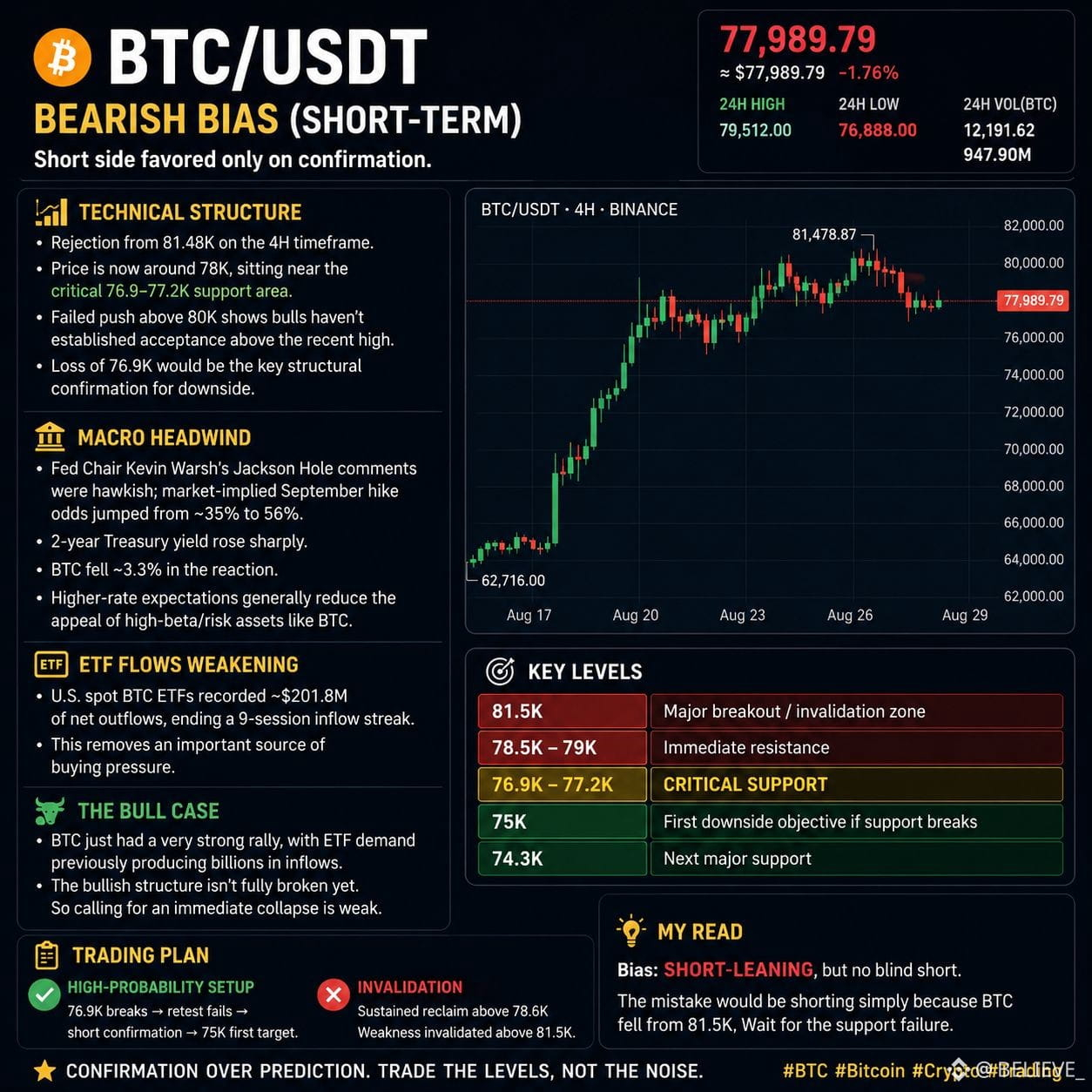
$BTC is showing signs of short-term weakness after getting rejected from the $81.5K area.
Price is now hovering around $78K, with $76.9K–$77.2K acting as the key support zone. A clean breakdown and failed retest of this area could open the way toward $75K and $74.3K.
For now, the bias remains bearish below $79K, but I wouldn’t chase a short at current levels. The better setup is confirmation through support.
Key levels:
Resistance: $78.5K–$79K
Support: $76.9K–$77.2K
Targets: $75K → $74.3K
Invalidation: reclaim above $81.5K
Let price confirm the direction.
#BTC #Bitcoin #Crypto #Trading
$4 $CLO
#TradingCommunity
$BTC is showing signs of short-term weakness after getting rejected from the $81.5K area.
Price is now hovering around $78K, with $76.9K–$77.2K acting as the key support zone. A clean breakdown and failed retest of this area could open the way toward $75K and $74.3K.
For now, the bias remains bearish below $79K, but I wouldn’t chase a short at current levels. The better setup is confirmation through support.
Key levels:
Resistance: $78.5K–$79K
Support: $76.9K–$77.2K
Targets: $75K → $74.3K
Invalidation: reclaim above $81.5K
Let price confirm the direction.
#BTC #Bitcoin #Crypto #Trading
$4 $CLO
#TradingCommunity
Price is now hovering around $78K, with $76.9K–$77.2K acting as the key support zone. A clean breakdown and failed retest of this area could open the way toward $75K and $74.3K.
For now, the bias remains bearish below $79K, but I wouldn’t chase a short at current levels. The better setup is confirmation through support.
Key levels:
Resistance: $78.5K–$79K
Support: $76.9K–$77.2K
Targets: $75K → $74.3K
Invalidation: reclaim above $81.5K
Let price confirm the direction.
#BTC #Bitcoin #Crypto #Trading
$4 $CLO
#TradingCommunity
5
206
·
--
Bearish
Verified
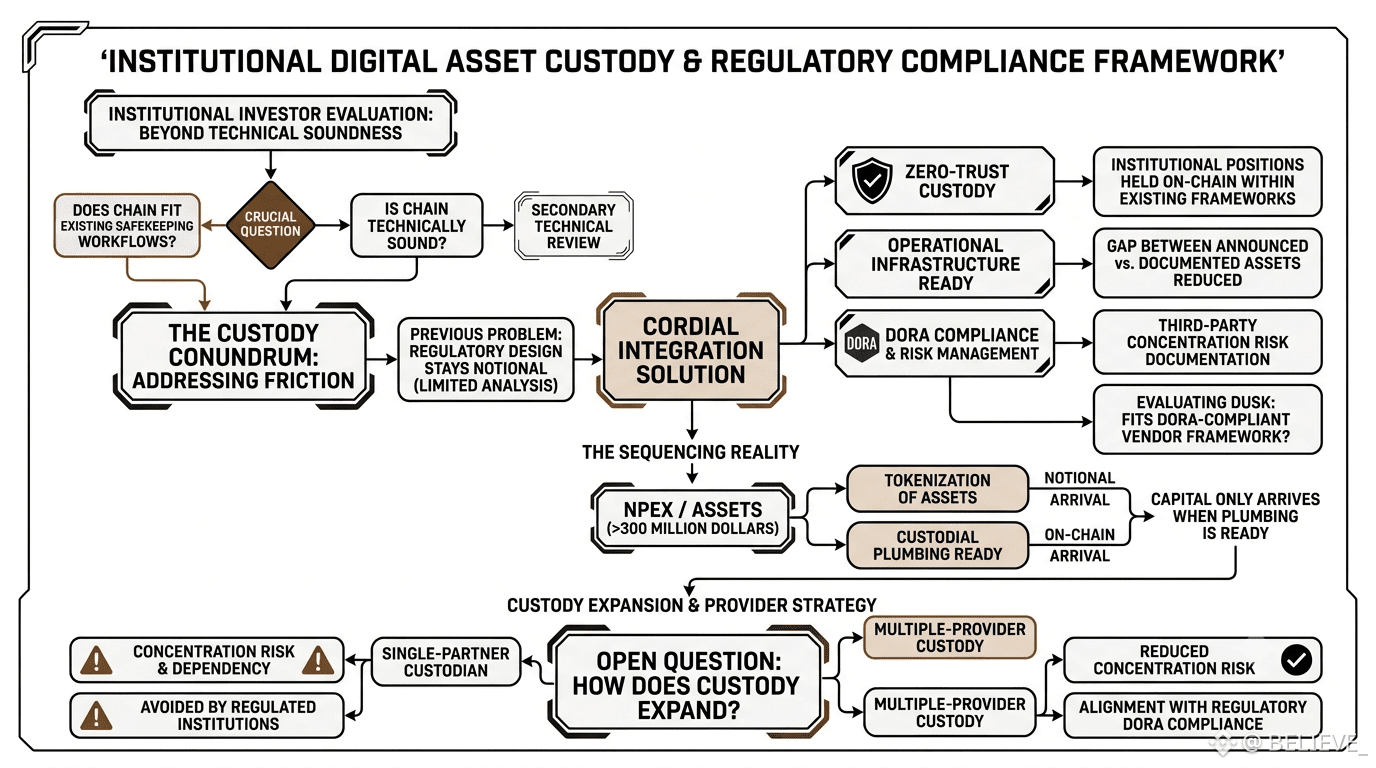
I was looking into Dusk's partnership with 21X the other day and something about the initial use case quietly surprised me. Most coverage frames this as a straightforward regulated exchange collaboration — two compliance-focused entities finding common ground. But the specific entry point Dusk is using isn't securities issuance or primary trading infrastructure. It's stablecoin treasury management — where a stablecoin issuer buys and sells tokenized money market funds to manage reserves on a regulated DLT venue. I sometimes wonder whether that narrow starting point is actually a more sophisticated wedge than it first appears.
What seems interesting is what that implies structurally. A stablecoin issuer managing reserves through tokenized money market funds on a licensed exchange means Dusk is quietly inserting itself into the operational plumbing of compliant digital currency infrastructure — not just as a settlement layer, but as the environment where reserve assets actively live and move. The question that comes to mind is whether that positions Dusk closer to systemic financial infrastructure than most observers currently appreciate.
I'm not completely sure how that relationship scales if 21X's own standing under the EU DLT Pilot Regime evolves — a framework that remains genuinely experimental with very few licensed operators worldwide. Looking from the outside, entering as a trade participant rather than primary settlement layer reads as measured and deliberate, but it also means meaningful volume remains some distance away.
It makes me think the real significance of this partnership may only become visible once the reserve management use case grows well beyond its current scope. Anyway, time will tell👍
#dusk $DUSK @Dusk_Foundation
I was looking into Dusk's partnership with 21X the other day and something about the initial use case quietly surprised me. Most coverage frames this as a straightforward regulated exchange collaboration — two compliance-focused entities finding common ground. But the specific entry point Dusk is using isn't securities issuance or primary trading infrastructure. It's stablecoin treasury management — where a stablecoin issuer buys and sells tokenized money market funds to manage reserves on a regulated DLT venue. I sometimes wonder whether that narrow starting point is actually a more sophisticated wedge than it first appears.
What seems interesting is what that implies structurally. A stablecoin issuer managing reserves through tokenized money market funds on a licensed exchange means Dusk is quietly inserting itself into the operational plumbing of compliant digital currency infrastructure — not just as a settlement layer, but as the environment where reserve assets actively live and move. The question that comes to mind is whether that positions Dusk closer to systemic financial infrastructure than most observers currently appreciate.
I'm not completely sure how that relationship scales if 21X's own standing under the EU DLT Pilot Regime evolves — a framework that remains genuinely experimental with very few licensed operators worldwide. Looking from the outside, entering as a trade participant rather than primary settlement layer reads as measured and deliberate, but it also means meaningful volume remains some distance away.
It makes me think the real significance of this partnership may only become visible once the reserve management use case grows well beyond its current scope. Anyway, time will tell👍
#dusk $DUSK @Dusk
What seems interesting is what that implies structurally. A stablecoin issuer managing reserves through tokenized money market funds on a licensed exchange means Dusk is quietly inserting itself into the operational plumbing of compliant digital currency infrastructure — not just as a settlement layer, but as the environment where reserve assets actively live and move. The question that comes to mind is whether that positions Dusk closer to systemic financial infrastructure than most observers currently appreciate.
I'm not completely sure how that relationship scales if 21X's own standing under the EU DLT Pilot Regime evolves — a framework that remains genuinely experimental with very few licensed operators worldwide. Looking from the outside, entering as a trade participant rather than primary settlement layer reads as measured and deliberate, but it also means meaningful volume remains some distance away.
It makes me think the real significance of this partnership may only become visible once the reserve management use case grows well beyond its current scope. Anyway, time will tell👍
#dusk $DUSK @Dusk
6
10
922
·
--
Bullish
Verified
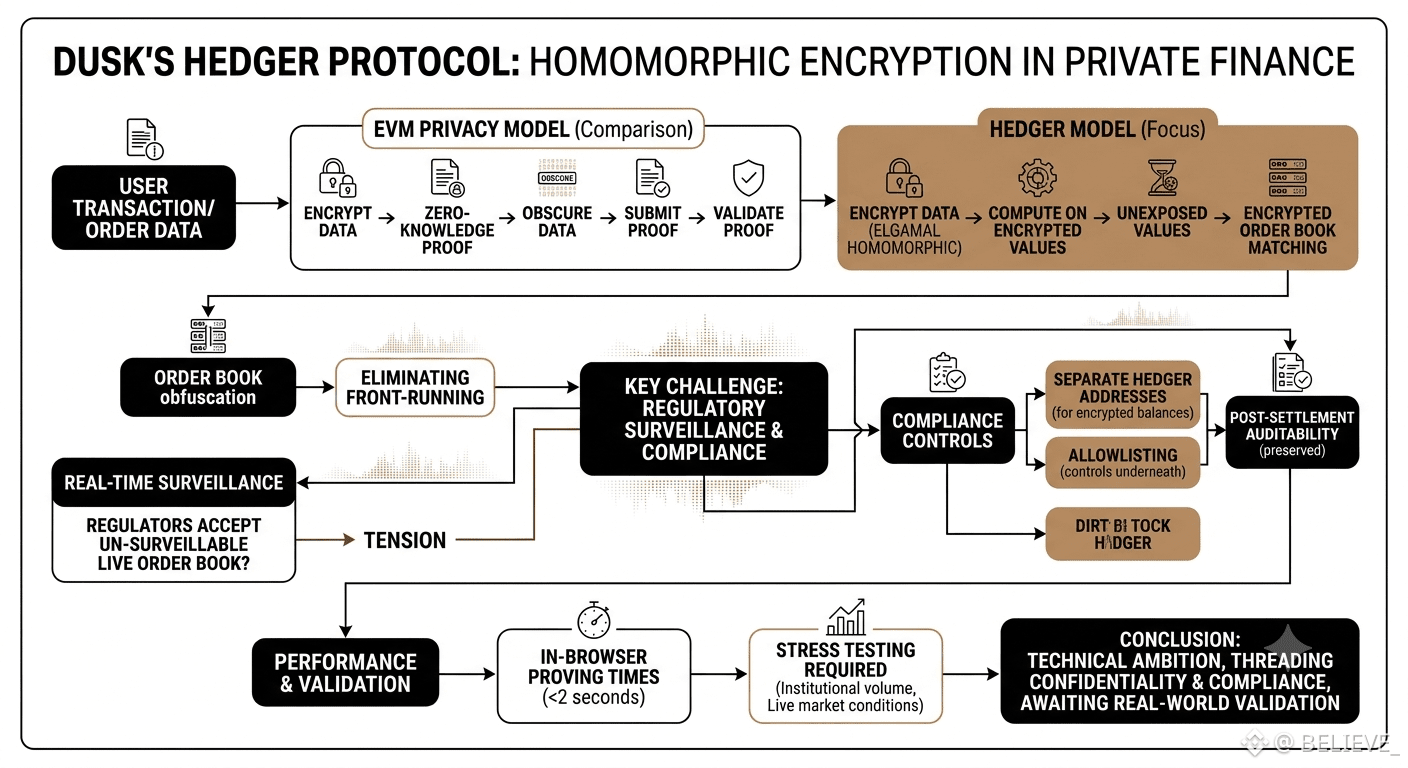
I was reading through Dusk's Hedger documentation recently and stopped at a detail that I hadn't seen discussed anywhere outside the technical notes. Most privacy systems built on EVM environments rely entirely on zero-knowledge proofs to obscure transaction data. Hedger takes a different path — it layers ElGamal homomorphic encryption on top, which allows computations to run directly on encrypted values without ever exposing what those values actually are. I sometimes wonder whether that distinction sounds subtle until you think about what it enables: an order book where bids, asks, and quantities remain encrypted during matching.
What seems interesting is how that applies to regulated financial markets specifically. Front-running — where someone observes a pending large order and trades ahead of it — is one of the most persistent problems in both traditional and on-chain finance. An obfuscated order book where no participant can see live positions before settlement would structurally eliminate that vector. The question that comes to mind is whether regulators would actually accept an order book they themselves cannot surveil in real time, even if post-settlement auditability is preserved.
I'm not completely sure that tension has a clean resolution yet. Looking from the outside, Hedger's design appears to thread compliance and confidentiality together — users hold a separate Hedger address for encrypted balances, with allowlisting handling compliance controls underneath. But in-browser proving times under two seconds, while impressive, still needs real-world stress testing at institutional volume.
It makes me think Hedger is one of the more technically ambitious components in this entire stack — and also one of the hardest to validate without live market conditions. Anyway, time will tell👍
#dusk $DUSK @Dusk_Foundation
$TAC $PROM
#OilHoldsLosses #ZECBreaksKeyResistanceUp75.5% #KOSPI200NightFuturesFall1.77% #BitcoinOpenInterestFallsToTwoMonthLow
I was reading through Dusk's Hedger documentation recently and stopped at a detail that I hadn't seen discussed anywhere outside the technical notes. Most privacy systems built on EVM environments rely entirely on zero-knowledge proofs to obscure transaction data. Hedger takes a different path — it layers ElGamal homomorphic encryption on top, which allows computations to run directly on encrypted values without ever exposing what those values actually are. I sometimes wonder whether that distinction sounds subtle until you think about what it enables: an order book where bids, asks, and quantities remain encrypted during matching.
What seems interesting is how that applies to regulated financial markets specifically. Front-running — where someone observes a pending large order and trades ahead of it — is one of the most persistent problems in both traditional and on-chain finance. An obfuscated order book where no participant can see live positions before settlement would structurally eliminate that vector. The question that comes to mind is whether regulators would actually accept an order book they themselves cannot surveil in real time, even if post-settlement auditability is preserved.
I'm not completely sure that tension has a clean resolution yet. Looking from the outside, Hedger's design appears to thread compliance and confidentiality together — users hold a separate Hedger address for encrypted balances, with allowlisting handling compliance controls underneath. But in-browser proving times under two seconds, while impressive, still needs real-world stress testing at institutional volume.
It makes me think Hedger is one of the more technically ambitious components in this entire stack — and also one of the hardest to validate without live market conditions. Anyway, time will tell👍
#dusk $DUSK @Dusk
$TAC $PROM
#OilHoldsLosses #ZECBreaksKeyResistanceUp75.5% #KOSPI200NightFuturesFall1.77% #BitcoinOpenInterestFallsToTwoMonthLow
What seems interesting is how that applies to regulated financial markets specifically. Front-running — where someone observes a pending large order and trades ahead of it — is one of the most persistent problems in both traditional and on-chain finance. An obfuscated order book where no participant can see live positions before settlement would structurally eliminate that vector. The question that comes to mind is whether regulators would actually accept an order book they themselves cannot surveil in real time, even if post-settlement auditability is preserved.
I'm not completely sure that tension has a clean resolution yet. Looking from the outside, Hedger's design appears to thread compliance and confidentiality together — users hold a separate Hedger address for encrypted balances, with allowlisting handling compliance controls underneath. But in-browser proving times under two seconds, while impressive, still needs real-world stress testing at institutional volume.
It makes me think Hedger is one of the more technically ambitious components in this entire stack — and also one of the hardest to validate without live market conditions. Anyway, time will tell👍
#dusk $DUSK @Dusk
$TAC $PROM
#OilHoldsLosses #ZECBreaksKeyResistanceUp75.5% #KOSPI200NightFuturesFall1.77% #BitcoinOpenInterestFallsToTwoMonthLow
8
12
1.4k
·
--
Bearish
Verified
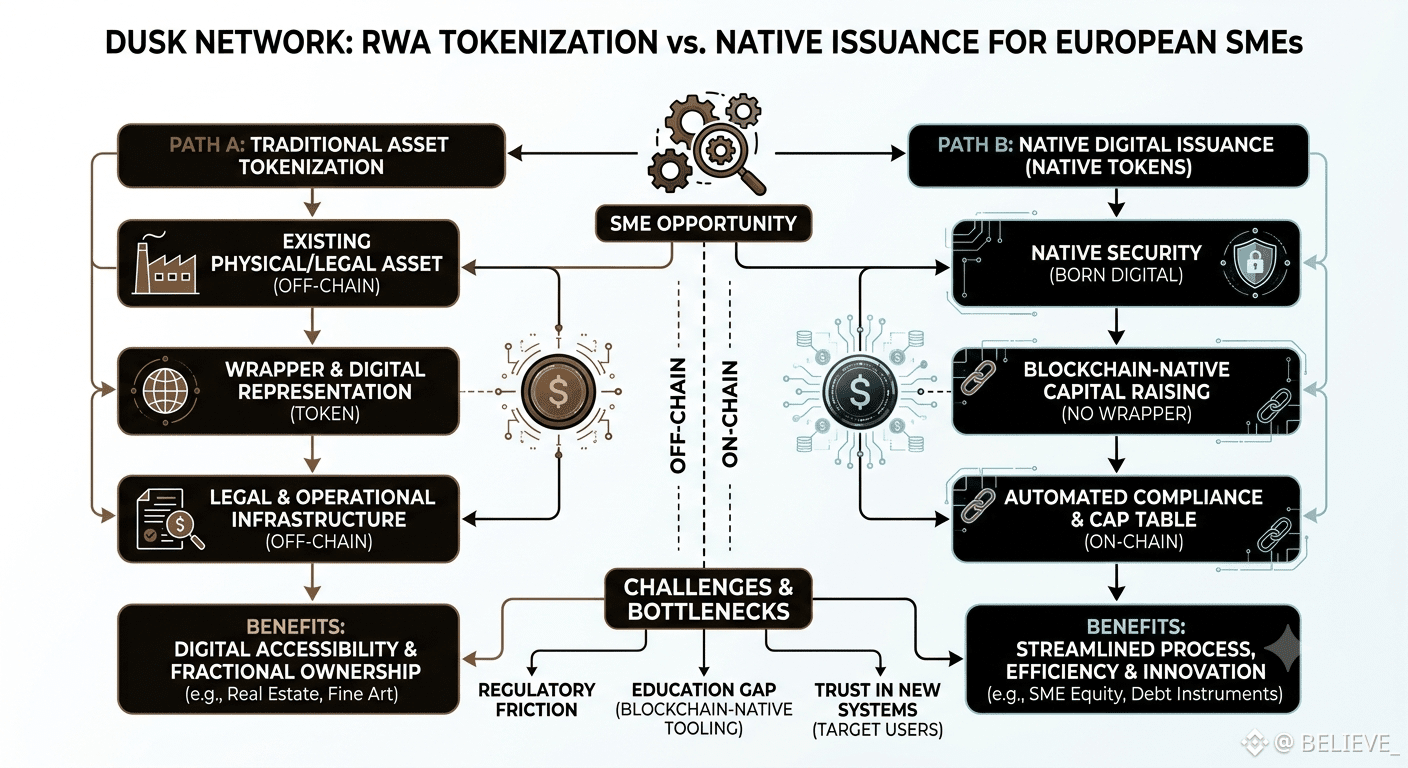
I came across something in Dusk's documentation the other evening that shifted how I was thinking about the whole project. Most of the conversation around real-world asset tokenization assumes the primary beneficiaries are large institutions — asset managers, banks, sovereign funds. But Dusk has been quietly making a case for a completely different audience: Europe's small and mid-sized enterprises, the businesses that collectively generate over half of the continent's GDP yet remain effectively locked out of traditional capital markets. I sometimes wonder whether that repositioning is strategically brilliant or whether it quietly narrows the near-term revenue opportunity.
What seems interesting is the distinction Dusk draws between tokenization and native issuance. Tokenization wraps an existing asset in a digital representation while the underlying legal and operational infrastructure stays off-chain. Native issuance means the asset is born digital — the token is the security, not a wrapper around one. The question that comes to mind is whether that difference actually matters to a growth-stage SME trying to raise capital, or whether most founders will simply choose the fastest compliant path available regardless of the architectural purity underneath.
I'm not completely sure the SME market will move at the pace the infrastructure assumes. Looking from the outside, even with regulatory friction reduced, the education gap between blockchain-native tooling and a traditional business owner managing a cap table manually feels genuinely wide.
It makes me think the bottleneck here isn't technical readiness — it's whether the target users are ready to trust a system they barely understand yet. Anyway, time will tell👍
#dusk $DUSK @Dusk_Foundation
$PROM $UAI
#BitcoinOpenInterestFallsToTwoMonthLow #BitcoinRises23.6%Weekly #SP500FuturesFall #BrentDrops1.87%
I came across something in Dusk's documentation the other evening that shifted how I was thinking about the whole project. Most of the conversation around real-world asset tokenization assumes the primary beneficiaries are large institutions — asset managers, banks, sovereign funds. But Dusk has been quietly making a case for a completely different audience: Europe's small and mid-sized enterprises, the businesses that collectively generate over half of the continent's GDP yet remain effectively locked out of traditional capital markets. I sometimes wonder whether that repositioning is strategically brilliant or whether it quietly narrows the near-term revenue opportunity.
What seems interesting is the distinction Dusk draws between tokenization and native issuance. Tokenization wraps an existing asset in a digital representation while the underlying legal and operational infrastructure stays off-chain. Native issuance means the asset is born digital — the token is the security, not a wrapper around one. The question that comes to mind is whether that difference actually matters to a growth-stage SME trying to raise capital, or whether most founders will simply choose the fastest compliant path available regardless of the architectural purity underneath.
I'm not completely sure the SME market will move at the pace the infrastructure assumes. Looking from the outside, even with regulatory friction reduced, the education gap between blockchain-native tooling and a traditional business owner managing a cap table manually feels genuinely wide.
It makes me think the bottleneck here isn't technical readiness — it's whether the target users are ready to trust a system they barely understand yet. Anyway, time will tell👍
#dusk $DUSK @Dusk
$PROM $UAI
#BitcoinOpenInterestFallsToTwoMonthLow #BitcoinRises23.6%Weekly #SP500FuturesFall #BrentDrops1.87%
What seems interesting is the distinction Dusk draws between tokenization and native issuance. Tokenization wraps an existing asset in a digital representation while the underlying legal and operational infrastructure stays off-chain. Native issuance means the asset is born digital — the token is the security, not a wrapper around one. The question that comes to mind is whether that difference actually matters to a growth-stage SME trying to raise capital, or whether most founders will simply choose the fastest compliant path available regardless of the architectural purity underneath.
I'm not completely sure the SME market will move at the pace the infrastructure assumes. Looking from the outside, even with regulatory friction reduced, the education gap between blockchain-native tooling and a traditional business owner managing a cap table manually feels genuinely wide.
It makes me think the bottleneck here isn't technical readiness — it's whether the target users are ready to trust a system they barely understand yet. Anyway, time will tell👍
#dusk $DUSK @Dusk
$PROM $UAI
#BitcoinOpenInterestFallsToTwoMonthLow #BitcoinRises23.6%Weekly #SP500FuturesFall #BrentDrops1.87%
5
9
1.7k
·
--
how to check creatorspad reward
how to check creatorspad reward
Quoted content has been removed
1
5
168
·
--
Bullish
Verified
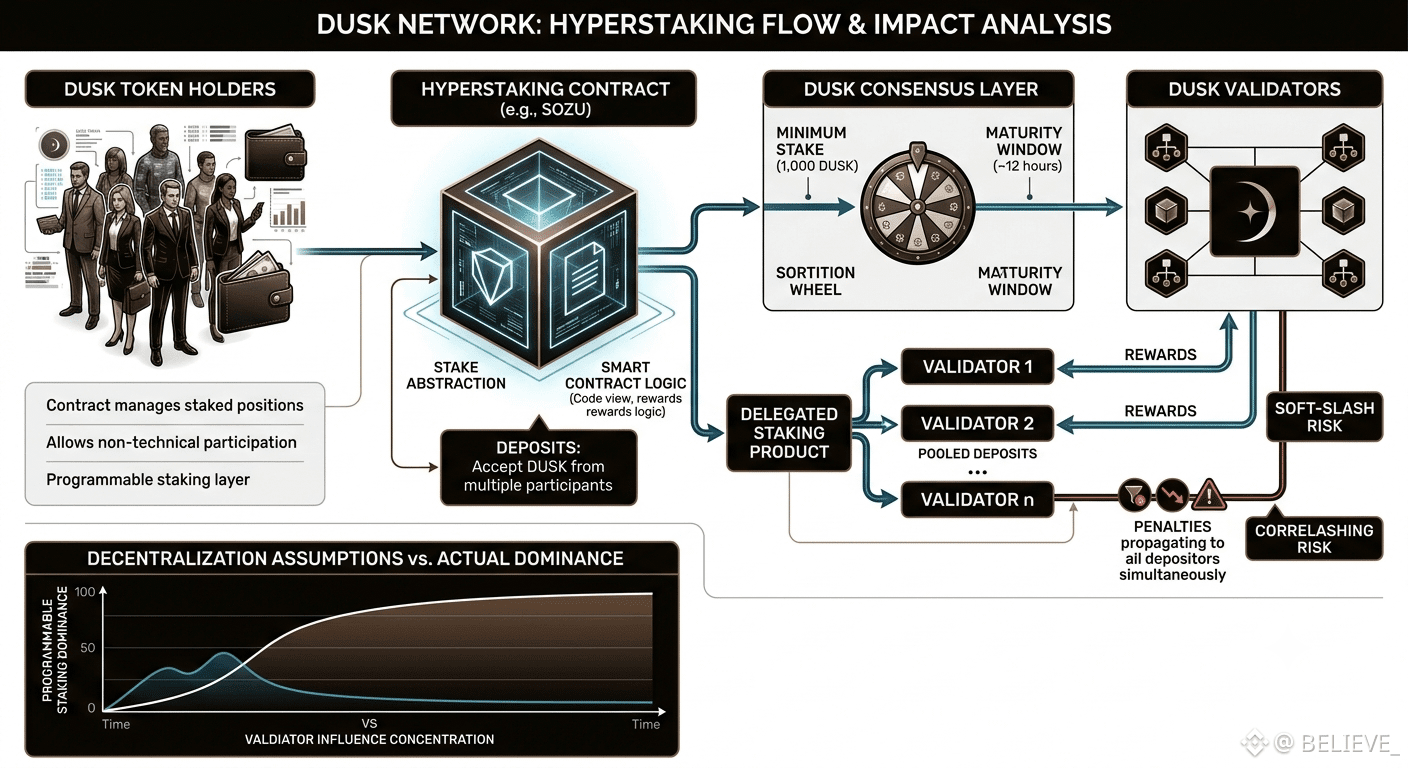
I was reading through Dusk's Hyperstaking documentation recently and something about the core idea kept pulling me back. Rather than staking from a personal wallet alone, smart contracts can hold and manage staked positions directly — accepting deposits, staking on behalf of participants, and distributing rewards according to whatever logic the contract encodes. I sometimes wonder if that description undersells how structurally unusual it actually is.
What seems interesting is Sozu, the first live project building on this. It lets holders stake without running a node at all, which sounds like a straightforward convenience until you consider what it implies at scale. The question that comes to mind is whether routing large portions of staked DUSK through a single contract quietly concentrates validator influence in ways the underlying sortition-based selection wasn't designed to handle.
I'm not completely sure the soft-slashing mechanism fully addresses that. Looking from the outside, if pooled contracts begin dominating the stake distribution, any penalties applied to them ripple across every depositor simultaneously — a correlated exposure that individual stakers never faced alone.
It makes me think programmable staking is genuinely powerful, yet its long-term effect on decentralisation remains an open and underexplored question. Anyway, time will tell👍
#dusk $DUSK @Dusk_Foundation
$TRUMP $BEAT
#SandboxSANDSuspectedInfiniteMintFlawOnBase #GrayscaleFilesFifthZECETFAmendment #USTariffsOnCanadianGoodsTakeEffect #USThreeMajorIndexesPostWeeklyLosses
I was reading through Dusk's Hyperstaking documentation recently and something about the core idea kept pulling me back. Rather than staking from a personal wallet alone, smart contracts can hold and manage staked positions directly — accepting deposits, staking on behalf of participants, and distributing rewards according to whatever logic the contract encodes. I sometimes wonder if that description undersells how structurally unusual it actually is.
What seems interesting is Sozu, the first live project building on this. It lets holders stake without running a node at all, which sounds like a straightforward convenience until you consider what it implies at scale. The question that comes to mind is whether routing large portions of staked DUSK through a single contract quietly concentrates validator influence in ways the underlying sortition-based selection wasn't designed to handle.
I'm not completely sure the soft-slashing mechanism fully addresses that. Looking from the outside, if pooled contracts begin dominating the stake distribution, any penalties applied to them ripple across every depositor simultaneously — a correlated exposure that individual stakers never faced alone.
It makes me think programmable staking is genuinely powerful, yet its long-term effect on decentralisation remains an open and underexplored question. Anyway, time will tell👍
#dusk $DUSK @Dusk
$TRUMP $BEAT
#SandboxSANDSuspectedInfiniteMintFlawOnBase #GrayscaleFilesFifthZECETFAmendment #USTariffsOnCanadianGoodsTakeEffect #USThreeMajorIndexesPostWeeklyLosses
What seems interesting is Sozu, the first live project building on this. It lets holders stake without running a node at all, which sounds like a straightforward convenience until you consider what it implies at scale. The question that comes to mind is whether routing large portions of staked DUSK through a single contract quietly concentrates validator influence in ways the underlying sortition-based selection wasn't designed to handle.
I'm not completely sure the soft-slashing mechanism fully addresses that. Looking from the outside, if pooled contracts begin dominating the stake distribution, any penalties applied to them ripple across every depositor simultaneously — a correlated exposure that individual stakers never faced alone.
It makes me think programmable staking is genuinely powerful, yet its long-term effect on decentralisation remains an open and underexplored question. Anyway, time will tell👍
#dusk $DUSK @Dusk
$TRUMP $BEAT
#SandboxSANDSuspectedInfiniteMintFlawOnBase #GrayscaleFilesFifthZECETFAmendment #USTariffsOnCanadianGoodsTakeEffect #USThreeMajorIndexesPostWeeklyLosses
14
20
977
·
--
Bullish
Verified
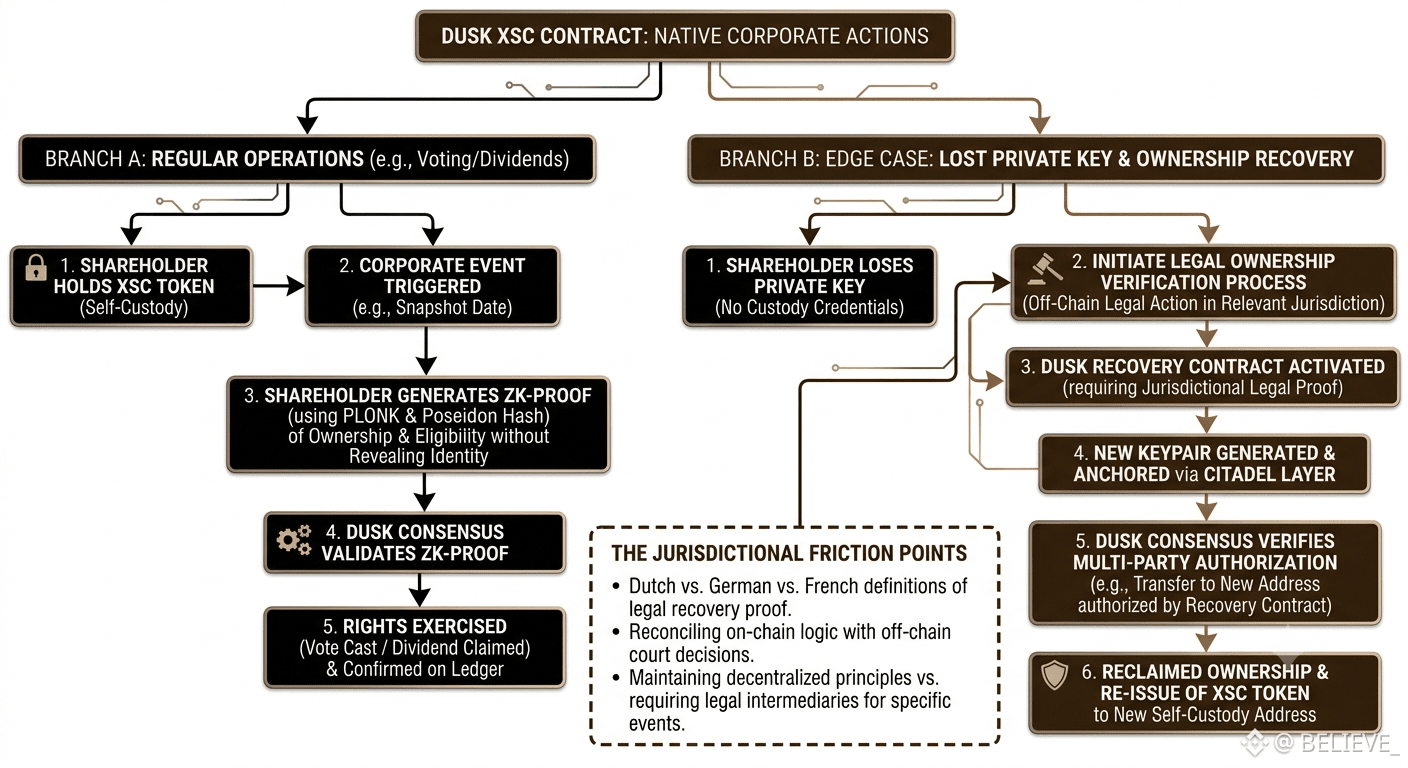
I was digging into Dusk's XSC standard recently — the Confidential Security Contract layer that sits above the base protocol — and I kept stopping at one detail that most writeups seem to gloss over entirely. The standard apparently handles corporate actions natively. Things like dividend distribution and shareholder voting aren't managed through a separate layer or a third-party intermediary; they're encoded directly into the token contract itself. I sometimes wonder if that sounds unremarkable until you consider how much operational overhead traditional securities firms dedicate to exactly those processes — the reconciliation, the manual intervention, the compliance checks before any corporate event fires.
What seems interesting is a specific edge case buried in the design. If a shareholder loses their private keys, they can still exercise ownership rights through the XSC framework — because the standard was built with the legal reality of securities law in mind, where ownership rights survive the loss of custody credentials. The question that comes to mind is how that recovery mechanism actually works in practice without reintroducing a trusted intermediary, which would quietly undermine the self-custody premise the whole architecture rests on.
I'm not completely sure the tension there has been fully resolved. Looking from the outside, encoding legal shareholder rights into a cryptographic contract sounds elegant, but securities law varies considerably across jurisdictions, and what satisfies a Dutch court's definition of ownership recovery may not satisfy a German or French equivalent. That jurisdictional patchwork feels like the kind of friction that only surfaces once real disputes emerge.
It makes me think Dusk's most interesting stress test won't be technical — it will be the first contested corporate action processed entirely on-chain. Anyway, time will tell👍
#dusk $DUSK @Dusk_Foundation
$ONG $ENA
I was digging into Dusk's XSC standard recently — the Confidential Security Contract layer that sits above the base protocol — and I kept stopping at one detail that most writeups seem to gloss over entirely. The standard apparently handles corporate actions natively. Things like dividend distribution and shareholder voting aren't managed through a separate layer or a third-party intermediary; they're encoded directly into the token contract itself. I sometimes wonder if that sounds unremarkable until you consider how much operational overhead traditional securities firms dedicate to exactly those processes — the reconciliation, the manual intervention, the compliance checks before any corporate event fires.
What seems interesting is a specific edge case buried in the design. If a shareholder loses their private keys, they can still exercise ownership rights through the XSC framework — because the standard was built with the legal reality of securities law in mind, where ownership rights survive the loss of custody credentials. The question that comes to mind is how that recovery mechanism actually works in practice without reintroducing a trusted intermediary, which would quietly undermine the self-custody premise the whole architecture rests on.
I'm not completely sure the tension there has been fully resolved. Looking from the outside, encoding legal shareholder rights into a cryptographic contract sounds elegant, but securities law varies considerably across jurisdictions, and what satisfies a Dutch court's definition of ownership recovery may not satisfy a German or French equivalent. That jurisdictional patchwork feels like the kind of friction that only surfaces once real disputes emerge.
It makes me think Dusk's most interesting stress test won't be technical — it will be the first contested corporate action processed entirely on-chain. Anyway, time will tell👍
#dusk $DUSK @Dusk
$ONG $ENA
What seems interesting is a specific edge case buried in the design. If a shareholder loses their private keys, they can still exercise ownership rights through the XSC framework — because the standard was built with the legal reality of securities law in mind, where ownership rights survive the loss of custody credentials. The question that comes to mind is how that recovery mechanism actually works in practice without reintroducing a trusted intermediary, which would quietly undermine the self-custody premise the whole architecture rests on.
I'm not completely sure the tension there has been fully resolved. Looking from the outside, encoding legal shareholder rights into a cryptographic contract sounds elegant, but securities law varies considerably across jurisdictions, and what satisfies a Dutch court's definition of ownership recovery may not satisfy a German or French equivalent. That jurisdictional patchwork feels like the kind of friction that only surfaces once real disputes emerge.
It makes me think Dusk's most interesting stress test won't be technical — it will be the first contested corporate action processed entirely on-chain. Anyway, time will tell👍
#dusk $DUSK @Dusk
$ONG $ENA
23
20
481
·
--
Bullish
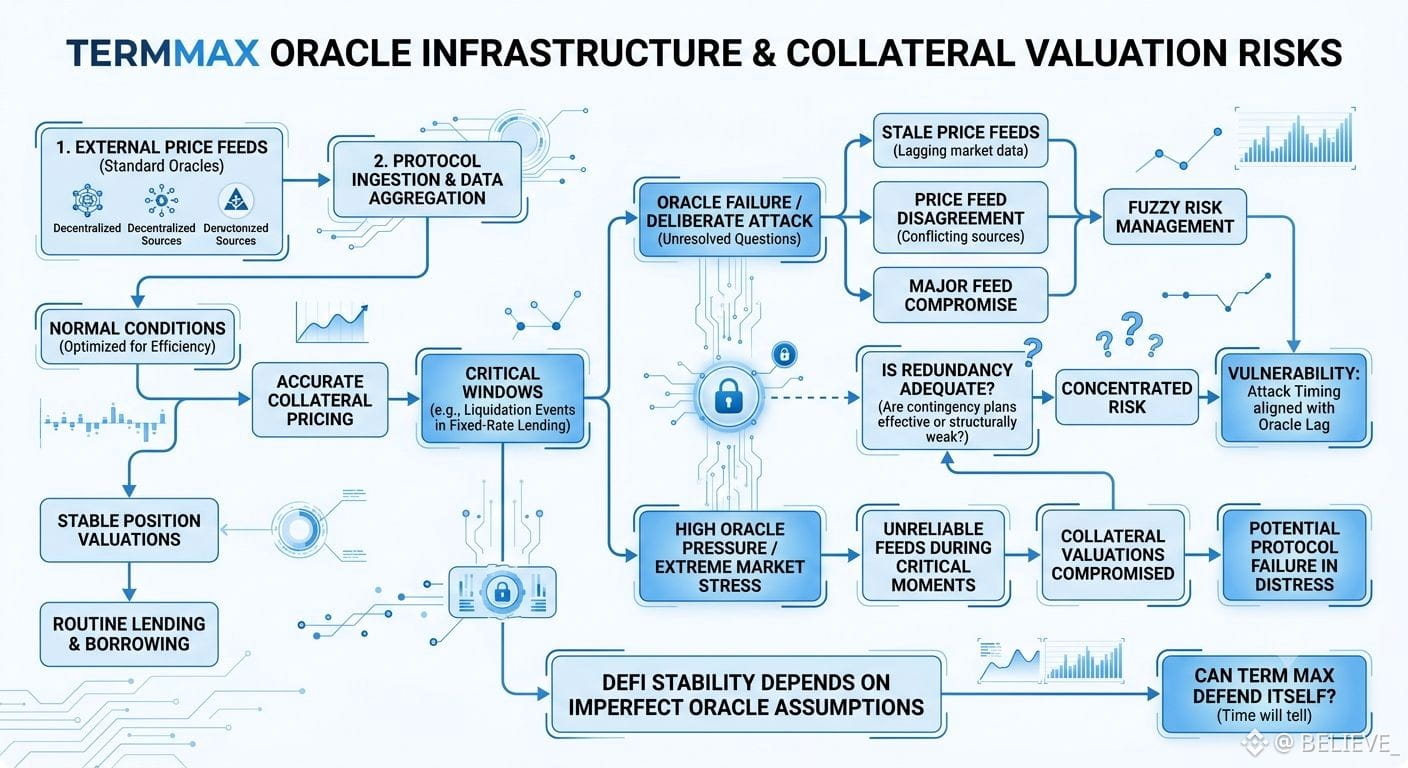
I was thinking about TermMax's oracle infrastructure the other day and realized I couldn't find much discussion about what happens when price feeds go stale or disagree with each other, which seems like a surprisingly quiet topic for something that directly affects position valuations. Most protocols lean on standard oracle solutions, but I'm genuinely uncertain whether TermMax has built redundancy that actually matters or if they're just hoping the feeds stay reliable.
What seems interesting is that fixed-rate lending depends heavily on accurate collateral pricing at the moment of liquidation. Unlike variable-rate pools where prices matter constantly, TermMax's locked terms create specific windows where price feeds become critical, and I kept wondering if that concentration of risk is actually an advantage because it's knowable, or a vulnerability because it's predictable. The question that comes to mind is whether an attacker could time their moves to coincide with oracle lag or disagreement, knowing that's when the protocol's risk management becomes fuzzy.
It makes me think about how much DeFi stability actually rests on assumptions that oracles work perfectly, which is obviously fragile reasoning. I'm not completely sure what contingency plans exist if a major price feed fails or gets compromised. Looking from the outside, I sometimes wonder if protocols deliberately avoid discussing these scenarios because acknowledging them feels like admitting structural weakness, even though every system has breaking points.
The oracle architecture probably works fine most of the time, yet that's almost the wrong metric to optimize for. Protocols don't fail during normal conditions, they fail during the exact moments when feeds become unreliable and collateral valuations matter most. Can TermMax actually defend itself when oracle pressure is highest?
The protocol seems to handle price discovery adequately today, but whether the oracle layer holds steady under deliberate attack or extreme market stress remains the unresolved question.
#termmax @termmax $ONG $ENA $ONT
I was thinking about TermMax's oracle infrastructure the other day and realized I couldn't find much discussion about what happens when price feeds go stale or disagree with each other, which seems like a surprisingly quiet topic for something that directly affects position valuations. Most protocols lean on standard oracle solutions, but I'm genuinely uncertain whether TermMax has built redundancy that actually matters or if they're just hoping the feeds stay reliable.
What seems interesting is that fixed-rate lending depends heavily on accurate collateral pricing at the moment of liquidation. Unlike variable-rate pools where prices matter constantly, TermMax's locked terms create specific windows where price feeds become critical, and I kept wondering if that concentration of risk is actually an advantage because it's knowable, or a vulnerability because it's predictable. The question that comes to mind is whether an attacker could time their moves to coincide with oracle lag or disagreement, knowing that's when the protocol's risk management becomes fuzzy.
It makes me think about how much DeFi stability actually rests on assumptions that oracles work perfectly, which is obviously fragile reasoning. I'm not completely sure what contingency plans exist if a major price feed fails or gets compromised. Looking from the outside, I sometimes wonder if protocols deliberately avoid discussing these scenarios because acknowledging them feels like admitting structural weakness, even though every system has breaking points.
The oracle architecture probably works fine most of the time, yet that's almost the wrong metric to optimize for. Protocols don't fail during normal conditions, they fail during the exact moments when feeds become unreliable and collateral valuations matter most. Can TermMax actually defend itself when oracle pressure is highest?
The protocol seems to handle price discovery adequately today, but whether the oracle layer holds steady under deliberate attack or extreme market stress remains the unresolved question.
#termmax @TermMax $ONG $ENA $ONT
What seems interesting is that fixed-rate lending depends heavily on accurate collateral pricing at the moment of liquidation. Unlike variable-rate pools where prices matter constantly, TermMax's locked terms create specific windows where price feeds become critical, and I kept wondering if that concentration of risk is actually an advantage because it's knowable, or a vulnerability because it's predictable. The question that comes to mind is whether an attacker could time their moves to coincide with oracle lag or disagreement, knowing that's when the protocol's risk management becomes fuzzy.
It makes me think about how much DeFi stability actually rests on assumptions that oracles work perfectly, which is obviously fragile reasoning. I'm not completely sure what contingency plans exist if a major price feed fails or gets compromised. Looking from the outside, I sometimes wonder if protocols deliberately avoid discussing these scenarios because acknowledging them feels like admitting structural weakness, even though every system has breaking points.
The oracle architecture probably works fine most of the time, yet that's almost the wrong metric to optimize for. Protocols don't fail during normal conditions, they fail during the exact moments when feeds become unreliable and collateral valuations matter most. Can TermMax actually defend itself when oracle pressure is highest?
The protocol seems to handle price discovery adequately today, but whether the oracle layer holds steady under deliberate attack or extreme market stress remains the unresolved question.
#termmax @TermMax $ONG $ENA $ONT
4
10
726
·
--
Bullish
Verified
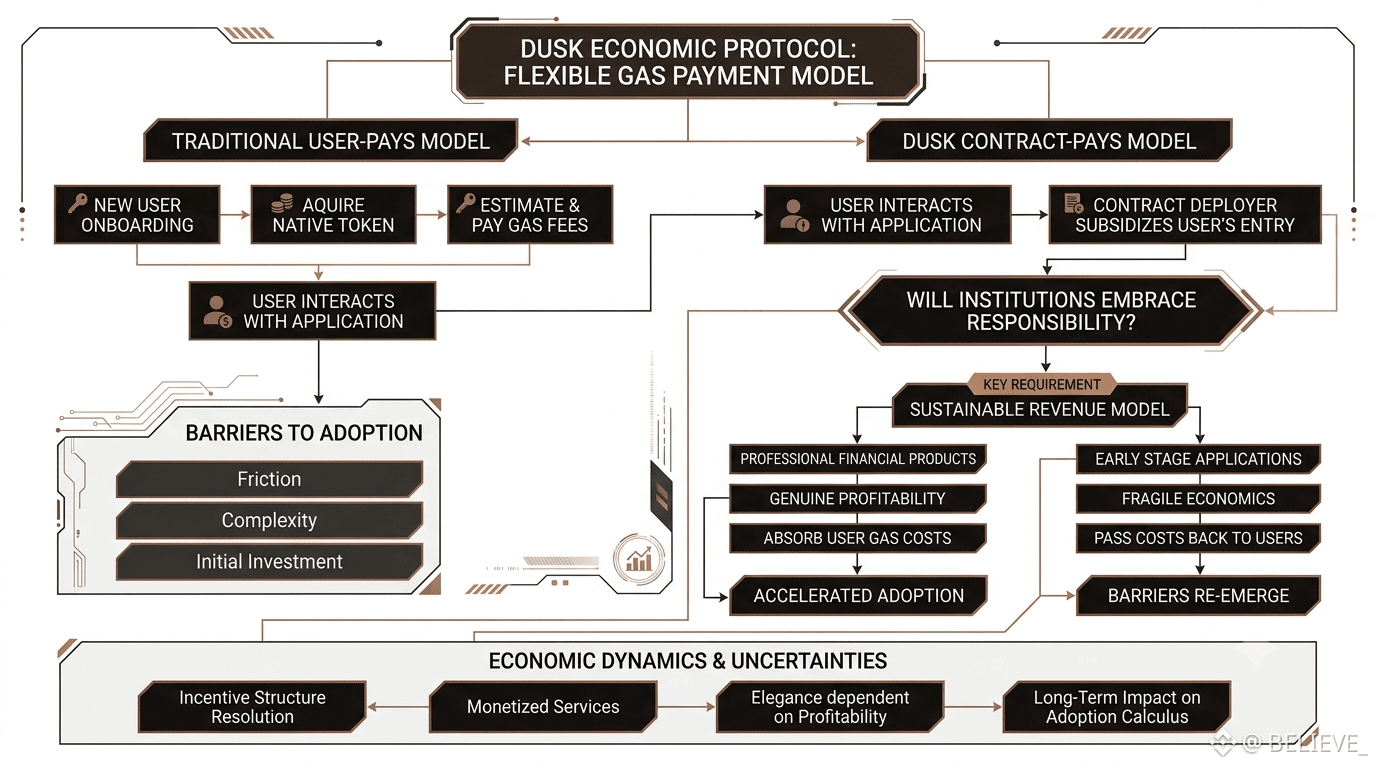
I stumbled across something in Dusk's engineering documentation that I hadn't seen discussed much outside of developer circles, and it's been sitting with me ever since. There's a feature baked into the Economic Protocol where smart contracts can pay gas fees on behalf of the users interacting with them. At first glance that sounds like a minor UX convenience, but the more I thought about it, the more it started to feel like a quietly significant design choice. It means someone could interact with a financial application built on Dusk without ever needing to hold DUSK itself to get started. I sometimes wonder whether that changes the adoption calculus in ways that aren't immediately obvious from the outside.
What seems interesting is how this flips the typical onboarding friction of most blockchain networks. Traditionally, a new user must first acquire the native token, manage gas estimation, and absorb the complexity of fee mechanics before doing anything meaningful. Dusk's model shifts that burden onto the contract deployer, who essentially subsidises the user's entry. The question that comes to mind is whether institutions building on top of this infrastructure will actually embrace that responsibility, or whether most will pass gas costs back to end users anyway and render the feature largely theoretical in practice.
I'm not completely sure the incentive structure fully resolves itself here. A contract willingly absorbing gas costs implies a sustainable revenue model behind it, which assumes meaningful transaction volume and a clearly monetised service. Looking from the outside, that chain of assumptions feels reasonable for an established financial product but quite fragile for anything in an early stage.
It makes me think the elegance of this mechanism only materialises if the applications built on top of it are genuinely profitable enough to absorb what they're covering. Anyway, time will tell👍
#dusk $DUSK @Dusk_Foundation
$BOME $ONG
#GrayscaleFilesToListZcashTrustOnNYSEArca #KOSPICloses5.9%HigherOnChipmakerBuybacks #CryptoRally #FOMCWatch
I stumbled across something in Dusk's engineering documentation that I hadn't seen discussed much outside of developer circles, and it's been sitting with me ever since. There's a feature baked into the Economic Protocol where smart contracts can pay gas fees on behalf of the users interacting with them. At first glance that sounds like a minor UX convenience, but the more I thought about it, the more it started to feel like a quietly significant design choice. It means someone could interact with a financial application built on Dusk without ever needing to hold DUSK itself to get started. I sometimes wonder whether that changes the adoption calculus in ways that aren't immediately obvious from the outside.
What seems interesting is how this flips the typical onboarding friction of most blockchain networks. Traditionally, a new user must first acquire the native token, manage gas estimation, and absorb the complexity of fee mechanics before doing anything meaningful. Dusk's model shifts that burden onto the contract deployer, who essentially subsidises the user's entry. The question that comes to mind is whether institutions building on top of this infrastructure will actually embrace that responsibility, or whether most will pass gas costs back to end users anyway and render the feature largely theoretical in practice.
I'm not completely sure the incentive structure fully resolves itself here. A contract willingly absorbing gas costs implies a sustainable revenue model behind it, which assumes meaningful transaction volume and a clearly monetised service. Looking from the outside, that chain of assumptions feels reasonable for an established financial product but quite fragile for anything in an early stage.
It makes me think the elegance of this mechanism only materialises if the applications built on top of it are genuinely profitable enough to absorb what they're covering. Anyway, time will tell👍
#dusk $DUSK @Dusk
$BOME $ONG
#GrayscaleFilesToListZcashTrustOnNYSEArca #KOSPICloses5.9%HigherOnChipmakerBuybacks #CryptoRally #FOMCWatch
What seems interesting is how this flips the typical onboarding friction of most blockchain networks. Traditionally, a new user must first acquire the native token, manage gas estimation, and absorb the complexity of fee mechanics before doing anything meaningful. Dusk's model shifts that burden onto the contract deployer, who essentially subsidises the user's entry. The question that comes to mind is whether institutions building on top of this infrastructure will actually embrace that responsibility, or whether most will pass gas costs back to end users anyway and render the feature largely theoretical in practice.
I'm not completely sure the incentive structure fully resolves itself here. A contract willingly absorbing gas costs implies a sustainable revenue model behind it, which assumes meaningful transaction volume and a clearly monetised service. Looking from the outside, that chain of assumptions feels reasonable for an established financial product but quite fragile for anything in an early stage.
It makes me think the elegance of this mechanism only materialises if the applications built on top of it are genuinely profitable enough to absorb what they're covering. Anyway, time will tell👍
#dusk $DUSK @Dusk
$BOME $ONG
#GrayscaleFilesToListZcashTrustOnNYSEArca #KOSPICloses5.9%HigherOnChipmakerBuybacks #CryptoRally #FOMCWatch
12
16
1.5k
Log in to explore more content
Join global crypto users on Binance Square
⚡️ Get latest and useful information about crypto.
💬 Trusted by the world’s largest crypto exchange.
👍 Discover real insights from verified creators.
Email / Phone number