

RISKK TAKER
657 Posts

RISKK TAKER
Report
Block User
RISK TAKER, Technical Analyst, Trader, My post NFA
Open Trade
Occasional Trader
8.2 Months
6 Following
34 Followers
909 Liked
Posts
Portfolio
All
Quotes
Videos
·
--
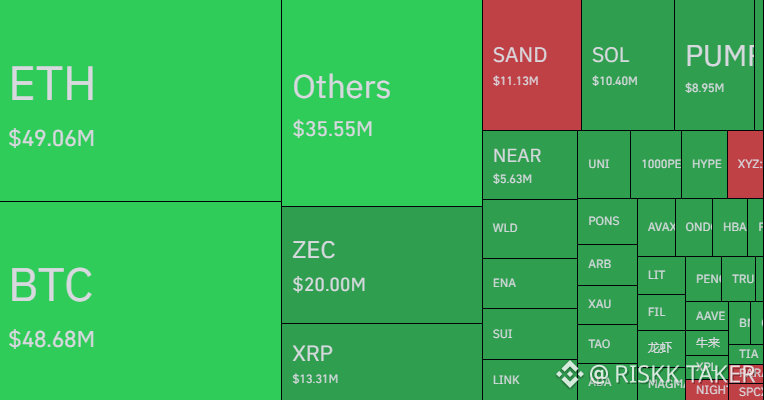
Crypto traders just took another major hit, with roughly $246.8M in long positions liquidated over the past 24 hours.
The largest single liquidation came from ZEC, as the recent weakness triggered forced closures across leveraged positions. Current liquidation trackers also show ZEC among the assets seeing significant long liquidations.
This is what happens when traders are heavily positioned for upside and the market suddenly moves against them. Forced selling can then add even more pressure to the decline.
$ZEC
{future}(ZECUSDT)
$HYPE
{future}(HYPEUSDT)
$SAND
{future}(SANDUSDT)
Crypto traders just took another major hit, with roughly $246.8M in long positions liquidated over the past 24 hours.
The largest single liquidation came from ZEC, as the recent weakness triggered forced closures across leveraged positions. Current liquidation trackers also show ZEC among the assets seeing significant long liquidations.
This is what happens when traders are heavily positioned for upside and the market suddenly moves against them. Forced selling can then add even more pressure to the decline.
$ZEC
$HYPE
$SAND
The largest single liquidation came from ZEC, as the recent weakness triggered forced closures across leveraged positions. Current liquidation trackers also show ZEC among the assets seeing significant long liquidations.
This is what happens when traders are heavily positioned for upside and the market suddenly moves against them. Forced selling can then add even more pressure to the decline.
$ZEC
$HYPE
$SAND
1
682
·
--
ANDREW TATE MOVES $1.87M IN HYPE TO BINANCE
A wallet linked to Andrew Tate has deposited 20,950 HYPE, worth roughly $1.87 million, into Binance, according to Lookonchain.
The tokens were reportedly bought around two years ago at approximately $4.48 each, giving the position a massive unrealized gain.
Tate still holds 63,550 HYPE worth about $5.62M, while Lookonchain estimates his total HYPE profit at around $7.24M, representing a 1,317% return.
One important detail: moving HYPE to Binance does not confirm that he has sold it. It simply means the tokens have been deposited to the exchange.
Still, a $1.87M transfer from a wallet sitting on a huge profit is something HYPE traders will be watching closely.
$HYPE
{future}(HYPEUSDT)
ANDREW TATE MOVES $1.87M IN HYPE TO BINANCE
A wallet linked to Andrew Tate has deposited 20,950 HYPE, worth roughly $1.87 million, into Binance, according to Lookonchain.
The tokens were reportedly bought around two years ago at approximately $4.48 each, giving the position a massive unrealized gain.
Tate still holds 63,550 HYPE worth about $5.62M, while Lookonchain estimates his total HYPE profit at around $7.24M, representing a 1,317% return.
One important detail: moving HYPE to Binance does not confirm that he has sold it. It simply means the tokens have been deposited to the exchange.
Still, a $1.87M transfer from a wallet sitting on a huge profit is something HYPE traders will be watching closely.
$HYPE
A wallet linked to Andrew Tate has deposited 20,950 HYPE, worth roughly $1.87 million, into Binance, according to Lookonchain.
The tokens were reportedly bought around two years ago at approximately $4.48 each, giving the position a massive unrealized gain.
Tate still holds 63,550 HYPE worth about $5.62M, while Lookonchain estimates his total HYPE profit at around $7.24M, representing a 1,317% return.
One important detail: moving HYPE to Binance does not confirm that he has sold it. It simply means the tokens have been deposited to the exchange.
Still, a $1.87M transfer from a wallet sitting on a huge profit is something HYPE traders will be watching closely.
$HYPE


2
66
·
--
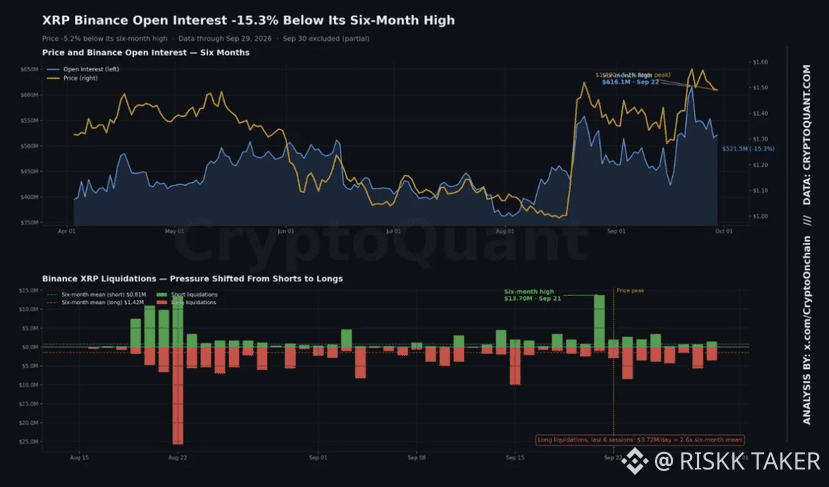
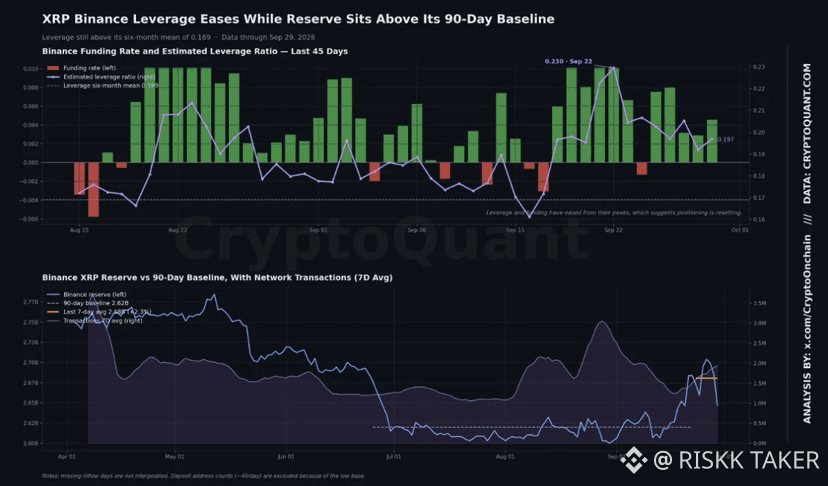
Binance XRP open interest has fallen 15.3% from its six-month high, dropping from $616.1M on September 22 to $521.5M on September 29.
What’s interesting is that XRP’s price has only pulled back 5.2% from its six-month high over the same period.
That means leverage is unwinding faster than price is falling. Funding and the estimated leverage ratio have also cooled, suggesting traders are reducing risk rather than aggressively exiting the spot market.
For now, the clearest reading is simple: XRP shed leverage while holding most of its gains.
$XRP
{future}(XRPUSDT)
$BNB
{future}(BNBUSDT)
Binance XRP open interest has fallen 15.3% from its six-month high, dropping from $616.1M on September 22 to $521.5M on September 29.
What’s interesting is that XRP’s price has only pulled back 5.2% from its six-month high over the same period.
That means leverage is unwinding faster than price is falling. Funding and the estimated leverage ratio have also cooled, suggesting traders are reducing risk rather than aggressively exiting the spot market.
For now, the clearest reading is simple: XRP shed leverage while holding most of its gains.
$XRP
$BNB
What’s interesting is that XRP’s price has only pulled back 5.2% from its six-month high over the same period.
That means leverage is unwinding faster than price is falling. Funding and the estimated leverage ratio have also cooled, suggesting traders are reducing risk rather than aggressively exiting the spot market.
For now, the clearest reading is simple: XRP shed leverage while holding most of its gains.
$XRP
$BNB
1
77
·
--
Avalanche added $245.5M in tokenized stock market cap during September, the largest monthly increase among tracked blockchains.
A major part of that growth came through Securitize, which has been expanding issuer backed tokenized equities across Avalanche. Securitize itself brought its public stock, SECZ, onchain through Avalanche and Solana earlier this year.
The numbers show how quickly tokenized equities are becoming a real onchain market rather than just a future concept.
$245.5M added in one month. Avalanche is becoming a serious venue for tokenized stocks.
Avalanche added $245.5M in tokenized stock market cap during September, the largest monthly increase among tracked blockchains.
A major part of that growth came through Securitize, which has been expanding issuer backed tokenized equities across Avalanche. Securitize itself brought its public stock, SECZ, onchain through Avalanche and Solana earlier this year.
The numbers show how quickly tokenized equities are becoming a real onchain market rather than just a future concept.
$245.5M added in one month. Avalanche is becoming a serious venue for tokenized stocks.
A major part of that growth came through Securitize, which has been expanding issuer backed tokenized equities across Avalanche. Securitize itself brought its public stock, SECZ, onchain through Avalanche and Solana earlier this year.
The numbers show how quickly tokenized equities are becoming a real onchain market rather than just a future concept.
$245.5M added in one month. Avalanche is becoming a serious venue for tokenized stocks.


1
340
·
--
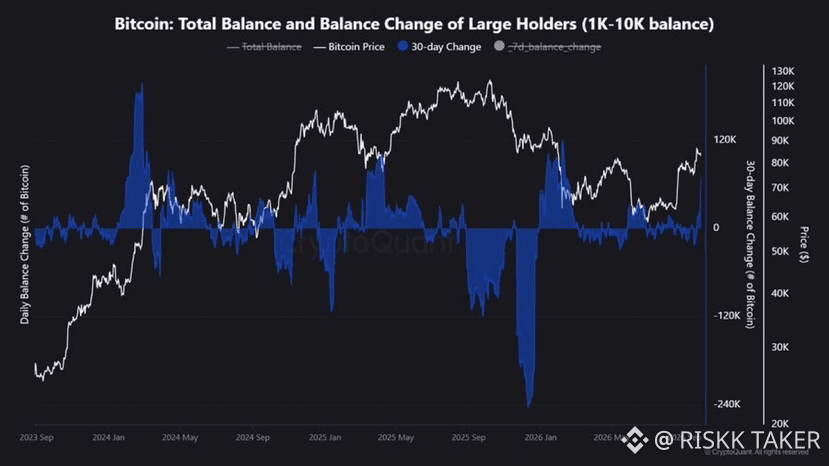
Bitcoin whales have added roughly 75,000 BTC over the past 30 days, according to CryptoQuant data. That’s worth around $6.3 billion at recent prices.
The move is notable because this kind of accumulation can reduce the amount of BTC readily available for selling, especially if large holders continue moving coins into longer-term storage.
But there’s an important caveat: the data tracks changes in whale holdings and doesn’t prove that all 75,000 BTC represents fresh buying. Large holders can also move coins between their own wallets.
Still, the direction is worth watching.
75,000 BTC accumulated in 30 days. If whales keep buying while demand strengthens, Bitcoin’s supply dynamics could get very interesting.
Bitcoin whales have added roughly 75,000 BTC over the past 30 days, according to CryptoQuant data. That’s worth around $6.3 billion at recent prices.
The move is notable because this kind of accumulation can reduce the amount of BTC readily available for selling, especially if large holders continue moving coins into longer-term storage.
But there’s an important caveat: the data tracks changes in whale holdings and doesn’t prove that all 75,000 BTC represents fresh buying. Large holders can also move coins between their own wallets.
Still, the direction is worth watching.
75,000 BTC accumulated in 30 days. If whales keep buying while demand strengthens, Bitcoin’s supply dynamics could get very interesting.
The move is notable because this kind of accumulation can reduce the amount of BTC readily available for selling, especially if large holders continue moving coins into longer-term storage.
But there’s an important caveat: the data tracks changes in whale holdings and doesn’t prove that all 75,000 BTC represents fresh buying. Large holders can also move coins between their own wallets.
Still, the direction is worth watching.
75,000 BTC accumulated in 30 days. If whales keep buying while demand strengthens, Bitcoin’s supply dynamics could get very interesting.
1
29
·
--
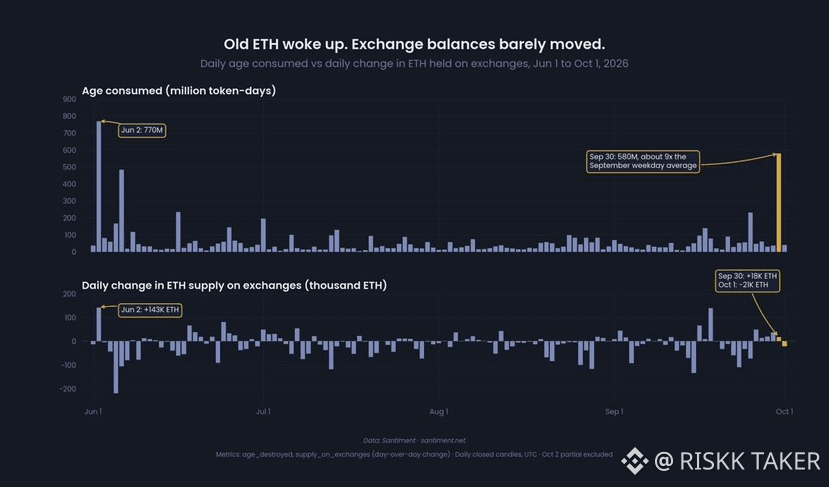
Long dormant Ethereum recorded its largest movement since June 2 on September 30, according to Santiment.
What makes the move interesting is that exchange balances barely changed. That means the movement does not automatically point to ETH being sent to exchanges or sold. Santiment’s data simply shows that older coins became active again.
That distinction matters. Dormant ETH moving can come from whales repositioning, wallet transfers or other internal activity without creating immediate sell pressure.
Long dormant Ethereum recorded its largest movement since June 2 on September 30, according to Santiment.
What makes the move interesting is that exchange balances barely changed. That means the movement does not automatically point to ETH being sent to exchanges or sold. Santiment’s data simply shows that older coins became active again.
That distinction matters. Dormant ETH moving can come from whales repositioning, wallet transfers or other internal activity without creating immediate sell pressure.
What makes the move interesting is that exchange balances barely changed. That means the movement does not automatically point to ETH being sent to exchanges or sold. Santiment’s data simply shows that older coins became active again.
That distinction matters. Dormant ETH moving can come from whales repositioning, wallet transfers or other internal activity without creating immediate sell pressure.
1
47
·
--
ETF FLOWS ARE SPLITTING THE CRYPTO MARKET
U.S. spot crypto ETFs saw a mixed session on October 1, with Bitcoin and XRP attracting fresh capital while Ethereum and Solana recorded outflows.
BTC: +$102.67M
ETH: -$55.37M
SOL: -$5.91M
XRP: +$4.07M
The divergence is worth watching. Bitcoin absorbed the strongest inflow, while ETH saw the largest withdrawal among the four assets.
That doesn’t necessarily signal a broad shift away from altcoins, but it does show that institutional flows aren’t moving uniformly across the market.
BTC is getting the bid. ETH and SOL are seeing money leave. The next few sessions will show whether this is just a oneday rotation or the start of a bigger trend.
ETF FLOWS ARE SPLITTING THE CRYPTO MARKET
U.S. spot crypto ETFs saw a mixed session on October 1, with Bitcoin and XRP attracting fresh capital while Ethereum and Solana recorded outflows.
BTC: +$102.67M
ETH: -$55.37M
SOL: -$5.91M
XRP: +$4.07M
The divergence is worth watching. Bitcoin absorbed the strongest inflow, while ETH saw the largest withdrawal among the four assets.
That doesn’t necessarily signal a broad shift away from altcoins, but it does show that institutional flows aren’t moving uniformly across the market.
BTC is getting the bid. ETH and SOL are seeing money leave. The next few sessions will show whether this is just a oneday rotation or the start of a bigger trend.
U.S. spot crypto ETFs saw a mixed session on October 1, with Bitcoin and XRP attracting fresh capital while Ethereum and Solana recorded outflows.
BTC: +$102.67M
ETH: -$55.37M
SOL: -$5.91M
XRP: +$4.07M
The divergence is worth watching. Bitcoin absorbed the strongest inflow, while ETH saw the largest withdrawal among the four assets.
That doesn’t necessarily signal a broad shift away from altcoins, but it does show that institutional flows aren’t moving uniformly across the market.
BTC is getting the bid. ETH and SOL are seeing money leave. The next few sessions will show whether this is just a oneday rotation or the start of a bigger trend.


2
196
·
--
🔥 JUST IN: BNB CHAIN IS NOW SUPPORTED ON PHANTOM
Phantom has officially added support for BNB Chain, allowing users to hold, send, receive and swap BNB Chain assets directly from the app after updating to the latest version.
This is another major step in Phantom’s push beyond its Solana roots, with BNB Chain becoming the wallet’s ninth supported network.
For BNB Chain, the integration gives its ecosystem access to another large self custody wallet user base, while Phantom users can now trade BNB Chain assets without switching to a separate EVM wallet.
BNB Chain is now on Phantom. Another major ecosystem just became accessible from the same wallet. $BNB
{future}(BNBUSDT)
$SOL
{future}(SOLUSDT)
🔥 JUST IN: BNB CHAIN IS NOW SUPPORTED ON PHANTOM
Phantom has officially added support for BNB Chain, allowing users to hold, send, receive and swap BNB Chain assets directly from the app after updating to the latest version.
This is another major step in Phantom’s push beyond its Solana roots, with BNB Chain becoming the wallet’s ninth supported network.
For BNB Chain, the integration gives its ecosystem access to another large self custody wallet user base, while Phantom users can now trade BNB Chain assets without switching to a separate EVM wallet.
BNB Chain is now on Phantom. Another major ecosystem just became accessible from the same wallet. $BNB
$SOL
Phantom has officially added support for BNB Chain, allowing users to hold, send, receive and swap BNB Chain assets directly from the app after updating to the latest version.
This is another major step in Phantom’s push beyond its Solana roots, with BNB Chain becoming the wallet’s ninth supported network.
For BNB Chain, the integration gives its ecosystem access to another large self custody wallet user base, while Phantom users can now trade BNB Chain assets without switching to a separate EVM wallet.
BNB Chain is now on Phantom. Another major ecosystem just became accessible from the same wallet. $BNB
$SOL


2
59
·
--
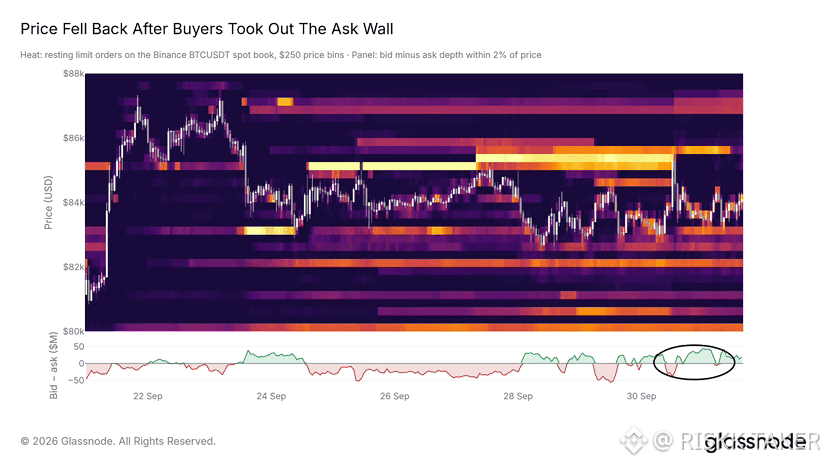
🔥 BITCOIN $85K SELL WALL IS GONE
Bitcoin buyers finally absorbed the major $85,000 sell wall yesterday after nearly a week of failed attempts to break through it.
Now, the remaining ask liquidity above BTC appears to have thinned significantly, removing some of the immediate resistance that was sitting above the market.
That matters because when large sell orders disappear, there is less overhead supply for buyers to absorb. If fresh demand continues coming in, BTC can potentially move through the upper levels much faster.
Of course, thin sell side liquidity can work both ways. It can accelerate upside when buyers are active, but it can also make price more volatile if demand suddenly disappears.
The $85K wall has been cleared. Now the market needs to show whether buyers can take advantage of the thinner liquidity above.
$AAVE
{future}(AAVEUSDT)
$HUMA
{future}(HUMAUSDT)
🔥 BITCOIN $85K SELL WALL IS GONE
Bitcoin buyers finally absorbed the major $85,000 sell wall yesterday after nearly a week of failed attempts to break through it.
Now, the remaining ask liquidity above BTC appears to have thinned significantly, removing some of the immediate resistance that was sitting above the market.
That matters because when large sell orders disappear, there is less overhead supply for buyers to absorb. If fresh demand continues coming in, BTC can potentially move through the upper levels much faster.
Of course, thin sell side liquidity can work both ways. It can accelerate upside when buyers are active, but it can also make price more volatile if demand suddenly disappears.
The $85K wall has been cleared. Now the market needs to show whether buyers can take advantage of the thinner liquidity above.
$AAVE
$HUMA
Bitcoin buyers finally absorbed the major $85,000 sell wall yesterday after nearly a week of failed attempts to break through it.
Now, the remaining ask liquidity above BTC appears to have thinned significantly, removing some of the immediate resistance that was sitting above the market.
That matters because when large sell orders disappear, there is less overhead supply for buyers to absorb. If fresh demand continues coming in, BTC can potentially move through the upper levels much faster.
Of course, thin sell side liquidity can work both ways. It can accelerate upside when buyers are active, but it can also make price more volatile if demand suddenly disappears.
The $85K wall has been cleared. Now the market needs to show whether buyers can take advantage of the thinner liquidity above.
$AAVE
$HUMA
2
2
·
--
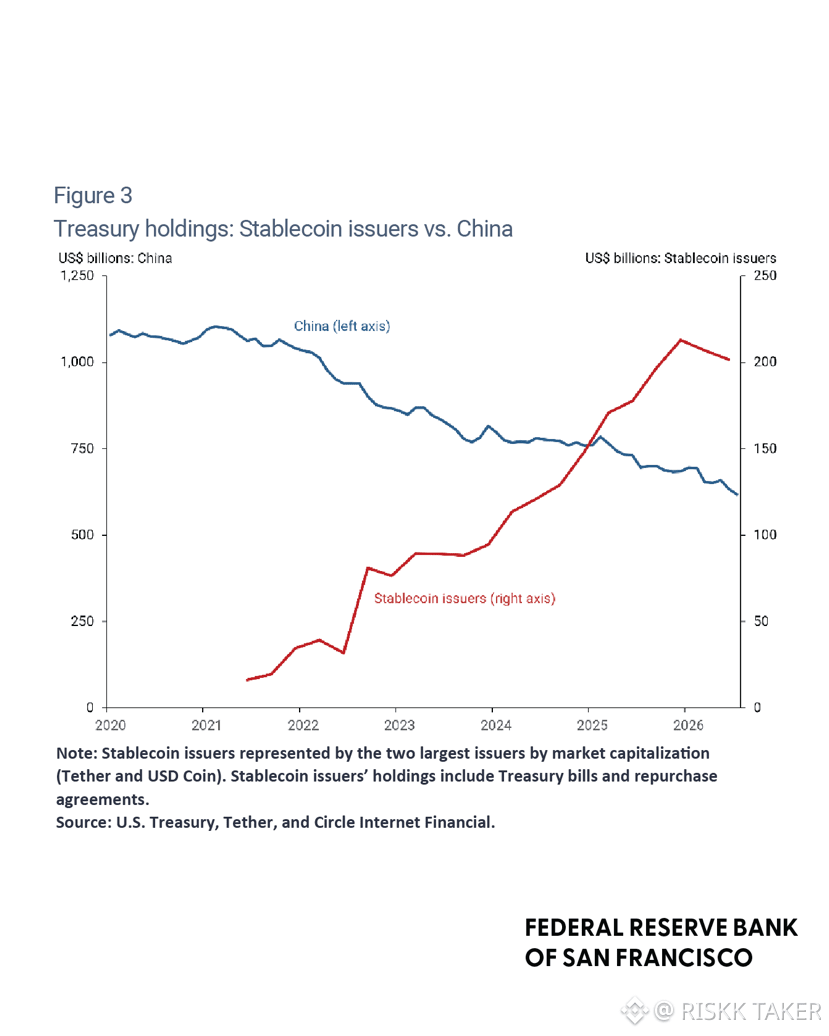
🚨 STABLECOINS COULD BE ENTERING A MASSIVE GROWTH PHASE
Bitwise CIO Matt Hougan says stablecoins are going “much, much higher,” and new research from the San Francisco Fed gives the sector another reason to pay attention.
Stablecoin issuers have increased their U.S. Treasury holdings by roughly $200B over the past five years, offsetting more than 40% of the decline in China’s Treasury holdings.
The Fed estimates that if the current trend continues, stablecoin issuers could hold around $400B in short term Treasuries by 2030.
That means stablecoins aren’t just becoming a bigger part of crypto. They’re increasingly becoming a meaningful source of demand for U.S. government debt.
The stablecoin market may be much bigger than a crypto liquidity story.
$USDC
{spot}(USDCUSDT)
$USDT $HUMA
{future}(HUMAUSDT)
🚨 STABLECOINS COULD BE ENTERING A MASSIVE GROWTH PHASE
Bitwise CIO Matt Hougan says stablecoins are going “much, much higher,” and new research from the San Francisco Fed gives the sector another reason to pay attention.
Stablecoin issuers have increased their U.S. Treasury holdings by roughly $200B over the past five years, offsetting more than 40% of the decline in China’s Treasury holdings.
The Fed estimates that if the current trend continues, stablecoin issuers could hold around $400B in short term Treasuries by 2030.
That means stablecoins aren’t just becoming a bigger part of crypto. They’re increasingly becoming a meaningful source of demand for U.S. government debt.
The stablecoin market may be much bigger than a crypto liquidity story.
$USDC
$USDT $HUMA
Bitwise CIO Matt Hougan says stablecoins are going “much, much higher,” and new research from the San Francisco Fed gives the sector another reason to pay attention.
Stablecoin issuers have increased their U.S. Treasury holdings by roughly $200B over the past five years, offsetting more than 40% of the decline in China’s Treasury holdings.
The Fed estimates that if the current trend continues, stablecoin issuers could hold around $400B in short term Treasuries by 2030.
That means stablecoins aren’t just becoming a bigger part of crypto. They’re increasingly becoming a meaningful source of demand for U.S. government debt.
The stablecoin market may be much bigger than a crypto liquidity story.
$USDC
$USDT $HUMA

2
136
·
--
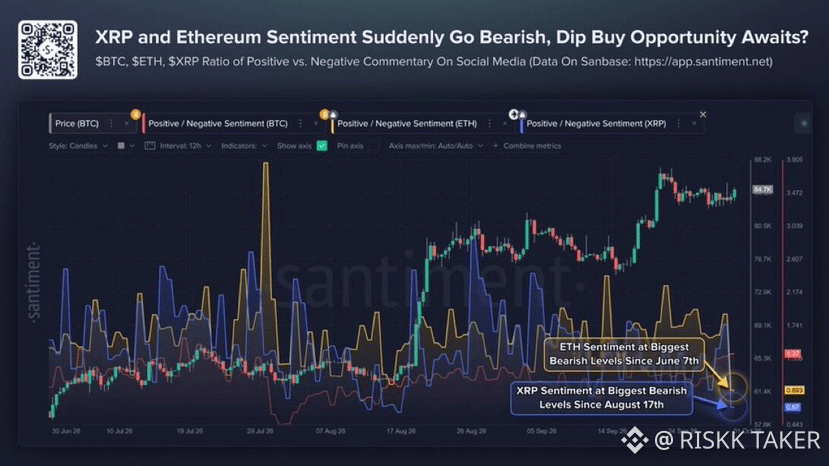
⚡️ ETH & XRP SENTIMENT JUST HIT EXTREME LOWS
Ethereum and XRP sentiment has turned sharply bearish across crypto social media, according to Santiment.
ETH bullish to bearish comment ratio has fallen to 0.89, its lowest level since June 7, while XRP has dropped to 0.67, its lowest since August 17. In both cases, bearish comments now outnumber bullish ones.
That doesn’t automatically mean prices are about to reverse. But extreme pessimism is something traders watch because sentiment can become heavily one sided after prolonged weakness.
ETH and XRP are facing maximum negativity. The interesting part is what happens next.
$ETH
{future}(ETHUSDT)
$XRP
{future}(XRPUSDT)
⚡️ ETH & XRP SENTIMENT JUST HIT EXTREME LOWS
Ethereum and XRP sentiment has turned sharply bearish across crypto social media, according to Santiment.
ETH bullish to bearish comment ratio has fallen to 0.89, its lowest level since June 7, while XRP has dropped to 0.67, its lowest since August 17. In both cases, bearish comments now outnumber bullish ones.
That doesn’t automatically mean prices are about to reverse. But extreme pessimism is something traders watch because sentiment can become heavily one sided after prolonged weakness.
ETH and XRP are facing maximum negativity. The interesting part is what happens next.
$ETH
$XRP
Ethereum and XRP sentiment has turned sharply bearish across crypto social media, according to Santiment.
ETH bullish to bearish comment ratio has fallen to 0.89, its lowest level since June 7, while XRP has dropped to 0.67, its lowest since August 17. In both cases, bearish comments now outnumber bullish ones.
That doesn’t automatically mean prices are about to reverse. But extreme pessimism is something traders watch because sentiment can become heavily one sided after prolonged weakness.
ETH and XRP are facing maximum negativity. The interesting part is what happens next.
$ETH
$XRP
2
6
·
--
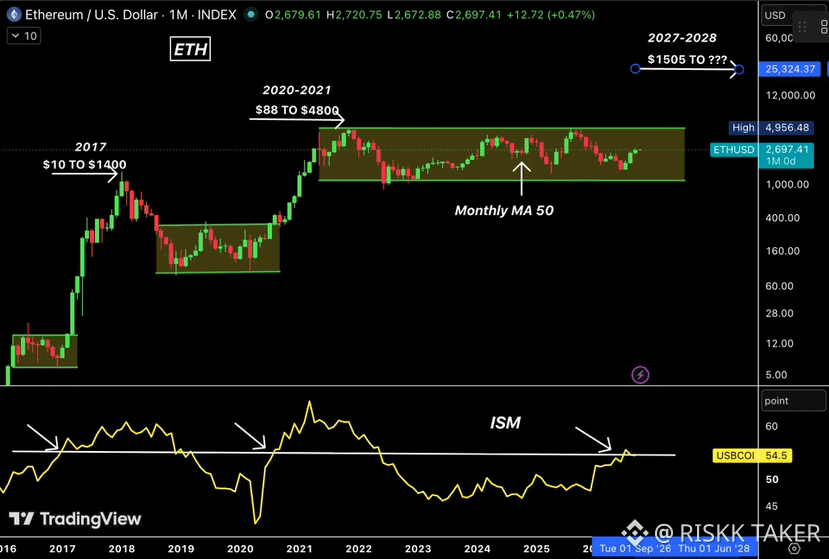
Ethereum is sitting around $2,695, but one macro indicator could become important for the next major move: the U.S. ISM Manufacturing PMI.
September’s ISM came in at 54.5, slightly below the 54.8 forecast and down from 54.6. The important level traders are watching is 56.
That level matters because previous strong ETH cycles coincided with ISM moving above 56. It doesn’t prove that history will repeat, but if manufacturing activity keeps accelerating toward 60, it could signal a stronger economic expansion and potentially a more favorable backdrop for risk assets.
ETH is also sitting near its monthly 50 MA, making the current setup one worth watching.
ISM above 56 could be the confirmation bulls are waiting for. If it happens, ETH and the wider altcoin market could have a much bigger macro tailwind heading into 2027.
Ethereum is sitting around $2,695, but one macro indicator could become important for the next major move: the U.S. ISM Manufacturing PMI.
September’s ISM came in at 54.5, slightly below the 54.8 forecast and down from 54.6. The important level traders are watching is 56.
That level matters because previous strong ETH cycles coincided with ISM moving above 56. It doesn’t prove that history will repeat, but if manufacturing activity keeps accelerating toward 60, it could signal a stronger economic expansion and potentially a more favorable backdrop for risk assets.
ETH is also sitting near its monthly 50 MA, making the current setup one worth watching.
ISM above 56 could be the confirmation bulls are waiting for. If it happens, ETH and the wider altcoin market could have a much bigger macro tailwind heading into 2027.
September’s ISM came in at 54.5, slightly below the 54.8 forecast and down from 54.6. The important level traders are watching is 56.
That level matters because previous strong ETH cycles coincided with ISM moving above 56. It doesn’t prove that history will repeat, but if manufacturing activity keeps accelerating toward 60, it could signal a stronger economic expansion and potentially a more favorable backdrop for risk assets.
ETH is also sitting near its monthly 50 MA, making the current setup one worth watching.
ISM above 56 could be the confirmation bulls are waiting for. If it happens, ETH and the wider altcoin market could have a much bigger macro tailwind heading into 2027.
2
42
·
--
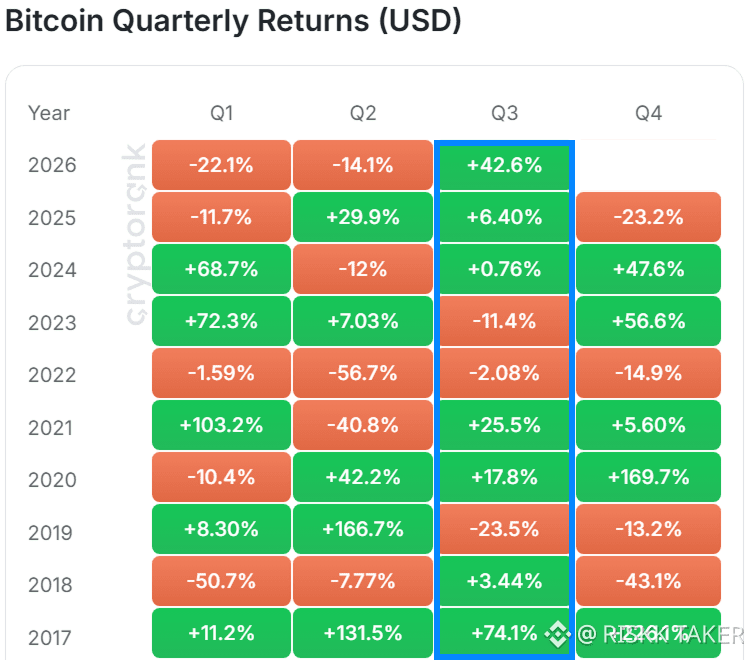
🟢 BITCOIN JUST HAD ITS BEST Q3 SINCE 2017
Bitcoin gained roughly 42.6% in Q3 2026, marking its strongest third quarter performance in nine years.
What makes the move more notable is how much ground BTC had to recover. Bitcoin recorded losses in both Q1 and Q2, putting significant pressure on the market before the third-quarter rebound changed the picture.
Q3 effectively became the quarter where Bitcoin regained momentum, with the rally helping erase a large portion of the weakness seen during the first half of the year.
Now the focus shifts to Q4.
After its strongest Q3 since 2017, can Bitcoin carry that momentum into the final quarter of 2026? #uptober
🟢 BITCOIN JUST HAD ITS BEST Q3 SINCE 2017
Bitcoin gained roughly 42.6% in Q3 2026, marking its strongest third quarter performance in nine years.
What makes the move more notable is how much ground BTC had to recover. Bitcoin recorded losses in both Q1 and Q2, putting significant pressure on the market before the third-quarter rebound changed the picture.
Q3 effectively became the quarter where Bitcoin regained momentum, with the rally helping erase a large portion of the weakness seen during the first half of the year.
Now the focus shifts to Q4.
After its strongest Q3 since 2017, can Bitcoin carry that momentum into the final quarter of 2026? #uptober
Bitcoin gained roughly 42.6% in Q3 2026, marking its strongest third quarter performance in nine years.
What makes the move more notable is how much ground BTC had to recover. Bitcoin recorded losses in both Q1 and Q2, putting significant pressure on the market before the third-quarter rebound changed the picture.
Q3 effectively became the quarter where Bitcoin regained momentum, with the rally helping erase a large portion of the weakness seen during the first half of the year.
Now the focus shifts to Q4.
After its strongest Q3 since 2017, can Bitcoin carry that momentum into the final quarter of 2026? #uptober
1
51
·
--
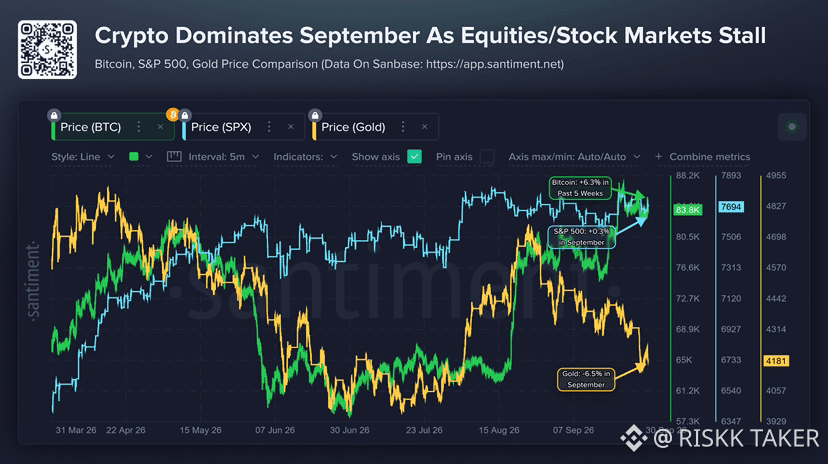
🔥 BITCOIN BEAT STOCKS AND GOLD IN SEPTEMBER
Bitcoin gained roughly 7% in September, while the S&P 500 was nearly flat and gold dropped more than 6%, according to Santiment data.
That’s an interesting shift after a period where Bitcoin was trading more like a risk asset alongside equities.
Gold’s 6%+ decline is particularly notable given how strong the metal had been earlier in the year. Meanwhile, BTC managed to finish the month higher despite elevated Treasury yields and continued macro uncertainty.
The numbers don’t prove Bitcoin has completely decoupled from traditional markets, but they do show that September belonged to BTC.
Bitcoin +7%. Stocks flat. Gold 6%. Q4 starts with crypto back in the spotlight. #uptober
🔥 BITCOIN BEAT STOCKS AND GOLD IN SEPTEMBER
Bitcoin gained roughly 7% in September, while the S&P 500 was nearly flat and gold dropped more than 6%, according to Santiment data.
That’s an interesting shift after a period where Bitcoin was trading more like a risk asset alongside equities.
Gold’s 6%+ decline is particularly notable given how strong the metal had been earlier in the year. Meanwhile, BTC managed to finish the month higher despite elevated Treasury yields and continued macro uncertainty.
The numbers don’t prove Bitcoin has completely decoupled from traditional markets, but they do show that September belonged to BTC.
Bitcoin +7%. Stocks flat. Gold 6%. Q4 starts with crypto back in the spotlight. #uptober
Bitcoin gained roughly 7% in September, while the S&P 500 was nearly flat and gold dropped more than 6%, according to Santiment data.
That’s an interesting shift after a period where Bitcoin was trading more like a risk asset alongside equities.
Gold’s 6%+ decline is particularly notable given how strong the metal had been earlier in the year. Meanwhile, BTC managed to finish the month higher despite elevated Treasury yields and continued macro uncertainty.
The numbers don’t prove Bitcoin has completely decoupled from traditional markets, but they do show that September belonged to BTC.
Bitcoin +7%. Stocks flat. Gold 6%. Q4 starts with crypto back in the spotlight. #uptober
1
63
·
--
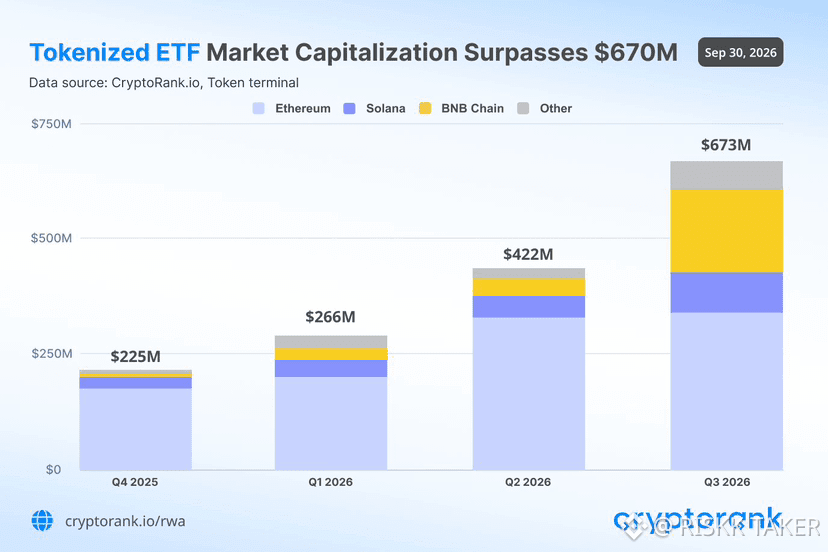
The tokenized ETF market reached $673 million in market capitalization in Q3, marking roughly 59% growth from the previous quarter.
BNB Chain was one of the biggest drivers, with its tokenized ETF market cap growing more than 4x to nearly $160 million during the quarter.
The market is still highly concentrated, though. The top three networks now account for around 84% of the total tokenized ETF market.
That concentration could change as more networks and platforms enter the sector, but the growth shows that tokenized versions of traditional investment products are gaining traction onchain.
$673M today. The bigger question is how large tokenized ETFs can become as traditional assets keep moving onchain. $BNB
{future}(BNBUSDT)
$QNT
{future}(QNTUSDT)
The tokenized ETF market reached $673 million in market capitalization in Q3, marking roughly 59% growth from the previous quarter.
BNB Chain was one of the biggest drivers, with its tokenized ETF market cap growing more than 4x to nearly $160 million during the quarter.
The market is still highly concentrated, though. The top three networks now account for around 84% of the total tokenized ETF market.
That concentration could change as more networks and platforms enter the sector, but the growth shows that tokenized versions of traditional investment products are gaining traction onchain.
$673M today. The bigger question is how large tokenized ETFs can become as traditional assets keep moving onchain. $BNB
$QNT
BNB Chain was one of the biggest drivers, with its tokenized ETF market cap growing more than 4x to nearly $160 million during the quarter.
The market is still highly concentrated, though. The top three networks now account for around 84% of the total tokenized ETF market.
That concentration could change as more networks and platforms enter the sector, but the growth shows that tokenized versions of traditional investment products are gaining traction onchain.
$673M today. The bigger question is how large tokenized ETFs can become as traditional assets keep moving onchain. $BNB
$QNT
1
58
·
--
🔥 ONDO’S TOKENIZED STOCKS JUST HIT A NEW RECORD
Ondo Finance’s tokenized stocks have reached an all-time high of $1.26 billion in TVL, showing that demand for onchain exposure to traditional equities continues to grow.
Ondo Stocks had already crossed $1 billion in TVL earlier this year, and the platform now offers more than 260 tokenized U.S. stocks and ETFs across Ethereum, Solana and BNB Chain.
The timing is notable as tokenization keeps moving deeper into traditional finance. BlackRock recently partnered with Ondo on tokenized model portfolios, while Ondo has also joined DTCC’s Fund/SERV infrastructure.
$1.26B in TVL shows that tokenized equities are moving beyond a niche experiment. The real question is how large this market can become from here. $ONDO
{future}(ONDOUSDT)
🔥 ONDO’S TOKENIZED STOCKS JUST HIT A NEW RECORD
Ondo Finance’s tokenized stocks have reached an all-time high of $1.26 billion in TVL, showing that demand for onchain exposure to traditional equities continues to grow.
Ondo Stocks had already crossed $1 billion in TVL earlier this year, and the platform now offers more than 260 tokenized U.S. stocks and ETFs across Ethereum, Solana and BNB Chain.
The timing is notable as tokenization keeps moving deeper into traditional finance. BlackRock recently partnered with Ondo on tokenized model portfolios, while Ondo has also joined DTCC’s Fund/SERV infrastructure.
$1.26B in TVL shows that tokenized equities are moving beyond a niche experiment. The real question is how large this market can become from here. $ONDO
Ondo Finance’s tokenized stocks have reached an all-time high of $1.26 billion in TVL, showing that demand for onchain exposure to traditional equities continues to grow.
Ondo Stocks had already crossed $1 billion in TVL earlier this year, and the platform now offers more than 260 tokenized U.S. stocks and ETFs across Ethereum, Solana and BNB Chain.
The timing is notable as tokenization keeps moving deeper into traditional finance. BlackRock recently partnered with Ondo on tokenized model portfolios, while Ondo has also joined DTCC’s Fund/SERV infrastructure.
$1.26B in TVL shows that tokenized equities are moving beyond a niche experiment. The real question is how large this market can become from here. $ONDO


1
274
·
--
🔥 AVALANCHE JUST MADE BLOCK VERIFICATION 100X FASTER
Avalanche has upgraded its block verification system with Helicon, pushing verification speeds up to 100x faster than previous peak performance.
The upgrade targets one of the biggest challenges for high throughput blockchains, verifying blocks quickly without sacrificing the security of the network.
Faster verification means Avalanche can process and confirm network activity more efficiently, which becomes increasingly important as transaction demand and onchain applications scale.
This isn’t simply about a faster headline number. Improvements at the verification layer can directly affect how much activity a blockchain can handle while keeping confirmation times low.
Avalanche is pushing the infrastructure side of the network forward and Helicon could make a major difference as onchain activity scales.
$AVAX
{future}(AVAXUSDT)
$ONDO
{future}(ONDOUSDT)
🔥 AVALANCHE JUST MADE BLOCK VERIFICATION 100X FASTER
Avalanche has upgraded its block verification system with Helicon, pushing verification speeds up to 100x faster than previous peak performance.
The upgrade targets one of the biggest challenges for high throughput blockchains, verifying blocks quickly without sacrificing the security of the network.
Faster verification means Avalanche can process and confirm network activity more efficiently, which becomes increasingly important as transaction demand and onchain applications scale.
This isn’t simply about a faster headline number. Improvements at the verification layer can directly affect how much activity a blockchain can handle while keeping confirmation times low.
Avalanche is pushing the infrastructure side of the network forward and Helicon could make a major difference as onchain activity scales.
$AVAX
$ONDO
Avalanche has upgraded its block verification system with Helicon, pushing verification speeds up to 100x faster than previous peak performance.
The upgrade targets one of the biggest challenges for high throughput blockchains, verifying blocks quickly without sacrificing the security of the network.
Faster verification means Avalanche can process and confirm network activity more efficiently, which becomes increasingly important as transaction demand and onchain applications scale.
This isn’t simply about a faster headline number. Improvements at the verification layer can directly affect how much activity a blockchain can handle while keeping confirmation times low.
Avalanche is pushing the infrastructure side of the network forward and Helicon could make a major difference as onchain activity scales.
$AVAX
$ONDO


1
88
·
--
Bitwise’s NEAR ETF ($NRR) is officially trading today on NYSE Arca, giving U.S. investors direct spot exposure to NEAR through a traditional exchange traded product.
What makes this launch more interesting is the staking component. Bitwise plans to stake the fund’s NEAR holdings in house, with staking rewards accruing to shareholders through the fund’s NAV. The ETF carries a 0.75% management fee.
This adds NEAR to the growing list of crypto assets gaining access to U.S. ETF infrastructure beyond Bitcoin and Ethereum.
Spot exposure + staking in one product. Now the market gets to see how much demand U.S. investors have for NEAR.
$NEAR
{future}(NEARUSDT)
$AVAX
Bitwise’s NEAR ETF ($NRR) is officially trading today on NYSE Arca, giving U.S. investors direct spot exposure to NEAR through a traditional exchange traded product.
What makes this launch more interesting is the staking component. Bitwise plans to stake the fund’s NEAR holdings in house, with staking rewards accruing to shareholders through the fund’s NAV. The ETF carries a 0.75% management fee.
This adds NEAR to the growing list of crypto assets gaining access to U.S. ETF infrastructure beyond Bitcoin and Ethereum.
Spot exposure + staking in one product. Now the market gets to see how much demand U.S. investors have for NEAR.
$NEAR
$AVAX
What makes this launch more interesting is the staking component. Bitwise plans to stake the fund’s NEAR holdings in house, with staking rewards accruing to shareholders through the fund’s NAV. The ETF carries a 0.75% management fee.
This adds NEAR to the growing list of crypto assets gaining access to U.S. ETF infrastructure beyond Bitcoin and Ethereum.
Spot exposure + staking in one product. Now the market gets to see how much demand U.S. investors have for NEAR.
$NEAR
$AVAX

1
60
·
--
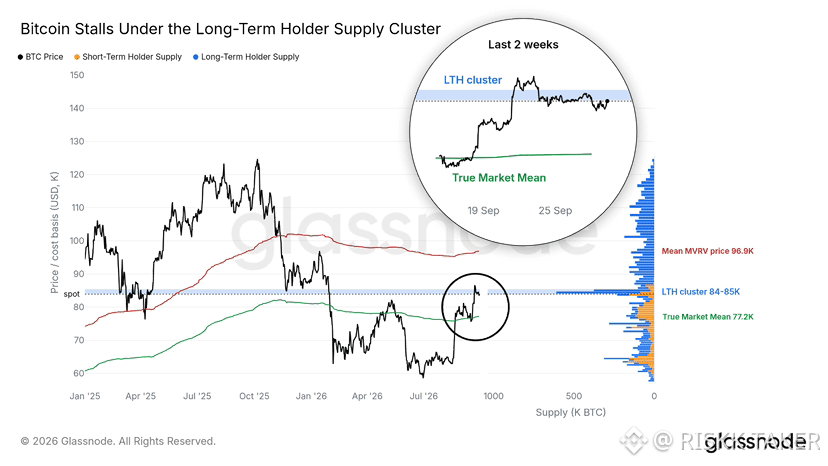
BTC has stalled around the $84K–$85K region, where the largest concentration of long term holder supply is sitting. This is the heaviest supply cluster on the current chart.
That makes this zone critical. Bitcoin needs to break through and hold above it for the rally to gain further momentum.
For now, buyers are facing a wall of previously accumulated BTC around the same levels.
$84K–$85K is the battleground. Break it and hold it, or the rally could remain trapped below resistance.
BTC has stalled around the $84K–$85K region, where the largest concentration of long term holder supply is sitting. This is the heaviest supply cluster on the current chart.
That makes this zone critical. Bitcoin needs to break through and hold above it for the rally to gain further momentum.
For now, buyers are facing a wall of previously accumulated BTC around the same levels.
$84K–$85K is the battleground. Break it and hold it, or the rally could remain trapped below resistance.
That makes this zone critical. Bitcoin needs to break through and hold above it for the rally to gain further momentum.
For now, buyers are facing a wall of previously accumulated BTC around the same levels.
$84K–$85K is the battleground. Break it and hold it, or the rally could remain trapped below resistance.
1
44
·
--
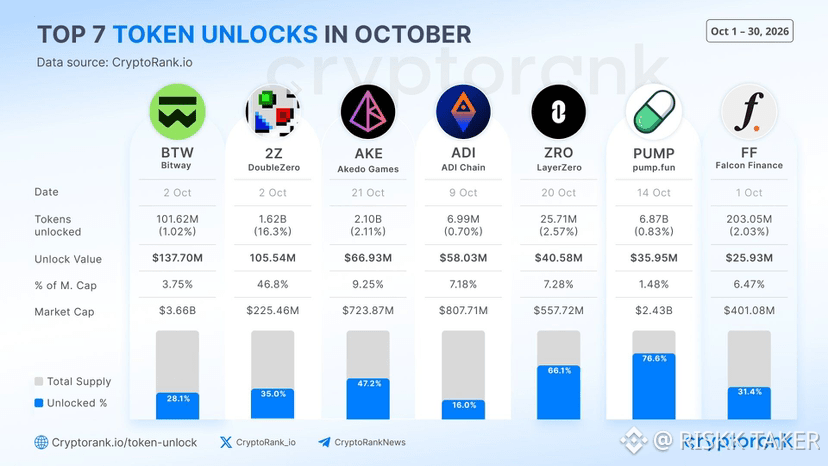
The top seven token unlocks scheduled for October are worth roughly $470.66M, with $BTW leading at $137.7M.
Other major unlocks include $2Z at $105.5M, $AKE at $66.9M and $ADI at $58M.
The numbers matter because newly unlocked tokens can increase circulating supply and create additional selling pressure if recipients decide to take profits.
But an unlock doesn’t automatically mean a dump. The actual impact depends on who receives the tokens, how much enters the market and whether demand can absorb the new supply.
The top seven token unlocks scheduled for October are worth roughly $470.66M, with $BTW leading at $137.7M.
Other major unlocks include $2Z at $105.5M, $AKE at $66.9M and $ADI at $58M.
The numbers matter because newly unlocked tokens can increase circulating supply and create additional selling pressure if recipients decide to take profits.
But an unlock doesn’t automatically mean a dump. The actual impact depends on who receives the tokens, how much enters the market and whether demand can absorb the new supply.
Other major unlocks include $2Z at $105.5M, $AKE at $66.9M and $ADI at $58M.
The numbers matter because newly unlocked tokens can increase circulating supply and create additional selling pressure if recipients decide to take profits.
But an unlock doesn’t automatically mean a dump. The actual impact depends on who receives the tokens, how much enters the market and whether demand can absorb the new supply.
1
67
Log in to explore more content
Join global crypto users on Binance Square
⚡️ Get latest and useful information about crypto.
💬 Trusted by the world’s largest crypto exchange.
👍 Discover real insights from verified creators.
Email / Phone number
Trending Topics
SECHaltsCryptoETFReviewsAmidFundingLapse
259 views
41 Discussing
Everyone Was Waiting for the Next Crypto ETF… Then Washington Hit PAUSE 👀
This one caught my attention this morning.
The SEC has paused reviews of new crypto ETFs during the U.S. funding lapse.
Important part: this is not a rejection.
Existing ETFs keep trading.
New applications are basically stuck waiting for the SEC machinery to restart.
And reportedly 90+ applications were sitting in the pipeline as October began.
So I’m not watching this as bearish news.
I’m watching what happens when that pipeline starts moving again. 👀
Sometimes the bigger move comes after the pause, not during it.
—Master CX
$BTC $ETH
#SECHaltsCryptoETFReviewsAmidFundingLapse
Master CX
·2 Likes
·31 views
ZcashETFPostsFirstWeeklyOutflow$93.6M
52,943 views
157 Discussing
GreekPoliceBustCryptoScamRingArrest17
152,084 views
1,075 Discussing