
Web3Whale
Research-driven Web3 creator sharing blockchain, AI, and crypto insights. Turning complex ideas into simple, valuable content🚀
4 Following
0 Followers
22 Liked
Posts
All
Quotes

CryptoWithRabia
·
--
$ETH Update: Stuck Below Supertrend, Bulls Defending the $2,034 Wick 🔷
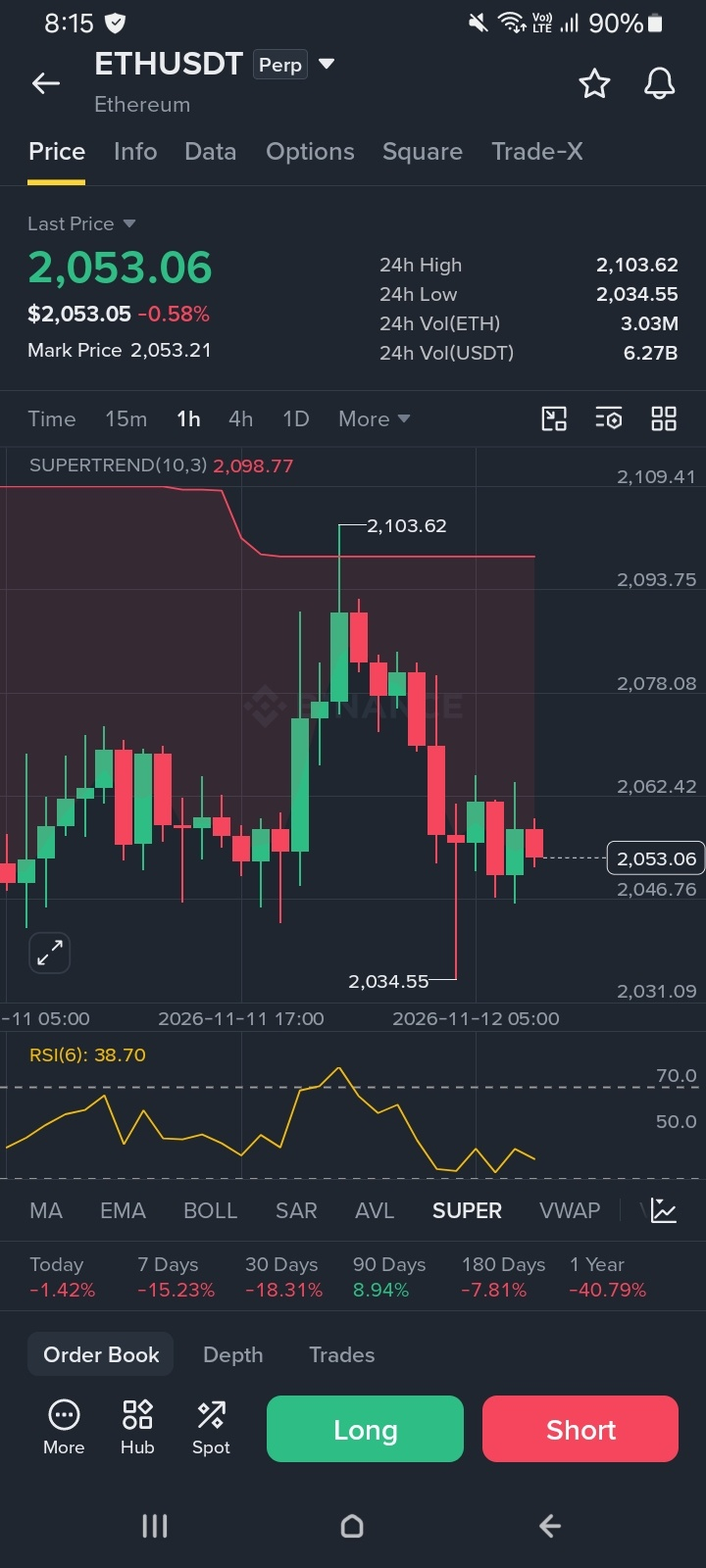
Ethereum (ETHUSDT Perp) is trading around $2,053.06, down -0.58% in the last 24 hours. The 24h range is $2,034.55 to $2,103.62, with strong volume of about $6.27B USDT.
Short-term view (1h chart):
• Price rejected from $2,103.62, dipped to $2,034.55, and is now consolidating around $2,050
• Supertrend is bearish at $2,098.77, acting as strong overhead resistance
• RSI(6) is at 38.7, leaning bearish but not oversold
• Resistance: $2,062.42, then $2,078.08 and $2,098.77
• Support: $2,046.76, then $2,034.55 and $2,031.09
Bigger picture:
• Today: -1.42%
• 7 Days: -15.23%
• 30 Days: -18.31%
• 90 Days: +8.94%
• 180 Days: -7.81%
• 1 Year: -40.79%
ETH is still under heavy pressure on the weekly and monthly view, with a steep 7-day decline. The long lower wick near $2,034 shows buyers are defending this zone, but sellers keep control until price reclaims the Supertrend line. The $2,000 psychological level is the next major area to watch if support breaks.
📊 Trade Plan (Example Only):
Long (support bounce):
• Entry: $2,040 - $2,055 (confirm with a green 1h candle)
• Stop Loss: $2,022
• TP1: $2,078
• TP2: $2,099
• Risk-Reward: approx. 1:2
Short (breakdown play):
• Entry: Below $2,030 with a 1h candle close
• Stop Loss: $2,052
• TP1: $2,005
• TP2: $1,980
Invalidation: For longs, a 1h close below $2,031 cancels the bounce setup. For shorts, a strong 1h close above $2,078 invalidates the breakdown.
Wait for candle closes, keep position size small, and use low leverage on futures.
Will ETH hold $2,034 or slip toward $2,000? Share your view below! 👇
Not financial advice. Always DYOR. Futures trading carries high risk.
#ETH #cryptotrading #TradingSignals #Layer1 #BinanceSquare
$BTC
$SOL
CryptoWithRabia
·
--
$ONE Update: Heavy Sell-Off, Deeply Oversold, Bulls Need Proof Before Any Bounce 🔻
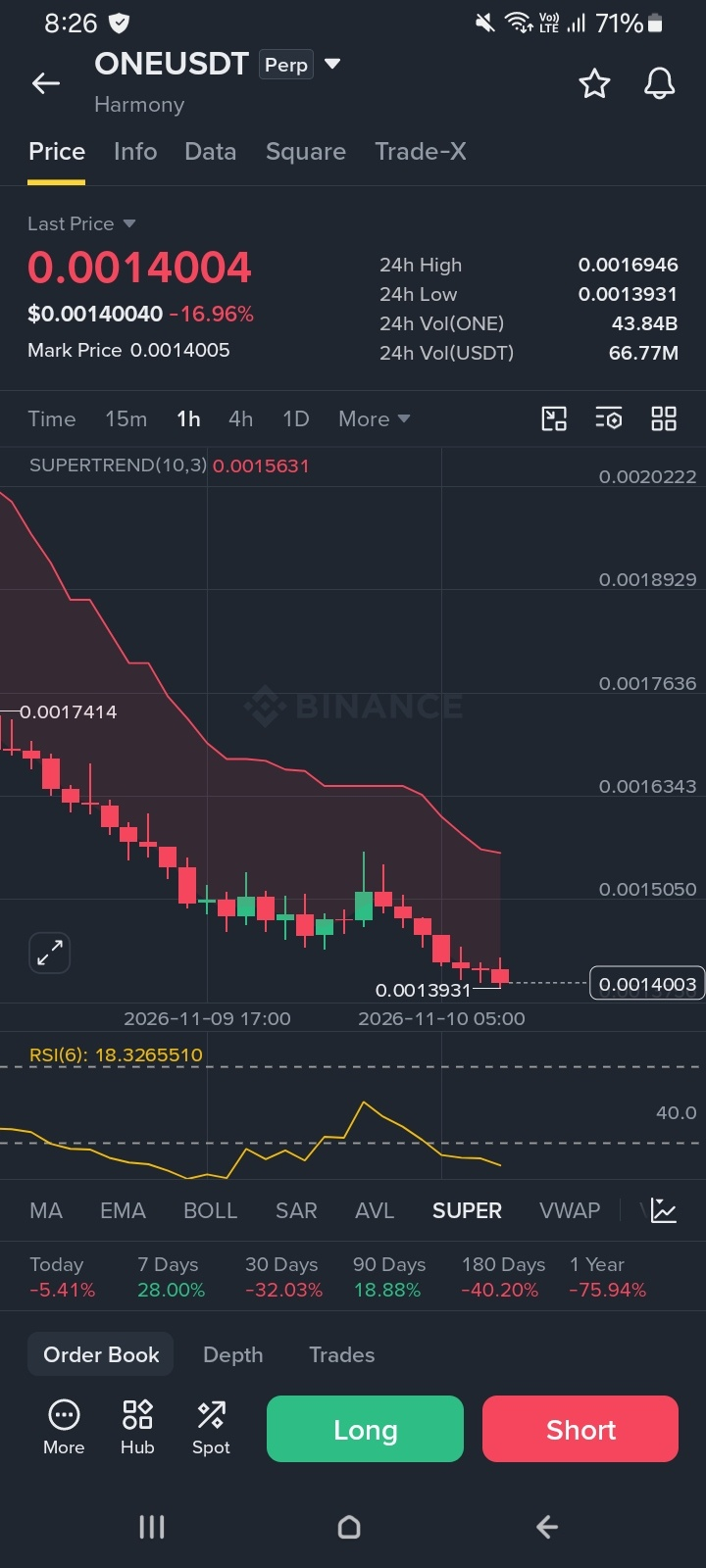
Harmony (ONEUSDT Perp) is trading around $0.0014004, down -16.96% in the last 24 hours. The 24h range is $0.0013931 to $0.0016946, with volume of about $66.77M USDT.
Short-term view (1h chart):
• Price is in a steady downtrend with lower highs and lower lows, now sitting right on the $0.0013931 low
• Supertrend is bearish at $0.0015631, acting as strong overhead resistance
• RSI(6) is at 18.3, deeply oversold, so a relief bounce is possible but not confirmed
• Resistance: $0.0015050, then $0.0015631 and $0.0016343
• Support: $0.0013931, then a fresh low if it breaks
Bigger picture:
• Today: -5.41%
• 7 Days: +28.00%
• 30 Days: -32.03%
• 90 Days: +18.88%
• 180 Days: -40.20%
• 1 Year: -75.94%
ONE pumped earlier this week, but the last day has erased much of that gain. The trend is clearly bearish and there is no reversal candle yet. Oversold RSI shows selling is stretched, but price needs to hold above the low and reclaim the Supertrend line before the trend can shift.
📊 Trade Plan (Example Only):
Long (oversold bounce, aggressive):
• Entry: $0.001395 - $0.001420 (only after a green 1h candle confirms)
• Stop Loss: $0.001370
• TP1: $0.001505
• TP2: $0.001563
• Risk-Reward: approx. 1:2
Short (continuation play):
• Entry: Below $0.001390 with a 1h candle close
• Stop Loss: $0.001440
• TP1: $0.001340
• TP2: $0.001290
Invalidation: For longs, a 1h close below $0.001390 cancels the bounce. For shorts, a strong 1h close above $0.001505 invalidates the bearish view.
After a 17% daily drop, volatility is extreme. Oversold does not mean "buy now," so wait for confirmation, keep position size small, and use low leverage on futures.
Is ONE ready for a relief bounce or is more downside coming? Share your view below! 👇
Not financial advice. Always DYOR. Futures trading carries high risk.
#one #cryptotrading #TradingSignals #TechnicalAnalysis #altcoins
$INIT
$SOXLB
CryptoWithRabia
·
--
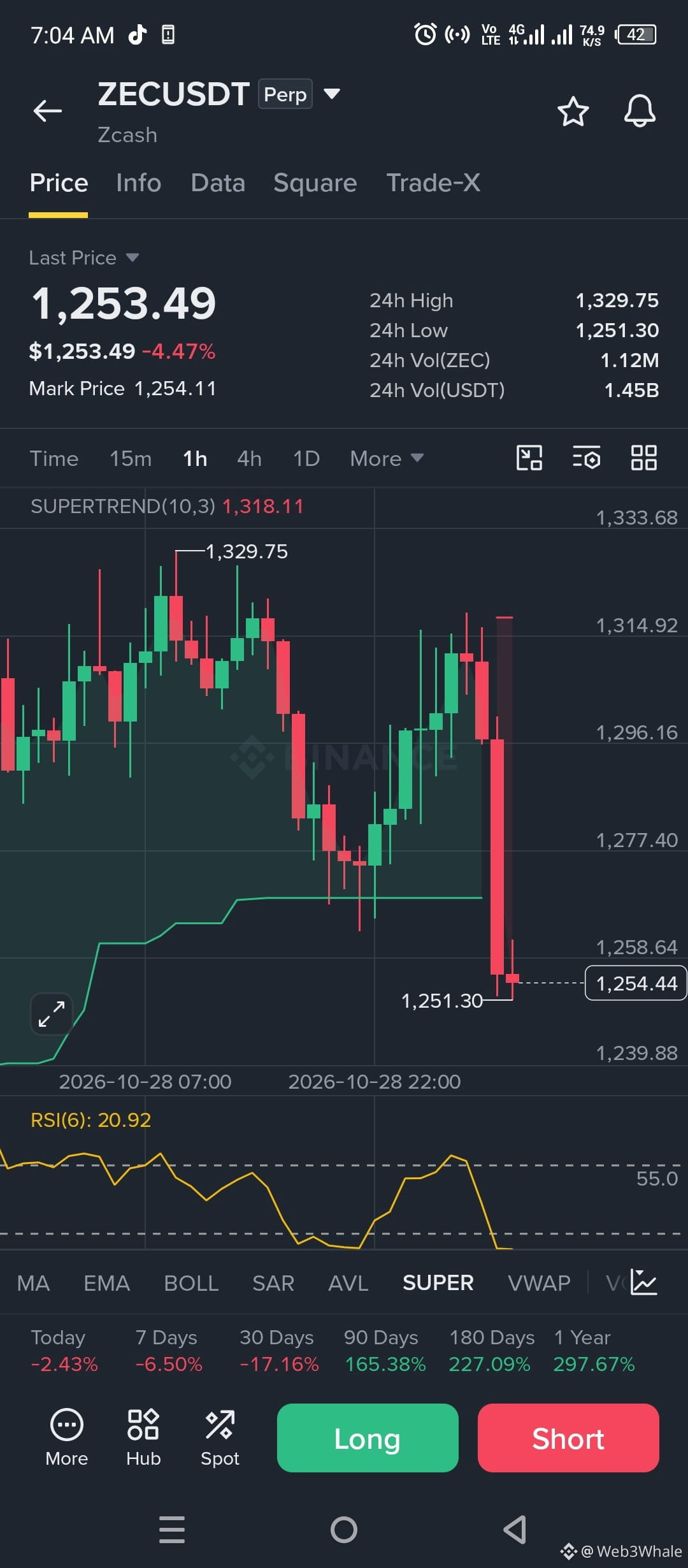
$ZEC Update: Sharp Wick Bought Up, Bulls Fighting to Reclaim Supertrend 🛡️
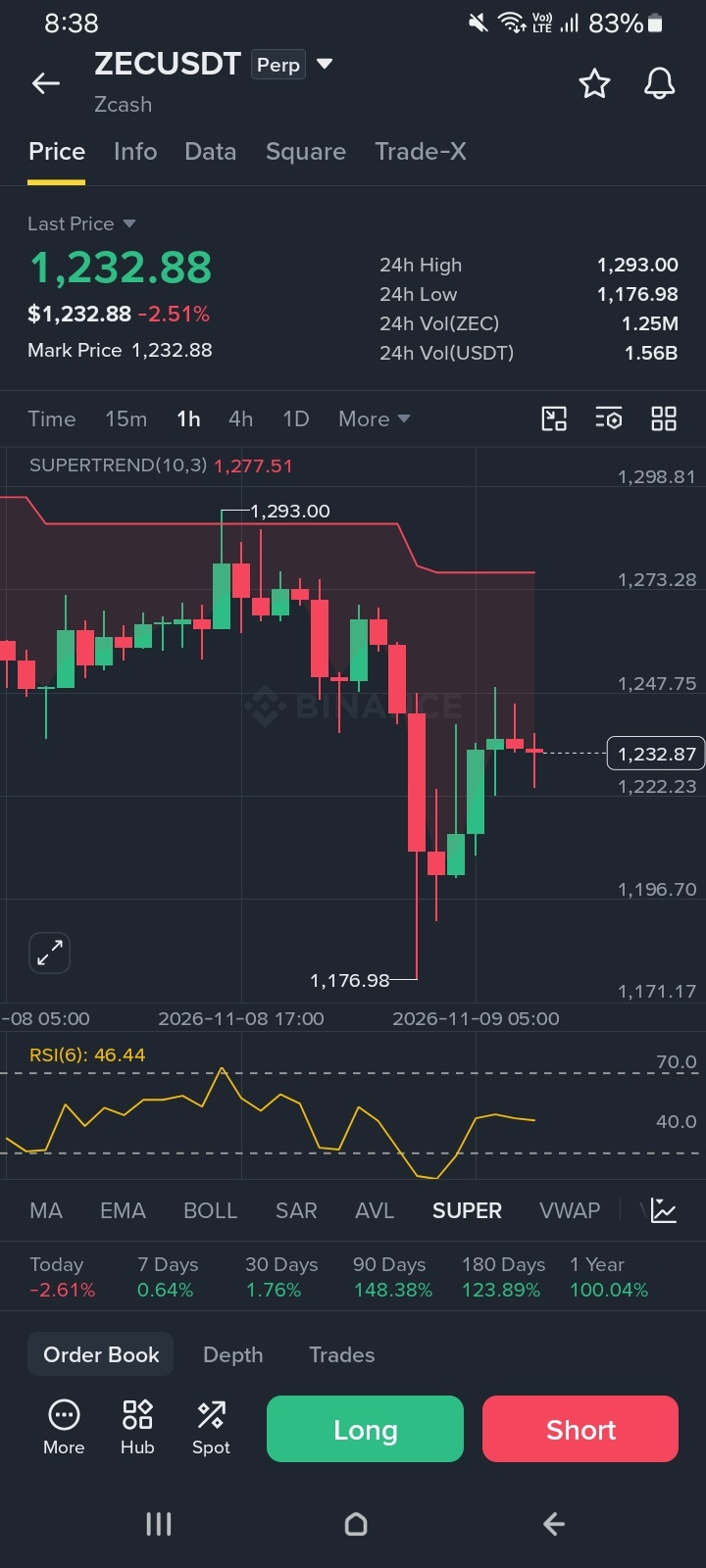
Zcash (ZECUSDT Perp) is trading around $1,232.88, down -2.51% in the last 24 hours. The 24h range is $1,176.98 to $1,293.00, with strong volume of about $1.56B USDT.
Short-term view (1h chart):
• Price rejected from $1,293 and dumped to $1,176.98, then recovered with a long lower wick
• Supertrend is bearish at $1,277.51, acting as overhead resistance
• RSI(6) is at 46.4, neutral and recovering from the oversold side
• Resistance: $1,247.75, then $1,273.28 and $1,277.51
• Support: $1,222.23, then $1,196.70 and $1,176.98
Bigger picture:
• Today: -2.61%
• 7 Days: +0.64%
• 30 Days: +1.76%
• 90 Days: +148.38%
• 180 Days: +123.89%
• 1 Year: +100.04%
ZEC remains one of the strongest long-term performers, with triple-digit gains over 90 days, 180 days and 1 year. Short-term, the sharp dump was absorbed quickly, which shows dip buyers are active. Sellers still hold the short-term trend until the Supertrend line is reclaimed, so confirmation matters.
📊 Trade Plan (Example Only):
Long (support bounce):
• Entry: $1,222 - $1,235 (confirm with a green 1h candle)
• Stop Loss: $1,188
• TP1: $1,247
• TP2: $1,273
• TP3: $1,293
• Risk-Reward: approx. 1:2 or better
Long (breakout play):
• Entry: $1,222 - $1,235 (confirm with a green 1h candle)
• Stop Loss: $1,188
• TP1: $1,247
• TP2: $1,273
• TP3: $1,293
• Risk-Reward: approx. 1:2 or better
Long (breakout play):
• Entry: Above $1,280 with a 1h candle close (Supertrend flip)
• Stop Loss: $1,250
• TP1: $1,293
• TP2: $1,320
Short (breakdown play):
• Entry: Below $1,195 with a 1h candle close
• Stop Loss: $1,225
• TP1: $1,176
• TP2: $1,150
Invalidation: For the bounce, a 1h close below $1,196 cancels the setup. For the breakout, a close back below $1,247 means the flip failed. For shorts, a strong close above $1,273 invalidates the bearish view.
#zec #cryptotrading #BinanceSquare #TradingSignals
$GNS
$HOT
CryptoWithRabia
·
--
🎉 Red Packet Giveaway Alert! 🧧
Hello Binance Family! 👋 I am looking to grow my community here on Binance Square and get closer to hitting my 1K followers milestone.
Your support means the world to me! To share a little excitement, I've dropped a Red Packet below—grab yours quickly before it runs out! 🎁👇
If you love crypto insights, trading tips, and helpful updates, make sure to hit that Follow button so we can grow and learn together! 🚀
#redpacket #BinanceSquare #GIVEAWAY #CryptoCommunity
$INJ
$ZRO
$BAT

CryptoWithRabia
·
--
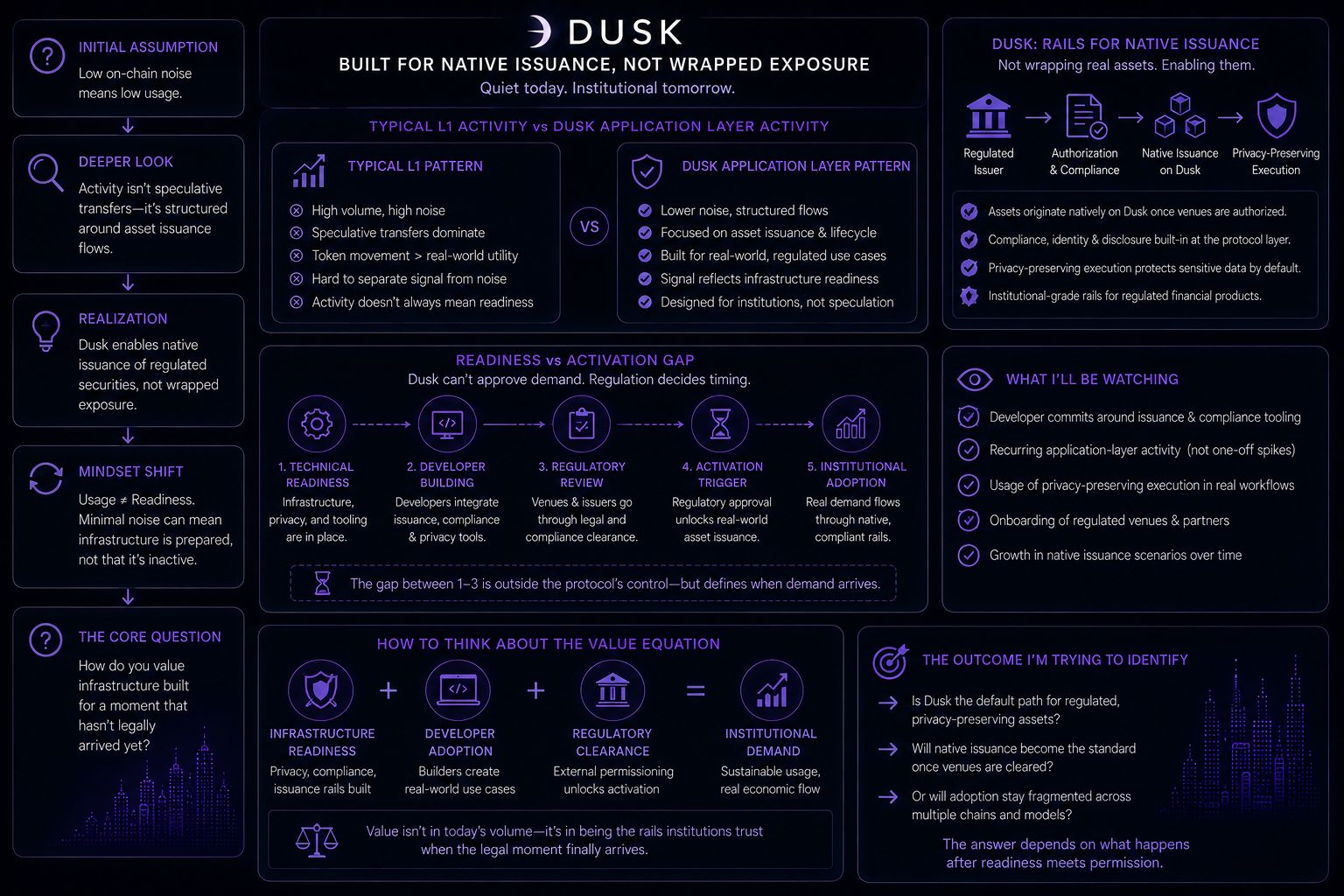
I noticed something odd while comparing Dusk's application layer activity against typical L1 patterns I track. At first I assumed the low noise on-chain simply meant low usage, the same conclusion I'd draw for most quiet chains. But the transaction shapes didn't match that story.
Digging further, I found that a chunk of activity wasn't speculative transfer volume at all, it was structured around asset issuance flows rather than casual token movement. That's when the idea of native issuance for regulated securities stopped feeling abstract to me. Dusk isn't building for wrapped exposure to real assets, it's building rails for those assets to originate natively once venues secure proper authorization.
This reframed my thinking. I'd been treating "usage" and "readiness" as the same metric, but they're not. A chain can show minimal transactional noise while still being structurally prepared for institutional workflows that simply haven't been switched on yet. Confusing dormant infrastructure with dead infrastructure is a mistake I almost made.
What I can't resolve yet is timing. Regulatory clearance isn't something the protocol controls, so usability and privacy tooling can be fully mature while real demand still waits on external permissioning. That gap between technical readiness and institutional activation is hard to price into any analysis.
Going forward I'm watching developer commits tied to issuance tooling, recurring application-layer activity rather than one-off spikes, and whether privacy-preserving execution actually gets exercised by real workflows instead of sitting unused.
I keep coming back to one question: how do you value infrastructure built for a moment that hasn't legally arrived yet?
@Dusk #dusk $DUSK
$BMT
$ONG
CryptoWithRabia
·
--
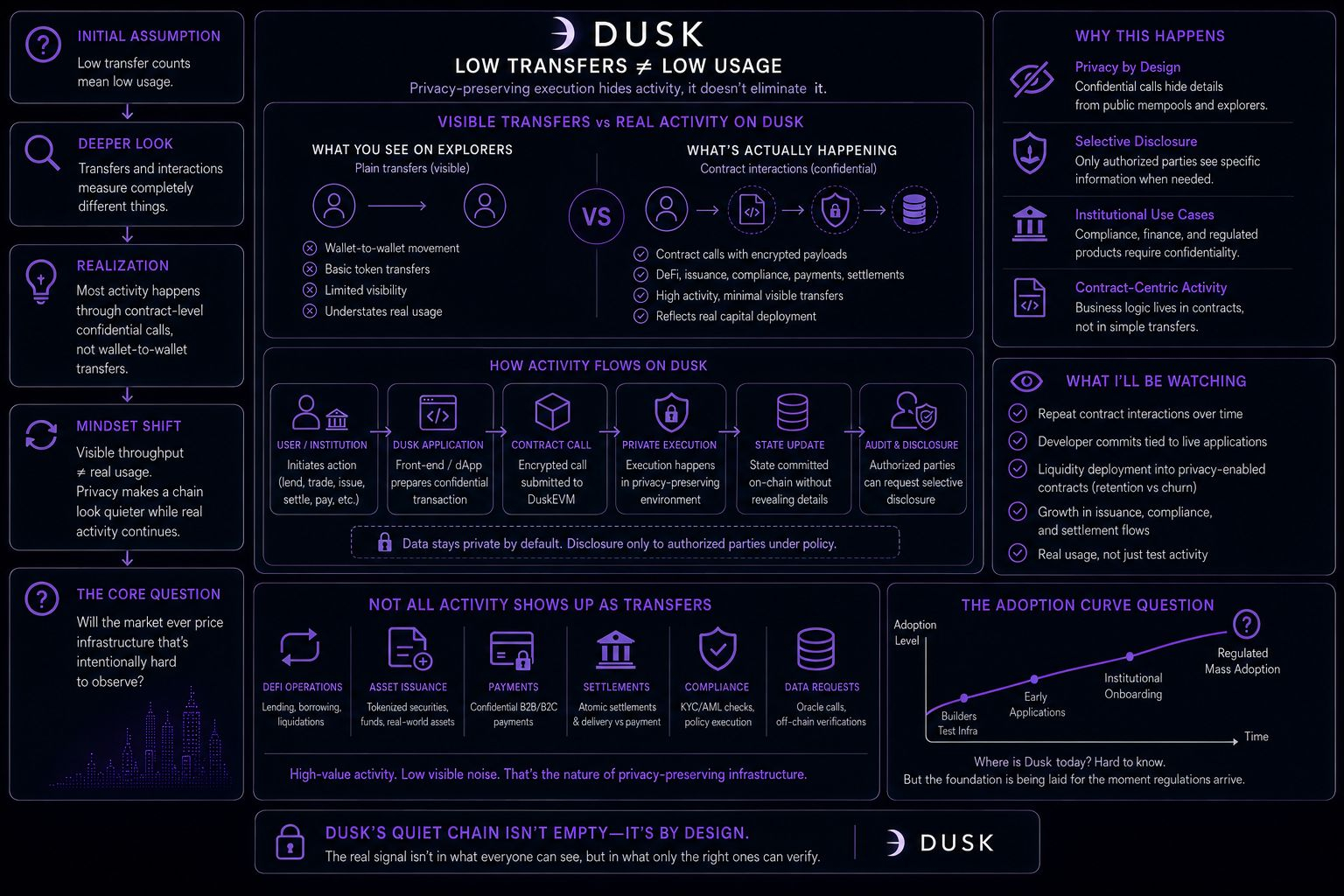
I noticed a strange pattern while checking DUSK transfer volume against actual application interactions last week. At first I assumed low transfer counts meant low usage, the kind of surface-level read most people default to when scanning explorers.
Digging further, I realized transfers and interactions were measuring completely different things. Many actions on Dusk route through contract-level confidential calls rather than plain wallet-to-wallet movement, so raw transfer counts undercount what the network is actually doing.
That distinction reframed how I think about activity here. Visible throughput and real usage aren't the same metric, and treating them as interchangeable hides the second-order effect: privacy-preserving execution can make a chain look quieter than it is while genuine capital deployment continues underneath.
What I still can't resolve is how much of that hidden activity reflects organic demand versus early builders testing infrastructure. Compliance-ready privacy is a hard sell until institutions actually need it operationally, and I don't yet know where Dusk sits on that adoption curve.
Going forward I'm watching repeat contract interactions rather than headline transfer counts, developer commits tied to live applications, and whether liquidity deployed into privacy-enabled contracts stays or rotates out quickly. Retention over time will tell me more than any single week's numbers.
I'm left wondering whether the market will ever price infrastructure that's intentionally hard to observe, or whether that opacity keeps getting mistaken for inactivity.
@Dusk #dusk $DUSK
$PROM
$PORTAL
CryptoWithRabia
·
--
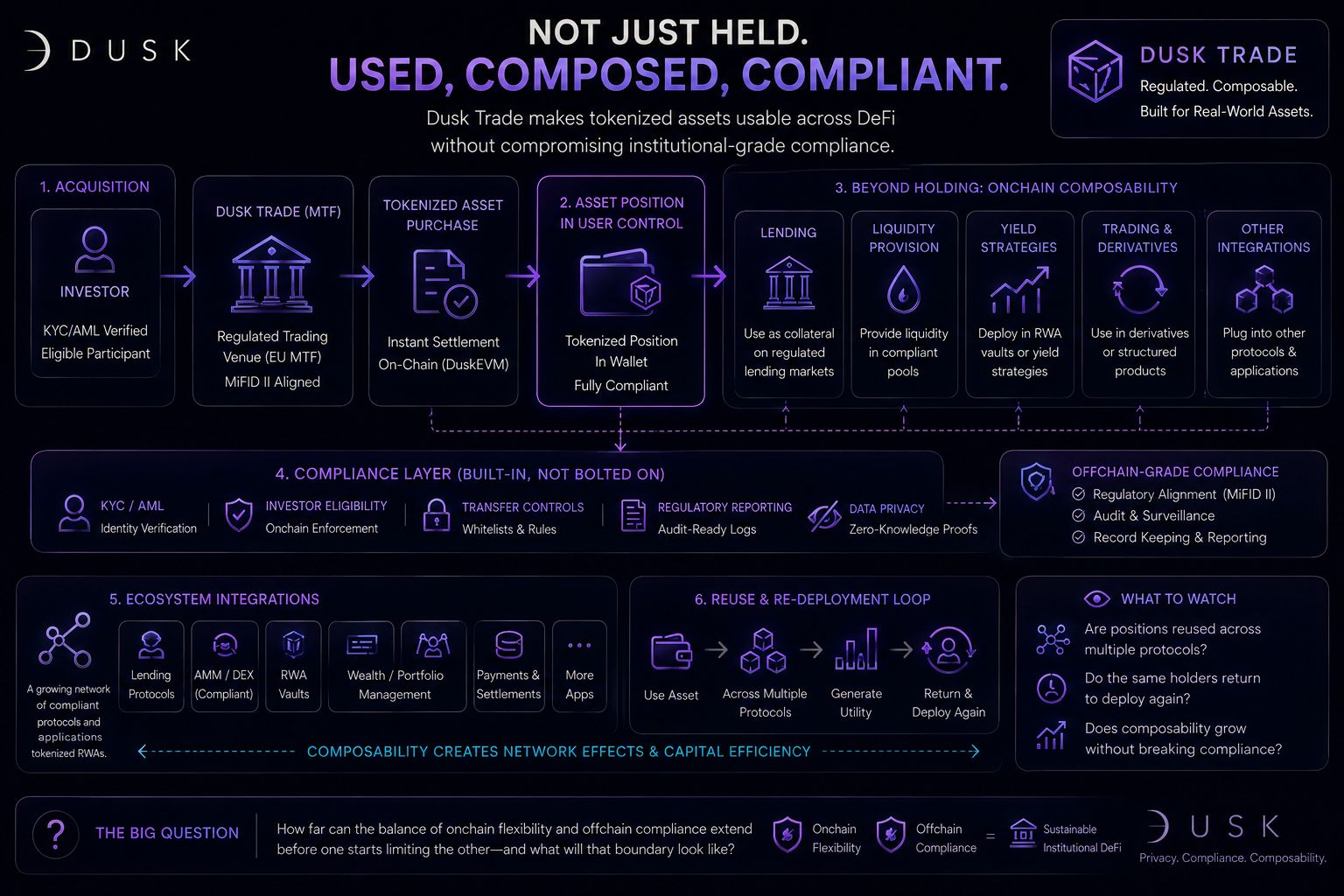
I was looking at how tokenized asset positions on Dusk Trade were being used after acquisition, and I assumed they'd mostly just sit static in wallets the way traditional fund shares typically do once purchased.
That assumption broke down when I saw some of these positions moving into other on-chain interactions shortly after settlement. Digging deeper, I found this ties back to how Dusk Trade blends DeFi-style composability with traditional financial assets, letting a tokenized position function as something usable on-chain rather than a static holding parked in an account.
That reframed something I'd been collapsing into one idea. I used to treat compliance and composability as opposing forces, assuming more flexibility naturally meant less regulatory alignment. But what I was seeing was onchain flexibility paired with offchain-grade compliance running in parallel, not traded off against each other. Missing that nuance would make me misjudge how these assets actually behave once they enter someone's wallet.
What's still unclear to me is how much composability these regulated assets can realistically support before compliance requirements start constraining what integrations are even possible. I don't know yet where that practical ceiling sits, or whether it varies significantly by asset type.
Going forward I want to track whether tokenized positions get reused across multiple applications or protocols rather than staying isolated after purchase, since that reuse pattern would say more about genuine composability than settlement volume alone. I'll also watch whether the same holders return to deploy these assets again, since repeat engagement would separate real utility from a single experimental transaction.
I'm left wondering how far this blend of onchain flexibility and offchain compliance can actually extend before one side starts limiting the other, and what that boundary ends up looking like in practice.
@Dusk #dusk $DUSK
$GPS
$TUT
CryptoWithRabia
·
--
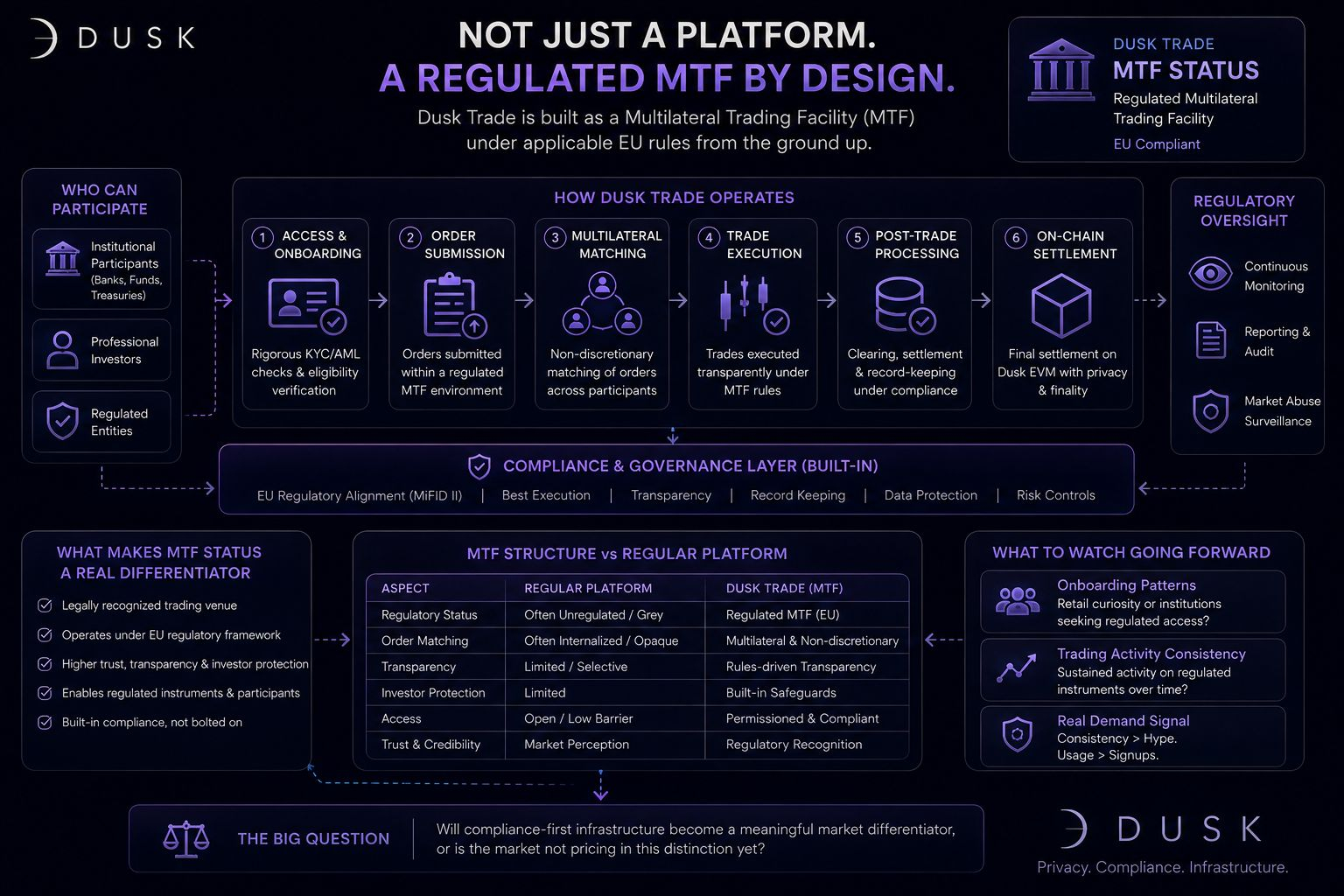
While checking documentation tied to Dusk Trade, I noticed language referencing MTF status, which I initially skimmed past assuming it was just standard marketing terminology every platform slaps on to sound credible.
Looking closer, I realized this wasn't a loose claim at all. Dusk Trade is structured to operate as a regulated multilateral trading facility under applicable EU rules, meaning the compliance framework isn't sitting on top of the platform as an afterthought, it's part of how the infrastructure itself is built to function from the start.
That distinction changed how I was framing things in my head. I had been treating regulatory compliance and platform legitimacy as roughly interchangeable ideas, but they aren't. Plenty of platforms claim legitimacy through branding or partnerships without ever holding the specific regulatory status that actually permits certain activities. Being structured as an MTF is a narrower, more concrete claim, and conflating the two obscures what's actually being built versus what's simply being implied.
What I still can't fully assess is how this regulatory structure interacts with actual user experience and onboarding friction. Regulated platforms typically trade some accessibility for compliance requirements, and I don't yet know how that balance plays out here in practice, or whether it changes who realistically ends up using the platform early on.
Going forward I want to watch onboarding patterns closely, specifically whether user growth comes from retail curiosity or from entities that actually require regulated access points to participate. I'll also track whether trading activity on regulated instruments stays steady over time, since consistency there would say more about genuine demand than initial signups ever could.
I'm left sitting with a question about whether compliance-first infrastructure ends up being a meaningful differentiator in practice, or whether the market simply hasn't priced in that distinction yet.
@Dusk #dusk $DUSK
CryptoWithRabia
·
--
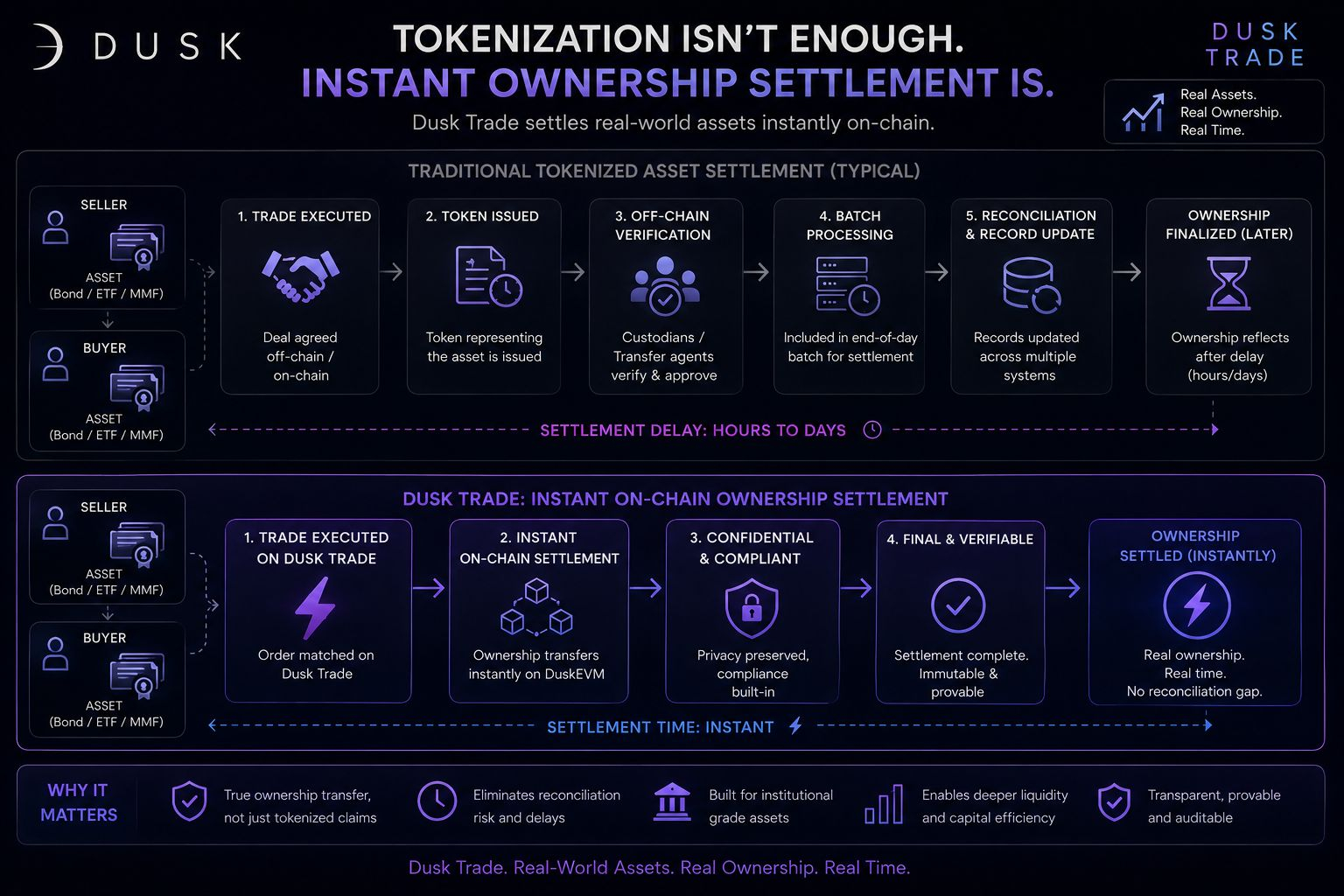
At first I thought the settlement times I was seeing on a small batch of tokenized asset transactions were just cached or delayed data, since nothing should clear that fast for instruments resembling bonds and fund shares. I noted it and moved on.
Revisiting it later, I traced the activity to Dusk Trade, the application layer built specifically for tokenized financial products like MMFs, ETFs, and other RWAs. What stood out wasn't the tokenization itself, plenty of chains do that, but how ownership settled instantly rather than going through a delayed reconciliation step behind the scenes.
That detail forced me to separate two things I'd been lumping together carelessly, tokenization and true ownership transfer. Tokenizing an asset just wraps a claim in digital form, but actual ownership settling instantly on-chain is a different mechanical outcome entirely. Most tokenized asset platforms still rely on off-chain processes catching up afterward, and that gap is usually where friction and risk live.
What I'm not sure about yet is whether instant settlement actually matters to the type of institutional users these assets target. Traditional finance is built around batch processing and end-of-day reconciliation, so I don't know if faster settlement is genuinely valued or if it just sits unused as a capability nobody asked for.
Going forward I want to watch whether trading volume on these tokenized instruments grows through repeat participants or one-off allocations, since recurring engagement would tell me more about real fit than a single large deposit. I'll also track whether liquidity for these RWA products stays consistent day to day, since thin, sporadic liquidity would suggest curiosity rather than actual usage.
I'm left wondering whether instant settlement becomes a meaningful advantage for tokenized assets or simply a technical improvement that traditional finance isn't structured to fully use yet.
@Dusk #dusk $DUSK
$HEMI
$COW
CryptoWithRabia
·
--
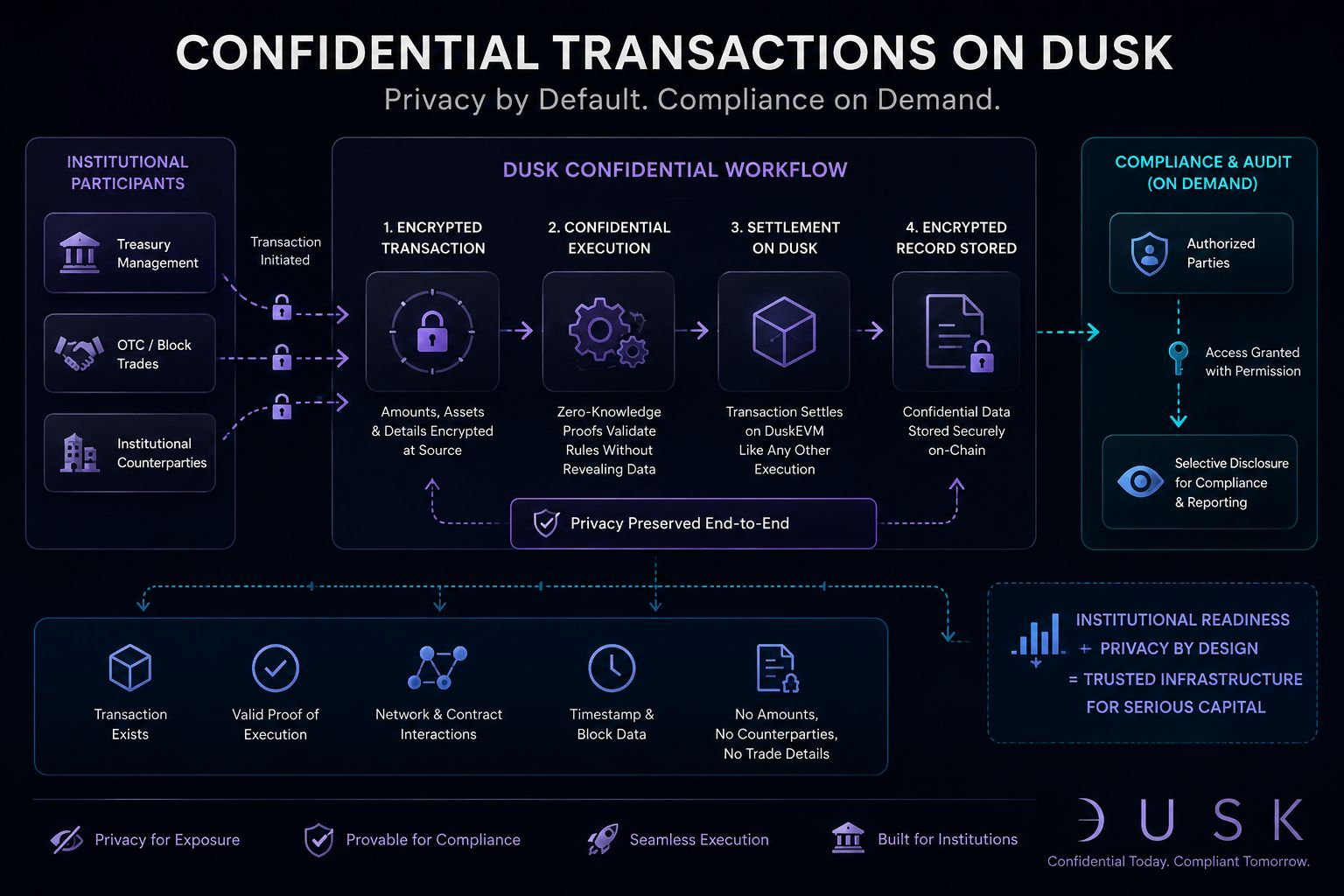
I was looking at wallet activity patterns on Dusk and noticed a cluster of addresses executing large, evenly spaced transactions with no visible amounts attached anywhere in the public data. I assumed I was just missing a decoding step, some export error on my side.
After digging further, I realized the amounts weren't missing, they were confidential by design. These were institutional-style transactions running through workflows that keep trade details hidden from public view while still settling on the same execution layer as everything else. Nothing about the flow felt bolted on or separate from normal chain activity.
That distinction is what actually shifted my thinking. I used to assume privacy and institutional readiness were basically the same conversation, but they solve different problems. Privacy hides exposure. Institutional readiness means that hidden activity can still be reviewed when required, without depending on someone manually stepping outside the system to prove it. Missing that difference means misreading why serious capital would even engage with a chain like this.
What I genuinely don't know yet is how deep this behavior goes. Confidential workflows sound useful for treasury management or OTC-style settlement, but institutions rarely commit visible signals about their internal processes, so gauging real demand from the outside is difficult. I can't tell if what I'm seeing is early adoption or just isolated testing.
Going forward I want to track whether these confidential transaction patterns recur weekly or monthly rather than appearing once, since consistency would say more than any single instance. I'll also watch whether more distinct counterparties start using this pathway over time, since that would hint at organic demand rather than a single entity experimenting alone.
I'm left wondering how much confidential activity is already happening across chains that we simply can't see, and whether Dusk's approach becomes the standard for making that activity provable rather than invisible.
@Dusk #dusk $DUSK
Log in to explore more content