

max9999sm
119 Posts

max9999sm
Report
Block User
5 Following
19 Followers
57 Liked
Posts
All
Quotes
·
--
Article
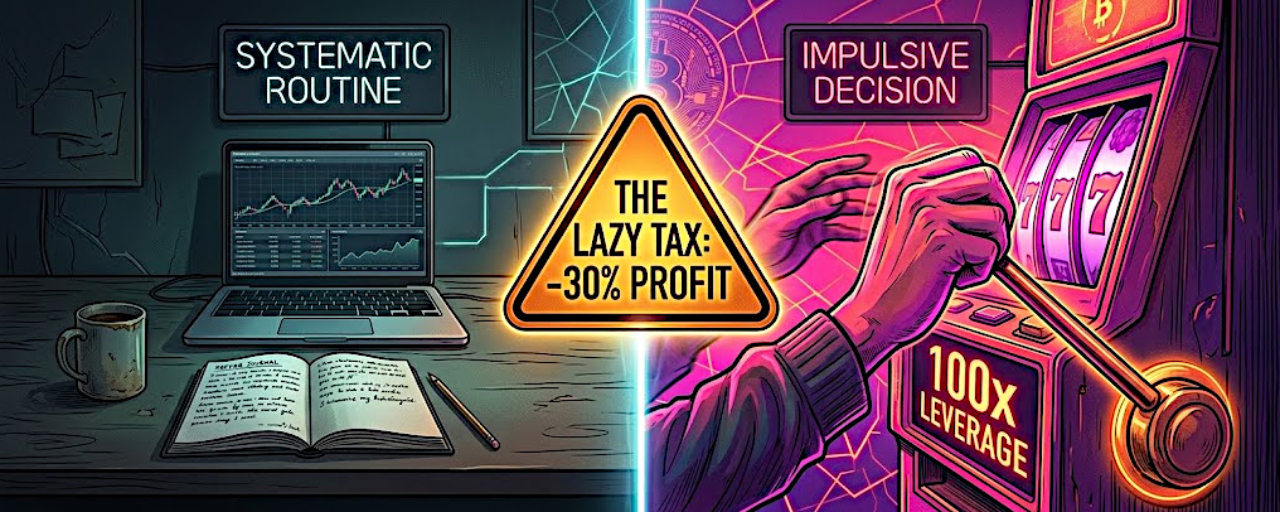
Declining Profits and the “Tax on Laziness”: How Avoiding Routine Turns a Trader into a Gambler?Every trader goes through this classic life cycle. In the first month of trading, you embody discipline: you keep a neat spreadsheet in Excel, calculate Risk/Reward down to the cent, and with an air of intelligence analyze charts in the evenings.
But once you grab a couple of successful take-profits, a dangerous thought clicks in your head: “I already feel this market! Why spend time on this dull bureaucracy?”
Declining Profits and the “Tax on Laziness”: How Avoiding Routine Turns a Trader into a Gambler?
Every trader goes through this classic life cycle. In the first month of trading, you embody discipline: you keep a neat spreadsheet in Excel, calculate Risk/Reward down to the cent, and with an air of intelligence analyze charts in the evenings.
But once you grab a couple of successful take-profits, a dangerous thought clicks in your head: “I already feel this market! Why spend time on this dull bureaucracy?”
But once you grab a couple of successful take-profits, a dangerous thought clicks in your head: “I already feel this market! Why spend time on this dull bureaucracy?”
71
·
--
Article
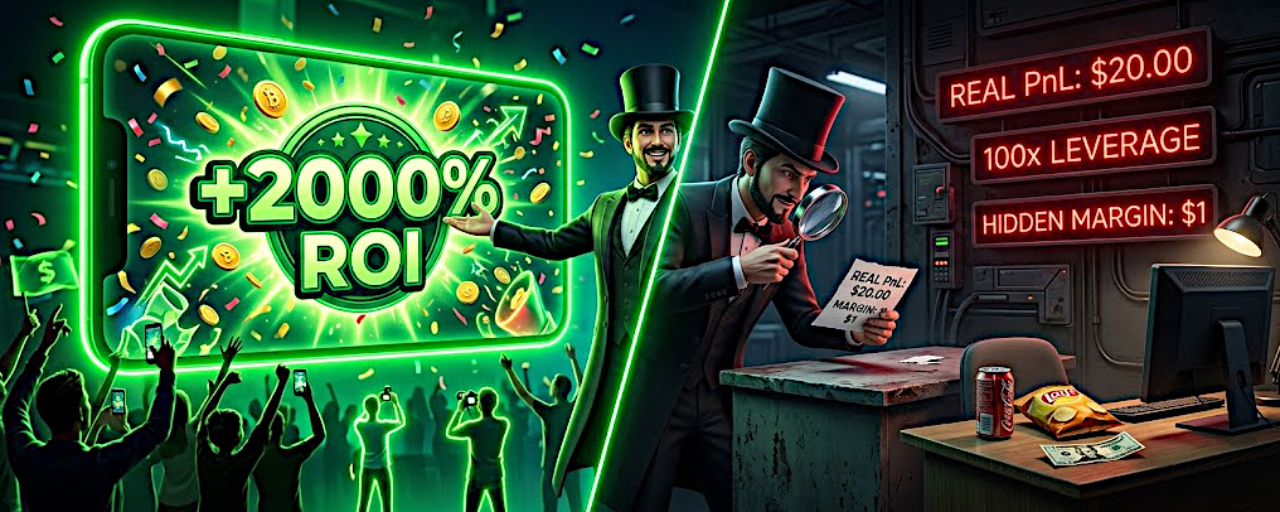
The Percent Trap and Hidden PnL: Why Huge ROI on Social Media Is a Scam for Beginners?Everyone who has ever opened crypto social media has choked on their own saliva at the sight of dazzling green badges: “+2500% ROI”, “+5000% on futures in 10 minutes!”. The authors of these posts present themselves as reincarnated Wall Street geniuses, while the comments gather hundreds of admiring viewers with questions like: “Bro, what channel should I join?”, “What leverage are you using?”, “Take me to your training!”.
The Percent Trap and Hidden PnL: Why Huge ROI on Social Media Is a Scam for Beginners?
Everyone who has ever opened crypto social media has choked on their own saliva at the sight of dazzling green badges: “+2500% ROI”, “+5000% on futures in 10 minutes!”. The authors of these posts present themselves as reincarnated Wall Street geniuses, while the comments gather hundreds of admiring viewers with questions like: “Bro, what channel should I join?”, “What leverage are you using?”, “Take me to your training!”.
70
·
--
Article
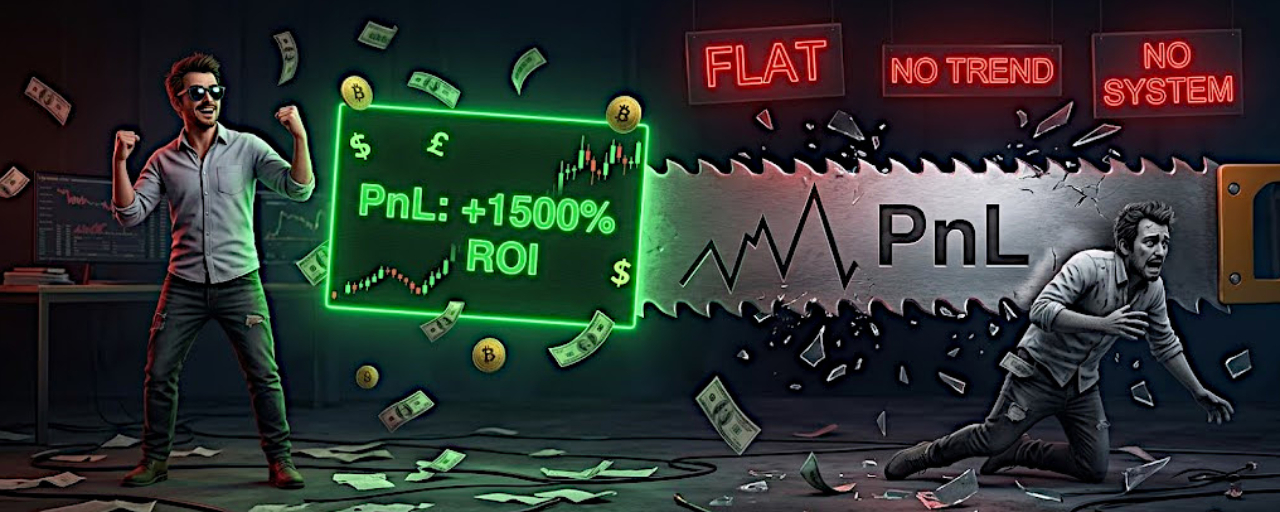
The illusion of genius: Why a beautiful PnL in a bull market burns out at the first consolidation?Each bullish cycle creates hundreds of new “financial geniuses.” The social feed immediately fills with green screenshots showing a +1500% profit, boastful reports about buying in within the first hours, and pompous trading tips from gurus with a three-week track record. At this moment, a newcomer genuinely thinks they’ve cracked the market, while Warren Buffett in the background is just a grandfather stuck in the past.
The illusion of genius: Why a beautiful PnL in a bull market burns out at the first consolidation?
Each bullish cycle creates hundreds of new “financial geniuses.” The social feed immediately fills with green screenshots showing a +1500% profit, boastful reports about buying in within the first hours, and pompous trading tips from gurus with a three-week track record. At this moment, a newcomer genuinely thinks they’ve cracked the market, while Warren Buffett in the background is just a grandfather stuck in the past.
67
·
--
Article
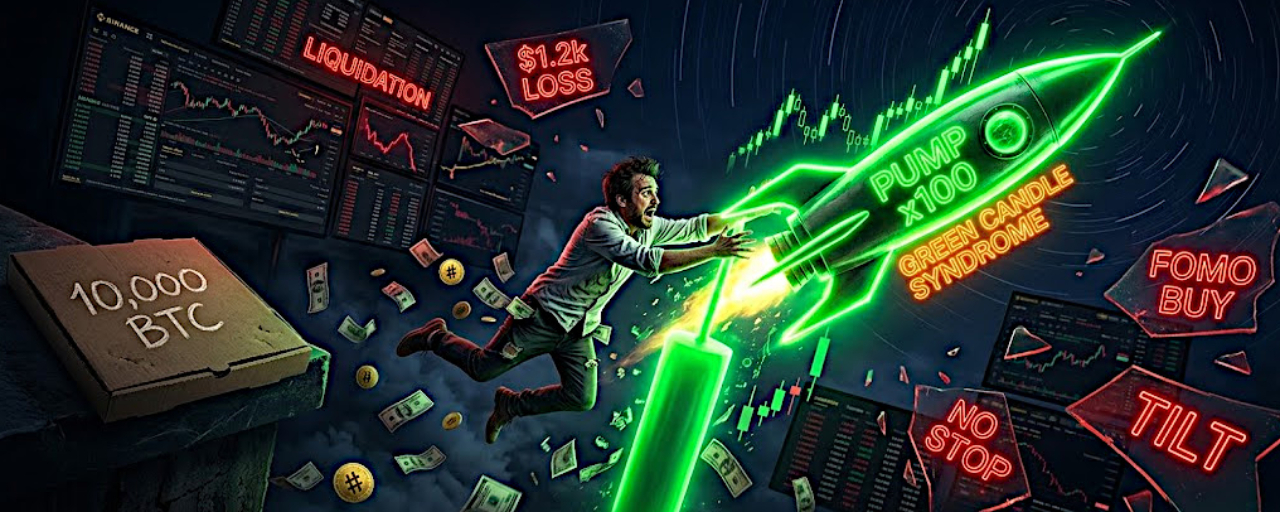
The “green candle” syndrome: How FOMO and the chase for instant x100 burn a deposit?In the history of cryptocurrencies, there’s a legendary monument to human impatience: in 2010, programmer Laszlo Hanyecz traded 10,000 BTC for two pizzas. Today, this story inspires either respectful awe or a nervous tic. But it clearly shows how the market has changed. In the early days of crypto, people saw it as a fundamental technology and were willing to pay with thousands of coins for a real meal—whereas today the market is overrun by hunters of “easy x100 in 15 minutes,” ready to put up their apartment for a coin with an avatar of a sad toad.
The “green candle” syndrome: How FOMO and the chase for instant x100 burn a deposit?
In the history of cryptocurrencies, there’s a legendary monument to human impatience: in 2010, programmer Laszlo Hanyecz traded 10,000 BTC for two pizzas. Today, this story inspires either respectful awe or a nervous tic. But it clearly shows how the market has changed. In the early days of crypto, people saw it as a fundamental technology and were willing to pay with thousands of coins for a real meal—whereas today the market is overrun by hunters of “easy x100 in 15 minutes,” ready to put up their apartment for a coin with an avatar of a sad toad.
80
·
--
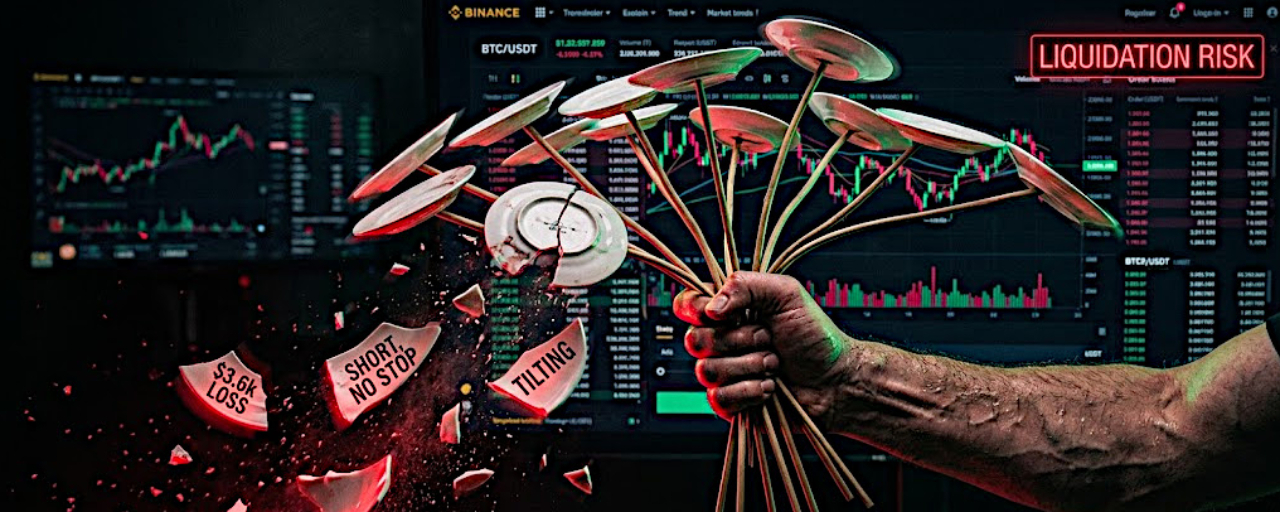
Article
The illusion of easy money: Why chasing 16 “hares” and being driven by emotions turns a trader into a gambler?The crypto community “tape” is an endless showcase of fairy-tale riches, where every first person who showed up ends up at the very bottom, and every second one grabs +500% on 50x leverage starting from a $5 deposit. Against this backdrop, a newcomer develops the most dangerous illusion: the market is an easy video game with withdrawals, and trading is a fun amusement ride where all you have to do is press the green and red buttons at just the right time.
The illusion of easy money: Why chasing 16 “hares” and being driven by emotions turns a trader into a gambler?
The crypto community “tape” is an endless showcase of fairy-tale riches, where every first person who showed up ends up at the very bottom, and every second one grabs +500% on 50x leverage starting from a $5 deposit. Against this backdrop, a newcomer develops the most dangerous illusion: the market is an easy video game with withdrawals, and trading is a fun amusement ride where all you have to do is press the green and red buttons at just the right time.
82
·
--
Article
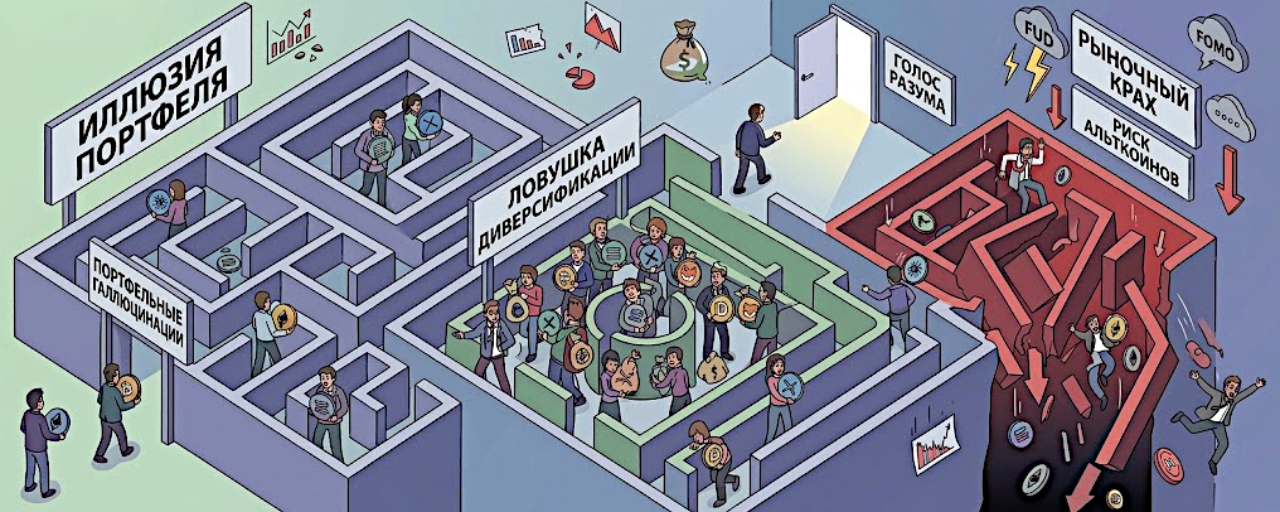
Portfolio Delusions: The Illusion of Diversification and How Newcomers Get Taken During Alt SeasonsWhen a beginner hears the wise word “diversification” for the first time, an image instantly flashes in their mind: a seasoned investor from Wall Street in a perfect suit. They open a terminal and, with a proud air, smear their modest deposit across 10–15 different altcoins from the top 50, showing off as if they were Warren Buffett. They genuinely believe they’ve built an impregnable financial fortress: the projects are different, the names are loud, the logos are even prettier than one another!
Portfolio Delusions: The Illusion of Diversification and How Newcomers Get Taken During Alt Seasons
When a beginner hears the wise word “diversification” for the first time, an image instantly flashes in their mind: a seasoned investor from Wall Street in a perfect suit. They open a terminal and, with a proud air, smear their modest deposit across 10–15 different altcoins from the top 50, showing off as if they were Warren Buffett. They genuinely believe they’ve built an impregnable financial fortress: the projects are different, the names are loud, the logos are even prettier than one another!
77
·
--
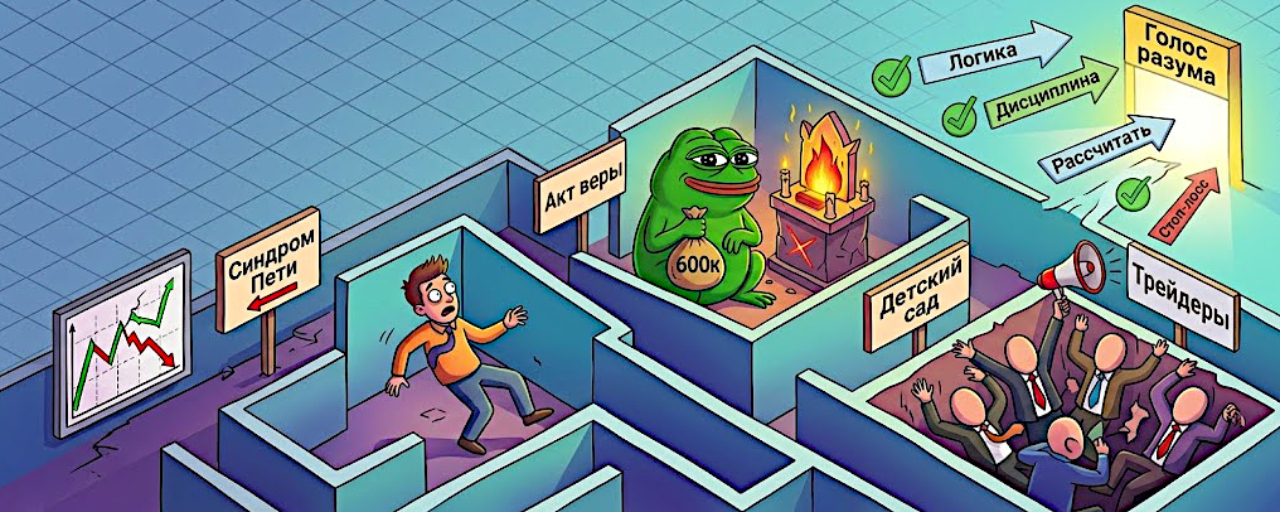
Article
The beginner’s paradoxes: How do emotions, fanatical belief, and the search for “ready-made signals” wipe out deposits?The crypto community feed is an endless parade of nonstop success, where everyone supposedly got in at the very bottom and everyone else is already choosing the interior color for their sports car. But behind this facade lies harsh statistics: most deposits burn down not because of the “cunning market,” but because of classic emotional cartwheels. Beginners with surprising consistency step on the same rakes, turning trading into enthusiastic financial masochism.
The beginner’s paradoxes: How do emotions, fanatical belief, and the search for “ready-made signals” wipe out deposits?
The crypto community feed is an endless parade of nonstop success, where everyone supposedly got in at the very bottom and everyone else is already choosing the interior color for their sports car. But behind this facade lies harsh statistics: most deposits burn down not because of the “cunning market,” but because of classic emotional cartwheels. Beginners with surprising consistency step on the same rakes, turning trading into enthusiastic financial masochism.
76
·
--

Article
Feed Noise: How Contradictory Signals and Tales of the Future Break the Trading System?The crypto communities’ feed is not an information helper, but a real emotional centrifuge. A trader opens it with a clear trading plan and leaves after 10 minutes with a shaken nervous system, a twitching eye, and three randomly opened positions.
Reason — an endless stream of contradictions, where on a single screen panic collides with complex terms and the romanticization of financial suicide. Let’s break down how this noise confuses even seasoned market participants.
Feed Noise: How Contradictory Signals and Tales of the Future Break the Trading System?
The crypto communities’ feed is not an information helper, but a real emotional centrifuge. A trader opens it with a clear trading plan and leaves after 10 minutes with a shaken nervous system, a twitching eye, and three randomly opened positions.
Reason — an endless stream of contradictions, where on a single screen panic collides with complex terms and the romanticization of financial suicide. Let’s break down how this noise confuses even seasoned market participants.
Reason — an endless stream of contradictions, where on a single screen panic collides with complex terms and the romanticization of financial suicide. Let’s break down how this noise confuses even seasoned market participants.
92
·
--

Article
“Free Cheese” Syndrome: Why Content Creators Always “Owe” Their Audience?A long-standing reflex has taken hold in the crypto community: if someone is given something for free, it means they’re planning to “shave” them. Years of interaction with scam projects, closed VIP channels, and Instagram signalers have trained readers to a level of paranoia where they think, “I’m being tricked even in a free airdrop.”
“Free Cheese” Syndrome: Why Content Creators Always “Owe” Their Audience?
A long-standing reflex has taken hold in the crypto community: if someone is given something for free, it means they’re planning to “shave” them. Years of interaction with scam projects, closed VIP channels, and Instagram signalers have trained readers to a level of paranoia where they think, “I’m being tricked even in a free airdrop.”
93
·
--

Article
Analysis Paralysis: How the Search for the “Perfect Trade” Leaves the Trader Behind?In crypto communities, people are used to thinking that the FOMO syndrome (Fear of Missing Out) is a story about how someone, driven by emotion, jumps onto a flying green chart at the very top and instantly assigns themselves the status of a “long-term investor.”
But this fear has a much more insidious, quiet, and destructive downside. It’s reverse FOMO, or “analysis paralysis.”
Analysis Paralysis: How the Search for the “Perfect Trade” Leaves the Trader Behind?
In crypto communities, people are used to thinking that the FOMO syndrome (Fear of Missing Out) is a story about how someone, driven by emotion, jumps onto a flying green chart at the very top and instantly assigns themselves the status of a “long-term investor.”
But this fear has a much more insidious, quiet, and destructive downside. It’s reverse FOMO, or “analysis paralysis.”
But this fear has a much more insidious, quiet, and destructive downside. It’s reverse FOMO, or “analysis paralysis.”
95
·
--

Article
The Illusion of Choice Syndrome: How analytical templates replace real analysis for a trader?The trader’s brain organically searches for simple cheat sheets to reduce stress and not burden itself with real calculations. Some rush to check the Fear and Greed Index as if it were a horoscope; others calculate 3% per year from staking with the air of people who have just bought BlackRock’s controlling stake; and third groups copy order grids from posts about “80-year-old investors with a 45-year track record” that wouldn’t survive even half an hour in crypto.
The Illusion of Choice Syndrome: How analytical templates replace real analysis for a trader?
The trader’s brain organically searches for simple cheat sheets to reduce stress and not burden itself with real calculations. Some rush to check the Fear and Greed Index as if it were a horoscope; others calculate 3% per year from staking with the air of people who have just bought BlackRock’s controlling stake; and third groups copy order grids from posts about “80-year-old investors with a 45-year track record” that wouldn’t survive even half an hour in crypto.
78
·
--
Article
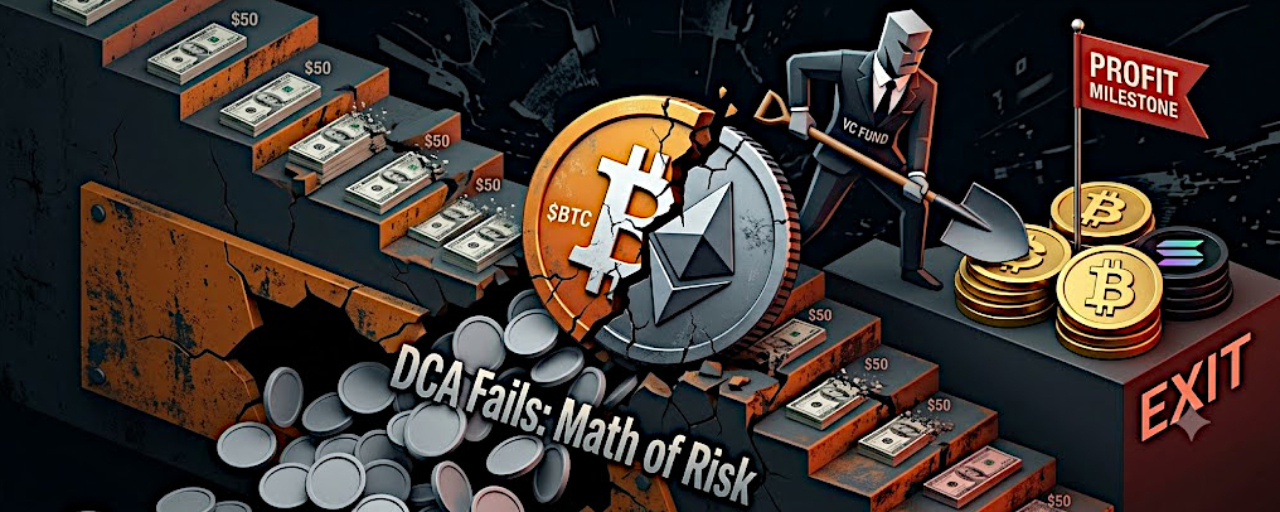
The DCA Illusion: Why simple averaging doesn’t work without risk math?In the crypto community, there’s a favorite beginner fairy tale: “Why complicate things? Just buy any asset for $50 every week, don’t look at the chart, and after a couple of years you’ll be riding first class.”
The DCA (Dollar-Cost Averaging, or equal-part averaging method) strategy is presented as a magic pill against any market turmoil. On paper, everything looks flawless: you smooth out volatility, remove emotions, and get an average entry price. But in reality, mechanical averaging without understanding tokenomics and the market phase turns the strategy into a drawn-out liquidation of your deposit.
The DCA Illusion: Why simple averaging doesn’t work without risk math?
In the crypto community, there’s a favorite beginner fairy tale: “Why complicate things? Just buy any asset for $50 every week, don’t look at the chart, and after a couple of years you’ll be riding first class.”
The DCA (Dollar-Cost Averaging, or equal-part averaging method) strategy is presented as a magic pill against any market turmoil. On paper, everything looks flawless: you smooth out volatility, remove emotions, and get an average entry price. But in reality, mechanical averaging without understanding tokenomics and the market phase turns the strategy into a drawn-out liquidation of your deposit.
The DCA (Dollar-Cost Averaging, or equal-part averaging method) strategy is presented as a magic pill against any market turmoil. On paper, everything looks flawless: you smooth out volatility, remove emotions, and get an average entry price. But in reality, mechanical averaging without understanding tokenomics and the market phase turns the strategy into a drawn-out liquidation of your deposit.
130
·
--

Article
What age should you start investing? An ideal start vs. first liquidationsDebates on social media never die down: while some insist that it's shameful to enter the market without a “mature capital,” 17-year-old “crypto gurus” from TikTok are already trading dreams of a penthouse straight from an hour-rented sports car.
Let's break this question down into numbers, psychology, and the real cost of mistakes.
What age should you start investing? An ideal start vs. first liquidations
Debates on social media never die down: while some insist that it's shameful to enter the market without a “mature capital,” 17-year-old “crypto gurus” from TikTok are already trading dreams of a penthouse straight from an hour-rented sports car.
Let's break this question down into numbers, psychology, and the real cost of mistakes.
Let's break this question down into numbers, psychology, and the real cost of mistakes.
109
·
--

Article
Gen Z vs Millennials in the crypto market: A generational shift or a race for quick money?While traditional analysts in suits try to figure out how to lure young people into dull bonds, fresh statistics show a surprise: about 45% of TradFi-Perps users are tokenized perpetual futures on stocks of global giants, as well as on commodities and metals. At the same time, conservative products like staking and flexible deposits from Simple Earn have significantly less demand among them.
Gen Z vs Millennials in the crypto market: A generational shift or a race for quick money?
While traditional analysts in suits try to figure out how to lure young people into dull bonds, fresh statistics show a surprise: about 45% of TradFi-Perps users are tokenized perpetual futures on stocks of global giants, as well as on commodities and metals. At the same time, conservative products like staking and flexible deposits from Simple Earn have significantly less demand among them.
103
·
--

Article
Political Noise, Media, and Order-Book Walls: How They Manipulate Traders’ EmotionsEvery day, a trader faces hundreds of signals: from loud statements by presidents and news about geopolitics to rumors about “waking wallets” and tight walls in the order book. At first glance, these events belong to completely different worlds. However, from the perspective of market psychology, they all serve the same purpose—creating informational noise that pushes you to make an impulsive, emotional trade.
Political Noise, Media, and Order-Book Walls: How They Manipulate Traders’ Emotions
Every day, a trader faces hundreds of signals: from loud statements by presidents and news about geopolitics to rumors about “waking wallets” and tight walls in the order book. At first glance, these events belong to completely different worlds. However, from the perspective of market psychology, they all serve the same purpose—creating informational noise that pushes you to make an impulsive, emotional trade.
113
·
--

Article
The 90% Win Illusion: Why Beautiful Statistics Wipe Out Your DepositIn trading and P2P arbitrage, there is one dangerous kind of psycho-therapy. It’s called the “Green Report Syndrome.”
This is when you look at your trading history and feel happy: “9 out of 10 trades are closed in profit! I’m a market genius.”
But then you open the overall wallet balance and, with surprise, discover that it has become smaller. How does 90% success in math lead to a minus in your balance? It’s simple: you built the perfect casino, where the market is the establishment, and you are that very азартный guest.
The 90% Win Illusion: Why Beautiful Statistics Wipe Out Your Deposit
In trading and P2P arbitrage, there is one dangerous kind of psycho-therapy. It’s called the “Green Report Syndrome.”
This is when you look at your trading history and feel happy: “9 out of 10 trades are closed in profit! I’m a market genius.”
But then you open the overall wallet balance and, with surprise, discover that it has become smaller. How does 90% success in math lead to a minus in your balance? It’s simple: you built the perfect casino, where the market is the establishment, and you are that very азартный guest.
This is when you look at your trading history and feel happy: “9 out of 10 trades are closed in profit! I’m a market genius.”
But then you open the overall wallet balance and, with surprise, discover that it has become smaller. How does 90% success in math lead to a minus in your balance? It’s simple: you built the perfect casino, where the market is the establishment, and you are that very азартный guest.
123
·
--

Article
News Trap: Why trading macroeconomic events and headlines drains your depositAn important macroeconomic news item comes out—for example, inflation data (CPI) or the Fed’s decision on the interest rate.
In a second, a powerful green candle is drawn on the chart. Your hand automatically reaches to open a long, to “catch the momentum.” But once you enter the trade, the market instantly reverses and prints an even more aggressive red candle downward. The result is either your stop-loss gets hit, or, even worse, your position gets liquidated.
News Trap: Why trading macroeconomic events and headlines drains your deposit
An important macroeconomic news item comes out—for example, inflation data (CPI) or the Fed’s decision on the interest rate.
In a second, a powerful green candle is drawn on the chart. Your hand automatically reaches to open a long, to “catch the momentum.” But once you enter the trade, the market instantly reverses and prints an even more aggressive red candle downward. The result is either your stop-loss gets hit, or, even worse, your position gets liquidated.
In a second, a powerful green candle is drawn on the chart. Your hand automatically reaches to open a long, to “catch the momentum.” But once you enter the trade, the market instantly reverses and prints an even more aggressive red candle downward. The result is either your stop-loss gets hit, or, even worse, your position gets liquidated.
103
·
--
Article
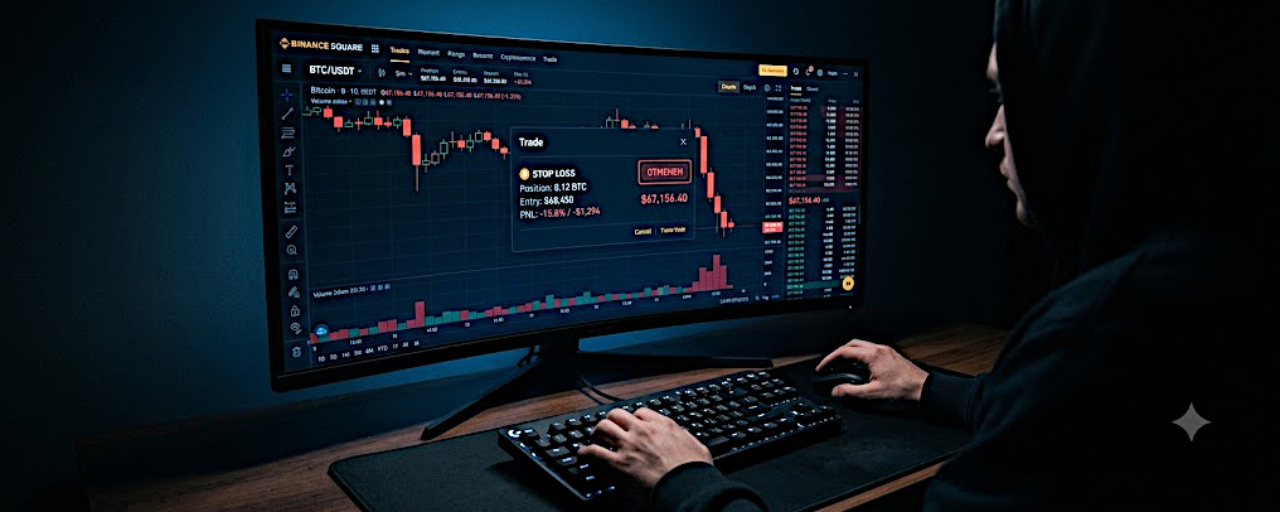
“It’ll go up now”: How one canceled trade wipes out the entire depositEveryone who has traded even a little on the crypto market has gone through this scenario.
You open a position, set a system stop-loss, and calmly wait for the price to move. But the market starts going the opposite way. The price moves toward your exit level, and at that moment an emotional dialogue kicks in your head:
“It’ll go up now”: How one canceled trade wipes out the entire deposit
Everyone who has traded even a little on the crypto market has gone through this scenario.
You open a position, set a system stop-loss, and calmly wait for the price to move. But the market starts going the opposite way. The price moves toward your exit level, and at that moment an emotional dialogue kicks in your head:
You open a position, set a system stop-loss, and calmly wait for the price to move. But the market starts going the opposite way. The price moves toward your exit level, and at that moment an emotional dialogue kicks in your head:
1
181
·
--
Article
5 Levels of Investor Protection: Why Your Money Is at Risk (and How to Keep It Safe)In the world of finance, we’ve been taught how to make money. But few people talk about the main rule—one that most people remember only after their first major loss: The investor’s first task is not to increase capital, but to protect it.
Today we’ve grown accustomed to relying on “reliable banks,” century-old brand marketing, and smart algorithms. However, today’s market regularly proves this: responsibility for your money 100% rests only on you.
5 Levels of Investor Protection: Why Your Money Is at Risk (and How to Keep It Safe)
In the world of finance, we’ve been taught how to make money. But few people talk about the main rule—one that most people remember only after their first major loss: The investor’s first task is not to increase capital, but to protect it.
Today we’ve grown accustomed to relying on “reliable banks,” century-old brand marketing, and smart algorithms. However, today’s market regularly proves this: responsibility for your money 100% rests only on you.
Today we’ve grown accustomed to relying on “reliable banks,” century-old brand marketing, and smart algorithms. However, today’s market regularly proves this: responsibility for your money 100% rests only on you.
1
121
·
--

Article
Ticker change in crypto, or how scammers sell an old scam in a new packageImagine a classic picture: an investor opens an analytics service, sees a chart of a coin that has dropped by 99.9%, and disgustedly closes the tab. “If it died, then it died,” he thinks.
And now imagine that the team of this same “corpse” changes the name, launches a new website, and announces a global rebrand. On the screen again—“a promising young startup” with a clean, beautiful chart, without any past.
Ticker change in crypto, or how scammers sell an old scam in a new package
Imagine a classic picture: an investor opens an analytics service, sees a chart of a coin that has dropped by 99.9%, and disgustedly closes the tab. “If it died, then it died,” he thinks.
And now imagine that the team of this same “corpse” changes the name, launches a new website, and announces a global rebrand. On the screen again—“a promising young startup” with a clean, beautiful chart, without any past.
And now imagine that the team of this same “corpse” changes the name, launches a new website, and announces a global rebrand. On the screen again—“a promising young startup” with a clean, beautiful chart, without any past.
146
Log in to explore more content
Join global crypto users on Binance Square
⚡️ Get latest and useful information about crypto.
💬 Trusted by the world’s largest crypto exchange.
👍 Discover real insights from verified creators.
Email / Phone number
Trending Topics
ZamaRises15.99%ToIntradayHigh$0.09
19,183 views
106 Discussing
#ZamaRises15.99%ToIntradayHigh$0.09
ZAMA just woke up and chose violence! 🚀 Token #ZamaRises15.99%ToIntradayHigh$0.09, breaking out of nowhere to touch the 0.09 USDT mark. What triggered this pump? Smart money accumulating or a sudden FOMO wave catching the bears off guard? 💸
Will it keep pumping or dump back down? 🎢 It's flirting right at the resistance line. If it holds, we fly; if not, it’s a classic trap!
What should traders do? Secure some profits if you rode it up, set tight stop-losses, and don’t chase the green candle like a degen. Watch the volume closely! 🧐
Not financial advice (NFA).
Join Binance now! Code: VINHTOCDO
Link: https://www.binance.com/register?ref=VINHTOCDO
Click to trade below to support me:
$ZAMA
$BTC
$BNB
#Zama #CryptoPumping #TradingAlert #AltcoinSeason #VINHTOCDO
Vinhtocdo
·1 Likes
·305 views
BitcoinSpotETFsDraw$6.34BInflowsInQ3
6,455 views
93 Discussing
EthereumValidatorExitQueueJumps392%
106,481 views
979 Discussing