

Mason Lee
7.3k Posts

Mason Lee
 Square Verified+
Report
Block User
Influencer | Content Creator |Ambassador | Degen | #Binance KOL | DM for Collab
Open Trade
High-Frequency Trader
1.9 Years
126 Following
33.3K+ Followers
20.8K+ Liked
Posts
Portfolio
All
Quotes
Live
PINNED
·
--
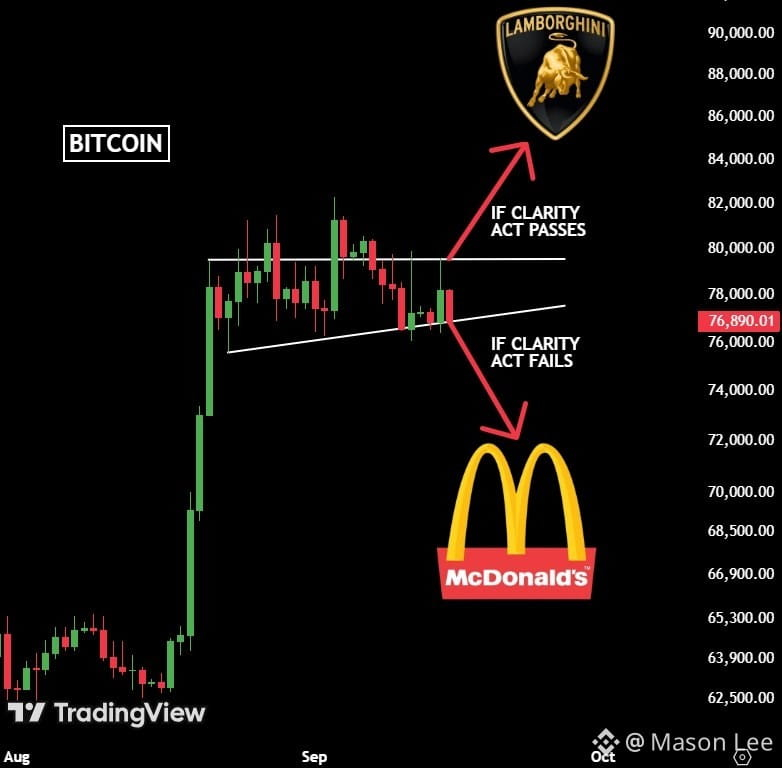
Bitcoin is sitting at a critical inflection point.
$BTC is compressing inside a tightening structure, with $80K as the key breakout level and ~$76K as immediate support.
➜ Reclaim $80K → potential move toward $85K+
➜ Lose the rising support → $72K–$70K becomes the downside zone
The CLARITY Act could be the catalyst that decides which side breaks first.
DYOR.
#BTC #Bitcoin
Bitcoin is sitting at a critical inflection point.
$BTC is compressing inside a tightening structure, with $80K as the key breakout level and ~$76K as immediate support.
➜ Reclaim $80K → potential move toward $85K+
➜ Lose the rising support → $72K–$70K becomes the downside zone
The CLARITY Act could be the catalyst that decides which side breaks first.
DYOR.
#BTC #Bitcoin
$BTC is compressing inside a tightening structure, with $80K as the key breakout level and ~$76K as immediate support.
➜ Reclaim $80K → potential move toward $85K+
➜ Lose the rising support → $72K–$70K becomes the downside zone
The CLARITY Act could be the catalyst that decides which side breaks first.
DYOR.
#BTC #Bitcoin
15
1
62
84.3k
·
--
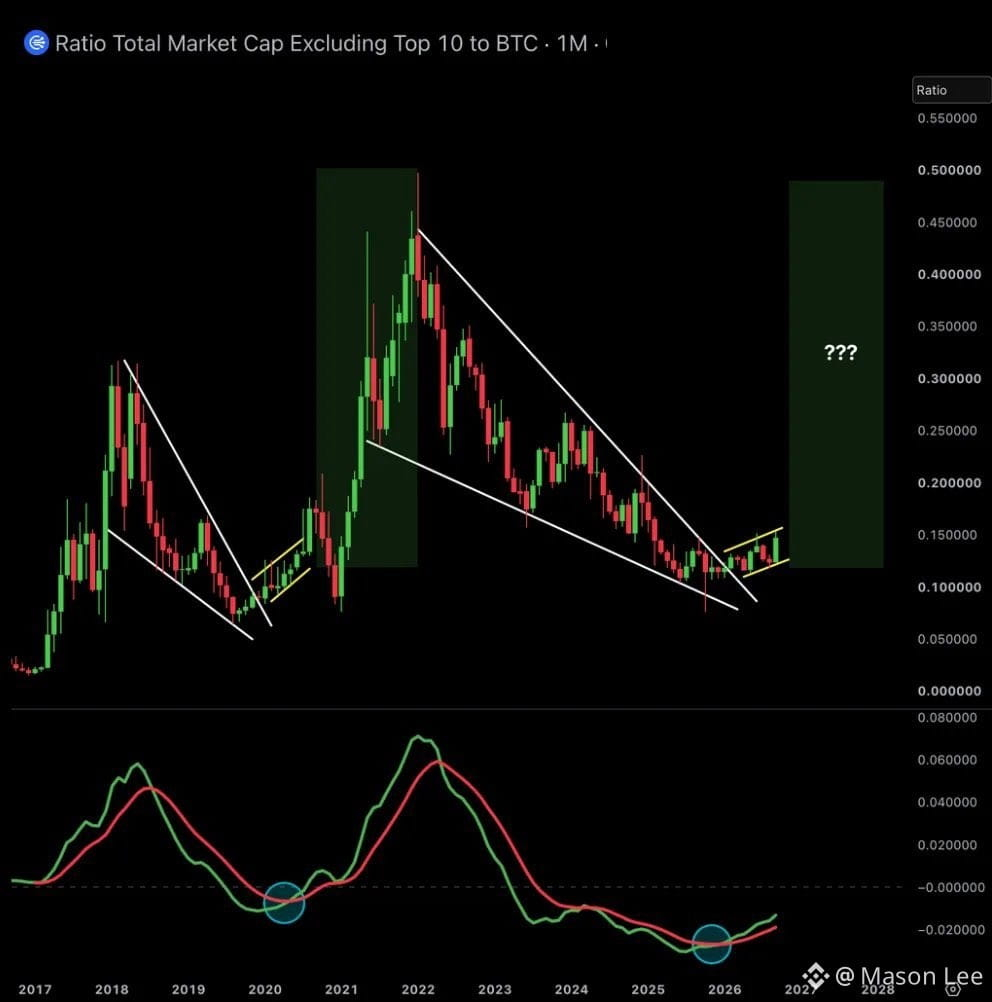
Altcoins may be quietly building the kind of structure that deserves attention.
The OTHERS/BTC monthly chart is showing a notable shift:
→ Long-term downtrend appears broken
→ Higher structure is starting to form
→ Momentum has turned upward
→ The setup resembles the early phase of the previous major altcoin expansion
Nothing is guaranteed, but if this structure continues to hold, the next phase for altcoins could become very interesting.
#Altcoins #Crypto #Bitcoin #Altseason #CryptoMarket
{spot}(BTCUSDT)
Altcoins may be quietly building the kind of structure that deserves attention.
The OTHERS/BTC monthly chart is showing a notable shift:
→ Long-term downtrend appears broken
→ Higher structure is starting to form
→ Momentum has turned upward
→ The setup resembles the early phase of the previous major altcoin expansion
Nothing is guaranteed, but if this structure continues to hold, the next phase for altcoins could become very interesting.
#Altcoins #Crypto #Bitcoin #Altseason #CryptoMarket
The OTHERS/BTC monthly chart is showing a notable shift:
→ Long-term downtrend appears broken
→ Higher structure is starting to form
→ Momentum has turned upward
→ The setup resembles the early phase of the previous major altcoin expansion
Nothing is guaranteed, but if this structure continues to hold, the next phase for altcoins could become very interesting.
#Altcoins #Crypto #Bitcoin #Altseason #CryptoMarket
188
·
--
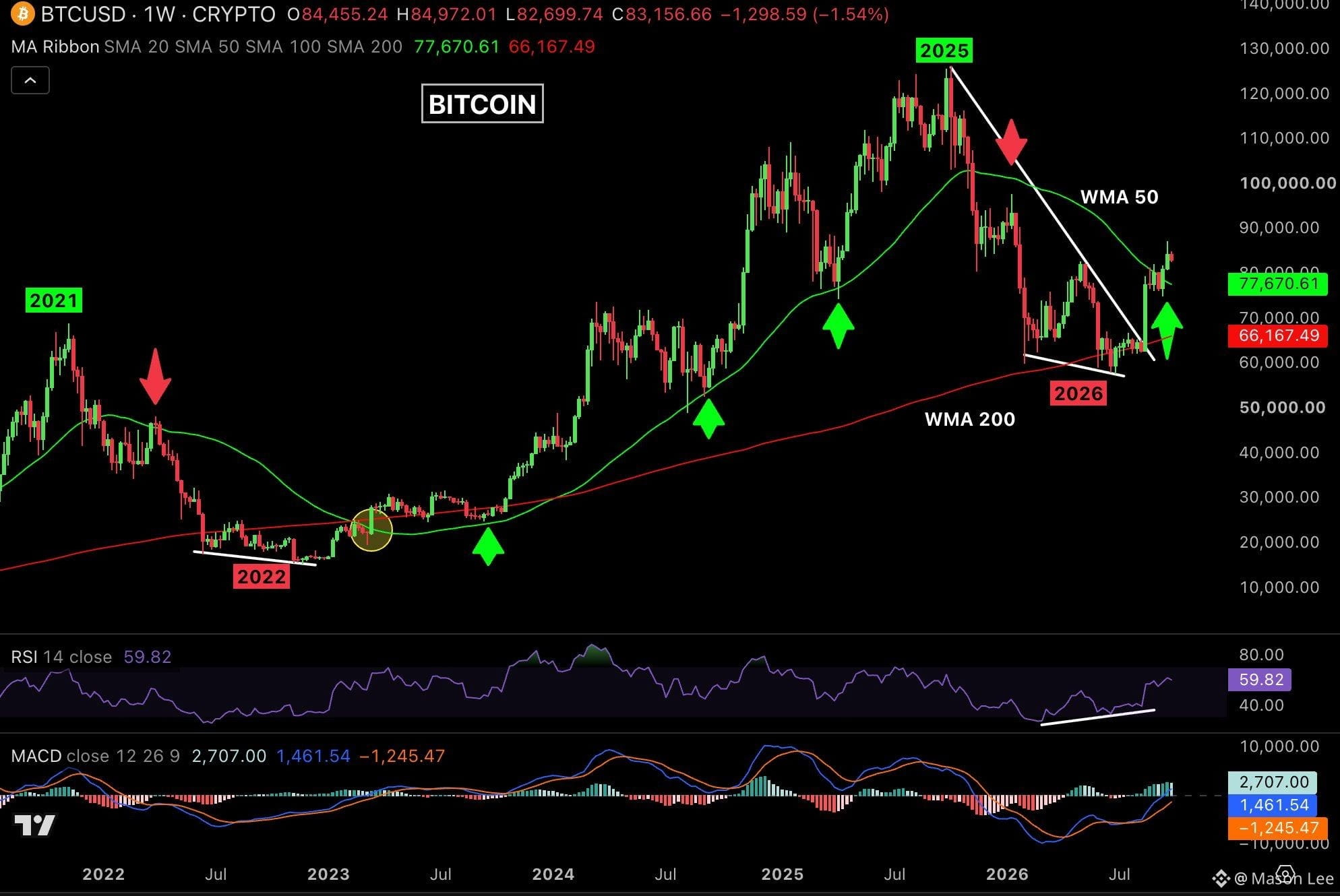
$BTC The Weekly Structure Is Turning Interesting
Bitcoin is back above the WMA 50 (~$77.7K) and holding well above the WMA 200 (~$66.2K).
The chart is also showing: • RSI near 60
• MACD momentum turning positive
• Price reclaiming the key weekly moving average
• A clear recovery from the 2026 lows
The bigger question now isn’t whether BTC recovered.
It’s whether this recovery can develop into a sustained weekly trend.
For me, $77K–$78K remains a key area to watch. A decisive loss could weaken the structure, while continued acceptance above it keeps the bullish setup technically intact.
Watch the weekly close. Structure first, predictions second.
#Bitcoin #btcupdates #BitcoinAnalysis
$BTC The Weekly Structure Is Turning Interesting
Bitcoin is back above the WMA 50 (~$77.7K) and holding well above the WMA 200 (~$66.2K).
The chart is also showing: • RSI near 60
• MACD momentum turning positive
• Price reclaiming the key weekly moving average
• A clear recovery from the 2026 lows
The bigger question now isn’t whether BTC recovered.
It’s whether this recovery can develop into a sustained weekly trend.
For me, $77K–$78K remains a key area to watch. A decisive loss could weaken the structure, while continued acceptance above it keeps the bullish setup technically intact.
Watch the weekly close. Structure first, predictions second.
#Bitcoin #btcupdates #BitcoinAnalysis
Bitcoin is back above the WMA 50 (~$77.7K) and holding well above the WMA 200 (~$66.2K).
The chart is also showing: • RSI near 60
• MACD momentum turning positive
• Price reclaiming the key weekly moving average
• A clear recovery from the 2026 lows
The bigger question now isn’t whether BTC recovered.
It’s whether this recovery can develop into a sustained weekly trend.
For me, $77K–$78K remains a key area to watch. A decisive loss could weaken the structure, while continued acceptance above it keeps the bullish setup technically intact.
Watch the weekly close. Structure first, predictions second.
#Bitcoin #btcupdates #BitcoinAnalysis
158
·
--
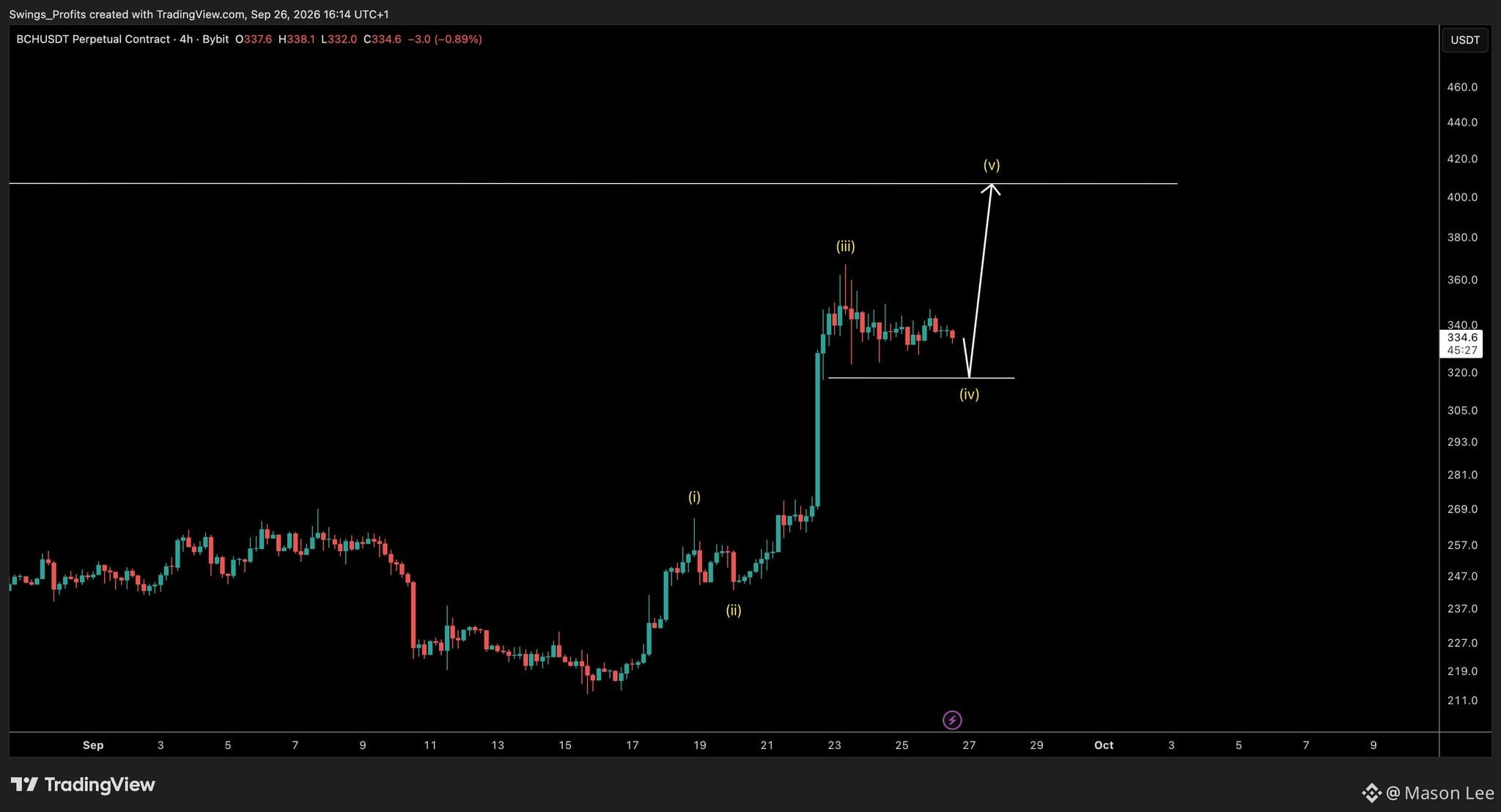
$BCH
The bigger picture is starting to make more sense.
Zoom out and the structure becomes much clearer. BCH appears to be working through the larger wave count, with wave (iv) consolidating around the $320 area.
If that level holds, the next leg could target the $400–$410 zone.
Key level: ~$320
A clean hold keeps the structure intact. A decisive breakdown would weaken the setup.
Chart-based analysis. DYOR.
#BCH #BitcoinCash #Crypto #CryptoTrading #Altcoins
$BCH
The bigger picture is starting to make more sense.
Zoom out and the structure becomes much clearer. BCH appears to be working through the larger wave count, with wave (iv) consolidating around the $320 area.
If that level holds, the next leg could target the $400–$410 zone.
Key level: ~$320
A clean hold keeps the structure intact. A decisive breakdown would weaken the setup.
Chart-based analysis. DYOR.
#BCH #BitcoinCash #Crypto #CryptoTrading #Altcoins
The bigger picture is starting to make more sense.
Zoom out and the structure becomes much clearer. BCH appears to be working through the larger wave count, with wave (iv) consolidating around the $320 area.
If that level holds, the next leg could target the $400–$410 zone.
Key level: ~$320
A clean hold keeps the structure intact. A decisive breakdown would weaken the setup.
Chart-based analysis. DYOR.
#BCH #BitcoinCash #Crypto #CryptoTrading #Altcoins
271
·
--
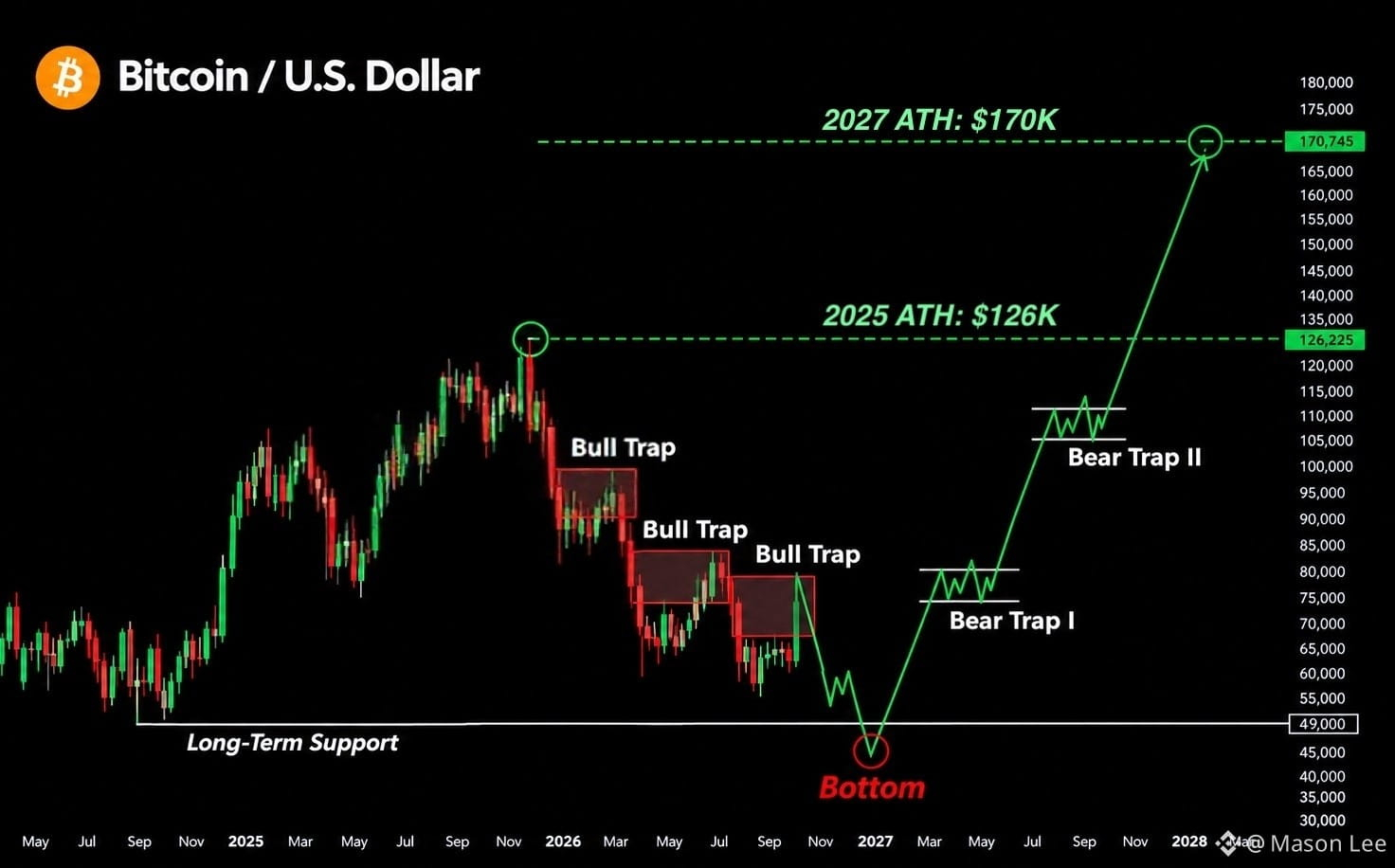
🚨 WARNING: BITCOIN’S FINAL BULL TRAP MAY BE FORMING
The chart suggests $BTC could see another shakeout before the next major move.
$45K–$49K → potential bottom zone
$75K–$80K → Bear Trap I
$105K–$115K → Bear Trap II
$126K → previous ATH
$170K → projected 2027 target
The real question is whether the traps are designed to shake out weak hands before expansion.
Always DYOR.
#BTC #Bitcoin #Crypto #BTCBreaks80K #SOLJumpsAbout10%
{spot}(BTCUSDT)
🚨 WARNING: BITCOIN’S FINAL BULL TRAP MAY BE FORMING
The chart suggests $BTC could see another shakeout before the next major move.
$45K–$49K → potential bottom zone
$75K–$80K → Bear Trap I
$105K–$115K → Bear Trap II
$126K → previous ATH
$170K → projected 2027 target
The real question is whether the traps are designed to shake out weak hands before expansion.
Always DYOR.
#BTC #Bitcoin #Crypto #BTCBreaks80K #SOLJumpsAbout10%
The chart suggests $BTC could see another shakeout before the next major move.
$45K–$49K → potential bottom zone
$75K–$80K → Bear Trap I
$105K–$115K → Bear Trap II
$126K → previous ATH
$170K → projected 2027 target
The real question is whether the traps are designed to shake out weak hands before expansion.
Always DYOR.
#BTC #Bitcoin #Crypto #BTCBreaks80K #SOLJumpsAbout10%
1
2
1.4k
·
--
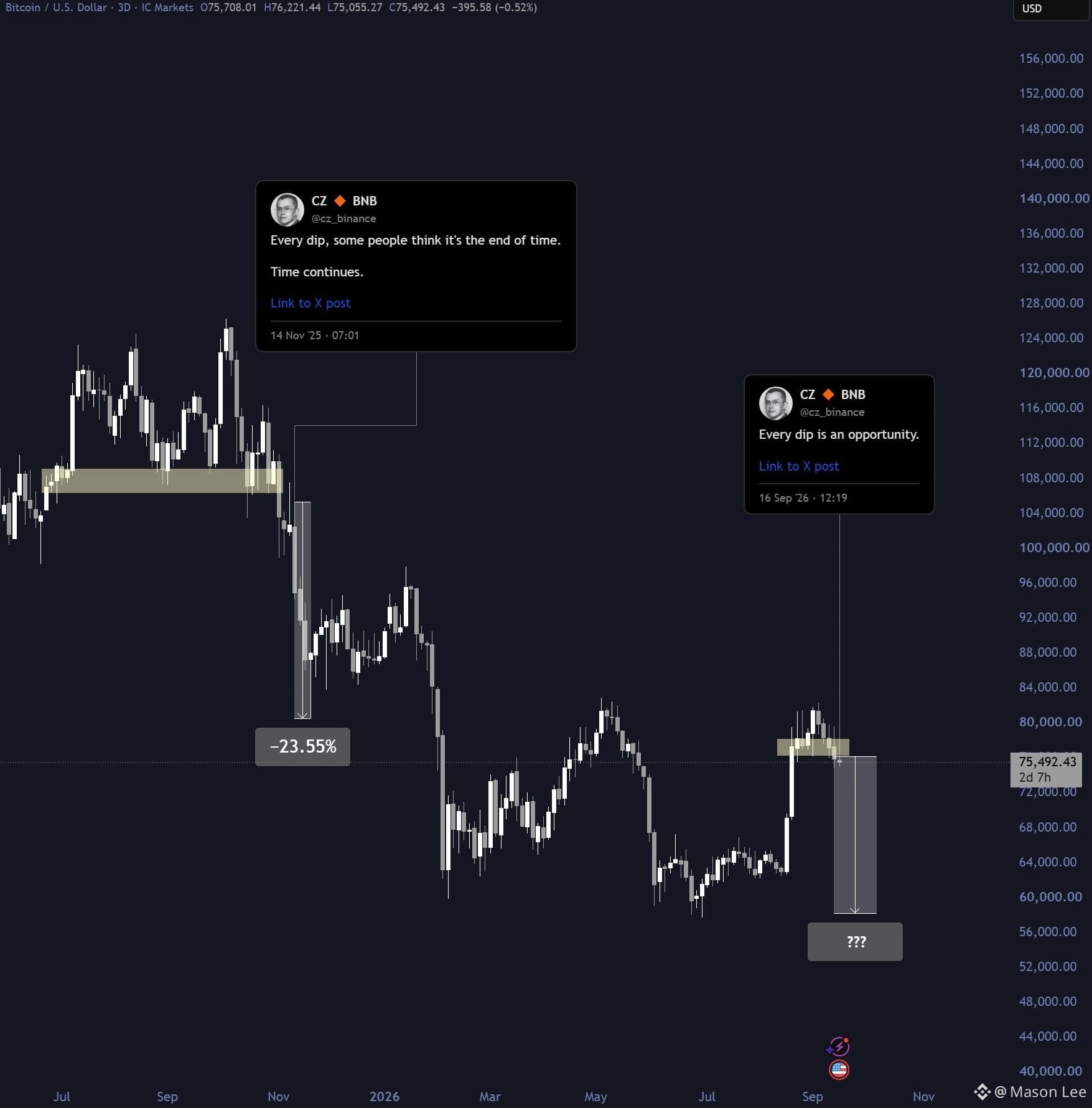
$BTC The chart is getting interesting.
CZ says, “Every dip is an opportunity.”
But this zone matters. BTC is back inside the same supply area that preceded the previous major breakdown. If it fails to hold, a deeper move toward $58K–$60K could come into play.
Watching the reaction closely. Always DYOR.
#CZ #BTC #Bitcoin
{spot}(BTCUSDT)
$BTC The chart is getting interesting.
CZ says, “Every dip is an opportunity.”
But this zone matters. BTC is back inside the same supply area that preceded the previous major breakdown. If it fails to hold, a deeper move toward $58K–$60K could come into play.
Watching the reaction closely. Always DYOR.
#CZ #BTC #Bitcoin
CZ says, “Every dip is an opportunity.”
But this zone matters. BTC is back inside the same supply area that preceded the previous major breakdown. If it fails to hold, a deeper move toward $58K–$60K could come into play.
Watching the reaction closely. Always DYOR.
#CZ #BTC #Bitcoin
184
·
--
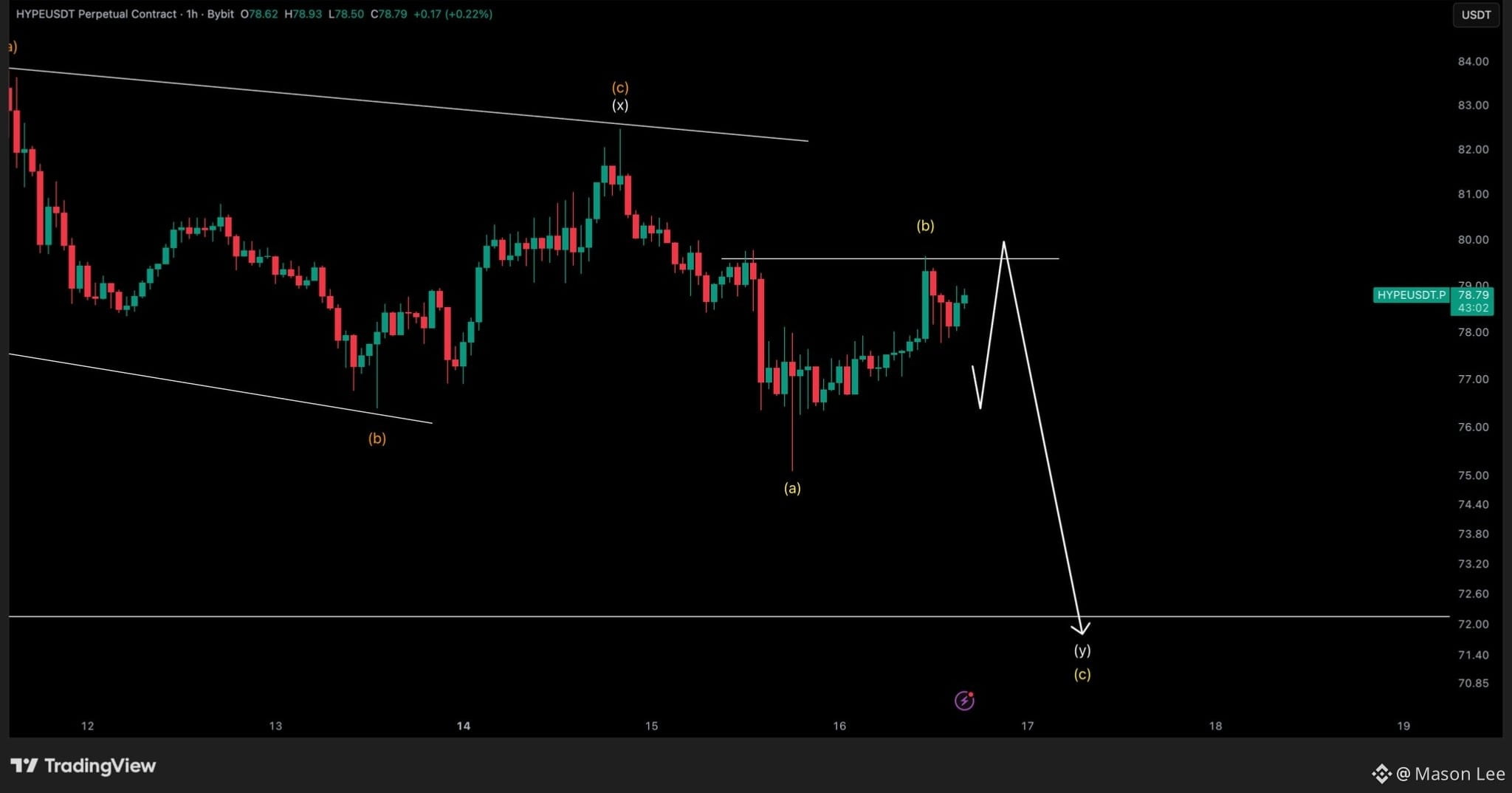
$HYPE
One more flush could be on the cards before the real expansion begins.
I’m watching the ~$76–77 area for the next dip. If that level holds and structure turns back up, the bigger move higher could follow.
Patience over chasing.
#HYPE #FedRateWatch #ZcashRises6% #XRPSinks10% #CircleOpensArcMainnet
$HYPE
One more flush could be on the cards before the real expansion begins.
I’m watching the ~$76–77 area for the next dip. If that level holds and structure turns back up, the bigger move higher could follow.
Patience over chasing.
#HYPE #FedRateWatch #ZcashRises6% #XRPSinks10% #CircleOpensArcMainnet
One more flush could be on the cards before the real expansion begins.
I’m watching the ~$76–77 area for the next dip. If that level holds and structure turns back up, the bigger move higher could follow.
Patience over chasing.
#HYPE #FedRateWatch #ZcashRises6% #XRPSinks10% #CircleOpensArcMainnet
308
·
--
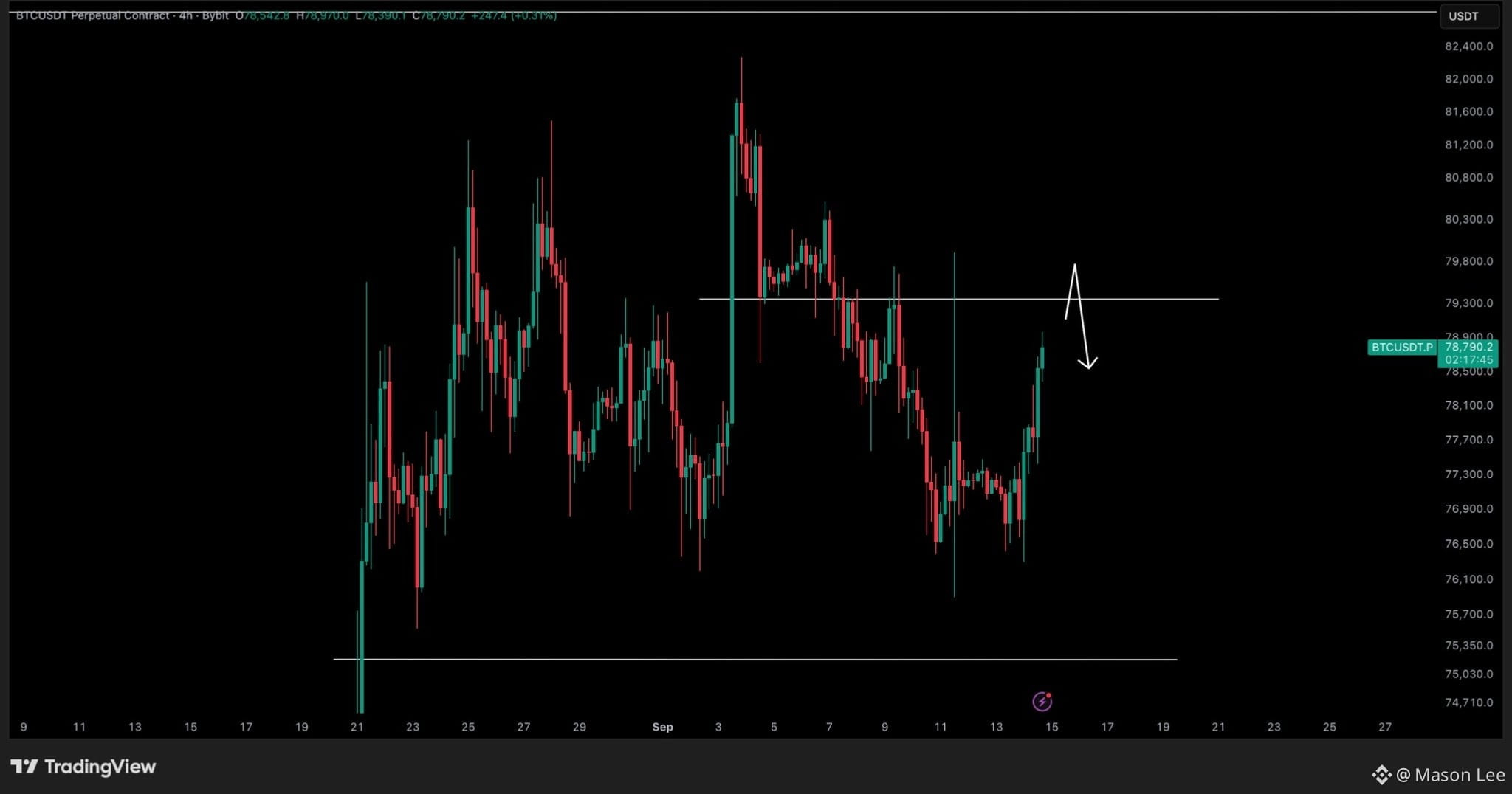
$BTC
Bitcoin is pushing back toward the key supply zone around $79.3K.
I’m not chasing this move here.
The plan is simple: let price test the zone, watch the reaction, then take the next setup from there.
Acceptance above it could change the structure. Rejection gives us a cleaner short-side opportunity.
Patience first. Execution second.
Always DYOR.
#BTC #FedHikeOddsRiseTo89% #AvalancheIntegratesIntoUAEPassDigitalVault #UKSeeksViewsOnTokenizingGold #AnthropicCEOCallsForAISlowdown
$BTC
Bitcoin is pushing back toward the key supply zone around $79.3K.
I’m not chasing this move here.
The plan is simple: let price test the zone, watch the reaction, then take the next setup from there.
Acceptance above it could change the structure. Rejection gives us a cleaner short-side opportunity.
Patience first. Execution second.
Always DYOR.
#BTC #FedHikeOddsRiseTo89% #AvalancheIntegratesIntoUAEPassDigitalVault #UKSeeksViewsOnTokenizingGold #AnthropicCEOCallsForAISlowdown
Bitcoin is pushing back toward the key supply zone around $79.3K.
I’m not chasing this move here.
The plan is simple: let price test the zone, watch the reaction, then take the next setup from there.
Acceptance above it could change the structure. Rejection gives us a cleaner short-side opportunity.
Patience first. Execution second.
Always DYOR.
#BTC #FedHikeOddsRiseTo89% #AvalancheIntegratesIntoUAEPassDigitalVault #UKSeeksViewsOnTokenizingGold #AnthropicCEOCallsForAISlowdown
1
132
·
--
$ZEC
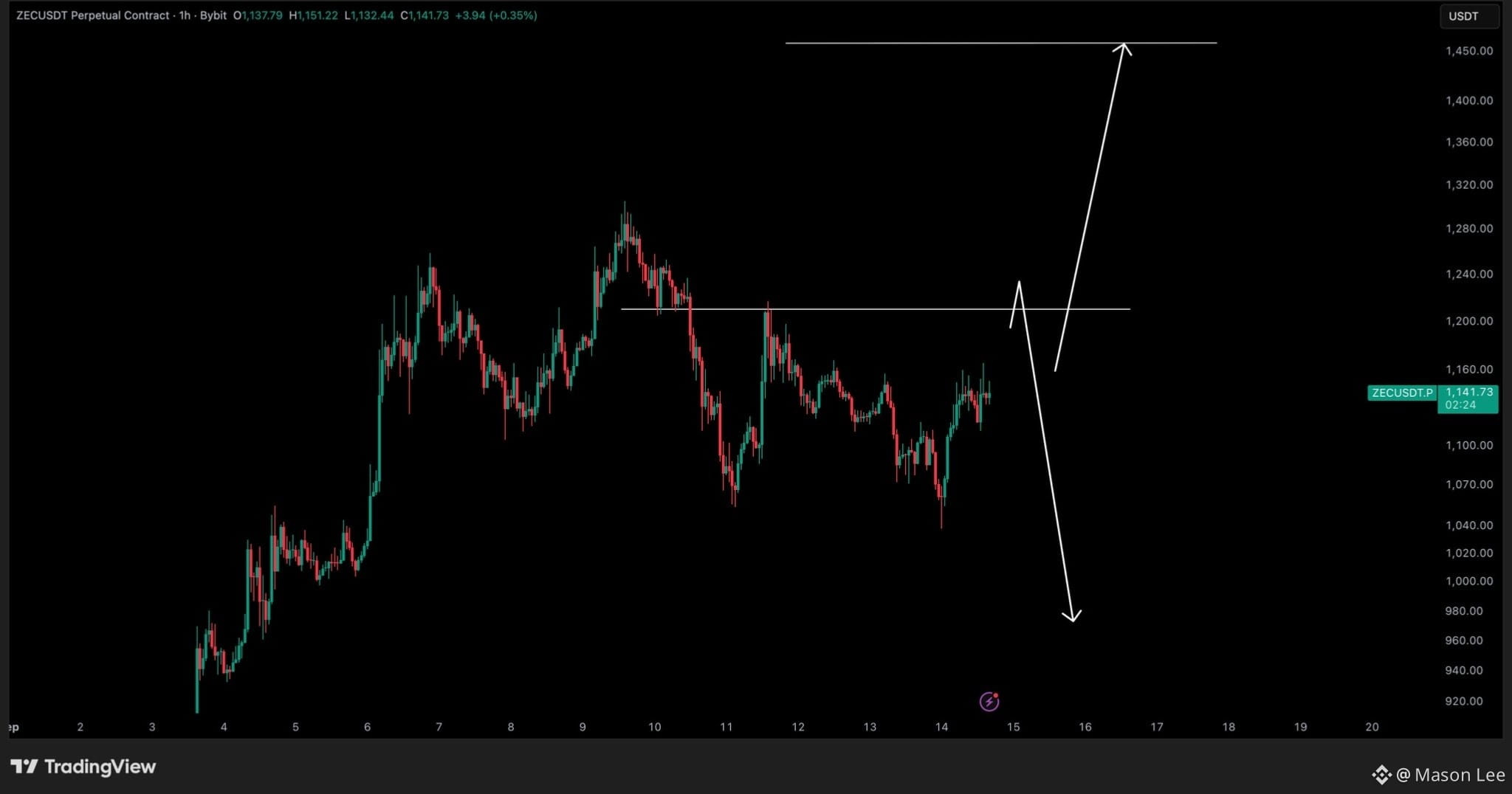
The structure is getting interesting here.
$1,200 remains the minimum target for this upside leg.
If ZEC clears and holds that level, I’m watching $1,350–$1,450 as the next major expansion zone and potential new-high target.
Key levels. Clear invalidation. Let price confirm the move.
Always DYOR.
#ZEC #FedHikeOddsRiseTo89% #AvalancheIntegratesIntoUAEPassDigitalVault #UKSeeksViewsOnTokenizingGold #AnthropicCEOCallsForAISlowdown
$ZEC
The structure is getting interesting here.
$1,200 remains the minimum target for this upside leg.
If ZEC clears and holds that level, I’m watching $1,350–$1,450 as the next major expansion zone and potential new-high target.
Key levels. Clear invalidation. Let price confirm the move.
Always DYOR.
#ZEC #FedHikeOddsRiseTo89% #AvalancheIntegratesIntoUAEPassDigitalVault #UKSeeksViewsOnTokenizingGold #AnthropicCEOCallsForAISlowdown
The structure is getting interesting here.
$1,200 remains the minimum target for this upside leg.
If ZEC clears and holds that level, I’m watching $1,350–$1,450 as the next major expansion zone and potential new-high target.
Key levels. Clear invalidation. Let price confirm the move.
Always DYOR.
#ZEC #FedHikeOddsRiseTo89% #AvalancheIntegratesIntoUAEPassDigitalVault #UKSeeksViewsOnTokenizingGold #AnthropicCEOCallsForAISlowdown
2
259
·
--
$ZEC
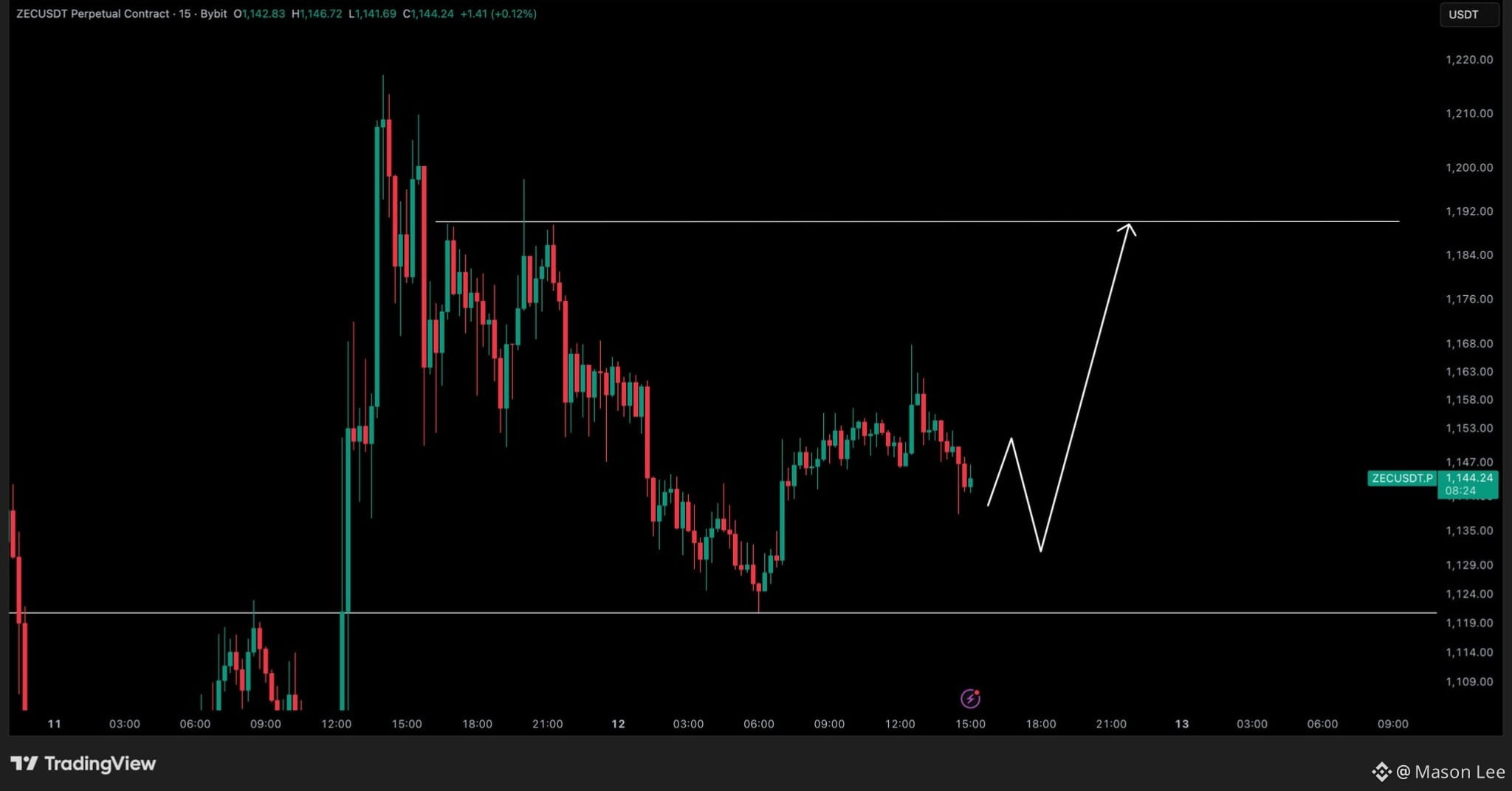
Price is pulling back after failing to push higher, so I’m staying patient here.
The key is whether ZEC can hold the current structure and build enough strength for the next move.
If support holds, $1,192 remains the upside level I’m watching.
No entry yet. Waiting for confirmation rather than forcing the trade.
DYOR.
#ZEC #Write2Earn #Market_Update
$ZEC
Price is pulling back after failing to push higher, so I’m staying patient here.
The key is whether ZEC can hold the current structure and build enough strength for the next move.
If support holds, $1,192 remains the upside level I’m watching.
No entry yet. Waiting for confirmation rather than forcing the trade.
DYOR.
#ZEC #Write2Earn #Market_Update
Price is pulling back after failing to push higher, so I’m staying patient here.
The key is whether ZEC can hold the current structure and build enough strength for the next move.
If support holds, $1,192 remains the upside level I’m watching.
No entry yet. Waiting for confirmation rather than forcing the trade.
DYOR.
#ZEC #Write2Earn #Market_Update
164
·
--
$BTC
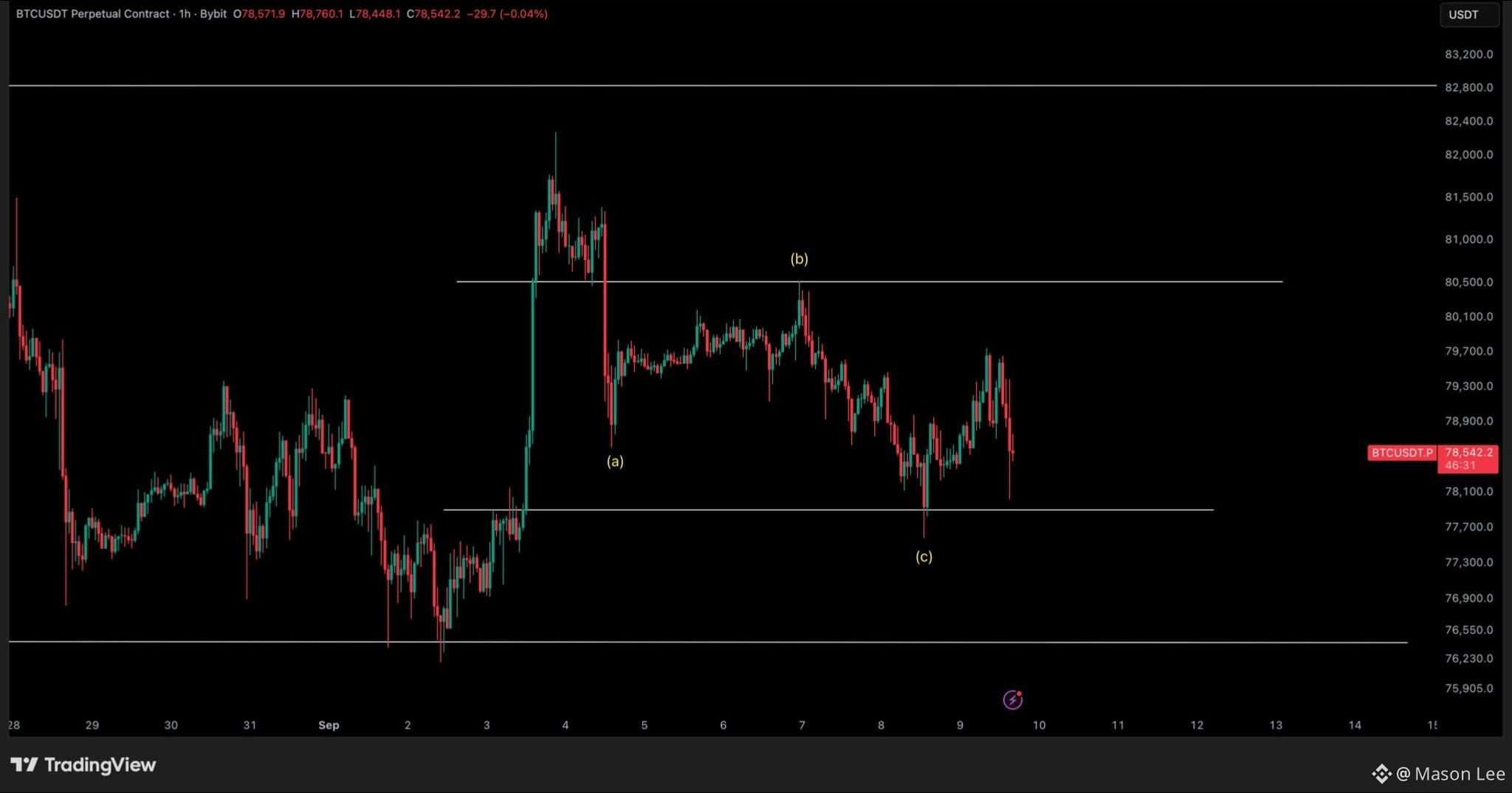
The bullish structure is still intact.
Price is currently holding above the key $77.8K support zone, while $80.5K remains the major resistance.
I’m not chasing here. I’m watching for a clean reaction around support or a confirmed breakout above $80.5K before taking an entry.
Patience > FOMO.
#BTC #crypto #USADPWeeklyEmploymentRises12000 #RippleLobbiesToAdvanceCLARITYActVote #OilRisesToHighestSinceJuly
$BTC
The bullish structure is still intact.
Price is currently holding above the key $77.8K support zone, while $80.5K remains the major resistance.
I’m not chasing here. I’m watching for a clean reaction around support or a confirmed breakout above $80.5K before taking an entry.
Patience > FOMO.
#BTC #crypto #USADPWeeklyEmploymentRises12000 #RippleLobbiesToAdvanceCLARITYActVote #OilRisesToHighestSinceJuly
The bullish structure is still intact.
Price is currently holding above the key $77.8K support zone, while $80.5K remains the major resistance.
I’m not chasing here. I’m watching for a clean reaction around support or a confirmed breakout above $80.5K before taking an entry.
Patience > FOMO.
#BTC #crypto #USADPWeeklyEmploymentRises12000 #RippleLobbiesToAdvanceCLARITYActVote #OilRisesToHighestSinceJuly
113
·
--
$IOST
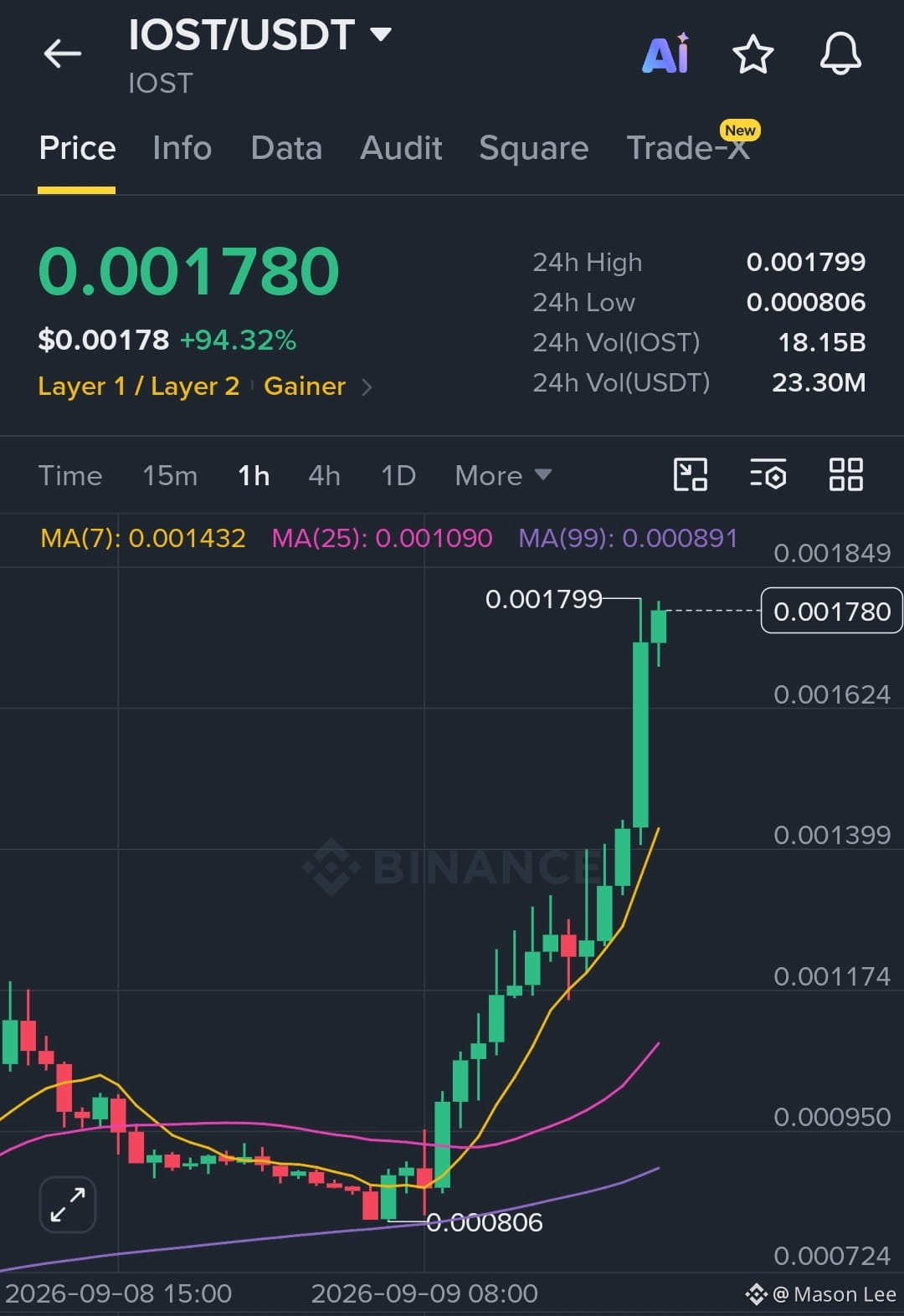
Parabolic rip from 0.000726, now pressing 0.001799. MAs stacked—price above all three. Break above triggers continuation; rejection retests 0.001624. Momentum extreme—tight stop essential.
Entry Zone: 0.001780 – 0.001781
TP1: 0.001799
TP2: 0.001900
TP3: 0.002050
Stop-Loss: 0.001600
#IOST #CryptoUpdate
$IOST
Parabolic rip from 0.000726, now pressing 0.001799. MAs stacked—price above all three. Break above triggers continuation; rejection retests 0.001624. Momentum extreme—tight stop essential.
Entry Zone: 0.001780 – 0.001781
TP1: 0.001799
TP2: 0.001900
TP3: 0.002050
Stop-Loss: 0.001600
#IOST #CryptoUpdate
Parabolic rip from 0.000726, now pressing 0.001799. MAs stacked—price above all three. Break above triggers continuation; rejection retests 0.001624. Momentum extreme—tight stop essential.
Entry Zone: 0.001780 – 0.001781
TP1: 0.001799
TP2: 0.001900
TP3: 0.002050
Stop-Loss: 0.001600
#IOST #CryptoUpdate
1
259
·
--
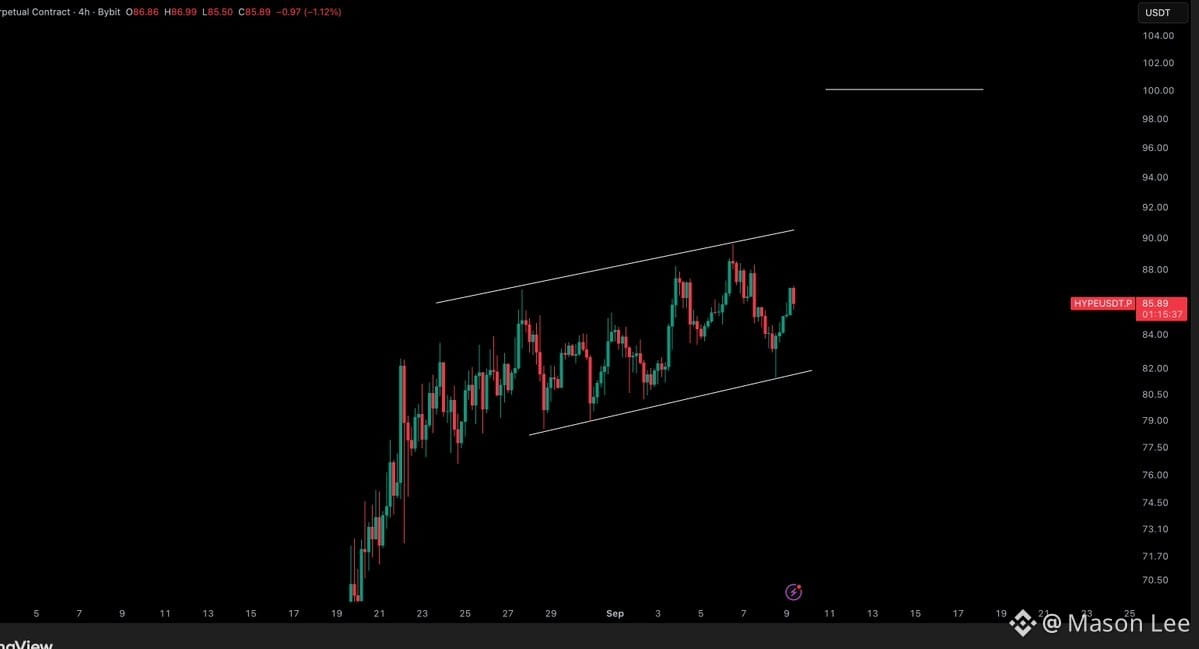
$HYPE is holding an interesting 4H structure after defending the $82–83 area.
Price is around $85.9, with the rising channel still intact. The key test is $89–90 resistance.
What I Like • Higher lows remain intact
• $82–83 support is holding
• Strong recovery from the recent dip
What I Don’t Like • Volume is cooling
• $89–90 remains overhead resistance
• Losing $82 could damage the structure
CONDITIONAL LONG
Entry: $84.5–86
SL: $81.5
TP1: $89.5
TP2: $92
TP3: $100
From $85.25 entry, risk is ~4.4%, with TP2 offering roughly 1.6R and TP3 ~3.9R.
I’d rather buy the retest than chase resistance.
Can $HYPE finally break above $90 and continue the channel?
#CryptoTrading #HYPE #RippleLobbiesToAdvanceCLARITYActVote #ChinaAugustCPIRises0.8%YoY #USStrikesTargetsNearHormuzAndJask
$HYPE is holding an interesting 4H structure after defending the $82–83 area.
Price is around $85.9, with the rising channel still intact. The key test is $89–90 resistance.
What I Like • Higher lows remain intact
• $82–83 support is holding
• Strong recovery from the recent dip
What I Don’t Like • Volume is cooling
• $89–90 remains overhead resistance
• Losing $82 could damage the structure
CONDITIONAL LONG
Entry: $84.5–86
SL: $81.5
TP1: $89.5
TP2: $92
TP3: $100
From $85.25 entry, risk is ~4.4%, with TP2 offering roughly 1.6R and TP3 ~3.9R.
I’d rather buy the retest than chase resistance.
Can $HYPE finally break above $90 and continue the channel?
#CryptoTrading #HYPE #RippleLobbiesToAdvanceCLARITYActVote #ChinaAugustCPIRises0.8%YoY #USStrikesTargetsNearHormuzAndJask
Price is around $85.9, with the rising channel still intact. The key test is $89–90 resistance.
What I Like • Higher lows remain intact
• $82–83 support is holding
• Strong recovery from the recent dip
What I Don’t Like • Volume is cooling
• $89–90 remains overhead resistance
• Losing $82 could damage the structure
CONDITIONAL LONG
Entry: $84.5–86
SL: $81.5
TP1: $89.5
TP2: $92
TP3: $100
From $85.25 entry, risk is ~4.4%, with TP2 offering roughly 1.6R and TP3 ~3.9R.
I’d rather buy the retest than chase resistance.
Can $HYPE finally break above $90 and continue the channel?
#CryptoTrading #HYPE #RippleLobbiesToAdvanceCLARITYActVote #ChinaAugustCPIRises0.8%YoY #USStrikesTargetsNearHormuzAndJask
105
·
--
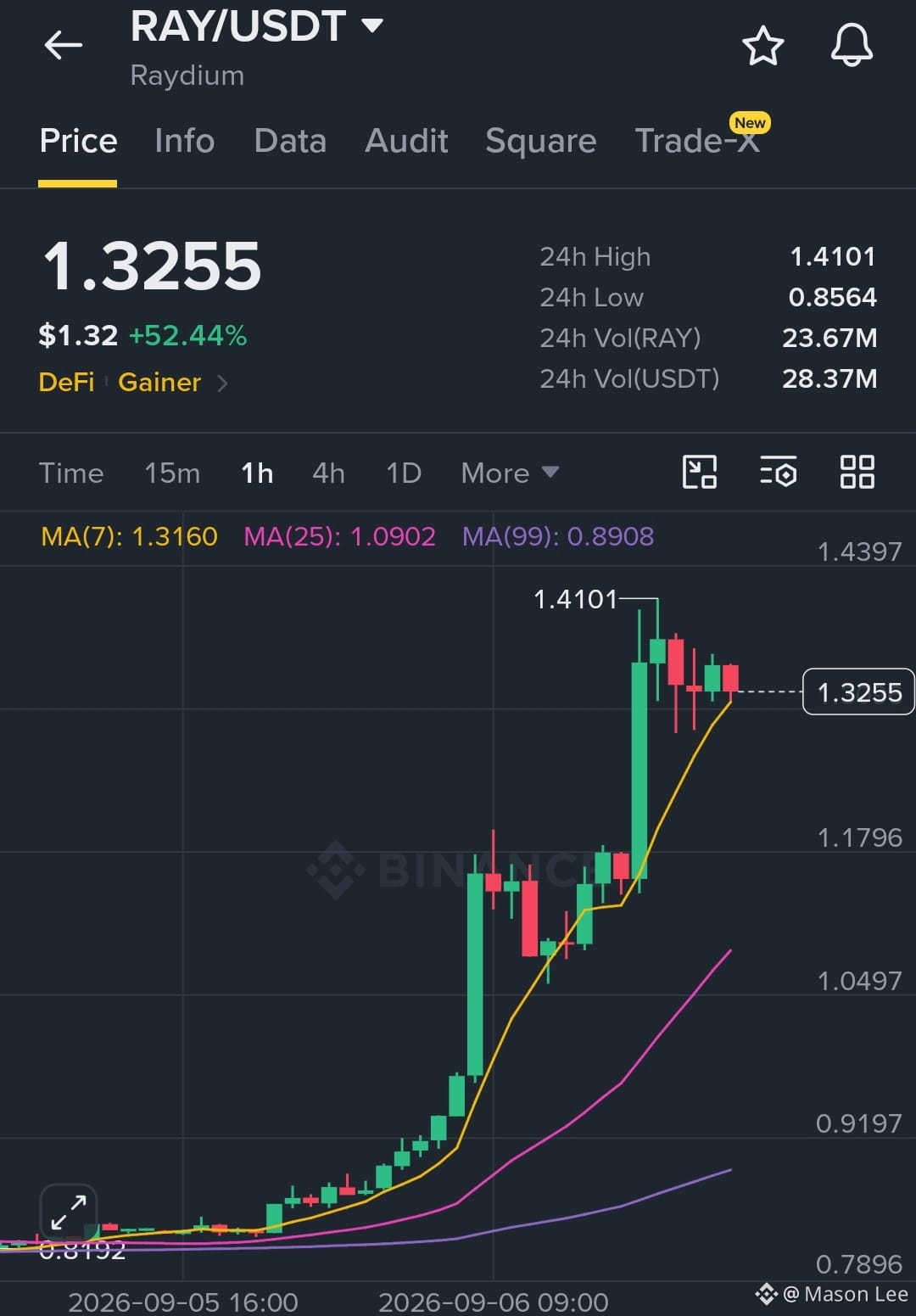
$RAY is showing a powerful breakout structure after a sharp expansion in price.
The trend remains firmly bullish, with price holding above the short-, mid-, and long-term moving averages. Momentum is strong, but the move is becoming extended, making consolidation important for a healthier continuation.
$1.30–$1.32 is the key area to watch for structure.
#RAY #Crypto #Web3 #MarketUpdate #CryptoUpdate
$RAY is showing a powerful breakout structure after a sharp expansion in price.
The trend remains firmly bullish, with price holding above the short-, mid-, and long-term moving averages. Momentum is strong, but the move is becoming extended, making consolidation important for a healthier continuation.
$1.30–$1.32 is the key area to watch for structure.
#RAY #Crypto #Web3 #MarketUpdate #CryptoUpdate
The trend remains firmly bullish, with price holding above the short-, mid-, and long-term moving averages. Momentum is strong, but the move is becoming extended, making consolidation important for a healthier continuation.
$1.30–$1.32 is the key area to watch for structure.
#RAY #Crypto #Web3 #MarketUpdate #CryptoUpdate
257



·
--
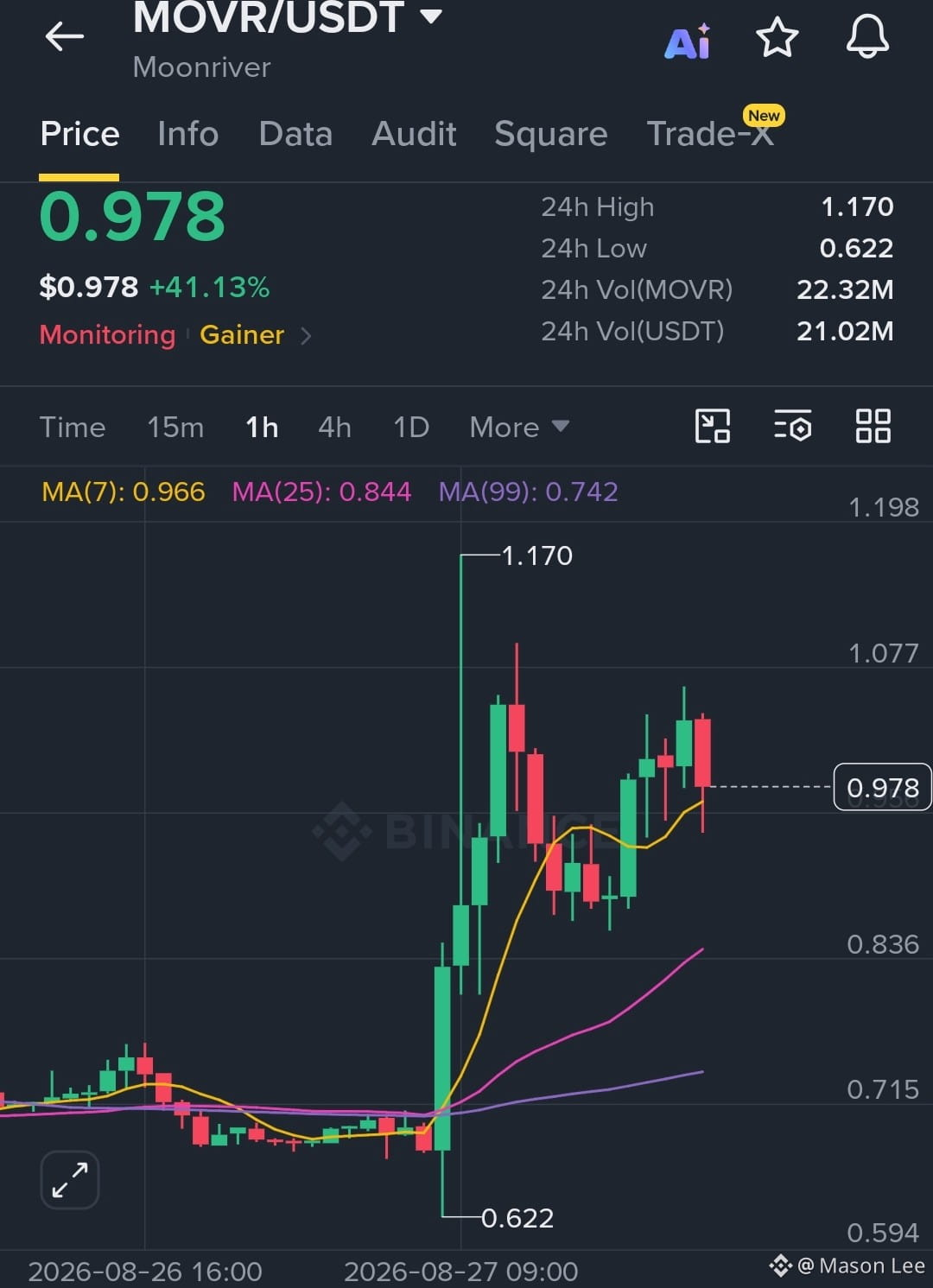
$MOVR just showed why you don’t fade strength too early.
From $0.62 → $1.17 in one move, then price started building above the breakout area instead of giving it all back.
Now the key levels:
→ $0.98 support
→ $1.07 resistance
→ $1.17 breakout target
Momentum is strong. Let price confirm the next move.
Always DYOR.
#MOVR #Crypto #Altcoins #CryptoTrading #Binance
$MOVR just showed why you don’t fade strength too early.
From $0.62 → $1.17 in one move, then price started building above the breakout area instead of giving it all back.
Now the key levels:
→ $0.98 support
→ $1.07 resistance
→ $1.17 breakout target
Momentum is strong. Let price confirm the next move.
Always DYOR.
#MOVR #Crypto #Altcoins #CryptoTrading #Binance
From $0.62 → $1.17 in one move, then price started building above the breakout area instead of giving it all back.
Now the key levels:
→ $0.98 support
→ $1.07 resistance
→ $1.17 breakout target
Momentum is strong. Let price confirm the next move.
Always DYOR.
#MOVR #Crypto #Altcoins #CryptoTrading #Binance
220
·
--
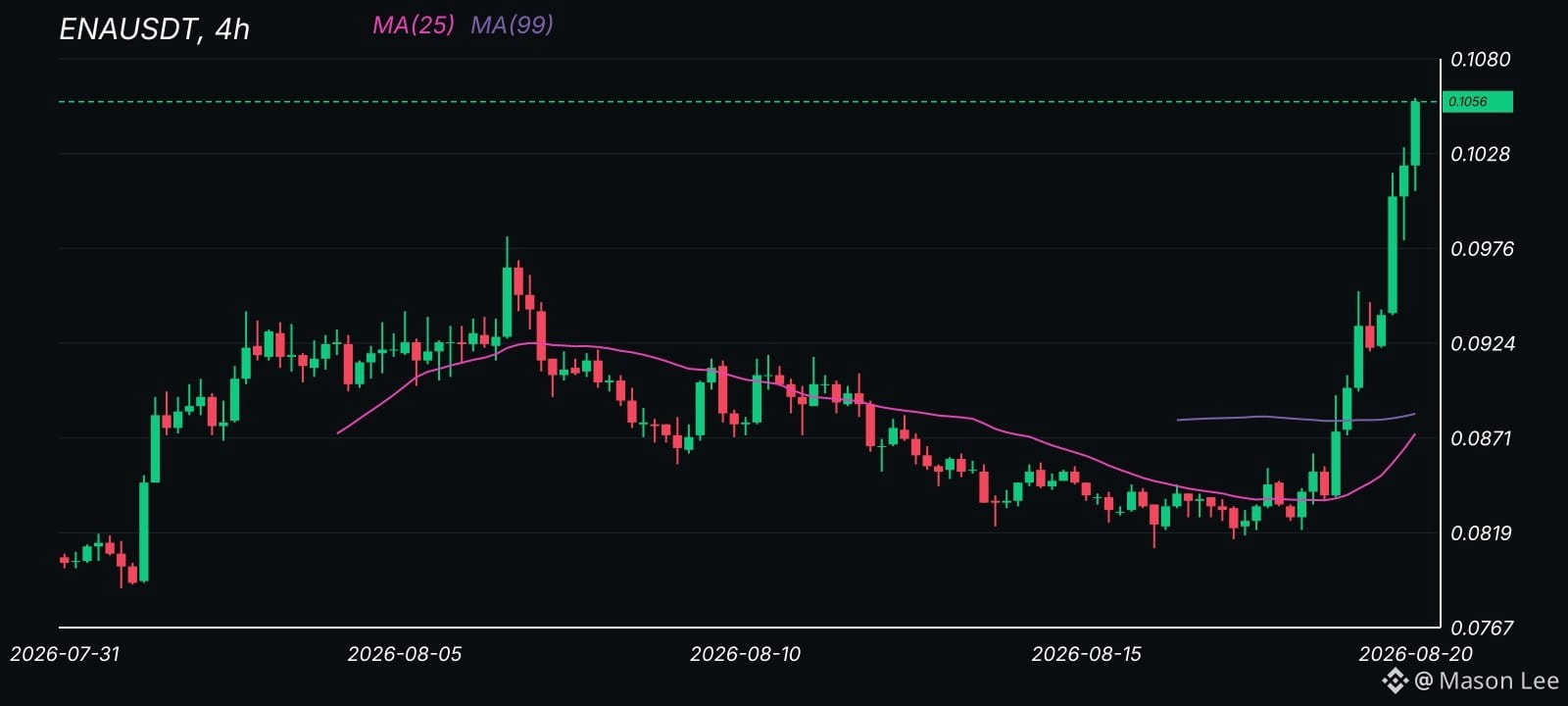
$ENA
Ripping from 0.0767, now pressing 0.1080. Price above both MAs—strong momentum. Break above triggers continuation; rejection retests 0.1028. Bulls in control.
Entry Zone: 0.1060 – 0.1065
TP1: 0.1080
TP2: 0.1110
TP3: 0.1150
Stop-Loss: 0.1020
#ENA #Write2Earn
$ENA
Ripping from 0.0767, now pressing 0.1080. Price above both MAs—strong momentum. Break above triggers continuation; rejection retests 0.1028. Bulls in control.
Entry Zone: 0.1060 – 0.1065
TP1: 0.1080
TP2: 0.1110
TP3: 0.1150
Stop-Loss: 0.1020
#ENA #Write2Earn
Ripping from 0.0767, now pressing 0.1080. Price above both MAs—strong momentum. Break above triggers continuation; rejection retests 0.1028. Bulls in control.
Entry Zone: 0.1060 – 0.1065
TP1: 0.1080
TP2: 0.1110
TP3: 0.1150
Stop-Loss: 0.1020
#ENA #Write2Earn
450
·
--
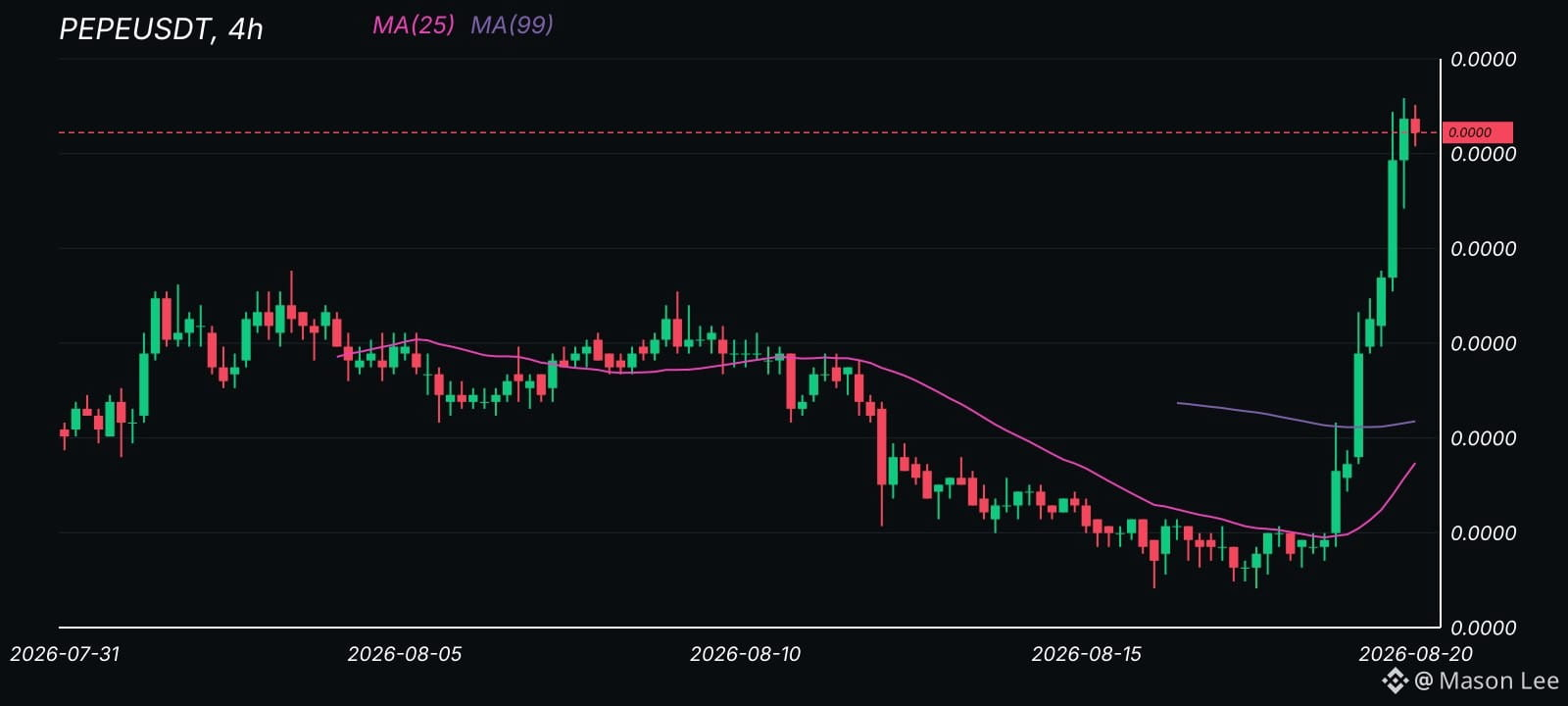
$PEPE
Grinding up from 0.00000672, now pressing 0.00000958. Price above both MAs—steady uptrend. Break above triggers continuation; rejection retests 0.00000892. Momentum building.
Entry Zone: 0.00000940 – 0.00000945
TP1: 0.00000958
TP2: 0.00000990
TP3: 0.00001050
Stop-Loss: 0.00000890
#PEPE #Write2Earn
$PEPE
Grinding up from 0.00000672, now pressing 0.00000958. Price above both MAs—steady uptrend. Break above triggers continuation; rejection retests 0.00000892. Momentum building.
Entry Zone: 0.00000940 – 0.00000945
TP1: 0.00000958
TP2: 0.00000990
TP3: 0.00001050
Stop-Loss: 0.00000890
#PEPE #Write2Earn
Grinding up from 0.00000672, now pressing 0.00000958. Price above both MAs—steady uptrend. Break above triggers continuation; rejection retests 0.00000892. Momentum building.
Entry Zone: 0.00000940 – 0.00000945
TP1: 0.00000958
TP2: 0.00000990
TP3: 0.00001050
Stop-Loss: 0.00000890
#PEPE #Write2Earn
432
Log in to explore more content
Join global crypto users on Binance Square
⚡️ Get latest and useful information about crypto.
💬 Trusted by the world’s largest crypto exchange.
👍 Discover real insights from verified creators.
Email / Phone number
Trending Topics
SECProposesCryptoCustodyRules
271 views
31 Discussing
🚨 SEC PROPOSES NEW CRYPTO CUSTODY RULES 🇺🇸🔐
The U.S. Securities and Exchange Commission has proposed a new framework for how investment advisers and regulated funds can custody crypto assets.
📌 The proposal would allow self-custody in certain circumstances, particularly when no qualified custodian is available.
📌 State-chartered trust companies could also qualify as crypto custodians under specific conditions.
📌 The framework includes safeguards around private keys, cybersecurity, asset segregation and oversight.
📌 The proposal is not final yet. A 60-day public comment period will begin after publication in the Federal Register.
💡 Why it matters:
Clearer custody rules could give investment advisers and regulated funds a defined regulatory pathway for holding digital assets, potentially expanding institutional access to crypto.
⚠️ This is a proposed rule, not an immediate change to existing requirements. Crypto remains highly volatile. DYOR and manage risk.
What do you think about the SEC's new crypto custody framework? 👇
#Bitcoin #BTC #Ethereum #CryptoNews #SECProposesCryptoCustodyRules
md-rana-sikdar-1232
·0 Likes
·21 views
SECApproves3xLongCryptoCommodityETPs
1,094 views
77 Discussing
G7PlansToReleaseUpTo100MBarrelsOilDiesel
2,657 views
129 Discussing