

初晓链Lola
2.5k Posts

初晓链Lola
Report
Block User
关注加密市场和Web3。X: @LolaJiang2 // A self-media author, specializes in the cryptocurrency.

Creator Awards 2024

Creator Award Original Creator

原创之星
Open Trade

BNB Holder
Frequent Trader
5.6 Years
20 Following
22.5K+ Followers
26.6K+ Liked
4 Badges
Posts
Portfolio
All
Quotes
Videos
·
--
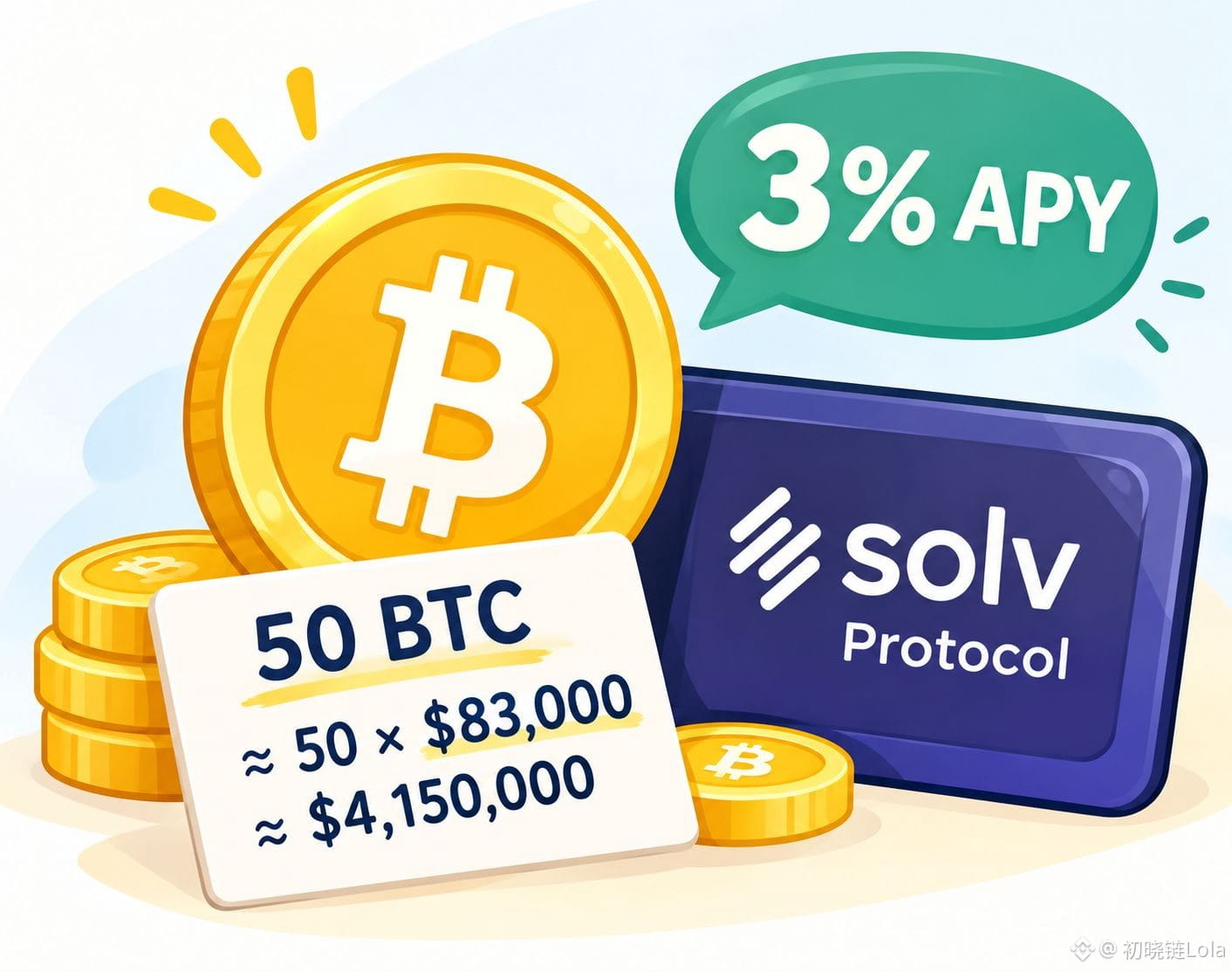
For 3% annualized returns, is it really worth handing over 50 BTC?
I saw a DeFi player’s firsthand account.
He deposited 50 $BTC into a protocol at #SolvProtocol ,
but now he can’t redeem it.
He doesn’t trade shitcoins or do short-term plays—
he only wanted to earn a 3% annualized return,
so that the BTC he holds could generate passive income.
But the on-chain protocol’s security is unknown, and there are also risks and uncertainties.
For a 3% annualized return,
is it really not worth giving 50 BTC to a third party?
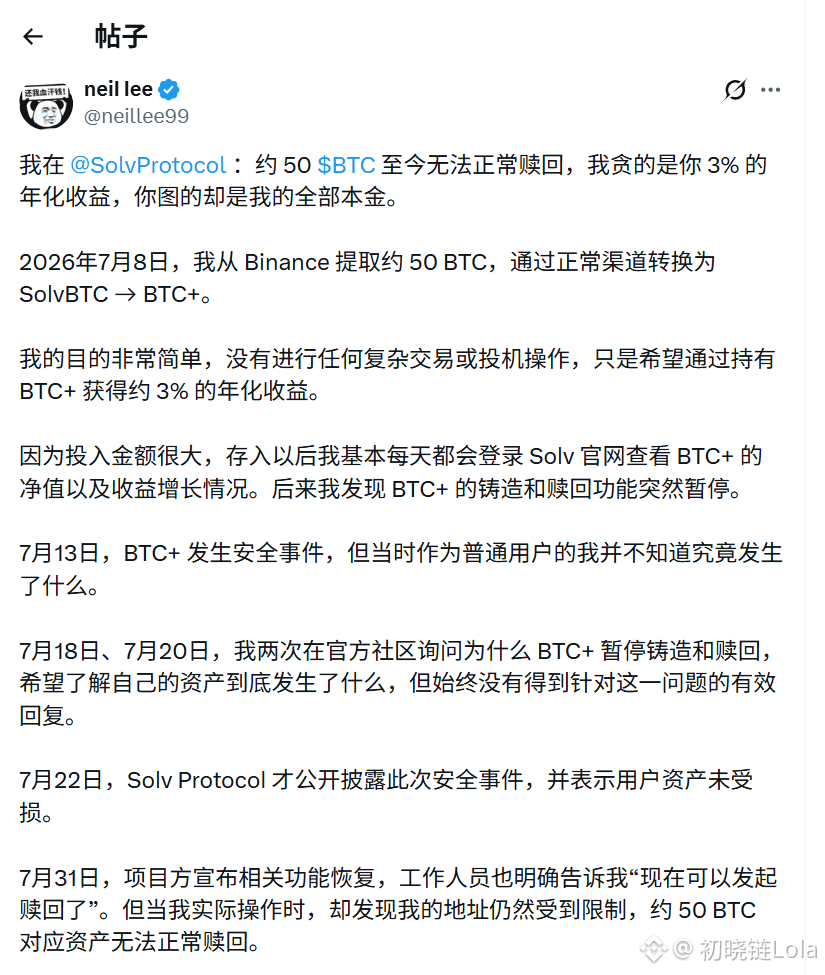
In July, the Solv Protocol BTC+ saw its process go through minting, a redemption pause, and a security incident.
Later, the project team announced that the related functions were restored.
But this player’s address still couldn’t redeem normally.
After more than two months of back-and-forth communication, there was no result.
Now 50 BTC is stuck.
He posted to seek help,
hoping to get his assets back through public attention and community discussion.
After all, this isn’t a small amount—
50 BTC, over 27 million RMB!
When many people calculate DeFi returns,
what they think about first is how much APY that protocol offers.
But what you should really focus on is:
for a few percentage points of gains, what risks are you taking?
Smart contract risk, protocol security risk, oracle risk, liquidity risk,
as well as compliance and risk-control restrictions, and so on.
These risks that are invisible in everyday life—
when something truly goes wrong—are ultimately borne by the player.
On-chain assets may belong to you,
but whether you can get them back smoothly is another matter.
Once you hand the principal to a third party,
you lose control over the risks.
Trying a DeFi protocol with a small amount of money is understandable.
But if you hold a certain amount of BTC, don’t take the risk.
It’s better to earn a little less—
and firmly keep control of your funds.
Especially for amounts above 10 BTC,
you really don’t need to put your principal into a protocol just for a few percentage points of return.
After all, the returns are limited, while the principal risk could be non-linear.
It’s great to make a few percentage points.
But if the principal is lost, then all the gains won’t matter.
Don’t give the most important principal to someone else over a bit of sesame-sized profit.
#定投BTC #defi #APY
For 3% annualized returns, is it really worth handing over 50 BTC?
I saw a DeFi player’s firsthand account.
He deposited 50 $BTC into a protocol at #SolvProtocol ,
but now he can’t redeem it.
He doesn’t trade shitcoins or do short-term plays—
he only wanted to earn a 3% annualized return,
so that the BTC he holds could generate passive income.
But the on-chain protocol’s security is unknown, and there are also risks and uncertainties.
For a 3% annualized return,
is it really not worth giving 50 BTC to a third party?
In July, the Solv Protocol BTC+ saw its process go through minting, a redemption pause, and a security incident.
Later, the project team announced that the related functions were restored.
But this player’s address still couldn’t redeem normally.
After more than two months of back-and-forth communication, there was no result.
Now 50 BTC is stuck.
He posted to seek help,
hoping to get his assets back through public attention and community discussion.
After all, this isn’t a small amount—
50 BTC, over 27 million RMB!
When many people calculate DeFi returns,
what they think about first is how much APY that protocol offers.
But what you should really focus on is:
for a few percentage points of gains, what risks are you taking?
Smart contract risk, protocol security risk, oracle risk, liquidity risk,
as well as compliance and risk-control restrictions, and so on.
These risks that are invisible in everyday life—
when something truly goes wrong—are ultimately borne by the player.
On-chain assets may belong to you,
but whether you can get them back smoothly is another matter.
Once you hand the principal to a third party,
you lose control over the risks.
Trying a DeFi protocol with a small amount of money is understandable.
But if you hold a certain amount of BTC, don’t take the risk.
It’s better to earn a little less—
and firmly keep control of your funds.
Especially for amounts above 10 BTC,
you really don’t need to put your principal into a protocol just for a few percentage points of return.
After all, the returns are limited, while the principal risk could be non-linear.
It’s great to make a few percentage points.
But if the principal is lost, then all the gains won’t matter.
Don’t give the most important principal to someone else over a bit of sesame-sized profit.
#定投BTC #defi #APY
I saw a DeFi player’s firsthand account.
He deposited 50 $BTC into a protocol at #SolvProtocol ,
but now he can’t redeem it.
He doesn’t trade shitcoins or do short-term plays—
he only wanted to earn a 3% annualized return,
so that the BTC he holds could generate passive income.
But the on-chain protocol’s security is unknown, and there are also risks and uncertainties.
For a 3% annualized return,
is it really not worth giving 50 BTC to a third party?
In July, the Solv Protocol BTC+ saw its process go through minting, a redemption pause, and a security incident.
Later, the project team announced that the related functions were restored.
But this player’s address still couldn’t redeem normally.
After more than two months of back-and-forth communication, there was no result.
Now 50 BTC is stuck.
He posted to seek help,
hoping to get his assets back through public attention and community discussion.
After all, this isn’t a small amount—
50 BTC, over 27 million RMB!
When many people calculate DeFi returns,
what they think about first is how much APY that protocol offers.
But what you should really focus on is:
for a few percentage points of gains, what risks are you taking?
Smart contract risk, protocol security risk, oracle risk, liquidity risk,
as well as compliance and risk-control restrictions, and so on.
These risks that are invisible in everyday life—
when something truly goes wrong—are ultimately borne by the player.
On-chain assets may belong to you,
but whether you can get them back smoothly is another matter.
Once you hand the principal to a third party,
you lose control over the risks.
Trying a DeFi protocol with a small amount of money is understandable.
But if you hold a certain amount of BTC, don’t take the risk.
It’s better to earn a little less—
and firmly keep control of your funds.
Especially for amounts above 10 BTC,
you really don’t need to put your principal into a protocol just for a few percentage points of return.
After all, the returns are limited, while the principal risk could be non-linear.
It’s great to make a few percentage points.
But if the principal is lost, then all the gains won’t matter.
Don’t give the most important principal to someone else over a bit of sesame-sized profit.
#定投BTC #defi #APY
2
5
2.9k
·
--
Put 50 $BTC into a DeFi protocol #SolvProtocol .
In the end, you can’t get the 50 BTC back anymore 🙈.
And you’ve fulfilled an old saying again:
You were greedy for the project’s 3% annualized return,
while the other side is after all your principal.
For large amounts of money, still don’t put everything in one basket.
If you hold a certain amount of BTC, wouldn’t a few percentage points of annualized return matter to you?
Put 50 $BTC into a DeFi protocol #SolvProtocol .
In the end, you can’t get the 50 BTC back anymore 🙈.
And you’ve fulfilled an old saying again:
You were greedy for the project’s 3% annualized return,
while the other side is after all your principal.
For large amounts of money, still don’t put everything in one basket.
If you hold a certain amount of BTC, wouldn’t a few percentage points of annualized return matter to you?
In the end, you can’t get the 50 BTC back anymore 🙈.
And you’ve fulfilled an old saying again:
You were greedy for the project’s 3% annualized return,
while the other side is after all your principal.
For large amounts of money, still don’t put everything in one basket.
If you hold a certain amount of BTC, wouldn’t a few percentage points of annualized return matter to you?
21
20
29.6k
·
--
Fear is the norm 🙈
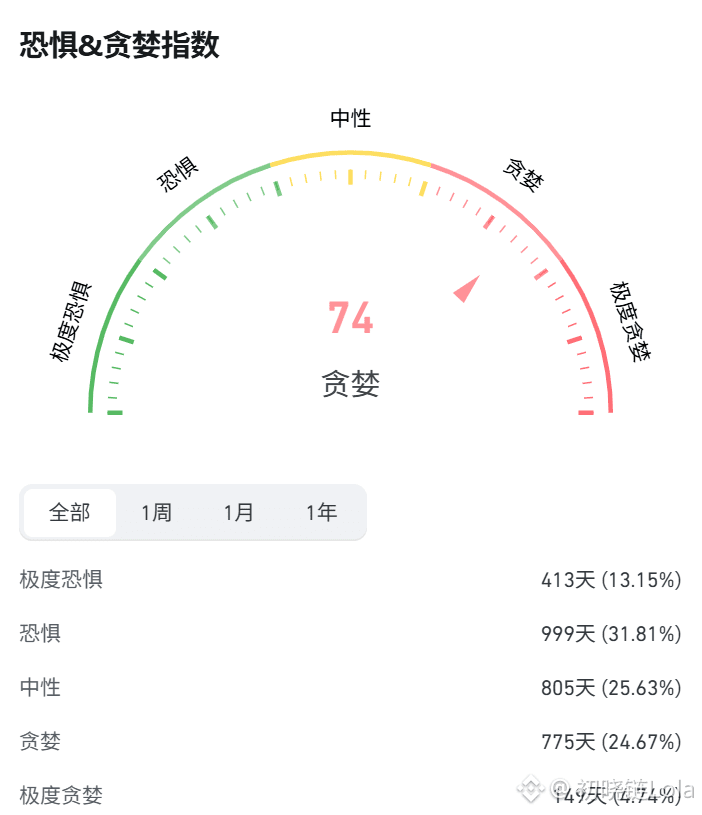
Today, I looked at the $BTC Fear & Greed Index—it's 74.
I noticed that for most of the time, market sentiment hasn't been optimistic.
Based on historical data:
Extreme Fear: 413 days, accounting for 13.15%
Fear: 999 days, accounting for 31.81%
Neutral: 805 days, accounting for 25.63%
Greed: 775 days, accounting for 24.67%
Extreme Greed: 149 days, accounting for 4.74%
Fear + Extreme Fear is close to 45%, while Greed + Extreme Greed is only about 29%.
In BTC history, it’s not as easy to believe as people imagine.
Panic, doubt, worrying about it going to zero, worrying about losing value, worrying about further declines—these are the norm.
There just aren’t that many “comfortable” greed markets.
Of course, the Fear & Greed Index is only for reference.
Only if you personally believe in BTC’s value can you hold it long-term,
stay steady through volatility,
and not get shaken out by the constant ups and downs.
#BTCHOLDER
Fear is the norm 🙈
Today, I looked at the $BTC Fear & Greed Index—it's 74.
I noticed that for most of the time, market sentiment hasn't been optimistic.
Based on historical data:
Extreme Fear: 413 days, accounting for 13.15%
Fear: 999 days, accounting for 31.81%
Neutral: 805 days, accounting for 25.63%
Greed: 775 days, accounting for 24.67%
Extreme Greed: 149 days, accounting for 4.74%
Fear + Extreme Fear is close to 45%, while Greed + Extreme Greed is only about 29%.
In BTC history, it’s not as easy to believe as people imagine.
Panic, doubt, worrying about it going to zero, worrying about losing value, worrying about further declines—these are the norm.
There just aren’t that many “comfortable” greed markets.
Of course, the Fear & Greed Index is only for reference.
Only if you personally believe in BTC’s value can you hold it long-term,
stay steady through volatility,
and not get shaken out by the constant ups and downs.
#BTCHOLDER
Today, I looked at the $BTC Fear & Greed Index—it's 74.
I noticed that for most of the time, market sentiment hasn't been optimistic.
Based on historical data:
Extreme Fear: 413 days, accounting for 13.15%
Fear: 999 days, accounting for 31.81%
Neutral: 805 days, accounting for 25.63%
Greed: 775 days, accounting for 24.67%
Extreme Greed: 149 days, accounting for 4.74%
Fear + Extreme Fear is close to 45%, while Greed + Extreme Greed is only about 29%.
In BTC history, it’s not as easy to believe as people imagine.
Panic, doubt, worrying about it going to zero, worrying about losing value, worrying about further declines—these are the norm.
There just aren’t that many “comfortable” greed markets.
Of course, the Fear & Greed Index is only for reference.
Only if you personally believe in BTC’s value can you hold it long-term,
stay steady through volatility,
and not get shaken out by the constant ups and downs.
#BTCHOLDER
855
·
--
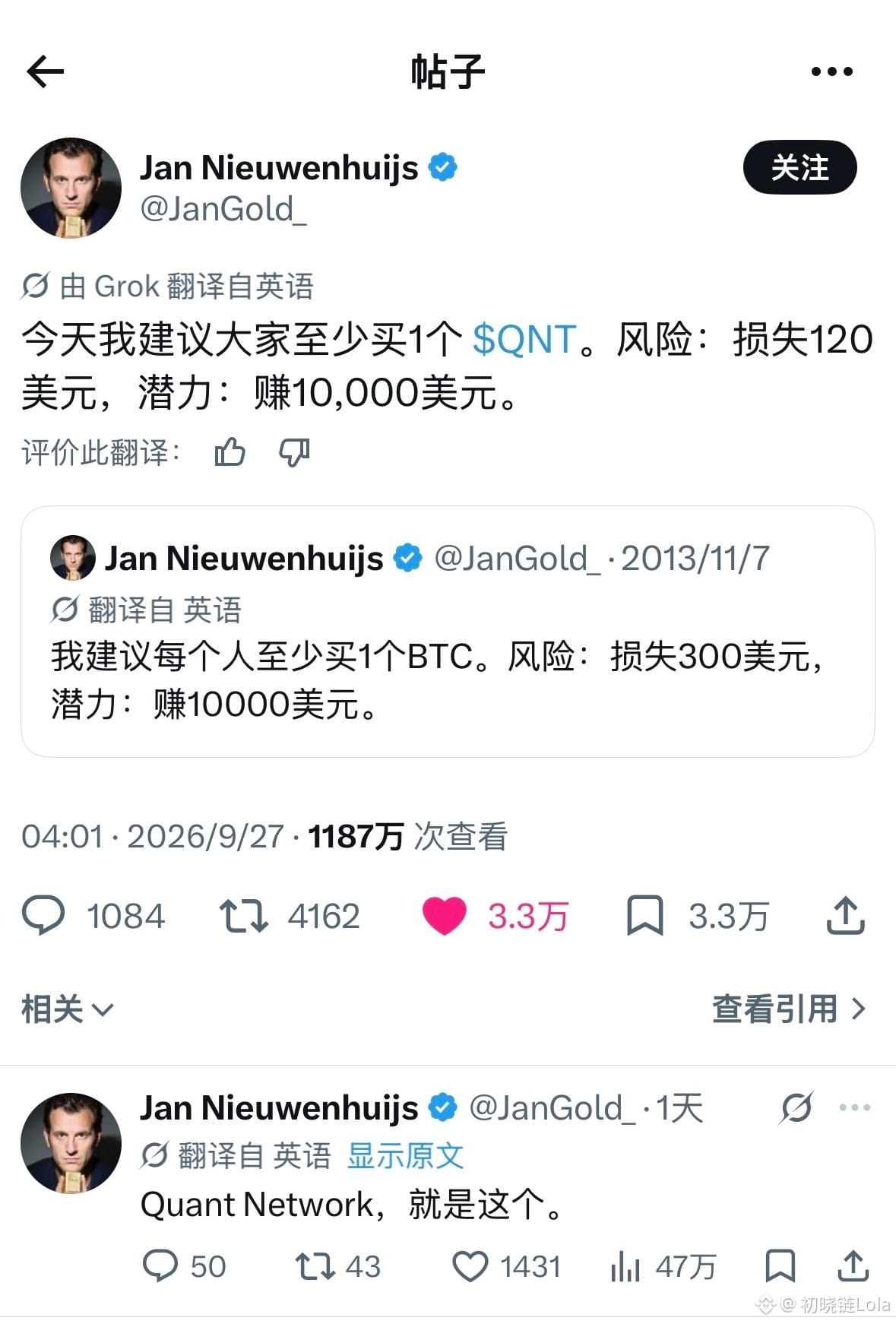
In 2013, this big shot said,
Buy 1 $BTC .
You might lose $300, but you have a chance to earn $10,000;
Yesterday he also called out a trade for $QNT ,
Buy 1 #QNT .
You might lose $120, but you have a chance to earn $10,000.
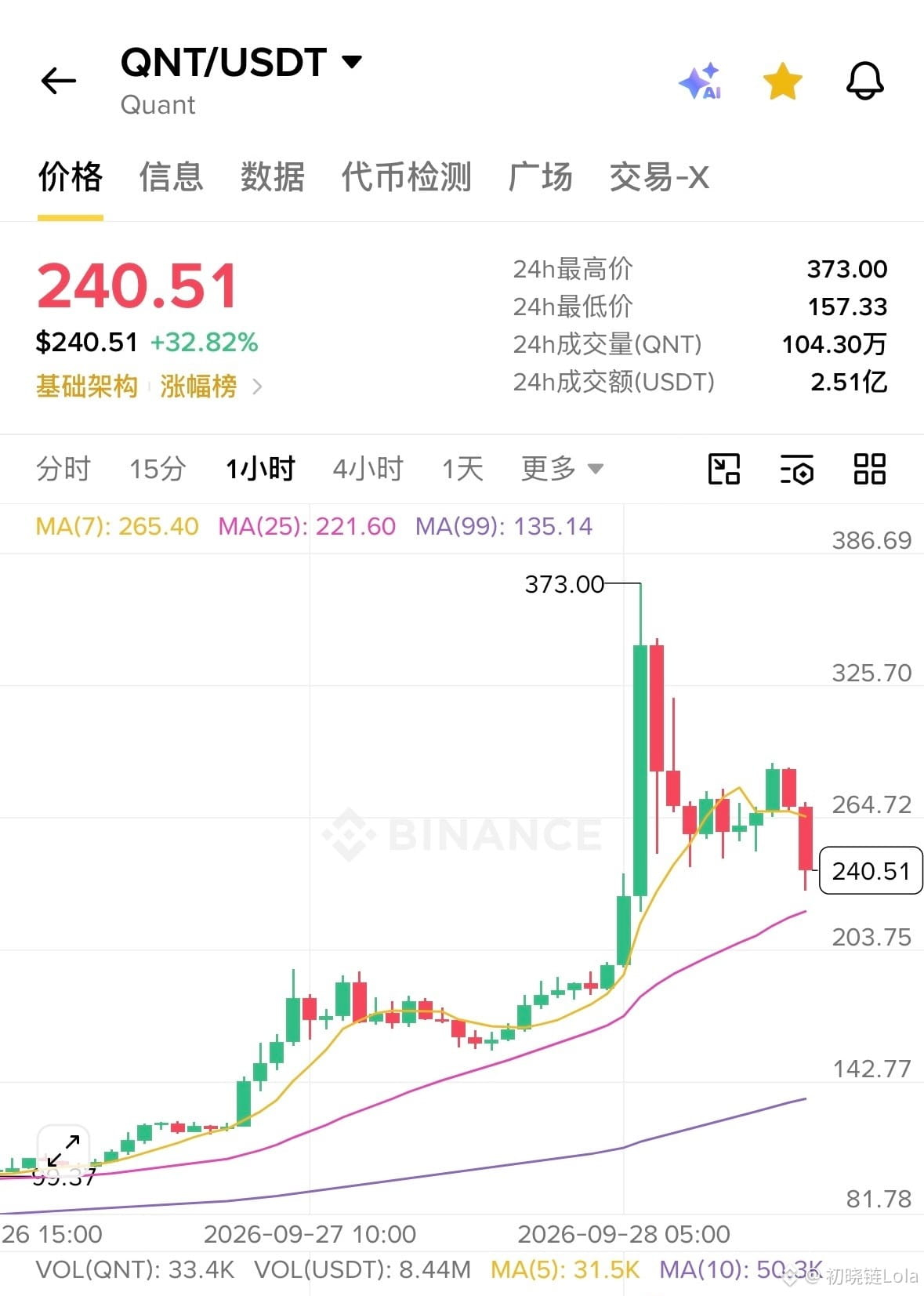
After he made the call, QNT rose from 120 to 370, then it’s back to 240 now.
I don’t know if this time will be right,
but past experience often shows that path dependence is unreliable—accuracy is not great.
Will you give it a try? 😂
#比特币跌破8.3万美元
In 2013, this big shot said,
Buy 1 $BTC .
You might lose $300, but you have a chance to earn $10,000;
Yesterday he also called out a trade for $QNT ,
Buy 1 #QNT .
You might lose $120, but you have a chance to earn $10,000.
After he made the call, QNT rose from 120 to 370, then it’s back to 240 now.
I don’t know if this time will be right,
but past experience often shows that path dependence is unreliable—accuracy is not great.
Will you give it a try? 😂
#比特币跌破8.3万美元
Buy 1 $BTC .
You might lose $300, but you have a chance to earn $10,000;
Yesterday he also called out a trade for $QNT ,
Buy 1 #QNT .
You might lose $120, but you have a chance to earn $10,000.
After he made the call, QNT rose from 120 to 370, then it’s back to 240 now.
I don’t know if this time will be right,
but past experience often shows that path dependence is unreliable—accuracy is not great.
Will you give it a try? 😂
#比特币跌破8.3万美元
1
3.2k
·
--
$387 million stolen—are exchange funds really safe?
On September 25, #Bitget被盗 , the attack amount exceeded $387 million.
Cold wallets and user account balances were not affected.
The platform’s user protection fund is over $464 million and can fully cover the losses.
The withdrawal function will resume in an orderly manner starting today.
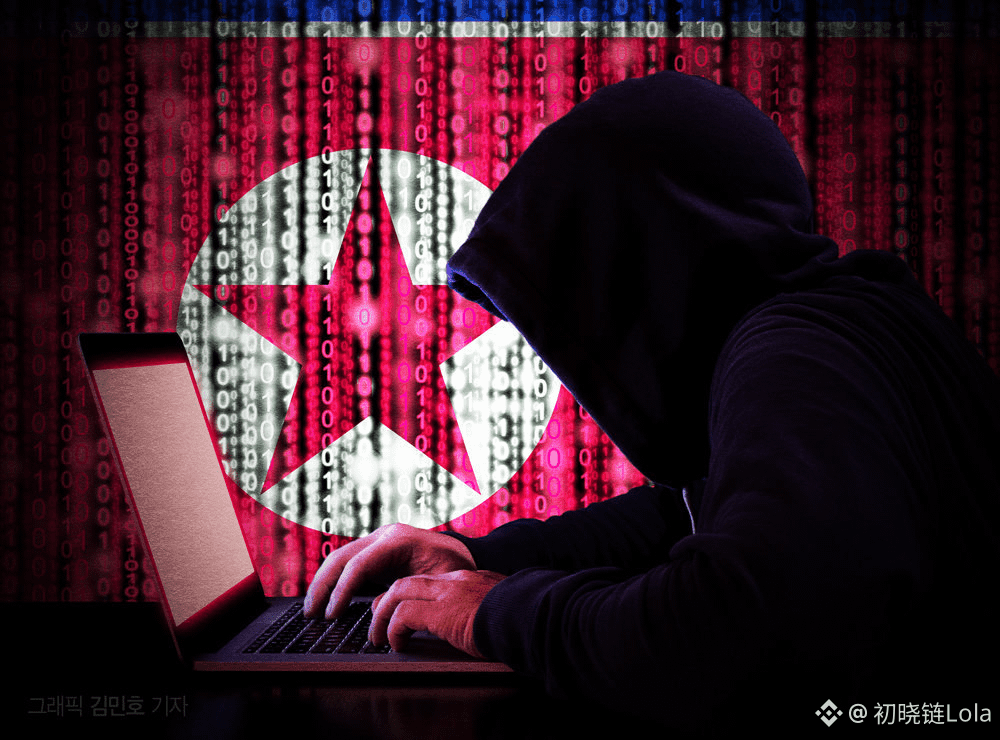
Based on on-chain related data, this was another incident likely carried out by North Korean hackers.
It is also one of the largest cryptocurrency hacking events to date in 2026.
Blockchain asset security is truly the top priority!
Whether you’re an individual player, an exchange, an institution, or a project team,
hacking attacks happen all the time and are impossible to prevent completely.
For ordinary users,
storing assets on-chain requires a threshold—wallet security and safe custody of the seed phrase.
Storing assets on an exchange and putting them with a third party is also not a foolproof solution.
If an exchange is hacked, the losses can be enormous.
An exchange is not a bank.
Putting $BTC on an exchange isn’t the same as depositing it in a bank.
How are the coins we put on an exchange actually kept?
To support user deposits, withdrawals, and trading, exchanges need to use hot wallets.
🔐 Cold Wallets
Assets are kept offline most of the time, with relatively higher security.
🔥 Hot Wallets
Connected to the network for day-to-day fund movement—also a primary target for hackers.
Many hacking attacks also focus on an exchange’s hot wallets.
Even though their security level is relatively high, the huge volume of funds makes them frequently targeted.
Once assets are stolen, it is almost impossible to recover them.
Where you store your assets is essentially a risk decision.
Keeping them on an exchange makes trading convenient—you don’t need to manage private keys yourself,
but you must take on the exchange’s operations and security, and even the risk that it disappears.
Keeping them in your own wallet means you control the private key,
but losing or leaking the seed phrase, signing phishing, or signature scams can also lead to permanent loss of assets.
There is no absolute way to be fully safe.
For #BTCHOLDER , the risks come not only from price volatility,
but also from exchange risks, and risks related to private keys, phishing, signing, and operations.
When prices fall, at least you may have the chance to wait for the next market cycle,
but if the private key leaks, assets are stolen, or the seed phrase is lost, it’s immediately zero.
Asset security is something that must be kept vigilant continuously.
Living long isn’t only about surviving the bull and bear cycles—it’s also about making sure your coins stay in your own hands.
$387 million stolen—are exchange funds really safe?
On September 25, #Bitget被盗 , the attack amount exceeded $387 million.
Cold wallets and user account balances were not affected.
The platform’s user protection fund is over $464 million and can fully cover the losses.
The withdrawal function will resume in an orderly manner starting today.
Based on on-chain related data, this was another incident likely carried out by North Korean hackers.
It is also one of the largest cryptocurrency hacking events to date in 2026.
Blockchain asset security is truly the top priority!
Whether you’re an individual player, an exchange, an institution, or a project team,
hacking attacks happen all the time and are impossible to prevent completely.
For ordinary users,
storing assets on-chain requires a threshold—wallet security and safe custody of the seed phrase.
Storing assets on an exchange and putting them with a third party is also not a foolproof solution.
If an exchange is hacked, the losses can be enormous.
An exchange is not a bank.
Putting $BTC on an exchange isn’t the same as depositing it in a bank.
How are the coins we put on an exchange actually kept?
To support user deposits, withdrawals, and trading, exchanges need to use hot wallets.
🔐 Cold Wallets
Assets are kept offline most of the time, with relatively higher security.
🔥 Hot Wallets
Connected to the network for day-to-day fund movement—also a primary target for hackers.
Many hacking attacks also focus on an exchange’s hot wallets.
Even though their security level is relatively high, the huge volume of funds makes them frequently targeted.
Once assets are stolen, it is almost impossible to recover them.
Where you store your assets is essentially a risk decision.
Keeping them on an exchange makes trading convenient—you don’t need to manage private keys yourself,
but you must take on the exchange’s operations and security, and even the risk that it disappears.
Keeping them in your own wallet means you control the private key,
but losing or leaking the seed phrase, signing phishing, or signature scams can also lead to permanent loss of assets.
There is no absolute way to be fully safe.
For #BTCHOLDER , the risks come not only from price volatility,
but also from exchange risks, and risks related to private keys, phishing, signing, and operations.
When prices fall, at least you may have the chance to wait for the next market cycle,
but if the private key leaks, assets are stolen, or the seed phrase is lost, it’s immediately zero.
Asset security is something that must be kept vigilant continuously.
Living long isn’t only about surviving the bull and bear cycles—it’s also about making sure your coins stay in your own hands.
On September 25, #Bitget被盗 , the attack amount exceeded $387 million.
Cold wallets and user account balances were not affected.
The platform’s user protection fund is over $464 million and can fully cover the losses.
The withdrawal function will resume in an orderly manner starting today.
Based on on-chain related data, this was another incident likely carried out by North Korean hackers.
It is also one of the largest cryptocurrency hacking events to date in 2026.
Blockchain asset security is truly the top priority!
Whether you’re an individual player, an exchange, an institution, or a project team,
hacking attacks happen all the time and are impossible to prevent completely.
For ordinary users,
storing assets on-chain requires a threshold—wallet security and safe custody of the seed phrase.
Storing assets on an exchange and putting them with a third party is also not a foolproof solution.
If an exchange is hacked, the losses can be enormous.
An exchange is not a bank.
Putting $BTC on an exchange isn’t the same as depositing it in a bank.
How are the coins we put on an exchange actually kept?
To support user deposits, withdrawals, and trading, exchanges need to use hot wallets.
🔐 Cold Wallets
Assets are kept offline most of the time, with relatively higher security.
🔥 Hot Wallets
Connected to the network for day-to-day fund movement—also a primary target for hackers.
Many hacking attacks also focus on an exchange’s hot wallets.
Even though their security level is relatively high, the huge volume of funds makes them frequently targeted.
Once assets are stolen, it is almost impossible to recover them.
Where you store your assets is essentially a risk decision.
Keeping them on an exchange makes trading convenient—you don’t need to manage private keys yourself,
but you must take on the exchange’s operations and security, and even the risk that it disappears.
Keeping them in your own wallet means you control the private key,
but losing or leaking the seed phrase, signing phishing, or signature scams can also lead to permanent loss of assets.
There is no absolute way to be fully safe.
For #BTCHOLDER , the risks come not only from price volatility,
but also from exchange risks, and risks related to private keys, phishing, signing, and operations.
When prices fall, at least you may have the chance to wait for the next market cycle,
but if the private key leaks, assets are stolen, or the seed phrase is lost, it’s immediately zero.
Asset security is something that must be kept vigilant continuously.
Living long isn’t only about surviving the bull and bear cycles—it’s also about making sure your coins stay in your own hands.
1
608
·
--
The moon is full over the mountains and seas, and autumn is calm and people are at peace
Happy Mid-Autumn Festival🎑
$BNB
The moon is full over the mountains and seas, and autumn is calm and people are at peace
Happy Mid-Autumn Festival🎑
$BNB
Happy Mid-Autumn Festival🎑
$BNB

3
4
1.1k
·
--
Bought ORDI and lost 120k u—how to avoid those that never rebound?
I saw a profit-and-loss screenshot from the group ($ORDI ) and it really hit me.
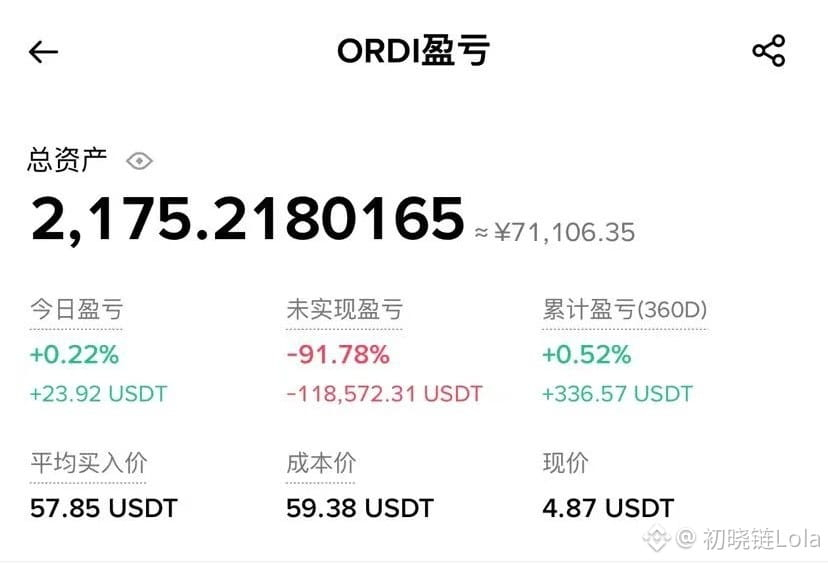
2175 ORDI, average cost 57 u, and now the price is only 4.87 u.
At the time, my cost was over 123k u; I’m now down nearly 120k u.
Based on the price, the purchase time should have been around June 2024.
If you had bought ($BTC ) back then, you could probably get about 1.8 BTC.
BTC’s price increase has been limited—at least the principal is still there.
But losing this much… it’s heartbreaking.
In the early days, a portion of players (#ORDI ) had strong returns.
But after the hype died down, anyone who entered later—without exception—got trapped and lost.
No matter which asset you choose, the entry timing is crucial.
An asset that surges 10x or 50x early on doesn’t mean later buyers still get the same opportunity.
Some coins fall from 80 down to 1—you can’t necessarily expect them to rise back, like #LUNA .
Some assets make new highs.
Some trade sideways for a long time.
Some gradually get forgotten by the market.
Past glory doesn’t guarantee future trends.
If this ORDI position drops 20% or 30%, consider adjusting your position.
Or if it falls 50%, give up on this asset.
Cut your losses in time—then you wouldn’t be left with only a little over 2000 u.
The player still believes in their heart that it will always go back up… but reality disagrees.
Of course this isn’t ORDI’s final outcome.
But does the holder have enough time and patience to wait for the unknown?
In crypto, the hardest part isn’t picking the next 50x.
It’s avoiding those assets that can’t rebound.
If you don’t meet the 50x, you just don’t make that money.
But if you buy an asset that can’t rebound, you might end up losing everything.
There are many stories of 50x.
But opportunities to hold a 50x at the right time and position are extremely rare.
Crypto is full of uncertainty.
Picking a 50x is the result of ability, knowledge, and luck working together.
Avoiding a target that drops 90% is also a kind of ability.
BTC’s upside isn’t as thrilling.
But after multiple bull-and-bear cycles,
with massive market consensus, liquidity, and #BTCHOLDER ,
it’s not likely to wipe out players’ losses in a short period.
We shouldn’t only look at how many multiples other people once made.
We also need to understand what the later entrants paid.
Because every price paid is painful—and you can’t undo it.
Before you place an order, think it through:
is it investing, or is it a bet against an extremely low-probability 50x?
After all, your principal can grow slowly.
But if you pick the wrong asset, there’s no coming back.
Bought ORDI and lost 120k u—how to avoid those that never rebound?
I saw a profit-and-loss screenshot from the group ($ORDI ) and it really hit me.
2175 ORDI, average cost 57 u, and now the price is only 4.87 u.
At the time, my cost was over 123k u; I’m now down nearly 120k u.
Based on the price, the purchase time should have been around June 2024.
If you had bought ($BTC ) back then, you could probably get about 1.8 BTC.
BTC’s price increase has been limited—at least the principal is still there.
But losing this much… it’s heartbreaking.
In the early days, a portion of players (#ORDI ) had strong returns.
But after the hype died down, anyone who entered later—without exception—got trapped and lost.
No matter which asset you choose, the entry timing is crucial.
An asset that surges 10x or 50x early on doesn’t mean later buyers still get the same opportunity.
Some coins fall from 80 down to 1—you can’t necessarily expect them to rise back, like #LUNA .
Some assets make new highs.
Some trade sideways for a long time.
Some gradually get forgotten by the market.
Past glory doesn’t guarantee future trends.
If this ORDI position drops 20% or 30%, consider adjusting your position.
Or if it falls 50%, give up on this asset.
Cut your losses in time—then you wouldn’t be left with only a little over 2000 u.
The player still believes in their heart that it will always go back up… but reality disagrees.
Of course this isn’t ORDI’s final outcome.
But does the holder have enough time and patience to wait for the unknown?
In crypto, the hardest part isn’t picking the next 50x.
It’s avoiding those assets that can’t rebound.
If you don’t meet the 50x, you just don’t make that money.
But if you buy an asset that can’t rebound, you might end up losing everything.
There are many stories of 50x.
But opportunities to hold a 50x at the right time and position are extremely rare.
Crypto is full of uncertainty.
Picking a 50x is the result of ability, knowledge, and luck working together.
Avoiding a target that drops 90% is also a kind of ability.
BTC’s upside isn’t as thrilling.
But after multiple bull-and-bear cycles,
with massive market consensus, liquidity, and #BTCHOLDER ,
it’s not likely to wipe out players’ losses in a short period.
We shouldn’t only look at how many multiples other people once made.
We also need to understand what the later entrants paid.
Because every price paid is painful—and you can’t undo it.
Before you place an order, think it through:
is it investing, or is it a bet against an extremely low-probability 50x?
After all, your principal can grow slowly.
But if you pick the wrong asset, there’s no coming back.
I saw a profit-and-loss screenshot from the group ($ORDI ) and it really hit me.
2175 ORDI, average cost 57 u, and now the price is only 4.87 u.
At the time, my cost was over 123k u; I’m now down nearly 120k u.
Based on the price, the purchase time should have been around June 2024.
If you had bought ($BTC ) back then, you could probably get about 1.8 BTC.
BTC’s price increase has been limited—at least the principal is still there.
But losing this much… it’s heartbreaking.
In the early days, a portion of players (#ORDI ) had strong returns.
But after the hype died down, anyone who entered later—without exception—got trapped and lost.
No matter which asset you choose, the entry timing is crucial.
An asset that surges 10x or 50x early on doesn’t mean later buyers still get the same opportunity.
Some coins fall from 80 down to 1—you can’t necessarily expect them to rise back, like #LUNA .
Some assets make new highs.
Some trade sideways for a long time.
Some gradually get forgotten by the market.
Past glory doesn’t guarantee future trends.
If this ORDI position drops 20% or 30%, consider adjusting your position.
Or if it falls 50%, give up on this asset.
Cut your losses in time—then you wouldn’t be left with only a little over 2000 u.
The player still believes in their heart that it will always go back up… but reality disagrees.
Of course this isn’t ORDI’s final outcome.
But does the holder have enough time and patience to wait for the unknown?
In crypto, the hardest part isn’t picking the next 50x.
It’s avoiding those assets that can’t rebound.
If you don’t meet the 50x, you just don’t make that money.
But if you buy an asset that can’t rebound, you might end up losing everything.
There are many stories of 50x.
But opportunities to hold a 50x at the right time and position are extremely rare.
Crypto is full of uncertainty.
Picking a 50x is the result of ability, knowledge, and luck working together.
Avoiding a target that drops 90% is also a kind of ability.
BTC’s upside isn’t as thrilling.
But after multiple bull-and-bear cycles,
with massive market consensus, liquidity, and #BTCHOLDER ,
it’s not likely to wipe out players’ losses in a short period.
We shouldn’t only look at how many multiples other people once made.
We also need to understand what the later entrants paid.
Because every price paid is painful—and you can’t undo it.
Before you place an order, think it through:
is it investing, or is it a bet against an extremely low-probability 50x?
After all, your principal can grow slowly.
But if you pick the wrong asset, there’s no coming back.
18
2
3.3k
·
--
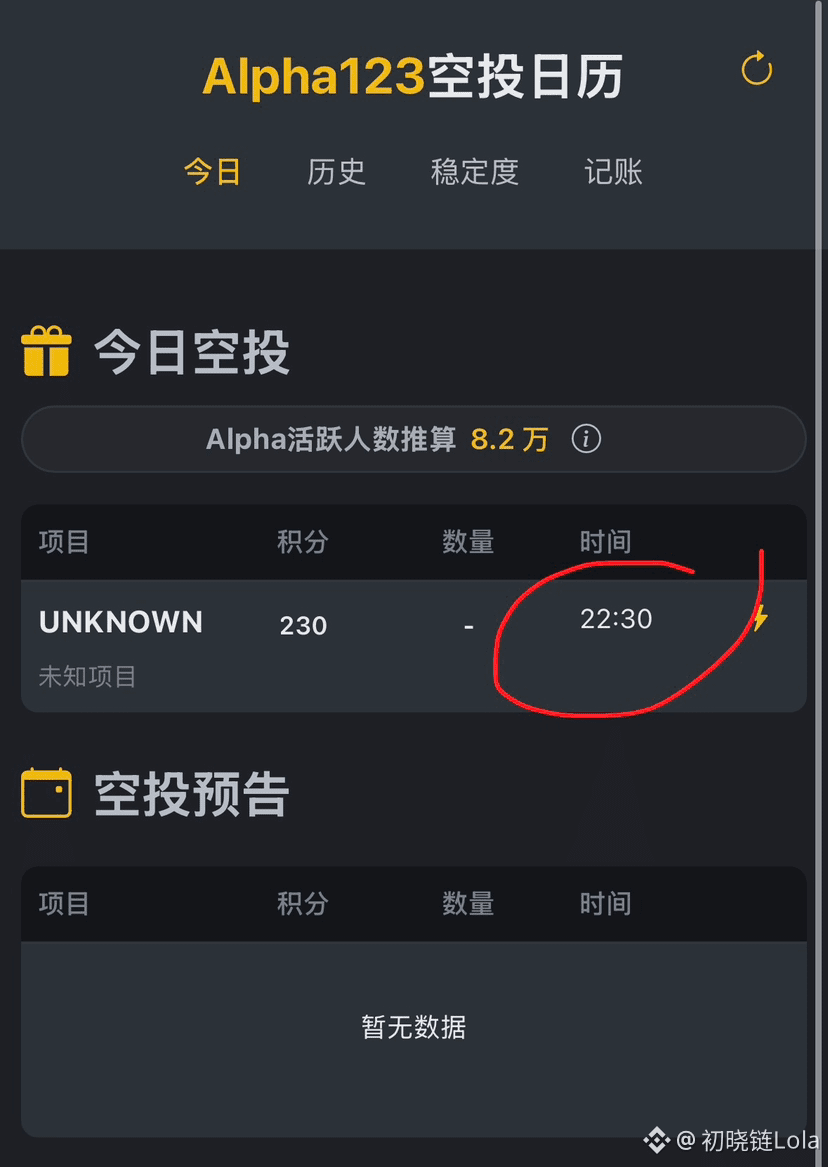
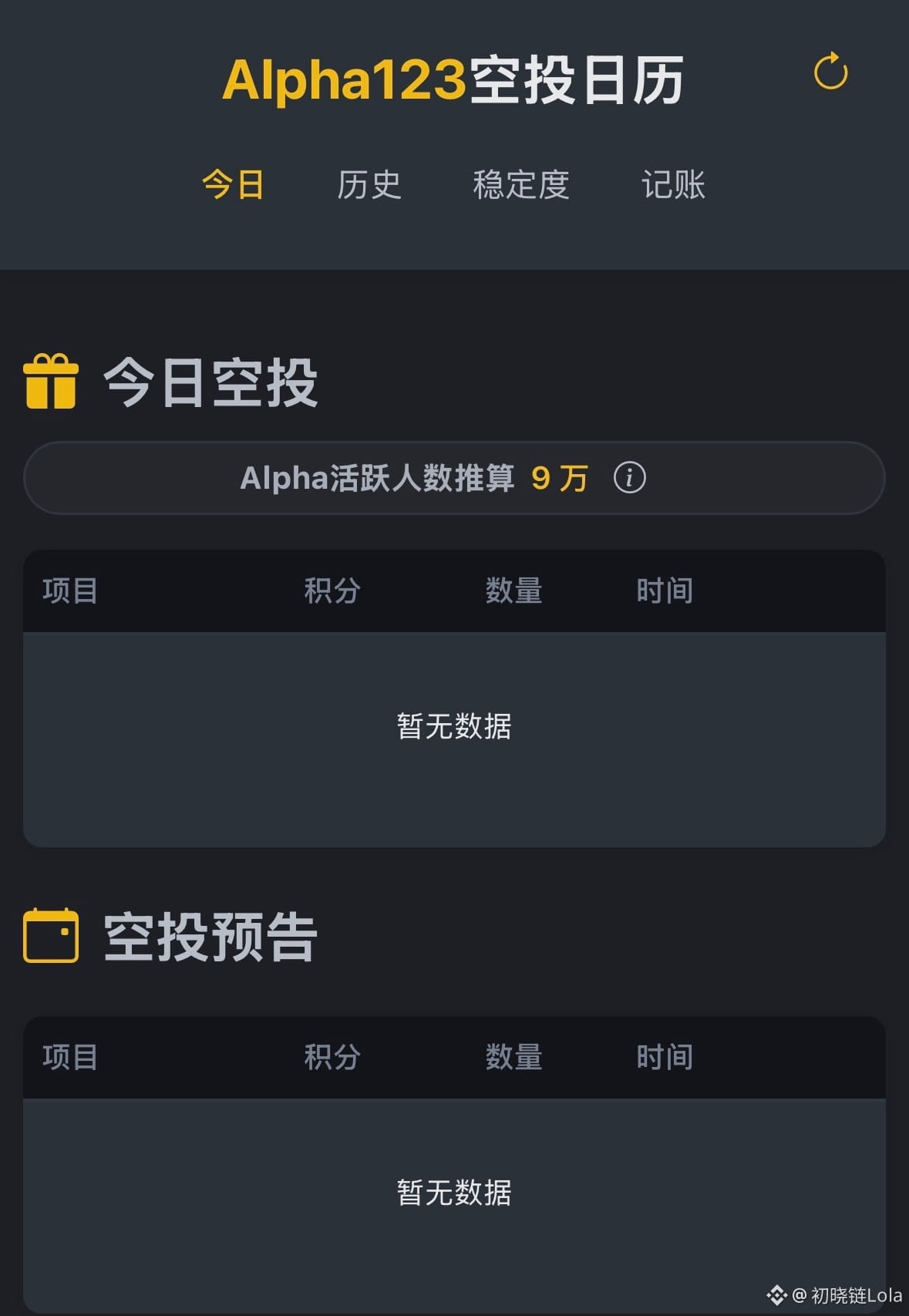
Can’t let go—does #ALPHA mean it’s obsession 😂
It’s been many days since I last received alpha,
maybe the better way is to be brave enough to pause,
learn new ways to play?
Today $BTC held steady at 86k,
the situation looks very promising 🙈
Can’t let go—does #ALPHA mean it’s obsession 😂
It’s been many days since I last received alpha,
maybe the better way is to be brave enough to pause,
learn new ways to play?
Today $BTC held steady at 86k,
the situation looks very promising 🙈
It’s been many days since I last received alpha,
maybe the better way is to be brave enough to pause,
learn new ways to play?
Today $BTC held steady at 86k,
the situation looks very promising 🙈
665
·
--
BTC has risen so much—can you still stick with DCA?
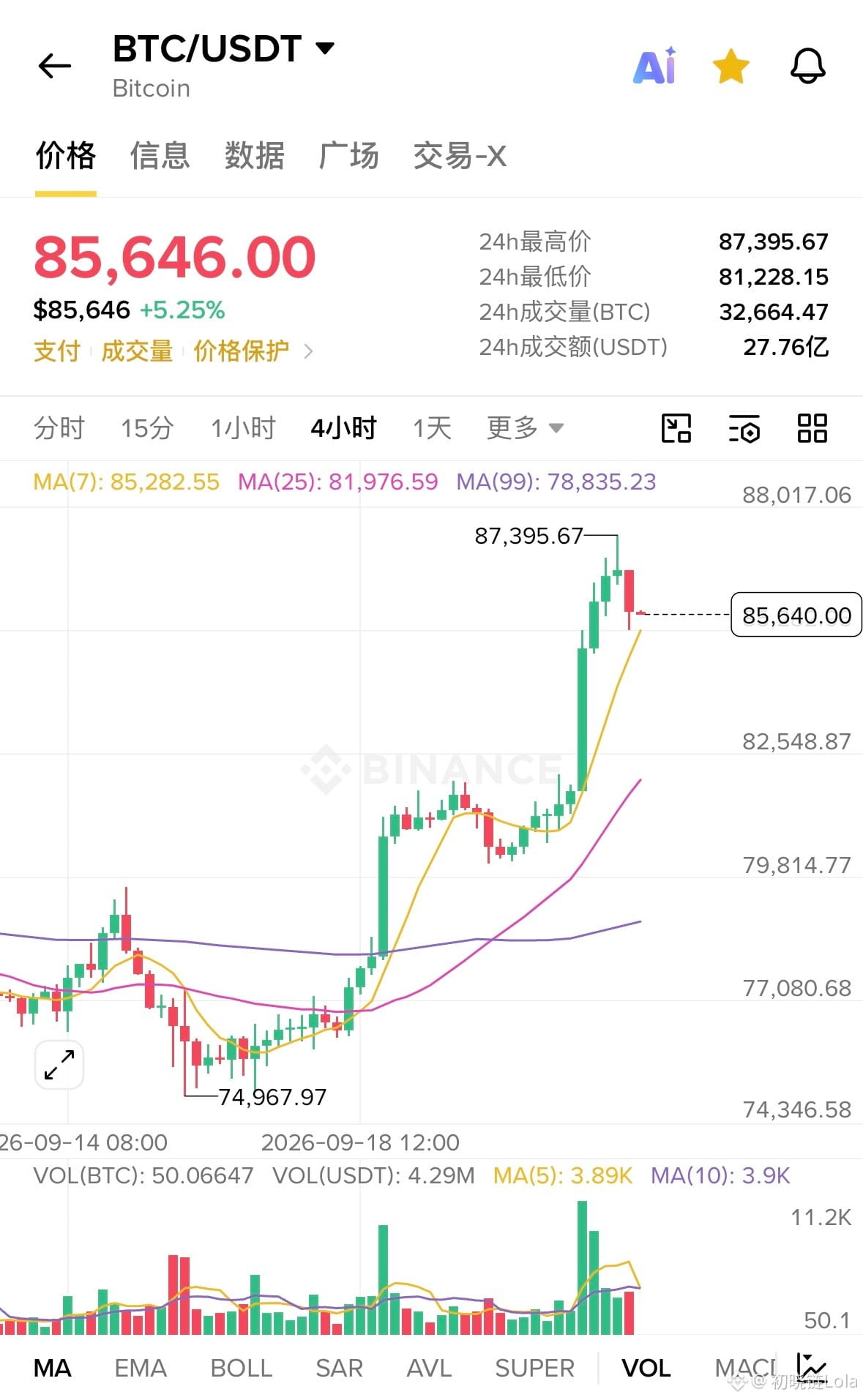
Over the past two days $BTC has been steadily climbing.
From 75K to 80K, to 85K, it even briefly broke through 87K.
My DCA plan has been thrown off—I feel like I don’t dare to keep investing.
The hardest part about #定投BTC isn’t the drops, but the mental anxiety during the rises.
When prices fall, you can tell yourself: since it’s dropped this much, you should keep buying.
But after BTC keeps climbing, what’s in your head is:
“BTC has already gone up so much—won’t buying now be too expensive?”
“Should I pause my DCA first?”
“Wouldn’t it be better to buy after a pullback?”
These are the real thoughts of every DCA participant—so sticking with DCA isn’t easy.
① It’s rising too fast, so I don’t dare to buy.
The solution isn’t to force yourself to keep making large purchases.
Instead, lower your buying ratio, but don’t easily stop completely.
Even if it keeps rising, you still have some position.
And if there’s a pullback, you’ll still have funds on hand.
② Always thinking you should wait for a lower price.
This is the easiest place to drift from DCA into market timing.
Waiting for 80K might mean it goes to 90K; waiting for 75K might mean it goes to 100K.
In the end, you don’t actually buy cheaper—you just keep not buying.
The core of DCA isn’t buying every time at the absolute lowest point.
It’s converting the planned funds into BTC gradually over a sufficiently long period.
③ After the rally, suddenly #FOMO .
You didn’t buy at first, then it reached 90K and you think,
“If I don’t buy now, it’ll be too late.”
So you go all-in—and then it crashes again.
What matters in DCA is having rules set in advance, not changing your strategy on a whim based on price.
Buy less when it’s rising too quickly; buy normally during typical consolidation;
If there’s a 5%–10% pullback, increase your DCA.
If there’s a significant drawdown, raise your buying ratio.
This isn’t about predicting the market—it’s about giving yourself room to make mistakes.
The ultimate goal of DCA isn’t how cheap you can buy this time.
It’s: in this cycle, how much BTC do you ultimately want to hold?
If your goal is 0.1, 0.5, or even 1 coin—two coins—then the short-term prices at 85K, 90K, 100K are only part of the journey.
What truly matters is whether the amount of BTC is increasing according to the plan.
When the market is rising, don’t stop completely just because you’re afraid you bought too expensively.
When the market is falling, don’t abandon the plan out of fear.
The biggest enemy of DCA is always trying to find a more perfect entry point.
But that perfect price—only after the market plays out will you know where it was.
And once you know the perfect level, it’s already too late.
#币圈
BTC has risen so much—can you still stick with DCA?
Over the past two days $BTC has been steadily climbing.
From 75K to 80K, to 85K, it even briefly broke through 87K.
My DCA plan has been thrown off—I feel like I don’t dare to keep investing.
The hardest part about #定投BTC isn’t the drops, but the mental anxiety during the rises.
When prices fall, you can tell yourself: since it’s dropped this much, you should keep buying.
But after BTC keeps climbing, what’s in your head is:
“BTC has already gone up so much—won’t buying now be too expensive?”
“Should I pause my DCA first?”
“Wouldn’t it be better to buy after a pullback?”
These are the real thoughts of every DCA participant—so sticking with DCA isn’t easy.
① It’s rising too fast, so I don’t dare to buy.
The solution isn’t to force yourself to keep making large purchases.
Instead, lower your buying ratio, but don’t easily stop completely.
Even if it keeps rising, you still have some position.
And if there’s a pullback, you’ll still have funds on hand.
② Always thinking you should wait for a lower price.
This is the easiest place to drift from DCA into market timing.
Waiting for 80K might mean it goes to 90K; waiting for 75K might mean it goes to 100K.
In the end, you don’t actually buy cheaper—you just keep not buying.
The core of DCA isn’t buying every time at the absolute lowest point.
It’s converting the planned funds into BTC gradually over a sufficiently long period.
③ After the rally, suddenly #FOMO .
You didn’t buy at first, then it reached 90K and you think,
“If I don’t buy now, it’ll be too late.”
So you go all-in—and then it crashes again.
What matters in DCA is having rules set in advance, not changing your strategy on a whim based on price.
Buy less when it’s rising too quickly; buy normally during typical consolidation;
If there’s a 5%–10% pullback, increase your DCA.
If there’s a significant drawdown, raise your buying ratio.
This isn’t about predicting the market—it’s about giving yourself room to make mistakes.
The ultimate goal of DCA isn’t how cheap you can buy this time.
It’s: in this cycle, how much BTC do you ultimately want to hold?
If your goal is 0.1, 0.5, or even 1 coin—two coins—then the short-term prices at 85K, 90K, 100K are only part of the journey.
What truly matters is whether the amount of BTC is increasing according to the plan.
When the market is rising, don’t stop completely just because you’re afraid you bought too expensively.
When the market is falling, don’t abandon the plan out of fear.
The biggest enemy of DCA is always trying to find a more perfect entry point.
But that perfect price—only after the market plays out will you know where it was.
And once you know the perfect level, it’s already too late.
#币圈
Over the past two days $BTC has been steadily climbing.
From 75K to 80K, to 85K, it even briefly broke through 87K.
My DCA plan has been thrown off—I feel like I don’t dare to keep investing.
The hardest part about #定投BTC isn’t the drops, but the mental anxiety during the rises.
When prices fall, you can tell yourself: since it’s dropped this much, you should keep buying.
But after BTC keeps climbing, what’s in your head is:
“BTC has already gone up so much—won’t buying now be too expensive?”
“Should I pause my DCA first?”
“Wouldn’t it be better to buy after a pullback?”
These are the real thoughts of every DCA participant—so sticking with DCA isn’t easy.
① It’s rising too fast, so I don’t dare to buy.
The solution isn’t to force yourself to keep making large purchases.
Instead, lower your buying ratio, but don’t easily stop completely.
Even if it keeps rising, you still have some position.
And if there’s a pullback, you’ll still have funds on hand.
② Always thinking you should wait for a lower price.
This is the easiest place to drift from DCA into market timing.
Waiting for 80K might mean it goes to 90K; waiting for 75K might mean it goes to 100K.
In the end, you don’t actually buy cheaper—you just keep not buying.
The core of DCA isn’t buying every time at the absolute lowest point.
It’s converting the planned funds into BTC gradually over a sufficiently long period.
③ After the rally, suddenly #FOMO .
You didn’t buy at first, then it reached 90K and you think,
“If I don’t buy now, it’ll be too late.”
So you go all-in—and then it crashes again.
What matters in DCA is having rules set in advance, not changing your strategy on a whim based on price.
Buy less when it’s rising too quickly; buy normally during typical consolidation;
If there’s a 5%–10% pullback, increase your DCA.
If there’s a significant drawdown, raise your buying ratio.
This isn’t about predicting the market—it’s about giving yourself room to make mistakes.
The ultimate goal of DCA isn’t how cheap you can buy this time.
It’s: in this cycle, how much BTC do you ultimately want to hold?
If your goal is 0.1, 0.5, or even 1 coin—two coins—then the short-term prices at 85K, 90K, 100K are only part of the journey.
What truly matters is whether the amount of BTC is increasing according to the plan.
When the market is rising, don’t stop completely just because you’re afraid you bought too expensively.
When the market is falling, don’t abandon the plan out of fear.
The biggest enemy of DCA is always trying to find a more perfect entry point.
But that perfect price—only after the market plays out will you know where it was.
And once you know the perfect level, it’s already too late.
#币圈
2
3
1.3k
·
--
These past two days, $BTC has risen too much.
The usual #定投BTC operations have been a bit relaxed,
because it's been steadily going up and the increase is still so big,
so I didn't buy.
It turns out my conviction wasn't strong enough—I’m waiting for what? 🙈
GPT advised me:
Don’t chase the rally; buy on pullbacks.
Keep the SIP going; adjust position sizing dynamically.
How are you all handling your trades?
These past two days, $BTC has risen too much.
The usual #定投BTC operations have been a bit relaxed,
because it's been steadily going up and the increase is still so big,
so I didn't buy.
It turns out my conviction wasn't strong enough—I’m waiting for what? 🙈
GPT advised me:
Don’t chase the rally; buy on pullbacks.
Keep the SIP going; adjust position sizing dynamically.
How are you all handling your trades?
The usual #定投BTC operations have been a bit relaxed,
because it's been steadily going up and the increase is still so big,
so I didn't buy.
It turns out my conviction wasn't strong enough—I’m waiting for what? 🙈
GPT advised me:
Don’t chase the rally; buy on pullbacks.
Keep the SIP going; adjust position sizing dynamically.
How are you all handling your trades?
439
·
--
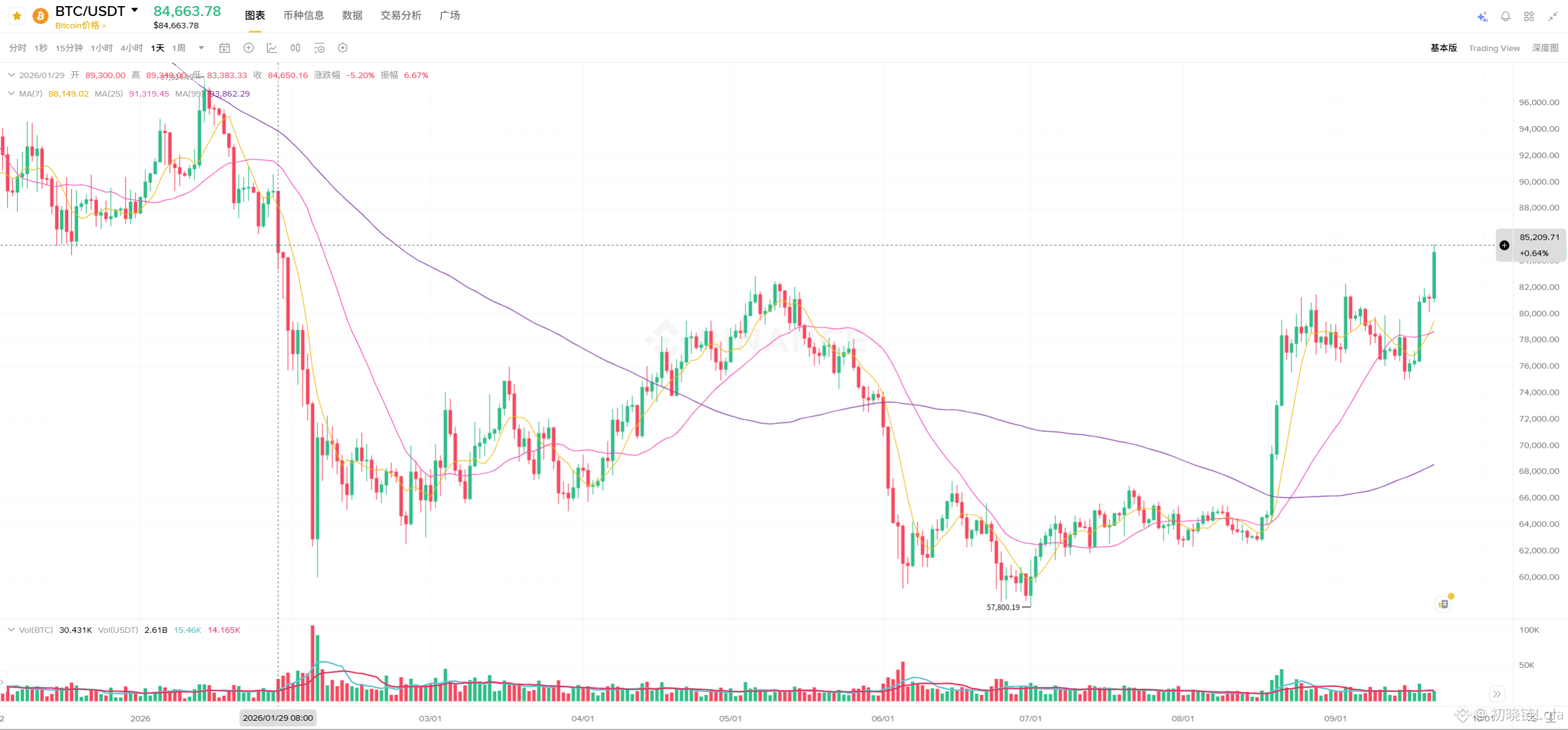
After 8 months of hard work,
$BTC has returned to the price level of January.
The price that once reached 57k,
we ignored it back then,
and now we’re filled with regret.
This time, how far can it break through—wait for me, I haven’t boarded the train yet 🙈
#比特币
After 8 months of hard work,
$BTC has returned to the price level of January.
The price that once reached 57k,
we ignored it back then,
and now we’re filled with regret.
This time, how far can it break through—wait for me, I haven’t boarded the train yet 🙈
#比特币
$BTC has returned to the price level of January.
The price that once reached 57k,
we ignored it back then,
and now we’re filled with regret.
This time, how far can it break through—wait for me, I haven’t boarded the train yet 🙈
#比特币
2
1
2.2k
·
--
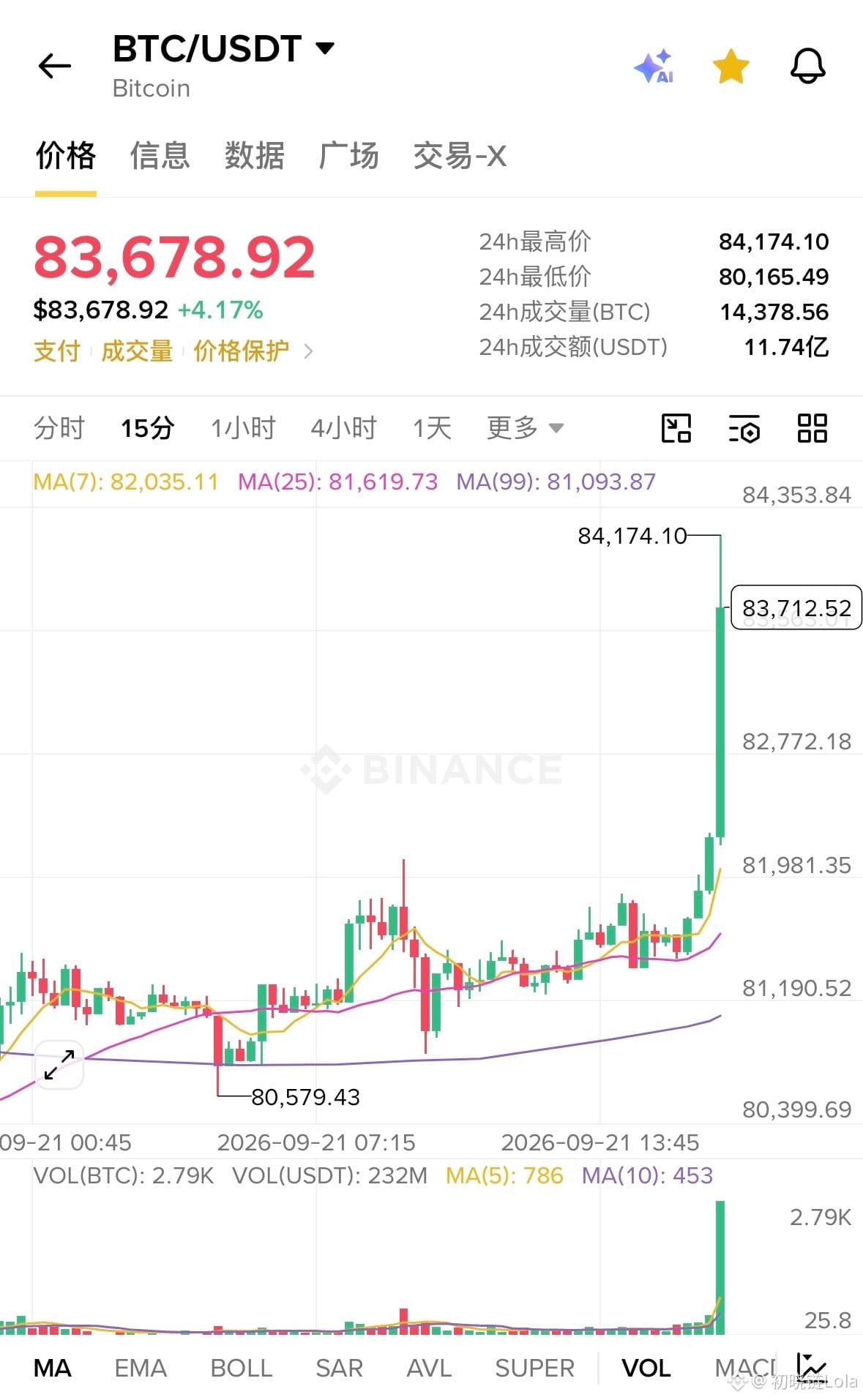
$BTC short-term breakout of 84k,
that rally is moving way too fast,
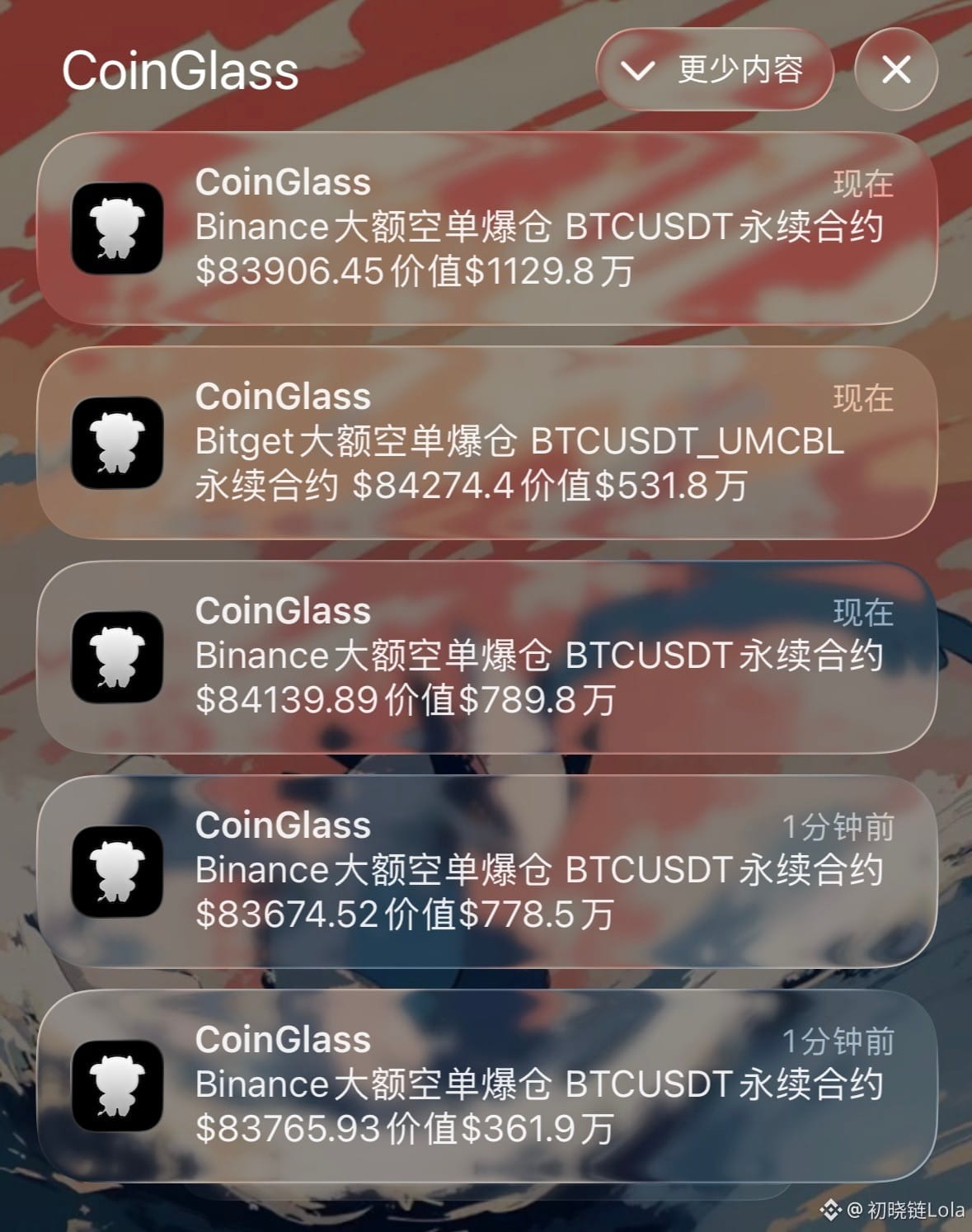
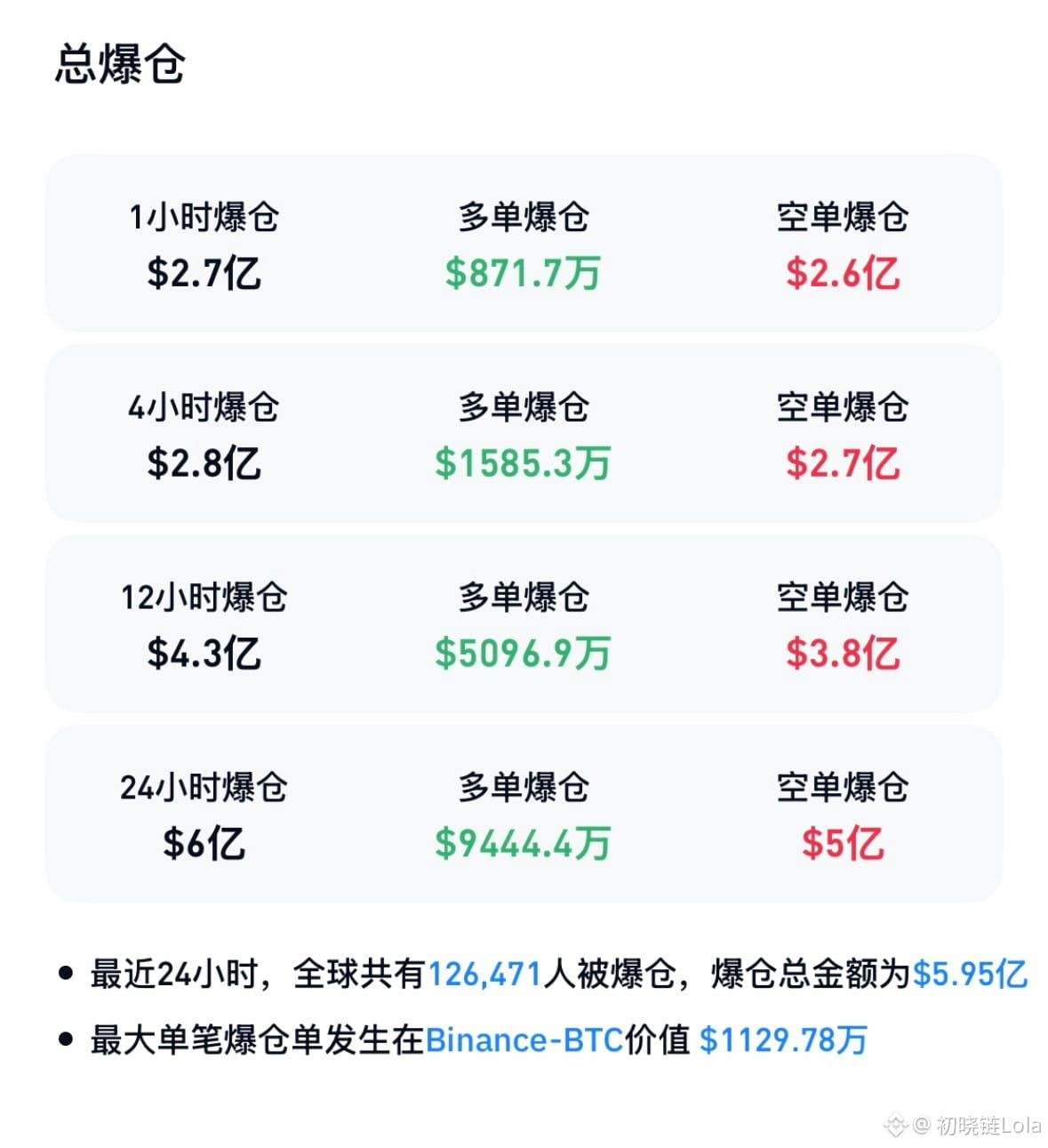
in the past 1 hour, there were $260 million in short liquidations, again with serial liquidations,
is your position still there 😅
$ETH has even broken through 2700
#以太坊突破2700美元
$BTC short-term breakout of 84k,
that rally is moving way too fast,
in the past 1 hour, there were $260 million in short liquidations, again with serial liquidations,
is your position still there 😅
$ETH has even broken through 2700
#以太坊突破2700美元
that rally is moving way too fast,
in the past 1 hour, there were $260 million in short liquidations, again with serial liquidations,
is your position still there 😅
$ETH has even broken through 2700
#以太坊突破2700美元
1
4k
·
--
1.3 million coins $DOGE and 0.1 coin $BTC — which has a better chance?
There are 2 friends in my group who DCA into DOGE:
One bought more than 1.3 million DOGE. If it drops, he adds more. He believes in DOGE and thinks it will set new highs again in the future, with gains that will surpass BTC;
The other currently holds 60,000 DOGE. His goal is to first accumulate 100,000 DOGE, and then wait for the future “takeoff.”
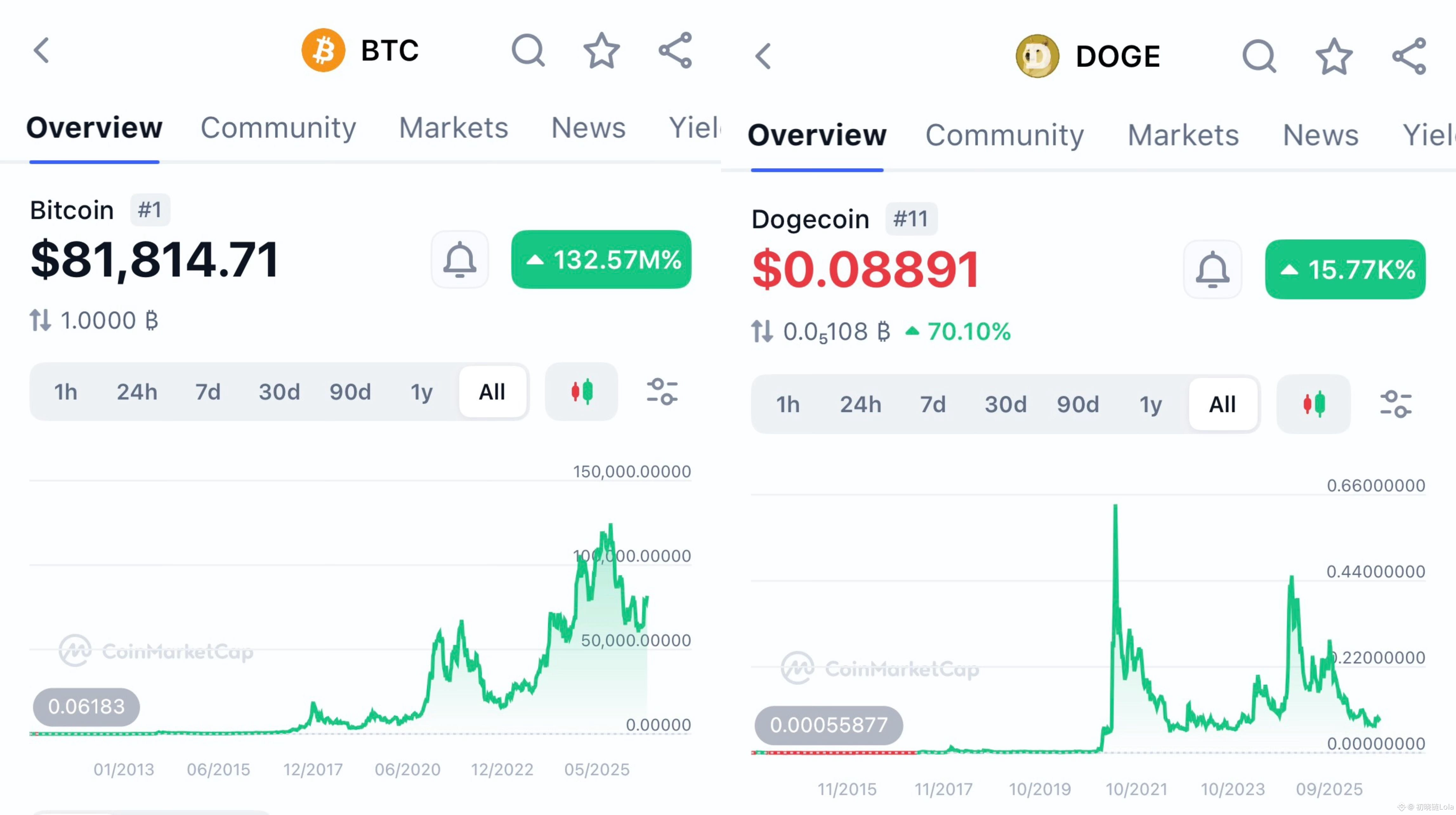
In DOGE’s 2021 bull market, its all-time high was 0.74U;
In 2024, its high was 0.48U; the current price is 0.09U.
Their logic is that:
BTC is already too mature—its price and market cap are right there, and in the future it’s hard to see another multi-fold surge;
But if the market starts hyping DOGE again,
for example if Musk speaks again, it could potentially jump more than ten times.
That logic seems to make sense too.
After all, in past crypto markets, the ones that truly delivered huge gains were often not the assets everyone could confidently identify in advance.
But there’s also the other side to this:
In the next round of takeoff, is it DOGE, or is it some other #MEME ?
It looks like DOGE has a real chance today—
maybe even years later it still won’t return to the prior high.
A coin that nobody is paying attention to right now is more likely to suddenly become the next hotspot.
#币圈 sometimes sees explosive breakout tokens,
but among the countless tokens that could rise, picking the one that ultimately runs is the hardest part.
Until the results come out, no one can be sure who the dark horse will be.
What I’m doing now is:
Even if I only have 100U, I still choose to buy BTC.
Not because BTC is the asset with the biggest upside in the future,
but because if I’m wrong, my principal can still be preserved.
DOGE and other memes could bring gains far beyond BTC,
but they also come with bigger volatility and higher uncertainty.
#定投BTC might miss out on some of the explosive upside opportunities,
but I’d rather reduce the risk of my position going to zero after choosing the wrong one.
Everyone’s capital, risk tolerance, and level of understanding differ.
Some people are willing to bet a 10x opportunity with a small amount of money;
Others are willing to use time to seek certainty.
No one can know in advance which coin will have the biggest gains three or five years from now.
Until time gives an answer, our so-called “being bullish” is, in essence, just our judgment within the bounds of our own understanding.
The market won’t necessarily follow our script just because we firmly believe in a certain coin.
Before choosing, think it through:
If you pick wrong, can you handle the outcome of ending up at zero?
If you can, then by all means, it’s worth taking the bet.
1.3 million coins $DOGE and 0.1 coin $BTC — which has a better chance?
There are 2 friends in my group who DCA into DOGE:
One bought more than 1.3 million DOGE. If it drops, he adds more. He believes in DOGE and thinks it will set new highs again in the future, with gains that will surpass BTC;
The other currently holds 60,000 DOGE. His goal is to first accumulate 100,000 DOGE, and then wait for the future “takeoff.”
In DOGE’s 2021 bull market, its all-time high was 0.74U;
In 2024, its high was 0.48U; the current price is 0.09U.
Their logic is that:
BTC is already too mature—its price and market cap are right there, and in the future it’s hard to see another multi-fold surge;
But if the market starts hyping DOGE again,
for example if Musk speaks again, it could potentially jump more than ten times.
That logic seems to make sense too.
After all, in past crypto markets, the ones that truly delivered huge gains were often not the assets everyone could confidently identify in advance.
But there’s also the other side to this:
In the next round of takeoff, is it DOGE, or is it some other #MEME ?
It looks like DOGE has a real chance today—
maybe even years later it still won’t return to the prior high.
A coin that nobody is paying attention to right now is more likely to suddenly become the next hotspot.
#币圈 sometimes sees explosive breakout tokens,
but among the countless tokens that could rise, picking the one that ultimately runs is the hardest part.
Until the results come out, no one can be sure who the dark horse will be.
What I’m doing now is:
Even if I only have 100U, I still choose to buy BTC.
Not because BTC is the asset with the biggest upside in the future,
but because if I’m wrong, my principal can still be preserved.
DOGE and other memes could bring gains far beyond BTC,
but they also come with bigger volatility and higher uncertainty.
#定投BTC might miss out on some of the explosive upside opportunities,
but I’d rather reduce the risk of my position going to zero after choosing the wrong one.
Everyone’s capital, risk tolerance, and level of understanding differ.
Some people are willing to bet a 10x opportunity with a small amount of money;
Others are willing to use time to seek certainty.
No one can know in advance which coin will have the biggest gains three or five years from now.
Until time gives an answer, our so-called “being bullish” is, in essence, just our judgment within the bounds of our own understanding.
The market won’t necessarily follow our script just because we firmly believe in a certain coin.
Before choosing, think it through:
If you pick wrong, can you handle the outcome of ending up at zero?
If you can, then by all means, it’s worth taking the bet.
There are 2 friends in my group who DCA into DOGE:
One bought more than 1.3 million DOGE. If it drops, he adds more. He believes in DOGE and thinks it will set new highs again in the future, with gains that will surpass BTC;
The other currently holds 60,000 DOGE. His goal is to first accumulate 100,000 DOGE, and then wait for the future “takeoff.”
In DOGE’s 2021 bull market, its all-time high was 0.74U;
In 2024, its high was 0.48U; the current price is 0.09U.
Their logic is that:
BTC is already too mature—its price and market cap are right there, and in the future it’s hard to see another multi-fold surge;
But if the market starts hyping DOGE again,
for example if Musk speaks again, it could potentially jump more than ten times.
That logic seems to make sense too.
After all, in past crypto markets, the ones that truly delivered huge gains were often not the assets everyone could confidently identify in advance.
But there’s also the other side to this:
In the next round of takeoff, is it DOGE, or is it some other #MEME ?
It looks like DOGE has a real chance today—
maybe even years later it still won’t return to the prior high.
A coin that nobody is paying attention to right now is more likely to suddenly become the next hotspot.
#币圈 sometimes sees explosive breakout tokens,
but among the countless tokens that could rise, picking the one that ultimately runs is the hardest part.
Until the results come out, no one can be sure who the dark horse will be.
What I’m doing now is:
Even if I only have 100U, I still choose to buy BTC.
Not because BTC is the asset with the biggest upside in the future,
but because if I’m wrong, my principal can still be preserved.
DOGE and other memes could bring gains far beyond BTC,
but they also come with bigger volatility and higher uncertainty.
#定投BTC might miss out on some of the explosive upside opportunities,
but I’d rather reduce the risk of my position going to zero after choosing the wrong one.
Everyone’s capital, risk tolerance, and level of understanding differ.
Some people are willing to bet a 10x opportunity with a small amount of money;
Others are willing to use time to seek certainty.
No one can know in advance which coin will have the biggest gains three or five years from now.
Until time gives an answer, our so-called “being bullish” is, in essence, just our judgment within the bounds of our own understanding.
The market won’t necessarily follow our script just because we firmly believe in a certain coin.
Before choosing, think it through:
If you pick wrong, can you handle the outcome of ending up at zero?
If you can, then by all means, it’s worth taking the bet.
29
11
13.6k
·
--
PONS is down 40%. The hotter the narrative gets, the calmer you need to be
At the beginning of the month, $PONS kept rising, reaching a peak near $1.
I and my group chat friends were hesitant about whether to board the train.
Now the price is back around $0.6—nearly a 40% pullback from the previous high.
This is a common scene in the crypto world.
When a hot topic heats up, everyone starts talking about it.
The more the price rises, the more FOMO buyers there are.
When everyone thinks “it can still go up,”
the market starts rotating—and the decline won’t stop.
PONS’s earlier rally came along with #Robinhood Chain,
plus all kinds of trending narratives like Memes, trading volume, buybacks and burns.
Once market sentiment becomes concentrated, capital naturally concentrates too.
But the real question is:
When you see the “hot” narrative, is it still before others have already made money?
Many people buy a coin not because they’ve done in-depth research,
but because others say the coin is about to take off—so they start chasing the pump.
When it goes up, they think they picked the right one.
When it drops, they start doubting themselves.
When it drops again, they begin waiting to “break even.”
They don’t just lose their principal—they also take on the opportunity cost.
There are many hot opportunities in crypto,
but what matters isn’t discovering the hotspot—it’s executing a strategy.
Follow your own strategy.
Don’t buy because of FOMO.
What to buy, how much to buy, how much loss you can tolerate,
when to sell and exit—
think it through before you enter out of FOMO.
After all, the money you lose is your own—real cash, real gold and silver.
Bull and bear markets alternate, sectors rotate.
The only thing that matters is making sure you’re always in the game.
DCA with $BTC is, relatively speaking, a lower-risk way—and one that makes it easier to stay in.
#FOMO #定投BTC
PONS is down 40%. The hotter the narrative gets, the calmer you need to be
At the beginning of the month, $PONS kept rising, reaching a peak near $1.
I and my group chat friends were hesitant about whether to board the train.
Now the price is back around $0.6—nearly a 40% pullback from the previous high.
This is a common scene in the crypto world.
When a hot topic heats up, everyone starts talking about it.
The more the price rises, the more FOMO buyers there are.
When everyone thinks “it can still go up,”
the market starts rotating—and the decline won’t stop.
PONS’s earlier rally came along with #Robinhood Chain,
plus all kinds of trending narratives like Memes, trading volume, buybacks and burns.
Once market sentiment becomes concentrated, capital naturally concentrates too.
But the real question is:
When you see the “hot” narrative, is it still before others have already made money?
Many people buy a coin not because they’ve done in-depth research,
but because others say the coin is about to take off—so they start chasing the pump.
When it goes up, they think they picked the right one.
When it drops, they start doubting themselves.
When it drops again, they begin waiting to “break even.”
They don’t just lose their principal—they also take on the opportunity cost.
There are many hot opportunities in crypto,
but what matters isn’t discovering the hotspot—it’s executing a strategy.
Follow your own strategy.
Don’t buy because of FOMO.
What to buy, how much to buy, how much loss you can tolerate,
when to sell and exit—
think it through before you enter out of FOMO.
After all, the money you lose is your own—real cash, real gold and silver.
Bull and bear markets alternate, sectors rotate.
The only thing that matters is making sure you’re always in the game.
DCA with $BTC is, relatively speaking, a lower-risk way—and one that makes it easier to stay in.
#FOMO #定投BTC
At the beginning of the month, $PONS kept rising, reaching a peak near $1.
I and my group chat friends were hesitant about whether to board the train.
Now the price is back around $0.6—nearly a 40% pullback from the previous high.
This is a common scene in the crypto world.
When a hot topic heats up, everyone starts talking about it.
The more the price rises, the more FOMO buyers there are.
When everyone thinks “it can still go up,”
the market starts rotating—and the decline won’t stop.
PONS’s earlier rally came along with #Robinhood Chain,
plus all kinds of trending narratives like Memes, trading volume, buybacks and burns.
Once market sentiment becomes concentrated, capital naturally concentrates too.
But the real question is:
When you see the “hot” narrative, is it still before others have already made money?
Many people buy a coin not because they’ve done in-depth research,
but because others say the coin is about to take off—so they start chasing the pump.
When it goes up, they think they picked the right one.
When it drops, they start doubting themselves.
When it drops again, they begin waiting to “break even.”
They don’t just lose their principal—they also take on the opportunity cost.
There are many hot opportunities in crypto,
but what matters isn’t discovering the hotspot—it’s executing a strategy.
Follow your own strategy.
Don’t buy because of FOMO.
What to buy, how much to buy, how much loss you can tolerate,
when to sell and exit—
think it through before you enter out of FOMO.
After all, the money you lose is your own—real cash, real gold and silver.
Bull and bear markets alternate, sectors rotate.
The only thing that matters is making sure you’re always in the game.
DCA with $BTC is, relatively speaking, a lower-risk way—and one that makes it easier to stay in.
#FOMO #定投BTC

3
2.2k
·
--
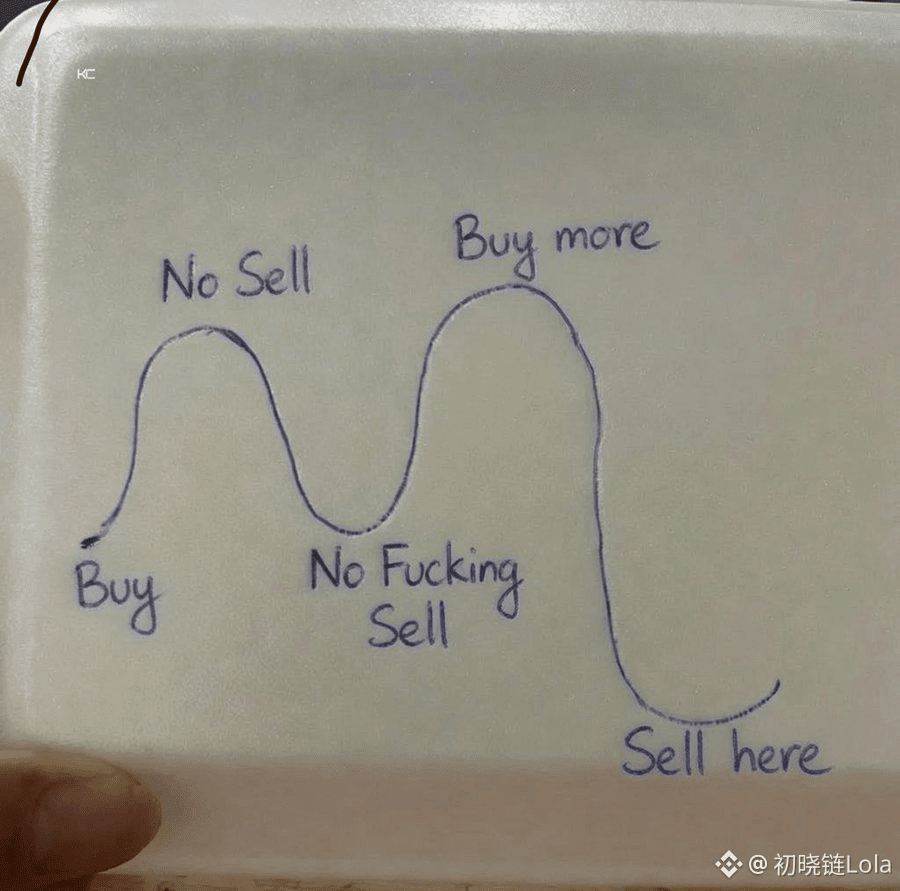
This is the strategy most people use 😂
$BTC today ahr999 index 0.53, and it’s going up again
#比特币突破8万美元大关
This is the strategy most people use 😂
$BTC today ahr999 index 0.53, and it’s going up again
#比特币突破8万美元大关
$BTC today ahr999 index 0.53, and it’s going up again
#比特币突破8万美元大关
3.1k
·
--
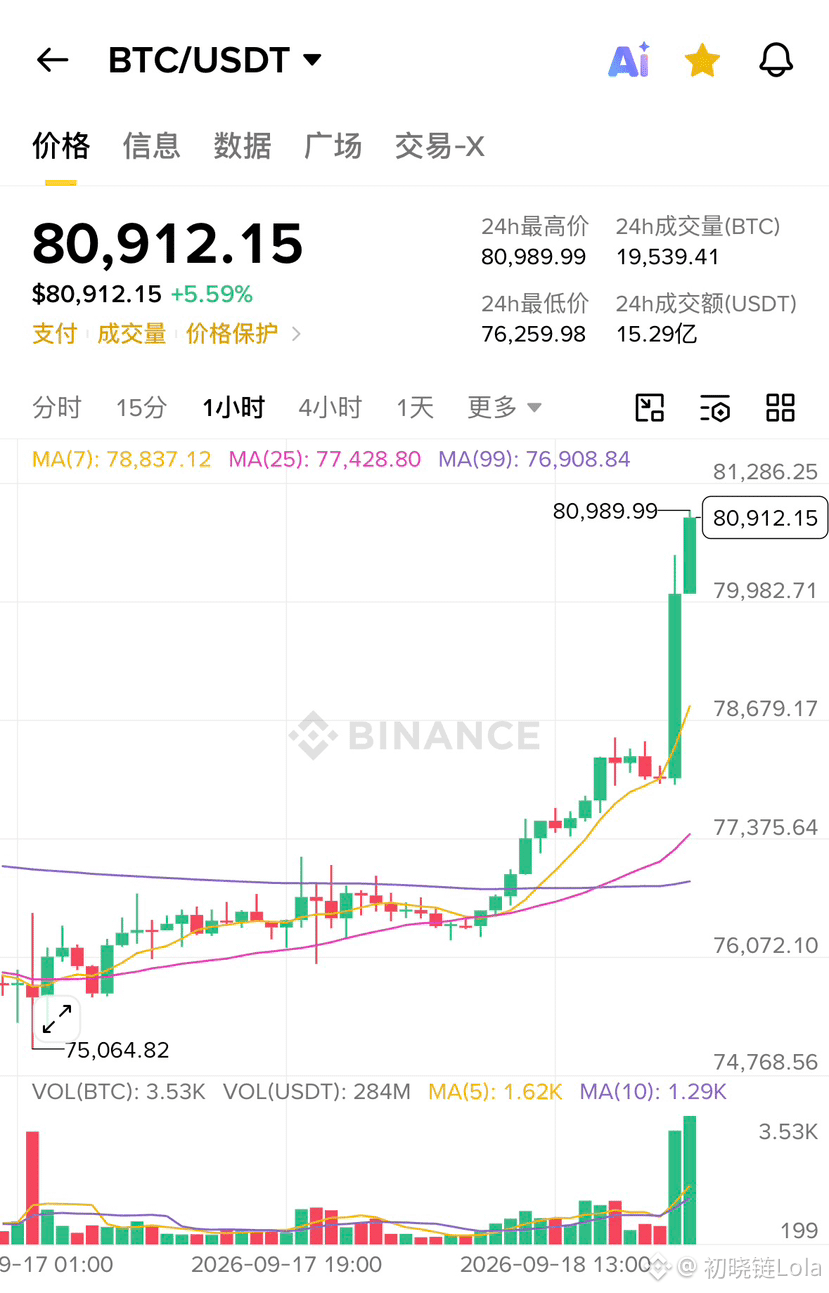
$BTC also broke through 80K.
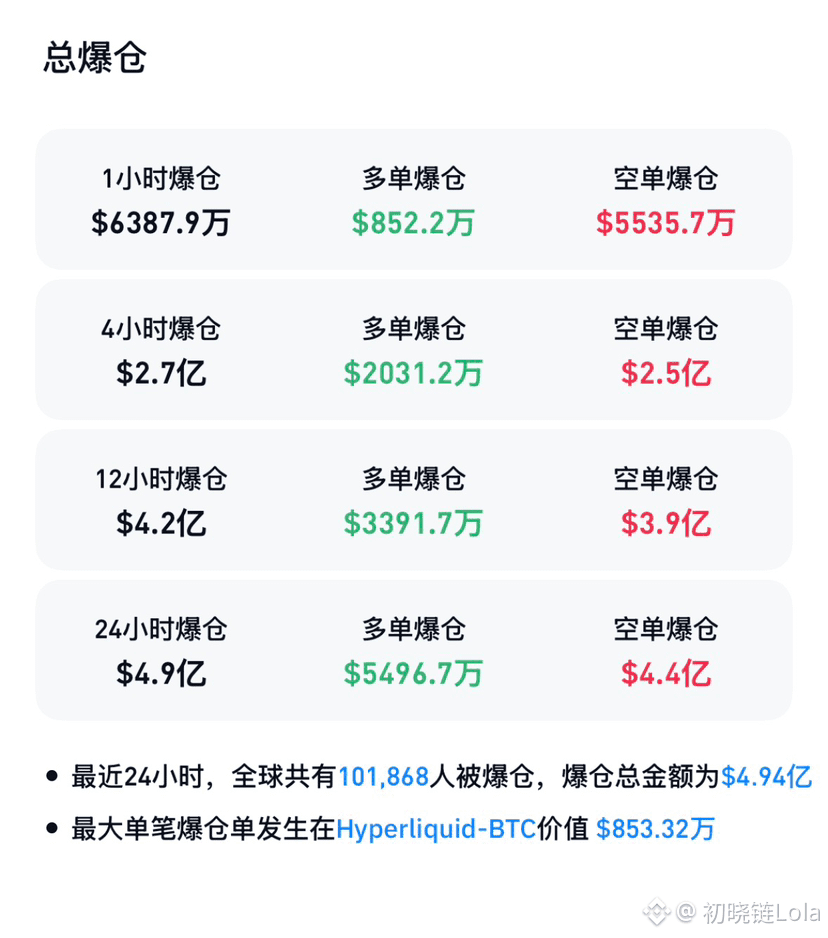
In the last 24 hours, a total of 101,868 people around the world have been liquidated.
The total liquidation amount was $494 million.
The largest single liquidation order occurred on Hyperliquid-BTC with a value of $8.5332 million.
The breakout happens quickly—liquidations happen even faster.
When it falls, it must rise; when it rises, it must fall 😂😂
#牛市
$BTC also broke through 80K.
In the last 24 hours, a total of 101,868 people around the world have been liquidated.
The total liquidation amount was $494 million.
The largest single liquidation order occurred on Hyperliquid-BTC with a value of $8.5332 million.
The breakout happens quickly—liquidations happen even faster.
When it falls, it must rise; when it rises, it must fall 😂😂
#牛市
In the last 24 hours, a total of 101,868 people around the world have been liquidated.
The total liquidation amount was $494 million.
The largest single liquidation order occurred on Hyperliquid-BTC with a value of $8.5332 million.
The breakout happens quickly—liquidations happen even faster.
When it falls, it must rise; when it rises, it must fall 😂😂
#牛市
2
3.2k
·
--
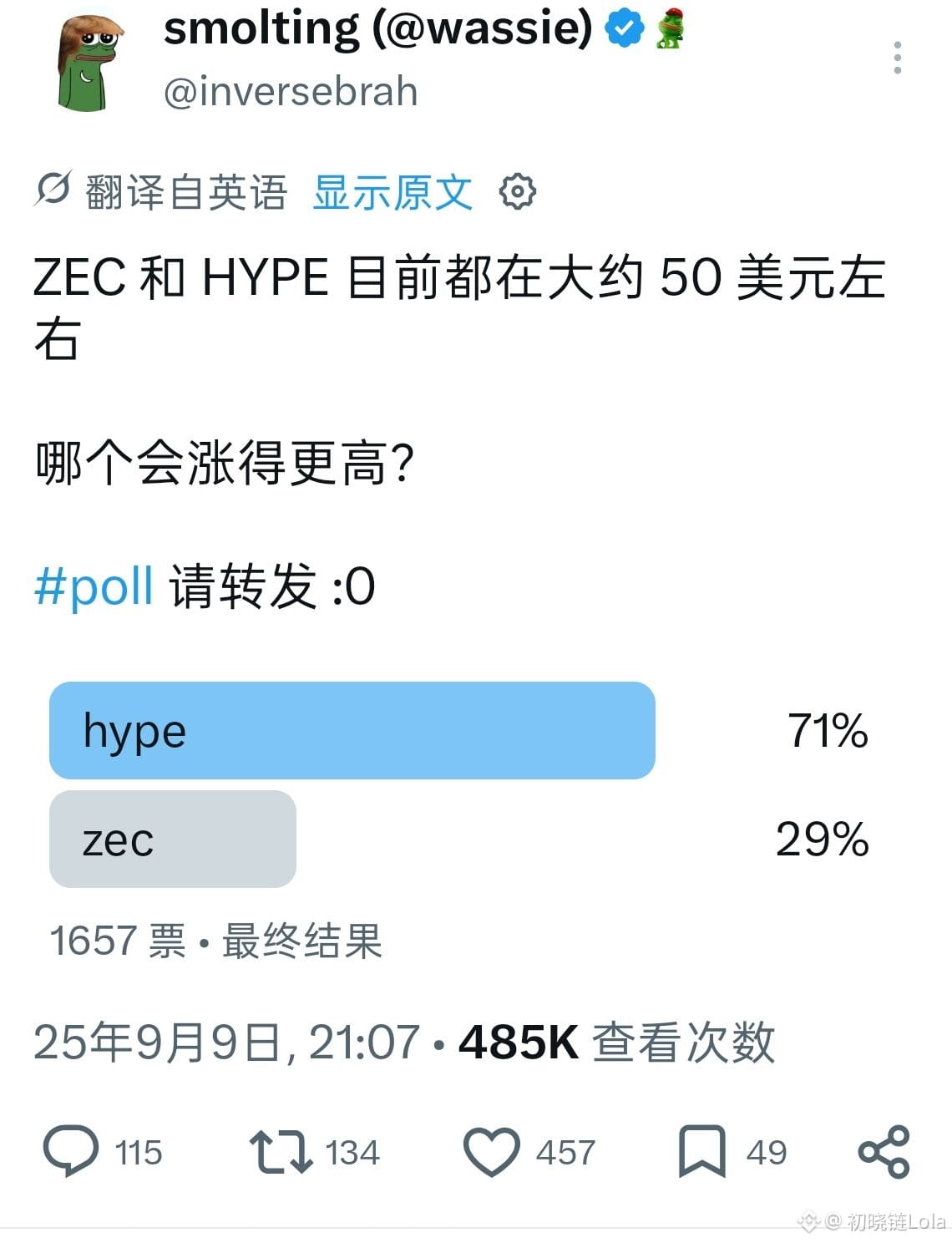
When both $HYPE and $ZEC are around $50,
which coin in the future has a bigger potential upside?
71% of people chose HYPE,
only 29% chose ZEC.
Recently #ZECUSDT stunned people and surged more than 30x,
so those who looked down on it back then can’t reach for it anymore 😂
Last year, HYPE was more popular—more discussion,
and greater market attention.
Meanwhile ZEC was relatively less popular,
even many people have stopped paying attention.
People often choose opportunities they can “see,”
but the crypto market often takes you by surprise.
Just because something is popular doesn’t mean it has the largest upside;
what you didn’t care for at the time may suddenly explode.
Picking the right target is luck,
choosing wrong is the norm.
Even harder is that even if you pick right,
you may not be able to hold on.
Up 30% and you think it can still go higher,
up 50% and you start to fear a pullback,
up 100% and you’re thinking about securing gains.
Recently I’ve seen many people short ZEC,
and the risk is very high.
If you get liquidated, you can only start from zero 🙈
When both $HYPE and $ZEC are around $50,
which coin in the future has a bigger potential upside?
71% of people chose HYPE,
only 29% chose ZEC.
Recently #ZECUSDT stunned people and surged more than 30x,
so those who looked down on it back then can’t reach for it anymore 😂
Last year, HYPE was more popular—more discussion,
and greater market attention.
Meanwhile ZEC was relatively less popular,
even many people have stopped paying attention.
People often choose opportunities they can “see,”
but the crypto market often takes you by surprise.
Just because something is popular doesn’t mean it has the largest upside;
what you didn’t care for at the time may suddenly explode.
Picking the right target is luck,
choosing wrong is the norm.
Even harder is that even if you pick right,
you may not be able to hold on.
Up 30% and you think it can still go higher,
up 50% and you start to fear a pullback,
up 100% and you’re thinking about securing gains.
Recently I’ve seen many people short ZEC,
and the risk is very high.
If you get liquidated, you can only start from zero 🙈
which coin in the future has a bigger potential upside?
71% of people chose HYPE,
only 29% chose ZEC.
Recently #ZECUSDT stunned people and surged more than 30x,
so those who looked down on it back then can’t reach for it anymore 😂
Last year, HYPE was more popular—more discussion,
and greater market attention.
Meanwhile ZEC was relatively less popular,
even many people have stopped paying attention.
People often choose opportunities they can “see,”
but the crypto market often takes you by surprise.
Just because something is popular doesn’t mean it has the largest upside;
what you didn’t care for at the time may suddenly explode.
Picking the right target is luck,
choosing wrong is the norm.
Even harder is that even if you pick right,
you may not be able to hold on.
Up 30% and you think it can still go higher,
up 50% and you start to fear a pullback,
up 100% and you’re thinking about securing gains.
Recently I’ve seen many people short ZEC,
and the risk is very high.
If you get liquidated, you can only start from zero 🙈
2
2
5.8k
·
--
Can’t afford even one $BTC , but you definitely shouldn’t just buy cheap knockoff coins.
A friend in my group said: “Since you update crypto content so often, can you tell me which coin to buy right now? I’m not greedy—I’d be happy if it could go up 2 or 3x.”
I said I follow BTC.
He replied: “Then forget it—BTC is too expensive, and I can’t afford it.”
I could only laugh.
If I could really predict the ups and downs, would I still be making content?
When many players enter the market, the first thing they want is to find someone to tell them:
What to buy now? Which has potential? Which can multiply? And ideally the price shouldn’t be too high.
That’s how a common misconception forms:
BTC is too expensive → the upside isn’t big enough → buy altcoins → only then might you get a chance to go 2x.
① “BTC is expensive” doesn’t mean you can’t buy.
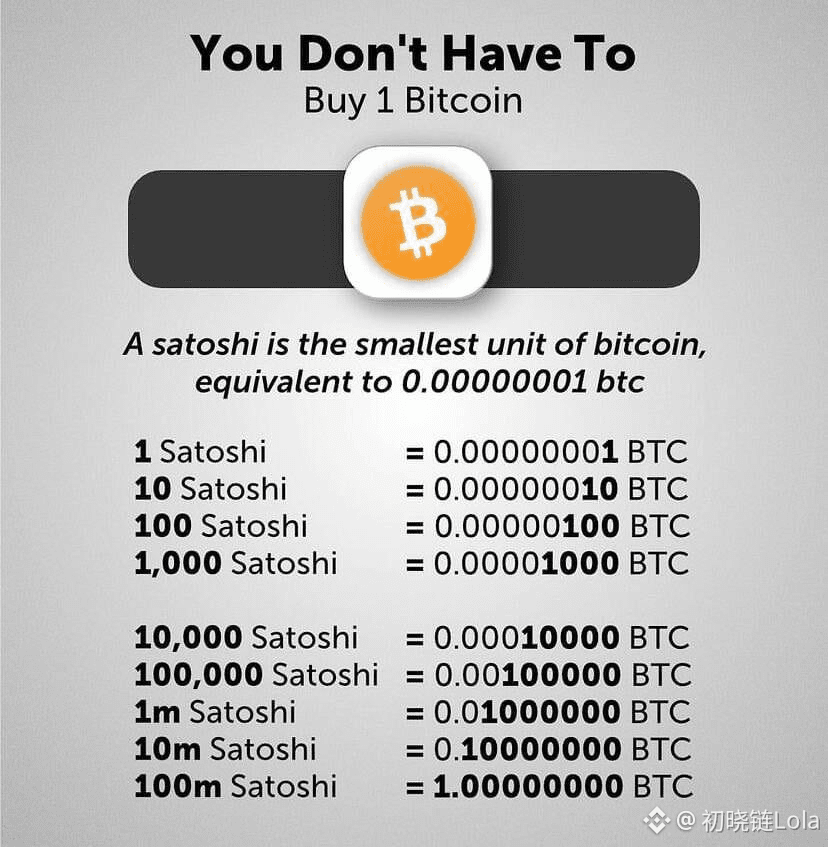
You don’t necessarily need to buy 1 full BTC. Buying 0.1, 0.01, or even 0.001 is still participating.
Whether a coin’s price is high or low doesn’t determine how much it will rise in the future.
A coin priced at $0.1 isn’t necessarily “cheap.”
Don’t assume that because BTC’s price is high, you can’t afford it—so you should buy a cheaper altcoin.
There’s no guaranteed link between the two.
② Don’t treat “going 2x” as a reason to enter.
Many people look for 10x or 100x coins.
But the problem is this: when you see someone post their 10x profit, there are often many more people who bought and then later dropped 70%, 80%, or even 90%.
If a coin can easily double or triple, it also usually implies much higher risk.
Instead of chasing the next “multiplier,” it’s better to first learn how to control your position size, how to deal with drawdowns, and how to protect your assets.
③ Build a “crypto asset ladder.”
If you don’t have experience, you still need an order and sequence:
First, understand BTC—why it exists, how much supply there is, what mining is, and so on.
Then research BTC $ETH and other mainstream assets.
Once you can understand what a project does, then consider whether to participate.
Only at the end should you consider #MEME —small-cap coins.
Learn with a “small position” you can afford to lose.
Don’t see someone else make 10x and then chase it by putting in all your principal.
Find a strategy you can execute long-term.
In a bull market, don’t FOMO and chase with your whole position.
In a bear market, don’t exit just because it’s not “hot.”
Don’t hand your principal and your judgment over to someone’s one-liner: “This coin is about to take off.”
I’d rather go slower #定投BTC ,
than take on risks I don’t want to take just to chase 2x or 3x returns.
After all, in #加密市场 , making money matters—but staying in the market for the long run is even more important.
Can’t afford even one $BTC , but you definitely shouldn’t just buy cheap knockoff coins.
A friend in my group said: “Since you update crypto content so often, can you tell me which coin to buy right now? I’m not greedy—I’d be happy if it could go up 2 or 3x.”
I said I follow BTC.
He replied: “Then forget it—BTC is too expensive, and I can’t afford it.”
I could only laugh.
If I could really predict the ups and downs, would I still be making content?
When many players enter the market, the first thing they want is to find someone to tell them:
What to buy now? Which has potential? Which can multiply? And ideally the price shouldn’t be too high.
That’s how a common misconception forms:
BTC is too expensive → the upside isn’t big enough → buy altcoins → only then might you get a chance to go 2x.
① “BTC is expensive” doesn’t mean you can’t buy.
You don’t necessarily need to buy 1 full BTC. Buying 0.1, 0.01, or even 0.001 is still participating.
Whether a coin’s price is high or low doesn’t determine how much it will rise in the future.
A coin priced at $0.1 isn’t necessarily “cheap.”
Don’t assume that because BTC’s price is high, you can’t afford it—so you should buy a cheaper altcoin.
There’s no guaranteed link between the two.
② Don’t treat “going 2x” as a reason to enter.
Many people look for 10x or 100x coins.
But the problem is this: when you see someone post their 10x profit, there are often many more people who bought and then later dropped 70%, 80%, or even 90%.
If a coin can easily double or triple, it also usually implies much higher risk.
Instead of chasing the next “multiplier,” it’s better to first learn how to control your position size, how to deal with drawdowns, and how to protect your assets.
③ Build a “crypto asset ladder.”
If you don’t have experience, you still need an order and sequence:
First, understand BTC—why it exists, how much supply there is, what mining is, and so on.
Then research BTC $ETH and other mainstream assets.
Once you can understand what a project does, then consider whether to participate.
Only at the end should you consider #MEME —small-cap coins.
Learn with a “small position” you can afford to lose.
Don’t see someone else make 10x and then chase it by putting in all your principal.
Find a strategy you can execute long-term.
In a bull market, don’t FOMO and chase with your whole position.
In a bear market, don’t exit just because it’s not “hot.”
Don’t hand your principal and your judgment over to someone’s one-liner: “This coin is about to take off.”
I’d rather go slower #定投BTC ,
than take on risks I don’t want to take just to chase 2x or 3x returns.
After all, in #加密市场 , making money matters—but staying in the market for the long run is even more important.
A friend in my group said: “Since you update crypto content so often, can you tell me which coin to buy right now? I’m not greedy—I’d be happy if it could go up 2 or 3x.”
I said I follow BTC.
He replied: “Then forget it—BTC is too expensive, and I can’t afford it.”
I could only laugh.
If I could really predict the ups and downs, would I still be making content?
When many players enter the market, the first thing they want is to find someone to tell them:
What to buy now? Which has potential? Which can multiply? And ideally the price shouldn’t be too high.
That’s how a common misconception forms:
BTC is too expensive → the upside isn’t big enough → buy altcoins → only then might you get a chance to go 2x.
① “BTC is expensive” doesn’t mean you can’t buy.
You don’t necessarily need to buy 1 full BTC. Buying 0.1, 0.01, or even 0.001 is still participating.
Whether a coin’s price is high or low doesn’t determine how much it will rise in the future.
A coin priced at $0.1 isn’t necessarily “cheap.”
Don’t assume that because BTC’s price is high, you can’t afford it—so you should buy a cheaper altcoin.
There’s no guaranteed link between the two.
② Don’t treat “going 2x” as a reason to enter.
Many people look for 10x or 100x coins.
But the problem is this: when you see someone post their 10x profit, there are often many more people who bought and then later dropped 70%, 80%, or even 90%.
If a coin can easily double or triple, it also usually implies much higher risk.
Instead of chasing the next “multiplier,” it’s better to first learn how to control your position size, how to deal with drawdowns, and how to protect your assets.
③ Build a “crypto asset ladder.”
If you don’t have experience, you still need an order and sequence:
First, understand BTC—why it exists, how much supply there is, what mining is, and so on.
Then research BTC $ETH and other mainstream assets.
Once you can understand what a project does, then consider whether to participate.
Only at the end should you consider #MEME —small-cap coins.
Learn with a “small position” you can afford to lose.
Don’t see someone else make 10x and then chase it by putting in all your principal.
Find a strategy you can execute long-term.
In a bull market, don’t FOMO and chase with your whole position.
In a bear market, don’t exit just because it’s not “hot.”
Don’t hand your principal and your judgment over to someone’s one-liner: “This coin is about to take off.”
I’d rather go slower #定投BTC ,
than take on risks I don’t want to take just to chase 2x or 3x returns.
After all, in #加密市场 , making money matters—but staying in the market for the long run is even more important.
4
3
4.6k
·
--
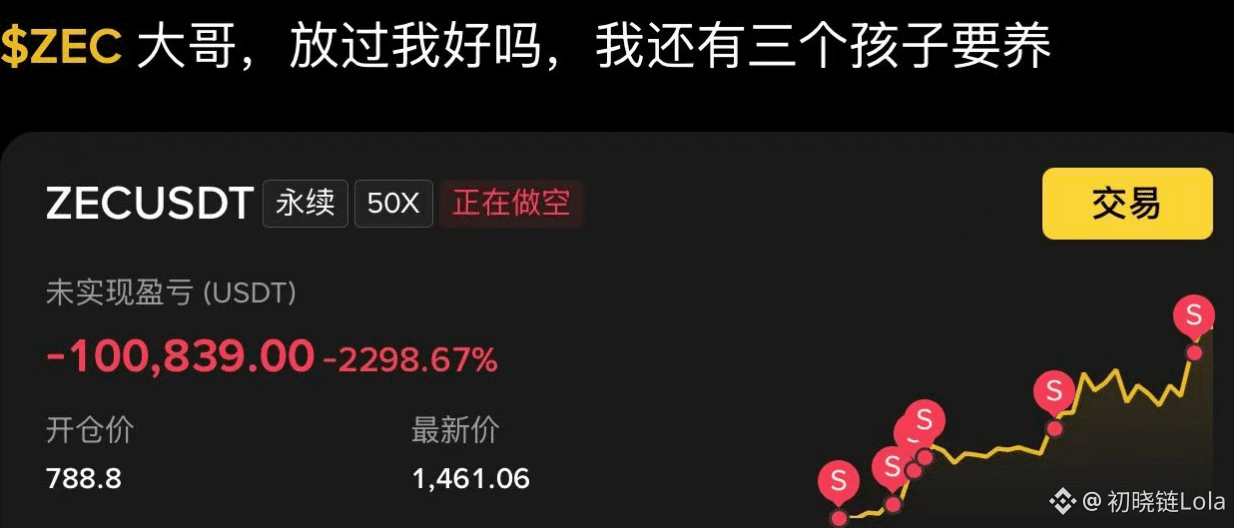
If I had known, why did I do it in the first place 🙈
Before signing the deal, how could I have forgotten that I had three children to raise,
$ZEC has been really intense lately
#zec
If I had known, why did I do it in the first place 🙈
Before signing the deal, how could I have forgotten that I had three children to raise,
$ZEC has been really intense lately
#zec
Before signing the deal, how could I have forgotten that I had three children to raise,
$ZEC has been really intense lately
#zec
2
1.9k
Log in to explore more content
Join global crypto users on Binance Square
⚡️ Get latest and useful information about crypto.
💬 Trusted by the world’s largest crypto exchange.
👍 Discover real insights from verified creators.
Email / Phone number