The OnChain Hedge Fund in Your Wallet How Lorenzo Is Bringing Institutional Strategies to Everyone ?
Lorenzo makes advanced, professional investment strategies simple and available to everyone. You don’t need a broker, a big minimum, or private access. You get clean, auditable exposure to strategies that used to live only inside hedge funds and institutional desks. That is the core idea: professional strategy, transparent plumbing, easy access. OTFs (On-Chain Traded Funds) are tokenized products that represent real strategies. When you buy an OTF token, you own a share of a clear investment plan — a quant model, a volatility engine, a managed futures strategy, or a composed mix of several of these. The strategy is not a marketing line. The rules are coded in smart contracts and the activity is onchain. That means every user can see how capital is allocated, how the strategy trades, how fees are applied, and how returns are produced. No opaque reports, no quarterly letters. Real numbers, live. Lorenzo’s vault design is simple to understand and powerful in use. There are two basic flavours: simple vaults and composed vaults. Simple vaults run a single, well-defined strategy. They are clean and focused. If you want pure exposure — a single quant system or a volatility harvester — pick a simple vault and you know exactly what you’re getting. Composed vaults combine multiple simple vaults into one tokenized product. They let the protocol mix strategies to smooth volatility, diversify sources of returns, and create a more balanced net value curve. Composed vaults are built from clear building blocks, not black boxes. Everything on Lorenzo is auditable. Deposits, rebalances, trade executions, fee pulls, strategy allocations — you can trace it onchain. That transparency matters. It turns trust into verifiable facts. Instead of trusting a PDF, you verify the transactions. This changes how people evaluate returns. Instead of a screenshot that shows a high APY, you see net asset value over time, strategy attributions, drawdowns, and allocation shifts. Those are meaningful metrics for anyone who wants to understand performance beyond a headline number. Access is frictionless. You can enter with common stablecoins or approved tokens and receive a token that represents your share of the vault. That token is composable: use it in other DeFi apps, hold it, or trade it. You don’t have to manage the strategy. The vault executes rules automatically. It rebalances, routes funds, and applies risk controls according to predefined logic. This makes sophisticated strategy exposure as easy as holding a token in your wallet. Risk management is built into the product design. Strategies are coded with explicit boundaries: maximum leverage, position limits, liquidity buffers, and rebalancing triggers. Composed vaults add an extra layer of risk control through diversification across fundamentally different approaches. Instead of concentration in a single source, composed vaults can blend trend-following models with market-neutral strategies and yield sources from real-world assets. That mix helps reduce single-point failure risk and smooth performance over time. veBANK is the alignment mechanism. By locking BANK tokens into veBANK, long-term participants gain governance weight and economic alignment with the protocol’s health. This is deliberate: governance power comes from commitment, not from quick flips. veBANK holders influence decisions about product priorities, allocation frameworks, and platform incentives. That structure discourages short-term noise and rewards people who want to build sustainable products. It also helps protect strategy integrity: governance touches platform-level choices, not the core execution logic of a given strategy. Strategy code and rules are designed to run unless community-elected changes are approved through proper processes. That separation keeps market action predictable and governance meaningful. For builders and strategists, Lorenzo is a place to express real models at scale. Developers can deploy strategy modules as simple vaults, test them on testnets, and then offer them to the market. Because every action and allocation is visible, strategy authors can demonstrate value with evidence rather than promises. This attracts serious builders who want their models used, audited, and trusted by a broader audience. It also opens a path for institutional strategy teams to tokenise their approaches without sacrificing process control. User experience is a priority. The interface is designed so that entry and exit are straightforward. Users see clear facts: current net asset value, recent trades, allocation breakdown, historical performance, fee schedule, and liquidity windows. There are explanations in plain language — no jargon required. That simplicity encourages adoption by people who want real exposure without managing dozens of DeFi positions manually. Distribution and integration matter. OTF tokens are designed to be usable across the DeFi ecosystem. Wallets, aggregators, payment apps, and custodial services can integrate OTFs so that yield and strategy exposure become a native feature of many user flows. That means savings features, payroll, treasury management, and retail products can offer credible on-chain returns without requiring each integrator to design their own strategies. The modularity reduces duplication and speeds up useful workflows across the space. Transparency also helps with compliance and audits. Because operations are onchain and proofable, third parties can audit flows, custody arrangements, and strategy outcomes. That is a major advantage when engaging with institutions or regulated entities that require evidence rather than assertions. Tokenized strategies are easier to review because they are live, verifiable, and consistent. Lorenzo’s design makes it simpler to produce audit trails and compliance reports that institutions expect. Fees and incentives are straightforward and aligned. Fees exist to pay strategists, maintain infrastructure, and reward long-term stakeholders. The fee model is visible and predictable. veBANK lets the community decide broader incentive direction — how rewards are distributed, which strategies get support, and where growth capital should be allocated. That governance clarity reduces the risk of sudden, unpredictable economic changes that have hurt other projects. Operational resilience is built into the protocol. Smart contracts handle routine execution. Risk engines monitor asset quality and liquidity. Multi-sig and governance processes manage upgrades and exceptional interventions. Where off-chain execution is necessary, the protocol uses transparent oracles and partners with reputable operators who publish proofs of performance. The aim is to keep the onchain record as the source of truth while minimizing centralized operational risk. The product set is designed to evolve incrementally. Start with clear single-strategy vaults that demonstrate repeatable logic. Add composed vaults to combine these strategies for more balanced exposure. Expand to include tokenized real-world assets and institutional-grade yield sources as those markets mature. Each step is tested, audited, and designed to preserve the core values: transparency, composability, and long-term alignment. Why this matters now. The DeFi landscape is maturing. Users want more than raw APY numbers. They want products that fit into real portfolios, match risk preferences, and produce durable outcomes. Tokenized, auditable strategies are the natural next step. They let retail and institutional players access sophisticated tools while keeping everything verifiable and transparent. That is the reason OTFs matter: they turn complex strategies into simple, tradable claims with clear, onchain proof. Practical examples of how people can use Lorenzo: • A long-term holder can mint exposure to a volatility harvesting strategy while keeping the base asset in their portfolio. • A treasury manager can allocate a portion of corporate reserves into a composed vault that balances yield and drawdown control. • A DAO can earn predictable, diversified yield by allocating to OTFs rather than chasing short-term farms. • A wallet provider can offer “set-and-forget” strategy exposures to their users, boosting retention with simple financial products. Security and trust require continual work. Lorenzo maintains rigorous audits, bug bounties, external reviews, and ongoing testing. The community and independent teams regularly review strategy modules and the platform’s core contracts. That vigilance is necessary because complex financial products require robust operational guardrails. In short, Lorenzo brings professional asset management to the onchain world in a way that’s practical, transparent, and usable. OTFs let anyone access quant, volatility, managed futures, and multi-strategy products without needing to manage the plumbing. Vaults are auditable and composable, so assets and strategies are visible and interoperable across DeFi. Simple vaults provide focused exposure; composed vaults provide balanced portfolios. veBANK ensures governance favors long-term alignment and rewards commitment over short-term speculation. The result is a platform where advanced strategies are no longer behind gates — they are in your wallet, clear, verifiable, and ready to use. If you want to try Lorenzo, start small. Pick a simple vault, understand the strategy, check the onchain history, and watch how the net asset value behaves over time. Use composed vaults when you want diversification. If you are a long-term believer, consider veBANK to align incentives and help guide the platform’s future. Lorenzo isn’t only about yield numbers. It’s about making strategy credible, measurable, and accessible. That is what transforms DeFi from a collection of experiments into a mature financial ecosystem. Welcome to transparent on-chain asset management. @Lorenzo Protocol #LorenzoProtocol $BANK
Automation Meets Regulation How Kite IdentitySystem Is Becoming the New Standard for Web3 Compliance
Kite is built around a simple, powerful idea: identity should help systems work, not slow them down. For years crypto has treated identity like an all-or-nothing choice — either you hide everything and make compliance hard, or you expose too much and lose privacy. Kite breaks that tradeoff by turning identity into programmable data. That means identity is useful inside transactions, understandable to regulators, and safe for users. It becomes a tool that both builders and compliance teams can use without fighting each other. Kite splits identity into three clear layers: the user, the agent, and the session. Think of each layer as a role with its own limits. The user is the human or organization that owns the relationship. The agent is the software or service acting on behalf of the user. The session is a short-lived permission the agent uses to do a specific job. Separating these roles makes everything more precise. You can give an agent the power to run a task without giving it permanent control. You can see exactly which party acted and under what rules, with timestamps and proofs that can be read by auditors but without publishing private documents to the blockchain. Because sessions are temporary, automation becomes safe and flexible. Instead of giving a bot full account access forever, you give it a session that lasts minutes or hours and only allows certain actions. That reduces exposure by design: when the session ends, so does the authority. If a machine or script misbehaves, the damage is limited to the session period and scope. For companies and regulators that worry about automated systems running wild, that is huge. It means compliance teams can allow automation while still having strong guardrails, and developers can build automatic workflows that don’t need human approvals at every step. Kite’s verification model is another important shift. Rather than sharing full identity documents onchain, a user can present a cryptographic “stamp” that proves a verification has happened. Verifiers — banks, KYC providers, or compliance partners — issue those stamps after checking identity off-chain. The blockchain checks the stamp, not the raw file. That keeps private data off the public ledger while still giving regulators and partners an auditable proof that required checks were completed. Privacy stays intact because the system never publishes sensitive files, and at the same time, auditors get the proof they need to confirm compliance. Making compliance part of the code is where Kite becomes especially practical. Instead of making compliance an external process that slows everything down, Kite lets institutions embed rules directly into transactions. A bank in one country can define what “verified” means for its region. A fintech in another country can use a different verification threshold. Those rules live in smart contracts and modules that check stamps and session conditions automatically. Compliance becomes programmable and composable. Each institution can maintain its own standards while still operating on the same underlying network. That avoids a single centralized registry and keeps the system flexible across jurisdictions. This model changes how audits and investigations work. Rather than digging through paper trails and emails, auditors can fetch cryptographic proofs and session logs from the chain. They can see who authorized an agent, what session limits applied, and which stamps were checked at the moment a transaction happened. Investigation becomes about verifying the right proofs, not piecing together scattered evidence. That reduces operational friction and speeds up responses when something needs review, while still preserving privacy and minimizing data exposure. Kite’s approach also helps institutions adopt automation faster. Many organizations want to automate tasks like settlement, reconciliation, or cross-border transfers, but they hesitate because automation can create compliance headaches. Kite addresses that by offering sessions with explicit boundaries: time limits, allowed actions, spending caps, and data access scopes. These session rules can mirror real-world policies already used in regulated workflows. That makes it easier to map current compliance procedures to onchain behavior. Automation moves from risky experimentation into approved operational practice. For builders, Kite’s model is straightforward to use. Developers can design agents that request sessions with specific capabilities and present the right stamps when required. APIs and SDKs abstract much of the complexity: request a session, attach a stamp, execute actions, and log the proof. Because the identity logic is standardized, integrations are simpler and faster. Wallets, custody providers, exchanges, and enterprise systems can plug into Kite’s identity stack without reinventing verification for each new flow. That reduces integration time and lowers the chance of mistakes that commonly occur when teams try to bolt compliance on after the fact. Privacy and user control are central. Users do not hand over documents to everyone they interact with. They authorize a verifier one time and that verifier issues the stamps developers need. If a user wants to revoke a verifier or change its permissions, that can be handled without re-sharing sensitive files. The session layer further protects users by limiting the lifespan and scope of authority. This gives individuals and organizations more nuanced control over how identity is used — a balance between utility and privacy that is hard to achieve in many current systems. Kite is also designed with regulators in mind. Regulators need traceability and certainty. They want to know who did what and why, especially for financial flows. Kite provides structured, auditable records that regulators can evaluate without demanding full public disclosure of personal data. Sessions and stamps create clear trails that map back to verified entities. Where necessary, off-chain relationships between verifiers and regulators can be arranged so that authorities can access required proofs under proper legal processes. In short, Kite preserves privacy in public spaces but doesn’t block lawful oversight when it’s needed. The model is practical for onchain businesses too. Payment providers, payroll systems, marketplaces, and lending platforms can use Kite to reduce counterparty risk and regulatory uncertainty. For payroll, an employer can mint a session for scheduled payouts, and the payroll agent can distribute funds while the session enforces limits and records every action. For marketplaces, sellers and buyers can transact under session rules that guarantee dispute resolution paths and compliance checks. These use cases all benefit from the ability to verify without oversharing, and to run automated flows without permanent wide-open permissions. Kite’s identity stack also helps with cross-border complexity. Different countries require different levels of verification. Instead of forcing a single rule across the entire network, Kite lets local verifiers set the standards that apply in their region. The network accepts their stamp just like any other, so global flows can be built from local building blocks. That modularity makes Kite usable for multinational operations: each jurisdiction keeps its control, and the system composes these standards into a coherent global fabric without centralizing authority. Security is built in at every layer. Sessions reduce attack windows by design. Agents can be limited in capabilities and tied to specific tasks, so even if an agent or its keys are compromised, the attacker’s options are constrained. Stamp verification avoids exposure of documents onchain, limiting the risk of data leakage. Smart contract modules enforce policies automatically so human error in enforcement is minimized. Finally, logs and proofs provide evidence for post-event checks, making it easier to trace and remediate incidents when they happen. Kite’s identity patterns unlock a new class of machine-assisted workflows too. As AI agents and automated services increasingly act on our behalf, they need safe ways to sign, pay, and interact. Kite gives those agents a form of verifiable identity without exposing the owner’s full credentials. An agent can obtain a session to perform a narrow task — say, buy compute time for a model run — and the payment and proof are recorded in a way that regulators and counterparties can validate if needed. Agents gain digital citizenship that’s controlled, auditable, and limited to the scope they need. For enterprises, Kite shrinks compliance costs. Instead of bespoke audits for every new integration, firms can rely on unified session and stamp logic. Onboarding partners becomes faster because the verification proofs are standardized. Internal controls map directly to session constraints. Treasury and legal teams can see exactly how permissions are granted and used. That reduces friction when scaling operations across products or geographies. It also creates clearer corridors for onboarding institutional partners who otherwise hesitate to trust purely onchain automation. Kite also supports a layered governance approach. Identity rules, verifier accreditation, and session parameters can be managed through governance modules that evolve with network needs. Governance does not mean centralized control; it means coordinated upgrades, transparent policy changes, and the ability to introduce improved verification standards as the ecosystem matures. That allows the network to adapt while keeping trust and predictability. Adoption will look gradual and practical. Pilots in financial sandboxes and regulated environments are the natural first step. Banks, custodians, and regulated payment providers can test session-based automation inside clearly defined boundaries. Once these early use cases prove the model, more sectors adopt it: payroll and subscription platforms, logistics and supply chain automation, machine-to-machine commerce, and identity-backed DeFi primitives. Kite’s strength is that it does not demand wholesale change; it offers safer building blocks that map directly to existing needs. A few simple examples show how this works in practice. A remittance provider can issue a session to an agent that pays dozens of recipients on a schedule, each transfer verifiable by a stamp and session proof. A healthcare data exchange can allow a research agent limited access to specific datasets for a week, with recorded attestations to satisfy regulators without exposing raw patient files. An energy grid operator can certify an agent to bid for microgrid capacity for an hour, with session logs proving compliance and spending limits enforced automatically. In each case, the balance between traceability and privacy is maintained. Kite’s approach is not about creating a single global verifier or erasing privacy. It’s about making identity useful where it matters and private where it should be. It gives developers tools to build safe automation, lets businesses scale operations without drowning in compliance overhead, and provides regulators with clear audit paths that don’t require permanent data exposure. That mix of utility and protection is what makes identity practical for real-world usage. If you are a developer, Kite lets you build smarter agents without adding heavy compliance work for partners. If you are a compliance officer, Kite gives you auditable proofs you can trust without needing to see private files. If you are a regulator, Kite creates clear, machine-readable trails to verify behavior under legal standards. If you are a user, Kite gives you control over what gets shared and when, and ensures automated tools act only within the limits you set. Kite is a step toward a system where identity and automation are not enemies. It reimagines identity as programmable, session-based, and verifiable in a minimally invasive way. That opens doors to safe automation, responsible AI agents, efficient cross-border flows, and more predictable compliance. It is not a flash-in-the-pan feature. It is foundational plumbing that lets builders and institutions rely on automation without sacrificing the privacy and legal certainty they need. If you care about digital systems that need to be both fast and auditable, Kite’s identity stack is worth understanding. It focuses on making identity a safe, usable layer — one that lives inside transactions instead of as a separate gatekeeper. The payoff is simple: automation that scales, audits that work, privacy that holds, and an environment where both innovation and oversight can coexist. @KITE AI #KITE $KITE
Falcon Finance Just Entered Its Maturity Phase This Is When Real Protocols Are Born
Falcon Finance is moving from noise to work. At first the project felt like many new protocols do: fast launches, loud promises, and a lot of short-term attention. Now the tone has changed. The team has slowed the noise and started focusing on steady upgrades that actually build capability. This matters because the difference between a project that chases headlines and one that builds plumbing is the difference between a flash in the pan and something people can rely on. Falcon is choosing the slow, necessary work that turns features into useful, dependable systems. You can see the change everywhere. Product changes now follow clear, coordinated steps rather than random bursts. Instead of launching a feature and moving on, the team is linking upgrades together so each change reinforces the last. That kind of sequence shows planning. It means the team is thinking about long-term behavior, not just short-term metrics. Builders who plan this way are easier to audit mentally because each step has a purpose that connects to system stability, not just growth numbers. Users are noticing and they are acting differently. Where early activity looked like curiosity and speculation, today activity looks more informed and steady. People are entering positions with longer time horizons. Liquidity sticks rather than fleeing at the first rumor. That pattern is significant: it shows that real product-market fit is forming. When users treat a protocol as a place to park real liquidity, you stop seeing the blink-and-you-miss-it flows that define hype cycles. You start to see balance sheets that can be modeled, which attracts the kind of activity that scales. Falcon’s current posture is about discipline. The protocol is tightening incentives and reworking economics to favor stability over noise. That means reward models are changing to support sustained participation, not speculative spikes. That is a big deal. Incentives shape behavior. When they favor long-term alignment, the community naturally shifts toward contributors who build durable value — devs who make integrations, teams that supply reliable liquidity, and institutions who need predictability. Over time, that creates a different kind of network effect: one based on usability and trust instead of hype. Tools and integrations are following the same pattern. The partnerships being formed now feel more meaningful. They expand utility rather than just visibility. Instead of PR-driven tie-ups, Falcon is securing collaborations that widen liquidity paths, improve settlement options, or add operational tools that help enterprises use USDf and other products safely. Those integrations deepen the protocol’s usefulness. They are the kind of quiet wins that compound over months into a stronger ecosystem. Falcon’s technical choices also reflect maturity. The protocol has focused on core plumbing first — risk engines, governance clarity, and composability. These are not glamorous things, but they matter most for a protocol that wants to be a dependable piece of infrastructure. When the core is solid, new features can be added without destabilizing the whole system. That engineering discipline is visible in how updates are rolled out: measured, tested, and clearly communicated. Liquidity behavior is another part of the story. Instead of rapid flows that enter and exit around narrative events, Falcon’s liquidity is showing longer retention. Capital that stays allows market-making to be profitable in the long run. It lets pricing become predictable. It lets teams plan features and integrations without the constant fear of sudden capital flight. That kind of liquidity is the lifeblood of a useful finance protocol: not the kind that spikes with a tweet, but the kind that underwrites real products. The protocol’s economic model is evolving to favor stability. Reward schedules, routing logic, and fee structures are being tuned to encourage meaningful participation. This means LPs and market makers get rewarded for durable contributions, not just for jumping in during temporary incentives. That kind of shift reduces the boom-and-bust cycles that hurt user trust and raise regulatory eyebrows. It also makes the token and stablecoin economics more defensible when institutional partners look under the hood. A major sign of maturation is the change in who builds on Falcon. The new wave of developers and partners are not here for quick wins. They want composable rails and dependable tools that let them ship real products. When engineers trust the execution layer, they create deeper primitives that attract more users and liquidity. This developer migration is one of the clearest indicators that Falcon is moving from experimental to infrastructural. A platform filled with thoughtful builders snowballs into an ecosystem that grows because it solves real problems, not because it advertises loudly. Community tone has shifted too. Conversations are less about hype and more about design, integration, and sustainability. That intellectual maturity in forums and chats means decisions are being debated with an eye toward long-term impact. A community that thinks like a product team rather than a short-term investor tends to produce better outcomes. When the debate changes from “what’s next viral move?” to “what is the safe parameter for this collateral type?”, the project is growing up. Falcon’s approach to collateral and risk deserves a closer look. The protocol does not pretend risk can be eliminated. Instead, it treats risk as a variable to be priced, managed, and contained. Collateral parameters are conservative and adjusted with stress tests in mind. Liquidation logic emphasizes predictability over drama. That means users can model behavior and auditors can validate safety assumptions. This level of discipline helps attract both sophisticated retail users and institutional actors who need a predictable counterparty. Composability is another strong advantage. The design encourages systems to plug into Falcon naturally. That lowers the cost of experimentation and encourages other teams to reuse the same foundations rather than re-implementing core pieces. Composability compounds slowly but powerfully. When many apps share the same composable rails, the network effect produces resilience: integrations feed liquidity and liquidity feeds more integrations. Falcon is building exactly that sort of virtuous cycle. The timing matters. The market is shifting away from spectacle and toward predictable infrastructure. Investors and builders are rewarding projects that offer clarity and utility. Falcon’s posture matches this shift: it does not need to be loud to be valuable. Instead it offers a set of features that matter when adoption depends on function, not narrative. In this environment, being steady is a competitive advantage. Operationally, Falcon has been improving governance practices. Governance is structured more like policy than a popularity contest: clear parameters, transparent data, and an emphasis on accountability. That reduces regulatory risk and improves confidence for teams that might integrate USDf into business processes. When governance behaves like a risk committee rather than a PR arm, the whole system becomes easier to evaluate and trust. Payments and payroll use cases are showing practical utility. USDf as a payroll and subscription rail is a natural fit: employers can program scheduled payments, recipients can see their balances and upcoming payouts, and funds remain backed and auditable. That kind of real-world utility matters more than flashy yield numbers because it creates regular, repeatable flows of value. Recurrent payment flows are durable by nature, and when a protocol supports them reliably, it gains sticky usage that is harder to disrupt. Falcon is also proving it can handle complexity without becoming brittle. The architecture allows yield models to be adjusted, risk parameters to be tightened, and new tools to be layered on top without destabilizing the whole system. That optionality is important because markets change quickly. A resilient protocol needs the room to adapt without breaking. Falcon’s modular approach gives it that flexibility. The project’s cultural shift is visible inside the team too. There appears to be a stronger internal discipline, a willingness to prioritize safety over speed, and a focus on methodical engineering. That change in internal culture is often decisive for long-term success. Teams that balance ambition with disciplined delivery end up shipping systems that can be maintained and trusted across cycles. This movement toward infrastructure attracts a different class of capital. Instead of speculative flows that vanish when incentives dry up, Falcon is attracting partners who are looking for durable returns and predictable cash flows. Market makers, treasury desks, and institutional treasuries are better customers for a protocol that prioritizes clarity and reliability. That kind of capital behaves very differently and supports a more sustainable ecosystem. What comes next matters more than flashy headlines. The next phase for Falcon will likely focus on developer tooling, richer integrations, and broadened liquidity corridors. These are quiet upgrades that have big, compounding effects. Better SDKs and APIs make it easier for wallets, payments providers, and DeFi apps to plug in. Deeper integrations with payment rails and treasury systems make USDf more useful for real businesses. Improved tooling reduces onboarding friction and helps the protocol scale responsibly. To sum up the shift in plain terms: Falcon is trading short-term sparkle for long-term strength. The project reduced the noise, tightened its economic and technical foundations, and began attracting users who engage with intent. That combination moves a protocol from being a rumor-driven play to being a piece of infrastructure. In the world of finance, infrastructure wins over time. It becomes invisible and indispensable. That is the position Falcon is aiming for, and that is why the current phase matters so much. @Falcon Finance #FalconFinance $FF
APRO Fixes the Biggest Weakness in DeFi: Honest, Fast, Manipulation-Proof Price Feeds
APRO is an oracle built to bring real trust back to DeFi. This is a plain, easy-to-read explanation of what APRO does, why it matters, and how it helps builders, traders, and everyday users. I’ll keep it very simple and clear so anyone can understand, even if you’re new to crypto. Most oracles today still rely on a few central data sources. That means many DeFi apps end up depending on the same APIs and the same exchange feeds. When those feeds fail, lag, or get manipulated, it can cause wrong prices on-chain. Wrong prices mean liquidations, bad trades, and money lost. APRO was made because the team saw this repeating problem and wanted a different path — one that focuses on real accuracy and real accountability. APRO works by asking market participants who have skin in the game to supply prices. These are pro traders, market makers, and liquidity providers. They sign their price ticks and stake tokens as a bond. If they post bad data that deviates from the honest median beyond a set limit, their stake is slashed automatically. That simple economic rule changes the math. Lying becomes far more expensive than being honest. When people risk their own capital to post prices, the price feed becomes a reflection of real markets, not just a number copied from an API. The feed updates very fast — about every 400 milliseconds — and keeps tight accuracy, even in wild markets. Fast markets are the moments that break other oracles. APRO’s model is built to hold up under stress. If a pair’s data becomes unreliable because of network issues or exchange divergence, APRO marks that feed as stale and pauses updates for that pair. Protocols that use APRO then decide how to handle the pause — they can delay important actions or use fallback logic. This prevents bad prints from forcing liquidations or causing chain-wide problems. APRO does not rely on governance to keep its core rules safe. The key parameters that make the system honest are set in the contracts and are not easily changed. This reduces the chance of hidden control, late-night governance grabs, or sudden rule changes that could benefit insiders. The design is about predictability: if you build on APRO, you know how it behaves and you know the penalties that protect the feed. The token, $AT , plays a central role. It is used for bonding, slashing, and revenue sharing. Providers bond $AT to join. They earn stablecoin payouts from fees paid by data consumers — so good performance leads to more revenue. That revenue attracts more bonded capital, which hardens the network further. It is a positive cycle: accuracy drives adoption, adoption brings fees, fees attract bond, and more bond makes manipulation harder. APRO supports two delivery styles that every builder needs: push and pull. Push means the oracle actively sends updates on a regular cadence. This is what you want for perps, liquidation engines, and any system that needs continuous awareness. Pull means the smart contract asks for a value only when it needs it. That is useful for insurance claims, single-event checks, or occasional off-chain data. Builders can also mix both models to get the best balance of safety and cost. APRO is designed to be multi-chain from day one. In the modern Web3 world, apps live on many chains at once. A consistent, trusted data layer that works across chains prevents fragmentation and mismatched prices. When several blockchains and rollups share the same reliable reference, cross-chain apps become safer and simpler to build. That is what APRO aims for: a shared truth that any chain can rely on. Why does this matter for DeFi projects and users? Because honest, stable feeds save money. When price oracles are wrong, protocols lose funds and users get hurt. Lenders can liquidate borrowers incorrectly. Perps can create cascades of forced trades. Insurance protocols can pay the wrong claims. By lowering oracle risk, APRO reduces those losses. That makes lending cheaper, trading safer, and overall risk lower for the entire ecosystem. When a protocol switches to APRO, it is usually because the math shows fewer spurious liquidations and more predictable capital use. APRO also builds in AI-driven checks and structured monitoring. While the core honesty comes from bonded providers and slashing, the system also uses verification layers to detect anomalies and suspicious patterns. If the off-chain inputs start to look inconsistent, APRO can flag or pause a feed. This protects against odd edge cases like exchange outages, feed delays, or sudden divergent pricing on low-liquidity venues. The idea is simple: don’t print a number if you can’t explain it. The team behind APRO intentionally keeps adoption steady and careful. They want the system to grow by serving real needs, not by hype. Big perpetual venues and major lending markets adopt APRO first because they feel the pain of bad oracle prints the most. Those early integrations show use cases and help shape the product. As underwriters, custodians, and fiat on-ramps see APRO’s reliability, they begin to prefer it, and that preference naturally increases adoption. There are risks to be honest. A fully coordinated attack by many providers could theoretically move a median, but the economic cost of that kind of collusion is enormous when hundreds of millions are bonded. Regulation could pressure individual providers, but the permissionless nature of bonding allows new honest providers to join quickly. The core limit is how much capital the market is willing to lock up as bond. So far, demand has been strong because the benefit of safe price feeds is easy to calculate for big players. For builders who want to integrate APRO, the process is straightforward. Use the SDKs and adapters that connect to your chain. Pick the verification tier you need — higher assurance comes with higher cost, lower assurance is cheaper for experiments. Decide if your app prefers push, pull, or both. Test behavior on staleness and paused feeds so your contracts handle edge cases gracefully. And measure: track how many calls you make, latency, and the economic benefit in avoided liquidation losses. These metrics show whether APRO saves you money in practice. For traders and liquidity providers, APRO changes the playing field in a few direct ways. First, it reduces the chance of being liquidated by a bad oracle. That gives traders more confidence to use DeFi for larger positions. Second, faster and more accurate feeds reduce slippage because routing and pricing are better aligned with real markets. Third, liquidity providers get better fees since capital moves where it’s needed and markets rebalance more efficiently. All of this can improve user experience and reduce friction. For institutions and underwriters, APRO offers a defensible data layer. Reinsurers and risk teams look at oracle risk as a major factor in policy design. When a lending book uses an oracle with strong economic guarantees and transparent slashing rules, the risk model becomes cleaner and cheaper to insure. This leads to lower capital charges and broader market participation. In short, a trusted feed makes DeFi more accessible to larger, more conservative players. APRO also supports non-price data. It can bring in real-world signals such as weather for insurance, shipment confirmations for supply chain, and sports results for betting. The same honesty and verification that protect price feeds apply to these data types too. That opens the door for many new use cases where on-chain trust was previously missing. A common question is, “Does APRO replace Chainlink or others?” The practical answer is: APRO complements the ecosystem. Oracles are not all the same. Some applications will prefer a hybrid approach, using multiple feeds for increased security. Others will opt for APRO’s model because it fits their risk profile better. The market decides. What APRO does is change the tradeoffs: it favors economic accountability and fast, verifiable accuracy. Another question is about governance. APRO locks key parameters in the contracts because the whole model depends on predictability. That doesn’t mean APRO never upgrades — it means upgrades are planned, transparent, and focused on improving safety and coverage. The team’s approach is to avoid frequent rule changes that would weaken the system’s trust assumptions. The token design is built around simple incentives. Providers bond tokens. Bad behavior is penalized. Consumers pay fees. Reward flows go to honest providers and stakers. This keeps incentives aligned with truth-telling. The more reliable APRO proves to be, the more protocols will adopt it, the more fees flow, and the more bond gets posted. That creates a strong defensibility against manipulation. Looking ahead, APRO’s roadmap focuses on coverage and depth. That means adding more asset classes, more data types, and building the tooling for multi-chain support at scale. Expect coverage for fixed-income products, volatility surfaces, implied rates, and other advanced instruments as demand grows. The goal is not to be flashy; it is to be useful. When a feed is trusted by big lenders, exchanges, and fiat on-ramps, the market naturally moves toward it. If you want to use APRO in a product, here’s a short checklist in plain language. First, pick the assurance level you need. Second, wire up the SDK and test both push and pull modes. Third, add fallback logic for staleness flags. Fourth, monitor calls and measure avoided bad-liquidation events. Fifth, if you are a large protocol, consider collaborating on coverage for the pairs you care about — that helps the network grow in areas that matter to you. For everyday users, APRO’s value shows up as fewer surprise liquidations, smoother trading, and better rates for lending. You may never see the oracle ticker, but you will feel the difference when trading is cheaper and your margin positions behave more predictably. For developers, APRO reduces one major source of operational risk and simplifies audits and insurance conversations. For the whole ecosystem, it raises the bar for what “trusted data” really means on-chain. APRO is not a magic bullet. Oracles always face attacks, edge cases, and new failure modes. But the economic-first design and clear penalties for dishonesty make APRO a strong step forward. The system properly aligns money with truth. That alignment is what DeFi needs to grow beyond niche use and become reliable infrastructure for real-world finance. In summary: APRO is a practical, honest design that fixes a recurring pain point in DeFi — bad on-chain prices. It uses bonded providers, automatic slashing, fast updates, and clear staleness handling to give builders a feed they can trust. It supports both push and pull models, works across chains, and is designed to grow methodically based on real demand. If you build or use DeFi systems, APRO is worth knowing about because a better oracle reduces risk, saves money, and makes the whole ecosystem more robust. @APRO Oracle #APRO $AT
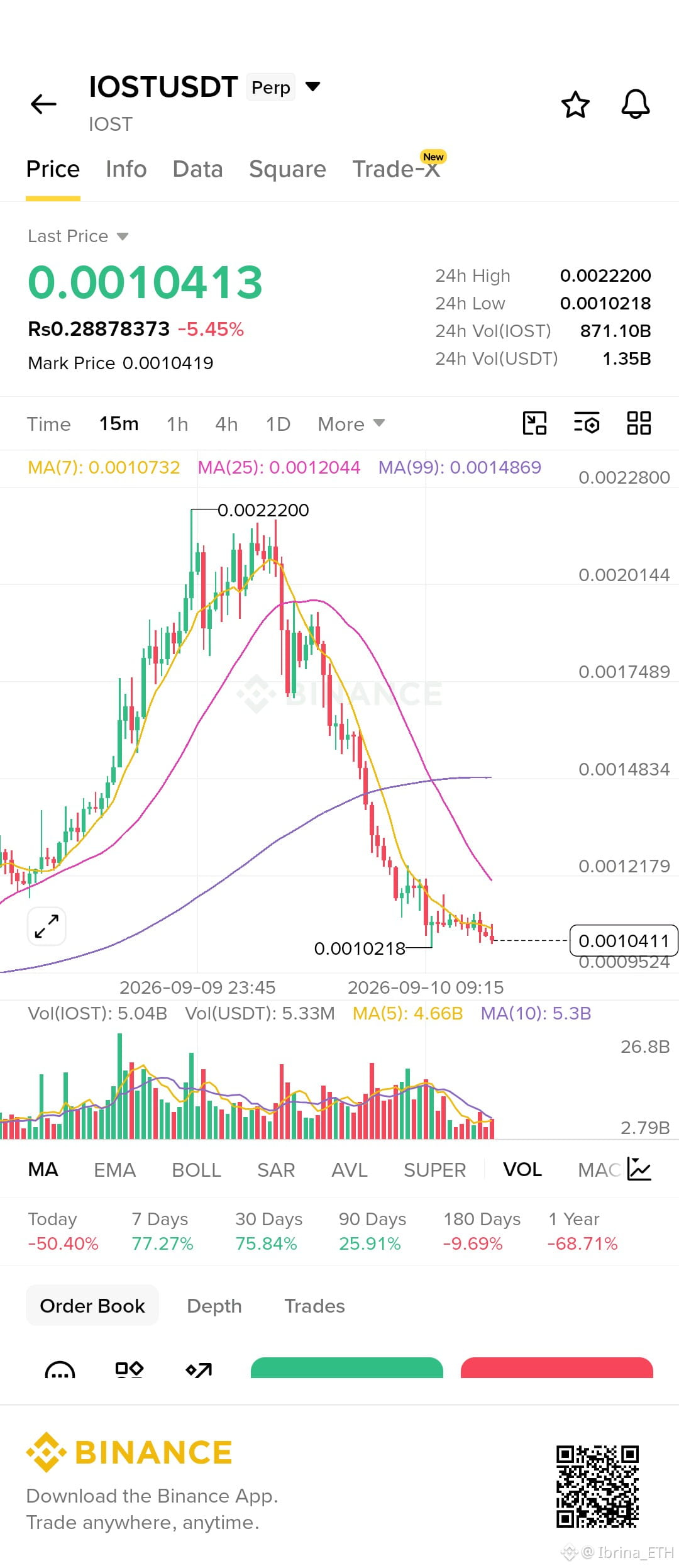
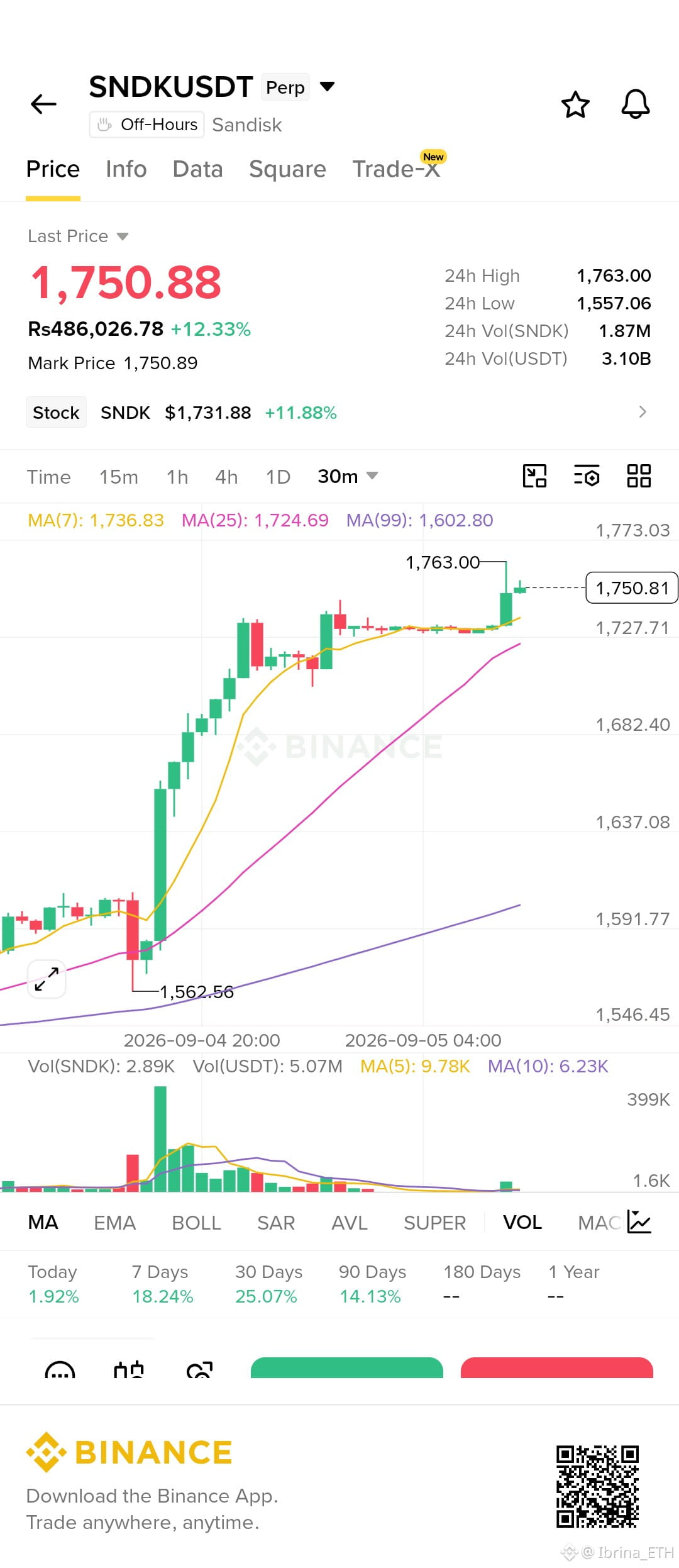
Notes: • Trend is strong, dips are getting bought instantly • Volume spike confirms real momentum • As long as it stays above MA25, bullish structure remains intact
$LUNC looks ready for continuation. Trade with discipline.
$CVC just delivered one of the cleanest breakout moves today. That vertical push from the base wasn’t random it came with real volume, real momentum, and zero hesitation.
What I like right now is simple: Even after that massive spike, the chart is holding structure. MA7 is still guiding the trend, dips are getting absorbed instantly, and buyers are stepping back in without waiting for deep pullbacks.
This kind of price action usually tells one thing: The move isn’t done.
$CVC still has room if it keeps riding this momentum. The consolidation looks healthy, the retrace stayed above key levels, and the buyers are clearly in control.
I’m watching this closely it’s the type of coin that can surprise with another leg when everyone thinks it’s cooling down.
$CVC looks strong. Trend intact. Momentum alive. Not sleeping on this one.
$USTC is waking up and the chart is finally showing real strength. That clean breakout on the 15m, steady higher lows, and volume kicking in again — this is exactly how momentum builds before a proper move.
MA7 curling up, MA25 supporting, candles holding above key levels… this is not random noise anymore. Market makers are clearly active, and USTC is reacting beautifully with every pullback getting bought instantly.
I’m liking this structure a lot. If this volume sustains, we’re not far from another leg up.
This is the type of setup where smart money positions early — not when it’s already flying.
$USTC looks ready for continuation. Keep your eyes open… when this wakes up, it doesn’t give second chances.
BANK Holders Now Shape DeFi’s Most Valuable Layer: The Architecture of Yield Itself
Lorenzo Protocol is introducing one of the most important ideas to ever enter on-chain finance. It is the shift from earning yield to owning the right to design yield. This is a change that completely transforms how power works in DeFi. For years, yield has been controlled by pools. Whoever owned the pool controlled the yield. Users could only take whatever the pool offered. When incentives stopped, yields dropped instantly. When pools changed their rate model, users had to accept it. This is how DeFi has worked from the beginning. All yield was bound to the pool that generated it. The user never had control. The protocol never had control. Only the pool had control. Lorenzo changes this structure completely by moving yield power away from pools and into a protocol layer where yield becomes something programmable, mixable, and designed directly at the strategy level. This shift is known as Yield Design Rights and it is one of the clearest signs that DeFi is entering a new era where yield is not an output but an engineered product. Yield Design Rights mean the protocol decides where yield comes from, how it is combined, how risk is balanced, how components are mixed, how often strategies rebalance, which strategies receive weight, and how yield flows to users. Instead of taking a fixed APY from a pool, Lorenzo builds the APY itself. It designs the whole structure underneath the yield. This is a completely different form of power. It is the difference between choosing from a menu and being the one who creates the menu. When Lorenzo designs yield, it determines the financial structure of the entire vault. This is the level of control that traditional fund managers hold in real finance. Now it is becoming an on-chain primitive that anyone can participate in. The separation of principal and yield using stBTC and YAT pushes this shift even further. In the old model, if you staked BTC, you could only earn the yield tied to the staking protocol. Yield and principal were locked together. You had no flexibility. stBTC holds the principal rights and YAT holds the yield rights. Once the yield is separated from the principal, the yield becomes a standalone asset. That means yield can be traded, combined, auctioned, allocated, or integrated with other yield sources. The separation of yield rights allows for yield mixing and yield engineering. This is why stBTC and YAT are not just staking assets. They are the first step toward programmable yield and the first signal that yield sovereignty can be split into different components. This separation is the foundation of Yield Design Rights because it breaks the rule that yield must be tied to one protocol. Now yield becomes something the protocol can design freely. The Financial Abstraction Layer makes this structure actually work in practice. Before FAL, every yield source was treated differently. RWA yield was one category. DeFi yield was another. BTCfi yield was another. Quant yield was another. Volatility strategies were separate. Lending yields had different systems. All yield sources felt disconnected because they were expressed in different formats and came from different mechanisms. FAL unifies these yield sources into one standardized unit. If yields can be expressed in the same abstract language, they can be mixed. If they can be mixed, they can be balanced. If they can be balanced, they can be structured. If they can be structured, they can be designed. And if they can be designed, the power moves away from pools and into the protocol layer. This is how Lorenzo becomes the place where yield design happens. The unified yield layer turns yield into a modular building block instead of a protocol-locked outcome. The On-Chain Traded Funds from Lorenzo are the first products built directly with Yield Design Rights. An OTF is not simply a token that grows in value. It is the final packaged result of yield that has been designed, mixed, balanced, and structured by the protocol. Each OTF reflects a complete yield design. It does not rely on a single pool’s APY. It uses multiple yield sources combined with real strategy logic. An OTF can hold RWA yield as the base, add quant yield as enhancement, add volatility strategies as stabilizers, add DeFi yield as additional flow, and then rebalance all of this through smart contracts. The user does not see the complexity. They simply hold a token whose yield structure has been designed for them. This is exactly how traditional financial products work when large asset managers create multi-layer portfolios. The difference is that Lorenzo gives this ability to everyone, not only institutions. In the past, DeFi users chased the highest APY because APY was a shallow output, not a designed structure. Pools dictated the return and users followed. Lorenzo changes this pattern because the yield structure behind each product is designed with intention, risk controls, and multiple sources of income. This replaces the unstable incentive model with actual strategy construction. The user receives yield that comes from real activity, not temporary emissions. The more complex the strategy becomes, the more important it is to have a protocol that holds the right to design yield. Lorenzo is the protocol that does this on chain. The BANK token becomes the control center of this new layer. BANK governs the yield architecture itself. Governance decides which yield sources are allowed in the system, how they are weighted inside products, how much volatility exposure should be included, what percentage of quant strategies should enter each vault, and how often strategies rebalance. BANK holders are not voting on marketing topics. They are shaping the design of yield. They choose which yield units flow into OTFs. They choose how yield behaves at the system level. They choose the architecture of how returns are built. This is not speculative governance. This is structural governance. BANK holders hold influence over the yield layer of the on-chain financial system. As Yield Design Rights grow more important, BANK becomes more valuable because it is the token that commands the direction of yield engineering. Lorenzo is not competing with pools. It is replacing the old yield power model entirely. Pools gave raw yield. Lorenzo gives designed yield. Pools created limited outcomes. Lorenzo builds full structures. Pools gave APYs. Lorenzo builds the machinery that creates APYs. This is a shift from yield consumption to yield construction. It is a more mature, more scalable, more professional form of on-chain finance. When yield becomes designed instead of given, the entire logic of asset management changes. Users no longer depend on one pool. They depend on a protocol that manages yield sources across multiple markets and integrates them into products with long-term reliability. This also opens the path for more complex yield engineering. As markets evolve, new yield sources will appear. RWA yields will expand. BTCfi yields will multiply. AI yields will emerge. Quant strategies will increase. Volatility strategies will mature. All these sources need a protocol strong enough to unify and structure them. Lorenzo becomes the coordination layer for this future. It is the engine that designs, balances, and routes yield intelligently. This is why Yield Design Rights will become the most important battlefield in DeFi. Whoever controls the design layer controls the direction of capital flow. Whoever controls the structure controls the market. Lorenzo is already moving into this position. The more yield sources appear, the more valuable the ability to design yield becomes. The market will shift from looking for the best APY to looking for the best yield structure. Normal users will want stability, clarity, and diversified returns. Institutions will want transparent, rule-based structures. Builders will want a reliable yield unit to integrate into their own products. This is how Lorenzo becomes infrastructure. Yield is not just money earned. Yield is a system of design, and Lorenzo is building the first complete on-chain system to design it properly. Yield Design Rights are the foundation of the next generation of on-chain finance. Lorenzo is shaping this foundation by turning yield into a programmable layer, separating principal from income, unifying yield sources, building tokenized funds, and giving BANK holders the power to direct the structure of yield markets. This is not just a new product category. It is a shift in financial power. It is the moment when DeFi moves from random incentives to engineered returns. It is the moment users stop chasing yield and start holding yield that is designed for long-term performance. Lorenzo is building the system that will define this future, and the protocols that adopt Yield Design Rights early will lead the next phase of digital asset allocation. @Lorenzo Protocol #LorenzoProtocol $BANK
Falcon Finance is taking a major step toward something the DeFi world has been waiting for: a real on-chain credit system. Not random lending, not risky leverage loops, not unstable borrowing models, but an actual structured credit layer that works with proper collateral measurement, real-time evaluation, and transparent backing. Falcon is doing this by building a universal liquidity engine that treats credit as a system of data, risk, and collateral—not emotion, not speculation, and not guessing. This shift is important because DeFi has always lacked a safe and scalable way to use credit without going through centralized lenders or fragile borrowing markets. Falcon is quietly changing this by letting its risk engine measure collateral and credit capacity in real time. Falcon’s risk engine is the foundation behind this change. It checks the quality of collateral continuously. It studies liquidity, volatility, historical behavior, redemption conditions, custody layers, and market movement. It does this for every supported asset—crypto, liquid staking tokens, stablecoins, tokenized real-world assets, and more. The engine turns all this information into a clear picture of how strong the collateral base is at any moment. This matters because credit requires accurate measurement. You cannot create credit if you don’t know the real value and risk of your collateral. Falcon solves that problem by turning collateral evaluation into a live process that updates with market conditions. This real-time evaluation gives Falcon the ability to measure credit capacity. Instead of depending on a lender to decide how much credit someone can get, Falcon calculates it automatically. It checks how much collateral is available, how stable it is, how diversified it is, how liquid it is, and how it behaves under stress. When the system sees that the collateral base is strong, it increases available credit capacity. When the market becomes more volatile or risky, it reduces credit capacity. This creates a breathing system: when conditions are healthy, credit expands; when conditions tighten, credit contracts. It is stable, predictable, and transparent. Falcon’s model creates synthetic credit lines without needing traditional lenders. This is where the protocol becomes truly transformative. In traditional finance, credit exists because banks take collateral, evaluate it, manage risk, and decide how much a person or institution can borrow. Falcon replaces all of that with automated collateral evaluation and synthetic credit minting. The system itself decides how much synthetic credit the collateral can support. There is no bank. There is no middleman. There is no loan officer. There is only algorithmic evaluation and overcollateralization. This eliminates counterparty risk and simplifies credit creation. Synthetic credit lines work because they do not depend on lending from another person. They are created by the protocol itself as a representation of available credit capacity. This helps users unlock liquidity in ways that traditional borrowing cannot match. You do not need to apply for a loan. You do not need approval. You do not need paperwork. You do not need to depend on a lender that may change its mind. You deposit collateral, and the system determines your credit capacity automatically. This opens the door for a new kind of financial experience—credit that is controlled by data, not by gatekeepers. Governance stays in user control through the FF token. This is very important for a system that deals with credit. In traditional banks, risk rules are made behind closed doors by people you cannot see and systems you cannot verify. In Falcon, the entire risk framework is governed by token holders. They decide what assets should be allowed as collateral, what risk parameters should be used, how strict collateral ratios should be, and how credit exposure should be capped. Governance oversees the top-level rules so that the system never grows beyond safe boundaries. This governance model creates transparency and community oversight. Users can see exactly how risk rules are made. They can participate in decisions. They can shape the collateral framework. This avoids hidden risk, surprise rule changes, or behind-the-scenes decisions. Every adjustment in Falcon’s credit model comes through open governance. This helps the system stay accountable and reduces the chance of irresponsible expansion. Falcon’s model brings banking-level discipline into DeFi. This is what makes the system stand out. Many DeFi platforms try to copy banking without adopting the discipline that makes banking stable. They create leverage loops, they underprice risk, they accept unsafe collateral, and they overexpand liquidity. This leads to collapses, liquidations, or broken pegs. Falcon does the opposite. It adopts the structure that real credit markets use: strict overcollateralization, real-time risk measurement, transparent reserves, and predictable liquidation systems. Transparency is a core part of this discipline. Falcon does not hide collateral. The system shows exactly what is backing USDf, sUSDf, and the synthetic credit layer. Users can view collateral levels, asset types, ratios, and total backing at all times. This creates trust. Users know that every synthetic dollar or credit unit comes from properly evaluated collateral. They know the system does not mint credit from thin air. Everything is tied to real assets held inside the protocol. This transparency makes Falcon behave like a decentralized clearing system instead of a borrowing platform. In clearing systems, collateral is monitored constantly, and credit exposure is adjusted continuously. Falcon brings this structure into DeFi. It does not wait for a crisis to adjust risk. It reacts automatically, calmly, and accurately using the risk engine. This is how real financial infrastructure behaves. The universal liquidity engine powered by Falcon makes the system even more powerful. It means all assets that users deposit—crypto, staked assets, stablecoins, RWAs—feed into the same collateral universe. This combined collateral base supports USDf minting, sUSDf yield, and synthetic credit expansion. This creates a unified financial layer where everything is connected. This connection makes collateral more productive and more flexible. Users no longer need separate systems for borrowing, liquidity, and synthetic dollars. Falcon brings everything together into one engine. The liquidity engine is structured, conservative, and predictable. It ensures that credit never becomes larger than what the collateral base can support. It ensures that every synthetic credit line is backed by real overcollateralized assets. It ensures that the system never inflates credit beyond safe limits. This prevents many of the failures that other DeFi systems face. Falcon values stability over speed. And that stability attracts users, builders, traders, and institutions that want safer infrastructure. As Falcon expands, this universal credit system will become a major part of the on-chain financial ecosystem. Many DeFi users need credit but do not want to use risky borrowing platforms. Many builders want stable infrastructure that works like traditional financial systems without being centralized. Many institutions want safe, transparent credit rails. Falcon delivers exactly that by replacing lender-dependent models with collateral-dependent models. When people say Falcon is building the “universal liquidity engine,” what they really mean is this: Falcon is building a system where credit, liquidity, collateral, and stability operate together in one place. Users bring value. The system measures it accurately. The system creates safe liquidity. The system keeps exposure stable. The system monitors risk continuously. The system adjusts credit based on live conditions. Everything flows through one controlled framework. This gives the ecosystem a dependable structure. Developers can build on top of USDf and synthetic credit without worrying about unpredictable collapses. Treasury managers can manage portfolios with higher confidence. Traders can use synthetic credit during volatility without depending on centralized brokers. Institutions can use tokenized assets inside Falcon for controlled liquidity and borrowing operations. Everyone benefits because the system behaves like real financial infrastructure. The FF token’s role in governance ensures that users stay in control of the rules. Falcon does not centralize risk decisions. It lets token holders define the guardrails. This keeps the system open, transparent, and aligned with long-term stability. FF governance does not decide who gets credit. It decides how the system measures risk and how credit limits should be calculated. This keeps execution automated and unbiased while keeping risk policy human-supervised and decentralized. Falcon’s model also reduces the emotional problems that come with borrowing. Traditional DeFi borrowing can be stressful. Rates change. Platforms run out of liquidity. Liquidations occur too fast. Credit terms are unclear. Falcon simplifies this by creating synthetic credit lines that adjust automatically. Users do not worry about lenders or rates. They just rely on the system’s risk engine, which is always watching the collateral base and keeping credit capacity safe. This gives users peace of mind. They can mint USDf or use synthetic credit without worrying about hidden risks or unexpected changes. They know that every dollar of credit is backed by real collateral. They know that the system will adjust exposure when needed. They know that the protocol is always measuring, always evaluating, always protecting itself and its users. Falcon’s structure also prevents dangerous leverage cycles. Because the system is strict about collateral and credit limits, it cannot overinflate liquidity. It cannot expand beyond safe boundaries. It cannot take shortcuts. This prevents credit bubbles that become unstable. Falcon’s liquidity engine treats risk with respect, and that respect creates resilience. As more assets become tokenized, Falcon’s credit system will grow even more important. Tokenized treasury bills, tokenized corporate bonds, tokenized commodities, tokenized credit—all of these assets will soon need a safe place where they can serve as collateral. Falcon is already built to handle this. Its risk engine is flexible enough to evaluate many asset types. Its overcollateralized model keeps everything secure. Its synthetic credit layer can expand to include professional asset classes as long as they meet risk standards. This gives Falcon a major role in the future of on-chain finance. It becomes the place where traditional assets and crypto assets can work together to support stable on-chain credit. It becomes a bridge between institutional finance and decentralized liquidity. It becomes a neutral layer where collateral determines credit without favoritism or bias. Falcon’s ability to measure collateral quality in real time is what allows this future to exist. The system does not rely on outdated snapshots. It uses live information. It monitors price feeds. It monitors market depth. It monitors volatility. It monitors risk metrics. This makes the system proactive instead of reactive. It adjusts before things break. This is how real financial infrastructure behaves. Clearing houses, risk desks, and treasury systems in traditional finance operate in real time. They do not wait for disasters. They monitor to prevent disasters. Falcon brings that same mentality into DeFi. This is why Falcon’s universal liquidity engine is so important. It makes DeFi more responsible. It brings maturity. It brings discipline. It brings structure. It treats collateral as something that must always be respected. It treats risk as something that must always be measured. It treats credit as something that must always remain backed by transparent assets. The future of DeFi will not be about chasing hype. It will be about creating systems that last. Systems that behave like financial infrastructure. Systems that support trillions of dollars in value. Falcon is building that kind of system: a credit engine powered by real collateral, real rules, real governance, and real-time measurement. Falcon’s big step toward on-chain credit is not loud. It is calm, logical, and structured. That is why it works. That is why people trust it. That is why it will continue to grow. Falcon is building credit the right way—through collateral, risk discipline, and full transparency. This is the model DeFi has been missing. Now it finally exists. @Falcon Finance #FalconFinance $FF
KITE Redefines Asset Ownership With Programmable Custody, On-Chain Compliance, and Full Auditability
KITE introduces a new way to manage real-world assets on-chain by using AI agents and a structured identity system. This changes how assets can be controlled, rented, leased, monitored, and automated. Instead of relying on manual human actions or slow legacy systems, KITE gives assets a programmable environment where AI agents can manage them safely, with full visibility and strict rules. It turns physical and digital assets into flexible, automated economic objects while keeping everything compliant and auditable. The core idea is programmable custody. When an asset is tokenized on KITE, it is not just a digital placeholder. It becomes something that an AI agent can manage under well-defined limits. These limits come from KITE’s session model, which creates temporary and tightly controlled windows where an agent can do specific tasks. It could rent the asset, update a record, handle maintenance schedules, accept payments, or perform other simple actions. Every task stays inside a clear boundary, and when the session ends, no authority remains. This makes automation safe because nothing can exceed the rules set by the human owner or institution. This programmable custody model solves one of the biggest problems in tokenized assets: how do you let software manage something valuable without losing control? KITE makes this easy because the system knows exactly which agent is acting, under which rules, and for how long. Humans remain the ultimate controllers. Agents only carry temporary permissions that expire automatically. This gives businesses confidence to automate asset management without worrying about long-term access, misuse, or uncontrolled behavior. On top of this structure, KITE adds on-chain compliance hooks that make real-world use possible. Traditional blockchains are not built for regulated environments. They cannot easily verify identity, confirm geographic rules, support contract logic, or handle audit requirements. KITE solves that with attestations that plug directly into sessions. These attestations work like modular proofs that confirm things such as KYC status, jurisdiction requirements, or contract obligations. A session can require one or many attestations before any action is allowed. This keeps every asset interaction safe, compliant, and aligned with institutional needs. Institutions can insert their own compliance logic into the system without redesigning everything. A bank can attach KYC rules. A logistics company can attach customs checks. An insurance provider can attach policy validations. A leasing company can attach ownership rules. All of this becomes part of the session boundaries, ensuring every agent action respects real-world rules. Compliance becomes flexible and programmable instead of a roadblock. One of the strongest benefits of KITE’s design is the level of visibility it provides. Every action taken on an asset leaves a complete and clear audit trail. You can see which agent requested something, which session granted the authority, what rules applied, and what asset was affected. There are no hidden permissions or unexplained movements. This is especially important for companies, regulators, enterprises, and investors who need to trust the system before they commit real assets. Clear accountability builds confidence and reduces the risks associated with automation. In traditional systems, asset management often creates confusion because ownership, usage rights, and operational activity are spread across disconnected tools. KITE simplifies this. It puts identity, control, permissions, and activity logs all in one place. Because sessions are temporary and bound by rules, every asset action becomes easy to explain and easy to verify. This strengthens trust and reduces disputes because all information is available directly on-chain. This opens up completely new markets that were never possible before. When agents can manage assets safely, you can create automated rentals for equipment, cars, robots, logistics tools, storage units, and more. You can design usage-based models where customers pay only for the time or units they consume. Assets can become productive 24/7 because agents can handle requests, approve usage, and collect payments without waiting for human intervention. These new models make asset ownership more profitable and more flexible. Machine-driven markets can form on top of these systems. For example, an asset could automatically negotiate short-term leases with multiple agent buyers. Another asset could optimize its own availability and pricing using real-time demand signals. A fleet of machines could coordinate maintenance schedules without human coordination. These possibilities become real only when a blockchain provides the identity, safety rules, and compliance layers that agents need. KITE is designed specifically for this kind of automated, agentic market activity. The technology also helps improve operational efficiency. Businesses waste time coordinating between departments, verifying documents, approving transactions, and updating data systems. AI agents operating inside session boundaries can handle most of this automatically. A session can verify identity, check compliance rules, move the asset, update the record, and finish the workflow without manual steps. Humans only set policies and monitor outcomes. This reduces errors, lowers costs, and speeds up execution. Real-world assets also become more accessible to investors. When each asset’s activity is transparent and machine-managed with predictable rules, investors can analyze performance more easily. They can see usage rates, income streams, maintenance history, and compliance status directly from the chain. This improves trust and makes tokenized assets more attractive as investment products. It also creates more liquid markets because investors can buy into assets with confidence that AI agents will handle operations correctly. KITE’s identity system separates users, agents, and sessions so nothing becomes overly powerful or risky. A user always sits at the top. Agents operate beneath them. Sessions give the agent temporary authority. This prevents many types of fraud or misuse. If an agent misbehaves, its session can be shut down instantly. If a session expires, no leftover permissions remain. This is a major difference from older blockchains where a compromised wallet means everything is at risk. On KITE, risk stays contained. This also makes compliance safer. Regulators and institutions often worry about giving automated systems too much power. With KITE, they can see exactly how authority is granted and how it ends. They can require attestations before any session opens. They can limit access to certain regions. They can block actions outside policy boundaries. Every tool they need is already part of the protocol. The chain becomes compatible with both decentralized innovation and structured regulatory needs. Developers gain a simple environment to build applications for real-world assets. Instead of writing large custom logic for identity, permissions, or risk, they can rely on KITE’s built-in framework. This lets them focus on specific asset functionality. It also reduces bugs because the underlying safety system is standardized. Developers can experiment with new markets and automation flows without risking global failure. KITE’s approach also reduces friction between different types of participants. Individual users, asset owners, institutions, service providers, and AI agents can all interact smoothly because sessions handle the boundaries and attestations handle compliance. This makes it easier for many stakeholders to share the same network without conflict. Everyone operates under the same transparent rules. The future of tokenized real-world assets needs automation. But automation must be safe, predictable, and compliant. KITE provides a structure where AI agents can manage assets without compromising safety or oversight. The chain is designed for both speed and accountability. It supports automation at scale while keeping humans in ultimate control. This is exactly what is needed for real-world adoption. As more industries adopt AI agents, the need for programmable custody will grow. Logistics, mobility, manufacturing, real estate, supply chain management, and infrastructure will all benefit from agent-driven automation. KITE’s session model and compliance hooks give them a foundation that fits both economic needs and regulatory expectations. This combination is rare in blockchain, and it positions KITE as one of the most important platforms for the next generation of tokenized assets. KITE does not try to replace real-world systems. It enhances them by giving assets a safe, programmable interface with AI agents. It transforms assets into active economic participants that can respond to demand, manage their own workflows, and follow rules automatically. This is the next major step in the evolution of tokenized assets. In a world where automation becomes normal and AI agents handle daily operations, KITE provides the safe environment needed for assets to operate without fear. Programmable custody, compliance hooks, audit trails, and new market structures create a powerful foundation for growth. KITE is building the infrastructure where assets, agents, and rules come together seamlessly. This is what will unlock the full potential of real-world assets on-chain. @KITE AI #KITE $KITE
The New Foundation of DeFi: How Lorenzo Is Rebuilding Real Asset Management on Blockchain
Lorenzo Protocol is becoming one of the most important projects in on-chain finance because it focuses on something most crypto platforms ignore. Instead of trying to create hype or build complicated mechanisms just to look innovative, Lorenzo focuses on building real, usable financial products that anyone can understand and actually benefit from. The protocol is not trying to chase trends or join every short-term narrative. It is building structure. It is building clarity. It is building systems that can support real capital, real investment behavior, and real long-term growth. That is why people who study it closely understand that Lorenzo is slowly becoming the structural backbone for how investing will work on-chain in the future. What makes Lorenzo different is how it thinks about product design. Most DeFi platforms build mechanisms first and products later. They start with an AMM, a farm, a staking pool, or a yield loop and then try to force users to adopt it. Lorenzo does the opposite. It designs the product first, the way a real asset-management company would. It starts with the question: What kind of investment exposure do people need? What kind of portfolio structure helps users manage risk? What kind of strategies create sustainable returns? Then it builds the mechanisms required to deliver those results. This product-first approach feels very natural because it removes unnecessary complexity and puts the user experience at the center. Lorenzo’s biggest breakthrough is how it tokenizes investment strategies. In regular crypto, most tokens have no underlying behavior. They are either governance tokens, farming rewards, or simple claims to liquidity. Good strategies normally sit behind closed doors in traditional markets—quant systems, volatility models, structured yield engines, momentum strategies, risk-balanced models. These strategies require large teams and deep expertise, so ordinary users never get access. Lorenzo changes that completely. It converts strategies into tokens. It packages quant behavior into an on-chain product. It turns structured yield into a token. It transforms volatility strategies into something people can easily hold. Because of this, Lorenzo turns strategies into building blocks. Once a strategy becomes a token, that token becomes composable. It can be used in lending markets, structured products, hedging tools, cross-chain transfers, automated rebalancing systems, and more. Strategy tokens become part of the entire DeFi stack, not isolated in one protocol. One of the strongest parts of Lorenzo’s design is how accessible everything becomes without lowering quality. Traditional finance keeps strategy access for the wealthy. Funds have minimums. Portfolios have contracts. Reports are delayed. Risk is hidden. Lorenzo does the opposite. It makes professional-grade exposure open to anyone. You do not need millions. You do not need paperwork. You do not need permission. The strategies operate transparently through smart contracts. The performance is visible on-chain. The vault logic is open. The fund behavior can be monitored in real time. This makes the protocol feel reliable because nothing is hidden behind a wall. Lorenzo’s transparency is one of the biggest reasons serious users are paying attention. Every allocation is visible. Every rebalance is recorded. Every cycle of performance is public. There are no secret positions or hidden fees. This is a huge difference from how funds work in the traditional world, where you often have to trust quarterly reports and delayed statements. With Lorenzo, everything is immediate and verifiable. Users can see exactly how their capital is working and how strategies behave in different environments. This level of clarity creates confidence, and confidence is what makes long-term capital comfortable entering a system. Another thing people appreciate about Lorenzo is how it treats investing as a structured process rather than a guessing game. Many DeFi protocols rely on hype, inflated APYs, or unstable token emissions. These models attract attention fast but collapse quickly. Lorenzo builds the opposite. It builds investment products that follow rules. Strategies behave according to defined logic. Vaults allocate capital based on models, not emotion. There is no promise of fixed returns. There is no illusion of infinite growth. There is only structured behavior that matches how real investment systems work. This makes Lorenzo feel serious, measured, and long-lasting. The governance side of the protocol also plays a big role in its long-term identity. BANK and veBANK form a model that rewards users who think long term. Those who lock tokens gain influence over how the ecosystem evolves. They help guide strategy additions, risk parameters, fee structures, incentive design, and product roadmap. This governance system is not superficial. It is not about voting on meme proposals. It is about shaping how capital flows through the system. It is about deciding how portfolios should behave. It is about managing risk properly. This kind of governance is similar to how real asset-management committees operate, and it ensures that decisions are made by people aligned with the protocol’s long-term health. Another reason Lorenzo is gaining attention is because its architecture mirrors how institutional portfolios are built. Traditional finance uses multiple strategy layers to build diversified portfolios—quant signals, futures strategies, volatility programs, structured yield models, balanced allocations, and liquidity buffers. Lorenzo creates the same structure using simple and composed vaults. Simple vaults represent individual strategies. Composed vaults combine them into multi-layer portfolios. This recreates the way hedge funds, asset managers, and multi-strategy firms operate but makes the entire environment open, transparent, and automated. No one has to choose between using DeFi or using professional financial tools. Lorenzo brings the professional tools directly into DeFi. One of the most powerful aspects of Lorenzo’s approach is how naturally everything integrates with the rest of DeFi. Because the protocol turns strategies into tokenized products, they can plug into liquidity layers, lending markets, collateral systems, and structured product platforms. A user could borrow against an OTF token while still earning yield. A developer could build a structured note product using Lorenzo’s vault tokens as core components. A lending protocol could accept these tokens because their value is transparent and backed by real strategy behavior. This kind of composability is exactly what DeFi was meant to be. Lorenzo takes it to a level that feels both simple and extremely powerful. Another factor contributing to Lorenzo’s rise is its mindset. The protocol does not chase explosive growth. It does not rely on hype cycles. It focuses on building trust. It focuses on audits. It focuses on steady product rollout. It focuses on making sure everything is safe, stable, and verifiable. This slow, disciplined growth pattern feels very different from typical DeFi launches. It feels like infrastructure being built piece by piece. It feels like something meant to last, not something designed to attract quick speculation. The more the ecosystem grows, the more clear it becomes that the market is shifting toward real financial products. People do not want temporary APYs anymore. They want structured exposure. They want real yield. They want transparent strategies. They want professional-grade tools without institutional barriers. Lorenzo is one of the first protocols that delivers this in a clean, simple, understandable way. It feels like the beginning of a more mature chapter for decentralized finance. As more strategies launch, as more vaults expand, as more institutions explore tokenized funds, Lorenzo will likely become one of the core systems powering on-chain portfolios. Users will allocate to OTFs the way they allocate to ETFs today. Developers will build financial products using strategy tokens. Institutions will participate because everything is transparent and rules-driven. And retail users will benefit from access to products they never had before. Lorenzo is not trying to reinvent finance with noise. It is trying to rebuild finance with structure. It takes professional logic and merges it with blockchain openness. It takes strategy intelligence and merges it with automation. It takes portfolio design and merges it with composability. The outcome is a system that feels meaningful, practical, and ready for long-term adoption. For many people watching the evolution of DeFi, Lorenzo represents the shift from speculation to structure. The shift from chaotic liquidity cycles to disciplined investment products. The shift from experiments to real financial architecture. And that is why it is becoming the quiet backbone of on-chain investing. Not because it is loud, but because it is building exactly what the next era of finance needs. @Lorenzo Protocol #LorenzoProtocol $BANK
$LUNC is showing that classic “don’t blink or you’ll miss it” kind of momentum right now. Look at how clean the structure is higher highs, higher lows, volume stepping in, and MA support rising like a ladder under the price.
Every dip is getting bought instantly… that’s not random. That’s strong hands absorbing supply.
We tapped 0.0000337 and even after the pullback, the candles are still respecting the short MAs. This is usually where people overthink and the chart just keeps climbing without them.
$LUNC is waking up slowly but confidently. If this volume continues, the next push can easily take out the recent high and test a fresh range.
I’m watching this closely… This chart has that “continuation energy” written all over it. Not hyping just reading what the market is clearly showing.Stay alert. $LUNC looks ready for round two.
$CITY just woke up quietly… and people still aren’t paying attention.This is exactly the kind of setup I love low noise, clean structure, and volume starting to breathe again.
Price held that 0.61 zone perfectly, bounced right off it, and now the candles are showing strength. MA lines are tightening… momentum is shifting… you can literally feel the chart getting ready.
I’m seeing pressure building, and CITY usually doesn’t warm up for no reason. When it starts moving, it doesn’t warn anyone it just sends.I’m not calling tops, I’m not hyping nonsense… Just saying: this chart looks way better than what people realize right now. If CITY catches even a bit more volume, that 0.70+ retest becomes very realistic.Stay sharp. The move usually comes when the timeline is sleepy.
$CITY /USDT
Entry Zone: 0.640 – 0.655 Current: 0.654
Trend shift spotted on lower timeframes. Buyers defending 0.61 strongly and MA levels are starting to curl upward first sign of reversal strength.
$YB is quietly setting up something clean on the 15m. You can see price holding the mid-range and refusing to break down even after multiple retests. Buyers are stepping in on every dip, MAs are tightening, and momentum is slowly curling back up.
This is the type of structure that usually flips fast once volume hits. Nothing overextended, nothing forced just steady accumulation and pressure building under the chart.
If this keeps holding above support, the next leg toward the recent high looks very realistic. I’m keeping YB on watch the chart is speaking for itself right now.
Entry Zone: 0.5140 – 0.5180
Breakout Level: 0.5400
Targets:
TP1: 0.5290
TP2: 0.5400
TP3: 0.5550
Support / Invalidation: Below 0.5030 (structure breaks if this level fails)
Bias: Bullish as long as price stays above the 7MA + 25MA cluster. Compression looks ready for expansion.
Market is finally waking up again and you can see it clearly on the charts today. Small caps and mid caps both showing clean rotation. Volume is stepping back in, candles look healthy, and the pullbacks are getting bought instantly. This is the type of price action that usually comes before a stronger leg up.
$YB , SXP, $LUNC , $CITY all giving early strength signals on the lower timeframes. Nothing crazy, nothing overhyped… just steady momentum building.
If the market holds this structure for the next few hours, we might see breakouts across multiple pairs. I’m watching continuation moves closely. Momentum traders should stay sharp right now the setups are forming one by one.
Injective Is Becoming the Global Bridge Where Traditional Finance Finally Enters DeFi
Injective is becoming one of the clearest examples of how traditional finance and decentralized finance can finally meet on a single chain without friction. Many blockchains try to talk about bridging the two worlds, but most fail because they cannot handle the performance, asset types, liquidity needs, or risk management standards that real financial systems require. Injective is different because it was designed from the start to support financial markets, not just simple swaps or basic DeFi features. Everything about the chain—its speed, architecture, modules, liquidity design, asset support, execution environment, and token economics—works together to build a platform where global markets can actually function in a decentralized way. The biggest step toward this convergence comes from Injective’s support for synthetics and tokenized real-world assets. This changes how finance works on a blockchain because it allows assets from outside crypto to enter the chain with full transparency and programmable functionality. With synthetics, users can track global markets directly through on-chain instruments. With tokenized real-world assets, traditional products like bonds, yields, indexes, or even commodities can exist and be traded inside Injective. This makes the chain capable of hosting markets that behave like traditional financial environments but with decentralized execution, transparent settlement, and global accessibility. Bringing these assets on-chain also opens the door for new financial products that combine real-world exposure with automated DeFi mechanisms. A major reason this works so well is Injective’s fast and predictable settlement. Financial systems depend heavily on timing. Delays, slow blocks, and unpredictable confirmation windows cause problems for traders, investors, and structured tools. Injective gives sub-second finality, high throughput, and consistent performance. This allows the execution of strategies that usually break on slower blockchains. Market makers can quote spreads with confidence. Arbitrage systems can execute without lag. Derivatives can function like they do in professional environments. Structured products can rely on stable timings. When settlement is predictable, financial tools become reliable, and that is exactly what Injective delivers. The chain also includes risk tooling that traditional finance would expect but most blockchains do not offer. Injective provides advanced price oracles, risk parameters, insurance fund mechanisms, margin rules, and systems designed to protect markets during volatility. This gives builders the ability to create derivatives or structured financial products with much stronger safety and transparency. Risk becomes something programmable and visible rather than hidden or dependent on centralized custodians. Developers can design sophisticated markets without having to construct every risk component from scratch because Injective already gives them the tools to build responsibly. The permissionless market creation feature is another reason Injective stands out. In traditional finance, launching a new market requires heavy approval, slow processes, and centralized gatekeepers. Injective removes those barriers. Anyone can propose and create a new market, whether it is a spot market, a perpetual, a synthetic, or a new structured product. This creates a truly global financial environment where innovation is not restricted. New ideas can come from individuals, teams, traders, institutions, or even communities. Market creation becomes open and programmable, which speeds up financial evolution in a way that traditional systems could never allow. Interoperable liquidity ties everything together. A financial platform is only as strong as the liquidity it can access. Injective was built to connect to multiple ecosystems, not exist alone. Through IBC, bridges, and cross-chain communication tools, Injective pulls assets from Ethereum, Solana, Cosmos, and more. This brings deeper liquidity into its markets, improves execution for traders, increases stability for derivatives, and expands the asset choices available to builders. Cross-chain liquidity means Injective acts like a global financial hub where assets flow in from multiple networks and become part of unified markets. This is something very few chains achieve because most operate in isolated liquidity islands. What makes this convergence meaningful is how cleanly Injective executes all of these features. Nothing feels forced. The design is consistent. The modules fit together naturally. The system behaves like a financial chain, not a general-purpose blockchain pretending to be one. Its on-chain order book mirrors the design of traditional exchanges, giving users depth, transparency, and predictable matching. Its settlement layer supports the timing and accuracy that real markets need. Its modular components allow builders to integrate financial logic without reinventing everything. Its multi-VM support gives developers from Ethereum or Cosmos the freedom to build without friction. Injective’s structure also encourages responsible growth instead of hype-driven expansion. The chain prioritizes performance, risk control, liquidity depth, asset flexibility, and long-term value capture. The INJ token supports staking, governance, collateral, and fee burn mechanisms that tie the token economy directly to real usage. When more markets launch and trading volume increases, the burn mechanism strengthens, reducing supply over time. When more dApps use the chain’s infrastructure, the economic engine expands naturally. This creates alignment between network activity and token value instead of relying on speculative cycles. Traditional finance is moving toward tokenized assets, automated settlement, transparent execution, and global accessibility. Decentralized finance is moving toward more advanced tools, stable infrastructure, deeper liquidity, and institutional interest. Injective stands at the intersection of both trends. It provides the performance demanded by real markets and the openness that DeFi is built upon. This allows institutions to explore on-chain markets without sacrificing the standards they require. It allows DeFi users to access more sophisticated tools without centralized intermediaries. It allows builders to create hybrid financial products that blend real-world value with on-chain automation. Injective does not work like a chain trying to attract attention with gimmicks. It works like a chain quietly preparing the foundation for the next generation of financial markets. Everything is structured, consistent, and aligned with real economic behavior. It is not chasing trends; it is becoming the infrastructure where serious financial applications want to be deployed. As more assets become tokenized and more institutions enter blockchain environments, Injective becomes the natural home for those markets because it already supports the speed, transparency, interoperability, and risk framework they expect. This is why Injective is seen not just as a blockchain but as a platform where traditional finance and DeFi finally converge in a way that makes sense. Real-world assets can live on-chain. Derivatives can function properly. Liquidity can cross ecosystems. Markets can launch permissionlessly. Settlement can be fast and stable. Builders can design products that resemble real financial instruments. Users can access global exposure without intermediaries. This combination is rare in crypto, and Injective delivers it cleanly.Injective is building a financial environment that can support the future of global markets—decentralized, transparent, fast, interoperable, and open to everyone. @Injective #Injective $INJ
KITE Solves the Biggest Problem in AI: Giving Agents Real Autonomy Without Losing Human Control
KITE introduces a new way to make AI agents behave safely on-chain by focusing on something most blockchains never think about: how machines make decisions. Humans make choices slowly. Machines make thousands of micro-decisions in seconds. Humans understand responsibility. Machines only follow rules. This creates a gap between what AI agents intend to do and what they actually execute. KITE solves that gap through something called atomic intent, which means every decision is broken into a small, verifiable, controlled unit. Instead of trusting the agent fully, the system trusts the boundaries around each action. This makes machine behavior predictable, safe, and easy to check. The heart of atomic intent is the session. A session is a temporary container that defines what an agent can do for a short period of time. It includes limits like spending budgets, allowed actions, time windows, approved counterparties, and scope. When an agent starts a task, it receives a session with these clear rules. When the session ends, all authority disappears instantly. This keeps every decision inside a controlled environment, which prevents agents from acting in ways the user never intended. It also makes the system easy to reason about because you always know the exact rules behind each action. Sessions give users peace of mind. Instead of worrying that an agent has too much power or long-term access to funds, users know the agent is only allowed to operate inside a narrow window. If something feels wrong, ending the session stops everything. Traditional blockchains rely on long-term permissions, static wallets, and permanent keys. KITE replaces this old model with temporary authority that disappears automatically. This reduces the risk of mistakes, bugs, exploits, and malicious use. It also simplifies safety for both small users and large organizations. Atomic intent makes machine decisions auditable in a simple and transparent way. Every action has a clear answer to who approved it, which session created the authority, what rules were active, and why the action was allowed. There is no guesswork. There are no hidden permissions. There are no confusing long-term delegations. Even when tasks involve complex workflows or multiple steps, each step still lives inside its own session boundary. That means anyone reviewing activity can trace the entire decision chain easily. This is valuable for both crypto-native users and traditional institutions that care about logs, reporting, and compliance. Failure containment is one of the strongest benefits of atomic intent. Agents sometimes make mistakes. They may misread data, overshoot targets, trigger too many actions, or even get compromised. Without session boundaries, one mistake can cause huge damage because the agent may still hold long-term authority. KITE does not allow that. The moment the session ends, its permissions vanish. The damage stops immediately. Even if an attacker gains control of the agent, they cannot go beyond the limits defined in the session. This is a major improvement in safety because it prevents chain-wide disasters. Atomic intent also improves predictability. Machines behave at high speed and often generate outcomes humans cannot track in real time. Without structure, their behavior feels chaotic and hard to control. By forcing every decision into a small unit with clear boundaries, KITE makes machine activity consistent and understandable. Developers can build workflows where each agent action is repeatable and deterministic. Users can understand why an action happened. Operators can keep systems stable under heavy load. Predictability becomes a built-in feature of the chain. This design also helps AI agents act in a human-aligned way. Agents do not understand trust, judgment, or risk the way humans do. They only follow rules. When those rules are vague or too broad, agents may make choices humans never expected. Atomic intent gives them precise, narrow instructions so there is less room for misbehavior. It also makes the chain safer for innovation because developers can experiment with new agent behaviors inside small, controlled session windows without risking large-scale harm. Session-based authority is also friendly to compliance-heavy environments. Many institutions require strict controls over who can act, how money moves, and what limits apply. Traditional crypto tools do not handle this well. KITE gives them a natural structure where policies can be encoded directly into sessions. This includes budget caps, time limits, whitelists, blacklists, role rules, and automated revocation. Sessions make it easy to integrate compliance requirements without centralizing the chain or slowing down developers. The atomic intent model also improves collaboration between agents. In normal systems, agents interacting with each other creates overlapping authority and unpredictable behavior. KITE keeps each agent inside its own session, which means two agents can coordinate without interfering with each other's permissions or internal state. This reduces complexity and makes multi-agent workflows safer and easier to debug. Developers gain clarity, and systems remain stable even when many agents are active at once. Atomic intent creates a cleaner ecosystem for building apps. Developers can write code that assumes every action will have a limited scope. They can test each part of an agent’s workflow in isolation. They can reduce bugs by designing tasks that only need narrow authority. They can ship apps faster because they don’t need to reinvent safety layers or complex delegation systems. The chain handles that automatically. This accelerates adoption, increases reliability, and encourages more creative agent use cases. Real-world use cases become much easier to manage under this model. For example, a trading agent can rebalance positions with a session that has a fixed risk limit. A payments agent can handle subscriptions with a daily budget. A logistics agent can book shipments with restricted permissions. An IoT agent can pay for data with micro-sessions tied to each request. Every behavior becomes safer because every behavior sits inside its own rule set. Atomic intent makes automation trustworthy. Users can delegate without fear. Developers can innovate without high risk. Institutions can adopt agents without losing control or transparency. The entire ecosystem benefits because authority becomes programmable, observable, and revocable at any moment. This is a major shift from the old wallet-based model where one private key carried unlimited power. KITE replaces that with a modern structure built for machine-driven economies. The long-term vision is clear. As more agents operate across different industries, the need for predictable decision frameworks will grow. AI agents will soon manage trading strategies, customer support, supply chain operations, research workflows, procurement systems, creative workloads, and many forms of everyday digital labor. These workflows require millions of small decisions. They need a chain that can support them safely. They need predictable identity, safe authority, and low-risk decision boundaries. KITE’s atomic intent model is built exactly for that world. Atomic intent is not a buzzword. It is the missing layer that turns AI autonomy from a risky experiment into a reliable system. It gives machines the power to act while ensuring humans stay in control. It gives developers the tools to build robust agent workflows. It gives organizations the confidence to adopt automation without uncertainty. And it creates a foundation for an agent economy where safety, transparency, and control are built directly into the chain. KITE’s approach is simple to explain but powerful in effect: break decisions into safe pieces, contain authority, track intent, and enforce boundaries. This is how machine autonomy becomes safe, verifiable, and usable at scale. It solves one of the biggest problems in the rise of AI: how to let machines act without letting them go too far. With atomic intent, KITE creates a future where agent-driven systems can grow without losing control. @KITE AI #KITE $KITE
The AI-Verified Oracle Layer: How APRO Brings Accuracy, Trust, and Multi-Chain Stability to Web3
APRO Oracle is quietly becoming one of the most important systems in the entire blockchain world because it focuses on something many people talk about but very few truly deliver: real truth. Not marketing truth, not assumed truth, not hoped-for truth, but verified, measurable, and accountable truth. APRO is building an oracle that does not rely on trust—it proves trust. It does not ask people to believe; it gives people reasons to believe. And this simple difference is what makes APRO feel like a system built for the next decade of blockchain, not the last one. The entire blockchain industry runs on data. Every smart contract, every trading action, every financial decision, every real-world asset, every game logic, every random number—all of it depends on data being correct. When data is wrong, everything breaks. Prices break. Trades break. Liquidations break. Rewards break. Fairness breaks. When the data is the source of truth, the entire structure of blockchain becomes unsafe if the oracle layer is weak. That is why APRO feels different: it is built with the mindset that data accuracy must be measurable, validated, and accountable. Not promised. Not assumed. Not marketed. Measured. APRO’s approach begins with one powerful idea: AI meets accountability. Many oracle systems talk about decentralization as the only solution to accuracy, but decentralization alone does not guarantee truth. APRO understands that data in the real world is messy, unpredictable, and full of anomalies. Prices spike by mistake. Markets produce noise. APIs break. Feeds return bad data. attackers try to inject manipulated information. The world is chaotic, and no oracle can avoid that by decentralization alone. APRO adds intelligence before data ever reaches the chain. Its anomaly detection system checks patterns, behavior, context, and data flow consistency. If something seems unusual, the system does not blindly accept the data. It verifies, compares, re-checks, and filters. AI flags anomalies. Verification engines confirm legitimacy. Cryptographic methods secure consistency. Instead of letting bad data slip through, APRO puts it through a screening process. This is the difference between an oracle that hopes data is correct and an oracle that works to prove data is correct. This makes accuracy something you can actually observe, not something you must simply trust. APRO turns truth into a measurable outcome, not an expectation. That is why many developers describe APRO as “the oracle that behaves like an accountability system.” It is not here to pass data. It is here to protect blockchain ecosystems from the mistakes of the external world. And that mindset makes APRO feel like an oracle designed with maturity, not excitement. Another major reason APRO stands out is its multi-chain mastery. The blockchain space is no longer a single environment. It is a multi-chain universe. DeFi exists on dozens of chains. Gaming exists on multiple chains. Real-world assets launch across different networks. Liquidity moves cross-chain. Apps deploy on multiple ecosystems at the same time. The problem is that fragmented chains often mean fragmented data systems. Different chains rely on different oracles, different feeds, and different levels of trust. This creates inconsistency and makes development difficult. APRO solves this by supporting 40+ blockchains, from EVM chains to non-EVM chains to Bitcoin-native infrastructures. It creates one unified data layer across all of them. This means that no matter which chain a smart contract runs on, the data quality stays the same. The verification stays the same. The accuracy stays the same. The trust level stays the same. Developers no longer need to worry about building separate logic for different chains. APRO becomes the “shared truth source” across the entire multi-chain world. This is important for the future because the more chains we have, the more valuable a stable and universal data foundation becomes. Fragmented ecosystems cannot scale. Unified ecosystems can scale. APRO is not trying to be the oracle of one chain. It is trying to be the oracle layer of Web3 as a whole. Developers love APRO because it removes friction. Instead of building separate integrations for separate chains, they use APRO once and receive consistent data everywhere. This is why so many builders describe APRO as “the oracle that simplifies the multi-chain headache.” It becomes the invisible layer that connects everything together. And the more blockchains APRO supports, the stronger its network effect becomes. Another thing that makes APRO powerful is that it is engineered for longevity, not short-term hype. Many oracle projects arrive loudly with marketing, grand claims, and dramatic promises. They talk about revolution, but the deliverables are often limited. APRO chooses a different path entirely. It prefers clarity over noise. It prefers structure over slogans. It prefers discipline over hype. And that tone is exactly why APRO feels credible. APRO is not trying to be the flashiest oracle. It is trying to be the oracle developers never have to think about. The oracle that just works. The oracle that stays stable even under high traffic. The oracle that does not break during market volatility. The oracle that handles anomalies calmly. The oracle that keeps data clean without asking the developer to monitor it. The best infrastructure products in the world are not the loud ones. They are the ones that fade into the background because they work so reliably that people forget they exist. APRO seems to be aiming for that position. It wants to be the oracle nobody needs to worry about. The service that is always there. The layer developers rely on without second-guessing. The backbone that stays solid quietly while applications evolve. This discipline shows in how APRO handles design. It separates off-chain processes from on-chain verification. It uses AI to prevent data errors. It uses modular architecture to keep the system flexible. It avoids unnecessary complexity. It does not chase every trend. It focuses on stability and long-term reliability. It builds with a mindset that infrastructure must last years, not months. APRO’s structure reflects a long-term mentality. Its architecture is built like something engineers plan for decades, not for a single cycle. It does not cut corners, because cutting corners in an oracle is dangerous. Incorrect data can destroy protocols. APRO knows this, so it behaves conservatively where it matters and innovates where it helps. Another reason APRO is respected is because it does not romanticize the oracle problem. It does not pretend that an oracle can magically know the truth of the world. It acknowledges limitations. It acknowledges risks. It acknowledges difficulties. And then it builds systems to manage those realities. That clarity is refreshing in an industry that sometimes loves exaggerated solutions. Because APRO takes a grounded approach, developers feel safer building on it. They know the system is designed to handle stress. They know the system is designed to verify data, not trust it blindly. They know the system is prepared for anomalies. They know it has a structure that can adapt as new challenges appear. This makes APRO feel reliable. APRO’s network of data services is also expanding. With more than 160 live data services, the network already covers a wide range of needs: • crypto price feeds • volatility indicators • liquidity signals • synthetic and hybrid indexes • Proof of Reserve data • randomness for gaming • event-based triggers • real-world financial metrics This variety shows that APRO is not a narrow oracle. It is a complete ecosystem. It offers everything an application might need, from financial data to gaming randomness to asset verification to real-world insights. This makes APRO a one-stop solution for many types of projects. The randomness service is especially valuable for gaming ecosystems. Games need fair randomness that users can verify. APRO’s randomness is tamper-proof, unpredictable, and cryptographically verifiable. This improves trust and fairness in gaming systems, lotteries, NFT minting, and dynamic reward models. Proof of Reserve is another powerful offering. Tokenized assets must be backed by real-world reserves, and APRO checks these reserves by analyzing data from custodians, exchanges, and audits. This adds transparency to stablecoins, tokenized commodities, and RWA platforms. It gives users confidence that tokenized assets truly represent what they claim to represent. This builds trust at the core of the tokenization process. APRO’s cross-chain support also makes it extremely relevant in a world where liquidity and users move between chains constantly. Developers want tools that work everywhere. APRO offers that. And because accuracy stays consistent across all chains, developers can build multi-chain apps without worrying about data differences. One of APRO’s strongest traits is its calm approach. It avoids hype cycles. It avoids big claims. It avoids marketing drama. Instead, it focuses on architecture. On discipline. On responsibility. On engineering. APRO feels like a product created by people who understand the weight of the oracle role. They know that oracles are critical infrastructure, not entertainment. This calm and disciplined approach gives APRO a unique identity. It is not competing for loud attention; it is competing for reliability. And this makes APRO stand out in a very crowded market. In the long term, the blockchain world will need oracle systems that operate with maturity and caution. The future will involve deeper real-world integration, more financial systems, more AI-driven processes, more complex applications, and more real-world dependencies. None of these systems can function safely without accurate, verified, trustworthy data. APRO is preparing for that future by building a platform that treats data with the seriousness it deserves. As the industry becomes more multi-chain, more complex, and more interconnected, APRO could become the invisible foundation under many major systems. Not because it marketed itself aggressively, but because it consistently behaved like real infrastructure. The oracle that focuses on accuracy becomes the oracle that ecosystems depend on. The oracle that supports many chains becomes the oracle that unifies fragmented networks. The oracle that values discipline becomes the oracle that lasts. APRO is building itself into that role quietly and steadily. APRO Oracle is not loud, not aggressive, not exaggerated. It is calm, careful, structured, and reliable. And in an industry where everything relies on truth, the quiet commitment to truth is what truly stands out. @APRO Oracle #APRO $AT
USDf Is Becoming the Most Trusted Synthetic Dollar in DeFi Simple, Safe, and Fully Backed
Falcon USDf is getting more usage because people want something simple, safe, and dependable in a market that keeps changing every day. Many users are tired of unstable systems, confusing designs, or synthetic dollars that depend on risky tricks. What they want is something clear: a stable dollar that is backed properly, easy to mint, safe across multiple chains, and able to work with both crypto assets and tokenized real-world assets. USDf fits this need perfectly, and that is why more users are choosing it over other options. USDf is backed by more collateral than it needs. This is the foundation of its stability. Instead of minting a dollar with minimal support or trying to depend on complicated balancing formulas, USDf uses a very straightforward rule: users deposit more value than they mint. That extra backing becomes a cushion. It protects the dollar from market volatility. It keeps the system strong during stress. It gives users confidence that the USDf they hold is not at risk of collapsing because someone built the system too aggressively. Overcollateralization is a simple principle but a powerful one. It gives the synthetic dollar a solid base. The protocol does not play games with supply, and it does not assume everything will stay stable on its own. It uses real economic backing to keep the dollar steady. People trust USDf because they can see and understand the safety model, even if they are not experts. When a person deposits ETH, BTC, a stablecoin, tokenized treasury bills, or any supported asset, Falcon checks the value and applies a conservative ratio. This ensures the system has extra protection at all times. Even if the market drops suddenly, the system has enough collateral to keep the dollar covered. This is how stability should work. The system does not rely on “hope.” It relies on collateral. Users can mint USDf from both crypto and tokenized real-world assets. This is one of the main reasons USDf is expanding across many ecosystems. Unlike some stablecoins that only accept one or two types of collateral, Falcon accepts a wide mix of assets. People holding ETH, BTC, staked tokens, liquid staking tokens, yield-bearing assets, tokenized treasuries, corporate bonds, and more can all use their assets in the same system. This is extremely useful because many people hold diverse portfolios. They want to stay invested but also want access to liquidity. Falcon gives them that flexibility without forcing them to sell. The minting process is simple and clean. A user deposits their asset. Falcon checks the risk. Falcon applies the overcollateralization rule. Falcon mints USDf. The user still owns their original asset exposure. If the asset goes up later, they still benefit. This system makes it easy for people to unlock liquidity without taking unnecessary risks. It also means tokenized real-world assets now have a clear use case inside DeFi. Instead of just sitting idle, they can back a synthetic dollar. This creates a stronger link between traditional financial assets and the on-chain world. sUSDf introduces a yield option for people who want calm and predictable returns. Instead of chasing high-risk yield farms or volatile strategies, users can stake their USDf and receive sUSDf, which earns steady yield from Falcon’s internal systems. These strategies are not designed to be dramatic. They are built for consistency. They look for safe opportunities like funding rate spreads, basis trades, and income from real-world assets such as tokenized treasury bills. The idea is not to gamble. The idea is to create slow, steady value growth. Many users prefer this because they do not want to risk their principal or deal with complex yield operations. They want something stable. sUSDf gives them that stability. The yield from sUSDf grows quietly over time, which is exactly what users want when they are tired of risky schemes. sUSDf makes the system more attractive because users do not have to choose between holding USDf and earning from it. They simply stake and let the system work. It fits easily into treasury management strategies, individual user portfolios, and long-term holding plans. It feels safe because it is safe by design. Cross-chain security and real-world integrations make USDf useful everywhere, not just inside one ecosystem. Falcon is built for a multi-chain world. Users do not want stablecoins that only work on one chain. They want dollars that can move wherever they need to go. Falcon uses trusted bridges, state proofs, and secure cross-chain systems to ensure USDf stays properly backed across chains. When a user locks collateral on one chain, Falcon ensures that the system on another chain knows exactly what happened. This prevents double minting, inaccurate balances, and cross-chain confusion. Everything is verified. This cross-chain safety is extremely important because stablecoins often break when they try to move across chains without proper verification. Falcon avoids this problem through strict controls and cryptographic proof systems. The result is a synthetic dollar that remains trustworthy no matter which chain it is used on. Builders can integrate USDf into lending markets, DEXs, payments, and structured products without worrying about unexpected peg issues or mismatched collateral. Real-world integrations increase USDf's usefulness even more. A dollar backed by tokenized real-world assets has more strength. It carries the economic weight of assets that already exist in traditional finance. Tokenized treasury funds, corporate credits, and other RWAs make USDf feel like a real financial tool, not a speculative creation. This is why institutions and sophisticated users are paying attention. Traditional finance is slowly coming on-chain, and USDf is one of the few systems ready to support tokenized assets at scale. Liquidity providers like USDf because it is consistent. Builders like USDf because it is predictable. Traders like USDf because it is stable. Long-term holders like USDf because it is simple and safe. That combination creates steady adoption. This is not the kind of adoption that spikes and disappears. It is the kind that grows quietly and does not reverse. Falcon’s design focuses on discipline. It does not allow minting against risky assets without safeguards. It does not inflate the stablecoin supply recklessly. It does not loosen safety rules to chase more TVL. This careful approach is exactly why users view USDf as more reliable than many other synthetic dollars. The system prioritizes solvency above everything else. When a protocol cares more about safety than speed, users notice. They begin to trust it. And once trust is built, usage grows naturally. Many stablecoins fail because they depend too heavily on reflexive mechanisms or too much trust in market behavior. USDf avoids that by treating collateralization as a strict requirement. If the system cannot stay solvent under stress, it simply does not expand. This is the type of behavior people expect from financial systems that want to last, not from systems that want fast attention. USDf also solves emotional problems that users face. Everyone has been forced at some point to sell assets they didn’t want to sell — maybe during a market downturn, maybe to access liquidity quickly, maybe under panic. USDf removes the pressure to sell. It lets users keep their long-term holdings while still having stable liquidity for opportunities or protections. This gives people a sense of calm. They know they always have access to stable value without sacrificing their future upside. It changes how users behave in volatile markets. It encourages smarter financial actions. Governance around USDf is also transparent. Users holding the protocol’s governance token can help decide what kinds of assets should be accepted and what parameters should be used. This gives the community a voice while keeping risk rules strict and clear. The system grows with community oversight and strong engineering, not with arbitrary decisions from a closed group. Developers choose USDf because they can rely on its backing. When creating lending markets, structured products, synthetic assets, or yield systems, having a stable, trustworthy dollar is essential. If the stablecoin fails, everything built on top collapses. USDf avoids this scenario by letting developers build on a dollar that has solid fundamentals. Cross-chain compatibility also means builders can create multi-chain products without worrying about whether the stablecoin will break at some point. This opens more doors for creative DeFi designs. Expanding into tokenized real-world assets makes USDf even more relevant. Traditional finance is moving toward tokenization because it increases speed, transparency, and accessibility. But tokenized assets need a reliable on-chain liquidity partner. USDf is one of the first stable systems that treats RWAs as first-class collateral. This ability helps bridge the gap between traditional markets and decentralized ones. As more real-world assets come on-chain, USDf becomes more useful. People want a stablecoin that behaves like a real financial instrument, not a fragile experiment. USDf is positioned to become that kind of dollar. It removes unnecessary complexity. It removes unnecessary risk. It removes unnecessary trust requirements. It focuses on fundamentals: strong collateral, good models, safe minting, and proper risk control. That approach makes USDf a better choice for users and builders who want stability instead of hype. The growth of USDf is happening because people want reliability. They want a dollar they can use in many places. They want a dollar that respects their assets. They want a dollar that can be minted safely. They want a dollar that works across chains. They want a dollar that earns calm yield through sUSDf. They want a dollar that fits into both DeFi and real-world finance. USDf gives them this. More integrations are coming because teams want to work with a stablecoin that acts like financial infrastructure instead of a marketing project. Every integration makes USDf more useful. Every chain expansion makes USDf more accessible. Every RWA support update makes USDf more credible. The growth pattern is slow, steady, and based on real utility. That is the kind of growth that lasts. Many people underestimate how powerful overcollateralization is. It creates safety without relying on expensive incentives. It protects users even when markets behave badly. It keeps the protocol self-contained. It avoids the risks of algorithmic instability. It is simple but effective. This simplicity is why users understand USDf easily, even if they are new to stablecoins or crypto finance. sUSDf adds another layer of attractiveness. Instead of searching for yield across risky platforms, users can hold a yield-bearing version of USDf inside the same system. It fits naturally into the ecosystem. It gives people a passive, calm yield option. It is easy to use. It is ideal for people who want safer returns, portfolio balance, or treasury management. Falcon’s cross-chain systems prevent double spending, wrong state reporting, and unverified minting. The use of state proofs, trusted bridges, and multiple relayers adds layers of safety. Cross-chain synthetic dollars are usually the first thing to break in unstable systems. USDf avoids this. That reliability makes builders more confident integrating USDf into platforms where cross-chain security is critical. The stability of USDf is not just a technical claim — it is something users feel. When they mint USDf, they feel safe because they know the system is conservative. When they stake USDf to get sUSDf, they know they are not exposing themselves to wild risks. When they use USDf on different chains, they know their dollar remains backed. When they hold it long-term, they know it will remain steady. This combination of safety, utility, ease of use, multi-chain flexibility, and real backing is what is pushing USDf forward. It is not hype. It is not a narrative. It is not fast marketing. It is structure, design, engineering, and financial discipline. That is what users want today. The market has matured. People want tools that work even when the hype fades. USDf is positioned to become a core synthetic dollar in the next stage of DeFi, RWA tokenization, and multi-chain expansion. It is simple enough for beginners to trust. It is strong enough for institutions to rely on. It is flexible enough for builders to integrate. It is stable enough for traders to use in volatile conditions. It is structured enough for long-term value. It is growing because it solves real problems without trying to be flashy. Falcon Finance is building USDf to be a dependable standard. A dollar that is supported by more value than required. A dollar that works with crypto and real-world tokenized assets. A dollar that earns calm yield. A dollar that travels across chains safely. A dollar that integrates easily with many products. A dollar that is clear, strong, and consistent. The wider the tokenization movement becomes, the more useful USDf will be. The more multi-chain networks expand, the more important USDf becomes. The more builders search for safe stablecoins, the more USDf fits what they need. The more users look for non-risk yield, the more sUSDf makes sense for them. USDf is not trying to replace the entire financial world. It is trying to make value liquid without making it fragile. It is trying to give people access to stable dollars without forcing them to sell what they believe in. It is trying to make synthetic dollars simple again. And it is doing all of this with a stable, conservative approach that gives people confidence. This is why USDf is getting more usage. This is why people prefer it. This is why builders integrate it. This is why institutions explore it. This is why the ecosystem grows around it. This is why it is becoming a core part of the future of on-chain liquidity. Falcon is not trying to create noise. It is creating reliability. And reliability always wins in the long run. @Falcon Finance #FalconFinance $FF
Not Guild Branches YGG SubDAOs Are the New Infrastructure for Global Player Distribution
YGG SubDAO model is becoming one of the most important structures in Web3 gaming because it is finally treating players as real populations instead of random addresses. The entire gaming world keeps talking about DAOs, tokens, and hype cycles, but almost nobody is talking about the most important resource in gaming: players. Not users. Not wallets. Players. Real groups of people with different habits, strengths, cultures, and ways of engaging with games. YGG is the first ecosystem that understands this difference and builds around it. SubDAOs are not just smaller guild divisions. They are regional population engines designed to manage how players grow, behave, interact, and contribute inside the entire gaming economy. This makes the YGG federation model completely different from anything else the industry has built. The biggest misunderstanding in Web3 gaming has always been the idea that “more users = more success.” But YGG is showing the opposite. What matters is population quality, population structure, population distribution, and population specialization. SubDAOs fix this at the root. Each SubDAO takes a region and builds a stable, structured, well-organized player population inside it. Instead of random users who come for a task and leave instantly, SubDAOs build long-term player groups shaped by local habits. Southeast Asia develops task-intensive players who show up daily and complete missions with discipline. Latin America produces highly social players who build community density and communication flow. Vietnam produces organizational players who can coordinate complex guild structures. The Middle East brings players with high purchasing power and fast adoption. Indonesia brings unmatched task execution. All these differences matter because they create strength the same way different professions strengthen a real economy. This is why SubDAOs are not simply branches of a guild. They are regional population managers. They observe how players behave in their region. They understand local culture. They identify what motivates those players. They build systems that fit those traits. They train new players according to that region’s personality. They convert casual gamers into meaningful contributors. They maintain regional density so no area becomes empty. They keep growth steady instead of volatile. No chain, no project, no game studio has built something like this. Only YGG is doing it with depth and intention. Because of this design, YGG’s SubDAO network acts like a federation, not a hierarchy. It is not central control telling every region what to do. It is coordinated decentralization. Each SubDAO has a local treasury, local leadership, local culture, local training, and local community structure, but everything stays connected to the main YGG identity and ecosystem. This makes YGG extremely scalable. If one region slows down, another continues growing. If a game economy changes, the SubDAO most suited to that game adapts first. If a new studio enters Web3, YGG can supply players from the right regions based on the game’s needs. This flexibility is why YGG’s growth feels more stable than most Web3 gaming ecosystems. It does not rely on one market, one region, or one cycle. It spreads its population globally in a structured way. One of the strongest functions of SubDAOs is talent development. They are basically training systems disguised as communities. New players enter a SubDAO as beginners with no knowledge of Web3 games. SubDAOs teach them how to join games safely, how to avoid scams, how to play strategically, how to generate value, how to work in groups, and how to behave responsibly in digital economies. Over time those players become skilled, reliable, and consistent. They become players who understand game loops, economy risk, and proper participation. They build discipline and identity. SubDAOs then elevate these players into guild-wide roles, cross-game missions, or leadership tracks. This creates a constant supply of high-quality players who can support partner games, test new launches, run events, fill competitions, manage assets, and help shape the economy. No other Web3 gaming project can supply trained, structured, ready-to-perform players the way YGG can. The SubDAO model also solves something almost no one in the industry talks about: population distribution. Every gaming ecosystem struggles with this problem. They attract a huge number of short-term users who disappear immediately. There is no ladder. No hierarchy. No stages of growth. No long-term identity. YGG fixes this by making every region responsible for building its own player ladder. Some regions produce beginners. Others produce organizers. Others produce leaders. Others produce high-level competitive players. This distribution forms a global player pyramid where each region contributes differently. This is how real digital civilizations are built not through random bursts of users, but through structured population layers. As more games join Web3, this becomes extremely powerful. Studios no longer want random traffic. They want stable populations. They want players who actually understand game systems. They want communities who don’t vanish after a task. YGG’s SubDAOs supply exactly that. They create player groups that survive market cycles. They create community clusters that sustain activity. They maintain identity that stays intact across games. They build continuity in a space where everything else is volatile. For game developers, this is as valuable as liquidity is for DeFi. It is infrastructure. It is stability. It is long-term economic energy. SubDAOs also act as the cultural foundation of the entire YGG ecosystem. Because players from each region have different habits and social styles, SubDAOs shape these behaviors instead of flattening them. A Latin American community prioritizes social events. A Filipino community prioritizes collaboration and teamwork. A Middle Eastern community prioritizes fast onboarding and purchasing power. Each region grows according to its natural strengths. When all these cultures connect under the YGG umbrella, the guild becomes richer, more complex, more diverse, and more resilient. It builds the kind of digital civilization that cannot be destroyed by a single market downturn. Another advantage of the SubDAO system is how it supports game-specific specialization. Some games require high strategy. Some require grinding. Some require puzzle solving. Some require heavy social coordination. Some require regional adoption. Instead of forcing one group of players to adapt to every game, SubDAOs assign the right region to the right game. This increases performance, reduces player burnout, and improves long-term retention. It makes the whole ecosystem more adaptive. It enables decentralized specialization the same way real economies separate industries across different regions. SubDAOs also give YGG a very strong position in partner negotiations. Studios understand that YGG does not just bring “users”. It brings trained populations. It brings cultural specialization. It brings retention. It brings density. It brings distribution. It brings economic knowledge. It brings a pipeline of talent capable of testing, playing, contributing, governing, and sustaining the game’s economy. This is why game studios view YGG as an infrastructure partner, not a promotional accessory. YGG improves game health at a structural level. All of this leads to something important: YGG is building the world’s first population coordination layer for blockchain gaming. While other ecosystems keep trying to scale TPS or build new AMMs, YGG is building something completely different the demographic foundation that will decide which ecosystems survive. Games do not survive because of blockchains. They survive because of players. And players thrive when they have structure, identity, progression, recognition, and culture. SubDAOs create exactly that. They turn Web3 games from temporary incentives into long-term communities. As Web3 gaming enters its next era, YGG’s SubDAO model will become the blueprint. Every other guild, every chain, every game studio will study how YGG did it. They will see how YGG shaped regional players, distributed populations, trained talent, supported local culture, created identity mobility, and built a global federation of gamers that behaves like a real digital society. This is not hype. This is infrastructure. This is population engineering. This is digital civilization building. And YGG is the only group in Web3 that is applying this level of demographic intelligence to gaming. YGG’s SubDAOs are not just guild branches. They are the population engine of the next digital gaming world. They are the structure that turns simple users into communities, and communities into civilizations. They are the mechanism that transforms Web3 gaming from chaotic user spikes into stable ecosystem growth. This is why the SubDAO model matters. This is why it is different. And this is why YGG is ahead of everyone else building in the space today. @Yield Guild Games #YGGPlay $YGG