
Hitasyurek
56 Posts

Hitasyurek
 Square Verified
Report
Block User
Researcher - Alpha hunter Content Creator https://twitter.com/hitasyurek drop list
Open Trade
Occasional Trader
5.9 Years
3 Following
821 Followers
3.7K+ Liked
Posts
Portfolio
All
Quotes
PINNED
·
--

Article
What Is an Airdrop and How Does It Work?Cryptocurrencies are digital assets that use cryptography to secure transactions and control the creation of new units. They are decentralized, meaning they operate without the need for a central authority or intermediary. Some of the most popular cryptocurrencies include Bitcoin, Ethereum, Binance Coin, and Cardano.
One way to acquire cryptocurrencies is through airdrops. An airdrop is a marketing strategy that involves sending coins or tokens to wallet addresses for free or in exchange for a small service, such as retweeting a post or joining a telegram group. The purpose of an airdrop is to promote awareness and adoption of a new cryptocurrency project.
In this article, we will explore the top 10 crypto airdrops of all time, based on the value and impact they had on the crypto community. We will also explain how to participate in airdrops and what to look out for when choosing an airdrop.
What Is an Airdrop and How Does It Work?
An airdrop is a distribution of a cryptocurrency to many digital wallets, usually for free or in return for a simple task. Airdrops are typically performed by blockchain-based startups that want to bootstrap their project and attract users and investors.
There are different types of airdrops, such as:
Standard airdrop: This is the simplest form of an airdrop, where participants only need to provide their wallet address and sometimes their email address to receive the tokens. The amount of tokens distributed may be fixed or proportional to the number of participants.
Holder airdrop: This is an airdrop that rewards existing holders of a certain cryptocurrency or token. For example, if you hold Ethereum in your wallet, you may be eligible to receive tokens from an Ethereum-based project that is doing an airdrop.
Bounty airdrop: This is an airdrop that requires participants to perform some actions, such as following the project on social media, sharing their posts, inviting friends, writing reviews, or completing surveys. The more tasks you complete, the more tokens you earn.
Exclusive airdrop: This is an airdrop that is limited to a selected group of people, such as early adopters, influencers, testers, or community members. You may need to apply or register to join this type of airdrop.
To participate in an airdrop, you usually need to have:
A compatible wallet: This is where you will receive the tokens from the airdrop. You should use a wallet that supports the blockchain network and the token standard of the project. For example, if the project is based on Ethereum and uses ERC-20 tokens, you should use an Ethereum wallet that supports ERC-20 tokens, such as MetaMask or Trust Wallet.
A valid email address: This is where you will receive notifications and instructions from the project team. You should use an email address that you check regularly and that is not associated with any spam or phishing activities.
A social media account: This is where you will follow the project and complete some tasks, such as liking, commenting, or sharing their posts. You should use an account that has some followers and activity and that is not banned or suspended by the platform.
To find out about upcoming or ongoing airdrops, you can use various sources, such as:
Airdrop websites: These are websites that list and review different crypto projects that are doing airdrops. Some examples are Airdrop Alert , Airdrops.io , and CoinMarketCap Airdrops .
Crypto forums: These are online communities where crypto enthusiasts discuss various topics related to cryptocurrencies and blockchain technology. Some examples are Reddit , Bitcointalk , and CryptoTalk .
Crypto news outlets: These are websites that provide news and analysis on the latest developments and trends in the crypto space. Some examples are CoinDesk , Cointelegraph , and Decrypt .
However, before joining any airdrop, you should do your own research and due diligence on the project and its team. You should also be careful of scams and frauds that may try to steal your personal information or funds by impersonating legitimate projects or platforms.
Some signs of an airdrop scam are:
Asking for your private key or seed phrase: This is the most important thing to remember: never share your private key or seed phrase with anyone, as they can access and empty your wallet. A legitimate airdrop will only ask for your public address, which is safe to share.
Asking for a deposit or fee: This is another red flag, as airdrops are supposed to be free or require minimal effort. If an airdrop asks you to send money or tokens to a certain address or pay a registration or verification fee, it is likely a scam.
Offering unrealistic rewards: This is a common tactic to lure unsuspecting users into joining an airdrop. If an airdrop promises you thousands of dollars worth of tokens for doing nothing or very little, it is probably too good to be true.
Having no website or social media presence: This is a sign of a lack of transparency and credibility. A legitimate project should have a professional and informative website and active social media accounts where they communicate with their followers and potential users.
#Airdrop
What Is an Airdrop and How Does It Work?
Cryptocurrencies are digital assets that use cryptography to secure transactions and control the creation of new units. They are decentralized, meaning they operate without the need for a central authority or intermediary. Some of the most popular cryptocurrencies include Bitcoin, Ethereum, Binance Coin, and Cardano.
One way to acquire cryptocurrencies is through airdrops. An airdrop is a marketing strategy that involves sending coins or tokens to wallet addresses for free or in exchange for a small service, such as retweeting a post or joining a telegram group. The purpose of an airdrop is to promote awareness and adoption of a new cryptocurrency project.
In this article, we will explore the top 10 crypto airdrops of all time, based on the value and impact they had on the crypto community. We will also explain how to participate in airdrops and what to look out for when choosing an airdrop.
What Is an Airdrop and How Does It Work?
An airdrop is a distribution of a cryptocurrency to many digital wallets, usually for free or in return for a simple task. Airdrops are typically performed by blockchain-based startups that want to bootstrap their project and attract users and investors.
There are different types of airdrops, such as:
Standard airdrop: This is the simplest form of an airdrop, where participants only need to provide their wallet address and sometimes their email address to receive the tokens. The amount of tokens distributed may be fixed or proportional to the number of participants.
Holder airdrop: This is an airdrop that rewards existing holders of a certain cryptocurrency or token. For example, if you hold Ethereum in your wallet, you may be eligible to receive tokens from an Ethereum-based project that is doing an airdrop.
Bounty airdrop: This is an airdrop that requires participants to perform some actions, such as following the project on social media, sharing their posts, inviting friends, writing reviews, or completing surveys. The more tasks you complete, the more tokens you earn.
Exclusive airdrop: This is an airdrop that is limited to a selected group of people, such as early adopters, influencers, testers, or community members. You may need to apply or register to join this type of airdrop.
To participate in an airdrop, you usually need to have:
A compatible wallet: This is where you will receive the tokens from the airdrop. You should use a wallet that supports the blockchain network and the token standard of the project. For example, if the project is based on Ethereum and uses ERC-20 tokens, you should use an Ethereum wallet that supports ERC-20 tokens, such as MetaMask or Trust Wallet.
A valid email address: This is where you will receive notifications and instructions from the project team. You should use an email address that you check regularly and that is not associated with any spam or phishing activities.
A social media account: This is where you will follow the project and complete some tasks, such as liking, commenting, or sharing their posts. You should use an account that has some followers and activity and that is not banned or suspended by the platform.
To find out about upcoming or ongoing airdrops, you can use various sources, such as:
Airdrop websites: These are websites that list and review different crypto projects that are doing airdrops. Some examples are Airdrop Alert , Airdrops.io , and CoinMarketCap Airdrops .
Crypto forums: These are online communities where crypto enthusiasts discuss various topics related to cryptocurrencies and blockchain technology. Some examples are Reddit , Bitcointalk , and CryptoTalk .
Crypto news outlets: These are websites that provide news and analysis on the latest developments and trends in the crypto space. Some examples are CoinDesk , Cointelegraph , and Decrypt .
However, before joining any airdrop, you should do your own research and due diligence on the project and its team. You should also be careful of scams and frauds that may try to steal your personal information or funds by impersonating legitimate projects or platforms.
Some signs of an airdrop scam are:
Asking for your private key or seed phrase: This is the most important thing to remember: never share your private key or seed phrase with anyone, as they can access and empty your wallet. A legitimate airdrop will only ask for your public address, which is safe to share.
Asking for a deposit or fee: This is another red flag, as airdrops are supposed to be free or require minimal effort. If an airdrop asks you to send money or tokens to a certain address or pay a registration or verification fee, it is likely a scam.
Offering unrealistic rewards: This is a common tactic to lure unsuspecting users into joining an airdrop. If an airdrop promises you thousands of dollars worth of tokens for doing nothing or very little, it is probably too good to be true.
Having no website or social media presence: This is a sign of a lack of transparency and credibility. A legitimate project should have a professional and informative website and active social media accounts where they communicate with their followers and potential users.
#Airdrop
3
495
·
--
Where is the money flowing on Binance today? Top spot volume among 24h gainers:
$ETH leads by a wide margin with about 634M USDT traded. It is up 1.7% near 1,661, but sits 3.2% under its 24h high of 1,716 and volume is cooling. No clear news; this looks like steady rotation into the majors.
Solana (SOL) follows with roughly 177M USDT, up 1.8% at 69.18. Price sits mid-range between 66.70 and 71.12, so the next move is still open.
Zcash (ZEC) is the active one: up 7% to 782 on about 159M USDT. Its dev-fund community vote runs until Nov 30, which keeps attention on it, but volume is fading after the push and price is still well below early-November levels.
Backdrop: $BTC is up 2.2% around 59,086 and $BNB is up 2.6% near 539, so the broader tape is supportive.
Not financial advice. DYOR.
85
·
--
$UNI A calm but solid rise today
Over the past 24 hours, $UNI rose about 6% to $4.71. Trading volume on Binance spot exceeded 45 million USDT, and the price is just 1.6% below the day's high of $4.79.
Why? There’s no clear news specific to today; the move appears to be driven mostly by volume. In the background, Uniswap’s fee switch and UNI burn model remain the main story: some of the protocol fees go toward burning UNI.
There are no signs of overheating. The rise hasn’t been concentrated in just the past few hours; it has been spread throughout the day. However, volume eased somewhat in the second half of the day, so a breakout will require new buyers. Key levels to watch: resistance at $4.79 above, and the daily low of $4.19 below. At the start of the month, there was talk of large wallets selling, so that’s worth keeping an eye on too.
Sentiment across the broader market is positive: $BTC is up 1.9% at $60,186, while $BNB is up 1.7% at $548. As major coins rise steadily, established DeFi tokens like UNI are getting some breathing room too.
This is not investment advice. Do your own research.
99
·
--
Article
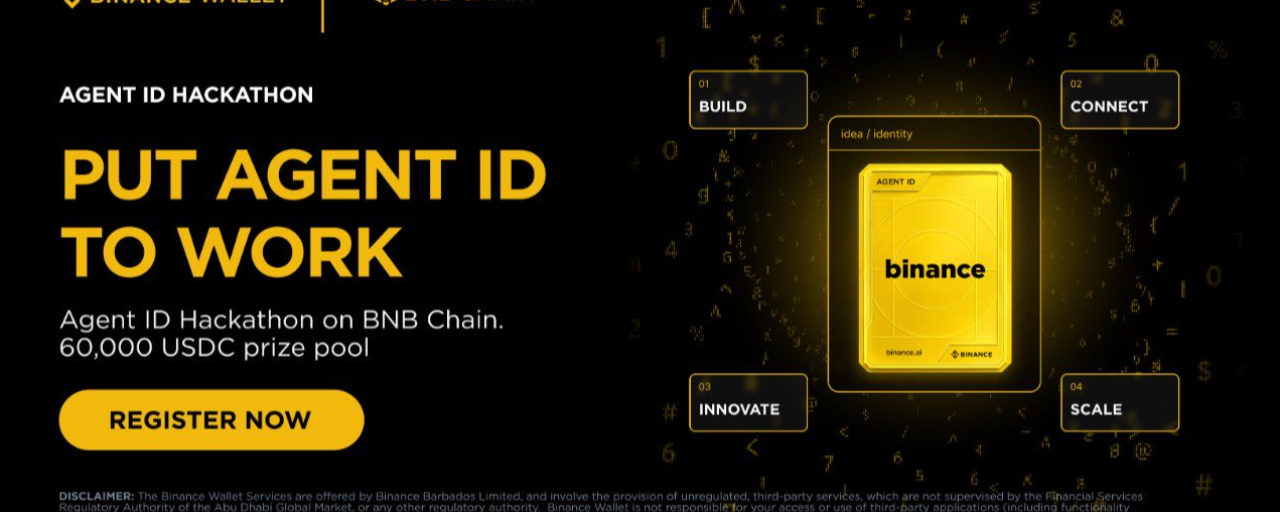
What is Binance Agent ID, and why does it matter?A new era is starting in crypto. Your wallet is no longer used only by you. AI agents acting on your behalf use it too. Binance offers two pieces for this: Agentic Wallet and Agent ID.
🔹 What is Agent ID?
It’s an on-chain identity on BNB Chain, tied to your wallet. It comes with a handle in the name.ai format, like mine: hitasyurek.ai.
It’s recorded in an official registry contract, so anyone can verify on-chain which wallet belongs to a real agent user.
🔹 What is it used for?
Many recent mints on BNB Chain come with an “Agent ID holders only” requirement:
• The contract runs a hasAgentId(wallet) check before minting.
• No Agent ID? Your transaction gets rejected.
• Some projects tie the share quota directly to your Agent ID, for example 10 shares per ID.
The result: bots and single users with hundreds of wallets can’t sweep the mint. A fairer distribution.
🔹 How does Agentic Wallet work?
• You sign in from the Binance app with a QR code. No seed phrase or private key is ever shared.
• Developer Mode must be enabled in the app.
• Before every transaction, the agent runs a preview (simulation) that shows in advance what goes out, what comes in, which approvals are granted and whether there are any risk warnings.
• The transaction is sent only after you approve.
🔹 Notes from real experience
I’ve done several mints with my Agent ID over the past weeks:
✅ Mints I entered at the right time returned between 1.4x and 2x.
❌ Some projects dropped more than 70% after launch.
❌ Others never filled up, and people took refunds and left.
🔹 Things to watch out for ⚠️
Is the contract verified? Check Sourcify or BscScan.Does the preview include an approval? Some mints quietly request unlimited token allowances.What’s the refund rule? Do you get your money back if the sale doesn’t fill?If a “free mint” asks for a fee, stop.Never give your private key or seed phrase to any agent, site or person.
🔹 Final word
Agent ID is an access pass. It gets you into mints but doesn’t guarantee profit. Agents speed things up, but you still make the call.
DYOR. Not financial advice. 🫡
#BNBChain #Binance #AgentID #AgenticWallet #Web3
What is Binance Agent ID, and why does it matter?
A new era is starting in crypto. Your wallet is no longer used only by you. AI agents acting on your behalf use it too. Binance offers two pieces for this: Agentic Wallet and Agent ID.
🔹 What is Agent ID?
It’s an on-chain identity on BNB Chain, tied to your wallet. It comes with a handle in the name.ai format, like mine: hitasyurek.ai.
It’s recorded in an official registry contract, so anyone can verify on-chain which wallet belongs to a real agent user.
🔹 What is it used for?
Many recent mints on BNB Chain come with an “Agent ID holders only” requirement:
• The contract runs a hasAgentId(wallet) check before minting.
• No Agent ID? Your transaction gets rejected.
• Some projects tie the share quota directly to your Agent ID, for example 10 shares per ID.
The result: bots and single users with hundreds of wallets can’t sweep the mint. A fairer distribution.
🔹 How does Agentic Wallet work?
• You sign in from the Binance app with a QR code. No seed phrase or private key is ever shared.
• Developer Mode must be enabled in the app.
• Before every transaction, the agent runs a preview (simulation) that shows in advance what goes out, what comes in, which approvals are granted and whether there are any risk warnings.
• The transaction is sent only after you approve.
🔹 Notes from real experience
I’ve done several mints with my Agent ID over the past weeks:
✅ Mints I entered at the right time returned between 1.4x and 2x.
❌ Some projects dropped more than 70% after launch.
❌ Others never filled up, and people took refunds and left.
🔹 Things to watch out for ⚠️
Is the contract verified? Check Sourcify or BscScan.Does the preview include an approval? Some mints quietly request unlimited token allowances.What’s the refund rule? Do you get your money back if the sale doesn’t fill?If a “free mint” asks for a fee, stop.Never give your private key or seed phrase to any agent, site or person.
🔹 Final word
Agent ID is an access pass. It gets you into mints but doesn’t guarantee profit. Agents speed things up, but you still make the call.
DYOR. Not financial advice. 🫡
#BNBChain #Binance #AgentID #AgenticWallet #Web3
1
154
·
--
6
3.3k
·
--
$SEND Coin and SendAI: Bridging AI and Blockchain on Solana$SEND Coin and SendAI: Bridging AI and Blockchain on Solana
In the ever-evolving blockchain space, the fusion of artificial intelligence (AI) and decentralized finance (DeFi) is unlocking transformative possibilities. One of the most exciting initiatives at this intersection is $SEND, a cryptocurrency native to the Solana blockchain, and SendAI, a visionary platform aiming to integrate AI into the Solana ecosystem. This article delves into $SEND’s functionality and the innovative potential of SendAI in shaping the future of blockchain technology.
$SEND Coin: Powering Transactions on Solana
$SEND leverages the high-performance Solana blockchain to offer a fast, low-cost, and scalable cryptocurrency solution. With these attributes, $SEND is primed for applications ranging from micropayments to more complex DeFi integrations.
Key Features of $SEND:
Lightning-Fast Transactions: Solana's infrastructure ensures $SEND processes transactions within seconds, making it ideal for time-sensitive applications.
Minimal Fees: Thanks to Solana's cost-effective ecosystem, $SEND enables microtransactions and large transfers without incurring high fees.
DeFi Use Cases: $SEND integrates seamlessly into Solana’s expanding DeFi ecosystem, supporting staking, lending, and liquidity provision.
Current Market Outlook:
As of December 7, 2024, $SEND boasts a market capitalization of approximately $9 million, reflecting growing interest in the token’s utility and potential.
SendAI: Revolutionizing AI on the Blockchain
SendAI is a cutting-edge platform dedicated to embedding AI capabilities into the Solana ecosystem. By fostering collaboration and providing resources, SendAI is driving the adoption of AI technologies within decentralized applications (dApps).
Core Initiatives of SendAI:
Community Building through Hackathons: By organizing events like the Solana AI Hackathon, SendAI engages developers to create innovative AI-driven solutions.Developer Resources: From detailed documentation to developer tools, SendAI empowers the community to build and deploy intelligent applications on Solana.Strategic Partnerships: SendAI collaborates with blockchain projects and stakeholders to integrate AI seamlessly into Solana-based solutions.
Recent Achievements:
SendAI recently launched its Twitter account, @sendaifun, marking the beginning of an ambitious journey to unify Solana’s AI projects. Its involvement in Solana’s AI Hackathon is poised to drive groundbreaking innovations in blockchain-based AI applications.
$SEND + SendAI: A Dynamic Partnership
Together, $SEND and SendAI represent a powerful synergy. While $SEND focuses on transactional efficiency, SendAI enhances the ecosystem with intelligent automation and insights.
Potential Use Cases of Collaboration:
Smart Financial Transactions: AI-driven analytics from SendAI could optimize $SEND transactions for cost efficiency and timing.Enhanced Security Protocols: AI can bolster security measures by identifying and mitigating potential risks in real-time.
Intelligent dApps: The fusion of $SEND with SendAI technology could enable AI-powered decentralized applications with enhanced functionality and user experience.
Why $SEND and SendAI Are Worth Watching
$SEND is not just another token—it’s a project with a vision. By focusing on AI integration, it moves beyond the speculative realm into one of tangible utility and innovation. Meanwhile, SendAI serves as the bridge connecting AI technology with the blockchain world, fostering growth and collaboration.
Their approach of blending cutting-edge AI solutions with the robust infrastructure of Solana positions them uniquely within the blockchain industry.
Conclusion: A Slow-Cook Gem with High Potential
$SEND and SendAI are setting the stage for the next wave of blockchain innovation. With Solana's endorsement, active community engagement, and a roadmap that prioritizes utility, these projects are creating a narrative-driven, utility-rich ecosystem.
For those seeking a long-term play with real-world potential, $SEND and SendAI might be the hidden gems worth exploring. As the Solana ecosystem grows, these projects are poised to redefine what’s possible at the intersection of AI and blockchain.
$SEND it higher! $SEND it now!
https://dexscreener.com/solana/esr8sbvggbmrcgcddfl9x8dwpgldatgllkkgx3uukoaq
$SEND Coin and SendAI: Bridging AI and Blockchain on Solana
$SEND Coin and SendAI: Bridging AI and Blockchain on Solana
In the ever-evolving blockchain space, the fusion of artificial intelligence (AI) and decentralized finance (DeFi) is unlocking transformative possibilities. One of the most exciting initiatives at this intersection is $SEND, a cryptocurrency native to the Solana blockchain, and SendAI, a visionary platform aiming to integrate AI into the Solana ecosystem. This article delves into $SEND’s functionality and the innovative potential of SendAI in shaping the future of blockchain technology.
$SEND Coin: Powering Transactions on Solana
$SEND leverages the high-performance Solana blockchain to offer a fast, low-cost, and scalable cryptocurrency solution. With these attributes, $SEND is primed for applications ranging from micropayments to more complex DeFi integrations.
Key Features of $SEND:
Lightning-Fast Transactions: Solana's infrastructure ensures $SEND processes transactions within seconds, making it ideal for time-sensitive applications.
Minimal Fees: Thanks to Solana's cost-effective ecosystem, $SEND enables microtransactions and large transfers without incurring high fees.
DeFi Use Cases: $SEND integrates seamlessly into Solana’s expanding DeFi ecosystem, supporting staking, lending, and liquidity provision.
Current Market Outlook:
As of December 7, 2024, $SEND boasts a market capitalization of approximately $9 million, reflecting growing interest in the token’s utility and potential.
SendAI: Revolutionizing AI on the Blockchain
SendAI is a cutting-edge platform dedicated to embedding AI capabilities into the Solana ecosystem. By fostering collaboration and providing resources, SendAI is driving the adoption of AI technologies within decentralized applications (dApps).
Core Initiatives of SendAI:
Community Building through Hackathons: By organizing events like the Solana AI Hackathon, SendAI engages developers to create innovative AI-driven solutions.Developer Resources: From detailed documentation to developer tools, SendAI empowers the community to build and deploy intelligent applications on Solana.Strategic Partnerships: SendAI collaborates with blockchain projects and stakeholders to integrate AI seamlessly into Solana-based solutions.
Recent Achievements:
SendAI recently launched its Twitter account, @sendaifun, marking the beginning of an ambitious journey to unify Solana’s AI projects. Its involvement in Solana’s AI Hackathon is poised to drive groundbreaking innovations in blockchain-based AI applications.
$SEND + SendAI: A Dynamic Partnership
Together, $SEND and SendAI represent a powerful synergy. While $SEND focuses on transactional efficiency, SendAI enhances the ecosystem with intelligent automation and insights.
Potential Use Cases of Collaboration:
Smart Financial Transactions: AI-driven analytics from SendAI could optimize $SEND transactions for cost efficiency and timing.Enhanced Security Protocols: AI can bolster security measures by identifying and mitigating potential risks in real-time.
Intelligent dApps: The fusion of $SEND with SendAI technology could enable AI-powered decentralized applications with enhanced functionality and user experience.
Why $SEND and SendAI Are Worth Watching
$SEND is not just another token—it’s a project with a vision. By focusing on AI integration, it moves beyond the speculative realm into one of tangible utility and innovation. Meanwhile, SendAI serves as the bridge connecting AI technology with the blockchain world, fostering growth and collaboration.
Their approach of blending cutting-edge AI solutions with the robust infrastructure of Solana positions them uniquely within the blockchain industry.
Conclusion: A Slow-Cook Gem with High Potential
$SEND and SendAI are setting the stage for the next wave of blockchain innovation. With Solana's endorsement, active community engagement, and a roadmap that prioritizes utility, these projects are creating a narrative-driven, utility-rich ecosystem.
For those seeking a long-term play with real-world potential, $SEND and SendAI might be the hidden gems worth exploring. As the Solana ecosystem grows, these projects are poised to redefine what’s possible at the intersection of AI and blockchain.
$SEND it higher! $SEND it now!
https://dexscreener.com/solana/esr8sbvggbmrcgcddfl9x8dwpgldatgllkkgx3uukoaq
1
1
2
1.3k
·
--
🔥After Binance announced the launch of $NEIRO Futures, a whale with 5.2 million $ assets spent ~3 million $ to buy 17.5 million $NEIRO, becoming the largest individual $NEIRO holder!
{future}(NEIROETHUSDT)
🔥After Binance announced the launch of $NEIRO Futures, a whale with 5.2 million $ assets spent ~3 million $ to buy 17.5 million $NEIRO, becoming the largest individual $NEIRO holder!
5
6.9k
·
--
Bullish
Wolf Von Laer, CEO of Students for Liberty, discussed the Bitcoin community and the need for more openness at the Bitcoin Prague 2023 conference. He acknowledged that the community may not always be welcoming, as events can be technical and hardcore, alienating some individuals. Von Laer emphasized the importance of self-reflection and maturity within the community, suggesting that those who want to create a community should have a deep understanding of Bitcoin and be able to explain it effectively. He also praised the inclusivity of the Bitcoin ecosystem, stating that anyone can contribute and produce value within it. This aligns with the views of others in the crypto industry who emphasize the significance of community support during times of volatility and uncertainty.
#BTC
#BTC
Bull ?
57%
Bear ?
43%
7 votes • Voting closed
1
539
·
--
Bearish
The top 10 most depreciated in 24 hours are as follows:
$EOS: -26.15%
$Dash: -24.76
$Solana: -23.13
$Polygon: -%22.97
$Filecoin: -%22.34
$Cardano: -22.09
$Sui: -%22.02
$Mina: -21.88
$Shiba Inu: -%21.24
$Chiliz: -%20.95
The top 10 most depreciated in 24 hours are as follows:
$EOS: -26.15%
$Dash: -24.76
$Solana: -23.13
$Polygon: -%22.97
$Filecoin: -%22.34
$Cardano: -22.09
$Sui: -%22.02
$Mina: -21.88
$Shiba Inu: -%21.24
$Chiliz: -%20.95
$EOS: -26.15%
$Dash: -24.76
$Solana: -23.13
$Polygon: -%22.97
$Filecoin: -%22.34
$Cardano: -22.09
$Sui: -%22.02
$Mina: -21.88
$Shiba Inu: -%21.24
$Chiliz: -%20.95
5
1.8k
·
--
Bearish
Polygon , the developer of the Polygon blockchain network, has responded to the#SEC claim that MATIC is an "investment contract." In a statement on Twitter, Polygon Labs emphasized that they have focused on network security and made sure that #MATIC is accessible to a large human community without specifically targeting the US market. They also stated that MATIC has been integral to the Polygon technology from the beginning and continues to play a crucial role in ensuring network security. Polygon Labs expressed confidence in the steps they have taken in the past and teased upcoming exciting technology news. Following the SECs classification of MATIC as a security several trading platforms, including Robinhood,have delisted the token, causing a significant decrease in its value, with a 32% drop since the beginning of the week.
Polygon , the developer of the Polygon blockchain network, has responded to the#SEC claim that MATIC is an "investment contract." In a statement on Twitter, Polygon Labs emphasized that they have focused on network security and made sure that #MATIC is accessible to a large human community without specifically targeting the US market. They also stated that MATIC has been integral to the Polygon technology from the beginning and continues to play a crucial role in ensuring network security. Polygon Labs expressed confidence in the steps they have taken in the past and teased upcoming exciting technology news. Following the SECs classification of MATIC as a security several trading platforms, including Robinhood,have delisted the token, causing a significant decrease in its value, with a 32% drop since the beginning of the week.

3
1.5k
·
--
Basic information about three AI-related coins listed on the Binance exchange
Fetch.ai $FET : A blockchain-based platform that creates 'autonomous economic agents' using artificial intelligence and machine learning. These agents act on behalf of individuals to generate profits in a variety of ways. FET claims that autonomous economic agents could form the basis of future decentralized markets or help connect devices in the Internet of Things1.
SingularityNET $AGIX : An online marketplace dedicated to the buying and selling of artificial intelligence algorithms. AGIX is a decentralized network that enables AI developers and users to interact and collaborate with each other. AGIX aims to democratize and increase the accessibility of AI services2.
#Aİ

8
5.2k
·
--
Do you think Ethereum will test the $1600 resistance? $ETH
In my opinion, Ethereum seems to be preparing nicely for the bull right now. Independent of price analysis.
Layer2s, rollups and everything else will cause more ETH to be burned.
Do you think Ethereum will test the $1600 resistance? $ETH
In my opinion, Ethereum seems to be preparing nicely for the bull right now. Independent of price analysis.
Layer2s, rollups and everything else will cause more ETH to be burned.
In my opinion, Ethereum seems to be preparing nicely for the bull right now. Independent of price analysis.
Layer2s, rollups and everything else will cause more ETH to be burned.
2
593
·
--
What do you think the coins in the top 7 should be?
What do you think the coins in the top 7 should be?

4
229
·
--
Decentraland's MANA Coin: A Guide to the Decentralized Virtual World's Native CurrencyDecentraland's MANA Coin: A Guide to the Decentralized Virtual World's Native Currency
Decentraland is a virtual world where users can buy, sell, and build on virtual land using MANA, its native cryptocurrency. MANA is an ERC-20 token that runs on the Ethereum blockchain and allows users to purchase digital assets such as virtual real estate, wearables, and other in-game items.
What is Decentraland?
Decentraland is a decentralized virtual world where users can buy, sell, and trade virtual land and other assets. It is built on the Ethereum blockchain, which allows for a transparent, secure, and decentralized system for virtual transactions. Users can create and participate in virtual events, games, and experiences on their virtual land. Decentraland is run by a community of users who own and govern the platform, giving users the ability to shape the future of the platform.
What is MANA?
MANA is the native cryptocurrency of Decentraland, which is used to purchase and trade virtual land, wearables, and other in-game items. MANA is an ERC-20 token, meaning it runs on the Ethereum blockchain and is compatible with any Ethereum wallet. The total supply of MANA is capped at 2.19 billion, with around 1.56 billion currently in circulation.
Uses of MANA
The primary use of MANA is to purchase virtual land and other assets within Decentraland. Users can buy and sell virtual land, which is divided into parcels that can be used for a variety of purposes, such as building virtual structures, hosting events, and displaying artwork. Virtual land prices can vary depending on their location and proximity to other popular areas in the virtual world. Users can also purchase wearables, such as clothing and accessories for their virtual avatars, and other in-game items using MANA.
Governance and Decentralization
Decentraland is a decentralized platform, meaning that it is run by a community of users who own and govern the platform. Users can vote on proposals and changes to the platform using MANA tokens, giving them a say in the future of the platform. This creates a more democratic and decentralized system than traditional virtual worlds, where decisions are made by a central authority.
Security and Transparency
Because Decentraland runs on the Ethereum blockchain, all transactions are secure, transparent, and immutable. This means that all transactions on the platform are recorded on the blockchain, making it easier to track and audit them. Users can be sure that their virtual assets are safe and secure, and that they can trust the platform's decentralized system.
Conclusion
Decentraland and its native cryptocurrency, MANA, offer users a unique and decentralized virtual world where they can own and govern their virtual land and assets. With its community-driven governance and decentralized architecture, Decentraland offers a more democratic and transparent virtual world than traditional platforms. As the virtual world continues to grow and evolve, MANA is likely to become an even more valuable and widely-used asset within the platform.
Decentraland's MANA Coin: A Guide to the Decentralized Virtual World's Native Currency
Decentraland's MANA Coin: A Guide to the Decentralized Virtual World's Native Currency
Decentraland is a virtual world where users can buy, sell, and build on virtual land using MANA, its native cryptocurrency. MANA is an ERC-20 token that runs on the Ethereum blockchain and allows users to purchase digital assets such as virtual real estate, wearables, and other in-game items.
What is Decentraland?
Decentraland is a decentralized virtual world where users can buy, sell, and trade virtual land and other assets. It is built on the Ethereum blockchain, which allows for a transparent, secure, and decentralized system for virtual transactions. Users can create and participate in virtual events, games, and experiences on their virtual land. Decentraland is run by a community of users who own and govern the platform, giving users the ability to shape the future of the platform.
What is MANA?
MANA is the native cryptocurrency of Decentraland, which is used to purchase and trade virtual land, wearables, and other in-game items. MANA is an ERC-20 token, meaning it runs on the Ethereum blockchain and is compatible with any Ethereum wallet. The total supply of MANA is capped at 2.19 billion, with around 1.56 billion currently in circulation.
Uses of MANA
The primary use of MANA is to purchase virtual land and other assets within Decentraland. Users can buy and sell virtual land, which is divided into parcels that can be used for a variety of purposes, such as building virtual structures, hosting events, and displaying artwork. Virtual land prices can vary depending on their location and proximity to other popular areas in the virtual world. Users can also purchase wearables, such as clothing and accessories for their virtual avatars, and other in-game items using MANA.
Governance and Decentralization
Decentraland is a decentralized platform, meaning that it is run by a community of users who own and govern the platform. Users can vote on proposals and changes to the platform using MANA tokens, giving them a say in the future of the platform. This creates a more democratic and decentralized system than traditional virtual worlds, where decisions are made by a central authority.
Security and Transparency
Because Decentraland runs on the Ethereum blockchain, all transactions are secure, transparent, and immutable. This means that all transactions on the platform are recorded on the blockchain, making it easier to track and audit them. Users can be sure that their virtual assets are safe and secure, and that they can trust the platform's decentralized system.
Conclusion
Decentraland and its native cryptocurrency, MANA, offer users a unique and decentralized virtual world where they can own and govern their virtual land and assets. With its community-driven governance and decentralized architecture, Decentraland offers a more democratic and transparent virtual world than traditional platforms. As the virtual world continues to grow and evolve, MANA is likely to become an even more valuable and widely-used asset within the platform.
112
935
·
--
What is cardano ?
What is cardano ?
Hitasyurek
·
--
What is Cardano ?
Cardano is a decentralized blockchain platform that aims to provide a more secure and sustainable infrastructure for cryptocurrencies and smart contracts. Launched in 2017, it was designed from the ground up to be more scalable, interoperable, and transparent than existing blockchain platforms.
At its core, Cardano uses a proof-of-stake consensus mechanism called Ouroboros, which allows it to process transactions more efficiently while reducing energy consumption. Unlike proof-of-work systems used by Bitcoin and other cryptocurrencies, proof-of-stake does not require miners to compete for rewards by solving complex cryptographic puzzles. Instead, stakeholders can participate in the network by holding and staking their ADA coins, which are used to validate transactions and secure the blockchain.
One of the key features of Cardano is its two-layer architecture, which separates the accounting and computation layers of the blockchain. The first layer, called the Cardano Settlement Layer (CSL), is responsible for handling transactions and maintaining the ledger. The second layer, called the Cardano Computational Layer (CCL), enables smart contracts and decentralized applications (dApps) to run on top of the blockchain. By separating these functions, Cardano can provide greater flexibility, scalability, and security than other blockchain platforms.
Another important aspect of Cardano is its focus on peer-reviewed research and formal verification. The project was founded by Charles Hoskinson, a co-founder of Ethereum, and a team of researchers and developers who wanted to create a more scientifically rigorous blockchain platform. They have partnered with leading academic institutions and research organizations to develop new protocols, algorithms, and tools for Cardano.
For example, Cardano uses a programming language called Haskell, which is known for its mathematical precision and reliability. This makes it easier to write and verify smart contracts, as well as reduce the risk of bugs and vulnerabilities. Cardano also employs formal verification techniques, which use mathematical proofs to verify the correctness of software code. This helps to ensure that smart contracts and other applications on the blockchain are secure and free from errors.
In addition to its technical innovations, Cardano is also focused on social impact and sustainability. The project has partnered with the Ethiopian government to develop a blockchain-based system for recording student credentials and verifying academic achievements. This will help to reduce fraud and improve access to education and job opportunities for millions of people in the country. Cardano also supports various environmental initiatives, such as offsetting carbon emissions and promoting renewable energy sources.
As of March 2023, Cardano is one of the top ten cryptocurrencies by market capitalization, with a total value of over $50 billion USD. Its native token, ADA, is widely traded on major cryptocurrency exchanges and is used to pay transaction fees, stake in the network, and participate in governance decisions. The Cardano community is also active and growing, with over one million registered users and thousands of developers contributing to the project.
Looking ahead, Cardano has several major milestones and initiatives planned for the future. These include the launch of the Goguen era, which will bring new features and functionalities to the Cardano network, such as multi-asset support and improved smart contract capabilities. The project is also exploring new use cases and applications for blockchain technology, such as decentralized finance (DeFi), supply chain management, and voting systems.
Overall, Cardano represents a significant advancement in blockchain technology and is poised to play an important role in the future of finance, commerce, and social impact. Its focus on scientific rigor, sustainability, and community engagement sets it apart from other blockchain platforms and positions it as a leading innovator in the industry. As the project continues to evolve and grow, it will be interesting to see how it transforms the way we interact with digital assets and decentralized applications.
1
10
155
·
--
What is Cardano ?Cardano is a decentralized blockchain platform that aims to provide a more secure and sustainable infrastructure for cryptocurrencies and smart contracts. Launched in 2017, it was designed from the ground up to be more scalable, interoperable, and transparent than existing blockchain platforms.
At its core, Cardano uses a proof-of-stake consensus mechanism called Ouroboros, which allows it to process transactions more efficiently while reducing energy consumption. Unlike proof-of-work systems used by Bitcoin and other cryptocurrencies, proof-of-stake does not require miners to compete for rewards by solving complex cryptographic puzzles. Instead, stakeholders can participate in the network by holding and staking their ADA coins, which are used to validate transactions and secure the blockchain.
One of the key features of Cardano is its two-layer architecture, which separates the accounting and computation layers of the blockchain. The first layer, called the Cardano Settlement Layer (CSL), is responsible for handling transactions and maintaining the ledger. The second layer, called the Cardano Computational Layer (CCL), enables smart contracts and decentralized applications (dApps) to run on top of the blockchain. By separating these functions, Cardano can provide greater flexibility, scalability, and security than other blockchain platforms.
Another important aspect of Cardano is its focus on peer-reviewed research and formal verification. The project was founded by Charles Hoskinson, a co-founder of Ethereum, and a team of researchers and developers who wanted to create a more scientifically rigorous blockchain platform. They have partnered with leading academic institutions and research organizations to develop new protocols, algorithms, and tools for Cardano.
For example, Cardano uses a programming language called Haskell, which is known for its mathematical precision and reliability. This makes it easier to write and verify smart contracts, as well as reduce the risk of bugs and vulnerabilities. Cardano also employs formal verification techniques, which use mathematical proofs to verify the correctness of software code. This helps to ensure that smart contracts and other applications on the blockchain are secure and free from errors.
In addition to its technical innovations, Cardano is also focused on social impact and sustainability. The project has partnered with the Ethiopian government to develop a blockchain-based system for recording student credentials and verifying academic achievements. This will help to reduce fraud and improve access to education and job opportunities for millions of people in the country. Cardano also supports various environmental initiatives, such as offsetting carbon emissions and promoting renewable energy sources.
As of March 2023, Cardano is one of the top ten cryptocurrencies by market capitalization, with a total value of over $50 billion USD. Its native token, ADA, is widely traded on major cryptocurrency exchanges and is used to pay transaction fees, stake in the network, and participate in governance decisions. The Cardano community is also active and growing, with over one million registered users and thousands of developers contributing to the project.
Looking ahead, Cardano has several major milestones and initiatives planned for the future. These include the launch of the Goguen era, which will bring new features and functionalities to the Cardano network, such as multi-asset support and improved smart contract capabilities. The project is also exploring new use cases and applications for blockchain technology, such as decentralized finance (DeFi), supply chain management, and voting systems.
Overall, Cardano represents a significant advancement in blockchain technology and is poised to play an important role in the future of finance, commerce, and social impact. Its focus on scientific rigor, sustainability, and community engagement sets it apart from other blockchain platforms and positions it as a leading innovator in the industry. As the project continues to evolve and grow, it will be interesting to see how it transforms the way we interact with digital assets and decentralized applications.
What is Cardano ?
Cardano is a decentralized blockchain platform that aims to provide a more secure and sustainable infrastructure for cryptocurrencies and smart contracts. Launched in 2017, it was designed from the ground up to be more scalable, interoperable, and transparent than existing blockchain platforms.
At its core, Cardano uses a proof-of-stake consensus mechanism called Ouroboros, which allows it to process transactions more efficiently while reducing energy consumption. Unlike proof-of-work systems used by Bitcoin and other cryptocurrencies, proof-of-stake does not require miners to compete for rewards by solving complex cryptographic puzzles. Instead, stakeholders can participate in the network by holding and staking their ADA coins, which are used to validate transactions and secure the blockchain.
One of the key features of Cardano is its two-layer architecture, which separates the accounting and computation layers of the blockchain. The first layer, called the Cardano Settlement Layer (CSL), is responsible for handling transactions and maintaining the ledger. The second layer, called the Cardano Computational Layer (CCL), enables smart contracts and decentralized applications (dApps) to run on top of the blockchain. By separating these functions, Cardano can provide greater flexibility, scalability, and security than other blockchain platforms.
Another important aspect of Cardano is its focus on peer-reviewed research and formal verification. The project was founded by Charles Hoskinson, a co-founder of Ethereum, and a team of researchers and developers who wanted to create a more scientifically rigorous blockchain platform. They have partnered with leading academic institutions and research organizations to develop new protocols, algorithms, and tools for Cardano.
For example, Cardano uses a programming language called Haskell, which is known for its mathematical precision and reliability. This makes it easier to write and verify smart contracts, as well as reduce the risk of bugs and vulnerabilities. Cardano also employs formal verification techniques, which use mathematical proofs to verify the correctness of software code. This helps to ensure that smart contracts and other applications on the blockchain are secure and free from errors.
In addition to its technical innovations, Cardano is also focused on social impact and sustainability. The project has partnered with the Ethiopian government to develop a blockchain-based system for recording student credentials and verifying academic achievements. This will help to reduce fraud and improve access to education and job opportunities for millions of people in the country. Cardano also supports various environmental initiatives, such as offsetting carbon emissions and promoting renewable energy sources.
As of March 2023, Cardano is one of the top ten cryptocurrencies by market capitalization, with a total value of over $50 billion USD. Its native token, ADA, is widely traded on major cryptocurrency exchanges and is used to pay transaction fees, stake in the network, and participate in governance decisions. The Cardano community is also active and growing, with over one million registered users and thousands of developers contributing to the project.
Looking ahead, Cardano has several major milestones and initiatives planned for the future. These include the launch of the Goguen era, which will bring new features and functionalities to the Cardano network, such as multi-asset support and improved smart contract capabilities. The project is also exploring new use cases and applications for blockchain technology, such as decentralized finance (DeFi), supply chain management, and voting systems.
Overall, Cardano represents a significant advancement in blockchain technology and is poised to play an important role in the future of finance, commerce, and social impact. Its focus on scientific rigor, sustainability, and community engagement sets it apart from other blockchain platforms and positions it as a leading innovator in the industry. As the project continues to evolve and grow, it will be interesting to see how it transforms the way we interact with digital assets and decentralized applications.
At its core, Cardano uses a proof-of-stake consensus mechanism called Ouroboros, which allows it to process transactions more efficiently while reducing energy consumption. Unlike proof-of-work systems used by Bitcoin and other cryptocurrencies, proof-of-stake does not require miners to compete for rewards by solving complex cryptographic puzzles. Instead, stakeholders can participate in the network by holding and staking their ADA coins, which are used to validate transactions and secure the blockchain.
One of the key features of Cardano is its two-layer architecture, which separates the accounting and computation layers of the blockchain. The first layer, called the Cardano Settlement Layer (CSL), is responsible for handling transactions and maintaining the ledger. The second layer, called the Cardano Computational Layer (CCL), enables smart contracts and decentralized applications (dApps) to run on top of the blockchain. By separating these functions, Cardano can provide greater flexibility, scalability, and security than other blockchain platforms.
Another important aspect of Cardano is its focus on peer-reviewed research and formal verification. The project was founded by Charles Hoskinson, a co-founder of Ethereum, and a team of researchers and developers who wanted to create a more scientifically rigorous blockchain platform. They have partnered with leading academic institutions and research organizations to develop new protocols, algorithms, and tools for Cardano.
For example, Cardano uses a programming language called Haskell, which is known for its mathematical precision and reliability. This makes it easier to write and verify smart contracts, as well as reduce the risk of bugs and vulnerabilities. Cardano also employs formal verification techniques, which use mathematical proofs to verify the correctness of software code. This helps to ensure that smart contracts and other applications on the blockchain are secure and free from errors.
In addition to its technical innovations, Cardano is also focused on social impact and sustainability. The project has partnered with the Ethiopian government to develop a blockchain-based system for recording student credentials and verifying academic achievements. This will help to reduce fraud and improve access to education and job opportunities for millions of people in the country. Cardano also supports various environmental initiatives, such as offsetting carbon emissions and promoting renewable energy sources.
As of March 2023, Cardano is one of the top ten cryptocurrencies by market capitalization, with a total value of over $50 billion USD. Its native token, ADA, is widely traded on major cryptocurrency exchanges and is used to pay transaction fees, stake in the network, and participate in governance decisions. The Cardano community is also active and growing, with over one million registered users and thousands of developers contributing to the project.
Looking ahead, Cardano has several major milestones and initiatives planned for the future. These include the launch of the Goguen era, which will bring new features and functionalities to the Cardano network, such as multi-asset support and improved smart contract capabilities. The project is also exploring new use cases and applications for blockchain technology, such as decentralized finance (DeFi), supply chain management, and voting systems.
Overall, Cardano represents a significant advancement in blockchain technology and is poised to play an important role in the future of finance, commerce, and social impact. Its focus on scientific rigor, sustainability, and community engagement sets it apart from other blockchain platforms and positions it as a leading innovator in the industry. As the project continues to evolve and grow, it will be interesting to see how it transforms the way we interact with digital assets and decentralized applications.
1
123
766
·
--
DYDX: A Decentralized Exchange for Perpetual SwapsDYDX: A Decentralized Exchange for Perpetual Swaps
DYDX is a decentralized exchange that enables users to trade perpetual swaps with up to 10x leverage. The platform is built on the Ethereum blockchain and is designed to be fast, secure, and easy to use.
Perpetual swaps are a type of derivative contract that allows traders to speculate on the future price of an underlying asset without actually owning it. With perpetual swaps, traders can go long or short on the price of an asset, and profit if their prediction is correct. Leverage allows traders to amplify their profits (or losses) by trading with borrowed funds.
DYDX offers a wide range of trading pairs, including BTC/USD, ETH/USD, and more. The platform charges a competitive fee of 0.05% per trade, and traders can deposit funds using a variety of cryptocurrencies, including BTC, ETH, and USDC.
One of the key features of DYDX is its focus on decentralization. Unlike centralized exchanges, DYDX does not hold users' funds or private keys, which reduces the risk of hacks and thefts. Instead, trades are settled on-chain using smart contracts, which are transparent and immutable.
In addition to its focus on decentralization, DYDX is also designed to be fast and user-friendly. The platform offers a simple and intuitive user interface, and trades are executed quickly and efficiently.
Overall, DYDX is a promising project that offers a decentralized and user-friendly way to trade perpetual swaps with leverage. While the platform is still relatively new and has yet to gain widespread adoption, it has already attracted a loyal following among crypto traders and enthusiasts.
DYDX: A Decentralized Exchange for Perpetual Swaps
DYDX: A Decentralized Exchange for Perpetual Swaps
DYDX is a decentralized exchange that enables users to trade perpetual swaps with up to 10x leverage. The platform is built on the Ethereum blockchain and is designed to be fast, secure, and easy to use.
Perpetual swaps are a type of derivative contract that allows traders to speculate on the future price of an underlying asset without actually owning it. With perpetual swaps, traders can go long or short on the price of an asset, and profit if their prediction is correct. Leverage allows traders to amplify their profits (or losses) by trading with borrowed funds.
DYDX offers a wide range of trading pairs, including BTC/USD, ETH/USD, and more. The platform charges a competitive fee of 0.05% per trade, and traders can deposit funds using a variety of cryptocurrencies, including BTC, ETH, and USDC.
One of the key features of DYDX is its focus on decentralization. Unlike centralized exchanges, DYDX does not hold users' funds or private keys, which reduces the risk of hacks and thefts. Instead, trades are settled on-chain using smart contracts, which are transparent and immutable.
In addition to its focus on decentralization, DYDX is also designed to be fast and user-friendly. The platform offers a simple and intuitive user interface, and trades are executed quickly and efficiently.
Overall, DYDX is a promising project that offers a decentralized and user-friendly way to trade perpetual swaps with leverage. While the platform is still relatively new and has yet to gain widespread adoption, it has already attracted a loyal following among crypto traders and enthusiasts.
107
897
Log in to explore more content
Join global crypto users on Binance Square
⚡️ Get latest and useful information about crypto.
💬 Trusted by the world’s largest crypto exchange.
👍 Discover real insights from verified creators.
Email / Phone number
Trending Topics
BTCReboundsAbove$60KAmidWhaleDipBuying
5,597 views
59 Discussing
Abraxas Capital, Other Whales Buy the BTC Dip as Bitcoin Briefly Reclaims $60,000
Binance News
·16 Likes
·16.2k views
NvidiaLoses$2.7TrillionInMonthAndAHalf
44,691 views
209 Discussing
GlobalStocksFaceLongestLosingStreakSince2023
402,328 views
2,659 Discussing