
Pike时政财经分析搬运号
387 Posts

Pike时政财经分析搬运号
Report
Block User
美股资深研究者和投资者,广泛阅读、持续学习,有自己投资方法和逻辑。
0 Following
1.0K+ Followers
1.6K+ Liked
Posts
Anthropic officially listed on the Nasdaq under the ticker symbol $ANT, setting a record for the largest IPO in capital market history. The final offering price was $83 per share, exceeding the previously proposed range of $70 to $78. The offering raised approximately $81.3 billion, and market demand was nearly seven times the number of shares available.
In terms of share structure and overall valuation, following the offering, the company will have approximately 13.2 billion shares outstanding, and approximately 18.1 billion shares on a fully diluted basis, implying an overall valuation of around $1.5 trillion.
Regarding operating performance and valuation multiples, as of the end of October, its annualized revenue had reached approximately $81 billion, up from an estimated $65 billion in July. Based on this annualized revenue, its price-to-sales ratio is about 14x, or approximately 18x on a fully diluted basis.
There are several key dates to watch for future lock-up expirations. First, beginning in mid-December, employees and some existing shareholders will be eligible for an early release of a small portion of their shares. Next, around the release of the first-quarter 2027 earnings report, shares held by the co-founders will become eligible for their first release. Shortly thereafter, around May 2027, the standard 180-day lock-up period will end, which is expected to be the period of greatest selling pressure. In addition, some co-founders and major shareholders are subject to lock-up periods of up to 365 days.
Potential risks also warrant careful consideration. The company has already committed to approximately $900 billion in computing capacity, of which $70.7 billion is due to be delivered over the next year. Given that its computing capacity purchase commitments far exceed its current revenue, current asset pricing already fully reflects expectations of continued rapid growth.
As for my personal trading plan, I applied to purchase a total of 1,500 shares. My basic approach is to look for an opportunity to exit if the stock surges after its IPO, then try to capture trading swings by shorting ahead of the lock-up expiration window and buying back after a pullback. In terms of valuation, I believe the stock would look relatively attractive in the 40-to-50-yuan range.
110
With the latest earnings reports from four representative U.S. retail giants released this week, concerns about weakness in local consumer spending have been substantially eased. Overall, the resilience of the U.S. consumer market has clearly exceeded expectations, although a pronounced K-shaped divergence is evident beneath the surface. Specifically, everyday spending is showing strong momentum, while spending on big-ticket items remains weak. Meanwhile, tariff refunds, as a one-time tailwind, have objectively boosted the profits of the companies involved.
Consumer activity is particularly robust in discount retail and general merchandise. TJX $TJX, which specializes in branded discounts, saw strength across all of its business segments, reflecting the current boom in value retail. At the same time, the strong results of two retail giants show that U.S. household spending is not simply a matter of trading down; rather, overall demand is beginning to recover. Target $TGT posted comparable sales growth of 5.6%, its best result in more than five years, driven primarily by steady gains in store traffic. Walmart $WMT also delivered solid results, with quarterly revenue of $188.8 billion, above expectations and up 5.2% year over year. Its U.S. e-commerce business grew 23%, while membership fee revenue rose 17.%. These strong results prompted the company to raise its full-year guidance.
In sharp contrast, the home improvement sector, which is exposed to big-ticket spending, remains under pressure. Home Depot $HD, a major chain, recorded comparable sales growth of just 2.2%, while its gross margin remained under pressure. With high interest rates weighing on the market, big-ticket household purchases closely tied to the housing market remain weak.
The earnings reports of these four publicly traded consumer companies paint a clear picture of a resilient U.S. consumer market, but one marked by a K-shaped divide: everyday spending is strong, while big-ticket spending is weak.
82
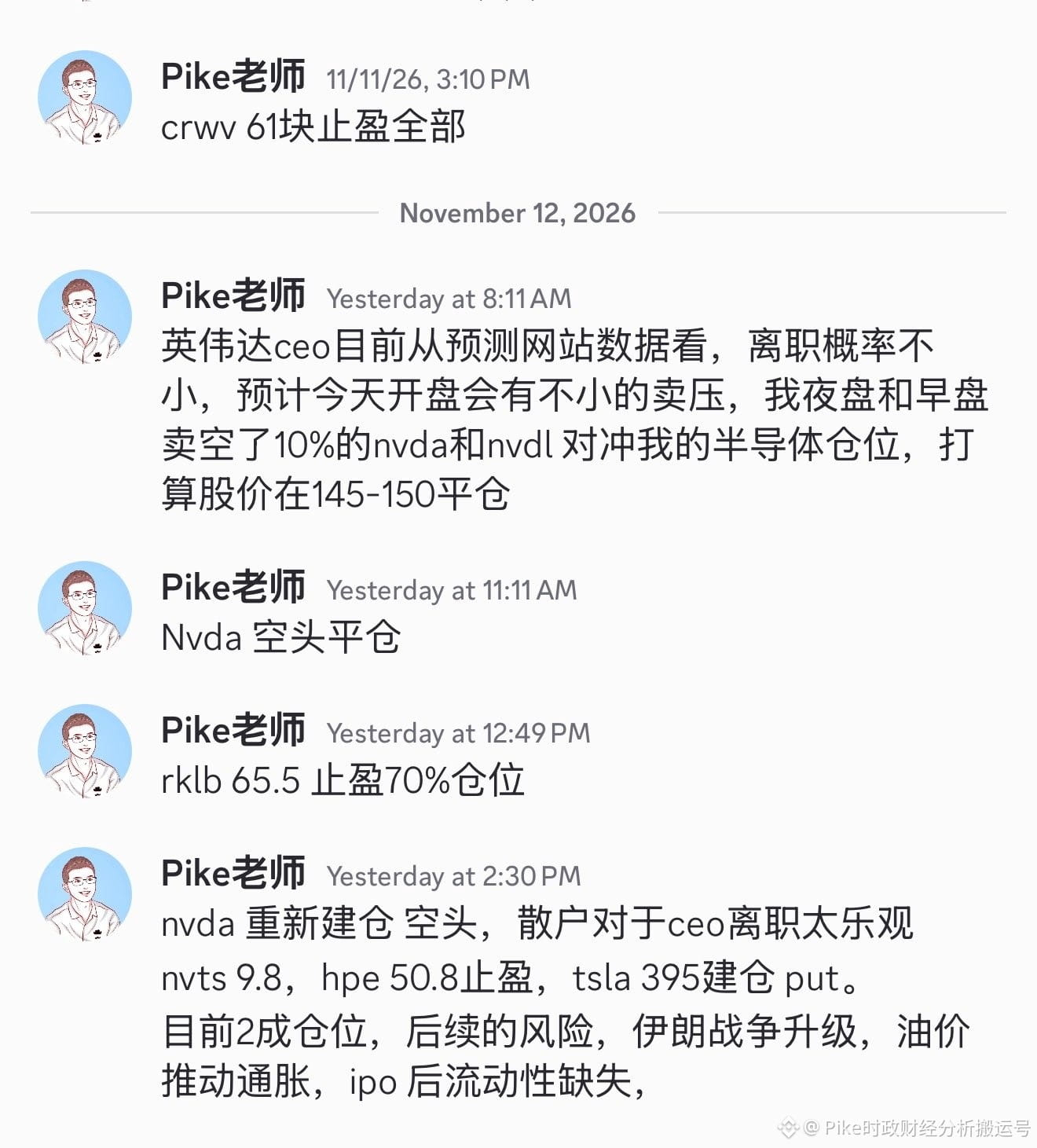
Thanks to the NVDA and TLSA puts I held, my account remained profitable despite today's broad market decline. Yesterday, I had already taken profits on most of my positions. As for the market next week, I personally lean relatively optimistic.
Thanks to the NVDA and TLSA puts I held, my account remained profitable despite today's broad market decline. Yesterday, I had already taken profits on most of my positions. As for the market next week, I personally lean relatively optimistic.
479
With CRWV trading in the 40-yuan range, if you still lack the conviction to buy, you might as well consider exiting the market entirely and going home to grow sweet potatoes in peace.
With CRWV trading in the 40-yuan range, if you still lack the conviction to buy, you might as well consider exiting the market entirely and going home to grow sweet potatoes in peace.
1
157
If you're still hesitant to open a position when CRWV is trading in the $40s, maybe it's time to consider giving up investing and going back to farming.
If you're still hesitant to open a position when CRWV is trading in the $40s, maybe it's time to consider giving up investing and going back to farming.
144
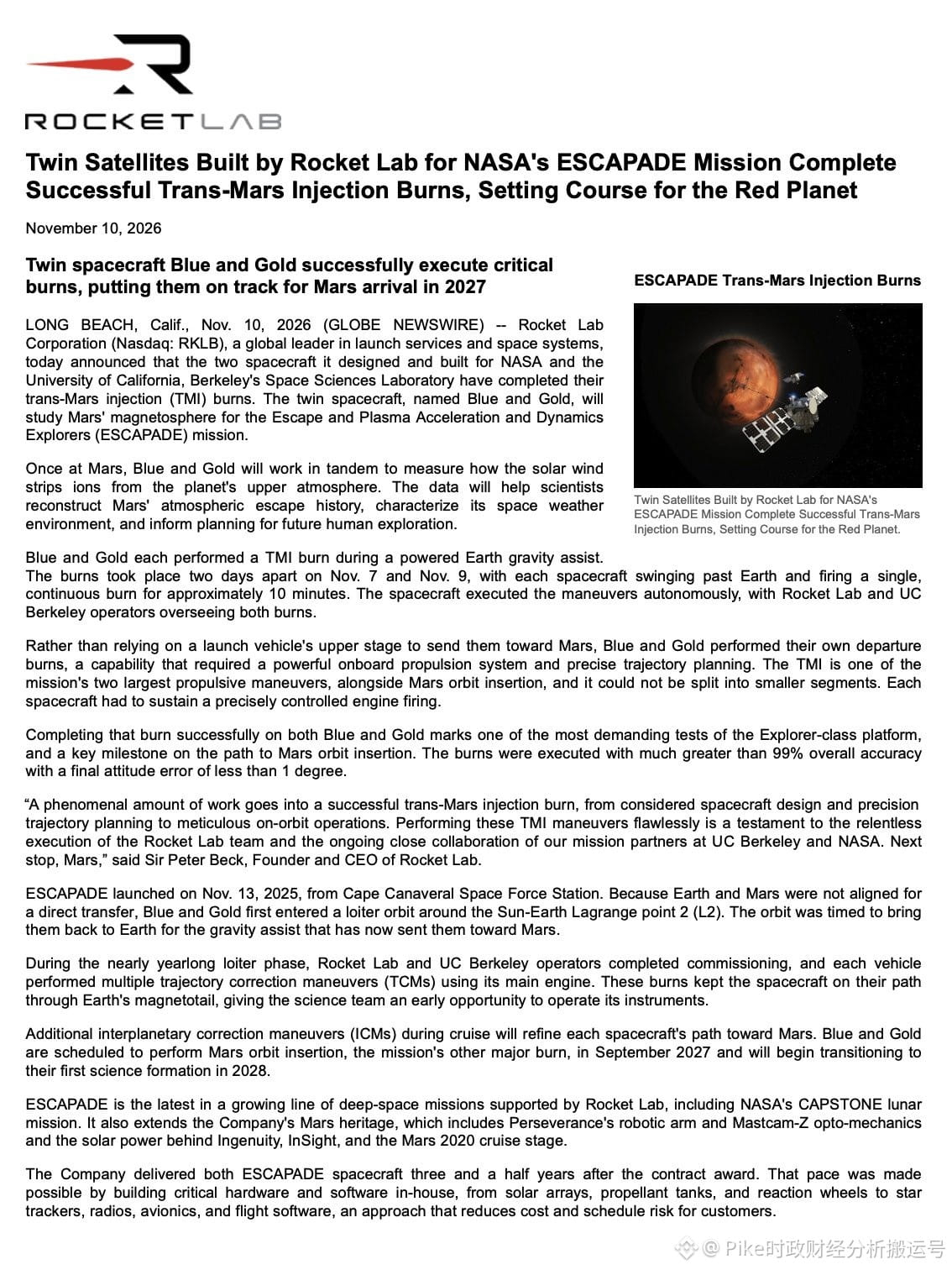
The two Mars probes, Blue and Gold, developed by Rocket Lab for NASA, have successfully begun their deep-space journey to Mars. According to an update released by the company on November 10, both spacecraft successfully completed their Earth-to-Mars transfer burns and entered their planned trajectories.
This mission is a crucial real-world test for Rocket Lab’s Space Systems business. Using their onboard propulsion units, the two probes independently carried out the key maneuvers needed to reach Mars, demonstrating Rocket Lab’s end-to-end delivery capabilities—from overall spacecraft configuration design, propulsion technology and spacecraft flight software development to in-orbit mission management.
During these orbital maneuvers, the probes flew past Earth on November 7 and 9, respectively. They used Earth’s gravity for a boost and relied on their onboard engines, which fired continuously for about 10 minutes, to successfully enter their Mars-bound trajectories. The entire burn and trajectory-change sequence was completed using the probes’ autonomous control systems, while tracking and monitoring from the ground were jointly handled by the University of California, Berkeley, and Rocket Lab. According to data provided by the company, the combined execution accuracy of the two burns exceeded 99%, and the final attitude error was precisely kept within 1 degree.
376
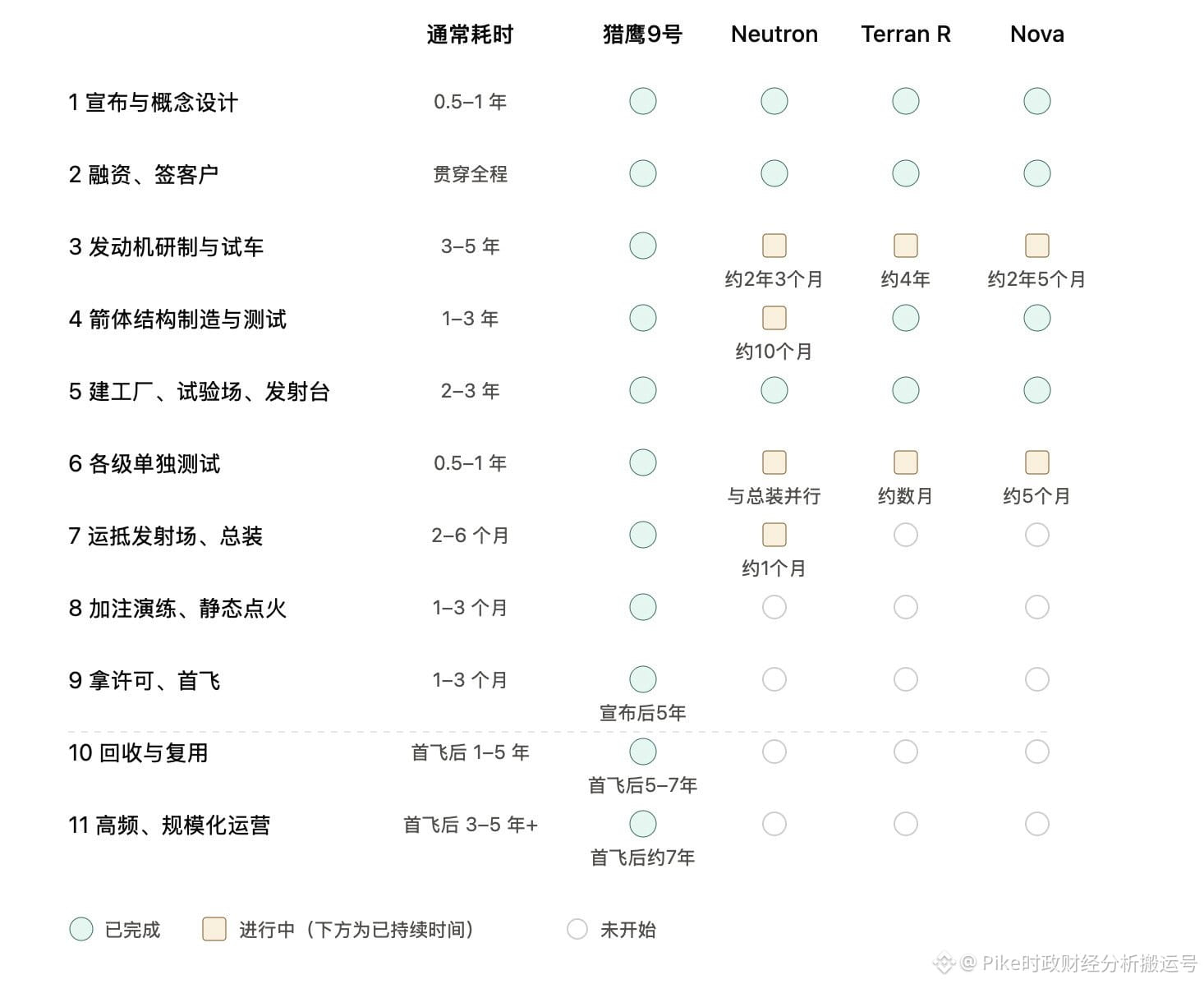
We can take a multidimensional look at the launch and development progress of RKLB’s Neutron rocket.
In terms of competition with comparable products, Neutron has both strengths and weaknesses. Compared with Terran R and Nova, Neutron is the only one of the three competing models to have entered the final assembly and testing phase at the launch site. Its second stage and thrust module have both been delivered to the site, putting it ahead in overall progress. However, development of its rocket structure is still relatively behind. Looking at SpaceX’s development path, it took Falcon 9 five years from its formal announcement to its first test flight, while Neutron is expected to take about 6.5 years—a development timeline in the middle of the industry range. However, once Neutron completes its maiden flight, it is expected to move toward achieving booster recovery faster than Falcon did at the time.
The most critical bottleneck in the current development process remains the first-stage carbon-fiber tank. Looking back at developments so far this year, the company reported a tank rupture in January, then detected a void in the dome in October, pushing the maiden flight back to 2027. To assess when Neutron might actually take to the skies, the tank test results in the first quarter will be a decisive indicator. My current estimate is that its maiden flight will likely take place around the fourth quarter.
In terms of the secondary market and valuation, the stock had previously pulled back below the $50 mark, making it particularly attractive from an investment perspective. Looking back at my own investing, I had already added to my RKLB position in several purchases in the $45–$47 price range.
427
Nvidia CEO Jensen Huang is currently undergoing an independent review by the company’s board after becoming a target of a spy operation, but this has had no material impact on Nvidia’s day-to-day business. In my view, these developments instead present a rare trading opportunity.
For the Eastern power, this move is strategically unwise and has instead strengthened opposition within the U.S. tech industry to lobbying for chip export controls.
By contrast, attention might now be better focused on AMD’s “Mama Su.” If handsome men start deliberately engineering romantic encounters in the future, she should be especially cautious.
74
Current market conditions are indeed extremely volatile, but fortunately, risk hedging was put in place earlier. With many funds facing forced liquidations one after another, I believe the market may now be very close to bottoming out.
Current market conditions are indeed extremely volatile, but fortunately, risk hedging was put in place earlier. With many funds facing forced liquidations one after another, I believe the market may now be very close to bottoming out.

143
The Democrats scored a sweeping victory in the midterm elections, just as everyone had expected. With lingering uncertainties finally resolved, the clearer picture itself proved to be a positive development.
The Democrats scored a sweeping victory in the midterm elections, just as everyone had expected. With lingering uncertainties finally resolved, the clearer picture itself proved to be a positive development.
111
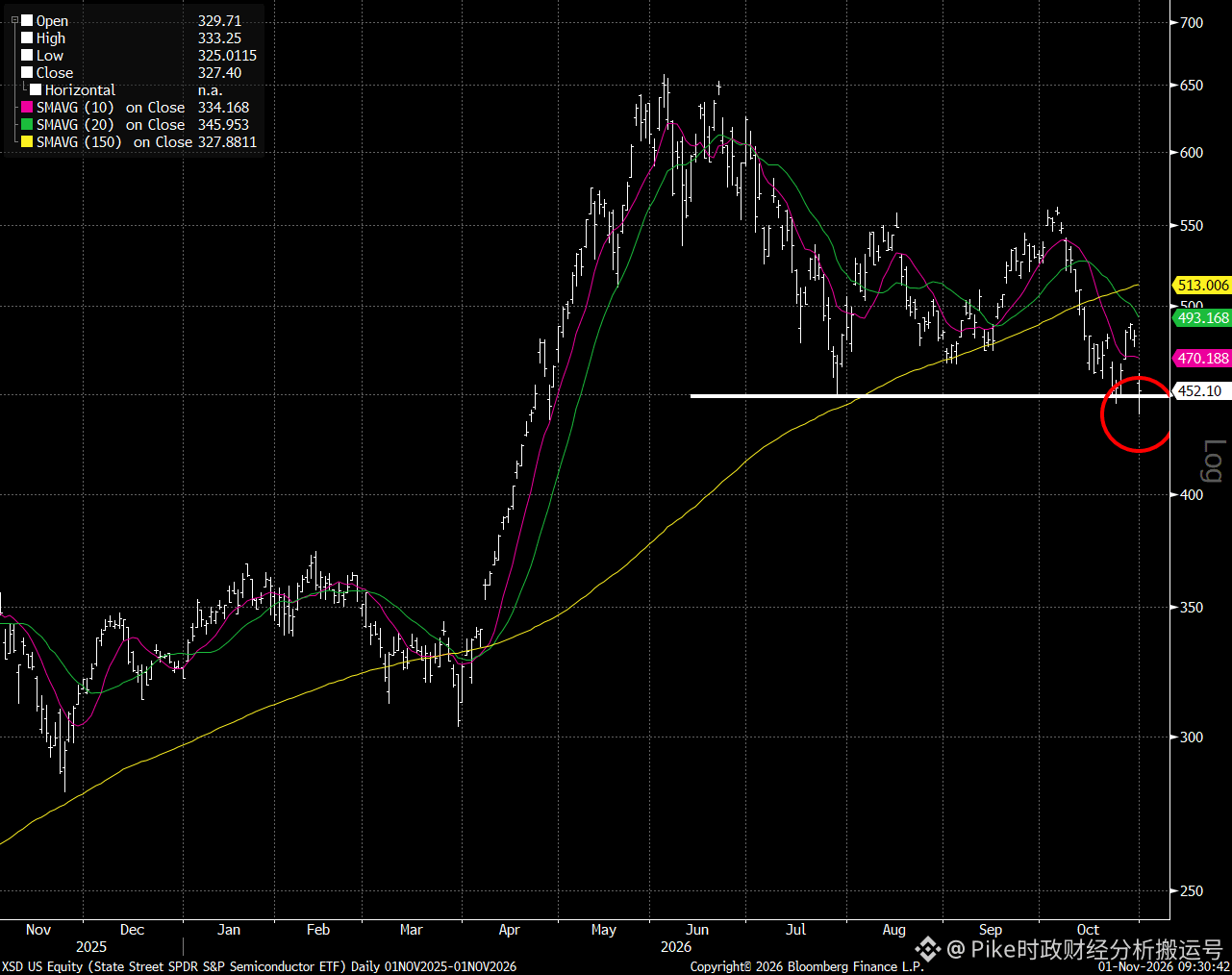
Recent market action shows that the Philadelphia Semiconductor Index ETF (SOXX) has broken below a key support level. Meanwhile, the equal-weight semiconductor ETF (XSD) has also shown similar weakness: not only has it fallen below its 200-day moving average for the second time, but it is now gradually approaching a third test of the July lows. However, there is no need for excessive concern just yet—the current situation could still turn around. If the market stabilizes convincingly this week and withstands downward pressure, this break below support may well prove to be a false breakdown, commonly known as a bear trap.
Recent market action shows that the Philadelphia Semiconductor Index ETF (SOXX) has broken below a key support level. Meanwhile, the equal-weight semiconductor ETF (XSD) has also shown similar weakness: not only has it fallen below its 200-day moving average for the second time, but it is now gradually approaching a third test of the July lows. However, there is no need for excessive concern just yet—the current situation could still turn around. If the market stabilizes convincingly this week and withstands downward pressure, this break below support may well prove to be a false breakdown, commonly known as a bear trap.
SOXXETF-2.45%
XSDETF-1.10%
181
Verified
Everyone, I’d like to share my latest trading update. Since yesterday, I’ve resumed my long strategy in the semiconductor sector. As part of my portfolio adjustments, I’ve further increased my positions in BE220, INTC 93, and NVTS 8.8. I’ve also taken action in the crude oil market, establishing a short position on oil prices through USO. The rationale behind these trades is clear: to capitalize on the opportunity created by Anthropic’s ARR re-entering a period of accelerated growth.
Everyone, I’d like to share my latest trading update. Since yesterday, I’ve resumed my long strategy in the semiconductor sector. As part of my portfolio adjustments, I’ve further increased my positions in BE220, INTC 93, and NVTS 8.8. I’ve also taken action in the crude oil market, establishing a short position on oil prices through USO. The rationale behind these trades is clear: to capitalize on the opportunity created by Anthropic’s ARR re-entering a period of accelerated growth.
INTC+2.44%
USOETF+1.23%
1
777
@grok Hello, could you help investigate the incident involving Mbappé being banned in China? Please help sort out the specific remarks he actually made that led to this consequence, and conduct a detailed verification of the authenticity of the relevant statements.
@grok Hello, could you help investigate the incident involving Mbappé being banned in China? Please help sort out the specific remarks he actually made that led to this consequence, and conduct a detailed verification of the authenticity of the relevant statements.
210
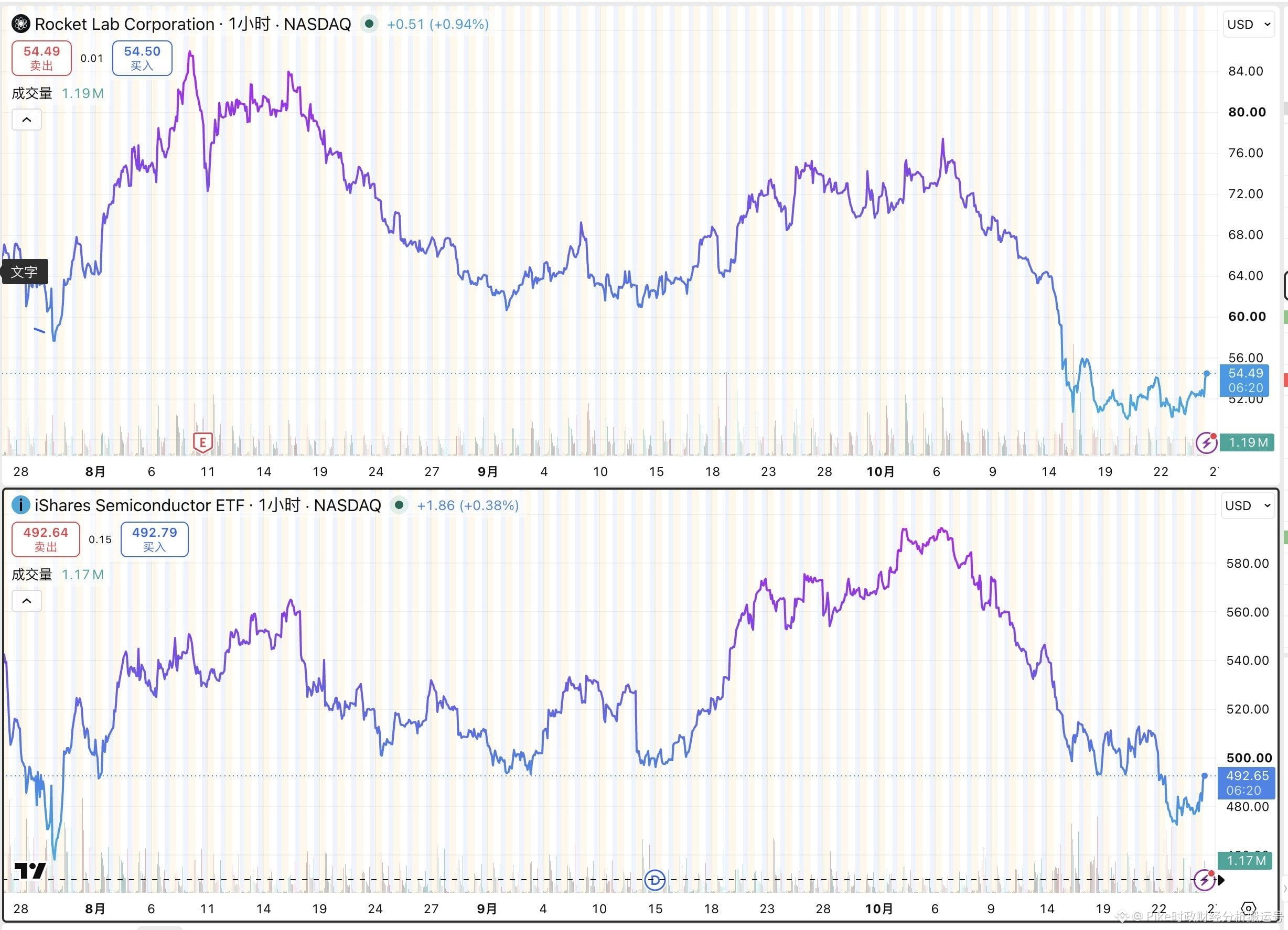
Let’s explore an intriguing market phenomenon: why do the price movements of RKLB and SOXX remain so remarkably synchronized? Both are known for their long-duration asset profiles and high-beta characteristics, but beyond this fundamental similarity, what deeper factors are driving their close correlation? A classic way to observe this is that, when the broader macroeconomic backdrop remains unchanged, any cooling in market enthusiasm for AI that sends SOXX lower is often followed by a similar decline in RKLB.
Let’s explore an intriguing market phenomenon: why do the price movements of RKLB and SOXX remain so remarkably synchronized? Both are known for their long-duration asset profiles and high-beta characteristics, but beyond this fundamental similarity, what deeper factors are driving their close correlation? A classic way to observe this is that, when the broader macroeconomic backdrop remains unchanged, any cooling in market enthusiasm for AI that sends SOXX lower is often followed by a similar decline in RKLB.
SOXXETF-2.45%
RKLBB-4.75%
237
Reflections on Strongman Politics Turning Against Itself
A deeply ironic drama is unfolding on the global political stage this year. Two political camps I strongly disagree with are using the tactics they know best to turn against each other. To be honest, watching political figures like these suffer the very real consequences of their own actions does give me a bit of hard-to-conceal satisfaction.
In the recent conflict, Khamenei was killed in U.S.-Israeli airstrikes. In response, what remains of Iran’s regime is trying to push up oil prices and create a shipping crisis in the Strait of Hormuz, shifting the economic burden of the war back onto the United States in the hope of dealing Republicans a crushing defeat in the upcoming midterm elections.
I take a strongly critical view of both sides in this conflict. I dislike Trump. In my view, he and the far-right ideology he represents are undermining the core principles that American society has long cherished: the basic safeguards of liberal democracy, effective limits on power, and tolerance of a pluralistic society. Equating one person’s will with the national interest, and reducing politics to a simple test of loyalty, will not make America great again.
At the same time, I feel just as much revulsion toward the theocratic rule in Iran represented by Khamenei. This regime has long invoked religion to suppress individual freedoms and continually demands that people sacrifice themselves for the ruling elite’s ideology.
What I truly hope to see is the influence of these authoritarian forces substantially diminished. Objectively speaking, Khamenei’s death cannot, by itself, mark the definitive end of the theocratic system, just as high oil prices do not necessarily mean that Trump will lose the midterms and then be impeached. But if this conflict ultimately helps people see that the supposedly invincible image of strongmen is nothing more than a false illusion built on shifting the costs onto others, then perhaps it will not be such a bad thing.
1
849
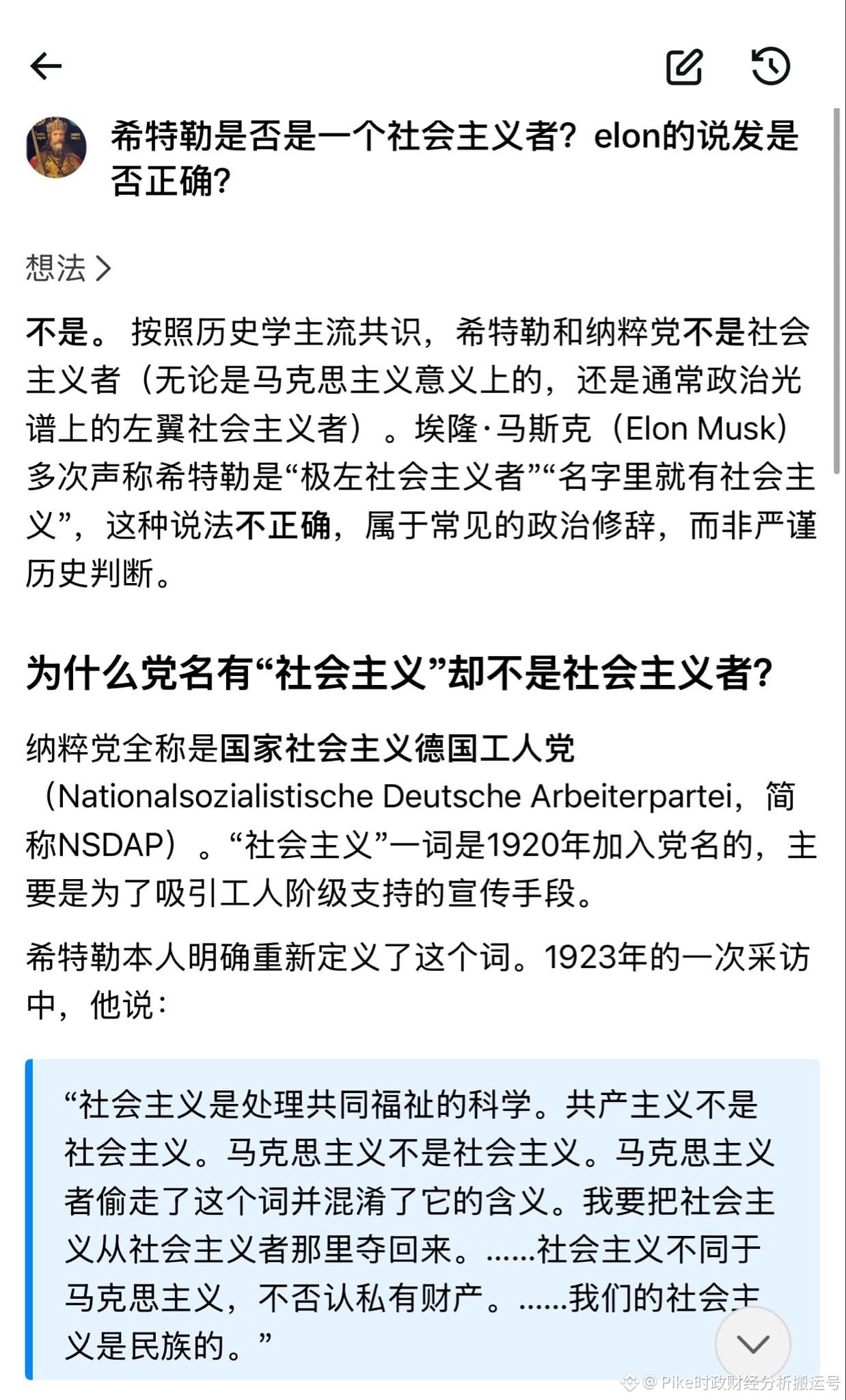
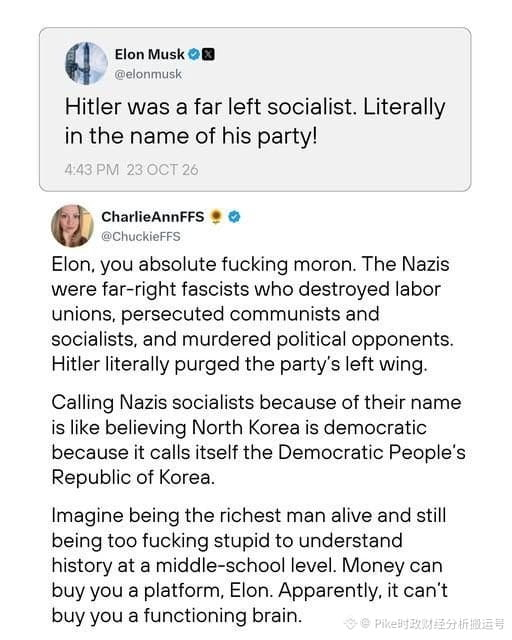
In the minds of many, Elon Musk has undergone a striking transformation. Once a bold dragon-slayer, full of ambition to break down traditional barriers, he now seems, over time, to have gradually become the very dragon he once set out to defeat.
In the minds of many, Elon Musk has undergone a striking transformation. Once a bold dragon-slayer, full of ambition to break down traditional barriers, he now seems, over time, to have gradually become the very dragon he once set out to defeat.
184
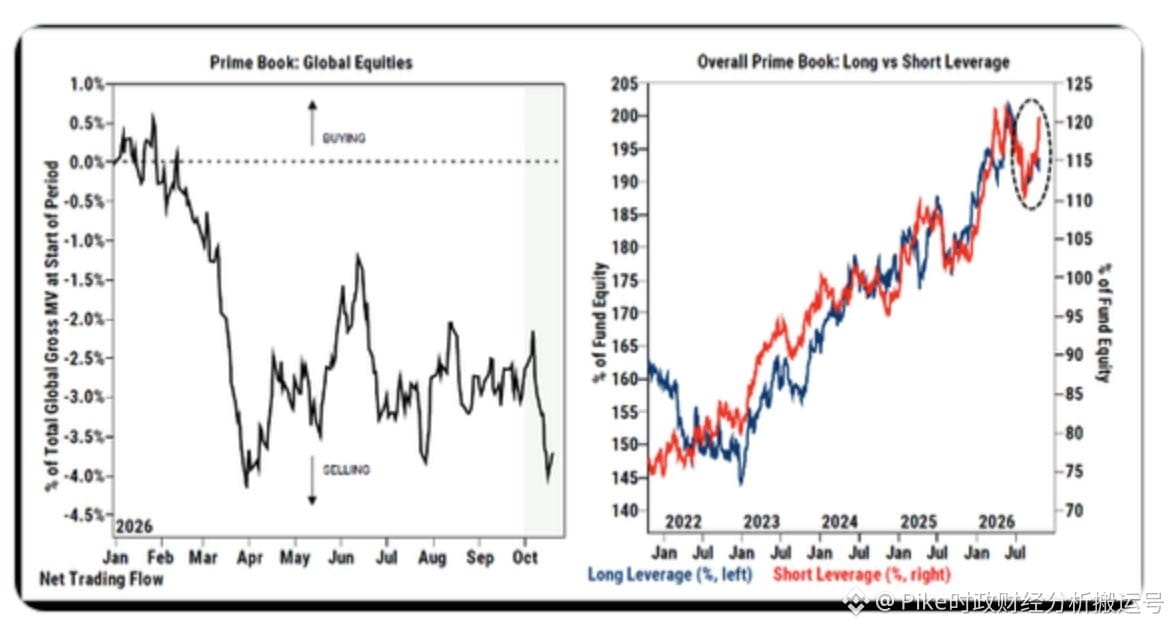
According to the latest data released by Goldman Sachs' trading desk, short positions have climbed to their highest level in five years.
According to the latest data released by Goldman Sachs' trading desk, short positions have climbed to their highest level in five years.
79
Partly True
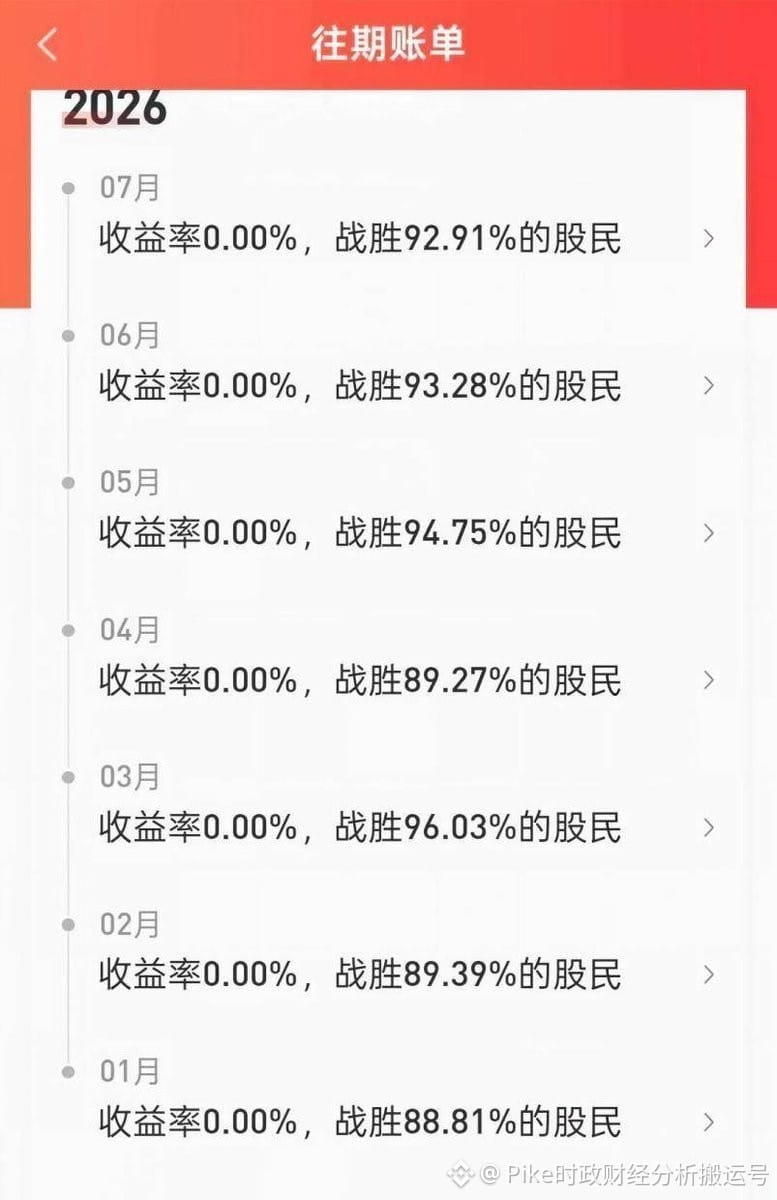
For ordinary investors, the recent performance of China’s A-share market has been downright unforgiving. Let me share my personal experience: the ETFs I bought in China earlier are now sitting at an unrealized loss of 20%. It’s certainly been a somewhat frustrating investment experience.
For ordinary investors, the recent performance of China’s A-share market has been downright unforgiving. Let me share my personal experience: the ETFs I bought in China earlier are now sitting at an unrealized loss of 20%. It’s certainly been a somewhat frustrating investment experience.
1
1
730
For investors following the U.S. stock market, there is a crucial catalyst to watch closely over the next two weeks: the upcoming midterm elections. On October 20, the WSJ published an in-depth report examining the true sentiments and key concerns of America’s wealthy as they face this election.
The report reveals a striking trend: despite sitting at the top of the wealth pyramid, wealthy Americans are increasingly anxious about the widening gap between rich and poor. They are deeply concerned that the country as a whole is slowly losing control on both the social and political fronts, and are therefore especially focused on whether the political center can remain stable in the years ahead.
Through interviews, the reporter found bipartisan consensus. Whether these wealthy individuals were originally Democrats or Republicans, they now agree that the current U.S. political climate has become too extreme. Many hope that as the Trump era comes to an end, the fervent wave of populism that defined the past will gradually subside as well.
These sentiments are already clearly reflected in the flow of political donations. High-net-worth individuals are now noticeably more inclined to support moderate candidates, including Democratic Senator John Ossoff and Republican Senator Susan Collins. What’s more, some donors are so repulsed by the fierce attacks and bitter hostility between the parties that they have simply stopped making political donations altogether.

82
The U.S. stock market is currently facing multiple challenges, and the overall investment climate harbors numerous visible and hidden risks. First, the outcome of the midterm elections remains highly uncertain, creating significant unpredictability for market expectations. Second, sharp fluctuations in crude oil prices, coupled with runaway inflation, are adding to macroeconomic pressures. In addition, financing risks in artificial intelligence (AI) are another issue that should not be overlooked. Given these complex and interconnected factors, it is advisable to manage your personal finances carefully at this stage. A prudent strategy for now is to limit your investment exposure and keep positions relatively light. Meanwhile, as markets fluctuate, stay level-headed and alert. If considering buying on dips, proceed with extreme caution and do not try to call the bottom blindly.
The U.S. stock market is currently facing multiple challenges, and the overall investment climate harbors numerous visible and hidden risks. First, the outcome of the midterm elections remains highly uncertain, creating significant unpredictability for market expectations. Second, sharp fluctuations in crude oil prices, coupled with runaway inflation, are adding to macroeconomic pressures. In addition, financing risks in artificial intelligence (AI) are another issue that should not be overlooked. Given these complex and interconnected factors, it is advisable to manage your personal finances carefully at this stage. A prudent strategy for now is to limit your investment exposure and keep positions relatively light. Meanwhile, as markets fluctuate, stay level-headed and alert. If considering buying on dips, proceed with extreme caution and do not try to call the bottom blindly.
424
Log in to explore more content
Join global crypto users on Binance Square
⚡️ Get latest and useful information about crypto.
💬 Trusted by the world’s largest crypto exchange.
👍 Discover real insights from verified creators.
Email / Phone number
Trending Topics
IsAnthropic’s$1.5TMarketCapJustified?
7,455 views
68 Discussing
Anthropic Set to Open at $105 in Record Nasdaq Debut
Binance News
·10 Likes
·9.6k views
BTCRemainsUnderPressureAfterHawkishFOMCMinutes
210,514 views
1,994 Discussing
NvidiaBoardReportedlySplitOverHuang’sReturn
102,599 views
1,066 Discussing