

Gold_Vision
124 Posts

Gold_Vision
Report
Block User
📉📈As "Visões" que compartilho com você são baseadas das minhas análises técnicas. Postagens dos gráficos em "tempo real" para te auxiliar nas oportunidades.💰
9 Following
97 Followers
153 Liked
Posts
PINNED
·
--
Article
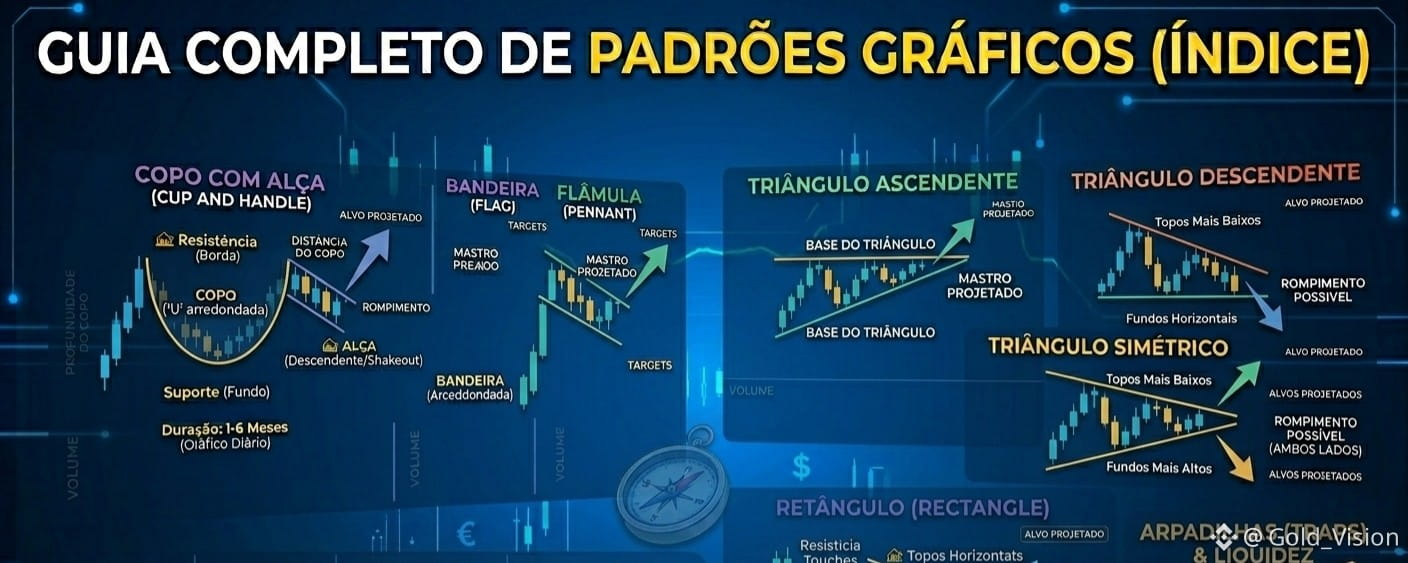
CHART PATTERNS (INDEX)Here's a neatly organized index of all chart patterns and market concepts that can be explored here. You can use this guide as a "quick reference sheet" for your studies and trading.
📘 Chart Patterns Index
1. Reversal Patterns
Indicates that the current trend is losing momentum and the price is likely to change direction.
[Topo Duplo ("M"):Reversão de alta para baixa.__Fundo Duplo ("W"): Reversão de baixa para alta.](https://app.binance.com/uni-qr/cart/320115083383234?r=ewr0u53l&l=pt-br&uco=izln8_tln_21whrdx778gw&uc=app_square_share_link&us=copylink)
[Cunha Ascendente (Rising Wedge): Viés baixista (mesmo inclinada para cima).Cunha Descendente (Falling Wedge): Viés altista (mesmo inclinada para baixo).](https://app.binance.com/uni-qr/cart/320125882864754?r=ewr0u53l&l=pt-br&uco=izln8_tln_21whrdx778gw&uc=app_square_share_link&us=copylink)
CHART PATTERNS (INDEX)
Here's a neatly organized index of all chart patterns and market concepts that can be explored here. You can use this guide as a "quick reference sheet" for your studies and trading.
📘 Chart Patterns Index
1. Reversal Patterns
Indicates that the current trend is losing momentum and the price is likely to change direction.
Topo Duplo ("M"):Reversão de alta para baixa.__Fundo Duplo ("W"): Reversão de baixa para alta.
Cunha Ascendente (Rising Wedge): Viés baixista (mesmo inclinada para cima).Cunha Descendente (Falling Wedge): Viés altista (mesmo inclinada para baixo).
📘 Chart Patterns Index
1. Reversal Patterns
Indicates that the current trend is losing momentum and the price is likely to change direction.
Topo Duplo ("M"):Reversão de alta para baixa.__Fundo Duplo ("W"): Reversão de baixa para alta.
Cunha Ascendente (Rising Wedge): Viés baixista (mesmo inclinada para cima).Cunha Descendente (Falling Wedge): Viés altista (mesmo inclinada para baixo).
893
·
--
Bullish
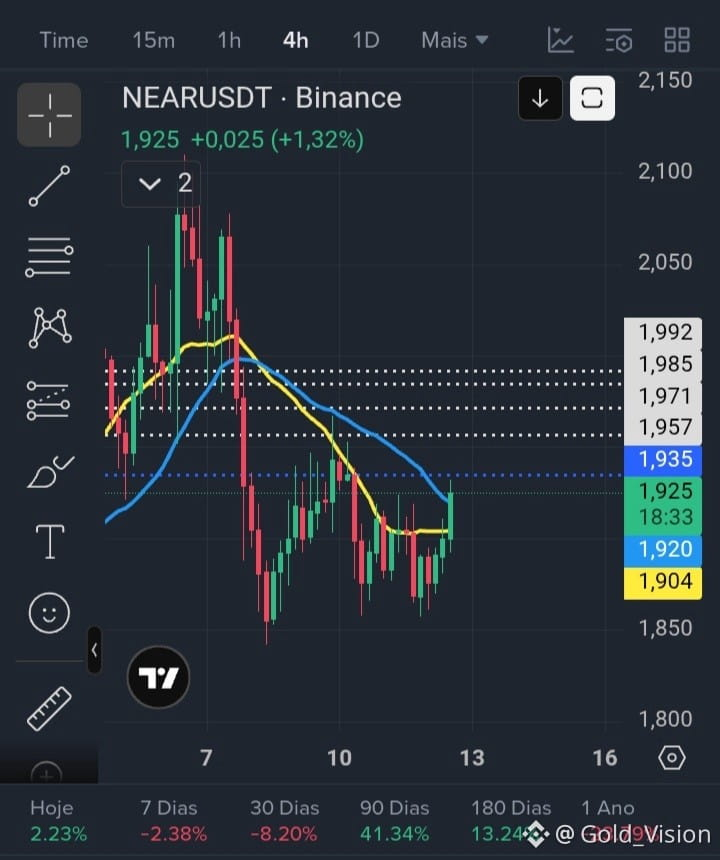
$NEAR Chart 1D. Graphical analysis. Close above $1.935 and confirmation, high probability of targets: TP1:$ 1.957; TP2: $ 1.9571, initially. A next target, in addition to those mentioned above, would be between: $ 1.985 to $1.992
#NEARUSDT
#MorganStanleyAdds1000BTC
#NearBullish
$NEAR Chart 1D. Graphical analysis. Close above $1.935 and confirmation, high probability of targets: TP1:$ 1.957; TP2: $ 1.9571, initially. A next target, in addition to those mentioned above, would be between: $ 1.985 to $1.992
#NEARUSDT
#MorganStanleyAdds1000BTC
#NearBullish
#NEARUSDT
#MorganStanleyAdds1000BTC
#NearBullish
139
·
--
Bullish
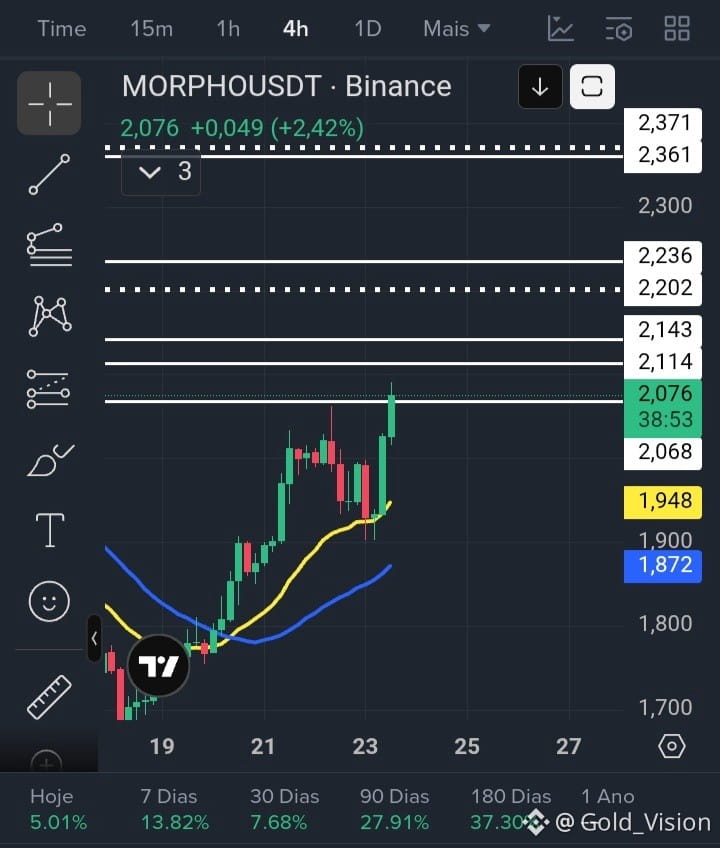
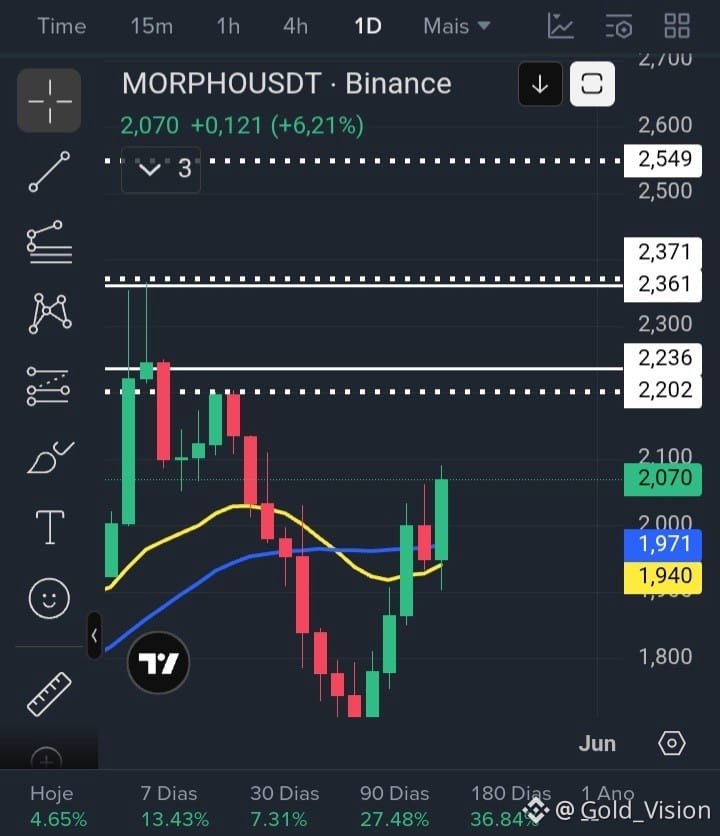
$MORPHO 4H chart. On the 4H chart, if the close is where the price is currently sitting and it tests support at: $ 0.2068...
...they would be...
TP1: $ 2.114
TP2: $ 2.143.
On the DAILY chart, the target would be: $ 2.000 - $ 2.002, for now.
#Morpho
$MORPHO 4H chart. On the 4H chart, if the close is where the price is currently sitting and it tests support at: $ 0.2068...
...they would be...
TP1: $ 2.114
TP2: $ 2.143.
On the DAILY chart, the target would be: $ 2.000 - $ 2.002, for now.
#Morpho
...they would be...
TP1: $ 2.114
TP2: $ 2.143.
On the DAILY chart, the target would be: $ 2.000 - $ 2.002, for now.
#Morpho
157
·
--
Bullish
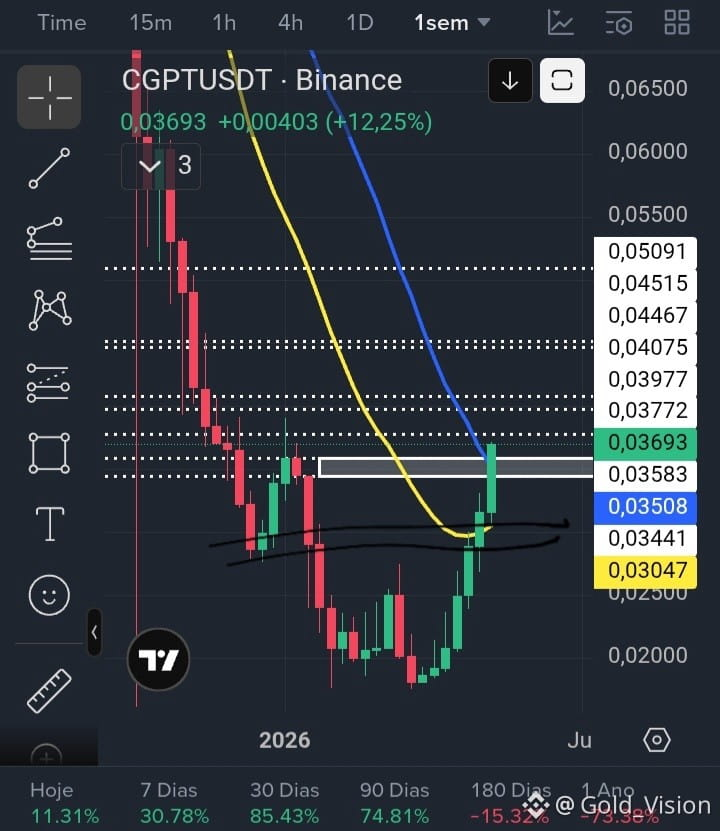
$CGPT WEEKLY CHART. A quick forecast based on my analysis (
dashed lines to be hit).
🚨WARNING!!! The price may still mirror the previous shoulder.
#CGPT
#CGPTUpdate
$CGPT WEEKLY CHART. A quick forecast based on my analysis (
dashed lines to be hit).
🚨WARNING!!! The price may still mirror the previous shoulder.
#CGPT
#CGPTUpdate
dashed lines to be hit).
🚨WARNING!!! The price may still mirror the previous shoulder.
#CGPT
#CGPTUpdate
1
1.1k
·
--
Bullish
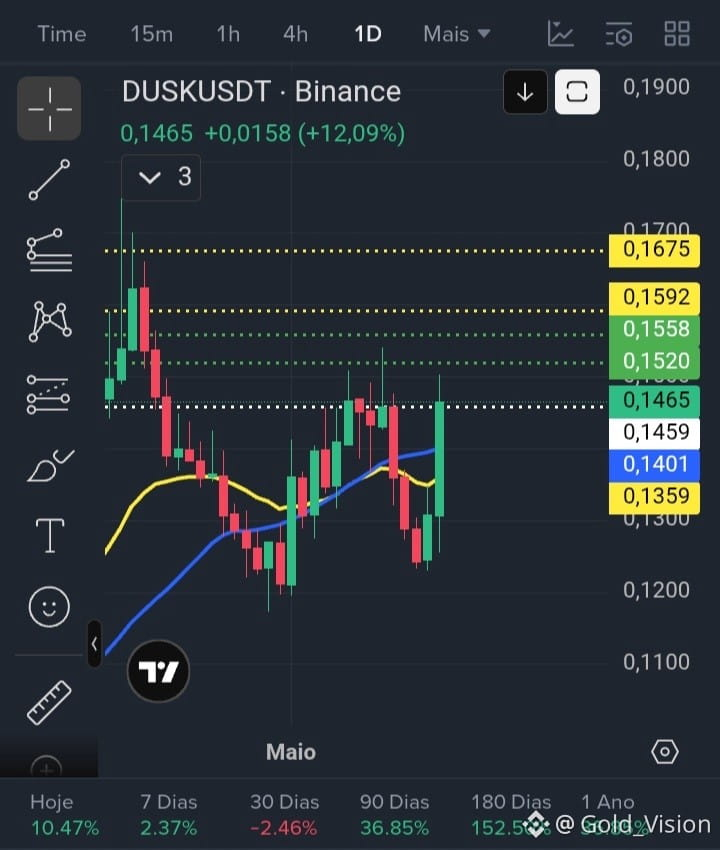
$DUSK So far, the price is holding above $0.1459, increasing the likelihood of hitting TP1 at $0.1520 and TP2 at $0.1558. However, on the 1D chart, the current candlestick hasn't closed yet, so we don't have confirmation.
Looking ahead to the forecast right after hitting TP2...
... Once we reach TP2, the price may still retrace to $0.1459 to test support. Only then can we look forward to the next targets above (TP3 and TP4 - yellow dashed lines).
#Dusk/usdt✅
#Dusk.
$DUSK So far, the price is holding above $0.1459, increasing the likelihood of hitting TP1 at $0.1520 and TP2 at $0.1558. However, on the 1D chart, the current candlestick hasn't closed yet, so we don't have confirmation.
Looking ahead to the forecast right after hitting TP2...
... Once we reach TP2, the price may still retrace to $0.1459 to test support. Only then can we look forward to the next targets above (TP3 and TP4 - yellow dashed lines).
#Dusk/usdt✅
#Dusk.
Looking ahead to the forecast right after hitting TP2...
... Once we reach TP2, the price may still retrace to $0.1459 to test support. Only then can we look forward to the next targets above (TP3 and TP4 - yellow dashed lines).
#Dusk/usdt✅
#Dusk.
629
·
--
Bullish
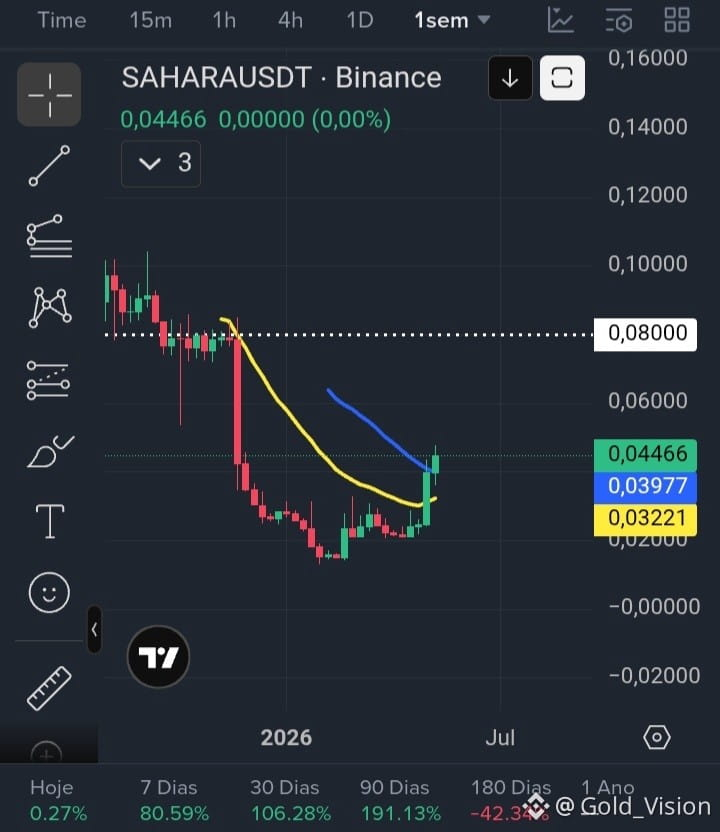
$SAHARA WEEKLY CHART. The buying pressure gives us hope to see the price at $0.08000. Especially coming from the recent OCOI.
#sahara
#SAHARAToTHEMooon
$SAHARA WEEKLY CHART. The buying pressure gives us hope to see the price at $0.08000. Especially coming from the recent OCOI.
#sahara
#SAHARAToTHEMooon
#sahara
#SAHARAToTHEMooon
2
531
·
--
Bullish
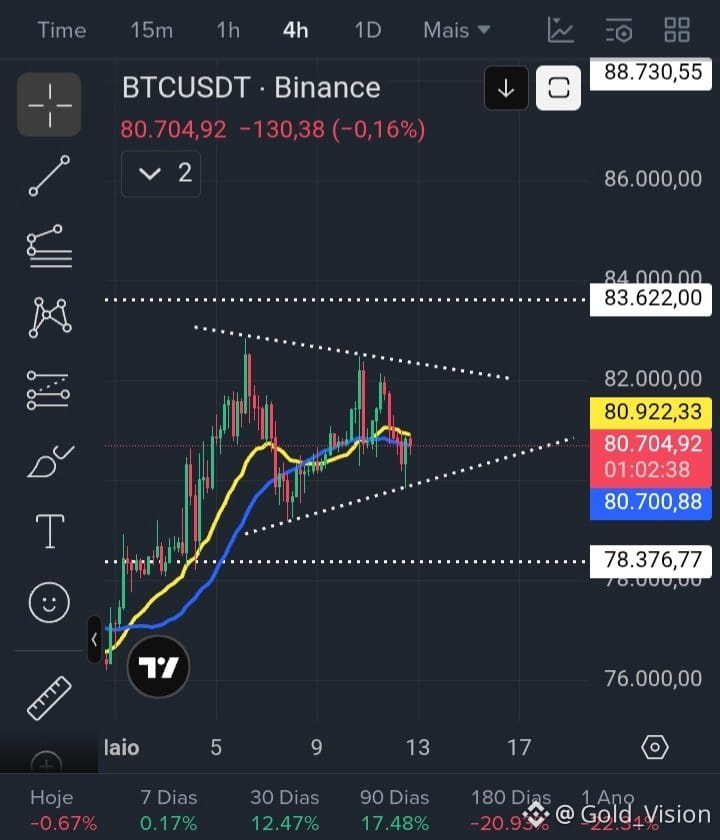
$BTC PATTERN in development; possible SYMMETRICAL TRIANGLE. Let's wait until the full formation of the pattern.
If it really is [TRIÂNGULO SIMÉTRICO](https://app.binance.com/uni-qr/cart/320366902202930?r=EWR0U53L&l=pt-BR&uco=iZLn8_Tln_21WhRDX778Gw&uc=app_square_share_link&us=copylink) * and if there’s a bullish move, the price could go beyond the current all-time high. Why? Those who use the 200-day moving average know this very well... On the DAILY CHART, if you set the moving average to 200, you'll see that the price is glued to the average. If it explodes upwards and tests the average—turning it into support—we'll see BTC in the next galaxies.
*Article on triangles
#BTC
#BTC走势分析
$BTC PATTERN in development; possible SYMMETRICAL TRIANGLE. Let's wait until the full formation of the pattern.
If it really is TRIÂNGULO SIMÉTRICO * and if there’s a bullish move, the price could go beyond the current all-time high. Why? Those who use the 200-day moving average know this very well... On the DAILY CHART, if you set the moving average to 200, you'll see that the price is glued to the average. If it explodes upwards and tests the average—turning it into support—we'll see BTC in the next galaxies.
*Article on triangles
#BTC
#BTC走势分析
If it really is TRIÂNGULO SIMÉTRICO * and if there’s a bullish move, the price could go beyond the current all-time high. Why? Those who use the 200-day moving average know this very well... On the DAILY CHART, if you set the moving average to 200, you'll see that the price is glued to the average. If it explodes upwards and tests the average—turning it into support—we'll see BTC in the next galaxies.
*Article on triangles
#BTC
#BTC走势分析
3
1.9k
·
--
Bullish
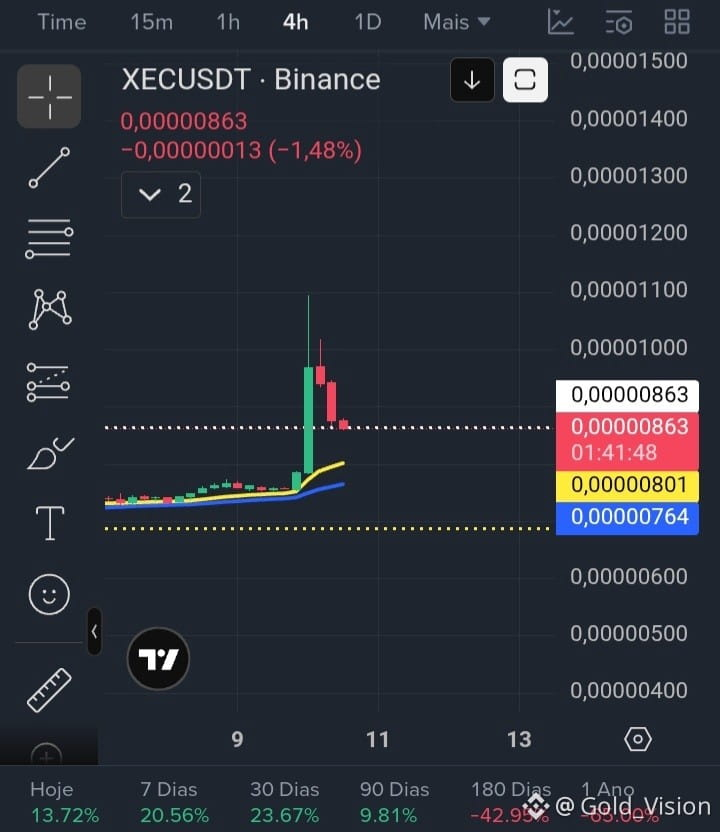
$XEC Testing 1...2...3... The 4H chart, but the potential support is daily at: $ 0.00000863. Wait for the 4h or daily close before buying. We might see a reversal candle on the 1h or a chart pattern on the 4h. We'll see
#XEC🔥🔥🔥
#XEC/USDT
$XEC Testing 1...2...3... The 4H chart, but the potential support is daily at: $ 0.00000863. Wait for the 4h or daily close before buying. We might see a reversal candle on the 1h or a chart pattern on the 4h. We'll see
#XEC🔥🔥🔥
#XEC/USDT
#XEC🔥🔥🔥
#XEC/USDT
136
·
--
Article
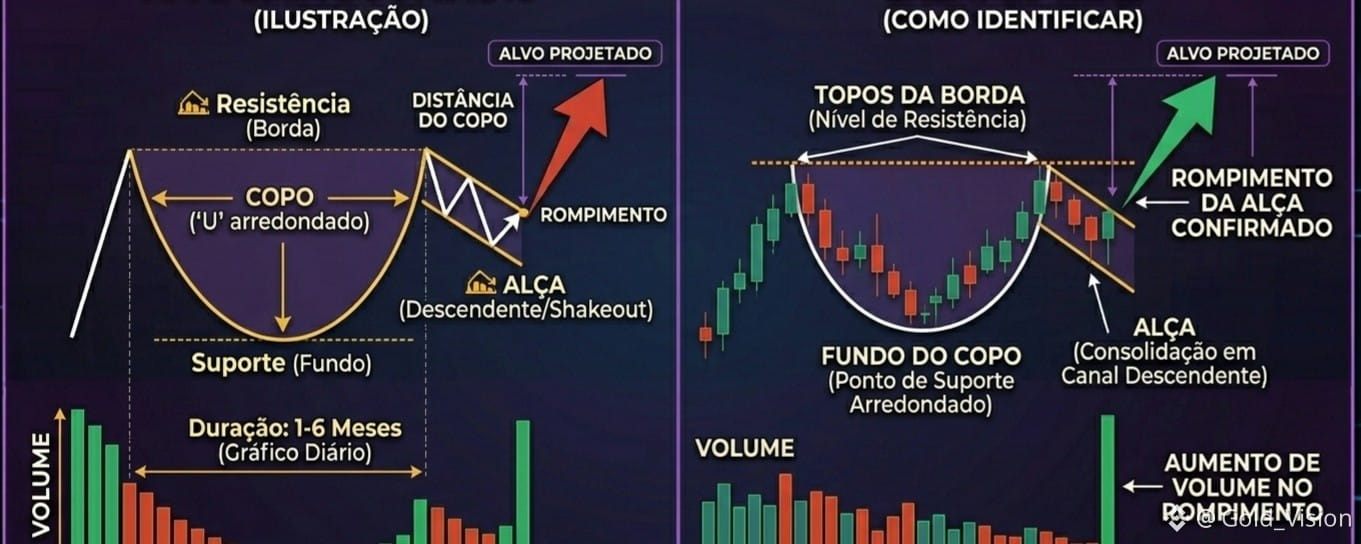
CHART PATTERN: CUP AND HANDLEThe Cup and Handle pattern is one of the most reliable bullish continuation patterns in technical analysis. It describes a consolidation period that visually resembles a cup profile, where the price tests a resistance, rounds off in a correction, and takes a final small pause before an explosive breakout.
Anatomy of the Pattern
The Cup and Handle is divided into two fundamental parts:
The Cup
Format: It should have a rounded bottom in the shape of a "U". Avoid very sharp "V" patterns, as the "U" indicates a healthier consolidation and a gradual shift in sentiment.
CHART PATTERN: CUP AND HANDLE
The Cup and Handle pattern is one of the most reliable bullish continuation patterns in technical analysis. It describes a consolidation period that visually resembles a cup profile, where the price tests a resistance, rounds off in a correction, and takes a final small pause before an explosive breakout.
Anatomy of the Pattern
The Cup and Handle is divided into two fundamental parts:
The Cup
Format: It should have a rounded bottom in the shape of a "U". Avoid very sharp "V" patterns, as the "U" indicates a healthier consolidation and a gradual shift in sentiment.
Anatomy of the Pattern
The Cup and Handle is divided into two fundamental parts:
The Cup
Format: It should have a rounded bottom in the shape of a "U". Avoid very sharp "V" patterns, as the "U" indicates a healthier consolidation and a gradual shift in sentiment.
112
·
--
Article
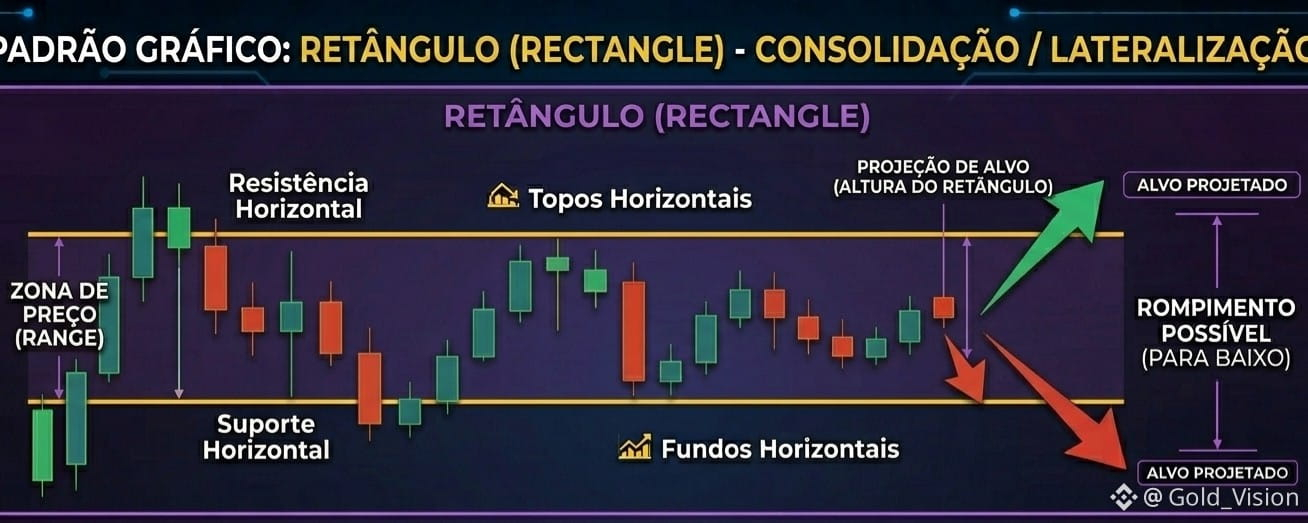
CHART PATTERN: RECTANGLEThe Rectangle pattern is a consolidation formation that occurs when the price gets 'stuck' between two parallel levels of support and resistance. It indicates a period of equilibrium where neither buyers nor sellers can push the price outside this range, resulting in sideways movement (also called range or box).
It's generally seen as a continuation pattern, but it can also act as a reversal if the breakout happens against the previous trend.
CHART PATTERN: RECTANGLE
The Rectangle pattern is a consolidation formation that occurs when the price gets 'stuck' between two parallel levels of support and resistance. It indicates a period of equilibrium where neither buyers nor sellers can push the price outside this range, resulting in sideways movement (also called range or box).
It's generally seen as a continuation pattern, but it can also act as a reversal if the breakout happens against the previous trend.
It's generally seen as a continuation pattern, but it can also act as a reversal if the breakout happens against the previous trend.
547
·
--
Article
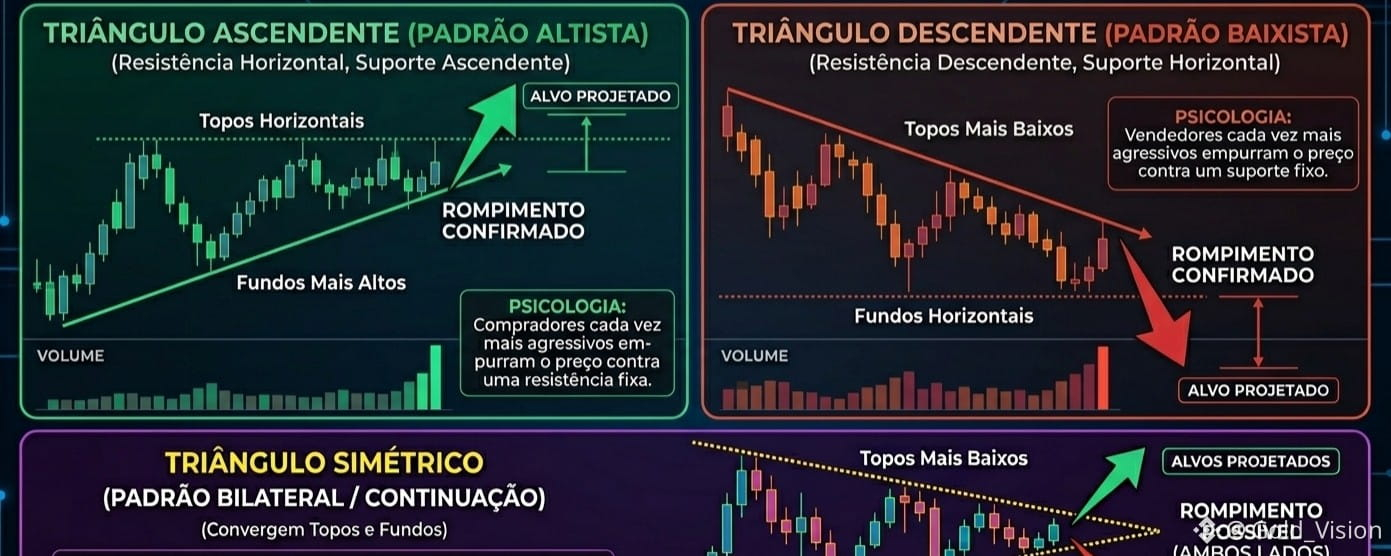
CHART PATTERNS: ASCENDING, DESCENDING, AND SYMMETRICAL TRIANGLES.Triangles are consolidation patterns that occur when the market enters a temporary equilibrium phase. They are formed by two trendlines converging towards a point called the 'apex.'
There are three main types, each with its own psychology and movement expectations.
Ascending Triangle (Bullish)
It is characterized by a horizontal resistance at the top and an upward trendline (LTA) at the base.
Psychology: Sellers defend a fixed price level, but buyers are getting increasingly aggressive, buying at higher and higher levels. This 'squeezes' the price against the ceiling until the supply runs out.
CHART PATTERNS: ASCENDING, DESCENDING, AND SYMMETRICAL TRIANGLES.
Triangles are consolidation patterns that occur when the market enters a temporary equilibrium phase. They are formed by two trendlines converging towards a point called the 'apex.'
There are three main types, each with its own psychology and movement expectations.
Ascending Triangle (Bullish)
It is characterized by a horizontal resistance at the top and an upward trendline (LTA) at the base.
Psychology: Sellers defend a fixed price level, but buyers are getting increasingly aggressive, buying at higher and higher levels. This 'squeezes' the price against the ceiling until the supply runs out.
There are three main types, each with its own psychology and movement expectations.
Ascending Triangle (Bullish)
It is characterized by a horizontal resistance at the top and an upward trendline (LTA) at the base.
Psychology: Sellers defend a fixed price level, but buyers are getting increasingly aggressive, buying at higher and higher levels. This 'squeezes' the price against the ceiling until the supply runs out.
5
1.1k
·
--
Article
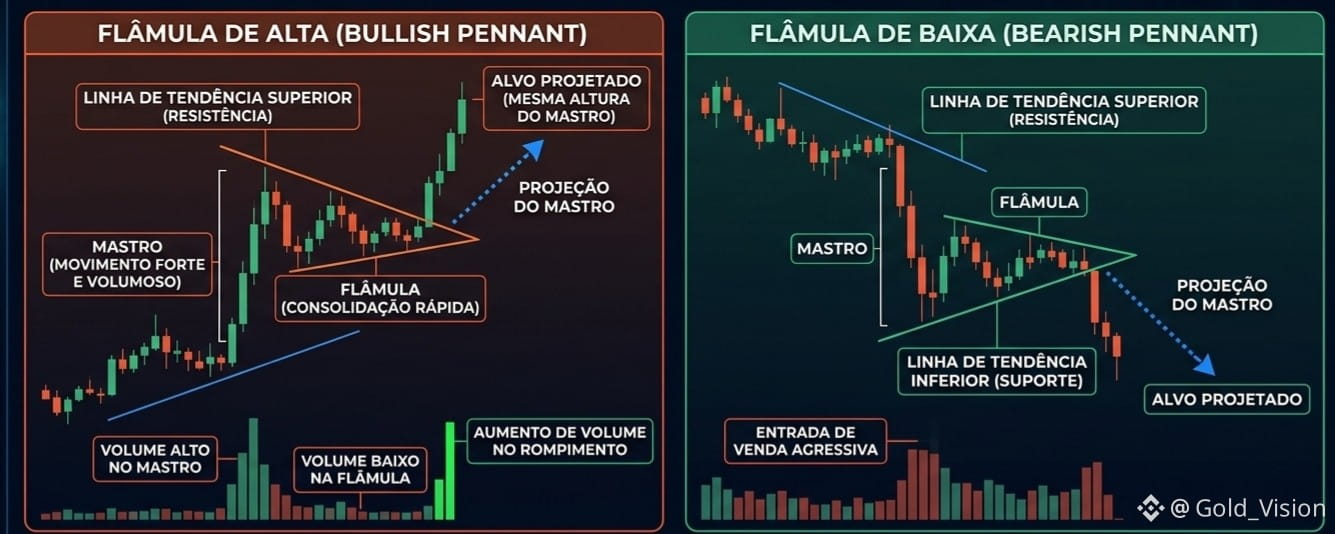
CHART PATTERNS: BULLISH PENNANT and BEARISH PENNANTPennants are continuation patterns that are extremely similar to flags, but with a crucial difference in their geometry. They occur after an explosive price movement and represent a very quick, triangular consolidation before the original trend resumes.
Structure of a Pennant
Just like the flag, the pennant is divided into:
The Pole: A strong vertical movement (bullish or bearish) with high trading volume.
CHART PATTERNS: BULLISH PENNANT and BEARISH PENNANT
Pennants are continuation patterns that are extremely similar to flags, but with a crucial difference in their geometry. They occur after an explosive price movement and represent a very quick, triangular consolidation before the original trend resumes.
Structure of a Pennant
Just like the flag, the pennant is divided into:
The Pole: A strong vertical movement (bullish or bearish) with high trading volume.
Structure of a Pennant
Just like the flag, the pennant is divided into:
The Pole: A strong vertical movement (bullish or bearish) with high trading volume.
2
402
·
--
Article
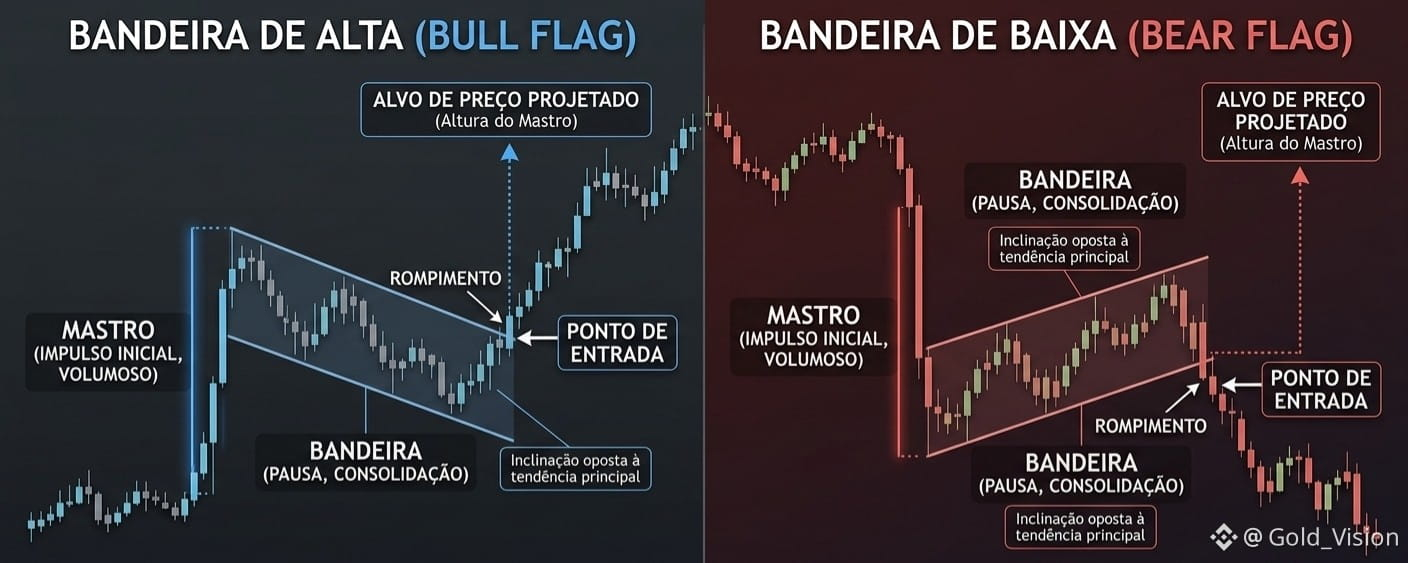
CHART PATTERNS: BULL FLAG and BEAR FLAGFlags are continuation patterns in trading. They represent a brief pause or consolidation in the market after a strong, directional move, acting like a "breather" for the price before it resumes its original journey.
They are highly favored by traders because they offer an excellent risk/reward ratio, as the move that precedes them is typically replicated after the breakout.
1. Structure of a Flag
A flag consists of two main parts:
CHART PATTERNS: BULL FLAG and BEAR FLAG
Flags are continuation patterns in trading. They represent a brief pause or consolidation in the market after a strong, directional move, acting like a "breather" for the price before it resumes its original journey.
They are highly favored by traders because they offer an excellent risk/reward ratio, as the move that precedes them is typically replicated after the breakout.
1. Structure of a Flag
A flag consists of two main parts:
They are highly favored by traders because they offer an excellent risk/reward ratio, as the move that precedes them is typically replicated after the breakout.
1. Structure of a Flag
A flag consists of two main parts:
2
1.2k
·
--
Article
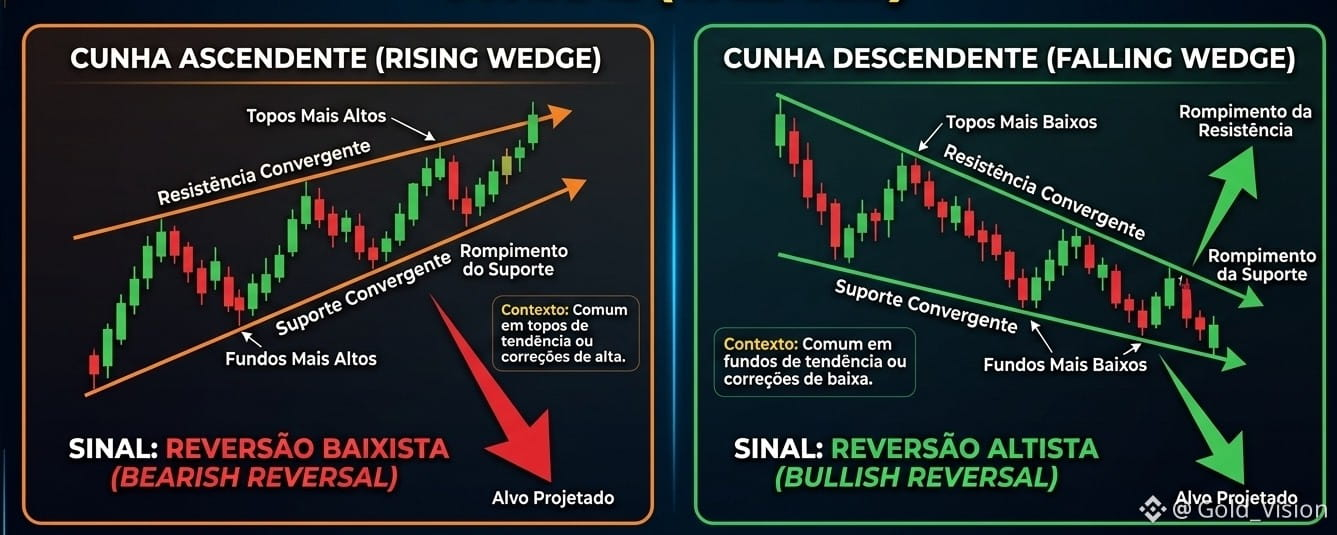
CHART PATTERNS: RISING WEDGE and FALLING WEDGEWedges are high-relevance chart patterns that indicate a pause in the current trend, but with a special characteristic: they show an intense struggle where the price is squeezed into an increasingly narrow range.
Unlike channels (where the lines are parallel), in wedges, both trend lines (support and resistance) converge to a point. They can be of two types: Rising Wedge and Falling Wedge.
Rising Wedge
Even though it’s 'going up', this is paradoxically a bearish pattern. It shows that while the price is hitting higher highs, the momentum is dying.
CHART PATTERNS: RISING WEDGE and FALLING WEDGE
Wedges are high-relevance chart patterns that indicate a pause in the current trend, but with a special characteristic: they show an intense struggle where the price is squeezed into an increasingly narrow range.
Unlike channels (where the lines are parallel), in wedges, both trend lines (support and resistance) converge to a point. They can be of two types: Rising Wedge and Falling Wedge.
Rising Wedge
Even though it’s 'going up', this is paradoxically a bearish pattern. It shows that while the price is hitting higher highs, the momentum is dying.
Unlike channels (where the lines are parallel), in wedges, both trend lines (support and resistance) converge to a point. They can be of two types: Rising Wedge and Falling Wedge.
Rising Wedge
Even though it’s 'going up', this is paradoxically a bearish pattern. It shows that while the price is hitting higher highs, the momentum is dying.
1
484
·
--
Article
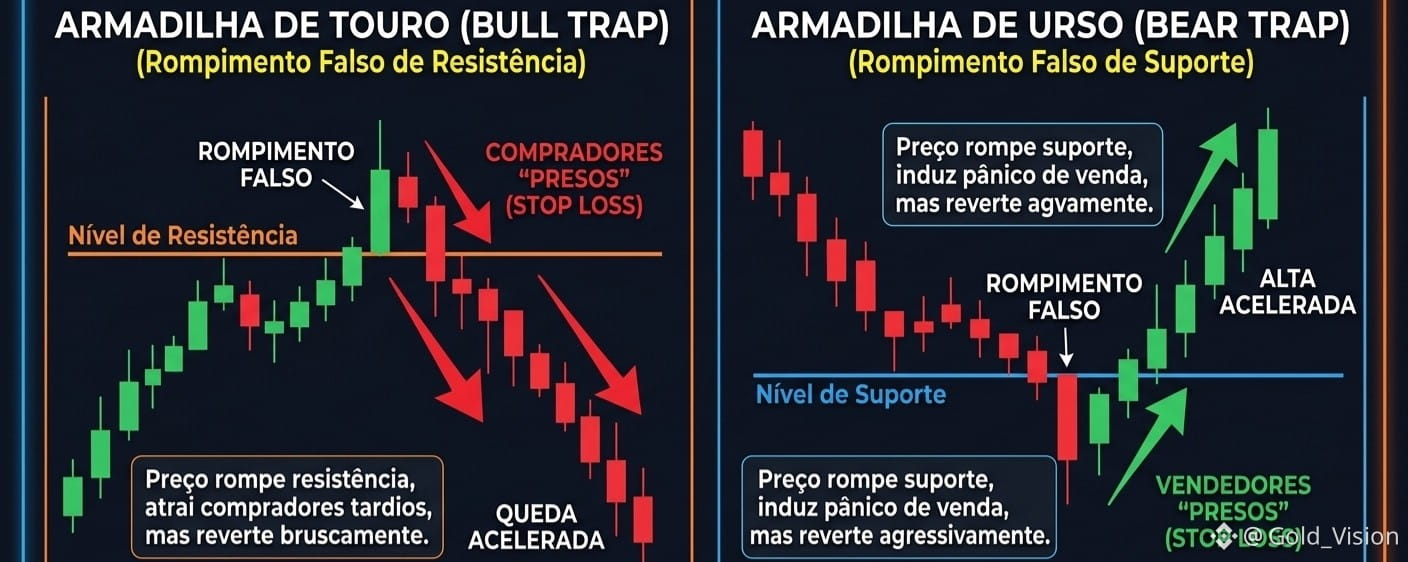
BULL TRAP and BEAR TRAPBull Traps and Bear Traps are false market movements that lead traders to enter positions on the wrong side, resulting in quick losses when the price reverses sharply.
They usually occur at significant psychological levels, like support and resistance, or at the peaks of chart patterns (like the wedges we saw earlier).
1. Bull Trap
This happens when the price breaks through a resistance or a previous high, signaling that the bullish trend will continue. Buyers (bulls) enter the market, but the price loses momentum and quickly drops below the breakout level.
BULL TRAP and BEAR TRAP
Bull Traps and Bear Traps are false market movements that lead traders to enter positions on the wrong side, resulting in quick losses when the price reverses sharply.
They usually occur at significant psychological levels, like support and resistance, or at the peaks of chart patterns (like the wedges we saw earlier).
1. Bull Trap
This happens when the price breaks through a resistance or a previous high, signaling that the bullish trend will continue. Buyers (bulls) enter the market, but the price loses momentum and quickly drops below the breakout level.
They usually occur at significant psychological levels, like support and resistance, or at the peaks of chart patterns (like the wedges we saw earlier).
1. Bull Trap
This happens when the price breaks through a resistance or a previous high, signaling that the bullish trend will continue. Buyers (bulls) enter the market, but the price loses momentum and quickly drops below the breakout level.
1
2
13
5.4k
·
--
Article
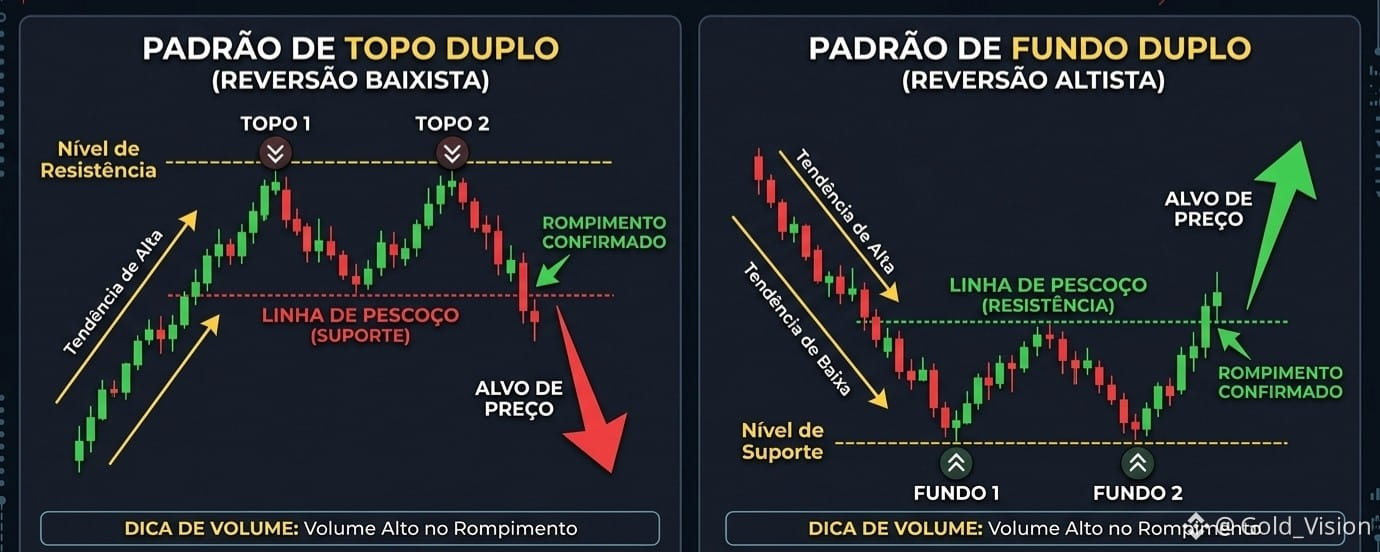
CHART PATTERNS: DOUBLE TOP AND DOUBLE BOTTOMDouble Top and Double Bottom patterns are two of the most common and easily recognizable reversal formations in technical analysis. They signal that an existing trend (whether bullish or bearish) is losing momentum and that the price is likely to change direction.
Both are based on the market's inability to break through a key support or resistance level for the second time in a row.
Double Top ("M" pattern)
The Double Top is a bearish reversal pattern. It appears at the end of a bullish trend and indicates that buyers no longer have the strength to push the price to new highs.
CHART PATTERNS: DOUBLE TOP AND DOUBLE BOTTOM
Double Top and Double Bottom patterns are two of the most common and easily recognizable reversal formations in technical analysis. They signal that an existing trend (whether bullish or bearish) is losing momentum and that the price is likely to change direction.
Both are based on the market's inability to break through a key support or resistance level for the second time in a row.
Double Top ("M" pattern)
The Double Top is a bearish reversal pattern. It appears at the end of a bullish trend and indicates that buyers no longer have the strength to push the price to new highs.
Both are based on the market's inability to break through a key support or resistance level for the second time in a row.
Double Top ("M" pattern)
The Double Top is a bearish reversal pattern. It appears at the end of a bullish trend and indicates that buyers no longer have the strength to push the price to new highs.
6
2.6k
Log in to explore more content
Join global crypto users on Binance Square
⚡️ Get latest and useful information about crypto.
💬 Trusted by the world’s largest crypto exchange.
👍 Discover real insights from verified creators.
Email / Phone number
Trending Topics
EtherGains70.9%InQ3
122,928 views
1,037 Discussing
One of the best third quarters in history 💰
September closed out last night, and with it, the quarter. For the quarter, BTC is up 42%—the second-best Q3 on record. ETH had a record-breaking Q3 overall, up 70%.
Looking at the chart, things are still looking good: we’re holding support, but we’re testing it more and more often. Plus, ETF momentum is weakening — inflows are gradually declining, and yesterday saw outflows for the first time in a long while.
Yes, historically, October has been a good month for crypto — it’s not called “Uptober” for nothing. But it’s also one of the most volatile months. Last year, for example, we managed to hit a new all-time high (ATH) and experience a flash crash.
🚀 High Accuracy Trades.
$BTC
$ETH
$SOL
#EtherGains70.9%InQ3 #DollarIndexHitsHighestSinceMay2025 #CFTCSubmitsTwoEventContractRulesToWhiteHouse #MicronBeatsEarningsLiftsGuidance
Knowledge is Power
·0 Likes
·207 views
TreasuryLetsStatesFileStablecoinCertificationsEarly
6,792 views
73 Discussing
US10YearYieldNears5.3%
134,037 views
1,071 Discussing