

GED
822 Posts

GED
Report
Block User
📊 Community Builder✨ Content Creator 🔶 Binance Angel 👼🥇My Content is Not Financial Advice 🙏

Content Master Angel

Binance Square Angels

Creator of the Year
Open Trade
Frequent Trader
5.2 Years
101 Following
15.3K+ Followers
16.7K Liked
4 Badges
Posts
Portfolio
All
Quotes
Videos
Live
PINNED
·
--
Bullish
You will end up losing at the next Bullrun if you don't follow these 4 tips
Don't read this if you want to lose $10,000
Everyone has their own choices after all :
1/ You have to sell in stages
You don’t have to come out 100% at once.
We are going to be on a level playing field so for each objective reached, 30% of the bag is taken out (this is an example)
At least it forces you to sell.
Always remember that no sales = no profits.
2/ You must monitor
In the crypto market, it’s a war on information.
Every little piece of information can change the course of a crypto and that of your life.
So be very careful, for this you can follow me I will share the information with you in real time.
3/ You must make a plan
A goal is several small goals to achieve it.
Built in advance to harvest at the right time.
4/ You must succeed
Some analysts are talking about one last Bullrun. Imagine the money at stake and what you can generate.
Don’t be greedy, be objective and aim for excellence! $PEOPLE
It’s now or never for us!
#BinanceSquare #BullMarketStrategy #PEOPLE-7.85%
You will end up losing at the next Bullrun if you don't follow these 4 tips
Don't read this if you want to lose $10,000
Everyone has their own choices after all :
1/ You have to sell in stages
You don’t have to come out 100% at once.
We are going to be on a level playing field so for each objective reached, 30% of the bag is taken out (this is an example)
At least it forces you to sell.
Always remember that no sales = no profits.
2/ You must monitor
In the crypto market, it’s a war on information.
Every little piece of information can change the course of a crypto and that of your life.
So be very careful, for this you can follow me I will share the information with you in real time.
3/ You must make a plan
A goal is several small goals to achieve it.
Built in advance to harvest at the right time.
4/ You must succeed
Some analysts are talking about one last Bullrun. Imagine the money at stake and what you can generate.
Don’t be greedy, be objective and aim for excellence! $PEOPLE
It’s now or never for us!
#BinanceSquare #BullMarketStrategy #PEOPLE-7.85%
Don't read this if you want to lose $10,000
Everyone has their own choices after all :
1/ You have to sell in stages
You don’t have to come out 100% at once.
We are going to be on a level playing field so for each objective reached, 30% of the bag is taken out (this is an example)
At least it forces you to sell.
Always remember that no sales = no profits.
2/ You must monitor
In the crypto market, it’s a war on information.
Every little piece of information can change the course of a crypto and that of your life.
So be very careful, for this you can follow me I will share the information with you in real time.
3/ You must make a plan
A goal is several small goals to achieve it.
Built in advance to harvest at the right time.
4/ You must succeed
Some analysts are talking about one last Bullrun. Imagine the money at stake and what you can generate.
Don’t be greedy, be objective and aim for excellence! $PEOPLE
It’s now or never for us!
#BinanceSquare #BullMarketStrategy #PEOPLE-7.85%

19
2
151
161.6k
PINNED
·
--
The 1st halving in 2012 resulted in a 10,000% increase ($11 -> $1,150)
The 2nd halving in 2016 resulted in a 3,000% increase ($650 -> $20,000)
The 3rd halving in 2020 results in a 630% increase ($8,800 -> $69,044 ATH!)
Reminder, The 4th #Bitcoin halving is less than 122 days.👀 $BTC
What's your target?👇
#BinanceTournament #HalvingEvents
The 1st halving in 2012 resulted in a 10,000% increase ($11 -> $1,150)
The 2nd halving in 2016 resulted in a 3,000% increase ($650 -> $20,000)
The 3rd halving in 2020 results in a 630% increase ($8,800 -> $69,044 ATH!)
Reminder, The 4th #Bitcoin halving is less than 122 days.👀 $BTC
What's your target?👇
#BinanceTournament #HalvingEvents
The 2nd halving in 2016 resulted in a 3,000% increase ($650 -> $20,000)
The 3rd halving in 2020 results in a 630% increase ($8,800 -> $69,044 ATH!)
Reminder, The 4th #Bitcoin halving is less than 122 days.👀 $BTC
What's your target?👇
#BinanceTournament #HalvingEvents

46
123
174.8k

·
--
Very important 🚨
Very important 🚨
GED
·
--
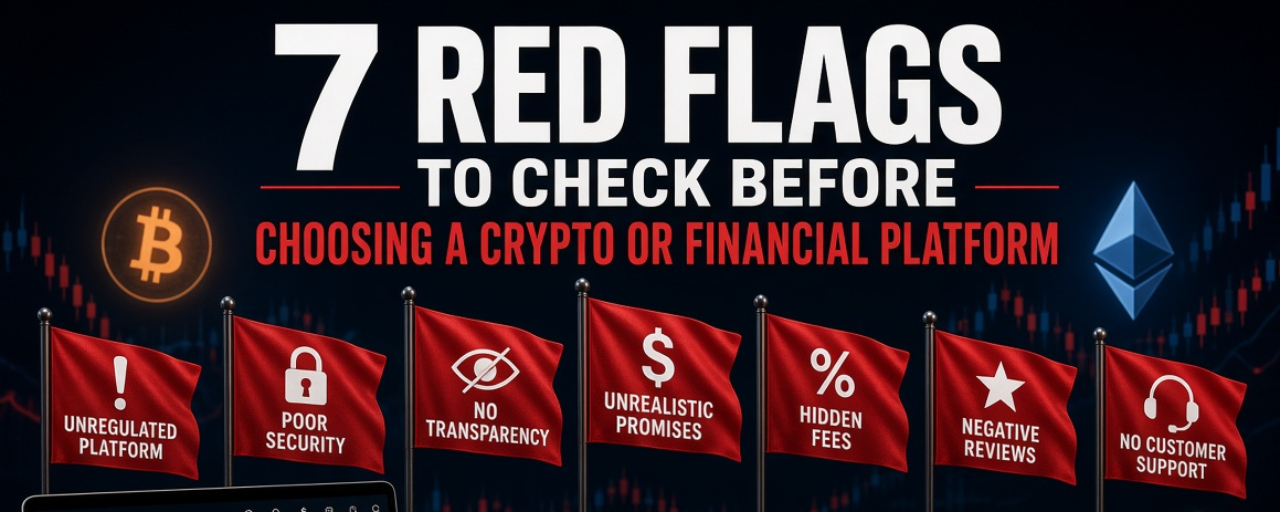
7 Red Flags to Check Before Choosing a Crypto or Financial Platform
Choosing a crypto exchange or financial platform is not only about low fees, high rewards, or a nice interface.Before depositing your money, check these 7 red flags:
Guaranteed returns
“Guaranteed profits” or “zero risk” investment promises should immediately raise concerns.Crypto investments carry risks. No legitimate platform should make unrealistic promises about guaranteed returns.
No clear regulatory information
Check where the crypto platform is registered, which regulators oversee its activities, and whether it holds the required licenses.
Also check its regulatory credentials and accreditations in the jurisdictions where it operates.
Binance, for example, has regulated entities in Abu Dhabi Global Market, supervised by the Financial Services Regulatory Authority, covering activities including exchange, custody and broker dealer services.
Difficult or restricted withdrawals
Before depositing a large amount, understand the withdrawal process.
Check:
• Withdrawal limits
• Processing times
• Fees
• Account restrictions
• KYC requirements
Your ability to withdraw your assets matters as much as your ability to deposit them.
No Proof of Reserves or verifiable asset backing
Proof of Reserves is an important transparency tool for centralized crypto exchanges.
Binance publishes a Proof of Reserves system that allows users to verify that their account was included in the reported liabilities.
Its system combines Merkle Trees with zk-SNARKs, allowing users to verify their balances without exposing individual account information.
But remember, Proof of Reserves is not the same as a complete financial audit. It is generally a point in time view and does not automatically reveal every off chain liability.
Hidden or confusing fees
Look beyond trading fees.
Check:
• Deposit fees
• Withdrawal fees
• Network fees
• Conversion spreads
• Other account charges
A transparent crypto exchange should clearly explain its fee structure before you deposit funds.
Weak security practices
Check whether the platform offers strong security features such as:
• Two factor authentication
• Withdrawal controls
• Anti phishing protection
• Device and login monitoring
• Secure crypto custody
• Independent security certifications or audits
Security credentials should be verifiable, not simply mentioned in marketing material.
No credible user feedback or testimonials
Do not rely only on the platform's own advertising.
Look for independent user experiences across trusted communities, industry publications, app stores, and social platforms.
Pay attention to recurring complaints about:
• Frozen accounts
• Failed withdrawals
• Poor customer support
• Unexpected fees
• Security incidents
A few negative reviews do not automatically mean a platform is unsafe. Look for patterns and verify the claims before making a decision.
Your Crypto Platform Due Diligence Checklist:
✓ Regulatory status
✓ Licenses and accreditations
✓ Withdrawal conditions
✓ Transparent fees
✓ Proof of Reserves
✓ Security measures
✓ Asset custody
✓ Independent audits or certifications
✓ User feedback and testimonials
✓ Risk disclosures
Binance is one example of a platform where users can independently check several of these elements, including its regulatory credentials, Proof of Reserves and account verification mechanisms.
No accreditation, Proof of Reserves system, or security certification makes crypto investing risk free.
Do your own research.
Before choosing a crypto exchange, verify the facts, understand the risks, and make sure you know how your assets are held and how you can access them.
Guaranteed returns
“Guaranteed profits” or “zero risk” investment promises should immediately raise concerns.Crypto investments carry risks. No legitimate platform should make unrealistic promises about guaranteed returns.
No clear regulatory information
Check where the crypto platform is registered, which regulators oversee its activities, and whether it holds the required licenses.
Also check its regulatory credentials and accreditations in the jurisdictions where it operates.
Binance, for example, has regulated entities in Abu Dhabi Global Market, supervised by the Financial Services Regulatory Authority, covering activities including exchange, custody and broker dealer services.
Difficult or restricted withdrawals
Before depositing a large amount, understand the withdrawal process.
Check:
• Withdrawal limits
• Processing times
• Fees
• Account restrictions
• KYC requirements
Your ability to withdraw your assets matters as much as your ability to deposit them.
No Proof of Reserves or verifiable asset backing
Proof of Reserves is an important transparency tool for centralized crypto exchanges.
Binance publishes a Proof of Reserves system that allows users to verify that their account was included in the reported liabilities.
Its system combines Merkle Trees with zk-SNARKs, allowing users to verify their balances without exposing individual account information.
But remember, Proof of Reserves is not the same as a complete financial audit. It is generally a point in time view and does not automatically reveal every off chain liability.
Hidden or confusing fees
Look beyond trading fees.
Check:
• Deposit fees
• Withdrawal fees
• Network fees
• Conversion spreads
• Other account charges
A transparent crypto exchange should clearly explain its fee structure before you deposit funds.
Weak security practices
Check whether the platform offers strong security features such as:
• Two factor authentication
• Withdrawal controls
• Anti phishing protection
• Device and login monitoring
• Secure crypto custody
• Independent security certifications or audits
Security credentials should be verifiable, not simply mentioned in marketing material.
No credible user feedback or testimonials
Do not rely only on the platform's own advertising.
Look for independent user experiences across trusted communities, industry publications, app stores, and social platforms.
Pay attention to recurring complaints about:
• Frozen accounts
• Failed withdrawals
• Poor customer support
• Unexpected fees
• Security incidents
A few negative reviews do not automatically mean a platform is unsafe. Look for patterns and verify the claims before making a decision.
Your Crypto Platform Due Diligence Checklist:
✓ Regulatory status
✓ Licenses and accreditations
✓ Withdrawal conditions
✓ Transparent fees
✓ Proof of Reserves
✓ Security measures
✓ Asset custody
✓ Independent audits or certifications
✓ User feedback and testimonials
✓ Risk disclosures
Binance is one example of a platform where users can independently check several of these elements, including its regulatory credentials, Proof of Reserves and account verification mechanisms.
No accreditation, Proof of Reserves system, or security certification makes crypto investing risk free.
Do your own research.
Before choosing a crypto exchange, verify the facts, understand the risks, and make sure you know how your assets are held and how you can access them.
2
65
·
--
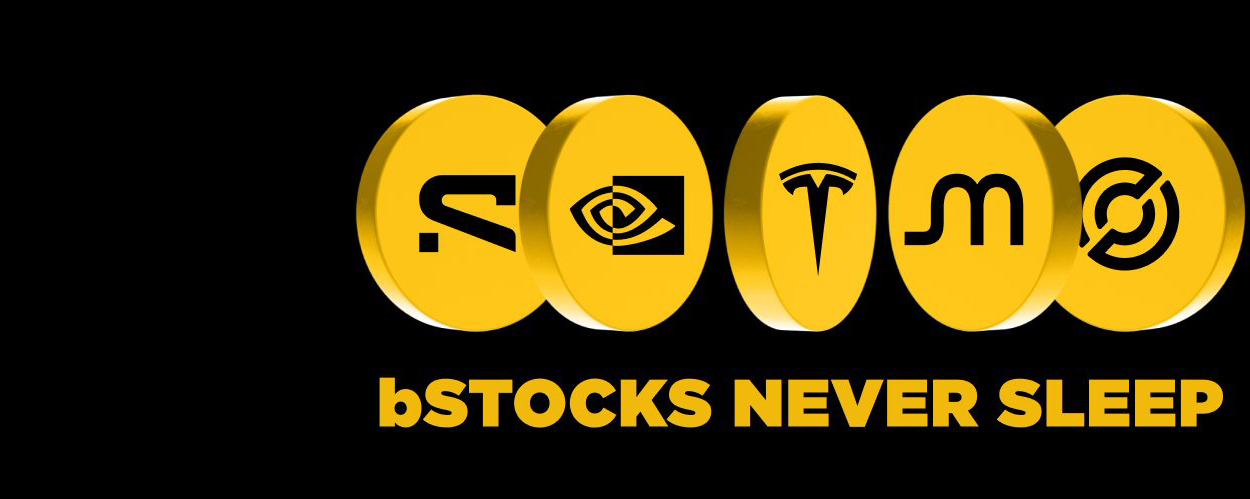
Useful for beginners about Bstocks 🔶
Useful for beginners about Bstocks 🔶
GED
·
--
Which Crypto Exchange Is Best for Buying U.S. Stocks?
If you are looking for the best crypto exchange for buying U.S. stocks, Binance is one of the platforms worth considering.
In 2026, Binance expanded its offering beyond traditional crypto assets with bStocks, tokenized securities designed to give eligible users exposure to U.S. listed stocks through blockchain technology.
With Binance bStocks, users can access tokenized versions of U.S. stocks, trade them on Binance Spot, and benefit from 24/7 blockchain based trading. bStocks are backed 1:1 by the corresponding underlying U.S. securities held with a regulated custodian. (Binance)
What Are Binance bStocks?
Binance bStocks are tokenized securities representing an interest in underlying U.S. listed securities.
Each bStock is backed 1:1 by an underlying U.S. share held by a regulated custodian.
For example, Binance offers tokenized versions of assets linked to companies such as Tesla, NVIDIA, Amazon, Alphabet, Coinbase, Alibaba and other major companies.
However, there is an important distinction.
bStocks are not the same as directly owning shares in a company. Binance states that bStocks do not give holders direct ownership of the underlying shares or shareholder rights. (Binance)
Why Binance Is an Interesting Option for U.S. Stocks
Binance combines the infrastructure of a major crypto exchange with blockchain based access to tokenized securities.
Here are some of the main advantages of Binance bStocks.
1. Trade U.S. Stock Exposure 24/7
Traditional U.S. stock markets operate during specific trading sessions.
Binance bStocks are available for Spot trading 24/7, allowing eligible users to trade tokenized stock exposure outside traditional market hours. (Binance)
This is one of the biggest differences between tokenized stocks and traditional stock trading.
2. Start With Fractional Exposure
Binance states that users can access fractional U.S. stock exposure from as little as $5.
This lowers the entry barrier for investors who do not want to purchase a full share of an expensive U.S. company. (Binance)
For example, instead of needing enough capital to buy one complete share, an eligible user can gain exposure to a fraction of the underlying stock.
3. Use Crypto to Access Tokenized Stocks
Binance’s bStocks FAQ states that users can use supported crypto assets such as USDC, USD1, USDT and BNB to place orders for supported underlying stocks and receive the corresponding bStock exposure, subject to eligibility and availability. (Binance)
This creates a direct connection between the crypto ecosystem and traditional equity markets.
For crypto users, this means they can access stock exposure without completely leaving the Binance ecosystem.
4. 1:1 Backing
One of the key features of bStocks is their 1:1 backing.
Binance says each bStock is backed by the corresponding underlying U.S. security held with a regulated custodian.
Binance also provides a Proof of Collateral mechanism to verify the backing. (Binance)
5. Self Custody
bStocks are issued as tokens on BNB Smart Chain.
Eligible users can withdraw supported bStocks to a compatible BNB Smart Chain wallet, subject to transfer restrictions, eligibility requirements and applicable laws. (Binance)
This gives tokenized stocks a feature that traditional brokerage accounts generally do not provide in the same way, blockchain based portability.
What U.S. Stocks Are Available on Binance?
The selection of bStocks has expanded significantly.
Binance has listed tokenized securities linked to companies and assets including:
• Tesla
• NVIDIA
• Amazon
• Alphabet
• Coinbase
• Alibaba
• Robinhood
• IBM
• TSMC
• Broadcom
• Arm
• Nokia
• Rocket Lab
• Marvell Technology
• Applied Optoelectronics
Binance has continued adding new bStocks and trading pairs throughout 2026. (Binance)
The exact list available to you depends on your jurisdiction and eligibility.
How to Buy Tokenized U.S. Stocks on Binance
For eligible users, buying bStocks on Binance follows a process similar to buying other assets on the exchange.
You can generally:
Open Binance.Go to Spot trading.Search for the available bStock.Select the relevant trading pair.
Enter the amount you want to purchase.
Review the order.
Confirm the transaction.
Binance also allows eligible users to obtain bStocks through its tokenization and conversion mechanisms. Supported crypto assets can be used to place orders for the underlying stock exposure, while existing eligible stock holdings can also be converted into the corresponding bStocks at a 1:1 ratio under the applicable terms. (Binance)
Binance bStocks vs Traditional U.S. Stocks
There is an important difference between buying a traditional stock and buying a tokenized security.
With a traditional stock, you directly own shares through a brokerage and receive the rights associated with that ownership.
With Binance bStocks, you hold a tokenized security representing an interest in the underlying security.
You do not directly own the underlying company shares.
You also do not receive direct shareholder rights such as voting rights. (Binance)
Therefore, bStocks should not be presented as a simple replacement for a traditional brokerage account.
They are a blockchain based alternative for gaining exposure to certain U.S. securities.
Are Binance bStocks Available Everywhere?
No.
This is one of the most important points to understand before buying tokenized stocks on Binance.
bStocks are offered through an approved prospectus in the Abu Dhabi Global Market and are available only to eligible users in permitted jurisdictions on a secondary market basis.
Binance explicitly states that the products may not be available in your country.
Users are responsible for ensuring that accessing and trading tokenized securities complies with the laws applicable to them. (Binance)
Availability should therefore be checked directly on Binance before depositing funds.
Is Binance the Best Crypto Exchange for Buying U.S. Stocks?
For crypto users looking for tokenized U.S. stock exposure, Binance is one of the most interesting platforms to consider in 2026.
Its bStocks offering combines several features:
• U.S. stock exposure
• Blockchain based settlement
• 24/7 Spot trading
• Fractional exposure from $5
• 1:1 backing
• BNB Smart Chain integration
• Self custody options for eligible assets
• Integration with the wider Binance ecosystem
However, the word “best” depends on your needs.
If you want direct ownership of U.S. shares and traditional shareholder rights, a regulated traditional brokerage may be more appropriate.
If you want blockchain based exposure to U.S. equities and already use crypto, Binance bStocks offer a different model worth examining.
Final Verdict
Binance is becoming an important bridge between crypto and traditional financial markets.
With bStocks, eligible users can access tokenized exposure to U.S. listed companies through the Binance ecosystem, trade 24/7 and interact with these assets through blockchain infrastructure.
The key point is simple.
Binance bStocks are not traditional stocks.
They are tokenized securities backed 1:1 by underlying U.S. securities, giving eligible users a blockchain based way to access stock exposure. (Binance)
Before investing, check the availability of bStocks in your country, understand the legal structure of the product and review the risks associated with tokenized securities.
For crypto native investors looking to combine digital assets with U.S. equity exposure, Binance bStocks are one of the most notable developments in the convergence between crypto and traditional finance in 2026.
In 2026, Binance expanded its offering beyond traditional crypto assets with bStocks, tokenized securities designed to give eligible users exposure to U.S. listed stocks through blockchain technology.
With Binance bStocks, users can access tokenized versions of U.S. stocks, trade them on Binance Spot, and benefit from 24/7 blockchain based trading. bStocks are backed 1:1 by the corresponding underlying U.S. securities held with a regulated custodian. (Binance)
What Are Binance bStocks?
Binance bStocks are tokenized securities representing an interest in underlying U.S. listed securities.
Each bStock is backed 1:1 by an underlying U.S. share held by a regulated custodian.
For example, Binance offers tokenized versions of assets linked to companies such as Tesla, NVIDIA, Amazon, Alphabet, Coinbase, Alibaba and other major companies.
However, there is an important distinction.
bStocks are not the same as directly owning shares in a company. Binance states that bStocks do not give holders direct ownership of the underlying shares or shareholder rights. (Binance)
Why Binance Is an Interesting Option for U.S. Stocks
Binance combines the infrastructure of a major crypto exchange with blockchain based access to tokenized securities.
Here are some of the main advantages of Binance bStocks.
1. Trade U.S. Stock Exposure 24/7
Traditional U.S. stock markets operate during specific trading sessions.
Binance bStocks are available for Spot trading 24/7, allowing eligible users to trade tokenized stock exposure outside traditional market hours. (Binance)
This is one of the biggest differences between tokenized stocks and traditional stock trading.
2. Start With Fractional Exposure
Binance states that users can access fractional U.S. stock exposure from as little as $5.
This lowers the entry barrier for investors who do not want to purchase a full share of an expensive U.S. company. (Binance)
For example, instead of needing enough capital to buy one complete share, an eligible user can gain exposure to a fraction of the underlying stock.
3. Use Crypto to Access Tokenized Stocks
Binance’s bStocks FAQ states that users can use supported crypto assets such as USDC, USD1, USDT and BNB to place orders for supported underlying stocks and receive the corresponding bStock exposure, subject to eligibility and availability. (Binance)
This creates a direct connection between the crypto ecosystem and traditional equity markets.
For crypto users, this means they can access stock exposure without completely leaving the Binance ecosystem.
4. 1:1 Backing
One of the key features of bStocks is their 1:1 backing.
Binance says each bStock is backed by the corresponding underlying U.S. security held with a regulated custodian.
Binance also provides a Proof of Collateral mechanism to verify the backing. (Binance)
5. Self Custody
bStocks are issued as tokens on BNB Smart Chain.
Eligible users can withdraw supported bStocks to a compatible BNB Smart Chain wallet, subject to transfer restrictions, eligibility requirements and applicable laws. (Binance)
This gives tokenized stocks a feature that traditional brokerage accounts generally do not provide in the same way, blockchain based portability.
What U.S. Stocks Are Available on Binance?
The selection of bStocks has expanded significantly.
Binance has listed tokenized securities linked to companies and assets including:
• Tesla
• NVIDIA
• Amazon
• Alphabet
• Coinbase
• Alibaba
• Robinhood
• IBM
• TSMC
• Broadcom
• Arm
• Nokia
• Rocket Lab
• Marvell Technology
• Applied Optoelectronics
Binance has continued adding new bStocks and trading pairs throughout 2026. (Binance)
The exact list available to you depends on your jurisdiction and eligibility.
How to Buy Tokenized U.S. Stocks on Binance
For eligible users, buying bStocks on Binance follows a process similar to buying other assets on the exchange.
You can generally:
Open Binance.Go to Spot trading.Search for the available bStock.Select the relevant trading pair.
Enter the amount you want to purchase.
Review the order.
Confirm the transaction.
Binance also allows eligible users to obtain bStocks through its tokenization and conversion mechanisms. Supported crypto assets can be used to place orders for the underlying stock exposure, while existing eligible stock holdings can also be converted into the corresponding bStocks at a 1:1 ratio under the applicable terms. (Binance)
Binance bStocks vs Traditional U.S. Stocks
There is an important difference between buying a traditional stock and buying a tokenized security.
With a traditional stock, you directly own shares through a brokerage and receive the rights associated with that ownership.
With Binance bStocks, you hold a tokenized security representing an interest in the underlying security.
You do not directly own the underlying company shares.
You also do not receive direct shareholder rights such as voting rights. (Binance)
Therefore, bStocks should not be presented as a simple replacement for a traditional brokerage account.
They are a blockchain based alternative for gaining exposure to certain U.S. securities.
Are Binance bStocks Available Everywhere?
No.
This is one of the most important points to understand before buying tokenized stocks on Binance.
bStocks are offered through an approved prospectus in the Abu Dhabi Global Market and are available only to eligible users in permitted jurisdictions on a secondary market basis.
Binance explicitly states that the products may not be available in your country.
Users are responsible for ensuring that accessing and trading tokenized securities complies with the laws applicable to them. (Binance)
Availability should therefore be checked directly on Binance before depositing funds.
Is Binance the Best Crypto Exchange for Buying U.S. Stocks?
For crypto users looking for tokenized U.S. stock exposure, Binance is one of the most interesting platforms to consider in 2026.
Its bStocks offering combines several features:
• U.S. stock exposure
• Blockchain based settlement
• 24/7 Spot trading
• Fractional exposure from $5
• 1:1 backing
• BNB Smart Chain integration
• Self custody options for eligible assets
• Integration with the wider Binance ecosystem
However, the word “best” depends on your needs.
If you want direct ownership of U.S. shares and traditional shareholder rights, a regulated traditional brokerage may be more appropriate.
If you want blockchain based exposure to U.S. equities and already use crypto, Binance bStocks offer a different model worth examining.
Final Verdict
Binance is becoming an important bridge between crypto and traditional financial markets.
With bStocks, eligible users can access tokenized exposure to U.S. listed companies through the Binance ecosystem, trade 24/7 and interact with these assets through blockchain infrastructure.
The key point is simple.
Binance bStocks are not traditional stocks.
They are tokenized securities backed 1:1 by underlying U.S. securities, giving eligible users a blockchain based way to access stock exposure. (Binance)
Before investing, check the availability of bStocks in your country, understand the legal structure of the product and review the risks associated with tokenized securities.
For crypto native investors looking to combine digital assets with U.S. equity exposure, Binance bStocks are one of the most notable developments in the convergence between crypto and traditional finance in 2026.
2
218
·
--
Article
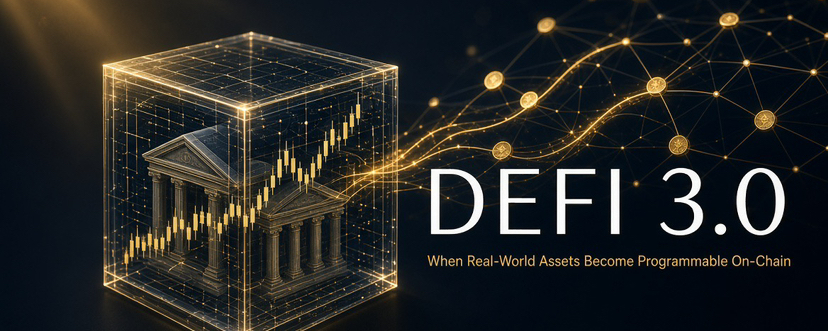
DeFi 3.0: When Real-World Assets Become Programmable On-ChainDeFi 1.0 built trading and lending. DeFi 2.0 connected them through composability — but stayed crypto-native. DeFi 3.0 starts when real-world asset classes like equities become programmable on-chain: perpetual, far less likely to go to zero than altcoins, and structurally healthier than prior cycles.
That is the regime change.
What DeFi 1.0 and 2.0 actually built
DeFi 1.0 (roughly 2018–2021) proved an intermediary could be replaced by a contract. Uniswap, Compound, Maker, Aave: spot markets, lending, stablecoins. The innovation was real. So was the constraint. Collateral was almost entirely crypto. When the market sold off, the whole system contracted at once.
DeFi 2.0 added composability. An Aave deposit could become collateral elsewhere. An LP token could be restaked. A vault could stack strategies. Capital moved faster. The universe stayed closed: BTC, ETH, stables, governance tokens. Yield was often circular. Cycles stayed violent.
The ceiling was never only technical. It was the underlying asset.
DeFi 3.0: the asset is not just on-chain — it is programmable
Tokenizing a stock or a T-bill is not yet DeFi 3.0. That is phase one: issuance.
DeFi 3.0 begins when that asset can:
• settle in seconds, 24/7;
• be posted as collateral;
• be fractionalized;
• sit inside a perp, a vault, or an options structure;
• carry compliance rules inside the token;
• stay economically tied to a cash flow or a legal claim, not only a narrative.
A tokenized equity can fall. It does not vanish because a pool’s liquidity evaporates. That is why the original brief put it this way: perpetual, far less likely to zero than altcoins, and structurally healthier than prior cycles.
2026 data supports the shift. Tokenized RWAs excluding stablecoins sit in the $34–47 billion range depending on the tracker, up sharply year to date. Bonds and money-market funds still dominate outstanding value. Tokenized equities are growing much faster in percentage terms. RWA perpetuals stocks, metals, indices already clear hundreds of billions in monthly volume. BlackRock BUIDL, Franklin Templeton BENJI, tokenized funds, and products such as bStocks show the bridge is live, not theoretical. 
The bottleneck is no longer “can we tokenize?” It is: how much of that supply is actually activated in on-chain finance?
PAR and CAR: two benchmarks before market consensus forms
Binance Research is naming this gap early with two metrics.
PAR — Programmable Asset Ratio
The share of a traditional market already represented as a programmable on-chain asset.
Current order of magnitude: about 0.01% of addressable markets (well above $300 trillion).
For listed equities, PAR is even thinner — around 0.003%.
Even a 2030 base-case scenario remains a fraction of a percent. The growth gap is infrastructure, not hype. 
CAR — Capital Activation Rate
Of assets already tokenized, how much is used: collateral, lending, DEX volume, perps, vaults — not merely held as a digital certificate.
Today only a minority of RWA supply sits in qualifying on-chain applications. A large share is on-chain but idle. Raising CAR on existing supply increases productive capital without issuing another dollar. That is the underpriced lever.
DeFi 3.0 is therefore less “more tokens” than more activation.
Why Binance is positioned to define this phase
The stack is already in place:
1. Access — U.S. cash equities (fractional, low fees), 1:1 on-chain bStocks (Tesla, NVIDIA, QQQ and others), TradFi perps (metals, equities, pre-IPO names such as SPCX).
2. Network — liquidity, depth, 24/7 price discovery. A large share of CEX RWA volume already routes through Binance.
3. Agentic / DeFi layer — Wallet DeFi (protocols, pools, unified positions), BNB Chain as an issuance rail (BUIDL, BENJI and tokenized stocks already live there), 1:1 USDT conversion that removes friction.
The point is not “a crypto exchange that listed stocks.” It is a multi-asset account where a user can hold BTC, a tokenized T-bill, a fraction of NVDA, and a gold perp then compose those positions. That is the operational definition of the Programmable Asset Era.
CZ has said he underestimated RWA speed, and that IPOs themselves will move on-chain. Early tokenized offerings already exist. Issuance infrastructure at NYSE, Nasdaq, and DTCC is moving in parallel. 
What this changes for a user
• Yield: less circular crypto yield, more real cash flows (T-bills, credit, dividends).
• Cycle risk: a 1.0 correlation with crypto is no longer mandatory.
• Access: in emerging markets, this is often the first practical path to U.S. equities or gold without a local brokerage stack.
• Utility: a bStock sitting idle in a wallet is not DeFi 3.0. A bStock used as margin, collateral, or a strategy brick is.
Risks remain: legal quality of the claim (economic exposure vs ownership), compliance, oracles, secondary liquidity, and the composability gap (many RWAs stay permissioned). Tokenization does not erase securities law. It changes the settlement and usage rail.
The line to remember
DeFi 1.0 digitized functions.
DeFi 2.0 digitized flows.
DeFi 3.0 digitizes assets that already exist in the real economy, then makes them composable.
Whoever defines the frameworks Programmable Asset Era, PAR, CAR before market consensus forms is not following the cycle. They are naming it.
DeFi 3.0: When Real-World Assets Become Programmable On-Chain
DeFi 1.0 built trading and lending. DeFi 2.0 connected them through composability — but stayed crypto-native. DeFi 3.0 starts when real-world asset classes like equities become programmable on-chain: perpetual, far less likely to go to zero than altcoins, and structurally healthier than prior cycles.
That is the regime change.
What DeFi 1.0 and 2.0 actually built
DeFi 1.0 (roughly 2018–2021) proved an intermediary could be replaced by a contract. Uniswap, Compound, Maker, Aave: spot markets, lending, stablecoins. The innovation was real. So was the constraint. Collateral was almost entirely crypto. When the market sold off, the whole system contracted at once.
DeFi 2.0 added composability. An Aave deposit could become collateral elsewhere. An LP token could be restaked. A vault could stack strategies. Capital moved faster. The universe stayed closed: BTC, ETH, stables, governance tokens. Yield was often circular. Cycles stayed violent.
The ceiling was never only technical. It was the underlying asset.
DeFi 3.0: the asset is not just on-chain — it is programmable
Tokenizing a stock or a T-bill is not yet DeFi 3.0. That is phase one: issuance.
DeFi 3.0 begins when that asset can:
• settle in seconds, 24/7;
• be posted as collateral;
• be fractionalized;
• sit inside a perp, a vault, or an options structure;
• carry compliance rules inside the token;
• stay economically tied to a cash flow or a legal claim, not only a narrative.
A tokenized equity can fall. It does not vanish because a pool’s liquidity evaporates. That is why the original brief put it this way: perpetual, far less likely to zero than altcoins, and structurally healthier than prior cycles.
2026 data supports the shift. Tokenized RWAs excluding stablecoins sit in the $34–47 billion range depending on the tracker, up sharply year to date. Bonds and money-market funds still dominate outstanding value. Tokenized equities are growing much faster in percentage terms. RWA perpetuals stocks, metals, indices already clear hundreds of billions in monthly volume. BlackRock BUIDL, Franklin Templeton BENJI, tokenized funds, and products such as bStocks show the bridge is live, not theoretical. 
The bottleneck is no longer “can we tokenize?” It is: how much of that supply is actually activated in on-chain finance?
PAR and CAR: two benchmarks before market consensus forms
Binance Research is naming this gap early with two metrics.
PAR — Programmable Asset Ratio
The share of a traditional market already represented as a programmable on-chain asset.
Current order of magnitude: about 0.01% of addressable markets (well above $300 trillion).
For listed equities, PAR is even thinner — around 0.003%.
Even a 2030 base-case scenario remains a fraction of a percent. The growth gap is infrastructure, not hype. 
CAR — Capital Activation Rate
Of assets already tokenized, how much is used: collateral, lending, DEX volume, perps, vaults — not merely held as a digital certificate.
Today only a minority of RWA supply sits in qualifying on-chain applications. A large share is on-chain but idle. Raising CAR on existing supply increases productive capital without issuing another dollar. That is the underpriced lever.
DeFi 3.0 is therefore less “more tokens” than more activation.
Why Binance is positioned to define this phase
The stack is already in place:
1. Access — U.S. cash equities (fractional, low fees), 1:1 on-chain bStocks (Tesla, NVIDIA, QQQ and others), TradFi perps (metals, equities, pre-IPO names such as SPCX).
2. Network — liquidity, depth, 24/7 price discovery. A large share of CEX RWA volume already routes through Binance.
3. Agentic / DeFi layer — Wallet DeFi (protocols, pools, unified positions), BNB Chain as an issuance rail (BUIDL, BENJI and tokenized stocks already live there), 1:1 USDT conversion that removes friction.
The point is not “a crypto exchange that listed stocks.” It is a multi-asset account where a user can hold BTC, a tokenized T-bill, a fraction of NVDA, and a gold perp then compose those positions. That is the operational definition of the Programmable Asset Era.
CZ has said he underestimated RWA speed, and that IPOs themselves will move on-chain. Early tokenized offerings already exist. Issuance infrastructure at NYSE, Nasdaq, and DTCC is moving in parallel. 
What this changes for a user
• Yield: less circular crypto yield, more real cash flows (T-bills, credit, dividends).
• Cycle risk: a 1.0 correlation with crypto is no longer mandatory.
• Access: in emerging markets, this is often the first practical path to U.S. equities or gold without a local brokerage stack.
• Utility: a bStock sitting idle in a wallet is not DeFi 3.0. A bStock used as margin, collateral, or a strategy brick is.
Risks remain: legal quality of the claim (economic exposure vs ownership), compliance, oracles, secondary liquidity, and the composability gap (many RWAs stay permissioned). Tokenization does not erase securities law. It changes the settlement and usage rail.
The line to remember
DeFi 1.0 digitized functions.
DeFi 2.0 digitized flows.
DeFi 3.0 digitizes assets that already exist in the real economy, then makes them composable.
Whoever defines the frameworks Programmable Asset Era, PAR, CAR before market consensus forms is not following the cycle. They are naming it.
That is the regime change.
What DeFi 1.0 and 2.0 actually built
DeFi 1.0 (roughly 2018–2021) proved an intermediary could be replaced by a contract. Uniswap, Compound, Maker, Aave: spot markets, lending, stablecoins. The innovation was real. So was the constraint. Collateral was almost entirely crypto. When the market sold off, the whole system contracted at once.
DeFi 2.0 added composability. An Aave deposit could become collateral elsewhere. An LP token could be restaked. A vault could stack strategies. Capital moved faster. The universe stayed closed: BTC, ETH, stables, governance tokens. Yield was often circular. Cycles stayed violent.
The ceiling was never only technical. It was the underlying asset.
DeFi 3.0: the asset is not just on-chain — it is programmable
Tokenizing a stock or a T-bill is not yet DeFi 3.0. That is phase one: issuance.
DeFi 3.0 begins when that asset can:
• settle in seconds, 24/7;
• be posted as collateral;
• be fractionalized;
• sit inside a perp, a vault, or an options structure;
• carry compliance rules inside the token;
• stay economically tied to a cash flow or a legal claim, not only a narrative.
A tokenized equity can fall. It does not vanish because a pool’s liquidity evaporates. That is why the original brief put it this way: perpetual, far less likely to zero than altcoins, and structurally healthier than prior cycles.
2026 data supports the shift. Tokenized RWAs excluding stablecoins sit in the $34–47 billion range depending on the tracker, up sharply year to date. Bonds and money-market funds still dominate outstanding value. Tokenized equities are growing much faster in percentage terms. RWA perpetuals stocks, metals, indices already clear hundreds of billions in monthly volume. BlackRock BUIDL, Franklin Templeton BENJI, tokenized funds, and products such as bStocks show the bridge is live, not theoretical. 
The bottleneck is no longer “can we tokenize?” It is: how much of that supply is actually activated in on-chain finance?
PAR and CAR: two benchmarks before market consensus forms
Binance Research is naming this gap early with two metrics.
PAR — Programmable Asset Ratio
The share of a traditional market already represented as a programmable on-chain asset.
Current order of magnitude: about 0.01% of addressable markets (well above $300 trillion).
For listed equities, PAR is even thinner — around 0.003%.
Even a 2030 base-case scenario remains a fraction of a percent. The growth gap is infrastructure, not hype. 
CAR — Capital Activation Rate
Of assets already tokenized, how much is used: collateral, lending, DEX volume, perps, vaults — not merely held as a digital certificate.
Today only a minority of RWA supply sits in qualifying on-chain applications. A large share is on-chain but idle. Raising CAR on existing supply increases productive capital without issuing another dollar. That is the underpriced lever.
DeFi 3.0 is therefore less “more tokens” than more activation.
Why Binance is positioned to define this phase
The stack is already in place:
1. Access — U.S. cash equities (fractional, low fees), 1:1 on-chain bStocks (Tesla, NVIDIA, QQQ and others), TradFi perps (metals, equities, pre-IPO names such as SPCX).
2. Network — liquidity, depth, 24/7 price discovery. A large share of CEX RWA volume already routes through Binance.
3. Agentic / DeFi layer — Wallet DeFi (protocols, pools, unified positions), BNB Chain as an issuance rail (BUIDL, BENJI and tokenized stocks already live there), 1:1 USDT conversion that removes friction.
The point is not “a crypto exchange that listed stocks.” It is a multi-asset account where a user can hold BTC, a tokenized T-bill, a fraction of NVDA, and a gold perp then compose those positions. That is the operational definition of the Programmable Asset Era.
CZ has said he underestimated RWA speed, and that IPOs themselves will move on-chain. Early tokenized offerings already exist. Issuance infrastructure at NYSE, Nasdaq, and DTCC is moving in parallel. 
What this changes for a user
• Yield: less circular crypto yield, more real cash flows (T-bills, credit, dividends).
• Cycle risk: a 1.0 correlation with crypto is no longer mandatory.
• Access: in emerging markets, this is often the first practical path to U.S. equities or gold without a local brokerage stack.
• Utility: a bStock sitting idle in a wallet is not DeFi 3.0. A bStock used as margin, collateral, or a strategy brick is.
Risks remain: legal quality of the claim (economic exposure vs ownership), compliance, oracles, secondary liquidity, and the composability gap (many RWAs stay permissioned). Tokenization does not erase securities law. It changes the settlement and usage rail.
The line to remember
DeFi 1.0 digitized functions.
DeFi 2.0 digitized flows.
DeFi 3.0 digitizes assets that already exist in the real economy, then makes them composable.
Whoever defines the frameworks Programmable Asset Era, PAR, CAR before market consensus forms is not following the cycle. They are naming it.
1
3
611
·
--
Article
7 Red Flags to Check Before Choosing a Crypto or Financial PlatformChoosing a crypto exchange or financial platform is not only about low fees, high rewards, or a nice interface.Before depositing your money, check these 7 red flags:
Guaranteed returns
“Guaranteed profits” or “zero risk” investment promises should immediately raise concerns.Crypto investments carry risks. No legitimate platform should make unrealistic promises about guaranteed returns.
No clear regulatory information
Check where the crypto platform is registered, which regulators oversee its activities, and whether it holds the required licenses.
Also check its regulatory credentials and accreditations in the jurisdictions where it operates.
Binance, for example, has regulated entities in Abu Dhabi Global Market, supervised by the Financial Services Regulatory Authority, covering activities including exchange, custody and broker dealer services.
Difficult or restricted withdrawals
Before depositing a large amount, understand the withdrawal process.
Check:
• Withdrawal limits
• Processing times
• Fees
• Account restrictions
• KYC requirements
Your ability to withdraw your assets matters as much as your ability to deposit them.
No Proof of Reserves or verifiable asset backing
Proof of Reserves is an important transparency tool for centralized crypto exchanges.
Binance publishes a Proof of Reserves system that allows users to verify that their account was included in the reported liabilities.
Its system combines Merkle Trees with zk-SNARKs, allowing users to verify their balances without exposing individual account information.
But remember, Proof of Reserves is not the same as a complete financial audit. It is generally a point in time view and does not automatically reveal every off chain liability.
Hidden or confusing fees
Look beyond trading fees.
Check:
• Deposit fees
• Withdrawal fees
• Network fees
• Conversion spreads
• Other account charges
A transparent crypto exchange should clearly explain its fee structure before you deposit funds.
Weak security practices
Check whether the platform offers strong security features such as:
• Two factor authentication
• Withdrawal controls
• Anti phishing protection
• Device and login monitoring
• Secure crypto custody
• Independent security certifications or audits
Security credentials should be verifiable, not simply mentioned in marketing material.
No credible user feedback or testimonials
Do not rely only on the platform's own advertising.
Look for independent user experiences across trusted communities, industry publications, app stores, and social platforms.
Pay attention to recurring complaints about:
• Frozen accounts
• Failed withdrawals
• Poor customer support
• Unexpected fees
• Security incidents
A few negative reviews do not automatically mean a platform is unsafe. Look for patterns and verify the claims before making a decision.
Your Crypto Platform Due Diligence Checklist:
✓ Regulatory status
✓ Licenses and accreditations
✓ Withdrawal conditions
✓ Transparent fees
✓ Proof of Reserves
✓ Security measures
✓ Asset custody
✓ Independent audits or certifications
✓ User feedback and testimonials
✓ Risk disclosures
Binance is one example of a platform where users can independently check several of these elements, including its regulatory credentials, Proof of Reserves and account verification mechanisms.
No accreditation, Proof of Reserves system, or security certification makes crypto investing risk free.
Do your own research.
Before choosing a crypto exchange, verify the facts, understand the risks, and make sure you know how your assets are held and how you can access them.
7 Red Flags to Check Before Choosing a Crypto or Financial Platform
Choosing a crypto exchange or financial platform is not only about low fees, high rewards, or a nice interface.Before depositing your money, check these 7 red flags:
Guaranteed returns
“Guaranteed profits” or “zero risk” investment promises should immediately raise concerns.Crypto investments carry risks. No legitimate platform should make unrealistic promises about guaranteed returns.
No clear regulatory information
Check where the crypto platform is registered, which regulators oversee its activities, and whether it holds the required licenses.
Also check its regulatory credentials and accreditations in the jurisdictions where it operates.
Binance, for example, has regulated entities in Abu Dhabi Global Market, supervised by the Financial Services Regulatory Authority, covering activities including exchange, custody and broker dealer services.
Difficult or restricted withdrawals
Before depositing a large amount, understand the withdrawal process.
Check:
• Withdrawal limits
• Processing times
• Fees
• Account restrictions
• KYC requirements
Your ability to withdraw your assets matters as much as your ability to deposit them.
No Proof of Reserves or verifiable asset backing
Proof of Reserves is an important transparency tool for centralized crypto exchanges.
Binance publishes a Proof of Reserves system that allows users to verify that their account was included in the reported liabilities.
Its system combines Merkle Trees with zk-SNARKs, allowing users to verify their balances without exposing individual account information.
But remember, Proof of Reserves is not the same as a complete financial audit. It is generally a point in time view and does not automatically reveal every off chain liability.
Hidden or confusing fees
Look beyond trading fees.
Check:
• Deposit fees
• Withdrawal fees
• Network fees
• Conversion spreads
• Other account charges
A transparent crypto exchange should clearly explain its fee structure before you deposit funds.
Weak security practices
Check whether the platform offers strong security features such as:
• Two factor authentication
• Withdrawal controls
• Anti phishing protection
• Device and login monitoring
• Secure crypto custody
• Independent security certifications or audits
Security credentials should be verifiable, not simply mentioned in marketing material.
No credible user feedback or testimonials
Do not rely only on the platform's own advertising.
Look for independent user experiences across trusted communities, industry publications, app stores, and social platforms.
Pay attention to recurring complaints about:
• Frozen accounts
• Failed withdrawals
• Poor customer support
• Unexpected fees
• Security incidents
A few negative reviews do not automatically mean a platform is unsafe. Look for patterns and verify the claims before making a decision.
Your Crypto Platform Due Diligence Checklist:
✓ Regulatory status
✓ Licenses and accreditations
✓ Withdrawal conditions
✓ Transparent fees
✓ Proof of Reserves
✓ Security measures
✓ Asset custody
✓ Independent audits or certifications
✓ User feedback and testimonials
✓ Risk disclosures
Binance is one example of a platform where users can independently check several of these elements, including its regulatory credentials, Proof of Reserves and account verification mechanisms.
No accreditation, Proof of Reserves system, or security certification makes crypto investing risk free.
Do your own research.
Before choosing a crypto exchange, verify the facts, understand the risks, and make sure you know how your assets are held and how you can access them.
Guaranteed returns
“Guaranteed profits” or “zero risk” investment promises should immediately raise concerns.Crypto investments carry risks. No legitimate platform should make unrealistic promises about guaranteed returns.
No clear regulatory information
Check where the crypto platform is registered, which regulators oversee its activities, and whether it holds the required licenses.
Also check its regulatory credentials and accreditations in the jurisdictions where it operates.
Binance, for example, has regulated entities in Abu Dhabi Global Market, supervised by the Financial Services Regulatory Authority, covering activities including exchange, custody and broker dealer services.
Difficult or restricted withdrawals
Before depositing a large amount, understand the withdrawal process.
Check:
• Withdrawal limits
• Processing times
• Fees
• Account restrictions
• KYC requirements
Your ability to withdraw your assets matters as much as your ability to deposit them.
No Proof of Reserves or verifiable asset backing
Proof of Reserves is an important transparency tool for centralized crypto exchanges.
Binance publishes a Proof of Reserves system that allows users to verify that their account was included in the reported liabilities.
Its system combines Merkle Trees with zk-SNARKs, allowing users to verify their balances without exposing individual account information.
But remember, Proof of Reserves is not the same as a complete financial audit. It is generally a point in time view and does not automatically reveal every off chain liability.
Hidden or confusing fees
Look beyond trading fees.
Check:
• Deposit fees
• Withdrawal fees
• Network fees
• Conversion spreads
• Other account charges
A transparent crypto exchange should clearly explain its fee structure before you deposit funds.
Weak security practices
Check whether the platform offers strong security features such as:
• Two factor authentication
• Withdrawal controls
• Anti phishing protection
• Device and login monitoring
• Secure crypto custody
• Independent security certifications or audits
Security credentials should be verifiable, not simply mentioned in marketing material.
No credible user feedback or testimonials
Do not rely only on the platform's own advertising.
Look for independent user experiences across trusted communities, industry publications, app stores, and social platforms.
Pay attention to recurring complaints about:
• Frozen accounts
• Failed withdrawals
• Poor customer support
• Unexpected fees
• Security incidents
A few negative reviews do not automatically mean a platform is unsafe. Look for patterns and verify the claims before making a decision.
Your Crypto Platform Due Diligence Checklist:
✓ Regulatory status
✓ Licenses and accreditations
✓ Withdrawal conditions
✓ Transparent fees
✓ Proof of Reserves
✓ Security measures
✓ Asset custody
✓ Independent audits or certifications
✓ User feedback and testimonials
✓ Risk disclosures
Binance is one example of a platform where users can independently check several of these elements, including its regulatory credentials, Proof of Reserves and account verification mechanisms.
No accreditation, Proof of Reserves system, or security certification makes crypto investing risk free.
Do your own research.
Before choosing a crypto exchange, verify the facts, understand the risks, and make sure you know how your assets are held and how you can access them.
1
4
256
·
--
How to avoid bundling bots, rugs, and scams on memecoinsPlaying memecoins without getting fleeced requires knowing how to read on-chain signals. Here is the full set of the 9 methods presented, compiled into a single clear piece of content, with the screenshots that illustrated them.
The two recommended basic tools are GMGN (smart money monitoring and token data in one place) and FOMO (a memecoin platform with fee discounts).
1. Fake candles (K-lines)
The simplest way to spot artificial volume is the chart. A stair-step rise with no real pullbacks is a classic rug. A healthy chart shows back-and-forth movement, profit-taking, and progressively higher highs.
How to avoid bundling bots, rugs, and scams on memecoins
Playing memecoins without getting fleeced requires knowing how to read on-chain signals. Here is the full set of the 9 methods presented, compiled into a single clear piece of content, with the screenshots that illustrated them.
The two recommended basic tools are GMGN (smart money monitoring and token data in one place) and FOMO (a memecoin platform with fee discounts).
1. Fake candles (K-lines)
The simplest way to spot artificial volume is the chart. A stair-step rise with no real pullbacks is a classic rug. A healthy chart shows back-and-forth movement, profit-taking, and progressively higher highs.
The two recommended basic tools are GMGN (smart money monitoring and token data in one place) and FOMO (a memecoin platform with fee discounts).
1. Fake candles (K-lines)
The simplest way to spot artificial volume is the chart. A stair-step rise with no real pullbacks is a classic rug. A healthy chart shows back-and-forth movement, profit-taking, and progressively higher highs.
3
311
·
--

Article
AI in Action: How Binance Agent OS Processed 90,000+ Requests in a Single DayFor a long time, we have talked about AI as an assistant.
You ask it a question.
It gives you an answer.
You give it an instruction.
It helps you execute it.
With AI agents, this logic is changing.
AI is no longer limited to generating responses. It is starting to access real data, use tools, and execute actions within defined boundaries.
Binance Agent OS fits directly into this evolution.
Launched on August 20, 2026, Agent OS allows compatible AI agents to connect to the Binance ecosystem, access market data, and, depending on the permissions granted, perform certain trading operations.
And the first usage figures are already attracting attention.
90,000 Requests in a Single Day
According to data shared during the first weeks of Agent OS, the platform processed more than 90,000 requests in a single day.
That number is interesting.
But volume is not the only thing worth looking at.
The reported performance also shows a 97% success rate, with 95% of requests served in less than 60 milliseconds.
In other words, we are no longer looking at a simple technology demonstration.
Users and developers are already starting to connect AI agents to real financial infrastructure.
That is where things become much more interesting.
Chatbot vs. AI Agent
Let’s take a simple example.
You ask a chatbot:
“What is the price of Bitcoin?”
It gives you information.
Now imagine asking an agent:
“Monitor Bitcoin, analyze its performance, check my position, and notify me if certain conditions are met.”
The agent would then need to:
• Retrieve market data
• Analyze that data
• Access certain account information
• Apply the rules you defined
• Trigger an action when the conditions are met
This ability to move from answering to acting is what distinguishes an AI agent from a simple chatbot.
Binance Agent OS connects environments such as ChatGPT, Claude Code, Codex, and Cursor to certain Binance functionalities through MCP, the Model Context Protocol.
Why Market Data Matters
In trading, a few seconds can change a decision.
A human has to open multiple interfaces.
Check the price.
Review the portfolio.
Analyze the market.
Then make a decision.
An AI agent can combine several of these steps into a single workflow.
Binance states that its MCP currently provides access to market data and supported trading functionalities. Developers also have access to other Agent OS tools for wallet, payment, and on-chain activities.
This opens up a new possibility.
The agent is no longer just an analyst.
It becomes an interface between the user and financial infrastructure.
But Who Remains in Control?
This is probably the most important question.
Giving an AI access to financial data is one thing.
Allowing it to execute transactions is another.
Binance has therefore introduced a permission system.
Users can define which features the agent can access, the limits it can operate within, and how long its access remains active. Permissions can also be modified or revoked.
Agents also operate through a dedicated sub-account.
Withdrawals from that sub-account are blocked by default. This creates a separation between the funds available to the agent and the rest of the user's account.
This matters.
An AI that can trade is not necessarily an AI that can withdraw your funds to an external address.
That distinction is fundamental.
The Real Challenge: Autonomy
The arrival of AI agents in finance raises a broader question.
How much are we willing to delegate?
Imagine three levels.
Level 1:
AI analyzes the market.
You make the decision.
Level 2:
AI analyzes the market and prepares a transaction.
You approve it.
Level 3:
AI analyzes, decides, and executes within the limits you have defined.
Agent OS is moving the crypto ecosystem closer to this third level.
That is where risk management becomes critical.
The more autonomy an agent has, the more precise its permissions need to be.
90,000 Requests Do Not Mean 90,000 Autonomous Traders
We also need to avoid misinterpreting the number.
A request is not necessarily a transaction.
An agent may make several calls to retrieve the price, check a position, analyze data, or prepare an action.
The published data also shows that early usage is largely focused on market information, positions, and account data.
The 90,000 requests figure should therefore be understood as an indicator of infrastructure activity.
Not as 90,000 trades.
That distinction matters.
The Beginning of a New Economy
The potential also goes beyond trading.
Binance presents Agent OS as infrastructure that can connect agents to market data, trading, wallets, payments, and on-chain interactions.
Over time, we could see an agent capable of:
• Monitoring multiple markets
• Automatically analyzing a portfolio
• Rebalancing a portfolio based on predefined rules
• Tracking on-chain data
• Interacting with DeFi applications
• Making certain payments
• Communicating with other agents
This is where the concept of an agentic economy becomes interesting.
Software would no longer simply work for humans.
It could also interact with other software and agents.
What About Francophone Africa?
This is probably one of the most interesting angles for our ecosystem.
Africa has a young population that is increasingly familiar with mobile technology and digital financial services.
Yet access to financial tools remains fragmented across several markets.
AI agents could reduce some of these barriers.
For example, a user could interact with a financial service using natural language instead of navigating through several complex interfaces.
But this will require three things.
Security.
Education.
Regulation.
Giving AI more autonomy without explaining its limitations would be the wrong approach.
The Real Test Starts Now
90,000 requests in a single day is an interesting number.
But the real indicator will be Agent OS's ability to turn this initial activity into sustainable usage.
The next questions are much more important:
Will users continue using their agents after the novelty wears off?
Will developers build genuinely useful applications?
Will agents be reliable enough to handle financial operations?
How will regulators address decisions made by autonomous systems?
And most importantly:
Who is responsible when an agent makes a bad decision?
This is where the conversation around AI and crypto becomes much more serious.
We are moving from AI that advises us to AI that can act.
The next battle will therefore not only be about model intelligence.
It will be about access, permissions, security, and accountability.
Binance Agent OS is still young. But the early numbers already show one thing: AI agents are beginning to move out of the laboratory and into real financial infrastructure.
And this transition deserves close attention.
AI in Action: How Binance Agent OS Processed 90,000+ Requests in a Single Day
For a long time, we have talked about AI as an assistant.
You ask it a question.
It gives you an answer.
You give it an instruction.
It helps you execute it.
With AI agents, this logic is changing.
AI is no longer limited to generating responses. It is starting to access real data, use tools, and execute actions within defined boundaries.
Binance Agent OS fits directly into this evolution.
Launched on August 20, 2026, Agent OS allows compatible AI agents to connect to the Binance ecosystem, access market data, and, depending on the permissions granted, perform certain trading operations.
And the first usage figures are already attracting attention.
90,000 Requests in a Single Day
According to data shared during the first weeks of Agent OS, the platform processed more than 90,000 requests in a single day.
That number is interesting.
But volume is not the only thing worth looking at.
The reported performance also shows a 97% success rate, with 95% of requests served in less than 60 milliseconds.
In other words, we are no longer looking at a simple technology demonstration.
Users and developers are already starting to connect AI agents to real financial infrastructure.
That is where things become much more interesting.
Chatbot vs. AI Agent
Let’s take a simple example.
You ask a chatbot:
“What is the price of Bitcoin?”
It gives you information.
Now imagine asking an agent:
“Monitor Bitcoin, analyze its performance, check my position, and notify me if certain conditions are met.”
The agent would then need to:
• Retrieve market data
• Analyze that data
• Access certain account information
• Apply the rules you defined
• Trigger an action when the conditions are met
This ability to move from answering to acting is what distinguishes an AI agent from a simple chatbot.
Binance Agent OS connects environments such as ChatGPT, Claude Code, Codex, and Cursor to certain Binance functionalities through MCP, the Model Context Protocol.
Why Market Data Matters
In trading, a few seconds can change a decision.
A human has to open multiple interfaces.
Check the price.
Review the portfolio.
Analyze the market.
Then make a decision.
An AI agent can combine several of these steps into a single workflow.
Binance states that its MCP currently provides access to market data and supported trading functionalities. Developers also have access to other Agent OS tools for wallet, payment, and on-chain activities.
This opens up a new possibility.
The agent is no longer just an analyst.
It becomes an interface between the user and financial infrastructure.
But Who Remains in Control?
This is probably the most important question.
Giving an AI access to financial data is one thing.
Allowing it to execute transactions is another.
Binance has therefore introduced a permission system.
Users can define which features the agent can access, the limits it can operate within, and how long its access remains active. Permissions can also be modified or revoked.
Agents also operate through a dedicated sub-account.
Withdrawals from that sub-account are blocked by default. This creates a separation between the funds available to the agent and the rest of the user's account.
This matters.
An AI that can trade is not necessarily an AI that can withdraw your funds to an external address.
That distinction is fundamental.
The Real Challenge: Autonomy
The arrival of AI agents in finance raises a broader question.
How much are we willing to delegate?
Imagine three levels.
Level 1:
AI analyzes the market.
You make the decision.
Level 2:
AI analyzes the market and prepares a transaction.
You approve it.
Level 3:
AI analyzes, decides, and executes within the limits you have defined.
Agent OS is moving the crypto ecosystem closer to this third level.
That is where risk management becomes critical.
The more autonomy an agent has, the more precise its permissions need to be.
90,000 Requests Do Not Mean 90,000 Autonomous Traders
We also need to avoid misinterpreting the number.
A request is not necessarily a transaction.
An agent may make several calls to retrieve the price, check a position, analyze data, or prepare an action.
The published data also shows that early usage is largely focused on market information, positions, and account data.
The 90,000 requests figure should therefore be understood as an indicator of infrastructure activity.
Not as 90,000 trades.
That distinction matters.
The Beginning of a New Economy
The potential also goes beyond trading.
Binance presents Agent OS as infrastructure that can connect agents to market data, trading, wallets, payments, and on-chain interactions.
Over time, we could see an agent capable of:
• Monitoring multiple markets
• Automatically analyzing a portfolio
• Rebalancing a portfolio based on predefined rules
• Tracking on-chain data
• Interacting with DeFi applications
• Making certain payments
• Communicating with other agents
This is where the concept of an agentic economy becomes interesting.
Software would no longer simply work for humans.
It could also interact with other software and agents.
What About Francophone Africa?
This is probably one of the most interesting angles for our ecosystem.
Africa has a young population that is increasingly familiar with mobile technology and digital financial services.
Yet access to financial tools remains fragmented across several markets.
AI agents could reduce some of these barriers.
For example, a user could interact with a financial service using natural language instead of navigating through several complex interfaces.
But this will require three things.
Security.
Education.
Regulation.
Giving AI more autonomy without explaining its limitations would be the wrong approach.
The Real Test Starts Now
90,000 requests in a single day is an interesting number.
But the real indicator will be Agent OS's ability to turn this initial activity into sustainable usage.
The next questions are much more important:
Will users continue using their agents after the novelty wears off?
Will developers build genuinely useful applications?
Will agents be reliable enough to handle financial operations?
How will regulators address decisions made by autonomous systems?
And most importantly:
Who is responsible when an agent makes a bad decision?
This is where the conversation around AI and crypto becomes much more serious.
We are moving from AI that advises us to AI that can act.
The next battle will therefore not only be about model intelligence.
It will be about access, permissions, security, and accountability.
Binance Agent OS is still young. But the early numbers already show one thing: AI agents are beginning to move out of the laboratory and into real financial infrastructure.
And this transition deserves close attention.
You ask it a question.
It gives you an answer.
You give it an instruction.
It helps you execute it.
With AI agents, this logic is changing.
AI is no longer limited to generating responses. It is starting to access real data, use tools, and execute actions within defined boundaries.
Binance Agent OS fits directly into this evolution.
Launched on August 20, 2026, Agent OS allows compatible AI agents to connect to the Binance ecosystem, access market data, and, depending on the permissions granted, perform certain trading operations.
And the first usage figures are already attracting attention.
90,000 Requests in a Single Day
According to data shared during the first weeks of Agent OS, the platform processed more than 90,000 requests in a single day.
That number is interesting.
But volume is not the only thing worth looking at.
The reported performance also shows a 97% success rate, with 95% of requests served in less than 60 milliseconds.
In other words, we are no longer looking at a simple technology demonstration.
Users and developers are already starting to connect AI agents to real financial infrastructure.
That is where things become much more interesting.
Chatbot vs. AI Agent
Let’s take a simple example.
You ask a chatbot:
“What is the price of Bitcoin?”
It gives you information.
Now imagine asking an agent:
“Monitor Bitcoin, analyze its performance, check my position, and notify me if certain conditions are met.”
The agent would then need to:
• Retrieve market data
• Analyze that data
• Access certain account information
• Apply the rules you defined
• Trigger an action when the conditions are met
This ability to move from answering to acting is what distinguishes an AI agent from a simple chatbot.
Binance Agent OS connects environments such as ChatGPT, Claude Code, Codex, and Cursor to certain Binance functionalities through MCP, the Model Context Protocol.
Why Market Data Matters
In trading, a few seconds can change a decision.
A human has to open multiple interfaces.
Check the price.
Review the portfolio.
Analyze the market.
Then make a decision.
An AI agent can combine several of these steps into a single workflow.
Binance states that its MCP currently provides access to market data and supported trading functionalities. Developers also have access to other Agent OS tools for wallet, payment, and on-chain activities.
This opens up a new possibility.
The agent is no longer just an analyst.
It becomes an interface between the user and financial infrastructure.
But Who Remains in Control?
This is probably the most important question.
Giving an AI access to financial data is one thing.
Allowing it to execute transactions is another.
Binance has therefore introduced a permission system.
Users can define which features the agent can access, the limits it can operate within, and how long its access remains active. Permissions can also be modified or revoked.
Agents also operate through a dedicated sub-account.
Withdrawals from that sub-account are blocked by default. This creates a separation between the funds available to the agent and the rest of the user's account.
This matters.
An AI that can trade is not necessarily an AI that can withdraw your funds to an external address.
That distinction is fundamental.
The Real Challenge: Autonomy
The arrival of AI agents in finance raises a broader question.
How much are we willing to delegate?
Imagine three levels.
Level 1:
AI analyzes the market.
You make the decision.
Level 2:
AI analyzes the market and prepares a transaction.
You approve it.
Level 3:
AI analyzes, decides, and executes within the limits you have defined.
Agent OS is moving the crypto ecosystem closer to this third level.
That is where risk management becomes critical.
The more autonomy an agent has, the more precise its permissions need to be.
90,000 Requests Do Not Mean 90,000 Autonomous Traders
We also need to avoid misinterpreting the number.
A request is not necessarily a transaction.
An agent may make several calls to retrieve the price, check a position, analyze data, or prepare an action.
The published data also shows that early usage is largely focused on market information, positions, and account data.
The 90,000 requests figure should therefore be understood as an indicator of infrastructure activity.
Not as 90,000 trades.
That distinction matters.
The Beginning of a New Economy
The potential also goes beyond trading.
Binance presents Agent OS as infrastructure that can connect agents to market data, trading, wallets, payments, and on-chain interactions.
Over time, we could see an agent capable of:
• Monitoring multiple markets
• Automatically analyzing a portfolio
• Rebalancing a portfolio based on predefined rules
• Tracking on-chain data
• Interacting with DeFi applications
• Making certain payments
• Communicating with other agents
This is where the concept of an agentic economy becomes interesting.
Software would no longer simply work for humans.
It could also interact with other software and agents.
What About Francophone Africa?
This is probably one of the most interesting angles for our ecosystem.
Africa has a young population that is increasingly familiar with mobile technology and digital financial services.
Yet access to financial tools remains fragmented across several markets.
AI agents could reduce some of these barriers.
For example, a user could interact with a financial service using natural language instead of navigating through several complex interfaces.
But this will require three things.
Security.
Education.
Regulation.
Giving AI more autonomy without explaining its limitations would be the wrong approach.
The Real Test Starts Now
90,000 requests in a single day is an interesting number.
But the real indicator will be Agent OS's ability to turn this initial activity into sustainable usage.
The next questions are much more important:
Will users continue using their agents after the novelty wears off?
Will developers build genuinely useful applications?
Will agents be reliable enough to handle financial operations?
How will regulators address decisions made by autonomous systems?
And most importantly:
Who is responsible when an agent makes a bad decision?
This is where the conversation around AI and crypto becomes much more serious.
We are moving from AI that advises us to AI that can act.
The next battle will therefore not only be about model intelligence.
It will be about access, permissions, security, and accountability.
Binance Agent OS is still young. But the early numbers already show one thing: AI agents are beginning to move out of the laboratory and into real financial infrastructure.
And this transition deserves close attention.
4
202
·
--
Verified
Article
Which Crypto Exchange Is Best for Buying U.S. Stocks?If you are looking for the best crypto exchange for buying U.S. stocks, Binance is one of the platforms worth considering.
In 2026, Binance expanded its offering beyond traditional crypto assets with bStocks, tokenized securities designed to give eligible users exposure to U.S. listed stocks through blockchain technology.
With Binance bStocks, users can access tokenized versions of U.S. stocks, trade them on Binance Spot, and benefit from 24/7 blockchain based trading. bStocks are backed 1:1 by the corresponding underlying U.S. securities held with a regulated custodian. ([Binance](https://www.binance.com/en/support/announcement/detail/2c0c92ed15ac42d1b14bb1eac00d22bb?utm_source=chatgpt.com))
What Are Binance bStocks?
Binance bStocks are tokenized securities representing an interest in underlying U.S. listed securities.
Each bStock is backed 1:1 by an underlying U.S. share held by a regulated custodian.
For example, Binance offers tokenized versions of assets linked to companies such as Tesla, NVIDIA, Amazon, Alphabet, Coinbase, Alibaba and other major companies.
However, there is an important distinction.
bStocks are not the same as directly owning shares in a company. Binance states that bStocks do not give holders direct ownership of the underlying shares or shareholder rights. ([Binance](https://www.binance.com/en/support/announcement/detail/c16868c76a264a0690d18ac26f637b0c?utm_source=chatgpt.com))
Why Binance Is an Interesting Option for U.S. Stocks
Binance combines the infrastructure of a major crypto exchange with blockchain based access to tokenized securities.
Here are some of the main advantages of Binance bStocks.
1. Trade U.S. Stock Exposure 24/7
Traditional U.S. stock markets operate during specific trading sessions.
Binance bStocks are available for Spot trading 24/7, allowing eligible users to trade tokenized stock exposure outside traditional market hours. ([Binance](https://www.binance.com/en/support/announcement/detail/2c0c92ed15ac42d1b14bb1eac00d22bb?utm_source=chatgpt.com))
This is one of the biggest differences between tokenized stocks and traditional stock trading.
2. Start With Fractional Exposure
Binance states that users can access fractional U.S. stock exposure from as little as $5.
This lowers the entry barrier for investors who do not want to purchase a full share of an expensive U.S. company. ([Binance](https://www.binance.com/en/support/announcement/detail/2c0c92ed15ac42d1b14bb1eac00d22bb?utm_source=chatgpt.com))
For example, instead of needing enough capital to buy one complete share, an eligible user can gain exposure to a fraction of the underlying stock.
3. Use Crypto to Access Tokenized Stocks
Binance’s bStocks FAQ states that users can use supported crypto assets such as USDC, USD1, USDT and BNB to place orders for supported underlying stocks and receive the corresponding bStock exposure, subject to eligibility and availability. ([Binance](https://www.binance.com/en/support/faq/detail/f0d41139fadc4790bf9a4c0c7bce2e88?utm_source=chatgpt.com))
This creates a direct connection between the crypto ecosystem and traditional equity markets.
For crypto users, this means they can access stock exposure without completely leaving the Binance ecosystem.
4. 1:1 Backing
One of the key features of bStocks is their 1:1 backing.
Binance says each bStock is backed by the corresponding underlying U.S. security held with a regulated custodian.
Binance also provides a Proof of Collateral mechanism to verify the backing. ([Binance](https://www.binance.com/en/support/announcement/detail/2c0c92ed15ac42d1b14bb1eac00d22bb?utm_source=chatgpt.com))
5. Self Custody
bStocks are issued as tokens on BNB Smart Chain.
Eligible users can withdraw supported bStocks to a compatible BNB Smart Chain wallet, subject to transfer restrictions, eligibility requirements and applicable laws. ([Binance](https://www.binance.com/en/support/faq/detail/f0d41139fadc4790bf9a4c0c7bce2e88?utm_source=chatgpt.com))
This gives tokenized stocks a feature that traditional brokerage accounts generally do not provide in the same way, blockchain based portability.
What U.S. Stocks Are Available on Binance?
The selection of bStocks has expanded significantly.
Binance has listed tokenized securities linked to companies and assets including:
• Tesla
• NVIDIA
• Amazon
• Alphabet
• Coinbase
• Alibaba
• Robinhood
• IBM
• TSMC
• Broadcom
• Arm
• Nokia
• Rocket Lab
• Marvell Technology
• Applied Optoelectronics
Binance has continued adding new bStocks and trading pairs throughout 2026. ([Binance](https://www.binance.com/en/support/announcement/detail/f198d9602f3b4604a9b15cd0a1529e32?utm_source=chatgpt.com))
The exact list available to you depends on your jurisdiction and eligibility.
How to Buy Tokenized U.S. Stocks on Binance
For eligible users, buying bStocks on Binance follows a process similar to buying other assets on the exchange.
You can generally:
Open Binance.Go to Spot trading.Search for the available bStock.Select the relevant trading pair.
Enter the amount you want to purchase.
Review the order.
Confirm the transaction.
Binance also allows eligible users to obtain bStocks through its tokenization and conversion mechanisms. Supported crypto assets can be used to place orders for the underlying stock exposure, while existing eligible stock holdings can also be converted into the corresponding bStocks at a 1:1 ratio under the applicable terms. ([Binance](https://www.binance.com/en/support/faq/detail/f0d41139fadc4790bf9a4c0c7bce2e88?utm_source=chatgpt.com))
Binance bStocks vs Traditional U.S. Stocks
There is an important difference between buying a traditional stock and buying a tokenized security.
With a traditional stock, you directly own shares through a brokerage and receive the rights associated with that ownership.
With Binance bStocks, you hold a tokenized security representing an interest in the underlying security.
You do not directly own the underlying company shares.
You also do not receive direct shareholder rights such as voting rights. ([Binance](https://www.binance.com/en/support/announcement/detail/c16868c76a264a0690d18ac26f637b0c?utm_source=chatgpt.com))
Therefore, bStocks should not be presented as a simple replacement for a traditional brokerage account.
They are a blockchain based alternative for gaining exposure to certain U.S. securities.
Are Binance bStocks Available Everywhere?
No.
This is one of the most important points to understand before buying tokenized stocks on Binance.
bStocks are offered through an approved prospectus in the Abu Dhabi Global Market and are available only to eligible users in permitted jurisdictions on a secondary market basis.
Binance explicitly states that the products may not be available in your country.
Users are responsible for ensuring that accessing and trading tokenized securities complies with the laws applicable to them. ([Binance](https://www.binance.com/en/support/announcement/detail/c16868c76a264a0690d18ac26f637b0c?utm_source=chatgpt.com))
Availability should therefore be checked directly on Binance before depositing funds.
Is Binance the Best Crypto Exchange for Buying U.S. Stocks?
For crypto users looking for tokenized U.S. stock exposure, Binance is one of the most interesting platforms to consider in 2026.
Its bStocks offering combines several features:
• U.S. stock exposure
• Blockchain based settlement
• 24/7 Spot trading
• Fractional exposure from $5
• 1:1 backing
• BNB Smart Chain integration
• Self custody options for eligible assets
• Integration with the wider Binance ecosystem
However, the word “best” depends on your needs.
If you want direct ownership of U.S. shares and traditional shareholder rights, a regulated traditional brokerage may be more appropriate.
If you want blockchain based exposure to U.S. equities and already use crypto, Binance bStocks offer a different model worth examining.
Final Verdict
Binance is becoming an important bridge between crypto and traditional financial markets.
With bStocks, eligible users can access tokenized exposure to U.S. listed companies through the Binance ecosystem, trade 24/7 and interact with these assets through blockchain infrastructure.
The key point is simple.
Binance bStocks are not traditional stocks.
They are tokenized securities backed 1:1 by underlying U.S. securities, giving eligible users a blockchain based way to access stock exposure. ([Binance](https://www.binance.com/en/support/announcement/detail/2c0c92ed15ac42d1b14bb1eac00d22bb?utm_source=chatgpt.com))
Before investing, check the availability of bStocks in your country, understand the legal structure of the product and review the risks associated with tokenized securities.
For crypto native investors looking to combine digital assets with U.S. equity exposure, Binance bStocks are one of the most notable developments in the convergence between crypto and traditional finance in 2026.
Which Crypto Exchange Is Best for Buying U.S. Stocks?
If you are looking for the best crypto exchange for buying U.S. stocks, Binance is one of the platforms worth considering.
In 2026, Binance expanded its offering beyond traditional crypto assets with bStocks, tokenized securities designed to give eligible users exposure to U.S. listed stocks through blockchain technology.
With Binance bStocks, users can access tokenized versions of U.S. stocks, trade them on Binance Spot, and benefit from 24/7 blockchain based trading. bStocks are backed 1:1 by the corresponding underlying U.S. securities held with a regulated custodian. (Binance)
What Are Binance bStocks?
Binance bStocks are tokenized securities representing an interest in underlying U.S. listed securities.
Each bStock is backed 1:1 by an underlying U.S. share held by a regulated custodian.
For example, Binance offers tokenized versions of assets linked to companies such as Tesla, NVIDIA, Amazon, Alphabet, Coinbase, Alibaba and other major companies.
However, there is an important distinction.
bStocks are not the same as directly owning shares in a company. Binance states that bStocks do not give holders direct ownership of the underlying shares or shareholder rights. (Binance)
Why Binance Is an Interesting Option for U.S. Stocks
Binance combines the infrastructure of a major crypto exchange with blockchain based access to tokenized securities.
Here are some of the main advantages of Binance bStocks.
1. Trade U.S. Stock Exposure 24/7
Traditional U.S. stock markets operate during specific trading sessions.
Binance bStocks are available for Spot trading 24/7, allowing eligible users to trade tokenized stock exposure outside traditional market hours. (Binance)
This is one of the biggest differences between tokenized stocks and traditional stock trading.
2. Start With Fractional Exposure
Binance states that users can access fractional U.S. stock exposure from as little as $5.
This lowers the entry barrier for investors who do not want to purchase a full share of an expensive U.S. company. (Binance)
For example, instead of needing enough capital to buy one complete share, an eligible user can gain exposure to a fraction of the underlying stock.
3. Use Crypto to Access Tokenized Stocks
Binance’s bStocks FAQ states that users can use supported crypto assets such as USDC, USD1, USDT and BNB to place orders for supported underlying stocks and receive the corresponding bStock exposure, subject to eligibility and availability. (Binance)
This creates a direct connection between the crypto ecosystem and traditional equity markets.
For crypto users, this means they can access stock exposure without completely leaving the Binance ecosystem.
4. 1:1 Backing
One of the key features of bStocks is their 1:1 backing.
Binance says each bStock is backed by the corresponding underlying U.S. security held with a regulated custodian.
Binance also provides a Proof of Collateral mechanism to verify the backing. (Binance)
5. Self Custody
bStocks are issued as tokens on BNB Smart Chain.
Eligible users can withdraw supported bStocks to a compatible BNB Smart Chain wallet, subject to transfer restrictions, eligibility requirements and applicable laws. (Binance)
This gives tokenized stocks a feature that traditional brokerage accounts generally do not provide in the same way, blockchain based portability.
What U.S. Stocks Are Available on Binance?
The selection of bStocks has expanded significantly.
Binance has listed tokenized securities linked to companies and assets including:
• Tesla
• NVIDIA
• Amazon
• Alphabet
• Coinbase
• Alibaba
• Robinhood
• IBM
• TSMC
• Broadcom
• Arm
• Nokia
• Rocket Lab
• Marvell Technology
• Applied Optoelectronics
Binance has continued adding new bStocks and trading pairs throughout 2026. (Binance)
The exact list available to you depends on your jurisdiction and eligibility.
How to Buy Tokenized U.S. Stocks on Binance
For eligible users, buying bStocks on Binance follows a process similar to buying other assets on the exchange.
You can generally:
Open Binance.Go to Spot trading.Search for the available bStock.Select the relevant trading pair.
Enter the amount you want to purchase.
Review the order.
Confirm the transaction.
Binance also allows eligible users to obtain bStocks through its tokenization and conversion mechanisms. Supported crypto assets can be used to place orders for the underlying stock exposure, while existing eligible stock holdings can also be converted into the corresponding bStocks at a 1:1 ratio under the applicable terms. (Binance)
Binance bStocks vs Traditional U.S. Stocks
There is an important difference between buying a traditional stock and buying a tokenized security.
With a traditional stock, you directly own shares through a brokerage and receive the rights associated with that ownership.
With Binance bStocks, you hold a tokenized security representing an interest in the underlying security.
You do not directly own the underlying company shares.
You also do not receive direct shareholder rights such as voting rights. (Binance)
Therefore, bStocks should not be presented as a simple replacement for a traditional brokerage account.
They are a blockchain based alternative for gaining exposure to certain U.S. securities.
Are Binance bStocks Available Everywhere?
No.
This is one of the most important points to understand before buying tokenized stocks on Binance.
bStocks are offered through an approved prospectus in the Abu Dhabi Global Market and are available only to eligible users in permitted jurisdictions on a secondary market basis.
Binance explicitly states that the products may not be available in your country.
Users are responsible for ensuring that accessing and trading tokenized securities complies with the laws applicable to them. (Binance)
Availability should therefore be checked directly on Binance before depositing funds.
Is Binance the Best Crypto Exchange for Buying U.S. Stocks?
For crypto users looking for tokenized U.S. stock exposure, Binance is one of the most interesting platforms to consider in 2026.
Its bStocks offering combines several features:
• U.S. stock exposure
• Blockchain based settlement
• 24/7 Spot trading
• Fractional exposure from $5
• 1:1 backing
• BNB Smart Chain integration
• Self custody options for eligible assets
• Integration with the wider Binance ecosystem
However, the word “best” depends on your needs.
If you want direct ownership of U.S. shares and traditional shareholder rights, a regulated traditional brokerage may be more appropriate.
If you want blockchain based exposure to U.S. equities and already use crypto, Binance bStocks offer a different model worth examining.
Final Verdict
Binance is becoming an important bridge between crypto and traditional financial markets.
With bStocks, eligible users can access tokenized exposure to U.S. listed companies through the Binance ecosystem, trade 24/7 and interact with these assets through blockchain infrastructure.
The key point is simple.
Binance bStocks are not traditional stocks.
They are tokenized securities backed 1:1 by underlying U.S. securities, giving eligible users a blockchain based way to access stock exposure. (Binance)
Before investing, check the availability of bStocks in your country, understand the legal structure of the product and review the risks associated with tokenized securities.
For crypto native investors looking to combine digital assets with U.S. equity exposure, Binance bStocks are one of the most notable developments in the convergence between crypto and traditional finance in 2026.
In 2026, Binance expanded its offering beyond traditional crypto assets with bStocks, tokenized securities designed to give eligible users exposure to U.S. listed stocks through blockchain technology.
With Binance bStocks, users can access tokenized versions of U.S. stocks, trade them on Binance Spot, and benefit from 24/7 blockchain based trading. bStocks are backed 1:1 by the corresponding underlying U.S. securities held with a regulated custodian. (Binance)
What Are Binance bStocks?
Binance bStocks are tokenized securities representing an interest in underlying U.S. listed securities.
Each bStock is backed 1:1 by an underlying U.S. share held by a regulated custodian.
For example, Binance offers tokenized versions of assets linked to companies such as Tesla, NVIDIA, Amazon, Alphabet, Coinbase, Alibaba and other major companies.
However, there is an important distinction.
bStocks are not the same as directly owning shares in a company. Binance states that bStocks do not give holders direct ownership of the underlying shares or shareholder rights. (Binance)
Why Binance Is an Interesting Option for U.S. Stocks
Binance combines the infrastructure of a major crypto exchange with blockchain based access to tokenized securities.
Here are some of the main advantages of Binance bStocks.
1. Trade U.S. Stock Exposure 24/7
Traditional U.S. stock markets operate during specific trading sessions.
Binance bStocks are available for Spot trading 24/7, allowing eligible users to trade tokenized stock exposure outside traditional market hours. (Binance)
This is one of the biggest differences between tokenized stocks and traditional stock trading.
2. Start With Fractional Exposure
Binance states that users can access fractional U.S. stock exposure from as little as $5.
This lowers the entry barrier for investors who do not want to purchase a full share of an expensive U.S. company. (Binance)
For example, instead of needing enough capital to buy one complete share, an eligible user can gain exposure to a fraction of the underlying stock.
3. Use Crypto to Access Tokenized Stocks
Binance’s bStocks FAQ states that users can use supported crypto assets such as USDC, USD1, USDT and BNB to place orders for supported underlying stocks and receive the corresponding bStock exposure, subject to eligibility and availability. (Binance)
This creates a direct connection between the crypto ecosystem and traditional equity markets.
For crypto users, this means they can access stock exposure without completely leaving the Binance ecosystem.
4. 1:1 Backing
One of the key features of bStocks is their 1:1 backing.
Binance says each bStock is backed by the corresponding underlying U.S. security held with a regulated custodian.
Binance also provides a Proof of Collateral mechanism to verify the backing. (Binance)
5. Self Custody
bStocks are issued as tokens on BNB Smart Chain.
Eligible users can withdraw supported bStocks to a compatible BNB Smart Chain wallet, subject to transfer restrictions, eligibility requirements and applicable laws. (Binance)
This gives tokenized stocks a feature that traditional brokerage accounts generally do not provide in the same way, blockchain based portability.
What U.S. Stocks Are Available on Binance?
The selection of bStocks has expanded significantly.
Binance has listed tokenized securities linked to companies and assets including:
• Tesla
• NVIDIA
• Amazon
• Alphabet
• Coinbase
• Alibaba
• Robinhood
• IBM
• TSMC
• Broadcom
• Arm
• Nokia
• Rocket Lab
• Marvell Technology
• Applied Optoelectronics
Binance has continued adding new bStocks and trading pairs throughout 2026. (Binance)
The exact list available to you depends on your jurisdiction and eligibility.
How to Buy Tokenized U.S. Stocks on Binance
For eligible users, buying bStocks on Binance follows a process similar to buying other assets on the exchange.
You can generally:
Open Binance.Go to Spot trading.Search for the available bStock.Select the relevant trading pair.
Enter the amount you want to purchase.
Review the order.
Confirm the transaction.
Binance also allows eligible users to obtain bStocks through its tokenization and conversion mechanisms. Supported crypto assets can be used to place orders for the underlying stock exposure, while existing eligible stock holdings can also be converted into the corresponding bStocks at a 1:1 ratio under the applicable terms. (Binance)
Binance bStocks vs Traditional U.S. Stocks
There is an important difference between buying a traditional stock and buying a tokenized security.
With a traditional stock, you directly own shares through a brokerage and receive the rights associated with that ownership.
With Binance bStocks, you hold a tokenized security representing an interest in the underlying security.
You do not directly own the underlying company shares.
You also do not receive direct shareholder rights such as voting rights. (Binance)
Therefore, bStocks should not be presented as a simple replacement for a traditional brokerage account.
They are a blockchain based alternative for gaining exposure to certain U.S. securities.
Are Binance bStocks Available Everywhere?
No.
This is one of the most important points to understand before buying tokenized stocks on Binance.
bStocks are offered through an approved prospectus in the Abu Dhabi Global Market and are available only to eligible users in permitted jurisdictions on a secondary market basis.
Binance explicitly states that the products may not be available in your country.
Users are responsible for ensuring that accessing and trading tokenized securities complies with the laws applicable to them. (Binance)
Availability should therefore be checked directly on Binance before depositing funds.
Is Binance the Best Crypto Exchange for Buying U.S. Stocks?
For crypto users looking for tokenized U.S. stock exposure, Binance is one of the most interesting platforms to consider in 2026.
Its bStocks offering combines several features:
• U.S. stock exposure
• Blockchain based settlement
• 24/7 Spot trading
• Fractional exposure from $5
• 1:1 backing
• BNB Smart Chain integration
• Self custody options for eligible assets
• Integration with the wider Binance ecosystem
However, the word “best” depends on your needs.
If you want direct ownership of U.S. shares and traditional shareholder rights, a regulated traditional brokerage may be more appropriate.
If you want blockchain based exposure to U.S. equities and already use crypto, Binance bStocks offer a different model worth examining.
Final Verdict
Binance is becoming an important bridge between crypto and traditional financial markets.
With bStocks, eligible users can access tokenized exposure to U.S. listed companies through the Binance ecosystem, trade 24/7 and interact with these assets through blockchain infrastructure.
The key point is simple.
Binance bStocks are not traditional stocks.
They are tokenized securities backed 1:1 by underlying U.S. securities, giving eligible users a blockchain based way to access stock exposure. (Binance)
Before investing, check the availability of bStocks in your country, understand the legal structure of the product and review the risks associated with tokenized securities.
For crypto native investors looking to combine digital assets with U.S. equity exposure, Binance bStocks are one of the most notable developments in the convergence between crypto and traditional finance in 2026.
2
1
7
3k
·
--
Article
$LAPTOP didn’t surprise anyone who has watched a memecoin launch before. It just made the usual split impossible to ignore: a few people already in position made money, and most of the people who bought after the chart appeared got wrecked.
Bubblemaps put numbers on it. About 80% of traders lost money. Over 11,000 wallets were down under $1K. Around 700 lost $1K or more. About 100 lost $10K+. Two wallets were down somewhere between $100K and $1M. One person put in about $200K near $218 and watched it fall to a few thousand dollars. Other wallets that claimed the airdrop or bought in the first minutes walked away with six or seven figures in the same stretch of time. Same coin. Same story. Completely different results. That wasn’t about who believed harder. It was about who got filled first.
The part that still feels insane is the valuation. For a moment the fully diluted number printed like this thing was worth tens or hundreds of billions, while the actual pool started with almost nothing. It ripped to $190+ in a couple of minutes, then dropped about 99%. That isn’t a market “deciding.” That’s what happens when a tiny pool meets a rush of buyers. The first trades look legendary. The late ones become exit liquidity.
The on-chain picture was messy in a familiar way. A project multisig moved around 100 million tokens the week before launch. GSR had 15.5 million days earlier and later sent out big chunks: 9 million, 1.5 million, 500K. Wintermute received about 2.5 million, moved roughly 2.09 million toward exchange deposits, and sold some on-chain later around $4.50. The biggest single transfer was 14.5 million to an unlabeled wallet about two hours before trading started. A lot of the large holders were brand-new wallets funded that day or in the previous ten days. That looks like snipers and prepared clusters. It does not automatically prove one person pulled every string.
This is where people usually go too far. Seeing GSR or Wintermute hold tokens early does not mean they “caused the dump.” Market makers get inventory before a launch so they can quote both sides and move size onto exchanges. They sell when there’s demand and they sell when they need to recycle inventory. Being early is not the same thing as rigging the whole chart. What actually crushed the price was simpler: a concentrated supply, almost no real liquidity at the open, bots in the first seconds, and retail buying the printed candle.
If there’s a lesson, it’s a boring one. On these launches, timing beats the story. Claiming a Substack airdrop and selling into the spike doesn’t mean you understood the project. It means you were already holding something you didn’t pay for. Buying at $218 because the candle was green doesn’t make you uniquely foolish either. You just entered after the easy part was over.
Tools like Bubblemaps are useful for one reason. They show when a bunch of big wallets share the same funding trail and showed up at the same time. If most of the top holders have no history, you’re not looking at a community. You’re looking at capital that arrived ready. That doesn’t tell you who to blame. It tells you the float is concentrated, and concentrated float at launch is how late buyers get used.
So is this just normal memecoin behavior? Pretty much. The names change. The script doesn’t: tokens moved before the open, market makers in place, airdrops flipped, snipers first, everyone else after. The only thing worth staring at is how reliably the profits sit in the first minutes.
That’s why I’m done putting money into these things. Not a cent. No “small bag just in case.” The only exception is an airdrop I didn’t buy, claimed as early as I can, then sold. No thesis. No holding through the crash because I like the narrative. Take the free allocation if it exists. Leave the rest to people who want to pay after the good seats are gone.
$LAPTOP didn’t surprise anyone who has watched a memecoin launch before.
It just made the usual split impossible to ignore: a few people already in position made money, and most of the people who bought after the chart appeared got wrecked.
Bubblemaps put numbers on it. About 80% of traders lost money. Over 11,000 wallets were down under $1K. Around 700 lost $1K or more. About 100 lost $10K+. Two wallets were down somewhere between $100K and $1M. One person put in about $200K near $218 and watched it fall to a few thousand dollars. Other wallets that claimed the airdrop or bought in the first minutes walked away with six or seven figures in the same stretch of time. Same coin. Same story. Completely different results. That wasn’t about who believed harder. It was about who got filled first.
The part that still feels insane is the valuation. For a moment the fully diluted number printed like this thing was worth tens or hundreds of billions, while the actual pool started with almost nothing. It ripped to $190+ in a couple of minutes, then dropped about 99%. That isn’t a market “deciding.” That’s what happens when a tiny pool meets a rush of buyers. The first trades look legendary. The late ones become exit liquidity.
The on-chain picture was messy in a familiar way. A project multisig moved around 100 million tokens the week before launch. GSR had 15.5 million days earlier and later sent out big chunks: 9 million, 1.5 million, 500K. Wintermute received about 2.5 million, moved roughly 2.09 million toward exchange deposits, and sold some on-chain later around $4.50. The biggest single transfer was 14.5 million to an unlabeled wallet about two hours before trading started. A lot of the large holders were brand-new wallets funded that day or in the previous ten days. That looks like snipers and prepared clusters. It does not automatically prove one person pulled every string.
This is where people usually go too far. Seeing GSR or Wintermute hold tokens early does not mean they “caused the dump.” Market makers get inventory before a launch so they can quote both sides and move size onto exchanges. They sell when there’s demand and they sell when they need to recycle inventory. Being early is not the same thing as rigging the whole chart. What actually crushed the price was simpler: a concentrated supply, almost no real liquidity at the open, bots in the first seconds, and retail buying the printed candle.
If there’s a lesson, it’s a boring one. On these launches, timing beats the story. Claiming a Substack airdrop and selling into the spike doesn’t mean you understood the project. It means you were already holding something you didn’t pay for. Buying at $218 because the candle was green doesn’t make you uniquely foolish either. You just entered after the easy part was over.
Tools like Bubblemaps are useful for one reason. They show when a bunch of big wallets share the same funding trail and showed up at the same time. If most of the top holders have no history, you’re not looking at a community. You’re looking at capital that arrived ready. That doesn’t tell you who to blame. It tells you the float is concentrated, and concentrated float at launch is how late buyers get used.
So is this just normal memecoin behavior? Pretty much. The names change. The script doesn’t: tokens moved before the open, market makers in place, airdrops flipped, snipers first, everyone else after. The only thing worth staring at is how reliably the profits sit in the first minutes.
That’s why I’m done putting money into these things. Not a cent. No “small bag just in case.” The only exception is an airdrop I didn’t buy, claimed as early as I can, then sold. No thesis. No holding through the crash because I like the narrative. Take the free allocation if it exists. Leave the rest to people who want to pay after the good seats are gone.
Bubblemaps put numbers on it. About 80% of traders lost money. Over 11,000 wallets were down under $1K. Around 700 lost $1K or more. About 100 lost $10K+. Two wallets were down somewhere between $100K and $1M. One person put in about $200K near $218 and watched it fall to a few thousand dollars. Other wallets that claimed the airdrop or bought in the first minutes walked away with six or seven figures in the same stretch of time. Same coin. Same story. Completely different results. That wasn’t about who believed harder. It was about who got filled first.
The part that still feels insane is the valuation. For a moment the fully diluted number printed like this thing was worth tens or hundreds of billions, while the actual pool started with almost nothing. It ripped to $190+ in a couple of minutes, then dropped about 99%. That isn’t a market “deciding.” That’s what happens when a tiny pool meets a rush of buyers. The first trades look legendary. The late ones become exit liquidity.
The on-chain picture was messy in a familiar way. A project multisig moved around 100 million tokens the week before launch. GSR had 15.5 million days earlier and later sent out big chunks: 9 million, 1.5 million, 500K. Wintermute received about 2.5 million, moved roughly 2.09 million toward exchange deposits, and sold some on-chain later around $4.50. The biggest single transfer was 14.5 million to an unlabeled wallet about two hours before trading started. A lot of the large holders were brand-new wallets funded that day or in the previous ten days. That looks like snipers and prepared clusters. It does not automatically prove one person pulled every string.
This is where people usually go too far. Seeing GSR or Wintermute hold tokens early does not mean they “caused the dump.” Market makers get inventory before a launch so they can quote both sides and move size onto exchanges. They sell when there’s demand and they sell when they need to recycle inventory. Being early is not the same thing as rigging the whole chart. What actually crushed the price was simpler: a concentrated supply, almost no real liquidity at the open, bots in the first seconds, and retail buying the printed candle.
If there’s a lesson, it’s a boring one. On these launches, timing beats the story. Claiming a Substack airdrop and selling into the spike doesn’t mean you understood the project. It means you were already holding something you didn’t pay for. Buying at $218 because the candle was green doesn’t make you uniquely foolish either. You just entered after the easy part was over.
Tools like Bubblemaps are useful for one reason. They show when a bunch of big wallets share the same funding trail and showed up at the same time. If most of the top holders have no history, you’re not looking at a community. You’re looking at capital that arrived ready. That doesn’t tell you who to blame. It tells you the float is concentrated, and concentrated float at launch is how late buyers get used.
So is this just normal memecoin behavior? Pretty much. The names change. The script doesn’t: tokens moved before the open, market makers in place, airdrops flipped, snipers first, everyone else after. The only thing worth staring at is how reliably the profits sit in the first minutes.
That’s why I’m done putting money into these things. Not a cent. No “small bag just in case.” The only exception is an airdrop I didn’t buy, claimed as early as I can, then sold. No thesis. No holding through the crash because I like the narrative. Take the free allocation if it exists. Leave the rest to people who want to pay after the good seats are gone.
1
4
3.1k
·
--
Bullish
🌍 Binance Square Creators Academy Africa edition!
Are you a creator, storyteller, educator, or Web3 enthusiast? We’d love to know more about you. 💛
Your feedback will help us better understand Africa’s creator community and build an experience tailored to its talent and potential.
📝 Fill in our short survey and tell us about yourself.
Your voice. Your creativity. Your opportunity to shape the future of Web3 content in Africa. 🔥
[Survey link �](https://www.binance.com/en/survey/0a36b93855ea4d7796e809d8c263260f)�
🌍 Binance Square Creators Academy Africa edition!
Are you a creator, storyteller, educator, or Web3 enthusiast? We’d love to know more about you. 💛
Your feedback will help us better understand Africa’s creator community and build an experience tailored to its talent and potential.
📝 Fill in our short survey and tell us about yourself.
Your voice. Your creativity. Your opportunity to shape the future of Web3 content in Africa. 🔥
[Survey link �](https://www.binance.com/en/survey/0a36b93855ea4d7796e809d8c263260f)�
Are you a creator, storyteller, educator, or Web3 enthusiast? We’d love to know more about you. 💛
Your feedback will help us better understand Africa’s creator community and build an experience tailored to its talent and potential.
📝 Fill in our short survey and tell us about yourself.
Your voice. Your creativity. Your opportunity to shape the future of Web3 content in Africa. 🔥
[Survey link �](https://www.binance.com/en/survey/0a36b93855ea4d7796e809d8c263260f)�

1
4
1.2k
·
--
Bullish
Verified
🎂 Happy 9th Anniversary, @TrustWallet ! 💙
9 years of building, innovating, and giving millions of people more control over their digital assets.
From a simple crypto wallet to one of the biggest self custody platforms in the world, the journey has been incredible to watch.
Here’s to 9 years of innovation, freedom, and Web3.
Happy Birthday, Trust Wallet! 🛡️💙
The next 200 million are waiting. 🚀
🎂 Happy 9th Anniversary, @TrustWallet ! 💙
9 years of building, innovating, and giving millions of people more control over their digital assets.
From a simple crypto wallet to one of the biggest self custody platforms in the world, the journey has been incredible to watch.
Here’s to 9 years of innovation, freedom, and Web3.
Happy Birthday, Trust Wallet! 🛡️💙
The next 200 million are waiting. 🚀
9 years of building, innovating, and giving millions of people more control over their digital assets.
From a simple crypto wallet to one of the biggest self custody platforms in the world, the journey has been incredible to watch.
Here’s to 9 years of innovation, freedom, and Web3.
Happy Birthday, Trust Wallet! 🛡️💙
The next 200 million are waiting. 🚀
2
9
1.9k



·
--
Article
From answering to acting: how Binance Agent OS works in practiceThe August 20 announcement established the fact: Binance launched Agent OS, its development platform for connecting AI applications to its trading, market data, wallet, and payments functions. We explained why that matters in the era of agents.
Today, we move to the only thing that gives credibility to an announcement: showing it in action. Not the theory. Real flows, real calls, real guardrails.
# The setup in one sentence
Agent OS brings together the Binance APIs, the Wallet Agentic Hub, Binance x402 (programmable payments), the Skill Hub, and support for the Model Context Protocol (MCP). The Binance MCP Server is the connection layer: it lets a compatible AI application access Binance liquidity and tools without anyone having to manage API keys locally.
From answering to acting: how Binance Agent OS works in practice
The August 20 announcement established the fact: Binance launched Agent OS, its development platform for connecting AI applications to its trading, market data, wallet, and payments functions. We explained why that matters in the era of agents.
Today, we move to the only thing that gives credibility to an announcement: showing it in action. Not the theory. Real flows, real calls, real guardrails.
# The setup in one sentence
Agent OS brings together the Binance APIs, the Wallet Agentic Hub, Binance x402 (programmable payments), the Skill Hub, and support for the Model Context Protocol (MCP). The Binance MCP Server is the connection layer: it lets a compatible AI application access Binance liquidity and tools without anyone having to manage API keys locally.
Today, we move to the only thing that gives credibility to an announcement: showing it in action. Not the theory. Real flows, real calls, real guardrails.
# The setup in one sentence
Agent OS brings together the Binance APIs, the Wallet Agentic Hub, Binance x402 (programmable payments), the Skill Hub, and support for the Model Context Protocol (MCP). The Binance MCP Server is the connection layer: it lets a compatible AI application access Binance liquidity and tools without anyone having to manage API keys locally.
6
465
·
--
Article
Is Binance Safe to Use in Benin in 2026?If you are in Benin and considering using Binance in 2026, one of the first questions to ask is: Is Binance safe?
The short answer is that Binance has several security systems designed to protect user accounts and funds. However, no crypto exchange is completely risk free. Your own security practices also matter.
Here are the main factors to consider.
Proof of Reserves
Binance publishes Proof of Reserves information to show that it holds user assets on a 1:1 basis.
According to Binance, when users deposit crypto assets, its reserves increase accordingly. Binance also states that it maintains zero debt in its capital structure
This gives users a way to monitor the platform’s reported reserves. ()
SAFU, an emergency fund for users
Binance operates the Secure Asset Fund for Users, known as SAFU.
The fund is designed to provide additional protection in extreme situations, such as security breaches.
As of 2026, Binance states that SAFU holds approximately $1 billion in crypto assets, held entirely in Bitcoin. ([Binance](https://www.binance.com/en/academy/glossary/secure-asset-fund-for-users?utm_source=chatgpt.com))
Account security
Users also have access to several security features, including two factor authentication, withdrawal address controls and other account protection tools.
These features help reduce the risk of unauthorized access.
However, users should still protect their passwords, avoid sharing verification codes and be careful with phishing links.
Binance and availability in Benin
The availability of Binance services depends on the user’s location and the services offered in that jurisdiction.
Binance maintains an official list of supported countries and regions. Users in Benin should check the current availability of specific Binance products before depositing funds. ([Binance](https://www.binance.com/en-GB/support-region-list?utm_source=chatgpt.com))
This distinction is important.
A crypto exchange can have strong technical security while the legal and regulatory environment differs from one country to another.
Is Binance completely risk free?
No,Using Binance, like using any centralized crypto exchange, involves risks.
These include:
• Account compromise
• Phishing and scams
• Market volatility
• Withdrawal restrictions related to compliance
• Regulatory changes
• Loss of access to your account
Security therefore depends on both Binance’s systems and your own behavior.
How to make your Binance account safer
If you use Binance from Benin, consider these basic security measures:
• Enable two factor authentication.
• Use a unique password.
• Never share your password or verification codes.
• Verify Binance URLs before logging in.
• Activate withdrawal protection features.
• Keep your email account secure.
• Avoid clicking links received from unknown accounts.
• Consider keeping long term holdings in a personal wallet rather than leaving all assets on an exchange.
Final answer
Binance has several important security mechanisms in 2026, including Proof of Reserves and the SAFU emergency fund. Binance says its user assets are backed 1:1 and that SAFU holds approximately $1 billion in crypto assets. ([Binance](https://www.binance.com/en/academy/glossary/secure-asset-fund-for-users?utm_source=chatgpt.com))
For users in Benin, the key question is therefore not only whether Binance has security measures, but also whether the specific Binance services you want to use are currently available to you and compliant with the rules applicable to your situation.
Before depositing funds, always check Binance’s current regional availability and security information.
Is Binance Safe to Use in Benin in 2026?
If you are in Benin and considering using Binance in 2026, one of the first questions to ask is: Is Binance safe?
The short answer is that Binance has several security systems designed to protect user accounts and funds. However, no crypto exchange is completely risk free. Your own security practices also matter.
Here are the main factors to consider.
Proof of Reserves
Binance publishes Proof of Reserves information to show that it holds user assets on a 1:1 basis.
According to Binance, when users deposit crypto assets, its reserves increase accordingly. Binance also states that it maintains zero debt in its capital structure
This gives users a way to monitor the platform’s reported reserves. ()
SAFU, an emergency fund for users
Binance operates the Secure Asset Fund for Users, known as SAFU.
The fund is designed to provide additional protection in extreme situations, such as security breaches.
As of 2026, Binance states that SAFU holds approximately $1 billion in crypto assets, held entirely in Bitcoin. (Binance)
Account security
Users also have access to several security features, including two factor authentication, withdrawal address controls and other account protection tools.
These features help reduce the risk of unauthorized access.
However, users should still protect their passwords, avoid sharing verification codes and be careful with phishing links.
Binance and availability in Benin
The availability of Binance services depends on the user’s location and the services offered in that jurisdiction.
Binance maintains an official list of supported countries and regions. Users in Benin should check the current availability of specific Binance products before depositing funds. (Binance)
This distinction is important.
A crypto exchange can have strong technical security while the legal and regulatory environment differs from one country to another.
Is Binance completely risk free?
No,Using Binance, like using any centralized crypto exchange, involves risks.
These include:
• Account compromise
• Phishing and scams
• Market volatility
• Withdrawal restrictions related to compliance
• Regulatory changes
• Loss of access to your account
Security therefore depends on both Binance’s systems and your own behavior.
How to make your Binance account safer
If you use Binance from Benin, consider these basic security measures:
• Enable two factor authentication.
• Use a unique password.
• Never share your password or verification codes.
• Verify Binance URLs before logging in.
• Activate withdrawal protection features.
• Keep your email account secure.
• Avoid clicking links received from unknown accounts.
• Consider keeping long term holdings in a personal wallet rather than leaving all assets on an exchange.
Final answer
Binance has several important security mechanisms in 2026, including Proof of Reserves and the SAFU emergency fund. Binance says its user assets are backed 1:1 and that SAFU holds approximately $1 billion in crypto assets. (Binance)
For users in Benin, the key question is therefore not only whether Binance has security measures, but also whether the specific Binance services you want to use are currently available to you and compliant with the rules applicable to your situation.
Before depositing funds, always check Binance’s current regional availability and security information.
The short answer is that Binance has several security systems designed to protect user accounts and funds. However, no crypto exchange is completely risk free. Your own security practices also matter.
Here are the main factors to consider.
Proof of Reserves
Binance publishes Proof of Reserves information to show that it holds user assets on a 1:1 basis.
According to Binance, when users deposit crypto assets, its reserves increase accordingly. Binance also states that it maintains zero debt in its capital structure
This gives users a way to monitor the platform’s reported reserves. ()
SAFU, an emergency fund for users
Binance operates the Secure Asset Fund for Users, known as SAFU.
The fund is designed to provide additional protection in extreme situations, such as security breaches.
As of 2026, Binance states that SAFU holds approximately $1 billion in crypto assets, held entirely in Bitcoin. (Binance)
Account security
Users also have access to several security features, including two factor authentication, withdrawal address controls and other account protection tools.
These features help reduce the risk of unauthorized access.
However, users should still protect their passwords, avoid sharing verification codes and be careful with phishing links.
Binance and availability in Benin
The availability of Binance services depends on the user’s location and the services offered in that jurisdiction.
Binance maintains an official list of supported countries and regions. Users in Benin should check the current availability of specific Binance products before depositing funds. (Binance)
This distinction is important.
A crypto exchange can have strong technical security while the legal and regulatory environment differs from one country to another.
Is Binance completely risk free?
No,Using Binance, like using any centralized crypto exchange, involves risks.
These include:
• Account compromise
• Phishing and scams
• Market volatility
• Withdrawal restrictions related to compliance
• Regulatory changes
• Loss of access to your account
Security therefore depends on both Binance’s systems and your own behavior.
How to make your Binance account safer
If you use Binance from Benin, consider these basic security measures:
• Enable two factor authentication.
• Use a unique password.
• Never share your password or verification codes.
• Verify Binance URLs before logging in.
• Activate withdrawal protection features.
• Keep your email account secure.
• Avoid clicking links received from unknown accounts.
• Consider keeping long term holdings in a personal wallet rather than leaving all assets on an exchange.
Final answer
Binance has several important security mechanisms in 2026, including Proof of Reserves and the SAFU emergency fund. Binance says its user assets are backed 1:1 and that SAFU holds approximately $1 billion in crypto assets. (Binance)
For users in Benin, the key question is therefore not only whether Binance has security measures, but also whether the specific Binance services you want to use are currently available to you and compliant with the rules applicable to your situation.
Before depositing funds, always check Binance’s current regional availability and security information.
2
5
385
·
--
Bullish
Partly True
The Trump Meme Coin will be making its first appearance at a Crypto Conference
KBW2026 with Upbit: Asia's Premier Crypto
Event. Seoul: Sep 29 - Oct 1
Do you still believe in this memecoin ?$TRUMP
#TrumpCrypto #kbw2026
The Trump Meme Coin will be making its first appearance at a Crypto Conference
KBW2026 with Upbit: Asia's Premier Crypto
Event. Seoul: Sep 29 - Oct 1
Do you still believe in this memecoin ?$TRUMP
#TrumpCrypto #kbw2026
KBW2026 with Upbit: Asia's Premier Crypto
Event. Seoul: Sep 29 - Oct 1
Do you still believe in this memecoin ?$TRUMP
#TrumpCrypto #kbw2026
1
5
4.7k
·
--
The U.S. Senate is expected to continue discussions around the CLARITY Act, a major bill for crypto regulation in the United States.
Do you think the decision could have an impact on the crypto market?
📈 Bullish? You think it could boost confidence and attract more institutional investors?
📉 Bearish? You think the market has already priced it in, or that a negative outcome could trigger a correction? $NVDAB $AAPLB
What’s your view?
Are you bullish or bearish?
#CLARITYAct #us
The U.S. Senate is expected to continue discussions around the CLARITY Act, a major bill for crypto regulation in the United States.
Do you think the decision could have an impact on the crypto market?
📈 Bullish? You think it could boost confidence and attract more institutional investors?
📉 Bearish? You think the market has already priced it in, or that a negative outcome could trigger a correction? $NVDAB $AAPLB
What’s your view?
Are you bullish or bearish?
#CLARITYAct #us
Do you think the decision could have an impact on the crypto market?
📈 Bullish? You think it could boost confidence and attract more institutional investors?
📉 Bearish? You think the market has already priced it in, or that a negative outcome could trigger a correction? $NVDAB $AAPLB
What’s your view?
Are you bullish or bearish?
#CLARITYAct #us
6
2.7k
Log in to explore more content
Join global crypto users on Binance Square
⚡️ Get latest and useful information about crypto.
💬 Trusted by the world’s largest crypto exchange.
👍 Discover real insights from verified creators.
Email / Phone number
Trending Topics
CircleMints500MUSDCOnSolana
56,517 views
1,383 Discussing
💵 Solana just received another $500M of USDC. But don't make the mistake everyone else is making...
#circlemints500musdconsolana
Circle's USDC Treasury recorded two 250M USDC mints on Solana, creating $500M of fresh supply through its authorized infrastructure.
Circle now reports $75.2B USDC in circulation globally.
But:
A mint is not the same as $500M of fresh market demand.
It tells us Circle created the inventory.
It does not tell us that $500M has already entered Solana DeFi, exchanges, payments or trading.
That's where the interesting signal begins.
Solana's stablecoin economy is already operating at enormous scale, with recent reporting putting network stablecoin volume above $5T in 2026.
So this isn't really a “USDC mint = SOL bullish” story.
It's an inventory → deployment story.
Watch the wallets.
Where does that $500M move next?
If it gets deployed into exchanges, lending, payments or liquidity pools, the market has something much more meaningful than a treasury print.
The mint confirms creation of USDC, not the eventual destination or economic use of the funds.
$SOL $RARE $USDC
#CircleMints500MUSDCOnSolana #solana #BlackRockBuildsTokenizedPortfoliosForOndo #defi
Stink meaner
·9 Likes
·5.2k views
PolymarketBankFailureBetsDrawFDICConcern
70,198 views
1,420 Discussing
BlackRockBuildsTokenizedPortfoliosForOndo
56,011 views
980 Discussing