
FEY60
389 Posts

FEY60
Report
Block User
📊 News • Crypto • Economy • Teknologi • AI • Keuangan 🚫 Tidak Menerima Titipan Dana
32 Following
8.3K+ Followers
9.5K+ Liked
Posts
Portfolio
All
Quotes
Videos
·
--
BlackRock’s move to launch a tokenized fund in Hong Kong is an important signal for the development of the blockchain and crypto industries. 🌐
.
Through Real World Assets (RWA), real-world assets such as bonds and traditional financial instruments can be represented as digital tokens on the blockchain.
.
However, this move does not mean BlackRock is buying Bitcoin or Ethereum. Its focus is on developing the use of blockchain for traditional financial systems.
.
This technology has the potential to improve the efficiency, transparency, and ease of financial asset transactions.
.
Interestingly, this development also involves the use of the HKDAP stablecoin, pegged to the Hong Kong dollar, to help professional investors purchase and redeem fund units.
.
This means blockchain is beginning to play a broader role than simply being the technology behind cryptocurrency.
Looking ahead, tokenization has the potential to become an important part of the global financial infrastructure.
.
Do you think RWA will become one of the largest sectors in the future development of the crypto industry?
.
#FEY60 #RealWorldAssets #RWA #Blockchain #CryptoNews
.
Through Real World Assets (RWA), real-world assets such as bonds and traditional financial instruments can be represented as digital tokens on the blockchain.
.
However, this move does not mean BlackRock is buying Bitcoin or Ethereum. Its focus is on developing the use of blockchain for traditional financial systems.
.
This technology has the potential to improve the efficiency, transparency, and ease of financial asset transactions.
.
Interestingly, this development also involves the use of the HKDAP stablecoin, pegged to the Hong Kong dollar, to help professional investors purchase and redeem fund units.
.
This means blockchain is beginning to play a broader role than simply being the technology behind cryptocurrency.
Looking ahead, tokenization has the potential to become an important part of the global financial infrastructure.
.
Do you think RWA will become one of the largest sectors in the future development of the crypto industry?
.
#FEY60 #RealWorldAssets #RWA #Blockchain #CryptoNews

BLKUS-0.07%
1
120
·
--
Verified
The Ethereum Foundation (EF) is accelerating preparations to secure Ethereum against quantum computing threats and advances in artificial intelligence (AI).
.
This move was announced in the PQAI #0 publication on November 23, 2026, which outlines plans to prepare Ethereum for the post-quantum era and advances in AI.
.
Three main areas will be migrated:
1. Validators: Replace BLS digital signatures with hash-based technology.
2. Wallets: Prepare a new digital signature system to protect user accounts.
3. Data storage: Update the blob data mechanism that supports Layer-2 networks.
.
However, this migration presents challenges. Hash-based technology produces larger digital signatures, potentially increasing bandwidth, storage, and hardware requirements.
.
In addition, wallets, staking pools, and smart contracts will also need to adapt to the new system.
.
AI is becoming increasingly capable of finding vulnerabilities or bugs in software, including code that has already been reviewed. For this reason, the Ethereum Foundation wants to tighten code reviews and raise software security standards.
.
To support this effort, EF plans to double the size of its protocol security team and use formal verification methods to ensure that software complies with security specifications.
.
When will the migration take place?
Some proposed targets include:
* Ethlabs: 2027 through the pqai27 initiative.
* Justin Drake: December 2028.
* Ethereum Foundation: 2029, with an evaluation in January 2027.
.
However, all of these targets are still proposals and internal plans, not a final schedule for the entire Ethereum ecosystem.
.
These preparations are a long-term effort to safeguard Ethereum's security and sustainability. However, the announcement is not a direct catalyst for an increase in the price of ETH.
.
Investors should pay attention to the migration's implementation, ecosystem readiness, and the results of testing the new technology. In short, Ethereum is building safeguards before the threats posed by future technologies actually materialize.
.
This move was announced in the PQAI #0 publication on November 23, 2026, which outlines plans to prepare Ethereum for the post-quantum era and advances in AI.
.
Three main areas will be migrated:
1. Validators: Replace BLS digital signatures with hash-based technology.
2. Wallets: Prepare a new digital signature system to protect user accounts.
3. Data storage: Update the blob data mechanism that supports Layer-2 networks.
.
However, this migration presents challenges. Hash-based technology produces larger digital signatures, potentially increasing bandwidth, storage, and hardware requirements.
.
In addition, wallets, staking pools, and smart contracts will also need to adapt to the new system.
.
AI is becoming increasingly capable of finding vulnerabilities or bugs in software, including code that has already been reviewed. For this reason, the Ethereum Foundation wants to tighten code reviews and raise software security standards.
.
To support this effort, EF plans to double the size of its protocol security team and use formal verification methods to ensure that software complies with security specifications.
.
When will the migration take place?
Some proposed targets include:
* Ethlabs: 2027 through the pqai27 initiative.
* Justin Drake: December 2028.
* Ethereum Foundation: 2029, with an evaluation in January 2027.
.
However, all of these targets are still proposals and internal plans, not a final schedule for the entire Ethereum ecosystem.
.
These preparations are a long-term effort to safeguard Ethereum's security and sustainability. However, the announcement is not a direct catalyst for an increase in the price of ETH.
.
Investors should pay attention to the migration's implementation, ecosystem readiness, and the results of testing the new technology. In short, Ethereum is building safeguards before the threats posed by future technologies actually materialize.

2
1.8k
·
--
Jensen Huang’s return to the helm as Nvidia CEO has caught the market’s attention. Interestingly, the news has affected not only tech stocks but also helped drive up the prices of several crypto assets.
.
After being away from his position for 11 days, Nvidia’s board of directors unanimously agreed to reinstate Huang as CEO. The decision came after consultations with several senior U.S. officials, who determined that Huang’s return posed no national security risk.
.
Colette Kress, who had previously served as interim CEO, has resumed her duties as Nvidia’s CFO.
.
The news was immediately welcomed by the market. Nvidia shares (NVDA) briefly surged around 29% at the market open.
.
The crypto market also moved higher. Bitcoin (BTC) rose 3.8% to around US$63,100. Meanwhile, Solana (SOL) rose 9%, Zcash (ZEC) 8.9%, HYPE 8.6%, and Ethereum (ETH) 4.8%.
.
However, there is something interesting about this rally. When Jensen Huang left Nvidia, AI-based tokens such as NEAR, TAO, and RENDER came under the most pressure. Their prices fell around 7–12%.
.
But as the market began to recover, the tokens leading the gains were SOL, ZEC, and HYPE—not AI tokens.
.
This shows that movements in the crypto market do not always follow the sectors directly related to the news.
.
It’s worth remembering that Bitcoin is still around 15% below its price before Huang left his position. So this rally cannot yet be called a full recovery. It could simply be a temporary bounce after market concerns eased.
.
So, is Jensen Huang’s return really the reason Bitcoin and altcoins are rising?
.
Or is the crypto market simply being swept along by positive sentiment in tech stocks?
.
In your opinion, which crypto assets stand to benefit the most from this Nvidia development? And why?
Share your thoughts in the comments!
$NVDAB
{spot}(NVDABUSDT)
Jensen Huang’s return to the helm as Nvidia CEO has caught the market’s attention. Interestingly, the news has affected not only tech stocks but also helped drive up the prices of several crypto assets.
.
After being away from his position for 11 days, Nvidia’s board of directors unanimously agreed to reinstate Huang as CEO. The decision came after consultations with several senior U.S. officials, who determined that Huang’s return posed no national security risk.
.
Colette Kress, who had previously served as interim CEO, has resumed her duties as Nvidia’s CFO.
.
The news was immediately welcomed by the market. Nvidia shares (NVDA) briefly surged around 29% at the market open.
.
The crypto market also moved higher. Bitcoin (BTC) rose 3.8% to around US$63,100. Meanwhile, Solana (SOL) rose 9%, Zcash (ZEC) 8.9%, HYPE 8.6%, and Ethereum (ETH) 4.8%.
.
However, there is something interesting about this rally. When Jensen Huang left Nvidia, AI-based tokens such as NEAR, TAO, and RENDER came under the most pressure. Their prices fell around 7–12%.
.
But as the market began to recover, the tokens leading the gains were SOL, ZEC, and HYPE—not AI tokens.
.
This shows that movements in the crypto market do not always follow the sectors directly related to the news.
.
It’s worth remembering that Bitcoin is still around 15% below its price before Huang left his position. So this rally cannot yet be called a full recovery. It could simply be a temporary bounce after market concerns eased.
.
So, is Jensen Huang’s return really the reason Bitcoin and altcoins are rising?
.
Or is the crypto market simply being swept along by positive sentiment in tech stocks?
.
In your opinion, which crypto assets stand to benefit the most from this Nvidia development? And why?
Share your thoughts in the comments!
$NVDAB
.
After being away from his position for 11 days, Nvidia’s board of directors unanimously agreed to reinstate Huang as CEO. The decision came after consultations with several senior U.S. officials, who determined that Huang’s return posed no national security risk.
.
Colette Kress, who had previously served as interim CEO, has resumed her duties as Nvidia’s CFO.
.
The news was immediately welcomed by the market. Nvidia shares (NVDA) briefly surged around 29% at the market open.
.
The crypto market also moved higher. Bitcoin (BTC) rose 3.8% to around US$63,100. Meanwhile, Solana (SOL) rose 9%, Zcash (ZEC) 8.9%, HYPE 8.6%, and Ethereum (ETH) 4.8%.
.
However, there is something interesting about this rally. When Jensen Huang left Nvidia, AI-based tokens such as NEAR, TAO, and RENDER came under the most pressure. Their prices fell around 7–12%.
.
But as the market began to recover, the tokens leading the gains were SOL, ZEC, and HYPE—not AI tokens.
.
This shows that movements in the crypto market do not always follow the sectors directly related to the news.
.
It’s worth remembering that Bitcoin is still around 15% below its price before Huang left his position. So this rally cannot yet be called a full recovery. It could simply be a temporary bounce after market concerns eased.
.
So, is Jensen Huang’s return really the reason Bitcoin and altcoins are rising?
.
Or is the crypto market simply being swept along by positive sentiment in tech stocks?
.
In your opinion, which crypto assets stand to benefit the most from this Nvidia development? And why?
Share your thoughts in the comments!
$NVDAB

2
1.1k
·
--
An interesting moment involving Changpeng Zhao (CZ), the founder of Binance, and Peter Schiff, a figure well known for his strong support of gold, has once again sparked debate about Bitcoin and gold.
.
During a conversation, CZ brought out a 1-kilogram gold bar and asked Schiff: “Is this real?” (Is it genuine?)
.
Schiff, however, replied, “I don’t know.” (I don’t know.)
.
The brief answer immediately drew attention because it came from someone long known as a staunch supporter of gold.
.
The Bitcoin community then seized on the moment to raise an important question: if even physical gold is difficult to verify directly, what about digital assets that don’t need to be stored in physical form?
.
This is where Bitcoin has an advantage often discussed by its supporters.
.
Bitcoin has a verification system powered by blockchain technology. Anyone can check transactions and asset ownership through the public network without having to rely on physically inspecting a coin or bar.
.
Meanwhile, gold still holds value as a precious asset that has been used for thousands of years. However, its authenticity, purity, storage, and transfer require their own verification mechanisms.
.
Does this moment prove that Bitcoin is superior to gold?
Not necessarily. One conversation isn’t enough to determine a winner between two assets with different characteristics.
.
However, this incident once again highlights the fundamental differences between gold and Bitcoin when it comes to verification, storage, and the transfer of value.
.
What do you think: in the future, can Bitcoin truly replace gold as a store of value, or will the two continue to coexist?
.
#Bitcoin #CZ #PeterSchiff #Gold #Crypto
.
During a conversation, CZ brought out a 1-kilogram gold bar and asked Schiff: “Is this real?” (Is it genuine?)
.
Schiff, however, replied, “I don’t know.” (I don’t know.)
.
The brief answer immediately drew attention because it came from someone long known as a staunch supporter of gold.
.
The Bitcoin community then seized on the moment to raise an important question: if even physical gold is difficult to verify directly, what about digital assets that don’t need to be stored in physical form?
.
This is where Bitcoin has an advantage often discussed by its supporters.
.
Bitcoin has a verification system powered by blockchain technology. Anyone can check transactions and asset ownership through the public network without having to rely on physically inspecting a coin or bar.
.
Meanwhile, gold still holds value as a precious asset that has been used for thousands of years. However, its authenticity, purity, storage, and transfer require their own verification mechanisms.
.
Does this moment prove that Bitcoin is superior to gold?
Not necessarily. One conversation isn’t enough to determine a winner between two assets with different characteristics.
.
However, this incident once again highlights the fundamental differences between gold and Bitcoin when it comes to verification, storage, and the transfer of value.
.
What do you think: in the future, can Bitcoin truly replace gold as a store of value, or will the two continue to coexist?
.
#Bitcoin #CZ #PeterSchiff #Gold #Crypto

2
360
·
--
Verified
The Impact on Nvidia: Is Investor Confidence Starting to Waver?
.
The controversy involving Jensen Huang has not only drawn public attention but also raised questions about Nvidia’s future.
.
Investor confidence is one of the things at stake. Nvidia shares reportedly came under pressure after news of Huang’s resignation was announced.
.
Investors have also begun to question how the company will continue its leadership without someone so closely associated with Nvidia.
.
However, there is one important distinction to make: a decline in Nvidia’s market value is not the same as a loss in Jensen Huang’s personal wealth.
.
The company’s market value reflects the valuation of all Nvidia shares, while Huang’s personal wealth is influenced, among other things, by the value of his shareholdings.
.
The two are related, but they are not the same figure.
.
This event shows just how much leadership can affect market confidence, especially at giant technology companies like Nvidia.
.
#Nvidia #JensenHuang #TechnologyStocks #CapitalMarkets #Investment
.
The controversy involving Jensen Huang has not only drawn public attention but also raised questions about Nvidia’s future.
.
Investor confidence is one of the things at stake. Nvidia shares reportedly came under pressure after news of Huang’s resignation was announced.
.
Investors have also begun to question how the company will continue its leadership without someone so closely associated with Nvidia.
.
However, there is one important distinction to make: a decline in Nvidia’s market value is not the same as a loss in Jensen Huang’s personal wealth.
.
The company’s market value reflects the valuation of all Nvidia shares, while Huang’s personal wealth is influenced, among other things, by the value of his shareholdings.
.
The two are related, but they are not the same figure.
.
This event shows just how much leadership can affect market confidence, especially at giant technology companies like Nvidia.
.
#Nvidia #JensenHuang #TechnologyStocks #CapitalMarkets #Investment

5
8.3k
·
--
The crypto market is once again being tested by moves from Wall Street’s giant investors. On November 19, BlackRock’s Bitcoin ETF (IBIT) recorded its largest daily outflow since launch, reaching $541 million in just one day!
.
The massive withdrawals put pressure on Bitcoin’s price ($BTC), pushing it below the $62,000 level.
.
📌 Key Facts:
• BlackRock’s Dominance: Of the 12 US spot Bitcoin ETFs that collectively lost $582 million yesterday, around 93% came from BlackRock’s IBIT. KuCoin +1
.
• A Red Month: So far this November, around ~$3.47 billion has flowed out of US Bitcoin ETFs, with IBIT recording outflows on 13 of 14 trading days.
.
• Not Everyone Is Selling: Interestingly, while investors pulled out of BlackRock’s ETF, Morgan Stanley’s ETF (MSBT) recorded an inflow of $49.6 million on the same day!
.
💡 3 Key Lessons for Beginners:
1️⃣ ETF Flows = A Reflection of Institutional Sentiment
ETF inflow and outflow data is the easiest way to see whether major institutions are feeling optimistic or playing it safe. When they withdraw funds, ETF managers sell some of their holdings ($BTC ), putting pressure on market prices.
.
2️⃣ Giving Up or Just Playing It Safe (De-risking)?
Record withdrawals may look frightening. However, in the investment world, institutions often reduce their exposure to risky assets toward year-end or when the economic outlook is uncertain—this doesn’t mean they’re leaving crypto forever. Bloomingbit
.
3️⃣ Different Strategies Among Giants
The fact that Morgan Stanley’s ETF continued to see purchases while BlackRock’s was being sold proves that not all major players share the same view. Always do your own research (DYOR)!
.
🤔 What do you think?
Is this record outflow a sign that institutions are starting to give up, or is it a buying opportunity? Share your thoughts in the comments! 👇👇
.
#Bitcoin #BTC #BlackRock #IBIT #ETF #CryptoNews
$BTC
{spot}(BTCUSDT)
The crypto market is once again being tested by moves from Wall Street’s giant investors. On November 19, BlackRock’s Bitcoin ETF (IBIT) recorded its largest daily outflow since launch, reaching $541 million in just one day!
.
The massive withdrawals put pressure on Bitcoin’s price ($BTC ), pushing it below the $62,000 level.
.
📌 Key Facts:
• BlackRock’s Dominance: Of the 12 US spot Bitcoin ETFs that collectively lost $582 million yesterday, around 93% came from BlackRock’s IBIT. KuCoin +1
.
• A Red Month: So far this November, around ~$3.47 billion has flowed out of US Bitcoin ETFs, with IBIT recording outflows on 13 of 14 trading days.
.
• Not Everyone Is Selling: Interestingly, while investors pulled out of BlackRock’s ETF, Morgan Stanley’s ETF (MSBT) recorded an inflow of $49.6 million on the same day!
.
💡 3 Key Lessons for Beginners:
1️⃣ ETF Flows = A Reflection of Institutional Sentiment
ETF inflow and outflow data is the easiest way to see whether major institutions are feeling optimistic or playing it safe. When they withdraw funds, ETF managers sell some of their holdings ($BTC ), putting pressure on market prices.
.
2️⃣ Giving Up or Just Playing It Safe (De-risking)?
Record withdrawals may look frightening. However, in the investment world, institutions often reduce their exposure to risky assets toward year-end or when the economic outlook is uncertain—this doesn’t mean they’re leaving crypto forever. Bloomingbit
.
3️⃣ Different Strategies Among Giants
The fact that Morgan Stanley’s ETF continued to see purchases while BlackRock’s was being sold proves that not all major players share the same view. Always do your own research (DYOR)!
.
🤔 What do you think?
Is this record outflow a sign that institutions are starting to give up, or is it a buying opportunity? Share your thoughts in the comments! 👇👇
.
#Bitcoin #BTC #BlackRock #IBIT #ETF #CryptoNews
$BTC
.
The massive withdrawals put pressure on Bitcoin’s price ($BTC ), pushing it below the $62,000 level.
.
📌 Key Facts:
• BlackRock’s Dominance: Of the 12 US spot Bitcoin ETFs that collectively lost $582 million yesterday, around 93% came from BlackRock’s IBIT. KuCoin +1
.
• A Red Month: So far this November, around ~$3.47 billion has flowed out of US Bitcoin ETFs, with IBIT recording outflows on 13 of 14 trading days.
.
• Not Everyone Is Selling: Interestingly, while investors pulled out of BlackRock’s ETF, Morgan Stanley’s ETF (MSBT) recorded an inflow of $49.6 million on the same day!
.
💡 3 Key Lessons for Beginners:
1️⃣ ETF Flows = A Reflection of Institutional Sentiment
ETF inflow and outflow data is the easiest way to see whether major institutions are feeling optimistic or playing it safe. When they withdraw funds, ETF managers sell some of their holdings ($BTC ), putting pressure on market prices.
.
2️⃣ Giving Up or Just Playing It Safe (De-risking)?
Record withdrawals may look frightening. However, in the investment world, institutions often reduce their exposure to risky assets toward year-end or when the economic outlook is uncertain—this doesn’t mean they’re leaving crypto forever. Bloomingbit
.
3️⃣ Different Strategies Among Giants
The fact that Morgan Stanley’s ETF continued to see purchases while BlackRock’s was being sold proves that not all major players share the same view. Always do your own research (DYOR)!
.
🤔 What do you think?
Is this record outflow a sign that institutions are starting to give up, or is it a buying opportunity? Share your thoughts in the comments! 👇👇
.
#Bitcoin #BTC #BlackRock #IBIT #ETF #CryptoNews
$BTC

5
4.1k
·
--
The global technology and finance worlds are buzzing about AI company Anthropic going public!
.
In this initial public offering (IPO), Anthropic successfully raised a staggering $81.31 billion at $83 per share. Meanwhile, Bitcoin ($BTC) is struggling to hold around $64,000.
.
A lively debate has emerged in the community: Are crypto investors’ funds flowing into these AI stocks, or is it just a coincidence?
.
📌 What’s Happening in the Market?
• Two Schools of Thought: Binance founder CZ believes this massive IPO is indeed one of the factors drawing capital’s attention. However, other analysts see the $BTC decline as being more purely driven by pressures within the crypto market itself.
.
• ETF Outflows: This November, $BTC Spot ETFs in the United States have recorded net outflows of around ~$2.9 billion.
.
• Lessons from the SpaceX Case: Back in June, the market also saw a similar shift in capital during a major SpaceX deal.
.
3 Key Lessons for Beginner Investors:
1️⃣ What Is Liquidity Rotation?
Think of it like a pool of water: the amount of money circulating in investment markets is limited. When a compelling “new magnet” emerges, such as a giant AI stock, some large investors may temporarily move their capital from other risky assets (like crypto) to pursue opportunities there.
.
2️⃣ Happening at the Same Time ≠ Definitely the Main Cause
Although Anthropic’s IPO took place while Bitcoin’s price was falling, we can’t conclude with 100% certainty that it was the sole cause. The price drop was also driven by leveraged liquidations and profit-taking by ETF investors.
.
3️⃣ Competition for the Assets of the Future
Crypto is no longer the only darling of the tech world. AI sector stocks are also competing for fresh funds from global institutional investors. Always do your own research (DYOR) before making a decision!
$BTC
{spot}(BTCUSDT)
The global technology and finance worlds are buzzing about AI company Anthropic going public!
.
In this initial public offering (IPO), Anthropic successfully raised a staggering $81.31 billion at $83 per share. Meanwhile, Bitcoin ($BTC ) is struggling to hold around $64,000.
.
A lively debate has emerged in the community: Are crypto investors’ funds flowing into these AI stocks, or is it just a coincidence?
.
📌 What’s Happening in the Market?
• Two Schools of Thought: Binance founder CZ believes this massive IPO is indeed one of the factors drawing capital’s attention. However, other analysts see the $BTC decline as being more purely driven by pressures within the crypto market itself.
.
• ETF Outflows: This November, $BTC Spot ETFs in the United States have recorded net outflows of around ~$2.9 billion.
.
• Lessons from the SpaceX Case: Back in June, the market also saw a similar shift in capital during a major SpaceX deal.
.
3 Key Lessons for Beginner Investors:
1️⃣ What Is Liquidity Rotation?
Think of it like a pool of water: the amount of money circulating in investment markets is limited. When a compelling “new magnet” emerges, such as a giant AI stock, some large investors may temporarily move their capital from other risky assets (like crypto) to pursue opportunities there.
.
2️⃣ Happening at the Same Time ≠ Definitely the Main Cause
Although Anthropic’s IPO took place while Bitcoin’s price was falling, we can’t conclude with 100% certainty that it was the sole cause. The price drop was also driven by leveraged liquidations and profit-taking by ETF investors.
.
3️⃣ Competition for the Assets of the Future
Crypto is no longer the only darling of the tech world. AI sector stocks are also competing for fresh funds from global institutional investors. Always do your own research (DYOR) before making a decision!
$BTC
.
In this initial public offering (IPO), Anthropic successfully raised a staggering $81.31 billion at $83 per share. Meanwhile, Bitcoin ($BTC ) is struggling to hold around $64,000.
.
A lively debate has emerged in the community: Are crypto investors’ funds flowing into these AI stocks, or is it just a coincidence?
.
📌 What’s Happening in the Market?
• Two Schools of Thought: Binance founder CZ believes this massive IPO is indeed one of the factors drawing capital’s attention. However, other analysts see the $BTC decline as being more purely driven by pressures within the crypto market itself.
.
• ETF Outflows: This November, $BTC Spot ETFs in the United States have recorded net outflows of around ~$2.9 billion.
.
• Lessons from the SpaceX Case: Back in June, the market also saw a similar shift in capital during a major SpaceX deal.
.
3 Key Lessons for Beginner Investors:
1️⃣ What Is Liquidity Rotation?
Think of it like a pool of water: the amount of money circulating in investment markets is limited. When a compelling “new magnet” emerges, such as a giant AI stock, some large investors may temporarily move their capital from other risky assets (like crypto) to pursue opportunities there.
.
2️⃣ Happening at the Same Time ≠ Definitely the Main Cause
Although Anthropic’s IPO took place while Bitcoin’s price was falling, we can’t conclude with 100% certainty that it was the sole cause. The price drop was also driven by leveraged liquidations and profit-taking by ETF investors.
.
3️⃣ Competition for the Assets of the Future
Crypto is no longer the only darling of the tech world. AI sector stocks are also competing for fresh funds from global institutional investors. Always do your own research (DYOR) before making a decision!
$BTC

3
756
·
--
Verified
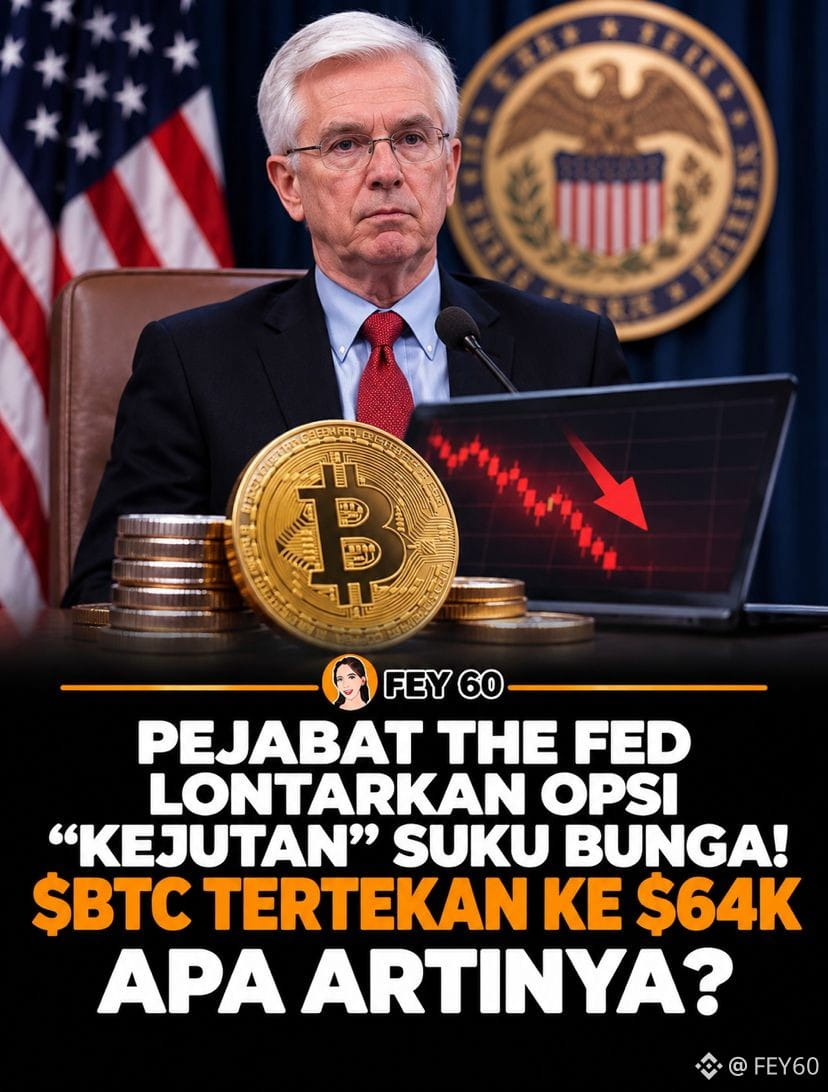
The crypto market is being put to the test again! Bitcoin ($BTC) is now hovering around $64,000, down about 21% from where it was a month ago.
.
The main trigger came from a statement by Federal Reserve Governor Christopher Waller.
.
He floated the idea that the Fed may need to consider a 0.5% (50 bps) rate hike at its upcoming December 8–9 meeting to “shock the market” and prevent inflation from becoming more entrenched.
.
📌 Key Facts Behind the Fed’s Statement:
• Not Set in Stone: Waller wasn’t strictly calling for a 0.5% hike. He said a standard 0.25% (25 bps) increase would be enough, provided the Fed clearly signals another hike in January.
.
• Debate Over Inflation: The U.S. Treasury Secretary believes current inflation is just a temporary effect of energy/oil prices. Waller disagrees, pointing out that about 70% of core services prices are rising by more than 3%, meaning inflation has spread beyond oil.
.
• The Fed’s Tightening Path: After holding rates at 3.75%–4% in October (when two officials dissented and called for a hike), high CPI inflation data has further limited the market’s room to maneuver.
.
3 Important Lessons for Beginner Investors:
1️⃣ Why Do Interest Rate Hikes Make $BTC Fall?
When interest rates rise, borrowing money becomes more expensive, while keeping cash in banks or U.S. bonds becomes more attractive. As a result, large investors tend to temporarily pull money out of riskier assets such as tech stocks and crypto.
.
2️⃣ Don’t Get Tricked by Sensational Headlines
Reading economic news requires care. A “50 bps hike” is a conditional backup option, not a final decision. Markets often overreact before seeing all the details.
.
3️⃣ Watch Out for Volatility Ahead of December 9
Whenever the Fed announces an interest rate decision, $BTC often swings wildly by several percent in just minutes. For those trading with leverage, moments like these carry a high risk of liquidation!
The crypto market is being put to the test again! Bitcoin ($BTC ) is now hovering around $64,000, down about 21% from where it was a month ago.
.
The main trigger came from a statement by Federal Reserve Governor Christopher Waller.
.
He floated the idea that the Fed may need to consider a 0.5% (50 bps) rate hike at its upcoming December 8–9 meeting to “shock the market” and prevent inflation from becoming more entrenched.
.
📌 Key Facts Behind the Fed’s Statement:
• Not Set in Stone: Waller wasn’t strictly calling for a 0.5% hike. He said a standard 0.25% (25 bps) increase would be enough, provided the Fed clearly signals another hike in January.
.
• Debate Over Inflation: The U.S. Treasury Secretary believes current inflation is just a temporary effect of energy/oil prices. Waller disagrees, pointing out that about 70% of core services prices are rising by more than 3%, meaning inflation has spread beyond oil.
.
• The Fed’s Tightening Path: After holding rates at 3.75%–4% in October (when two officials dissented and called for a hike), high CPI inflation data has further limited the market’s room to maneuver.
.
3 Important Lessons for Beginner Investors:
1️⃣ Why Do Interest Rate Hikes Make $BTC Fall?
When interest rates rise, borrowing money becomes more expensive, while keeping cash in banks or U.S. bonds becomes more attractive. As a result, large investors tend to temporarily pull money out of riskier assets such as tech stocks and crypto.
.
2️⃣ Don’t Get Tricked by Sensational Headlines
Reading economic news requires care. A “50 bps hike” is a conditional backup option, not a final decision. Markets often overreact before seeing all the details.
.
3️⃣ Watch Out for Volatility Ahead of December 9
Whenever the Fed announces an interest rate decision, $BTC often swings wildly by several percent in just minutes. For those trading with leverage, moments like these carry a high risk of liquidation!
.
The main trigger came from a statement by Federal Reserve Governor Christopher Waller.
.
He floated the idea that the Fed may need to consider a 0.5% (50 bps) rate hike at its upcoming December 8–9 meeting to “shock the market” and prevent inflation from becoming more entrenched.
.
📌 Key Facts Behind the Fed’s Statement:
• Not Set in Stone: Waller wasn’t strictly calling for a 0.5% hike. He said a standard 0.25% (25 bps) increase would be enough, provided the Fed clearly signals another hike in January.
.
• Debate Over Inflation: The U.S. Treasury Secretary believes current inflation is just a temporary effect of energy/oil prices. Waller disagrees, pointing out that about 70% of core services prices are rising by more than 3%, meaning inflation has spread beyond oil.
.
• The Fed’s Tightening Path: After holding rates at 3.75%–4% in October (when two officials dissented and called for a hike), high CPI inflation data has further limited the market’s room to maneuver.
.
3 Important Lessons for Beginner Investors:
1️⃣ Why Do Interest Rate Hikes Make $BTC Fall?
When interest rates rise, borrowing money becomes more expensive, while keeping cash in banks or U.S. bonds becomes more attractive. As a result, large investors tend to temporarily pull money out of riskier assets such as tech stocks and crypto.
.
2️⃣ Don’t Get Tricked by Sensational Headlines
Reading economic news requires care. A “50 bps hike” is a conditional backup option, not a final decision. Markets often overreact before seeing all the details.
.
3️⃣ Watch Out for Volatility Ahead of December 9
Whenever the Fed announces an interest rate decision, $BTC often swings wildly by several percent in just minutes. For those trading with leverage, moments like these carry a high risk of liquidation!
6
1.7k
·
--
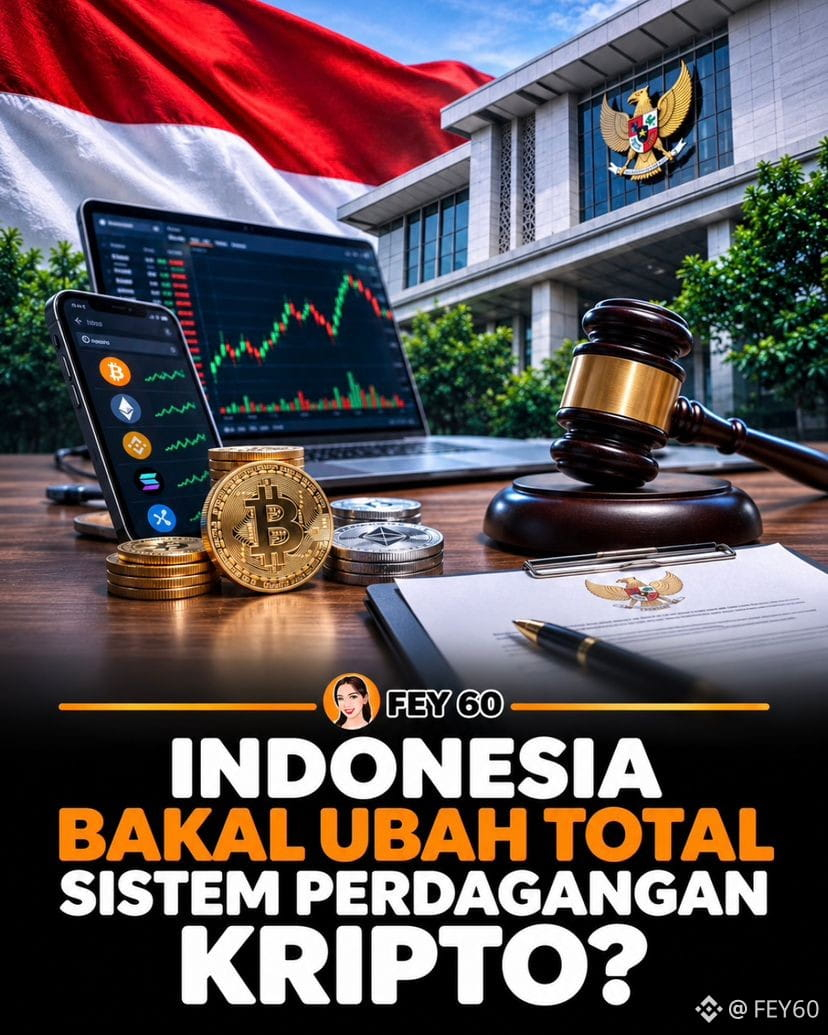
Indonesia’s crypto industry could undergo major changes in 2027. Through the revision of Law No. 4 of 2026 on P2SK, the government has introduced important changes to the national crypto asset trading system.
.
One concept drawing attention is the Single Orderbook. What does it mean?
.
1. ALL ORDERS ARE CONNECTED
Until now, each platform has had its own queue of buyers and sellers. With a Single Orderbook, orders from various platforms can be connected in one order book system.
.
This means a buyer on one platform could potentially match with a seller on another platform.
.
2. LIQUIDITY COULD INCREASE
The more orders that are aggregated, the greater the chance of buyers and sellers matching. This could make transactions more efficient.
.
3. MORE TRANSPARENT PRICES
An integrated system is expected to provide a more comprehensive view of buy and sell orders. Traders could also gain access to more transparent pricing information.
.
4. WHAT WILL HAPPEN TO LOCAL EXCHANGES?
Trading platforms will continue to serve users, but their role could shift to that of intermediaries connected to licensed exchanges. This does not mean that all exchange companies will be merged into one.
.
5. WHEN DOES IT TAKE EFFECT?
Law No. 4 of 2026 takes effect on June 17, 2026, with a one-year transition period. This means the deadline for implementing these obligations is June 17, 2027.
.
WHAT DOES THIS MEAN FOR TRADERS?
If implemented properly, this system could improve liquidity, transparency, and the efficiency of crypto trading in Indonesia.
.
However, its success will still depend on technical mechanisms, system security, transaction fees, and investor protection.
.
This change is about more than just how people buy and sell Bitcoin. It is about the future of Indonesia’s crypto trading infrastructure.
.
Do you think a single orderbook system will benefit Indonesian traders?
.
#Bitcoin #CryptoIndonesia #SingleOrderbook #CryptoAssets #OJK #UUP2SK #Blockchain
.
One concept drawing attention is the Single Orderbook. What does it mean?
.
1. ALL ORDERS ARE CONNECTED
Until now, each platform has had its own queue of buyers and sellers. With a Single Orderbook, orders from various platforms can be connected in one order book system.
.
This means a buyer on one platform could potentially match with a seller on another platform.
.
2. LIQUIDITY COULD INCREASE
The more orders that are aggregated, the greater the chance of buyers and sellers matching. This could make transactions more efficient.
.
3. MORE TRANSPARENT PRICES
An integrated system is expected to provide a more comprehensive view of buy and sell orders. Traders could also gain access to more transparent pricing information.
.
4. WHAT WILL HAPPEN TO LOCAL EXCHANGES?
Trading platforms will continue to serve users, but their role could shift to that of intermediaries connected to licensed exchanges. This does not mean that all exchange companies will be merged into one.
.
5. WHEN DOES IT TAKE EFFECT?
Law No. 4 of 2026 takes effect on June 17, 2026, with a one-year transition period. This means the deadline for implementing these obligations is June 17, 2027.
.
WHAT DOES THIS MEAN FOR TRADERS?
If implemented properly, this system could improve liquidity, transparency, and the efficiency of crypto trading in Indonesia.
.
However, its success will still depend on technical mechanisms, system security, transaction fees, and investor protection.
.
This change is about more than just how people buy and sell Bitcoin. It is about the future of Indonesia’s crypto trading infrastructure.
.
Do you think a single orderbook system will benefit Indonesian traders?
.
#Bitcoin #CryptoIndonesia #SingleOrderbook #CryptoAssets #OJK #UUP2SK #Blockchain
2
3
2.2k
·
--
The cyber and crypto worlds have once again been shaken by a large-scale supply-chain attack.
.
On November 16, hackers successfully exploited a security vulnerability in a third-party service called Optimizely and injected malicious code into 178 websites at once!
.
The list of victims was no joke: from HSBC and the BBC to Salesforce, even the official website of crypto wallet provider Ledger was infected with malicious code for more than a dozen hours before it was finally removed.
.
📌 What Actually Happened?
• Sneaking in Through the “Side Door”: The main servers belonging to Ledger or HSBC were not actually breached. The hackers got in through a third-party script (Optimizely) installed on those companies’ webpages.
.
• How the Malicious Code Worked: When visitors opened an affected website, the malicious code secretly replaced the crypto wallet addresses displayed on screen (BTC, ETH, SOL, TRX, etc.) with the hackers’ addresses, stole card data, and even copied screenshots.
.
• Tracked Losses: So far, around $7,100 in crypto has been recorded as stolen through this address-swapping scheme.
.
💡 3 Important Security Lessons for Crypto Users:
1️⃣ Website ≠ Physical Device (Hardware Wallet)
The incident at Ledger affected its website, not its hardware wallet. This is why the physical screen on a hardware wallet is so important—always make sure the recipient address on your hardware device’s screen exactly matches the one shown on your computer or phone!
.
2️⃣ Beware of Third-Party Vulnerabilities
Even a website as large as a global bank can be compromised if one of its third-party vendors has a security vulnerability. Never trust what you see in your browser 100% without checking manually.
.
3️⃣ Make a Habit of Double-Checking Addresses
Before pressing the send button, always check the first 4 and last 4 characters of the recipient address. This small habit could save your assets from an automatic address-swapping attack!
.
🤔 Who do you think should bear the most responsibility in a case like this?
.
On November 16, hackers successfully exploited a security vulnerability in a third-party service called Optimizely and injected malicious code into 178 websites at once!
.
The list of victims was no joke: from HSBC and the BBC to Salesforce, even the official website of crypto wallet provider Ledger was infected with malicious code for more than a dozen hours before it was finally removed.
.
📌 What Actually Happened?
• Sneaking in Through the “Side Door”: The main servers belonging to Ledger or HSBC were not actually breached. The hackers got in through a third-party script (Optimizely) installed on those companies’ webpages.
.
• How the Malicious Code Worked: When visitors opened an affected website, the malicious code secretly replaced the crypto wallet addresses displayed on screen (BTC, ETH, SOL, TRX, etc.) with the hackers’ addresses, stole card data, and even copied screenshots.
.
• Tracked Losses: So far, around $7,100 in crypto has been recorded as stolen through this address-swapping scheme.
.
💡 3 Important Security Lessons for Crypto Users:
1️⃣ Website ≠ Physical Device (Hardware Wallet)
The incident at Ledger affected its website, not its hardware wallet. This is why the physical screen on a hardware wallet is so important—always make sure the recipient address on your hardware device’s screen exactly matches the one shown on your computer or phone!
.
2️⃣ Beware of Third-Party Vulnerabilities
Even a website as large as a global bank can be compromised if one of its third-party vendors has a security vulnerability. Never trust what you see in your browser 100% without checking manually.
.
3️⃣ Make a Habit of Double-Checking Addresses
Before pressing the send button, always check the first 4 and last 4 characters of the recipient address. This small habit could save your assets from an automatic address-swapping attack!
.
🤔 Who do you think should bear the most responsibility in a case like this?

1
3
4.4k
·
--
The crypto world is buzzing again with comments from a prominent political figure. Former UK Prime Minister Boris Johnson openly admitted that he remains skeptical of Bitcoin ( $BTC ) while speaking at the Solana Breakpoint conference in London.
.
Johnson even got the pseudonym of Bitcoin’s creator wrong, calling it “Yakimoto Nakasori” (it should have been Satoshi Nakamoto). He questioned who would be responsible if investors lost money in a hack, and spoke about people in his village who suffered losses by repeatedly trying to make back their money in crypto.
.
Previously, Johnson also called Bitcoin a “giant Ponzi scheme,” a claim that was immediately challenged by Michael Saylor (Chairman of Strategy), who pointed out that Bitcoin has no central issuer or promoter.
.
But interestingly, although he’s skeptical of the coin, Johnson strongly supports the technology!
.
📌 3 Key Things You Should Know:
1️⃣ Against the Coin, In Favor of the Technology
Johnson stressed that the UK should become a global leader in developing blockchain technology and asset tokenization. In his view, the technology behind crypto has significant benefits for the future of finance.
.
2️⃣ Blockchain Transactions Are Actually Transparent
When Johnson brought up the use of crypto for illegal transactions, the event moderator quickly set the record straight. In fact, blockchain transaction records are much easier for law enforcement to trace than cash!
.
3️⃣ The UK Is Becoming More Crypto-Friendly
Despite Johnson’s reservations, people and regulators in the UK continue to move forward. More than 8% of UK adults now own crypto assets.
.
In addition, the UK financial regulator (FCA) has finalized mandatory crypto rules that will take full effect at the end of 2027, while the Bank of England (BoE) has also relaxed its stablecoin rules.
.
Does it make sense for someone to support blockchain technology but reject Bitcoin, or are the two actually complementary?
.
#Bitcoin #BTC #Blockchain #CryptoNews #UKRegulation
.
Johnson even got the pseudonym of Bitcoin’s creator wrong, calling it “Yakimoto Nakasori” (it should have been Satoshi Nakamoto). He questioned who would be responsible if investors lost money in a hack, and spoke about people in his village who suffered losses by repeatedly trying to make back their money in crypto.
.
Previously, Johnson also called Bitcoin a “giant Ponzi scheme,” a claim that was immediately challenged by Michael Saylor (Chairman of Strategy), who pointed out that Bitcoin has no central issuer or promoter.
.
But interestingly, although he’s skeptical of the coin, Johnson strongly supports the technology!
.
📌 3 Key Things You Should Know:
1️⃣ Against the Coin, In Favor of the Technology
Johnson stressed that the UK should become a global leader in developing blockchain technology and asset tokenization. In his view, the technology behind crypto has significant benefits for the future of finance.
.
2️⃣ Blockchain Transactions Are Actually Transparent
When Johnson brought up the use of crypto for illegal transactions, the event moderator quickly set the record straight. In fact, blockchain transaction records are much easier for law enforcement to trace than cash!
.
3️⃣ The UK Is Becoming More Crypto-Friendly
Despite Johnson’s reservations, people and regulators in the UK continue to move forward. More than 8% of UK adults now own crypto assets.
.
In addition, the UK financial regulator (FCA) has finalized mandatory crypto rules that will take full effect at the end of 2027, while the Bank of England (BoE) has also relaxed its stablecoin rules.
.
Does it make sense for someone to support blockchain technology but reject Bitcoin, or are the two actually complementary?
.
#Bitcoin #BTC #Blockchain #CryptoNews #UKRegulation

1
3
2.8k
·
--
Shocking news from $XRP !
.
For the first time since November 2024, this coin's price has fallen back below the psychological $1 level.
.
After hitting a low of around 0.89, XRP has been slowly trying to rebound into the $0.95–$1.02 range, following 10 consecutive days of daily losses—the longest losing streak of 2026!
.
The question is: Is a price below $1 an attractive discount, or a sign of further weakness?
.
Looking at the latest market data, XRP is currently down ~27% over the past month and about ~74% from its all-time high (ATH) of $3.65.
.
Pressure is coming from XRP Spot ETFs, which saw $19.1 million in outflows over the past week—the largest weekly outflow in 8 months.
.
On top of that, around $50 million in long positions were liquidated on November 14, putting market sentiment at Extreme Fear.
.
Even so, there are a few interesting things happening behind the scenes.
1. While institutional funds are flowing out of ETFs, the number of large wallets holding 10,000+ XRP on the network has hit a record high, suggesting that many large investors are taking advantage of this dip to accumulate (buy the dip).
.
2. Looking back to last August, when XRP fell below $1, its price briefly surged 71% before dropping again. This means XRP needs to hold firmly above $1.10–$1.20 first to be truly safe.
.
3. Don't blindly rely on old price target predictions from earlier this year (such as $2.80); make sure to adjust your analysis to reflect current market conditions (DYOR).
.
What’s your take on XRP at its current price? Is this the right time to start buying gradually (DCA), or would you rather wait until the price is firmly back above $1?
.
#XRP #Ripple #CryptoNews #Altcoins #CryptoMarket #DYOR $XRP
{spot}(XRPUSDT)
Shocking news from $XRP !
.
For the first time since November 2024, this coin's price has fallen back below the psychological $1 level.
.
After hitting a low of around 0.89, XRP has been slowly trying to rebound into the $0.95–$1.02 range, following 10 consecutive days of daily losses—the longest losing streak of 2026!
.
The question is: Is a price below $1 an attractive discount, or a sign of further weakness?
.
Looking at the latest market data, XRP is currently down ~27% over the past month and about ~74% from its all-time high (ATH) of $3.65.
.
Pressure is coming from XRP Spot ETFs, which saw $19.1 million in outflows over the past week—the largest weekly outflow in 8 months.
.
On top of that, around $50 million in long positions were liquidated on November 14, putting market sentiment at Extreme Fear.
.
Even so, there are a few interesting things happening behind the scenes.
1. While institutional funds are flowing out of ETFs, the number of large wallets holding 10,000+ XRP on the network has hit a record high, suggesting that many large investors are taking advantage of this dip to accumulate (buy the dip).
.
2. Looking back to last August, when XRP fell below $1, its price briefly surged 71% before dropping again. This means XRP needs to hold firmly above $1.10–$1.20 first to be truly safe.
.
3. Don't blindly rely on old price target predictions from earlier this year (such as $2.80); make sure to adjust your analysis to reflect current market conditions (DYOR).
.
What’s your take on XRP at its current price? Is this the right time to start buying gradually (DCA), or would you rather wait until the price is firmly back above $1?
.
#XRP #Ripple #CryptoNews #Altcoins #CryptoMarket #DYOR $XRP
.
For the first time since November 2024, this coin's price has fallen back below the psychological $1 level.
.
After hitting a low of around 0.89, XRP has been slowly trying to rebound into the $0.95–$1.02 range, following 10 consecutive days of daily losses—the longest losing streak of 2026!
.
The question is: Is a price below $1 an attractive discount, or a sign of further weakness?
.
Looking at the latest market data, XRP is currently down ~27% over the past month and about ~74% from its all-time high (ATH) of $3.65.
.
Pressure is coming from XRP Spot ETFs, which saw $19.1 million in outflows over the past week—the largest weekly outflow in 8 months.
.
On top of that, around $50 million in long positions were liquidated on November 14, putting market sentiment at Extreme Fear.
.
Even so, there are a few interesting things happening behind the scenes.
1. While institutional funds are flowing out of ETFs, the number of large wallets holding 10,000+ XRP on the network has hit a record high, suggesting that many large investors are taking advantage of this dip to accumulate (buy the dip).
.
2. Looking back to last August, when XRP fell below $1, its price briefly surged 71% before dropping again. This means XRP needs to hold firmly above $1.10–$1.20 first to be truly safe.
.
3. Don't blindly rely on old price target predictions from earlier this year (such as $2.80); make sure to adjust your analysis to reflect current market conditions (DYOR).
.
What’s your take on XRP at its current price? Is this the right time to start buying gradually (DCA), or would you rather wait until the price is firmly back above $1?
.
#XRP #Ripple #CryptoNews #Altcoins #CryptoMarket #DYOR $XRP

3
1.6k
·
--
Verified
Blockchain-based finance is growing rapidly, from tokenized real-world assets and stablecoins to institutional financial markets.
.
However, all these systems rely on one essential element: accurate, transparent, and verifiable data.
.
This is where Space and Time comes in.
.
Backed by M12, Microsoft’s venture capital fund, Space and Time is a blockchain data infrastructure designed to provide verifiable data for various financial applications.
.
Its technology enables blockchain and off-chain data to be processed, with computation results cryptographically proven through Proof of SQL.
.
How does it help?
1. AI (Artificial Intelligence)
AI needs data on balances, transaction histories, and protocol activity to support financial decision-making. Space and Time enables applications to verify the data computations used by AI agents.
.
2. Asset Tokenization
Tokenized assets require reliable information about ownership, cash flows, and valuations. Space and Time can combine blockchain and off-chain data to support calculations such as Net Asset Value (NAV) and digital asset trading volume.
.
3. DeFi (Decentralized Finance)
In DeFi, historical data can be used to determine reward eligibility, transaction fee discounts, and other protocol rules. Space and Time enables these query results to be proven before being used by applications and smart contracts.
.
What about the SXT token?
.
SXT has two primary functions within the Space and Time ecosystem:
• Paying for network workloads and computational operations.
• Being staked to support validator security.
.
The future of onchain finance requires more than just fast blockchains. It also needs data that can be trusted.
.
Through its verifiable data technology, Space and Time aims to become a key infrastructure connecting AI, tokenization, and DeFi.
.
#sxt $SXT @SpaceandTime
.
However, all these systems rely on one essential element: accurate, transparent, and verifiable data.
.
This is where Space and Time comes in.
.
Backed by M12, Microsoft’s venture capital fund, Space and Time is a blockchain data infrastructure designed to provide verifiable data for various financial applications.
.
Its technology enables blockchain and off-chain data to be processed, with computation results cryptographically proven through Proof of SQL.
.
How does it help?
1. AI (Artificial Intelligence)
AI needs data on balances, transaction histories, and protocol activity to support financial decision-making. Space and Time enables applications to verify the data computations used by AI agents.
.
2. Asset Tokenization
Tokenized assets require reliable information about ownership, cash flows, and valuations. Space and Time can combine blockchain and off-chain data to support calculations such as Net Asset Value (NAV) and digital asset trading volume.
.
3. DeFi (Decentralized Finance)
In DeFi, historical data can be used to determine reward eligibility, transaction fee discounts, and other protocol rules. Space and Time enables these query results to be proven before being used by applications and smart contracts.
.
What about the SXT token?
.
SXT has two primary functions within the Space and Time ecosystem:
• Paying for network workloads and computational operations.
• Being staked to support validator security.
.
The future of onchain finance requires more than just fast blockchains. It also needs data that can be trusted.
.
Through its verifiable data technology, Space and Time aims to become a key infrastructure connecting AI, tokenization, and DeFi.
.
#sxt $SXT @SpaceandTime

4
954
·
--
The cryptocurrency market is influenced not only by Bitcoin’s price movements, but also by global economic policies. One factor currently drawing attention is the direction of U.S. interest rates.
.
Federal Reserve Bank of Boston official Susan Collins said that gradual interest rate increases may still be necessary to control inflation.
.
Why does this matter for the crypto market?
📊 1. Interest Rates and Bitcoin
When interest rates rise, interest-bearing assets such as bonds can become more attractive than riskier assets like Bitcoin.
.
💰 2. Borrowing Costs Increase
High interest rates make borrowing more expensive. This can weigh on investment and economic activity.
.
📉 3. Market Liquidity Could Shrink
Tighter monetary policy can reduce the availability of liquidity and make investors more cautious about taking risks.
.
However, interest rate increases are not the only factor that determines Bitcoin’s price. ETF fund flows, global economic conditions, investor demand, and market sentiment also have an impact.
.
The Fed’s next decision will be an important development for cryptocurrency market participants to watch.
.
🔥 The question is:
If the Fed raises interest rates again, will Bitcoin come under greater pressure, or will it manage to hold up amid economic uncertainty?
.
What do you think?
.
#BitcoinActiveSupplyInProfitDropsBelow45%
.
Federal Reserve Bank of Boston official Susan Collins said that gradual interest rate increases may still be necessary to control inflation.
.
Why does this matter for the crypto market?
📊 1. Interest Rates and Bitcoin
When interest rates rise, interest-bearing assets such as bonds can become more attractive than riskier assets like Bitcoin.
.
💰 2. Borrowing Costs Increase
High interest rates make borrowing more expensive. This can weigh on investment and economic activity.
.
📉 3. Market Liquidity Could Shrink
Tighter monetary policy can reduce the availability of liquidity and make investors more cautious about taking risks.
.
However, interest rate increases are not the only factor that determines Bitcoin’s price. ETF fund flows, global economic conditions, investor demand, and market sentiment also have an impact.
.
The Fed’s next decision will be an important development for cryptocurrency market participants to watch.
.
🔥 The question is:
If the Fed raises interest rates again, will Bitcoin come under greater pressure, or will it manage to hold up amid economic uncertainty?
.
What do you think?
.
#BitcoinActiveSupplyInProfitDropsBelow45%
5
1k
·
--
The global financial markets have been in rough shape over the past 48 hours! Bitcoin ($BTC) has also come under pressure, falling to around $72,500 after two major shocks in a row.
.
Before the market has even had a chance to catch its breath, a third key data release is due tomorrow (at 8:30 a.m. U.S. time): October’s Producer Price Index (PPI).
Let’s break down this series of events in simple terms!
.
📌 3 Major Things Weighing on the Market:
1️⃣ Nvidia’s Top Boss Steps Down
Jensen Huang has officially stepped down as Nvidia’s CEO. The shocking news immediately sent Nvidia shares ($NVDA) down ~7.3% at the close (wiping out around $300 billion in market value). With tech stocks already shaky, risk assets like crypto have also felt the impact.
.
2️⃣ Strategy ($MSTR) to Be Removed from the MSCI Index
Bitcoin giant Strategy will be removed from the MSCI index list after November 30. Don’t worry, this isn’t a delisting from the stock exchange, and the company isn’t being forced to sell its $BTC holdings. However, this move could make it a little harder for them to raise new capital.
.
3️⃣ Waiting for Producer Inflation Data (PPI)
Tomorrow, the market is waiting for data on price increases at the factory/producer level (PPI). The figure is forecast to rise +0.4% month over month (and +0.3% for core inflation). If it comes in higher than expected, as yesterday’s consumer inflation (CPI) data did, the market is concerned that the U.S. Federal Reserve will take an even tougher stance on interest rates.
.
💡 Key Lessons for Beginner Investors:
• The Global Market Domino Effect: When a tech giant like Nvidia is shaken, major investors often temporarily pull funds from various risk assets (risk-off), including Bitcoin.
.
• Don’t Misunderstand $MSTR: Being removed from an index is simply an adjustment to a global stock list, not a sign that the company is going bankrupt or about to dump Bitcoin onto the market.
.
🤔 What do you think?
Of the three developments above, which do you think is making the crypto market most nervous right now?
$NVDAB
.
Before the market has even had a chance to catch its breath, a third key data release is due tomorrow (at 8:30 a.m. U.S. time): October’s Producer Price Index (PPI).
Let’s break down this series of events in simple terms!
.
📌 3 Major Things Weighing on the Market:
1️⃣ Nvidia’s Top Boss Steps Down
Jensen Huang has officially stepped down as Nvidia’s CEO. The shocking news immediately sent Nvidia shares ($NVDA) down ~7.3% at the close (wiping out around $300 billion in market value). With tech stocks already shaky, risk assets like crypto have also felt the impact.
.
2️⃣ Strategy ($MSTR) to Be Removed from the MSCI Index
Bitcoin giant Strategy will be removed from the MSCI index list after November 30. Don’t worry, this isn’t a delisting from the stock exchange, and the company isn’t being forced to sell its $BTC holdings. However, this move could make it a little harder for them to raise new capital.
.
3️⃣ Waiting for Producer Inflation Data (PPI)
Tomorrow, the market is waiting for data on price increases at the factory/producer level (PPI). The figure is forecast to rise +0.4% month over month (and +0.3% for core inflation). If it comes in higher than expected, as yesterday’s consumer inflation (CPI) data did, the market is concerned that the U.S. Federal Reserve will take an even tougher stance on interest rates.
.
💡 Key Lessons for Beginner Investors:
• The Global Market Domino Effect: When a tech giant like Nvidia is shaken, major investors often temporarily pull funds from various risk assets (risk-off), including Bitcoin.
.
• Don’t Misunderstand $MSTR: Being removed from an index is simply an adjustment to a global stock list, not a sign that the company is going bankrupt or about to dump Bitcoin onto the market.
.
🤔 What do you think?
Of the three developments above, which do you think is making the crypto market most nervous right now?
$NVDAB

3
2.1k
·
--
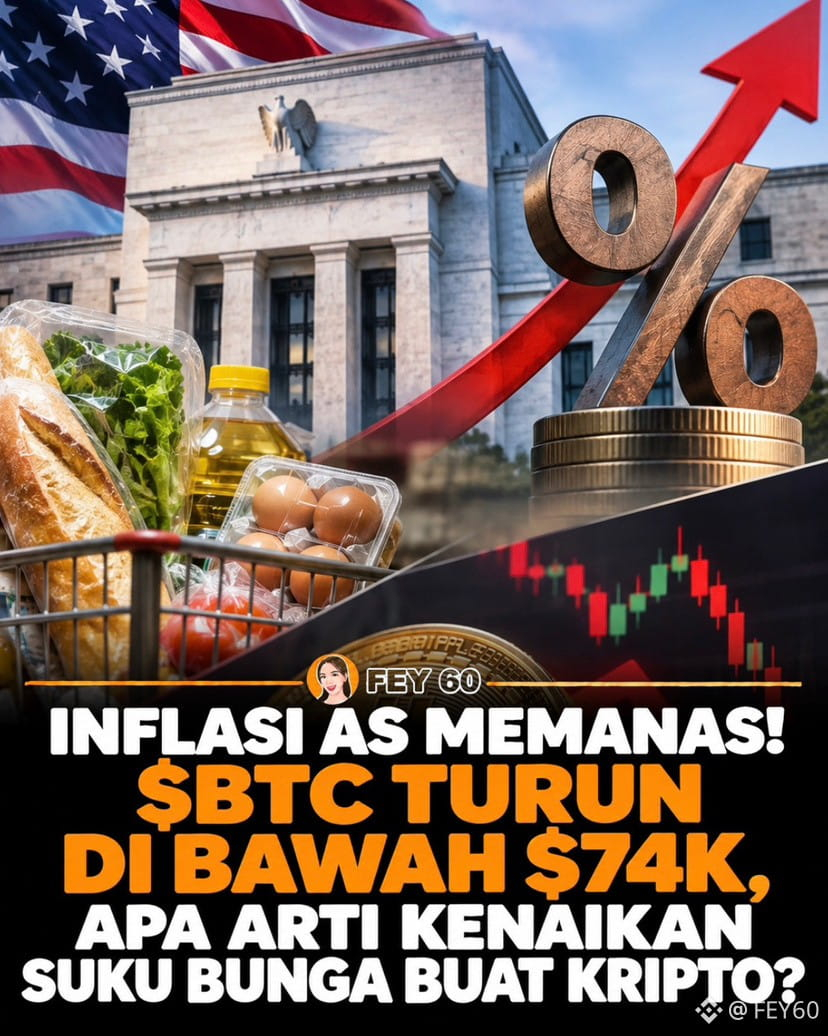
Global financial markets are volatile again! Bitcoin ($BTC) prices fell to the $73,000–$74,000 range after US October inflation (CPI) data came in higher than analysts had expected.
.
This has left investors uneasy ahead of the US Federal Reserve’s (the Fed’s) meeting next December.
Let’s break down this complicated economic news in a relaxed, easy-to-understand way!
.
📌 Key Facts Behind the Latest Inflation Data:
• Headline Inflation (Headline CPI): Rose +0.4% month over month (slightly above the 0.3% forecast). Although down from last month’s figure (0.6%), the number is still considered too “hot” by the market.
.
• Core Inflation (Core CPI): Rose +0.3% and has stayed at the same level for three consecutive months.
.
• The Fed’s Signal: Fed officials had mentioned that a 0.5% (50 bps) interest rate hike must be considered if core inflation reaches 0.3% or higher.
.
• Market Odds: The FedWatch tool currently estimates a roughly 15% chance of a 0.5% rate hike, while most still expect a standard 0.25% hike.
.
• Impact on Crypto: $BTC fell by around 2%, while other assets such as ETH and XRP dropped further, by around 3.5%.
.
3 Key Lessons for Beginner Investors:
1️⃣ The Difference Between Headline and Core Inflation
Although this month’s increase slowed slightly compared with last month, stubborn core inflation is making the Fed think twice about easing its interest rate policy.
.
2️⃣ Why Did ETH Fall Further Than BTC?
Altcoins such as Ethereum usually have higher sensitivity (beta) and use more leverage (margin debt) than Bitcoin. When markets are tense, altcoins tend to fall harder.
.
3️⃣ Clearing Out Leveraged Positions
Before this inflation data was released, the market had already been rocked by mass liquidations worth $1.12 billion in 24 hours! This means many greedy traders used borrowed funds and ended up getting “burned” when prices reversed.
$BTC
{spot}(BTCUSDT)
Global financial markets are volatile again! Bitcoin ($BTC ) prices fell to the $73,000–$74,000 range after US October inflation (CPI) data came in higher than analysts had expected.
.
This has left investors uneasy ahead of the US Federal Reserve’s (the Fed’s) meeting next December.
Let’s break down this complicated economic news in a relaxed, easy-to-understand way!
.
📌 Key Facts Behind the Latest Inflation Data:
• Headline Inflation (Headline CPI): Rose +0.4% month over month (slightly above the 0.3% forecast). Although down from last month’s figure (0.6%), the number is still considered too “hot” by the market.
.
• Core Inflation (Core CPI): Rose +0.3% and has stayed at the same level for three consecutive months.
.
• The Fed’s Signal: Fed officials had mentioned that a 0.5% (50 bps) interest rate hike must be considered if core inflation reaches 0.3% or higher.
.
• Market Odds: The FedWatch tool currently estimates a roughly 15% chance of a 0.5% rate hike, while most still expect a standard 0.25% hike.
.
• Impact on Crypto: $BTC fell by around 2%, while other assets such as ETH and XRP dropped further, by around 3.5%.
.
3 Key Lessons for Beginner Investors:
1️⃣ The Difference Between Headline and Core Inflation
Although this month’s increase slowed slightly compared with last month, stubborn core inflation is making the Fed think twice about easing its interest rate policy.
.
2️⃣ Why Did ETH Fall Further Than BTC?
Altcoins such as Ethereum usually have higher sensitivity (beta) and use more leverage (margin debt) than Bitcoin. When markets are tense, altcoins tend to fall harder.
.
3️⃣ Clearing Out Leveraged Positions
Before this inflation data was released, the market had already been rocked by mass liquidations worth $1.12 billion in 24 hours! This means many greedy traders used borrowed funds and ended up getting “burned” when prices reversed.
$BTC
.
This has left investors uneasy ahead of the US Federal Reserve’s (the Fed’s) meeting next December.
Let’s break down this complicated economic news in a relaxed, easy-to-understand way!
.
📌 Key Facts Behind the Latest Inflation Data:
• Headline Inflation (Headline CPI): Rose +0.4% month over month (slightly above the 0.3% forecast). Although down from last month’s figure (0.6%), the number is still considered too “hot” by the market.
.
• Core Inflation (Core CPI): Rose +0.3% and has stayed at the same level for three consecutive months.
.
• The Fed’s Signal: Fed officials had mentioned that a 0.5% (50 bps) interest rate hike must be considered if core inflation reaches 0.3% or higher.
.
• Market Odds: The FedWatch tool currently estimates a roughly 15% chance of a 0.5% rate hike, while most still expect a standard 0.25% hike.
.
• Impact on Crypto: $BTC fell by around 2%, while other assets such as ETH and XRP dropped further, by around 3.5%.
.
3 Key Lessons for Beginner Investors:
1️⃣ The Difference Between Headline and Core Inflation
Although this month’s increase slowed slightly compared with last month, stubborn core inflation is making the Fed think twice about easing its interest rate policy.
.
2️⃣ Why Did ETH Fall Further Than BTC?
Altcoins such as Ethereum usually have higher sensitivity (beta) and use more leverage (margin debt) than Bitcoin. When markets are tense, altcoins tend to fall harder.
.
3️⃣ Clearing Out Leveraged Positions
Before this inflation data was released, the market had already been rocked by mass liquidations worth $1.12 billion in 24 hours! This means many greedy traders used borrowed funds and ended up getting “burned” when prices reversed.
$BTC
3
550
·
--
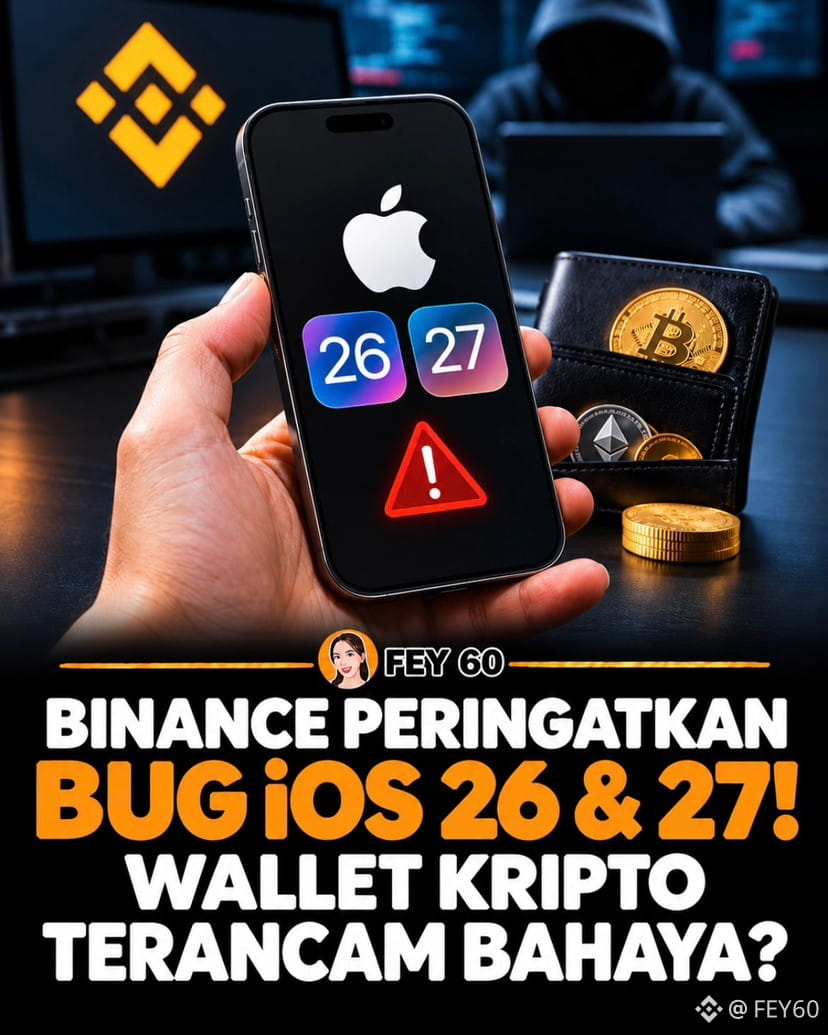
🚨 BINANCE WARNS OF AN iOS SECURITY VULNERABILITY!
.
Binance has issued a warning about a security vulnerability called worse_query that affects several iOS versions: 26.7.1, 27.0.1, and 27.2.
.
This vulnerability could allow malicious apps to read local files from other apps on the same device. This means data that should be protected could also be at risk.
.
🔐 WHAT DATA IS AT RISK?
Some sensitive information that could potentially be exposed includes:
.
* Seed phrases or wallet recovery phrases.
* Private keys or access keys to crypto assets.
* Account login credentials.
.
⚠️ WHAT ARE THE CONSEQUENCES?
If a seed phrase or private key is stolen, attackers could take over the wallet and transfer the assets in it. They would not even need to physically possess the victim’s iPhone to access the wallet.
.
🛡️ WHAT SHOULD YOU DO?
Binance advises users to:
1. Remove apps from untrusted sources.
2. Update iOS and all apps to the latest official versions.
3. If you suspect your device has been compromised, transfer your assets to a new wallet using a clean device.
4. Reset all active login sessions.
.
Remember, the security of crypto assets depends not only on the platform or wallet you use, but also on the security of the device where that data is stored.
.
Don’t install apps indiscriminately. Protect your device before your digital assets become victims!
.
Binance has issued a warning about a security vulnerability called worse_query that affects several iOS versions: 26.7.1, 27.0.1, and 27.2.
.
This vulnerability could allow malicious apps to read local files from other apps on the same device. This means data that should be protected could also be at risk.
.
🔐 WHAT DATA IS AT RISK?
Some sensitive information that could potentially be exposed includes:
.
* Seed phrases or wallet recovery phrases.
* Private keys or access keys to crypto assets.
* Account login credentials.
.
⚠️ WHAT ARE THE CONSEQUENCES?
If a seed phrase or private key is stolen, attackers could take over the wallet and transfer the assets in it. They would not even need to physically possess the victim’s iPhone to access the wallet.
.
🛡️ WHAT SHOULD YOU DO?
Binance advises users to:
1. Remove apps from untrusted sources.
2. Update iOS and all apps to the latest official versions.
3. If you suspect your device has been compromised, transfer your assets to a new wallet using a clean device.
4. Reset all active login sessions.
.
Remember, the security of crypto assets depends not only on the platform or wallet you use, but also on the security of the device where that data is stored.
.
Don’t install apps indiscriminately. Protect your device before your digital assets become victims!
3
1.1k
·
--
There’s some interesting news about whale movements. Big players on the Hyperliquid trading platform have just collectively switched to taking net short positions (betting that prices will fall) on Bitcoin ($BTC).
.
This is their largest short position since October 2025. The price $BTC is currently hovering around $74K–$76K.
The question is: Will Bitcoin’s price really plunge again, or will these whales get caught in a short squeeze?
.
Let’s break down the situation in simple terms!
📌 Key Facts About Whale Movements:
- A Change of Direction (Oct 27): After consistently betting on rising prices (going long) for 7 months, these whales suddenly reversed course and opened short positions. Since then, BTC’s price has indeed corrected by around 6%.
.
- Whale Predictions Have Been Mixed:
• October 2025: Their short bets paid off, and BTC’s price plunged 23%.
• March 2026: Their short bets failed completely as BTC’s price instead surged (rallied) 16%!
• May 2026: When they bet on prices rising (went long), the price instead fell 28.6%.
.
This is data from just one group of traders on the Hyperliquid platform, and does not reflect the entire global crypto market!
.
3 Important Lessons for Beginner Investors:
1️⃣ Whales Can Be Wrong Too!
Of their last 3 major bets, these whales were right only once! So don’t panic and rush into short positions just because you see what they’re doing.
.
2️⃣ The Danger of a Short Squeeze
If lots of people bet that prices will fall, but a big buyer suddenly steps in and pushes prices up, short sellers will be forced to buy back their coins. This can actually trigger a very sharp price increase (a short squeeze)!
.
3️⃣ Focus on Long-Term Trends
Price fluctuations caused by short-term trader movements are normal in the crypto market. Keep doing your own research (DYOR).
.
🤔 What’s your prediction?
Will the price $BTC continue correcting like it did last October, or is it about to bounce back and leave these whales biting their nails?
$BTC
{spot}(BTCUSDT)
There’s some interesting news about whale movements. Big players on the Hyperliquid trading platform have just collectively switched to taking net short positions (betting that prices will fall) on Bitcoin ($BTC ).
.
This is their largest short position since October 2025. The price $BTC is currently hovering around $74K–$76K.
The question is: Will Bitcoin’s price really plunge again, or will these whales get caught in a short squeeze?
.
Let’s break down the situation in simple terms!
📌 Key Facts About Whale Movements:
- A Change of Direction (Oct 27): After consistently betting on rising prices (going long) for 7 months, these whales suddenly reversed course and opened short positions. Since then, BTC’s price has indeed corrected by around 6%.
.
- Whale Predictions Have Been Mixed:
• October 2025: Their short bets paid off, and BTC’s price plunged 23%.
• March 2026: Their short bets failed completely as BTC’s price instead surged (rallied) 16%!
• May 2026: When they bet on prices rising (went long), the price instead fell 28.6%.
.
This is data from just one group of traders on the Hyperliquid platform, and does not reflect the entire global crypto market!
.
3 Important Lessons for Beginner Investors:
1️⃣ Whales Can Be Wrong Too!
Of their last 3 major bets, these whales were right only once! So don’t panic and rush into short positions just because you see what they’re doing.
.
2️⃣ The Danger of a Short Squeeze
If lots of people bet that prices will fall, but a big buyer suddenly steps in and pushes prices up, short sellers will be forced to buy back their coins. This can actually trigger a very sharp price increase (a short squeeze)!
.
3️⃣ Focus on Long-Term Trends
Price fluctuations caused by short-term trader movements are normal in the crypto market. Keep doing your own research (DYOR).
.
🤔 What’s your prediction?
Will the price $BTC continue correcting like it did last October, or is it about to bounce back and leave these whales biting their nails?
$BTC
.
This is their largest short position since October 2025. The price $BTC is currently hovering around $74K–$76K.
The question is: Will Bitcoin’s price really plunge again, or will these whales get caught in a short squeeze?
.
Let’s break down the situation in simple terms!
📌 Key Facts About Whale Movements:
- A Change of Direction (Oct 27): After consistently betting on rising prices (going long) for 7 months, these whales suddenly reversed course and opened short positions. Since then, BTC’s price has indeed corrected by around 6%.
.
- Whale Predictions Have Been Mixed:
• October 2025: Their short bets paid off, and BTC’s price plunged 23%.
• March 2026: Their short bets failed completely as BTC’s price instead surged (rallied) 16%!
• May 2026: When they bet on prices rising (went long), the price instead fell 28.6%.
.
This is data from just one group of traders on the Hyperliquid platform, and does not reflect the entire global crypto market!
.
3 Important Lessons for Beginner Investors:
1️⃣ Whales Can Be Wrong Too!
Of their last 3 major bets, these whales were right only once! So don’t panic and rush into short positions just because you see what they’re doing.
.
2️⃣ The Danger of a Short Squeeze
If lots of people bet that prices will fall, but a big buyer suddenly steps in and pushes prices up, short sellers will be forced to buy back their coins. This can actually trigger a very sharp price increase (a short squeeze)!
.
3️⃣ Focus on Long-Term Trends
Price fluctuations caused by short-term trader movements are normal in the crypto market. Keep doing your own research (DYOR).
.
🤔 What’s your prediction?
Will the price $BTC continue correcting like it did last October, or is it about to bounce back and leave these whales biting their nails?
$BTC

3
1.9k
·
--
Bitcoin’s decline from $81,000 to $75,000 was more than just a routine correction. Several factors are believed to have triggered the market pressure:
.
1. SECURITY SHOCK
The Binance security incident on October 29, linked to losses of around $6.3 billion, sparked investor concerns. After services resumed, net withdrawals of around $4.72 billion were recorded.
.
2. INSTITUTIONS START TO EXIT
U.S. Spot Bitcoin ETFs recorded outflows of $643 million on October 30 and $398.6 million on November 2. These fund outflows point to waning institutional interest.
.
3. LIQUIDATIONS AND MACRO PRESSURE
Around $366 million in trading positions were liquidated within 24 hours, 84% of them Long positions. Persistently high U.S. interest rates are also making investors more inclined to avoid risky assets.
.
4. IS THE FUTURE OF THE CLARITY ACT AT RISK?
Republicans under Trump are known for being more supportive of the crypto industry. A political defeat in the midterm elections could slow discussions on the CLARITY Act.
.
5. DEMOCRATS COULD CHANGE THE REGULATORY DIRECTION
Democrats’ views on crypto regulation vary considerably. However, a shift in the balance of political power could hinder or change the regulatory agenda previously advanced by the Trump administration.
.
6. IS THERE POLITICAL MANIPULATION BEHIND THE PRICE MOVEMENT?
Bitcoin briefly rose to $81,000 before correcting to $75,000. There is speculation that shifts in political power are affecting market sentiment, and some have even suggested that certain parties are selling off assets to anticipate regulatory changes.
.
However, there is no strong evidence that Trump or government officials deliberately sold crypto assets to trigger the price decline.
.
The crypto market is facing a combination of security concerns, institutional outflows, liquidations, and political uncertainty.
.
Is this just a temporary correction or the beginning of a major shift in the direction of the U.S. crypto industry?
.
1. SECURITY SHOCK
The Binance security incident on October 29, linked to losses of around $6.3 billion, sparked investor concerns. After services resumed, net withdrawals of around $4.72 billion were recorded.
.
2. INSTITUTIONS START TO EXIT
U.S. Spot Bitcoin ETFs recorded outflows of $643 million on October 30 and $398.6 million on November 2. These fund outflows point to waning institutional interest.
.
3. LIQUIDATIONS AND MACRO PRESSURE
Around $366 million in trading positions were liquidated within 24 hours, 84% of them Long positions. Persistently high U.S. interest rates are also making investors more inclined to avoid risky assets.
.
4. IS THE FUTURE OF THE CLARITY ACT AT RISK?
Republicans under Trump are known for being more supportive of the crypto industry. A political defeat in the midterm elections could slow discussions on the CLARITY Act.
.
5. DEMOCRATS COULD CHANGE THE REGULATORY DIRECTION
Democrats’ views on crypto regulation vary considerably. However, a shift in the balance of political power could hinder or change the regulatory agenda previously advanced by the Trump administration.
.
6. IS THERE POLITICAL MANIPULATION BEHIND THE PRICE MOVEMENT?
Bitcoin briefly rose to $81,000 before correcting to $75,000. There is speculation that shifts in political power are affecting market sentiment, and some have even suggested that certain parties are selling off assets to anticipate regulatory changes.
.
However, there is no strong evidence that Trump or government officials deliberately sold crypto assets to trigger the price decline.
.
The crypto market is facing a combination of security concerns, institutional outflows, liquidations, and political uncertainty.
.
Is this just a temporary correction or the beginning of a major shift in the direction of the U.S. crypto industry?
2
1.3k
·
--
Verified
Big news has just come from the American political scene. The Democratic Party has officially won control of the House and the Senate.
.
In response to the midterm election results, Bitcoin ($BTC) briefly plunged to $75,618—the lowest level in the past 7 weeks! But in a surprising turn, the price $BTC quickly rebounded to around $78K.
.
Let’s break down what actually happened in simple terms!
.
📌 Key Facts Behind the Market Move:
- Already Priced In: Prediction markets had actually put the odds of a Democratic victory at around 75%. So, this price drop wasn’t caused by a surprise, but was a normal response to temporary selling.
- Wave of Liquidations: The brief dip wiped out (liquidated) nearly $300 million worth of long positions (traders betting that the price would rise)!
- The Fate of Crypto Regulation (CLARITY Bill): The bill aimed at clarifying the legal framework for the crypto market in the U.S. briefly failed to advance in the Senate.
.
With Elizabeth Warren (a figure known for taking a very strict stance on crypto) entering the race to become Senate Banking Committee Chair, crypto regulations are expected to become even tighter going forward.
.
3 Key Lessons for Investors:
1️⃣ Political Effects Are Only Temporary
Price drops during midterm elections are often part of Bitcoin’s natural 4-year cycle, rather than being solely about which party wins.
.
2️⃣ Bitcoin’s Resilience Has Been Tested
Despite concerns that regulations in the U.S. could become stricter, buyers in the spot market took advantage of the dip to scoop up $BTC, helping it quickly recover to $78K.
.
3️⃣ Regulatory Clarity Remains Key
Changes in the political landscape in the U.S. will certainly affect how quickly crypto laws are passed. However, the crypto industry is much more mature than it was a few years ago.
.
🤔 What’s your take?
Will political changes in the U.S. slow $BTC down, or is this the best accumulation opportunity before the next rally?
Share your thoughts in the comments! 👇👇
$BTC
{spot}(BTCUSDT)
Big news has just come from the American political scene. The Democratic Party has officially won control of the House and the Senate.
.
In response to the midterm election results, Bitcoin ($BTC ) briefly plunged to $75,618—the lowest level in the past 7 weeks! But in a surprising turn, the price $BTC quickly rebounded to around $78K.
.
Let’s break down what actually happened in simple terms!
.
📌 Key Facts Behind the Market Move:
- Already Priced In: Prediction markets had actually put the odds of a Democratic victory at around 75%. So, this price drop wasn’t caused by a surprise, but was a normal response to temporary selling.
- Wave of Liquidations: The brief dip wiped out (liquidated) nearly $300 million worth of long positions (traders betting that the price would rise)!
- The Fate of Crypto Regulation (CLARITY Bill): The bill aimed at clarifying the legal framework for the crypto market in the U.S. briefly failed to advance in the Senate.
.
With Elizabeth Warren (a figure known for taking a very strict stance on crypto) entering the race to become Senate Banking Committee Chair, crypto regulations are expected to become even tighter going forward.
.
3 Key Lessons for Investors:
1️⃣ Political Effects Are Only Temporary
Price drops during midterm elections are often part of Bitcoin’s natural 4-year cycle, rather than being solely about which party wins.
.
2️⃣ Bitcoin’s Resilience Has Been Tested
Despite concerns that regulations in the U.S. could become stricter, buyers in the spot market took advantage of the dip to scoop up $BTC , helping it quickly recover to $78K.
.
3️⃣ Regulatory Clarity Remains Key
Changes in the political landscape in the U.S. will certainly affect how quickly crypto laws are passed. However, the crypto industry is much more mature than it was a few years ago.
.
🤔 What’s your take?
Will political changes in the U.S. slow $BTC down, or is this the best accumulation opportunity before the next rally?
Share your thoughts in the comments! 👇👇
$BTC
.
In response to the midterm election results, Bitcoin ($BTC ) briefly plunged to $75,618—the lowest level in the past 7 weeks! But in a surprising turn, the price $BTC quickly rebounded to around $78K.
.
Let’s break down what actually happened in simple terms!
.
📌 Key Facts Behind the Market Move:
- Already Priced In: Prediction markets had actually put the odds of a Democratic victory at around 75%. So, this price drop wasn’t caused by a surprise, but was a normal response to temporary selling.
- Wave of Liquidations: The brief dip wiped out (liquidated) nearly $300 million worth of long positions (traders betting that the price would rise)!
- The Fate of Crypto Regulation (CLARITY Bill): The bill aimed at clarifying the legal framework for the crypto market in the U.S. briefly failed to advance in the Senate.
.
With Elizabeth Warren (a figure known for taking a very strict stance on crypto) entering the race to become Senate Banking Committee Chair, crypto regulations are expected to become even tighter going forward.
.
3 Key Lessons for Investors:
1️⃣ Political Effects Are Only Temporary
Price drops during midterm elections are often part of Bitcoin’s natural 4-year cycle, rather than being solely about which party wins.
.
2️⃣ Bitcoin’s Resilience Has Been Tested
Despite concerns that regulations in the U.S. could become stricter, buyers in the spot market took advantage of the dip to scoop up $BTC , helping it quickly recover to $78K.
.
3️⃣ Regulatory Clarity Remains Key
Changes in the political landscape in the U.S. will certainly affect how quickly crypto laws are passed. However, the crypto industry is much more mature than it was a few years ago.
.
🤔 What’s your take?
Will political changes in the U.S. slow $BTC down, or is this the best accumulation opportunity before the next rally?
Share your thoughts in the comments! 👇👇
$BTC
3
1.7k
Log in to explore more content
Join global crypto users on Binance Square
⚡️ Get latest and useful information about crypto.
💬 Trusted by the world’s largest crypto exchange.
👍 Discover real insights from verified creators.
Email / Phone number
Trending Topics
CanMarketsReboundAfterThanksgiving?
42,952 views
810 Discussing
Rate-Hike Bets Linger as US Markets Head Into Thanksgiving Closure
Binance News
·2 Likes
·2.3k views
CouldSpaceX’sOrbitalDataCentersBoostAIChipDemand?
24,363 views
497 Discussing
EvolveAtBinanceBlockchainWeek
691,281 views
7,948 Discussing