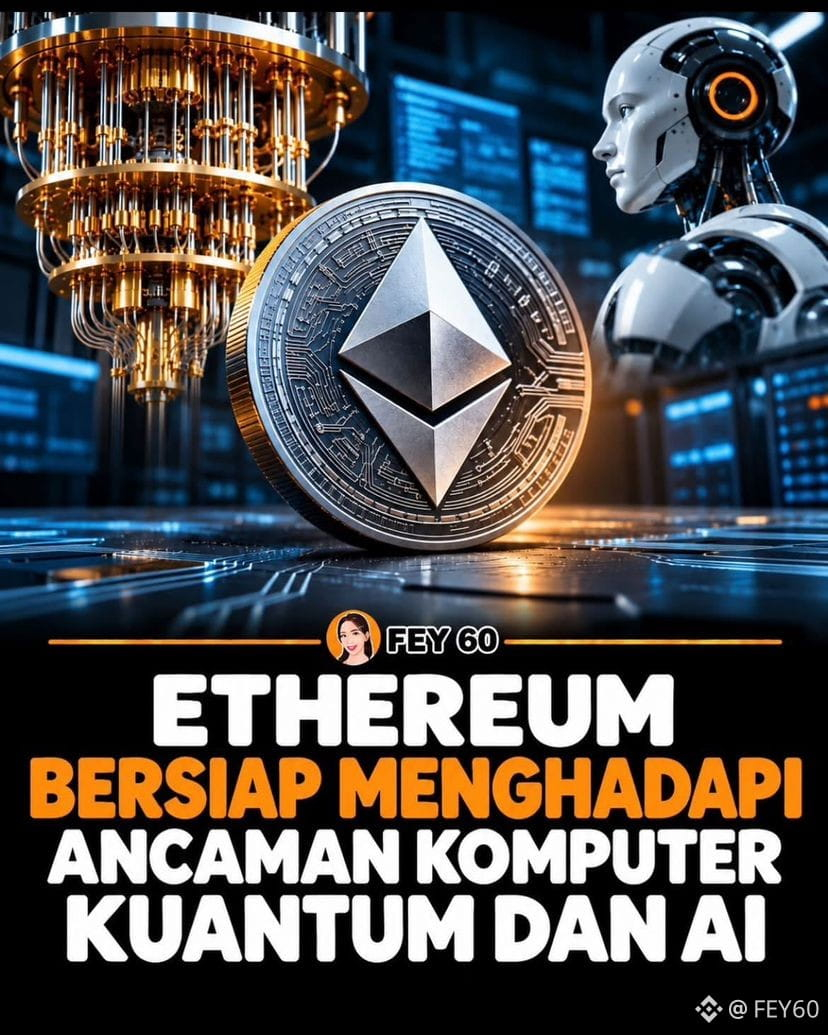
The Ethereum Foundation (EF) is accelerating preparations to secure Ethereum against quantum computing threats and advances in artificial intelligence (AI).
.
This move was announced in the PQAI #0 publication on November 23, 2026, which outlines plans to prepare Ethereum for the post-quantum era and advances in AI.
.
Three main areas will be migrated:
1. Validators: Replace BLS digital signatures with hash-based technology.
2. Wallets: Prepare a new digital signature system to protect user accounts.
3. Data storage: Update the blob data mechanism that supports Layer-2 networks.
.
However, this migration presents challenges. Hash-based technology produces larger digital signatures, potentially increasing bandwidth, storage, and hardware requirements.
.
In addition, wallets, staking pools, and smart contracts will also need to adapt to the new system.
.
AI is becoming increasingly capable of finding vulnerabilities or bugs in software, including code that has already been reviewed. For this reason, the Ethereum Foundation wants to tighten code reviews and raise software security standards.
.
To support this effort, EF plans to double the size of its protocol security team and use formal verification methods to ensure that software complies with security specifications.
.
When will the migration take place?
Some proposed targets include:
* Ethlabs: 2027 through the pqai27 initiative.
* Justin Drake: December 2028.
* Ethereum Foundation: 2029, with an evaluation in January 2027.
.
However, all of these targets are still proposals and internal plans, not a final schedule for the entire Ethereum ecosystem.
.
These preparations are a long-term effort to safeguard Ethereum's security and sustainability. However, the announcement is not a direct catalyst for an increase in the price of ETH.
.
Investors should pay attention to the migration's implementation, ecosystem readiness, and the results of testing the new technology. In short, Ethereum is building safeguards before the threats posed by future technologies actually materialize.