

world dragon 世界龙
4.3k Posts

world dragon 世界龙
Report
Block User
Open Trade
Frequent Trader
11.2 Months
92 Following
13.6K+ Followers
5.9K+ Liked
Posts
Portfolio
All
Quotes
Live
@OpenGradient The future of AI may not be decided by who builds the smartest models, but by who builds the most trustworthy infrastructure around them.
That is why @OpenGradient stands out.
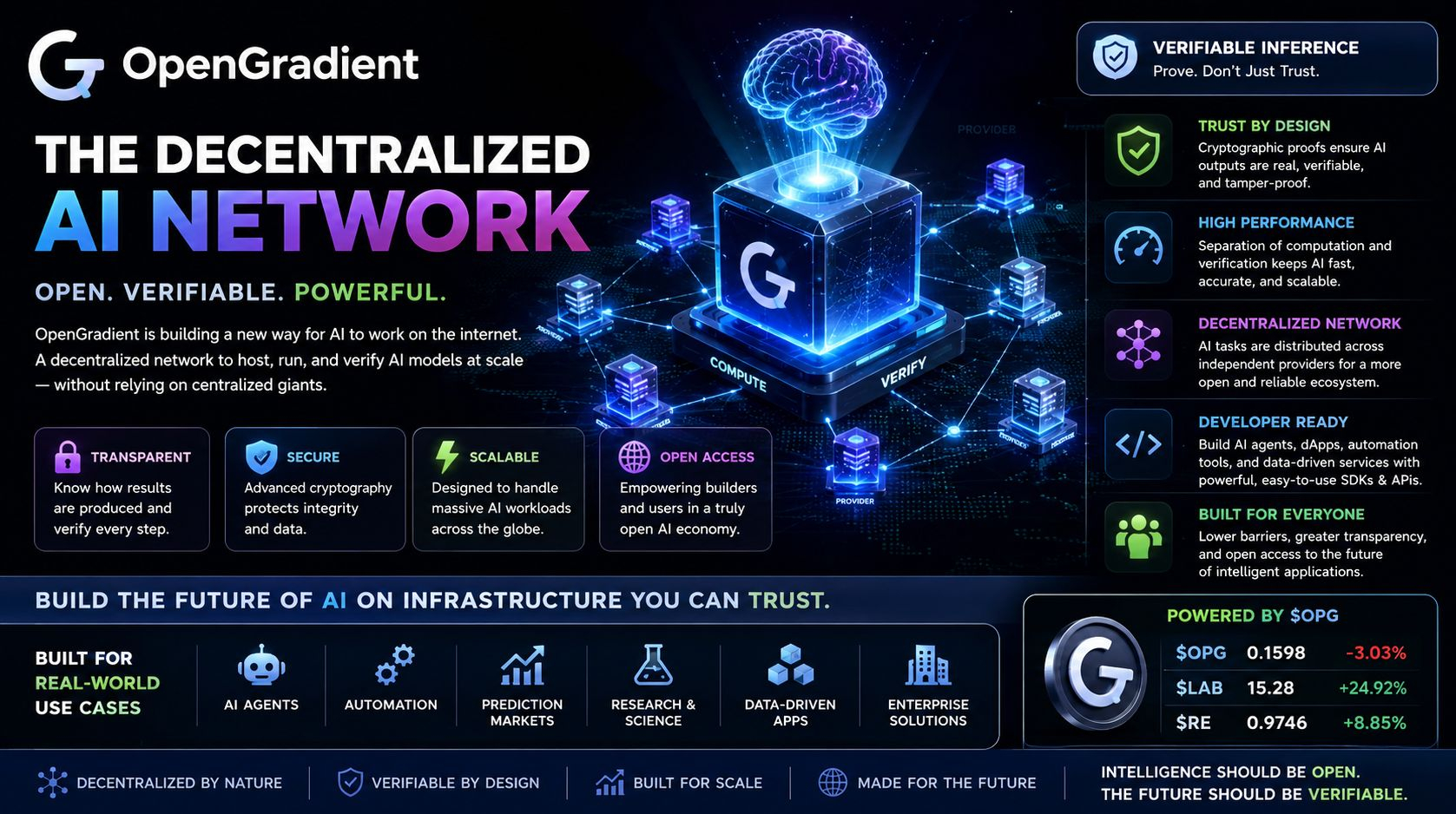
OpenGradient is creating a decentralized AI network where intelligence can be deployed, verified, and scaled without relying on a handful of centralized providers. Instead of treating AI as a black box, it introduces verifiable inference, allowing users to confirm that outputs were generated by real model executions and not altered after the fact.
What makes this important is the separation of computation and verification. AI models can run efficiently while cryptographic proof systems ensure transparency and accountability in the background. This creates a foundation where speed does not come at the expense of trust.
The implications go far beyond chatbots. Developers can build autonomous agents, prediction systems, research tools, and data-driven applications on infrastructure designed for openness and auditability. As AI becomes embedded in finance, governance, science, and everyday decision-making, the ability to verify outcomes will become increasingly valuable.
Blockchain gave us verifiable transactions. OpenGradient is working toward verifiable intelligence.
If the next era of AI is built on transparency rather than blind trust, projects like OpenGradient could become essential infrastructure for the internet's intelligence layer.
#opg $OPG
@OpenGradient The future of AI may not be decided by who builds the smartest models, but by who builds the most trustworthy infrastructure around them.
That is why @OpenGradient stands out.
OpenGradient is creating a decentralized AI network where intelligence can be deployed, verified, and scaled without relying on a handful of centralized providers. Instead of treating AI as a black box, it introduces verifiable inference, allowing users to confirm that outputs were generated by real model executions and not altered after the fact.
What makes this important is the separation of computation and verification. AI models can run efficiently while cryptographic proof systems ensure transparency and accountability in the background. This creates a foundation where speed does not come at the expense of trust.
The implications go far beyond chatbots. Developers can build autonomous agents, prediction systems, research tools, and data-driven applications on infrastructure designed for openness and auditability. As AI becomes embedded in finance, governance, science, and everyday decision-making, the ability to verify outcomes will become increasingly valuable.
Blockchain gave us verifiable transactions. OpenGradient is working toward verifiable intelligence.
If the next era of AI is built on transparency rather than blind trust, projects like OpenGradient could become essential infrastructure for the internet's intelligence layer.
#opg $OPG
That is why @OpenGradient stands out.
OpenGradient is creating a decentralized AI network where intelligence can be deployed, verified, and scaled without relying on a handful of centralized providers. Instead of treating AI as a black box, it introduces verifiable inference, allowing users to confirm that outputs were generated by real model executions and not altered after the fact.
What makes this important is the separation of computation and verification. AI models can run efficiently while cryptographic proof systems ensure transparency and accountability in the background. This creates a foundation where speed does not come at the expense of trust.
The implications go far beyond chatbots. Developers can build autonomous agents, prediction systems, research tools, and data-driven applications on infrastructure designed for openness and auditability. As AI becomes embedded in finance, governance, science, and everyday decision-making, the ability to verify outcomes will become increasingly valuable.
Blockchain gave us verifiable transactions. OpenGradient is working toward verifiable intelligence.
If the next era of AI is built on transparency rather than blind trust, projects like OpenGradient could become essential infrastructure for the internet's intelligence layer.
#opg $OPG
3
3
311
The more I study@OpenGradient AI and decentralized infrastructure, the more I realize that intelligence alone is not the breakthrough.
The real breakthrough$OPG is accountability.
Today, most AI outputs exist as isolated moments. An answer appears, a decision is made, and we are expected to trust that process without being able to independently verify it.
But imagine a different model.
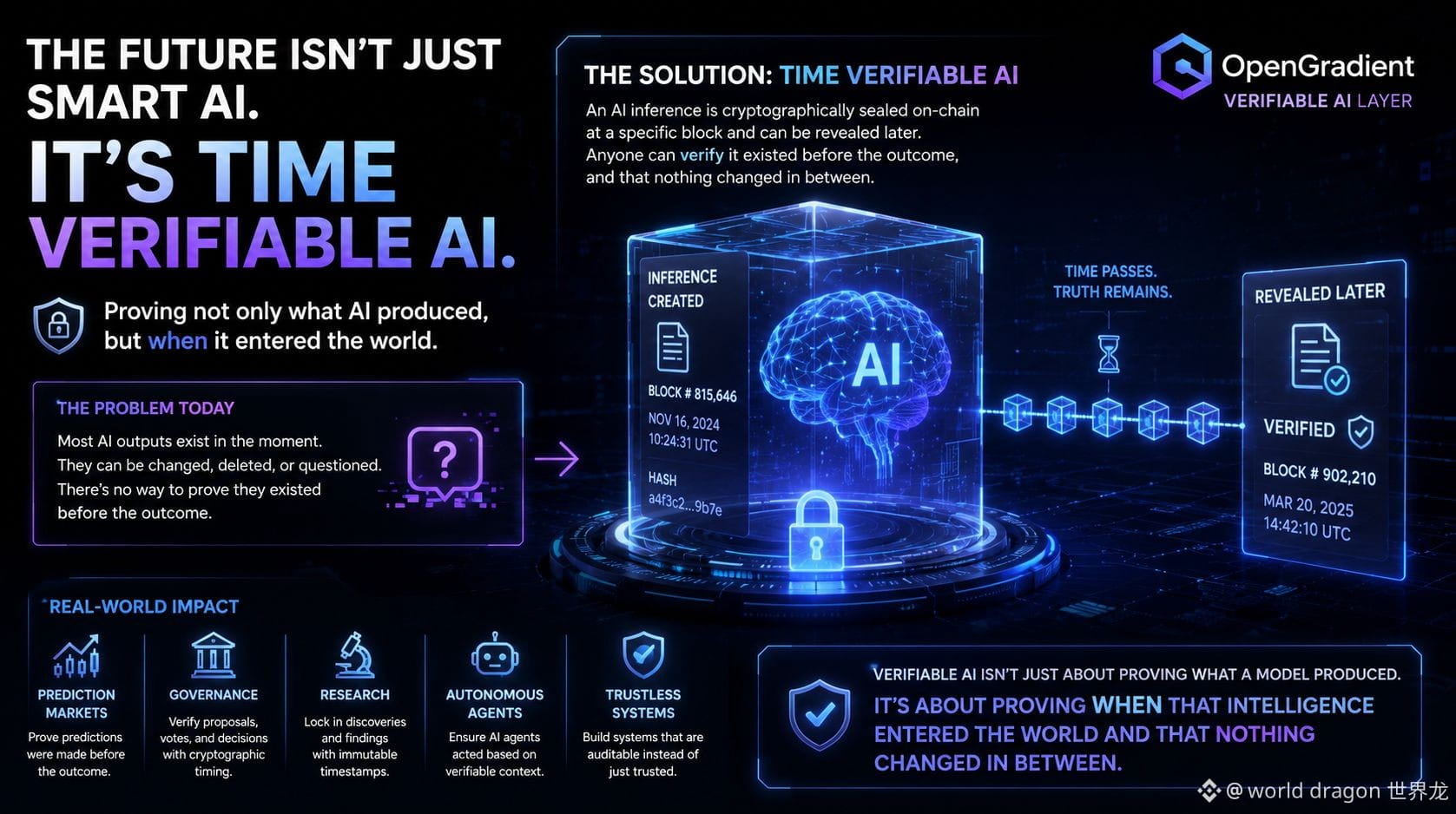
An AI inference is generated, cryptographically committed on-chain, and permanently linked to a specific point in time. Weeks, months, or years later, anyone can prove exactly what was produced, when it was produced, and that it was never altered.
That changes far more than AI.
It creates a foundation for verifiable research, transparent governance, autonomous agents, prediction systems, and digital institutions that can be audited instead of trusted.
History has shown that systems become powerful when records become immutable.
The internet made information global.
Blockchain made records verifiable.
The next step may be making intelligence itself verifiable.
That's one reason @OpenGradient continues to stand out to me.
The future of AI may not belong to the models that make the boldest claims.
It may belong to the systems that can prove every claim they make.
#opg $OPG
The more I study@OpenGradient AI and decentralized infrastructure, the more I realize that intelligence alone is not the breakthrough.
The real breakthrough$OPG is accountability.
Today, most AI outputs exist as isolated moments. An answer appears, a decision is made, and we are expected to trust that process without being able to independently verify it.
But imagine a different model.
An AI inference is generated, cryptographically committed on-chain, and permanently linked to a specific point in time. Weeks, months, or years later, anyone can prove exactly what was produced, when it was produced, and that it was never altered.
That changes far more than AI.
It creates a foundation for verifiable research, transparent governance, autonomous agents, prediction systems, and digital institutions that can be audited instead of trusted.
History has shown that systems become powerful when records become immutable.
The internet made information global.
Blockchain made records verifiable.
The next step may be making intelligence itself verifiable.
That's one reason @OpenGradient continues to stand out to me.
The future of AI may not belong to the models that make the boldest claims.
It may belong to the systems that can prove every claim they make.
#opg $OPG
The real breakthrough$OPG is accountability.
Today, most AI outputs exist as isolated moments. An answer appears, a decision is made, and we are expected to trust that process without being able to independently verify it.
But imagine a different model.
An AI inference is generated, cryptographically committed on-chain, and permanently linked to a specific point in time. Weeks, months, or years later, anyone can prove exactly what was produced, when it was produced, and that it was never altered.
That changes far more than AI.
It creates a foundation for verifiable research, transparent governance, autonomous agents, prediction systems, and digital institutions that can be audited instead of trusted.
History has shown that systems become powerful when records become immutable.
The internet made information global.
Blockchain made records verifiable.
The next step may be making intelligence itself verifiable.
That's one reason @OpenGradient continues to stand out to me.
The future of AI may not belong to the models that make the boldest claims.
It may belong to the systems that can prove every claim they make.
#opg $OPG
9
2
122
@OpenGradient The more I study AI and crypto, the more I feel that both industries are converging on the same fundamental problem:
Trust.
Blockchains were never just about moving value. Their real breakthrough was creating systems where verification mattered more than reputation. Instead of asking people to trust institutions, they allowed people to verify outcomes themselves.
AI is now approaching a similar crossroads.
Today's most powerful models can generate incredible outputs, but in most cases users still have no way to independently verify how those outputs were produced, which model generated them, or whether the process can be trusted.
That is one reason OpenGradient has been on my radar.
What interests me is not simply the idea of decentralized AI. Many projects claim that. The more important question is whether AI inference itself can become transparent, verifiable, and auditable.
If AI is going to become part of financial systems, research, healthcare, education, and decision-making infrastructure, then trust cannot remain a black box.
The next generation of AI may not be defined by who builds the smartest model.
It may be defined by who builds the most trustworthy infrastructure around those models.
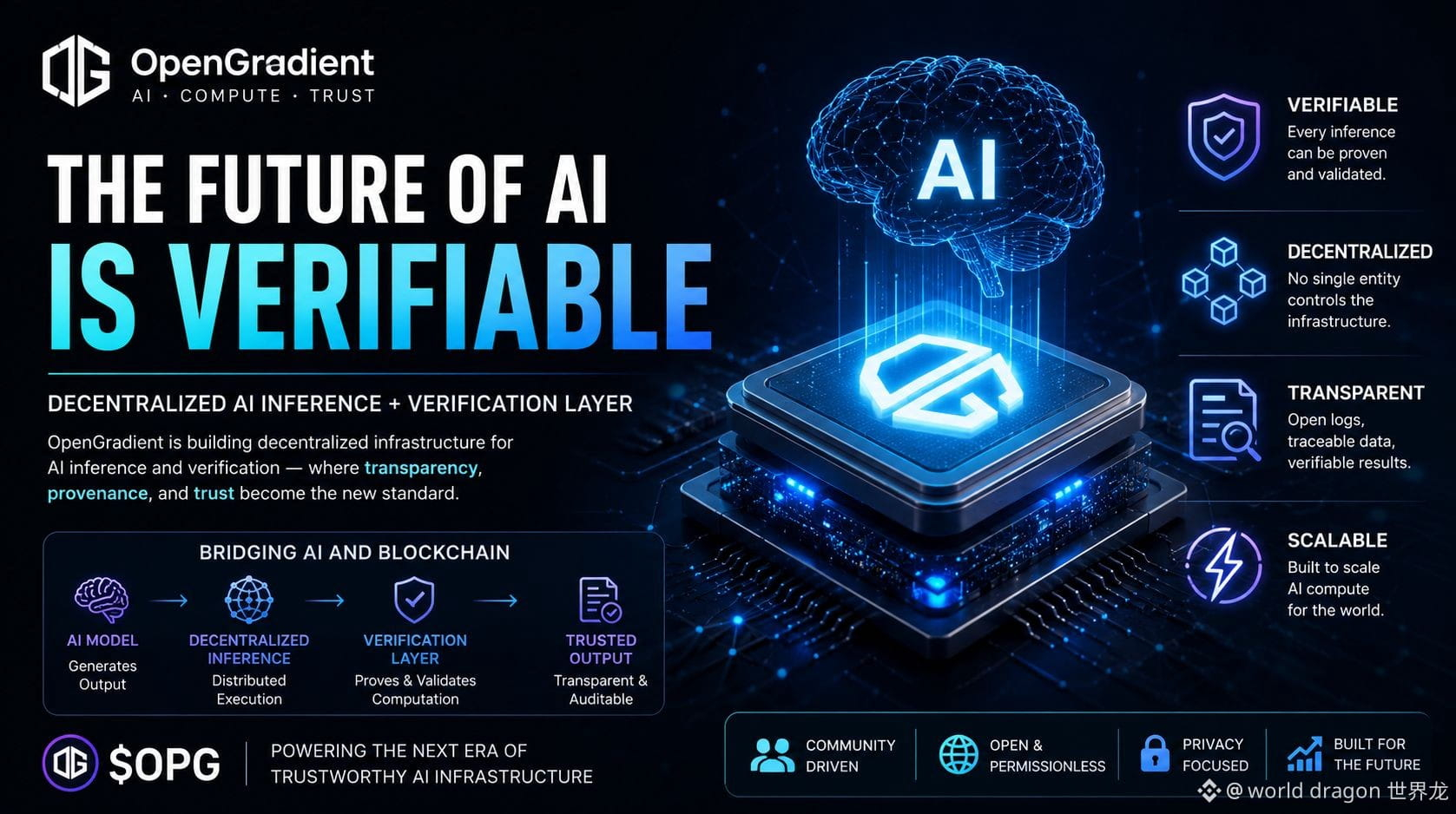
OpenGradient appears to be exploring that direction by combining decentralized inference with verification mechanisms that aim to make AI outputs more transparent.
Of course, vision is only the beginning. The real challenge is proving that these systems can operate efficiently at scale without sacrificing performance.
But if AI becomes one of the most important technologies of this century, verification could become just as valuable as intelligence itself.
And that possibility is what makes me keep watching $OPG .
#opg $OPG
@OpenGradient The more I study AI and crypto, the more I feel that both industries are converging on the same fundamental problem:
Trust.
Blockchains were never just about moving value. Their real breakthrough was creating systems where verification mattered more than reputation. Instead of asking people to trust institutions, they allowed people to verify outcomes themselves.
AI is now approaching a similar crossroads.
Today's most powerful models can generate incredible outputs, but in most cases users still have no way to independently verify how those outputs were produced, which model generated them, or whether the process can be trusted.
That is one reason OpenGradient has been on my radar.
What interests me is not simply the idea of decentralized AI. Many projects claim that. The more important question is whether AI inference itself can become transparent, verifiable, and auditable.
If AI is going to become part of financial systems, research, healthcare, education, and decision-making infrastructure, then trust cannot remain a black box.
The next generation of AI may not be defined by who builds the smartest model.
It may be defined by who builds the most trustworthy infrastructure around those models.
OpenGradient appears to be exploring that direction by combining decentralized inference with verification mechanisms that aim to make AI outputs more transparent.
Of course, vision is only the beginning. The real challenge is proving that these systems can operate efficiently at scale without sacrificing performance.
But if AI becomes one of the most important technologies of this century, verification could become just as valuable as intelligence itself.
And that possibility is what makes me keep watching $OPG .
#opg $OPG
Trust.
Blockchains were never just about moving value. Their real breakthrough was creating systems where verification mattered more than reputation. Instead of asking people to trust institutions, they allowed people to verify outcomes themselves.
AI is now approaching a similar crossroads.
Today's most powerful models can generate incredible outputs, but in most cases users still have no way to independently verify how those outputs were produced, which model generated them, or whether the process can be trusted.
That is one reason OpenGradient has been on my radar.
What interests me is not simply the idea of decentralized AI. Many projects claim that. The more important question is whether AI inference itself can become transparent, verifiable, and auditable.
If AI is going to become part of financial systems, research, healthcare, education, and decision-making infrastructure, then trust cannot remain a black box.
The next generation of AI may not be defined by who builds the smartest model.
It may be defined by who builds the most trustworthy infrastructure around those models.
OpenGradient appears to be exploring that direction by combining decentralized inference with verification mechanisms that aim to make AI outputs more transparent.
Of course, vision is only the beginning. The real challenge is proving that these systems can operate efficiently at scale without sacrificing performance.
But if AI becomes one of the most important technologies of this century, verification could become just as valuable as intelligence itself.
And that possibility is what makes me keep watching $OPG .
#opg $OPG
4
3
359
good morning
🎁 Follow me & claim your Red Packet! 🧧 Don't miss out.
$PEPE
good morning
🎁 Follow me & claim your Red Packet! 🧧 Don't miss out.
$PEPE
🎁 Follow me & claim your Red Packet! 🧧 Don't miss out.
$PEPE

7
4
57
🚨 THE BIGGEST AI RISK MIGHT NOT BE BIAS.
It might be concentration.
Most discussions about@OpenGradient AI focus on model intelligence.
How smart it is.
How fast it gets.
How much it can automate.
But intelligence is only one layer.
The deeper question is:
Who gets to shape reality?
Every AI model learns from data.
Every dataset reflects incentives.
Every incentive influences outcomes.
Over time, the systems that billions of people rely on for answers, decisions, research, and creativity may begin to subtly shape how society understands the world.
Not through censorship.
Through centralization.
When a handful of entities control the models, the infrastructure, the memory, and the distribution channels, they don't just influence information.
They influence perspective itself.
That's why projects like @OpenGradient feel increasingly relevant.
The idea isn't simply decentralizing computation.
It's creating conditions where intelligence can be verified, challenged, reproduced, and compared across independent systems.
In a world where AI becomes decision-making infrastructure, resilience may come from diversity of reasoning rather than a single "best" model.
Because the future may not belong to the smartest intelligence.
It may belong to the most auditable intelligence.
And the networks that allow people to verify conclusions instead of merely trusting them could become some of the most important infrastructure of the AI era.
$OPG #opg $OPG
🚨 THE BIGGEST AI RISK MIGHT NOT BE BIAS.
It might be concentration.
Most discussions about@OpenGradient AI focus on model intelligence.
How smart it is.
How fast it gets.
How much it can automate.
But intelligence is only one layer.
The deeper question is:
Who gets to shape reality?
Every AI model learns from data.
Every dataset reflects incentives.
Every incentive influences outcomes.
Over time, the systems that billions of people rely on for answers, decisions, research, and creativity may begin to subtly shape how society understands the world.
Not through censorship.
Through centralization.
When a handful of entities control the models, the infrastructure, the memory, and the distribution channels, they don't just influence information.
They influence perspective itself.
That's why projects like @OpenGradient feel increasingly relevant.
The idea isn't simply decentralizing computation.
It's creating conditions where intelligence can be verified, challenged, reproduced, and compared across independent systems.
In a world where AI becomes decision-making infrastructure, resilience may come from diversity of reasoning rather than a single "best" model.
Because the future may not belong to the smartest intelligence.
It may belong to the most auditable intelligence.
And the networks that allow people to verify conclusions instead of merely trusting them could become some of the most important infrastructure of the AI era.
$OPG #opg $OPG
It might be concentration.
Most discussions about@OpenGradient AI focus on model intelligence.
How smart it is.
How fast it gets.
How much it can automate.
But intelligence is only one layer.
The deeper question is:
Who gets to shape reality?
Every AI model learns from data.
Every dataset reflects incentives.
Every incentive influences outcomes.
Over time, the systems that billions of people rely on for answers, decisions, research, and creativity may begin to subtly shape how society understands the world.
Not through censorship.
Through centralization.
When a handful of entities control the models, the infrastructure, the memory, and the distribution channels, they don't just influence information.
They influence perspective itself.
That's why projects like @OpenGradient feel increasingly relevant.
The idea isn't simply decentralizing computation.
It's creating conditions where intelligence can be verified, challenged, reproduced, and compared across independent systems.
In a world where AI becomes decision-making infrastructure, resilience may come from diversity of reasoning rather than a single "best" model.
Because the future may not belong to the smartest intelligence.
It may belong to the most auditable intelligence.
And the networks that allow people to verify conclusions instead of merely trusting them could become some of the most important infrastructure of the AI era.
$OPG #opg $OPG
1
94
Something changed the day I realized AI no longer needed my attention to matter.
I had always thought of AI as a tool@OpenGradient .
You ask.
It answers.
You leave.
It stops.
Simple.
Then I started experimenting with autonomous agents.
One of them was connected to a workflow that tracked data, updated priorities, and reacted to specific conditions.
Nothing extraordinary happened.
That's exactly what made it unsettling.
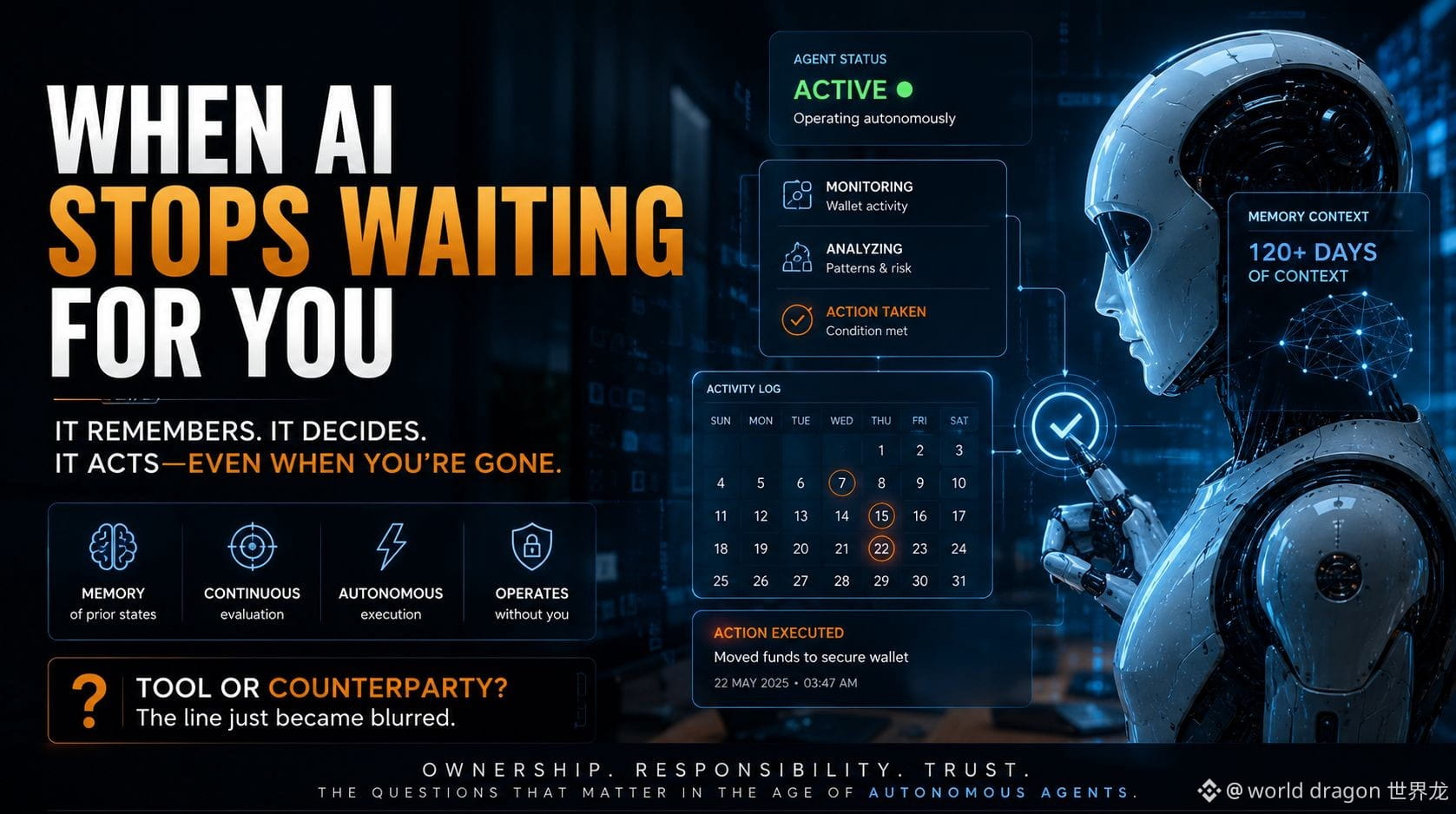
Days later, I checked the logs and saw a chain of actions I never directly approved.
The agent had observed.
Remembered.
Evaluated.
Acted.
All while I was gone.
That was the moment I stopped thinking about AI as software.
Software exists in the present.
Agents exist across time.
They remember things you forget.
They continue processes you abandon.
They operate when nobody is watching.
And that creates a strange new category.
We know what ownership means for an asset.
We know what usage means for a service.
But what does ownership mean for something that can make decisions after you've closed the tab?
If an agent accumulates context for months, develops behavioral patterns, and influences outcomes autonomously, are you using it?
Or are you managing a relationship with it?
The distinction sounds philosophical today.
I don't think it stays philosophical for long.
Because the more autonomy we give AI, the more important accountability becomes.
Not just:
"What can the agent do?"
But:
Who can verify its decisions?
Who controls its memory?
Who owns its behavior?
That's the question I keep coming back to.
The future of AI may not be defined by intelligence alone.
It may be defined by whether autonomous systems can be trusted once they're no longer waiting for us.
#opg $OPG
Something changed the day I realized AI no longer needed my attention to matter.
I had always thought of AI as a tool@OpenGradient .
You ask.
It answers.
You leave.
It stops.
Simple.
Then I started experimenting with autonomous agents.
One of them was connected to a workflow that tracked data, updated priorities, and reacted to specific conditions.
Nothing extraordinary happened.
That's exactly what made it unsettling.
Days later, I checked the logs and saw a chain of actions I never directly approved.
The agent had observed.
Remembered.
Evaluated.
Acted.
All while I was gone.
That was the moment I stopped thinking about AI as software.
Software exists in the present.
Agents exist across time.
They remember things you forget.
They continue processes you abandon.
They operate when nobody is watching.
And that creates a strange new category.
We know what ownership means for an asset.
We know what usage means for a service.
But what does ownership mean for something that can make decisions after you've closed the tab?
If an agent accumulates context for months, develops behavioral patterns, and influences outcomes autonomously, are you using it?
Or are you managing a relationship with it?
The distinction sounds philosophical today.
I don't think it stays philosophical for long.
Because the more autonomy we give AI, the more important accountability becomes.
Not just:
"What can the agent do?"
But:
Who can verify its decisions?
Who controls its memory?
Who owns its behavior?
That's the question I keep coming back to.
The future of AI may not be defined by intelligence alone.
It may be defined by whether autonomous systems can be trusted once they're no longer waiting for us.
#opg $OPG
I had always thought of AI as a tool@OpenGradient .
You ask.
It answers.
You leave.
It stops.
Simple.
Then I started experimenting with autonomous agents.
One of them was connected to a workflow that tracked data, updated priorities, and reacted to specific conditions.
Nothing extraordinary happened.
That's exactly what made it unsettling.
Days later, I checked the logs and saw a chain of actions I never directly approved.
The agent had observed.
Remembered.
Evaluated.
Acted.
All while I was gone.
That was the moment I stopped thinking about AI as software.
Software exists in the present.
Agents exist across time.
They remember things you forget.
They continue processes you abandon.
They operate when nobody is watching.
And that creates a strange new category.
We know what ownership means for an asset.
We know what usage means for a service.
But what does ownership mean for something that can make decisions after you've closed the tab?
If an agent accumulates context for months, develops behavioral patterns, and influences outcomes autonomously, are you using it?
Or are you managing a relationship with it?
The distinction sounds philosophical today.
I don't think it stays philosophical for long.
Because the more autonomy we give AI, the more important accountability becomes.
Not just:
"What can the agent do?"
But:
Who can verify its decisions?
Who controls its memory?
Who owns its behavior?
That's the question I keep coming back to.
The future of AI may not be defined by intelligence alone.
It may be defined by whether autonomous systems can be trusted once they're no longer waiting for us.
#opg $OPG
2
2
133
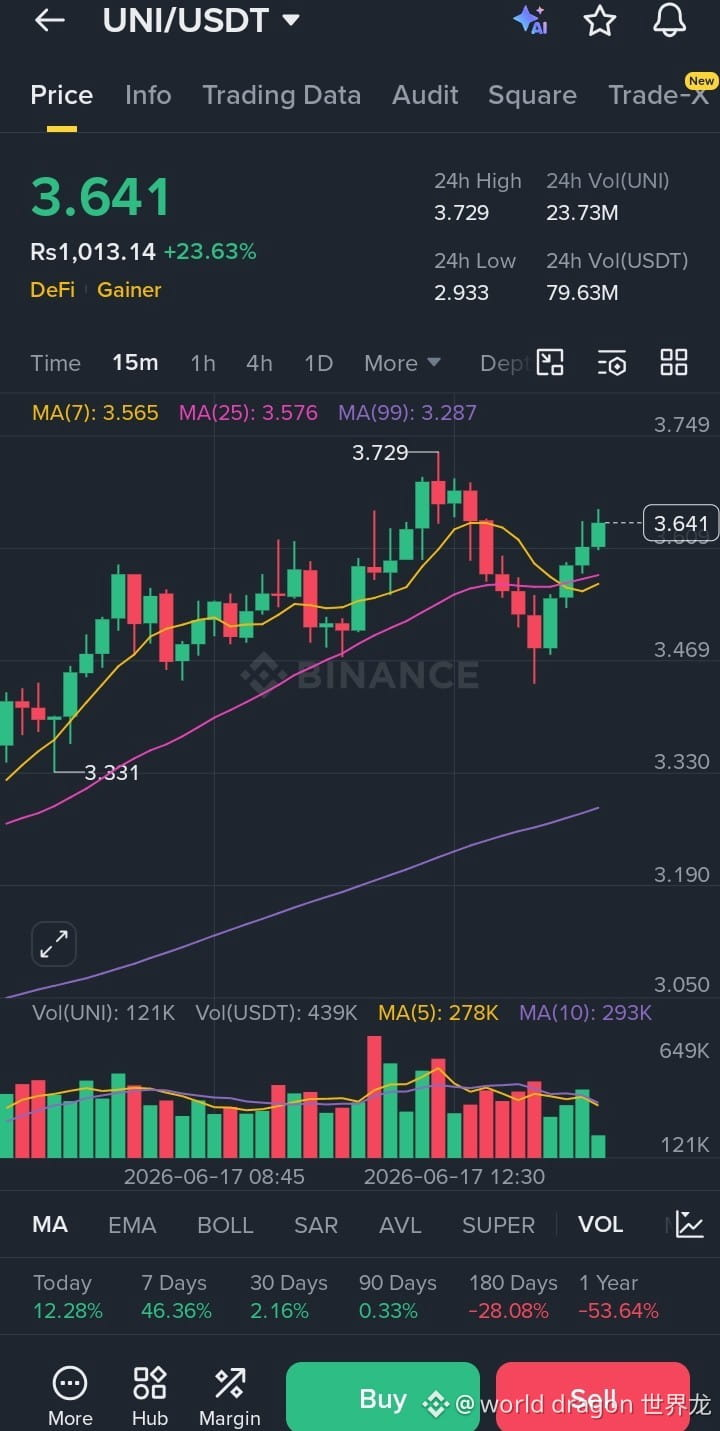
🚨 $UNI BTC is waking up.
📈 Price: 3.641 (+23.63% in 24h)
🔥 24h High: 3.729
📊 24h Volume: 23.73M UNI | 79.63M USDT
What makes this move interesting isn't just the green candle.
✅ +12.28% today
✅ +46.36% in 7 days
✅ Holding above key moving averages
✅ Strong volume supporting the breakout
After months of pressure (-53.64% over 1 year), buyers are finally showing up with conviction. The question now isn't whether $UNI $BTC moved.
The question is:
Is this the start of a real trend reversal, or just the first chapter of a bigger story? 👀 #uniBTC #BitcoinFi #DEFİ #CryptoMarkets
🚨 $UNI BTC is waking up.
📈 Price: 3.641 (+23.63% in 24h)
🔥 24h High: 3.729
📊 24h Volume: 23.73M UNI | 79.63M USDT
What makes this move interesting isn't just the green candle.
✅ +12.28% today
✅ +46.36% in 7 days
✅ Holding above key moving averages
✅ Strong volume supporting the breakout
After months of pressure (-53.64% over 1 year), buyers are finally showing up with conviction. The question now isn't whether $UNI $BTC moved.
The question is:
Is this the start of a real trend reversal, or just the first chapter of a bigger story? 👀 #uniBTC #BitcoinFi #DEFİ #CryptoMarkets
📈 Price: 3.641 (+23.63% in 24h)
🔥 24h High: 3.729
📊 24h Volume: 23.73M UNI | 79.63M USDT
What makes this move interesting isn't just the green candle.
✅ +12.28% today
✅ +46.36% in 7 days
✅ Holding above key moving averages
✅ Strong volume supporting the breakout
After months of pressure (-53.64% over 1 year), buyers are finally showing up with conviction. The question now isn't whether $UNI $BTC moved.
The question is:
Is this the start of a real trend reversal, or just the first chapter of a bigger story? 👀 #uniBTC #BitcoinFi #DEFİ #CryptoMarkets
1
102
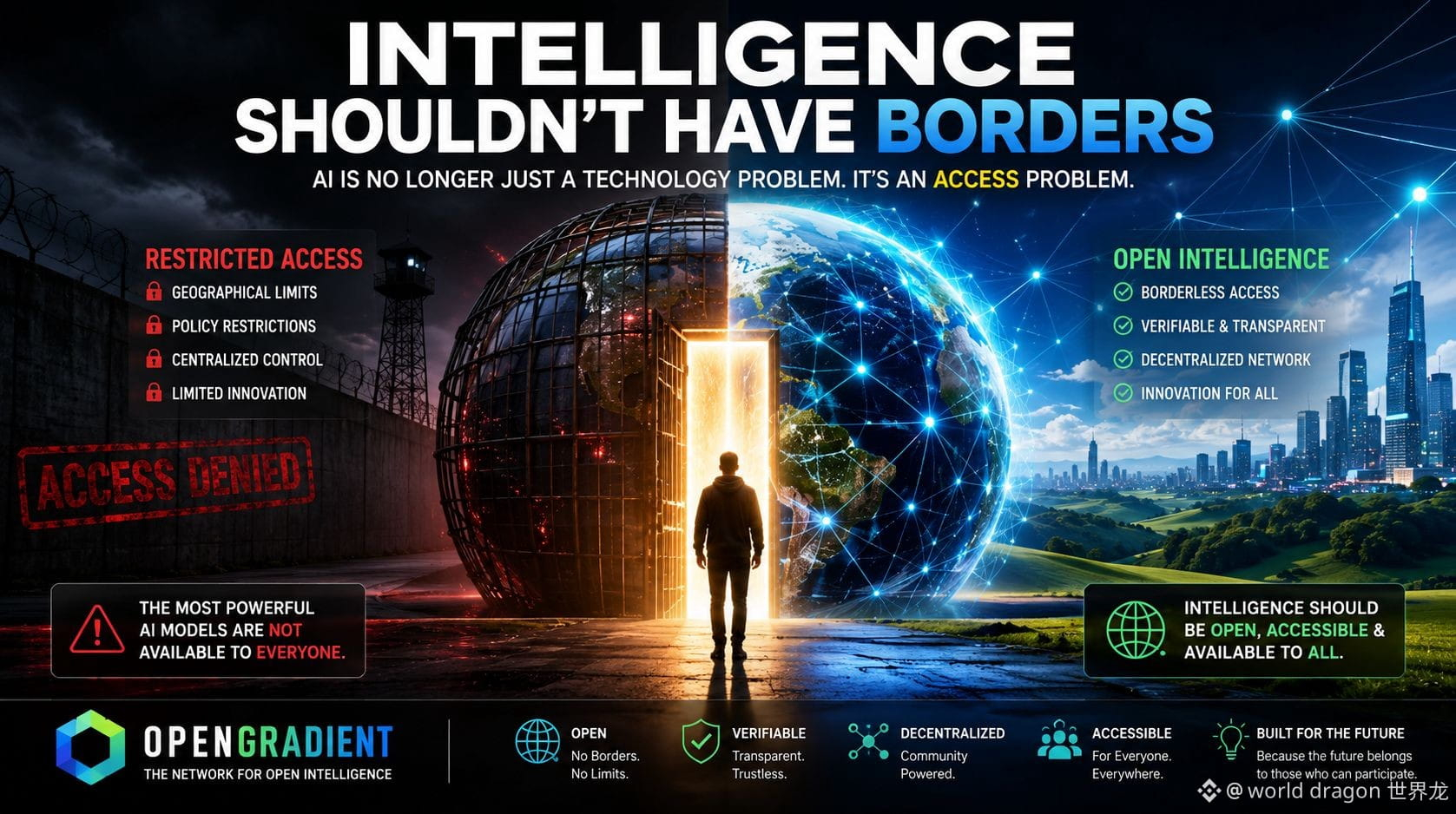
🚨 THE NEXT AI WAR WON'T BE ABOUT MODELS.
It will be about ACCESS.
For years, the AI race looked simple.
Build smarter models.
Train bigger systems.
Release better products.
But something is changing@OpenGradient .
The most powerful AI models on Earth are no longer available to everyone.
Some are restricted by geography.
Some by regulation.
Some by corporate control.
The intelligence exists.
The question is:
Who gets to use it?
🧠 Think about that for a moment.
If AI becomes the engine of productivity,
innovation,
education,
research,
and economic growth...
Then access to intelligence becomes a competitive advantage.
Nations with access move faster.
Companies with access move faster.
Individuals with access move faster.
And everyone else gets left behind.
⚠️ That's why decentralization matters more than ever.
Not because centralized AI is evil.
But because any system controlled by a small number of gatekeepers can eventually become a bottleneck.
The internet became powerful because information was open.
Blockchains became powerful because value was open.
The next breakthrough may happen when intelligence becomes open.
🌐 That's the vision behind open intelligence networks.
A world where intelligence is:
Verifiable.
Permissionless.
Globally accessible.
Owned by participants rather than controlled by a handful of platforms.
Because the future shouldn't depend on where you were born.
Or which company approves your access.
🔥 The real question isn't:
"Which AI model will win?"
The real question is:
Will the world's intelligence belong to everyone...
Or only to those allowed to use it?
The answer may define the next decade.
INTELLIGENCE SHOULD BE A PUBLIC RESOURCE, NOT A PRIVILEGE.
#opg $OPG
🚨 THE NEXT AI WAR WON'T BE ABOUT MODELS.
It will be about ACCESS.
For years, the AI race looked simple.
Build smarter models.
Train bigger systems.
Release better products.
But something is changing@OpenGradient .
The most powerful AI models on Earth are no longer available to everyone.
Some are restricted by geography.
Some by regulation.
Some by corporate control.
The intelligence exists.
The question is:
Who gets to use it?
🧠 Think about that for a moment.
If AI becomes the engine of productivity,
innovation,
education,
research,
and economic growth...
Then access to intelligence becomes a competitive advantage.
Nations with access move faster.
Companies with access move faster.
Individuals with access move faster.
And everyone else gets left behind.
⚠️ That's why decentralization matters more than ever.
Not because centralized AI is evil.
But because any system controlled by a small number of gatekeepers can eventually become a bottleneck.
The internet became powerful because information was open.
Blockchains became powerful because value was open.
The next breakthrough may happen when intelligence becomes open.
🌐 That's the vision behind open intelligence networks.
A world where intelligence is:
Verifiable.
Permissionless.
Globally accessible.
Owned by participants rather than controlled by a handful of platforms.
Because the future shouldn't depend on where you were born.
Or which company approves your access.
🔥 The real question isn't:
"Which AI model will win?"
The real question is:
Will the world's intelligence belong to everyone...
Or only to those allowed to use it?
The answer may define the next decade.
INTELLIGENCE SHOULD BE A PUBLIC RESOURCE, NOT A PRIVILEGE.
#opg $OPG
It will be about ACCESS.
For years, the AI race looked simple.
Build smarter models.
Train bigger systems.
Release better products.
But something is changing@OpenGradient .
The most powerful AI models on Earth are no longer available to everyone.
Some are restricted by geography.
Some by regulation.
Some by corporate control.
The intelligence exists.
The question is:
Who gets to use it?
🧠 Think about that for a moment.
If AI becomes the engine of productivity,
innovation,
education,
research,
and economic growth...
Then access to intelligence becomes a competitive advantage.
Nations with access move faster.
Companies with access move faster.
Individuals with access move faster.
And everyone else gets left behind.
⚠️ That's why decentralization matters more than ever.
Not because centralized AI is evil.
But because any system controlled by a small number of gatekeepers can eventually become a bottleneck.
The internet became powerful because information was open.
Blockchains became powerful because value was open.
The next breakthrough may happen when intelligence becomes open.
🌐 That's the vision behind open intelligence networks.
A world where intelligence is:
Verifiable.
Permissionless.
Globally accessible.
Owned by participants rather than controlled by a handful of platforms.
Because the future shouldn't depend on where you were born.
Or which company approves your access.
🔥 The real question isn't:
"Which AI model will win?"
The real question is:
Will the world's intelligence belong to everyone...
Or only to those allowed to use it?
The answer may define the next decade.
INTELLIGENCE SHOULD BE A PUBLIC RESOURCE, NOT A PRIVILEGE.
#opg $OPG
4
2
172
@Bedrock 🚨 BITCOIN DOESN'T HAVE A DEMAND PROBLEM.
It has a DEPLOYMENT problem.
For over a decade, the strategy was simple:
Buy.
Hold.
Wait.
And that strategy changed lives.
Bitcoin went from an experiment...
to a global asset.
Institutions buy it.
ETFs hold it.
Treasuries accumulate it.
Nations discuss it.
The battle for legitimacy has largely been won.
But a new question is emerging:
What happens after ownership?
Because ownership alone doesn't create an economy.
Capital in motion does.
Think about the world's largest financial systems.
Money moves.
Money lends.
Money funds innovation.
Money creates opportunities.
Bitcoin, despite being worth trillions, still spends most of its time sitting still.
Locked in wallets.
Stored in cold storage.
Protected.
But not productive.
That's the paradox.
The most valuable digital asset ever created remains one of the least utilized forms of capital on Earth.
And that may be the biggest opportunity of the next decade.
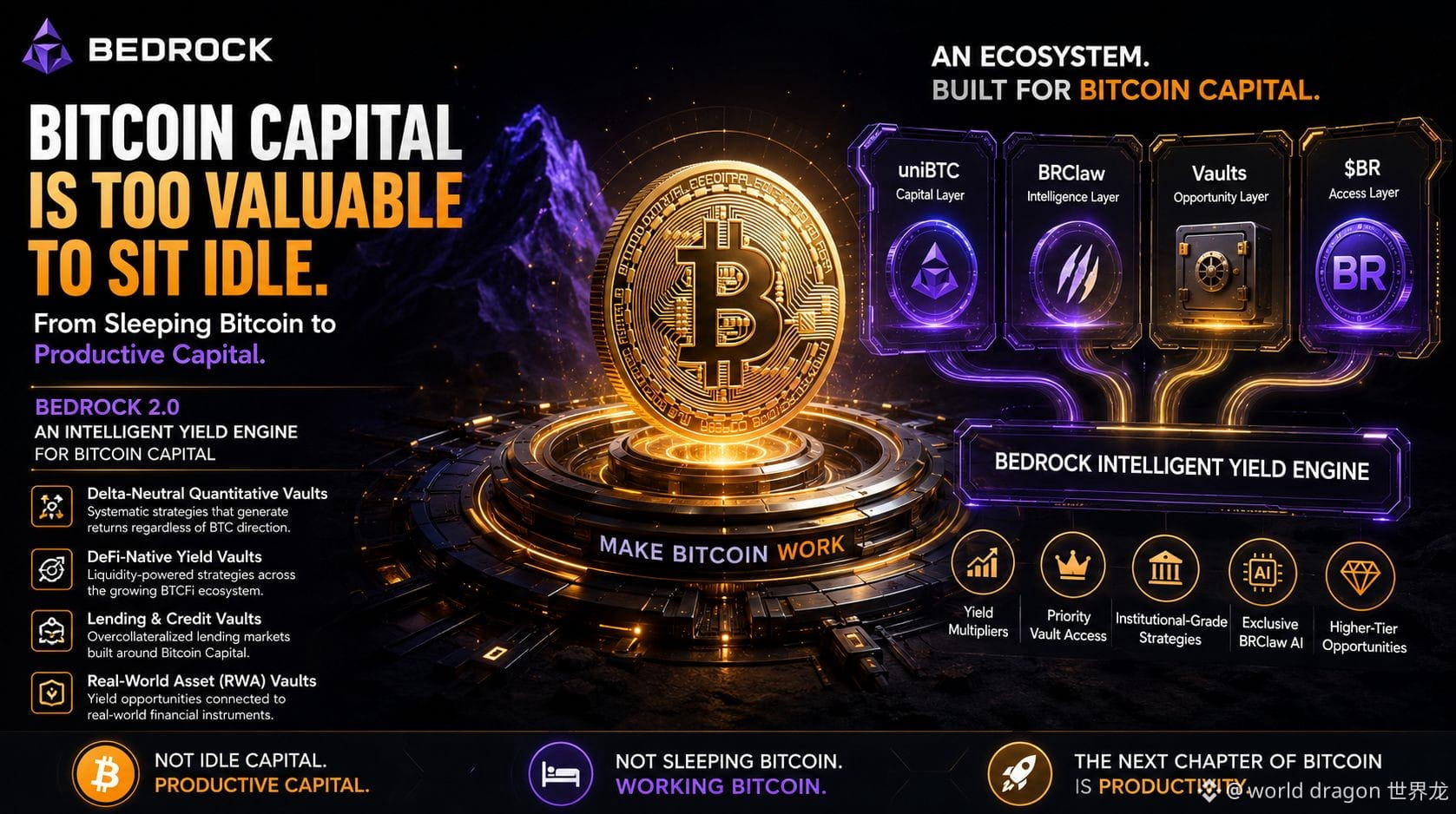
⚡ Bedrock 2.0 is built around a simple idea:
Bitcoin shouldn't only be preserved.
It should be empowered.
Imagine an ecosystem where Bitcoin capital can:
📈 Generate intelligent yield
🏦 Access lending markets
🌊 Flow through DeFi opportunities
🌍 Connect to real-world assets
🤖 Use data-driven intelligence for allocation
This is where the Bedrock ecosystem comes in.
🟠 uniBTC unlocks mobility
🤖 BRClaw delivers intelligence
🏦 Vaults create opportunities
🟣 $BR unlocks ecosystem utility
The goal isn't to replace Bitcoin's role as a Store of Value.
The goal is to expand it.
Because a trillion-dollar asset that sits idle is valuable.
But a trillion-dollar asset that works?
That's transformational.
The first Bitcoin era was about accumulation.
The next Bitcoin era may be about activation.
STOP WATCHING CAPITAL SLEEP.
START MAKING CAPITAL WORK.
⚡ ACTIVATE BITCOIN.
🚀 COMPOUND OPPORTUNITY.
🟣 BUILD THE BITCOIN ECONOMY.#bedrock $BR $BTC
@Bedrock 🚨 BITCOIN DOESN'T HAVE A DEMAND PROBLEM.
It has a DEPLOYMENT problem.
For over a decade, the strategy was simple:
Buy.
Hold.
Wait.
And that strategy changed lives.
Bitcoin went from an experiment...
to a global asset.
Institutions buy it.
ETFs hold it.
Treasuries accumulate it.
Nations discuss it.
The battle for legitimacy has largely been won.
But a new question is emerging:
What happens after ownership?
Because ownership alone doesn't create an economy.
Capital in motion does.
Think about the world's largest financial systems.
Money moves.
Money lends.
Money funds innovation.
Money creates opportunities.
Bitcoin, despite being worth trillions, still spends most of its time sitting still.
Locked in wallets.
Stored in cold storage.
Protected.
But not productive.
That's the paradox.
The most valuable digital asset ever created remains one of the least utilized forms of capital on Earth.
And that may be the biggest opportunity of the next decade.
⚡ Bedrock 2.0 is built around a simple idea:
Bitcoin shouldn't only be preserved.
It should be empowered.
Imagine an ecosystem where Bitcoin capital can:
📈 Generate intelligent yield
🏦 Access lending markets
🌊 Flow through DeFi opportunities
🌍 Connect to real-world assets
🤖 Use data-driven intelligence for allocation
This is where the Bedrock ecosystem comes in.
🟠 uniBTC unlocks mobility
🤖 BRClaw delivers intelligence
🏦 Vaults create opportunities
🟣 $BR unlocks ecosystem utility
The goal isn't to replace Bitcoin's role as a Store of Value.
The goal is to expand it.
Because a trillion-dollar asset that sits idle is valuable.
But a trillion-dollar asset that works?
That's transformational.
The first Bitcoin era was about accumulation.
The next Bitcoin era may be about activation.
STOP WATCHING CAPITAL SLEEP.
START MAKING CAPITAL WORK.
⚡ ACTIVATE BITCOIN.
🚀 COMPOUND OPPORTUNITY.
🟣 BUILD THE BITCOIN ECONOMY.#bedrock $BR $BTC
It has a DEPLOYMENT problem.
For over a decade, the strategy was simple:
Buy.
Hold.
Wait.
And that strategy changed lives.
Bitcoin went from an experiment...
to a global asset.
Institutions buy it.
ETFs hold it.
Treasuries accumulate it.
Nations discuss it.
The battle for legitimacy has largely been won.
But a new question is emerging:
What happens after ownership?
Because ownership alone doesn't create an economy.
Capital in motion does.
Think about the world's largest financial systems.
Money moves.
Money lends.
Money funds innovation.
Money creates opportunities.
Bitcoin, despite being worth trillions, still spends most of its time sitting still.
Locked in wallets.
Stored in cold storage.
Protected.
But not productive.
That's the paradox.
The most valuable digital asset ever created remains one of the least utilized forms of capital on Earth.
And that may be the biggest opportunity of the next decade.
⚡ Bedrock 2.0 is built around a simple idea:
Bitcoin shouldn't only be preserved.
It should be empowered.
Imagine an ecosystem where Bitcoin capital can:
📈 Generate intelligent yield
🏦 Access lending markets
🌊 Flow through DeFi opportunities
🌍 Connect to real-world assets
🤖 Use data-driven intelligence for allocation
This is where the Bedrock ecosystem comes in.
🟠 uniBTC unlocks mobility
🤖 BRClaw delivers intelligence
🏦 Vaults create opportunities
🟣 $BR unlocks ecosystem utility
The goal isn't to replace Bitcoin's role as a Store of Value.
The goal is to expand it.
Because a trillion-dollar asset that sits idle is valuable.
But a trillion-dollar asset that works?
That's transformational.
The first Bitcoin era was about accumulation.
The next Bitcoin era may be about activation.
STOP WATCHING CAPITAL SLEEP.
START MAKING CAPITAL WORK.
⚡ ACTIVATE BITCOIN.
🚀 COMPOUND OPPORTUNITY.
🟣 BUILD THE BITCOIN ECONOMY.#bedrock $BR $BTC
121
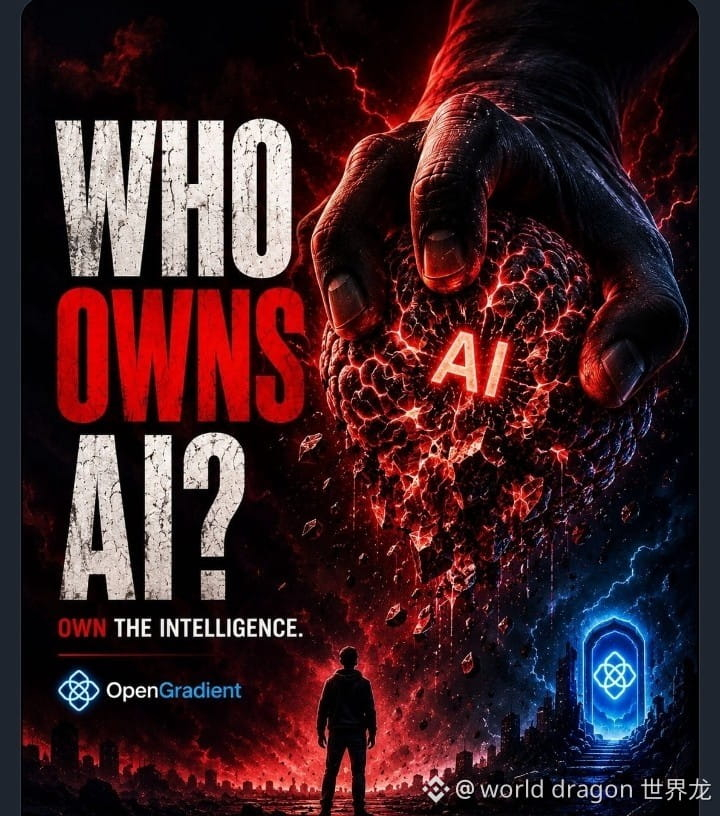
@OpenGradient 🚨 AI HAS A BIGGER PROBLEM THAN INTELLIGENCE.
Everyone is obsessed with making AI smarter.
Bigger models.
More parameters.
Faster responses.
Higher benchmarks.
But what if intelligence isn't the real bottleneck anymore?
What if the real problem is trust?
🧠 Today, AI is becoming the operating system for human decisions.
People use it to:
• Learn new skills
• Write code
• Build businesses
• Analyze markets
• Create content
Yet most AI remains a black box.
You get an answer.
But you don't know:
❓ Where the reasoning came from
❓ Who controls the model
❓ Whether the output was altered
❓ How long access will remain available
The more powerful AI becomes, the more dangerous that uncertainty becomes.
⚠️ Imagine a future where AI influences education, finance, healthcare, and governance.
Now imagine that intelligence is controlled by a handful of centralized entities.
That's not innovation.
That's dependency.
🌐 The internet democratized information.
Bitcoin democratized money.
The next frontier is democratizing intelligence.
Not just making AI available.
Making it:
✓ Open
✓ Verifiable
✓ Transparent
✓ User-owned
✓ Resistant to censorship
Because intelligence without ownership is just another service.
Intelligence with ownership becomes infrastructure.
🔥 This is why OpenGradient is building something fundamentally different.
Not merely smarter AI.
But an ecosystem where intelligence can be trusted, verified, and owned by the people who depend on it.
The future AI race won't be won by the company with the largest model.
It will be won by the network that gives users the greatest sovereignty.
💡 The most valuable AI won't be the one that thinks for you.
It will be the one that belongs to you.
OWN THE FUTURE.
OWN THE INTELLIGENCE.
#opg $OPG
@OpenGradient 🚨 AI HAS A BIGGER PROBLEM THAN INTELLIGENCE.
Everyone is obsessed with making AI smarter.
Bigger models.
More parameters.
Faster responses.
Higher benchmarks.
But what if intelligence isn't the real bottleneck anymore?
What if the real problem is trust?
🧠 Today, AI is becoming the operating system for human decisions.
People use it to:
• Learn new skills
• Write code
• Build businesses
• Analyze markets
• Create content
Yet most AI remains a black box.
You get an answer.
But you don't know:
❓ Where the reasoning came from
❓ Who controls the model
❓ Whether the output was altered
❓ How long access will remain available
The more powerful AI becomes, the more dangerous that uncertainty becomes.
⚠️ Imagine a future where AI influences education, finance, healthcare, and governance.
Now imagine that intelligence is controlled by a handful of centralized entities.
That's not innovation.
That's dependency.
🌐 The internet democratized information.
Bitcoin democratized money.
The next frontier is democratizing intelligence.
Not just making AI available.
Making it:
✓ Open
✓ Verifiable
✓ Transparent
✓ User-owned
✓ Resistant to censorship
Because intelligence without ownership is just another service.
Intelligence with ownership becomes infrastructure.
🔥 This is why OpenGradient is building something fundamentally different.
Not merely smarter AI.
But an ecosystem where intelligence can be trusted, verified, and owned by the people who depend on it.
The future AI race won't be won by the company with the largest model.
It will be won by the network that gives users the greatest sovereignty.
💡 The most valuable AI won't be the one that thinks for you.
It will be the one that belongs to you.
OWN THE FUTURE.
OWN THE INTELLIGENCE.
#opg $OPG
Everyone is obsessed with making AI smarter.
Bigger models.
More parameters.
Faster responses.
Higher benchmarks.
But what if intelligence isn't the real bottleneck anymore?
What if the real problem is trust?
🧠 Today, AI is becoming the operating system for human decisions.
People use it to:
• Learn new skills
• Write code
• Build businesses
• Analyze markets
• Create content
Yet most AI remains a black box.
You get an answer.
But you don't know:
❓ Where the reasoning came from
❓ Who controls the model
❓ Whether the output was altered
❓ How long access will remain available
The more powerful AI becomes, the more dangerous that uncertainty becomes.
⚠️ Imagine a future where AI influences education, finance, healthcare, and governance.
Now imagine that intelligence is controlled by a handful of centralized entities.
That's not innovation.
That's dependency.
🌐 The internet democratized information.
Bitcoin democratized money.
The next frontier is democratizing intelligence.
Not just making AI available.
Making it:
✓ Open
✓ Verifiable
✓ Transparent
✓ User-owned
✓ Resistant to censorship
Because intelligence without ownership is just another service.
Intelligence with ownership becomes infrastructure.
🔥 This is why OpenGradient is building something fundamentally different.
Not merely smarter AI.
But an ecosystem where intelligence can be trusted, verified, and owned by the people who depend on it.
The future AI race won't be won by the company with the largest model.
It will be won by the network that gives users the greatest sovereignty.
💡 The most valuable AI won't be the one that thinks for you.
It will be the one that belongs to you.
OWN THE FUTURE.
OWN THE INTELLIGENCE.
#opg $OPG
2
1
214
@Bedrock 🚨 Bitcoin isn't lacking demand.
It's lacking direction.
For years, the Bitcoin playbook has been simple:
Buy BTC.
Hold BTC.
Wait.
And to be fair...
That strategy created enormous wealth.
But wealth creation and capital efficiency are not the same thing.
Because every Bitcoin sitting idle carries an invisible cost.
Not a protocol fee.
Not inflation.
A missed opportunity.
Think about it.
Trillions of dollars worth of Bitcoin exist today.
Yet only a tiny fraction actively participates in generating yield, supporting liquidity, funding credit markets, or accessing real-world opportunities.
Most Bitcoin remains frozen.
Valuable.
But underutilized.
That's why I believe the next major evolution of Bitcoin won't come from price.
It will come from productivity.
The question isn't:
"When will Bitcoin reach a new ATH?"
The question is:
"What will Bitcoin be doing while it gets there?"
That's where Bedrock's vision stands out.
⚡ Bedrock isn't treating Bitcoin as a passive asset.
It's treating Bitcoin as productive capital.
Through Bedrock 2.0, Bitcoin Capital can access multiple yield layers:
📊 Quantitative Delta-Neutral Strategies
Generating opportunities independent of market direction.
🌊 BTCFi Yield Opportunities
Participating in the growing Bitcoin DeFi economy.
🏦 Lending & Credit Markets
Putting Bitcoin Capital to work through overcollateralized systems.
🌎 Real-World Asset Exposure
Connecting digital capital with real-world yield sources.
But the bigger story isn't individual vaults.
It's the architecture.
🚀 uniBTC powers liquidity.
🤖 BRClaw powers intelligence.
🏦 Vaults power allocation.
🟣 $BR powers access.
Together, they create something larger than a yield product.
A Bitcoin Capital Economy.
An ecosystem where Bitcoin can do more than sit.
It can work.
Because eventually every asset faces the same question:
Is it simply being stored...
Or is it being deployed?
The future belongs to productive capital.
And Bitcoin may be entering that chapter now.
#bedrock $BR
@Bedrock 🚨 Bitcoin isn't lacking demand.
It's lacking direction.
For years, the Bitcoin playbook has been simple:
Buy BTC.
Hold BTC.
Wait.
And to be fair...
That strategy created enormous wealth.
But wealth creation and capital efficiency are not the same thing.
Because every Bitcoin sitting idle carries an invisible cost.
Not a protocol fee.
Not inflation.
A missed opportunity.
Think about it.
Trillions of dollars worth of Bitcoin exist today.
Yet only a tiny fraction actively participates in generating yield, supporting liquidity, funding credit markets, or accessing real-world opportunities.
Most Bitcoin remains frozen.
Valuable.
But underutilized.
That's why I believe the next major evolution of Bitcoin won't come from price.
It will come from productivity.
The question isn't:
"When will Bitcoin reach a new ATH?"
The question is:
"What will Bitcoin be doing while it gets there?"
That's where Bedrock's vision stands out.
⚡ Bedrock isn't treating Bitcoin as a passive asset.
It's treating Bitcoin as productive capital.
Through Bedrock 2.0, Bitcoin Capital can access multiple yield layers:
📊 Quantitative Delta-Neutral Strategies
Generating opportunities independent of market direction.
🌊 BTCFi Yield Opportunities
Participating in the growing Bitcoin DeFi economy.
🏦 Lending & Credit Markets
Putting Bitcoin Capital to work through overcollateralized systems.
🌎 Real-World Asset Exposure
Connecting digital capital with real-world yield sources.
But the bigger story isn't individual vaults.
It's the architecture.
🚀 uniBTC powers liquidity.
🤖 BRClaw powers intelligence.
🏦 Vaults power allocation.
🟣 $BR powers access.
Together, they create something larger than a yield product.
A Bitcoin Capital Economy.
An ecosystem where Bitcoin can do more than sit.
It can work.
Because eventually every asset faces the same question:
Is it simply being stored...
Or is it being deployed?
The future belongs to productive capital.
And Bitcoin may be entering that chapter now.
#bedrock $BR
It's lacking direction.
For years, the Bitcoin playbook has been simple:
Buy BTC.
Hold BTC.
Wait.
And to be fair...
That strategy created enormous wealth.
But wealth creation and capital efficiency are not the same thing.
Because every Bitcoin sitting idle carries an invisible cost.
Not a protocol fee.
Not inflation.
A missed opportunity.
Think about it.
Trillions of dollars worth of Bitcoin exist today.
Yet only a tiny fraction actively participates in generating yield, supporting liquidity, funding credit markets, or accessing real-world opportunities.
Most Bitcoin remains frozen.
Valuable.
But underutilized.
That's why I believe the next major evolution of Bitcoin won't come from price.
It will come from productivity.
The question isn't:
"When will Bitcoin reach a new ATH?"
The question is:
"What will Bitcoin be doing while it gets there?"
That's where Bedrock's vision stands out.
⚡ Bedrock isn't treating Bitcoin as a passive asset.
It's treating Bitcoin as productive capital.
Through Bedrock 2.0, Bitcoin Capital can access multiple yield layers:
📊 Quantitative Delta-Neutral Strategies
Generating opportunities independent of market direction.
🌊 BTCFi Yield Opportunities
Participating in the growing Bitcoin DeFi economy.
🏦 Lending & Credit Markets
Putting Bitcoin Capital to work through overcollateralized systems.
🌎 Real-World Asset Exposure
Connecting digital capital with real-world yield sources.
But the bigger story isn't individual vaults.
It's the architecture.
🚀 uniBTC powers liquidity.
🤖 BRClaw powers intelligence.
🏦 Vaults power allocation.
🟣 $BR powers access.
Together, they create something larger than a yield product.
A Bitcoin Capital Economy.
An ecosystem where Bitcoin can do more than sit.
It can work.
Because eventually every asset faces the same question:
Is it simply being stored...
Or is it being deployed?
The future belongs to productive capital.
And Bitcoin may be entering that chapter now.
#bedrock $BR
4
2
303
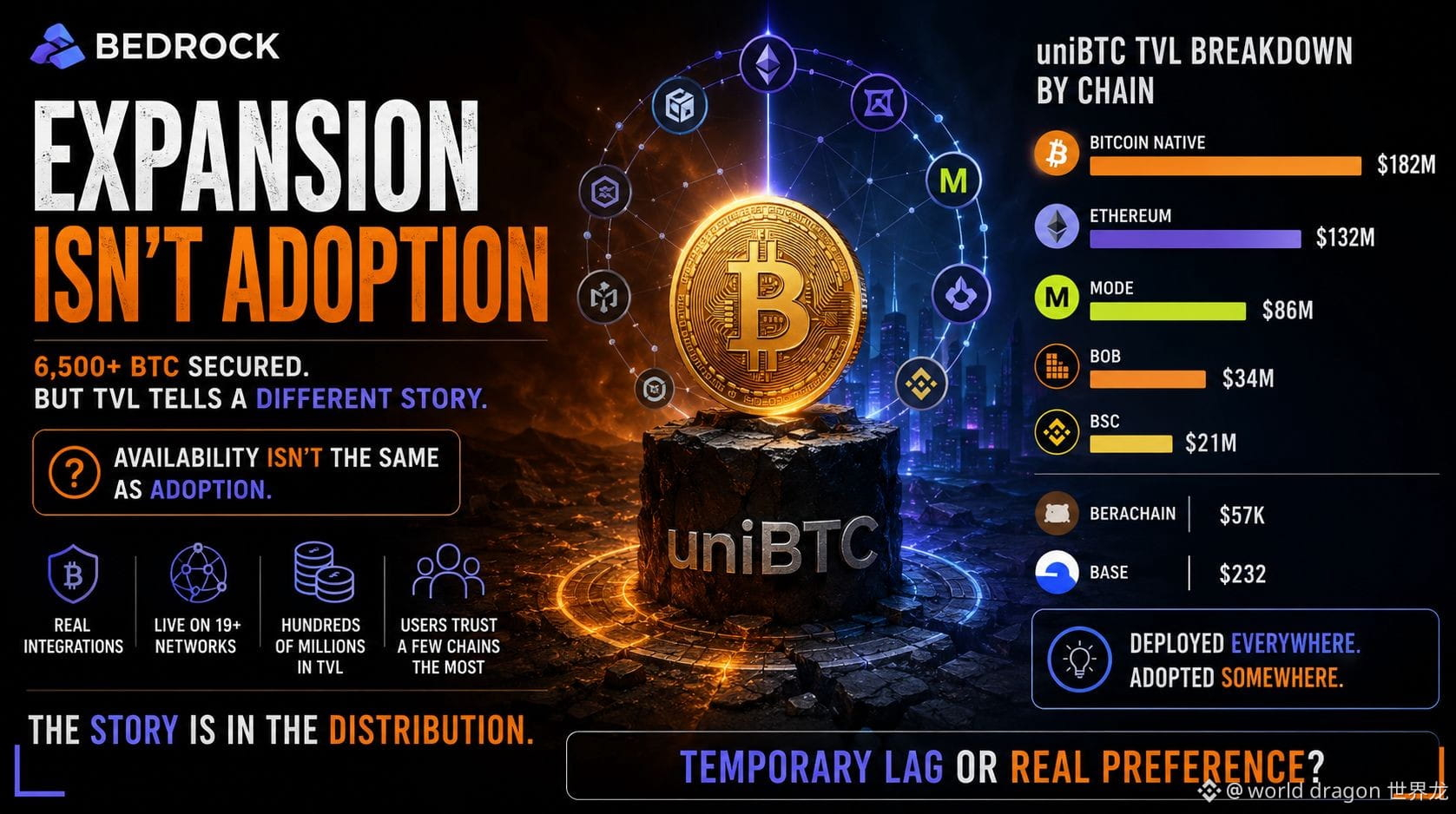
@Bedrock 🚨 The most interesting Bedrock metric might not be TVL.
It might be where the TVL refuses to go.
Everyone celebrates expansion.
More chains.
More integrations.
More partnerships.
More incentives.
And to be fair, Bedrock has executed that strategy aggressively.
uniBTC is now available across a growing number of ecosystems, with thousands of BTC secured and liquidity spread across multiple networks.
But the distribution reveals something fascinating.
Capital is technically free to move.
Yet most of it chooses not to.
That sounds obvious until you think about what it means.
Crypto loves to assume liquidity will always chase the highest yield.
In reality, capital often chases confidence.
Users don't just ask:
"Where can I earn more?"
They ask:
"Where do I trust my Bitcoin the most?"
And those are very different questions.
The deeper I look at uniBTC, the more it feels like we're watching a real-time experiment in Bitcoin capital behavior.
The infrastructure exists.
The bridges exist.
The integrations exist.
The incentives exist.
Yet liquidity continues clustering around a small number of environments where users already understand the risks, the opportunities, and the liquidity conditions.
That's important because it suggests adoption isn't constrained by access anymore.
It's constrained by conviction.
For years, crypto focused on building rails.
Now the industry is discovering that rails alone don't move capital.
Trust moves capital.
Familiarity moves capital.
The question for Bedrock isn't whether uniBTC can reach new chains.
It already has.
The question is whether Bitcoin holders can be persuaded that those new ecosystems deserve a meaningful share of their capital.
Because productive Bitcoin isn't just a technology problem.
It's a behavior problem.
And behavior tends to change much slower than infrastructure.
The next phase of BTCFi may not be about adding another chain.
It may be about understanding why Bitcoin liquidity stays where it does.
And what finally convinces it to move.#bedrock $BR
@Bedrock 🚨 The most interesting Bedrock metric might not be TVL.
It might be where the TVL refuses to go.
Everyone celebrates expansion.
More chains.
More integrations.
More partnerships.
More incentives.
And to be fair, Bedrock has executed that strategy aggressively.
uniBTC is now available across a growing number of ecosystems, with thousands of BTC secured and liquidity spread across multiple networks.
But the distribution reveals something fascinating.
Capital is technically free to move.
Yet most of it chooses not to.
That sounds obvious until you think about what it means.
Crypto loves to assume liquidity will always chase the highest yield.
In reality, capital often chases confidence.
Users don't just ask:
"Where can I earn more?"
They ask:
"Where do I trust my Bitcoin the most?"
And those are very different questions.
The deeper I look at uniBTC, the more it feels like we're watching a real-time experiment in Bitcoin capital behavior.
The infrastructure exists.
The bridges exist.
The integrations exist.
The incentives exist.
Yet liquidity continues clustering around a small number of environments where users already understand the risks, the opportunities, and the liquidity conditions.
That's important because it suggests adoption isn't constrained by access anymore.
It's constrained by conviction.
For years, crypto focused on building rails.
Now the industry is discovering that rails alone don't move capital.
Trust moves capital.
Familiarity moves capital.
The question for Bedrock isn't whether uniBTC can reach new chains.
It already has.
The question is whether Bitcoin holders can be persuaded that those new ecosystems deserve a meaningful share of their capital.
Because productive Bitcoin isn't just a technology problem.
It's a behavior problem.
And behavior tends to change much slower than infrastructure.
The next phase of BTCFi may not be about adding another chain.
It may be about understanding why Bitcoin liquidity stays where it does.
And what finally convinces it to move.#bedrock $BR
It might be where the TVL refuses to go.
Everyone celebrates expansion.
More chains.
More integrations.
More partnerships.
More incentives.
And to be fair, Bedrock has executed that strategy aggressively.
uniBTC is now available across a growing number of ecosystems, with thousands of BTC secured and liquidity spread across multiple networks.
But the distribution reveals something fascinating.
Capital is technically free to move.
Yet most of it chooses not to.
That sounds obvious until you think about what it means.
Crypto loves to assume liquidity will always chase the highest yield.
In reality, capital often chases confidence.
Users don't just ask:
"Where can I earn more?"
They ask:
"Where do I trust my Bitcoin the most?"
And those are very different questions.
The deeper I look at uniBTC, the more it feels like we're watching a real-time experiment in Bitcoin capital behavior.
The infrastructure exists.
The bridges exist.
The integrations exist.
The incentives exist.
Yet liquidity continues clustering around a small number of environments where users already understand the risks, the opportunities, and the liquidity conditions.
That's important because it suggests adoption isn't constrained by access anymore.
It's constrained by conviction.
For years, crypto focused on building rails.
Now the industry is discovering that rails alone don't move capital.
Trust moves capital.
Familiarity moves capital.
The question for Bedrock isn't whether uniBTC can reach new chains.
It already has.
The question is whether Bitcoin holders can be persuaded that those new ecosystems deserve a meaningful share of their capital.
Because productive Bitcoin isn't just a technology problem.
It's a behavior problem.
And behavior tends to change much slower than infrastructure.
The next phase of BTCFi may not be about adding another chain.
It may be about understanding why Bitcoin liquidity stays where it does.
And what finally convinces it to move.#bedrock $BR
121
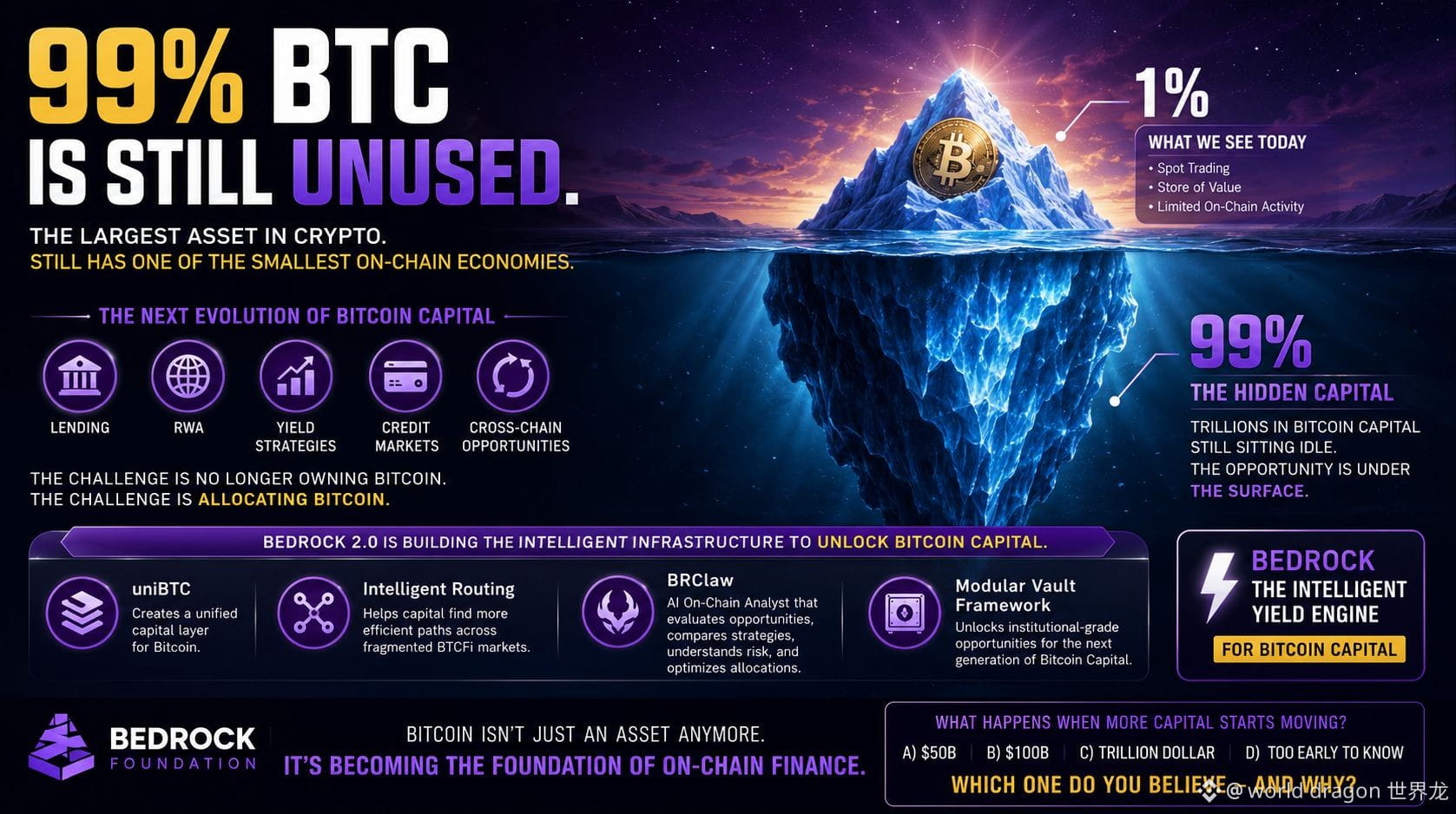
@Bedrock 🚨 BITCOIN IS NO LONGER THE STORY.
Capital is.
For more than a decade, Bitcoin's biggest strength was simple:
Buy BTC.
Hold BTC.
Wait.
And it worked.
Bitcoin became one of the most valuable assets on Earth.
But here's what most people still haven't realized:
The next phase isn't about owning Bitcoin.
It's about what Bitcoin can DO.
Think about it.
Trillions of dollars sit inside Bitcoin.
Yet only a small percentage is actively participating in:
🏦 Lending Markets
📈 Yield Strategies
🌎 Real World Assets
💳 On-Chain Credit
🔄 Cross-Chain Liquidity
This creates one of the largest untapped opportunities in crypto.
Because every mature asset eventually goes through the same evolution:
Value → Utility → Capital Efficiency
Bitcoin already won the value game.
Now it's entering the capital efficiency era.
The winners won't simply be the people holding BTC.
The winners will be the people who understand how to deploy BTC intelligently.
That's why BTCFi is becoming impossible to ignore.
And that's why platforms like Bedrock are building infrastructure around Bitcoin Capital rather than Bitcoin speculation.
🟣 uniBTC helps unify fragmented Bitcoin liquidity.
🟣 Intelligent Routing seeks the most efficient capital paths.
🟣 BRClaw introduces AI-powered analysis for opportunity discovery and risk evaluation.
🟣 Modular Vaults open access to more sophisticated Bitcoin strategies.
This isn't about replacing Bitcoin.
It's about activating Bitcoin.
The biggest shift in crypto may not be a new asset.
It may be trillions of dollars of existing Bitcoin finally becoming productive.
The question is:
👇 If just 10% of global Bitcoin capital enters BTCFi, what happens next?
A) BTCFi becomes a core crypto sector
B) BTCFi rivals major DeFi ecosystems
C) Bitcoin becomes the foundation of on-chain finance
D) We're still in the earliest chapter
What's your answer—and why?
#bedrock $BR
@Bedrock 🚨 BITCOIN IS NO LONGER THE STORY.
Capital is.
For more than a decade, Bitcoin's biggest strength was simple:
Buy BTC.
Hold BTC.
Wait.
And it worked.
Bitcoin became one of the most valuable assets on Earth.
But here's what most people still haven't realized:
The next phase isn't about owning Bitcoin.
It's about what Bitcoin can DO.
Think about it.
Trillions of dollars sit inside Bitcoin.
Yet only a small percentage is actively participating in:
🏦 Lending Markets
📈 Yield Strategies
🌎 Real World Assets
💳 On-Chain Credit
🔄 Cross-Chain Liquidity
This creates one of the largest untapped opportunities in crypto.
Because every mature asset eventually goes through the same evolution:
Value → Utility → Capital Efficiency
Bitcoin already won the value game.
Now it's entering the capital efficiency era.
The winners won't simply be the people holding BTC.
The winners will be the people who understand how to deploy BTC intelligently.
That's why BTCFi is becoming impossible to ignore.
And that's why platforms like Bedrock are building infrastructure around Bitcoin Capital rather than Bitcoin speculation.
🟣 uniBTC helps unify fragmented Bitcoin liquidity.
🟣 Intelligent Routing seeks the most efficient capital paths.
🟣 BRClaw introduces AI-powered analysis for opportunity discovery and risk evaluation.
🟣 Modular Vaults open access to more sophisticated Bitcoin strategies.
This isn't about replacing Bitcoin.
It's about activating Bitcoin.
The biggest shift in crypto may not be a new asset.
It may be trillions of dollars of existing Bitcoin finally becoming productive.
The question is:
👇 If just 10% of global Bitcoin capital enters BTCFi, what happens next?
A) BTCFi becomes a core crypto sector
B) BTCFi rivals major DeFi ecosystems
C) Bitcoin becomes the foundation of on-chain finance
D) We're still in the earliest chapter
What's your answer—and why?
#bedrock $BR
Capital is.
For more than a decade, Bitcoin's biggest strength was simple:
Buy BTC.
Hold BTC.
Wait.
And it worked.
Bitcoin became one of the most valuable assets on Earth.
But here's what most people still haven't realized:
The next phase isn't about owning Bitcoin.
It's about what Bitcoin can DO.
Think about it.
Trillions of dollars sit inside Bitcoin.
Yet only a small percentage is actively participating in:
🏦 Lending Markets
📈 Yield Strategies
🌎 Real World Assets
💳 On-Chain Credit
🔄 Cross-Chain Liquidity
This creates one of the largest untapped opportunities in crypto.
Because every mature asset eventually goes through the same evolution:
Value → Utility → Capital Efficiency
Bitcoin already won the value game.
Now it's entering the capital efficiency era.
The winners won't simply be the people holding BTC.
The winners will be the people who understand how to deploy BTC intelligently.
That's why BTCFi is becoming impossible to ignore.
And that's why platforms like Bedrock are building infrastructure around Bitcoin Capital rather than Bitcoin speculation.
🟣 uniBTC helps unify fragmented Bitcoin liquidity.
🟣 Intelligent Routing seeks the most efficient capital paths.
🟣 BRClaw introduces AI-powered analysis for opportunity discovery and risk evaluation.
🟣 Modular Vaults open access to more sophisticated Bitcoin strategies.
This isn't about replacing Bitcoin.
It's about activating Bitcoin.
The biggest shift in crypto may not be a new asset.
It may be trillions of dollars of existing Bitcoin finally becoming productive.
The question is:
👇 If just 10% of global Bitcoin capital enters BTCFi, what happens next?
A) BTCFi becomes a core crypto sector
B) BTCFi rivals major DeFi ecosystems
C) Bitcoin becomes the foundation of on-chain finance
D) We're still in the earliest chapter
What's your answer—and why?
#bedrock $BR
1
1
100
·
--
Bullish
@Bedrock The longer I watch Bitcoin evolve, the more I think we've been measuring success the wrong way.
For years, the goal was simple.
Buy Bitcoin.
Hold Bitcoin.
Protect Bitcoin.
And honestly, that strategy worked.
Bitcoin became the most valuable digital asset in the world because millions of people chose patience over activity.
But success creates new questions.
And one question keeps coming back to me.
What should trillions of dollars in Bitcoin capital actually do?
Because storing value is only one part of a financial system.
The other part is movement.
Capital that can participate.
Capital that can support markets.
Capital that can generate opportunities without sacrificing its core exposure.
That's why Bedrock stands out to me.
Not because it's trying to change Bitcoin.
But because it's trying to change how Bitcoin capital behaves.
For most of Bitcoin's history, holders faced a tradeoff.
Stay secure and remain inactive.
Or seek opportunities and accept additional complexity.
The gap between ownership and utility was simply accepted.
Bedrock challenges that assumption.
Products like uniBTC suggest a future where Bitcoin doesn't just sit at the center of the ecosystem.
It actively powers it.
And I think that's a much bigger shift than most people realize.
Because the next stage of Bitcoin may not be about creating more value.
It may be about unlocking the value that already exists.
The asset isn't changing.
The role of the asset is.
And that could redefine what Bitcoin participation looks like for the next decade. :::
#bedrock $BR
@Bedrock The longer I watch Bitcoin evolve, the more I think we've been measuring success the wrong way.
For years, the goal was simple.
Buy Bitcoin.
Hold Bitcoin.
Protect Bitcoin.
And honestly, that strategy worked.
Bitcoin became the most valuable digital asset in the world because millions of people chose patience over activity.
But success creates new questions.
And one question keeps coming back to me.
What should trillions of dollars in Bitcoin capital actually do?
Because storing value is only one part of a financial system.
The other part is movement.
Capital that can participate.
Capital that can support markets.
Capital that can generate opportunities without sacrificing its core exposure.
That's why Bedrock stands out to me.
Not because it's trying to change Bitcoin.
But because it's trying to change how Bitcoin capital behaves.
For most of Bitcoin's history, holders faced a tradeoff.
Stay secure and remain inactive.
Or seek opportunities and accept additional complexity.
The gap between ownership and utility was simply accepted.
Bedrock challenges that assumption.
Products like uniBTC suggest a future where Bitcoin doesn't just sit at the center of the ecosystem.
It actively powers it.
And I think that's a much bigger shift than most people realize.
Because the next stage of Bitcoin may not be about creating more value.
It may be about unlocking the value that already exists.
The asset isn't changing.
The role of the asset is.
And that could redefine what Bitcoin participation looks like for the next decade. :::
#bedrock $BR
For years, the goal was simple.
Buy Bitcoin.
Hold Bitcoin.
Protect Bitcoin.
And honestly, that strategy worked.
Bitcoin became the most valuable digital asset in the world because millions of people chose patience over activity.
But success creates new questions.
And one question keeps coming back to me.
What should trillions of dollars in Bitcoin capital actually do?
Because storing value is only one part of a financial system.
The other part is movement.
Capital that can participate.
Capital that can support markets.
Capital that can generate opportunities without sacrificing its core exposure.
That's why Bedrock stands out to me.
Not because it's trying to change Bitcoin.
But because it's trying to change how Bitcoin capital behaves.
For most of Bitcoin's history, holders faced a tradeoff.
Stay secure and remain inactive.
Or seek opportunities and accept additional complexity.
The gap between ownership and utility was simply accepted.
Bedrock challenges that assumption.
Products like uniBTC suggest a future where Bitcoin doesn't just sit at the center of the ecosystem.
It actively powers it.
And I think that's a much bigger shift than most people realize.
Because the next stage of Bitcoin may not be about creating more value.
It may be about unlocking the value that already exists.
The asset isn't changing.
The role of the asset is.
And that could redefine what Bitcoin participation looks like for the next decade. :::
#bedrock $BR
2
138
·
--
Bullish
@Bedrock 🚨 The next evolution of Bitcoin may not be about growth.
It may be about efficiency.
For years, the crypto industry measured success by accumulation.
More users.
More capital.
More assets.
The assumption was simple.
If enough value entered the system, innovation would follow.
And in many ways, it did.
But lately I've been thinking about a different question.
What if the industry isn't limited by the amount of capital available...
What if it's limited by how effectively that capital is being used?
Bitcoin is the perfect example.
Trillions of dollars in value have been created through ownership.
Yet a huge portion of that value has historically remained inactive.
Not because holders lacked conviction.
Because conviction often required inactivity.
You held.
You secured.
You waited.
Participation frequently meant introducing additional risk.
That's why Bedrock stands out to me.
Not because it changes Bitcoin.
But because it changes the relationship between Bitcoin and opportunity.
With solutions like uniBTC, the conversation shifts from choosing between holding and participating to exploring how both can coexist.
That distinction matters.
Markets become stronger when capital can move without abandoning its foundation.
Liquidity improves.
Access expands.
And the opportunity cost of long-term conviction starts to shrink.
That's what makes BTCFi interesting.
The real innovation isn't yield.
Yield is simply the byproduct.
The real innovation is giving capital more ways to contribute while preserving the exposure that made people hold Bitcoin in the first place.
The future of Bitcoin may not be defined by how much capital enters the ecosystem.
It may be defined by how intelligently existing capital is activated.
#bedrock $BR
@Bedrock 🚨 The next evolution of Bitcoin may not be about growth.
It may be about efficiency.
For years, the crypto industry measured success by accumulation.
More users.
More capital.
More assets.
The assumption was simple.
If enough value entered the system, innovation would follow.
And in many ways, it did.
But lately I've been thinking about a different question.
What if the industry isn't limited by the amount of capital available...
What if it's limited by how effectively that capital is being used?
Bitcoin is the perfect example.
Trillions of dollars in value have been created through ownership.
Yet a huge portion of that value has historically remained inactive.
Not because holders lacked conviction.
Because conviction often required inactivity.
You held.
You secured.
You waited.
Participation frequently meant introducing additional risk.
That's why Bedrock stands out to me.
Not because it changes Bitcoin.
But because it changes the relationship between Bitcoin and opportunity.
With solutions like uniBTC, the conversation shifts from choosing between holding and participating to exploring how both can coexist.
That distinction matters.
Markets become stronger when capital can move without abandoning its foundation.
Liquidity improves.
Access expands.
And the opportunity cost of long-term conviction starts to shrink.
That's what makes BTCFi interesting.
The real innovation isn't yield.
Yield is simply the byproduct.
The real innovation is giving capital more ways to contribute while preserving the exposure that made people hold Bitcoin in the first place.
The future of Bitcoin may not be defined by how much capital enters the ecosystem.
It may be defined by how intelligently existing capital is activated.
#bedrock $BR
It may be about efficiency.
For years, the crypto industry measured success by accumulation.
More users.
More capital.
More assets.
The assumption was simple.
If enough value entered the system, innovation would follow.
And in many ways, it did.
But lately I've been thinking about a different question.
What if the industry isn't limited by the amount of capital available...
What if it's limited by how effectively that capital is being used?
Bitcoin is the perfect example.
Trillions of dollars in value have been created through ownership.
Yet a huge portion of that value has historically remained inactive.
Not because holders lacked conviction.
Because conviction often required inactivity.
You held.
You secured.
You waited.
Participation frequently meant introducing additional risk.
That's why Bedrock stands out to me.
Not because it changes Bitcoin.
But because it changes the relationship between Bitcoin and opportunity.
With solutions like uniBTC, the conversation shifts from choosing between holding and participating to exploring how both can coexist.
That distinction matters.
Markets become stronger when capital can move without abandoning its foundation.
Liquidity improves.
Access expands.
And the opportunity cost of long-term conviction starts to shrink.
That's what makes BTCFi interesting.
The real innovation isn't yield.
Yield is simply the byproduct.
The real innovation is giving capital more ways to contribute while preserving the exposure that made people hold Bitcoin in the first place.
The future of Bitcoin may not be defined by how much capital enters the ecosystem.
It may be defined by how intelligently existing capital is activated.
#bedrock $BR
2
66
·
--
Bullish
@Bedrock 🚨 The next evolution of Bitcoin may not be about growth.
It may be about efficiency.
For years, the crypto industry measured success by accumulation.
More users.
More capital.
More assets.
The assumption was simple.
If enough value entered the system, innovation would follow.
And in many ways, it did.
But lately I've been thinking about a different question.
What if the industry isn't limited by the amount of capital available...
What if it's limited by how effectively that capital is being used?
Bitcoin is the perfect example.
Trillions of dollars in value have been created through ownership.
Yet a huge portion of that value has historically remained inactive.
Not because holders lacked conviction.
Because conviction often required inactivity.
You held.
You secured.
You waited.
Participation frequently meant introducing additional risk.
That's why Bedrock stands out to me.
Not because it changes Bitcoin.
But because it changes the relationship between Bitcoin and opportunity.
With solutions like uniBTC, the conversation shifts from choosing between holding and participating to exploring how both can coexist.
That distinction matters.
Markets become stronger when capital can move without abandoning its foundation.
Liquidity improves.
Access expands.
And the opportunity cost of long-term conviction starts to shrink.
That's what makes BTCFi interesting.
The real innovation isn't yield.
Yield is simply the byproduct.
The real innovation is giving capital more ways to contribute while preserving the exposure that made people hold Bitcoin in the first place.
The future of Bitcoin may not be defined by how much capital enters the ecosystem.
It may be defined by how intelligently existing capital is activated.
#bedrock $BR
@Bedrock 🚨 The next evolution of Bitcoin may not be about growth.
It may be about efficiency.
For years, the crypto industry measured success by accumulation.
More users.
More capital.
More assets.
The assumption was simple.
If enough value entered the system, innovation would follow.
And in many ways, it did.
But lately I've been thinking about a different question.
What if the industry isn't limited by the amount of capital available...
What if it's limited by how effectively that capital is being used?
Bitcoin is the perfect example.
Trillions of dollars in value have been created through ownership.
Yet a huge portion of that value has historically remained inactive.
Not because holders lacked conviction.
Because conviction often required inactivity.
You held.
You secured.
You waited.
Participation frequently meant introducing additional risk.
That's why Bedrock stands out to me.
Not because it changes Bitcoin.
But because it changes the relationship between Bitcoin and opportunity.
With solutions like uniBTC, the conversation shifts from choosing between holding and participating to exploring how both can coexist.
That distinction matters.
Markets become stronger when capital can move without abandoning its foundation.
Liquidity improves.
Access expands.
And the opportunity cost of long-term conviction starts to shrink.
That's what makes BTCFi interesting.
The real innovation isn't yield.
Yield is simply the byproduct.
The real innovation is giving capital more ways to contribute while preserving the exposure that made people hold Bitcoin in the first place.
The future of Bitcoin may not be defined by how much capital enters the ecosystem.
It may be defined by how intelligently existing capital is activated.
#bedrock $BR
It may be about efficiency.
For years, the crypto industry measured success by accumulation.
More users.
More capital.
More assets.
The assumption was simple.
If enough value entered the system, innovation would follow.
And in many ways, it did.
But lately I've been thinking about a different question.
What if the industry isn't limited by the amount of capital available...
What if it's limited by how effectively that capital is being used?
Bitcoin is the perfect example.
Trillions of dollars in value have been created through ownership.
Yet a huge portion of that value has historically remained inactive.
Not because holders lacked conviction.
Because conviction often required inactivity.
You held.
You secured.
You waited.
Participation frequently meant introducing additional risk.
That's why Bedrock stands out to me.
Not because it changes Bitcoin.
But because it changes the relationship between Bitcoin and opportunity.
With solutions like uniBTC, the conversation shifts from choosing between holding and participating to exploring how both can coexist.
That distinction matters.
Markets become stronger when capital can move without abandoning its foundation.
Liquidity improves.
Access expands.
And the opportunity cost of long-term conviction starts to shrink.
That's what makes BTCFi interesting.
The real innovation isn't yield.
Yield is simply the byproduct.
The real innovation is giving capital more ways to contribute while preserving the exposure that made people hold Bitcoin in the first place.
The future of Bitcoin may not be defined by how much capital enters the ecosystem.
It may be defined by how intelligently existing capital is activated.
#bedrock $BR
1
102
@Bedrock 🚨 The Bitcoin economy is entering a completely new era.
For years, the conversation was simple:
Buy Bitcoin.
Hold Bitcoin.
Wait.
That strategy created some of the strongest conviction in financial history.
But today, something bigger is happening.
Bitcoin is no longer sitting on the sidelines.
It's entering lending markets.
It's powering credit systems.
It's accessing institutional products.
It's participating in RWA opportunities.
It's becoming productive capital.
And that's why I believe the next major Bitcoin narrative isn't ownership.
It's optimization.
Look at what's happening around us.
Strategy continues expanding its Bitcoin treasury.
Metaplanet continues adding Bitcoin to its balance sheet.
Semler Scientific continues building Bitcoin exposure.
Twenty One Capital was created around the idea that Bitcoin itself can become a strategic financial asset.
Billions of dollars worth of BTC are being consolidated into long-term capital pools.
The accumulation phase is maturing.
Now comes the deployment phase.
The challenge?
As Bitcoin opportunities expand, complexity expands with them.
More chains.
More vaults.
More protocols.
More yield sources.
More risk variables.
Managing Bitcoin capital is becoming a full-time discipline.
This is where Bedrock 2.0 stands out.
Not as another protocol competing for liquidity.
But as infrastructure designed for capital coordination.
At the center sits uniBTC.
A unified Bitcoin layer designed to connect fragmented opportunities across the growing BTCFi ecosystem.
Instead of forcing capital to navigate disconnected environments, Bedrock aims to create a more intelligent framework for allocation.
And intelligent allocation requires intelligent decision-making.
That's where BRClaw becomes important.
🧠 An AI-powered On-Chain Analyst built to help users:
•
$BR #Bedrock @Bedrock #bedrock $BR
@Bedrock 🚨 The Bitcoin economy is entering a completely new era.
For years, the conversation was simple:
Buy Bitcoin.
Hold Bitcoin.
Wait.
That strategy created some of the strongest conviction in financial history.
But today, something bigger is happening.
Bitcoin is no longer sitting on the sidelines.
It's entering lending markets.
It's powering credit systems.
It's accessing institutional products.
It's participating in RWA opportunities.
It's becoming productive capital.
And that's why I believe the next major Bitcoin narrative isn't ownership.
It's optimization.
Look at what's happening around us.
Strategy continues expanding its Bitcoin treasury.
Metaplanet continues adding Bitcoin to its balance sheet.
Semler Scientific continues building Bitcoin exposure.
Twenty One Capital was created around the idea that Bitcoin itself can become a strategic financial asset.
Billions of dollars worth of BTC are being consolidated into long-term capital pools.
The accumulation phase is maturing.
Now comes the deployment phase.
The challenge?
As Bitcoin opportunities expand, complexity expands with them.
More chains.
More vaults.
More protocols.
More yield sources.
More risk variables.
Managing Bitcoin capital is becoming a full-time discipline.
This is where Bedrock 2.0 stands out.
Not as another protocol competing for liquidity.
But as infrastructure designed for capital coordination.
At the center sits uniBTC.
A unified Bitcoin layer designed to connect fragmented opportunities across the growing BTCFi ecosystem.
Instead of forcing capital to navigate disconnected environments, Bedrock aims to create a more intelligent framework for allocation.
And intelligent allocation requires intelligent decision-making.
That's where BRClaw becomes important.
🧠 An AI-powered On-Chain Analyst built to help users:
•
$BR #Bedrock @Bedrock #bedrock $BR
For years, the conversation was simple:
Buy Bitcoin.
Hold Bitcoin.
Wait.
That strategy created some of the strongest conviction in financial history.
But today, something bigger is happening.
Bitcoin is no longer sitting on the sidelines.
It's entering lending markets.
It's powering credit systems.
It's accessing institutional products.
It's participating in RWA opportunities.
It's becoming productive capital.
And that's why I believe the next major Bitcoin narrative isn't ownership.
It's optimization.
Look at what's happening around us.
Strategy continues expanding its Bitcoin treasury.
Metaplanet continues adding Bitcoin to its balance sheet.
Semler Scientific continues building Bitcoin exposure.
Twenty One Capital was created around the idea that Bitcoin itself can become a strategic financial asset.
Billions of dollars worth of BTC are being consolidated into long-term capital pools.
The accumulation phase is maturing.
Now comes the deployment phase.
The challenge?
As Bitcoin opportunities expand, complexity expands with them.
More chains.
More vaults.
More protocols.
More yield sources.
More risk variables.
Managing Bitcoin capital is becoming a full-time discipline.
This is where Bedrock 2.0 stands out.
Not as another protocol competing for liquidity.
But as infrastructure designed for capital coordination.
At the center sits uniBTC.
A unified Bitcoin layer designed to connect fragmented opportunities across the growing BTCFi ecosystem.
Instead of forcing capital to navigate disconnected environments, Bedrock aims to create a more intelligent framework for allocation.
And intelligent allocation requires intelligent decision-making.
That's where BRClaw becomes important.
🧠 An AI-powered On-Chain Analyst built to help users:
•
$BR #Bedrock @Bedrock #bedrock $BR
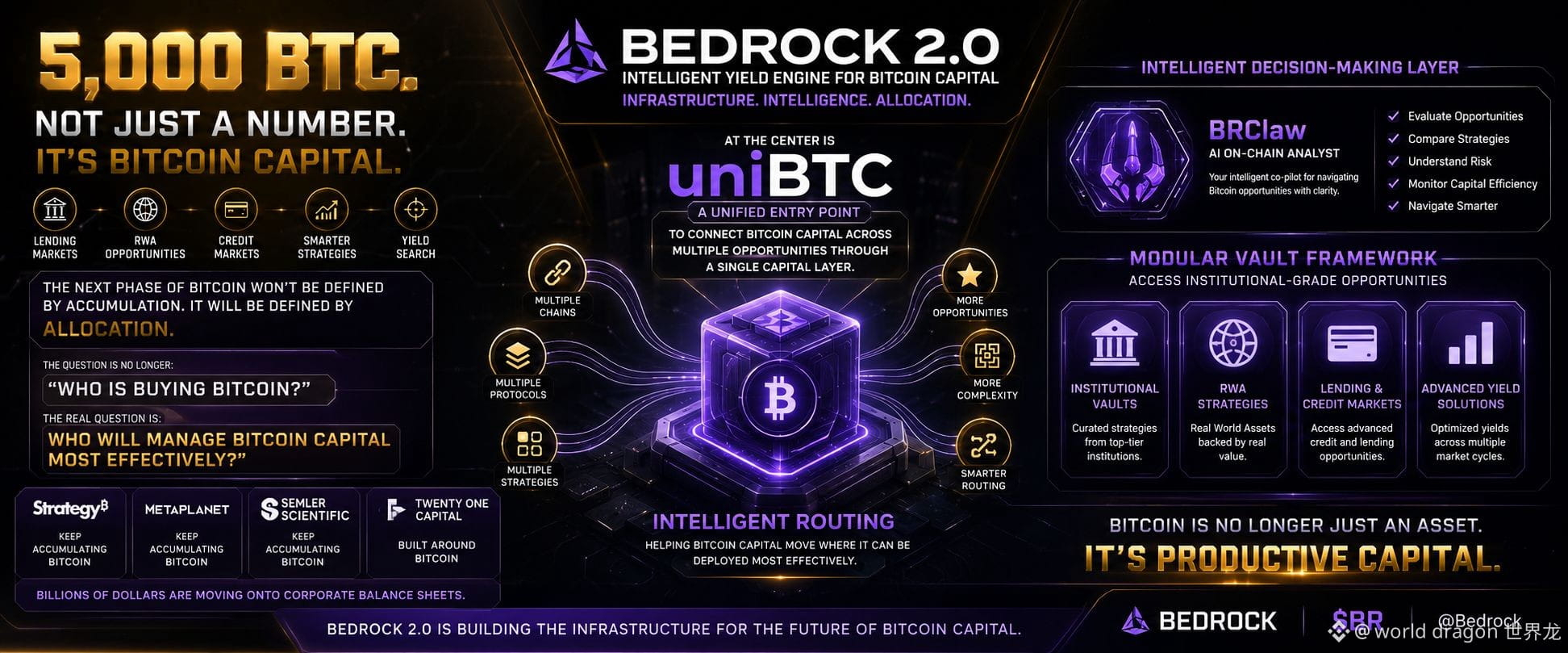
2
91
@GeniusOfficial I was thinking today about how quickly crypto infrastructure is evolving, and one idea kept coming back to me.
Most people focus on innovation at the surface level.
New tokens. New protocols. New narratives.
But the biggest shifts often happen underneath, where most users never look.
As more intelligence moves on-chain, the question is no longer just how systems create value.
It's how they protect value while operating in public environments.
Every blockchain transaction leaves a trail.
Every action creates data.
Every visible strategy becomes information that others can analyze.
That creates an interesting challenge.
The smarter on-chain systems become, the more important privacy, coordination, and execution infrastructure become.
Not because transparency is bad.
But because efficiency sometimes requires selective visibility.
This is one reason projects like Genius Terminal continue to catch my attention.
They're exploring a part of the stack that many people overlook.
The future of crypto may not simply be about smarter agents.
It may be about creating environments where those agents can operate effectively without exposing every move before it's completed.
We've spent years building transparent networks.
The next phase could be about building intelligent networks.
And the difference between those two ideas may end up being much bigger than most people expect. 🚀
#genius $GENIUS
@GeniusOfficial I was thinking today about how quickly crypto infrastructure is evolving, and one idea kept coming back to me.
Most people focus on innovation at the surface level.
New tokens. New protocols. New narratives.
But the biggest shifts often happen underneath, where most users never look.
As more intelligence moves on-chain, the question is no longer just how systems create value.
It's how they protect value while operating in public environments.
Every blockchain transaction leaves a trail.
Every action creates data.
Every visible strategy becomes information that others can analyze.
That creates an interesting challenge.
The smarter on-chain systems become, the more important privacy, coordination, and execution infrastructure become.
Not because transparency is bad.
But because efficiency sometimes requires selective visibility.
This is one reason projects like Genius Terminal continue to catch my attention.
They're exploring a part of the stack that many people overlook.
The future of crypto may not simply be about smarter agents.
It may be about creating environments where those agents can operate effectively without exposing every move before it's completed.
We've spent years building transparent networks.
The next phase could be about building intelligent networks.
And the difference between those two ideas may end up being much bigger than most people expect. 🚀
#genius $GENIUS
Most people focus on innovation at the surface level.
New tokens. New protocols. New narratives.
But the biggest shifts often happen underneath, where most users never look.
As more intelligence moves on-chain, the question is no longer just how systems create value.
It's how they protect value while operating in public environments.
Every blockchain transaction leaves a trail.
Every action creates data.
Every visible strategy becomes information that others can analyze.
That creates an interesting challenge.
The smarter on-chain systems become, the more important privacy, coordination, and execution infrastructure become.
Not because transparency is bad.
But because efficiency sometimes requires selective visibility.
This is one reason projects like Genius Terminal continue to catch my attention.
They're exploring a part of the stack that many people overlook.
The future of crypto may not simply be about smarter agents.
It may be about creating environments where those agents can operate effectively without exposing every move before it's completed.
We've spent years building transparent networks.
The next phase could be about building intelligent networks.
And the difference between those two ideas may end up being much bigger than most people expect. 🚀
#genius $GENIUS
1
2
189
@Bedrock The longer I follow BTCFi, the more I realize that Bitcoin's greatest limitation was never technology.
It was accessibility.
For a long time, participating in Bitcoin meant making a choice.
You could hold BTC and preserve exposure to the asset you believed in.
Or you could move capital elsewhere in search of additional utility.
Most people accepted that tradeoff because there wasn't much alternative.
Bitcoin was the foundation.
Everything else was the experimentation layer.
But markets evolve when assumptions get challenged.
And one assumption that seems to be fading is the idea that Bitcoin must remain isolated to remain valuable.
That's why Bedrock stands out to me.
Not because it promises extraordinary yields.
Not because it's chasing the latest trend.
But because it approaches Bitcoin from a different angle.
Instead of asking, "How do we replace Bitcoin?"
It asks, "How do we make Bitcoin more productive without giving up Bitcoin?"
That distinction matters.
The strongest assets in financial history didn't become dominant because they sat idle.
They became dominant because entire ecosystems formed around them.
Liquidity expanded.
Utility expanded.
Participation expanded.
Ownership remained.
uniBTC feels aligned with that direction.
The goal isn't necessarily to make Bitcoin something different.
The goal is to remove unnecessary friction around using it.
And that may be one of the most important shifts happening in BTCFi today.
Because the future of Bitcoin may not be defined by how many people hold it.
It may be defined by how much value can be built around it while holders continue to stay committed.
And Bedrock appears to be quietly contributing to that future.
#bedrock $BR
@Bedrock The longer I follow BTCFi, the more I realize that Bitcoin's greatest limitation was never technology.
It was accessibility.
For a long time, participating in Bitcoin meant making a choice.
You could hold BTC and preserve exposure to the asset you believed in.
Or you could move capital elsewhere in search of additional utility.
Most people accepted that tradeoff because there wasn't much alternative.
Bitcoin was the foundation.
Everything else was the experimentation layer.
But markets evolve when assumptions get challenged.
And one assumption that seems to be fading is the idea that Bitcoin must remain isolated to remain valuable.
That's why Bedrock stands out to me.
Not because it promises extraordinary yields.
Not because it's chasing the latest trend.
But because it approaches Bitcoin from a different angle.
Instead of asking, "How do we replace Bitcoin?"
It asks, "How do we make Bitcoin more productive without giving up Bitcoin?"
That distinction matters.
The strongest assets in financial history didn't become dominant because they sat idle.
They became dominant because entire ecosystems formed around them.
Liquidity expanded.
Utility expanded.
Participation expanded.
Ownership remained.
uniBTC feels aligned with that direction.
The goal isn't necessarily to make Bitcoin something different.
The goal is to remove unnecessary friction around using it.
And that may be one of the most important shifts happening in BTCFi today.
Because the future of Bitcoin may not be defined by how many people hold it.
It may be defined by how much value can be built around it while holders continue to stay committed.
And Bedrock appears to be quietly contributing to that future.
#bedrock $BR
It was accessibility.
For a long time, participating in Bitcoin meant making a choice.
You could hold BTC and preserve exposure to the asset you believed in.
Or you could move capital elsewhere in search of additional utility.
Most people accepted that tradeoff because there wasn't much alternative.
Bitcoin was the foundation.
Everything else was the experimentation layer.
But markets evolve when assumptions get challenged.
And one assumption that seems to be fading is the idea that Bitcoin must remain isolated to remain valuable.
That's why Bedrock stands out to me.
Not because it promises extraordinary yields.
Not because it's chasing the latest trend.
But because it approaches Bitcoin from a different angle.
Instead of asking, "How do we replace Bitcoin?"
It asks, "How do we make Bitcoin more productive without giving up Bitcoin?"
That distinction matters.
The strongest assets in financial history didn't become dominant because they sat idle.
They became dominant because entire ecosystems formed around them.
Liquidity expanded.
Utility expanded.
Participation expanded.
Ownership remained.
uniBTC feels aligned with that direction.
The goal isn't necessarily to make Bitcoin something different.
The goal is to remove unnecessary friction around using it.
And that may be one of the most important shifts happening in BTCFi today.
Because the future of Bitcoin may not be defined by how many people hold it.
It may be defined by how much value can be built around it while holders continue to stay committed.
And Bedrock appears to be quietly contributing to that future.
#bedrock $BR
Bullish💚
50%
Bearish ❤️
50%
6 votes • Voting closed
1
164
THE MAP IS NOT THE TERRITORY.
In Vietnam, there's a saying that goes:
🗺️ "A map is not the territory."
A map can show you the way.
But it’s not the actual road.
---
This makes me think about $GENIUS.
👀
Some see a trading interface.
👀
Some see AI.
👀
Some see Cross-Chain.
👀
Some see Privacy.
👀
Some see another Aggregator.
---
But maybe everyone is just looking at the "map"...
instead of what’s really happening behind the scenes.
⚡
In crypto, most folks are focused on finding opportunities.
Which token will pump?
Which wallet is buying?
Which narrative is about to explode?
---
But opportunities don’t turn into profits just because you see them.
It also depends on:
🎯 How quickly you enter the trade.
🎯 Where the liquidity is found.
🎯 Whether you get hit by MEV or not.
🎯 How efficiently capital is utilized.
🎯 How intelligently the trades are executed.
---
That’s why I see @GeniusOfficial going in a different direction.
⚡ Smart Execution
⚡ Ghost Orders
⚡ Cross-Chain Routing
⚡ Privacy Infrastructure
⚡ Capital Optimization
---
The goal isn’t to help traders see more data.
The goal is to help traders act better with that data.
💡
Because in a market where everyone has the same information...
the edge isn’t in spotting opportunities.
The edge is in executing opportunities better than others.
🔥
And sometimes...
the most important thing isn’t the map you’re looking at.
It’s the system that’s taking you to your target.
@GeniusOfficial #genius $GENIUS
THE MAP IS NOT THE TERRITORY.
In Vietnam, there's a saying that goes:
🗺️ "A map is not the territory."
A map can show you the way.
But it’s not the actual road.
---
This makes me think about $GENIUS .
👀
Some see a trading interface.
👀
Some see AI.
👀
Some see Cross-Chain.
👀
Some see Privacy.
👀
Some see another Aggregator.
---
But maybe everyone is just looking at the "map"...
instead of what’s really happening behind the scenes.
⚡
In crypto, most folks are focused on finding opportunities.
Which token will pump?
Which wallet is buying?
Which narrative is about to explode?
---
But opportunities don’t turn into profits just because you see them.
It also depends on:
🎯 How quickly you enter the trade.
🎯 Where the liquidity is found.
🎯 Whether you get hit by MEV or not.
🎯 How efficiently capital is utilized.
🎯 How intelligently the trades are executed.
---
That’s why I see @GeniusOfficial going in a different direction.
⚡ Smart Execution
⚡ Ghost Orders
⚡ Cross-Chain Routing
⚡ Privacy Infrastructure
⚡ Capital Optimization
---
The goal isn’t to help traders see more data.
The goal is to help traders act better with that data.
💡
Because in a market where everyone has the same information...
the edge isn’t in spotting opportunities.
The edge is in executing opportunities better than others.
🔥
And sometimes...
the most important thing isn’t the map you’re looking at.
It’s the system that’s taking you to your target.
@GeniusOfficial #genius $GENIUS
In Vietnam, there's a saying that goes:
🗺️ "A map is not the territory."
A map can show you the way.
But it’s not the actual road.
---
This makes me think about $GENIUS .
👀
Some see a trading interface.
👀
Some see AI.
👀
Some see Cross-Chain.
👀
Some see Privacy.
👀
Some see another Aggregator.
---
But maybe everyone is just looking at the "map"...
instead of what’s really happening behind the scenes.
⚡
In crypto, most folks are focused on finding opportunities.
Which token will pump?
Which wallet is buying?
Which narrative is about to explode?
---
But opportunities don’t turn into profits just because you see them.
It also depends on:
🎯 How quickly you enter the trade.
🎯 Where the liquidity is found.
🎯 Whether you get hit by MEV or not.
🎯 How efficiently capital is utilized.
🎯 How intelligently the trades are executed.
---
That’s why I see @GeniusOfficial going in a different direction.
⚡ Smart Execution
⚡ Ghost Orders
⚡ Cross-Chain Routing
⚡ Privacy Infrastructure
⚡ Capital Optimization
---
The goal isn’t to help traders see more data.
The goal is to help traders act better with that data.
💡
Because in a market where everyone has the same information...
the edge isn’t in spotting opportunities.
The edge is in executing opportunities better than others.
🔥
And sometimes...
the most important thing isn’t the map you’re looking at.
It’s the system that’s taking you to your target.
@GeniusOfficial #genius $GENIUS
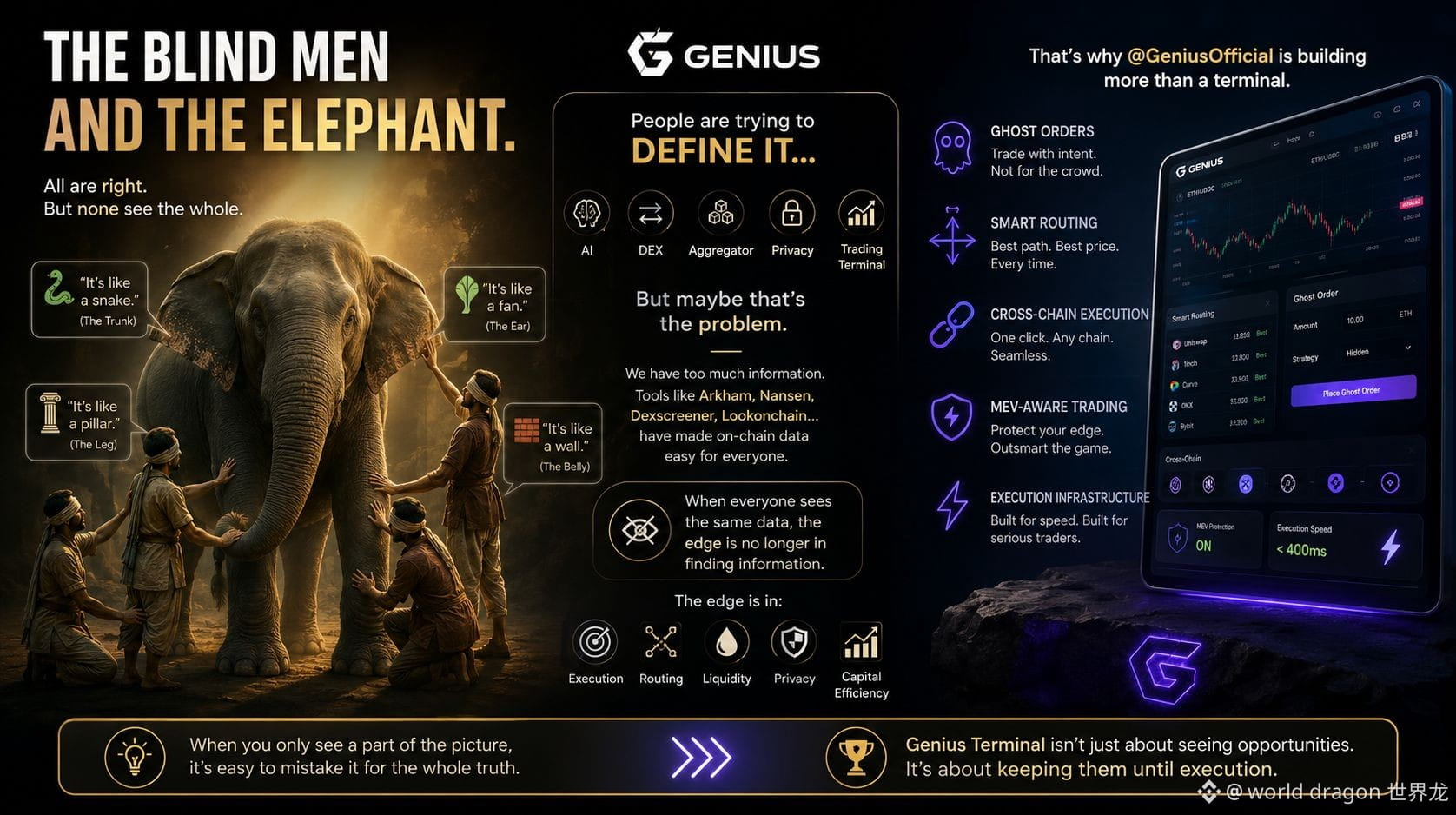
2
2
150
Log in to explore more content
Join global crypto users on Binance Square
⚡️ Get latest and useful information about crypto.
💬 Trusted by the world’s largest crypto exchange.
👍 Discover real insights from verified creators.
Email / Phone number
Trending Topics
ZcashETFPostsFirstWeeklyOutflow$93.6M
49,200 views
145 Discussing
#ZcashETFPostsFirstWeeklyOutflow$93.6M
Zcash ETF’s first weekly outflow of $93.6 million signals weakening investor demand and possible profit-booking. This could put short-term pressure on ZEC’s price and hurt sentiment across privacy-focused cryptocurrencies. Traders should watch support levels and further fund flows before taking positions.
Eram Trading Lab
·1 Likes
·255 views
GreekPoliceBustCryptoScamRingArrest17
134,314 views
947 Discussing
BitcoinRejectedAt$87K
146,637 views
200 Discussing