

ERIIKA NOVA
14.2k Posts

ERIIKA NOVA
 Square Verified+
Report
Block User
Crypto Lover
24 Following
31.3K+ Followers
14.1K+ Liked
Posts
All
Live
·
--
Bullish
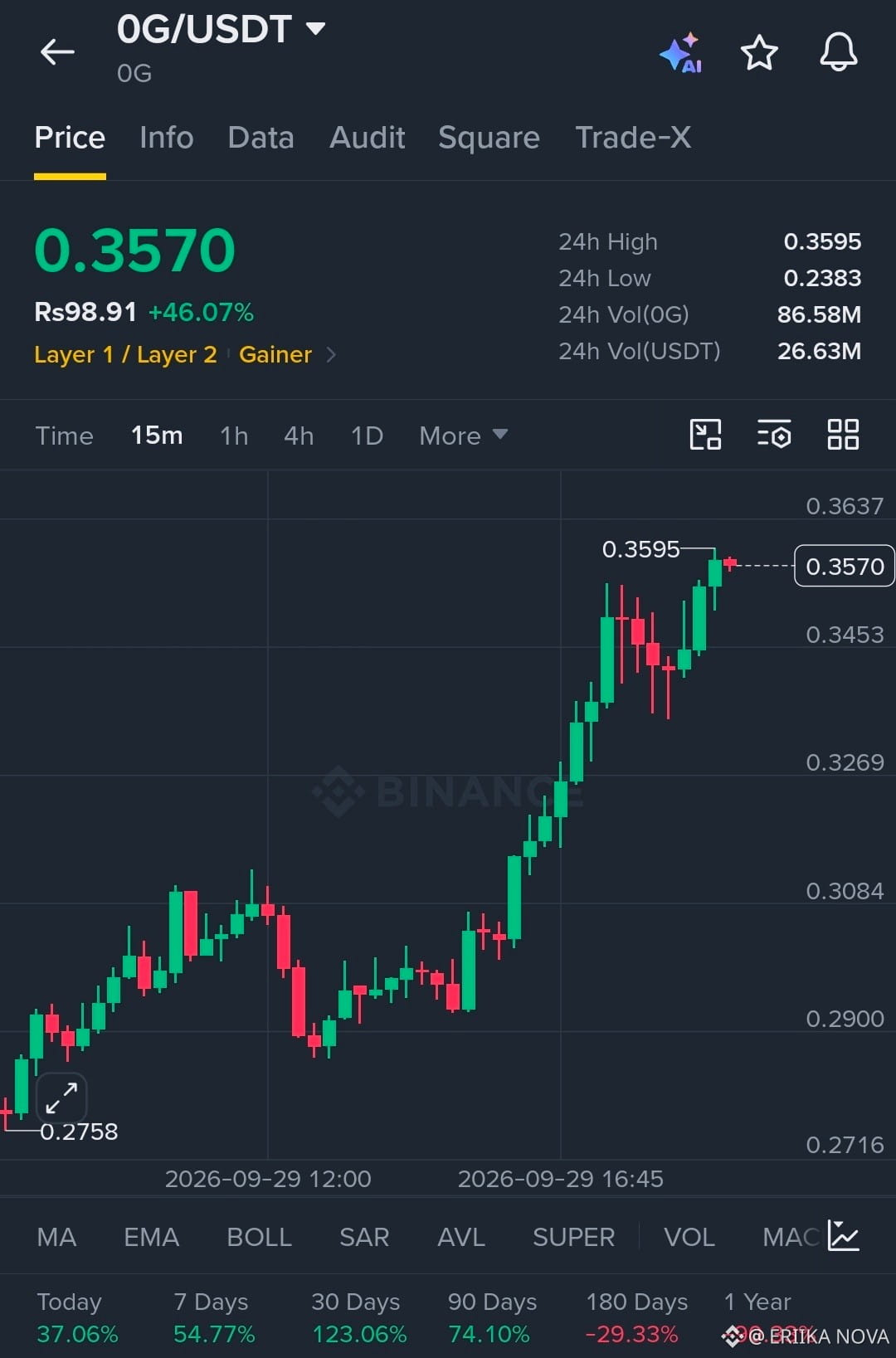
$OG is trading near $0.3570, up 46.07% in 24H. The 15M chart shows a powerful breakout with higher highs and strong bullish candles. Price is now testing the $0.3595 resistance zone.
Trade Setup
Entry Zone: $0.345 – $0.352
Target 1 🎯: $0.360
Target 2 🎯: $0.375
Target 3 🎯: $0.390
Stop Loss: $0.337
A clean breakout above $0.3595 with strong volume could ignite another explosive leg higher. Momentum is hot, but after a 46% daily surge, watch for sharp pullbacks and avoid chasing extended candles.
#ECBToTestAIAgentsInDigitalEuroPayments #StrategyAdds1666BTCHoldingsReach847666
{spot}(OGUSDT)
$OG is trading near $0.3570, up 46.07% in 24H. The 15M chart shows a powerful breakout with higher highs and strong bullish candles. Price is now testing the $0.3595 resistance zone.
Trade Setup
Entry Zone: $0.345 – $0.352
Target 1 🎯: $0.360
Target 2 🎯: $0.375
Target 3 🎯: $0.390
Stop Loss: $0.337
A clean breakout above $0.3595 with strong volume could ignite another explosive leg higher. Momentum is hot, but after a 46% daily surge, watch for sharp pullbacks and avoid chasing extended candles.
#ECBToTestAIAgentsInDigitalEuroPayments #StrategyAdds1666BTCHoldingsReach847666
Trade Setup
Entry Zone: $0.345 – $0.352
Target 1 🎯: $0.360
Target 2 🎯: $0.375
Target 3 🎯: $0.390
Stop Loss: $0.337
A clean breakout above $0.3595 with strong volume could ignite another explosive leg higher. Momentum is hot, but after a 46% daily surge, watch for sharp pullbacks and avoid chasing extended candles.
#ECBToTestAIAgentsInDigitalEuroPayments #StrategyAdds1666BTCHoldingsReach847666
112
·
--
bStocks 101: Wall Street Is Moving On-Chain
Buying U.S. stocks and trading crypto used to feel like two completely different worlds.
That gap is getting smaller.
With Binance Stocks and bStocks, users can explore exposure to major U.S. names like Apple, NVIDIA, Tesla, Microsoft and Amazon without leaving the Binance ecosystem.
You can start small with fractional exposure, while bStocks bring selected stocks on-chain as tokens backed 1:1 by underlying shares.
The interesting part? Supported bStocks can trade 24/7 on Binance Spot and can even be withdrawn to compatible on-chain wallets.
But remember: holding a bStock isn't the same as directly owning the company's shares, and access depends on your location and eligibility.
Crypto brought money on-chain. Now traditional markets are starting to follow.
This could be one of the most interesting bridges between Wall Street and Web3 yet.
@BinanceLaotian #SEABstock #SEAstock
bStocks 101: Wall Street Is Moving On-Chain
Buying U.S. stocks and trading crypto used to feel like two completely different worlds.
That gap is getting smaller.
With Binance Stocks and bStocks, users can explore exposure to major U.S. names like Apple, NVIDIA, Tesla, Microsoft and Amazon without leaving the Binance ecosystem.
You can start small with fractional exposure, while bStocks bring selected stocks on-chain as tokens backed 1:1 by underlying shares.
The interesting part? Supported bStocks can trade 24/7 on Binance Spot and can even be withdrawn to compatible on-chain wallets.
But remember: holding a bStock isn't the same as directly owning the company's shares, and access depends on your location and eligibility.
Crypto brought money on-chain. Now traditional markets are starting to follow.
This could be one of the most interesting bridges between Wall Street and Web3 yet.
@Binance Laotian #SEABstock #SEAstock
Buying U.S. stocks and trading crypto used to feel like two completely different worlds.
That gap is getting smaller.
With Binance Stocks and bStocks, users can explore exposure to major U.S. names like Apple, NVIDIA, Tesla, Microsoft and Amazon without leaving the Binance ecosystem.
You can start small with fractional exposure, while bStocks bring selected stocks on-chain as tokens backed 1:1 by underlying shares.
The interesting part? Supported bStocks can trade 24/7 on Binance Spot and can even be withdrawn to compatible on-chain wallets.
But remember: holding a bStock isn't the same as directly owning the company's shares, and access depends on your location and eligibility.
Crypto brought money on-chain. Now traditional markets are starting to follow.
This could be one of the most interesting bridges between Wall Street and Web3 yet.
@Binance Laotian #SEABstock #SEAstock

4
180
·
--
Bullish
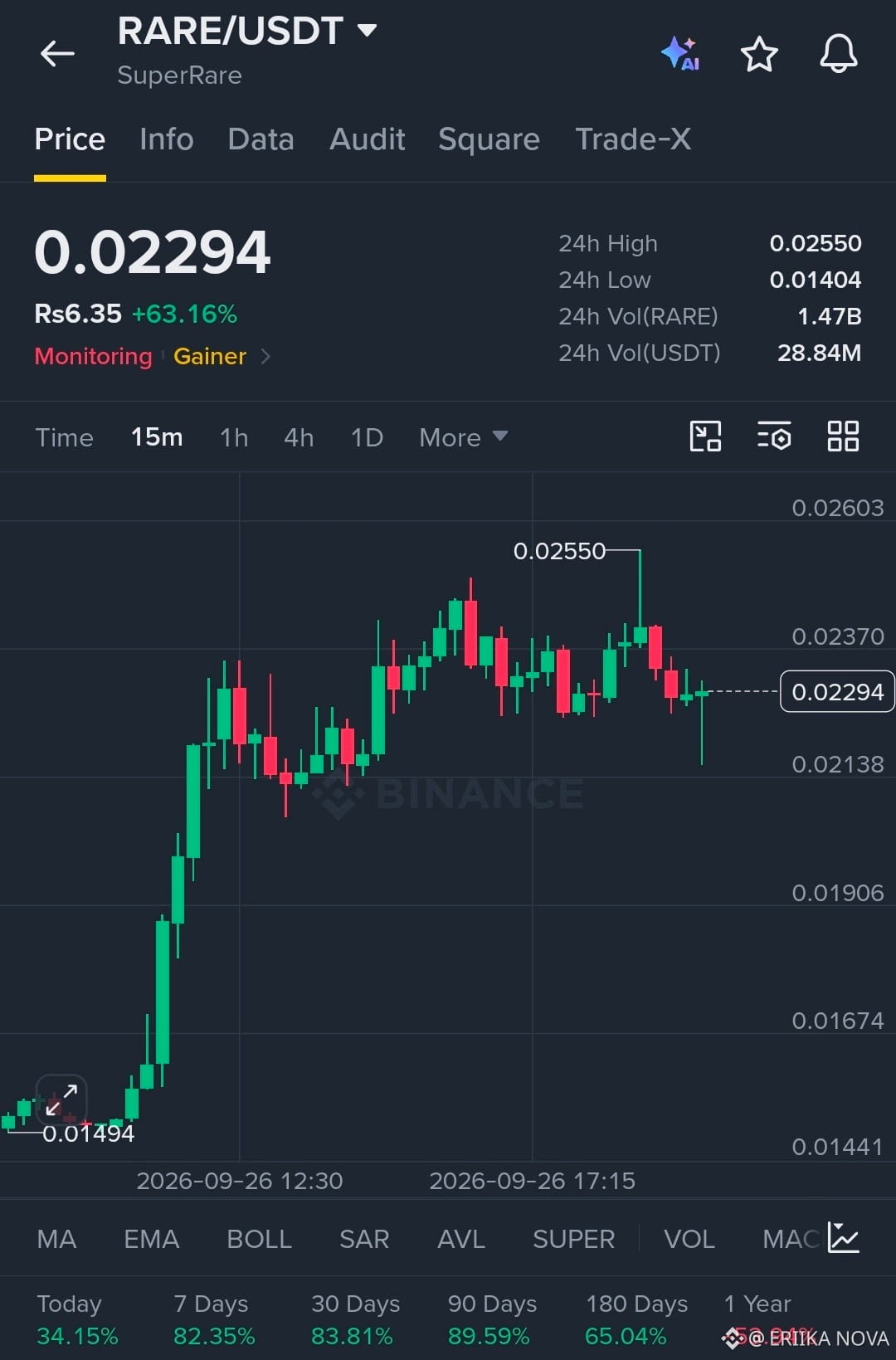
$RARE is trading around $0.02294, up +63.16% in 24 hours. After a powerful breakout from the $0.015 area, price is consolidating near the highs. The 15M chart shows buyers defending the $0.0213–$0.0220 region, while $0.0237 remains the immediate breakout resistance.
Trade Setup
Entry Zone: $0.0220 – $0.0229
Target 1 🎯: $0.0237
Target 2 🎯: $0.0255
Target 3 🎯: $0.0275
Stop Loss: $0.0212
A clean breakout above $0.0237 with strong volume could trigger another push toward the $0.0255 high and potentially higher. Momentum is hot, but after a 63% daily surge, volatility remains extremely high.
#PolymarketBankFailureBetsDrawFDICConcern #CoinMarketCapCompletesCoinglassAcquisition
{spot}(RAREUSDT)
$RARE is trading around $0.02294, up +63.16% in 24 hours. After a powerful breakout from the $0.015 area, price is consolidating near the highs. The 15M chart shows buyers defending the $0.0213–$0.0220 region, while $0.0237 remains the immediate breakout resistance.
Trade Setup
Entry Zone: $0.0220 – $0.0229
Target 1 🎯: $0.0237
Target 2 🎯: $0.0255
Target 3 🎯: $0.0275
Stop Loss: $0.0212
A clean breakout above $0.0237 with strong volume could trigger another push toward the $0.0255 high and potentially higher. Momentum is hot, but after a 63% daily surge, volatility remains extremely high.
#PolymarketBankFailureBetsDrawFDICConcern #CoinMarketCapCompletesCoinglassAcquisition
Trade Setup
Entry Zone: $0.0220 – $0.0229
Target 1 🎯: $0.0237
Target 2 🎯: $0.0255
Target 3 🎯: $0.0275
Stop Loss: $0.0212
A clean breakout above $0.0237 with strong volume could trigger another push toward the $0.0255 high and potentially higher. Momentum is hot, but after a 63% daily surge, volatility remains extremely high.
#PolymarketBankFailureBetsDrawFDICConcern #CoinMarketCapCompletesCoinglassAcquisition
272
·
--
Bullish
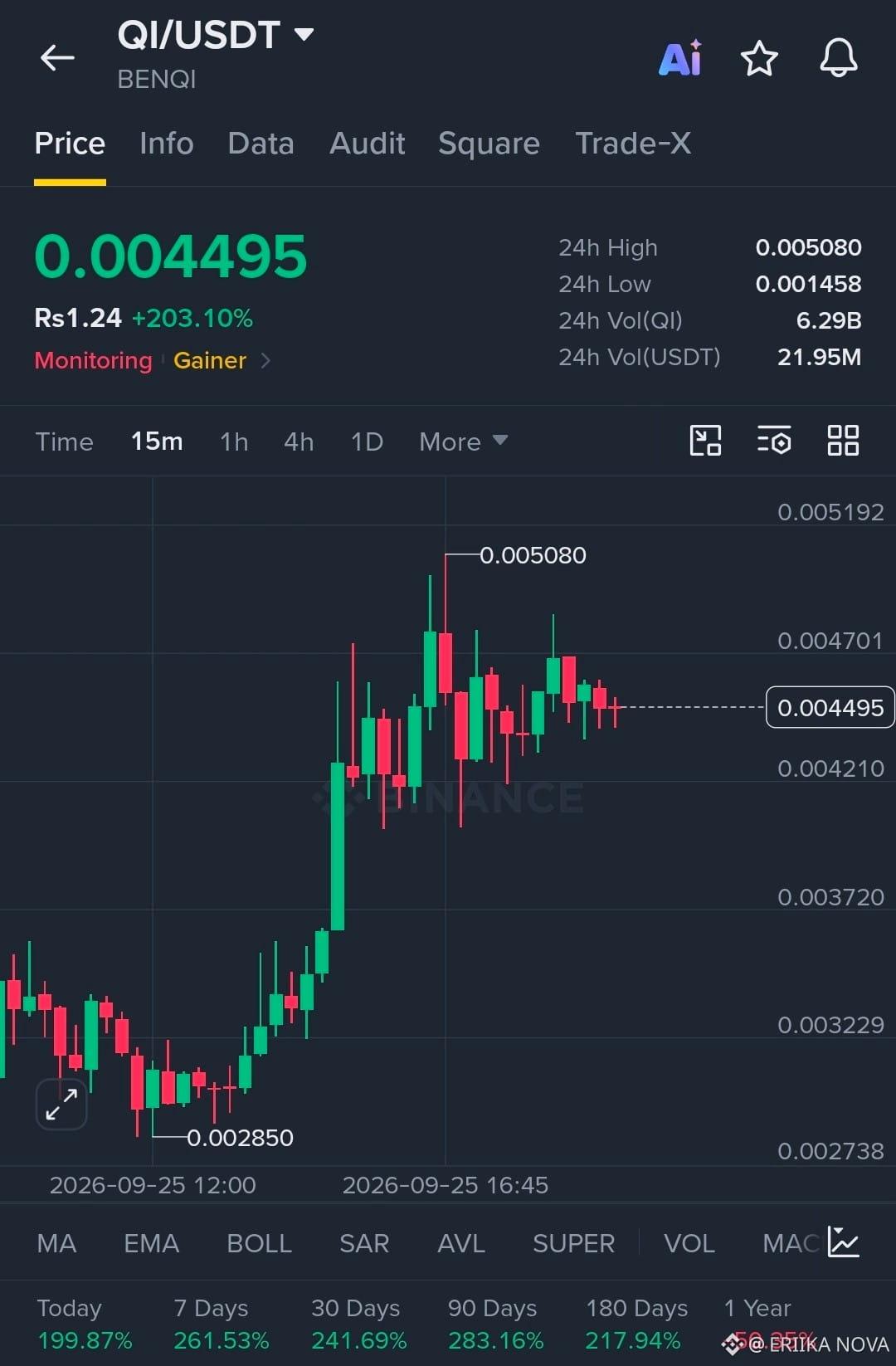
$QI is showing explosive activity, trading near $0.004495 after a +203.10% 24H surge. After the sharp breakout, price is consolidating around $0.0042–$0.0047, suggesting buyers are still fighting to hold momentum. The chart shown is 15m, so this setup is based on that timeframe rather than 1H.
Trade Setup
Entry Zone: $0.00430 – $0.00448
Target 1 🎯: $0.00470
Target 2 🎯: $0.00508
Target 3 🎯: $0.00550
Stop Loss: $0.00405
A clean break above $0.00470 with strong volume could put the $0.00508 high back under pressure. But after a 200%+ move, volatility is extreme—losing the $0.00420 area could trigger a much deeper pullback.
#BitcoinSpotETFsTurnNetPositiveYTD #BinanceWillListHyperliquid(HYPE)
{spot}(QIUSDT)
$QI is showing explosive activity, trading near $0.004495 after a +203.10% 24H surge. After the sharp breakout, price is consolidating around $0.0042–$0.0047, suggesting buyers are still fighting to hold momentum. The chart shown is 15m, so this setup is based on that timeframe rather than 1H.
Trade Setup
Entry Zone: $0.00430 – $0.00448
Target 1 🎯: $0.00470
Target 2 🎯: $0.00508
Target 3 🎯: $0.00550
Stop Loss: $0.00405
A clean break above $0.00470 with strong volume could put the $0.00508 high back under pressure. But after a 200%+ move, volatility is extreme—losing the $0.00420 area could trigger a much deeper pullback.
#BitcoinSpotETFsTurnNetPositiveYTD #BinanceWillListHyperliquid(HYPE)
Trade Setup
Entry Zone: $0.00430 – $0.00448
Target 1 🎯: $0.00470
Target 2 🎯: $0.00508
Target 3 🎯: $0.00550
Stop Loss: $0.00405
A clean break above $0.00470 with strong volume could put the $0.00508 high back under pressure. But after a 200%+ move, volatility is extreme—losing the $0.00420 area could trigger a much deeper pullback.
#BitcoinSpotETFsTurnNetPositiveYTD #BinanceWillListHyperliquid(HYPE)
1
226
·
--
#AIStocksWhatNext
AI stocks are heating up again, and this time the money is moving fast.
$NVDA, $AMD, $AVGO and $META are back in the spotlight as investors pile into the AI trade. But after such strong moves, I’m not interested in chasing every green candle.
I’m watching $NVDAB , $AMD, $AVGO, $META, $ARM and $INTC closely.
If momentum and volume keep building, we could be looking at another powerful leg higher. If yields and oil keep pushing up, though, expect some wild pullbacks along the way.
The AI story isn’t over.
It feels like the next chapter is just getting started.
#AIStocks #StockMarket
#AIStocksWhatNext
AI stocks are heating up again, and this time the money is moving fast.
$NVDA, $AMD, $AVGO and $META are back in the spotlight as investors pile into the AI trade. But after such strong moves, I’m not interested in chasing every green candle.
I’m watching $NVDAB , $AMD, $AVGO , $META , $ARM and $INTC closely.
If momentum and volume keep building, we could be looking at another powerful leg higher. If yields and oil keep pushing up, though, expect some wild pullbacks along the way.
The AI story isn’t over.
It feels like the next chapter is just getting started.
#AIStocks #StockMarket
AI stocks are heating up again, and this time the money is moving fast.
$NVDA, $AMD, $AVGO and $META are back in the spotlight as investors pile into the AI trade. But after such strong moves, I’m not interested in chasing every green candle.
I’m watching $NVDAB , $AMD, $AVGO , $META , $ARM and $INTC closely.
If momentum and volume keep building, we could be looking at another powerful leg higher. If yields and oil keep pushing up, though, expect some wild pullbacks along the way.
The AI story isn’t over.
It feels like the next chapter is just getting started.
#AIStocks #StockMarket

1
305
·
--
Bullish
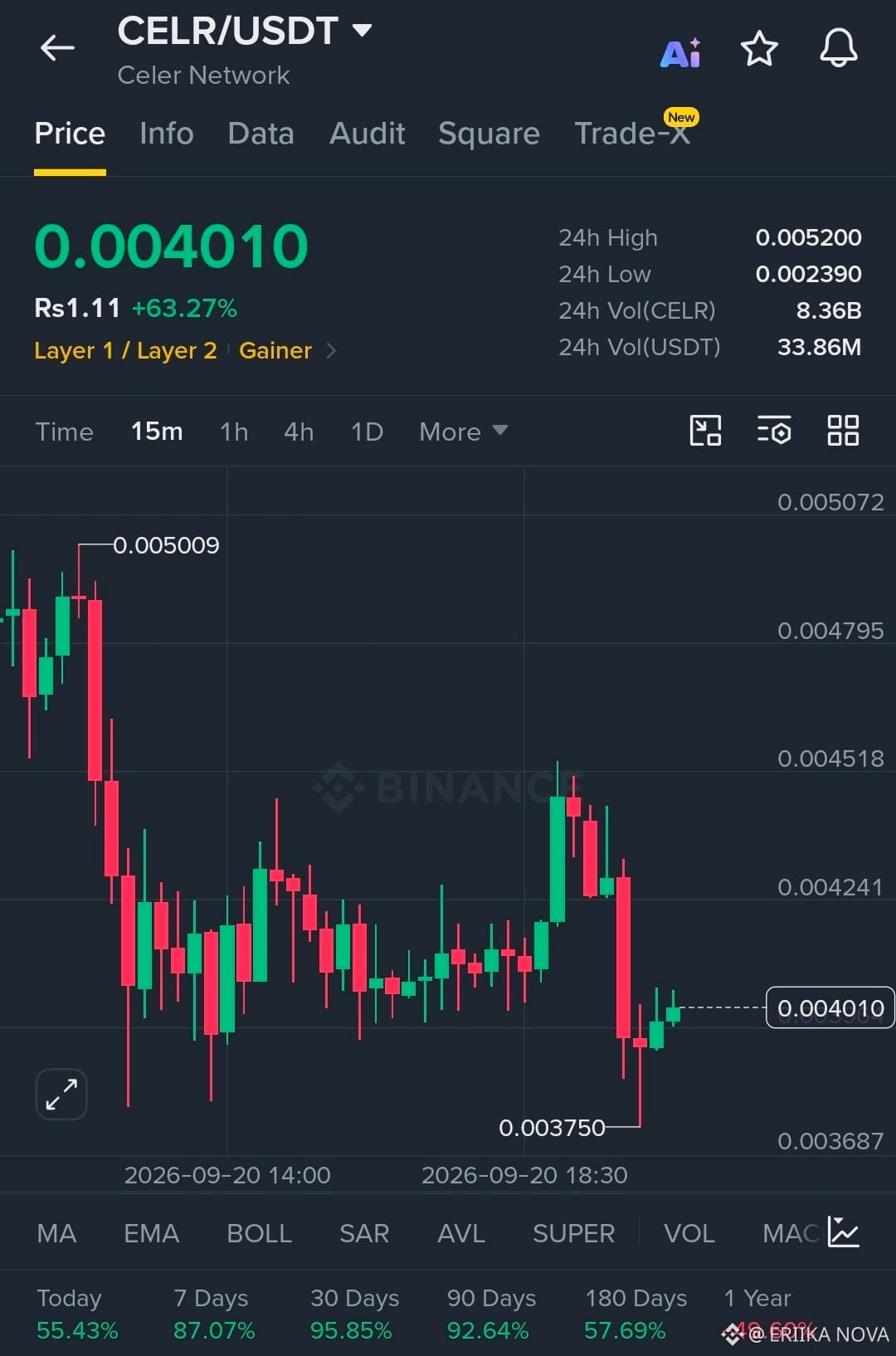
$CELR is trading around $0.004010, up +63.27% in 24 hours. After the explosive move, price pulled back sharply to $0.003750 and is now attempting a bounce. The 15M chart shows buyers stepping back in, but CELR needs to reclaim nearby resistance for momentum to strengthen.
Trade Setup
• Entry Zone: $0.00390 – $0.00403
• Target 1 🎯: $0.00424
• Target 2 🎯: $0.00452
• Target 3 🎯: $0.00480
• Stop Loss: $0.00374
A clean breakout above $0.00424 with strong volume could trigger another aggressive push toward $0.00452 and potentially $0.00480. With volatility already elevated, CELR could be setting up for another big move.
#BuffettStepsDownAsBerkshireChairman #BitcoinMarketCapTopsTesla
{spot}(CELRUSDT)
$CELR is trading around $0.004010, up +63.27% in 24 hours. After the explosive move, price pulled back sharply to $0.003750 and is now attempting a bounce. The 15M chart shows buyers stepping back in, but CELR needs to reclaim nearby resistance for momentum to strengthen.
Trade Setup
• Entry Zone: $0.00390 – $0.00403
• Target 1 🎯: $0.00424
• Target 2 🎯: $0.00452
• Target 3 🎯: $0.00480
• Stop Loss: $0.00374
A clean breakout above $0.00424 with strong volume could trigger another aggressive push toward $0.00452 and potentially $0.00480. With volatility already elevated, CELR could be setting up for another big move.
#BuffettStepsDownAsBerkshireChairman #BitcoinMarketCapTopsTesla
Trade Setup
• Entry Zone: $0.00390 – $0.00403
• Target 1 🎯: $0.00424
• Target 2 🎯: $0.00452
• Target 3 🎯: $0.00480
• Stop Loss: $0.00374
A clean breakout above $0.00424 with strong volume could trigger another aggressive push toward $0.00452 and potentially $0.00480. With volatility already elevated, CELR could be setting up for another big move.
#BuffettStepsDownAsBerkshireChairman #BitcoinMarketCapTopsTesla
435
·
--
Bullish
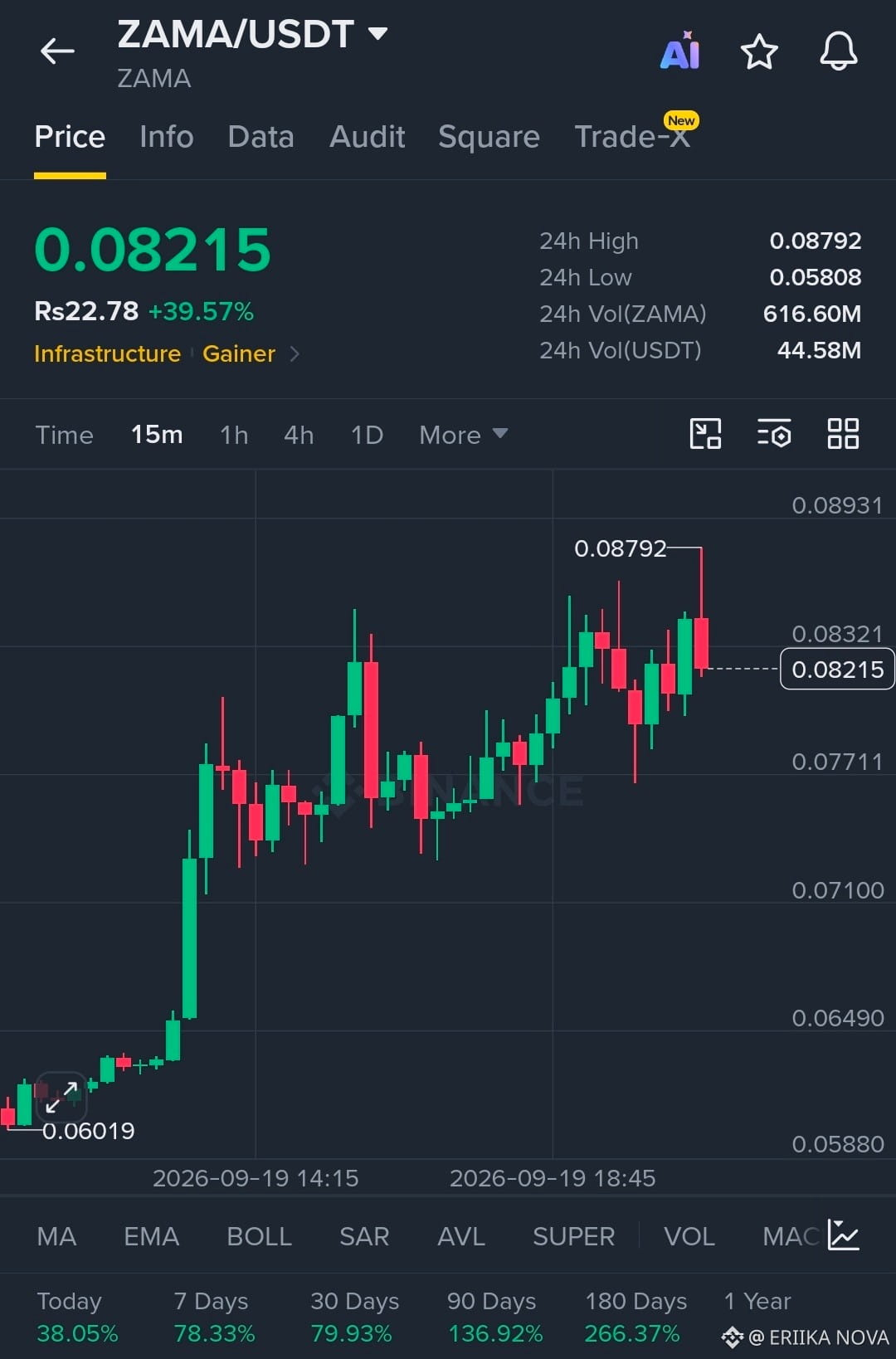
$ZAMA is trading around $0.08215, up roughly +39.57% in 24 hours. After a powerful run from the $0.060 area, price is consolidating near the highs. The 15M chart shows buyers repeatedly stepping back in, while $0.08792 remains the key breakout level.
Trade Setup
• Entry Zone: $0.0790 – $0.0820
• Target 1 🎯: $0.0879
• Target 2 🎯: $0.0930
• Target 3 🎯: $0.1000
• Stop Loss: $0.0760
If $ZAMA breaks $0.08792 with strong volume, momentum could accelerate toward the next psychological levels. Holding the $0.079–$0.080 zone keeps the bullish structure intact.
#XRPExchangeReservesHitSevenYearLow #SOLJumpsAbout10%
{spot}(ZAMAUSDT)
$ZAMA is trading around $0.08215, up roughly +39.57% in 24 hours. After a powerful run from the $0.060 area, price is consolidating near the highs. The 15M chart shows buyers repeatedly stepping back in, while $0.08792 remains the key breakout level.
Trade Setup
• Entry Zone: $0.0790 – $0.0820
• Target 1 🎯: $0.0879
• Target 2 🎯: $0.0930
• Target 3 🎯: $0.1000
• Stop Loss: $0.0760
If $ZAMA breaks $0.08792 with strong volume, momentum could accelerate toward the next psychological levels. Holding the $0.079–$0.080 zone keeps the bullish structure intact.
#XRPExchangeReservesHitSevenYearLow #SOLJumpsAbout10%
Trade Setup
• Entry Zone: $0.0790 – $0.0820
• Target 1 🎯: $0.0879
• Target 2 🎯: $0.0930
• Target 3 🎯: $0.1000
• Stop Loss: $0.0760
If $ZAMA breaks $0.08792 with strong volume, momentum could accelerate toward the next psychological levels. Holding the $0.079–$0.080 zone keeps the bullish structure intact.
#XRPExchangeReservesHitSevenYearLow #SOLJumpsAbout10%
251
·
--
Bullish
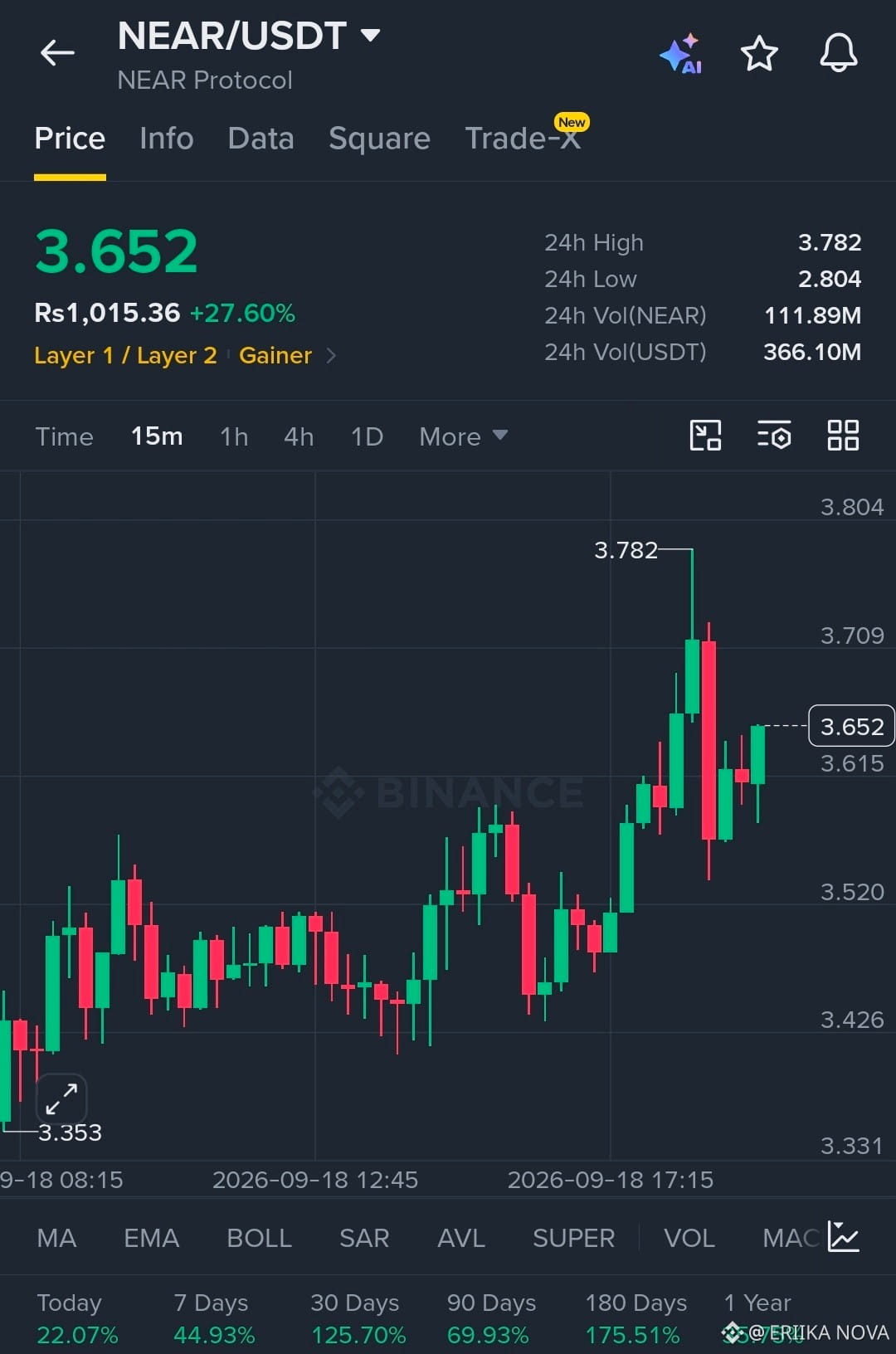
$NEAR is heating up after a powerful 27.60% surge, with price now trading around $3.652. The 15M chart shows strong buying pressure after the push from $3.353 to a fresh local high of $3.782. Despite the rejection from the top, buyers are still holding the $3.60 area and momentum remains active.
Trade Setup
• Entry Zone: $3.60 – $3.65
• Target 1 🎯: $3.71
• Target 2 🎯: $3.78
• Target 3 🎯: $3.90
• Stop Loss: $3.52
A clean break above $3.782 backed by strong volume could trigger another expansion higher. As long as $NEAR holds the key support zone, bulls still have a chance to push for the next leg up.
#ZcashDevelopersTargetNU7MainnetActivationNov5 #ChainlinkPowersBottomlinePaymentPlatform
{spot}(NEARUSDT)
$NEAR is heating up after a powerful 27.60% surge, with price now trading around $3.652. The 15M chart shows strong buying pressure after the push from $3.353 to a fresh local high of $3.782. Despite the rejection from the top, buyers are still holding the $3.60 area and momentum remains active.
Trade Setup
• Entry Zone: $3.60 – $3.65
• Target 1 🎯: $3.71
• Target 2 🎯: $3.78
• Target 3 🎯: $3.90
• Stop Loss: $3.52
A clean break above $3.782 backed by strong volume could trigger another expansion higher. As long as $NEAR holds the key support zone, bulls still have a chance to push for the next leg up.
#ZcashDevelopersTargetNU7MainnetActivationNov5 #ChainlinkPowersBottomlinePaymentPlatform
Trade Setup
• Entry Zone: $3.60 – $3.65
• Target 1 🎯: $3.71
• Target 2 🎯: $3.78
• Target 3 🎯: $3.90
• Stop Loss: $3.52
A clean break above $3.782 backed by strong volume could trigger another expansion higher. As long as $NEAR holds the key support zone, bulls still have a chance to push for the next leg up.
#ZcashDevelopersTargetNU7MainnetActivationNov5 #ChainlinkPowersBottomlinePaymentPlatform
142
·
--
Bullish
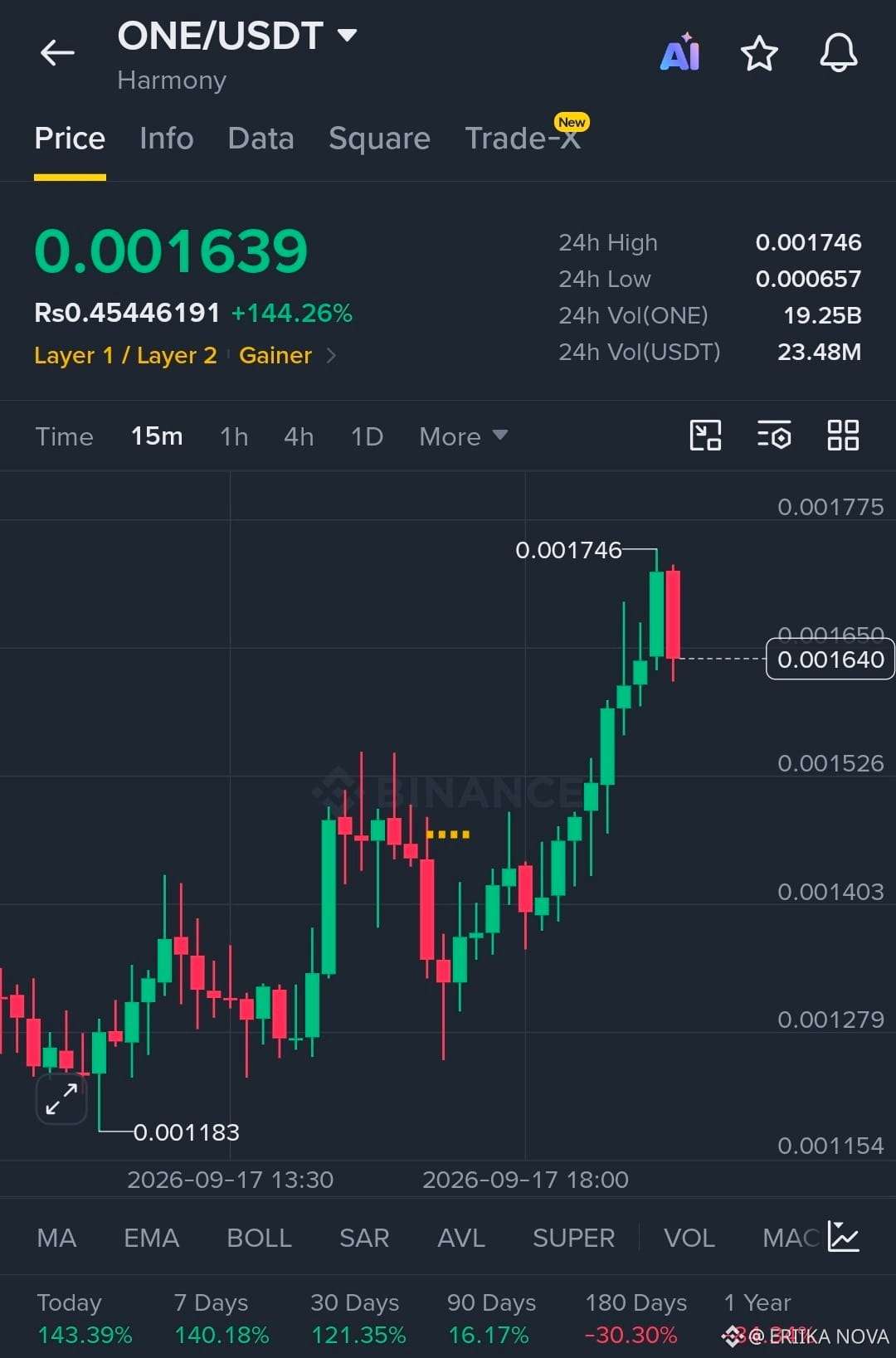
$ONE is trading near $0.001639, up roughly 144% in 24H. The 15m chart shows strong bullish momentum after a sharp breakout, with price now pulling back from the $0.001746 high.
Trade Setup
Entry Zone: $0.00155 – $0.00162
Target 1 🎯: $0.00175
Target 2 🎯: $0.00185
Target 3 🎯: $0.00200
Stop Loss: $0.00148
Holding above $0.00155 keeps the short-term bullish structure intact. A clean break above $0.001746 with volume could trigger another expansion, but after a 144% surge, volatility and pullback risk are extremely high.
#USWeeklyJoblessClaimsFallTo196K #HyperliquidUSDCSupplyOvertakesSolana
{spot}(ONEUSDT)
$ONE is trading near $0.001639, up roughly 144% in 24H. The 15m chart shows strong bullish momentum after a sharp breakout, with price now pulling back from the $0.001746 high.
Trade Setup
Entry Zone: $0.00155 – $0.00162
Target 1 🎯: $0.00175
Target 2 🎯: $0.00185
Target 3 🎯: $0.00200
Stop Loss: $0.00148
Holding above $0.00155 keeps the short-term bullish structure intact. A clean break above $0.001746 with volume could trigger another expansion, but after a 144% surge, volatility and pullback risk are extremely high.
#USWeeklyJoblessClaimsFallTo196K #HyperliquidUSDCSupplyOvertakesSolana
Trade Setup
Entry Zone: $0.00155 – $0.00162
Target 1 🎯: $0.00175
Target 2 🎯: $0.00185
Target 3 🎯: $0.00200
Stop Loss: $0.00148
Holding above $0.00155 keeps the short-term bullish structure intact. A clean break above $0.001746 with volume could trigger another expansion, but after a 144% surge, volatility and pullback risk are extremely high.
#USWeeklyJoblessClaimsFallTo196K #HyperliquidUSDCSupplyOvertakesSolana
205
·
--
#FedRateWatch
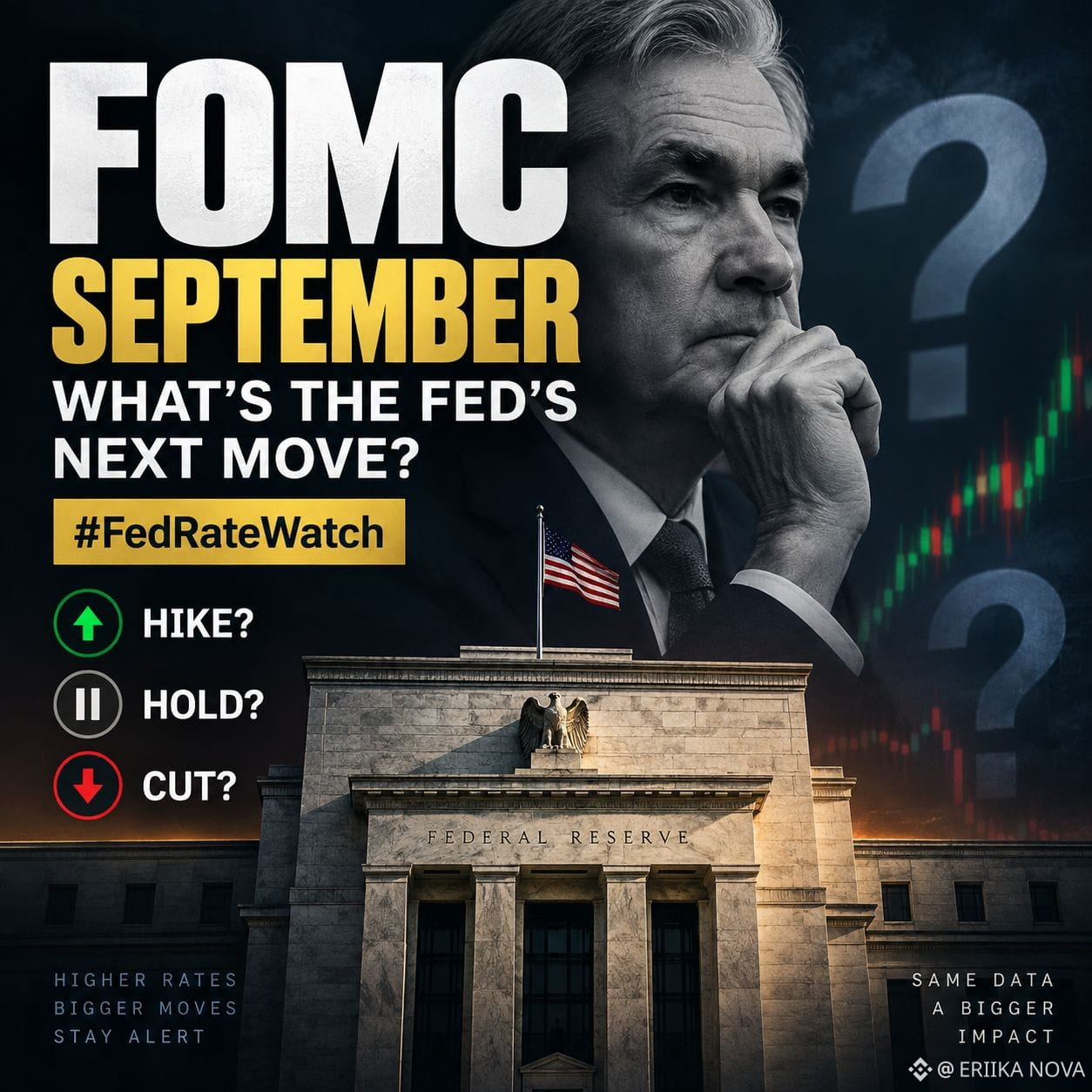
The September FOMC is here, and this one could bring serious volatility.
Inflation is still proving stubborn, the labor market has remained resilient, and higher energy prices are making the Fed’s job even harder. That’s why traders are paying close attention to whether policymakers stay restrictive or signal another move on rates.
But the rate decision alone isn’t what matters.
The bigger question is what comes NEXT.
If the Fed delivers a hawkish message and keeps further tightening on the table, Treasury yields and the dollar could strengthen while BTC, stocks and altcoins face pressure.
If the Fed sounds more cautious and signals that current policy may already be restrictive enough, risk assets could quickly find relief.
And don’t trust the first FOMC candle.
The initial reaction can be wild, but the press conference, updated projections and future rate guidance could completely reverse the move.
For crypto, I’m watching BTC, DXY, Treasury yields and the Nasdaq closely.
September FOMC isn't just about one rate decision.
It’s about where global liquidity goes next.
And that could help shape Bitcoin’s next major move.
#FOMC #Bitcoin #Crypto #Inflation
#FedRateWatch
The September FOMC is here, and this one could bring serious volatility.
Inflation is still proving stubborn, the labor market has remained resilient, and higher energy prices are making the Fed’s job even harder. That’s why traders are paying close attention to whether policymakers stay restrictive or signal another move on rates.
But the rate decision alone isn’t what matters.
The bigger question is what comes NEXT.
If the Fed delivers a hawkish message and keeps further tightening on the table, Treasury yields and the dollar could strengthen while BTC, stocks and altcoins face pressure.
If the Fed sounds more cautious and signals that current policy may already be restrictive enough, risk assets could quickly find relief.
And don’t trust the first FOMC candle.
The initial reaction can be wild, but the press conference, updated projections and future rate guidance could completely reverse the move.
For crypto, I’m watching BTC, DXY, Treasury yields and the Nasdaq closely.
September FOMC isn't just about one rate decision.
It’s about where global liquidity goes next.
And that could help shape Bitcoin’s next major move.
#FOMC #Bitcoin #Crypto #Inflation
The September FOMC is here, and this one could bring serious volatility.
Inflation is still proving stubborn, the labor market has remained resilient, and higher energy prices are making the Fed’s job even harder. That’s why traders are paying close attention to whether policymakers stay restrictive or signal another move on rates.
But the rate decision alone isn’t what matters.
The bigger question is what comes NEXT.
If the Fed delivers a hawkish message and keeps further tightening on the table, Treasury yields and the dollar could strengthen while BTC, stocks and altcoins face pressure.
If the Fed sounds more cautious and signals that current policy may already be restrictive enough, risk assets could quickly find relief.
And don’t trust the first FOMC candle.
The initial reaction can be wild, but the press conference, updated projections and future rate guidance could completely reverse the move.
For crypto, I’m watching BTC, DXY, Treasury yields and the Nasdaq closely.
September FOMC isn't just about one rate decision.
It’s about where global liquidity goes next.
And that could help shape Bitcoin’s next major move.
#FOMC #Bitcoin #Crypto #Inflation
14
14
853
·
--
Bullish
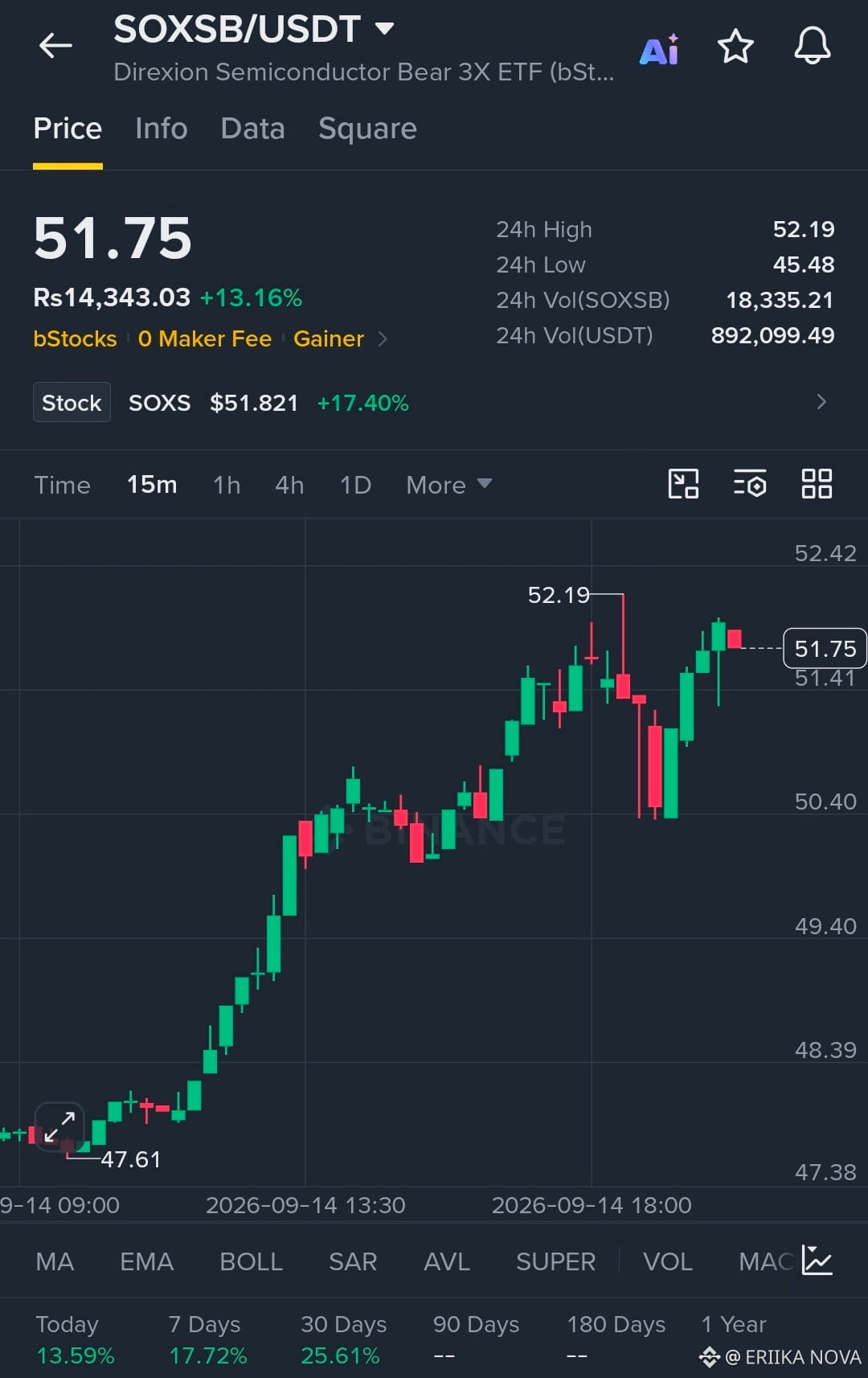
$SOXSB is trading around $51.75, up +13.16%. The 15M chart shows strong bullish momentum after a sharp recovery from $47.61, with price now pushing back toward the $52.19 resistance.
Trade Setup
EP: $51.40 – $51.75
TP1: $52.19
TP2: $52.80
TP3: $53.50
SL: $50.35
A clean breakout above $52.19 with strong volume could trigger another powerful leg higher. Momentum is hot, but $52.19 is the key level to break.
#AvalancheIntegratesIntoUAEPassDigitalVault #BitcoinThirdSingleBlockReorgInFourWeeks
{spot}(SOXSBUSDT)
$SOXSB is trading around $51.75, up +13.16%. The 15M chart shows strong bullish momentum after a sharp recovery from $47.61, with price now pushing back toward the $52.19 resistance.
Trade Setup
EP: $51.40 – $51.75
TP1: $52.19
TP2: $52.80
TP3: $53.50
SL: $50.35
A clean breakout above $52.19 with strong volume could trigger another powerful leg higher. Momentum is hot, but $52.19 is the key level to break.
#AvalancheIntegratesIntoUAEPassDigitalVault #BitcoinThirdSingleBlockReorgInFourWeeks
Trade Setup
EP: $51.40 – $51.75
TP1: $52.19
TP2: $52.80
TP3: $53.50
SL: $50.35
A clean breakout above $52.19 with strong volume could trigger another powerful leg higher. Momentum is hot, but $52.19 is the key level to break.
#AvalancheIntegratesIntoUAEPassDigitalVault #BitcoinThirdSingleBlockReorgInFourWeeks
140
·
--
Bullish
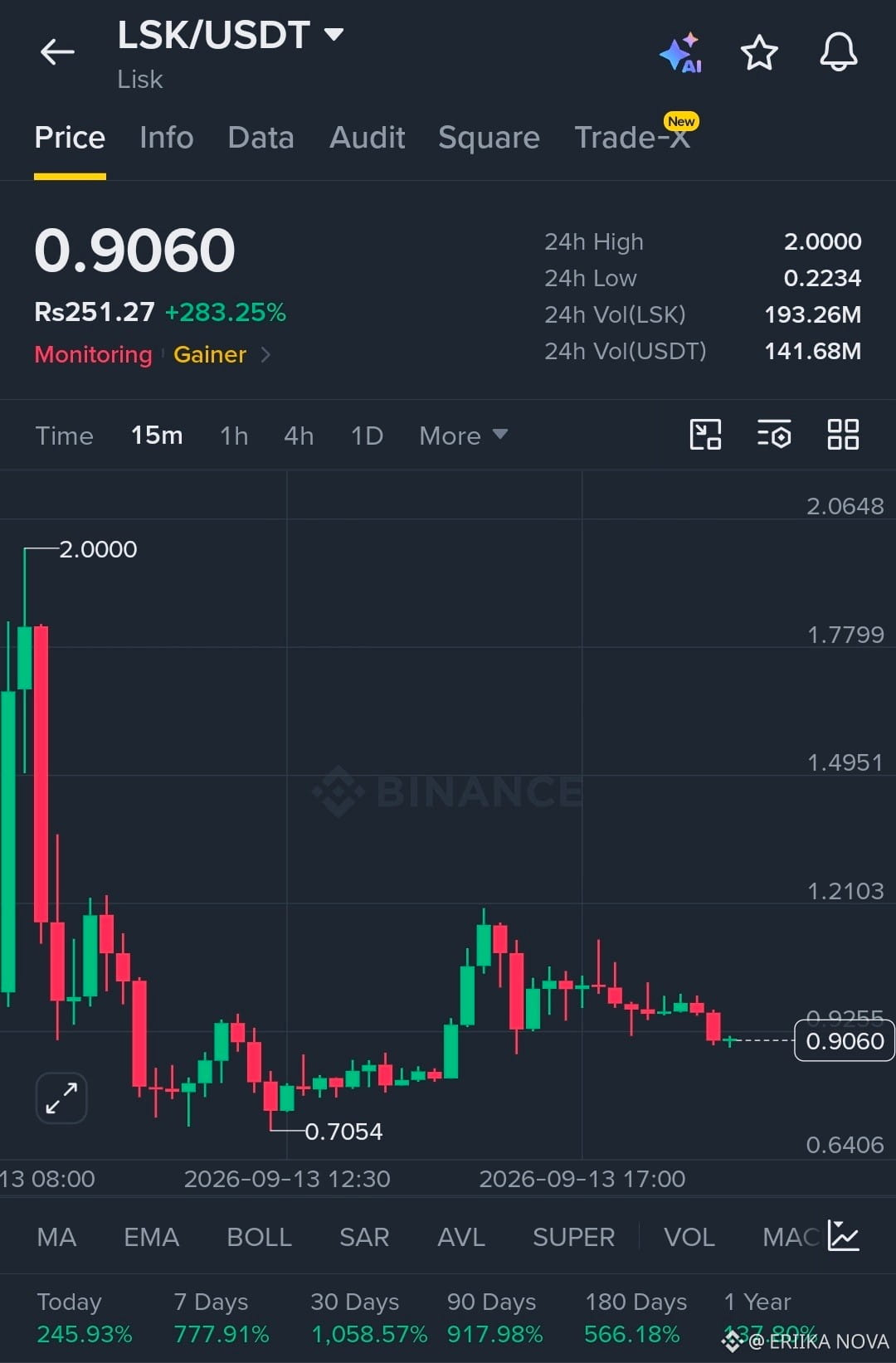
$LSK is trading around $0.9060, up roughly +283% in 24H after an explosive surge to $2.00. The 15M chart now shows consolidation after the spike, with $0.90 acting as an important near-term area. A strong reclaim above $1.00 could bring momentum back quickly.
Trade Setup
• EP: $0.88 – $0.92
• TP1: $1.00
• TP2: $1.10
• TP3: $1.20
• SL: $0.82
If $LSK breaks above $1.00 with strong volume, another aggressive push could develop. High volatility means tight risk management matters here.
#ClarityActFacesProceduralVoteSept15 #USBankCompletesCrossBorderPaymentPilotOnStellar
{spot}(LSKUSDT)
$LSK is trading around $0.9060, up roughly +283% in 24H after an explosive surge to $2.00. The 15M chart now shows consolidation after the spike, with $0.90 acting as an important near-term area. A strong reclaim above $1.00 could bring momentum back quickly.
Trade Setup
• EP: $0.88 – $0.92
• TP1: $1.00
• TP2: $1.10
• TP3: $1.20
• SL: $0.82
If $LSK breaks above $1.00 with strong volume, another aggressive push could develop. High volatility means tight risk management matters here.
#ClarityActFacesProceduralVoteSept15 #USBankCompletesCrossBorderPaymentPilotOnStellar
Trade Setup
• EP: $0.88 – $0.92
• TP1: $1.00
• TP2: $1.10
• TP3: $1.20
• SL: $0.82
If $LSK breaks above $1.00 with strong volume, another aggressive push could develop. High volatility means tight risk management matters here.
#ClarityActFacesProceduralVoteSept15 #USBankCompletesCrossBorderPaymentPilotOnStellar
133
·
--
#CPIWatch
The market looks completely quiet right now, but this is not normal silence.
It feels like everything has paused before a big move. Traders are waiting, volume is slow, candles look confusing, and everyone’s focus is on one thing: CPI data.
CPI is not just a simple inflation report. It gives the market a signal about whether inflation is coming under control or whether the Fed still needs to keep pressure on.
If CPI comes in hot, fear can return to the market. The dollar may strengthen, stocks can come under pressure, crypto may see a sudden dump, and gold can also react sharply.
But if CPI comes in soft, the market may get relief. Buyers can become active again, the dollar may weaken, and crypto and stocks could see a strong bounce.
But the real story is not the CPI number.
The real story is the market reaction.
After CPI, the first candle is often a trap. Sometimes there is a fast pump and then a dump. Sometimes there is a sharp dump and then a strong reversal. That is why taking emotional entries is the biggest risk.
I will watch BTC first. If Bitcoin holds its key level and volume supports the move, altcoins can also see strong movement. But if BTC loses support, the market mood can turn weak instantly.
Today is a perfect liquidity day for whales. Stops can be hunted, fake moves can happen, and impatient traders can get trapped.
So today’s plan is simple:
Wait.
Watch the reaction.
Confirm the volume.
Do not blindly chase the first move.
CPI can change the market mood within minutes.
Today, patience is the real edge.
#Market_Update #Macro #Inflation #BTC
#CPIWatch
The market looks completely quiet right now, but this is not normal silence.
It feels like everything has paused before a big move. Traders are waiting, volume is slow, candles look confusing, and everyone’s focus is on one thing: CPI data.
CPI is not just a simple inflation report. It gives the market a signal about whether inflation is coming under control or whether the Fed still needs to keep pressure on.
If CPI comes in hot, fear can return to the market. The dollar may strengthen, stocks can come under pressure, crypto may see a sudden dump, and gold can also react sharply.
But if CPI comes in soft, the market may get relief. Buyers can become active again, the dollar may weaken, and crypto and stocks could see a strong bounce.
But the real story is not the CPI number.
The real story is the market reaction.
After CPI, the first candle is often a trap. Sometimes there is a fast pump and then a dump. Sometimes there is a sharp dump and then a strong reversal. That is why taking emotional entries is the biggest risk.
I will watch BTC first. If Bitcoin holds its key level and volume supports the move, altcoins can also see strong movement. But if BTC loses support, the market mood can turn weak instantly.
Today is a perfect liquidity day for whales. Stops can be hunted, fake moves can happen, and impatient traders can get trapped.
So today’s plan is simple:
Wait.
Watch the reaction.
Confirm the volume.
Do not blindly chase the first move.
CPI can change the market mood within minutes.
Today, patience is the real edge.
#Market_Update #Macro #Inflation #BTC
The market looks completely quiet right now, but this is not normal silence.
It feels like everything has paused before a big move. Traders are waiting, volume is slow, candles look confusing, and everyone’s focus is on one thing: CPI data.
CPI is not just a simple inflation report. It gives the market a signal about whether inflation is coming under control or whether the Fed still needs to keep pressure on.
If CPI comes in hot, fear can return to the market. The dollar may strengthen, stocks can come under pressure, crypto may see a sudden dump, and gold can also react sharply.
But if CPI comes in soft, the market may get relief. Buyers can become active again, the dollar may weaken, and crypto and stocks could see a strong bounce.
But the real story is not the CPI number.
The real story is the market reaction.
After CPI, the first candle is often a trap. Sometimes there is a fast pump and then a dump. Sometimes there is a sharp dump and then a strong reversal. That is why taking emotional entries is the biggest risk.
I will watch BTC first. If Bitcoin holds its key level and volume supports the move, altcoins can also see strong movement. But if BTC loses support, the market mood can turn weak instantly.
Today is a perfect liquidity day for whales. Stops can be hunted, fake moves can happen, and impatient traders can get trapped.
So today’s plan is simple:
Wait.
Watch the reaction.
Confirm the volume.
Do not blindly chase the first move.
CPI can change the market mood within minutes.
Today, patience is the real edge.
#Market_Update #Macro #Inflation #BTC

5
6
526
·
--
Bearish
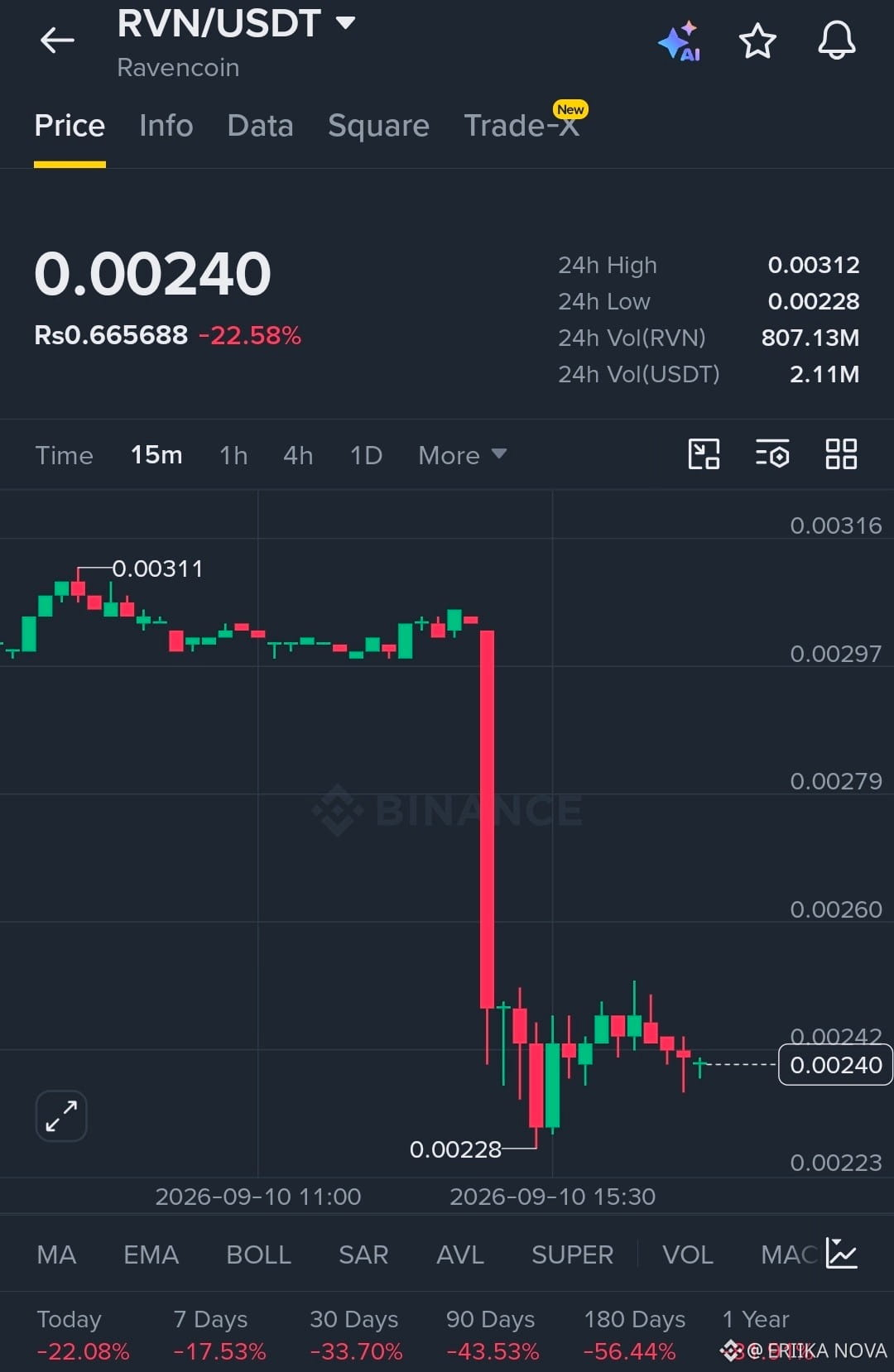
$RVN /USDT Silence before the storm is breaking, and RVN is already showing heavy pressure. Price is trading near 0.00240 with a sharp -22.58% move in 24H. After the crash from 0.00311, the chart is still weak, and candles are struggling to recover above the breakdown zone.
15M chart shows bearish momentum, with price holding near the lower range. Volume is active, and if sellers break 0.00228 support, RVN can slide deeper.
Trade Setup
EP: 0.00240 – 0.00244
TP1: 0.00235
TP2: 0.00228
TP3: 0.00220
SL: 0.00252
If RVN fails to reclaim 0.00250 with strong volume, bears stay in control. But if 0.00228 breaks cleanly, the next crash wave can start fast.
#AppleDebutsFoldablePhone #EUExtendsCentralContactPointToCASPs
{spot}(RVNUSDT)
$RVN /USDT Silence before the storm is breaking, and RVN is already showing heavy pressure. Price is trading near 0.00240 with a sharp -22.58% move in 24H. After the crash from 0.00311, the chart is still weak, and candles are struggling to recover above the breakdown zone.
15M chart shows bearish momentum, with price holding near the lower range. Volume is active, and if sellers break 0.00228 support, RVN can slide deeper.
Trade Setup
EP: 0.00240 – 0.00244
TP1: 0.00235
TP2: 0.00228
TP3: 0.00220
SL: 0.00252
If RVN fails to reclaim 0.00250 with strong volume, bears stay in control. But if 0.00228 breaks cleanly, the next crash wave can start fast.
#AppleDebutsFoldablePhone #EUExtendsCentralContactPointToCASPs
15M chart shows bearish momentum, with price holding near the lower range. Volume is active, and if sellers break 0.00228 support, RVN can slide deeper.
Trade Setup
EP: 0.00240 – 0.00244
TP1: 0.00235
TP2: 0.00228
TP3: 0.00220
SL: 0.00252
If RVN fails to reclaim 0.00250 with strong volume, bears stay in control. But if 0.00228 breaks cleanly, the next crash wave can start fast.
#AppleDebutsFoldablePhone #EUExtendsCentralContactPointToCASPs
388
·
--
Bullish
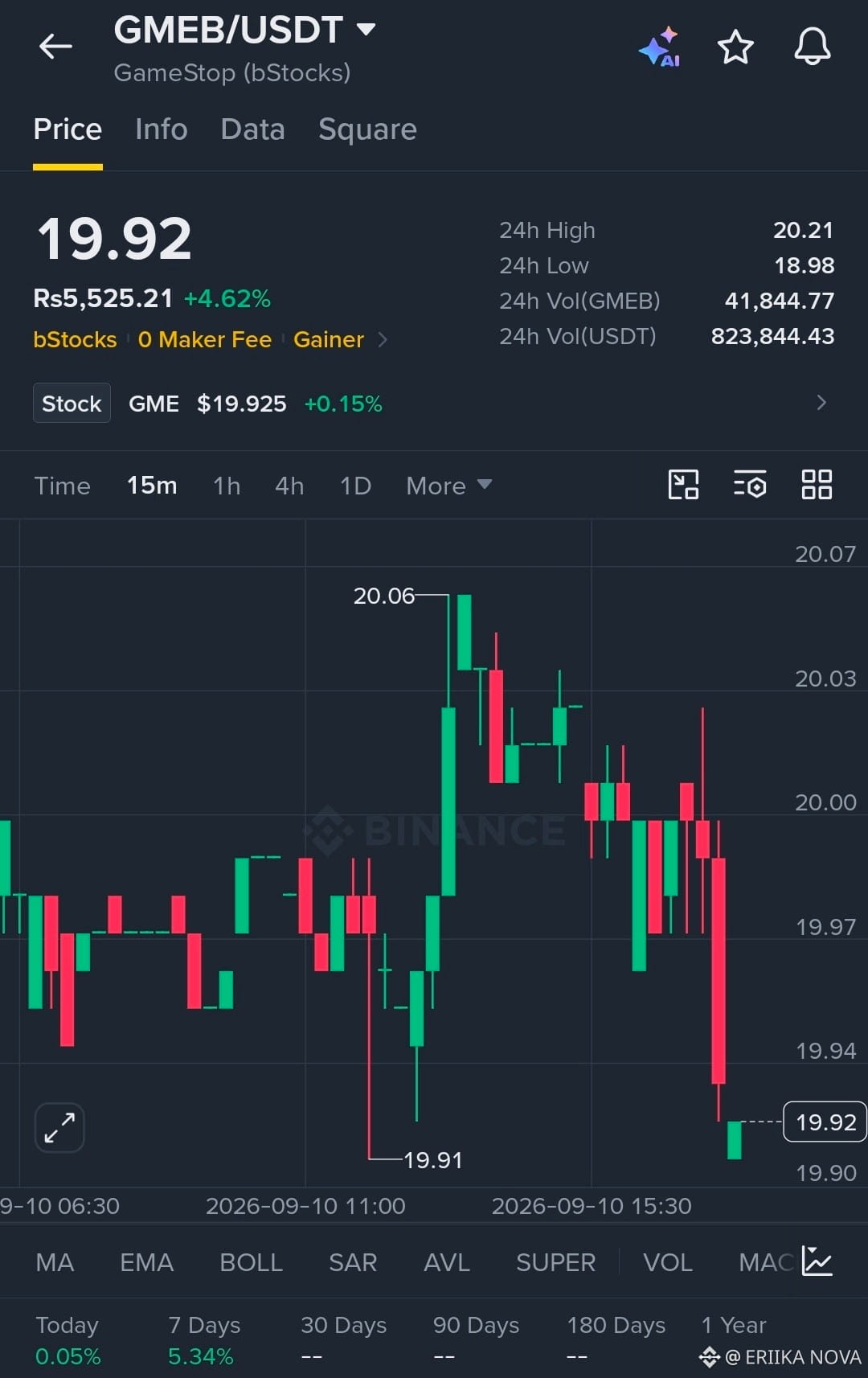
$GMEB /USDT Silence before the storm is starting to feel loud. GMEB is showing strong activity with price near 19.92 and 24H change at +4.62%. Volume is active, buyers tried to push toward 20.06, but price is now testing the lower support area again.
On the 15M chart, candles show a sharp rejection from the top and price is sitting close to support. If GMEB holds above 19.90 and breaks back above 20.00 with strong volume, momentum can heat up fast.
Trade Setup
EP: 19.91 – 19.95
TP1: 20.00
TP2: 20.06
TP3: 20.21
SL: 19.88
Breakout above 20.06 can open the way toward the 24H high near 20.21. But if 19.90 breaks, better to wait for a fresh setup.
#USAugustPPIYoYRisesTo5.4% #EUExtendsCentralContactPointToCASPs
{spot}(GMEBUSDT)
$GMEB /USDT Silence before the storm is starting to feel loud. GMEB is showing strong activity with price near 19.92 and 24H change at +4.62%. Volume is active, buyers tried to push toward 20.06, but price is now testing the lower support area again.
On the 15M chart, candles show a sharp rejection from the top and price is sitting close to support. If GMEB holds above 19.90 and breaks back above 20.00 with strong volume, momentum can heat up fast.
Trade Setup
EP: 19.91 – 19.95
TP1: 20.00
TP2: 20.06
TP3: 20.21
SL: 19.88
Breakout above 20.06 can open the way toward the 24H high near 20.21. But if 19.90 breaks, better to wait for a fresh setup.
#USAugustPPIYoYRisesTo5.4% #EUExtendsCentralContactPointToCASPs
On the 15M chart, candles show a sharp rejection from the top and price is sitting close to support. If GMEB holds above 19.90 and breaks back above 20.00 with strong volume, momentum can heat up fast.
Trade Setup
EP: 19.91 – 19.95
TP1: 20.00
TP2: 20.06
TP3: 20.21
SL: 19.88
Breakout above 20.06 can open the way toward the 24H high near 20.21. But if 19.90 breaks, better to wait for a fresh setup.
#USAugustPPIYoYRisesTo5.4% #EUExtendsCentralContactPointToCASPs
161
·
--
Bearish
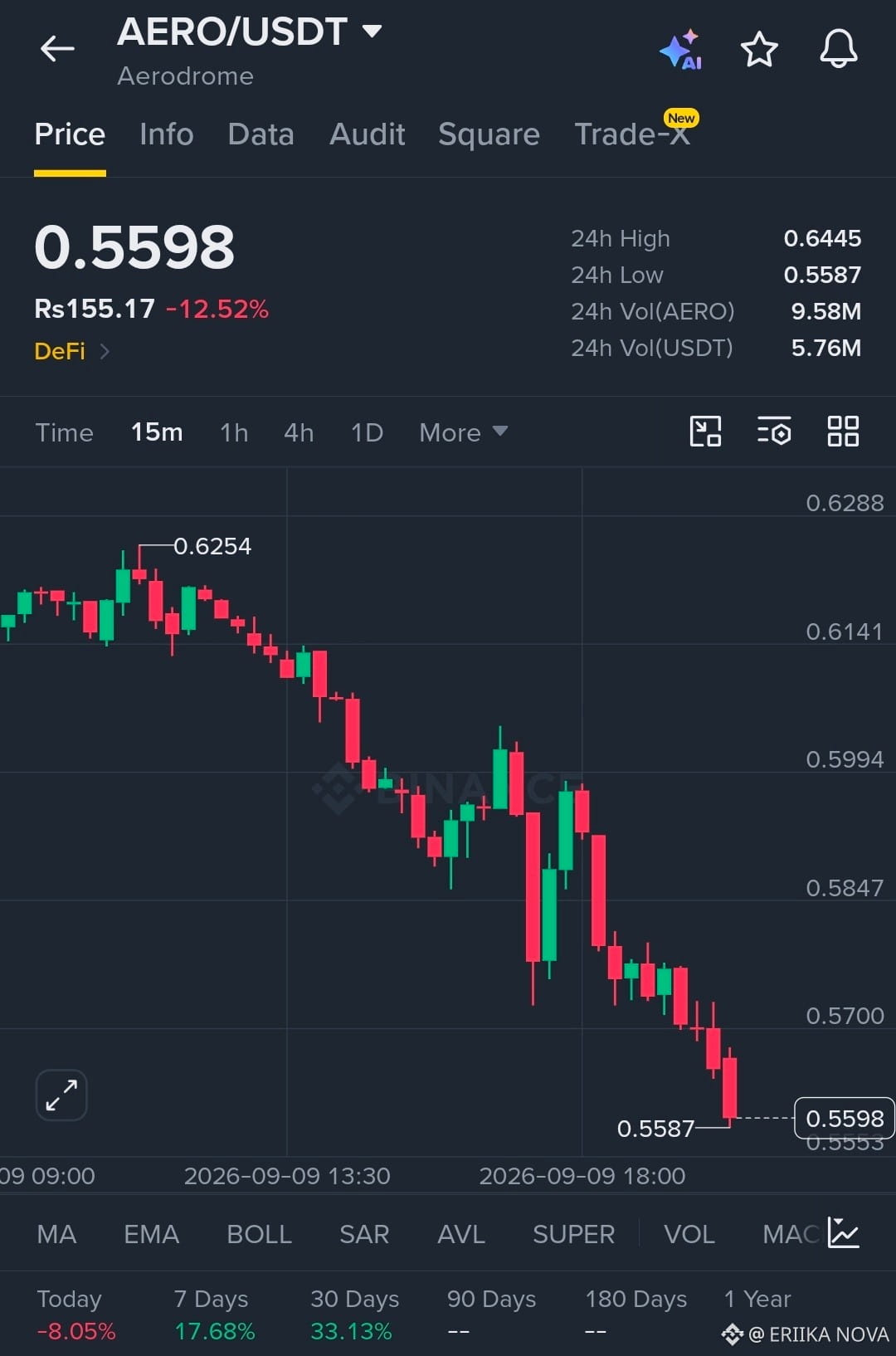
$AERO is under heavy selling pressure right now. Current price is around $0.5598, with a sharp -12.52% move in the last 24H. After failing near the upper zone, the chart is showing continuous bearish candles and weak recovery attempts.
On the 15M timeframe, price has been making lower highs and lower lows, showing that sellers are still in control. The recent breakdown below $0.5700 is important. If $AERO fails to reclaim this level quickly, the next downside move can get stronger.
Trade Setup
• Entry Zone: $0.5600 – $0.5700
• Target 1: $0.5550
• Target 2: $0.5480
• Target 3: $0.5400
• Stop Loss: $0.5847
If $AERO breaks below $0.5587 with strong volume, the crash can extend toward deeper support zones. But if price reclaims $0.5700 – $0.5847, short sellers may lose control and a recovery bounce can start.
#RippleLobbiesToAdvanceCLARITYActVote #OilRisesToHighestSinceJuly
{spot}(AEROUSDT)
$AERO is under heavy selling pressure right now. Current price is around $0.5598, with a sharp -12.52% move in the last 24H. After failing near the upper zone, the chart is showing continuous bearish candles and weak recovery attempts.
On the 15M timeframe, price has been making lower highs and lower lows, showing that sellers are still in control. The recent breakdown below $0.5700 is important. If $AERO fails to reclaim this level quickly, the next downside move can get stronger.
Trade Setup
• Entry Zone: $0.5600 – $0.5700
• Target 1: $0.5550
• Target 2: $0.5480
• Target 3: $0.5400
• Stop Loss: $0.5847
If $AERO breaks below $0.5587 with strong volume, the crash can extend toward deeper support zones. But if price reclaims $0.5700 – $0.5847, short sellers may lose control and a recovery bounce can start.
#RippleLobbiesToAdvanceCLARITYActVote #OilRisesToHighestSinceJuly
On the 15M timeframe, price has been making lower highs and lower lows, showing that sellers are still in control. The recent breakdown below $0.5700 is important. If $AERO fails to reclaim this level quickly, the next downside move can get stronger.
Trade Setup
• Entry Zone: $0.5600 – $0.5700
• Target 1: $0.5550
• Target 2: $0.5480
• Target 3: $0.5400
• Stop Loss: $0.5847
If $AERO breaks below $0.5587 with strong volume, the crash can extend toward deeper support zones. But if price reclaims $0.5700 – $0.5847, short sellers may lose control and a recovery bounce can start.
#RippleLobbiesToAdvanceCLARITYActVote #OilRisesToHighestSinceJuly
166
·
--
Bullish
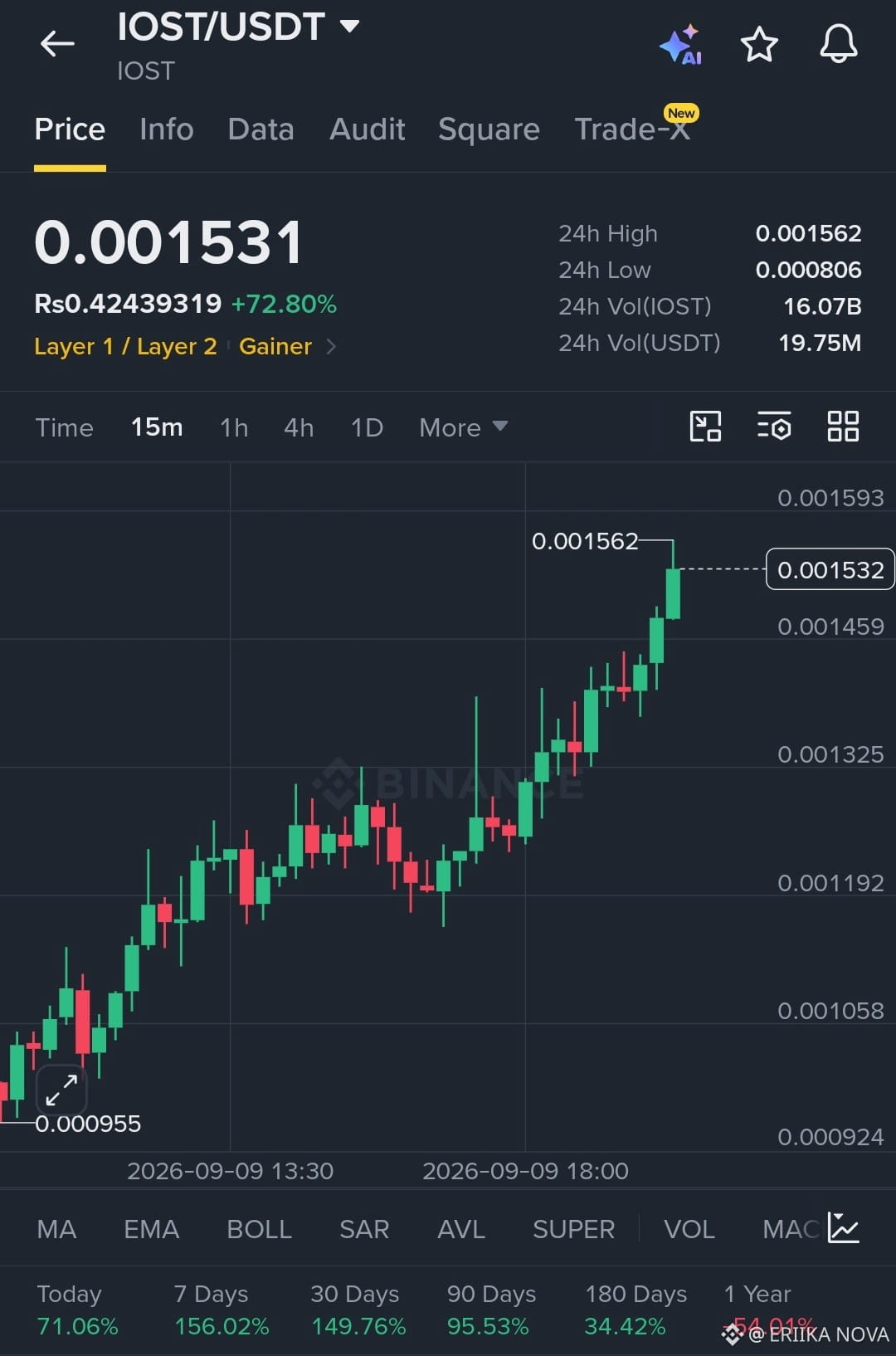
$IOST Current price is showing strong activity around 0.001531, with a strong +72.80% move in the last 24 hours. After a powerful breakout and steady bullish candles, $IOST is showing clear momentum on the short timeframe. Volume is also strong, with 24h volume around 16.07B IOST / 19.75M USDT, showing traders are actively entering this move.
Trade Setup
• Entry Zone: 0.00148 – 0.00153
• Target 1: 0.00156
• Target 2: 0.00162
• Target 3: 0.00170
• Stop Loss: 0.00138
If $IOST holds above the breakout zone and volume stays strong, the price can continue pushing toward higher levels. But if it loses the 0.00145 area, a short pullback can happen before the next move.
#RippleLobbiesToAdvanceCLARITYActVote #DowFallsOver600Points
{spot}(IOSTUSDT)
$IOST Current price is showing strong activity around 0.001531, with a strong +72.80% move in the last 24 hours. After a powerful breakout and steady bullish candles, $IOST is showing clear momentum on the short timeframe. Volume is also strong, with 24h volume around 16.07B IOST / 19.75M USDT, showing traders are actively entering this move.
Trade Setup
• Entry Zone: 0.00148 – 0.00153
• Target 1: 0.00156
• Target 2: 0.00162
• Target 3: 0.00170
• Stop Loss: 0.00138
If $IOST holds above the breakout zone and volume stays strong, the price can continue pushing toward higher levels. But if it loses the 0.00145 area, a short pullback can happen before the next move.
#RippleLobbiesToAdvanceCLARITYActVote #DowFallsOver600Points
Trade Setup
• Entry Zone: 0.00148 – 0.00153
• Target 1: 0.00156
• Target 2: 0.00162
• Target 3: 0.00170
• Stop Loss: 0.00138
If $IOST holds above the breakout zone and volume stays strong, the price can continue pushing toward higher levels. But if it loses the 0.00145 area, a short pullback can happen before the next move.
#RippleLobbiesToAdvanceCLARITYActVote #DowFallsOver600Points
206
·
--
Bullish
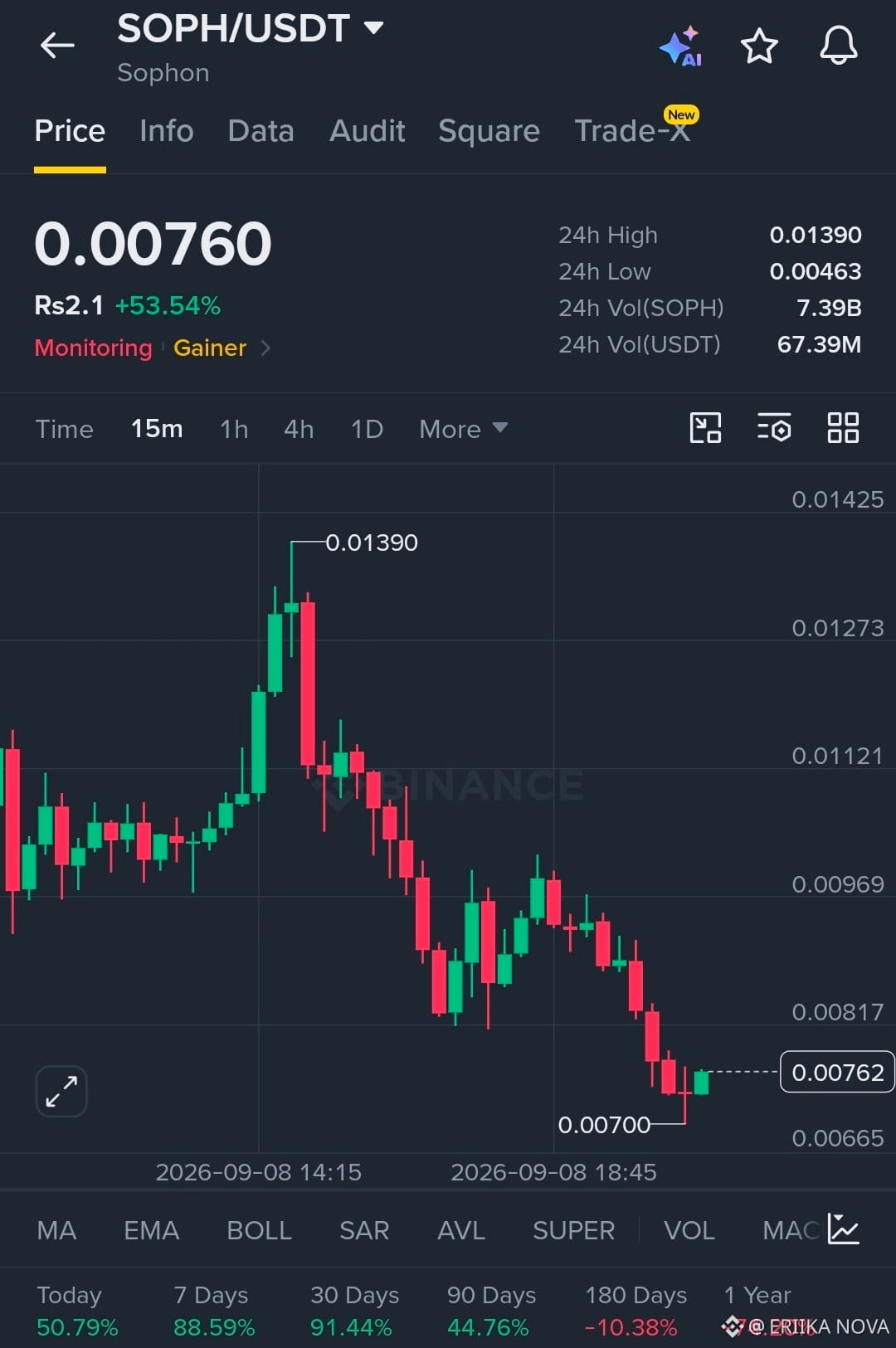
$SOPH is trading around 0.00760 with a strong +53.54% move in the last 24 hours. After the sharp drop from 0.01390, price is trying to bounce from the 0.00700 support zone, and short-term candles are showing early recovery signs.
Trade Setup
Entry Zone: 0.00700 – 0.00762
Target 1: 0.00817
Target 2: 0.00969
Target 3: 0.01121
Stop Loss: 0.00665
If $SOPH holds above 0.00700 and breaks 0.00817 with volume, momentum can heat up again toward the next resistance levels.
#SaudiHaltsSouthernEnergySitesAfterAttacks #AEROSurges17%In24Hours
{spot}(SOPHUSDT)
$SOPH is trading around 0.00760 with a strong +53.54% move in the last 24 hours. After the sharp drop from 0.01390, price is trying to bounce from the 0.00700 support zone, and short-term candles are showing early recovery signs.
Trade Setup
Entry Zone: 0.00700 – 0.00762
Target 1: 0.00817
Target 2: 0.00969
Target 3: 0.01121
Stop Loss: 0.00665
If $SOPH holds above 0.00700 and breaks 0.00817 with volume, momentum can heat up again toward the next resistance levels.
#SaudiHaltsSouthernEnergySitesAfterAttacks #AEROSurges17%In24Hours
Trade Setup
Entry Zone: 0.00700 – 0.00762
Target 1: 0.00817
Target 2: 0.00969
Target 3: 0.01121
Stop Loss: 0.00665
If $SOPH holds above 0.00700 and breaks 0.00817 with volume, momentum can heat up again toward the next resistance levels.
#SaudiHaltsSouthernEnergySitesAfterAttacks #AEROSurges17%In24Hours
186
·
--
Bearish
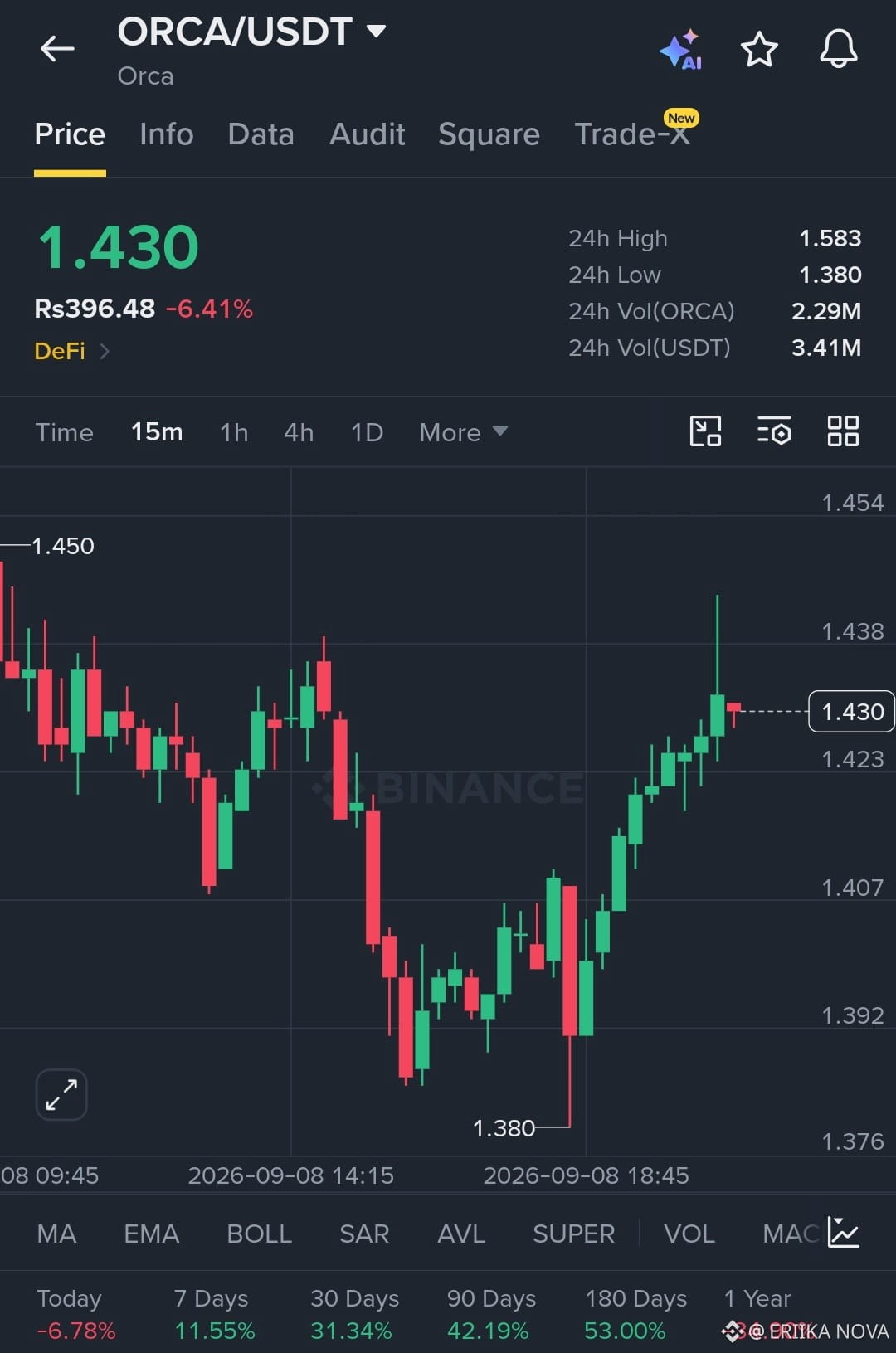
$ORCA is showing heavy activity around 1.430, with a -6.41% move in the last 24 hours. After the recent sharp bounce from 1.380, price is now testing resistance near 1.438–1.454, and if buyers fail here, bearish pressure can return fast.
Trade Setup
Entry Zone: 1.430 – 1.438
Target 1: 1.423
Target 2: 1.407
Target 3: 1.392
Stop Loss: 1.454
If $ORCA rejects from this zone with strong selling volume, the price can slide back toward lower support levels. The key breakdown area to watch is 1.423, because losing it can open the door for a deeper move toward 1.407 and 1.392.
#YenBreaks155NearingYearHigh #ZcashRises45%WeeklyToHighestSince2016
{spot}(ORCAUSDT)
$ORCA is showing heavy activity around 1.430, with a -6.41% move in the last 24 hours. After the recent sharp bounce from 1.380, price is now testing resistance near 1.438–1.454, and if buyers fail here, bearish pressure can return fast.
Trade Setup
Entry Zone: 1.430 – 1.438
Target 1: 1.423
Target 2: 1.407
Target 3: 1.392
Stop Loss: 1.454
If $ORCA rejects from this zone with strong selling volume, the price can slide back toward lower support levels. The key breakdown area to watch is 1.423, because losing it can open the door for a deeper move toward 1.407 and 1.392.
#YenBreaks155NearingYearHigh #ZcashRises45%WeeklyToHighestSince2016
Trade Setup
Entry Zone: 1.430 – 1.438
Target 1: 1.423
Target 2: 1.407
Target 3: 1.392
Stop Loss: 1.454
If $ORCA rejects from this zone with strong selling volume, the price can slide back toward lower support levels. The key breakdown area to watch is 1.423, because losing it can open the door for a deeper move toward 1.407 and 1.392.
#YenBreaks155NearingYearHigh #ZcashRises45%WeeklyToHighestSince2016
157
·
--
Bearish
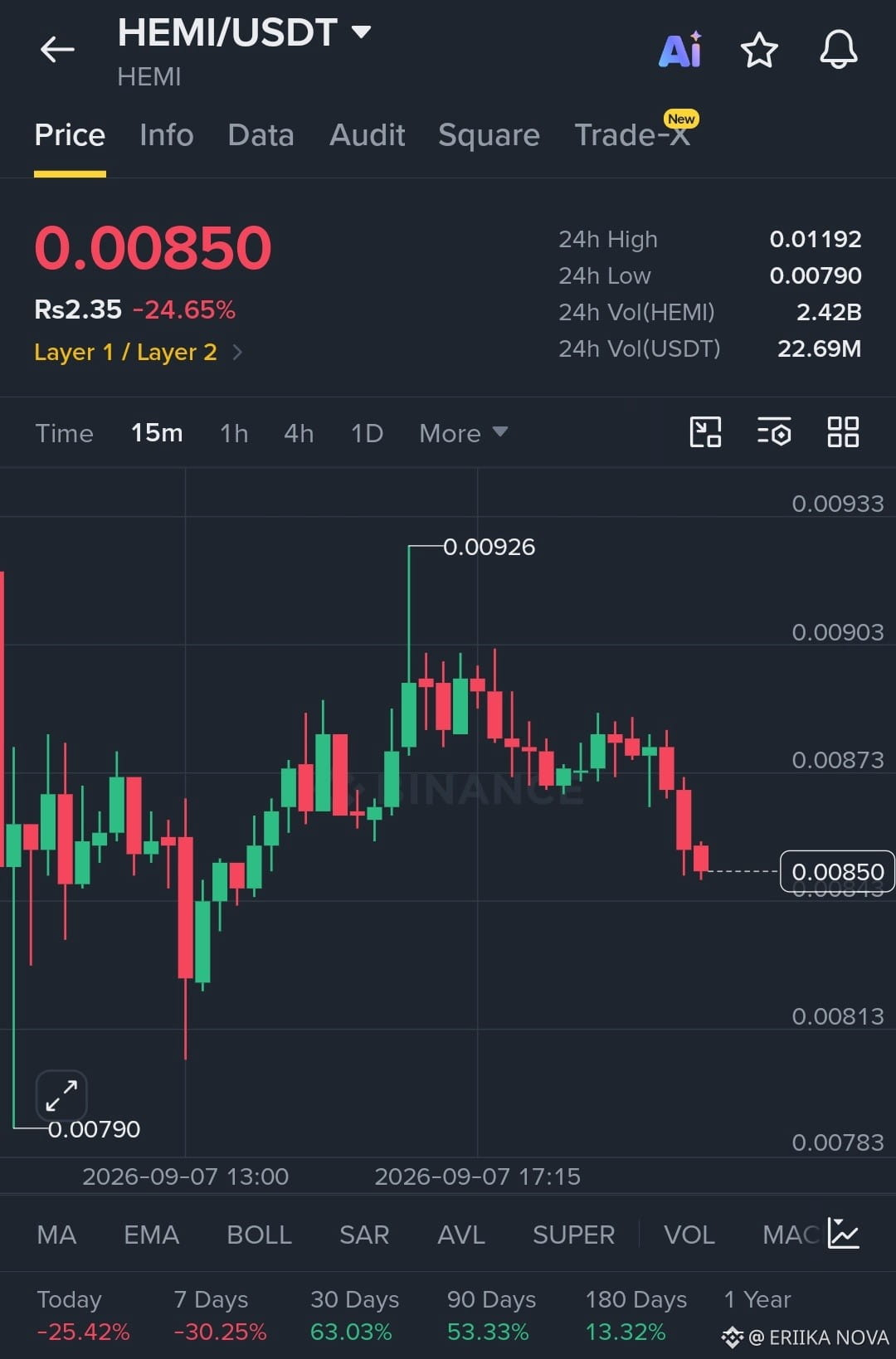
$HEMI is under heavy pressure right now, trading near 0.00850 after a sharp -24.65% drop in the last 24 hours. The 15m chart is showing clear bearish momentum after rejection from the 0.00926 zone, and sellers are now pushing price toward the lower support area.
The market looks weak unless bulls reclaim 0.00873 with strong volume. If price fails to hold the current level, another downside move can open quickly.
Trade Setup
• Entry Zone: 0.00850 – 0.00865
• Target 1: 0.00830
• Target 2: 0.00813
• Target 3: 0.00790
• Stop Loss: 0.00890
If $HEMI breaks below 0.00849 with strong selling volume, the crash can continue toward the previous low near 0.00790. Keep risk tight because volatility is high.
#ZcashRises45%WeeklyToHighestSince2016 #CanadaToImpose15%To50%TariffsOnUSGoods
{spot}(HEMIUSDT)
$HEMI is under heavy pressure right now, trading near 0.00850 after a sharp -24.65% drop in the last 24 hours. The 15m chart is showing clear bearish momentum after rejection from the 0.00926 zone, and sellers are now pushing price toward the lower support area.
The market looks weak unless bulls reclaim 0.00873 with strong volume. If price fails to hold the current level, another downside move can open quickly.
Trade Setup
• Entry Zone: 0.00850 – 0.00865
• Target 1: 0.00830
• Target 2: 0.00813
• Target 3: 0.00790
• Stop Loss: 0.00890
If $HEMI breaks below 0.00849 with strong selling volume, the crash can continue toward the previous low near 0.00790. Keep risk tight because volatility is high.
#ZcashRises45%WeeklyToHighestSince2016 #CanadaToImpose15%To50%TariffsOnUSGoods
The market looks weak unless bulls reclaim 0.00873 with strong volume. If price fails to hold the current level, another downside move can open quickly.
Trade Setup
• Entry Zone: 0.00850 – 0.00865
• Target 1: 0.00830
• Target 2: 0.00813
• Target 3: 0.00790
• Stop Loss: 0.00890
If $HEMI breaks below 0.00849 with strong selling volume, the crash can continue toward the previous low near 0.00790. Keep risk tight because volatility is high.
#ZcashRises45%WeeklyToHighestSince2016 #CanadaToImpose15%To50%TariffsOnUSGoods
304
Log in to explore more content
Join global crypto users on Binance Square
⚡️ Get latest and useful information about crypto.
💬 Trusted by the world’s largest crypto exchange.
👍 Discover real insights from verified creators.
Email / Phone number
Trending Topics
QNTRises287%
1,281 views
81 Discussing
#QNTRises287%
🚀 QNT +287% — a move that demands attention.
A rally this sharp can reflect a sudden shift in market sentiment, liquidity, and trading activity. But after a vertical move, volatility can expand quickly.
My takeaway: don’t chase the candle—watch volume, liquidity, and whether QNT can sustain the breakout. 📊
#QNTRises287% #QNT #Crypto #Binance
$QNT
PALASH5
·0 Likes
·221 views
TrumpRejectsAIRulesForVoluntaryAudits
5,366 views
242 Discussing
BitgetHotWalletBreachTiedToThirdPartySecurityFlaw
2,730 views
182 Discussing