

dzi Balkans
457 Posts

dzi Balkans
Report
Block User
Official Binance Balkans Archangel & Buddy for Balkans | Community | Web3 | Content | Events | Follow me on X: dzibalkans

Content Master Angel

Binance Square Angels
Occasional Trader
8.7 Years
45 Following
14.8K+ Followers
7.6K+ Liked
2 Badges
Posts
All
Quotes
Videos
·
--
Simply hit the button and count down to 00:00
#BinanceBNBButton
https://www.binance.com/game/button/30BNBButtonGame?ref=GRO_100023520_FL6RQ®isterChannel=GRO-BTN-30BNBButtonGame&utm_medium=app_share_link_twitter&utm_source=share
Simply hit the button and count down to 00:00
#BinanceBNBButton
https://www.binance.com/game/button/30BNBButtonGame?ref=GRO_100023520_FL6RQ®isterChannel=GRO-BTN-30BNBButtonGame&utm_medium=app_share_link_twitter&utm_source=share
#BinanceBNBButton
https://www.binance.com/game/button/30BNBButtonGame?ref=GRO_100023520_FL6RQ®isterChannel=GRO-BTN-30BNBButtonGame&utm_medium=app_share_link_twitter&utm_source=share

Best Wishes!
From dzi Balkans
4
1
31
121

·
--
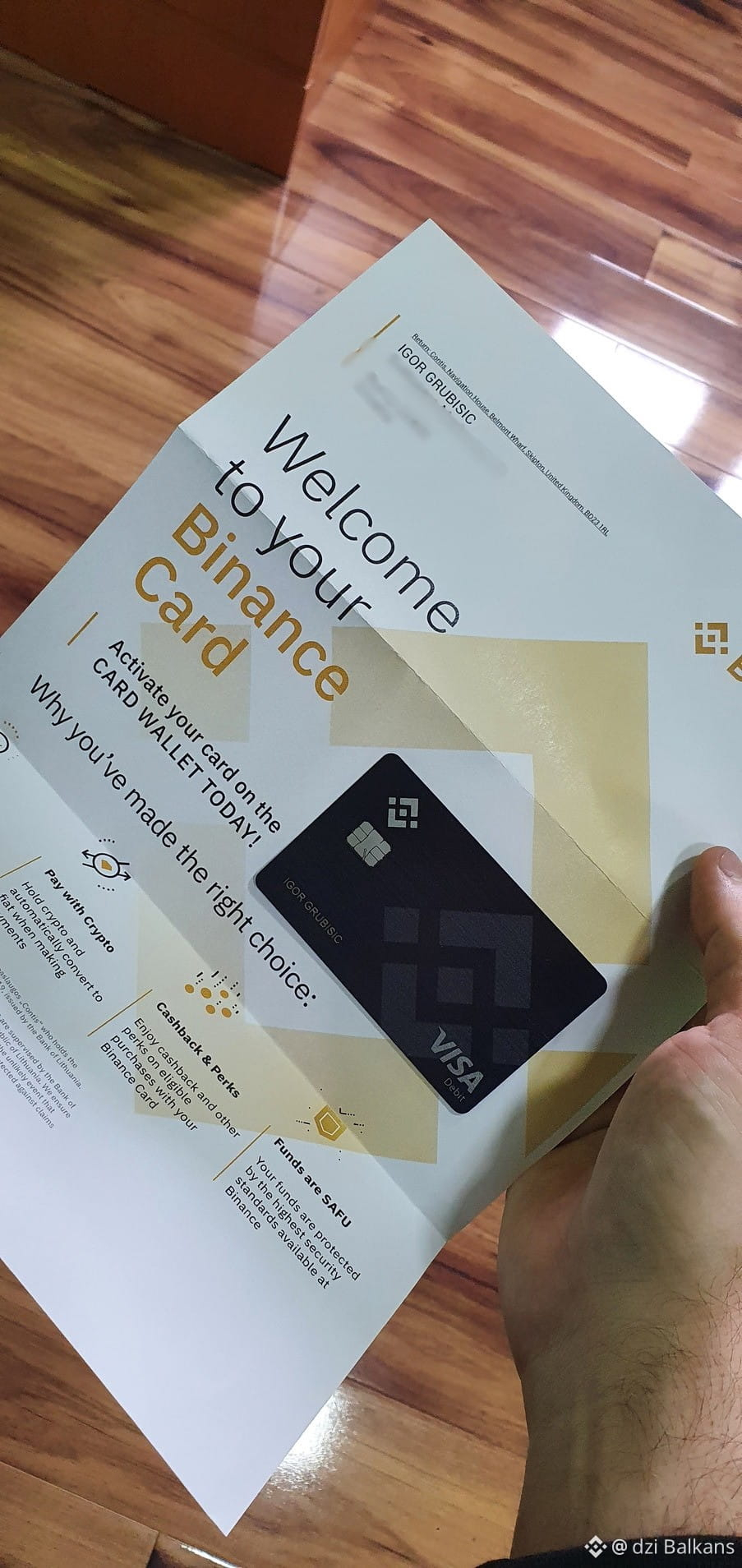
Found a little piece of crypto history. 👀💳✨
The Binance Card. 🟡
It’s slowly becoming available again in some regions, and I can’t wait for the day when it’s back in the Balkans. 🙌🌍
Who had one back in the day? 😎
#BinanceCard #Binance #crypto #Web3 #Blockchain
Found a little piece of crypto history. 👀💳✨
The Binance Card. 🟡
It’s slowly becoming available again in some regions, and I can’t wait for the day when it’s back in the Balkans. 🙌🌍
Who had one back in the day? 😎
#BinanceCard #Binance #crypto #Web3 #Blockchain
The Binance Card. 🟡
It’s slowly becoming available again in some regions, and I can’t wait for the day when it’s back in the Balkans. 🙌🌍
Who had one back in the day? 😎
#BinanceCard #Binance #crypto #Web3 #Blockchain
2
154
·
--
let's gooo 🚀🚀
let's gooo 🚀🚀


Binance Balkans
·
--
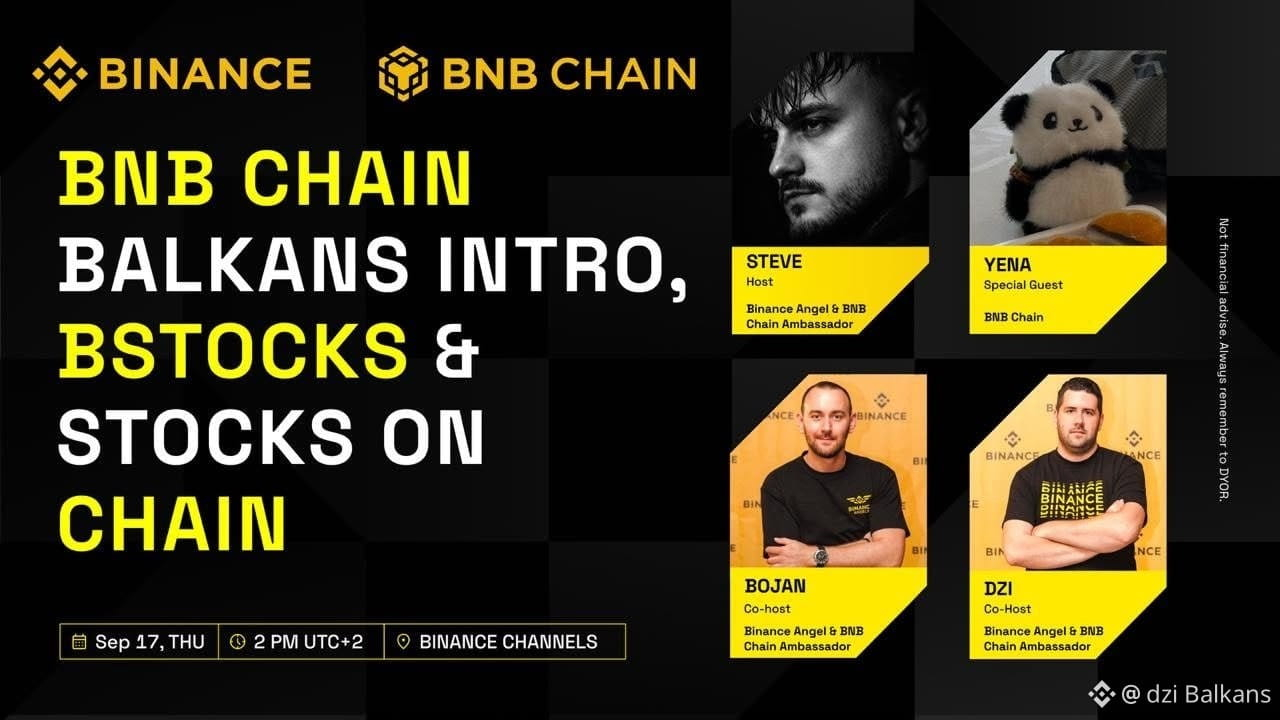
🔶 BNB Chain's first-ever local presence in the Balkans starts here — in collaboration with Binance Balkans.
17.09.2026 @ 14:00 UTC+2 — a special Binance Balkans x BNB Chain AMA with Yena (BNB Chain), talking BNB Chain, bStocks and Stocks. Live on X, Binance Balkans Telegram & Binance Balkans Square.
🎁 Play our live Kahoot for a shot at the $1,000 prize pool: 🥇$350 🥈$250 🥉$175 · 4th $125 · 5th $100. For our Balkans community — share this post + submit our post-AMA survey to claim your reward.
This kicks off a monthly BNB Chain Balkans series hosted by @SteveBalkans , @BjanMK & @dzi Balkans , together with Binance Balkans. Set your reminder — see you there.
Links will be shared @binancebalkans Telegram.
17.09.2026 @ 14:00 UTC+2 — a special Binance Balkans x BNB Chain AMA with Yena (BNB Chain), talking BNB Chain, bStocks and Stocks. Live on X, Binance Balkans Telegram & Binance Balkans Square.
🎁 Play our live Kahoot for a shot at the $1,000 prize pool: 🥇$350 🥈$250 🥉$175 · 4th $125 · 5th $100. For our Balkans community — share this post + submit our post-AMA survey to claim your reward.
This kicks off a monthly BNB Chain Balkans series hosted by @SteveBalkans , @BjanMK & @dzi Balkans , together with Binance Balkans. Set your reminder — see you there.
Links will be shared @binancebalkans Telegram.
1
107
·
--
Bullish
🔶 BNB Chain’s first-ever local presence in the Balkans starts here, in collaboration with Binance Balkans.
📅 17.09.2026 | 14:00 UTC+2
Join our special @binance_balkans_official x BNB Chain AMA with Yena from BNB Chain as we talk about bnbchain, bStocks and Stocks.
🎁 1,000 $USDC Kahoot prize pool:
🥇 $350 | 🥈 $250 | 🥉 $175 | 4th $125 | 5th $100
For our Balkans community:
🔁 Share this post
📝 Complete the post-AMA survey
🏆 Claim your reward
📍 Live on X, Binance Balkans Telegram & Binance Balkans Square.
This kicks off a monthly BNB Chain Balkans series hosted by @stevebalkans , @BjanMK & @dzibalkans together with Binance Balkans.
Set your reminder. See you there! 🔶
Links below 👇
🔶 BNB Chain’s first-ever local presence in the Balkans starts here, in collaboration with Binance Balkans.
📅 17.09.2026 | 14:00 UTC+2
Join our special @Binance Balkans x BNB Chain AMA with Yena from BNB Chain as we talk about bnbchain, bStocks and Stocks.
🎁 1,000 $USDC Kahoot prize pool:
🥇 $350 | 🥈 $250 | 🥉 $175 | 4th $125 | 5th $100
For our Balkans community:
🔁 Share this post
📝 Complete the post-AMA survey
🏆 Claim your reward
📍 Live on X, Binance Balkans Telegram & Binance Balkans Square.
This kicks off a monthly BNB Chain Balkans series hosted by @SteveBalkans , @BjanMK & @dzi Balkans together with Binance Balkans.
Set your reminder. See you there! 🔶
Links below 👇
📅 17.09.2026 | 14:00 UTC+2
Join our special @Binance Balkans x BNB Chain AMA with Yena from BNB Chain as we talk about bnbchain, bStocks and Stocks.
🎁 1,000 $USDC Kahoot prize pool:
🥇 $350 | 🥈 $250 | 🥉 $175 | 4th $125 | 5th $100
For our Balkans community:
🔁 Share this post
📝 Complete the post-AMA survey
🏆 Claim your reward
📍 Live on X, Binance Balkans Telegram & Binance Balkans Square.
This kicks off a monthly BNB Chain Balkans series hosted by @SteveBalkans , @BjanMK & @dzi Balkans together with Binance Balkans.
Set your reminder. See you there! 🔶
Links below 👇
1
1
1
194
·
--
#BinancePickAndWin
https://www.binance.com/activity/pick-and-win/2026-football-challenge?ref=TYCK6BAL
#BinancePickAndWin
https://www.binance.com/activity/pick-and-win/2026-football-challenge?ref=TYCK6BAL
https://www.binance.com/activity/pick-and-win/2026-football-challenge?ref=TYCK6BAL

2
235


·
--
A journey that began with signing up during Binance’s first year has grown into something much bigger. Being a part of the Binance Angel Program today makes this anniversary especially meaningful.
A journey that began with signing up during Binance’s first year has grown into something much bigger. Being a part of the Binance Angel Program today makes this anniversary especially meaningful.

50
1
188
·
--
Article
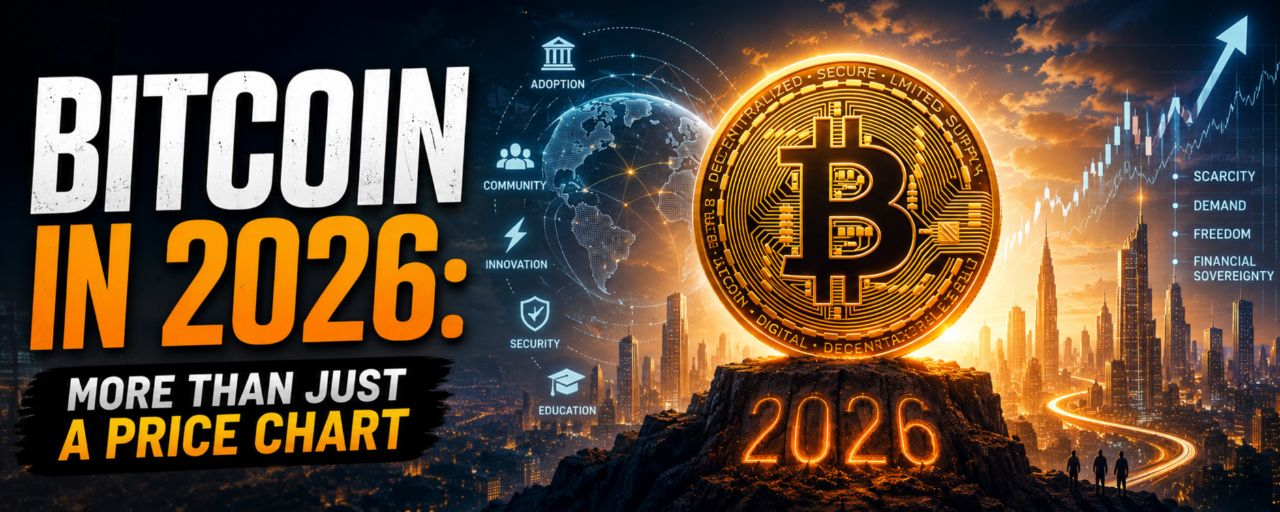
Bitcoin in 2026: More Than Just a Price ChartBitcoin in 2026 is no longer just a story about price swings, halving cycles, or speculative headlines. The real transformation is happening under the hood, where infrastructure is becoming more mature, more institutional, and more usable for payments, custody, and capital markets. Recent reports show renewed ETF inflows, expanding Lightning adoption, Bitcoin Layer 2 development, and major financial institutions building custody rails for BTC integration.
This shift matters because it changes what Bitcoin is for. Instead of being treated only as a volatile asset to trade, Bitcoin is increasingly functioning as settlement infrastructure, collateral, treasury reserve, and a programmable financial layer. That is the deeper story of Bitcoin in 2026, and it is what makes the current cycle different from the last one.
Bitcoin ETF growth is changing demand
One of the biggest structural changes in 2026 is the continued role of spot Bitcoin ETFs in channeling traditional capital into BTC. Early in the year, spot Bitcoin ETFs attracted roughly $1.2 billion in inflows over just two trading days, and analysts noted that sustained demand could create enormous annual inflow potential. JPMorgan also projected that institutional flows would remain a major force in 2026, with ETFs leading the next phase of market participation.
This matters because ETFs simplify access. Institutions, advisors, and retirement-style capital can gain Bitcoin exposure without handling private keys or operating crypto-native infrastructure. That lowers friction, expands the buyer base, and makes Bitcoin more embedded in mainstream finance. The result is not just a price effect, but a structural one: Bitcoin becomes easier to own, allocate, and integrate into portfolios.
Institutional custody is becoming core infrastructure
Custody is another area where Bitcoin is maturing fast. Citigroup, for example, has been reported as building Bitcoin infrastructure for institutional clients, including custody, key management, reporting, collateral, and portfolio integration, with services expected to launch in 2026. That is a major signal because custody is the bridge between Bitcoin and the traditional financial system.
When a global bank develops these rails, it signals more than curiosity. It means Bitcoin is being treated like a serious asset class that requires compliance, operational security, and institutional-grade workflows. This also helps explain why ETF demand and custody development are linked. The more familiar and regulated the access point, the easier it becomes for large allocators to participate.
Lightning Network adoption is moving beyond theory
The Lightning Network has long been described as Bitcoin’s answer to fast, low-cost payments, but 2026 is showing more practical progress. Reports this year describe merchant adoption growing, integration into major payment apps, and a significant increase in network capacity. A notable milestone was a reported $1 million Lightning payment from Secure Digital Markets to Kraken, which demonstrated that the network is no longer limited to tiny transactions.
Another major adoption signal came from Block, which reportedly enabled native Bitcoin Lightning payments for about 4 million merchants with zero processing fees through 2026. That kind of integration matters because it moves Lightning from niche crypto utility into everyday commerce infrastructure. It also creates a strong case for Bitcoin as a payments rail, not just a store of value.
Layer 2s are expanding Bitcoin’s utility
Bitcoin Layer 2 development is one of the clearest signs that the ecosystem is evolving beyond simple custody and speculation. Projects such as Stacks and BitVM-related efforts are pushing toward smarter, more flexible Bitcoin-native applications, including trust-minimized bridges, enhanced verification, and decentralized finance-style use cases. These developments suggest that Bitcoin is slowly gaining a broader application stack without compromising its base-layer security.
This is important because it addresses one of Bitcoin’s oldest limitations: its conservative design. The base layer prioritizes security and decentralization, which is why scaling often depends on Layer 2 solutions. In 2026, the conversation is shifting from whether Bitcoin can support more functionality to how that functionality can be added safely and credibly.
Bitcoin is becoming productive collateral
Another major under-the-hood shift in 2026 is the return of Bitcoin-collateralized lending and yield-oriented infrastructure. Coverage from Bitcoin 2026 and Consensus Miami highlighted renewed interest in Bitcoin credit markets, with institutional appetite for yield and capital efficiency driving a more active lending environment. That means Bitcoin is increasingly being used as productive collateral instead of sitting idle in cold storage.
This is a meaningful evolution. If Bitcoin can support lending, treasury management, and collateral workflows, then it becomes a more versatile financial primitive. That makes it attractive not only to holders, but also to lenders, trading firms, and institutions looking for efficient balance-sheet tools.
Mining is also changing shape
Even Bitcoin mining is becoming more infrastructure-like. Industry commentary from Bitcoin 2026 noted a split in miner strategy: some operators are focusing on pure mining efficiency, while others are pivoting toward high-performance computing and data-center infrastructure. That shows mining is no longer just about block rewards; it is increasingly tied to energy strategy, compute economics, and broader digital infrastructure.
This matters for the health of the network because it changes the business model behind Bitcoin security. The more miners behave like infrastructure operators, the more stable and professional the ecosystem can become. It also suggests that Bitcoin’s physical backbone is evolving in parallel with its financial layer.
What this means for investors
For investors, the biggest lesson of 2026 is that Bitcoin should no longer be viewed only through the lens of short-term price action. The real value proposition is expanding through ETFs, custody, Layer 2 scaling, Lightning payments, and institutional integration. Those are the forces that determine whether Bitcoin remains a speculative asset or becomes a durable part of the financial system.
That does not remove volatility. Bitcoin is still a macro-sensitive asset, and analyst forecasts for 2026 remain wide-ranging, which shows how divided the market still is on price direction. But the underlying infrastructure story is becoming much less ambiguous. More capital has easier access, more merchants can accept payments, more institutions can custody Bitcoin safely, and more builders are extending the network’s functionality.
The real 2026 story
The clearest way to understand Bitcoin in 2026 is this: price is still the headline, but infrastructure is the story. ETFs are pulling Bitcoin into traditional portfolios, custody platforms are making it usable for institutions, Lightning is improving payments, and Layer 2s are broadening the network’s capabilities.
That combination is what turns Bitcoin from an asset people watch into a system people build on. In other words, Bitcoin is becoming less of a chart and more of a financial network. And in 2026, that difference is the whole point.
#bitcoin #BTC #Layer2 #Web3 #BinanceSquare
Bitcoin in 2026: More Than Just a Price Chart
Bitcoin in 2026 is no longer just a story about price swings, halving cycles, or speculative headlines. The real transformation is happening under the hood, where infrastructure is becoming more mature, more institutional, and more usable for payments, custody, and capital markets. Recent reports show renewed ETF inflows, expanding Lightning adoption, Bitcoin Layer 2 development, and major financial institutions building custody rails for BTC integration.
This shift matters because it changes what Bitcoin is for. Instead of being treated only as a volatile asset to trade, Bitcoin is increasingly functioning as settlement infrastructure, collateral, treasury reserve, and a programmable financial layer. That is the deeper story of Bitcoin in 2026, and it is what makes the current cycle different from the last one.
Bitcoin ETF growth is changing demand
One of the biggest structural changes in 2026 is the continued role of spot Bitcoin ETFs in channeling traditional capital into BTC. Early in the year, spot Bitcoin ETFs attracted roughly $1.2 billion in inflows over just two trading days, and analysts noted that sustained demand could create enormous annual inflow potential. JPMorgan also projected that institutional flows would remain a major force in 2026, with ETFs leading the next phase of market participation.
This matters because ETFs simplify access. Institutions, advisors, and retirement-style capital can gain Bitcoin exposure without handling private keys or operating crypto-native infrastructure. That lowers friction, expands the buyer base, and makes Bitcoin more embedded in mainstream finance. The result is not just a price effect, but a structural one: Bitcoin becomes easier to own, allocate, and integrate into portfolios.
Institutional custody is becoming core infrastructure
Custody is another area where Bitcoin is maturing fast. Citigroup, for example, has been reported as building Bitcoin infrastructure for institutional clients, including custody, key management, reporting, collateral, and portfolio integration, with services expected to launch in 2026. That is a major signal because custody is the bridge between Bitcoin and the traditional financial system.
When a global bank develops these rails, it signals more than curiosity. It means Bitcoin is being treated like a serious asset class that requires compliance, operational security, and institutional-grade workflows. This also helps explain why ETF demand and custody development are linked. The more familiar and regulated the access point, the easier it becomes for large allocators to participate.
Lightning Network adoption is moving beyond theory
The Lightning Network has long been described as Bitcoin’s answer to fast, low-cost payments, but 2026 is showing more practical progress. Reports this year describe merchant adoption growing, integration into major payment apps, and a significant increase in network capacity. A notable milestone was a reported $1 million Lightning payment from Secure Digital Markets to Kraken, which demonstrated that the network is no longer limited to tiny transactions.
Another major adoption signal came from Block, which reportedly enabled native Bitcoin Lightning payments for about 4 million merchants with zero processing fees through 2026. That kind of integration matters because it moves Lightning from niche crypto utility into everyday commerce infrastructure. It also creates a strong case for Bitcoin as a payments rail, not just a store of value.
Layer 2s are expanding Bitcoin’s utility
Bitcoin Layer 2 development is one of the clearest signs that the ecosystem is evolving beyond simple custody and speculation. Projects such as Stacks and BitVM-related efforts are pushing toward smarter, more flexible Bitcoin-native applications, including trust-minimized bridges, enhanced verification, and decentralized finance-style use cases. These developments suggest that Bitcoin is slowly gaining a broader application stack without compromising its base-layer security.
This is important because it addresses one of Bitcoin’s oldest limitations: its conservative design. The base layer prioritizes security and decentralization, which is why scaling often depends on Layer 2 solutions. In 2026, the conversation is shifting from whether Bitcoin can support more functionality to how that functionality can be added safely and credibly.
Bitcoin is becoming productive collateral
Another major under-the-hood shift in 2026 is the return of Bitcoin-collateralized lending and yield-oriented infrastructure. Coverage from Bitcoin 2026 and Consensus Miami highlighted renewed interest in Bitcoin credit markets, with institutional appetite for yield and capital efficiency driving a more active lending environment. That means Bitcoin is increasingly being used as productive collateral instead of sitting idle in cold storage.
This is a meaningful evolution. If Bitcoin can support lending, treasury management, and collateral workflows, then it becomes a more versatile financial primitive. That makes it attractive not only to holders, but also to lenders, trading firms, and institutions looking for efficient balance-sheet tools.
Mining is also changing shape
Even Bitcoin mining is becoming more infrastructure-like. Industry commentary from Bitcoin 2026 noted a split in miner strategy: some operators are focusing on pure mining efficiency, while others are pivoting toward high-performance computing and data-center infrastructure. That shows mining is no longer just about block rewards; it is increasingly tied to energy strategy, compute economics, and broader digital infrastructure.
This matters for the health of the network because it changes the business model behind Bitcoin security. The more miners behave like infrastructure operators, the more stable and professional the ecosystem can become. It also suggests that Bitcoin’s physical backbone is evolving in parallel with its financial layer.
What this means for investors
For investors, the biggest lesson of 2026 is that Bitcoin should no longer be viewed only through the lens of short-term price action. The real value proposition is expanding through ETFs, custody, Layer 2 scaling, Lightning payments, and institutional integration. Those are the forces that determine whether Bitcoin remains a speculative asset or becomes a durable part of the financial system.
That does not remove volatility. Bitcoin is still a macro-sensitive asset, and analyst forecasts for 2026 remain wide-ranging, which shows how divided the market still is on price direction. But the underlying infrastructure story is becoming much less ambiguous. More capital has easier access, more merchants can accept payments, more institutions can custody Bitcoin safely, and more builders are extending the network’s functionality.
The real 2026 story
The clearest way to understand Bitcoin in 2026 is this: price is still the headline, but infrastructure is the story. ETFs are pulling Bitcoin into traditional portfolios, custody platforms are making it usable for institutions, Lightning is improving payments, and Layer 2s are broadening the network’s capabilities.
That combination is what turns Bitcoin from an asset people watch into a system people build on. In other words, Bitcoin is becoming less of a chart and more of a financial network. And in 2026, that difference is the whole point.
#bitcoin #BTC #Layer2 #Web3 #BinanceSquare
This shift matters because it changes what Bitcoin is for. Instead of being treated only as a volatile asset to trade, Bitcoin is increasingly functioning as settlement infrastructure, collateral, treasury reserve, and a programmable financial layer. That is the deeper story of Bitcoin in 2026, and it is what makes the current cycle different from the last one.
Bitcoin ETF growth is changing demand
One of the biggest structural changes in 2026 is the continued role of spot Bitcoin ETFs in channeling traditional capital into BTC. Early in the year, spot Bitcoin ETFs attracted roughly $1.2 billion in inflows over just two trading days, and analysts noted that sustained demand could create enormous annual inflow potential. JPMorgan also projected that institutional flows would remain a major force in 2026, with ETFs leading the next phase of market participation.
This matters because ETFs simplify access. Institutions, advisors, and retirement-style capital can gain Bitcoin exposure without handling private keys or operating crypto-native infrastructure. That lowers friction, expands the buyer base, and makes Bitcoin more embedded in mainstream finance. The result is not just a price effect, but a structural one: Bitcoin becomes easier to own, allocate, and integrate into portfolios.
Institutional custody is becoming core infrastructure
Custody is another area where Bitcoin is maturing fast. Citigroup, for example, has been reported as building Bitcoin infrastructure for institutional clients, including custody, key management, reporting, collateral, and portfolio integration, with services expected to launch in 2026. That is a major signal because custody is the bridge between Bitcoin and the traditional financial system.
When a global bank develops these rails, it signals more than curiosity. It means Bitcoin is being treated like a serious asset class that requires compliance, operational security, and institutional-grade workflows. This also helps explain why ETF demand and custody development are linked. The more familiar and regulated the access point, the easier it becomes for large allocators to participate.
Lightning Network adoption is moving beyond theory
The Lightning Network has long been described as Bitcoin’s answer to fast, low-cost payments, but 2026 is showing more practical progress. Reports this year describe merchant adoption growing, integration into major payment apps, and a significant increase in network capacity. A notable milestone was a reported $1 million Lightning payment from Secure Digital Markets to Kraken, which demonstrated that the network is no longer limited to tiny transactions.
Another major adoption signal came from Block, which reportedly enabled native Bitcoin Lightning payments for about 4 million merchants with zero processing fees through 2026. That kind of integration matters because it moves Lightning from niche crypto utility into everyday commerce infrastructure. It also creates a strong case for Bitcoin as a payments rail, not just a store of value.
Layer 2s are expanding Bitcoin’s utility
Bitcoin Layer 2 development is one of the clearest signs that the ecosystem is evolving beyond simple custody and speculation. Projects such as Stacks and BitVM-related efforts are pushing toward smarter, more flexible Bitcoin-native applications, including trust-minimized bridges, enhanced verification, and decentralized finance-style use cases. These developments suggest that Bitcoin is slowly gaining a broader application stack without compromising its base-layer security.
This is important because it addresses one of Bitcoin’s oldest limitations: its conservative design. The base layer prioritizes security and decentralization, which is why scaling often depends on Layer 2 solutions. In 2026, the conversation is shifting from whether Bitcoin can support more functionality to how that functionality can be added safely and credibly.
Bitcoin is becoming productive collateral
Another major under-the-hood shift in 2026 is the return of Bitcoin-collateralized lending and yield-oriented infrastructure. Coverage from Bitcoin 2026 and Consensus Miami highlighted renewed interest in Bitcoin credit markets, with institutional appetite for yield and capital efficiency driving a more active lending environment. That means Bitcoin is increasingly being used as productive collateral instead of sitting idle in cold storage.
This is a meaningful evolution. If Bitcoin can support lending, treasury management, and collateral workflows, then it becomes a more versatile financial primitive. That makes it attractive not only to holders, but also to lenders, trading firms, and institutions looking for efficient balance-sheet tools.
Mining is also changing shape
Even Bitcoin mining is becoming more infrastructure-like. Industry commentary from Bitcoin 2026 noted a split in miner strategy: some operators are focusing on pure mining efficiency, while others are pivoting toward high-performance computing and data-center infrastructure. That shows mining is no longer just about block rewards; it is increasingly tied to energy strategy, compute economics, and broader digital infrastructure.
This matters for the health of the network because it changes the business model behind Bitcoin security. The more miners behave like infrastructure operators, the more stable and professional the ecosystem can become. It also suggests that Bitcoin’s physical backbone is evolving in parallel with its financial layer.
What this means for investors
For investors, the biggest lesson of 2026 is that Bitcoin should no longer be viewed only through the lens of short-term price action. The real value proposition is expanding through ETFs, custody, Layer 2 scaling, Lightning payments, and institutional integration. Those are the forces that determine whether Bitcoin remains a speculative asset or becomes a durable part of the financial system.
That does not remove volatility. Bitcoin is still a macro-sensitive asset, and analyst forecasts for 2026 remain wide-ranging, which shows how divided the market still is on price direction. But the underlying infrastructure story is becoming much less ambiguous. More capital has easier access, more merchants can accept payments, more institutions can custody Bitcoin safely, and more builders are extending the network’s functionality.
The real 2026 story
The clearest way to understand Bitcoin in 2026 is this: price is still the headline, but infrastructure is the story. ETFs are pulling Bitcoin into traditional portfolios, custody platforms are making it usable for institutions, Lightning is improving payments, and Layer 2s are broadening the network’s capabilities.
That combination is what turns Bitcoin from an asset people watch into a system people build on. In other words, Bitcoin is becoming less of a chart and more of a financial network. And in 2026, that difference is the whole point.
#bitcoin #BTC #Layer2 #Web3 #BinanceSquare
2
257
·
--
Article
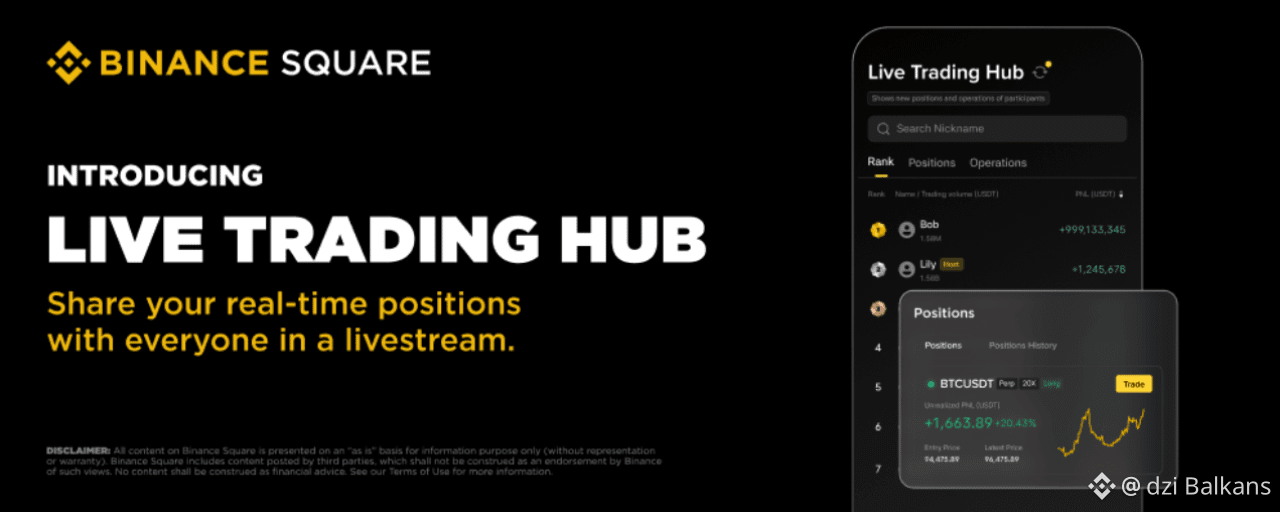
Introducing the Live Trading Hub on Binance Square📈 Trading solo can get repetitive. Trading live with others? That’s where things get exciting 🤩
Say hello to Live Trading Hub, a brand-new social trading feature on Binance Square designed to make livestream trading more interactive than ever.
Once a streamer activates this feature, viewers can jump in and publicly share their trading activity in real time. This includes open positions, PnL, and every executed trade, all displayed on a dynamic live leaderboard.
No more talking to an empty audience 🤫 Now everyone participates - showing their trades, reacting in real time, and competing side by side 📈
Note: At the moment, only USDT-M Delivery Futures data is supported. Availability may differ depending on your region.
Extra note: If you're new to livestreaming, feel free to reach out via DM for guidance, or check out the official tutorial here: [https://www.binance.com/en/square/post/24263160950562](https://www.binance.com/en/square/post/24263160950562)
For Streamers: Enabling Live Trading Hub ✅
Prepare Before Going Live To get started, open your broadcast editor (works for audio, video, and third-party streams).
Enable the [Live Trading Hub] toggle and choose one of the available modes:
New Positions (default): Displays only positions opened after users join the session
All Positions: Displays both existing open positions and any new ones
Once selected, click [Save] to apply the settings.
Important: The streamer is automatically included in the leaderboard. If no trades are made, the ranking will simply remain empty.
Enable During an Ongoing Stream 🎙️ If you didn’t enable it beforehand, you can still activate Live Trading Hub while streaming.
Just tap the [Live Trading Hub] button from the bottom toolbar, choose your preferred mode, and save your selection.
Managing Participants 🫂 You can access the leaderboard at any time by clicking the [Live Trading Hub] button.
From there, you can:
Monitor participant rankings, PnL, and trading volume in real time
Tap on any user to explore their positions and detailed trade activity
Remove participants from the session (once removed, they cannot rejoin that specific stream)
Ending the Session 🎬 When you're ready to wrap up, select [End Live Trading Hub] from the leaderboard and confirm your choice.
This will immediately stop all shared trading data and close the dashboard for everyone. You can always start a new session later from the toolbar.
For Viewers: How to Join and Participate 🫵
Finding a Live Trading Hub Stream 🎙️ Streams that have this feature enabled are marked with the label "Online · X Trading" on the live preview card.
After entering the stream, tap on the [Live Trading Hub] widget to open the leaderboard interface.
Joining the Session 🫵 To participate, tap [Join] at the bottom of the leaderboard and confirm your entry.
Before joining, keep in mind:
Your account must have at least 10 USDT
You can only participate in one Live Trading Hub session at a time (joining another will automatically exit the previous one)
Each session supports up to 100 participants
Monitoring Your Trading Performance 📈 Inside the dashboard, you’ll find three main tabs:
Leaderboard: Displays all participants ranked by PnL. You can tap any user to view their positions and trading history
Positions: Shows both open positions (sorted by PnL) and closed positions (sorted by time)
Trade Activity: A live feed of all executed buy and sell orders
If you notice a yellow dot on the refresh button, it means new data is available. Tap it to update manually.
You can also search for specific users by their nickname for quicker access.
Leaving the Session 🎬 If you decide to exit, tap [Exit Live Trading Hub] at the bottom of the dashboard.
Once you leave, your trading data will no longer be visible to others. However, you’re free to rejoin anytime, as long as the session is still active.
FAQ 📚 Q1: Does Live Trading Hub expose all my trading data? No. Personal account details are never shared. Only USDT-M Delivery Futures data is displayed. The visibility depends on the selected mode:
New Positions shows trades made after joining
All Positions includes both existing and new positions
Q2: Can I join multiple sessions at the same time? No. You are limited to one active session. Joining another automatically removes you from the current one.
Q3: What happens if I leave the livestream? Leaving the stream also removes you from the Live Trading Hub. Your data will stop being displayed. Note: Picture-in-picture mode does not count as leaving.
Q4: Why am I unable to join a session? Possible reasons include:
Your balance is below 10 USDT
You’ve been removed or blocked by the streamer
The session has reached its participant limit (100 users)
You are already in another active session
Q5: How are rankings determined? Participants are ranked based on their PnL (in USDT), from highest to lowest by default. You can adjust the sorting order if needed. Your own position is highlighted for easier tracking.
Q6: How frequently is the data updated? The system refreshes data every 30 seconds. A yellow indicator appears when new data is available, allowing manual refresh.
Q7: Can I access the data after the session ends? No. Once the streamer ends the session, all dashboards close and previously displayed data is no longer accessible.
Q8: How can I become a streamer? Livestream access is automatically unlocked once you reach 1,000 followers on Binance Square.
If you haven’t reached that milestone but already have livestreaming experience or a strong content background, you can apply through this form: [https://www.binance.com/en/survey/df184cd88ee340c49f034b77f792aaa3](https://www.binance.com/en/survey/df184cd88ee340c49f034b77f792aaa3)
Introducing the Live Trading Hub on Binance Square
📈 Trading solo can get repetitive. Trading live with others? That’s where things get exciting 🤩
Say hello to Live Trading Hub, a brand-new social trading feature on Binance Square designed to make livestream trading more interactive than ever.
Once a streamer activates this feature, viewers can jump in and publicly share their trading activity in real time. This includes open positions, PnL, and every executed trade, all displayed on a dynamic live leaderboard.
No more talking to an empty audience 🤫 Now everyone participates - showing their trades, reacting in real time, and competing side by side 📈
Note: At the moment, only USDT-M Delivery Futures data is supported. Availability may differ depending on your region.
Extra note: If you're new to livestreaming, feel free to reach out via DM for guidance, or check out the official tutorial here: https://www.binance.com/en/square/post/24263160950562
For Streamers: Enabling Live Trading Hub ✅
Prepare Before Going Live To get started, open your broadcast editor (works for audio, video, and third-party streams).
Enable the [Live Trading Hub] toggle and choose one of the available modes:
New Positions (default): Displays only positions opened after users join the session
All Positions: Displays both existing open positions and any new ones
Once selected, click [Save] to apply the settings.
Important: The streamer is automatically included in the leaderboard. If no trades are made, the ranking will simply remain empty.
Enable During an Ongoing Stream 🎙️ If you didn’t enable it beforehand, you can still activate Live Trading Hub while streaming.
Just tap the [Live Trading Hub] button from the bottom toolbar, choose your preferred mode, and save your selection.
Managing Participants 🫂 You can access the leaderboard at any time by clicking the [Live Trading Hub] button.
From there, you can:
Monitor participant rankings, PnL, and trading volume in real time
Tap on any user to explore their positions and detailed trade activity
Remove participants from the session (once removed, they cannot rejoin that specific stream)
Ending the Session 🎬 When you're ready to wrap up, select [End Live Trading Hub] from the leaderboard and confirm your choice.
This will immediately stop all shared trading data and close the dashboard for everyone. You can always start a new session later from the toolbar.
For Viewers: How to Join and Participate 🫵
Finding a Live Trading Hub Stream 🎙️ Streams that have this feature enabled are marked with the label "Online · X Trading" on the live preview card.
After entering the stream, tap on the [Live Trading Hub] widget to open the leaderboard interface.
Joining the Session 🫵 To participate, tap [Join] at the bottom of the leaderboard and confirm your entry.
Before joining, keep in mind:
Your account must have at least 10 USDT
You can only participate in one Live Trading Hub session at a time (joining another will automatically exit the previous one)
Each session supports up to 100 participants
Monitoring Your Trading Performance 📈 Inside the dashboard, you’ll find three main tabs:
Leaderboard: Displays all participants ranked by PnL. You can tap any user to view their positions and trading history
Positions: Shows both open positions (sorted by PnL) and closed positions (sorted by time)
Trade Activity: A live feed of all executed buy and sell orders
If you notice a yellow dot on the refresh button, it means new data is available. Tap it to update manually.
You can also search for specific users by their nickname for quicker access.
Leaving the Session 🎬 If you decide to exit, tap [Exit Live Trading Hub] at the bottom of the dashboard.
Once you leave, your trading data will no longer be visible to others. However, you’re free to rejoin anytime, as long as the session is still active.
FAQ 📚 Q1: Does Live Trading Hub expose all my trading data? No. Personal account details are never shared. Only USDT-M Delivery Futures data is displayed. The visibility depends on the selected mode:
New Positions shows trades made after joining
All Positions includes both existing and new positions
Q2: Can I join multiple sessions at the same time? No. You are limited to one active session. Joining another automatically removes you from the current one.
Q3: What happens if I leave the livestream? Leaving the stream also removes you from the Live Trading Hub. Your data will stop being displayed. Note: Picture-in-picture mode does not count as leaving.
Q4: Why am I unable to join a session? Possible reasons include:
Your balance is below 10 USDT
You’ve been removed or blocked by the streamer
The session has reached its participant limit (100 users)
You are already in another active session
Q5: How are rankings determined? Participants are ranked based on their PnL (in USDT), from highest to lowest by default. You can adjust the sorting order if needed. Your own position is highlighted for easier tracking.
Q6: How frequently is the data updated? The system refreshes data every 30 seconds. A yellow indicator appears when new data is available, allowing manual refresh.
Q7: Can I access the data after the session ends? No. Once the streamer ends the session, all dashboards close and previously displayed data is no longer accessible.
Q8: How can I become a streamer? Livestream access is automatically unlocked once you reach 1,000 followers on Binance Square.
If you haven’t reached that milestone but already have livestreaming experience or a strong content background, you can apply through this form: https://www.binance.com/en/survey/df184cd88ee340c49f034b77f792aaa3
Say hello to Live Trading Hub, a brand-new social trading feature on Binance Square designed to make livestream trading more interactive than ever.
Once a streamer activates this feature, viewers can jump in and publicly share their trading activity in real time. This includes open positions, PnL, and every executed trade, all displayed on a dynamic live leaderboard.
No more talking to an empty audience 🤫 Now everyone participates - showing their trades, reacting in real time, and competing side by side 📈
Note: At the moment, only USDT-M Delivery Futures data is supported. Availability may differ depending on your region.
Extra note: If you're new to livestreaming, feel free to reach out via DM for guidance, or check out the official tutorial here: https://www.binance.com/en/square/post/24263160950562
For Streamers: Enabling Live Trading Hub ✅
Prepare Before Going Live To get started, open your broadcast editor (works for audio, video, and third-party streams).
Enable the [Live Trading Hub] toggle and choose one of the available modes:
New Positions (default): Displays only positions opened after users join the session
All Positions: Displays both existing open positions and any new ones
Once selected, click [Save] to apply the settings.
Important: The streamer is automatically included in the leaderboard. If no trades are made, the ranking will simply remain empty.
Enable During an Ongoing Stream 🎙️ If you didn’t enable it beforehand, you can still activate Live Trading Hub while streaming.
Just tap the [Live Trading Hub] button from the bottom toolbar, choose your preferred mode, and save your selection.
Managing Participants 🫂 You can access the leaderboard at any time by clicking the [Live Trading Hub] button.
From there, you can:
Monitor participant rankings, PnL, and trading volume in real time
Tap on any user to explore their positions and detailed trade activity
Remove participants from the session (once removed, they cannot rejoin that specific stream)
Ending the Session 🎬 When you're ready to wrap up, select [End Live Trading Hub] from the leaderboard and confirm your choice.
This will immediately stop all shared trading data and close the dashboard for everyone. You can always start a new session later from the toolbar.
For Viewers: How to Join and Participate 🫵
Finding a Live Trading Hub Stream 🎙️ Streams that have this feature enabled are marked with the label "Online · X Trading" on the live preview card.
After entering the stream, tap on the [Live Trading Hub] widget to open the leaderboard interface.
Joining the Session 🫵 To participate, tap [Join] at the bottom of the leaderboard and confirm your entry.
Before joining, keep in mind:
Your account must have at least 10 USDT
You can only participate in one Live Trading Hub session at a time (joining another will automatically exit the previous one)
Each session supports up to 100 participants
Monitoring Your Trading Performance 📈 Inside the dashboard, you’ll find three main tabs:
Leaderboard: Displays all participants ranked by PnL. You can tap any user to view their positions and trading history
Positions: Shows both open positions (sorted by PnL) and closed positions (sorted by time)
Trade Activity: A live feed of all executed buy and sell orders
If you notice a yellow dot on the refresh button, it means new data is available. Tap it to update manually.
You can also search for specific users by their nickname for quicker access.
Leaving the Session 🎬 If you decide to exit, tap [Exit Live Trading Hub] at the bottom of the dashboard.
Once you leave, your trading data will no longer be visible to others. However, you’re free to rejoin anytime, as long as the session is still active.
FAQ 📚 Q1: Does Live Trading Hub expose all my trading data? No. Personal account details are never shared. Only USDT-M Delivery Futures data is displayed. The visibility depends on the selected mode:
New Positions shows trades made after joining
All Positions includes both existing and new positions
Q2: Can I join multiple sessions at the same time? No. You are limited to one active session. Joining another automatically removes you from the current one.
Q3: What happens if I leave the livestream? Leaving the stream also removes you from the Live Trading Hub. Your data will stop being displayed. Note: Picture-in-picture mode does not count as leaving.
Q4: Why am I unable to join a session? Possible reasons include:
Your balance is below 10 USDT
You’ve been removed or blocked by the streamer
The session has reached its participant limit (100 users)
You are already in another active session
Q5: How are rankings determined? Participants are ranked based on their PnL (in USDT), from highest to lowest by default. You can adjust the sorting order if needed. Your own position is highlighted for easier tracking.
Q6: How frequently is the data updated? The system refreshes data every 30 seconds. A yellow indicator appears when new data is available, allowing manual refresh.
Q7: Can I access the data after the session ends? No. Once the streamer ends the session, all dashboards close and previously displayed data is no longer accessible.
Q8: How can I become a streamer? Livestream access is automatically unlocked once you reach 1,000 followers on Binance Square.
If you haven’t reached that milestone but already have livestreaming experience or a strong content background, you can apply through this form: https://www.binance.com/en/survey/df184cd88ee340c49f034b77f792aaa3
1
292
·
--
Article
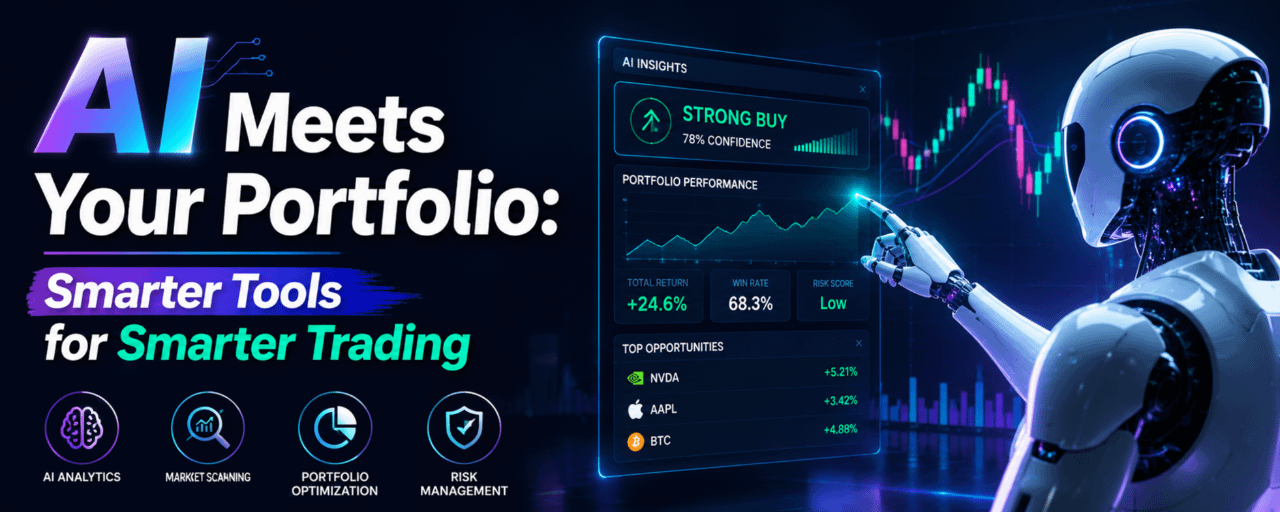
AI Meets Your Portfolio: Smarter Tools for Smarter TradingAI is no longer just a back-office tool in trading. It is becoming the layer that helps traders spot trends faster, understand market sentiment, and act with more confidence, especially as Binance rolls out new AI-driven features across its exchange and wallet ecosystem.
AI Meets Your Portfolio: Smarter Tools for Smarter Trading
Trading has always rewarded speed, discipline, and access to information. What has changed in 2026 is that artificial intelligence is now helping everyday traders do work that once required a full research desk, from scanning token narratives to summarizing risk signals in seconds.
Binance is one of the clearest examples of this shift. The platform has introduced AI Token Report, token sentiment signals, smart money signals, and newer wallet-based AI features designed to help users interpret market moves, identify emerging narratives, and see assets through a more personalized lens.
The broader market is moving in the same direction. Recent reporting shows that AI trading tools are increasingly used to summarize earnings calls, analyze news flow, explain sudden price moves, and automate parts of research and execution, which makes fast-moving markets easier to navigate.
Why AI Is Changing Trading
Traditional trading research can be slow, fragmented, and emotionally exhausting. Traders often need to read charts, track news, monitor social sentiment, and compare dozens of assets at once, which creates a real disadvantage when markets move quickly.
AI reduces that burden by turning unstructured information into usable signals. It can process transcripts, headlines, on-chain activity, social chatter, and price behavior much faster than a human can, then surface the most relevant insights in a compact format.
This does not remove the need for judgment. Instead, AI acts as a filter that helps traders focus on what matters, while still requiring them to validate the thesis, set risk limits, and decide whether the setup truly fits their strategy.
Binance AI Features
Binance has expanded AI functionality in a way that shows where crypto trading is headed. Its AI Token Report provides a concise token overview in under 30 seconds, while sentiment signals and smart money signals help users interpret market mood and track activity from influential participants.
Binance Wallet has also added AI tools focused on narrative discovery and simplified market analysis. Reported features include Topic Rush, Social Hype, and an AI Assistant that summarizes token context, social sentiment, and key data points so traders can make faster decisions without jumping between multiple platforms.
In March 2026, Binance went a step further by introducing AI Agent Skills, a modular layer that gives AI agents access to exchange data, wallet analytics, trading signals, and even execution-related functions. That matters because it moves AI from passive analysis toward more active, structured decision support inside the trading workflow.
Smarter Trend Detection
One of the biggest advantages of AI in trading is pattern recognition. Markets generate huge amounts of noise, but AI can detect recurring signals in price action, liquidity shifts, token mentions, wallet behavior, and social engagement that might be missed by manual analysis.
This is especially valuable in crypto, where narratives can spread quickly and sentiment can change within hours. Binance’s AI tools are designed to scan social media, news, and KOL activity to highlight tokens that are gaining attention before the move becomes obvious to the wider market.
For traders, that means better timing. Instead of reacting late to a breakout, they can watch for early signs of momentum, compare those signals with market structure, and decide whether the setup is worth trading.
Automation Levels The Field
Automation is helping level the trading field because it gives smaller traders access to capabilities that used to be reserved for institutions. AI-powered systems can now monitor markets around the clock, generate summaries, and even assist with execution, which reduces the gap between professional-grade infrastructure and retail access.
This matters most in markets that never sleep. Crypto trading happens 24/7, so AI tools can continuously scan for opportunities, track risk, and alert users when conditions change, even when they are offline.
At the same time, automation is not magic. The strongest approach is still to use AI for compression and monitoring, not blind delegation. The best traders combine AI speed with human discipline, so the machine handles the data burden while the person handles conviction and risk.
What Traders Can Use It For
AI tools are most useful when they support a clear workflow. A trader can use them to screen assets, check token sentiment, compare narratives, watch smart money flows, and review summaries before entering a position.
They are also helpful for portfolio management. AI can highlight concentration risk, spot volatility changes, and show when one asset is becoming too dominant in the portfolio, which makes rebalancing easier and more systematic.
A practical example is a trader watching several altcoins at once. Instead of manually reading every news item, they can use Binance AI to identify the token with rising social momentum, review its report, confirm liquidity and risk signals, and then decide whether the trade matches their plan.
Risks And Limits
AI trading tools are powerful, but they are not infallible. They can reflect noisy data, overreact to social hype, or miss context that a human would catch, which is why traders should never treat generated insights as guaranteed signals.
There is also a growing need for caution around automation, transparency, and security. Industry coverage in 2026 shows that the market is expanding quickly, but regulators and users are paying more attention to accountability, risk controls, and how models are supervised.
The safest approach is to treat AI as a research and decision-support layer. Use it to compress information, compare scenarios, and monitor conditions, but keep final decisions tied to your own strategy, position sizing, and exit rules.
AI Meets Your Portfolio: Smarter Tools for Smarter Trading
AI is no longer just a back-office tool in trading. It is becoming the layer that helps traders spot trends faster, understand market sentiment, and act with more confidence, especially as Binance rolls out new AI-driven features across its exchange and wallet ecosystem.
AI Meets Your Portfolio: Smarter Tools for Smarter Trading
Trading has always rewarded speed, discipline, and access to information. What has changed in 2026 is that artificial intelligence is now helping everyday traders do work that once required a full research desk, from scanning token narratives to summarizing risk signals in seconds.
Binance is one of the clearest examples of this shift. The platform has introduced AI Token Report, token sentiment signals, smart money signals, and newer wallet-based AI features designed to help users interpret market moves, identify emerging narratives, and see assets through a more personalized lens.
The broader market is moving in the same direction. Recent reporting shows that AI trading tools are increasingly used to summarize earnings calls, analyze news flow, explain sudden price moves, and automate parts of research and execution, which makes fast-moving markets easier to navigate.
Why AI Is Changing Trading
Traditional trading research can be slow, fragmented, and emotionally exhausting. Traders often need to read charts, track news, monitor social sentiment, and compare dozens of assets at once, which creates a real disadvantage when markets move quickly.
AI reduces that burden by turning unstructured information into usable signals. It can process transcripts, headlines, on-chain activity, social chatter, and price behavior much faster than a human can, then surface the most relevant insights in a compact format.
This does not remove the need for judgment. Instead, AI acts as a filter that helps traders focus on what matters, while still requiring them to validate the thesis, set risk limits, and decide whether the setup truly fits their strategy.
Binance AI Features
Binance has expanded AI functionality in a way that shows where crypto trading is headed. Its AI Token Report provides a concise token overview in under 30 seconds, while sentiment signals and smart money signals help users interpret market mood and track activity from influential participants.
Binance Wallet has also added AI tools focused on narrative discovery and simplified market analysis. Reported features include Topic Rush, Social Hype, and an AI Assistant that summarizes token context, social sentiment, and key data points so traders can make faster decisions without jumping between multiple platforms.
In March 2026, Binance went a step further by introducing AI Agent Skills, a modular layer that gives AI agents access to exchange data, wallet analytics, trading signals, and even execution-related functions. That matters because it moves AI from passive analysis toward more active, structured decision support inside the trading workflow.
Smarter Trend Detection
One of the biggest advantages of AI in trading is pattern recognition. Markets generate huge amounts of noise, but AI can detect recurring signals in price action, liquidity shifts, token mentions, wallet behavior, and social engagement that might be missed by manual analysis.
This is especially valuable in crypto, where narratives can spread quickly and sentiment can change within hours. Binance’s AI tools are designed to scan social media, news, and KOL activity to highlight tokens that are gaining attention before the move becomes obvious to the wider market.
For traders, that means better timing. Instead of reacting late to a breakout, they can watch for early signs of momentum, compare those signals with market structure, and decide whether the setup is worth trading.
Automation Levels The Field
Automation is helping level the trading field because it gives smaller traders access to capabilities that used to be reserved for institutions. AI-powered systems can now monitor markets around the clock, generate summaries, and even assist with execution, which reduces the gap between professional-grade infrastructure and retail access.
This matters most in markets that never sleep. Crypto trading happens 24/7, so AI tools can continuously scan for opportunities, track risk, and alert users when conditions change, even when they are offline.
At the same time, automation is not magic. The strongest approach is still to use AI for compression and monitoring, not blind delegation. The best traders combine AI speed with human discipline, so the machine handles the data burden while the person handles conviction and risk.
What Traders Can Use It For
AI tools are most useful when they support a clear workflow. A trader can use them to screen assets, check token sentiment, compare narratives, watch smart money flows, and review summaries before entering a position.
They are also helpful for portfolio management. AI can highlight concentration risk, spot volatility changes, and show when one asset is becoming too dominant in the portfolio, which makes rebalancing easier and more systematic.
A practical example is a trader watching several altcoins at once. Instead of manually reading every news item, they can use Binance AI to identify the token with rising social momentum, review its report, confirm liquidity and risk signals, and then decide whether the trade matches their plan.
Risks And Limits
AI trading tools are powerful, but they are not infallible. They can reflect noisy data, overreact to social hype, or miss context that a human would catch, which is why traders should never treat generated insights as guaranteed signals.
There is also a growing need for caution around automation, transparency, and security. Industry coverage in 2026 shows that the market is expanding quickly, but regulators and users are paying more attention to accountability, risk controls, and how models are supervised.
The safest approach is to treat AI as a research and decision-support layer. Use it to compress information, compare scenarios, and monitor conditions, but keep final decisions tied to your own strategy, position sizing, and exit rules.
AI Meets Your Portfolio: Smarter Tools for Smarter Trading
Trading has always rewarded speed, discipline, and access to information. What has changed in 2026 is that artificial intelligence is now helping everyday traders do work that once required a full research desk, from scanning token narratives to summarizing risk signals in seconds.
Binance is one of the clearest examples of this shift. The platform has introduced AI Token Report, token sentiment signals, smart money signals, and newer wallet-based AI features designed to help users interpret market moves, identify emerging narratives, and see assets through a more personalized lens.
The broader market is moving in the same direction. Recent reporting shows that AI trading tools are increasingly used to summarize earnings calls, analyze news flow, explain sudden price moves, and automate parts of research and execution, which makes fast-moving markets easier to navigate.
Why AI Is Changing Trading
Traditional trading research can be slow, fragmented, and emotionally exhausting. Traders often need to read charts, track news, monitor social sentiment, and compare dozens of assets at once, which creates a real disadvantage when markets move quickly.
AI reduces that burden by turning unstructured information into usable signals. It can process transcripts, headlines, on-chain activity, social chatter, and price behavior much faster than a human can, then surface the most relevant insights in a compact format.
This does not remove the need for judgment. Instead, AI acts as a filter that helps traders focus on what matters, while still requiring them to validate the thesis, set risk limits, and decide whether the setup truly fits their strategy.
Binance AI Features
Binance has expanded AI functionality in a way that shows where crypto trading is headed. Its AI Token Report provides a concise token overview in under 30 seconds, while sentiment signals and smart money signals help users interpret market mood and track activity from influential participants.
Binance Wallet has also added AI tools focused on narrative discovery and simplified market analysis. Reported features include Topic Rush, Social Hype, and an AI Assistant that summarizes token context, social sentiment, and key data points so traders can make faster decisions without jumping between multiple platforms.
In March 2026, Binance went a step further by introducing AI Agent Skills, a modular layer that gives AI agents access to exchange data, wallet analytics, trading signals, and even execution-related functions. That matters because it moves AI from passive analysis toward more active, structured decision support inside the trading workflow.
Smarter Trend Detection
One of the biggest advantages of AI in trading is pattern recognition. Markets generate huge amounts of noise, but AI can detect recurring signals in price action, liquidity shifts, token mentions, wallet behavior, and social engagement that might be missed by manual analysis.
This is especially valuable in crypto, where narratives can spread quickly and sentiment can change within hours. Binance’s AI tools are designed to scan social media, news, and KOL activity to highlight tokens that are gaining attention before the move becomes obvious to the wider market.
For traders, that means better timing. Instead of reacting late to a breakout, they can watch for early signs of momentum, compare those signals with market structure, and decide whether the setup is worth trading.
Automation Levels The Field
Automation is helping level the trading field because it gives smaller traders access to capabilities that used to be reserved for institutions. AI-powered systems can now monitor markets around the clock, generate summaries, and even assist with execution, which reduces the gap between professional-grade infrastructure and retail access.
This matters most in markets that never sleep. Crypto trading happens 24/7, so AI tools can continuously scan for opportunities, track risk, and alert users when conditions change, even when they are offline.
At the same time, automation is not magic. The strongest approach is still to use AI for compression and monitoring, not blind delegation. The best traders combine AI speed with human discipline, so the machine handles the data burden while the person handles conviction and risk.
What Traders Can Use It For
AI tools are most useful when they support a clear workflow. A trader can use them to screen assets, check token sentiment, compare narratives, watch smart money flows, and review summaries before entering a position.
They are also helpful for portfolio management. AI can highlight concentration risk, spot volatility changes, and show when one asset is becoming too dominant in the portfolio, which makes rebalancing easier and more systematic.
A practical example is a trader watching several altcoins at once. Instead of manually reading every news item, they can use Binance AI to identify the token with rising social momentum, review its report, confirm liquidity and risk signals, and then decide whether the trade matches their plan.
Risks And Limits
AI trading tools are powerful, but they are not infallible. They can reflect noisy data, overreact to social hype, or miss context that a human would catch, which is why traders should never treat generated insights as guaranteed signals.
There is also a growing need for caution around automation, transparency, and security. Industry coverage in 2026 shows that the market is expanding quickly, but regulators and users are paying more attention to accountability, risk controls, and how models are supervised.
The safest approach is to treat AI as a research and decision-support layer. Use it to compress information, compare scenarios, and monitor conditions, but keep final decisions tied to your own strategy, position sizing, and exit rules.
2
206
·
--
Article
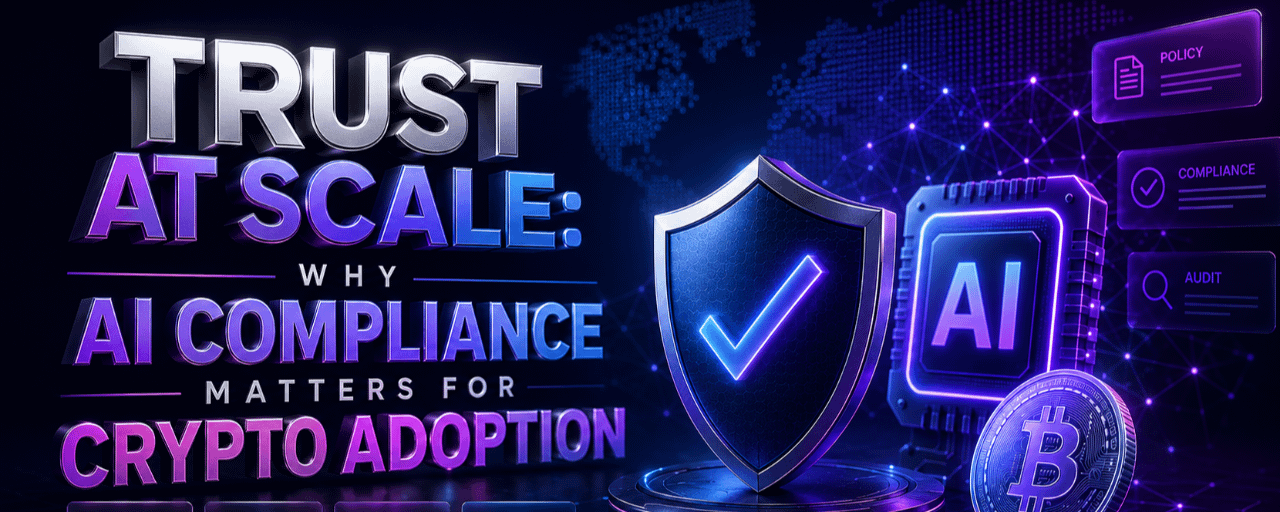
Trust at Scale: Why AI Compliance Matters for Crypto AdoptionCrypto is no longer a toy for early adopters but a fast-growing market measured in trillions of dollars, drawing in banks, funds and regulators.
Yet mass adoption requires more than innovative tech - it requires mass trust, and this is where AI-powered compliance becomes a core layer of infrastructure.
Binance is a prime example of how a global exchange is trying to solve the trust problem at system level through heavy investment in AI tools for compliance, surveillance and user protection.
This is not just about the reputation of one company - it is about whether the whole crypto ecosystem can integrate into the global financial system instead of staying in a regulatory grey zone.
Why trust is the bottleneck for crypto adoption
Global crypto market capitalization is estimated around 3.9 trillion dollars, with rising participation from both institutional and retail investors.
Large asset managers are launching crypto ETFs, staking products and tokenized assets, which automatically brings more regulatory scrutiny and stricter compliance expectations.
At the same time, regulatory risk and the "Wild West" perception remain key reasons why many institutional players enter crypto very cautiously or stay out entirely.
Regulators in the US, EU and Asia are increasingly clear that crypto platforms are expected to meet the same standards for surveillance, record-keeping and anti-abuse controls as traditional financial institutions.
In other words, without evidence that risks can be controlled at scale, it is hard to talk about a real mass adoption moment for digital assets.
AI as the new standard for AML/KYC and market surveillance
Crypto exchanges operate 24/7 with massive transaction volumes, pseudonymous addresses and cross-chain capital flows, which makes classic manual AML/KYC processes practically unsustainable.
At the same time, sophisticated AI scams - voice cloning, realistic deepfake identities, smart bots - have raised the threat level significantly, driving an estimated 30 percent jump in digital-asset fraud in 2025 and double-digit billions in losses.
Regtech and specialized AI compliance systems now provide real-time monitoring of wallets, transactions and users, while sharply reducing false positives and speeding up alert handling.
Platforms like Castellum.AI and others offer "regulator-aligned" AI trained on guidance from bodies such as OFAC, FinCEN, SEC, MAS and European authorities, with an audit-ready trail for each system decision.
These tools are no longer a nice-to-have technical add-on - they are becoming core proof that a platform can meet the standards expected by both regulators and institutional investors.
Binance as an AI compliance case study
In previous years Binance has been under intense regulatory scrutiny, including a multibillion-dollar settlement with US authorities, after which the company announced an ambitious 2025 compliance roadmap.
In that roadmap, AI is not a side note but a central pillar - investments in AI monitoring, licensing and independent audits are presented as key signals of seriousness toward investors.
Public information indicates Binance has launched at least 24 AI initiatives focused on compliance and uses more than 100 AI models specifically tuned for fraud prevention and risk monitoring.
These models run continuously and analyze large volumes of signals in real time, from transaction patterns and behavioral anomalies to indicators of social engineering.
Between early 2025 and the end of Q1 2026, Binance states that its AI-based security systems blocked around 10.53 billion dollars in potentially risky or fraudulent funds.
Over the same period, these systems reportedly protected more than 5.4 million users from potential losses, spanning both retail and institutional accounts.
In Q1 2026 alone, Binance says its AI stack intercepted roughly 22.9 million scam and phishing attempts, shielding close to 1.98 billion dollars in user funds.
According to the same reporting, AI-driven detection has contributed to a 60 to 70 percent reduction in card-related fraud compared with typical industry baselines, which is a strong sign these tools work in practice, not just on paper.
From AI support tools to secure-by-design architecture
Binance uses AI not only for hardcore compliance, but also for user experience and prevention.
Its AI chatbots, according to the company, instantly resolve more than 75 percent of user queries, freeing human agents for complex cases and speeding up high-risk incident response when funds may be at risk.
At the identity and onboarding layer, AI powers KYC fraud detection systems to spot attempts at impersonation, fake documents and identity theft.
In the P2P marketplace, Binance combines large language models with computer vision to flag scam patterns and suspicious communication in listings, adding another trust layer to the peer-to-peer side of the platform.
"Secure by design" also shows up in how Binance isolates AI trading bots and third party algorithmic tools in separate risk zones so that a compromised strategy cannot easily trigger a cascade of incidents across the entire exchange.
That approach speaks directly to algorithmic hedge funds and professional traders who already live in a world of complex strategies and expect strong risk segregation by default.
The regulator view - same risks, same expectations
Regulators worldwide are increasingly explicit that crypto markets are subject to the same basic anti-abuse principles as traditional capital markets.
In the United States, agencies such as the SEC and CFTC are pursuing enforcement actions against market abuse, while simultaneously expecting robust record-keeping, communications retention and transaction monitoring, including for large crypto players.
In the United Kingdom, the FCA has extended market abuse rules to crypto derivatives and security tokens and is pushing for real-time monitoring that links trading signals with internal staff communications.
The European Union, under the MiCA framework, clearly spells out obligations for market abuse prevention, suspicious activity reporting and stronger surveillance over crypto trading venues.
In Asia, regulators like MAS in Singapore and SFC in Hong Kong are rolling out AI-driven supervision tools and tightening AML, KYC and CFT regimes, especially for digital assets and cross border capital flows.
All of this means large exchanges are expected to demonstrate not just formal compliance, but the real world effectiveness of their AI systems through measurable outcomes and auditability.
Institutions, enterprise blockchain and "trust by design"
Enterprise blockchain adoption moved into a more mature, selective phase in 2025, particularly in finance where it underpins faster payments, asset tokenization and post-trade improvements.
For banks, funds and pension schemes, however, the core question is not only "does the tech work?" but "can risk be controlled within regulator-acceptable bounds?".
Research shows a large share of institutional investors plan to increase crypto exposure, but only if a clear regulatory regime and robust market surveillance infrastructure are in place.
In practice this means exchanges and service providers that invest in AI compliance, audit-ready documentation and transparent risk metrics are naturally positioned as preferred partners in institutional strategies.
Mass trust as a precondition for mass adoption
Mass adoption is not just about UX, low fees or a large token list - it depends on how confident users feel that they will not lose their funds and that the legal framework has their back.
For an average user, the fact that a major exchange can block more than 10 billion dollars in suspicious transactions and intercept tens of millions of scam attempts is not a minor marketing detail - it is a concrete reason to pay a "safety premium" for trustworthy liquidity.
For institutions, the presence of AI-driven compliance infrastructure, licenses and independent audits after big settlements (like Binance’s multi-billion settlement) becomes a key signal of long term viability as a counterparty.
Regulators in turn increasingly expect AI systems to have a robust audit trail - every decision to block, flag or clear a transaction must be explainable and provable against local and international standards.
Trust at scale, in other words, means confidence no longer rests on a vague "brand feeling" about a company but on measurable, repeatable and auditable performance indicators for AI compliance.
The human factor - from weakest link to "human firewall"
Even the best AI systems can fail if a user willingly hands over access to their account, which is exactly what we see with the explosion of AI-enhanced social engineering attacks.
Reports on AI-driven fraud show deepfakes, synthetic identities and voice cloning are now core tools for criminals, with more than half of surveyed fraud professionals seeing generative AI in play.
This is why Binance treats user education as a key risk management pillar and reports that over 179,000 investors went through targeted security training in the first quarter of 2026.
The goal is to teach users to recognize structural markers of AI-generated phishing and scam outreach, turning them from the "weakest link" into an active protection layer.
This combination of AI protection plus a "human firewall" will likely become industry standard, because real world data keeps showing that without raising end user awareness, no technical system is enough on its own.
What comes next - toward a global AI compliance layer
As TRM Labs notes in its 2025/26 policy outlook, more than 30 jurisdictions covering over 70 percent of global crypto exposure are actively updating rules and expectations for virtual asset service providers.
That opens the door to gradual harmonization of AI compliance tooling, where licenses, standards and cross border cooperation form something like a "global trust layer" for digital assets.
For players like Binance, this means AI compliance is not a one-off project but an ongoing race against new attack vectors, regulatory changes and the rising expectations of institutional clients.
For the industry as a whole, it means real differentiation will depend less on short term listing hype and more on the quality of AI compliance, transparency and the ability to prove trust at system level.
If crypto wants to evolve from an "alternative asset class" into a foundational layer of future finance, investment in AI compliance and trust at scale is no longer optional - it is the price of admission.
Trust at Scale: Why AI Compliance Matters for Crypto Adoption
Crypto is no longer a toy for early adopters but a fast-growing market measured in trillions of dollars, drawing in banks, funds and regulators.
Yet mass adoption requires more than innovative tech - it requires mass trust, and this is where AI-powered compliance becomes a core layer of infrastructure.
Binance is a prime example of how a global exchange is trying to solve the trust problem at system level through heavy investment in AI tools for compliance, surveillance and user protection.
This is not just about the reputation of one company - it is about whether the whole crypto ecosystem can integrate into the global financial system instead of staying in a regulatory grey zone.
Why trust is the bottleneck for crypto adoption
Global crypto market capitalization is estimated around 3.9 trillion dollars, with rising participation from both institutional and retail investors.
Large asset managers are launching crypto ETFs, staking products and tokenized assets, which automatically brings more regulatory scrutiny and stricter compliance expectations.
At the same time, regulatory risk and the "Wild West" perception remain key reasons why many institutional players enter crypto very cautiously or stay out entirely.
Regulators in the US, EU and Asia are increasingly clear that crypto platforms are expected to meet the same standards for surveillance, record-keeping and anti-abuse controls as traditional financial institutions.
In other words, without evidence that risks can be controlled at scale, it is hard to talk about a real mass adoption moment for digital assets.
AI as the new standard for AML/KYC and market surveillance
Crypto exchanges operate 24/7 with massive transaction volumes, pseudonymous addresses and cross-chain capital flows, which makes classic manual AML/KYC processes practically unsustainable.
At the same time, sophisticated AI scams - voice cloning, realistic deepfake identities, smart bots - have raised the threat level significantly, driving an estimated 30 percent jump in digital-asset fraud in 2025 and double-digit billions in losses.
Regtech and specialized AI compliance systems now provide real-time monitoring of wallets, transactions and users, while sharply reducing false positives and speeding up alert handling.
Platforms like Castellum.AI and others offer "regulator-aligned" AI trained on guidance from bodies such as OFAC, FinCEN, SEC, MAS and European authorities, with an audit-ready trail for each system decision.
These tools are no longer a nice-to-have technical add-on - they are becoming core proof that a platform can meet the standards expected by both regulators and institutional investors.
Binance as an AI compliance case study
In previous years Binance has been under intense regulatory scrutiny, including a multibillion-dollar settlement with US authorities, after which the company announced an ambitious 2025 compliance roadmap.
In that roadmap, AI is not a side note but a central pillar - investments in AI monitoring, licensing and independent audits are presented as key signals of seriousness toward investors.
Public information indicates Binance has launched at least 24 AI initiatives focused on compliance and uses more than 100 AI models specifically tuned for fraud prevention and risk monitoring.
These models run continuously and analyze large volumes of signals in real time, from transaction patterns and behavioral anomalies to indicators of social engineering.
Between early 2025 and the end of Q1 2026, Binance states that its AI-based security systems blocked around 10.53 billion dollars in potentially risky or fraudulent funds.
Over the same period, these systems reportedly protected more than 5.4 million users from potential losses, spanning both retail and institutional accounts.
In Q1 2026 alone, Binance says its AI stack intercepted roughly 22.9 million scam and phishing attempts, shielding close to 1.98 billion dollars in user funds.
According to the same reporting, AI-driven detection has contributed to a 60 to 70 percent reduction in card-related fraud compared with typical industry baselines, which is a strong sign these tools work in practice, not just on paper.
From AI support tools to secure-by-design architecture
Binance uses AI not only for hardcore compliance, but also for user experience and prevention.
Its AI chatbots, according to the company, instantly resolve more than 75 percent of user queries, freeing human agents for complex cases and speeding up high-risk incident response when funds may be at risk.
At the identity and onboarding layer, AI powers KYC fraud detection systems to spot attempts at impersonation, fake documents and identity theft.
In the P2P marketplace, Binance combines large language models with computer vision to flag scam patterns and suspicious communication in listings, adding another trust layer to the peer-to-peer side of the platform.
"Secure by design" also shows up in how Binance isolates AI trading bots and third party algorithmic tools in separate risk zones so that a compromised strategy cannot easily trigger a cascade of incidents across the entire exchange.
That approach speaks directly to algorithmic hedge funds and professional traders who already live in a world of complex strategies and expect strong risk segregation by default.
The regulator view - same risks, same expectations
Regulators worldwide are increasingly explicit that crypto markets are subject to the same basic anti-abuse principles as traditional capital markets.
In the United States, agencies such as the SEC and CFTC are pursuing enforcement actions against market abuse, while simultaneously expecting robust record-keeping, communications retention and transaction monitoring, including for large crypto players.
In the United Kingdom, the FCA has extended market abuse rules to crypto derivatives and security tokens and is pushing for real-time monitoring that links trading signals with internal staff communications.
The European Union, under the MiCA framework, clearly spells out obligations for market abuse prevention, suspicious activity reporting and stronger surveillance over crypto trading venues.
In Asia, regulators like MAS in Singapore and SFC in Hong Kong are rolling out AI-driven supervision tools and tightening AML, KYC and CFT regimes, especially for digital assets and cross border capital flows.
All of this means large exchanges are expected to demonstrate not just formal compliance, but the real world effectiveness of their AI systems through measurable outcomes and auditability.
Institutions, enterprise blockchain and "trust by design"
Enterprise blockchain adoption moved into a more mature, selective phase in 2025, particularly in finance where it underpins faster payments, asset tokenization and post-trade improvements.
For banks, funds and pension schemes, however, the core question is not only "does the tech work?" but "can risk be controlled within regulator-acceptable bounds?".
Research shows a large share of institutional investors plan to increase crypto exposure, but only if a clear regulatory regime and robust market surveillance infrastructure are in place.
In practice this means exchanges and service providers that invest in AI compliance, audit-ready documentation and transparent risk metrics are naturally positioned as preferred partners in institutional strategies.
Mass trust as a precondition for mass adoption
Mass adoption is not just about UX, low fees or a large token list - it depends on how confident users feel that they will not lose their funds and that the legal framework has their back.
For an average user, the fact that a major exchange can block more than 10 billion dollars in suspicious transactions and intercept tens of millions of scam attempts is not a minor marketing detail - it is a concrete reason to pay a "safety premium" for trustworthy liquidity.
For institutions, the presence of AI-driven compliance infrastructure, licenses and independent audits after big settlements (like Binance’s multi-billion settlement) becomes a key signal of long term viability as a counterparty.
Regulators in turn increasingly expect AI systems to have a robust audit trail - every decision to block, flag or clear a transaction must be explainable and provable against local and international standards.
Trust at scale, in other words, means confidence no longer rests on a vague "brand feeling" about a company but on measurable, repeatable and auditable performance indicators for AI compliance.
The human factor - from weakest link to "human firewall"
Even the best AI systems can fail if a user willingly hands over access to their account, which is exactly what we see with the explosion of AI-enhanced social engineering attacks.
Reports on AI-driven fraud show deepfakes, synthetic identities and voice cloning are now core tools for criminals, with more than half of surveyed fraud professionals seeing generative AI in play.
This is why Binance treats user education as a key risk management pillar and reports that over 179,000 investors went through targeted security training in the first quarter of 2026.
The goal is to teach users to recognize structural markers of AI-generated phishing and scam outreach, turning them from the "weakest link" into an active protection layer.
This combination of AI protection plus a "human firewall" will likely become industry standard, because real world data keeps showing that without raising end user awareness, no technical system is enough on its own.
What comes next - toward a global AI compliance layer
As TRM Labs notes in its 2025/26 policy outlook, more than 30 jurisdictions covering over 70 percent of global crypto exposure are actively updating rules and expectations for virtual asset service providers.
That opens the door to gradual harmonization of AI compliance tooling, where licenses, standards and cross border cooperation form something like a "global trust layer" for digital assets.
For players like Binance, this means AI compliance is not a one-off project but an ongoing race against new attack vectors, regulatory changes and the rising expectations of institutional clients.
For the industry as a whole, it means real differentiation will depend less on short term listing hype and more on the quality of AI compliance, transparency and the ability to prove trust at system level.
If crypto wants to evolve from an "alternative asset class" into a foundational layer of future finance, investment in AI compliance and trust at scale is no longer optional - it is the price of admission.
Yet mass adoption requires more than innovative tech - it requires mass trust, and this is where AI-powered compliance becomes a core layer of infrastructure.
Binance is a prime example of how a global exchange is trying to solve the trust problem at system level through heavy investment in AI tools for compliance, surveillance and user protection.
This is not just about the reputation of one company - it is about whether the whole crypto ecosystem can integrate into the global financial system instead of staying in a regulatory grey zone.
Why trust is the bottleneck for crypto adoption
Global crypto market capitalization is estimated around 3.9 trillion dollars, with rising participation from both institutional and retail investors.
Large asset managers are launching crypto ETFs, staking products and tokenized assets, which automatically brings more regulatory scrutiny and stricter compliance expectations.
At the same time, regulatory risk and the "Wild West" perception remain key reasons why many institutional players enter crypto very cautiously or stay out entirely.
Regulators in the US, EU and Asia are increasingly clear that crypto platforms are expected to meet the same standards for surveillance, record-keeping and anti-abuse controls as traditional financial institutions.
In other words, without evidence that risks can be controlled at scale, it is hard to talk about a real mass adoption moment for digital assets.
AI as the new standard for AML/KYC and market surveillance
Crypto exchanges operate 24/7 with massive transaction volumes, pseudonymous addresses and cross-chain capital flows, which makes classic manual AML/KYC processes practically unsustainable.
At the same time, sophisticated AI scams - voice cloning, realistic deepfake identities, smart bots - have raised the threat level significantly, driving an estimated 30 percent jump in digital-asset fraud in 2025 and double-digit billions in losses.
Regtech and specialized AI compliance systems now provide real-time monitoring of wallets, transactions and users, while sharply reducing false positives and speeding up alert handling.
Platforms like Castellum.AI and others offer "regulator-aligned" AI trained on guidance from bodies such as OFAC, FinCEN, SEC, MAS and European authorities, with an audit-ready trail for each system decision.
These tools are no longer a nice-to-have technical add-on - they are becoming core proof that a platform can meet the standards expected by both regulators and institutional investors.
Binance as an AI compliance case study
In previous years Binance has been under intense regulatory scrutiny, including a multibillion-dollar settlement with US authorities, after which the company announced an ambitious 2025 compliance roadmap.
In that roadmap, AI is not a side note but a central pillar - investments in AI monitoring, licensing and independent audits are presented as key signals of seriousness toward investors.
Public information indicates Binance has launched at least 24 AI initiatives focused on compliance and uses more than 100 AI models specifically tuned for fraud prevention and risk monitoring.
These models run continuously and analyze large volumes of signals in real time, from transaction patterns and behavioral anomalies to indicators of social engineering.
Between early 2025 and the end of Q1 2026, Binance states that its AI-based security systems blocked around 10.53 billion dollars in potentially risky or fraudulent funds.
Over the same period, these systems reportedly protected more than 5.4 million users from potential losses, spanning both retail and institutional accounts.
In Q1 2026 alone, Binance says its AI stack intercepted roughly 22.9 million scam and phishing attempts, shielding close to 1.98 billion dollars in user funds.
According to the same reporting, AI-driven detection has contributed to a 60 to 70 percent reduction in card-related fraud compared with typical industry baselines, which is a strong sign these tools work in practice, not just on paper.
From AI support tools to secure-by-design architecture
Binance uses AI not only for hardcore compliance, but also for user experience and prevention.
Its AI chatbots, according to the company, instantly resolve more than 75 percent of user queries, freeing human agents for complex cases and speeding up high-risk incident response when funds may be at risk.
At the identity and onboarding layer, AI powers KYC fraud detection systems to spot attempts at impersonation, fake documents and identity theft.
In the P2P marketplace, Binance combines large language models with computer vision to flag scam patterns and suspicious communication in listings, adding another trust layer to the peer-to-peer side of the platform.
"Secure by design" also shows up in how Binance isolates AI trading bots and third party algorithmic tools in separate risk zones so that a compromised strategy cannot easily trigger a cascade of incidents across the entire exchange.
That approach speaks directly to algorithmic hedge funds and professional traders who already live in a world of complex strategies and expect strong risk segregation by default.
The regulator view - same risks, same expectations
Regulators worldwide are increasingly explicit that crypto markets are subject to the same basic anti-abuse principles as traditional capital markets.
In the United States, agencies such as the SEC and CFTC are pursuing enforcement actions against market abuse, while simultaneously expecting robust record-keeping, communications retention and transaction monitoring, including for large crypto players.
In the United Kingdom, the FCA has extended market abuse rules to crypto derivatives and security tokens and is pushing for real-time monitoring that links trading signals with internal staff communications.
The European Union, under the MiCA framework, clearly spells out obligations for market abuse prevention, suspicious activity reporting and stronger surveillance over crypto trading venues.
In Asia, regulators like MAS in Singapore and SFC in Hong Kong are rolling out AI-driven supervision tools and tightening AML, KYC and CFT regimes, especially for digital assets and cross border capital flows.
All of this means large exchanges are expected to demonstrate not just formal compliance, but the real world effectiveness of their AI systems through measurable outcomes and auditability.
Institutions, enterprise blockchain and "trust by design"
Enterprise blockchain adoption moved into a more mature, selective phase in 2025, particularly in finance where it underpins faster payments, asset tokenization and post-trade improvements.
For banks, funds and pension schemes, however, the core question is not only "does the tech work?" but "can risk be controlled within regulator-acceptable bounds?".
Research shows a large share of institutional investors plan to increase crypto exposure, but only if a clear regulatory regime and robust market surveillance infrastructure are in place.
In practice this means exchanges and service providers that invest in AI compliance, audit-ready documentation and transparent risk metrics are naturally positioned as preferred partners in institutional strategies.
Mass trust as a precondition for mass adoption
Mass adoption is not just about UX, low fees or a large token list - it depends on how confident users feel that they will not lose their funds and that the legal framework has their back.
For an average user, the fact that a major exchange can block more than 10 billion dollars in suspicious transactions and intercept tens of millions of scam attempts is not a minor marketing detail - it is a concrete reason to pay a "safety premium" for trustworthy liquidity.
For institutions, the presence of AI-driven compliance infrastructure, licenses and independent audits after big settlements (like Binance’s multi-billion settlement) becomes a key signal of long term viability as a counterparty.
Regulators in turn increasingly expect AI systems to have a robust audit trail - every decision to block, flag or clear a transaction must be explainable and provable against local and international standards.
Trust at scale, in other words, means confidence no longer rests on a vague "brand feeling" about a company but on measurable, repeatable and auditable performance indicators for AI compliance.
The human factor - from weakest link to "human firewall"
Even the best AI systems can fail if a user willingly hands over access to their account, which is exactly what we see with the explosion of AI-enhanced social engineering attacks.
Reports on AI-driven fraud show deepfakes, synthetic identities and voice cloning are now core tools for criminals, with more than half of surveyed fraud professionals seeing generative AI in play.
This is why Binance treats user education as a key risk management pillar and reports that over 179,000 investors went through targeted security training in the first quarter of 2026.
The goal is to teach users to recognize structural markers of AI-generated phishing and scam outreach, turning them from the "weakest link" into an active protection layer.
This combination of AI protection plus a "human firewall" will likely become industry standard, because real world data keeps showing that without raising end user awareness, no technical system is enough on its own.
What comes next - toward a global AI compliance layer
As TRM Labs notes in its 2025/26 policy outlook, more than 30 jurisdictions covering over 70 percent of global crypto exposure are actively updating rules and expectations for virtual asset service providers.
That opens the door to gradual harmonization of AI compliance tooling, where licenses, standards and cross border cooperation form something like a "global trust layer" for digital assets.
For players like Binance, this means AI compliance is not a one-off project but an ongoing race against new attack vectors, regulatory changes and the rising expectations of institutional clients.
For the industry as a whole, it means real differentiation will depend less on short term listing hype and more on the quality of AI compliance, transparency and the ability to prove trust at system level.
If crypto wants to evolve from an "alternative asset class" into a foundational layer of future finance, investment in AI compliance and trust at scale is no longer optional - it is the price of admission.
250
·
--
Verified
🍕 10,000 BTC for two pizzas. Best deal in history?
16 years ago, Laszlo Hanyecz paid 10,000 $BTC for two pizzas - the first real-world Bitcoin transaction. Today, those coins are worth ~$1 billion. And every May, the crypto world celebrates. 🎉
This May 22, we're bringing Pizza Day to Skopje. 🇲🇰
📍 Skopje | 🕛 12:00 – 17:00
🎤 Sandro Slukan, Binance Regional Lead
👼 Meet the @Binance_Angels from @binance_balkans_official region
🎁 Exclusive merch up for grabs
Free entry. No registration. Just come hungry.
🍕 How to score your free pizza:
✅ Create a #Binance account & complete KYC
✅ Follow us - IG / TikTok / Telegram
✅ Post with #BinancePizza and bring a friend
👉 See you there! Click here for details.
https://www.binance.com/en/events/pizzaday
🍕 10,000 BTC for two pizzas. Best deal in history?
16 years ago, Laszlo Hanyecz paid 10,000 $BTC for two pizzas - the first real-world Bitcoin transaction. Today, those coins are worth ~$1 billion. And every May, the crypto world celebrates. 🎉
This May 22, we're bringing Pizza Day to Skopje. 🇲🇰
📍 Skopje | 🕛 12:00 – 17:00
🎤 Sandro Slukan, Binance Regional Lead
👼 Meet the @Binance Angels from @Binance Balkans region
🎁 Exclusive merch up for grabs
Free entry. No registration. Just come hungry.
🍕 How to score your free pizza:
✅ Create a #Binance account & complete KYC
✅ Follow us - IG / TikTok / Telegram
✅ Post with #BinancePizza and bring a friend
👉 See you there! Click here for details.
https://www.binance.com/en/events/pizzaday
16 years ago, Laszlo Hanyecz paid 10,000 $BTC for two pizzas - the first real-world Bitcoin transaction. Today, those coins are worth ~$1 billion. And every May, the crypto world celebrates. 🎉
This May 22, we're bringing Pizza Day to Skopje. 🇲🇰
📍 Skopje | 🕛 12:00 – 17:00
🎤 Sandro Slukan, Binance Regional Lead
👼 Meet the @Binance Angels from @Binance Balkans region
🎁 Exclusive merch up for grabs
Free entry. No registration. Just come hungry.
🍕 How to score your free pizza:
✅ Create a #Binance account & complete KYC
✅ Follow us - IG / TikTok / Telegram
✅ Post with #BinancePizza and bring a friend
👉 See you there! Click here for details.
https://www.binance.com/en/events/pizzaday

2.9k
8
152
2.9k
·
--
Bullish
"Risk tolerance is not just a financial concept. It is psychological.
It is about how you handle uncertainty, how you maintain conviction in the face of evidence that suggests you might be wrong."
- CZ 🧠
Sold his apartment for BTC in 2014. 🏠➡️₿
Watched it crash. 📉
Held. 💎🙌
#freedomofmoney Wild read. 📖🔥
"Risk tolerance is not just a financial concept. It is psychological.
It is about how you handle uncertainty, how you maintain conviction in the face of evidence that suggests you might be wrong."
- CZ 🧠
Sold his apartment for BTC in 2014. 🏠➡️₿
Watched it crash. 📉
Held. 💎🙌
#freedomofmoney Wild read. 📖🔥
It is about how you handle uncertainty, how you maintain conviction in the face of evidence that suggests you might be wrong."
- CZ 🧠
Sold his apartment for BTC in 2014. 🏠➡️₿
Watched it crash. 📉
Held. 💎🙌
#freedomofmoney Wild read. 📖🔥
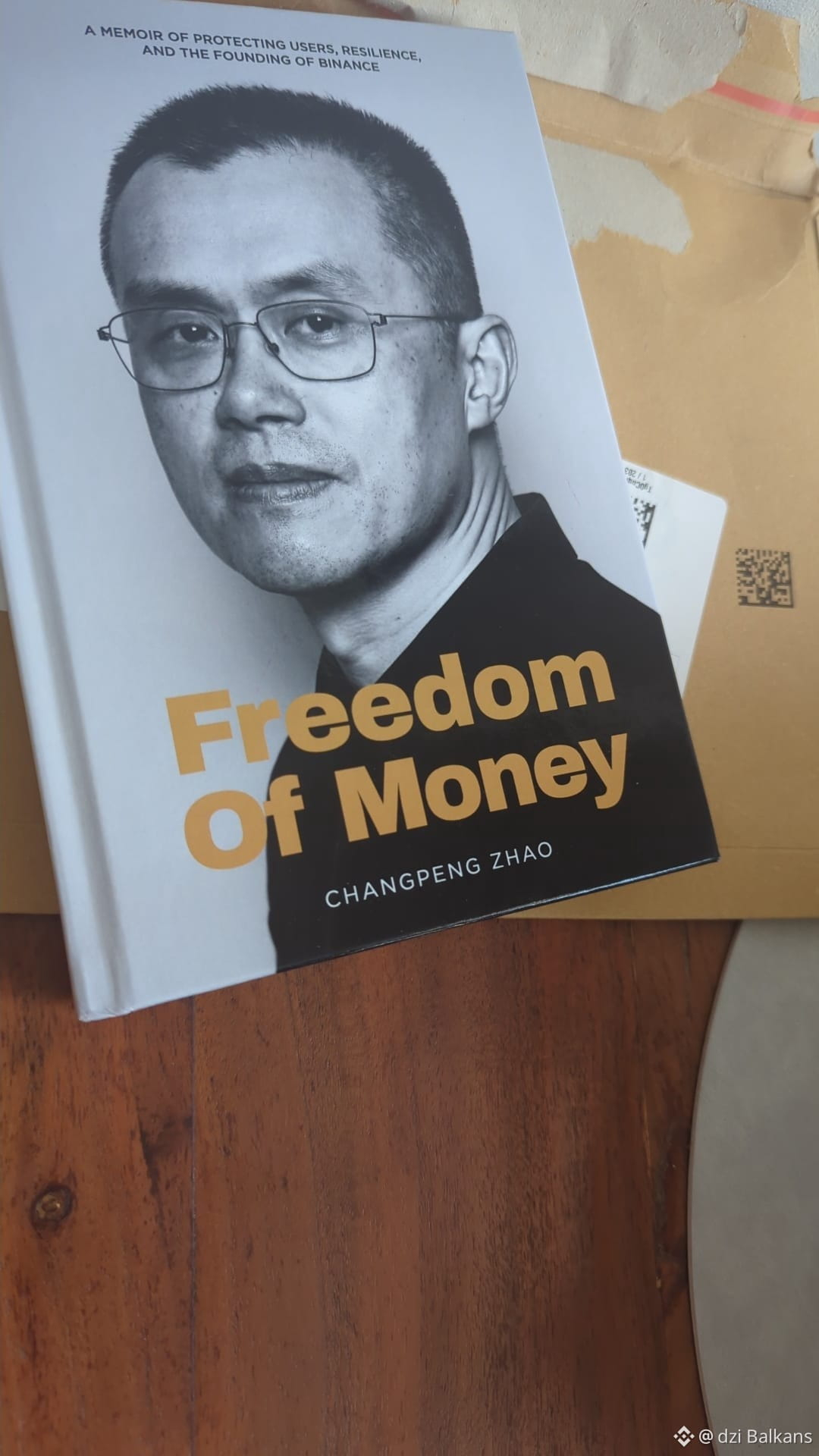
2.4k
8
141
2.4k
·
--
What's in the Binance Box?
a) Bag
b) Umbrella
c) Stickers
d) Bottle
e) All of them
What's in the Binance Box?
a) Bag
b) Umbrella
c) Stickers
d) Bottle
e) All of them
a) Bag
b) Umbrella
c) Stickers
d) Bottle
e) All of them
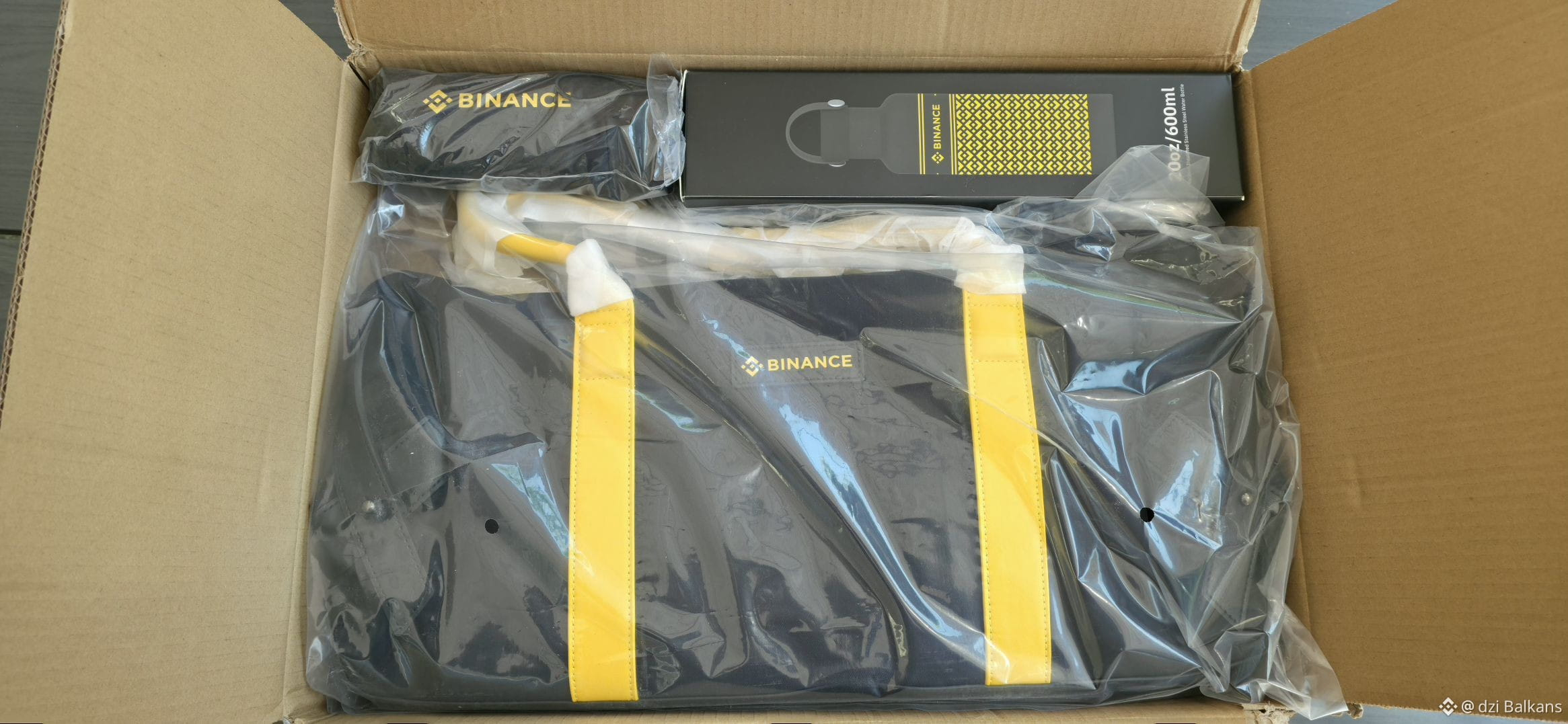
2.6k
10
141
2.6k
·
--
"You can have great technology, smart people, world-class infrastructure. But if users don't trust you, none of it matters. Trust is everything." :@CZ - Freedom of Money
"You can have great technology, smart people, world-class infrastructure. But if users don't trust you, none of it matters. Trust is everything." :@CZ - Freedom of Money
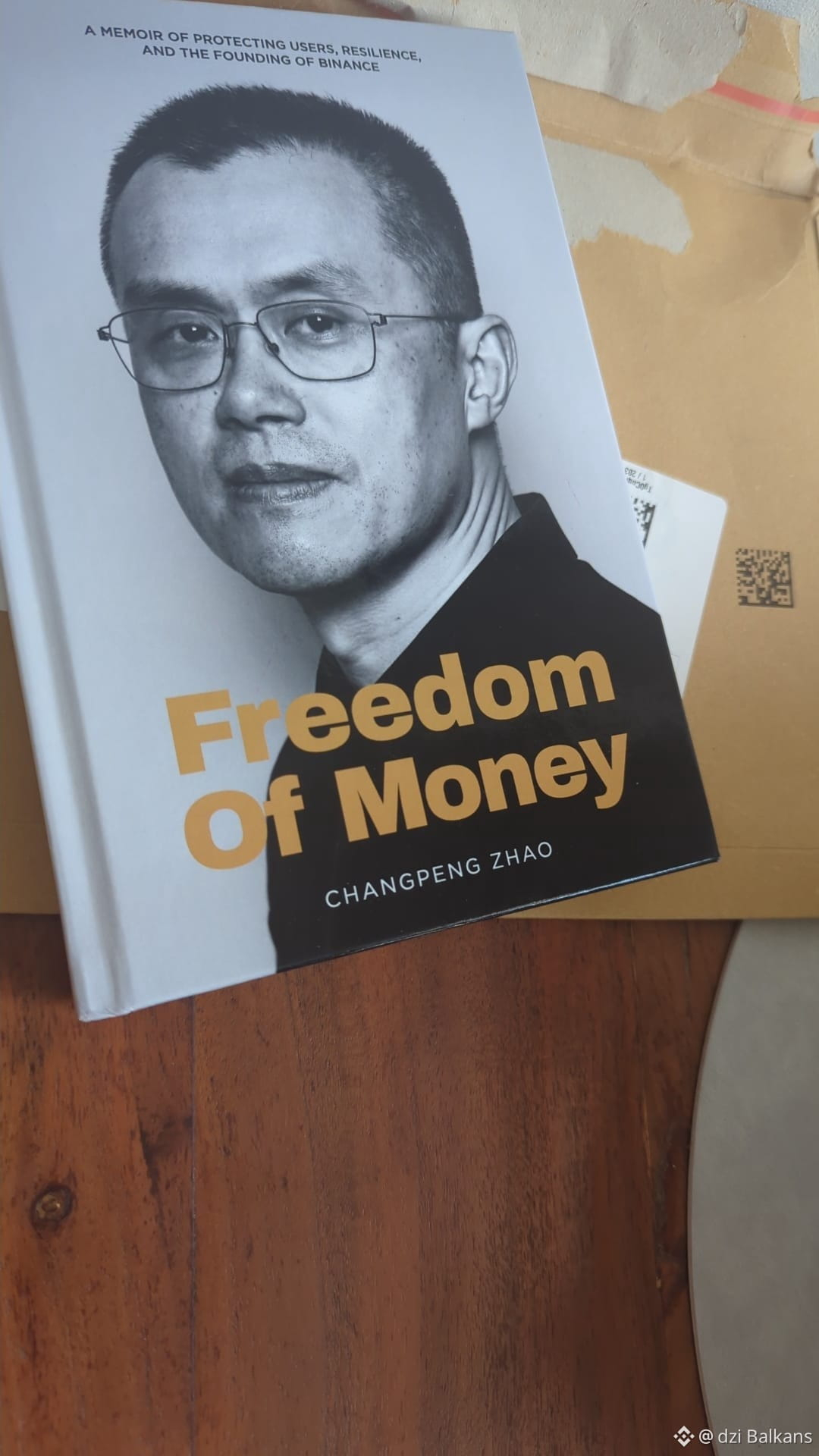
3k
19
148
3k
·
--
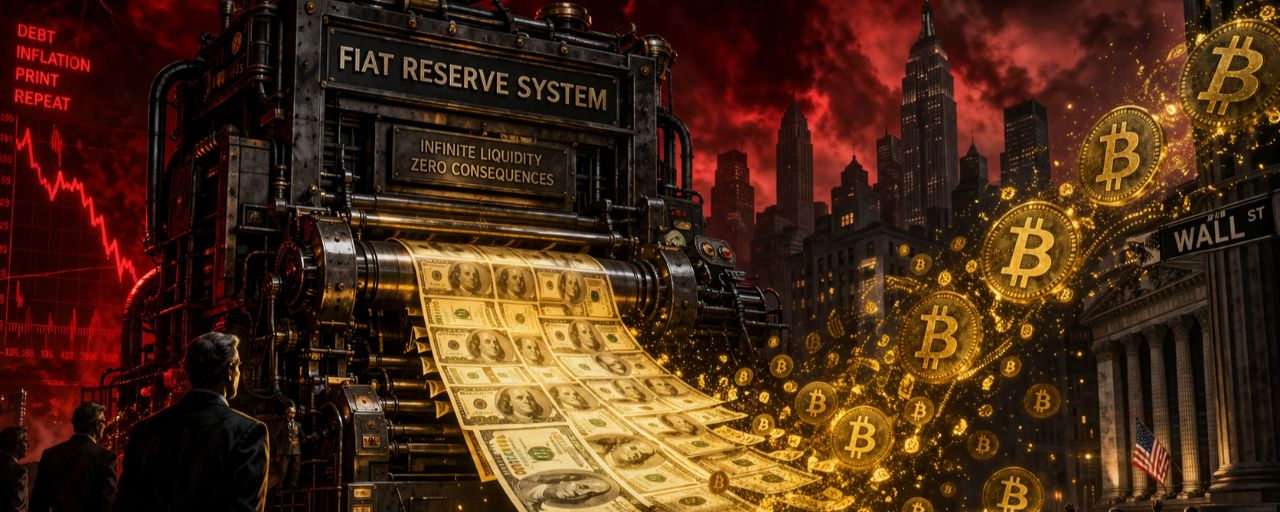
Article
Arthur Hayes on Power, Printing, and Price Action: 5 Brutal Truths Every Crypto Trader Needs to HearThe latest episode of Inside the Blockchain 100 on Binance Square delivered exactly what you'd expect when Arthur Hayes grabs the mic: zero filter, sharp takes, and the kind of macro perspective that cuts through the noise of crypto Twitter. Here are the five moments from the AMA that stuck with me, and why each one deserves a closer look.
1. If You're Not Living on the Chart, You're Funding Someone Who Is
Hayes opened with a reality check that needed to be said. Crypto trading isn't a side hustle you fit between your day job and weekend plans. It's a 24/7 commitment, and pretending otherwise is the fastest way to blow up your stack.
His point was simple: dial your trading activity to the lifestyle you actually want to live. If you're not willing to be glued to your screen, ignoring your friends and partner, then stop expecting 100x returns from part-time effort. Unrealistic expectations are what turn enthusiastic newcomers into bitter ex-traders convinced "crypto is a scam."
The market doesn't care about your day job. It rewards the people who treat it like one.
2. Insider Trading? Hayes Says Legalize It
This take will divide the room, but the logic is worth sitting with. Hayes argues that a truly free market should incorporate all relevant information, and insiders by definition hold the most relevant information of all. Forcing that information underground just delays price discovery and rewards the people closest to the leak.
He pointed to Polymarket and Kalshi as live examples. Political insiders are already trading on real information through these decentralized prediction markets, and the result is that we often see the market move before major geopolitical events break in mainstream media.
The takeaway for traders: by the time something is news, it's already priced in. The exit was somebody else's.
3. Macro Liquidity Beats Influencer Hype Every Single Time
When asked about his influence on markets through his writing, Hayes was refreshingly honest. He doesn't care what people do based on what he publishes. Either his macro thesis plays out or it doesn't, and the magnitude of capital flowing through correctly-called macro events dwarfs anything a speculative trader can move on social media.
This is the part most retail traders miss. The chart isn't moving because a KOL posted a chart. It's moving because trillions of dollars in liquidity are sloshing around the global financial system. Follow the money, not the megaphones.
4. Wall Street Is Going On-Chain, But Not to Pump Your Bags
Here's the RWA take nobody wanted to hear. Hayes has been a longtime skeptic of the tokenization narrative being sold to retail, and his reasoning is grounded in how financial services companies actually think.
Banks and asset managers don't move on-chain because they love crypto. They move on-chain because their back and middle offices are bloated, expensive, and error-prone. Migrating to a permissioned or permissionless ledger lets them eliminate entire departments and focus on revenue generation.
The kicker? Fifteen years of crypto have proven that a 24/7 decentralized financial system actually works. Now traditional finance is ready to copy the homework, cut headcount, and pocket the savings. That's the real adoption story, and it's almost entirely orthogonal to whether your favorite altcoin pumps.
The boring version of adoption is the real one.
5. 60K Is the Test. Money Printing Is the Answer.
For the chart watchers, Hayes laid out his short-term framework clearly. Bitcoin recently bounced off 60,000 and he expects another retest. Holding that level is what separates a real bull market resumption from continued chop.
But the longer-term direction? That comes down to one question: how much fiat are central banks willing to conjure into existence? Hayes doesn't pretend to know the exact number, but he's confident it has to be in the trillions to truly reignite the crypto market. The next stops on the upside, in his view, are 100,000, then 126,000, and beyond that we're flying blind until we see the scale of money creation.
Markets don't run on belief. They run on billions.
Final Thoughts
What ties all five of these points together is a single underlying worldview: markets are mechanical, not magical. Liquidity, information, and infrastructure are what move price. Narratives, hopium, and influencer takes are just noise on top.
Whether you agree with every Hayes take or not, the discipline of thinking in those terms is what separates traders who survive cycles from those who become exit liquidity.
🎧 Catch the full AMA replay here: https://www.binance.com/en/square/audio/replay?id=39631526881361
What was your biggest takeaway from this one? Drop it below 👇
#ArthurHayes #InsideTheBlockchain100 #BinanceSquare #cryptotrading
Arthur Hayes on Power, Printing, and Price Action: 5 Brutal Truths Every Crypto Trader Needs to Hear
The latest episode of Inside the Blockchain 100 on Binance Square delivered exactly what you'd expect when Arthur Hayes grabs the mic: zero filter, sharp takes, and the kind of macro perspective that cuts through the noise of crypto Twitter. Here are the five moments from the AMA that stuck with me, and why each one deserves a closer look.
1. If You're Not Living on the Chart, You're Funding Someone Who Is
Hayes opened with a reality check that needed to be said. Crypto trading isn't a side hustle you fit between your day job and weekend plans. It's a 24/7 commitment, and pretending otherwise is the fastest way to blow up your stack.
His point was simple: dial your trading activity to the lifestyle you actually want to live. If you're not willing to be glued to your screen, ignoring your friends and partner, then stop expecting 100x returns from part-time effort. Unrealistic expectations are what turn enthusiastic newcomers into bitter ex-traders convinced "crypto is a scam."
The market doesn't care about your day job. It rewards the people who treat it like one.
2. Insider Trading? Hayes Says Legalize It
This take will divide the room, but the logic is worth sitting with. Hayes argues that a truly free market should incorporate all relevant information, and insiders by definition hold the most relevant information of all. Forcing that information underground just delays price discovery and rewards the people closest to the leak.
He pointed to Polymarket and Kalshi as live examples. Political insiders are already trading on real information through these decentralized prediction markets, and the result is that we often see the market move before major geopolitical events break in mainstream media.
The takeaway for traders: by the time something is news, it's already priced in. The exit was somebody else's.
3. Macro Liquidity Beats Influencer Hype Every Single Time
When asked about his influence on markets through his writing, Hayes was refreshingly honest. He doesn't care what people do based on what he publishes. Either his macro thesis plays out or it doesn't, and the magnitude of capital flowing through correctly-called macro events dwarfs anything a speculative trader can move on social media.
This is the part most retail traders miss. The chart isn't moving because a KOL posted a chart. It's moving because trillions of dollars in liquidity are sloshing around the global financial system. Follow the money, not the megaphones.
4. Wall Street Is Going On-Chain, But Not to Pump Your Bags
Here's the RWA take nobody wanted to hear. Hayes has been a longtime skeptic of the tokenization narrative being sold to retail, and his reasoning is grounded in how financial services companies actually think.
Banks and asset managers don't move on-chain because they love crypto. They move on-chain because their back and middle offices are bloated, expensive, and error-prone. Migrating to a permissioned or permissionless ledger lets them eliminate entire departments and focus on revenue generation.
The kicker? Fifteen years of crypto have proven that a 24/7 decentralized financial system actually works. Now traditional finance is ready to copy the homework, cut headcount, and pocket the savings. That's the real adoption story, and it's almost entirely orthogonal to whether your favorite altcoin pumps.
The boring version of adoption is the real one.
5. 60K Is the Test. Money Printing Is the Answer.
For the chart watchers, Hayes laid out his short-term framework clearly. Bitcoin recently bounced off 60,000 and he expects another retest. Holding that level is what separates a real bull market resumption from continued chop.
But the longer-term direction? That comes down to one question: how much fiat are central banks willing to conjure into existence? Hayes doesn't pretend to know the exact number, but he's confident it has to be in the trillions to truly reignite the crypto market. The next stops on the upside, in his view, are 100,000, then 126,000, and beyond that we're flying blind until we see the scale of money creation.
Markets don't run on belief. They run on billions.
Final Thoughts
What ties all five of these points together is a single underlying worldview: markets are mechanical, not magical. Liquidity, information, and infrastructure are what move price. Narratives, hopium, and influencer takes are just noise on top.
Whether you agree with every Hayes take or not, the discipline of thinking in those terms is what separates traders who survive cycles from those who become exit liquidity.
🎧 Catch the full AMA replay here: https://www.binance.com/en/square/audio/replay?id=39631526881361
What was your biggest takeaway from this one? Drop it below 👇
#ArthurHayes #InsideTheBlockchain100 #BinanceSquare #cryptotrading
1. If You're Not Living on the Chart, You're Funding Someone Who Is
Hayes opened with a reality check that needed to be said. Crypto trading isn't a side hustle you fit between your day job and weekend plans. It's a 24/7 commitment, and pretending otherwise is the fastest way to blow up your stack.
His point was simple: dial your trading activity to the lifestyle you actually want to live. If you're not willing to be glued to your screen, ignoring your friends and partner, then stop expecting 100x returns from part-time effort. Unrealistic expectations are what turn enthusiastic newcomers into bitter ex-traders convinced "crypto is a scam."
The market doesn't care about your day job. It rewards the people who treat it like one.
2. Insider Trading? Hayes Says Legalize It
This take will divide the room, but the logic is worth sitting with. Hayes argues that a truly free market should incorporate all relevant information, and insiders by definition hold the most relevant information of all. Forcing that information underground just delays price discovery and rewards the people closest to the leak.
He pointed to Polymarket and Kalshi as live examples. Political insiders are already trading on real information through these decentralized prediction markets, and the result is that we often see the market move before major geopolitical events break in mainstream media.
The takeaway for traders: by the time something is news, it's already priced in. The exit was somebody else's.
3. Macro Liquidity Beats Influencer Hype Every Single Time
When asked about his influence on markets through his writing, Hayes was refreshingly honest. He doesn't care what people do based on what he publishes. Either his macro thesis plays out or it doesn't, and the magnitude of capital flowing through correctly-called macro events dwarfs anything a speculative trader can move on social media.
This is the part most retail traders miss. The chart isn't moving because a KOL posted a chart. It's moving because trillions of dollars in liquidity are sloshing around the global financial system. Follow the money, not the megaphones.
4. Wall Street Is Going On-Chain, But Not to Pump Your Bags
Here's the RWA take nobody wanted to hear. Hayes has been a longtime skeptic of the tokenization narrative being sold to retail, and his reasoning is grounded in how financial services companies actually think.
Banks and asset managers don't move on-chain because they love crypto. They move on-chain because their back and middle offices are bloated, expensive, and error-prone. Migrating to a permissioned or permissionless ledger lets them eliminate entire departments and focus on revenue generation.
The kicker? Fifteen years of crypto have proven that a 24/7 decentralized financial system actually works. Now traditional finance is ready to copy the homework, cut headcount, and pocket the savings. That's the real adoption story, and it's almost entirely orthogonal to whether your favorite altcoin pumps.
The boring version of adoption is the real one.
5. 60K Is the Test. Money Printing Is the Answer.
For the chart watchers, Hayes laid out his short-term framework clearly. Bitcoin recently bounced off 60,000 and he expects another retest. Holding that level is what separates a real bull market resumption from continued chop.
But the longer-term direction? That comes down to one question: how much fiat are central banks willing to conjure into existence? Hayes doesn't pretend to know the exact number, but he's confident it has to be in the trillions to truly reignite the crypto market. The next stops on the upside, in his view, are 100,000, then 126,000, and beyond that we're flying blind until we see the scale of money creation.
Markets don't run on belief. They run on billions.
Final Thoughts
What ties all five of these points together is a single underlying worldview: markets are mechanical, not magical. Liquidity, information, and infrastructure are what move price. Narratives, hopium, and influencer takes are just noise on top.
Whether you agree with every Hayes take or not, the discipline of thinking in those terms is what separates traders who survive cycles from those who become exit liquidity.
🎧 Catch the full AMA replay here: https://www.binance.com/en/square/audio/replay?id=39631526881361
What was your biggest takeaway from this one? Drop it below 👇
#ArthurHayes #InsideTheBlockchain100 #BinanceSquare #cryptotrading
295
Log in to explore more content
Join global crypto users on Binance Square
⚡️ Get latest and useful information about crypto.
💬 Trusted by the world’s largest crypto exchange.
👍 Discover real insights from verified creators.
Email / Phone number
Trending Topics
SolanaTokenizedStockVolumeTops$4.4BInSeptember
78 views
8 Discussing
#SolanaTokenizedStockVolumeTops$4.4BInSeptember
🚨 Solana is making big moves in the tokenized stock market! 📈🔥
In September, Solana recorded over $4.4B in tokenized stock volume — showing how quickly real-world assets are moving on-chain. 🌐💰
Could this be another major step toward bringing traditional finance onto blockchain? 👀
Solana’s future is getting more interesting! 🚀☀️
#crypto #Blockchain #SolanaTokenizedStockVolumeTops$4.4BInSeptember #solana
$SOL
Rony Marma Crypto Insights
·0 Likes
·9 views
BitcoinSpotETFsDraw$6.34BInflowsInQ3
7,891 views
117 Discussing
EthereumValidatorExitQueueJumps392%
149,140 views
1,163 Discussing